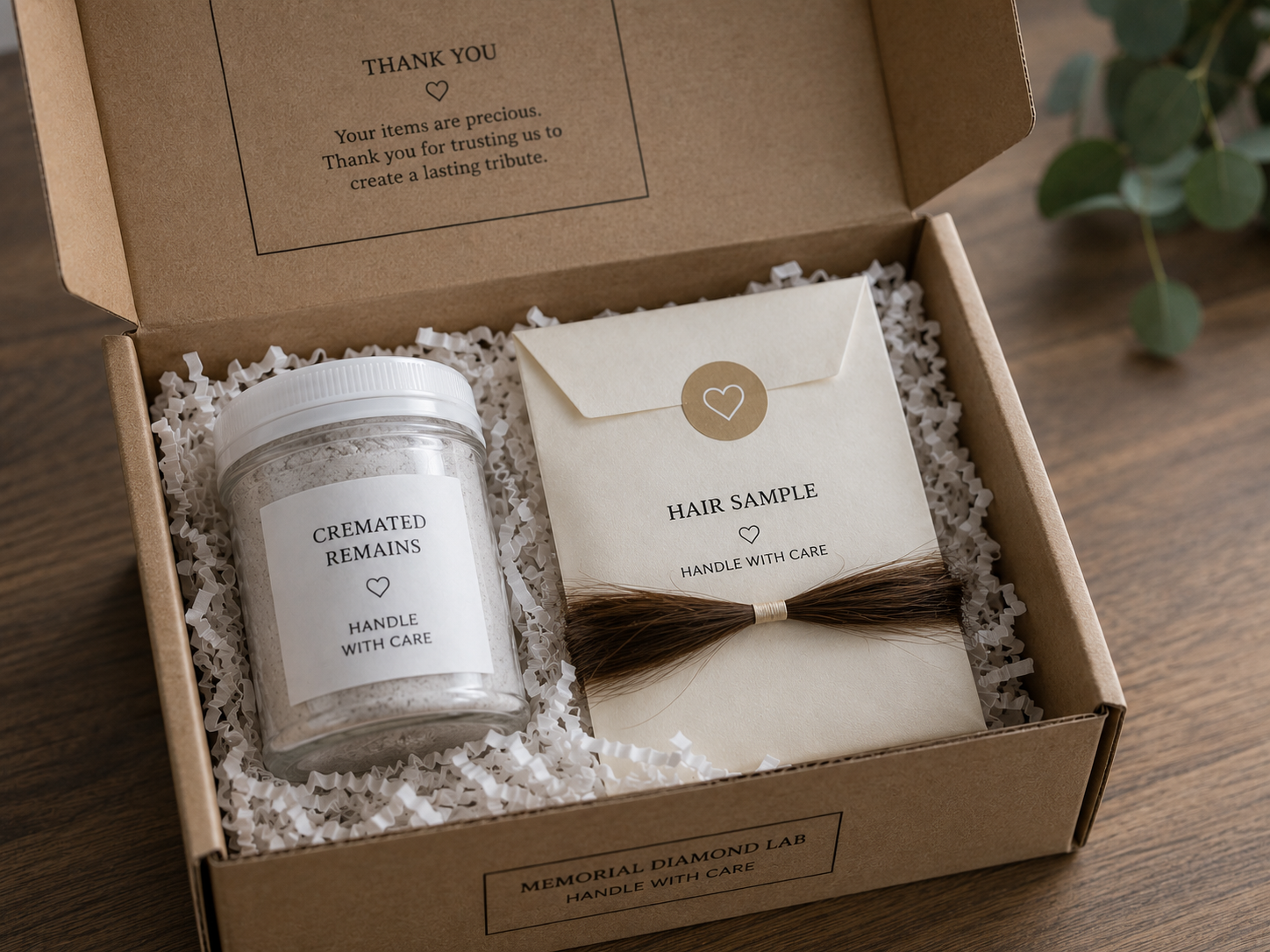
The container is probably still where someone put it. A shelf in the spare room, the back of a wardrobe, or the boot of a car nobody has finished unpacking.
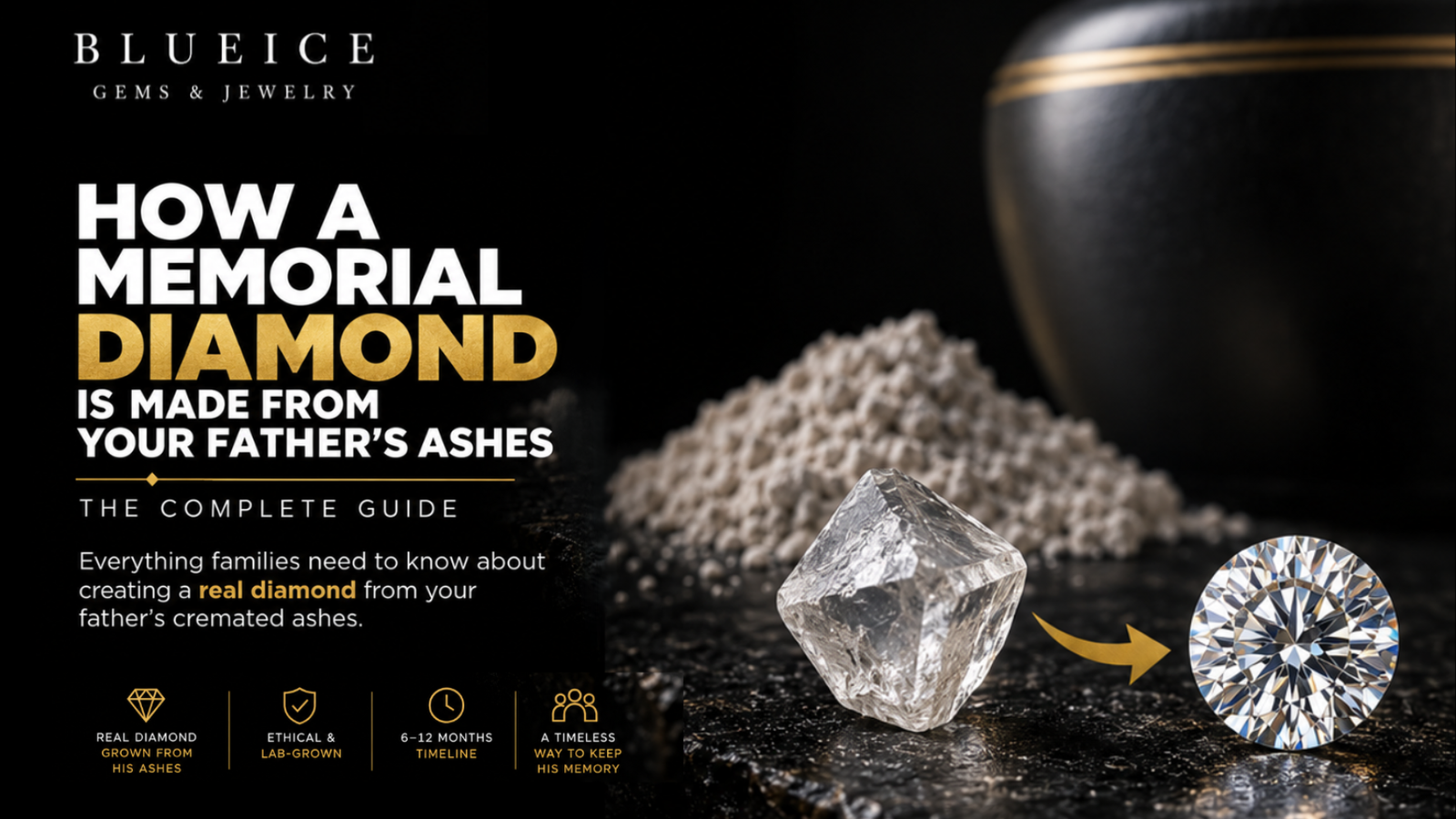
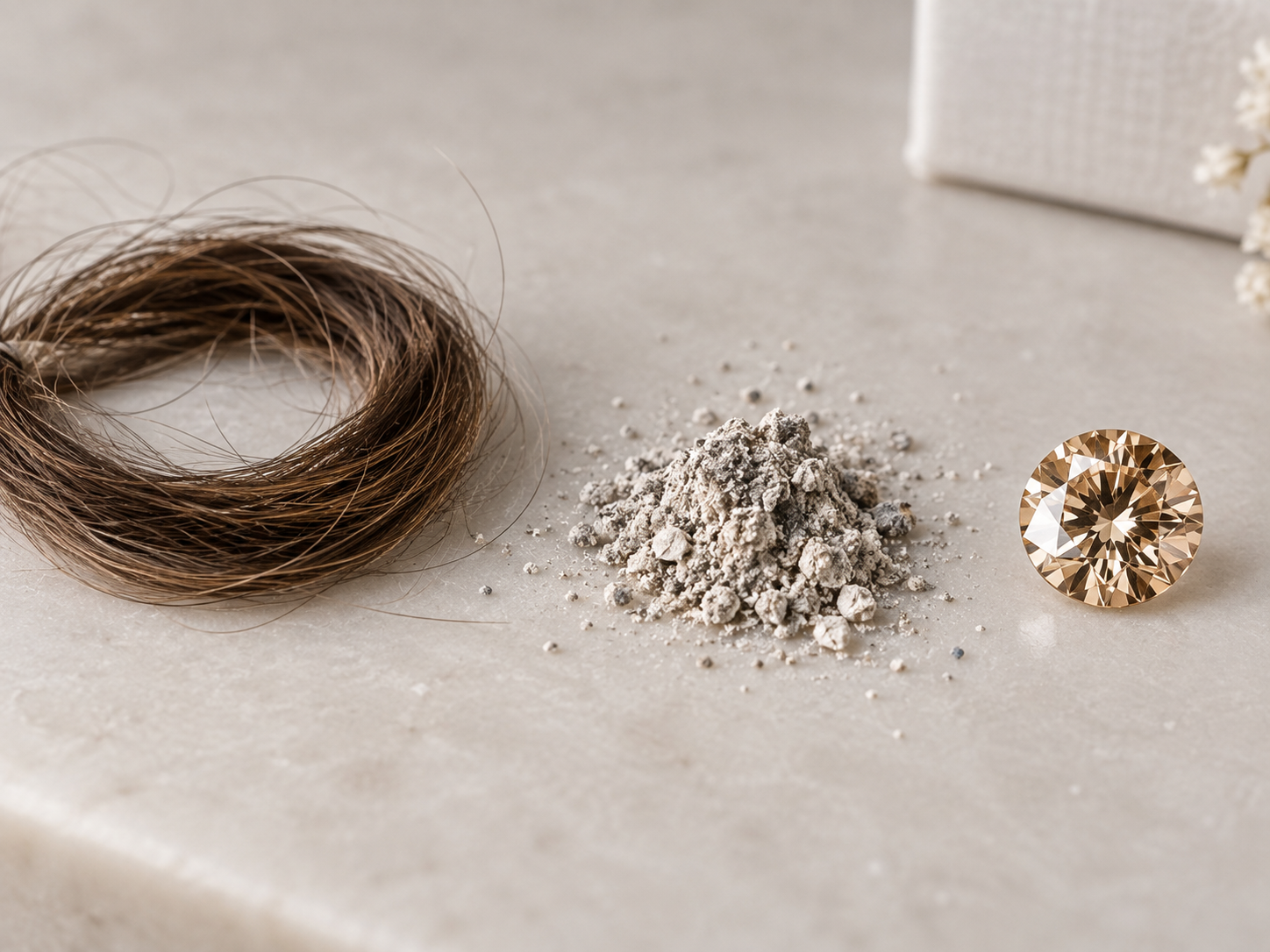
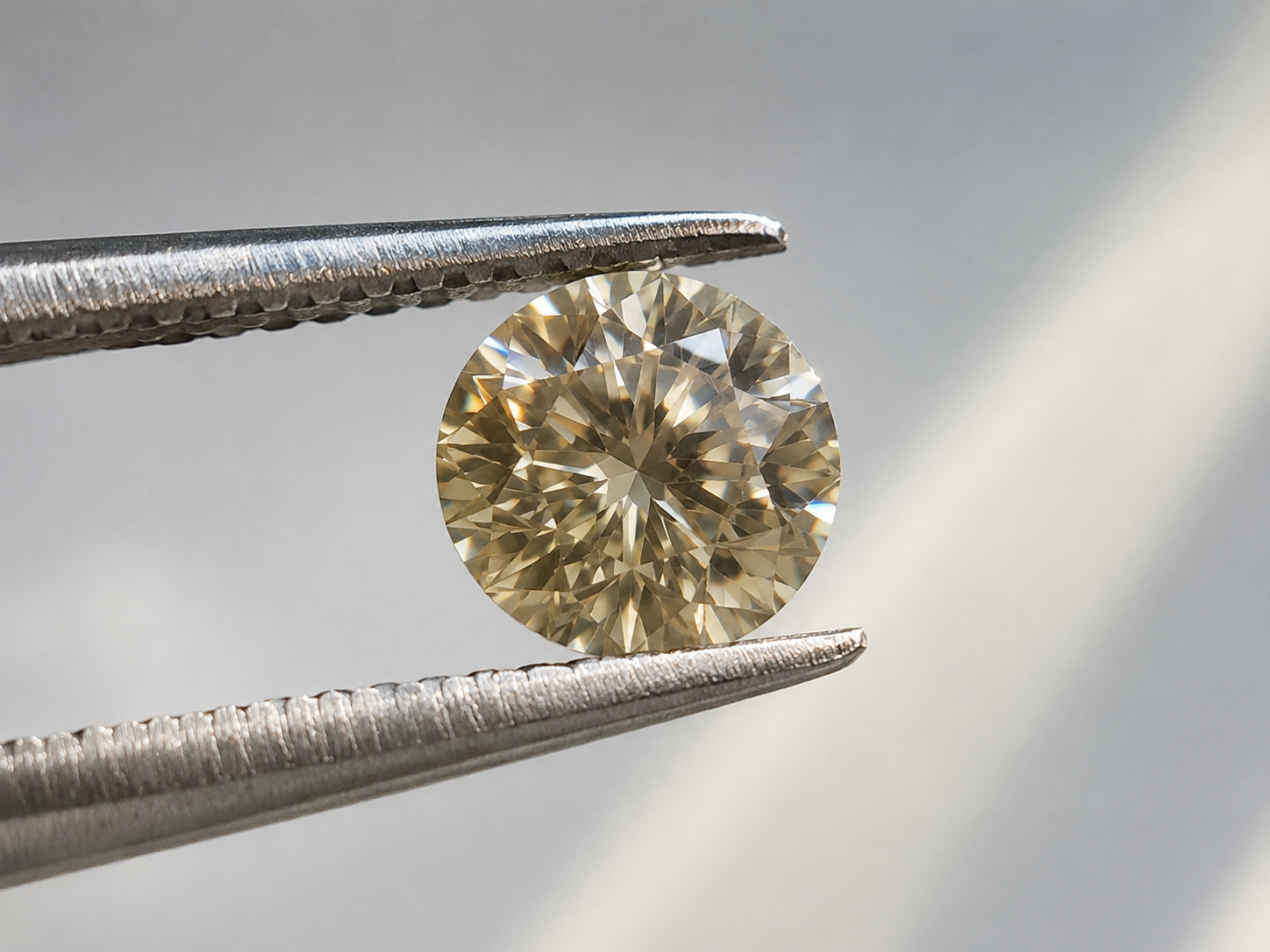
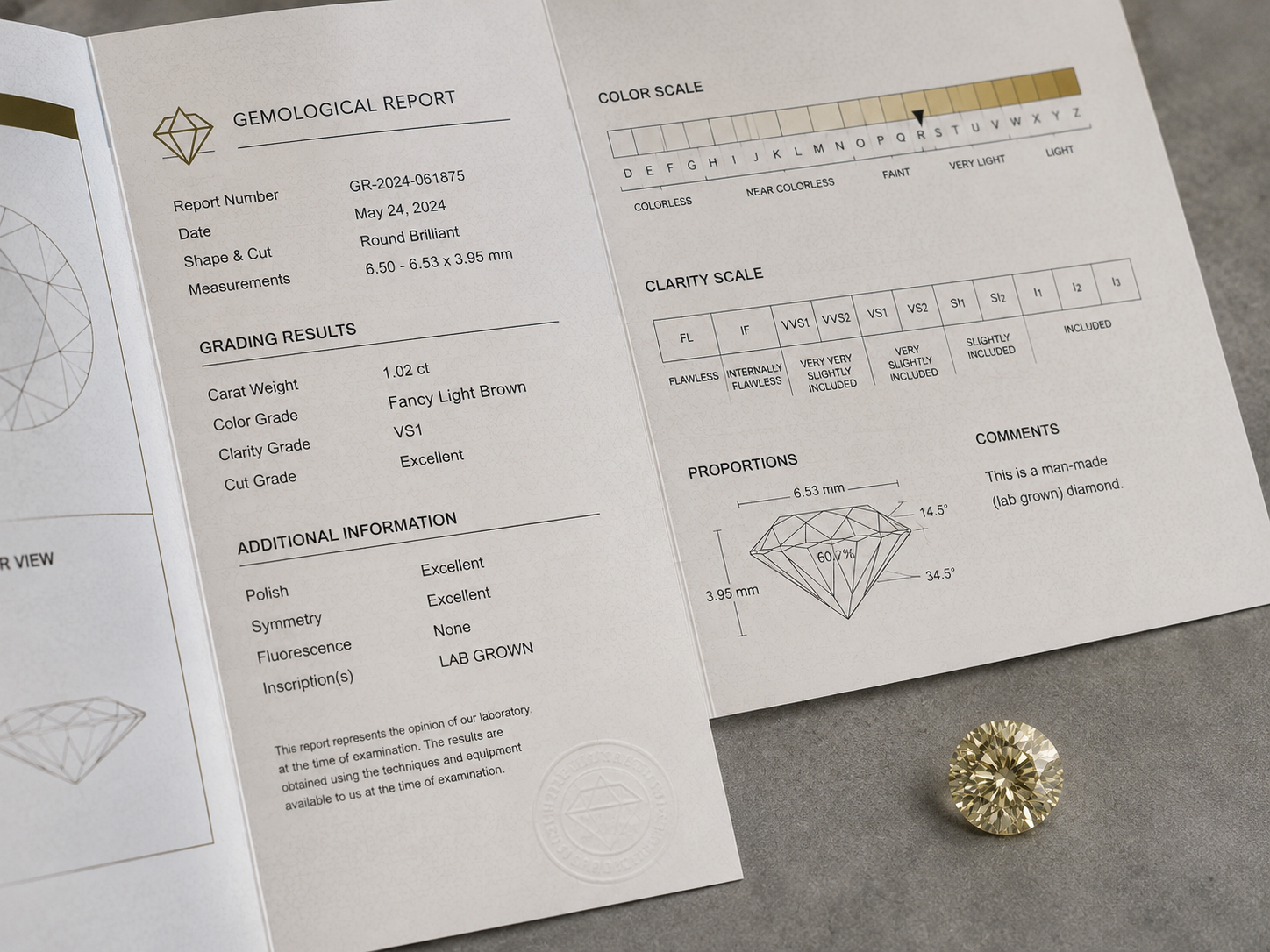
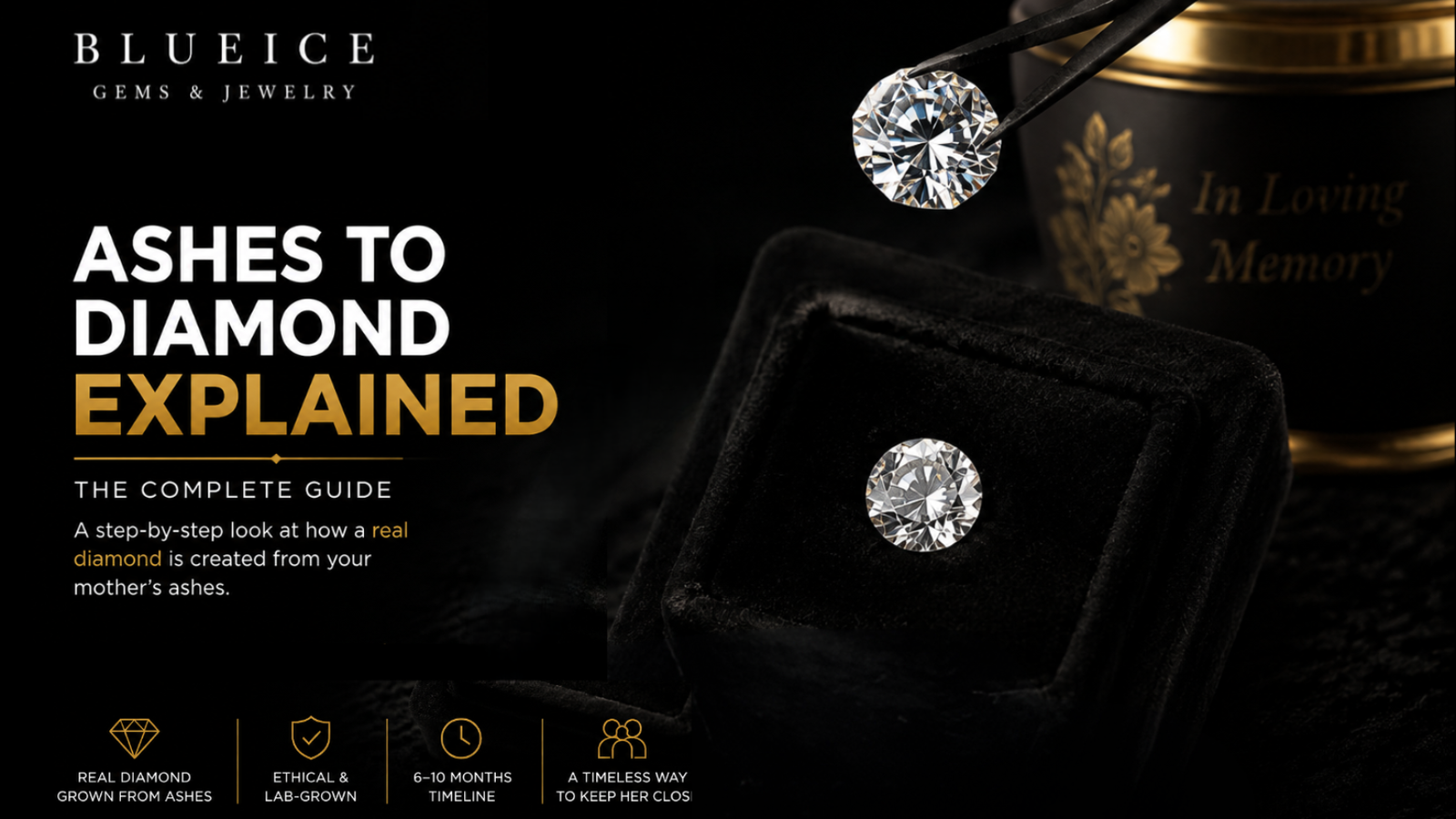
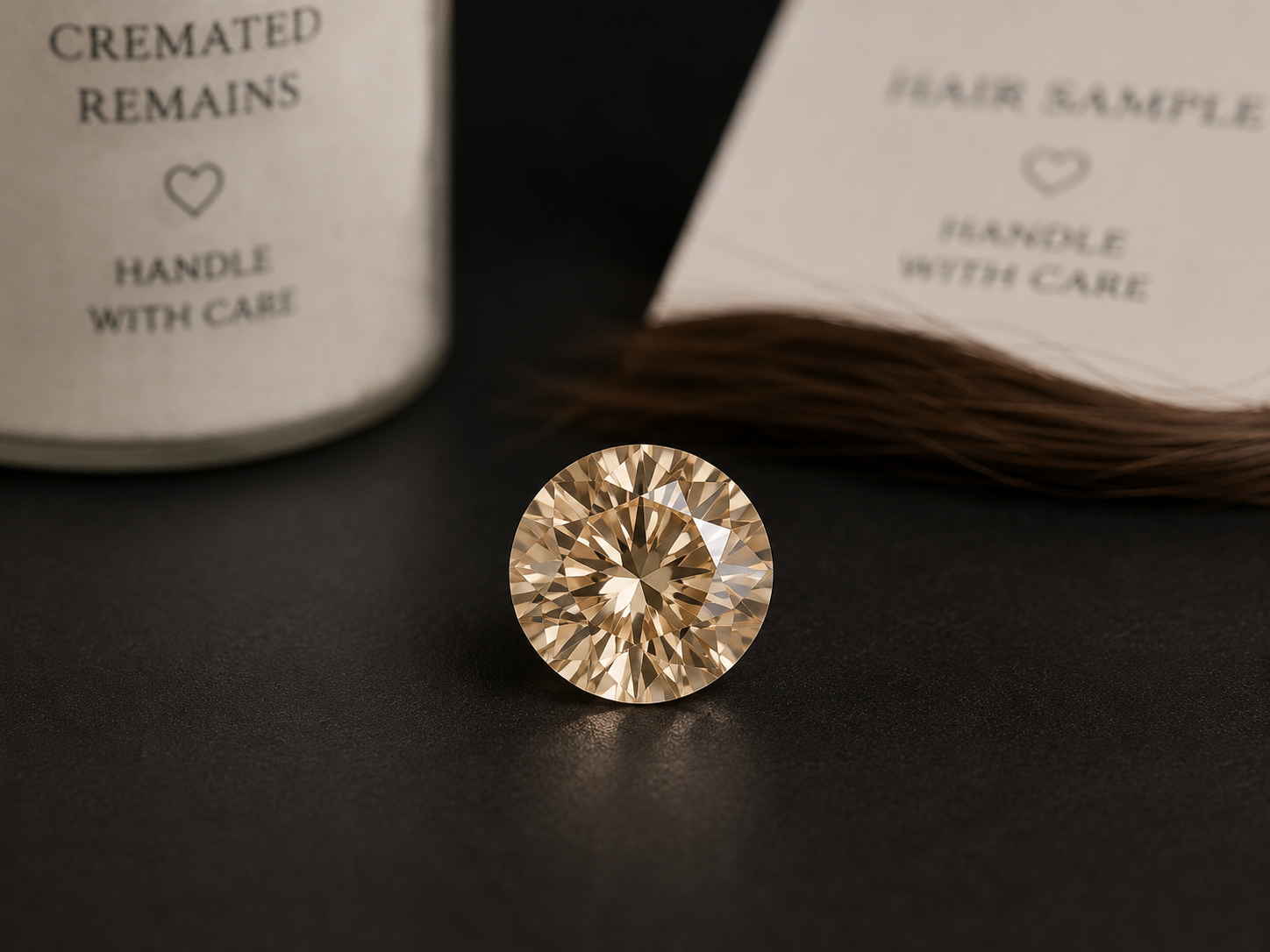
A father ashes diamond gives that material another place to go. A laboratory grows a genuine lab grown diamond in part from carbon extracted from your father’s cremated remains. The finished diamond has the same crystal structure and hardness as other diamonds and can receive grading against the same four Cs.
Production typically takes six to ten months. The process uses only a small portion of a cremation.
That last fact matters more than it may seem. The rest of those ashes may already have a date attached to them. Establishing whether a date exists comes before choosing carat, colour, or cost.
Is There a Deadline on This Decision?
In principle, no. Cremated remains do not degrade in a way that affects carbon extraction. Ashes kept for twenty years can still provide material just as ashes kept for five weeks can.
In practice, one deadline can make the decision urgent.
If a portion of your father’s ashes will go into the ground, into a columbarium niche, or to a chosen scattering location on a specific date, the ashes stop being available after that event. An interment requires a formal disinterment process to reverse. A scattering cannot be undone.

When a father dies after a mother, the family may already have a plan. Perhaps they bought a shared plot decades ago. Although they chose a shared niche. Perhaps your parents selected a place where the family will scatter their ashes.
That plan does not need to compete with a memorial diamond. You only need to work backwards from the date and retain a small portion before the remains leave your control.
- Find out whether a date exists. Ask whoever holds the remains and whoever arranges the interment. Those people may not be the same person.
- Raise the subject before the date arrives. You can ask about retaining a portion rather than asking the family to give up his ashes. Read how to raise it with your family.
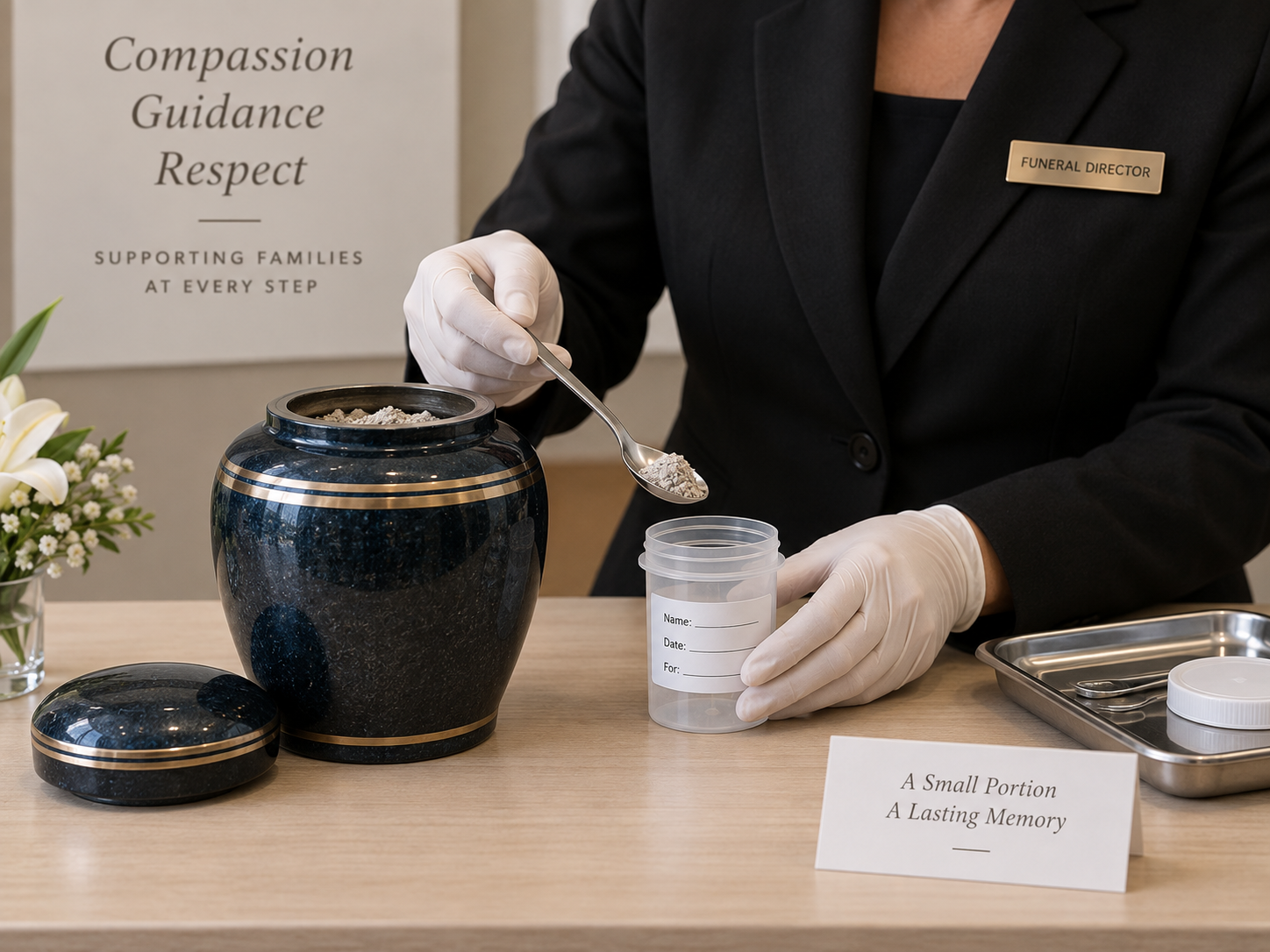
- Retain the portion before release. Ask the funeral director about their procedure before the remains go to the cemetery, crematorium, or scattering location.
- Let the original plan continue. A diamond and an interment or scattering do not need to become competing choices.
If the date has already passed, or your father had a burial rather than a cremation, the ashes route may no longer remain available. A hair based route can provide another option. Read the hair route that does not depend on cremation.
What Exactly Is a Father Ashes Diamond, and How Much of It Is Him?
A father ashes diamond is not a simulant or a diamond look alike stone. A laboratory grows a real diamond from purified carbon and supplemental laboratory carbon.
Diamond has a Mohs hardness of 10, the highest value on the Mohs scale. A lab grown memorial diamond has the same fundamental crystal structure and optical properties as other diamonds.
The important qualification concerns the amount of personal carbon.
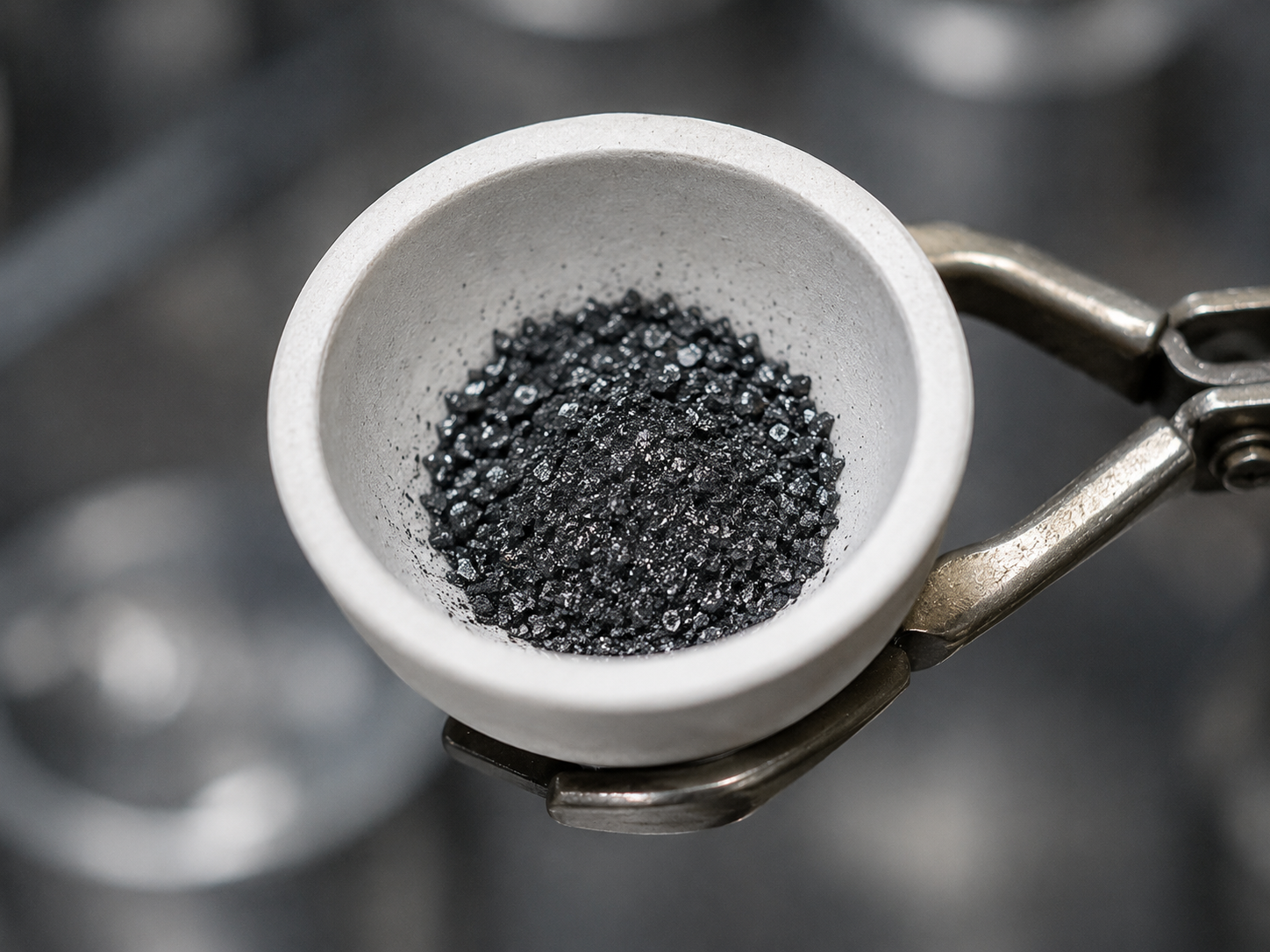
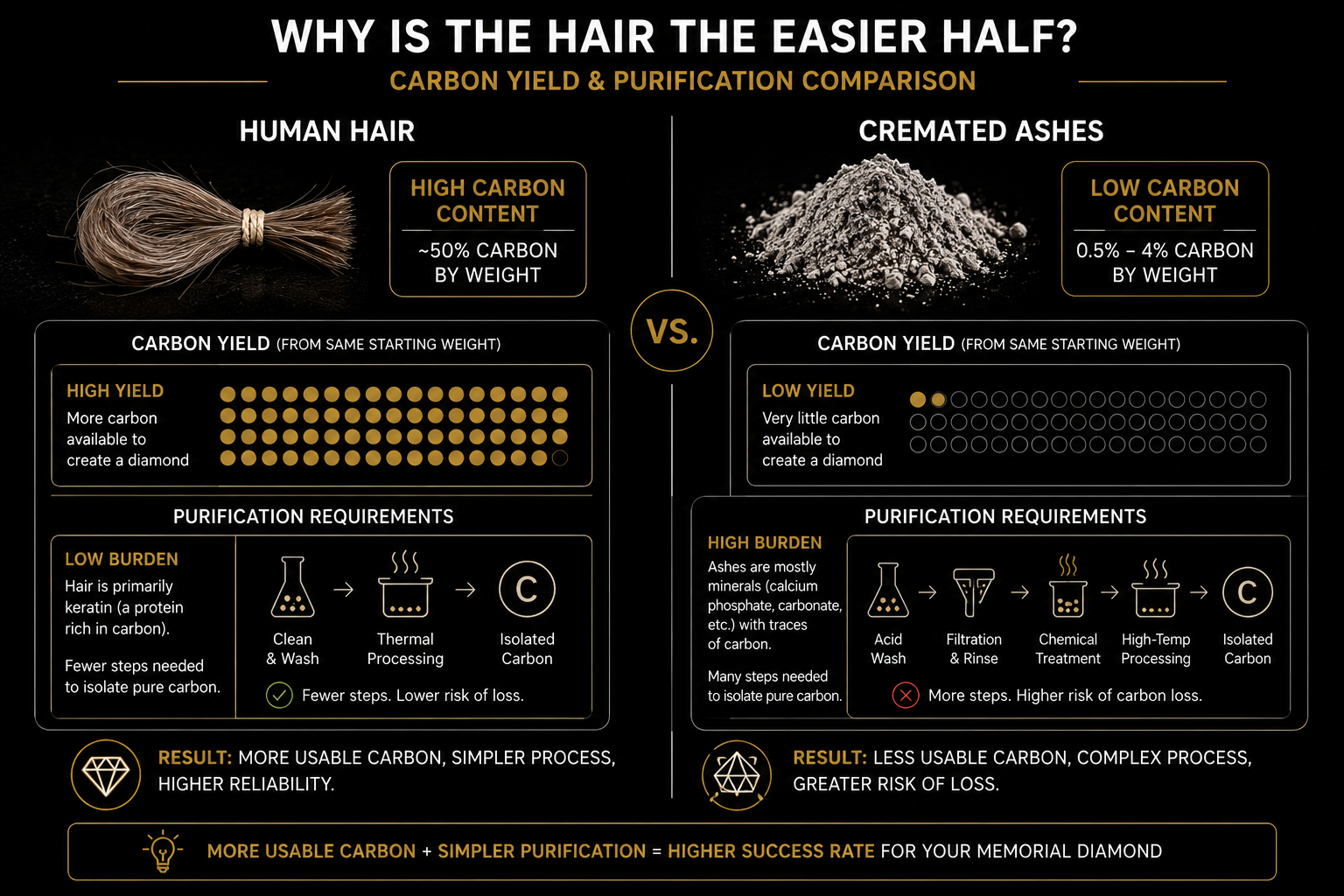
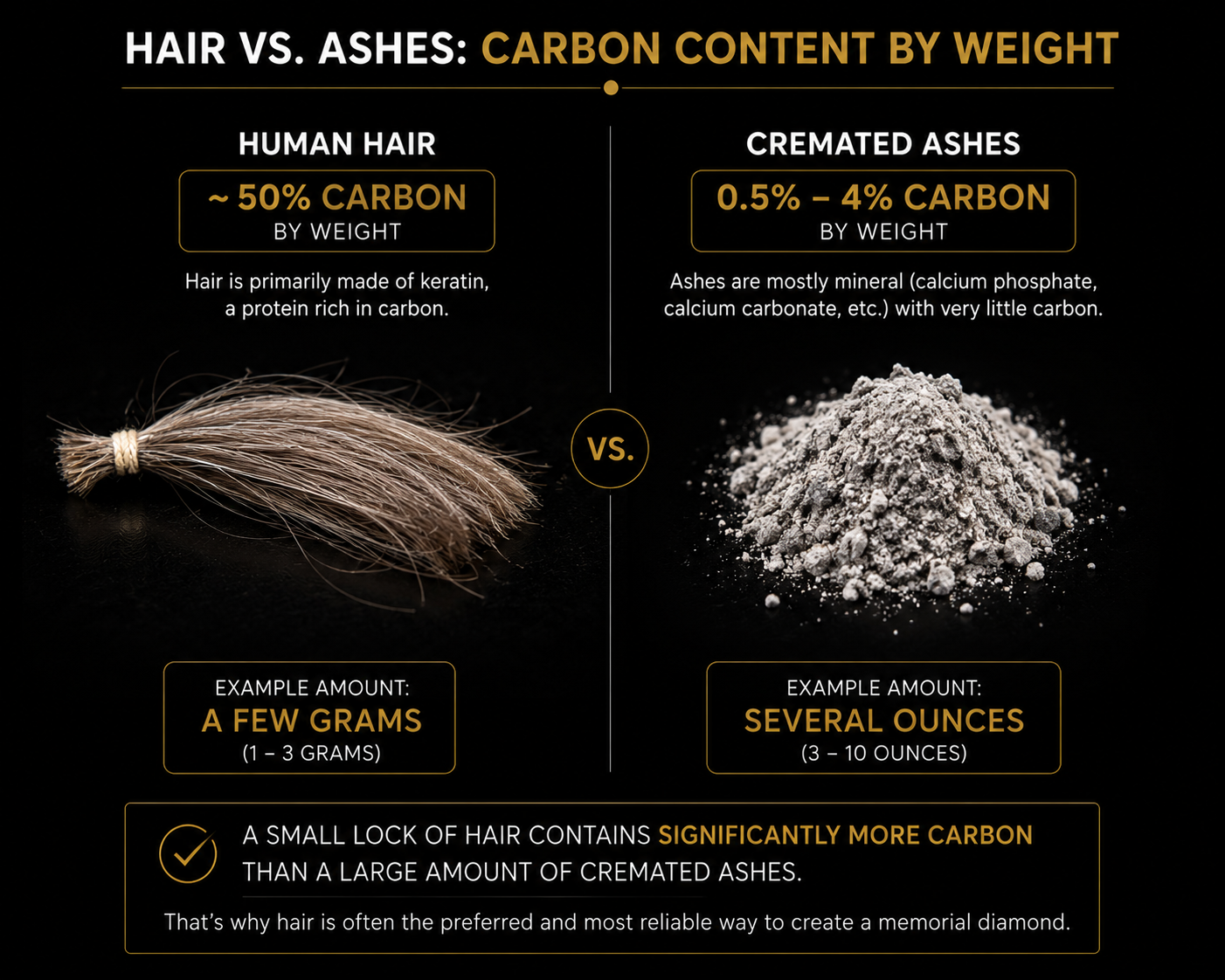
Cremated remains consist mainly of calcium phosphate and other mineral material from bone. Carbon makes up a small share of the total ash. Industry information places the carbon content of cremated remains around 0.5% to 4% by weight.
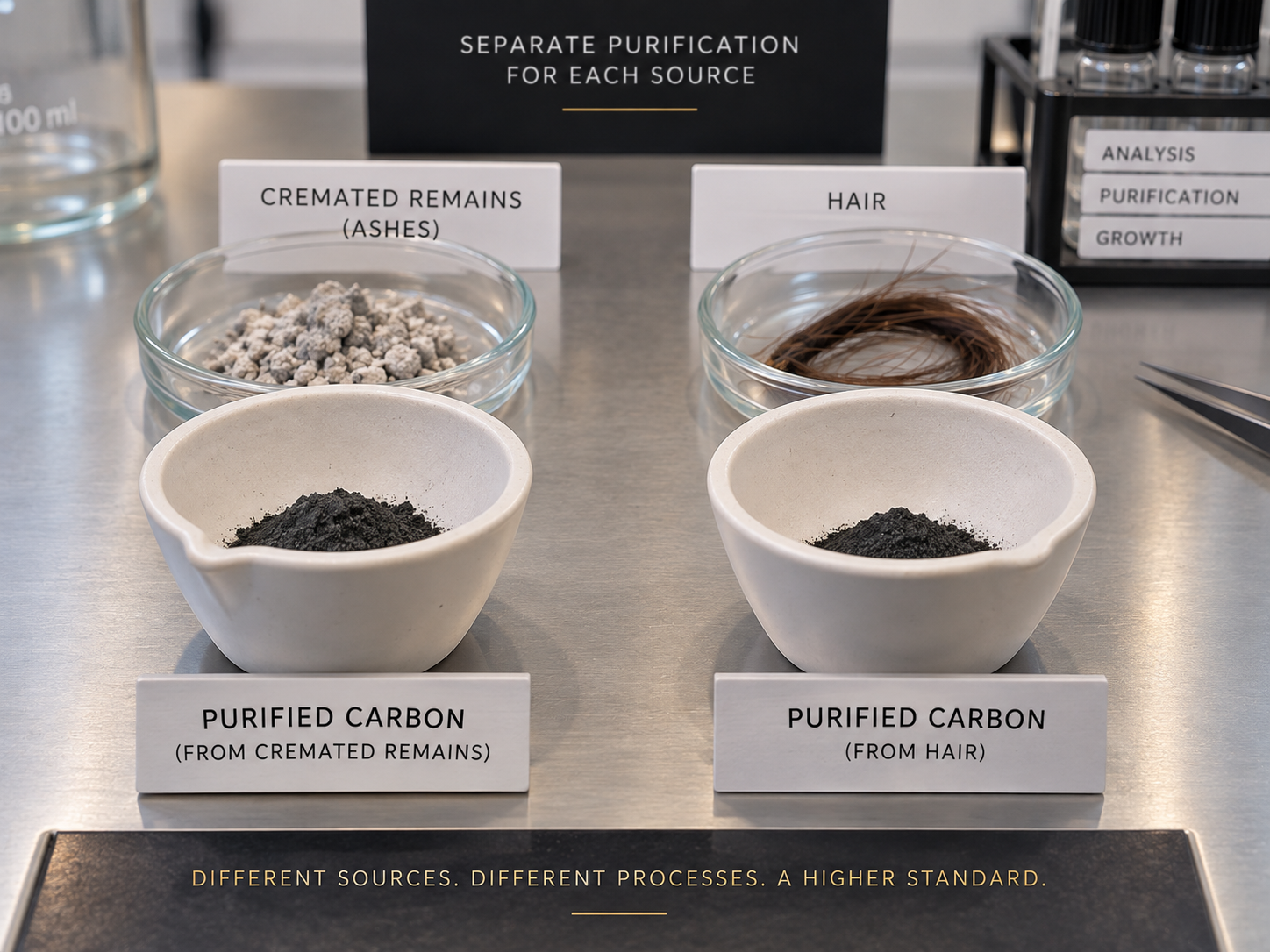
The provider extracts that carbon and purifies it to roughly 99.9% carbon. The laboratory converts the purified carbon into graphite and blends it with supplemental laboratory carbon to reach the volume required for diamond growth.
Industry information places the personal carbon contribution at around 10% to 15% of the finished stone’s mass.
No honest provider should describe the finished stone as 100% your father. The accurate explanation carries more meaning. Carbon atoms that once formed part of his body become part of the crystal lattice of a genuine diamond.
For the broader explanation, read the complete guide to what a memorial diamond is.
How Much of His Ashes Does This Actually Take?
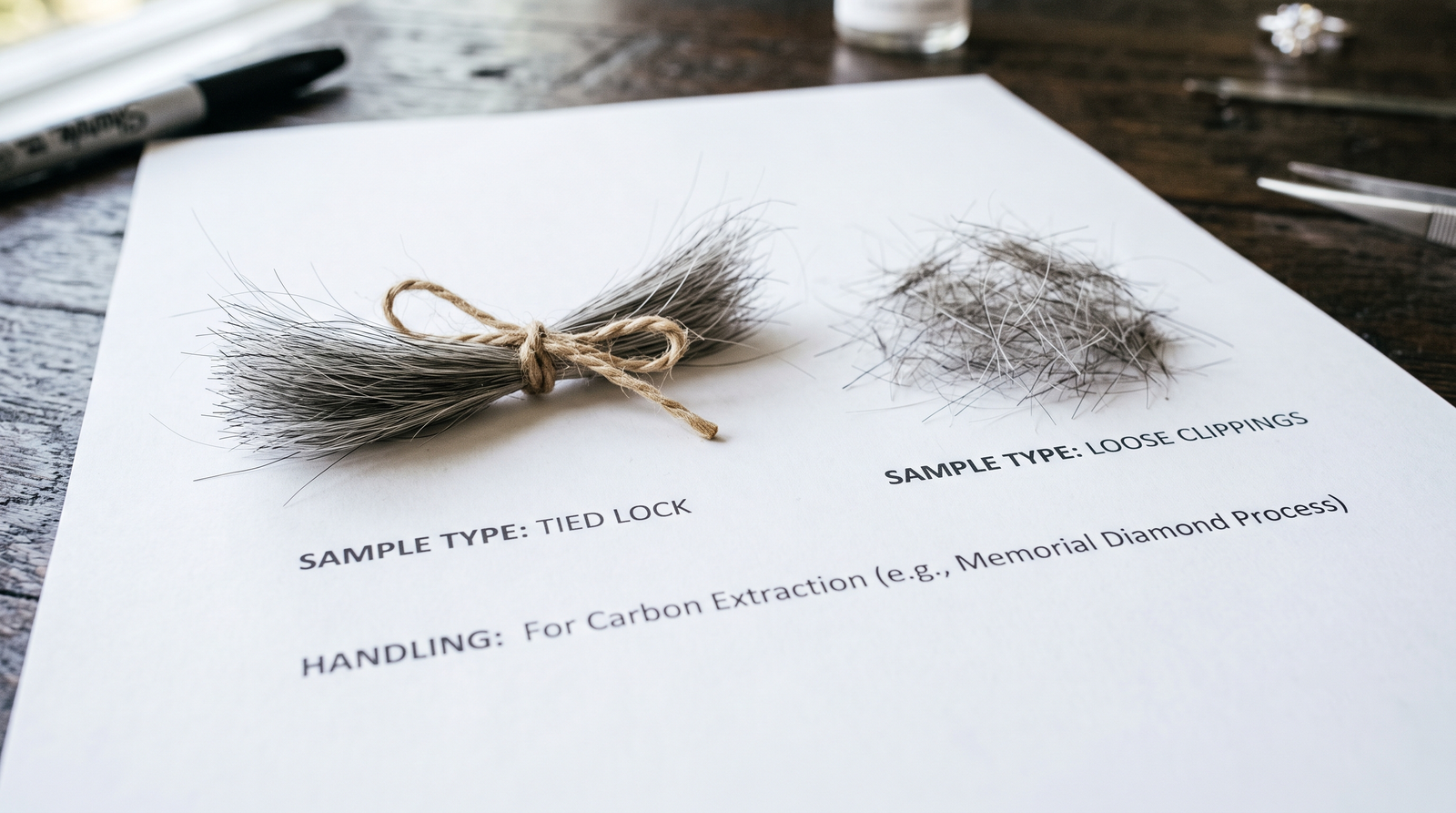
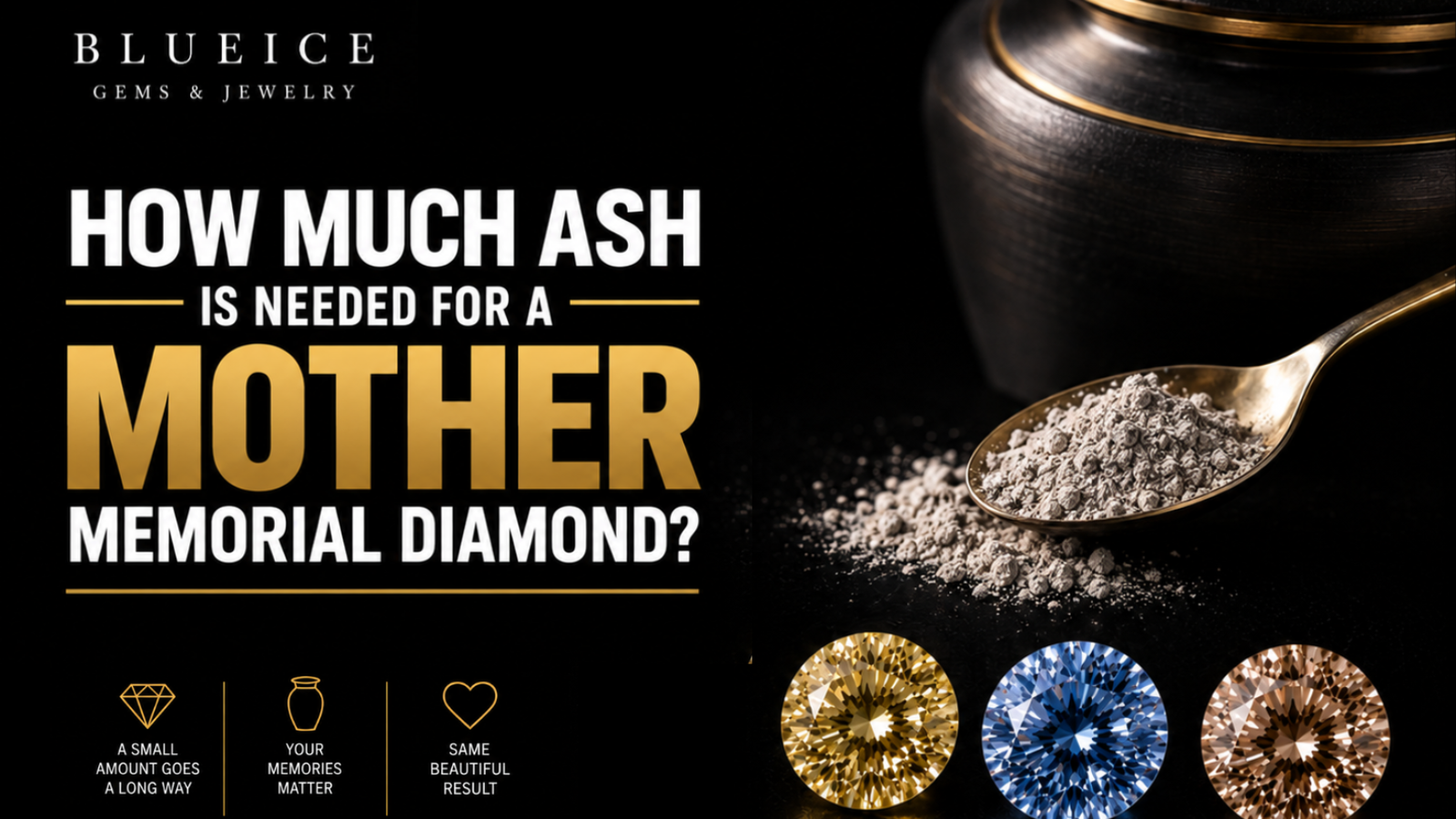
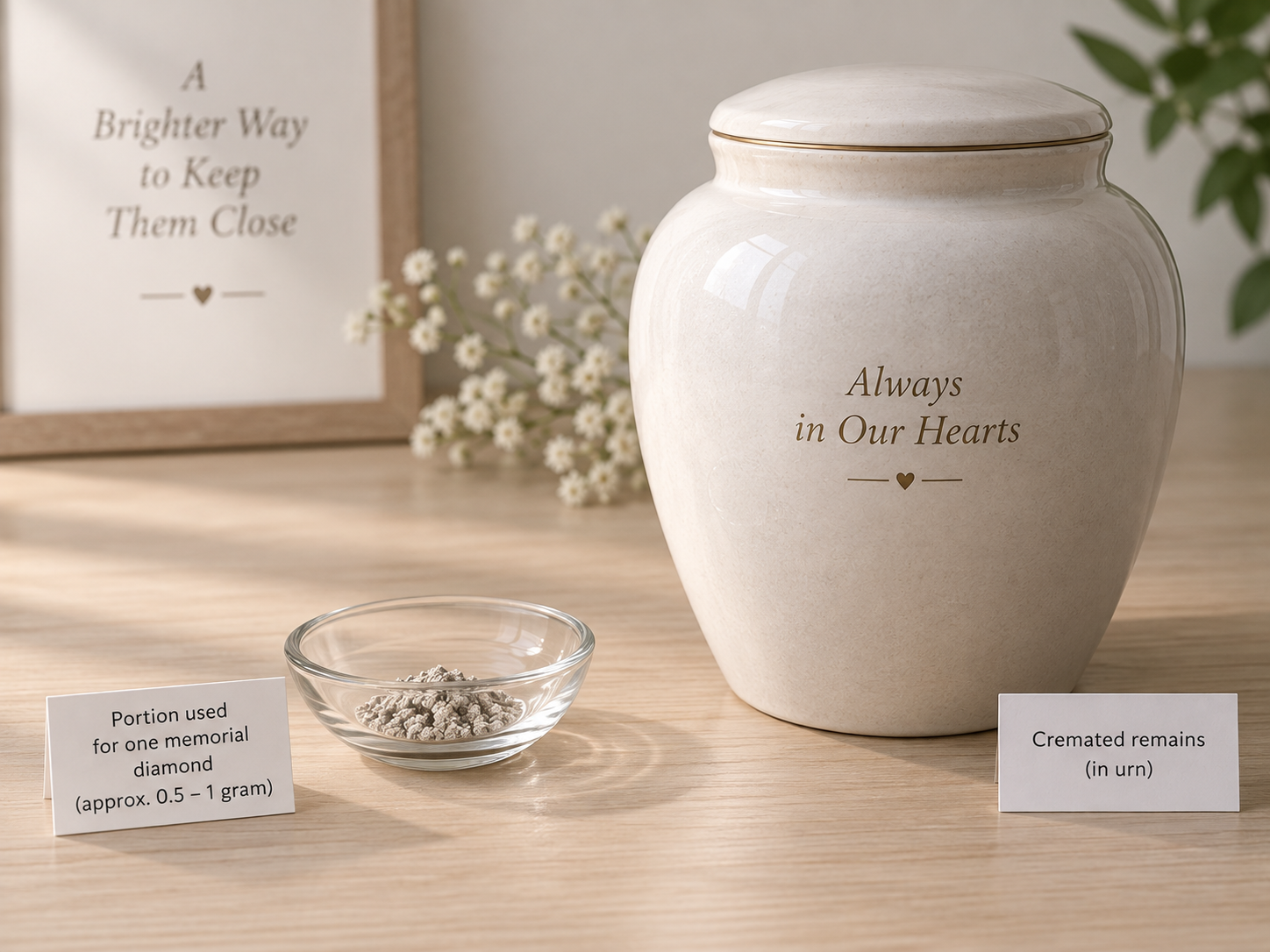
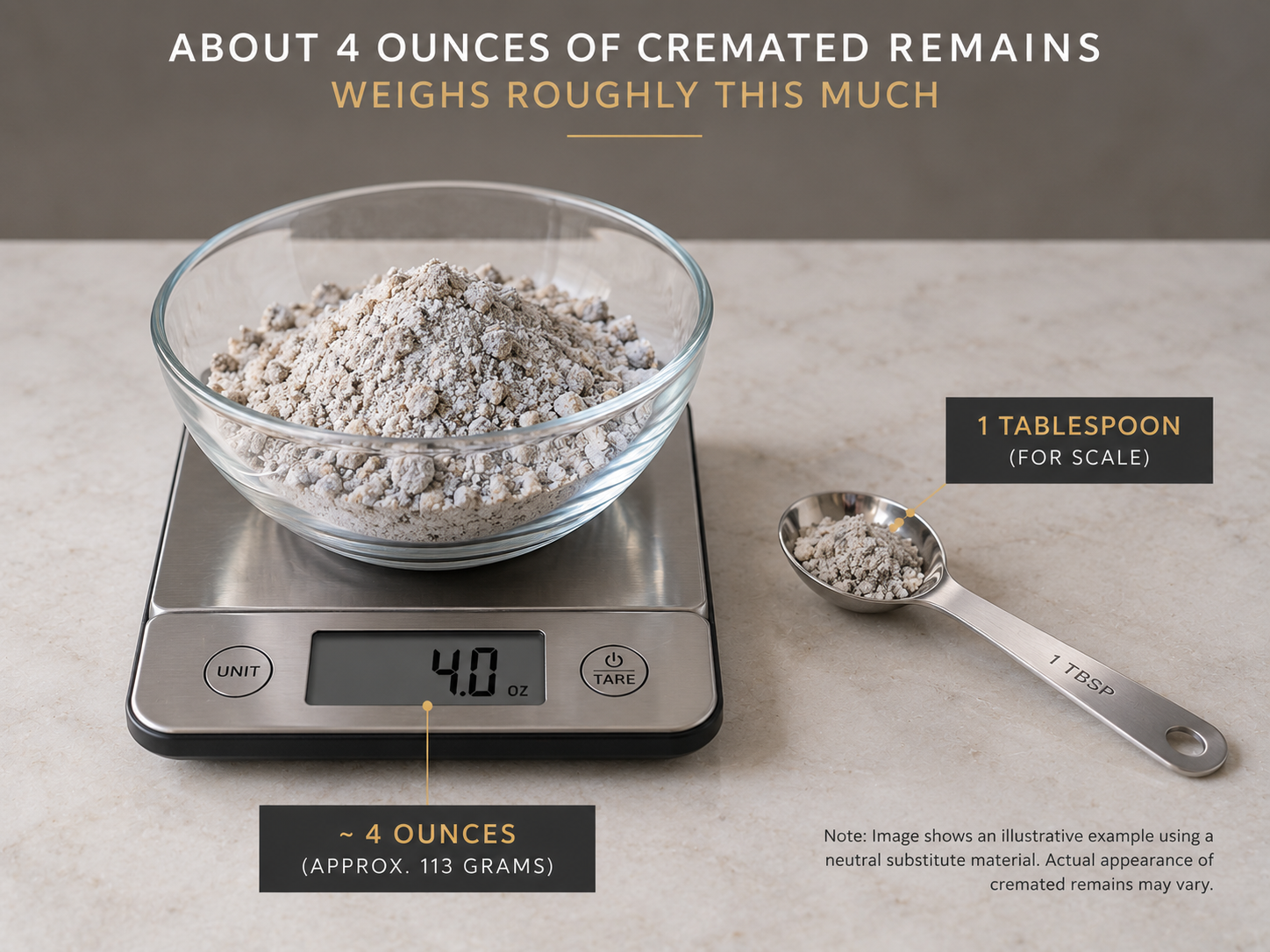
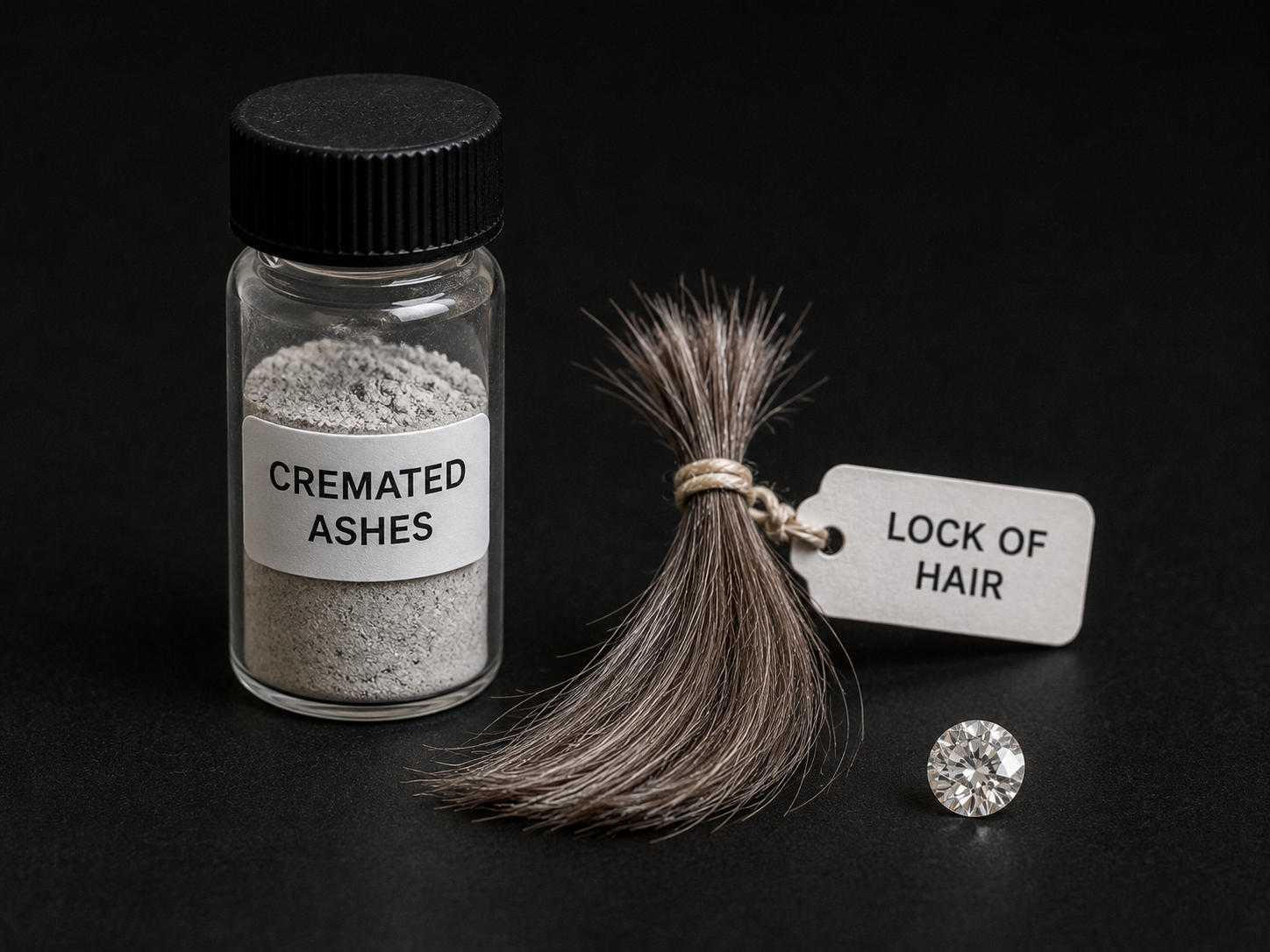
Industry typical requirements range from a few tablespoons to about 4 oz, roughly 100 grams.
A full cremation produces far more material than this amount, which allows the family to retain a portion for a diamond while continuing with an interment, scattering, or other memorial plan.
- Speak with the funeral director before release. Explain that you want to retain a portion for a memorial diamond and ask about the funeral home’s procedure.
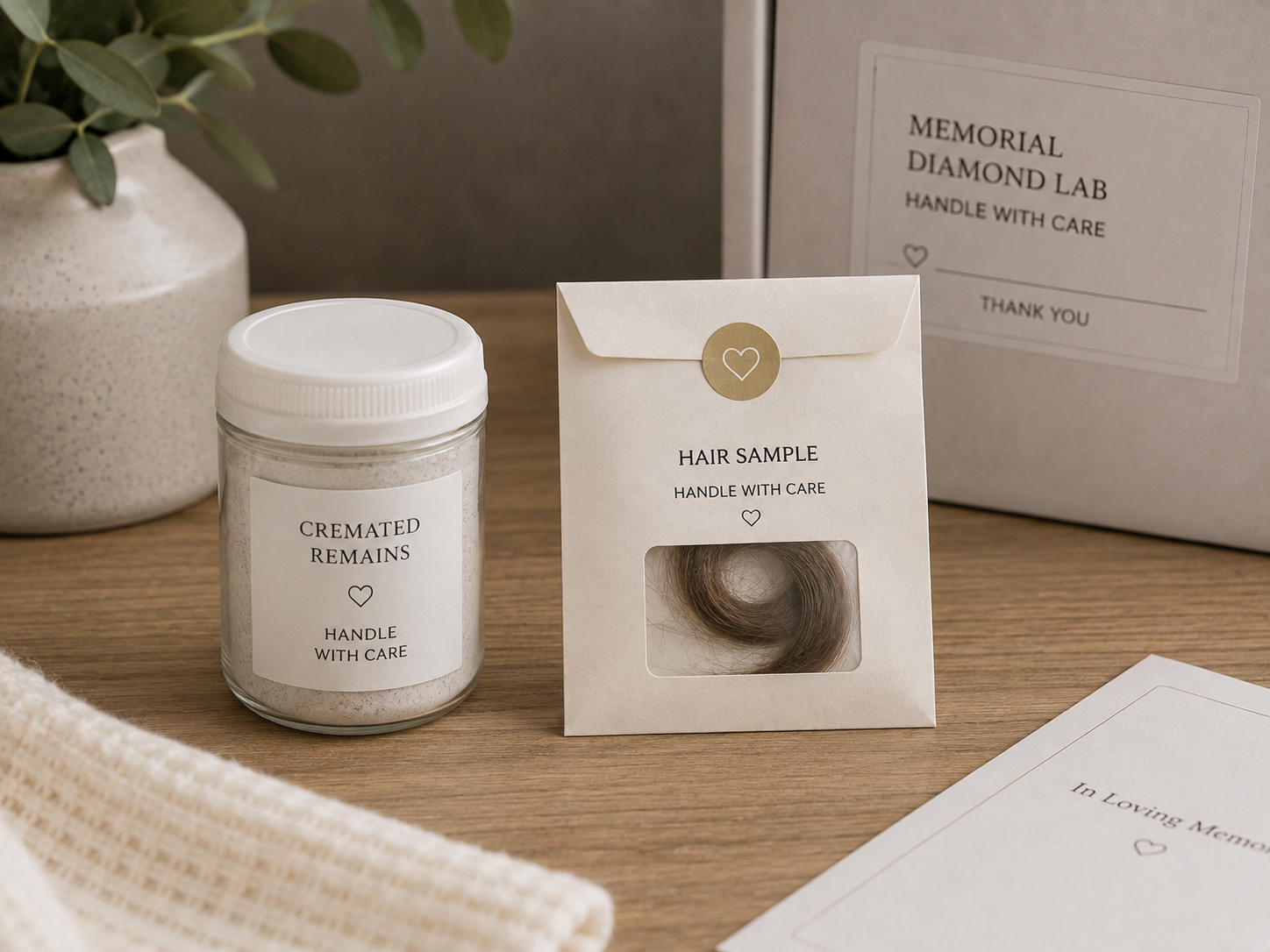
- Use a clean, sealed and labelled container. Include your father’s full name and the cremation date and ask the funeral home to record the separation in its paperwork.
- Confirm the provider’s actual minimum. Industry ranges can guide your planning, but the provider’s requirement determines how much you should send.
- Ask about unused material. Find out whether the provider returns unused ashes or requires a specific request.
Memorial Diamond has not published its own material requirement in the supplied source. Treat the figures above as industry typical and confirm the actual requirement before measuring anything.
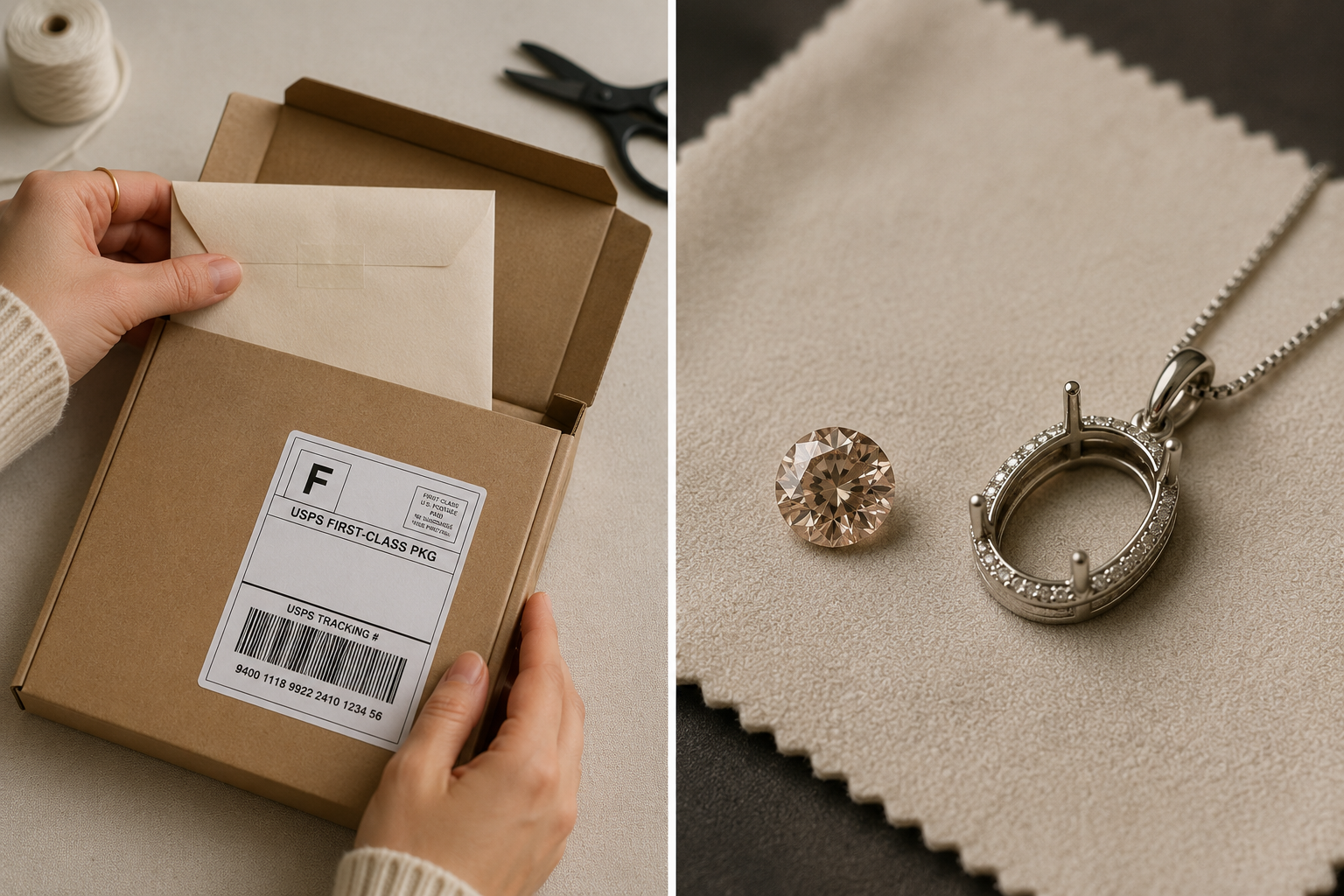
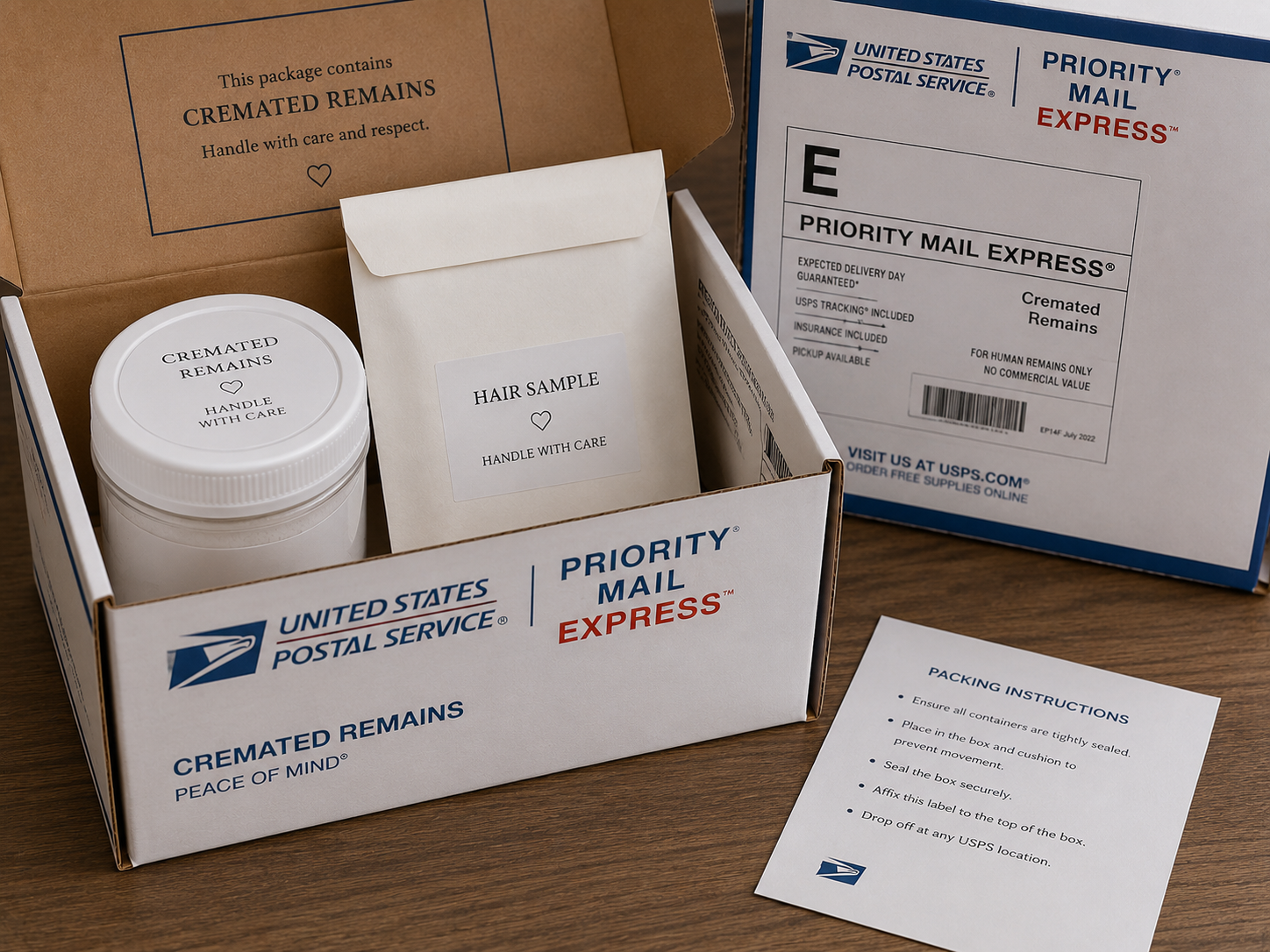
Read the step by step logistics of retaining, packaging, and sending a portion before you prepare the material.
The Ash Is Consumed Early in the Process
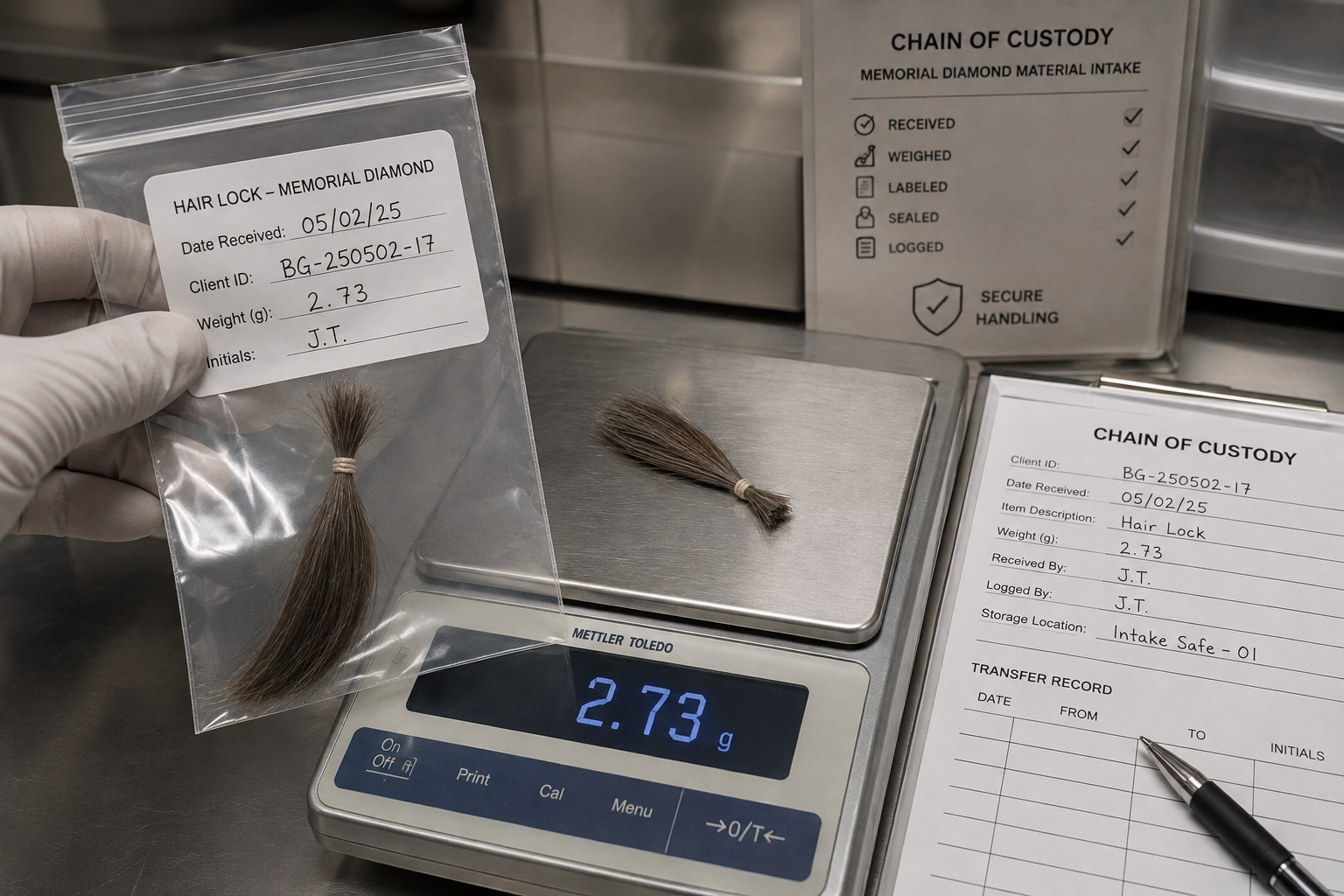
The process uses industrial chemistry and a chain of custody. The important practical question concerns the point at which the original ash no longer exists in its original form.
| Stage | What happens to the material | Is the original material still intact? |
|---|---|---|
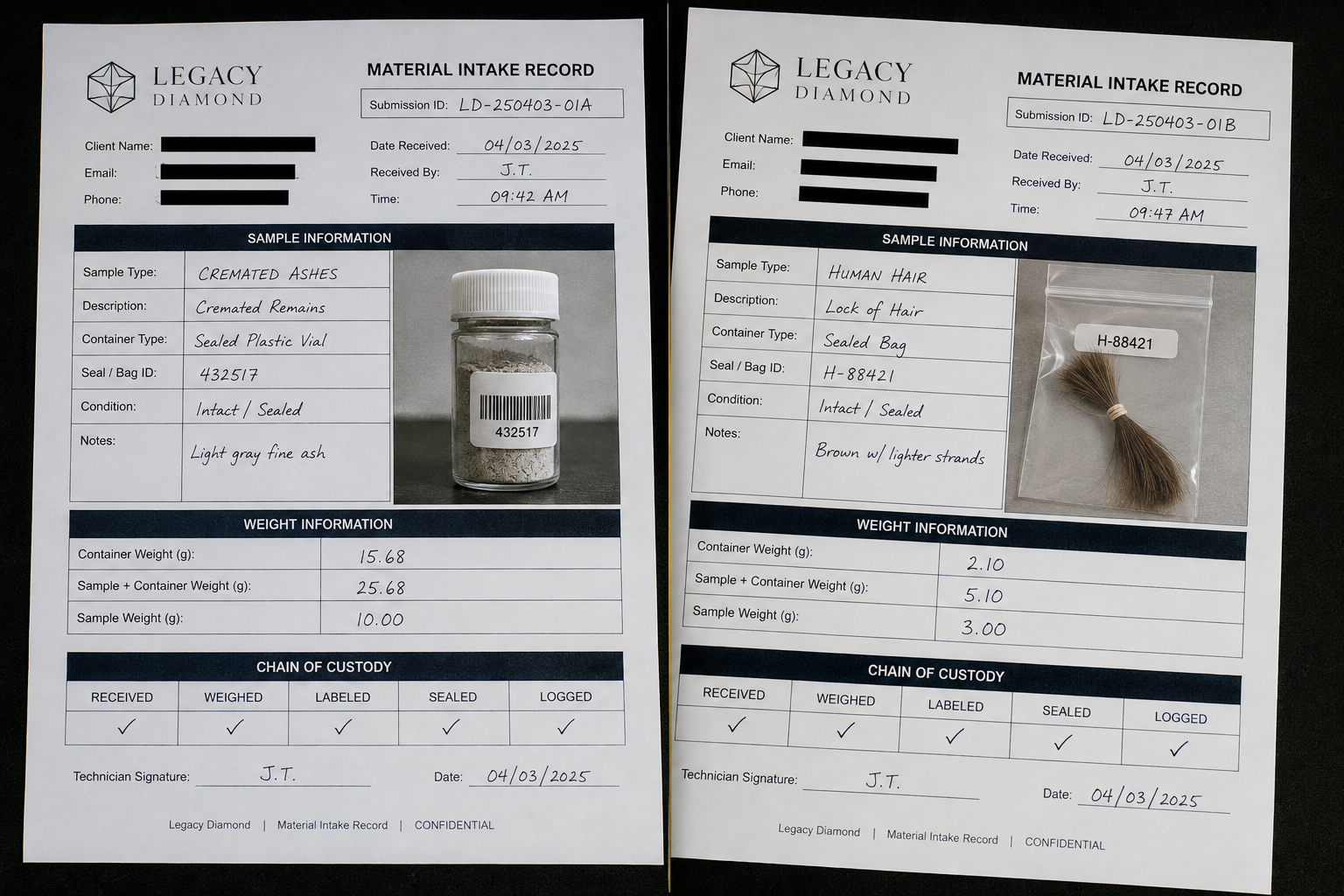
| Collection and logging | The provider receives, weighs, and logs the ashes under a chain of custody reference. | Yes |
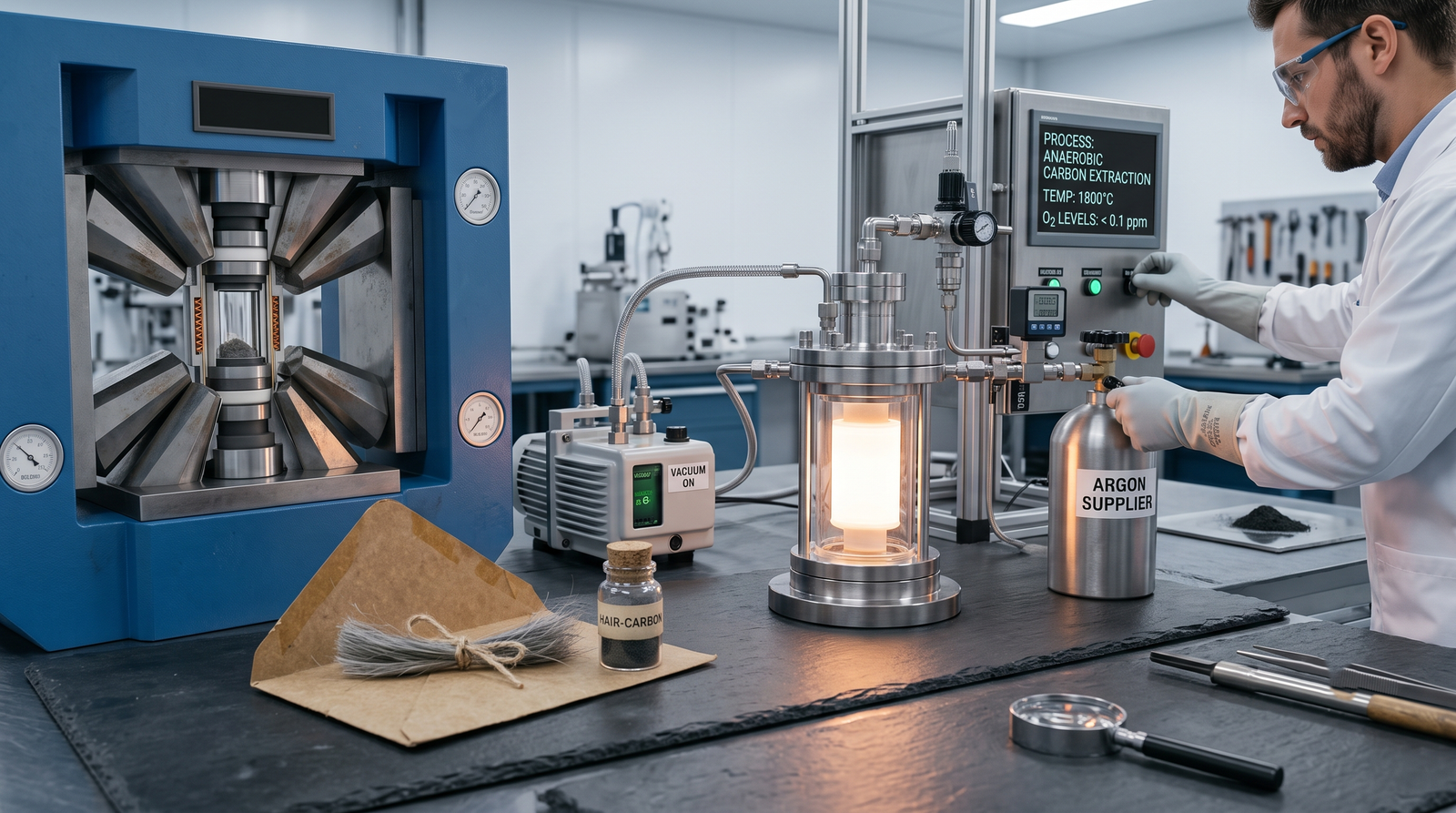
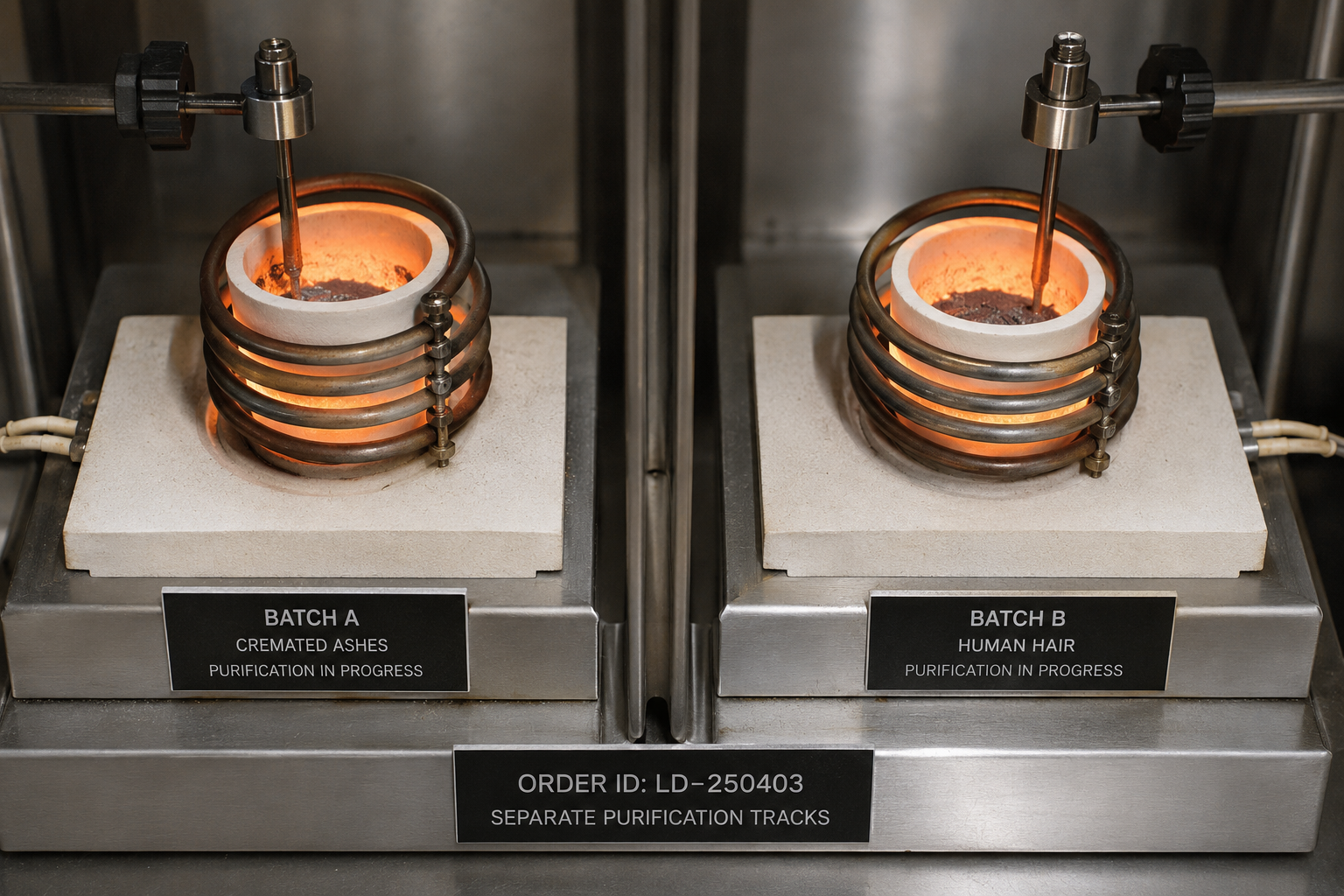
| Extraction and purification | A controlled oxygen free process removes mineral material and leaves purified carbon. | No |
| Graphitization | The purified carbon reaches roughly 2,500 to 2,700°C and converts into graphite. | No |
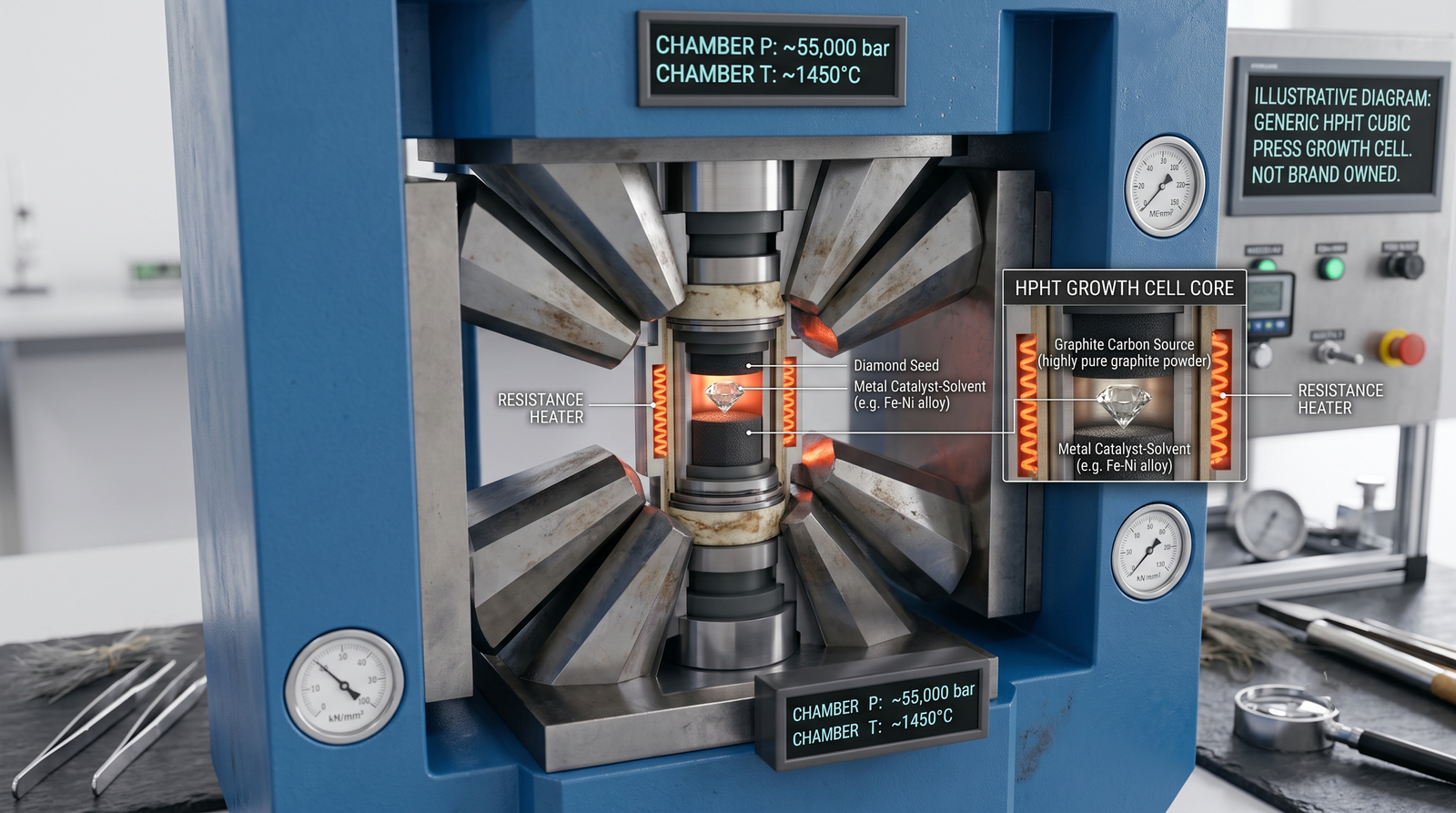
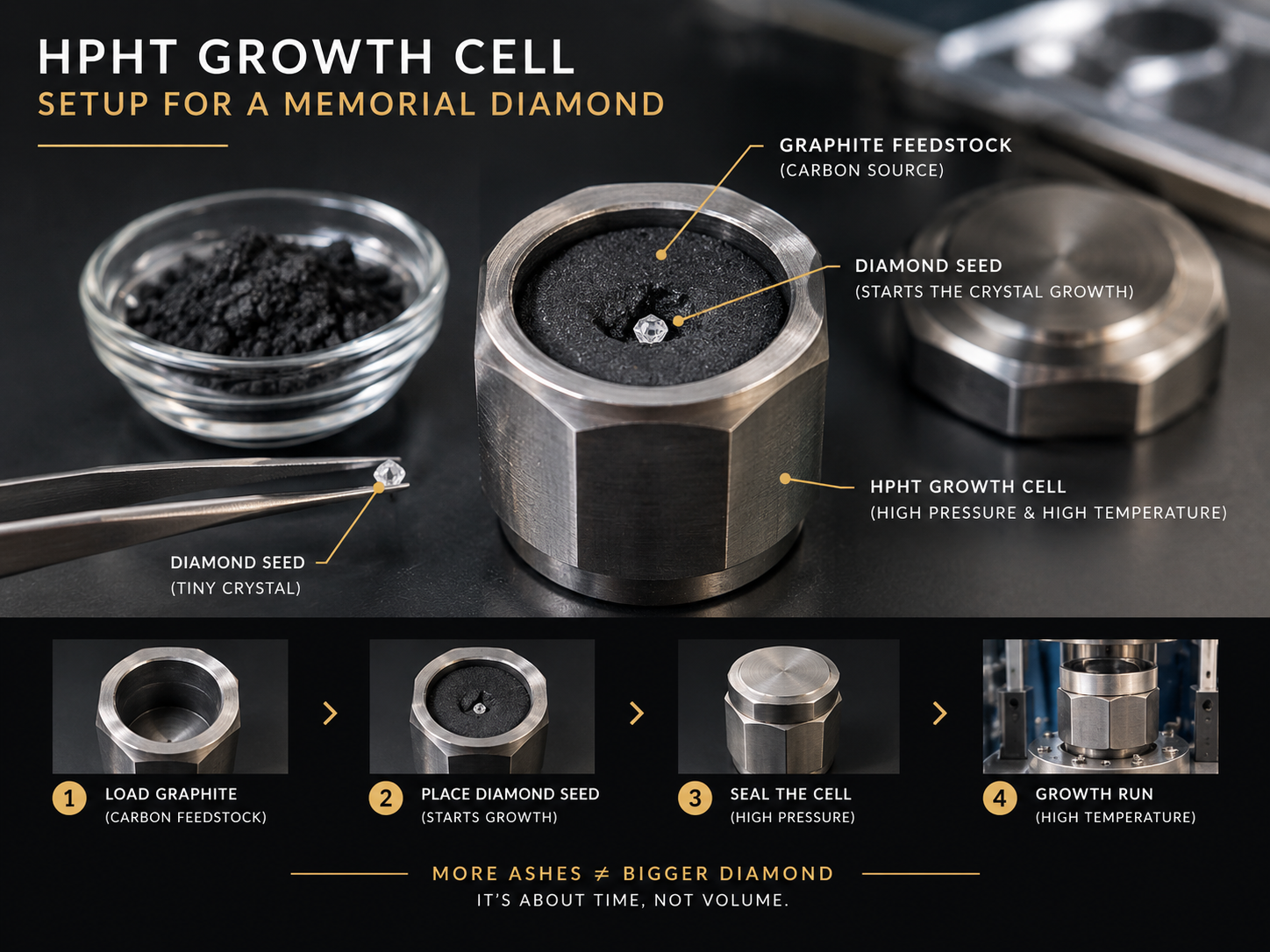
| Growth | The graphite combines with supplemental laboratory carbon inside an HPHT growth system around a diamond seed. | No |
| Cutting and polishing | A gemologist cuts and polishes the rough crystal into the selected shape. | No |
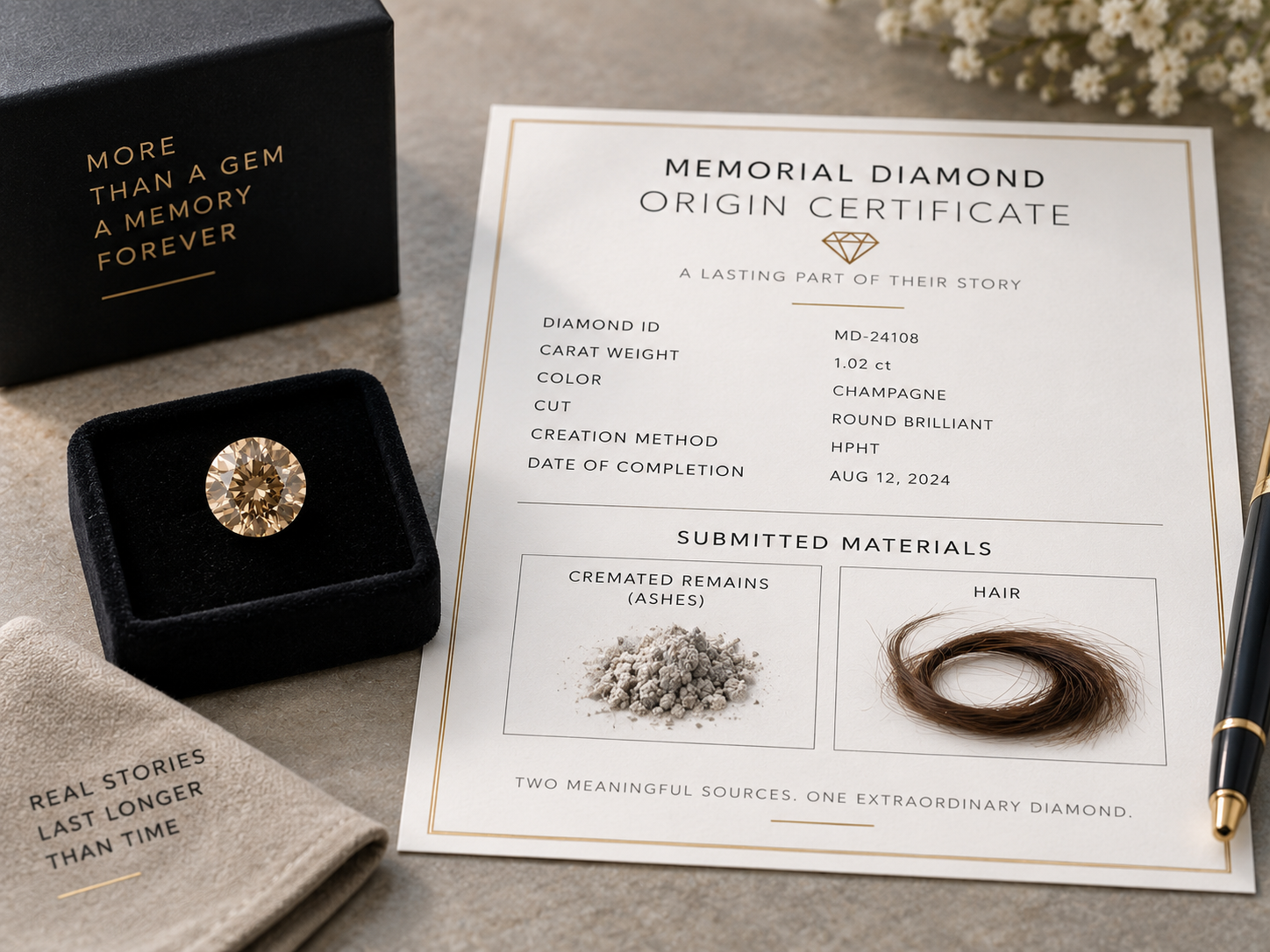
| Grading and certification | The finished stone receives grading for cut, colour, clarity, and carat. | No |
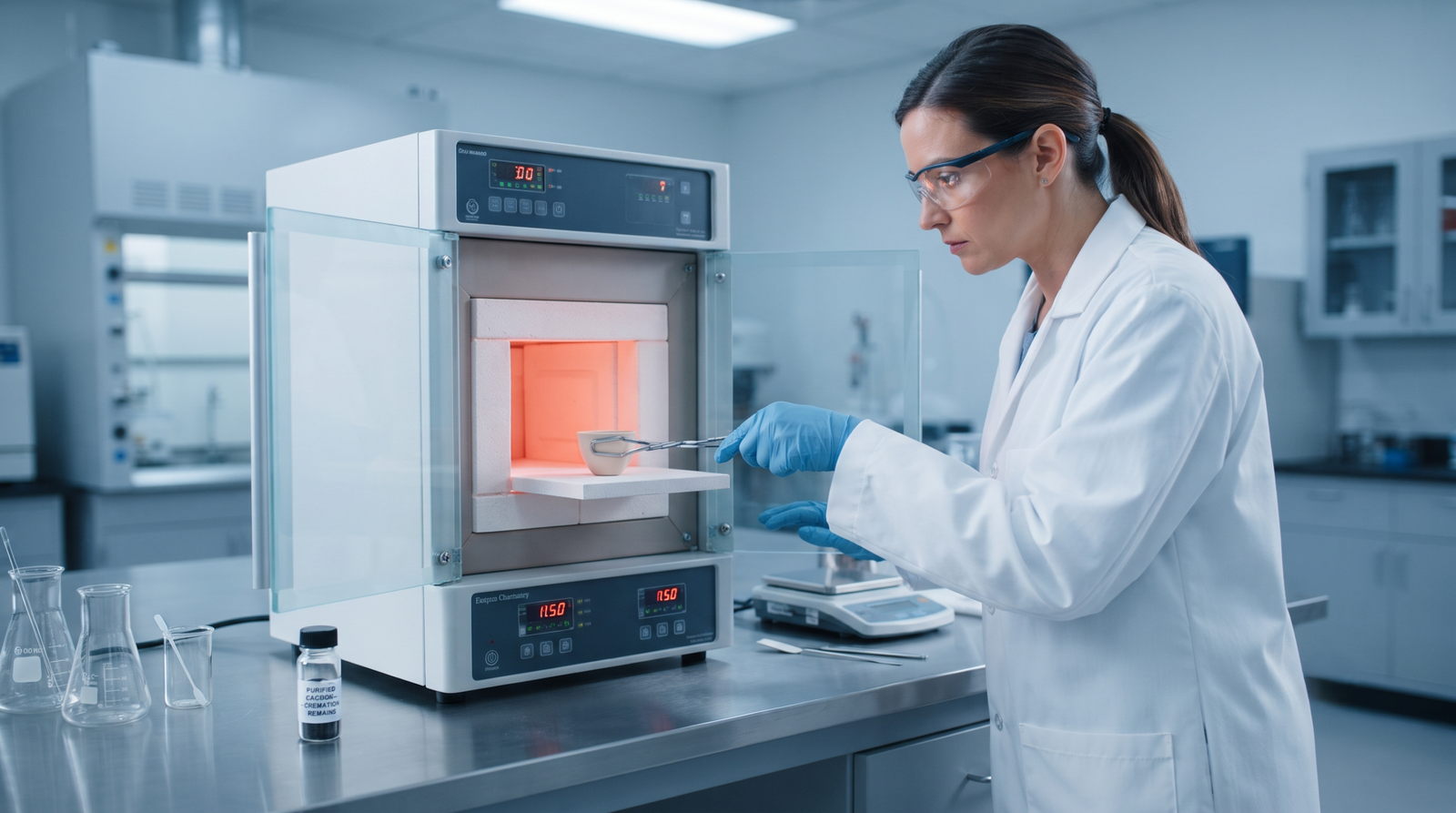
Only the collection stage leaves the original material physically recoverable. Whether a provider can pause or return the material at that point depends on its own policy.
Ask about cancellation, unused material, failed growth runs, and chain of custody before you send anything.
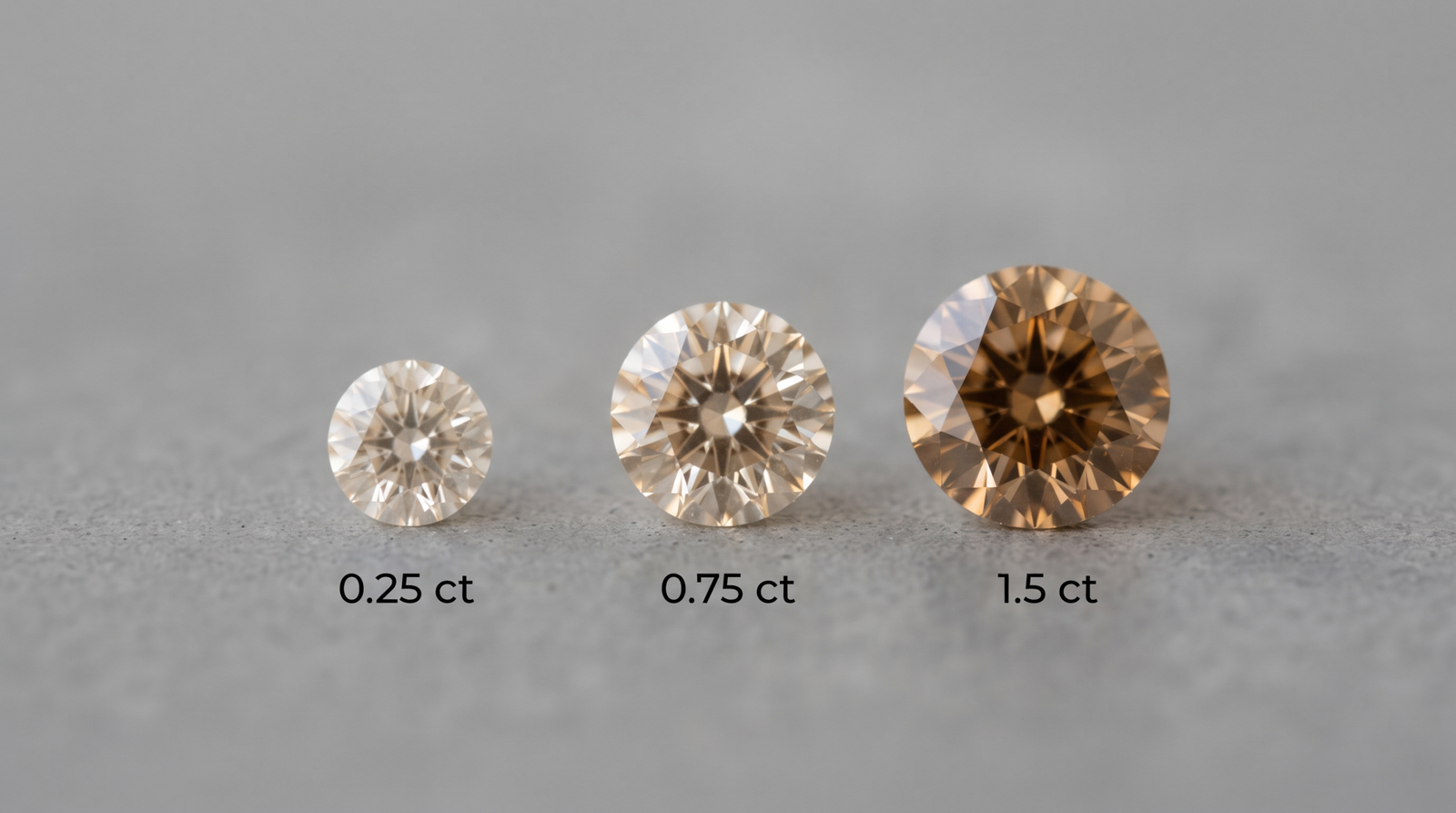
One point deserves special attention. The amount of ash does not determine the finished carat size. Growth time determines the size of the diamond.
How Long Does the Whole Thing Take?
The six to ten month production period represents only the laboratory production stage. Your complete journey can take longer.
| Phase | Typical duration |
|---|---|
| Deciding, discussing with family, and choosing a provider | 1 to 2 months |
| Retaining the portion and sending it to the laboratory | 2 to 4 weeks |
| Production from laboratory receipt to finished graded stone | 6 to 10 months |
| Setting the stone into jewellery | 2 to 6 weeks |
| Total from decision to wearing it | Roughly 8 to 14 months |
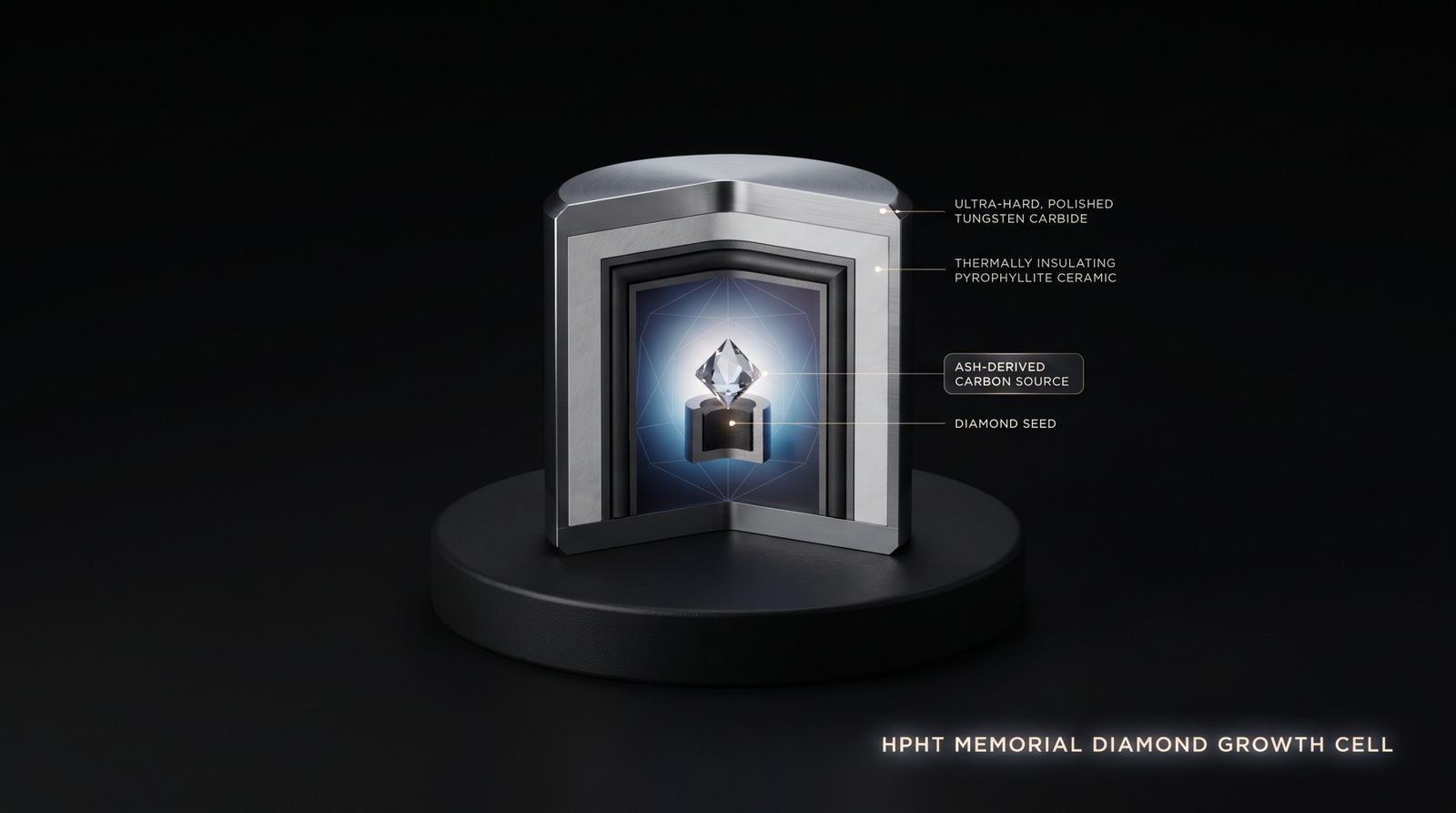
Large stones and specialty colours can extend the production period. A stone around 2 carats or larger, or a specialty colour such as black, can push laboratory production toward 12 months.
If you hope to have the finished jewellery for a first anniversary or another meaningful date, work backwards from that date.
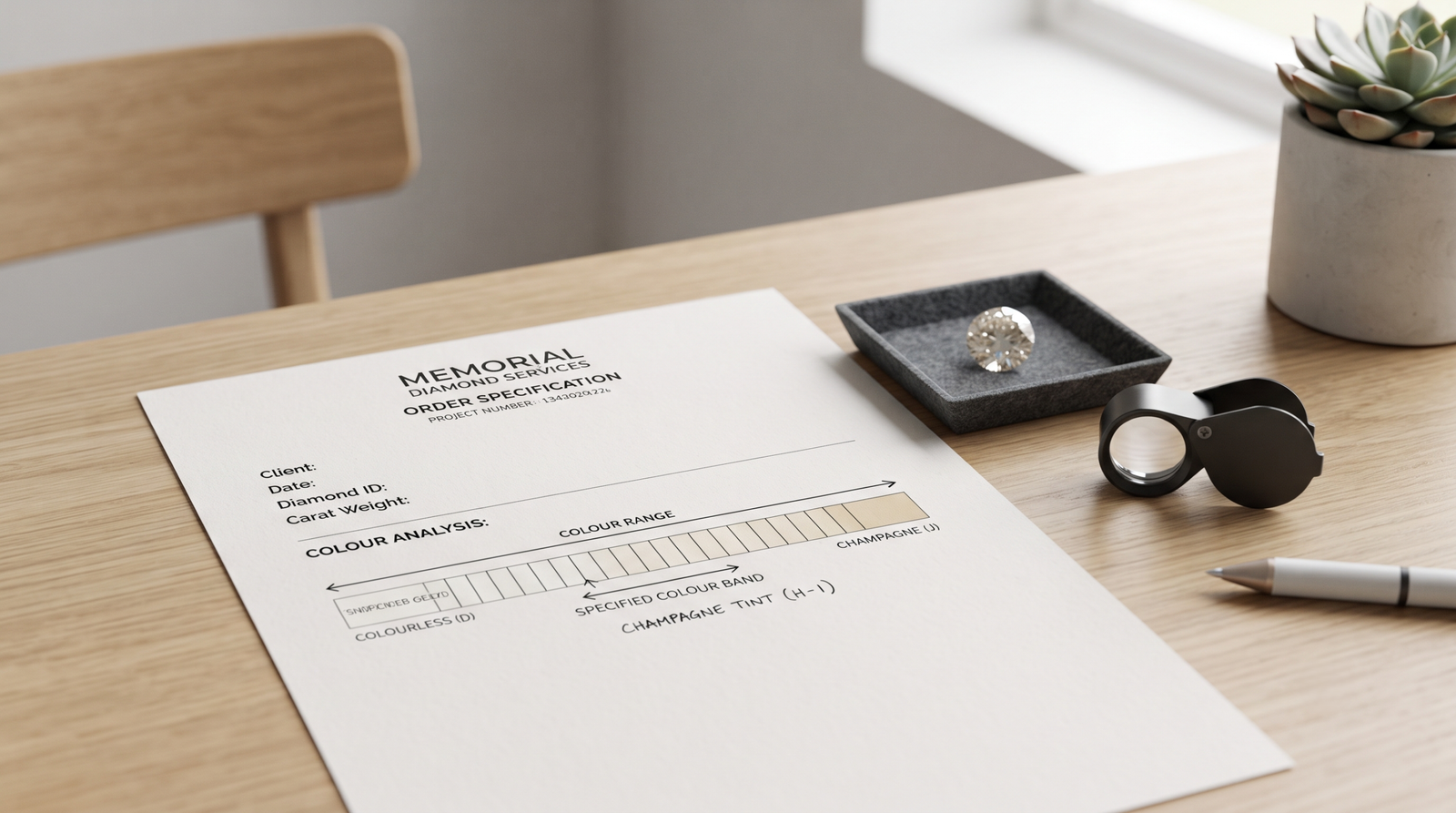
What Colour Will His Diamond Be?
Diamond colour comes from trace elements present during crystal growth.
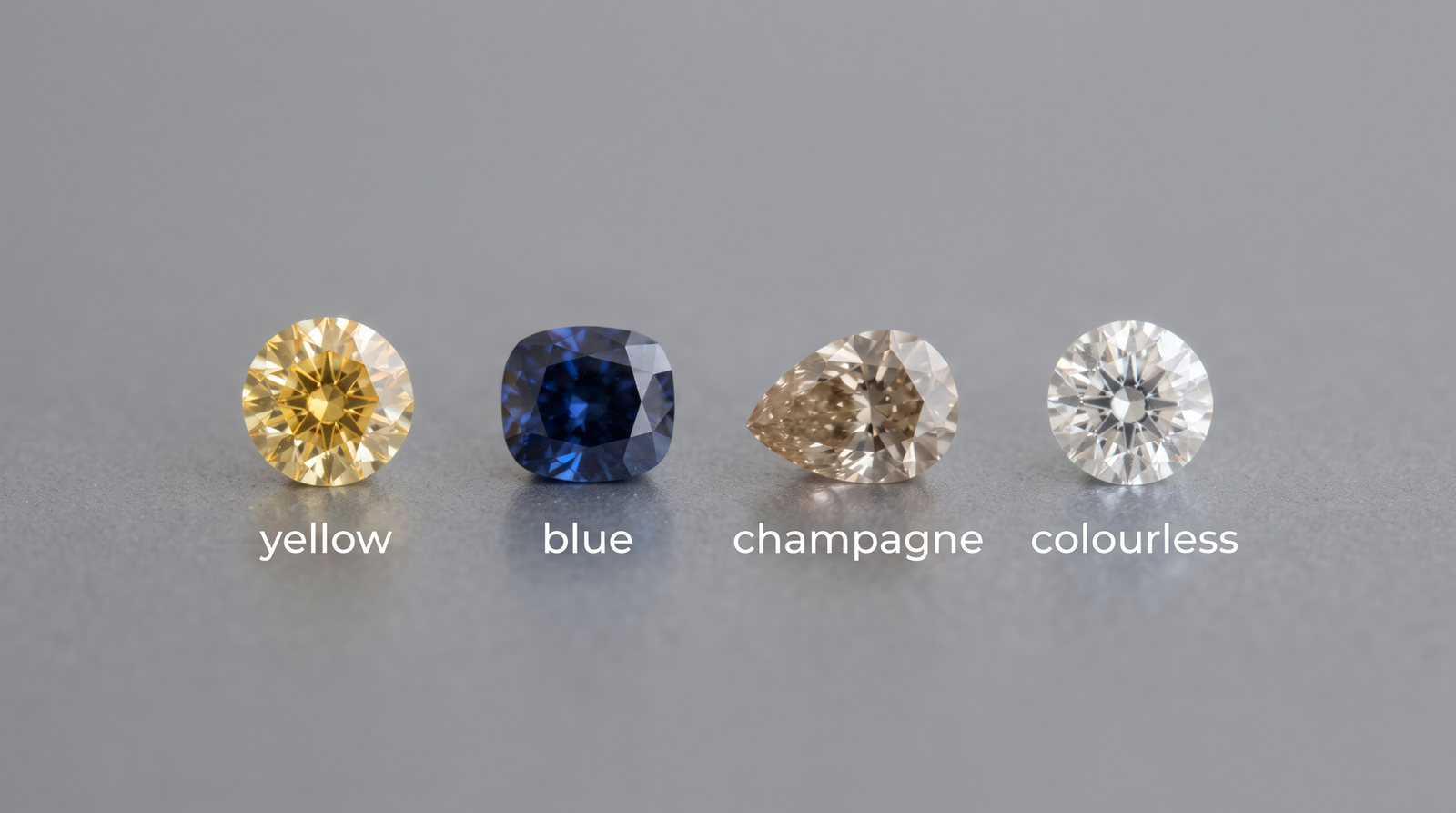
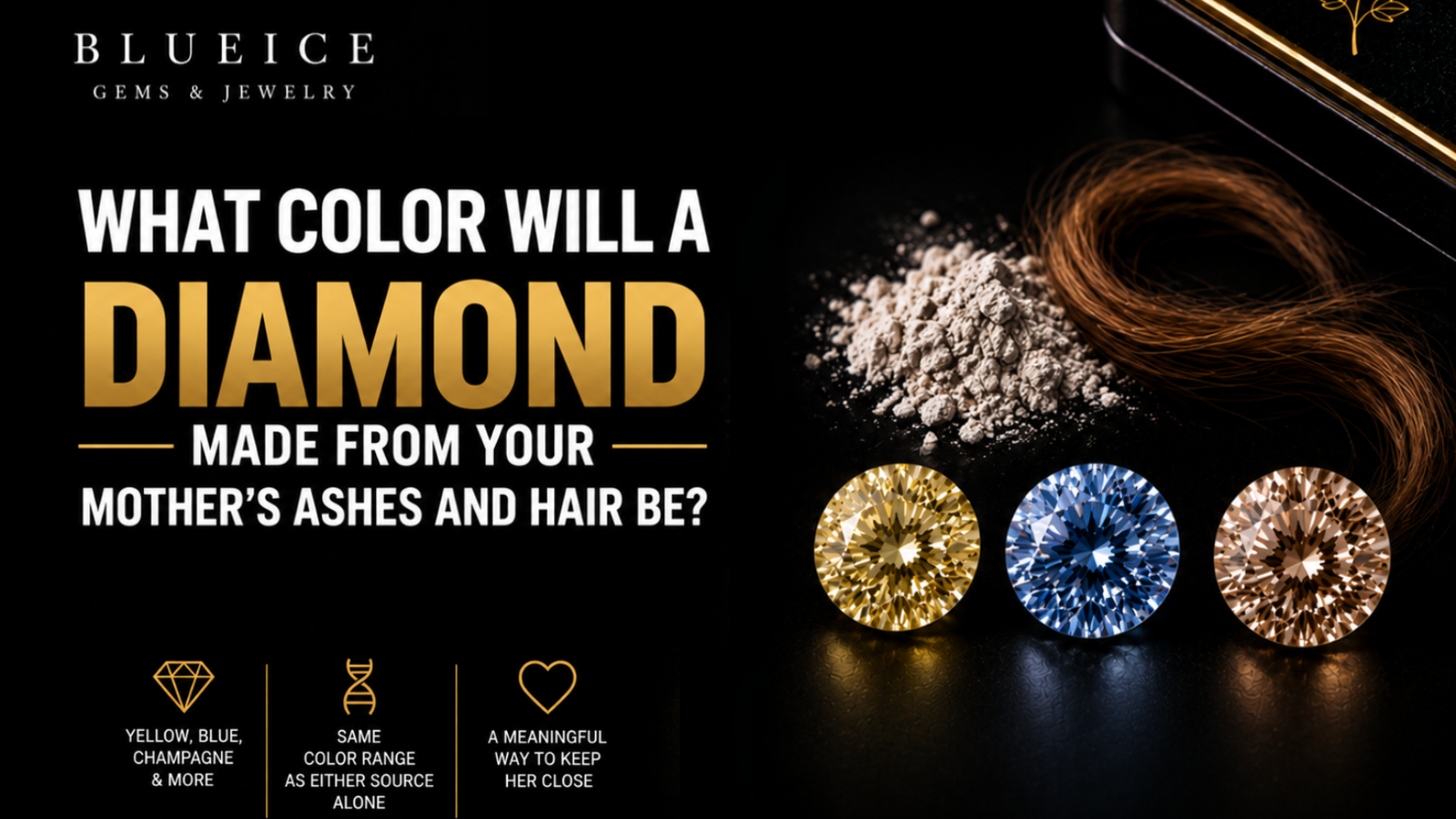
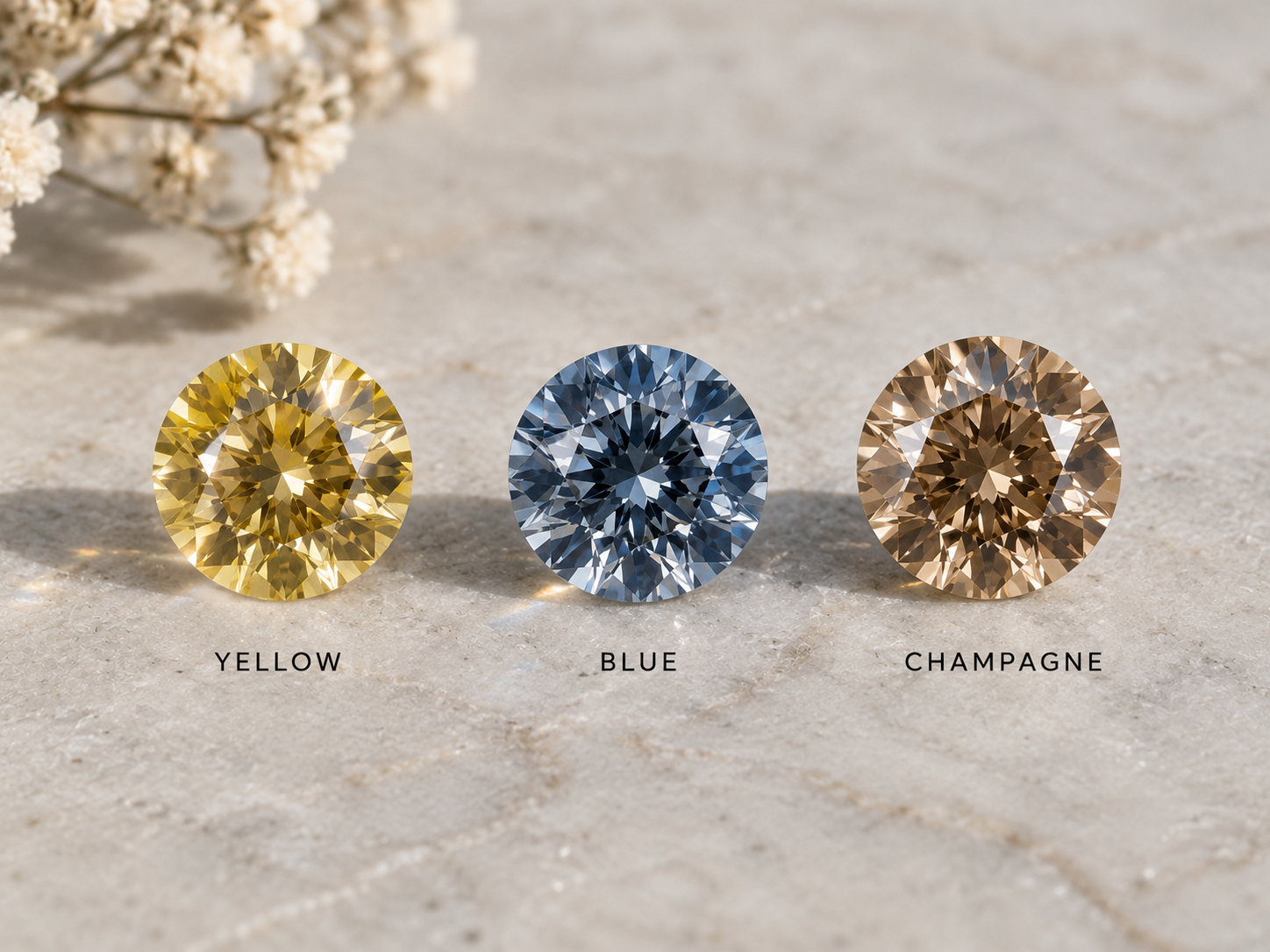
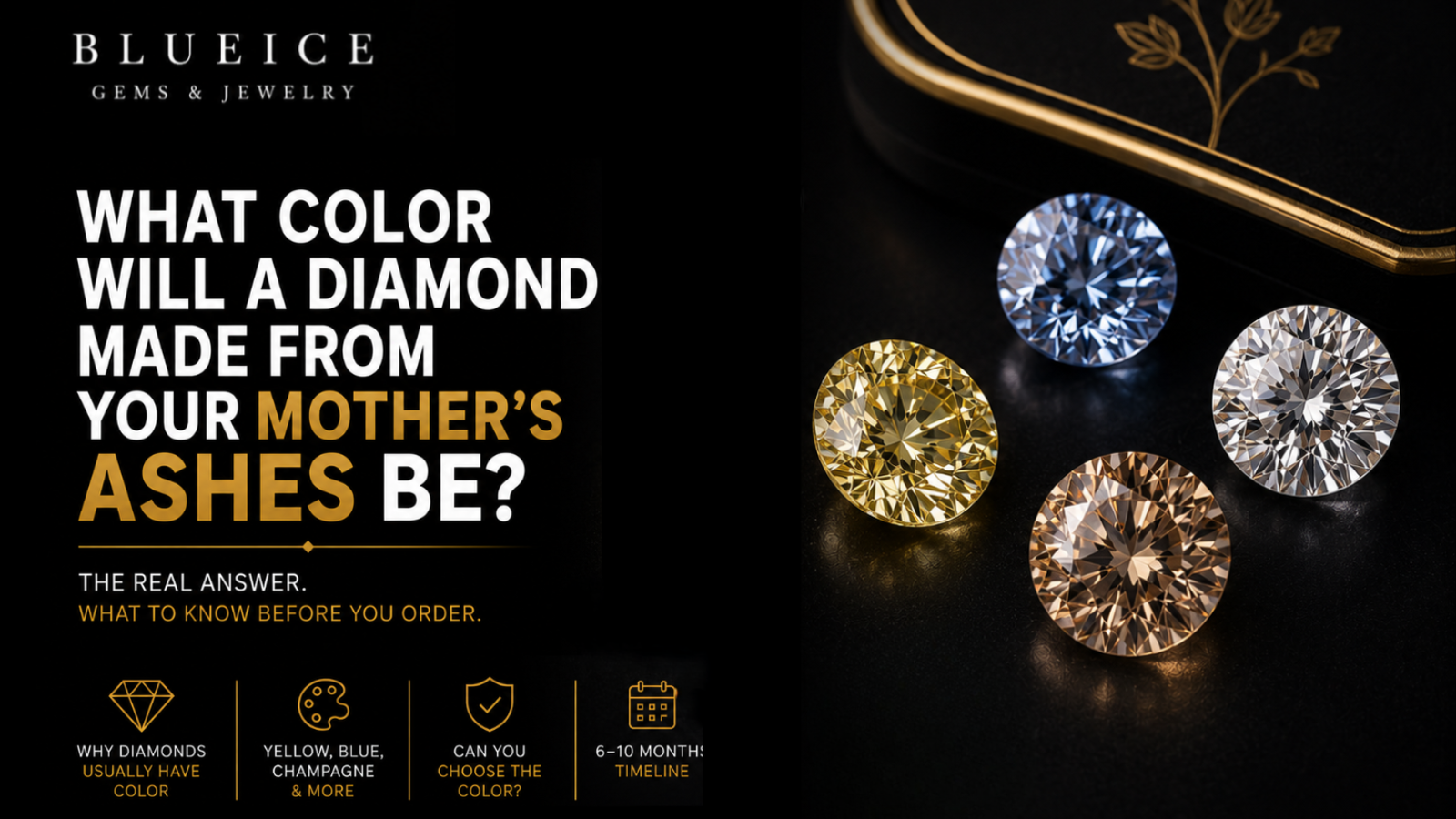
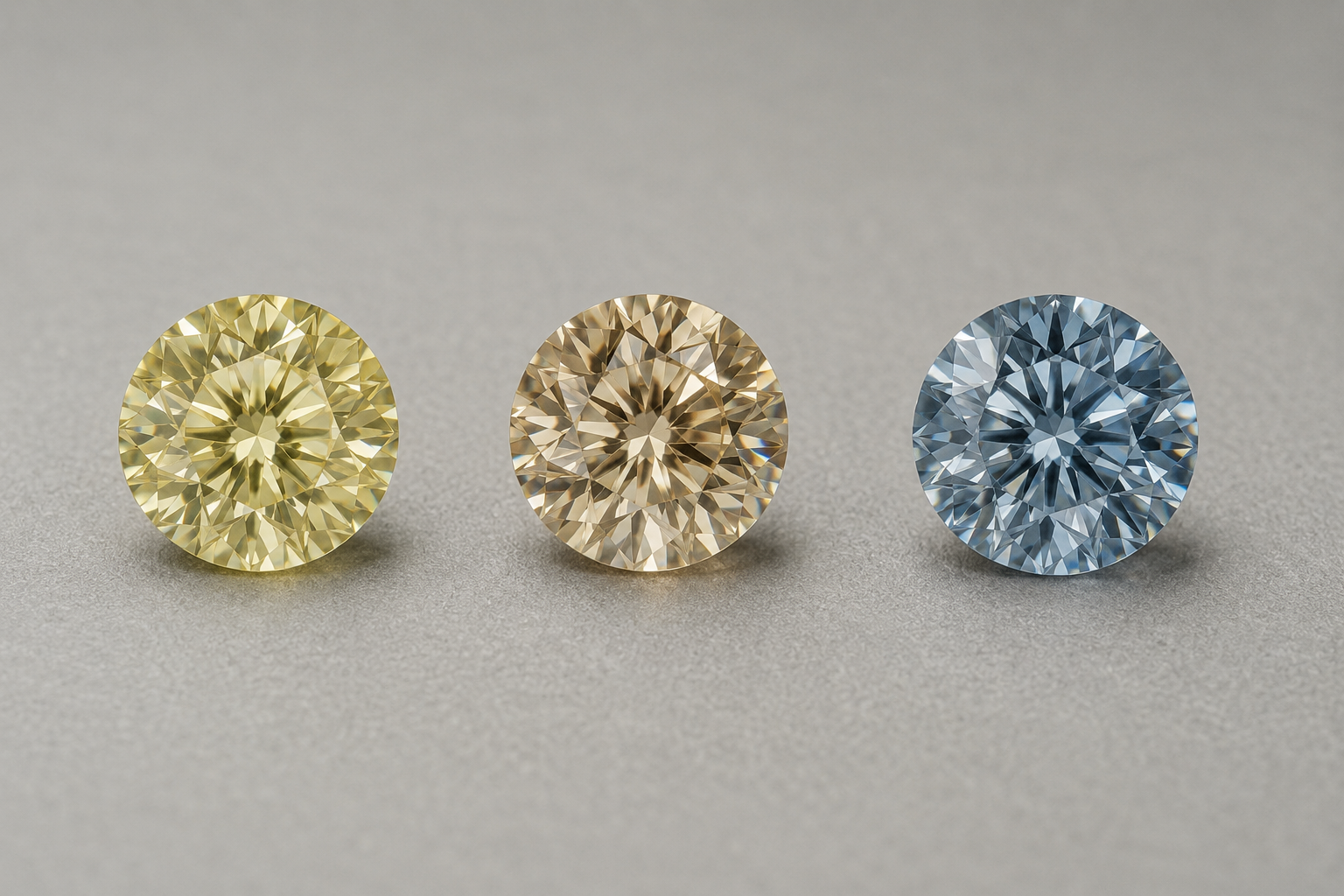
Nitrogen can produce yellow. Boron can produce blue. A colourless stone requires the near total absence of both elements.
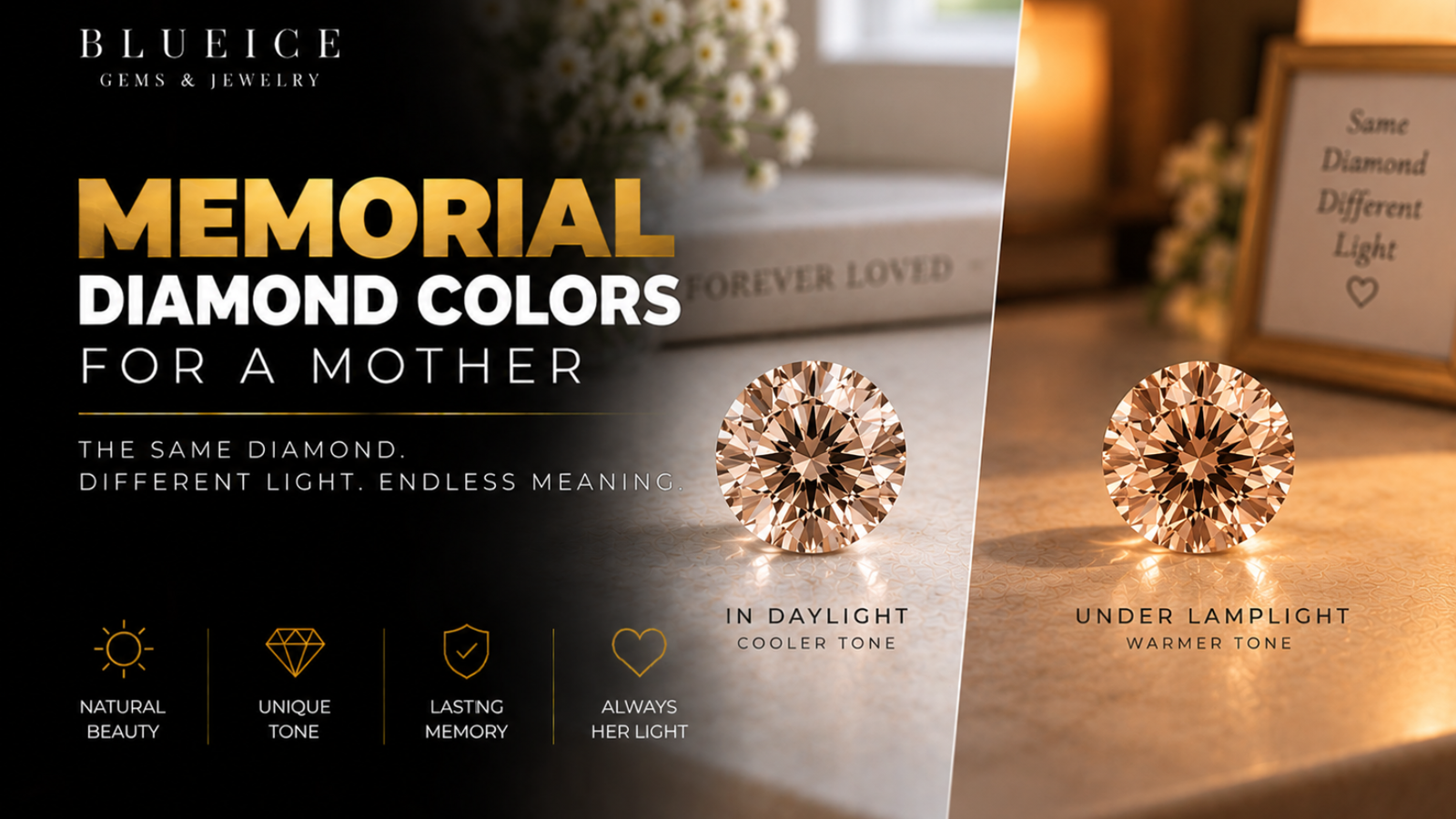
Because memorial diamond production uses carbon from an organic personal source, trace elements can remain present. That makes yellow, blue, and champagne or brown tones common outcomes.
Some providers also offer post growth irradiation for colours such as red, pink, green, or black.
No provider can honestly promise one exact natural shade before the stone grows. The source material and growth conditions influence the final colour.
Read what to expect from the colour of a diamond made from your father’s ashes for a more detailed explanation.
What Does a Father Ashes Diamond Cost?
The following figures represent general 2026 industry ranges rather than Memorial Diamond’s published prices.
| Size tier | Typical carat | Typical industry price range |
|---|---|---|
| Entry | 0.10 to 0.25 carats | Approximately $1,500 to $3,500 |
| Mid | 0.5 to 1 carat | Approximately $5,000 to $15,000 |
| Large or rare | 2 to 5 carats or more | Approximately $20,000 to $75,000 or more |
Carat, colour, cut, and independent grading can affect the final price. A setting and engraving usually create additional costs.
Read what actually drives the cost of a father memorial diamond for a more detailed pricing breakdown.
A Military or Service Interment Leaves Less Slack
A military or service interment often follows its own ceremony, schedule, and custody process. The funeral home may release the remains directly to a national or service cemetery.
The practical consequence remains simple. Retain the portion before the funeral home releases the remains.
Ask the funeral director rather than waiting until the cemetery receives the ashes. Raise the subject early and explain exactly what you want to retain.
Read memorial diamonds for a veteran for more information about the service specific considerations.
The Stone Can Go Into a Ring He Already Wore
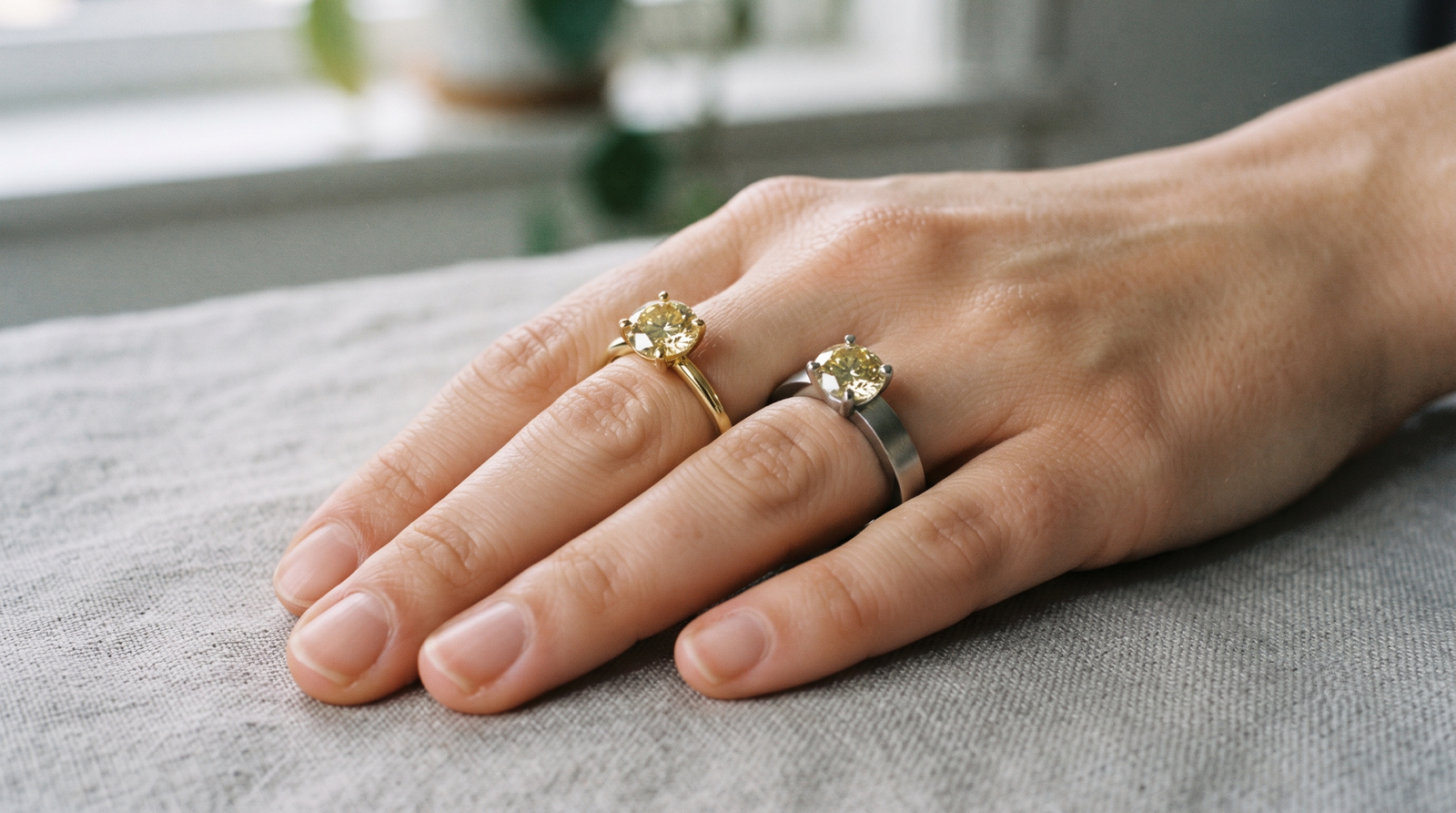
A finished father memorial diamond does not have to go into a completely new piece of jewellery.
If your father left a wedding band, signet ring, or another suitable piece, a jeweller may be able to set the finished diamond into something he already wore.
This approach can reduce the cost of commissioning a completely new piece. More importantly, it can give the finished memorial a direct connection to something that already belonged to him.
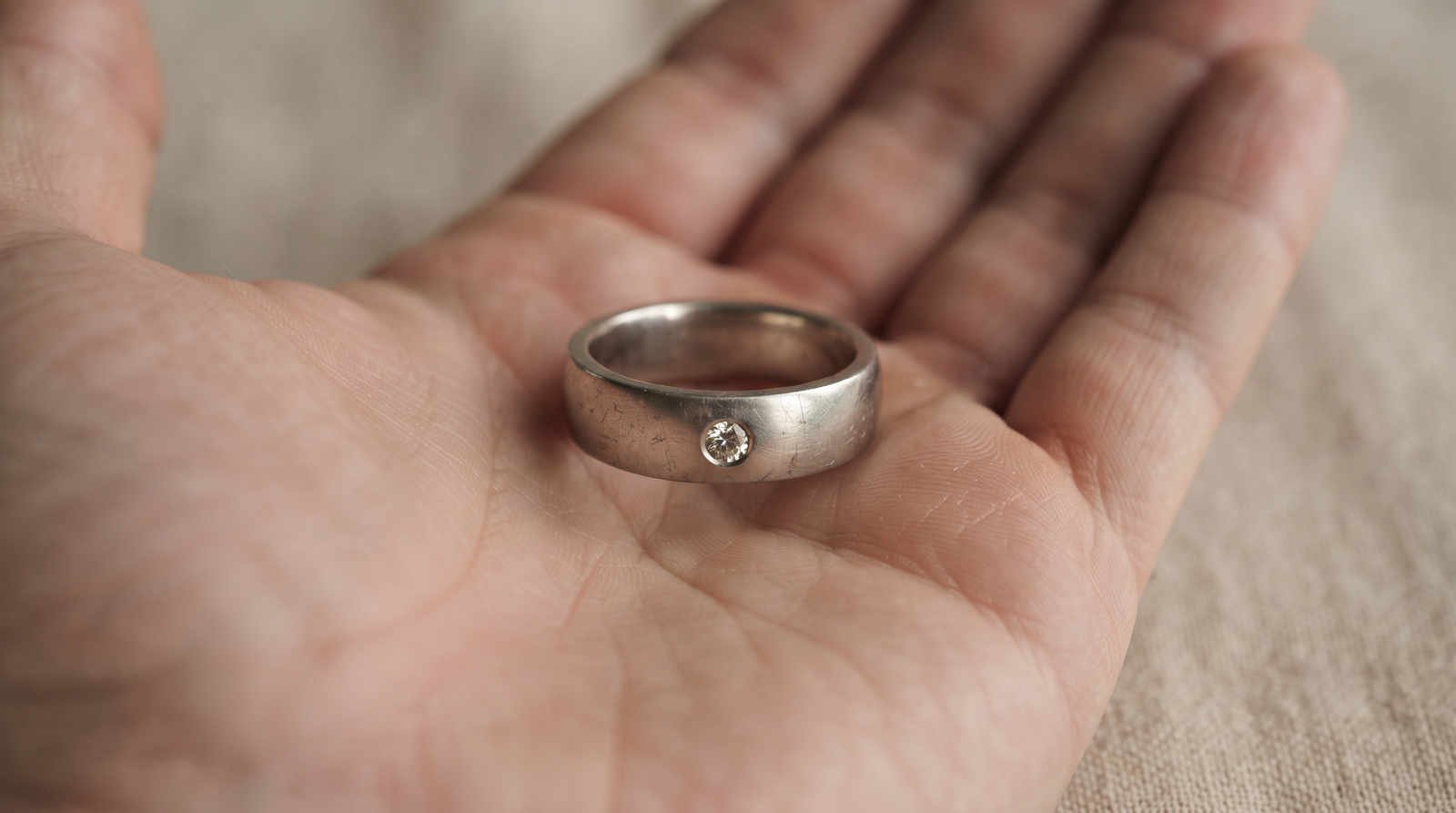
The jeweller needs to examine the existing piece first. An older ring may have a worn shank or insufficient metal for a new seat. Cutting a new seat into a weak band could create another structural problem.
Because you cannot replace the memorial diamond if you lose it, choose security over appearance when the two conflict.
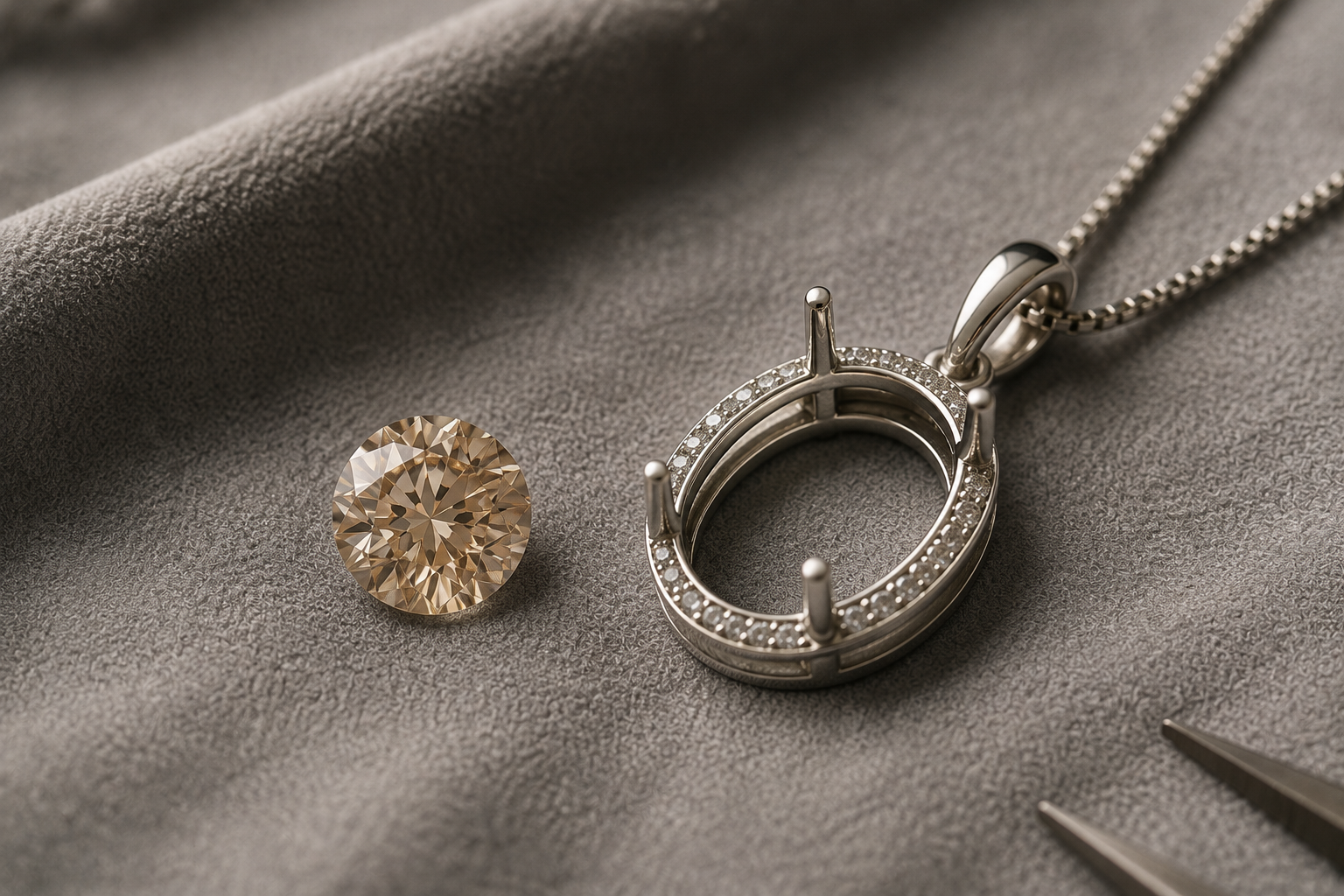
Read settings and jewellery options for a father memorial diamond before selecting the final design.
What Should You Decide, and in What Order?
Some decisions have deadlines. Others can wait.
- Find out whether a date exists for the rest of his ashes. This decision comes first because an interment or scattering can close the ashes route.
- Decide who needs to participate. Consider whoever holds the remains, whoever arranges the interment, and anyone whose plans will change.
- Choose the material. You may consider ashes, hair, or both together when your provider accepts the relevant route.
- Choose the carat. Carat affects both production time and most of the cost.
- Choose colour and cut. Consider whether a specialty colour justifies additional time and cost.
- Ask the provider the difficult questions. Discuss chain of custody, unused material, HPHT or CVD growth, independent grading, failed growth runs, cancellation, and timelines.
The first two decisions carry the most urgency. The remaining decisions can take the time you need.
Frequently Asked Questions
How soon before a scheduled interment do we need to decide?
Raise the subject before the funeral home releases the remains to the cemetery or the person carrying out the scattering. Ask the funeral director when that release will happen.
You do not need to commit to a provider immediately. Retaining a portion can keep the option open while your family continues with the rest of its plans.
Can a funeral home hold back a portion of his ashes?
Ask the funeral director in writing before release. Ask about their procedure for separating, labelling, and documenting the portion.
Once an urn reaches a cemetery, the conversation becomes considerably more difficult.
Can we still bury or scatter the rest of his ashes?
Yes. A memorial diamond generally uses only a portion of the cremated remains. Industry typical requirements range from a few tablespoons to around 4 oz.
The family can therefore continue with an interment, scattering, or other plan for the remaining ashes.
What if his ashes have already been interred or scattered?
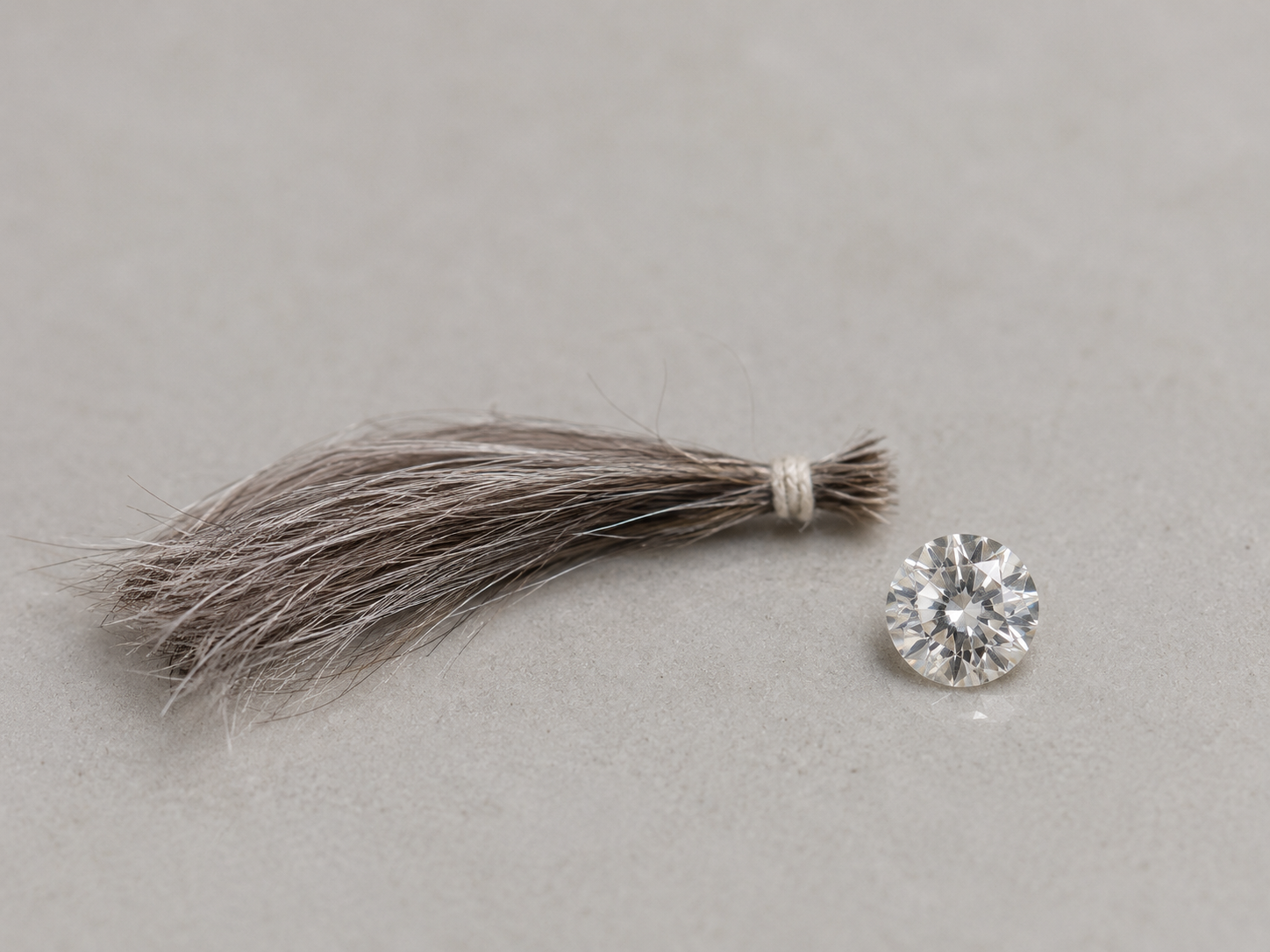
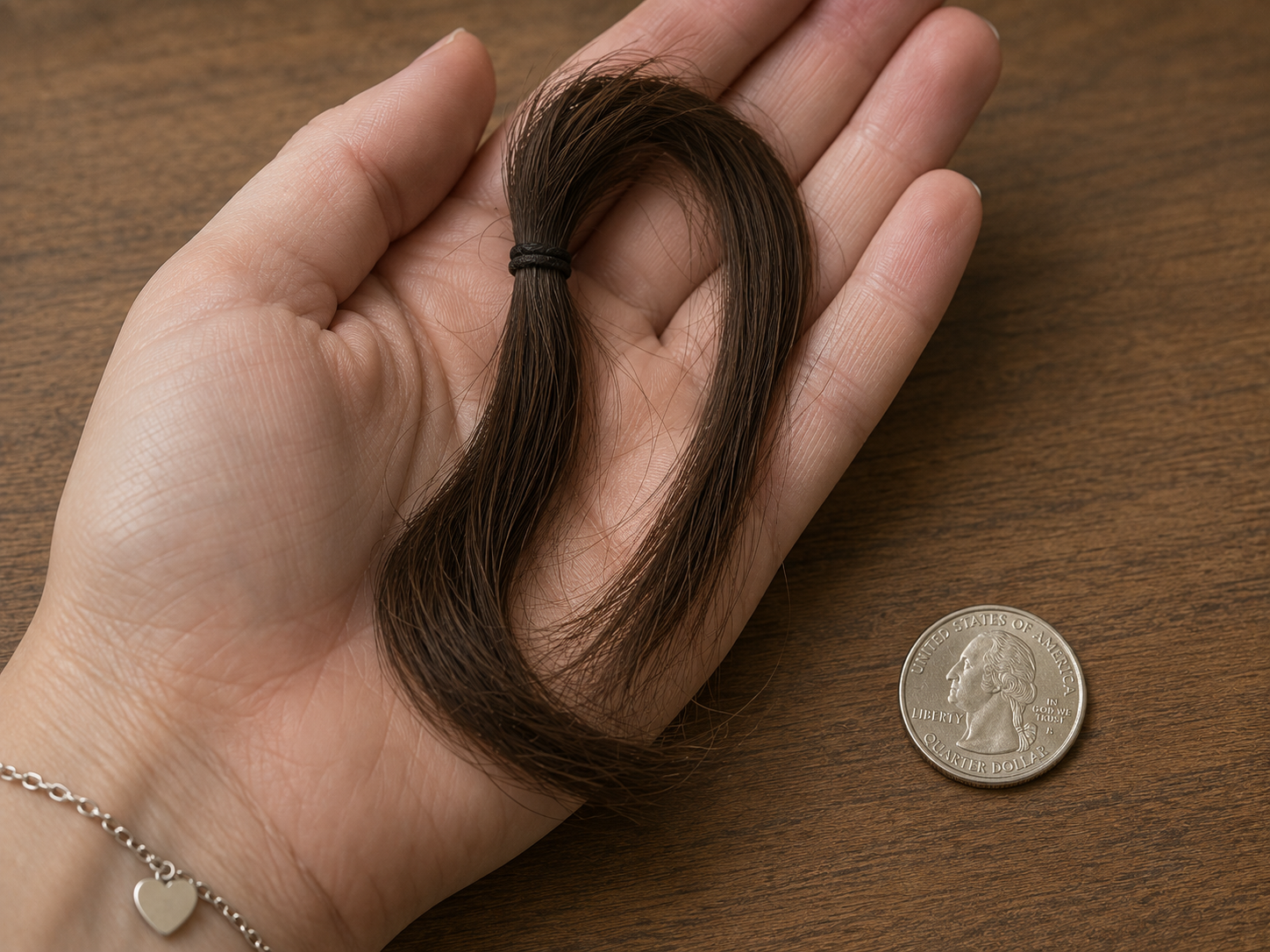
The ashes route may have closed, but a hair based route can remain available. Hair contains roughly 50% carbon by weight and does not require cremation.
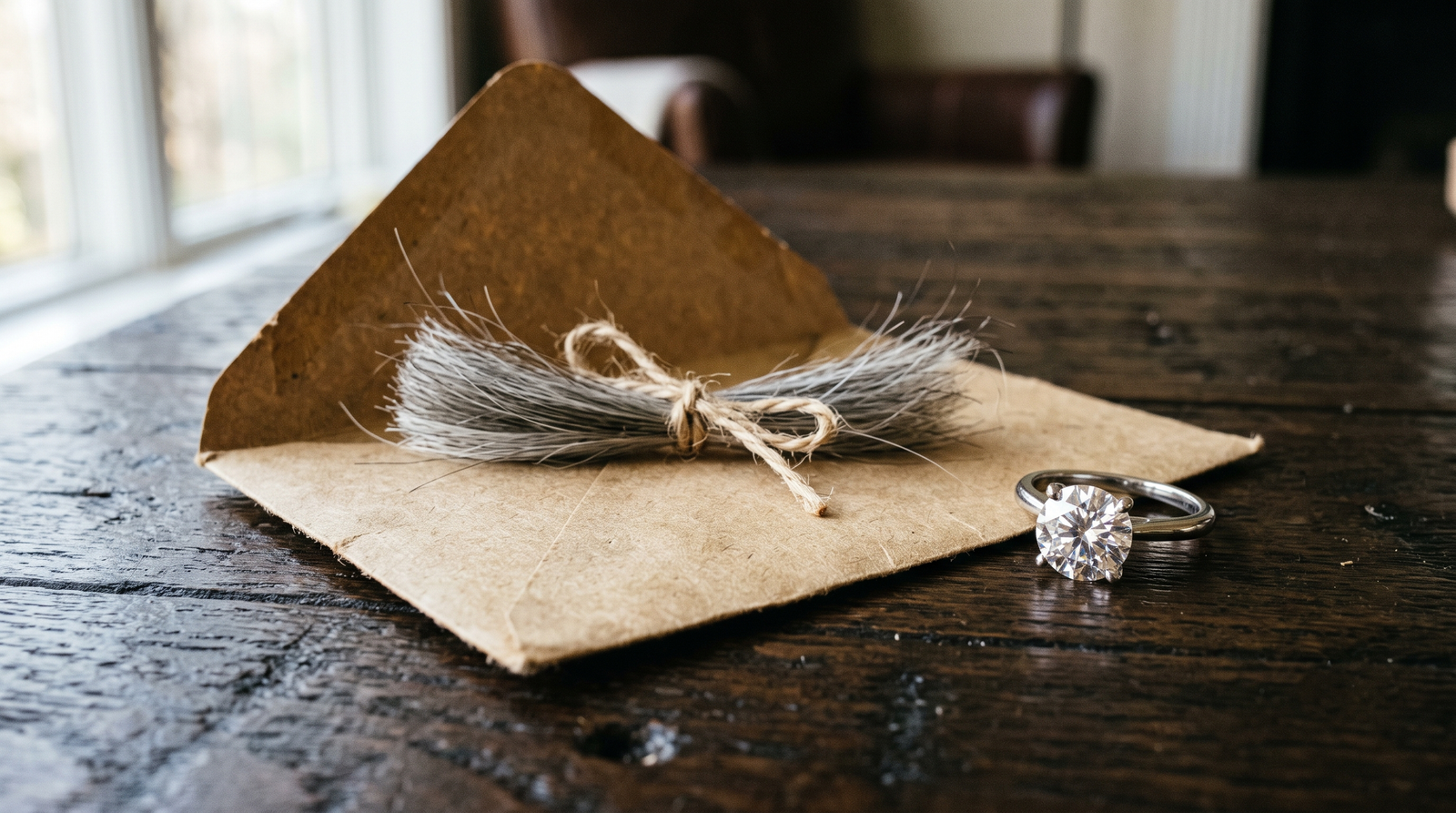
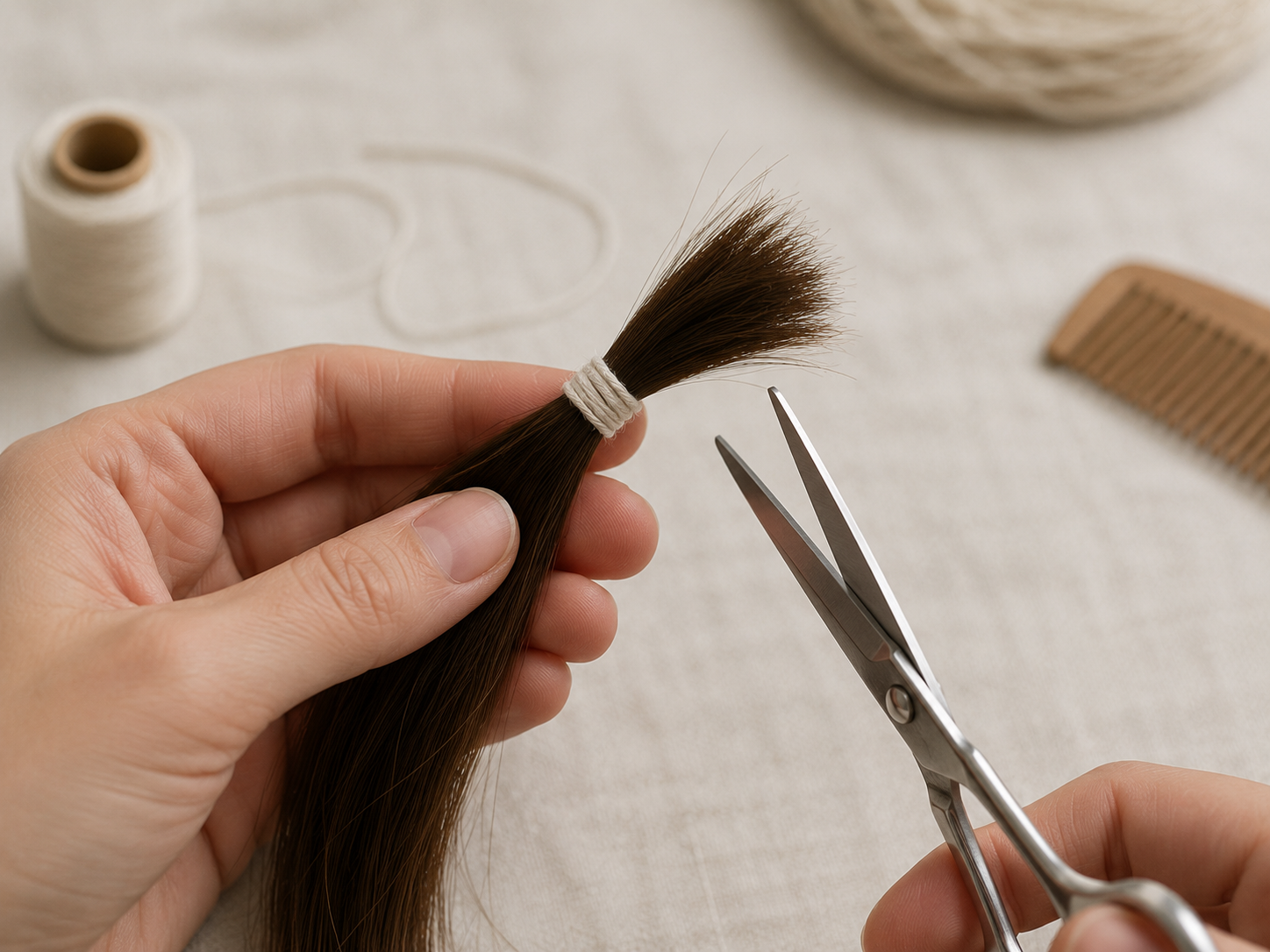
A lock of hair, beard trim, or barber cut can provide another material route when the provider accepts it.
Will the stone be a real diamond or a substitute?
A memorial diamond is a real lab grown diamond. It has the same fundamental crystal structure, a Mohs hardness of 10, and the optical properties associated with diamond.
Lab grown describes where the diamond grows. It does not describe a substitute material.
Can the diamond go into a ring he already owned?
Often, yes. A jeweller needs to inspect the existing ring before cutting a seat for the new stone.
The jeweller should check the shank, the available metal, the condition of the ring, and the security of the final setting.
Can more than one family member have a stone from the same ashes?
Often, yes. Each stone uses only a portion of the available material, so one submission can potentially support multiple stones.
Ask your provider whether it accepts multiple stones from one submission. Ordering them together can avoid repeating the retention and shipping process years later.
Each stone grows independently, so stones from the same source can still differ in colour and clarity.
Ask the Funeral Director Before the Remains Are Released
If an interment or scattering is approaching, one phone call can matter more than another month of research.
Find out whether a date exists. Ask the funeral director about the procedure for retaining a portion. Then let the rest of your family’s plan continue exactly as arranged.
Once you secure the material, you can take your time with the rest. Decide on the carat, colour, cut, and whether the finished stone should go into a new piece or something your father already wore.
When you are ready, bring those decisions and your provider questions to Memorial Diamond.