
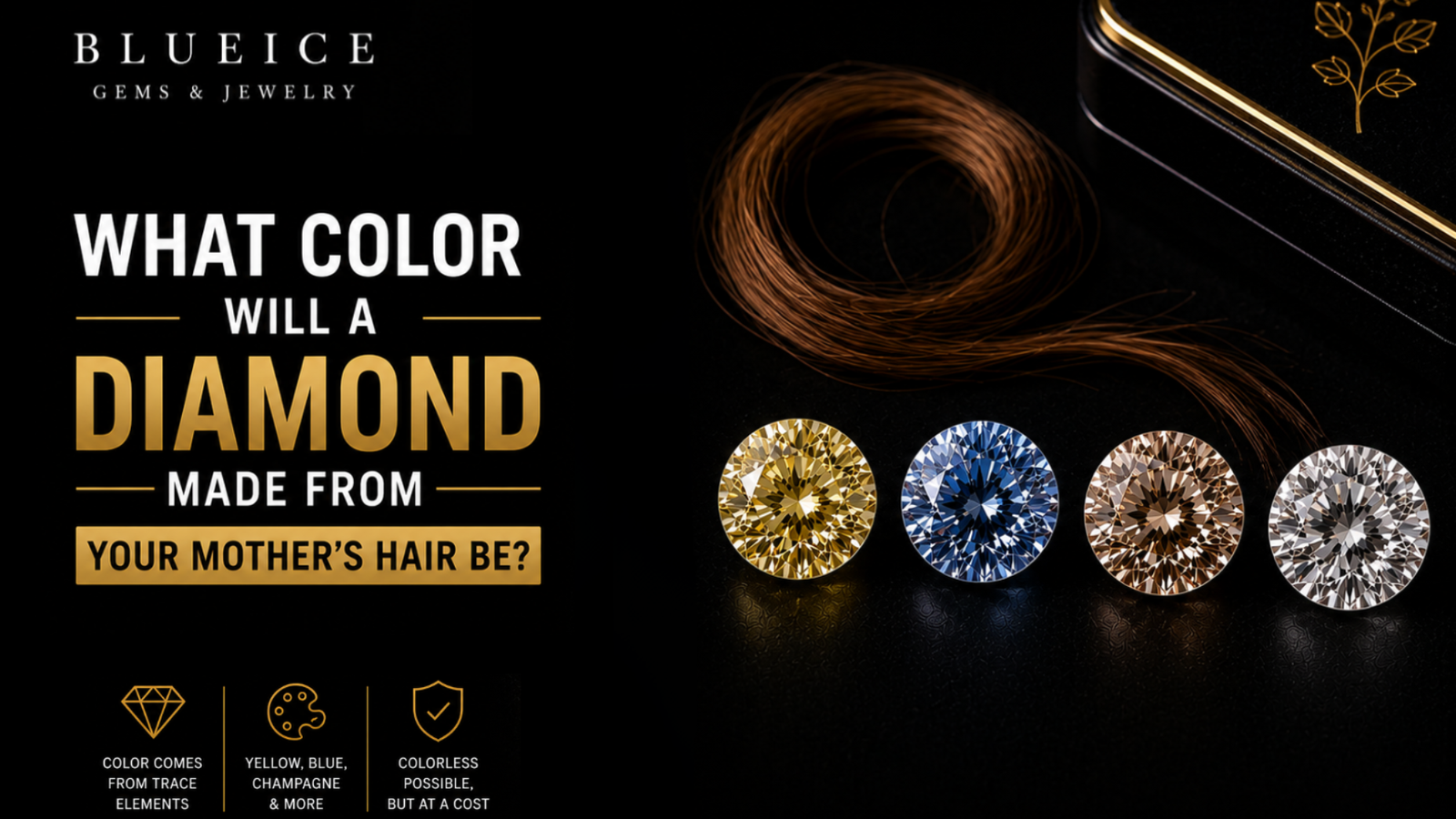
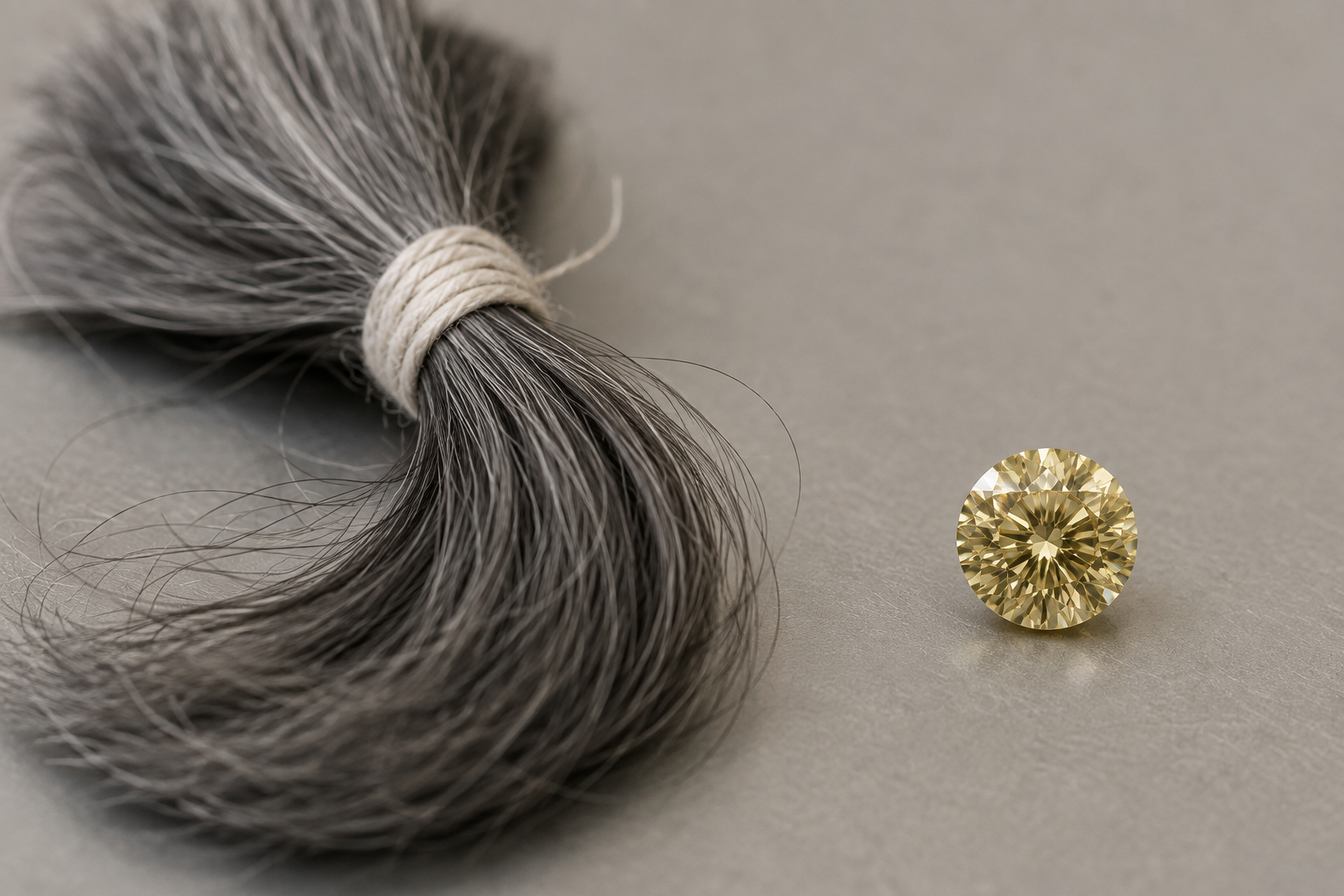
If you kept a lock of your mother’s hair, you may have wondered whether the finished diamond will look like her hair. It won’t. Grey hair does not produce a grey diamond, red hair does not produce a red diamond, and dyed hair does not carry its visible pigment into the finished stone.
A diamond grown from your mother’s hair can be yellow, blue, champagne, or another available color depending on the growth conditions and trace elements present during the process. Colorless is also possible, but it requires additional processing and usually costs more.
Does Your Mother’s Hair Color Decide the Diamond’s Color?
No. The color of your mother’s hair is not what determines the color of the finished diamond.
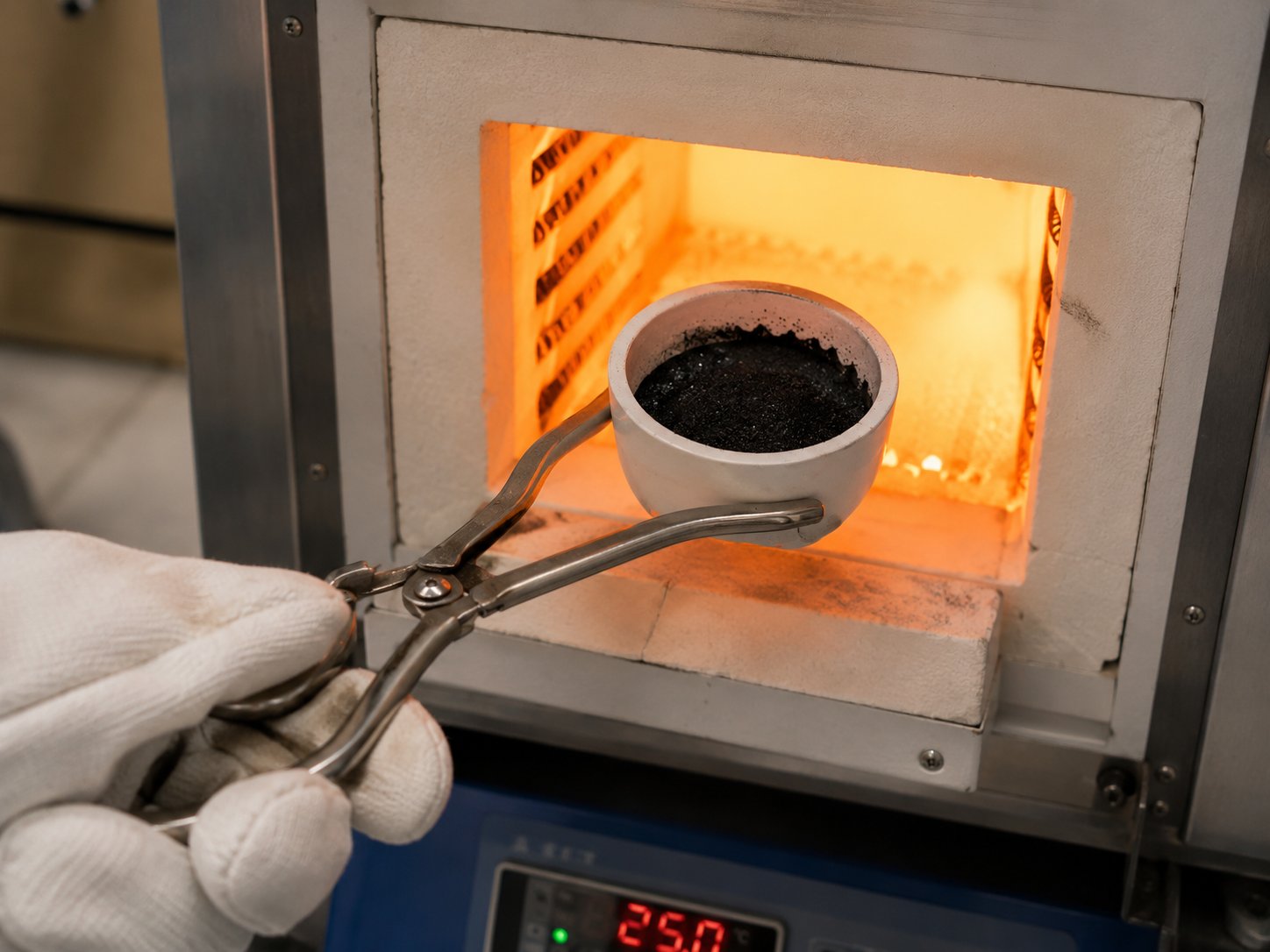
Hair is keratin, a protein that is roughly 50% carbon by weight. During processing, the hair goes through controlled extraction that removes the non-carbon components and produces highly purified carbon. That carbon is then converted into graphite before it enters the diamond-growth process.
The pigment responsible for hair color does not simply travel into the finished diamond. What ultimately matters for diamond color is what is present during crystal growth.
That means:
- Grey hair does not produce a grey diamond.
- Red hair does not produce a red diamond.
- Dark hair does not produce a dark diamond.
- Blonde hair does not produce a blonde diamond.
- Hair dye does not determine the finished diamond’s color.
A few grams of hair also cannot fill an entire growth cell. The purified carbon from the hair is therefore combined with supplemental lab-sourced carbon before growth.
For the full production process, see how a memorial diamond is made from your mother’s hair.
So Where Does the Color Come From Instead?
Diamond color comes from trace elements present while the crystal is growing, rather than from the original appearance of the material that supplied the carbon.
Nitrogen can produce yellow tones, while boron can produce blue tones. A colorless diamond requires the near-absence of both.
This is why two pieces of hair that look completely different can potentially contribute to diamonds with similar colors. The visible pigment of the hair is not what the diamond-growth process is reproducing.
Memorial diamonds can therefore appear in yellow, blue, champagne, or other colors depending on the growth conditions and available processing options.
For a broader explanation, read why memorial diamonds are rarely colorless.
What Color Is a Hair Diamond Most Likely to Be?
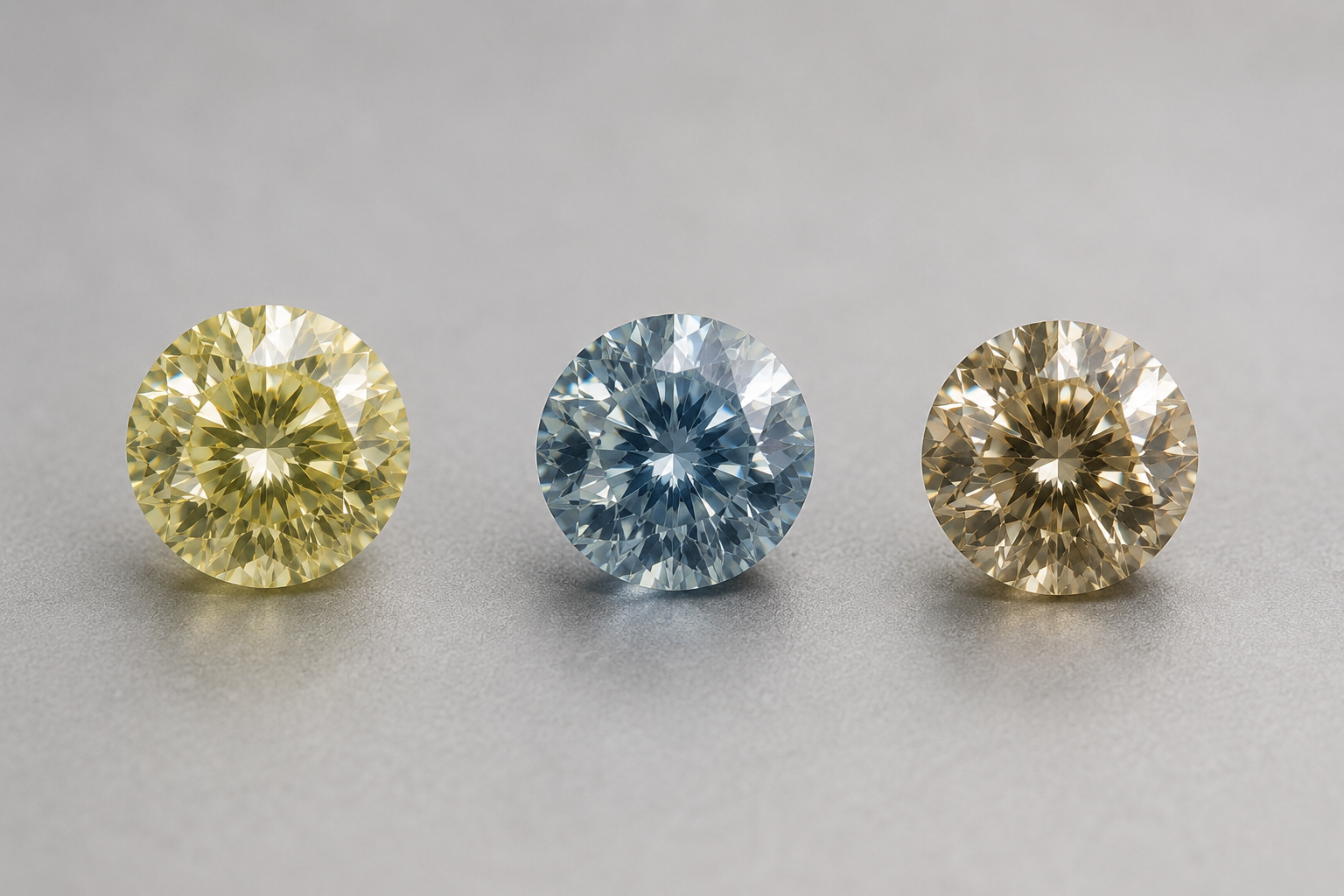
The following describes industry-typical color relationships rather than a guarantee for any individual stone.
| Color | What Causes It | What a Hair Source Means | Cost Note |
|---|---|---|---|
| Yellow | Nitrogen present during growth | Hair is a carbon-rich organic material; the final color depends on the growth environment rather than the hair’s visible color | Generally one of the lower-cost growth-stage colors at a given carat |
| Blue | Boron present during growth | Blue is associated with boron during diamond growth rather than the original color of the hair | Generally below colorless at matching carat |
| Champagne / Brown | Multiple trace elements and growth conditions | The stone is not champagne or brown because the mother’s hair was that color | Generally comparable with yellow at the same carat |
| Colorless / White | Near-complete absence of color-producing impurities | Possible, but additional processing is required to achieve the desired result | Usually carries a meaningful premium |
| Red, Pink, Green, Black | Post-growth treatment such as irradiation | These colors are introduced after the crystal has grown rather than coming from the hair’s visible color | Availability and pricing vary by provider |
The important point is simple: the color column never starts with the color of your mother’s hair.
Does Hair Behave Differently From Ashes?
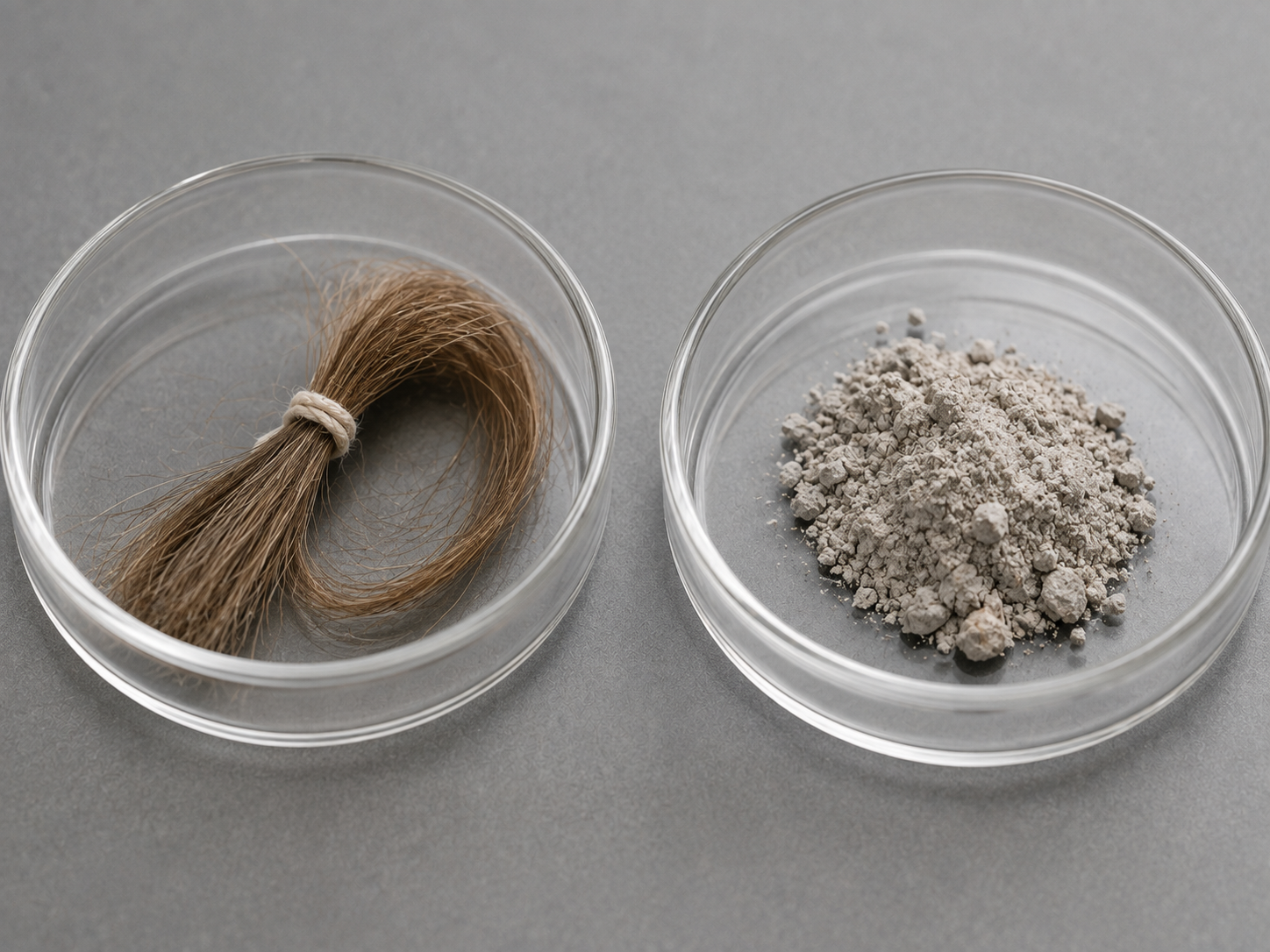
Yes, hair and cremated remains are very different starting materials.
Hair is roughly 50% carbon by weight, while cremated remains contain only about 0.5% to 4% usable carbon by weight. Ashes are largely made up of the mineral structure of bone, while hair is a carbon-rich protein material.
| Hair | Cremated Remains | |
|---|---|---|
| Approximate carbon content | ~50% | ~0.5–4% |
| Cremation required? | No | Yes |
| Typical material requirement | A small lock / a few grams | A few tablespoons to roughly 4 oz |
| Main starting material | Keratin | Mineral structure of bone |
Hair can therefore be used for a memorial diamond even when a loved one was buried rather than cremated. See hair-based options for non-cremated loved ones.
However, the difference in starting material does not mean you can predict the exact final color simply by looking at the hair.
The ashes version of this question is covered in what color a diamond made from your mother’s ashes will be.
What Actually Changes the Color, and What Doesn’t?
It helps to separate the things that do not determine color from the things that can influence it.
Things That Do Not Determine the Finished Color
- Your mother’s natural hair color.
- Whether her hair was dark, blonde, red, or grey.
- The visible color of hair dye or highlights.
- How long the lock of hair is.
- How much hair you send beyond the required amount.
- Whether the hair was collected while she was alive or after her death.
- How long you have kept the lock.
Things That Can Affect the Color
- The color selected or requested during the ordering process.
- Trace elements present during diamond growth.
- The growth conditions used by the laboratory.
- Whether a post-growth treatment such as irradiation is used.
- Whether you choose a colorless result requiring additional processing.
If you’re discussing your order with a provider, ask these four questions before sending the hair:
- Am I choosing a specific color or a color family?
- What amount of color variation is considered normal?
- Is the color created during growth or through treatment afterward?
- What does choosing colorless add to the cost and timeline?
For information about documenting the finished diamond’s characteristics, see how memorial diamonds are graded and certified.
Frequently Asked Questions
My mother’s hair was dyed. Does that ruin it or change the diamond’s color?
The visible dye color does not determine the finished diamond’s color because hair pigment and non-carbon components are removed during processing. However, whether a particular provider accepts dyed, bleached, permed, or chemically treated hair is a separate provider-policy question. Ask before sending the hair and describe the treatment accurately.
She had grey hair. Will the diamond come out grey or dull?
No. Grey hair does not mean the finished diamond will be grey. Hair color comes from pigment, while diamond color is associated with trace elements and conditions during crystal growth. The original visible color of the hair does not simply transfer into the diamond.
Can I get a truly colorless diamond from her hair?
Yes, a colorless result can be requested, but it is generally the more demanding option. Colorless growth requires the near-absence of the impurities associated with yellow or blue coloration, so additional processing may be required and the price can increase.
Does sending more hair give a better or deeper color?
No. Sending more hair does not automatically create a deeper color. The quantity of hair primarily relates to providing enough carbon for processing. Diamond size is determined by the growth process rather than simply by sending a larger amount of hair.
Will a diamond from living hair look different from one made after she died?
No specific color difference should be assumed simply because of when the hair was collected. The finished color is associated with the diamond-growth conditions rather than whether the lock was collected while she was living or afterward.
Can I ask for pink or red specifically?
Some providers may offer colors such as red, pink, green, or black through post-growth treatment. Availability varies, so confirm that the color is actually offered by your chosen provider before making it part of your design expectations.
Before You Choose a Color
You are not choosing a color that literally matches your mother. Her hair stays the shade it was when you kept it. The diamond’s color comes from what happens to its carbon during the growth process.
That gives you a different choice: not “What color was she?”, but “What color do I want to carry with me?”
If you have a lock of your mother’s hair and want to understand what color options may be realistic, reach out to Memorial Diamond at memorialdiamond.us and ask specifically about your preferred color and any treatment the hair has received.
If you also have her ashes, see what happens when her ashes and hair are used together. You can also read the complete guide to a mother hair diamond for the wider process, timeline, and cost discussion.