main

What Color Will a Diamond Made From Your Mother’s Hair Be?

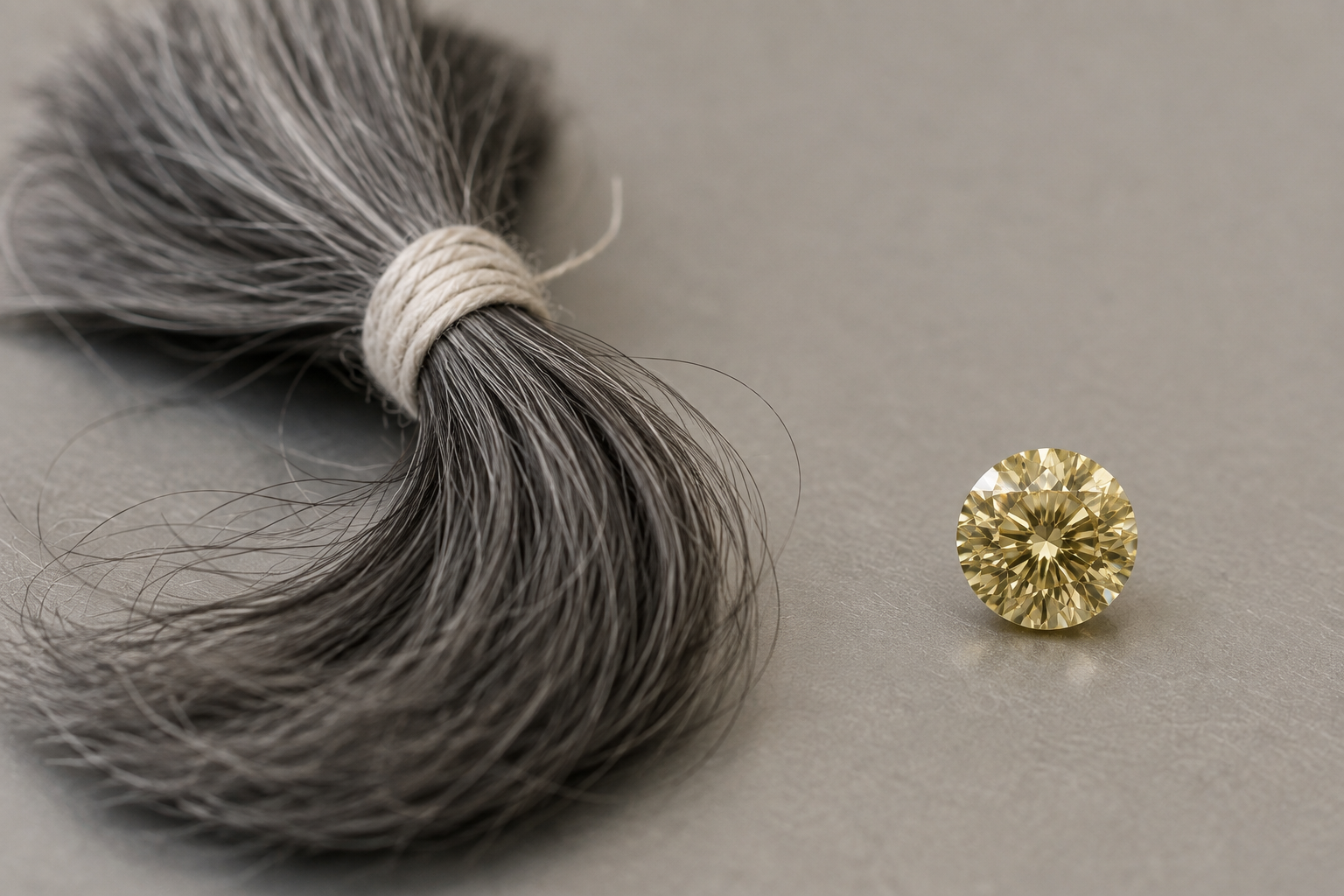
A lock of grey hair tied with thread beside a yellow-toned lab-grown memorial diamond on a neutral surface

If you kept a lock of your mother’s hair, you may have wondered whether the finished diamond will look like her hair. It won’t. Grey hair does not produce a grey diamond, red hair does not produce a red diamond, and dyed hair does not carry its visible pigment into the finished stone.

A diamond grown from your mother’s hair can be yellow, blue, champagne, or another available color depending on the growth conditions and trace elements present during the process. Colorless is also possible, but it requires additional processing and usually costs more.

Does Your Mother’s Hair Color Decide the Diamond’s Color?
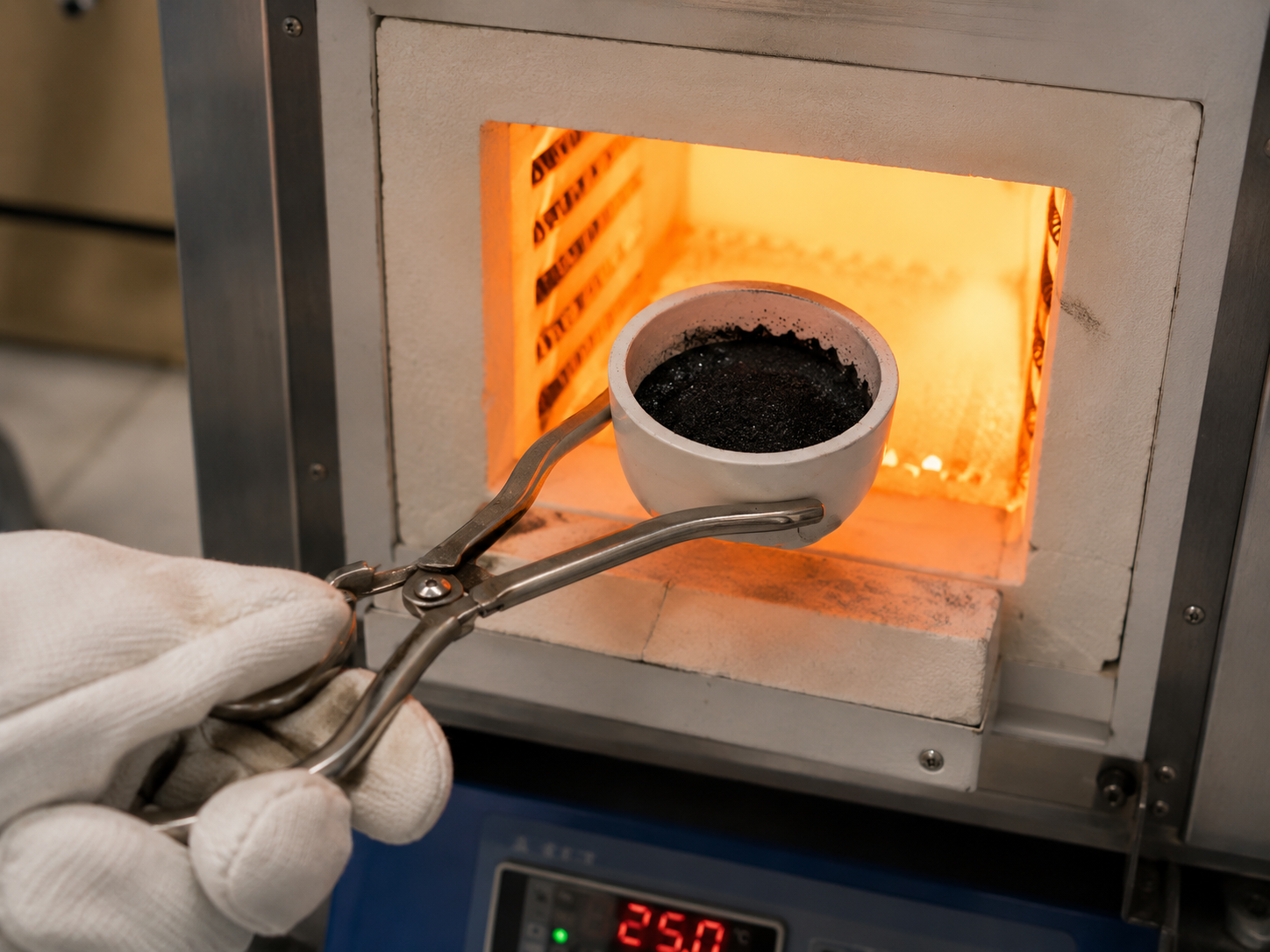
Purified carbon from hair being converted to graphite in a laboratory furnace before diamond growth

No. The color of your mother’s hair is not what determines the color of the finished diamond.

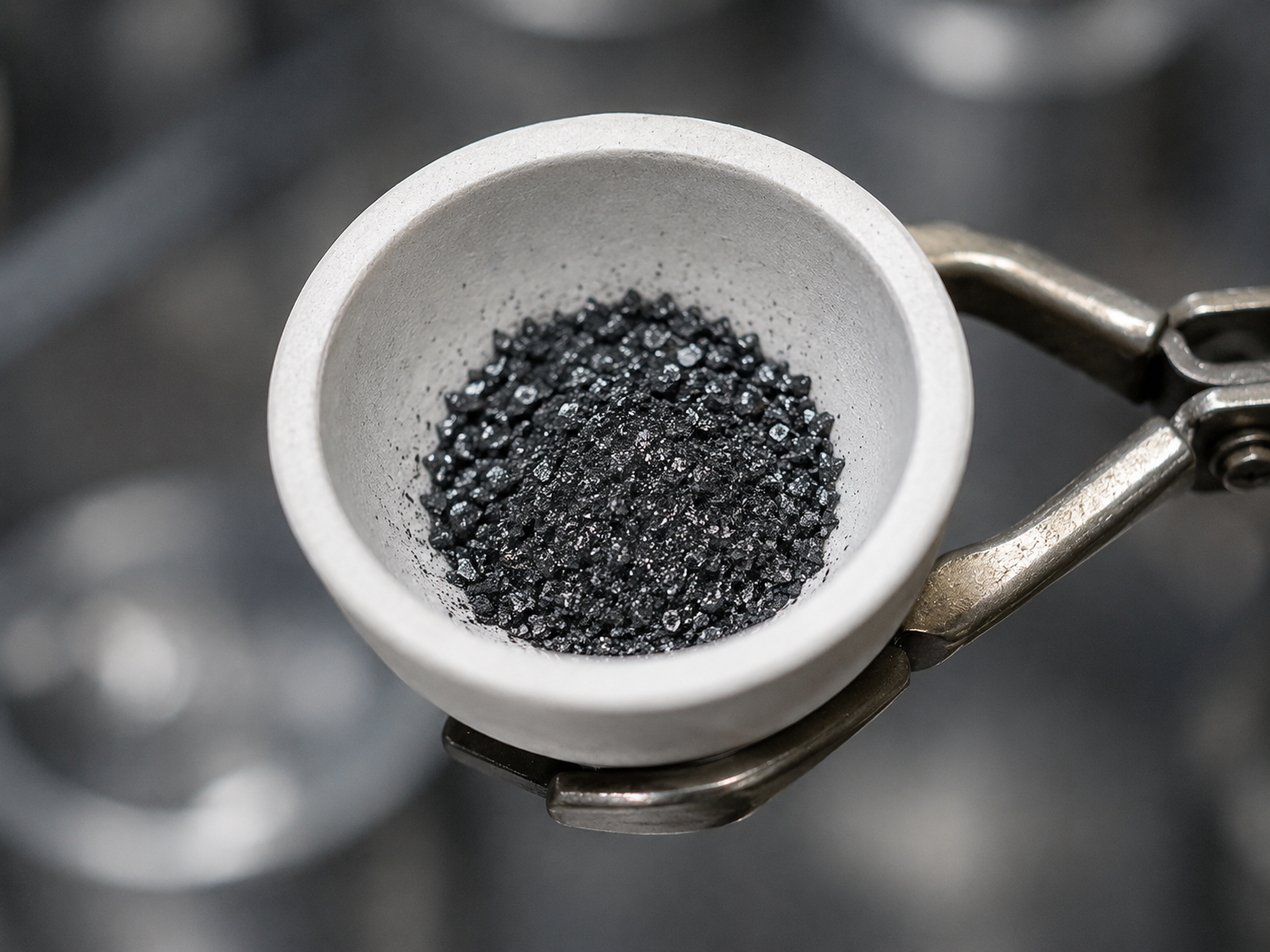
Hair is keratin, a protein that is roughly 50% carbon by weight. During processing, the hair goes through controlled extraction that removes the non-carbon components and produces highly purified carbon. That carbon is then converted into graphite before it enters the diamond-growth process.

The pigment responsible for hair color does not simply travel into the finished diamond. What ultimately matters for diamond color is what is present during crystal growth.

That means:

  • Grey hair does not produce a grey diamond.
  • Red hair does not produce a red diamond.
  • Dark hair does not produce a dark diamond.
  • Blonde hair does not produce a blonde diamond.
  • Hair dye does not determine the finished diamond’s color.

A few grams of hair also cannot fill an entire growth cell. The purified carbon from the hair is therefore combined with supplemental lab-sourced carbon before growth.

For the full production process, see how a memorial diamond is made from your mother’s hair.

So Where Does the Color Come From Instead?

Diamond color comes from trace elements present while the crystal is growing, rather than from the original appearance of the material that supplied the carbon.

Nitrogen can produce yellow tones, while boron can produce blue tones. A colorless diamond requires the near-absence of both.

This is why two pieces of hair that look completely different can potentially contribute to diamonds with similar colors. The visible pigment of the hair is not what the diamond-growth process is reproducing.

Memorial diamonds can therefore appear in yellow, blue, champagne, or other colors depending on the growth conditions and available processing options.

For a broader explanation, read why memorial diamonds are rarely colorless.

What Color Is a Hair Diamond Most Likely to Be?
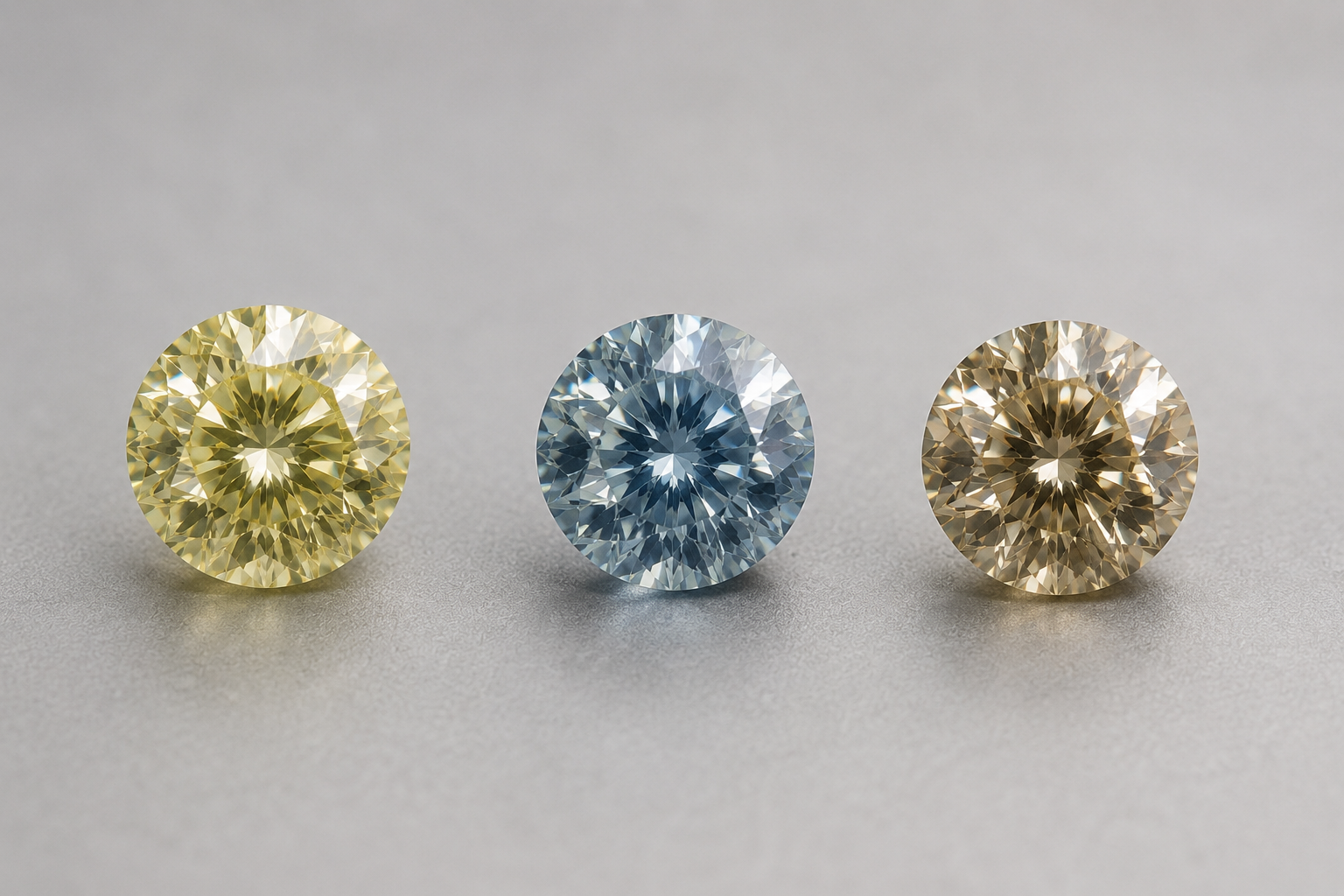
Three loose memorial diamonds grown from hair in yellow, blue, and champagne tones side by side

The following describes industry-typical color relationships rather than a guarantee for any individual stone.

ColorWhat Causes ItWhat a Hair Source MeansCost Note
YellowNitrogen present during growthHair is a carbon-rich organic material; the final color depends on the growth environment rather than the hair’s visible colorGenerally one of the lower-cost growth-stage colors at a given carat
BlueBoron present during growthBlue is associated with boron during diamond growth rather than the original color of the hairGenerally below colorless at matching carat
Champagne / BrownMultiple trace elements and growth conditionsThe stone is not champagne or brown because the mother’s hair was that colorGenerally comparable with yellow at the same carat
Colorless / WhiteNear-complete absence of color-producing impuritiesPossible, but additional processing is required to achieve the desired resultUsually carries a meaningful premium
Red, Pink, Green, BlackPost-growth treatment such as irradiationThese colors are introduced after the crystal has grown rather than coming from the hair’s visible colorAvailability and pricing vary by provider

The important point is simple: the color column never starts with the color of your mother’s hair.

Does Hair Behave Differently From Ashes?
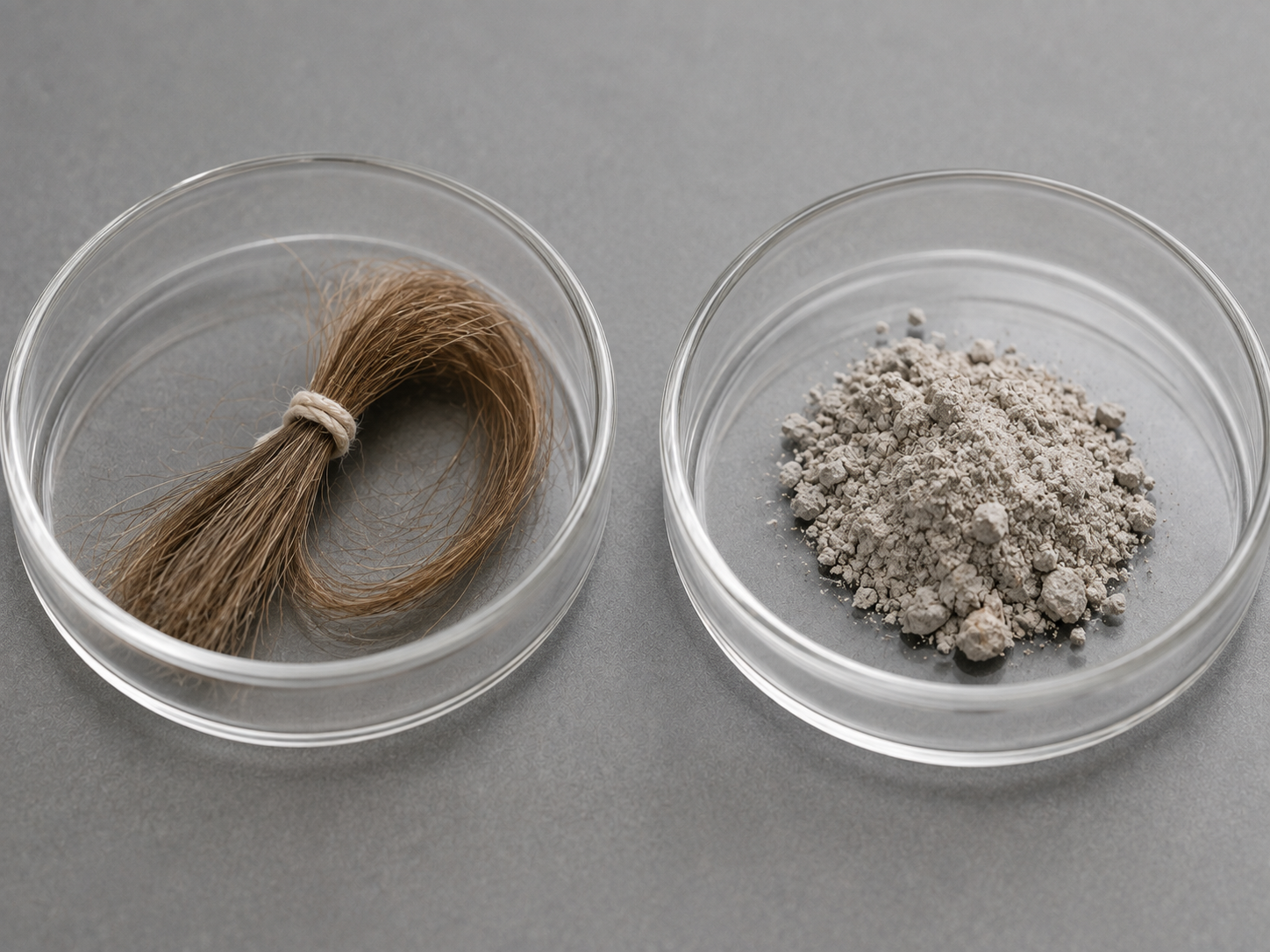
A small lock of hair and a sample of cremated remains shown side by side as diamond carbon sources

Yes, hair and cremated remains are very different starting materials.

Hair is roughly 50% carbon by weight, while cremated remains contain only about 0.5% to 4% usable carbon by weight. Ashes are largely made up of the mineral structure of bone, while hair is a carbon-rich protein material.

HairCremated Remains
Approximate carbon content~50%~0.5–4%
Cremation required?NoYes
Typical material requirementA small lock / a few gramsA few tablespoons to roughly 4 oz
Main starting materialKeratinMineral structure of bone

Hair can therefore be used for a memorial diamond even when a loved one was buried rather than cremated. See hair-based options for non-cremated loved ones.

However, the difference in starting material does not mean you can predict the exact final color simply by looking at the hair.

The ashes version of this question is covered in what color a diamond made from your mother’s ashes will be.

What Actually Changes the Color, and What Doesn’t?

It helps to separate the things that do not determine color from the things that can influence it.

Things That Do Not Determine the Finished Color

  • Your mother’s natural hair color.
  • Whether her hair was dark, blonde, red, or grey.
  • The visible color of hair dye or highlights.
  • How long the lock of hair is.
  • How much hair you send beyond the required amount.
  • Whether the hair was collected while she was alive or after her death.
  • How long you have kept the lock.

Things That Can Affect the Color

  • The color selected or requested during the ordering process.
  • Trace elements present during diamond growth.
  • The growth conditions used by the laboratory.
  • Whether a post-growth treatment such as irradiation is used.
  • Whether you choose a colorless result requiring additional processing.

If you’re discussing your order with a provider, ask these four questions before sending the hair:

  1. Am I choosing a specific color or a color family?
  2. What amount of color variation is considered normal?
  3. Is the color created during growth or through treatment afterward?
  4. What does choosing colorless add to the cost and timeline?

For information about documenting the finished diamond’s characteristics, see how memorial diamonds are graded and certified.

Frequently Asked Questions

My mother’s hair was dyed. Does that ruin it or change the diamond’s color?

The visible dye color does not determine the finished diamond’s color because hair pigment and non-carbon components are removed during processing. However, whether a particular provider accepts dyed, bleached, permed, or chemically treated hair is a separate provider-policy question. Ask before sending the hair and describe the treatment accurately.

She had grey hair. Will the diamond come out grey or dull?

No. Grey hair does not mean the finished diamond will be grey. Hair color comes from pigment, while diamond color is associated with trace elements and conditions during crystal growth. The original visible color of the hair does not simply transfer into the diamond.

Can I get a truly colorless diamond from her hair?

Yes, a colorless result can be requested, but it is generally the more demanding option. Colorless growth requires the near-absence of the impurities associated with yellow or blue coloration, so additional processing may be required and the price can increase.

Does sending more hair give a better or deeper color?

No. Sending more hair does not automatically create a deeper color. The quantity of hair primarily relates to providing enough carbon for processing. Diamond size is determined by the growth process rather than simply by sending a larger amount of hair.

Will a diamond from living hair look different from one made after she died?

No specific color difference should be assumed simply because of when the hair was collected. The finished color is associated with the diamond-growth conditions rather than whether the lock was collected while she was living or afterward.

Can I ask for pink or red specifically?

Some providers may offer colors such as red, pink, green, or black through post-growth treatment. Availability varies, so confirm that the color is actually offered by your chosen provider before making it part of your design expectations.

Before You Choose a Color

You are not choosing a color that literally matches your mother. Her hair stays the shade it was when you kept it. The diamond’s color comes from what happens to its carbon during the growth process.

That gives you a different choice: not “What color was she?”, but “What color do I want to carry with me?”

If you have a lock of your mother’s hair and want to understand what color options may be realistic, reach out to Memorial Diamond at memorialdiamond.us and ask specifically about your preferred color and any treatment the hair has received.

If you also have her ashes, see what happens when her ashes and hair are used together. You can also read the complete guide to a mother hair diamond for the wider process, timeline, and cost discussion.
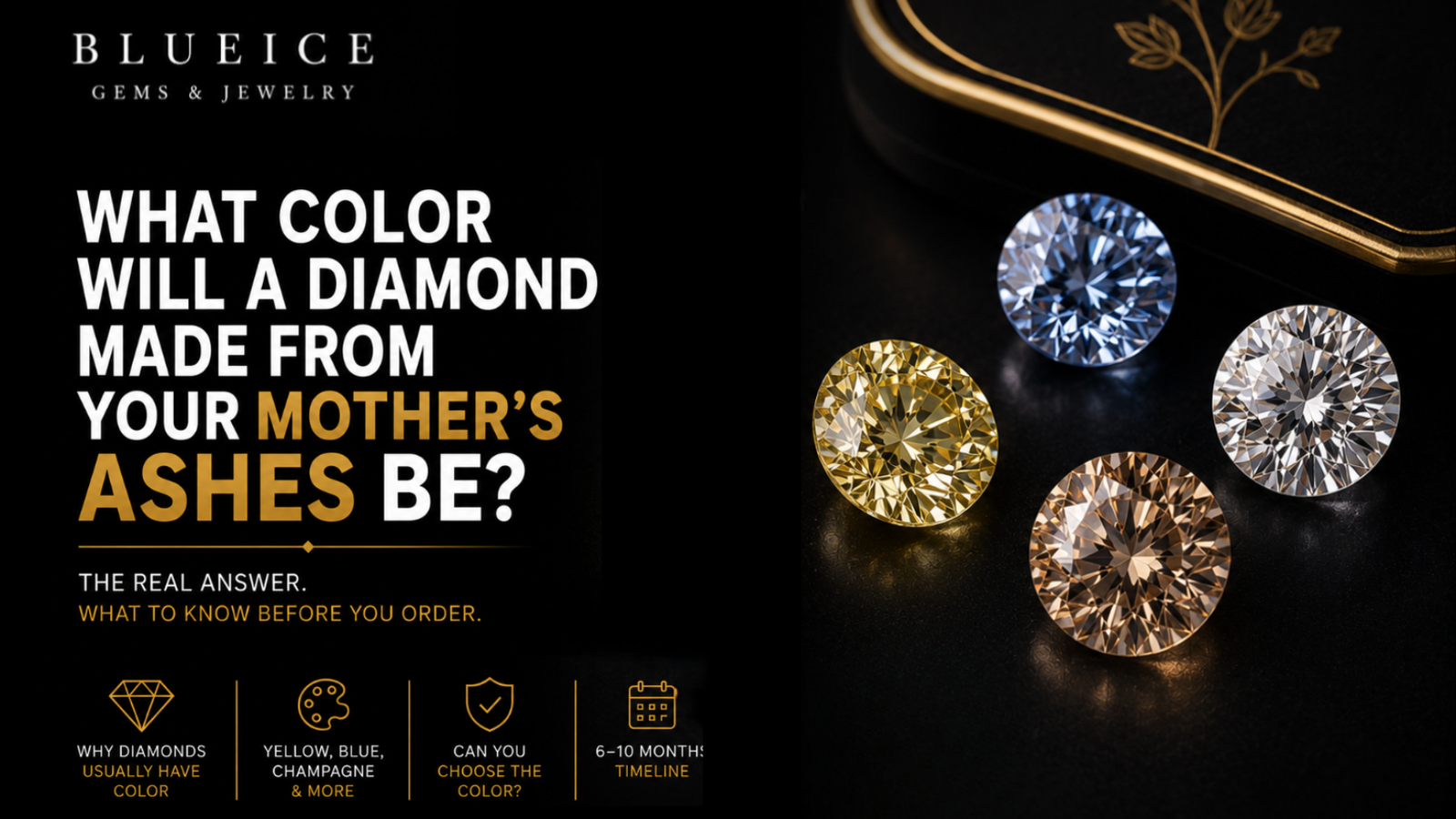
mother dimond

What Color Will a Diamond Made From Your Mother’s Ashes Be?

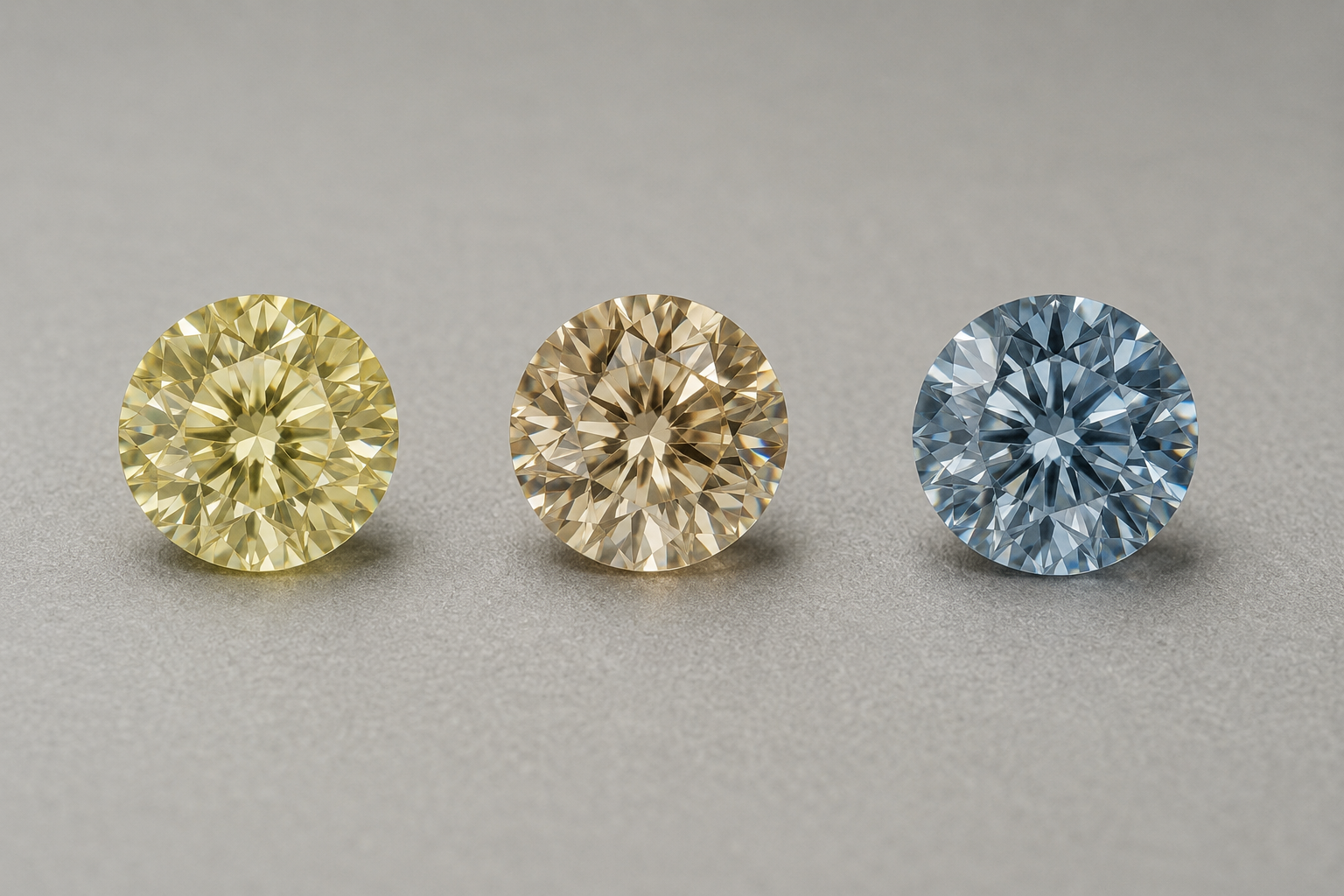
Three loose memorial diamonds grown from cremated ashes in yellow, champagne, and blue tones side by side on a neutral gray surface

A diamond grown from your mother’s cremated ashes will most likely have color in it yellow, champagne, or blue rather than white. Colorless is achievable, but it takes additional processing and costs more. Better to know that now than in month eight, standing at a kitchen table with the box open.

A tinted stone is not a defect, a downgrade, or a mistake. It is what happens when part of the feedstock is a person instead of a barrel of industrial graphite and unlike most of what makes a memorial diamond meaningful, that part is visible.

Why Won’t the Diamond Be Clear?

Purified carbon extracted from cremated remains in a laboratory crucible before graphitization

Diamond color is not a coating or a setting choice. It comes from trace elements caught in the crystal lattice while the stone is growing. Boron produces blue tones. Nitrogen produces yellow tones. A colorless diamond requires the near-total absence of both.

Manufacturers produce synthetic industrial feedstock to contain almost pure carbon, which allows standard lab-grown diamonds to emerge completely colorless. In contrast, cremated remains present the opposite reality. Calcium phosphate—the mineral structure of bone—dominates cremated remains, leaving usable carbon at only about 0.5% to 4% of total ash by weight. Technicians extract that small carbon fraction from the mineral-heavy matrix and purify it to roughly 99.9%+ purity.

This purification process achieves exceptional results, though it never achieves absolute purity by design. At 99.9%+ purity, microscopic trace elements remain, and this residue can directly influence the diamond’s final color. Furthermore, the carbon endures intense conditions during cremation: the high heat of the retort, the holding container, and any surrounding elements. As a result, carbon extracted from ashes carries a unique trace-element signature that standard synthetic feedstock lacks.

Many articles on this topic overlook a crucial fact: her carbon does not fill the growth press alone. Technicians blend her extracted carbon with supplemental lab-grade carbon to achieve the volume the press requires. Consequently, her personal carbon typically accounts for roughly 10% to 15% of the finished diamond’s total mass. The accurate reality does not pit pure ash feedstock against synthetic carbon; instead, controlled synthetic carbon forms most of the gemstone, while her carbon acts as a meaningful minority partner.

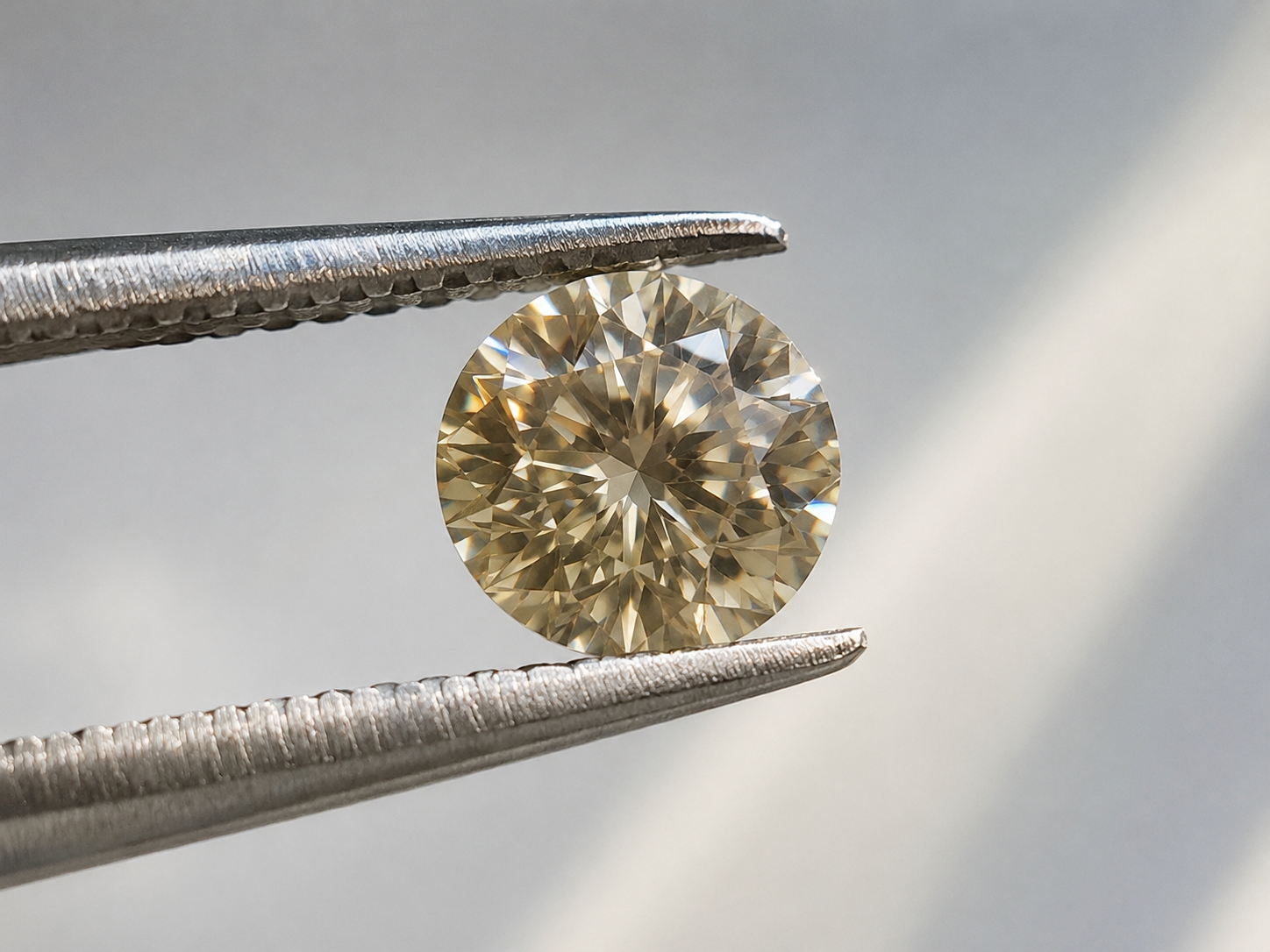
The color can still move. Trace elements present during growth can influence the appearance of the crystal, which is why memorial diamonds can trend toward yellow, blue, and champagne or brown tones. The tint is not evidence that the stone is entirely her. It is evidence that personal carbon contributed to the growth process.

For a deeper explanation, see why memorial diamonds are rarely colorless and what the lab does with her ashes.

What Colors Are Actually Possible From Her Ashes?

Close-up of a champagne-toned lab-grown memorial diamond held in tweezers under daylight

These are industry-typical outcomes and industry-typical cost relationships, not a fixed price list or a promise about a specific stone.

ColorWhat Causes ItWhat an Ash-Derived Source MeansCost Note
YellowNitrogen present during growthA common memorial-diamond color associated with nitrogen during growthGenerally sits toward the lower end for a given carat
Champagne / BrownSeveral trace elements acting togetherCan result from the combination of trace elements present during growthGenerally comparable with yellow at matching carat
BlueBoron present during growthBlue is generally a targeted color rather than something reliably supplied by one person’s ashesTypically below colorless at the same carat
Colorless / WhiteNear-complete absence of boron and nitrogenThe most demanding outcome because the source must undergo additional processingTypically carries a significant premium
Red, Pink, Green, BlackPost-growth treatment such as irradiationColor is applied after the crystal has already been grownUsually treated as an additional option

For scale on the underlying numbers, entry-tier memorial diamonds of roughly 0.10–0.25 ct run about $1,500–$3,500 industry-wide, while 0.5–1 ct stones can run roughly $5,000–$15,000. Color is only one of several factors affecting the final cost.

See what actually drives memorial diamond cost for the other major price factors.

Can You Choose the Color, or Do Her Ashes Decide?

Both, but in different ways.

You choose the target. Providers can offer color as an option at order time, with the process directed toward the selected result.

Her ashes influence the result. The trace-element profile of carbon recovered from cremated remains can vary, meaning the exact shade can have some natural variability. A provider can aim for a color, but the source material still matters.

Colorless is the outcome where the material presents the greatest challenge because it requires additional processing to reduce the elements associated with coloration. Irradiated colors such as red, pink, green, or black are different because the color is introduced after growth.

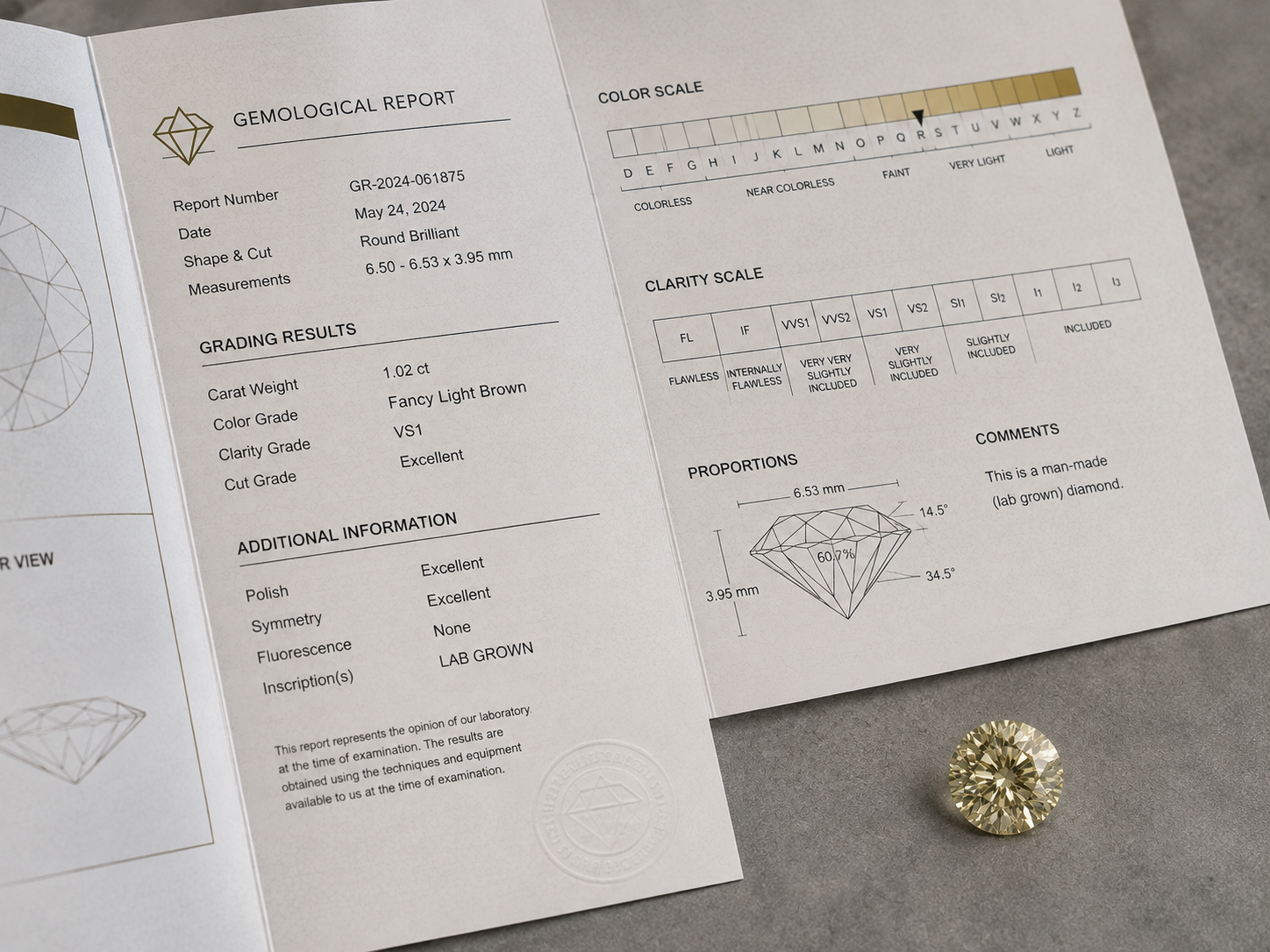
An independent diamond grading report open to the color grade section beside a loose memorial diamon

Does the Color Mean Anything About Your Mother?

Not in the way it is sometimes marketed. The shade does not encode her personality, eye color, health, or character. Anyone selling you that interpretation is attaching symbolism to something that cannot establish it.

What is true is narrower and, honestly, better. The tint exists because personal carbon contributed to the growth process rather than the stone being produced entirely from controlled industrial carbon. That is a physical fact, not a symbolic one.

None of this requires committing all of her ashes. Only a small fraction is used, so burial, scattering, or keeping an urn can remain open alongside the diamond.

Which Questions Should You Ask About Color Before Ordering?

Color is the part of an order most easily left vague at the start and most obvious on delivery. These five questions help close that gap while it is still possible to make an informed choice.

  1. What color range does my order actually commit me to? Ask whether you are buying a named color or a color family, and what variation within it is considered normal.
  2. What happens if the finished stone falls outside that range? Ask what the provider’s process is before you need it whether that means a re-grow, adjustment, or another remedy.
  3. Is the color from growth or from irradiation? Both are legitimate approaches, but they produce different products and should be explained clearly.
  4. What does colorless cost at my carat size, and what does it add to the timeline? Ask for the comparison against yellow or blue at the same size, preferably in writing.
  5. What color will the grading report list? An independent grading report can document the diamond’s characteristics. See how memorial diamonds are graded and certified.

Frequently Asked Questions

Will the diamond be gray because ashes are gray?

No. The visible color of cremated remains has no bearing on the finished stone. Ash color comes largely from mineral content that is removed during purification. Diamond color comes from trace elements present during crystal growth, which is a separate stage.

Can I get a truly colorless diamond from my mother’s ashes?

Yes, but it is the hardest outcome to produce. It requires additional processing to reduce the elements associated with coloration, and it typically costs more than a yellow, champagne, or blue stone of the same carat weight.

Does submitting more ashes change the color?

No. Material quantity does not directly determine color, and it does not determine size either. Carat is primarily a function of growth time in the press. As a general industry guide, requirements can range from a few tablespoons to roughly 4 oz, but individual providers set their own requirements.

Will the color fade or change over the years?

No. The color is structural, existing within the crystal rather than sitting on the surface. Diamond is also a 10 on the Mohs hardness scale. Ordinary wear, cleaning, and sunlight do not simply remove a structural color.

Can two diamonds from the same ashes come out different colors?

Yes, separate growth runs can produce variation. Families ordering multiple stones from one shared source should ask the provider how closely matching colors can be expected if consistency between stones matters.

Is a colored memorial diamond worth less than a colorless one?

Production cost and personal value are different questions. A colored memorial diamond may cost less to produce than a colorless one, but that does not make it less meaningful. In this category, the color can simply be part of the physical result of the growth process.

Before You Choose a Color

One practical suggestion before anything else: stop reading color words and go look at stones. “Champagne” on an order form and a champagne diamond turning under a lamp are not the same experience, and a color ruled out on paper has often never been seen in person.

When you want the specifics rather than the general case, reach out to Memorial Diamond at memorialdiamond.us to talk through what color is realistic for your mother’s ashes, what colorless would actually involve, and to put the five questions above to a person rather than a page.

The same question about her hair has a different answer, while sending both ashes and hair changes the discussion again. You can also explore the wider range of colors families choose for a mother and the complete guide to a mother ashes diamond.

turn-mothers-ashes-diamond

How to Turn Your Mother’s Ashes Into a Diamond | Step-by-Step Guide

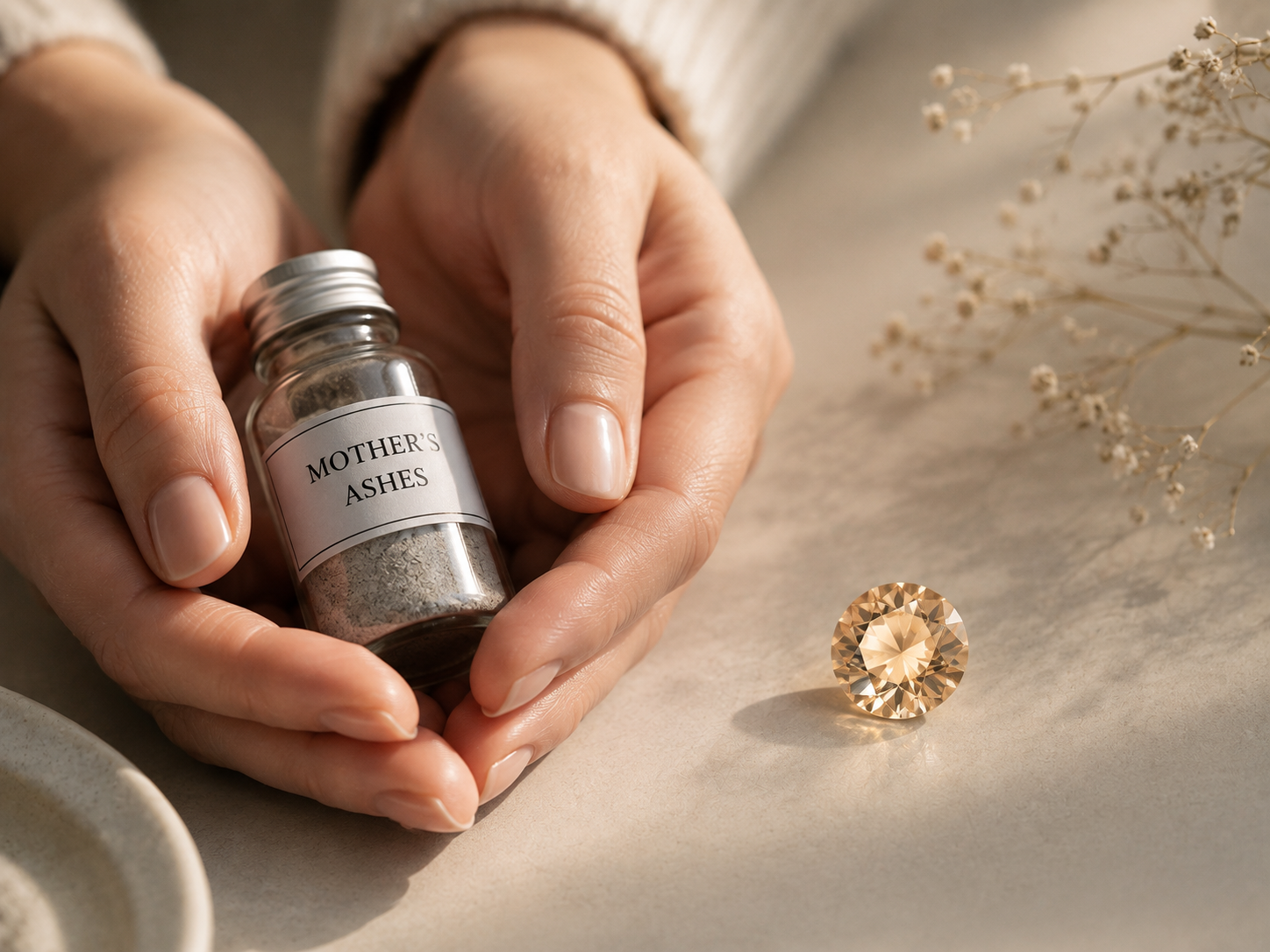
Hands holding a small sealed container of cremated ashes beside a finished champagne-toned memorial diamond

The decision to turn your mother’s ashes into a diamond often comes before you know exactly how the process works.

You may already know that you want to create something lasting in her memory, but practical questions naturally follow. How much ash is needed? Which diamond size should you choose? Should you talk to your family first? How are cremated remains sent? And what happens while the diamond is being created?

Turning your mother’s ashes into a diamond generally follows a clear sequence. You choose the carat size and color, confirm how much material is required, discuss the decision with family, prepare the portion needed, arrange delivery or shipping, wait for the diamond to be created, and finally decide how you want the finished stone to be worn or kept.

One important detail surprises many families: carat size is often one of the first decisions you should make, not the last.

Step 1: Choose the Carat Size and Color

The size of your memorial diamond can influence the overall process, timeline, and planning.

Memorial diamonds are grown through a specialized laboratory process. Because of this, the size of the diamond is an important consideration before the growth process begins.

Before choosing, think about how you want to use the finished diamond.

A smaller stone may be meaningful as part of a delicate pendant or ring, while a larger diamond may become the central feature of a custom piece of memorial jewelry.

Color is another important decision. Memorial diamonds can appear in different colors depending on the materials and diamond-growing process.

To learn more about possible diamond colors, read What Color Will a Diamond Made From Your Mother’s Ashes Be?.

If you are unsure about diamond size, our guide on how to choose a carat size for a memorial diamond can help you compare your options.

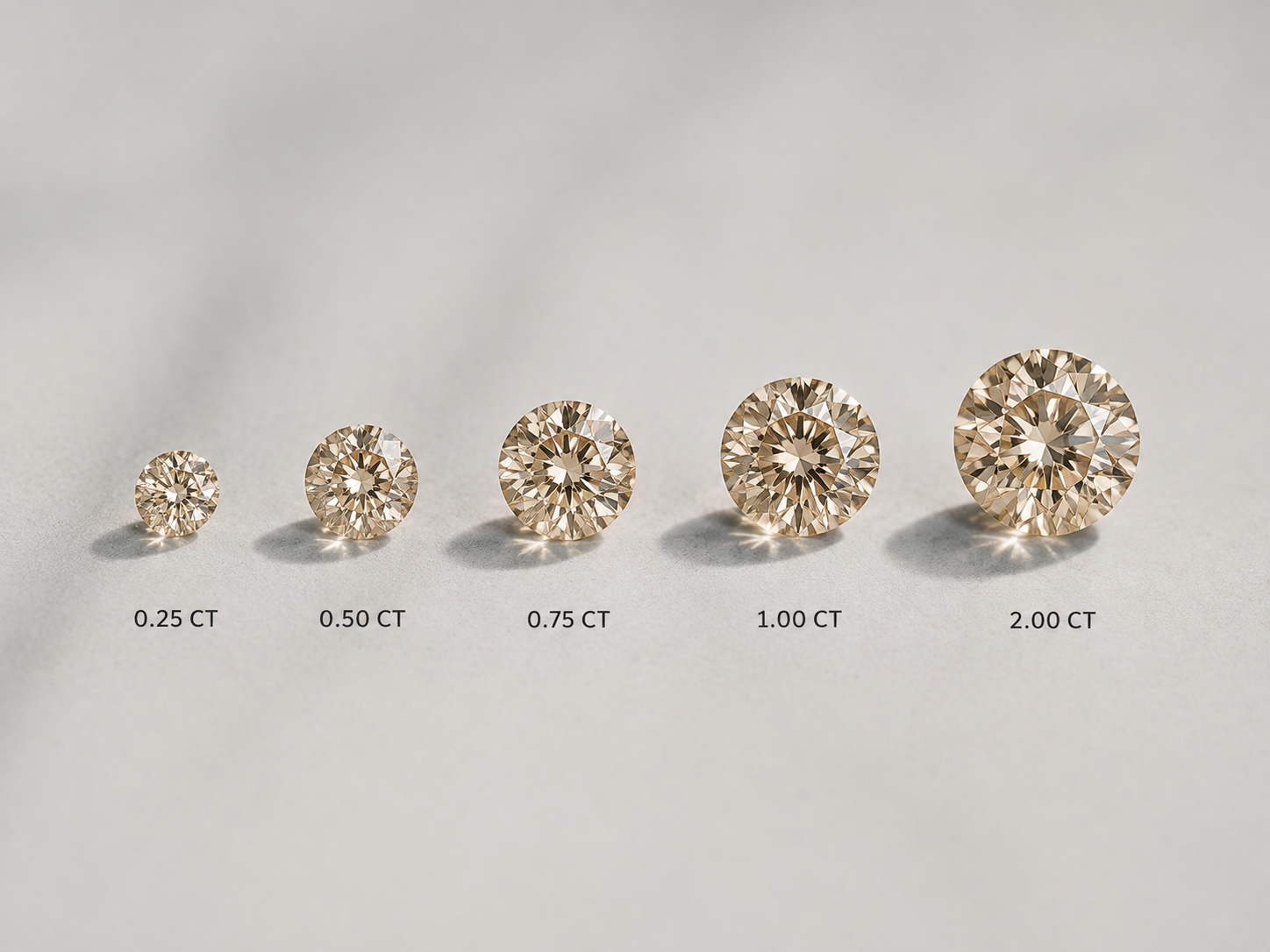
Five memorial diamonds ranging from 0.25 to 2 carats laid out in size order on a pale gray surface

Step 2: Confirm How Much of Her Ashes You Need

Most people expect that a large amount of cremated remains is required. In many cases, only a portion may be needed, depending on the provider and the process used.

Before preparing anything, contact the memorial diamond provider and ask for the exact material requirement.

Important questions include:

  • How much material is required?
  • Should the amount be measured by weight or volume?
  • What happens to material that is not used?
  • Will any remaining portion be returned?
  • How is the material identified and tracked during the process?

If your mother’s ashes have already been divided between family members or some ashes have already been scattered, the remaining portion may still be sufficient. However, you should always confirm the exact requirement before making any arrangements.

For a more detailed explanation, read How Much Ash Do You Need for a Mother Memorial Diamond?.

Step 3: Talk to Your Family Before Dividing the Ashes

Before separating any portion of the ashes, it can be helpful to speak with close family members.

People can have different feelings about cremated remains and memorial keepsakes. While one family member may see a diamond as a beautiful way to preserve a connection, another may prefer to keep all of the ashes together.

Having a conversation first gives everyone an opportunity to share their thoughts.

You can begin by explaining the practical side of the decision, including how much material may be required and whether the family’s existing plans for the remaining ashes can still continue.

In some situations, more than one memorial diamond may be possible for different family members. You can learn more in our guide, Can More Than One Family Member Get a Diamond From the Same Mother’s Ashes?.

If you are unsure how to begin the conversation, read How to Talk to Family About a Mother Memorial Diamond.

Step 4: Prepare the Required Portion

Once you know the provider’s exact requirements and have discussed the decision with your family, the next step is preparing the required portion.

Follow the instructions provided by your memorial diamond company carefully.

A calm and organized approach can help:

  • Work on a clean, flat surface.
  • Prepare the receiving container before opening the original container.
  • Use clean and dry equipment.
  • Measure according to the provider’s instructions.
  • Seal and label the prepared portion carefully.
  • Return the remaining ashes to their original container.

If preparing the material yourself feels emotionally difficult, you may wish to ask a funeral professional for assistance.

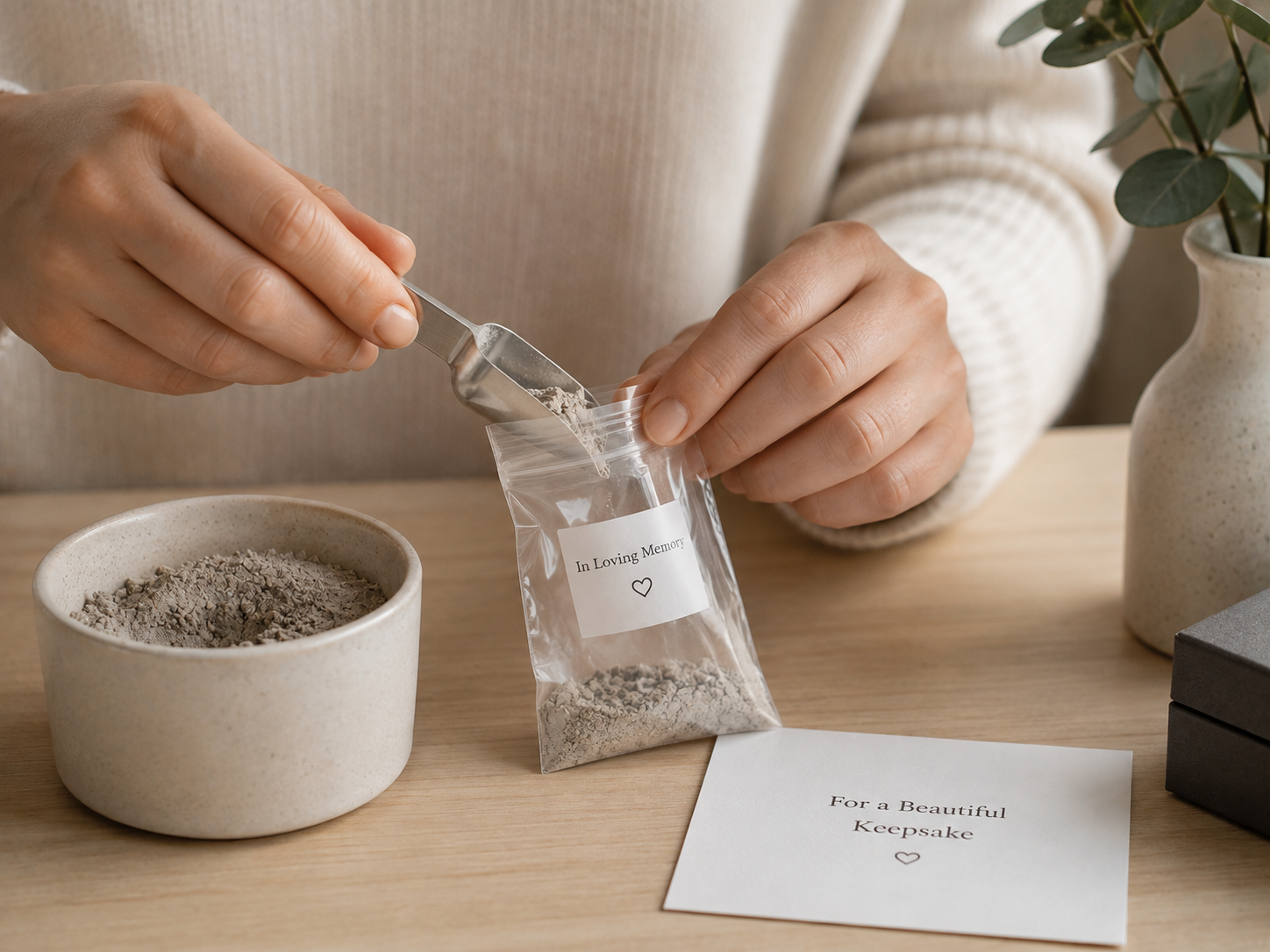
Small scoop transferring a measured portion of cremated remains into a sealable bag on a clean table

Step 5: Arrange the Shipping or Delivery

Cremated remains cannot always be shipped in the same way as ordinary packages. Shipping requirements depend on the country, carrier, and destination.

Before sending anything, confirm the current requirements directly with both the memorial diamond provider and the shipping service.

Ask your provider:

  • Which shipping method should be used?
  • Do they provide a shipping kit?
  • What type of packaging is required?
  • Is documentation required?
  • How will the package be tracked?
  • How will you be notified when the material arrives?

For families in the United States, it is important to review the current guidance from USPS before shipping cremated remains, as carrier requirements can change.

Before sending the package, it can also be helpful to keep a record of the tracking information and confirm the provider’s process for acknowledging receipt.

International shipping can involve additional requirements, so always check the regulations that apply to both the sending and receiving countries.

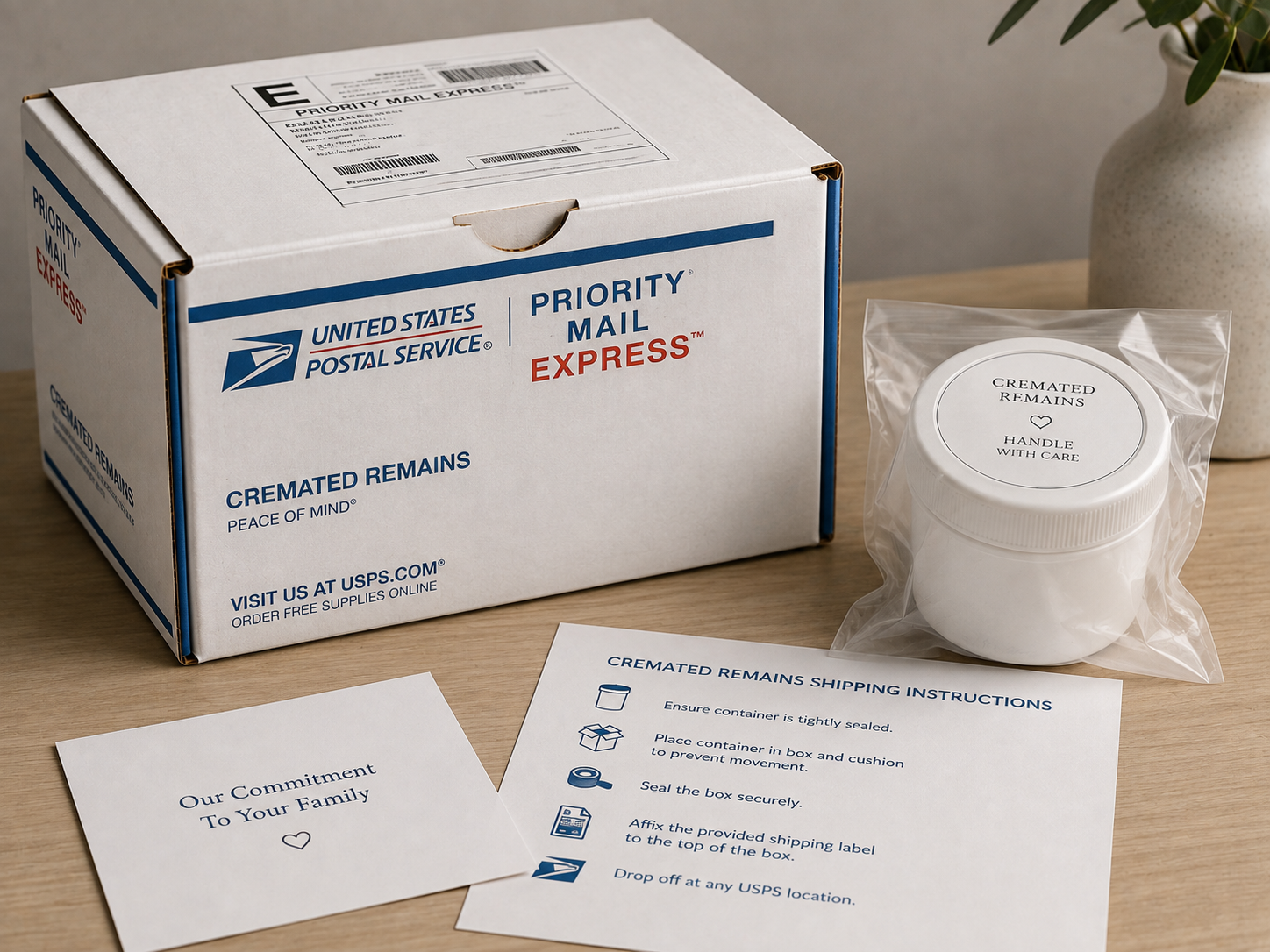
Official USPS Priority Mail Express Cremated Remains box with a sealed sift-proof inner container beside it, prepared for shipping

Step 6: What Happens While the Diamond Is Being Created?

Once the material reaches the laboratory, it enters the memorial diamond creation process.

Although the exact process can vary between providers, the material generally goes through several stages before the finished diamond is ready.

These stages may include:

  1. Receiving and documenting the material.
  2. Extracting and preparing usable carbon.
  3. Processing the carbon for diamond growth.
  4. Growing a diamond crystal using specialized laboratory equipment.
  5. Cutting and polishing the diamond.
  6. Preparing documentation associated with the finished stone.

The overall timeline can vary depending on the requested carat size, color, laboratory process, and provider.

For a closer look at the science behind the process, read How a Memorial Diamond Is Made From Your Mother’s Ashes.

Before beginning the process, ask your provider how often you can expect updates and what stages of the journey you will be informed about.

Step 7: Decide How You Want to Keep or Wear the Diamond

When the memorial diamond is complete, you will need to decide how you want to keep it.

Some people choose to keep the diamond as a loose stone, while others have it set into a piece of jewelry that can be worn every day.

Popular options include:

  • Memorial diamond rings
  • Diamond pendants
  • Earrings
  • Custom family jewelry
  • Heirloom jewelry pieces

The setting you choose can become part of the meaning of the memorial itself. A simple pendant may feel personal and close to the heart, while a ring can become something you wear every day.

For inspiration, read Memorial Diamond Settings and Jewelry Ideas for a Mother.

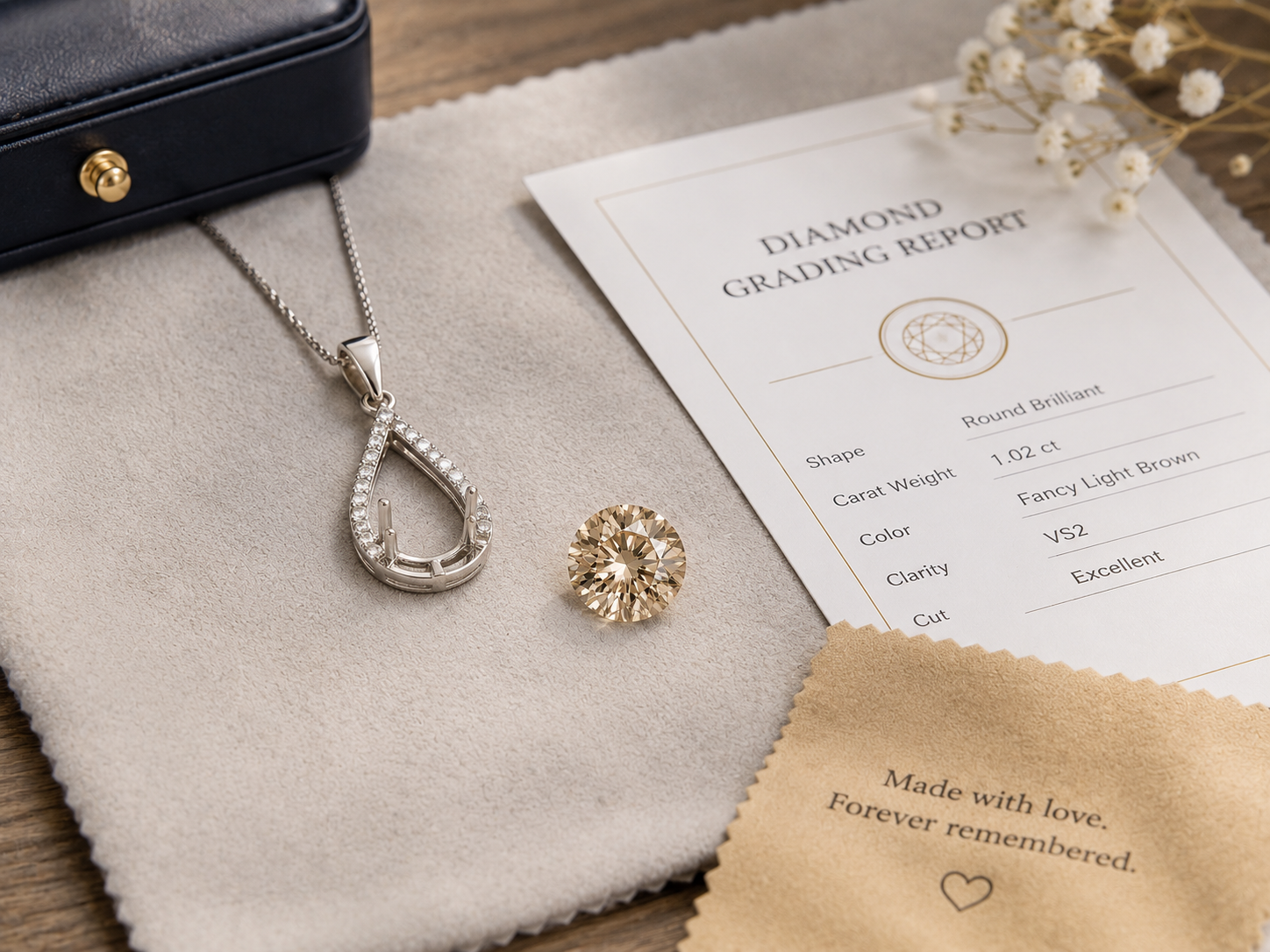
Loose memorial diamond beside a pendant setting and a grading report on a jeweler's cloth

Frequently Asked Questions

Can I deliver my mother’s ashes in person instead of shipping them?

Some memorial diamond providers may allow personal delivery or drop-off. Availability depends on the company’s facilities and procedures, so contact the provider before making travel arrangements.

Do I need paperwork to send ashes?

Shipping requirements can vary depending on the carrier and location. Documentation may be required, so always confirm the current requirements before preparing a shipment.

What if my mother’s ashes were already divided among family members?

A divided portion may still be sufficient depending on the provider’s requirements. Confirm the exact amount needed before beginning the process.

What happens to ashes that are not used?

This depends on the provider’s policies and process. Before sending any material, ask how unused portions are handled, returned, and documented.

Does the whole family have to agree?

Every family’s circumstances are different. Even when family members have different opinions, having an open conversation before dividing the ashes can help avoid misunderstandings and ensure everyone’s wishes are respected.

A Meaningful Next Step

You do not need to make every decision immediately.

The first step can simply be learning about your options and talking with the people closest to you.

Think about the diamond size that feels meaningful, the color you prefer, how you may want to wear the finished stone, and what your family has planned for the remaining ashes.

For a broader overview of the entire process, read Mother Ashes Diamond: The Complete Guide.

Turning your mother’s ashes into a diamond is a deeply personal decision. Taking the time to understand each step can help you move forward with confidence and create a lasting memorial that feels meaningful to you and your family.