How Long Does It Take to Make a Brother Memorial Diamond

How Long Does It Take to Make a Brother Memorial Diamond?

Once you have decided to have a diamond grown from your brother’s ashes or hair, the waiting can start to feel like a weight of its own. A typical brother memorial diamond timeline runs about 6 to 10 months across the industry, counted from the day a provider receives his material to the day the finished stone is ready, and diamonds larger than roughly 2 carats or in specialty colors can take up to about 12 months.

That range is the usual starting point whether you send ashes, hair, or both. The sections below explain why the size you choose drives the wait, what happens during those months, what you can do beforehand on your own schedule, and how to think about a birthday or anniversary without counting on a fixed date.
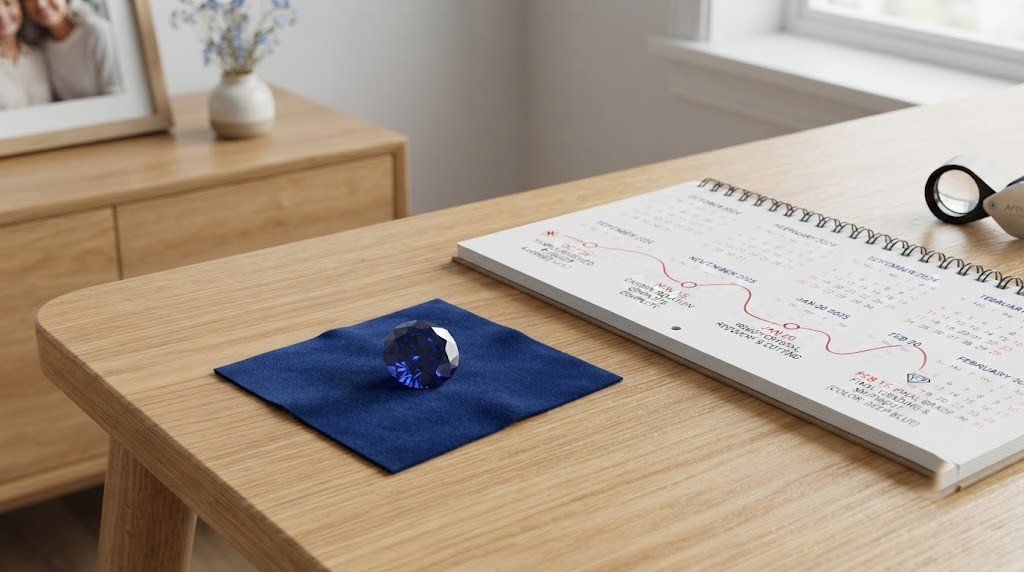
brother memorial diamond timeline

How Long Is a Typical Brother Memorial Diamond Timeline?

Providers across the industry tend to describe the making of a memorial diamond in months. The figures below are general ranges from the wider market, not a Memorial Diamond turnaround commitment, since the brand has not published one.

Type of stoneTypical brother memorial diamond timelineWhat drives it
Small to midsize stones (about 0.10 to 1 carat) in natural tonesAbout 610 monthsA standard growth run, then cutting, polishing, and grading
Stones over roughly 2 caratsUp to about 12 monthsA much longer stay in the growth press
Specialty colors, such as blackUp to about 12 monthsAdditional color processing after growth
Ashes, hair, or bothPublished ranges are not split by sourceSize and color do most of the work; ask about any extra step for combined material

Treat any brother memorial diamond timeline you are quoted as an estimate rather than a promise. A provider may share a projected window when you order, and it is fair to ask how often that window shifts and how you will hear about it if it does.

The range also tells you something useful about planning: the choices you make about carat and color matter far more to the wait than anything else. Deciding those early gives you the clearest picture of where in the range your stone is likely to land.

Why Does Growth Time, Not the Amount of Ashes or Hair, Decide the Size?

It can come as a surprise that sending a larger quantity of his ashes neither speeds things up nor produces a larger diamond. Carat weight comes from how long the crystal is left to grow inside the press. Choosing a bigger stone is, in effect, choosing a longer growth run, and with it a longer brother memorial diamond timeline.

The reason lies in how carbon is used. Cremated remains are mostly calcium phosphate and hold only about 0.54% carbon by weight, while hair holds roughly 50%. The personal carbon that is recovered gets purified, and supplemental lab carbon is typically blended in so there is enough feedstock for growth. When the source is ashes, the carbon recovered from ash typically accounts for something like 1015% of what the finished stone weighs, and a few providers quote a share as small as about 3%. No equivalent finishedstone percentage has been published for hair or for an ashesandhair blend.

Growth usually happens by HPHT, which recreates conditions of roughly 68 GPa and 1,4002,500°C around a tiny diamond seed; a minority of providers use CVD instead. This background on how labgrown diamonds are produced by HPHT and CVD explains both methods. The crystal builds over weeks to months, and larger stones need considerably longer growth and closer process control.

So when you weigh carat sizes, you are also weighing the length of your brother memorial diamond timeline. A smaller stone generally sits nearer the start of the range, while a stone beyond about 2 carats may reach its far end.

What Happens at Each Stage of a Brother Memorial Diamond Timeline?

Every brother memorial diamond timeline follows a sequence of distinct stages. Providers describe them in slightly different ways and rarely publish a set length for each one, so the table below explains what happens at every stage rather than how long it lasts.

StageWhat happensWhat can influence the pace
1. Receipt and loggingHis ashes or hair arrive and are recorded under chainofcustody trackingShipping, plus paperwork and authorization being complete
2. Carbon extraction and purificationAn oxygenfree, multistage process strips away everything except carbon, reaching roughly 99.9%+ purityMaterial type and the provider’s lab queue
3. GraphitizationThe cleaned carbon is fired again, at roughly 2,5002,700°C, until it turns into graphite the press can useProvider workflow
4. Diamond growthThe feedstock, typically blended with lab carbon, grows on a seed in an HPHT press, or by CVDChosen carat size, and a repeat attempt if one is ever needed
5. Cutting and polishingA cutter shapes the rough crystal into its finished formCut style, since fancy shapes can involve more work
6. Optional color treatmentSome providers use postgrowth irradiation for red, pink, green, or blackWhether a specialty color was chosen
7. Grading and certificationThe stone is graded, ideally by an independent lab, and an origin certificate is issuedWhether thirdparty grading is included

If you choose a ring, pendant, or other setting, jewelry work follows the loose stone. An independent grading report, when included, describes the stone’s cut, color, clarity, and carat using standards like those in GIA’s overview of diamond quality factors.

Because each stage depends on the one before it, the brother memorial diamond timeline you receive is really the sum of a queue, a growth run sized to your chosen carat, and finishing work. Asking where his material sits in that sequence, and how updates are shared, can make the months feel less opaque.

Does Choosing Ashes, Hair, or Both Change the Brother Memorial Diamond Timeline?

Industry ranges for a brother memorial diamond timeline are not divided by source material. The 610 month window, stretching toward about 12 months for larger or specialtycolor stones, is quoted whether a family sends ashes, hair, or a combination, because the length of the growth run carries most of the weight.

The materials do differ in practical ways:

  • Ashes: a few tablespoons up to roughly 4 oz (about 100 g) is a typical request. Whatever is not used stays available for an urn, a scattering, or burial, whichever the family has in mind.
  • Hair: usually a small lock or a few grams, because hair is far richer in carbon. No cremation is involved, which can matter if he was buried.
  • Both together: some providers combine the two in a single stone. Ask whether processing two materials adds a step to the brother memorial diamond timeline and how carbon from each is handled.

Provider minimums vary, and these amounts are industrytypical rather than a Memorial Diamond requirement. For detail on hair, see how much hair a brother memorial diamond needs. The complete guide to his ashes and hair together covers combined submissions, and there are separate guides for a brother ashes diamond and a brother hair diamond.

Several stones can often be grown from one source, so choosing a material does not usually mean only one person can receive a diamond.

What Can You Do Before the Brother Memorial Diamond Timeline Begins?
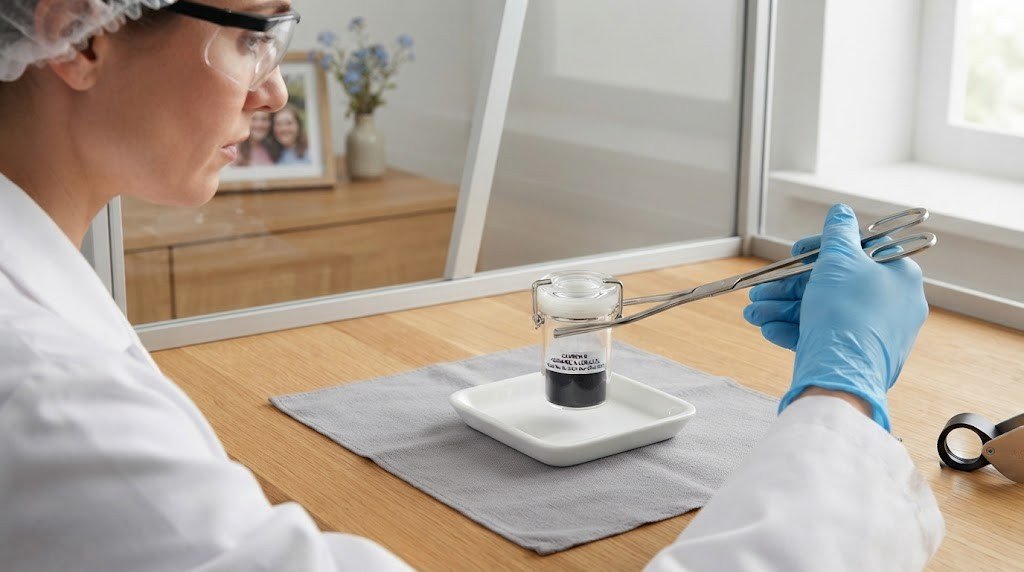
The clock on a brother memorial diamond timeline usually starts when a provider receives his material, which means everything before that moment moves at your pace, not theirs. There is no right speed for this part. Some people want to begin soon; others wait a long while before they feel ready, and both are entirely fine.

Things you might work through, in whatever order feels natural:

  1. Talk with the people closest to him. Parents, other siblings, and a partner or children if he had them may each have feelings about dividing ashes or keeping hair, and hearing them early can prevent strain later.
  2. Clarify who holds authority over his remains, covered in the next section.
  3. Choose a material. Ashes, hair, or both, depending on what is available and what the authority holder is comfortable with.
  4. Think about size and color. Since carat drives the wait, deciding this early shows you roughly where in the range you are likely to land.
  5. Compare providers. Look at how each explains its process, whether independent grading is offered, how material is tracked, and how timing is communicated. These questions to ask before turning his ashes into a diamond make a useful checklist.
  6. Set a budget. Size and color affect price as well as the wait, and this overview of what a brother memorial diamond typically costs lays out the industry tiers.

None of these steps has a set duration, and none needs hurrying. Taking longer here does not lengthen production itself; it simply means production begins when you are ready for it to.

Who Has to Agree Before His Ashes or Hair Are Sent?

It is worth settling authority before any brother memorial diamond timeline begins, because material generally cannot be released without the right person’s agreement, and that person is often not a sibling. Depending on where he lived, a spouse or registered partner, adult children, or parents commonly rank ahead of brothers and sisters. Each state sets that order, and if he chose someone in advance or left his own instructions on paper, those choices can shift it. A funeral director or attorney in his state can confirm what applies.

If the decision belongs to someone else, you can still ask. A gentle request for a small portion of ashes, paired with an offer to share a stone if they would like one, is a respectful place to begin. Hair offers a second route: a lock cut at the funeral home normally comes back to the family through the person with authority, while hair saved at home or among his things may count as part of his estate, with rules that differ by state.

Checking all of this first keeps a brother memorial diamond timeline from stalling over paperwork after you have already placed an order.

How Can You Plan a Brother Memorial Diamond Timeline Around a Meaningful Date?

You may hope to have the stone in hand for his birthday, the anniversary of his death, a holiday, or a family gathering. That wish is understandable, and it is reasonable to mention it to a provider. What no one can responsibly promise is a brother memorial diamond timeline that ends on a specific date, because growth runs, grading, and setting work do not always move on a predictable schedule.

A kinder approach builds flexibility in from the start:

  • Work backward from the date using the far end of the range, not the near end.
  • Treat any projected window as an estimate, and ask how changes will be communicated.
  • Plan something for the day itself that does not depend on the stone, such as a written note about the diamond on its way or a quiet moment to share the plan with family.
  • If the date passes before the diamond arrives, let its arrival become an occasion of its own.

For a larger stone or a specialty color, allowing the full twelve months in a brother memorial diamond timeline gives you the most breathing room. If several relatives are each receiving a stone from the same source, ask whether those stones are grown together or one after another; there is more on several relatives receiving stones from one brother’s ashes in a separate post.

What Can Stretch a Brother Memorial Diamond Timeline?

Even within a typical 610 month brother memorial diamond timeline, several factors can push a stone toward the longer end. None of them mean anything has gone wrong; they are simply part of how the work is done.

  • A larger carat choice, since growth time scales with size, and stones beyond roughly 2 carats can reach about 12 months.
  • Specialty colors, including irradiation for black or other unusual tones.
  • A growth attempt that needs repeating. Ask each provider how they handle this and whether it affects cost.
  • Grading and certification, particularly when an independent lab is involved.
  • Jewelry setting work after the loose stone is finished, especially for a custom design.
  • Paperwork or authorization that is still being resolved when material is ready to send.
  • Shipping in either direction, including any carrier rules for sending ashes.

If a brother memorial diamond timeline you are quoted seems much shorter than the industry range, it is fair to ask why, and what stone size and color that estimate assumes.

Which Timing Questions Should You Ask Each Provider?

Clear answers make any brother memorial diamond timeline easier to plan around. Consider asking each provider:

  • Does your estimate begin when I order, when you receive his material, or once paperwork is complete?
  • How do my chosen carat and color change the estimate?
  • Do hair, or ashes and hair combined, add any step?
  • How will you update me, and how often?
  • What happens to the schedule if a growth attempt does not succeed?
  • Is setting work included in the estimate or added afterward?
  • Will unused ashes or hair be returned, and when?

Writing down each answer lets you compare one brother memorial diamond timeline against another on equal terms rather than taking a single headline number at face value.

How Can the Waiting Months Feel More Manageable?

A brother memorial diamond timeline measured in months can feel long when you are waiting for something tied to someone you miss. Some people use the time to plan a setting, write down a memory of him to keep alongside the stone, or gather photos for the day it arrives. Others prefer to set the whole thing aside until word comes. There is no correct way to wait.

If the waiting brings up more than you expected, leaning on friends, family, or a grief counselor is worthwhile. A diamond is a keepsake, not a replacement for that kind of support, and it will still be on its way while you look after yourself.

Frequently Asked Questions

How long does a brother memorial diamond take to make?

Across the industry, the process typically takes about 6 to 10 months from the time a provider receives his ashes or hair. Stones larger than roughly 2 carats, or in specialty colors, can take up to about 12 months.

Is the brother memorial diamond timeline different for hair than for ashes?

Published industry ranges are not split by source material, so the same 6 to 10 month window generally applies. Because practices differ, ask each provider whether hair, or ashes and hair combined, adds any step to their estimate.

Will sending more ashes make the diamond faster or bigger?

No. The finished carat weight depends on how long the crystal grows in the press, not on the quantity of ashes supplied. A larger stone means a longer growth run, so sending extra material changes neither size nor speed.

Can a memorial diamond be ready in time for a specific date?

No responsible provider can promise an exact delivery date, because growth, grading, and setting work vary. You can share the date you have in mind, plan backward from the longer end of the range, and keep a flexible backup plan.

When does the brother memorial diamond timeline actually start?

It usually starts when the provider receives his material and any needed paperwork. Family conversations, authority questions, and comparing providers all happen beforehand, on your own schedule, and taking longer there does not slow production itself.

Why do larger memorial diamonds take longer?

Carat size comes from time spent growing under high pressure and temperature. A stone over roughly 2 carats needs a much longer growth run and closer process control, which is why those diamonds can approach about 12 months.

Final Thoughts on the Brother Memorial Diamond Timeline

Nothing about a brother memorial diamond timeline asks you to hurry. The months belong partly to the lab and partly to you, and you are free to fill your share with conversations, setting ideas, or simply the ordinary business of missing him. When the stone does arrive, the patience behind it becomes part of its story.

Learn More About Planning Around the Wait

Talk With Memorial Diamond

Whenever you feel ready to talk about sizes, timing, and what the months ahead could look like for a stone made from your brother’s ashes or hair, Memorial Diamond is here at memorialdiamond.us. Questions are welcome at any stage, with no obligation to begin.

Word count: 2,964 words · Reading time: about 15 minutes
Really Made From Daughter Ashes and Hair 7 Proven Truths

Is a Memorial Diamond Really Made From Your Daughter’s Ashes and Hair?

Doubt is reasonable here, and it deserves a straight reply rather than a soothing one. Yes: a stone described as really made from daughter ashes and hair does contain carbon recovered from both of those materials, purified and grown into a genuine laboratory diamond. It also contains supplemental laboratory carbon, no published figure states what share of a blended stone is hers, and nothing about a gem really made from daughter ashes and hair can prove its origin on its own. The proof sits in the chain of custody record for each material.

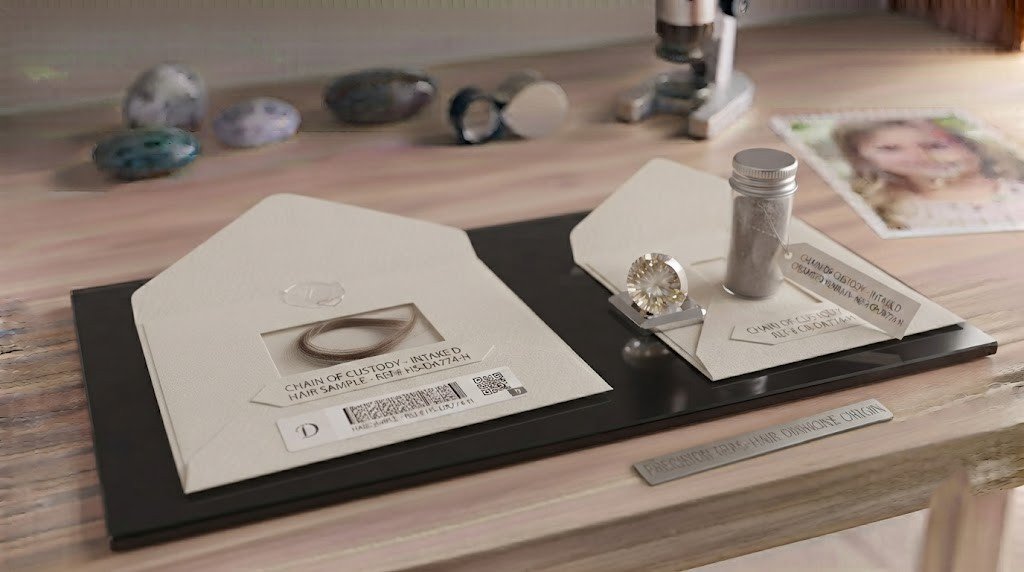
 A loose memorial diamond really made from daughter ashes and hair resting beside two labeled sample envelopes

Is a Stone Really Made From Daughter Ashes and Hair, or Mostly Lab Carbon?

Both, and an honest provider will say so unprompted. Her carbon is physically inside the crystal; laboratory carbon is too.

The skeptic’s worry runs like this: if much of the stone is supplemental carbon, is calling it really made from daughter ashes and hair anything more than marketing? “Made from” describes a genuine, traceable contribution, not a total. Carbon from her remains and her hair is purified, graphitized and grown into the lattice alongside the added material. It is structural, not a coating.

What a truthful description of a gem really made from daughter ashes and hair cannot promise is purity. No memorial diamond is grown only from personal carbon.

That leaves three things to check before trusting any stone really made from daughter ashes and hair: how much of it is hers, whether the two sources can be told apart, and what paperwork links the crystal to what you sent. The complete guide to a daughter ashes and hair diamond covers the broader choice if you are still deciding.

How Do Two Such Different Materials Feed One Crystal?

Each is purified separately, and the purified carbon is combined into a single charge for the growth press, where it is the same substance whichever source it came from.

The starting points could hardly be less alike, which is why families wonder whether a stone really made from daughter ashes and hair is, in practice, mostly one or the other.

Cremated remainsHair
What it is mostly made ofCalcium phosphate, the mineral of boneKeratin, a protein rich in carbon
Carbon in the starting materialAround 0.5% to 4% by weightAround 50% by weight
Amount providers usually ask forA few tablespoons up to about 4 oz, roughly 100 gA small lock, or a few grams
Needs a cremation?YesNo
Published finished stone shareAround 10% to 15% on the ash route, some citing as low as 3%None published

Weight for weight, hair holds far more carbon than ash, so a modest lock is not a token gesture. That still does not tell you the proportion inside a diamond really made from daughter ashes and hair, because it depends on the quantities sent and on how a particular laboratory works.

After purification to roughly 99.9% carbon or better, both materials go through graphitization at about 2,500 to 2,700°C, and that graphite is what enters the press. How a memorial diamond is made from her ashes and hair follows each stage in more detail.

Why Is Laboratory Carbon Still Added When You Send Both?

Because the carbon recovered from a family’s submission is rarely enough, by itself, to fill a growth cell for a stone of useful size. Adding hair raises the personal carbon available; it does not usually remove the need for supplement.

It feels logical that two materials should mean a purer stone. Across the industry, though, the published process still describes blending recovered carbon with laboratory carbon, and nothing published says a stone really made from daughter ashes and hair escapes that step.

A diamond really made from daughter ashes and hair is therefore a blend in two senses: two personal sources, plus the supplement. None of that makes her contribution less real. The accurate sentence is “made in part from her,” which is also the sentence any reputable provider will put in writing.

Growth usually happens under high pressure and high temperature, roughly 6 to 8 GPa and 1,400 to 2,500°C, the same methods used to make any lab grown synthetic diamond. A minority of providers use chemical vapor deposition instead. Either way, the result is a real diamond, not a simulant.

What Share of a Diamond Really Made From Daughter Ashes and Hair Is Hers?

Nobody has published that number, and anyone quoting one without seeing your submission is estimating.

For ash on its own, industry descriptions put personal carbon at around 10% to 15% of the finished stone’s mass, some providers citing as low as 3%. That figure belongs to the ash route only. No equivalent finished stone percentage has been published for hair alone, and none at all for a blended charge. Hair’s roughly 50% carbon content describes the raw material, not the finished diamond.

So resist borrowing the ash figure for a gem really made from daughter ashes and hair. The blend may behave differently, and no public work settles how.

Instead, turn the gap into a written request. Ask the provider, at the carat size you are considering:

  • What percentage of the finished stone they expect to be her carbon.
  • How including hair changes that estimate compared with ash alone.
  • Whether they will state it in writing before you send anything.

Keep whatever reply comes back. It is the only figure that will ever apply to your own stone really made from daughter ashes and hair.

Can You Learn How Much Came From the Ash and How Much From the Hair?

Ask, but expect the answer to be “not precisely.” Most providers do not itemize the finished stone by source, and once the two carbons are pooled there is no way to separate them again.

A laboratory can often tell you what went in: how much ash and hair arrived, and roughly what each yielded. Some share those intake and yield figures on request; others treat them as internal. Either response is worth knowing before you commit to anything really made from daughter ashes and hair.

Families sometimes want the split for reasons unrelated to suspicion. Wanting to know both are present in a stone really made from daughter ashes and hair is completely understandable. If both were logged, purified and pooled, both are there, even if nobody can state the proportion.

If one material matters enough that you want it in a stone by itself, raise that before anything ships. Growing one diamond from each is sometimes possible and removes the question. How much ash and hair a daughter memorial diamond needs explains how quantities affect that choice.

Can a Lab Test Show a Stone Is Really Made From Daughter Ashes and Hair?

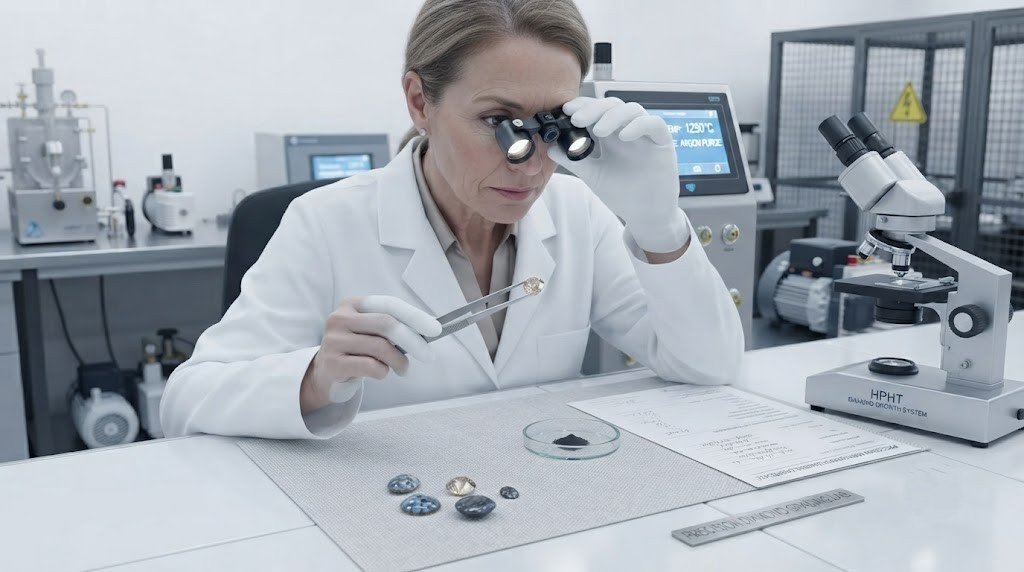
A gemologist examining a finished lab-grown diamond through a loupe at a grading bench

No. No test on a finished diamond can confirm its carbon came from a particular person, from ash, or from hair. Carbon atoms in the lattice carry no personal signature.

A gemological laboratory can establish that the stone is a real diamond, that it was grown rather than mined, and how it grades. None of that speaks to origin.

This is the uncomfortable center of the question. A stone really made from daughter ashes and hair and one grown purely from laboratory carbon would look identical under any available instrument. That is true across the category.

So trust has to rest on a documented, unbroken record of what happened to each of your two samples from arrival onward. Anyone implying that a gem really made from daughter ashes and hair “proves” its own origin is overstating what is possible.

What Documents Show a Diamond Is Really Made From Daughter Ashes and Hair?

A chain of custody record following both materials from arrival to the growth run is the core evidence. Everything else supports it.

When a family is told a stone is really made from daughter ashes and hair, reasonable documentation behind that claim looks like this:

  • Two intake confirmations: one per material, each with its own reference number and date.
  • A custody log for each material: through purification and graphitization.
  • A record of the pooling step: or confirmation that the two were grown separately.
  • The provider’s written carbon estimate: since no published figure covers a blend.
  • An origin or authenticity certificate: usually in house, naming both materials.
  • An optional independent grading report: if you choose to have one.

The last two do different jobs. An in house origin certificate is the provider’s own statement that the stone came from your submission. An independent report judges it against the standard cut, color, clarity and carat measures; it is optional across the industry and cannot say whether a stone is really made from daughter ashes and hair.

Ask to see a redacted sample of each document before you commit. The step by step route for her ashes and hair shows where each record is created.

Which Warning Signs Should Make You Slow Down?

A few answers should give you pause, not because they prove anything is wrong but because they make it hard to verify that a stone is really made from daughter ashes and hair.

  • A claim that the stone is 100% her, with nothing added.
  • A precise percentage for a blended stone offered before anyone knows what you are sending.
  • The ash route percentage presented as if it also covers hair or a blend.
  • Reluctance to describe the custody process, or to put it in writing.
  • A suggestion that testing the finished diamond confirms whose carbon it holds.
  • No separate intake record for the hair once it arrives alongside the ash.
  • Pressure to decide quickly, or discounts tied to deciding by a date.

Any of these may have an innocent explanation; what matters is whether it comes back clearly and in writing. How to turn her ashes and hair into a diamond sets out the fuller decision in order.

Who Can Authorize Sending Her Ashes and Her Hair?

It may not be one person, and it is not automatically her parents. Before a stone can be really made from daughter ashes and hair, both materials need someone’s go ahead, and the two can fall under different considerations.

For cremated remains, priority is a matter of state law, and no one national rule covers every family. At whatever age she died, a spouse or partner may hold authority ahead of her parents, as may her own adult children. Anything she left in writing, such as a directive, a will provision or a pre arranged plan, can override the default order.

Hair is often simpler in practice, particularly a lock already in your keeping, though that does not place it automatically beyond any rules. Belongings can form part of an estate, rules vary by state, and if someone else holds the sample or has a stronger claim, talk with them first.

Parents may disagree, or one may be arranging alone; neither is unusual. A funeral director or local attorney can usually settle who signs.

What Happens to Whatever Ash and Hair Is Not Used?

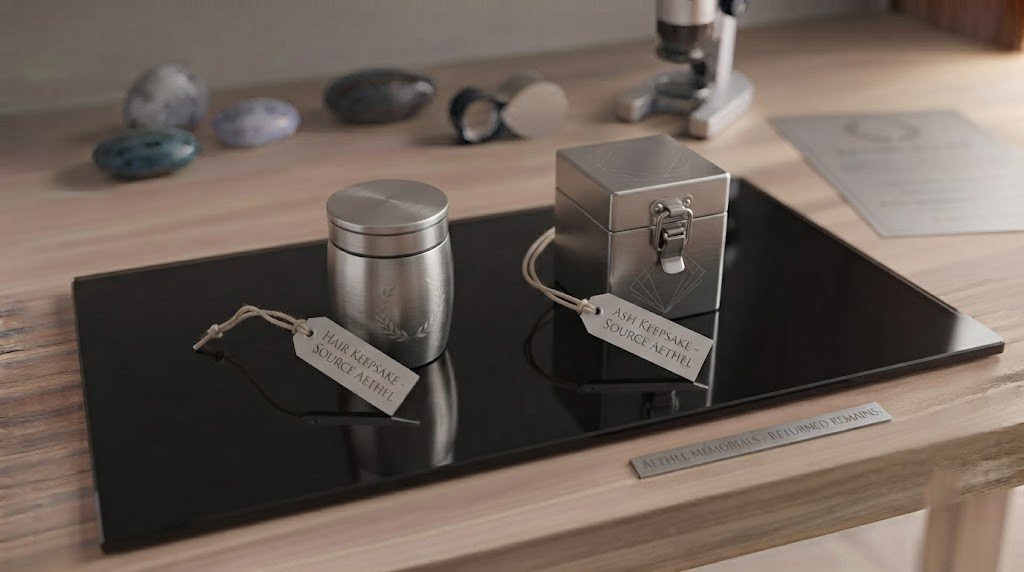
Two small sealed keepsake containers returned to a family after processing

It depends on the provider, so ask before anything is sent, and ask about each material separately.

Only part of either sample becomes purified carbon. Some providers return what remains, some dispose of it respectfully, and some offer a choice.

A clear written policy covering both is part of what makes a claim that a stone is really made from daughter ashes and hair trustworthy. Most of her ashes stay with the family regardless, so burial, scattering, an urn at home or sharing among relatives all remain open.

Does Sending Both Change the Cost, the Wait or the Color?

Not in the way people expect. Price and timing follow the stone you choose, and color cannot be promised either way.

In general 2026 industry terms, not any one company’s prices, roughly 0.10 to 0.25 carat runs about $1,500 to $3,500; half a carat to one carat about $5,000 to $15,000; and two to five carats or more from around $20,000 to $75,000 and beyond. Settings and an optional grading report are usually priced separately.

Most stones take six to ten months from receipt, with larger or specialty color stones sometimes stretching toward twelve. Size is set by time in the press, not by how much you send, so a stone really made from daughter ashes and hair is neither faster nor larger for including hair.

Color comes from trace elements during growth: nitrogen pushes toward yellow, boron toward blue, and colorless requires neither, which generally costs more. Including hair does not make the result predictable, and hair grown stones are not automatically lighter. Optional irradiation can produce red, pink, green or black. Choose what feels right to the people who will keep it. What color a diamond from her ashes and hair will be goes further.

Frequently Asked Questions

Is any memorial diamond grown only from her carbon?

No. Across the industry, carbon recovered from ash and hair is typically blended with supplemental laboratory carbon so that a stone of useful size can grow. Her carbon is genuinely part of the crystal, but a claim of total purity overstates what the process delivers.

Does adding hair make the stone more hers than ash alone?

It may raise the personal carbon available, because hair holds around half its weight in carbon. No published figure says how much it changes a stone really made from daughter ashes and hair, though, so ask the provider for an estimate in writing for your specific submission and carat size.

Can we ask for the ash and hair percentages separately?

You can ask, and you should. Most providers do not itemize the finished diamond by source, because pooled carbon cannot be separated again. Many can tell you what quantities were received and roughly what each yielded, which is often the closest honest answer available.

Will an independent grading report confirm the stone came from her?

No. A grading report assesses cut, color, clarity and carat, and can confirm the stone is a genuine lab grown diamond. It cannot identify whose carbon is inside. Origin rests on the provider’s chain of custody records and certificate, which is why those documents deserve close attention.

Could we have two stones, one from her ashes and one from her hair?

Often, yes. Because only a portion of each material is needed, many providers can grow separate stones instead of one diamond really made from daughter ashes and hair. Each stone carries its own growth time and price, so ask for quotes on both arrangements before deciding which suits your family.

What if her hair sample turns out to be too small or damaged?

Ask before sending. A very small or poorly stored lock may not yield enough usable carbon, and then the stone is no longer really made from daughter ashes and hair. A good provider contacts you before continuing with ash alone, and a written policy should say whether you are consulted first and whether the price changes.

How long after her death can we still send both materials?

There is generally no fixed deadline, whether months or many years have passed. Cremated remains are chemically stable, and hair keeps well when stored dry. Tell the provider how and where each has been kept, since storage conditions can matter more than the time that has passed.

Final Thoughts on Whether It Is Really Made From Her

The skeptical question has an answer more modest, and more solid, than marketing tends to offer. A stone really made from daughter ashes and hair holds genuine carbon from both materials, blended with laboratory carbon; the share for a combined stone has not been published, and no instrument can confirm origin afterward.

What you can verify is the record. If each material was logged on arrival, tracked through processing and documented at pooling, you have as much certainty as this category offers anyone.

Before you accept any gem as really made from daughter ashes and hair, get the important answers in writing, take the time you need, and let the decision belong to the people who will live with it. The same question for ash alone is worth reading alongside this one.

Learn More About Daughter Memorial Diamonds

Talk With Memorial Diamond

If you want these questions answered for your own submission, Memorial Diamond can be reached at memorialdiamond.us to explain how each material would be logged and documented. There is no obligation in asking.

How much ash and hair a father memorial diamond needs, showing cremated ashes, a lock of hair, and a memorial diamond

How Much Ash and Hair Do You Need for a Father Memorial Diamond?

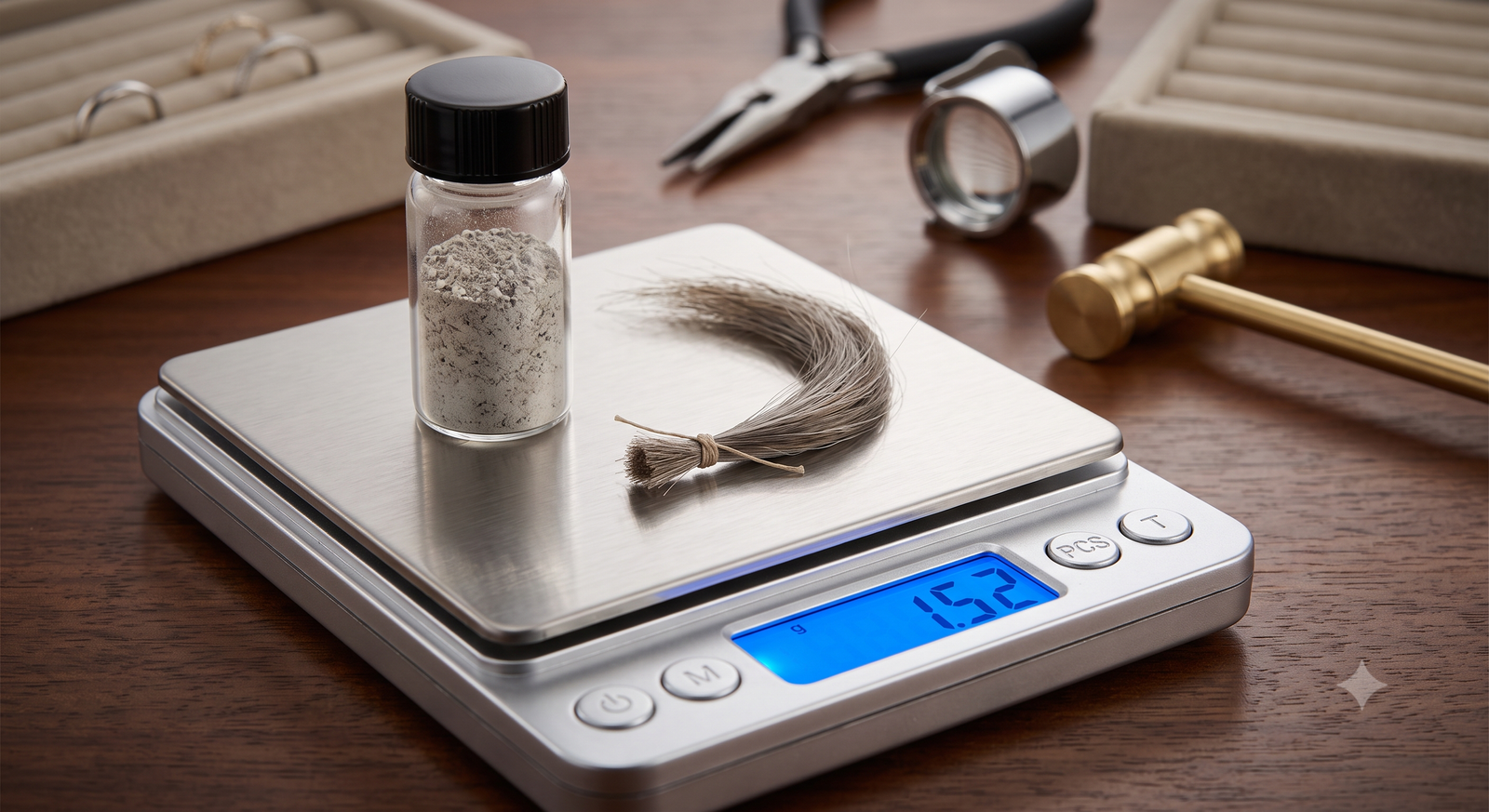
How much ash and hair a father memorial diamond needs: a small vial of cremated remains beside a tied lock of hair on a jeweler's scale

Of the two materials, there is usually one you have plenty of and one you are counting, and most people can say which before they finish reading the question. So how much ash and hair does a father memorial diamond need? Industry wide, plan on each material meeting its own figure in full: a few tablespoons up to roughly 4 oz (about 100 g) of cremated remains, and a few grams of hair, a palm sized lock. Ask before assuming that sending both lowers either number.

What matters far more than the figures is which side you are short of, because a shortfall in ashes and a shortfall in hair are not the same kind of problem. One is often recoverable. The other frequently is not.

Memorial Diamond is one of the companies that grows these stones; the questions below are meant for any of them, us included.

How Much Ash and Hair Does Each Material Have to Meet on Its Own?

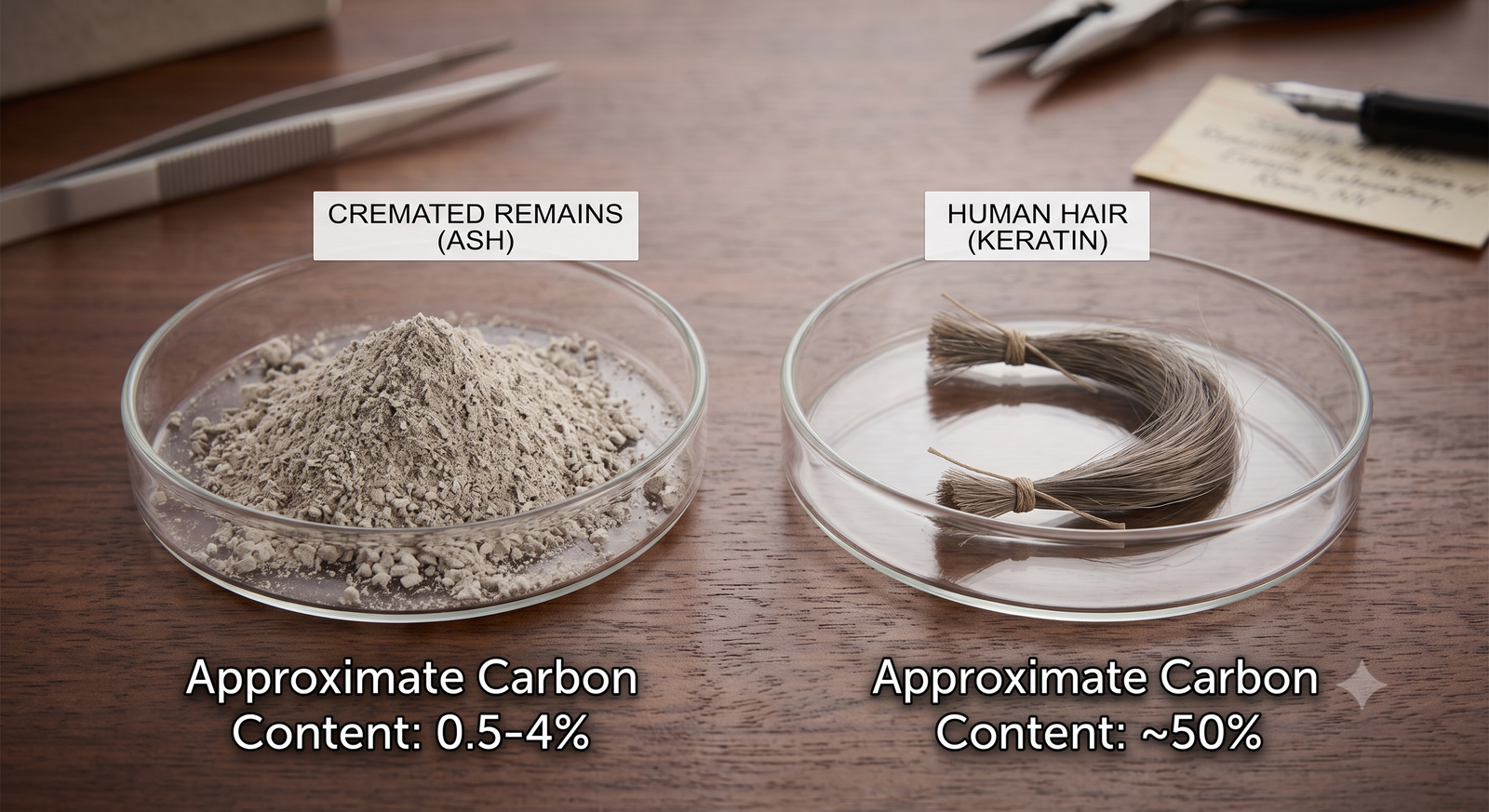
Side-by-side comparison of a dish of cremated remains and a coil of hair with their approximate carbon content noted, 0.5–4% against about 50%

The two figures for how much ash and how much hair are quoted in different units because the two materials are chemically nothing alike.

Cremated remains are dominated by calcium phosphate, the mineral structure of bone, with usable carbon at roughly 0.5% to 4% of ash by weight. That low yield is why how much ash you need is stated in tablespoons and ounces, and why a family submitting a portion still keeps most of what they have.

Hair is roughly 50% carbon by weight, built from keratin. That is why the hair requirement is stated in grams, and why hair works at all for a father who was buried rather than cremated.

Whichever material it came from, the recovered carbon is topped up with lab grown carbon before an HPHT growth run can use it. What each of the two contributes is a provable share of him rather than the whole stone, the honest framing, and the reason a claim of total purity should be treated as a warning sign.

Neither figure is standardized across the industry, and the individual numbers belong to the posts that own them: how much ash is needed and how much hair is needed each go into the specifics. This page is about what happens when you are holding both.

Should You Expect Combining to Lower Either Threshold?

Plan on no, and ask, how much ash and hair you need is set per material.

The reason to expect independence is that the two materials do not meet until late. Providers commonly describe preparing each separately, cleaning, extraction, purification to roughly 99.9% carbon, graphitization, with the two coming together only at the growth cell. On that description each material carries its own minimum, so how much ash and hair you need is two questions rather than one. The complete guide to father ashes and hair diamonds sets out where those lanes converge and why.

The consequence for planning is worth stating flatly: plan for both figures in full, and treat any flexibility a provider offers as a concession rather than an assumption. A family that plans on halves and discovers otherwise has often already divided something irreversible.

Why Are the Two Shortfalls Different Problems?

This is the distinction that actually decides what you do next, more than how much ash or hair sits in either container.

If you are short ofCan more usually be found?What finding out costsEffect on the other material’s requirement
His ashes, still in the family’s keepingUsually yes, a submission is typically a small fraction of a full cremationA phone call to whoever holds the urnNone
His ashes, already interred or scatteredUsually no, and disinterment is a legal and family matter rather than a practical oneA conversation with the cemetery or the executorNone, but this is often the point at which hair becomes the primary route
His hair, one sample onlyOften no. A lock is finite and does not replenishA scale and ten minutesNone
His hair, several possible sourcesSometimes, a comb, a razor, a hat, a barber’s clippingsA search, plus a provider’s acceptance policyNone
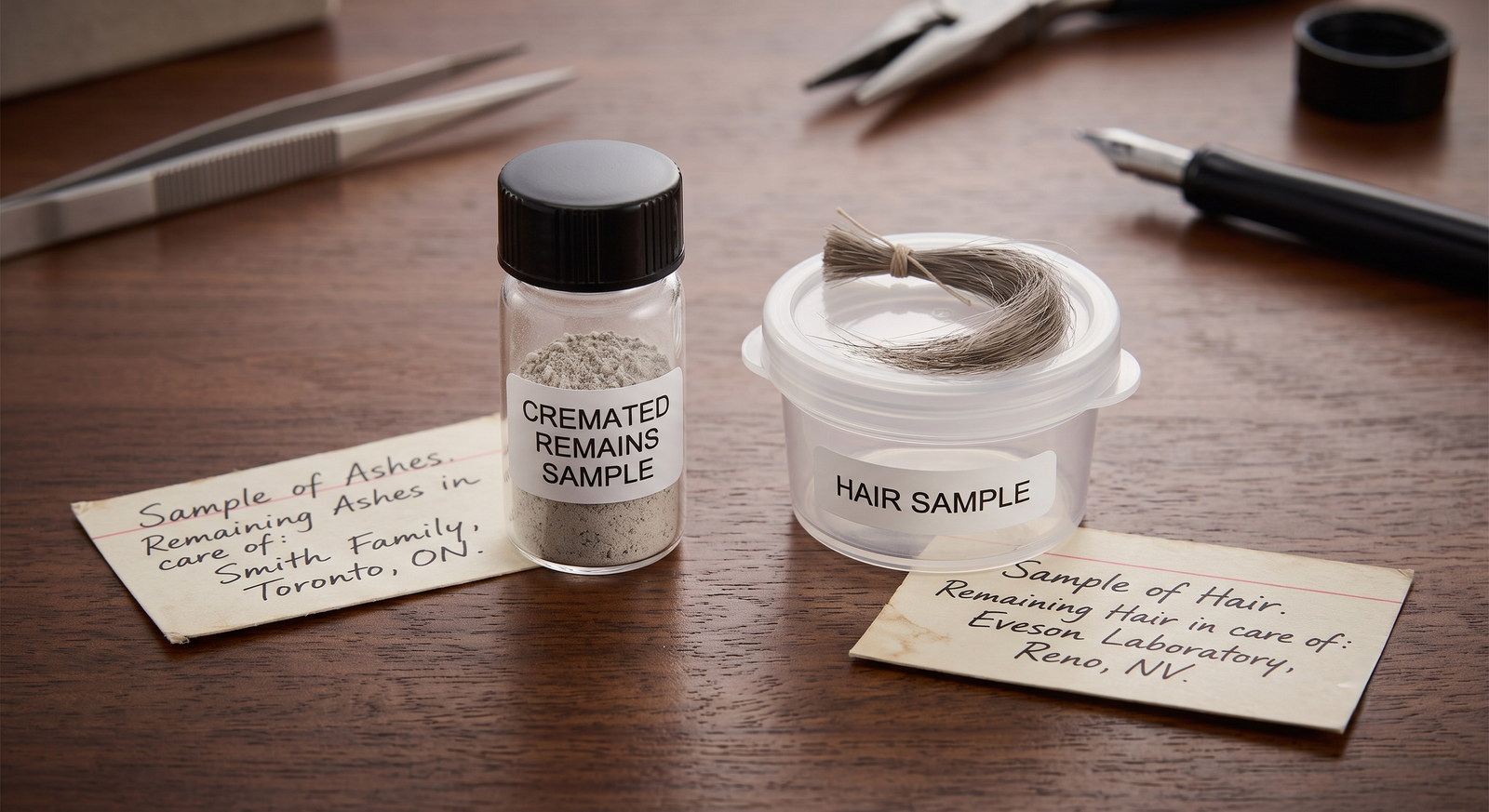
Two small labeled containers, one of cremated remains and one of hair, with a handwritten note beside each recording who holds the rest

Read the table twice for the same reason it is laid out this way, however much ash and hair you are holding: the ash rows describe a problem with a phone number attached, and the hair rows describe a problem with an ending. That asymmetry should decide the order you do things in.

Before anything is divided, opened or cut, establish these four things:

  1. Who currently holds his ashes, and how much ash is actually there. This is often not the person who assumes they know.
  2. What the hair sample weighs, on a scale that reads to a tenth of a gram, weighed in its container and subtracted.
  3. Whether any plan already exists for the remainder, a scattering, an interment, a shared plot, and whether it has a date.
  4. Whether the provider you are considering accepts combined submissions at all. It is not a given, and it is the question that makes the other three matter.

What Can Be Done if the Hair Falls Short?

Several things, in roughly this order of preference, and none of them depends on how much ash you have.

Look further before you conclude. Short clippings are not disqualified by being short, weight rather than length is what the process consumes, and the complete guide to father hair diamonds sets out where they tend to be found. Whether a given company accepts very short or mixed source clippings is a policy question that varies, so ask with a weight and a photograph rather than a description.

Ask whether a below minimum sample can be included as a supplementary contribution rather than as a lane of its own. Some providers may treat it that way; whether any given one does is not something the chemistry decides.

And if the answer is genuinely no, an ash only stone is not a lesser outcome. It is the longer established of the two routes, memorial diamonds were grown from cremated remains long before hair was offered, and the hair can stay exactly where it is. Keeping a lock is not a failed plan.

What Can Be Done if the Ashes Fall Short?

Often more than expected. How much ash a memorial diamond submission needs is a fraction of what a cremation produces, so a shortfall is more often a question of access than of how much ash exists, a sibling holding the urn, a portion already divided among family, a funeral home that still has a retained portion on file.

Where the remains have already been interred or scattered, the ash route may genuinely be closed, and that is the situation hair based options for loved ones who were not cremated exists to answer. A hair sample that seemed like an addition becomes the whole basis of the stone, and it works.

One thing that does not help either way: sending far more than the minimum. Carat size follows growth time in the press, not how much ash or hair arrived, so a fuller parcel buys nothing.

Which One Gets Assessed First?

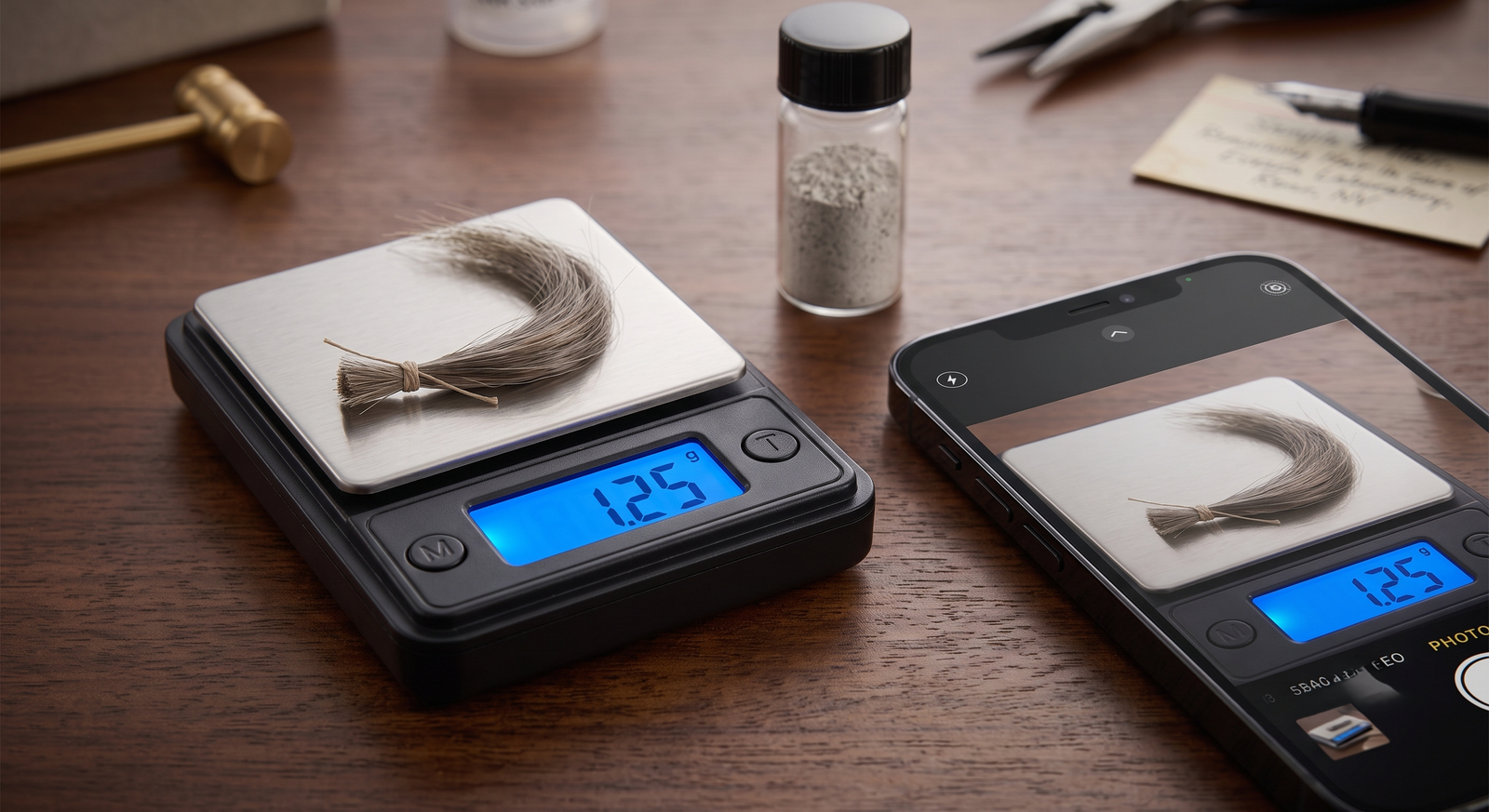
A lock of hair on a pocket scale photographed with the reading in frame, ready to send to a provider for pre-assessment

Hair, in most cases, it is the material that can fail assessment, and assessing it is quick. How much ash you have rarely decides anything at this stage.

A hair sample can often be evaluated from a stated weight and a clear photograph before anything is posted, though whether a particular provider will pre assess on that basis is worth confirming rather than assuming. Ashes are more often assessed on arrival, by volume and weight at intake.

The practical order that follows: settle the hair question first, in writing, then decide how much ash to send, then choose the carat. Questions to ask before a combined order covers what else belongs in that first email, and the step by step sequence covers where each material goes afterwards.

Frequently Asked Questions

Which Material Should Be Assessed First?

Hair, generally, it is finite, it is the one that can be judged inadequate, and a weight and a photograph can often settle it before anything is posted. Ashes are more often assessed at intake, by weight and volume.

Do the Two Figures Change if We Want a Larger Stone?

Generally not. Carat is bought in growth time rather than in how much ash and hair you submit, so a larger stone usually means more months and more money rather than more material. Confirm it, since minimums vary between companies.

Should We Weigh His Ashes, or Is a Volume Measure Enough?

Ask which the provider works in. How much ash is required is quoted both ways across the industry, in tablespoons and in ounces, and a family measuring by volume against a figure stated by weight can send materially more or less than intended.

Who Weighs and Measures Each Material, Us or the Laboratory?

Both, at different points. Weighing the hair at home tells you whether to proceed; the laboratory records its own intake figures for chain of custody purposes. Ask for those intake figures to be reported back to you in writing.

Is There Any Point Sending Much Ash or Hair Beyond What the Figure Asks For?

Not for size or speed, those follow the growth run. A little margin above a stated minimum can be sensible where a sample is marginal, but sending everything you have puts material out of your hands for no gain.

Is There Any Advantage to Sending Both if Either One Alone Would Be Enough?

Not in size, speed or cost, those follow the carat and the growth run. The reason families combine is that both materials came from him and both were kept, which is a reason about meaning rather than about the process.

Final Thoughts on How Much Ash and Hair a Father Memorial Diamond Needs

Everything on this page turns on one piece of information that costs nothing to obtain: whether the constraint in your family is the ashes or the hair. Ten minutes with a scale and one phone call to whoever holds the urn will tell you how much ash and how much hair you are actually working with, and neither commits you to anything. The figures themselves are the easy part; knowing which side is short is what decides the order everything else happens in.

Learn More About Father Memorial Diamonds

Talk With Memorial Diamond

Memorial Diamond can give you both figures for your father, how much ash and how much hair a combined stone would need, and say what happens if one of the two falls short. Nothing has to be opened, cut or posted to ask. Start at memorialdiamond.us.