Sister Hair Diamond

Sister Hair Diamond: The Complete Guide

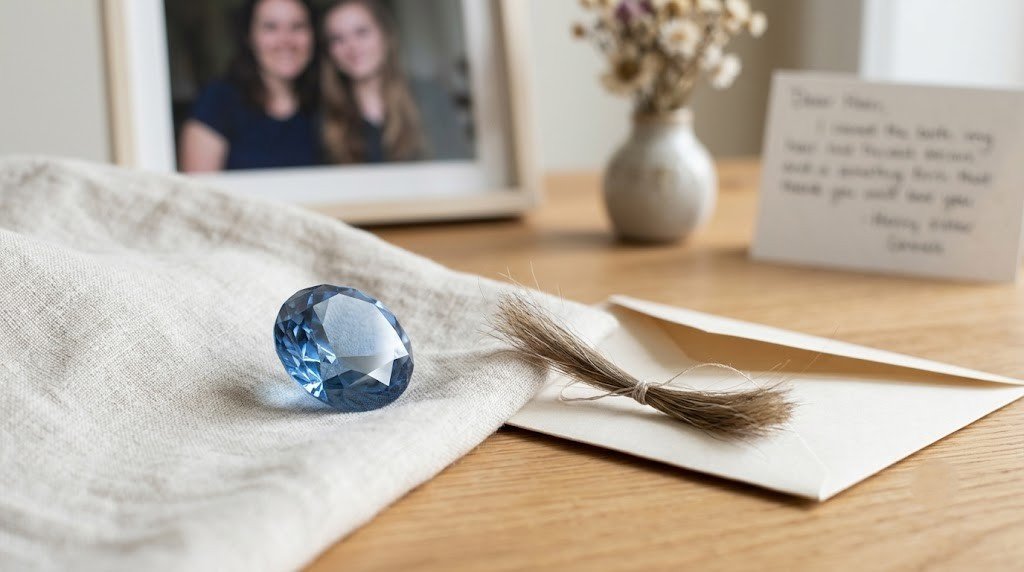
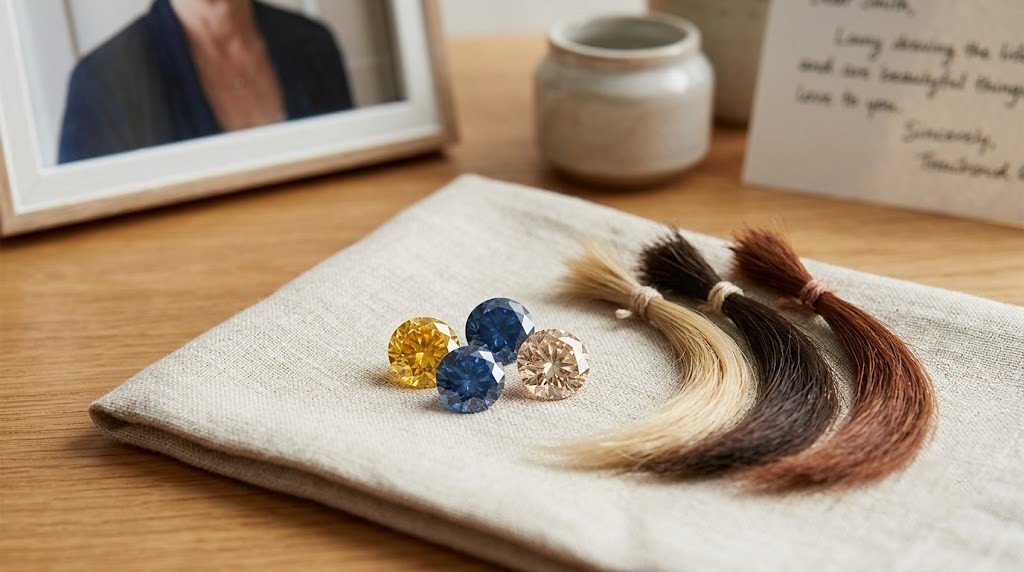
Sometimes what a sister leaves within reach is very ordinary: a hairbrush on a bathroom shelf, a braid folded into a drawer, a lock someone thought to save. A sister hair diamond is a genuine lab grown stone carrying carbon drawn from a few grams of her hair, usually combined with lab carbon in the growth press. It needs no cremation, and six to ten months from the laboratory’s receipt of the hair is a typical wait.
sister hair diamond

Why Does Hair Work So Well as a Carbon Source?

Hair is built from keratin, a protein dense with carbon. By weight, it is roughly half carbon, which is a dramatically richer starting point than cremated remains, where carbon makes up only a few percent at most.

For a sibling considering a sister hair diamond, that chemistry has three practical consequences. First, only a small amount of material is needed. Second, cremation is not required, so hair can come from a sister who was buried, from one whose ashes went elsewhere, or from a keepsake saved long before anyone imagined this use. Third, the hair you are thinking of may already be in your home.

None of this makes a sister hair diamond better or worse than one grown with ashes. It simply opens a door that ash cannot always open, especially for a brother or sister who does not hold authority over her remains.

A finished sister hair diamond is a diamond in every physical sense. It has the same carbon lattice as a mined diamond and sits at 10, the top of the scale used to rank mineral hardness, which is part of why it suits everyday wear.

How Is a Sister Hair Diamond Different From One Made With Ashes?

The growth process is largely shared. What differs is the material going in and the questions surrounding it. The comparison below sets the two side by side.

Point of comparisonHairCremated ashes
Carbon content of the materialRoughly 50% by weightRoughly 0.5 to 4% by weight
Typical amount requestedA small lock or a few gramsA few tablespoons to about 4 oz or 100 g
Cremation needed?NoYes
Who may need to agreePossibly her executor or whoever holds authority, depending on where the hair is and state rulesWhoever holds legal authority over her remains
Published share of her carbon in the finished stoneNone published. Ask the provider in writingAround 10 to 15% of the stone’s mass for ash, with some providers citing as low as 3%
Supplemental lab carbonTypically blended inTypically blended in
Color predictable from the material?NoNo

For a sister hair diamond, the row worth pausing on is the published share. Industry figures exist for ash. For hair, no published finished stone percentage exists. That is not a reason for suspicion, but it is a reason to ask any provider for their figure in writing.

If her ashes are available to you as well, the full guide to a stone grown from her ashes covers that route and its authorization questions in detail.

Where Might Her Hair Come From?

Siblings are sometimes surprised by how many places a usable sample can turn up. Possible sources include:

  • A lock saved at the funeral home. Some funeral homes can cut a small lock before burial or cremation, at the request or with the agreement of the person directing her arrangements.
  • A hairbrush or comb she used. Strands caught in bristles can sometimes be gathered, although a provider may want to assess how much is there.
  • A keepsake lock or braid. Hair saved from a haircut, a celebration or a change of style, kept in an envelope or a box.
  • Hair saved by a stylist or salon. Rare, but worth mentioning if she donated or cut a length shortly before her death.
  • Hair already held by another relative. A parent, a partner or another sibling may have kept a lock without mentioning it.

Ask a provider whether dyed, permed or chemically treated hair is acceptable, and whether brush strands are enough on their own. Practice varies, and any provider asked to grow a sister hair diamond should tell you plainly what it can work with rather than accepting anything by default.

Who Should Agree Before Her Hair Is Used?

It is tempting to assume that hair sitting in your own drawer is simply yours to use. Sometimes it may be, but the answer depends on where the hair came from and on the rules in your state.

If the hair is still part of her body, or is to be collected at the funeral home, the person with legal authority over her remains will generally need to agree. State law often places a spouse or partner first, followed by adult children and parents, and only then siblings. The order varies by state, and her own written wishes can change it.

If the hair was already separated, such as in a brush or a saved lock, it may count among her personal belongings. Belongings can form part of an estate, and how they pass varies by state and by any will she left. Before a sister hair diamond is ordered, a short conversation with her executor, or with whoever is settling her affairs, is a sensible step.

In practice, the respectful route is also the simple one. Tell the people closest to the decision what you are planning, how little hair is involved, and whether they would like a stone too. A sister hair diamond made openly may sit more easily in a family than one made quietly.

Faith can matter here as well. For families whose tradition objects to cremation itself, a hair based stone involves no cremation, though it is still worth asking a faith leader rather than assuming.

How Much Hair Does a Sister Hair Diamond Need?

Very little. Requirements vary by provider, but a small lock or a few grams is the typical request, often described as a palm sized bundle.

Length matters less than total weight. A short lock can be enough if it is dense. Scattered brush strands may need gathering from several sources to reach a provider’s minimum. Ask exactly what weight the laboratory needs for the carat size you are considering, and whether that minimum changes for a larger stone.

What hair quantity does not decide is size. As with any memorial stone, carat weight comes from how long the crystal grows in the press, not from how much material arrives. Sending extra hair will not make a sister hair diamond larger, so you can keep the rest of any lock she left exactly where it is.

If you would like more detail on preparing the sample itself, the practical route to turn sister hair into a diamond walks through collection, labeling and the first call.
How Should Her Hair Be Stored and Sent?

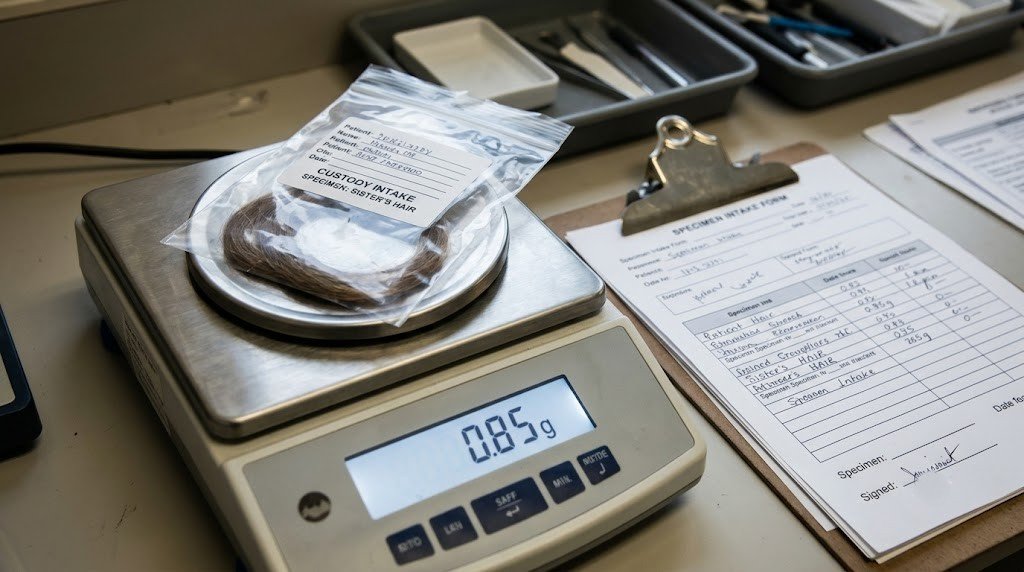
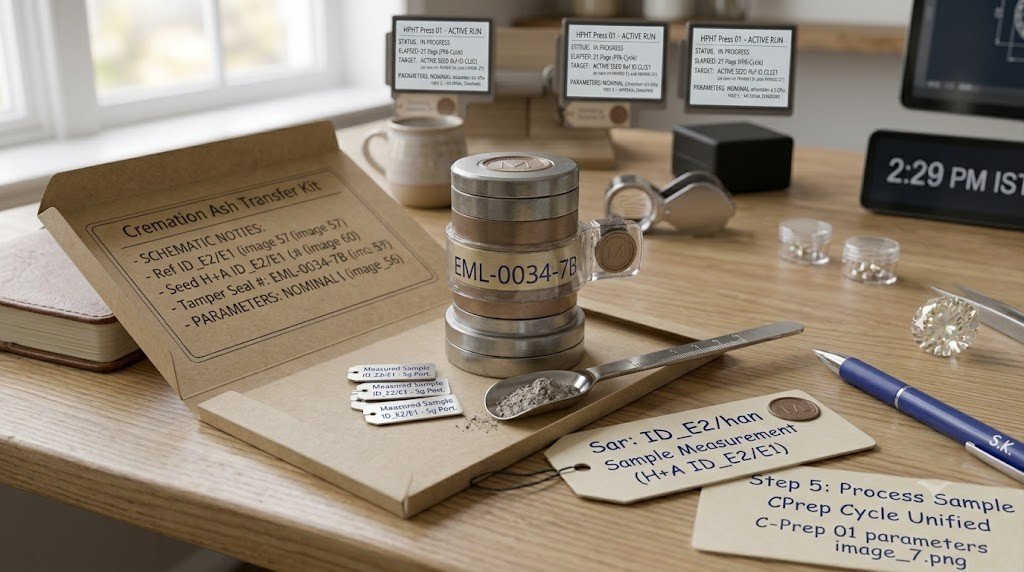
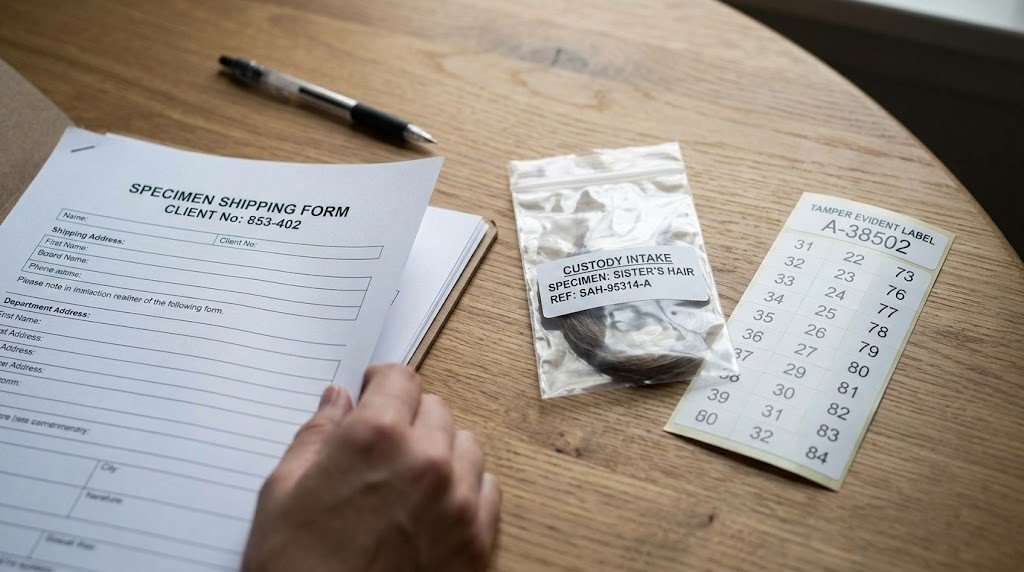
Until a provider gives you its own instructions for a sister hair diamond, the general aim is to keep the hair dry, clean of loose debris, and clearly labeled. A paper envelope inside a sealed bag, kept out of humidity and direct sunlight, is a reasonable way to hold it while you decide.

Follow the provider’s packing directions exactly once you have them. Some supply a collection kit with a container and a reference number, and that number begins the chain of custody for a sister hair diamond.

A few things worth confirming before the parcel leaves:

  1. The reference number written on both the container and the paperwork.
  2. An insured, tracked shipping method, with a signature required on delivery.
  3. A written note of what you sent, including an approximate weight and a photograph.
  4. Whether any unused hair will be returned, and to whom.

Keep a small portion back if you can. Holding onto some of her hair costs nothing and leaves options open later.

What Are the 6 Stages of Making a Sister Hair Diamond?

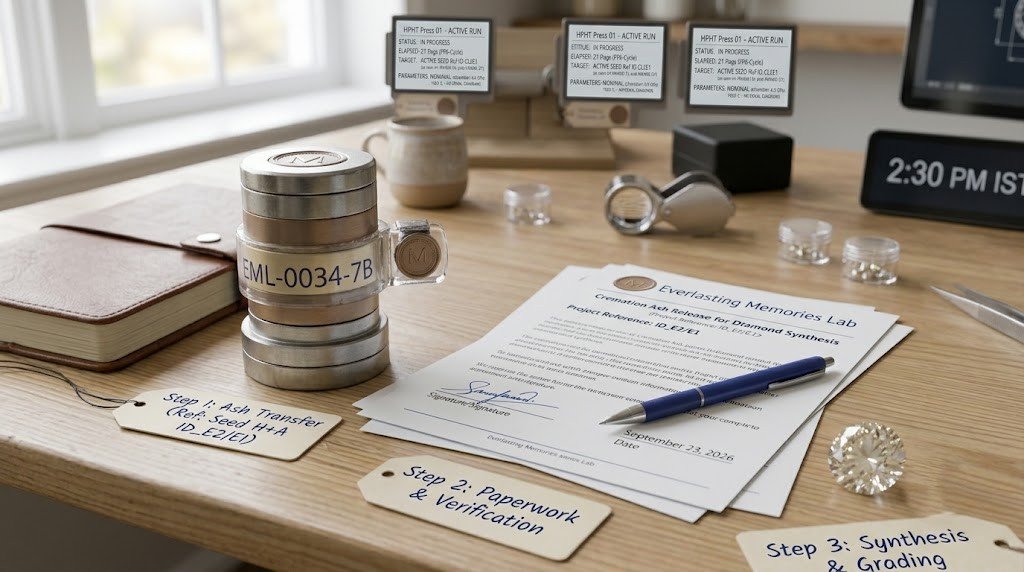
Equipment and timing vary between laboratories, but the sequence below describes how her hair typically becomes a finished sister hair diamond.

StageWhat happensWorth knowing
1. Receipt and loggingThe hair arrives, is weighed, and receives an identifier that stays with itAsk whether you will be given the identifier
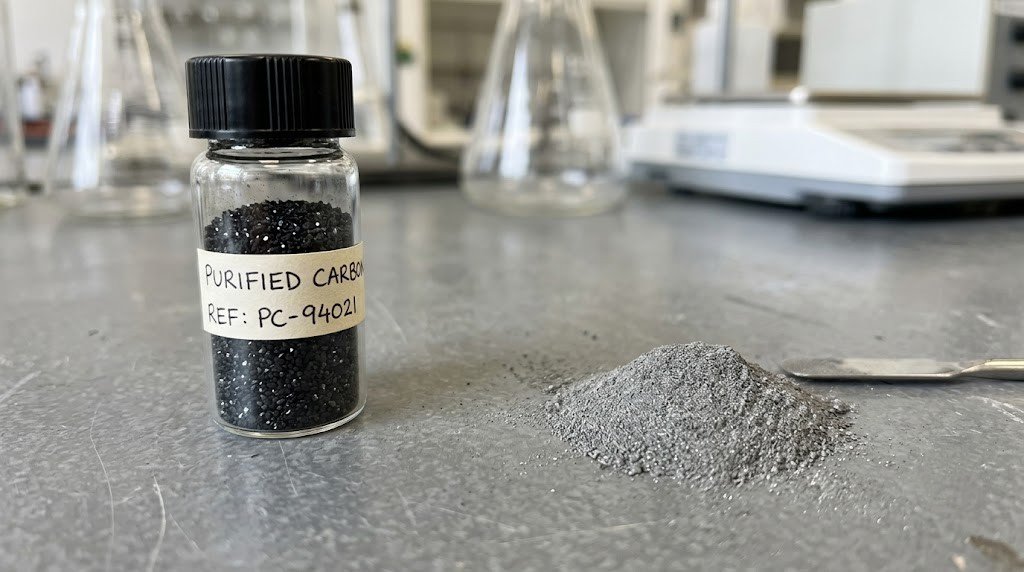
2. Carbon extraction and purificationNon carbon parts of the keratin are driven off in a controlled, oxygen free process, leaving carbon refined to about 99.9% or higherHair’s high carbon content means less material is needed at this stage
3. GraphitizationThe purified carbon is heated to around 2,500 to 2,700°C and converted into graphiteGraphite is the feedstock a growth press uses
4. GrowthHer graphite, typically blended with lab carbon, grows around a small diamond seedMost memorial stones are grown by HPHT, with pressures near 6 to 8 GPa and temperatures of 1,400 to 2,500°C. A minority of providers use CVD
5. Cutting and polishingThe rough crystal is shaped and faceted into the chosen cutThe cut is the family’s choice. Ask what the finished weight is likely to be once the rough crystal is shaped
6. Documentation and gradingAn in house origin certificate records where the carbon came from. A separate independent grading report can be orderedIndependent grading tends to be an optional extra, billed on its own

Some providers also offer post growth irradiation for certain colors. It is not a required stage, and it should be disclosed on the paperwork whenever it is used.

For the general science behind lab grown diamond production, HPHT and CVD work the same way whether the carbon began as hair, ash or an industrial feedstock. A closer look at how a memorial diamond is made from her hair goes through each laboratory step at a slower pace.

How Much of a Sister Hair Diamond Is Her Carbon?

Here the honest answer is that there is no published figure for hair. Providers describe a personal carbon share for ash based stones, but no equivalent industry percentage has been published for a sister hair diamond or any other hair based stone.

What is clear is that her carbon is genuinely present in a sister hair diamond. It is extracted, purified and grown into the crystal, typically together with supplemental lab carbon. The stone is not a token representing her. It physically holds carbon that was once part of her.

What is not accurate is any claim that the diamond consists of her hair and nothing else, or that no outside carbon was used. Supplemental carbon is typically part of the process, so a provider claiming none was added should be able to explain exactly how.

So ask, and ask in writing: what share of the finished stone’s mass do you expect to come from her hair? A provider with a documented process will either give you a figure or explain clearly why it cannot. If you would like the evidence weighed in full, whether the stone is really made from her hair is answered on its own page.

Can Anyone Predict the Color in Advance?

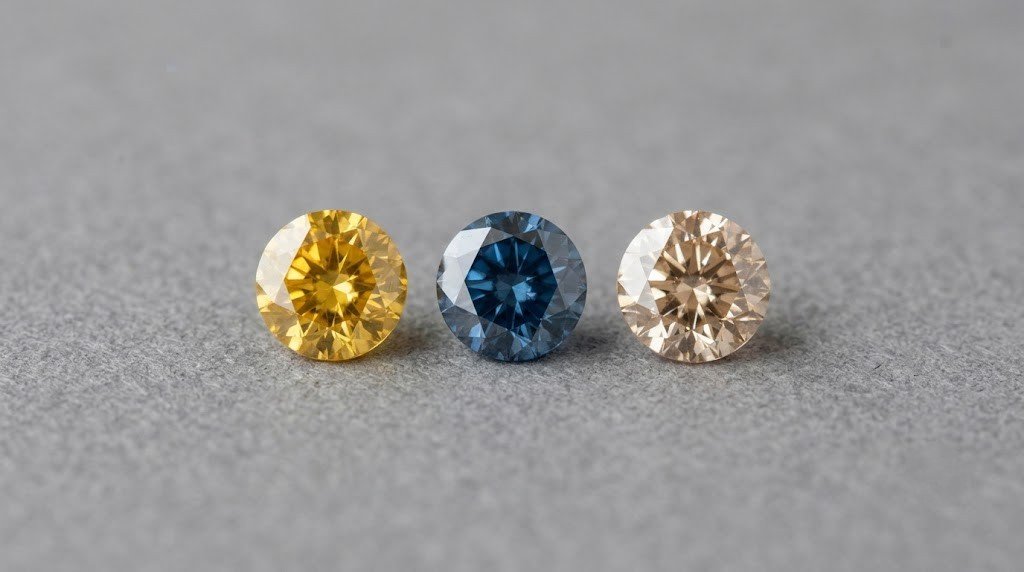
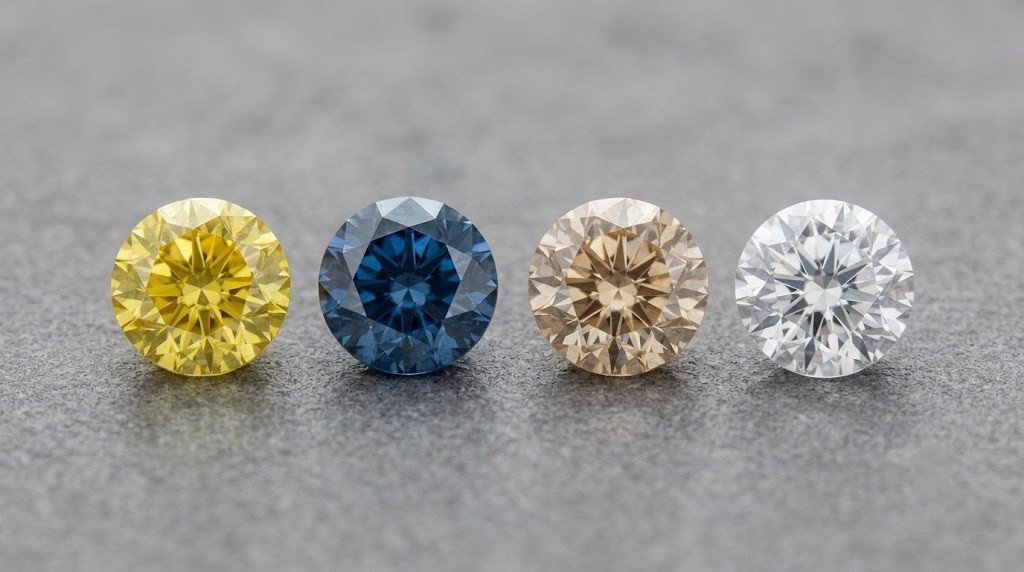
No, and a sister hair diamond is no exception. The shade is decided inside the press, by whatever trace elements are present while the crystal forms. Nitrogen brings out yellow, boron brings out blue, and keeping both out to produce a colorless stone takes additional processing and adds to the price.

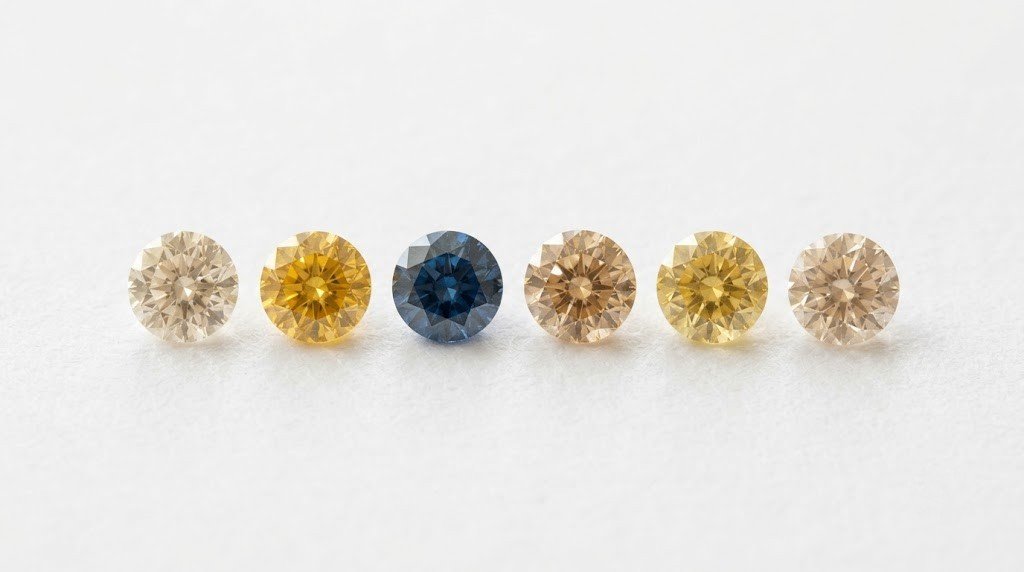
Memorial diamonds tend toward yellow, blue and champagne shades because their carbon has a personal, organic origin rather than a tightly controlled industrial one. Some providers also offer irradiation after growth to produce red, green or black stones.

Hair does not narrow the range or lighten the result. Her hair color, whether dark, fair, gray or dyed, has no predictable link to the shade of the finished stone, and the color cannot be chosen or matched from the hair itself.

If you are choosing a treated color, cut or setting for a sister hair diamond, let it rest on what she enjoyed and what you will wear, not on any idea of what suits a sister.
What Does a Sister Hair Diamond Cost, and How Long Does It Take?

The cost of a sister hair diamond follows carat weight and color far more than the source material. As a rough guide, here is how broad 2026 industry pricing breaks down by size. These figures describe the market, not one company:

  • Entry sizes, roughly 0.10 to 0.25 ct: about $1,500 to $3,500.
  • Between half a carat and one carat: about $5,000 to $15,000. A colorless result adds noticeably to the price compared with yellow, blue or champagne tones.
  • Two carats to five or more: from around $20,000 to $75,000 and beyond.
  • Usually extra: independent grading, engraving, fancy cuts, and any setting such as a ring, pendant or cufflinks.

Timing follows the same logic. Six to ten months is typical from the laboratory’s receipt of the hair, and larger stones over about two carats, or specialty colors, can take up to roughly twelve months.

Because no cremation is involved and the material may already be in hand, a sister hair diamond can sometimes begin sooner than an ash based stone. The laboratory stages themselves take as long either way.

Can Each Sibling Have a Stone Grown From Her Hair?

Often, yes, provided there is enough hair and the people who need to agree are comfortable with it. Because each sister hair diamond needs only a few grams, one saved braid or lock can sometimes serve several stones.

Sibling groups vary widely. There may be two of you or six, a twin among you, or half and step siblings who each knew her in their own way. No one needs to rank their claim, and nobody is obliged to want a stone at all.

When more than one order comes from one source, ask the provider:

  • Whether each portion is weighed, logged and grown separately.
  • Whether stones can be ordered at different times.
  • How unused hair is returned and to whom.

Some families combine hair held by one sibling with a small portion of ash held by someone else. Bringing both materials into one stone has its own documentation questions, which are worth reading before deciding.

What Should You Ask Before Sending Anything?

When choosing who will make a sister hair diamond, a short written list protects you better than a long phone call. Put these to any provider and keep the replies:

  1. What minimum weight of hair do you need, and can you work with brush strands or treated hair?
  2. What reference number travels with her hair, and who signs for it at each step?
  3. Is her hair ever processed alongside another family’s material?
  4. What share of the finished stone do you expect to come from her hair?
  5. What happens to hair you do not use?
  6. Will an independent lab grade the stone, and is that in the quote or extra?
  7. What happens, contractually, if growth fails or the stone fractures in cutting?

A provider that answers these specifically, in writing, has told you a great deal about how it will handle a sister hair diamond. For siblings planning to combine her hair with ashes in the same stone, the same questions apply to each material separately.

Frequently Asked Questions

Does a sister hair diamond require cremation?

No. Hair is roughly half carbon by weight, so a laboratory can extract enough from a small lock without any cremation. That makes hair an option when she was buried, or when her ashes are held by someone else or already scattered.

How much of her hair is needed?

Typically a small lock or a few grams, though each provider sets its own minimum. Ask for the exact weight in writing, and whether brush strands alone are enough, before you gather or send anything to the laboratory.

Can a sister hair diamond be made from her hairbrush?

Possibly, if there is enough and the provider accepts brush strands. Because her belongings may pass through her estate, and state rules differ, speak with her executor or whoever is settling her affairs before sending any of it.

How much of a sister hair diamond is actually her?

No published industry figure exists for the share of hair carbon in a finished stone. Her carbon is genuinely present, typically blended with lab carbon. Ask each provider for its expected percentage in writing before you commit to an order.

Will her hair color affect the diamond’s color?

No. However dark or light her hair was, the stone’s tint comes from stray nitrogen or boron atoms caught in the crystal as it grows. Memorial stones tend toward yellow, blue and champagne, and the result cannot be chosen, matched or predicted from the hair.

Can several siblings each have a stone from one lock?

Sometimes, if the lock holds enough material for each order and the people who need to agree are comfortable. Ask the provider to weigh, log and grow every portion separately, with its own documentation for each sibling.

Final Thoughts on a Sister Hair Diamond

Hair is easy to overlook because it is so ordinary, and that is part of what makes it meaningful. A brush she reached for every morning, a lock someone saved without quite knowing why: these are small, real traces of her daily life.

A sister hair diamond turns one of those traces into something durable, without asking anyone to divide her ashes and without requiring cremation at all. The practical work is modest: confirm who should agree, gather a few grams, and get every answer about custody and carbon in writing.

Take it at whatever pace suits you. The hair will keep, and so will the decision.

Learn More About Sister Memorial Diamonds

Talk With Memorial Diamond

Whether you already have a saved lock in hand or are still deciding if a sister hair diamond is right, Memorial Diamond is happy to talk it through. Visit memorialdiamond.us to ask about quantities, packing and who should be part of the decision. There is no obligation and no rush.
Sister Haiir

Is a Memorial Diamond Really Made From Your Sister’s Hair?

Perhaps the lock sits in a small envelope in a drawer, or tucked inside a card someone thought to keep, and lately you have wondered whether it could become something you wear. Can a diamond be really made from sister hair? Partly, yes: hair is roughly half carbon by weight, so a small lock can yield genuine carbon that is purified and grown into a real lab diamond, usually blended with supplemental lab carbon, and because no standard finished stone percentage is published for hair, the provider should state theirs in writing.

really made from sister hair

Can a Diamond Be Really Made From Sister Hair?

It can, and the reason is ordinary biology. Hair is built mostly from keratin, a protein in which carbon makes up about half the weight. Where cremated remains hold only a sliver of carbon inside a great deal of mineral, a lock of hair is carbon rich from the start.

A laboratory heats the hair in a controlled, oxygen free process that drives off the other elements in keratin and leaves carbon behind. Further refining takes that carbon to around 99.9% purity or better. It is then converted to graphite and placed, usually with supplemental lab carbon, into an HPHT or CVD growth cell alongside a tiny diamond seed. Over weeks to months, carbon atoms settle into a crystal lattice, and some of those atoms came from her.

That is the plain physical sense in which a stone can be really made from sister hair. It is not a token or a symbol stored alongside the diamond. Her carbon is inside it.

A diamond really made from sister hair should not be pictured as a crystal of her carbon alone. Supplemental carbon is typically part of growth, and an honest conversation begins by saying so.

Why Does Hair Behave So Differently From Ashes?

If you are asking whether a stone is really made from sister hair, you may have read about ash based stones first, so the contrast helps. The two materials share a process, but almost nothing else about them is alike.

FactorHer hairHer ashes
Carbon content of the raw materialAbout 50% by weightRoughly 0.5 to 4% by weight
Typical amount a provider asks forA small lock or a few gramsA few tablespoons up to about 4 oz or 100 g
Requires cremation?NoYes
Published share of the finished stoneNone published; ask in writingTypically 10 to 15%, some cite as low as 3%
Who usually holds itOften already in a relative’s keepingOften with whoever received the remains

Two rows matter most for trust. The first is the published share: for ashes, the industry quotes a typical range; for hair, no finished stone figure has been published at all, and the ash range should not be borrowed to fill the gap. The second is custody before custody. A lock may have passed through several hands, and sometimes several households, before it ever reaches a provider. That history shapes how confident anyone can be that the stone is really made from sister hair.

Hair also opens a door ashes cannot. Because no cremation is involved, it works whether your sister was cremated or buried, provided hair was saved. How a stone is grown from her hair follows each stage in more detail.

What Share of a Stone Really Made From Sister Hair Is Hers?

This is the question behind asking whether a diamond is really made from sister hair, and the truthful answer is that nobody publishes a number for hair. Ash based stones are a different case: there, published industry figures put her carbon at roughly 10 to 15% of the finished mass. For hair, and for blends of hair with ashes, no comparable finished stone figure has been published across the industry.

The reason is not secrecy so much as variation. The share depends on how much hair is sent, how much carbon survives refining, the carat size chosen, and how much supplemental carbon a given laboratory adds to keep growth stable. Change any one of those and the percentage moves.

So the right approach is to ask, in writing, for the figure that applies to your order. A careful provider should be able to tell you roughly what proportion of a diamond really made from sister hair will be her carbon at the size you have chosen, and how they reached that estimate.

Watch for two shortcuts in the reply. One is borrowing the ash range and presenting it as a hair figure. The other is a confident number with no explanation behind it. Either should prompt a follow up email asking how the figure was calculated.

If the written answer surprises you, that is useful information too. You might decide a modest share is entirely enough, or ask about sending a larger lock. Both are reasonable responses to a real number, and the complete guide to a diamond from her hair sets out how quantity, carat and timeline interact.

Whose Hair Is in the Envelope, and Who Gets a Say?

Before any laboratory work begins, two quieter questions decide whether a stone can honestly be called really made from sister hair: is the hair definitely hers, and is it yours to send?

On the first, think about where the lock came from. A lock cut and set aside on purpose is the surest basis for a stone really made from sister hair. Hair gathered from a brush or a pillow is less certain, because a shared brush can hold more than one person’s hair. Ask the provider whether they accept brush hair, how much they need, and how they handle a sample that might be mixed. Ask too whether dyed or chemically treated hair affects their process.

On the second, hedge rather than assume. Hair you already keep can still form part of your sister’s estate, and the rules on personal belongings and on remains vary by state. Depending on where you live and anything she put in writing, her spouse or partner, her adult children or her parents may hold decision making authority ahead of a sibling. A brief conversation with her executor, or with whoever holds that authority, is a courteous step and may be a necessary one.

If several siblings each want a stone, raise that early too. A single lock may or may not stretch to more than one diamond, depending on its weight and the provider’s requirements, so ask before anyone assumes. The practical route for sending her hair covers packaging and paperwork once these points are settled.

Which Six Checks Show a Diamond Is Really Made From Sister Hair?

No laboratory can examine a finished diamond and tell you whose carbon it holds. Purified carbon carries no trace of the person it came from, and nothing resembling DNA survives refining. So proof that a stone is really made from sister hair rests on custody, and custody can be checked. Six questions do most of the work:

  1. Is the sample weighed and recorded on arrival? Ask whether the provider logs the weight of hair received and sends you that figure. A recorded weight lets you match what arrived with what you mailed.
  2. What identifier follows it? Ask whether the hair receives a physical tag or sealed container number, or only a database entry, and ask to be told that number.
  3. Who signs at each handover? Extraction, purification, graphitization and growth are separate stages. Ask how many signed records an order produces and whether copies can be emailed to you.
  4. Is it ever processed with another family’s material? Ask whether her carbon shares a furnace run or growth cell with anyone else’s. You are entitled to a plain yes or no.
  5. What happens to any hair left over? Ask whether unused hair is returned to you, kept, or disposed of, and get the answer before you mail anything.
  6. What will the origin certificate say, and who signs it? Ask to see a sample with another family’s details removed, and confirm what it does and does not claim.

None of these checks offers chemical certainty. Taken together, they reveal whether a provider treats one family’s sample as a tracked item with a paper trail, which is the most reliable evidence available that a diamond is really made from sister hair. Keep every answer in email; a reassuring phone call leaves nothing to point to later.

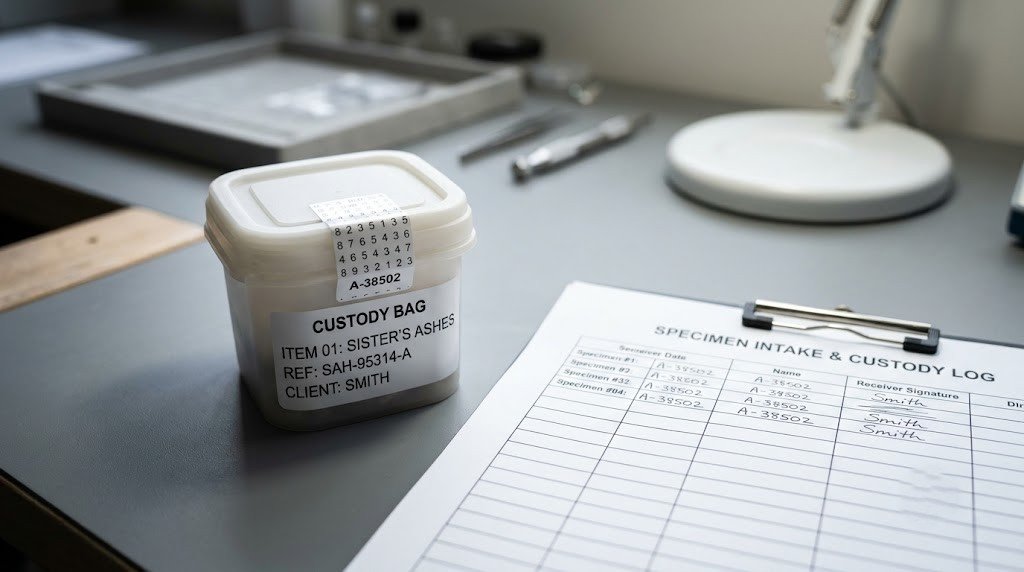
Documented intake can help establish a clear custody trail for the hair sample.

Can Paperwork Prove a Stone Is Really Made From Sister Hair?

Families are sometimes told a stone “comes certified,” and it is natural to hear that as independent confirmation that it is really made from sister hair. Usually it means something narrower. Two kinds of document exist in this industry, and they do different jobs.

The first is an origin or authenticity certificate. The memorial provider normally issues it in house, and it records the provider’s statement that this stone was grown from the carbon your family supplied. It is valuable as a written commitment, but it is only as strong as the custody process behind it, because nobody outside the company has verified it.

The second is a grading report from an independent gemological laboratory. It assesses the finished stone using the same cut, color, clarity and carat standards applied to every diamond, and it will typically identify the stone as laboratory grown. It does not mention hair, ashes or anyone’s name, because origin is outside what a grading lab examines. Across the industry it is usually optional and costs extra.

So, when judging whether a stone is really made from sister hair, read each document for exactly what it covers. The grading report tells you what the diamond is. The origin certificate tells you what the provider says it came from. Only the custody records connect the two. If a provider describes its own certificate as independent, ask who, outside the company, checked it.

Which Promises About a Stone Really Made From Sister Hair Should Worry You?

Careful providers describe hair based stones precisely. A few claims about a diamond really made from sister hair, however, assert more than anyone can deliver.

  • “Every atom is her.” No diamond grown from hair consists entirely of personal carbon. Supplemental lab carbon is typically part of the process.
  • “Pure hair, nothing added.” The same problem in different words; it contradicts how growth is normally carried out.
  • “Hair diamonds are 10 to 15% her, just like ash.” That range is an ash figure. No standard hair figure exists, so a borrowed one tells you nothing about your order.
  • “The diamond will match her hair color.” Diamond color comes from trace elements present during growth, nitrogen toward yellow and boron toward blue. Hair color does not set it, and no one can forecast the shade from her hair.
  • “We don’t need to know who authorized this.” A provider that never asks about authority is skipping a step that protects your family as much as the company.
  • “Book now before the slot goes.” Saved hair keeps. There is no chemical reason to rush, so urgency is a sales choice, not a scientific one.

Any of these might come from an enthusiastic salesperson rather than a careless company. The fix is the same: ask again in writing, and decide based on what comes back. A diamond really made from sister hair is meaningful without inflation; claims that inflate it are the ones to doubt.

What Do People Get Wrong About Diamonds Really Made From Sister Hair?

Several assumptions about whether a stone is really made from sister hair sound reasonable and turn out to be mistaken.

“Because hair is half carbon, the whole stone is her.” Hair’s high carbon content means far less material is needed than with ashes. It does not remove the need for supplemental carbon, and no standard percentage says otherwise.

“More hair means a bigger diamond.” Carat size is driven mainly by how long the crystal is allowed to grow. Extra hair may change the personal share a provider can offer, which is worth asking about, but it does not by itself make the stone larger.

“Lighter hair gives a lighter stone.” No. Color cannot be chosen, matched or predicted from the source material, and hair does not narrow the possible range.

“It isn’t really a diamond.” It is. A memorial diamond is chemically and physically diamond, as hard as any other, and graded on the same scale.

“A lab test could confirm it’s her.” Refining leaves only carbon, so there is nothing personal for a test to detect. Whether a stone is really made from sister hair is settled by documents, not tests.

“Only hair from a cremation counts.” Hair needs no cremation at all, which is why it suits families whose sister was buried, provided some hair was kept.

Clearing these away does not make the answer smaller. It makes it sturdier: a stone really made from sister hair contains a real, documented portion of her, and that is a claim that holds up to questions.

How Long, How Much, and What Color?

Once you are satisfied a stone would be really made from sister hair, the practical questions follow. All of the figures here are general industry ranges, not any single provider’s terms.

Timeline. Typically six to ten months from receipt of the hair, stretching toward twelve for stones above roughly two carats or for specialty colors. Size depends chiefly on growth time, so a larger stone means a longer wait.

Cost. Around $1,500 to $3,500 for stones of about 0.10 to 0.25 carats; roughly $5,000 to $15,000 for half a carat to one carat, with colorless toward the top of that band; and from about $20,000 to $75,000 or more for two to five carats and beyond. Independent grading, engraving, fancy cuts and settings are usually extra.

Color. Trace nitrogen and boron pull memorial stones toward yellow, blue or champagne; a colorless result takes extra processing and usually costs more. Some providers offer irradiation for red, green or black. Even for a diamond really made from sister hair, the exact shade cannot be predicted in advance.

If hair and ashes are both available, some families combine the two materials; whether a blended stone is really hers raises its own questions. For an ash only stone, the parallel question for her ashes is answered with a published range.

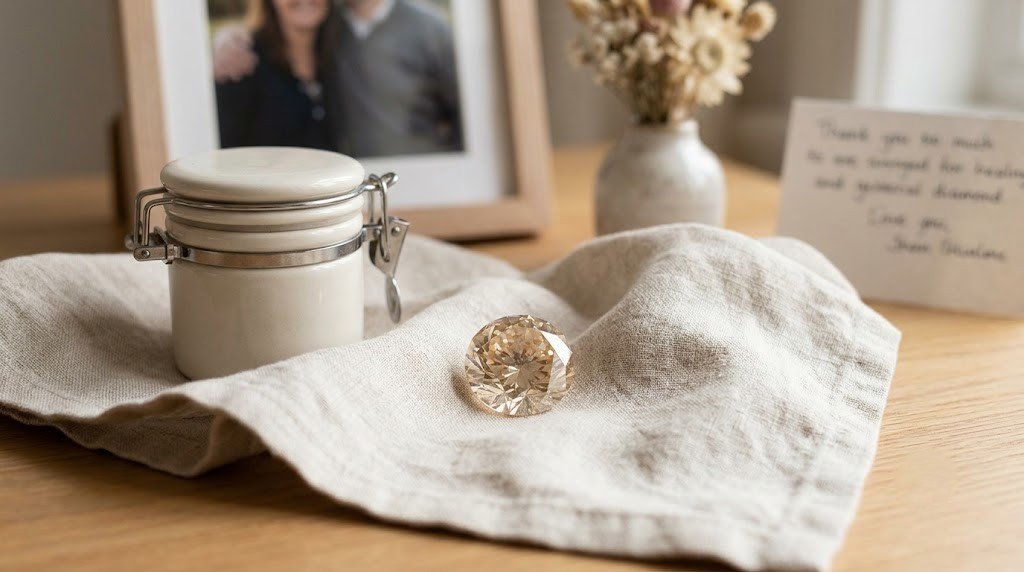
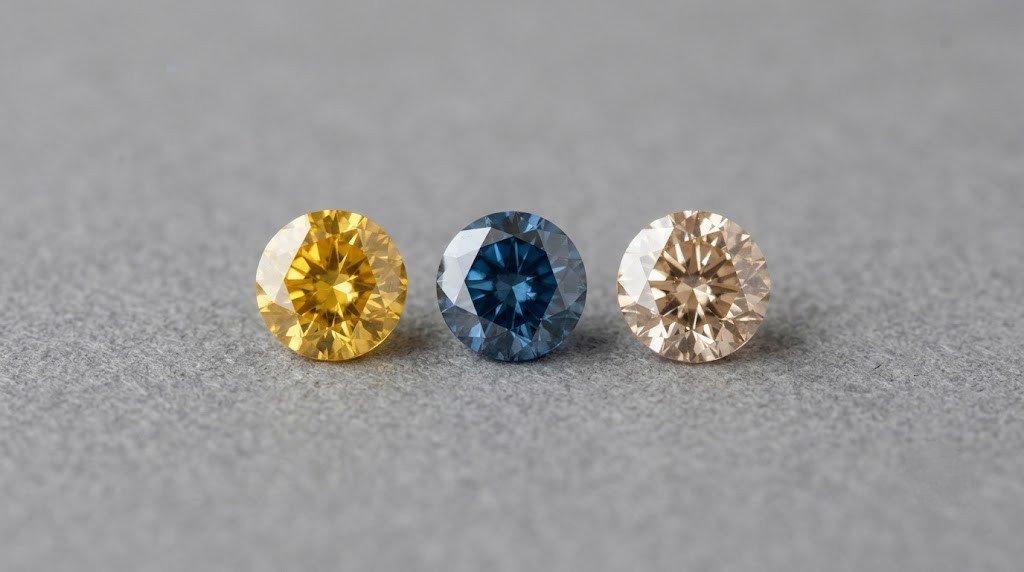
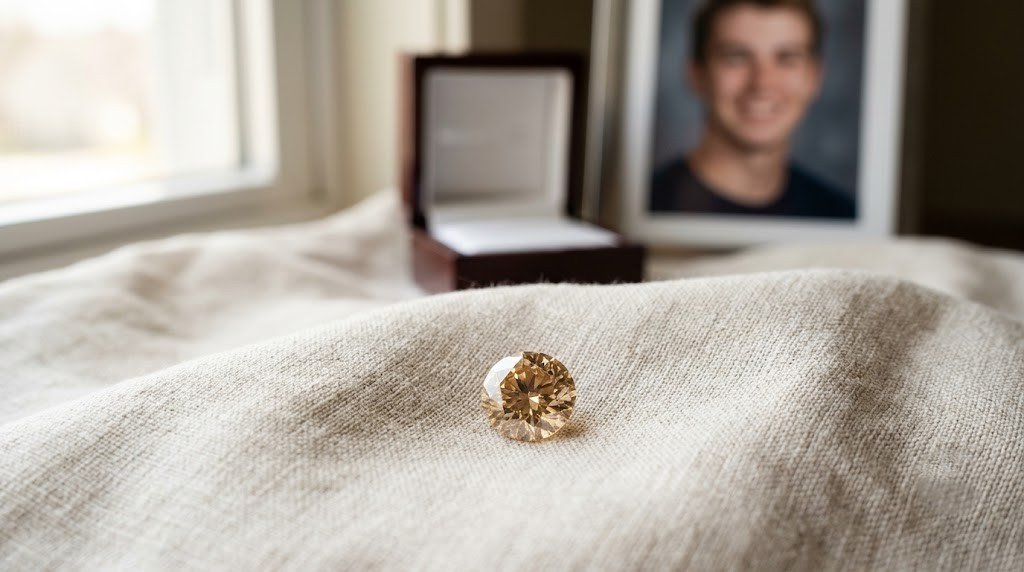
Memorial diamonds can appear in yellow, blue and champagne tones depending on the growth process.

Frequently Asked Questions

Is a stone really made from sister hair if lab carbon is added?

Yes. Carbon recovered from her hair is purified and grown into the crystal itself, so part of the stone is physically hers. Supplemental lab carbon is typically blended in to support growth, which means the stone is partly, not entirely, her carbon.

How much of a diamond really made from sister hair is her carbon?

No finished stone percentage has been published for hair. The share depends on how much hair is sent, how much carbon survives refining, and the carat size chosen. Ask the provider for their estimate in writing, and ask how they calculated it.

Can a hairbrush supply enough of her hair?

Possibly, but ask the provider first. A brush may hold hair from more than one person, and requirements for weight and condition differ. A lock that was cut and set aside deliberately gives everyone more confidence about whose hair it is.

Do I need anyone’s agreement to use hair I already have?

It may be wise, and sometimes required. Hair you keep can still form part of her estate, rules vary by state, and her spouse, partner, adult children or parents may hold authority before a sibling. Speak with whoever holds that authority first.

Will the grading report mention that the stone came from her hair?

No. An independent grading report describes cut, color, clarity and carat, and usually notes that the stone is laboratory grown. Origin is covered only by the provider’s in house certificate and the custody records that support it.

Can one lock of her hair make diamonds for several siblings?

Sometimes, depending on the lock’s weight and the provider’s minimum. Ask before mailing anything, and ask how the personal share of each stone would change if the hair were divided among two or more diamonds.

Final Thoughts on Trusting a Diamond From Her Hair

Wanting proof is not a failure of sentiment; it is a form of care. The honest answer to whether a stone is really made from sister hair is a qualified yes: real carbon from her, grown into a real diamond, typically alongside lab carbon, with the exact share something a provider should spell out for your specific order.

If the six checks come back with clear, written answers, you have as much assurance as this industry can offer that a diamond is really made from sister hair. If they come back vague, that tells you something as well.

And if you decide, after all of it, that the lock should stay just as it is, in its envelope, that is an equally sound outcome.

Learn More About Diamonds From a Sister’s Hair

Talk With Memorial Diamond

If you would like to ask a person how much of a stone really made from sister hair would be hers, or how custody would work for the lock you have, Memorial Diamond is happy to talk it through. Find us at memorialdiamond.us whenever the moment feels right, with no obligation attached.

Is a Memorial

Is a Memorial Diamond Really Made From Your Sister’s Ashes?

When a company offers to turn part of your sister into a gemstone, a protective instinct tends to arrive before anything else, and it wants proof. Is a memorial stone really made from sister ashes? Yes, in part: carbon is drawn from a small portion of her cremated remains, purified, and grown into a genuine lab diamond, usually alongside supplemental lab carbon, with her carbon typically forming about 10 to 15% of the finished stone’s mass, and as little as 3% with some providers.

really made from sister ashes

Is a Stone Really Made From Sister Ashes in Any Physical Sense?

It is a fair suspicion. Grief purchases attract soft language that anyone could print on a gift box. The useful test is whether a provider claiming a stone is really made from sister ashes can describe, in physical terms, what happens to the material you send.

Cremated remains are mostly calcium phosphate, the mineral that formed her bones. Mixed through that mineral is a small amount of carbon, usually between 0.5% and 4% of the ash by weight. A laboratory isolates that carbon, strips away everything else, and uses it as part of the feedstock for growing a crystal. Some of the carbon atoms locked into the finished lattice were, quite literally, part of her.

So, in a meaningful and physical sense, a stone is really made from sister ashes, though only in part. What it cannot be is made entirely from them. Both halves of that answer matter, and a trustworthy company offers both without being asked twice.

The rest of this page sits between those two halves: how wide the gap is, how to check it, and which claims hide it.

How Much of a Diamond Really Made From Sister Ashes Is Actually Her?

Industry wide, carbon recovered from ashes typically accounts for around 10 to 15% of a finished memorial diamond’s mass. Some providers cite figures as low as 3%; others go higher, depending on the size of the stone and how much ash was supplied. The rest is supplemental lab carbon, added so the growth cell holds enough material to build a crystal.

That figure may be lower than you expected. A stone that is roughly a tenth her carbon is still a stone that would not exist in that form without her. It is also not all her, and anyone selling a diamond really made from sister ashes and nothing else is describing something nobody can manufacture.

StageWhat you are dealing withRough industry figure
Ash submittedA portion of her cremated remainsA few tablespoons up to about 4 oz or 100 g; varies by provider
Carbon inside that ashThe only part usable for a diamondRoughly 0.5 to 4% of ash weight
After purificationHer carbon, refinedAbout 99.9% carbon purity or better
In the finished stoneHer carbon blended with lab carbonTypically 10 to 15% of mass; some cite as low as 3%

Two points follow. Ask each provider for their own percentage, in writing, for the carat size you have in mind. And notice that ash quantity and stone size are separate decisions: carat size depends mainly on how long the crystal grows.

When you hear that a stone is really made from sister ashes, then, the honest translation is: a real, documented fraction of it is her, and the rest is carbon that made her portion growable.

Why Can’t a Diamond Be Really Made From Sister Ashes Alone?

Because there is so little carbon to start with. Picture a hundred grams of ash. At the generous end of the usual range, perhaps four grams of that is carbon; at the lean end, half a gram. After the losses that come with refining, what is left is a small pinch of graphite.

A diamond grows by adding carbon atoms, layer upon layer, onto a tiny seed crystal under immense pressure, roughly 6 to 8 gigapascals at somewhere between 1,400 and 2,500°C in the HPHT presses most memorial providers rely on. The growth methods themselves are the same ones used across the wider lab grown industry. A pinch rarely sustains that alone, so supplemental lab carbon fills the gap.

Could a laboratory simply use more ash? Each extra gram yields only a sliver of extra carbon, and you may prefer to keep most of your sister’s ashes for an urn, a burial, a scattering or other relatives.

The short version: published industry figures describe ash based stones as a share of personal carbon, not as all ash crystals. In typical practice, a stone really made from sister ashes is a partnership between her carbon and carbon from a lab, and the useful question is how that partnership is documented.

What Happens to Her Ashes Between Arrival and the Finished Stone?

If you want to know whether a stone is really made from sister ashes, the stages matter, because each is a point where the material changes hands or form. Across the industry, the sequence usually runs like this:

  1. Receipt and logging. The ashes arrive, ideally sealed, and receive an identifier that should follow them throughout.
  2. Carbon extraction. Controlled heat in an oxygen free environment separates carbon from calcium phosphate and other minerals.
  3. Purification. Further refining brings the carbon to roughly 99.9% purity or higher.
  4. Graphitization. At roughly 2,500 to 2,700°C, her refined carbon becomes graphite, the feedstock a growth press accepts.
  5. Growth. Her graphite, typically blended with supplemental lab carbon, goes into a growth cell with a diamond seed. Most providers use HPHT; a minority use CVD.
  6. Cutting and polishing. The rough crystal is shaped into the cut your family selects.
  7. Optional treatment. Some providers offer irradiation to alter color. It is never a mandatory stage.
  8. Grading and documentation. The finished stone may be graded, and origin paperwork is issued.

Every numbered step is a handover, and each should leave a written trace you can ask to see. How the stone is grown from her ashes explains the chemistry in more depth.

How Can You Verify a Diamond Is Really Made From Sister Ashes?

This is the uncomfortable center of the whole question: nobody can test a finished diamond to discover whose carbon is inside it. Purification reduces the material to essentially pure carbon, leaving no DNA and no personal signature behind. A gemologist can confirm a stone is a real, laboratory grown diamond. No one can examine it and confirm it was really made from sister ashes.

So checking whether a stone is really made from sister ashes is a matter of custody and documentation, not lab analysis. You are verifying a process, not a product. Practical ways to do that:

  • Ask what identifier is attached on arrival, and whether it is physical, such as a numbered seal or engraved container, or only a database entry. Ask to be told the number.
  • Ask how many stages record a handover, who signs each record, and whether copies can be sent to you.
  • Ask whether her material is ever processed alongside another family’s, in a shared furnace run or growth cell. A direct yes or no is a reasonable expectation.
  • Ask what happens to ash that goes unused: returned, retained, or disposed of. Practice differs between providers.
  • Ask whether updates or photographs are offered at defined points, such as the rough crystal before cutting.
  • Keep the whole exchange in email, so you can hold a company to its answers months later.

None of these checks delivers laboratory certainty. Together, they show whether a company treats one family’s material as a tracked, accountable item, which is the strongest evidence this industry can offer that a diamond is really made from sister ashes. When you are satisfied, the practical steps for sending her ashes cover packing, paperwork and shipping.

Does a Certificate Prove a Stone Is Really Made From Sister Ashes?

The word “certified” can lead a family to assume someone independent has confirmed a stone was really made from sister ashes. It rarely means that. Two different documents circulate, answering different questions.

Origin or authenticity certificateIndependent grading report
Who usually issues itThe memorial provider itselfA third party gemological laboratory
What it recordsThat this stone was grown from carbon your family submittedCut, color, clarity and carat
Does it confirm her carbon is inside?It is the provider’s own statement that it isNo; origin is outside its scope
Does it confirm a real diamond?Not independentlyYes, and typically that it is laboratory grown
Included by default?UsuallyUsually optional, at extra cost

The origin certificate matters as a written commitment about your sister’s carbon. But it is not independent evidence, and its weight depends entirely on the custody process behind it. The grading report, by contrast, is independent and measures the stone against the cut, color, clarity and carat standards used for any diamond, yet it says nothing about where the carbon came from.

Ask which documents come with the stone, who issues each one, and whether the diamond will carry a laser inscription tying it to its paperwork. Ask to see a sample certificate with another family’s details removed. If a provider calls an in house document “independent certification,” treat that as a point to press rather than a reassurance.

An origin certificate and an independent grading report answer different questions.

Which Claims About a Stone Really Made From Sister Ashes Should Make You Pause?

Plenty of providers describe their work carefully. A handful of phrases, though, promise more about a stone really made from sister ashes than chemistry can deliver.

  • “It’s 100% her.” No diamond grown from ashes consists entirely of personal carbon. A company saying so is either misinformed or misleading you.
  • “Pure ashes, nothing added.” Supplemental lab carbon is typically part of growth; “nothing added” contradicts how the process normally runs.
  • “The color will reflect who she was.” Color comes from trace elements, nitrogen toward yellow and boron toward blue, and cannot be chosen or forecast from her ashes.
  • “Fully certified,” with no detail. Certified by whom, and for what? An in house certificate and an independent grading report are not interchangeable.
  • No percentage at all. A provider unwilling to say roughly how much of the stone is her carbon is withholding the single most relevant fact.
  • Urgency. Ashes keep. No chemical reason forces a decision this month rather than next year, so pressure to hurry is a sales tactic, not a technical need.

Any of these might come from an overeager salesperson rather than a dishonest company; either way, ask again in writing. A stone really made from sister ashes does not need exaggeration to be meaningful.

Which Beliefs About Diamonds Really Made From Sister Ashes Fall Apart?

A few misunderstandings about whether a stone is really made from sister ashes come up again and again.

“More ash means more of her in the stone.” Only to a degree. Extra ash yields a little extra carbon, while the stone’s size is set by growth time. Ask whether a larger submission would change a provider’s percentage; answers differ.

“A bigger diamond holds more of her.” Not necessarily. A larger stone needs more total carbon, so unless more ash is used, her share of it may actually be smaller.

“They’ll need all of her ashes.” They won’t. Laboratories typically ask for a portion, from a few tablespoons up to about 4 oz, leaving the rest for whatever else your family has planned.

“It isn’t a real diamond.” It is. A memorial diamond is chemically and physically diamond, rated 10 on the Mohs hardness scale, and graded on the same 4Cs as any other.

“A DNA test could settle it.” Purification strips the material down to carbon, so there is no DNA left for a test to find. Proof that a diamond was really made from sister ashes lives in the paperwork.

“Every provider does the same thing.” The broad stages are similar; custody practices, percentages, documentation and contract terms are not. That variation is why the question of whether a stone is really made from sister ashes deserves a written answer from every company you consider.

Do You Hold the Authority to Send Her Ashes?

Before asking whether a stone is really made from sister ashes, siblings often face an earlier question: who decides? Depending on your state and anything your sister set down in writing, the person entitled to decide what happens to her remains may be her spouse or partner, her adult children, or her parents before it is you. The order varies between states, and her own written wishes can change it.

None of that measures who loved her. It is an order set by state rules and her paperwork, and a reputable provider will ask whose authorization it holds before processing anything.

If that authority sits with someone else, a respectful route remains. You can ask whoever holds it whether a small portion might be set aside for a stone, since laboratories typically need only a fraction of the total. If several siblings each hope for a diamond, one portion can sometimes be divided among more than one stone, which is worth raising together rather than one by one.

If ashes are not available to you, a lock of her hair you already keep may be another path, though whether you can use it may also depend on her estate and the rules where you live. That route raises its own questions about how much of the stone is really hers, and some families combine both, which the blended ashes and hair version examines in detail.

What Should You Expect on Time, Cost and Color?

Whether a stone is really made from sister ashes is the first concern; the practical ones follow close behind. Every figure here is a general industry range, not any single company’s terms.

Time. Typically six to ten months from the day the ashes arrive, stretching toward twelve for stones over about two carats or for specialty colors.

Cost. Roughly $1,500 to $3,500 for about 0.10 to 0.25 carats; around $5,000 to $15,000 for half a carat to one carat, with colorless at the upper end; and roughly $20,000 to $75,000 or more from two carats to five and beyond. Independent grading, engraving, fancy cuts and settings are usually priced separately.

Color. Memorial stones tend toward yellow, blue and champagne because of trace nitrogen and boron. Colorless is achievable with extra processing and cost. Some providers offer irradiation for red, green or black. Even when a stone is really made from sister ashes, nobody can predict its exact shade.

The complete guide to a diamond from her ashes covers these trade offs in more depth.

Memorial diamonds can appear in different color ranges depending on the growth process and trace elements.

Frequently Asked Questions

Is a stone really made from sister ashes if only 3% is her carbon?

Yes. At 3%, the stone still holds carbon recovered from her remains that nothing else could supply. It is a lower share than many providers cite, so ask why that figure applies to your stone and whether a larger ash submission would change it.

Can a provider prove a diamond is really made from sister ashes?

You can ask for documentary proof: tracking numbers, signed handover records, progress photographs and an origin certificate. No laboratory test can identify whose carbon sits inside a finished diamond, so a thorough custody record is the most meaningful evidence available.

Does an independent grading report confirm the carbon is hers?

No. An independent grading report describes cut, color, clarity and carat, and usually identifies the stone as laboratory grown. It does not address origin. That question is covered only by the provider’s own certificate and the custody records standing behind it.

Why do different providers quote different percentages?

Stone size, the quantity of ash supplied, and each laboratory’s own process all move the figure, which is why quotes run from about 3% to around 15% and occasionally higher. Ask for the percentage that applies to your chosen carat size, in writing.

Could her ashes be processed together with another family’s?

Ask directly, because practices differ and some laboratories work in batches. You are entitled to a plain yes or no about whether her material ever shares a furnace run or growth cell with anyone else’s, and to have that answer by email.

Possibly. Depending on your state and her written wishes, a spouse or partner, adult children or parents may hold authority ahead of a sibling. A provider will usually ask whose authorization it has, so settle this before anything is shipped.

Will the finished diamond look like it came from her?

Not in any predictable way. Color depends on trace elements present during growth, and her ashes cannot be used to choose or forecast a shade. What makes the stone hers is its documented origin, not its appearance.

Final Thoughts on Whether It’s Really Her

Skepticism here is not disloyalty to her memory. It is a way of protecting it. The honest answer to whether a stone is really made from sister ashes is a qualified yes, which is worth more than an unqualified one that collapses at the first follow up question.

If you keep only a few things about whether a diamond is really made from sister ashes, keep these: her carbon is real but partial, the stone cannot be tested for origin, and the evidence lives in custody records and in the written answers a provider is willing to give you. Ask for those, and decide from there.

The true share may make the stone feel more like her, precisely because nothing has been inflated, or it may tell you this isn’t the right choice for you. Either conclusion is sound when reached with clear facts.

Learn More About Diamonds From a Sister’s Ashes

Talk With Memorial Diamond

If you would rather ask a person whether a stone is really made from sister ashes, and how much of it would be hers, Memorial Diamond is glad to talk through custody, documentation and an honest percentage for the stone you have in mind. Start whenever you are ready at memorialdiamond.us; asking is not agreeing to anything.

really made from sister ashes and hair

Is a Memorial Diamond Really Made From Your Sister’s Ashes and Hair?

Some families discover they are holding two pieces of her at once, a portion of her ashes and a lock of hair someone had the presence of mind to save, and wonder whether both could go into one stone. Can a diamond be really made from sister ashes and hair? It can: carbon is recovered from each material, purified, and grown together into a genuine lab diamond, typically alongside supplemental lab carbon, but no provider publishes a standard figure for how much of a blended stone is hers, so request that share in writing.

really made from sister ashes and hair
A memorial diamond can contain carbon recovered from both ashes and hair.

Can a Stone Be Really Made From Sister Ashes and Hair at Once?

A stone can be really made from sister ashes and hair in a literal, physical sense, and some providers offer exactly this. Each material contributes carbon. The ash supplies a small amount locked inside a great deal of bone mineral, roughly 0.5% to 4% of its weight. The hair, built from the protein keratin, is about half carbon. Once each has been refined to nearly pure carbon and converted to graphite, the two can be combined as feedstock for one crystal.

What a diamond really made from sister ashes and hair cannot be is a stone with nothing else in it. Laboratories typically blend in supplemental carbon so the growth cell has enough material to build a crystal steadily over weeks or months. That is true of ash only stones and hair only stones, and combining the two does not change it.

So the honest answer to whether a diamond is really made from sister ashes and hair has three parts. Her carbon from both sources can be inside the diamond. Lab carbon is typically there too. And the proportions are something each provider should state for your order, because nobody publishes a standard figure for blends.

Why Would a Family Combine the Two at All?

Reasons for wanting a stone really made from sister ashes and hair are often personal rather than technical, and each is valid.

  • Both materials were kept: A portion of ashes came to one relative and a saved lock to another, and joining them feels natural.
  • Each carries a different meaning: For some siblings, ashes represent her whole life and hair a closer, everyday memory of her.
  • A sibling holds the hair but not the ashes: Combining can be a way for two branches of a family to contribute to one stone.
  • Interest in a larger personal share: Some families hope that adding hair will increase how much of the stone is her. That is worth asking about directly, since no standard figure confirms it.

None of these reasons requires a blended stone. An ash only or hair only diamond is just as genuine. The complete guide to a stone from both materials sets out how families weigh the options.

How Do Ashes and Hair Become a Single Carbon Source?

To see how a stone can be really made from sister ashes and hair, it helps to know where two very different materials meet.

Her ashesHer hair
What the material mostly isCalcium phosphate, or bone mineralKeratin, or a protein
Carbon by weightRoughly 0.5% to 4%About 50%
Amount providers typically requestA few tablespoons up to about 4 oz or 100 gA small lock or a few grams
What extraction removesMinerals surrounding a small carbon fractionThe other elements bound up in keratin
After refiningAbout 99.9% carbon or betterAbout 99.9% carbon or better

The convergence point is after refining. Purified carbon is heated further, to about 2,500 to 2,700°C, and becomes graphite, the material a growth press works with. At that stage carbon from her ashes and carbon from her hair are the same substance, and they are typically combined with supplemental lab carbon and placed in a growth cell beside a diamond seed. Most providers grow memorial stones by HPHT, with CVD a minority method, at roughly 6 to 8 GPa and 1,400 to 2,500°C.

Ask a provider whether the two materials are extracted separately before being combined, and at which stage the combining happens. How a blended stone is grown describes each stage in more depth.

How Much of a Diamond Really Made From Sister Ashes and Hair Is Her?

There is no published answer, and any confident claim otherwise deserves a follow up question. Published industry figures for ash only stones put the personal share at roughly 10% to 15% of the finished mass, with some providers quoting as little as 3%. That range describes ashes alone. No comparable finished stone figure has been published for hair, and none exists for blends.

Several variables move a blended figure: how much of each material is submitted, how much carbon survives refining from each, the carat size chosen, and how much supplemental carbon a laboratory adds to keep growth stable. A provider offering a diamond really made from sister ashes and hair should be able to estimate the share for your order and explain how it got there.

So ask three things in writing. What proportion of the finished stone is expected to be her carbon? Roughly how much of that personal carbon comes from the ashes and how much from the hair? And would sending more of either material change the estimate?

If a provider answers with the ash range alone, ask how the hair has been accounted for. If it answers with a single round number and no reasoning, ask for the reasoning. A stone really made from sister ashes and hair deserves a figure built for that combination, not one borrowed from a different product.

Can Anyone Tell Afterward Which Carbon Came From Which Material?

No. Once ash carbon and hair carbon have been refined and converted to graphite, no standard gemological test can distinguish one from the other, or either from the supplemental lab carbon in the same crystal. Purification strips away everything that once identified the source, DNA included.

That has a practical consequence families should hear plainly. Whether a diamond is really made from sister ashes and hair can never be confirmed by examining the finished stone. A grading laboratory can tell you the diamond is real and that it was grown in a laboratory. It cannot tell you whose carbon is inside it, or whether two materials contributed or only one.

Proof that a stone is really made from sister ashes and hair therefore lives entirely upstream, in the records a provider keeps as each material moves from receipt to growth. For a blend that record has to be twice as careful, because there are two items to account for, and a gap in either one weakens the whole claim.

How Do You Confirm a Stone Is Really Made From Sister Ashes and Hair?

By testing the provider’s process rather than the diamond. These questions, put by email, do most of the work:

  • Are the ashes and the hair logged as two separate items on arrival, each with its own identifier, weight and photograph?
  • Is each material refined separately, and is there a signed record of when the two batches of carbon were combined?
  • Does either material ever share equipment or a growth cell with another family’s? Request a direct yes or no for each.
  • How much of each material was actually used, and what happens to whatever remains? Ask whether leftovers are returned to you or handled some other way.
  • Will you receive any record of the combining step itself, such as a dated log entry or photograph?
  • What will the origin certificate state about each source, and may you see a sample with another family’s details removed?
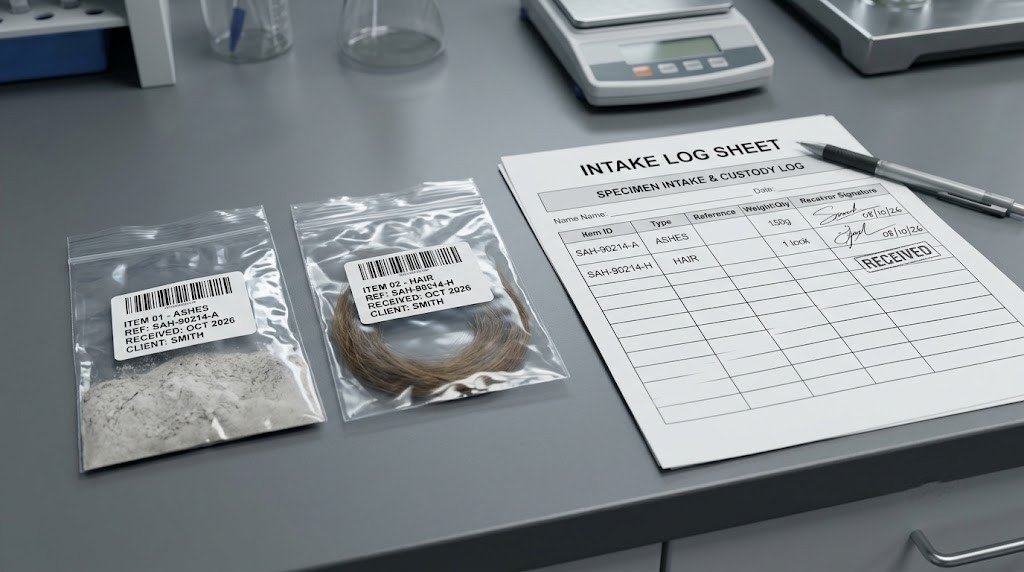
A two material intake record can help show that both sources were received and tracked.

No single answer proves anything on its own. Together, they show whether a company treats a two material order as two tracked items converging at a documented point, which is the strongest assurance available that a diamond is really made from sister ashes and hair. If a provider cannot say whether both materials actually went into growth, it cannot honestly call the stone really made from sister ashes and hair.

Preparing and mailing both materials covers packaging and paperwork once you are satisfied.

Who Must Agree When Different People Hold the Ashes and the Hair?

A stone really made from sister ashes and hair often draws on material from two households, which makes authority a two part question.

For her ashes, depending on your state and anything she put in writing, the right to decide may rest with her spouse or partner, her adult children or her parents before a sibling. The order varies by state, and her own written wishes can change it. A provider will typically ask whose authorization it holds.

For her hair, the picture is less formal but still worth care. A lock in a sibling’s keeping can still form part of her estate, and the rules on personal belongings vary from state to state. Speaking with her executor, or with whoever holds authority over her remains, is a courteous step and may be a required one.

If you hold the hair and someone else holds the ashes, the most respectful route is usually a direct conversation: ask whether a small portion of ashes might be set aside so one stone can be really made from sister ashes and hair together. If several siblings each want a diamond, raise it at the same time, since one submission can sometimes be divided among more than one stone. The parallel posts on the ash only question and the hair only question look at each material separately if a blend is not possible.

Do Certificates Prove a Stone Is Really Made From Sister Ashes and Hair?

“Certified” can mean two quite different things, and when a stone is really made from sister ashes and hair the distinction matters even more.

An origin or authenticity certificate is normally issued in house by the provider. It records the company’s statement that the stone was grown from the material your family supplied. For a blended stone, ask whether it names both sources or simply says “remains.” It is a meaningful written commitment, but no outside body has checked it; its weight depends on the custody records behind it.

An independent grading report comes from a third party gemological laboratory. It assesses the finished stone against the cut, color, clarity and carat standards applied to every diamond, and typically identifies it as laboratory grown. It does not mention ashes, hair or origin of any kind. Across the industry it is usually optional and priced separately.

Neither document alone shows a stone is really made from sister ashes and hair. The grading report shows what the diamond is; the origin certificate shows what the provider says went into it; and the custody log is what connects those two statements. If a provider presents its own certificate as independent verification, ask who outside the company reviewed it.

Which Six Myths About a Diamond Really Made From Sister Ashes and Hair Fall Apart?

Each sounds reasonable; none survives a look at the process.

  1. Adding hair makes the whole stone her. Hair’s richer carbon content reduces how much material is needed. It does not remove the supplemental lab carbon typically used in growth.
  2. The ash percentage applies to a blend. The familiar 10% to 15% figure describes ash only stones. No finished stone figure has been published for hair, or for a stone really made from sister ashes and hair, so ask the provider for theirs.
  3. Two materials make a bigger diamond. Carat size is set chiefly by how long the crystal grows. More source material may affect the personal share a provider can offer, but not, by itself, the size.
  4. Her hair will lighten or tint the color. Tone is set by trace elements during growth: nitrogen leans a crystal yellow, boron leans it blue. It cannot be chosen, matched or predicted from either material, and hair does not narrow the range.
  5. A lab could separate the ash carbon from the hair carbon later. Once refined, carbon from both sources is indistinguishable. Nothing in the finished stone records which material it came from.
  6. A blended stone is somehow less of a real diamond. It is fully a diamond, chemically and physically, rated 10 on the Mohs hardness scale and graded like any other.

Letting go of these does not diminish a diamond really made from sister ashes and hair. It means the claim you can make about it, real carbon from her, documented from two sources, is one that holds up when someone asks.

Which Claims About a Stone Really Made From Sister Ashes and Hair Deserve a Second Look?

Plenty of companies describe blended stones accurately. When the phrases below appear, though, ask a follow up in writing before going further.

  • “It’s 100% her, ashes and hair together.” Supplemental lab carbon is typically part of growth, so no blended stone is entirely personal carbon.
  • “Hair doubles the amount of her in the stone.” No published figure supports any multiplier. Ask how the provider calculated it.
  • “Both materials are always used.” Ask for a record showing each was actually refined and combined for your order.
  • “Our certificate is independent proof.” An in house certificate is the provider’s own statement, however carefully it is prepared.
  • “We can match the stone to her hair color.” No one can set or forecast the shade from the source material.
  • “Prices rise next month.” Ashes and saved hair both keep. Pressure to hurry is a sales decision, not a scientific one.

Any of these might be enthusiasm rather than bad faith. Either way, a stone really made from sister ashes and hair is meaningful without exaggeration, and a provider confident in its process can describe it without any.

What Does Blending Mean for Time, Cost and Color?

A stone really made from sister ashes and hair involves extra steps at the start, but otherwise the picture resembles any memorial diamond. Every figure below is a general industry range rather than any company’s terms.

Time. Typically six to ten months from receipt of material, extending toward twelve for stones over about two carats or for specialty colors. Ask whether handling two materials adds time with a particular provider.

Cost. Entry stones of roughly 0.10 to 0.25 carats run about $1,500 to $3,500. Between half a carat and a full carat, expect around $5,000 to $15,000, with colorless costing more. From two carats to five and above, figures climb from about $20,000 to $75,000 or beyond. Ask whether blending carries its own fee. Grading, engraving, fancy cuts and settings are usually extra.

Color. Yellow, blue and champagne are the usual tendencies because of trace nitrogen and boron. Colorless is possible with extra processing at extra cost, and some providers offer irradiation for red, green or black. The exact shade cannot be predicted from her ashes, her hair, or the two combined.

Memorial diamonds can appear in different color ranges depending on the growth conditions.

For the ash only process in detail, see how a stone is made from her ashes.

Frequently Asked Questions

Is a stone really made from sister ashes and hair if lab carbon is added?

Yes. Carbon recovered from both her ashes and her hair becomes part of the crystal itself. Because laboratories typically add supplemental carbon to sustain growth, the finished diamond is partly her carbon rather than entirely hers, in proportions the provider should state.

Does adding her hair increase how much of the stone is her?

It may or may not; no published figure settles it. The share depends on how much of each material is sent, what survives refining, the carat size and the provider’s own process. Ask for a written estimate with and without the hair.

Can I send her hair if someone else holds her ashes?

Possibly, with agreement. Whoever holds authority over her remains, often decided by state law and her written wishes, would need to release the ashes. Her hair may also form part of her estate, so speak with that person or her executor first.

Will the certificate say the stone is really made from sister ashes and hair?

Only if the provider writes it that way, so ask to see a sample first. An independent grading report will not mention origin at all. The in house origin certificate and the custody records are the only documents that can describe both sources.

Could a provider quietly use only one of the two materials?

Ask for records that would show otherwise: separate intake logs, separate refining entries, and a dated note of when the two were combined. A careful provider can supply these; one that cannot has given you a reason to keep asking.

How long does a diamond really made from sister ashes and hair take?

Industry wide, about six to ten months from receipt of material, and up to roughly twelve for larger stones or specialty colors. Handling two materials may add steps at the start, so ask each provider whether their estimate changes.

Final Thoughts on a Stone Grown From Both

Wanting proof for two materials rather than one is not overthinking; it is proportionate. The honest answer to whether a stone is really made from sister ashes and hair is yes, partly: real carbon from both, grown into a real diamond, typically alongside lab carbon, in proportions that only the provider’s records can describe.

If those records are clear and the written answers are specific, you have every assurance this industry can give that a stone is really made from sister ashes and hair. If the answers stay vague, a single material stone, or simply keeping what you already hold, remains an entirely good choice.

Learn More About Sister Ashes and Hair Diamonds

Talk With Memorial Diamond

If you would like to talk through a stone really made from sister ashes and hair with a person, including what share would be hers and how two materials would be tracked, Memorial Diamond would be glad to help. Reach out through memorialdiamond.us at your own pace; there is no obligation in simply asking.

Made From Sister

How a Memorial Diamond Is Made From Your Sister’s Hair

Sometimes what you have left of her is very small: a lock saved after a haircut, a braid someone thought to keep, a few strands folded inside a card. A diamond made from sister hair usually begins with a lock of a few grams, roughly half of it carbon by weight; that carbon is extracted, purified to about 99.9%, turned into graphite, typically blended with lab carbon, grown under heat and pressure, then cut and graded, typically within six to ten months.

made from sister hair

Why Can Hair Become a Diamond at All?

Because hair is mostly protein, and protein is built around carbon. Each strand is largely keratin, and by weight hair is roughly 50% carbon. Cremated ash, by comparison, holds only about 0.5% to 4% usable carbon, since cremation has already burned most of it away.

That difference changes almost everything about the starting point. A laboratory needs far less hair than ash, usually a small lock or a few grams, and no cremation is involved at any stage. A stone made from sister hair is therefore possible whether she was cremated, buried, or laid to rest in some other way, provided a lock was kept.

For some families hair is the only workable route: her ashes may have been scattered or interred whole, or her faith or her own wishes meant burial.

None of this makes a diamond made from sister hair a better or more meaningful choice than one from ashes. It is simply a different material with different chemistry, and the ash based version of this process works through the same laboratory stages from a much leaner starting point.

What Are the Six Stages of a Diamond Made From Sister Hair?

Six core stages take every diamond made from sister hair from a sealed packet to a finished, documented stone. A color treatment can be added by some providers, but it is optional and sits outside this core sequence.

Timings are approximate industry wide ranges; every provider runs its own schedule.

StageWhat happens to her hairApproximate durationWhat reaches you
1. Receiving and loggingThe lock is checked, weighed if required, and given a reference numberDays to two weeks, mostly transitA kit, then an arrival notice
2. Extraction and purificationOxygen free heating removes the non carbon parts of keratin, leaving carbon of about 99.9% purityTypically a few weeksOften silence
3. GraphitizationPurified carbon is heated to roughly 2,500 to 2,700°C and becomes graphiteBrief relative to growthSeldom any update
4. GrowthHer graphite, typically blended with lab carbon, crystallizes on a diamond seed by HPHT or, less often, CVDWeeks to months, the longest stageThe quietest period; some providers send a rough crystal photo
5. Cutting and polishingThe rough crystal is faceted into your chosen shape and polishedUsually a few weeksSometimes images to review
6. Grading and documentationOrigin records are finalized; an independent grading report may be orderedA few weeks when an outside lab is usedThe finished stone and its documents

Six to ten months is the usual span from arrival to delivery across this industry, and larger stones or specialty colors can stretch toward twelve. A diamond made from sister hair does not move faster because hair is carbon rich; growth time still governs the calendar.

Where Does a Usable Lock of Her Hair Come From?

Usually from something already kept, since a stone made from sister hair depends on a lock someone saved. Usable hair tends to turn up in a few familiar places:

  • A haircut keepsake: a lock or braid set aside at some point in her life, sometimes years earlier.
  • The funeral home: if arrangements are still underway, you can ask whether they are able to take a small lock before burial or cremation, with the agreement of whoever is making those arrangements.
  • Her own belongings: a brush or comb may hold loose strands, though whether loose hair is accepted varies, so ask the provider first.
  • Another relative: a parent, partner or another sibling may already hold a lock and be willing to share part of it.

Quantity is usually modest. Requirements differ by provider, but a small lock or a few grams is a typical range, well short of what most people picture. Ask for the provider’s own minimum before you cut or divide anything, since a lock cannot be uncut.

Condition is still worth asking about. Should the hair be dry, unwashed or loose? Does dye or chemical treatment affect whether it is accepted? Only the provider can answer for its own process, and those answers belong in writing before a stone made from sister hair is ordered.

Keep the lock dry and protected while you decide.

Who Should Agree Before Her Hair Is Sent?

It depends on where the hair is and how it came to you. A lock you have held privately for years may feel entirely yours. Even so, a person’s belongings can form part of her estate, and the rules on what counts and who decides vary by state. If anyone is administering her estate, talk with them first.

Hair taken at a funeral home is different. That usually happens at the request of whoever holds authority over her remains, which in many states means a spouse or partner, then adult children, then parents, with siblings later in the order. Her own written wishes can change that sequence, and the details vary by state, so treat it as a question to check rather than a rule to assume.

If a sibling does not hold that authority, the respectful path is to ask the person who does, plainly and without pressure. Something like: you would like a small lock, cut discreetly, for a diamond made from sister hair, and you understand if they need time. Providers often ask for a signed authorization, too.

Several siblings may each want a diamond made from sister hair. Whether one lock can supply more than one stone depends on its size and on the provider’s minimum, so ask before dividing it. Twins, half siblings and step siblings may all feel part of this. The full walk through for turning her hair into a diamond sets out the calls and forms in order.

How Is Carbon Drawn Out of a Lock of Hair?

With heat, in stages, in the absence of oxygen. Controlled heating without oxygen breaks keratin down, driving off its non carbon portions while the carbon, unable to burn away as gas, remains.

The goal is carbon of roughly 99.9% purity or higher. Trace leftovers would disrupt crystal growth, so this stage is about thoroughness. What began as a soft, recognizable lock ends as a small quantity of black carbon that looks nothing like her hair.

The color of her hair does not determine the final color of the memorial diamond.

By this point, carbon made from sister hair carries no visible link to the strands you packed, which is why the reference number assigned at intake matters so much. Ask how that number follows her carbon from one step to the next, and who signs when it moves.

Two practical questions about a diamond made from sister hair belong here as well. Will any unused hair be returned to you, or is the whole lock consumed? And is her material ever processed in a shared batch with another family’s? Practices vary, and both answers are reasonable to request in writing.

What Happens Between Graphite and a Rough Crystal?

Two transformations, one brief and one long. First, purified carbon is heated to roughly 2,500 to 2,700°C and reorganized into graphite, the layered form a growth press uses as feedstock. Around this point, or as the press is loaded, supplemental lab carbon is typically added to reach the volume growth requires.

Most providers then grow the crystal by HPHT, high pressure high temperature: a press holds a small cell at around 6 to 8 gigapascals and somewhere between 1,400 and 2,500°C, and carbon crystallizes, slowly, onto a tiny diamond seed. A minority use CVD, in which the carbon is converted into a gas such as methane and deposited layer by layer onto a seed plate. Both methods yield a real lab grown diamond, the same mineral as a mined stone.

Growth runs for weeks to months, and its length decides carat size. A modest lock does not cap how large a stone made from sister hair can be, because a bigger diamond depends on a longer, steadier run rather than a bigger envelope of hair.

Runs can fail. A crystal made from sister hair may grow with flaws or stall, and some providers say a cycle occasionally has to be repeated. Ask whether any of her carbon is held back for that possibility, and what happens if it is not.

How Much of a Stone Made From Sister Hair Is Her Carbon?

Nobody has published a finished stone share for hair, so anyone quoting a figure should be asked where it came from. The 10 to 15% share you may have seen describes stones grown from cremated ashes. That is an ash figure only. It describes a different material with a different carbon yield, and it should not be borrowed for hair.

Hair starts far richer in carbon than ash, so a small lock can supply a meaningful amount. Her share of the finished crystal then depends on how much of that the provider uses and how much lab carbon is blended in, both of which vary by provider and stone size.

So ask, in writing, for the specific stone you are considering:

  1. How much of her hair will be used, and how much carbon do you expect to recover from it?
  2. How much supplemental lab carbon will be added, and where is it sourced?
  3. What share of a finished stone made from sister hair do you estimate is her carbon?
  4. Is her carbon ever combined with another family’s at any stage?

A stone made from sister hair is physically built in part from her own carbon. That is the honest claim, and it does not need inflating. If a provider tells you the whole stone is her carbon, that is a reason for more questions, and the evidence for what is truly hers is worth reading first.

Does Her Hair Color Affect a Stone Made From Sister Hair?

No. Her hair color, whether dark, light, gray, red or dyed, does not carry through into the stone. Pigment is broken down during purification, and only carbon remains.

What tints a diamond is chemistry inside the growth cell: stray nitrogen atoms caught in the lattice lean the crystal yellow, stray boron leans it blue, and a stone with neither shows no color at all. Shutting both out calls for extra processing, so colorless results usually cost more. As a group, memorial diamonds lean toward yellow, blue and champagne.

Some providers also offer post growth irradiation for shades such as red, green or black, which is optional and should be disclosed on the paperwork. What nobody can do is choose, match or predict the final shade of a diamond made from sister hair from the hair itself. A provider can describe the color options it offers and the process behind each; it cannot promise an exact tone.

What Records Show a Diamond Was Made From Sister Hair?

A sequence of documents, each covering a different moment. Ask which of these a provider issues before you commit:

  • A signed authorization naming who released the hair and what was ordered.
  • An intake confirmation with a reference number, ideally noting the weight or condition of the lock on arrival.
  • A stage or custody log recording each handover as her material moves through the laboratory.
  • An origin or authenticity certificate, usually issued in house, stating that the stone was grown from the carbon your family supplied.
  • An optional independent grading report describing cut, color, clarity and carat.
Keeping intake and custody records helps connect the finished stone to the material supplied by the family.

The last two are often confused. An origin certificate is a custody document; it is what ties the stone to her. A grading report, from an outside gemological lab, assesses quality the way it would for any diamond and says nothing about origin. Across this industry, independent grading is generally optional and costs extra.

Ask to see a sample custody log with another family’s details removed. For a gem made from sister hair, the origin certificate only means something when the records behind it exist and can be shown.

What Does a Sibling Experience From Start to Finish?

The beginning is busy: family conversations, choosing a lock, a kit, a form and a sealed packet. Write down the reference number; it is your thread through what follows.

Then the middle goes quiet. Purification and graphitization rarely generate news, and growth can run for weeks or months without an update. Some providers send a photo of the rough crystal; others wait until the stone is cut. Ask in advance which approach yours takes and whom you can reach if you start to worry about a diamond made from sister hair you have not heard about in a while.

The end returns to something you can hold. Cutting gives the stone its shape, and some providers share images before final approval or setting. A finished diamond rates 10 on the Mohs scale of mineral hardness, so it can be worn daily in a ring, pendant or earrings. Typical clarity for memorial stones lands between SI2 and VVS.

Delivery brings the stone made from sister hair and its papers together. You might keep the origin certificate with the envelope the lock once lived in, or file it with her other papers.

What Will a Diamond Made From Sister Hair Cost?

The price of a stone made from sister hair follows carat size and color far more than the source material. Across the industry in 2026, and not as any one company’s price list, a small stone in the 0.10 to 0.25 carat band generally lands between $1,500 and $3,500. Moving up to somewhere between half a carat and a full carat brings the range to about $5,000 to $15,000, while two carats and upward, past five, can reach $20,000 to $75,000 or more. Colorless costs meaningfully more than yellow, blue or champagne at the same size.

Several items are usually priced on top of the loose stone: independent grading, engraving, fancy cuts and any setting. Insured return shipping may be billed separately too, so request a full written total rather than a starting figure.

For a broader view of the options, timelines and decisions involved, the complete guide to a sister hair diamond covers them together. If your family also holds a portion of her ashes, how a diamond is made from both her ashes and hair explains how the two are combined, and the complete guide to using ashes and hair together sets out the wider choices.

Frequently Asked Questions

How much hair is needed for a diamond made from sister hair?

Requirements vary by provider, but a small lock or a few grams is typical. Because hair is roughly half carbon by weight, far less is needed than with ashes. Ask for the provider’s minimum before cutting or dividing any lock you hold.

Can hair from her hairbrush be used?

Possibly. Some providers accept loose strands gathered from a brush or comb, while others prefer a cut lock. Ask the specific provider what it accepts and in what quantity, and confirm it in writing before sending anything you cannot replace.

Can a stone be made from sister hair if she was buried, not cremated?

Yes, provided a lock of her hair was kept. Hair needs no cremation, which is one reason it is chosen by families whose sister was buried, or whose ashes are held elsewhere and cannot easily be divided.

Will her whole lock be used up?

That depends on the lock’s size and the provider’s process. Purification consumes whatever hair goes into a stone made from sister hair, so ask beforehand how much will be needed and whether any unused strands are returned, kept or disposed of afterward.

Does dyed or gray hair change the finished diamond?

Her hair color does not carry into the stone, because pigment is removed with everything else during purification. Ask the provider whether dyed or chemically treated hair affects acceptance, since requirements on treated hair vary between laboratories.

Can two siblings share one lock of her hair?

Sometimes. It depends on how large the lock is and how much each provider requires per stone made from sister hair. Ask before dividing it, and agree among yourselves, and with anyone administering her estate, before anything is cut or sent.

Final Thoughts on How Her Hair Becomes a Diamond

A lock of hair is one of the smallest things a person leaves behind, and it can feel unlikely that anything as solid as a diamond could begin there. The chemistry says otherwise: the carbon in a crystal made from sister hair is freed from the keratin, purified, rearranged into graphite and grown slowly into a crystal alongside lab carbon, then cut and documented.

What makes the result trustworthy is not the story told about it but the records kept along the way. A diamond made from sister hair is a real diamond that contains a real share of her carbon, and it is reasonable to ask a provider to show you, in writing, how they know.

Learn More About Sister Memorial Diamonds

Talk With Memorial Diamond

If you are holding a lock of her hair and wondering whether a diamond made from sister hair is possible, Memorial Diamond is glad to talk it through at memorialdiamond.us, from how much hair is needed to which records you would receive. Asking questions places you under no obligation.

Daughter Memorial

Daughter Memorial Diamond vs. Traditional Urn: What to Know

Somewhere between the funeral paperwork and the first quiet week at home, the question of where her ashes will rest starts to feel very real. The daughter memorial diamond vs urn decision is less a contest than a question of form: an urn keeps her remains whole and in one place, while a memorial diamond is a lab grown stone made with carbon from a small portion of them. Because the stone uses so little, families can keep both.

Daughter memorial diamond vs urn: a simple ceramic urn on a shelf beside a small open box holding a champagne-toned memorial diamond

What Is Actually Being Compared?

In the daughter memorial diamond vs urn comparison, the urn is a vessel. It holds cremated remains, either all of them or a share, and it leaves those remains exactly as they came back from the crematory.

Urns are made in wood, metal, ceramic, stone and glass. Some are designed to break down naturally when buried in earth or placed in water. Smaller keepsake urns hold only a little. An urn might sit on a shelf at home, rest in a columbarium niche, be buried in a cemetery plot, or simply hold her ashes until the family decides on scattering.

The diamond side of a daughter memorial diamond vs urn decision involves a transformation rather than a container. Carbon is extracted from a portion of her ashes, purified, converted to graphite, typically blended with supplemental lab carbon and grown into a real diamond, usually in a high pressure, high temperature press.

The finished stone is chemically a diamond, the same material as any other, and it is part of a category of memorial that now has its own history.

So the daughter memorial diamond vs urn comparison is not two versions of the same thing. One keeps her remains as they are. The other makes something new from a small part of them. Understanding that difference first makes every later question easier to answer.

How Do the Daughter Memorial Diamond vs Urn Options Line Up?

The table below sets the two formats next to each other. Read it as a description, not a scorecard. The daughter memorial diamond vs urn question has no winning column.

What you might weighTraditional urnMemorial diamond
What it isA vessel holding her cremated remainsA lab grown diamond made partly with carbon from her ashes
How much of her ashesAll of them, or a share in a keepsake urnTypically a few tablespoons up to about 4 oz, approximately 100 g, depending on the provider
What happens to the ashesKept unchangedA portion is transformed; the rest remains
Where it livesA home, a niche, a cemetery plot, or until scatteringWorn, carried, or kept loose
Travels with youPossible, with carrier rules to checkEasily, as jewelry or a loose stone
DurabilityDepends on the material chosenHardness of 10, though a hard knock can chip it
When it is readyDays or weeksTypically 6 to 10 months, up to about 12
CostVaries widely by material and makerRoughly $1,500 to $75,000 or more by size and color, based on general industry ranges
Can be shared among relativesThrough keepsake urns or divisionThrough separate stones from separate portions
Can the choice change laterYes; ashes stay availableThe stone cannot be undone; remaining ashes stay available

Two rows in this daughter memorial diamond vs urn table deserve a second look. The first is what happens to the ashes. The second is whether the choice can change later.

Every other consideration is mainly about preference, budget and daily life, which only your family can weigh.

Why Is the Daughter Memorial Diamond vs Urn Choice Rarely Either Or?

Because the diamond needs so little. Requirements vary between providers, but a typical ash based order uses a few tablespoons to roughly four ounces, which is usually a small fraction of what a crematory returns.

The remainder can go into an urn exactly as planned. This is why a family weighing the daughter memorial diamond vs urn question can end up choosing both.

How much ash a laboratory typically requests explains the range and what stays behind.

A few combinations a family might consider include:

  • A full urn at home, with one pendant worn by a parent
  • An urn placed in a columbarium niche, with a ring made for her partner
  • Most of her ashes scattered somewhere she loved, a small keepsake urn kept, and a single stone
  • An urn held for now, with the diamond decision left open for later

None of these needs to be settled in the first weeks. Ashes usually come back from the crematory in a temporary container, and an urn can hold them while the family takes whatever time it needs.

There is something quietly reassuring in this. The daughter memorial diamond vs urn decision does not ask anyone to give up a place to visit in exchange for something to wear, or the reverse.

What Does Each Option Ask of Her Ashes?

In the daughter memorial diamond vs urn comparison, an urn asks nothing of her ashes. Her remains stay exactly as they are, and every future option, from scattering to burial to dividing a portion later, stays open.

A memorial diamond asks for a portion and changes it permanently.

Cremated remains are mostly calcium phosphate, the mineral of bone, and only about 0.5% to 4% of their weight is usable carbon. That carbon is isolated and refined to roughly 99.9% purity, turned into graphite at temperatures near 2,500 to 2,700°C, and then grown into a crystal.

Most providers use high pressure, high temperature presses working at around 6 to 8 GPa. Fewer use chemical vapor deposition. Cutting, polishing and grading follow, with irradiation offered by some providers for certain colors.

Because the recovered carbon is small, it is typically blended with supplemental lab carbon. Industry figures for ash based stones put her share of the finished mass at roughly one part in ten to around 15%, while a few providers report as little as 3%.

The stone is never purely her. It is a real diamond that physically contains carbon that was hers, which is a different and still meaningful thing.

Whether the stone is really made from her ashes goes further into that distinction.

This is the one asymmetry in the daughter memorial diamond vs urn comparison worth sitting with. Choosing an urn today closes off nothing. Choosing a diamond uses a portion that cannot be returned to ash. Neither fact is a reason to choose one way. It is simply a reason not to rush.
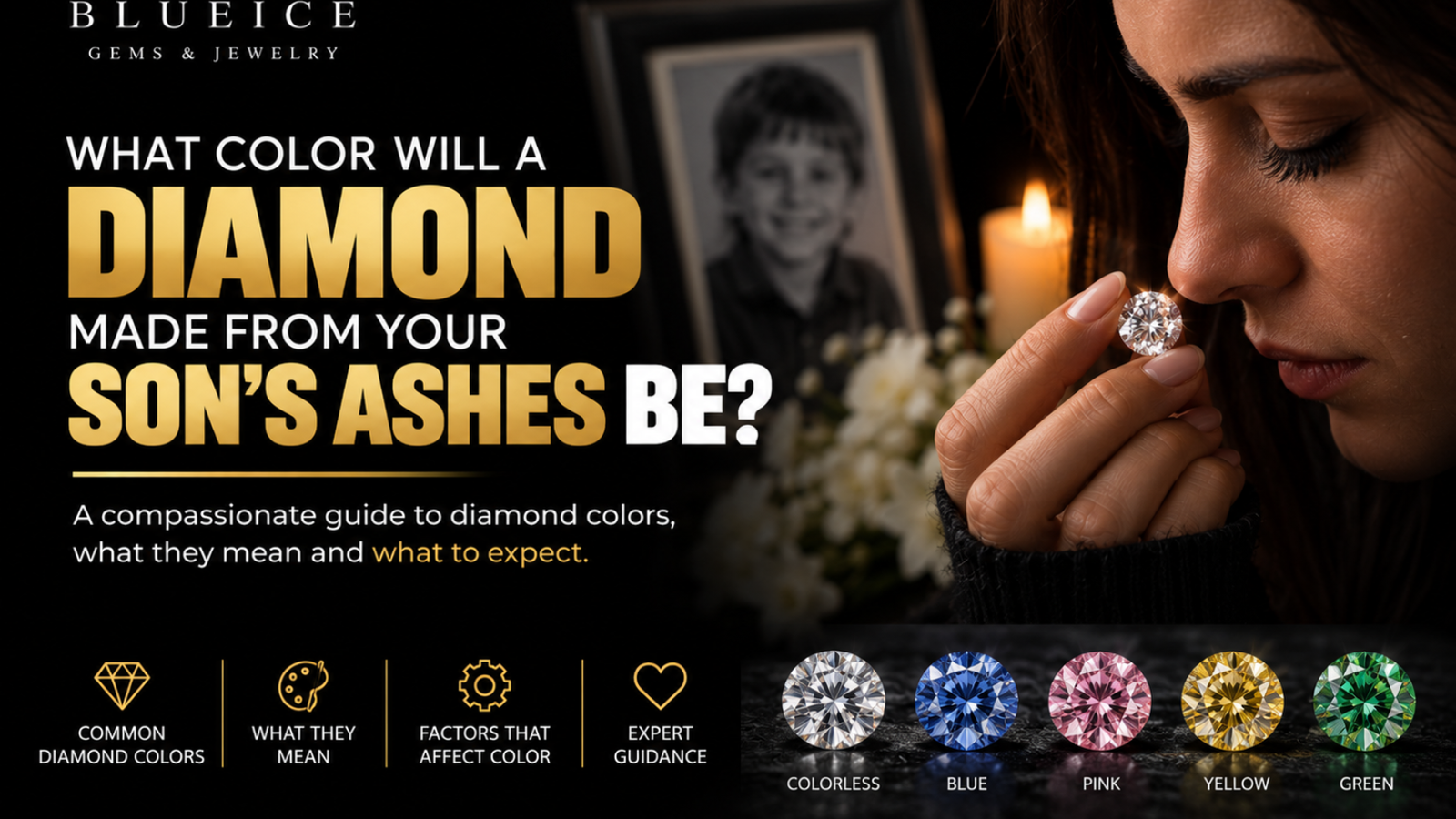
Where Does Each One Live Day to Day?

On the daily life side of a daughter memorial diamond vs urn decision, an urn gives her a place.

Some people find steadiness in a fixed spot they can visit: a shelf they pass each morning, a niche they drive to on her birthday, or a plot where the family gathers.

Moving house means moving the urn with care, and traveling with cremated remains involves carrier and security rules that are worth checking well in advance.

A diamond goes where you go. It can be set in a ring, a pendant or a bracelet, or kept as a loose stone in a small box.

It rates 10 on the scale gemologists use for scratch resistance, so everyday wear does not scratch it, though a hard knock at the wrong angle can still chip any diamond.

A protective setting and jewelry insurance are sensible. How settings protect a stone worn every day covers metals, mounts and resizing.

People differ on this, and the daughter memorial diamond vs urn conversation often turns here.

One parent may want somewhere to go. Another may want something to hold. A sibling may want neither, or both. Those preferences say nothing about how much anyone loved her.

How Do Cost and Time Compare?

Cost and timing are where the daughter memorial diamond vs urn gap is widest.

An urn can usually be in place within days or weeks, and prices vary widely depending on material, size and maker. A funeral home or urn retailer can give current figures for the styles you are considering.

A memorial diamond takes longer and costs more. Expect something in the region of six to ten months once the laboratory has her ashes, and up to a year for a stone larger than about two carats or in a specialty color.

Carat size is set by growth time, not by how much ash is sent.

Price band, industry wideWhat it generally buys
$1,500 up to $3,500A small stone, roughly a tenth to a quarter carat
$5,000 up to $15,000Half a carat to a full carat; colorless sits higher
$20,000 to beyond $75,000Two carats and larger

Important: These are general 2026 industry ranges, not Memorial Diamond pricing.

Independent grading, engraving, fancy cuts and settings are usually extra.

What drives the cost of a daughter memorial diamond breaks those variables down, while where the months of production go explains the waiting period.

For the daughter memorial diamond vs urn decision, the practical takeaway is sequencing. The urn can come first and serve immediately. A stone, if the family wants one, can follow whenever budget and readiness allow.

How Might Faith and Tradition Shape the Choice?

No religious tradition has an official position on memorial diamonds specifically. What traditions address is cremation and how ashes are handled, and those positions can shape a daughter memorial diamond vs urn decision more than any price or timeline.

Current Catholic guidance permits cremation but directs that ashes be kept intact in a sacred place rather than divided or kept at home, with a narrow allowance for a small portion under specific conditions. That bears directly on taking a portion for a stone, so a Catholic family may want to speak with their priest first.

Across Islamic schools of thought, cremation itself is generally considered impermissible, which means an ash based stone does not arise, though a hair based one involves no cremation.

Jewish movements differ widely on cremation.

In Hindu practice, ashes are traditionally immersed in a sacred river, and keeping a small portion is described as increasingly common, though it varies by family and community.

If faith matters to your family, the daughter memorial diamond vs urn question is best brought to your own clergy or community, who know your tradition and your circumstances. A memorial company is not the right authority on it.

Who Gets a Say in the Daughter Memorial Diamond vs Urn Decision?

Whoever holds legal authority over her remains, and that is not always a parent.

State law sets a default order, and it differs between states. Her husband, wife or partner may outrank her parents, and so may any grown children she had. Anything she put in writing about her remains can change the order entirely.

The funeral home or crematory can usually tell you who signed the cremation authorization.

Families also carry their own differences. Separated parents, or one parent arranging everything while the other keeps a distance, may land on different sides of the daughter memorial diamond vs urn question.

Because a stone uses only a portion, there is often room for both wishes, but dividing her ashes still requires agreement from the person with authority.

Relatives beyond the parents may have views on a daughter memorial diamond vs urn plan, too: siblings, grandparents and close friends.

How several relatives can each receive a stone explains the practical side, while raising the idea gently with family covers the conversation.

What If She Was Buried Rather Than Cremated?

Then the daughter memorial diamond vs urn comparison changes shape, because there are no ashes to place in an urn.

A memorial diamond is still possible if a lock of her hair was kept.

Because about half of hair’s weight is carbon, a lock weighing only a few grams may be all a laboratory asks for, and no cremation is involved at all.

Two honest caveats apply to this version of the daughter memorial diamond vs urn question.

No published figure exists for what share of a finished hair based stone is personal carbon, so ask any provider to state theirs in writing.

And a lock kept at home may count as part of her estate. State rules differ, so speak with the executor or whoever is settling her affairs before mailing it.

A diamond grown from her hair is explained in full elsewhere.

Which Questions Can Help Your Family Decide?

There is no formula for a daughter memorial diamond vs urn decision, but a few questions tend to bring a family’s own answer into focus:

  1. Does anyone want a fixed place to visit, and does anyone want something to carry?
  2. Did she ever say anything about her ashes, even in passing?
  3. Is anyone uncomfortable with dividing her remains, and why?
  4. Does faith or tradition shape what feels right?
  5. What does the budget allow now, and what might it allow later?
  6. Would an urn and a stone serve different people in the family?
  7. Is there any real reason to decide quickly?

Talking through these can make the daughter memorial diamond vs urn decision feel less like a verdict and more like a plan.

The answers may point to an urn alone, a stone alone, or both. Each is a complete and loving way to keep her.

Frequently Asked Questions

Is a memorial diamond better than an urn for our daughter?

Neither is better. An urn keeps her remains whole and gives the family a place. A diamond is something that can be worn or carried. The daughter memorial diamond vs urn choice depends on what your family wants day to day, not on which honors her more.

Can we keep her ashes in an urn and still have a diamond made?

Yes. A stone typically uses a few tablespoons to about four ounces of ashes, depending on the provider, which is usually a small share of the total. The remainder can stay in an urn, be buried or be scattered as planned.

What share of the diamond would be her own carbon?

For an ash based stone, industry figures suggest her carbon forms roughly one tenth to 15% of the finished mass, and a few providers report as low as 3%. Supplemental lab carbon makes up the remainder. Ask for each provider’s figure in writing.

Can we choose an urn now and decide about a diamond later?

Yes, as long as some of her ashes remain accessible. Choosing an urn first closes off nothing, and a family may find it easier to decide about a stone once the first months have passed.

Is a memorial diamond more expensive than an urn?

Generally, yes, and cost is one of the clearest daughter memorial diamond vs urn differences. Industry wide, memorial diamonds range from roughly $1,500 for small stones to $75,000 or more for large ones, while urn prices vary widely by material. Grading, engraving and settings usually add to a diamond’s cost.

Does making a diamond rule out scattering or burial?

No. Because the diamond uses only a portion, the rest of her ashes remain available for scattering, burial in a cemetery plot, a columbarium niche or an urn at home. A stone can sit alongside any of these.

What if her parents disagree about the urn and the diamond?

A stone uses only a portion, so both wishes can often be honored. Dividing her ashes still needs agreement from whoever holds authority over her remains. That varies by state and her written wishes, and may be her spouse, partner or adult children.

Final Thoughts on the Daughter Memorial Diamond vs Urn Choice

Seen clearly, the daughter memorial diamond vs urn choice comes down to two different needs.

One gives her a resting place. The other gives you something to carry into ordinary days.

Families who keep both are not hedging, and families who choose only one have not missed anything.

If there is a single piece of practical advice in the daughter memorial diamond vs urn comparison, it is this: the urn can come first, and nothing about it closes the door on a stone later.

Take the time you need.

Learn More About Daughter Memorial Diamonds

Talk With Memorial Diamond

If the daughter memorial diamond vs urn question is still open for your family, Memorial Diamond is happy to talk through what a stone would involve, including how little of her ashes it uses.

Reach us at memorialdiamond.us. There is no pressure and no deadline.

turn-son-ashes-and-hair-into-a-diamond

How to Turn Your Son’s Ashes and Hair Into a Diamond

There is often a box on a shelf and an envelope in a drawer, and no obvious instruction for what to do with either. If you want to turn son ashes and hair into a diamond, the plain version is this: a laboratory pulls carbon out of both samples, purifies it past 99.9%, converts that carbon to graphite, and grows the graphite into a genuine lab grown diamond over roughly six to ten months. Parents who turn son ashes and hair into one stone are not buying a symbol of him. They are commissioning a gem that physically contains carbon that was his.

 Parents turn son ashes and hair into a diamond: a champagne-toned lab-grown memorial stone resting on pale linen

Why Would You Turn Son Ashes and Hair Into One Diamond?

Most parents who turn son ashes and hair into a single diamond do it because they happen to hold both, and neither one feels like something to set aside. The hair may have come from a hairbrush nobody emptied, a barber’s envelope, a hospital bag, or a lock cut before the funeral. The ash came later.

The reason to turn son ashes and hair into one gem rather than two is usually not sentimental arithmetic. It is that a single object can be worn, carried, and eventually passed on, while two half portions tend to sit in two boxes. If you are still weighing that, the ash only version of this process and working from hair alone each cover the single source route in full.

There is also a quieter reason parents mention. Hair is frequently the older of the two samples it may predate an illness, an accident, or a long decline and combining it with ash lets both versions of him contribute to the same crystal, whether your son was six or sixty when he died.

Deciding to turn son ashes and hair into a single piece also settles a practical question early: you are commissioning one stone, on one timeline, at one price, rather than managing two parallel orders. And because labs work from a small portion of what you send, you can turn son ashes and hair into one stone and still keep the great majority of both exactly where they are now.

Who Can Legally Decide to Turn Son Ashes and Hair Into a Memorial Stone?

This is the part parents are most often surprised by, and it is worth settling before you turn son ashes and hair into anything. If your son was married, his surviving spouse may hold the legal right to direct what happens to his remains ahead of you. If he had adult children of his own, they may sit ahead of you as well.

Most states set out a statutory order of priority for who may authorize the disposition of a decedent’s remains, and parents typically appear on that list after a spouse and after adult children. Anything your son left in writing a will, a funeral directive, a pre need contract, a designated agent form can rearrange that order entirely. The details genuinely vary from state to state, so this is a question for the funeral home that handled the cremation, or for a local attorney, rather than something to settle from a blog post.

Hair sits in a slightly different place. Rules about disposition are written about the remains themselves, so a lock you already have in your own home is usually the simpler question in practice but a decedent’s personal belongings can still fall to his estate, the treatment varies by state, and if the hair is in someone else’s keeping, retrieving it is a conversation rather than a decision.

The honest summary: a parent arranging this alone may well be able to turn son ashes and hair into a diamond without difficulty, and many do. But parents who press ahead without first speaking to whoever else has standing sometimes discover the problem painfully late. Ask early, in writing where you can.

Parents are not always of one mind about this, and one parent quite often arranges the whole thing alone after a separation, after a disagreement about cremation itself, or simply because one of you can face the phone calls and the other cannot. Providers encounter that constantly and it is not an obstacle. What governs the outcome is who holds authority, not whether the household agrees.

What Do You Need to Gather Before You Begin?

What you need in hand before you turn son ashes and hair into a diamond is less than most parents expect. Providers differ, so treat the figures below as industry typical rather than any single company’s published rule, and see how much of each sample a lab needs for the quantities in more depth.

What you sendIndustry typical amountPractical notes
Cremated remainsA few tablespoons up to roughly 4 oz (about 100 g)A small fraction of a full cremation; the rest stays with you
HairA small lock, often described as a few grams or a palm sized amountCut hair is fine; length matters less than total weight
Identification of the materialWhatever the provider’s intake form asks forPart of chain of custody documentation
Written authorisationVaries by provider and stateTies back to the authority question above

Labs that turn son ashes and hair into one crystal usually ask for hair in a clean, sealed paper envelope rather than plastic, and for ash in whatever sealed container the crematorium supplied or one the provider sends you. You do not need a full urn to end up with a wearable gem, and you should be cautious of anyone who implies otherwise.

If the hair is short, thin, chemically treated, or came from a very young child, say so at intake rather than hoping. It is a normal question, and the answer affects how much the lab asks for.

What Are the Seven Steps to Turn Son Ashes and Hair Into a Diamond?

Stripped of marketing language, the seven steps below are what it actually takes to turn son ashes and hair into a finished diamond.

  1. Collection and chain of custody. Step one in any attempt to turn son ashes and hair into a diamond is intake: both samples are logged, assigned an identifier, and tracked from that point forward. Every laboratory that will turn son ashes and hair into a gem should be able to describe this process to you in concrete terms.
  2. Carbon extraction and purification. Each sample is heated in a controlled, oxygen free, multi stage process that strips out everything that is not carbon the calcium phosphate that dominates ash, the non carbon components of keratin in hair until the recovered material reaches roughly 99.9%+ carbon purity.
  3. Graphitization. The purified carbon is heated further, to somewhere around 2,500 to 2,700°C, and converted into graphite: the crystalline form of carbon a growth press can actually use as feedstock.
  4. Loading the growth cell. The graphite, blended with supplemental lab sourced carbon to reach workable volume, is placed in a growth cell with a tiny diamond seed. This is the growth cell where the decision to turn son ashes and hair into one crystal finally becomes physical.
  5. Growth. In the HPHT method that dominates this category, the cell is held at roughly 6 to 8 gigapascals of pressure and temperatures in the 1,400 to 2,500°C band for weeks to months. A minority of providers use CVD instead, depositing carbon from gas onto a seed plate in a vacuum chamber. Nothing about the finished size depends on the volume you send growth time sets carat size, not sample size.
  6. Cutting and polishing. Once you turn son ashes and hair into rough crystal, a gem cutter takes over and shapes it into a round, cushion, princess, or other finished cut, exactly as with any other diamond.
  7. Optional irradiation and optional independent grading. Some providers offer post growth irradiation to shift or intensify color. Many families also request a grading report from an independent third party laboratory, documenting the usual cut, color, clarity and carat measures. Both are optional, and both are worth asking about before you commit rather than after.

How Much of the Finished Gem Is Actually His?

Sealed sample envelope of hair beside a small portion of cremated remains on a laboratory bench

Parents ask how much of the finished gem is really his when they turn son ashes and hair into one stone, and they deserve a straight answer rather than a comforting one.

For the ash route specifically, industry figures put usable carbon at roughly 0.5% to 4% of cremated remains by weight. Of the finished stone’s mass, roughly 10 to 15% typically traces back to carbon drawn from ashes a share some providers put as low as 3%, since it moves with stone size and the volume of ash submitted. Hair is a much richer starting material roughly 50% carbon by weight, because keratin is a carbon rich protein but that is a fact about the input, not about the finished stone.

Published figures for the ash route exist. For a charge where you turn son ashes and hair into a blended feedstock, no equivalent published percentage exists at all, and nobody should quote you one as though it were settled. Ask any provider who offers to turn son ashes and hair into a diamond to put their own figure, and their method for arriving at it, in writing.

What is honest to say is this: when you turn son ashes and hair into one crystal, a real, verifiable portion of his own carbon is inside the lattice, blended with supplemental lab carbon to reach a growable volume. No memorial diamond from any source material is 100% personal carbon, and a provider claiming otherwise is describing something physics does not do.

What Color Will the Stone Come Out?

Color is the part of the plan to turn son ashes and hair into a diamond that families least expect to be surprised by, and it is where the individuality of the source material shows up most visibly.

Nitrogen left in the feedstock pushes a crystal toward yellow. Boron pushes it toward blue. A colorless diamond requires the near total absence of both, which is why memorial stones trend toward yellow, blue, and champagne or brown tones rather than white organic source material carries trace elements that a purely synthetic feedstock would not.

When you turn son ashes and hair into a blended charge, both samples bring their own trace elements to the same growth run, which is one more reason no reputable lab will promise you a precise shade before a growth run has actually happened. Colorless is achievable with extra processing and typically costs more; irradiation after growth can produce red, pink, green, or black.

One further point worth knowing: irradiation is a post growth treatment rather than a dye, and an independent grading report will normally disclose that it was applied. If it matters to you whether the color arose from the material itself or was introduced afterwards, say so before growth begins rather than after the stone is cut.

It helps to decide in advance whether you want a specific color or whether you would rather accept whatever the material gives you. Many parents find they prefer the second once it is framed honestly the shade is a consequence of him, not a defect. There is more on what color a combined stone tends to come out if that is the deciding factor for you.

How Long Does It Take and What Does It Cost?

The time it takes to turn son ashes and hair into a finished stone is governed by growth, not by paperwork. Across the industry, six to ten months from receipt of material to finished diamond is the typical span, with larger stones beyond roughly two carats or specialty colors such as black sometimes running to twelve.

Cost, when you turn son ashes and hair into a diamond, tracks carat, color, cut, and whether an independent grading report is included. These are general industry ranges for 2026, not any single provider’s published price list:

Size tierTypical industry rangeNotes
0.10 to 0.25 ctAbout $1,500 to $3,500The usual entry point
0.5 to 1.0 ctAbout $5,000 to $15,000Colorless costs meaningfully more than yellow, blue or champagne at the same size
2 to 5+ ctAbout $20,000 to $75,000+Longest growth times

Nothing about choosing to turn son ashes and hair into one gem rather than two changes which tier you land in the tier is set by the size you choose. Budget for the extras too when you turn son ashes and hair into something wearable: settings, engraving, fancy cuts and grading reports are usually priced separately from the loose stone. If cost is the deciding factor, what a son memorial diamond costs goes into the tiers in more detail, and how long the whole thing takes covers the calendar.

Memorial diamond set in a simple gold band worn on an older woman's hand

What Should You Ask Before You Send Anything?

Ask these before you agree to turn son ashes and hair into a diamond, and ask for answers you can keep:

  • How will you turn son ashes and hair into a documented, traceable batch what identifier is used, and can I see the log?
  • What happens if a lab cannot turn son ashes and hair into a viable crystal on the first run? Is there a second attempt, and does it cost more?
  • What percentage of the finished stone do you estimate will be his carbon, and how did you arrive at that estimate?
  • Do you return any unused ash or hair, and in what form?
  • Is independent third party grading available, and is it included or extra?
  • What exactly does your authenticity or origin documentation state?
  • Can a second stone be grown later from the material I still hold?

Written answers matter more than reassuring phone calls here, for the same reason chain of custody matters: this is a months long process involving something irreplaceable. If you want a longer version of this list, questions worth asking before you commit expands each one.

Frequently Asked Questions

Can a lab turn son ashes and hair into more than one diamond?

Often yes, because only a portion of what you send is used. Several stones can frequently be grown from one shared submission, either in the same run or from reserved material later. Confirm the specific provider’s policy, and the cost of each additional stone, in writing first.

Does hair have to be from before he died?

No. Hair collected at any point works the same way chemically, whether it was cut years earlier, kept from a childhood haircut, taken by a barber, or collected after death. Keratin’s carbon content does not change with time, and properly stored hair keeps indefinitely.

Does it cost more to turn son ashes and hair into one diamond than ash alone?

Providers price by carat, color, cut and optional extras rather than by how many source materials you submit, so a combined submission does not usually carry its own surcharge. Ask directly, though pricing structures differ, and you want that answer before intake, not after.

What if my son’s spouse and I disagree about doing this?

Then it is a legal question before it is a family one, because a surviving spouse may hold authority over his remains ahead of his parents in your state. Talk to the funeral home or a local attorney about who may authorize disposition before any material is shipped.

Will anyone be able to tell the diamond was made this way?

Not by looking. A memorial diamond is chemically and optically a genuine diamond, with the same hardness and the same cut, color, clarity and carat grading as any other. Laboratory grown origin is identifiable through gemological testing, but not to the eye.

Can we still bury or scatter the rest of him?

Yes, and many families do exactly that. A typical submission is a small fraction of a full cremation, so burial, interment, scattering, or keeping an urn all remain entirely available alongside the diamond. None of those choices is diminished by this one.

Final Thoughts on Turning Your Son’s Ashes and Hair Into a Diamond

Choosing to turn son ashes and hair into a diamond is not a way of finishing anything, and it should not be sold to you as one. It is a way of taking material you already have and making it into an object you can keep on your hand instead of on a shelf.

Some parents do this within a year. Some do it after five, or ten, or after a second loss makes the shelf feel heavier. Neither timing is late, and neither is wrong.

Whatever else is true, the decision to turn son ashes and hair into one stone belongs to whoever has the standing to make it, and it should be made slowly, with written answers from the lab, and with the people who also loved him in the room.

Learn More About Son Memorial Diamonds

Talk With Memorial Diamond

If you are weighing this and want to talk it through rather than fill in a form, reach out to Memorial Diamond at memorialdiamond.us to discuss what is possible with the ash and hair you have. There is no obligation in asking, and no schedule you are behind on.

Word count: 2,934 words · Reading time: about 15 minutes

son-ashes-diamond-steps

Step by Step: Turning Your Son’s Ashes Into a Diamond

Nobody hands you an instruction sheet for this, and the not knowing is often the heaviest part. The son ashes diamond steps break into nine: confirm who can authorize the release, choose a provider, gather documents, choose the stone, measure the ashes, ship them, wait out the growth, make the finishing decisions, and receive it. Roughly six to ten months, industry wide, most of which you spend doing nothing at all.

The son ashes diamond steps laid out: a sealed transfer container, release paperwork and a finished memorial stone

What Are the Son Ashes Diamond Steps, Start to Finish?

Nine, if you count them the way a family experiences them rather than the way a laboratory logs them. Most published process descriptions are written from the lab’s side, extraction, graphitization, growth. That is useful, but it is not a list of anything you actually do.

Laid out from your side of it, the son ashes diamond steps look like this:

#What you doRoughly how long
1Establish who can authorize releasing his ashesDays to weeks
2Choose a provider and get its terms in writingA week or two
3Gather the paperwork it asks forDays
4Choose carat, color and cutYour own pace
5Measure and seal the ash portionAn afternoon
6Ship it, tracked, with the chain of custody formsDays
7Wait while the stone is grownMonths, typically 6 to 10
8Confirm cutting, any irradiation, any gradingA few weeks
9Receive the stone and decide on a settingYour own pace

The first six son ashes diamond steps are the active part, and together they often take only a few weeks. Step seven is where almost the whole calendar sits. The complete guide to a son ashes diamond fills in the background behind each one.

Step 1: Who Is Authorized to Release His Ashes?

Settle this before anything else, because every later stage depends on it and it is the point at which the son ashes diamond steps most often surprise a parent.

Each state writes its own order of priority for who controls a person’s remains. A surviving spouse or registered partner frequently comes first. Where a son had children of his own who are adults, they may rank above his parents. Anything he left in writing, a directive, a will provision, a prepaid arrangement, can override the default sequence entirely.

So the person who signs the release is not automatically the person doing the arranging. A parent may organize every detail of the son ashes diamond steps and still need someone else’s signature on the form, and it is far kinder to discover that now than after an urn has been opened.

Two more realities worth naming before the later son ashes diamond steps begin. Parents do not always agree about this, and one parent handling it alone is ordinary rather than exceptional. Where the position is murky, the funeral director who carried out the cremation usually knows how the rule works locally, and an attorney can confirm it for the cost of a short call.

Step 2: How Do You Choose a Provider?

By what a company will put in writing, rather than by how its website feels. Of all the son ashes diamond steps, this is the one where a slow, skeptical hour pays for itself, because the difference between providers shows up in specifics rather than in atmosphere.

Ask for four things before you commit to any of the son ashes diamond steps that follow: the exact quantity of ash required, what documentation you will receive linking the finished stone to your submission, whether unused material comes back, and what happens if something goes wrong during growth.

A company that answers all four plainly, by email, is telling you something useful about how it operates. Vagueness at this stage tends not to improve later.

It is also fair to ask where the growth actually happens, since some providers grow stones in house while others work through a partner laboratory. Neither arrangement is inherently better, but you are entitled to know which one applies. Questions worth asking before you commit sets out a fuller list to work from.

Step 3: What Paperwork Has to Be Gathered?

Less than families brace for, though it varies. Most providers want a copy of the death certificate or the cremation certificate, identification for the person signing the release, and a signed authorization form of their own.

Where the son ashes diamond steps involve someone other than you signing, a spouse, a partner, his adult child, build in time for that document to travel. A form waiting for a signature in another household is the commonest cause of a stalled first month.

Keep everything in one folder, physical or digital, including the provider’s written quote and its confirmed quantity requirement. Months from now, when you are checking a detail, you will not want to be searching an inbox for it.

Chain of custody paperwork sits alongside all of this. It is the document trail that lets a laboratory evidence afterwards that the stone grew from what you specifically sent, which is the whole basis on which the son ashes diamond steps can be trusted at all.

Step 4: How Do You Decide Carat, Color and Cut?

Earlier than you might expect. These three choices sit near the front of the son ashes diamond steps because they set both the price and the length of the wait before anything is sent.

Carat is the big lever. The sizes on offer generally begin near a tenth of a carat and extend past five, and size is governed by time in the press rather than by how much ash you provide. A larger stone is a longer commitment, not a larger parcel.

Color is partly a choice and partly chemistry. Trace elements present during growth shape the outcome, nitrogen pulls a stone toward yellow, boron toward blue, and a colorless result requires the near total absence of both. Because the carbon here comes from an organic, personal source rather than a clean synthetic feedstock, warm and blue tones are common. What color a diamond grown from his ashes will be goes into that properly.

Cut comes last of the three and feels the most reversible, though in practice the son ashes diamond steps fix it permanently once polishing begins. Round, princess, cushion, emerald, the same shapes available for any diamond.

Step 5: How Do You Measure Out the Ashes?

Carefully, in good light, and ideally not alone. Across the industry a laboratory typically wants between a few tablespoons and about 4 oz, which is roughly 100 grams and a small fraction of what a full adult cremation produces.

Most providers send a kit containing a sealed container, a scoop and labels, which makes this far less daunting than improvising with kitchen equipment. It is the point in the son ashes diamond steps where a good provider’s preparation shows most plainly. If the urn is sealed, do not work at the lid yourself; a funeral home will open, portion and reseal it as a routine service, and many will do the measuring for you.

Work over a tray so nothing is lost. Cremated remains are largely bone mineral and closer to coarse sand than to soot, so they behave more predictably than most parents expect.

There is no rule saying this particular one of the son ashes diamond steps has to be done by you. Asking a sibling, a friend or the funeral director to handle it is entirely reasonable. How much ash is actually needed covers the quantities in detail.

 A collection kit open on a table with a sealed container, scoop and labels beside a portion of cremated remains

Step 6: How Do You Ship a Portion of His Remains?

Tracked, labeled, and with the paperwork inside the parcel rather than following separately. This is the shortest of the son ashes diamond steps and the one with least room for improvisation.

Photograph the sealed container before it goes. Write the tracking number somewhere you will find it without searching. If the provider offers a prepaid, insured courier label, take it. This is not the moment to economize on postage.

Cremation has become the majority choice in the United States, with the national rate now above sixty percent, so funeral homes and couriers handle this sort of shipment far more routinely than you would guess. Ask the provider directly what it recommends for your country and carrier rather than deciding alone.

Expect an acknowledgement when the parcel is logged in. That receipt is the formal handover point in the son ashes diamond steps: everything before it is yours to manage, and everything after it belongs to the laboratory until the stone comes back.

Step 7: What Happens in the Months You Are Waiting?

Four things, none of which need anything from you. This is the longest stretch of the son ashes diamond steps and the one families find hardest, precisely because there is nothing to do.

First, extraction. The ash is heated in a controlled, oxygen free process that strips away calcium phosphate and everything else that is not carbon, leaving purified carbon at roughly 99.9% or better. Usable carbon in cremated remains is only about 0.5% to 4% of ash by weight, so a good deal of material yields a small amount of what the son ashes diamond steps actually need.

Second, graphitization: a further heat stage at roughly 2,500 to 2,700°C restructures that carbon into graphite, the form a growth press takes as feedstock.

Third, growth. That graphite, made up to a workable volume with supplemental lab carbon, enters a press alongside a tiny diamond seed and is held at roughly 6 to 8 GPa and between 1,400 and 2,500°C. A minority of providers use chemical vapor deposition instead. Fourth, the rough crystal is assessed before cutting begins. How his ashes actually become a diamond follows that chemistry further.

Step 8: What Decisions Come Back to You Near the End?

Usually three, and they arrive together once the rough crystal exists, the only point in the son ashes diamond steps that asks anything of you mid process.

The first is the cut. A gemologist shapes and polishes the rough into a finished stone, and the shape you chose earlier is confirmed against what the crystal can actually yield. Occasionally the rough suggests a different shape would work better, and a good provider will say so rather than proceeding silently.

The second is irradiation. Some providers offer post growth treatment to shift or deepen color, reds, pinks, greens and blacks are produced this way. It is optional, it costs extra, and plenty of families decline it because the stone’s own color came from him.

The third is independent grading. Having the finished diamond assessed by a third party gemological laboratory against the standard cut, color, clarity and carat measures is optional across this industry rather than automatic. It is a separate document from the certificate of origin that traces the son ashes diamond steps back to your submission, and the two do different jobs.

Step 9: What Happens When the Diamond Arrives?

It comes loose, in most cases, unless you commissioned a setting at the same time. Expect the stone itself, an origin or authenticity document, and a grading report if you asked for one.

Give yourself permission for the last of the son ashes diamond steps to be a strange afternoon. Parents describe the arrival very differently from one another. Some want to open it alone, some want family present, some leave the package unopened for days. None of those is the wrong response.

Setting can wait as long as you like. A loose stone keeps indefinitely, and there is no deadline attached to deciding between a ring, a pendant, a pair of earrings or something that simply stays in its box. Ideas for rings, pendants and keepsakes is worth browsing without committing.

One practical note to close the son ashes diamond steps out: ask what happens to any unused material once extraction is finished. Policies genuinely differ, and knowing beforehand is better than wondering afterwards.

A loose memorial diamond resting in an open presentation box beside its origin document

How Long Do the Son Ashes Diamond Steps Take, and What Do They Cost?

Six to ten months is the usual industry span from the day material is received, with larger stones or specialty colors sometimes running to twelve. Almost all of it is growth time; the son ashes diamond steps you personally handle rarely add up to more than a few weeks.

On cost, as general 2026 industry ranges rather than any one company’s published price:

  • Entry tier, about a tenth to a quarter of a carat: $1,500 to $3,500
  • Mid tier, half a carat through a full one: $5,000 to $15,000
  • Two carats and larger: $20,000 upward, sometimes well beyond $75,000
  • Add ons: settings, engraving, fancy cuts and an optional grading report are each quoted apart from the stone
  • Color: colorless generally costs more than a warm or blue tone at matching weight

Neither the price nor the schedule moves because you sent more ash. Across the son ashes diamond steps, both follow from the stone you chose at step four and nothing else. How long a son memorial diamond takes and what one costs break each of those down further.

Where Do the Son Ashes Diamond Steps Most Often Stall?

Almost always at the paperwork, almost never at the science. Knowing the pinch points in advance is the cheapest insurance available.

The signature is the classic one, and it halts the son ashes diamond steps more often than anything else does. A release form sitting unsigned in another household can add weeks, and the fix is to identify the right signatory at step one rather than at step six.

The second is a quantity mismatch. A parcel arrives holding less than the laboratory needs, and everything pauses while a second portion is arranged. Confirming the figure in writing beforehand removes that risk entirely.

The third is expectation rather than logistics. Families sometimes assume a stone will be colorless, or will arrive sooner because more ash was sent. Neither is how the son ashes diamond steps work, and hearing it early is far better than discovering it at month eight.

Frequently Asked Questions

How much of the finished stone is genuinely his carbon?

On the ash route, roughly 10% to 15% of a finished stone’s mass is usually described as personal carbon, and a few providers publish figures as low as 3%. The remainder is supplemental lab carbon added to reach a workable growth volume.

Can I start the process years after the cremation?

Yes. Cremated remains are mineral and chemically stable, so a long gap is not an obstacle in itself. Mention how and where the ashes have been stored when you first make contact, since storage conditions can matter more than elapsed time.

Do I have to send all of his ashes?

No. The requested portion is typically a few tablespoons up to roughly 4 oz, a small fraction of a full cremation. Everything else stays available for burial, scattering, an urn at home, or dividing between family exactly as planned.

Can two diamonds be grown from one submission?

Often, yes, since only a portion of the remains is used. Each stone repeats the growth stage of the son ashes diamond steps on its own schedule, so two means two timelines and two prices. Ask whether one submission covers both.

Will I be able to see the stone before it is cut?

Some providers share photographs of the rough crystal; others do not. Ask at step two rather than assuming, and ask what updates you will receive during the growth months, since communication habits vary considerably across this industry.

What if I change my mind partway through?

Ask about this before you send anything. Cancellation terms differ sharply between providers, particularly once the son ashes diamond steps have reached growth, and this is exactly the sort of clause worth having in writing rather than discovering under pressure.

Final Thoughts on the Steps of Turning His Ashes Into a Diamond

Written out, the son ashes diamond steps look like a great deal. Lived through, most of it is waiting, and the parts that genuinely ask something of you are concentrated into a handful of weeks near the beginning.

Of the nine son ashes diamond steps, the one worth real attention is the first. Get the authorization question settled, get the quantity and the terms in writing, and the remaining eight stages tend to proceed without drama.

After that it becomes a matter of patience, which is not a skill anyone wants to be practicing for this reason. But the months do pass, and what arrives at the end of them is a real object with a real, documented line back to him.

Learn More About Son Memorial Diamonds

Talk With Memorial Diamond

If you would rather ask a person than read another page, that is a reasonable instinct. Memorial Diamond can be reached at memorialdiamond.us to walk through the son ashes diamond steps, the documents involved and what happens at each stage. No obligation comes with asking.

son-ashes-diamond-questions

Questions to Ask Before Turning Your Son’s Ashes Into a Diamond

You are about to hand a portion of your son to people you have never met, and nothing about that feels ordinary. The son ashes diamond questions worth asking first are mostly about custody, chemistry and paperwork: how his remains are tracked, how much of the finished stone is genuinely his carbon, what documentation comes back to you, and what the contract says if something fails midway. A company that answers those plainly, in writing, has told you more than any brochure can.

Son ashes diamond questions written as a checklist beside a sealed transfer container and a loose memorial stone

Why Do the Son Ashes Diamond Questions Matter So Much?

Because the material is not replaceable, and almost nothing else you buy works that way. If a jeweler mishandles a sapphire, another sapphire exists. There is no second portion of your son held in reserve.

That single fact reorganizes everything. The son ashes diamond questions that carry weight are not about beauty or price, those come later and they are the easy part. The son ashes diamond questions that matter are about whether a company can account for one sealed container from the hour it arrives until the day a finished stone is posted back to you.

This is also a young industry, unevenly regulated and not standardized the way funeral home licensing is. Asking is not suspicion; it is the only instrument a family has.

Ask in writing. A warm phone call reassures you in the moment and is unrecoverable six months later. Send the son ashes diamond questions by email, keep what comes back, and you have turned reassurance into a record you can hold someone to.

Which Son Ashes Diamond Questions Belong on Your List?

Twelve, in four areas: custody, content, documentation and commercial terms. Copy them into an email exactly as written. The son ashes diamond questions below are blunt so a vague reply is easy to spot.

#AreaThe question to put in writing
1CustodyWhat reference or tracking number is assigned to his ashes, and may I be told it?
2CustodyHow many points in the process log the material, and who signs each one?
3CustodyIs his carbon ever processed in the same batch or growth cell as another family’s?
4CustodyWhat happens to material that is not used, and can it be returned to me?
5ContentWhat percentage of the finished stone’s mass will be carbon recovered from his ashes?
6ContentWhat is the supplemental carbon, and where is it sourced?
7DocumentationWhich document confirms this stone came from what I sent, and who issues it?
8DocumentationIs an independent grading report included, optional, or not offered?
9DocumentationWill the paperwork carry his name, and do I choose the wording?
10CommercialWhat is priced separately from the stone itself?
11CommercialWhat are the cancellation terms once a growth cycle has started?
12CommercialContractually, what happens if the stone fractures or fails to grow?

None of the son ashes diamond questions above needs a scientific background, and none should be difficult for a well run company to answer.

A printed list of provider questions on a kitchen table with a pen resting across it

What Should You Ask About Chain of Custody?

Begin the son ashes diamond questions here with tracking. Ask what identifier is attached to his ashes on arrival, whether it is physical, a numbered seal, an engraved container, or only a line in a database, and whether you can be given that number yourself. A company that tracks well answers instantly, because the answer is a system, not an opinion.

Next, ask about logging points. Extraction, purification, graphitization and growth are genuinely separate stages, and each one changes the material in a different way. A careful laboratory records a handover at every stage. Ask how many such records one order produces and whether copies can be sent to you.

Then put the most uncomfortable of the son ashes diamond questions. Is his material ever combined with another family’s at any point? Batch processing is efficient, and some laboratories are built around it. That does not make a provider dishonest, but you are entitled to know before you consent.

Finish with the leftovers. Some providers return unused ash, some keep it, some destroy it. Practice varies and nothing settles it industry wide, which is exactly why it belongs among your son ashes diamond questions instead of among your assumptions.

How Much of the Stone Is Actually His Carbon?

This is the question most parents feel too polite to ask, and it is the one that separates an honest laboratory from a marketing department. Among the son ashes diamond questions, it is the one to put in writing first. Ask for a percentage.

Hold the answer against the chemistry. Cremated remains are overwhelmingly calcium phosphate, bone mineral, and the usable carbon inside them runs at roughly 0.5% to 4% of ash by weight. That small recovered fraction is purified, then blended with lab sourced carbon to reach the volume a laboratory growth cell requires.

Industry wide, the personal carbon recovered from ashes typically accounts for somewhere around 10% to 15% of a finished stone’s mass, and some providers cite figures as low as 3%. How much ash a laboratory asks for is a separate matter from how much of the result is him.

If a company tells you the diamond is 100% your son, it is claiming something the physics does not support. The accurate version, a real, traceable portion of his own carbon sitting permanently inside the crystal lattice, is both true and, for most parents, more than enough.

Of all the son ashes diamond questions on this page, this one is the cleanest test of whether you are being spoken to or sold to.

What Paperwork Comes Back With the Diamond?

Two very different documents exist, and the son ashes diamond questions here exist because the two are routinely conflated.

The first is an authenticity or origin certificate. It is usually issued in house by the provider, and what it records is provenance, that this particular stone was grown from the carbon your family submitted. It is a chain of custody document, not a quality assessment.

The second is a grading report from an independent gemological laboratory. It describes the stone itself, using the same cut, color, clarity and carat standards applied to any diamond on a jeweler’s counter. It is optional across this industry, normally costs extra, and says nothing about origin.

Ask which of the two is included. Ask who issues it. Ask to see a specimen copy with another family’s details removed. A confident provider usually will.

Ask also whether the document names him and whether you approve the wording; for some parents that single page becomes the thing they reread. The son ashes diamond questions about documentation are the ones most often answered with a warm generality, so press until you have specifics.

Who Is Able to Authorize Sending His Ashes?

Begin the son ashes diamond questions about authority by asking whose signature the release requires, then check that answer against your own family’s situation before anything is packed.

This is where parents are most often caught off guard. If your son was married, or had adult children of his own, the person with the strongest claim to direct what happens to his remains may not be you. State statutes differ, and anything he put in writing while living can displace the default order entirely. It is a legal question with a local answer, and it reflects nothing about who loved him.

So ask directly: whose authorization do you need, in what form, and what is your process when family members disagree? Some companies require one signatory; others want written consent from everyone with a claim.

If your family is divided, or if you are arranging this alone while another parent stays at arm’s length, say so in the first conversation rather than the last. A provider used to that will have a route through it. Among the son ashes diamond questions here, this is the one most likely to stall everything if it is left until the end. Whether several relatives can each receive a stone is worth raising in the same breath.

How Long Will It Take, and What Happens in the Silence?

Industry wide the answer to one of the most common son ashes diamond questions is six to ten months from receipt of material to finished stone, stretching toward twelve for larger stones or specialty colors. Ask the provider for their own figure, and what it is measured from, the day you pay, or the day his ashes arrive.

Then ask what almost nobody asks: what contact happens during those months? Growth is slow and uneventful by design, which means long stretches with nothing to report. Some companies photograph the rough crystal; some send scheduled updates; some send nothing until the end.

Ask which. Ask who you telephone if six weeks pass in silence and you need a human voice to confirm his ashes are where they should be. The son ashes diamond questions about communication matter as much as the technical ones.

Ask what happens if they overrun their own estimate. Of all the son ashes diamond questions, it is the one families forget. An honest answer acknowledges that growth time varies and that an estimate is an estimate. Where the months actually go is a reasonable thing to have explained to you before you commit.

What Can Nobody Promise You About the Color?

Start the son ashes diamond questions about color by asking what range is realistic, then listen for whether the reply contains a hedge. It should.

The mechanism is simple enough. Trace elements present during growth determine the tone: nitrogen pushes a crystal toward yellow, boron toward blue, and a colorless stone requires the near total absence of both. Because this carbon came from a person rather than a controlled industrial feedstock, trace elements are normal, which is why memorial stones tend toward yellow, blue and champagne. What shade to realistically expect is worth reading before you choose.

So ask three things. Is colorless offered, what extra processing does it need, and what does it cost? Is post growth irradiation available for red, pink, green or black stones, and is it disclosed on the paperwork? And what is the provider’s position if the finished shade differs from the sample shown?

That last point is where the son ashes diamond questions about color earn their place. No one can guarantee an exact tone from organic source material, and a company offering that guarantee anyway is promising you something outside its control.

hree memorial diamonds in yellow, blue and champagne tones photographed side by side on a neutral background

Which Son Ashes Diamond Questions Are About Money?

Of the son ashes diamond questions about money, the first is simple: ask for the total, never the headline. Across the industry, entry tier stones of roughly 0.10 to 0.25 carats run about $1,500 to $3,500. Half carat to one carat stones sit somewhere near $5,000 to $15,000. Anything from two carats upward climbs from around $20,000 into the $75,000 range and beyond, with colorless costing meaningfully more than yellow or champagne at the same weight.

Those are general industry figures rather than any single company’s price list, and what drives the number up or down matters more than the range itself.

Then ask what sits outside the quote. Independent grading, engraving, fancy cuts and any setting, ring, pendant, earrings, are commonly billed separately from the loose stone, and sometimes so is insured return shipping.

Ask about the payment schedule too: the deposit, when the balance falls due, and what happens to money already paid if you stop. These are ordinary son ashes diamond questions you would put to anyone handling a five figure commitment, asked at a moment when nobody expects you to be thinking clearly.

What If Something Goes Wrong Partway Through?

Ask these son ashes diamond questions before you send. Afterwards, you are negotiating from a position where the thing you care about most is already inside somebody else’s building.

Growth cycles can fail. Crystals fracture during cutting. Parcels are occasionally lost. None of that is common, none of it is impossible, and the terms governing it are written long before it happens.

So put these son ashes diamond questions in writing: if a growth cycle fails, is it rerun from remaining material at your cost or at mine? If nothing remains, what then? If the stone fractures in the cutting room, is it replaced, recut smaller, or refunded? What insurance covers the parcel in each direction, and for what declared value?

Ask what the company’s liability amounts to, in a sentence you can read without a lawyer. The honest answer may be uncomfortable, no sum of money replaces the material, but that is a far better sign than a smooth one. Ask, too, what happens if you simply change your mind; cancellation terms differ sharply once growth has begun. Where the process stalls most often belongs in the same conversation, and these son ashes diamond questions are easiest to ask while you are calm.

How Do You Tell a Straight Answer From an Evasive One?

You are not judging tone when you weigh the answers to the son ashes diamond questions. Every company here is warm on the telephone; warmth is table stakes. You are judging specificity.

What you askedA straight answer sounds likeAn evasive answer sounds like
How much of the stone is his carbon?Roughly 10% to 15% of the mass, blended with lab carbon to reach growth volume.It’s 100% your son.
Is his material ever batched with others?No, one growth cell per order, and here is how we log it.Every diamond is unique to the family.
Which documents do I receive?An in house origin certificate; independent grading is optional and billed separately.It arrives fully certified.
How long will it take?Six to ten months typically, longer for larger stones, measured from arrival.Things move fairly quickly these days.
What if the growth fails?Clause seven of our terms. I’ll send it now.That has never happened to us.

Three patterns are worth noticing across all of your son ashes diamond questions. A number replaced by an adjective. A written term replaced by a reassurance. A direct question answered with a sentence about feelings.

None proves bad faith on its own. Every one means ask again, in writing.

Frequently Asked Questions

Should I ask these questions before or after choosing a provider?

Before. The answers to the son ashes diamond questions are how you choose. Send the same written list to two or three companies and compare what comes back, because the differences in specificity between replies usually tell you far more than anything published on their websites.

Is it rude to ask how much of the diamond is really my son?

Not at all, and a good provider expects it. The honest figure on the ash route, roughly 10% to 15% of the finished mass, with some providers citing as low as 3%, is a fact about chemistry, not a criticism of anybody’s workmanship.

Can I ask for his ashes back if I decide not to go ahead?

Ask before sending rather than after. Return policies vary considerably between providers and are governed entirely by the terms you agreed to, so get that answer in writing while you still hold everything yourself.

Does anyone verify by DNA that the ashes are my son’s?

Put that question to the provider directly, because nothing standard across this industry settles it either way. Ask plainly what verification, if any, takes place, and rely on the written answer rather than an assumption in either direction.

Who has to sign the release if my son was married?

Ask the provider whose signature they require, then check it against your state’s law and anything your son set down in writing. A spouse, or his own adult children, may hold that authority ahead of a parent.

How many of these should I expect answered in writing?

All of them. A company willing to put custody, percentage, documentation and cancellation terms into an email is a company that has already settled those things internally. Vagueness on paper usually reflects vagueness in practice.

Final Thoughts on Asking Before You Send His Ashes

There is no version of this where you feel entirely ready, and no list long enough to make it feel safe. Asking the son ashes diamond questions well is not about reaching certainty. It is about shrinking the number of things that could go wrong without your knowledge.

If you only get through a handful of the son ashes diamond questions gathered here, make them these four: who is authorized to sign, what percentage of the stone is his carbon, whether his material ever shares a growth cell, and what the terms say when something fails. Those cover most of the genuine risk.

Then let yourself stop. Diligence is one way of caring for him, but so is putting the list down once it has been answered honestly. The wider background to all of this will still be there if you want it later.

Learn More About Son Memorial Diamonds

Talk With Memorial Diamond

If you would rather put the son ashes diamond questions to a person than read another page, that is reasonable. Memorial Diamond can be reached at memorialdiamond.us to talk through custody, documentation and what a realistic schedule looks like. Asking commits you to nothing at all.

What Color Will a Diamond Made From Your Son's Ashes Be?

What Color Will a Diamond Made From Your Son’s Ashes Be?

Parents usually picture something in particular before they ever ask, and then hesitate to say it out loud. Here is the plain answer: son ashes diamond color most often lands in the yellow, blue or champagne to brown family, because trace elements present during growth decide the shade and ash is an organic, individual starting material. Colorless is achievable with extra processing and usually costs more, and no honest provider will promise a particular son ashes diamond color in advance.

 Son ashes diamond color range shown as three loose memorial stones in yellow, blue and champagne tones

Where Does Any Diamond’s Color Come From?

From tiny quantities of elements that are not carbon, caught in the crystal while it grows. Pure carbon in diamond structure, with nothing else caught in the lattice, is colorless. So every question about son ashes diamond color is really a question about what else was present.

Two elements do most of the work. Nitrogen produces yellow tones. Boron produces blue ones. The complete absence of both is what a colorless diamond requires. Colorlessness is not an added quality, it is the absence of everything else.

That single mechanism explains the entire son ashes diamond color question. Whatever trace elements are present in the growth cell as the crystal forms will express themselves as a shade, and the crystal takes on that character permanently.

It is also why this is not adjustable afterwards in the way a metal finish or a setting is. The son ashes diamond color you receive is structural. It is in the lattice, not on the surface. How a memorial diamond is made from his ashes follows the material through the growth stage in detail.

Why Do Memorial Stones Lean Yellow and Blue?

Because the carbon comes from a person rather than from a controlled industrial feedstock, and a person is not chemically tidy.

An industrial diamond manufacturer starts with carbon refined to exclude everything else. A memorial laboratory starts with cremated remains, purifies the recovered carbon to roughly 99.9% or better, and that remaining fraction of a percent is precisely where trace elements live. Nitrogen especially is common in organic material, which is a large part of why son ashes diamond color so often reads warm.

So a warm son ashes diamond color is not a defect or a shortcut. It is the visible consequence of the stone having come from someone instead of from a supply catalogue.

Champagne and brown tones arise the same way, from combinations of trace elements and the specifics of a growth run. Across the industry, yellow, blue and champagne are simply the shades that turn up most often, and a son ashes diamond color in that family is the expected result rather than a disappointment. Whether the stone is genuinely his covers the carbon question that sits underneath this one.

What Son Ashes Diamond Color Outcomes Are Most Common?

Five broad outcomes account for nearly everything families see. This is a map of the territory rather than a menu you order from:

Shade familyWhat causes itHow commonTypical cost effect
Yellow to amberNitrogen present during growthVery commonBaseline
BlueBoron present during growthCommonBaseline to modest premium
Champagne / brownCombined trace elements and growth conditionsCommonBaseline
Near colorless to colorlessNitrogen and boron both excludedLess commonMeaningful premium
Treated shades: red, pink, green, blackPost growth irradiation offered by some providersProvider dependentPremium, longer wait for black

Read the middle column as tendency rather than probability, not as a son ashes diamond color you can select. Nobody can tell you in advance which row your son ashes diamond color will land in, and a company presenting these as selectable options without heavy qualification is overselling its control.

What the table is genuinely useful for is setting expectations before you commission anything. A parent who knows that warm tones are the most frequent son ashes diamond color outcome is far less likely to be thrown by the stone that arrives.

Five memorial diamonds arranged from colorless through yellow, champagne and blue on a neutral surface

Can a Colorless Stone Be Grown From Ashes?

Yes. It is worth understanding what a colorless son ashes diamond color takes, though, because it is not simply a preference box on a form.

Achieving colorless means excluding both nitrogen and boron from the growth environment almost completely. That requires additional processing and tighter control than a stone where trace elements are allowed to express themselves, and across the industry a colorless outcome typically costs meaningfully more than a yellow, blue or champagne stone of the same carat weight.

It also introduces a different kind of uncertainty. Extra processing improves the odds. It does not convert son ashes diamond color into something a laboratory can guarantee at the point of order.

If colorless matters to you, raise it at the very first conversation rather than after a deposit. Ask what the provider’s actual success rate is at that outcome, what happens if the result comes out tinted, and whether the additional processing is charged regardless. What a son memorial diamond costs sets the pricing tiers out in full.

What About Red, Pink, Green or Black?

These come from a separate route entirely. Some providers offer post growth irradiation, a treatment applied after the crystal has formed, which can shift or intensify a stone into red, pink, green or black.

Two points are worth holding onto. First, this is an offering that varies between companies, so a particular treated son ashes diamond color may simply not be available from the provider you like most. Ask before assuming.

Second, a treated son ashes diamond color sits on top of growth rather than replacing it. The diamond is still grown from the carbon recovered from his remains. Irradiation changes the shade afterwards. It does not make the stone less genuinely his.

Black stones in particular tend to take longer. Specialty colors and larger carats are the two things most likely to push a project toward the twelve month end of the industry’s usual range. How long a son memorial diamond takes covers the waiting side of that.

Does Cleaner Material Make Son Ashes Diamond Color Predictable?

No. This is the single most common misunderstanding parents bring to the subject, usually because it sounds so reasonable.

The intuition goes like this: if trace elements cause color, then a cleaner, better prepared sample should produce a more predictable result. It does not follow. Purification already takes the recovered carbon to roughly 99.9% or better, and what determines son ashes diamond color is what survives in that final fraction plus the conditions inside the growth cell itself. Sending a larger or fresher portion of remains does not give you a lever over that.

So nothing you do at your end, how the ashes were stored, how much you send, how carefully you package it, makes the outcome forecastable. A laboratory can influence son ashes diamond color through process control, and even then only as a tendency rather than a certainty.

This matters practically, because it is the reason to be wary of anyone who implies that your preparation will shape the result. It will not. What your preparation affects is whether the run is viable at all, which is a different question entirely. The complete guide to a son ashes diamond sets that distinction out alongside the rest of the process.

Can Anyone Promise You a Shade?

No. How a company handles a request for a specific son ashes diamond color tells you a great deal about how it will handle every other question.

What a provider can legitimately offer is a target and a described process: an intention to aim for blue, say, with an explanation of what they control and what they do not. What nobody can honestly offer is a guaranteed son ashes diamond color written into an order form as though it were a size or a cut.

Before committing, get four things answered in writing:

  • What shade family are you aiming for, and what influences that outcome at your end?
  • What happens if the finished stone comes out noticeably different from that aim?
  • Is any part of the fee adjusted, or a regrowth offered, in that situation?
  • Will the stone’s final color be documented, and by whom?

That fourth point is worth a moment. An independent grading report assesses cut, color, clarity and carat on the same basis used for any diamond, which is the only genuinely third party record of what son ashes diamond color you actually received. It is normally an optional add on rather than something included by default, so ask.

Does the Color Differ Between Ashes and Hair?

Not in any way a family can rely on, which surprises people who expect hair to behave differently.

Hair is a much richer carbon source as a starting material, roughly half carbon by weight, against the small fraction recoverable from cremated remains. It is tempting to conclude that a hair grown stone must therefore come out cleaner and lighter. The chemistry does not support that leap. Both routes end in purified carbon carrying trace elements, and both are subject to the same conditions inside the growth cell.

So the same honesty applies to the hair version of this question as to son ashes diamond color: shades cluster in the yellow, blue and champagne families, colorless takes extra processing and money, and no route makes the outcome forecastable.

Where the two genuinely differ is upstream rather than at the color stage. Hair requires no cremation, which matters to families who chose burial or whose traditions do not permit it, and it needs far less material.

If you are weighing a submission of both materials, the same rule holds there too. Mixing sources does not narrow the range of possible shades, and any expectation about son ashes diamond color built on the idea that one material is tidier than the other is built on sand.

Does the Color Mean Anything About Him?

This question comes up quietly and deserves a direct answer: no, a son ashes diamond color is not a message, a verdict, or a reflection of who he was.

What it does reflect is that the carbon was his rather than generic. Trace elements vary between individuals and between growth runs, which is why son ashes diamond color varies at all. A manufactured feedstock would produce a far more uniform result, and that uniformity is precisely what this is not.

Plenty of parents find that framing genuinely helpful. The variation is a consequence of individuality, not of anything going wrong, and a warm yellow stone is not a lesser version of a colorless one.

It is also worth saying that no shade obliges you to feel a particular way about it. Some families love a color instantly; others take months. Both are ordinary responses to an object like this.

How Does Color Change Price and Waiting Time?

Son ashes diamond color moves the number, though less than carat weight does. Taking 2026 figures across the category as a whole, and not one firm’s price list: expect roughly $1,500 to $3,500 at 0.10 to 0.25 ct, roughly $5,000 to $15,000 between half a carat and a full carat, and $20,000 to $75,000 or more once a stone passes two carats.

Within any of those tiers, a colorless stone typically carries a meaningful premium over a yellow, blue or champagne stone of equal weight, because of the additional process control needed to exclude trace elements. Irradiated shades usually carry a premium of their own, and settings, engraving, fancy cuts and independent grading are quoted separately.

On timing, the industry typical range runs from about six months to ten from receipt of material. Specialty son ashes diamond color outcomes, black especially, and larger stones can extend that toward twelve months. Growth time drives size, and specialty treatment adds to the tail end of the schedule rather than the beginning.

Who Actually Chooses the Color?

Practically, whoever signs the commissioning paperwork picks the son ashes diamond color being aimed for. This is worth a moment’s thought before the form is in front of you, because it may not be the person you assume.

Most states set a statutory order of priority over what happens to a decedent’s remains. A surviving spouse or partner frequently sits at or near the top of that order, and your son’s own adult children can rank above his parents. Anything he left in writing can change the sequence, and it varies from state to state. Whoever holds that authority is the person a provider will look to for sign off on the ashes, including on the son ashes diamond color being aimed for.

Parents are also not always of one mind, and one parent arranging this alone is entirely ordinary. If two people who both care are pulling toward different shades, remember that a single submission can often support more than one stone.

Where any of this is unclear, a short conversation with the funeral director who handled the cremation, or with a local attorney, settles it faster than family debate will.

How Will It Look Once It Is Set?

The same warm-toned memorial diamond shown set in yellow gold and in white gold for comparison

Differently from how it looks loose, which surprises people. The metal around a stone changes how a son ashes diamond color reads to the eye.

Yellow gold tends to warm a stone and can make a faint yellow tint recede. White metals like platinum or white gold tend to emphasize warmth by contrast. A blue stone often reads strongest against white metal, while champagne tones frequently sit beautifully in rose gold.

Ask to see the finished stone before the setting is finalized if that is possible, or ask what flexibility exists to change the metal once you have seen it in daylight. Photographs taken under laboratory lighting rarely match how son ashes diamond color appears on a hand by a window.

Size plays a part too: the same tint is more visible in a larger stone than a small one, simply because there is more material for light to travel through. Rings, pendants and other settings covers the options in more depth.

Frequently Asked Questions

Can I request a specific shade when I order?

You can state a preference, and a good provider will tell you honestly what they can aim for and what they cannot control. What you should not accept is a guaranteed shade written as a firm promise, since trace elements during growth decide the final son ashes diamond color.

Will two diamonds from the same ashes match?

Not necessarily. Separate growth runs can produce noticeably different results even from one submission, because conditions inside each cell vary. If matching stones matter for siblings or a couple, raise it before commissioning and ask what the provider can realistically achieve.

Does the color fade or change over time?

No. The shade comes from elements locked inside the crystal lattice during growth, not from a surface treatment or coating, so it is permanent. Ordinary wear, cleaning, sunlight and daily handling will not alter how the stone looks over decades.

Is a colorless stone better quality?

No. Colorless costs more because excluding trace elements takes additional process control, not because a tinted stone is inferior. Clarity, cut and carat are assessed independently of shade, and a warm toned memorial diamond can grade just as well overall.

Can a finished stone be changed to another color?

Sometimes, through post growth irradiation, which some providers offer to produce red, pink, green or black. Availability varies by company and it adds cost and time. Ask before assuming a treatment is possible, and ask whether it is documented afterwards.

What if the shade that arrives upsets me?

Say so to the provider, and ask what their policy allows, but also give yourself time before deciding. Many parents describe an initial reaction that softened considerably once the stone was set and worn rather than seen loose on a laboratory bench.

Final Thoughts on the Color of Your Son’s Diamond

Of all the decisions in this process, color is the one that resists control most stubbornly, and that is genuinely hard when so much else has already been out of your hands.

What is worth holding onto is why the shade varies at all. The stone reads warm, or blue, or somewhere in between, because the carbon in it came from a specific person and not from a drum of industrial feedstock. Uniformity would mean something had been substituted.

Ask for the intended son ashes diamond color in writing, ask what happens if the result misses it, and then let the growth run do what it does. Whatever son ashes diamond color arrives, it arrived because of him, and nobody else’s stone will be quite the same.

Learn More About Son Memorial Diamonds

Talk With Memorial Diamond

Having a shade in mind is completely normal, and so is wanting to know whether it is realistic. Memorial Diamond can be found at memorialdiamond.us for an honest view of what is achievable and what is not. No commitment attaches to the question.