
Some families discover they are holding two pieces of her at once, a portion of her ashes and a lock of hair someone had the presence of mind to save, and wonder whether both could go into one stone. Can a diamond be really made from sister ashes and hair? It can: carbon is recovered from each material, purified, and grown together into a genuine lab diamond, typically alongside supplemental lab carbon, but no provider publishes a standard figure for how much of a blended stone is hers, so request that share in writing.
Table of Contents

Can a Stone Be Really Made From Sister Ashes and Hair at Once?
A stone can be really made from sister ashes and hair in a literal, physical sense, and some providers offer exactly this. Each material contributes carbon. The ash supplies a small amount locked inside a great deal of bone mineral, roughly 0.5% to 4% of its weight. The hair, built from the protein keratin, is about half carbon. Once each has been refined to nearly pure carbon and converted to graphite, the two can be combined as feedstock for one crystal.
What a diamond really made from sister ashes and hair cannot be is a stone with nothing else in it. Laboratories typically blend in supplemental carbon so the growth cell has enough material to build a crystal steadily over weeks or months. That is true of ash only stones and hair only stones, and combining the two does not change it.
So the honest answer to whether a diamond is really made from sister ashes and hair has three parts. Her carbon from both sources can be inside the diamond. Lab carbon is typically there too. And the proportions are something each provider should state for your order, because nobody publishes a standard figure for blends.
Why Would a Family Combine the Two at All?
Reasons for wanting a stone really made from sister ashes and hair are often personal rather than technical, and each is valid.
- Both materials were kept: A portion of ashes came to one relative and a saved lock to another, and joining them feels natural.
- Each carries a different meaning: For some siblings, ashes represent her whole life and hair a closer, everyday memory of her.
- A sibling holds the hair but not the ashes: Combining can be a way for two branches of a family to contribute to one stone.
- Interest in a larger personal share: Some families hope that adding hair will increase how much of the stone is her. That is worth asking about directly, since no standard figure confirms it.
None of these reasons requires a blended stone. An ash only or hair only diamond is just as genuine. The complete guide to a stone from both materials sets out how families weigh the options.
How Do Ashes and Hair Become a Single Carbon Source?
To see how a stone can be really made from sister ashes and hair, it helps to know where two very different materials meet.
| Her ashes | Her hair | |
|---|---|---|
| What the material mostly is | Calcium phosphate, or bone mineral | Keratin, or a protein |
| Carbon by weight | Roughly 0.5% to 4% | About 50% |
| Amount providers typically request | A few tablespoons up to about 4 oz or 100 g | A small lock or a few grams |
| What extraction removes | Minerals surrounding a small carbon fraction | The other elements bound up in keratin |
| After refining | About 99.9% carbon or better | About 99.9% carbon or better |
The convergence point is after refining. Purified carbon is heated further, to about 2,500 to 2,700°C, and becomes graphite, the material a growth press works with. At that stage carbon from her ashes and carbon from her hair are the same substance, and they are typically combined with supplemental lab carbon and placed in a growth cell beside a diamond seed. Most providers grow memorial stones by HPHT, with CVD a minority method, at roughly 6 to 8 GPa and 1,400 to 2,500°C.
Ask a provider whether the two materials are extracted separately before being combined, and at which stage the combining happens. How a blended stone is grown describes each stage in more depth.
How Much of a Diamond Really Made From Sister Ashes and Hair Is Her?
There is no published answer, and any confident claim otherwise deserves a follow up question. Published industry figures for ash only stones put the personal share at roughly 10% to 15% of the finished mass, with some providers quoting as little as 3%. That range describes ashes alone. No comparable finished stone figure has been published for hair, and none exists for blends.
Several variables move a blended figure: how much of each material is submitted, how much carbon survives refining from each, the carat size chosen, and how much supplemental carbon a laboratory adds to keep growth stable. A provider offering a diamond really made from sister ashes and hair should be able to estimate the share for your order and explain how it got there.
So ask three things in writing. What proportion of the finished stone is expected to be her carbon? Roughly how much of that personal carbon comes from the ashes and how much from the hair? And would sending more of either material change the estimate?
If a provider answers with the ash range alone, ask how the hair has been accounted for. If it answers with a single round number and no reasoning, ask for the reasoning. A stone really made from sister ashes and hair deserves a figure built for that combination, not one borrowed from a different product.
Can Anyone Tell Afterward Which Carbon Came From Which Material?
No. Once ash carbon and hair carbon have been refined and converted to graphite, no standard gemological test can distinguish one from the other, or either from the supplemental lab carbon in the same crystal. Purification strips away everything that once identified the source, DNA included.
That has a practical consequence families should hear plainly. Whether a diamond is really made from sister ashes and hair can never be confirmed by examining the finished stone. A grading laboratory can tell you the diamond is real and that it was grown in a laboratory. It cannot tell you whose carbon is inside it, or whether two materials contributed or only one.
Proof that a stone is really made from sister ashes and hair therefore lives entirely upstream, in the records a provider keeps as each material moves from receipt to growth. For a blend that record has to be twice as careful, because there are two items to account for, and a gap in either one weakens the whole claim.
How Do You Confirm a Stone Is Really Made From Sister Ashes and Hair?
By testing the provider’s process rather than the diamond. These questions, put by email, do most of the work:
- Are the ashes and the hair logged as two separate items on arrival, each with its own identifier, weight and photograph?
- Is each material refined separately, and is there a signed record of when the two batches of carbon were combined?
- Does either material ever share equipment or a growth cell with another family’s? Request a direct yes or no for each.
- How much of each material was actually used, and what happens to whatever remains? Ask whether leftovers are returned to you or handled some other way.
- Will you receive any record of the combining step itself, such as a dated log entry or photograph?
- What will the origin certificate state about each source, and may you see a sample with another family’s details removed?
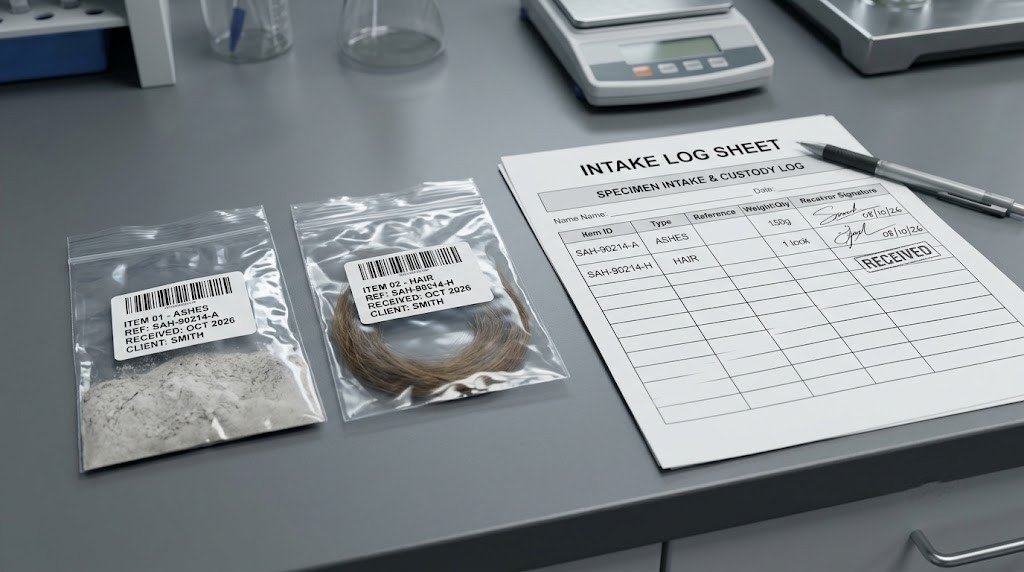
No single answer proves anything on its own. Together, they show whether a company treats a two material order as two tracked items converging at a documented point, which is the strongest assurance available that a diamond is really made from sister ashes and hair. If a provider cannot say whether both materials actually went into growth, it cannot honestly call the stone really made from sister ashes and hair.
Preparing and mailing both materials covers packaging and paperwork once you are satisfied.
Who Must Agree When Different People Hold the Ashes and the Hair?
A stone really made from sister ashes and hair often draws on material from two households, which makes authority a two part question.
For her ashes, depending on your state and anything she put in writing, the right to decide may rest with her spouse or partner, her adult children or her parents before a sibling. The order varies by state, and her own written wishes can change it. A provider will typically ask whose authorization it holds.
For her hair, the picture is less formal but still worth care. A lock in a sibling’s keeping can still form part of her estate, and the rules on personal belongings vary from state to state. Speaking with her executor, or with whoever holds authority over her remains, is a courteous step and may be a required one.
If you hold the hair and someone else holds the ashes, the most respectful route is usually a direct conversation: ask whether a small portion of ashes might be set aside so one stone can be really made from sister ashes and hair together. If several siblings each want a diamond, raise it at the same time, since one submission can sometimes be divided among more than one stone. The parallel posts on the ash only question and the hair only question look at each material separately if a blend is not possible.
Do Certificates Prove a Stone Is Really Made From Sister Ashes and Hair?
“Certified” can mean two quite different things, and when a stone is really made from sister ashes and hair the distinction matters even more.
An origin or authenticity certificate is normally issued in house by the provider. It records the company’s statement that the stone was grown from the material your family supplied. For a blended stone, ask whether it names both sources or simply says “remains.” It is a meaningful written commitment, but no outside body has checked it; its weight depends on the custody records behind it.
An independent grading report comes from a third party gemological laboratory. It assesses the finished stone against the cut, color, clarity and carat standards applied to every diamond, and typically identifies it as laboratory grown. It does not mention ashes, hair or origin of any kind. Across the industry it is usually optional and priced separately.
Neither document alone shows a stone is really made from sister ashes and hair. The grading report shows what the diamond is; the origin certificate shows what the provider says went into it; and the custody log is what connects those two statements. If a provider presents its own certificate as independent verification, ask who outside the company reviewed it.
Which Six Myths About a Diamond Really Made From Sister Ashes and Hair Fall Apart?
Each sounds reasonable; none survives a look at the process.
- Adding hair makes the whole stone her. Hair’s richer carbon content reduces how much material is needed. It does not remove the supplemental lab carbon typically used in growth.
- The ash percentage applies to a blend. The familiar 10% to 15% figure describes ash only stones. No finished stone figure has been published for hair, or for a stone really made from sister ashes and hair, so ask the provider for theirs.
- Two materials make a bigger diamond. Carat size is set chiefly by how long the crystal grows. More source material may affect the personal share a provider can offer, but not, by itself, the size.
- Her hair will lighten or tint the color. Tone is set by trace elements during growth: nitrogen leans a crystal yellow, boron leans it blue. It cannot be chosen, matched or predicted from either material, and hair does not narrow the range.
- A lab could separate the ash carbon from the hair carbon later. Once refined, carbon from both sources is indistinguishable. Nothing in the finished stone records which material it came from.
- A blended stone is somehow less of a real diamond. It is fully a diamond, chemically and physically, rated 10 on the Mohs hardness scale and graded like any other.
Letting go of these does not diminish a diamond really made from sister ashes and hair. It means the claim you can make about it, real carbon from her, documented from two sources, is one that holds up when someone asks.
Which Claims About a Stone Really Made From Sister Ashes and Hair Deserve a Second Look?
Plenty of companies describe blended stones accurately. When the phrases below appear, though, ask a follow up in writing before going further.
- “It’s 100% her, ashes and hair together.” Supplemental lab carbon is typically part of growth, so no blended stone is entirely personal carbon.
- “Hair doubles the amount of her in the stone.” No published figure supports any multiplier. Ask how the provider calculated it.
- “Both materials are always used.” Ask for a record showing each was actually refined and combined for your order.
- “Our certificate is independent proof.” An in house certificate is the provider’s own statement, however carefully it is prepared.
- “We can match the stone to her hair color.” No one can set or forecast the shade from the source material.
- “Prices rise next month.” Ashes and saved hair both keep. Pressure to hurry is a sales decision, not a scientific one.
Any of these might be enthusiasm rather than bad faith. Either way, a stone really made from sister ashes and hair is meaningful without exaggeration, and a provider confident in its process can describe it without any.
What Does Blending Mean for Time, Cost and Color?
A stone really made from sister ashes and hair involves extra steps at the start, but otherwise the picture resembles any memorial diamond. Every figure below is a general industry range rather than any company’s terms.
Time. Typically six to ten months from receipt of material, extending toward twelve for stones over about two carats or for specialty colors. Ask whether handling two materials adds time with a particular provider.
Cost. Entry stones of roughly 0.10 to 0.25 carats run about $1,500 to $3,500. Between half a carat and a full carat, expect around $5,000 to $15,000, with colorless costing more. From two carats to five and above, figures climb from about $20,000 to $75,000 or beyond. Ask whether blending carries its own fee. Grading, engraving, fancy cuts and settings are usually extra.
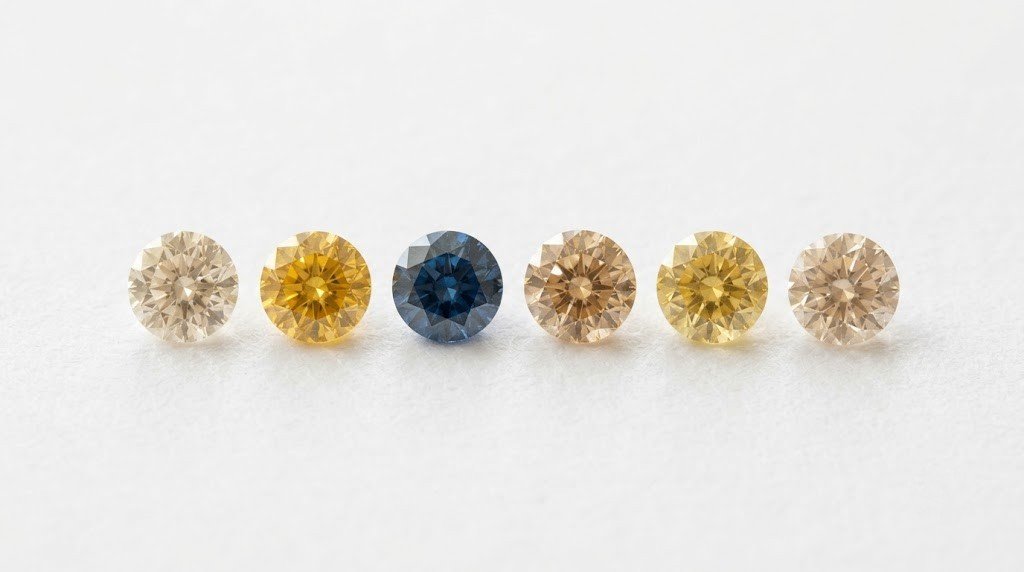
Color. Yellow, blue and champagne are the usual tendencies because of trace nitrogen and boron. Colorless is possible with extra processing at extra cost, and some providers offer irradiation for red, green or black. The exact shade cannot be predicted from her ashes, her hair, or the two combined.
For the ash only process in detail, see how a stone is made from her ashes.
Frequently Asked Questions
Is a stone really made from sister ashes and hair if lab carbon is added?
Yes. Carbon recovered from both her ashes and her hair becomes part of the crystal itself. Because laboratories typically add supplemental carbon to sustain growth, the finished diamond is partly her carbon rather than entirely hers, in proportions the provider should state.
Does adding her hair increase how much of the stone is her?
It may or may not; no published figure settles it. The share depends on how much of each material is sent, what survives refining, the carat size and the provider’s own process. Ask for a written estimate with and without the hair.
Can I send her hair if someone else holds her ashes?
Possibly, with agreement. Whoever holds authority over her remains, often decided by state law and her written wishes, would need to release the ashes. Her hair may also form part of her estate, so speak with that person or her executor first.
Will the certificate say the stone is really made from sister ashes and hair?
Only if the provider writes it that way, so ask to see a sample first. An independent grading report will not mention origin at all. The in house origin certificate and the custody records are the only documents that can describe both sources.
Could a provider quietly use only one of the two materials?
Ask for records that would show otherwise: separate intake logs, separate refining entries, and a dated note of when the two were combined. A careful provider can supply these; one that cannot has given you a reason to keep asking.
How long does a diamond really made from sister ashes and hair take?
Industry wide, about six to ten months from receipt of material, and up to roughly twelve for larger stones or specialty colors. Handling two materials may add steps at the start, so ask each provider whether their estimate changes.
Final Thoughts on a Stone Grown From Both
Wanting proof for two materials rather than one is not overthinking; it is proportionate. The honest answer to whether a stone is really made from sister ashes and hair is yes, partly: real carbon from both, grown into a real diamond, typically alongside lab carbon, in proportions that only the provider’s records can describe.
If those records are clear and the written answers are specific, you have every assurance this industry can give that a stone is really made from sister ashes and hair. If the answers stay vague, a single material stone, or simply keeping what you already hold, remains an entirely good choice.
Learn More About Sister Ashes and Hair Diamonds
- How to Turn Your Sister’s Ashes and Hair Into a Diamond covers gathering, authorizing and mailing both.
- Sister Ashes and Hair Diamond: The Complete Guide provides the overview for blended stones.
- How a Memorial Diamond Is Made From Your Sister’s Ashes and Hair explains the process step by step.
- Is an Ash Only Diamond Really Hers? explains the published range.
- Is a Hair Only Diamond Really Hers? explains custody checks for a single lock.
Talk With Memorial Diamond
If you would like to talk through a stone really made from sister ashes and hair with a person, including what share would be hers and how two materials would be tracked, Memorial Diamond would be glad to help. Reach out through memorialdiamond.us at your own pace; there is no obligation in simply asking.
Leave A Comment