Sister Haiir

Is a Memorial Diamond Really Made From Your Sister’s Hair?

Perhaps the lock sits in a small envelope in a drawer, or tucked inside a card someone thought to keep, and lately you have wondered whether it could become something you wear. Can a diamond be really made from sister hair? Partly, yes: hair is roughly half carbon by weight, so a small lock can yield genuine carbon that is purified and grown into a real lab diamond, usually blended with supplemental lab carbon, and because no standard finished stone percentage is published for hair, the provider should state theirs in writing.
really made from sister hair

Can a Diamond Be Really Made From Sister Hair?

It can, and the reason is ordinary biology. Hair is built mostly from keratin, a protein in which carbon makes up about half the weight. Where cremated remains hold only a sliver of carbon inside a great deal of mineral, a lock of hair is carbon rich from the start.

A laboratory heats the hair in a controlled, oxygen free process that drives off the other elements in keratin and leaves carbon behind. Further refining takes that carbon to around 99.9% purity or better. It is then converted to graphite and placed, usually with supplemental lab carbon, into an HPHT or CVD growth cell alongside a tiny diamond seed. Over weeks to months, carbon atoms settle into a crystal lattice, and some of those atoms came from her.

That is the plain physical sense in which a stone can be really made from sister hair. It is not a token or a symbol stored alongside the diamond. Her carbon is inside it.

A diamond really made from sister hair should not be pictured as a crystal of her carbon alone. Supplemental carbon is typically part of growth, and an honest conversation begins by saying so.

Why Does Hair Behave So Differently From Ashes?

If you are asking whether a stone is really made from sister hair, you may have read about ash based stones first, so the contrast helps. The two materials share a process, but almost nothing else about them is alike.

FactorHer hairHer ashes
Carbon content of the raw materialAbout 50% by weightRoughly 0.5 to 4% by weight
Typical amount a provider asks forA small lock or a few gramsA few tablespoons up to about 4 oz or 100 g
Requires cremation?NoYes
Published share of the finished stoneNone published; ask in writingTypically 10 to 15%, some cite as low as 3%
Who usually holds itOften already in a relative’s keepingOften with whoever received the remains

Two rows matter most for trust. The first is the published share: for ashes, the industry quotes a typical range; for hair, no finished stone figure has been published at all, and the ash range should not be borrowed to fill the gap. The second is custody before custody. A lock may have passed through several hands, and sometimes several households, before it ever reaches a provider. That history shapes how confident anyone can be that the stone is really made from sister hair.

Hair also opens a door ashes cannot. Because no cremation is involved, it works whether your sister was cremated or buried, provided hair was saved. How a stone is grown from her hair follows each stage in more detail.

What Share of a Stone Really Made From Sister Hair Is Hers?

This is the question behind asking whether a diamond is really made from sister hair, and the truthful answer is that nobody publishes a number for hair. Ash based stones are a different case: there, published industry figures put her carbon at roughly 10 to 15% of the finished mass. For hair, and for blends of hair with ashes, no comparable finished stone figure has been published across the industry.

The reason is not secrecy so much as variation. The share depends on how much hair is sent, how much carbon survives refining, the carat size chosen, and how much supplemental carbon a given laboratory adds to keep growth stable. Change any one of those and the percentage moves.

So the right approach is to ask, in writing, for the figure that applies to your order. A careful provider should be able to tell you roughly what proportion of a diamond really made from sister hair will be her carbon at the size you have chosen, and how they reached that estimate.

Watch for two shortcuts in the reply. One is borrowing the ash range and presenting it as a hair figure. The other is a confident number with no explanation behind it. Either should prompt a follow up email asking how the figure was calculated.

If the written answer surprises you, that is useful information too. You might decide a modest share is entirely enough, or ask about sending a larger lock. Both are reasonable responses to a real number, and the complete guide to a diamond from her hair sets out how quantity, carat and timeline interact.

Whose Hair Is in the Envelope, and Who Gets a Say?

Before any laboratory work begins, two quieter questions decide whether a stone can honestly be called really made from sister hair: is the hair definitely hers, and is it yours to send?

On the first, think about where the lock came from. A lock cut and set aside on purpose is the surest basis for a stone really made from sister hair. Hair gathered from a brush or a pillow is less certain, because a shared brush can hold more than one person’s hair. Ask the provider whether they accept brush hair, how much they need, and how they handle a sample that might be mixed. Ask too whether dyed or chemically treated hair affects their process.

On the second, hedge rather than assume. Hair you already keep can still form part of your sister’s estate, and the rules on personal belongings and on remains vary by state. Depending on where you live and anything she put in writing, her spouse or partner, her adult children or her parents may hold decision making authority ahead of a sibling. A brief conversation with her executor, or with whoever holds that authority, is a courteous step and may be a necessary one.

If several siblings each want a stone, raise that early too. A single lock may or may not stretch to more than one diamond, depending on its weight and the provider’s requirements, so ask before anyone assumes. The practical route for sending her hair covers packaging and paperwork once these points are settled.

Which Six Checks Show a Diamond Is Really Made From Sister Hair?

No laboratory can examine a finished diamond and tell you whose carbon it holds. Purified carbon carries no trace of the person it came from, and nothing resembling DNA survives refining. So proof that a stone is really made from sister hair rests on custody, and custody can be checked. Six questions do most of the work:

  1. Is the sample weighed and recorded on arrival? Ask whether the provider logs the weight of hair received and sends you that figure. A recorded weight lets you match what arrived with what you mailed.
  2. What identifier follows it? Ask whether the hair receives a physical tag or sealed container number, or only a database entry, and ask to be told that number.
  3. Who signs at each handover? Extraction, purification, graphitization and growth are separate stages. Ask how many signed records an order produces and whether copies can be emailed to you.
  4. Is it ever processed with another family’s material? Ask whether her carbon shares a furnace run or growth cell with anyone else’s. You are entitled to a plain yes or no.
  5. What happens to any hair left over? Ask whether unused hair is returned to you, kept, or disposed of, and get the answer before you mail anything.
  6. What will the origin certificate say, and who signs it? Ask to see a sample with another family’s details removed, and confirm what it does and does not claim.

None of these checks offers chemical certainty. Taken together, they reveal whether a provider treats one family’s sample as a tracked item with a paper trail, which is the most reliable evidence available that a diamond is really made from sister hair. Keep every answer in email; a reassuring phone call leaves nothing to point to later.
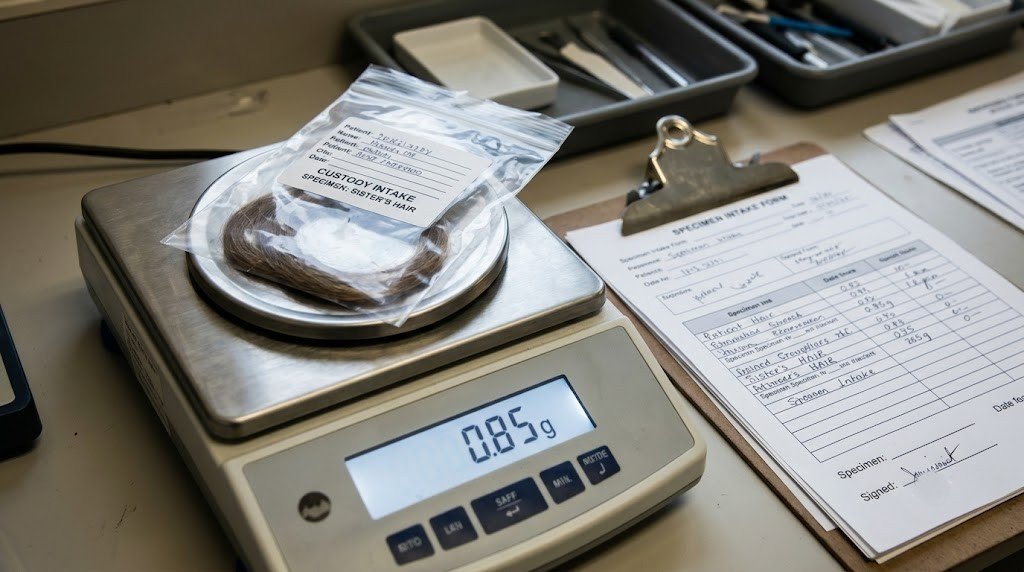
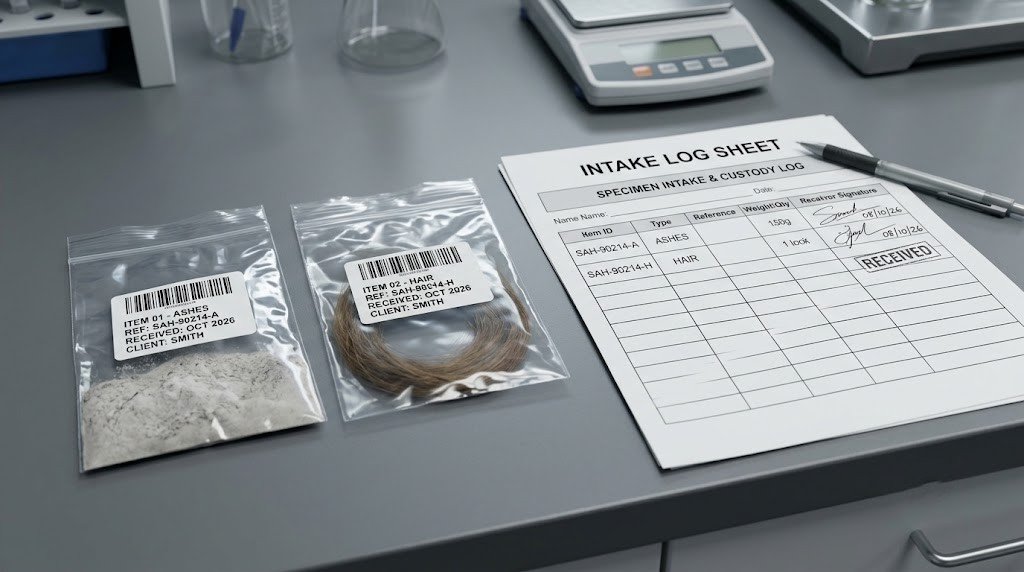
Documented intake can help establish a clear custody trail for the hair sample.

Can Paperwork Prove a Stone Is Really Made From Sister Hair?

Families are sometimes told a stone “comes certified,” and it is natural to hear that as independent confirmation that it is really made from sister hair. Usually it means something narrower. Two kinds of document exist in this industry, and they do different jobs.

The first is an origin or authenticity certificate. The memorial provider normally issues it in house, and it records the provider’s statement that this stone was grown from the carbon your family supplied. It is valuable as a written commitment, but it is only as strong as the custody process behind it, because nobody outside the company has verified it.

The second is a grading report from an independent gemological laboratory. It assesses the finished stone using the same cut, color, clarity and carat standards applied to every diamond, and it will typically identify the stone as laboratory grown. It does not mention hair, ashes or anyone’s name, because origin is outside what a grading lab examines. Across the industry it is usually optional and costs extra.

So, when judging whether a stone is really made from sister hair, read each document for exactly what it covers. The grading report tells you what the diamond is. The origin certificate tells you what the provider says it came from. Only the custody records connect the two. If a provider describes its own certificate as independent, ask who, outside the company, checked it.

Which Promises About a Stone Really Made From Sister Hair Should Worry You?

Careful providers describe hair based stones precisely. A few claims about a diamond really made from sister hair, however, assert more than anyone can deliver.

  • “Every atom is her.” No diamond grown from hair consists entirely of personal carbon. Supplemental lab carbon is typically part of the process.
  • “Pure hair, nothing added.” The same problem in different words; it contradicts how growth is normally carried out.
  • “Hair diamonds are 10 to 15% her, just like ash.” That range is an ash figure. No standard hair figure exists, so a borrowed one tells you nothing about your order.
  • “The diamond will match her hair color.” Diamond color comes from trace elements present during growth, nitrogen toward yellow and boron toward blue. Hair color does not set it, and no one can forecast the shade from her hair.
  • “We don’t need to know who authorized this.” A provider that never asks about authority is skipping a step that protects your family as much as the company.
  • “Book now before the slot goes.” Saved hair keeps. There is no chemical reason to rush, so urgency is a sales choice, not a scientific one.

Any of these might come from an enthusiastic salesperson rather than a careless company. The fix is the same: ask again in writing, and decide based on what comes back. A diamond really made from sister hair is meaningful without inflation; claims that inflate it are the ones to doubt.

What Do People Get Wrong About Diamonds Really Made From Sister Hair?

Several assumptions about whether a stone is really made from sister hair sound reasonable and turn out to be mistaken.

“Because hair is half carbon, the whole stone is her.” Hair’s high carbon content means far less material is needed than with ashes. It does not remove the need for supplemental carbon, and no standard percentage says otherwise.

“More hair means a bigger diamond.” Carat size is driven mainly by how long the crystal is allowed to grow. Extra hair may change the personal share a provider can offer, which is worth asking about, but it does not by itself make the stone larger.

“Lighter hair gives a lighter stone.” No. Color cannot be chosen, matched or predicted from the source material, and hair does not narrow the possible range.

“It isn’t really a diamond.” It is. A memorial diamond is chemically and physically diamond, as hard as any other, and graded on the same scale.

“A lab test could confirm it’s her.” Refining leaves only carbon, so there is nothing personal for a test to detect. Whether a stone is really made from sister hair is settled by documents, not tests.

“Only hair from a cremation counts.” Hair needs no cremation at all, which is why it suits families whose sister was buried, provided some hair was kept.

Clearing these away does not make the answer smaller. It makes it sturdier: a stone really made from sister hair contains a real, documented portion of her, and that is a claim that holds up to questions.

How Long, How Much, and What Color?

Once you are satisfied a stone would be really made from sister hair, the practical questions follow. All of the figures here are general industry ranges, not any single provider’s terms.

Timeline. Typically six to ten months from receipt of the hair, stretching toward twelve for stones above roughly two carats or for specialty colors. Size depends chiefly on growth time, so a larger stone means a longer wait.

Cost. Around $1,500 to $3,500 for stones of about 0.10 to 0.25 carats; roughly $5,000 to $15,000 for half a carat to one carat, with colorless toward the top of that band; and from about $20,000 to $75,000 or more for two to five carats and beyond. Independent grading, engraving, fancy cuts and settings are usually extra.

Color. Trace nitrogen and boron pull memorial stones toward yellow, blue or champagne; a colorless result takes extra processing and usually costs more. Some providers offer irradiation for red, green or black. Even for a diamond really made from sister hair, the exact shade cannot be predicted in advance.

If hair and ashes are both available, some families combine the two materials; whether a blended stone is really hers raises its own questions. For an ash only stone, the parallel question for her ashes is answered with a published range.
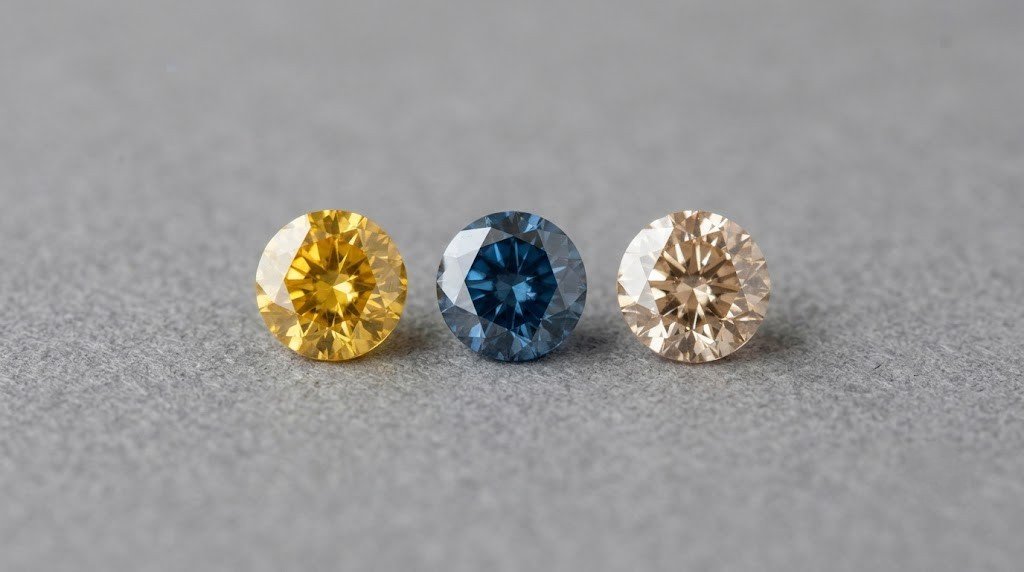
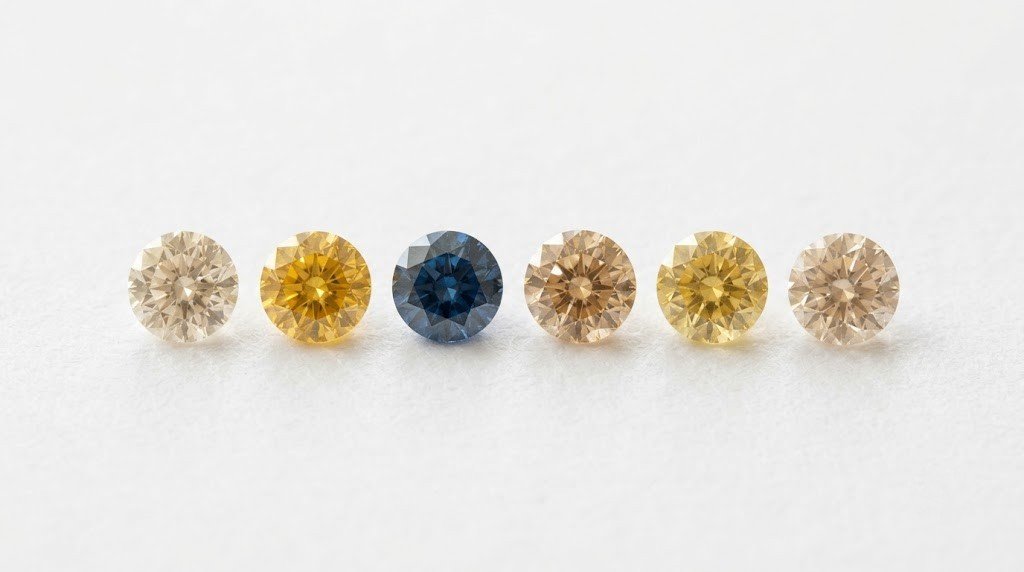
Memorial diamonds can appear in yellow, blue and champagne tones depending on the growth process.

Frequently Asked Questions

Is a stone really made from sister hair if lab carbon is added?

Yes. Carbon recovered from her hair is purified and grown into the crystal itself, so part of the stone is physically hers. Supplemental lab carbon is typically blended in to support growth, which means the stone is partly, not entirely, her carbon.

How much of a diamond really made from sister hair is her carbon?

No finished stone percentage has been published for hair. The share depends on how much hair is sent, how much carbon survives refining, and the carat size chosen. Ask the provider for their estimate in writing, and ask how they calculated it.

Can a hairbrush supply enough of her hair?

Possibly, but ask the provider first. A brush may hold hair from more than one person, and requirements for weight and condition differ. A lock that was cut and set aside deliberately gives everyone more confidence about whose hair it is.

Do I need anyone’s agreement to use hair I already have?

It may be wise, and sometimes required. Hair you keep can still form part of her estate, rules vary by state, and her spouse, partner, adult children or parents may hold authority before a sibling. Speak with whoever holds that authority first.

Will the grading report mention that the stone came from her hair?

No. An independent grading report describes cut, color, clarity and carat, and usually notes that the stone is laboratory grown. Origin is covered only by the provider’s in house certificate and the custody records that support it.

Can one lock of her hair make diamonds for several siblings?

Sometimes, depending on the lock’s weight and the provider’s minimum. Ask before mailing anything, and ask how the personal share of each stone would change if the hair were divided among two or more diamonds.

Final Thoughts on Trusting a Diamond From Her Hair

Wanting proof is not a failure of sentiment; it is a form of care. The honest answer to whether a stone is really made from sister hair is a qualified yes: real carbon from her, grown into a real diamond, typically alongside lab carbon, with the exact share something a provider should spell out for your specific order.

If the six checks come back with clear, written answers, you have as much assurance as this industry can offer that a diamond is really made from sister hair. If they come back vague, that tells you something as well.

And if you decide, after all of it, that the lock should stay just as it is, in its envelope, that is an equally sound outcome.

Learn More About Diamonds From a Sister’s Hair

Talk With Memorial Diamond

If you would like to ask a person how much of a stone really made from sister hair would be hers, or how custody would work for the lock you have, Memorial Diamond is happy to talk it through. Find us at memorialdiamond.us whenever the moment feels right, with no obligation attached.
really made from sister ashes and hair

Is a Memorial Diamond Really Made From Your Sister’s Ashes and Hair?

Some families discover they are holding two pieces of her at once, a portion of her ashes and a lock of hair someone had the presence of mind to save, and wonder whether both could go into one stone. Can a diamond be really made from sister ashes and hair? It can: carbon is recovered from each material, purified, and grown together into a genuine lab diamond, typically alongside supplemental lab carbon, but no provider publishes a standard figure for how much of a blended stone is hers, so request that share in writing.

really made from sister ashes and hair
A memorial diamond can contain carbon recovered from both ashes and hair.

Can a Stone Be Really Made From Sister Ashes and Hair at Once?

A stone can be really made from sister ashes and hair in a literal, physical sense, and some providers offer exactly this. Each material contributes carbon. The ash supplies a small amount locked inside a great deal of bone mineral, roughly 0.5% to 4% of its weight. The hair, built from the protein keratin, is about half carbon. Once each has been refined to nearly pure carbon and converted to graphite, the two can be combined as feedstock for one crystal.

What a diamond really made from sister ashes and hair cannot be is a stone with nothing else in it. Laboratories typically blend in supplemental carbon so the growth cell has enough material to build a crystal steadily over weeks or months. That is true of ash only stones and hair only stones, and combining the two does not change it.

So the honest answer to whether a diamond is really made from sister ashes and hair has three parts. Her carbon from both sources can be inside the diamond. Lab carbon is typically there too. And the proportions are something each provider should state for your order, because nobody publishes a standard figure for blends.

Why Would a Family Combine the Two at All?

Reasons for wanting a stone really made from sister ashes and hair are often personal rather than technical, and each is valid.

  • Both materials were kept: A portion of ashes came to one relative and a saved lock to another, and joining them feels natural.
  • Each carries a different meaning: For some siblings, ashes represent her whole life and hair a closer, everyday memory of her.
  • A sibling holds the hair but not the ashes: Combining can be a way for two branches of a family to contribute to one stone.
  • Interest in a larger personal share: Some families hope that adding hair will increase how much of the stone is her. That is worth asking about directly, since no standard figure confirms it.

None of these reasons requires a blended stone. An ash only or hair only diamond is just as genuine. The complete guide to a stone from both materials sets out how families weigh the options.

How Do Ashes and Hair Become a Single Carbon Source?

To see how a stone can be really made from sister ashes and hair, it helps to know where two very different materials meet.

Her ashesHer hair
What the material mostly isCalcium phosphate, or bone mineralKeratin, or a protein
Carbon by weightRoughly 0.5% to 4%About 50%
Amount providers typically requestA few tablespoons up to about 4 oz or 100 gA small lock or a few grams
What extraction removesMinerals surrounding a small carbon fractionThe other elements bound up in keratin
After refiningAbout 99.9% carbon or betterAbout 99.9% carbon or better

The convergence point is after refining. Purified carbon is heated further, to about 2,500 to 2,700°C, and becomes graphite, the material a growth press works with. At that stage carbon from her ashes and carbon from her hair are the same substance, and they are typically combined with supplemental lab carbon and placed in a growth cell beside a diamond seed. Most providers grow memorial stones by HPHT, with CVD a minority method, at roughly 6 to 8 GPa and 1,400 to 2,500°C.

Ask a provider whether the two materials are extracted separately before being combined, and at which stage the combining happens. How a blended stone is grown describes each stage in more depth.

How Much of a Diamond Really Made From Sister Ashes and Hair Is Her?

There is no published answer, and any confident claim otherwise deserves a follow up question. Published industry figures for ash only stones put the personal share at roughly 10% to 15% of the finished mass, with some providers quoting as little as 3%. That range describes ashes alone. No comparable finished stone figure has been published for hair, and none exists for blends.

Several variables move a blended figure: how much of each material is submitted, how much carbon survives refining from each, the carat size chosen, and how much supplemental carbon a laboratory adds to keep growth stable. A provider offering a diamond really made from sister ashes and hair should be able to estimate the share for your order and explain how it got there.

So ask three things in writing. What proportion of the finished stone is expected to be her carbon? Roughly how much of that personal carbon comes from the ashes and how much from the hair? And would sending more of either material change the estimate?

If a provider answers with the ash range alone, ask how the hair has been accounted for. If it answers with a single round number and no reasoning, ask for the reasoning. A stone really made from sister ashes and hair deserves a figure built for that combination, not one borrowed from a different product.

Can Anyone Tell Afterward Which Carbon Came From Which Material?

No. Once ash carbon and hair carbon have been refined and converted to graphite, no standard gemological test can distinguish one from the other, or either from the supplemental lab carbon in the same crystal. Purification strips away everything that once identified the source, DNA included.

That has a practical consequence families should hear plainly. Whether a diamond is really made from sister ashes and hair can never be confirmed by examining the finished stone. A grading laboratory can tell you the diamond is real and that it was grown in a laboratory. It cannot tell you whose carbon is inside it, or whether two materials contributed or only one.

Proof that a stone is really made from sister ashes and hair therefore lives entirely upstream, in the records a provider keeps as each material moves from receipt to growth. For a blend that record has to be twice as careful, because there are two items to account for, and a gap in either one weakens the whole claim.

How Do You Confirm a Stone Is Really Made From Sister Ashes and Hair?

By testing the provider’s process rather than the diamond. These questions, put by email, do most of the work:

  • Are the ashes and the hair logged as two separate items on arrival, each with its own identifier, weight and photograph?
  • Is each material refined separately, and is there a signed record of when the two batches of carbon were combined?
  • Does either material ever share equipment or a growth cell with another family’s? Request a direct yes or no for each.
  • How much of each material was actually used, and what happens to whatever remains? Ask whether leftovers are returned to you or handled some other way.
  • Will you receive any record of the combining step itself, such as a dated log entry or photograph?
  • What will the origin certificate state about each source, and may you see a sample with another family’s details removed?
A two material intake record can help show that both sources were received and tracked.

No single answer proves anything on its own. Together, they show whether a company treats a two material order as two tracked items converging at a documented point, which is the strongest assurance available that a diamond is really made from sister ashes and hair. If a provider cannot say whether both materials actually went into growth, it cannot honestly call the stone really made from sister ashes and hair.

Preparing and mailing both materials covers packaging and paperwork once you are satisfied.

Who Must Agree When Different People Hold the Ashes and the Hair?

A stone really made from sister ashes and hair often draws on material from two households, which makes authority a two part question.

For her ashes, depending on your state and anything she put in writing, the right to decide may rest with her spouse or partner, her adult children or her parents before a sibling. The order varies by state, and her own written wishes can change it. A provider will typically ask whose authorization it holds.

For her hair, the picture is less formal but still worth care. A lock in a sibling’s keeping can still form part of her estate, and the rules on personal belongings vary from state to state. Speaking with her executor, or with whoever holds authority over her remains, is a courteous step and may be a required one.

If you hold the hair and someone else holds the ashes, the most respectful route is usually a direct conversation: ask whether a small portion of ashes might be set aside so one stone can be really made from sister ashes and hair together. If several siblings each want a diamond, raise it at the same time, since one submission can sometimes be divided among more than one stone. The parallel posts on the ash only question and the hair only question look at each material separately if a blend is not possible.

Do Certificates Prove a Stone Is Really Made From Sister Ashes and Hair?

“Certified” can mean two quite different things, and when a stone is really made from sister ashes and hair the distinction matters even more.

An origin or authenticity certificate is normally issued in house by the provider. It records the company’s statement that the stone was grown from the material your family supplied. For a blended stone, ask whether it names both sources or simply says “remains.” It is a meaningful written commitment, but no outside body has checked it; its weight depends on the custody records behind it.

An independent grading report comes from a third party gemological laboratory. It assesses the finished stone against the cut, color, clarity and carat standards applied to every diamond, and typically identifies it as laboratory grown. It does not mention ashes, hair or origin of any kind. Across the industry it is usually optional and priced separately.

Neither document alone shows a stone is really made from sister ashes and hair. The grading report shows what the diamond is; the origin certificate shows what the provider says went into it; and the custody log is what connects those two statements. If a provider presents its own certificate as independent verification, ask who outside the company reviewed it.

Which Six Myths About a Diamond Really Made From Sister Ashes and Hair Fall Apart?

Each sounds reasonable; none survives a look at the process.

  1. Adding hair makes the whole stone her. Hair’s richer carbon content reduces how much material is needed. It does not remove the supplemental lab carbon typically used in growth.
  2. The ash percentage applies to a blend. The familiar 10% to 15% figure describes ash only stones. No finished stone figure has been published for hair, or for a stone really made from sister ashes and hair, so ask the provider for theirs.
  3. Two materials make a bigger diamond. Carat size is set chiefly by how long the crystal grows. More source material may affect the personal share a provider can offer, but not, by itself, the size.
  4. Her hair will lighten or tint the color. Tone is set by trace elements during growth: nitrogen leans a crystal yellow, boron leans it blue. It cannot be chosen, matched or predicted from either material, and hair does not narrow the range.
  5. A lab could separate the ash carbon from the hair carbon later. Once refined, carbon from both sources is indistinguishable. Nothing in the finished stone records which material it came from.
  6. A blended stone is somehow less of a real diamond. It is fully a diamond, chemically and physically, rated 10 on the Mohs hardness scale and graded like any other.

Letting go of these does not diminish a diamond really made from sister ashes and hair. It means the claim you can make about it, real carbon from her, documented from two sources, is one that holds up when someone asks.

Which Claims About a Stone Really Made From Sister Ashes and Hair Deserve a Second Look?

Plenty of companies describe blended stones accurately. When the phrases below appear, though, ask a follow up in writing before going further.

  • “It’s 100% her, ashes and hair together.” Supplemental lab carbon is typically part of growth, so no blended stone is entirely personal carbon.
  • “Hair doubles the amount of her in the stone.” No published figure supports any multiplier. Ask how the provider calculated it.
  • “Both materials are always used.” Ask for a record showing each was actually refined and combined for your order.
  • “Our certificate is independent proof.” An in house certificate is the provider’s own statement, however carefully it is prepared.
  • “We can match the stone to her hair color.” No one can set or forecast the shade from the source material.
  • “Prices rise next month.” Ashes and saved hair both keep. Pressure to hurry is a sales decision, not a scientific one.

Any of these might be enthusiasm rather than bad faith. Either way, a stone really made from sister ashes and hair is meaningful without exaggeration, and a provider confident in its process can describe it without any.

What Does Blending Mean for Time, Cost and Color?

A stone really made from sister ashes and hair involves extra steps at the start, but otherwise the picture resembles any memorial diamond. Every figure below is a general industry range rather than any company’s terms.

Time. Typically six to ten months from receipt of material, extending toward twelve for stones over about two carats or for specialty colors. Ask whether handling two materials adds time with a particular provider.

Cost. Entry stones of roughly 0.10 to 0.25 carats run about $1,500 to $3,500. Between half a carat and a full carat, expect around $5,000 to $15,000, with colorless costing more. From two carats to five and above, figures climb from about $20,000 to $75,000 or beyond. Ask whether blending carries its own fee. Grading, engraving, fancy cuts and settings are usually extra.

Color. Yellow, blue and champagne are the usual tendencies because of trace nitrogen and boron. Colorless is possible with extra processing at extra cost, and some providers offer irradiation for red, green or black. The exact shade cannot be predicted from her ashes, her hair, or the two combined.

Memorial diamonds can appear in different color ranges depending on the growth conditions.

For the ash only process in detail, see how a stone is made from her ashes.

Frequently Asked Questions

Is a stone really made from sister ashes and hair if lab carbon is added?

Yes. Carbon recovered from both her ashes and her hair becomes part of the crystal itself. Because laboratories typically add supplemental carbon to sustain growth, the finished diamond is partly her carbon rather than entirely hers, in proportions the provider should state.

Does adding her hair increase how much of the stone is her?

It may or may not; no published figure settles it. The share depends on how much of each material is sent, what survives refining, the carat size and the provider’s own process. Ask for a written estimate with and without the hair.

Can I send her hair if someone else holds her ashes?

Possibly, with agreement. Whoever holds authority over her remains, often decided by state law and her written wishes, would need to release the ashes. Her hair may also form part of her estate, so speak with that person or her executor first.

Will the certificate say the stone is really made from sister ashes and hair?

Only if the provider writes it that way, so ask to see a sample first. An independent grading report will not mention origin at all. The in house origin certificate and the custody records are the only documents that can describe both sources.

Could a provider quietly use only one of the two materials?

Ask for records that would show otherwise: separate intake logs, separate refining entries, and a dated note of when the two were combined. A careful provider can supply these; one that cannot has given you a reason to keep asking.

How long does a diamond really made from sister ashes and hair take?

Industry wide, about six to ten months from receipt of material, and up to roughly twelve for larger stones or specialty colors. Handling two materials may add steps at the start, so ask each provider whether their estimate changes.

Final Thoughts on a Stone Grown From Both

Wanting proof for two materials rather than one is not overthinking; it is proportionate. The honest answer to whether a stone is really made from sister ashes and hair is yes, partly: real carbon from both, grown into a real diamond, typically alongside lab carbon, in proportions that only the provider’s records can describe.

If those records are clear and the written answers are specific, you have every assurance this industry can give that a stone is really made from sister ashes and hair. If the answers stay vague, a single material stone, or simply keeping what you already hold, remains an entirely good choice.

Learn More About Sister Ashes and Hair Diamonds

Talk With Memorial Diamond

If you would like to talk through a stone really made from sister ashes and hair with a person, including what share would be hers and how two materials would be tracked, Memorial Diamond would be glad to help. Reach out through memorialdiamond.us at your own pace; there is no obligation in simply asking.

Made From Sister

How a Memorial Diamond Is Made From Your Sister’s Hair

Sometimes what you have left of her is very small: a lock saved after a haircut, a braid someone thought to keep, a few strands folded inside a card. A diamond made from sister hair usually begins with a lock of a few grams, roughly half of it carbon by weight; that carbon is extracted, purified to about 99.9%, turned into graphite, typically blended with lab carbon, grown under heat and pressure, then cut and graded, typically within six to ten months.

made from sister hair

Why Can Hair Become a Diamond at All?

Because hair is mostly protein, and protein is built around carbon. Each strand is largely keratin, and by weight hair is roughly 50% carbon. Cremated ash, by comparison, holds only about 0.5% to 4% usable carbon, since cremation has already burned most of it away.

That difference changes almost everything about the starting point. A laboratory needs far less hair than ash, usually a small lock or a few grams, and no cremation is involved at any stage. A stone made from sister hair is therefore possible whether she was cremated, buried, or laid to rest in some other way, provided a lock was kept.

For some families hair is the only workable route: her ashes may have been scattered or interred whole, or her faith or her own wishes meant burial.

None of this makes a diamond made from sister hair a better or more meaningful choice than one from ashes. It is simply a different material with different chemistry, and the ash based version of this process works through the same laboratory stages from a much leaner starting point.

What Are the Six Stages of a Diamond Made From Sister Hair?

Six core stages take every diamond made from sister hair from a sealed packet to a finished, documented stone. A color treatment can be added by some providers, but it is optional and sits outside this core sequence.

Timings are approximate industry wide ranges; every provider runs its own schedule.

StageWhat happens to her hairApproximate durationWhat reaches you
1. Receiving and loggingThe lock is checked, weighed if required, and given a reference numberDays to two weeks, mostly transitA kit, then an arrival notice
2. Extraction and purificationOxygen free heating removes the non carbon parts of keratin, leaving carbon of about 99.9% purityTypically a few weeksOften silence
3. GraphitizationPurified carbon is heated to roughly 2,500 to 2,700°C and becomes graphiteBrief relative to growthSeldom any update
4. GrowthHer graphite, typically blended with lab carbon, crystallizes on a diamond seed by HPHT or, less often, CVDWeeks to months, the longest stageThe quietest period; some providers send a rough crystal photo
5. Cutting and polishingThe rough crystal is faceted into your chosen shape and polishedUsually a few weeksSometimes images to review
6. Grading and documentationOrigin records are finalized; an independent grading report may be orderedA few weeks when an outside lab is usedThe finished stone and its documents

Six to ten months is the usual span from arrival to delivery across this industry, and larger stones or specialty colors can stretch toward twelve. A diamond made from sister hair does not move faster because hair is carbon rich; growth time still governs the calendar.

Where Does a Usable Lock of Her Hair Come From?

Usually from something already kept, since a stone made from sister hair depends on a lock someone saved. Usable hair tends to turn up in a few familiar places:

  • A haircut keepsake: a lock or braid set aside at some point in her life, sometimes years earlier.
  • The funeral home: if arrangements are still underway, you can ask whether they are able to take a small lock before burial or cremation, with the agreement of whoever is making those arrangements.
  • Her own belongings: a brush or comb may hold loose strands, though whether loose hair is accepted varies, so ask the provider first.
  • Another relative: a parent, partner or another sibling may already hold a lock and be willing to share part of it.

Quantity is usually modest. Requirements differ by provider, but a small lock or a few grams is a typical range, well short of what most people picture. Ask for the provider’s own minimum before you cut or divide anything, since a lock cannot be uncut.

Condition is still worth asking about. Should the hair be dry, unwashed or loose? Does dye or chemical treatment affect whether it is accepted? Only the provider can answer for its own process, and those answers belong in writing before a stone made from sister hair is ordered.

Keep the lock dry and protected while you decide.

Who Should Agree Before Her Hair Is Sent?

It depends on where the hair is and how it came to you. A lock you have held privately for years may feel entirely yours. Even so, a person’s belongings can form part of her estate, and the rules on what counts and who decides vary by state. If anyone is administering her estate, talk with them first.

Hair taken at a funeral home is different. That usually happens at the request of whoever holds authority over her remains, which in many states means a spouse or partner, then adult children, then parents, with siblings later in the order. Her own written wishes can change that sequence, and the details vary by state, so treat it as a question to check rather than a rule to assume.

If a sibling does not hold that authority, the respectful path is to ask the person who does, plainly and without pressure. Something like: you would like a small lock, cut discreetly, for a diamond made from sister hair, and you understand if they need time. Providers often ask for a signed authorization, too.

Several siblings may each want a diamond made from sister hair. Whether one lock can supply more than one stone depends on its size and on the provider’s minimum, so ask before dividing it. Twins, half siblings and step siblings may all feel part of this. The full walk through for turning her hair into a diamond sets out the calls and forms in order.

How Is Carbon Drawn Out of a Lock of Hair?

With heat, in stages, in the absence of oxygen. Controlled heating without oxygen breaks keratin down, driving off its non carbon portions while the carbon, unable to burn away as gas, remains.

The goal is carbon of roughly 99.9% purity or higher. Trace leftovers would disrupt crystal growth, so this stage is about thoroughness. What began as a soft, recognizable lock ends as a small quantity of black carbon that looks nothing like her hair.

The color of her hair does not determine the final color of the memorial diamond.

By this point, carbon made from sister hair carries no visible link to the strands you packed, which is why the reference number assigned at intake matters so much. Ask how that number follows her carbon from one step to the next, and who signs when it moves.

Two practical questions about a diamond made from sister hair belong here as well. Will any unused hair be returned to you, or is the whole lock consumed? And is her material ever processed in a shared batch with another family’s? Practices vary, and both answers are reasonable to request in writing.

What Happens Between Graphite and a Rough Crystal?

Two transformations, one brief and one long. First, purified carbon is heated to roughly 2,500 to 2,700°C and reorganized into graphite, the layered form a growth press uses as feedstock. Around this point, or as the press is loaded, supplemental lab carbon is typically added to reach the volume growth requires.

Most providers then grow the crystal by HPHT, high pressure high temperature: a press holds a small cell at around 6 to 8 gigapascals and somewhere between 1,400 and 2,500°C, and carbon crystallizes, slowly, onto a tiny diamond seed. A minority use CVD, in which the carbon is converted into a gas such as methane and deposited layer by layer onto a seed plate. Both methods yield a real lab grown diamond, the same mineral as a mined stone.

Growth runs for weeks to months, and its length decides carat size. A modest lock does not cap how large a stone made from sister hair can be, because a bigger diamond depends on a longer, steadier run rather than a bigger envelope of hair.

Runs can fail. A crystal made from sister hair may grow with flaws or stall, and some providers say a cycle occasionally has to be repeated. Ask whether any of her carbon is held back for that possibility, and what happens if it is not.

How Much of a Stone Made From Sister Hair Is Her Carbon?

Nobody has published a finished stone share for hair, so anyone quoting a figure should be asked where it came from. The 10 to 15% share you may have seen describes stones grown from cremated ashes. That is an ash figure only. It describes a different material with a different carbon yield, and it should not be borrowed for hair.

Hair starts far richer in carbon than ash, so a small lock can supply a meaningful amount. Her share of the finished crystal then depends on how much of that the provider uses and how much lab carbon is blended in, both of which vary by provider and stone size.

So ask, in writing, for the specific stone you are considering:

  1. How much of her hair will be used, and how much carbon do you expect to recover from it?
  2. How much supplemental lab carbon will be added, and where is it sourced?
  3. What share of a finished stone made from sister hair do you estimate is her carbon?
  4. Is her carbon ever combined with another family’s at any stage?

A stone made from sister hair is physically built in part from her own carbon. That is the honest claim, and it does not need inflating. If a provider tells you the whole stone is her carbon, that is a reason for more questions, and the evidence for what is truly hers is worth reading first.

Does Her Hair Color Affect a Stone Made From Sister Hair?

No. Her hair color, whether dark, light, gray, red or dyed, does not carry through into the stone. Pigment is broken down during purification, and only carbon remains.

What tints a diamond is chemistry inside the growth cell: stray nitrogen atoms caught in the lattice lean the crystal yellow, stray boron leans it blue, and a stone with neither shows no color at all. Shutting both out calls for extra processing, so colorless results usually cost more. As a group, memorial diamonds lean toward yellow, blue and champagne.

Some providers also offer post growth irradiation for shades such as red, green or black, which is optional and should be disclosed on the paperwork. What nobody can do is choose, match or predict the final shade of a diamond made from sister hair from the hair itself. A provider can describe the color options it offers and the process behind each; it cannot promise an exact tone.

What Records Show a Diamond Was Made From Sister Hair?

A sequence of documents, each covering a different moment. Ask which of these a provider issues before you commit:

  • A signed authorization naming who released the hair and what was ordered.
  • An intake confirmation with a reference number, ideally noting the weight or condition of the lock on arrival.
  • A stage or custody log recording each handover as her material moves through the laboratory.
  • An origin or authenticity certificate, usually issued in house, stating that the stone was grown from the carbon your family supplied.
  • An optional independent grading report describing cut, color, clarity and carat.
Keeping intake and custody records helps connect the finished stone to the material supplied by the family.

The last two are often confused. An origin certificate is a custody document; it is what ties the stone to her. A grading report, from an outside gemological lab, assesses quality the way it would for any diamond and says nothing about origin. Across this industry, independent grading is generally optional and costs extra.

Ask to see a sample custody log with another family’s details removed. For a gem made from sister hair, the origin certificate only means something when the records behind it exist and can be shown.

What Does a Sibling Experience From Start to Finish?

The beginning is busy: family conversations, choosing a lock, a kit, a form and a sealed packet. Write down the reference number; it is your thread through what follows.

Then the middle goes quiet. Purification and graphitization rarely generate news, and growth can run for weeks or months without an update. Some providers send a photo of the rough crystal; others wait until the stone is cut. Ask in advance which approach yours takes and whom you can reach if you start to worry about a diamond made from sister hair you have not heard about in a while.

The end returns to something you can hold. Cutting gives the stone its shape, and some providers share images before final approval or setting. A finished diamond rates 10 on the Mohs scale of mineral hardness, so it can be worn daily in a ring, pendant or earrings. Typical clarity for memorial stones lands between SI2 and VVS.

Delivery brings the stone made from sister hair and its papers together. You might keep the origin certificate with the envelope the lock once lived in, or file it with her other papers.

What Will a Diamond Made From Sister Hair Cost?

The price of a stone made from sister hair follows carat size and color far more than the source material. Across the industry in 2026, and not as any one company’s price list, a small stone in the 0.10 to 0.25 carat band generally lands between $1,500 and $3,500. Moving up to somewhere between half a carat and a full carat brings the range to about $5,000 to $15,000, while two carats and upward, past five, can reach $20,000 to $75,000 or more. Colorless costs meaningfully more than yellow, blue or champagne at the same size.

Several items are usually priced on top of the loose stone: independent grading, engraving, fancy cuts and any setting. Insured return shipping may be billed separately too, so request a full written total rather than a starting figure.

For a broader view of the options, timelines and decisions involved, the complete guide to a sister hair diamond covers them together. If your family also holds a portion of her ashes, how a diamond is made from both her ashes and hair explains how the two are combined, and the complete guide to using ashes and hair together sets out the wider choices.

Frequently Asked Questions

How much hair is needed for a diamond made from sister hair?

Requirements vary by provider, but a small lock or a few grams is typical. Because hair is roughly half carbon by weight, far less is needed than with ashes. Ask for the provider’s minimum before cutting or dividing any lock you hold.

Can hair from her hairbrush be used?

Possibly. Some providers accept loose strands gathered from a brush or comb, while others prefer a cut lock. Ask the specific provider what it accepts and in what quantity, and confirm it in writing before sending anything you cannot replace.

Can a stone be made from sister hair if she was buried, not cremated?

Yes, provided a lock of her hair was kept. Hair needs no cremation, which is one reason it is chosen by families whose sister was buried, or whose ashes are held elsewhere and cannot easily be divided.

Will her whole lock be used up?

That depends on the lock’s size and the provider’s process. Purification consumes whatever hair goes into a stone made from sister hair, so ask beforehand how much will be needed and whether any unused strands are returned, kept or disposed of afterward.

Does dyed or gray hair change the finished diamond?

Her hair color does not carry into the stone, because pigment is removed with everything else during purification. Ask the provider whether dyed or chemically treated hair affects acceptance, since requirements on treated hair vary between laboratories.

Can two siblings share one lock of her hair?

Sometimes. It depends on how large the lock is and how much each provider requires per stone made from sister hair. Ask before dividing it, and agree among yourselves, and with anyone administering her estate, before anything is cut or sent.

Final Thoughts on How Her Hair Becomes a Diamond

A lock of hair is one of the smallest things a person leaves behind, and it can feel unlikely that anything as solid as a diamond could begin there. The chemistry says otherwise: the carbon in a crystal made from sister hair is freed from the keratin, purified, rearranged into graphite and grown slowly into a crystal alongside lab carbon, then cut and documented.

What makes the result trustworthy is not the story told about it but the records kept along the way. A diamond made from sister hair is a real diamond that contains a real share of her carbon, and it is reasonable to ask a provider to show you, in writing, how they know.

Learn More About Sister Memorial Diamonds

Talk With Memorial Diamond

If you are holding a lock of her hair and wondering whether a diamond made from sister hair is possible, Memorial Diamond is glad to talk it through at memorialdiamond.us, from how much hair is needed to which records you would receive. Asking questions places you under no obligation.

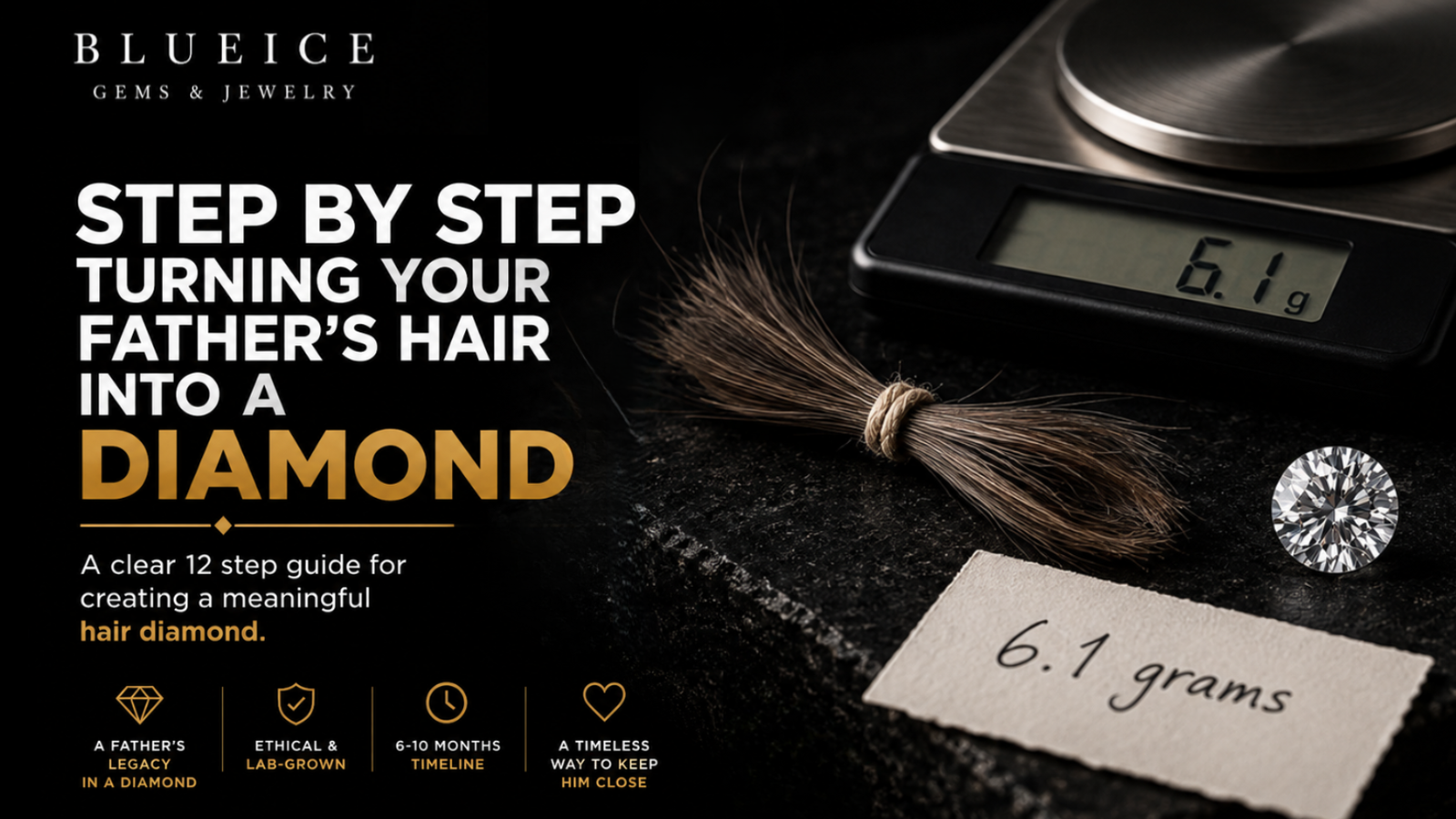
Step by step father's hair diamond guide showing a hair sample, 6.1 gram weight, and finished diamond

Step by Step: Turning Your Father’s Hair Into a Diamond

The first step here has no laboratory in it, no cost and no deadline. It is a search, and for a father it often decides whether there is going to be a stone at all. Turning your father’s hair into a diamond, a father’s hair diamond, in the shorthand this page uses, runs to roughly twelve steps: a search, five belonging to your family, then six laboratory and finishing stages. Production typically takes 6 to 10 months from intake, and because hair requires no cremation, this route stays open for a father who was buried.

This sequence begins one step earlier than a process description usually does, before there is a lock in hand at all, because for a father that is frequently where a family is standing.

Memorial Diamond is a provider in this category, so treat what follows as a description of how the route works generally and as questions to ask any company, this one included.

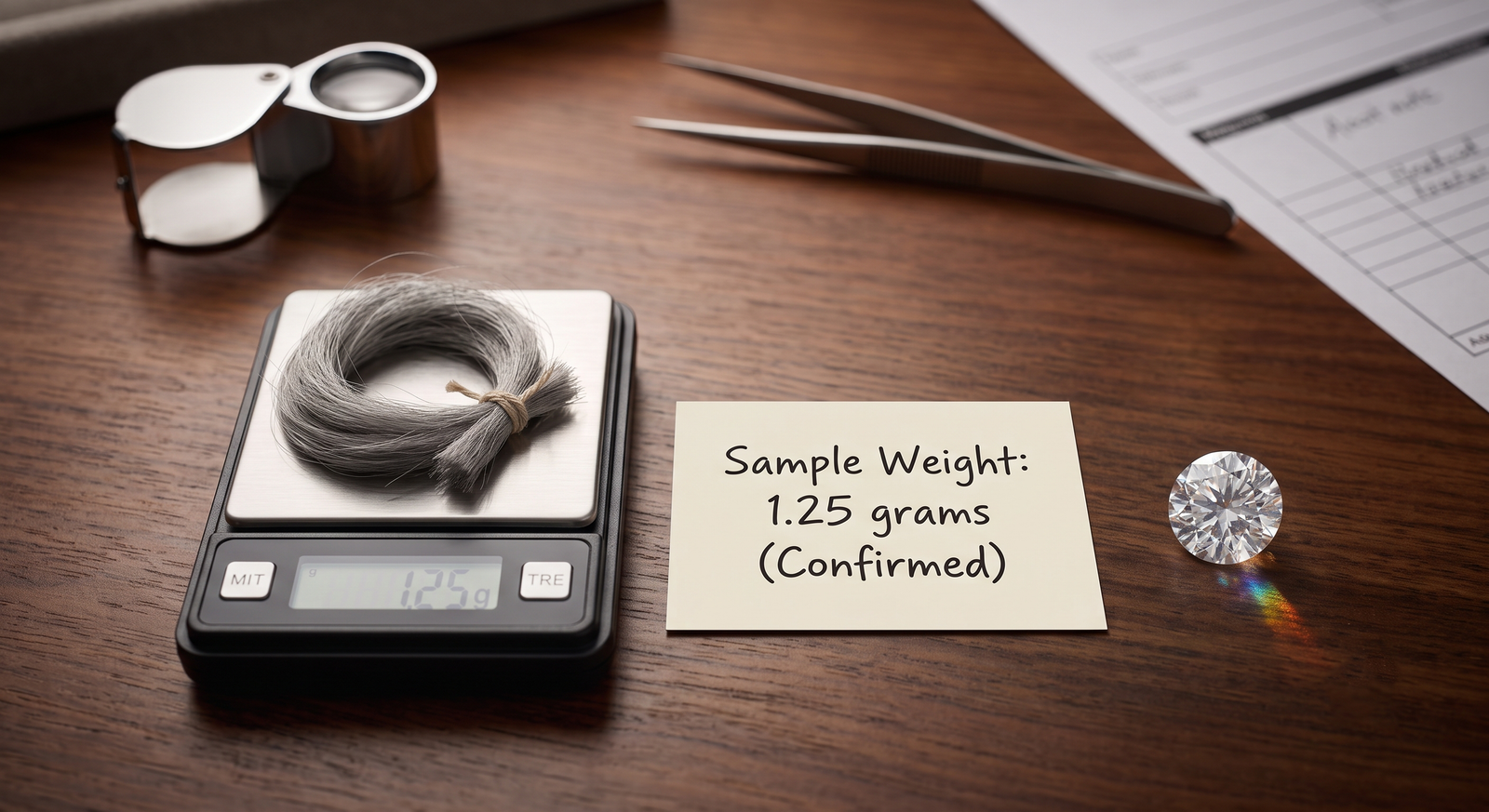
Father's hair diamond sequence: a small tied lock of hair on a scale, a written note of the weight, and a loose lab-grown diamond laid out in order

Where Does a Hair Diamond Sequence Actually Begin?

With a search, and it counts as a step because it has an output: a candidate sample and a number on a scale.

Treating it as a step rather than as a precondition changes how it gets done. A precondition is something you either have or don’t, so a family that assumes it doesn’t can stop looking within an afternoon. A step is something you work through, and it has a defined end.

The complete guide to father hair diamonds covers where a father’s hair tends to turn up, the places are not the obvious ones, and short clippings count. What that guide does not cover is when to stop looking.

How Do You Know When the Search Is Finished?

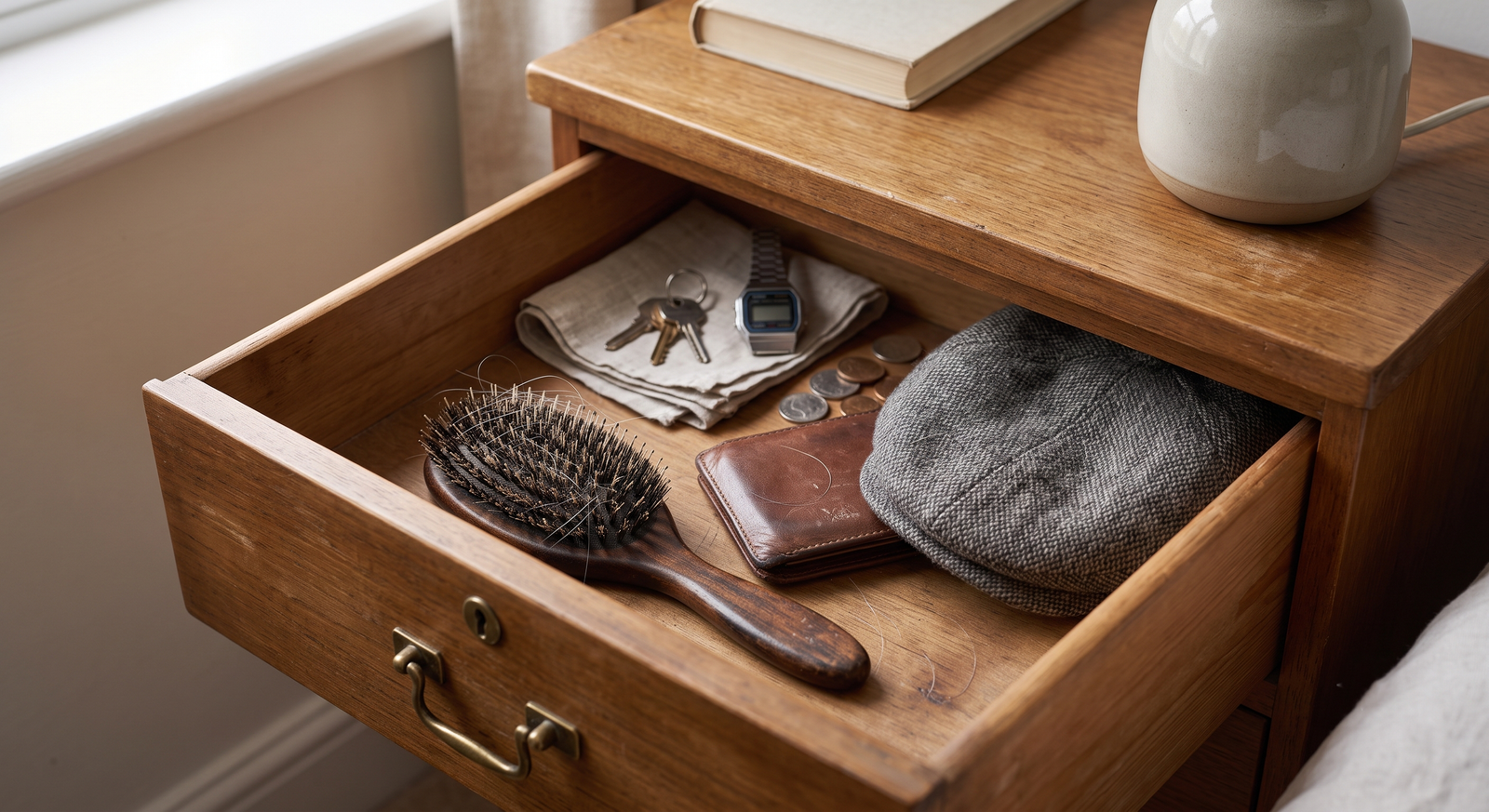
A bedside drawer open with a hairbrush, a wallet and a flat cap laid out — the ordinary places a father's hair is found

The search is finished when one of three things is true. Not before, and there is no value in continuing after.

  1. You have a sample and a weight. Weigh it in its container, subtract the container, and photograph it beside the scale reading. A number ends the search whether or not the number turns out to be enough, how much hair is needed covers what to do with the figure once you have it.
  2. Everyone who might have kept something has been asked. A widow, a sibling, an adult child, a barber of twenty years, whoever cleared the house. This is the condition most easily skipped, and it is often where a sample turns up.
  3. The places have been checked and there is nothing. A wallet, a bedside drawer, a shaving cabinet, a hat, a hairbrush, a car headrest, a workshop bench. If those come up empty, they come up empty, and that is a finished search rather than a failed one.

If the search ends at condition three, his ashes remain a route, and the sequence in step by step: turning your father’s ashes into a diamond picks up from there. Nothing about ending a hair diamond search this way is a lesser outcome.

What Does the Whole Sequence Look Like?

StepWhose handsTypical durationWhat it produces
1. Search for a sampleYour familyAn afternoon to a few weeksA candidate sample
2. Weigh and photograph it, without dividing itYour familyTen minutesA weight, in grams
3. Ask a provider whether that sample is acceptableYour family and the providerDaysAn answer, ideally in writing
4. Choose a provider; specify carat, color and cutYour family1 to 4 weeksAn order reference
5. Cut or separate only what is being sent, and document itYour familyAn hourThe submission, and a record of it
6. Package and shipYour family, then a carrier1 to 3 days in transitA tracking number
7. Intake, weighing, logging, chain of custody referenceLaboratoryDays, the clock starts hereA reference number you can quote
8. Pre cleaning: product, oils, dust and debris removedLaboratoryDaysClean keratin, at a lower weight
9. Carbon extraction and purification to roughly 99.9%LaboratoryWeeksPurified carbon
10. Graphitization at roughly 2,500 to 2,700°CLaboratoryDays to weeksGraphite feedstock
11. Growth in an HPHT cell, blended with supplemental lab carbonLaboratoryWeeks to monthsA rough crystal
12. Cutting, polishing, optional color treatment, grading, settingLaboratory, then setterWeeksThe finished hair diamond
 Laboratory technician cleaning a small hair sample in a glass dish before carbon extraction

The durations in the table are estimates, there to make the shape visible; the only sourced figure is 6 to 10 months of production from step 7, which is why step 6 is worth doing promptly and steps 1 to 5 are not worth rushing.

Steps 1 to 6: From a Drawer to a Mailbox

Only three of these six involve touching anything. The rest are questions, and the order they are asked in is what separates a comfortable hair diamond process from an anxious one.

Step 3 comes before step 5. Ask whether the sample is acceptable before anything is cut, separated or divided. A lock is finite, and the answer costs nothing but a few days. Send the weight and the photograph rather than a description: “6.1 grams of beard clippings, collected in two sittings” is a question a provider can answer; “a bit of his beard” is not.

Step 5 is the only irreversible act in the family’s half of the sequence. Everything before it, the search, the weighing, the inquiry, the order, can be undone, paused or abandoned. Cutting cannot.

Step 6 has fewer constraints than the ashes route does. Hair is not cremated remains and does not carry the shipping restrictions that go with them. Package it dry, sealed, cushioned and labeled with the order reference, and keep a photograph of the sealed package. How to turn your father’s hair into a diamond covers the documentation your family creates around that parcel, which for a hair diamond has no institutional substitute.

Steps 7 to 12: What Does the Laboratory Do With a Few Grams?

Each laboratory stage between intake and a finished hair diamond is described in how a memorial diamond is made from your father’s hair. Three things about that half matter for the sequence.

Step 7, intake, starts the clock. The sample is logged, weighed and given a chain of custody reference. Ask for both the reference and the intake weight in writing.

Step 8 has no equivalent on the ash side. Providers commonly describe a preparation stage in which product, oils, dust and anything that is not hair are removed before extraction begins, so the weight entering step 9 is lower than the weight that arrived. Ask what theirs removes.

Steps 9 to 12 are the laboratory’s and are fixed. Extraction and purification to roughly 99.9% carbon, hair is roughly 50% carbon by weight, against ash’s 0.5% to 4%, then graphitization at roughly 2,500 to 2,700°C, then a growth run of weeks to months in an HPHT cell, then cutting, optional color treatment, grading on the standard 4Cs and setting. Before any of it can be grown, the recovered carbon is topped up with lab grown carbon to reach a usable volume, so a finished hair diamond holds a provable share of him rather than the whole of him. Any provider claiming otherwise is describing something the process does not do.

What emerges from graphitization is carbon rather than hair, so a hair diamond’s color comes from trace elements present during growth rather than from the color his hair was, what color a diamond made from your father’s hair will be covers that.

Why Does a Hair Diamond Have No Cremation in It, and No Deadline Either?

This is the structural difference between the two routes, and it is worth being precise about this.

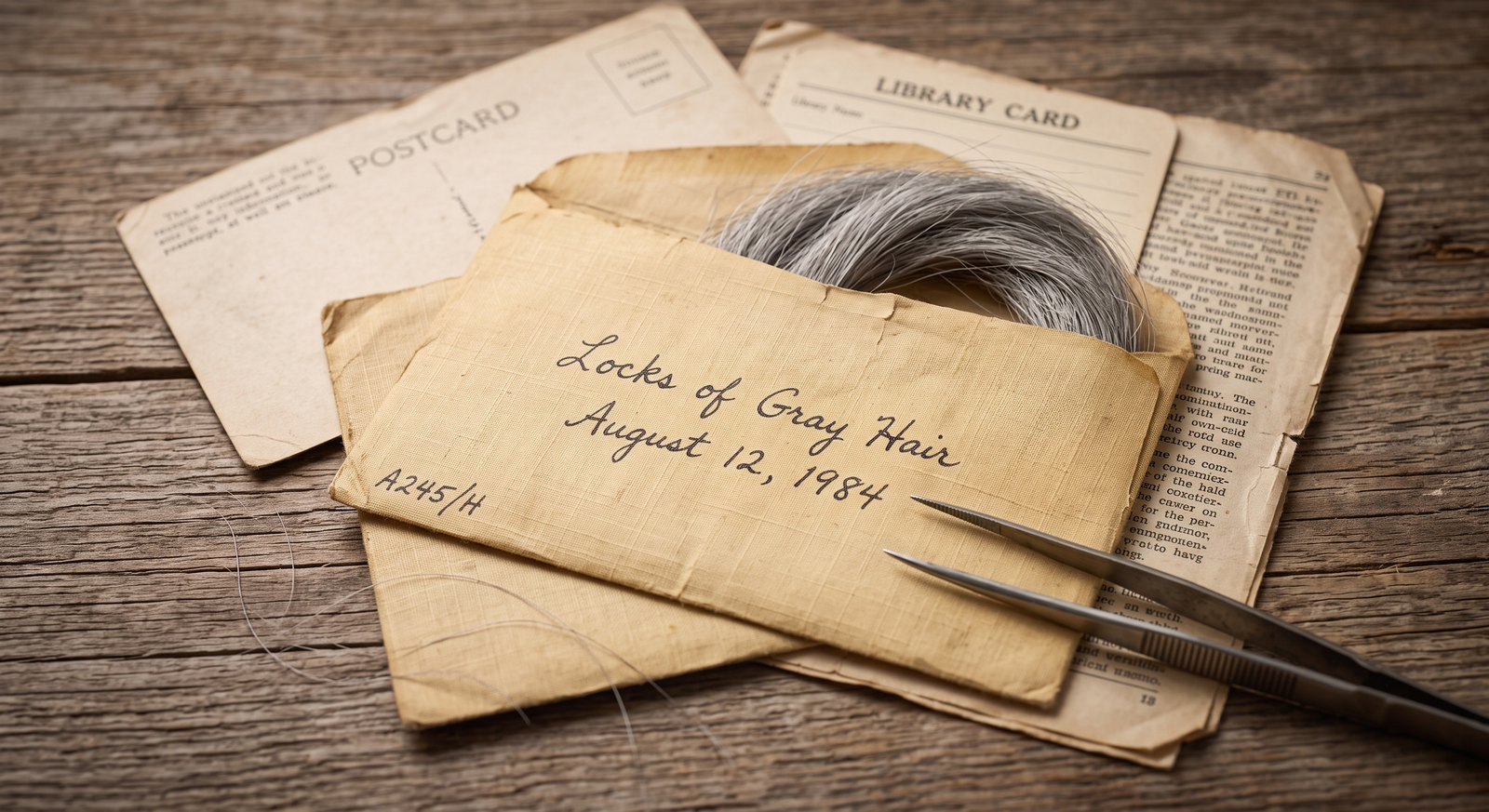
The ashes route has a door that closes: once a father’s remains are interred or scattered, that option is generally closed, and the retention request has to be made before release. The hair diamond route has no equivalent. Hair is stable in storage, which is why a lock kept in 1998 is generally still usable and a sample found next year works as well as one found this week, worth confirming with a provider rather than assuming, but it is not the ash route’s kind of deadline.

That does not make the hair diamond sequence entirely reversible. Step 5, the cut, is permanent, and a sample sent is a sample out of your hands. But the pressure that sits over an ashes decision does not sit over this one, and a family under time pressure elsewhere in their lives should know that.

An old envelope dated by hand with a lock of hair inside, illustrating that stored hair stays usable for decades

Frequently Asked Questions

Where in the sequence should a provider first be contacted?

At step 3, before anything is cut. An acceptance answer based on a stated weight and a photograph costs a few days and protects a sample you cannot replace. Choosing a company for the hair diamond can wait until after that answer.

Can the search be done by someone else in the family?

Yes, and there is a case for it. The person clearing a house may see things the person grieving hardest does not. Give them the weight target and ask them to photograph rather than collect anything they find.

How long does the family half of the sequence usually take?

Anywhere from a week to a few months, and none of it is on a clock. Steps 1 to 5 have no external deadline at all, only step 6 onward runs against the production timeline of a hair diamond.

If a provider says the sample is acceptable, how long is that answer good for?

Ask, because it varies. An acceptance based on a photograph and a stated weight is a provisional answer; a definitive one normally follows intake. Get the provisional answer in writing anyway, so the definitive one can be compared against it.

Can the pre cleaning step reject a sample outright?

Ask what their preparation stage removes and what happens if it takes a marginal sample below a usable weight. It is the reason to send a hair diamond sample with margin rather than exactly at a stated minimum.

Does anything here need to happen before a funeral or memorial service?

No. Unlike the ashes route, nothing in a hair diamond sequence is closed by a burial, cremation or interment. Collecting hair is simpler before a service than after, but nothing is lost if that moment has passed.

Final Thoughts on the Hair Diamond Sequence

Step 1 costs nothing, involves nobody outside your family, and has no deadline attached to it. It is also the only step that can turn a hypothetical into a decision, which is why it is worth doing before anything else on this page, and why it is worth finishing properly, with one of the three end conditions actually met, rather than letting it trail off. A hair diamond that never happens because the search stopped early is a different thing from one that never happens because there was nothing to find.

Learn More About Father Memorial Diamonds

Talk With Memorial Diamond

Once there is a weight and a photograph, Memorial Diamond can say whether that sample works for a hair diamond and what happens to it at each stage. If the search has not started yet, it can start this afternoon. Reach out at memorialdiamond.us.