
Perhaps the lock sits in a small envelope in a drawer, or tucked inside a card someone thought to keep, and lately you have wondered whether it could become something you wear. Can a diamond be really made from sister hair? Partly, yes: hair is roughly half carbon by weight, so a small lock can yield genuine carbon that is purified and grown into a real lab diamond, usually blended with supplemental lab carbon, and because no standard finished stone percentage is published for hair, the provider should state theirs in writing.
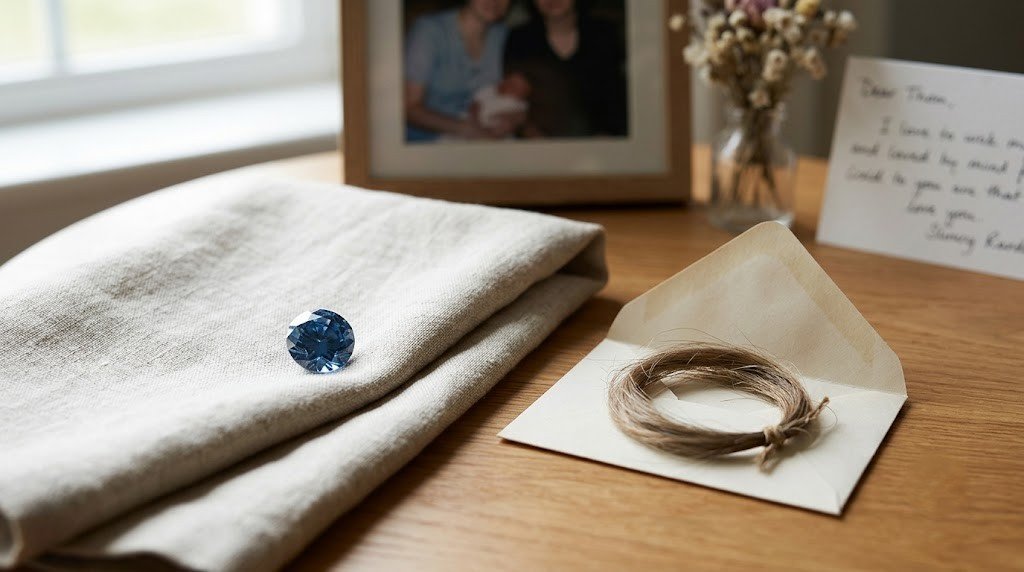
Table of Contents
Can a Diamond Be Really Made From Sister Hair?
It can, and the reason is ordinary biology. Hair is built mostly from keratin, a protein in which carbon makes up about half the weight. Where cremated remains hold only a sliver of carbon inside a great deal of mineral, a lock of hair is carbon rich from the start.
A laboratory heats the hair in a controlled, oxygen free process that drives off the other elements in keratin and leaves carbon behind. Further refining takes that carbon to around 99.9% purity or better. It is then converted to graphite and placed, usually with supplemental lab carbon, into an HPHT or CVD growth cell alongside a tiny diamond seed. Over weeks to months, carbon atoms settle into a crystal lattice, and some of those atoms came from her.
That is the plain physical sense in which a stone can be really made from sister hair. It is not a token or a symbol stored alongside the diamond. Her carbon is inside it.
A diamond really made from sister hair should not be pictured as a crystal of her carbon alone. Supplemental carbon is typically part of growth, and an honest conversation begins by saying so.
Why Does Hair Behave So Differently From Ashes?
If you are asking whether a stone is really made from sister hair, you may have read about ash based stones first, so the contrast helps. The two materials share a process, but almost nothing else about them is alike.
| Factor | Her hair | Her ashes |
|---|---|---|
| Carbon content of the raw material | About 50% by weight | Roughly 0.5 to 4% by weight |
| Typical amount a provider asks for | A small lock or a few grams | A few tablespoons up to about 4 oz or 100 g |
| Requires cremation? | No | Yes |
| Published share of the finished stone | None published; ask in writing | Typically 10 to 15%, some cite as low as 3% |
| Who usually holds it | Often already in a relative’s keeping | Often with whoever received the remains |
Two rows matter most for trust. The first is the published share: for ashes, the industry quotes a typical range; for hair, no finished stone figure has been published at all, and the ash range should not be borrowed to fill the gap. The second is custody before custody. A lock may have passed through several hands, and sometimes several households, before it ever reaches a provider. That history shapes how confident anyone can be that the stone is really made from sister hair.
Hair also opens a door ashes cannot. Because no cremation is involved, it works whether your sister was cremated or buried, provided hair was saved. How a stone is grown from her hair follows each stage in more detail.
What Share of a Stone Really Made From Sister Hair Is Hers?
This is the question behind asking whether a diamond is really made from sister hair, and the truthful answer is that nobody publishes a number for hair. Ash based stones are a different case: there, published industry figures put her carbon at roughly 10 to 15% of the finished mass. For hair, and for blends of hair with ashes, no comparable finished stone figure has been published across the industry.
The reason is not secrecy so much as variation. The share depends on how much hair is sent, how much carbon survives refining, the carat size chosen, and how much supplemental carbon a given laboratory adds to keep growth stable. Change any one of those and the percentage moves.
So the right approach is to ask, in writing, for the figure that applies to your order. A careful provider should be able to tell you roughly what proportion of a diamond really made from sister hair will be her carbon at the size you have chosen, and how they reached that estimate.
Watch for two shortcuts in the reply. One is borrowing the ash range and presenting it as a hair figure. The other is a confident number with no explanation behind it. Either should prompt a follow up email asking how the figure was calculated.
If the written answer surprises you, that is useful information too. You might decide a modest share is entirely enough, or ask about sending a larger lock. Both are reasonable responses to a real number, and the complete guide to a diamond from her hair sets out how quantity, carat and timeline interact.
Whose Hair Is in the Envelope, and Who Gets a Say?
Before any laboratory work begins, two quieter questions decide whether a stone can honestly be called really made from sister hair: is the hair definitely hers, and is it yours to send?
On the first, think about where the lock came from. A lock cut and set aside on purpose is the surest basis for a stone really made from sister hair. Hair gathered from a brush or a pillow is less certain, because a shared brush can hold more than one person’s hair. Ask the provider whether they accept brush hair, how much they need, and how they handle a sample that might be mixed. Ask too whether dyed or chemically treated hair affects their process.
On the second, hedge rather than assume. Hair you already keep can still form part of your sister’s estate, and the rules on personal belongings and on remains vary by state. Depending on where you live and anything she put in writing, her spouse or partner, her adult children or her parents may hold decision making authority ahead of a sibling. A brief conversation with her executor, or with whoever holds that authority, is a courteous step and may be a necessary one.
If several siblings each want a stone, raise that early too. A single lock may or may not stretch to more than one diamond, depending on its weight and the provider’s requirements, so ask before anyone assumes. The practical route for sending her hair covers packaging and paperwork once these points are settled.
Which Six Checks Show a Diamond Is Really Made From Sister Hair?
No laboratory can examine a finished diamond and tell you whose carbon it holds. Purified carbon carries no trace of the person it came from, and nothing resembling DNA survives refining. So proof that a stone is really made from sister hair rests on custody, and custody can be checked. Six questions do most of the work:
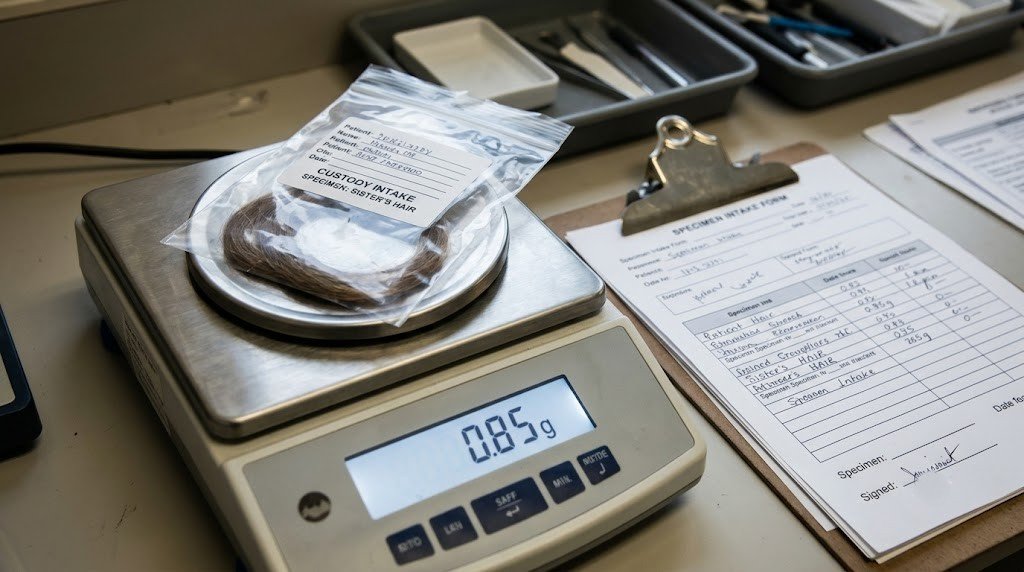
- Is the sample weighed and recorded on arrival? Ask whether the provider logs the weight of hair received and sends you that figure. A recorded weight lets you match what arrived with what you mailed.
- What identifier follows it? Ask whether the hair receives a physical tag or sealed container number, or only a database entry, and ask to be told that number.
- Who signs at each handover? Extraction, purification, graphitization and growth are separate stages. Ask how many signed records an order produces and whether copies can be emailed to you.
- Is it ever processed with another family’s material? Ask whether her carbon shares a furnace run or growth cell with anyone else’s. You are entitled to a plain yes or no.
- What happens to any hair left over? Ask whether unused hair is returned to you, kept, or disposed of, and get the answer before you mail anything.
- What will the origin certificate say, and who signs it? Ask to see a sample with another family’s details removed, and confirm what it does and does not claim.
None of these checks offers chemical certainty. Taken together, they reveal whether a provider treats one family’s sample as a tracked item with a paper trail, which is the most reliable evidence available that a diamond is really made from sister hair. Keep every answer in email; a reassuring phone call leaves nothing to point to later.
Can Paperwork Prove a Stone Is Really Made From Sister Hair?
Families are sometimes told a stone “comes certified,” and it is natural to hear that as independent confirmation that it is really made from sister hair. Usually it means something narrower. Two kinds of document exist in this industry, and they do different jobs.
The first is an origin or authenticity certificate. The memorial provider normally issues it in house, and it records the provider’s statement that this stone was grown from the carbon your family supplied. It is valuable as a written commitment, but it is only as strong as the custody process behind it, because nobody outside the company has verified it.
The second is a grading report from an independent gemological laboratory. It assesses the finished stone using the same cut, color, clarity and carat standards applied to every diamond, and it will typically identify the stone as laboratory grown. It does not mention hair, ashes or anyone’s name, because origin is outside what a grading lab examines. Across the industry it is usually optional and costs extra.
So, when judging whether a stone is really made from sister hair, read each document for exactly what it covers. The grading report tells you what the diamond is. The origin certificate tells you what the provider says it came from. Only the custody records connect the two. If a provider describes its own certificate as independent, ask who, outside the company, checked it.
Which Promises About a Stone Really Made From Sister Hair Should Worry You?
Careful providers describe hair based stones precisely. A few claims about a diamond really made from sister hair, however, assert more than anyone can deliver.
- “Every atom is her.” No diamond grown from hair consists entirely of personal carbon. Supplemental lab carbon is typically part of the process.
- “Pure hair, nothing added.” The same problem in different words; it contradicts how growth is normally carried out.
- “Hair diamonds are 10 to 15% her, just like ash.” That range is an ash figure. No standard hair figure exists, so a borrowed one tells you nothing about your order.
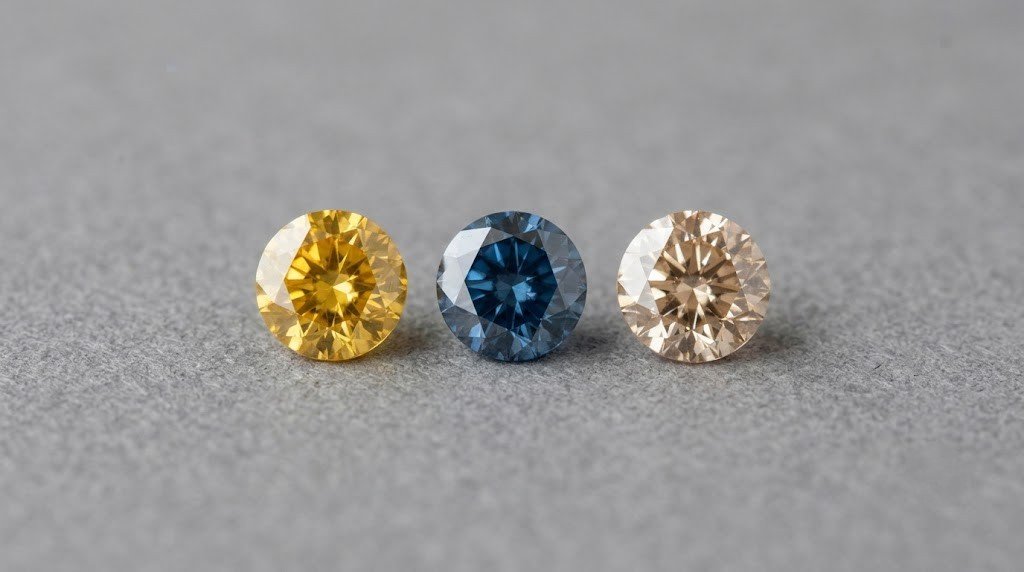
- “The diamond will match her hair color.” Diamond color comes from trace elements present during growth, nitrogen toward yellow and boron toward blue. Hair color does not set it, and no one can forecast the shade from her hair.
- “We don’t need to know who authorized this.” A provider that never asks about authority is skipping a step that protects your family as much as the company.
- “Book now before the slot goes.” Saved hair keeps. There is no chemical reason to rush, so urgency is a sales choice, not a scientific one.
Any of these might come from an enthusiastic salesperson rather than a careless company. The fix is the same: ask again in writing, and decide based on what comes back. A diamond really made from sister hair is meaningful without inflation; claims that inflate it are the ones to doubt.
What Do People Get Wrong About Diamonds Really Made From Sister Hair?
Several assumptions about whether a stone is really made from sister hair sound reasonable and turn out to be mistaken.
“Because hair is half carbon, the whole stone is her.” Hair’s high carbon content means far less material is needed than with ashes. It does not remove the need for supplemental carbon, and no standard percentage says otherwise.
“More hair means a bigger diamond.” Carat size is driven mainly by how long the crystal is allowed to grow. Extra hair may change the personal share a provider can offer, which is worth asking about, but it does not by itself make the stone larger.
“Lighter hair gives a lighter stone.” No. Color cannot be chosen, matched or predicted from the source material, and hair does not narrow the possible range.
“It isn’t really a diamond.” It is. A memorial diamond is chemically and physically diamond, as hard as any other, and graded on the same scale.
“A lab test could confirm it’s her.” Refining leaves only carbon, so there is nothing personal for a test to detect. Whether a stone is really made from sister hair is settled by documents, not tests.
“Only hair from a cremation counts.” Hair needs no cremation at all, which is why it suits families whose sister was buried, provided some hair was kept.
Clearing these away does not make the answer smaller. It makes it sturdier: a stone really made from sister hair contains a real, documented portion of her, and that is a claim that holds up to questions.
How Long, How Much, and What Color?
Once you are satisfied a stone would be really made from sister hair, the practical questions follow. All of the figures here are general industry ranges, not any single provider’s terms.
Timeline. Typically six to ten months from receipt of the hair, stretching toward twelve for stones above roughly two carats or for specialty colors. Size depends chiefly on growth time, so a larger stone means a longer wait.
Cost. Around $1,500 to $3,500 for stones of about 0.10 to 0.25 carats; roughly $5,000 to $15,000 for half a carat to one carat, with colorless toward the top of that band; and from about $20,000 to $75,000 or more for two to five carats and beyond. Independent grading, engraving, fancy cuts and settings are usually extra.
Color. Trace nitrogen and boron pull memorial stones toward yellow, blue or champagne; a colorless result takes extra processing and usually costs more. Some providers offer irradiation for red, green or black. Even for a diamond really made from sister hair, the exact shade cannot be predicted in advance.
If hair and ashes are both available, some families combine the two materials; whether a blended stone is really hers raises its own questions. For an ash only stone, the parallel question for her ashes is answered with a published range.
Frequently Asked Questions
Is a stone really made from sister hair if lab carbon is added?
Yes. Carbon recovered from her hair is purified and grown into the crystal itself, so part of the stone is physically hers. Supplemental lab carbon is typically blended in to support growth, which means the stone is partly, not entirely, her carbon.
How much of a diamond really made from sister hair is her carbon?
No finished stone percentage has been published for hair. The share depends on how much hair is sent, how much carbon survives refining, and the carat size chosen. Ask the provider for their estimate in writing, and ask how they calculated it.
Can a hairbrush supply enough of her hair?
Possibly, but ask the provider first. A brush may hold hair from more than one person, and requirements for weight and condition differ. A lock that was cut and set aside deliberately gives everyone more confidence about whose hair it is.
Do I need anyone’s agreement to use hair I already have?
It may be wise, and sometimes required. Hair you keep can still form part of her estate, rules vary by state, and her spouse, partner, adult children or parents may hold authority before a sibling. Speak with whoever holds that authority first.
Will the grading report mention that the stone came from her hair?
No. An independent grading report describes cut, color, clarity and carat, and usually notes that the stone is laboratory grown. Origin is covered only by the provider’s in house certificate and the custody records that support it.
Can one lock of her hair make diamonds for several siblings?
Sometimes, depending on the lock’s weight and the provider’s minimum. Ask before mailing anything, and ask how the personal share of each stone would change if the hair were divided among two or more diamonds.
Final Thoughts on Trusting a Diamond From Her Hair
Wanting proof is not a failure of sentiment; it is a form of care. The honest answer to whether a stone is really made from sister hair is a qualified yes: real carbon from her, grown into a real diamond, typically alongside lab carbon, with the exact share something a provider should spell out for your specific order.
If the six checks come back with clear, written answers, you have as much assurance as this industry can offer that a diamond is really made from sister hair. If they come back vague, that tells you something as well.
And if you decide, after all of it, that the lock should stay just as it is, in its envelope, that is an equally sound outcome.
Learn More About Diamonds From a Sister’s Hair
- Sister Hair Diamond: The Complete Guide for everything about a stone grown from her hair
- How a memorial diamond is made from her hair for each stage of the process
- How to turn your sister’s hair into a diamond for the process from first inquiry to mailing the lock
- Is a diamond from her ashes really hers? for the ash route answer and its published range
- Sister Ashes and Hair Diamond: The Complete Guide for when both materials are combined
Talk With Memorial Diamond
If you would like to ask a person how much of a stone really made from sister hair would be hers, or how custody would work for the lock you have, Memorial Diamond is happy to talk it through. Find us at memorialdiamond.us whenever the moment feels right, with no obligation attached.
Leave A Comment