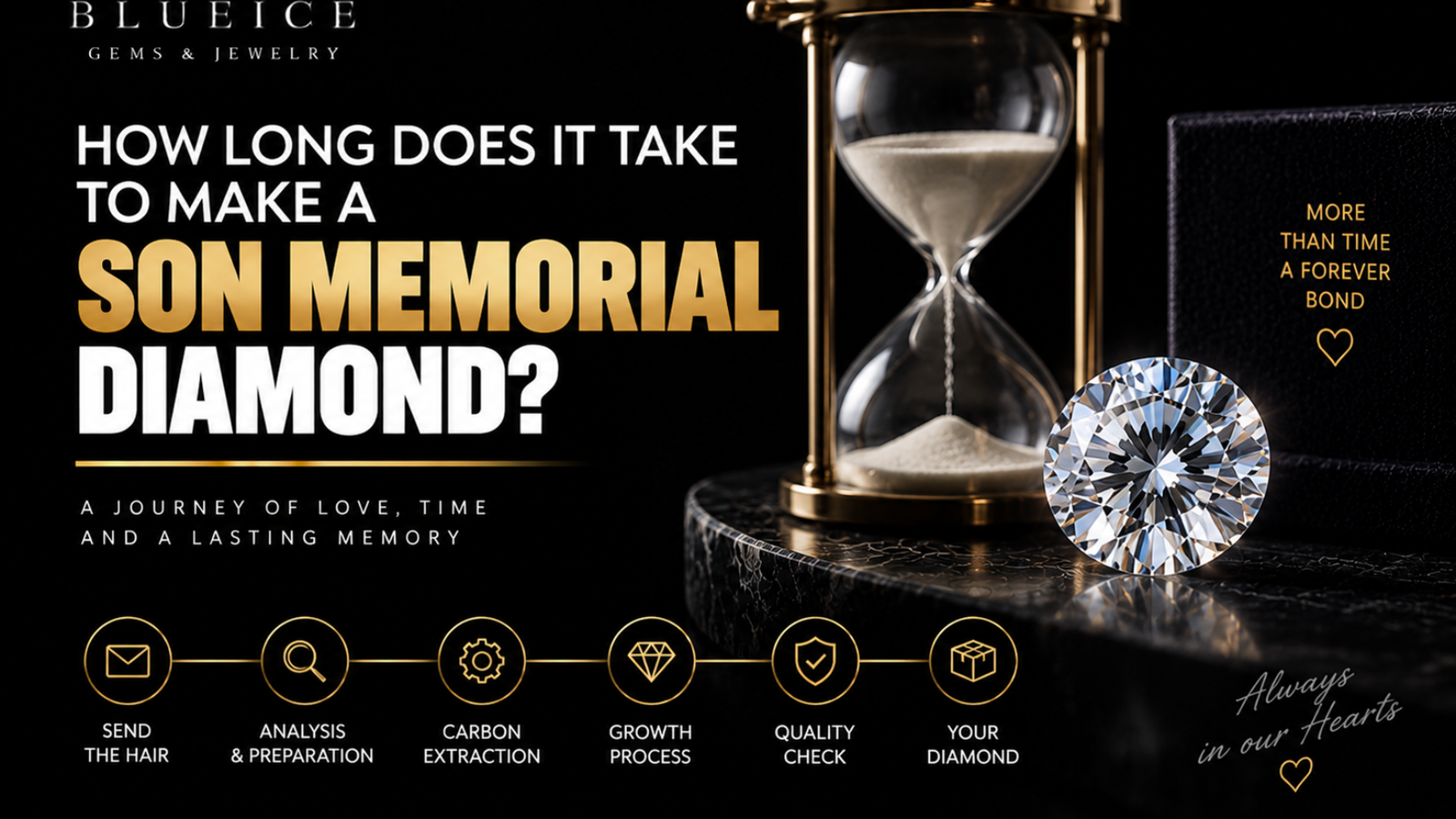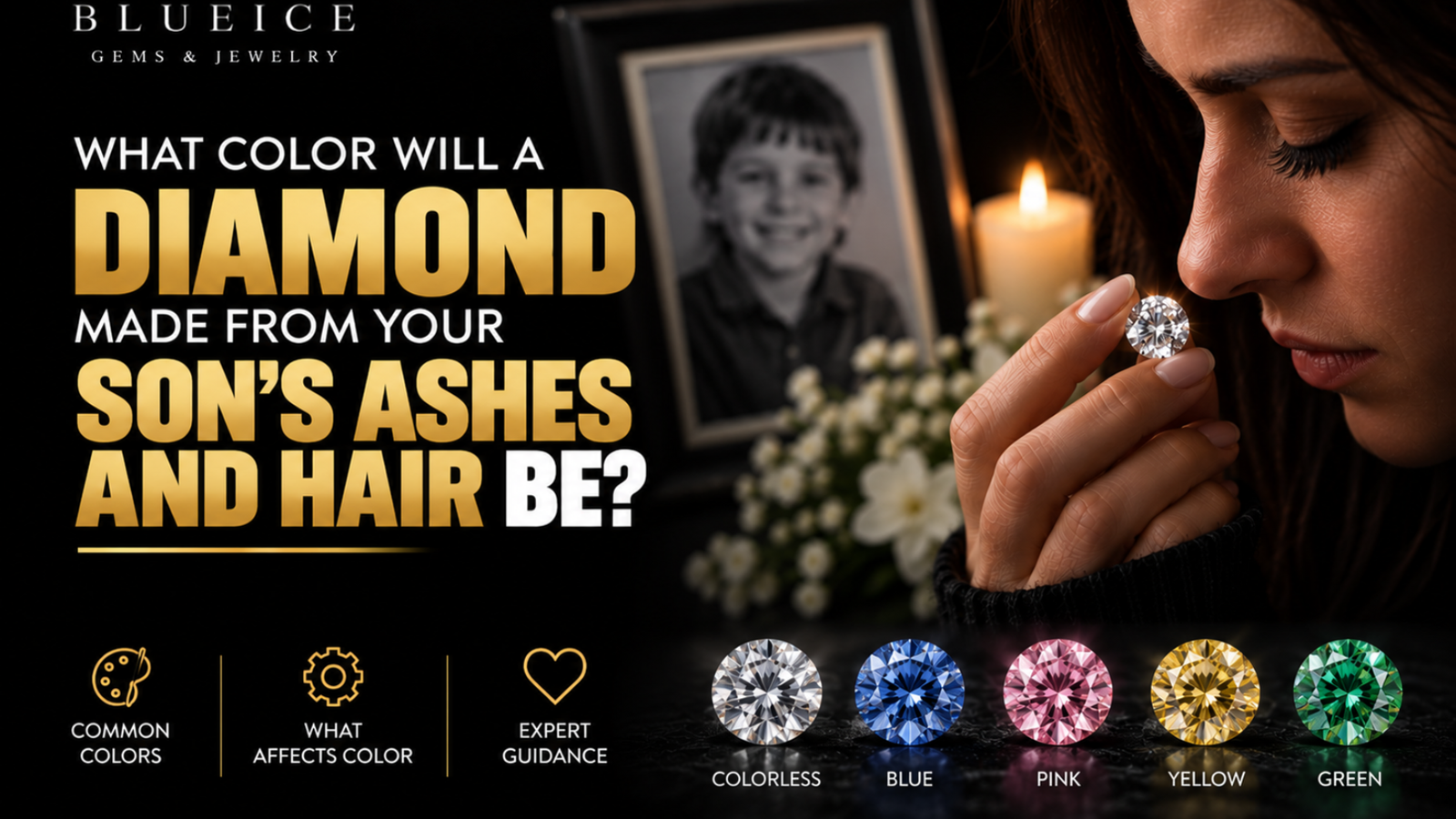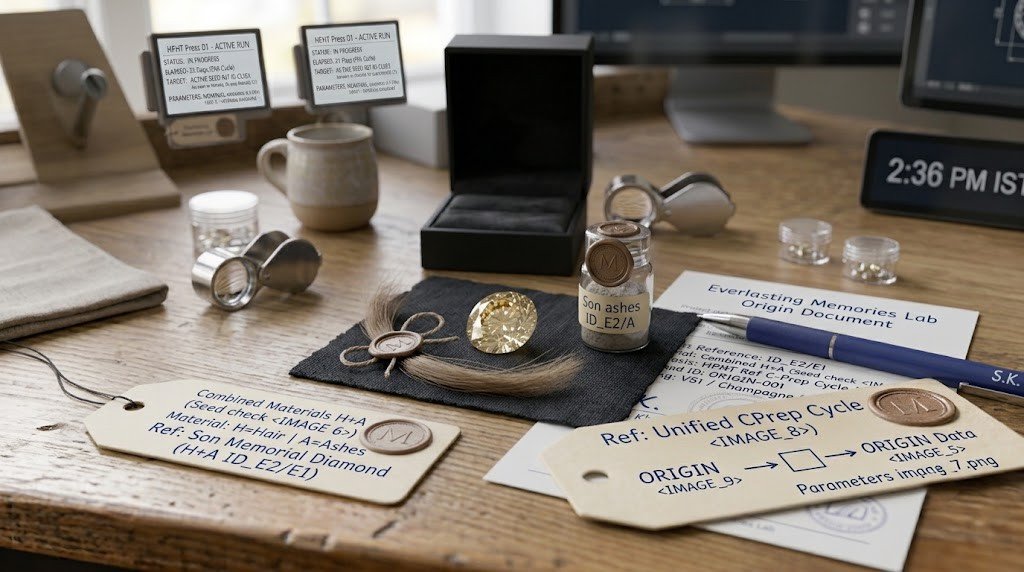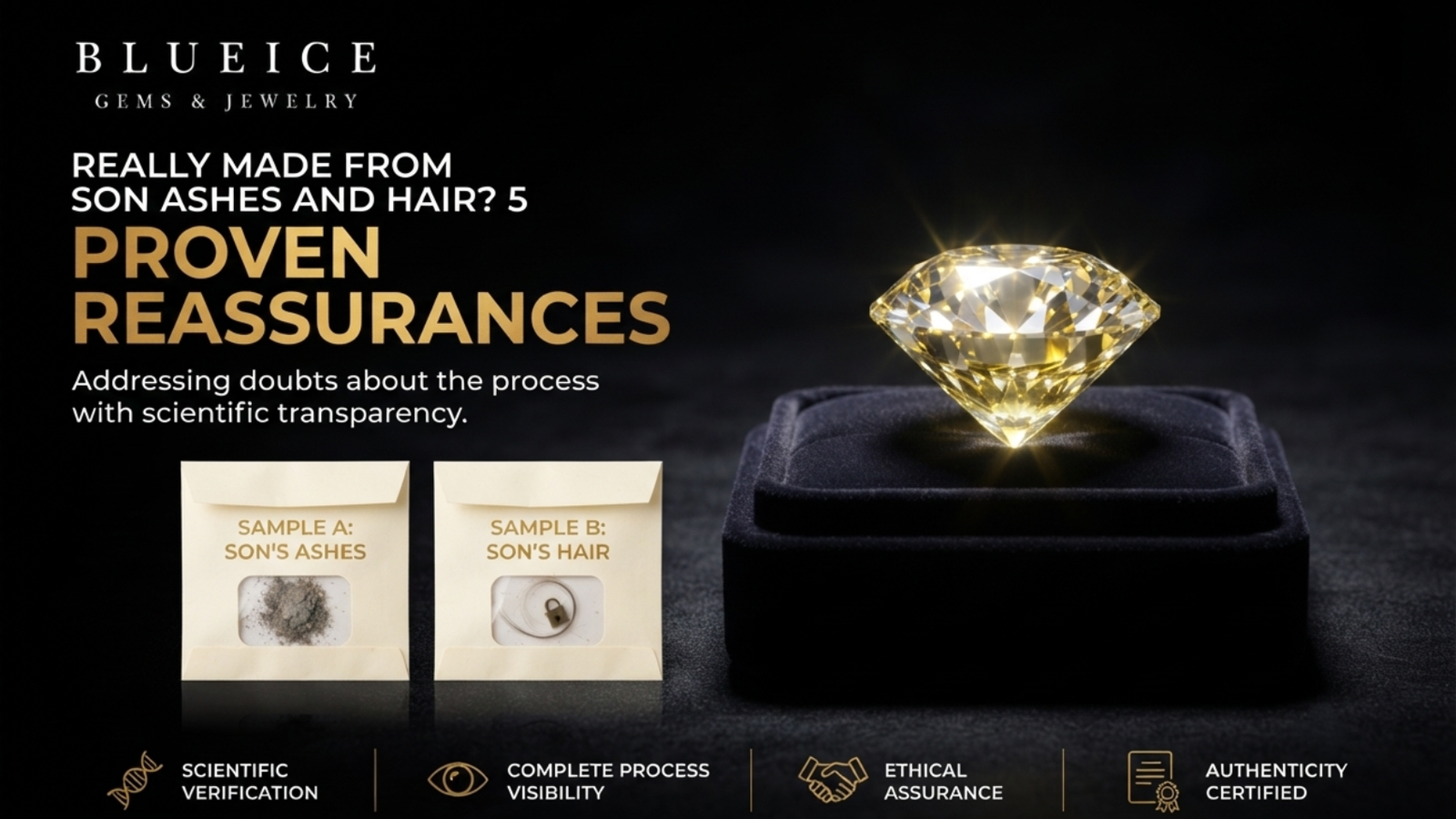
There is often a box on a shelf and an envelope in a drawer, and no obvious instruction for what to do with either. If you want to turn son ashes and hair into a diamond, the plain version is this: a laboratory pulls carbon out of both samples, purifies it past 99.9%, converts that carbon to graphite, and grows the graphite into a genuine lab grown diamond over roughly six to ten months. Parents who turn son ashes and hair into one stone are not buying a symbol of him. They are commissioning a gem that physically contains carbon that was his.
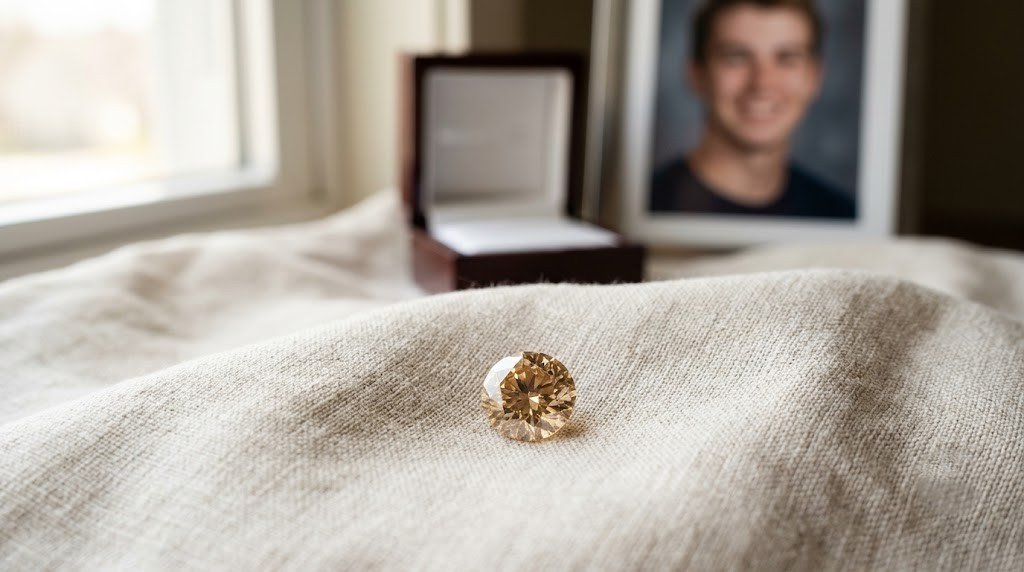
Table of Contents
Why Would You Turn Son Ashes and Hair Into One Diamond?
Most parents who turn son ashes and hair into a single diamond do it because they happen to hold both, and neither one feels like something to set aside. The hair may have come from a hairbrush nobody emptied, a barber’s envelope, a hospital bag, or a lock cut before the funeral. The ash came later.
The reason to turn son ashes and hair into one gem rather than two is usually not sentimental arithmetic. It is that a single object can be worn, carried, and eventually passed on, while two half portions tend to sit in two boxes. If you are still weighing that, the ash only version of this process and working from hair alone each cover the single source route in full.
There is also a quieter reason parents mention. Hair is frequently the older of the two samples it may predate an illness, an accident, or a long decline and combining it with ash lets both versions of him contribute to the same crystal, whether your son was six or sixty when he died.
Deciding to turn son ashes and hair into a single piece also settles a practical question early: you are commissioning one stone, on one timeline, at one price, rather than managing two parallel orders. And because labs work from a small portion of what you send, you can turn son ashes and hair into one stone and still keep the great majority of both exactly where they are now.
Who Can Legally Decide to Turn Son Ashes and Hair Into a Memorial Stone?
This is the part parents are most often surprised by, and it is worth settling before you turn son ashes and hair into anything. If your son was married, his surviving spouse may hold the legal right to direct what happens to his remains ahead of you. If he had adult children of his own, they may sit ahead of you as well.
Most states set out a statutory order of priority for who may authorize the disposition of a decedent’s remains, and parents typically appear on that list after a spouse and after adult children. Anything your son left in writing a will, a funeral directive, a pre need contract, a designated agent form can rearrange that order entirely. The details genuinely vary from state to state, so this is a question for the funeral home that handled the cremation, or for a local attorney, rather than something to settle from a blog post.
Hair sits in a slightly different place. Rules about disposition are written about the remains themselves, so a lock you already have in your own home is usually the simpler question in practice but a decedent’s personal belongings can still fall to his estate, the treatment varies by state, and if the hair is in someone else’s keeping, retrieving it is a conversation rather than a decision.
The honest summary: a parent arranging this alone may well be able to turn son ashes and hair into a diamond without difficulty, and many do. But parents who press ahead without first speaking to whoever else has standing sometimes discover the problem painfully late. Ask early, in writing where you can.
Parents are not always of one mind about this, and one parent quite often arranges the whole thing alone after a separation, after a disagreement about cremation itself, or simply because one of you can face the phone calls and the other cannot. Providers encounter that constantly and it is not an obstacle. What governs the outcome is who holds authority, not whether the household agrees.
What Do You Need to Gather Before You Begin?
What you need in hand before you turn son ashes and hair into a diamond is less than most parents expect. Providers differ, so treat the figures below as industry typical rather than any single company’s published rule, and see how much of each sample a lab needs for the quantities in more depth.
| What you send | Industry typical amount | Practical notes |
|---|---|---|
| Cremated remains | A few tablespoons up to roughly 4 oz (about 100 g) | A small fraction of a full cremation; the rest stays with you |
| Hair | A small lock, often described as a few grams or a palm sized amount | Cut hair is fine; length matters less than total weight |
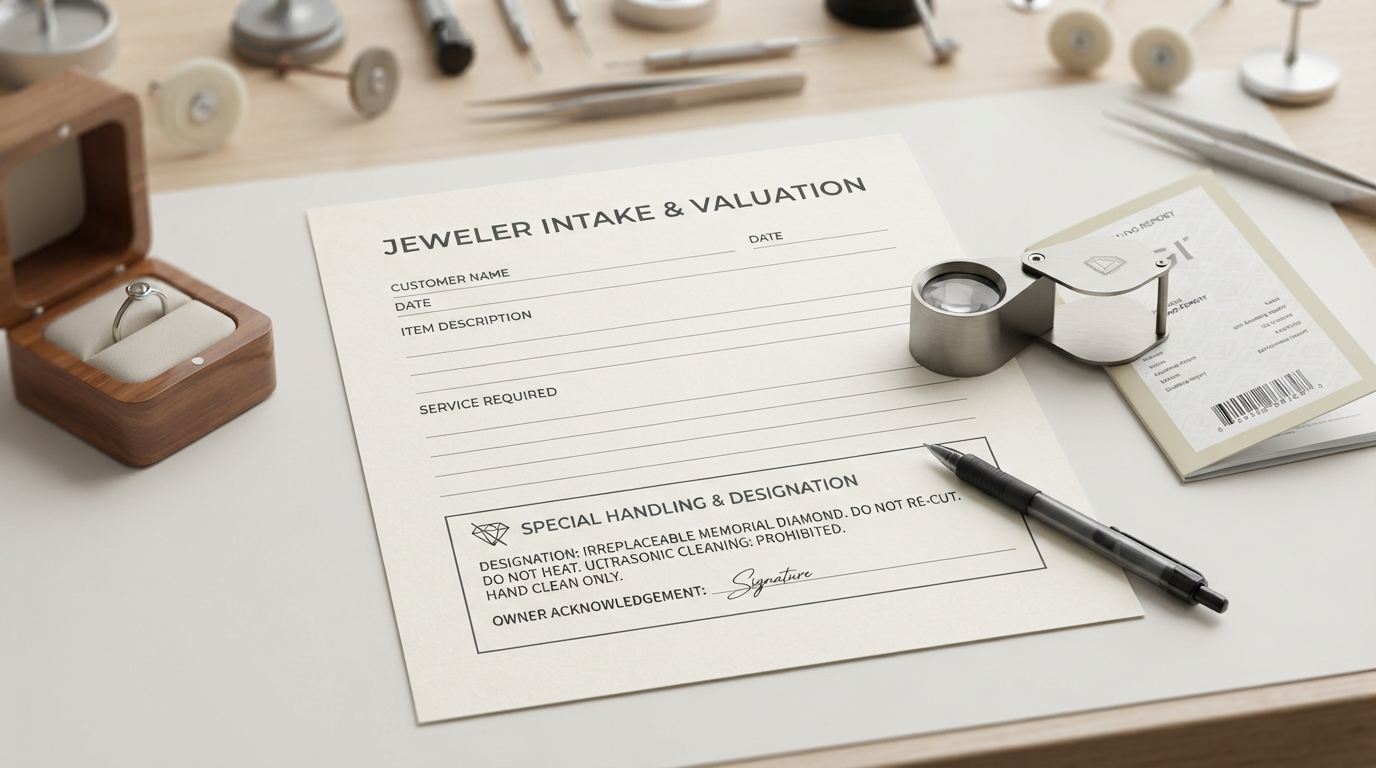
| Identification of the material | Whatever the provider’s intake form asks for | Part of chain of custody documentation |
| Written authorisation | Varies by provider and state | Ties back to the authority question above |
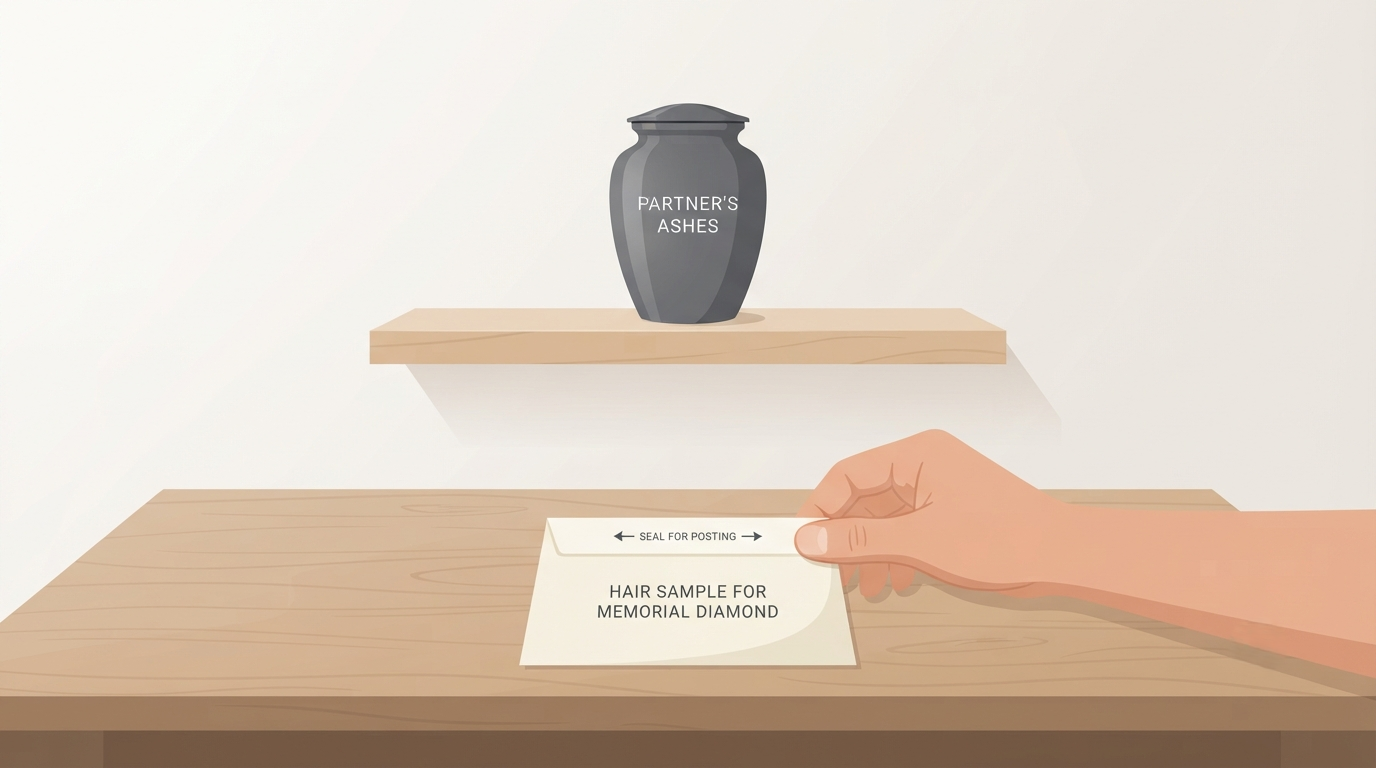
Labs that turn son ashes and hair into one crystal usually ask for hair in a clean, sealed paper envelope rather than plastic, and for ash in whatever sealed container the crematorium supplied or one the provider sends you. You do not need a full urn to end up with a wearable gem, and you should be cautious of anyone who implies otherwise.
If the hair is short, thin, chemically treated, or came from a very young child, say so at intake rather than hoping. It is a normal question, and the answer affects how much the lab asks for.
What Are the Seven Steps to Turn Son Ashes and Hair Into a Diamond?
Stripped of marketing language, the seven steps below are what it actually takes to turn son ashes and hair into a finished diamond.
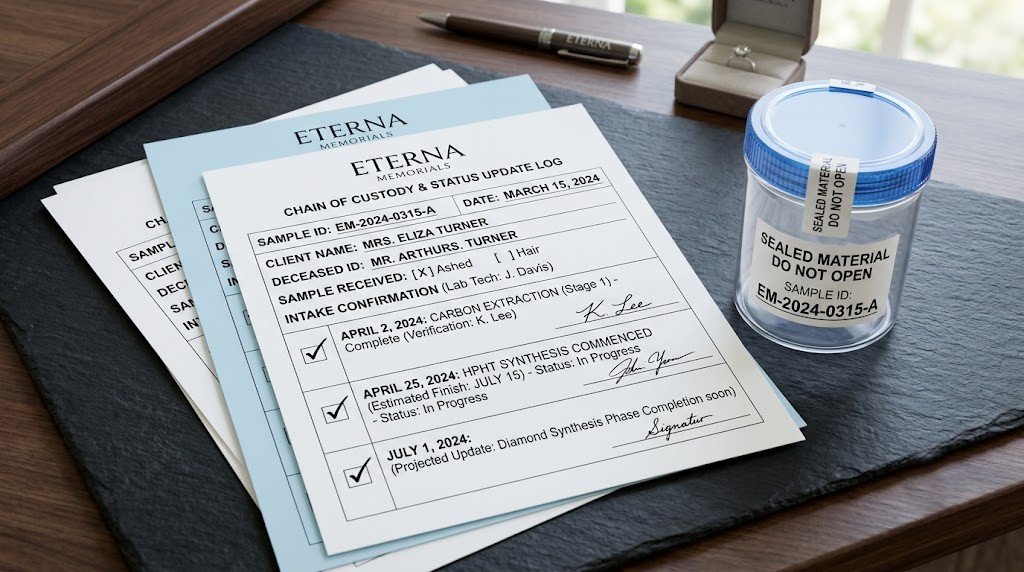
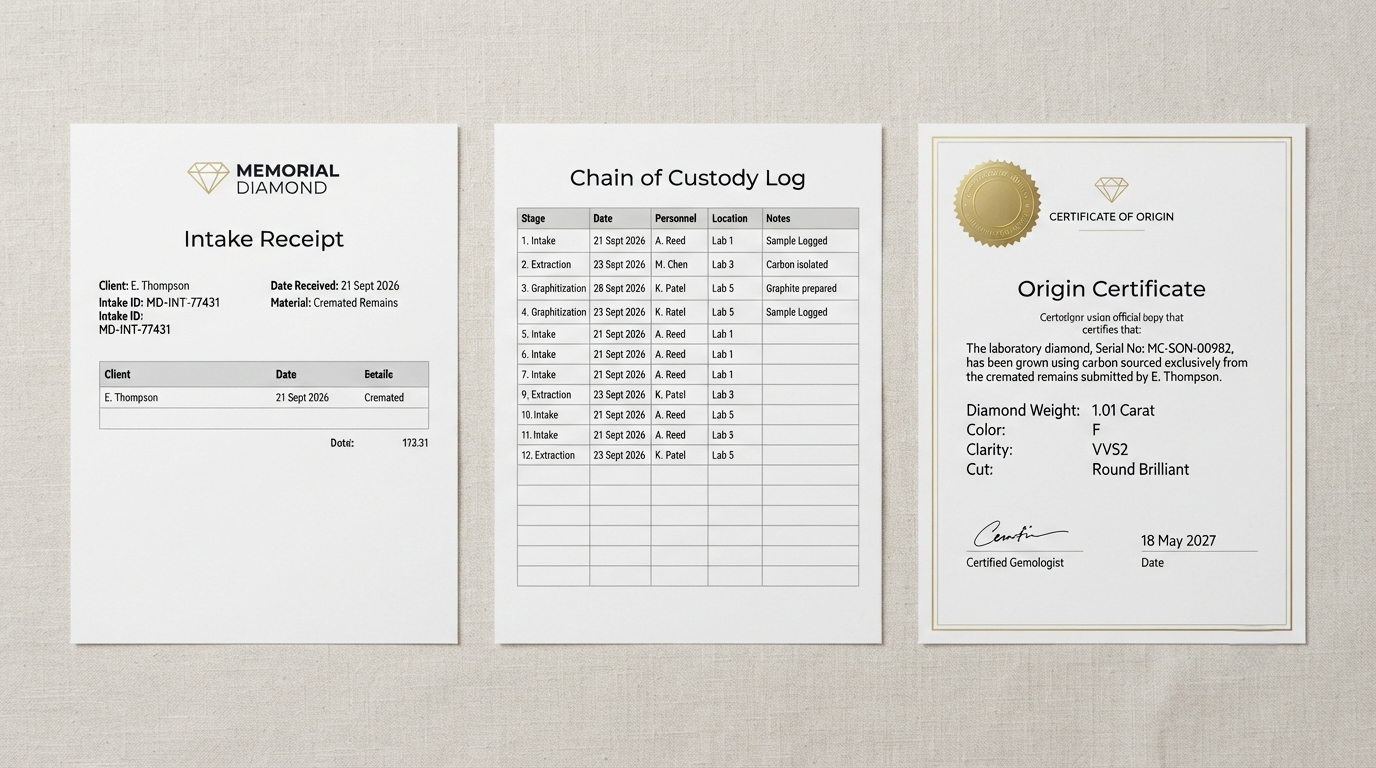
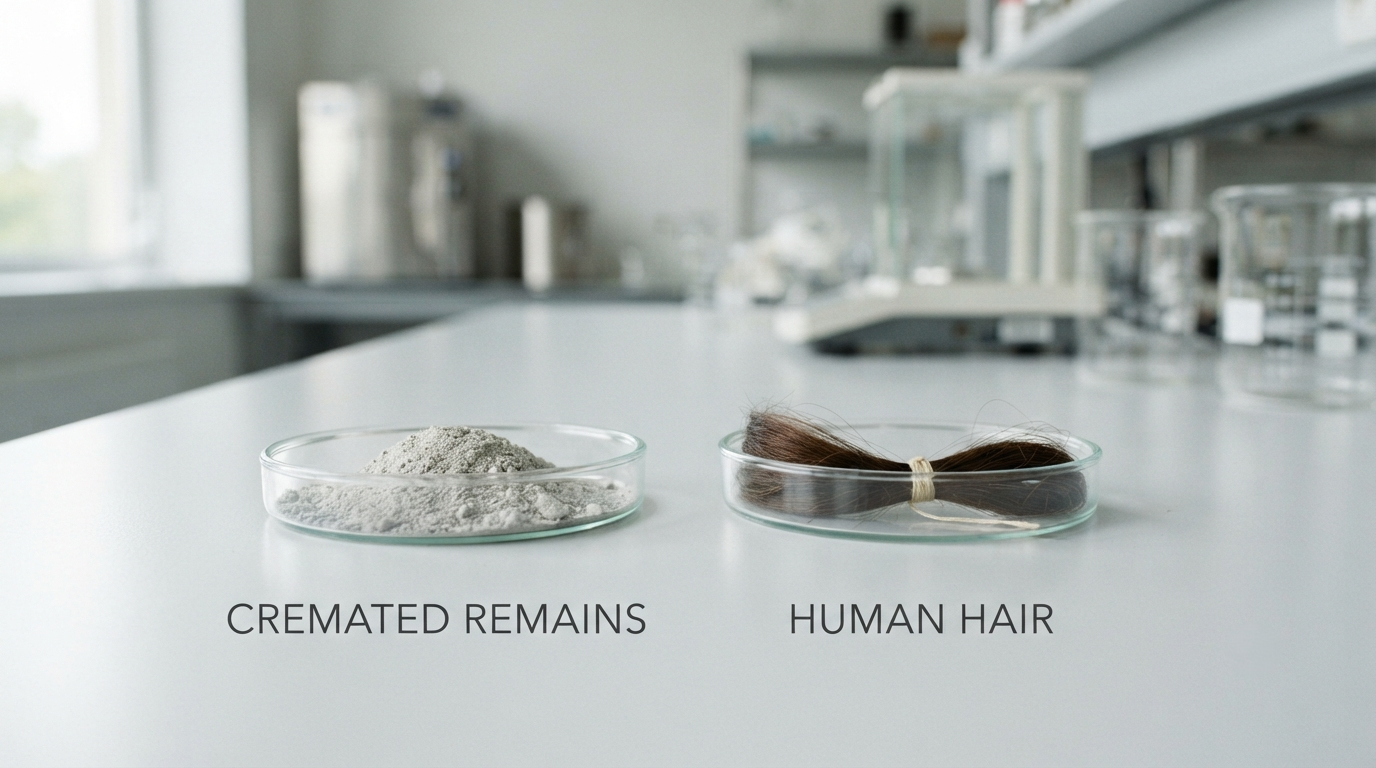
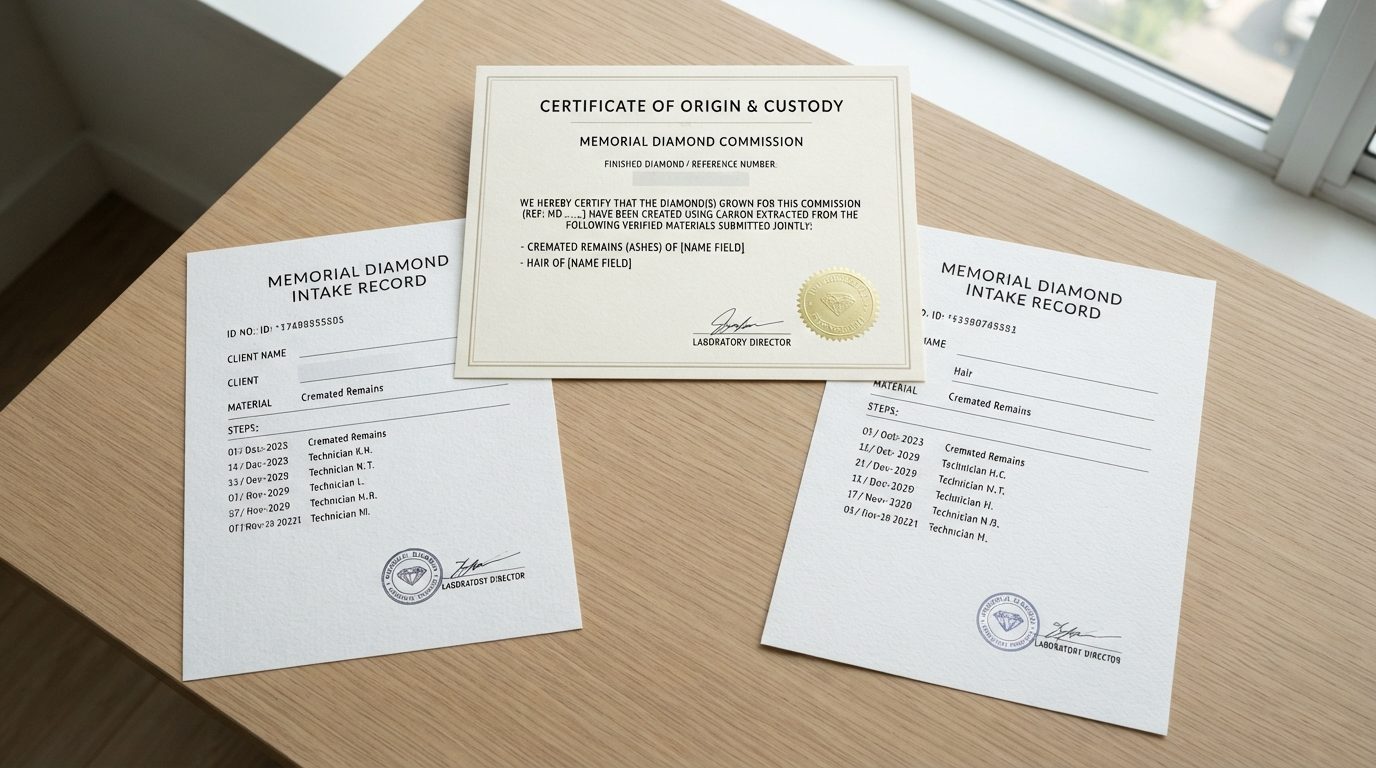
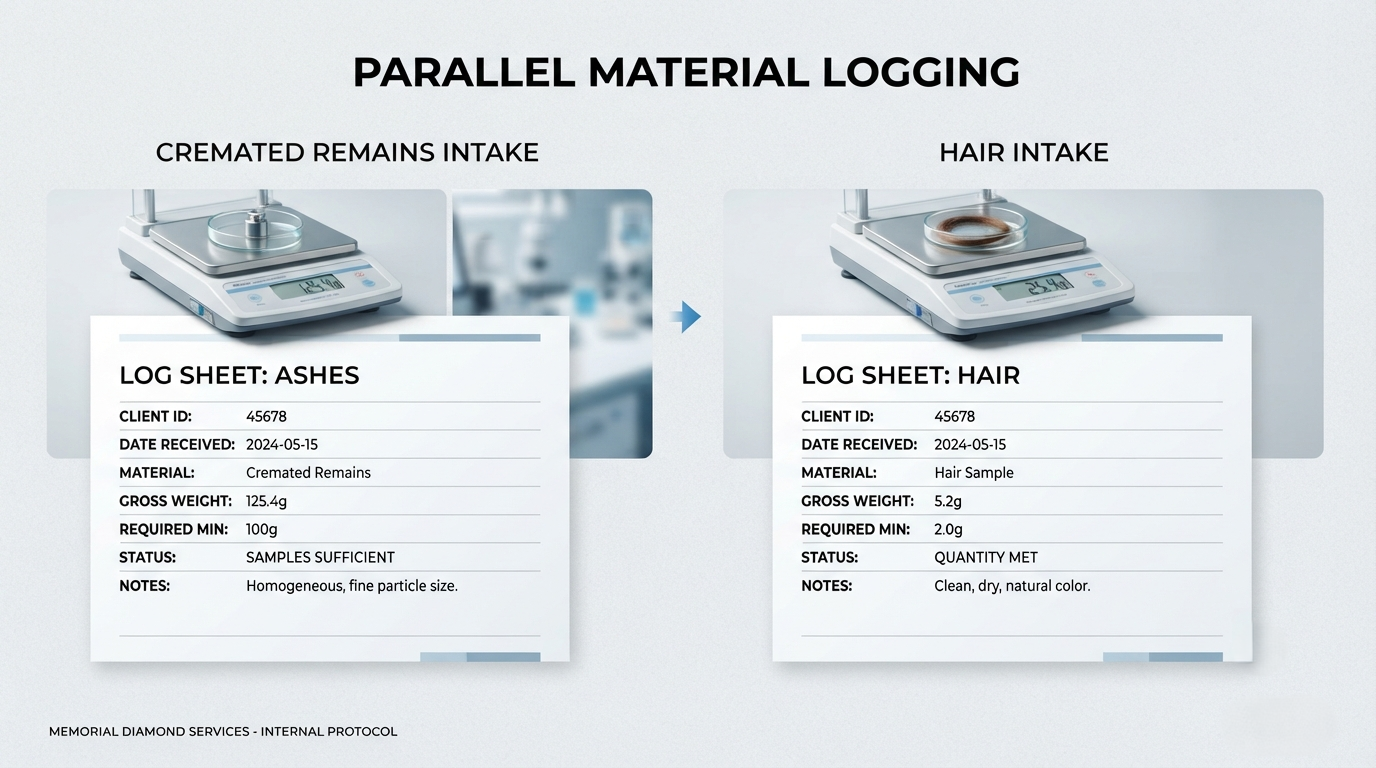
- Collection and chain of custody. Step one in any attempt to turn son ashes and hair into a diamond is intake: both samples are logged, assigned an identifier, and tracked from that point forward. Every laboratory that will turn son ashes and hair into a gem should be able to describe this process to you in concrete terms.
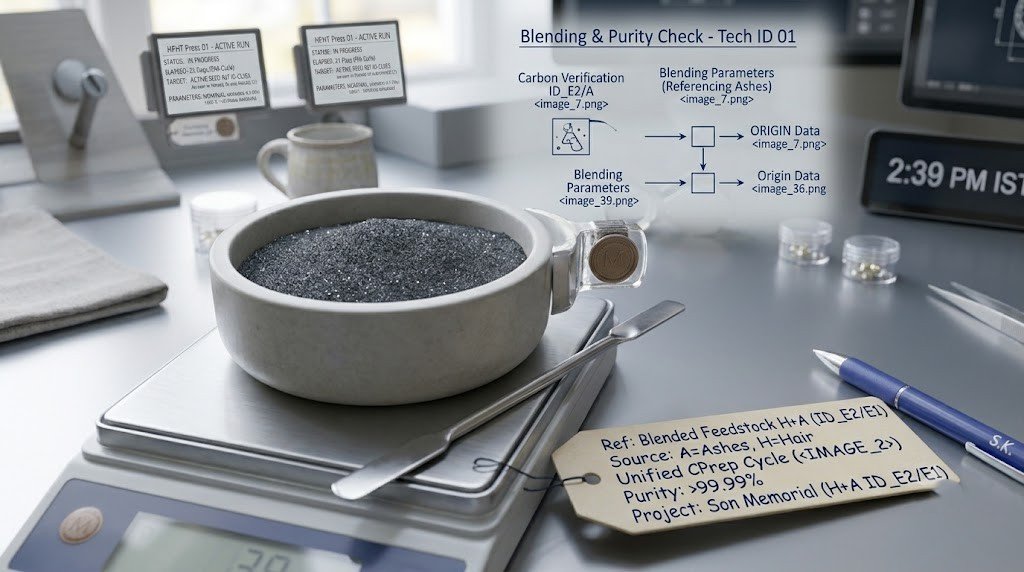
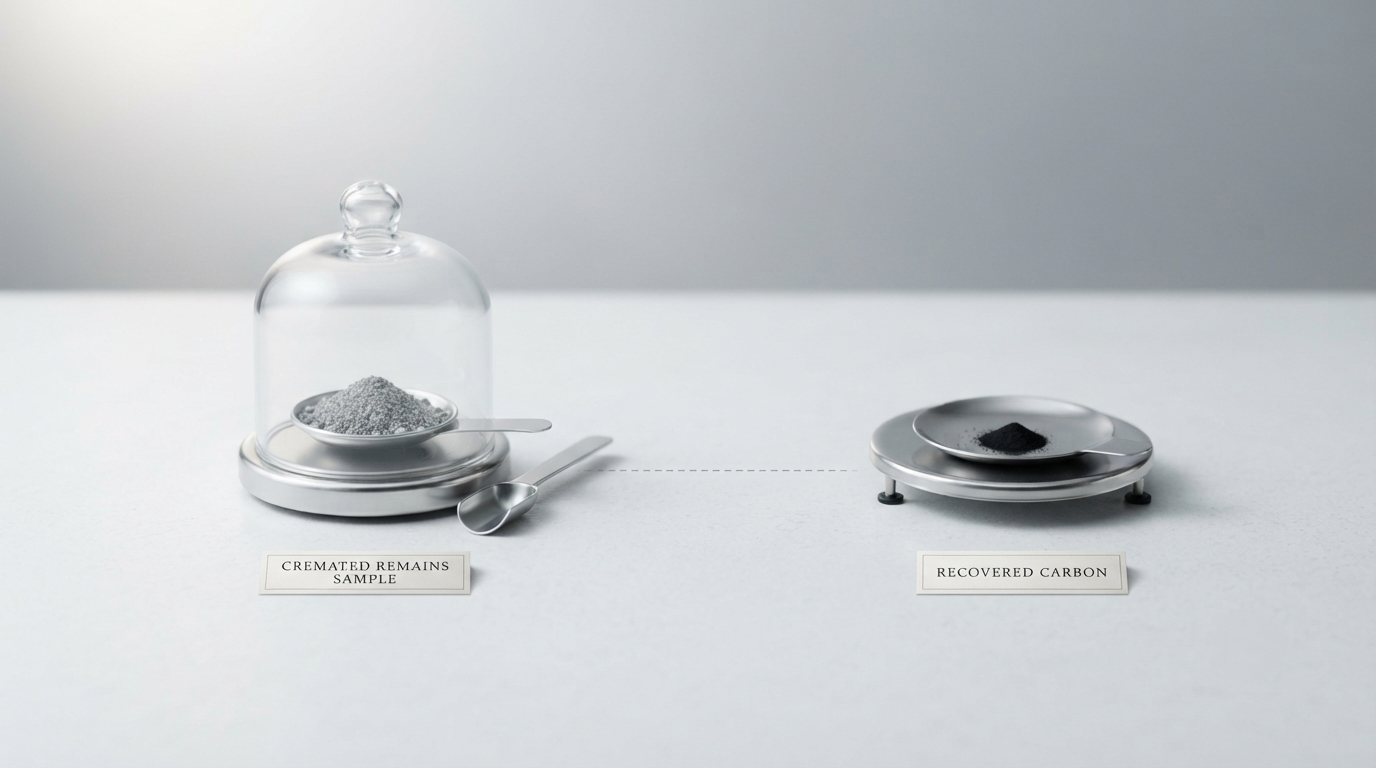
- Carbon extraction and purification. Each sample is heated in a controlled, oxygen free, multi stage process that strips out everything that is not carbon the calcium phosphate that dominates ash, the non carbon components of keratin in hair until the recovered material reaches roughly 99.9%+ carbon purity.
- Graphitization. The purified carbon is heated further, to somewhere around 2,500 to 2,700°C, and converted into graphite: the crystalline form of carbon a growth press can actually use as feedstock.
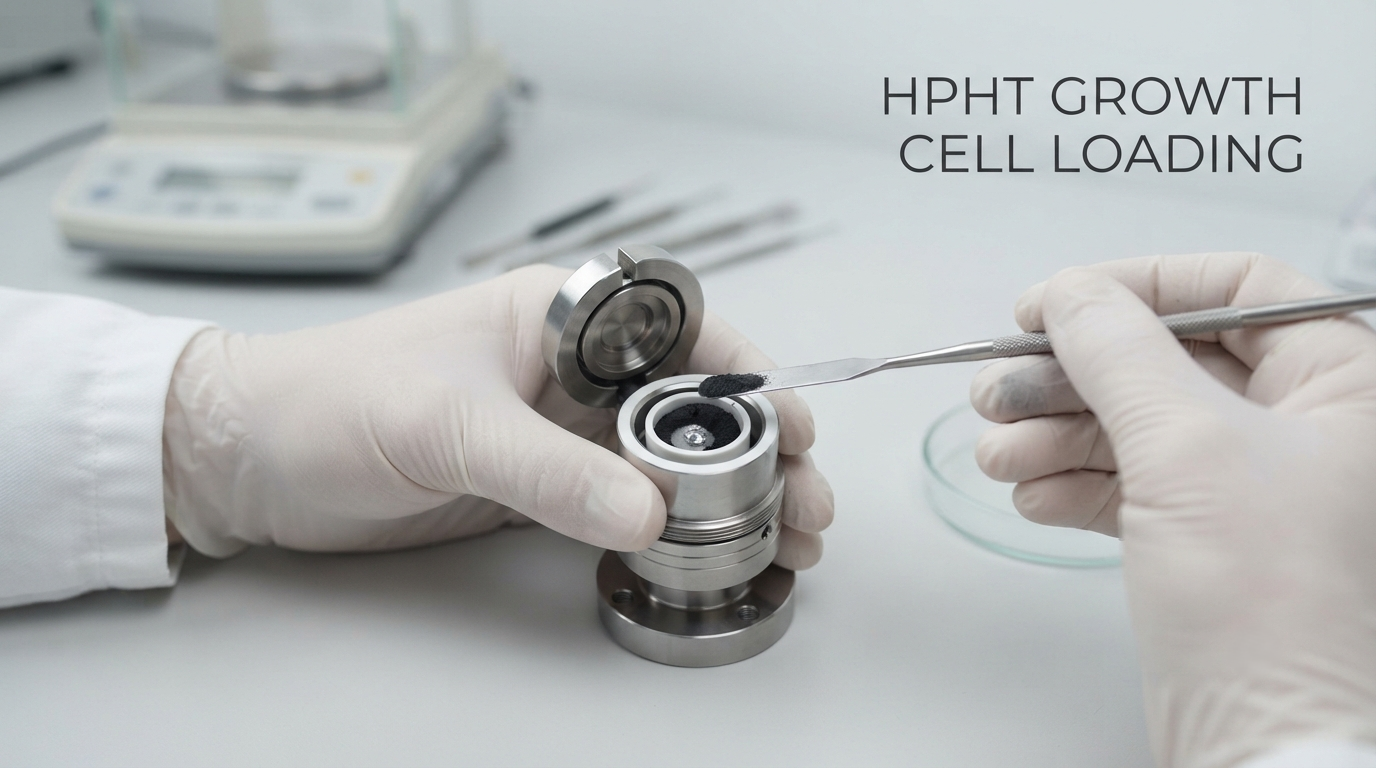
- Loading the growth cell. The graphite, blended with supplemental lab sourced carbon to reach workable volume, is placed in a growth cell with a tiny diamond seed. This is the growth cell where the decision to turn son ashes and hair into one crystal finally becomes physical.
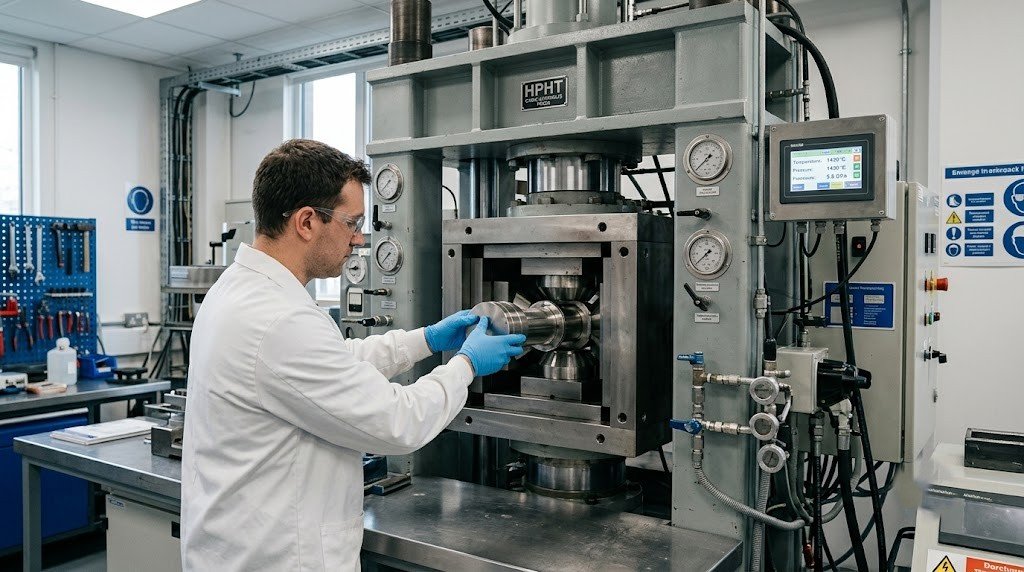
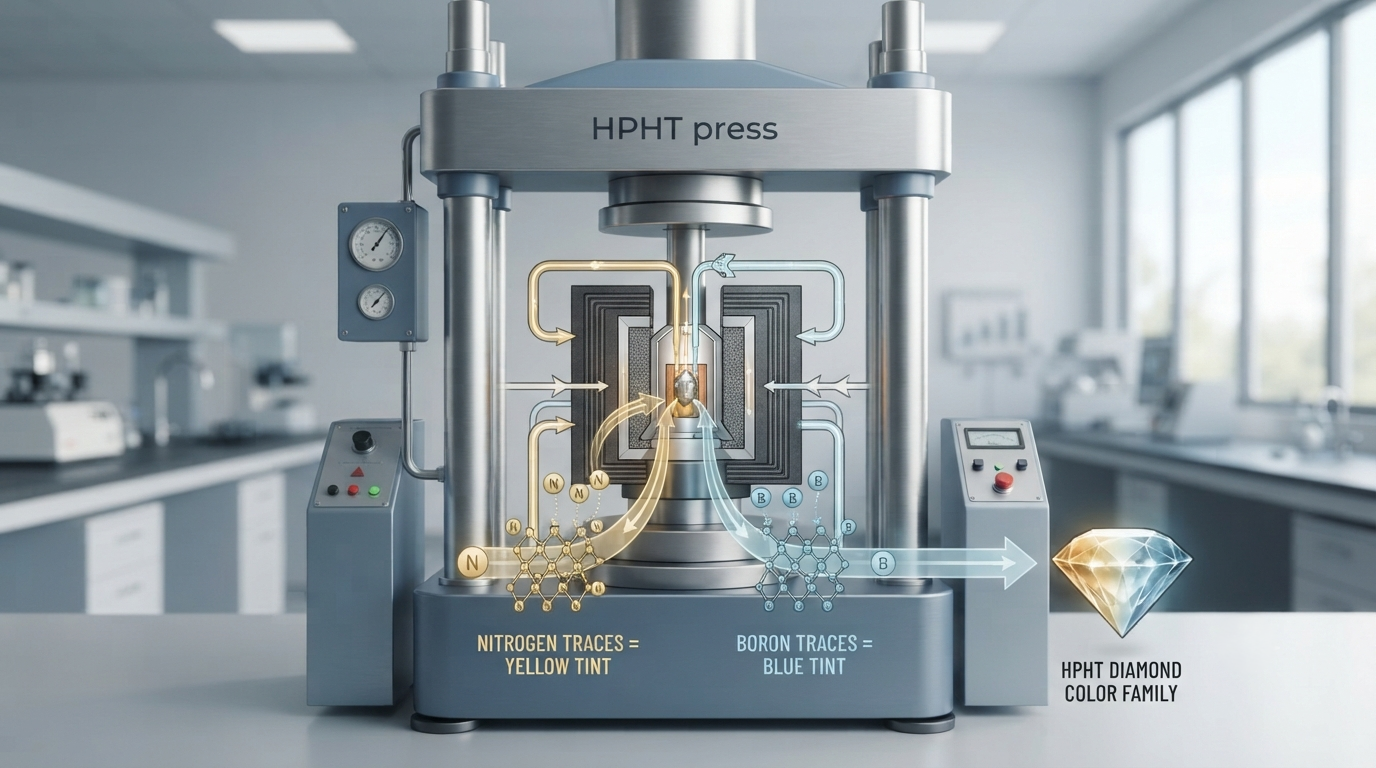
- Growth. In the HPHT method that dominates this category, the cell is held at roughly 6 to 8 gigapascals of pressure and temperatures in the 1,400 to 2,500°C band for weeks to months. A minority of providers use CVD instead, depositing carbon from gas onto a seed plate in a vacuum chamber. Nothing about the finished size depends on the volume you send growth time sets carat size, not sample size.
- Cutting and polishing. Once you turn son ashes and hair into rough crystal, a gem cutter takes over and shapes it into a round, cushion, princess, or other finished cut, exactly as with any other diamond.
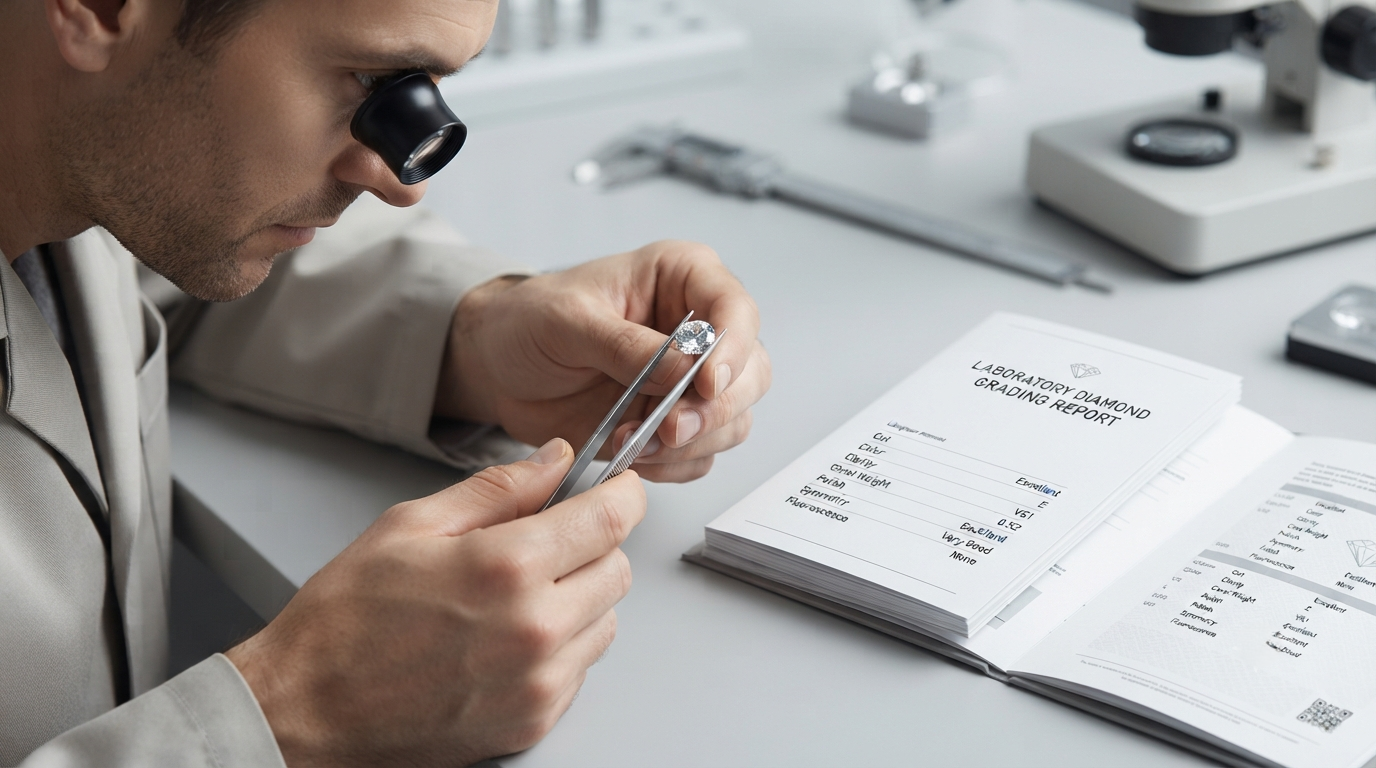
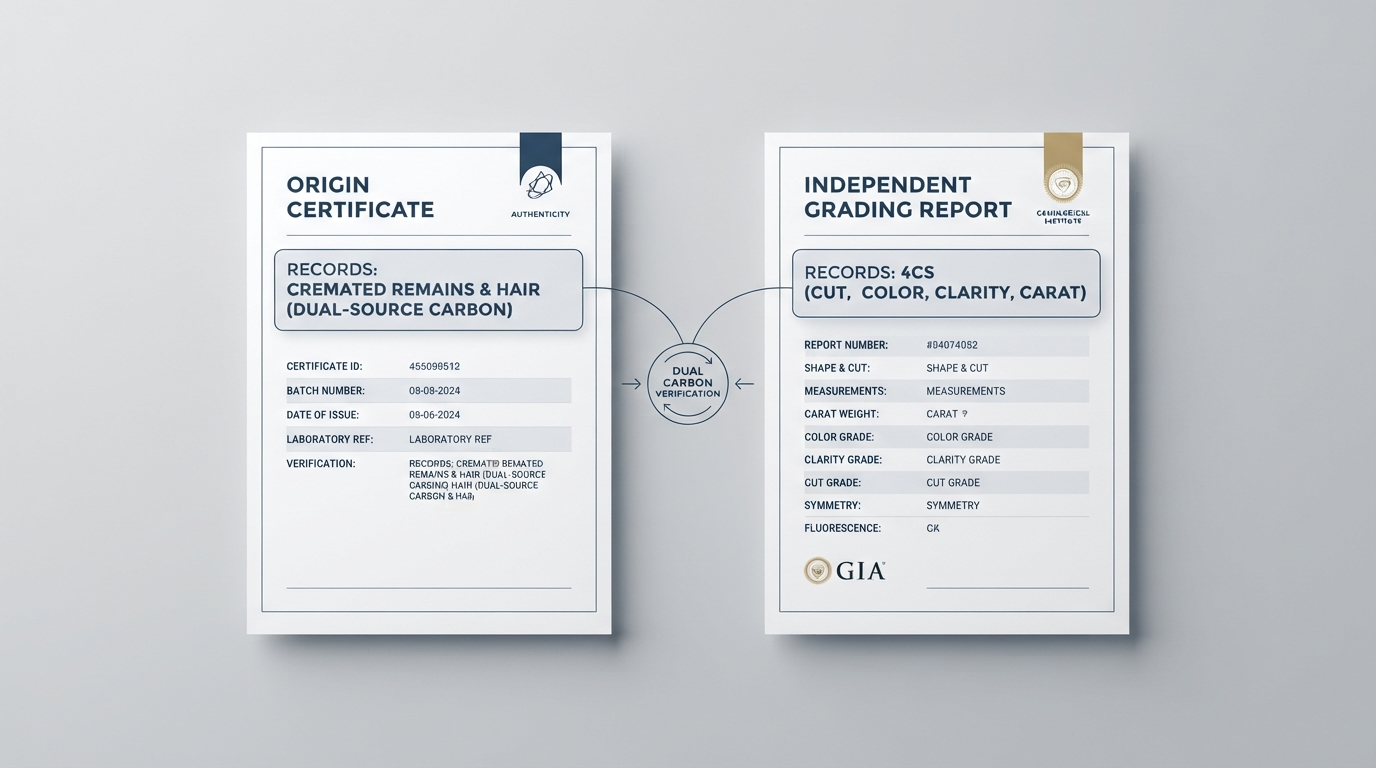
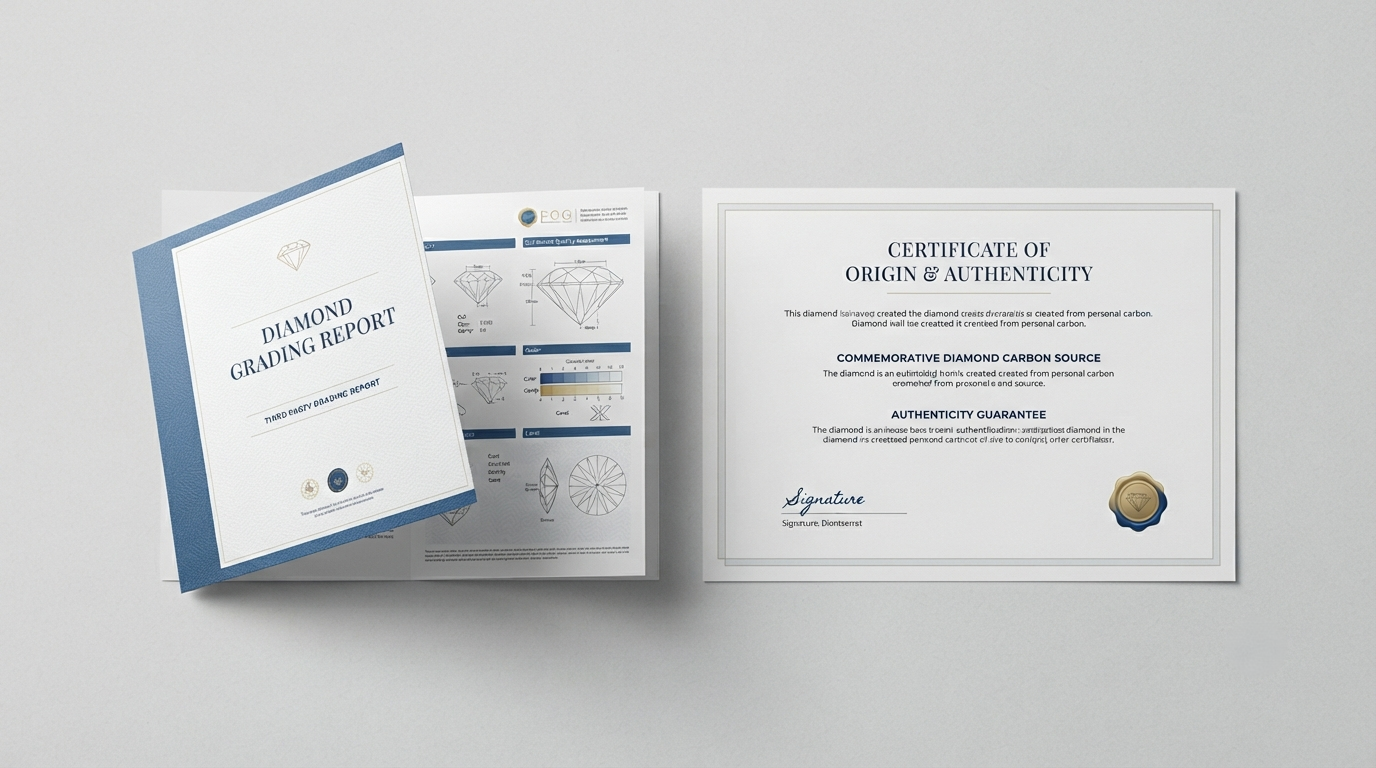
- Optional irradiation and optional independent grading. Some providers offer post growth irradiation to shift or intensify color. Many families also request a grading report from an independent third party laboratory, documenting the usual cut, color, clarity and carat measures. Both are optional, and both are worth asking about before you commit rather than after.
How Much of the Finished Gem Is Actually His?
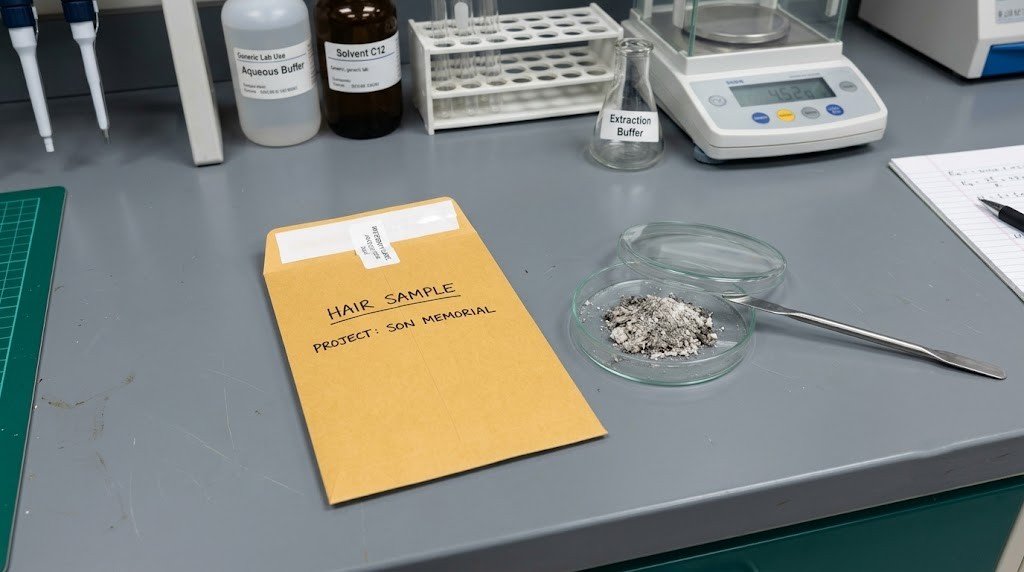
Parents ask how much of the finished gem is really his when they turn son ashes and hair into one stone, and they deserve a straight answer rather than a comforting one.
For the ash route specifically, industry figures put usable carbon at roughly 0.5% to 4% of cremated remains by weight. Of the finished stone’s mass, roughly 10 to 15% typically traces back to carbon drawn from ashes a share some providers put as low as 3%, since it moves with stone size and the volume of ash submitted. Hair is a much richer starting material roughly 50% carbon by weight, because keratin is a carbon rich protein but that is a fact about the input, not about the finished stone.
Published figures for the ash route exist. For a charge where you turn son ashes and hair into a blended feedstock, no equivalent published percentage exists at all, and nobody should quote you one as though it were settled. Ask any provider who offers to turn son ashes and hair into a diamond to put their own figure, and their method for arriving at it, in writing.
What is honest to say is this: when you turn son ashes and hair into one crystal, a real, verifiable portion of his own carbon is inside the lattice, blended with supplemental lab carbon to reach a growable volume. No memorial diamond from any source material is 100% personal carbon, and a provider claiming otherwise is describing something physics does not do.
What Color Will the Stone Come Out?
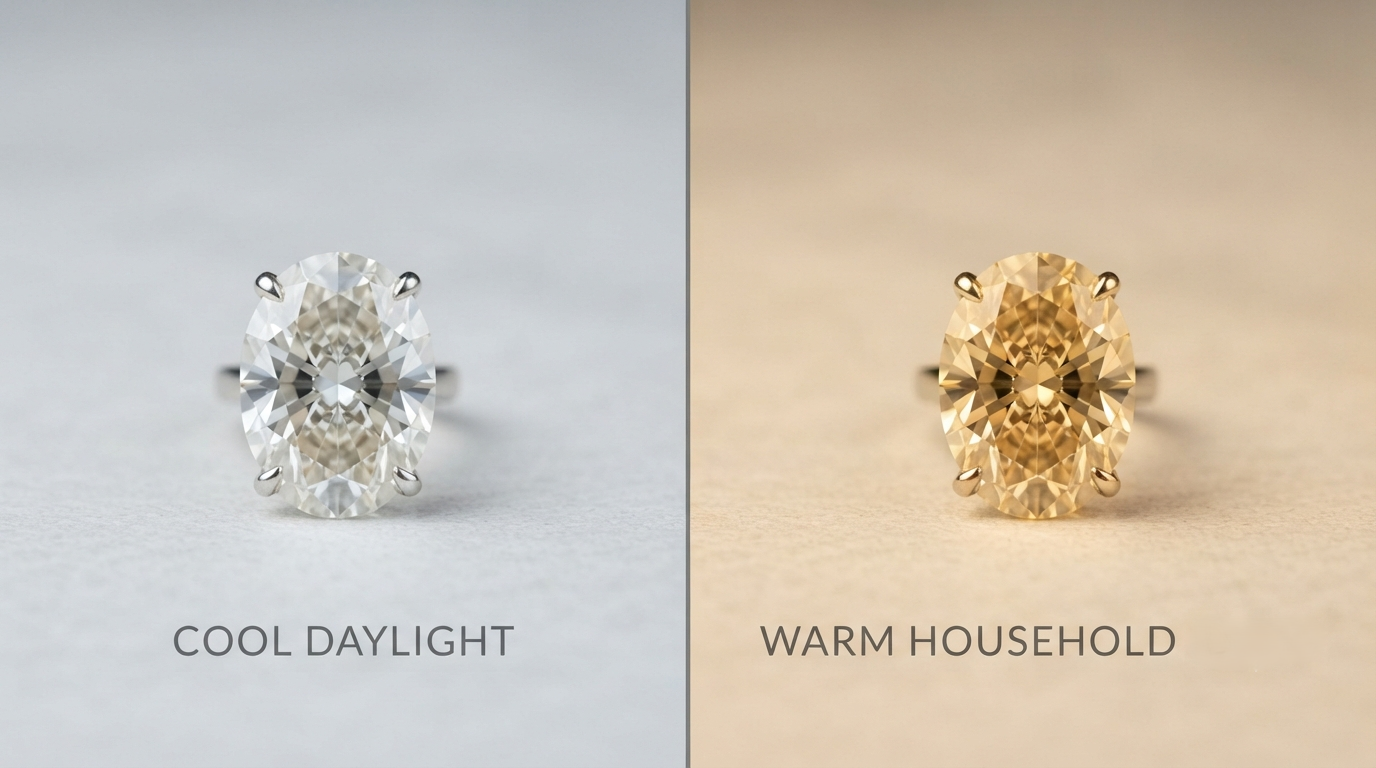
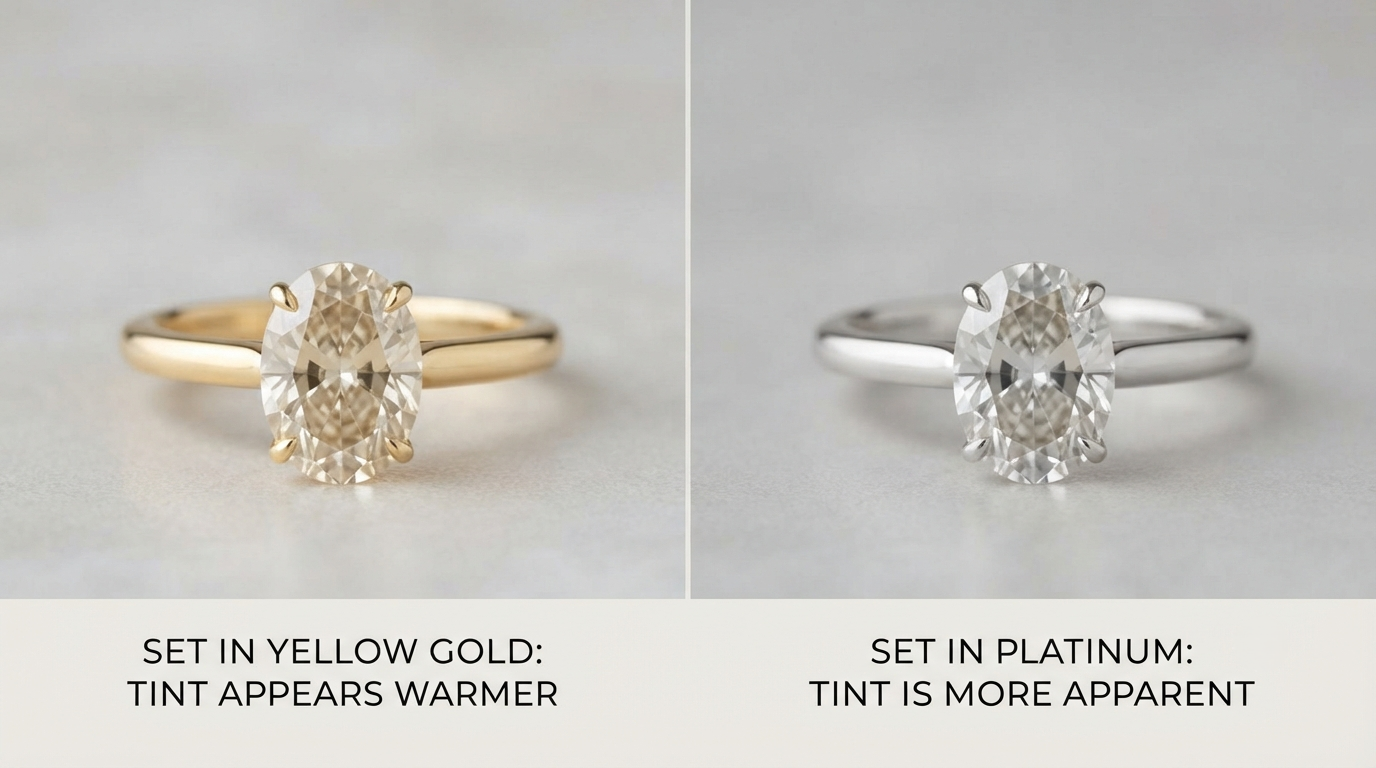
Color is the part of the plan to turn son ashes and hair into a diamond that families least expect to be surprised by, and it is where the individuality of the source material shows up most visibly.
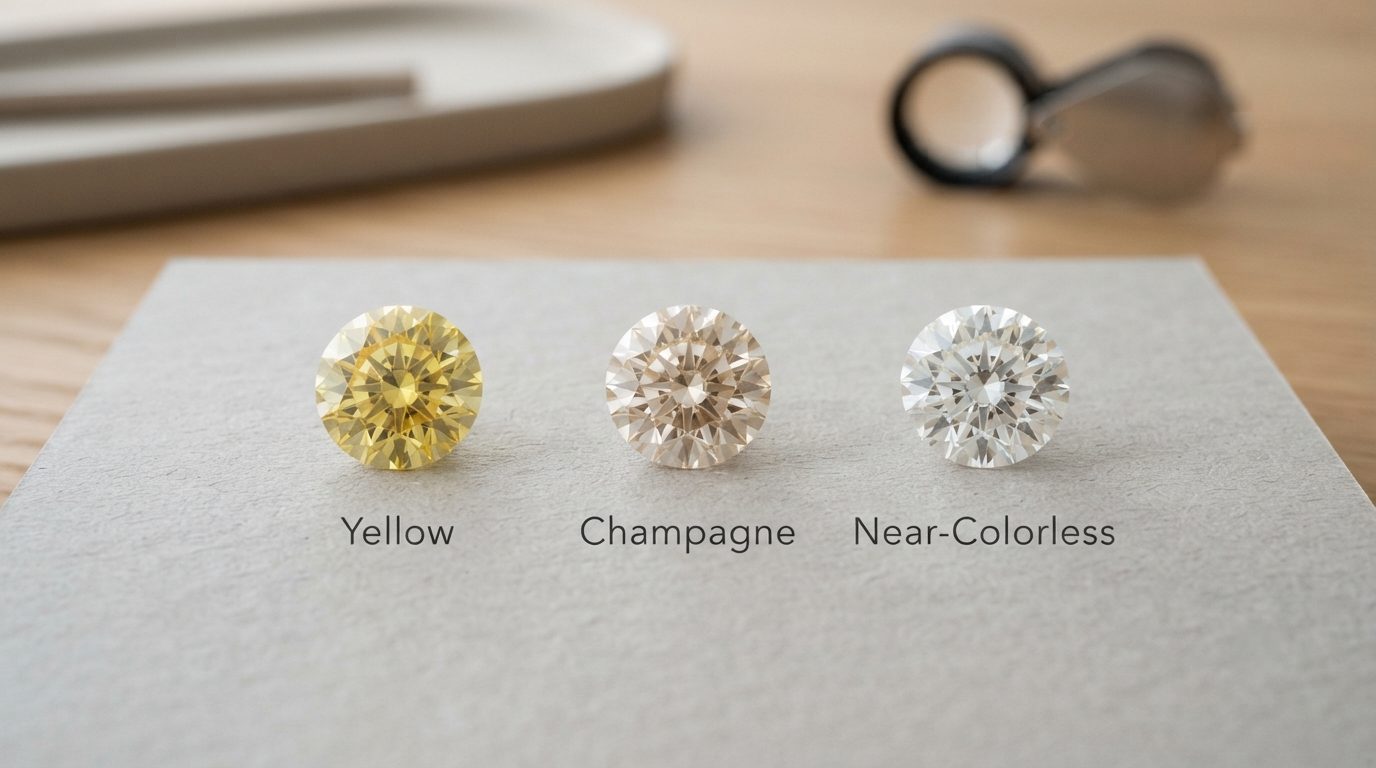
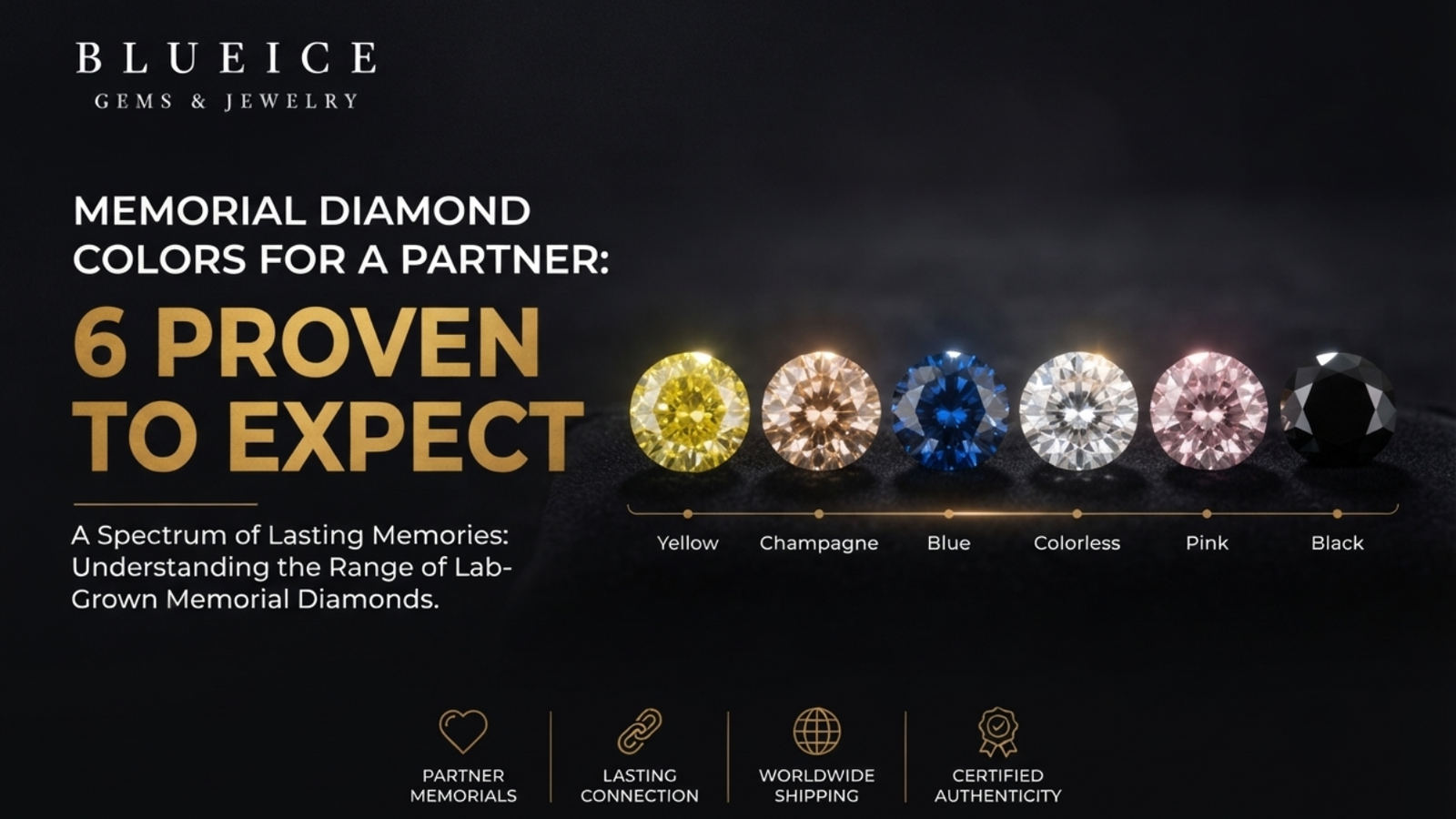
Nitrogen left in the feedstock pushes a crystal toward yellow. Boron pushes it toward blue. A colorless diamond requires the near total absence of both, which is why memorial stones trend toward yellow, blue, and champagne or brown tones rather than white organic source material carries trace elements that a purely synthetic feedstock would not.
When you turn son ashes and hair into a blended charge, both samples bring their own trace elements to the same growth run, which is one more reason no reputable lab will promise you a precise shade before a growth run has actually happened. Colorless is achievable with extra processing and typically costs more; irradiation after growth can produce red, pink, green, or black.
One further point worth knowing: irradiation is a post growth treatment rather than a dye, and an independent grading report will normally disclose that it was applied. If it matters to you whether the color arose from the material itself or was introduced afterwards, say so before growth begins rather than after the stone is cut.
It helps to decide in advance whether you want a specific color or whether you would rather accept whatever the material gives you. Many parents find they prefer the second once it is framed honestly the shade is a consequence of him, not a defect. There is more on what color a combined stone tends to come out if that is the deciding factor for you.
How Long Does It Take and What Does It Cost?
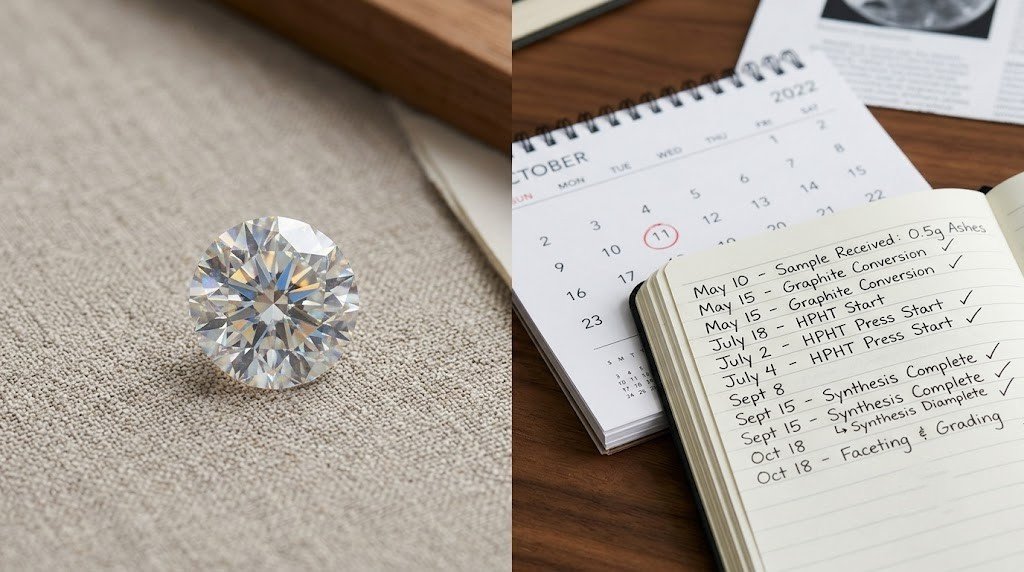
The time it takes to turn son ashes and hair into a finished stone is governed by growth, not by paperwork. Across the industry, six to ten months from receipt of material to finished diamond is the typical span, with larger stones beyond roughly two carats or specialty colors such as black sometimes running to twelve.
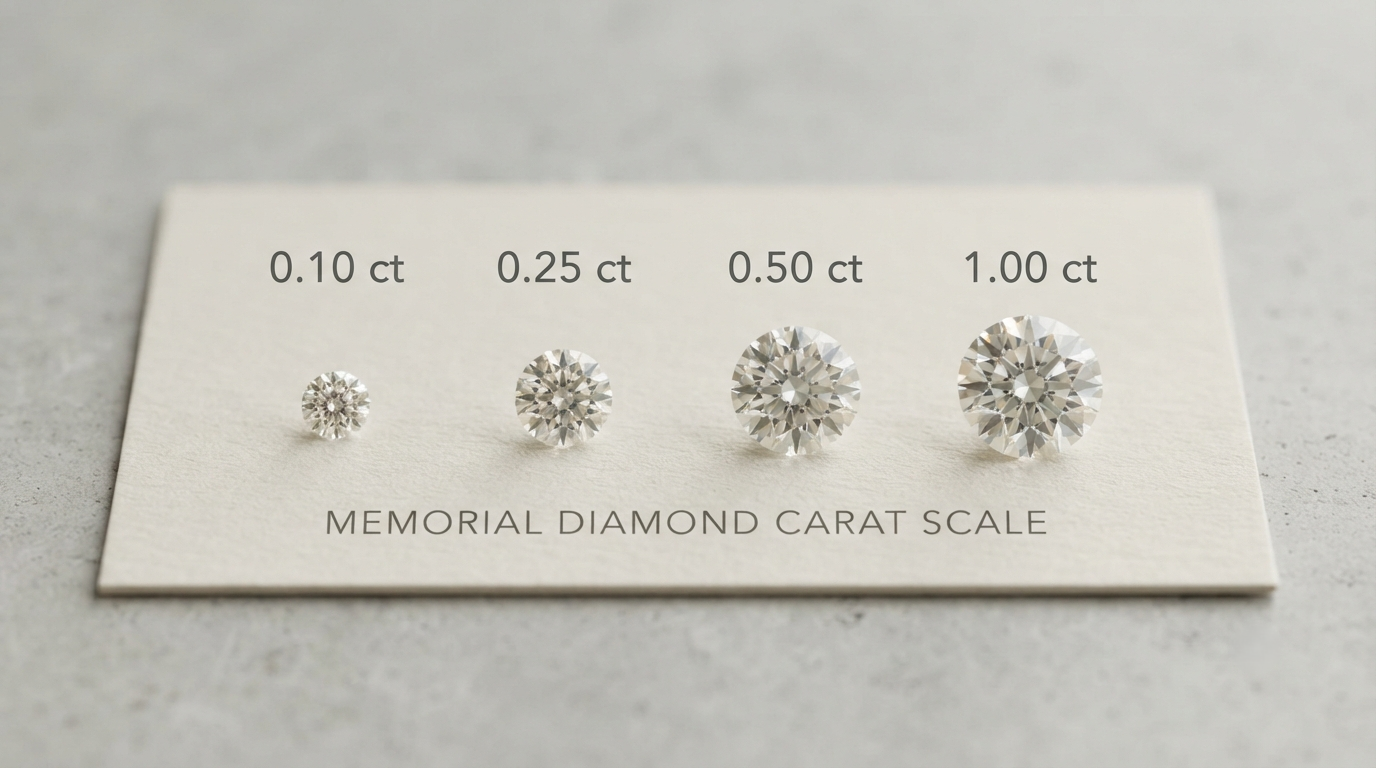
Cost, when you turn son ashes and hair into a diamond, tracks carat, color, cut, and whether an independent grading report is included. These are general industry ranges for 2026, not any single provider’s published price list:
| Size tier | Typical industry range | Notes |
|---|---|---|
| 0.10 to 0.25 ct | About $1,500 to $3,500 | The usual entry point |
| 0.5 to 1.0 ct | About $5,000 to $15,000 | Colorless costs meaningfully more than yellow, blue or champagne at the same size |
| 2 to 5+ ct | About $20,000 to $75,000+ | Longest growth times |
Nothing about choosing to turn son ashes and hair into one gem rather than two changes which tier you land in the tier is set by the size you choose. Budget for the extras too when you turn son ashes and hair into something wearable: settings, engraving, fancy cuts and grading reports are usually priced separately from the loose stone. If cost is the deciding factor, what a son memorial diamond costs goes into the tiers in more detail, and how long the whole thing takes covers the calendar.
What Should You Ask Before You Send Anything?
Ask these before you agree to turn son ashes and hair into a diamond, and ask for answers you can keep:
- How will you turn son ashes and hair into a documented, traceable batch what identifier is used, and can I see the log?
- What happens if a lab cannot turn son ashes and hair into a viable crystal on the first run? Is there a second attempt, and does it cost more?
- What percentage of the finished stone do you estimate will be his carbon, and how did you arrive at that estimate?
- Do you return any unused ash or hair, and in what form?
- Is independent third party grading available, and is it included or extra?
- What exactly does your authenticity or origin documentation state?
- Can a second stone be grown later from the material I still hold?
Written answers matter more than reassuring phone calls here, for the same reason chain of custody matters: this is a months long process involving something irreplaceable. If you want a longer version of this list, questions worth asking before you commit expands each one.
Frequently Asked Questions
Can a lab turn son ashes and hair into more than one diamond?
Often yes, because only a portion of what you send is used. Several stones can frequently be grown from one shared submission, either in the same run or from reserved material later. Confirm the specific provider’s policy, and the cost of each additional stone, in writing first.
Does hair have to be from before he died?
No. Hair collected at any point works the same way chemically, whether it was cut years earlier, kept from a childhood haircut, taken by a barber, or collected after death. Keratin’s carbon content does not change with time, and properly stored hair keeps indefinitely.
Does it cost more to turn son ashes and hair into one diamond than ash alone?
Providers price by carat, color, cut and optional extras rather than by how many source materials you submit, so a combined submission does not usually carry its own surcharge. Ask directly, though pricing structures differ, and you want that answer before intake, not after.
What if my son’s spouse and I disagree about doing this?
Then it is a legal question before it is a family one, because a surviving spouse may hold authority over his remains ahead of his parents in your state. Talk to the funeral home or a local attorney about who may authorize disposition before any material is shipped.
Will anyone be able to tell the diamond was made this way?
Not by looking. A memorial diamond is chemically and optically a genuine diamond, with the same hardness and the same cut, color, clarity and carat grading as any other. Laboratory grown origin is identifiable through gemological testing, but not to the eye.
Can we still bury or scatter the rest of him?
Yes, and many families do exactly that. A typical submission is a small fraction of a full cremation, so burial, interment, scattering, or keeping an urn all remain entirely available alongside the diamond. None of those choices is diminished by this one.
Final Thoughts on Turning Your Son’s Ashes and Hair Into a Diamond
Choosing to turn son ashes and hair into a diamond is not a way of finishing anything, and it should not be sold to you as one. It is a way of taking material you already have and making it into an object you can keep on your hand instead of on a shelf.
Some parents do this within a year. Some do it after five, or ten, or after a second loss makes the shelf feel heavier. Neither timing is late, and neither is wrong.
Whatever else is true, the decision to turn son ashes and hair into one stone belongs to whoever has the standing to make it, and it should be made slowly, with written answers from the lab, and with the people who also loved him in the room.
Learn More About Son Memorial Diamonds
- The full guide to a son ashes and hair diamond the whole subject in one place
- The ash only version of this process if you are working from cremated remains alone
- Working from hair alone no cremation required
- How much of each sample a lab needs quantities, in detail
- What color a combined stone tends to come out and why it varies
Talk With Memorial Diamond
If you are weighing this and want to talk it through rather than fill in a form, reach out to Memorial Diamond at memorialdiamond.us to discuss what is possible with the ash and hair you have. There is no obligation in asking, and no schedule you are behind on.
Word count: 2,934 words · Reading time: about 15 minutes