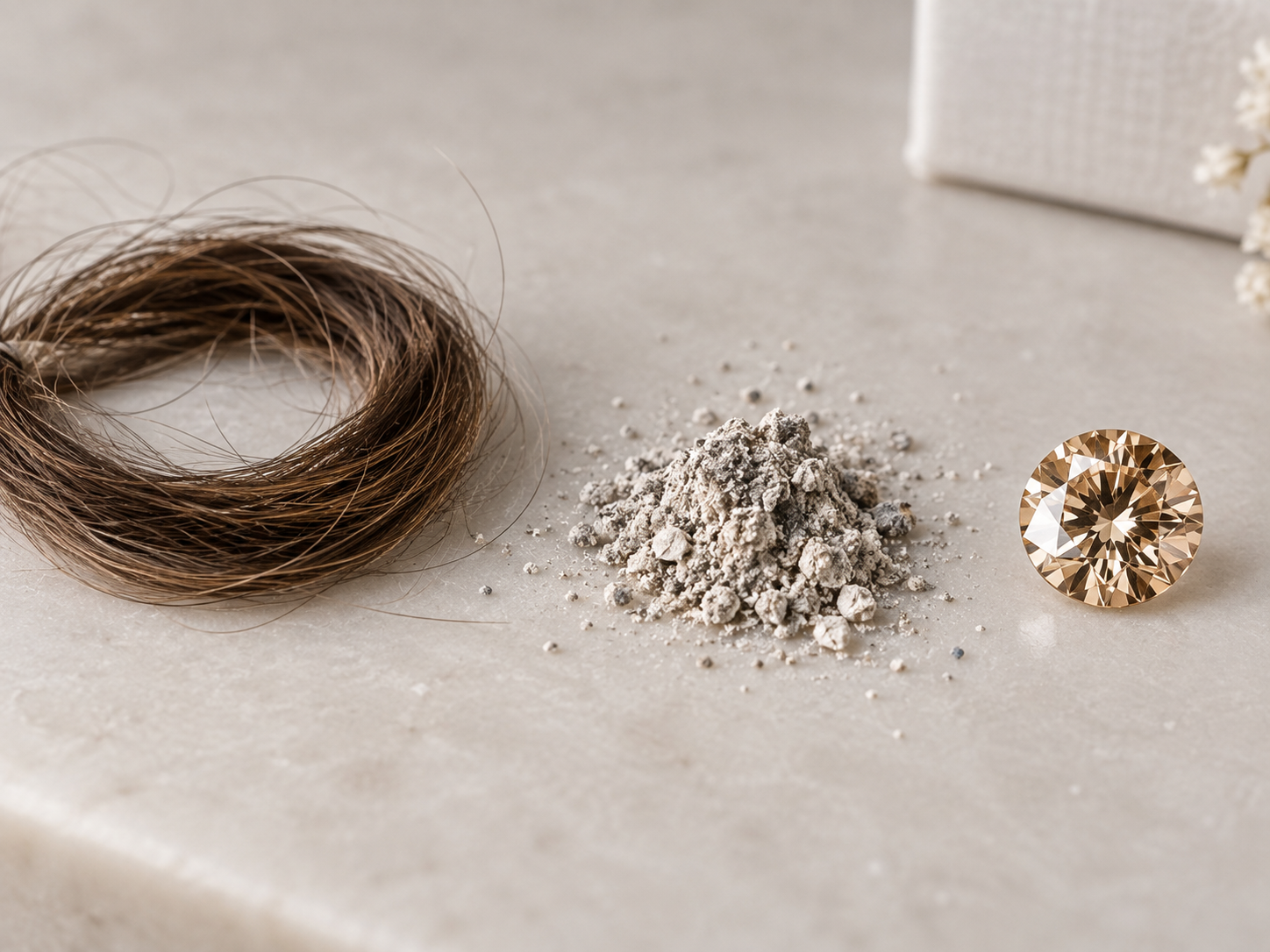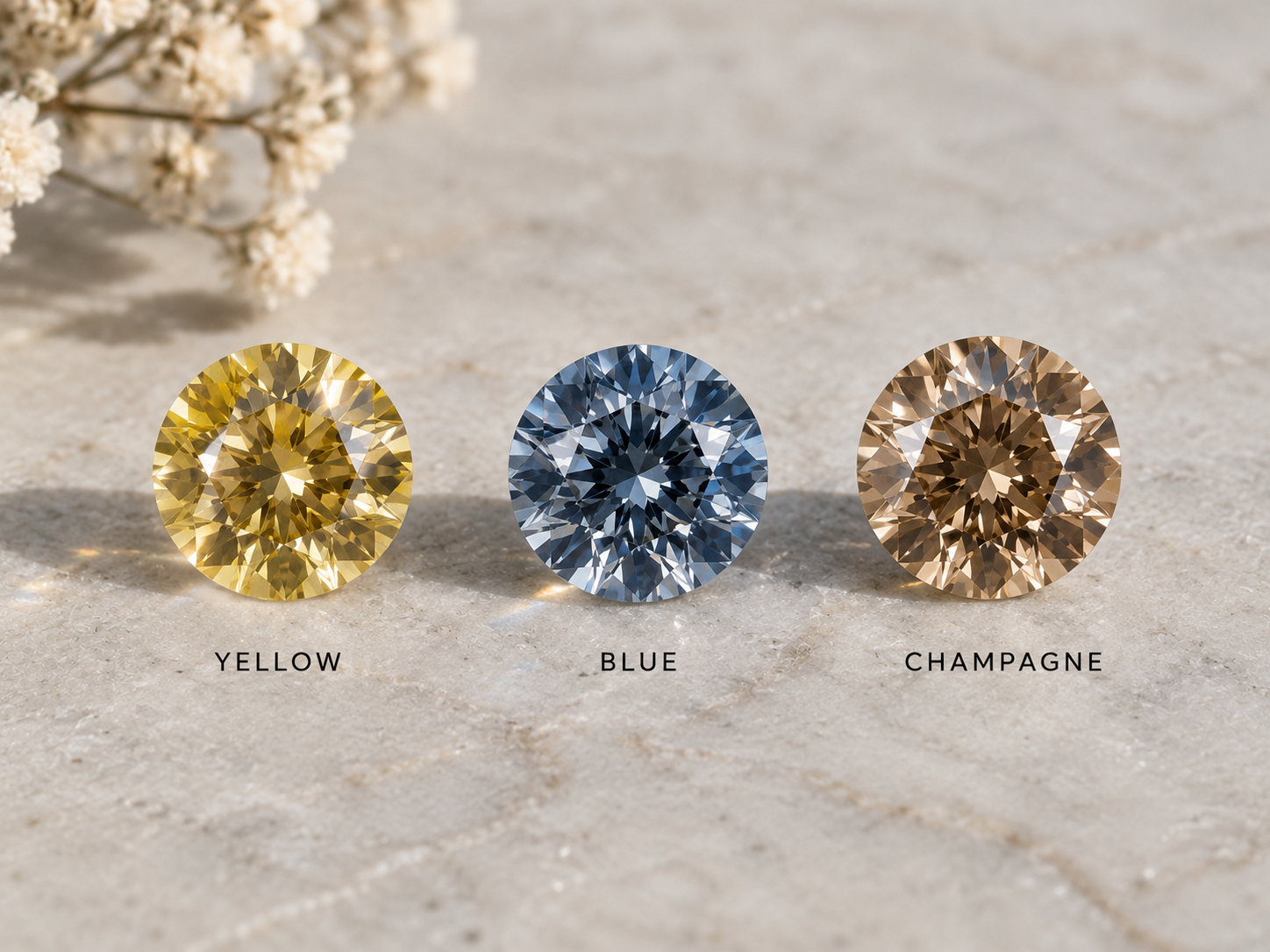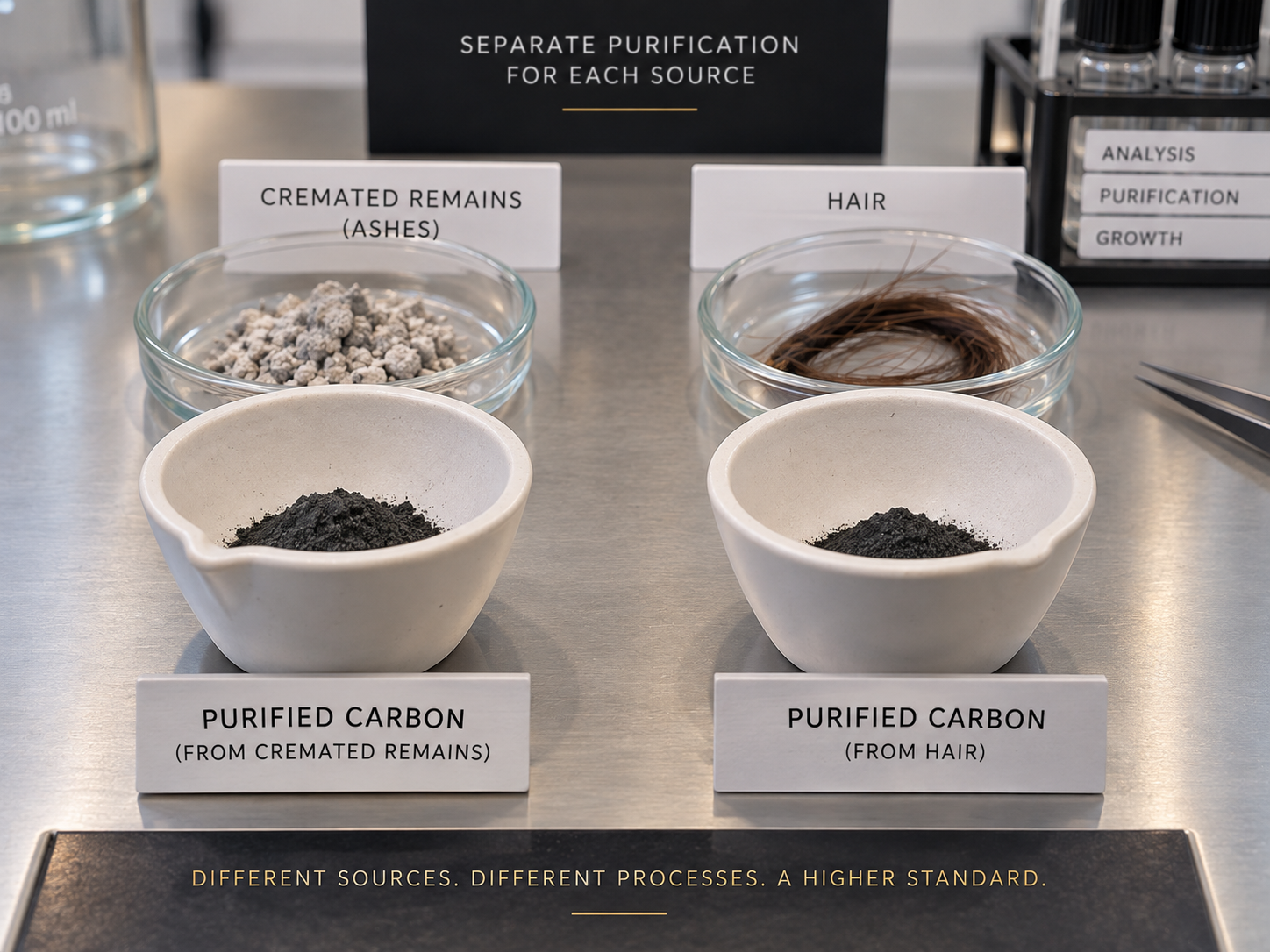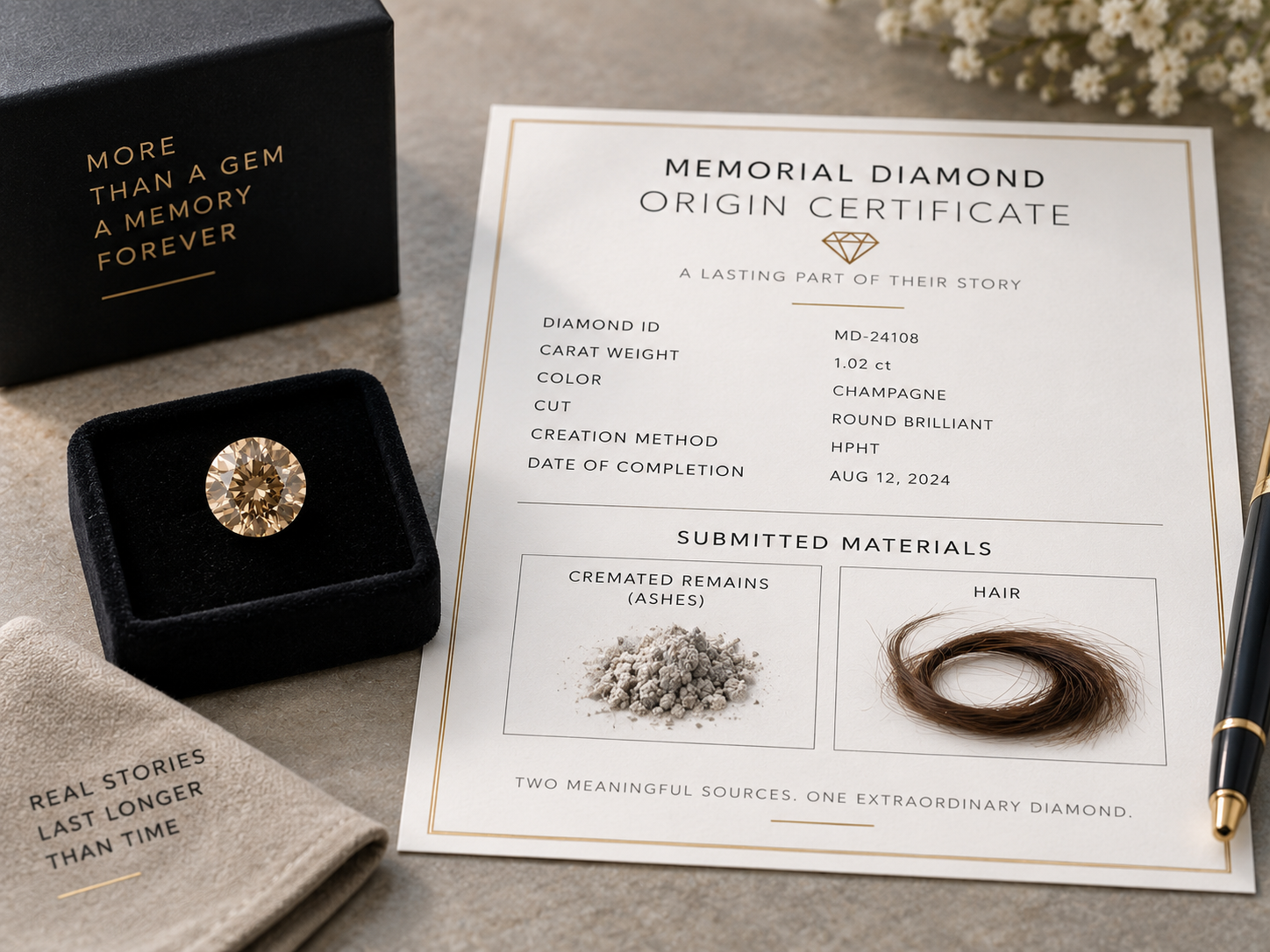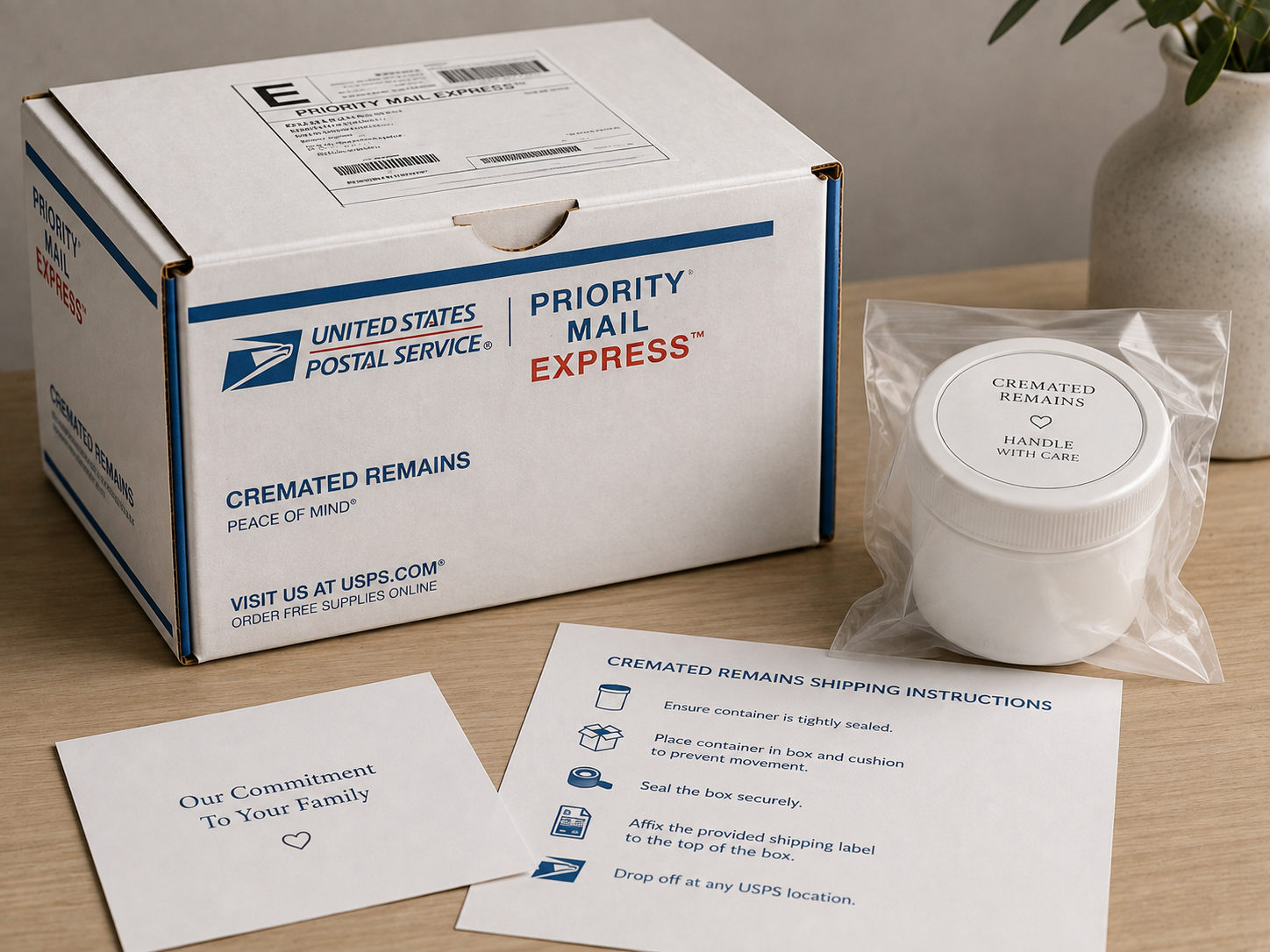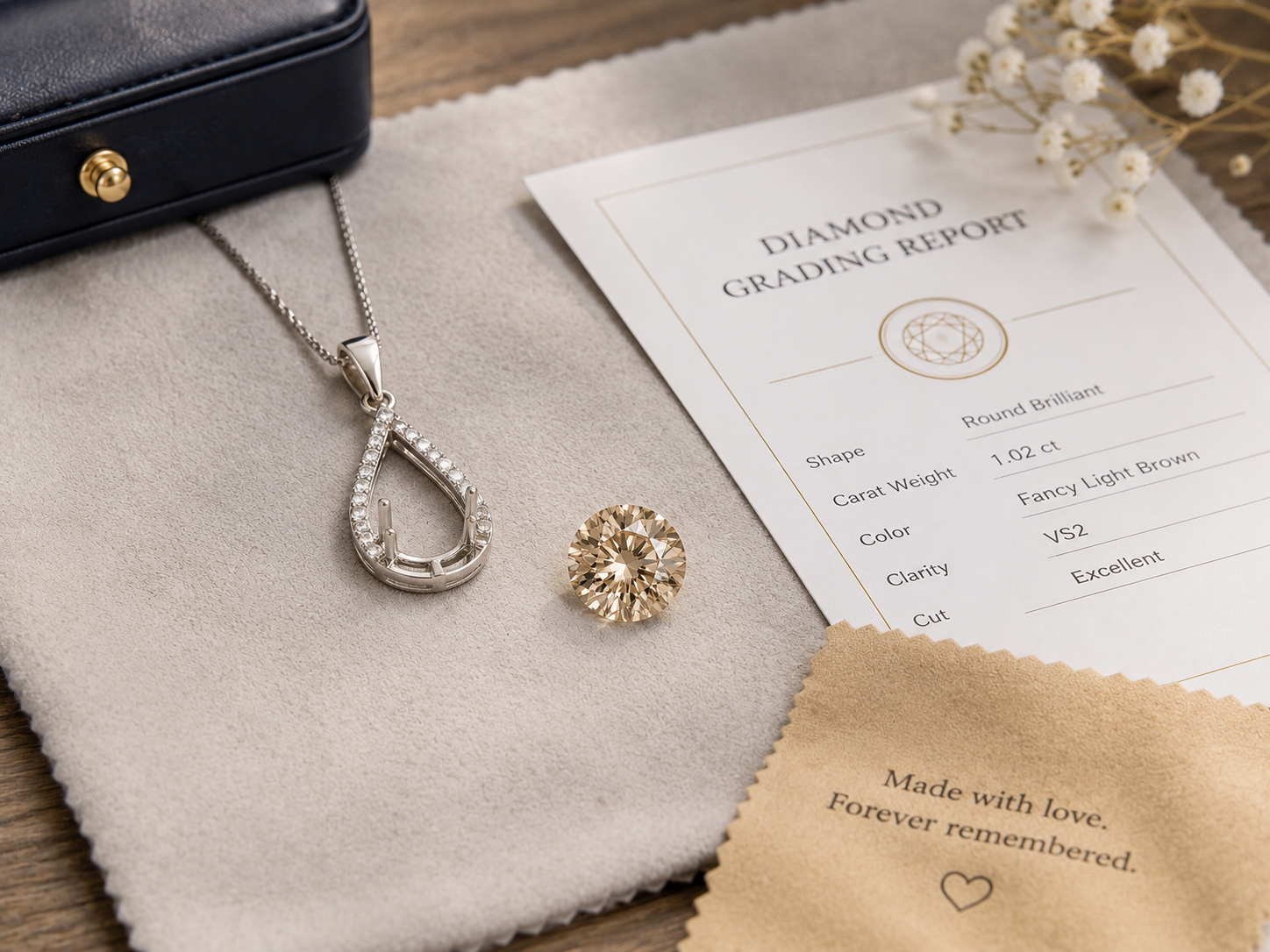
how much hair you need

How Much Hair Do You Need for a Mother Memorial Diamond?

Most people reading this are holding something finite. An envelope from a bedside drawer. A braid tied with ribbon since 1974. A few strands a hospice nurse thought to save. There is no more of it, so the number matters in a way it doesn’t for a family with an urn.

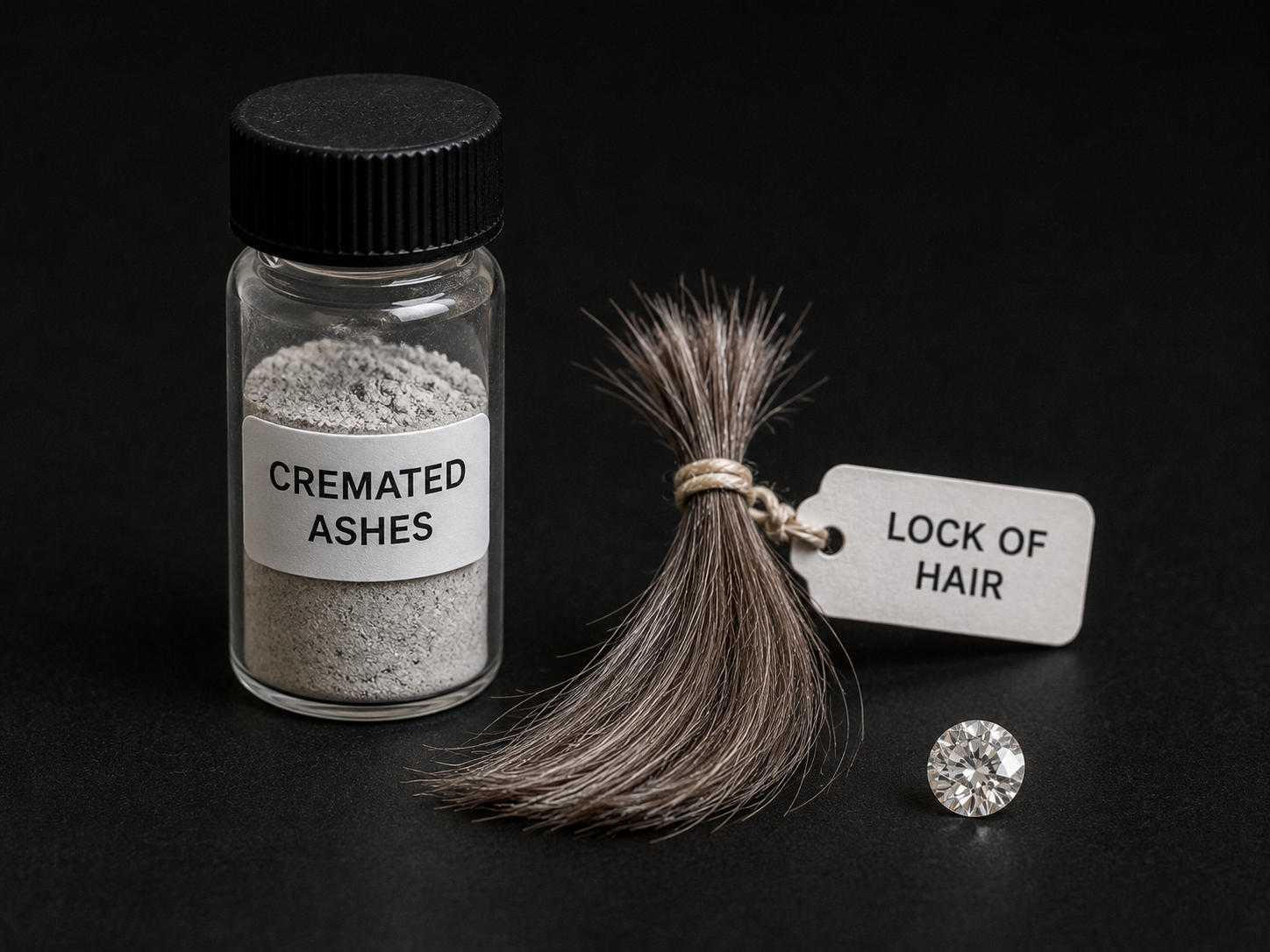
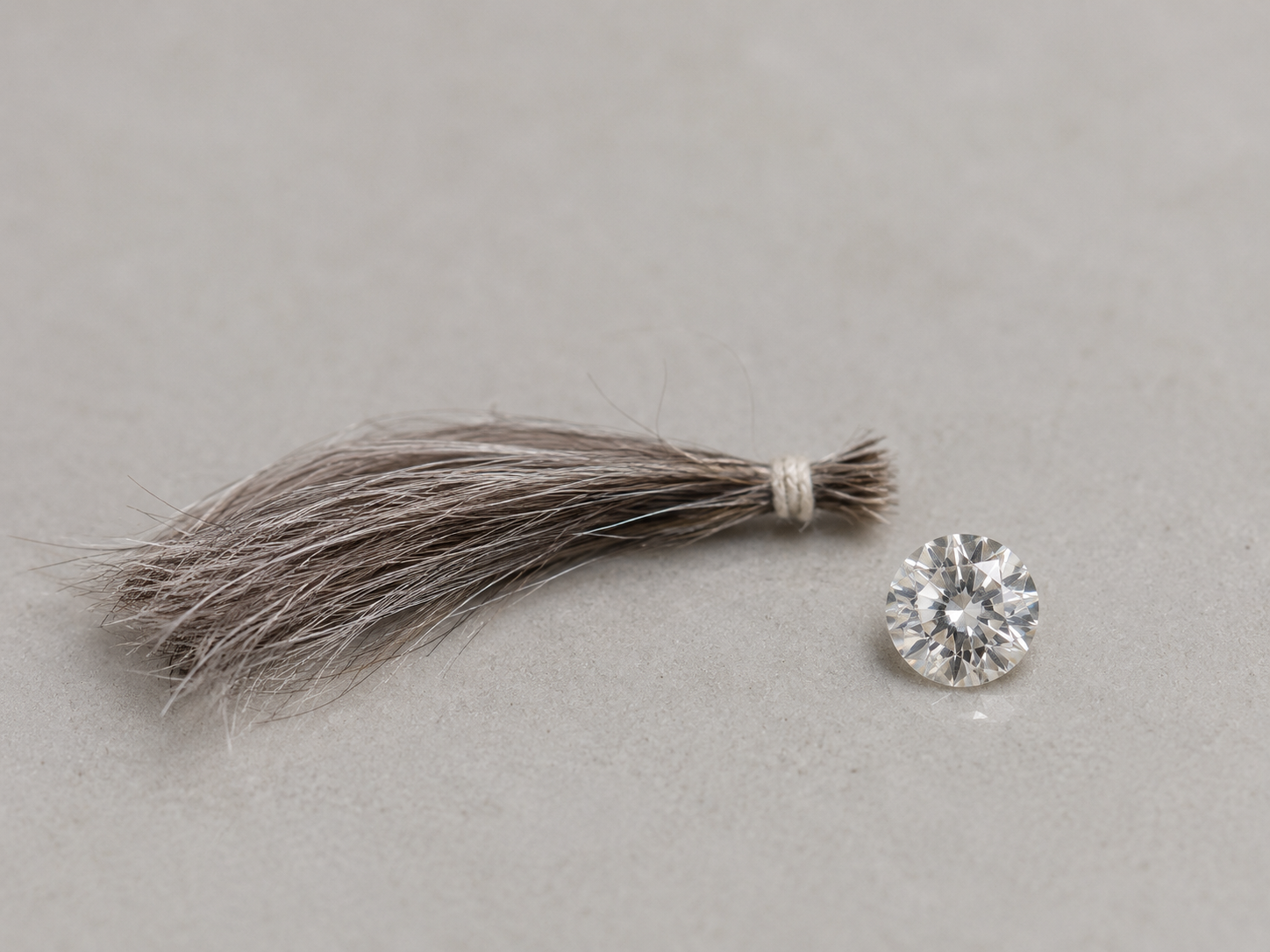
Industry-wide, a memorial diamond grown from hair takes a small lock or a few grams often described as palm-sized, or a few wisps.

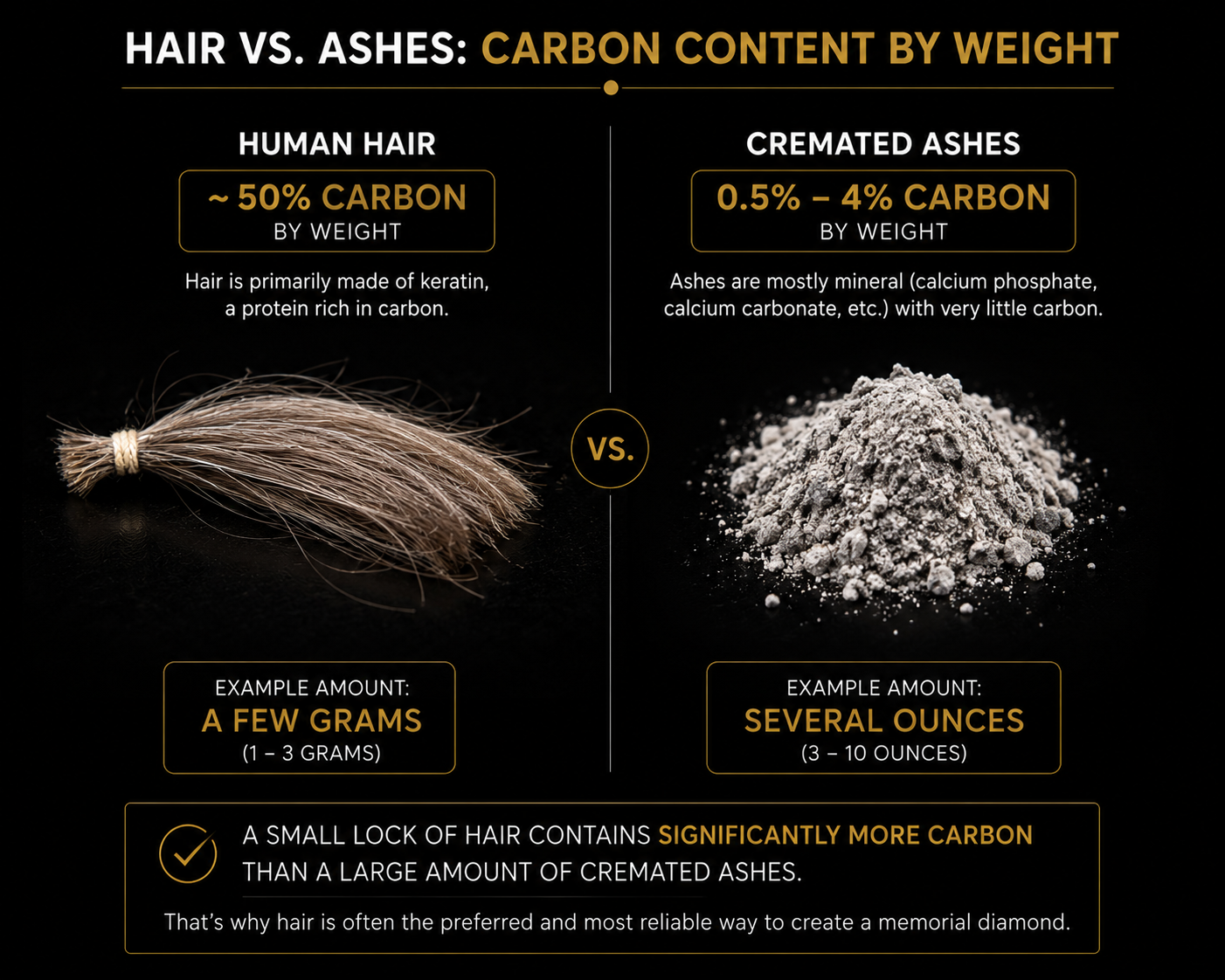
That is genuinely all. Hair is roughly 50% carbon by weight, and no cremation is involved at any point, which is why the requirement is measured in grams.
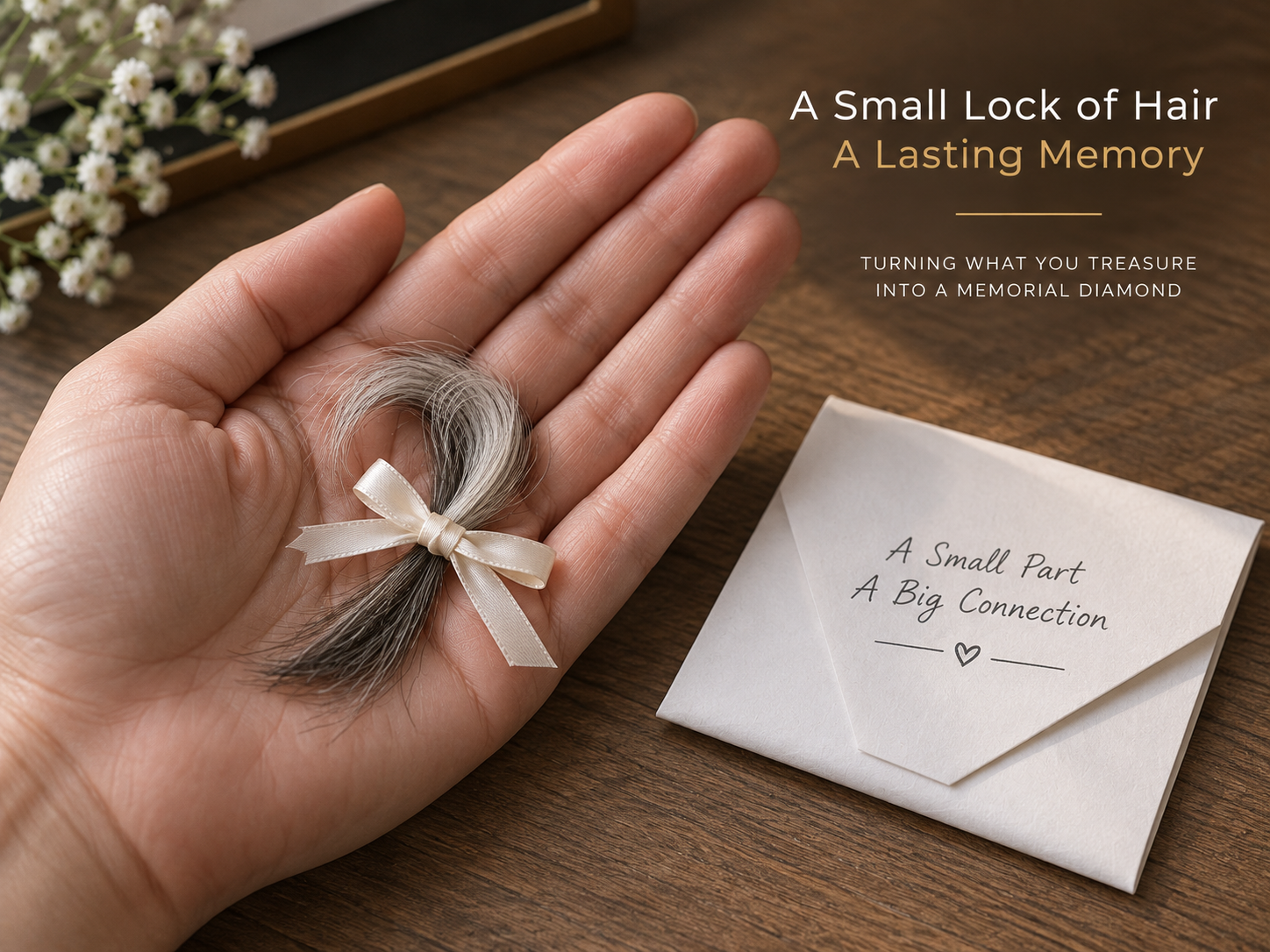
Small lock of grey hair tied with a ribbon resting in an open palm beside a folded paper envelope

On This Page

How Little Hair Is Genuinely Enough?

A small lock. A few grams. Something you could close your hand around without effort.

Requirements vary between providers inside that band, so the figure that governs your decision is the one your provider gives you for your specific lock. But the band is small enough that most people who arrive here worried are, in fact, holding enough.
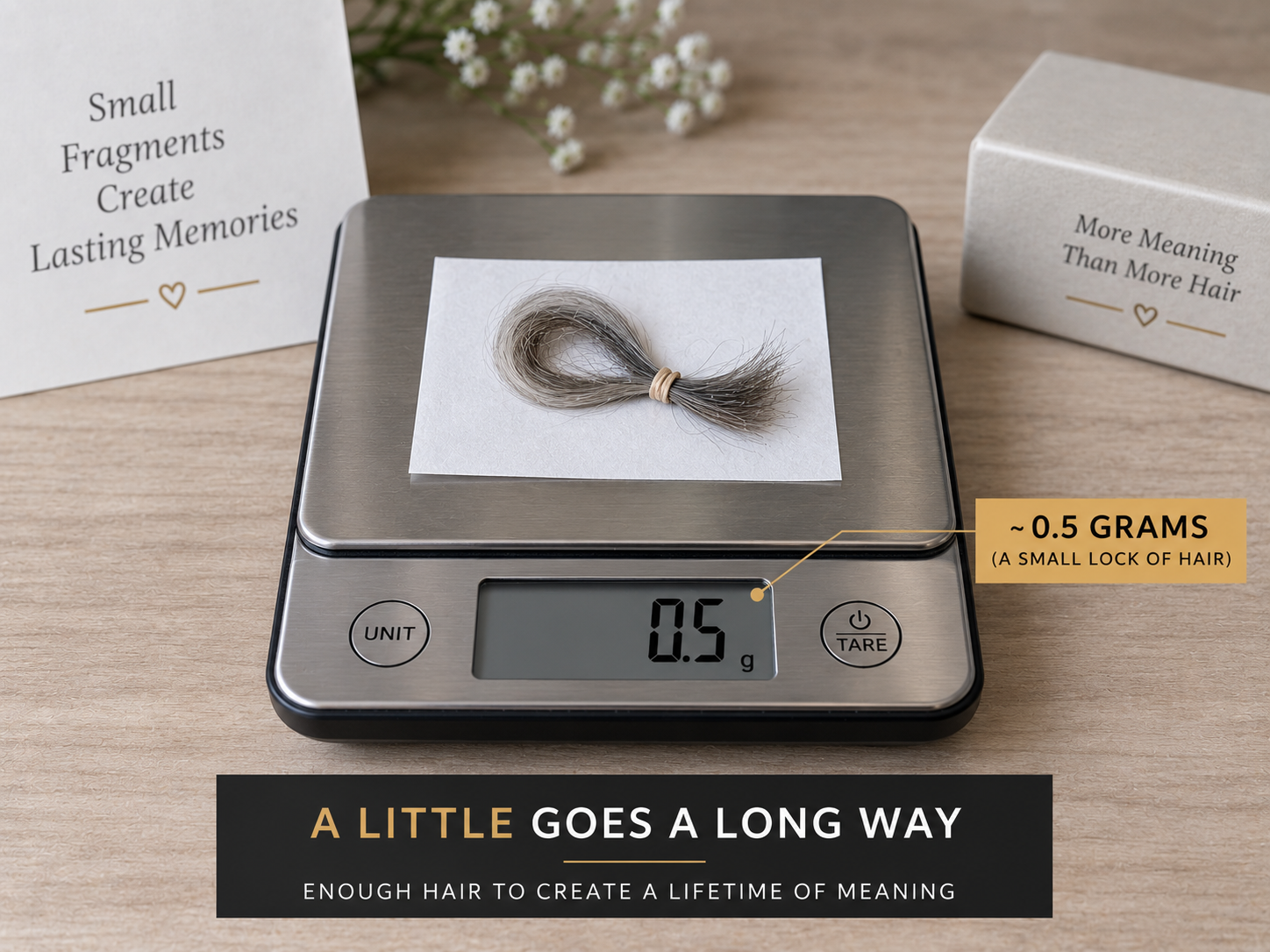
A small lock of hair on a square of paper being weighed on a digital kitchen scale reading in grams
What’s Being MeasuredIndustry-Typical FigureWhat It Means for the Lock in Your Hand
Hair a provider asks forA small lock or a few grams, often described as palm-sizedGrams, not ounces — no urn required, and none exists in most of these cases
Carbon content of hair~50% by weightKeratin is a carbon-rich protein, which is why so little goes so far
Cremation requiredNoneWorks for a mother who was buried, and for someone still living
Purity after extraction~99.9%+ carbonThe non-carbon components of keratin are stripped away
Carat sizes generally offered~0.10 ct to 5+ ctChosen when you order, not limited by the size of your lock
Growth time to reach that size~6–10 months, up to ~12 for large or specialty stonesThe only real lever on carat

One row deserves saying plainly rather than leaving in a table: more hair does not produce a larger diamond. Carat size is a function of weeks spent growing under pressure, and once the cell has enough feedstock to run, additional material changes nothing. A braid does not outrank a lock.

Her carbon is also blended with lab-sourced carbon to reach the volume a growth cell requires. No memorial diamond is 100% the person. If you are considering this process, it is worth understanding whether a memorial diamond is really made from your mother’s hair before you commit to any provider.

Why Does Hair Need Far Less Than Ashes?
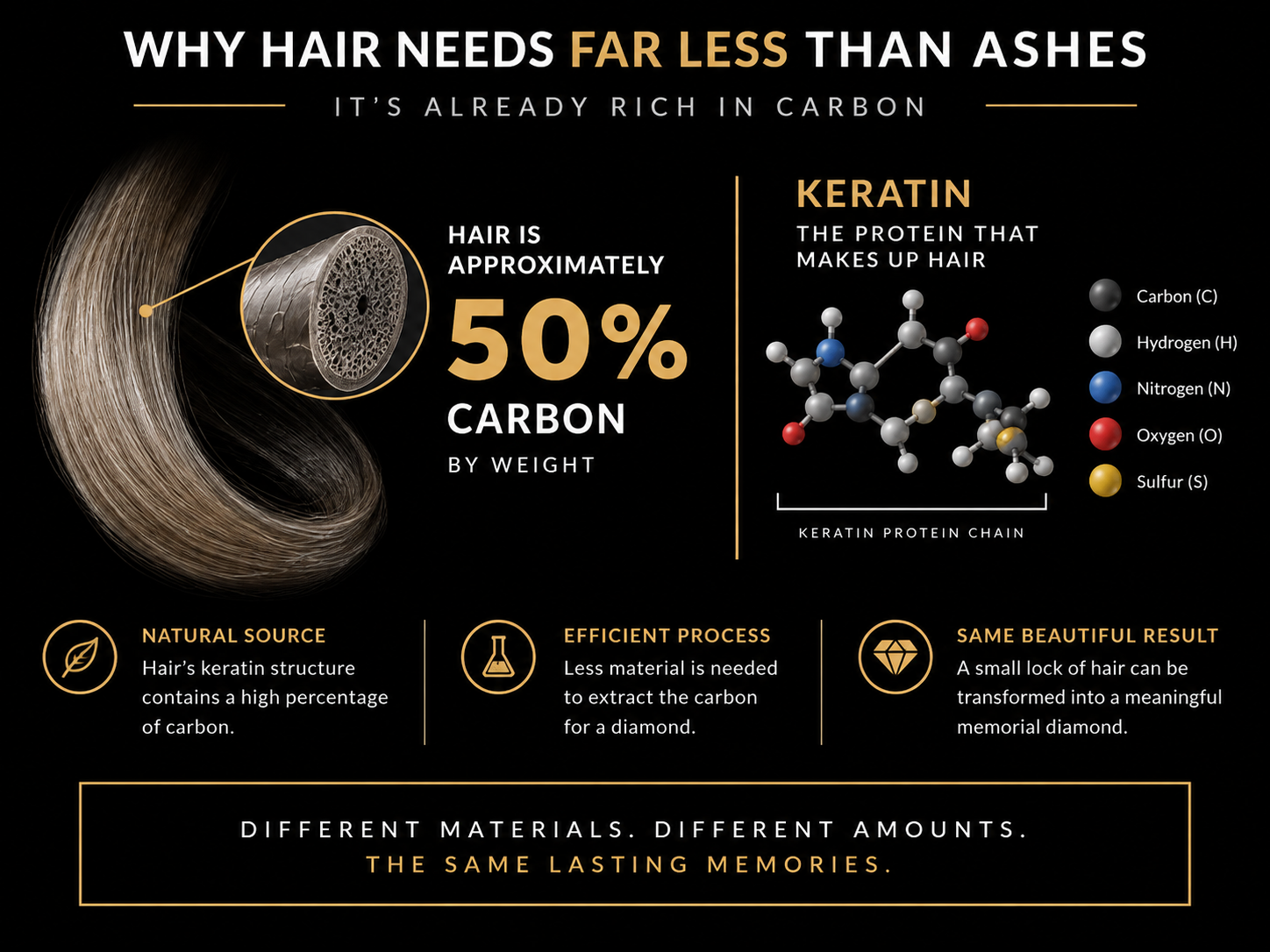
Simple diagram showing hair at roughly fifty percent carbon by weight beside its keratin protein structure

Because of what hair is made of. Hair is built from keratin, a carbon-rich protein, and comes out at roughly 50% carbon by weight. Cremated remains are a small fraction of that, which is why hair is measured in grams and ash in ounces.

It also means hair is the route that stays open when cremation never happened. A mother who was buried, a mother whose ashes were scattered years ago in a place nobody wrote down, or a mother whose remains a family is unwilling to divide for religious reasons — all may still have a hair-based option if a lock exists.

Hair-based options for a loved one who wasn’t cremated covers that ground, while ashes to diamond versus hair to diamond compares the two for anyone who has both.

How Do You Know if the Lock You Have Is Enough?

You ask, and you ask before you do anything to it. Judging a few grams by eye is unreliable in both directions.

Weigh it if you can. A digital kitchen scale reading to the gram costs very little and turns an anxious guess into a number a provider can answer against. Put the hair on a square of paper, tare the scale, and you have something concrete to put in an email.

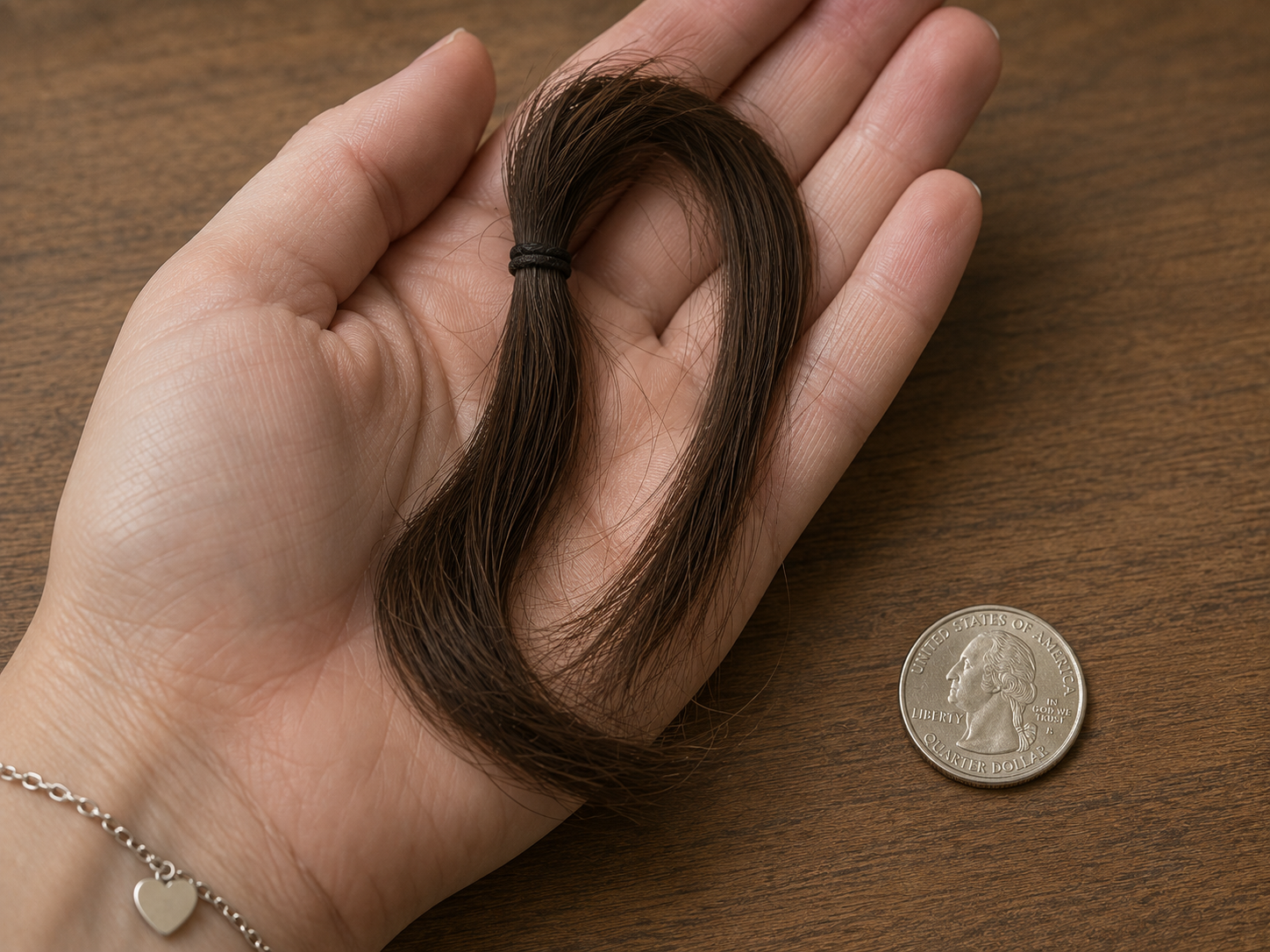
Then photograph it beside something ordinary for scale a coin, a pen, or your own hand. A provider looking at a photograph can tell you far more than one reading the phrase “a small amount.”

And then the part that matters most:

  • Send it intact. Don’t divide it yourself. Cut the lock into what you think is the right portion and you may end up with two amounts that are each individually short. Let the provider take what they need from the whole.
  • Don’t trim, wash or tidy it. Hair needs no preparation, and handling it only risks losing strands.
  • Ask before you cut anything new. If more is genuinely needed and a source exists — a hairbrush, a second keepsake, or a hat you want to know before you go looking, not after.
  • Ask what happens to hair they don’t use. Confirm the provider’s policy on returning unused material before sending the lock.
  • Ask about treated hair specifically. Dyed, bleached, permed, or chemically straightened hair should be discussed with the provider rather than assumed to be accepted or rejected.

If the answer is that you don’t have enough, that is something you can act on and it arrives while the lock is still whole.

Does the Length of the Lock Matter, or the Weight?

Weight is what the process consumes. Length is what you can see, which is why a short lock causes far more worry than it should.

A dense lock of thick hair can weigh more than a long, fine wisp. Someone holding a short piece cut during chemotherapy, or a soft curl from a mother whose hair had thinned in her last year, can easily focus on the wrong dimension. Weighing the material, or simply asking the provider, beats estimating every time.

Carat size has nothing to do with either measurement. Choosing a carat size is a decision about budget, setting, and how you plan to wear it — a 0.25 ct stone and a 2 ct stone can start from the same small lock and differ primarily in how long they grow.

What About Hair That’s Been in a Drawer for Decades?
It is usually fine, and that surprises people.

Hair is stable, structural material. Kept dry and out of direct light, a lock from a childhood haircut in the 1960s, a strand saved from a wedding day, or hair collected during a final illness can remain as a keepsake for many years.

For an old keepsake, preserve its provenance carefully. Keep any ribbon, tag, or note that came with it, because that history may be more meaningful to your family than anything else surrounding the material. If the lock has been glued into a memory book or set into mourning jewelry, tell the provider rather than freeing it yourself.

For a mother who is still living, the same general quantity concept applies, and hair can simply be collected with her knowledge. Read what to ask before turning your mother’s hair into a diamond before making arrangements.

Frequently Asked Questions

Is one small lock really enough for a full-carat diamond?

Usually. A provider’s requirement is a threshold rather than a ration once the growth process has what it needs, additional growth time is what allows a larger stone to develop. A 0.25 ct and a 2 ct order can start from the same envelope.

Is there enough usable hair on a hairbrush?

Sometimes, but weigh it before you rely on it. A brush can be a possible source when no cut lock exists, although the amount recoverable varies significantly and providers differ on whether they accept it. Send a photograph and a weight when asking.

Will dyed, bleached or permed hair be accepted?

Ask the provider specifically rather than assuming. Hair treatments can affect how a provider handles submitted material, so getting the provider’s position in writing beforehand is better than discovering the answer at intake.

My mother was buried, not cremated. Can hair still work?

Yes. One of the advantages of a hair-based memorial diamond is that the process does not depend on cremated remains. A lock kept before or after a burial can provide starting material without requiring a family to disturb or exhume remains.

Should I split the lock and keep half?

Send it whole and ask the provider what material they require and what happens to anything unused. Dividing it yourself can create unnecessary uncertainty about whether either portion meets the provider’s requirement.

Does more hair make a bigger or faster diamond?

Neither. Sending a whole braid where a lock would do does not automatically create a larger or faster-grown diamond. Once sufficient material is available for the process, stone size is primarily associated with the selected growth schedule rather than simply sending more hair.

Before You Cut or Divide Anything

The lock in the envelope may be enough, and finding out costs nothing while it is still whole.

Before sending it, weigh the hair if possible, photograph it beside an ordinary object for scale, and ask the provider what quantity is required, what happens to unused material, whether treated hair is accepted, and what documentation or handling process applies.

For a broader overview, read The complete guide to a mother hair diamond or learn how a memorial diamond is made from her hair.
how much ash you need

How Much Ash Do You Need for a Mother Memorial Diamond?

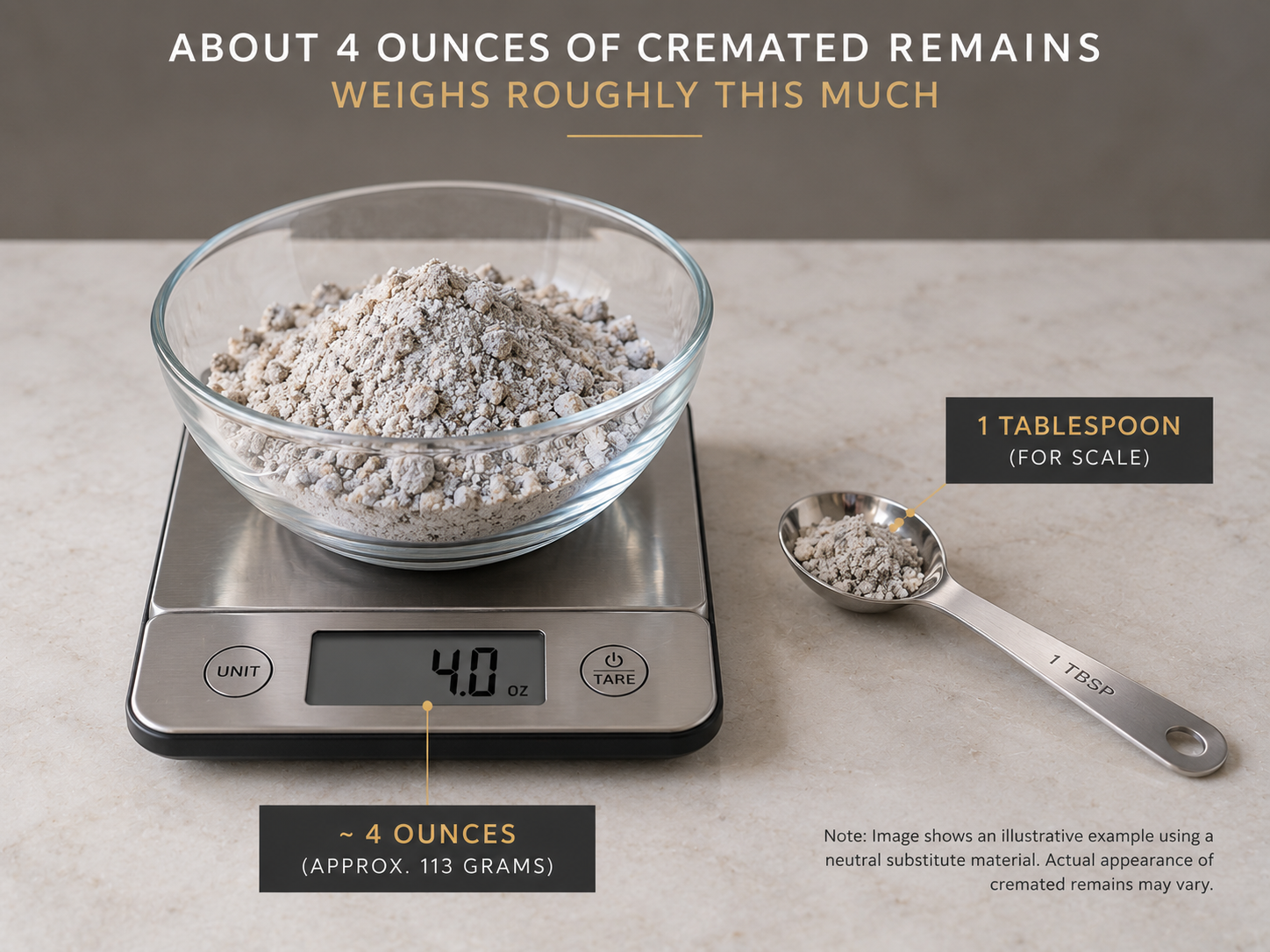
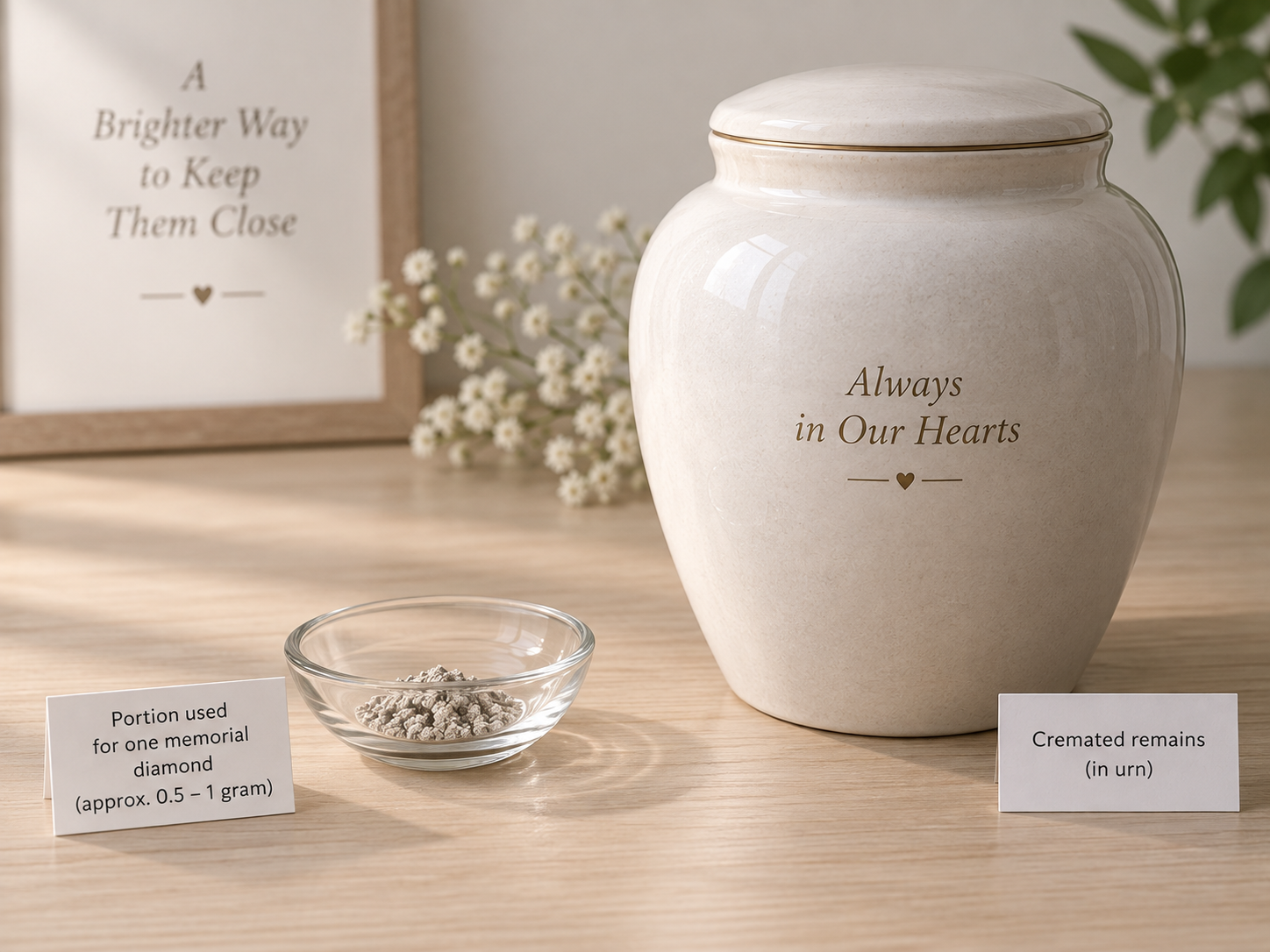
A few tablespoons, measured out of the urn with a clean dry spoon. That is where the industry range starts, and it runs up to roughly 4 oz about 100g of cremated remains for one memorial diamond. Either way it is a small fraction of what a cremation produces: the rest stays with you, for whatever you had already planned. Handing over more would not make the finished stone any bigger.

Carat size is bought with time in the growth press, not with volume of ash.

Small measured portion of cremated ashes in a clean glass dish beside a closed ceramic urn on a pale wooden table

On This Page

How Much of Her Ashes Does the Process Actually Use?

The industry figure runs from a few tablespoons at the low end to about 4 oz (100g) at the high end. Providers set their own requirement inside that band, so the number that matters is the one your provider publishes.

Ash is a demanding starting material, which is why the requirement isn’t smaller still. Cremated remains are mostly calcium phosphate, the mineral structure of bone; usable carbon is only about 0.5% to 4% of ash by weight. Recovering a workable quantity means starting with a spoonable amount, not a pinch.

Roughly four ounces of cremated remains weighed on a small kitchen scale next to a tablespoon for scale
What’s Being MeasuredIndustry-Typical FigureWhat It Means for Your Urn
Ash a provider asks forA few tablespoons to ~4 oz (~100g)A small fraction of a full cremation’s remains
Usable carbon in that ash~0.5–4% by weightAsh is mostly bone mineral, not carbon
Purity after extraction~99.9%+ carbonEverything non-carbon is stripped away
Her carbon in the finished stoneTypically ~10–15% of its massBlended with lab carbon — never 100% ash
Carat sizes generally offered~0.10 ct to 5+ ctChosen by you, then grown to that size
Growth time to get there~6–10 months, up to ~12 for large or specialty stonesThe actual lever on size

The important point is that her carbon is genuinely in the crystal, but it is not the only carbon in it. Any provider claiming a stone is 100% her ashes is describing something the physics does not allow. Read the honest version of that claim before you commit to anyone.

Does Sending More Ash Make a Bigger Diamond?

No, and this is the piece most competitor content quietly gets wrong.

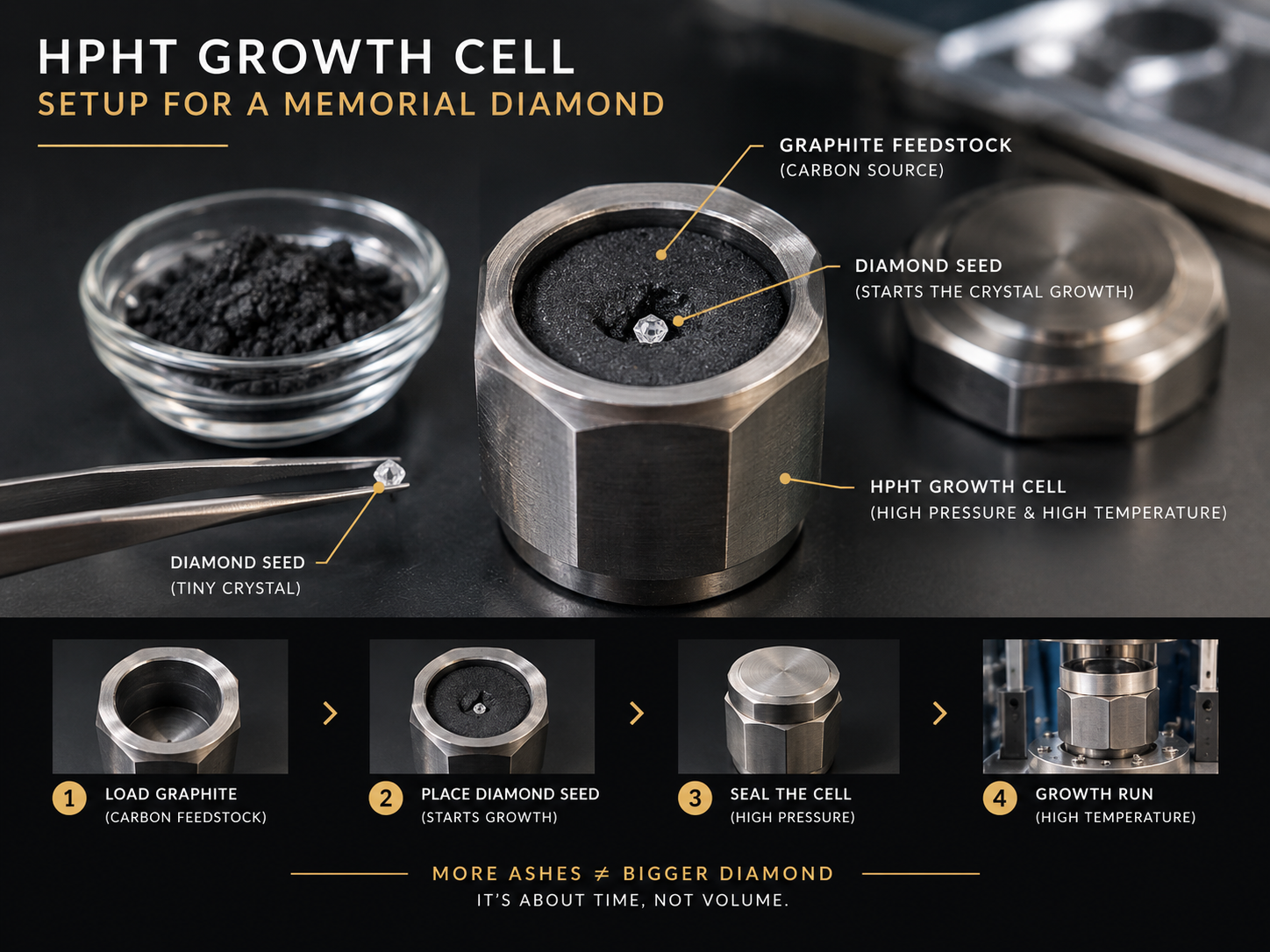
A growth cell needs enough graphite feedstock to run, and once it has that, the size of the crystal is a function of how many weeks it stays under pressure. Ash volume buys nothing in carat terms. A family submitting a full urn and one submitting four ounces are on the same schedule for the same stone.

It works the other way too, which reassures anyone who kept only a little: a small submission does not mean a small diamond. The carat is chosen at ordering, and that choice sets the timeline roughly 6 to 10 months, sometimes up to 12 for larger stones. Choosing a carat size is a decision about budget and how you plan to wear it, not about how much of her you are willing to part with.

Sending extra has one real effect: more of her leaves your house than had to.

What Happens to the Ashes You Don’t Send?

They stay yours, and available for whatever you had already planned.

A burial plot, a niche in a columbarium, a scattering at a place she loved, or the urn staying exactly where it is none of that has to change to make room for a diamond. The requirement is small enough that the two sit alongside each other. A family who has already interred most of her ashes and kept a small portion back is often still well inside the workable range.

An urn on a shelf is not a lesser choice than a stone on your hand. They are different objects doing different jobs, and plenty of families end up with both.

Get two things in writing before anything is posted: the quantity actually needed, and whether unused material comes back by default rather than on request.

What the lab does with the ash once it arrives and how providers track it through the process are both worth reading first.

How Do You Measure Out a Few Tablespoons From an Urn?

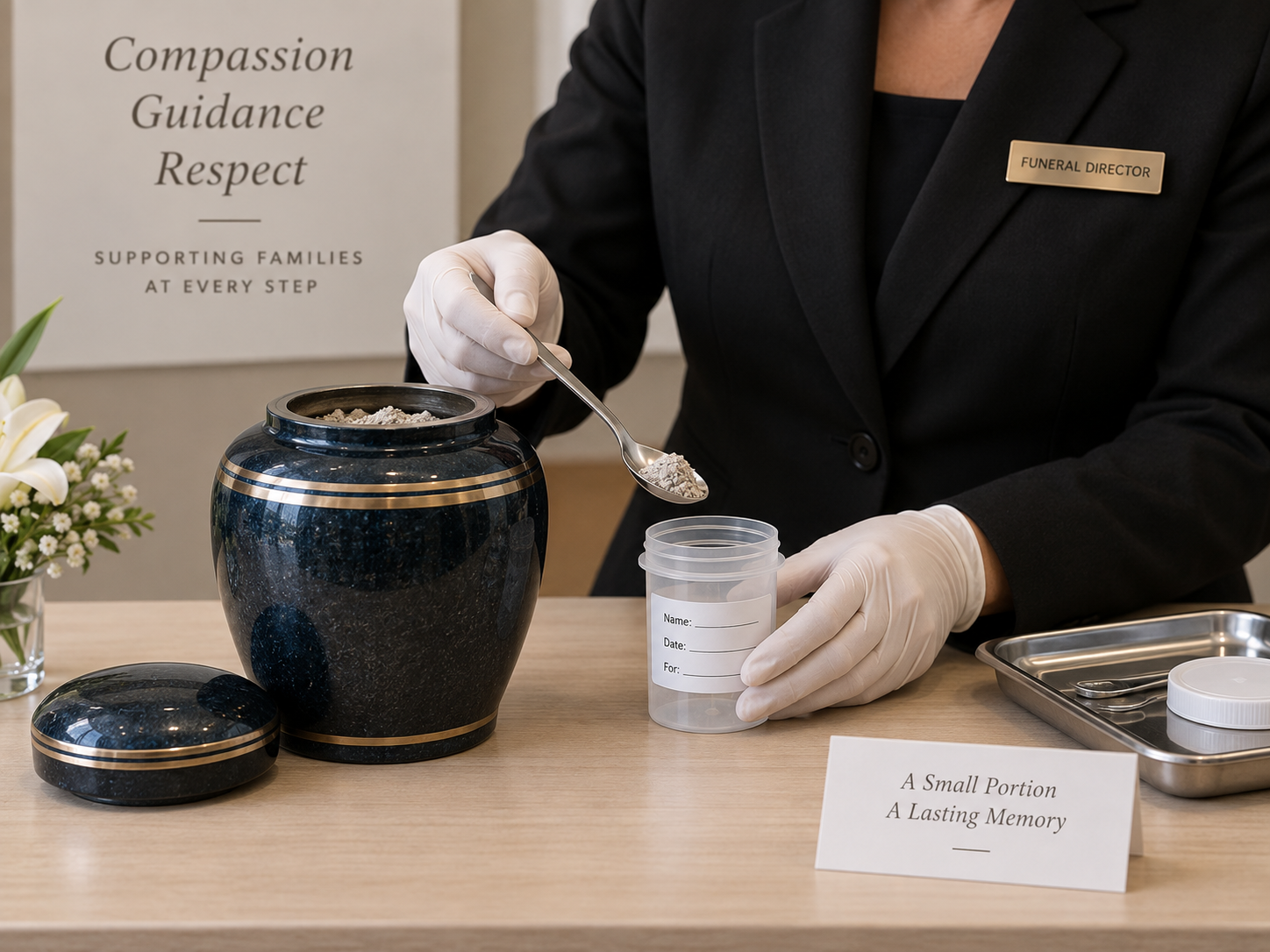
Funeral director portioning a small amount of cremated remains into a labeled container at a service desk

Nobody warns you about this part, and it is often harder than the paperwork. Some people find it steadying. Some cannot do it at all. Both are ordinary.

  1. Ask first, open second. Get the required quantity and the preferred container in writing before the urn is touched. Doing this once, correctly, beats doing it twice.
  2. Set up somewhere calm and flat. Good light, a clear table, paper or a tray underneath spilled ash lifts off paper and never off carpet.
  3. Check how the urn is closed. Some are simply lidded; others are secured with adhesive or a threaded ring, and some are meant never to be reopened. If yours is sealed, ask rather than pry.
  4. Expect an inner bag. Remains are frequently supplied in a sealed bag inside the urn, usually with an identification tag. Keep that tag with the remainder.
  5. Use a clean, dry spoon. Use a dedicated spoon, dried thoroughly and kept for this purpose. Moisture makes ash clump.
  6. Take from more than one spot. Cremated remains aren’t uniform in texture, so a representative scoop beats digging one hole.
  7. Reseal, relabel, note the date. Whoever handles the urn in twenty years should be able to tell what was taken and when.
  8. Ask for help if this isn’t something you can do. A funeral director, or the crematorium that carried out the cremation, can usually portion and package a small amount for you. So can a sibling. Asking is not a failure of nerve.

If the funeral home sealed the urn, go back to them they closed it, they can reopen and reclose it properly.

Can One Portion of Ash Supply Diamonds for More Than One Sibling?

Often, yes. Because the requirement is a fraction of the whole, several family members can each receive their own stone from the same starting material and because each is grown separately, the color, the cut and the setting can differ from sibling to sibling.

Raise it early. Agreeing on three stones before the first order is placed is far simpler than returning to an urn a second and third time, and it turns who gets her into what do we each want.

Whether more than one family member can get a diamond from the same ashes covers how families split the cost and the decision. Ask how a provider handles multi-stone orders one submission split at intake, or a separate submission per stone before assuming either.

Frequently Asked Questions

Is a few tablespoons genuinely enough for a one-carat stone?

Yes. A press turns weeks into carats, not spoonfuls. Once there is enough feedstock to run a growth cell, the quantity of ash requested stays the same at 0.25 ct as at 2 ct the larger stone simply spends longer growing.

What if most of her ashes have already been scattered or buried?

A small kept portion is frequently still workable, since requirements start at a few tablespoons. Send the provider an honest description of how much you have before ordering, and let them tell you rather than guessing.

Do the ashes I don’t use come back to me?

Ask before sending, and get the answer in writing. Returning unused remains by default is the standard families should expect, but it is a provider policy rather than a legal guarantee treat any vagueness on this point as a warning.

Does more ash make the diamond a deeper color?

No. Color comes from trace elements present during growth boron gives blue tones, nitrogen gives yellow not from volume. What color a diamond from her ashes will be explains why memorial stones rarely come out colorless.

Can I send ash from a cremation that happened years ago?

Yes. Cremated remains are chemically stable mineral material and do not degrade on a shelf, so a cremation from decades ago is no different at intake than a recent one. Time changes nothing about the carbon.

Would her hair need a different amount?

Considerably less hair is roughly 50% carbon by weight, so a small lock goes a long way. How much hair a mother memorial diamond needs covers that path, including for a mother who was buried rather than cremated.

Before You Open Anything

The order of operations matters more than the timing: ask first, open the urn second. A year from now the same few tablespoons will do exactly the same work, but a portion measured out against the wrong figure has to be measured out twice.

When you are ready, reach out to your memorial diamond provider and ask what quantity is needed, what comes back to you, and what documentation arrives with the finished stone.

The complete guide to a mother ashes diamond covers timeline, color and cost in one place if you would rather read further first.

Untitled (1568 x 1003 px)

What Color Will a Diamond Made From Your Mother’s Ashes and Hair Be?

Two containers, two chains of custody, two different purification requirements, one growth cell. That is what a combined order is underneath the paperwork, and it changes the color question in a way neither single-source version covers.

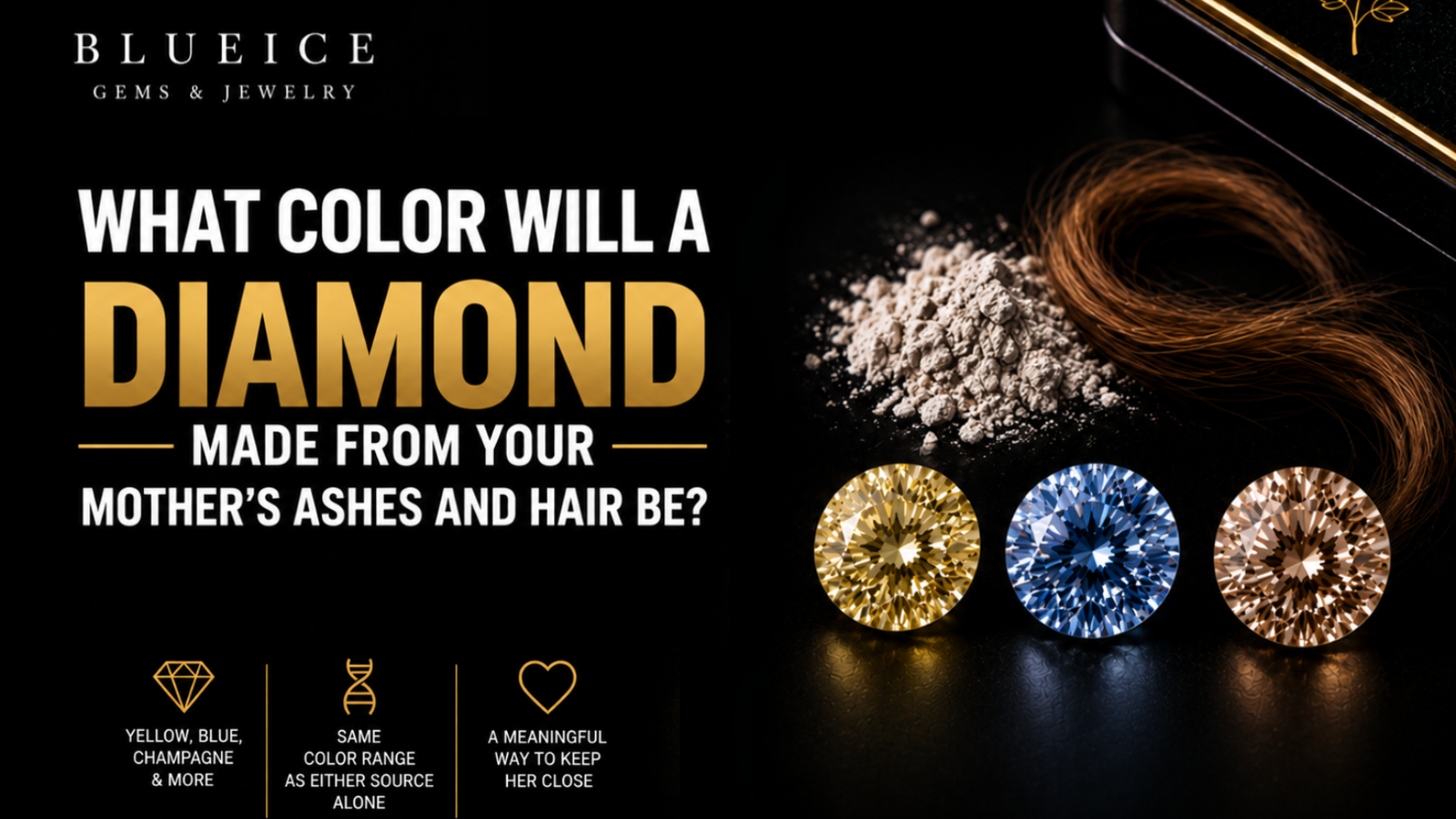
A diamond grown from your mother’s ashes and hair together will sit in the same range as one grown from either alone most likely yellow, blue, or champagne rather than colorless. What changes is confidence. Two source materials with different histories make the final shade less forecastable, not more controllable.

That is not a warning against sending both. It is the actual trade being made, and it is a fair one as long as nobody promised you a specific shade on the way in.

On This Page

What Color Should You Expect If You Send Both?

The same color family either material produces on its own.

Diamond color comes from trace elements present while the crystal grows. Nitrogen produces yellow tones. Boron produces blue. Colorless demands the near-total absence of both, which is a high bar for any organic source.

Because part of the carbon in any memorial diamond comes from an organic, imperfect, personal source rather than all of it coming from a controlled synthetic feedstock, trace elements are common and memorial diamonds as a category trend toward yellow, blue, and champagne/brown accordingly. Colorless is achievable with additional processing, and costs more.

Adding a second source does not move the stone outside that range, and there is no documented “blended” color that combining ashes and hair reliably produces.

For more information about why memorial diamonds are rarely colorless, read our article on why memorial diamonds are rarely colorless.

Why Does Sending Both Make the Color Less Predictable?

Because the two materials arrive with genuinely different chemistry behind them.

Cremated remains are dominated by calcium phosphate, the mineral structure of bone, with usable carbon at roughly 0.5% to 4% of ash by weight and they have been through a cremation before anyone touched them. Hair is keratin, roughly 50% carbon by weight, with no mineral load of that kind and no cremation anywhere in its history.

Both are purified to about 99.9%+ carbon before growth, and that purification is excellent rather than absolute. Whatever survives is at most a tenth of a percent of each recovered stream and that residue is exactly where color comes from. Two feedstocks means two such residues, each with its own trace-element signature, meeting in one process.

Neither stream fills a growth cell on its own, so both are blended with supplemental lab-sourced carbon to reach a workable volume. Her carbon is the minority ingredient either way; for ash-derived stones the industry puts the personal fraction at roughly 10–15% of the finished stone’s mass.

That does not cancel the point above, because a trace element influences the color of the whole crystal rather than its own share of it a minority fraction is still enough to steer the result. It does mean an accurate description of a combined stone lists her ashes, her hair, and the lab carbon that filled the rest of the cell.

The practical effect is a wider band of normal. A provider aiming at champagne from a single source is holding fewer variables steady than one aiming at champagne from two. That is a reason to ask what variation counts as acceptable on your order not a reason to expect a bad stone.

To understand the process in more detail, read how a memorial diamond is made from your mother’s ashes and hair.

Does the Lab Combine Them, or Grow Two Separate Stones?

This is the question to put to a provider directly, because the answer changes what color even means for your order and because the industry does not handle it uniformly.

Three arrangements are possible in principle:

  • Combined feedstock. Ashes and hair are purified on separate tracks, since they need different treatment, and the resulting carbon is combined before growth. One stone, one color.
  • Separate stones. Each material grows its own diamond. Two stones, two independent color outcomes which will not necessarily match, even ordered in the same color.
  • Not offered at all. Some providers accept one material per order and will say so.

Ask which of the three you are buying before you send anything. Ask, too, whether the origin documentation will name both materials an authenticity or origin certificate is the record that both went in, and it is worth confirming it says so.

For more information, read how memorial diamonds are graded and certified.

What Colors Are on the Table, and What Does Sending Both Change?

The following describes industry-typical outcomes and industry-typical cost relationships, not a fixed price list or a promise about a specific stone.

ColorWhat Causes ItWhat Sending Both ChangesCost Note
YellowNitrogen present during growthNothing about availability a standard outcome from either source and from bothTypically at the lower end of the range at a given carat
BlueBoron present during growthNothing about availability; widely offered either wayGenerally below colorless at matching size
Champagne / BrownSeveral trace elements acting together rather than oneAsk what shade band counts as normal this is where defining acceptable variation is particularly usefulTypically comparable with yellow at the same carat
Colorless / WhiteThe near-complete absence of both boron and nitrogenAdding a second organic feedstock does not make trace-element exclusion easier. It remains the hardest targetMeaningfully higher than yellow, blue, or champagne at the same size
Red, Pink, Green, BlackPost-growth irradiation, applied after the crystal already existsThe source material matters less because irradiation happens after growthAn additional treatment; larger or black stones can require longer timelines

What Are You Actually Trading?

Completeness for predictability.

Sending both means the stone contains carbon from her remains and from her hair, alongside the lab carbon that fills out the growth cell the fullest version of the thing that is actually available if completeness is what you are after.

It does not buy you more control over the result. If a precise shade matters more to you than including both, a single source is the more controllable order. If including both matters more, accept a wider color band and say so out loud at order time.

Neither choice is the better one; they answer different questions.

Five Questions to Ask Before You Commit

  1. Do you accept ashes and hair on one order, and how do you process them? Ask whether the material is combined, grown separately, or not accepted together.
  2. Am I buying a named color or a color family? Ask what variation is normal for a combined order specifically.
  3. What happens if the finished stone lands outside that band? Settle the remedy in writing at order time, not after delivery.
  4. Will the origin certificate name both materials? Get that confirmed in writing.
  5. What happens to whichever material isn’t used? Confirm the provider’s policy for unused material before sending anything.

None of this commits all of her. Only a small fraction of either material is used, so burial, scattering, or keeping an urn all remain open alongside it.

For material requirements, read how much ash and hair you actually need for a mother memorial diamond.

Frequently Asked Questions

Will the diamond be a blend of two colors, or two-toned?

No. A finished diamond is graded with a single body color, not a mixture of two. Combining her ashes and her hair produces one stone with one color, drawn from the trace elements present during growth rather than from either material’s appearance.

Does sending both improve my chances of a colorless stone?

No, and it works slightly against you. Colorless requires excluding boron and nitrogen almost entirely, and a second organic feedstock adds trace elements to the process rather than removing them. Colorless remains achievable, with additional processing and higher cost.

Can I get one diamond from her ashes and another from her hair?

Often yes, since only a portion of either material is used. Expect two independent color outcomes rather than a matched pair — separate growth runs are separate events, so treat a family resemblance as the realistic goal.

Does sending both make the diamond larger?

No. Carat size is determined by growth time in the press, not by how much material is submitted. Sending both changes what is in the stone, not how big it is or how quickly it arrives.

Does her hair color influence the result if I send hair too?

No. Pigment does not survive purification to 99.9%+ carbon, so grey, dyed, or red hair has no bearing on the finished color. That holds whether the hair goes in alone or alongside her ashes.

Do all providers accept both materials together?

No. Ashes and hair need different purification handling, and not every provider takes them on one order. Confirm it directly before assuming, and confirm which of the possible arrangements they use.

Before You Decide

Order of operations matters here more than the color choice itself. Find out first how a given provider handles two materials on one order combined feedstock, separate stones, or not at all because a combined order that turns out to be two diamonds is a different purchase from one that turns out to be a single crystal.

Color only means something once you know which of those you are buying.

Then, if sending both is what feels right, send both, and go in expecting a color family rather than a specific shade.

For comparison, read the ashes-only version of this question and the hair-only version.

If you are still deciding between the two sources, read Ashes to Diamond vs. Hair to Diamond: Which Should You Choose?.

For the broader process, timeline, and cost discussion, see Mother Ashes and Hair Diamond: The Complete Guide.

main

What Color Will a Diamond Made From Your Mother’s Hair Be?

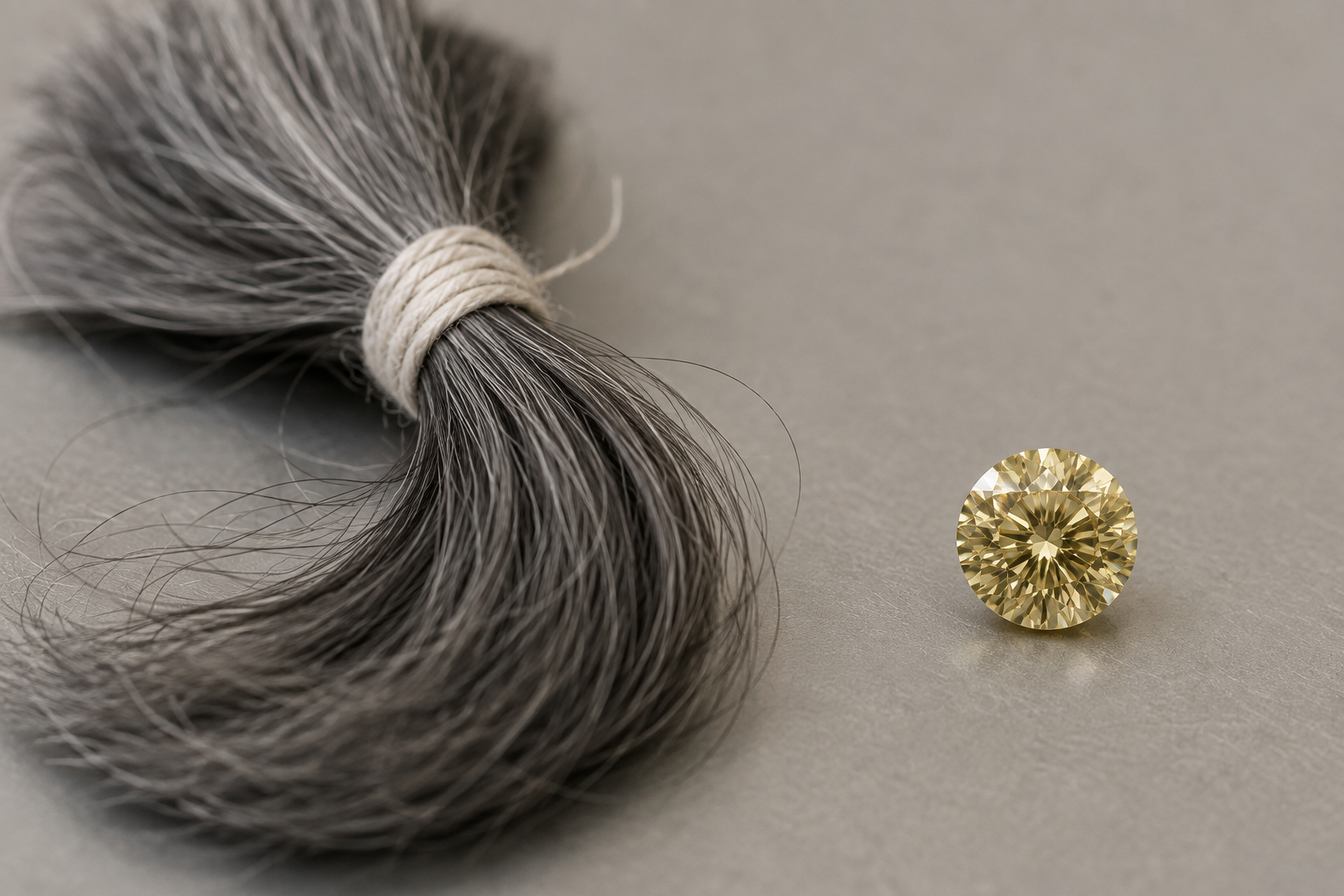
A lock of grey hair tied with thread beside a yellow-toned lab-grown memorial diamond on a neutral surface

If you kept a lock of your mother’s hair, you may have wondered whether the finished diamond will look like her hair. It won’t. Grey hair does not produce a grey diamond, red hair does not produce a red diamond, and dyed hair does not carry its visible pigment into the finished stone.
A diamond grown from your mother’s hair can be yellow, blue, champagne, or another available color depending on the growth conditions and trace elements present during the process. Colorless is also possible, but it requires additional processing and usually costs more.

Does Your Mother’s Hair Color Decide the Diamond’s Color?

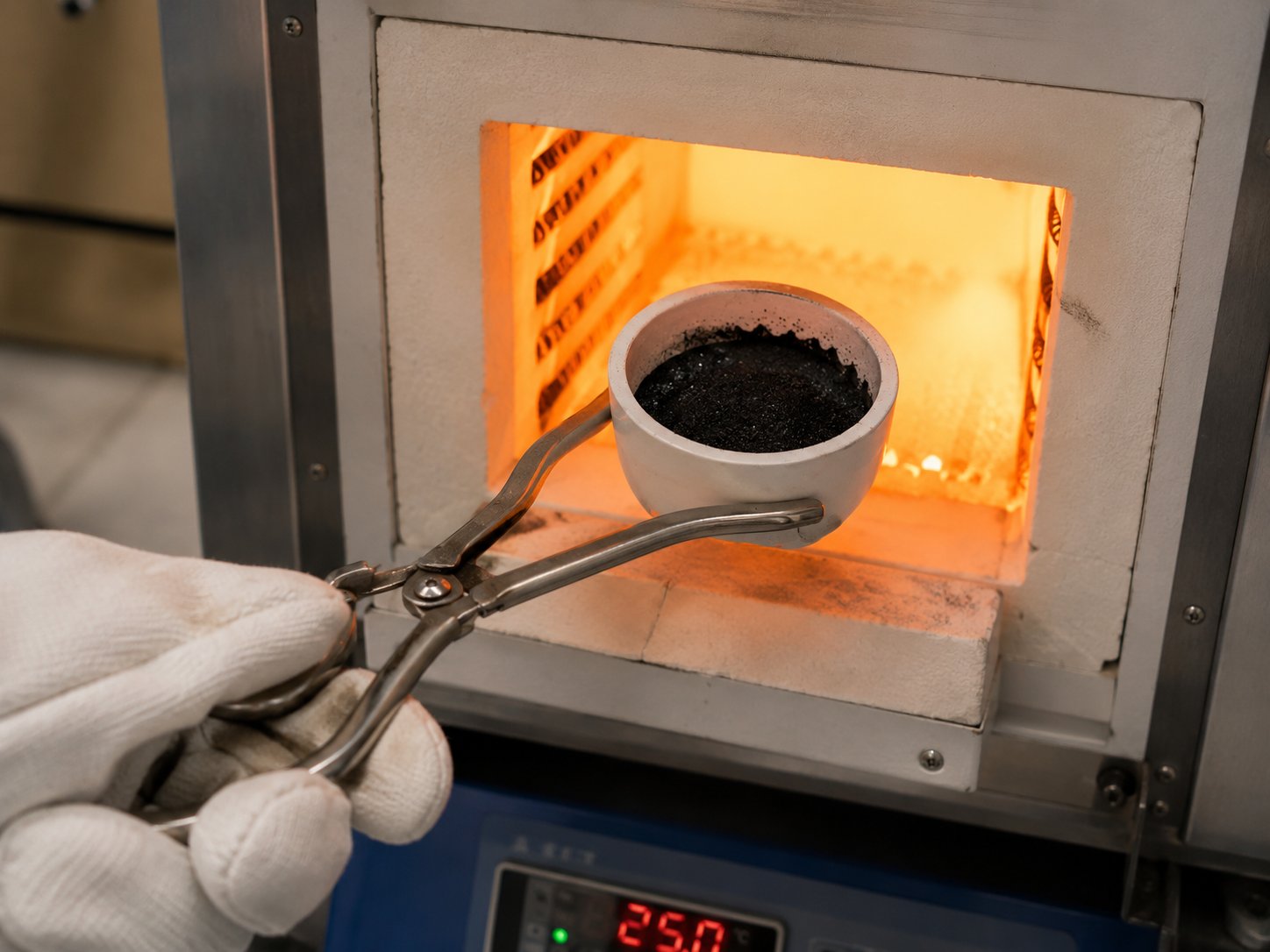
Purified carbon from hair being converted to graphite in a laboratory furnace before diamond growth

No. The color of your mother’s hair is not what determines the color of the finished diamond.

Hair is keratin, a protein that is roughly 50% carbon by weight. During processing, the hair goes through controlled extraction that removes the non-carbon components and produces highly purified carbon. That carbon is then converted into graphite before it enters the diamond-growth process.

The pigment responsible for hair color does not simply travel into the finished diamond. What ultimately matters for diamond color is what is present during crystal growth.

That means:

  • Grey hair does not produce a grey diamond.
  • Red hair does not produce a red diamond.
  • Dark hair does not produce a dark diamond.
  • Blonde hair does not produce a blonde diamond.
  • Hair dye does not determine the finished diamond’s color.

A few grams of hair also cannot fill an entire growth cell. The purified carbon from the hair is therefore combined with supplemental lab-sourced carbon before growth.

For the full production process, see how a memorial diamond is made from your mother’s hair.

So Where Does the Color Come From Instead?

Diamond color comes from trace elements present while the crystal is growing, rather than from the original appearance of the material that supplied the carbon.

Nitrogen can produce yellow tones, while boron can produce blue tones. A colorless diamond requires the near-absence of both.

This is why two pieces of hair that look completely different can potentially contribute to diamonds with similar colors. The visible pigment of the hair is not what the diamond-growth process is reproducing.

Memorial diamonds can therefore appear in yellow, blue, champagne, or other colors depending on the growth conditions and available processing options.

For a broader explanation, read why memorial diamonds are rarely colorless.

What Color Is a Hair Diamond Most Likely to Be?

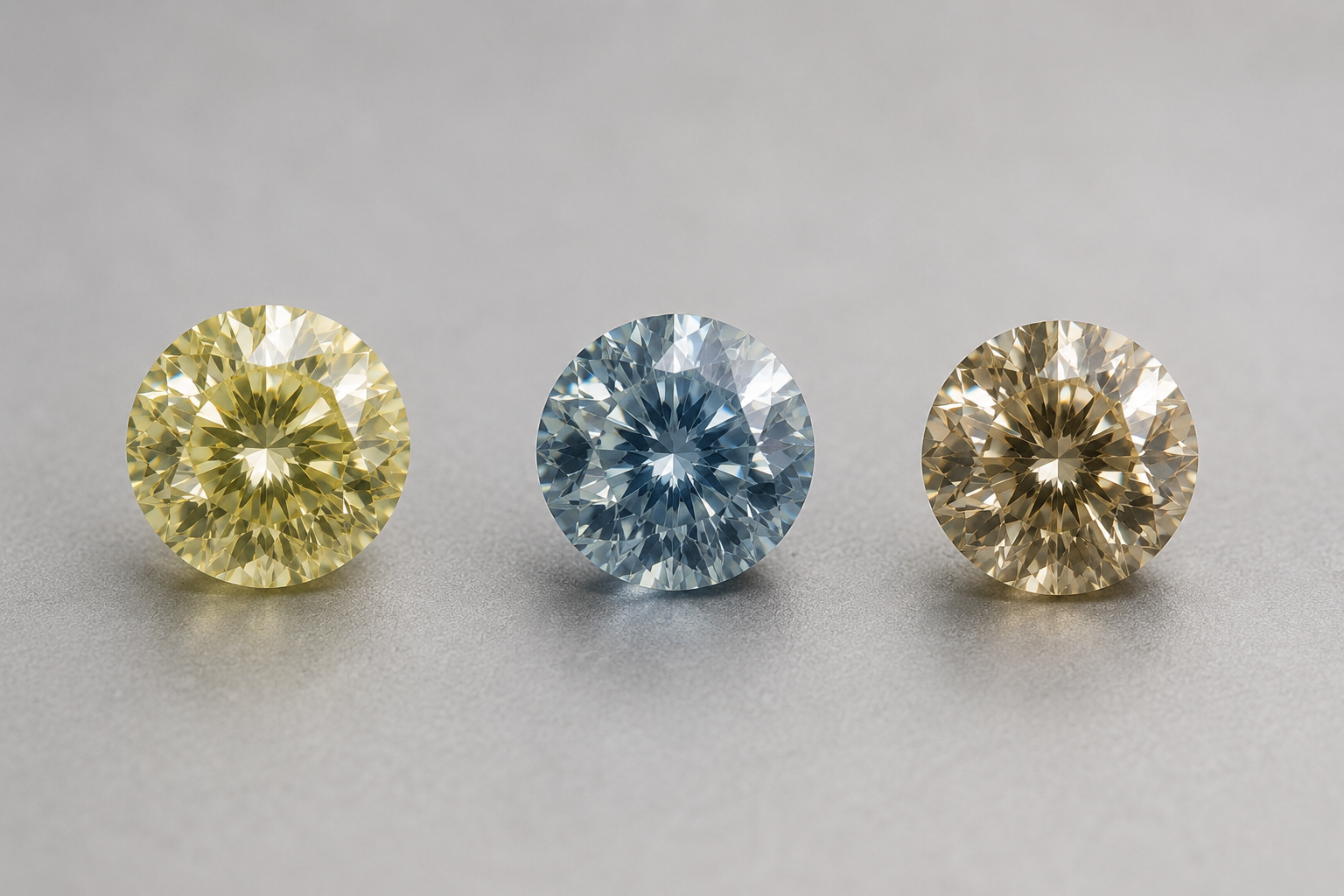
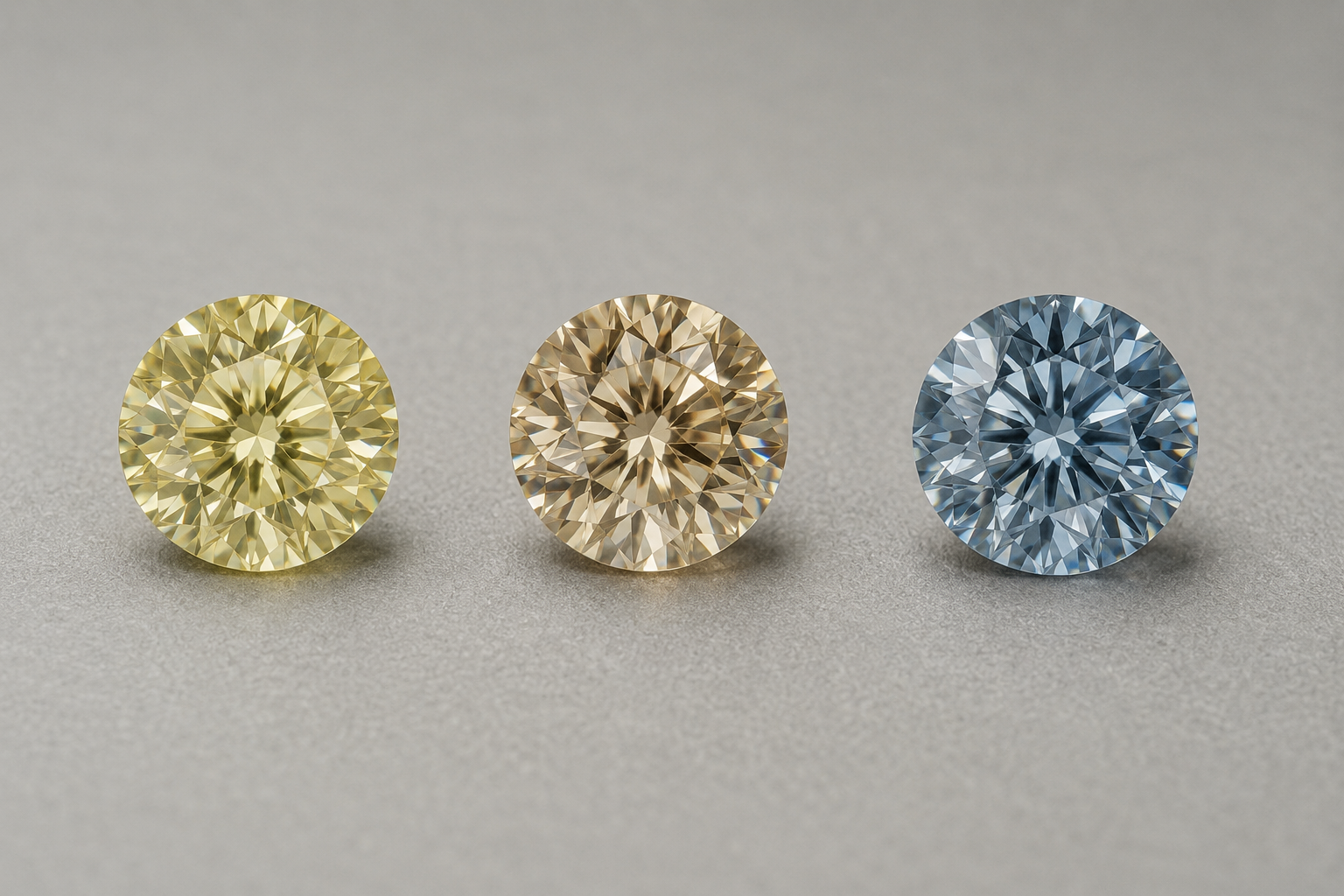
Three loose memorial diamonds grown from hair in yellow, blue, and champagne tones side by side

The following describes industry-typical color relationships rather than a guarantee for any individual stone.

ColorWhat Causes ItWhat a Hair Source MeansCost Note
YellowNitrogen present during growthHair is a carbon-rich organic material; the final color depends on the growth environment rather than the hair’s visible colorGenerally one of the lower-cost growth-stage colors at a given carat
BlueBoron present during growthBlue is associated with boron during diamond growth rather than the original color of the hairGenerally below colorless at matching carat
Champagne / BrownMultiple trace elements and growth conditionsThe stone is not champagne or brown because the mother’s hair was that colorGenerally comparable with yellow at the same carat
Colorless / WhiteNear-complete absence of color-producing impuritiesPossible, but additional processing is required to achieve the desired resultUsually carries a meaningful premium
Red, Pink, Green, BlackPost-growth treatment such as irradiationThese colors are introduced after the crystal has grown rather than coming from the hair’s visible colorAvailability and pricing vary by provider

The important point is simple: the color column never starts with the color of your mother’s hair.

Does Hair Behave Differently From Ashes?

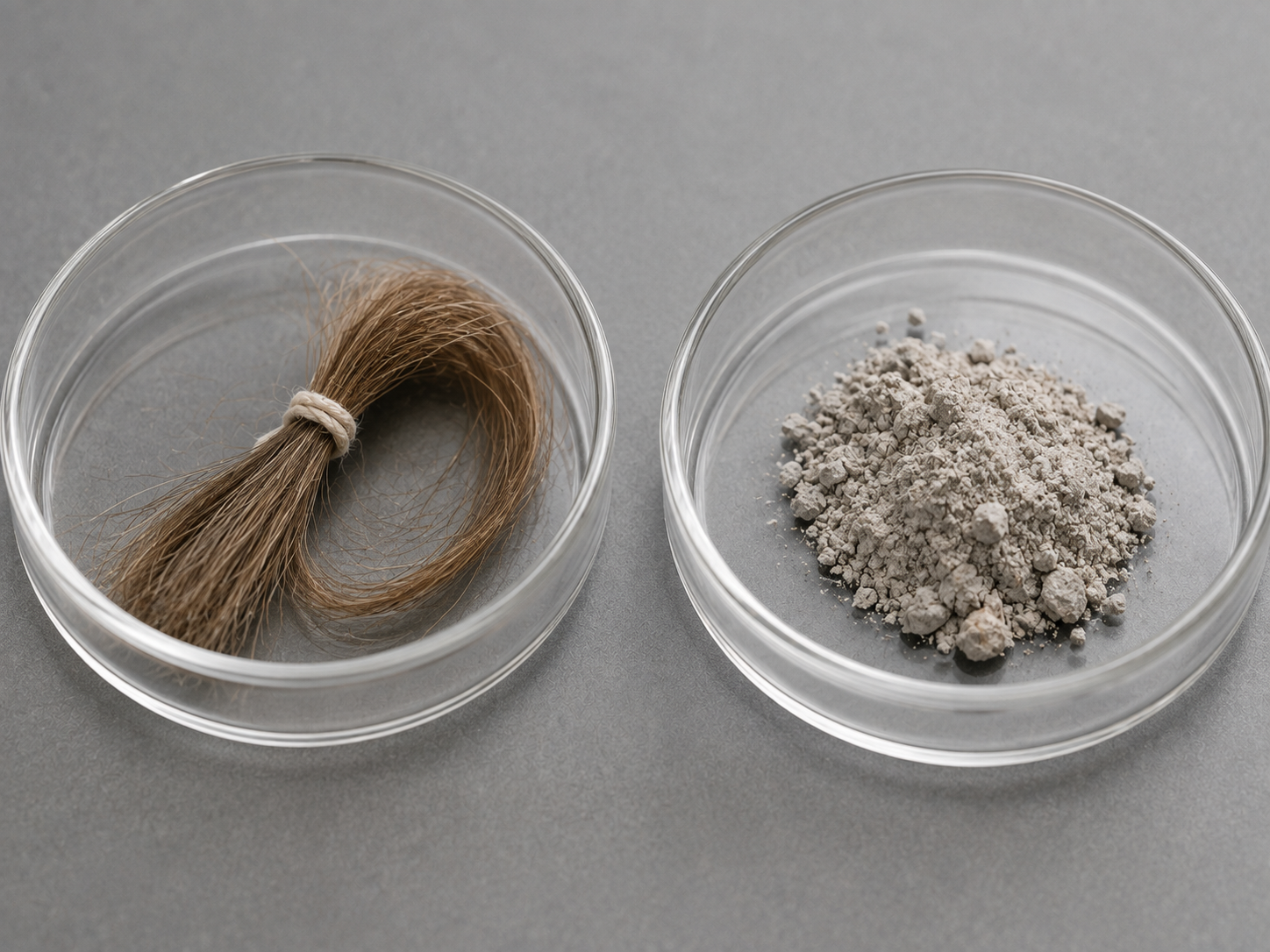
A small lock of hair and a sample of cremated remains shown side by side as diamond carbon sources

Yes, hair and cremated remains are very different starting materials.

Hair is roughly 50% carbon by weight, while cremated remains contain only about 0.5% to 4% usable carbon by weight. Ashes are largely made up of the mineral structure of bone, while hair is a carbon-rich protein material.

HairCremated Remains
Approximate carbon content~50%~0.5–4%
Cremation required?NoYes
Typical material requirementA small lock / a few gramsA few tablespoons to roughly 4 oz
Main starting materialKeratinMineral structure of bone

Hair can therefore be used for a memorial diamond even when a loved one was buried rather than cremated. See hair-based options for non-cremated loved ones.

However, the difference in starting material does not mean you can predict the exact final color simply by looking at the hair.

The ashes version of this question is covered in what color a diamond made from your mother’s ashes will be.

What Actually Changes the Color, and What Doesn’t?

It helps to separate the things that do not determine color from the things that can influence it.

Things That Do Not Determine the Finished Color

  • Your mother’s natural hair color.
  • Whether her hair was dark, blonde, red, or grey.
  • The visible color of hair dye or highlights.
  • How long the lock of hair is.
  • How much hair you send beyond the required amount.
  • Whether the hair was collected while she was alive or after her death.
  • How long you have kept the lock.

Things That Can Affect the Color

  • The color selected or requested during the ordering process.
  • Trace elements present during diamond growth.
  • The growth conditions used by the laboratory.
  • Whether a post-growth treatment such as irradiation is used.
  • Whether you choose a colorless result requiring additional processing.

If you’re discussing your order with a provider, ask these four questions before sending the hair:

  1. Am I choosing a specific color or a color family?
  2. What amount of color variation is considered normal?
  3. Is the color created during growth or through treatment afterward?
  4. What does choosing colorless add to the cost and timeline?

For information about documenting the finished diamond’s characteristics, see how memorial diamonds are graded and certified.

Frequently Asked Questions

My mother’s hair was dyed. Does that ruin it or change the diamond’s color?

The visible dye color does not determine the finished diamond’s color because hair pigment and non-carbon components are removed during processing. However, whether a particular provider accepts dyed, bleached, permed, or chemically treated hair is a separate provider-policy question. Ask before sending the hair and describe the treatment accurately.

She had grey hair. Will the diamond come out grey or dull?

No. Grey hair does not mean the finished diamond will be grey. Hair color comes from pigment, while diamond color is associated with trace elements and conditions during crystal growth. The original visible color of the hair does not simply transfer into the diamond.

Can I get a truly colorless diamond from her hair?

Yes, a colorless result can be requested, but it is generally the more demanding option. Colorless growth requires the near-absence of the impurities associated with yellow or blue coloration, so additional processing may be required and the price can increase.

Does sending more hair give a better or deeper color?

No. Sending more hair does not automatically create a deeper color. The quantity of hair primarily relates to providing enough carbon for processing. Diamond size is determined by the growth process rather than simply by sending a larger amount of hair.

Will a diamond from living hair look different from one made after she died?

No specific color difference should be assumed simply because of when the hair was collected. The finished color is associated with the diamond-growth conditions rather than whether the lock was collected while she was living or afterward.

Can I ask for pink or red specifically?

Some providers may offer colors such as red, pink, green, or black through post-growth treatment. Availability varies, so confirm that the color is actually offered by your chosen provider before making it part of your design expectations.

Before You Choose a Color

You are not choosing a color that literally matches your mother. Her hair stays the shade it was when you kept it. The diamond’s color comes from what happens to its carbon during the growth process.

That gives you a different choice: not “What color was she?”, but “What color do I want to carry with me?”

If you have a lock of your mother’s hair and want to understand what color options may be realistic, reach out to Memorial Diamond at memorialdiamond.us and ask specifically about your preferred color and any treatment the hair has received.

If you also have her ashes, see what happens when her ashes and hair are used together. You can also read the complete guide to a mother hair diamond for the wider process, timeline, and cost discussion.

mother dimond

What Color Will a Diamond Made From Your Mother’s Ashes Be?

Three loose memorial diamonds grown from cremated ashes in yellow, champagne, and blue tones side by side on a neutral gray surface

A diamond grown from your mother’s cremated ashes will most likely have color in it yellow, champagne, or blue rather than white. Colorless is achievable, but it takes additional processing and costs more. Better to know that now than in month eight, standing at a kitchen table with the box open.

A tinted stone is not a defect, a downgrade, or a mistake. It is what happens when part of the feedstock is a person instead of a barrel of industrial graphite and unlike most of what makes a memorial diamond meaningful, that part is visible.

Why Won’t the Diamond Be Clear?

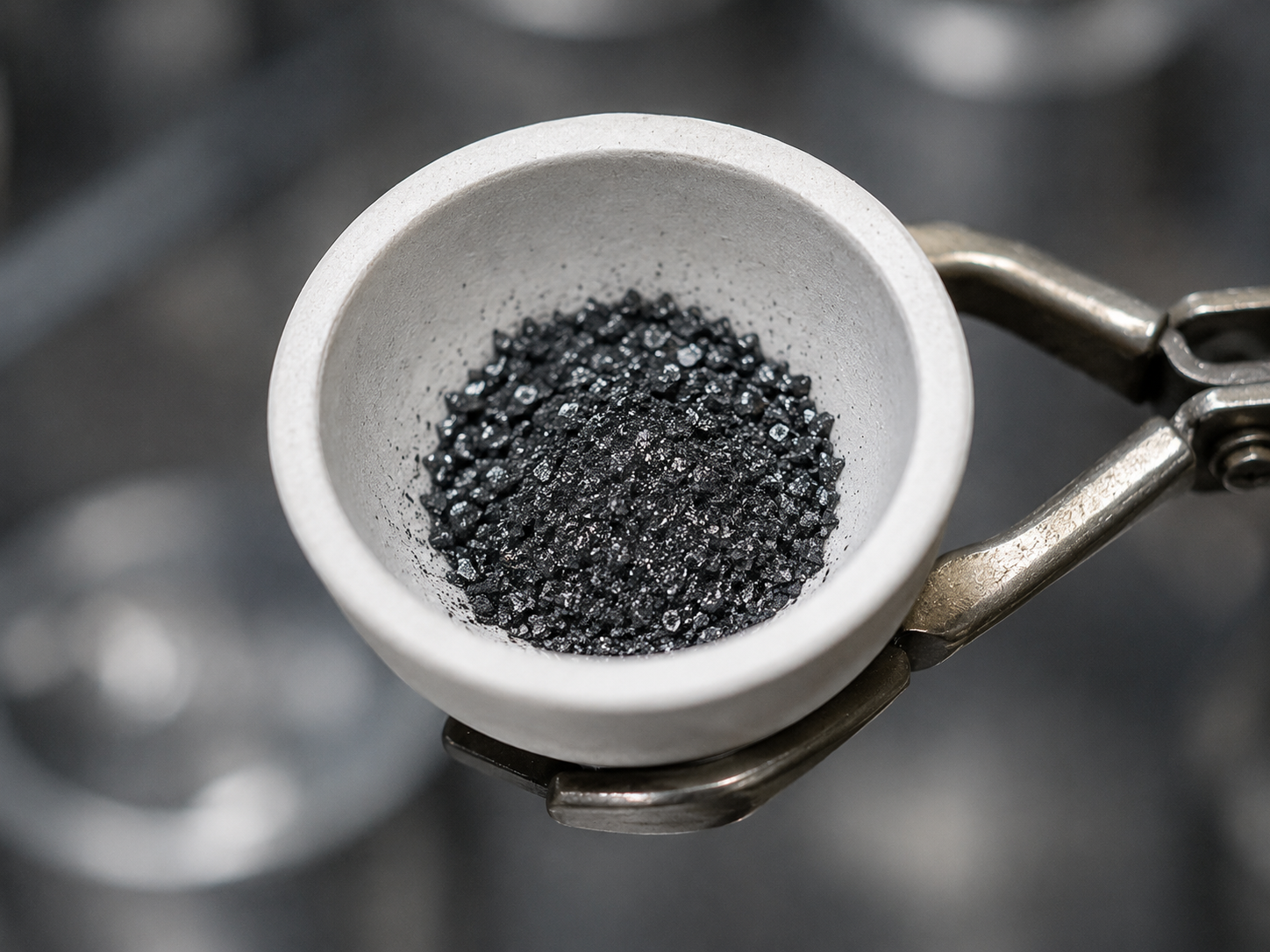
Purified carbon extracted from cremated remains in a laboratory crucible before graphitization

Diamond color is not a coating or a setting choice. It comes from trace elements caught in the crystal lattice while the stone is growing. Boron produces blue tones. Nitrogen produces yellow tones. A colorless diamond requires the near-total absence of both.

Manufacturers produce synthetic industrial feedstock to contain almost pure carbon, which allows standard lab-grown diamonds to emerge completely colorless. In contrast, cremated remains present the opposite reality. Calcium phosphate—the mineral structure of bone—dominates cremated remains, leaving usable carbon at only about 0.5% to 4% of total ash by weight. Technicians extract that small carbon fraction from the mineral-heavy matrix and purify it to roughly 99.9%+ purity.

This purification process achieves exceptional results, though it never achieves absolute purity by design. At 99.9%+ purity, microscopic trace elements remain, and this residue can directly influence the diamond’s final color. Furthermore, the carbon endures intense conditions during cremation: the high heat of the retort, the holding container, and any surrounding elements. As a result, carbon extracted from ashes carries a unique trace-element signature that standard synthetic feedstock lacks.

Many articles on this topic overlook a crucial fact: her carbon does not fill the growth press alone. Technicians blend her extracted carbon with supplemental lab-grade carbon to achieve the volume the press requires. Consequently, her personal carbon typically accounts for roughly 10% to 15% of the finished diamond’s total mass. The accurate reality does not pit pure ash feedstock against synthetic carbon; instead, controlled synthetic carbon forms most of the gemstone, while her carbon acts as a meaningful minority partner.

The color can still move. Trace elements present during growth can influence the appearance of the crystal, which is why memorial diamonds can trend toward yellow, blue, and champagne or brown tones. The tint is not evidence that the stone is entirely her. It is evidence that personal carbon contributed to the growth process.

For a deeper explanation, see why memorial diamonds are rarely colorless and what the lab does with her ashes.

What Colors Are Actually Possible From Her Ashes?

Close-up of a champagne-toned lab-grown memorial diamond held in tweezers under daylight

These are industry-typical outcomes and industry-typical cost relationships, not a fixed price list or a promise about a specific stone.

ColorWhat Causes ItWhat an Ash-Derived Source MeansCost Note
YellowNitrogen present during growthA common memorial-diamond color associated with nitrogen during growthGenerally sits toward the lower end for a given carat
Champagne / BrownSeveral trace elements acting togetherCan result from the combination of trace elements present during growthGenerally comparable with yellow at matching carat
BlueBoron present during growthBlue is generally a targeted color rather than something reliably supplied by one person’s ashesTypically below colorless at the same carat
Colorless / WhiteNear-complete absence of boron and nitrogenThe most demanding outcome because the source must undergo additional processingTypically carries a significant premium
Red, Pink, Green, BlackPost-growth treatment such as irradiationColor is applied after the crystal has already been grownUsually treated as an additional option

For scale on the underlying numbers, entry-tier memorial diamonds of roughly 0.10–0.25 ct run about $1,500–$3,500 industry-wide, while 0.5–1 ct stones can run roughly $5,000–$15,000. Color is only one of several factors affecting the final cost.

See what actually drives memorial diamond cost for the other major price factors.

Can You Choose the Color, or Do Her Ashes Decide?

Both, but in different ways.

You choose the target. Providers can offer color as an option at order time, with the process directed toward the selected result.

Her ashes influence the result. The trace-element profile of carbon recovered from cremated remains can vary, meaning the exact shade can have some natural variability. A provider can aim for a color, but the source material still matters.

Colorless is the outcome where the material presents the greatest challenge because it requires additional processing to reduce the elements associated with coloration. Irradiated colors such as red, pink, green, or black are different because the color is introduced after growth.

An independent diamond grading report open to the color grade section beside a loose memorial diamon

Does the Color Mean Anything About Your Mother?

Not in the way it is sometimes marketed. The shade does not encode her personality, eye color, health, or character. Anyone selling you that interpretation is attaching symbolism to something that cannot establish it.

What is true is narrower and, honestly, better. The tint exists because personal carbon contributed to the growth process rather than the stone being produced entirely from controlled industrial carbon. That is a physical fact, not a symbolic one.

None of this requires committing all of her ashes. Only a small fraction is used, so burial, scattering, or keeping an urn can remain open alongside the diamond.

Which Questions Should You Ask About Color Before Ordering?

Color is the part of an order most easily left vague at the start and most obvious on delivery. These five questions help close that gap while it is still possible to make an informed choice.

  1. What color range does my order actually commit me to? Ask whether you are buying a named color or a color family, and what variation within it is considered normal.
  2. What happens if the finished stone falls outside that range? Ask what the provider’s process is before you need it whether that means a re-grow, adjustment, or another remedy.
  3. Is the color from growth or from irradiation? Both are legitimate approaches, but they produce different products and should be explained clearly.
  4. What does colorless cost at my carat size, and what does it add to the timeline? Ask for the comparison against yellow or blue at the same size, preferably in writing.
  5. What color will the grading report list? An independent grading report can document the diamond’s characteristics. See how memorial diamonds are graded and certified.

Frequently Asked Questions

Will the diamond be gray because ashes are gray?

No. The visible color of cremated remains has no bearing on the finished stone. Ash color comes largely from mineral content that is removed during purification. Diamond color comes from trace elements present during crystal growth, which is a separate stage.

Can I get a truly colorless diamond from my mother’s ashes?

Yes, but it is the hardest outcome to produce. It requires additional processing to reduce the elements associated with coloration, and it typically costs more than a yellow, champagne, or blue stone of the same carat weight.

Does submitting more ashes change the color?

No. Material quantity does not directly determine color, and it does not determine size either. Carat is primarily a function of growth time in the press. As a general industry guide, requirements can range from a few tablespoons to roughly 4 oz, but individual providers set their own requirements.

Will the color fade or change over the years?

No. The color is structural, existing within the crystal rather than sitting on the surface. Diamond is also a 10 on the Mohs hardness scale. Ordinary wear, cleaning, and sunlight do not simply remove a structural color.

Can two diamonds from the same ashes come out different colors?

Yes, separate growth runs can produce variation. Families ordering multiple stones from one shared source should ask the provider how closely matching colors can be expected if consistency between stones matters.

Is a colored memorial diamond worth less than a colorless one?

Production cost and personal value are different questions. A colored memorial diamond may cost less to produce than a colorless one, but that does not make it less meaningful. In this category, the color can simply be part of the physical result of the growth process.

Before You Choose a Color

One practical suggestion before anything else: stop reading color words and go look at stones. “Champagne” on an order form and a champagne diamond turning under a lamp are not the same experience, and a color ruled out on paper has often never been seen in person.

When you want the specifics rather than the general case, reach out to Memorial Diamond at memorialdiamond.us to talk through what color is realistic for your mother’s ashes, what colorless would actually involve, and to put the five questions above to a person rather than a page.

The same question about her hair has a different answer, while sending both ashes and hair changes the discussion again. You can also explore the wider range of colors families choose for a mother and the complete guide to a mother ashes diamond.

mother hair dimond

Is a Memorial Diamond Really Made From Your Mother’s Ashes and Hair?

Sending both is usually a decision made by not deciding. The ashes were what you had, the lock of hair was what you kept, and separating them felt wrong. Both can go into one stone that part is straightforward. The harder answer is that once the diamond is cut, nothing about it can tell you whether her ashes contributed anything at all. Hair runs roughly 50% carbon by weight; cremated remains, 0.5% to 4%. A stone grown from the hair alone would look, test, and grade identically.

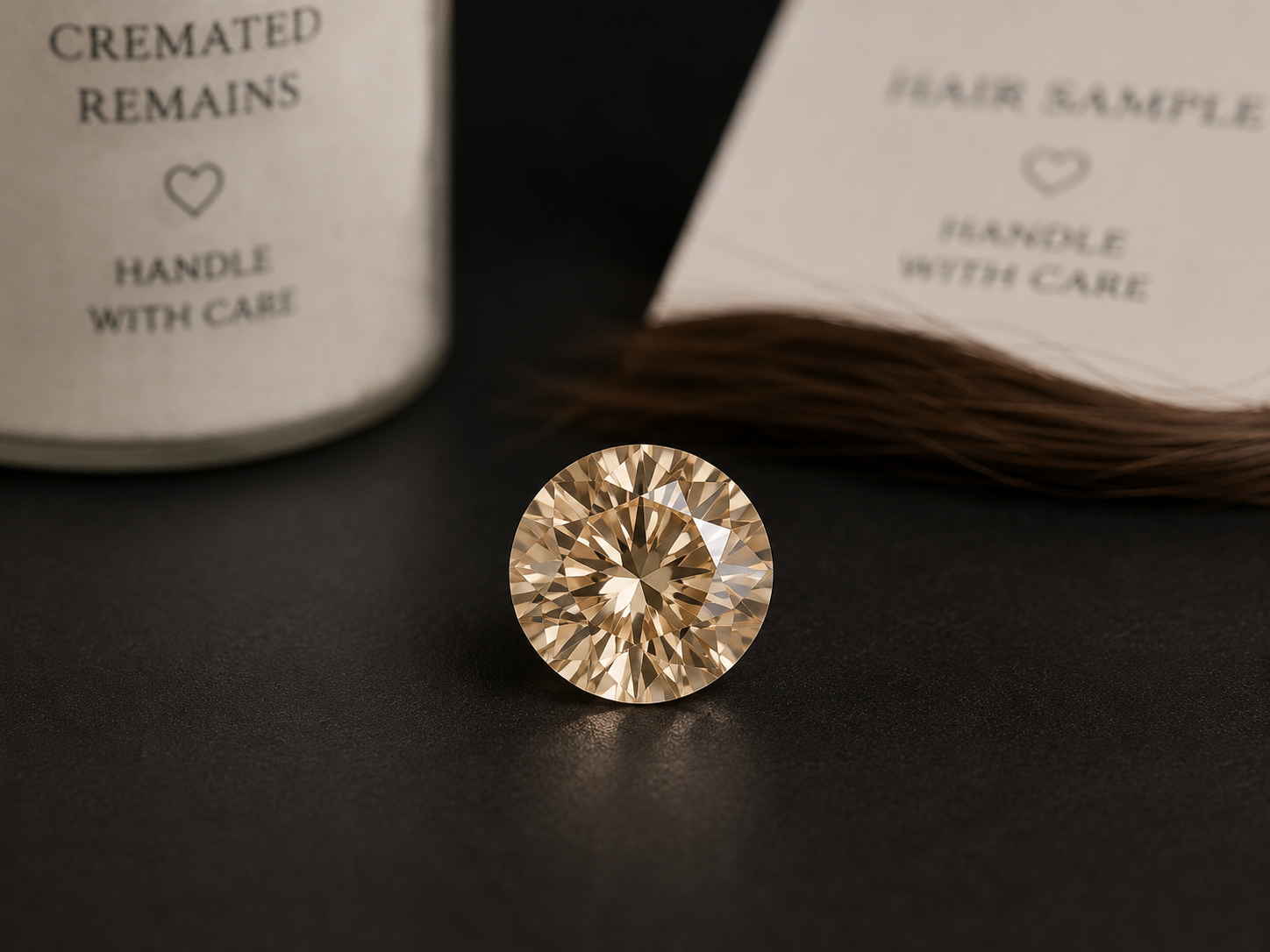
A labeled vial of cremated ashes and a tied lock of hair side by side beside a loose lab-grown memorial diamond

If You Send Both Her Ashes and Her Hair, Are Both Really Used?

They can be. Whether they were is a question the finished stone cannot answer, and it is worth saying that plainly rather than letting a certificate imply otherwise.

Purified carbon carries no signature of what it came from. Carbon extracted from her hair and carbon extracted from her ashes are, once purified to roughly 99.9%, the same substance and so is the lab-sourced carbon blended in alongside them to fill the growth cell. That last point surprises families: a combined stone contains carbon from three places, not two. No memorial diamond is 100% anyone, and a provider claiming otherwise is overselling a real thing.

So a family that sends both has handed over the one submission where a shortcut is invisible. That is not an accusation. It is the reason this page exists, and the reason the questions further down are worth asking before anything ships.

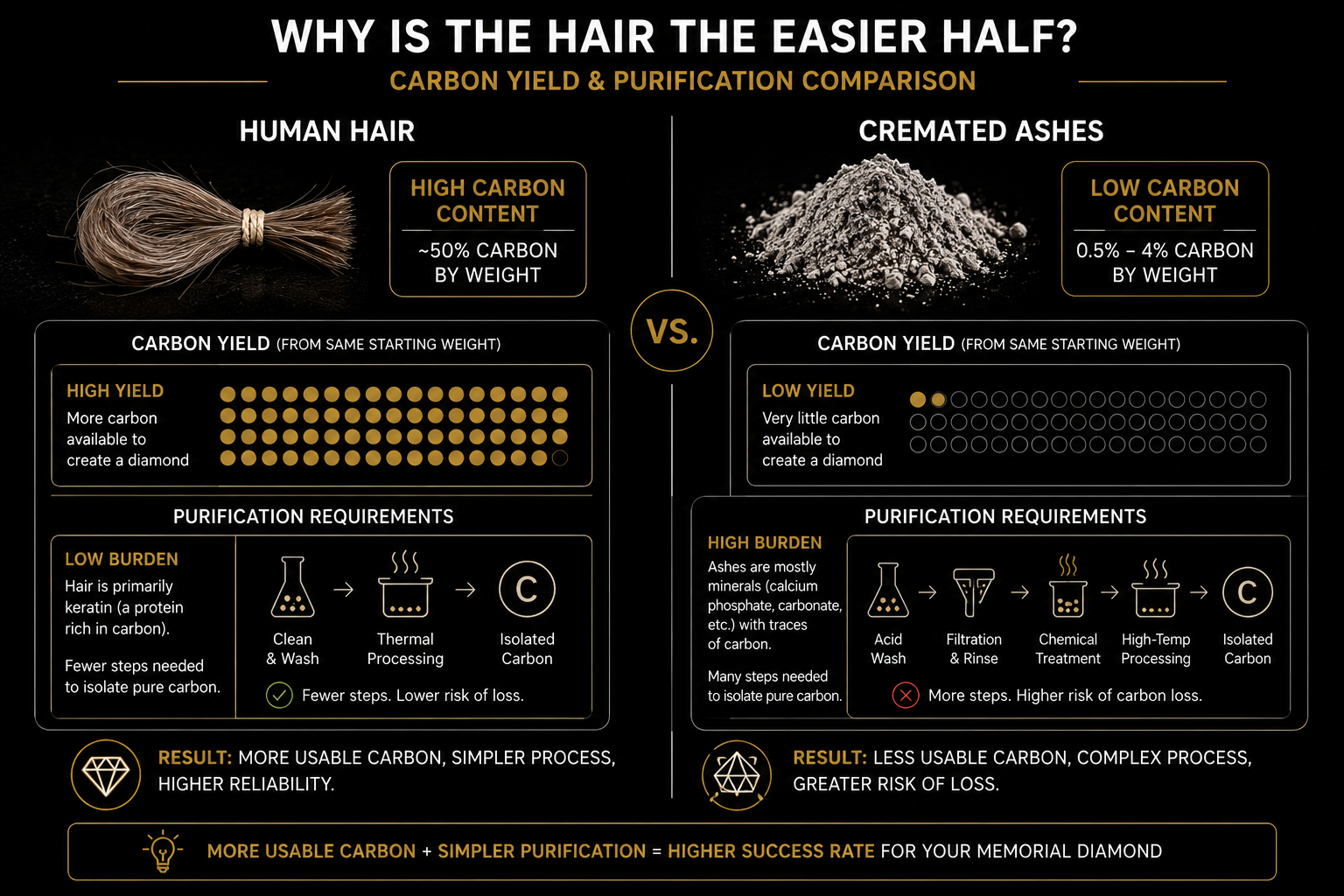
Why Is the Hair the Easier Half?

Because it asks less of the lab at every stage, which is precisely what creates the incentive worth watching.

Her HairHer Ashes
Carbon content~50% by weight~0.5–4% by weight
Amount typically requestedA small lock, a few gramsA few tablespoons up to about 4 oz
What purification must strip outThe non-carbon components of keratinCalcium phosphate and other bone minerals
Usable carbon per gram submittedHighLow
Diagram comparing carbon yield and purification requirements for hair and cremated ashes

A few grams of hair can yield more usable carbon than several ounces of ash, and it gets there through a less demanding purification. Neither material is difficult in isolation how the lab handles a combined submission walks through both tracks but if one of the two were quietly dropped, the hair is not the one that would go.

That asymmetry is also why choosing between ashes and hair is a real decision rather than a formality, and why sending both should be a deliberate choice rather than a default.

Does Combining Them Change the Stone Itself?

In two ways, and neither is the one families expect.

It does not make the diamond bigger. Carat is set by growth time in the press, not by how much carbon went in, so doubling the source material doesn’t double anything. Submitting both her ashes and her hair buys meaning, not size.

It does plausibly affect color. Diamond color comes from trace elements present during growth nitrogen produces yellow tones, boron produces blue, and the absence of both is required for a colorless stone. Ash and hair carry different trace-element profiles, ash with a mineral load that hair has none of, so a combined feedstock is a less predictable starting point than either alone. No provider can promise a specific color in advance from any organic source, and a combined submission is the case where that caveat has the most force.

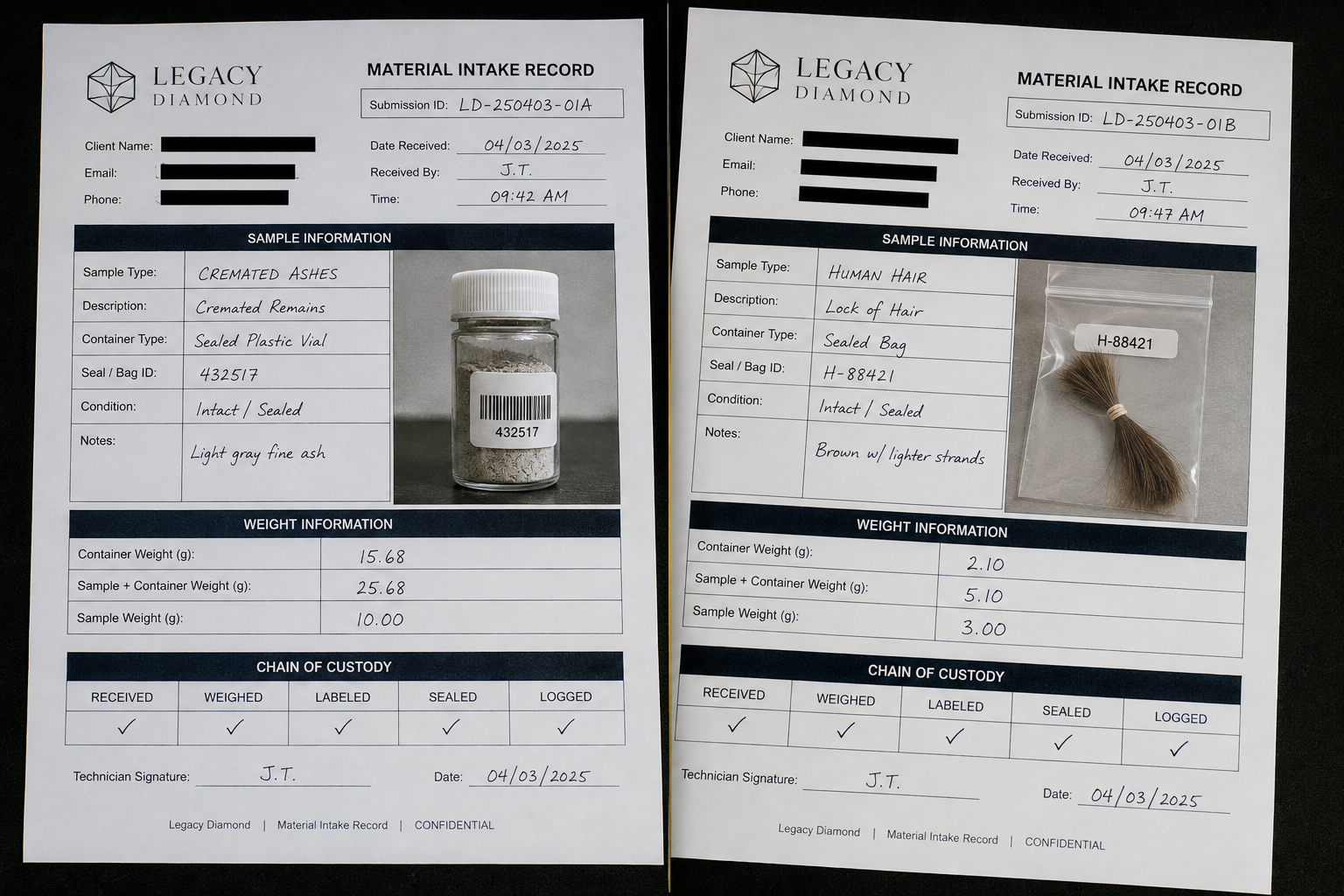
What Would Real Documentation for a Combined Order Show?

Two separate intake records for a single memorial diamond order, one logging cremated ashes and one logging a lock of hair

A single certificate saying “grown from the submitted remains of [your mother]” is not evidence that both materials were used. It is evidence that both were received. Four things separate a real record from a reassuring one.

What to Ask ForWhat It Should ShowWhy a Combined Order Needs It
Two intake referencesAshes and hair logged separately on arrival, each with its own reference and recorded quantityOne order-level number can’t demonstrate that both materials arrived, or in what amount
Two purification recordsA separate extraction record per material, each with the carbon yield it producedThis is where a low or failed ash yield would become visible
A stated combination pointThe stage where the two purified outputs are combinedWithout it, “we used both” describes an intention rather than a process
A return record for eachUnused ash and unused hair accounted for separatelyMaterial returned as one lot tells you nothing about which was drawn on

Underneath all four sits the same thing that underpins any memorial diamond: the chain of custody a provider keeps from intake onward. A combined order simply needs two of them, running in parallel. And an independent grading report, valuable as it is, speaks only to cut, color, clarity, and carat never to origin.

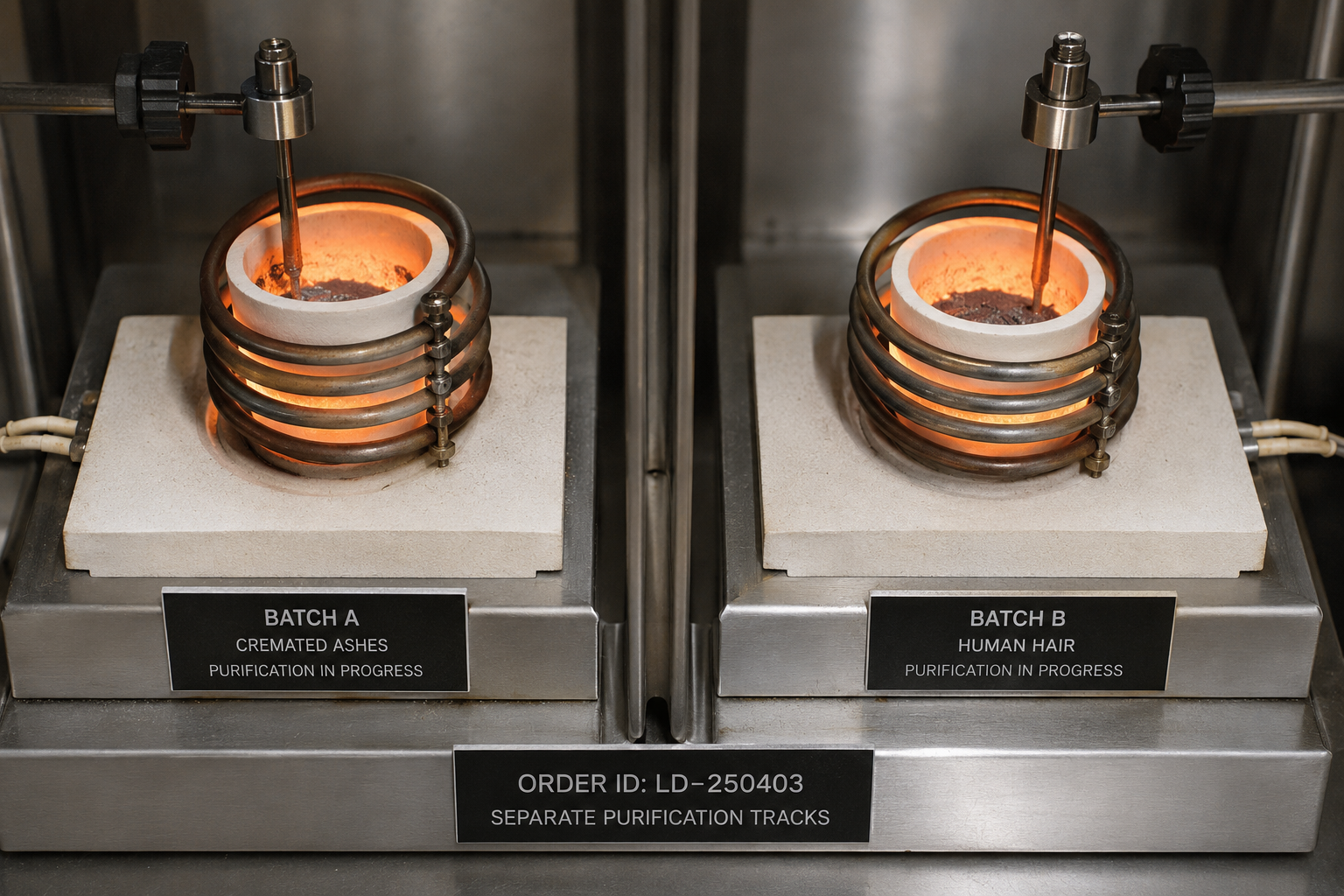
Which Questions Should You Ask About an Ashes-and-Hair Submission?

Two laboratory crucibles running separate carbon purification batches for one memorial diamond order

Five questions, all specific to sending two materials. The third is the one that matters most.

  1. Are the ashes and the hair purified separately, or processed together in a single run? Ask which, and ask for the answer in writing.

A fuller checklist before turning your mother’s ashes and hair into a diamond goes wider, and the complete guide to a mother ashes and hair diamond covers timeline, color, and cost.

Frequently Asked Questions

Can a lab tell me how much of the stone came from her ashes versus her hair?

Only from its own extraction records, never from the stone. After purification the two outputs are indistinguishable, so the yield figures logged during each run are the only place that ratio exists. Ask whether you can see them.

Is there any real advantage to sending both?

Not technically hair alone would usually supply the carbon comfortably, and ashes alone works too. The advantage is entirely about meaning: some families don’t want to choose between what was returned to them and what they kept.

What happens if the carbon recovered from her ashes is too low to use?

Technically, the stone can still be grown from the hair alone a defensible decision, and an indefensible one to make silently. Ask in advance whether you would be told, and get that commitment in writing before either material ships.

Do the two materials have to be sent at the same time?

Ask the provider. Separate purification tracks may allow staggered submission, but a combined order usually needs both materials in hand before growth begins. Confirm before mailing anything on a partial timeline.

What if I have her ashes but never kept any hair?

Then it’s an ashes-only stone, which is a complete starting point on its own. Whether a diamond is really made from her ashes covers that case, including the percentages that apply to it.

Could combining them change what color the diamond turns out?

Possibly. Color comes from trace elements present during growth, and ash carries a mineral load that hair doesn’t, so a mixed feedstock is less predictable than either alone. No provider can promise a color in advance.

Before You Send Anything

A combined order asks a provider to do two things carefully instead of one, and only their records can show whether they did.

So if you send both, send them into a process built to account for both. Ask the five questions above and notice which ones get a specific answer including from us. Reach out to Memorial Diamond at memorialdiamond.us and ask what documentation a combined submission produces. The same question about her hair alone has a shorter answer.

dimond hero

Is a Memorial Diamond Really Made From Your Mother’s Hair?

The lock is always smaller than you remember. It sits in an envelope, a locket, or taped inside a photo album, and it looks like almost nothing which is why the first honest question is whether almost nothing can become a diamond. It can. Hair is roughly 50% carbon by weight against 0.5% to 4% for cremated remains, so a few grams of hair can yield as much usable carbon as several ounces of ash and depending where a given cremation falls in that range, sometimes more. That carbon is extracted, purified, and grown into the crystal, alongside lab-sourced carbon, because no lock is large enough on its own.

A small cut lock of gray hair tied with thread beside a loose lab-grown memorial diamond on a plain surface

Can a Small Lock of Hair Really Be Enough?

Yes. The reason is chemistry rather than generosity. Hair is built from keratin, a carbon-rich protein, and runs roughly 50% carbon by weight. Cremated remains are mostly calcium phosphate the mineral structure of bone and yield only 0.5% to 4% carbon by weight.

SourceCarbon ContentAmount Typically RequestedCremation Needed
Hair~50% by weightA small lock a few grams, often described as palm-sizedNo
Cremated ashes~0.5–4% by weightA few tablespoons up to about 4 ozYes

So the anxiety behind most of these searches surely they need more of her than that has it backwards. A hair submission looks small because it doesn’t need to be big. How much hair is actually required puts a number on it.

Side-by-side comparison of carbon content by weight — a few grams of hair at roughly 50 percent, several ounces of cremated ashes at 0.5 to 4 percent

So Is the Whole Diamond Made of Her Hair?

No, and any provider saying otherwise is overselling. Purified carbon from her hair is blended with lab-sourced carbon before growth — not to dilute her, but because a growth cell needs a certain mass of graphite feedstock to produce a crystal of meaningful size, and a few grams of hair don’t fill it.

Notice what that changes. With ashes, the constraint is that the source is carbon-poor. With hair, the source is carbon-rich but there isn’t much of it. Same blend, different reason.

One thing worth pressing on: the industry publishes a figure for ash-derived stones personal carbon at roughly 10–15% of the finished mass. No comparable published figure exists for hair. That absence isn’t sinister, but it is fair to make a provider fill it in for your stone.
What If She Was Buried, or You Kept the Lock for Years?

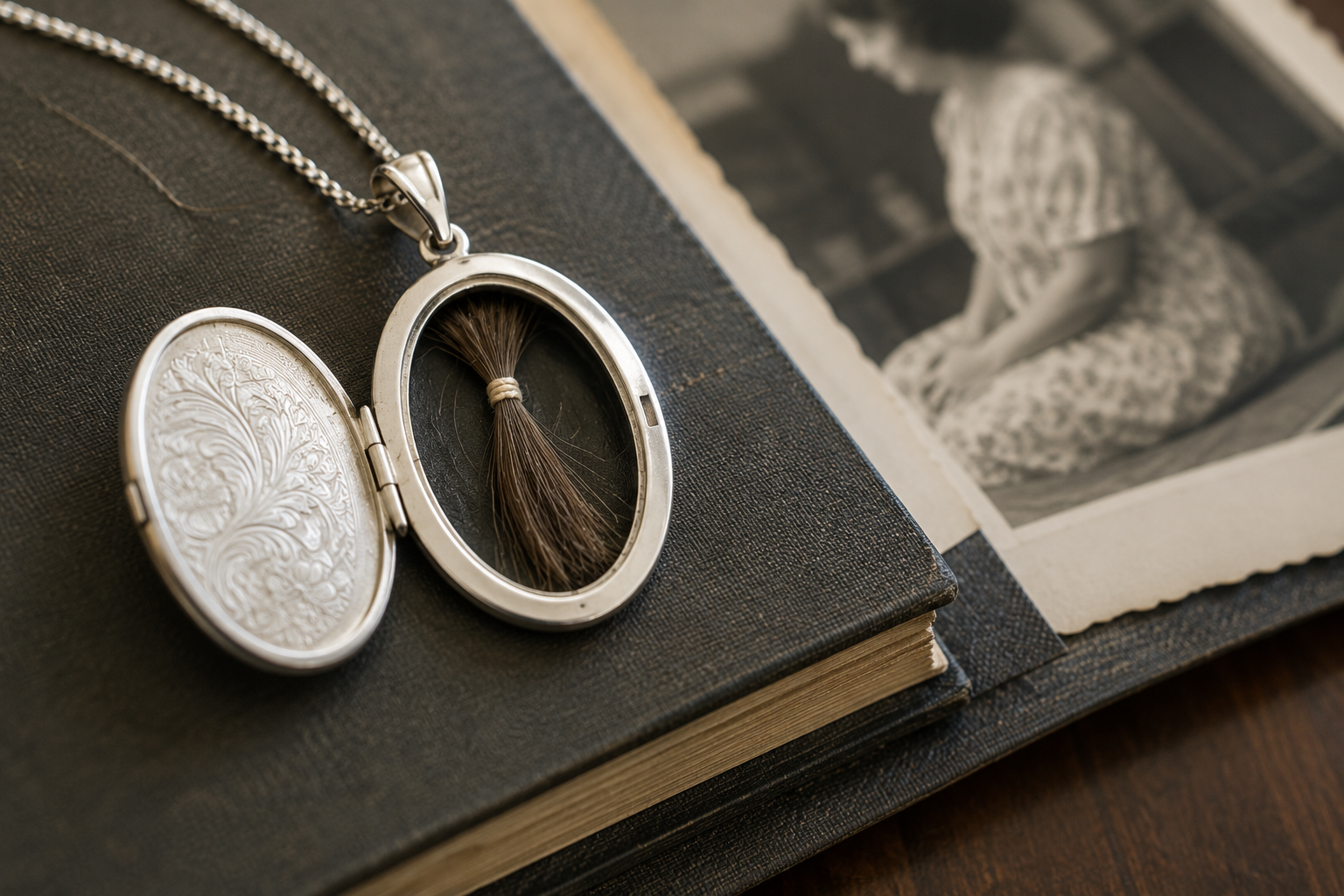
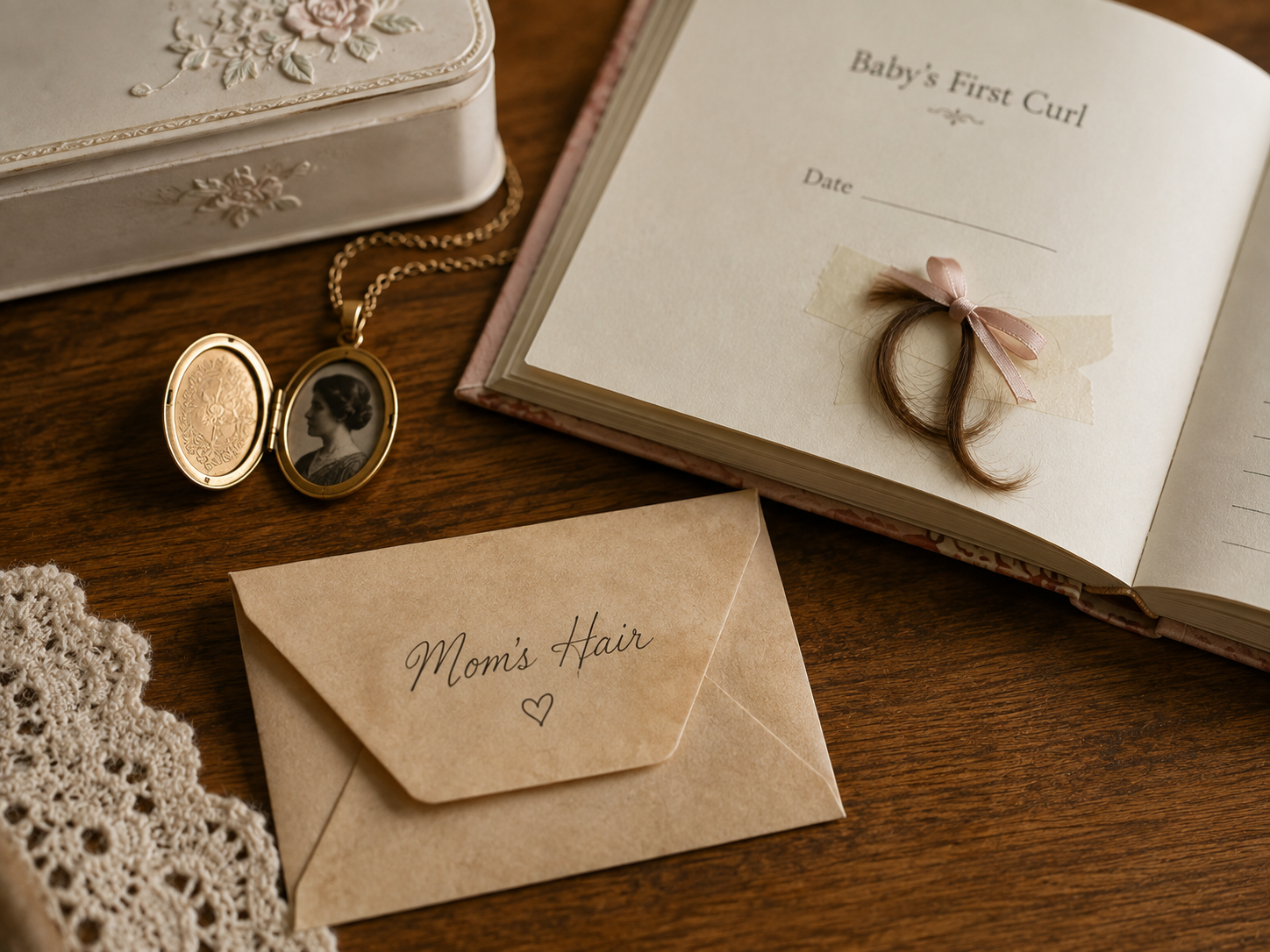
An opened keepsake locket holding a lock of hair kept for many years, resting on a photo album

Both readers belong here.

Hair needs no cremation, so a mother who was buried is not excluded from any of this. If a lock exists cut in a hospital room, taken by a funeral director, kept from a haircut a decade before she died that is the whole requirement. Hair-based options for a loved one who wasn’t cremated covers that route on its own terms, and none of it makes burial a lesser choice.

Age alone doesn’t spoil hair. Keratin is stable, and locks survive in Victorian mourning jewelry well over a century later. Storage is what causes problems: damp, mold, adhesive tape, product residue, and locks mixed with someone else’s hair over the years. Describe the condition of hers when you ask; that matters far more than the date.
Does Coloring, Bleaching, or Perming Ruin It?

Most mothers colored their hair, so this one comes up constantly.

Chemical treatment changes hair’s surface and structure, but it doesn’t stop hair being keratin, and purification strips everything that isn’t carbon anyway. What treatment plausibly affects is the trace-element profile carried into the growth cell and trace elements set a diamond’s color. Nitrogen produces yellow tones, boron produces blue, and the absence of both is required for a colorless stone.

The honest position: no provider can promise a specific color in advance from any organic source, treated or not. Whether a given lab accepts dyed, bleached, or permed hair is a policy question rather than a chemistry one, and policies differ. Ask before you cut anything.

How Would You Know They Used Her Lock?

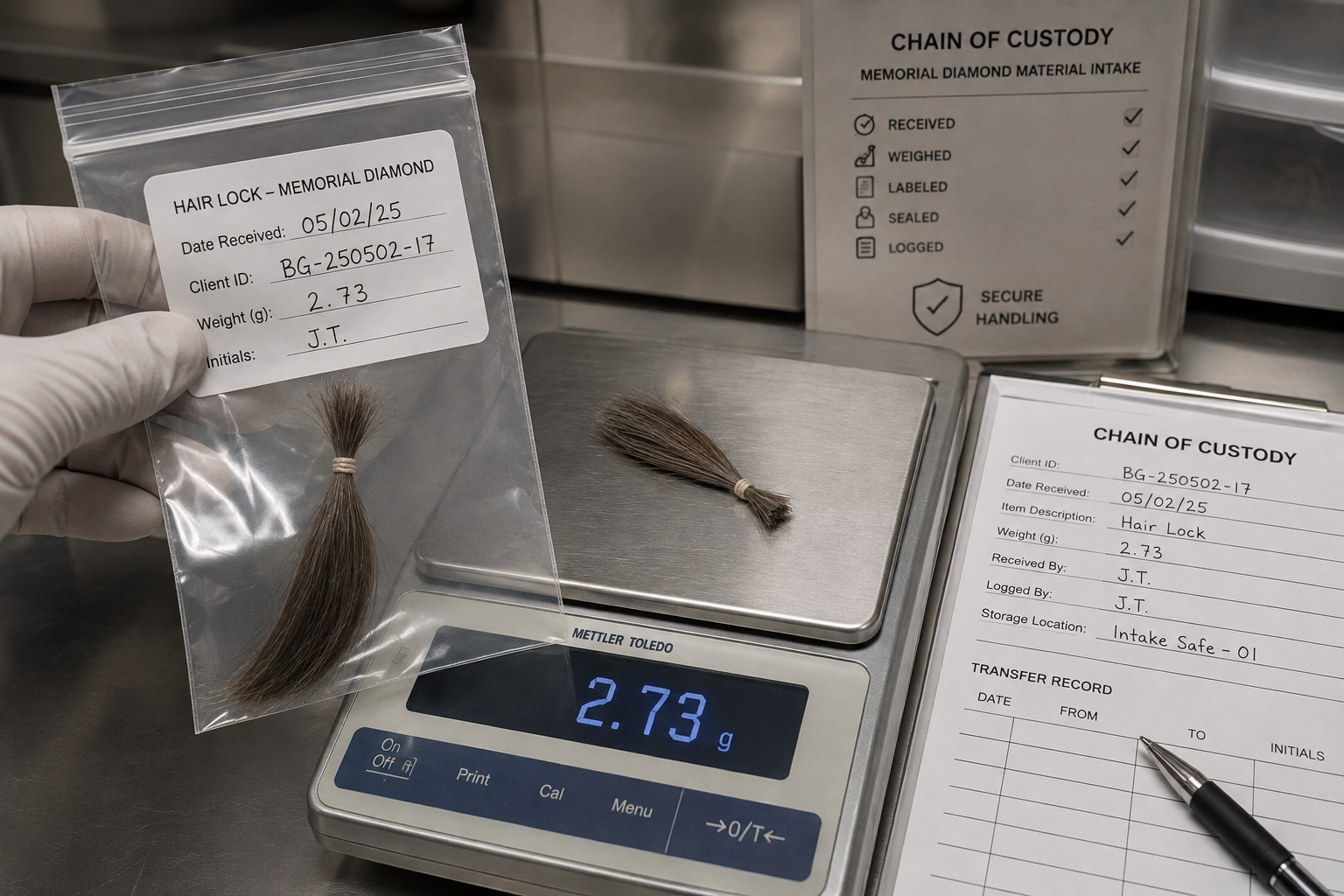
A labeled and sealed lock of hair being weighed and logged at laboratory intake

This is sharper for hair than for ashes, and it gets less attention than it deserves.

A lock of gray hair in a paper envelope is anonymous small, light, and easy to substitute. Unlike a cremation, no third party ever documented that it existed. Ashes arrive trailing paperwork: an authorization, a funeral director, a recorded transfer between institutions. A lock cut in your mother’s bedroom has none of that. You are usually the only witness.

So verification starts on your kitchen table, not at the lab:

  1. Photograph the lock beside a ruler and a dated note before it goes anywhere.
  2. Weigh it, even on a kitchen scale, and write the figure down.
  3. Ship it tracked, and keep the record.
  4. Ask for an intake confirmation stating the quantity received, not just that a package arrived.

An intake weight is the hair equivalent of a chain-of-custody anchor the first moment a second party puts on record what they are holding. From there, the tracking a provider keeps through extraction and growth does the rest, and an independent grading report speaks to the diamond’s quality while saying nothing about whose carbon it holds.

Which Questions Should You Ask Before You Send It?

Five questions specific to a hair submission. Vague answers are the signal.

  1. What weight do you need, and will you confirm in writing what you received? A confirmed intake quantity is the strongest document a hair family gets.
  2. How is a lock stored and identified between arrival and extraction? Sealed and labeled from the moment it lands, or held loose until someone gets to it?
  3. Do you accept colored, bleached, or chemically treated hair and does it change the process or the likely color?
  4. What disqualifies a lock? Mold, damp, adhesive residue, and hair possibly mixed with another person’s are the realistic failure modes.
  5. Is any of the lock returned? With ashes there is usually a remainder. With a few grams of hair there may not be.

A fuller checklist before turning your mother’s hair into a diamond goes wider, and the complete guide to a mother hair diamond covers color, timeline, and cost.

Frequently Asked Questions

Can this be done if my mother was buried rather than cremated?

Yes. Hair-based memorial diamonds involve no cremation at any stage, so burial doesn’t rule anything out. All that’s needed is a lock of her hair, whenever it was collected before her death or at the funeral home.

I’ve had a lock of her hair for fifteen years. Is it too old?

Age by itself isn’t the problem keratin is stable and hair survives for generations. Storage is what matters: mold, damp, adhesive tape, or a lock mixed with someone else’s hair. Describe its condition when you ask.
Can you be certain hairbrush hair is only hers?

Not always, and the doubt is about identity rather than chemistry. Brush hair is the same keratin, but a brush may hold strands from anyone who used it. A cut lock removes that question; ask what your provider accepts.

Can anyone prove the finished diamond came from my mother’s hair?

Not by testing the stone. Purification erases the difference between one carbon source and another. And unlike cremated remains, a lock carries no third-party paperwork behind it so your dated photograph and the lab’s intake record are the evidence.

Will a hair diamond look different from an ashes diamond?

Possibly. Color comes from trace elements present during growth, and hair carries a different profile than ash, without ash’s calcium-phosphate mineral load. No provider can promise a specific color in advance from either source.

How much hair does she need to have had?

Length matters less than quantity. A few grams is the industry-typical ask, which a short haircut can supply. Thinning hair, chemotherapy regrowth, or a very short style don’t automatically rule it out.

If You’re Not Sure Yet

Ask before you commit to anyone. The five questions above cost nothing to send, and the answers or the evasions tell you more about a provider than anything they have written about themselves.

That includes us. Reach out to Memorial Diamond at memorialdiamond.us and ask what documentation comes with a stone grown from your mother’s hair. The same question about her ashes has a different answer, and a different set of numbers.
How to Turn Your Mother's Hair Into a Diamond Safely

How to Turn Your Mother’s Hair Into a Diamond : Complete Guide

A lock of your mother’s hair can hold a meaning that is impossible to replace.

Unlike ashes, hair is often limited. A saved lock may be the only one that exists, which makes preparation especially important before anything is cut, packaged, or mailed.

The process can be straightforward: find or prepare the lock of hair, confirm the provider’s requirements before cutting anything, choose your preferred diamond characteristics, safely package the material, and send it to the laboratory.

The finished memorial diamond can take several months to complete.

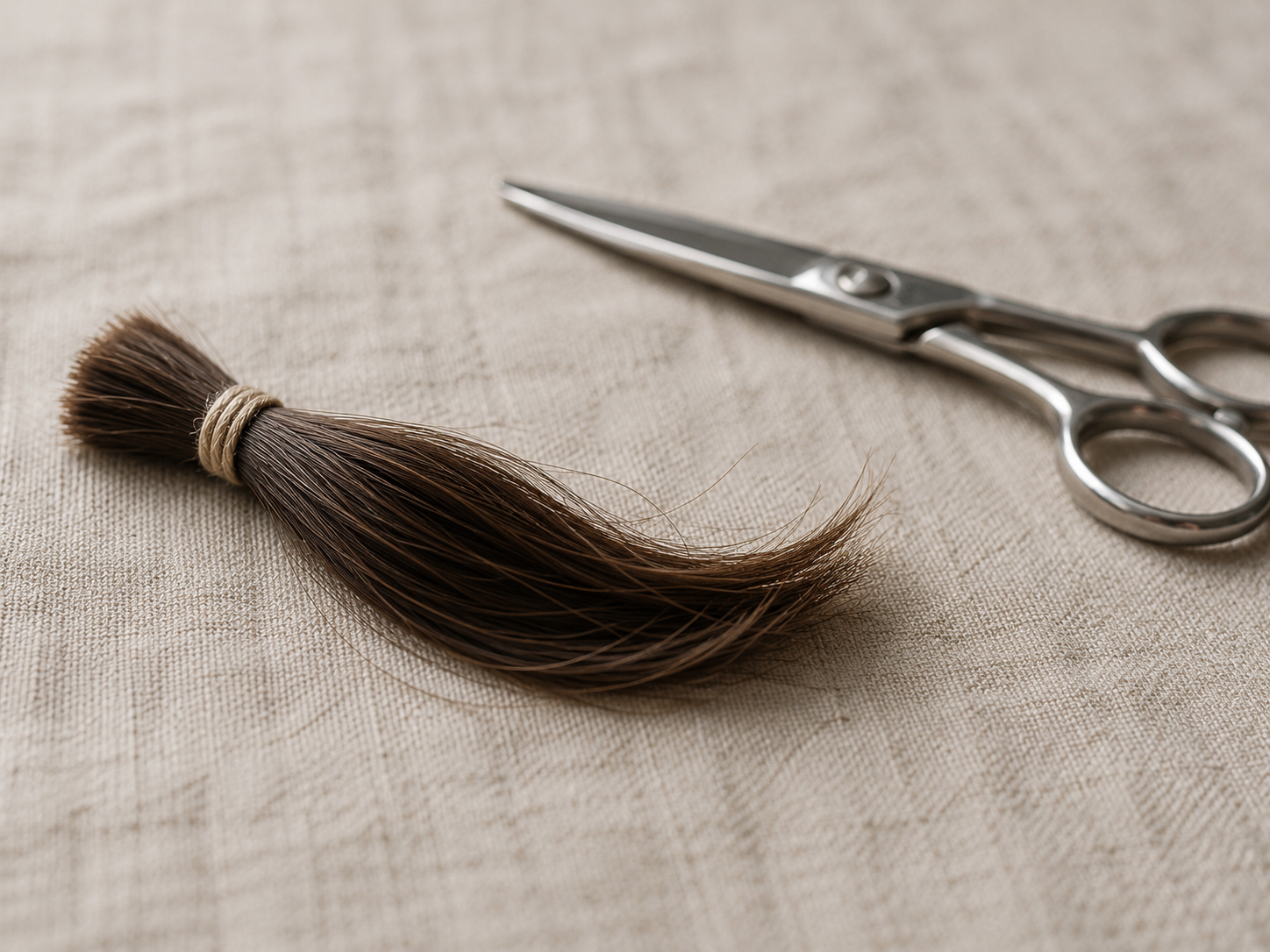
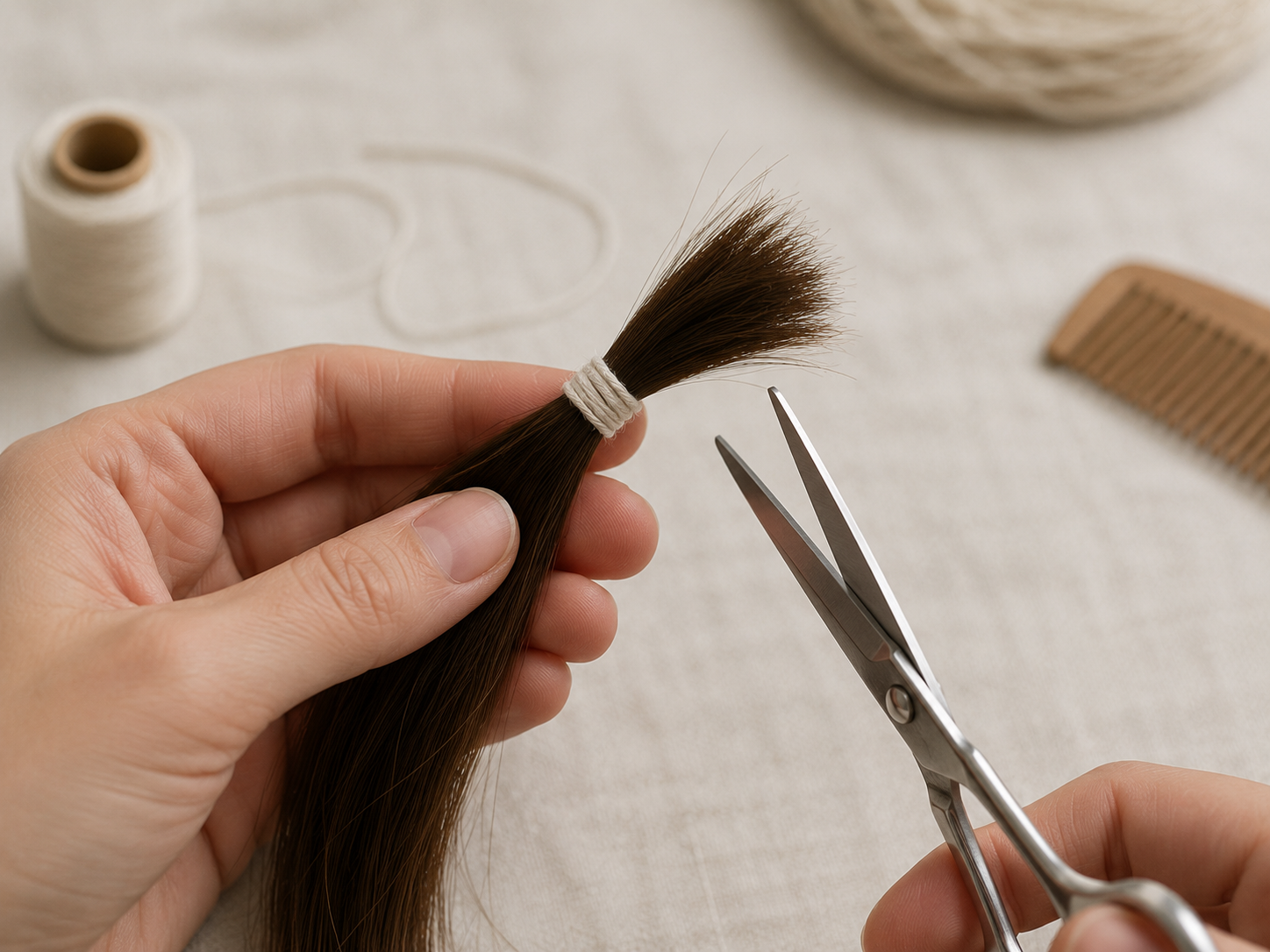
Small lock of hair bound with thread resting beside a pair of scissors on a linen surface

In This Guide


Where Will You Actually Find Your Mother’s Hair?

Most families do not intentionally collect hair for the purpose of creating a memorial diamond. A saved lock is usually something that is discovered years later.

Some common places where families may find a lock of hair include:

  • A folded envelope inside a jewelry box
  • A baby book
  • A saved childhood braid
  • A locket
  • A hairbrush
  • A lock saved after a haircut
  • Hair kept by a funeral home at the family’s request

A clean and identifiable lock is generally easier to submit than loose hair collected from a shared hairbrush.

If the hair comes from a shared brush, it may contain strands from multiple people. It is important to tell the provider where the hair came from when asking whether it can be used.

If your mother is still living, she can personally provide a lock of hair for the memorial diamond process.

Folded paper envelope, a locket and a baby book open on a table, showing where a saved lock is typically kept

What Should You Decide Before You Touch the Scissors?

Before cutting anything, decide what type of diamond you want.

1. Diamond Carat Size

The selected carat size can affect the growth process, timeline, and cost.

Sending more hair does not automatically create a larger diamond. The amount of hair submitted and the size of the finished diamond are not the same thing.

Before cutting a lock, confirm the provider’s requirements for the specific diamond size you want.

Learn how to choose a carat size for a memorial diamond.

2. Diamond Color

Memorial diamonds may be available in different colors, depending on the laboratory process and selected options.

Your mother’s natural hair color does not necessarily determine the color of the finished diamond.

Choose your preferred diamond characteristics first, then confirm how much material is required before preparing the lock of hair.
Learn what color a diamond made from your mother’s hair can be.


How Do You Know You Have Enough Hair?

Palm-sized lock of hair held in an open hand beside a coin for scale

This is one of the most important steps in the entire process.

If a lock of hair is the only one available, there may not be another opportunity to collect more. For that reason, confirm the provider’s minimum material requirement before cutting anything.

Requirements can vary depending on:

  • The provider
  • The selected diamond size
  • Whether one or multiple diamonds are being created
  • The laboratory process

A small lock of hair may be enough in some cases, but the exact requirement should always come directly from the provider.
Before cutting the hair, ask:

Is This Amount Enough for the Diamond Size I Want?

If you are unsure, ask the provider how they recommend confirming the quantity.
What Happens to Unused Hair?

Ask whether unused material is returned and how it is handled.

What Happens if the Diamond-Growing Process Needs to Be Repeated?

Understanding how the remaining material is managed can help you make a more informed decision.

If the available amount is limited, choosing a smaller diamond may be safer than cutting more hair than necessary.

Learn how much hair you may need for a mother memorial diamond.


How Should You Cut and Handle a Lock of Hair?

Section of hair bound at one end with sewing thread just above where it will be cut

If a lock needs to be cut, preparation can help keep the strands together.

Some practical handling steps include:

  • Cut rather than pull the hair
  • Use clean, sharp scissors
  • Keep the lock together
  • Bind one end before cutting
  • Keep the hair dry
  • Store the lock carefully before mailing

Binding the hair before cutting can help prevent individual strands from scattering.

The source material should also be kept clean and protected until the provider gives instructions for submission.

Treated hair, including gray or colored hair, may require provider-specific confirmation before submission.

Read the complete guide to a mother hair diamond.


How Do You Package and Mail Hair Safely?

Hair generally does not have the same shipping restrictions as cremated remains.

However, the biggest risk is physical damage to the package.

A soft envelope can potentially tear or become damaged during sorting. If the hair escapes, recovering it may be impossible.

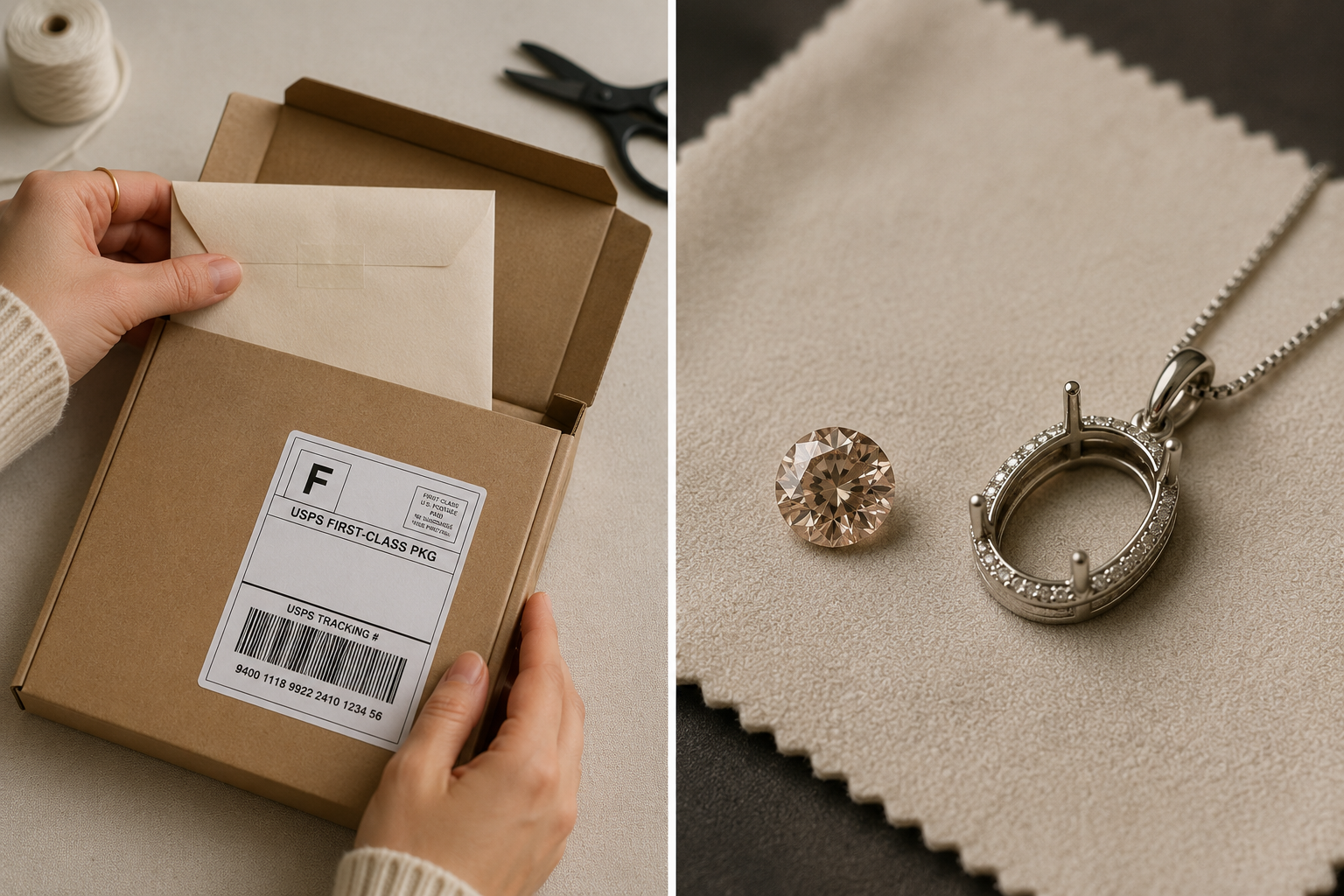
Step 1: Place the Hair in an Inner Envelope

Keep the lock together and place it inside a small envelope or container.

Step 2: Seal the Inner Packaging

Secure the inner envelope so the hair cannot easily escape.

Step 3: Use a Rigid Outer Mailer

A rigid mailer can provide more protection than a standard paper envelope.

Step 4: Add Identification

Include the person’s name and any reference number provided by the company.

Step 5: Use a Trackable Shipping Service

Tracking can help you confirm when the package has been delivered.

Always confirm the provider’s current packaging and mailing requirements before sending the hair.

 Sealed paper envelope being placed inside a rigid cardboard mailer with a tracking label attached

What Happens While You Wait?

After the hair has been received and documented, the laboratory process begins.

The general process can involve:

1. Material Intake

The submitted hair is received and recorded according to the laboratory’s procedures.

2. Carbon Recovery

The material goes through processing designed to recover usable carbon.

3. Carbon Purification

The recovered carbon is purified and prepared for the diamond-growing process.

4. Graphite Preparation

The prepared carbon can be converted into a suitable form for diamond growth.

5. Diamond Growth

The material is used during controlled laboratory diamond growth.

6. Cutting and Polishing

The rough diamond crystal is shaped into the selected cut.

7. Grading and Final Preparation

The finished stone can be evaluated based on characteristics such as:

  • Cut
  • Color
  • Clarity
  • Carat

The memorial diamond process can take approximately 6 to 10 months, depending on the selected diamond and laboratory requirements.

Learn how a memorial diamond is made from your mother’s hair.

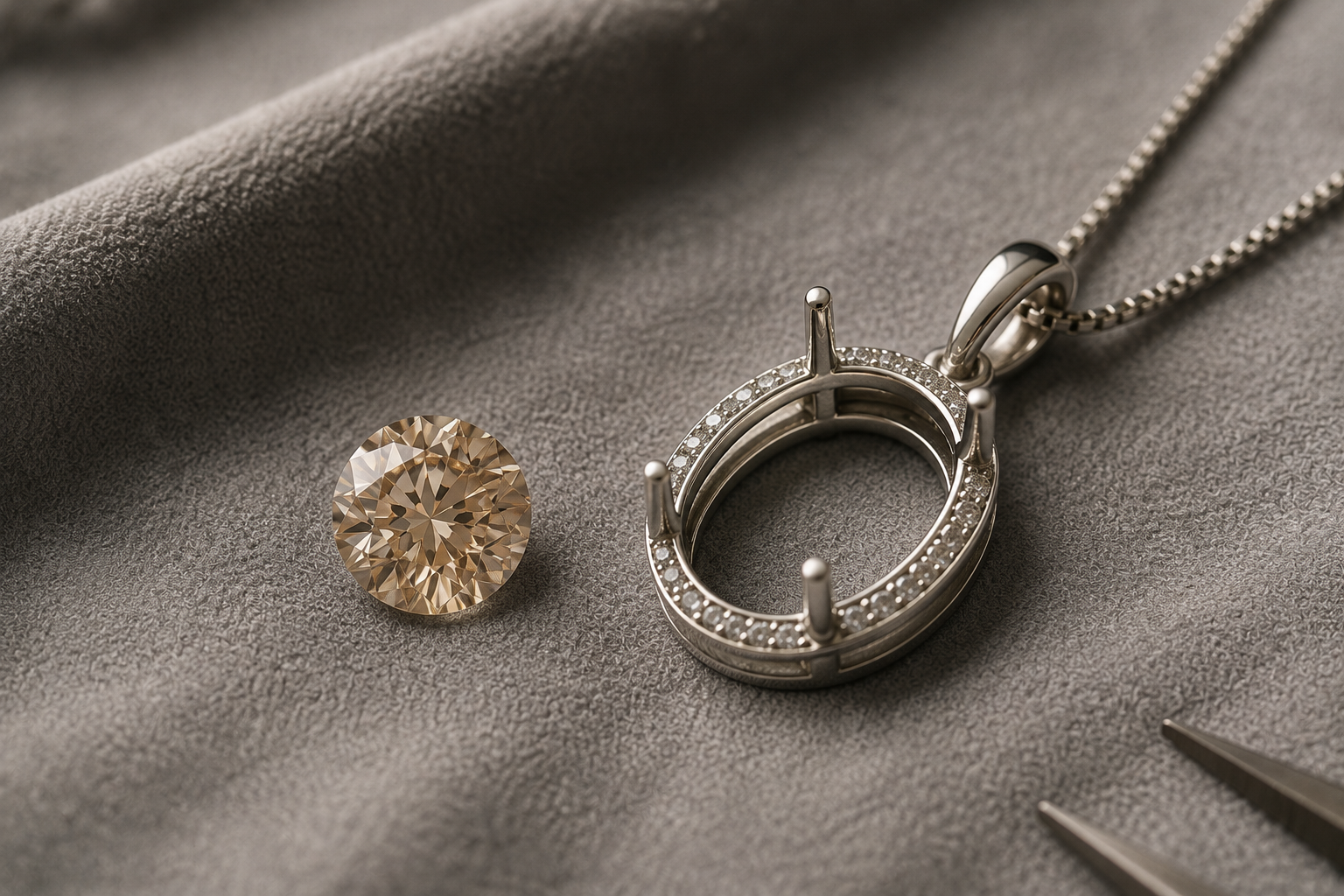
Loose memorial diamond beside an empty pendant setting on a jeweler's cloth

What Happens When the Diamond Arrives?

The finished memorial diamond may arrive as a loose stone.

Depending on the provider, documentation may accompany the diamond, such as information about its characteristics and the memorial process.

After receiving the stone, you can decide how you would like to preserve or wear it.

Popular options include:

  • A memorial diamond pendant
  • A ring
  • A necklace
  • A custom jewelry setting
  • Resetting an existing family jewelry piece

There is no need to rush this decision. The setting can be selected after you have seen the finished diamond and decided what feels most meaningful.

Explore memorial diamond settings and jewelry ideas for a mother.


Frequently Asked Questions

Do I need to send the hair with the roots attached?

A cleanly cut lock may be suitable for the memorial diamond process. Always confirm the specific material requirements with your provider before submission.

How Much Hair Should I Cut?

Confirm the provider’s minimum requirement for your selected diamond before cutting anything. If the lock is the only available hair, it is especially important to confirm the amount first.

Can I Mail the Hair in a Regular Envelope?

A more protective option, such as a sealed inner envelope placed inside a rigid mailer, can reduce the risk of the hair scattering if the outer package is damaged.

What if the Only Hair I Have Is From Her Hairbrush?

Tell the provider before submitting it. A shared hairbrush may contain hair from more than one person, so a clean and identifiable lock is generally preferable.

What if My Mother Is Still Living?

A living mother can provide a lock of hair herself. This can create a meaningful memorial or keepsake diamond without cremation being involved.

Can I Create More Than One Diamond?

This depends on the amount of available material and the provider’s requirements. Confirm the requirements before deciding how many diamonds you would like to create.


Before You Send the Hair

Before mailing anything, confirm these important details:

  • ✓ The provider accepts hair as a source material.
  • ✓ You have selected the diamond size and other preferences.
  • ✓ You know the minimum amount of hair required.
  • ✓ You have enough material before cutting.
  • ✓ The lock is safely stored and clearly identified.
  • ✓ You understand the provider’s packaging instructions.
  • ✓ You are using an appropriate tracked shipping service.

Taking these steps before sending the hair can help prevent unnecessary mistakes.


Turn Your Mother’s Hair Into a Lasting Memorial Diamond

A lock of your mother’s hair can be a deeply personal keepsake.

Before cutting or sending it, take time to confirm the requirements, understand the process, and decide what type of diamond you would like to create.

The most important step is often the first one:

Ask questions before you cut anything.

A memorial diamond can become a lasting symbol of connection and remembrance, preserving the meaning of a treasured lock of hair in a form that can be kept and passed down.


Ready to Create a Memorial Diamond From Your Mother’s Hair?

If you have a saved lock of your mother’s hair and are considering a memorial diamond, start by understanding whether the available material is suitable for the diamond you have in mind.

Contact us to discuss your available hair, preferred diamond size, and memorial diamond options.

How to Turn Your Mother's Ashes and Hair Into a Diamond

How to Turn Your Mother’s Ashes and Hair Into a Diamond

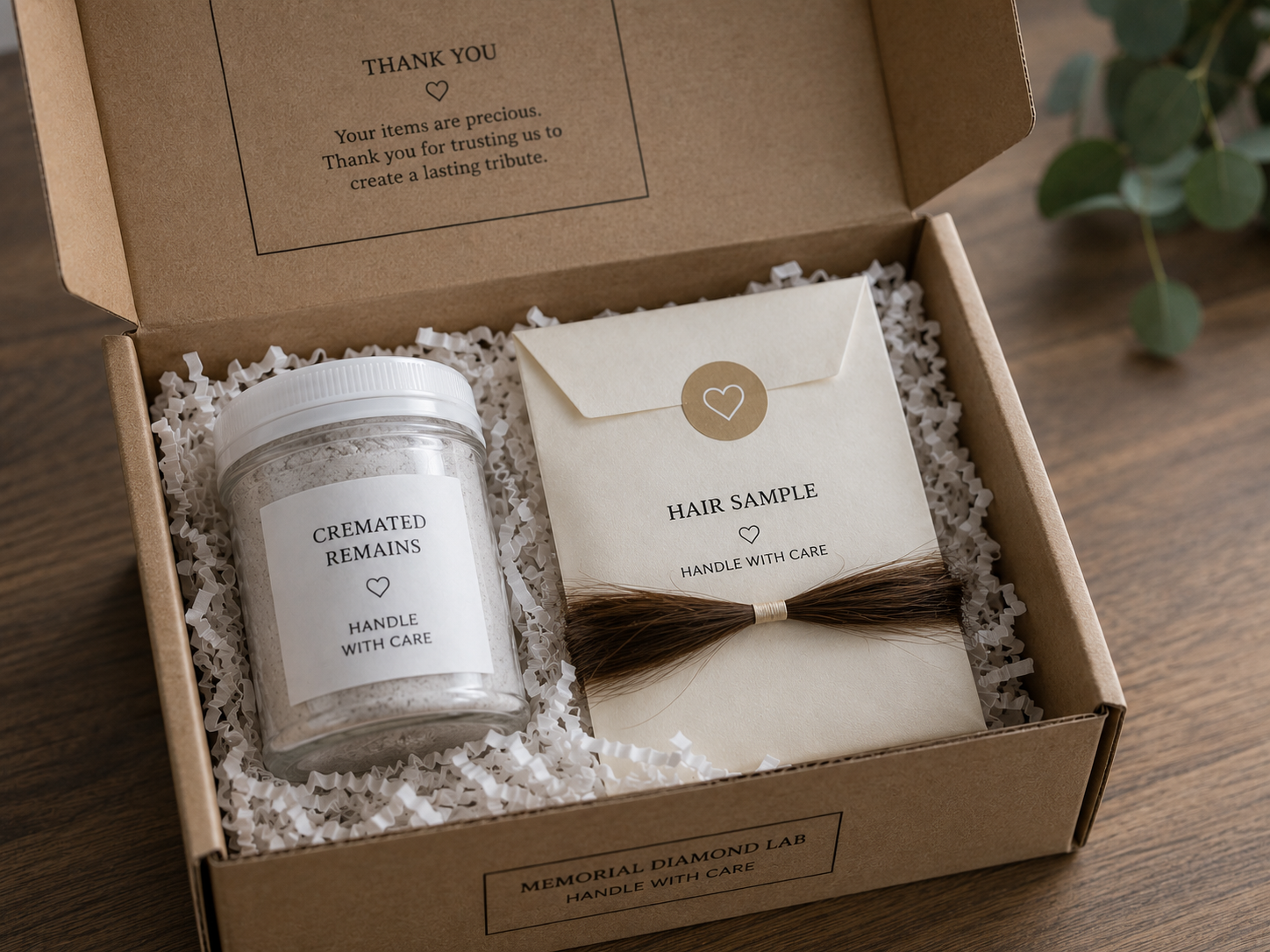
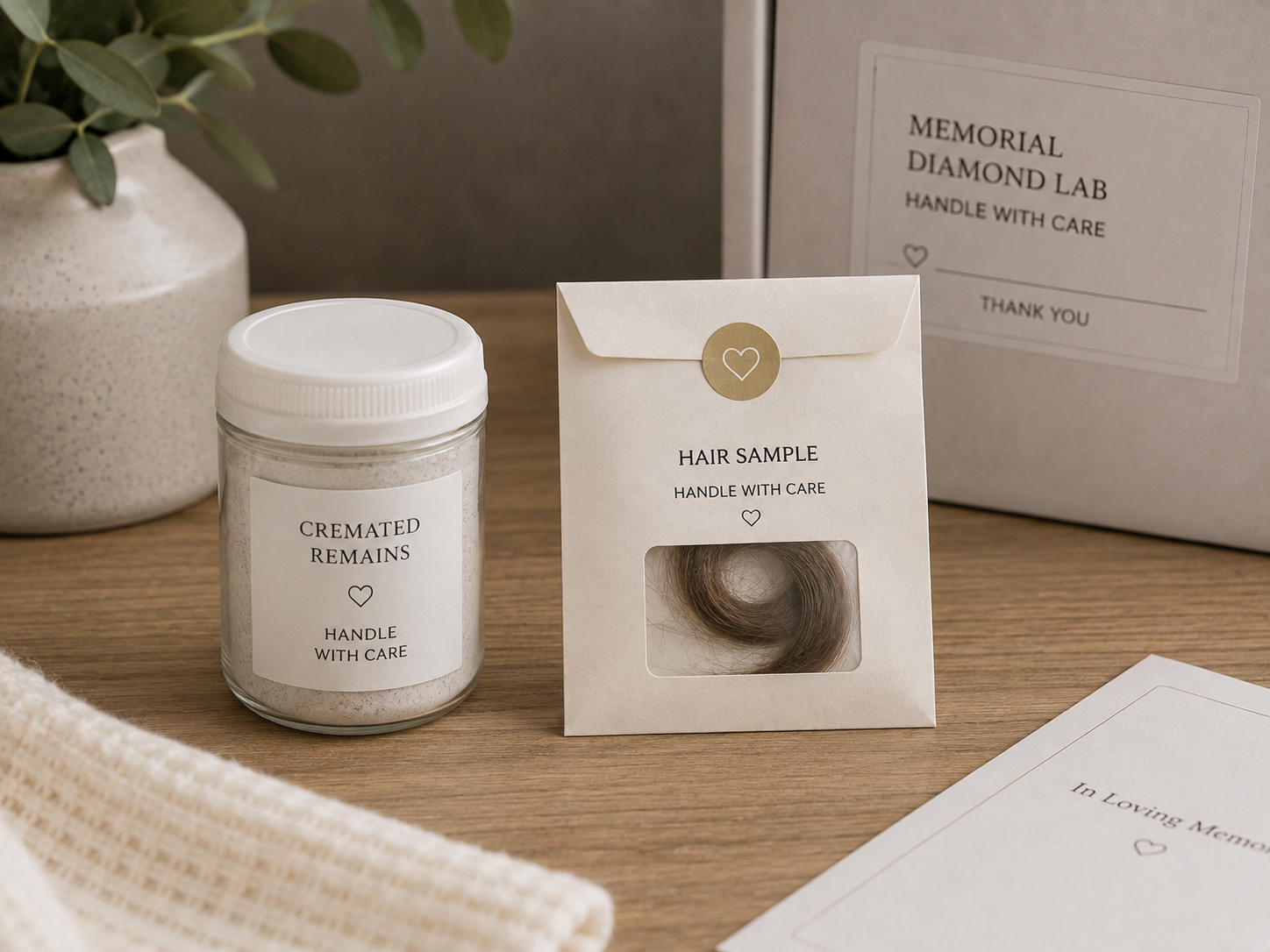
Two small labeled containers side by side — a sealed ash container and a paper envelope holding a lock of hair — ready for shipping to a memorial diamond lab

The confusion is nearly always the same. You have two different things a portion of your mother’s ashes and a lock of her hairand they do not follow the same rules.

To send both for a memorial diamond, first confirm that your provider accepts a combined submission. Then decide whether you want one diamond created from both materials or two separate diamonds. Each material should be packed in its own sealed and labeled container before being sent together in one shipment.

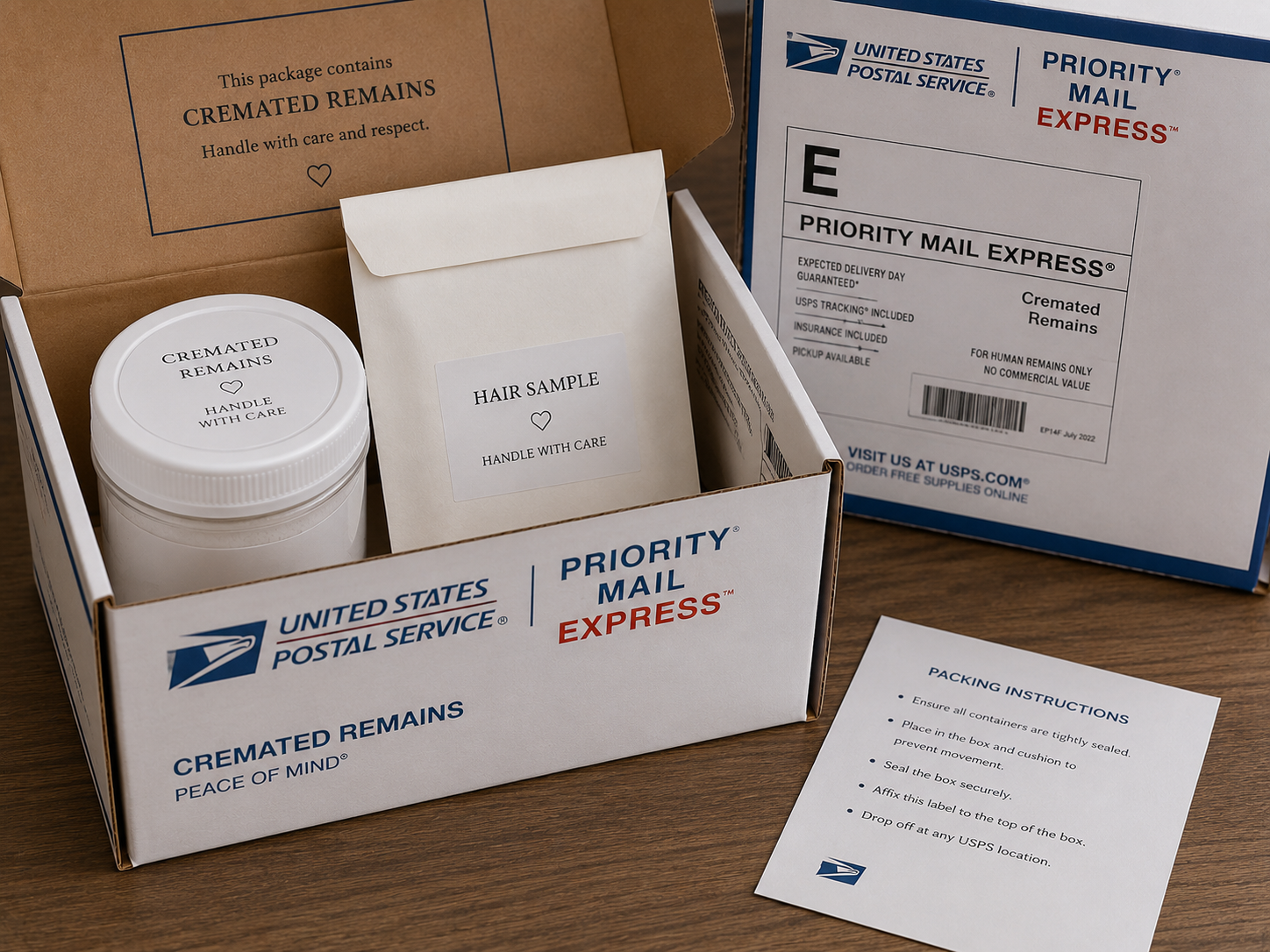
Because cremated ashes are included in the package, the shipping requirements for cremated remains generally apply to the entire shipment.

That is often the part families find confusing and one of the most important details to understand before sending anything.

Will Your Provider Accept Your Mother’s Ashes and Hair Together?

Ask this question before measuring or preparing either material.

Not every memorial diamond provider combines ashes and hair into one diamond. Some providers may create a diamond using only one source material, while others may offer separate diamonds.

Before beginning, ask three important questions:

  1. Can you combine ashes and hair into one diamond-growing process?
  2. If not, what options are available one material per diamond or two separate diamonds?
  3. Does sending both materials affect the price, required quantity, or timeline?

Before making any decisions, review the wider list of questions worth asking first.

Do You Want One Blended Diamond or Two Separate Diamonds?

This decision should be made before packing because it may affect the amount of material required and the overall cost.

One Memorial Diamond

A combined memorial diamond may represent both materials in one meaningful keepsake. Depending on the provider’s process, the ashes and hair may be processed separately before being used in the diamond-growing process.

Two Separate Memorial Diamonds

Some families may prefer two diamonds, with one created from ashes and another created from hair. This can also be meaningful when siblings or family members want separate memorial pieces.

Before dividing anything, make sure you understand how much of each material is required. Learn how much ash and hair you may need for a mother memorial diamond.

Families may choose to send both materials because each one carries personal meaning. A lock of hair and cremated remains can represent different memories of the same person, making the decision deeply personal.

How Do You Pack Ashes and Hair for Shipping?

Rigid sealed container of cremated remains and a tied lock of hair in a paper envelope, each labeled, packed in one outer shipping box

The most important rule is simple: keep the materials separate.

Do not mix ashes and hair together at home. Each material should be placed in its own sealed and clearly labeled container.

A practical packing checklist includes:

  • Ashes: Place the required amount in a sealed inner container according to your provider’s instructions.
  • Hair: Place a clean lock of hair in a separate envelope or sealed container.
  • Label both containers: Include identification details requested by your provider.
  • Include required paperwork: This may include submission forms or other documentation requested by the memorial diamond company.

Keeping the materials separate helps ensure they can be properly identified and processed according to the provider’s procedures.

Why Should Ashes and Hair Be Sent Together?

When both materials are intended for the same memorial diamond process, sending them together can help keep the submission organized from the beginning.

One shipment means the provider receives both materials together and can document them as part of the same submission.

If the ashes are sent first and the hair arrives weeks later, the provider may need to handle them as separate arrivals. This can create unnecessary confusion and may affect how the materials are processed.

Before shipping anything, make sure you have both materials ready.

If you are still looking for a lock of your mother’s hair, such as one kept in a memory box, locket, or family keepsake, it may be better to wait until you have everything before beginning the submission process.

What Are the Shipping Rules for Ashes and Hair?

Official USPS Priority Mail Express Cremated Remains box packed with a sealed ash container and a separate labeled envelope of hair

Ashes and hair are treated differently when it comes to shipping.

Hair generally does not have the same shipping restrictions as cremated remains. Cremated ashes, however, may be subject to specific carrier and packaging requirements.

For families in the United States, the presence of cremated remains in the package means the shipment should follow the applicable requirements for cremated remains.

Before shipping, always confirm the current requirements directly with your carrier and memorial diamond provider.

You should confirm:

  • Which shipping service should be used
  • What packaging is required
  • Whether a specific shipping box is required
  • How the inner container should be sealed
  • Whether additional documentation is needed
  • How the package should be tracked

Carrier requirements can change, so it is important to confirm the current rules before sending the package.

You can also learn more about whether turning ashes into a diamond is legal throughout the United States.

What Happens Once the Lab Has Both Materials?

Finished champagne-toned memorial diamond grown from carbon extracted from a mother's cremated ashes and hair

Once your mother’s ashes and hair arrive at the laboratory, the provider should confirm that the materials have been received.

The exact process can vary between providers, but memorial diamond creation may involve several stages.

The materials may be processed separately to prepare usable carbon. The prepared material is then used as part of the specialized diamond-growing process.

The general process may include:

  1. Receiving and documenting the submitted materials.
  2. Preparing and purifying usable carbon.
  3. Preparing the material for diamond growth.
  4. Growing the diamond crystal using specialized laboratory equipment.
  5. Cutting and polishing the finished diamond.
  6. Preparing documentation associated with the finished stone.

For a closer look at the process, read how a memorial diamond is made from your mother’s ashes and hair.

The overall timeline can depend on factors such as the requested diamond size, color, and the provider’s specific process.

For a broader overview of your options, see the complete guide to a mother ashes and hair diamond.

Frequently Asked Questions

Can I Mix My Mother’s Ashes and Hair Together Before Sending Them?

No. It is generally better to keep ashes and hair in separate, sealed, and labeled containers.

The provider may need to handle and prepare each material differently. Follow the exact instructions provided before shipping anything.

What If I Find a Lock of Her Hair After I Have Already Sent the Ashes?

Contact your provider before sending the hair separately.

Depending on the stage of the process, it may still be possible to discuss your options. The provider can explain whether the hair can be added to the existing submission or whether it would need to be handled separately.

Does Sending Both Ashes and Hair Create a More Meaningful Diamond?

The meaning of a memorial diamond is personal.

Some families choose to send both materials because ashes and hair represent different memories of their loved one. Others may choose only one material.

The decision should be based on what feels most meaningful to you and your family.

Can I Ship Cremated Remains With UPS or FedEx?

Carrier policies and shipping regulations can change. Before shipping cremated remains, confirm the current requirements directly with the carrier and follow your memorial diamond provider’s instructions.

Do not assume that ordinary package shipping services can be used for cremated remains.

How Much Ash and Hair Do I Need to Send?

The amount required can vary depending on the provider and whether you are creating one diamond or multiple diamonds.

Before measuring or dividing anything, ask your provider for the exact quantity required for your chosen diamond.

You can also read our guide on how much ash and hair you need for a mother memorial diamond.

Do I Have to Send Ashes If I Have Hair?

No. Some memorial diamonds can be created using hair alone, while others can be created using cremated ashes.

If you only have a lock of hair, explore how to turn your mother’s hair into a diamond.

If you prefer to use cremated remains only, read how to turn your mother’s ashes into a diamond.

Before You Send Anything

Before shipping your mother’s ashes and hair, take a moment to confirm every detail.

Make sure the provider accepts both materials, understand whether they can be used for one diamond or separate diamonds, confirm the required quantities, and carefully follow the shipping instructions provided.

Keep the materials separate, clearly labeled, and securely packaged according to the instructions you receive.

Turning your mother’s ashes and hair into a memorial diamond is a deeply personal decision. Taking the time to understand the process before sending anything can help you move forward with greater confidence and create a memorial that feels meaningful to you and your family.

turn-mothers-ashes-diamond

How to Turn Your Mother’s Ashes Into a Diamond | Step-by-Step Guide

Hands holding a small sealed container of cremated ashes beside a finished champagne-toned memorial diamond

The decision to turn your mother’s ashes into a diamond often comes before you know exactly how the process works.

You may already know that you want to create something lasting in her memory, but practical questions naturally follow. How much ash is needed? Which diamond size should you choose? Should you talk to your family first? How are cremated remains sent? And what happens while the diamond is being created?

Turning your mother’s ashes into a diamond generally follows a clear sequence. You choose the carat size and color, confirm how much material is required, discuss the decision with family, prepare the portion needed, arrange delivery or shipping, wait for the diamond to be created, and finally decide how you want the finished stone to be worn or kept.

One important detail surprises many families: carat size is often one of the first decisions you should make, not the last.

Step 1: Choose the Carat Size and Color

The size of your memorial diamond can influence the overall process, timeline, and planning.

Memorial diamonds are grown through a specialized laboratory process. Because of this, the size of the diamond is an important consideration before the growth process begins.

Before choosing, think about how you want to use the finished diamond.

A smaller stone may be meaningful as part of a delicate pendant or ring, while a larger diamond may become the central feature of a custom piece of memorial jewelry.

Color is another important decision. Memorial diamonds can appear in different colors depending on the materials and diamond-growing process.

To learn more about possible diamond colors, read What Color Will a Diamond Made From Your Mother’s Ashes Be?.

If you are unsure about diamond size, our guide on how to choose a carat size for a memorial diamond can help you compare your options.

Five memorial diamonds ranging from 0.25 to 2 carats laid out in size order on a pale gray surface

Step 2: Confirm How Much of Her Ashes You Need

Most people expect that a large amount of cremated remains is required. In many cases, only a portion may be needed, depending on the provider and the process used.

Before preparing anything, contact the memorial diamond provider and ask for the exact material requirement.

Important questions include:

  • How much material is required?
  • Should the amount be measured by weight or volume?
  • What happens to material that is not used?
  • Will any remaining portion be returned?
  • How is the material identified and tracked during the process?

If your mother’s ashes have already been divided between family members or some ashes have already been scattered, the remaining portion may still be sufficient. However, you should always confirm the exact requirement before making any arrangements.

For a more detailed explanation, read How Much Ash Do You Need for a Mother Memorial Diamond?.

Step 3: Talk to Your Family Before Dividing the Ashes

Before separating any portion of the ashes, it can be helpful to speak with close family members.

People can have different feelings about cremated remains and memorial keepsakes. While one family member may see a diamond as a beautiful way to preserve a connection, another may prefer to keep all of the ashes together.

Having a conversation first gives everyone an opportunity to share their thoughts.

You can begin by explaining the practical side of the decision, including how much material may be required and whether the family’s existing plans for the remaining ashes can still continue.

In some situations, more than one memorial diamond may be possible for different family members. You can learn more in our guide, Can More Than One Family Member Get a Diamond From the Same Mother’s Ashes?.

If you are unsure how to begin the conversation, read How to Talk to Family About a Mother Memorial Diamond.

Step 4: Prepare the Required Portion

Once you know the provider’s exact requirements and have discussed the decision with your family, the next step is preparing the required portion.

Follow the instructions provided by your memorial diamond company carefully.

A calm and organized approach can help:

  • Work on a clean, flat surface.
  • Prepare the receiving container before opening the original container.
  • Use clean and dry equipment.
  • Measure according to the provider’s instructions.
  • Seal and label the prepared portion carefully.
  • Return the remaining ashes to their original container.

If preparing the material yourself feels emotionally difficult, you may wish to ask a funeral professional for assistance.

Small scoop transferring a measured portion of cremated remains into a sealable bag on a clean table

Step 5: Arrange the Shipping or Delivery

Cremated remains cannot always be shipped in the same way as ordinary packages. Shipping requirements depend on the country, carrier, and destination.

Before sending anything, confirm the current requirements directly with both the memorial diamond provider and the shipping service.

Ask your provider:

  • Which shipping method should be used?
  • Do they provide a shipping kit?
  • What type of packaging is required?
  • Is documentation required?
  • How will the package be tracked?
  • How will you be notified when the material arrives?

For families in the United States, it is important to review the current guidance from USPS before shipping cremated remains, as carrier requirements can change.

Before sending the package, it can also be helpful to keep a record of the tracking information and confirm the provider’s process for acknowledging receipt.

International shipping can involve additional requirements, so always check the regulations that apply to both the sending and receiving countries.

Official USPS Priority Mail Express Cremated Remains box with a sealed sift-proof inner container beside it, prepared for shipping

Step 6: What Happens While the Diamond Is Being Created?

Once the material reaches the laboratory, it enters the memorial diamond creation process.

Although the exact process can vary between providers, the material generally goes through several stages before the finished diamond is ready.

These stages may include:

  1. Receiving and documenting the material.
  2. Extracting and preparing usable carbon.
  3. Processing the carbon for diamond growth.
  4. Growing a diamond crystal using specialized laboratory equipment.
  5. Cutting and polishing the diamond.
  6. Preparing documentation associated with the finished stone.

The overall timeline can vary depending on the requested carat size, color, laboratory process, and provider.

For a closer look at the science behind the process, read How a Memorial Diamond Is Made From Your Mother’s Ashes.

Before beginning the process, ask your provider how often you can expect updates and what stages of the journey you will be informed about.

Step 7: Decide How You Want to Keep or Wear the Diamond

When the memorial diamond is complete, you will need to decide how you want to keep it.

Some people choose to keep the diamond as a loose stone, while others have it set into a piece of jewelry that can be worn every day.

Popular options include:

  • Memorial diamond rings
  • Diamond pendants
  • Earrings
  • Custom family jewelry
  • Heirloom jewelry pieces

The setting you choose can become part of the meaning of the memorial itself. A simple pendant may feel personal and close to the heart, while a ring can become something you wear every day.

For inspiration, read Memorial Diamond Settings and Jewelry Ideas for a Mother.

Loose memorial diamond beside a pendant setting and a grading report on a jeweler's cloth

Frequently Asked Questions

Can I deliver my mother’s ashes in person instead of shipping them?

Some memorial diamond providers may allow personal delivery or drop-off. Availability depends on the company’s facilities and procedures, so contact the provider before making travel arrangements.

Do I need paperwork to send ashes?

Shipping requirements can vary depending on the carrier and location. Documentation may be required, so always confirm the current requirements before preparing a shipment.

What if my mother’s ashes were already divided among family members?

A divided portion may still be sufficient depending on the provider’s requirements. Confirm the exact amount needed before beginning the process.

What happens to ashes that are not used?

This depends on the provider’s policies and process. Before sending any material, ask how unused portions are handled, returned, and documented.

Does the whole family have to agree?

Every family’s circumstances are different. Even when family members have different opinions, having an open conversation before dividing the ashes can help avoid misunderstandings and ensure everyone’s wishes are respected.

A Meaningful Next Step

You do not need to make every decision immediately.

The first step can simply be learning about your options and talking with the people closest to you.

Think about the diamond size that feels meaningful, the color you prefer, how you may want to wear the finished stone, and what your family has planned for the remaining ashes.

For a broader overview of the entire process, read Mother Ashes Diamond: The Complete Guide.

Turning your mother’s ashes into a diamond is a deeply personal decision. Taking the time to understand each step can help you move forward with confidence and create a lasting memorial that feels meaningful to you and your family.