dimond hero

Is a Memorial Diamond Really Made From Your Mother’s Hair?

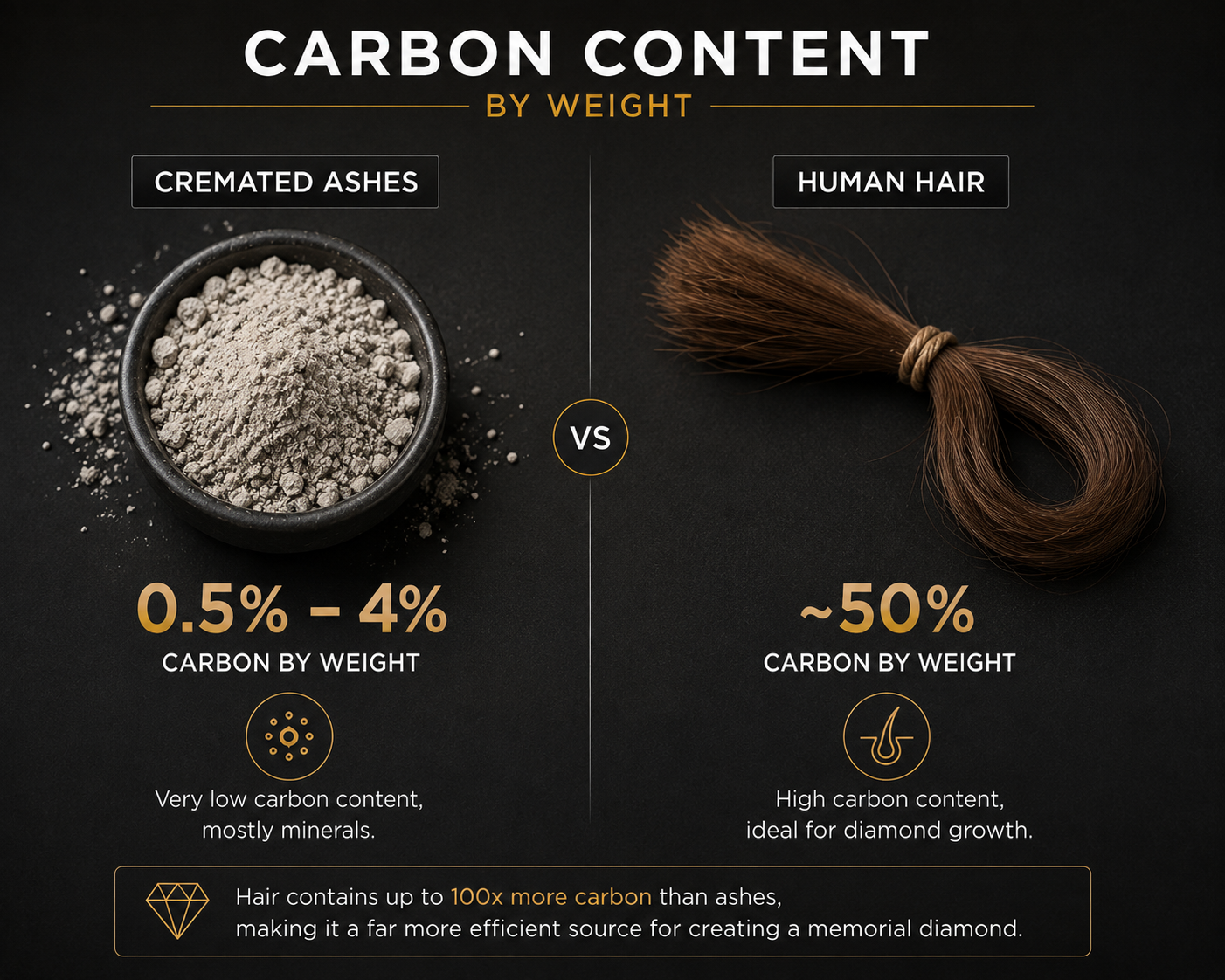
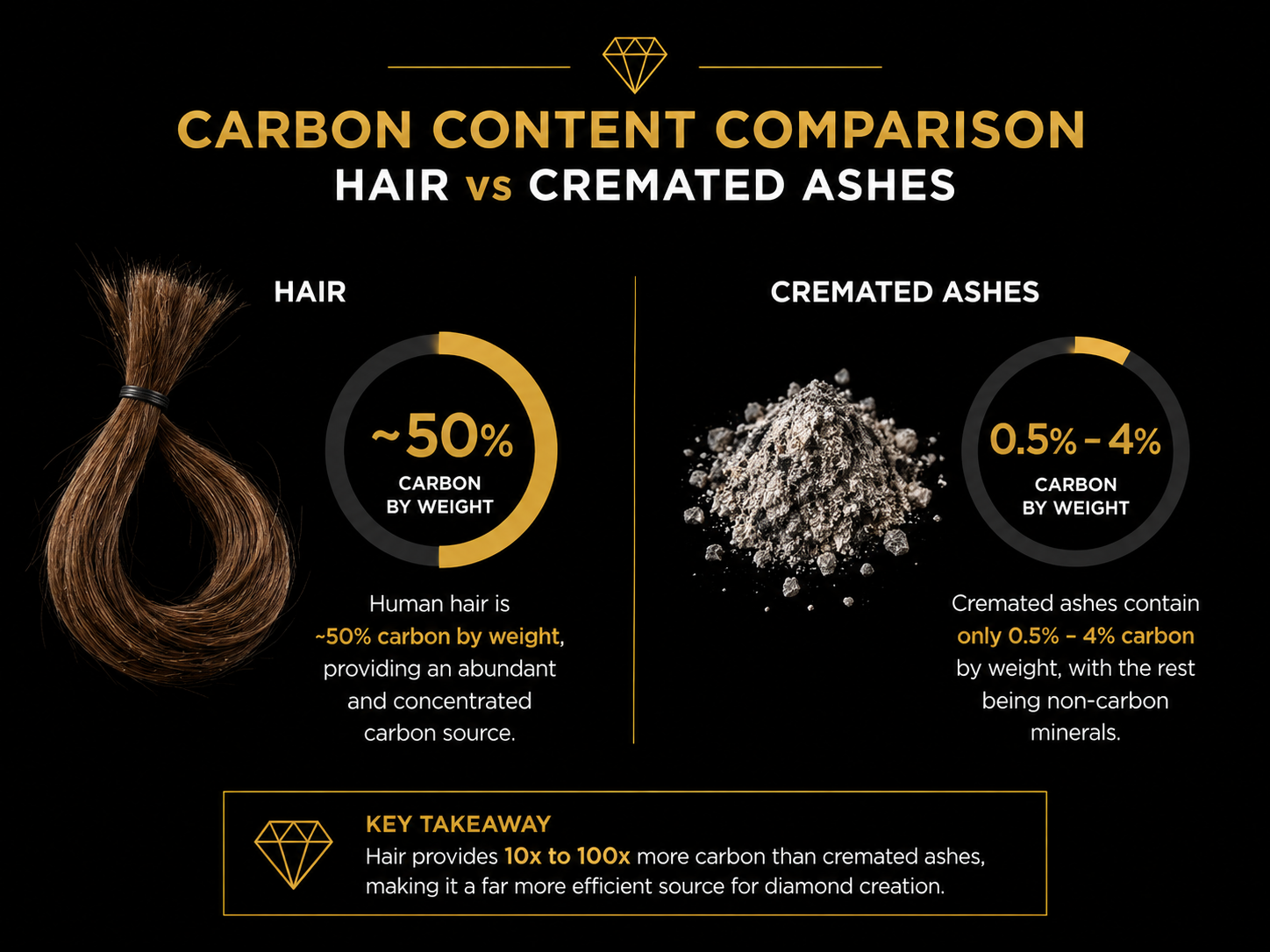
The lock is always smaller than you remember. It sits in an envelope, a locket, or taped inside a photo album, and it looks like almost nothing which is why the first honest question is whether almost nothing can become a diamond. It can. Hair is roughly 50% carbon by weight against 0.5% to 4% for cremated remains, so a few grams of hair can yield as much usable carbon as several ounces of ash and depending where a given cremation falls in that range, sometimes more. That carbon is extracted, purified, and grown into the crystal, alongside lab-sourced carbon, because no lock is large enough on its own.
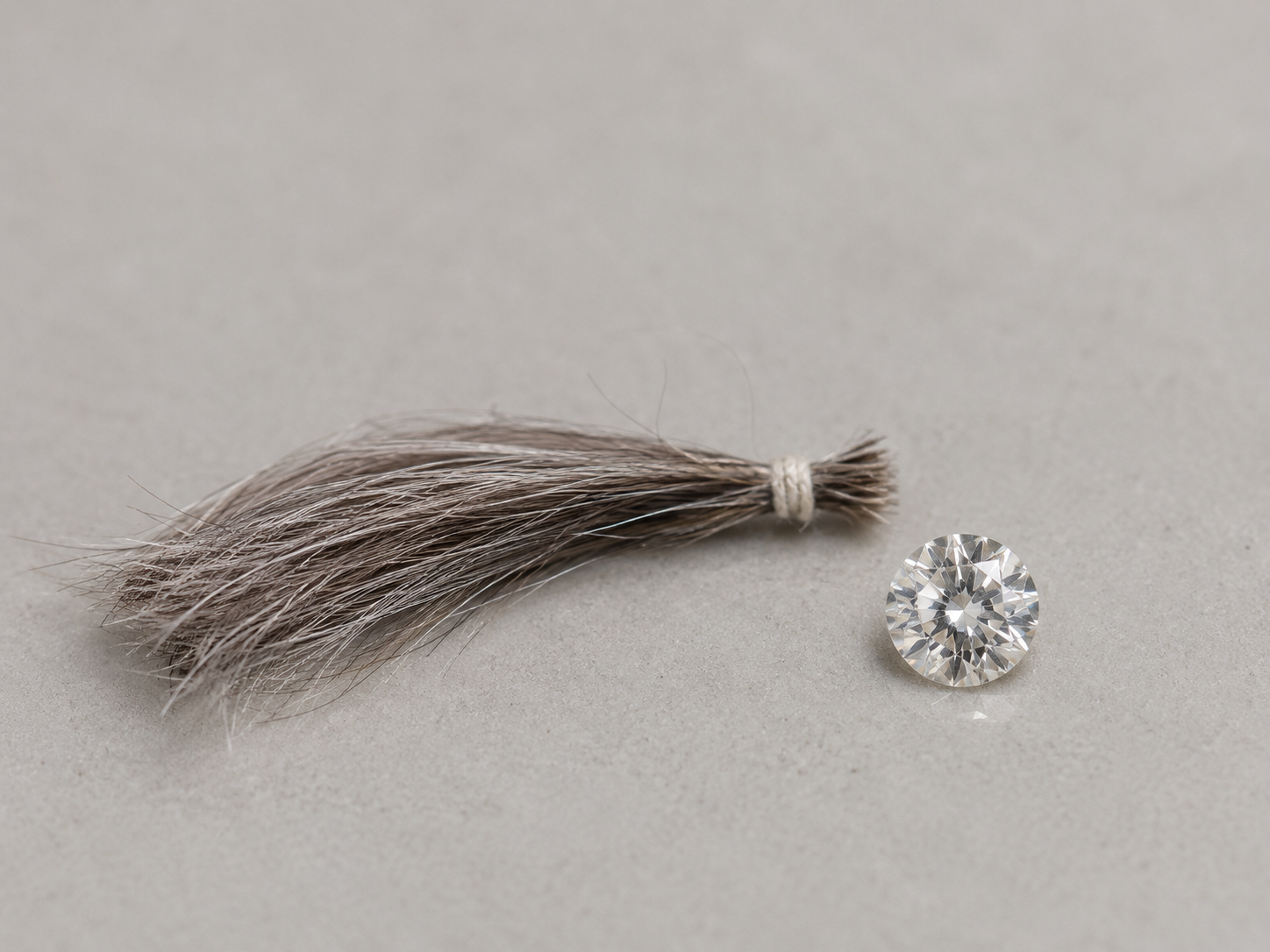
A small cut lock of gray hair tied with thread beside a loose lab-grown memorial diamond on a plain surface

Can a Small Lock of Hair Really Be Enough?

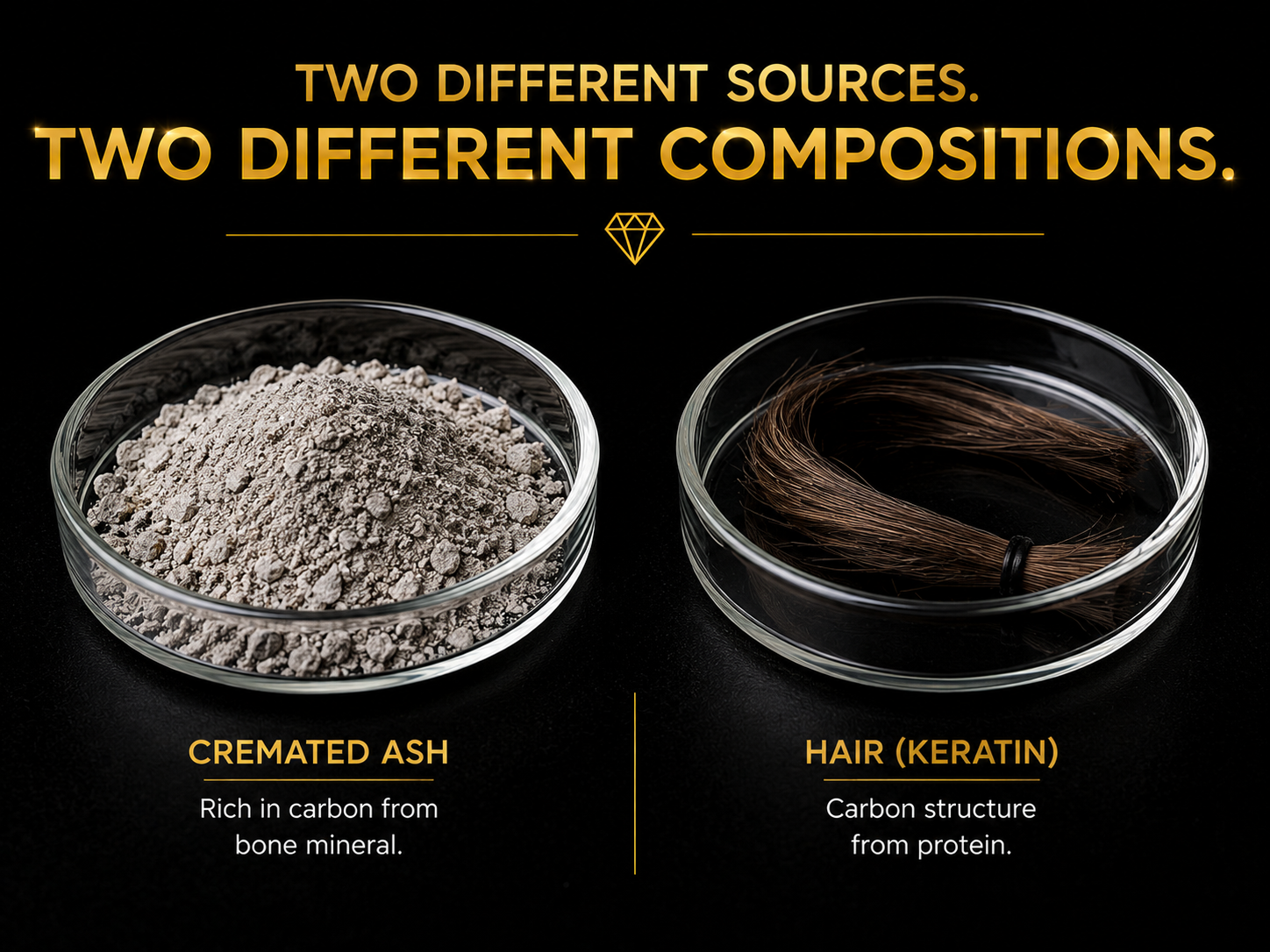
Yes. The reason is chemistry rather than generosity. Hair is built from keratin, a carbon-rich protein, and runs roughly 50% carbon by weight. Cremated remains are mostly calcium phosphate the mineral structure of bone and yield only 0.5% to 4% carbon by weight.

SourceCarbon ContentAmount Typically RequestedCremation Needed
Hair~50% by weightA small lock a few grams, often described as palm-sizedNo
Cremated ashes~0.5–4% by weightA few tablespoons up to about 4 ozYes

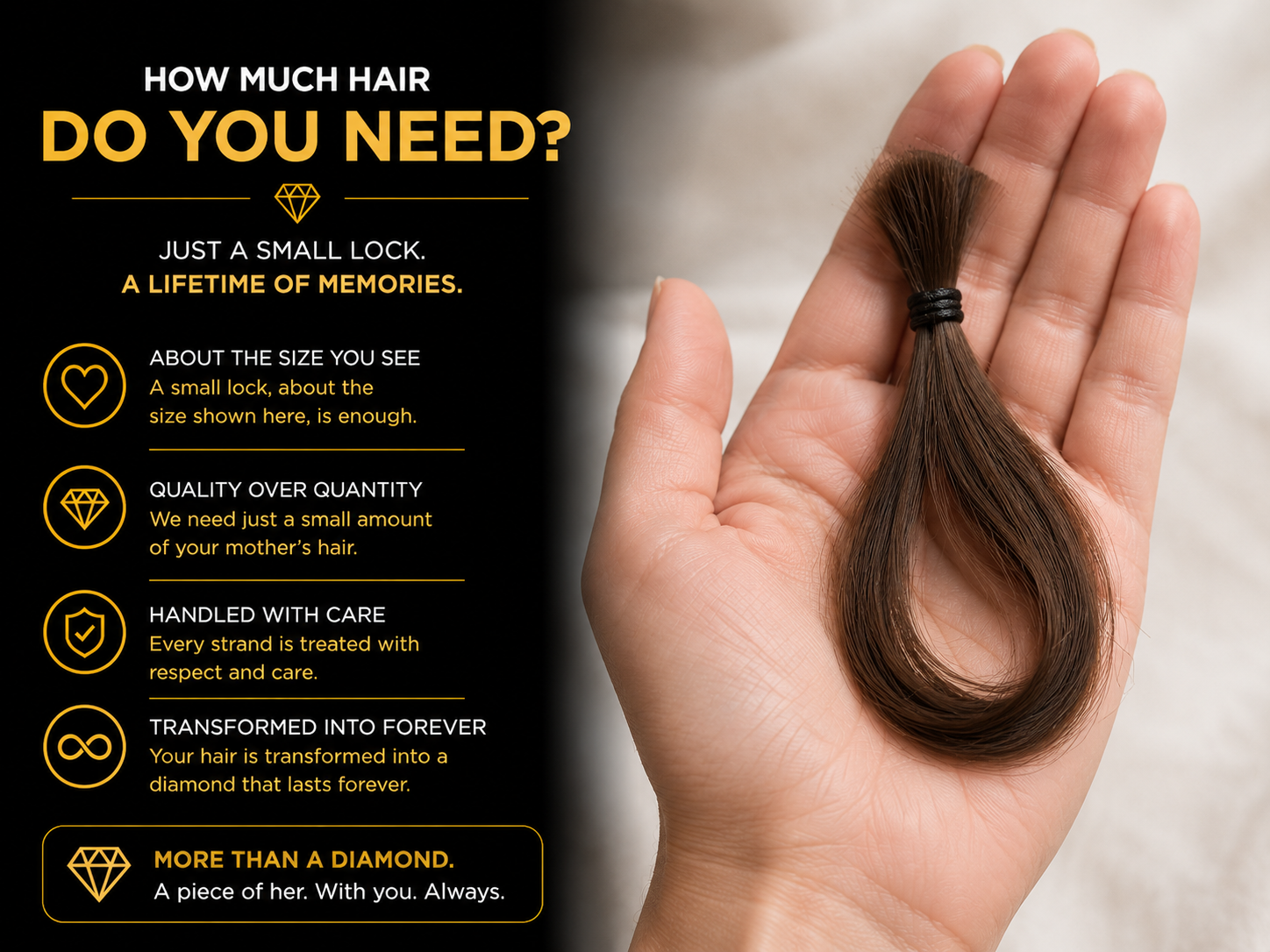
So the anxiety behind most of these searches surely they need more of her than that has it backwards. A hair submission looks small because it doesn’t need to be big. How much hair is actually required puts a number on it.
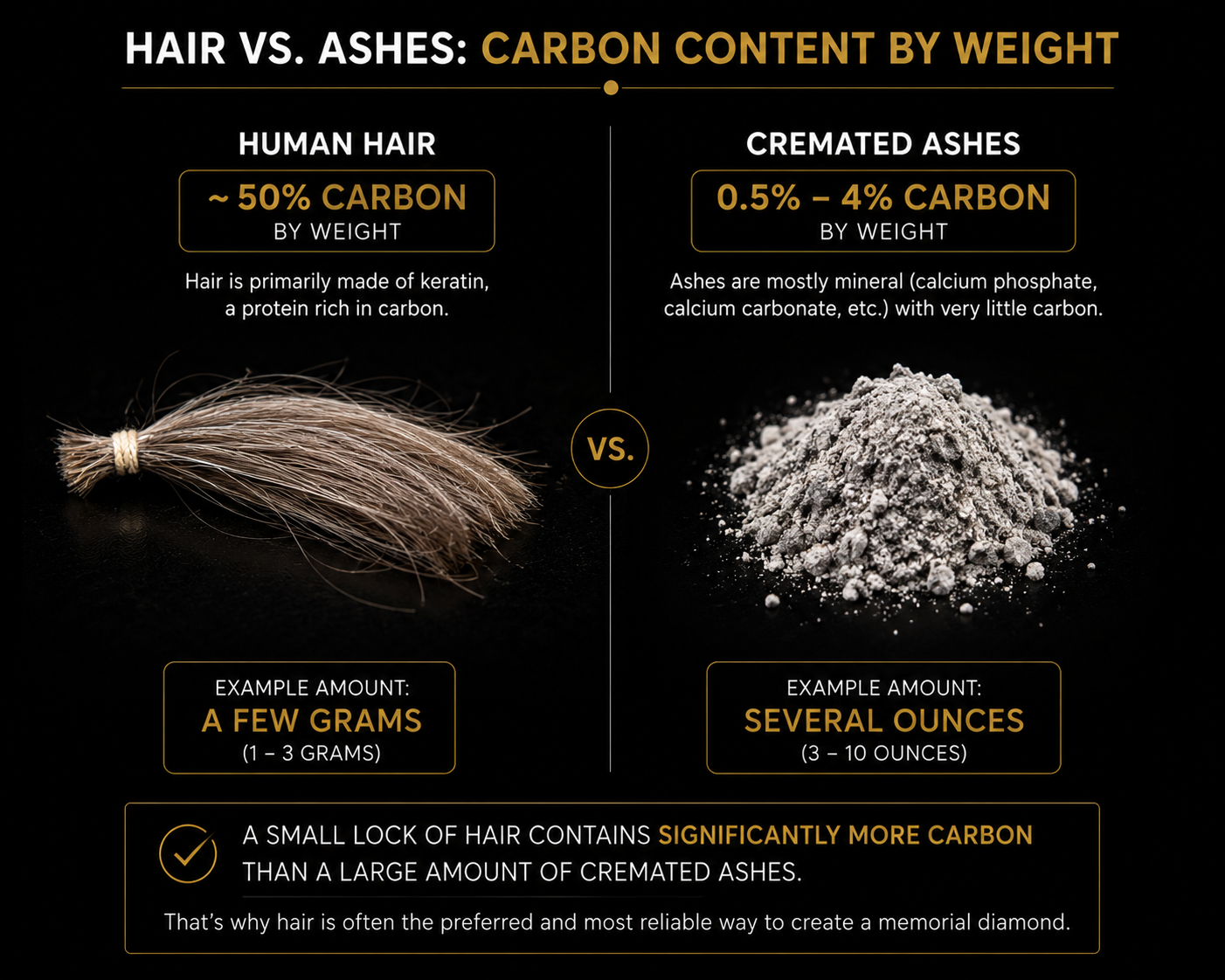
Side-by-side comparison of carbon content by weight — a few grams of hair at roughly 50 percent, several ounces of cremated ashes at 0.5 to 4 percent

So Is the Whole Diamond Made of Her Hair?

No, and any provider saying otherwise is overselling. Purified carbon from her hair is blended with lab-sourced carbon before growth — not to dilute her, but because a growth cell needs a certain mass of graphite feedstock to produce a crystal of meaningful size, and a few grams of hair don’t fill it.

Notice what that changes. With ashes, the constraint is that the source is carbon-poor. With hair, the source is carbon-rich but there isn’t much of it. Same blend, different reason.

One thing worth pressing on: the industry publishes a figure for ash-derived stones personal carbon at roughly 10–15% of the finished mass. No comparable published figure exists for hair. That absence isn’t sinister, but it is fair to make a provider fill it in for your stone.

What If She Was Buried, or You Kept the Lock for Years?
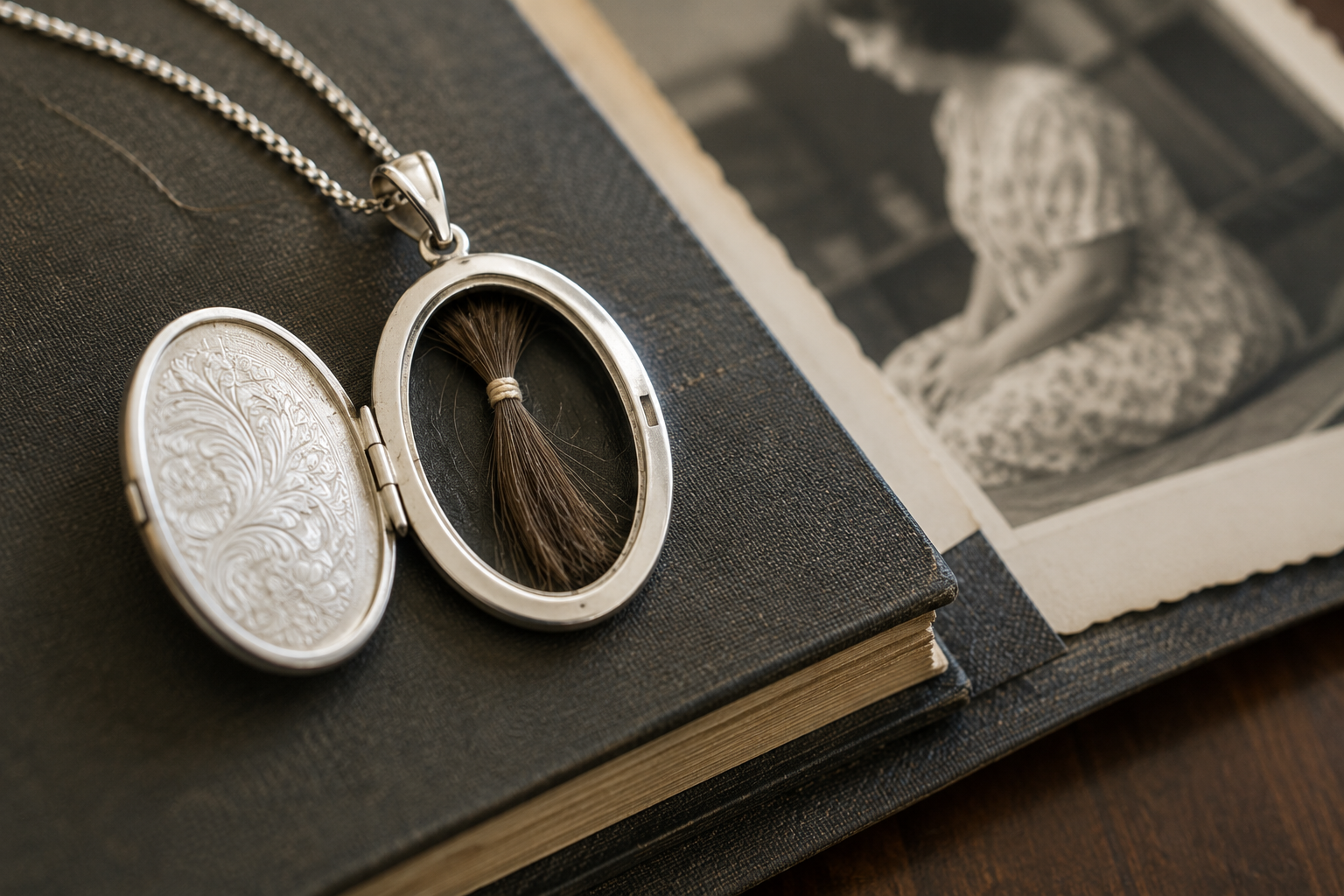
An opened keepsake locket holding a lock of hair kept for many years, resting on a photo album

Both readers belong here.

Hair needs no cremation, so a mother who was buried is not excluded from any of this. If a lock exists cut in a hospital room, taken by a funeral director, kept from a haircut a decade before she died that is the whole requirement. Hair-based options for a loved one who wasn’t cremated covers that route on its own terms, and none of it makes burial a lesser choice.

Age alone doesn’t spoil hair. Keratin is stable, and locks survive in Victorian mourning jewelry well over a century later. Storage is what causes problems: damp, mold, adhesive tape, product residue, and locks mixed with someone else’s hair over the years. Describe the condition of hers when you ask; that matters far more than the date.

Does Coloring, Bleaching, or Perming Ruin It?

Most mothers colored their hair, so this one comes up constantly.

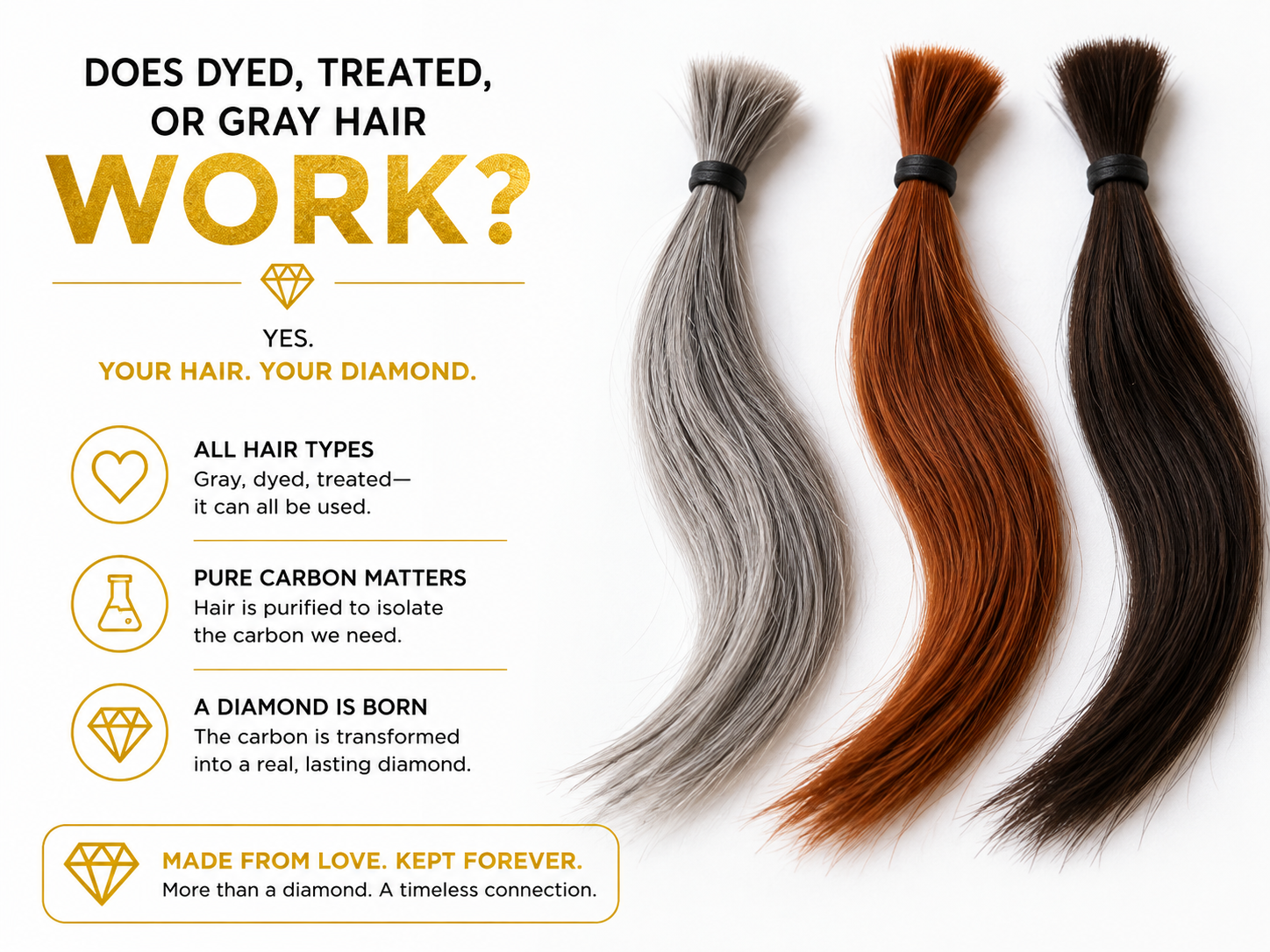
Chemical treatment changes hair’s surface and structure, but it doesn’t stop hair being keratin, and purification strips everything that isn’t carbon anyway. What treatment plausibly affects is the trace-element profile carried into the growth cell and trace elements set a diamond’s color. Nitrogen produces yellow tones, boron produces blue, and the absence of both is required for a colorless stone.

The honest position: no provider can promise a specific color in advance from any organic source, treated or not. Whether a given lab accepts dyed, bleached, or permed hair is a policy question rather than a chemistry one, and policies differ. Ask before you cut anything.

How Would You Know They Used Her Lock?
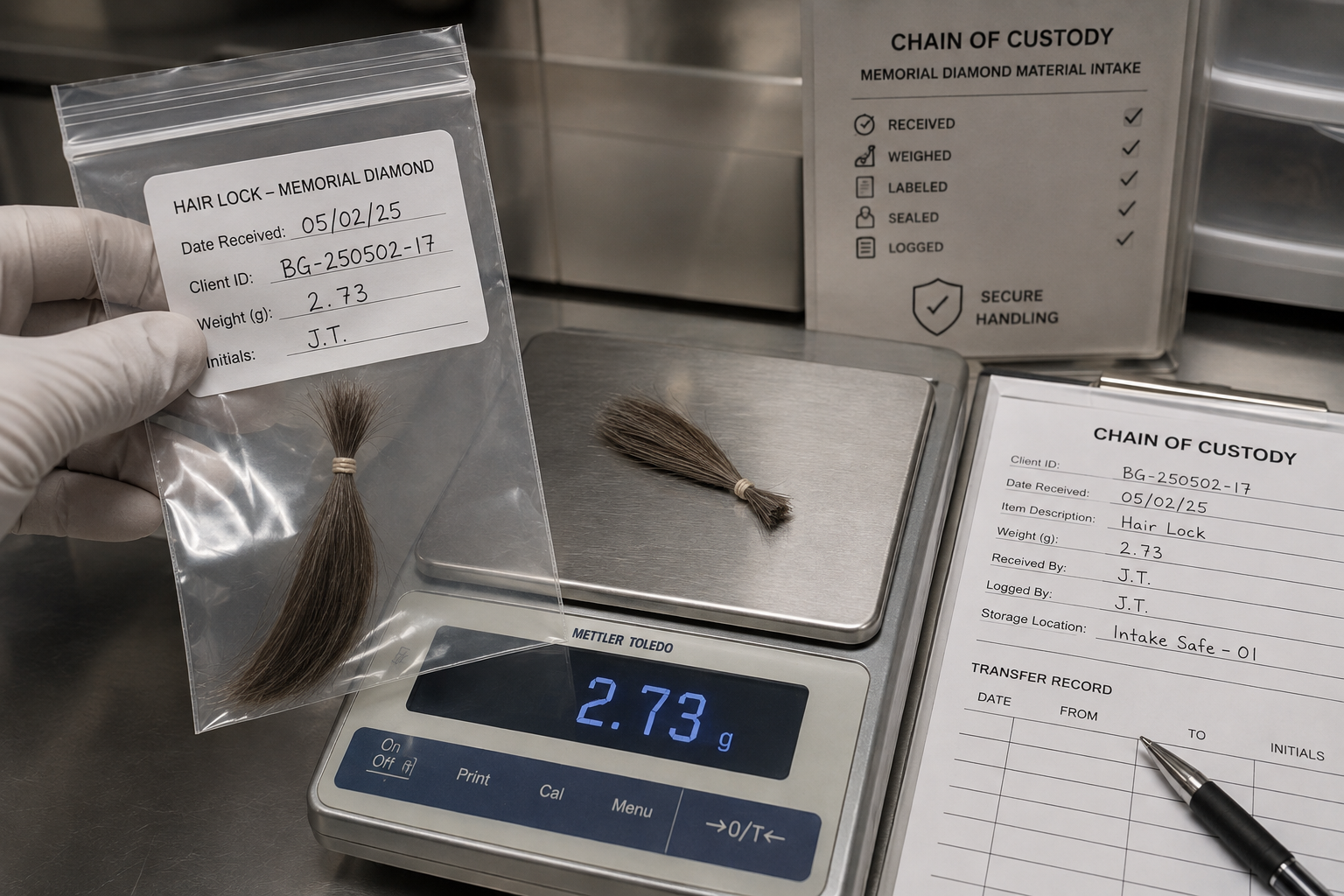
A labeled and sealed lock of hair being weighed and logged at laboratory intake

This is sharper for hair than for ashes, and it gets less attention than it deserves.

A lock of gray hair in a paper envelope is anonymous small, light, and easy to substitute. Unlike a cremation, no third party ever documented that it existed. Ashes arrive trailing paperwork: an authorization, a funeral director, a recorded transfer between institutions. A lock cut in your mother’s bedroom has none of that. You are usually the only witness.

So verification starts on your kitchen table, not at the lab:

  1. Photograph the lock beside a ruler and a dated note before it goes anywhere.
  2. Weigh it, even on a kitchen scale, and write the figure down.
  3. Ship it tracked, and keep the record.
  4. Ask for an intake confirmation stating the quantity received, not just that a package arrived.

An intake weight is the hair equivalent of a chain-of-custody anchor the first moment a second party puts on record what they are holding. From there, the tracking a provider keeps through extraction and growth does the rest, and an independent grading report speaks to the diamond’s quality while saying nothing about whose carbon it holds.

Which Questions Should You Ask Before You Send It?

Five questions specific to a hair submission. Vague answers are the signal.

  1. What weight do you need, and will you confirm in writing what you received? A confirmed intake quantity is the strongest document a hair family gets.
  2. How is a lock stored and identified between arrival and extraction? Sealed and labeled from the moment it lands, or held loose until someone gets to it?
  3. Do you accept colored, bleached, or chemically treated hair and does it change the process or the likely color?
  4. What disqualifies a lock? Mold, damp, adhesive residue, and hair possibly mixed with another person’s are the realistic failure modes.
  5. Is any of the lock returned? With ashes there is usually a remainder. With a few grams of hair there may not be.

A fuller checklist before turning your mother’s hair into a diamond goes wider, and the complete guide to a mother hair diamond covers color, timeline, and cost.

Frequently Asked Questions

Can this be done if my mother was buried rather than cremated?

Yes. Hair-based memorial diamonds involve no cremation at any stage, so burial doesn’t rule anything out. All that’s needed is a lock of her hair, whenever it was collected before her death or at the funeral home.

I’ve had a lock of her hair for fifteen years. Is it too old?

Age by itself isn’t the problem keratin is stable and hair survives for generations. Storage is what matters: mold, damp, adhesive tape, or a lock mixed with someone else’s hair. Describe its condition when you ask.

Can you be certain hairbrush hair is only hers?

Not always, and the doubt is about identity rather than chemistry. Brush hair is the same keratin, but a brush may hold strands from anyone who used it. A cut lock removes that question; ask what your provider accepts.

Can anyone prove the finished diamond came from my mother’s hair?

Not by testing the stone. Purification erases the difference between one carbon source and another. And unlike cremated remains, a lock carries no third-party paperwork behind it so your dated photograph and the lab’s intake record are the evidence.

Will a hair diamond look different from an ashes diamond?

Possibly. Color comes from trace elements present during growth, and hair carries a different profile than ash, without ash’s calcium-phosphate mineral load. No provider can promise a specific color in advance from either source.

How much hair does she need to have had?

Length matters less than quantity. A few grams is the industry-typical ask, which a short haircut can supply. Thinning hair, chemotherapy regrowth, or a very short style don’t automatically rule it out.

If You’re Not Sure Yet

Ask before you commit to anyone. The five questions above cost nothing to send, and the answers or the evasions tell you more about a provider than anything they have written about themselves.

That includes us. Reach out to Memorial Diamond at memorialdiamond.us and ask what documentation comes with a stone grown from your mother’s hair. The same question about her ashes has a different answer, and a different set of numbers.
How to Turn Your Mother's Hair Into a Diamond Safely

How to Turn Your Mother’s Hair Into a Diamond : Complete Guide

A lock of your mother’s hair can hold a meaning that is impossible to replace.

Unlike ashes, hair is often limited. A saved lock may be the only one that exists, which makes preparation especially important before anything is cut, packaged, or mailed.

The process can be straightforward: find or prepare the lock of hair, confirm the provider’s requirements before cutting anything, choose your preferred diamond characteristics, safely package the material, and send it to the laboratory.

The finished memorial diamond can take several months to complete.

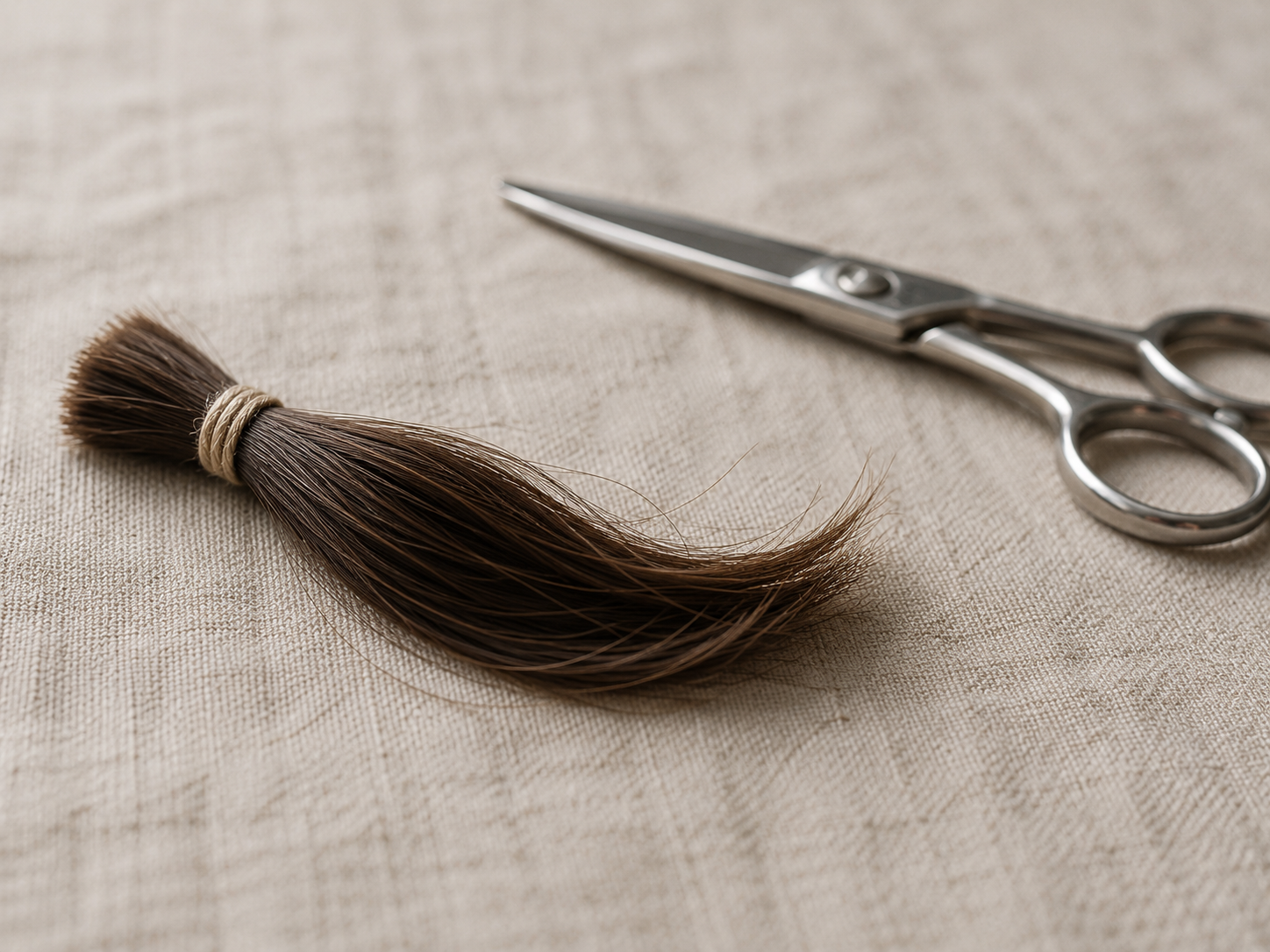
Small lock of hair bound with thread resting beside a pair of scissors on a linen surface

In This Guide


Where Will You Actually Find Your Mother’s Hair?

Most families do not intentionally collect hair for the purpose of creating a memorial diamond. A saved lock is usually something that is discovered years later.

Some common places where families may find a lock of hair include:

  • A folded envelope inside a jewelry box
  • A baby book
  • A saved childhood braid
  • A locket
  • A hairbrush
  • A lock saved after a haircut
  • Hair kept by a funeral home at the family’s request

A clean and identifiable lock is generally easier to submit than loose hair collected from a shared hairbrush.

If the hair comes from a shared brush, it may contain strands from multiple people. It is important to tell the provider where the hair came from when asking whether it can be used.

If your mother is still living, she can personally provide a lock of hair for the memorial diamond process.

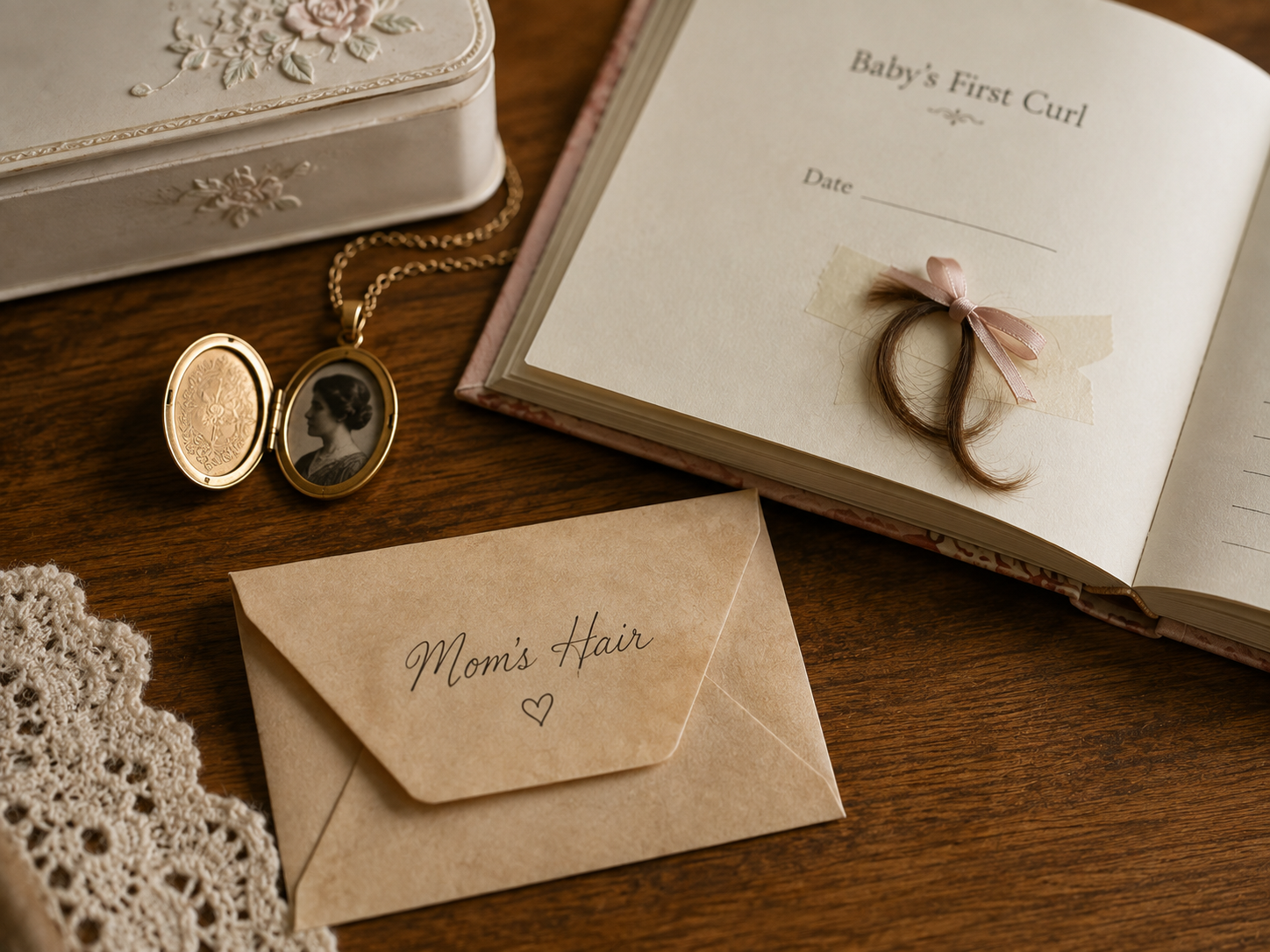
Folded paper envelope, a locket and a baby book open on a table, showing where a saved lock is typically kept

What Should You Decide Before You Touch the Scissors?

Before cutting anything, decide what type of diamond you want.

1. Diamond Carat Size

The selected carat size can affect the growth process, timeline, and cost.

Sending more hair does not automatically create a larger diamond. The amount of hair submitted and the size of the finished diamond are not the same thing.

Before cutting a lock, confirm the provider’s requirements for the specific diamond size you want.

Learn how to choose a carat size for a memorial diamond.

2. Diamond Color

Memorial diamonds may be available in different colors, depending on the laboratory process and selected options.

Your mother’s natural hair color does not necessarily determine the color of the finished diamond.

Choose your preferred diamond characteristics first, then confirm how much material is required before preparing the lock of hair.

Learn what color a diamond made from your mother’s hair can be.


How Do You Know You Have Enough Hair?

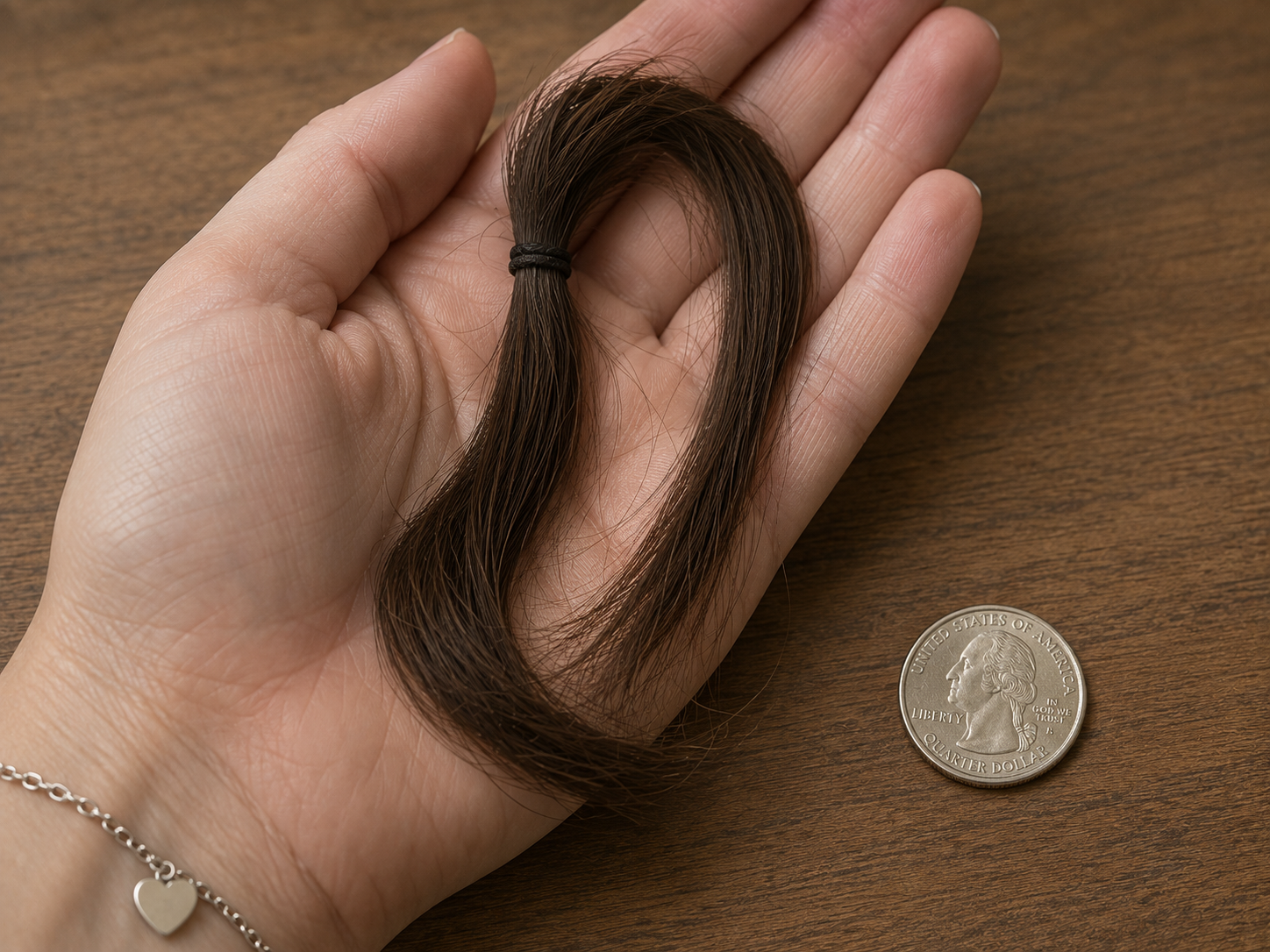
Palm-sized lock of hair held in an open hand beside a coin for scale

This is one of the most important steps in the entire process.

If a lock of hair is the only one available, there may not be another opportunity to collect more. For that reason, confirm the provider’s minimum material requirement before cutting anything.

Requirements can vary depending on:

  • The provider
  • The selected diamond size
  • Whether one or multiple diamonds are being created
  • The laboratory process

A small lock of hair may be enough in some cases, but the exact requirement should always come directly from the provider.

Before cutting the hair, ask:

Is This Amount Enough for the Diamond Size I Want?

If you are unsure, ask the provider how they recommend confirming the quantity.

What Happens to Unused Hair?

Ask whether unused material is returned and how it is handled.

What Happens if the Diamond-Growing Process Needs to Be Repeated?

Understanding how the remaining material is managed can help you make a more informed decision.

If the available amount is limited, choosing a smaller diamond may be safer than cutting more hair than necessary.

Learn how much hair you may need for a mother memorial diamond.


How Should You Cut and Handle a Lock of Hair?

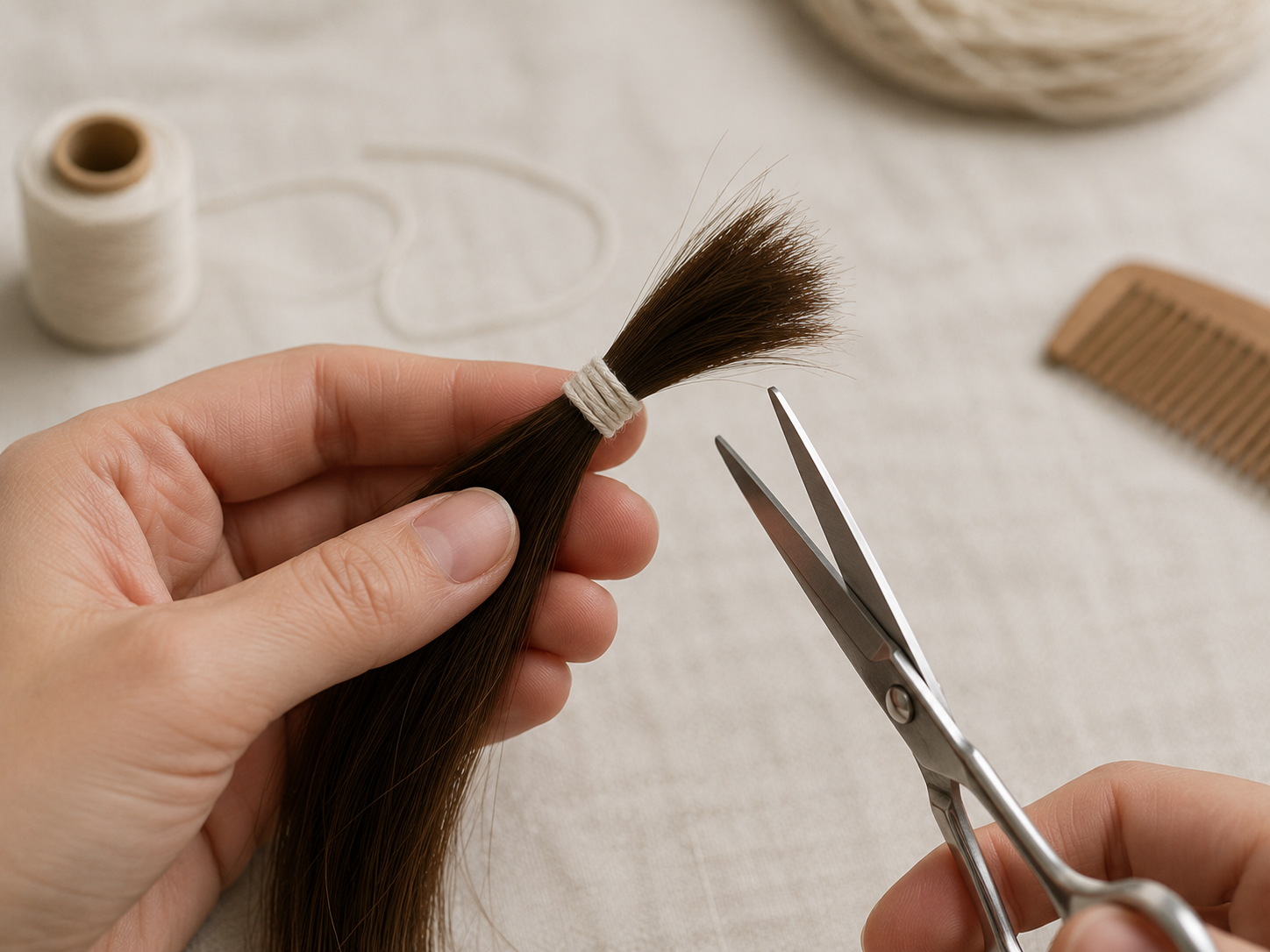
Section of hair bound at one end with sewing thread just above where it will be cut

If a lock needs to be cut, preparation can help keep the strands together.

Some practical handling steps include:

  • Cut rather than pull the hair
  • Use clean, sharp scissors
  • Keep the lock together
  • Bind one end before cutting
  • Keep the hair dry
  • Store the lock carefully before mailing

Binding the hair before cutting can help prevent individual strands from scattering.

The source material should also be kept clean and protected until the provider gives instructions for submission.

Treated hair, including gray or colored hair, may require provider-specific confirmation before submission.

Read the complete guide to a mother hair diamond.


How Do You Package and Mail Hair Safely?

Hair generally does not have the same shipping restrictions as cremated remains.

However, the biggest risk is physical damage to the package.

A soft envelope can potentially tear or become damaged during sorting. If the hair escapes, recovering it may be impossible.

Step 1: Place the Hair in an Inner Envelope

Keep the lock together and place it inside a small envelope or container.

Step 2: Seal the Inner Packaging

Secure the inner envelope so the hair cannot easily escape.

Step 3: Use a Rigid Outer Mailer

A rigid mailer can provide more protection than a standard paper envelope.

Step 4: Add Identification

Include the person’s name and any reference number provided by the company.

Step 5: Use a Trackable Shipping Service

Tracking can help you confirm when the package has been delivered.

Always confirm the provider’s current packaging and mailing requirements before sending the hair.

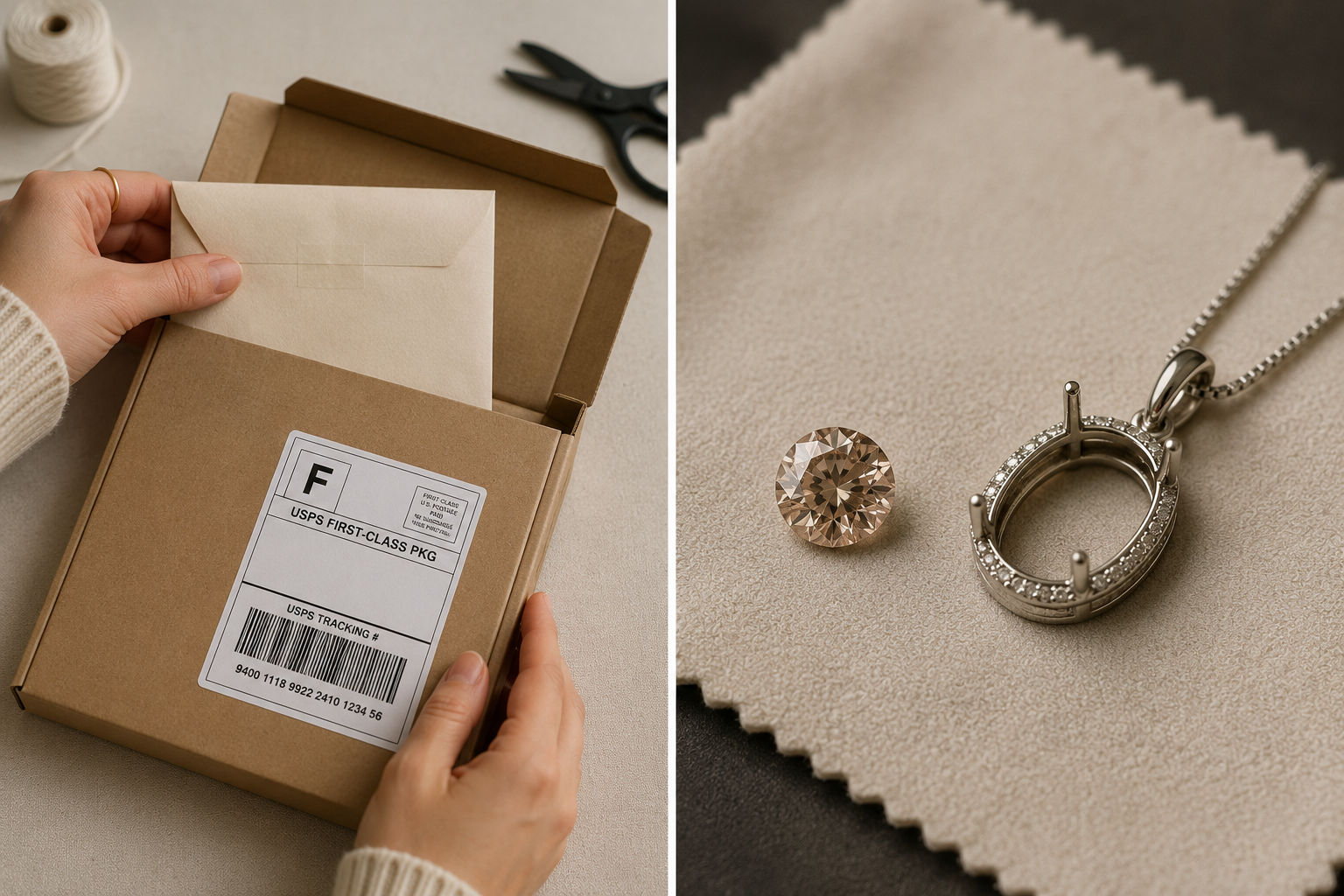
 Sealed paper envelope being placed inside a rigid cardboard mailer with a tracking label attached

What Happens While You Wait?

After the hair has been received and documented, the laboratory process begins.

The general process can involve:

1. Material Intake

The submitted hair is received and recorded according to the laboratory’s procedures.

2. Carbon Recovery

The material goes through processing designed to recover usable carbon.

3. Carbon Purification

The recovered carbon is purified and prepared for the diamond-growing process.

4. Graphite Preparation

The prepared carbon can be converted into a suitable form for diamond growth.

5. Diamond Growth

The material is used during controlled laboratory diamond growth.

6. Cutting and Polishing

The rough diamond crystal is shaped into the selected cut.

7. Grading and Final Preparation

The finished stone can be evaluated based on characteristics such as:

  • Cut
  • Color
  • Clarity
  • Carat

The memorial diamond process can take approximately 6 to 10 months, depending on the selected diamond and laboratory requirements.

Learn how a memorial diamond is made from your mother’s hair.

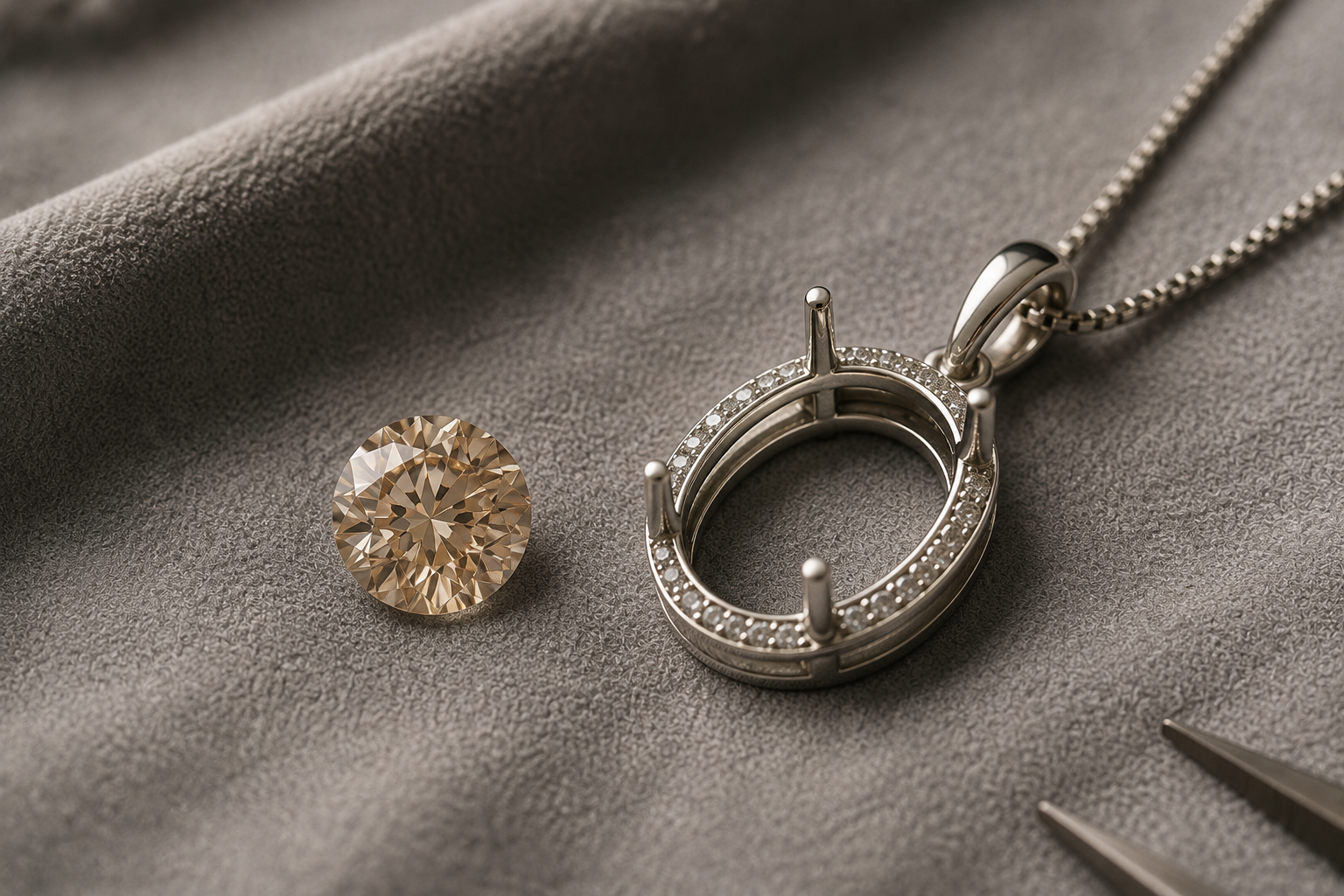
Loose memorial diamond beside an empty pendant setting on a jeweler's cloth

What Happens When the Diamond Arrives?

The finished memorial diamond may arrive as a loose stone.

Depending on the provider, documentation may accompany the diamond, such as information about its characteristics and the memorial process.

After receiving the stone, you can decide how you would like to preserve or wear it.

Popular options include:

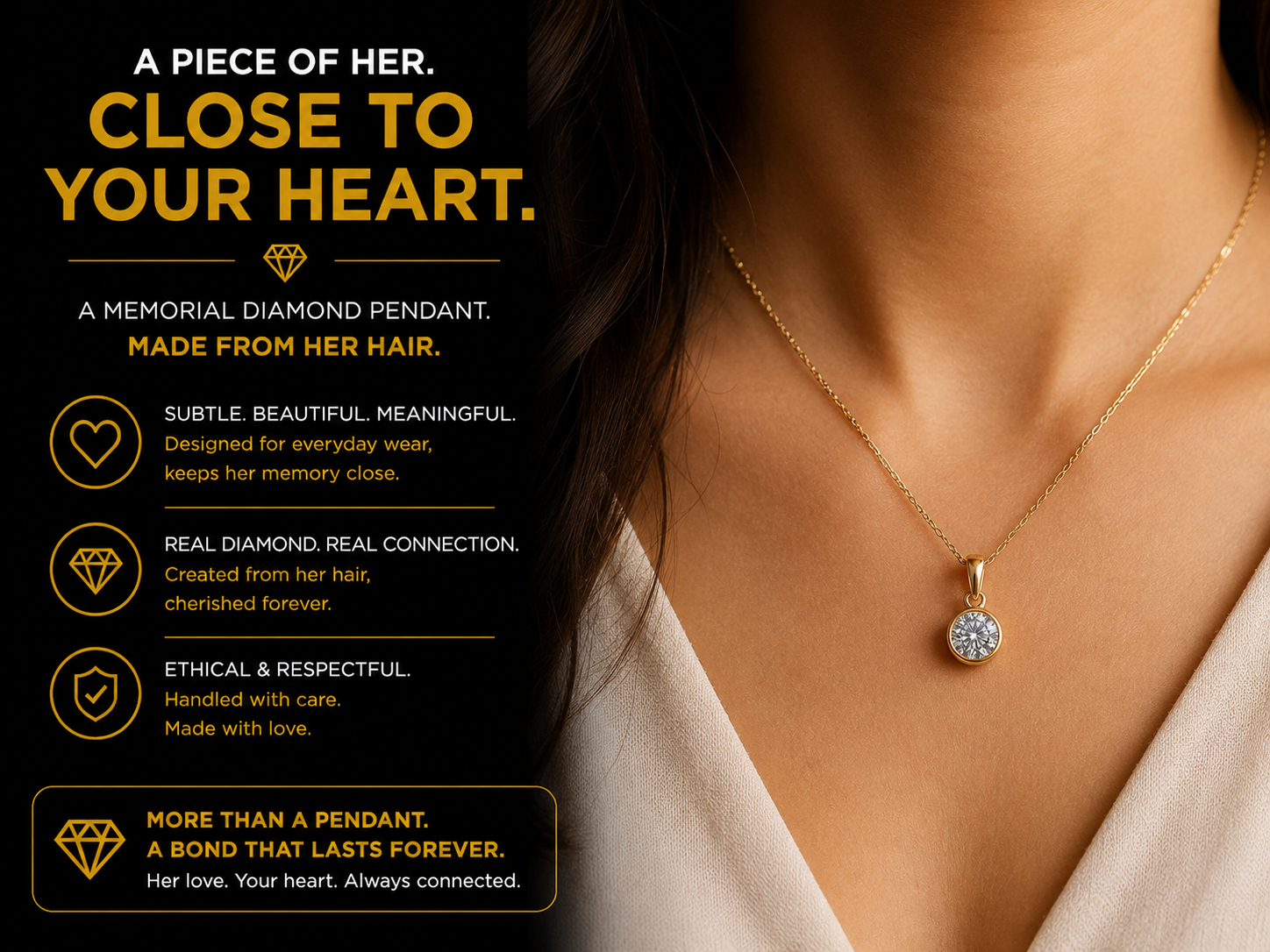
  • A memorial diamond pendant
  • A ring
  • A necklace
  • A custom jewelry setting
  • Resetting an existing family jewelry piece

There is no need to rush this decision. The setting can be selected after you have seen the finished diamond and decided what feels most meaningful.

Explore memorial diamond settings and jewelry ideas for a mother.


Frequently Asked Questions

Do I need to send the hair with the roots attached?

A cleanly cut lock may be suitable for the memorial diamond process. Always confirm the specific material requirements with your provider before submission.

How Much Hair Should I Cut?

Confirm the provider’s minimum requirement for your selected diamond before cutting anything. If the lock is the only available hair, it is especially important to confirm the amount first.

Can I Mail the Hair in a Regular Envelope?

A more protective option, such as a sealed inner envelope placed inside a rigid mailer, can reduce the risk of the hair scattering if the outer package is damaged.

What if the Only Hair I Have Is From Her Hairbrush?

Tell the provider before submitting it. A shared hairbrush may contain hair from more than one person, so a clean and identifiable lock is generally preferable.

What if My Mother Is Still Living?

A living mother can provide a lock of hair herself. This can create a meaningful memorial or keepsake diamond without cremation being involved.

Can I Create More Than One Diamond?

This depends on the amount of available material and the provider’s requirements. Confirm the requirements before deciding how many diamonds you would like to create.


Before You Send the Hair

Before mailing anything, confirm these important details:

  • ✓ The provider accepts hair as a source material.
  • ✓ You have selected the diamond size and other preferences.
  • ✓ You know the minimum amount of hair required.
  • ✓ You have enough material before cutting.
  • ✓ The lock is safely stored and clearly identified.
  • ✓ You understand the provider’s packaging instructions.
  • ✓ You are using an appropriate tracked shipping service.

Taking these steps before sending the hair can help prevent unnecessary mistakes.


Turn Your Mother’s Hair Into a Lasting Memorial Diamond

A lock of your mother’s hair can be a deeply personal keepsake.

Before cutting or sending it, take time to confirm the requirements, understand the process, and decide what type of diamond you would like to create.

The most important step is often the first one:

Ask questions before you cut anything.

A memorial diamond can become a lasting symbol of connection and remembrance, preserving the meaning of a treasured lock of hair in a form that can be kept and passed down.


Ready to Create a Memorial Diamond From Your Mother’s Hair?

If you have a saved lock of your mother’s hair and are considering a memorial diamond, start by understanding whether the available material is suitable for the diamond you have in mind.

Contact us to discuss your available hair, preferred diamond size, and memorial diamond options.

How to Turn Your Mother's Ashes and Hair Into a Diamond

How to Turn Your Mother’s Ashes and Hair Into a Diamond

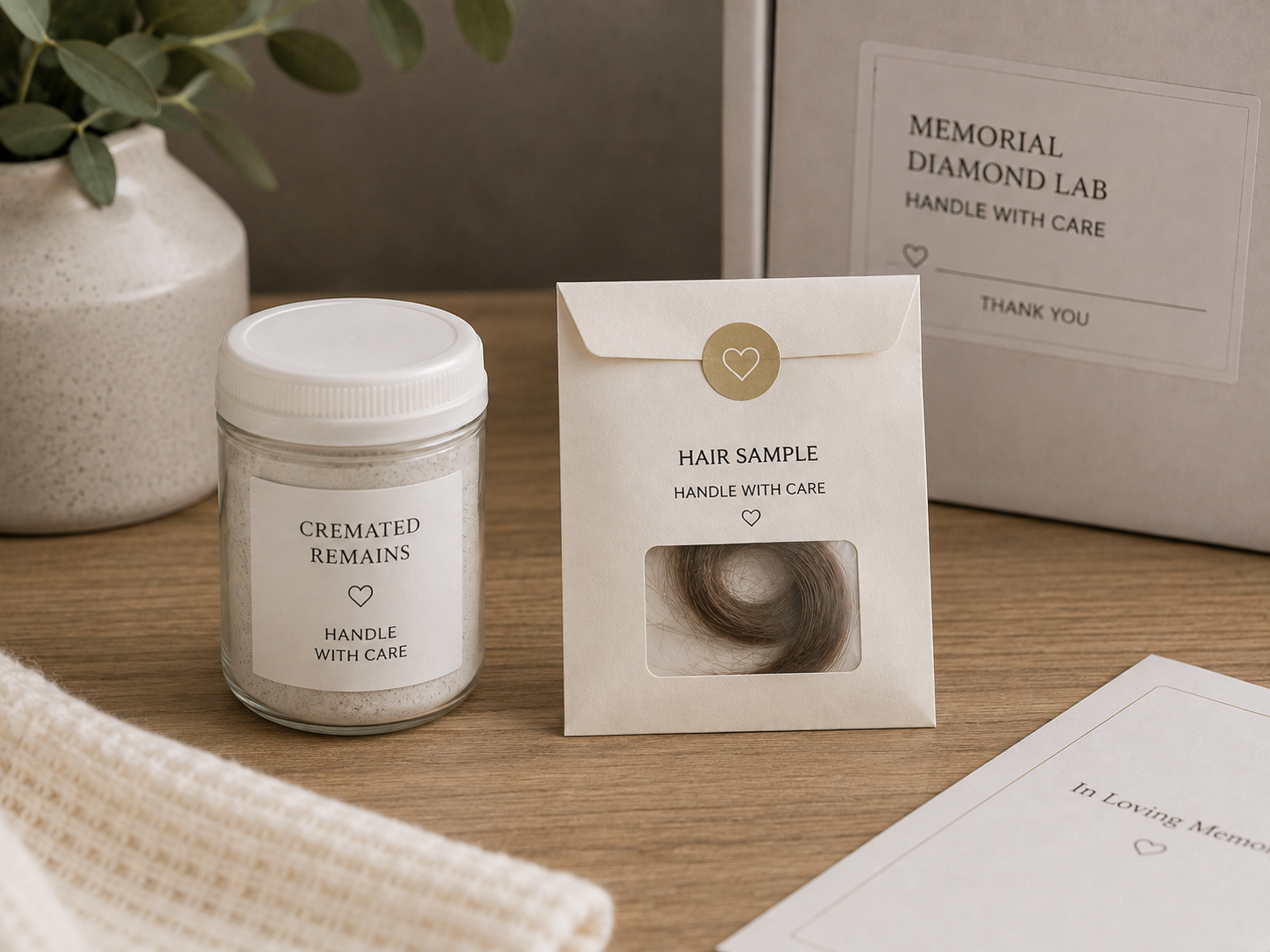
Two small labeled containers side by side — a sealed ash container and a paper envelope holding a lock of hair — ready for shipping to a memorial diamond lab

The confusion is nearly always the same. You have two different things a portion of your mother’s ashes and a lock of her hairand they do not follow the same rules.

To send both for a memorial diamond, first confirm that your provider accepts a combined submission. Then decide whether you want one diamond created from both materials or two separate diamonds. Each material should be packed in its own sealed and labeled container before being sent together in one shipment.

Because cremated ashes are included in the package, the shipping requirements for cremated remains generally apply to the entire shipment.

That is often the part families find confusing and one of the most important details to understand before sending anything.

Will Your Provider Accept Your Mother’s Ashes and Hair Together?

Ask this question before measuring or preparing either material.

Not every memorial diamond provider combines ashes and hair into one diamond. Some providers may create a diamond using only one source material, while others may offer separate diamonds.

Before beginning, ask three important questions:

  1. Can you combine ashes and hair into one diamond-growing process?
  2. If not, what options are available one material per diamond or two separate diamonds?
  3. Does sending both materials affect the price, required quantity, or timeline?

Before making any decisions, review the wider list of questions worth asking first.

Do You Want One Blended Diamond or Two Separate Diamonds?

This decision should be made before packing because it may affect the amount of material required and the overall cost.

One Memorial Diamond

A combined memorial diamond may represent both materials in one meaningful keepsake. Depending on the provider’s process, the ashes and hair may be processed separately before being used in the diamond-growing process.

Two Separate Memorial Diamonds

Some families may prefer two diamonds, with one created from ashes and another created from hair. This can also be meaningful when siblings or family members want separate memorial pieces.

Before dividing anything, make sure you understand how much of each material is required. Learn how much ash and hair you may need for a mother memorial diamond.

Families may choose to send both materials because each one carries personal meaning. A lock of hair and cremated remains can represent different memories of the same person, making the decision deeply personal.

How Do You Pack Ashes and Hair for Shipping?

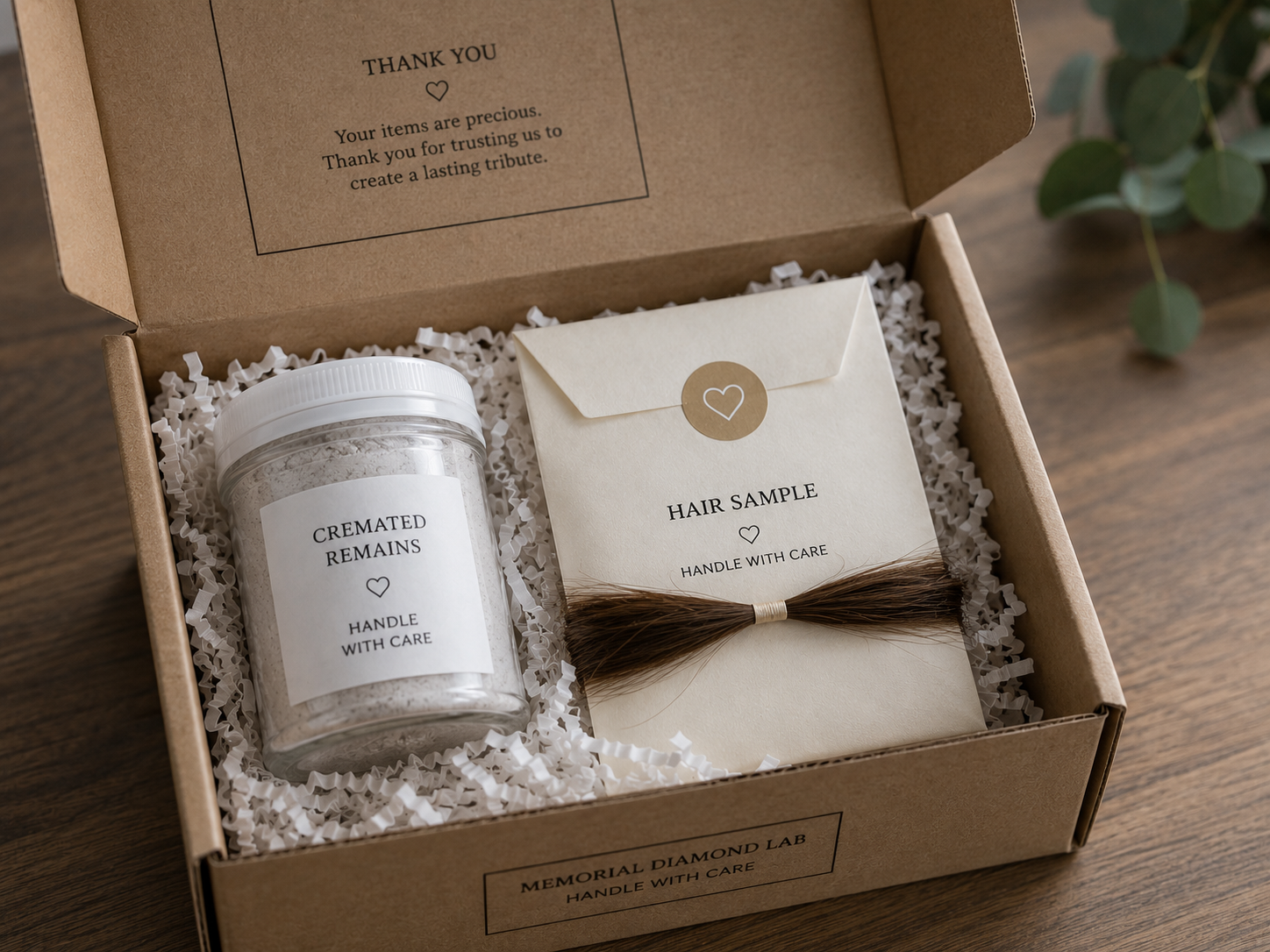
Rigid sealed container of cremated remains and a tied lock of hair in a paper envelope, each labeled, packed in one outer shipping box

The most important rule is simple: keep the materials separate.

Do not mix ashes and hair together at home. Each material should be placed in its own sealed and clearly labeled container.

A practical packing checklist includes:

  • Ashes: Place the required amount in a sealed inner container according to your provider’s instructions.
  • Hair: Place a clean lock of hair in a separate envelope or sealed container.
  • Label both containers: Include identification details requested by your provider.
  • Include required paperwork: This may include submission forms or other documentation requested by the memorial diamond company.

Keeping the materials separate helps ensure they can be properly identified and processed according to the provider’s procedures.

Why Should Ashes and Hair Be Sent Together?

When both materials are intended for the same memorial diamond process, sending them together can help keep the submission organized from the beginning.

One shipment means the provider receives both materials together and can document them as part of the same submission.

If the ashes are sent first and the hair arrives weeks later, the provider may need to handle them as separate arrivals. This can create unnecessary confusion and may affect how the materials are processed.

Before shipping anything, make sure you have both materials ready.

If you are still looking for a lock of your mother’s hair, such as one kept in a memory box, locket, or family keepsake, it may be better to wait until you have everything before beginning the submission process.

What Are the Shipping Rules for Ashes and Hair?

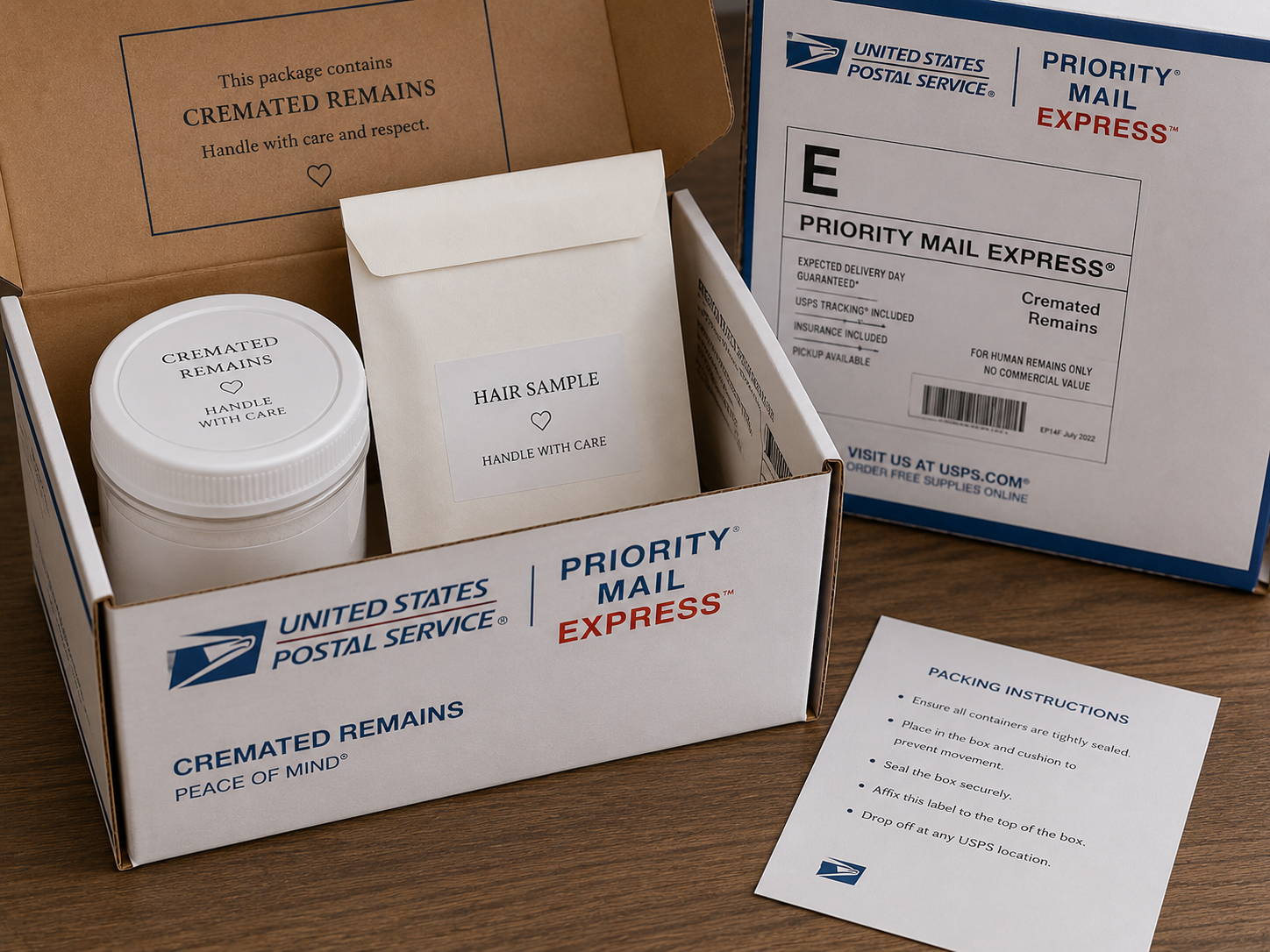
Official USPS Priority Mail Express Cremated Remains box packed with a sealed ash container and a separate labeled envelope of hair

Ashes and hair are treated differently when it comes to shipping.

Hair generally does not have the same shipping restrictions as cremated remains. Cremated ashes, however, may be subject to specific carrier and packaging requirements.

For families in the United States, the presence of cremated remains in the package means the shipment should follow the applicable requirements for cremated remains.

Before shipping, always confirm the current requirements directly with your carrier and memorial diamond provider.

You should confirm:

  • Which shipping service should be used
  • What packaging is required
  • Whether a specific shipping box is required
  • How the inner container should be sealed
  • Whether additional documentation is needed
  • How the package should be tracked

Carrier requirements can change, so it is important to confirm the current rules before sending the package.

You can also learn more about whether turning ashes into a diamond is legal throughout the United States.

What Happens Once the Lab Has Both Materials?

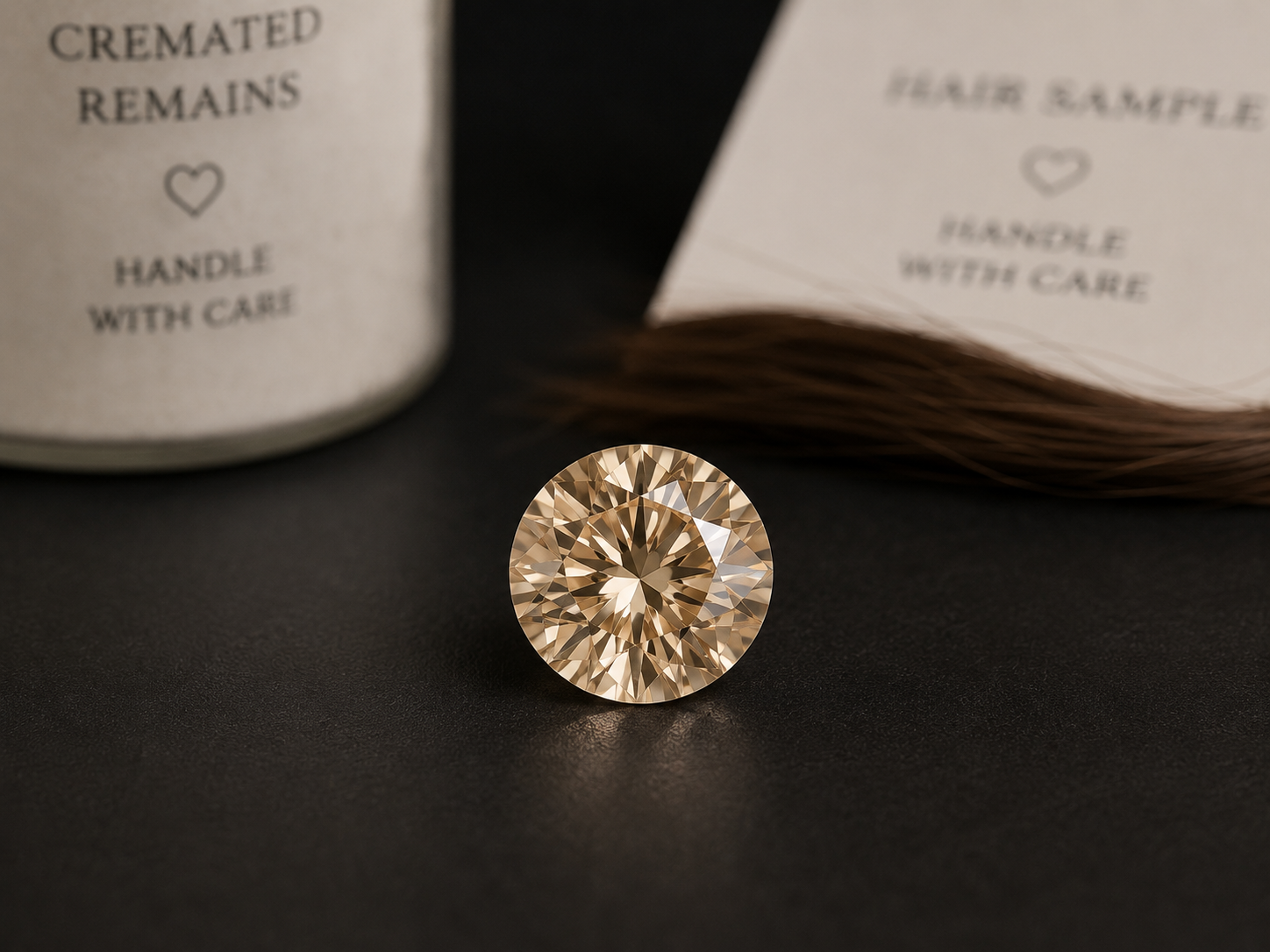
Finished champagne-toned memorial diamond grown from carbon extracted from a mother's cremated ashes and hair

Once your mother’s ashes and hair arrive at the laboratory, the provider should confirm that the materials have been received.

The exact process can vary between providers, but memorial diamond creation may involve several stages.

The materials may be processed separately to prepare usable carbon. The prepared material is then used as part of the specialized diamond-growing process.

The general process may include:

  1. Receiving and documenting the submitted materials.
  2. Preparing and purifying usable carbon.
  3. Preparing the material for diamond growth.
  4. Growing the diamond crystal using specialized laboratory equipment.
  5. Cutting and polishing the finished diamond.
  6. Preparing documentation associated with the finished stone.

For a closer look at the process, read how a memorial diamond is made from your mother’s ashes and hair.

The overall timeline can depend on factors such as the requested diamond size, color, and the provider’s specific process.

For a broader overview of your options, see the complete guide to a mother ashes and hair diamond.

Frequently Asked Questions

Can I Mix My Mother’s Ashes and Hair Together Before Sending Them?

No. It is generally better to keep ashes and hair in separate, sealed, and labeled containers.

The provider may need to handle and prepare each material differently. Follow the exact instructions provided before shipping anything.

What If I Find a Lock of Her Hair After I Have Already Sent the Ashes?

Contact your provider before sending the hair separately.

Depending on the stage of the process, it may still be possible to discuss your options. The provider can explain whether the hair can be added to the existing submission or whether it would need to be handled separately.

Does Sending Both Ashes and Hair Create a More Meaningful Diamond?

The meaning of a memorial diamond is personal.

Some families choose to send both materials because ashes and hair represent different memories of their loved one. Others may choose only one material.

The decision should be based on what feels most meaningful to you and your family.

Can I Ship Cremated Remains With UPS or FedEx?

Carrier policies and shipping regulations can change. Before shipping cremated remains, confirm the current requirements directly with the carrier and follow your memorial diamond provider’s instructions.

Do not assume that ordinary package shipping services can be used for cremated remains.

How Much Ash and Hair Do I Need to Send?

The amount required can vary depending on the provider and whether you are creating one diamond or multiple diamonds.

Before measuring or dividing anything, ask your provider for the exact quantity required for your chosen diamond.

You can also read our guide on how much ash and hair you need for a mother memorial diamond.

Do I Have to Send Ashes If I Have Hair?

No. Some memorial diamonds can be created using hair alone, while others can be created using cremated ashes.

If you only have a lock of hair, explore how to turn your mother’s hair into a diamond.

If you prefer to use cremated remains only, read how to turn your mother’s ashes into a diamond.

Before You Send Anything

Before shipping your mother’s ashes and hair, take a moment to confirm every detail.

Make sure the provider accepts both materials, understand whether they can be used for one diamond or separate diamonds, confirm the required quantities, and carefully follow the shipping instructions provided.

Keep the materials separate, clearly labeled, and securely packaged according to the instructions you receive.

Turning your mother’s ashes and hair into a memorial diamond is a deeply personal decision. Taking the time to understand the process before sending anything can help you move forward with greater confidence and create a memorial that feels meaningful to you and your family.

Memorial diamond created from a mother's ashes and hair with two sparkling diamonds, ashes, and a lock of hair

Mother Ashes and Hair Diamond: The Complete Guide

Mother Ashes and Hair Diamond: The Complete Guide

Most families arrive at this holding two different things and assuming they have to pick one. You don’t.

A mother ashes and hair diamond is a genuine lab-grown diamond created using carbon extracted from both her cremated remains and a lock of her hair. The two materials are purified separately and then prepared for the diamond-growth process.

Hair contains roughly 50% carbon by weight, while cremated ashes contain a much smaller amount of usable carbon. Combining both materials can therefore increase the amount of personal carbon recovered from the submission.

There is also another option that many families may not realize they have: instead of creating one blended stone, it may be possible to create two separate diamonds one associated with ashes and one associated with hair.

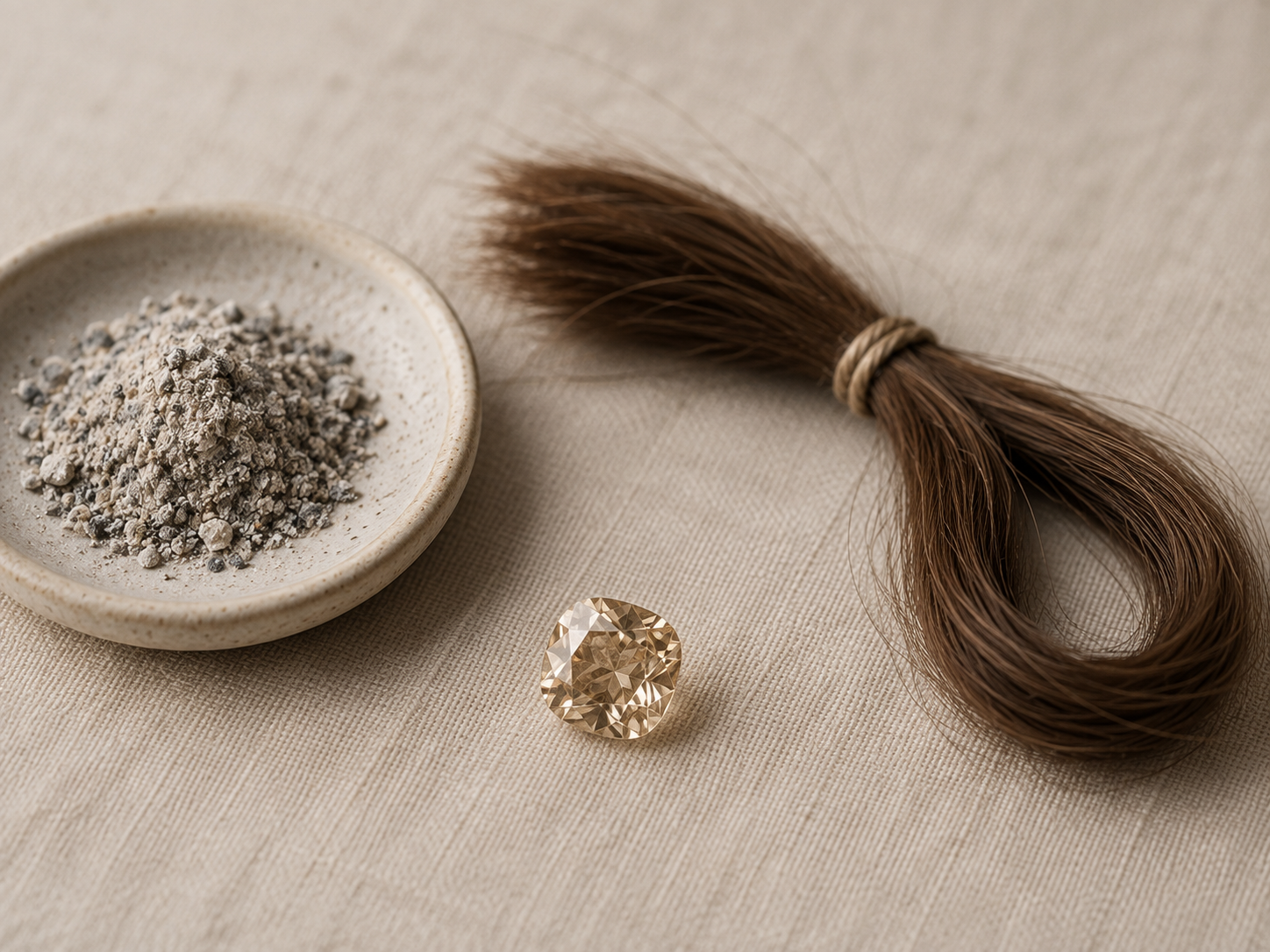
Small portion of cremated ashes in a dish beside a tied lock of hair and a pale champagne memorial diamond on a linen surface

In This Guide

Why Would You Submit Both Her Ashes and Her Hair?

The two materials can carry different meanings.

Ashes are what many families associate with a loved one’s physical remains. They are what is returned after cremation and what families often preserve, scatter, or keep in an urn.

Hair is different. A lock of hair can remain deeply personal because it is visibly connected to the person you remember. From a technical perspective, hair also contains a relatively high proportion of carbon.

Hair is roughly half carbon by weight, while cremated remains are primarily mineral material, with usable carbon generally representing a much smaller proportion.

For some families, submitting both materials simply feels meaningful. It allows both the cremated remains and a physical lock of hair to be represented in the process.

You do not necessarily have to choose between them.

If you are still deciding which material is right for your situation, you may also want to explore an ashes-only memorial diamond, a hair-only memorial diamond, or compare ashes and hair as starting materials.

What Does Combining Ashes and Hair Actually Change About the Diamond?

side-by-side comparison of a scoop of cremated ashes and a small lock of hair, labeled with their carbon content by weight

The most important change is the amount of personal carbon that may be recovered from the submitted materials.

Hair contains considerably more carbon by weight than cremated ashes. Adding hair to an ashes submission can therefore increase the total amount of carbon recovered from the person being memorialized.

Source MaterialApproximate Carbon ContentWhat It Contributes
Cremated AshesApproximately 0.5–4%A smaller amount of usable personal carbon among mineral-rich material
HairApproximately 50%A relatively carbon-rich source
Ashes and Hair CombinedHigher total personal carbon than ashes aloneCarbon from both submitted materials can contribute to the growth feedstock

However, combining ashes and hair does not mean that the finished diamond is made entirely or exclusively from the submitted material.

Diamond growth requires a sufficient amount of carbon feedstock. Personal carbon recovered from ashes, hair, or both may be combined with supplemental laboratory carbon during the growth process.

The most accurate way to understand a combined memorial diamond is that carbon recovered from both her ashes and her hair contributes to the material used to create the stone.

Should You Grow One Blended Stone or Two Separate Diamonds?

Having both ashes and hair creates a decision that families using only one material do not have.

You may consider creating one memorial diamond using both materials, or creating two separate diamonds associated with the two different source materials.

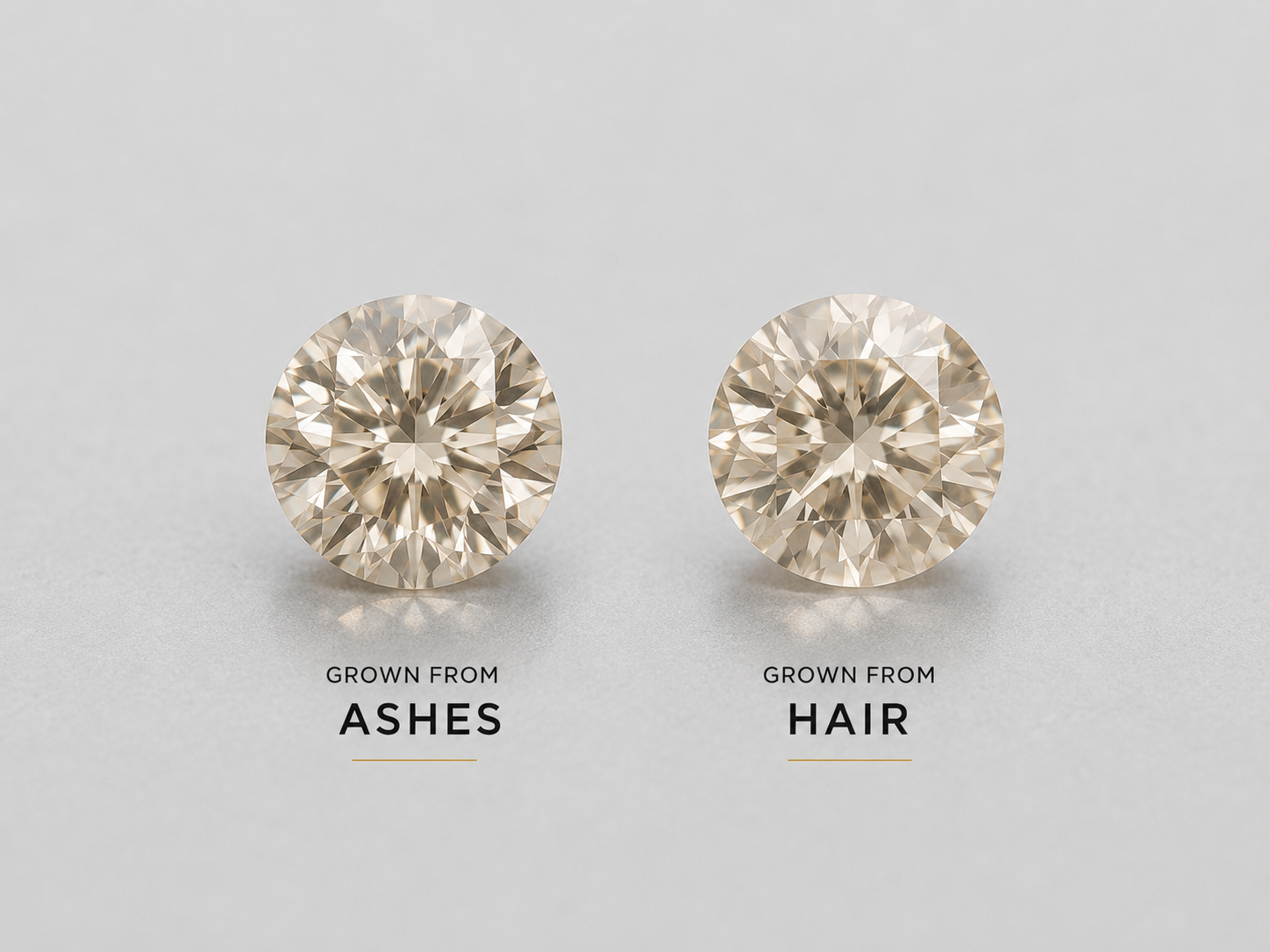
two lab-grown memorial diamonds of similar size side by side on a pale gray surface, one grown from ashes and one from hair

Why Some Families Choose Two Diamonds

  • Two family members can each have a stone. One diamond can represent the ashes and another can represent the hair.
  • One to wear and one to keep. A family may choose to set one diamond into jewelry while preserving another stone separately.
  • Different meanings for different pieces. One stone may be intended as a formal family heirloom while another feels more personal.
  • Separate keepsakes. Two diamonds can provide more flexibility for sharing a memorial between family members.
Why Some Families Choose One Diamond

One stone can also feel simpler.

There is one diamond size, one shape, one color, one setting, and one finished piece to preserve or pass down.

Creating two separate diamonds may also involve two separate production processes, cutting stages, and grading requirements.

The right choice depends less on chemistry and more on what makes sense for your family.

What If You Only Have a Very Small Amount of One of Them?

This is a common situation.

A Little Hair and Plenty of Ashes

You may only have a few strands from a brush, comb, keepsake, or baby book.

Because hair contains a relatively high percentage of carbon by weight, even a small amount may still contribute carbon alongside the ashes. Always tell the provider exactly how much material you have before cutting or sending it.

A Little Ash and Plenty of Hair

Perhaps most of the ashes were scattered or interred years ago, but a small portion was kept.

A combined submission may still be worth discussing with a memorial diamond provider because both materials can be evaluated individually.

Almost None of One Material

If you have only a tiny amount of one material, ask the provider honestly what practical role it can play in the process.

Even when the contribution is primarily symbolic, that may still be meaningful to the family. The important thing is understanding the difference between a symbolic contribution and a significant material contribution.

How Does a Laboratory Handle Two Different Materials?

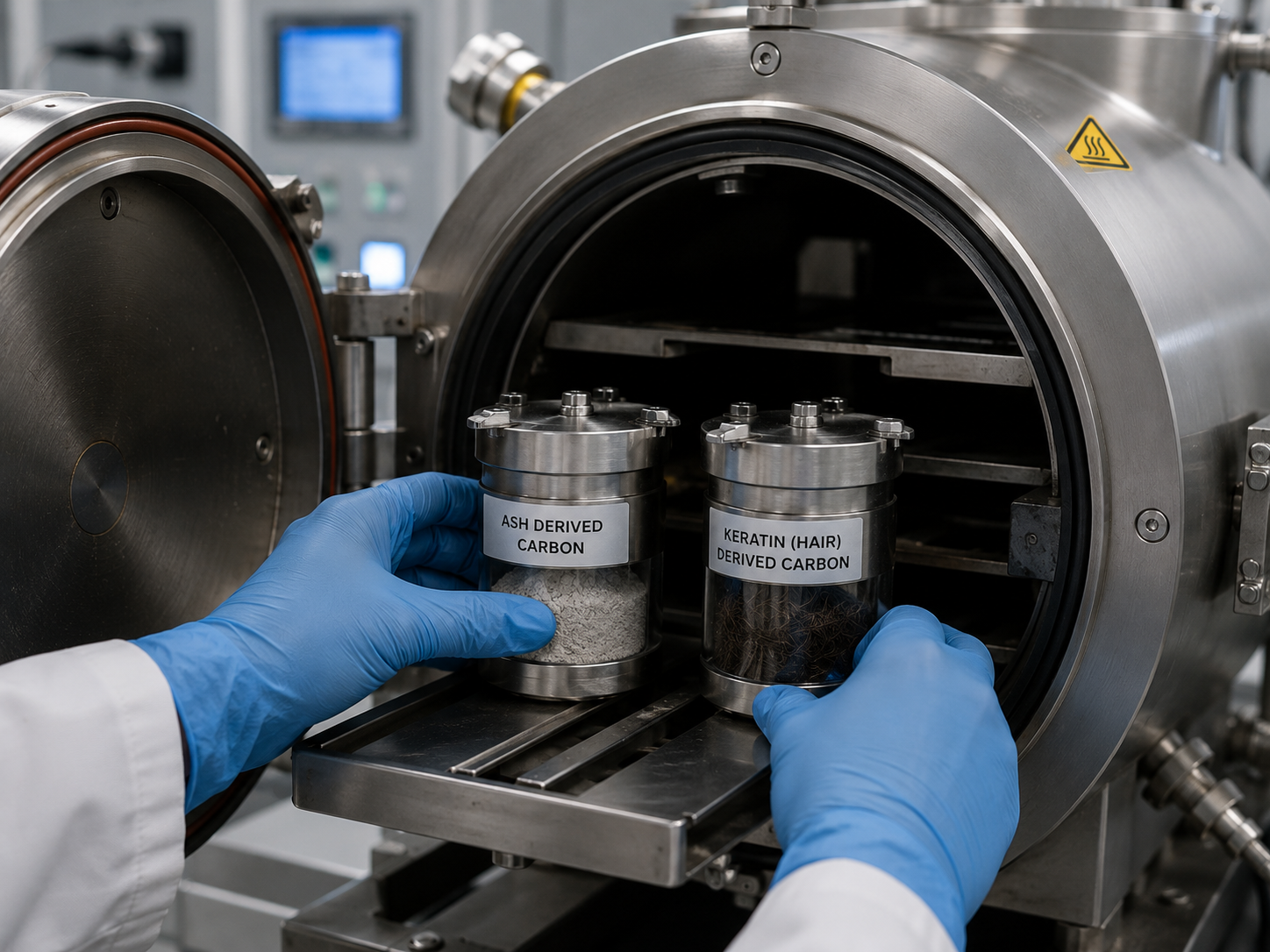
Two sealed sample vessels being loaded into a high-temperature oxygen-free purification furnace in a laboratory

Ashes and hair are very different materials, so they require different purification processes.

They are handled separately during the early stages.

Step 1: Processing the Ashes

Cremated remains contain substantial mineral material, including calcium phosphate and other components associated with bone.

The laboratory processes the material under controlled conditions to isolate usable carbon.

Step 2: Processing the Hair

Hair is primarily composed of keratin and contains a relatively high amount of carbon.

The hair is processed separately to remove non-carbon components and other possible residues.

Step 3: Carbon Purification

The goal of both processes is highly purified carbon suitable for later preparation and diamond growth.

The purified material is then prepared for the next stage of the process.

Step 4: Graphitization

The carbon can be converted into graphite at extremely high temperatures, approximately 2,500–2,700°C.

Step 5: Diamond Growth

The prepared carbon feedstock is placed into a diamond-growth environment together with a small diamond seed.

In an HPHT, or High Pressure High Temperature, process, the environment may reach approximately:

  • 6–8 GPa of pressure
  • 1,400–2,500°C of temperature

Under these controlled conditions, carbon atoms gradually attach to the diamond seed and form a growing crystal.

The growth process can take weeks to months depending on the target diamond.

Step 6: Cutting and Polishing

The diamond crystal that comes out of the growth process is a rough diamond.

A specialist examines the crystal and determines how it can best be cut and polished.

The finished diamond can then be evaluated according to characteristics such as:

  • Cut
  • Color
  • Clarity
  • Carat Weight

Does Sending More Material Create a Bigger Diamond?

No. Sending more ashes or more hair does not automatically create a larger diamond.

The final carat weight depends primarily on the selected diamond size and the controlled crystal-growth process.

Growth time and laboratory conditions play a much larger role in determining the size of the finished stone than simply increasing the amount of submitted material.

Does Submitting Both Change the Timeline or Cost?

For one combined memorial diamond, submitting two types of material may not dramatically change the overall timeline.

The complete process can take several months because diamond crystal growth, cutting, polishing, and certification require time.

A typical industry timeline can be approximately 6 to 10 months, with larger diamonds or specialized requirements potentially taking longer.

If you choose to create two separate diamonds, each stone may follow its own production timeline.

What Determines the Cost?

The cost of a memorial diamond is generally influenced more by the characteristics of the finished diamond than by simply submitting one or two source materials.

Factors may include:

  • Carat weight
  • Diamond color
  • Cut and shape
  • Clarity characteristics
  • Certification or grading
  • Whether one diamond or multiple diamonds are created

If two separate diamonds are produced, expect the production requirements to be more comparable to creating two individual stones rather than one.

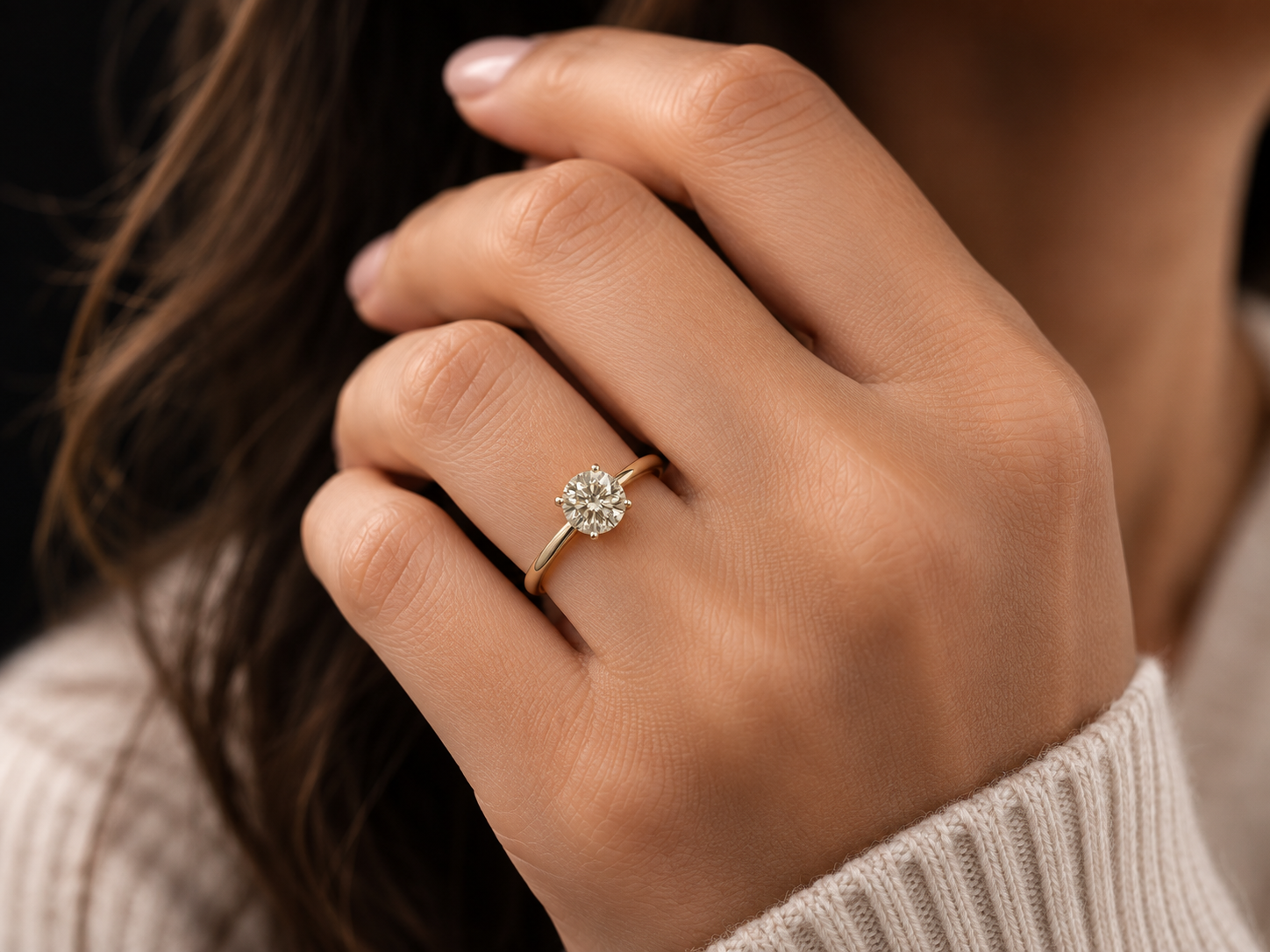
Memorial diamond set in a ring worn on a hand, showing the everyday scale of the stone

One Mother’s Story Can Become One Stone or Two

If you have both your mother’s ashes and a lock of her hair, you have more options than you may initially realize.

You may choose one memorial diamond representing both materials. Or, depending on what is available and what your family wants, you may consider separate stones.

There is no universally better choice.

For some families, one stone feels complete. For others, two diamonds make sharing, wearing, or preserving the memorial easier.

The best first step is understanding what materials you have and discussing the possibilities before sending anything irreplaceable.

Frequently Asked Questions About Mother Ashes and Hair Diamonds

Does adding hair make the diamond more genuinely her than ashes alone?

Adding hair can increase the amount of personal carbon recovered from the submitted materials because hair contains significantly more carbon by weight than cremated ashes. However, supplemental laboratory carbon may still be required during diamond growth.

Can we grow one diamond from her ashes and another from her hair?

Creating separate memorial diamonds associated with different source materials may be possible. Discuss the available options with the provider before sending either material.

Are the ashes and hair mixed together from the beginning?

No. Ashes and hair have very different compositions and require different purification processes. The materials can be processed separately before being prepared for diamond growth.

Does submitting both materials cost more?

For one combined stone, cost is generally influenced primarily by the characteristics of the finished diamond. Creating two separate diamonds requires separate production processes and may cost closer to producing two individual stones.

What if we only have a few strands of her hair?

A small amount of hair may still be useful because hair contains a relatively high percentage of carbon. Tell the provider exactly how much you have before cutting or sending it.

Will a combined diamond look different from an ashes-only or hair-only diamond?

Not necessarily. The appearance of a diamond is primarily influenced by the conditions used during growth, as well as factors such as trace elements, cutting, and polishing.

Does more hair or more ashes create a larger diamond?

No. Diamond size depends primarily on the selected carat weight and the controlled crystal-growth process, not simply on the quantity of material submitted.

How long does it take to create a memorial diamond?

The complete process can take several months. Industry timelines are commonly around 6 to 10 months, depending on the desired diamond size, growth process, cutting, and certification.

Is a memorial diamond a real diamond?

A properly grown memorial diamond is a laboratory-grown diamond crystal. Like other lab-grown diamonds, it can be evaluated according to characteristics including cut, color, clarity, and carat weight.

Where to Start

If you have both your mother’s ashes and a lock of her hair, start by understanding how much of each material you have.

Then consider what feels right for your family: one diamond representing both materials, or separate memorial diamonds.

Before sending anything irreplaceable, ask about material requirements, handling procedures, chain of custody, expected timeline, available diamond sizes, and the documentation provided with the finished stone.

A conversation is often a better first step than making an immediate purchase decision.

Lock of hair beside a rough lab-grown memorial diamond crystal on a laboratory bench

How a Mother Hair Diamond Is Actually Made in the Lab

How Scientists Create a Memorial Diamond from Your Mother’s Hair

Families tend to ask the emotional questions first and the technical ones later. Eventually, however, an important practical question appears: what does a laboratory actually do with a lock of your mother’s hair to turn it into a diamond?

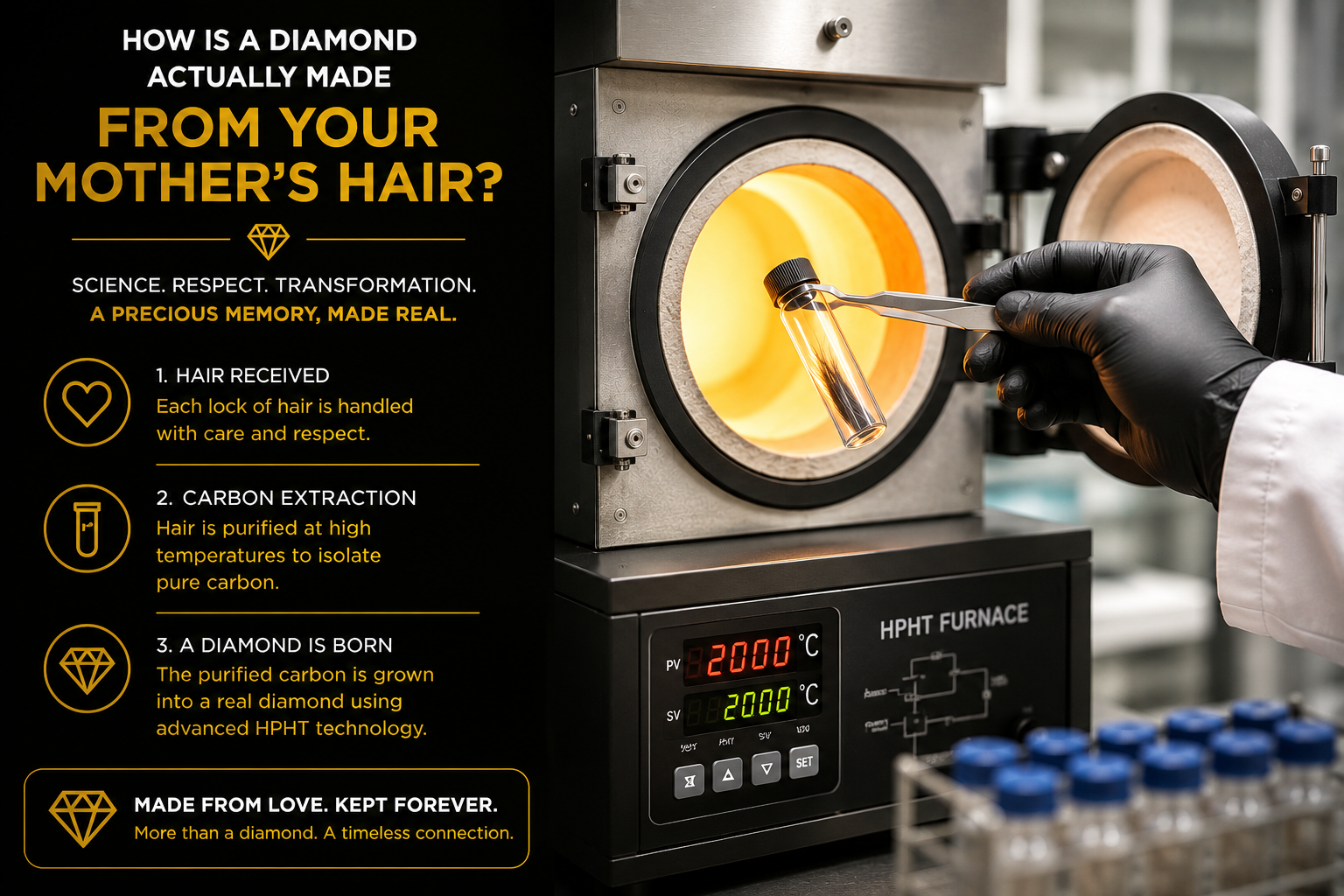
The process begins by extracting carbon from the hair.Technicians heat the material under controlled, oxygen-free conditions to remove all non-carbon components.. The remaining carbon is purified, converted into graphite at extremely high temperatures, and then placed inside a diamond-growth environment with a small diamond seed.

Under intense pressure and heat, carbon atoms gradually attach to that seed and form a new diamond crystal.

The interesting part is that the process unique to hair happens mainly at the beginning. Once the process converts the purified carbon into graphite, the remaining steps closely mirror how scientists create memorial diamonds from cremated remains.

In This Guide

What Makes Up Your Mother’s Hair, and Why Does a Lab Need It?

Here are the Active Voice conversions for that sentence:

keratin, a strong structural protein, primarily forms human hair. Hair contains roughly 50% carbon by weight, which makes it a comparatively carbon-rich starting material for creating a memorial diamond.

Cremated remains are very different.Mineral material from bone particularly calcium phosphate largely constitutes ashes, while usable carbon represents only about 0.5% to 4% of the material.

This difference explains why only a relatively small amount of hair may be useful as a carbon source compared with the larger volume generally associated with cremated remains.

It also means cremation is not necessary. A memorial diamond can potentially be created using hair collected from a loved one.

What Does Purification Have to Remove From Your Mother’s Hair?

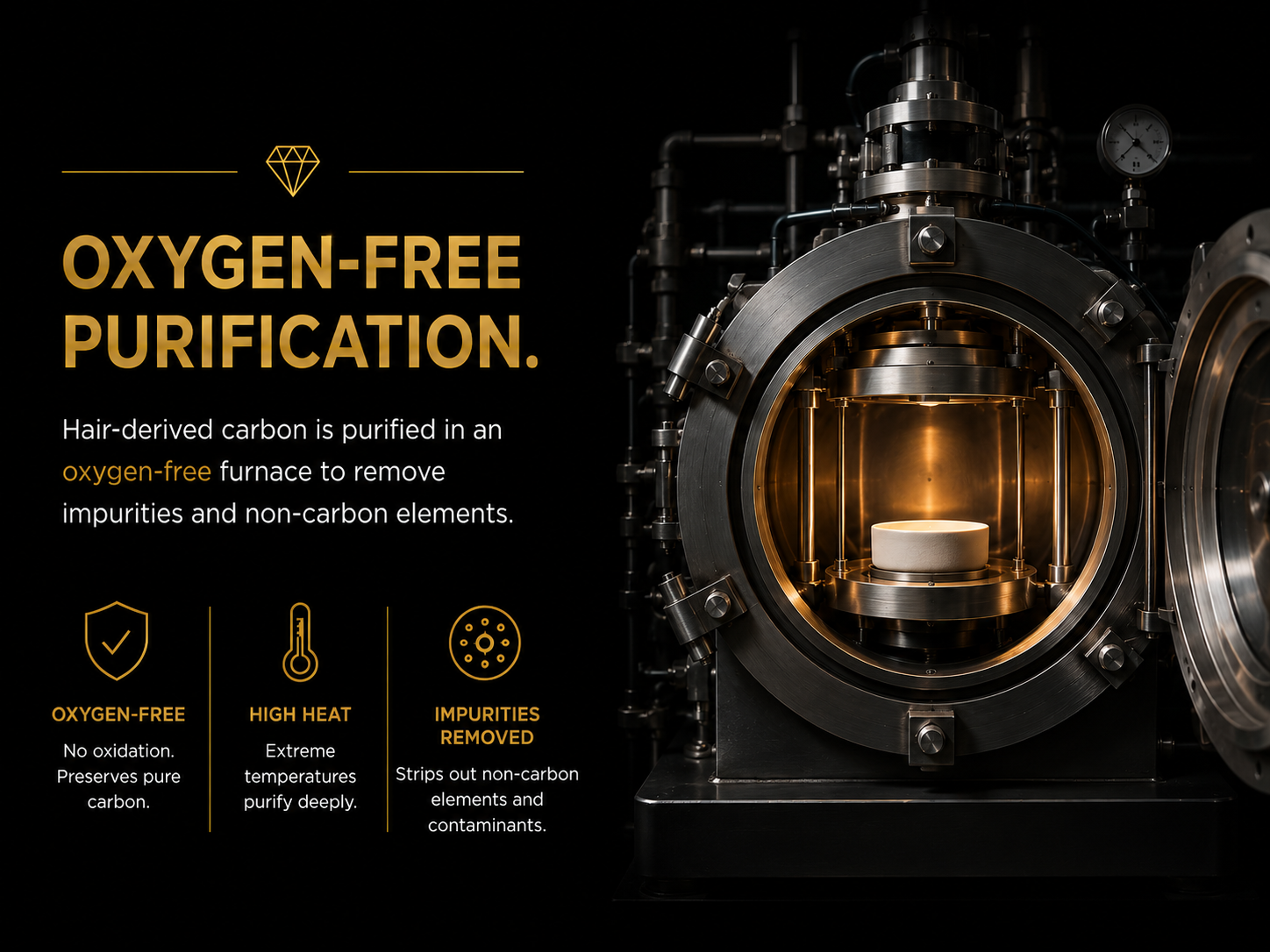
Sealed high-temperature furnace used to purify hair-derived carbon in an oxygen-free chamber

This is one of the main stages where creating a diamond from hair differs from creating one from ashes.

When cremated remains are processed, the laboratory must separate usable carbon from substantial quantities of mineral material.

With hair, the laboratory instead processes the keratin structure and removes non-carbon material while preserving the carbon that will eventually be used in the diamond-growth process.

The general process involves several important principles:

  • Controlled heating: The material is processed through carefully controlled temperature stages.
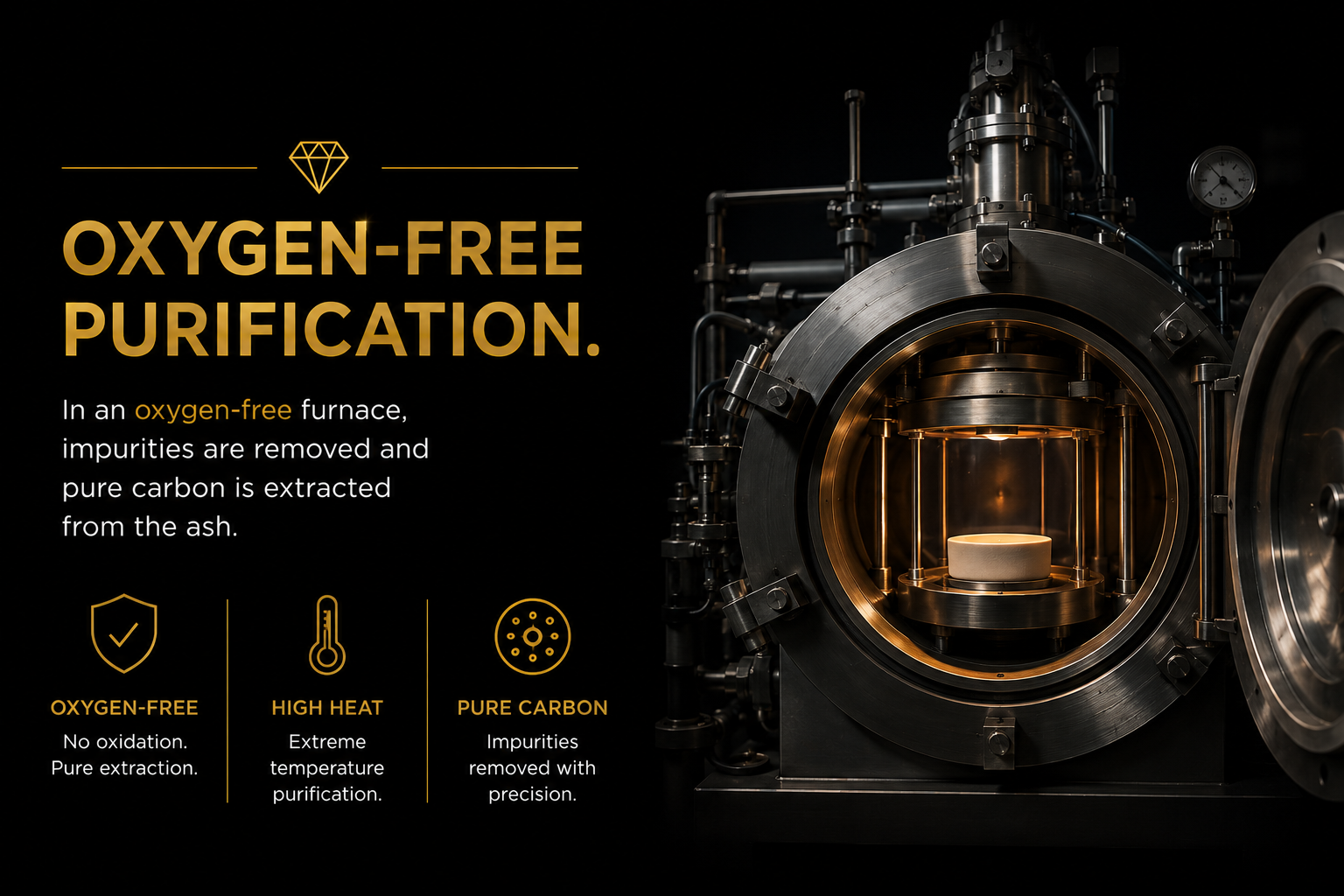
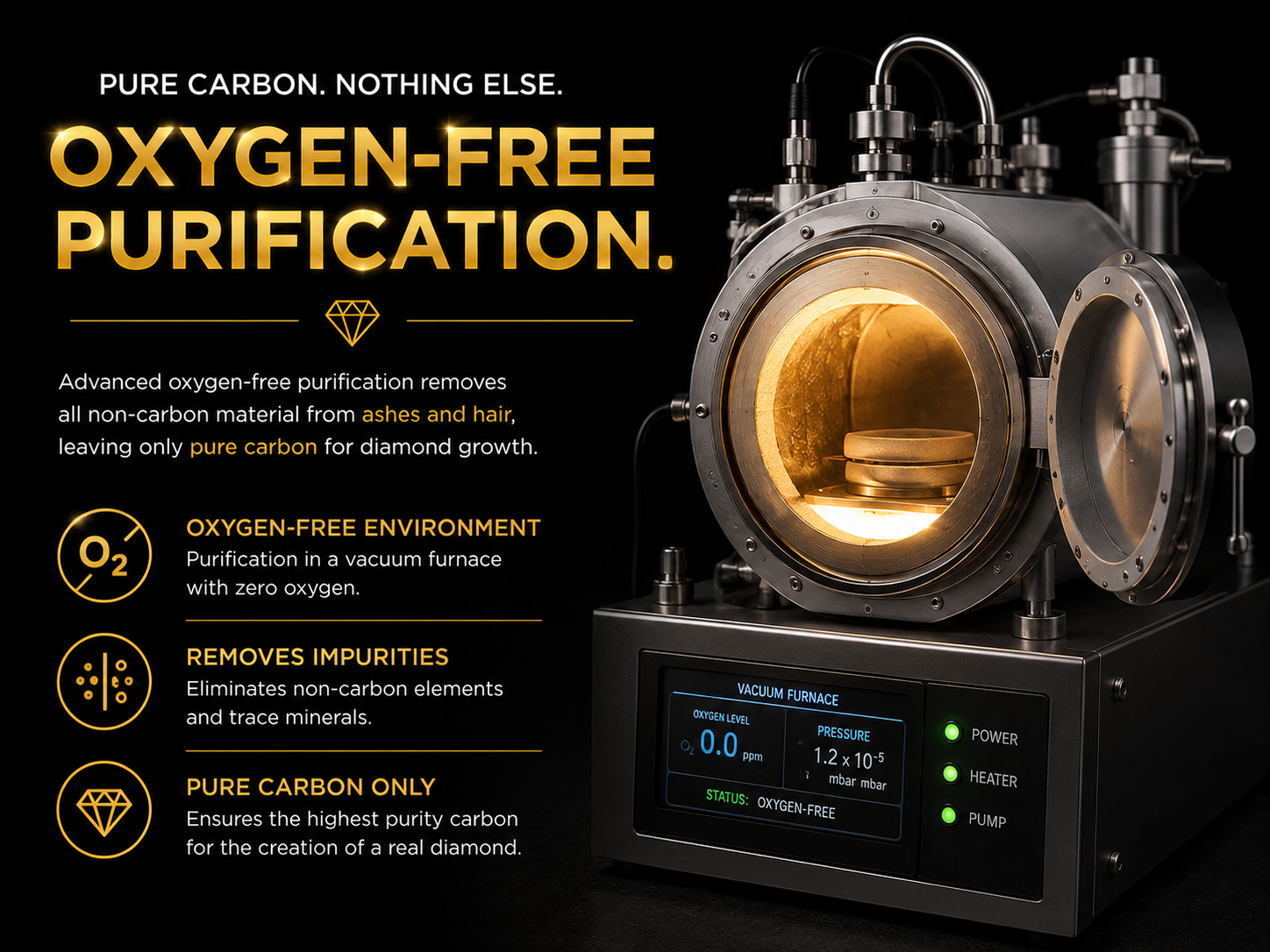
  • An oxygen-free environment: The goal is to preserve the carbon rather than allowing it to be lost through ordinary combustion.
  • High carbon purity: The target before later processing is approximately 99.9%+ carbon purity.

After purification, the material no longer looks like hair. What remains is a small amount of highly purified carbon.

Which Stages Differ From the Ashes Route, and Which Are the Same?

The difference between creating a memorial diamond from hair and creating one from cremated remains is smaller than many people assume.

StageFrom HairFrom Cremated AshesDifferent?
Starting materialKeratin, approximately 50% carbon by weightMineral-rich ash with approximately 0.5–4% usable carbonYes
PurificationRemoves non-carbon components from hairSeparates carbon from bone mineralsYes
Starting quantityRelatively small amount of hairGenerally a larger quantity of cremated remainsYes
Carbon purity targetApproximately 99.9%+Approximately 99.9%+No
GraphitizationApproximately 2,500–2,700°CApproximately 2,500–2,700°CNo
Additional carbonMay be blended into the growth materialMay be blended into the growth materialNo
Diamond growthHPHT or CVD processHPHT or CVD processNo
Growth periodWeeks to months depending on the target diamondWeeks to months depending on the target diamondNo
Cutting and polishingFinished like another diamondFinished like another diamondNo
Diagram comparing carbon content of hair at around 50% by weight with cremated ashes at 0.5


If Hair Contains So Much Carbon, Why Is Additional Laboratory Carbon Used?

A common misunderstanding is that the entire finished diamond must consist exclusively of carbon extracted from the submitted hair.

Diamond-growth equipment requires an appropriate volume of carbon feedstock to maintain the conditions necessary for crystal growth. Even though hair is carbon rich, the amount of purified personal carbon obtained from a lock of hair may not provide all the material required inside the growth cell.

For that reason, purified personal carbon may be blended with additional laboratory carbon during the diamond-growth process.

This is an important distinction when evaluating memorial diamond providers. Families should understand exactly how the submitted material is processed and how it contributes to the finished stone.
What Actually Happens Inside the Diamond Growth Press?

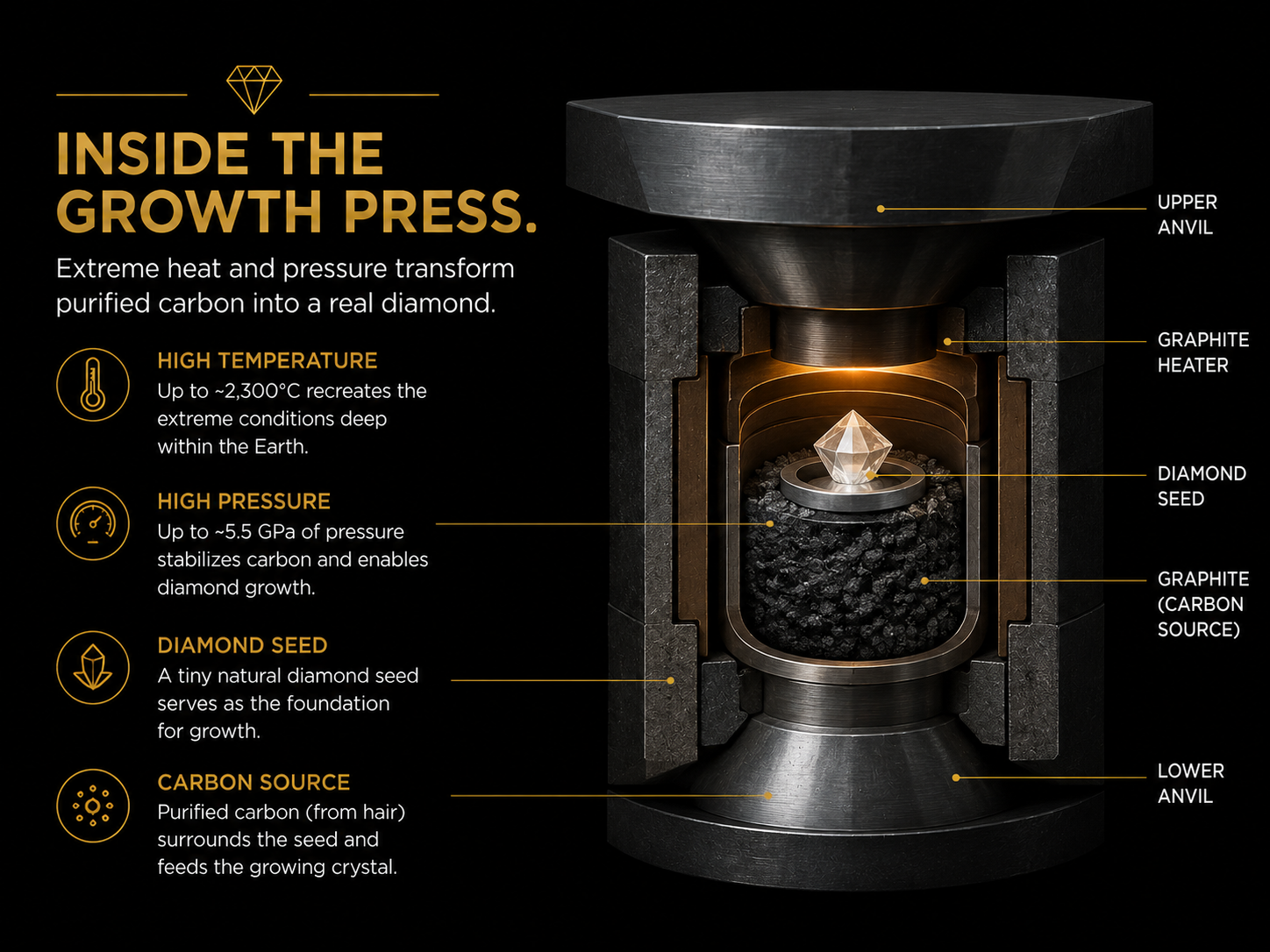
 Cutaway of an HPHT growth cell showing a diamond seed surrounded by graphite feedstock

After purification, the carbon is transformed into graphite at temperatures of approximately 2,500–2,700°C.

The graphite is then prepared for diamond growth.

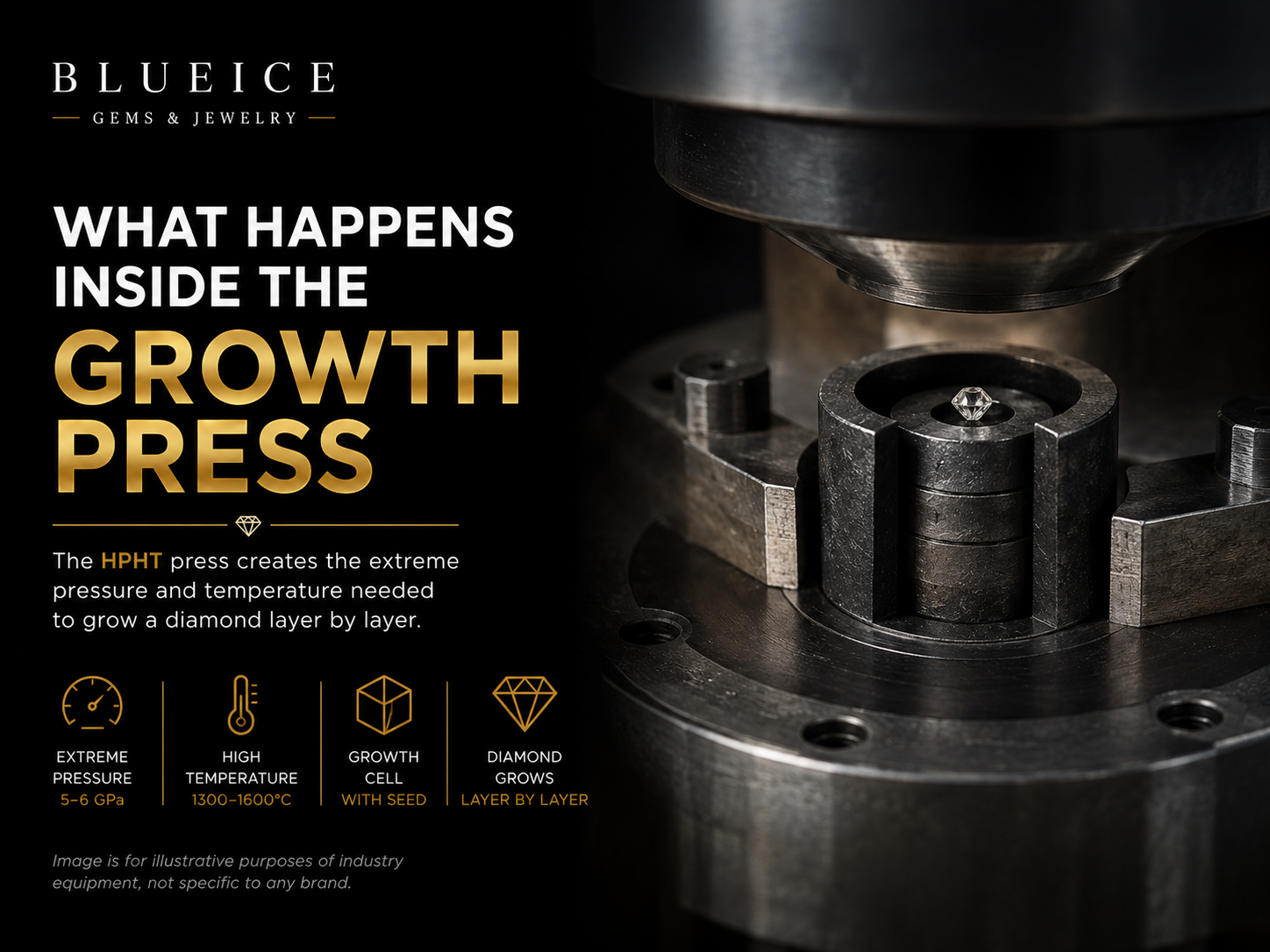
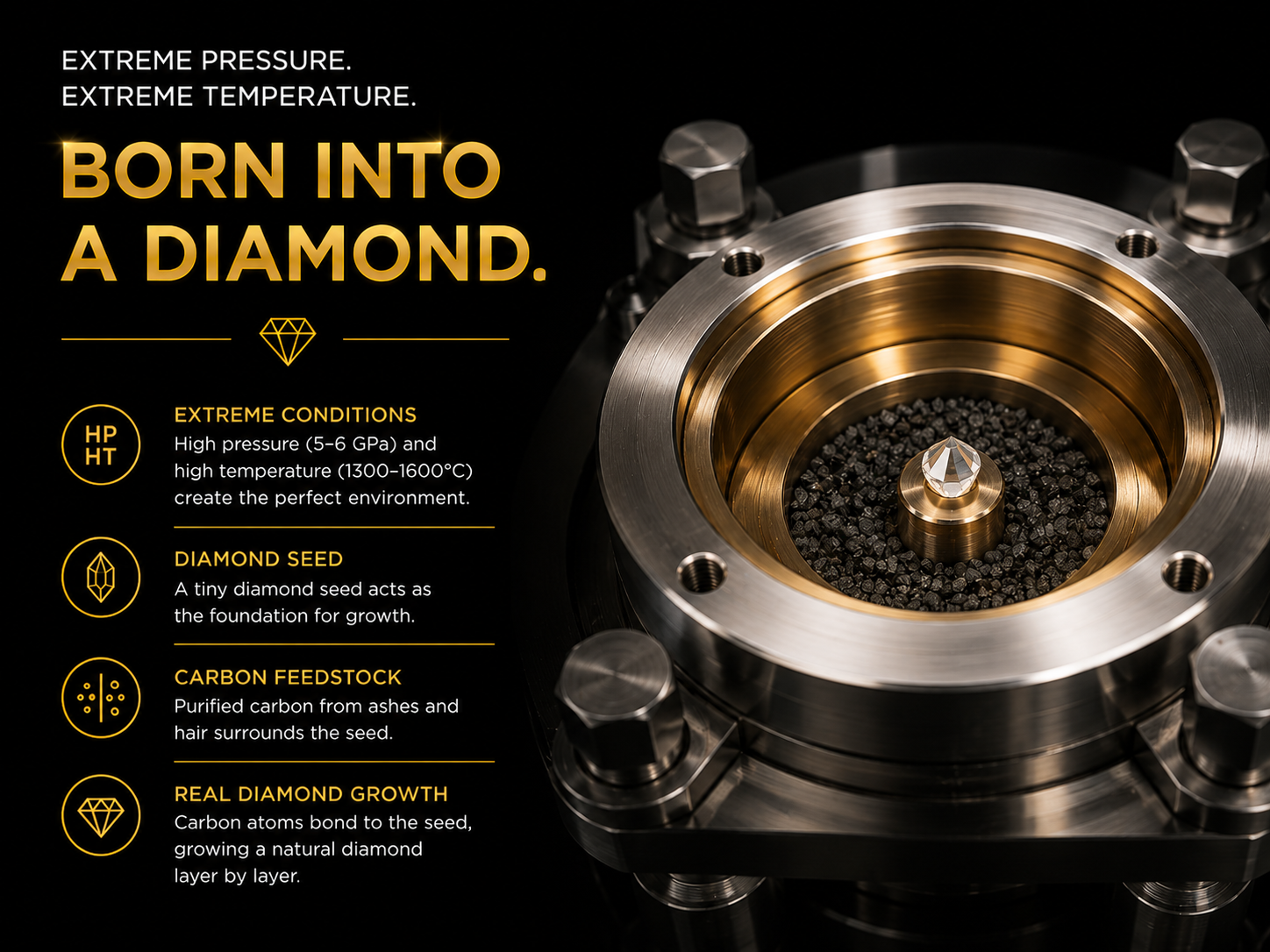
In an HPHT — High Pressure High Temperature process, the carbon material is placed inside a specialized growth cell together with a tiny diamond seed.

The growth environment can reach approximately:

  • 6–8 GPa of pressure
  • 1,400–2,500°C

These extreme conditions allow carbon atoms to migrate toward the diamond seed and arrange themselves into diamond’s crystal structure.

Layer by layer, the crystal grows over a period that can extend from weeks to months.

Some laboratory-grown diamonds can also be created using CVD, or Chemical Vapor Deposition. In that process, carbon-containing gas is deposited onto a diamond seed inside a controlled chamber.

Both methods can create genuine laboratory-grown diamond crystals.

Why Does Growth Time, Not the Size of the Lock of Hair, Determine the Carat?

Providing more hair does not automatically create a larger diamond.

Diamond crystals grow gradually as carbon atoms are added to the crystal structure. The eventual size of the stone therefore depends significantly on the target carat weight and the amount of time the crystal is allowed to grow under controlled conditions.

A longer lock of hair does not necessarily make the diamond grow faster.

Instead, the desired diamond size is selected first, and the growth process is managed accordingly.

Industry timelines for memorial diamonds can commonly extend to approximately 6 to 10 months, while larger stones or certain specialized color requirements may require longer.

What Determines the Color of a Memorial Diamond Made From Hair?

The natural color of your mother’s hair does not determine the color of the finished memorial diamond.

During purification and graphitization, the original biological structure of the hair is completely transformed.

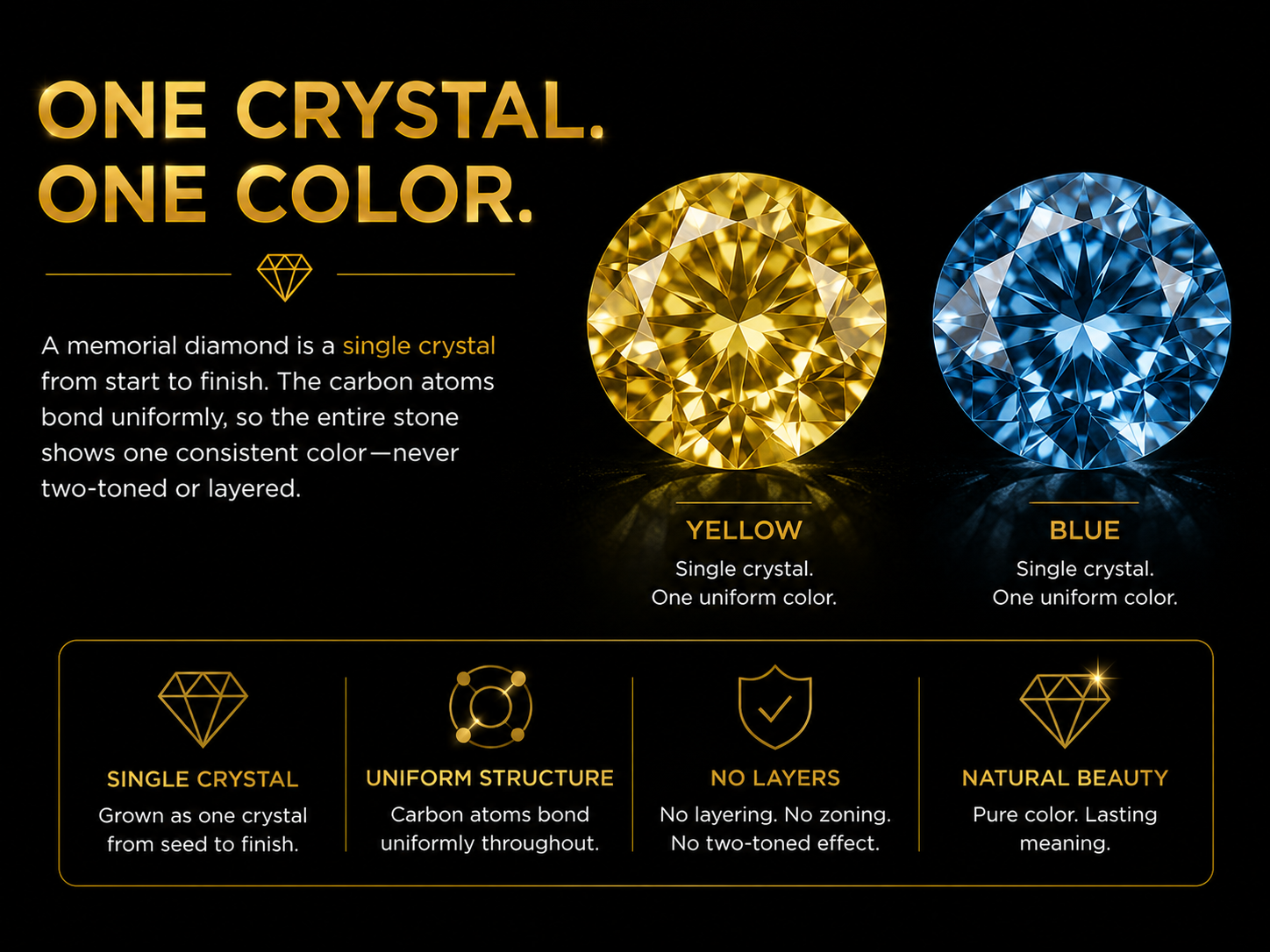
Diamond color is instead influenced by trace elements present during crystal growth.

For example:

  • Boron can contribute to blue tones.
  • Nitrogen can contribute to yellow tones.
  • Reducing these trace elements can help create a more colorless appearance.

Memorial diamonds may therefore appear in shades such as yellow, blue, champagne, brown, or near-colorless depending on the growth process and trace-element environment.

Some providers may also use post-growth treatments to create additional colors.
What Happens After the Diamond Crystal Comes Out of the Press?

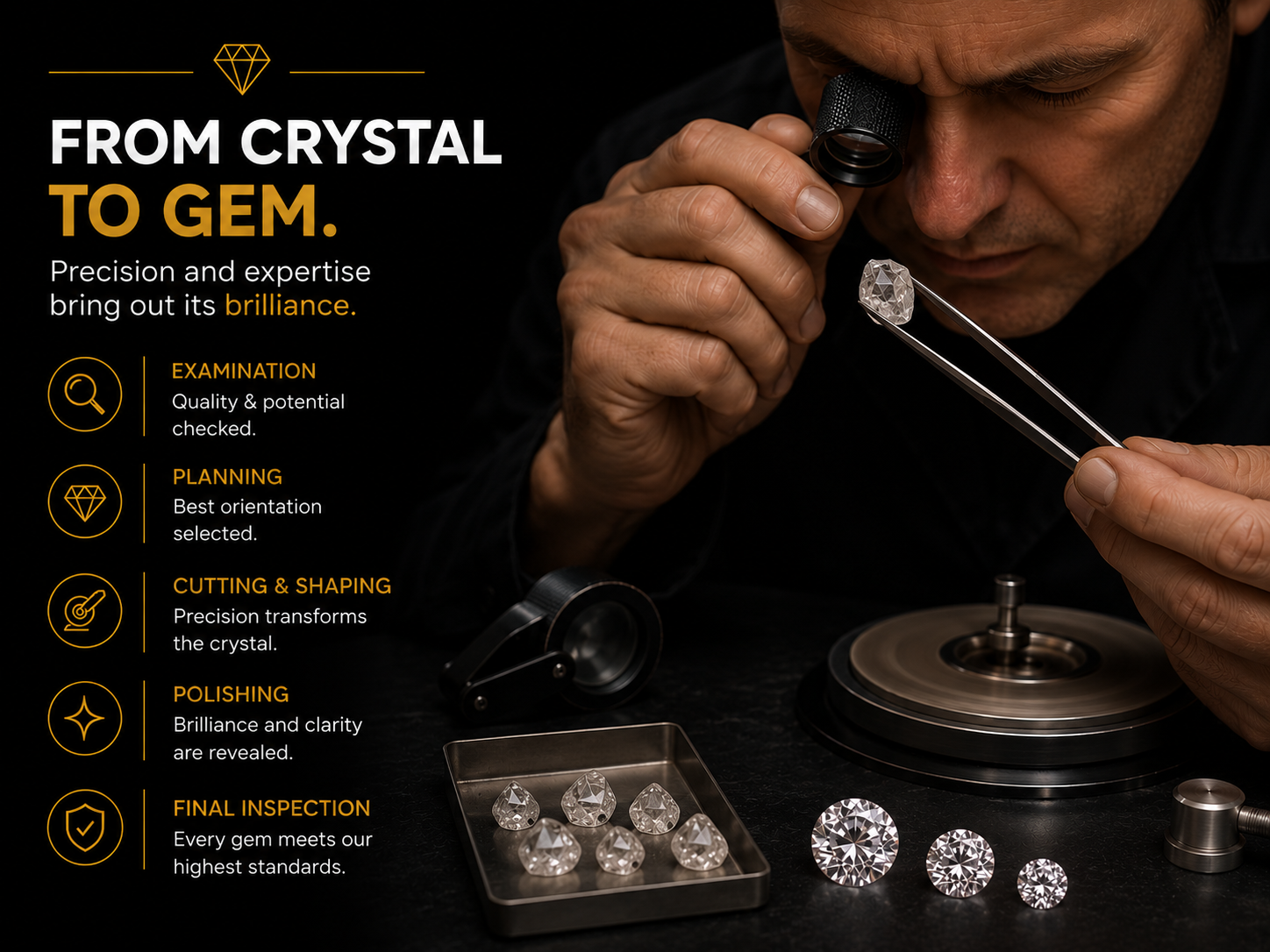
Gemologist examining a rough memorial diamond crystal under a loupe before cutting

The material that comes out of the growth environment is a rough diamond crystal, not yet the polished gemstone seen in finished jewelry.

A diamond specialist examines the rough crystal and determines how it can best be cut while balancing its shape, internal characteristics, and final carat weight.

The diamond can then be fashioned into popular shapes such as:

  • Round
  • Princess
  • Cushion
  • Emerald
  • Other available shapes depending on the rough crystal

After cutting, the facets are polished to create the brilliance associated with a finished diamond.

Memorial Diamond Certificate vs. Diamond Grading Report
Two different documents may accompany a memorial diamond, and they should not be confused.
An authenticity or origin certificate may document the submitted material and the provider’s chain-of-custody process.

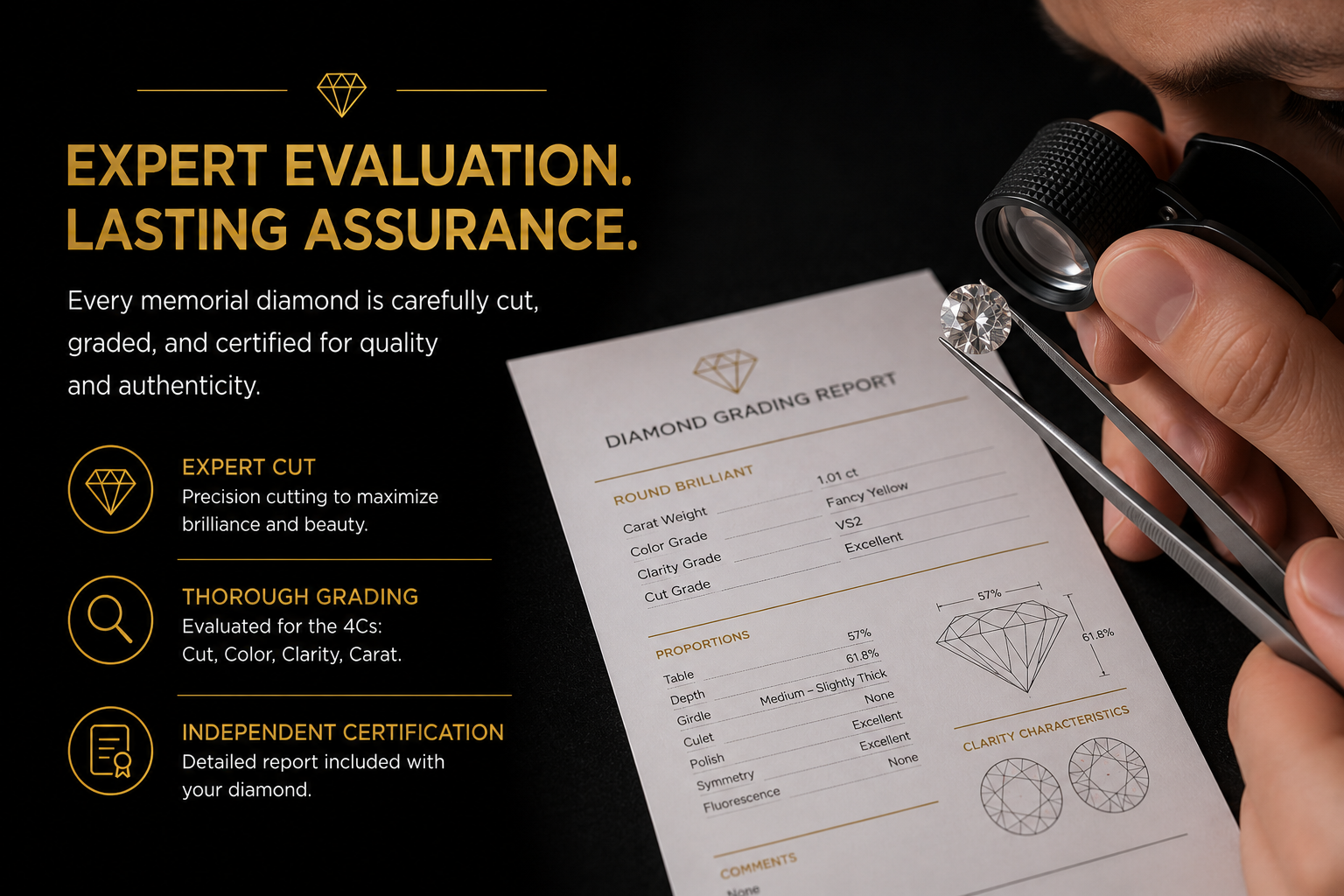
A diamond grading report evaluates the physical characteristics of the finished stone.

Diamond grading commonly considers the traditional 4Cs:

  • Cut
  • Color
  • Clarity
  • Carat weight

Families considering a memorial diamond should ask the provider exactly what documentation accompanies the finished gemstone and whether independent gemological grading is available.

What Does the Memorial Diamond Process Require From You?

For the family, most of the work happens at the beginning.

You generally need to:

  1. Collect the required amount of hair.
  2. Follow the provider’s packaging instructions.
  3. Submit the material using the recommended shipping process.
  4. Confirm the chosen diamond size, shape, and other available options.

Once the material has been received and documented, the laboratory handles purification, carbon preparation, crystal growth, cutting, polishing, and any grading or certification steps included with the service.

Before sending something as irreplaceable as a loved one’s hair, ask the provider how submissions are identified, tracked, stored, and handled throughout the process.

From a Lock of Hair to a Lasting Diamond

The transformation from hair to diamond sounds extraordinary because the materials look completely unrelated.

But at the chemical level, the connection is carbon.

Your mother’s hair contains carbon. The laboratory isolates and purifies that carbon, converts it into a form suitable for diamond growth, and places it into an environment where carbon atoms can become part of a diamond crystal.

Understanding that process can make a memorial diamond easier to evaluate because you know exactly what happens between submitting the hair and receiving the finished stone.

If you are considering creating a memorial diamond from your mother’s hair, talk with Memorial Diamond about the amount of hair you have, the diamond size you are considering, available colors and shapes, the expected timeline, and the documentation provided with the finished stone.

Frequently Asked Questions About Mother Hair Diamonds

Can a diamond really be made from my mother’s hair?

Hair contains a significant amount of carbon. A memorial diamond process can extract and purify carbon from submitted hair before preparing it for laboratory diamond growth.

Does the laboratory burn the hair?

Not in the ordinary meaning of burning. The hair is processed using controlled heating under conditions designed to preserve carbon rather than allowing it to disappear through normal combustion.

Can you see the hair inside the finished diamond?

No. Once the material has gone through purification, it no longer retains the visible structure of hair. The carbon becomes part of the diamond crystal at an atomic level.

Is a diamond made from hair different from one made using cremated ashes?

The initial carbon-extraction process differs because hair and cremated remains have very different compositions. After the material has been purified and prepared for diamond growth, the later stages are broadly similar.

How hot does the memorial diamond process get?

Graphitization can involve temperatures around 2,500–2,700°C. HPHT diamond growth can occur at approximately 1,400–2,500°C combined with roughly 6–8 GPa of pressure.

Does more hair produce a bigger diamond?

Not necessarily. Finished carat weight depends primarily on the selected diamond size and the controlled crystal-growth process, rather than simply on the length or quantity of the submitted hair.

Will my mother’s hair color determine the diamond color?

No. The original hair color does not survive the purification and high-temperature processing stages. Diamond color is instead affected primarily by trace elements and growth conditions.

How long does it take to make a memorial diamond from hair?

The complete process can take several months. Industry timelines are commonly around 6 to 10 months, although the actual turnaround depends on the provider, diamond size, color, growth conditions, cutting, and certification requirements.

How does a laboratory keep one family’s hair separate from another’s?

Providers should use a documented identification and chain-of-custody system from receipt through processing and diamond production. Ask the company to explain its exact tracking procedure before submitting irreplaceable material.

Is a memorial diamond a real diamond?

A properly grown memorial diamond is a laboratory-grown diamond crystal. Like other lab-grown diamonds, its quality can be evaluated using characteristics such as cut, color, clarity, and carat weight.

asses to dimond

How a Memorial Diamond Is Made From Your Mother’s Ashes

You measure out a portion of your mother’s ashes, hand it over, and months later a finished diamond comes back. What happens in between is where most families’ understanding stops.

Her cremated remains go through a process designed to recover usable carbon. The carbon is purified, prepared for diamond growth, combined with supplemental laboratory carbon when required, and grown into a genuine diamond crystal under extremely high pressure and heat.

Industrial chemistry, not alchemy and every stage is part of the journey from ashes to a finished memorial diamond.

 Rough diamond crystal grown from ash-derived carbon resting beside a finished champagne-toned cut stone

In This Article

What Are Your Mother’s Ashes Actually Made Of?

Understanding what cremated remains contain explains why creating a memorial diamond involves several different stages.

Cremated remains are not ash in the same sense as the material left behind by an ordinary fire. They consist largely of mineral material associated with bone, including calcium phosphate. Carbon is only a relatively small portion of the material.

That means the first challenge is not immediately growing a diamond. The laboratory must first recover usable carbon from the cremated remains and prepare it for the later stages of the process.

Because the amount of recoverable carbon can vary, the amount of ashes submitted is not directly equal to the final size of the diamond.

Learn more about how much ash may be needed for a mother memorial diamond.

What Are the Stages From Ash to Finished Diamond?

StageWhat Happens
1. Material IntakeThe cremated remains enter the preparation and processing stage.
2. Carbon Extraction and PurificationThe material is processed to separate usable carbon from minerals and other non-carbon material.
3. GraphitizationThe recovered carbon is prepared in a form suitable for diamond growth.
4. Carbon PreparationPersonal carbon may be combined with supplemental laboratory carbon when additional feedstock is required.
5. Diamond GrowthThe prepared carbon is placed into a controlled high-pressure and high-temperature growth environment.
6. Cutting and PolishingThe rough crystal is shaped and polished into the selected diamond cut.
7. Grading and DocumentationThe finished diamond can be evaluated according to cut, color, clarity and carat.

How Is Her Carbon Separated From the Rest of the Ash?

The purpose of the purification stage is to recover carbon while separating it from the much larger amount of mineral material contained in cremated remains.

The material goes through controlled processing designed to remove non-carbon components and leave behind purified carbon suitable for the next stages.

After purification, the laboratory can further prepare the carbon through graphitization. This process converts the purified carbon into graphite, another form of the same element.

The laboratory can then use this graphite as part of the carbon feedstock for the diamond-growing process.

Graphite and diamond are both forms of carbon. The difference is how the carbon atoms are arranged. The diamond growth process creates the crystal structure that gives diamond its distinctive physical and optical properties.

Why Is Laboratory Carbon Added to Your Mother’s Carbon?

 Sealed high-temperature furnace used to purify carbon extracted from cremated remains in an oxygen-free process

This is one of the most important parts of understanding how a memorial diamond is made.

Cremated remains contain only a limited amount of recoverable carbon. Depending on the selected diamond and the requirements of the growth process, the personal carbon may not provide all the feedstock needed to grow the finished crystal.

Therefore, the laboratory may combine supplemental carbon with the carbon recovered from your mother’s ashes.

However, that does not mean the personal carbon disappears. Carbon recovered from your mother’s remains can still become part of the diamond’s crystal structure. The laboratory creates the finished stone using both the recovered personal carbon and additional laboratory carbon when necessary.

For this reason, no provider should claim that a memorial diamond contains only personal carbon when the process also uses supplemental carbon.

Read the direct answer to whether a memorial diamond is really made from your mother’s ashes.

What Happens Inside the Growth Process?

High pressure high temperature press with the growth cell that holds a diamond seed during crystal growth

After the carbon has been prepared, the next stage is diamond growth.

One common method used in the laboratory-grown diamond industry is HPHT, meaning high pressure and high temperature. The process recreates conditions capable of allowing carbon to form a diamond crystal.

A small diamond seed can act as the starting point for crystal growth. Under controlled conditions, carbon becomes part of the growing crystal structure over time.

The growth process can take weeks or months depending on the characteristics and size of the diamond being created.

Another laboratory diamond-growing method is CVD, or chemical vapor deposition. Both HPHT and CVD can produce genuine diamonds, although the processes are different.

Learn more about how memorial diamonds are made using HPHT versus CVD.

Why Does Growth Time, Not the Amount of Ash, Decide the Carat?

One common misconception is that sending more ashes automatically creates a larger diamond.

That is not how the process works.

  • More ashes do not automatically create a bigger diamond.
  • More ashes do not automatically make the process faster.
  • The desired diamond size is determined before the growth process.
  • Larger diamonds generally require more time for crystal growth.

Only a portion of cremated remains may be required for the memorial diamond process, allowing the rest of the ashes to remain with the family or be used according to their wishes.

Learn why a mother memorial diamond can take months to create.

Why Is the Finished Diamond Usually Not Colorless?

 Three memorial diamonds in blue, yellow, and champagne tones arranged on a pale gray surface to show typical color range

Diamond color can be influenced by trace elements and conditions present during crystal growth.

For example, certain trace elements can contribute to blue or yellow coloration. The specific characteristics of the carbon source and the growth environment can influence the final appearance of the diamond.

Memorial diamonds may appear in colors including yellow, blue, champagne or brown tones. Each diamond can have its own appearance, and an exact color cannot always be predicted in advance.

The color is part of the character of the finished stone and can make each memorial diamond feel unique.

Discover what color a diamond made from your mother’s ashes may be.

How Is the Finished Stone Cut, Graded and Certified?

Gemologist examining a polished memorial diamond with a loupe beside a printed grading report

What leaves the growth process is a rough diamond crystal, not a finished piece of jewelry.

The rough crystal must be carefully cut and polished into the selected shape. Depending on the available options, this may include shapes such as round, cushion or emerald.

After cutting and polishing, the finished diamond can be evaluated according to the traditional diamond characteristics known as the 4Cs:

  • Cut
  • Color
  • Clarity
  • Carat

It is also important to understand the difference between origin documentation and a diamond grading report.

An origin or authenticity document relates to the memorial process and the submitted material. A grading report evaluates the physical characteristics and quality of the finished diamond.

These documents answer different questions, and families should understand what documentation is provided for their specific memorial diamond.

Learn more about how memorial diamonds are graded and certified.

What Does Any of This Ask of You?

Your role in the process is much shorter than the laboratory side.

You choose the memorial diamond you want, arrange the required material, and submit a portion of your mother’s ashes for processing. The laboratory then handles the carbon recovery, preparation, diamond growth, cutting and finishing stages.

The decision itself is often the most important part for families. Understanding what happens inside the laboratory can help make that decision more informed.

Learn how to turn your mother’s ashes into a diamond step by step.

Frequently Asked Questions

Does anything of my mother physically remain after the process?

The memorial process is based on recovering carbon from the submitted material. Molecular structures change during purification and diamond growth, while recovered carbon can become incorporated into the structure of the finished diamond.

Why can’t the laboratory use only her carbon?

Cremated remains contain a limited amount of recoverable carbon. Depending on the diamond being created, supplemental laboratory carbon may be required to provide enough feedstock for the growth process.

Is a memorial diamond a real diamond?

Yes. A properly grown laboratory diamond has the crystal structure and physical characteristics of diamond. It is not a simulant, resin or imitation stone.

Will there be visible ashes inside the diamond?

No. The purpose of the purification process is to recover and prepare carbon rather than place visible ash particles inside the finished diamond.

Can the Exact Diamond Color Be Predicted in Advance?

Not always. Trace elements and growth conditions can influence the final diamond color. Therefore, the laboratory may not be able to predict the exact shade before the growth process begins.

What Clarity Should I Expect?

The clarity of a finished memorial diamond can vary. Like other diamonds, laboratories evaluate clarity by examining the internal and external characteristics of the finished stone.. It is the result of multiple stages, beginning with the recovery of usable carbon from cremated remains and ending with a carefully finished diamond.

The journey includes carbon purification, preparation for growth, crystal formation, cutting, polishing and evaluation.

Understanding the science behind the process does not make the emotional decision for a family, but it can make the process easier to understand and the right questions easier to ask.

A memorial diamond can become a lasting physical connection to someone deeply loved created through a process that transforms carbon recovered from their remains into part of a genuine diamond crystal.

Talk About Creating a Memorial Diamond

If you are considering creating a memorial diamond from your mother’s ashes, take time to understand the process, the available options and the documentation provided.

Knowing what happens at every stage can help you make a decision with greater confidence and understanding.

memorial-diamond-made-mothers-ashes-hair

How a Memorial Diamond Is Made From Your Mother’s Ashes and Hair

Families who send both usually picture the two going into the same vessel. That isn’t what happens.

A memorial diamond made from your mother’s ashes and hair is grown from carbon purified from each material separately. Ash nd hair carry entirely different non-carbon contaminants, so each requires its own purification process before the recovered carbon is combined into a single feedstock.

The result is one diamond crystal containing carbon from both sources not a stone divided into halves.

In This Post

Why Can’t Her Ashes and Her Hair Be Purified Together?

Because they arrive at the laboratory with very different challenges.

Cremated remains are primarily made of calcium phosphate, the mineral structure associated with bone. Carbon is only a small component of cremated remains, so recovering usable carbon requires separating it from a large amount of mineral material.

Hair is very different. It is primarily made of keratin, a carbon-rich protein containing a much higher proportion of carbon. The purification process must instead remove non-carbon elements such as nitrogen, oxygen, hydrogen and sulfur.

Different source materials require different purification targets. For that reason, ashes and hair are processed separately before the recovered carbon is prepared for diamond growth.

Cremated ash and a cut lock of hair shown side by side in separate labeled laboratory dishes

Where Do the Two Tracks Converge?

The two materials converge once usable carbon has been recovered and purified.

After purification, carbon recovered from hair and carbon recovered from cremated remains are both elemental carbon. The two purified carbon sources can then be combined into a single feedstock before the diamond-growing process begins.

StageHer AshesHer Hair
What it mostly containsCalcium phosphate and bone mineralKeratin, a carbon-rich protein
Approximate carbon contentLower carbon contentHigher carbon content
Purification removesMineral materialNon-carbon protein components
After purificationRecovered carbon can be combined into one feedstock
GraphitizationShared conversion into graphite
Diamond growthOne growth environment and one crystal
Final diamondOne finished stone
Oxygen-free purification furnace used to strip non-carbon material from ash and hair before diamond growth


Using both materials follows the same basic principle as creating a diamond from ashes alone or a diamond from hair alone.

How Much of the Finished Stone Is Genuinely Her?

A real and measurable portion of the diamond can originate from the carbon recovered from the materials you provide. However, the exact percentage can depend on the amount and quality of the available carbon, the size of the diamond, and the requirements of the growth process.

Hair generally contains significantly more carbon by weight than cremated remains. Because of this, hair can contribute a substantial amount of the personal carbon recovered when both materials are submitted together.

The important point is that a memorial diamond is not honestly described as being made entirely from personal carbon alone. Supplemental laboratory carbon may be required during the growth process.

That does not change the meaning of the memorial diamond. Carbon originating from your mother’s ashes and hair can become part of the crystal lattice of the diamond created in her memory.

For more information about this question, read whether a memorial diamond is really made from her ashes and hair.

What Happens Once the Two Carbons Are Combined?

 HPHT growth cell holding a diamond seed crystal surrounded by graphite feedstock | Stock acceptable |

Once the carbon sources are combined, the process becomes the same type of diamond-growing process used for other memorial diamonds.

The carbon feedstock is prepared for diamond growth and may be converted into graphite. The graphite can then be placed into a high-pressure, high-temperature environment with a small diamond seed.

Under controlled laboratory conditions, carbon atoms gradually form around the seed and develop into a diamond crystal. Crystal growth can take weeks or months depending on the process and the desired result.

One important point is that submitting more material does not automatically produce a larger diamond. The final size depends on the selected diamond and the growth process rather than simply on the amount of ashes or hair submitted.

After growth, the rough diamond is cut, polished and evaluated according to characteristics such as cut, color, clarity and carat.

Learn more about the difference between HPHT and CVD diamond growth.

Will a Stone Made From Two Materials Be Two-Toned?

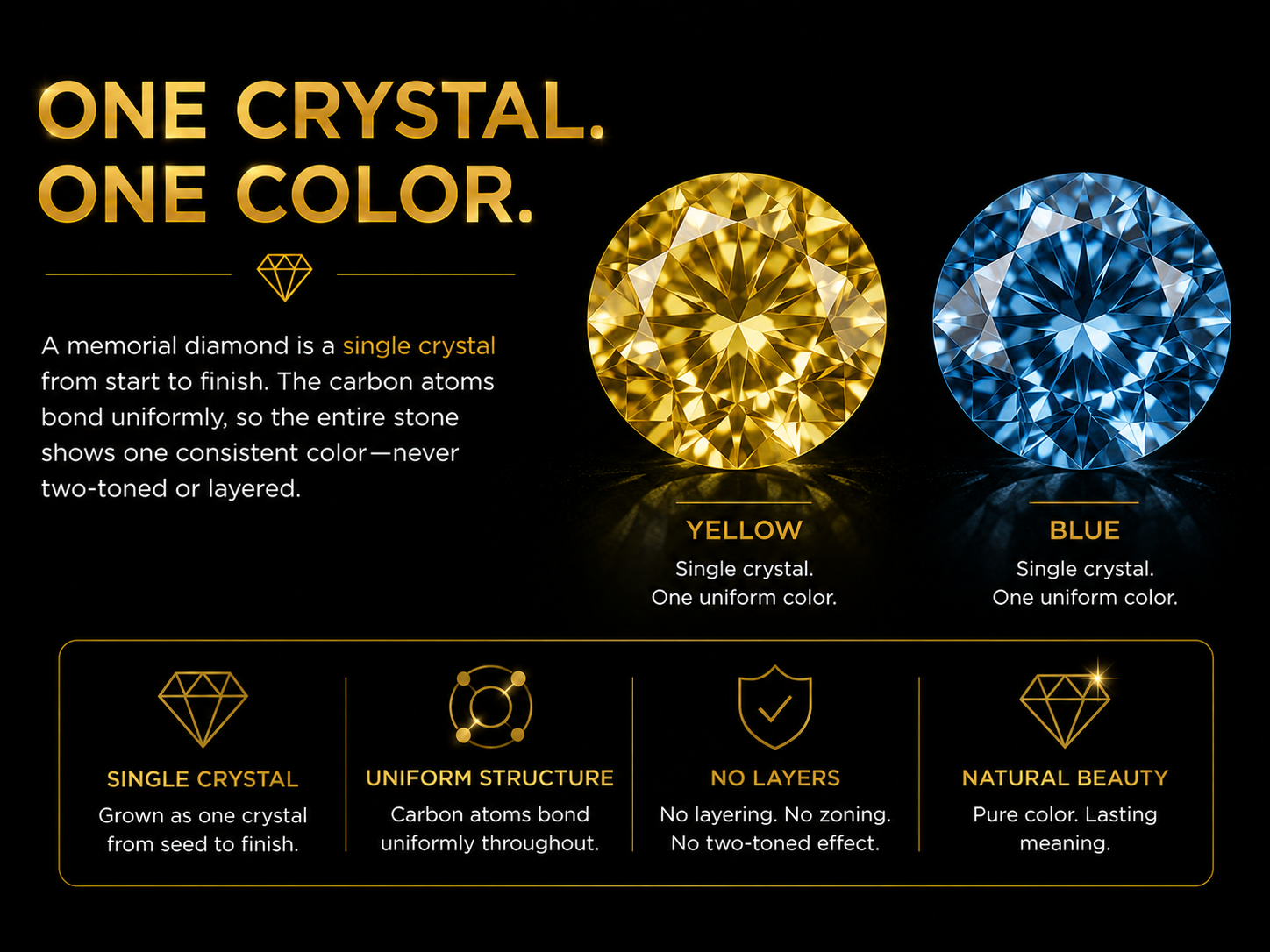
Two memorial diamonds, one yellow and one blue, each an evenly colored single crystal

No. The finished memorial diamond grows as one crystal.

It is understandable to imagine that using two different materials could create separate areas or layers inside the diamond. However, after the carbon has been purified and prepared for growth, the finished crystal does not divide itself according to whether individual carbon atoms originally came from ashes or hair.

The color of a diamond is influenced by conditions and trace elements involved during crystal growth rather than by visible separation between the original source materials.

This means a memorial diamond made using both ashes and hair is still one crystal with one overall appearance.

You can learn more about possible colors in what color a diamond made from your mother’s ashes and hair may be.

Where Does Your Part of This End?

Your part of the process begins with deciding what materials you would like to use and ends once they have been safely submitted for processing.

You may need to consider how much ash and hair you have available, discuss the decision with family members, and choose the memorial diamond that feels right for you.

After the materials enter the laboratory process, the purification and diamond-growing stages are handled over the following months.

For the complete process, read how to turn your mother’s ashes and hair into a diamond.

You can also explore the complete guide to a mother ashes and hair diamond and learn how much ash and hair may be needed for a memorial diamond.

Frequently Asked Questions

Are her ashes and her hair processed at the same time?

Because cremated remains and hair contain different materials, they may require different purification approaches. The goal is to recover usable carbon before preparing the material for the diamond-growing process.

Can a lab tell which carbon in the finished stone came from her hair?

Once carbon has been purified and incorporated into a growing diamond crystal, individual carbon atoms are chemically the same element. The finished diamond does not visibly identify the original source of each carbon atom.

Does adding hair to an ashes submission mean more of her is in the stone?

Hair generally contains more carbon by weight than cremated remains, so including hair can increase the amount of personal carbon available for recovery. The exact contribution to a finished diamond can vary.

Will the finished diamond have visible layers, streaks or two colors?

No. The diamond grows as a single crystal. Using two source materials does not mean the finished stone will be divided into visible sections based on ashes and hair.

Does using two materials make the process take longer?

The overall timeline is generally driven more by diamond growth, cutting and finishing than by the number of source materials used. Processing requirements can vary depending on the individual order.

Thinking About Creating a Memorial Diamond?

Understanding how ashes and hair can be prepared for diamond creation can make an emotional decision easier to understand.

Using both materials creates a way to include different physical connections to the person you love in one memorial piece. Her ashes and her hair maHow a Memorial Diamond Is Made From Your Mother’s Ashes and Hair.

mother-hair-diamond-complete-guide

Keeping Her Close: The Beautiful Reality of Creating a Memorial Diamond from Hair Alone

There is often a small envelope somewhere in a jewelry box, taped into a baby book, tucked at the back of a drawer. Or just her hairbrush, which nobody has been able to throw away. A mother hair diamond is a real, lab-grown diamond created in part from carbon extracted from her hair, and hair is roughly 50% carbon by weight dramatically more than cremated ashes. That means no cremation is needed at all, only a small lock is required, and the process works just as well if she was buried, or if she is still here.

That last part catches people off guard. This is the one memorial hair diamond option that doesn’t require a loss to have happened yet.

mother hair diamond

In This Guide

Why Would You Choose Hair Rather Than Ashes?

Sometimes it isn’t a choice at all it’s the only option available, and families are relieved to learn it exists.

Hair is the route for four situations in particular:

  • She was buried, not cremated. Burial forecloses an ashes-based diamond entirely. A saved lock of hair doesn’t.
  • Her ashes were scattered or interred whole. If the urn went into the ground or the ashes went into the sea years ago, nothing has been lost a lock in a keepsake box is still workable material.
  • The family can’t agree about the ashes. Dividing a parent’s remains is a genuinely hard conversation, and in some families it’s a non-starter. Hair sidesteps it; taking a lock takes nothing away from anyone.
  • She is still alive. Hair can be collected from someone living, which turns the whole thing from a memorial into something closer to a gift. There’s a full guide to mother hair diamonds as a living memorial if that’s your situation.

None of this makes hair superior to ashes. If you have both available, submitting her ashes and a lock of her hair together is also possible, and the ashes-based version of this guide covers that route in full.

How Is a Diamond Actually Made From Your Mother’s Hair?

Technician placing a sealed sample of hair into a high-temperature purification furnace

Structurally the process is the same as any memorial diamond. What changes is the first stage, because keratin is a much richer starting material than bone ash.

StepWhat Happens With Hair Specifically
1. CollectionThe lock is received and logged under a chain-of-custody reference that follows it through every stage.
2. Carbon extraction & purificationHair is heated in a controlled, oxygen-free process that strips away the non-carbon components of keratin, reaching roughly 99.9%+ carbon purity.
3. GraphitizationThe purified carbon is heated to roughly 2,500–2,700°C and converted into graphite, the feedstock diamond presses use.
4. GrowthThe graphite goes into an HPHT press with a diamond seed at roughly 6–8 GPa and 1,400–2,500°C, and a crystal grows around it over weeks to months.
5. Cutting & polishingA gemologist cuts the rough crystal into the chosen shape.
6. Grading & certificationThe finished stone is graded on cut, color, clarity and carat, ideally by an independent lab.

The important thing to take from that: the size of the stone is set by how long it grows in the press, not by how much hair you send. A larger lock does not produce a larger diamond or a faster one. You choose the carat; that choice sets the timeline.

How Much of the Diamond Is Genuinely Your Mother?

Small palm-sized lock of hair held in an open hand to show the amount typically required

Straight answer: a real, measurable portion and more of it, proportionally, than an ashes-based stone would contain.

Cremated remains are mostly calcium phosphate, with usable carbon at only about 0.5% to 4% of ash by weight. Hair is around 50% carbon. So a lock the size of a coin yields far more usable personal carbon than a comparable weight of ash.

What hair does not do is remove the need for supplemental carbon altogether. Growing a diamond of any meaningful size requires a certain volume of feedstock in the growth cell, and personal carbon is blended with additional lab-sourced carbon to reach it. No honest provider will tell you the finished stone is 100% your mother not from hair, and certainly not from ashes.

The accurate framing is better than the overclaim anyway: carbon atoms that grew out of your mother’s own body are extracted, purified, and built into the crystal lattice of a stone that exists because she did. It isn’t a symbol of her. It’s partly made of her, and that holds up when someone asks.

How Much Hair Do You Need, and Where Do You Find It?

Industry-typical requirements are small often described as a lock, a few grams, or a palm-sized amount. Compared with the several tablespoons to ~4 oz of ashes an ash-based diamond needs, it’s a very modest ask.

Common sources families actually use:

  • A lock saved from a haircut, often kept in an envelope or a locket
  • A braid cut and kept years earlier
  • Hair from a baby book hers, saved by her mother, which makes for a particularly resonant stone
  • A hairbrush or comb
  • Hair kept after a funeral home cut a lock at the family’s request

One practical caution about brushes: a shared hairbrush may hold more than one person’s hair, and there’s no way to sort that out later in a lab. A clean cut lock is always preferable where one exists. If a brush is genuinely all you have, say so when you inquire rather than assuming.

Age is not a problem. Hair kept for thirty years in an envelope is chemically the same starting material as hair cut last week. How much hair you need for a mother memorial diamond goes into the specifics; confirm the exact minimum with whoever you commission, since it varies by provider.

Does Dyed, Treated, or Gray Hair Work?

Three locks of hair — gray, dyed auburn and dark brown — arranged side by side on a white background

Generally yes, and the reason is worth understanding rather than just taking on faith.

The purification stage is designed to strip out everything that is not carbon. Dye molecules, product residue, bleach and styling treatments are non-carbon material, which is precisely what that stage removes. The keratin underneath is unchanged by having been colored.

Gray hair is likewise no obstacle. Graying is a loss of melanin pigment it doesn’t alter the carbon content of the hair. And a point that surprises almost everyone: your mother’s hair color has no bearing on the color of the diamond. Diamond color comes from trace elements present during crystal growth, not from the appearance of the source material. Dark hair does not make a dark stone.

Heavily bleached or chemically stripped hair is the one case worth flagging to a provider directly, since requirements differ between companies. Ask before you mail anything.

What Color Will the Diamond Be?

Color in any diamond comes from trace elements in the growth cell. Boron produces blue tones. Nitrogen produces yellow. A colorless stone requires the near-total absence of both.

Memorial diamonds trend toward yellow, blue, and champagne or brown tones because the carbon comes from an organic, personal, imperfect source rather than a tightly controlled synthetic feedstock, and trace elements come along with it. Colorless is achievable but takes extra processing to exclude those elements, and typically costs meaningfully more. Some providers also offer post-growth irradiation to produce red, pink, green or black stones.

There’s a fuller breakdown in what color a diamond made from your mother’s hair will be.

How Long Does It Take, and What Does It Cost?

Industry-wide, expect 6 to 10 months from receipt of material to finished stone, extending to roughly 12 months for larger stones (about 2 carats and up) or specialty colors such as black. Hair doesn’t shorten this extraction is a small part of a timeline dominated by growth.

The ranges below are general 2026 industry figures, not Memorial Diamond’s published prices. Ours aren’t set yet, and no one should quote you a number they can’t stand behind:

Size TierTypical CaratTypical Industry Price Range
Entry0.10–0.25 ct~$1,500–$3,500
Mid0.5–1 ct~$5,000–$15,000
Large / rare2–5+ ct~$20,000–$75,000+

Price turns on carat, color, cut, and whether an independent grading report is included colorless costs meaningfully more than blue, yellow or champagne at the same carat. Settings and engraving are usually priced separately from the loose stone. What drives the cost of a mother memorial diamond breaks the variables down further.

Memorial diamond pendant worn at the collarbone, showing the everyday scale of the stone

What If Your Mother Is Still Living?

Then this stops being a memorial and becomes something else: a diamond grown from a lock she can hand you herself.

Families do this around milestones a seventieth birthday, a move into a smaller house, a wedding where she’s present. Some tell her; some plan it as a surprise. The practical advantage is not subtle: she can choose the carat, see the stone, and wear it herself if she wants to.

Some people find the idea uncomfortable at first, which is a fair reaction and worth talking through rather than talking yourself out of. Whether a living memorial diamond for a mother is morbid addresses that question directly.

What Should You Ask Before You Send Her Hair Anywhere?

A lock of hair is irreplaceable in a way an urn full of ashes isn’t there is often only one, and there will not be another. Ask these before it goes in the mail:

  1. What is the chain of custody, and what tracking reference do I get?
  2. What happens to hair that isn’t used, and is it returned by default?
  3. Is my exact amount sufficient, given my chosen carat? Confirm before cutting or sending, not after.
  4. Is the hair treated, dyed or bleached and does that change anything for you?
  5. What grading report comes with the stone, and from which lab? An independent third-party grading report and an in-house certificate of authenticity are different documents: one grades the diamond’s quality, the other documents that it was grown from your family’s submitted carbon. Ask for both.
  6. What happens if a growth run fails? Crystal growth isn’t guaranteed to succeed first time ask what a re-grow means for your timeline and, critically, for your remaining material.

The full list of questions worth asking before turning your mother’s hair into a diamond covers the rest, and it applies to us as much as to anyone else.

Frequently Asked Questions

Can a diamond really be made from hair, without any ashes?

Yes. Hair is roughly 50% carbon by weight far more than cremated ashes, which are mostly calcium phosphate. No cremation is needed at any point, which is why hair works for mothers who were buried or whose ashes have already been scattered.

How old can the hair be?

Effectively any age. Hair kept in an envelope, locket or baby book for decades is chemically the same starting material as hair cut this morning. Storage conditions don’t meaningfully affect the carbon that extraction is after.

Does her hair color affect the diamond’s color?

No. Diamond color comes from trace elements such as boron and nitrogen present during crystal growth, not from the appearance of the source material. Dark hair doesn’t produce a dark stone, and gray hair doesn’t produce a pale one.

Will dyed or permed hair still work?

Generally yes. Purification is designed to strip out everything that isn’t carbon, and dye, bleach and styling products are non-carbon material. Heavily bleached hair is worth flagging to a provider first, since requirements vary between companies.

How much hair is actually needed?

Typically a small lock a few grams, often described as palm-sized. Requirements vary by provider, so confirm before cutting anything, particularly if the lock you have is the only one that exists.

Can several siblings each have a diamond from the same hair?

Often yes, depending on how much hair there is and the carat sizes chosen. Because each stone needs only a small amount, one substantial lock can sometimes supply more than one diamond. Ask before dividing anything yourself.

Is a hair diamond acceptable if cremation is against our faith?

This is the genuinely useful point for families in that position: since a hair diamond involves no cremation whatsoever, a cremation-specific religious objection doesn’t apply to it. Views on memorial jewelry itself vary, so ask your own clergy directly.

Where to Start

If the lock already exists, the decision isn’t urgent. Hair keeps indefinitely, and so does the option.

The sensible first step is a conversation rather than a purchase what you have, whether it’s enough for the carat you’re imagining, whether a sibling wants one too, and whether her hair has been treated in a way worth mentioning.

Reach out to Memorial Diamond to talk through what’s possible with your mother’s hair, and bring the questions above with you.