
There is usually a date behind this question. A first anniversary, her birthday, a wedding you wanted to wear her to. The production answer is 6 to 10 months from the day a laboratory logs receipt of her ashes or hair, and up to about 12 months for stones over roughly 2 carats or specialty colours. However, the answer that matters for a date is longer: allow 8 to 14 months from the decision to wearing it, because preparation happens before the clock starts and setting happens after it stops.
How Long Does It Take, End to End?
The published 6 to 10 months covers one phase of three. The other two are yours.
| Phase | What happens | Typical duration | Running total |
| Preparation | Choosing a provider, confirming requirements in writing, ordering the postal box, family conversations, measuring, and packing | 3 to 8 weeks | 3 to 8 weeks |
| Transit and intake | Shipping, receipt, logging, and weighing | Under a week | 1 to 2 months |
| Production | Extraction, graphitization, growth, cutting, and grading | 6 to 10 months, up to 12 for larger or specialty stones | 7 to 12 months |
| Setting | Commissioning and crafting the jewellery piece | 3 to 8 weeks | 8 to 14 months |
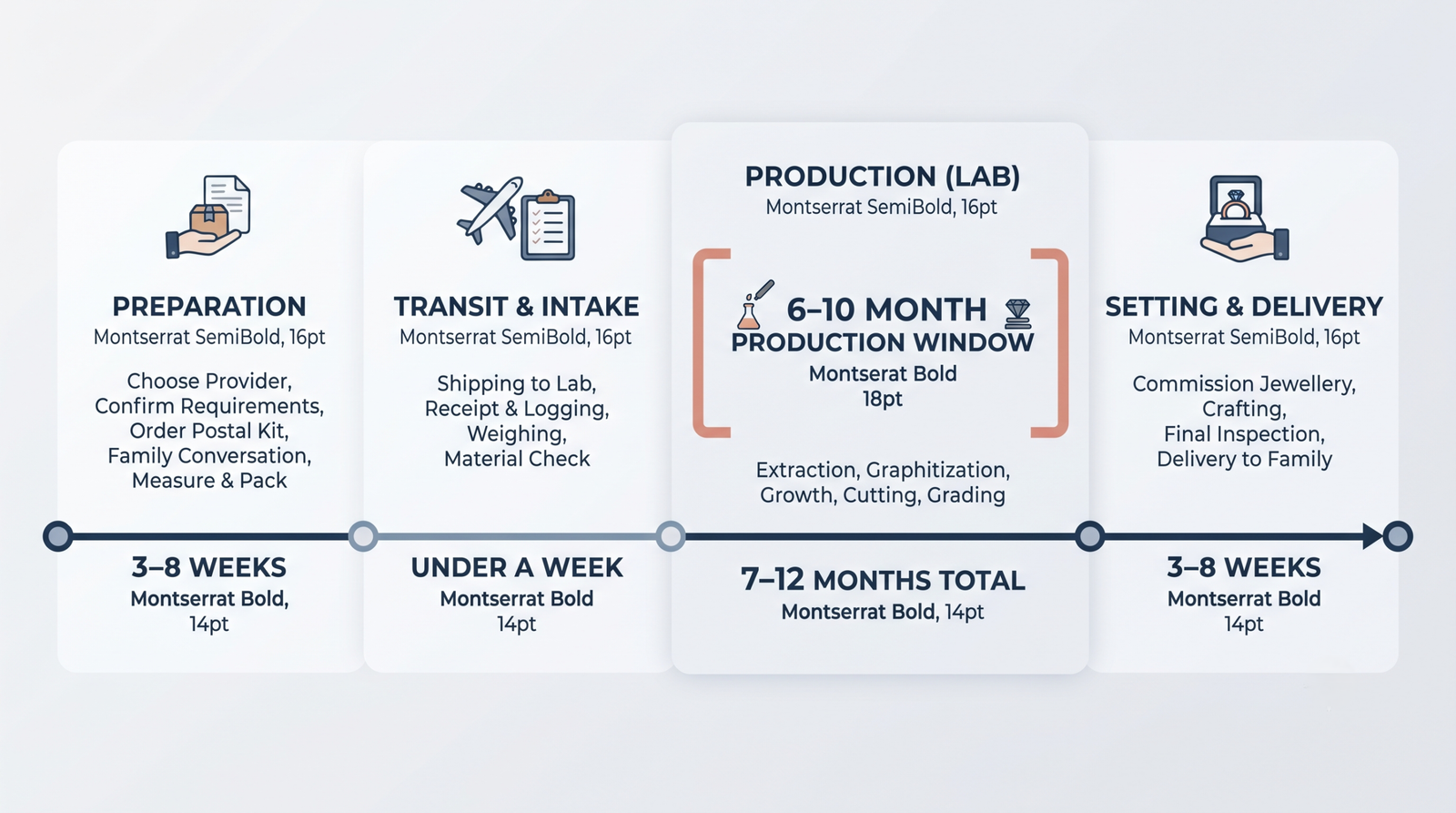
The production window is the industry-typical figure and the only one of the four that a laboratory controls. The others are ordinary logistics, and they are where a family’s own delay usually hides. Eight months is the arithmetic floor of that table; plan nearer the top of the range, because none of the ordinary delays are built into it.
What Decides Whether It Is Six Months or Twelve?
Four things, and only the first two are large:
- Carat: Size is a function of time in the press, so a two-carat stone is not a bigger version of a half-carat one, it is a longer one. This is the single largest lever on the calendar.
- Colour: Specialty colours, including black and stones requiring post-growth treatment, extend the schedule at the finishing end.
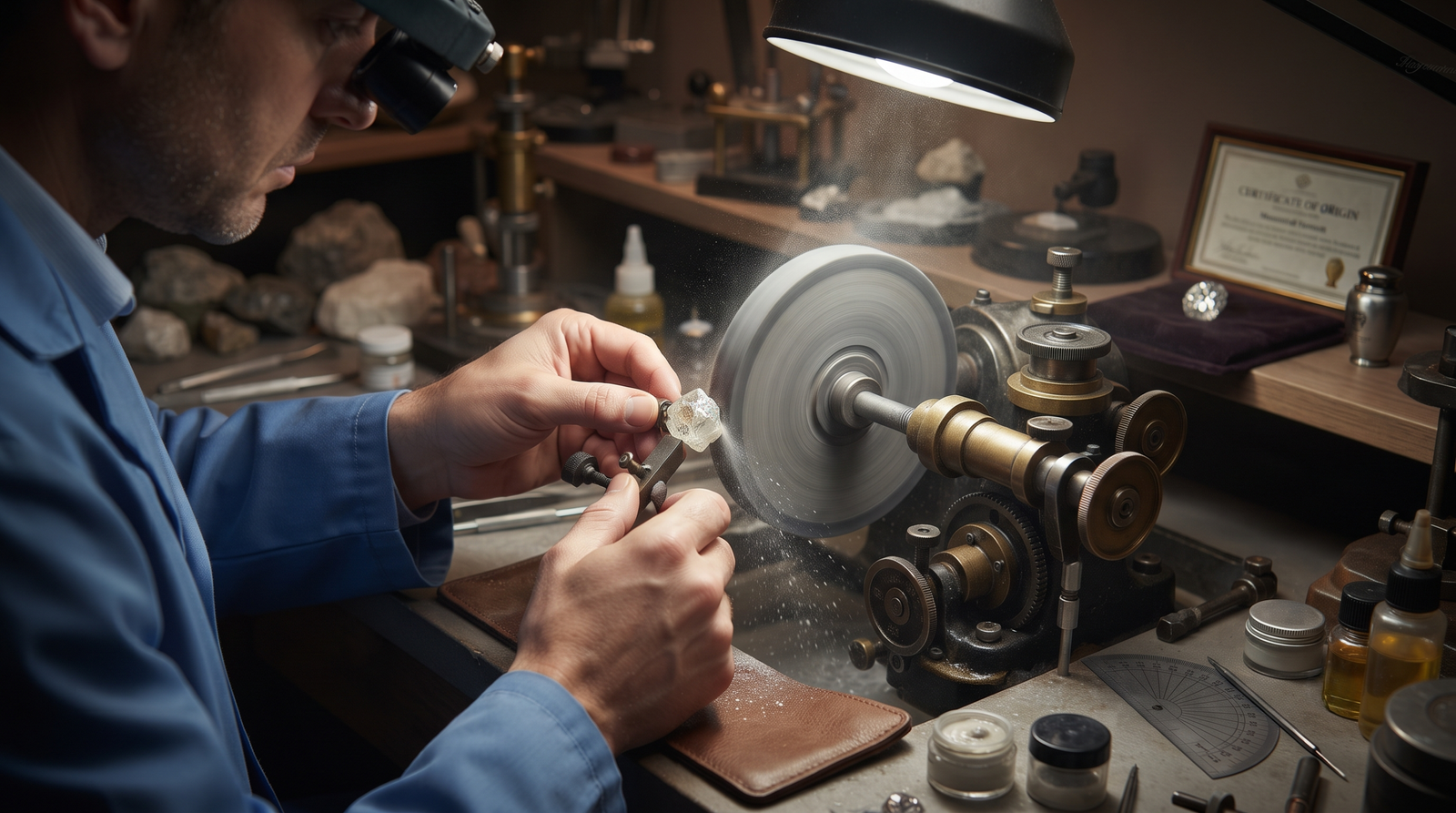
- Cut: Fancy shapes take longer at the wheel than a round brilliant, though this is measured in days rather than months.
- Grading: Whether an independent grading report is included, which adds a lab’s own turnaround after the stone is finished.
Nothing on that list is about how much material you sent. A full urn does not produce a faster stone, or a larger one, as outlined under how much ash you need.
What Can and Cannot Be Sped Up?
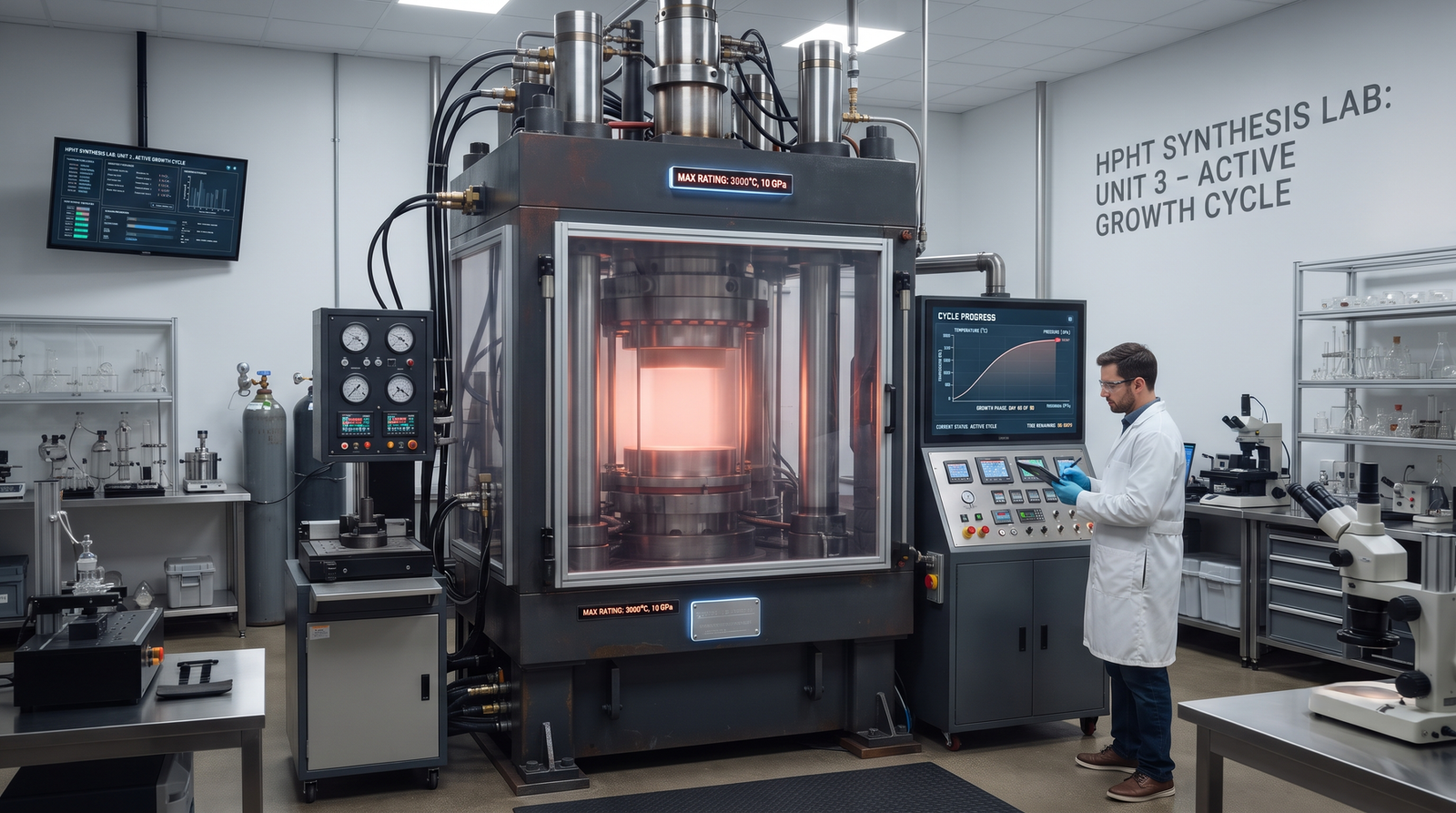
Cannot: Growth. A diamond crystal forms at the rate it forms, and there is no expedited queue to buy into, because the wait is a physical process rather than a backlog.
Can: Everything around it. Ordering the postal box the day you decide rather than the week you ship, having the family conversation during transit rather than before it, sending both materials together rather than separately, and deciding the setting while the stone is still growing. Each of those saves real weeks, and together they are the difference between 9 months and 14.
One genuine trade exists: choosing a smaller carat shortens the growth run. If a date matters more than a size does, that is the only lever that moves the production window itself.
How Do You Work Backwards From a Date That Matters?
Take the date, subtract the setting, subtract production, and subtract preparation. In practice:
| If you want to be wearing it by | Start the conversation with a provider by | Have the material with the lab by |
| A first anniversary 12 months away | Now, though this is tight for anything over 1 carat | Within 6 to 8 weeks |
| A date 14+ months away | Within the next 3 months | Within 4 months |
| A date 6 months away | It is unlikely for a grown stone of any size | Not feasible for finished delivery |
| No fixed date | Whenever the questions are answered | Whenever you are ready |
Two cautions are worth building in. First, the clock starts when the lab logs receipt, not when you decide. The point at which each stage begins and ends is mapped out in the step-by-step sequence. Second, add a month of slack: a growth run that has to be repeated, a lock that falls short of the minimum, or a postal box that takes longer to arrive than expected will each take back the buffer you did not build.

If the date genuinely cannot move and the timeline will not reach it, the honest options are a smaller stone, a later date, or an unset stone worn on the day and set afterwards.
What Happens During the Months of Silence?
Most of the production window is a single long stage, growth, during which there is genuinely nothing to report. Families often read that silence as a problem when it is the process working as intended.
What you can reasonably expect, and should ask for at the outset:
- Confirmation of receipt, naming the quantity received, within days of delivery.
- A chain of custody reference you can quote when you want a status update.
- A notification when growth begins, which is the real start of the long stretch.
- A notification when cutting begins, which means weeks rather than months remain.
A month-by-month account of what is happening inside that quiet period is explored in the memorial diamond timeline.
Does a Hair Diamond Take Less Time Than an Ashes Diamond?
Slightly, at one stage only. Hair is roughly half carbon by weight, so purification has far less to strip away than it does with cremated remains, where carbon is a small fraction of the total. That saves time at extraction.
It does not shorten growth, which is the long stage, so the difference between a hair diamond and an ashes diamond is measured in days or a couple of weeks against a total measured in months, as detailed in how to turn your mother’s hair into a diamond.
Frequently Asked Questions
Why does a bigger diamond take longer if it is the same process?
Because carat is time. The crystal grows in the press for as long as the run lasts, so a larger stone means a longer run rather than a different method. That is also why size dictates what a mother memorial diamond costs.
Can I pay to have it made faster?
Generally no. Providers are selling a growth run, not a queue position, and there is no compression available in the press itself. The one real lever is choosing a smaller carat.
What if I need it for a funeral or memorial service?
It will not be ready. A grown diamond takes the better part of a year, so families planning around a service usually keep the ashes intact for now and start the process afterwards. Nothing about waiting reduces what is possible later.
How will I know it is actually progressing?
Ask for the chain of custody reference at intake and quote it when you check in. A provider should be able to say which stage the order currently sits at and roughly how long remains in it.
Does sending both ashes and hair make it take longer?
Only if they arrive on different days. The two are purified in parallel, so a combined order should track the slower material rather than the sum, but a growth cell cannot be loaded until both are ready, so a second package sets the finishing date, as explained under the combined sequence, step by step.
Is there any deadline on my side once I have decided?
No. Cremated remains and hair both keep indefinitely, so the decision has no expiry, which is worth knowing if the honest answer to a date is that this year’s timeline is out of reach.
Count Backwards, Then Add a Month
If a date matters, work back from it: setting, then production, then preparation, then a month of slack. Then take the date itself to a provider rather than a vague sense of urgency. Memorial Diamond will say whether it is reachable at the size and colour you have in mind, and that is the answer that decides whether you change the size or change the date. Reach out to us at memorialdiamond.us to plan your timeline with confidence.