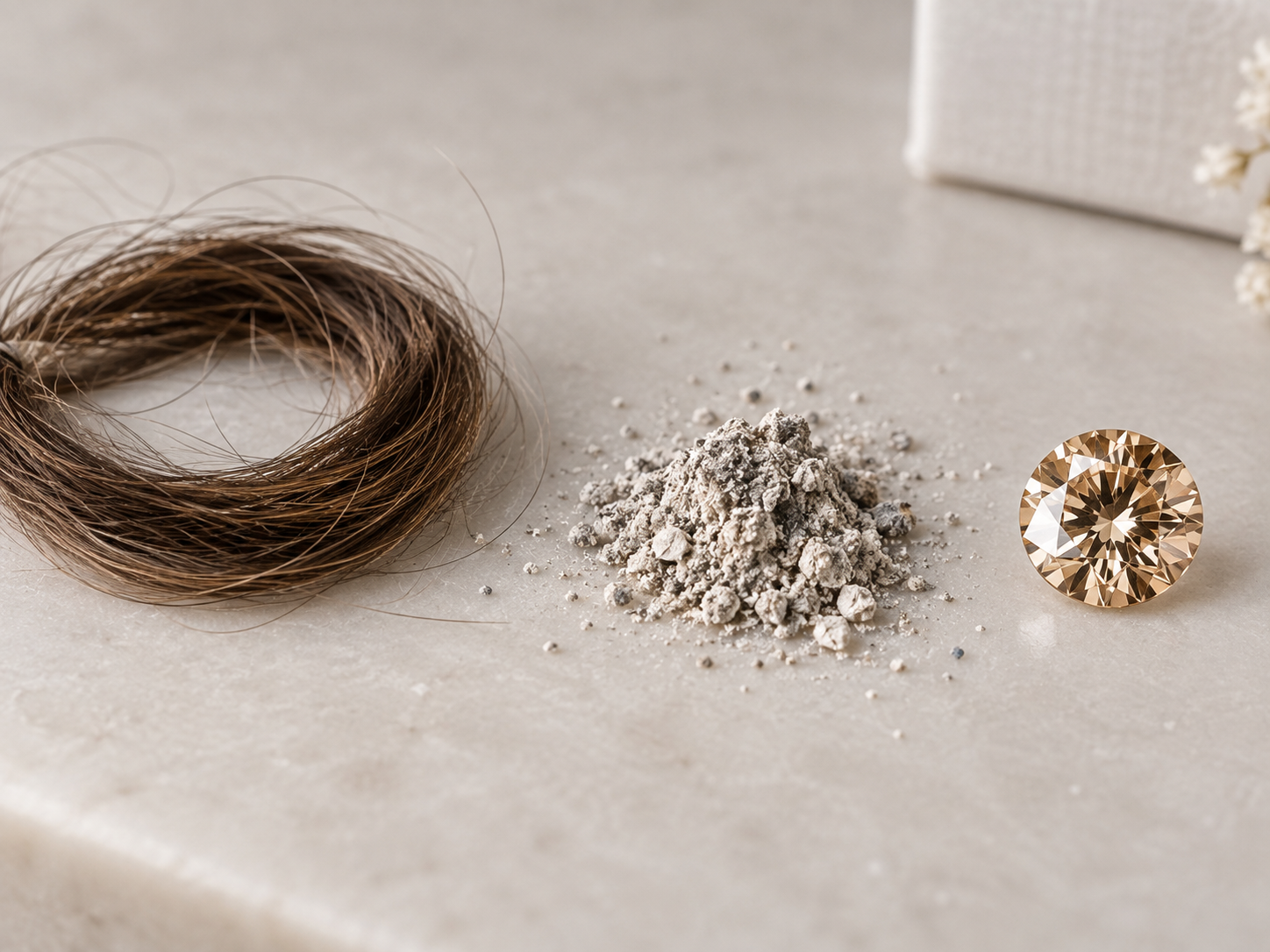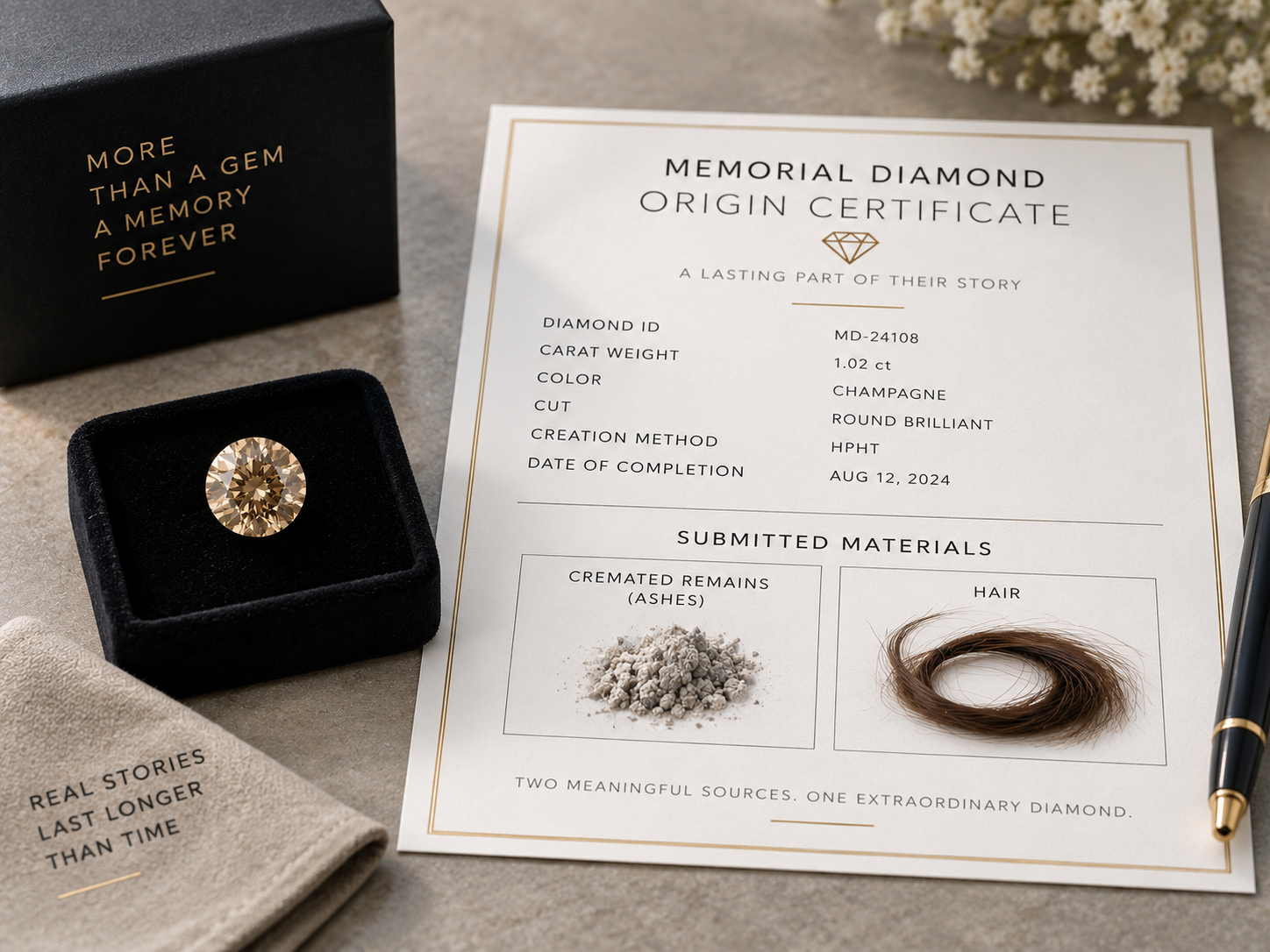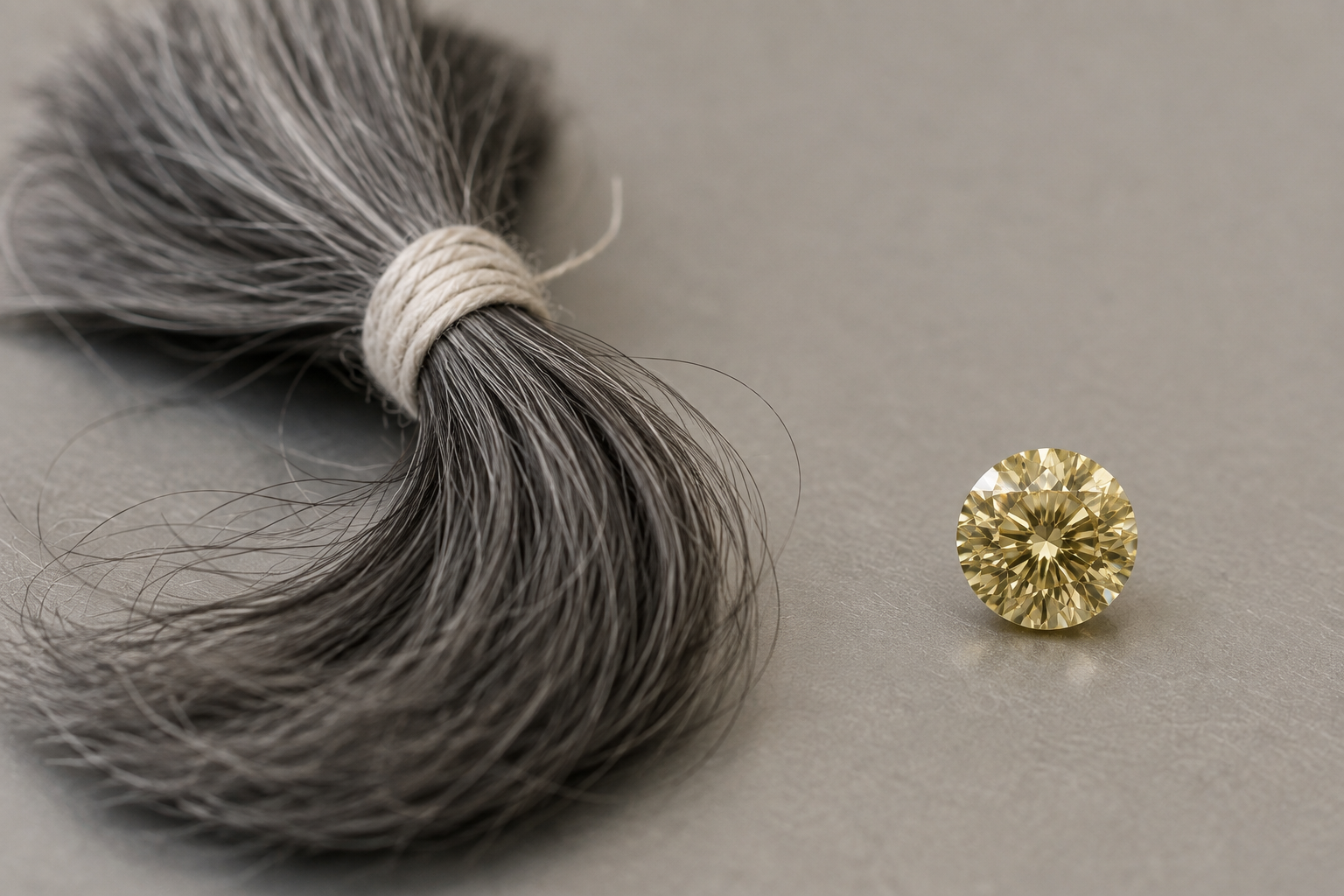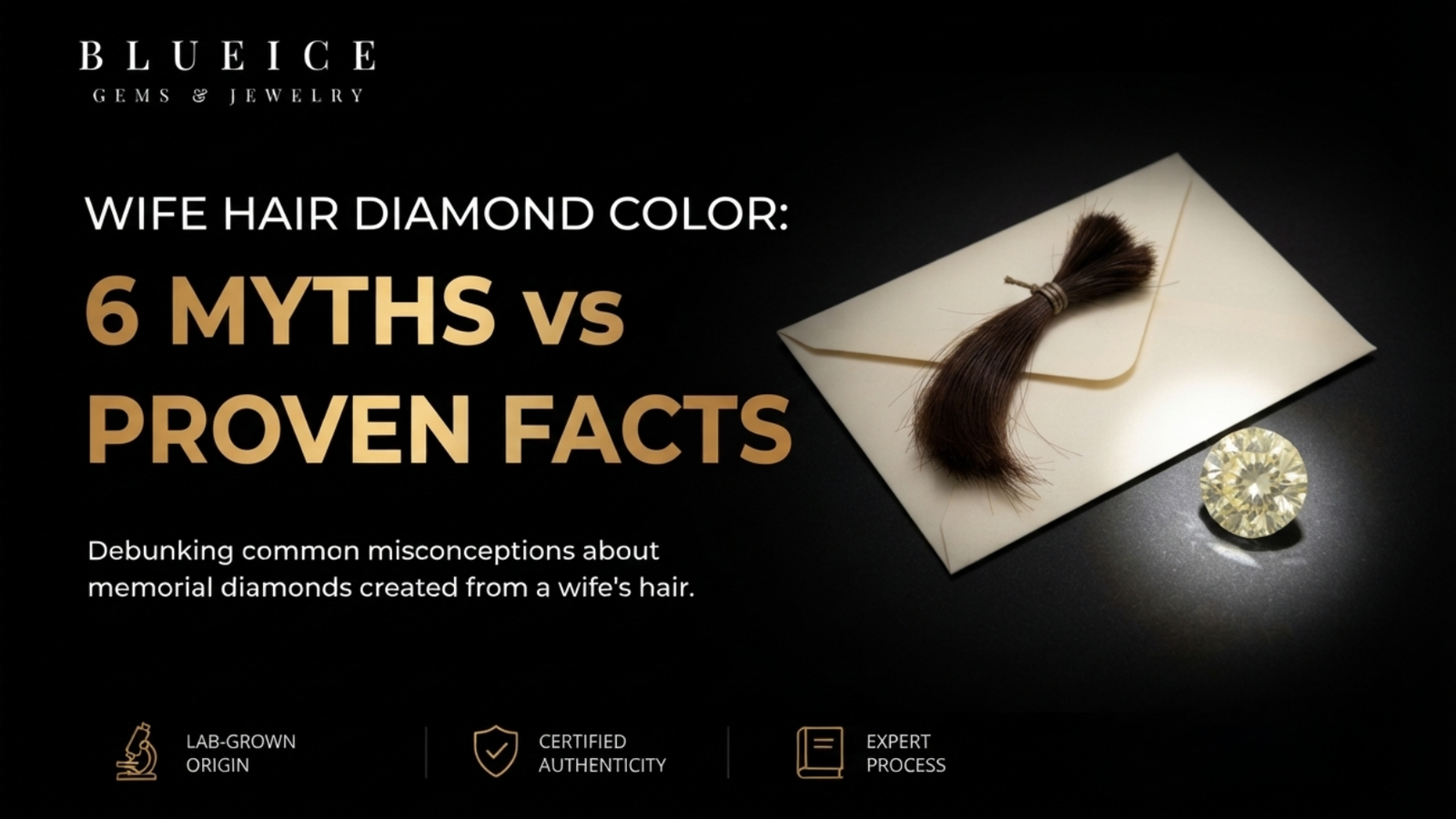
Wife hair diamond color: a tied lock of dark hair in a paper envelope beside a small pale-yellow lab-grown diamond, showing the two colors are unrelated

What Color Will a Diamond Made From Your Wife’s Hair Be?

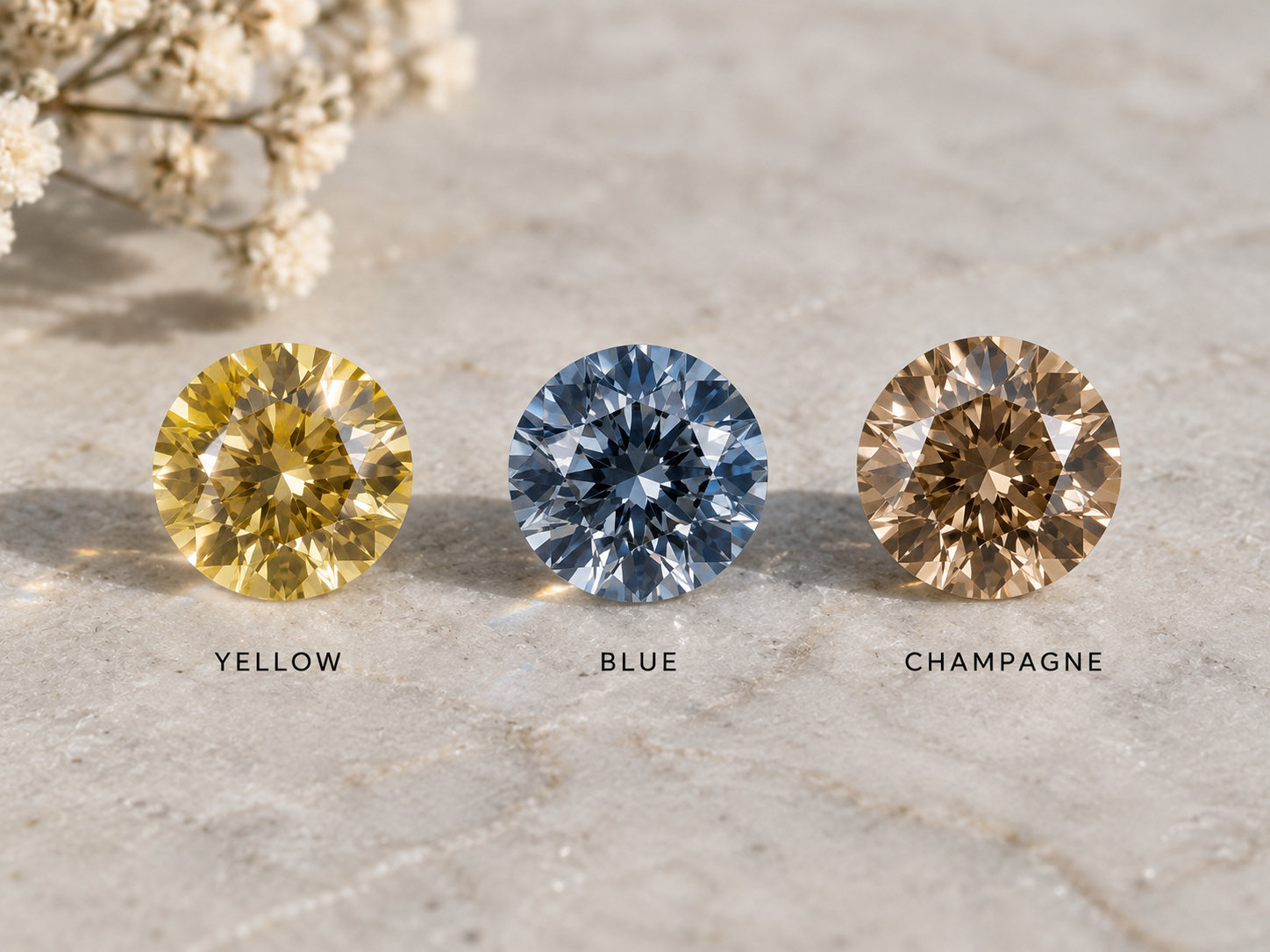
The lock is probably in an envelope, or a small box, and you know its color better than you know almost anything. So the question arrives before you can stop it: will the diamond be that color too? No, a wife hair diamond color has nothing to do with the color of her hair, because every pigment, dye, and trace of gray is stripped away when the hair is reduced to pure carbon, and the finished stone’s color comes instead from trace nitrogen or boron built into the crystal as it grows, which is why it will most likely be yellow, champagne, or blue rather than colorless.

Will a Wife Hair Diamond Color Match Her Hair?

It will not, and the reason is worth understanding, because it also explains what the color does come from.

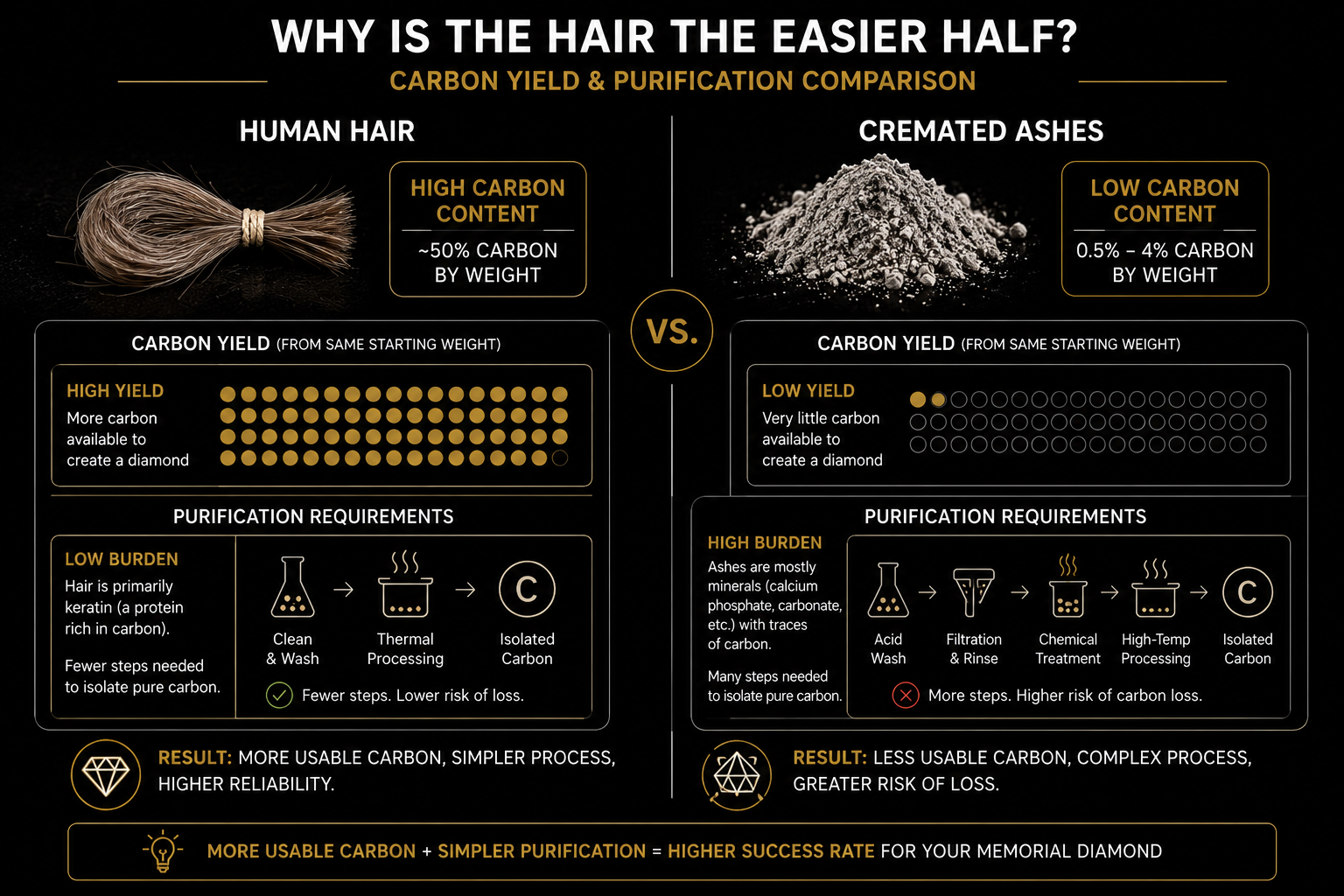
Hair is roughly 50% carbon by weight. It is built from keratin, a carbon rich protein, which is why a small lock is enough for a diamond and why no cremation is involved. None of that says anything about the eventual wife hair diamond color, because the color of hair lives in melanin, a pigment molecule, and in whatever dye may have been applied on top of it. Gray hair is simply hair with little or no melanin left. All of that is molecular structure, not element.
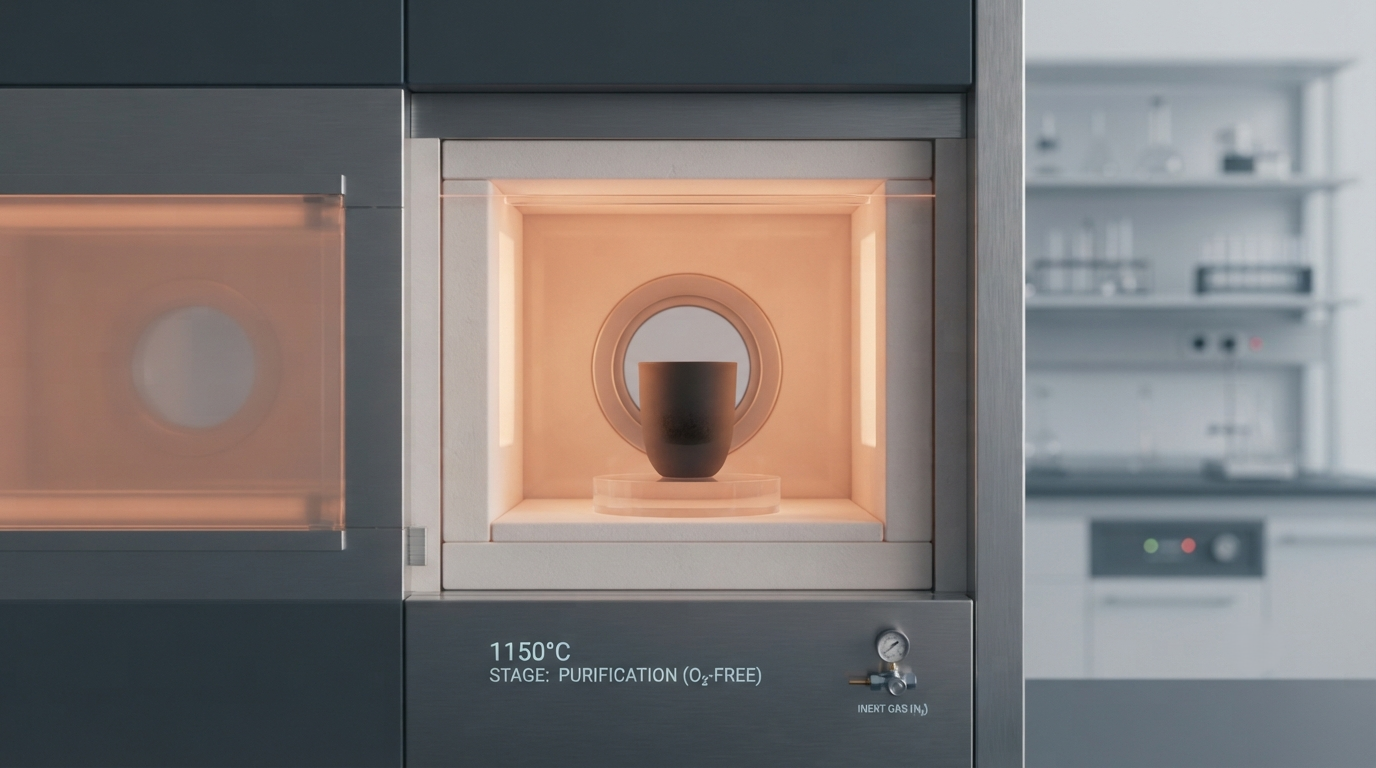
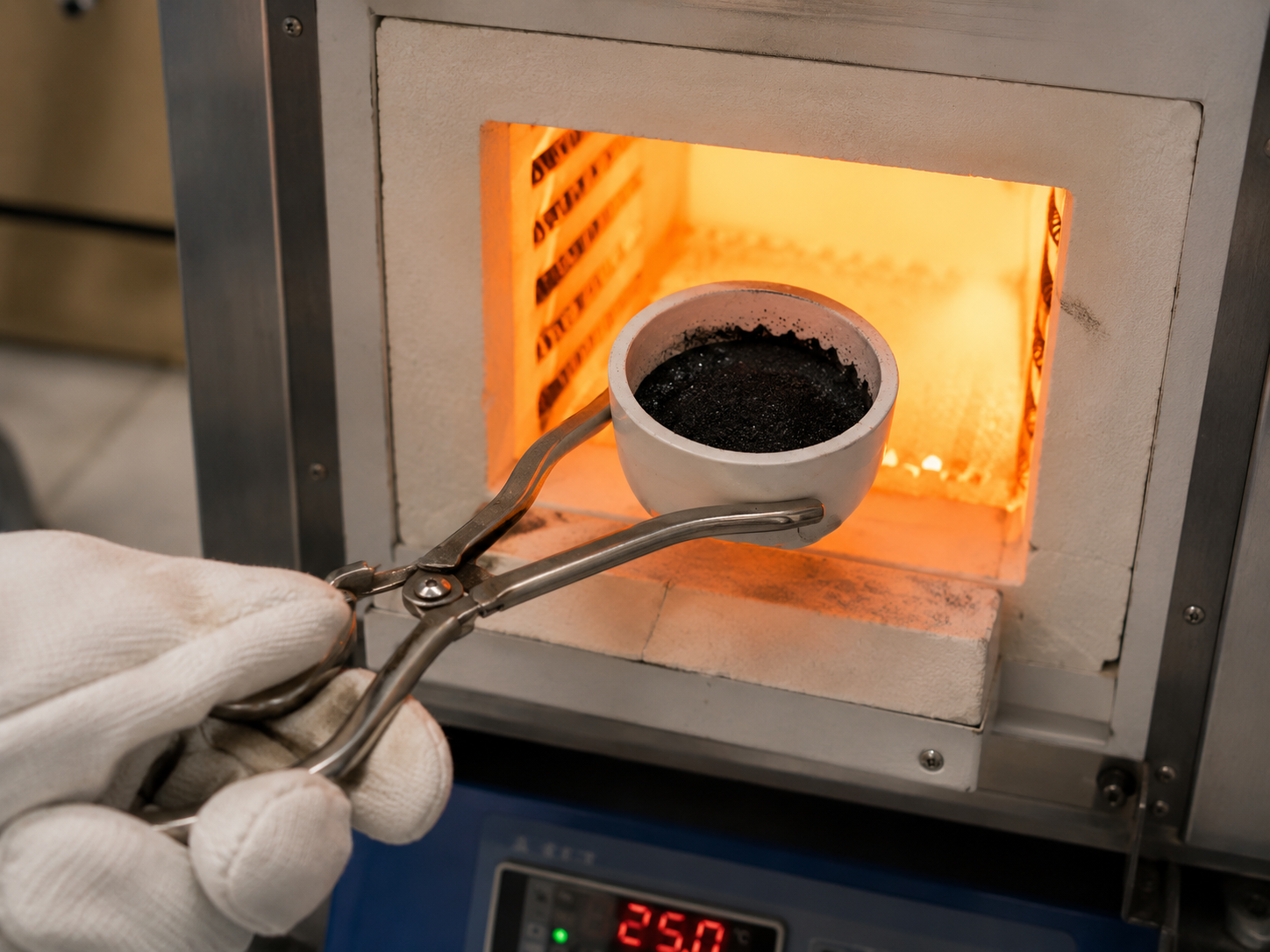
Laboratory crucible in a furnace during the oxygen-free purification stage that reduces hair to carbon

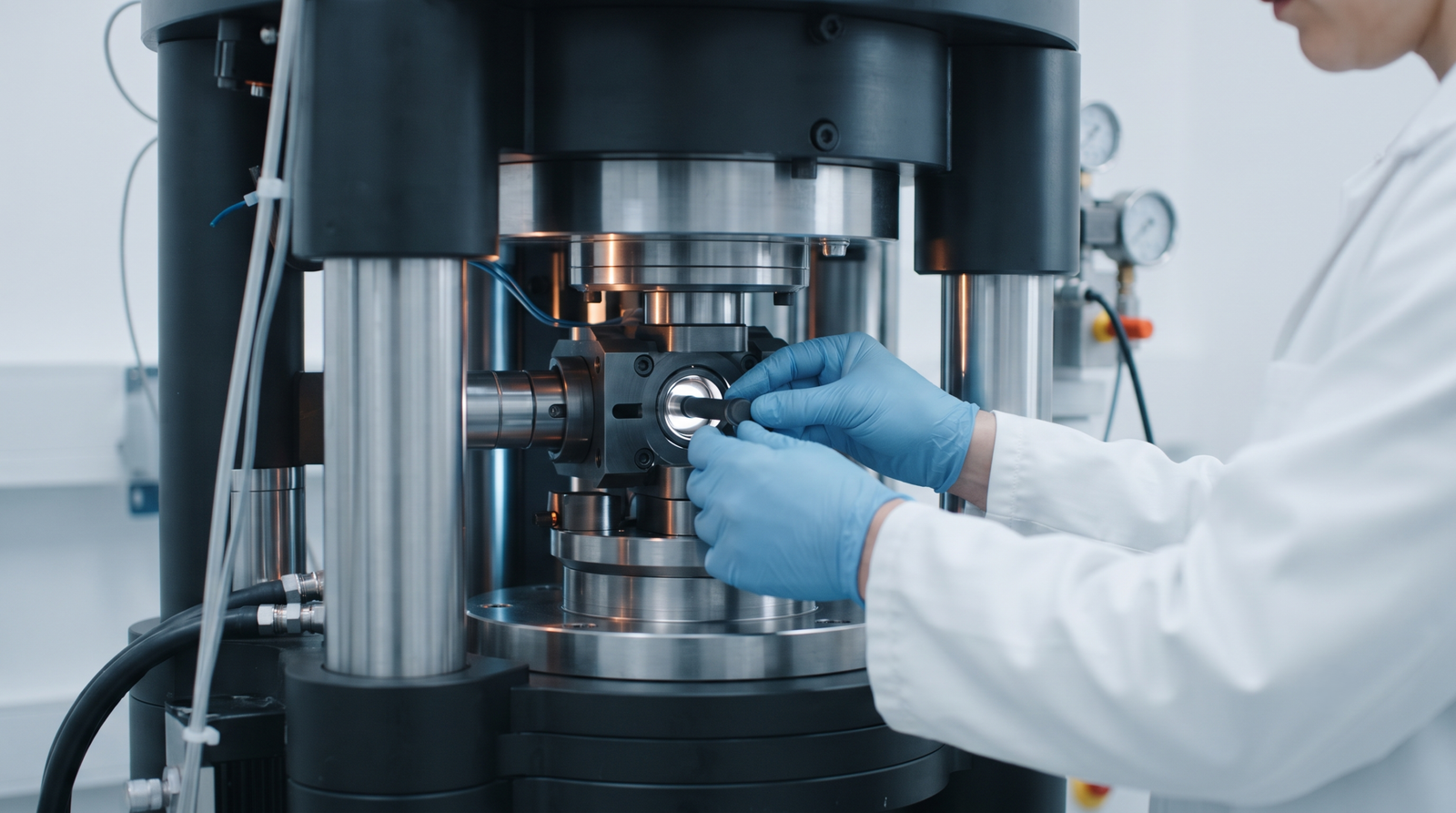
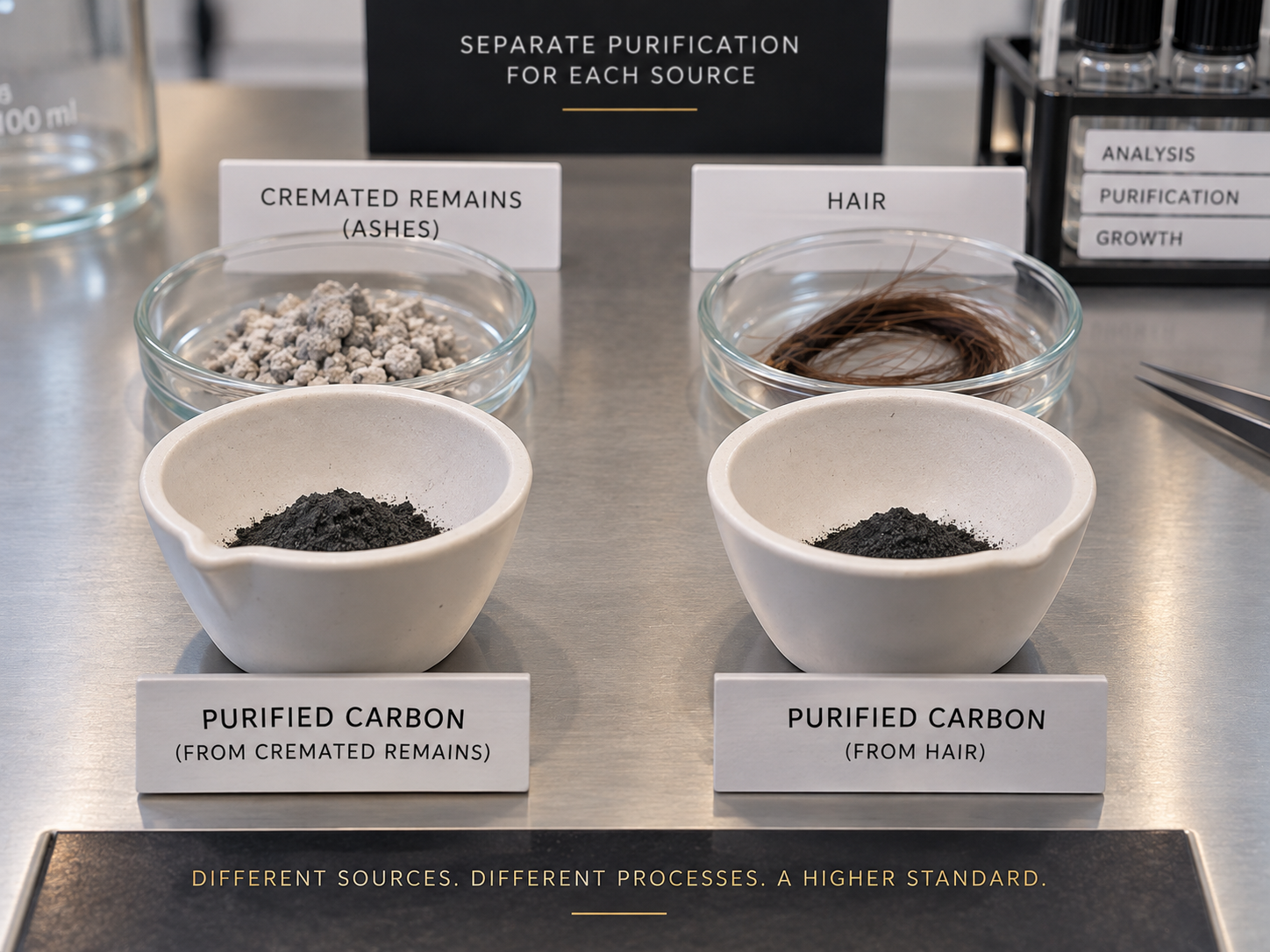
When the lock reaches the lab, it is heated in a controlled, oxygen free, multi stage process that strips away everything that is not carbon. Melanin breaks down. Dye breaks down. The proteins that held them break down. What remains is carbon at roughly 99.9%+ purity, which is then converted to graphite at 2,500 to 2,700°C and grown into a diamond around a seed in an HPHT press at roughly 6 to 8 GPa and 1,400 to 2,500°C. A minority of providers use CVD; both are described on the synthetic diamond page. By the time growth begins, there is no “brown” or “blonde” or “silver” left to carry forward. There is only carbon.

Diamond color is then decided during growth, by trace elements that ride along with the carbon into the crystal lattice. Nitrogen gives yellow, and in heavier concentrations champagne or brown. Boron gives blue. The absence of both gives colorless. Because a wife hair diamond color is decided by these trace elements and not by pigment, a diamond from black hair and a diamond from white hair are, chemically, the same proposition. What color a diamond made from your wife’s ashes will be carries the full chemistry, because it is identical for both materials.

What Are the Six Myths About Wife Hair Diamond Color?

Hair raises a set of assumptions about wife hair diamond color that ashes do not, mostly because hair has a color you can see and ashes do not. Here are the six that come up most, each with the fact beside it.

Myth 1: The diamond will be the color of her hair

Fact: No. Pigment does not survive purification; only carbon does. The wife hair diamond color is set by trace nitrogen or boron during growth. The most common outcomes are yellow, champagne, and blue. If the lock is dark brown, that tells you nothing about the stone.

Myth 2: Dyed or gray hair will change or spoil the color

Fact: No. Dye molecules and the absence of melanin are both erased at the purification stage, along with everything else that is not carbon. Dyed hair, permed hair, gray hair, and hair from a decades old keepsake are all usable, and none of them shifts the wife hair diamond color one way or another. What matters is that it is her hair, not what color it was.
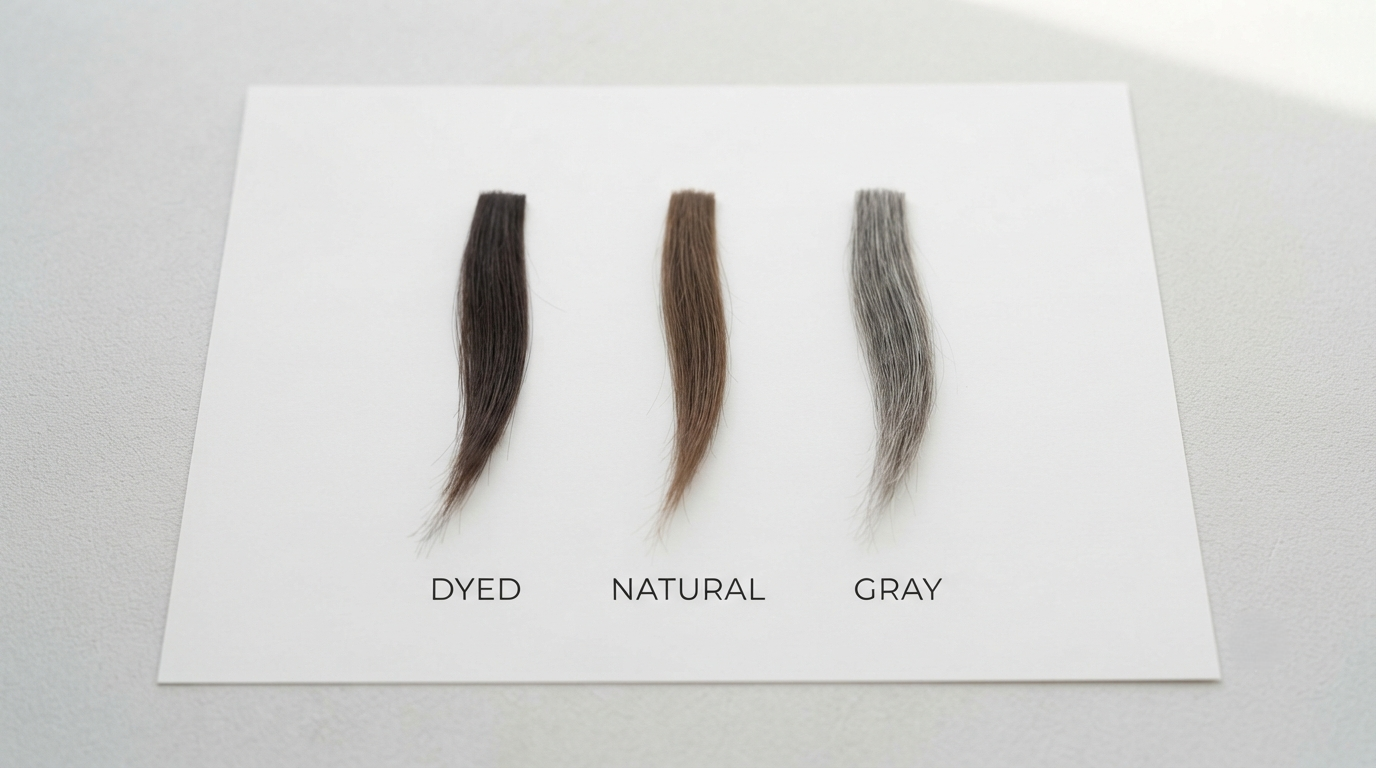
Three small locks — dyed, natural, and gray — laid side by side on white paper

Myth 3: Hair makes a whiter diamond than ashes

Fact: Unverified, and you should treat any provider who claims it that way. It is true that hair is a far richer carbon source than ashes, roughly 50% carbon against 0.5 to 4%. It does not follow that hair carbon carries fewer trace elements. Keratin is a protein, and proteins contain nitrogen. Across the industry, hair based and ash based stones show the same tendency toward yellow, champagne, and blue, with colorless requiring the same extra processing and costing the same premium. If a provider tells you a wife hair diamond color runs whiter as a rule, ask to see the grading reports that support it.

Myth 4: You can pick any color and it costs the same

Fact: You can specify a color family, but the families are not priced alike. Yellow, champagne, and blue are the baseline. Colorless requires additional processing to exclude trace elements and costs meaningfully more at every carat. Red, pink, green, and black are produced by post growth irradiation and are usually an add on above the grown color. A wife hair diamond color is a choice with a price attached, and the price should be on the quote as its own line.

Myth 5: The color in the provider’s photo is the color you will get

Fact: Within a wife hair diamond color family, the exact shade is not controllable. “Yellow” spans pale straw to deep gold; “blue” spans a whisper to a clear sky. Two stones grown from the same lock, in two growth runs, can come out visibly different. The photo shows a stone that exists; yours does not exist yet. Ask for the range that counts as delivered, a span on the grading scale, rather than a picture.

Myth 6: Once you have chosen, there is nothing to write down

Fact: The wife hair diamond color you choose is a matter of paperwork as much as chemistry. Growth takes 6 to 10 months, and what was agreed in month one should be on the order, not in someone’s memory, by month nine. The section on what the order should say covers the six lines that matter. Skipping this is how a family ends up with a stone they did not ask for and no recourse.

What Colors Can a Wife Hair Diamond Actually Be?

The menu for a wife hair diamond color is the same menu as for any memorial diamond, because the carbon is carbon by the time it reaches the press. In brief:

  • Yellow – trace nitrogen. The most common natural outcome and usually the least expensive at a given carat.
  • Champagne and brown – heavier nitrogen. Warm, and often less expensive than yellow.
  • Blue – trace boron. Baseline to modestly above, depending on provider.
  • Colorless and near colorless – extra processing to exclude both elements. The highest priced grown color.
  • Red, pink, green, black – post growth irradiation, priced above the grown color. Black can extend the timeline toward 12 months.

Carat interacts with wife hair diamond color too. Growth time in the press sets carat, not how much hair you send, and larger stones show faint tint more visibly, so a large stone that reads colorless costs for both the size and the exclusion.
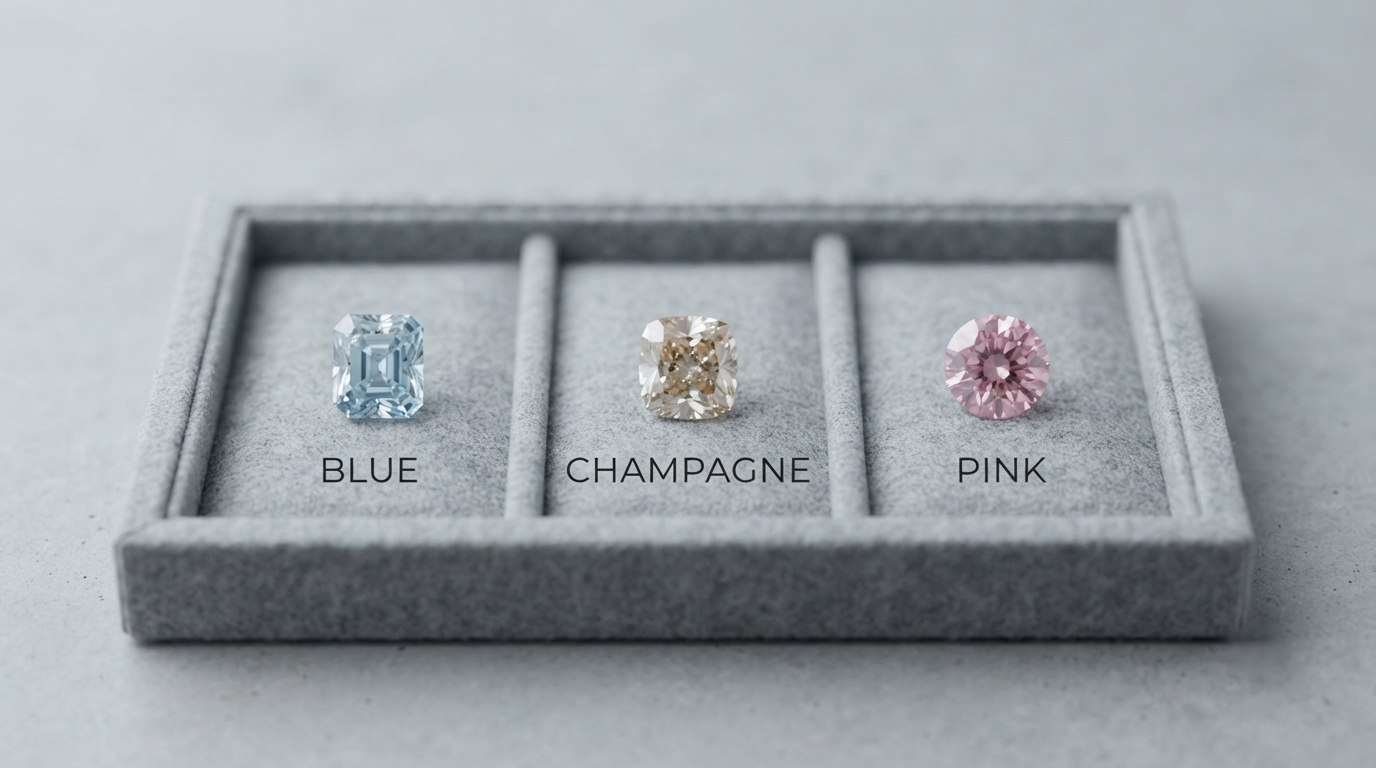
Three loose memorial diamonds — light blue, champagne, and irradiated pink — on a gray grading tray

As general 2026 industry ranges, not Memorial Diamond’s published pricing, memorial diamonds run roughly $1,500 to $3,500 for 0.10 to 0.25 ct, $5,000 to $15,000 for 0.5 to 1 ct, colorless costing meaningfully more than yellow, blue, or champagne at the same size, and $20,000 to $75,000+ for 2 to 5+ ct. How much a wife memorial diamond costs breaks the tiers down. The causes, the cost effects, and the metals that flatter each tone are tabulated in full on the ashes color page; they are the same for hair.

One hair specific note. Because a lock cannot be topped up once it is gone, unlike ashes, where most of the remains are usually still at home, a wife hair diamond color decision that might lead to a second stone, a regrow, a matched pair later, depends on having kept part of the lock. Divide it before sending. How much hair you need for a wife memorial diamond covers the quantities.

How Do You Choose a Wife Hair Diamond Color That Honors Her?

Once you accept that the wife hair diamond color will not be her hair, a different way of choosing opens up: a color that means something about her, rather than one that tries to look like her.

Families choose a wife hair diamond color in several ways, and none is more correct than another:

What you want the color to carryWhat to orderRelative costWhat is and is not guaranteed
Whatever the carbon gives, “let the stone be what it is”Natural, as grownBaselineGuaranteed to be yellow, champagne, or blue; the shade within that is not
Her favorite color, if it was blueBlue, boronBaseline to modest premiumThe family is guaranteed; the depth of blue is not
Her favorite color, if it was red, pink, or greenIrradiated red, pink, greenAdd on above the grown colorThe family is guaranteed; the exact saturation is not
Her birthstone tone, for example a sapphire like blue, a citrine like yellow, a garnet like redThe nearest grown or irradiated familyVaries by familyA tone in that family; not a match to the gemstone
A colorless stone like a traditional engagement diamondColorless or near colorlessHighest of the grown colorsA near colorless grade range, if written down; a D grade is not something to expect
Warmth, something that reads like gold on the handChampagne, set in yellow or rose goldBaseline or belowThe family; the metal does much of the visual work

Two honesty points sit under that table. First, choosing a wife hair diamond color that honors her is not free. An irradiated red for a wife who loved red is a real add on, and a colorless stone because she wore a colorless engagement ring is the most expensive grown color there is. Second, none of these choices is guaranteed to the shade. You are choosing a family and a written range, and accepting that the stone within that range will be its own.

A gentler option many families take: order the natural color, and put the meaning in the setting. A stone that came out champagne set in a band that echoes her wedding ring, or a blue stone in a pendant she would have worn, carries her without asking the chemistry to do what it cannot. Memorial diamond settings and jewelry ideas for a wife covers the setting side.

What Should the Order Say About Color?

Whatever wife hair diamond color you choose, six lines on the order turn a hope into a specification:

  1. The color family, named the way the provider names it.
  2. The range that counts as delivered, a span of letters on the GIA D to Z scale for near colorless stones, or a band of fancy color grades, “Fancy Light” to “Fancy,” for everything else.
  3. What happens if the stone falls outside that range, regrow, irradiate to another family, discount, or refund, and who pays.
  4. Whether the stone will be independently graded, and whether the report is included.
  5. Whether irradiation is ever applied without your instruction.
  6. The timeline for that color.

The grading report matters more than it seems for wife hair diamond color, because it is the only thing that turns “this is not what I was promised” into a fact rather than an impression. A report describes color as a controlled measurement, face down, under standard light, against master stones, which is not how a ring looks on a hand. Read it as the grader’s language, and look at the stone yourself in daylight before you decide how you feel about the wife hair diamond color you received.

If the lock is the last of her hair, one more line belongs on your side of the paperwork: the note to yourself that you kept part of it. A wife hair diamond color that disappoints can be addressed by regrowing only if there is hair left to regrow from. The questions to ask before turning your wife’s hair into a diamond include these six among the rest, and Wife Hair Diamond: The Complete Guide sets the color question inside the whole decision. If you hold her ashes as well as her hair, the ashes and hair color page answers whether combining the two changes anything.

Frequently Asked Questions

Will the diamond be the color of her hair?

No. Hair color comes from melanin and any dye, and both are destroyed when the hair is purified to carbon. The diamond’s color is set during growth by trace nitrogen, yellow, champagne, or boron, blue. Black, blonde, red, and gray hair all lead to the same range of outcomes.

Does dyed or gray hair affect the wife hair diamond color?

No. Dye molecules and the absence of melanin are both removed at purification, along with everything that is not carbon. Dyed, permed, gray, and very old hair are all usable, and none of them pushes the stone toward any particular color. Condition and quantity matter more than color.

Is a hair diamond whiter than one from ashes?

Not as a rule. Hair is a richer carbon source than ashes, but keratin is a protein and proteins contain nitrogen, the element behind yellow tones. Both materials trend yellow, champagne, or blue. Treat any claim that hair yields whiter stones as unverified until you see grading reports.

Can I get a colorless diamond from her hair?

Yes, with additional processing that excludes trace nitrogen and boron during growth, and at a meaningfully higher price than yellow, champagne, or blue at the same carat. Ask for the near colorless grade range that counts as delivered, in writing, and do not expect the very top of the scale.

Can I choose a color that was meaningful to her?

You can choose a wife hair diamond color family, blue, irradiated red, pink, or green, champagne, colorless, and a provider grows or treats toward it. The family can be specified; the exact shade cannot. Irradiated and colorless choices cost more than natural, and that belongs on the quote.

Why might two diamonds from the same lock be different colors?

Because wife hair diamond color is a property of each growth run, not of the hair. Each stone grows in its own cell with its own carbon blend, and trace elements distribute unevenly. Two runs from one lock can give a pale yellow and a warm champagne; neither is wrong.

Final Thoughts on Wife Hair Diamond Color

The lock in the envelope is the color you remember, and the stone will not be. That is not a loss. It is chemistry doing what it does, turning her hair into carbon and the carbon into a crystal that carries its own color. A wife hair diamond color is worth choosing on purpose: natural if you want the stone to be what it is, a family that meant something to her if you are willing to pay for it and accept the shade you get, and always with the range written down and part of the lock kept at home.

Learn More About Wife Memorial Diamonds

Talk With Memorial Diamond

If you are holding a lock of her hair and want to know which color families are possible before you decide anything, reach out to Memorial Diamond. The wife hair diamond color options, what each costs relative to the natural color, and how the delivered range is written into an order are all things to settle before the lock leaves the house.
Memorial diamond colors for a wife, showing a champagne-toned memorial diamond ring with yellow, champagne, blue, and colorless diamond color options.

Memorial Diamond Colors for a Wife: What to Expect

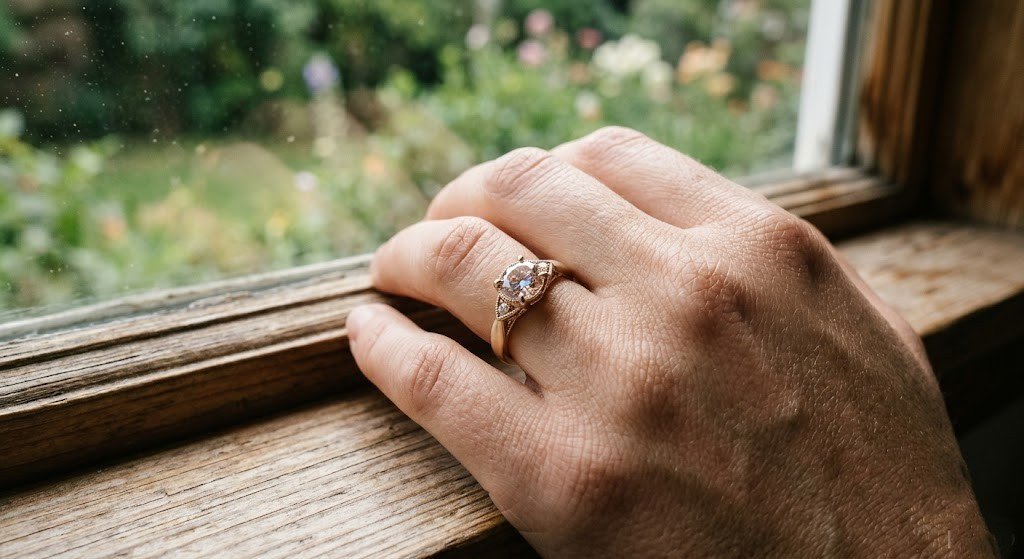
Memorial diamond colors for a wife shown on a champagne-toned ring worn on a hand in ordinary window daylight

Why Do Memorial Diamond Colors for a Wife Lean Warm Rather Than Colorless?

Three trace elements decide almost everything about memorial diamond colors for a wife. Nitrogen in the growing crystal reads as yellow. Boron reads as blue. A diamond reads as colorless only when neither is present at all colorless is an absence, not an ingredient, which is why colorless sits at the far end of the memorial diamond colors for a wife that families are actually offered.

That single fact explains the whole category. The memorial diamond colors for a wife that families are most often handed sit in the yellow, champagne, and brown band, with blue appearing less often, because the feedstock did not begin life as a clean synthetic powder. It began as a person, and organic material brings trace elements along with it.

Her carbon also does not make the whole crystal by itself. What is recovered from the ashes is purified and then loaded into the growth cell alongside lab-grown carbon, because a growth run needs more feedstock than any personal source supplies. Ash is roughly 0.5% to 4% carbon by weight to begin with, which is why the volume has to be made up. That blending does not wash out the trace elements, so the memorial diamond colors for a wife that result still come from an organic starting point.

None of that predicts a specific shade, and this page does not try to. Forecasting is a different question, answered in what color a diamond made from her ashes will be and in the hair version of the same question. The broader category picture sits in why memorial diamonds are rarely colorless.

What is left over, once forecasting is handed off, is the part nobody prepares you for: memorial diamond colors for a wife do not behave like paint chips. They move. Not the stone the stone is fixed the moment it comes out of the press but what you see when you look at it.

What Changes Between the Photograph and Your Hand?

A product photograph does not record a stone. It records what one lighting rig did to a stone on one afternoon. That gap matters more for memorial diamond colors for a wife than for anything in a shop window, because you are being asked to picture an object that does not exist yet.

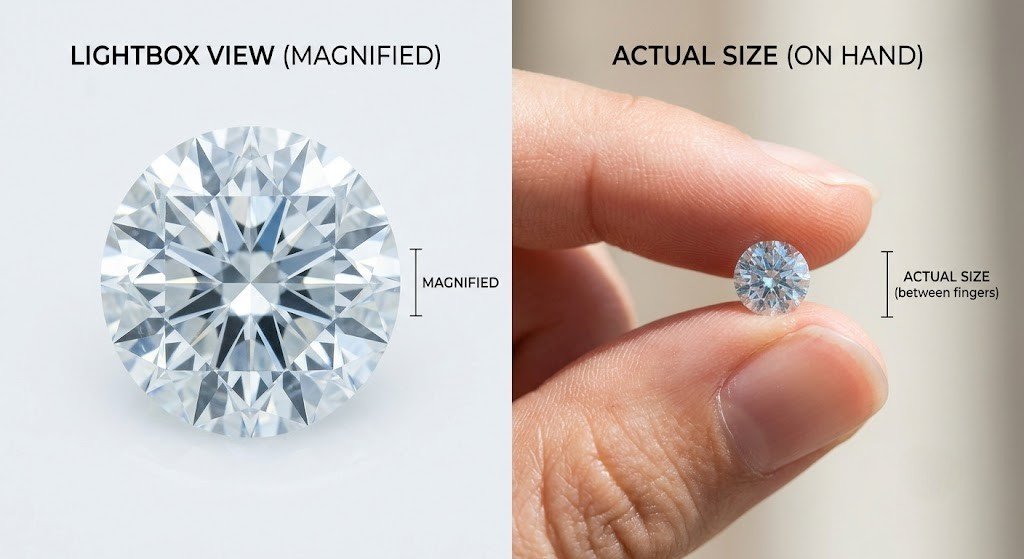
A stone shot for a website is usually sitting in a lightbox: diffuse, even, color-corrected light, a white or black background chosen to flatter, and a lens close enough to make a five-millimeter object fill a laptop screen. None of those conditions exist in your kitchen. So the memorial diamond colors for a wife that you saw on a screen were accurate and also not transferable.

Scale changes. A half-carat round stone is about five millimeters across. On a product page it is nine hundred pixels wide. Color reads more intensely at nine hundred pixels than at five millimeters, and memorial diamond colors for a wife are usually first judged at the larger of those two sizes.

Background changes. A lightbox background is neutral by design; your hand is not. Skin is warm, and a warm background pushes a warm stone warmer and makes a near-colorless stone look less white than it did against white card. Memorial diamond colors for a wife are almost always seen against skin in the end.

Light changes, constantly. This is the big one, and it does more to memorial diamond colors for a wife than the other two put together.

Worth asking for, then, rather than a better photograph: the same stone photographed twice under two named light sources, and one frame with a hand in it for scale. How a memorial diamond is made from her ashes covers what happens before that frame is ever shot

The same loose memorial diamond shown twice, once magnified in a lightbox and once at actual size between finger and thumb

Why Does the Stone Look Different in the Kitchen Than at the Bedside?

No. This is the most useful physical fact on the page about memorial diamond colors for a wife, because it is the one that surprises people after delivery rather than before.

Grading happens under controlled laboratory lighting, chosen because it does not vary. That is what makes a grade comparable, and also what makes it unlike your house. Real rooms are full of light with a color temperature, and that temperature pushes a stone around. Six lights cover almost every room a piece will be worn in, and memorial diamond colors for a wife behave differently in each of them. Memorial diamond colors for a wife are not a single reading; they are a range across the lights you actually live in.
Light you actually live inWhat it does to a warm stoneWhat it does to a near-colorless stoneWhere you meet it
Warm incandescent or 2700K bulbDeepens the yellow or champagne; honey and amber notes come forwardLends a faint warmth it does not have on paperBedside lamps, living rooms, most older fittings
Cool LED around 5000KThins the warmth; champagne can read almost grayReads cleanest and whitest hereKitchens, bathrooms, task lighting, car interiors
North-facing indirect daylightThe most neutral reading you will get at homeReads close to its graded positionA window seat on an overcast day
Direct sunlightBrightness swamps tone; the stone looks paler and more sparkling than it isLooks whiter still; contrast hides everythingOutdoors, mid-morning, on the back of your hand
Candlelight or very low lightStrongly warm; even a blue stone loses its coolnessPicks up the warmest cast it will ever showDinner, evenings, anywhere with one soft source
Fluorescent tube or screen glowSlightly green-cool; warm stones look muddierCan look faintly gray rather than whiteOffices, supermarkets, a face lit by a monitor

The same stone can be honey-warm at a bedside lamp and almost pale under the kitchen downlights four hours later, and neither reading is the wrong one. Memorial diamond colors for a wife are a band, not a point.

The practical consequence is small and it works: do not settle your impression of the memorial diamond colors for a wife on the first evening. Give it a week of ordinary use instead worn to work, sat under a lamp, taken outside once. You are mapping a band, not reaching a verdict.

How Much Does the Metal Around It Change the Color?

More than most people expect, and in two different ways at once. Metal is the second half of what governs memorial diamond colors for a wife once the stone exists.

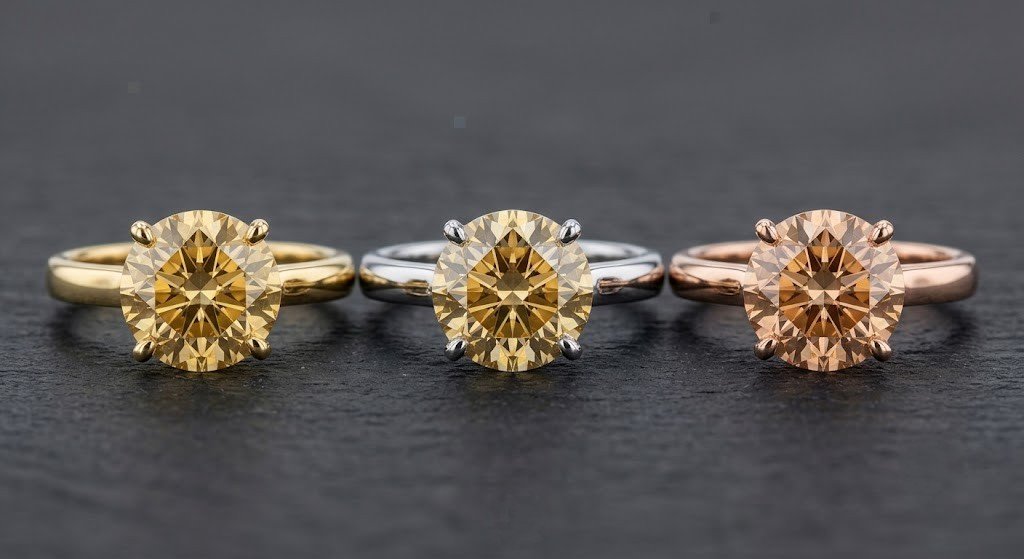
The first way is contrast. Set a warm stone in white metal and the eye compares the two: the stone looks warmer than it did loose, because there is something colder next to it. Set the same stone in yellow gold and the contrast collapses — the warmth stops looking like a property of the stone and starts looking like a property of the whole piece.

The second way is reflection. A diamond is transparent, and light that reaches it off the mount comes back out carrying some of the mount with it. A yellow gold basket under a near-colorless stone can lend it a faint warmth that no grading report would ever record. That is not a fault in the stone or the setting; it is what happens when you put a clear object on a colored one, and it is why memorial diamond colors for a wife are partly a jewelry decision rather than purely a laboratory one.

How much metal touches the stone matters too. A bezel wraps the girdle in a continuous rim and puts a great deal of metal against the stone; four slim prongs put very little. So two identical stones, one bezel-set in yellow gold and one prong-set in platinum, will not read as the same memorial diamond colors for a wife, even with identical grading lines.

  • Yellow gold flatters a warm stone and warms a near-colorless one. It is the forgiving choice if the shade is unknown.
  • Rose gold does the same thing more strongly, and pushes champagne toward a pinkish brown.
  • White gold is almost always rhodium plated. Rhodium is bright white and wears off over years, so the piece can read cooler when new and warmer once the plating thins and then cooler again after replating.
  • Platinum is naturally white, does not need plating, and holds its reading for decades.
  • A band she already wore has already decided this question for you, which is a reason to talk about the stone’s shade before the stone exists rather than afterward.

Which mount holds the stone, and how much of it touches, belongs to the wife memorial diamond settings question rather than this one.

What Colorless Actually Costs, and Why

Colorless is expensive because of what it is defined as, and it is the one point on the scale of memorial diamond colors for a wife that cannot be reached by adding anything.

Every other shade is something present. Colorless is two things absent no nitrogen, no boron which means it cannot be added at the end. It has to be engineered out at the front, with tighter control over the feedstock and the growth environment, and that shows up industry-wide as a meaningfully higher price at the same carat weight rather than as a surcharge on a line item. How gemologists assess and record that position is set out in the four factors used to grade any diamond, and the way those factors are recorded is covered in how memorial diamonds are graded and certified.

Some providers also offer post-growth irradiation to produce red, pink, green, or black stones. That is color added after growth rather than grown in, and it is worth knowing which of the two you are being offered when a color is named, because they are different processes with different implications for the report. Both routes appear in conversations about memorial diamond colors for a wife, often without the difference being spelled out. The mechanics of growth itself are described in the general literature on high-pressure high-temperature and vapor-deposition diamond growth.

Where that lands on an invoice belongs to what a wife memorial diamond costs. The color point to carry forward is narrower: when someone quotes a price difference between shades of memorial diamond colors for a wife, the difference is describing how hard the absence was to achieve, not how rare the color is.

Deciding the Metal Before You Know the Stone

Here is the sequencing problem nobody warns families about. The stone takes months. The setting is usually chosen alongside or before it. So most people pick a metal for memorial diamond colors for a wife that do not yet exist.

There are five sensible ways to handle that, and none of them requires knowing the shade in advance. All five are ways of keeping a decision about memorial diamond colors for a wife open for as long as possible.

  1. Ask whether the stone can be returned loose and set later. If it can, the whole problem disappears: you see the shade, then you choose the metal. Ask what that adds in time, and who does the setting.
  2. If the metal has to be chosen first, choose the forgiving one. Yellow gold sits well with almost anything the growth cell is likely to produce. It is the low-regret answer when the shade is genuinely unknown.
  3. Ask whether any white gold in the design is rhodium plated. Plating is not a flaw, but it means the piece drifts in appearance and is then restored, on a cycle, for as long as it is worn.
  4. Ask to see the stone against a physical metal sample before anything is set. A sample card of yellow, white, and rose beside the actual stone settles the question of memorial diamond colors for a wife in ten seconds, where a rendering cannot settle it at all.
  5. If it is going into a band she already wore, treat the metal as fixed and talk about the stone instead. That constraint is worth naming early rather than late.

None of the five requires you to guess a shade. All five simply buy time.

Living With a Color Nobody Could Forecast

The stone does not change after it leaves the press. What changes is how practiced you are at looking at it, which is the last thing worth saying about memorial diamond colors for a wife.

For the first weeks you will check the color constantly, and every light will feel like new information. After that it settles into being simply what the stone looks like. That is not a loss of interest; it is the ordinary way a worn object stops being an event, and memorial diamond colors for a wife stop being news faster than people expect.

Strangers will ask about it, too a jeweler cleaning it, a colleague who notices it, someone at a till who likes the look of it. You are never obliged to reach for the grading language in those moments, and in practice a plain description lands better than a technical one.

And a color arriving that you did not pick is not a defect. It is the direct consequence of the thing that makes the stone worth having: the carbon came from a person rather than a controlled feedstock, and people are not uniform. The whole decision, from material to finished piece, is laid out in the complete guide to a wife ashes diamond.

A white gold band photographed showing rhodium plating worn thin on the underside | Stock acceptable; the worn area must be visible or the image makes no point

Frequently Asked Questions

What are the most common memorial diamond colors for a wife?

Yellow, champagne, and brown tones are the usual range for memorial diamond colors for a wife, with blue appearing less often and colorless least of all. Nitrogen present during growth reads yellow, boron reads blue, and a colorless stone requires the absence of both.

Can I choose the color before the stone is grown?

Some providers offer named color options, so you may be able to state a target. Ask what that name has meant for memorial diamond colors for a wife in finished stones, and whether the color is grown in or added afterward by irradiation.

Why do memorial diamond colors for a wife look different in photographs?

Product photographs are taken in diffuse, color-corrected lightbox conditions against neutral backgrounds, at magnifications that make a five-millimeter stone fill a screen. Your hand is warm, your rooms are not color-corrected, and scale alone changes how strongly a tone reads.

Does the metal the stone is set in really change its color?

Yes, in two ways. White metal makes a warm stone look warmer by contrast, and a colored mount reflects light back through a transparent stone. A bezel touches far more of the stone than four slim prongs, so it transfers more.

Will the color of the stone fade or change over time?

No. Memorial diamond colors for a wife come from trace elements locked in the crystal lattice during growth, and they are permanent. What can change is the setting around it rhodium plating on white gold wears and is replaced, which alters how the stone reads.

What if the color that arrives is not the one I pictured?

Give it a full week before concluding anything, since one evening under one lamp is not enough to judge by. Then fall back on what you settled about metal, and on the fact that memorial diamond colors for a wife come from a person rather than a catalog.

Final Thoughts on Memorial Diamond Colors for a Wife

The honest summary is that memorial diamond colors for a wife cannot be promised and can be prepared for. The shade is decided in the growth cell by trace elements nobody controls precisely. What you see afterward is decided by light and by metal, and both of those are yours to choose, ask about, and settle before anything is cut or set.

So do the small things early: two lights, a hand for scale, and a straight answer about what the mount will actually touch.

Learn More About Wife Memorial Diamonds

Talk With Memorial Diamond

If a shade has been named to you and you want it turned into something you can actually picture, Memorial Diamond is one place to have that conversation memorialdiamond.us.

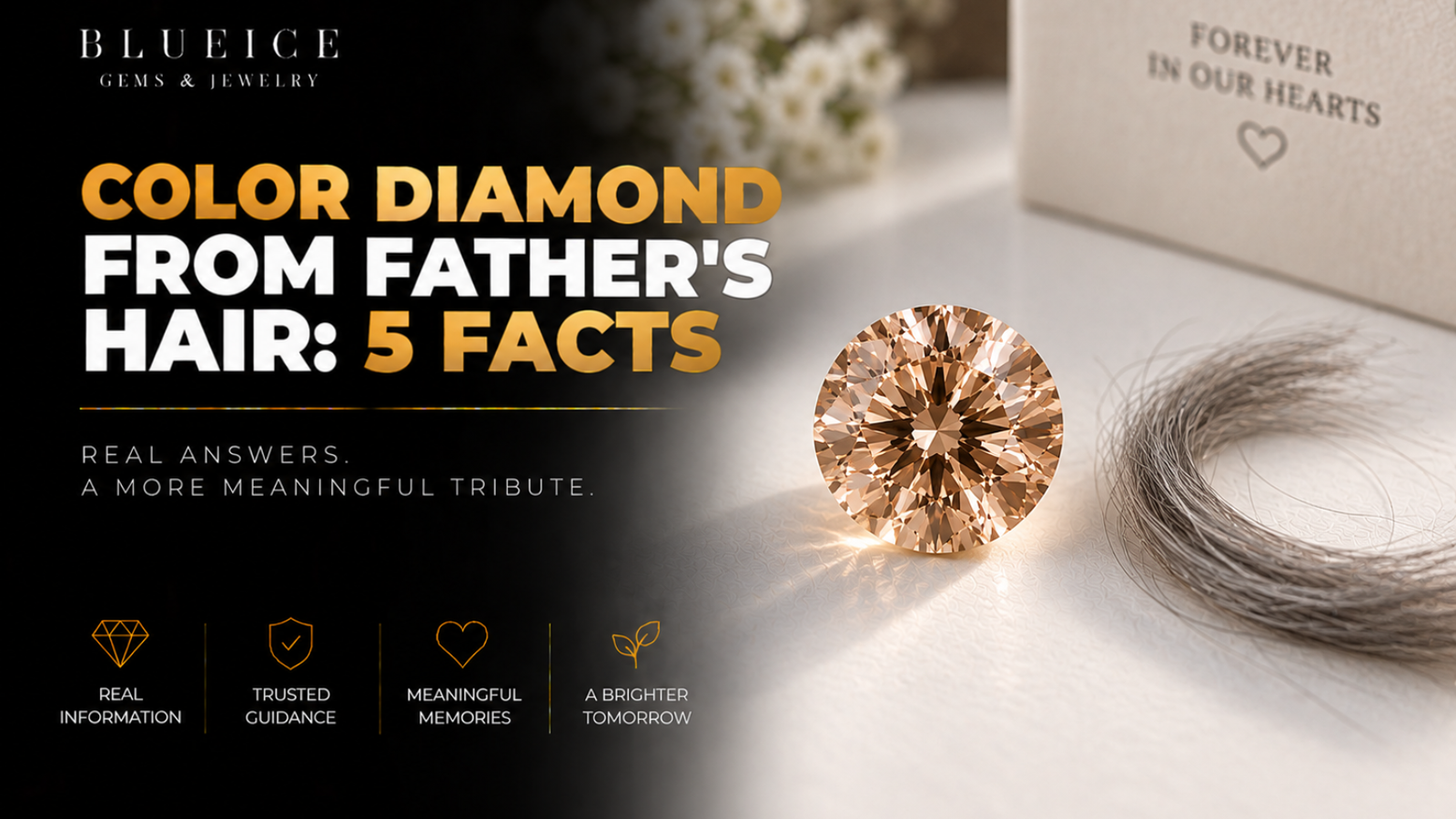
Color diamond in a warm champagne tone beside a small lock of gray hair on a white surface

What Color Will a Diamond Made From Your Father’s Hair Be?

The lock you kept is probably not the color it was when you were small. That is usually where this question starts. The answer is that the color diamond his hair becomes is decided in the growth cell, not by the hair: a diamond made from your father’s hair will most often be yellow, champagne or blue, colorless is possible at a higher cost, and gray, white, black or thinning hair changes none of that.

Which means color is the one thing the lock cannot decide for you. You decide which color diamond to grow, on the order form, before anything is grown.

Does Your Father’s Hair Color Change the Color Diamond You Get?

No. White hair does not make a white diamond, black hair does not make a dark one, and a beard sample behaves exactly like a sample from his head.

Hair color is melanin, a pigment. Before any growth begins, the hair is heated in an oxygen free process that strips away everything that is not carbon, and the purified carbon is then converted to graphite at roughly 2,500 to 2,700°C. No pigment molecule survives that, which is why hair color never reaches the color diamond. What reaches the press is elemental carbon, and elemental carbon from white hair is indistinguishable from elemental carbon from anyone else’s.

Hair is roughly 50% carbon by weight, which is why a small lock is enough and why no cremation is involved. How a memorial diamond is made from your father’s hair walks through each stage.

What Actually Sets the Color of a Hair Diamond?

Trace elements present while the crystal grows. Boron in the growth cell produces blue. Nitrogen produces yellow. A colorless stone requires the near total absence of both, which is easy for a manufactured feedstock and harder for a personal, organic one.

Technician placing a graphite capsule into an HPHT diamond-growth press

His purified carbon is blended with supplemental lab sourced carbon to reach a workable volume, so the finished stone is not entirely one person, but the trace elements riding along with the personal carbon still steer the color of the whole crystal. That is why a color diamond in the yellow to blue range is the natural outcome of a hair source, and why colorless takes additional processing and additional cost.

The growth itself uses either an HPHT press or CVD deposition. Both lab growth methods are described here. The process takes weeks to months depending on the carat you order.

Which Color Diamond Can a Father’s Hair Become?

Industry typical outcomes, not a promise about any one stone. The five rows below are the honest color diamond menu for a hair source.

ColorWhere it comes fromWhat it means for youCost position (industry typical)
YellowNitrogen present during growthThe most common natural outcome of a hair sourceBottom of the band at a given carat
Champagne / brownSeveral trace elements acting togetherReads as a warm neutral; not caused by brown hairLevel with yellow at matching carat
BlueBoron present during growthA target the lab steers toward, not something the lock suppliesBanded with yellow and champagne, under colorless
Colorless / whiteNear total absence of boron and nitrogenAchievable; requires extra processingThe clear step up at the same carat
Red, pink, green, blackPost growth irradiation, after the crystal existsUnrelated to the hair; availability varies by providerQuoted as an add on; black or 2 ct+ can push toward 12 months

Once the stone is finished, a color diamond is graded on the same scale as any other diamond. How gemologists grade a diamond’s color, cut and clarity applies to a memorial stone too. The broader memorial diamond colors for a father post covers how each tone reads in different metals.

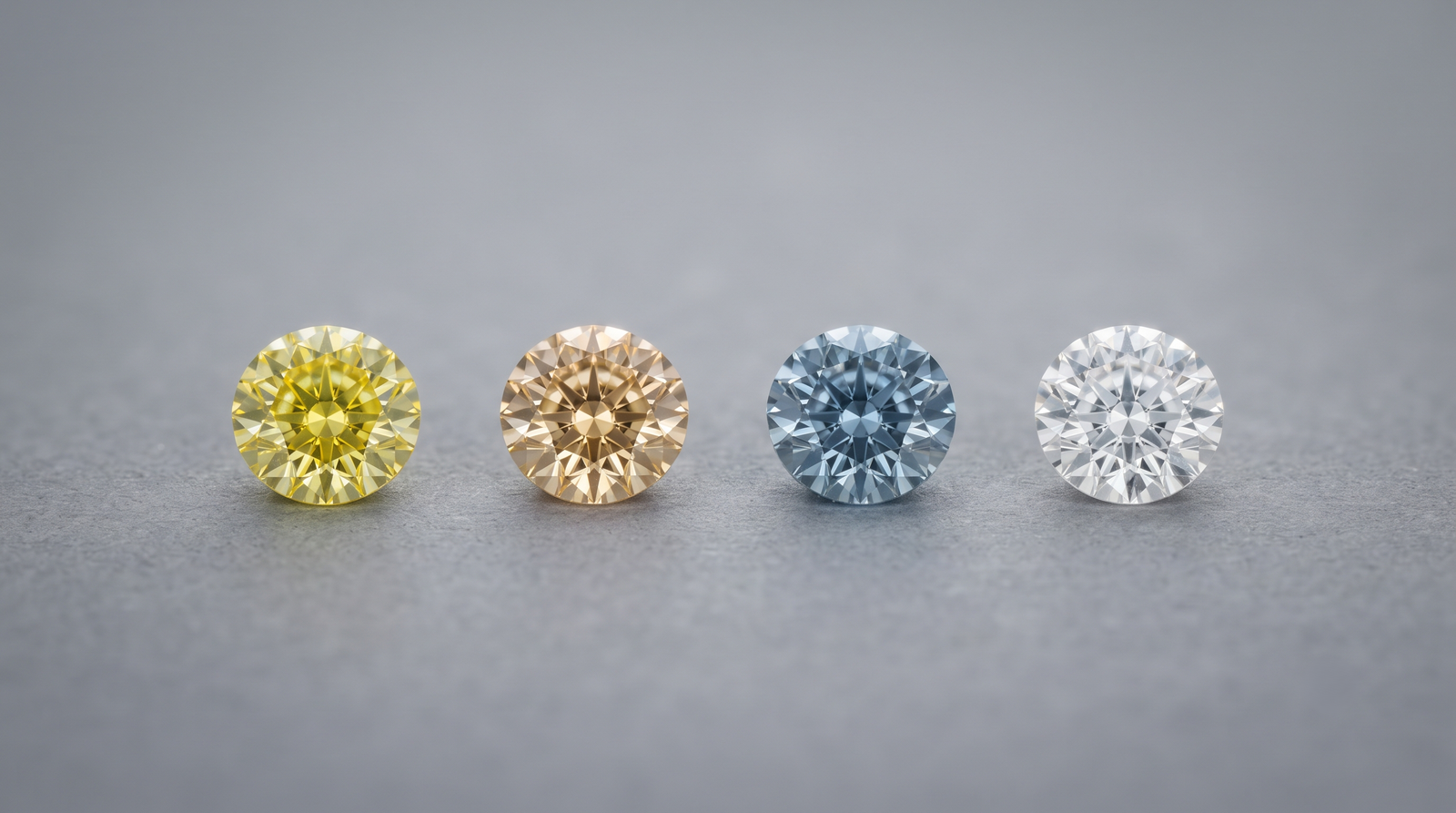
Four loose lab-grown diamonds in a row  yellow, champagne, blue and colorless on gray card

Does a Small or Old Hair Sample Limit the Color Diamond You Can Order?

No. A few grams, a palm sized lock, or what a barber swept up, is the industry typical amount, and the amount has no bearing on color. Neither does age: a lock his own mother kept from his first haircut and a sample cut last month yield the same carbon and the same color diamond options. How much hair you need for a father memorial diamond covers the quantity side.

Three things do matter, so write them down before you send anything:

  • The color you want. Name it explicitly on the order: yellow, champagne, blue or colorless, rather than leaving it to a default.
  • The carat. Growth time, not hair quantity, sets size, and size moves cost far more than color does.
  • Whether you want a grading report. Independent grading is the only way to confirm the finished color against what you ordered.

If you are choosing between sending hair, ashes, or both, a color diamond from your father’s ashes lands in the same range, and sending both does not widen it.

If Several of You Want a Stone, Will They Match?

Not automatically. Because so little hair is needed, one lock can often supply more than one diamond, but each is grown in its own run, and no two runs are identical.

If matching matters to you and your siblings, order the same color diamond explicitly on every stone, expect small shade differences within that color, and ask for independent grading so each stone’s color is documented. A slight difference is normal; it is not a sign that one stone got more of him. Whether more than one family member can have a diamond from the same father covers the sharing question in full.

Frequently Asked Questions

Will a Diamond From My Father’s Gray Hair Be Gray?

No. Gray and white hair have lost their pigment, and pigment is destroyed long before growth anyway. A color diamond made from gray hair comes out in the same yellow, champagne, blue or colorless range as one made from any other hair.

Can I Get a Colorless Diamond From His Hair?

Yes. Colorless requires excluding the boron and nitrogen that give hair diamonds their natural tint, which means extra processing and a higher price at the same carat. It is a choice you specify when ordering, not something the hair decides.

Does Dyed or Treated Hair Affect the Color?

Not the diamond’s color. Dye is pigment, and pigment does not survive purification. Whether a provider accepts chemically treated hair is a separate policy question, so ask before sending a sample.

Is Beard Hair Different From Head Hair for a Color Diamond?

No. Both are keratin at roughly 50% carbon, both are purified to elemental carbon, and both produce the same range of colors. If beard hair is what you have, it works.

Which Color Diamond Is the Most Common From Hair?

Yellow and champagne tones, because nitrogen and combined trace elements are the usual companions of organic carbon. Blue is steered toward deliberately, and colorless is the exception that costs more.

Can the Color Be Changed After the Diamond Is Grown?

Only by post growth irradiation, which some providers offer to turn a color diamond red, pink, green or black. It is quoted as an add on and cannot turn a tinted stone colorless. Colorless has to be grown that way.

Does the Color Say Anything About Who My Father Was?

No. Nothing molecular survives graphitization, so the color carries no information about him. Choose it as a color you want to look at, not as a message from the stone.

Final Thoughts on the Color of a Father’s Hair Diamond

The lock you kept will not tell you what color diamond it becomes, and that turns out to be a kindness. It hands the decision back to you. Whether his hair was dark or white, thick or almost gone, the carbon is the same, the color diamond menu is the same, and the choice is yours to make deliberately rather than something to wait for.

Learn More About Father Memorial Diamonds

Talk With Memorial Diamond

If you have a lock of his hair and a color in mind, or no idea yet which color diamond you want, reach out to Memorial Diamond to talk through what is possible from the sample you have. There is no obligation, and no wrong first question.

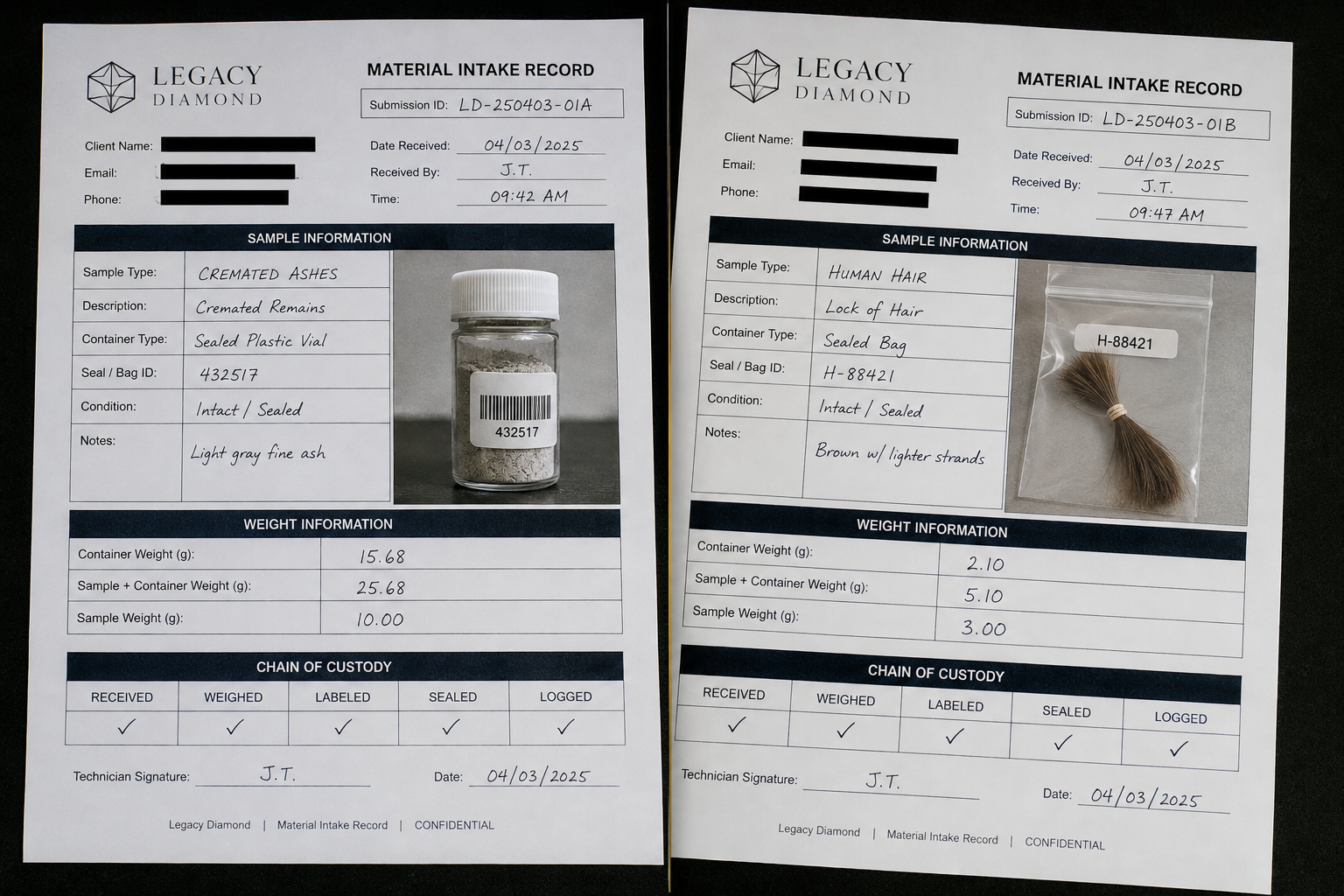
Memorial diamond made from a father's ashes and hair: a single champagne-toned lab-grown stone beside two small labeled sample containers

Is a Memorial Diamond Really Made From Your Father’s Ashes and Hair?

Two containers left the house, and one stone is coming back. If you are asking whether a memorial diamond made from your father’s ashes and hair really holds both, the answer is yes: carbon is extracted from each material separately, purified, blended together with lab sourced carbon, and grown into a single lab grown diamond. The personal carbon is a real, physical part of the crystal, though it is a minority of the finished stone’s mass, never all of it.

What the finished diamond cannot do is show you that both went in. Purified carbon from ash and purified carbon from hair are the same element in the same form. So the question worth asking about a memorial diamond made from both is not “did they really use both?” but “what can I see on paper that proves each one was handled?” That question has four answers, and they exist before the stone does.

Does a Memorial Diamond Made From Both Materials Really Contain Both?

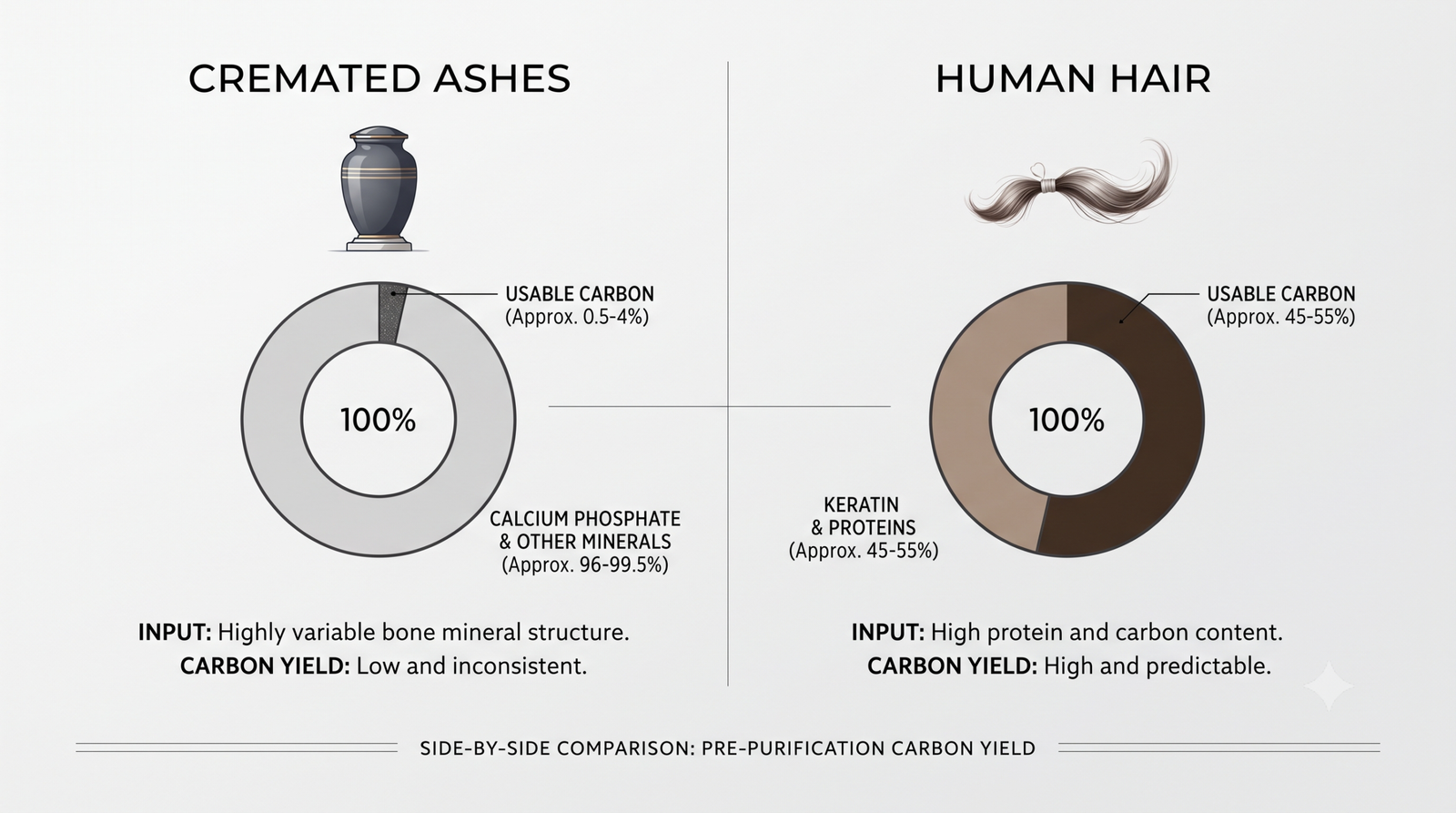
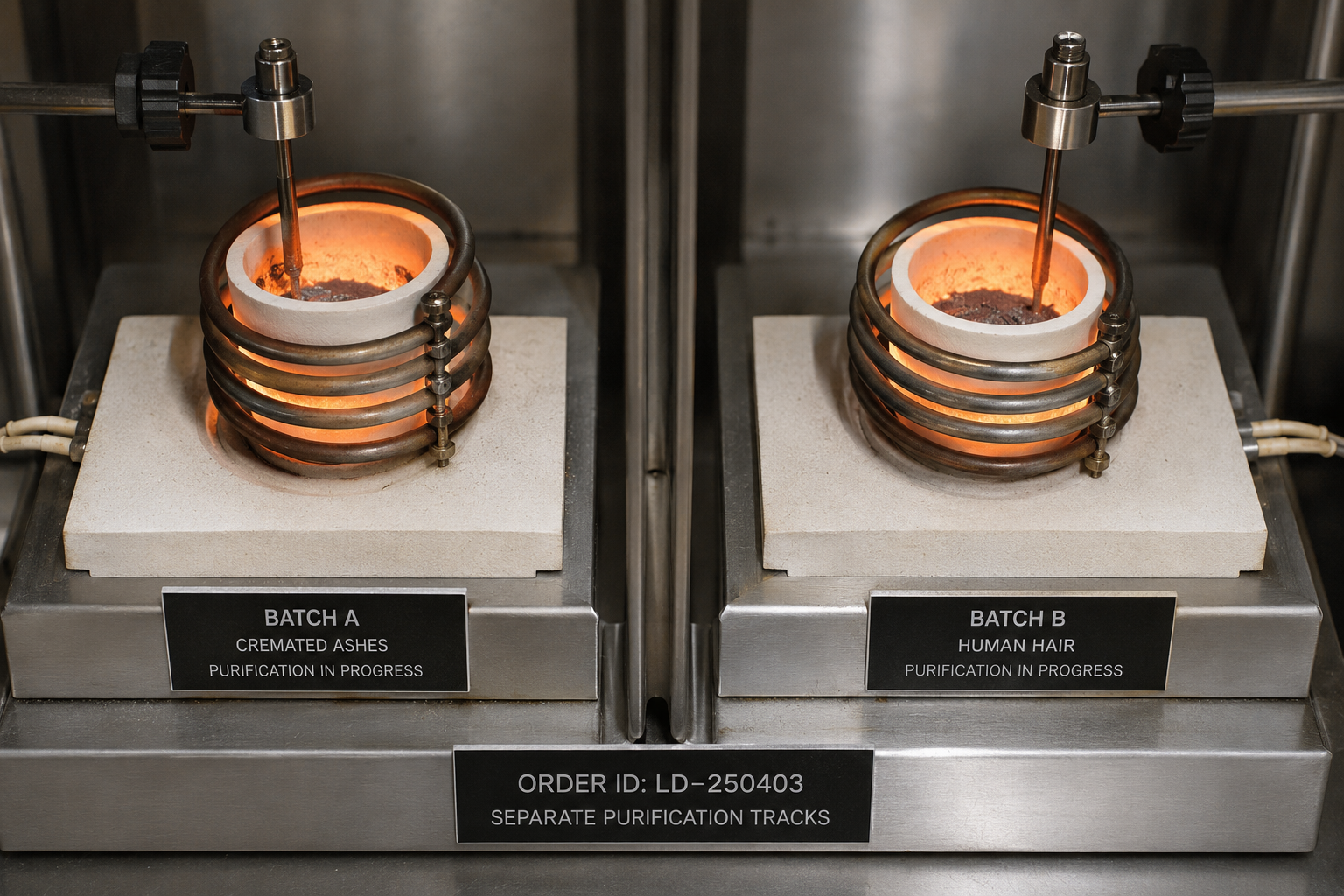
Yes, assuming the provider did what it said. The two materials arrive with very different amounts of usable carbon in them, which is why they are processed on separate tracks before they ever meet.

Cremated ashesHair
What it is mostly made ofCalcium phosphate (the mineral of bone)Keratin, a carbon rich protein
Usable carbon by weightRoughly 0.5% to 4%Roughly 50%
Typical amount neededA few tablespoons to about 4 oz (100 g)A small lock, a few grams
Predictability of yieldLow; an eightfold published rangeHigh; a single published figure
Requires cremationYesNo
Side-by-side graphic comparing carbon yield from cremated ashes and from hair before purification

Each material is heated in a controlled, oxygen free process that strips away everything except carbon, reaching roughly 99.9% purity. The two purified carbons are then combined with each other and with supplemental lab sourced carbon, converted to graphite at roughly 2,500 to 2,700°C, and grown into one crystal in a single growth run using HPHT or CVD synthesis. In the finished stone, your father’s carbon is typically a minority share of the mass; no honest provider describes a memorial diamond made this way as 100% him. How the two materials are actually processed and merged walks the full sequence.

Why Can’t the Finished Stone Prove Both Were Used?

Because after purification there is no difference left to detect, and a memorial diamond made from two sources looks like any other.

Ash derived carbon and hair derived carbon are indistinguishable once they are graphite. There is no seam in the crystal, no two tone effect, no layer that came from one and a layer from the other, and no gemological test that recovers the ratio. A grading report from a laboratory such as the GIA documents cut, color, clarity, and carat; it cannot tell you where the carbon came from, or whether it came from two places.

That cuts both ways. A provider who claims the finished stone can be tested to confirm both inputs is claiming more than the science supports. A skeptical relative who says the stone “proves nothing” is, strictly, correct. Neither of them is talking about the evidence that does exist.

What Are the Four Things You Can Actually Verify?

The proof that both materials were used lives in the paperwork, not the stone. For a combined order, these four items are the ones to ask for, and any provider serious about chain of custody should be able to produce them:

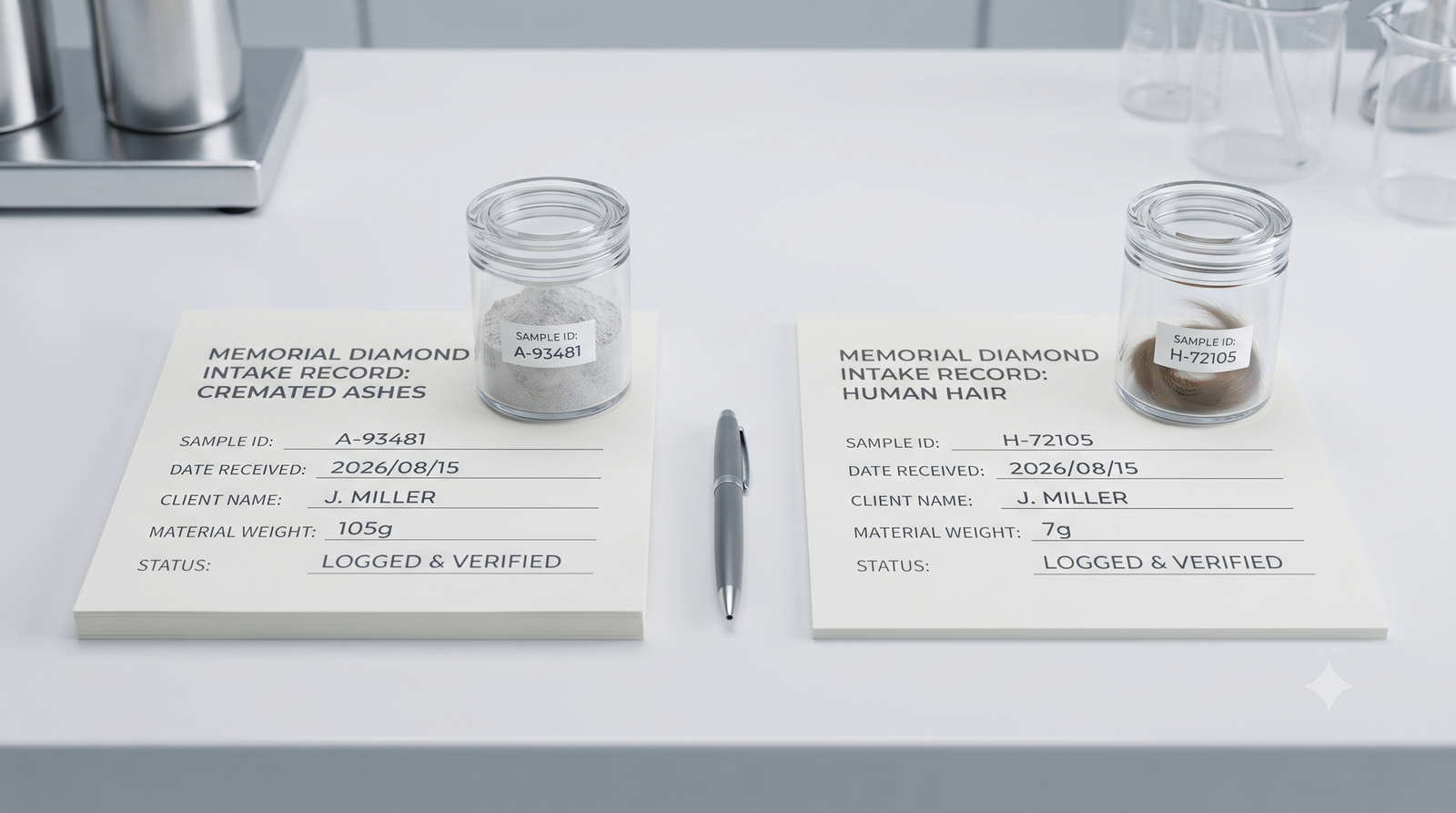
  1. Two separate intake records, one for the ashes and one for the hair, each with its own reference number, rather than a single line reading “father, combined.”
  2. A recorded carbon yield for each material before blending, so you know what each one contributed rather than a single blended total.
  3. A written shortfall procedure, stating in advance what happens if one material yields less than planned, and confirmation afterward that it was followed.
  4. Unused material returned separately, the remaining ashes and the remaining hair each coming back in its own container.
Two separate intake record sheets and sample containers, one for ashes and one for hair, on a lab bench

Those are documentary questions with checkable answers, and the good ones are answered before the parcel is sent, not after the stone arrives. A memorial diamond made from two materials is only as verifiable as the records kept on the way in. Questions to ask before turning your father’s ashes and hair into a diamond covers the wider conversation, and the single material versions of this question are answered in Is a memorial diamond really made from your father’s ashes? and Is a memorial diamond really made from your father’s hair?.

What Happens in the Window Before the Two Are Blended?

There is a moment in every memorial diamond made from two materials when the lab knows exactly what each material produced and nothing irreversible has happened yet. It sits after extraction and before blending, and it is the point a family never sees unless they asked about it.

Ash is the less predictable of the two inputs. Its carbon content is published as a range from 0.5% to 4% by weight, against a single published figure of about 50% for hair, so the ash portion is the one more likely to land somewhere other than where the plan assumed. When that happens, someone decides what to do: proceed with a smaller ash contribution, ask you for more material, or proceed on the hair plus additional lab carbon.

Those are three different outcomes, and the third one produces a stone the family will describe for the rest of their lives as made from his ashes and his hair. Nothing about that is sinister. It is a decision made inside a window you were not in, and the only way to be in the room is to have asked, in writing, what the procedure is before anything ships. How much ash and hair you need for a father memorial diamond explains what “enough” means for each material.

Frequently Asked Questions

Can a memorial diamond made from ashes and hair be tested to confirm it contains both?

No. Once both materials are purified to carbon and graphitized, they are chemically identical, and no gemological test can tell them apart or recover the ratio. Verification comes from intake records, per material yield figures, and returned material, not from the finished stone.

Does adding hair to my father’s ashes put more of him in the diamond?

Only marginally, depending on quantities. Hair contributes carbon far more efficiently than ash, so a lock can add meaningful personal carbon, but a memorial diamond made with both still needs supplemental lab carbon to reach a growable size. The personal share stays a minority of the mass either way.

Is the diamond a real diamond?

Yes. A memorial diamond made by HPHT or CVD is a genuine lab grown diamond with the same crystal structure and hardness as a mined one. Independent labs grade it on the same cut, color, clarity, and carat scale as any other diamond.

Why does the ash matter more than the hair for a combined order?

Because ash yield is unpredictable. Usable carbon in cremated remains ranges roughly eightfold, from 0.5% to 4% by weight, while hair sits near 50%. If one material falls short of plan, it is far more likely to be the ash, which is why a written shortfall procedure matters.

What should I ask for in writing before sending both materials?

Ask for separate intake records with individual reference numbers, a recorded yield for each material, the provider’s procedure if one material yields less than expected, and confirmation that unused ashes and hair come back separately. Get all four before shipping anything.

Will my father’s remaining ashes and hair come back?

Typically yes. Only a small portion of the ashes is needed, and only a lock of hair, so most providers return unused material. For a combined order, confirm they come back in separate containers so you know each one was handled on its own.

Final Thoughts on a Diamond Made From Both Ashes and Hair

The fear underneath “did they really use both?” is a fear of being told a story instead of the truth. The stone cannot settle that, and it was never going to. What can settle it is a provider willing to show you two intake records, two yields, one shortfall rule, and two containers coming home. If those exist, a memorial diamond made from both is what you were told it is, and you can stop asking the stone to prove something only paper can.

Learn More About Father Memorial Diamonds

Talk With Memorial Diamond

If you are holding both his ashes and a lock of his hair and want to know what a memorial diamond made from both would actually involve, and what you would be able to see in writing along the way, reach out to Memorial Diamond. Bring the four questions above; the conversation is better when you do.

Hand holding a small folded paper envelope of hair on a wooden table, unopened

How to Turn Your Father’s Hair Into a Diamond

Somebody found an envelope. Maybe it came from a barber’s shop, a small pouch from a grooming kit, or the back of a drawer. You are holding it now, and you do not know whether what sits inside contains enough hair.

The direct answer is simple. Turning your father’s hair into a diamond requires no cremation, no death certificate, and no special courier. Hair contains roughly 50 percent carbon by weight. An industry typical requirement involves a small lock or a few grams. You can usually send hair through ordinary tracked mail.

Before you cut, divide, wash, or send anything, weigh what you have and confirm the provider’s minimum requirement in writing.

Does Hair Have the Same Shipping Restrictions as Ashes?

No, and this is one of the most useful things to understand before you begin.

Cremated remains involve regulated shipping requirements. UPS, FedEx, and DHL restrict individual shippers from sending cremated remains. Families who post cremated remains directly generally use USPS under the applicable service requirements, or they work through a funeral professional.

You can read the ashes version of this process for the specific differences.

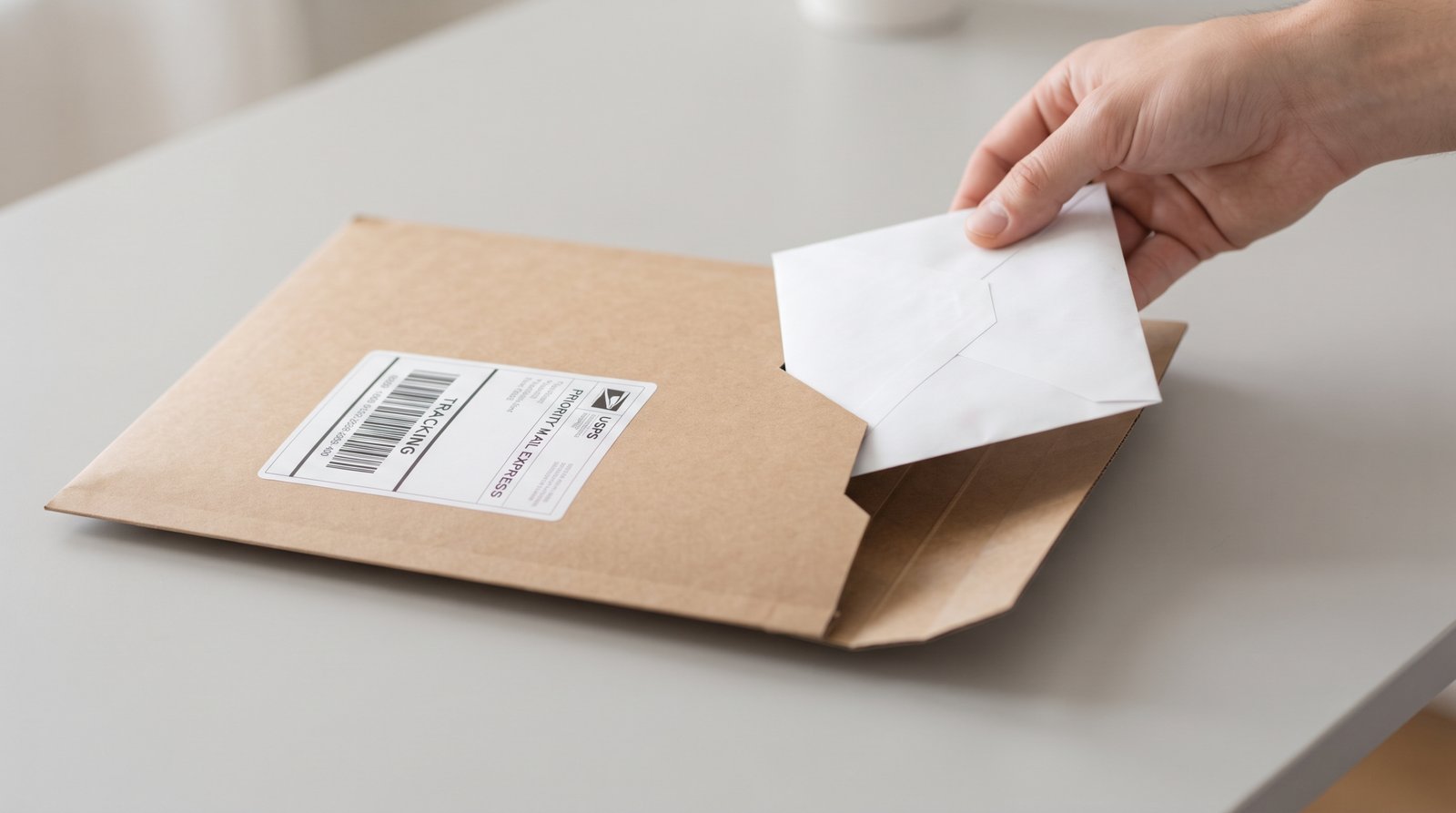
Sealed paper envelope being placed inside a rigid cardboard mailer with a tracking label attached

Hair does not follow the same shipping rules. A lock of your father’s hair can travel through ordinary mail. You still need to protect it physically because loose strands can escape from a weak envelope during sorting.

Use a sealed paper inner envelope inside a rigid mailer. Add tracking so you can follow the delivery.

A lock of his hairHis cremated remains
Carrier restrictionsNo specific restriction for hairUPS, FedEx, and DHL restrict individual shippers. USPS provides the practical direct mailing route for families
PaperworkNo cremation paperwork requiredProviders may request cremation or death documentation

Hair therefore creates a different kind of responsibility. No external shipping process checks the contents for you. Your own handling, documentation, packaging, and tracking create the safeguards.

When What You Found Is Short, Sparse, or Not Clearly His

Weight matters more than length. Short clippings, beard hair, thinning hair, and other forms of hair can raise questions that you should settle before mailing anything.

The complete guide to a father hair diamond covers the broader question of which types of hair can work.

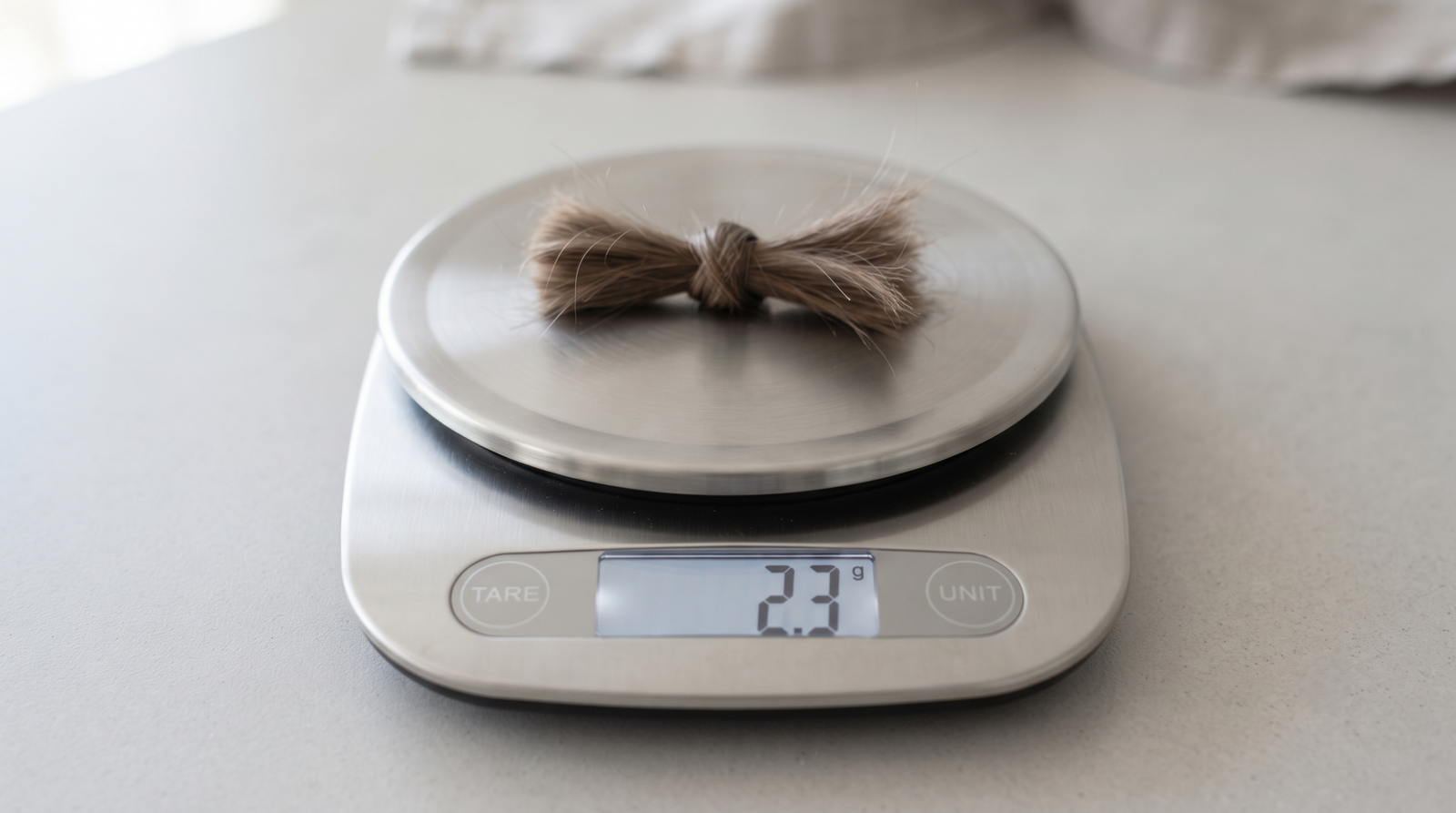
Small lock of hair on a digital kitchen scale showing a reading in grams

What if you are not completely sure the hair belonged to him?

Provenance matters. A shared hairbrush, razor, cap, or another household item can create uncertainty if more than one person used it.

A laboratory cannot separate mixed hair after you send it. The family needs to establish where the hair came from before posting it.

If you cannot establish the source with confidence, tell the provider during your enquiry. Do not wait until the laboratory receives the material.

What if you genuinely have too little hair?

Do not cut more hair before you understand the minimum. A smaller diamond generally requires less material, so how much hair a father memorial diamond needs can help you understand the relationship between material and size.

If ashes also exist, you can ask whether the provider accepts both materials. Sending his ashes and hair together explains that combined route.

Before posting anything, ask whether the provider will review a photograph and your stated weight and tell you what options you have. Some providers may offer this service, but you should confirm it rather than assume it.

Handling a Lock So It Stays Usable

Hair can remain usable for decades when you store it properly. Your goal should therefore focus on preserving what you already have.

  • Keep it whole and dry. Loose strands can disappear during handling, while moisture creates an unnecessary storage problem.
  • Do not wash it. Washing can send strands down the drain and does not provide a useful advantage because the purification process removes material that does not contribute the required carbon.
  • Use paper rather than sealed plastic. A paper envelope provides a practical storage option. A sealed plastic bag can trap moisture around the hair.
  • Do not divide it before you know the minimum. Splitting a small amount can leave you with too little material for your preferred diamond size.
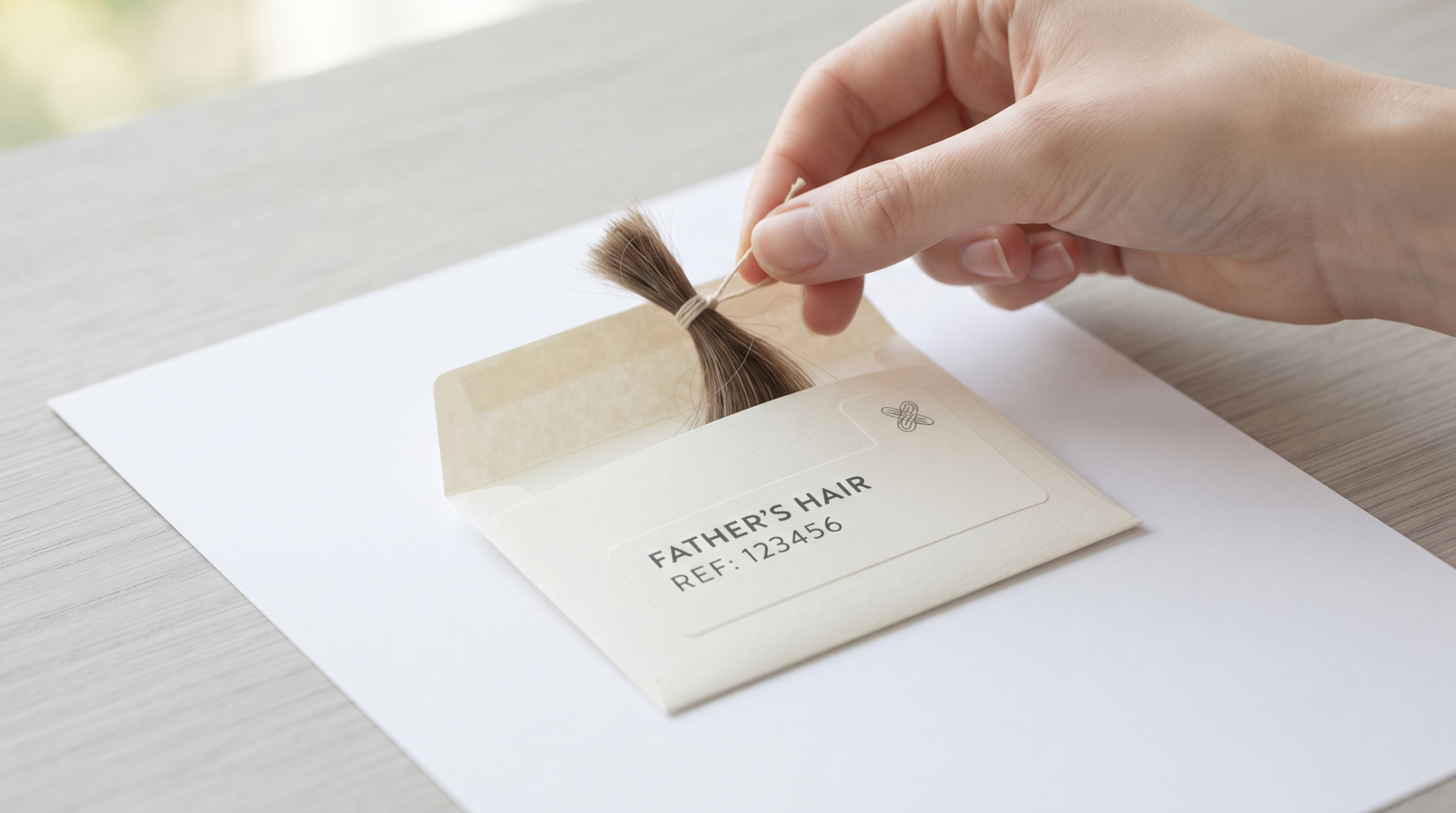
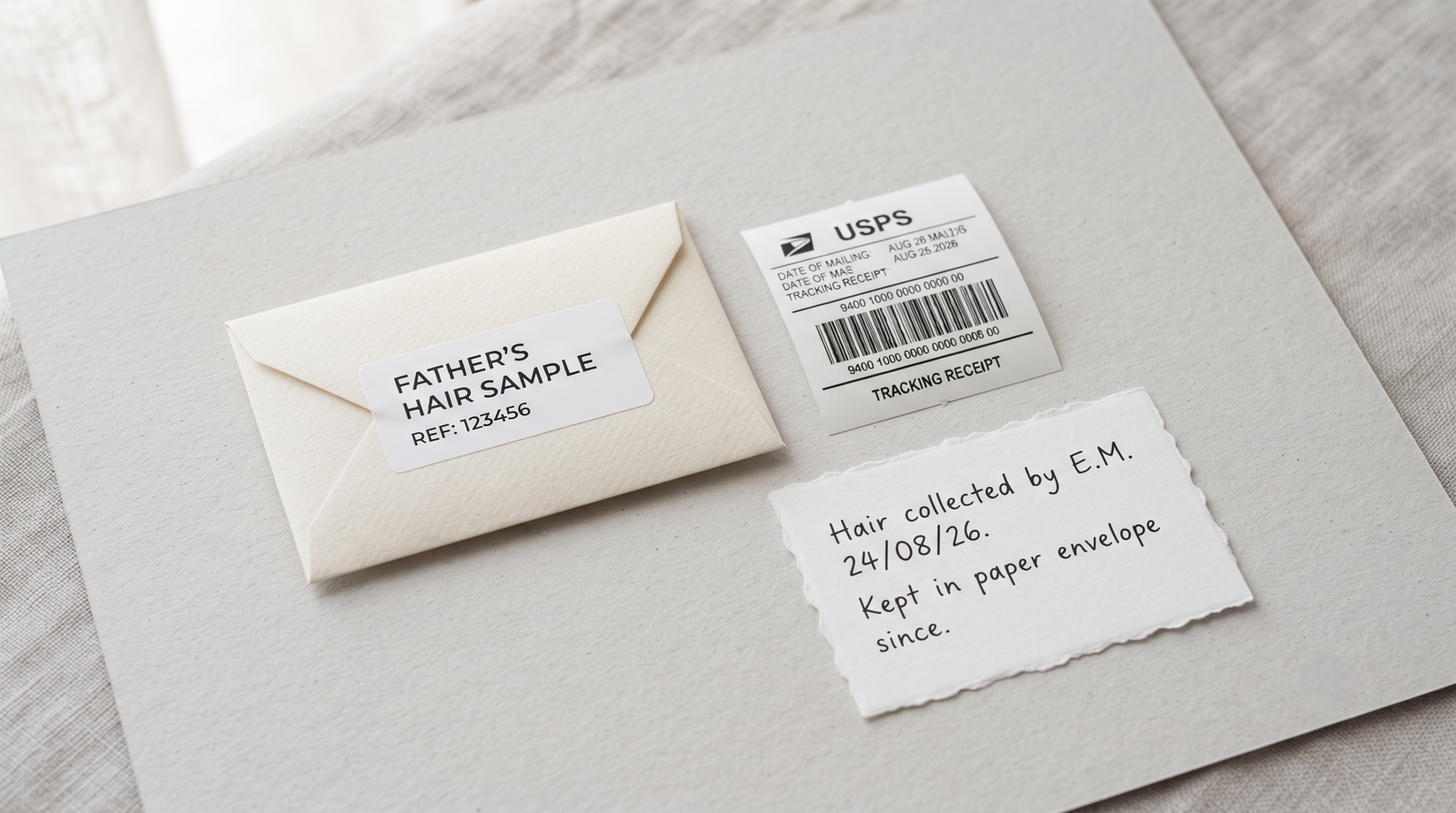
  • Label the inner envelope. Include your father’s name and the provider reference number when the provider gives you one.
Tied lock of hair being placed into a labelled paper inner envelope over a sheet of white paper

Dyed, grey, treated, and long stored hair can remain chemically workable because the extraction process focuses on the carbon within the material. Hair colour does not determine the final diamond colour.

Building a Record When There Is No Cremation Paperwork

This represents one of the biggest practical differences between ashes and hair.

Ashes usually come with an institutional history. A crematorium can record the cremation, a funeral home can release the remains, and documentation can identify the person and date.

Hair does not automatically carry that same institutional record. You can therefore create your own record before sending it.

What ashes can have behind themWhat hair has behind itWhat you can create yourself
A cremation certificate and funeral home recordNo equivalent institutional recordA dated note naming your father, who collected the hair, when they collected it, where they found it, and who has held it since
Recorded weightsNo automatic weight recordYour own weight in grams and a photograph showing the hair on the scale
A regulated carrier recordOrdinary mailTracking information and delivery confirmation
Provider intake documentationProvider intake documentationWritten confirmation of what the provider received and its recorded weight

Keep copies of anything you place inside the package. Keep the tracking number and delivery confirmation with your records.

Handwritten dated note beside a labelled paper envelope and a tracking receipt

Also record the source of the hair with as much useful detail as you can. Instead of writing only “his hair,” write something such as “cut by the hospice nurse on 3 March and kept in the bedside drawer since.”

A detailed source note gives your family something concrete to refer to if questions arise years later.

If you want to understand the provider side of this process, read how companies track a loved one’s material through the process.

What Should You Ask Before You Post Anything?

Everything before the mailing can change. Once you send the hair, the process moves into another stage. Get the important answers in writing first.

  1. What is your minimum weight for the carat and colour I am considering?
  2. Will you assess a photograph and stated weight before I send anything?
  3. Do you accept short clippings, beard hair, or body hair?
  4. What happens if the material arrives underweight?
  5. Do you return unused hair, and if so, how?
  6. What reference number will you assign to the material?
  7. Will you confirm the weight received?

If your available hair sits close to the minimum, choosing a smaller diamond can make more sense than cutting additional hair. Questions worth asking before turning your father’s hair into a diamond covers additional questions about pricing, grading, and the overall process.

What Happens After the Hair Reaches the Lab?

The provider logs the material under its chain of custody. The laboratory then purifies the hair, converts the carbon into a suitable form, and grows the diamond around a diamond seed before cutting and grading the finished stone.

How a memorial diamond is made from your father’s hair explains the production stages in greater detail.

One important qualification belongs in any honest explanation of the process. Your father’s purified carbon combines with supplemental laboratory carbon to provide enough material for diamond growth. Industry information places the personal carbon contribution at roughly 10 to 15 percent of the finished stone’s mass.

The finished diamond therefore contains a real physical portion of his carbon. It does not consist entirely of his carbon.

Production commonly takes around 6 to 10 months from the laboratory receiving the hair. Larger or specialty colour stones can take longer, with some timelines reaching around 12 months. The complete journey from the first decision through production, delivery, and final jewellery work can reach roughly 8 to 14 months.

Growth time determines the carat size. Sending more hair does not automatically make the diamond larger or make the laboratory finish it faster.

The complete guide to memorial diamonds covers the broader process, material requirements, timing, and major decisions.

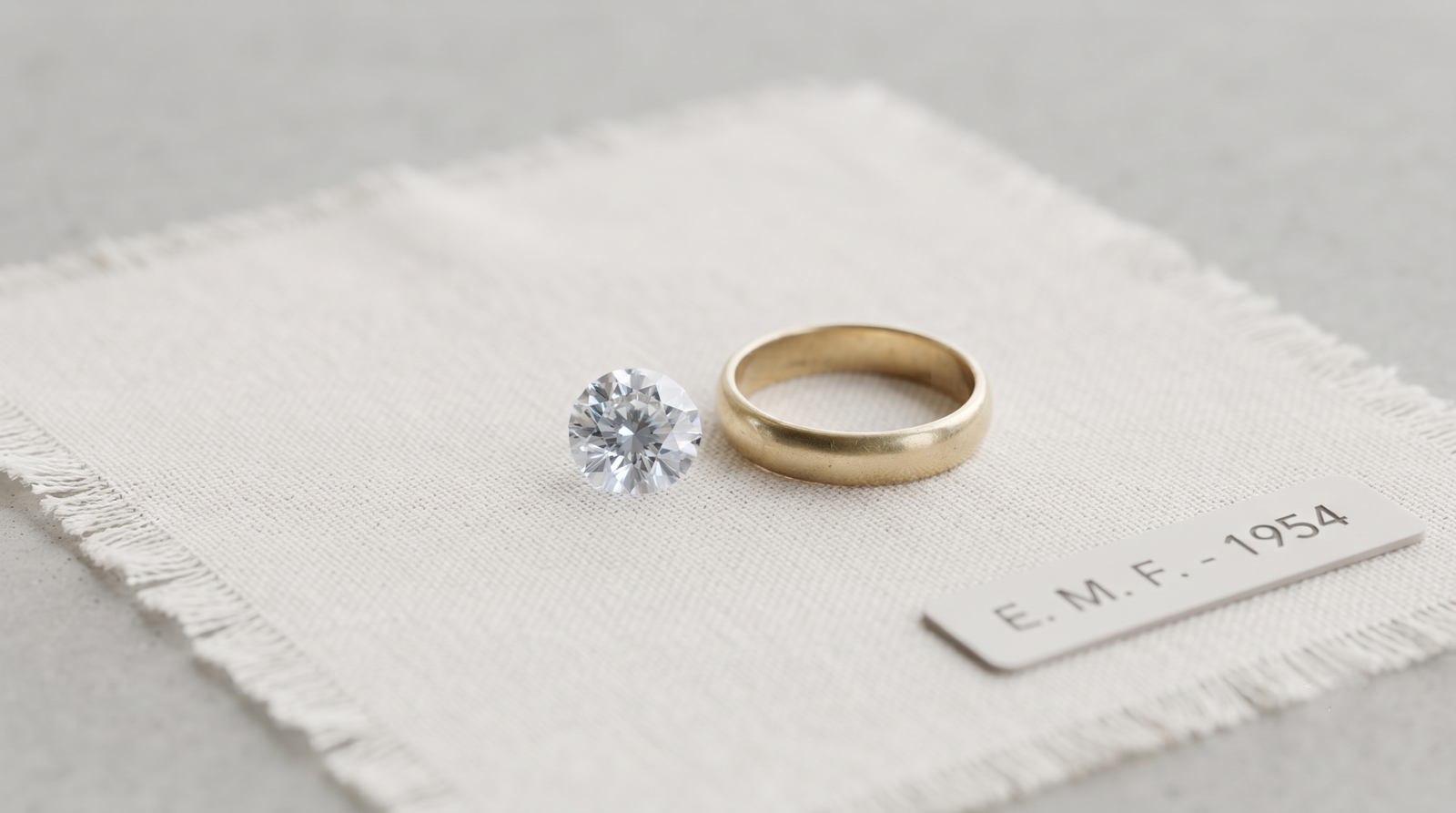
The finished diamond can arrive loose in a presentation box with its documentation. If your father left behind a wedding band, signet ring, or watch, you may want to ask a jeweller whether they can incorporate the memorial diamond into an existing piece. The jeweller can assess the individual item and explain whether the design can safely accommodate the stone.

Frequently Asked Questions

Do I need a death certificate or cremation paperwork to send hair?

No. Hair does not require cremation, so you do not need cremation paperwork simply to mail the hair. A provider may still request identifying information or its own documentation. You can also create a dated record that identifies your father and explains where the hair came from.

How do I document a lock when no cremation paperwork exists?

Create the record yourself. Write the date, your father’s name, who collected the hair, when and where they collected it, and who held it afterwards. Add the weight in grams, photograph the hair on the scale, and keep the provider’s confirmation of what arrived.

Should I wash the hair before I send it?

No. Washing can cause you to lose strands and does not provide a useful advantage. Keep the hair dry and whole. Place it in a paper envelope rather than a sealed plastic bag and follow the provider’s intake instructions.

Can I send part of the lock and keep the rest?

Wait until you know the provider’s minimum requirement. Dividing a small lock before confirming the required weight can leave you with too little material. Once you know the minimum, you can decide whether you want to keep some of the remaining hair.

Does mailing hair require special postage or a special carrier?

Hair does not carry the same shipping restrictions as cremated remains. You can generally use ordinary mail. A tracked service and rigid mailer can provide practical protection while the package travels.

Loose memorial diamond resting beside a worn gold wedding band on a jeweller's cloth

Put It on a Scale Before You Put It in the Post

None of this needs to happen immediately. Hair can remain usable on a shelf when you store it properly, so you have time to make a careful decision.

Your first step does not need to involve a purchase or a pair of scissors. Start with a scale, a photograph, and one question for the provider.

Is this enough for the diamond size I am considering, and can you confirm that before I send it?

Weigh the hair before you cut or divide anything. Record the result. Photograph it. Then ask the provider about the minimum requirement and the material they accept.

If you want to understand the full process before making that decision, explore the complete guide to memorial diamonds.

The envelope in your hand may contain the only hair you have from your father. Treat it accordingly.

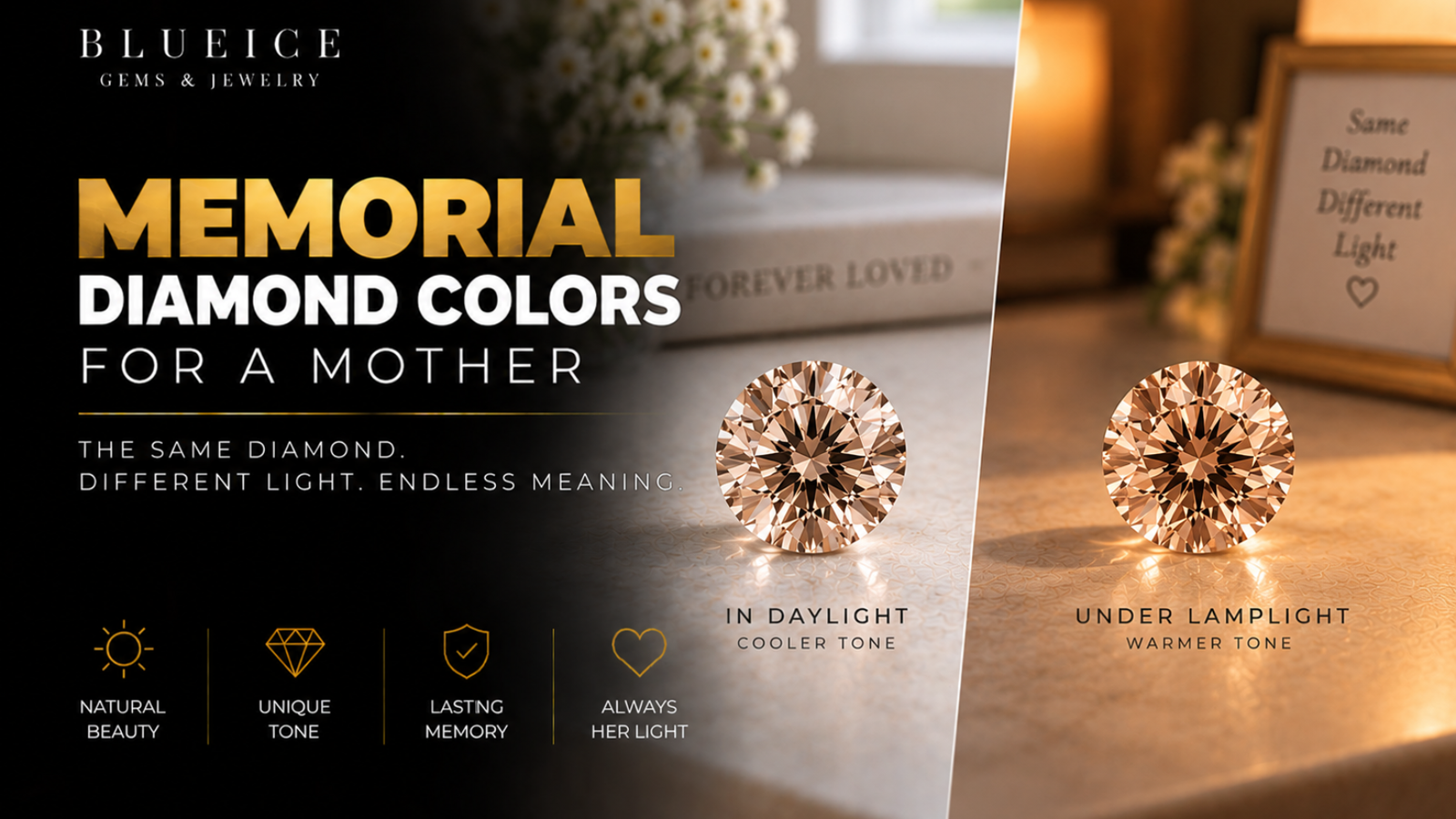
The same champagne-toned memorial diamond photographed twice side by side, once in cool daylight and once under warm lamplight

Memorial Diamond Colors for a Mother: What to Expect

Hold a champagne memorial diamond near a kitchen window and you may see a warm, faintly golden brown tone. Move the same diamond beneath a warm dining room lamp and the stone may appear more amber. The diamond stays exactly the same. The surrounding light changes how your eyes see its color.

When families explore memorial diamond colors for a mother, they usually want to know which colors exist, what creates each color, how much each option costs, and which color will continue to feel right years from now.

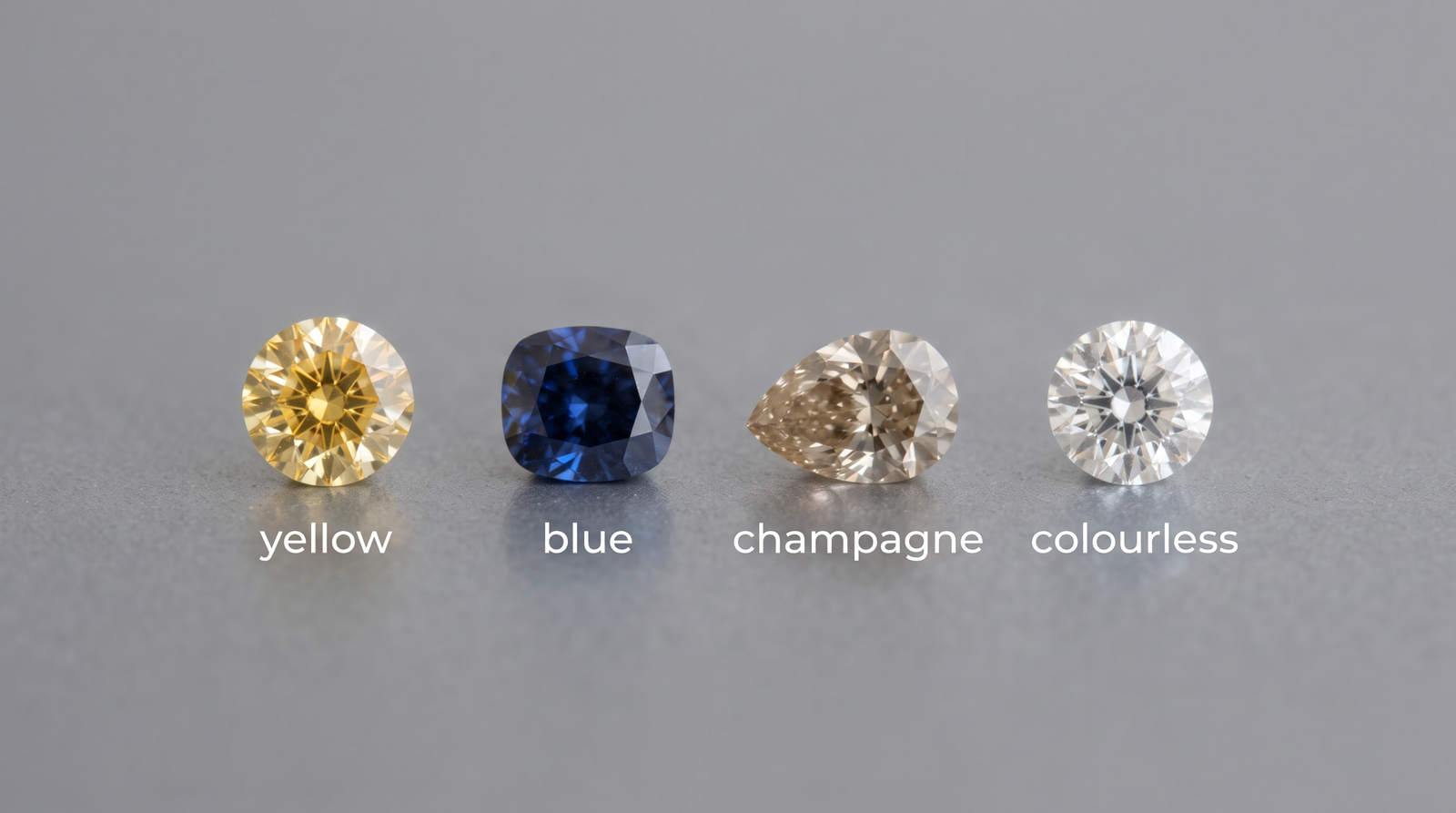
Memorial diamond colors generally fall into several groups. Yellow, blue, and champagne or brown represent common natural color outcomes. Colorless diamonds require the near total absence of the trace elements that create other colors and can cost more at the same carat size. Some providers also offer red, pink, green, or black through post growth irradiation.

This guide focuses on the colors you can consider when choosing a mother’s memorial diamond. If you want to understand what color a specific portion of her ashes or hair may produce, explore our guides about the ashes version, the hair version, and the version for both together.

Which Colors Can You Actually Choose From?

Five main color families give families the starting point for a memorial diamond. The crystal growth process determines the natural color through trace elements present during growth.

Nitrogen produces yellow. Boron produces blue. Champagne and brown tones can develop when an organic carbon source carries a mixture of trace elements. Colorless growth requires the near total absence of nitrogen and boron.

Four loose memorial diamonds in yellow, blue, champagne and colourless tones arranged in a row on a neutral grey surface

The carbon preparation also matters. Providers purify personal carbon and blend it with supplemental laboratory carbon to create the material needed for diamond growth. Industry information places the personal carbon contribution for ash derived stones at roughly 10 percent to 15 percent of the finished stone mass.

ColorWhat creates itRelative cost at the same caratAvailability
YellowNitrogen during growthLower price rangeStandard option
BlueBoron during growthLower price rangeStandard option
Champagne or brownA mixture of trace elements in an organic carbon sourceLower price rangeStandard option
Colorless or whiteNear total absence of nitrogen and boronMeaningfully higher than the three colors aboveConfirm availability at your chosen carat
Red, pink, green or blackPost growth irradiationAdditional treatment can increase the priceSome providers offer these colors

For a deeper explanation of why colorless memorial diamonds remain less common, read why memorial diamonds are rarely colorless.

What Does Post Growth Irradiation Do to Her Stone?

Post growth irradiation changes how a finished diamond absorbs light. It does not change what the crystal consists of.

Irradiation takes place after diamond growth. Controlled exposure alters color centers inside the crystal structure and can shift the appearance toward red, pink, green, or black.

The diamond remains a diamond. Its hardness remains 10 on the Mohs scale, the same hardness associated with other diamonds.

The treatment also creates an important documentation difference. A grading report can identify a treated color rather than presenting that color as the diamond’s original growth color.

Irradiation also does not change the personal carbon contribution. Providers establish that contribution during the material preparation and blending process before diamond growth begins.

If you consider an irradiated color, ask your provider how the treatment appears on the grading documentation and whether the provider offers any policy for future color changes.

Color Reads Differently as the Stone Gets Bigger

Body color appears through the depth of a diamond. As the stone grows, the same tint can become easier to see.

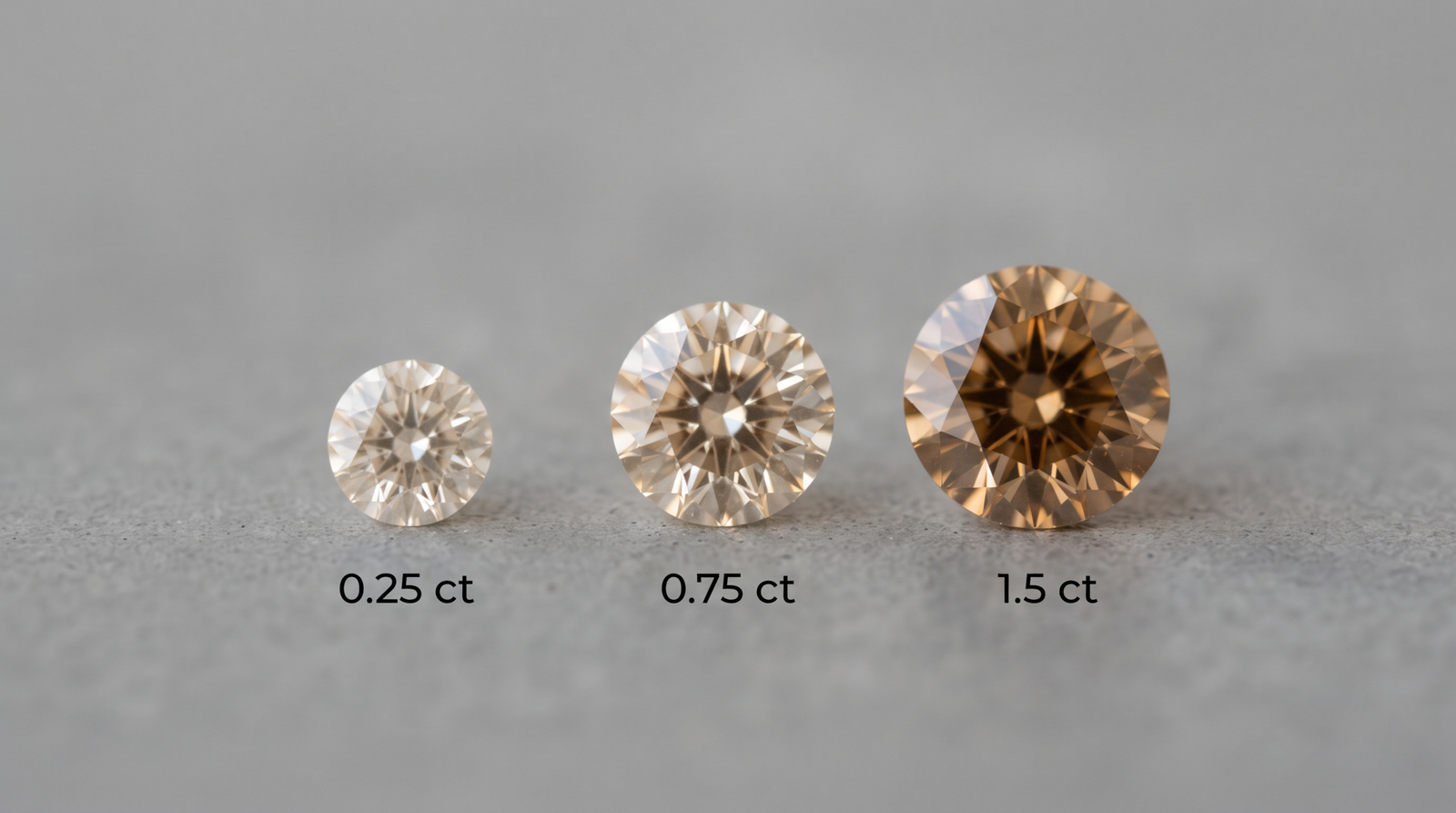
A subtle champagne tone may appear understated in a 0.25 carat stone and much more noticeable in a larger stone. Consider your preferred level of color before you choose the size.

  • If you want the color to stand out, a larger stone can make the tone easier to notice.
  • If you want the color to remain subtle, a smaller stone can create a quieter appearance.
  • If you want a colorless stone, the higher price can become more significant as the carat size increases.
Three champagne memorial diamonds of increasing carat size photographed together, showing the tint reading more strongly as the stone grows

Carat size depends on diamond growth time rather than the amount of material you send. Read how to choose a carat size before you finalize the stone size.

Production commonly takes around 6 to 10 months from the laboratory receiving the material. Large stones and specialty colors can require up to 12 months. Your complete planning period can reach around 8 to 14 months when you include preparation, shipping, decisions, and jewelry work.

Read what actually drives the timeline for a closer look at each stage.

The Setting Metal Decides What You Actually See

The diamond keeps its own color, but the jewelry metal around it can change how your eyes perceive that color.

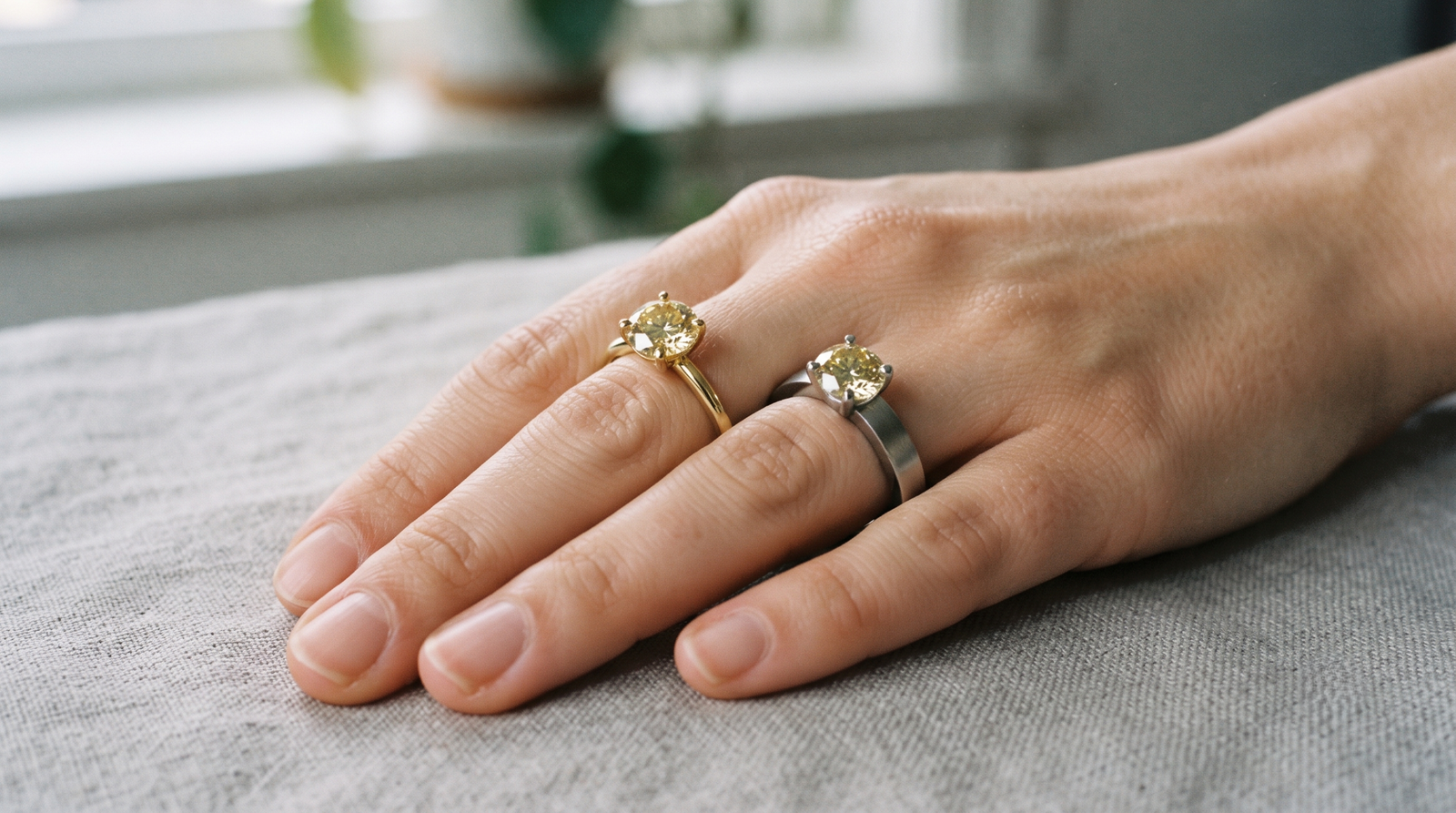
Yellow gold creates a warm combination with yellow and champagne stones. The similar tones can make the diamond color feel softer and more coordinated.

Platinum and white gold create a cooler contrast. That contrast can make a warm diamond appear more noticeable while making a near colorless stone appear whiter.

Rose gold can add another layer of warmth to a champagne diamond and can make the overall combination appear more pink.

A yellow-toned memorial diamond shown set in yellow gold beside an identical stone set in platinum, on a hand

White gold commonly uses rhodium plating to create its bright white surface. Normal wear can reduce that plating and reveal the warmer metal underneath. A jeweler can restore the bright surface through replating.

For that reason, consider your jewelry metal at the same time as your diamond color. Explore settings and jewelry ideas for a mother’s stone before you make your final selection.

Ask to see your preferred diamond color against both warm and cool metals. That simple comparison can help you understand how the finished jewelry may look on your hand.

What Does Color Add to the Price?

Carat size usually creates the largest difference in price. Color then moves the price within the relevant carat range.

Industry pricing information for 2026 places a 0.10 to 0.25 carat memorial diamond around $1,500 to $3,500. A 0.5 to 1 carat stone can range around $5,000 to $15,000. A 2 to 5 carat stone can reach approximately $20,000 to $75,000 or more.

Colorless diamonds can cost meaningfully more than yellow, blue, or champagne diamonds at the same carat size. Irradiated colors can create another treatment cost.

Grading, engraving, fancy cuts, and jewelry settings can also add separate costs.

These figures represent general industry ranges rather than Memorial Diamond pricing. Always ask for the current price of your chosen carat and color combination.

Read what a mother memorial diamond actually costs for a deeper look at pricing.

How Do You Choose a Color You Will Still Like in Twenty Years?

Choose for the jewelry itself as well as the story behind it. A color can carry a beautiful connection to your mother, but you also want a stone that you genuinely enjoy wearing.

Blue may remind you of her love for the ocean. Yellow may remind you of her warmth. Champagne may match the jewelry she wore every day. Those personal connections can guide your decision, but your own style matters too.

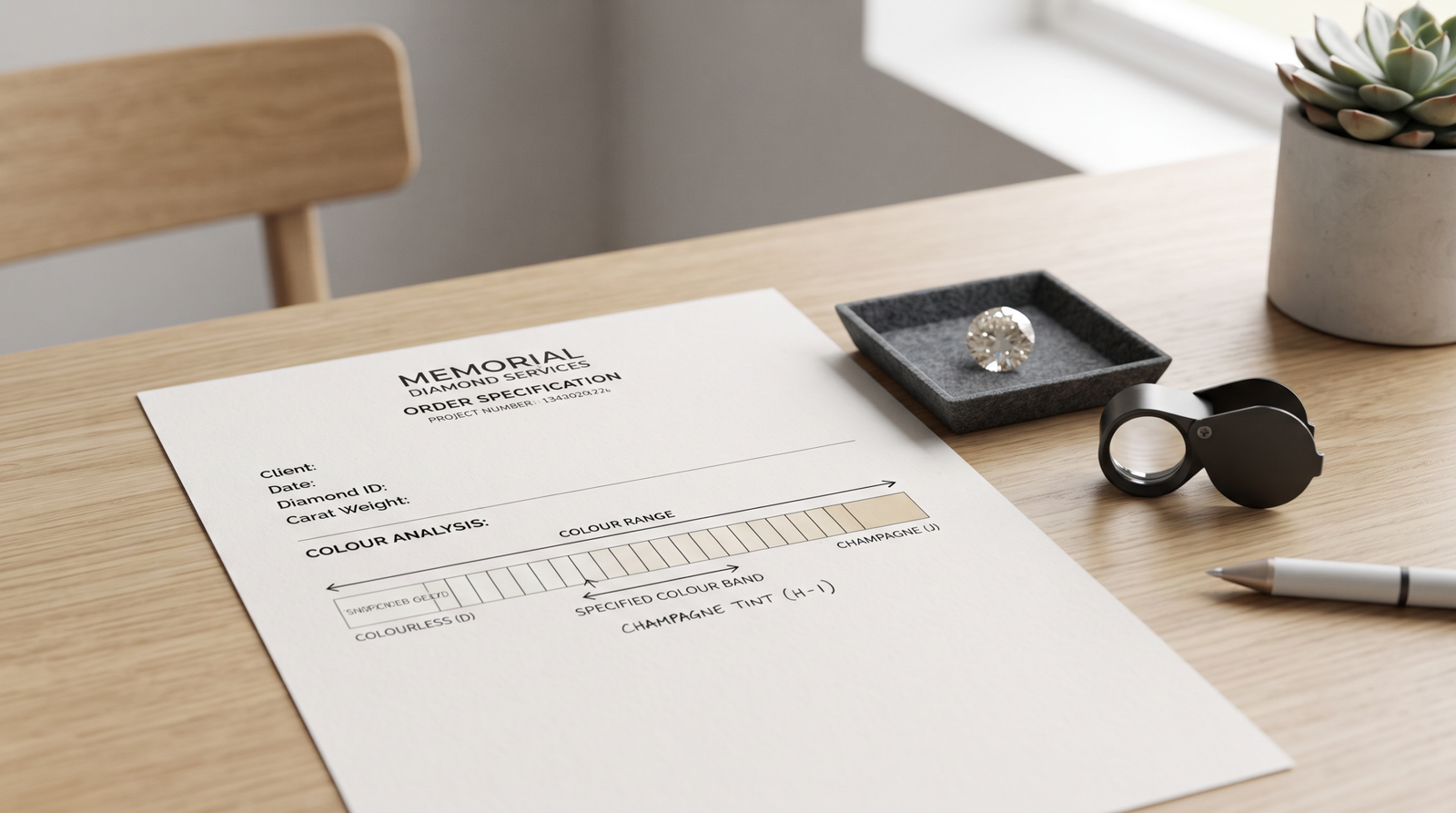
An order specification on a desk with a colour range noted beside a loose memorial diamond and a loupe

Look at What You Already Wear

Look at your everyday jewelry rather than a piece you wear only on special occasions. If you normally wear yellow gold, a yellow or champagne diamond may fit naturally into your collection.

If you prefer platinum or white gold, a blue or colorless diamond may complement your usual style.

Ask for a Color Family

Ask your provider to describe the expected color family rather than promising one exact shade.

Organic source material can create natural variation, so a provider cannot honestly promise one precise natural tone in advance. A clear color family with an agreed range gives you a more useful expectation.

Think About a Future Setting

You may eventually move your diamond from one piece of jewelry to another. A pendant today could become a ring years from now.

Consider how your chosen color will work with different jewelry styles. An unusual treated color may require more thought when you choose another setting in the future.

Think About the Person Who May Inherit It

Your memorial diamond may eventually become a family heirloom. Someone who receives it may never have met your mother.

Choose a stone that looks beautiful on its own while still carrying the personal meaning behind it. That approach can help the diamond remain meaningful across generations.

Frequently Asked Questions

Can I choose the color, or is one assigned to me?

You can choose from the colors your provider offers and specify your preference during the ordering process. You cannot expect a provider to guarantee one exact natural shade from organic source material. Ask for a realistic color family and an agreed tolerance instead.

Does a colorless memorial diamond mean less of her is in it?

No. The personal carbon contribution depends on the material preparation and blending process rather than the final color. Industry information places the personal carbon contribution for ash derived stones around 10 percent to 15 percent of the finished stone mass.

Colorless growth focuses on limiting nitrogen and boron. It does not remove the personal carbon contribution.

Is an irradiated pink or black stone still a real diamond?

Yes. Irradiation changes the color centers inside a diamond that already exists. The treatment does not turn the stone into another material, and the diamond retains its hardness.

Ask your provider how the treatment appears on the grading documentation.

Will the color fade over the years?

Diamond color comes from the crystal itself rather than a surface coating that ordinary wear can remove. Normal wear therefore does not fade the structural color.

If you choose an irradiated color, ask your jeweler about heat exposure during future repairs, resizing, or other jewelry work.

Can the color be changed after the stone is finished?

Irradiation can create color after diamond growth, so additional treatment can exist as a technical option. Whether your provider accepts a finished memorial diamond for another treatment depends on that provider’s policy.

Ask about this possibility before ordering if you think your color preference could change later.

Which color gives me the most stone for the money?

Yellow, blue, and champagne generally sit toward the lower part of the price range at the same carat size. Colorless diamonds can cost more at the same size. Irradiated colors can add another treatment charge.

Compare the complete price for your preferred carat and color combination rather than comparing color alone.

Does choosing a specialty color make the wait longer?

It can. Production commonly takes around 6 to 10 months from the laboratory receiving the material. Large stones and specialty colors can require additional time.

Ask your provider for the expected production period for your specific carat and color before ordering.

Pick the Color You Would Wear on an Ordinary Tuesday

Choosing a memorial diamond color becomes easier when you make the decisions in the right order.

Start with carat size because it affects your budget and how strongly the color may appear. Consider the jewelry metal alongside the color because the surrounding metal can change the way your eyes perceive the stone.

Then choose the color you would genuinely enjoy wearing on an ordinary day.

Ask your provider which colors they currently offer at your preferred carat size. Ask what color range they can realistically provide and whether they can record that range in your order documentation.

Your mother’s memorial diamond should feel meaningful when you first receive it and continue to feel right years later. Take the time to choose a color that connects with her memory while also fitting naturally into your own life.

how much ash you need

How Much Ash Do You Need for a Mother Memorial Diamond?

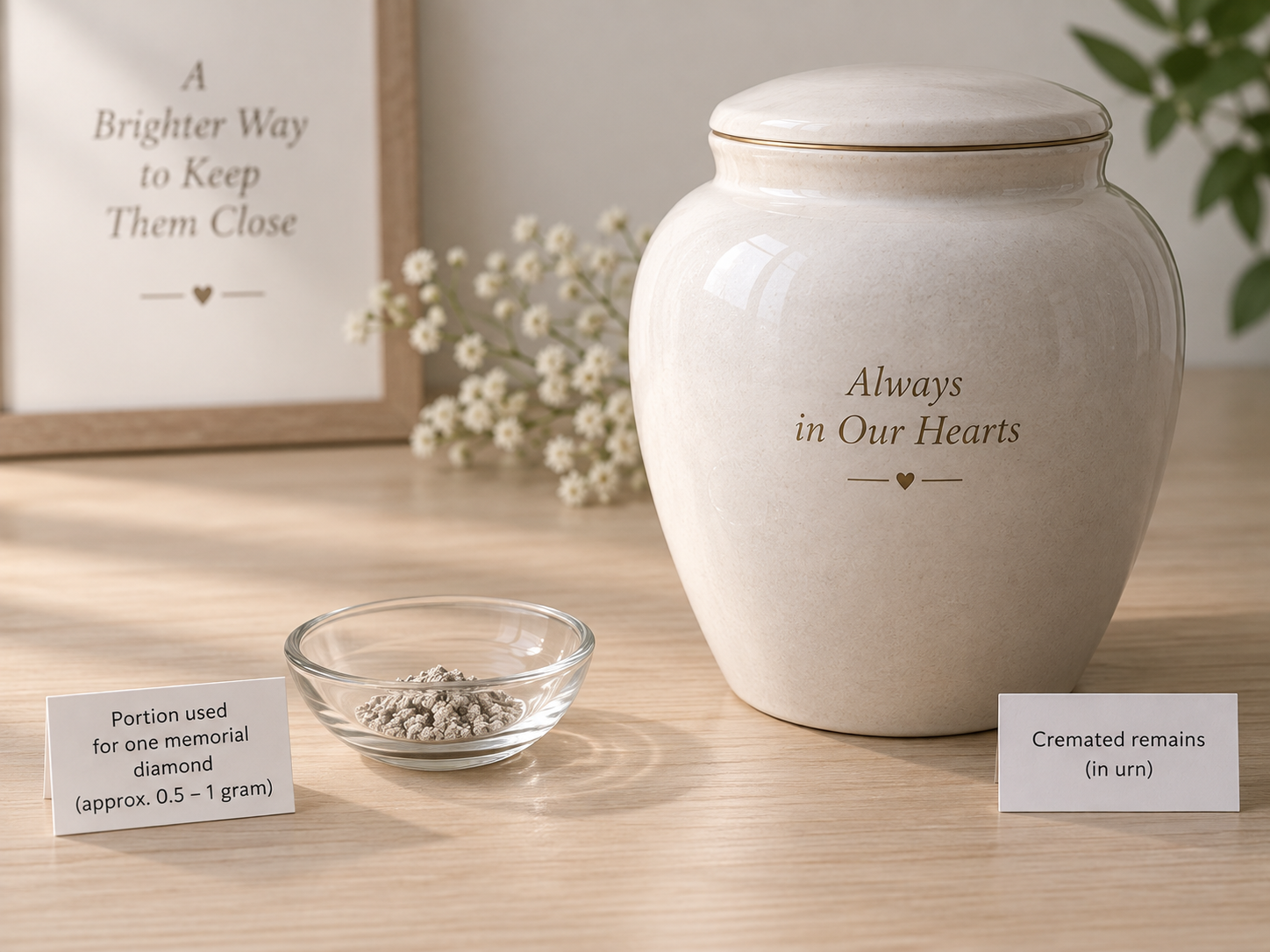
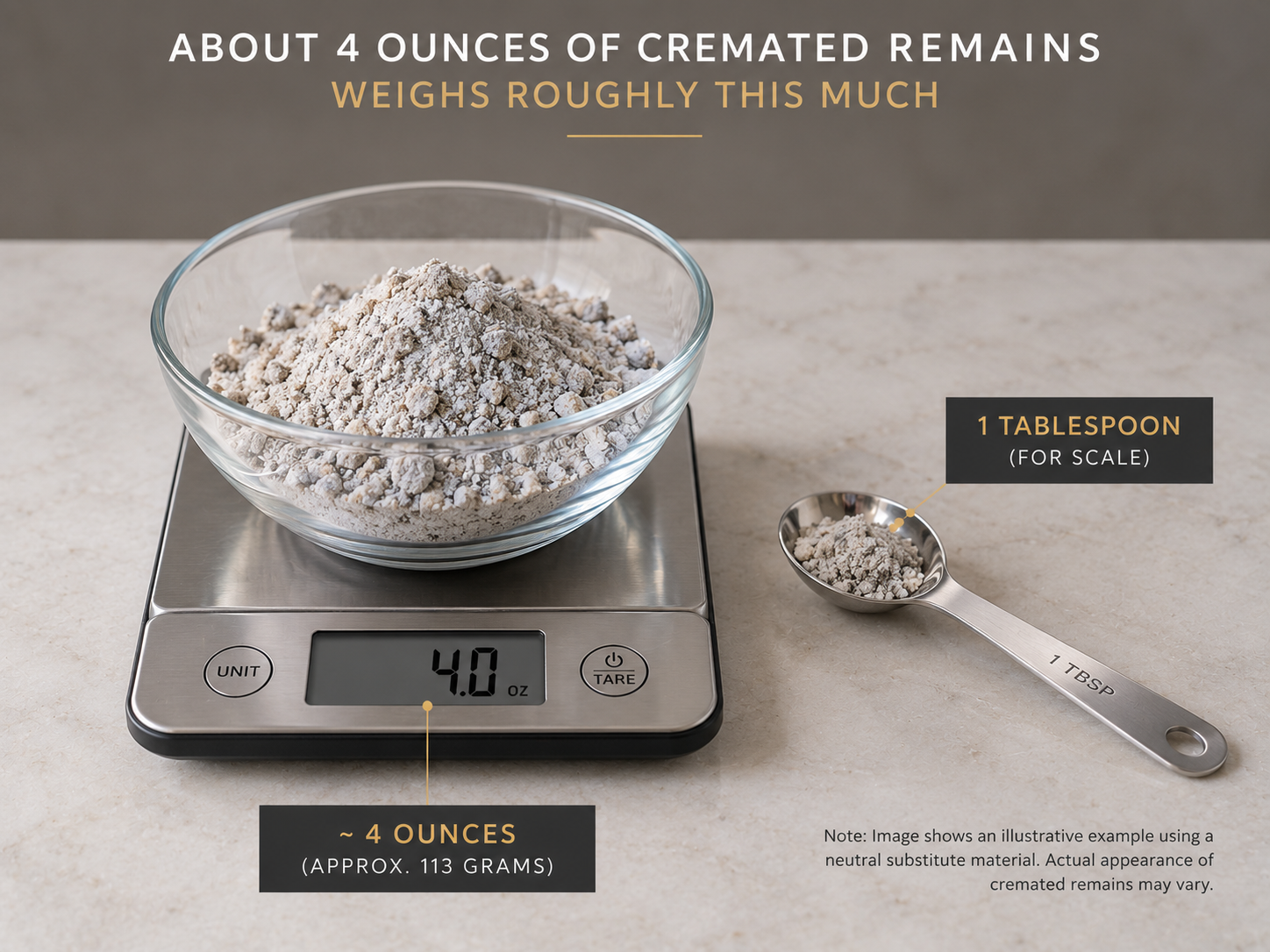
A few tablespoons, measured out of the urn with a clean dry spoon. That is where the industry range starts, and it runs up to roughly 4 oz about 100g of cremated remains for one memorial diamond. Either way it is a small fraction of what a cremation produces: the rest stays with you, for whatever you had already planned. Handing over more would not make the finished stone any bigger.

Carat size is bought with time in the growth press, not with volume of ash.

Small measured portion of cremated ashes in a clean glass dish beside a closed ceramic urn on a pale wooden table

On This Page

How Much of Her Ashes Does the Process Actually Use?

The industry figure runs from a few tablespoons at the low end to about 4 oz (100g) at the high end. Providers set their own requirement inside that band, so the number that matters is the one your provider publishes.

Ash is a demanding starting material, which is why the requirement isn’t smaller still. Cremated remains are mostly calcium phosphate, the mineral structure of bone; usable carbon is only about 0.5% to 4% of ash by weight. Recovering a workable quantity means starting with a spoonable amount, not a pinch.

Roughly four ounces of cremated remains weighed on a small kitchen scale next to a tablespoon for scale
What’s Being MeasuredIndustry-Typical FigureWhat It Means for Your Urn
Ash a provider asks forA few tablespoons to ~4 oz (~100g)A small fraction of a full cremation’s remains
Usable carbon in that ash~0.5–4% by weightAsh is mostly bone mineral, not carbon
Purity after extraction~99.9%+ carbonEverything non-carbon is stripped away
Her carbon in the finished stoneTypically ~10–15% of its massBlended with lab carbon — never 100% ash
Carat sizes generally offered~0.10 ct to 5+ ctChosen by you, then grown to that size
Growth time to get there~6–10 months, up to ~12 for large or specialty stonesThe actual lever on size

The important point is that her carbon is genuinely in the crystal, but it is not the only carbon in it. Any provider claiming a stone is 100% her ashes is describing something the physics does not allow. Read the honest version of that claim before you commit to anyone.

Does Sending More Ash Make a Bigger Diamond?

No, and this is the piece most competitor content quietly gets wrong.

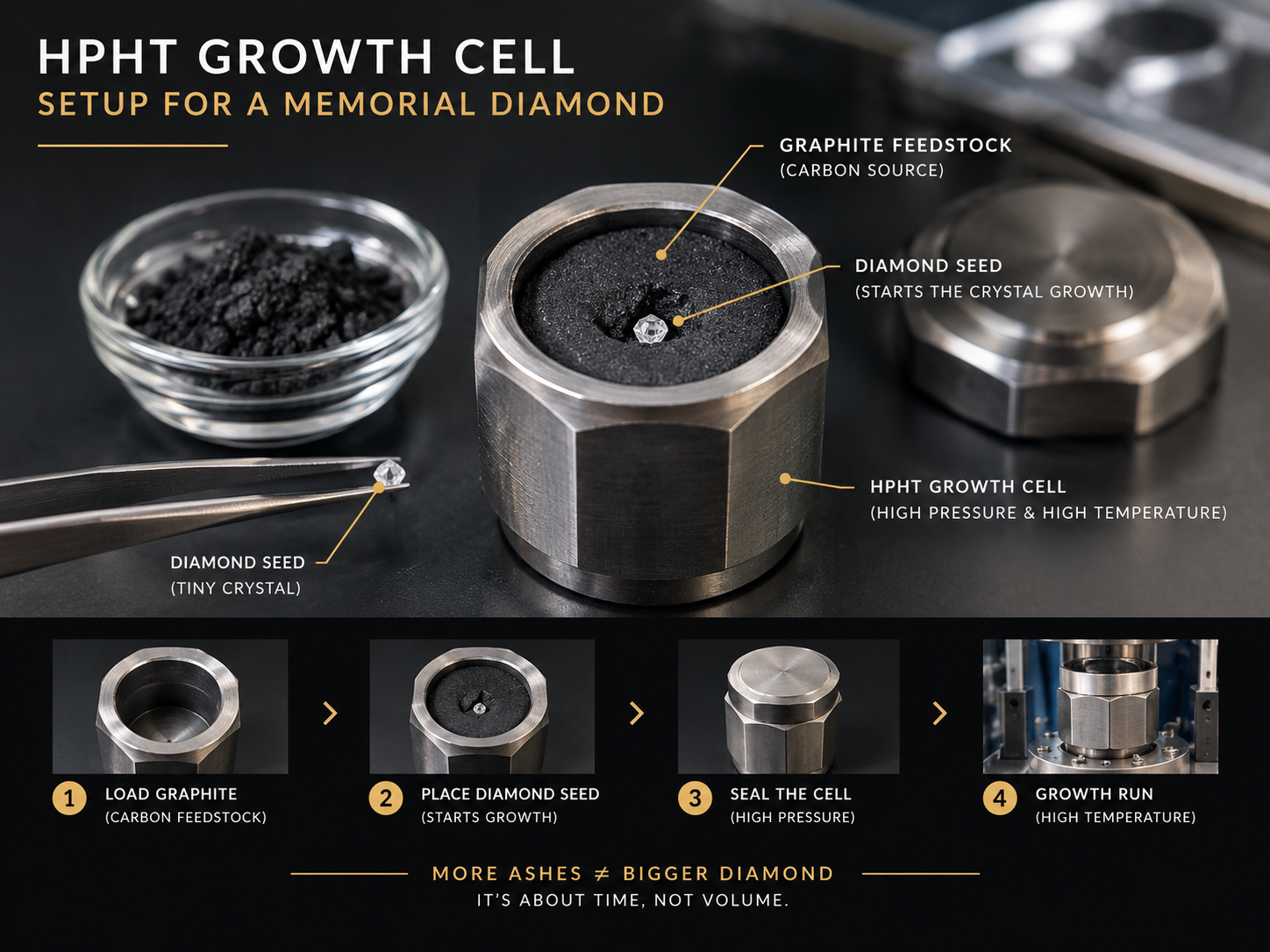
A growth cell needs enough graphite feedstock to run, and once it has that, the size of the crystal is a function of how many weeks it stays under pressure. Ash volume buys nothing in carat terms. A family submitting a full urn and one submitting four ounces are on the same schedule for the same stone.

It works the other way too, which reassures anyone who kept only a little: a small submission does not mean a small diamond. The carat is chosen at ordering, and that choice sets the timeline roughly 6 to 10 months, sometimes up to 12 for larger stones. Choosing a carat size is a decision about budget and how you plan to wear it, not about how much of her you are willing to part with.

Sending extra has one real effect: more of her leaves your house than had to.

What Happens to the Ashes You Don’t Send?

They stay yours, and available for whatever you had already planned.

A burial plot, a niche in a columbarium, a scattering at a place she loved, or the urn staying exactly where it is none of that has to change to make room for a diamond. The requirement is small enough that the two sit alongside each other. A family who has already interred most of her ashes and kept a small portion back is often still well inside the workable range.

An urn on a shelf is not a lesser choice than a stone on your hand. They are different objects doing different jobs, and plenty of families end up with both.

Get two things in writing before anything is posted: the quantity actually needed, and whether unused material comes back by default rather than on request.

What the lab does with the ash once it arrives and how providers track it through the process are both worth reading first.

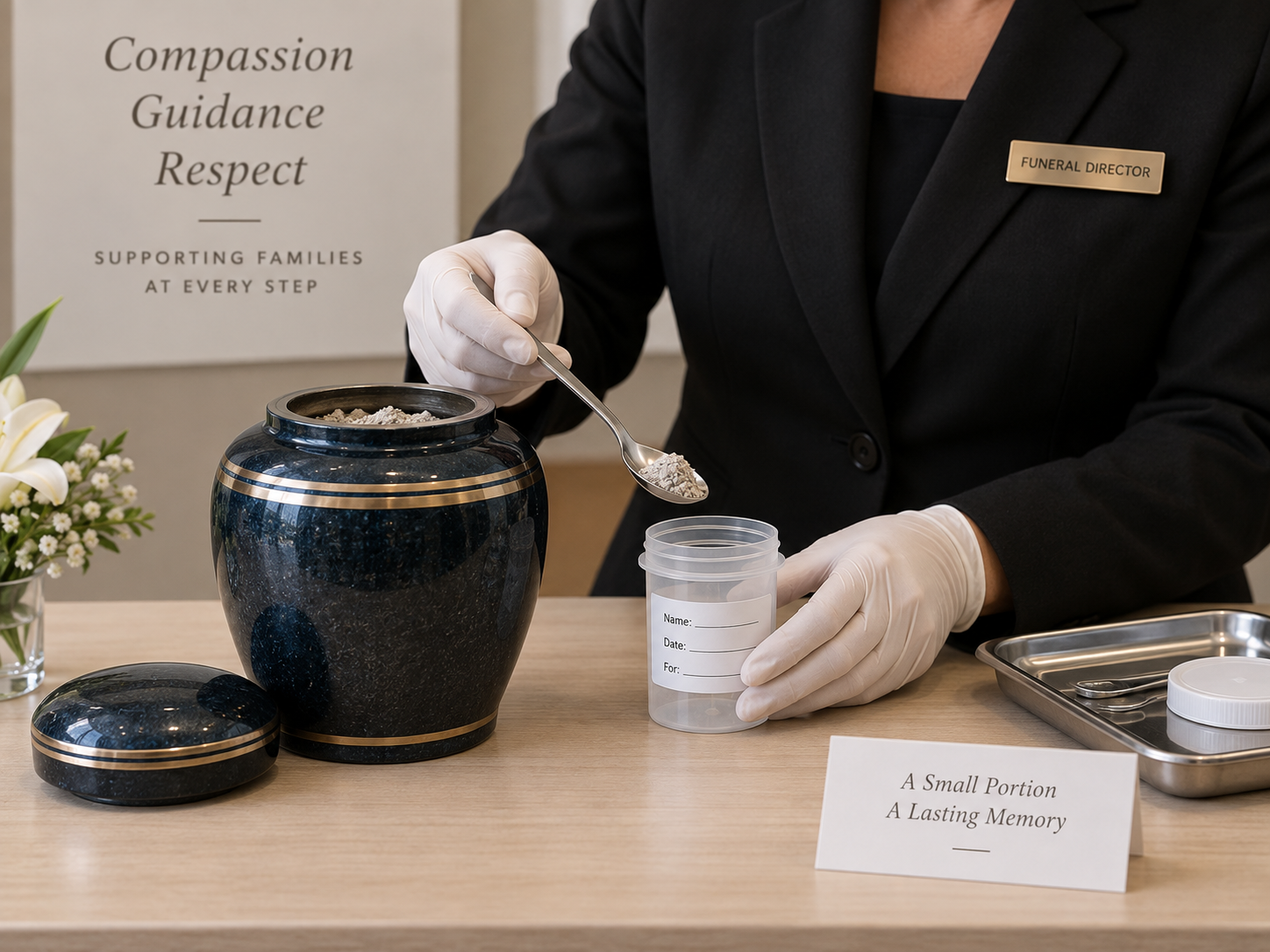
How Do You Measure Out a Few Tablespoons From an Urn?

Funeral director portioning a small amount of cremated remains into a labeled container at a service desk

Nobody warns you about this part, and it is often harder than the paperwork. Some people find it steadying. Some cannot do it at all. Both are ordinary.

  1. Ask first, open second. Get the required quantity and the preferred container in writing before the urn is touched. Doing this once, correctly, beats doing it twice.
  2. Set up somewhere calm and flat. Good light, a clear table, paper or a tray underneath spilled ash lifts off paper and never off carpet.
  3. Check how the urn is closed. Some are simply lidded; others are secured with adhesive or a threaded ring, and some are meant never to be reopened. If yours is sealed, ask rather than pry.
  4. Expect an inner bag. Remains are frequently supplied in a sealed bag inside the urn, usually with an identification tag. Keep that tag with the remainder.
  5. Use a clean, dry spoon. Use a dedicated spoon, dried thoroughly and kept for this purpose. Moisture makes ash clump.
  6. Take from more than one spot. Cremated remains aren’t uniform in texture, so a representative scoop beats digging one hole.
  7. Reseal, relabel, note the date. Whoever handles the urn in twenty years should be able to tell what was taken and when.
  8. Ask for help if this isn’t something you can do. A funeral director, or the crematorium that carried out the cremation, can usually portion and package a small amount for you. So can a sibling. Asking is not a failure of nerve.

If the funeral home sealed the urn, go back to them they closed it, they can reopen and reclose it properly.

Can One Portion of Ash Supply Diamonds for More Than One Sibling?

Often, yes. Because the requirement is a fraction of the whole, several family members can each receive their own stone from the same starting material and because each is grown separately, the color, the cut and the setting can differ from sibling to sibling.

Raise it early. Agreeing on three stones before the first order is placed is far simpler than returning to an urn a second and third time, and it turns who gets her into what do we each want.

Whether more than one family member can get a diamond from the same ashes covers how families split the cost and the decision. Ask how a provider handles multi-stone orders one submission split at intake, or a separate submission per stone before assuming either.

Frequently Asked Questions

Is a few tablespoons genuinely enough for a one-carat stone?

Yes. A press turns weeks into carats, not spoonfuls. Once there is enough feedstock to run a growth cell, the quantity of ash requested stays the same at 0.25 ct as at 2 ct the larger stone simply spends longer growing.

What if most of her ashes have already been scattered or buried?

A small kept portion is frequently still workable, since requirements start at a few tablespoons. Send the provider an honest description of how much you have before ordering, and let them tell you rather than guessing.

Do the ashes I don’t use come back to me?

Ask before sending, and get the answer in writing. Returning unused remains by default is the standard families should expect, but it is a provider policy rather than a legal guarantee treat any vagueness on this point as a warning.

Does more ash make the diamond a deeper color?

No. Color comes from trace elements present during growth boron gives blue tones, nitrogen gives yellow not from volume. What color a diamond from her ashes will be explains why memorial stones rarely come out colorless.

Can I send ash from a cremation that happened years ago?

Yes. Cremated remains are chemically stable mineral material and do not degrade on a shelf, so a cremation from decades ago is no different at intake than a recent one. Time changes nothing about the carbon.

Would her hair need a different amount?

Considerably less hair is roughly 50% carbon by weight, so a small lock goes a long way. How much hair a mother memorial diamond needs covers that path, including for a mother who was buried rather than cremated.

Before You Open Anything

The order of operations matters more than the timing: ask first, open the urn second. A year from now the same few tablespoons will do exactly the same work, but a portion measured out against the wrong figure has to be measured out twice.

When you are ready, reach out to your memorial diamond provider and ask what quantity is needed, what comes back to you, and what documentation arrives with the finished stone.

The complete guide to a mother ashes diamond covers timeline, color and cost in one place if you would rather read further first.

Untitled (1568 x 1003 px)

What Color Will a Diamond Made From Your Mother’s Ashes and Hair Be?

Two containers, two chains of custody, two different purification requirements, one growth cell. That is what a combined order is underneath the paperwork, and it changes the color question in a way neither single-source version covers.

A diamond grown from your mother’s ashes and hair together will sit in the same range as one grown from either alone most likely yellow, blue, or champagne rather than colorless. What changes is confidence. Two source materials with different histories make the final shade less forecastable, not more controllable.

That is not a warning against sending both. It is the actual trade being made, and it is a fair one as long as nobody promised you a specific shade on the way in.

On This Page

What Color Should You Expect If You Send Both?

The same color family either material produces on its own.

Diamond color comes from trace elements present while the crystal grows. Nitrogen produces yellow tones. Boron produces blue. Colorless demands the near-total absence of both, which is a high bar for any organic source.

Because part of the carbon in any memorial diamond comes from an organic, imperfect, personal source rather than all of it coming from a controlled synthetic feedstock, trace elements are common and memorial diamonds as a category trend toward yellow, blue, and champagne/brown accordingly. Colorless is achievable with additional processing, and costs more.

Adding a second source does not move the stone outside that range, and there is no documented “blended” color that combining ashes and hair reliably produces.

For more information about why memorial diamonds are rarely colorless, read our article on why memorial diamonds are rarely colorless.

Why Does Sending Both Make the Color Less Predictable?

Because the two materials arrive with genuinely different chemistry behind them.

Cremated remains are dominated by calcium phosphate, the mineral structure of bone, with usable carbon at roughly 0.5% to 4% of ash by weight and they have been through a cremation before anyone touched them. Hair is keratin, roughly 50% carbon by weight, with no mineral load of that kind and no cremation anywhere in its history.

Both are purified to about 99.9%+ carbon before growth, and that purification is excellent rather than absolute. Whatever survives is at most a tenth of a percent of each recovered stream and that residue is exactly where color comes from. Two feedstocks means two such residues, each with its own trace-element signature, meeting in one process.

Neither stream fills a growth cell on its own, so both are blended with supplemental lab-sourced carbon to reach a workable volume. Her carbon is the minority ingredient either way; for ash-derived stones the industry puts the personal fraction at roughly 10–15% of the finished stone’s mass.

That does not cancel the point above, because a trace element influences the color of the whole crystal rather than its own share of it a minority fraction is still enough to steer the result. It does mean an accurate description of a combined stone lists her ashes, her hair, and the lab carbon that filled the rest of the cell.

The practical effect is a wider band of normal. A provider aiming at champagne from a single source is holding fewer variables steady than one aiming at champagne from two. That is a reason to ask what variation counts as acceptable on your order not a reason to expect a bad stone.

To understand the process in more detail, read how a memorial diamond is made from your mother’s ashes and hair.

Does the Lab Combine Them, or Grow Two Separate Stones?

This is the question to put to a provider directly, because the answer changes what color even means for your order and because the industry does not handle it uniformly.

Three arrangements are possible in principle:

  • Combined feedstock. Ashes and hair are purified on separate tracks, since they need different treatment, and the resulting carbon is combined before growth. One stone, one color.
  • Separate stones. Each material grows its own diamond. Two stones, two independent color outcomes which will not necessarily match, even ordered in the same color.
  • Not offered at all. Some providers accept one material per order and will say so.

Ask which of the three you are buying before you send anything. Ask, too, whether the origin documentation will name both materials an authenticity or origin certificate is the record that both went in, and it is worth confirming it says so.

For more information, read how memorial diamonds are graded and certified.

What Colors Are on the Table, and What Does Sending Both Change?

The following describes industry-typical outcomes and industry-typical cost relationships, not a fixed price list or a promise about a specific stone.

ColorWhat Causes ItWhat Sending Both ChangesCost Note
YellowNitrogen present during growthNothing about availability a standard outcome from either source and from bothTypically at the lower end of the range at a given carat
BlueBoron present during growthNothing about availability; widely offered either wayGenerally below colorless at matching size
Champagne / BrownSeveral trace elements acting together rather than oneAsk what shade band counts as normal this is where defining acceptable variation is particularly usefulTypically comparable with yellow at the same carat
Colorless / WhiteThe near-complete absence of both boron and nitrogenAdding a second organic feedstock does not make trace-element exclusion easier. It remains the hardest targetMeaningfully higher than yellow, blue, or champagne at the same size
Red, Pink, Green, BlackPost-growth irradiation, applied after the crystal already existsThe source material matters less because irradiation happens after growthAn additional treatment; larger or black stones can require longer timelines

What Are You Actually Trading?

Completeness for predictability.

Sending both means the stone contains carbon from her remains and from her hair, alongside the lab carbon that fills out the growth cell the fullest version of the thing that is actually available if completeness is what you are after.

It does not buy you more control over the result. If a precise shade matters more to you than including both, a single source is the more controllable order. If including both matters more, accept a wider color band and say so out loud at order time.

Neither choice is the better one; they answer different questions.

Five Questions to Ask Before You Commit

  1. Do you accept ashes and hair on one order, and how do you process them? Ask whether the material is combined, grown separately, or not accepted together.
  2. Am I buying a named color or a color family? Ask what variation is normal for a combined order specifically.
  3. What happens if the finished stone lands outside that band? Settle the remedy in writing at order time, not after delivery.
  4. Will the origin certificate name both materials? Get that confirmed in writing.
  5. What happens to whichever material isn’t used? Confirm the provider’s policy for unused material before sending anything.

None of this commits all of her. Only a small fraction of either material is used, so burial, scattering, or keeping an urn all remain open alongside it.

For material requirements, read how much ash and hair you actually need for a mother memorial diamond.

Frequently Asked Questions

Will the diamond be a blend of two colors, or two-toned?

No. A finished diamond is graded with a single body color, not a mixture of two. Combining her ashes and her hair produces one stone with one color, drawn from the trace elements present during growth rather than from either material’s appearance.

Does sending both improve my chances of a colorless stone?

No, and it works slightly against you. Colorless requires excluding boron and nitrogen almost entirely, and a second organic feedstock adds trace elements to the process rather than removing them. Colorless remains achievable, with additional processing and higher cost.

Can I get one diamond from her ashes and another from her hair?

Often yes, since only a portion of either material is used. Expect two independent color outcomes rather than a matched pair — separate growth runs are separate events, so treat a family resemblance as the realistic goal.

Does sending both make the diamond larger?

No. Carat size is determined by growth time in the press, not by how much material is submitted. Sending both changes what is in the stone, not how big it is or how quickly it arrives.

Does her hair color influence the result if I send hair too?

No. Pigment does not survive purification to 99.9%+ carbon, so grey, dyed, or red hair has no bearing on the finished color. That holds whether the hair goes in alone or alongside her ashes.

Do all providers accept both materials together?

No. Ashes and hair need different purification handling, and not every provider takes them on one order. Confirm it directly before assuming, and confirm which of the possible arrangements they use.
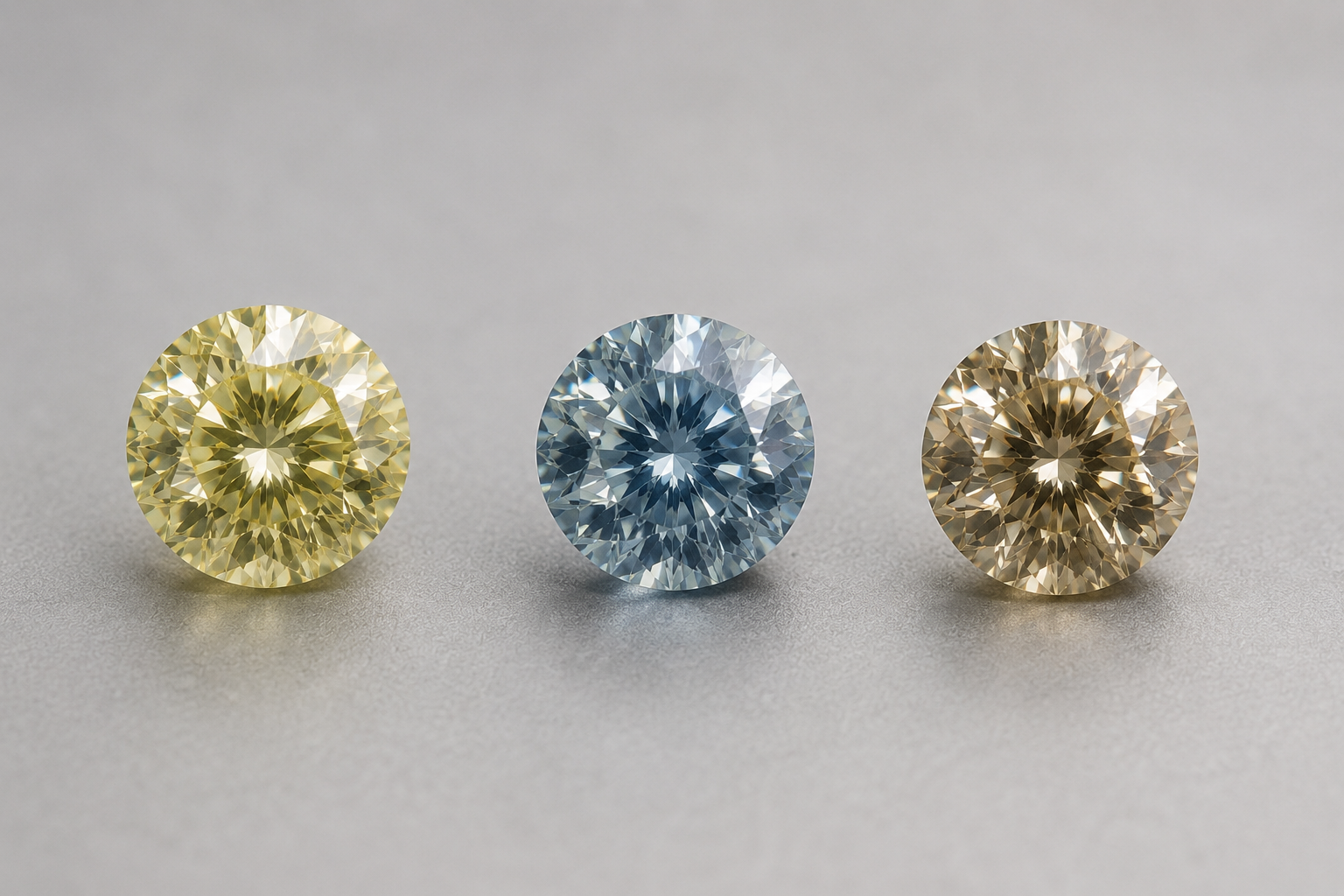
Before You Decide

Order of operations matters here more than the color choice itself. Find out first how a given provider handles two materials on one order combined feedstock, separate stones, or not at all because a combined order that turns out to be two diamonds is a different purchase from one that turns out to be a single crystal.

Color only means something once you know which of those you are buying.

Then, if sending both is what feels right, send both, and go in expecting a color family rather than a specific shade.

For comparison, read the ashes-only version of this question and the hair-only version.

If you are still deciding between the two sources, read Ashes to Diamond vs. Hair to Diamond: Which Should You Choose?.

For the broader process, timeline, and cost discussion, see Mother Ashes and Hair Diamond: The Complete Guide.

main

What Color Will a Diamond Made From Your Mother’s Hair Be?

A lock of grey hair tied with thread beside a yellow-toned lab-grown memorial diamond on a neutral surface

If you kept a lock of your mother’s hair, you may have wondered whether the finished diamond will look like her hair. It won’t. Grey hair does not produce a grey diamond, red hair does not produce a red diamond, and dyed hair does not carry its visible pigment into the finished stone.

A diamond grown from your mother’s hair can be yellow, blue, champagne, or another available color depending on the growth conditions and trace elements present during the process. Colorless is also possible, but it requires additional processing and usually costs more.

Does Your Mother’s Hair Color Decide the Diamond’s Color?

Purified carbon from hair being converted to graphite in a laboratory furnace before diamond growth

No. The color of your mother’s hair is not what determines the color of the finished diamond.

Hair is keratin, a protein that is roughly 50% carbon by weight. During processing, the hair goes through controlled extraction that removes the non-carbon components and produces highly purified carbon. That carbon is then converted into graphite before it enters the diamond-growth process.

The pigment responsible for hair color does not simply travel into the finished diamond. What ultimately matters for diamond color is what is present during crystal growth.

That means:

  • Grey hair does not produce a grey diamond.
  • Red hair does not produce a red diamond.
  • Dark hair does not produce a dark diamond.
  • Blonde hair does not produce a blonde diamond.
  • Hair dye does not determine the finished diamond’s color.

A few grams of hair also cannot fill an entire growth cell. The purified carbon from the hair is therefore combined with supplemental lab-sourced carbon before growth.

For the full production process, see how a memorial diamond is made from your mother’s hair.

So Where Does the Color Come From Instead?

Diamond color comes from trace elements present while the crystal is growing, rather than from the original appearance of the material that supplied the carbon.

Nitrogen can produce yellow tones, while boron can produce blue tones. A colorless diamond requires the near-absence of both.

This is why two pieces of hair that look completely different can potentially contribute to diamonds with similar colors. The visible pigment of the hair is not what the diamond-growth process is reproducing.

Memorial diamonds can therefore appear in yellow, blue, champagne, or other colors depending on the growth conditions and available processing options.

For a broader explanation, read why memorial diamonds are rarely colorless.

What Color Is a Hair Diamond Most Likely to Be?

Three loose memorial diamonds grown from hair in yellow, blue, and champagne tones side by side

The following describes industry-typical color relationships rather than a guarantee for any individual stone.

ColorWhat Causes ItWhat a Hair Source MeansCost Note
YellowNitrogen present during growthHair is a carbon-rich organic material; the final color depends on the growth environment rather than the hair’s visible colorGenerally one of the lower-cost growth-stage colors at a given carat
BlueBoron present during growthBlue is associated with boron during diamond growth rather than the original color of the hairGenerally below colorless at matching carat
Champagne / BrownMultiple trace elements and growth conditionsThe stone is not champagne or brown because the mother’s hair was that colorGenerally comparable with yellow at the same carat
Colorless / WhiteNear-complete absence of color-producing impuritiesPossible, but additional processing is required to achieve the desired resultUsually carries a meaningful premium
Red, Pink, Green, BlackPost-growth treatment such as irradiationThese colors are introduced after the crystal has grown rather than coming from the hair’s visible colorAvailability and pricing vary by provider

The important point is simple: the color column never starts with the color of your mother’s hair.

Does Hair Behave Differently From Ashes?

A small lock of hair and a sample of cremated remains shown side by side as diamond carbon sources

Yes, hair and cremated remains are very different starting materials.

Hair is roughly 50% carbon by weight, while cremated remains contain only about 0.5% to 4% usable carbon by weight. Ashes are largely made up of the mineral structure of bone, while hair is a carbon-rich protein material.

HairCremated Remains
Approximate carbon content~50%~0.5–4%
Cremation required?NoYes
Typical material requirementA small lock / a few gramsA few tablespoons to roughly 4 oz
Main starting materialKeratinMineral structure of bone

Hair can therefore be used for a memorial diamond even when a loved one was buried rather than cremated. See hair-based options for non-cremated loved ones.

However, the difference in starting material does not mean you can predict the exact final color simply by looking at the hair.

The ashes version of this question is covered in what color a diamond made from your mother’s ashes will be.

What Actually Changes the Color, and What Doesn’t?

It helps to separate the things that do not determine color from the things that can influence it.

Things That Do Not Determine the Finished Color

  • Your mother’s natural hair color.
  • Whether her hair was dark, blonde, red, or grey.
  • The visible color of hair dye or highlights.
  • How long the lock of hair is.
  • How much hair you send beyond the required amount.
  • Whether the hair was collected while she was alive or after her death.
  • How long you have kept the lock.

Things That Can Affect the Color

  • The color selected or requested during the ordering process.
  • Trace elements present during diamond growth.
  • The growth conditions used by the laboratory.
  • Whether a post-growth treatment such as irradiation is used.
  • Whether you choose a colorless result requiring additional processing.

If you’re discussing your order with a provider, ask these four questions before sending the hair:

  1. Am I choosing a specific color or a color family?
  2. What amount of color variation is considered normal?
  3. Is the color created during growth or through treatment afterward?
  4. What does choosing colorless add to the cost and timeline?

For information about documenting the finished diamond’s characteristics, see how memorial diamonds are graded and certified.

Frequently Asked Questions

My mother’s hair was dyed. Does that ruin it or change the diamond’s color?

The visible dye color does not determine the finished diamond’s color because hair pigment and non-carbon components are removed during processing. However, whether a particular provider accepts dyed, bleached, permed, or chemically treated hair is a separate provider-policy question. Ask before sending the hair and describe the treatment accurately.

She had grey hair. Will the diamond come out grey or dull?

No. Grey hair does not mean the finished diamond will be grey. Hair color comes from pigment, while diamond color is associated with trace elements and conditions during crystal growth. The original visible color of the hair does not simply transfer into the diamond.

Can I get a truly colorless diamond from her hair?

Yes, a colorless result can be requested, but it is generally the more demanding option. Colorless growth requires the near-absence of the impurities associated with yellow or blue coloration, so additional processing may be required and the price can increase.
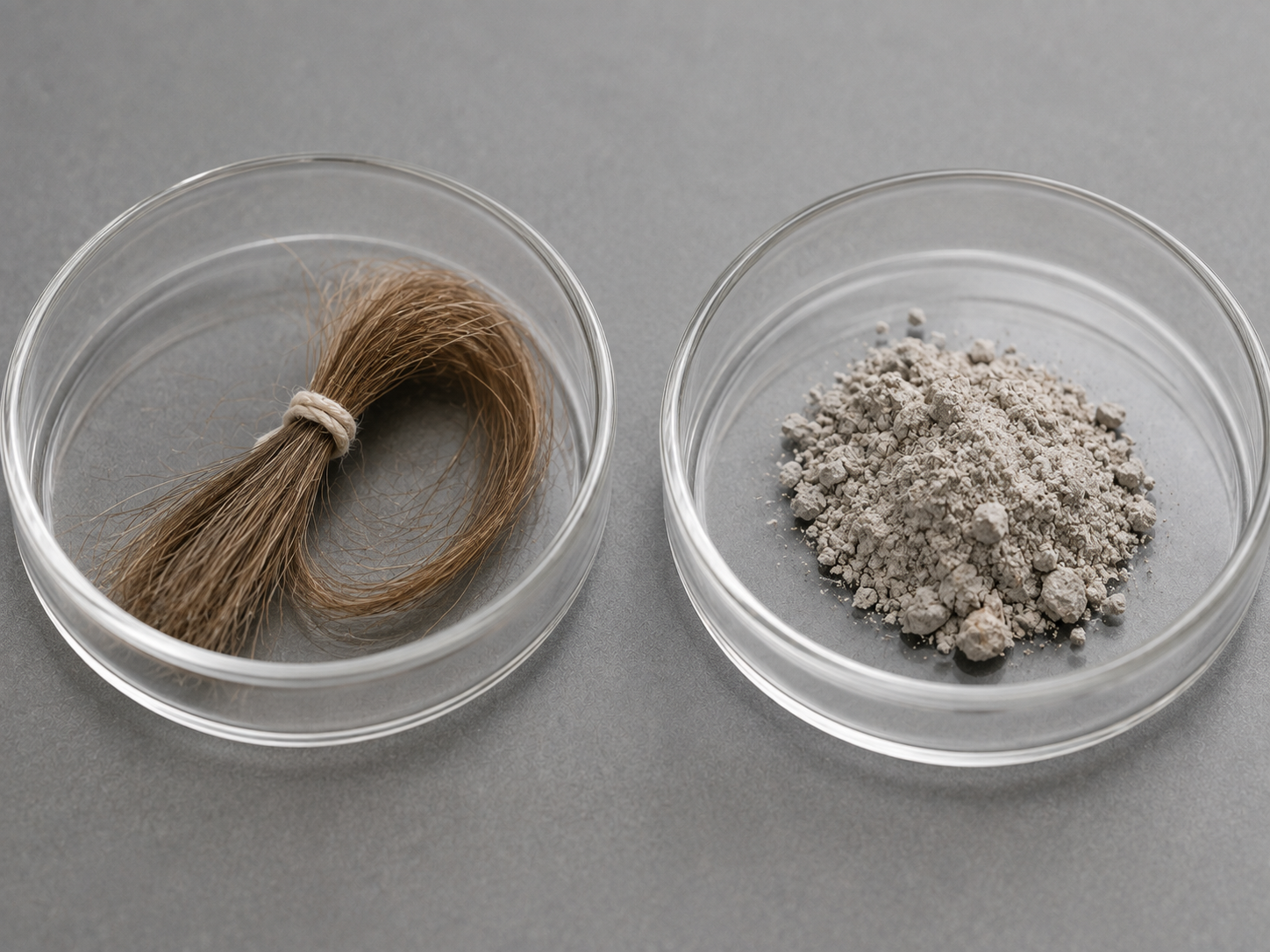
Does sending more hair give a better or deeper color?

No. Sending more hair does not automatically create a deeper color. The quantity of hair primarily relates to providing enough carbon for processing. Diamond size is determined by the growth process rather than simply by sending a larger amount of hair.

Will a diamond from living hair look different from one made after she died?

No specific color difference should be assumed simply because of when the hair was collected. The finished color is associated with the diamond-growth conditions rather than whether the lock was collected while she was living or afterward.

Can I ask for pink or red specifically?

Some providers may offer colors such as red, pink, green, or black through post-growth treatment. Availability varies, so confirm that the color is actually offered by your chosen provider before making it part of your design expectations.

Before You Choose a Color

You are not choosing a color that literally matches your mother. Her hair stays the shade it was when you kept it. The diamond’s color comes from what happens to its carbon during the growth process.

That gives you a different choice: not “What color was she?”, but “What color do I want to carry with me?”

If you have a lock of your mother’s hair and want to understand what color options may be realistic, reach out to Memorial Diamond at memorialdiamond.us and ask specifically about your preferred color and any treatment the hair has received.

If you also have her ashes, see what happens when her ashes and hair are used together. You can also read the complete guide to a mother hair diamond for the wider process, timeline, and cost discussion.

mother hair dimond

Is a Memorial Diamond Really Made From Your Mother’s Ashes and Hair?

Sending both is usually a decision made by not deciding. The ashes were what you had, the lock of hair was what you kept, and separating them felt wrong. Both can go into one stone that part is straightforward. The harder answer is that once the diamond is cut, nothing about it can tell you whether her ashes contributed anything at all. Hair runs roughly 50% carbon by weight; cremated remains, 0.5% to 4%. A stone grown from the hair alone would look, test, and grade identically.

A labeled vial of cremated ashes and a tied lock of hair side by side beside a loose lab-grown memorial diamond

If You Send Both Her Ashes and Her Hair, Are Both Really Used?

They can be. Whether they were is a question the finished stone cannot answer, and it is worth saying that plainly rather than letting a certificate imply otherwise.
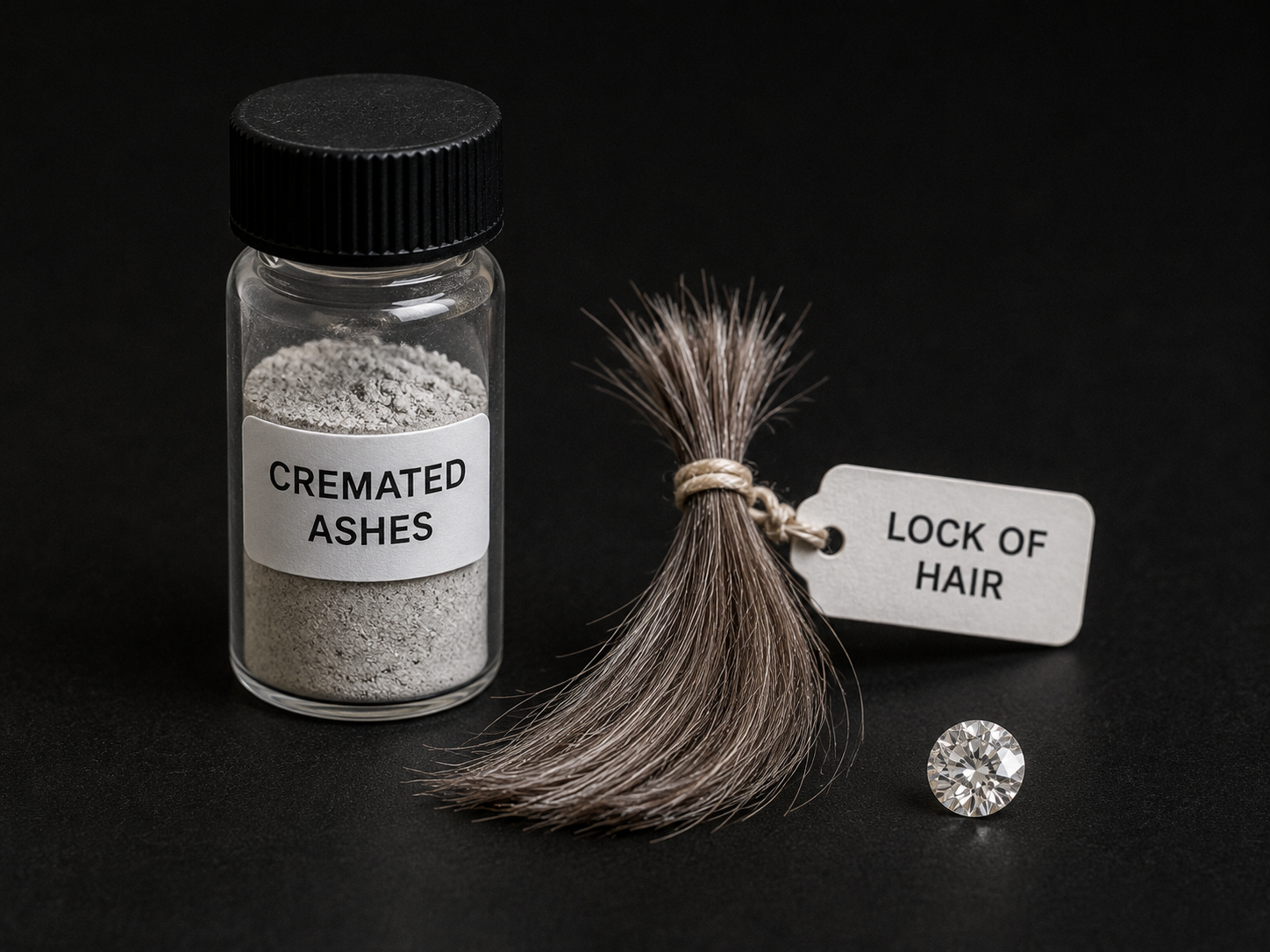
Purified carbon carries no signature of what it came from. Carbon extracted from her hair and carbon extracted from her ashes are, once purified to roughly 99.9%, the same substance and so is the lab-sourced carbon blended in alongside them to fill the growth cell. That last point surprises families: a combined stone contains carbon from three places, not two. No memorial diamond is 100% anyone, and a provider claiming otherwise is overselling a real thing.

So a family that sends both has handed over the one submission where a shortcut is invisible. That is not an accusation. It is the reason this page exists, and the reason the questions further down are worth asking before anything ships.

Why Is the Hair the Easier Half?

Because it asks less of the lab at every stage, which is precisely what creates the incentive worth watching.

Her HairHer Ashes
Carbon content~50% by weight~0.5–4% by weight
Amount typically requestedA small lock, a few gramsA few tablespoons up to about 4 oz
What purification must strip outThe non-carbon components of keratinCalcium phosphate and other bone minerals
Usable carbon per gram submittedHighLow
Diagram comparing carbon yield and purification requirements for hair and cremated ashes

A few grams of hair can yield more usable carbon than several ounces of ash, and it gets there through a less demanding purification. Neither material is difficult in isolation how the lab handles a combined submission walks through both tracks but if one of the two were quietly dropped, the hair is not the one that would go.

That asymmetry is also why choosing between ashes and hair is a real decision rather than a formality, and why sending both should be a deliberate choice rather than a default.

Does Combining Them Change the Stone Itself?

In two ways, and neither is the one families expect.

It does not make the diamond bigger. Carat is set by growth time in the press, not by how much carbon went in, so doubling the source material doesn’t double anything. Submitting both her ashes and her hair buys meaning, not size.

It does plausibly affect color. Diamond color comes from trace elements present during growth nitrogen produces yellow tones, boron produces blue, and the absence of both is required for a colorless stone. Ash and hair carry different trace-element profiles, ash with a mineral load that hair has none of, so a combined feedstock is a less predictable starting point than either alone. No provider can promise a specific color in advance from any organic source, and a combined submission is the case where that caveat has the most force.

What Would Real Documentation for a Combined Order Show?

Two separate intake records for a single memorial diamond order, one logging cremated ashes and one logging a lock of hair

A single certificate saying “grown from the submitted remains of [your mother]” is not evidence that both materials were used. It is evidence that both were received. Four things separate a real record from a reassuring one.

What to Ask ForWhat It Should ShowWhy a Combined Order Needs It
Two intake referencesAshes and hair logged separately on arrival, each with its own reference and recorded quantityOne order-level number can’t demonstrate that both materials arrived, or in what amount
Two purification recordsA separate extraction record per material, each with the carbon yield it producedThis is where a low or failed ash yield would become visible
A stated combination pointThe stage where the two purified outputs are combinedWithout it, “we used both” describes an intention rather than a process
A return record for eachUnused ash and unused hair accounted for separatelyMaterial returned as one lot tells you nothing about which was drawn on

Underneath all four sits the same thing that underpins any memorial diamond: the chain of custody a provider keeps from intake onward. A combined order simply needs two of them, running in parallel. And an independent grading report, valuable as it is, speaks only to cut, color, clarity, and carat never to origin.

Which Questions Should You Ask About an Ashes-and-Hair Submission?

Two laboratory crucibles running separate carbon purification batches for one memorial diamond order

Five questions, all specific to sending two materials. The third is the one that matters most.

  1. Are the ashes and the hair purified separately, or processed together in a single run? Ask which, and ask for the answer in writing.

A fuller checklist before turning your mother’s ashes and hair into a diamond goes wider, and the complete guide to a mother ashes and hair diamond covers timeline, color, and cost.

Frequently Asked Questions

Can a lab tell me how much of the stone came from her ashes versus her hair?

Only from its own extraction records, never from the stone. After purification the two outputs are indistinguishable, so the yield figures logged during each run are the only place that ratio exists. Ask whether you can see them.

Is there any real advantage to sending both?

Not technically hair alone would usually supply the carbon comfortably, and ashes alone works too. The advantage is entirely about meaning: some families don’t want to choose between what was returned to them and what they kept.

What happens if the carbon recovered from her ashes is too low to use?

Technically, the stone can still be grown from the hair alone a defensible decision, and an indefensible one to make silently. Ask in advance whether you would be told, and get that commitment in writing before either material ships.

Do the two materials have to be sent at the same time?

Ask the provider. Separate purification tracks may allow staggered submission, but a combined order usually needs both materials in hand before growth begins. Confirm before mailing anything on a partial timeline.

What if I have her ashes but never kept any hair?

Then it’s an ashes-only stone, which is a complete starting point on its own. Whether a diamond is really made from her ashes covers that case, including the percentages that apply to it.

Could combining them change what color the diamond turns out?

Possibly. Color comes from trace elements present during growth, and ash carries a mineral load that hair doesn’t, so a mixed feedstock is less predictable than either alone. No provider can promise a color in advance.

Before You Send Anything

A combined order asks a provider to do two things carefully instead of one, and only their records can show whether they did.

So if you send both, send them into a process built to account for both. Ask the five questions above and notice which ones get a specific answer including from us. Reach out to Memorial Diamond at memorialdiamond.us and ask what documentation a combined submission produces. The same question about her hair alone has a shorter answer.