
Most people choose a mount by looking at it. That is understandable, and it is the wrong first question.
Wife memorial diamond settings should be chosen for what the stone has to survive, not for how the drawing looks. A hand is the harshest environment a small stone ever lives in; a chain almost always fails at the bail rather than the clasp; and an earring is far more likely to be lost than broken. Decide where the piece will live, then pick the mount that answers it.
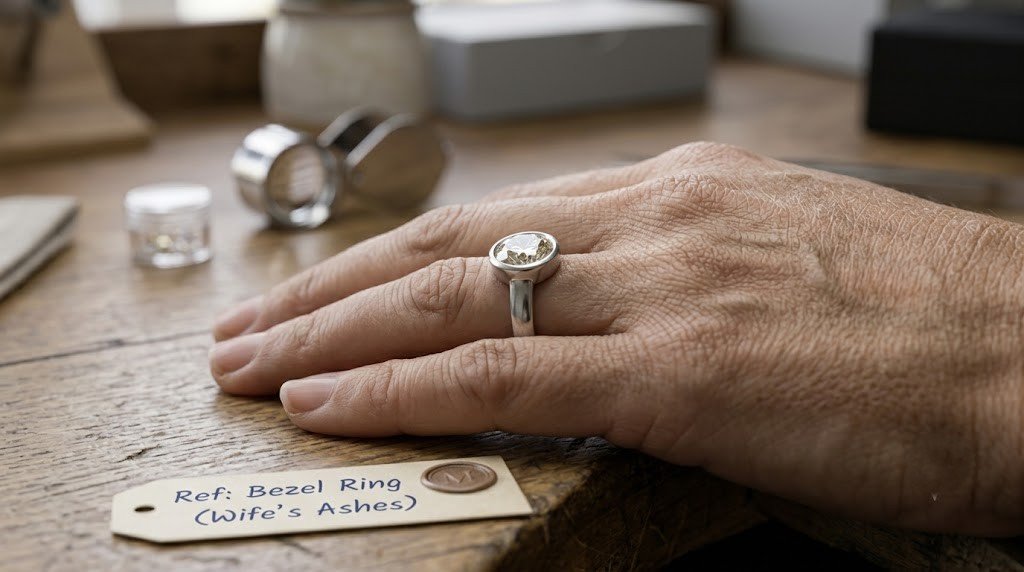
Table of Contents
What Do Wife Memorial Diamond Settings Actually Have to Survive?
Four things, and only one of them is about the stone itself. Wife memorial diamond settings fail for reasons the diamond has almost nothing to do with.
The stone is the easy part. Diamond sits at 10 on the Mohs scale of mineral hardness, the hardest known natural mineral, and nothing in ordinary daily life will scratch it. Hardness is not the same as toughness, a sharp strike at the girdle can still chip any diamond, but scratching is not what wife memorial diamond settings are designed against.
What wife memorial diamond settings actually have to survive is everything around the stone. Metal fatigue, as claws thin from years of contact. Loss of the whole piece, which is the only outcome with no remedy at all. Deformation, when a band is squeezed or a bail is pulled out of round. And the bench, years later, when someone has to work on the piece without endangering what it holds.
Worth being plain about what a mount is holding. This is not a capsule of ashes behind glass: carbon drawn from what she left is purified to near pure and then grown into the crystal alongside lab made carbon, because one person’s carbon will not fill a growth cell on its own. That fraction is exactly why wife memorial diamond settings are judged on retention rather than repair, the stone is replaceable only in the sense that another stone exists, which is not a sense that helps.
The fuller menu of forms sits in the memorial diamond settings pillar; what to make and for whom belongs to wife memorial diamond ideas. This page is the survival question that wife memorial diamond settings actually answer.
The Hand Is the Hardest Place a Small Stone Can Live
A ring is the default answer and the most demanding one. Rings get the highest share of wife memorial diamond settings and the highest share of the abuse.
Hands are used against hard surfaces all day. Door frames, steering wheels, gym equipment, the side of a sink. A raised stone finds every one of them, and each contact takes a little metal off the claw tips from the outside in. That is the failure that matters, because a claw thinned by a thousand small contacts lets go quietly. It is the least dramatic way a wife memorial diamond setting can fail and the most final.
Three consequences follow, and they shape most decisions about wife memorial diamond settings for a hand.
- Among wife memorial diamond settings, height governs snagging more than metal choice does. A stone that sits low clears door frames; a raised head finds them. Ask to see the profile from the side, not just from above.
- Claw tips need looking at on a schedule. Most jewelers will check a wife memorial diamond setting while cleaning it. The point is to ask for it deliberately rather than to notice a loose stone by feel.
- The band deforms before the head does. Thin shanks flatten under grip, changing the geometry the head sits on.
None of this argues against a ring. It argues for low wife memorial diamond settings on a ring, or for a pendant if hands are the problem.
Prong, Bezel, Tension: What Does Each Setting Trade Away?
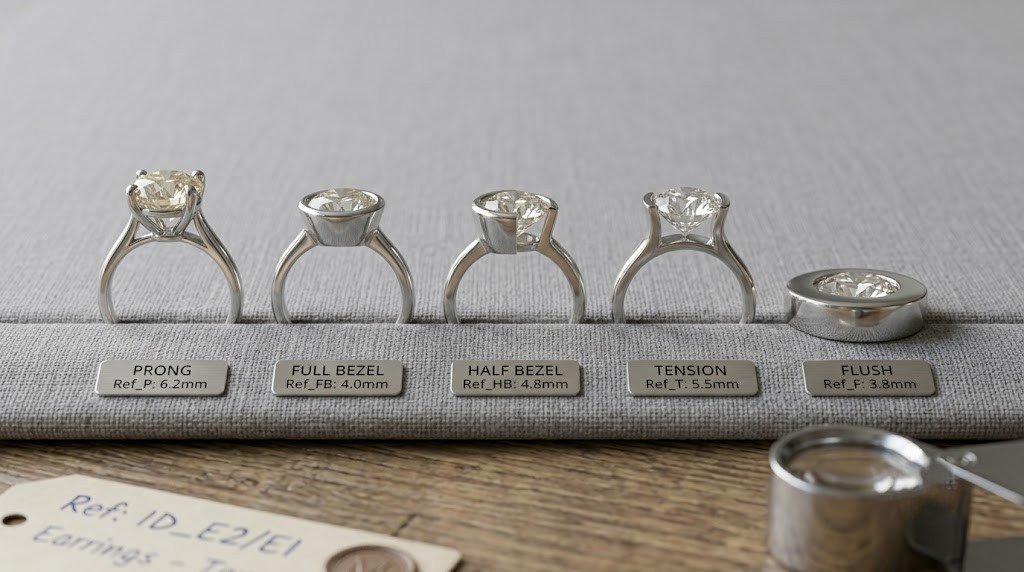
Every one of the wife memorial diamond settings below protects against something and exposes something else. None does only the first.
| Setting | What it protects against | What it exposes | Who it suits |
|---|---|---|---|
| Prong or claw, 4 or 6 | Little; it is the least protective, but holds the stone high where most light reaches it | Girdle and claw tips, to every knock and every pocket; six claws lose one more gracefully than four | Someone who wants the stone to read brightly and is willing to have the claws checked |
| Full bezel, rub over | The girdle completely; a continuous rim takes the knocks instead of the stone, and there is nothing to snag | The face only. Less light enters from the side, so a warm stone reads warmer inside a yellow rim | Hands that work, healthcare and childcare, anyone who cannot be careful and should not have to be |
| Half bezel | The two sides most likely to strike something, while leaving the stone open front and back | The open edges, which is a real trade rather than a free compromise | Someone who wants more light than a full bezel allows and more protection than claws give |
| Tension | Very little; the stone is held by the spring pressure of the band itself | The stone on nearly every side, and the whole piece to resizing, the tension is the setting | Careful wearers who want the look, and who accept that the design cannot easily be altered later |
| Flush or gypsy | Almost everything; the stone is sunk into the metal with its table level with the surface | Almost nothing mechanically, it is the most secure of the five, and it shows the least light | Manual work, a signet or a broad band, and a piece that must never catch on anything |
First, the strongest wife memorial diamond settings are also the dimmest, light enters a diamond from the sides as well as the top, so every millimeter of metal you add for protection is a millimeter of light you take away. Second, tension mounts are the one family of wife memorial diamond settings where “can this be resized?” has to be asked before ordering rather than afterward, because for many tension designs the honest answer is no.
How much metal touches the stone also changes what you see, because a colored mount reflects back through a transparent stone, which is why memorial diamond colors for a wife is not a separate decision from this one.
Why Do Chains Fail at the Bail Rather Than the Clasp?
Because the clasp is the part everyone inspects and the bail is the part nobody does.
A pendant hangs from a small loop, the bail, which is either soldered closed or simply bent closed as a jump ring. An open jump ring can be pulled straight by a snagged collar, a seatbelt, or the weight of the pendant swinging against a hard edge for years. It opens a fraction of a millimeter at a time and then one day the pendant is not there.
So when pendants come up among wife memorial diamond settings, three questions do most of the work.
- Is the bail soldered closed, or is it an open jump ring? A soldered bail is a different object from a bent one, and the difference is invisible at arm’s length.
- Is the chain rated for the weight it is carrying? A fine chain looks elegant under a heavy pendant and is the wrong chain for it.
- Does the clasp suit the hands that will open it? A spring ring is small and fiddly; a lobster clasp is easier; a magnetic clasp is easiest and the least secure of the three.
A pendant sidesteps almost every problem the ring shaped wife memorial diamond settings have. It never meets a door frame, needs no sizing, and passes between people without bench work.
Earrings Are Lost Far More Often Than They Are Damaged
This is the one place where wife memorial diamond settings fail for reasons that are not mechanical at all.
Earrings are rarely broken. They are taken out at a sink, put down on a hotel dresser, dropped into a coat pocket, or lost from an ear without the wearer noticing for hours. That single fact should drive every decision about earrings among wife memorial diamond settings, and it is a good reason to be cautious about splitting one stone’s worth of meaning across two objects that go out into the world separately.
- A screw back or locking back is materially more secure than a friction back, and the difference is largest exactly when it matters: an active day, a coat going on and off.
- A single earring is a legitimate design, not a compromise. One stud in a chosen ear is a complete piece, and it halves the loss surface.
- If two pieces are wanted, ask about two stones rather than splitting one. Whether more than one stone can be grown from the same source is answered in whether more than one family member can get a diamond from her ashes.
What Happens If You Want It Resized or Re Set Years Later?
Almost everything about wife memorial diamond settings can be changed later. The question is what the change costs in risk, and that varies enormously between them.
Resizing. Among wife memorial diamond settings, a plain band with a head on it resizes easily within a few sizes. Beyond that, the geometry under the head starts to change. Eternity style bands set all the way around cannot be sized in the ordinary way at all, because there is no plain metal to cut. Tension mounts are the hard case, since the pressure holding the stone is the band’s own spring.
Heat. Sizing and most repairs involve a torch. A responsible bench will usually remove the stone, or heat sink and shield it, rather than working around it in place, and it is entirely reasonable to ask which of those will happen before handing the piece over. Removing and resetting is itself a small, controlled risk.
Re setting into something else. A stone can move from a ring to a pendant, or out of a worn out mount into a fresh one decades later. That is a genuine strength of a stone over a sealed keepsake, and a reason to treat wife memorial diamond settings as housing rather than as final form. What matters is that the stone leaves one mount and enters another under a jeweler’s control.
The band she already wore. Setting her stone into a ring she owned is possible, and is a different job from building new wife memorial diamond settings from scratch, the bench is working with metal that has been worn thin in places and may have been sized before. Ask for an assessment before the design is settled, not after. Cleaning and long term care of a finished piece belongs to memorial diamond aftercare.
Insurance and Appraisal: What to Ask Before It Ships
This section is short on purpose, because it is entirely questions rather than answers. Insurance sits alongside wife memorial diamond settings rather than inside them, terms vary by insurer and by where you live, and no jewelry brand is positioned to tell you what yours will do.
Start from one honest fact: the stone cannot be replaced like for like. Another diamond can be bought; another grown from the same person cannot be assumed available. That makes the insurance conversation about the setting, the labor and the documentation rather than about restoring what was lost.
Questions worth asking, in roughly this order.
- What documentation comes with the finished stone, and what does it actually say? An origin or chain of custody document and an independent grading report are different things doing different jobs. What each one records is set out in how gemologists assess cut, color, clarity and carat and in how memorial diamonds are graded and certified.
- Will an appraisal be needed separately, and who writes it? A grading report describes the stone; an appraisal states a value for insurance purposes. They are not interchangeable.
- Ask your own insurer whether a lab grown memorial stone can be scheduled, what valuation evidence they want, and what they would do about a loss they cannot replace, before the piece is made, so the answer can shape the design.
- Ask what a claim would actually restore. That answer often changes how a family feels about a daily wear piece versus a kept one, and it is better heard early.
The broader treatment sits in memorial diamonds and insurance. What wife memorial diamond settings add to the overall figure belongs to what a wife memorial diamond costs, since mounts are typically quoted separately from the stone across the industry.
What to Have Engraved, and Where
Engraving is the cheapest part of any of the wife memorial diamond settings above, and the part people most often wish they had thought about.
Three surfaces are available on most wife memorial diamond settings, and they behave differently.
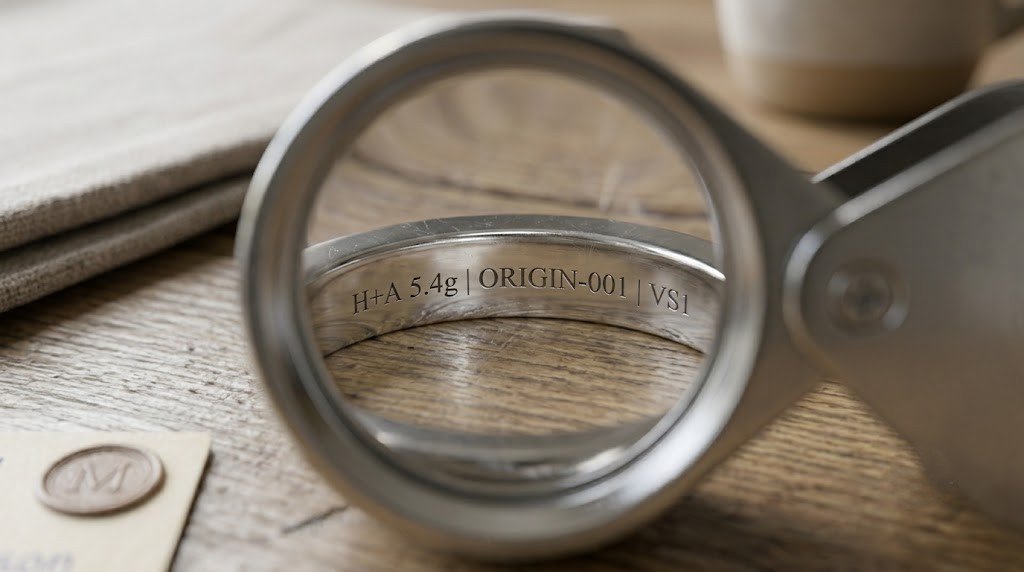
- The inside of a band. Private, protected and the most durable position, rubbed by nothing but a finger. It is also the surface that suffers if the ring is ever sized down, so keep text short and centered.
- The outside of a shank or the back of a pendant. Visible, and exposed to wear. Deep engraving lasts; shallow laser marking on an exposed surface will soften over the years.
- The gallery or the underside of a head. Almost invisible, almost indestructible, and only large enough for a date or two initials.
Two practical notes hold generally. Keep it short, because a long inscription at small size is unreadable within a decade of wear. And record what the stone is somewhere outside the piece, since engraving is not a document and whoever inherits it will need telling. The detail of typefaces, depths and methods sits in memorial diamond engraving.
Frequently Asked Questions
Which of the wife memorial diamond settings is the most secure?
A flush or gypsy setting, where the stone is sunk into the metal with its table level with the surface. It has nothing to snag and almost no exposed girdle. The trade is that it shows the least light of any common mount.
Can a memorial diamond be set into a ring she already wore?
Usually, but it is a different job from making a new piece, because the bench is working with metal already thinned by wear and possibly sized before. Ask for an assessment of the existing ring before the design is settled rather than afterward.
Is a bezel setting better than prongs for everyday wear?
For protection, yes, a continuous rim takes knocks instead of the stone and cannot snag. The cost is light: less enters from the side, so the stone reads slightly darker, and a colored rim shifts how its tone appears.
Why do pendants fail at the bail rather than the clasp?
Because the clasp is inspected and the bail is not. An open jump ring can be pulled gradually out of round by collars, seatbelts and the pendant’s own swing, opening a fraction at a time until the pendant is gone. Ask whether it is soldered closed.
Should a memorial diamond be insured?
That is a question for your own insurer rather than a jeweler, since terms vary by policy and location. Ask specifically whether a lab grown memorial stone can be scheduled, what valuation evidence is required, and what a claim would restore when like for like replacement is not possible.
What is the safest setting choice for hands that work?
Of the wife memorial diamond settings in common use, either a flush mount on a broad band, or no ring at all. A pendant meets none of the surfaces a hand meets all day, needs no sizing, and passes between people without bench work.
Final Thoughts on Wife Memorial Diamond Settings
Wife memorial diamond settings read as an aesthetic decision and are really an environmental one. Choose the mount for the life the piece will have, the hands, the collars, the sinks, the coat pockets, and the look tends to follow rather than fight it.
Then do the three things that are easy now and awkward later: ask how the bail is closed, ask whether the design can be resized, and ask your insurer what they want before the piece is made rather than after.
Learn More About Wife Memorial Diamonds
- Memorial diamond settings: rings, pendants, earrings, and cufflinks
- Wife memorial diamond ideas: rings, pendants, and keepsakes
- Memorial diamond colors for a wife
- Memorial diamond aftercare: cleaning and caring for your stone
- How much does a wife memorial diamond cost?
Talk With Memorial Diamond
If a stone is already in production and no decision has been made among the wife memorial diamond settings, that is the right moment for this conversation rather than the week the box arrives. Memorial Diamond is one place to have it, memorialdiamond.us.
Leave A Comment