Memorial Diamond Settings and Jewelry Ideas for a Grandmother

Memorial Diamond Settings and Jewelry Ideas for a Grandmother

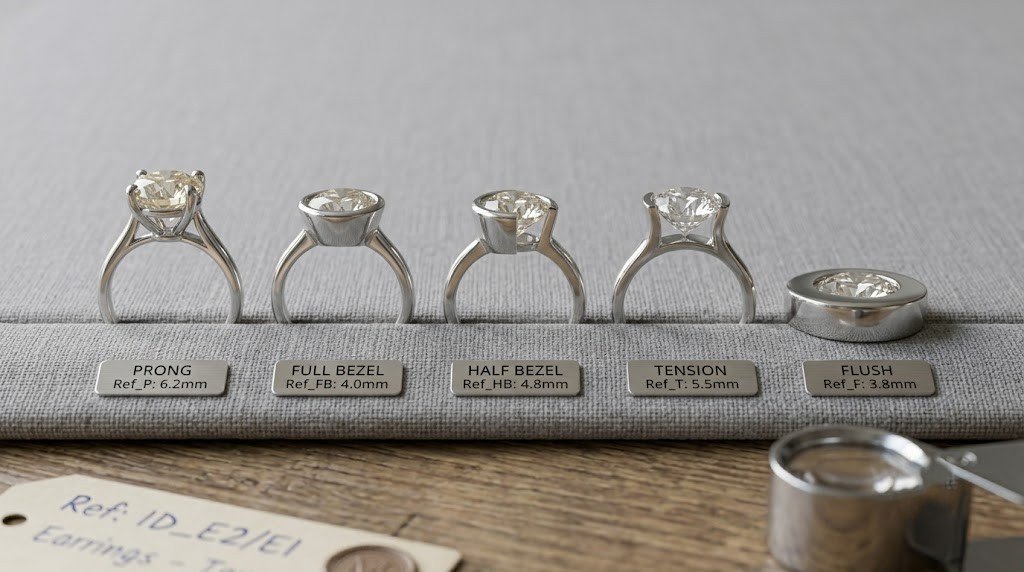
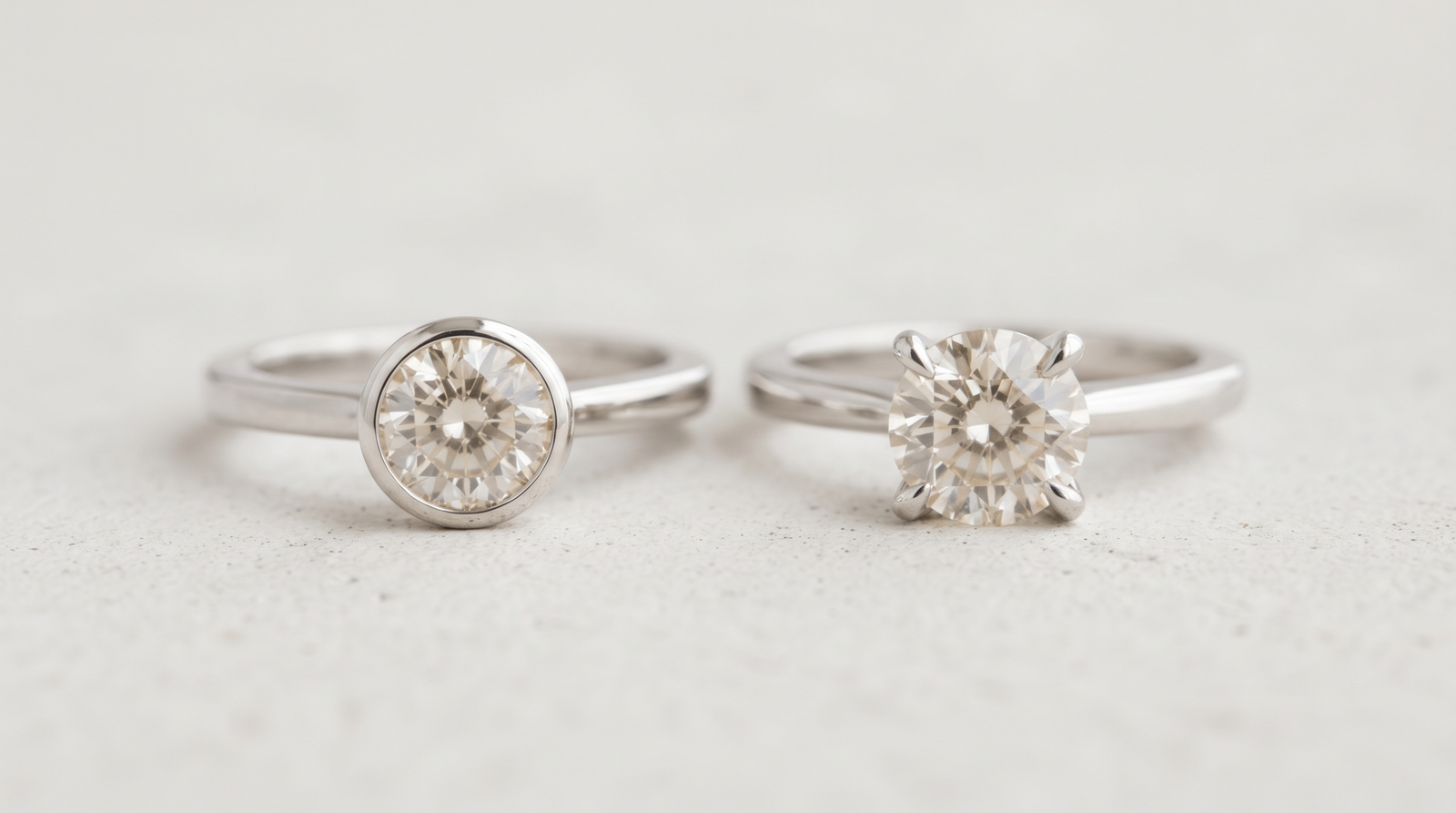
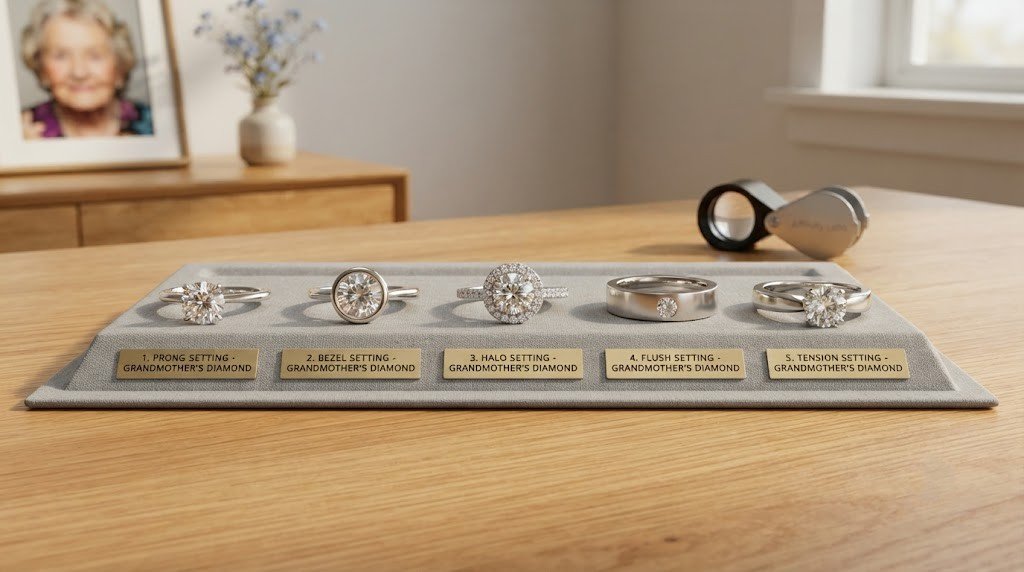
A small diamond grown in part from her carbon still has to live somewhere, on a hand, a chain or in a drawer. Grandmother memorial diamond settings decide how that stone is held, how well it copes with daily wear, and how it looks. Five setting types cover most choices: prong, bezel, halo, flush and tension. Bezel and flush settings tend to protect the stone best, while prongs show the most light.
grandmother memorial diamond settings

Why Do Grandmother Memorial Diamond Settings Matter So Much?

In grandmother memorial diamond settings, the metal is the part of the piece that protects the diamond, and it shapes how often the stone can be worn without worry. A memorial diamond is a real lab-grown diamond that is not easily replaced, so the metal around it does real work.

On the Mohs scale of mineral hardness, diamond sits at 10, harder than any other natural mineral. Hardness resists scratching, though, not every kind of impact. A sharp knock at the wrong angle can still chip a diamond, especially at a thin edge or a pointed corner. Good grandmother memorial diamond settings reduce that risk by covering the most exposed parts of the stone.

The setting also decides how the piece feels to wear. A high setting can catch on sweaters and gloves. A low one sits close to the skin and is easier to forget you are wearing. When you compare grandmother memorial diamond settings, think about the wearer’s real day: work with their hands, children, travel, sports or none of these.

It is worth knowing what the stone itself is before choosing grandmother memorial diamond settings around it. Her carbon is extracted, purified and typically blended with supplemental lab carbon before growth.

In a stone made from ashes, her share of the finished mass is usually around 10–15% for ash, with some providers quoting lower or higher. For hair, or a stone grown from ashes and hair together, no finished-stone share is published, so ask the provider for their figure in writing. The complete guide to a grandmother ashes diamond explains the full process from start to finish.

Which Setting Types Hold Up Best for Everyday Wear?

Among grandmother memorial diamond settings, bezel and flush designs usually hold up best for daily wear, because metal surrounds or recesses the stone. Prong, halo and tension settings can all be worn every day too, but they leave more of the stone exposed and benefit from more frequent checks.

The table below compares the five common grandmother memorial diamond settings on protection, light and maintenance. These are general jewelry patterns, so ask a jeweler to confirm how a specific design performs.

Setting typeHow it holds the stoneProtection for daily wearLight and lookMaintenance note
ProngSmall metal claws grip the edgeModerate; prongs can bend or catchMost light reaches the stoneAsk the jeweler how often to check prongs
BezelA thin metal rim wraps the edgeHigh; the girdle is shieldedSlightly less sparkle, clean modern lineLow; the rim can dent but rarely snags
HaloA ring of smaller stones surrounds the centerModerate; many small stones to monitorMakes a small center look largerCheck the small stones as well as the center
Flush (gypsy)Stone sits recessed into the metal surfaceVery high; almost nothing exposedSubtle, low-profile lookLow; mostly cleaning
TensionPressure from the band holds the stone in a gapVaries with design and metalStone appears to floatAsk whether resizing is possible later

A short way to think about these five grandmother memorial diamond settings:

  • Prong suits someone who wants maximum sparkle and is happy to have the piece checked from time to time.
  • Bezel suits an active wearer who wants the stone protected without losing presence.
  • Halo suits a small stone that should read larger, if the wearer accepts more parts to care for.
  • Flush or gypsy suits a ring or band worn every day where snag-free comfort matters most.
  • Tension suits a striking, modern look, with careful questions to the jeweler about durability and resizing.

These styles are not limited to rings. A bezel works well on a pendant or a pair of stud earrings, where it keeps a small stone from catching on hair or scarves. Prongs suit a solitaire pendant that hangs freely and rarely takes a knock.

A flush setting can sit in a cuff, a bar necklace or a signet-style ring worn by anyone. Halos can frame a stone on a brooch or a lapel pin, and tension designs appear in rings and some pendants. Bracelets take more knocks than necklaces, so protective styles tend to suit them better.

The piece itself should follow the wearer, not a rule about who wears what. A pendant may suit someone who works with their hands. A ring may suit someone who wants to see the stone often. Earrings can split two smaller stones between ears or between two relatives.

None of these grandmother memorial diamond settings is the correct one for a grandmother. The right choice depends on who wears it, how and how often. Two cousins could choose completely different grandmother memorial diamond settings for stones grown from the same source, and both would be right.

Which Metals Work for a Memorial Setting?
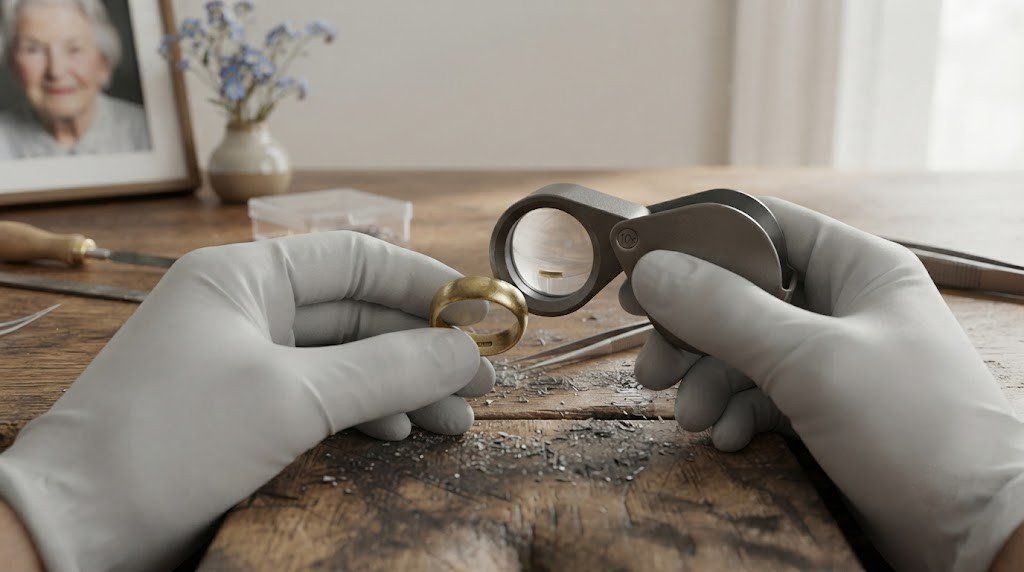
Most fine-jewelry metals work for grandmother memorial diamond settings, and the choice usually comes down to color, durability and budget. Yellow gold, white gold, rose gold and platinum are the common options, and each can hold any of the grandmother memorial diamond settings described here.

At a general level, platinum is dense and wears slowly, which some people like for prongs. Gold is mixed with other metals to make it durable, and its karat affects softness and color. White gold is often plated, and plating can wear over time. Rose gold has a warm tone that some people find flattering with champagne stones. Ask your jeweler to explain these tradeoffs for your exact design rather than relying on general rules, since the same metal can behave differently across grandmother memorial diamond settings of different shapes.

Allergies and skin sensitivity matter too. If the wearer reacts to certain metals, say so before anything is made. A jeweler can suggest alloys or finishes, and that conversation belongs at the start, before any grandmother memorial diamond settings are made, rather than after the piece arrives.

How Should the Setting Match the Stone’s Size and Color?

Good grandmother memorial diamond settings match the scale of the stone and use a metal that flatters its tone. Finished memorial stones usually fall somewhere from roughly a tenth of a carat (0.10 ct) up past 5 ct, and a setting built for one end of that range can look awkward at the other.

Small stones, around 0.10–0.25 carats, can disappear in heavy grandmother memorial diamond settings. A halo, a slim bezel or a delicate pendant bail can give them presence. Larger stones have more surface exposed, so protective grandmother memorial diamond settings such as a bezel may be worth the slight loss of light.

Color matters as much as size. Memorial stones commonly come out yellow, blue or champagne, with colorless available at higher cost and red, pink, green or black possible through optional post-growth treatment. Warmer tones often look rich in yellow or rose gold, and blue or colorless stones can look crisp in white metals, though personal taste should lead. The page on memorial diamond colors for a grandmother explains where each tone comes from and why none can be promised in advance.

A useful habit is to choose grandmother memorial diamond settings after you see the finished stone, or at least to keep the design flexible until then. The same mounting can look very different with a pale yellow stone and a deep blue one.

Can Her Own Ring or Piece Be Reset With the New Stone?

Sometimes, and it is a question for a jeweler who can examine the piece in person. Reworking a ring, pendant or brooch she owned into one of the grandmother memorial diamond settings in this guide can be a meaningful way to bring her jewelry and her memorial stone together, but what is possible varies a great deal.

A jeweler will usually look at the condition of the metal, whether the existing mounting fits the new stone’s size and shape, and whether the change would damage original details. Some older pieces adapt easily to a new stone. Others need a new head or bezel soldered in, and some are too fragile to alter without risk.

If you are considering this route, bring these questions to the jeweler:

  1. Can this mounting hold a stone of my intended size and shape safely?
  2. Will the work change or remove any original detail, marks or engraving?
  3. Can the original stone, if there is one, be kept or set elsewhere?
  4. What does the work cost, and how long will the piece be with you?
  5. If the piece cannot be adapted, can a new setting echo its design?

Also think about who holds her jewelry now. A ring that passed to someone else is a family conversation first. If her belongings are still being settled as part of an estate, it can help to wait until that is clear. The guide on talking to family about a grandmother memorial diamond has gentle ways to raise it.

How Can Several Relatives Have Matching or Different Settings?
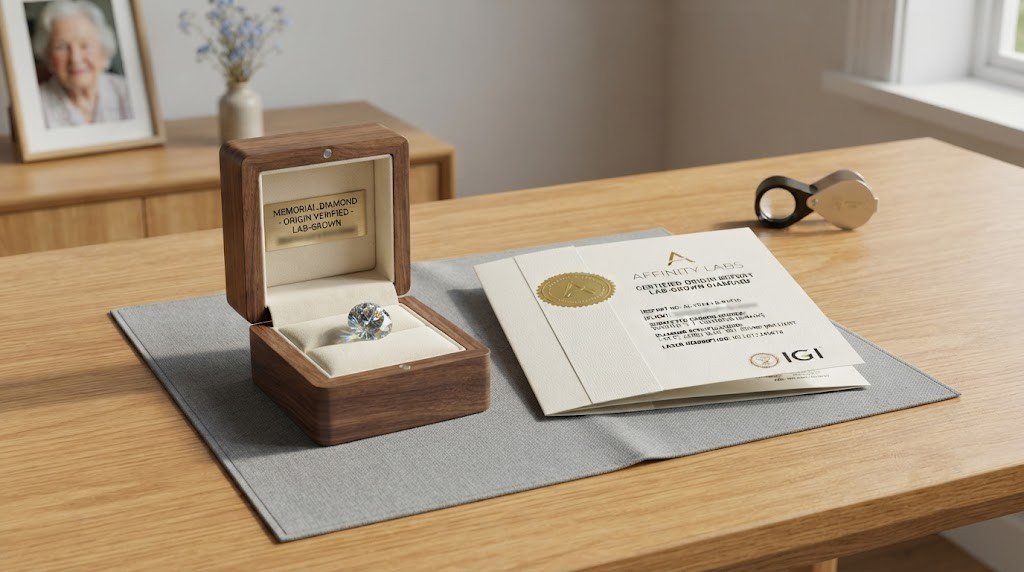
Several stones can often be grown from one source of her ashes or hair, because only a portion is used for each. That opens the door to grandmother memorial diamond settings chosen for several people at once, either as a matched set or as individual pieces.

Matching grandmother memorial diamond settings can create a quiet connection between cousins, siblings or a parent and child who live far apart. Different settings let each person choose what suits their own life, whether that is a ring, a pendant, a pair of studs or a stone kept in a box. Both approaches honor her equally.

A few practical points help when several relatives are involved:

  • Agree on carat size and budget before anyone commits, since larger stones cost more and can take longer.
  • Decide whether matching means the same setting, the same metal, or simply the same engraving.
  • Ask the provider how multiple stones are tracked and documented, in writing.
  • Accept that untreated stones from one source can still differ in tone.

Before anyone chooses grandmother memorial diamond settings, the question of who decides about her remains comes first. Who holds that say depends on the state, since no one nationwide rule settles it. A surviving spouse or partner, if she had one, and her grown children are commonly ahead of grandchildren in that order, and any written wishes she left can shift it.

A grandchild who would like a stone can ask whoever holds that authority for a small portion, or consider hair as another route. A lock you already hold is usually the simpler case, because laws about remains are written with the remains in mind. Even so, her belongings may be counted in her estate, each state sets its own rules, and hair a relative is holding calls for a conversation with them first. The article on sharing a grandmother memorial diamond among family covers this in more depth.

What Can Be Engraved on the Setting?

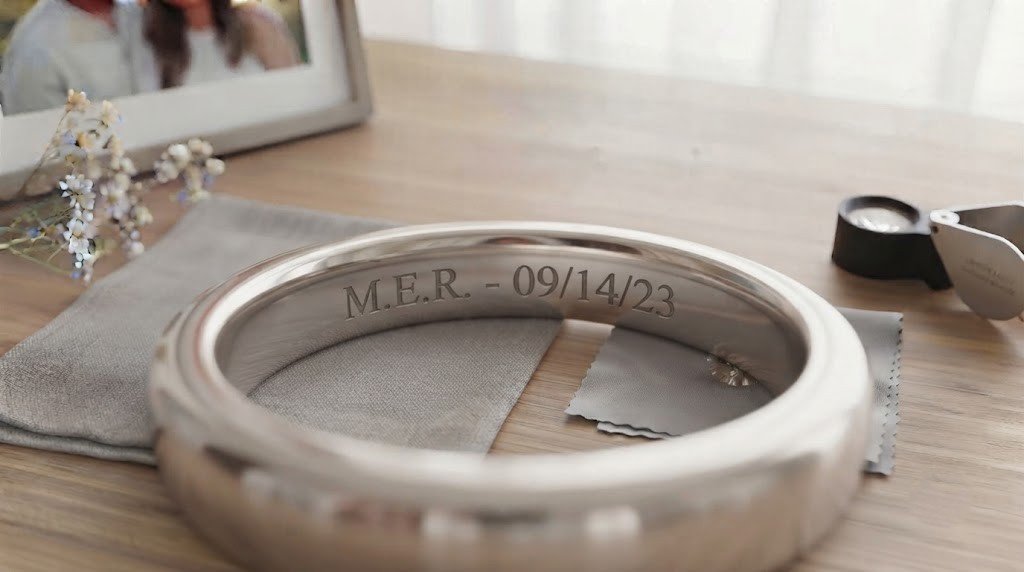
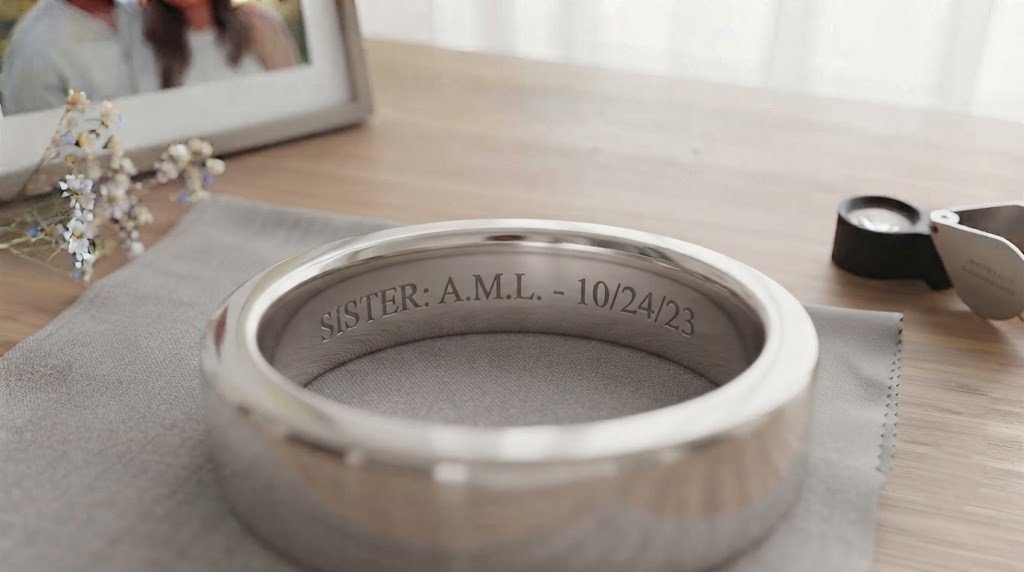
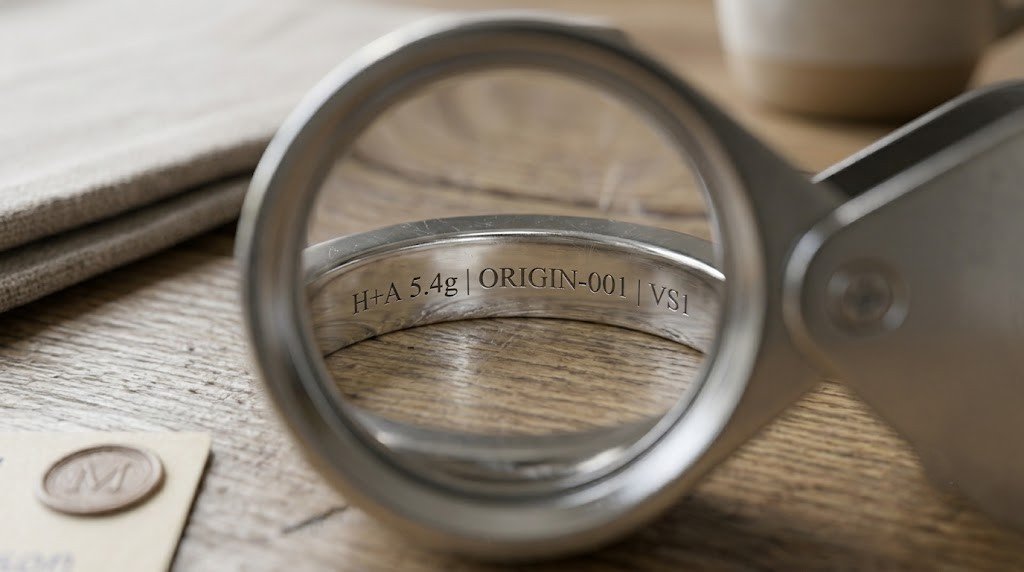
Most grandmother memorial diamond settings in metal can carry a short engraving, usually inside a ring band or on the back of a pendant. Engraving is typically priced separately, and space limits what fits.

Options might include her name or initials, a date that matters to the family, a short phrase she used, or coordinates of a place connected to her. Some people engrave the same words across grandmother memorial diamond settings made for several relatives, so the pieces are linked even if their designs differ.

Before engraving grandmother memorial diamond settings, ask the jeweler how many characters will fit, which fonts are possible, and whether hand or machine engraving is used. Ask too whether engraving affects resizing later, since cutting a band can interrupt the text. Inscribing the diamond’s own girdle is a separate service from engraving the metal, so ask the provider whether they offer it at all.

How Do You Care for and Inspect a Memorial Setting?

Gentle cleaning at home and periodic checks by a jeweler keep grandmother memorial diamond settings secure. The stone is hard, but the metal holding it wears, and a loose prong or thin bezel is easier to fix before the stone is lost.

At home, warm water, a drop of mild dish soap and a soft brush usually clean grandmother memorial diamond settings well. Avoid harsh chemicals, chlorine and abrasive cleaners, which can affect some metals and finishes. Take rings off for heavy lifting, gardening, cleaning or anything that might strike the stone.

For inspection, ask your jeweler how often they recommend checking the specific grandmother memorial diamond settings you choose. A prong or tension design may warrant more frequent checks than a flush band. Signs to watch between visits include a stone that moves, a prong that catches on fabric, or a change in how the piece sits.

Insurance is a question for an insurance agent, not for a jeweler or provider. Ask an agent whether and how grandmother memorial diamond settings and the stone in them can be covered, what documentation they need, and whether an appraisal or grading report would help. Independent grading, commonly to GIA’s 4Cs standards, describes the stone’s cut, color, clarity and carat, and is different from the in-house origin certificate that records the stone’s link to her material.

Is It Fine to Keep the Stone Loose for Now?

Yes. A loose diamond can usually be set later, even years on, and there is no obligation to choose any of the grandmother memorial diamond settings right away. Keeping the stone loose gives you time to decide what feels right, or to wait for someone who will wear it.

Until you settle on grandmother memorial diamond settings, store the loose stone in a small padded box or pouch on its own, away from other jewelry that could scratch or be scratched. Keep its certificate and any grading report with it, and note where it is kept so others in the family know. A loose stone is small and easy to misplace, so a safe, consistent place matters.

Some people decide they do not need grandmother memorial diamond settings at all and that the loose stone is the memorial in itself, held in the hand rather than worn. Others set it later for a milestone in the family’s life. The ideas collection on grandmother memorial diamond rings, pendants and keepsakes shows wider possibilities, and the questions to ask before turning her hair into a diamond help with the provider side.

Frequently Asked Questions

What is the most protective way to set a memorial diamond in a ring?

A flush or bezel design usually offers the most protection, because metal covers the stone’s edge. Prongs show more light but leave more exposed. Ask a jeweler which design suits the wearer’s daily routine, then follow their advice on inspection.

Can a memorial diamond chip even though it is so hard?

Yes. Diamond rates 10 on the Mohs scale and resists scratching well, but a hard knock at the wrong angle can still chip it. A protective setting and removing the piece for heavy tasks lower that risk.

Does a memorial stone need a special kind of setting?

No. A memorial diamond is a real lab-grown diamond, so any setting designed for diamonds can hold it. Choose based on size, color, wear and taste, and tell the jeweler what the stone means so they handle it with care.

Can I wear a memorial diamond pendant every day?

Often, yes, as pendants take fewer knocks than rings. Check the chain and clasp as well as the setting, and remove it for swimming, sleeping or rough activity if the jeweler advises. Periodic inspection is still worth asking about.

Should every grandchild’s piece use the same metal?

Not necessarily. Some relatives choose one metal to link the pieces, while others pick what suits their own skin tone or wardrobe. An engraving or matching style can connect the set even when metals differ. Agree on the approach before ordering.

Are grandmother memorial diamond settings included in the price of the stone?

Usually not. Across the industry, settings, engraving, fancy cuts and independent grading are typically priced separately from the loose stone. Ask each provider or jeweler for an itemized written quote so you can compare the full cost.

Final Thoughts on Grandmother Memorial Diamond Settings

Grandmother memorial diamond settings are a practical decision that carries a lot of feeling. It is fine to take your time, to try designs on, to keep the stone loose until something feels right, or to change your mind. What matters is that the person who wears it, or keeps it, feels at ease with how her stone is held.

Learn More About Grandmother Memorial Diamonds

Talk With Memorial Diamond

If you are weighing grandmother memorial diamond settings, metals or whether to keep a stone loose for now, the team at Memorial Diamond is happy to talk it through with you. Ask as many questions as you need; there is no deadline for deciding.
Memorial Diamond Settings and Jewelry Ideas for a Sister

Memorial Diamond Settings and Jewelry Ideas for a Sister

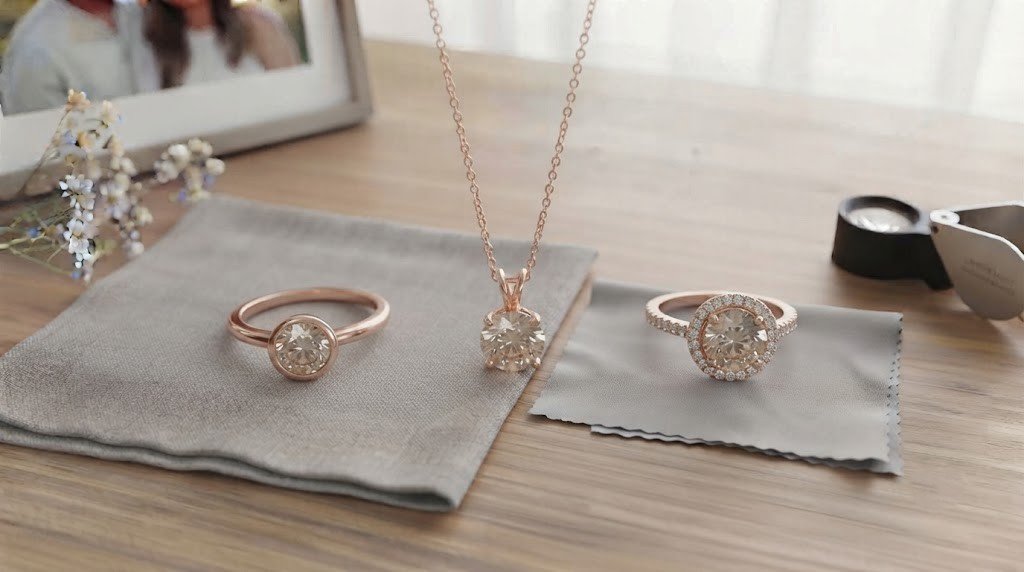
You might already picture the piece she would have worn without a second thought, or you might have no picture at all yet. Sister memorial diamond settings come down to three practical decisions: how the metal holds the stone (bezel, prong, halo, flush or tension), which metal surrounds it, and how often it will be worn. For a small stone worn every day, bezel and flush settings offer more protection; prongs and halos favor sparkle and visibility.

sister memorial diamond settings

Which Sister Memorial Diamond Settings Hold a Small Stone Securely?

Before comparing sister memorial diamond settings, it helps to know what a setting actually does. It is the part of a ring, pendant or earring that grips the diamond, and it determines how much of the stone meets light, how much is exposed to knocks, and how easily the piece catches on sweaters, hair or bag straps. These details matter for a memorial stone because replacing it may not be possible in the same personal sense as replacing an ordinary piece of jewelry.

Five styles cover nearly all the sister memorial diamond settings you are likely to encounter:

  • Bezel setting: A thin rim of metal wraps around the entire edge of the stone.
  • Prong setting: Small metal claws, usually four or six, rise up and hold the stone at several points.
  • Halo setting: A ring of smaller accent stones circles the center diamond, which itself sits in prongs or a bezel.
  • Flush setting, sometimes called gypsy setting: The stone is sunk into a prepared seat so its top sits level with the surrounding metal surface.
  • Tension setting: The band’s pressure holds the stone between two ends of metal without traditional claws.

None of these settings is the right answer for every family. The best of the sister memorial diamond settings for you is the one that matches how you will live with the piece. Someone who wears a ring every day and has busy hands needs different protection from someone who plans to wear a pendant on anniversaries and keep it safely stored the rest of the year.

How Do the Five Sister Memorial Diamond Settings Compare?

The table below compares five common sister memorial diamond settings against the questions jewelers usually hear first. Treat it as the start of a conversation rather than a final verdict. Craftsmanship, metal thickness, stone shape and the quality of the setting can change the result for an individual piece.

SettingHow It Holds the StoneProtection From KnocksLight and SparkleSnag RiskFit for a 0.10–0.25 Carat Stone
BezelA continuous metal rim surrounds the edge.High; the edge is covered by metal.Less light enters from the sides, but the top remains visible.Very lowA strong option; the rim can make a small stone look larger.
ProngFour or six claws grip the stone at points.Moderate; the edges and claws remain exposed.High; light can enter from many angles.Moderate to highGood when the prongs are fine and low profile.
HaloAccent stones circle the center stone, which is held separately.Moderate; the accent stones add their own small risks.High; the surrounding stones add sparkle.ModerateGood for visibility, although the center stone shares attention.
FlushThe stone sits level with the metal surface.Very high; very little sticks out.Lower; mostly the top of the stone catches light.Very lowGood for a wider band; it may be less visible on a narrow band.
TensionThe band holds the stone between two ends through carefully engineered pressure.Variable; it depends heavily on precise design and fit.High; open sides allow light through.Low to moderateMore challenging; small stones require precise engineering.

Across these five sister memorial diamond settings, one pattern stands out. Styles that show off a diamond’s light tend to expose more of its edge, while styles that protect the edge may hide some light. The choice involves a trade-off, and only you know which side matters more for her stone.

Which Metals Suit Sister Memorial Diamond Settings Best?

Metal influences sister memorial diamond settings as much as the setting style does because it affects durability, comfort, color and cost. Common choices include platinum, white gold, yellow gold and rose gold, with sterling silver and titanium appearing in some designs.

Platinum is dense and tends to wear slowly, which is one reason jewelers often suggest it for prongs in everyday jewelry. White gold is gold alloyed with whiter metals and is commonly plated with rhodium. That finish may need renewing over time. Yellow gold and rose gold offer warmer tones. Higher-purity gold is softer than lower-purity gold, so ask how the recommended karat will perform with your expected daily wear.

The stone’s color is the other half of the pairing. Memorial diamonds may finish with a yellow, blue or champagne tint rather than a colorless appearance. The final color cannot reliably be determined from the source material alone. Our guide to the colors a sister’s stone can come out explains more about these possibilities, while this section focuses on the metal.

Once the finished color is known, you can choose a metal that complements it. Some people like yellow gold beside a yellow or champagne stone for a warm, unified look. Others prefer a white metal beside a blue stone. Holding the finished diamond against several sample bands is a practical way to see which pairing you prefer.

If you are choosing sister memorial diamond settings before the stone is finished, ask whether the jeweler can wait to confirm the metal until the diamond arrives. A short wait may help you choose a combination you will be happy with for years.

How Should Sister Memorial Diamond Settings Fit a 0.10–0.25 Carat Stone?

Memorial diamonds are offered in a range of sizes, from around 0.10 carats to more than 5 carats in some industry offerings. Smaller stones can be a suitable starting point. Entry-size stones of roughly 0.10–0.25 carats may cost around $1,500–$3,500 as an industry range, with settings, engraving and grading potentially priced separately. These figures are general estimates, not a quote or published price from Memorial Diamond. Confirm current prices and available sizes directly with the provider.

A small stone is no less meaningful, but its size affects how the mount should be designed. When comparing sister memorial diamond settings for a smaller stone, consider the following points:

  1. Keep the metal proportionate. Heavy prongs or a thick bezel can overwhelm a small stone. Ask about fine, tapered prongs or a thin, polished bezel rim.
  2. Use the setting to frame, not hide. A slim bezel or delicate halo can help the stone appear more prominent without increasing its carat weight.
  3. Mind the height. A low-profile mount offers more protection and catches less often on clothing. A taller mount may allow more light in but leaves the stone more exposed.
  4. Match the band width to the style. Flush settings need enough metal around the stone, so they often suit wider bands. Prongs and bezels can work well on finer bands.
  5. Think about the cut. Round stones are generally straightforward to set securely at small sizes. Shapes with pointed ends, such as pear or marquise, need suitable protection at those points.

That is why slim bezels and fine halos deserve a close look among sister memorial diamond settings for smaller stones. When thoughtfully designed, a small memorial diamond can look deliberate and refined rather than understated. The setting should complement the stone instead of competing with it.

Will the Piece Be Worn Every Day or Kept for Certain Days?

How often you plan to wear a piece is one of the clearest ways to narrow down sister memorial diamond settings. Diamond ranks 10 on the Mohs scale of mineral hardness, the top of that scale, which means it resists scratching from everyday materials better than any other gemstone. Hardness, however, is not the same as toughness. A sharp blow at the wrong angle, such as a ring striking the edge of a countertop, can still chip a diamond, particularly near a thin edge or pointed tip.

Expected wear should therefore influence your choice:

  • Everyday rings: Rings experience frequent impacts. Bezel and flush styles are often more protective options. If you prefer prongs, ask a jeweler whether six prongs and a lower profile would suit the stone.
  • Everyday pendants: Pendants generally sit away from many direct knocks, making prong and halo designs practical options to discuss with a jeweler.
  • Earrings: Earrings may catch on hair and clothing more often than they experience hard impacts. Bezel-set studs can be a simple, secure choice.
  • Occasional jewelry: A piece worn on her birthday, at family gatherings or on other meaningful days can use a more open setting if you are comfortable with its protection needs. It will spend more time stored safely when not worn.

Some families choose two pieces: one sturdy design for everyday wear and another more open, sparkling design for special occasions. Whether more than one stone can be grown from the available material, and who each stone will belong to, are questions worth discussing early. Our article on several relatives receiving a stone from one sister explains considerations around sharing.

Can the Diamond Go Into a Piece of Jewelry She Owned?

Among the many sister memorial diamond settings you could consider, one of the most personal options is a piece she already wore. Her ring, locket or pendant might be reworked to hold the new stone. A skilled bench jeweler can often assess whether this is possible, although the jewelry may need a new setting head, a new bezel or a reworked seat. Older or thin metal may need repair first.

Before taking her jewelry to a workshop, check who currently owns or holds it. Jewelry she owned may form part of her estate, and rules vary by location. The executor or person managing her affairs should agree before the piece is altered. A conversation in advance can prevent a more difficult disagreement later, especially if several relatives feel connected to the same item.

If the original stone is removed to make room for the memorial diamond, decide in advance what should happen to it. It could be reset in another piece, returned to the person who holds the jewelry, or kept with the memorial diamond’s paperwork.

Can Sister Memorial Diamond Settings Be Changed Later?

In most cases, a memorial diamond can be removed from one setting and reset into another, just like other diamonds. That means your first choice does not necessarily have to be permanent. A pendant chosen today might become a ring for another family member decades from now, depending on the design and the stone.

Some sister memorial diamond settings are easier to change than others. Prong mounts are often relatively straightforward for a qualified jeweler to open and close. Bezels may be carefully worked to release the stone. Flush settings involve metal shaped around the stone and can require more care. Tension bands depend on precise fit and engineering, so a stone from one design may not fit another.

If you decide to reset the diamond, follow three practical steps:

  • Ask the jeweler how the stone will be documented and tracked while it is outside the setting. Ask whether you can be present during the process.
  • Keep the provider’s origin certificate and any grading report with the stone’s records rather than relying on the old mount to identify it.
  • Ask for the stone to be examined under magnification before and after the work so any existing marks or damage can be recorded.

What Can Be Engraved, and Where Does It Go?

Engraving can be added to many sister memorial diamond settings, but the available space depends on the design. Common locations include the inside of a ring band, the back of a pendant, the area beneath a bezel cup, and the inner face of a locket. These surfaces can be small and curved, so the setting influences how many characters will remain readable.

Hand engraving and laser engraving create different appearances, and some fonts remain easier to read as metal wears. Ask to see a sample at its actual size before committing. Some providers may also offer a small laser inscription, such as a reference number, on the diamond’s girdle. Whether that service is available and what it costs are questions to ask the provider rather than assume.

A thoughtful engraving can complement a quiet design. For example, a plain, sturdy bezel ring with her initials inside can feel personal without drawing attention from strangers. That may be the right choice for someone who prefers to keep the meaning of the jewelry private.

What Should You Ask a Jeweler and an Insurer First?

A good jeweler should welcome questions, and a memorial stone deserves careful handling. Bring this checklist to any consultation about sister memorial diamond settings:

  1. Have you set memorial or lab-grown diamonds before, and can I see examples of your work?
  2. Which setting would you suggest for a stone of this size and shape, considering how it will be worn?
  3. How will you identify, hold and track the stone while it is in your workshop?
  4. Who is responsible if the stone is damaged during the setting process?
  5. What maintenance do you recommend, and how often should prongs or the bezel be checked?
  6. Can the piece be resized or reset later, and what risks would that involve?

Insurance is a separate conversation. A memorial diamond may have a market value, but its personal meaning cannot be replaced. Policies differ, so ask your insurer whether a memorial stone can be listed on a policy or rider, what type of appraisal is required, and whether the jewelry setting and stone are assessed together or separately.

Ask how a loss or chip would be handled, too. An independent grading report that references GIA’s diamond quality factors may be optional and priced separately, but an appraiser or insurer could ask for documentation. A licensed insurance agent can explain the terms and limits of your particular policy.

When Should You Start Planning the Setting?

Growing a memorial diamond typically takes around 6–10 months after a provider receives the material, with some stones taking up to about 12 months, particularly larger stones or specialty colors. These are general industry timelines rather than a guaranteed Memorial Diamond turnaround. Ask your chosen provider for its current schedule and process.

This timeline gives you room to plan without rushing. It can make sense to narrow down your preferred sister memorial diamond settings early and finalize specific details later.

At the beginning, decide on the form, such as a ring, pendant, earrings or another keepsake, along with the broad setting style and budget. Once the finished stone arrives with its exact color, shape and measurements, the jeweler can confirm the metal, seat dimensions and engraving options. To understand the stages involved, read the timeline for a sister’s memorial diamond.

If you are still weighing jewelry styles, our guide to ideas for rings, pendants and keepsakes made with her stone explores more options. If you have not yet chosen a provider, begin with where to begin when choosing a memorial diamond for your sister. For a broader look at size and budget, read what a sister memorial diamond typically costs.

Whatever you choose, sister memorial diamond settings are not a test with one correct answer. They are a way of deciding how close to keep her stone and how you want to carry it.

Frequently Asked Questions

Can a local jeweler set a memorial diamond that was grown by a different company?

Usually, yes. A memorial diamond is a real diamond, so an experienced bench jeweler can assess and set it. Bring the origin certificate, ask how the stone will be tracked in the workshop, and confirm who is responsible if anything goes wrong during setting.

Does a lab-grown memorial diamond need a different kind of setting from a mined one?

No. A memorial diamond is a real diamond, so a jeweler can use setting styles suitable for other diamonds. What differs for many families is the personal importance of the stone and the difficulty of replacing it with another stone that carries the same meaning. That makes protective choices and careful workshop tracking worth discussing.

Can siblings choose different settings for stones grown from her ashes or hair?

Yes. Sister memorial diamond settings can differ from one piece to another. One sibling might prefer a bezel ring, while another chooses a prong pendant. Agreeing in writing who owns each stone before it is grown can help avoid confusion later.

Should the origin certificate stay with the jewelry?

Keep the provider’s origin certificate with the jewelry’s important records, along with any grading report and appraisal. If the stone is reset or passed down, the paperwork should travel with it so the records remain together.

How often should a memorial diamond setting be checked?

There is no single schedule that suits every piece, so ask your jeweler what they recommend for the specific design and how often you wear it. Daily-wear rings may need closer attention than occasional jewelry. Have a piece examined promptly if a prong feels rough, catches on fabric, or the stone appears to move.

Is a bezel too plain for a memorial diamond?

Not at all. Among sister memorial diamond settings, a bezel can be slim, polished, textured or scalloped. It frames a small stone and may make it appear larger. Some people choose it precisely because it feels calm, secure and quietly personal.

Final Thoughts on Choosing a Setting for Her Stone

There is no single correct way to wear a diamond grown in part from the material of someone you love. A plain bezel ring worn every day and a sparkling halo pendant brought out on her birthday can both honor her, just in different ways.

If you weigh protection against light, think honestly about daily wear, and leave room to reset the stone later, the sister memorial diamond settings you choose can fit your life and your preferences. That fit matters more than any trend.

Learn More About Sister Memorial Diamonds

Talk With Memorial Diamond

If you are thinking about how her stone might be set, or want to talk through which sister memorial diamond settings may suit the way you plan to wear it, visit Memorial Diamond. You can explore the available information and ask questions at whatever pace feels right for you.

Sister Memorial Diamond Ideas

Sister Memorial Diamond Ideas: Rings, Pendants, and Keepsakes

Some people know at once how they want to carry their sister with them, and others need to see the options laid out before anything feels right. The most practical sister memorial diamond ideas include a pendant, a ring on any finger, earrings, a bracelet, cufflinks or a tie pin, a lapel pin, a loose stone kept in a keepsake box, a stone set into an heirloom, coordinated stones for several siblings, and engraving on any of these.

Each of these sister memorial diamond ideas suits a different way of living with a memorial stone. Below, they are grouped by how often the piece would be worn, followed by a side by side comparison, notes on keeping a small diamond safe, and a few thoughts on choosing, especially when siblings want different things.

Which Sister Memorial Diamond Ideas Suit Everyday Wear?

If you want her close through ordinary days, these four sister memorial diamond ideas are built for regular wear. Memorial stones are offered from about 0.10 carat up to 5 carats or more, and every piece below can work with a stone from the entry tier of roughly 0.10 to 0.25 carat.

1. A Pendant Worn Close

A pendant is one of the gentlest ways to wear a memorial diamond. It sits against the chest or at the collarbone, is less exposed to knocks than a ring, and works with almost any stone size.

A protective mount such as a bezel suits a pendant that will be worn most days, while a single stone on a fine chain is quieter still. Some people choose a pendant that can be tucked under clothing on days when they would rather keep her memory private and worn openly on others.

2. A Ring on Any Finger

A ring keeps the stone in view every time you look at your hands. It can be worn on any finger, including a little finger or a thumb, and on either hand. There is no rule about which finger a memorial ring belongs on.

Rings take more knocks than many other types of jewelry, so ask a jeweler for a low, protective mount rather than a tall one. Hands change size with the seasons and over the years, so it is worth choosing a design a jeweler can resize later.

3. Earrings

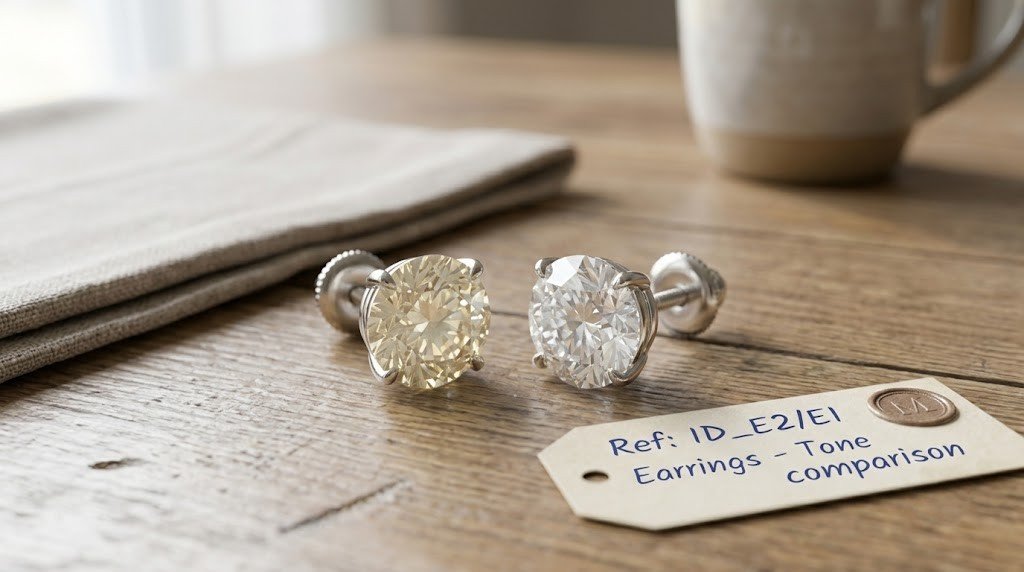
Studs are a natural fit for small stones. A pair needs two diamonds, though, and that brings a practical question: memorial stones grown from the same source can still differ slightly in tone because color comes from trace elements during growth. Ask a provider whether a closely matched pair is possible, or embrace a pair that is gently different.

Another option is a single stone worn in one ear, paired with a plain stud in the other.

4. A Bracelet

A bracelet with a single bezel set stone, or a small stone on a fine chain, is a subtle everyday choice. Wrists brush against desks, door frames, and car doors, so a protective setting is wise. A rigid bangle with the stone set low into the metal is one of the sturdier versions.

These four sister memorial diamond ideas share one practical point: the more often a piece is worn, the more its setting needs to protect the stone.

Which Sister Memorial Diamond Ideas Work for Occasional or Formal Wear?

Not every one of the sister memorial diamond ideas needs to be worn daily. For some people, the meaning sits in bringing the piece out for particular days, such as a wedding, graduation, anniversary, or her birthday.

Cufflinks with a small memorial stone set into one or both faces suit anyone who wears French cuffs. A tie pin or tie bar carries a single stone neatly. Both are worn only occasionally, which reduces everyday exposure to wear and tear, and both can be passed from one person to another for different occasions.

6. A Lapel Pin

A lapel pin or brooch can be worn on a jacket, coat, scarf, or bag strap. It is a flexible idea because it moves from outfit to outfit and sits at heart height.

Pins can come loose, so choose a secure locking back. Some people pair a lapel pin with a small engraving on the reverse that only they will ever see.

These occasional pieces are some of the more adaptable sister memorial diamond ideas because they can be shared or worn in turn among siblings without anyone needing to own one outright.

What Are Sister Memorial Diamond Ideas for Keeping Rather Than Wearing?

Not all sister memorial diamond ideas involve jewelry. Some of the most personal choices keep the stone somewhere safe, to be seen whenever you choose.

7. A Loose Stone in a Keepsake Box

A loose diamond in a small box, perhaps lined in a fabric that meant something to you, is a complete and meaningful choice. It can sit on a shelf, in a drawer, or beside a photograph, and it can be held whenever you want.

Keeping the stone loose also leaves every option open. A setting can be added later, months or years on, if you decide you would like to wear it. Keep the origin certificate with the box so the stone’s history stays with it.

8. A Stone Set Into an Heirloom

If your sister left jewelry, or the family has a piece with history, a memorial stone can sometimes be set into it: a ring she wore, a locket, or a brooch from a grandparent. The appeal is that two kinds of memory meet in one object, the piece she touched and the stone grown in part from her.

If the heirloom was hers, it may count as part of her estate, and how that works differs from state to state. Talk with the executor, or whoever is handling her affairs, before anything is altered.

Both of these sister memorial diamond ideas suit people who find daily wear too much, or who want the stone to stay in the family rather than with one person.

How Can Several Siblings Create Matching or Coordinated Stones?

9. Matching or Coordinated Stones for Several Siblings

Because only a portion of the source material goes into each stone, several diamonds can often be grown from one shared source. That opens up a set of sister memorial diamond ideas for siblings who want to stay connected through her memory.

A few approaches include:

  • Matching pieces: Each sibling wears the same design, such as identical pendants, in whatever metal they prefer.
  • Coordinated pieces: The stones come from the same source, but each person chooses their own form. One may choose a ring, another a pendant, and another a loose stone.
  • One shared heirloom: A single piece is kept by one sibling or moves between households for particular days, with ownership agreed in writing.

A set of stones depends on someone being able to release the material, and that person may not be you. Siblings frequently sit further down the line of authority over remains. In many states, the order may run from a spouse or registered partner to adult children and parents before reaching brothers and sisters. That order is not national; it changes from state to state. If she named an agent or left a signed declaration, her written wishes may affect who decides.

To find out who holds authority, ask the funeral home or crematory who signed for the cremation. A local attorney can explain how your state handles it. A gentle request to that person for a small share is usually where siblings start. Hair kept at her home may belong to her estate as well, so speak with the executor before using any.

The guide to how more than one relative can receive a stone from one source explains the practical side in more depth. Half siblings, step siblings, adopted siblings, and twins are all siblings, and any of them may want a stone, or not.

What Can Engraving Add to Any of These Sister Memorial Diamond Ideas?

10. Engraving

Engraving adds words to any of the other nine sister memorial diamond ideas. Most of the available space is on the metal, and some providers can also laser a few characters onto the diamond’s girdle, its thin outer edge. The harder part is usually deciding what to say.

What people choose to engrave varies widely:

  • Her name, initials, or a nickname.
  • A date, such as her birthday or another day that mattered.
  • Map coordinates of a place she loved.
  • A short phrase she used, or something only siblings would understand.
  • Her handwriting, reproduced from a card or letter, where the jeweler offers it.

Engraving is usually priced separately from the stone. Short wording tends to stay legible longest, and a phrase that means nothing to strangers can be a comfort in itself because it stays between you and her.

How Do These Sister Memorial Diamond Ideas Compare at a Glance?

This table sets the ten sister memorial diamond ideas side by side, so you can see how each one fits into everyday life.

IdeaHow often wornExposure to knocksProtective setting optionsGood to know
PendantDaily or oftenLowBezel, half bezel, solitaireCan be tucked under clothing
Ring on any fingerDaily or oftenHighBezel, low profile, flushChoose a design that can be resized
EarringsDaily or oftenLow to moderateBezel studs, secure backsA pair needs two stones; tones may differ
BraceletDaily or oftenModerate to highFlush set bangle, bezelWrists brush hard surfaces often
Cufflinks or tie pinOccasionallyLowFlush or bezel facesEasy to share between siblings
Lapel pinOccasionallyLow to moderateBezel, locking pin backMoves between outfits and bags
Loose stone in a boxKept, not wornVery lowNone neededLeaves every future option open
Set into an heirloomVariesVariesDepends on the existing mountCheck estate questions first
Sibling setVariesVariesAny of the aboveAgree ownership in writing
EngravingWith any pieceNone addedNot applicableUsually priced separately

This table only hints at how each piece holds its stone. The range of setting styles for a sister’s stone compares bezel, prong, halo, flush, and tension mounts, along with the metals around them, in detail.

How Do You Keep a Small Memorial Stone Safe Day to Day?

A memorial diamond is a genuine lab grown diamond, as this overview of memorial diamonds describes, so it has many of the same everyday considerations as any small stone. Scratches are rarely the main worry. Losing it is, and a hard knock can still chip even a diamond.

A few habits help, whichever of these sister memorial diamond ideas you choose:

  1. Choose a protective setting for anything worn daily, especially rings and bracelets.
  2. Take rings and bracelets off for gardening, the gym, moving furniture, and heavy cleaning.
  3. Store pieces separately so diamonds cannot scratch other jewelry or each other.
  4. Check the setting occasionally. A jeweler can confirm that prongs and bezels are secure.
  5. Clean gently with warm water, mild soap, and a soft brush.
  6. Keep paperwork together, including the origin certificate and any independent grading report.
  7. Ask your insurer whether the piece can be covered and what documentation it needs.

Small stones can go missing quietly, which is why the clasp, earring back, and pin lock deserve as much attention as the stone. Whichever of these sister memorial diamond ideas you settle on, a secure fastening is worth the extra effort.

How Do You Choose Between Sister Memorial Diamond Ideas?

sister memorial diamond ideas

There is no single right answer among sister memorial diamond ideas, only the one that fits how you want to live with her memory. A few questions can help narrow the field:

  • How do you picture it? On your hand, at your throat, or in a drawer you open on hard days?
  • How active is your life? Daily physical work may favor a pendant or a loose stone over a ring.
  • Would she have liked it? Some people choose something she would have worn; others choose something that suits them.
  • Do you want it seen? Some memorial pieces are private, while others invite questions you may or may not want.
  • What fits your budget? Settings are usually priced separately from the stone, and the guide to what a sister’s stone typically costs breaks down those extras.

Color can influence the choice of piece, too. Some people want a tinted stone on a hand, where they will see it often; others would rather it sit quietly at the collarbone. The shade cannot be picked from her ashes or hair, so it helps to read about the tones memorial stones tend to show before committing to a design.

Whether her stone begins with ash, hair, or both makes no difference to which of these pieces it can go into. Her carbon is usually combined with lab carbon so there is enough to grow a stone. For ash, providers commonly describe her share of the finished diamond’s mass as somewhere near 10 to 15 percent, and some quote figures nearer 3 percent. No equivalent finished stone percentage has been published for hair. If you are gathering hair, how much hair a sister’s stone usually needs covers quantities.

Timing may matter if you want the piece for a particular date. A stone typically takes six to ten months from receipt, although timelines vary by provider and stone specifications. The stage by stage timeline shows where a setting fits.

What If Siblings Prefer Different Sister Memorial Diamond Ideas?

Siblings may picture very different sister memorial diamond ideas. One may want a ring worn every day, another a loose stone in a box, and another nothing at all. Each of those is a valid way to remember her.

A few ways to leave room for everyone:

  • Let each sibling choose their own piece from the same source rather than agreeing on one design.
  • Accept that some siblings may decide later, or never. A stone may be possible years later if suitable material has been kept safely and a provider accepts it.
  • If one stone is shared, write down who keeps it and what happens next before it exists.
  • Avoid treating any choice as a measure of love. Choosing not to have a stone is not a lesser goodbye.

Grief does not move on one schedule. Giving each person space to choose in their own time often matters more than the jewelry itself. If you are still finding your bearings, the overview on where to begin choosing a stone for your sister lays out the first decisions in order.

Frequently Asked Questions

Can a memorial ring be worn alongside rings I already wear?

Usually, yes. Tell the jeweler which rings it will sit beside so the band width and height can be planned to reduce metal rubbing against the stone. A low mount tends to stack more comfortably, and matching metals may help the rings wear at a similar rate.

What size memorial diamond suits a pair of earrings?

Smaller stones, often around 0.10 to 0.25 carat each, suit studs well. A pair needs two diamonds, and tones can differ slightly even from one source. Ask the provider whether a closely matched pair is possible or plan for gentle differences.

Is a ring or a pendant more practical for a memorial diamond worn every day?

A pendant is usually the more forgiving choice because it takes fewer knocks than a ring. A ring can work well too if it has a protective setting such as a bezel and you remove it for heavy work, sport, or gardening.

Can sister memorial diamond ideas be combined, such as a pendant now and a ring later?

Yes. A diamond can be taken out of one piece and set into another, so starting with a pendant or a loose stone does not close any doors. Keep the origin certificate with the stone, not the old mount, each time it moves.

Can a memorial piece be passed down to another relative later?

It can. Writing down who should receive it next and keeping the certificate and any grading report with the piece makes the handover simpler. If you want it named in a will, an estate attorney can explain how that works where you live.

Can a memorial diamond hang on a chain or bracelet I already own?

Often, yes. A jeweler can mount the stone as a small charm or slide pendant sized for a chain you already wear. Ask them to check the chain’s clasp and links first, since an older chain may need repair before it carries something irreplaceable.

Final Thoughts on Sister Memorial Diamond Ideas

The right piece is the one you will be glad to reach for, whether that means wearing it every morning or opening a small box once a year. None of these sister memorial diamond ideas is more meaningful than another; they are simply different ways of keeping her near.

Take your time with these sister memorial diamond ideas, let each sibling choose for themselves, and remember that a loose stone can always become something else later.

Learn More About Sister Memorial Diamonds

Talk With Memorial Diamond

If one of these sister memorial diamond ideas has stayed with you, or you would like help weighing a few of them, reach out to Memorial Diamond at memorialdiamond.us. You are welcome to start with a question as simple as which piece might suit the life you lead.

Memorial Diamond Settings and Jewelry Ideas for a Daughter

Memorial Diamond Settings and Jewelry Ideas for a Daughter

A loose memorial stone resting in its box can feel like a sentence left unfinished. Daughter memorial diamond settings finish it, and the choice is mostly mechanical: bezel and flush settings guard the stone’s edge best for daily wear, prongs let in more light but leave more exposed, platinum and 14k gold hold up longest, and almost any piece can be reset later for another relative.

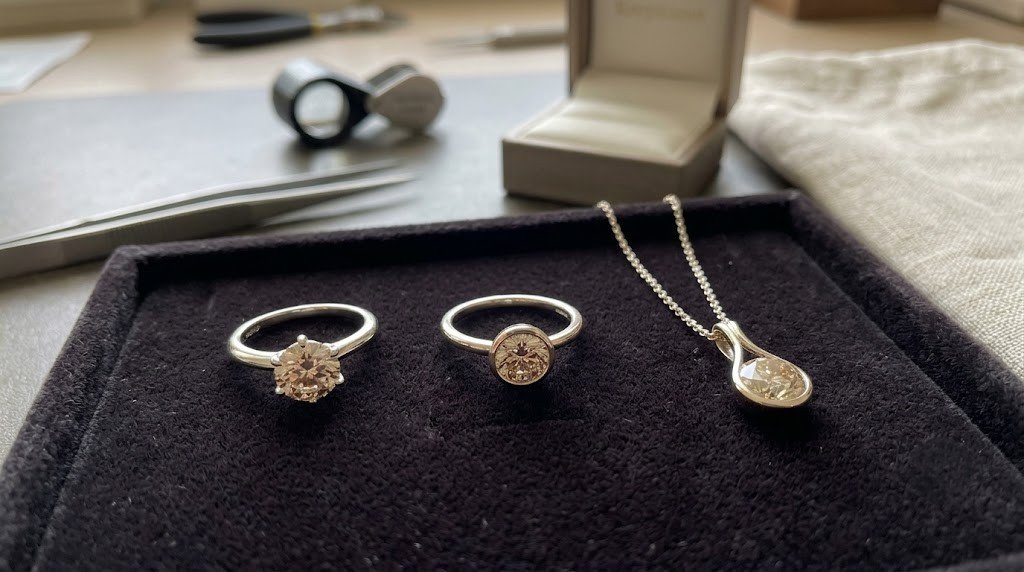
Daughter memorial diamond settings laid out on a jeweler's tray: a bezel ring, a six-prong ring and a pendant, each holding a champagne-toned stone

Why Do Daughter Memorial Diamond Settings Matter More Than Style?

A jeweler can replace a chipped stone in an ordinary engagement ring with one phone call. Nobody can do that here. The carbon recovered from her ashes or hair went into one particular crystal, and any replacement would be a different stone. That is why daughter memorial diamond settings deserve more thought than appearance alone.

Style still matters; it simply comes later. Security and edge protection come first, then whether the piece can change with its wearer.

Once the mechanics are settled, the rest, shape, metal color, chain or finger, becomes something a family can enjoy deciding rather than dread. The broader menu, from rings to keepsake boxes, lives in a separate guide to rings, pendants and keepsakes. This page stays with how daughter memorial diamond settings actually hold, protect and age.

Nothing here assumes anything about who she was or what she liked to wear. Good daughter memorial diamond settings are chosen for the person who will wear the piece, whether that is her mother, her father, her partner, a sibling or her own adult child.

Bezel or Prong: Which Protects a Memorial Stone Better?

A bezel protects better; prongs show more of the stone. For anyone weighing daughter memorial diamond settings, that short answer may settle the question on its own.

Diamond is rated 10 on the Mohs scale of mineral hardness, so very little will scratch it. Hardness is not toughness, though: diamond can split along cleavage planes if struck sharply at the wrong angle, and chips usually start at the girdle, the thin outer rim of a cut stone. A doorframe or countertop is the classic culprit.

A full bezel wraps a continuous band of metal around that girdle, so a blow lands on metal instead of crystal and the stone sits lower. A half bezel covers two sides and leaves the other two open, trading a little protection for a little more light.

Prongs grip the stone at four or six points, letting in more light so it looks larger and livelier. The cost is exposure: the girdle is open between the claws, which can bend or thin over years of ring wear. Six prongs spread the load and keep the stone seated if one fails; four show more diamond but leave less margin.

The wearer decides this more than the stone does. Among daughter memorial diamond settings, a bezel or flush mount usually suits someone who works with their hands, lifts weights, gardens or simply wants to forget the ring is there. Where daughter memorial diamond settings use prongs, they make more sense for a pendant worn under a collar, or a ring kept mostly for occasions.

How Do Seven Common Setting Styles Compare?

Seven styles cover nearly everything a jeweler will suggest for a single memorial stone. Use the table to narrow daughter memorial diamond settings to two or three candidates before you start looking at finished designs.

Setting styleHow it holds the stoneEdge protectionLight and visibilityResizing or resetting laterOften suits
Four prongFour metal claws over the girdleLowHighestStone releases easily; worn claws can be retippedPendants, occasional wear rings
Six prongSix claws spreading the loadLow to moderateHighReleases easily; more claws to inspectRings worn often, larger stones
Full bezelContinuous metal rim around the girdleHighestModerate; stone sits lowerResetting takes more bench workDaily wear rings, active wearers
Half bezelMetal on two sides, open on twoModerate to highGoodModerate effortRings and bracelets needing balance
Flush or gypsyStone sunk into a drilled seat, level with the surfaceHighestLower; mainly the top showsHarder; surrounding metal must be reworkedBands, signet rings, cufflinks
TensionStone held by spring pressure between two metal endsModerateVery highUsually cannot be resizedContemporary designs, careful wearers
HaloCenter stone ringed by small accent stonesModerateVery high; stone reads largerModerate; accents need checkingSmaller stones wanting more presence

Edge protection means the memorial stone itself; halo accents can be replaced without the same weight. Resetting is always possible in principle. What differs between daughter memorial diamond settings is bench time and cost. Ask about both before you commit to any of the daughter memorial diamond settings that would be hard to undo.

Which Metals Hold Up Best in Daughter Memorial Diamond Settings?

The metal carries the stone, absorbs every knock and decides how often the piece needs a jeweler’s attention. Here is how the usual options behave in daughter memorial diamond settings:

  • Platinum dense, naturally white and very durable; scratched metal is displaced rather than lost, so prongs keep their mass. Heavier and generally pricier.
  • 14k gold a harder wearing alloy than higher karat gold and a frequent choice for rings worn every day, in yellow, white or rose.
  • 18k gold richer color and higher gold content, but softer, so claws and thin bands wear faster.
  • White gold usually plated with rhodium for brightness; the plating wears through and is typically redone every year or two.
  • Palladium a lighter member of the platinum family, white all the way through, though fewer jewelers work with it routinely.
  • Sterling silver affordable and handsome for pendants, but soft and prone to tarnish, with prongs that bend readily.

A practical rule for daughter memorial diamond settings is to put the strongest metal where the wear is. A ring takes far more punishment than a pendant, so platinum or 14k gold earns its price there, while a pendant worn under clothing can sit comfortably in 18k gold, or even silver, inside a sturdy bezel.

Chains matter too: a thin one is an easy way to lose a pendant, so ask for a cable or wheat chain with a lobster clasp and have it checked with the setting.

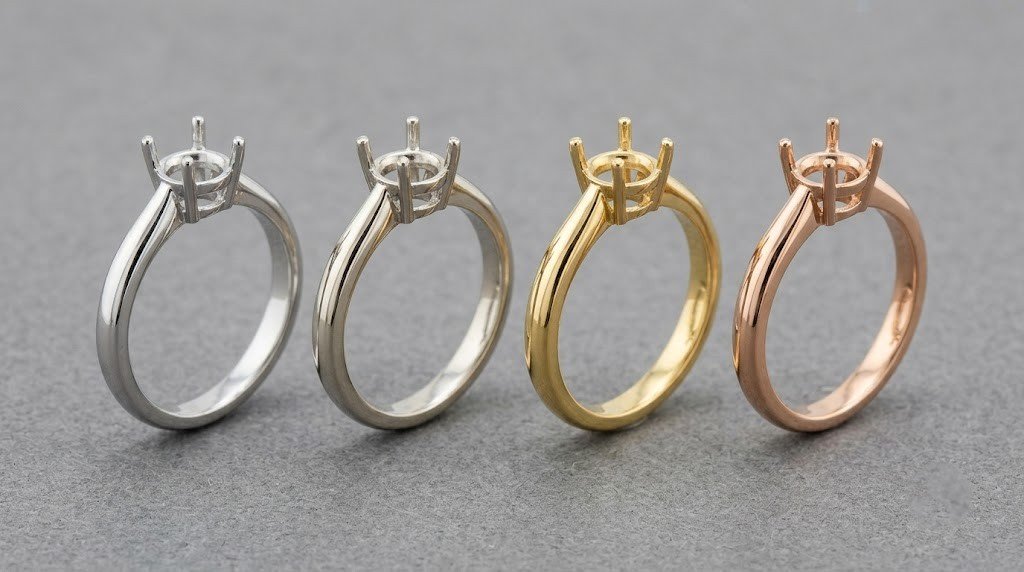
Four plain ring mounts in platinum, white gold, yellow gold and rose gold lined up side by side | Stock acceptabl

How Do Stone Size and Color Shape the Choice?

Size and color are the two things a family cannot fully control in advance, and both affect which daughter memorial diamond settings will flatter the finished stone.

Size. Memorial diamonds are generally offered from about 0.10 carats to 5 carats and beyond, and growth time in the press, not the quantity of ash or hair, determines carat weight. A round stone of 0.10 to 0.25 carats measures roughly 3 to 4 millimeters across, and it often looks best in daughter memorial diamond settings that add presence, such as a bezel or a halo. Half carat to one carat stones suit prongs, a bezel or a flush band equally well. Larger stones sit higher and catch on fabric, so a lower profile helps. Price climbs steeply with size, and how carat, color and grading move the total is worth understanding before a setting is added on top.

Color. Trace elements present during growth set the tone: nitrogen leans yellow, boron leans blue, and a colorless stone needs both absent plus extra processing. Memorial stones tend toward yellow, blue and champagne, and nobody can tell from the source material which one will come back. That is the strongest argument for choosing the metal after the stone exists.

Once you can see it, a few general pairings hold. White metals tend to keep a blue stone cool and a near colorless stone bright; yellow gold warms whatever it holds, deepening yellow or champagne; rose gold sits in between. A closed back bezel can darken a stone slightly by blocking light from beneath.

None of this is about her; it is about the actual stone and the person who will wear it. What range of color to expect has its own guide. When you finally compare daughter memorial diamond settings against the finished diamond, ask the jeweler to hold it against each metal in daylight.

Which Daughter Memorial Diamond Settings Work for Everyday Wear?

Most can, provided the setting is chosen with daily life in mind and the piece is looked after. These seven habits keep a set memorial stone safe for the long run:

  1. Choose a protective mount for rings. Of the daughter memorial diamond settings available, bezel, half bezel and flush mounts shrug off knocks far better than tall prongs.
  2. Take rings off for heavy work. Weights, gardening and moving furniture are classic ways to chip a stone or bend a claw.
  3. Keep it away from chlorine. Pool and hot tub water, and household bleach, can weaken gold alloys over time.
  4. Have the setting checked at least once a year. A jeweler can test prongs and inspect a bezel in minutes; every six months suits a ring worn constantly.
  5. Clean it gently. Warm water, mild soap and a soft brush are enough; ask before using an ultrasonic cleaner, since vibration can loosen a worn mount.
  6. Store it on its own. Diamond scratches other jewelry, so a soft pouch or lined compartment keeps everything intact.
  7. Keep the paperwork with the piece. The origin certificate, any grading report and the jeweler’s receipt belong together, where another family member could find them.

None of this should make the piece too precious to wear. Some families describe the daily contact, a thumb turning a ring, as the part they value most, and well chosen daughter memorial diamond settings let that continue for decades.

Should the Finished Piece Be Appraised and Insured?

Usually it is worth doing, though for a different reason than ordinary jewelry. Insurance can pay money or fund a comparable stone; it cannot return her carbon. A policy on daughter memorial diamond settings and the stones they hold can cover the financial value; whether it would also fund a new stone from retained material is for the agent and provider to answer. Ask the provider, in writing, whether anything you sent is retained and on what terms.

Two options worth asking about are a scheduled item on a homeowner’s or renter’s policy and a standalone jewelry policy. Insurers usually want a recent appraisal and, ideally, an independent grading report; how gemologists describe cut, color, clarity and carat is the vocabulary an appraiser will use. An in house origin certificate records where the carbon came from and says nothing about quality.

Questions to put to an insurance agent rather than a jeweler:

  • Does the policy pay replacement cost or actual cash value?
  • Is there a deductible on jewelry claims?
  • Is unexplained loss, often called mysterious disappearance, covered?
  • How often should the appraisal be updated?

Terms vary by insurer and state. Photograph the piece and keep copies of the paperwork outside the house.

Can a Ring Be Resized or the Stone Reset Later?

Usually, yes, and that flexibility is a good reason to treat daughter memorial diamond settings as something that can change. The stone will outlast any one mount, and quite possibly any one wearer.

Resizing. Most plain gold and platinum bands can be taken up or down a size or two. Eternity bands with stones all the way around, tension designs that depend on the band’s spring, and some patterned shanks resist it. If the ring may be handed on someday, a plain or partly set band keeps the door open.

Resetting. A memorial stone can move from a pendant into a ring, or from a parent’s ring into a younger relative’s pendant decades later. Among daughter memorial diamond settings, prong styles release a stone most easily; bezels and flush mounts take more bench work, because metal has to be opened, but a skilled jeweler can manage both.

A note about heat. Jewelers often use a torch for sizing and repair. If the stone’s color was produced by post growth irradiation, which some providers offer for colors such as red, green or black, strong heat can alter some treated colors. Tell the jeweler what the stone is and how its color came about, and ask that it be removed before any torch work.

Whatever daughter memorial diamond settings the stone passes through over the years, keep the provider’s documentation with it, and ask each jeweler to note on the receipt that a memorial diamond was handled.

Which Daughter Memorial Diamond Settings Suit Each Family Member?

When more than one stone is grown, it is often possible to divide one source of ashes or hair between several relatives. Each person may want something different. Daughter memorial diamond settings chosen for each wearer’s real life get worn; ones chosen only so everything matches can end up in a drawer.

WearerPieces worth consideringSetting points to weigh
A parent who wears a ring dailySolitaire or bandBezel or flush; platinum or 14k gold
A parent who prefers not to wear ringsPendant, lapel pin or keepsake charmBezel pendant on a sturdy chain
Her spouse or partner, if she had oneRing worn beside or instead of a wedding band, or a pendantLow profile that sits next to an existing band
A siblingPendant, cufflinks, signet ring or braceletFlush or bezel for daily wear
Her adult child, if she had childrenPendant now, ring laterProng mount that resets easily
A grandparentPendant or broochLightweight metal, secure clasp

Families sorting out daughter memorial diamond settings for several people sometimes settle on one shared detail, the same metal, or an engraved date inside each band, and let everything else differ.

A pair of earrings needs two stones, and two stones grown separately may not match in tone, since color cannot be predicted from the source; a jeweler can design around a slight difference. Stones for several relatives may also finish at different times, so how long each one is likely to take is worth knowing before anyone plans to hand them out together.

What Should You Ask a Jeweler Before the Stone Is Set?

Memorial Diamond Settings and Jewelry Ideas for a Daughter

Some providers set the stone themselves; other families take the loose diamond to a local jeweler they already trust. Either works if whoever handles it knows it cannot be replaced.

Before any of the daughter memorial diamond settings you are considering is made, ask whether the work happens on the premises, who handles the diamond and whether it is insured while there. Ask them to measure the stone in front of you, and what warranty covers their workmanship.

If you are still comparing providers, a guide on where to start covers that decision first. Choosing daughter memorial diamond settings goes more smoothly once the stone itself is real and in your hands.

Frequently Asked Questions

What is the most protective setting for a memorial diamond?

Among daughter memorial diamond settings, a full bezel or a flush mount gives the most protection, because metal covers the girdle where chips usually begin. Both suit rings worn every day. Prongs show more of the stone but leave its edge exposed, so they suit pendants better.

Should the metal be chosen before the diamond is finished?

It is safer to wait. Color cannot be predicted from her ashes or hair, and a yellow, blue or champagne stone can look quite different against white or yellow metal. Decide on the setting style early if you like, then confirm the metal once the stone exists.

Can a memorial diamond chip or crack?

Yes, although it is uncommon. Diamond resists scratching better than any natural material, but a sharp blow at the wrong angle can chip it, usually along the girdle. Picking daughter memorial diamond settings with protection in mind, such as a bezel or flush mount, reduces that risk.

Is sterling silver strong enough for a memorial ring?

Silver is soft and tarnishes, and silver prongs bend more readily than gold or platinum ones. It works well for a pendant inside a sturdy bezel. For a ring worn daily and holding an irreplaceable stone, platinum or 14k gold is the more durable choice.

Can her stone be moved into a different piece later?

Usually, yes. Prong mounts release a stone easily, while bezels and flush settings take more bench work. Tell the jeweler it is a memorial diamond, mention whether its color was produced by irradiation, and ask that it be removed before any torch work begins.

Does a memorial diamond need its own insurance?

It is worth discussing with an insurance agent. A scheduled item on a homeowner’s or renter’s policy, or a standalone jewelry policy, is common. Insurers usually want an appraisal and ideally a grading report. Coverage terms vary by insurer and state, so confirm the details directly.

Can two stones from the same source become matching earrings?

They can be set as a pair, but they may not match exactly. Each stone’s color is set by trace elements during its own growth, so two stones from the same source can differ in tone. A thoughtful jeweler can design the pair so any difference looks intentional.

Final Thoughts on Choosing a Setting for Her Stone

It can feel strange to think about claws and karats when what you are holding is part of someone you love. The mechanical questions turn out to be a kindness: once the stone is protected and the mount can change with its wearer, you are free to choose the rest with your heart.

The best daughter memorial diamond settings are rarely the most elaborate. They are the ones that let the stone be worn, checked, cleaned and eventually passed on without anyone holding their breath. If the family is still at the beginning, the complete guide to a daughter ashes diamond covers the steps that come before choosing daughter memorial diamond settings at all.

Learn More About Daughter Memorial Diamond Jewelry

Talk With Memorial Diamond

If you would like to talk through daughter memorial diamond settings with someone before deciding, Memorial Diamond is glad to help at memorialdiamond.us. A conversation about metals, mounts and what might suit each person in your family is simply that: a conversation, with nothing expected afterward.

son Memorial Diamond Settings 7 Expert Options, Made Easy

Memorial Diamond Settings and Jewelry Ideas for a Son

A finished stone arrives small enough to lose in a coat pocket, and suddenly there is a jeweler’s question sitting on top of everything else. Son memorial diamond settings are best chosen around the person who will actually wear the piece, whether that is a parent, a brother or sister, his wife or partner, or his child. The choice should reflect how that person lives rather than any idea of what suits a man or a woman.

After that, five practical decisions remain: format, metal, prong or bezel, stone size, and engraving.

Son memorial diamond settings compared side by side: a bezel ring, a prong pendant and a loose stone in a case

Who Should Son Memorial Diamond Settings Be Designed Around?

The wearer, not him. It sounds obvious written down, yet it is the step families skip most often, because the instinct is to picture what he would have liked rather than what someone else will put on every morning.

Whether he was a young boy or a man with a household of his own, he is not the one who will live with the clasp or the ring size. His mother might, or his father, a sibling, a spouse, a partner, or a child of his. Good son memorial diamond settings start with that person’s hands, habits, and wardrobe.

This clears away a trap, too. Nothing says a father needs cufflinks or a mother needs a pendant, and nothing says a stone connected to a son should sit in something heavy or angular. Son memorial diamond settings follow taste and daily routine, never a gender script.

A few questions narrow things quickly:

  • Does the wearer already wear jewelry every day, or rarely?
  • Do they work with their hands, such as nursing, trades, gardening, childcare, or gym work?
  • Should the piece be noticed, or sit unseen under a collar?
  • Will it stay with one person, or be handed down later?

Answer those honestly and the list of sensible son memorial diamond settings usually shrinks to two or three. For the wider range of formats, our round up of rings, pendants and keepsakes for a son is the place to browse. This page covers the mechanics of choosing.

How Do the Main Son Memorial Diamond Settings Compare?

Seven son memorial diamond settings cover nearly every finished piece, and they differ mainly in how much everyday impact the stone absorbs.

#Setting TypeEveryday ExposureStone Sizes That Sit WellMount Usually SuggestedOne Thing to Check
1RingHighest because hands hit everythingAbout 0.10 ct up to 1 ct and aboveBezel, flush, or low prongsRing size and whether the metal can be resized
2PendantLow because it hangs clear of most knocksAny sizeProngs or bezelChain strength and clasp type
3EarringsLow to moderateSmall stones, usually a pairProng or bezel studsTwo stones may differ in shade
4Cufflinks, tie bar, or lapel pinLow because they are worn occasionallySmall to mid sizeBezel or flushHow often they will really be worn
5Bracelet or charmModerate because wrists catch edgesSmall stonesBezelLink and jump ring security
6Keepsake box with loose stoneNoneAny sizeNo mountA proper case kept with the paperwork
7An existing family pieceDepends on the pieceMust fit the existing seatWhatever the piece allowsWhether it can be safely reworked
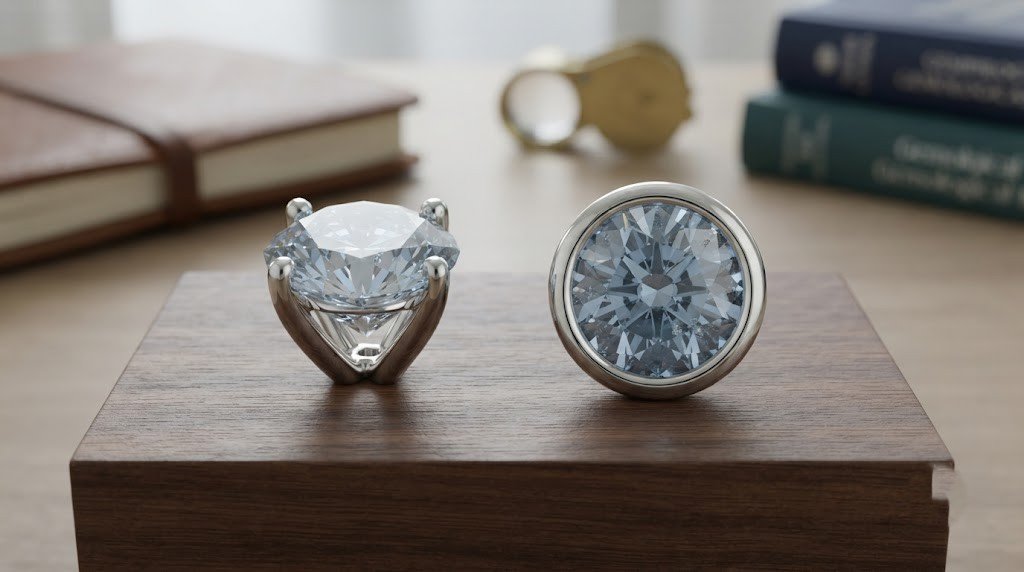
 Close-up of the same size diamond held in a four-prong head beside one wrapped in a full bezel rim

Read down the exposure column and the pattern is plain. Son memorial diamond settings that live on the hands need the most protective mounts, while those at the neck, ear, or cuff can afford more open designs.

Some families would rather add his stone to something that already exists, such as a wedding band, a watch, or a grandparent’s ring, than commission anything new. A good jeweler can often do it after inspecting the piece.

Prong or Bezel: Which Son Memorial Diamond Settings Protect Best?

A bezel is generally the more protective option for daily wear. Prongs hold the stone with small metal claws and let more light in from the sides. A bezel wraps a thin rim of metal around the girdle and shields the edge.

That edge matters. Diamond scores 10, the top of the Mohs scale of mineral hardness, so ordinary surfaces will not scratch it. Hardness is not toughness, though. A sharp blow at the wrong angle, such as a ring meeting a granite counter or a car door, can chip a diamond at the girdle or a pointed corner, and a memorial stone cannot simply be replaced.

The practical guidance for son memorial diamond settings runs like this:

  • Bezel or half bezel: A highly protective choice for rings and bracelets.
  • Flush setting: The stone sits level with the metal, making it discreet and secure for small stones in a band.
  • Low four or six prong: Provides more sparkle while offering reasonable protection if the head sits close.
  • High prongs or a tall solitaire head: Attractive but more exposed, making this style better suited to pendants and earrings.

Cut shape matters as well. Princess, marquise, and pear cuts have points that are more vulnerable than a round or cushion outline, so jewelers usually guard them with V prongs or a bezel.

Whatever the mount, have son memorial diamond settings checked by a jeweler periodically, since prongs can loosen with wear.

Which Metal Works Best for Son Memorial Diamond Settings?

Any standard precious metal can hold the stone. The real choice turns on the wearer’s skin, the budget, and the diamond’s own color.

Platinum is dense, naturally white, and grips prongs well, which suits rings that see heavy use, though it costs more. White gold is lighter and cheaper but is often rhodium plated and may need replating, and some alloys contain nickel.

Yellow and rose gold feel warmer against skin that finds white metals cold. Silver is softer, so it suits pendants better than daily prong set rings. Titanium and tungsten look striking, but many such bands cannot be resized easily, which is worth considering if a ring may pass to someone else.

Color is the deciding factor more often than people expect. Nitrogen during growth pushes a stone toward yellow and boron toward blue, and the shade cannot be predicted in advance, even from very clean starting material.

That is a strong reason to choose metal for son memorial diamond settings only after the stone exists. Yellow gold tends to warm a champagne stone, while white metal makes blue appear cooler and crisper.

What color to expect from a son memorial diamond explains the color considerations in greater detail.

How Does Stone Size Shape Son Memorial Diamond Settings?

Size narrows the menu more than almost any other factor. Industry wide, memorial stones are generally offered from about a tenth of a carat to beyond five carats, and the setting has to suit whatever weight emerges.

Very small stones shine in flush bands, bezel studs, cufflinks, and slender pendants, but can look lost in a tall solitaire head.

Stones around half a carat to a carat open up almost every style. Larger stones sit higher and heavier, so daily wear son memorial diamond settings usually need more metal around them.

Two points catch families out. Finished size is set by time in the press, not by how much ash or hair was sent, so extra material does not buy a bigger diamond.

Exact carat weight is only certain after cutting, so son memorial diamond settings should be designed around the finished stone rather than an estimate.

If the wearer is torn between sizes, ask a jeweler to show similar weights already mounted.

Can the Metal or the Stone Carry an Engraving?

Most son memorial diamond settings can include engraving, and there are two quite different kinds.

Engraving on metal, such as inside a band, on a pendant back, or across a cufflink face, is routine jewelry work.

A laser inscription on the diamond’s girdle is microscopic, readable only under magnification, and offered by some providers but not all.

Metal is where most personal detail goes on son memorial diamond settings. This might include his name or initials, a date, the coordinates of a place he loved, or a word only the family understands.

Space is tight, so shorter wording generally works better, and block letters can wear more slowly than script inside a ring.

A girdle inscription can also carry a reference number tying the stone to its origin paperwork, which may be useful if it is ever reset or passed down.

Either way, settle the wording before production and take time with the decision because engraving is permanent.

How Can Several Small Stones Be Shared Across the Family?

Often more easily than expected, because only a portion of the ashes or hair is used. Across the industry, an ash request typically runs from a few tablespoons to roughly 4 ounces, about 100 grams, while hair is usually a small lock of a few grams.

That means several stones can often be grown from what one family holds.

Instead of one piece everyone must agree on, each person can choose their own. A sister might choose stud earrings, a father might choose a flush band, a partner might choose a pendant, and a younger child might keep a loose stone until they are ready to decide.

A few realities come with it. Each stone is a separate growth run with its own price and timeline.

Separately grown stones can differ in shade, so a matched pair of earrings or cufflinks must be requested rather than assumed. Even a requested match is a goal rather than a guarantee.

Before anything is sent, ask what happens to unused ash or hair after extraction because policies vary between providers.

Whether more than one family member can each have a stone covers shared submissions.

How to talk with family about a son memorial diamond may also help where relatives see the idea differently.

Does the Stone Need a Setting Straight Away?

No. A loose diamond keeps indefinitely, and nothing about it degrades while it waits in its case. Many providers deliver the stone unset unless jewelry was ordered alongside it.

It is therefore entirely reasonable to postpone son memorial diamond settings for months or years.

Some parents cannot face choosing a ring in the first year. Some partners wait until a child of his is old enough to have an opinion.

Setting work can only start once the finished stone exists anyway. Growth takes up most of the typical six to ten month industry span, while larger or specialty color stones can run to twelve months.

How long a son memorial diamond takes explains that timeline in more detail.

Nothing is final, either. A stone can be unset and remounted later, such as a pendant now and a ring later. Son memorial diamond settings are a choice for the present, not a permanent commitment.

What Do Son Memorial Diamond Settings Add to the Cost?

Across the industry, settings are typically quoted separately from the loose stone, so the diamond’s price rarely includes the mount.

The source notes that Memorial Diamond has not published its own pricing. The following are general 2026 industry ranges for the stone alone:

Stone SizeTypical Industry Range
About 0.10 to 0.25 ct$1,500 to $3,500
About 0.5 to 1 ct$5,000 to $15,000, with colorless usually costing more
2 ct and above$20,000 to $75,000 and above

The finished piece then moves with several choices:

  • Metal: Platinum usually costs more than gold, and gold more than silver.
  • Metal weight: A heavy signet uses far more material than a fine pendant bail.
  • Design and labor: A custom bezel generally costs more than a standard mount.
  • Engraving: Usually an add on, while a girdle inscription may be priced separately.
  • Grading: An independent grading report is optional and quoted separately.

Ask for the stone and mount to be itemized on every quote. This makes son memorial diamond settings from different makers easier to compare.

What a son memorial diamond costs breaks down the stone side further.

Who Should Make the Piece, the Provider or a Local Jeweler?

Several small memorial diamonds set differently for family members: stud earrings, a flush band, a pendant and cufflinks

Either can work. Some providers make son memorial diamond settings in house. Many families instead take the loose stone to a jeweler they already trust, which can make sizing and repairs simpler later.

If a local jeweler does the work, take extra care with an irreplaceable stone:

  • Ask whether their insurance covers the stone while it is on their premises, and check your own policy.
  • Photograph the stone and keep its paperwork with you.
  • Ask the bench jeweler about experience with that size and cut.
  • Get a written receipt describing the stone by weight and shape.

On paperwork, most providers issue an in house certificate of origin tracing the diamond to your submission.

That differs from an independent grading report assessing the diamond against GIA’s cut, color, clarity, and carat standards, which is optional.

Ask your insurer which documentation they want.

Still choosing a provider? Questions to ask before his ashes become a diamond and where to start when choosing for your son cover the earlier decisions.

Whose Permission Comes Before Any Setting Is Chosen?

Whoever holds legal authority over his remains, not automatically a parent. Before son memorial diamond settings are on the table, someone must authorize releasing his ashes, and each state sets its own order of priority. There is no single national rule.

A spouse or registered partner often ranks first, and his adult children may come ahead of his parents. Anything he left in writing, such as a directive, will provision, or prearranged plan, can override the default.

The funeral director usually knows the local rule, and an attorney can confirm it.

Hair deserves the same care. Belongings can form part of an estate, rules vary by state, and it is sensible to check whose agreement is appropriate before a lock is sent.

Settling authority first lets the later conversations about son memorial diamond settings happen without an open question underneath.

Frequently Asked Questions

Can two relatives choose completely different settings from the same source?

Yes, provided more than one stone is grown. Because only part of the ashes or hair is typically used, each relative can often have a separate diamond set however they like, such as a bezel band for one person and a pendant for another.

Each stone is priced and timed on its own, and shades may differ.

Does a bezel setting make the diamond look smaller or less bright?

Slightly, sometimes. The metal rim covers the girdle and blocks a little side light, so a bezel set stone can appear marginally smaller than the same stone in prongs.

Many wearers accept that trade for the protection, particularly on a ring worn every day at work or around the house.

Can his diamond be moved from a pendant into a ring later?

Usually. A competent jeweler can unset a stone from one mount and reset it in another, much like family diamonds are reworked across generations.

Keep the origin certificate with the stone, ask about insurance while it is being handled, and have the new mount checked for fit before regular wear.

That depends on how many stones exist and how the wearer dresses.

A pair with a stone in each needs two diamonds, and a close shade match must be requested in advance. Even then, a perfect match cannot be promised.

One stone in a single cufflink, paired with a plain partner, is another option.

Will the metal I choose change how his diamond’s color looks?

Yes, noticeably. Yellow or rose gold tends to deepen champagne and yellow tones, while platinum or white gold makes a blue stone look cooler and crisper.

Since shade cannot be predicted before growth, view the finished stone against several metals before committing to son memorial diamond settings made in any one of them.

Is a very small stone practical for a ring worn every day?

Very much so. A tenth or quarter carat stone set flush or in a bezel sits low, stays protected, and snags less than a larger raised stone.

Small stones are also among the most discreet options for son memorial diamond settings.

Ask a jeweler to show a comparable weight already mounted so you can judge it in person.

Is it safe to wear a memorial diamond ring while working with my hands?

Mostly, if the mount is protective. Diamond resists scratching, but a hard knock can still chip it, and prongs can snag or loosen.

A bezel or flush mount reduces both risks. Many wearers take the ring off for heavy lifting, gym work, or harsh chemicals, and have it checked periodically.

Final Thoughts on Choosing Settings for His Diamond

The stone carries its connection to him whatever it is set in, or whether it is set at all. What the mount decides is more ordinary: whether the person wearing it can live with it comfortably on a Tuesday afternoon, at work, at the sink, or in the car.

That is why choosing son memorial diamond settings can be a practical part of the process. Start with the wearer, protect the stone if it will live on a hand, choose metal after seeing the color, and keep the paperwork with the piece.

If nobody is ready yet, the diamond can stay loose in its case for as long as the family needs.

Learn More About Son Memorial Diamonds

Talk With Memorial Diamond

If you would like to think aloud about a ring, a pendant, or simply a good case for a loose stone, you are welcome to get in touch. Memorial Diamond can be reached at memorialdiamond.us to talk through son memorial diamond settings that might suit the person who will wear it.

Asking carries no obligation.

Wife memorial diamond ideas featuring a memorial ring, diamond pendant, and meaningful keepsakes

Memorial Diamond Settings and Jewelry Ideas for a Wife

Most people choose a mount by looking at it. That is understandable, and it is the wrong first question.

Wife memorial diamond settings should be chosen for what the stone has to survive, not for how the drawing looks. A hand is the harshest environment a small stone ever lives in; a chain almost always fails at the bail rather than the clasp; and an earring is far more likely to be lost than broken. Decide where the piece will live, then pick the mount that answers it.

Wife memorial diamond settings shown as a low bezel-set ring worn on a hand resting on a work surface

What Do Wife Memorial Diamond Settings Actually Have to Survive?

Four things, and only one of them is about the stone itself. Wife memorial diamond settings fail for reasons the diamond has almost nothing to do with.

The stone is the easy part. Diamond sits at 10 on the Mohs scale of mineral hardness, the hardest known natural mineral, and nothing in ordinary daily life will scratch it. Hardness is not the same as toughness, a sharp strike at the girdle can still chip any diamond, but scratching is not what wife memorial diamond settings are designed against.

What wife memorial diamond settings actually have to survive is everything around the stone. Metal fatigue, as claws thin from years of contact. Loss of the whole piece, which is the only outcome with no remedy at all. Deformation, when a band is squeezed or a bail is pulled out of round. And the bench, years later, when someone has to work on the piece without endangering what it holds.

Worth being plain about what a mount is holding. This is not a capsule of ashes behind glass: carbon drawn from what she left is purified to near pure and then grown into the crystal alongside lab made carbon, because one person’s carbon will not fill a growth cell on its own. That fraction is exactly why wife memorial diamond settings are judged on retention rather than repair, the stone is replaceable only in the sense that another stone exists, which is not a sense that helps.

The fuller menu of forms sits in the memorial diamond settings pillar; what to make and for whom belongs to wife memorial diamond ideas. This page is the survival question that wife memorial diamond settings actually answer.

The Hand Is the Hardest Place a Small Stone Can Live

A ring is the default answer and the most demanding one. Rings get the highest share of wife memorial diamond settings and the highest share of the abuse.

Hands are used against hard surfaces all day. Door frames, steering wheels, gym equipment, the side of a sink. A raised stone finds every one of them, and each contact takes a little metal off the claw tips from the outside in. That is the failure that matters, because a claw thinned by a thousand small contacts lets go quietly. It is the least dramatic way a wife memorial diamond setting can fail and the most final.

Three consequences follow, and they shape most decisions about wife memorial diamond settings for a hand.

  • Among wife memorial diamond settings, height governs snagging more than metal choice does. A stone that sits low clears door frames; a raised head finds them. Ask to see the profile from the side, not just from above.
  • Claw tips need looking at on a schedule. Most jewelers will check a wife memorial diamond setting while cleaning it. The point is to ask for it deliberately rather than to notice a loose stone by feel.
  • The band deforms before the head does. Thin shanks flatten under grip, changing the geometry the head sits on.

None of this argues against a ring. It argues for low wife memorial diamond settings on a ring, or for a pendant if hands are the problem.

Prong, Bezel, Tension: What Does Each Setting Trade Away?

Every one of the wife memorial diamond settings below protects against something and exposes something else. None does only the first.

SettingWhat it protects againstWhat it exposesWho it suits
Prong or claw, 4 or 6Little; it is the least protective, but holds the stone high where most light reaches itGirdle and claw tips, to every knock and every pocket; six claws lose one more gracefully than fourSomeone who wants the stone to read brightly and is willing to have the claws checked
Full bezel, rub overThe girdle completely; a continuous rim takes the knocks instead of the stone, and there is nothing to snagThe face only. Less light enters from the side, so a warm stone reads warmer inside a yellow rimHands that work, healthcare and childcare, anyone who cannot be careful and should not have to be
Half bezelThe two sides most likely to strike something, while leaving the stone open front and backThe open edges, which is a real trade rather than a free compromiseSomeone who wants more light than a full bezel allows and more protection than claws give
TensionVery little; the stone is held by the spring pressure of the band itselfThe stone on nearly every side, and the whole piece to resizing, the tension is the settingCareful wearers who want the look, and who accept that the design cannot easily be altered later
Flush or gypsyAlmost everything; the stone is sunk into the metal with its table level with the surfaceAlmost nothing mechanically, it is the most secure of the five, and it shows the least lightManual work, a signet or a broad band, and a piece that must never catch on anything
Five diamond settings photographed in profile  prong, full bezel, half bezel, tension, and flush  at the same scale |

First, the strongest wife memorial diamond settings are also the dimmest, light enters a diamond from the sides as well as the top, so every millimeter of metal you add for protection is a millimeter of light you take away. Second, tension mounts are the one family of wife memorial diamond settings where “can this be resized?” has to be asked before ordering rather than afterward, because for many tension designs the honest answer is no.

How much metal touches the stone also changes what you see, because a colored mount reflects back through a transparent stone, which is why memorial diamond colors for a wife is not a separate decision from this one.

Why Do Chains Fail at the Bail Rather Than the Clasp?

Because the clasp is the part everyone inspects and the bail is the part nobody does.

A pendant hangs from a small loop, the bail, which is either soldered closed or simply bent closed as a jump ring. An open jump ring can be pulled straight by a snagged collar, a seatbelt, or the weight of the pendant swinging against a hard edge for years. It opens a fraction of a millimeter at a time and then one day the pendant is not there.

So when pendants come up among wife memorial diamond settings, three questions do most of the work.

  1. Is the bail soldered closed, or is it an open jump ring? A soldered bail is a different object from a bent one, and the difference is invisible at arm’s length.
  2. Is the chain rated for the weight it is carrying? A fine chain looks elegant under a heavy pendant and is the wrong chain for it.
  3. Does the clasp suit the hands that will open it? A spring ring is small and fiddly; a lobster clasp is easier; a magnetic clasp is easiest and the least secure of the three.

A pendant sidesteps almost every problem the ring shaped wife memorial diamond settings have. It never meets a door frame, needs no sizing, and passes between people without bench work.

Earrings Are Lost Far More Often Than They Are Damaged

This is the one place where wife memorial diamond settings fail for reasons that are not mechanical at all.

Earrings are rarely broken. They are taken out at a sink, put down on a hotel dresser, dropped into a coat pocket, or lost from an ear without the wearer noticing for hours. That single fact should drive every decision about earrings among wife memorial diamond settings, and it is a good reason to be cautious about splitting one stone’s worth of meaning across two objects that go out into the world separately.

  • A screw back or locking back is materially more secure than a friction back, and the difference is largest exactly when it matters: an active day, a coat going on and off.
  • A single earring is a legitimate design, not a compromise. One stud in a chosen ear is a complete piece, and it halves the loss surface.
  • If two pieces are wanted, ask about two stones rather than splitting one. Whether more than one stone can be grown from the same source is answered in whether more than one family member can get a diamond from her ashes.
Inside surface of a ring band showing a short engraved inscription, photographed under a loupe

What Happens If You Want It Resized or Re Set Years Later?

Almost everything about wife memorial diamond settings can be changed later. The question is what the change costs in risk, and that varies enormously between them.

Resizing. Among wife memorial diamond settings, a plain band with a head on it resizes easily within a few sizes. Beyond that, the geometry under the head starts to change. Eternity style bands set all the way around cannot be sized in the ordinary way at all, because there is no plain metal to cut. Tension mounts are the hard case, since the pressure holding the stone is the band’s own spring.

Heat. Sizing and most repairs involve a torch. A responsible bench will usually remove the stone, or heat sink and shield it, rather than working around it in place, and it is entirely reasonable to ask which of those will happen before handing the piece over. Removing and resetting is itself a small, controlled risk.

Re setting into something else. A stone can move from a ring to a pendant, or out of a worn out mount into a fresh one decades later. That is a genuine strength of a stone over a sealed keepsake, and a reason to treat wife memorial diamond settings as housing rather than as final form. What matters is that the stone leaves one mount and enters another under a jeweler’s control.

The band she already wore. Setting her stone into a ring she owned is possible, and is a different job from building new wife memorial diamond settings from scratch, the bench is working with metal that has been worn thin in places and may have been sized before. Ask for an assessment before the design is settled, not after. Cleaning and long term care of a finished piece belongs to memorial diamond aftercare.

Insurance and Appraisal: What to Ask Before It Ships

This section is short on purpose, because it is entirely questions rather than answers. Insurance sits alongside wife memorial diamond settings rather than inside them, terms vary by insurer and by where you live, and no jewelry brand is positioned to tell you what yours will do.

Start from one honest fact: the stone cannot be replaced like for like. Another diamond can be bought; another grown from the same person cannot be assumed available. That makes the insurance conversation about the setting, the labor and the documentation rather than about restoring what was lost.

Questions worth asking, in roughly this order.

  • What documentation comes with the finished stone, and what does it actually say? An origin or chain of custody document and an independent grading report are different things doing different jobs. What each one records is set out in how gemologists assess cut, color, clarity and carat and in how memorial diamonds are graded and certified.
  • Will an appraisal be needed separately, and who writes it? A grading report describes the stone; an appraisal states a value for insurance purposes. They are not interchangeable.
  • Ask your own insurer whether a lab grown memorial stone can be scheduled, what valuation evidence they want, and what they would do about a loss they cannot replace, before the piece is made, so the answer can shape the design.
  • Ask what a claim would actually restore. That answer often changes how a family feels about a daily wear piece versus a kept one, and it is better heard early.

The broader treatment sits in memorial diamonds and insurance. What wife memorial diamond settings add to the overall figure belongs to what a wife memorial diamond costs, since mounts are typically quoted separately from the stone across the industry.

What to Have Engraved, and Where

Engraving is the cheapest part of any of the wife memorial diamond settings above, and the part people most often wish they had thought about.

Three surfaces are available on most wife memorial diamond settings, and they behave differently.

  • The inside of a band. Private, protected and the most durable position, rubbed by nothing but a finger. It is also the surface that suffers if the ring is ever sized down, so keep text short and centered.
  • The outside of a shank or the back of a pendant. Visible, and exposed to wear. Deep engraving lasts; shallow laser marking on an exposed surface will soften over the years.
  • The gallery or the underside of a head. Almost invisible, almost indestructible, and only large enough for a date or two initials.

Two practical notes hold generally. Keep it short, because a long inscription at small size is unreadable within a decade of wear. And record what the stone is somewhere outside the piece, since engraving is not a document and whoever inherits it will need telling. The detail of typefaces, depths and methods sits in memorial diamond engraving.

Frequently Asked Questions

Which of the wife memorial diamond settings is the most secure?

A flush or gypsy setting, where the stone is sunk into the metal with its table level with the surface. It has nothing to snag and almost no exposed girdle. The trade is that it shows the least light of any common mount.

Can a memorial diamond be set into a ring she already wore?

Usually, but it is a different job from making a new piece, because the bench is working with metal already thinned by wear and possibly sized before. Ask for an assessment of the existing ring before the design is settled rather than afterward.

Is a bezel setting better than prongs for everyday wear?

For protection, yes, a continuous rim takes knocks instead of the stone and cannot snag. The cost is light: less enters from the side, so the stone reads slightly darker, and a colored rim shifts how its tone appears.

Why do pendants fail at the bail rather than the clasp?

Because the clasp is inspected and the bail is not. An open jump ring can be pulled gradually out of round by collars, seatbelts and the pendant’s own swing, opening a fraction at a time until the pendant is gone. Ask whether it is soldered closed.

Should a memorial diamond be insured?

That is a question for your own insurer rather than a jeweler, since terms vary by policy and location. Ask specifically whether a lab grown memorial stone can be scheduled, what valuation evidence is required, and what a claim would restore when like for like replacement is not possible.

What is the safest setting choice for hands that work?

Of the wife memorial diamond settings in common use, either a flush mount on a broad band, or no ring at all. A pendant meets none of the surfaces a hand meets all day, needs no sizing, and passes between people without bench work.

Final Thoughts on Wife Memorial Diamond Settings

Wife memorial diamond settings read as an aesthetic decision and are really an environmental one. Choose the mount for the life the piece will have, the hands, the collars, the sinks, the coat pockets, and the look tends to follow rather than fight it.

Then do the three things that are easy now and awkward later: ask how the bail is closed, ask whether the design can be resized, and ask your insurer what they want before the piece is made rather than after.

Learn More About Wife Memorial Diamonds

Talk With Memorial Diamond

If a stone is already in production and no decision has been made among the wife memorial diamond settings, that is the right moment for this conversation rather than the week the box arrives. Memorial Diamond is one place to have it, memorialdiamond.us.

wife memorial diamond ideas

Wife Memorial Diamond Ideas: Rings, Pendants, and Keepsakes

The question people ask is ring or pendant. The question underneath most wife memorial diamond ideas is how often you want to be holding this.

The most useful way to sort wife memorial diamond ideas is by frequency of contact rather than by form. There are four honest bands: daily and unnoticed, daily and visible, occasional, and kept rather than worn. Every ring, pendant, bracelet, watch, box and loose stone falls into one of them, and once you know which band you are in, the form mostly chooses itself.

A disclosure that belongs at the top of a page full of suggestions: Memorial Diamond grows the stones these ideas are built around, so weigh each idea against your own week rather than against who is offering it.

Wife memorial diamond ideas laid out together: a loose memorial diamond, a fine chain, a plain band and a small keepsake box on a folded cloth

How Should You Sort Wife Memorial Diamond Ideas?

By how often you want it within reach, because that single answer decides more than the shape does.

Most lists of wife memorial diamond ideas are catalogs of forms: ring, pendant, earrings, bracelet, cufflink, keepsake. That is a list of objects, not a decision. A ring worn every day of your life and a ring worn twice a year are different purchases with different consequences, while a pendant worn daily and a ring worn daily have far more in common than either has with its own occasional version.

Whichever band you land in, the stone going into it is the same object: a real, chemically genuine diamond grown around a seed from carbon recovered from her. It is worth knowing the honest composition before choosing what to build around it, the carbon extracted from her ashes or her hair is purified and then combined with lab grown carbon, because a growth cell needs more feedstock than any realistic sample can supply on its own.

How often it is in reachForms that fit the bandWhat that frequency asks of the settingWhat you do not have to decide yet
Daily, and you stop seeing itA plain pendant under a collar, a low profile band, a stone set flush or inside a shankProtection over display. Low profile, secure seat, metal that tolerates knocks without catchingNothing about color. A stone you stop noticing is not chosen for its shade
Daily, and visibly soA ring on the hand, a statement pendant, a stone in a piece you already wearBoth protection and presentation, which pull against each other, and an answer ready for the question it invitesWhether you will always want to be asked. This band is easiest to move out of later
OccasionalEarrings, a bracelet, a dress ring, a brooch or lapel piece, a watch you wear on certain daysFar less. A piece that lives in a drawer between outings is exposed to very littleAlmost everything. Occasional pieces are the most forgiving of a change of mind
Kept rather than wornThe loose stone in its case, a stone set into a box or an object of hers, a stone in the urnNothing of a setting; everything of an object. Whether it can be opened, and whether it can be opened twiceWhether it stays kept. A stone that is not worn now can be set at any point

The fourth column is the one to read first. Several of these wife memorial diamond ideas ask you to settle nothing at all today, which matters when you are choosing in a year when very little feels decidable. If you want the forms themselves laid out across the whole category rather than sorted by frequency, the guide to memorial diamond settings, rings, pendants, earrings and cufflinks is the catalog version.

Daily and Unnoticed: Wife Memorial Diamond Ideas You Stop Seeing

This is the quietest of the four bands, and these wife memorial diamond ideas are the ones people most often settle on in the end.

The aim here is not to be reminded. It is to have it on you. A small pendant that sits under a shirt, a narrow band worn on any finger, a stone set low into a piece you already own, something you notice putting on in the morning and then do not think about again until you touch it in a meeting.

What this band asks for is a setting that protects rather than displays, which usually means a low profile and a secure seat. What it does not ask for is size: a small stone suits this band better than a large one, because height is what catches on things.

It also asks nothing of color. If the stone comes back a warm champagne rather than the pale one in your head, a piece worn under a collar is indifferent to it. What color to expect from a memorial diamond for a wife explains why the range is genuinely unpredictable and why choosing a band that does not depend on shade is a real strategy.

Of all the wife memorial diamond ideas here, this band is also the cheapest to enter, because it rewards a smaller stone, and carat is the main driver of price. What a wife memorial diamond costs sets out the steps.

Daily and Visible: Wife Memorial Diamond Ideas That Invite a Question

These wife memorial diamond ideas come with something the other bands do not: conversation.

A stone on your hand will eventually be noticed, and at some point someone will ask about it. That is not a reason to avoid this band, for many people it is exactly the reason to choose it, because it makes her present in ordinary rooms rather than only in private ones. But it is worth deciding in advance what you want to say, and to whom, because the question arrives when you are not braced for it. “It was my wife’s” is a complete sentence. So is a change of subject.

Practically, this band is the most demanding. A piece worn on the hand all day meets doors, steering wheels, dishwater, keyboards, gym equipment and cold weather. It needs a setting chosen for that reality rather than for a photograph. How a mount actually holds a stone through years of that, and how a piece is resized or reset later, belongs to settings and jewelry ideas for a wife rather than here.

One further note that is not about jewelry. If her rings are in the house, they are objects with their own future, and setting a new stone is not the only thing that can happen to them. Nothing about a memorial diamond requires altering anything she wore. A stone can go into new metal entirely and leave her rings exactly as they are, for you, or for someone else later.

Occasional: Wife Memorial Diamond Ideas for Days That Already Mean Something

A pair of memorial diamond stud earrings of slightly different tone photographed side by side

Some wife memorial diamond ideas are better for being rare.

An occasional piece is one you take out for her birthday, an anniversary, a family gathering, a wedding, the day of the year that is hardest. The rest of the time it is in a drawer. That is not a lesser relationship with an object, it is a different one, and for some people it is easier to carry than a daily reminder.

This band is the most forgiving, and it opens the widest range of forms.

  • Earrings, which need two stones. Because only a portion of the material is used, more than one stone can often be grown from the same starting material, though two grown separately will not match closely, whether several people can have a diamond from the same source covers how that works.
  • A bracelet or bangle, which suits hands that are wrong for rings, trades, gardening, healthcare, anything involving gloves.
  • A dress ring worn on a different finger from any wedding band, which separates the two objects deliberately.
  • A brooch or lapel piece, if the occasions that put you in a jacket are the occasions she comes up.
  • A watch, hers or yours, with a stone set where the maker allows it.

Occasional pieces also survive a change of mind better than anything else. They can be larger without being impractical, more unusual without being a daily statement, and they do not have to answer to a working week.

Kept Rather Than Worn: Wife Memorial Diamond Ideas That Never Go on a Body

These wife memorial diamond ideas are not consolation prizes. They read as second best only because pages like this one habitually list them last.

Wanting the stone and wanting to wear the stone are two separate wants, and plenty of people only have the first. Among the wife memorial diamond ideas that never touch a body:

  • The loose stone in its case, kept with its paperwork in a drawer you open when you want to. This is a complete answer, not a delay.
  • A box, a case, or a lid, a stone set into something that already sits where you look every day.
  • Whatever object in the house is most hers. No list can name it and you already can. Whether it can hold a stone safely is a bench question about depth, material, and whether it can be opened twice.
  • The urn, if the rest of her is in one. A stone in a lid or a base keeps everything in one place, and it is worth saying plainly that an urn is a whole choice in itself rather than a runner up, a wife memorial diamond and a traditional urn side by side treats them as answers to different questions.

Two honest caveats. Not every object can take a stone, and that is settled at a bench rather than by preference. And a kept stone needs its paperwork kept with it: the origin or authenticity document that records what it was grown from, and the grading report if one was commissioned, which describes the stone’s own cut, color, clarity and carat. One other person should know what the stone is, because an unlabeled diamond in a drawer is a problem for whoever finds it in thirty years.

Are Daily Wear Wife Memorial Diamond Ideas Safe for the Stone?

Yes, but the reassurance people reach for when weighing daily wife memorial diamond ideas is aimed at the wrong object.

Diamond is a 10 on the Mohs scale, the hardest known natural mineral, and a memorial diamond is chemically the same material as any other diamond, with the same hardness and the same optical properties. Nothing you do in an ordinary day scratches it.

That is the whole of what hardness tells you, and it is less than it sounds. Hardness is resistance to scratching. It is not resistance to being knocked out of a setting, and it is not a property of anything around the stone. The metal is softer. The prongs are thinner. The seat wears. The chain is the weakest part of any pendant, and bails fail more often than clasps do. Earrings are lost far more often than they are damaged.

So the honest version is this: daily wear is a question about everything except the stone. When you are weighing wife memorial diamond ideas in the first two bands, what you are really assessing is the metal, the mount and your own week, not whether a diamond can survive a dishwasher.

Two practical consequences follow. Have any daily worn piece checked periodically the way you would any ring with a stone in it, because a loose seat is discovered by touch long before it is discovered by loss. And treat insurance and appraisal as questions to raise with people who do that for a living rather than with a jewelry company.

What If You Are Not Ready to Choose Among These Wife Memorial Diamond Ideas?

Jeweler examining the prongs and seat of a diamond ring under a loupe on a benc

Then do not choose. None of these wife memorial diamond ideas has a deadline attached, and the stone does not deteriorate while you think.

A finished diamond sits in its case indefinitely. It does not need a setting to exist, to be complete, or to be hers. Choosing a band and a form is a decision you can make in your own time, with the stone in your hand rather than from a description, which is a genuinely better position to decide from, because a stone in a photograph and a stone between your fingers are different sizes and different colors.

There is also a sequencing point worth knowing. Carat and color have to be settled before anything is sent, because they determine the growth run; the setting does not, and can be decided months later. How long a wife memorial diamond takes sets out which decisions belong to which stage.

The one thing worth doing now, whichever of these wife memorial diamond ideas you are drawn to, is keeping the paperwork with the stone and telling one other person what it is.

Frequently Asked Questions

What are the best wife memorial diamond ideas for daily wear?

Whichever band you actually live in. For daily wear without drawing attention, a low profile pendant or narrow band suits best. For daily and visible, a ring, but expect the question it invites, and choose the setting for a working week rather than a photograph.

Do wife memorial diamond ideas have to use jewelry she already owned?

Often, though it depends on the piece’s width, metal and condition, and the change is permanent. Nothing requires it, either, a stone can go into entirely new metal and leave everything she wore exactly as it is.

Is a memorial diamond hard enough to wear every day?

Yes. Diamond is a 10 on the Mohs scale and the stone is chemically genuine. The vulnerable parts are the metal, the prongs, the seat and the chain, so daily wear is really a question about the setting rather than the stone.

What are the wife memorial diamond ideas for someone who does not wear jewelry?

Keep it. A loose stone in its case with its paperwork is a complete answer. Or set it into an object, a box lid, a watch, the urn, whatever in the house is most hers, subject to a jeweler’s view on whether it can hold a stone.

Do I have to choose a setting before the diamond is made?

No. Carat and color must be settled before anything is sent, because they govern the growth run. A setting can wait until the stone exists, which is a better moment to judge size and shade anyway.

Can I change my mind about the setting later?

Usually, since a stone can generally be unset and reset by a jeweler. What does not come back is metal, a band that has been cut, resized or melted stays that way, so the reversible decision is the stone’s home, not the piece it came from.

Final Thoughts on Wife Memorial Diamond Ideas

Sorting wife memorial diamond ideas by frequency rather than by form is not a trick for narrowing a catalog. It is a way of asking the only question that actually has an answer right now: how often do you want this within reach?

You do not need to know what you will want in five years. Three of the four bands can be entered and left again, the stone itself is indifferent to how long you take, and the only decisions with a real deadline, carat and color, were made long before a setting was ever on the table.

Learn More About Wife Memorial Diamonds

Talk With Memorial Diamond

If one of these bands has started to feel like yours, Memorial Diamond is one of the companies to ask what it would take, memorialdiamond.us. The useful thing to bring is not a form but a frequency: tell them how often you want it in reach, and the rest of the conversation gets much shorter.

And if none of the bands feels right yet, that is a position rather than a gap. The stone keeps.

Memorial diamond settings for a father: a man's watch, a signet ring and a pair of cufflinks resting in a small dish on a chest of drawers

Memorial Diamond Settings and Jewelry Ideas for a Father

His watch came off every night and went in the same place, a dish on the chest of drawers everyone in the house knew about. That habit is the whole subject of memorial diamond settings for a father. A memorial diamond will outlast whatever holds it. The realistic way one disappears is removal: a piece taken off during the day and set down out of place. So the settings question has two halves: what holds the stone, and whether the piece comes off at all.

Declared interest: Memorial Diamond is itself a memorial diamond company, so weigh every mounting recommendation below against the fact that we sell the stone it holds.

What Actually Happens to a Memorial Diamond That Goes Missing?

Two things can go wrong with a set stone, and only one is recoverable.

Damage is the recoverable one. At 10 on the Mohs scale nothing in ordinary life will scratch the stone, though a sharp knock at the wrong angle can chip a diamond at the girdle, and you still have the stone afterwards, in your hand, with options.

Separation is not. A stone that works loose from a claw on a Tuesday and is gone by Thursday, or a piece left in a hotel room, does not come back. Memorial diamond settings should be designed against that, not against breakage.

Worth being plain about what the mount is holding. A memorial diamond is not ash in a capsule: carbon taken from him is cleaned to roughly 99.9% purity and grown into the crystal alongside supplemental lab carbon, which leaves his own contribution at something like 10% to 15% of the stone’s finished mass industry wide. That fraction is why this page is about retention rather than repair.

Which piece to make, and who for, is answered in father memorial diamond ideas. This page is the mechanics of memorial diamond settings.

Pieces That Come Off, and What to Do About Them

The memorial diamond settings men actually wear are the ones that leave the body. A father’s stone can easily end up in something that leaves the body during the day: cufflinks, a tie bar, a watch, or a ring pulled off for gloves or at a sink. That is not an argument against those pieces, but for deciding, before the piece is made, where it goes when it is not being worn.

Close-up of a small diamond held in a collet on a cufflink face, back swivel visible
  • Give it one named place, where the piece actually comes off rather than where it ought to. A dish by the sink beats a box in an unused bedroom.
  • Never a pocket. Pockets are turned out, sat on, and emptied into washing machines.
  • On the move, it goes in the case, not the room. Changing rooms and hotel rooms are where small pieces get left behind.
  • Treat a daily removal as a design input. If you cannot say where the piece lives overnight, that is the decision still to make, not the metal.

How Memorial Diamond Settings Hold the Stone, Piece by Piece

PieceHow the stone is heldHow this piece actually gets lostWhat to ask the jeweler
CufflinksCollet or bezel in the face; the back swivels or chainsLeft in a shirt at the dry cleaner, or in a changing roomIs the swivel riveted rather than glued, and replaceable?
Tie bar or pinStone in the bar face; the bar clips to the tieThe clip loses tension and the bar drops off unnoticedHow tight is the clip, and will it be re tensioned?
WatchStone in the case back, dial or crown, in a fitted colletThe watch is sold on without anyone knowing what is in itDoes mounting breach the seal, and will it still service?
Signet or seal ringStone sunk into the shoulder or shank, sitting flushComes off a working hand and never goes back onHow proud does the stone sit, and can the seat be checked in place?
PendantClaws or a bezel in a fitting hung from a bailLifted off over a shirt collar and left on a hotel dresserIs the jump ring soldered, and the clasp rated for the weight?
An object he usedCollet in a drilled seat, or set into the materialThe object gets used: knocked, dropped, lent outWill the seat weaken it, and does the object still work?

Bezel and claw both appear in the second column deliberately. A rim captures the girdle, claws grip it at points, but across all memorial diamond settings, the third column decides more than the second.

Two rings side by side, one with a flush bezel-set stone and one with a raised claw-set stone

Can a Stone Go Into Something That Was Never Made to Hold One?

Sometimes, and for these memorial diamond settings it is a bench assessment rather than a design preference. A jeweler mounting a stone into a watch, a pen, a knife handle or a box lid is working out four things.

  1. Material. Can it be cut cold, or does it need heat? Some plastics and resins craze, hardened steel resists cutting, and thin plated metal tears rather than holds.
  2. Depth. Is there material behind the face to seat a stone without going through it? A seat that breaks the far side is not a setting.
  3. Function. Does the object still have to work? A watch has to stay sealed, a knife has to flex without a stress riser, a pen has to screw together.
  4. Fixing. A collet fitted into a drilled seat, or the stone cut straight into the object’s own material? A collet keeps the cutting away from the structure, and it is the removable answer.

Things that cannot safely take memorial diamond settings: thin pressed metal with nothing behind it, anything that flexes or springs under load, anything sealed that would leak once drilled, and anything structural.

Two points before work starts on memorial diamond settings in an object. This is not always one trade. A watchmaker opens the watch, a jeweler makes the collet, so ask who does which part. And cutting into something he owned cannot be undone. If the object matters to somebody else, that conversation comes first. Setting the stone into a band he already wore has its own constraints, covered in the father ashes diamond complete guide.

Jeweler at a bench drilling a seat into a watch case back with a collet beside it | **Priority for original photography

Metal and Wear on a Hand That Works

On a hand that lifts, grips and scrapes, height matters more than metal in memorial diamond settings.

  • How proud the stone sits decides how much it catches. A flush or sunk stone clears door frames, toolboxes and gloves. A raised claw head finds them.
  • Claw tips wear from the outside in. Gloves, tool handles and a steering wheel all press the same few points, and a claw thinned that way lets go without ever catching on anything.
  • Plated finishes wear through first at the contact points, the underside of the band above all.
  • A ring is not the only answer. If his hands worked and yours do too, a pendant under a shirt takes none of that punishment.

The metal shifts how a stone’s color reads, warmer inside a yellow mount, cooler inside a white one, so choose the mount against the finished stone rather than a description (memorial diamond colors for a father). Cleaning a set piece belongs to memorial diamond aftercare, and words on the metal to engraving and personalizing the setting.

What Size Should a Piece Be If It May Pass Between Two People?

Ask how many sizes a design can move before choosing it, because some memorial diamond settings cannot move at all. A piece that must be remade to change hands will not change hands.

  • Sidestep sizing where you can. A pendant, cufflinks, a tie bar or a watch fit anybody.
  • If it has to be a ring, ask the bench its sizing range with the stone in place.
  • Size it to whoever wears it now, not to a compromise. A ring that fits neither is the one that comes off in a glove.

Frequently Asked Questions

Mechanically, yes. A collet in the face holds a stone as securely as a ring does. The risk is the routine, not the mount: cufflinks come off in hotel and changing rooms, so decide where the pair lives first.

What does a jeweler check before memorial diamond settings go into something he owned?

Whether the material can be cut without cracking, whether there is depth behind the face to seat a stone, whether the object still has to function, and whether heat is needed nearby. Any one can rule it out.

Which memorial diamond settings suit a hand that works?

For retention on a working hand, a stone sunk into the metal sits lower and catches less than raised claws. The trade is that a sunk stone shows less light, so ask to see both profiles against your hand.

What should happen to a piece each time it comes off during the day?

It should go to one named place, not the nearest flat surface. Put a dish where the piece is actually removed rather than where you think it should be, and never on a basin rim or in a pocket.

If memorial diamond settings may pass from me to my brother, how should the piece be sized?

Ask how many sizes the design can move before choosing it, because some cannot move at all. If it has to change hands, a pendant, cufflinks or a tie bar sidesteps sizing and needs no bench work.

Are there memorial diamond settings a stone genuinely cannot go into?

Yes. Thin pressed metal with nothing behind it, anything that flexes or springs under load, anything sealed that would leak once drilled, and anything structural. A jeweler ruling an object out is stating a mechanical limit.

Final Thoughts on Memorial Diamond Settings for a Father

Decide where the finished piece lives when it is not being worn, and let that answer choose among memorial diamond settings. Put the jeweler’s questions to a bench before anything is cut. Production runs 6 to 10 months from receipt of material, longer for larger or specialty stones, time enough to decide this before the stone exists. Settings are quoted separately from the stone (what a father memorial diamond costs), so the mount is a decision you can take at your own pace.

Learn More About Memorial Diamond Settings

Talk With Memorial Diamond

If you have an object of his in mind and want to know whether it can take a stone, that is a question for a bench, and a conversation Memorial Diamond can help you frame. Reach out at memorialdiamond.us to talk through memorial diamond settings, from a plain pendant to the watch he wore.

Word count: 1,889. Reading time: about 9 minutes.