
You measure out a portion of your mother’s ashes, hand it over, and months later a finished diamond comes back. What happens in between is where most families’ understanding stops.
Her cremated remains go through a process designed to recover usable carbon. The carbon is purified, prepared for diamond growth, combined with supplemental laboratory carbon when required, and grown into a genuine diamond crystal under extremely high pressure and heat.
Industrial chemistry, not alchemy and every stage is part of the journey from ashes to a finished memorial diamond.
In This Article
- What ashes are made of
- The stages from ash to diamond
- Separating her carbon
- Why laboratory carbon may be added
- Inside the growth process
- What determines the carat
- Diamond color
- Cutting and grading
- Frequently asked questions
What Are Your Mother’s Ashes Actually Made Of?
Understanding what cremated remains contain explains why creating a memorial diamond involves several different stages.
Cremated remains are not ash in the same sense as the material left behind by an ordinary fire. They consist largely of mineral material associated with bone, including calcium phosphate. Carbon is only a relatively small portion of the material.
That means the first challenge is not immediately growing a diamond. The laboratory must first recover usable carbon from the cremated remains and prepare it for the later stages of the process.
Because the amount of recoverable carbon can vary, the amount of ashes submitted is not directly equal to the final size of the diamond.
Learn more about how much ash may be needed for a mother memorial diamond.
What Are the Stages From Ash to Finished Diamond?
| Stage | What Happens |
|---|---|
| 1. Material Intake | The cremated remains enter the preparation and processing stage. |
| 2. Carbon Extraction and Purification | The material is processed to separate usable carbon from minerals and other non-carbon material. |
| 3. Graphitization | The recovered carbon is prepared in a form suitable for diamond growth. |
| 4. Carbon Preparation | Personal carbon may be combined with supplemental laboratory carbon when additional feedstock is required. |
| 5. Diamond Growth | The prepared carbon is placed into a controlled high-pressure and high-temperature growth environment. |
| 6. Cutting and Polishing | The rough crystal is shaped and polished into the selected diamond cut. |
| 7. Grading and Documentation | The finished diamond can be evaluated according to cut, color, clarity and carat. |
How Is Her Carbon Separated From the Rest of the Ash?
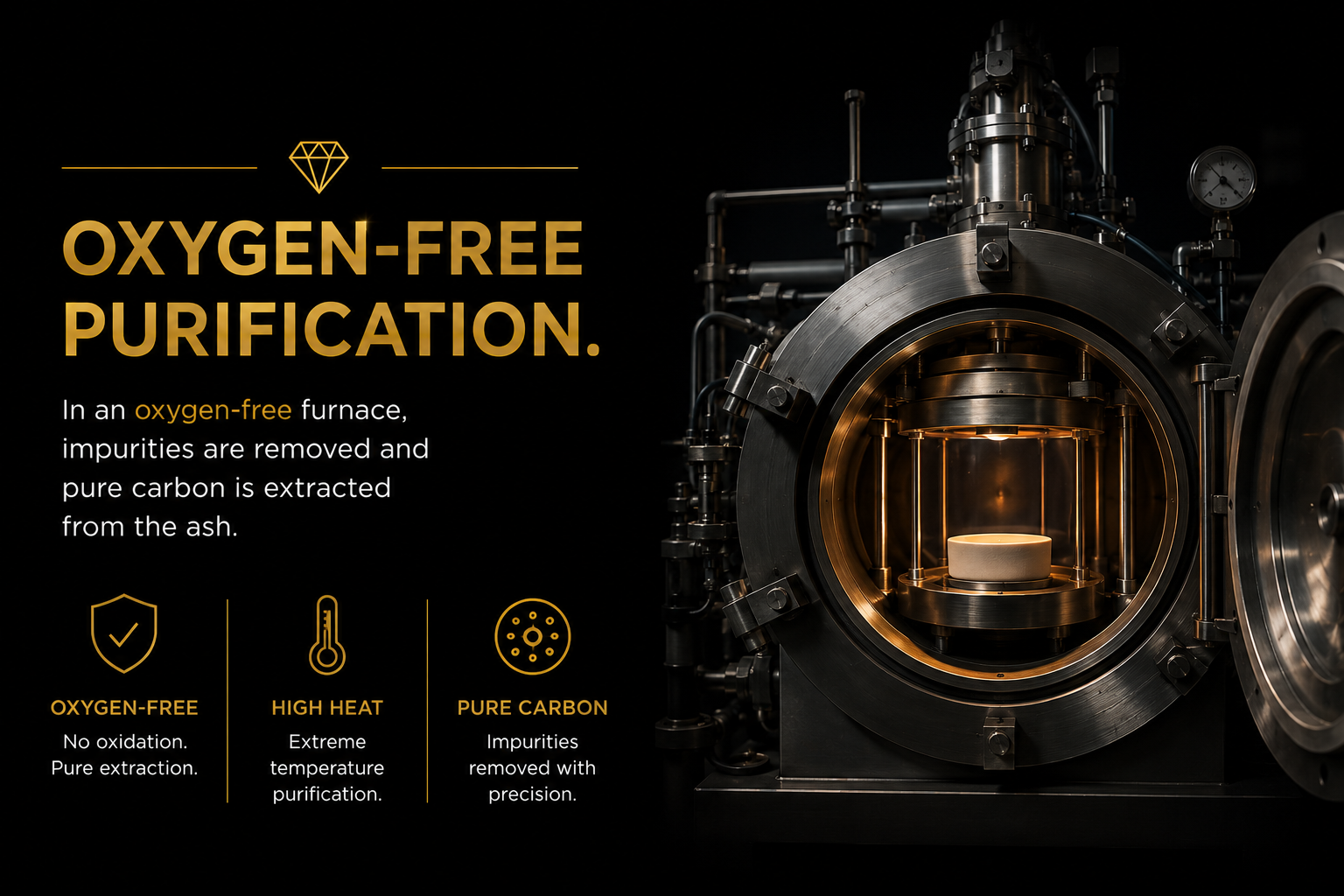
The purpose of the purification stage is to recover carbon while separating it from the much larger amount of mineral material contained in cremated remains.
The material goes through controlled processing designed to remove non-carbon components and leave behind purified carbon suitable for the next stages.
After purification, the laboratory can further prepare the carbon through graphitization. This process converts the purified carbon into graphite, another form of the same element.
The laboratory can then use this graphite as part of the carbon feedstock for the diamond-growing process.
Graphite and diamond are both forms of carbon. The difference is how the carbon atoms are arranged. The diamond growth process creates the crystal structure that gives diamond its distinctive physical and optical properties.
Why Is Laboratory Carbon Added to Your Mother’s Carbon?
This is one of the most important parts of understanding how a memorial diamond is made.
Cremated remains contain only a limited amount of recoverable carbon. Depending on the selected diamond and the requirements of the growth process, the personal carbon may not provide all the feedstock needed to grow the finished crystal.
Therefore, the laboratory may combine supplemental carbon with the carbon recovered from your mother’s ashes.
However, that does not mean the personal carbon disappears. Carbon recovered from your mother’s remains can still become part of the diamond’s crystal structure. The laboratory creates the finished stone using both the recovered personal carbon and additional laboratory carbon when necessary.
For this reason, no provider should claim that a memorial diamond contains only personal carbon when the process also uses supplemental carbon.
Read the direct answer to whether a memorial diamond is really made from your mother’s ashes.
What Happens Inside the Growth Process?
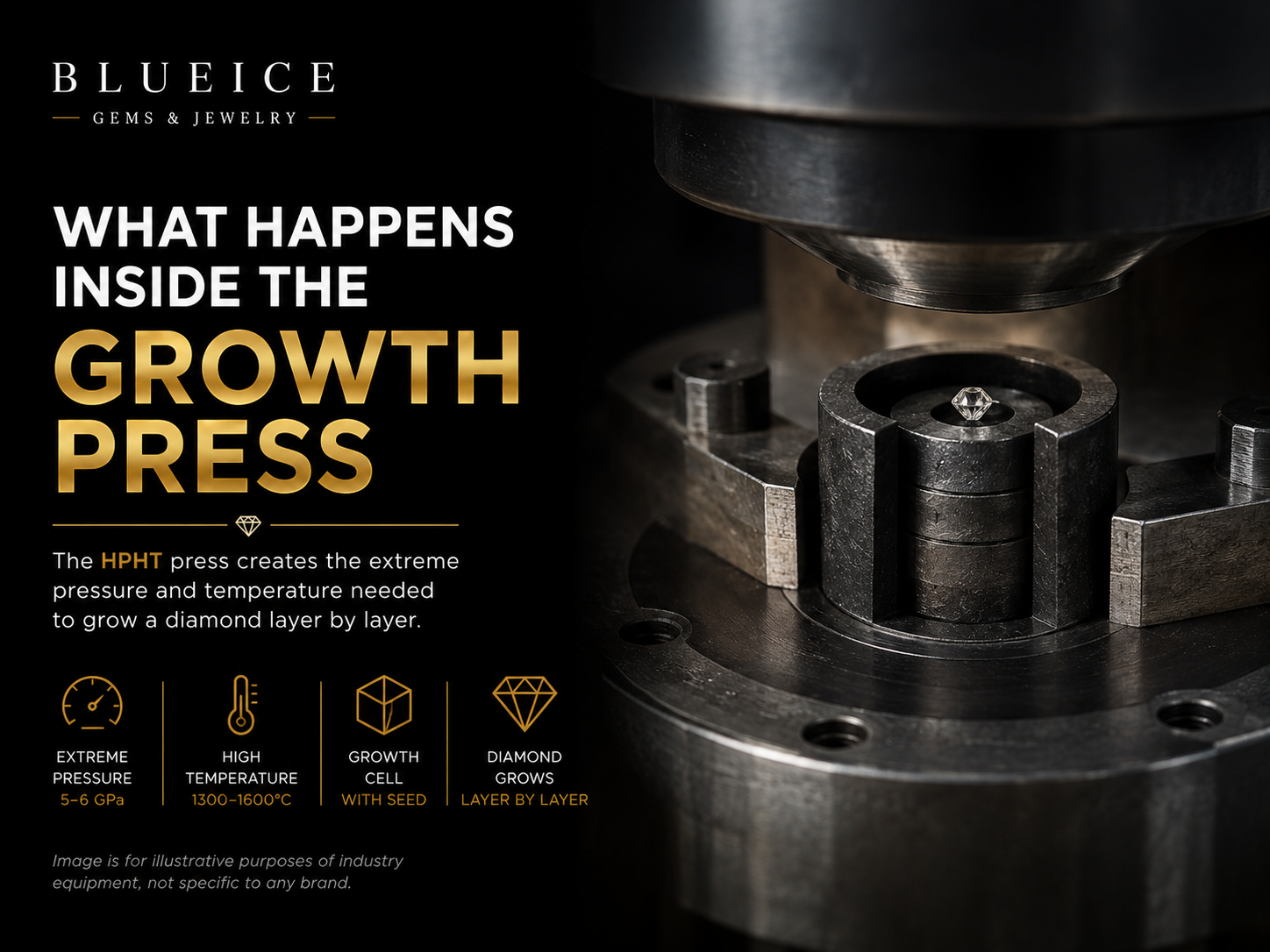
After the carbon has been prepared, the next stage is diamond growth.
One common method used in the laboratory-grown diamond industry is HPHT, meaning high pressure and high temperature. The process recreates conditions capable of allowing carbon to form a diamond crystal.
A small diamond seed can act as the starting point for crystal growth. Under controlled conditions, carbon becomes part of the growing crystal structure over time.
The growth process can take weeks or months depending on the characteristics and size of the diamond being created.
Another laboratory diamond-growing method is CVD, or chemical vapor deposition. Both HPHT and CVD can produce genuine diamonds, although the processes are different.
Learn more about how memorial diamonds are made using HPHT versus CVD.
Why Does Growth Time, Not the Amount of Ash, Decide the Carat?
One common misconception is that sending more ashes automatically creates a larger diamond.
That is not how the process works.
- More ashes do not automatically create a bigger diamond.
- More ashes do not automatically make the process faster.
- The desired diamond size is determined before the growth process.
- Larger diamonds generally require more time for crystal growth.
Only a portion of cremated remains may be required for the memorial diamond process, allowing the rest of the ashes to remain with the family or be used according to their wishes.
Learn why a mother memorial diamond can take months to create.
Why Is the Finished Diamond Usually Not Colorless?
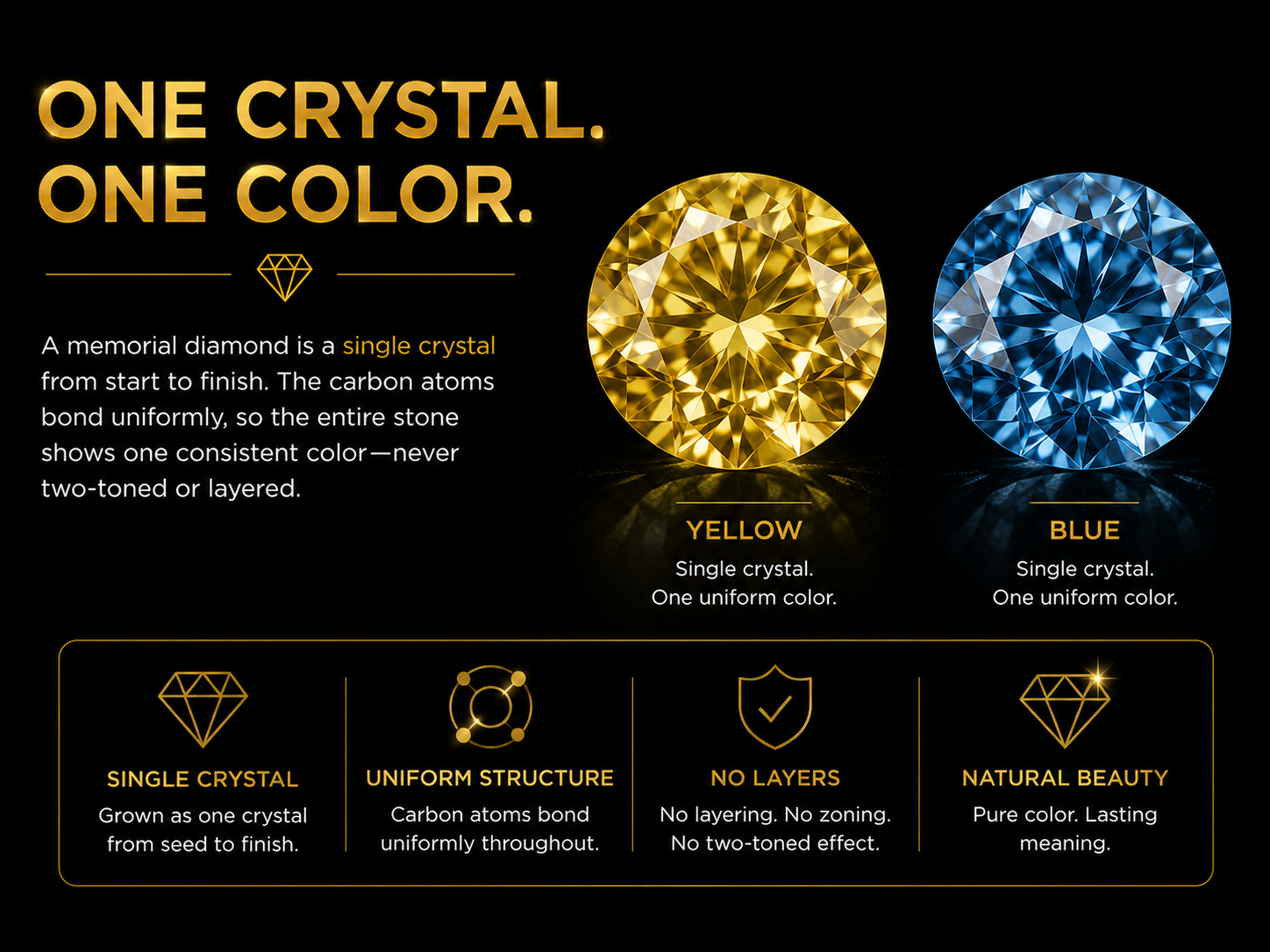
Diamond color can be influenced by trace elements and conditions present during crystal growth.
For example, certain trace elements can contribute to blue or yellow coloration. The specific characteristics of the carbon source and the growth environment can influence the final appearance of the diamond.
Memorial diamonds may appear in colors including yellow, blue, champagne or brown tones. Each diamond can have its own appearance, and an exact color cannot always be predicted in advance.
The color is part of the character of the finished stone and can make each memorial diamond feel unique.
Discover what color a diamond made from your mother’s ashes may be.
How Is the Finished Stone Cut, Graded and Certified?
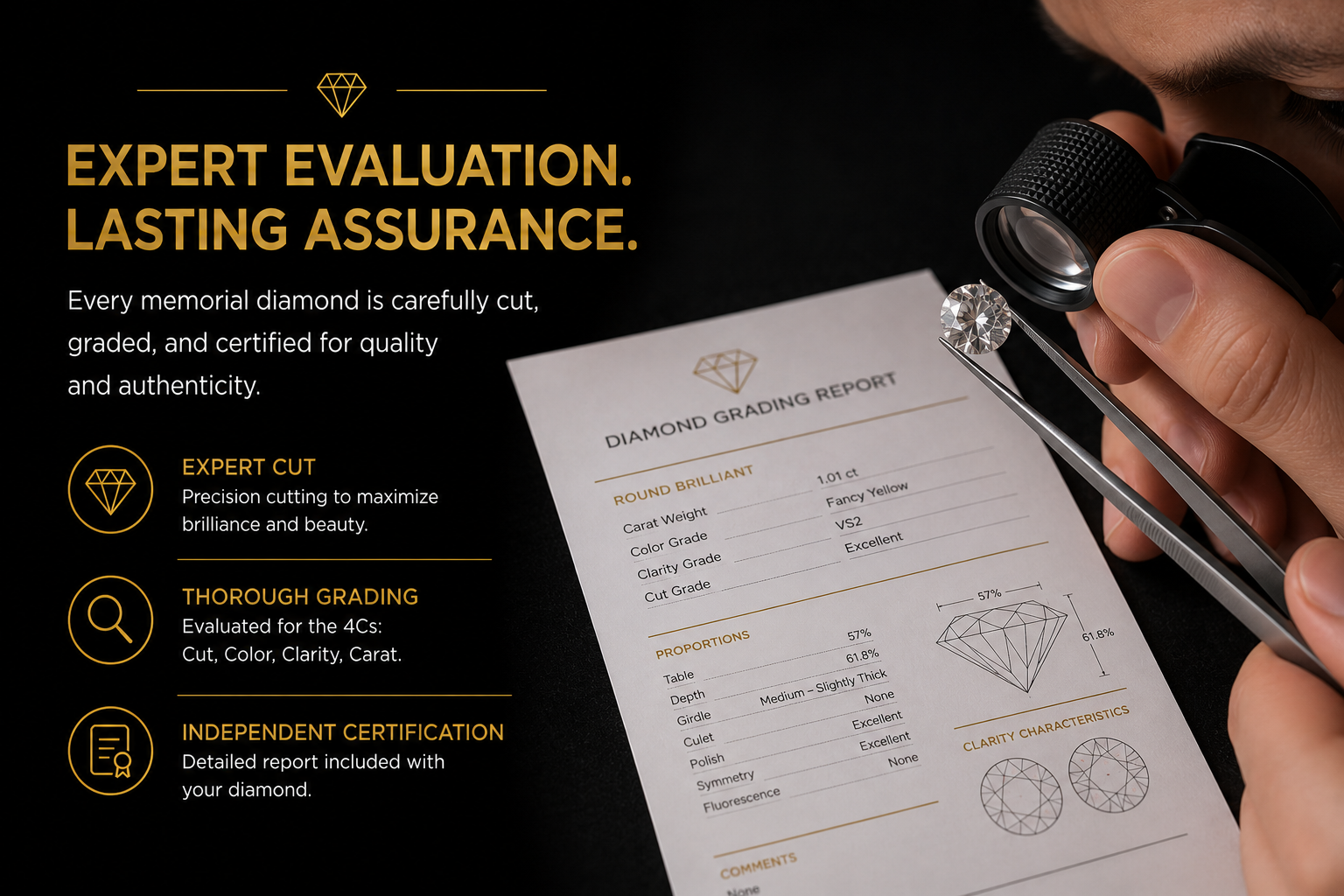
What leaves the growth process is a rough diamond crystal, not a finished piece of jewelry.
The rough crystal must be carefully cut and polished into the selected shape. Depending on the available options, this may include shapes such as round, cushion or emerald.
After cutting and polishing, the finished diamond can be evaluated according to the traditional diamond characteristics known as the 4Cs:
- Cut
- Color
- Clarity
- Carat
It is also important to understand the difference between origin documentation and a diamond grading report.
An origin or authenticity document relates to the memorial process and the submitted material. A grading report evaluates the physical characteristics and quality of the finished diamond.
These documents answer different questions, and families should understand what documentation is provided for their specific memorial diamond.
Learn more about how memorial diamonds are graded and certified.
What Does Any of This Ask of You?
Your role in the process is much shorter than the laboratory side.
You choose the memorial diamond you want, arrange the required material, and submit a portion of your mother’s ashes for processing. The laboratory then handles the carbon recovery, preparation, diamond growth, cutting and finishing stages.
The decision itself is often the most important part for families. Understanding what happens inside the laboratory can help make that decision more informed.
Learn how to turn your mother’s ashes into a diamond step by step.
Frequently Asked Questions
Does anything of my mother physically remain after the process?
The memorial process is based on recovering carbon from the submitted material. Molecular structures change during purification and diamond growth, while recovered carbon can become incorporated into the structure of the finished diamond.
Why can’t the laboratory use only her carbon?
Cremated remains contain a limited amount of recoverable carbon. Depending on the diamond being created, supplemental laboratory carbon may be required to provide enough feedstock for the growth process.
Is a memorial diamond a real diamond?
Yes. A properly grown laboratory diamond has the crystal structure and physical characteristics of diamond. It is not a simulant, resin or imitation stone.
Will there be visible ashes inside the diamond?
No. The purpose of the purification process is to recover and prepare carbon rather than place visible ash particles inside the finished diamond.
Can the Exact Diamond Color Be Predicted in Advance?
Not always. Trace elements and growth conditions can influence the final diamond color. Therefore, the laboratory may not be able to predict the exact shade before the growth process begins.
What Clarity Should I Expect?
The clarity of a finished memorial diamond can vary. Like other diamonds, laboratories evaluate clarity by examining the internal and external characteristics of the finished stone.. It is the result of multiple stages, beginning with the recovery of usable carbon from cremated remains and ending with a carefully finished diamond.
The journey includes carbon purification, preparation for growth, crystal formation, cutting, polishing and evaluation.
Understanding the science behind the process does not make the emotional decision for a family, but it can make the process easier to understand and the right questions easier to ask.
A memorial diamond can become a lasting physical connection to someone deeply loved created through a process that transforms carbon recovered from their remains into part of a genuine diamond crystal.
Talk About Creating a Memorial Diamond
If you are considering creating a memorial diamond from your mother’s ashes, take time to understand the process, the available options and the documentation provided.
Knowing what happens at every stage can help you make a decision with greater confidence and understanding.