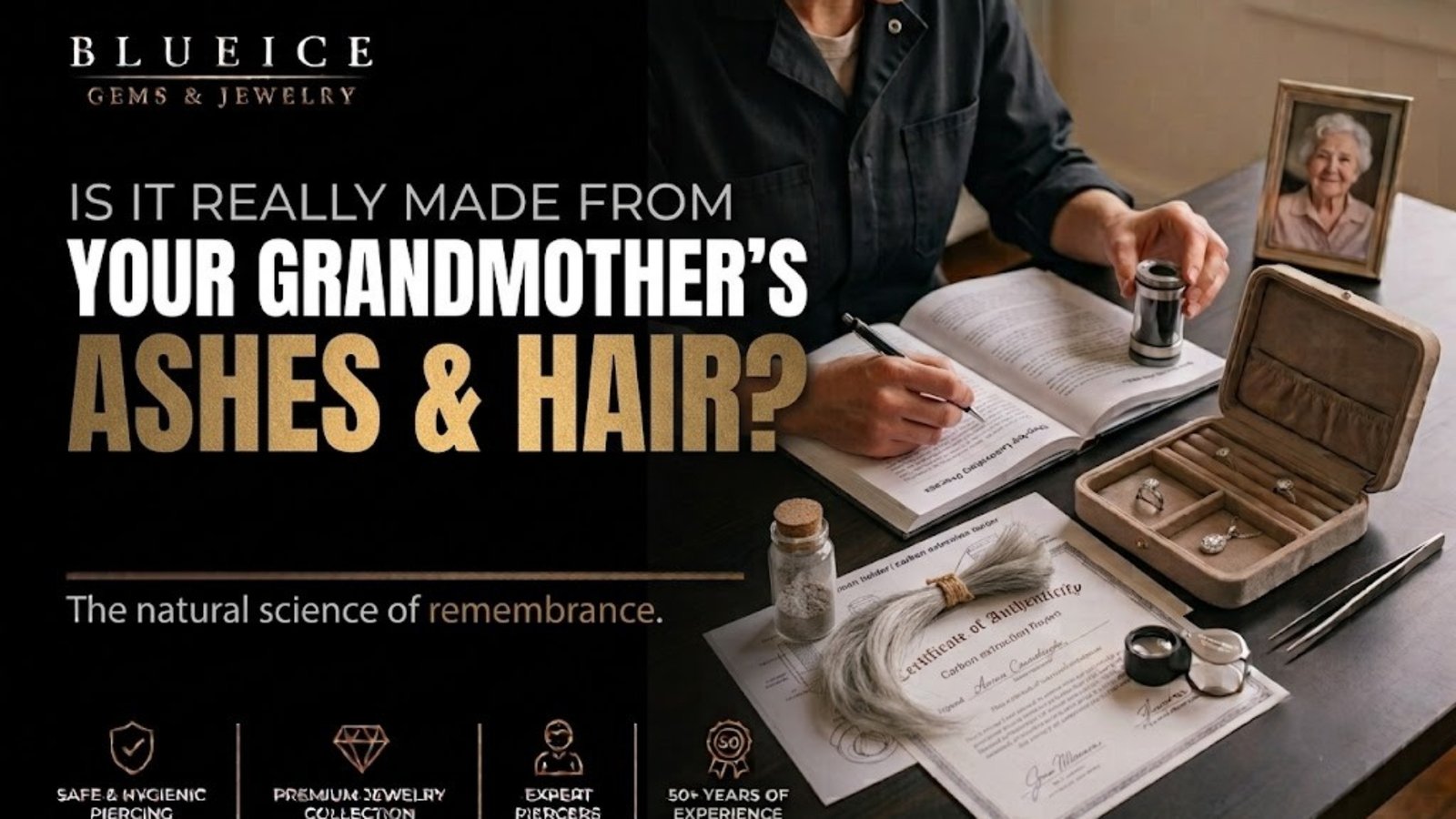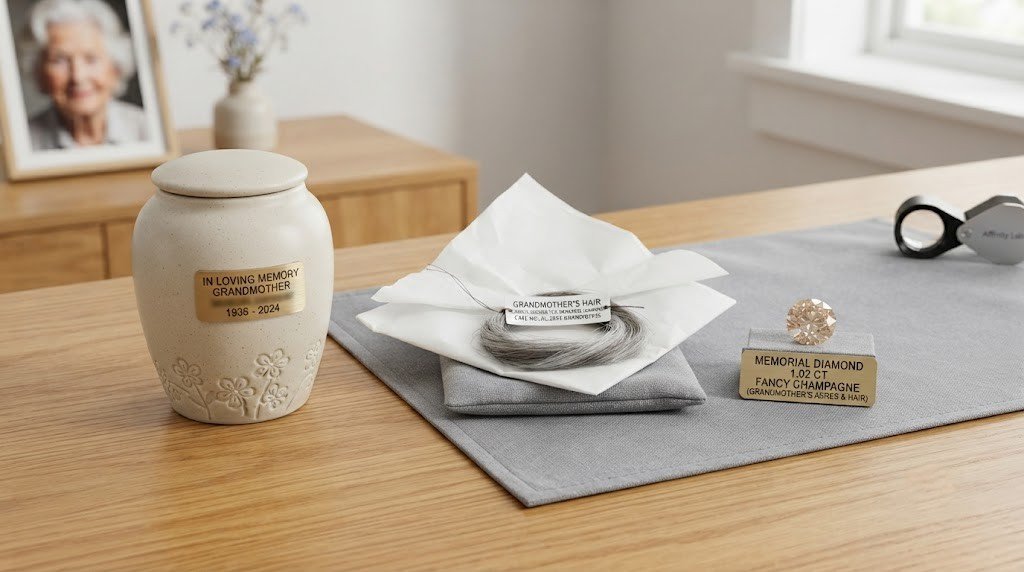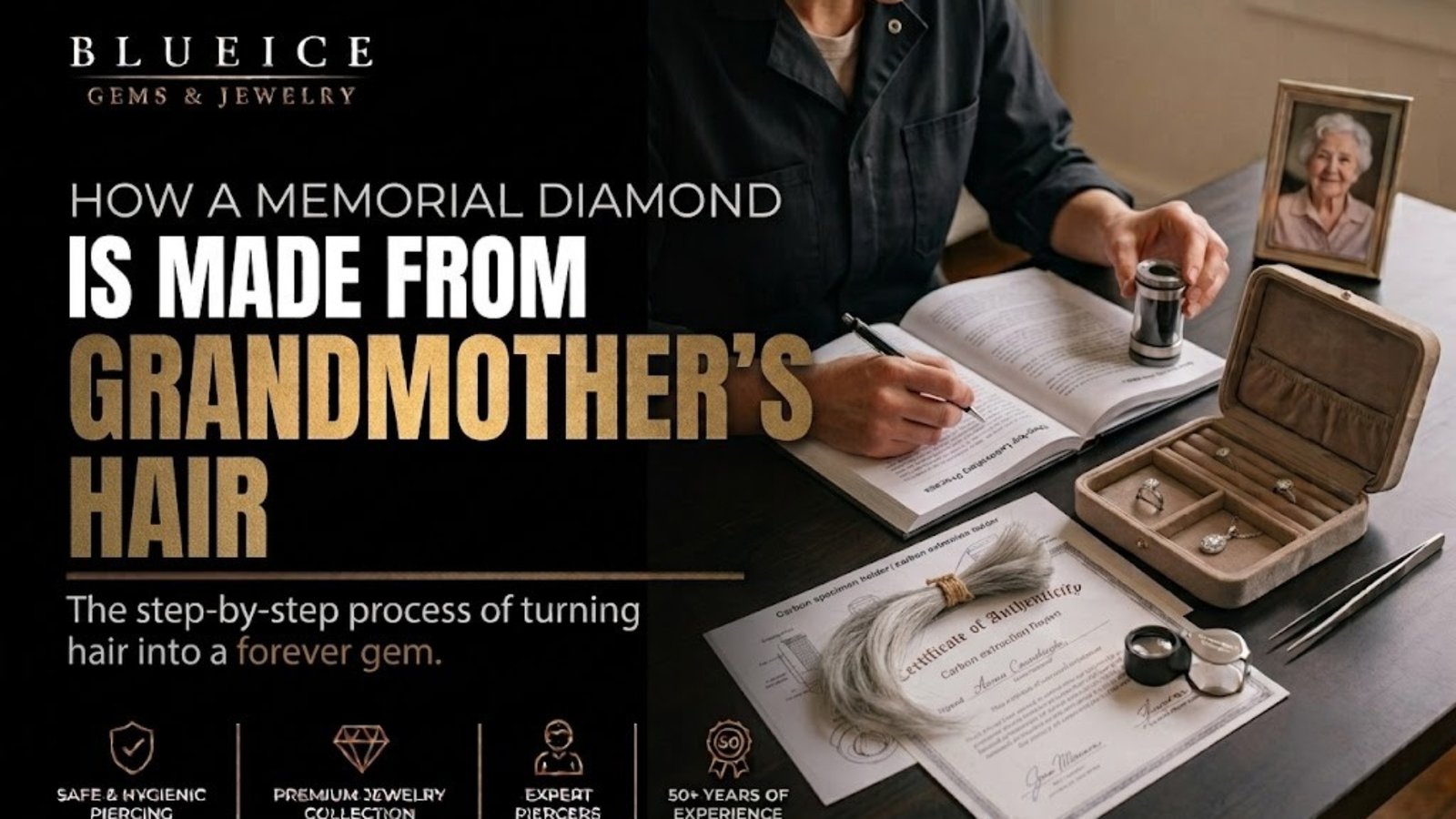
Maybe a lock of her hair has been sitting in an envelope for a while, and the question you keep circling is not price but truth. Yes, a memorial diamond can be really made from grandmother hair: hair is about 50% carbon, and that carbon can be purified and grown into a genuine lab-grown diamond. What no honest provider can promise is a stone made of her carbon alone, so the useful work is knowing what to ask and what to get in writing.
This page is for whoever holds that question, whether you are her grandchild, her son or daughter handling things for the family, or someone she chose as family. It sets out what can be checked when a stone is described as really made from grandmother hair, what cannot, and which answers only a provider can give you. If hair as a source is still an open question, start with the complete guide to a grandmother hair diamond.
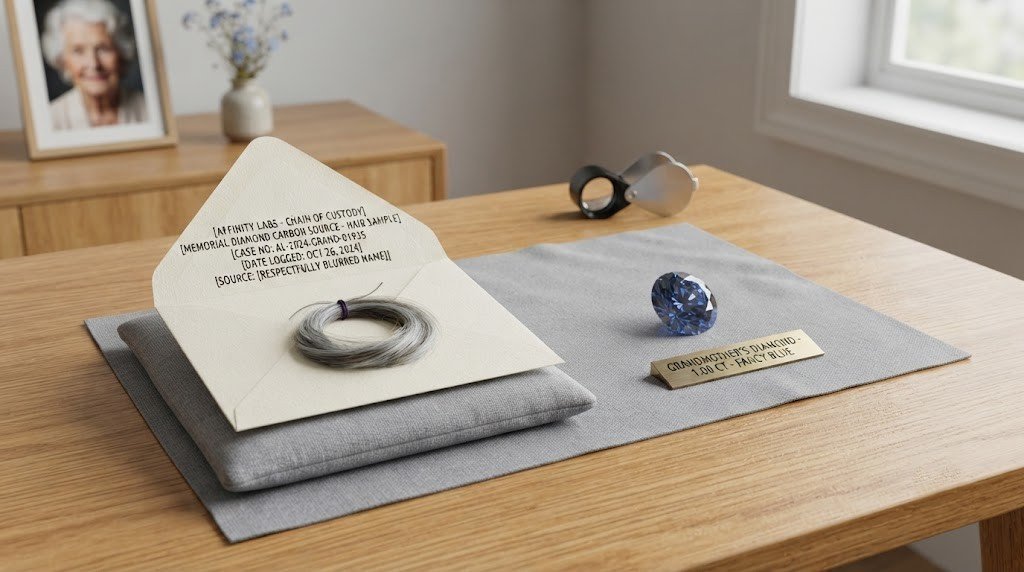
Table of Contents
What Does It Mean for a Stone to Be Really Made From Grandmother Hair?
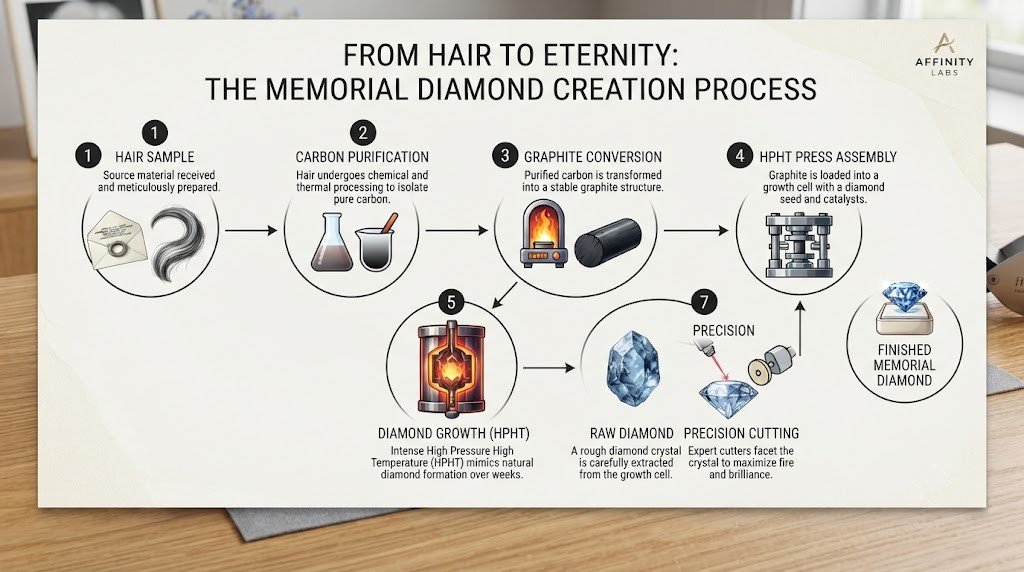
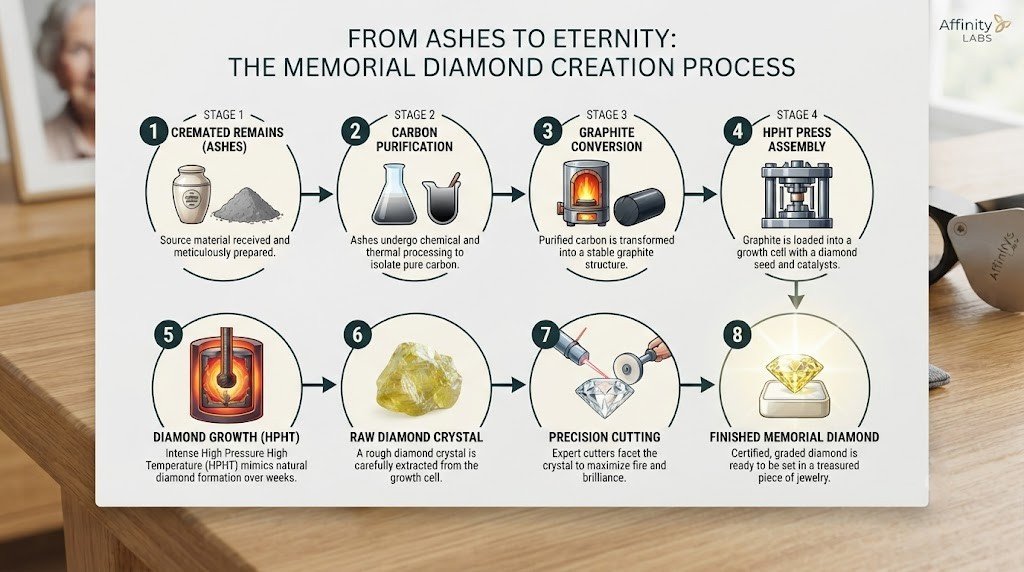
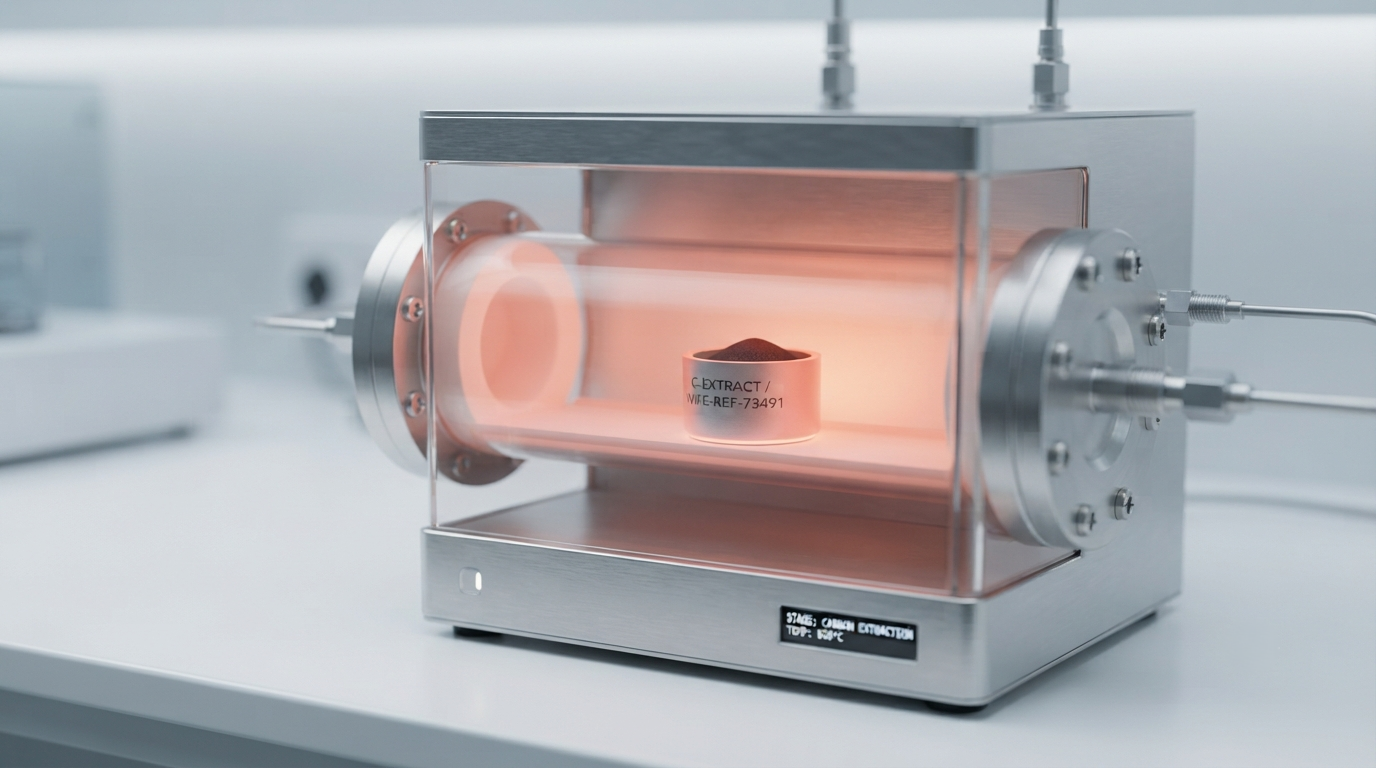
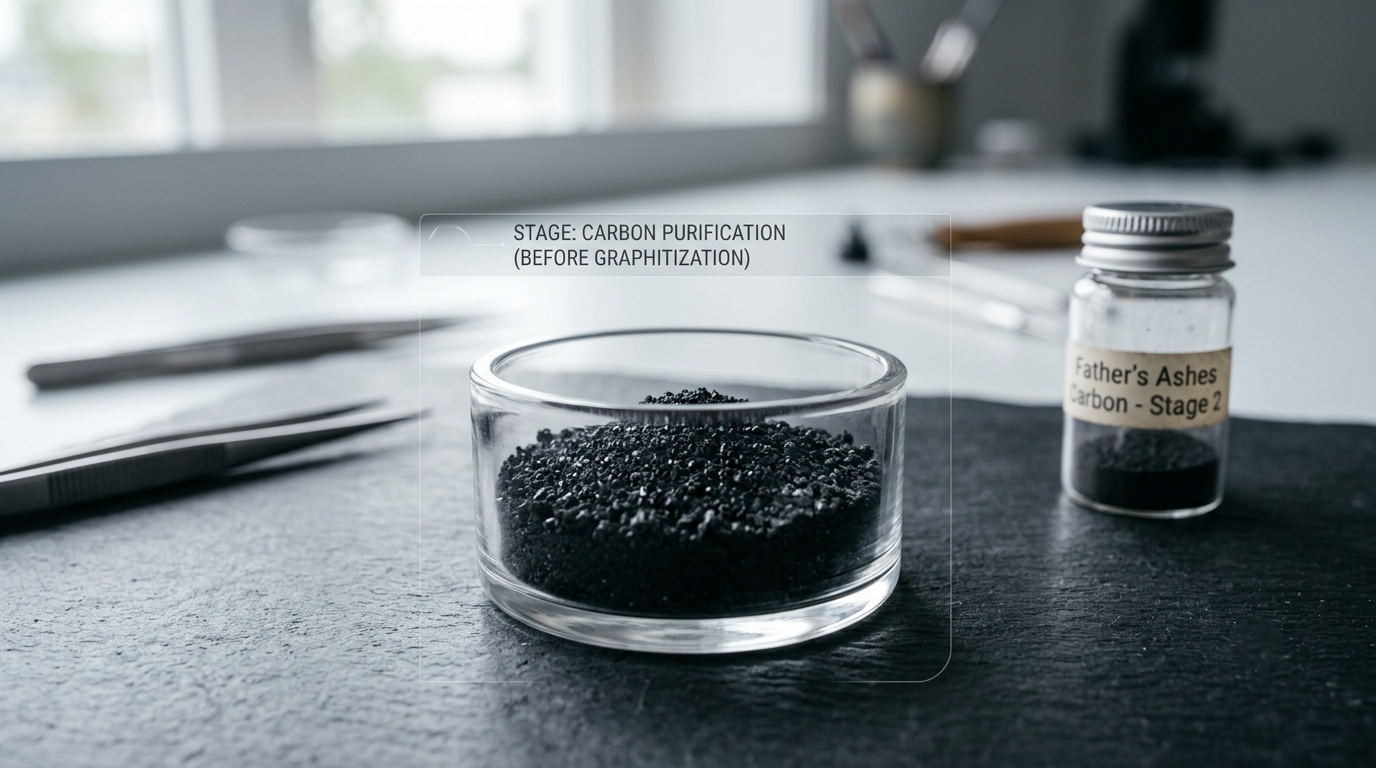
When a provider says a diamond is really made from grandmother hair, the truthful meaning is narrower than the sales version and still remarkable. Carbon recovered from the hair she grew is extracted, purified to roughly 99.9% or better, converted to graphite and placed in a growth cell, where it becomes part of a diamond’s crystal lattice; the stage-by-stage process for her hair walks through each step. The stone is not a symbol standing in for her. Part of it physically came from her.
What “made from” does not mean is that every atom in the finished gem was once part of her. Providers typically top up her recovered carbon with lab-sourced carbon, and how much they add, and why, is theirs to explain. That blending is ordinary across the industry, and it is the single detail to understand before deciding whether a gem is really made from grandmother hair in the sense you need.
The short version
- Her hair supplies real carbon that ends up inside the crystal.
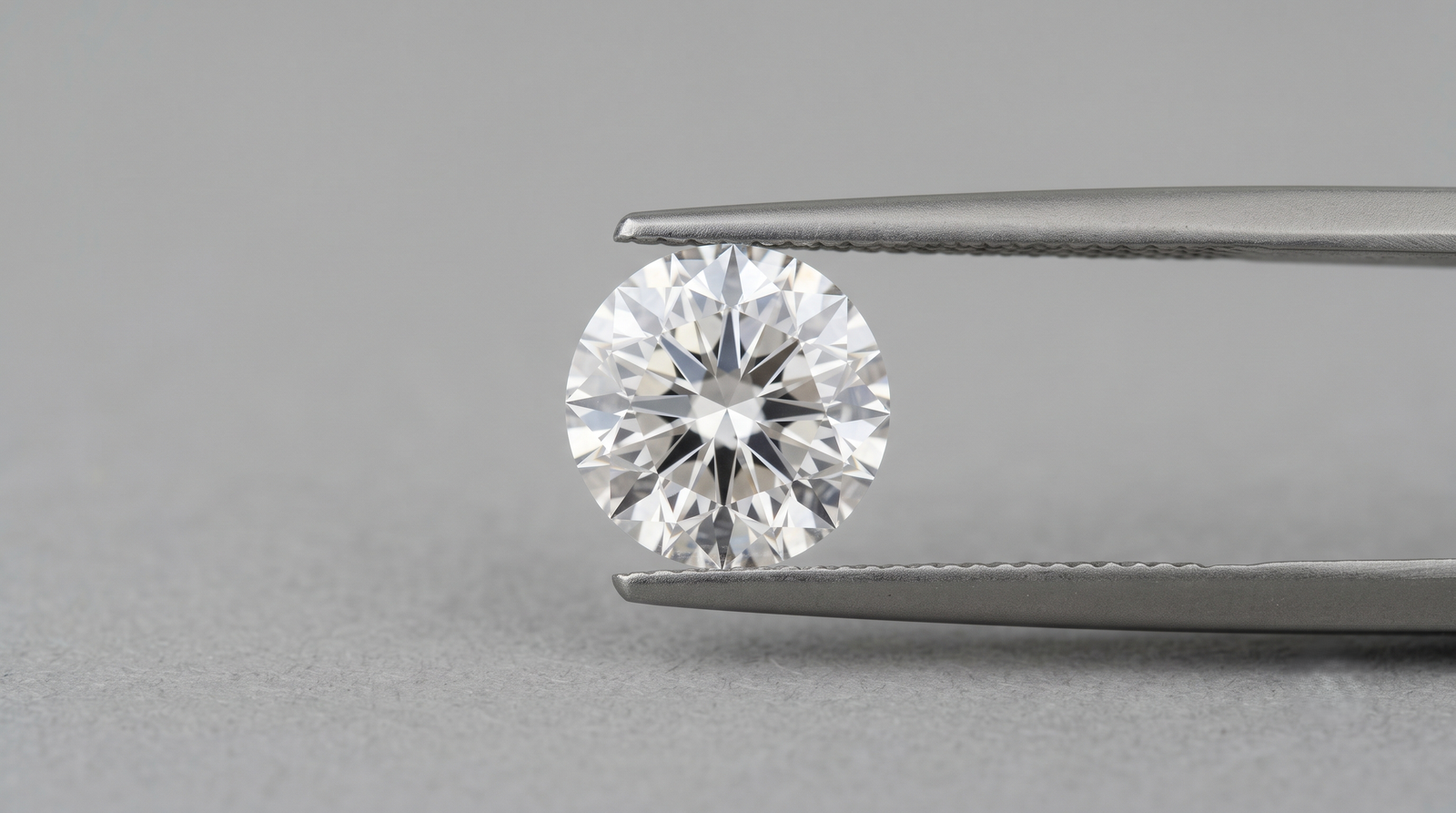
- That carbon is purified and grown into a genuine diamond, graded on the same 4Cs as any other.
- Supplemental lab carbon is typically added to reach a workable volume.
- The share that came from her is a figure to request from each provider, in writing.
Put plainly, a family can describe a finished piece as really made from grandmother hair without stretching the truth, provided they also understand that “made from” means “made in part from.” That sentence holds up when a curious relative asks how it works.
Why Is Hair a Genuine Carbon Source for a Diamond?
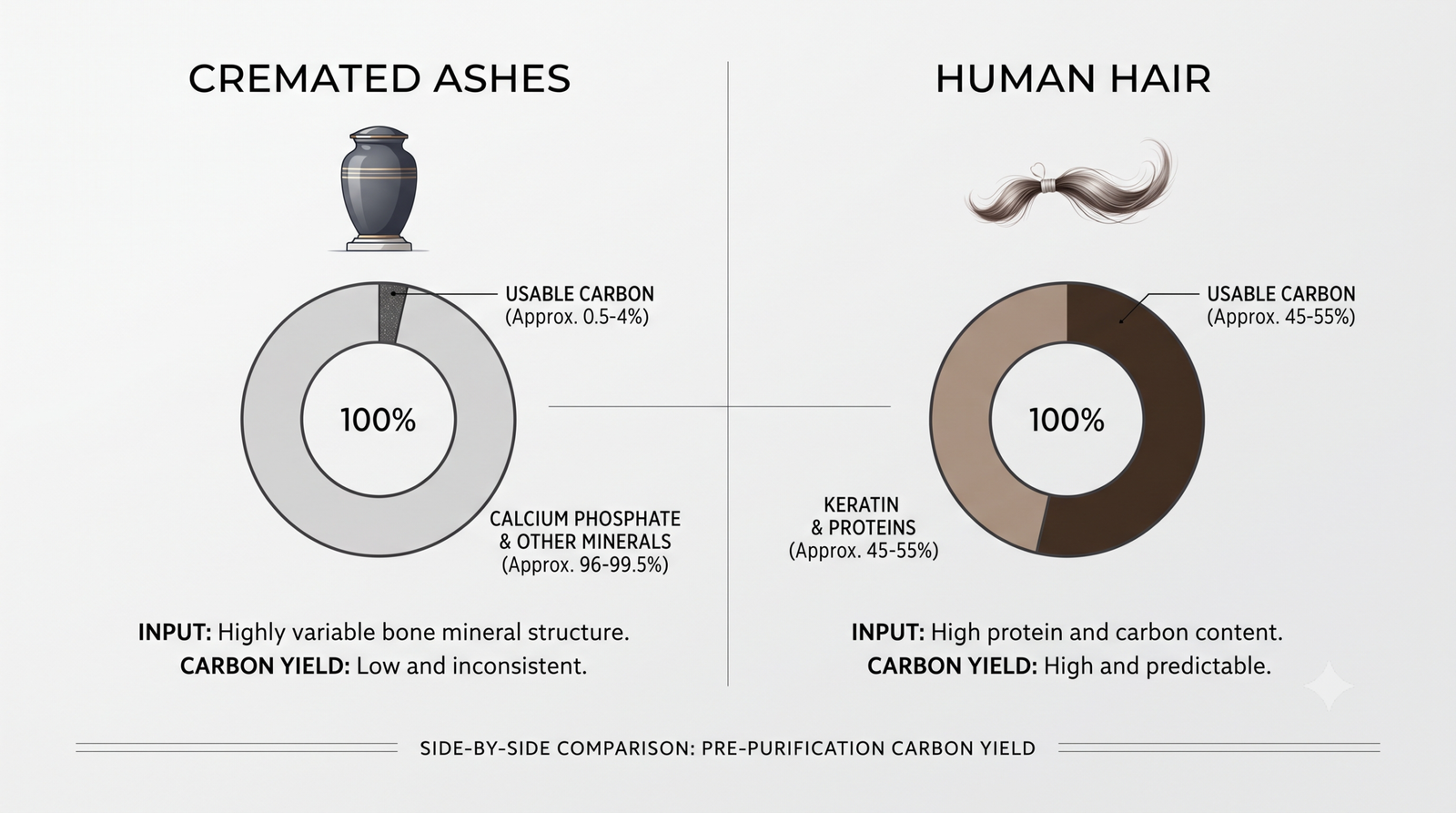
Hair is built mostly from keratin, a protein rich in carbon, and it works out to about 50% carbon by weight. Cremated ashes, by comparison, are mostly calcium phosphate, with usable carbon at roughly 0.5% to 4% of their weight. That gap explains why a stone really made from grandmother hair typically needs only a small lock or a few grams.
It also means no cremation is involved. If she was buried, if her ashes were scattered long ago, or if an aunt or uncle keeps the urn and would rather it stay whole, her hair can still be the source. Where some of her ashes are also available, a stone combining her ashes and hair raises honesty questions of its own.
Where faith comes into it
Some families weigh this against religious practice. Cremation is considered impermissible across major schools of Islamic thought, so for Muslim families an ash-based stone does not arise, while a hair-based one involves no cremation at all. No tradition has issued a position on memorial diamonds as such, and your own imam, priest, rabbi, teacher or community remains the right voice on anything touching her belongings.
How Much of a Stone Really Made From Grandmother Hair Is Her Own Carbon?
This is where families expect a number and often find none. For stones grown from cremated ashes, the industry commonly cites personal carbon at around 10–15% of the finished mass, but that ash figure comes from ash chemistry and cannot be carried over to hair. The reasoning behind the ash number is explained in the companion piece on stones grown from her ashes. For hair-based stones, no equivalent finished-stone percentage is published.
That gap is not a reason for suspicion on its own. It means the figure is something you request directly before agreeing that a stone is really made from grandmother hair to the degree you were imagining. Each provider’s blend is its own, and only that provider can describe it.
What to ask, word for word
Send these by email so the answers sit on record before you pay for anything sold as really made from grandmother hair:
- Is supplemental lab carbon added to the carbon recovered from her hair, and roughly how much?
- What proportion of the finished stone, by mass, do you estimate came from her hair?
- Does that proportion change with the carat size I choose?
- Is any of her hair left over, and what happens to it afterward?
- Will you put your answers to these questions into the order paperwork?
A plain answer, even a rough estimate, gives you something to weigh. A change of subject tells you something too.
Why Is a “100% Her Hair” Claim a Red Flag?
Some sales language promises a gem made purely of a loved one, with nothing else in it. A stone can be really made from grandmother hair without being made only from it. Treat any claim that a stone is 100% her hair as a reason to slow down. Growing a diamond of meaningful size typically involves supplemental carbon, so a provider who denies that entirely is either running an unusual process they should be able to document in detail or overstating what they do.
The accurate framing is quieter and still meaningful: a verifiable portion of her carbon became part of a real diamond. Your family is better served by that sentence than by an impressive one that collapses at the first follow-up question. A stone really made from grandmother hair does not need exaggeration to matter.
Other phrases worth questioning
- “Nothing else is added.” Supplemental carbon is typical; ask what the process actually involves.
- “The color will match her hair.” Diamond color comes from trace elements during growth, and no family can choose or match an exact natural shade.
- “Her DNA lives on in the stone.” Purification strips out everything that is not carbon, so ask the provider exactly what they mean by this.
- Silence about who grows the stone. It is fair to ask whether growth happens in-house or at a partner lab, and where.
None of these phrases proves dishonesty by itself. Each one is a prompt to ask a follow-up, and any provider offering a piece really made from grandmother hair should be comfortable answering on paper.
How Do You Check That a Gem Is Really Made From Grandmother Hair?
No single document settles the question, and no test run on the finished gem can single out her carbon. Confidence comes from three things working together: a clean chain of custody, the right paperwork, and a believable account of how her sample stays apart from everyone else’s. Families who want to know a stone is really made from grandmother hair are, in practice, judging a provider’s records and process.
Chain of custody from envelope to finished stone
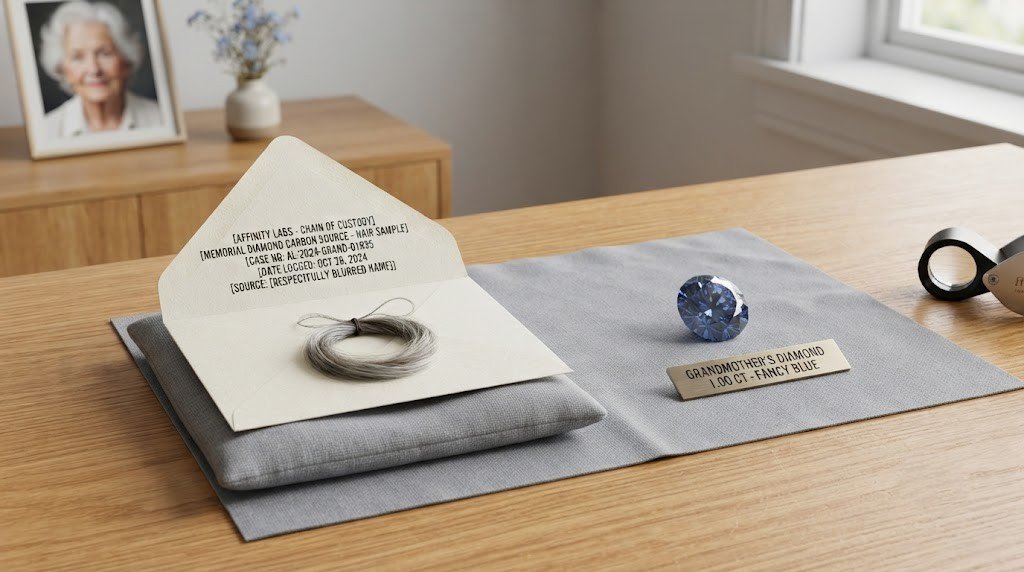
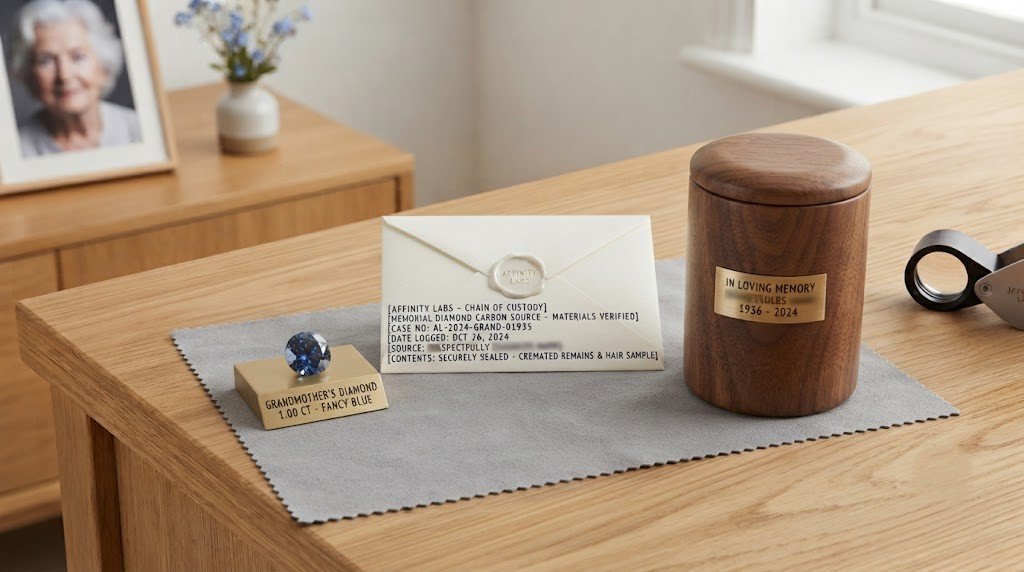
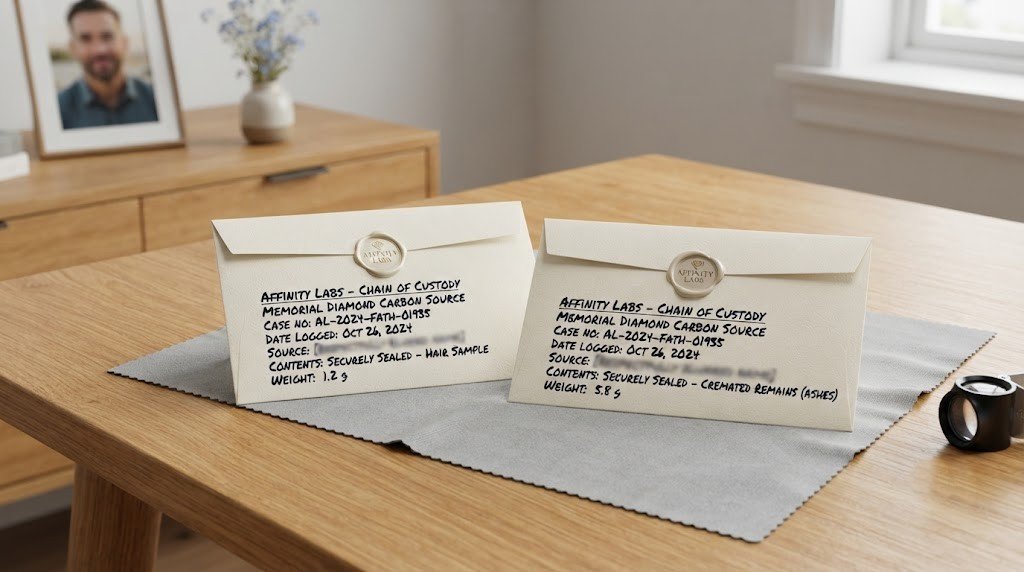
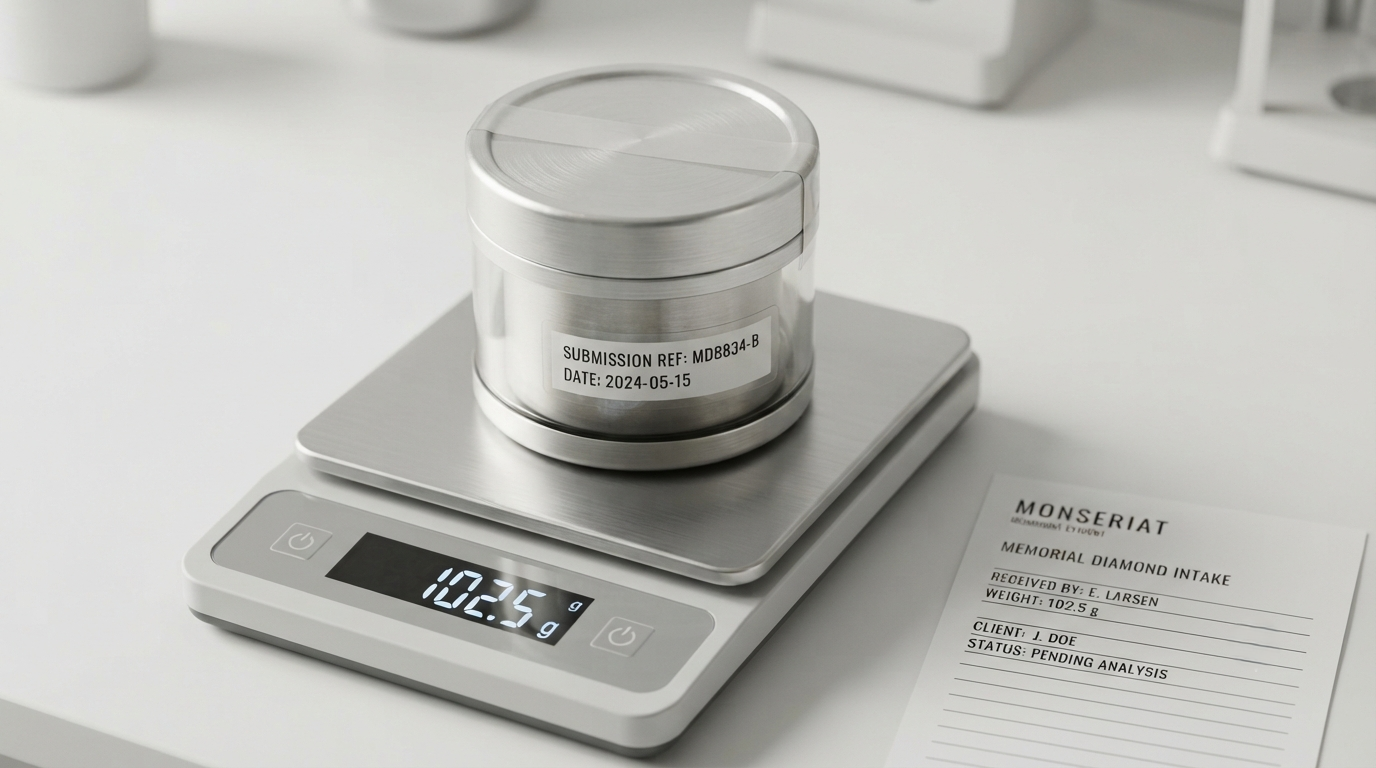
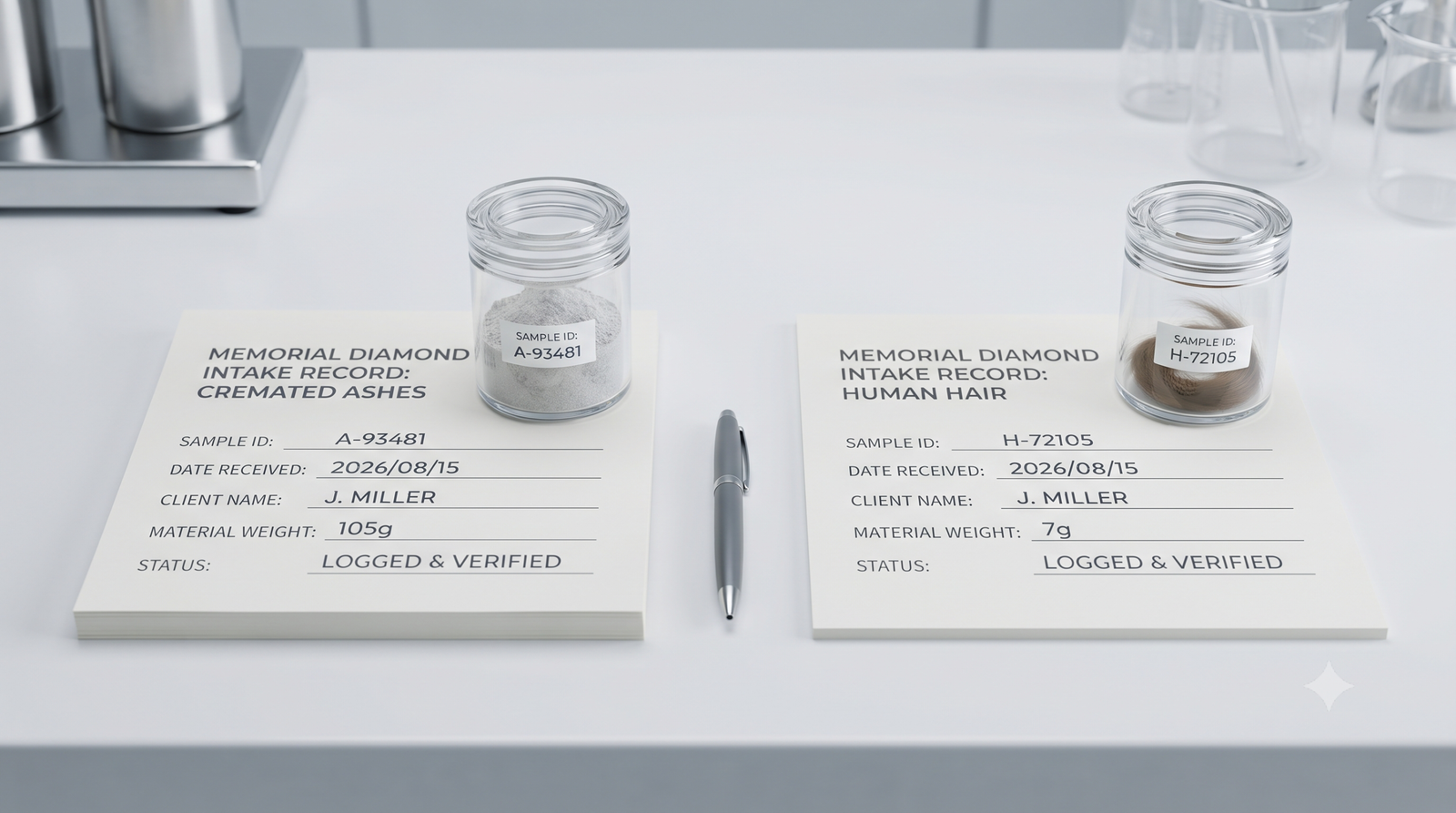
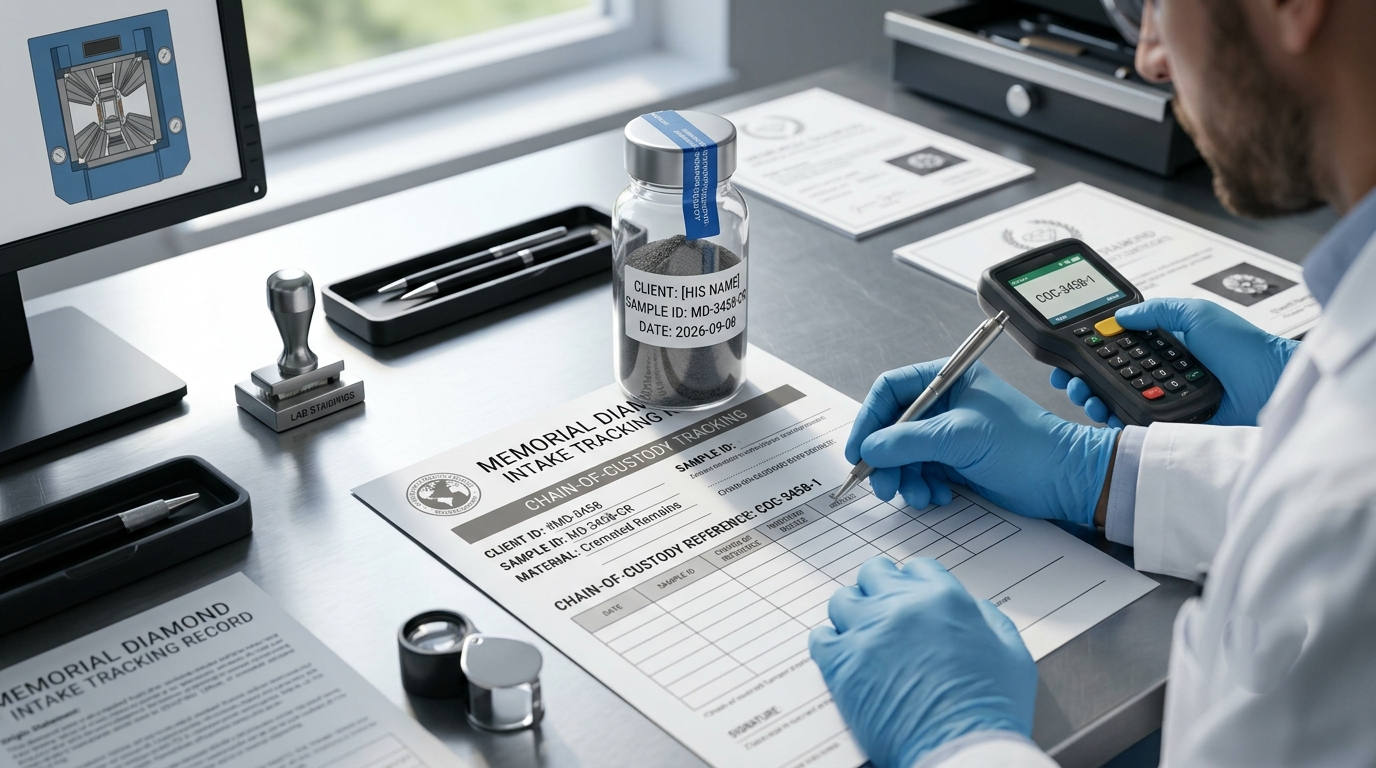
Chain of custody is the paper trail behind any claim that a stone was really made from grandmother hair, following the sample from the moment it leaves your hands. The practical steps for sending her hair cover packing and paperwork at your end. Ask how the sample is labeled on arrival, whether you receive written confirmation of receipt, who signs for it at each handoff, and whether you can request a record of each stage. Whether photos or progress updates are offered varies, so ask.
Authenticity certificate versus grading report
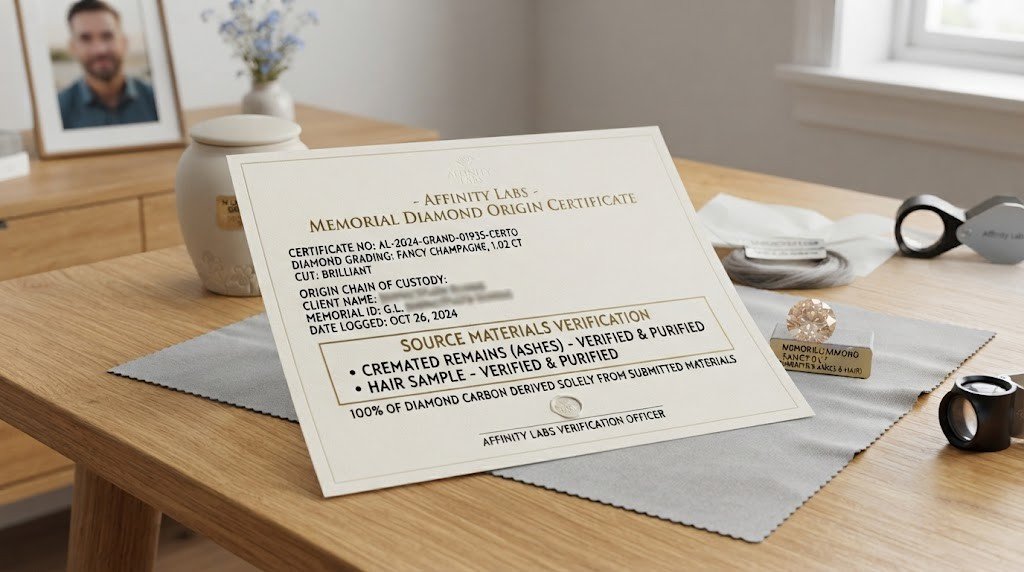
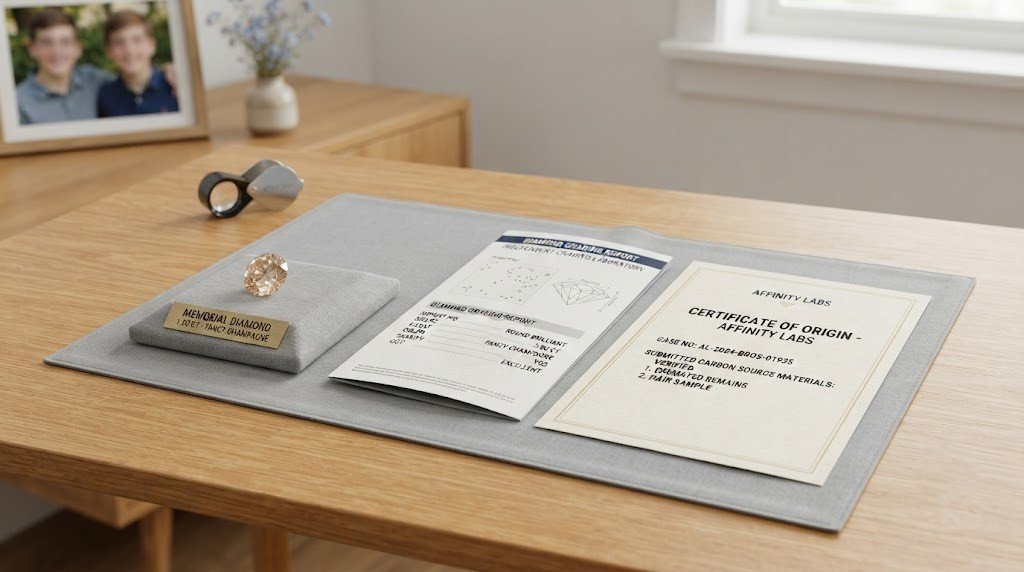
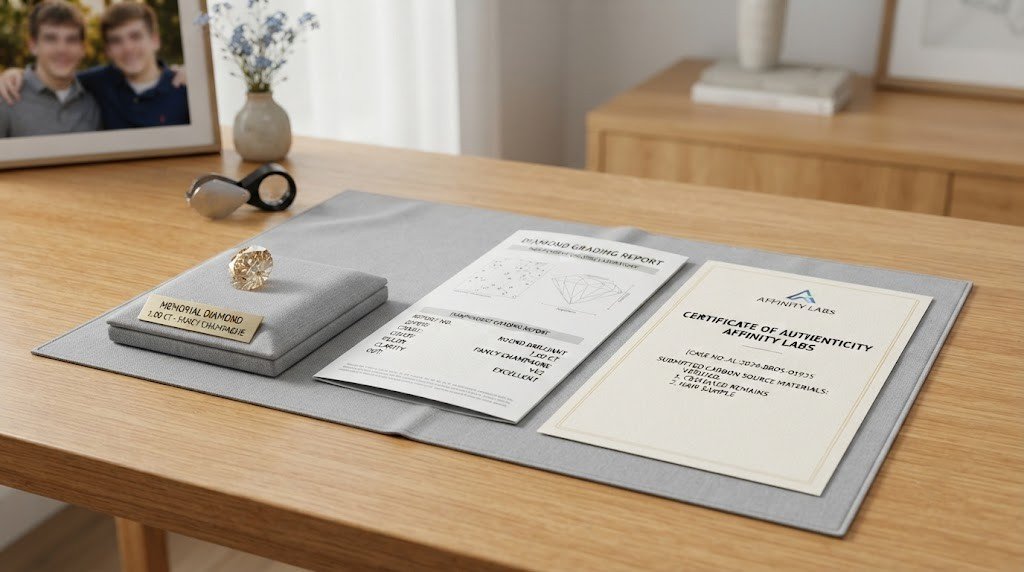
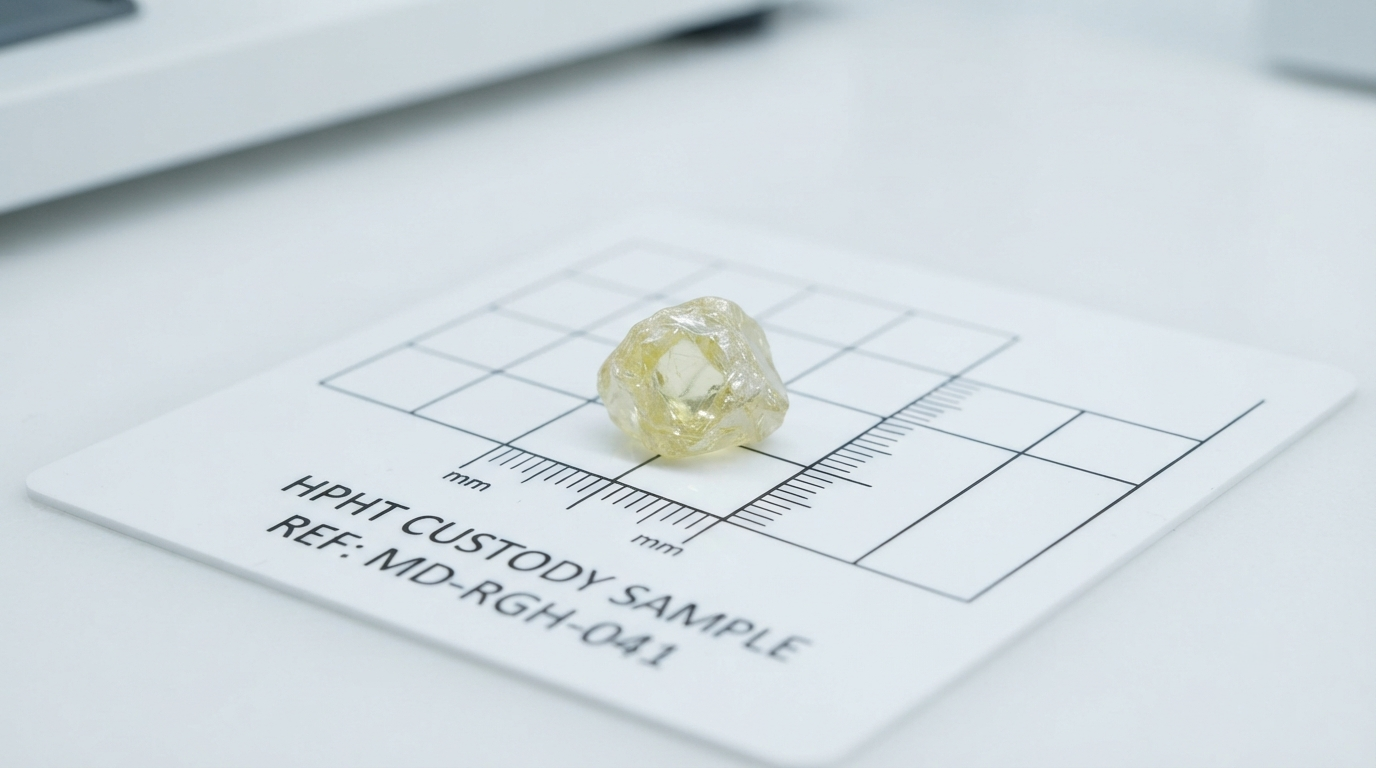
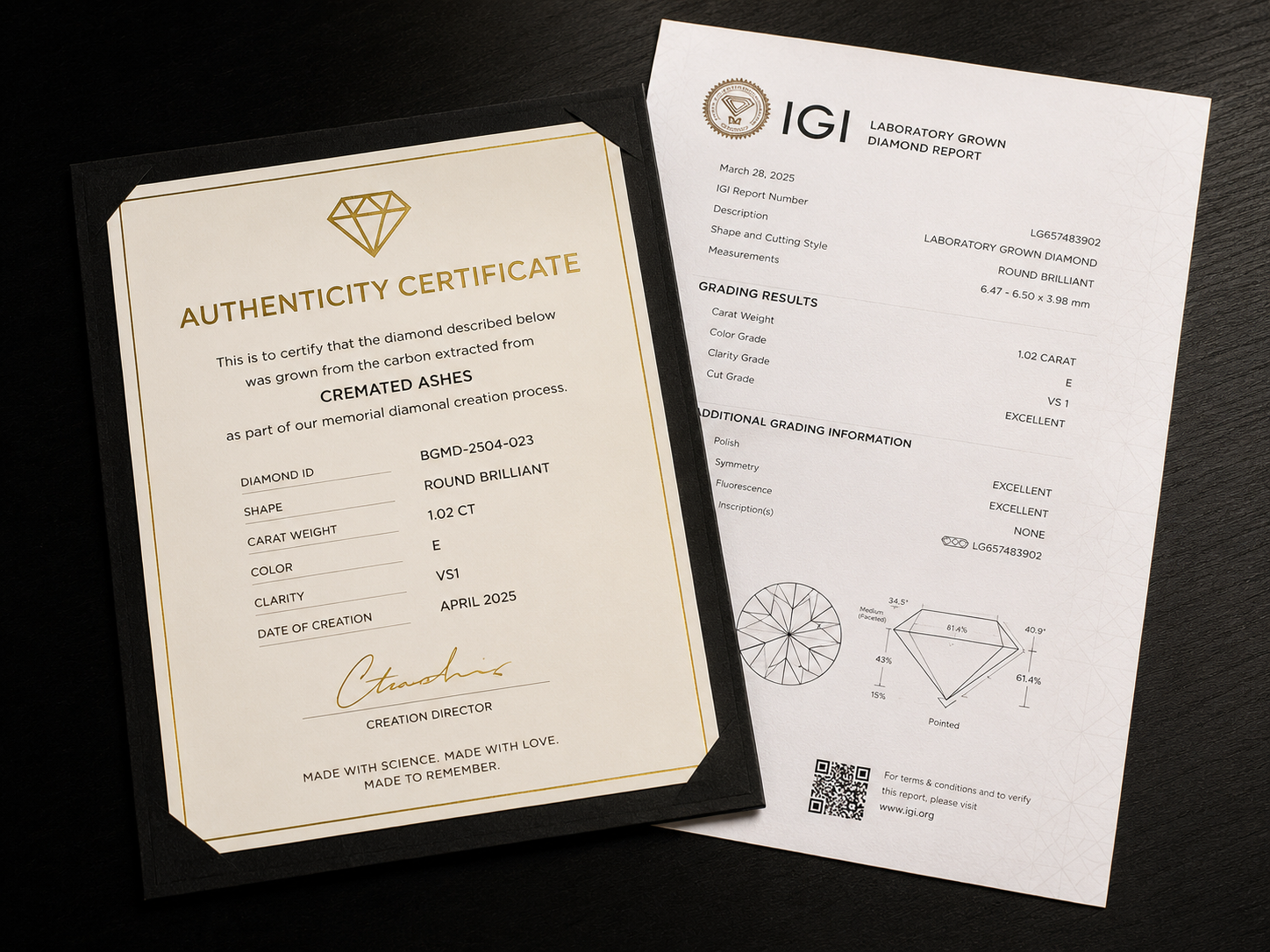
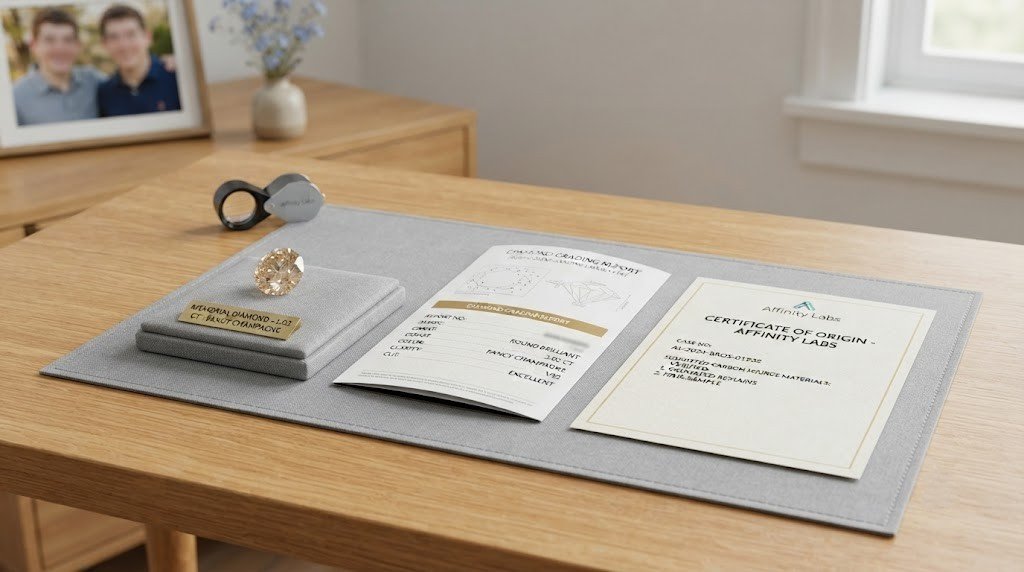
These two documents answer different questions. An authenticity or origin certificate is the paper that speaks to whether a stone was really made from grandmother hair; usually issued in-house, it records that the stone was grown from your family’s submitted material and works as a chain-of-custody document. A grading report, by contrast, rates the stone itself on the 4Cs; the most useful ones come from an outside lab that works to GIA’s diamond quality factors, and some come from IGI.
Independent grading is typically an optional add-on priced separately. It cannot confirm whose carbon is inside, but it does confirm you are holding a real diamond of the stated quality, which is half of what “really” means.
Keeping her sample separate
Ask each provider how one family’s material is kept apart from another’s. Useful questions: is each sample processed in its own batch, how is equipment cleaned between runs, how are containers labeled, and what happens if a growth run fails. Clear, specific answers here say more about whether a stone is really made from grandmother hair than any certificate design.
What Can and Cannot Be Proven About a Stone Really Made From Grandmother Hair?
Use this table as a checklist when you compare providers for a stone really made from grandmother hair.
| Claim | Can it be checked? | How you check it |
|---|---|---|
| The stone is a real diamond | Yes | Independent grading report, standard gemological testing |
| The stone is lab-grown | Yes | Grading reports state lab-grown origin |
| Her hair was received and logged | Yes, on paper | Written receipt, chain-of-custody records |
| Her carbon went into this specific stone | Not by testing the finished gem | Chain-of-custody records and a documented process |
| The share of the stone that came from her | Only as the provider’s estimate | Ask in writing; no industry figure exists for hair |
| Her sample was never mixed with another family’s | Only through process and records | Ask how batches are separated and labeled |
| Her hair will shape the stone’s color | No | Color comes from trace elements during growth |
The rows marked “only” are where trust lives, so get those answers in writing before ordering.
Is a Small or Old Lock of Her Hair Enough?
Industry-wide, hair-based stones typically need a small lock or a few grams, and providers set their own requirements. Whether the particular hair you have can yield a stone really made from grandmother hair is a question for each provider: a braid saved for decades, strands from a brush, a single curl from a locket. A closer look at how much hair a grandmother memorial diamond usually takes can help you prepare. Ask whether they can assess it before you commit.
Ask what happens if the amount is too little. Do they contact you before starting, can you send more, and are any fees refundable at that point? Keep in mind that a bigger lock will not buy a bigger gem: the stone’s weight comes down to how long it stays in the press.
Whose hair is it to send?
Hair kept at home is usually a simpler practical matter than ashes. Still, keepsakes she owned may count among the things her estate has to account for, and each state handles that its own way. If an executor or another relative is settling her affairs, speak with them before sending anything. If the hair is with a parent, aunt, uncle or cousin, asking them to share a small portion is a respectful route, and several relatives can often each receive a stone from shared material, depending on the provider and how much there is.
Does Gray, Dyed or Treated Hair Change Anything?
Whether a provider accepts hair that was dyed, permed, bleached or chemically treated is that provider’s decision, so ask before you send it. Nothing published shows that her hair’s natural color, or the fact that it had gone gray or white, makes the stone lighter, darker or more predictable. Be wary of anyone who promises a color for a stone really made from grandmother hair based on how her hair looked.
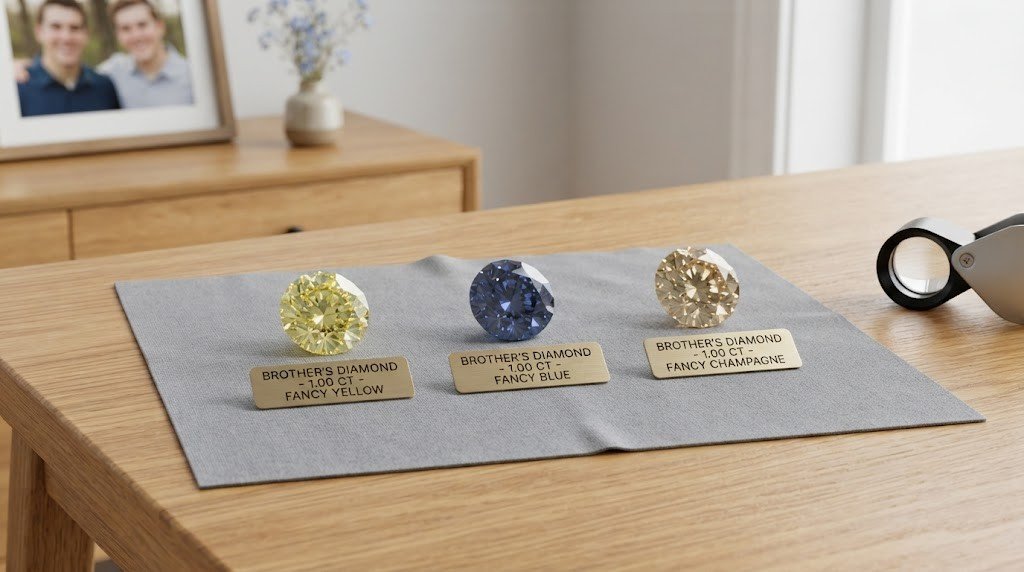
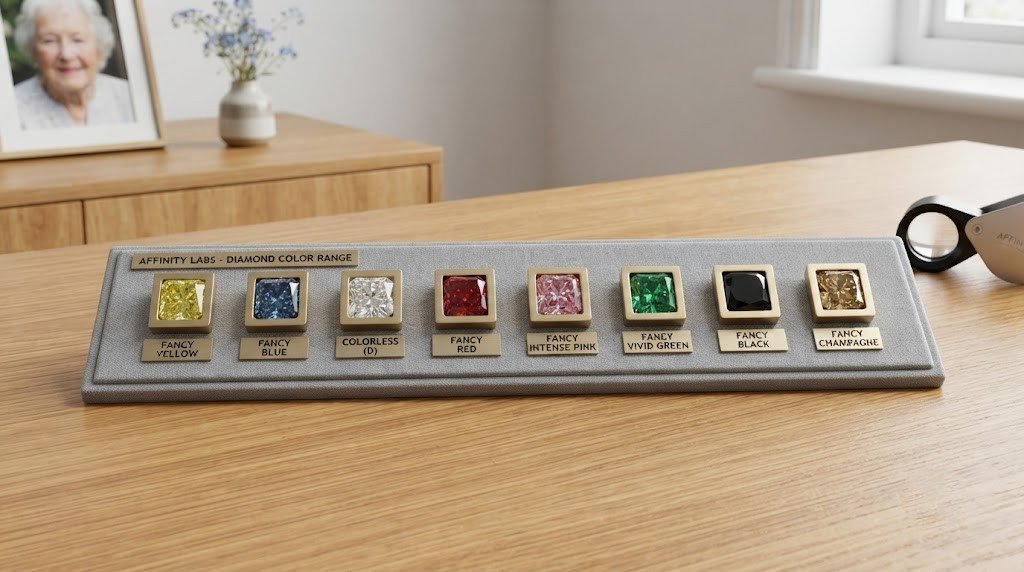
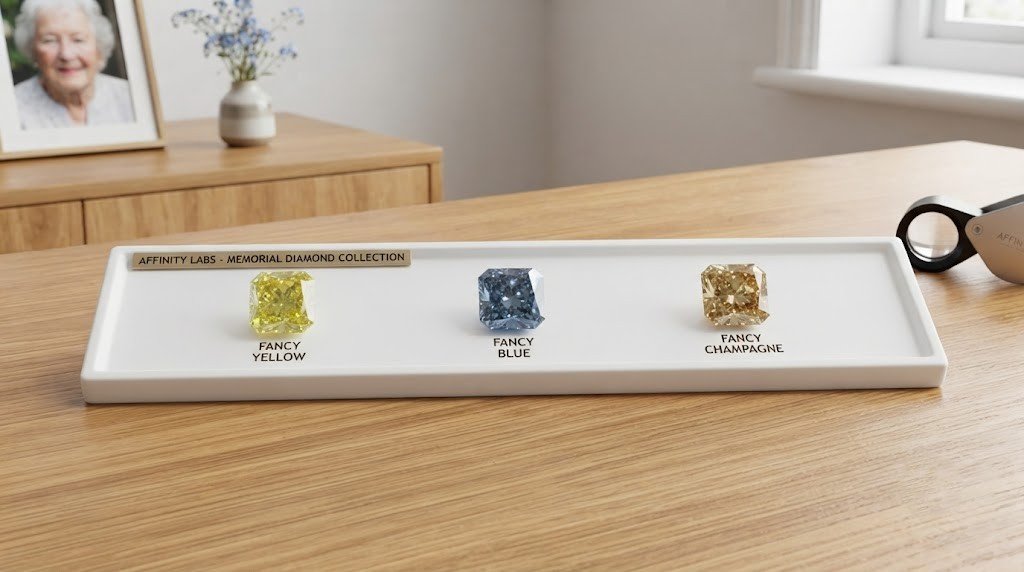
Diamond color comes from trace elements present during growth. Traces of boron push a stone toward blue, and nitrogen pushes it toward yellow. Trace elements of this kind are common in a personal, organic carbon source, so memorial stones tend toward yellow, blue or champagne-to-brown shades. Keeping both out to reach a colorless result means added processing and usually a higher price. A few providers can also irradiate a finished stone to turn it red, pink, green or black.
For a gem that is really made from grandmother hair, color is something to talk through with the provider, not a portrait of her hair. Ask which colors they offer, which cost more, and whether the color you pick affects the timeline. For more on that, see the colors a stone from her hair can take.
What Do People Get Wrong About Stones Really Made From Grandmother Hair?
A few beliefs come up again and again when families first ask whether a stone can be really made from grandmother hair. Each one is worth correcting before you compare quotes.
- “More hair makes a bigger stone.” Growth time sets carat size. Sending extra hair does not change the size or speed of the result.
- “Hair is a weaker source than ashes.” Hair carries far more carbon by weight than ash. It is a genuine source in its own right, not a fallback.
- “Hair makes the process faster.” The timeline is typically 6 to 10 months from receipt, and larger or specialty-color stones can take up to about 12 months, whatever the source.
- “A certificate of authenticity is a grading report.” One tracks origin; the other measures quality. A careful buyer asks for both.
- “A memorial diamond is unbreakable.” It ranks 10 on the Mohs hardness scale, yet a hard knock at the wrong angle can still chip any diamond.
Set these aside and the question of whether a stone is really made from grandmother hair comes down to records, process and plain answers.
What Does Verification Add to Cost and Timeline?
Across the industry in 2026, small stones of roughly 0.10 to 0.25 carat generally run about $1,500 to $3,500. Stones from 0.5 to 1 carat usually fall between about $5,000 and $15,000, with colorless costing noticeably more, and stones of 2 to 5 carats or larger can reach $20,000 to $75,000 or beyond. These are industry-wide ranges, not one company’s prices.
Verification has its own line items. An independent grading report, engraving, a fancy cut and a setting are typically priced separately from the loose stone. If confidence that the piece is really made from grandmother hair matters most to you, budget for independent grading and ask whether the origin certificate comes included.
Time is the other cost. Expect roughly 6 to 10 months from the day the provider receives her hair before a stone really made from grandmother hair is ready, and longer for large or specialty-color stones. A provider who quotes far faster should be able to explain why.
Frequently Asked Questions
Can a diamond be made from my grandmother’s hair if she was buried?
Yes. Hair needs no cremation, so a lock kept by family from her lifetime or her final days can be the source. Whether the specific hair you have is workable, and how much a provider needs, is something to confirm with each provider before you send anything.
Will a grading report say the diamond came from her hair?
No. A grading report describes cut, color, clarity and carat, and it can confirm the stone is a lab-grown diamond. Evidence that it is really made from grandmother hair comes separately, through the provider’s origin certificate and custody records.
Is a stone still really made from grandmother hair if lab carbon is added?
Yes, in the honest sense. Carbon purified from her hair becomes part of the crystal, typically blended with supplemental lab carbon. Ask each provider how much is added, and get their estimate of her share in writing.
Can a lab test prove a diamond is really made from grandmother hair?
Not in any standard way. Once carbon is purified and grown into a crystal, origin is established through records rather than testing. That is why chain of custody, labeling and the provider’s written process matter so much.
Can cousins each get a stone from the same lock of hair?
Often, yes, because only a portion of the hair is usually needed for each stone. How many stones a given lock can support depends on the provider and the amount, so ask before dividing it among relatives.
What happens to any hair the provider does not use?
That is set by each provider. Some may return it, others may store or dispose of it. Ask before ordering, request the policy in writing, and say plainly if you want every unused strand sent back to you.
Final Thoughts on Whether a Stone Is Really Made From Grandmother Hair
Asking whether a stone is really made from grandmother hair is not cynicism. It is care, the same instinct that made you keep the lock in the first place.
The honest answer has two halves. Her carbon genuinely becomes part of the diamond, and the stone is typically grown with added lab carbon as well. A provider worth trusting will say both halves out loud, put the details in writing, and let you see how her hair is tracked from the day it arrives.
Learn More About Proving a Diamond Came From Her Hair
- Grandmother Hair Diamond: The Complete Guide the full picture, from first questions to finished stone
- How a Memorial Diamond Is Made From Your Grandmother’s Hair each stage of the process explained
- How Much Hair Do You Need for a Grandmother Memorial Diamond? amounts, old locks and shared hair
- Is a Memorial Diamond Really Made From Your Grandmother’s Ashes and Hair? checking a stone grown from both her materials
Talk With Memorial Diamond
If you are still working out whether her hair is the right starting point, that is a fine place to begin a conversation. Memorial Diamond can walk you through what to send, what records to expect and which questions are worth putting in writing, with no obligation attached.
You can reach us at memorialdiamond.us whenever the timing feels right for you and your family.