Untitled (1568 x 1003 px)

Step-by-Step: Turning Your Mother’s Ashes Into a Diamon

Six weeks after the package leaves your hands, the question can become less about what happens next and more about what you can still change.

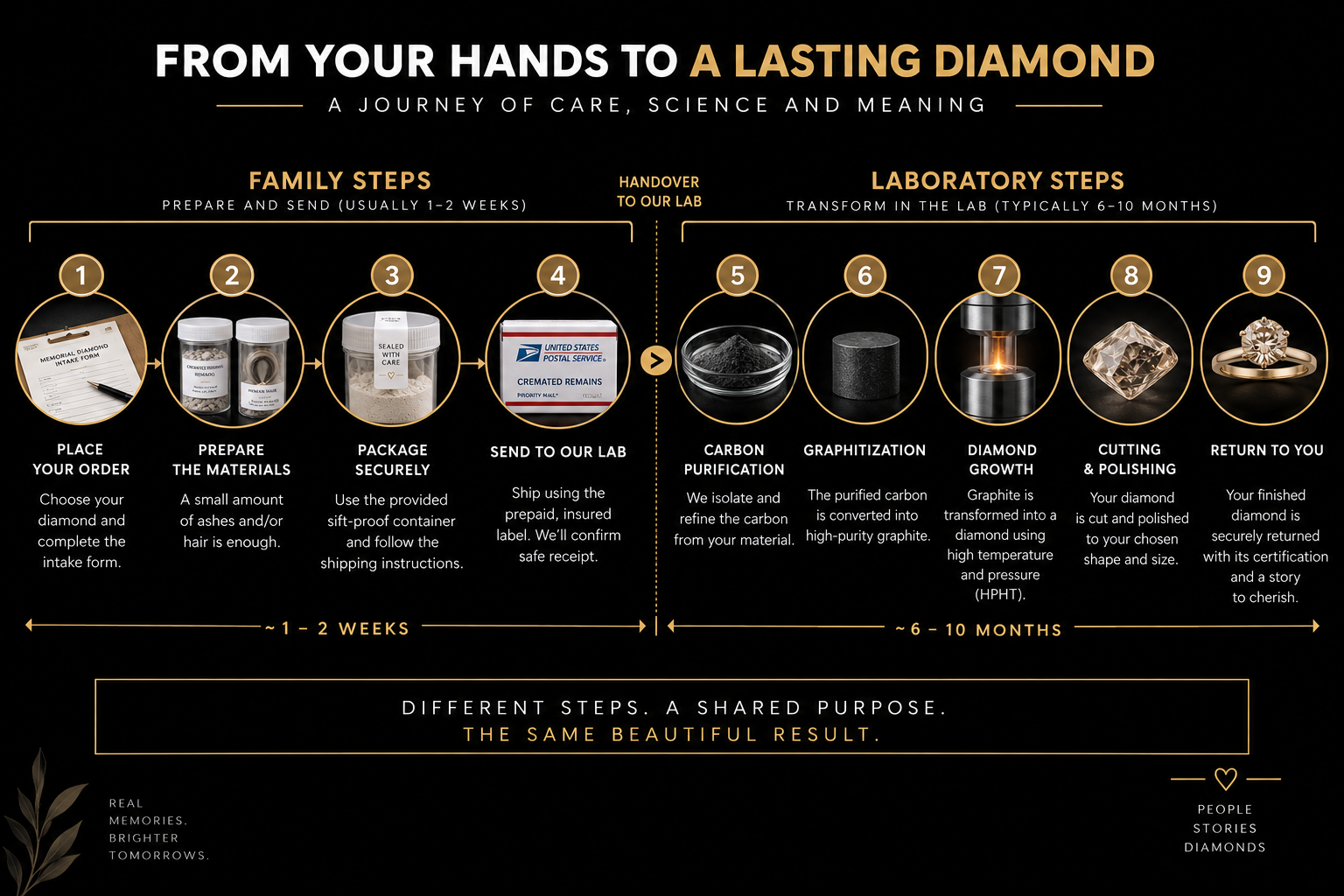
You can think of turning your mother’s ashes into a diamond as a nine-step journey: your family completes four steps, hands over the material, and the laboratory handles the final five steps. Along the way, you reach specific points where your choices become permanent.

Most providers estimate that the laboratory stage takes 6 to 10 months from receipt, though larger stones or specialty colors often require extra time. Importantly, this timeline does not start when you make your initial decision or when you drop the ashes in the mail. It begins only when technicians log receipt of the shipment at the facility.

This guide maps the process in order and highlights where important decisions may remain open or become fixed.

What Is Still Open, and When Does Each Decision Close?

Five major decisions occur at different points in the process.

DecisionGenerally closes aroundWhat happens afterward
Whether to proceedLaboratory receipt/intakeContact the provider immediately if you wish to stop
How much ash to sendWhen the package is sealedAsk about additional material before processing begins
Carat and colourGrowth-cell loadingA change may require a new growth run
Cut shapeCutting stageThe available rough determines what can be cut
SettingNo fixed deadlineA loose diamond can be set or reset later

Important: these decision points are a practical process model rather than universal industry rules. Confirm the exact change and cancellation policies with your chosen provider before sending irreplaceable material.
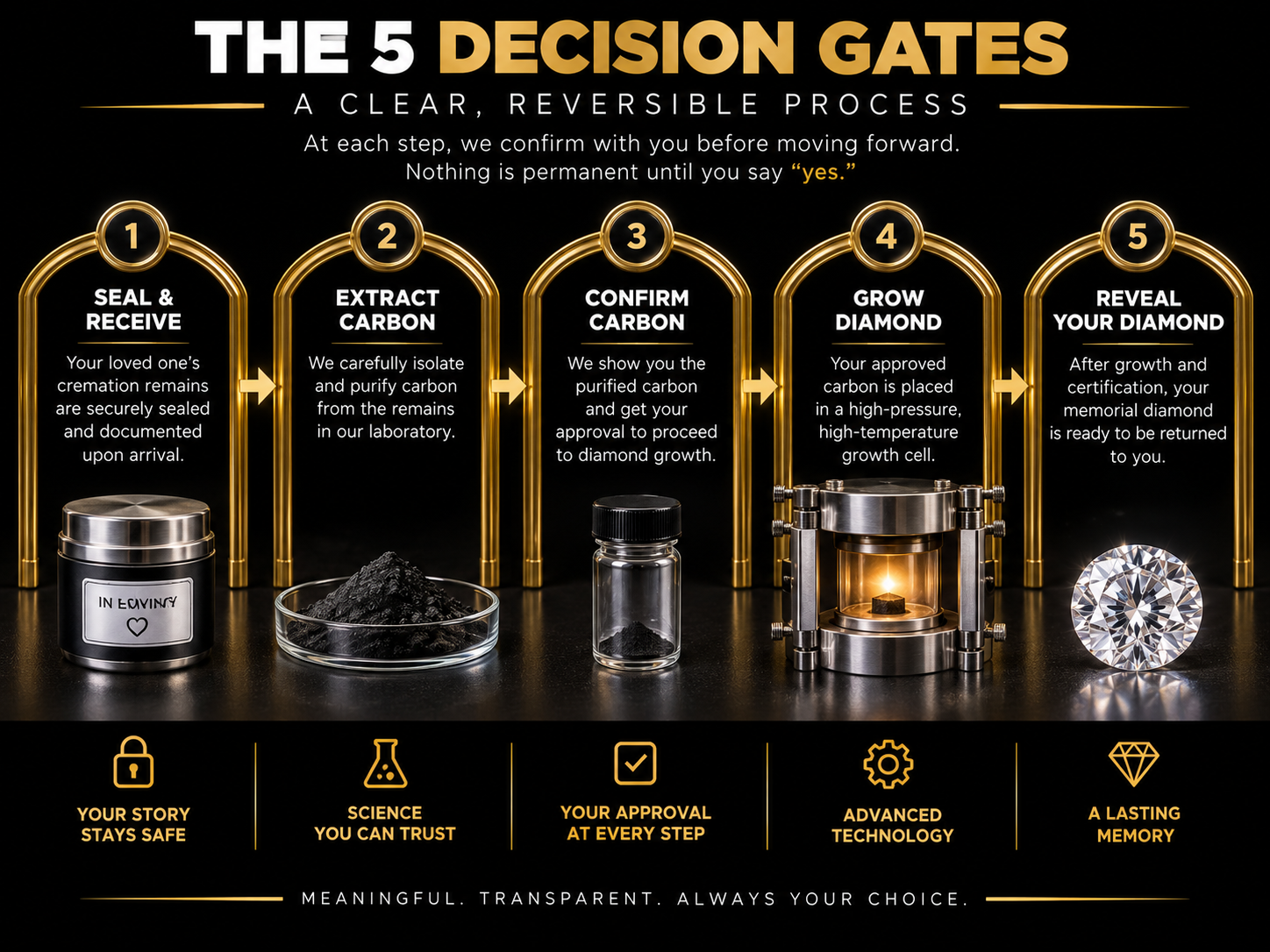
Diagram of five decision gates closing in sequence across the memorial diamond process, from sealing the box to loading the growth cell

What Do You Need Before You Start?

Before beginning, gather the information and materials you will need.

  • Your mother’s ashes and an understanding of approximately how much you have
  • Written information from your provider covering minimum quantity, documentation, returns, and specification-change deadlines
  • The appropriate shipping materials for cremated remains
  • A strong, sealable and sift-proof inner container
  • A plastic bag and cushioning materials
  • A clean, dry spoon if you need to transfer the material
  • Sender and recipient details
  • Cremation documentation if your provider or carrier requires it
  • A safe place to record your tracking number and any provider reference number

If you are shipping within the United States, verify the current USPS requirements before mailing. The source data specifically identifies the USPS Priority Mail Express Cremated Remains box and related packaging requirements, but postal rules can change.

Steps 1–4: What Does Your Family Do?

Step 1 Specify the Stone in Writing

Start by deciding what kind of memorial diamond you want.

Carat size and colour can affect the expected production timeline, so ask your provider about these choices before the process begins.

More importantly, get the practical details in writing.

Ask:

  • How much material is required?
  • What documentation is needed?
  • What happens to unused ashes?
  • What is the cancellation policy?
  • When can carat or colour still be changed?
  • At what point does a specification become final?

A written answer gives your family something concrete to refer back to as the process progresses.

Step 2 Order the Shipping Box and Talk With Your Family

If your provider requires a specific cremated-remains shipping box, arrange it before you need to send the ashes.

This is also a good moment to have the family conversation.

For many families, the decision is not simply about creating a diamond. It is also about how much of your mother’s ashes should remain available for traditional memorial practices such as interment, scattering, or keeping the urn.

Taking that conversation seriously before sending anything can prevent difficult decisions later.

Step 3 Measure the Portion and Seal the Box

Once you know the amount your provider requires, prepare the portion you intend to send.

The important practical point is that sealing the package is a meaningful point of no easy return for the portion you have chosen.

Before sealing:

  1. Confirm the quantity against your provider’s written requirement.
  2. Make sure the inner container is properly sealed.
  3. Check that the packaging meets the applicable shipping rules.
  4. Confirm that you have retained the remaining ashes safely.
  5. Record the contents and tracking information.

Do not rely on a generic quantity from another provider. Use the actual requirement supplied by your chosen provider.
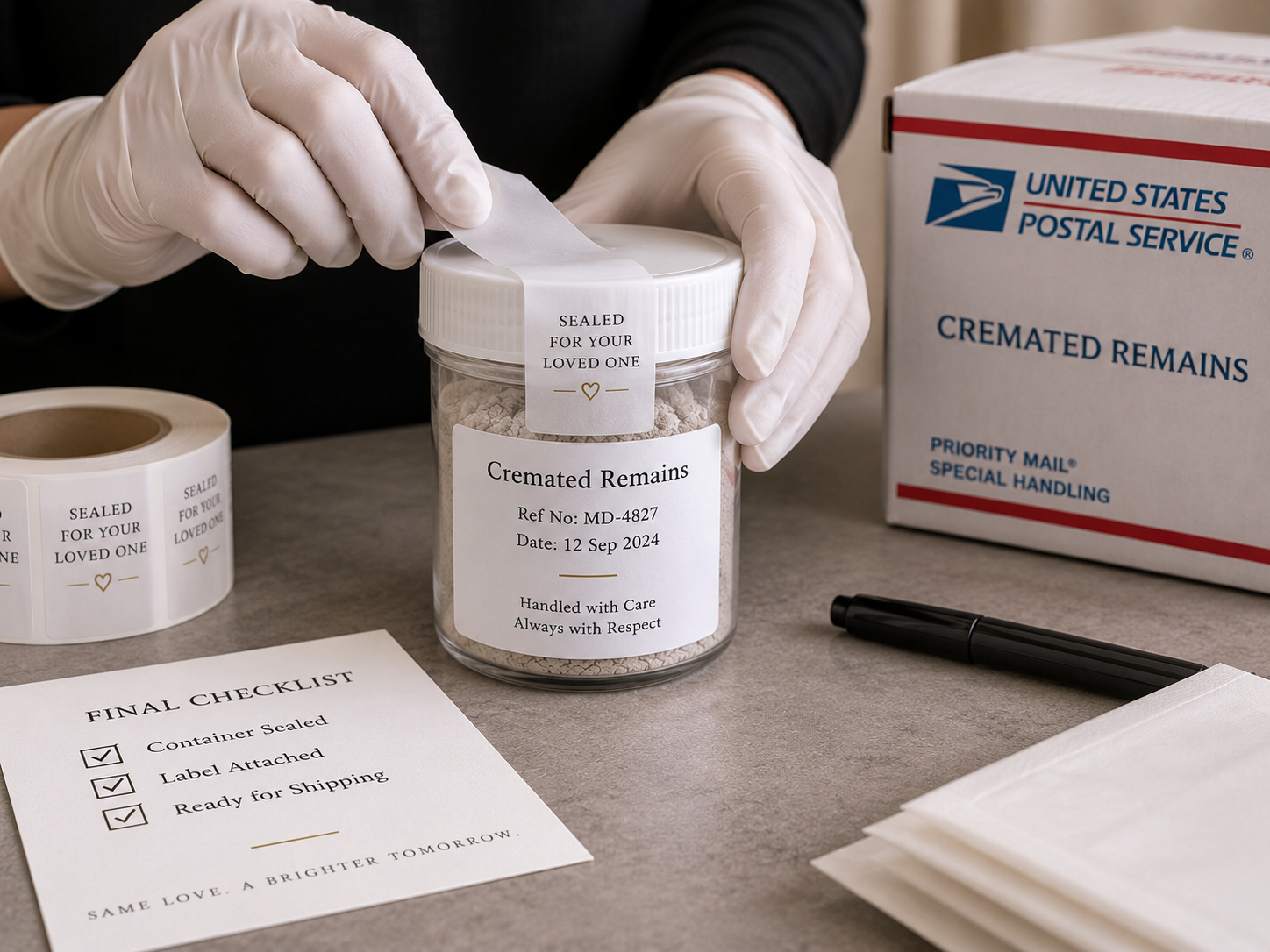
Sift-proof inner container being sealed on a clean table beside the official USPS Cremated Remains box

Step 4 Ship the Ashes and Notify the Provider

Once the package is ready, ship it using a carrier and service that currently permits the shipment.

For U.S. families shipping cremated remains directly, the source identifies USPS Priority Mail Express and the official Cremated Remains packaging as the relevant domestic route. Carrier restrictions should always be checked immediately before shipping because policies can change.

Notify your provider that the package is on its way.

Keep:

  • Tracking information
  • Shipping confirmation
  • The provider’s order information
  • Any chain-of-custody or reference number supplied after receipt

Step 4 Is the Handover and the Main Production Clock Has Not Started Yet

This is the point at which your mother’s ashes leave your hands.

One of the most important distinctions in the process is shipping time versus laboratory production time.

The commonly stated 6–10 month production window begins with laboratory receipt/intake, rather than with the day you first contact a provider or the day you mail the package.

That means your total calendar time can include:

Your preparation → packaging → shipping → laboratory intake → production → cutting and grading → delivery

The source specifically identifies the 6–10 month figure as an industry-typical production timeline rather than a confirmed turnaround for a specific provider.

Steps 5–9: What Does the Laboratory Do?

Step 5 Intake and Reference Number

After the material reaches the laboratory, it enters the provider’s intake process.

Ask whether the provider gives you a reference or chain-of-custody number that you can use when requesting updates.

This can make communication much easier during a process that may last many months.

At this point, confirm:

  • The material has arrived
  • Receipt has been recorded
  • Your order/reference number is correct
  • The provider can tell you how to request status updates

Step 6 Extraction, Purification and Graphitization

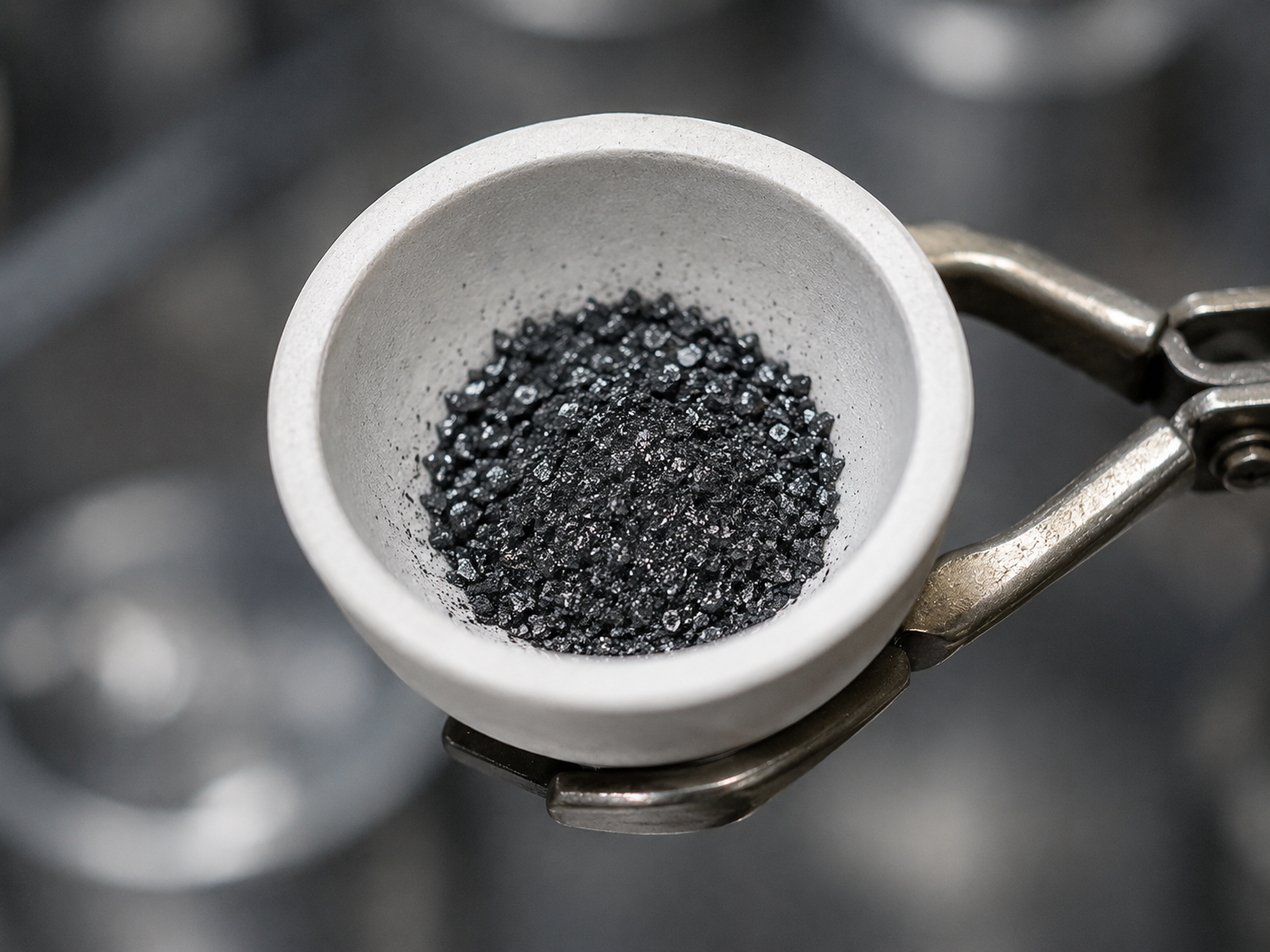
The supplied process description explains that the carbon-containing material undergoes processing to remove minerals and isolate carbon before graphitization.

The source describes purification to approximately 99.9%+ carbon purity, followed by conversion into graphite.

This stage is particularly important because it represents a transition from the original cremated material into material prepared for diamond growth.

Because the physical process is irreversible, confirm the provider’s policy regarding the return of unused material and the point at which cancellation is no longer possible.

Step 7 Diamond Growth

The graphite is prepared for diamond growth and placed into a growth system together with a diamond seed and additional laboratory carbon where required.

The supplied data describes HPHT growth conditions in the range of approximately 6–8 GPa and 1,400–2,500°C, with growth taking weeks to months depending on the desired stone.

This is also where carat and colour become especially important.

A larger stone generally requires a different growth run rather than simply becoming an upgrade to an already-grown stone. Therefore, if you are considering changing the size or colour, ask your provider before the growth cell is loaded.

The source also notes that personal carbon is typically only a portion of the final diamond’s mass, approximately 10–15%, rather than the finished diamond being composed entirely of the person’s original carbon.
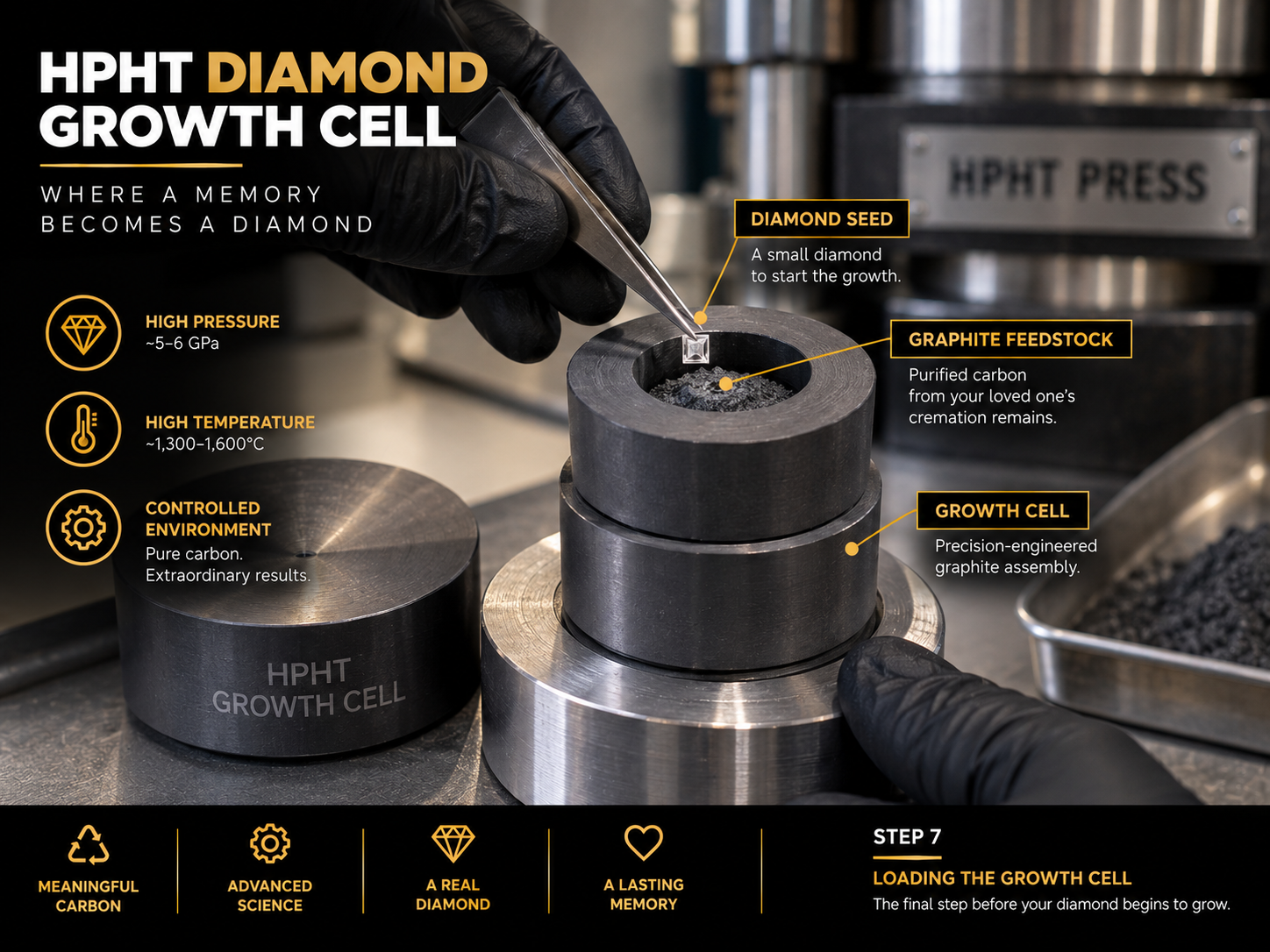
HPHT press growth cell being loaded with graphite feedstock and a diamond seed in a laborator

Step 8 Cutting, Grading and What Comes Back

After growth, the rough diamond is cut and polished into the selected shape.

This means the final shape depends partly on what the rough stone can produce.

The source places grading and documentation after cutting and also identifies the return of unused ashes as an important point to clarify with the provider.

Before the stone is finalized, ask:

  • What cut shapes are available?
  • Who performs the grading?
  • Is the grading independent?
  • What certificate or documentation accompanies the diamond?
  • What happens to unused material?

Do not assume a particular grading laboratory or return policy unless your provider confirms it.

Step 9 Delivery and the Decision That Never Has to Be Rushed

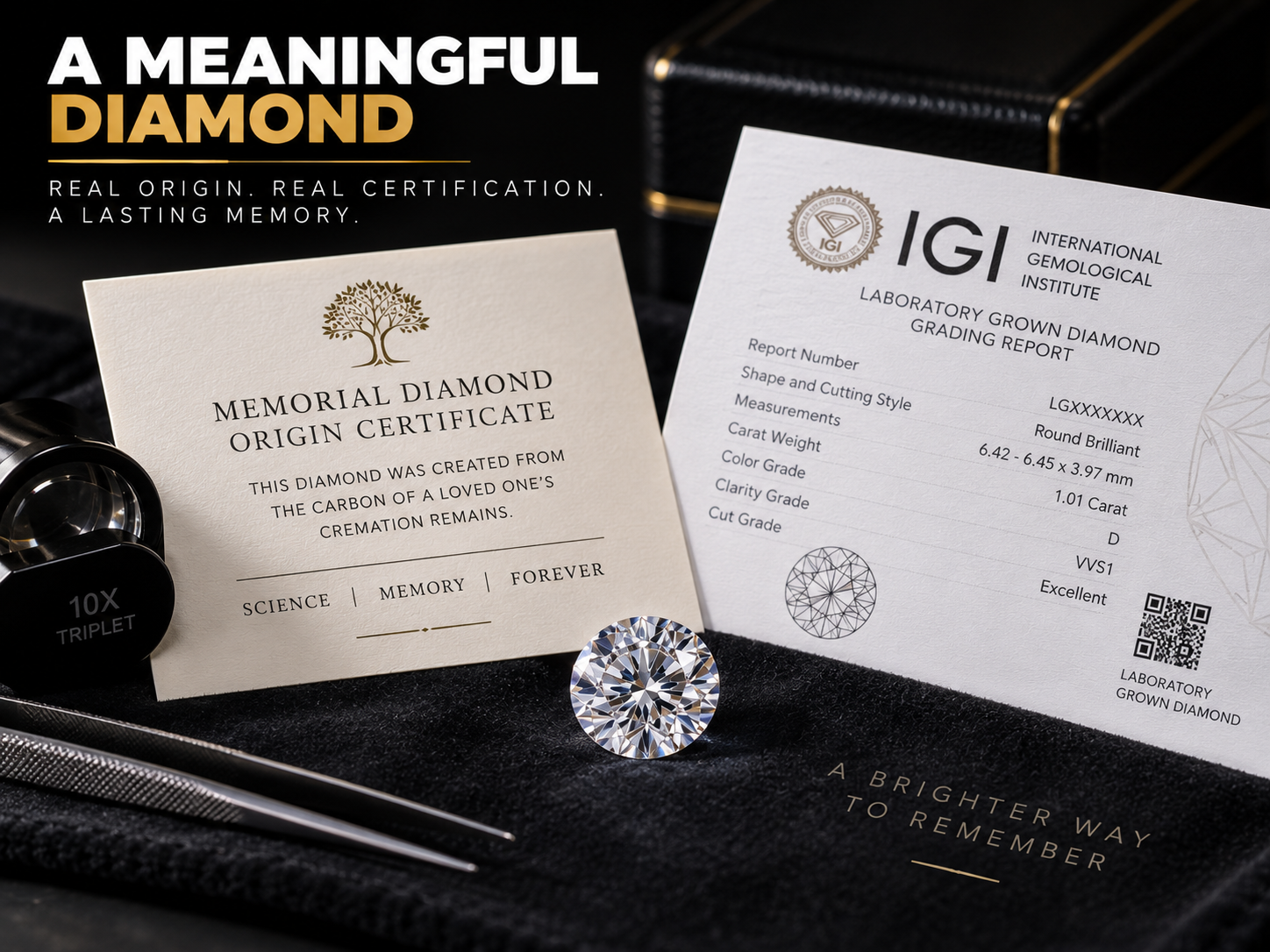
When the diamond is delivered, it may arrive as a loose stone.

A loose diamond is not automatically a finished piece of jewelry. You can decide whether you want to place it into a ring, pendant, bracelet or another setting.

Unlike many earlier decisions, the setting does not have to be made immediately.

You can leave the diamond loose while you consider what kind of memorial jewelry feels right, and a stone can potentially be reset in the future.1
How Long Does Each Step Take?

The following is a practical planning framework rather than a guaranteed provider schedule.

StepWhoTypical planning timeframeImportant point
1. Specify and confirmFamilyA few daysNothing should be treated as final yet
2. Order materials and discuss with familyFamilySeveral business daysFamily decision
3. Measure and sealFamilyShort preparation taskQuantity becomes harder to change
4. ShipFamily → providerDepends on carrierHandover
5. IntakeLaboratoryProvider-dependentProduction clock begins
6. Extraction and graphitizationLaboratoryWeeksProcessing stage
7. Diamond growthLaboratoryWeeks to monthsLongest production stage
8. Cutting and gradingLaboratoryProvider-dependentFinal stone takes shape
9. Delivery and settingProvider → familyProvider-dependentSetting can be decided later
Steps 5–9LaboratoryTypically 6–10 monthsLonger timelines may apply to larger or specialty stones
Horizontal timeline graphic showing four family steps, a handover marker at step four, and five laboratory steps across six to ten months


The source explicitly cautions that the individual durations in this table are estimates derived from the overall production timeline, not confirmed provider figures.

Which Step Are You On Right Now?

You can use the physical evidence you have to understand approximately where you may be in the sequence:

You only have an email conversation:
You are likely still in the planning stage. Nothing needs to have closed yet.

You have a sealed package waiting to be shipped:
Your selected portion has been prepared. Review everything one last time before sending.

Tracking says the package was delivered, but you have no provider confirmation:
Contact the provider and ask whether the material has been received and logged.

You have a receipt or reference number:
The laboratory intake stage has begun or is underway. Ask what stage the material has reached.

You have been told diamond growth has started:
Carat and colour changes may no longer be practical. Ask the provider before requesting any change.

You have received the finished diamond:
The production process is complete. Your remaining major decision is how, or whether, you want to set the stone.

Frequently Asked Questions

Does the six-to-ten-month timeline include the time I spend preparing and shipping the ashes?

Usually, the stated production timeline refers to the laboratory process beginning with receipt or intake. Preparation, obtaining packaging, family discussions and shipping can add additional time before production begins. Confirm the exact start point with your provider.

Can I still change the carat size after I have shipped my mother’s ashes?

Possibly, depending on the provider and the production stage. Ask as early as possible and provide your order or reference number. Once a growth run has begun, changing the requested size may require a new production run.

I think I sent too little ash. Can I send more?

Do not assume that additional material will automatically be accepted. Ask your provider whether a supplementary shipment can be associated with the same order and exactly when additional material stops being usable.

How do I find out which stage my mother’s diamond is at?

Ask your provider for the current status using your order or chain-of-custody reference number. A provider should be able to explain which broad stage the order has reached and what remains.

Can my funeral home help ship my mother’s ashes?

A funeral professional may be able to help arrange transportation, but the exact options depend on the carrier, account and applicable rules. Ask your funeral director what they can arrange and confirm the carrier’s current requirements.

Nothing on This List Closes Today

If you are still deciding whether a memorial diamond is right for your family, your next step does not have to be a commitment.

Start by asking your chosen provider:

  • How much material do you require?
  • What documentation do you need?
  • What happens to unused ashes?
  • When can I still change the carat or colour?
  • What is your cancellation policy?
  • How will I track the order?

The most important thing is to understand where the irreversible points are before you reach them.

A memorial diamond is a deeply personal decision. Taking the time to understand the sequence, ask questions and confirm policies in writing can help your family make the decision with greater clarity.
mother dimond

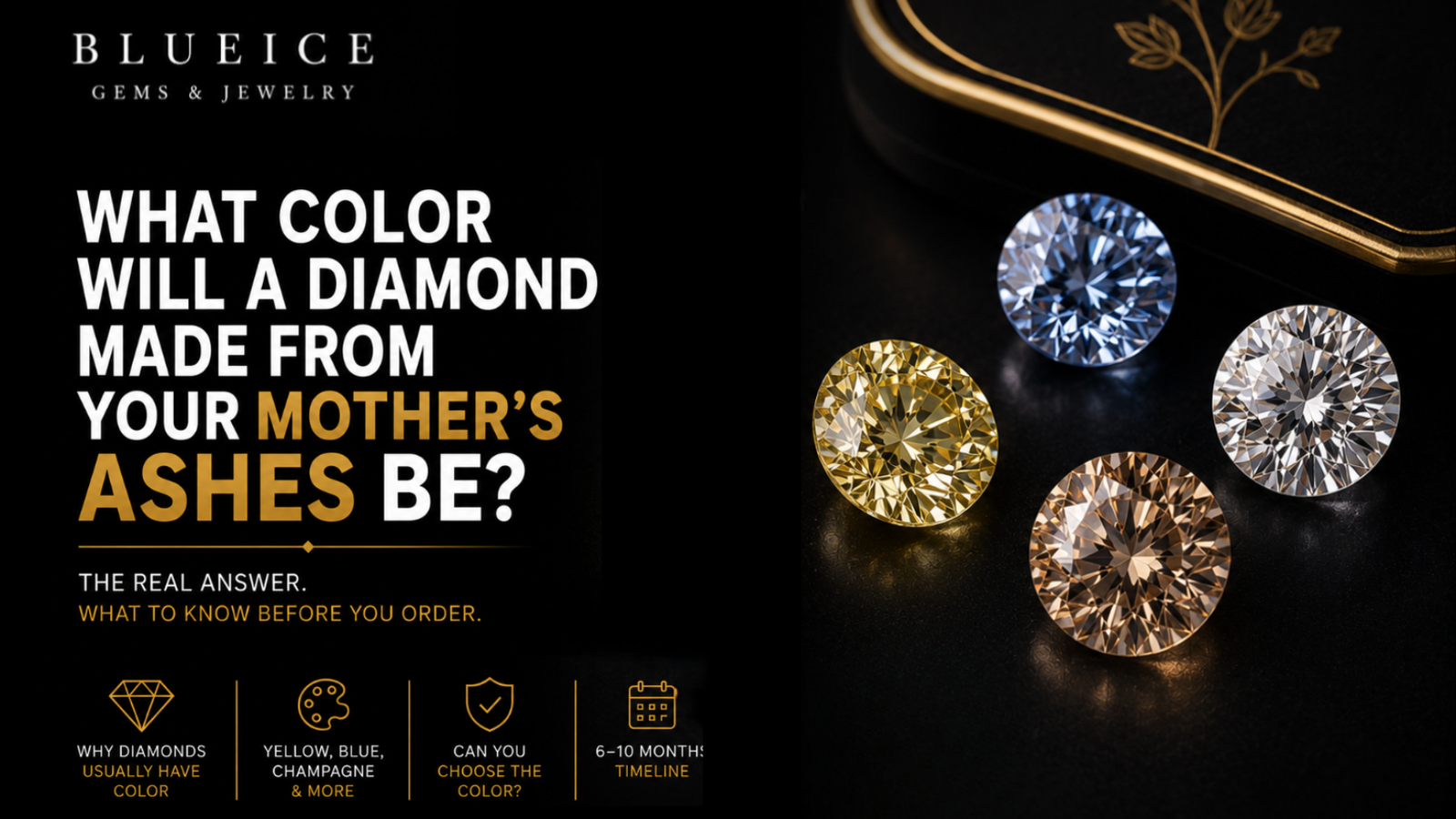
What Color Will a Diamond Made From Your Mother’s Ashes Be?

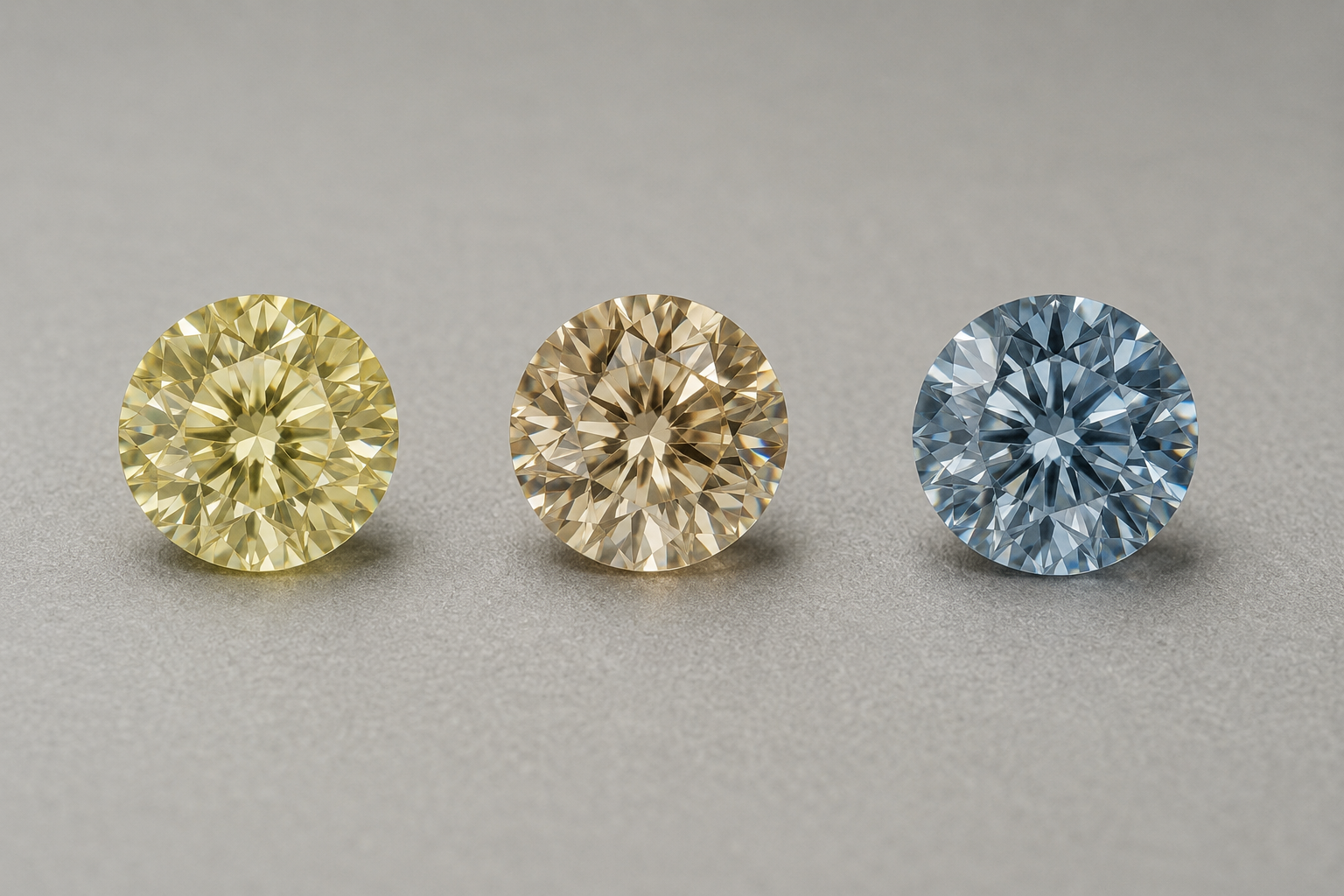
Three loose memorial diamonds grown from cremated ashes in yellow, champagne, and blue tones side by side on a neutral gray surface

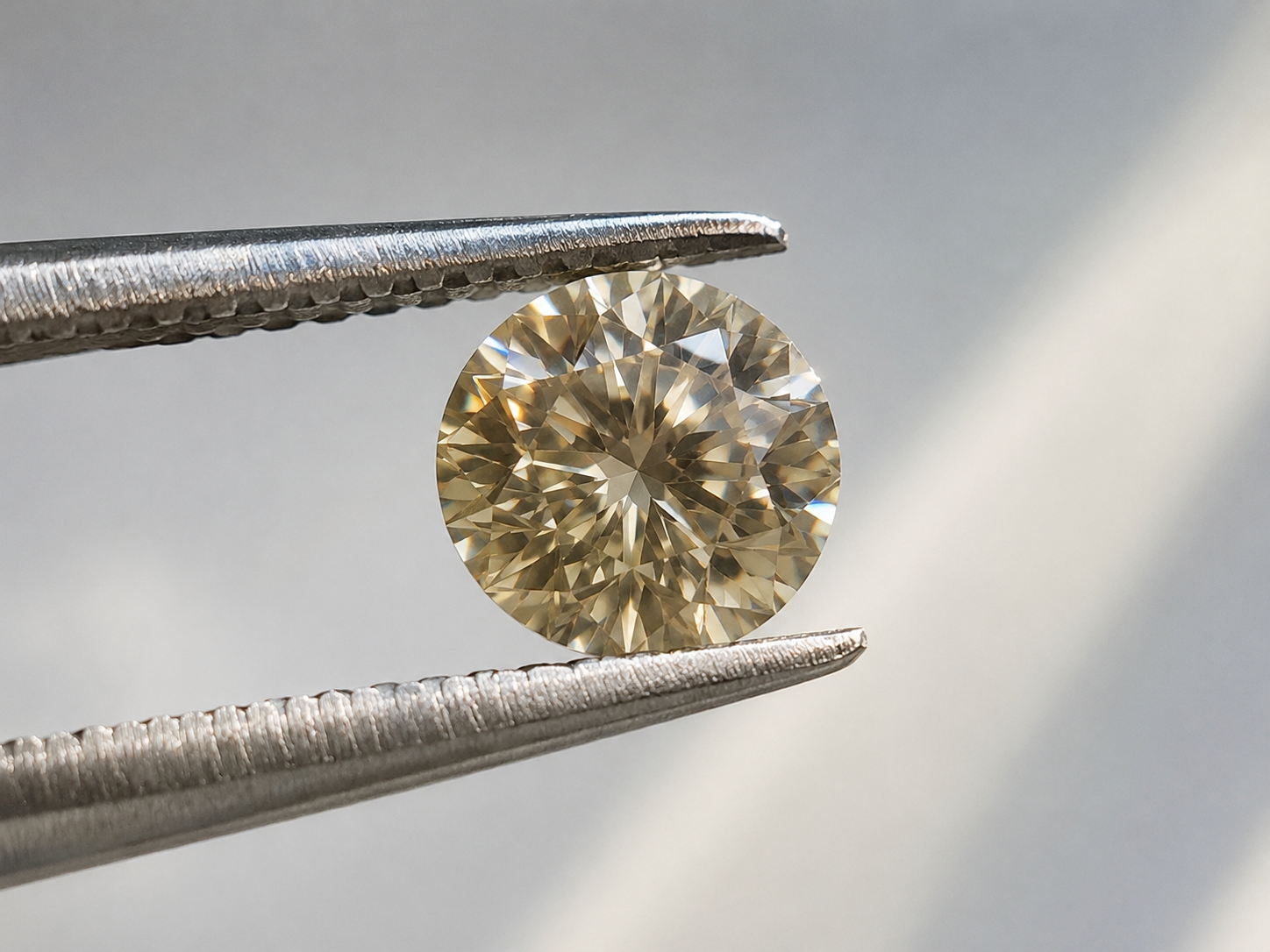
A diamond grown from your mother’s cremated ashes will most likely have color in it yellow, champagne, or blue rather than white. Colorless is achievable, but it takes additional processing and costs more. Better to know that now than in month eight, standing at a kitchen table with the box open.

A tinted stone is not a defect, a downgrade, or a mistake. It is what happens when part of the feedstock is a person instead of a barrel of industrial graphite and unlike most of what makes a memorial diamond meaningful, that part is visible.

Why Won’t the Diamond Be Clear?

Purified carbon extracted from cremated remains in a laboratory crucible before graphitization

Diamond color is not a coating or a setting choice. It comes from trace elements caught in the crystal lattice while the stone is growing. Boron produces blue tones. Nitrogen produces yellow tones. A colorless diamond requires the near-total absence of both.

Manufacturers produce synthetic industrial feedstock to contain almost pure carbon, which allows standard lab-grown diamonds to emerge completely colorless. In contrast, cremated remains present the opposite reality. Calcium phosphate—the mineral structure of bone—dominates cremated remains, leaving usable carbon at only about 0.5% to 4% of total ash by weight. Technicians extract that small carbon fraction from the mineral-heavy matrix and purify it to roughly 99.9%+ purity.

This purification process achieves exceptional results, though it never achieves absolute purity by design. At 99.9%+ purity, microscopic trace elements remain, and this residue can directly influence the diamond’s final color. Furthermore, the carbon endures intense conditions during cremation: the high heat of the retort, the holding container, and any surrounding elements. As a result, carbon extracted from ashes carries a unique trace-element signature that standard synthetic feedstock lacks.

Many articles on this topic overlook a crucial fact: her carbon does not fill the growth press alone. Technicians blend her extracted carbon with supplemental lab-grade carbon to achieve the volume the press requires. Consequently, her personal carbon typically accounts for roughly 10% to 15% of the finished diamond’s total mass. The accurate reality does not pit pure ash feedstock against synthetic carbon; instead, controlled synthetic carbon forms most of the gemstone, while her carbon acts as a meaningful minority partner.

The color can still move. Trace elements present during growth can influence the appearance of the crystal, which is why memorial diamonds can trend toward yellow, blue, and champagne or brown tones. The tint is not evidence that the stone is entirely her. It is evidence that personal carbon contributed to the growth process.

For a deeper explanation, see why memorial diamonds are rarely colorless and what the lab does with her ashes.

What Colors Are Actually Possible From Her Ashes?

Close-up of a champagne-toned lab-grown memorial diamond held in tweezers under daylight

These are industry-typical outcomes and industry-typical cost relationships, not a fixed price list or a promise about a specific stone.

ColorWhat Causes ItWhat an Ash-Derived Source MeansCost Note
YellowNitrogen present during growthA common memorial-diamond color associated with nitrogen during growthGenerally sits toward the lower end for a given carat
Champagne / BrownSeveral trace elements acting togetherCan result from the combination of trace elements present during growthGenerally comparable with yellow at matching carat
BlueBoron present during growthBlue is generally a targeted color rather than something reliably supplied by one person’s ashesTypically below colorless at the same carat
Colorless / WhiteNear-complete absence of boron and nitrogenThe most demanding outcome because the source must undergo additional processingTypically carries a significant premium
Red, Pink, Green, BlackPost-growth treatment such as irradiationColor is applied after the crystal has already been grownUsually treated as an additional option

For scale on the underlying numbers, entry-tier memorial diamonds of roughly 0.10–0.25 ct run about $1,500–$3,500 industry-wide, while 0.5–1 ct stones can run roughly $5,000–$15,000. Color is only one of several factors affecting the final cost.

See what actually drives memorial diamond cost for the other major price factors.

Can You Choose the Color, or Do Her Ashes Decide?

Both, but in different ways.

You choose the target. Providers can offer color as an option at order time, with the process directed toward the selected result.

Her ashes influence the result. The trace-element profile of carbon recovered from cremated remains can vary, meaning the exact shade can have some natural variability. A provider can aim for a color, but the source material still matters.

Colorless is the outcome where the material presents the greatest challenge because it requires additional processing to reduce the elements associated with coloration. Irradiated colors such as red, pink, green, or black are different because the color is introduced after growth.

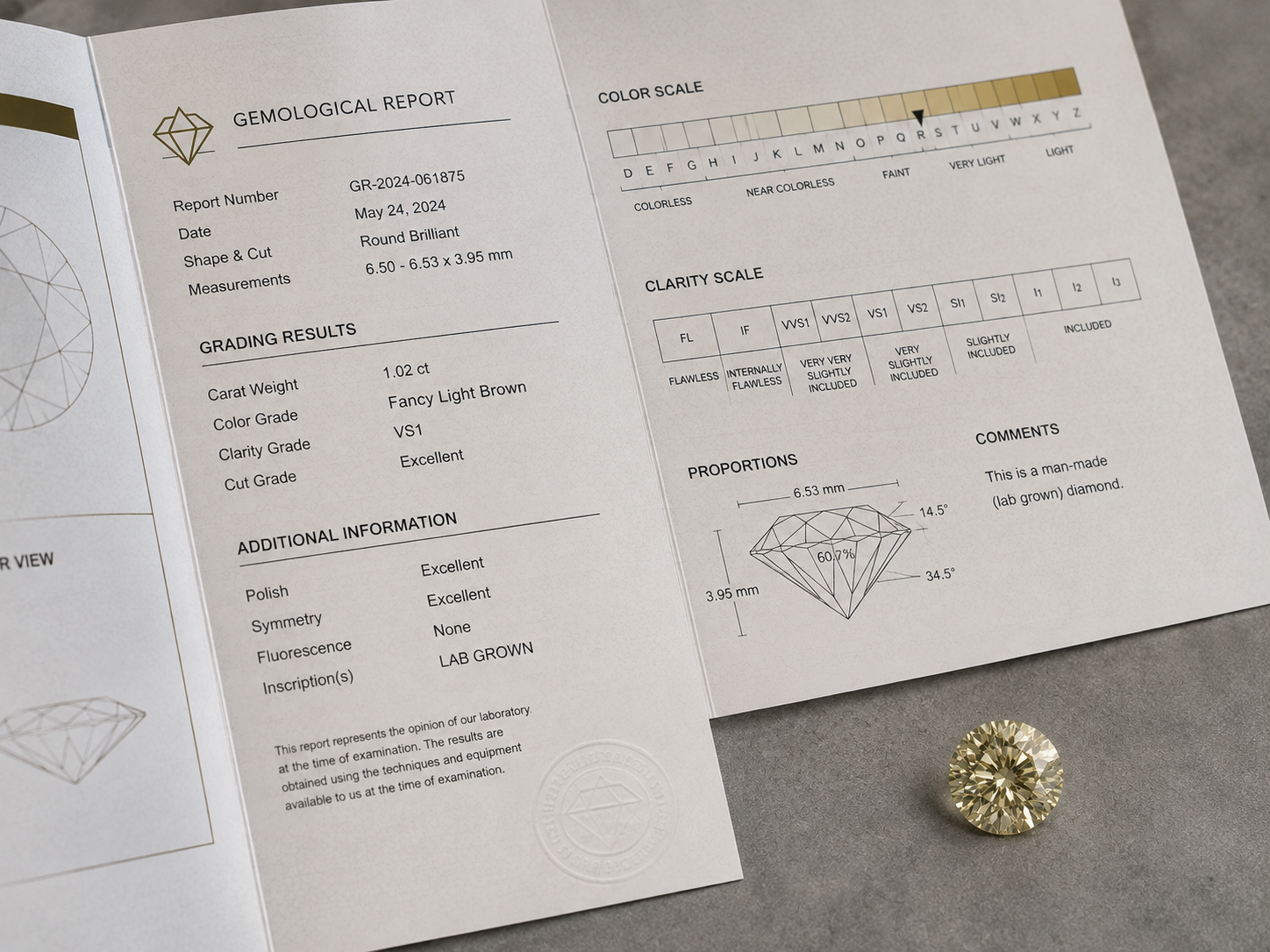
An independent diamond grading report open to the color grade section beside a loose memorial diamon

Does the Color Mean Anything About Your Mother?

Not in the way it is sometimes marketed. The shade does not encode her personality, eye color, health, or character. Anyone selling you that interpretation is attaching symbolism to something that cannot establish it.

What is true is narrower and, honestly, better. The tint exists because personal carbon contributed to the growth process rather than the stone being produced entirely from controlled industrial carbon. That is a physical fact, not a symbolic one.

None of this requires committing all of her ashes. Only a small fraction is used, so burial, scattering, or keeping an urn can remain open alongside the diamond.

Which Questions Should You Ask About Color Before Ordering?

Color is the part of an order most easily left vague at the start and most obvious on delivery. These five questions help close that gap while it is still possible to make an informed choice.

  1. What color range does my order actually commit me to? Ask whether you are buying a named color or a color family, and what variation within it is considered normal.
  2. What happens if the finished stone falls outside that range? Ask what the provider’s process is before you need it whether that means a re-grow, adjustment, or another remedy.
  3. Is the color from growth or from irradiation? Both are legitimate approaches, but they produce different products and should be explained clearly.
  4. What does colorless cost at my carat size, and what does it add to the timeline? Ask for the comparison against yellow or blue at the same size, preferably in writing.
  5. What color will the grading report list? An independent grading report can document the diamond’s characteristics. See how memorial diamonds are graded and certified.

Frequently Asked Questions

Will the diamond be gray because ashes are gray?

No. The visible color of cremated remains has no bearing on the finished stone. Ash color comes largely from mineral content that is removed during purification. Diamond color comes from trace elements present during crystal growth, which is a separate stage.

Can I get a truly colorless diamond from my mother’s ashes?

Yes, but it is the hardest outcome to produce. It requires additional processing to reduce the elements associated with coloration, and it typically costs more than a yellow, champagne, or blue stone of the same carat weight.

Does submitting more ashes change the color?

No. Material quantity does not directly determine color, and it does not determine size either. Carat is primarily a function of growth time in the press. As a general industry guide, requirements can range from a few tablespoons to roughly 4 oz, but individual providers set their own requirements.

Will the color fade or change over the years?

No. The color is structural, existing within the crystal rather than sitting on the surface. Diamond is also a 10 on the Mohs hardness scale. Ordinary wear, cleaning, and sunlight do not simply remove a structural color.

Can two diamonds from the same ashes come out different colors?

Yes, separate growth runs can produce variation. Families ordering multiple stones from one shared source should ask the provider how closely matching colors can be expected if consistency between stones matters.

Is a colored memorial diamond worth less than a colorless one?

Production cost and personal value are different questions. A colored memorial diamond may cost less to produce than a colorless one, but that does not make it less meaningful. In this category, the color can simply be part of the physical result of the growth process.

Before You Choose a Color

One practical suggestion before anything else: stop reading color words and go look at stones. “Champagne” on an order form and a champagne diamond turning under a lamp are not the same experience, and a color ruled out on paper has often never been seen in person.

When you want the specifics rather than the general case, reach out to Memorial Diamond at memorialdiamond.us to talk through what color is realistic for your mother’s ashes, what colorless would actually involve, and to put the five questions above to a person rather than a page.

The same question about her hair has a different answer, while sending both ashes and hair changes the discussion again. You can also explore the wider range of colors families choose for a mother and the complete guide to a mother ashes diamond.

asses to dimond

How a Memorial Diamond Is Made From Your Mother’s Ashes

You measure out a portion of your mother’s ashes, hand it over, and months later a finished diamond comes back. What happens in between is where most families’ understanding stops.

Her cremated remains go through a process designed to recover usable carbon. The carbon is purified, prepared for diamond growth, combined with supplemental laboratory carbon when required, and grown into a genuine diamond crystal under extremely high pressure and heat.

Industrial chemistry, not alchemy and every stage is part of the journey from ashes to a finished memorial diamond.

 Rough diamond crystal grown from ash-derived carbon resting beside a finished champagne-toned cut stone

In This Article

What Are Your Mother’s Ashes Actually Made Of?

Understanding what cremated remains contain explains why creating a memorial diamond involves several different stages.

Cremated remains are not ash in the same sense as the material left behind by an ordinary fire. They consist largely of mineral material associated with bone, including calcium phosphate. Carbon is only a relatively small portion of the material.

That means the first challenge is not immediately growing a diamond. The laboratory must first recover usable carbon from the cremated remains and prepare it for the later stages of the process.

Because the amount of recoverable carbon can vary, the amount of ashes submitted is not directly equal to the final size of the diamond.

Learn more about how much ash may be needed for a mother memorial diamond.

What Are the Stages From Ash to Finished Diamond?

StageWhat Happens
1. Material IntakeThe cremated remains enter the preparation and processing stage.
2. Carbon Extraction and PurificationThe material is processed to separate usable carbon from minerals and other non-carbon material.
3. GraphitizationThe recovered carbon is prepared in a form suitable for diamond growth.
4. Carbon PreparationPersonal carbon may be combined with supplemental laboratory carbon when additional feedstock is required.
5. Diamond GrowthThe prepared carbon is placed into a controlled high-pressure and high-temperature growth environment.
6. Cutting and PolishingThe rough crystal is shaped and polished into the selected diamond cut.
7. Grading and DocumentationThe finished diamond can be evaluated according to cut, color, clarity and carat.

How Is Her Carbon Separated From the Rest of the Ash?

The purpose of the purification stage is to recover carbon while separating it from the much larger amount of mineral material contained in cremated remains.

The material goes through controlled processing designed to remove non-carbon components and leave behind purified carbon suitable for the next stages.

After purification, the laboratory can further prepare the carbon through graphitization. This process converts the purified carbon into graphite, another form of the same element.

The laboratory can then use this graphite as part of the carbon feedstock for the diamond-growing process.

Graphite and diamond are both forms of carbon. The difference is how the carbon atoms are arranged. The diamond growth process creates the crystal structure that gives diamond its distinctive physical and optical properties.

Why Is Laboratory Carbon Added to Your Mother’s Carbon?

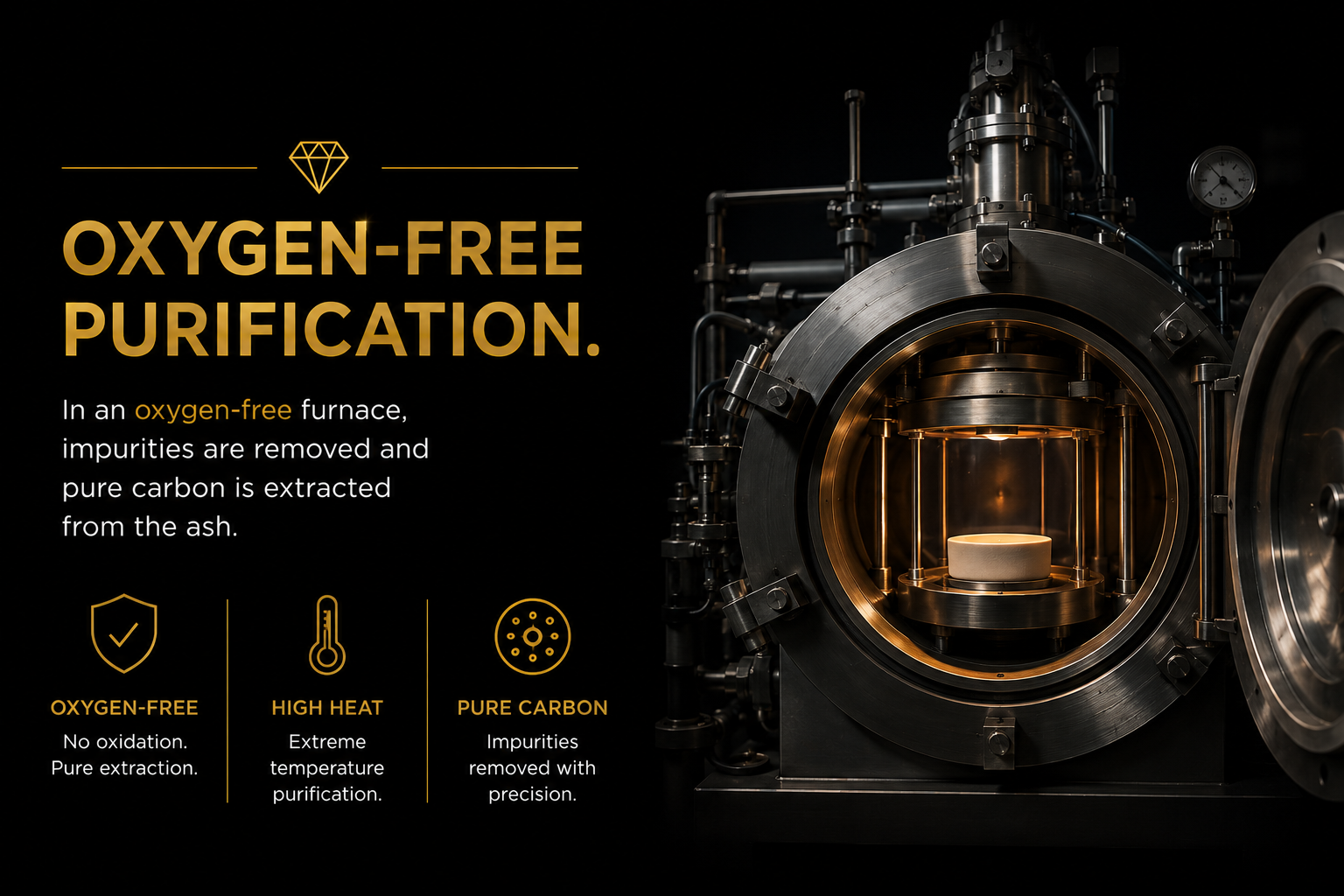
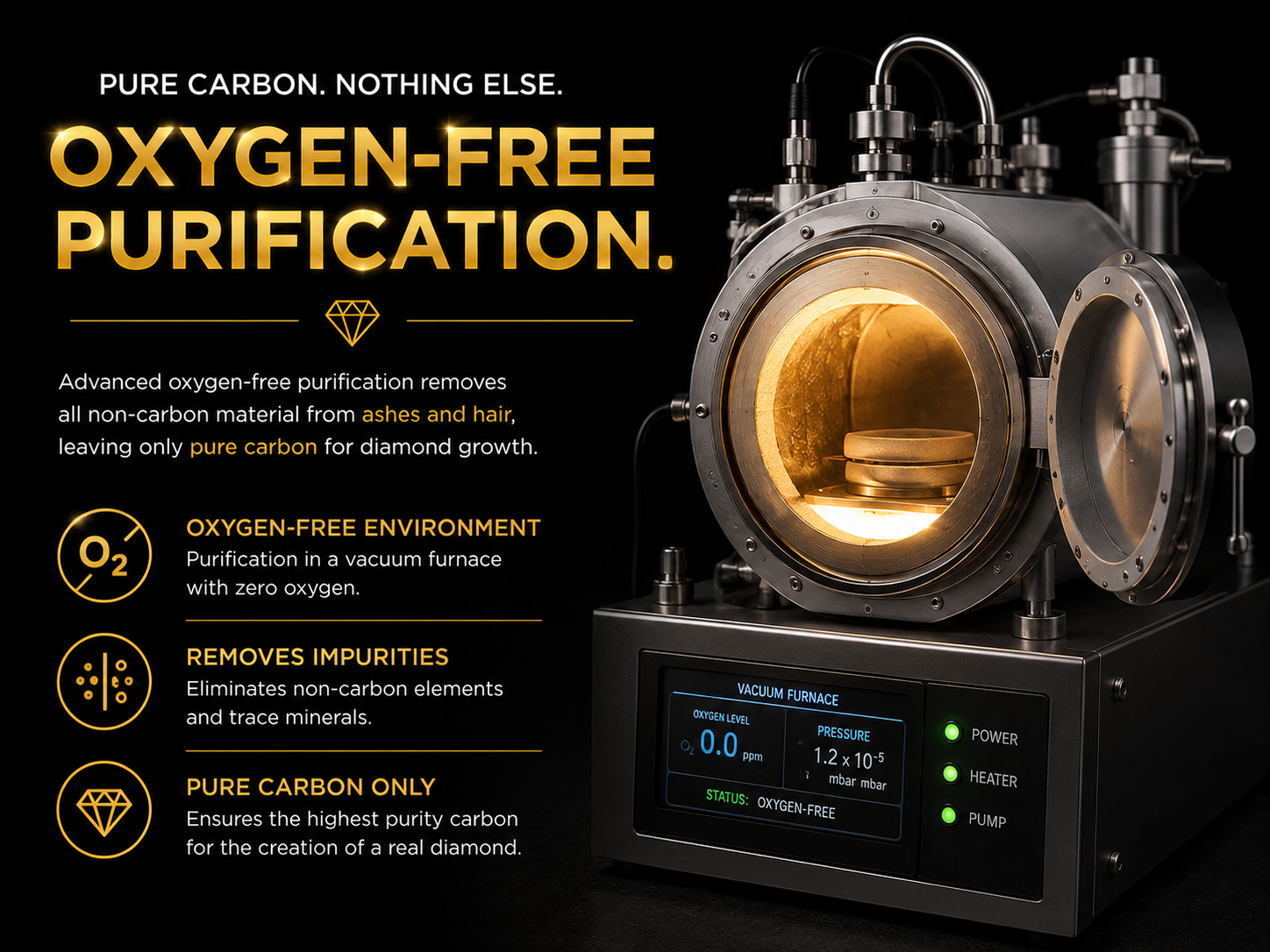
 Sealed high-temperature furnace used to purify carbon extracted from cremated remains in an oxygen-free process

This is one of the most important parts of understanding how a memorial diamond is made.

Cremated remains contain only a limited amount of recoverable carbon. Depending on the selected diamond and the requirements of the growth process, the personal carbon may not provide all the feedstock needed to grow the finished crystal.

Therefore, the laboratory may combine supplemental carbon with the carbon recovered from your mother’s ashes.

However, that does not mean the personal carbon disappears. Carbon recovered from your mother’s remains can still become part of the diamond’s crystal structure. The laboratory creates the finished stone using both the recovered personal carbon and additional laboratory carbon when necessary.

For this reason, no provider should claim that a memorial diamond contains only personal carbon when the process also uses supplemental carbon.

Read the direct answer to whether a memorial diamond is really made from your mother’s ashes.

What Happens Inside the Growth Process?

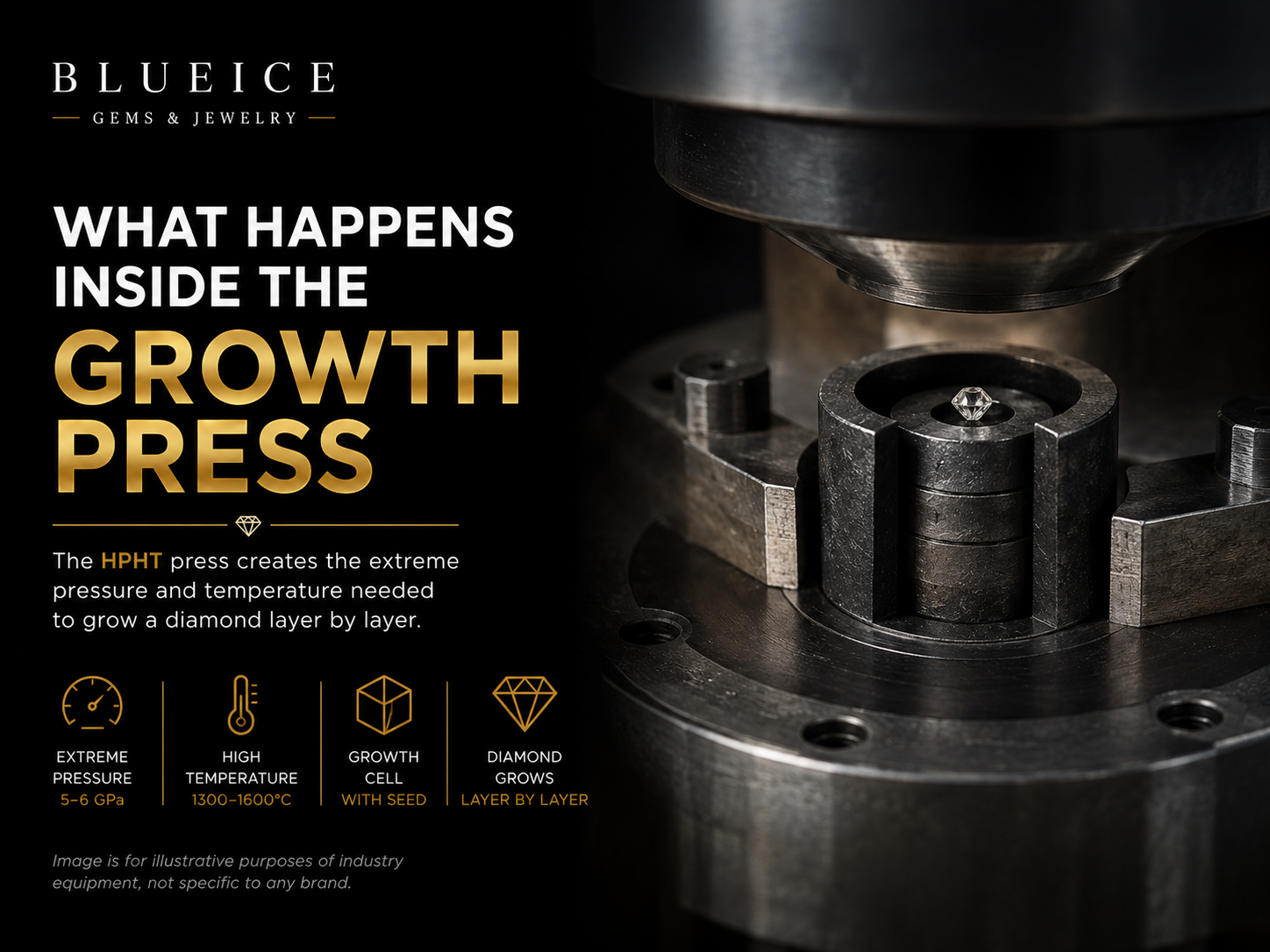
High pressure high temperature press with the growth cell that holds a diamond seed during crystal growth

After the carbon has been prepared, the next stage is diamond growth.

One common method used in the laboratory-grown diamond industry is HPHT, meaning high pressure and high temperature. The process recreates conditions capable of allowing carbon to form a diamond crystal.

A small diamond seed can act as the starting point for crystal growth. Under controlled conditions, carbon becomes part of the growing crystal structure over time.

The growth process can take weeks or months depending on the characteristics and size of the diamond being created.

Another laboratory diamond-growing method is CVD, or chemical vapor deposition. Both HPHT and CVD can produce genuine diamonds, although the processes are different.

Learn more about how memorial diamonds are made using HPHT versus CVD.

Why Does Growth Time, Not the Amount of Ash, Decide the Carat?

One common misconception is that sending more ashes automatically creates a larger diamond.

That is not how the process works.

  • More ashes do not automatically create a bigger diamond.
  • More ashes do not automatically make the process faster.
  • The desired diamond size is determined before the growth process.
  • Larger diamonds generally require more time for crystal growth.

Only a portion of cremated remains may be required for the memorial diamond process, allowing the rest of the ashes to remain with the family or be used according to their wishes.

Learn why a mother memorial diamond can take months to create.

Why Is the Finished Diamond Usually Not Colorless?

 Three memorial diamonds in blue, yellow, and champagne tones arranged on a pale gray surface to show typical color range

Diamond color can be influenced by trace elements and conditions present during crystal growth.

For example, certain trace elements can contribute to blue or yellow coloration. The specific characteristics of the carbon source and the growth environment can influence the final appearance of the diamond.

Memorial diamonds may appear in colors including yellow, blue, champagne or brown tones. Each diamond can have its own appearance, and an exact color cannot always be predicted in advance.

The color is part of the character of the finished stone and can make each memorial diamond feel unique.

Discover what color a diamond made from your mother’s ashes may be.

How Is the Finished Stone Cut, Graded and Certified?

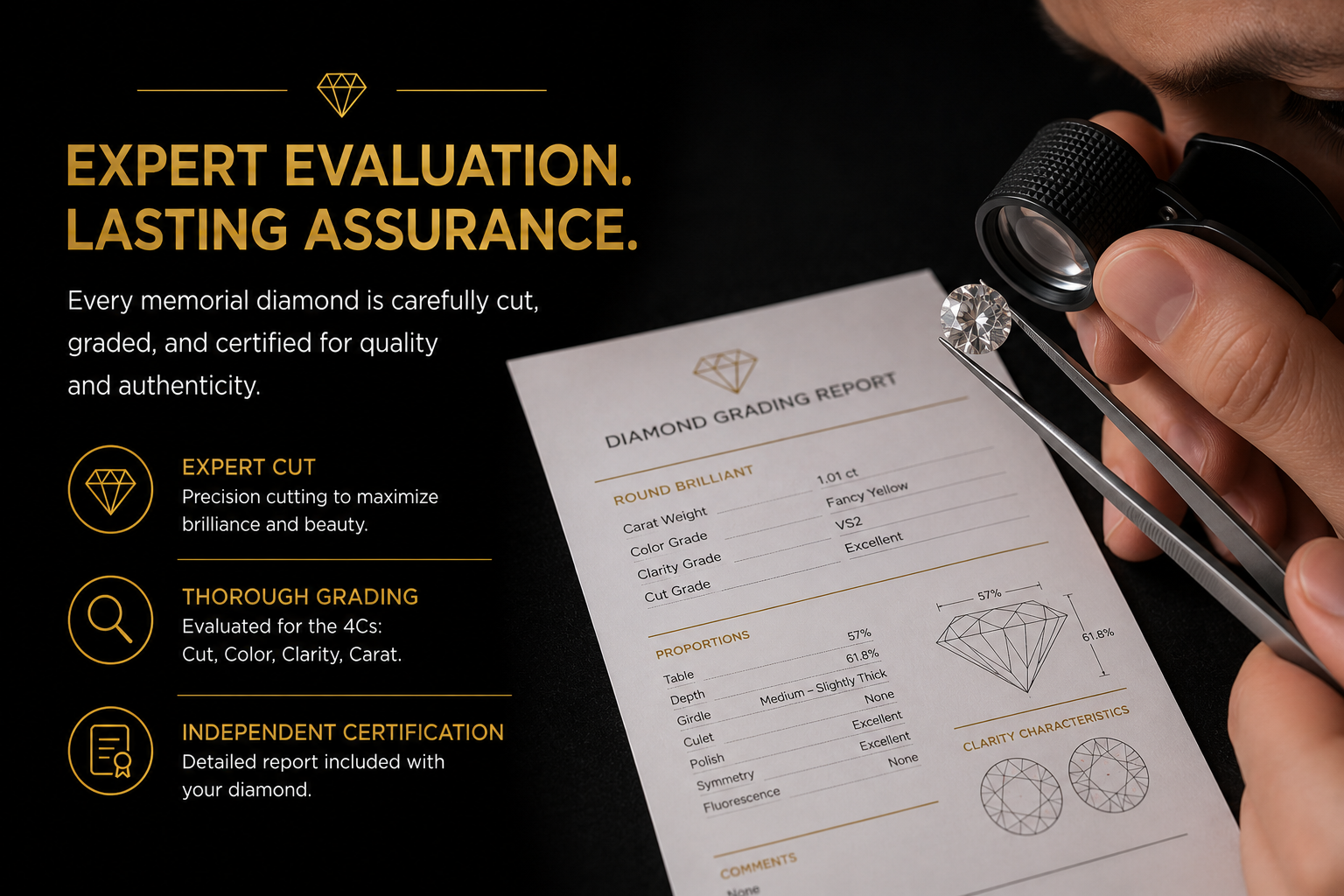
Gemologist examining a polished memorial diamond with a loupe beside a printed grading report

What leaves the growth process is a rough diamond crystal, not a finished piece of jewelry.

The rough crystal must be carefully cut and polished into the selected shape. Depending on the available options, this may include shapes such as round, cushion or emerald.

After cutting and polishing, the finished diamond can be evaluated according to the traditional diamond characteristics known as the 4Cs:

  • Cut
  • Color
  • Clarity
  • Carat

It is also important to understand the difference between origin documentation and a diamond grading report.

An origin or authenticity document relates to the memorial process and the submitted material. A grading report evaluates the physical characteristics and quality of the finished diamond.

These documents answer different questions, and families should understand what documentation is provided for their specific memorial diamond.

Learn more about how memorial diamonds are graded and certified.

What Does Any of This Ask of You?

Your role in the process is much shorter than the laboratory side.

You choose the memorial diamond you want, arrange the required material, and submit a portion of your mother’s ashes for processing. The laboratory then handles the carbon recovery, preparation, diamond growth, cutting and finishing stages.

The decision itself is often the most important part for families. Understanding what happens inside the laboratory can help make that decision more informed.

Learn how to turn your mother’s ashes into a diamond step by step.

Frequently Asked Questions

Does anything of my mother physically remain after the process?

The memorial process is based on recovering carbon from the submitted material. Molecular structures change during purification and diamond growth, while recovered carbon can become incorporated into the structure of the finished diamond.

Why can’t the laboratory use only her carbon?

Cremated remains contain a limited amount of recoverable carbon. Depending on the diamond being created, supplemental laboratory carbon may be required to provide enough feedstock for the growth process.

Is a memorial diamond a real diamond?

Yes. A properly grown laboratory diamond has the crystal structure and physical characteristics of diamond. It is not a simulant, resin or imitation stone.

Will there be visible ashes inside the diamond?

No. The purpose of the purification process is to recover and prepare carbon rather than place visible ash particles inside the finished diamond.

Can the Exact Diamond Color Be Predicted in Advance?

Not always. Trace elements and growth conditions can influence the final diamond color. Therefore, the laboratory may not be able to predict the exact shade before the growth process begins.

What Clarity Should I Expect?

The clarity of a finished memorial diamond can vary. Like other diamonds, laboratories evaluate clarity by examining the internal and external characteristics of the finished stone.. It is the result of multiple stages, beginning with the recovery of usable carbon from cremated remains and ending with a carefully finished diamond.

The journey includes carbon purification, preparation for growth, crystal formation, cutting, polishing and evaluation.

Understanding the science behind the process does not make the emotional decision for a family, but it can make the process easier to understand and the right questions easier to ask.

A memorial diamond can become a lasting physical connection to someone deeply loved created through a process that transforms carbon recovered from their remains into part of a genuine diamond crystal.

Talk About Creating a Memorial Diamond

If you are considering creating a memorial diamond from your mother’s ashes, take time to understand the process, the available options and the documentation provided.

Knowing what happens at every stage can help you make a decision with greater confidence and understanding.

memorial-diamond-made-mothers-ashes-hair

How a Memorial Diamond Is Made From Your Mother’s Ashes and Hair

Families who send both usually picture the two going into the same vessel. That isn’t what happens.

A memorial diamond made from your mother’s ashes and hair is grown from carbon purified from each material separately. Ash nd hair carry entirely different non-carbon contaminants, so each requires its own purification process before the recovered carbon is combined into a single feedstock.

The result is one diamond crystal containing carbon from both sources not a stone divided into halves.

In This Post

Why Can’t Her Ashes and Her Hair Be Purified Together?

Because they arrive at the laboratory with very different challenges.

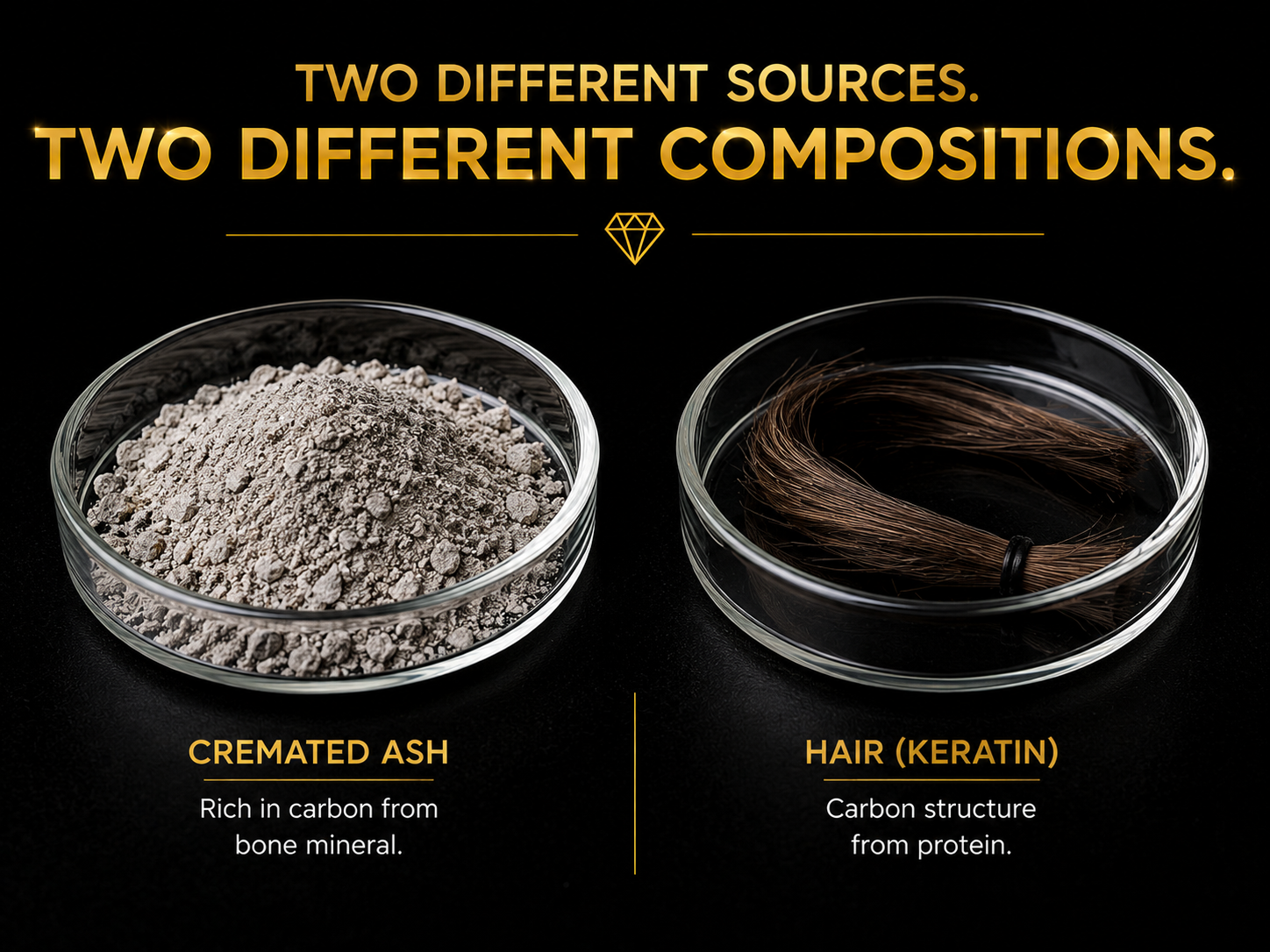
Cremated remains are primarily made of calcium phosphate, the mineral structure associated with bone. Carbon is only a small component of cremated remains, so recovering usable carbon requires separating it from a large amount of mineral material.

Hair is very different. It is primarily made of keratin, a carbon-rich protein containing a much higher proportion of carbon. The purification process must instead remove non-carbon elements such as nitrogen, oxygen, hydrogen and sulfur.

Different source materials require different purification targets. For that reason, ashes and hair are processed separately before the recovered carbon is prepared for diamond growth.

Cremated ash and a cut lock of hair shown side by side in separate labeled laboratory dishes

Where Do the Two Tracks Converge?

The two materials converge once usable carbon has been recovered and purified.

After purification, carbon recovered from hair and carbon recovered from cremated remains are both elemental carbon. The two purified carbon sources can then be combined into a single feedstock before the diamond-growing process begins.

StageHer AshesHer Hair
What it mostly containsCalcium phosphate and bone mineralKeratin, a carbon-rich protein
Approximate carbon contentLower carbon contentHigher carbon content
Purification removesMineral materialNon-carbon protein components
After purificationRecovered carbon can be combined into one feedstock
GraphitizationShared conversion into graphite
Diamond growthOne growth environment and one crystal
Final diamondOne finished stone
Oxygen-free purification furnace used to strip non-carbon material from ash and hair before diamond growth


Using both materials follows the same basic principle as creating a diamond from ashes alone or a diamond from hair alone.

How Much of the Finished Stone Is Genuinely Her?

A real and measurable portion of the diamond can originate from the carbon recovered from the materials you provide. However, the exact percentage can depend on the amount and quality of the available carbon, the size of the diamond, and the requirements of the growth process.

Hair generally contains significantly more carbon by weight than cremated remains. Because of this, hair can contribute a substantial amount of the personal carbon recovered when both materials are submitted together.

The important point is that a memorial diamond is not honestly described as being made entirely from personal carbon alone. Supplemental laboratory carbon may be required during the growth process.

That does not change the meaning of the memorial diamond. Carbon originating from your mother’s ashes and hair can become part of the crystal lattice of the diamond created in her memory.

For more information about this question, read whether a memorial diamond is really made from her ashes and hair.

What Happens Once the Two Carbons Are Combined?

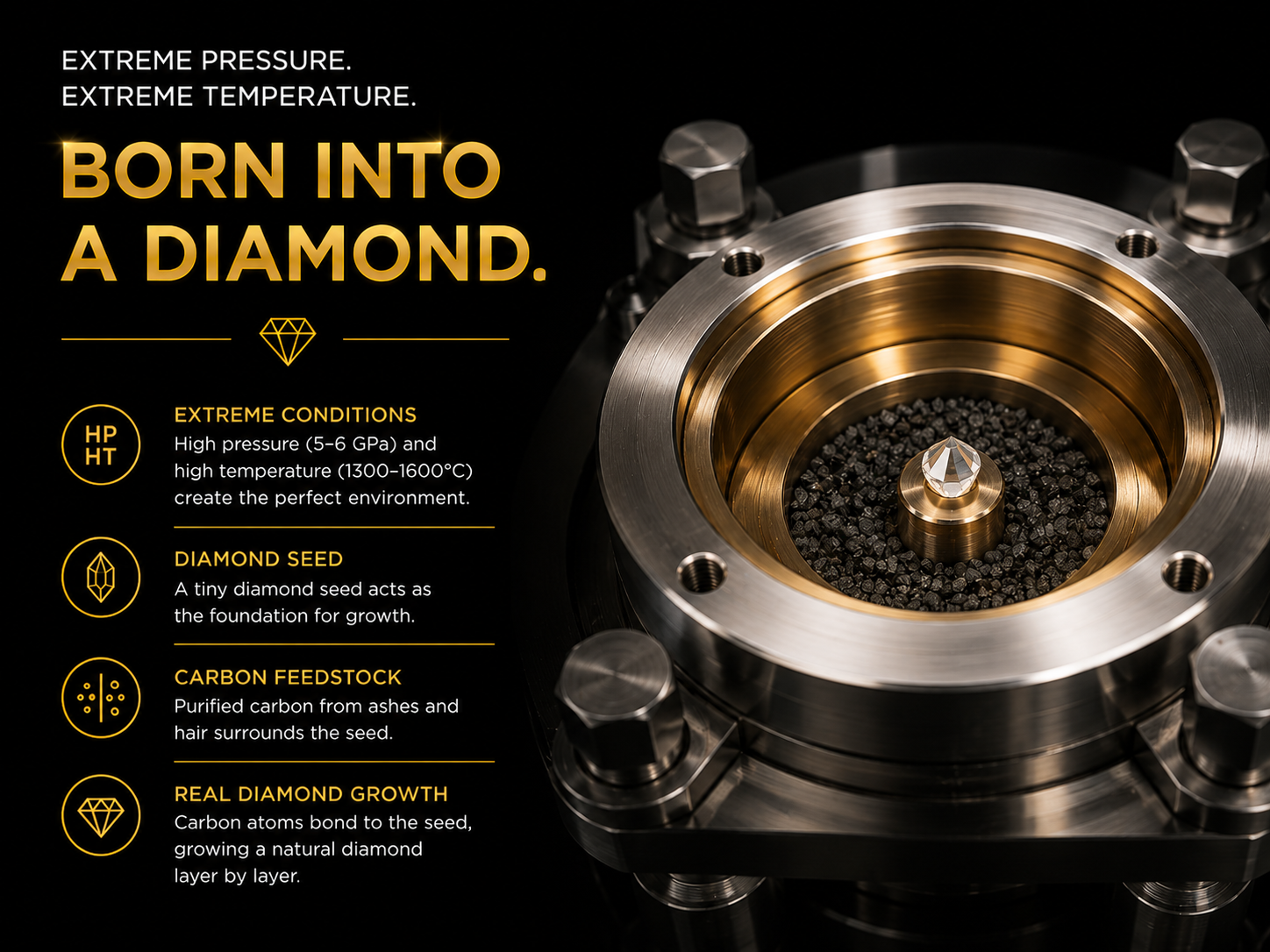
 HPHT growth cell holding a diamond seed crystal surrounded by graphite feedstock | Stock acceptable |

Once the carbon sources are combined, the process becomes the same type of diamond-growing process used for other memorial diamonds.

The carbon feedstock is prepared for diamond growth and may be converted into graphite. The graphite can then be placed into a high-pressure, high-temperature environment with a small diamond seed.

Under controlled laboratory conditions, carbon atoms gradually form around the seed and develop into a diamond crystal. Crystal growth can take weeks or months depending on the process and the desired result.

One important point is that submitting more material does not automatically produce a larger diamond. The final size depends on the selected diamond and the growth process rather than simply on the amount of ashes or hair submitted.

After growth, the rough diamond is cut, polished and evaluated according to characteristics such as cut, color, clarity and carat.

Learn more about the difference between HPHT and CVD diamond growth.

Will a Stone Made From Two Materials Be Two-Toned?

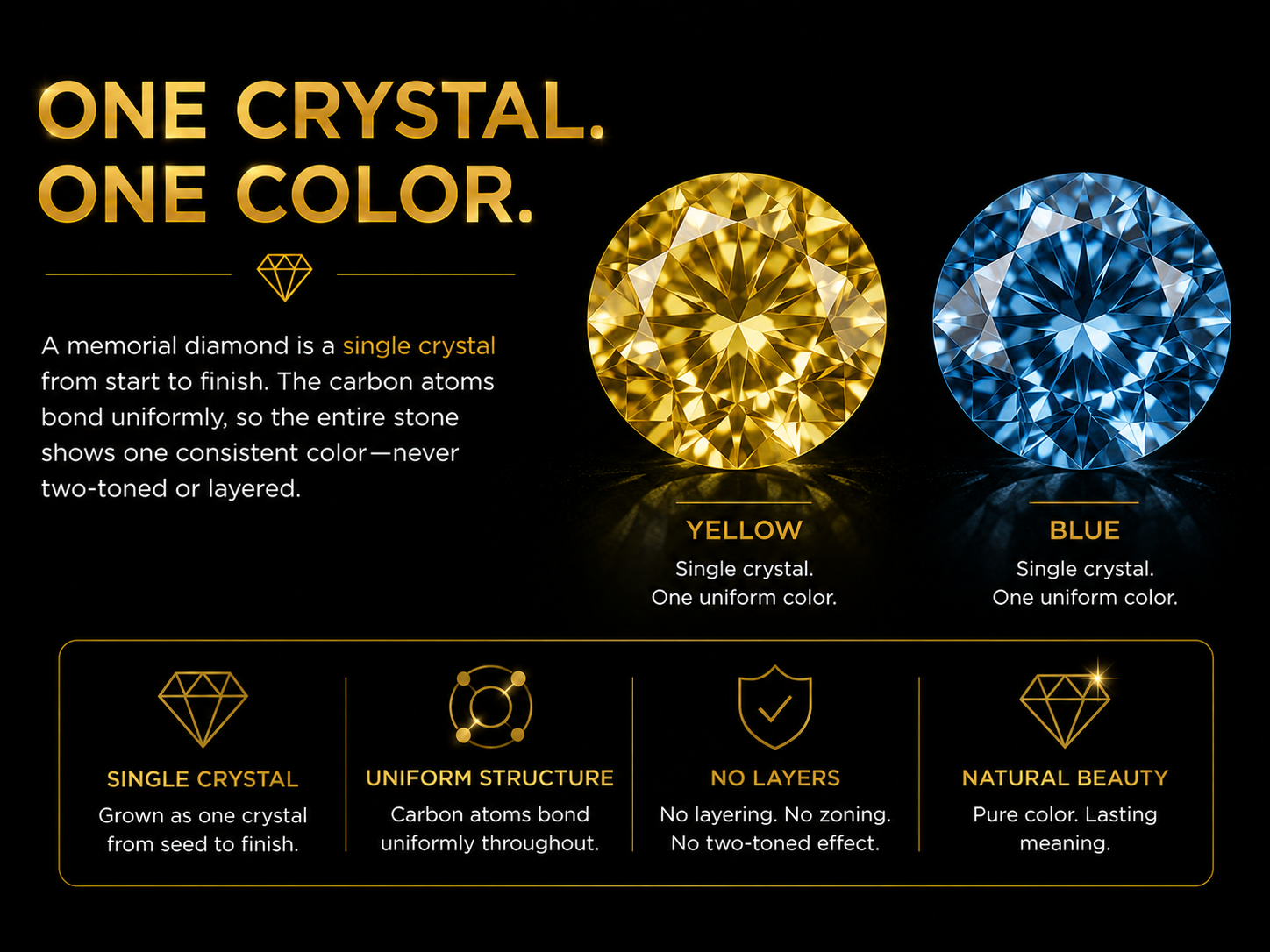
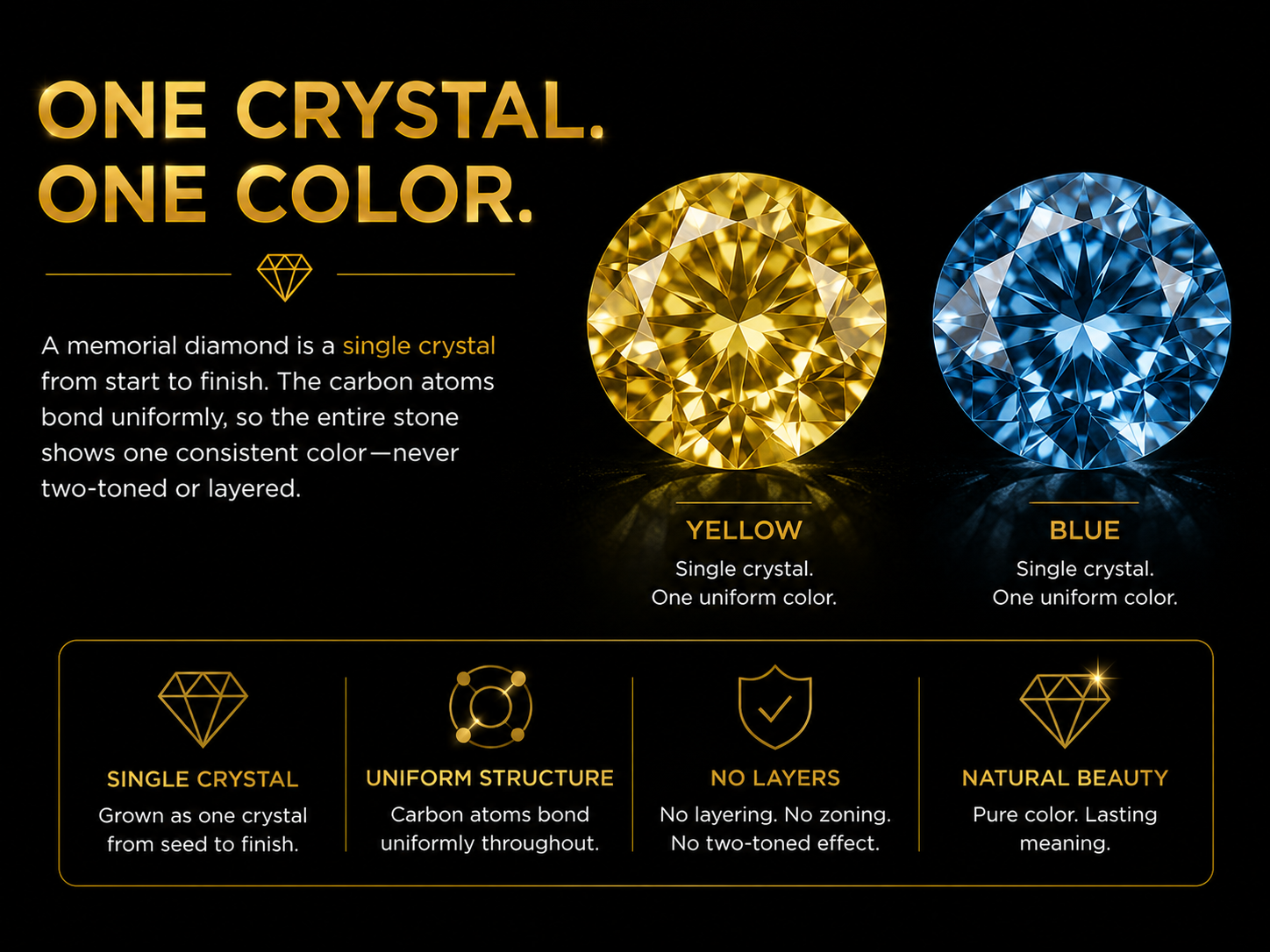
Two memorial diamonds, one yellow and one blue, each an evenly colored single crystal

No. The finished memorial diamond grows as one crystal.

It is understandable to imagine that using two different materials could create separate areas or layers inside the diamond. However, after the carbon has been purified and prepared for growth, the finished crystal does not divide itself according to whether individual carbon atoms originally came from ashes or hair.

The color of a diamond is influenced by conditions and trace elements involved during crystal growth rather than by visible separation between the original source materials.

This means a memorial diamond made using both ashes and hair is still one crystal with one overall appearance.

You can learn more about possible colors in what color a diamond made from your mother’s ashes and hair may be.

Where Does Your Part of This End?

Your part of the process begins with deciding what materials you would like to use and ends once they have been safely submitted for processing.

You may need to consider how much ash and hair you have available, discuss the decision with family members, and choose the memorial diamond that feels right for you.

After the materials enter the laboratory process, the purification and diamond-growing stages are handled over the following months.

For the complete process, read how to turn your mother’s ashes and hair into a diamond.

You can also explore the complete guide to a mother ashes and hair diamond and learn how much ash and hair may be needed for a memorial diamond.

Frequently Asked Questions

Are her ashes and her hair processed at the same time?

Because cremated remains and hair contain different materials, they may require different purification approaches. The goal is to recover usable carbon before preparing the material for the diamond-growing process.

Can a lab tell which carbon in the finished stone came from her hair?

Once carbon has been purified and incorporated into a growing diamond crystal, individual carbon atoms are chemically the same element. The finished diamond does not visibly identify the original source of each carbon atom.

Does adding hair to an ashes submission mean more of her is in the stone?

Hair generally contains more carbon by weight than cremated remains, so including hair can increase the amount of personal carbon available for recovery. The exact contribution to a finished diamond can vary.

Will the finished diamond have visible layers, streaks or two colors?

No. The diamond grows as a single crystal. Using two source materials does not mean the finished stone will be divided into visible sections based on ashes and hair.

Does using two materials make the process take longer?

The overall timeline is generally driven more by diamond growth, cutting and finishing than by the number of source materials used. Processing requirements can vary depending on the individual order.

Thinking About Creating a Memorial Diamond?

Understanding how ashes and hair can be prepared for diamond creation can make an emotional decision easier to understand.

Using both materials creates a way to include different physical connections to the person you love in one memorial piece. Her ashes and her hair maHow a Memorial Diamond Is Made From Your Mother’s Ashes and Hair.