How Much Ash and Hair Do You Need for a Sister Memorial Diamond

How Much Ash and Hair Do You Need for a Sister Memorial Diamond?

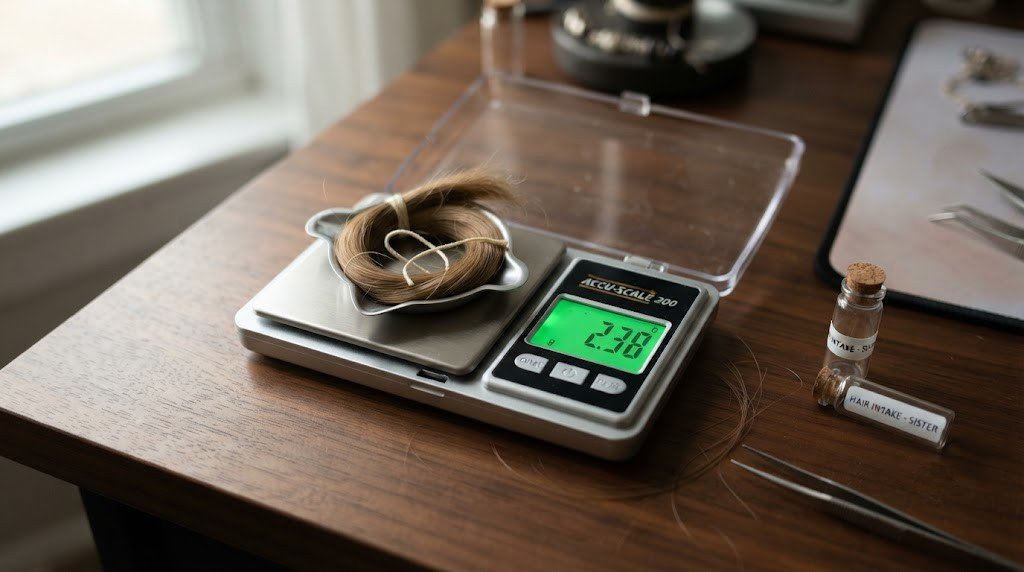
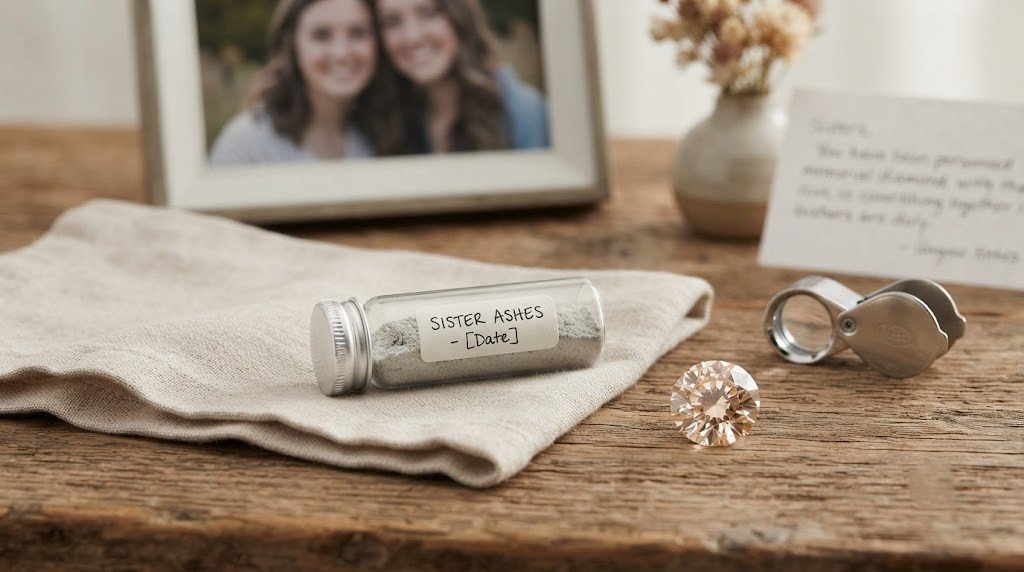
Sometimes her ashes are with one relative and a lock of her hair is with another, and a memorial diamond is the first plan that brings the two together. When you send ash and hair for a sister memorial diamond, providers typically ask for a portion of ashes between a few tablespoons and about 4 ounces, roughly 100 grams, plus a small lock or a few grams of hair. Each provider sets both figures, so ask whether sending both changes what they need of each.
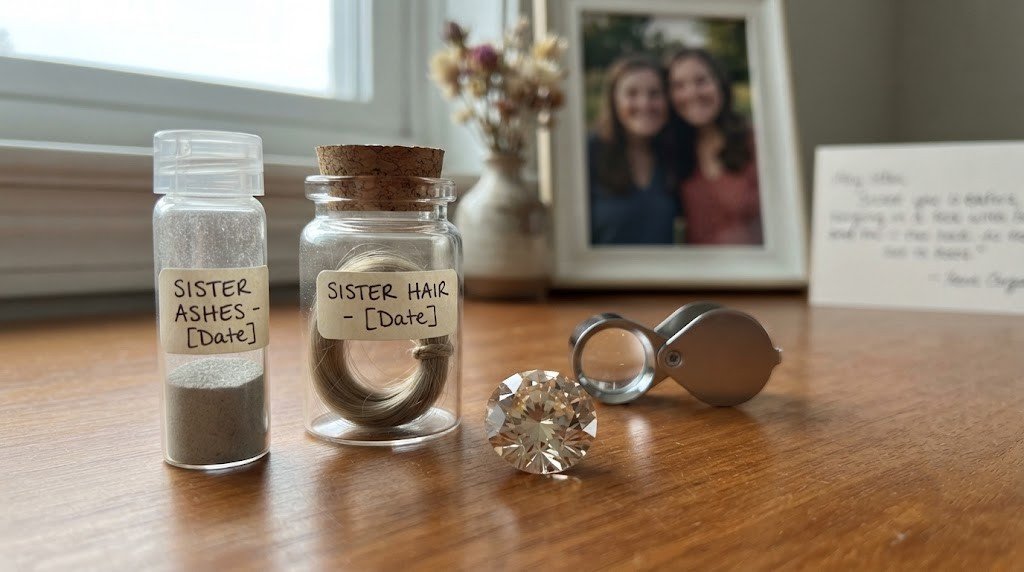
ash and hair for a sister memorial diamond

Why Would You Send Both Her Ash and Her Hair?

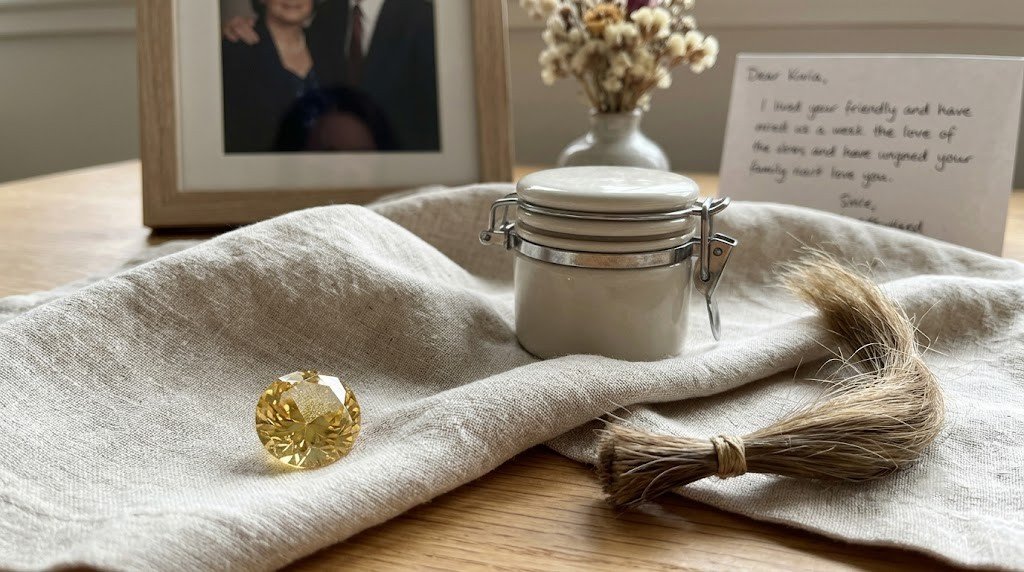
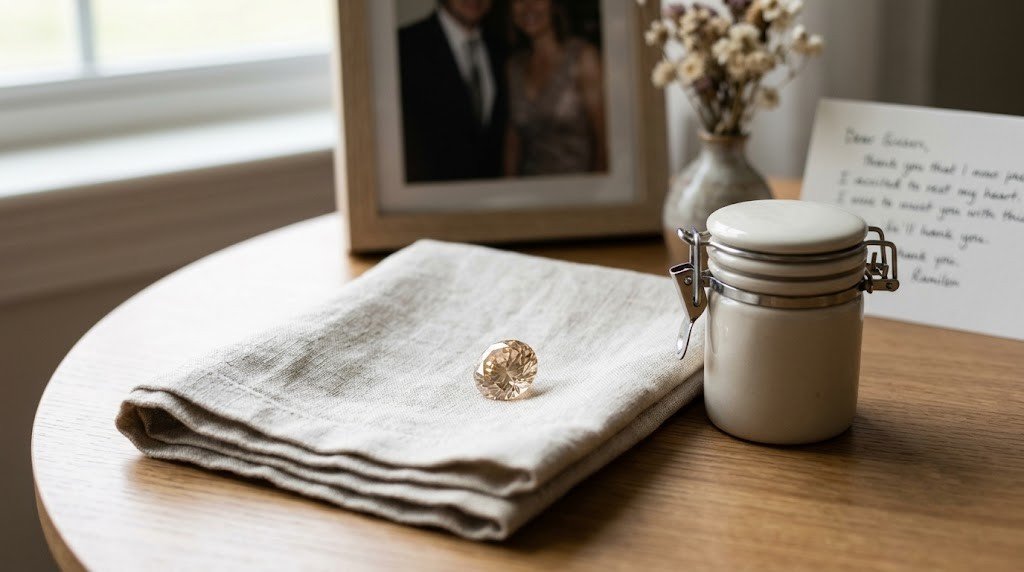
For some siblings the reason is simply meaning. Her ashes are what remained after the funeral; a lock of her hair may have been kept from a particular day, by a particular person. Bringing ash and hair for a sister memorial diamond into one stone can feel like gathering more of her story into one place, and some people find comfort in that.

For others the reason is practical. Perhaps only a keepsake amount of her ashes is left, or only a few strands of hair, and neither feels like enough on its own. Using ash and hair for a sister memorial diamond can also let two relatives each contribute something they have been keeping.

Neither material is required, and a stone grown from one is no less meaningful than a stone grown from both. If only one is available, the companion pages on how much ash a sister’s diamond needs and how much hair a sister’s diamond needs cover each route. The complete guide to a sister ashes and hair diamond sets out the whole process for a combined stone.

This page is for the moment you are considering ash and hair for a sister memorial diamond together and want to know how much of each, who to ask, and how to keep both sources clearly recorded.

How Much Ash and Hair for a Sister Memorial Diamond Do Providers Typically Request?

Providers set their own figures for ash and hair for a sister memorial diamond. Some will tell you that sending both changes what they need of each, while others ask for their standard amounts regardless. The ranges below are industry typical, not any single company’s policy. They are a starting point for your first question rather than a final answer.

DetailHer ashesHer hairBoth sent together
Typical amount requestedA few tablespoons to about 4 ounces, roughly 100 gramsA small lock or a few gramsAsk the provider for a figure for each material
Carbon content by weightRoughly 0.5% to 4%Roughly 50%Each material retains its own carbon characteristics
Published share of finished stoneAround 10% to 15% for ash, with some providers citing as low as 3%No published industry figureNo published industry figure for a combined stone
Is cremation needed?YesNoOnly for the ash portion
Who often holds it?Whoever received the ashes, often the person with authority over her remainsWhoever has her belongings or a saved keepsakePossibly two different people
Most useful questionWhat is your minimum amount of ash?Do you accept brush hair or only a cut lock?Does sending both change what you need of each?

Two things stand out. Hair carries far more carbon by weight, which is why so little is needed. No percentage is published for how much of a finished stone comes from hair or from a blend. The ash figure belongs to ash only stones.

Whatever the provider says, ask for both numbers in writing, in grams or ounces where possible, before anyone measures out ash and hair for a sister memorial diamond. Having the figures on paper makes conversations with relatives simpler because everyone is talking about the same amounts.

Does Adding Hair Make the Diamond Bigger, Faster, or a Different Color?

No. A stone’s size comes from how long the crystal grows in the press, over weeks to months, not from how much material arrives. Carat sizes typically range from about 0.10 to more than 5 carats. Size is a choice made with the provider, not a result of sending ash and hair for a sister memorial diamond instead of one material.

The timeline follows carat and color too. Across the industry, the process typically runs six to ten months from receipt, and up to about twelve months for stones over roughly 2 carats or specialty colors. Sending ash and hair for a sister memorial diamond does not make the wait shorter.

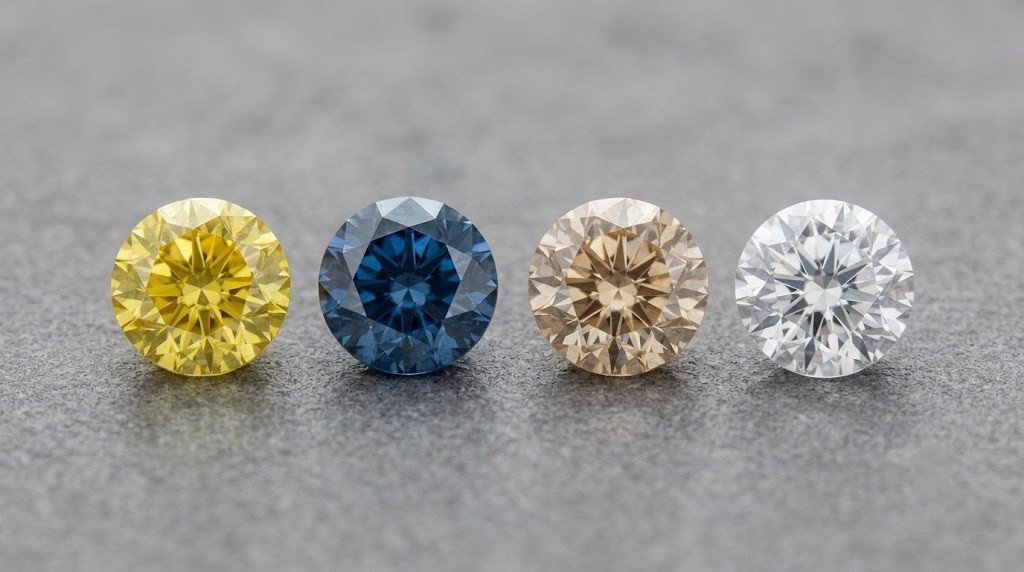
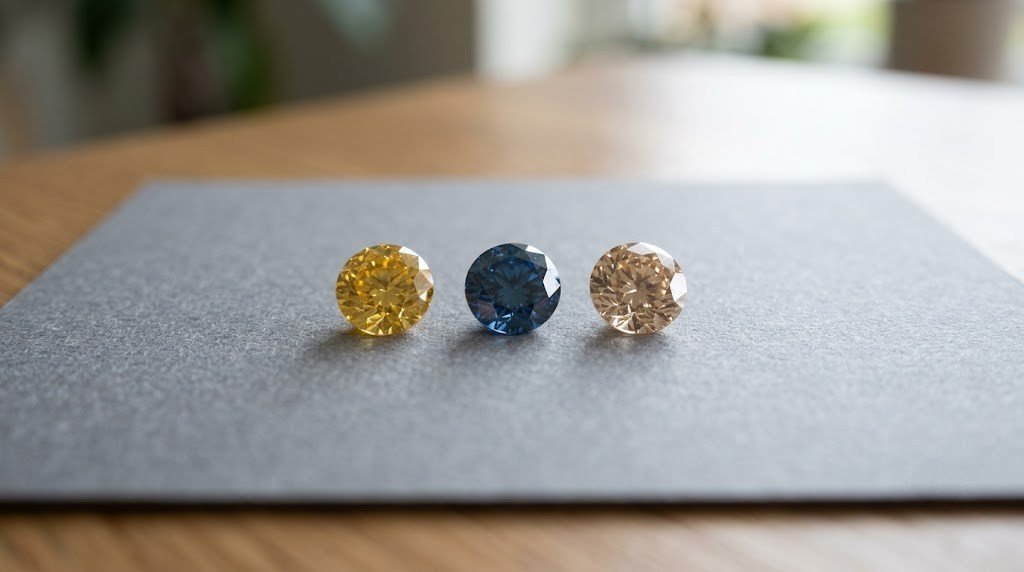
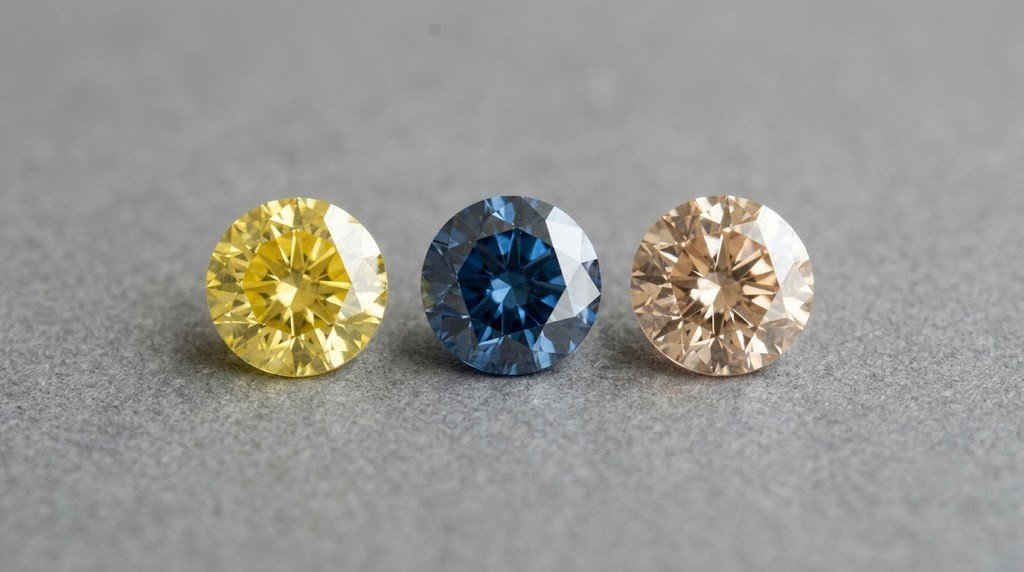
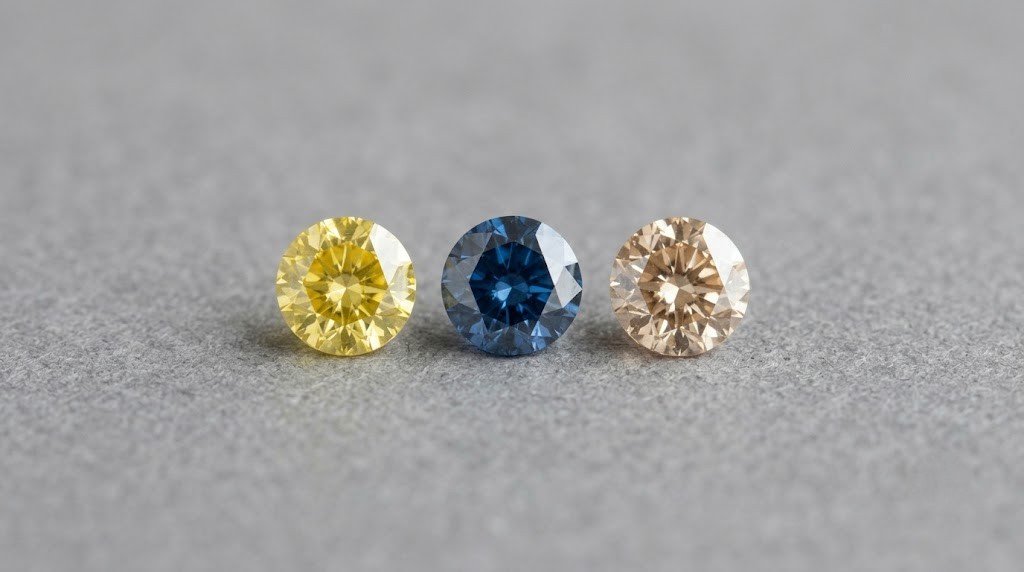
Color is decided by trace elements during growth. Nitrogen tends toward yellow, boron toward blue, and the absence of both allows colorless, which takes extra processing and typically costs more. Memorial stones commonly land in yellow, blue, or champagne tones. Some providers offer disclosed post growth irradiation for red, pink, green, or black.

The color cannot be predicted from either material, and it reflects chemistry rather than anything about who she was. The post on what color a diamond from her ashes and hair will be explores that further.

Hardness does not change either. The finished stone is a real diamond, rated 10 on the Mohs scale of mineral hardness, though a hard knock can still chip any diamond.

Price follows carat, color, and cut. General 2026 industry ranges run roughly $1,500 to $3,500 for about 0.10 to 0.25 carats, roughly $5,000 to $15,000 for 0.5 to 1 carat, and roughly $20,000 to $75,000 or more for 2 to 5 carats or larger. Colorless stones can cost meaningfully more than yellow, blue, or champagne stones. Grading, engraving, fancy cuts, and settings are usually priced separately. Ask whether using ash and hair for a sister memorial diamond affects the provider’s pricing.

What If Her Ashes and Her Hair Are Held by Different People?

This is where a combined stone differs most from a single material one. Her ashes may be with whoever holds authority over her remains, while her hair may sit among her belongings, with a partner, a parent, a friend, or you. Gathering ash and hair for a sister memorial diamond can mean two conversations.

For the ashes, authority often follows an order that, in many states, commonly runs from a spouse or registered partner to adult children, then parents, then siblings. That order varies by state, and her own written wishes, such as a designated agent or signed declaration, can change it. The funeral home or crematory can tell you who signed for her cremation, and a local attorney can confirm how your state approaches it.

For the hair, belongings can form part of her estate, and the rules vary by state. Speaking with the executor or whoever is handling her affairs before using hair from her home keeps things clear. A lock that someone has kept as their own keepsake is best treated as theirs to offer or not.

When asking two people for ash and hair for a sister memorial diamond, it helps to have the provider’s written figures in hand, explain how small each request is, and be open about who else is involved. If either person says no, or not yet, that answer deserves respect.

When several people contribute, agree in writing who will own the finished stone before it exists. The guide on talking with family about a sister memorial diamond offers gentle ways into those conversations.

How Does a Lab Combine Two Materials, and What Is the Honest Carbon Story?

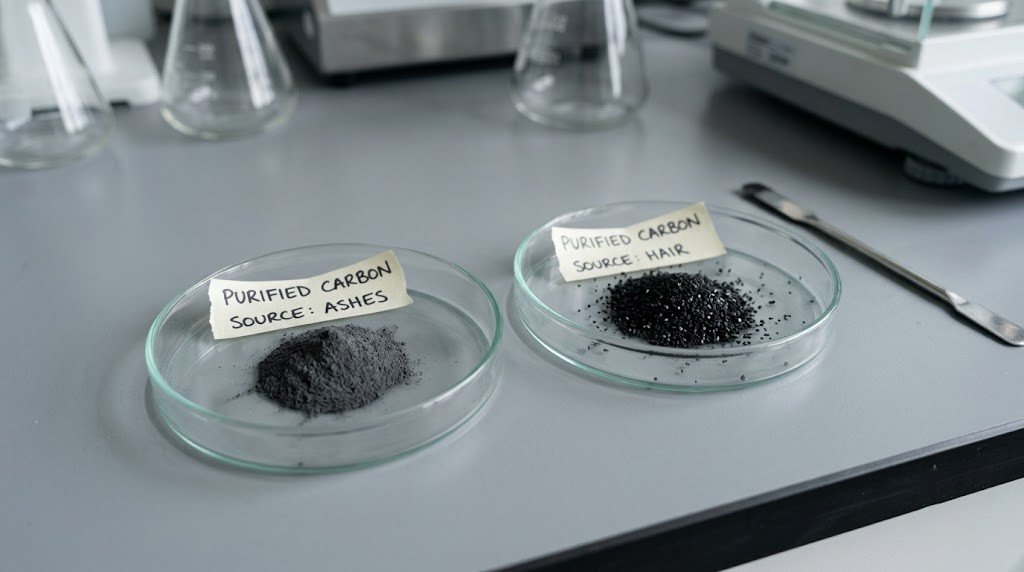
Before the ash and hair for a sister memorial diamond can be combined, each has to give up its carbon. Ash is mostly calcium phosphate, so the usable carbon is a small share of its weight. Hair is built from keratin and is roughly half carbon.

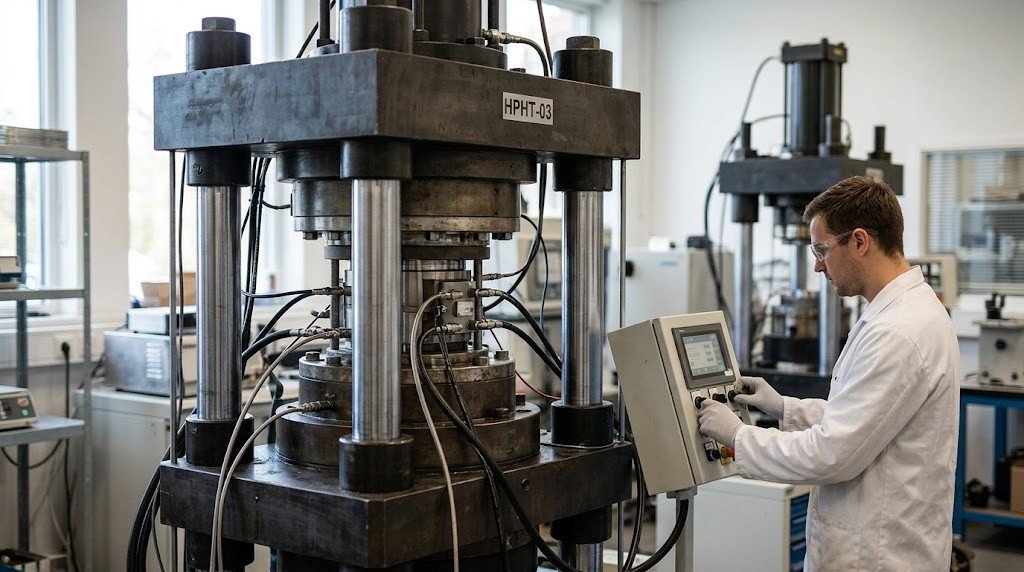
Both materials may go through oxygen free, multistage purification to roughly 99.9% carbon or better, followed by conversion to graphite at around 2,500 to 2,700°C. The carbon can then be used for growth by high pressure, high temperature technology at roughly 6 to 8 GPa and around 1,400 to 2,500°C, or, with a minority of providers, chemical vapor deposition. The overview of synthetic diamond methods explains the growth science in general terms.

How the two are brought together varies. Some providers may purify each material separately and combine the carbon afterward. Others may handle them differently. Ask how they process ash and hair for a sister memorial diamond and how they record each material through every stage.

Recovered carbon is typically blended with supplemental laboratory carbon to reach the volume a growth cell needs. Industry figures for ash only stones put her share at roughly 10% to 15% of the finished weight, and a few providers quote numbers nearer 3%. For hair, and for a stone grown from both, no comparable percentage is published. It would be wrong to borrow the ash figure for a blend.

If a provider quotes a precise share for a stone grown from ash and hair for a sister memorial diamond, ask how that figure was measured and request it in writing. The page asking whether a diamond is really made from her ashes and hair works through that honesty question in detail.

How Do You Document Ash and Hair for a Sister Memorial Diamond?
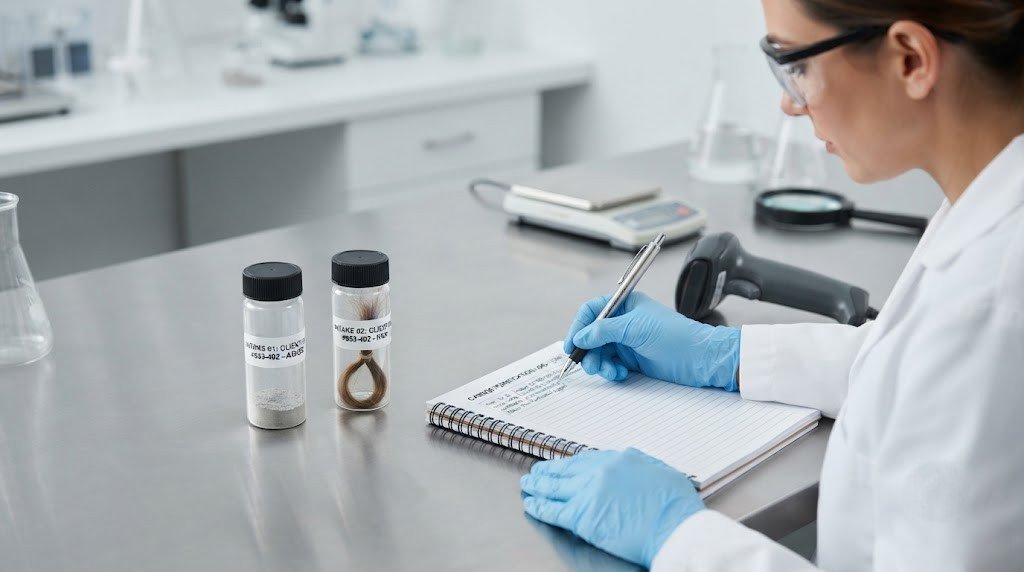
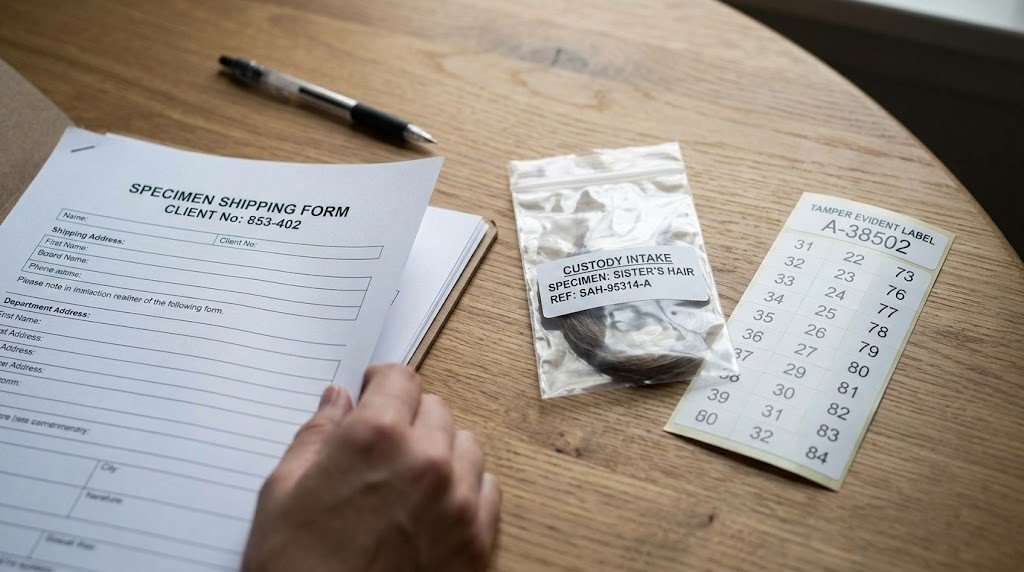
With one material, the paper trail is simple. When you are sending ash and hair for a sister memorial diamond, it helps to be deliberate because each source has its own history. A clear record means you can always say where every part of the stone came from.

  1. Record the ash source. Note who released the portion and when, and keep a copy of the cremation certificate or crematory paperwork if the provider asks for it.
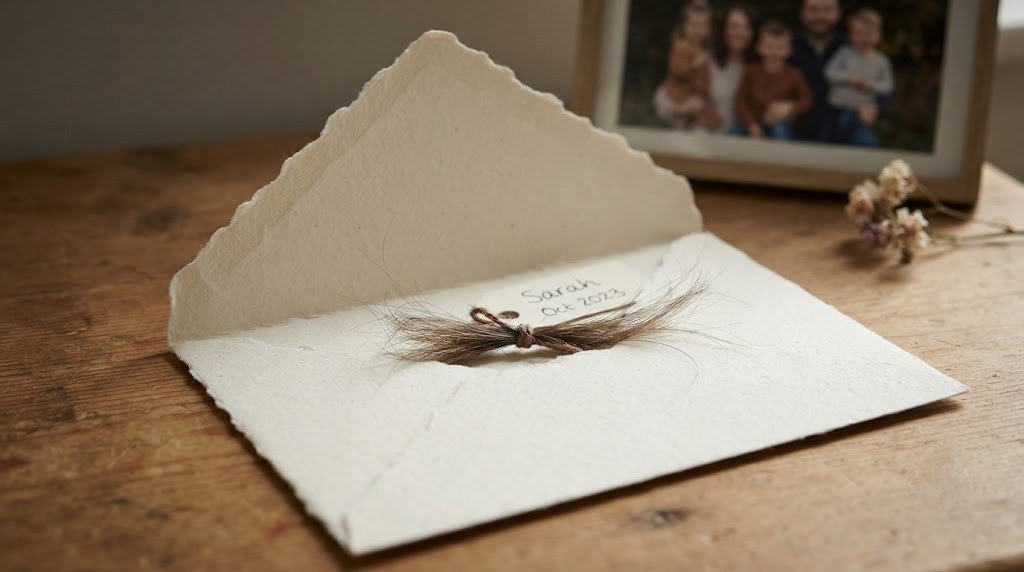
  2. Record the hair source. Write down whether it is a cut lock, brush hair, or a keepsake, who kept it, and roughly when it was saved.
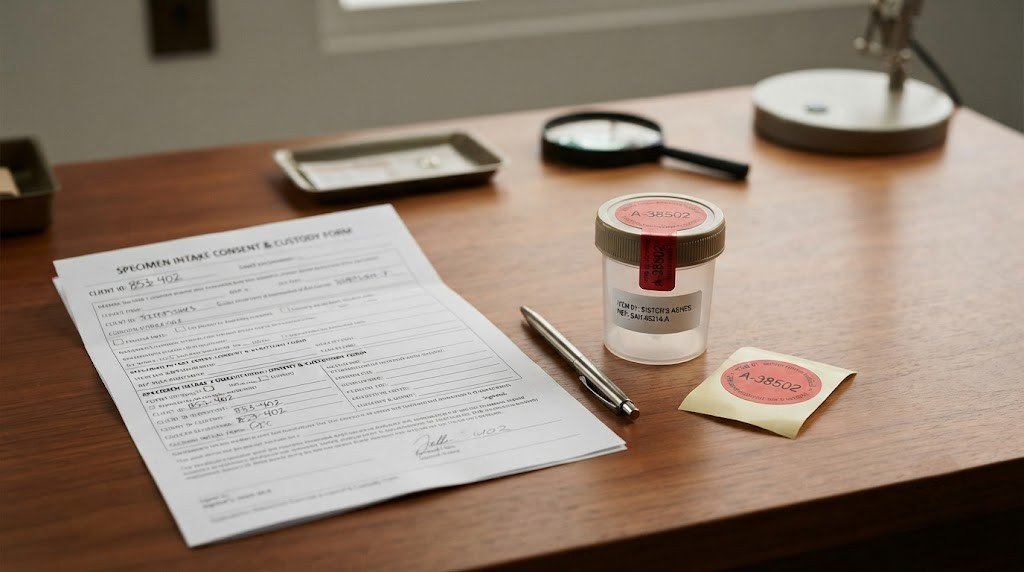
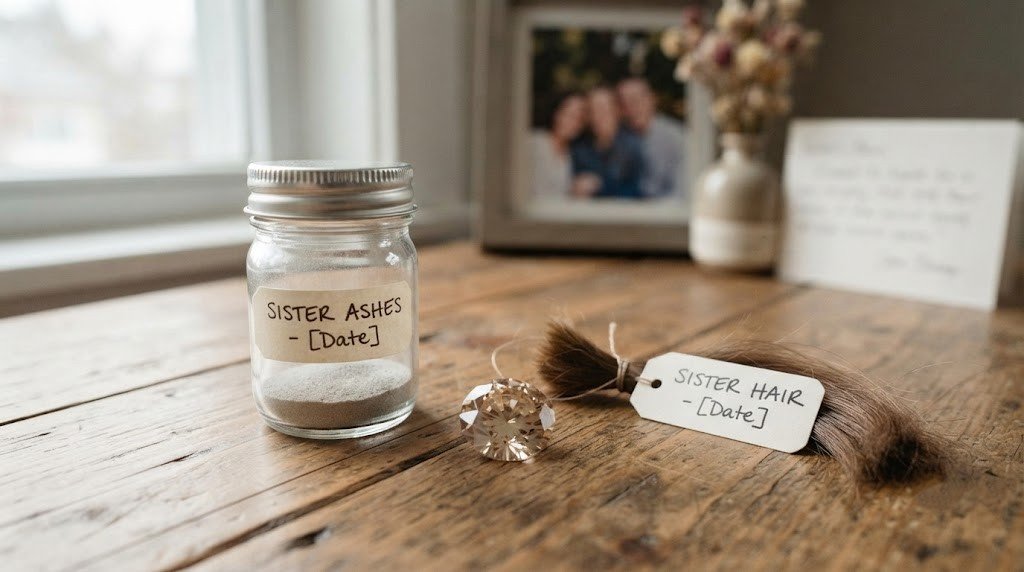
  3. Use separate, labeled containers. Each should carry her full name, the material, and any order number the provider assigns.
  4. Photograph both before sealing. A simple photo of each container, side by side, is useful later.
  5. Keep each holder’s agreement in writing. A short message or note from whoever released the ash and whoever offered the hair gives everyone a shared record.
  6. Ask for a receipt listing both items. The provider should confirm in writing that both arrived, ideally with weights.
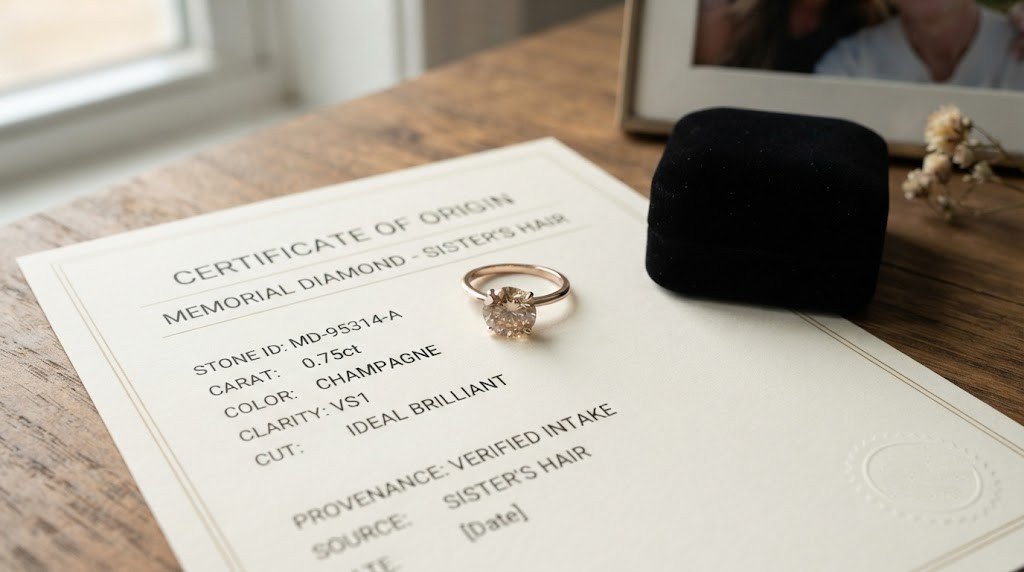
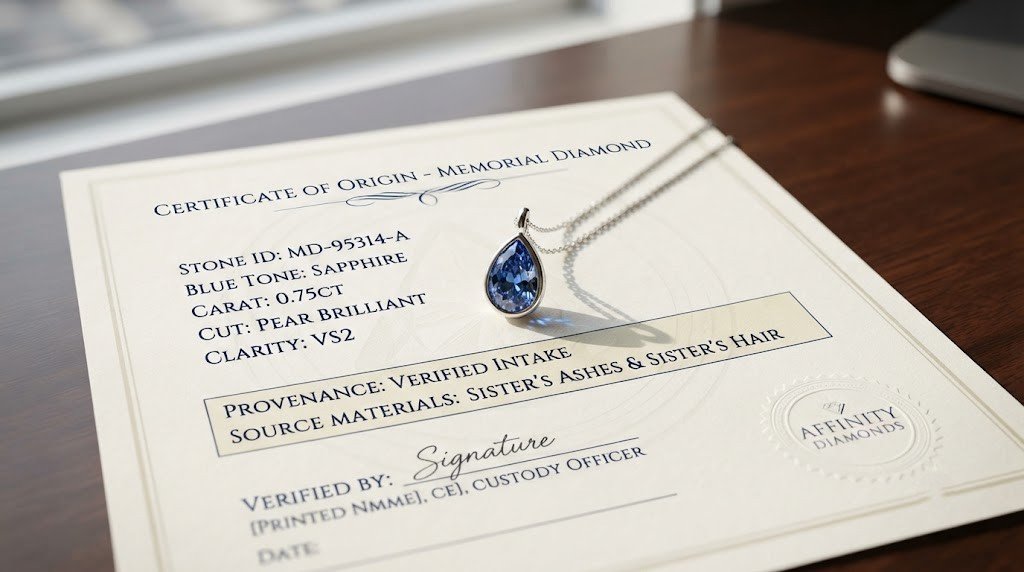
  7. Ask what the certificate will say. Find out whether the origin certificate names both materials.

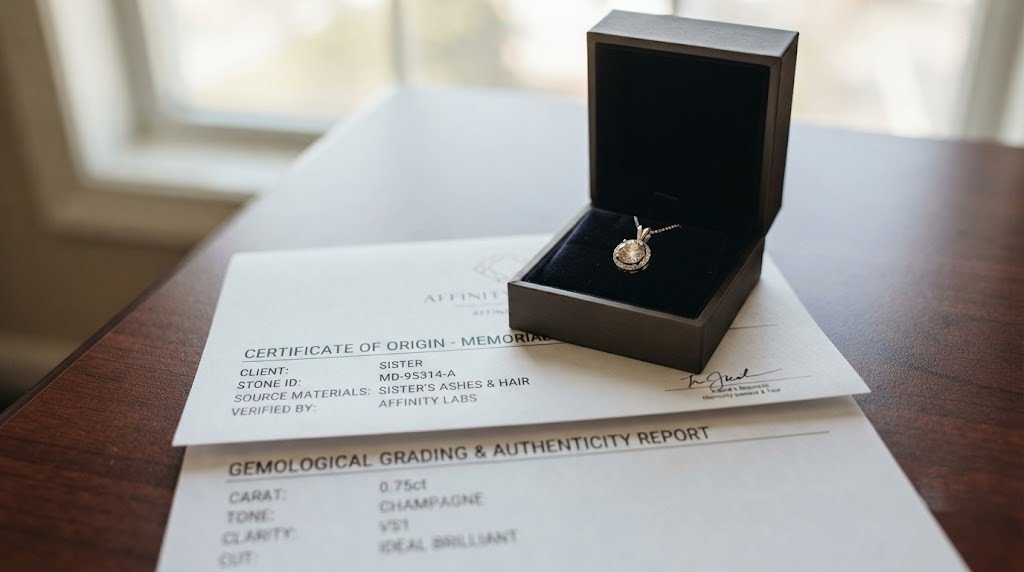
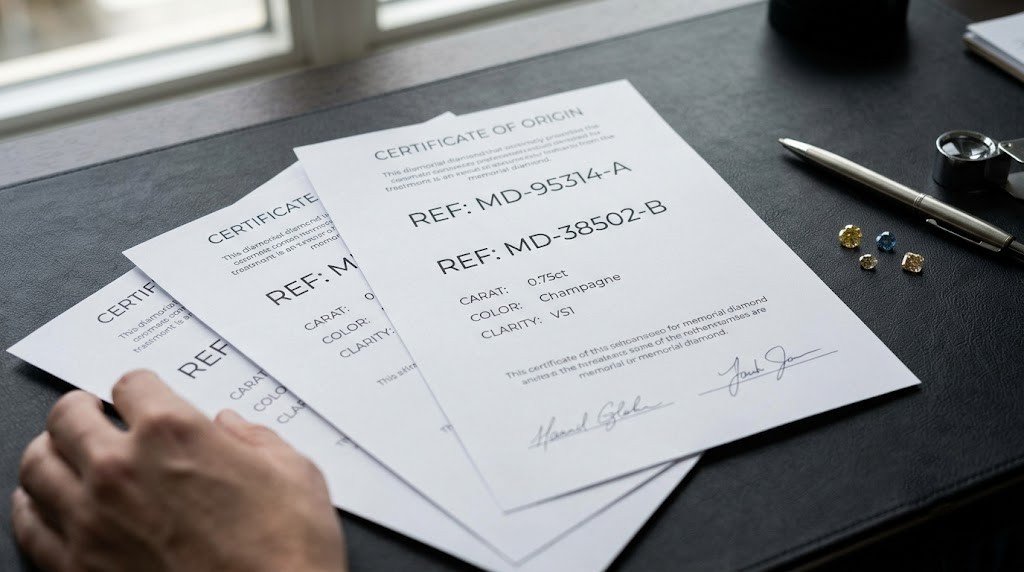
That origin or authenticity certificate is usually issued in house and documents chain of custody, which is what links the stone to the ash and hair for a sister memorial diamond you sent. It is different from an independent grading report, which describes the stone’s cut, color, clarity, and carat, commonly referencing GIA standards. Independent grading is usually optional and priced as an extra.

What If One Material Is Missing or Only a Trace Remains?

Plans for ash and hair for a sister memorial diamond can change when one source turns out to be unavailable. If her ashes were scattered, there is nothing to recover, and that choice honored her in its own way. If they were buried, retrieving any portion is a serious step involving the cemetery, the person with authority, and often permits. Leaving them undisturbed is completely valid. In either case, hair alone can still become a stone.

If no hair was kept, a stone from her ashes alone is just as much hers. If only a trace of each remains, describe both amounts to the provider and ask whether they can work with them together. Do not assume either way, and wait to send anything until you have the provider’s answer about ash and hair for a sister memorial diamond in writing.

Can Both Materials Travel in the Same Package?
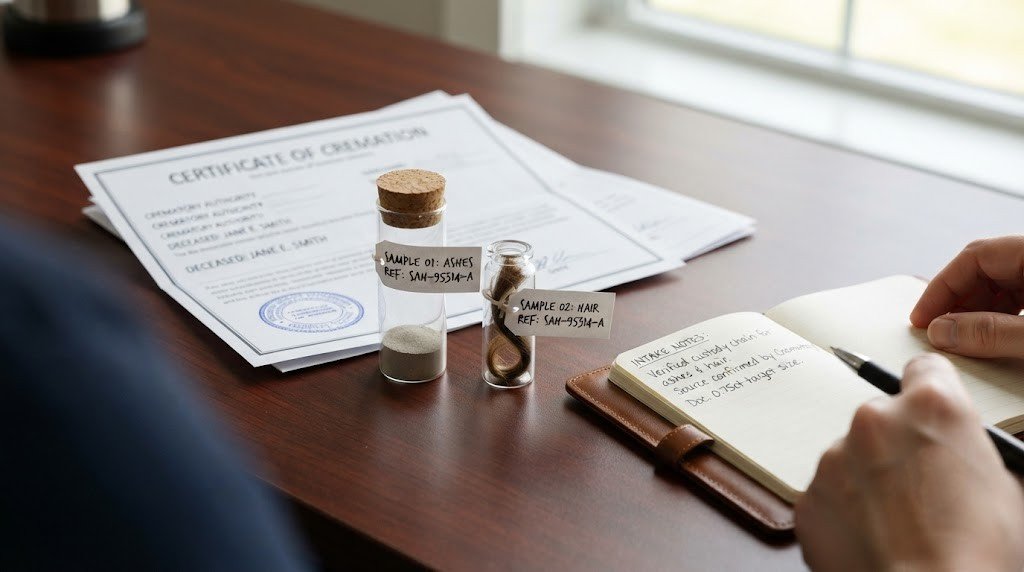
Possibly, but only if the provider says so. Some prefer to receive ash and hair for a sister memorial diamond in separate sealed, labeled containers inside one outer box. Others may want them sent separately, especially if two relatives live in different places. Rules for shipping cremated remains also differ between carriers and countries, so follow the provider’s carrier instructions exactly.

Whatever the arrangement, keep each container sealed and labeled, use tracking, keep every tracking number, and ask the provider to confirm receipt of the ash and hair for a sister memorial diamond separately. If two parcels are traveling from two people, share the tracking details with each other so nobody is left wondering.

What About a Second Stone, or Material Left Over?

If more than one person wants a stone, ask how much ash and hair for a sister memorial diamond each additional stone needs. Some providers can draw more than one stone from a single shipment, and others ask for a set amount per stone. Some relatives may want their own stone and others may not, and either choice is fine. The piece on more than one family member sharing a sister’s memorial diamond materials explores how families arrange that.

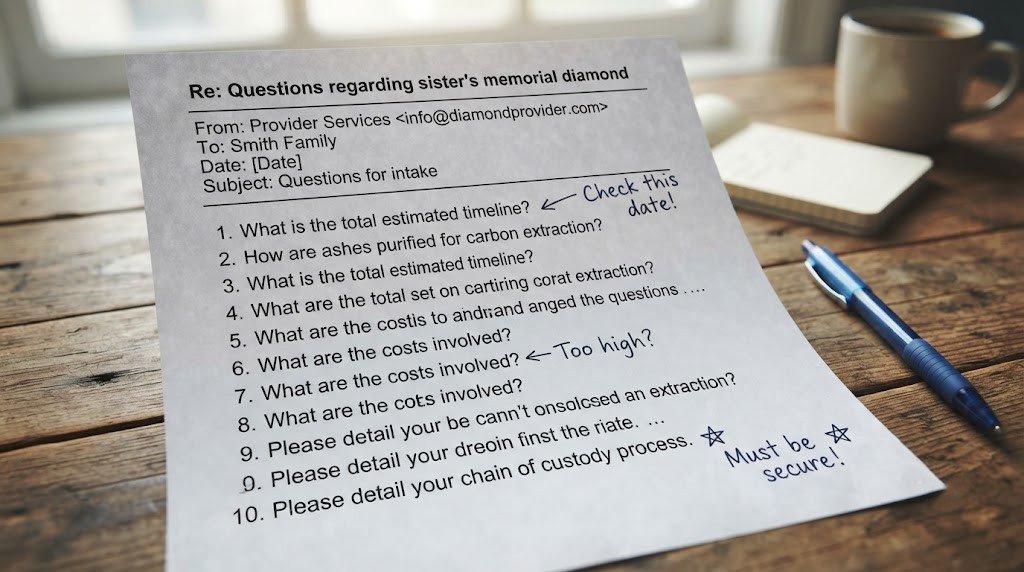
Ask, too, what happens to any ash and hair for a sister memorial diamond that is not used: whether each is returned, stored, or disposed of, and whether the answer differs by material. Ask what happens if a growth cycle fails or a rough stone fractures during cutting. Those answers belong in the provider’s written terms. The list of questions to ask before turning her ashes and hair into a diamond gathers them alongside many others.

Frequently Asked Questions

Can the hair come from her brush while the ashes come from the funeral home?

Yes, if the provider accepts brush collected hair. The two materials do not need to come from the same place. Label each container clearly, note where each material came from, and check with the executor or whoever handles her affairs before taking anything from her home.

If we have only a few tablespoons of ash, does adding hair help?

It might, but only the provider can say whether the combination meets its requirements. Hair carries far more carbon by weight, yet providers set their own rules for each material. Describe both amounts and ask before sending ash and hair for a sister memorial diamond.

Will the certificate mention both her ashes and her hair?

That depends on the provider. An origin certificate is usually issued in house and records chain of custody, so ask before ordering whether it will name both materials. Request that the receipt confirming arrival lists both separately.

Is a combined stone more expensive than one made from ash alone?

Price is driven mainly by carat, color, and cut, with grading and settings usually extra. Whether a provider charges differently for ash and hair for a sister memorial diamond is its decision, so ask directly and get the answer in writing before you commit.

Can one relative send the hair while another sends the ashes?

Yes, if the provider agrees to receive two shipments for one stone. Agree beforehand who places the order, who owns the finished stone, and how each sender will confirm their part has arrived, so the ash and hair for a sister memorial diamond stay matched.

Does the hair have to be collected around the same time as the cremation?

Not as a rule. A lock saved years earlier can be paired with ashes from a recent cremation, provided the provider accepts both. What matters is that each material is clearly hers, meets the provider’s requirements, and is documented with a short note on its history.

Final Thoughts on Ash and Hair for a Sister Memorial Diamond

The amounts are rarely the obstacle. A few tablespoons to about 4 ounces of ash and a small lock of hair are typical, and the provider will confirm what it needs. What takes more care is the human side of ash and hair for a sister memorial diamond: two sources, sometimes two keepers, and a record that honors where each part of her came from.

If gathering ash and hair for a sister memorial diamond feels right, take it one conversation at a time. If only one material is available, or none yet, that is a complete answer too. The stone, if you choose one, will be no less hers.

Learn More About Sister Memorial Diamonds

Talk With Memorial Diamond

If you are weighing whether to send ash and hair for a sister memorial diamond, or how to approach the people holding each, you are welcome to reach out to Memorial Diamond at memorialdiamond.us. Share as much or as little as you like, and take whatever time you need.
How to Turn Your Sisters Hair Into a Diamond

How to Turn Your Sister’s Hair Into a Diamond

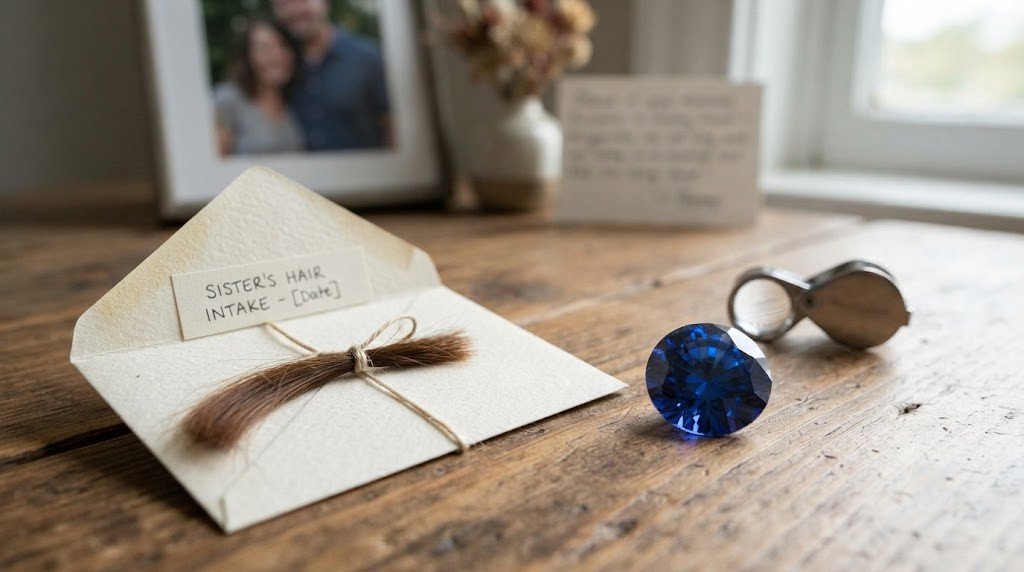
Sometimes the most personal thing a sibling still has is a few strands of her: a braid tucked in a drawer, a lock the funeral home set aside, or a curl someone saved from a haircut years ago. To turn sister hair into a diamond, you find a usable lock, check with whoever is handling her estate, choose a provider, mail the hair with tracking, decide size and color, then wait roughly six to ten months for a real lab made stone.

turn sister hair

Why Do Siblings Turn Sister Hair Into a Diamond Instead of Using Ashes?

Often because hair is the material within reach. Her ashes may be with a spouse, a partner, her adult children or a parent. They may already be scattered or interred. She may have been buried, so there were never ashes at all. Hair sidesteps every one of those situations because nothing about it depends on cremation. Where some ashes are within reach as well, the combined ashes and hair guide covers both materials together.

There is also a chemical reason. Keratin, the protein hair is made of, carries roughly half its weight as carbon, while cremated ash holds only around 0.5% to 4%. That is why a laboratory can turn sister hair into a diamond from a small lock rather than tablespoons of remains.

For some families the choice is about faith or personal conviction rather than logistics. Where cremation itself is a concern, choosing to turn sister hair into a stone avoids that question entirely, though anyone weighing it on religious grounds is best guided by their own tradition and clergy.

And sometimes the reason is simply that the hair was hers in a way nothing else is. A braid she cut off and kept, or a lock tucked in a card she once sent you, can carry its own history. That history is reason enough for some siblings to turn sister hair into a stone.

What Are the Eight Steps to Turn Sister Hair Into a Diamond?

In order, the route to turn sister hair into a finished stone looks like this:

  1. Find hair that will work. A saved lock, a braid, or a funeral home keepsake.
  2. Tell the right people. Whoever is handling her estate and, ideally, close family.
  3. Measure the lock and keep some back. Providers need only a few grams.
  4. Choose a provider in writing. Ask hair specific questions and get answers on paper.
  5. Package and mail it. Follow the provider’s kit, with tracking and insurance.
  6. Decide size, color, cut and setting. These are usually chosen when you order.
  7. Wait while the laboratory works. Typically six to ten months.
  8. Receive, check and insure the stone. Then decide how you will wear or keep it.

None of it has a deadline. Hair stored dry and away from sunlight keeps well, so it is entirely possible to turn sister hair into a diamond years from now if that is when you feel ready.

Step 1: Where Can You Find Hair That Will Work?

Before you can turn sister hair into a diamond, you need hair that is unmistakably hers. Look first at what was deliberately saved, then at what was simply left behind. The table below is a general guide. The provider has the final word on what it accepts.

SourceOften workable?What to check
A lock or braid cut and kept on purposeUsually, if there are a few gramsThat it is dry and stored in paper or a sealed bag
Hair the funeral home trimmed before servicesUsuallyWho requested it and who holds it now
Hair in her brush or combSometimesWhether the provider accepts loose strands and whether anyone else used the brush
A lock a parent saved from childhoodOften, if enough remainsWhether the family wants it used or kept as it is
Strands on clothing or beddingRarely enoughUsually too little and possibly mixed with other hair

If services have not yet taken place and you hope to turn sister hair into a keepsake stone, you can ask whoever is arranging them whether the funeral director could trim a small lock first. That request goes through the person with authority over her remains, not directly to the funeral home.

A brush that anyone else in her household also used is worth thinking about honestly. A provider cannot separate one person’s hair from another’s, so the plan to turn sister hair into a diamond works best with hair you are confident was hers alone.

Step 2: Who Should Know Before You Use Her Hair?

Hair that sits among her belongings may form part of her estate, and how that works varies by state. In practice, that means the executor, administrator or next of kin handling her things is the person to speak with before you turn sister hair into a stone, even when the lock is already in your home.

Who that is depends on her circumstances and anything she put in writing. In many states a spouse or registered partner comes first, followed by adult children and then parents, with siblings further along. Her own instructions can change that order. This post is not legal advice, and a local probate attorney can tell you how it applies to her estate.

Some situations are simpler. If she handed you a lock herself while she was living, it may be considered yours, though rules differ and telling her family is still considerate. If the funeral home trimmed hair at the request of the person holding authority, that person decides what happens to it.

Whatever the paperwork says, a short conversation usually helps. Other siblings, parents, or a partner if she had one may also want to turn sister hair into stones of their own. It is far easier to hear that before you send anything than after. Whether you shared one parent with her or both, grew up together or found each other later, everyone’s wish to remember her is legitimate.

Step 3: How Much Hair Does It Take to Turn Sister Hair Into a Diamond?

Less than you might imagine. Each provider sets its own minimum, yet a small lock, a few grams, is the usual request, sometimes described as a pinch held between finger and thumb. Because keratin is so carbon rich, the volume needed to turn sister hair into a diamond is a tiny fraction of what an ashes order asks for.

The amount does not set the carat size. A larger stone needs more time in the growth press, not more hair, so sending a whole braid will not produce a bigger diamond than sending a modest lock.

That leaves room for two good habits. First, ask the provider for its minimum in writing and send only that, plus whatever margin it recommends. Second, keep part of the lock back. If you later want to turn sister hair into a second stone for another sibling, or simply want something of her hair to remain as it is, you will still have it.

Before measuring, ask whether the provider wants the hair cleaned or left exactly as it is, and do not treat it with anything until you know.

Step 4: What Should You Ask a Company That Will Turn Sister Hair Into a Diamond?

Pick two or three companies and send each the same short email. Hair raises its own questions, so a generic ashes checklist misses things. Ask:

  • What is your minimum amount of hair, and do you accept loose strands from a brush?
  • Does dyed, permed or chemically treated hair affect extraction or the result?
  • Is her hair processed on its own, or ever alongside another family’s material?
  • What share of the finished stone’s mass will be carbon recovered from her hair?
  • Which document confirms the stone’s origin, and is independent grading included or extra?
  • What does the total come to, with setting, engraving, grading and insured return shipping?
  • What happens if a growth run fails, and what are the cancellation terms?
  • Will any unused hair be returned to me?

That fourth question matters. No published industry figure exists for how much of a finished stone comes from hair, so the only reliable number is the one a provider commits to in writing. A company ready to turn sister hair into a diamond for you should reply with specifics rather than reassurance. The sister hair diamond guide sets out the wider background if you want it before choosing.

Step 5: How Do You Package and Mail Her Hair?

Use the provider’s kit if it sends one. Laboratories that turn sister hair into diamonds design those kits around their own intake process, so follow them over anything you read elsewhere. A typical approach is to place the lock in a clean paper envelope or small sealed bag, label it with the order reference the provider gives you, and add the signed intake form.

Avoid taping strands down or wrapping them in plastic film unless asked to. Photograph the hair beside its label before sealing, and keep copies of every form you sign.

Hair is not cremated remains, so the special mailing rules for ashes generally do not apply. Ask the provider which carrier and service it prefers anyway, choose one with tracking, and insure the parcel. When it is delivered, ask for written confirmation. When you turn sister hair into a diamond, that small email matters because it marks the moment her hair is accounted for again.

Step 6: How Do You Decide on Size, Color, Cut and Setting?

Most of these choices are made when you place the order.

Size. Choosing size is largely a budget decision when you turn sister hair into a stone because memorial diamonds generally range from about 0.10 carats to 5 carats or more and the price climbs steeply with size. As a general 2026 industry guide, roughly 0.10 to 0.25 carats runs about $1,500 to $3,500. Half a carat to one carat is about $5,000 to $15,000. Two carats and up can start around $20,000 and reach $75,000 or beyond. Grading, engraving, fancy cuts and settings are usually extra. These are not any single company’s prices.

Color. Trace nitrogen yields yellow. Trace boron yields blue. Colorless requires both to be absent and costs more to achieve. Memorial stones tend toward yellow, blue and champagne, and some providers offer irradiation for colors such as red, green or black. Color cannot be chosen, matched or predicted from her hair, and hair does not narrow the range or make a lighter stone more likely. Anyone planning to turn sister hair into a diamond of one exact shade should hear that clearly before ordering.

Cut. Round, oval, cushion, emerald and other shapes are commonly offered.

Setting. A ring, pendant, cufflinks, a tie bar or a loose stone in a small case all work. Let the choice follow how you will live with it, not any notion of what a sister’s memorial is meant to look like.

Step 7: What Happens to Her Hair at the Laboratory?

To turn sister hair into a diamond, the laboratory first heats the hair in a controlled, oxygen free process that removes everything except carbon, refining it to roughly 99.9% purity. That carbon is turned into graphite at around 2,500 to 2,700°C, typically combined with supplemental lab carbon, and placed in a press with a small diamond seed.

Most providers use high pressure, high temperature growth at roughly 6 to 8 GPa. A minority use chemical vapor deposition instead.

Growth takes weeks to months, then the rough crystal is cut, polished and graded. All told, the industry norm is six to ten months from start to finish, nearer twelve for stones above about 2 carats or specialty colors. How the stone is made from her hair walks through each stage in more depth.

Ask before you send how often you will hear from the provider during those months, and who to contact if you have not. A named contact can make the quiet stretch easier for anyone who has chosen to turn sister hair into a finished stone.

Step 8: What Do You Do When the Diamond Comes Home?

Open the parcel when you have time and quiet, and read before you wear. Confirm the order reference matches your form, that the origin certificate names her and describes this stone, and that any independent grading report you paid for matches what you hold. Grading reports describe a stone by the 4Cs used for every diamond, not by its origin.

Then think about care. Diamond sits at 10 on the Mohs hardness scale, so it resists scratching, but a setting can loosen and a stone can chip from a hard knock. Have prongs checked occasionally and add the piece to your home or jewelry insurance.

If you kept part of her lock back, store it somewhere dry and dark. Some siblings later turn sister hair into a second stone for someone else in the family. Others keep the remaining strands just as they are.

Is the Finished Stone Really Made From Her Hair?

Yes, in part, and the honest version is worth knowing. Her hair supplies real carbon, recovered and purified from her own keratin, which becomes part of the crystal lattice. Supplemental lab carbon is typically blended in, so the diamond is not made solely from her hair.

How much of the final mass comes from her is a figure the industry has not published for hair. The commonly cited 10% to 15% applies to ashes, not hair, so do not assume it carries over. Ask your provider to state its own number in writing before you decide to turn sister hair into a stone.

For some siblings who turn sister hair into a diamond, that honesty is part of what makes the result meaningful: the stone exists because her carbon was there. Whether the stone is truly made from her hair explores that question in full.

If her ashes are also available to you, the ashes route, step by step and a stone grown from her ashes and hair together are worth comparing.

Frequently Asked Questions

Can I turn sister hair into a diamond if she was buried?

Yes. Hair needs no cremation, so burial does not rule it out. You need hair saved before burial, such as a lock trimmed by the funeral home or one kept at home, and agreement from whoever holds authority over her remains or is handling her belongings.

Is hair from her hairbrush enough?

Sometimes. Some providers accept loose strands, others prefer a cut lock, and a brush someone else also used can mix hair from more than one person. Ask the provider what it accepts and how much it needs before you send anything.

Do I need anyone’s agreement to use hair I already have?

Possibly. Her belongings may form part of her estate, and rules vary by state, so talk with the executor or whoever is handling her affairs. Even when the lock was a gift from her, telling close family first can prevent hurt later.

Does dyed or gray hair change the diamond?

Ask the provider whether treatments affect extraction. Hair color itself does not decide the stone’s color. That depends on trace elements such as nitrogen and boron during growth, and it cannot be predicted or chosen from her hair.

How long does it take to turn sister hair into a diamond?

Typically six to ten months across the industry from the day the laboratory receives her hair, and up to about twelve for stones larger than roughly 2 carats or specialty colors. Carat size, set by growth time, drives most of the wait.

Can two siblings each get a diamond from one lock?

Often, if there is enough hair. A few grams per stone is typical, so a generous lock or braid may let you turn sister hair into more than one stone. Ask the provider for its per stone minimum and agree within the family before dividing anything.

Can I turn sister hair into a diamond as a gift for someone else?

Yes, though it is usually kinder to ask first. Some relatives would rather choose size, color and setting themselves, and a surprise can land hard in the early months. A quiet question about whether they would want one tends to work better.

Final Thoughts on Turning Her Hair Into a Diamond

A lock of hair is small enough to hold in one hand, and that is part of why this route can suit a sibling well: it asks little of anyone else and nothing of her ashes.

If you decide to turn sister hair into a diamond, take each step at your own speed, ask your questions on paper, and keep a little of her hair just as it is. The stone that comes back will be a real diamond with her carbon inside it, and the meaning you give it is entirely yours.

Learn More About a Diamond Grown From Her Hair

Talk With Memorial Diamond

If you have a lock of her hair and want to talk through how to turn sister hair into a diamond, Memorial Diamond is reachable at memorialdiamond.us. Ask about amounts, packaging or timing. You are welcome to simply gather information for now.

How to Turn Your Sisters Ashes Into a Diamond1

How to Turn Your Sister’s Ashes Into a Diamond

Wanting a piece of her you can wear, hold, or press into your palm on a hard day is a natural thing for a sibling to want. To turn sister ashes into a diamond, you confirm who holds authority over her remains, ask for a small portion, choose a provider, mail the ashes with tracking, settle size and color, then wait roughly six to ten months while her recovered carbon is purified and grown into a real lab made diamond.

turn sister ashes

Can a Sibling Turn Sister Ashes Into a Diamond?

Yes, though a sibling is often not the person with the final word over her remains. Plenty of people who set out to turn sister ashes into a diamond learn this only when a provider’s form asks for an authorizing signature. In many states the right to direct what happens after a death passes first to a spouse or registered partner, then to adult children, then to parents, with siblings further down the list. The order is set state by state, and anything she put in writing such as a designated agent, a pre arranged plan, or a clause in a will can change it.

None of that measures how close the two of you were. It simply means the practical route for a sibling who wants to turn sister ashes into a lasting stone runs through someone else’s agreement: her spouse, her adult children, a parent, or whoever the funeral home released the ashes to.

If you are that person, you can proceed on your own authority, though telling the rest of the family is still a kindness. If you are not, the steps below open with a respectful request rather than a decision, and that request is usually smaller than people fear.

What Are the Nine Steps to Turn Sister Ashes Into a Diamond?

Here is the whole sequence a sibling follows to turn sister ashes into a finished stone. The time column is a rough industry typical guide, not any single company’s schedule.

StepWhat you doWho is usually involvedRough time
1Learn who holds authority over her ashesYou, the funeral home, her familyA few days
2Ask for, and receive, a small portionYou and the authority holderDays to weeks
3Check whether other siblings or relatives want a stoneFamilyOne or two conversations
4Compare providers and get answers in writingYouOne to three weeks
5Prepare the portion and sign the paperworkYou, possibly the authority holderAn afternoon
6Mail the ashes with tracking and insuranceYouA few days in transit
7Decide carat, color, cut and settingYou, with the providerOften settled at ordering
8Wait while carbon is extracted and the diamond growsThe providerAbout six to ten months
9Receive the diamond and check every documentYouOne delivery

Nothing obliges you to hurry. Cremated remains are stable mineral material. If you would rather turn sister ashes into a diamond next year than next month, that is a perfectly workable plan.

How Do You Ask for a Portion of Her Ashes?

Step 1: Find out who must agree before you turn sister ashes into a stone

The funeral home or crematory that cared for her will know who signed the cremation authorization and to whom the ashes were released. That person is generally your first point of contact. Before you try to turn sister ashes into anything, check too whether she left written instructions or named someone to carry out her wishes. When the picture is murky, such as no will or relatives spread across several states, a short consultation with a local probate attorney costs far less than a dispute later.

Step 2: Ask for a small portion

The amount needed to turn sister ashes into a diamond is smaller than you might expect. A typical request runs from a few tablespoons up to roughly 4 ounces, which is about 100 grams, and everything else stays wherever the family chooses, in an urn, scattered, or interred. Say that plainly when you ask.

A few things tend to make the conversation easier:

  • Offer to cover the cost and handle the forms yourself.
  • Bring the provider’s written material requirement, so the amount is concrete.
  • Ask whether the person would prefer to measure out and seal the portion themselves.
  • Give them time. A request made a week after a funeral may land very differently three months on.

If the answer is no, or not yet, that answer is theirs to give. Some siblings in that position look at the hair route instead, which does not touch her ashes at all. Others return to the question later. Whichever way it goes, the relationship is worth protecting too.

Should Other Siblings Be Asked Before You Turn Sister Ashes Into a Stone?

Step 3: Talk to the rest of the family

Each stone uses only a fraction of the ashes, so several relatives can often receive their own diamond from the same remains. Coordinating once can be easier than arranging several separate requests over several years.

Families differ enormously here. You might have one other sibling or six. You may have shared both parents with her, or one. You may have grown up under one roof or met as adults. A twin, a half sibling and a stepsibling can each want something tangible, and none of those bonds needs defending.

Questions worth putting on the table:

  1. Does anyone else want to turn sister ashes into a stone of their own, now or later?
  2. Should each person choose their own size, color and setting, or keep things matching?
  3. Who pays for what, and does anyone need more time?
  4. Is the authority holder comfortable releasing more than one portion?

If you go ahead alone and others join later, ask the provider whether a second order can be placed from a separate portion. Policies vary.

How Do You Choose a Provider to Turn Sister Ashes Into a Diamond?

Step 4: Compare providers in writing

This choice decides who handles her ashes for most of a year. Before you let anyone turn sister ashes into a diamond, send the same written questions to two or three providers and lay the replies side by side. Numbers and documents tell you more than warm phrasing.

Ask each one:

  • How is her portion labeled and tracked from arrival to finished stone, and may I see that log?
  • Is her carbon ever processed alongside another family’s material?
  • What share of the finished diamond’s mass will be carbon recovered from her ashes?
  • Which document confirms origin, and is an independent grading report included or extra?
  • What is the full price, including grading, engraving, setting and return shipping?
  • What happens if a growth run fails or the stone fractures in cutting?
  • Can unused ashes be returned to me, and at whose cost?
  • What are the cancellation terms once growth has begun?

Any company prepared to turn sister ashes into a diamond on your behalf should answer every one of these without strain. A vague reply is not proof of bad practice, but it is a reason to ask again. For broader background, the sister ashes diamond guide goes deeper into each topic.

How Do You Prepare and Mail Her Ashes?

Step 5: Prepare the portion and the paperwork

Expect the provider to send an intake kit, or ask for one: a small inner container, a seal or tag carrying an order reference, and a form recording her name, your details and often the authority holder’s signature. Laboratories that turn sister ashes into diamonds rely on that reference to keep her portion separate from every other order, so follow the kit exactly rather than improvising with household containers.

Before you close the outer box, photograph the filled, labeled container and keep a copy of every form. That record does not depend on anyone else’s system.

Step 6: Mail it with tracking and insurance

Of everything you do to turn sister ashes into a diamond, shipping is the one moment when nobody has hands on the parcel, so plan it carefully. Ask the provider which carrier and service it requires. In the United States the Postal Service has its own packaging and labeling rules for cremated remains, and providers generally build their kits around them. Keep the tracking number somewhere safe and ask for an email confirming receipt the day the parcel lands.

Which Choices About Size, Color, Cut and Setting Come Next?

Step 7: Make the design decisions

These are usually settled at ordering, though some providers let you confirm the cut or setting later.

Carat size. Memorial diamonds are generally offered from about 0.10 carats to more than 5 carats. Size depends on how long the crystal grows, not on how much ash you send, so choosing to turn sister ashes into a larger stone means a longer wait rather than a larger portion.

Color. Nitrogen and boron are the elements that tint a growing crystal, toward yellow and blue respectively. Carbon from a person tends to carry those traces, so memorial stones lean yellow, blue or champagne, while colorless needs extra processing and costs more. Some providers offer post growth irradiation for red, green or black. Nobody can predict the exact shade from her ashes, so treat any sample photo as a range rather than a promise.

Cut. Round, cushion, oval, emerald and other shapes are typically available. Fancy cuts can add cost.

Setting. A pendant, a ring, cufflinks, a lapel pin or a loose stone kept in a box are all reasonable. Choose for the way you will live with it, something that suited her, something you will wear daily, or simply what feels right.

Typical 2026 industry price ranges help frame the size decision:

Carat rangeTypical industry priceNotes
About 0.10 to 0.25 ct$1,500 to $3,500Entry tier
About 0.5 to 1 ct$5,000 to $15,000Colorless sits toward the top
About 2 to 5 plus ct$20,000 to $75,000 plusLongest growth times

Grading, engraving, fancy cuts and settings are usually billed on top. These are general industry figures, not any one company’s price list.

What Happens During the Months of Waiting?

Step 8: Let the laboratory work

Once her ashes arrive, carbon is extracted from the ash, which is mostly calcium phosphate, the mineral of bone, and purified to roughly 99.9% carbon or better. That carbon is converted to graphite at around 2,500 to 2,700°C, then placed in a growth press, usually by the HPHT method at roughly 6 to 8 GPa, typically together with supplemental lab carbon. The months it takes to turn sister ashes into a diamond are mostly spent in that press. Afterward the rough crystal is cut, polished and graded.

Across the industry the sequence typically runs six to ten months, sometimes nearer twelve for stones above about 2 carats or specialty colors. Each production stage in detail is worth reading if you like knowing where her ashes are at any point.

Ask in advance what updates you will receive and whom to call if weeks pass without news. Some providers send photographs of the rough crystal. Others stay quiet until the end.

What Should You Check When the Diamond Arrives?

Step 9: Receive it, and read everything

This is the last step for anyone who sets out to turn sister ashes into a diamond, and it deserves an unhurried hour somewhere calm. Check that:

  • The order reference on the paperwork matches the one on your intake form.
  • The origin certificate names her and describes the stone you ordered.
  • Any independent grading report you paid for is present, and its carat, color and clarity match the stone. Such reports use the same 4Cs applied to every diamond.
  • The setting is secure and any engraving reads exactly as you approved it.
  • What happened to unused ashes, returned, retained or disposed of, matches what you agreed.

Memorial diamonds typically land between SI2 and VVS in clarity and rate 10 on the Mohs hardness scale, so the stone is built for daily wear. If anything does not match, write to the provider straight away. Families who turn sister ashes into a diamond deserve paperwork that agrees with the stone.

How Much of the Finished Diamond Is Really Her?

Settle this honestly before you decide to turn sister ashes into a diamond, because the answer shapes what the stone will mean to you. Ash contains very little carbon, roughly 0.5% to 4% by weight. That recovered carbon is real and it is hers, but there is not enough of it to grow a diamond alone, so supplemental lab carbon is typically blended in.

Industry wide, carbon recovered from ashes usually accounts for roughly 10% to 15% of a finished stone’s mass. A few providers quote numbers nearer 3%. Ask your provider for its own figure in writing. Asking is not doubting anyone. It is how families who turn sister ashes into stones know exactly what they hold. A claim that the diamond contains nothing but her carbon is not supported by the chemistry.

For some families that changes nothing essential: a traceable portion of her own carbon sits inside the crystal lattice, and the stone exists because of her. Whether the stone is genuinely made from her ashes is explored at length if you want the fuller answer.

What If Her Ashes Have Already Been Scattered or Buried?

Sometimes it is no longer possible to turn sister ashes into a diamond because she was buried rather than cremated, or because her ashes were scattered or interred before anyone raised the idea. For siblings who cannot turn sister ashes into a stone, hair is often the practical alternative. It is roughly 50% carbon by weight, needs only a small lock or a few grams, and involves no cremation at all. The sister hair diamond guide covers which kinds of saved hair tend to work.

Saved locks, a braid kept from a haircut, or hair the funeral home trimmed before services can all be candidates. Hair trimmed by the funeral home is generally released by whoever holds authority over her remains, and hair kept among her belongings may form part of her estate, so check with whoever is handling it. Rules vary by state.

If some ashes remain alongside saved hair, combining ashes and hair in a single stone is something certain providers offer. And if only part of her ashes was scattered, a small remainder may still be enough, so ask before assuming the door has closed.

Frequently Asked Questions

Do I need permission to turn sister ashes into a diamond?

Usually you need a yes from the person with authority over her remains. In many states that is a spouse, adult children or parents, ahead of a sibling. State law and her written wishes decide the order, so check with the funeral home or a local attorney.

How much of her ashes does a diamond use?

To turn sister ashes into a single diamond, anywhere from a few tablespoons to roughly 4 ounces, around 100 grams, is the usual industry range. That is generally a small share of the total, so the rest can stay in an urn, be scattered or be interred.

Can more than one sibling get a diamond from her ashes?

Often, yes. Families can frequently turn sister ashes into several stones because each one uses only a portion. Agree on amounts with whoever holds authority, and ask the provider how it handles multiple orders from one family.

How long does it take to turn sister ashes into a diamond?

Across the industry, expect about six to ten months from the day her ashes reach the laboratory, and up to around twelve for stones above roughly 2 carats or specialty colors. Carat size, not ash quantity, mainly sets that timeline.

Will the diamond’s color say anything about her?

No. Tint depends on whether traces of nitrogen or boron were in the growth cell, and it cannot be chosen, matched or predicted from her ashes. Memorial stones tend toward yellow, blue or champagne. Colorless requires extra processing and cost.

What if whoever holds her ashes says no?

That decision belongs to them, even when it hurts. Some siblings who hoped to turn sister ashes into a diamond ask again once the first months have passed, and others explore a hair based stone from a saved lock, after checking who holds her belongings.

Can I turn sister ashes into a diamond years after she died?

Yes. Cremated remains are stable mineral material, so ashes kept sealed for years can generally still be used. Ask the provider whether it applies any age or storage requirement before you mail anything, and get that answer in writing.

Final Thoughts on Turning Her Ashes Into a Diamond

Most of this is paperwork, patience and a few careful conversations. The part that matters is quieter: wanting to carry something of her, in a way that respects everyone who shares the loss.

If you decide to turn sister ashes into a diamond, go at whatever pace feels right. Put your questions in writing, keep copies, and let the waiting be what it is. When the stone arrives it will be a real diamond grown in part from her carbon, and what it means will be yours to decide.

Learn More About Turning Her Ashes Into a Diamond

Talk With Memorial Diamond

If you would like to talk through how to turn sister ashes into a diamond with a person rather than a page, Memorial Diamond can be reached at memorialdiamond.us. Bring your questions about authority, portions and paperwork, and take whatever time you need afterward to decide.

Ashes and Hair Into a Diamond

How to Turn Your Sister’s Ashes and Hair Into a Diamond

Some siblings end up holding two kinds of keepsake at once: a small share of her ashes and a lock of hair saved before the funeral. To turn sister ashes and hair into one diamond, you secure agreement for each material, confirm a provider genuinely combines both, ask in writing what each contributes, ship them as instructed, agree on size and color, and allow roughly six to ten months while a laboratory grows the stone.

turn sister ashes and hair

Why Turn Sister Ashes and Hair Into One Diamond?

For some siblings the reason is simple: both materials are there, and choosing one over the other feels wrong. Her ashes carry the finality of the farewell; a braid or curl carries something of her ordinary days. Deciding to turn sister ashes and hair into one stone lets both sit in the same crystal.

There is a practical side too. By weight, hair is around 50% carbon; ash manages only about 0.5% to 4%. Adding hair therefore contributes carbon rich material to the order. What it does not do is make the diamond bigger: carat size is set by how long the crystal grows, not by how much material arrives.

It is also fine to decide not to turn sister ashes and hair into a single stone. Some siblings prefer two separate stones, or one route only, and the single material guides, the ashes route and the hair route, cover those paths step by step. A blended stone is one choice among several good ones, not the complete version of the others.

Can Every Provider Turn Sister Ashes and Hair Into a Single Stone?

Not necessarily. Providers differ: some may accept only ashes, some only hair, and some may take both yet grow them into separate stones unless asked otherwise. Before anything else, ask plainly whether the provider will turn sister ashes and hair into a single diamond, meaning carbon from both sources goes into the same growth run.

Then ask how it would turn sister ashes and hair into one crystal. A provider might extract carbon from each material separately and combine the purified carbon before growth, or it might process them together from the start. Either can be legitimate; what matters is that you know which, and that the paperwork records both sources.

Watch for wording that blurs the distinction. “We can include hair” might mean blended into one crystal, or it might mean a lock enclosed in a keepsake box alongside the diamond. If you plan to turn sister ashes and hair into a combined stone, a one line written confirmation removes any doubt.

What Are the Ten Steps, From First Conversation to Finished Stone?

Several steps differ by material when you turn sister ashes and hair into a diamond, so this table sets them side by side.

StepAshes sideHair side
1. AgreementWhoever holds authority over her remainsWhoever is handling her estate or belongings
2. RequestAsk for a small portion, explaining how little is neededAsk about using the lock, even if it is already in your keeping
3. GatheringTypically tablespoons, up to roughly 100 g or about 4 ozTypically a few grams, meaning one small lock
4. Other relativesCan more portions be released?Is there enough hair to share?
5. Provider choiceConfirms it blends both into one stoneConfirms it accepts the hair you have
6. PaperworkOrigin record lists ashesOrigin record lists hair
7. PackingAshes specific mailing rules applyOrdinary tracked mail usually works
8. DesignSize, color, cut and setting chosen onceSame decisions, one stone
9. LaboratoryCarbon extracted from mineral heavy ashCarbon extracted from keratin
10. ArrivalCheck every documentCheck every document

Typical figures above are industry wide and provider variable. Nothing here runs to a deadline; ashes and hair both keep well if stored dry and sealed, so families can turn sister ashes and hair into a diamond whenever they feel ready.

Steps 1 to 2: Whose Agreement Do You Need for Each Material?

This is where a blended order is genuinely different, because the two materials can sit under different people’s say so.

Her ashes. Authority over remains is set by state law and by anything she put in writing. In many states it rests first with a spouse or registered partner, then adult children, then parents, with siblings further along. If you are not that person, the route is a respectful request for a small portion. The funeral home can usually tell you who signed for the cremation, and the sister ashes diamond guide covers authority in more detail.

Her hair. A lock kept among her belongings may count as part of her estate, and rules vary by state, so the executor or whoever is handling her affairs is the person to speak with, even if the hair is already in your keeping. Hair the funeral home trimmed at the request of the authority holder is theirs to release.

Sometimes one person controls both; sometimes it is two different people. Either way, the request to turn sister ashes and hair into a diamond is easier to hear when you explain how little is needed and that the rest stays exactly where the family intends. If a probate question looks complicated, a short consultation with a local attorney is worth the cost.

Step 3: How Much Do You Need to Turn Sister Ashes and Hair Into a Diamond?

Less than you might picture, though every provider sets its own minimums. As a general guide, ashes orders typically call for somewhere between a few tablespoons and roughly 4 ounces or about 100 grams, and hair orders a small lock or a few grams. For a blend, ask whether the provider wants the full amount of each or a reduced amount of both.

A few habits help:

  • Get the provider’s requirement for each material in writing before anyone measures anything.
  • Keep part of the hair back, so a lock of her remains as it is. The sister hair diamond guide has more on storing it.
  • Let the authority holder measure out the ashes portion if they would rather.
  • Label each material separately from the very start.

Sending more will not produce a larger stone, so there is no reason to part with more of either than the order needs. When you turn sister ashes and hair into a diamond, agreeing on amounts can be the easiest part of the conversation.

Step 4: Does Anyone Else Want to Turn Sister Ashes and Hair Into a Stone?

Ask now, while you are already talking to the people who hold her ashes and belongings. Because each order uses only a portion, two or three relatives may be able to have their own stones, and a single coordinated request is gentler on everyone than a series of them.

Sibling relationships come in every shape. You may share one parent with her or both; you may be twins, or have met as adults through a parent’s remarriage. Each of those bonds is real, and each sibling’s wish is legitimate.

Talk through whether everyone wants a blend or whether some would rather have an ashes only or hair only stone. A useful question is whether there is enough hair: a lock that comfortably covers one order may not stretch to three. If several of you plan to turn sister ashes and hair into stones of your own, ask the provider how it keeps multiple orders from one family distinct.

Steps 5 to 6: What Should a Provider Confirm Before It Can Turn Sister Ashes and Hair Into a Diamond?

Send the same email to two or three companies. A blended order raises questions a single material checklist misses:

  1. Will you turn sister ashes and hair into one diamond in a single growth run, or into separate stones?
  2. Is carbon from each material extracted separately, and when are the two combined?
  3. What share of the finished stone’s mass will be her carbon, and can you say how much comes from ashes and how much from hair?
  4. Is supplemental lab carbon added, and from what source?
  5. Is her material ever processed alongside another family’s?
  6. Will the origin certificate list both ashes and hair as sources?
  7. Is an independent grading report included or extra?
  8. What is the full price, including grading, setting, engraving and insured return shipping?
  9. What happens if a growth run fails, and what are the cancellation terms?
  10. Will any unused ashes or hair be returned to you?

Step 6 is simply this: do not pay until those answers are in writing and you have read the terms. A company willing to turn sister ashes and hair into a diamond for you should find none of these difficult. The sister ashes and hair diamond guide adds broader context if you want it before deciding.

Step 7: How Do You Pack Two Materials Without Mixing Them Up?

When you turn sister ashes and hair into one stone, the provider’s kit should say whether the two materials travel in one parcel or two. Follow that kit exactly. Either way, each material should sit in its own sealed, labeled container carrying the order reference, never loose together in one bag.

Ashes are subject to their own carrier rules. In the United States the Postal Service has specific packaging and labeling requirements for cremated remains, which providers generally build their kits around. Hair is not cremated remains, so those rules generally do not apply to it, but it still deserves a tracked, insured service.

Before sealing, photograph each labeled container and the signed forms. Keep the tracking numbers together, and ask the provider to confirm by email that both materials arrived and were logged under your order. For anyone who decides to turn sister ashes and hair into one stone, that double confirmation is worth requesting by name.

Step 8: What Will You Decide About Size, Color, Cut and Setting?

Because you turn sister ashes and hair into one stone, there is one set of choices, usually made at ordering.

Size. Memorial stones generally run from about 0.10 carats to more than 5. General 2026 industry pricing, not any one company’s, looks roughly like this:

  • About 0.10 to 0.25 carats: $1,500 to $3,500
  • About 0.5 to 1 carat: $5,000 to $15,000, with colorless at the higher end
  • About 2 carats and above: $20,000 to $75,000 or more

Grading, engraving, fancy cuts and settings are typically extra.

Color. Shade is decided during growth by trace elements. Nitrogen leans yellow and boron leans blue, while a colorless result means keeping both out, at extra cost. Yellow, blue or champagne are the likely outcomes. Where offered, post growth irradiation can produce red, green or black. Combining ashes and hair does not let you choose, match or predict the shade, and hair does not steer the result lighter.

Cut and setting. Round, oval, cushion and other cuts are commonly available. A ring, pendant, cufflinks or a stone kept loose in a case are all sensible. Pick whatever you will actually live with.

Step 9: What Happens When Labs Turn Sister Ashes and Hair Into a Diamond?

Once both materials are logged, carbon is recovered from each. Ash is mostly calcium phosphate, the mineral of bone, so its carbon yield is small; hair yields far more. The recovered carbon is purified to roughly 99.9% or better, converted to graphite at around 2,500 to 2,700°C, typically joined by supplemental lab carbon, and set around a tiny diamond seed inside a growth cell. The usual route is high pressure, high temperature growth near 6 to 8 GPa, though a smaller number of providers grow by chemical vapor deposition.

After growth the rough crystal is cut, polished and graded. Across the industry, expect six to ten months overall, up to about twelve for stones above roughly 2 carats or specialty colors. Each stage of the blended process is explained in more depth separately.

Ask how often you will hear from the provider while it works to turn sister ashes and hair into a finished diamond, and who to contact if a few weeks go by in silence.

Step 10: How Do You Check the Stone When It Arrives?

Set aside a quiet hour. Then confirm that:

  • The order reference matches your intake forms.
  • The origin certificate names her and lists both ashes and hair.
  • Any grading report you paid for matches the stone in hand.
  • The setting is secure and any engraving reads as approved.
  • Unused ashes and hair were returned, retained or disposed of as agreed.

Diamond rates 10 on the Mohs scale of mineral hardness, and memorial stones typically fall between SI2 and VVS in clarity, so everyday wear is entirely reasonable. Settings still loosen over time, so have the piece checked now and then and add it to your insurance. Anyone who chose to turn sister ashes and hair into a diamond should raise any mismatch in writing promptly.

How Much of the Diamond Comes From Each Material?

Anyone planning to turn sister ashes and hair into a diamond deserves a straight answer here. Carbon from her ashes and hair is genuinely recovered and does become part of the crystal, but supplemental lab carbon is typically blended in, so the stone is not made solely from her.

For ashes alone, carbon recovered from ash typically makes up about 10 to 15% of a finished stone’s mass across the industry, with some providers citing as low as 3%. That figure applies to ashes only. No published industry figure exists for hair, or for a blend of ashes and hair, so do not assume the ash percentage carries over or that adding hair raises it by a known amount.

The only reliable number is the one your provider commits to in writing before you turn sister ashes and hair into a stone. Whether the stone is really made from both looks at this question in detail.

Frequently Asked Questions

Can I turn sister ashes and hair into a diamond if I only hold the hair?

Yes, if whoever holds authority over her ashes agrees to release a small portion. Without that, a hair only stone is still possible. Check with whoever is handling her estate before using hair kept among her belongings.

Does adding hair make the diamond bigger?

No. A bigger stone comes from a longer growth run, and the volume of ashes or hair you send has no bearing on that. Adding hair contributes carbon rich material, but a larger stone still means a longer growth time and a higher price.

Will combining ashes and hair change the color?

Not in any predictable way. Shade comes from whatever nitrogen or boron is present while the crystal forms, so neither material lets you pick or match it. Memorial stones tend toward yellow, blue or champagne, with colorless costing more.

How long does it take to turn sister ashes and hair into a diamond?

Industry wide, plan on six to ten months once both materials are logged at the laboratory, and up to about twelve for stones above roughly 2 carats or specialty colors. Growth time, set by the carat size you choose, drives most of that.

What share of a blended stone is her carbon?

No published industry figure exists for blends. The commonly cited 10 to 15% applies to ashes alone, so ask your provider to state its own figure for ashes and hair combined, in writing, before you order anything.

Can I turn sister ashes and hair into separate stones instead?

Yes. Some siblings prefer one ashes stone and one hair stone, or give one to another relative. Ask the provider to quote both options, since two stones mean two growth runs and generally two full prices.

Final Thoughts on Turning Her Ashes and Hair Into a Diamond

Bringing both materials together takes a little more coordination than either alone: two conversations about permission, two labeled containers, one extra line on every form. If you choose to turn sister ashes and hair into a diamond, let that extra care be part of it rather than a burden. Ask for everything in writing, keep some of her hair just as it is, and give yourself room to wait. What returns will be a real diamond holding carbon from both, and its meaning will be yours.

Learn More About Blended Memorial Diamonds for a Sister

Talk With Memorial Diamond

If you are weighing whether to turn sister ashes and hair into a single stone, Memorial Diamond can be reached at memorialdiamond.us to talk it through. Questions about permissions, packing or timing are welcome whenever you are ready to ask them.

How to Talk to Family About a Daughter Memorial Diamond

How to Talk to Family About a Daughter Memorial Diamond

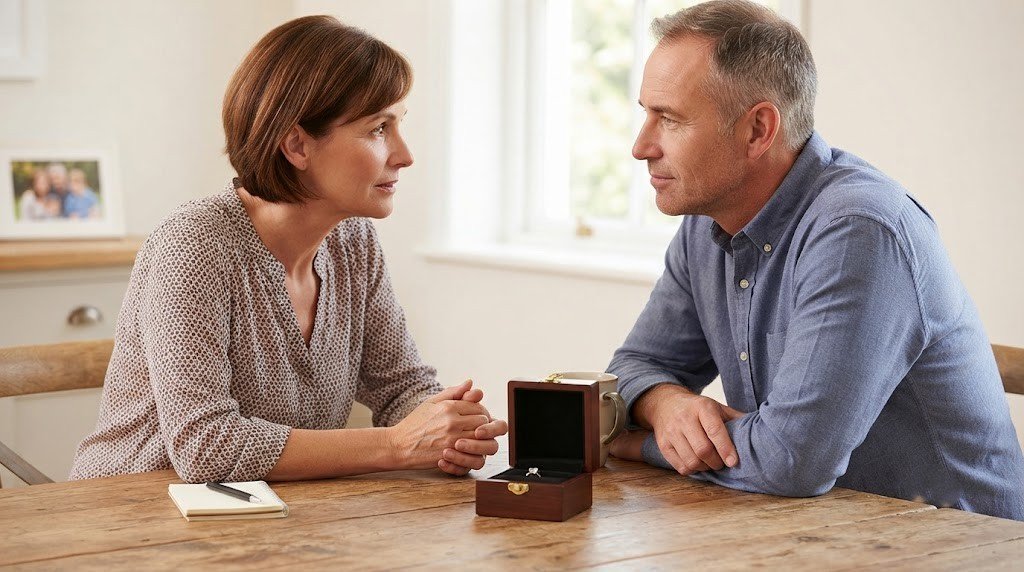
Raising the idea of a diamond while everyone is still grieving her can feel like speaking into a room that has gone very quiet. Talking to family about a daughter memorial diamond goes best when you begin with whoever may hold legal authority over her remains, speak privately before any group conversation, explain plainly what the process does and does not involve, and let each relative decide whether they want any part in it.

about a daughter memorial diamond

Why Does Talking About a Daughter Memorial Diamond Feel So Hard?

Partly because it arrives amid everything else. Arrangements, paperwork and the weight of losing her leave little room for a new idea, and on first hearing a diamond can sound more like a jewelry advertisement than a way of remembering someone.

Partly because each person grieves her differently. One relative may long for something to hold; another may find the thought of dividing her ashes unbearable. Neither reaction is wrong, and a conversation about a daughter memorial diamond tends to bring those differences to the surface quickly.

And partly because of who she was to each of them. To you she may be a daughter; to someone else she was a wife, a partner, a mother, a sister or a granddaughter. None of those relationships outranks the others emotionally, even when the law gives one person the final say.

Knowing this in advance helps. Much of the difficulty in talking about a daughter memorial diamond has little to do with the stone. It is about people needing to feel consulted, respected and free to say what they actually feel.

Who Might Hold Authority Over Her Remains?

Before the first family conversation about a daughter memorial diamond, find out who actually holds this decision. It may not be you.

In many states, the right to direct what happens to a person’s remains follows an order set by statute: often a surviving spouse or registered partner first, then adult children, then parents, then siblings. That order is not national. It varies by state, and anything she put in writing, such as a designated agent form, a will provision or signed funeral instructions, can change it. If she was married or had adult children, they may hold authority ahead of her parents.

The funeral home or crematory that handled her arrangements will know who signed the cremation authorization and can usually explain how your state treats the question. An attorney can confirm it if things are complicated.

Hair raises its own question. A lock kept at home can feel like yours alone to decide about, but personal belongings can form part of an estate, and the rules differ by state. Before using hair for a stone, check with whoever is administering her estate, and tell the person with authority over her remains in any case.

None of this measures love. A rule about who signs a form says nothing about who grieves her most. If the person with authority is not you, the respectful route is to ask them about a daughter memorial diamond directly rather than working around them.

Who Should Hear About a Daughter Memorial Diamond First?

There is no single correct order, but this sequence keeps the people with the most at stake from hearing secondhand:

  1. Confirm who holds authority. Check state rules, her written wishes and the cremation paperwork before raising anything with anyone else.
  2. Speak privately with that person first. If it is her spouse or partner, or her adult children, go to them before anyone else, alone and without a provider’s brochure in hand.
  3. Talk with her other parent. Whether you are together, separated or rarely in touch, a parent who learns about a daughter memorial diamond from someone else may feel shut out for years.
  4. Include any brothers or sisters, and her adult children if she had them. Offer each one the choice of a stone, a different keepsake or nothing at all.
  5. Bring in grandparents and close relatives. Some will want a voice in decisions about a daughter memorial diamond; some only want to know.
  6. Write down what was agreed. A short email to everyone involved, and later to the provider, prevents confusion about portions, stones and who decided what.

Real families bend this order. If you hold authority yourself, start with whoever shared her daily life most closely. What matters is that nobody central learns about a daughter memorial diamond from a social media post or a passing remark at a gathering.

What If Her Parents Disagree or Live Apart?

Parents do not always grieve in step or share a household. One may be ready within weeks while the other needs a year; one may be arranging everything alone while the other stays at a distance.

If you are the parent raising the subject, begin a talk about a daughter memorial diamond with what you share rather than what you want. “I’ve been thinking about ways to keep something of her close, and I’d like to know what you think” leaves far more room than “I’ve found a company.”

Disagreement about a daughter memorial diamond does not have to end in a single verdict. Providers typically use only a small portion of ashes, from a few tablespoons up to roughly 4 ounces, depending on the provider. So one parent can choose a stone while the other keeps their share in an urn, or scatters or buries it. Knowing how much ash a provider usually asks for can turn an either or argument into an arrangement that holds both wishes.

Where neither parent holds legal authority, perhaps because she was married, both may need to approach her spouse or partner. A difference of opinion about a daughter memorial diamond is easier for a spouse to hear when it is presented honestly rather than as competing requests.

If the disagreement is sharp, a funeral director, a friend both parents trust or a professional mediator can help find a path neither parent could see alone.

How Do You Bring Siblings and Grandparents In?

If she had brothers or sisters, they knew her in ways nobody else did, and they deserve to be asked about a daughter memorial diamond rather than simply informed. Some will want a stone of their own, some a different keepsake, and some only want to know what is happening.

Several stones can often be grown from one portion of ashes or hair, so offering siblings their own piece is usually a practical possibility rather than only a gesture. Whether several relatives can each receive a stone depends on the provider and the material available, so check before making an offer you cannot keep.

Grandparents may come from a generation, or a faith, in which cremation itself was uncommon, and a diamond may sound stranger still. Give them time and plain information. Some are reassured once they understand what the stone is; others stay uneasy about a daughter memorial diamond, and that unease can be respected without changing anyone else’s plans.

If she had adult children, their wishes carry particular weight, both because they may hold legal authority and because a stone may one day pass to them. Ask them directly, separately and early. Aunts, uncles, cousins and close friends can usually hear about a daughter memorial diamond once the immediate family has agreed, which spares them a decision that is not theirs to make.

What Should You Say About a Daughter Memorial Diamond, and What Should You Leave Out?

A conversation about a daughter memorial diamond is rarely finished in one sitting. Say what you came to say, then stop and listen. These phrases tend to open the door:

  • “I’d like to hear what you think before anything is decided.”
  • “Only a small portion of her ashes would be used; the rest stays where we planned.”
  • “You don’t have to want one. It’s completely fine to say no.”
  • “Can I send you some information to read in your own time?”
  • “This isn’t instead of anything else we’re doing for her.”

These, even when meant kindly, tend to close it:

  • Anything suggesting that someone who truly loved her would want a stone.
  • Any promise that the diamond will make anyone feel better.
  • Claims that the stone is made wholly of her carbon. It is not, and someone will check.
  • Pressure about deadlines, discounts or acting before it is too late.
  • Comparisons of who was closest to her or who is grieving most.

Timing matters as much as wording. A quiet phone call or a walk usually goes better than a crowded room after the service. You can also be honest about your own feelings without making them anyone else’s obligation: “This matters to me” is a complete sentence when you speak about a daughter memorial diamond.

How Do You Explain What the Stone Actually Is?

Some relatives will never have heard of memorial diamonds, and their first questions may be skeptical. When people ask hard questions about a daughter memorial diamond, plain numbers reassure more than enthusiasm, and anyone who prefers to read independently can start with general background on memorial diamonds.

The essentials are brief. It is a real, lab grown diamond, rated 10 on the Mohs hardness scale like any other diamond. Carbon is extracted from a portion of her ashes or a lock of her hair, purified, converted to graphite and grown in a high pressure press, with supplemental lab carbon typically blended in.

On how much of it is her, honesty is the strongest answer. For a stone grown from ashes, carbon recovered from her typically makes up around 10 to 15% of the finished stone’s mass, and some providers cite as low as 3%. For hair, or a blend of hair and ashes, no published percentage exists, so ask the provider to state theirs in writing. Whether the stone is really made from her ashes is a useful page to share with a doubtful relative.

A few other facts settle common worries about a daughter memorial diamond. Nobody can choose or predict the color from the source material; memorial stones tend toward yellow, blue and champagne. The process typically takes six to ten months, up to about a year for larger or specialty color stones. General industry prices start around $1,500 to $3,500 for 0.10 to 0.25 carats and rise steeply with size. What moves the price matters if anyone fears being asked to contribute.

What Reactions Might You Hear About a Daughter Memorial Diamond?

Reactions to news about a daughter memorial diamond usually carry something underneath the words. Responding to that, rather than debating the surface, keeps the conversation open.

What you might hearWhat may sit underneathA respectful response
“It feels like turning her into jewelry.”Fear of trivializing her“I understand. For me it’s about keeping part of her close; you don’t have to feel the same.”
“Her ashes should stay together.”A sense of what is fitting, sometimes a faith teaching“Only a small portion would be used. Let’s talk about how to honor what matters to you.”
“Is it really her, or just marketing?”Distrust of the industry“Some of the carbon is hers, and lab carbon is typically added to it. Here’s the provider’s written answer.”
“It’s far too soon.”Not ready for any decisions“There’s no deadline. We can come back to this whenever you like.”
“Isn’t that a lot of money?”Worry about cost, or about being expected to pay“Nobody is expected to pay for a stone they don’t want.”
“Our faith doesn’t allow this.”Religious conviction“Thank you for telling me. Would it help to ask your own faith leader?”
“Why wasn’t I asked?”Feeling excluded“You’re right to raise it. I want your view now, before anything is final.”
“I don’t want one, but go ahead.”Real acceptance, or quiet hurt“Thank you. If you ever change your mind, that’s fine too.”

None of these reactions needs to be argued down. Someone who feels heard about a daughter memorial diamond may find a family decision easier to live with than someone who feels outvoted, even when the outcome is identical.

How Do You Handle Religious Concerns Respectfully?

Faith can sit underneath some of the strongest objections about a daughter memorial diamond, and it deserves to be taken at its word. No religious tradition has an official position on memorial diamonds specifically. The guidance that exists concerns cremation and the handling of ashes, and it varies by faith, denomination and individual clergy.

A few examples show the range. Current Catholic guidance permits cremation but asks families to keep the ashes whole and in a sacred place, not shared out among relatives or held at home, allowing a small portion only under narrow conditions, so a Catholic relative’s hesitation reflects real teaching and a parish priest is the right person to ask.

Across the major schools of Islamic thought, cremation itself is considered impermissible in ordinary circumstances. A stone grown from hair involves no cremation at all, which is why the hair route is worth knowing about. Orthodox and Conservative Judaism generally prohibit cremation, while Reform Judaism leaves more to rabbis and families. Hindu, Buddhist and Protestant families vary by community, teacher and congregation.

Never try to argue anyone out of a religious concern. Suggest they speak with their own faith leader. A relative who is uneasy about a daughter memorial diamond on religious grounds may decline a stone while remaining comfortable with others choosing one, or may not. The conviction is theirs to hold.

What If the Answer Is No, or Not Yet?

If the person with legal authority says no, that answer stands, at least for now. Pressing harder rarely changes a grieving person’s mind. Thank them, and ask whether they would be open to talking about a daughter memorial diamond again later.

“Not yet” is a reasonable answer too. Nothing about the process requires a decision in the first weeks or months. Families who keep everything in an urn, bury or scatter her ashes, or choose no keepsake at all are making equally valid choices, and how a diamond and an urn compare can help a hesitant relative see the options side by side.

If the family does agree, gather the provider’s answers before anything is sent. The questions worth putting to a provider in writing cover custody, documentation and terms, and sharing those written answers is a simple way to keep everyone informed about a daughter memorial diamond from start to finish.

Frequently Asked Questions

Do I need my family’s agreement to make a diamond from my daughter’s ashes?

It depends on who holds legal authority over her remains, which varies by state and by anything she put in writing. Her spouse, partner or adult children may hold it ahead of her parents. Agreement from everyone else is not always required, but it is worth seeking.

What if her spouse or partner does not want a diamond made?

If they hold authority over her remains, their decision generally stands. Ask whether they would revisit it later, and whether a different keepsake might be acceptable. Pressing harder rarely helps and can strain a relationship that matters to everyone who loved her.

Should I talk to family before or after contacting a provider?

Gathering general information quietly is reasonable, but talk with the person who holds authority, and with close family, before committing to anything about a daughter memorial diamond or sending material. Arriving with a signed contract can make relatives feel left out.

How do I raise it with a relative whose faith discourages cremation?

Gently, and without trying to change their view. No tradition has an official position on memorial diamonds specifically. Suggest they consult their own faith leader, and mention that a stone grown from hair involves no cremation, which may matter to them.

Can each of her siblings have a stone of their own?

Often, yes. Because only a portion of ashes or a small amount of hair is needed, several stones can frequently be grown from one source. Availability depends on the provider and the material, so confirm before offering stones to anyone.

What if relatives say it is too soon to talk about this?

Respect that and set the conversation aside. Nothing about the process requires a quick decision, so tell them you will not raise the subject of a stone again until they are ready, and then keep that promise for as long as it takes.

Is it all right to go ahead if not everyone agrees?

If you hold authority and have listened carefully, you may still proceed; full agreement about a daughter memorial diamond is not always possible. Tell those who disagreed plainly and kindly, make clear nobody must take part, and keep the decision private if they prefer.

Final Thoughts on Talking With Family About Her Diamond

There is no script that makes this conversation easy, and no order of operations that ensures everyone will agree. What you can control is how people feel treated as they hear about a daughter memorial diamond: asked rather than told, given time rather than deadlines, offered facts rather than promises.

Families that talk well about a daughter memorial diamond do not always reach the same answer for everyone. Some relatives will wear a stone, some will keep a portion of her ashes, and some will choose nothing physical at all. That variety is not a sign the conversation failed. If you are still at the beginning, a guide on where to start choosing can help you prepare.

Learn More About Daughter Memorial Diamonds

Talk With Memorial Diamond

If it would help to have plain answers in hand before you talk with family about a daughter memorial diamond, Memorial Diamond is glad to talk things through at memorialdiamond.us. You can ask anything, share the answers with whoever needs them, and decide nothing until your family is ready.

Sister Hair Diamond

Sister Hair Diamond: The Complete Guide

Sometimes what a sister leaves within reach is very ordinary: a hairbrush on a bathroom shelf, a braid folded into a drawer, a lock someone thought to save. A sister hair diamond is a genuine lab grown stone carrying carbon drawn from a few grams of her hair, usually combined with lab carbon in the growth press. It needs no cremation, and six to ten months from the laboratory’s receipt of the hair is a typical wait.

sister hair diamond

Why Does Hair Work So Well as a Carbon Source?

Hair is built from keratin, a protein dense with carbon. By weight, it is roughly half carbon, which is a dramatically richer starting point than cremated remains, where carbon makes up only a few percent at most.

For a sibling considering a sister hair diamond, that chemistry has three practical consequences. First, only a small amount of material is needed. Second, cremation is not required, so hair can come from a sister who was buried, from one whose ashes went elsewhere, or from a keepsake saved long before anyone imagined this use. Third, the hair you are thinking of may already be in your home.

None of this makes a sister hair diamond better or worse than one grown with ashes. It simply opens a door that ash cannot always open, especially for a brother or sister who does not hold authority over her remains.

A finished sister hair diamond is a diamond in every physical sense. It has the same carbon lattice as a mined diamond and sits at 10, the top of the scale used to rank mineral hardness, which is part of why it suits everyday wear.

How Is a Sister Hair Diamond Different From One Made With Ashes?

The growth process is largely shared. What differs is the material going in and the questions surrounding it. The comparison below sets the two side by side.

Point of comparisonHairCremated ashes
Carbon content of the materialRoughly 50% by weightRoughly 0.5 to 4% by weight
Typical amount requestedA small lock or a few gramsA few tablespoons to about 4 oz or 100 g
Cremation needed?NoYes
Who may need to agreePossibly her executor or whoever holds authority, depending on where the hair is and state rulesWhoever holds legal authority over her remains
Published share of her carbon in the finished stoneNone published. Ask the provider in writingAround 10 to 15% of the stone’s mass for ash, with some providers citing as low as 3%
Supplemental lab carbonTypically blended inTypically blended in
Color predictable from the material?NoNo

For a sister hair diamond, the row worth pausing on is the published share. Industry figures exist for ash. For hair, no published finished stone percentage exists. That is not a reason for suspicion, but it is a reason to ask any provider for their figure in writing.

If her ashes are available to you as well, the full guide to a stone grown from her ashes covers that route and its authorization questions in detail.

Where Might Her Hair Come From?

Siblings are sometimes surprised by how many places a usable sample can turn up. Possible sources include:

  • A lock saved at the funeral home. Some funeral homes can cut a small lock before burial or cremation, at the request or with the agreement of the person directing her arrangements.
  • A hairbrush or comb she used. Strands caught in bristles can sometimes be gathered, although a provider may want to assess how much is there.
  • A keepsake lock or braid. Hair saved from a haircut, a celebration or a change of style, kept in an envelope or a box.
  • Hair saved by a stylist or salon. Rare, but worth mentioning if she donated or cut a length shortly before her death.
  • Hair already held by another relative. A parent, a partner or another sibling may have kept a lock without mentioning it.

Ask a provider whether dyed, permed or chemically treated hair is acceptable, and whether brush strands are enough on their own. Practice varies, and any provider asked to grow a sister hair diamond should tell you plainly what it can work with rather than accepting anything by default.

Who Should Agree Before Her Hair Is Used?

It is tempting to assume that hair sitting in your own drawer is simply yours to use. Sometimes it may be, but the answer depends on where the hair came from and on the rules in your state.

If the hair is still part of her body, or is to be collected at the funeral home, the person with legal authority over her remains will generally need to agree. State law often places a spouse or partner first, followed by adult children and parents, and only then siblings. The order varies by state, and her own written wishes can change it.

If the hair was already separated, such as in a brush or a saved lock, it may count among her personal belongings. Belongings can form part of an estate, and how they pass varies by state and by any will she left. Before a sister hair diamond is ordered, a short conversation with her executor, or with whoever is settling her affairs, is a sensible step.

In practice, the respectful route is also the simple one. Tell the people closest to the decision what you are planning, how little hair is involved, and whether they would like a stone too. A sister hair diamond made openly may sit more easily in a family than one made quietly.

Faith can matter here as well. For families whose tradition objects to cremation itself, a hair based stone involves no cremation, though it is still worth asking a faith leader rather than assuming.

How Much Hair Does a Sister Hair Diamond Need?

Very little. Requirements vary by provider, but a small lock or a few grams is the typical request, often described as a palm sized bundle.

Length matters less than total weight. A short lock can be enough if it is dense. Scattered brush strands may need gathering from several sources to reach a provider’s minimum. Ask exactly what weight the laboratory needs for the carat size you are considering, and whether that minimum changes for a larger stone.

What hair quantity does not decide is size. As with any memorial stone, carat weight comes from how long the crystal grows in the press, not from how much material arrives. Sending extra hair will not make a sister hair diamond larger, so you can keep the rest of any lock she left exactly where it is.

If you would like more detail on preparing the sample itself, the practical route to turn sister hair into a diamond walks through collection, labeling and the first call.

How Should Her Hair Be Stored and Sent?

Until a provider gives you its own instructions for a sister hair diamond, the general aim is to keep the hair dry, clean of loose debris, and clearly labeled. A paper envelope inside a sealed bag, kept out of humidity and direct sunlight, is a reasonable way to hold it while you decide.

Follow the provider’s packing directions exactly once you have them. Some supply a collection kit with a container and a reference number, and that number begins the chain of custody for a sister hair diamond.

A few things worth confirming before the parcel leaves:

  1. The reference number written on both the container and the paperwork.
  2. An insured, tracked shipping method, with a signature required on delivery.
  3. A written note of what you sent, including an approximate weight and a photograph.
  4. Whether any unused hair will be returned, and to whom.

Keep a small portion back if you can. Holding onto some of her hair costs nothing and leaves options open later.

What Are the 6 Stages of Making a Sister Hair Diamond?

Equipment and timing vary between laboratories, but the sequence below describes how her hair typically becomes a finished sister hair diamond.

StageWhat happensWorth knowing
1. Receipt and loggingThe hair arrives, is weighed, and receives an identifier that stays with itAsk whether you will be given the identifier
2. Carbon extraction and purificationNon carbon parts of the keratin are driven off in a controlled, oxygen free process, leaving carbon refined to about 99.9% or higherHair’s high carbon content means less material is needed at this stage
3. GraphitizationThe purified carbon is heated to around 2,500 to 2,700°C and converted into graphiteGraphite is the feedstock a growth press uses
4. GrowthHer graphite, typically blended with lab carbon, grows around a small diamond seedMost memorial stones are grown by HPHT, with pressures near 6 to 8 GPa and temperatures of 1,400 to 2,500°C. A minority of providers use CVD
5. Cutting and polishingThe rough crystal is shaped and faceted into the chosen cutThe cut is the family’s choice. Ask what the finished weight is likely to be once the rough crystal is shaped
6. Documentation and gradingAn in house origin certificate records where the carbon came from. A separate independent grading report can be orderedIndependent grading tends to be an optional extra, billed on its own

Some providers also offer post growth irradiation for certain colors. It is not a required stage, and it should be disclosed on the paperwork whenever it is used.

For the general science behind lab grown diamond production, HPHT and CVD work the same way whether the carbon began as hair, ash or an industrial feedstock. A closer look at how a memorial diamond is made from her hair goes through each laboratory step at a slower pace.

How Much of a Sister Hair Diamond Is Her Carbon?

Here the honest answer is that there is no published figure for hair. Providers describe a personal carbon share for ash based stones, but no equivalent industry percentage has been published for a sister hair diamond or any other hair based stone.

What is clear is that her carbon is genuinely present in a sister hair diamond. It is extracted, purified and grown into the crystal, typically together with supplemental lab carbon. The stone is not a token representing her. It physically holds carbon that was once part of her.

What is not accurate is any claim that the diamond consists of her hair and nothing else, or that no outside carbon was used. Supplemental carbon is typically part of the process, so a provider claiming none was added should be able to explain exactly how.

So ask, and ask in writing: what share of the finished stone’s mass do you expect to come from her hair? A provider with a documented process will either give you a figure or explain clearly why it cannot. If you would like the evidence weighed in full, whether the stone is really made from her hair is answered on its own page.

Can Anyone Predict the Color in Advance?

No, and a sister hair diamond is no exception. The shade is decided inside the press, by whatever trace elements are present while the crystal forms. Nitrogen brings out yellow, boron brings out blue, and keeping both out to produce a colorless stone takes additional processing and adds to the price.

Memorial diamonds tend toward yellow, blue and champagne shades because their carbon has a personal, organic origin rather than a tightly controlled industrial one. Some providers also offer irradiation after growth to produce red, green or black stones.

Hair does not narrow the range or lighten the result. Her hair color, whether dark, fair, gray or dyed, has no predictable link to the shade of the finished stone, and the color cannot be chosen or matched from the hair itself.

If you are choosing a treated color, cut or setting for a sister hair diamond, let it rest on what she enjoyed and what you will wear, not on any idea of what suits a sister.

What Does a Sister Hair Diamond Cost, and How Long Does It Take?

The cost of a sister hair diamond follows carat weight and color far more than the source material. As a rough guide, here is how broad 2026 industry pricing breaks down by size. These figures describe the market, not one company:

  • Entry sizes, roughly 0.10 to 0.25 ct: about $1,500 to $3,500.
  • Between half a carat and one carat: about $5,000 to $15,000. A colorless result adds noticeably to the price compared with yellow, blue or champagne tones.
  • Two carats to five or more: from around $20,000 to $75,000 and beyond.
  • Usually extra: independent grading, engraving, fancy cuts, and any setting such as a ring, pendant or cufflinks.

Timing follows the same logic. Six to ten months is typical from the laboratory’s receipt of the hair, and larger stones over about two carats, or specialty colors, can take up to roughly twelve months.

Because no cremation is involved and the material may already be in hand, a sister hair diamond can sometimes begin sooner than an ash based stone. The laboratory stages themselves take as long either way.

Can Each Sibling Have a Stone Grown From Her Hair?

Often, yes, provided there is enough hair and the people who need to agree are comfortable with it. Because each sister hair diamond needs only a few grams, one saved braid or lock can sometimes serve several stones.

Sibling groups vary widely. There may be two of you or six, a twin among you, or half and step siblings who each knew her in their own way. No one needs to rank their claim, and nobody is obliged to want a stone at all.

When more than one order comes from one source, ask the provider:

  • Whether each portion is weighed, logged and grown separately.
  • Whether stones can be ordered at different times.
  • How unused hair is returned and to whom.

Some families combine hair held by one sibling with a small portion of ash held by someone else. Bringing both materials into one stone has its own documentation questions, which are worth reading before deciding.

What Should You Ask Before Sending Anything?

When choosing who will make a sister hair diamond, a short written list protects you better than a long phone call. Put these to any provider and keep the replies:

  1. What minimum weight of hair do you need, and can you work with brush strands or treated hair?
  2. What reference number travels with her hair, and who signs for it at each step?
  3. Is her hair ever processed alongside another family’s material?
  4. What share of the finished stone do you expect to come from her hair?
  5. What happens to hair you do not use?
  6. Will an independent lab grade the stone, and is that in the quote or extra?
  7. What happens, contractually, if growth fails or the stone fractures in cutting?

A provider that answers these specifically, in writing, has told you a great deal about how it will handle a sister hair diamond. For siblings planning to combine her hair with ashes in the same stone, the same questions apply to each material separately.

Frequently Asked Questions

Does a sister hair diamond require cremation?

No. Hair is roughly half carbon by weight, so a laboratory can extract enough from a small lock without any cremation. That makes hair an option when she was buried, or when her ashes are held by someone else or already scattered.

How much of her hair is needed?

Typically a small lock or a few grams, though each provider sets its own minimum. Ask for the exact weight in writing, and whether brush strands alone are enough, before you gather or send anything to the laboratory.

Can a sister hair diamond be made from her hairbrush?

Possibly, if there is enough and the provider accepts brush strands. Because her belongings may pass through her estate, and state rules differ, speak with her executor or whoever is settling her affairs before sending any of it.

How much of a sister hair diamond is actually her?

No published industry figure exists for the share of hair carbon in a finished stone. Her carbon is genuinely present, typically blended with lab carbon. Ask each provider for its expected percentage in writing before you commit to an order.

Will her hair color affect the diamond’s color?

No. However dark or light her hair was, the stone’s tint comes from stray nitrogen or boron atoms caught in the crystal as it grows. Memorial stones tend toward yellow, blue and champagne, and the result cannot be chosen, matched or predicted from the hair.

Can several siblings each have a stone from one lock?

Sometimes, if the lock holds enough material for each order and the people who need to agree are comfortable. Ask the provider to weigh, log and grow every portion separately, with its own documentation for each sibling.

Final Thoughts on a Sister Hair Diamond

Hair is easy to overlook because it is so ordinary, and that is part of what makes it meaningful. A brush she reached for every morning, a lock someone saved without quite knowing why: these are small, real traces of her daily life.

A sister hair diamond turns one of those traces into something durable, without asking anyone to divide her ashes and without requiring cremation at all. The practical work is modest: confirm who should agree, gather a few grams, and get every answer about custody and carbon in writing.

Take it at whatever pace suits you. The hair will keep, and so will the decision.

Learn More About Sister Memorial Diamonds

Talk With Memorial Diamond

Whether you already have a saved lock in hand or are still deciding if a sister hair diamond is right, Memorial Diamond is happy to talk it through. Visit memorialdiamond.us to ask about quantities, packing and who should be part of the decision. There is no obligation and no rush.

Sister Ashes and Hair Diamond The Complete Guide

Sister Ashes and Hair Diamond: The Complete Guide

What a family holds of a sister is not always kept in one place: her ashes may rest with one person while a lock of her hair sits with another. A sister ashes hair diamond is a single lab grown diamond grown partly from carbon recovered from both a small portion of her cremated remains and a little of her hair, blended with lab carbon, and typically completed within six to ten months.

sister ashes hair diamond

What Is a Sister Ashes Hair Diamond?

A sister ashes hair diamond is one stone with two personal sources. Carbon is recovered from a measured amount of her ashes and from a small quantity of her hair, purified, and then grown into a single crystal, typically together with supplemental carbon supplied by the laboratory.

Physically, the result is a diamond like any other lab grown diamond. It has the same lattice, the same hardness and the same grading scale. What makes a sister ashes hair diamond distinctive is purely its origin: two different traces of one person, joined in one object.

The idea of a sister ashes hair diamond sounds unusual at first, and it is a less familiar request than a stone from ashes alone or hair alone. Not every provider offers it, and those that do may describe it differently, so asking directly whether a laboratory accepts two materials for one order is the sensible first step.

Combining is not a requirement and not an upgrade. A stone from one material is complete on its own. A sister ashes hair diamond is simply one more arrangement a family can choose when both materials are available and both feel meaningful.

Why Would a Family Combine Ashes and Hair?

The reasons families consider a sister ashes hair diamond are as varied as the families themselves, and none needs justifying. Some that come up:

  • The materials are held by different people. Her ashes may sit with whoever holds authority over them, while a sibling kept a lock of her hair. A blend lets both sides of the family contribute.
  • The ash portion offered is very small. If whoever holds her ashes is comfortable releasing only a spoonful or two, adding hair may let the family proceed without asking for more.
  • Both materials carry meaning. Hair can feel tied to her everyday life, and ashes to her final rest. Some families want a stone that holds both.
  • Several siblings each want to take part. One person contributes the hair they saved; another arranges the ash portion; the cost is shared.
  • A single heirloom is the goal. Rather than several smaller stones, the family prefers one sister ashes hair diamond that can be worn and later passed on.

What a sister ashes hair diamond should not be chosen for is a belief that it puts “more of her” into the stone. No published percentage exists for blended stones, so that assumption cannot be confirmed in advance.

Who Needs to Agree to Each Material?

A blend can involve two separate permissions, and they may rest with different people. That is the single most important practical difference between a sister ashes hair diamond and a stone from one material.

For her ashes, the person with legal authority over her remains needs to agree. In many states the order runs from a spouse or registered partner, through adult children and then parents, before it reaches siblings. The sequence varies between states, and her own written wishes or a designated agent can change it.

For her hair, the answer depends on where the hair is. Hair collected from her body at a funeral home would generally need the same person’s agreement as the ashes. Hair already separated, such as a saved lock or brush strands, may count as one of her belongings, which can form part of her estate under rules that vary by state. Her executor, or whoever is settling her affairs, is the person to consult.

So a sibling who holds a lock of her hair and hopes for a sister ashes hair diamond may still need two conversations: one with whoever holds the ashes, and possibly one with her executor about the hair. Get both agreements in writing, and expect a careful provider to ask for them before accepting either material.

If the people involved disagree, pausing is wiser than pressing. Grief is uneven, and an arrangement everyone has accepted is easier to live with later.

How Can a Sibling Raise a Sister Ashes Hair Diamond With the Family?

Gently, and with specifics. If you hold her hair but not her ashes, the request to whoever holds the ashes is smaller than it may sound: a spoonful or two, with everything else staying exactly where it is. Offering the lock you saved as part of the stone can also make the idea feel shared rather than taken.

A few things that can ease the conversation:

  • Bring the provider’s custody process and release form, so nobody is asked to agree to something unseen.
  • Explain that adding hair does not mean asking for more ash; if anything, it may mean asking for less.
  • Ask whether they would like a say in the cut or setting, or would like a stone of their own.
  • Treat “not yet” as a genuine answer. A sister ashes hair diamond can wait, because sealed ashes and dry, stored hair both keep.

If faith matters to the person holding her ashes, a conversation with their own faith leader about dividing cremated remains may need to come before anything else. That conversation belongs to them, and it is worth respecting whatever it concludes.

How Are Two Materials Handled in the Laboratory?

Ash and hair are chemically very different. Cremated remains are mostly bone mineral, chiefly calcium phosphate, with usable carbon at roughly 0.5% to 4% by weight. Hair is built from keratin and is roughly half carbon. Extraction has to deal with each material on its own terms before any carbon can be combined into a sister ashes hair diamond.

StepHer ashesHer hair
ArrivalLogged and given an identifierLogged, weighed and given an identifier
ExtractionMineral content separated away in an oxygen free, multi stage processNon carbon parts of the keratin driven off in a controlled process
PurificationCarbon refined to about 99.9% or higherCarbon refined to about 99.9% or higher
CombiningVaries by provider: ask when and how the two carbon sources are joinedVaries by provider: ask when and how the two carbon sources are joined
GraphitizationHeated to roughly 2,500 to 2,700°C into graphiteHeated to roughly 2,500 to 2,700°C into graphite
GrowthGrown, typically with supplemental lab carbon, mainly by HPHT at about 6 to 8 GPa and 1,400 to 2,500°CSame growth cell, same crystal

After growth, the rough crystal is cut and polished, may receive an optional color treatment where a provider offers one, and is documented. Each column mirrors a single material process: the ash only laboratory sequence and the hair only laboratory sequence are each described on their own.

For a sister ashes hair diamond, the combining row is the one to press on. Some laboratories may keep the two materials apart until after purification; others may describe a different sequence. There is no industry standard to point to, so the provider’s own written description is what counts. For a slower look at the laboratory itself, how a stone is made from her ashes and hair together follows each step in order.

What 5 Checks Should a Sister Ashes Hair Diamond Pass on Paper?

With two materials, documentation matters more, not less. Before agreeing to a sister ashes hair diamond, ask the provider to confirm these five points in writing:

  1. Both materials are recorded on arrival. The intake record should list ash and hair separately, each with its received weight and its own identifier or a shared order number.
  2. Both authorizations are on file. The provider should hold written consent from whoever controls her ashes, and any agreement needed for the hair.
  3. The combining step is described. You should know at what stage the two carbon sources are joined and that no other family’s material enters the process.
  4. Supplemental carbon and any treatment are disclosed. The paperwork should say lab carbon was added and whether any irradiation was used for color.
  5. The origin certificate names both sources. An in house origin certificate should state that the stone was grown from carbon recovered from her ashes and her hair; it is separate from any independent grading report.

An independent grading report, if you want one, describes the stone’s quality using the cut, color, clarity and carat framework that gemological labs share. It is usually optional, is typically priced separately, and says nothing about origin. The origin certificate does that job.

How Much of a Sister Ashes Hair Diamond Is Her Carbon?

No published percentage exists for a blend. Industry figures describe ash only stones, where personal carbon from ash typically accounts for something like 10% to 15% of the finished mass, and a few providers quote figures nearer 3%. That figure is about ash alone and cannot be carried over to a blended stone.

For hair, and for a sister ashes hair diamond combining both, no comparable finished stone percentage has been published. Hair’s higher carbon content does not translate into a known share of the crystal, because the laboratory still decides how much supplemental carbon the growth requires.

What is certain is that her carbon from both sources is genuinely present, grown permanently into the lattice alongside lab carbon. What is not accurate is any description of the stone as made of her alone, or as containing no added carbon.

So ask each provider, in writing, what share of the finished mass they expect to come from her ashes and her hair combined. A clear figure, or a clear explanation of why one cannot be given, tells you more than reassurance. Whether such a stone is really made from her ashes and hair is examined closely on its own page.

Does Adding Hair Change the Size or Color?

Not in any way you can plan around. The finished carat weight reflects the length of the growth run, and your family picks that size when ordering; neither the amount nor the mix of material you send changes it. Adding hair to ash does not make a sister ashes hair diamond larger or faster.

The color of a sister ashes hair diamond behaves the same way. It depends on which trace elements end up in the crystal during growth; nitrogen gives a yellow cast and boron a blue one, while a colorless result means excluding both, at extra cost. Memorial stones tend toward yellow, blue and champagne.

Blending does not shift that range in a predictable direction. Her hair color has no known link to the stone’s shade, and the result cannot be chosen or matched from either material. Where a provider offers treated colors such as red, green or black through irradiation, that is a separate, disclosed choice.

If cut, setting or treated color are decisions you get to make, base them on what she enjoyed and what the wearer will use every day rather than on any convention about sisters.

How Much Material Is Needed From Each Source?

For ash only stones, laboratories typically ask for a few tablespoons up to about 4 oz, roughly 100 g. For hair only stones, a small lock or a few grams is the usual request. Both are provider variable figures.

For a sister ashes hair diamond, ask the provider what it needs from each material. Some may accept less of each than a single material order would require; others may ask for each material’s standard minimum. There is no industry rule, so get the figure for your order in writing.

Two points help when talking with whoever holds each material. First, the amount is small either way, so the urn, the plot, or the saved lock stays largely intact. Second, ask whether unused ash and unused hair are returned, and to which person, since they may have come from different households.

If you would like the logistics of collecting, packing and sending both materials set out step by step, the practical route to turn sister ashes and hair into a diamond covers it in sequence.

What Do Cost and Timing Look Like for a Sister Ashes Hair Diamond?

General 2026 industry ranges apply, with price driven mainly by carat and color:

Carat rangeTypical industry priceNotes
Roughly 0.10 to 0.25 ctAround $1,500 to $3,500Smallest sizes offered
Half a carat to one caratAround $5,000 to $15,000A colorless stone is priced well above a yellow, blue or champagne one
Two carats to five or moreAround $20,000 to $75,000 or higherLongest growth times

These are not any one company’s prices. Ask whether handling two materials changes the quote for a sister ashes hair diamond, and ask for the full total, since independent grading, engraving, fancy cuts and settings are usually extra.

Laboratories typically quote six to ten months once they hold the material, stretching to about twelve for stones above two carats or specialty colors. With a blend, ask whether that clock starts when the first material arrives or the second. Gathering two agreements can add weeks before anything ships.

If siblings are sharing the cost, write down who owns the finished stone and who will keep it.

Can Each Sibling Have a Blended Stone?

Sometimes. Because each stone needs only a small amount of each material, more than one sister ashes hair diamond may be possible from the same ashes and the same lock, if both sources stretch far enough and everyone who must agree is comfortable.

Families take many forms. She may leave one sibling or several, a twin, half siblings, step siblings, or siblings who were raised apart. Each relationship was its own. One sibling may want a blend, another a hair only stone, another nothing at all, and every choice is valid.

For multiple orders, ask the provider whether each stone is processed and documented separately, whether material can be reserved for a later order, and how leftover ash and hair are returned.

When Might One Material on Its Own Fit Better?

A sister ashes hair diamond is not always the right answer. If her ashes are fully available and nobody holds hair, an ash only stone is simpler, with one authorization and a published personal carbon range; the guide to a stone grown from her ashes explains that route.

If the ashes are not available to you, perhaps because whoever holds them prefers to keep them intact or because she was buried, hair alone may be the gentler path. It needs no cremation and only a few grams. The guide to a stone grown from her hair covers sources, permission and handling.

And if the only reason for blending is a hope that two materials make the stone more fully hers, it may be worth pausing. Without a published blend percentage, that hope cannot be measured. A single material stone is no less real. For broader context on how this category of keepsake developed, general background on memorial diamonds is a helpful starting point.

Frequently Asked Questions

Can a sister ashes hair diamond be made if different relatives hold each material?

Yes, provided each person who needs to agree does so in writing. Whoever holds legal authority over her ashes must consent to that portion, and her executor or that same person may need to agree to the hair, depending on state rules.

What percentage of a sister ashes hair diamond is her carbon?

No published figure exists for ash and hair blends. The often quoted 10 to 15 percent applies to ash only stones. Ask each provider for its expected share from both materials combined, in writing, before you place an order.

Does adding hair make the diamond bigger?

No. Carat size depends on growth time in the press, which follows the size you choose. Adding hair to a small ash portion does not enlarge the stone or speed it up, although it may help a family proceed with less ash.

How should a sister ashes hair diamond be documented?

The intake record should list both materials with their weights, both authorizations should be on file, the combining step should be described, supplemental carbon and any treatment disclosed, and the origin certificate should name both her ashes and her hair.

Will the stone’s color reflect her hair?

No. Her hair color has no known link to the stone’s shade, which is set by trace elements like nitrogen and boron present as the crystal grows. Memorial stones lean toward yellow, blue and champagne, and nobody can choose, match or predict the result.

Does every provider offer a sister ashes hair diamond?

Not necessarily. A blended order is a less familiar request than ash alone or hair alone, and providers differ in whether they accept two materials for one stone. Ask directly, and get the provider’s description of its process in writing.

Final Thoughts on a Sister Ashes Hair Diamond

There is something fitting about a stone that needs more than one person’s care to exist. A blend can mean that the people holding different parts of her have talked, agreed, and contributed something together.

That same feature is what makes the paperwork matter. Two materials mean two intake records, possibly two authorizations, and a combining step you should understand before you consent. A sister ashes hair diamond made with all of that in writing is a stone you can trust as well as treasure.

If a blend turns out not to fit, nothing is lost. Ashes alone or hair alone can lead to a stone every bit as meaningful.

Learn More About Sister Memorial Diamonds

Talk With Memorial Diamond

If your family is weighing a sister ashes hair diamond and would like to talk through permissions, quantities or documentation first, Memorial Diamond is here to help. Start a conversation at memorialdiamond.us whenever it suits you; asking a question carries no obligation.

Sister Ashes Diamond The Complete Guide

Sister Ashes Diamond: The Complete Guide

There is no settled script for what a sibling is allowed to want after a sister dies, and wanting something of hers you can actually hold is a reasonable thing to want. A sister ashes diamond is a lab grown diamond whose crystal holds carbon taken from a small, measured portion of her cremated remains, typically grown alongside supplemental lab carbon and usually ready six to ten months after the laboratory receives the ash. For a sibling, the first hurdle can be permission rather than chemistry.

sister ashes diamond

What Is a Sister Ashes Diamond, Exactly?

It is a diamond in the full physical sense, not resin, not glass, and not a crystal that merely looks the part. A sister ashes diamond is grown in a laboratory press, shares the carbon lattice of a mined stone, rates 10 for hardness, and is assessed against the four grading factors gemologists apply to every other diamond.

What sets it apart is the origin of some of its carbon. A measured amount of her ashes is processed until nothing but carbon is left, and that carbon enters the growth cell together with carbon sourced by the laboratory. A finished sister ashes diamond is physically connected to her without being made of her alone. Keeping that distinction clear protects you from any seller who blurs it.

Siblings arrive at the idea of a sister ashes diamond by different roads. Some want a stone because the urn lives in another household. Others want something that goes where they go, or that a niece, nephew or their own child might inherit one day. None of those reasons needs defending.

A sister ashes diamond also sits beside other choices rather than replacing them. An urn, a niche, a burial plot or a scattering can all go ahead as planned, because only a few tablespoons to a few ounces of ash are involved. The rest of her remains stay wherever the person responsible for them decides.

Who Decides What Happens to Her Ashes?

Any plan for a sister ashes diamond has to start here, and for a sibling it can be the hardest part to hear. In many states, the right to direct what happens to someone’s remains follows a statutory order: frequently a spouse or registered partner first, then adult children, then parents, with brothers and sisters further along. That order differs from state to state, and it is not always the final word.

Her own written wishes can change it. A signed declaration, a designated agent for disposition, or instructions in a document she prepared may move the decision to someone else entirely, including a sibling. Where a state recognizes those documents, they generally take priority over the default list.

So whether you hold authority depends on her circumstances and your state, not on how close the two of you were. If she had no spouse, partner, adult children or surviving parents, the decision may sit with her siblings jointly. If any of those people survive her, it may well sit with them.

Nothing in that order measures love. It is a procedural answer, written long before your family needed it. If you are unsure who signed for her cremation, the funeral home or crematory involved may be able to tell you, and a local attorney can confirm how your state’s order applies.

A careful provider will raise this too. Expect any reputable laboratory to ask who authorized the release of her ashes and to want that person’s written consent before it accepts anything for a sister ashes diamond.

How Can a Sibling Ask for a Portion Respectfully?

If someone else holds her ashes, whether her spouse, her partner, her adult children, your parents or another sibling, the route to a sister ashes diamond runs through a conversation with that person. Requests that are specific, modest and unhurried tend to land more gently than open ended ones.

A few approaches that can make the conversation easier:

  • Name a small, concrete amount. Laboratories typically ask for somewhere between a few tablespoons and about 4 oz of ash. “A few tablespoons” sounds very different from “dividing her.”
  • Say what stays untouched. The urn, the plot or the planned scattering continues as they intended. Ask a provider beforehand whether any unused ash is returned, and to whom.
  • Share the paperwork early. Let them read the release form and the provider’s custody process before anything is signed, so they are deciding with full information.
  • Respect faith and culture. Some traditions have views about dividing cremated remains. If that applies, a conversation with their faith leader may matter more than the stone.
  • Leave room for “not yet.” Grief moves at different speeds. A request that can be revisited later is easier to say yes to than one that needs an answer this week.

If the answer is no, or not now, that does not close every door. Hair she left behind can sometimes provide the carbon instead, though it raises its own questions about who it belongs to, and a stone grown from her hair works differently enough to deserve its own read.

How Is a Sister Ashes Diamond Made, Stage by Stage?

The sequence is broadly similar across the industry, although equipment, timing and documentation differ between laboratories. Here is how her ashes typically become a sister ashes diamond once they reach the laboratory.

StageWhat happens to the materialDetail worth knowing
1. Receipt and loggingHer ashes arrive sealed and receive an identifier that follows them through every stepAsk whether the identifier is physical, digital, or both
2. Carbon extractionBone mineral, chiefly calcium phosphate, is separated away in a controlled, oxygen free, multi stage processOnly a small share of ash is carbon to begin with
3. PurificationThe recovered carbon is refined to roughly 99.9% purity or higherImpurities would interfere with crystal growth
4. GraphitizationPurified carbon is heated to around 2,500 to 2,700°C and converted to graphiteGraphite is the feedstock growth presses use
5. GrowthHer graphite, typically blended with lab carbon, grows around a tiny diamond seedThe main method is HPHT, pressing at roughly 6 to 8 GPa and 1,400 to 2,500°C; fewer providers use CVD
6. Cutting and polishingThe rough crystal is shaped and facetedRound, oval, cushion, emerald and other cuts are possible
7. Optional color treatmentSome providers offer irradiation for certain colorsNot a mandatory stage, and it should be disclosed
8. Documentation and gradingAn origin certificate is issued; an independent grading report may be addedThird party grading is usually optional and priced separately

Stage five is where the size of the stone is really decided. Growth time in the press sets carat weight, so sending more ash does not, by itself, produce a larger or faster sister ashes diamond. If you want to understand HPHT and CVD growth in more technical depth, the general science is the same as for any lab grown diamond.

Each stage of making a stone from her ashes gets a slower, plain language walk through of its own.

How Much of the Finished Stone Is Her Carbon?

Less than marketing sometimes implies, and still a real, permanent amount. Cremated remains are made mostly of bone mineral, and usable carbon in ash runs at roughly 0.5% to 4% by weight, depending on the person and the cremation itself.

After purification, that recovered carbon is typically blended with lab sourced carbon so there is enough to grow a stone of meaningful size. Industry figures put the personal carbon in a finished sister ashes diamond at around 10% to 15% of the stone’s mass; a handful of providers put it as low as 3%. Those figures apply to ash specifically.

Some siblings find that percentage deflating at first. It can help to look at what it actually describes: carbon atoms that were part of her, locked into a crystal lattice that will not break down, wear away or separate out. The stone is not a symbol standing in for her. It contains her, alongside other carbon.

Be wary of any provider claiming the stone consists of her and nothing else, or describing it as made entirely of her ashes. That claim is not supported by the chemistry, and a company willing to overstate this point may overstate others. Before you commit, ask for the expected personal carbon percentage in writing. If you want the reasoning set out fully, whether a stone is really made from her ashes is answered on its own page.

How Much Ash Does a Laboratory Need?

Probably less than you would expect. Requirements vary by provider, but the typical range runs from a few tablespoons up to about 4 oz, or roughly 100 g, which is a small fraction of the ashes from a full cremation.

That modest figure matters when you raise the idea with whoever holds her remains. Asking for a few tablespoons leaves the urn visibly full and the family’s plans intact.

More ash does not mean a bigger sister ashes diamond. Carat size is a choice you make, and that choice sets the growth time; the quantity of ash only needs to be enough to yield the carbon the laboratory requires.

Three practical points to settle before anything is shipped:

  1. Ask exactly how much the provider needs for the carat size you are considering.
  2. Ask whether unused ash comes back, to whom, and by what insured, tracked method.
  3. Ask how the ashes should be packed and whether the provider supplies a container or kit.

What Color Might a Sister Ashes Diamond Turn Out?

No one can tell you in advance, and a provider promising an exact shade is promising something it cannot control. A diamond’s tint is set by stray atoms caught in the lattice as it grows. Where nitrogen gets in, the stone leans yellow; where boron gets in, it leans blue; only when both are kept almost entirely out does it come out colorless.

Because the carbon in a sister ashes diamond comes partly from a person rather than a controlled feedstock, trace elements are normal. Memorial stones therefore tend toward yellow, blue and champagne tones. Colorless is achievable but needs extra processing and costs more. Some providers also offer post growth irradiation for red, green or black stones, which should always be disclosed on the paperwork.

The color of a sister ashes diamond cannot be chosen, matched or predicted from the ashes themselves. It will not reflect her eyes or her personality, and nobody should suggest otherwise.

If you select a treated color or a cut, choose it for reasons that are yours and hers: what she liked, what you will actually wear. There is no convention about what suits a sister, and you do not need one.

What Does a Sister Ashes Diamond Cost in 2026?

The price of a sister ashes diamond depends mainly on carat weight and color, then on cut, grading and setting. The ranges below are general 2026 industry figures, not any single company’s price list.

Carat rangeTypical industry priceWhat tends to move it
About 0.10 to 0.25 ctRoughly $1,500 to $3,500Color choice, cut style
About 0.5 to 1 ctRoughly $5,000 to $15,000Colorless commands a clear premium over yellow, blue or champagne
About 2 to 5+ ctRoughly $20,000 to $75,000+Longer growth time and closer process control

Independent grading, engraving, fancy cuts and jewelry settings such as a ring or pendant are usually priced separately from the loose stone. Ask for a full written quote rather than a starting figure.

Siblings sometimes share the cost of one sister ashes diamond, or each pay for their own. Either can work, but agree in writing who owns a shared stone and who keeps it, because that question is far easier to settle before the diamond exists than after.

How Long Does a Sister Ashes Diamond Take?

Across the industry, six to ten months is typical from the day a laboratory receives the ashes to the day a finished stone ships. Stones over about two carats, and specialty colors, can take up to roughly twelve months, because growth time rises with size.

Ask each provider whether their estimate runs from payment or from the arrival of the material.

For a sibling, the laboratory is often not the slowest part. Reaching agreement with whoever holds authority over her ashes, gathering signatures, and settling who pays can take weeks or months on their own. None of that is wasted time; a sister ashes diamond made with everyone’s agreement may carry less tension later.

If you want the sequence laid out as tasks, the practical steps to turn sister ashes into a diamond are set out in order, from the first call to delivery.

Can Several Siblings Each Have a Stone?

Frequently, yes. Because each stone needs only a modest portion, more than one sister ashes diamond can often be grown from the same cremation, provided whoever holds authority agrees to each portion being released.

Families come in many shapes. A sister may leave behind one sibling or five, a twin, half siblings, step siblings, or siblings who grew up in different households. Each person’s relationship with her was its own, and nobody needs to justify wanting a stone.

Each person may also want something different: one a loose stone kept in a box, another a ring, another nothing at all. Treat every choice as valid. Practical points to raise with a provider when several relatives each order a sister ashes diamond from one source:

  • Is each portion logged and grown separately, with its own documentation?
  • Can stones be ordered at different times, or must they be ordered together?
  • Is there any pricing difference for multiple stones, and is each quoted on its own?

Where the ash portion is very small, some families add a lock of hair, and how a single stone can be grown from both materials is explained step by step.

What If Her Ashes Are Not Yours to Send?

Sometimes the person with authority says no, or she was buried rather than cremated, or the ashes have already been scattered. A sister ashes diamond may then not be possible, but other routes can still lead to a stone.

Hair is one alternative worth knowing about. It is roughly half carbon by weight, needs no cremation, and only a small lock or a few grams are typically required. Hair you already hold, perhaps from a brush, a saved lock or a keepsake, may be usable. Do not assume it is automatically yours to use, though. Things she owned may be treated as part of her estate, and how that works differs from one state to the next; before you mail anything, speak with her executor or the person who holds authority over her remains. The route that uses her hair explains collection and packing.

Some families combine a small portion of ash with hair, which can let material held by different relatives come together in one stone. A guide to blended ashes and hair stones covers how that works and what to document.

Waiting is also a legitimate choice. Cremated remains are mineral and do not decay the way organic material does, so a request made gently a year from now may meet a different answer.

Which Questions About a Sister Ashes Diamond Belong in Writing?

Email these to any provider and keep the replies.

  1. Whose written authorization do you require before accepting her ashes?
  2. How is her ash identified on arrival, and at how many points is its handover recorded?
  3. Does her material ever share a processing batch or a growth cell with anyone else’s?
  4. What percentage of the finished stone will be carbon recovered from her ashes?
  5. What happens to unused ash, and who receives it?
  6. Does the price include independent grading, or is it an add on, and at what cost?
  7. Is any color treatment used, and will it appear on the paperwork?
  8. What happens if a growth cycle fails or the stone fractures during cutting?

Frequently Asked Questions

Can a sibling order a sister ashes diamond without her spouse’s agreement?

If her spouse or partner holds legal authority over her remains in your state, a reputable provider will generally require that person’s written consent first. The order of authority varies by state and by any written wishes she left, so confirm how it applies to her.

How much of her ashes would actually be used?

Typically between a few tablespoons and about 4 oz, or roughly 100 g, depending on the provider. That is a small fraction of a full cremation, so the urn, burial or scattering the family planned can still go ahead with the remainder.

Is a sister ashes diamond really made from her?

Partly, and genuinely. Carbon recovered from her ashes is purified and grown into the crystal alongside lab carbon. Published industry figures place her share at about 10% to 15% of the finished weight, though a few providers report figures closer to 3%.

Can a sister ashes diamond be made years after her cremation?

Generally, yes. Cremated remains are mineral and stay stable when kept sealed and dry, so time since cremation is rarely the obstacle. Confirm with the provider, and check that whoever holds authority over her ashes agrees to a portion being used.

Can each sibling have a stone from the same ashes?

Often, because each diamond needs only a modest portion. Every portion should be authorized by whoever holds legal control of her remains, and each stone should be logged and documented separately. Ask providers how they handle several orders from one source.

What color will a sister ashes diamond be?

Nobody can predict or choose it from the ashes. Trace nitrogen tends to give yellow and boron gives blue, so memorial stones lean toward yellow, blue and champagne. Colorless needs extra processing and costs more; some providers offer treated colors.

Does a sister ashes diamond conflict with religious practice?

Views on cremation and on dividing ashes vary between faiths, denominations and individual communities, and no tradition has an official position on memorial diamonds specifically. If faith matters to her family, speak with the relevant faith leader before asking for a portion.

Final Thoughts on a Sister Ashes Diamond

A sibling’s place in these decisions can feel oddly provisional: close enough to grieve fully, sometimes not positioned to decide. That gap is real, and naming it plainly is more useful than pretending it away.

What tends to help is patience with the people who hold the decision and precision with the people who will make the stone. Ask for a little, explain what stays, and get every answer about custody and carbon in writing. A sister ashes diamond made that way is something you can wear without any unfinished argument attached to it.

And if a sister ashes diamond is not open to you right now, it is not the only route. Hair, a later conversation, or a different keepsake may lead somewhere just as meaningful.

Learn More About Sister Memorial Diamonds

Talk With Memorial Diamond

If you would like to think aloud with someone before raising a sister ashes diamond with her family, Memorial Diamond is glad to listen. Reach us at memorialdiamond.us to talk through authorization, quantities and what a likely schedule looks like for your situation. You are welcome to ask, then simply take time to think it over.

Diamond From the Same Daughters Ashes

Can More Than One Family Member Get a Diamond From the Same Daughter’s Ashes?

When a daughter dies, more than one person may hope to hold on to something of her, and the question of sharing a daughter memorial diamond can surface within the first few family conversations. Yes, several relatives can usually each receive a diamond from the same ashes, because a provider typically needs only a small portion for each stone. What makes it work is agreement from whoever holds authority over her remains, separate tracking for every order, and honest expectations about color.

sharing a daughter memorial diamond

What Does Sharing a Daughter Memorial Diamond Actually Mean?

The phrase covers more ground than it first appears to. For some families, sharing a daughter memorial diamond means several separate stones, one per person, all grown from portions of the same ashes. For others it means a single stone that belongs to the family and moves between homes. For a third group it means one diamond alongside other keepsakes, so each relative holds something of her without everyone holding the same object.

None of these is more correct than the others. The right shape depends on how many people want a physical connection to her, how far apart they live, the budget, and what she might have wanted, if she ever said.

Two questions tend to get tangled. The practical one: can a laboratory grow more than one stone from her remains? Generally, yes. The personal one: who wants a stone, and who decides? That second question is where sharing a daughter memorial diamond becomes sensitive, whether you are her parent, sibling, partner or one of her own grown children.

How Much of Her Ashes Does Each Stone Use?

Sharing a daughter memorial diamond among relatives uses less of her ashes than people tend to imagine. Requirements differ between providers, but a typical request for one ash based stone falls somewhere between a few tablespoons and roughly 4 ounces, or about 100 grams. That is usually a small fraction of the remains returned after a cremation, so a single order leaves most of her ashes untouched.

Cremated remains are mostly calcium phosphate, the mineral of bone, and usable carbon is only about 0.5% to 4% of their weight. A laboratory purifies that carbon to around 99.9% and typically blends it with supplemental lab carbon so there is enough feedstock to grow a crystal. For anyone sharing a daughter memorial diamond from ashes, expect her recovered carbon to account for roughly 10% to 15% of each finished stone by mass, an ash route figure that a few providers put nearer 3%.

Two consequences follow for anyone planning several stones:

  • Providers handle portions differently. When relatives plan on sharing a daughter memorial diamond, ask whether one submission can supply every stone or whether each order needs its own measured portion.
  • A bigger submission does not produce a bigger stone. Carat size depends on how long the crystal is left to grow, not on how much ash goes in.

How much ash a laboratory typically asks for is covered in more detail elsewhere, including what stays with the family afterward.

There is an emotional side to sharing a daughter memorial diamond, too. Some relatives feel uneasy about dividing her ashes at all, and that unease deserves a hearing rather than a rebuttal with numbers.

Who Can Agree to Dividing Her Ashes?

Before sharing a daughter memorial diamond goes any further, someone has to have the standing to say yes. Who that person is depends on the state where she died and on anything she put in writing, and it is not always a parent.

If your daughter was married or had a long term partner, that person may hold authority ahead of you. If she had adult children of her own, they may come before her parents as well. Where she left written instructions about her remains, those can reshape the default order altogether. State statutes set the baseline and they do not all agree, so a sensible first step is to ask the funeral home or crematory who signed the cremation authorization and who holds the remains now.

Parents themselves may not be in the same place. Separated or divorced parents, or one parent arranging things alone while the other stays at a distance, can each want different outcomes. That is not a failure of anyone’s love. It simply means sharing a daughter memorial diamond starts with a conversation, not an order form.

Providers approach consent for sharing a daughter memorial diamond in different ways. Some ask for one authorizing signature; others want written agreement from everyone with a recognized claim. Ask before anything is mailed.

What Are Six Ways Families Approach Sharing a Daughter Memorial Diamond?

Families sharing a daughter memorial diamond arrive at very different arrangements. The six below are not a ranking, and some families combine two or three.

#ApproachHow it worksWorth knowing
1One stone per personEach relative orders a separate stone from a separate portion of her ashesEvery order is priced, tracked and timed on its own
2A matched setSeveral stones ordered together in the same carat and cutSize and cut can match; color cannot be promised to match
3One family stoneA single diamond held by the family and passed between homesNeeds a clear written agreement about who keeps it when
4One stone plus other keepsakesOne person wears a diamond; others keep a small keepsake vessel of ashesAshes left in the main urn stay available for later decisions
5Ashes for some, hair for othersIf a lock of her hair was kept, it can become a separate stoneHair based stones need far less material and no cremation
6Staggered ordersSome relatives order now, others later from ashes held in reserveStore the reserved portion sealed and clearly labeled

Approach five, which extends sharing a daughter memorial diamond to a lock of her hair, deserves a short note. Hair is roughly 50% carbon by weight, so a small lock or a few grams can be enough for a stone. No published figure exists for how much of a finished hair based stone is personal carbon, so anyone taking that route should ask the provider to state it in writing. Hair kept at home may also form part of her estate, and the rules vary by state, so check with whoever is handling her affairs before sending it anywhere. How a stone grown from her hair works is a good place to read further.

Sharing a daughter memorial diamond through a single family stone, approach three, suits households that live close together and already pass heirlooms around comfortably. Where distance or old tension exists, a one page written agreement kept with the stone’s paperwork helps: whose home it lives in, for how long, and where it goes eventually.

Will Stones Grown From the Same Ashes Look Alike?

Stones may match in size and cut when sharing a daughter memorial diamond across a family, but nobody can promise they will match in color. Tone is decided by whatever trace elements are present while each crystal forms. Nitrogen tints a stone yellow, boron tints it blue, and only a crystal grown with almost none of either comes out colorless. Because the source carbon is personal rather than an industrial feedstock, trace elements are normal, and memorial stones tend toward yellow, blue and champagne tones.

Two stones from the same ashes can come out visibly different, because the source material does not let anyone choose, match or predict the shade. Colorless stones need extra processing and cost more, and some providers offer post growth irradiation for red, green or black.

For families sharing a daughter memorial diamond as a matched set, that matters. If identical color is important, ask what the provider can control, and talk in advance about how everyone will feel if one stone comes back champagne and another leans blue. Some relatives may come to see the difference as fitting; others may ask whether a provider’s optional color treatment could bring the stones closer, knowing no exact match is promised. What shade a diamond from her ashes might take explains the range more fully.

Whatever the tone, each stone is a real diamond, with clarity typically between SI2 and VVS and a rating of 10 on the scale used to compare mineral hardness, so sharing a daughter memorial diamond as one family stone can stand up to years of being passed between homes, though a hard knock can still chip it.

How Is Each Stone Kept Separate and Traceable?

When sharing a daughter memorial diamond means several orders from one set of ashes, the paperwork multiplies. Each stone should carry its own reference number from the moment its portion arrives at the laboratory until the finished diamond is mailed back.

Every order passes through the same sequence: logging, carbon extraction and purification, graphitization at roughly 2,500 to 2,700°C, growth, usually in an HPHT press at about 6 to 8 GPa, with CVD used by a minority of providers, then cutting, optional irradiation and grading. Each stage of the process from her ashes is set out in order elsewhere.

Two documents are worth keeping distinct:

  1. An origin or authenticity certificate, usually issued by the provider itself, recording that this stone was grown from the material your family submitted.
  2. A grading report from an independent laboratory, describing the stone’s cut, color, clarity and carat. This is usually optional and billed separately.

When sharing a daughter memorial diamond among relatives, ask whether each origin certificate can name the person receiving that stone, and whether every certificate will reference the same original submission. That documented link between the stones is, for some families, a large part of the point.

How Do Costs Work When Several Relatives Order?

When sharing a daughter memorial diamond, each stone is generally priced as its own item, so the total rises with the number and size of the stones. General 2026 industry ranges, not any single company’s price list, look roughly like this:

  • A small stone, a tenth to a quarter of a carat, generally runs from $1,500 up to $3,500
  • A stone between half a carat and a full carat generally sits between $5,000 and $15,000, and colorless lands toward the top
  • From two carats upward, prices start near $20,000 and can pass $75,000

Grading reports, engraving, fancy cuts and jewelry settings usually sit outside those figures.

Families sharing a daughter memorial diamond across several households can divide costs in more than one way: each household pays its own, one person covers everyone, or the family pools money for a single stone. Name the arrangement aloud before any deposit is paid, and do not assume a multi stone discount exists unless it appears in writing. What moves the price of a daughter memorial diamond covers the variables in more depth.

Smaller stones can make sharing a daughter memorial diamond possible for more people. A 0.25 carat stone in a pendant is no less hers than a two carat stone in a ring, and the price gap can be what lets a grandparent or a sibling take part.

What If Not Everyone Wants the Same Thing?

Some relatives will want a stone straight away, some later, and some never, preferring that her ashes stay together in an urn or be scattered somewhere she loved. Often those wishes can sit side by side, because a memorial diamond uses only a portion of the remains, though a relative who wants her ashes kept entirely whole may object to any division, and that view deserves respect too.

Sharing a daughter memorial diamond does not require everyone to want a diamond. It does require agreement, from the person with authority, about how her ashes are divided, and keeping those two questions apart can calm a hard conversation.

A few principles that can help:

  • Nobody’s grief is measured by whether they want a stone, or by how large it is.
  • Someone who declines now can be offered the option again later, without pressure.
  • Her partner, children, parents, siblings and grandparents each had their own relationship with her, and none needs ranking.
  • If tension runs high, a neutral person such as the funeral director or a trusted friend can help hold the conversation.

If one parent is arranging this alone while the other is absent or opposed, say so early. A provider experienced in sharing a daughter memorial diamond among divided families should have a clear process. How to raise a daughter memorial diamond with relatives offers more on the conversation itself.

Can Someone Order a Stone Years From Now?

Usually, yes, provided some of her ashes are still kept. Nothing obliges a family to place every order at once, so a sibling who is not ready today, or a relative whose feelings shift, can have a stone made later from a reserved portion. Ask the provider whether the age or storage of the ashes affects anything.

Staggered orders are one of the gentler ways of sharing a daughter memorial diamond, because nobody has to decide in the same season. Keep reserved ashes sealed and labeled, and note in writing who holds them and why.

Each order then keeps its own clock. Six to ten months between a portion arriving and a finished stone shipping is the usual industry span, and a stone above roughly two carats, or one in a specialty color, may need closer to a year. Where those months are spent is explained stage by stage.

If her hair was kept, sharing a daughter memorial diamond later can also draw on that second, independent source, provided whoever handles her estate is comfortable with it.

What Should You Ask a Provider Before Dividing Her Ashes?

Before sharing a daughter memorial diamond across several orders, put these questions in writing and keep the replies:

  1. Can several stones be grown from one submission, or does each need its own portion?
  2. How much ash do you need per stone, and what happens to anything unused?
  3. Whose signature authorizes the division, and what do you require if family members disagree?
  4. Will each stone have its own tracking reference and origin certificate?
  5. Can the certificates name each recipient and reference the same original submission?
  6. What percentage of each finished stone will be her carbon, and where does the supplemental carbon come from?
  7. How are multiple stones priced, and what costs extra?
  8. Is an independent grading report included, optional or unavailable?

Plain answers give you what the whole arrangement depends on: clarity about portions, consent and records. The fuller set of questions to ask about her ashes goes further, especially on custody.

Frequently Asked Questions

How many diamonds can be made from one daughter’s ashes?

When sharing a daughter memorial diamond, the ashes alone rarely set a firm ceiling, because each stone usually uses a modest portion. In practice the limit tends to come from the family’s budget, each provider’s per stone requirement, and how much of her remains people want to keep intact.

Do all the stones have to be ordered at the same time?

No. When sharing a daughter memorial diamond, some relatives order together while others wait months or years. If anyone may want a stone later, set aside a sealed, labeled portion of her ashes now, and record in writing who holds it and what it is reserved for.

Will two diamonds from her ashes be exactly the same color?

Not necessarily. Color depends on trace elements present during growth and cannot be chosen or predicted from the ashes. Stones can match in carat and cut; if color matters, ask what colorless processing or optional treatment can actually achieve, since an exact match cannot be promised.

Who decides how her ashes are divided?

Whoever holds authority over her remains, which varies by state and by any written wishes she left. A spouse, partner or adult child may hold that authority ahead of her parents, so confirm it before dividing anything at all.

Is sharing a daughter memorial diamond more expensive than one large stone?

It depends on the sizes chosen. Several small stones can cost less in total than one large stone, because price climbs steeply with carat. Ask each provider how orders for multiple stones are priced, and what sits outside the quote, before committing.

Can a stone made from her hair sit alongside stones made from her ashes?

Yes, where hair was kept and the people handling her estate agree. Hair needs far less material, but no published figure states how much of a finished hair based stone is personal carbon, so ask the provider in writing.

Final Thoughts on Sharing a Daughter Memorial Diamond

No arrangement will make every relative feel exactly the same way, and none needs to. What families sharing a daughter memorial diamond can aim for is a fairness they can explain to one another: clear authority, clear records, and room for anyone who is not ready yet.

Some relatives will wear a stone every day. Some will keep theirs in a drawer and take it out on her birthday. Some will prefer that the rest of her ashes stay together. Sharing a daughter memorial diamond is, in the end, an agreement between people as much as a laboratory process, and each of those choices is a way of keeping her near.

Learn More About Daughter Memorial Diamonds

Talk With Memorial Diamond

If your family is working out the details of sharing a daughter memorial diamond, Memorial Diamond is glad to talk it through with you, from how portions are measured to how each stone is tracked. Reach out at memorialdiamond.us whenever you are ready; a conversation obliges no one to anything.

Diamond Cost

How Much Does a Daughter Memorial Diamond Cost?

Somewhere between the first search and the first phone call, the question of money arrives, and it can feel strange to set a figure beside her name. Across the industry, a daughter memorial diamond cost typically runs from about $1,500 to $3,500 for a small 0.10 to 0.25 carat stone, to $5,000 to $15,000 for a half carat to one carat stone, and from roughly $20,000 to $75,000 or more above two carats, before any setting, engraving or independent grading is added.

daughter memorial diamond cost

What Is the Typical Daughter Memorial Diamond Cost by Size?

Carat weight is the single largest lever on any daughter memorial diamond cost. The figures below are general 2026 ranges gathered across the category. They are not a price list from Memorial Diamond or from any one company, and each assumes a loose, finished stone with nothing attached to it yet.

TierApproximate carat weightTypical industry rangeWhat tends to sit on top
Entry0.10 to 0.25 ct$1,500 to $3,500A setting, engraving, an optional grading report
Mid0.5 to 1 ct$5,000 to $15,000, with colorless costing meaningfully moreA setting, optional grading, a fancy cut
Large or rare2 to 5+ ct$20,000 to $75,000+A setting, grading, a longer production schedule, insurance

Stones that fall between the bands, a 0.35 carat stone, for example, or one at 1.5 carats, are quoted individually, and the daughter memorial diamond cost tends to land somewhere between the neighboring ranges.

Read any table of daughter memorial diamond cost figures as a map of where the conversation begins rather than where it ends. Two families asking for the same weight can receive quite different quotes, because color, cut, paperwork and the setting all move the total independently of size.

It also helps to separate two numbers in your head from the start: the price of the stone itself, and the price of everything that turns a loose stone into something a person can wear or keep. Providers do not always present those two numbers the same way, and the second one is where surprises tend to live.

Why Does Carat Size Drive the Daughter Memorial Diamond Cost?

Not because more of her is used. This point runs against intuition, so it is worth stating plainly: the size of the finished stone is set by how long the crystal is allowed to grow, not by how much ash or hair you send.

A laboratory places purified carbon, converted to graphite, into a growth cell with a tiny diamond seed and keeps it under roughly 6 to 8 GPa while temperatures sit somewhere between 1,400 and 2,500°C. Lab grown diamond production leans on this high pressure, high temperature approach, and the crystal adds weight slowly over weeks to months.

A larger stone means more weeks of press time, tighter control throughout, and more opportunity for a growth run to fail and need repeating. Each of those carries a real expense for the laboratory, and that expense flows into the daughter memorial diamond cost you are quoted.

The same mechanism explains why bigger stones take longer. A stone above about two carats, or one in a specialty color, can push the schedule toward twelve months instead of the six to ten that is typical, and how the months break down stage by stage is worth understanding before you settle on a size.

Sending a larger quantity of her ashes does not shorten the queue or lower the daughter memorial diamond cost. A laboratory needs enough material to recover usable carbon; beyond that, extra ash does nothing for size, and what happens to any surplus depends on the provider’s return terms. How much of her ashes a laboratory typically asks for is a separate question from what the stone will weigh.

Carat size is one of the strongest factors affecting memorial diamond pricing.

How Does Color Change the Daughter Memorial Diamond Cost?

After size, color is the next biggest influence on a daughter memorial diamond cost, and it works in a way you might not expect.

Trace elements present while the crystal grows decide its tone. Nitrogen pulls a stone toward yellow. Boron pulls it toward blue. A colorless stone needs the near total absence of both, which means extra processing to strip those elements out, and that processing is why colorless sits at the higher end of any given size band.

Carbon recovered from a person is not a controlled industrial feedstock. It carries traces of whatever was present, and so memorial stones tend toward yellow, blue and champagne tones rather than white. Across the industry, accepting whatever tone the growth produces is the simplest way to keep a daughter memorial diamond cost lower.

Some providers also offer post growth irradiation to produce red, green or black stones. Where it is available, it is an option layered on top of the base price rather than a standard stage, and it should be disclosed on the paperwork.

Here is the part that matters most for budgeting. The color of the finished stone cannot be chosen, matched or predicted from her ashes or hair. What you pay for is a process aimed at a range of outcomes, not a promised shade. So ask what happens to the daughter memorial diamond cost if the finished tone differs from the sample you were shown, and whether any part of the fee is adjusted. What to expect from memorial diamond colors for a daughter covers the full range in more depth.

Do Ashes, Hair, or Both Change the Daughter Memorial Diamond Cost?

Less than you might expect, though it is still worth asking each provider directly.

The chemistry differs a great deal between the two materials. Cremated remains are mostly calcium phosphate, the mineral of bone, and the usable carbon inside them is roughly 0.5% to 4% of the ash by weight. Hair is built from keratin and is around 50% carbon, so far less of it is needed, and it requires no cremation at all.

On the ash route, her recovered carbon typically accounts for roughly 10 to 15% of the finished stone by mass, and a few providers quote as little as 3%. The rest is supplemental lab carbon, typically blended in so the crystal has enough feedstock to grow. For hair, or for a blend of ashes and hair, no published finished stone percentage exists, so ask the provider to state their own figure in writing.

None of that chemistry changes the main drivers of a daughter memorial diamond cost, which remain carat, color, cut and paperwork. Where the source can affect the daughter memorial diamond cost is in handling. Some providers price extraction the same way regardless of material; others may itemize hair processing or the combining of two sources differently. Ask for the quote to name any material specific charge on its own line.

If you are weighing hair because cremation was not chosen, or because you already hold a lock of it, the complete guide to a daughter hair diamond walks through that route from start to finish.

What Sits Outside the Quoted Daughter Memorial Diamond Cost?

A headline daughter memorial diamond cost generally covers the loose, cut stone; ask whether an in house origin certificate is included too. Much of what a family pictures when they imagine the finished piece sits outside it. Across the category, these items are commonly priced on their own:

  • An independent grading report. This is a third party assessment of the stone’s cut, color, clarity and carat, using the same quality factors any gemological lab applies. It is optional across the industry, and it is not the same document as an origin certificate, which records provenance rather than quality.
  • A fancy cut. Round may be the base shape in a quote; shapes such as cushion, oval, emerald or pear can add cutting time and cost.
  • Engraving or inscription. A laser inscription on the stone’s edge, or engraving on the inside of a band, is often itemized separately.
  • The setting. A ring, pendant, earrings or cufflinks involve metal, labor and design work, and the choice of metal alone can shift the total noticeably. The practical side of daughter memorial diamond settings covers metals, protection and wear.
  • Collection kits and insured shipping. Ask whether insured transport in each direction is included or billed.
  • Optional color treatment. Where irradiation is offered, it is an add on.
  • Additional stones. Each extra stone from the same source is priced as a stone in its own right.

Insuring the finished piece once it is home is a separate household matter, usually arranged through a homeowner’s or renter’s policy or a jewelry rider. An insurance agent is the right person to ask about that.

A quote that looks lower than another may simply leave more of this list out. That is why a fair comparison of daughter memorial diamond cost estimates always starts by lining up what each one includes.

Grading, settings and other extras can sit outside the headline stone price.

Which Payment Questions Should You Ask Before Signing?

A daughter memorial diamond cost may not be paid all at once; the commitment runs for many months, and the money moves in stages. Put these questions to any provider by email and keep the replies:

  1. How large is the deposit, and is it refundable before her ashes or hair leave your hands?
  2. When does the balance fall due, at the start of growth, after cutting, or before the stone ships?
  3. What happens to money already paid if the family decides to stop after growth has begun?
  4. If a growth run fails, is a second attempt included, charged, or dependent on how much material remains?
  5. Is the quoted daughter memorial diamond cost fixed at signing, or can it change during production?
  6. Is financing offered, through whom, and on what terms?
  7. Is sales tax included, and does it depend on the state the finished piece ships to?

On financing, read the terms as carefully as you would for any loan, and ask a financial professional if anything is unclear. On tax, personal memorial purchases are generally not deductible, but individual situations differ, so an accountant is the right person to confirm it.

If you would like a fuller set of questions that covers custody and documentation as well as money, the list of questions to ask before turning your daughter’s ashes into a diamond is designed to be sent as an email.

How Can a Family Share the Daughter Memorial Diamond Cost?

Because a laboratory only uses a portion of the ashes or hair, more than one stone can often be grown from the same source. That opens several ways to divide the daughter memorial diamond cost, and none of them is the right one for every family.

Some families pool money toward a single larger stone that one person wears or keeps. Others choose several smaller stones, so that a parent, a sibling, her partner or a grandparent each holds their own. Several 0.10 to 0.25 carat stones can add up to a total similar to one larger stone, so it is worth asking for both options to be quoted side by side.

Families are rarely arranged as neatly as a pricing page assumes. Parents may be separated, may disagree, or one parent may be arranging everything alone. Siblings may want to contribute unevenly, or not at all. None of that is unusual, and a provider used to this work should be able to invoice more than one person or ship to more than one address.

One point deserves care. The person paying is not necessarily the person with authority over her remains. Her spouse or partner, or any adult children she had, can rank ahead of her parents for that purpose, depending on state law and anything she set out in writing. Settle who signs the release before anyone settles who pays.

Whatever you agree, write it down: who is contributing what, who receives which stone, and what happens to unused material. How sharing a daughter memorial diamond works between several relatives explores the practical and family side of that decision.

How Do You Compare Two Quotes Line by Line?

The fairest comparison puts each quote on the same grid. A daughter memorial diamond cost quoted as a single number tells you very little; the same figure broken into lines tells you almost everything.

Line itemWhat to ask each providerWhy it moves the total
Carat weightIs the quoted weight a target or a minimum?Growth time sets size, and size sets most of the price
ColorIs colorless an option, and at what premium?Removing trace elements adds processing
CutWhich shapes are included at the quoted price?Fancy cuts can add cutting time
Origin certificateIs it included, and what does it state?Records provenance, not quality
Independent gradingIncluded, optional, or not offered?Usually an added fee
SettingIs any setting included, or is the stone loose?Metal and labor can rival a small stone’s price
Shipping and insuranceIs insured transport covered both ways?Sometimes billed separately
Failed growthWho pays for a second run?Protects you from an unplanned second bill
Payment scheduleDeposit, stages, refund terms?Affects how much is at risk if plans change

Fill in the middle column for each provider before you compare the final figures. Once the rows match, each daughter memorial diamond cost can be judged on equal terms.

Two printed provider quotes side by side on a kitchen table with a pen and a highlighter
Comparing quotes line by line can reveal differences hidden behind similar headline prices.

How Can a Family Lower the Daughter Memorial Diamond Cost Thoughtfully?

Every family’s budget is its own, and a smaller figure is not a smaller love. If you are looking for room to move, these are the choices that tend to lower a daughter memorial diamond cost without touching the parts that protect you:

  • A smaller stone. An entry tier stone of 0.10 to 0.25 carats, set with care, is visible and wearable every day.
  • The natural tone. Accepting yellow, blue or champagne rather than requesting colorless avoids the premium for extra processing.
  • A round cut. Where round is a provider’s base shape, it may carry no added cutting charge.
  • A delayed setting. Keep the loose stone until you know who will wear it and how; there is no deadline on that decision.
  • Resetting something she owned. A jeweler can sometimes set the stone into a ring, pendant or watch she wore, which can cost less than starting from new metal.
  • A deliberate choice about grading. Some families value an independent report; others feel the origin certificate is the document that matters. Either is reasonable once you know what each one records.

The one place not to economize is custody. Clear tracking, documented handovers and written terms are what make the stone verifiably hers, and they should never be the line item a family is asked to give up.

If you are still deciding whether a stone is right at all, choosing a memorial diamond for your daughter is a gentle place to start.

Frequently Asked Questions

Is a daughter memorial diamond cost different from the cost of any other memorial diamond?

No. Pricing follows the stone itself, carat weight, color, cut, grading and setting, rather than the relationship. A stone grown from a daughter’s ashes or hair is priced on the same industry basis as any other memorial diamond of the same size and specification.

Does sending more of her ashes make the diamond bigger or cheaper?

Neither. Size comes from the length of time the crystal spends growing, not from the quantity of material submitted. A laboratory needs enough to recover usable carbon; beyond that, extra ash does not change the size, the schedule or the price.

Why does a colorless stone cost more?

Nitrogen tints a growing diamond yellow and boron tints it blue. A colorless stone needs both removed, which takes extra processing. Personal carbon often carries trace elements, so accepting the tone the growth produces is the less expensive route across the industry.

Is an independent grading report worth the extra expense?

It depends on what matters to you. A grading report assesses quality, cut, color, clarity and carat, while an origin certificate records that the stone came from your family’s material. Some families want both; others feel the origin document is enough.

Can we pay for a memorial diamond in installments?

Some providers offer staged payments or third party financing, and terms differ widely. Ask how large the deposit is, when the balance is due, and what happens to money already paid if you stop. Read any financing agreement carefully before signing.

Can two parents who live apart each order a stone?

Often, yes. Each stone draws on just part of the ashes or hair, so a single source can often supply more than one, and some providers invoice each order separately. Confirm first who holds authority over her remains, since that may not be either parent.

Is a daughter memorial diamond cost tax deductible?

Generally not, because personal memorial purchases are usually treated as personal expenses. Tax rules depend on your circumstances and where you live, so confirm with an accountant rather than relying on a general answer from a jeweler or a website.

Final Thoughts on What a Memorial Diamond for Your Daughter Costs

There is no correct amount to spend on remembering her. A small stone chosen carefully, worn every day, carries exactly as much meaning as a large one, and a family that decides a diamond is not right for them at all has made an equally loving choice.

What helps most is clarity. Know the industry ranges, know which lines are added on top, ask the payment questions before signing, and agree within the family who pays for what. Do those four things and the daughter memorial diamond cost stops being a source of worry and becomes one more decision you can make calmly, at your own pace.

Learn More About Daughter Memorial Diamonds

Talk With Memorial Diamond

If you would like help turning these ranges into a daughter memorial diamond cost that fits your family, Memorial Diamond is glad to talk it through. You can reach the team at memorialdiamond.us to ask about sizes, colors, what is included and how payments are staged, with no commitment expected on your side.