Once the urn is home and the paperwork has gone quiet, you may catch yourself wondering what a lab would actually do with a part of him. A memorial diamond made from brother ashes is grown through seven laboratory stages: logged intake, carbon extraction and purification, graphitization, HPHT growth (CVD at a few labs), cutting and polishing, optional irradiation, and grading. From receipt to finished stone, the industrytypical span is 6 to 10 months.
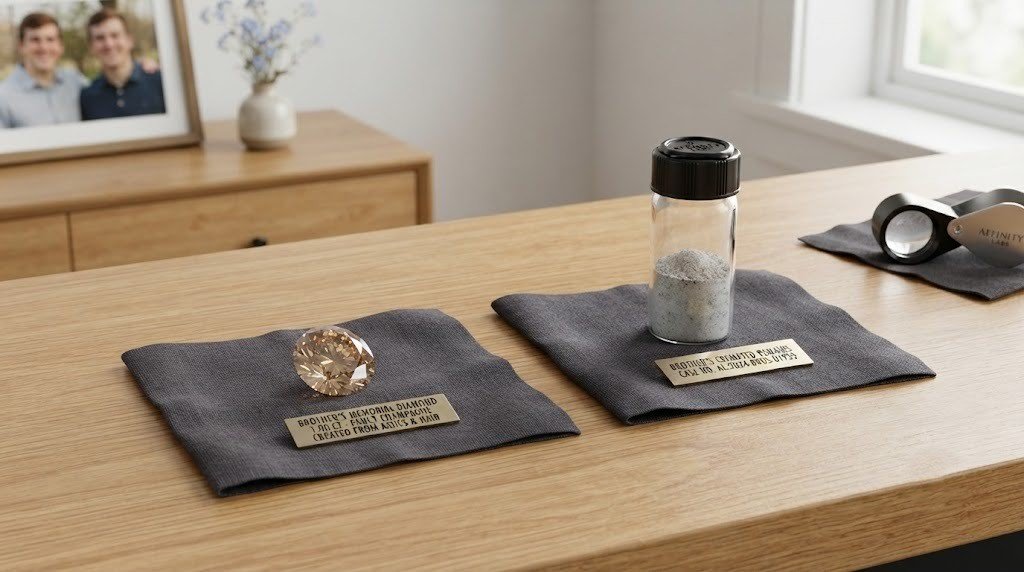
Table of Contents
What Are the Seven Stages of a Diamond Made From Brother Ashes?
Reputable labs work in roughly the same order, even when the machinery and the names on the paperwork differ. The table below follows a memorial diamond made from brother ashes from the moment the package is opened to the moment the finished stone is graded, with a plain note on where his material physically sits at each point. If you would like the wider picture first, our complete guide to a brother ashes diamond covers cost, color, and family decisions in one place.
| Stage | What the lab does | Where his material is |
|---|---|---|
| 1. Intake and chain of custody | Opens the package, assigns a tracking reference, records the weight and paperwork | Sealed and labeled under his order number, kept apart from every other family’s material |
| 2. Extraction and purification | Heats a measured portion in an oxygenfree, multistage process that strips away bone minerals | Reduced from pale ash to a small quantity of carbon refined to roughly 99.9%+ purity |
| 3. Graphitization | Heats that carbon again, to around 2,5002,700°C | Now graphite, the layered carbon a growth press can use |
| 4. Diamond growth | Loads the graphite, typically blended with supplemental lab carbon, into an HPHT cell with a diamond seed (or converts it to gas for CVD) | Inside the press, building up as a rough crystal over weeks to months |
| 5. Cutting and polishing | A cutter plans the facets, then shapes and polishes the crystal | A finished stone in the shape you chose |
| 6. Optional irradiation | Treats the stone after growth to shift or deepen its color, only on request | The same stone; only its color changes |
| 7. Grading and certificates | Documents origin and, ideally, sends the stone for independent grading | A graded diamond made from brother ashes, on its way back to you |
Two things in that table matter more than the rest. His carbon is never changed into a diamond in one dramatic step; it changes form three times, from ash to refined carbon to graphite, before it becomes part of a crystal. And while the order of stages is fixed, labs do not publish standard durations for each one, so the honest planning figure is the overall span from receipt to delivery.
What Happens When His Ashes First Reach the Lab?
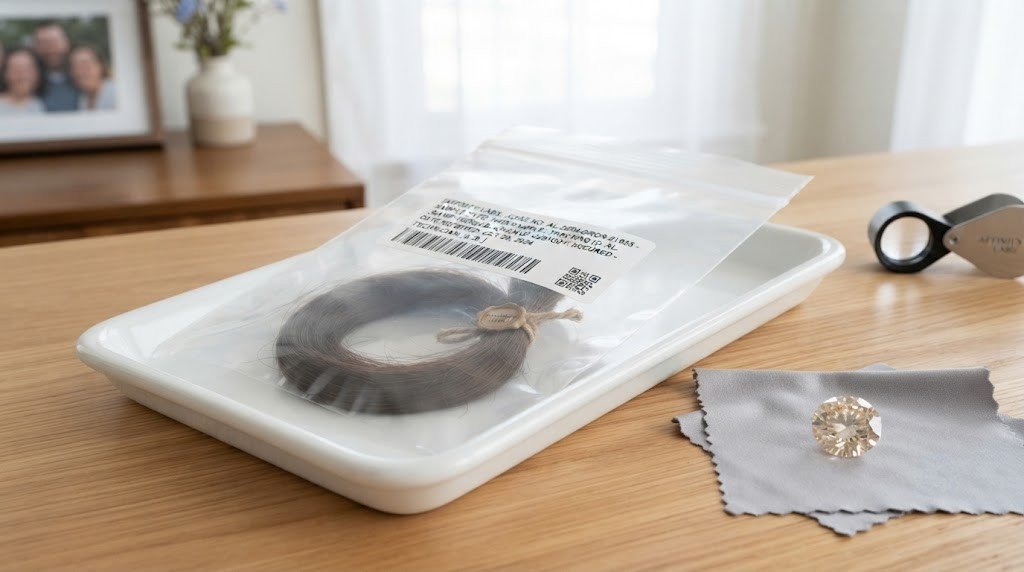
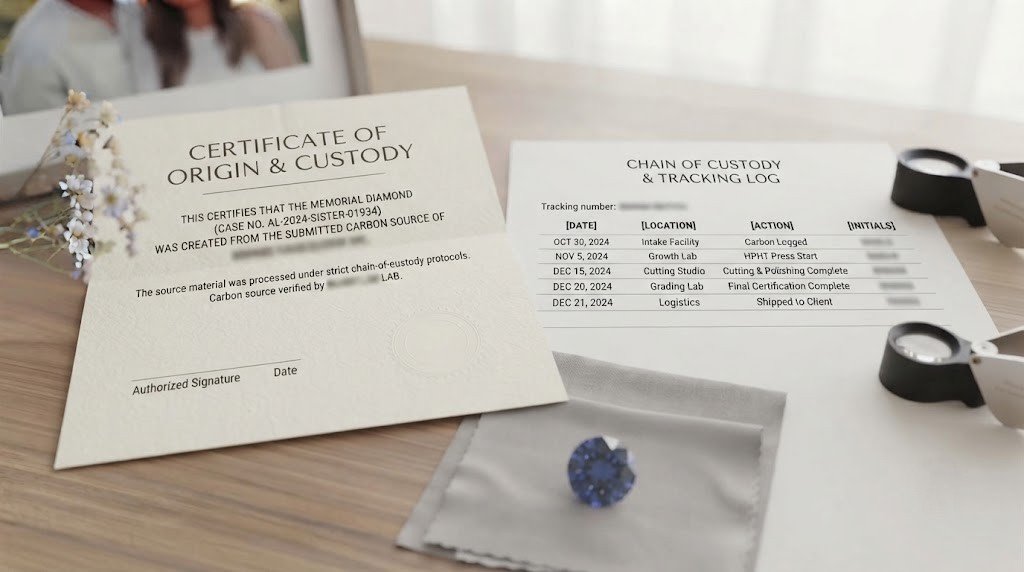
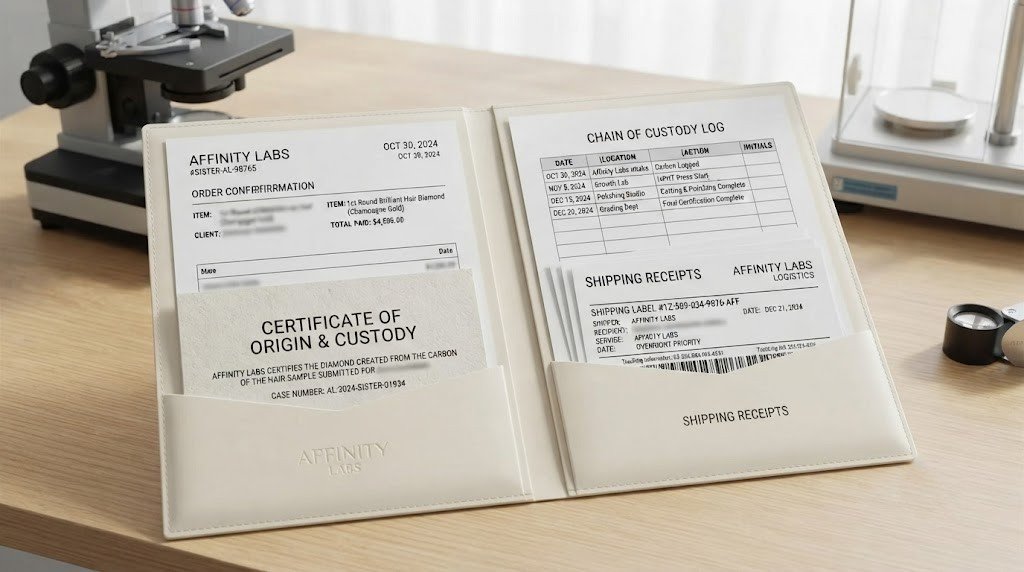
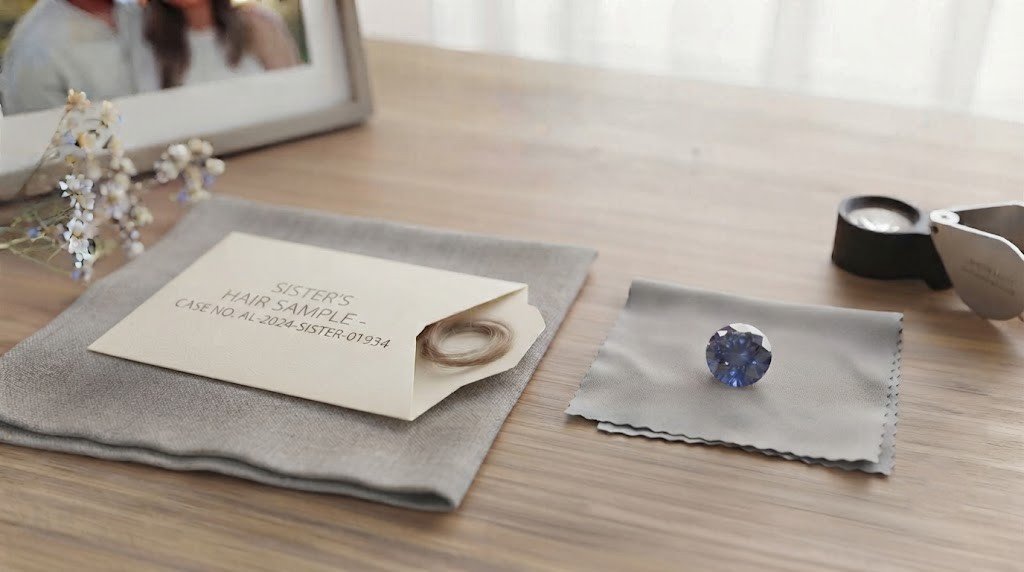
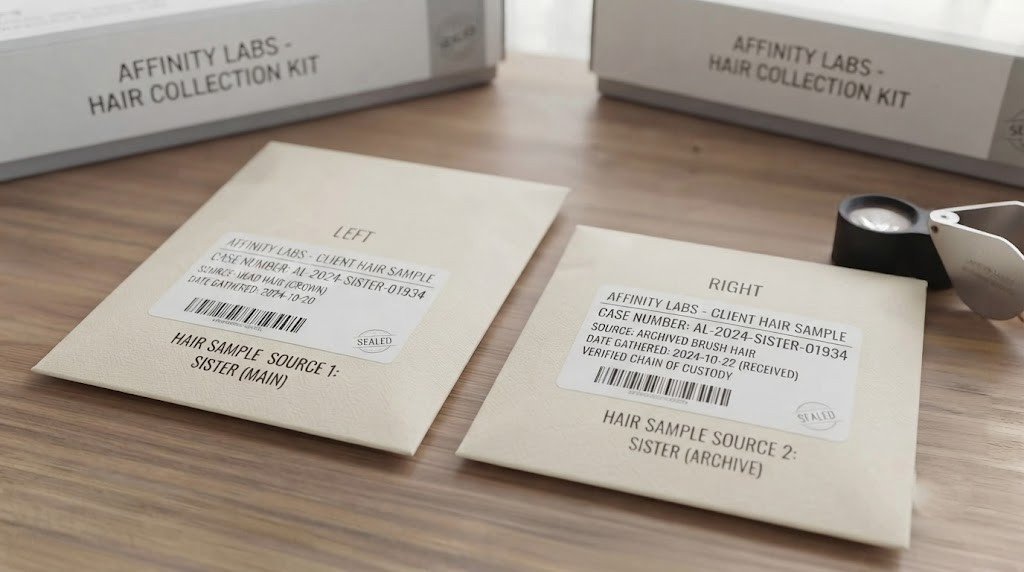
The first stage is mostly paperwork and care, and it answers the question siblings tend to ask most quietly: how will I know it is really him? When a package of cremated remains arrives, a reputable lab logs it against an order number, records what came in, and stores it sealed and separate from other families’ material. That record starts the chain of custody for a diamond made from brother ashes, the documented trail that follows his ashes through every later stage.
You typically send only a portion, somewhere between a few tablespoons and roughly 4 oz (about 100 g), depending on the provider. If you are unsure how much to set aside, our post on how much ash a brother memorial diamond needs walks through the ranges. The rest of his ashes can stay in the urn, be scattered, or be interred exactly as your family planned.
Because one stone may not use the whole submission, ask at intake whether unused ashes are returned, held, or reserved for a second diamond; that policy differs between labs. At this point a stone made from brother ashes is still entirely potential. Nothing has been heated or altered. His remains are identified, weighed, sealed, and waiting for the first furnace.
Whose Agreement Matters Before His Ashes Are Sent?
Before work on a diamond made from brother ashes begins, it helps to know who holds authority over his remains, because a sibling is often not first in line. A husband, wife, or registered partner, any grown children, and his parents frequently rank above brothers and sisters, but every state draws up its own sequence. Anything he put on paper himself, whether he named a person to make these calls, prearranged his funeral, or left directions in his estate documents, may override that sequence entirely.
When the decision belongs to another relative, the kindest approach is usually just to talk with them, asking whether a small share could go toward a diamond made from brother ashes while the rest remains wherever they have chosen. A lab may want to know who is approving the order, so ask each provider what authorization it needs and sort it out early.
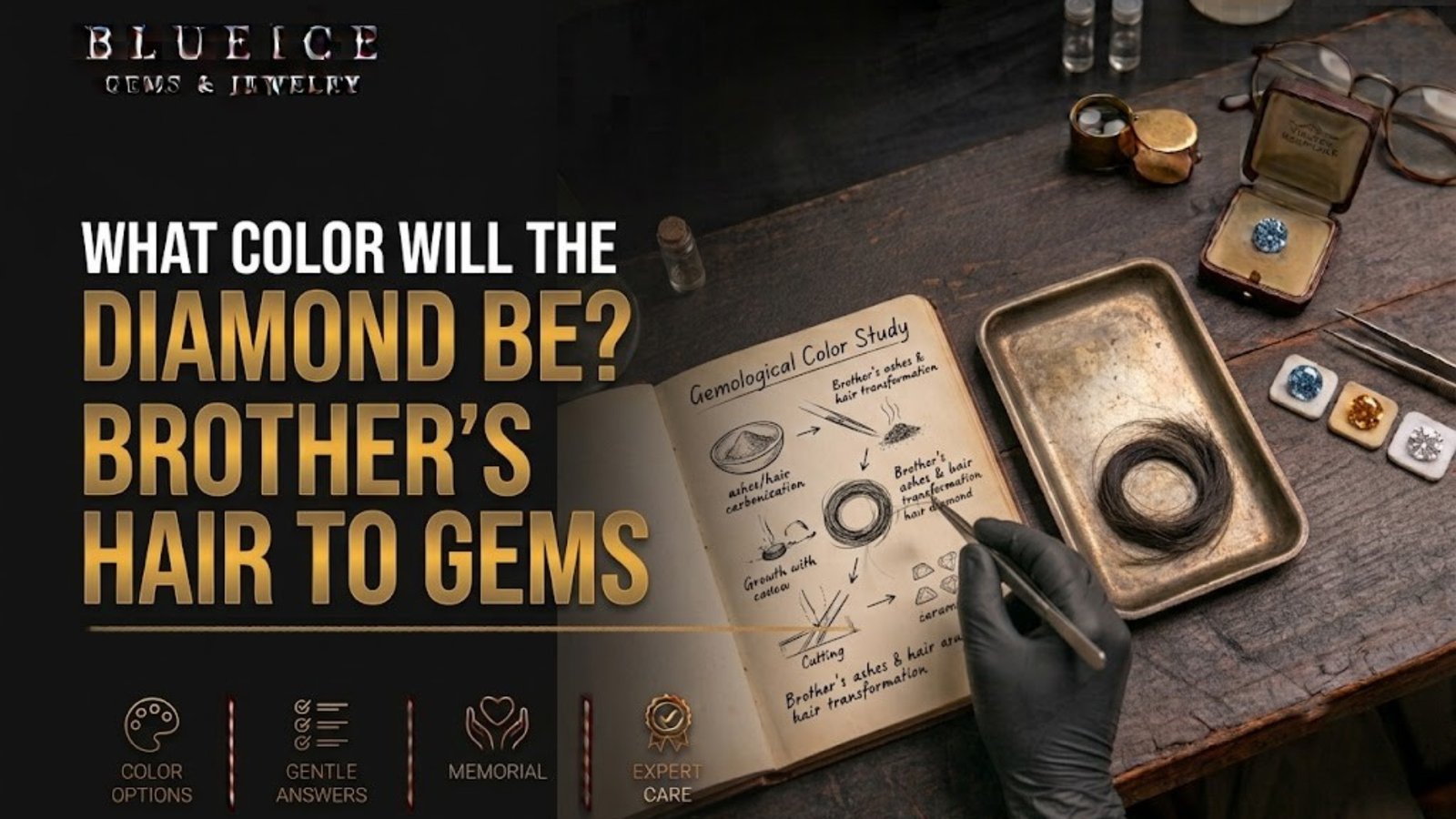
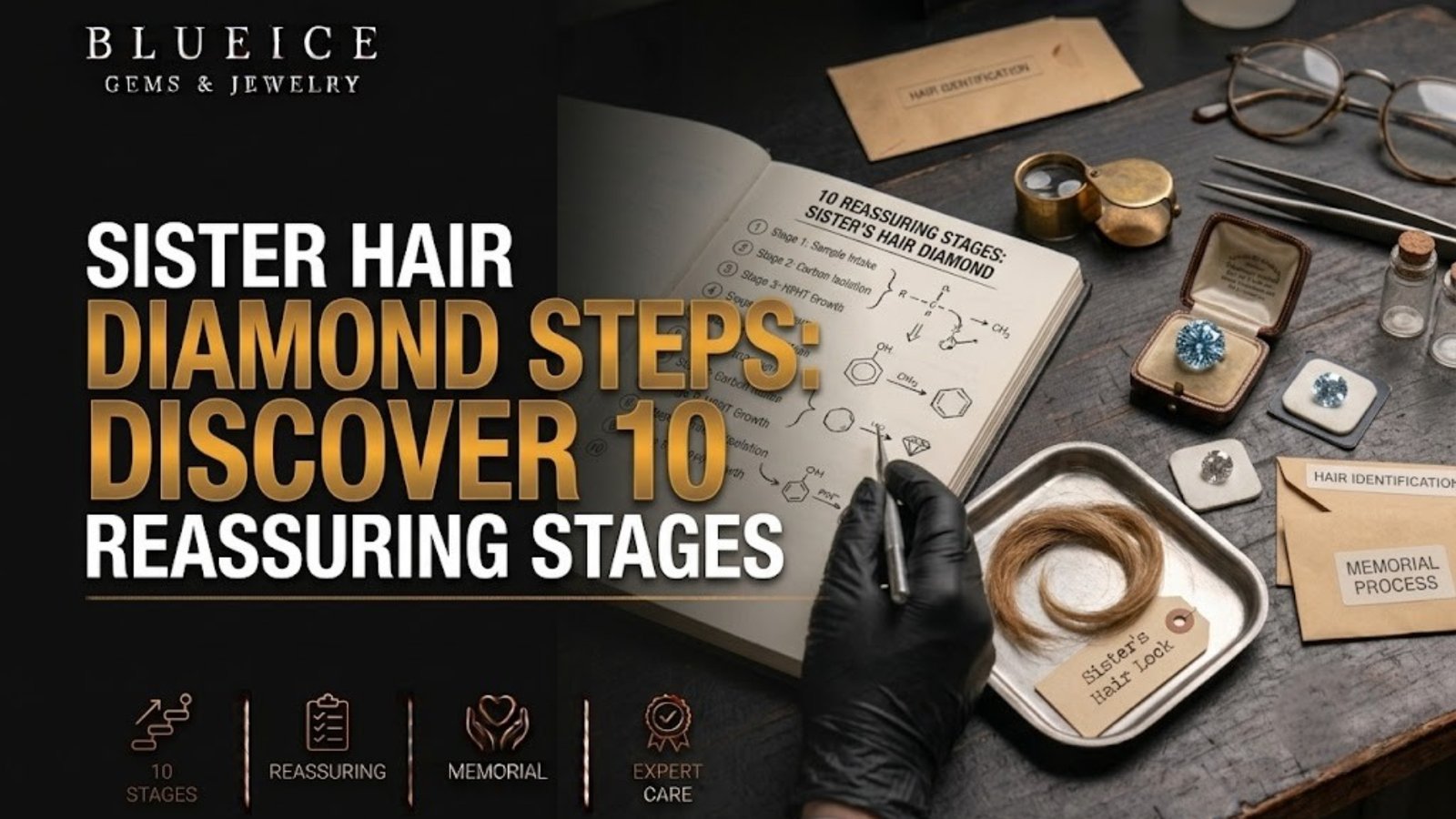
If a portion of ashes is not possible, hair offers a separate route that needs no cremated remains, and the hair version of this lab journey explains how it differs. Keep in mind that hair which stayed at home or with his possessions may count as part of his estate, with rules that differ from state to state. On faith questions, no tradition has an official position on memorial diamonds specifically; practices vary, and your own faith leader is the best person to ask.
How Is Carbon Pulled Out of Cremated Ashes?
Extraction is where a memorial diamond made from brother ashes truly begins, and it explains why only part of his remains is needed. Cremated ashes are mostly calcium phosphate, the mineral framework of bone. Carbon is a small share: industry figures put it at roughly 0.5% to 4% of the ash by weight, varying with the individual and with the cremation itself.
To recover that carbon, the lab heats a measured portion of his ashes in a controlled, oxygenfree, multistage process. Keeping oxygen out is the point. Without it, the carbon cannot simply burn away as gas, so it can be separated from the calcium phosphate and other minerals instead. Successive stages refine what remains until the carbon reaches roughly 99.9% purity or higher.
What leaves this stage is a small amount of dark carbon that looks nothing like ash. The carbon meant for a diamond made from brother ashes is still logged under his reference, and it is still his. If you want to picture where his material is now, imagine a sealed, labeled container of refined carbon, waiting for a second, much hotter furnace.
Why Does His Carbon Become Graphite First?
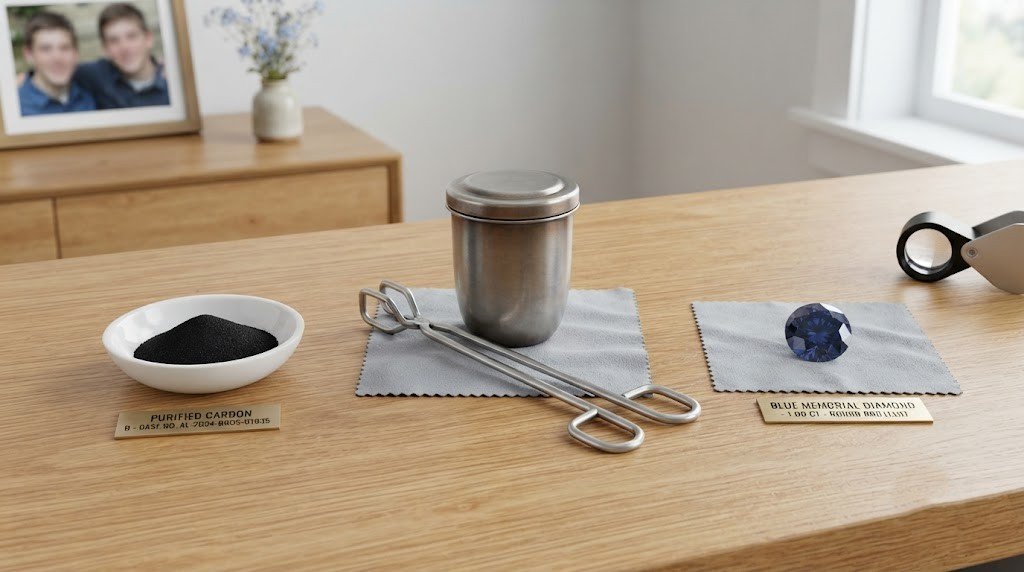
A growth press does not work well with loose, disordered carbon. It needs graphite, the orderly, layered crystal form of carbon familiar from pencil lead. So the refined carbon is heated again, this time to roughly 2,5002,700°C, and its atoms rearrange into stacked sheets.
Explanations of the process often skip this stage, yet it is where carbon bound for a stone made from brother ashes first takes on a crystal structure. Graphite and diamond are both made entirely of carbon; the only difference is how the atoms are arranged. Graphitization turns his refined carbon into the form of feedstock a growth press is built to use.
At the end of this stage, the future diamond made from brother ashes exists as a small portion of graphite, still tracked under his order and ready to be loaded into a growth cell.
What Happens Inside the HPHT Press, and How Is CVD Different?
Most memorial labs grow a diamond made from brother ashes with HPHT, short for high pressure, high temperature. The graphite, typically blended with supplemental labsourced carbon to reach a workable volume, is packed into a growth cell around a tiny diamond seed. A large press then holds that cell at roughly 68 GPa and 1,4002,500°C, conditions that echo the deep Earth. Carbon dissolves and settles onto the seed, layer on layer, building a rough crystal.
A minority of providers use CVD, chemical vapor deposition, instead. In that method the carbon is converted into a carbonbearing gas and deposited onto a seed plate inside a vacuum chamber. Both methods yield a real diamond, and the synthetic diamond overview on Wikipedia explains the physics of each in more depth.
Growth runs for weeks to months, and this is when size is decided. Carat weight is set by how long the crystal stays in the press, not by how much of his ashes you sent, so a larger submission does not make a bigger or faster stone. A memorial diamond made from brother ashes is generally offered from about 0.10 carats to 5 carats or more, and you choose that target before growth begins.
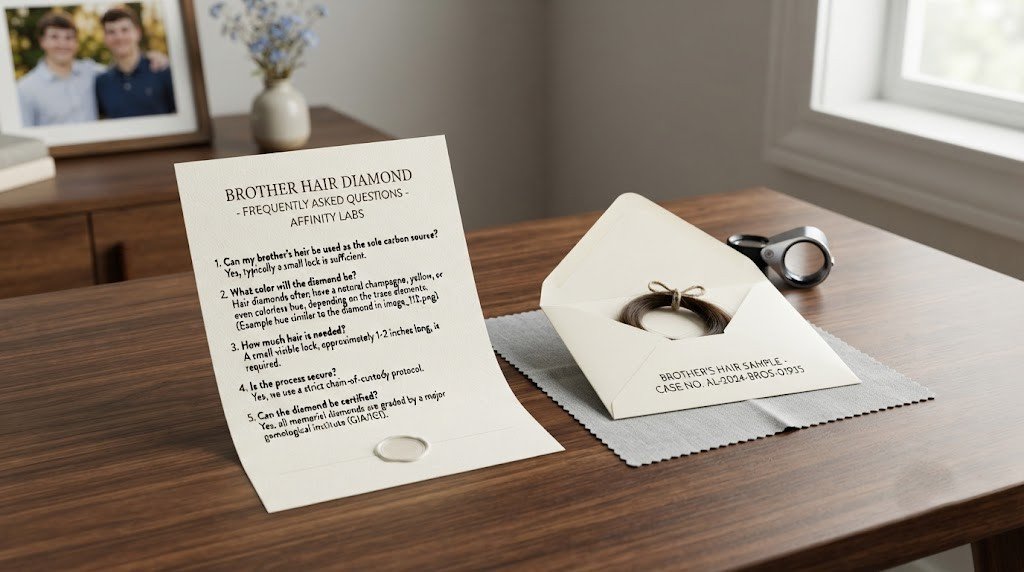
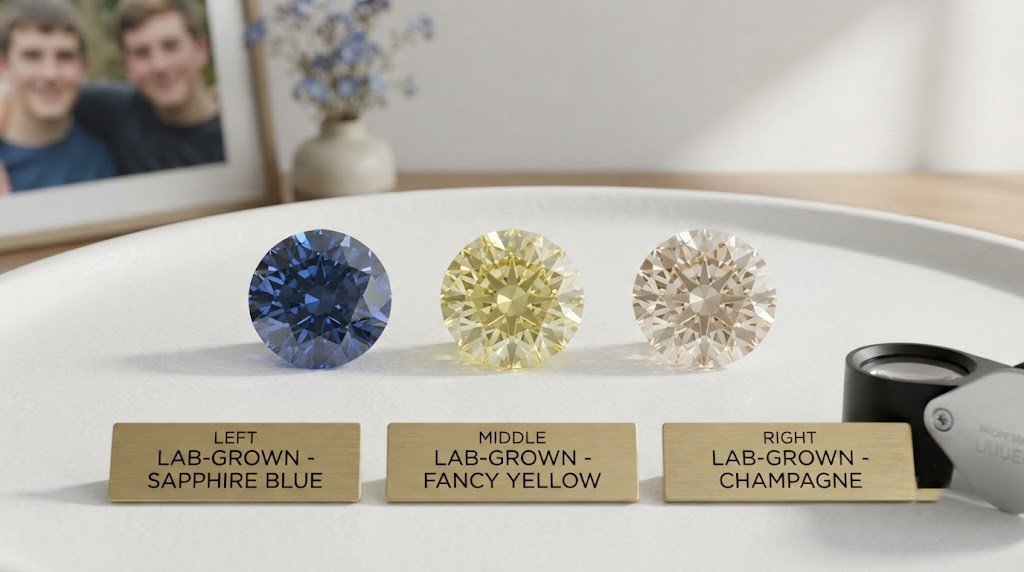
Growth is also when color forms. Whatever trace elements sit in the growth cell end up shaping the hue: nitrogen nudges the crystal toward yellow, boron toward blue, and only a stone grown with neither present comes out colorless, which calls for added processing and usually a higher price. Carbon recovered from a person commonly carries trace elements, so memorial stones, including one made from brother ashes, trend yellow, blue, or champagne, and our post on the color of a brother ashes diamond explains why the exact shade cannot be predicted from the ashes.
How Much of a Stone Made From Brother Ashes Is His Carbon?
This is the honest center of the whole process. A stone made from brother ashes is not composed entirely of his carbon, and no reputable lab should suggest otherwise. Because ash yields so little carbon, the recovered portion is typically blended with supplemental lab carbon before growth.
Published industry estimates suggest that carbon from the ashes accounts for about 1015% of what the finished diamond weighs. A few providers quote nearer 3%, others quote more, and the real figure moves with the carat you pick and the amount of ash that went in. That is a real, physical share of him, bonded into the crystal lattice of a stone made from brother ashes alongside the added carbon. Inside the lattice the two cannot be separated or told apart, but the chain of custody documents that his carbon went in.
It helps to hold both truths together. The diamond is not a symbol standing in for him; part of it is physically his carbon, and the rest is carbon added so the crystal could reach the size you chose. For a closer look at that question, read whether a memorial diamond is really made from your brother’s ashes. Then ask any provider what share of a diamond made from brother ashes they expect for your chosen carat.
How Is the Rough Crystal Cut, Polished, and Sometimes Recolored?
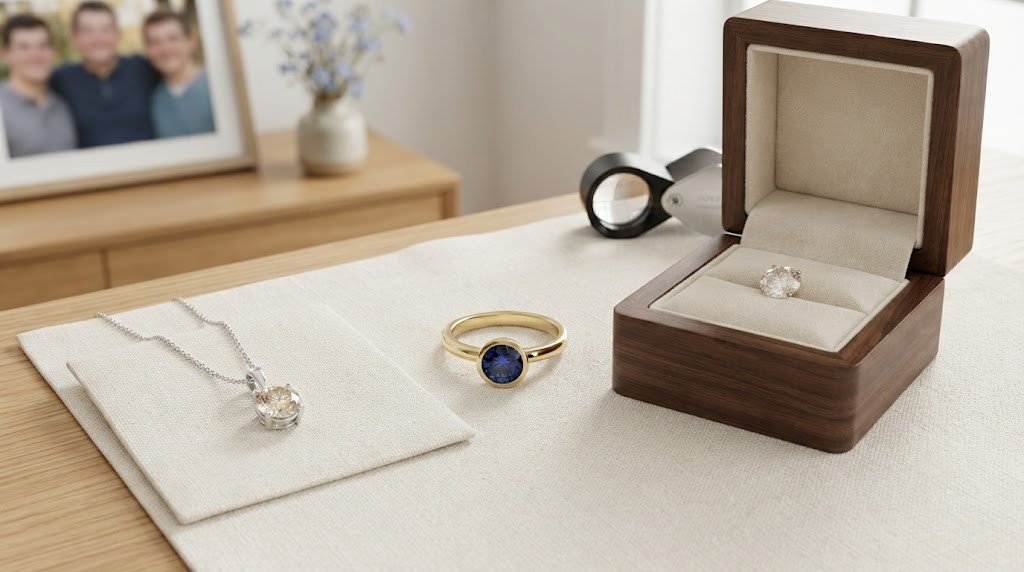
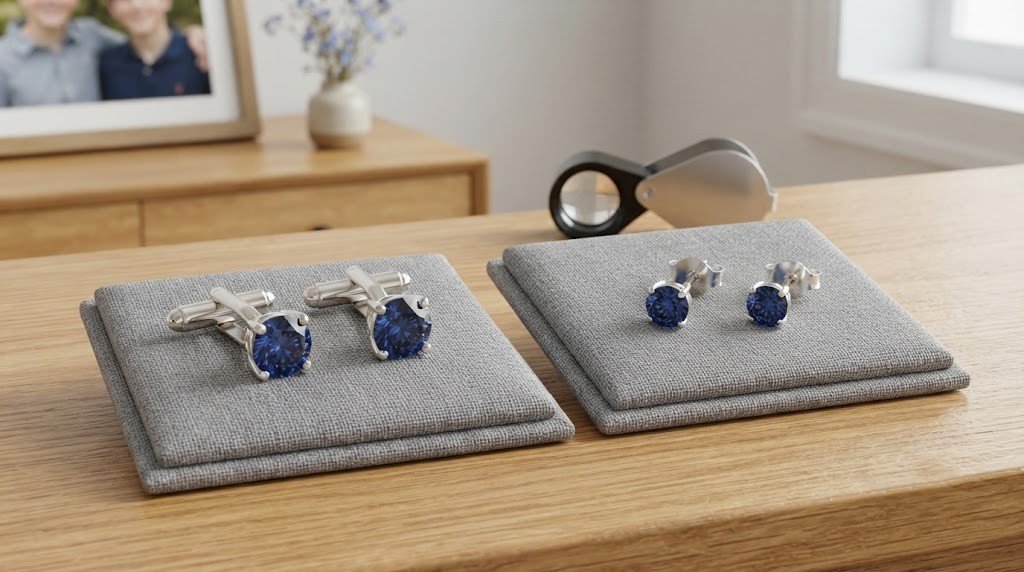
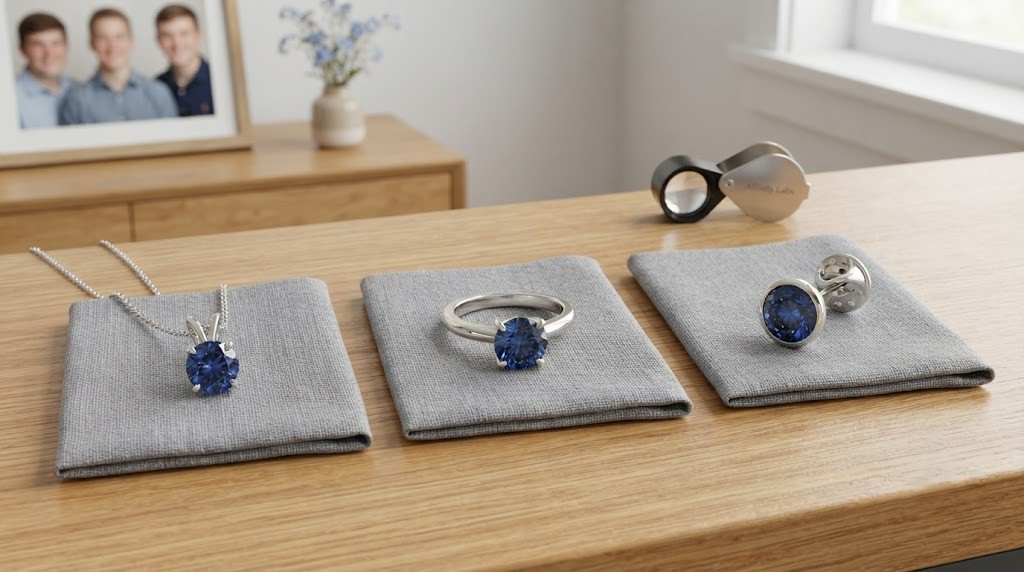
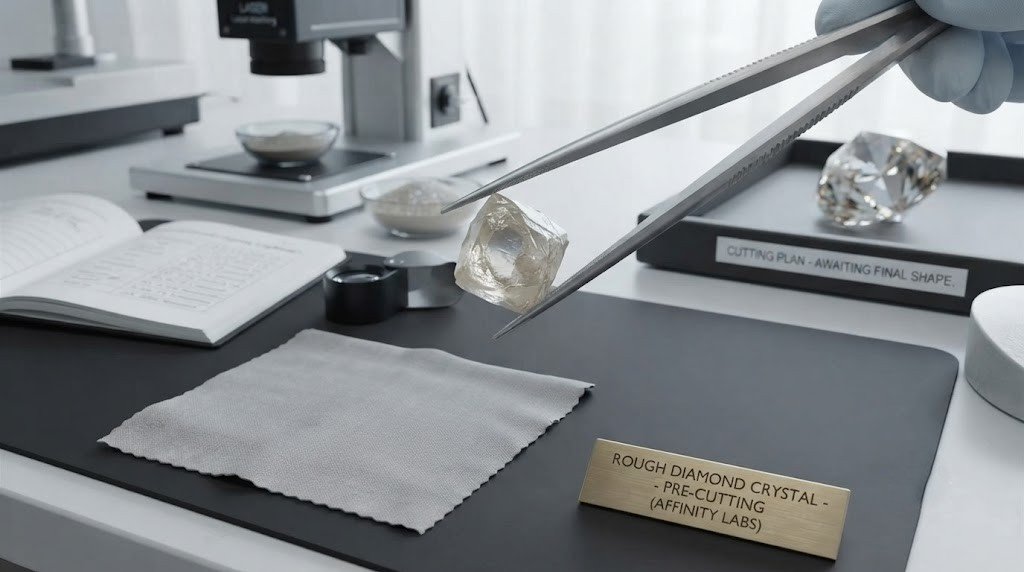
A freshly grown crystal made from brother ashes looks nothing like jewelry. It is rough, often a little frosted at the surface, and shaped by the press rather than by anyone’s design. A cutter studies it, plans the facets, and cuts and polishes it into the shape you selected, whether round, princess, cushion, or another cut the provider offers. Fancy cuts are commonly priced as an addon.
After cutting, some providers offer optional irradiation, a postgrowth treatment that can shift or intensify color. It is how some labs produce red, pink, green, or black memorial stones. If you prefer the color that formed naturally during growth, you can simply decline it; irradiation is a choice, not a required stage.
By the end of finishing, a diamond made from brother ashes is recognizably a gemstone. It rates 10 on the Mohs scale of mineral hardness, which measures resistance to scratching rather than to impact, so a sharp blow against a hard surface can still chip an edge. It is the same crystal that left the press, now faceted and, if you asked, recolored.
What Do the Origin Certificate and Grading Report Each Prove?
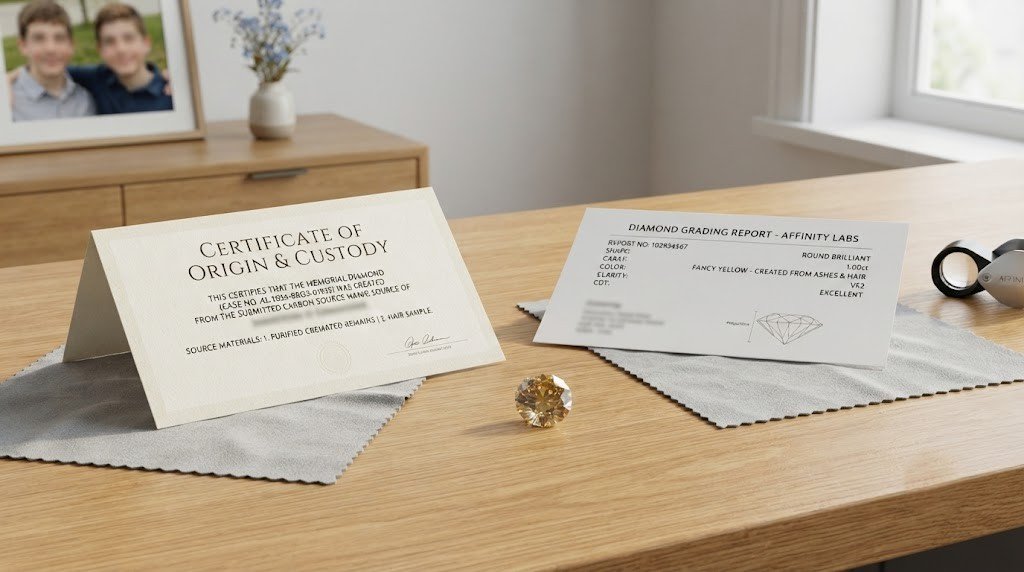
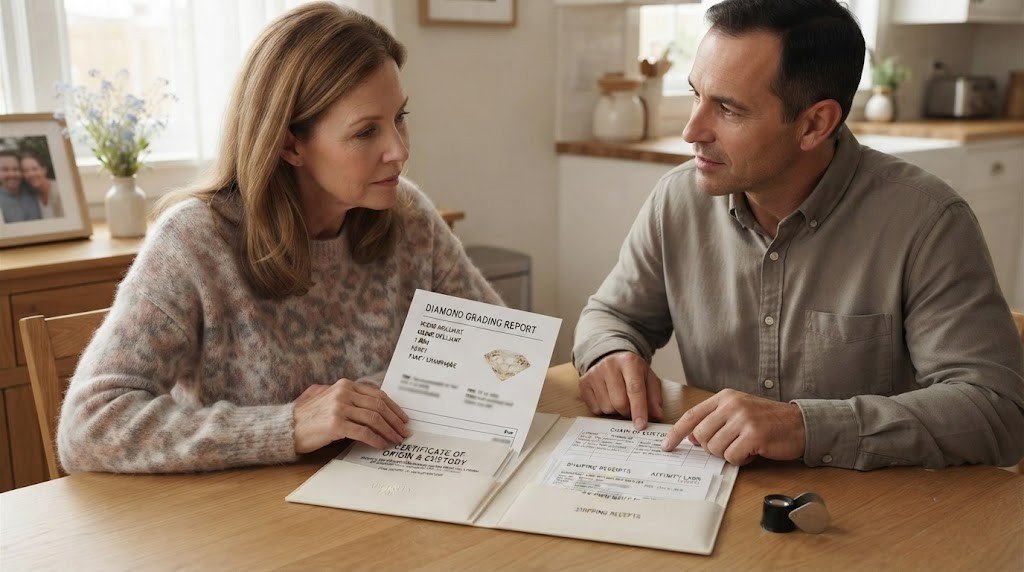
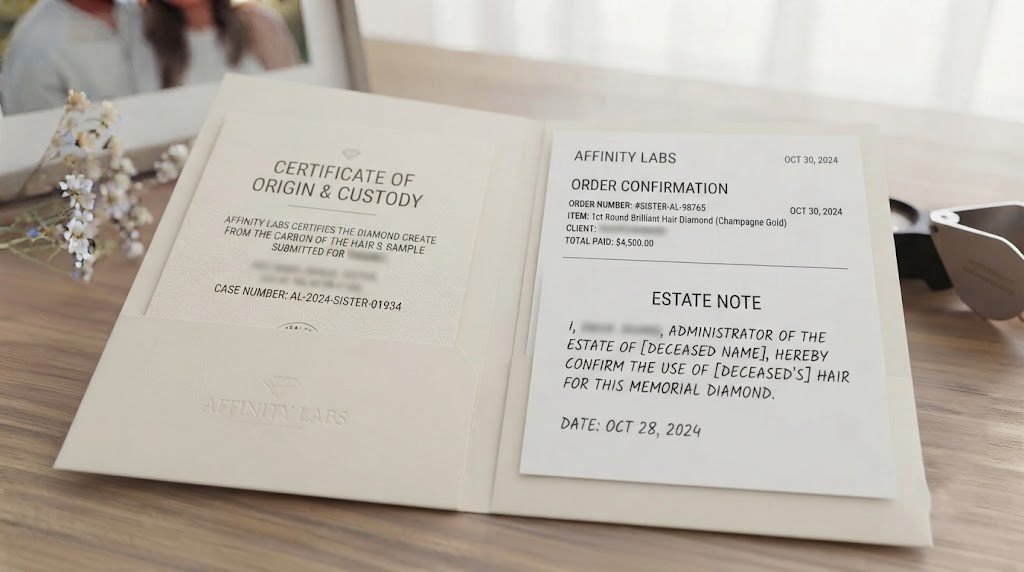
Two documents typically come back with a diamond made from brother ashes, and they answer different questions. An origin or authenticity certificate, usually issued inhouse, records that the diamond was grown from your family’s submitted material. It is, in effect, the final page of the chain of custody that began at intake.
A grading report describes the diamond itself: its cut, color, clarity, and carat weight, the 4Cs that GIA uses to judge any diamond. Ideally it comes from an independent gemological lab working to GIA or IGI standards, which gives you a thirdparty view of quality. Clarity for a memorial stone made from brother ashes typically lands between SI2 and VVS.
When you compare providers, ask which documents are included and which cost extra. For a stone made from brother ashes, the origin certificate speaks to whose carbon it holds, while the grading report speaks to what kind of diamond it is. Having both gives you the fullest record of his stone.
How Long Does a Diamond Made From Brother Ashes Take, and What Does It Cost?
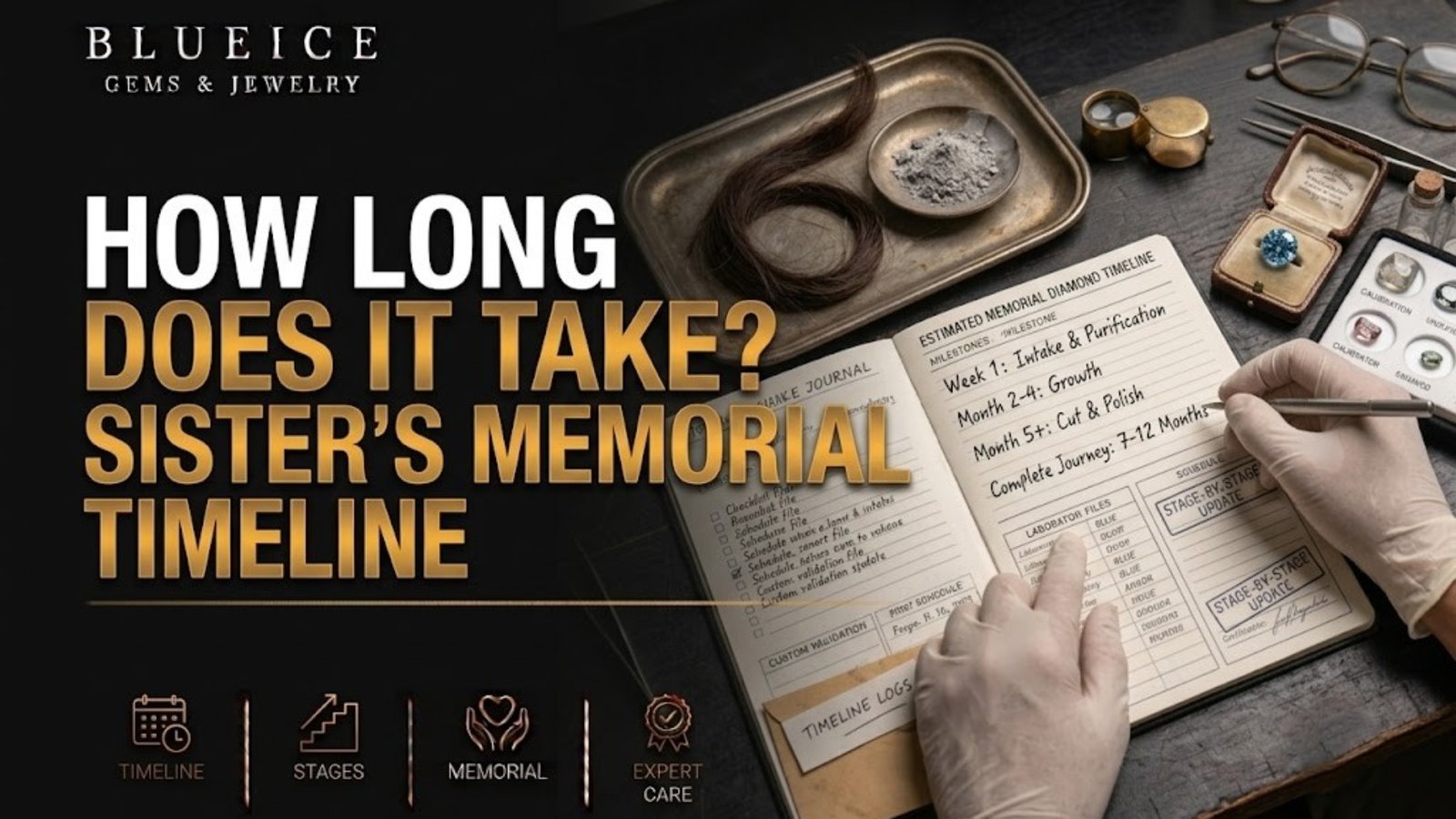
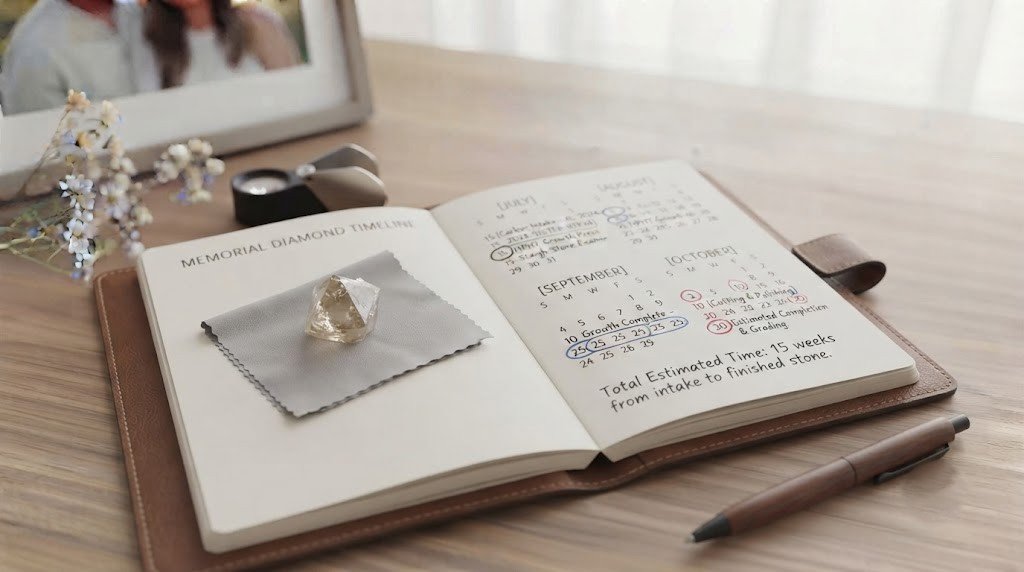
Across the industry, a memorial diamond made from brother ashes typically takes 6 to 10 months from the day the lab receives his ashes to the day the stone is finished. Stones of roughly 2 carats and up, and specialty colors, can stretch toward 12 months. Our brother memorial diamond timeline explains why growth time drives that range.
Price follows carat, color, and cut more than anything else. These are general 2026 industry ranges, not this brand’s published pricing:
- About 0.100.25 ct: roughly 1,5003,500
- About 0.51 ct: roughly 5,00015,000, with colorless toward the top
- About 25+ ct: roughly 20,00075,000 or more
- Usually priced separately: independent grading, engraving, fancy cuts, and a ring, pendant, or other setting
Because carat is set by time in the press rather than by how much ash you send, choosing a smaller stone is the most direct way to shorten the wait and lower the cost of a diamond made from brother ashes.
What Can You Ask the Lab While His Material Is There?
Knowing the stages of a diamond made from brother ashes makes it easier to ask precise questions, and a good provider will welcome them. These are worth raising before anything is shipped:
- What tracking reference will his ashes carry, and will I hear when each stage begins?
- Are his ashes processed separately from every other order, start to finish?
- What happens to ashes not used for the stone: returned, held, or reserved for another diamond?
- How should the ashes be packaged and shipped, and which carriers do you accept?
- What is your policy if a growth run does not produce a usable crystal?
- Will the stone be graded independently, and is that report included in the price?
- Do you offer irradiation, and which colors are possible for a diamond made from brother ashes?
A longer checklist lives in our post on questions to ask before turning your brother’s ashes into a diamond. Asking for an update at each stage is entirely reasonable, and knowing whether his carbon is still in extraction or already in the press can make the months feel less abstract.
Frequently Asked Questions
Is a diamond made from brother ashes a real diamond?
Yes. It is a labgrown diamond with the same carbon crystal structure, hardness, and optical behavior as a mined diamond. It is graded on the same 4Cs and rates 10 on the Mohs scale. It is not glass, resin, or a simulant stone.
Does the lab use all of his ashes?
No. A diamond made from brother ashes typically starts from a few tablespoons up to roughly 4 oz, about 100 g, depending on the provider. The rest of his ashes can remain in an urn, be scattered, or be interred, and you can ask whether any unused portion is returned.
Can more than one stone be made from the same ashes?
Often, yes. Because each stone needs only a portion of the ashes, several family members can frequently receive their own diamond from one shared supply. Each stone still needs its own time in the press, so ask the provider how it schedules and prices multiple stones.
Why can’t the lab predict the exact color in advance?
Color comes from trace elements, chiefly nitrogen and boron, present during growth. Carbon recovered from a person carries its own mix of these, so memorial stones trend yellow, blue, or champagne. Colorless requires extra processing, and irradiation can create red, pink, green, or black.
How do I know the stone holds his carbon and not someone else’s?
Ask about chain of custody. A reputable lab logs his ashes under a unique reference at intake, keeps them separate throughout every stage, and issues an origin certificate at the end. Ask to see how the tracking works before you send anything.
Does sending more ashes make a stone made from brother ashes bigger?
No. The finished weight depends on the number of weeks the crystal spends growing, and the quantity of ash supplied does not change it. A larger submission does not speed things up or enlarge the stone; you choose the size, and that choice shapes the timeline.
Final Thoughts on How His Diamond Is Made
Knowing the stages will not make the decision for you, and it does not need to. What it can do is replace a vague picture of a lab somewhere with something you can follow: his ashes logged and sealed, a little carbon drawn out, a crystal growing slowly in a press, a stone cut and documented. If a memorial diamond made from brother ashes feels right for your family, you can go into it knowing where he is at every point. If keeping his ashes together, or another path entirely, feels right instead, that is an equally good way to honor him.
Learn More About the AshtoDiamond Process
- Brother Ashes Diamond: The Complete Guide the full overview for siblings
- How a Memorial Diamond Is Made From Your Brother’s Hair the same lab journey, starting from hair
- What Color Will a Diamond Made From Your Brother’s Ashes Be? color chemistry in more depth
- How Long Does It Take to Make a Brother Memorial Diamond? what shapes the months of waiting
Talk With Memorial Diamond
If you would like to talk through what a diamond made from brother ashes could look like for your family, including which questions to ask a lab and what each stage would mean in practice, reach out to Memorial Diamond at memorialdiamond.us. There is no rush; the conversation can begin whenever you are ready.
Word count: 3,233 words · Reading time: about 16 minutes