You are about to hand a portion of your son to people you have never met, and nothing about that feels ordinary. The son ashes diamond questions worth asking first are mostly about custody, chemistry and paperwork: how his remains are tracked, how much of the finished stone is genuinely his carbon, what documentation comes back to you, and what the contract says if something fails midway. A company that answers those plainly, in writing, has told you more than any brochure can.
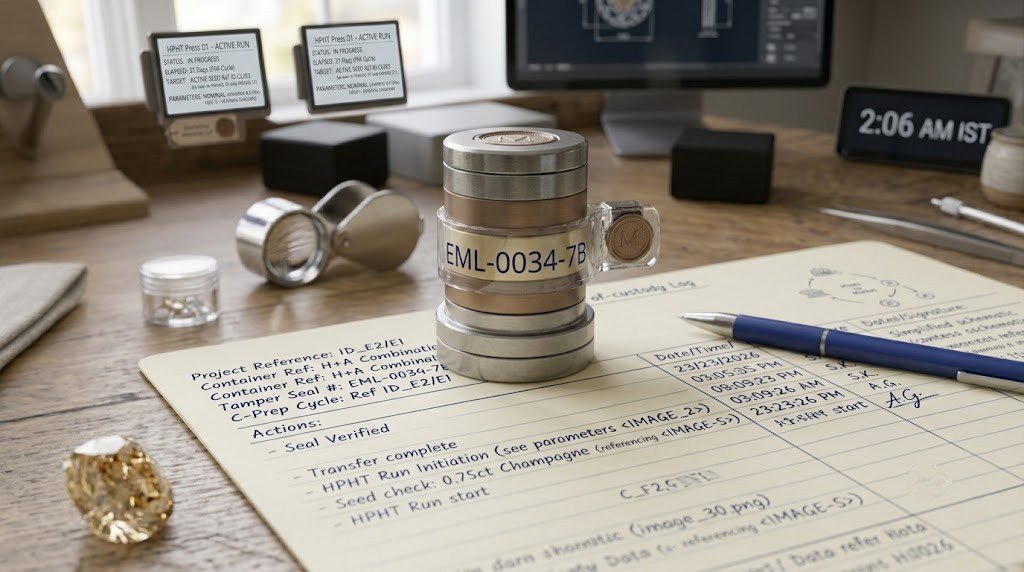
Table of Contents
Why Do the Son Ashes Diamond Questions Matter So Much?
Because the material is not replaceable, and almost nothing else you buy works that way. If a jeweler mishandles a sapphire, another sapphire exists. There is no second portion of your son held in reserve.
That single fact reorganizes everything. The son ashes diamond questions that carry weight are not about beauty or price, those come later and they are the easy part. The son ashes diamond questions that matter are about whether a company can account for one sealed container from the hour it arrives until the day a finished stone is posted back to you.
This is also a young industry, unevenly regulated and not standardized the way funeral home licensing is. Asking is not suspicion; it is the only instrument a family has.
Ask in writing. A warm phone call reassures you in the moment and is unrecoverable six months later. Send the son ashes diamond questions by email, keep what comes back, and you have turned reassurance into a record you can hold someone to.
Which Son Ashes Diamond Questions Belong on Your List?
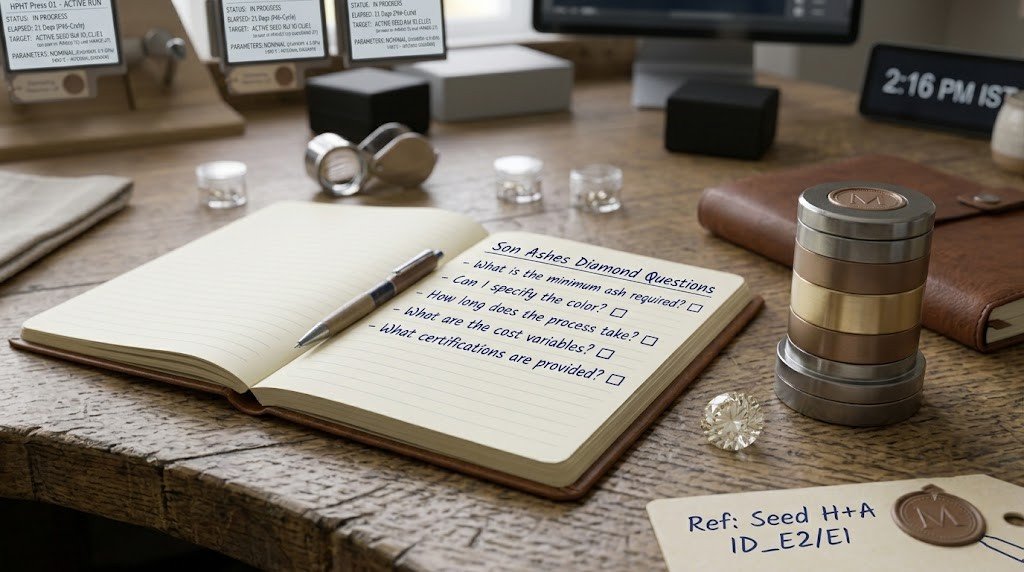
Twelve, in four areas: custody, content, documentation and commercial terms. Copy them into an email exactly as written. The son ashes diamond questions below are blunt so a vague reply is easy to spot.
| # | Area | The question to put in writing |
|---|---|---|
| 1 | Custody | What reference or tracking number is assigned to his ashes, and may I be told it? |
| 2 | Custody | How many points in the process log the material, and who signs each one? |
| 3 | Custody | Is his carbon ever processed in the same batch or growth cell as another family’s? |
| 4 | Custody | What happens to material that is not used, and can it be returned to me? |
| 5 | Content | What percentage of the finished stone’s mass will be carbon recovered from his ashes? |
| 6 | Content | What is the supplemental carbon, and where is it sourced? |
| 7 | Documentation | Which document confirms this stone came from what I sent, and who issues it? |
| 8 | Documentation | Is an independent grading report included, optional, or not offered? |
| 9 | Documentation | Will the paperwork carry his name, and do I choose the wording? |
| 10 | Commercial | What is priced separately from the stone itself? |
| 11 | Commercial | What are the cancellation terms once a growth cycle has started? |
| 12 | Commercial | Contractually, what happens if the stone fractures or fails to grow? |
None of the son ashes diamond questions above needs a scientific background, and none should be difficult for a well run company to answer.
What Should You Ask About Chain of Custody?
Begin the son ashes diamond questions here with tracking. Ask what identifier is attached to his ashes on arrival, whether it is physical, a numbered seal, an engraved container, or only a line in a database, and whether you can be given that number yourself. A company that tracks well answers instantly, because the answer is a system, not an opinion.
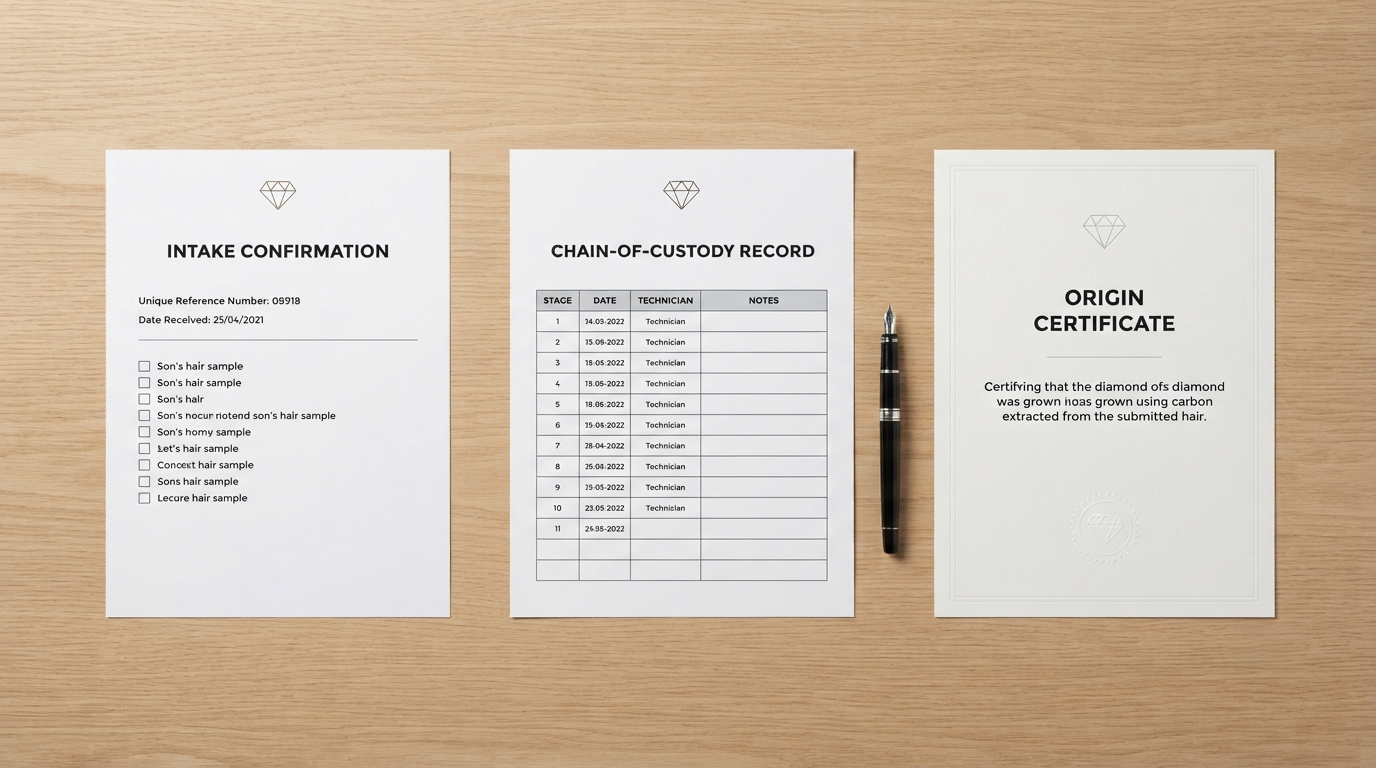
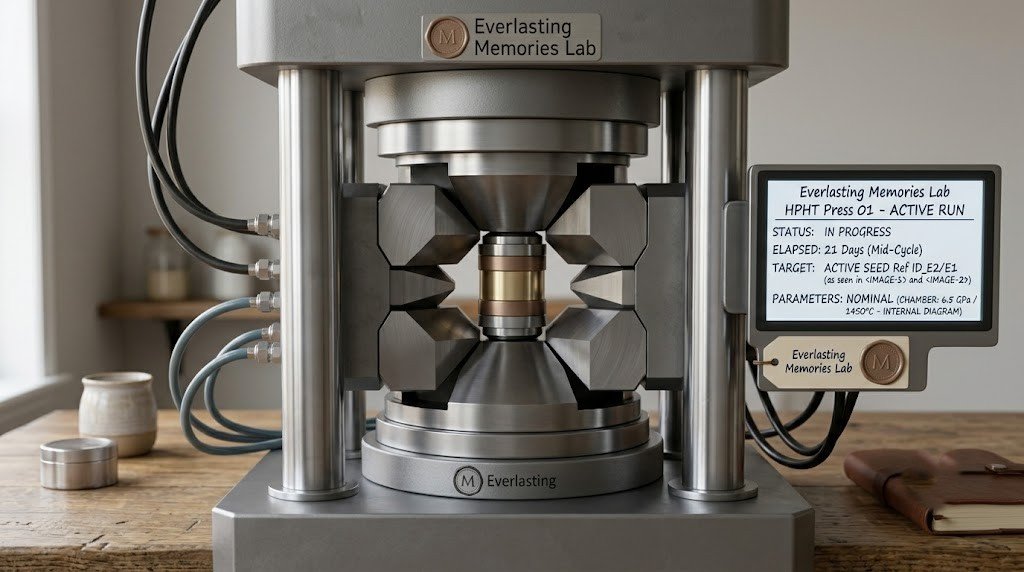
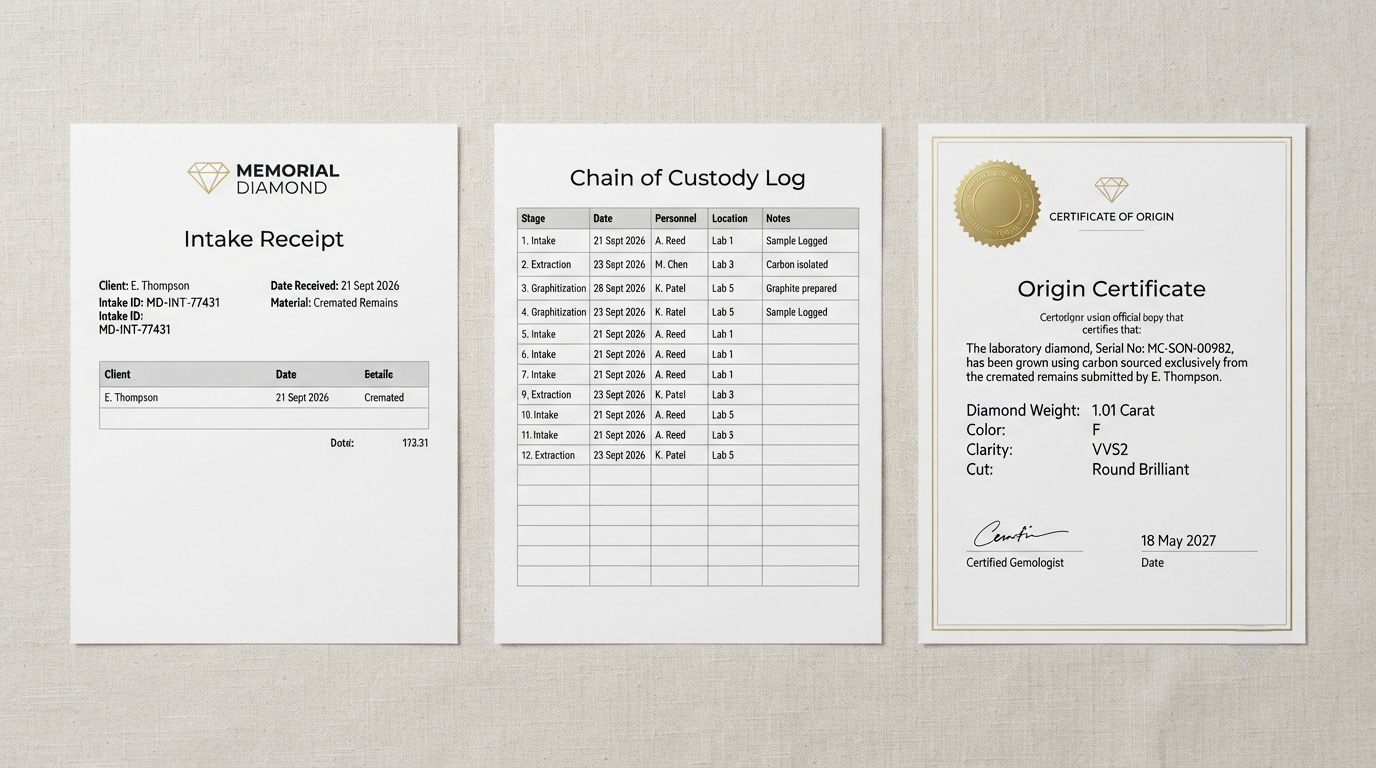
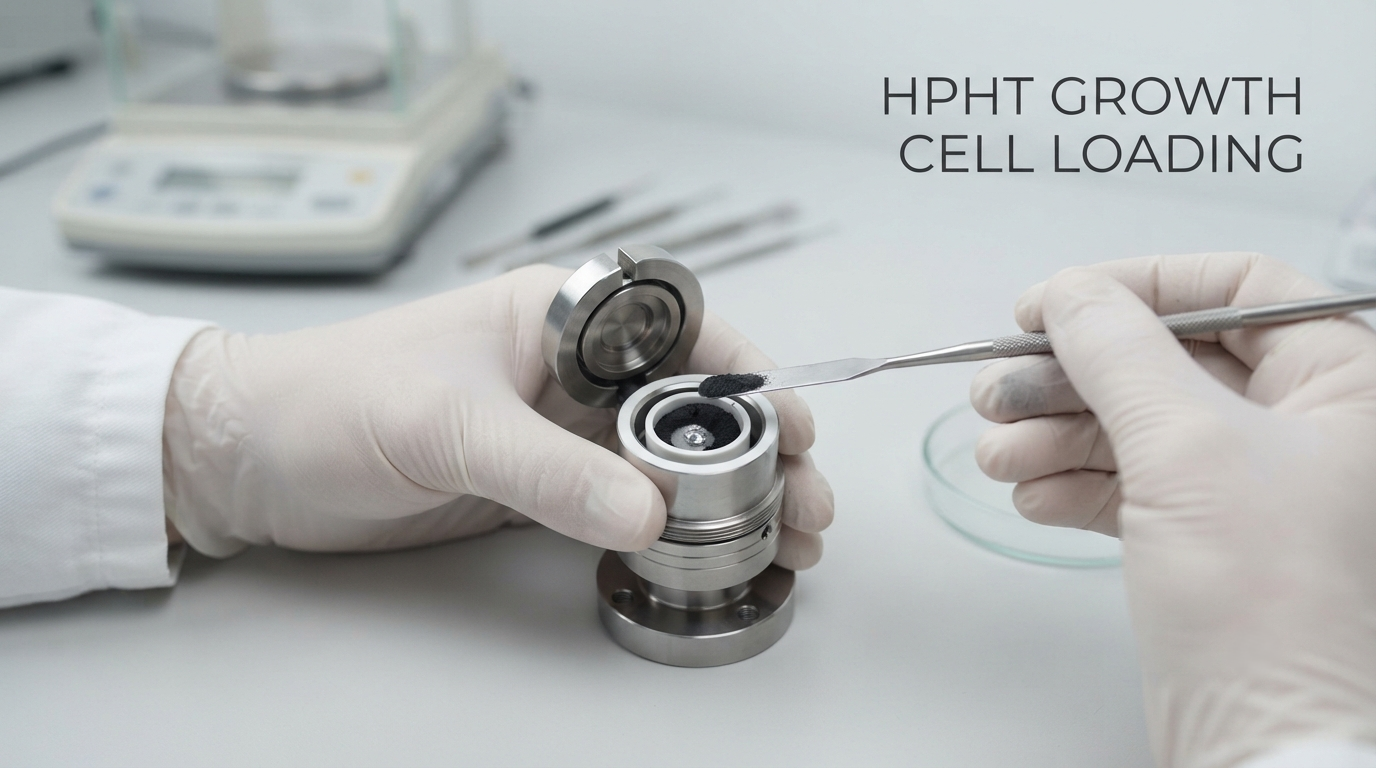
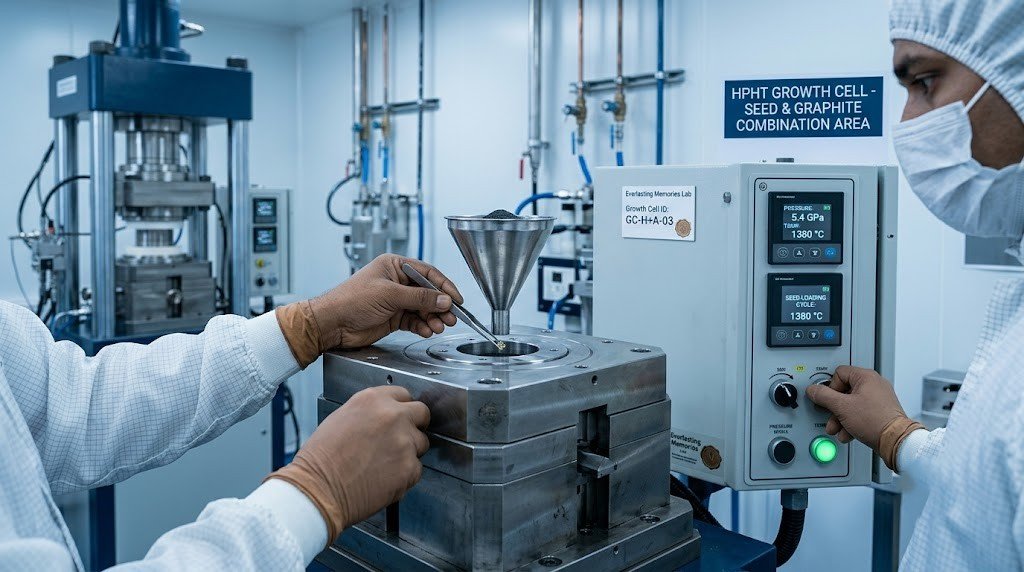
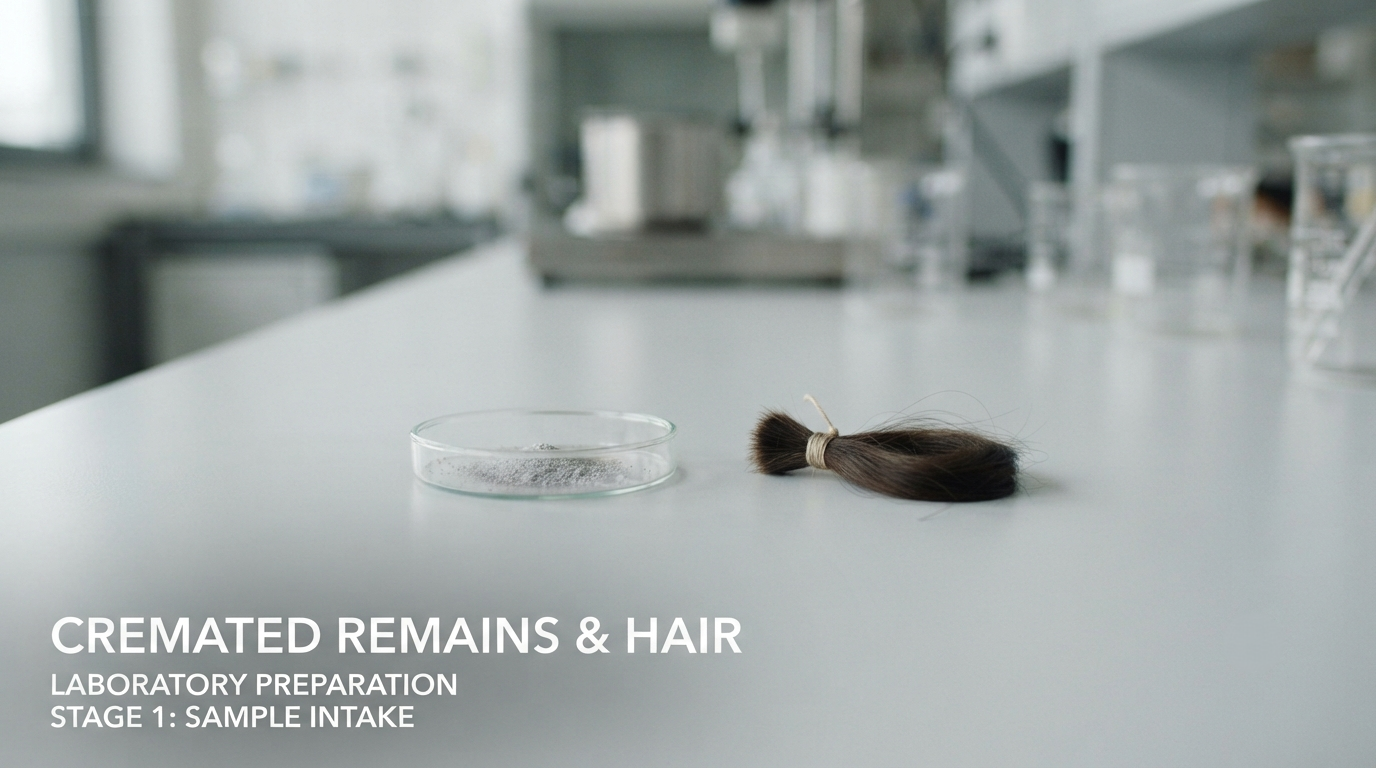
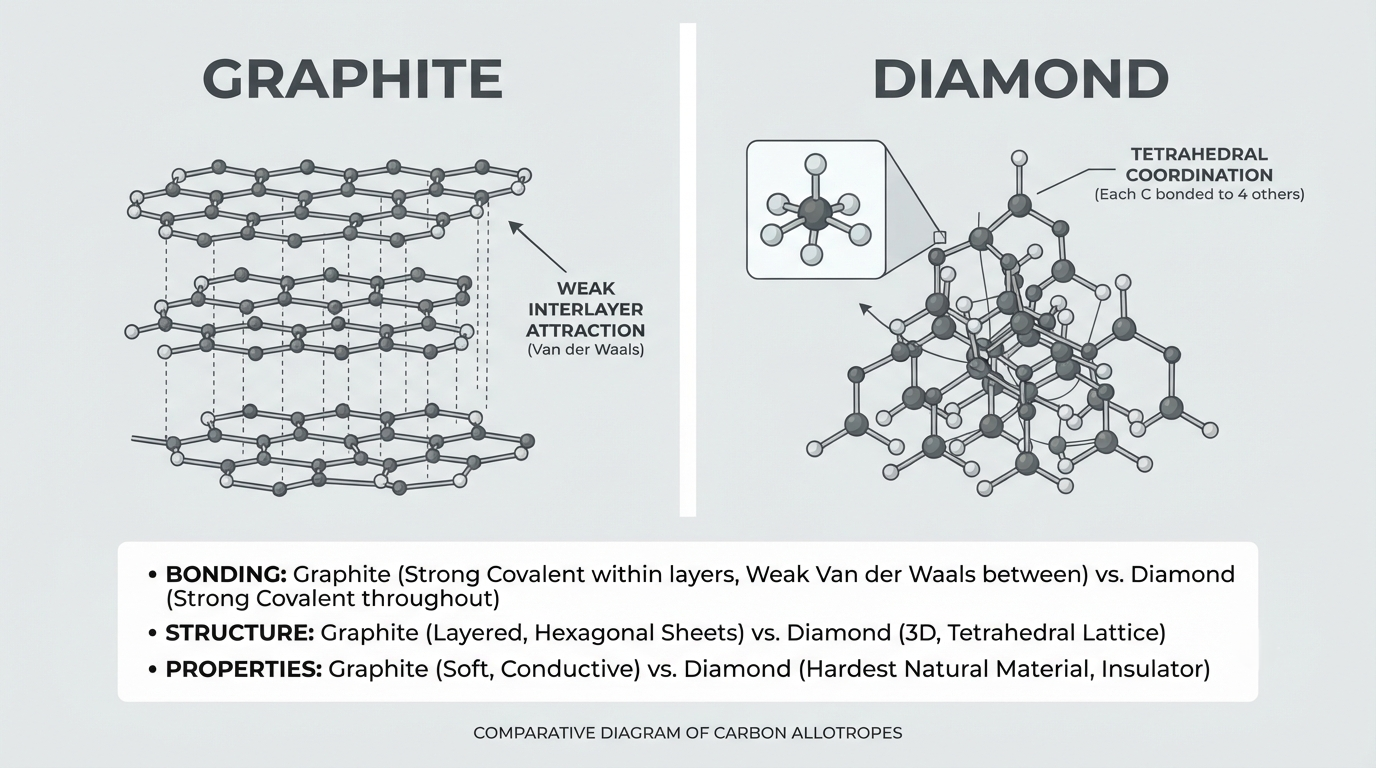
Next, ask about logging points. Extraction, purification, graphitization and growth are genuinely separate stages, and each one changes the material in a different way. A careful laboratory records a handover at every stage. Ask how many such records one order produces and whether copies can be sent to you.
Then put the most uncomfortable of the son ashes diamond questions. Is his material ever combined with another family’s at any point? Batch processing is efficient, and some laboratories are built around it. That does not make a provider dishonest, but you are entitled to know before you consent.
Finish with the leftovers. Some providers return unused ash, some keep it, some destroy it. Practice varies and nothing settles it industry wide, which is exactly why it belongs among your son ashes diamond questions instead of among your assumptions.
How Much of the Stone Is Actually His Carbon?
This is the question most parents feel too polite to ask, and it is the one that separates an honest laboratory from a marketing department. Among the son ashes diamond questions, it is the one to put in writing first. Ask for a percentage.
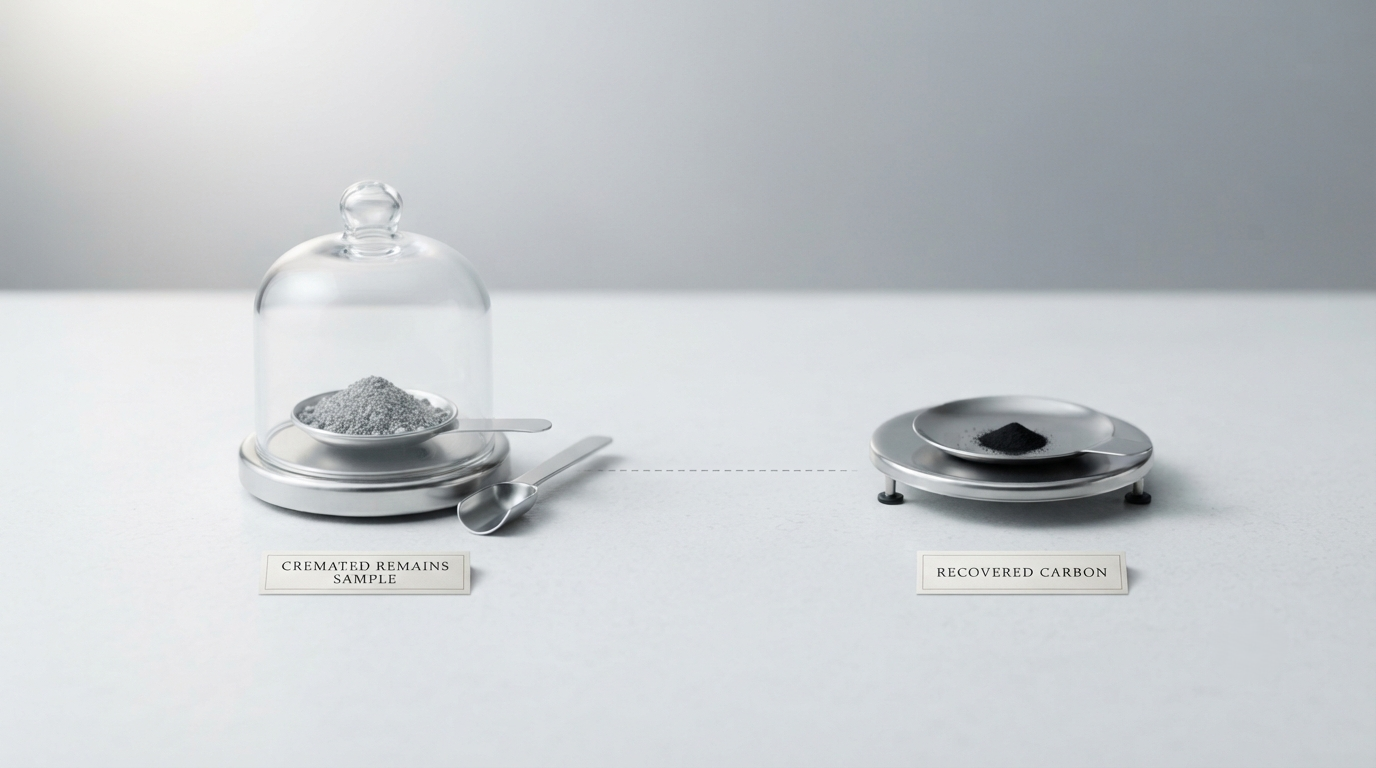
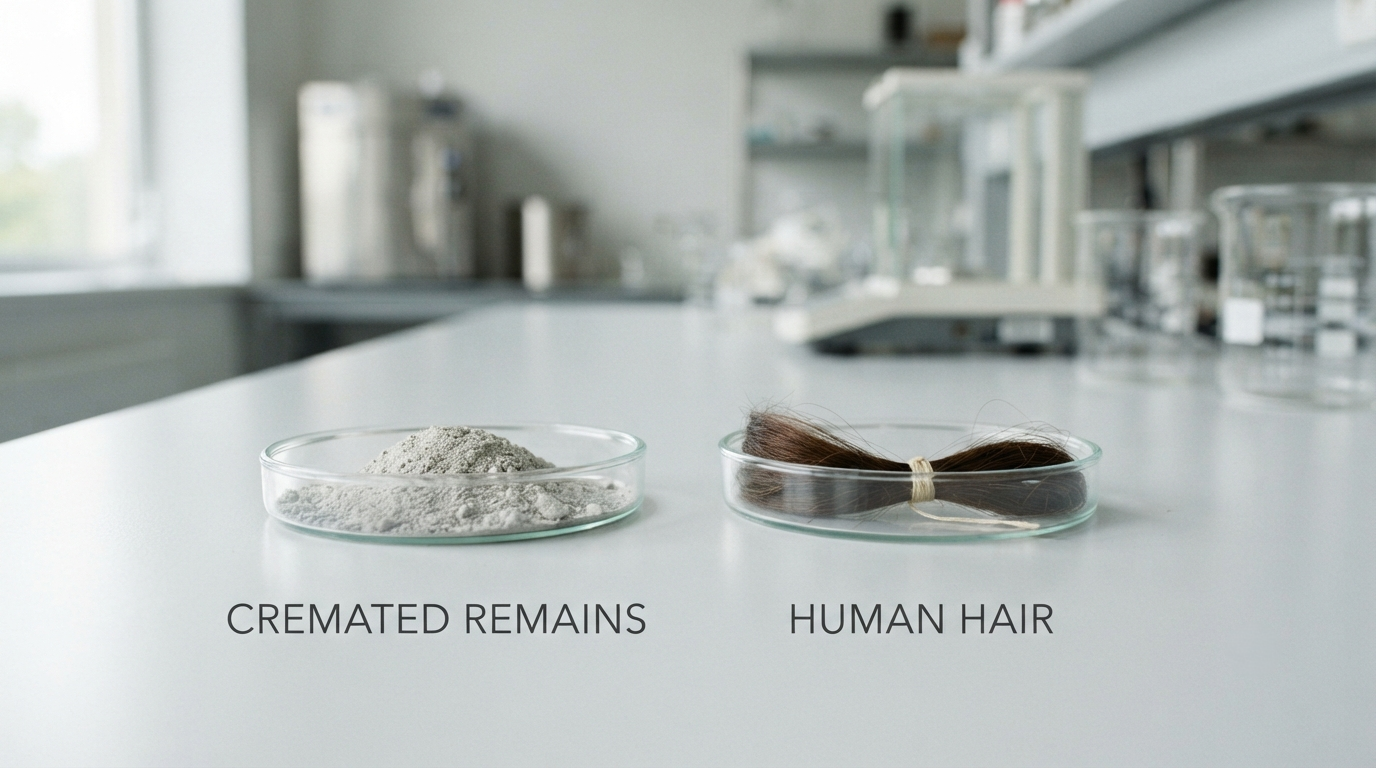
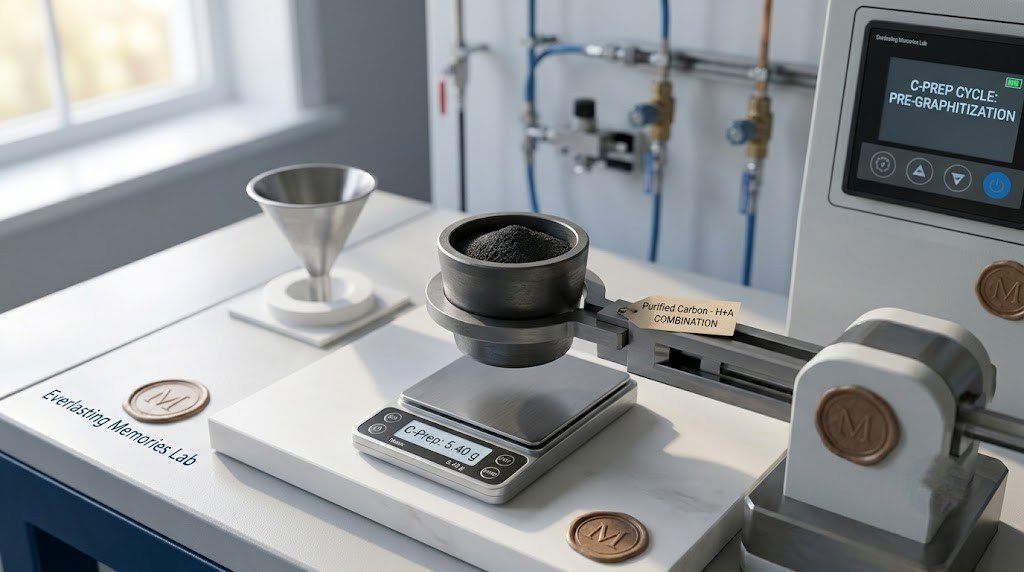
Hold the answer against the chemistry. Cremated remains are overwhelmingly calcium phosphate, bone mineral, and the usable carbon inside them runs at roughly 0.5% to 4% of ash by weight. That small recovered fraction is purified, then blended with lab sourced carbon to reach the volume a laboratory growth cell requires.
Industry wide, the personal carbon recovered from ashes typically accounts for somewhere around 10% to 15% of a finished stone’s mass, and some providers cite figures as low as 3%. How much ash a laboratory asks for is a separate matter from how much of the result is him.
If a company tells you the diamond is 100% your son, it is claiming something the physics does not support. The accurate version, a real, traceable portion of his own carbon sitting permanently inside the crystal lattice, is both true and, for most parents, more than enough.
Of all the son ashes diamond questions on this page, this one is the cleanest test of whether you are being spoken to or sold to.
What Paperwork Comes Back With the Diamond?
Two very different documents exist, and the son ashes diamond questions here exist because the two are routinely conflated.
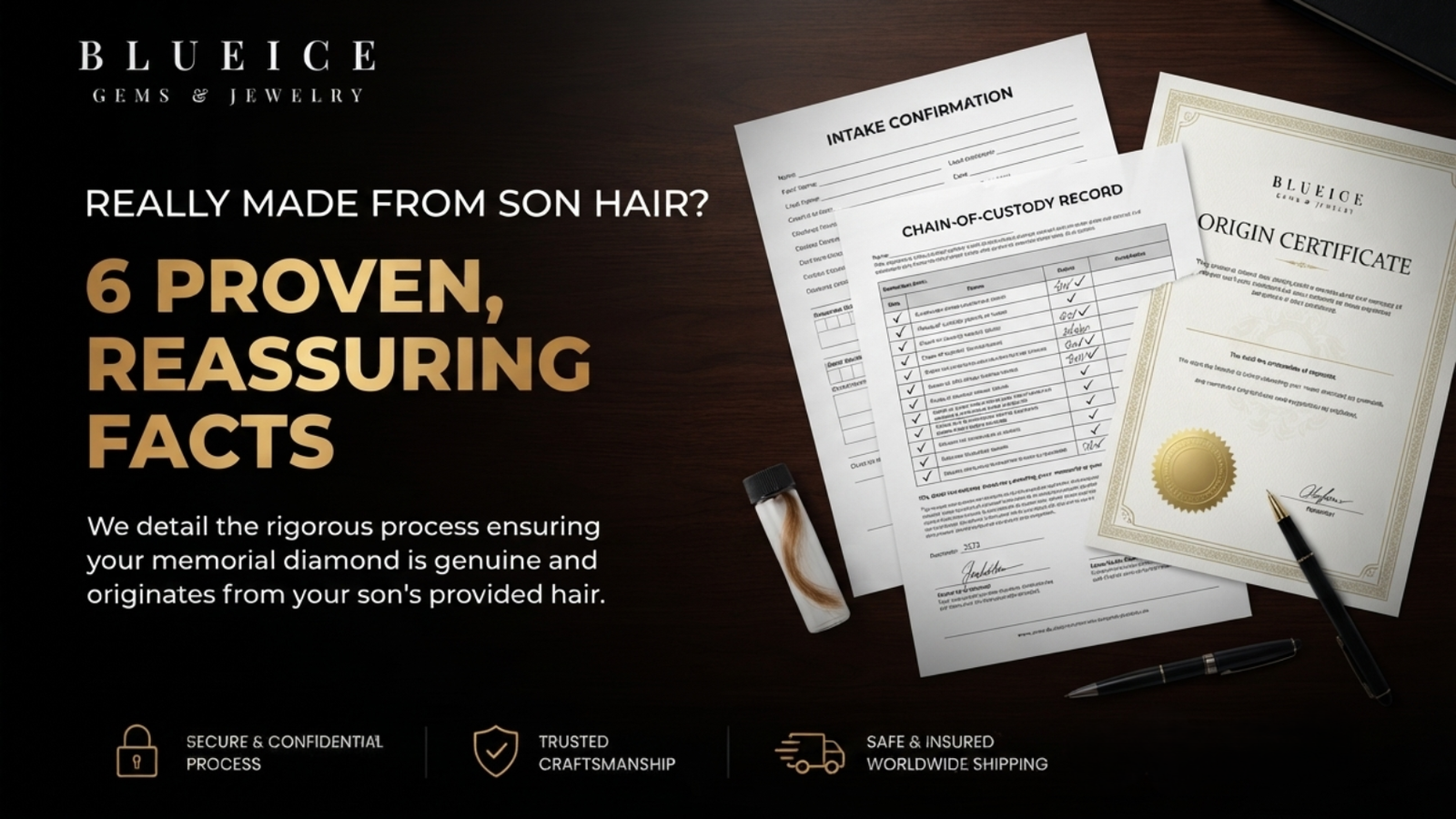
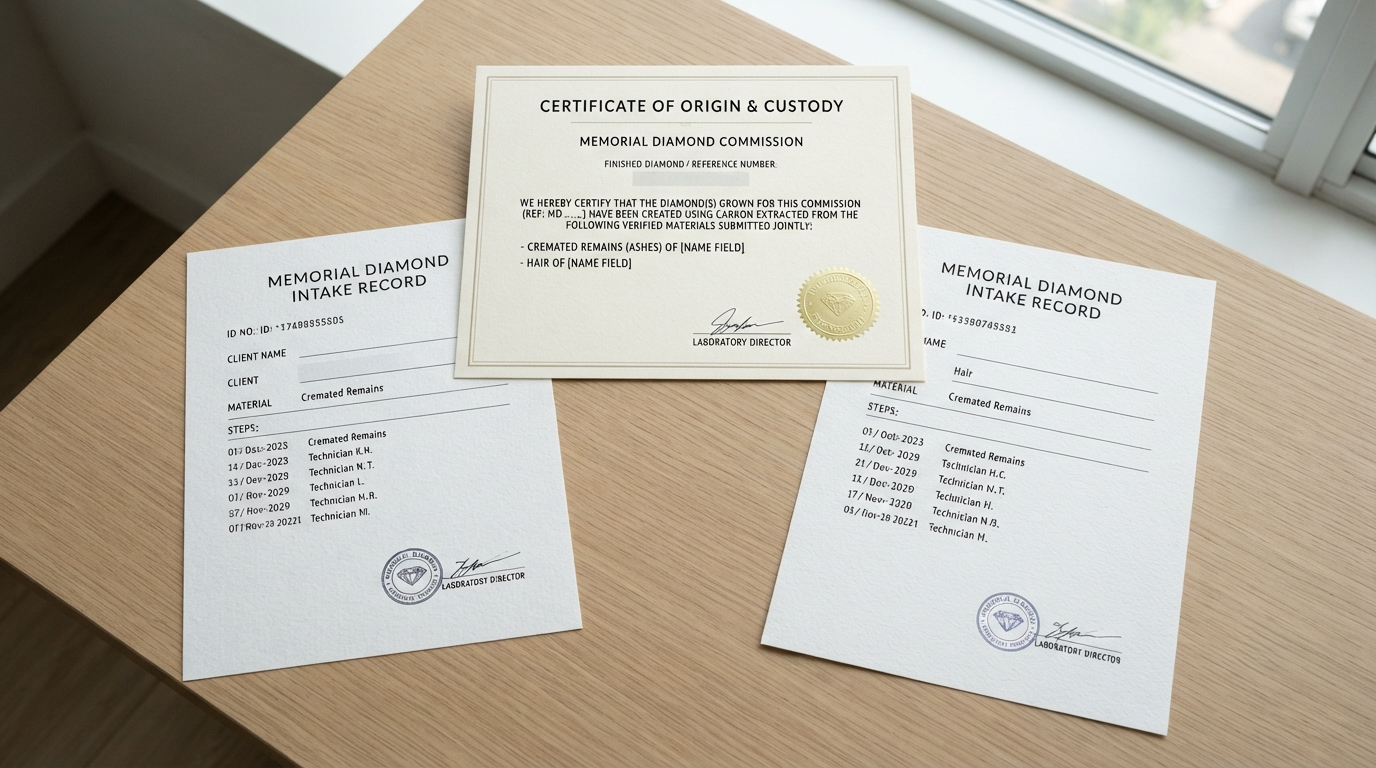
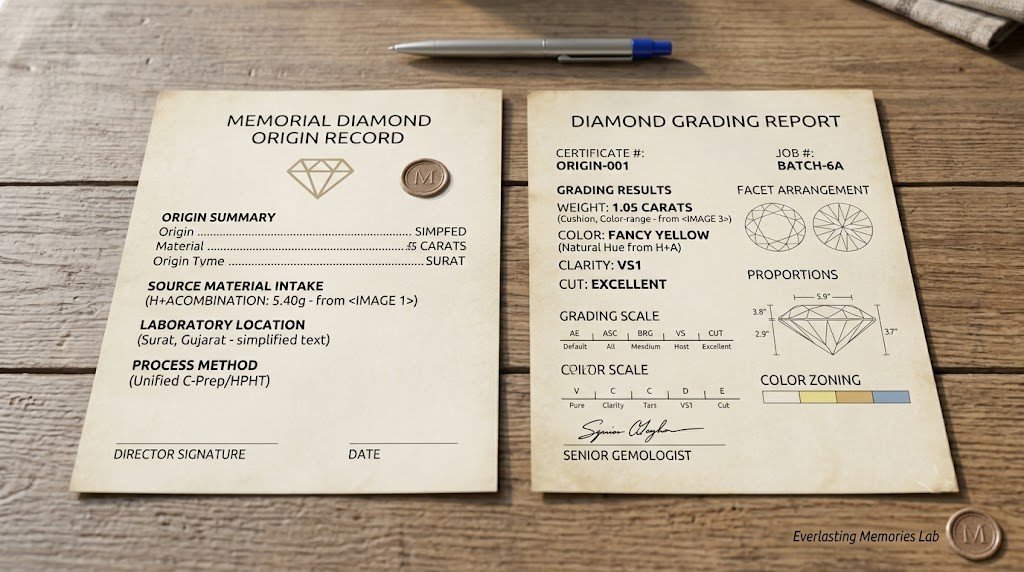
The first is an authenticity or origin certificate. It is usually issued in house by the provider, and what it records is provenance, that this particular stone was grown from the carbon your family submitted. It is a chain of custody document, not a quality assessment.
The second is a grading report from an independent gemological laboratory. It describes the stone itself, using the same cut, color, clarity and carat standards applied to any diamond on a jeweler’s counter. It is optional across this industry, normally costs extra, and says nothing about origin.
Ask which of the two is included. Ask who issues it. Ask to see a specimen copy with another family’s details removed. A confident provider usually will.
Ask also whether the document names him and whether you approve the wording; for some parents that single page becomes the thing they reread. The son ashes diamond questions about documentation are the ones most often answered with a warm generality, so press until you have specifics.
Who Is Able to Authorize Sending His Ashes?
Begin the son ashes diamond questions about authority by asking whose signature the release requires, then check that answer against your own family’s situation before anything is packed.
This is where parents are most often caught off guard. If your son was married, or had adult children of his own, the person with the strongest claim to direct what happens to his remains may not be you. State statutes differ, and anything he put in writing while living can displace the default order entirely. It is a legal question with a local answer, and it reflects nothing about who loved him.
So ask directly: whose authorization do you need, in what form, and what is your process when family members disagree? Some companies require one signatory; others want written consent from everyone with a claim.
If your family is divided, or if you are arranging this alone while another parent stays at arm’s length, say so in the first conversation rather than the last. A provider used to that will have a route through it. Among the son ashes diamond questions here, this is the one most likely to stall everything if it is left until the end. Whether several relatives can each receive a stone is worth raising in the same breath.
How Long Will It Take, and What Happens in the Silence?
Industry wide the answer to one of the most common son ashes diamond questions is six to ten months from receipt of material to finished stone, stretching toward twelve for larger stones or specialty colors. Ask the provider for their own figure, and what it is measured from, the day you pay, or the day his ashes arrive.
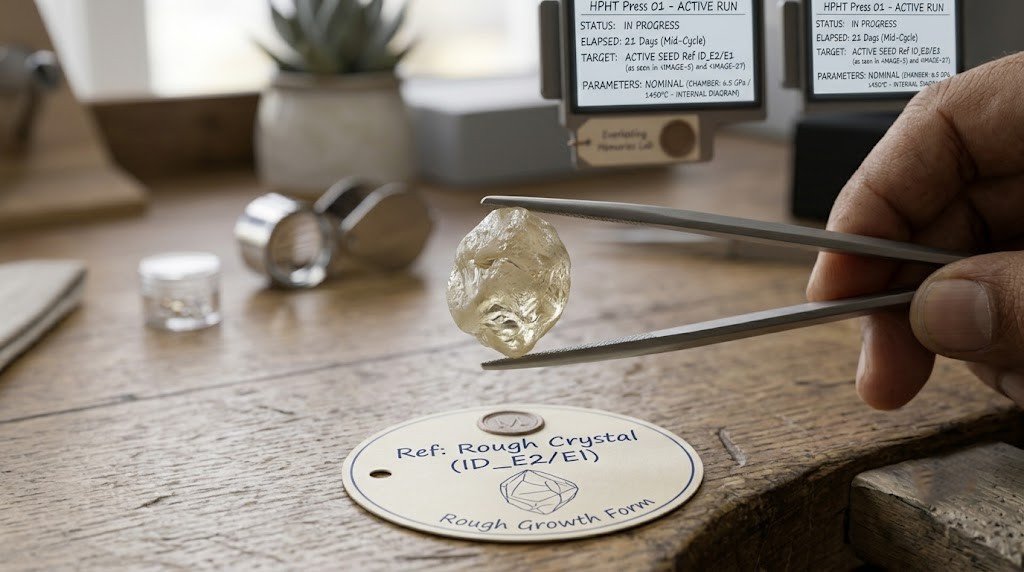
Then ask what almost nobody asks: what contact happens during those months? Growth is slow and uneventful by design, which means long stretches with nothing to report. Some companies photograph the rough crystal; some send scheduled updates; some send nothing until the end.
Ask which. Ask who you telephone if six weeks pass in silence and you need a human voice to confirm his ashes are where they should be. The son ashes diamond questions about communication matter as much as the technical ones.
Ask what happens if they overrun their own estimate. Of all the son ashes diamond questions, it is the one families forget. An honest answer acknowledges that growth time varies and that an estimate is an estimate. Where the months actually go is a reasonable thing to have explained to you before you commit.
What Can Nobody Promise You About the Color?
Start the son ashes diamond questions about color by asking what range is realistic, then listen for whether the reply contains a hedge. It should.
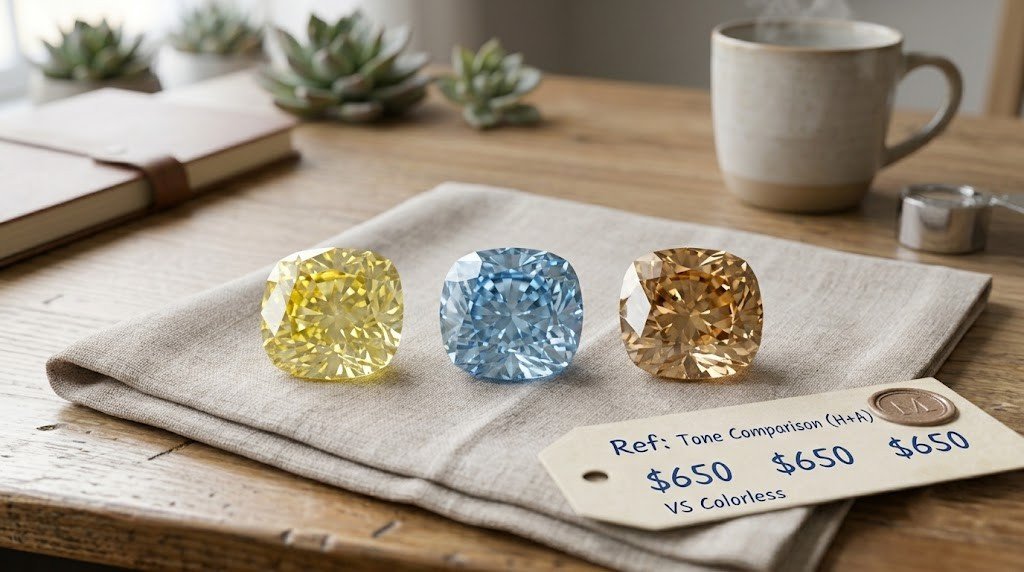
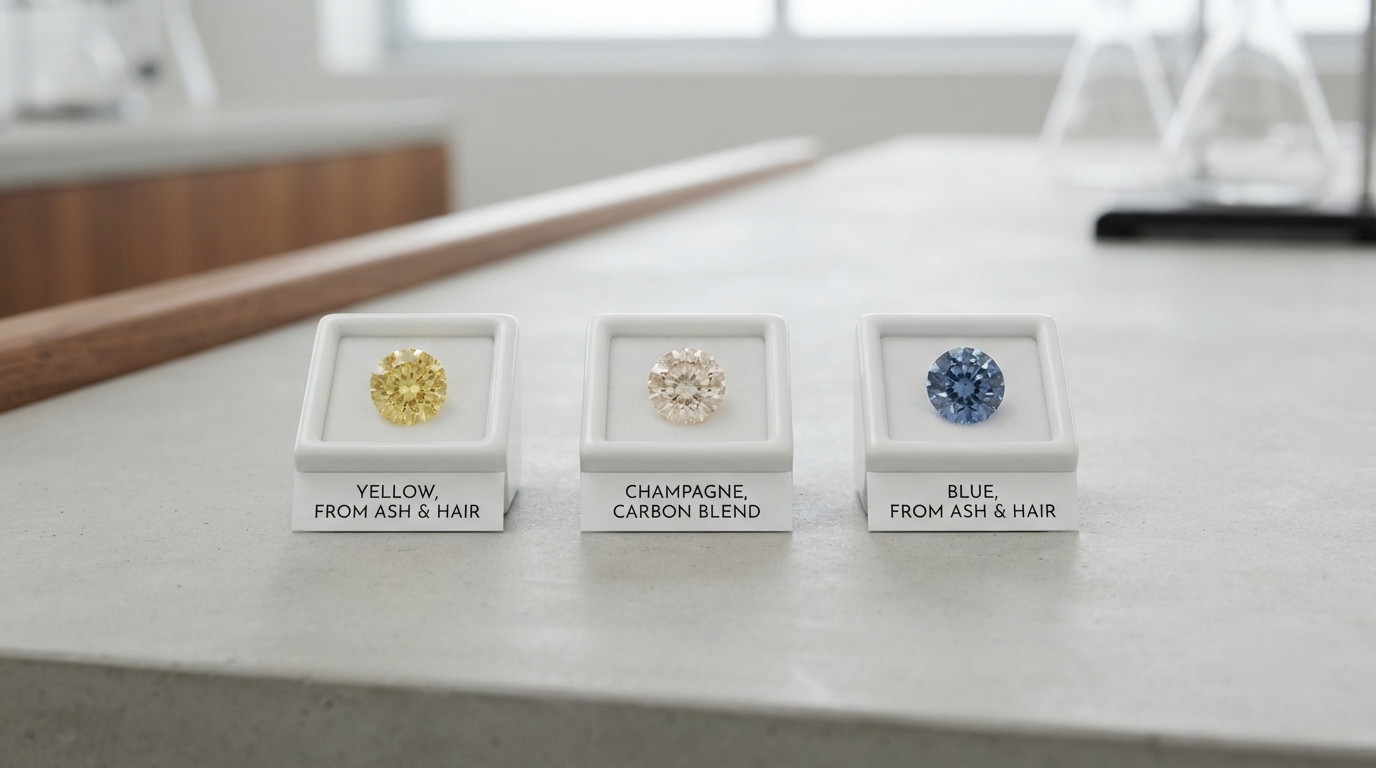
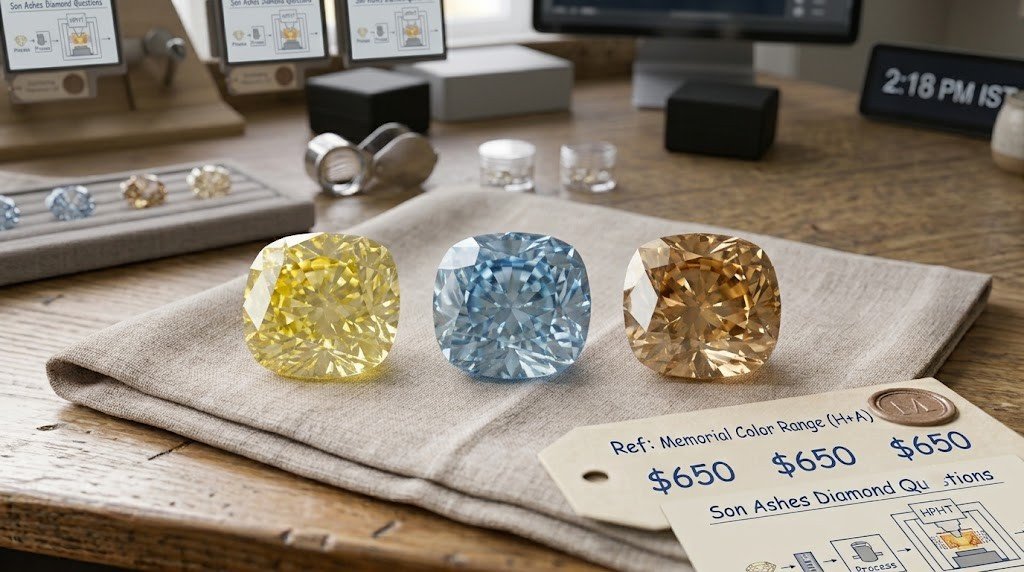
The mechanism is simple enough. Trace elements present during growth determine the tone: nitrogen pushes a crystal toward yellow, boron toward blue, and a colorless stone requires the near total absence of both. Because this carbon came from a person rather than a controlled industrial feedstock, trace elements are normal, which is why memorial stones tend toward yellow, blue and champagne. What shade to realistically expect is worth reading before you choose.
So ask three things. Is colorless offered, what extra processing does it need, and what does it cost? Is post growth irradiation available for red, pink, green or black stones, and is it disclosed on the paperwork? And what is the provider’s position if the finished shade differs from the sample shown?
That last point is where the son ashes diamond questions about color earn their place. No one can guarantee an exact tone from organic source material, and a company offering that guarantee anyway is promising you something outside its control.
Which Son Ashes Diamond Questions Are About Money?
Of the son ashes diamond questions about money, the first is simple: ask for the total, never the headline. Across the industry, entry tier stones of roughly 0.10 to 0.25 carats run about $1,500 to $3,500. Half carat to one carat stones sit somewhere near $5,000 to $15,000. Anything from two carats upward climbs from around $20,000 into the $75,000 range and beyond, with colorless costing meaningfully more than yellow or champagne at the same weight.
Those are general industry figures rather than any single company’s price list, and what drives the number up or down matters more than the range itself.
Then ask what sits outside the quote. Independent grading, engraving, fancy cuts and any setting, ring, pendant, earrings, are commonly billed separately from the loose stone, and sometimes so is insured return shipping.
Ask about the payment schedule too: the deposit, when the balance falls due, and what happens to money already paid if you stop. These are ordinary son ashes diamond questions you would put to anyone handling a five figure commitment, asked at a moment when nobody expects you to be thinking clearly.
What If Something Goes Wrong Partway Through?
Ask these son ashes diamond questions before you send. Afterwards, you are negotiating from a position where the thing you care about most is already inside somebody else’s building.
Growth cycles can fail. Crystals fracture during cutting. Parcels are occasionally lost. None of that is common, none of it is impossible, and the terms governing it are written long before it happens.
So put these son ashes diamond questions in writing: if a growth cycle fails, is it rerun from remaining material at your cost or at mine? If nothing remains, what then? If the stone fractures in the cutting room, is it replaced, recut smaller, or refunded? What insurance covers the parcel in each direction, and for what declared value?
Ask what the company’s liability amounts to, in a sentence you can read without a lawyer. The honest answer may be uncomfortable, no sum of money replaces the material, but that is a far better sign than a smooth one. Ask, too, what happens if you simply change your mind; cancellation terms differ sharply once growth has begun. Where the process stalls most often belongs in the same conversation, and these son ashes diamond questions are easiest to ask while you are calm.
How Do You Tell a Straight Answer From an Evasive One?
You are not judging tone when you weigh the answers to the son ashes diamond questions. Every company here is warm on the telephone; warmth is table stakes. You are judging specificity.
| What you asked | A straight answer sounds like | An evasive answer sounds like |
|---|---|---|
| How much of the stone is his carbon? | Roughly 10% to 15% of the mass, blended with lab carbon to reach growth volume. | It’s 100% your son. |
| Is his material ever batched with others? | No, one growth cell per order, and here is how we log it. | Every diamond is unique to the family. |
| Which documents do I receive? | An in house origin certificate; independent grading is optional and billed separately. | It arrives fully certified. |
| How long will it take? | Six to ten months typically, longer for larger stones, measured from arrival. | Things move fairly quickly these days. |
| What if the growth fails? | Clause seven of our terms. I’ll send it now. | That has never happened to us. |
Three patterns are worth noticing across all of your son ashes diamond questions. A number replaced by an adjective. A written term replaced by a reassurance. A direct question answered with a sentence about feelings.
None proves bad faith on its own. Every one means ask again, in writing.
Frequently Asked Questions
Should I ask these questions before or after choosing a provider?
Before. The answers to the son ashes diamond questions are how you choose. Send the same written list to two or three companies and compare what comes back, because the differences in specificity between replies usually tell you far more than anything published on their websites.
Is it rude to ask how much of the diamond is really my son?
Not at all, and a good provider expects it. The honest figure on the ash route, roughly 10% to 15% of the finished mass, with some providers citing as low as 3%, is a fact about chemistry, not a criticism of anybody’s workmanship.
Can I ask for his ashes back if I decide not to go ahead?
Ask before sending rather than after. Return policies vary considerably between providers and are governed entirely by the terms you agreed to, so get that answer in writing while you still hold everything yourself.
Does anyone verify by DNA that the ashes are my son’s?
Put that question to the provider directly, because nothing standard across this industry settles it either way. Ask plainly what verification, if any, takes place, and rely on the written answer rather than an assumption in either direction.
Who has to sign the release if my son was married?
Ask the provider whose signature they require, then check it against your state’s law and anything your son set down in writing. A spouse, or his own adult children, may hold that authority ahead of a parent.
How many of these should I expect answered in writing?
All of them. A company willing to put custody, percentage, documentation and cancellation terms into an email is a company that has already settled those things internally. Vagueness on paper usually reflects vagueness in practice.
Final Thoughts on Asking Before You Send His Ashes
There is no version of this where you feel entirely ready, and no list long enough to make it feel safe. Asking the son ashes diamond questions well is not about reaching certainty. It is about shrinking the number of things that could go wrong without your knowledge.
If you only get through a handful of the son ashes diamond questions gathered here, make them these four: who is authorized to sign, what percentage of the stone is his carbon, whether his material ever shares a growth cell, and what the terms say when something fails. Those cover most of the genuine risk.
Then let yourself stop. Diligence is one way of caring for him, but so is putting the list down once it has been answered honestly. The wider background to all of this will still be there if you want it later.
Learn More About Son Memorial Diamonds
- Son Ashes Diamond: The Complete Guide — the full picture in one place
- How a memorial diamond is made from his ashes — the chemistry, plainly told
- How much ash a laboratory actually needs — quantities, and what stays with you
- Step by step, from first call to finished stone — the sequence in order
- How much a son memorial diamond costs — what moves the price
Talk With Memorial Diamond
If you would rather put the son ashes diamond questions to a person than read another page, that is reasonable. Memorial Diamond can be reached at memorialdiamond.us to talk through custody, documentation and what a realistic schedule looks like. Asking commits you to nothing at all.