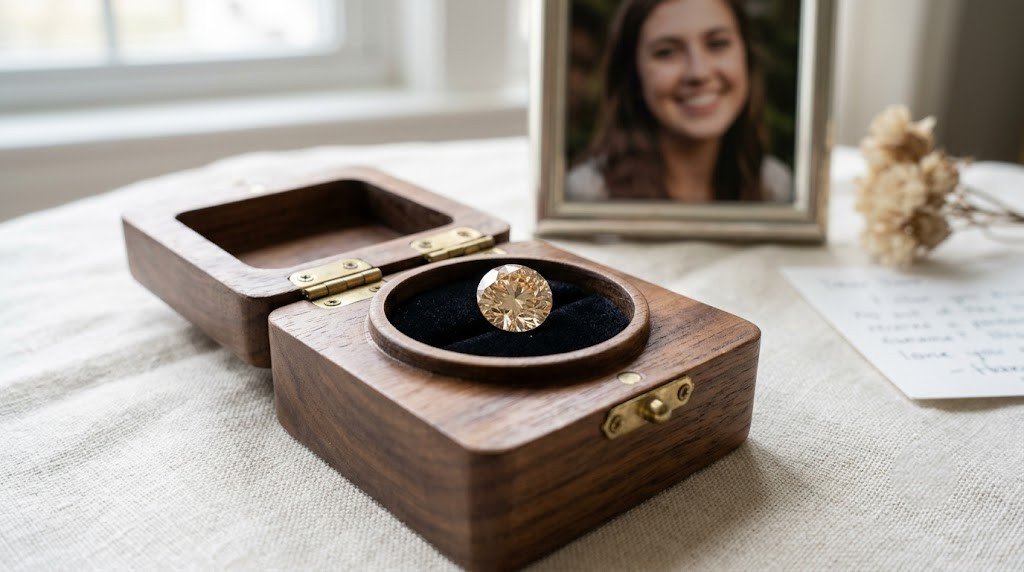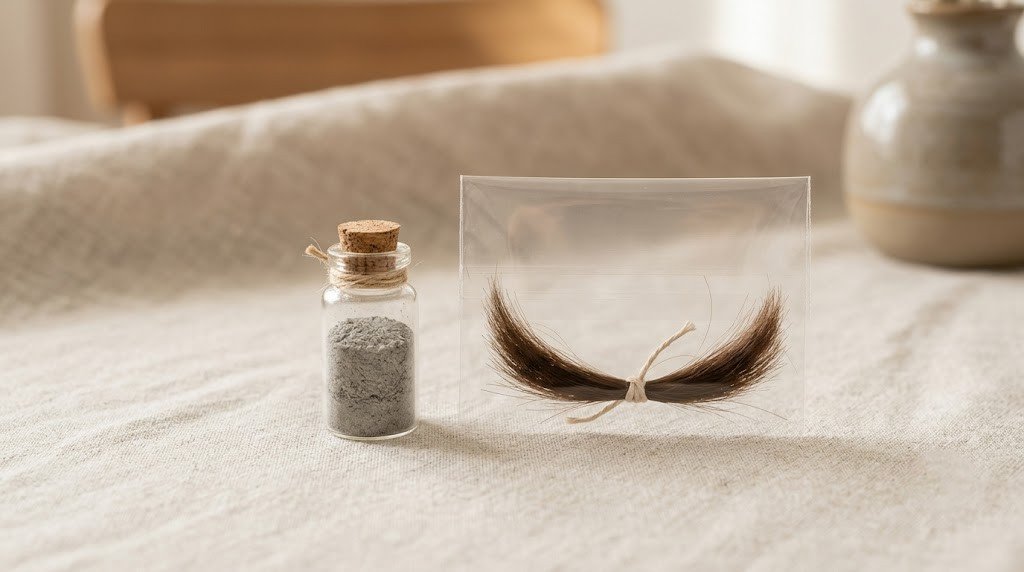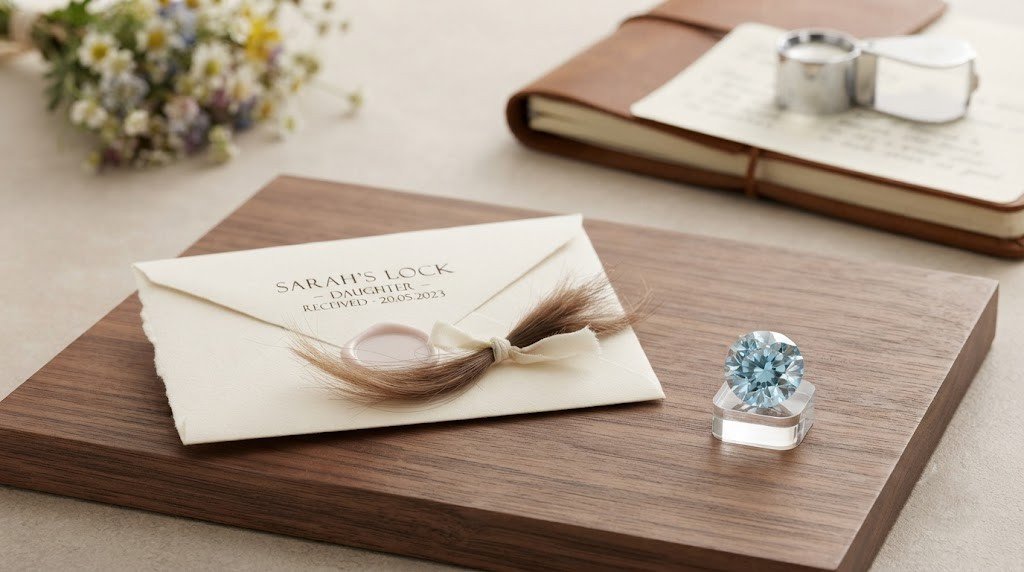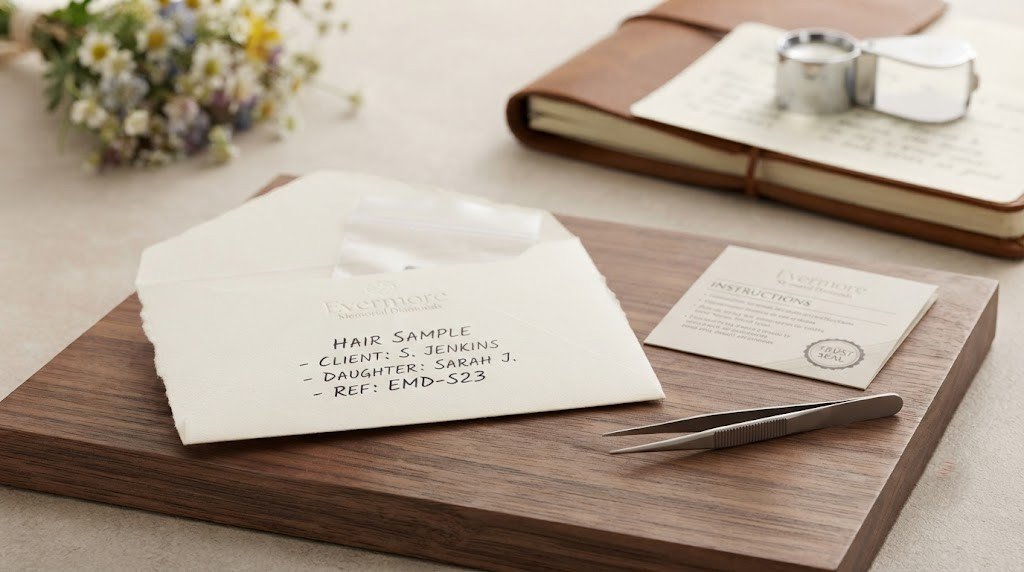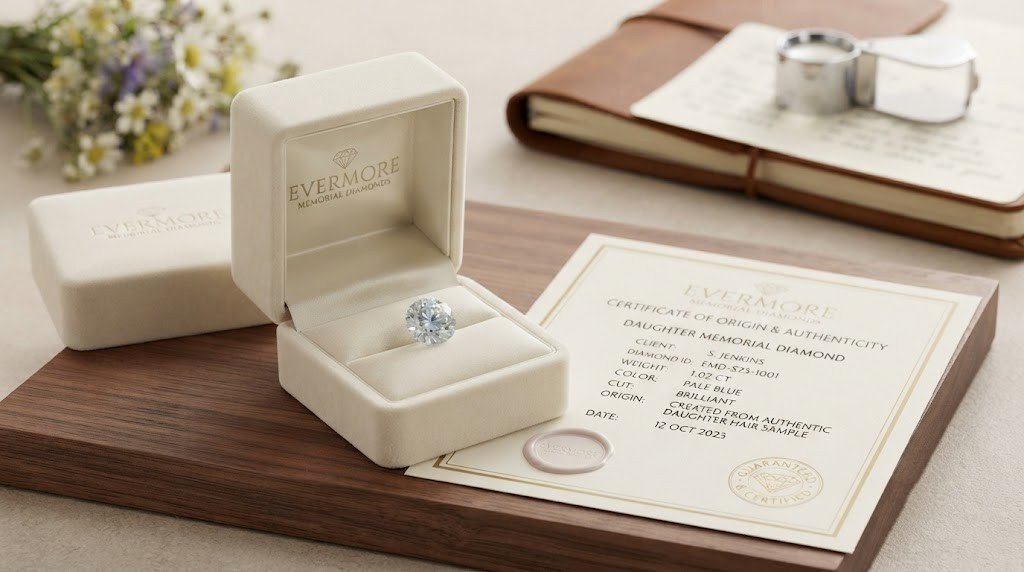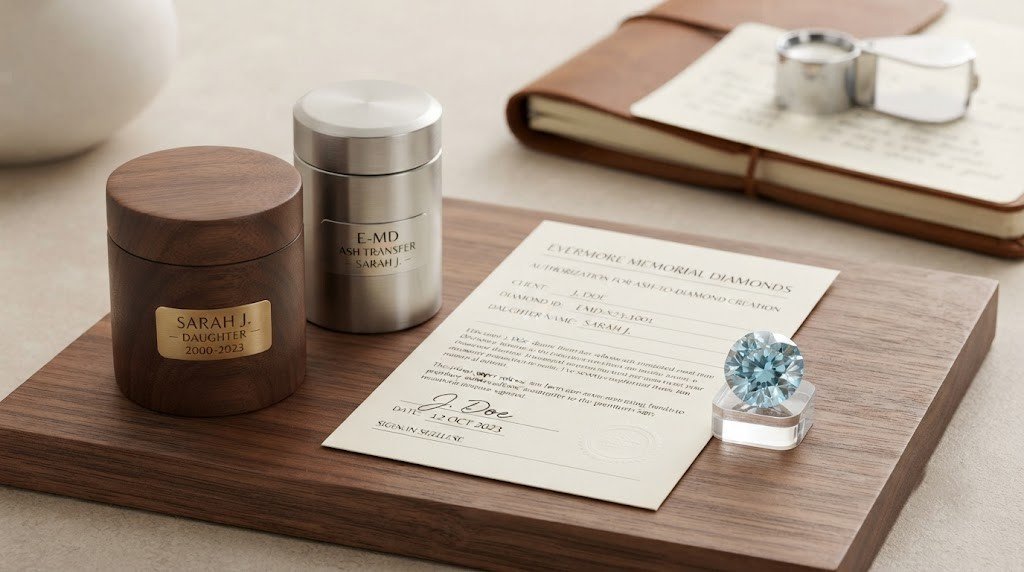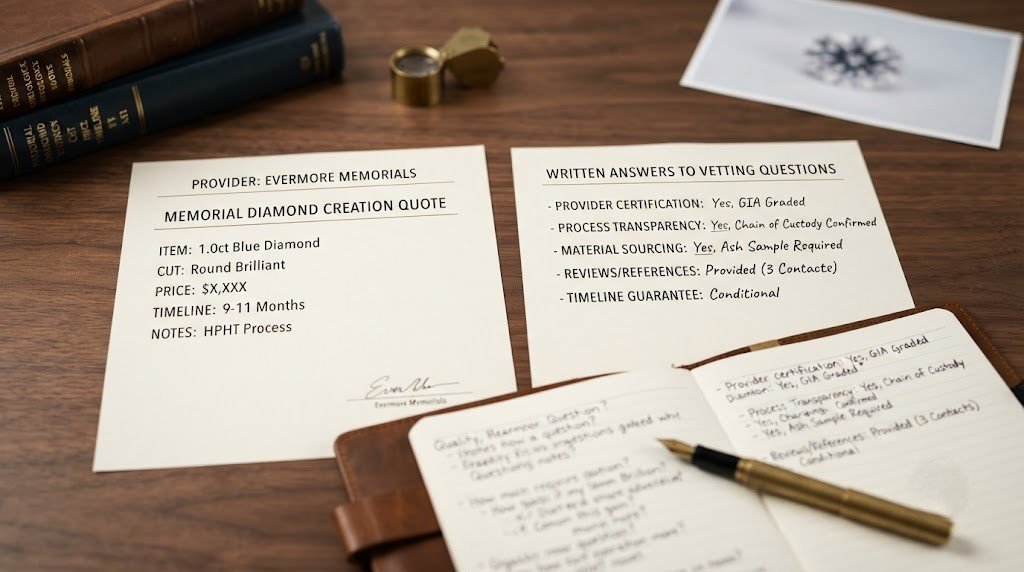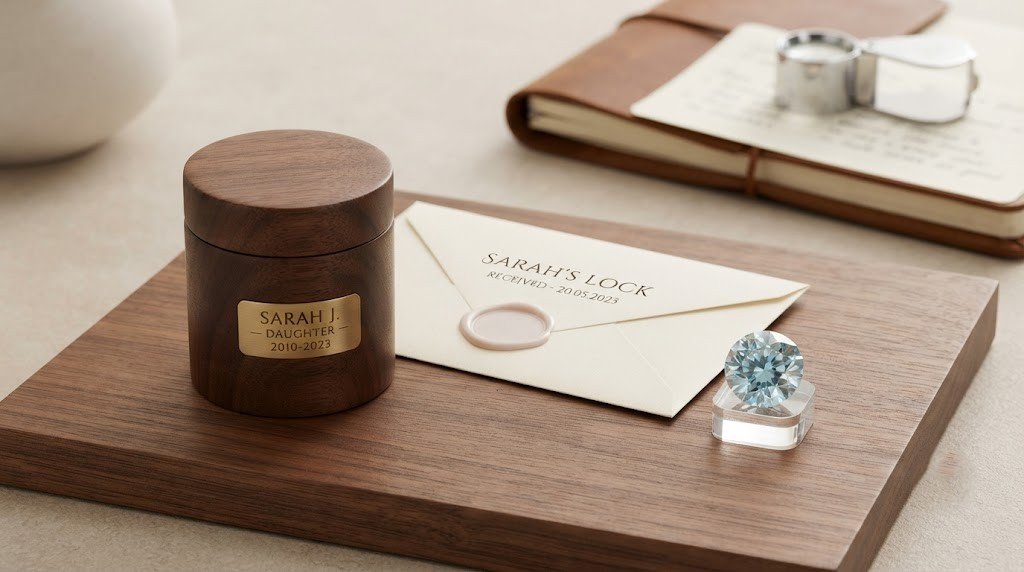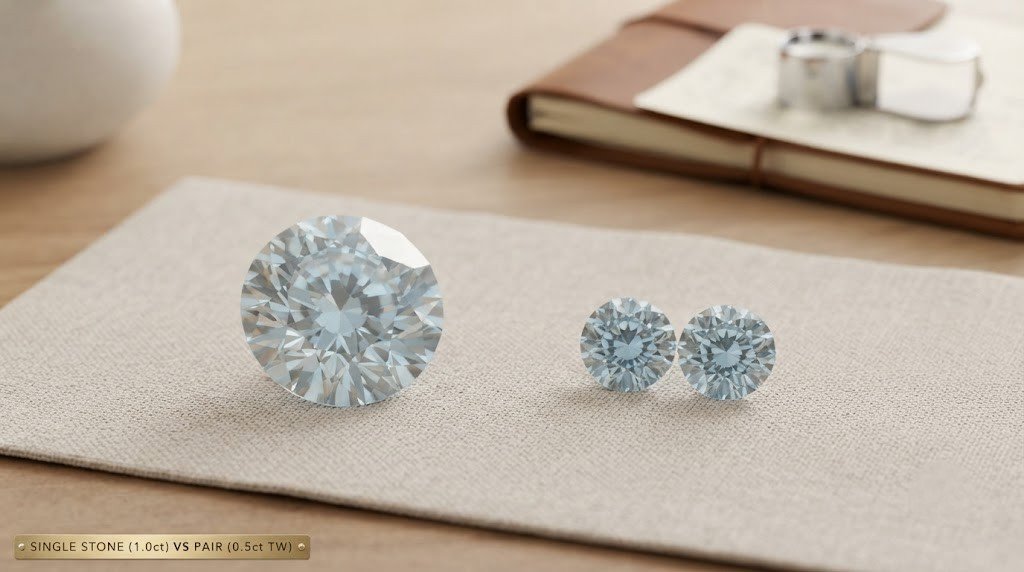
If your sister’s ashes are kept by one relative while a lock of her hair rests with another, you may be considering combining both materials into one memorial diamond. One of the first questions you may have is what color the finished stone will be.
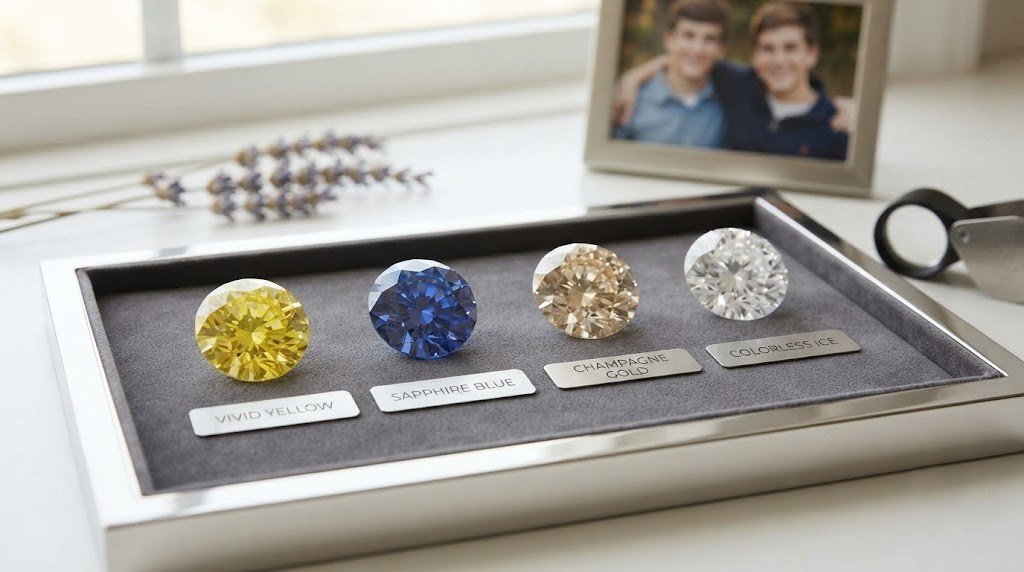
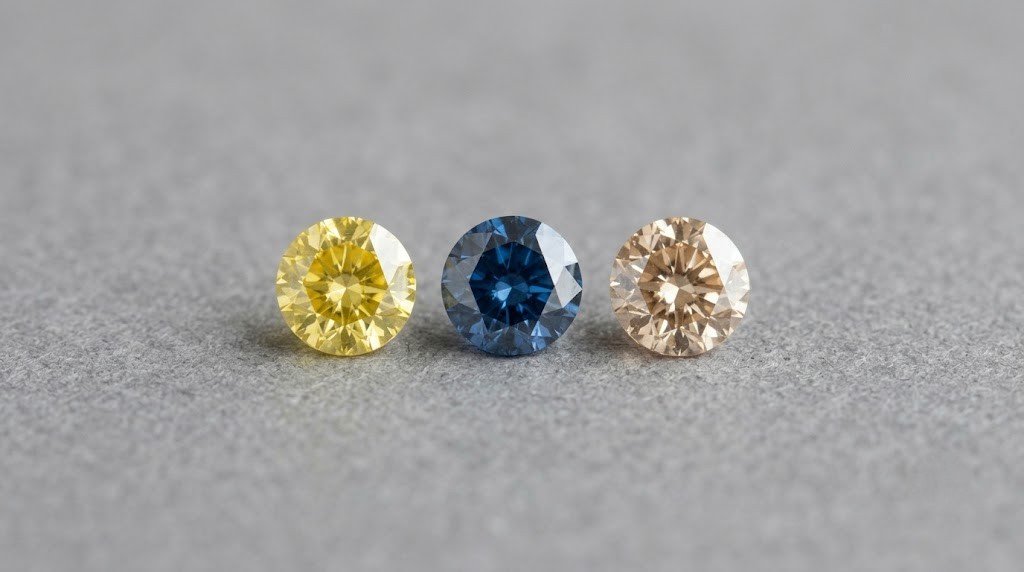
The sister ashes hair diamond color cannot be predicted simply by knowing that both materials will be used. Diamond color develops during crystal growth and depends on factors such as trace elements and the laboratory’s process. A blended stone may have a yellow, blue, or champagne tone, while additional processing may be available for a colorless result.
This guide explains how combining ashes and hair works, what influences the finished color, what different options may cost, and which questions to ask a provider before making a decision.
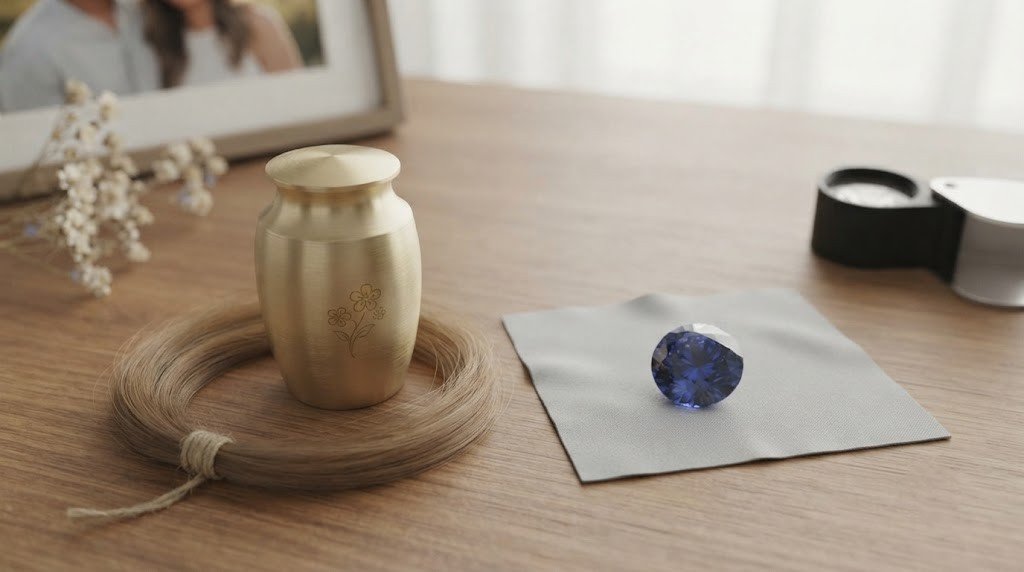
Table of Contents
Does Combining Ashes and Hair Change the Sister Ashes Hair Diamond Color?
There is no reliable way to predict the finished color simply from the combination of ashes and hair. Diamond color develops during growth, when trace elements and other characteristics of the process influence the crystal.
Nitrogen can contribute to a yellow appearance, while boron can produce blue coloration. A diamond grown with appropriate control of these impurities may be colorless. The exact outcome depends on the growth conditions and the provider’s process.
There is no established rule that hair makes a blended diamond lighter or that ashes make it darker. Both materials must be processed into usable carbon before diamond growth, and the final appearance cannot be guaranteed from the original materials alone.
This means the sister ashes hair diamond color is not something you can reliably select just by changing the ratio of ashes to hair.
For some families, combining the materials is meaningful because the finished stone represents two parts of their sister’s story. Other families prefer separate diamonds. Neither decision guarantees a particular color.
Who Holds Each Material, and Whose Agreement Do You Need?
Before discussing the sister ashes hair diamond color, make sure you have permission to use both materials.
Permission to use her ashes
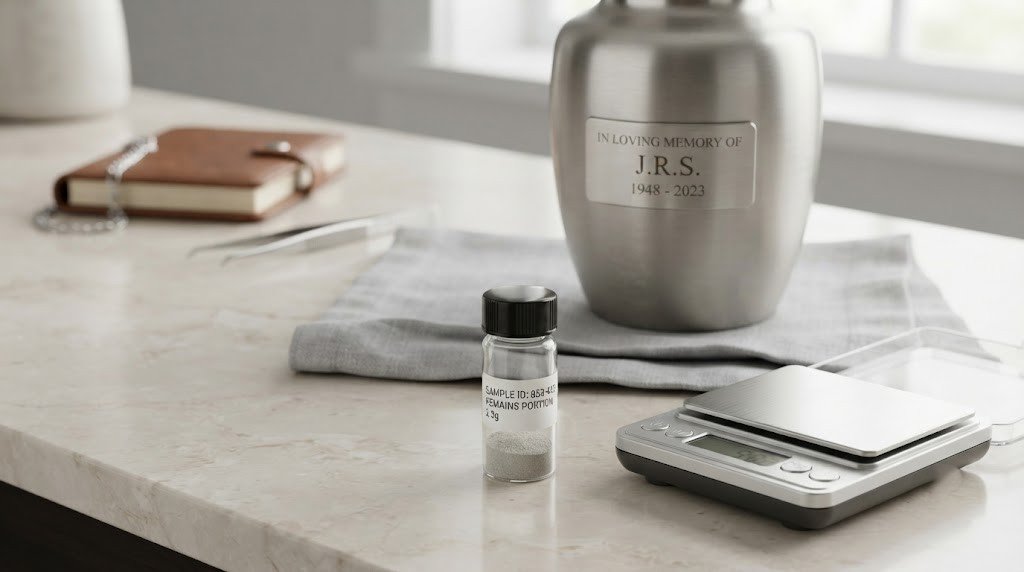
The person who possesses the ashes is not necessarily the person who has legal authority to decide how they may be used. Applicable rules can vary by state, and written instructions or a designated representative may affect who can authorize the decision.
If you are unsure, contact the funeral home or crematory to ask what information it can provide. A local attorney can help clarify legal authority when necessary.
Providers have different material requirements. Ask your chosen company how much ash it needs rather than relying on a general quantity.
Permission to use her hair
Hair may be kept in a brush, envelope, keepsake box, or another family member’s home. Ask the person who holds the lock of hair whether they agree to its use.
Hair that belonged to your sister may also raise questions about her estate, depending on the circumstances and applicable law. If ownership or authority is unclear, seek appropriate local advice.
Keep both agreements documented
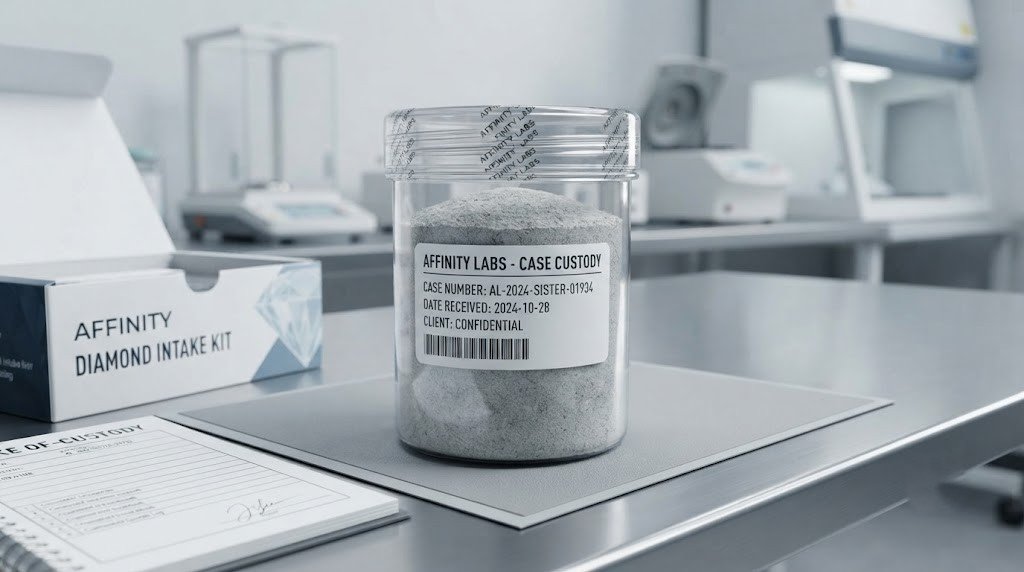
When different relatives hold the ashes and hair, record the permissions separately. Keep copies of any relevant correspondence, shipping receipts, and the provider’s intake confirmations.
This helps everyone understand which materials were submitted and supports the documentation for the finished diamond.
What If Her Ashes and Hair Reach the Laboratory at Different Times?
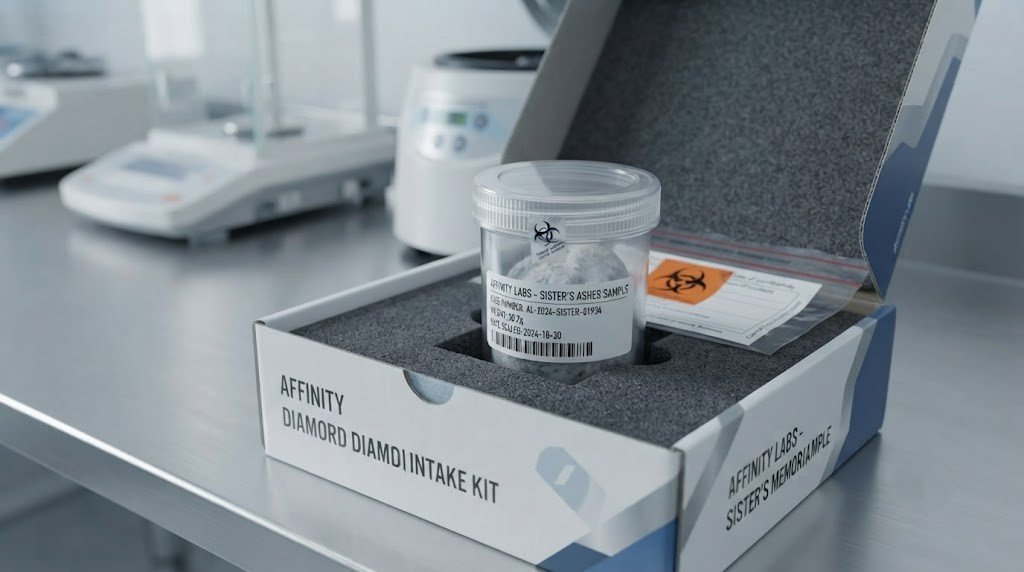
The ashes and hair may be sent in separate packages, particularly if they are held by different relatives. One package might arrive well before the other.
Ask the provider:
- How will each package be identified and recorded?
- How will the first material be stored while the other is in transit?
- Does processing begin only after both materials arrive?
- What happens if one material never arrives?
- Can the order proceed with only one material if the family agrees?
These arrangements do not make the final color predictable, but they matter for traceability and communication.
Keep each shipping receipt and intake confirmation. Ask whether the origin documentation can identify both materials and explain how the company records their receipt.
How Do Laboratories Combine Two Sources Into One Stone?
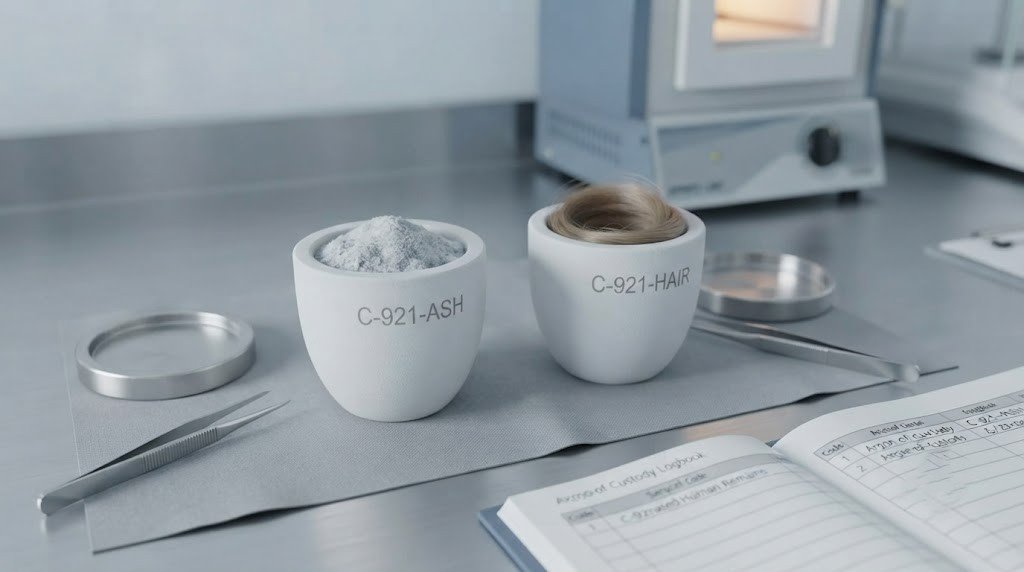
The exact procedure varies by provider. Ask whether the ashes and hair are purified separately and when the resulting carbon is combined.
Carbon extraction and purification
Cremated remains contain substantial mineral material, while hair is made primarily of keratin and contains carbon as part of its organic structure. A laboratory must process each source using a method appropriate to the material.
The usable carbon recovered from ashes is limited and varies. Hair also requires processing before its carbon can be used. Ask the provider to explain its extraction method and what it can document about the material recovered.
Combining the carbon
Some providers may purify each source separately and combine the carbon afterward. Others may use a different workflow. There is no reason to assume that all companies follow an identical process.
Ask whether supplemental laboratory carbon is used to provide enough material for growth. Also ask what the provider can substantiate about the contribution from your sister’s ashes and hair.
There is no universal, established percentage for how much of a finished blended diamond’s mass comes specifically from the hair and ash carbon. Be cautious of precise percentages unless the provider explains how it measures them.
Growing the diamond
Laboratories may use high-pressure, high-temperature growth (HPHT) or chemical vapor deposition (CVD), depending on their process.
The growth method, impurities, and other conditions influence the crystal. The amount of original material alone does not tell you the final carat weight or color.
For a broader overview, read our complete guide to a memorial diamond made from a sister’s ashes and hair.
Why Do Memorial Diamonds Tend Toward Yellow, Blue, and Champagne?
The color of a laboratory-grown diamond can be influenced by trace elements and the conditions under which the crystal forms.
- Yellow: Nitrogen can contribute to yellow coloration.
- Blue: Boron can produce blue coloration.
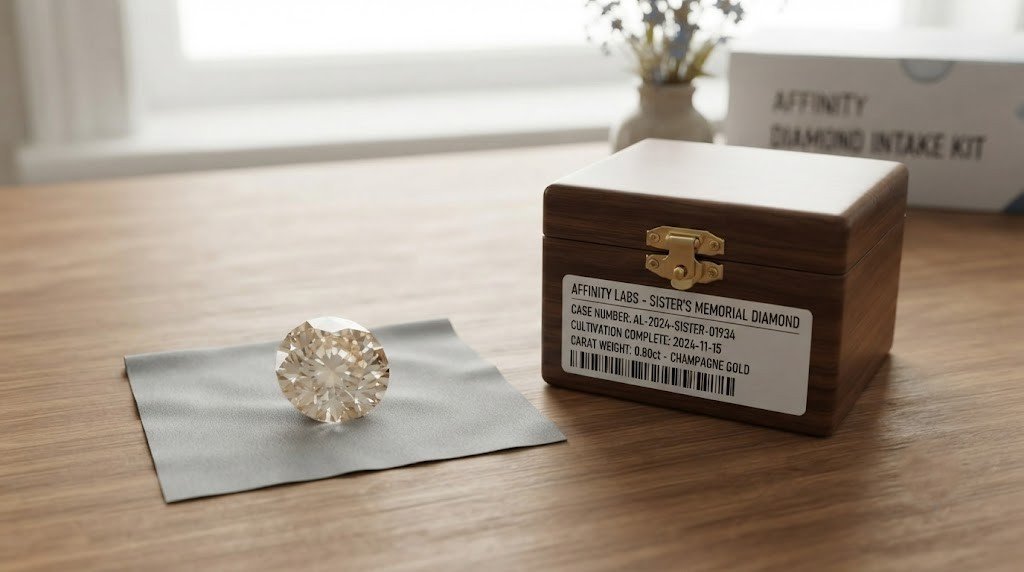
- Champagne or brown: Warm shades may occur depending on the crystal and growth conditions.
- Colorless: Achieving a colorless result may require additional control over impurities and processing.
These are general explanations, not a guarantee of what a particular memorial diamond will look like.
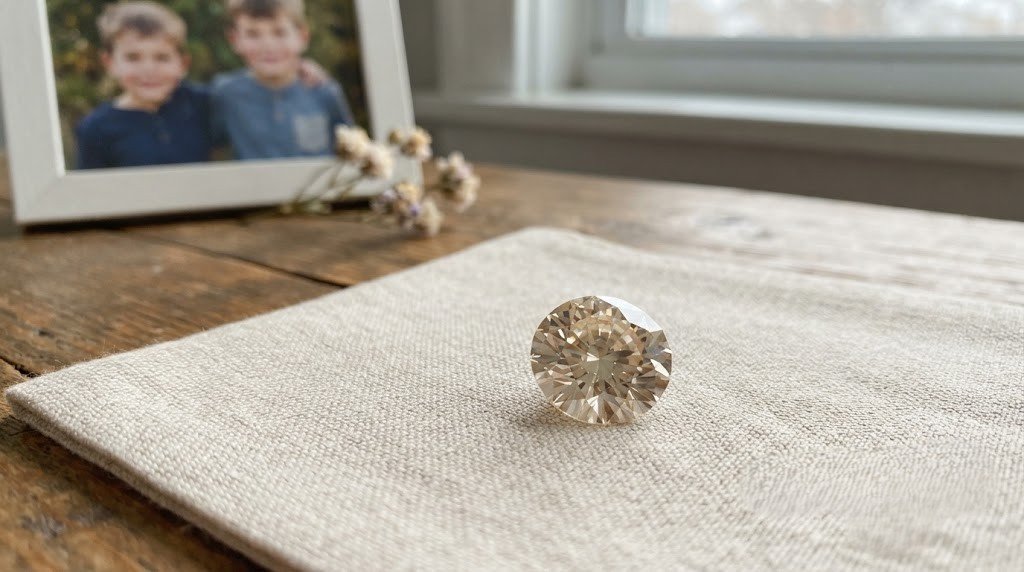
A yellow, blue, or champagne stone is not automatically defective. The most suitable shade depends on your personal preference and the jewelry you want to create.
For a broader overview of available shades, read Memorial Diamond Colors for a Sister: What to Expect.
What Do the Color Options Cost, and How Long Do They Take?
Because the natural sister ashes hair diamond color cannot be guaranteed in advance, your practical choice is often whether to accept the expected natural tint or pay for additional processing if the provider offers it.
| Option | What it means | Cost and timing considerations |
|---|---|---|
| Natural color | The shade produced by the growth process | Usually the baseline option offered for that size |
| Colorless | Additional processing may be needed to control impurities | May cost more and could affect the timeline |
| Treated color | Some providers offer post-growth treatments for selected colors | Availability, disclosure, price, and timing vary |
| Independent grading | An outside laboratory evaluates diamond characteristics | Often an additional charge and another production stage |
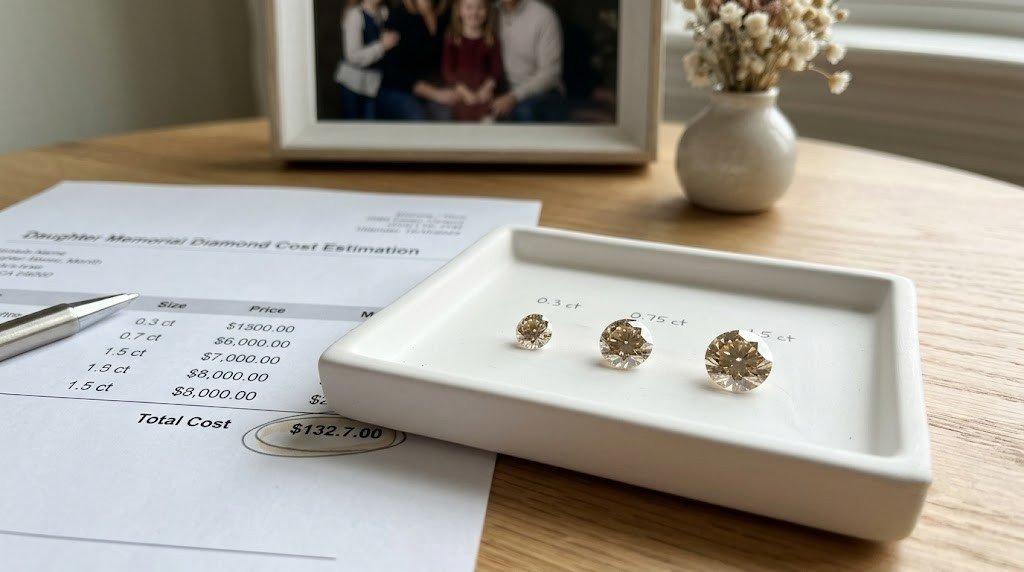
General industry estimates have placed smaller stones of around 0.10 to 0.25 carat at approximately $1,500 to $3,500, stones of 0.5 to 1 carat at approximately $5,000 to $15,000, and stones of 2 to 5 carats or more at substantially higher prices. These are broad estimates, not verified current prices from Memorial Diamond.
Production estimates are also provider-dependent. A timeframe of roughly six to ten months is commonly cited for memorial diamond production, while larger stones or specialty colors may take longer. Ask whether your preferred color or a blended material changes the estimated schedule.
Engraving, settings, special cuts, shipping, and independent grading may cost extra. Always request a current itemized quote.
For more detail, see how much a sister memorial diamond costs.
When Is Irradiation an Option, and How Must It Be Disclosed?
Some providers offer post-growth irradiation to alter a diamond’s color. The colors available and the treatment methods vary between companies.
If you are considering a treated shade, ask:
- Which colors can you produce?
- Is the treatment included in the quoted price?
- Will the treatment be disclosed on the invoice and relevant grading documentation?
- Does the treatment affect care or jewelry repairs?
- Is the final color guaranteed, or is it an estimate?
Treatment changes the diamond’s appearance; it does not establish the origin of the carbon. Do not assume that every provider offers irradiation or that every treated color is available for every stone.
The sister ashes hair diamond color should be documented honestly, whether the stone has a natural tint or a treated shade.
How Should the Paperwork Record Both Her Ashes and Her Hair?
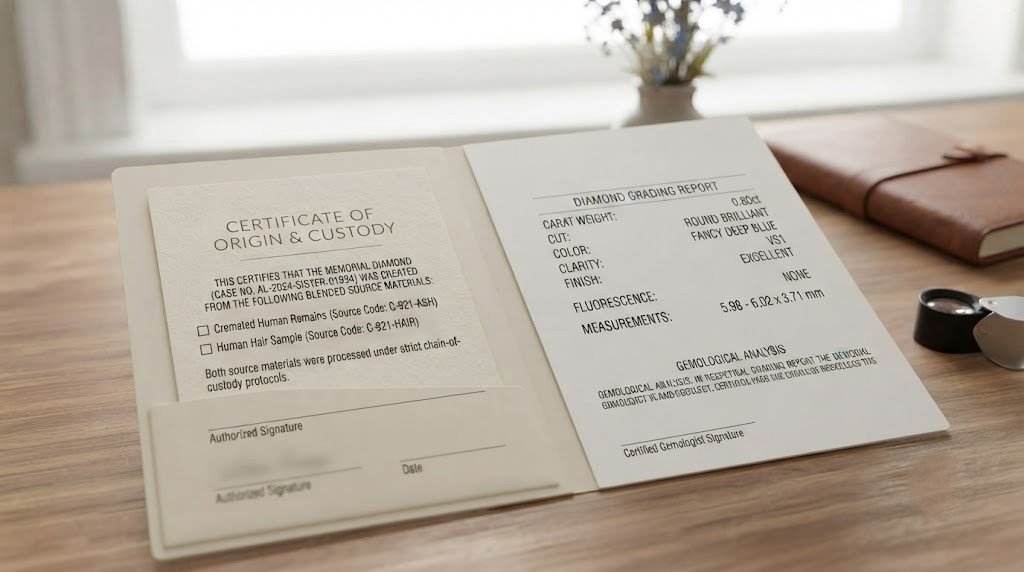
A blended memorial diamond involves two source materials, so ask how the provider documents both.
Origin or authenticity documentation
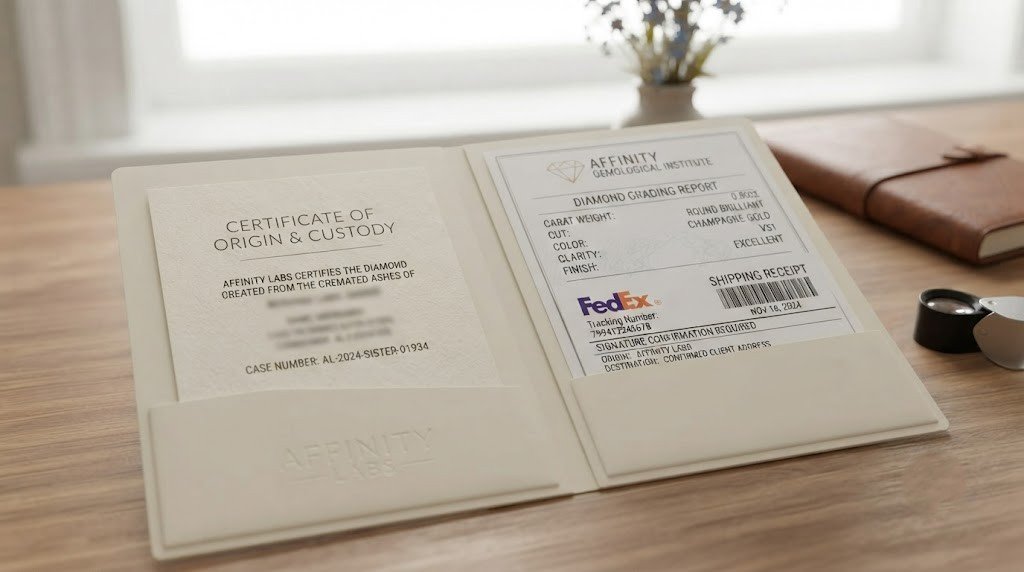
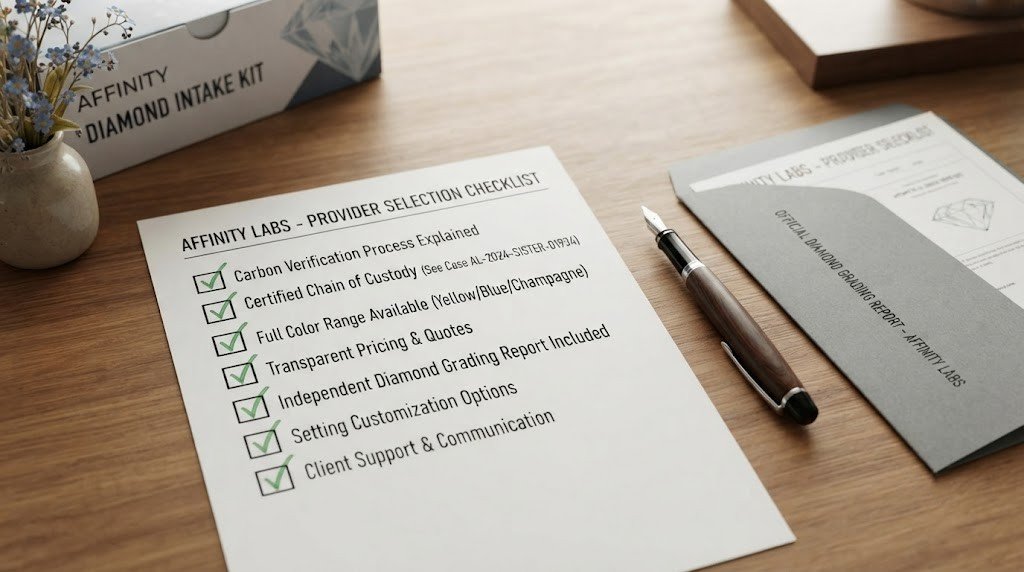
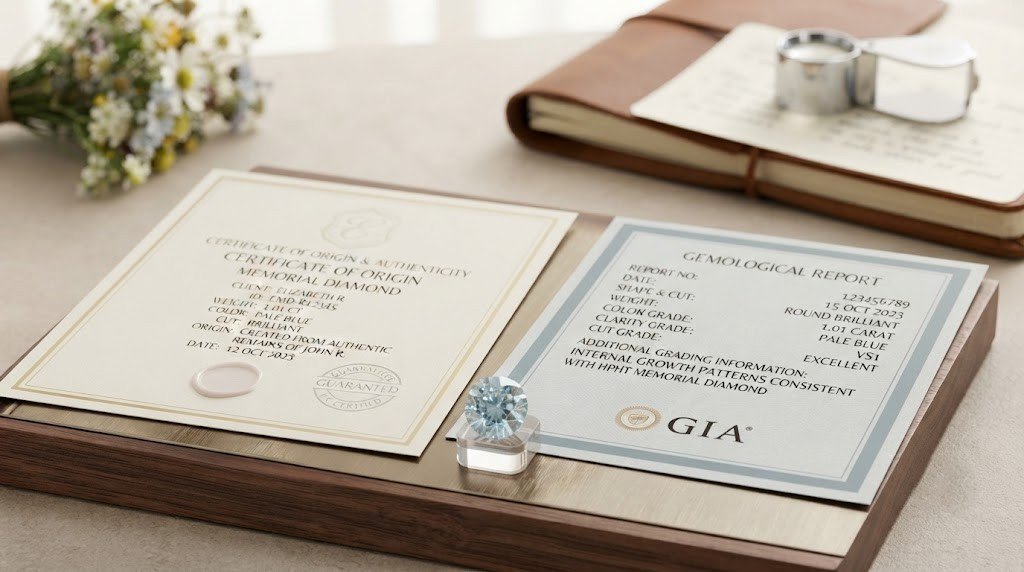
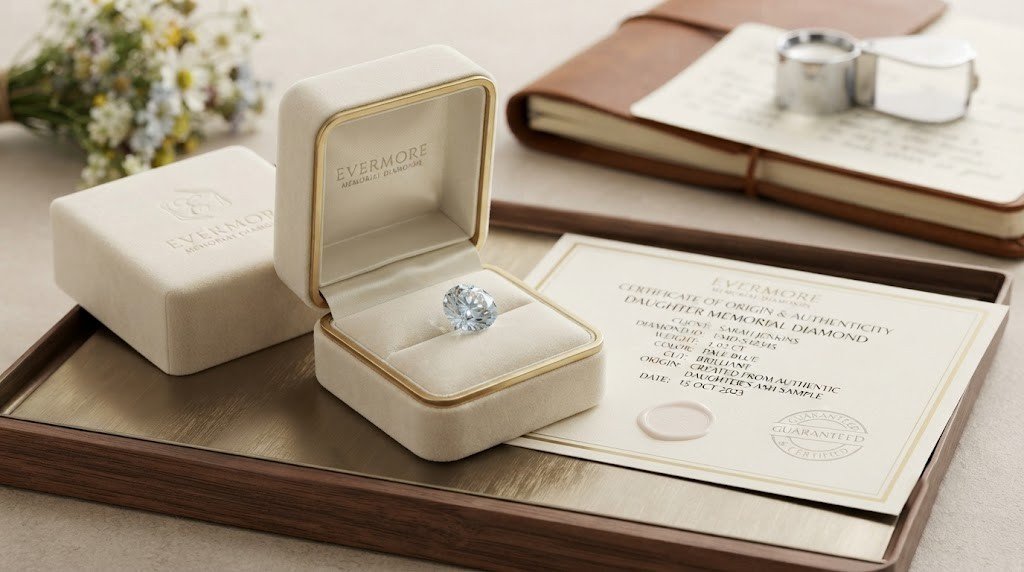
A provider-issued origin certificate may record the company’s claimed connection between the submitted materials and the finished stone. Ask whether it can name both the ashes and hair and whether it records separate intake details when the packages arrive on different dates.
Do not assume that every origin certificate follows the same standard or independently verifies every stage of the process.
Independent grading report
An independent grading report evaluates characteristics of the diamond itself, such as cut, color, clarity, and carat weight. It serves a different purpose from a provider-issued origin certificate.
You can read about GIA’s diamond quality factors to understand the four Cs.
Ask which laboratory would issue the report, whether the service is optional, what it costs, and how it describes treated colors.
What to keep
Keep the written permissions, shipping receipts, intake confirmations, order confirmation, origin documentation, and any grading report. If the provider cannot document the exact percentage of carbon from each source, it should explain that limitation rather than imply that a precise split is established.
Could Blended Stones for Different Siblings Look Different?
Yes. Two diamonds may look similar or different, even when they are ordered from material associated with the same person. Each growth run can produce its own result, so a matching color cannot be promised.
Families may choose different arrangements. One sibling might prefer a blended stone, while another may want a diamond made from ashes alone or hair alone.
Before ordering multiple stones, ask whether the provider can coordinate the orders and what material is needed for each. Do not assume the same color, size, price, or timeline will apply to every stone.
If several relatives will share ownership of one diamond, record the arrangement in writing.
You can also read about sharing a sister memorial diamond among family members.
Which Decisions Stay With Your Family?
Although the natural color cannot be predicted precisely, your family can make several meaningful choices.
- Whether to combine ashes and hair or make separate stones.
- Whether to accept a natural tint or ask about colorless processing.
- Whether to investigate treated colors where available.
- Which cut and shape to request.
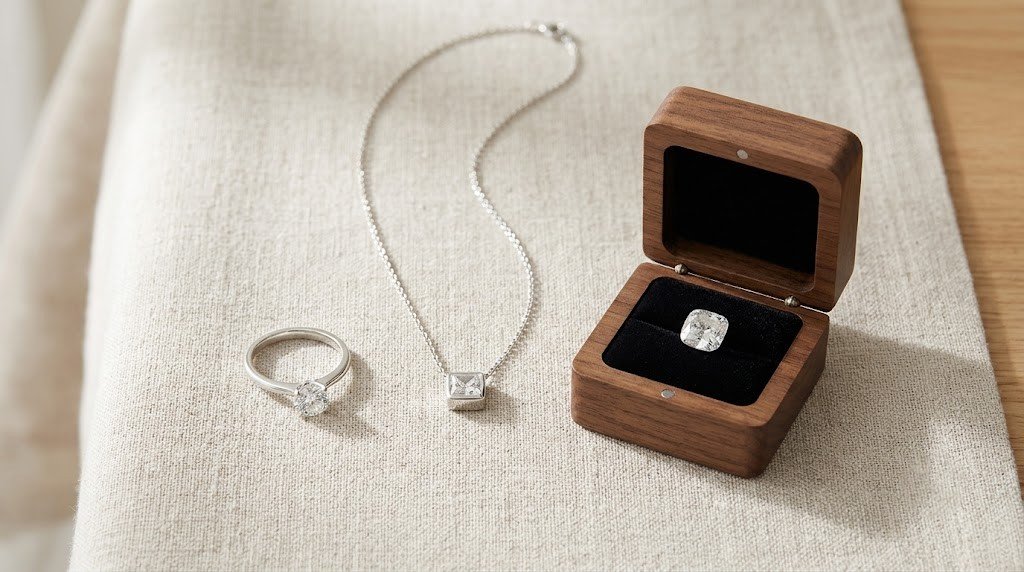
- Which metal and jewelry setting to use.
- Whether to obtain independent grading.
- How to divide costs and determine ownership.
- What should happen to unused material.
The cut and setting may affect how a stone’s color appears to the eye. Ask a jeweler to show you suitable options for the actual stone rather than relying on a general rule about which metal or cut will look best.
For inspiration, explore memorial diamond settings and jewelry ideas for a sister.
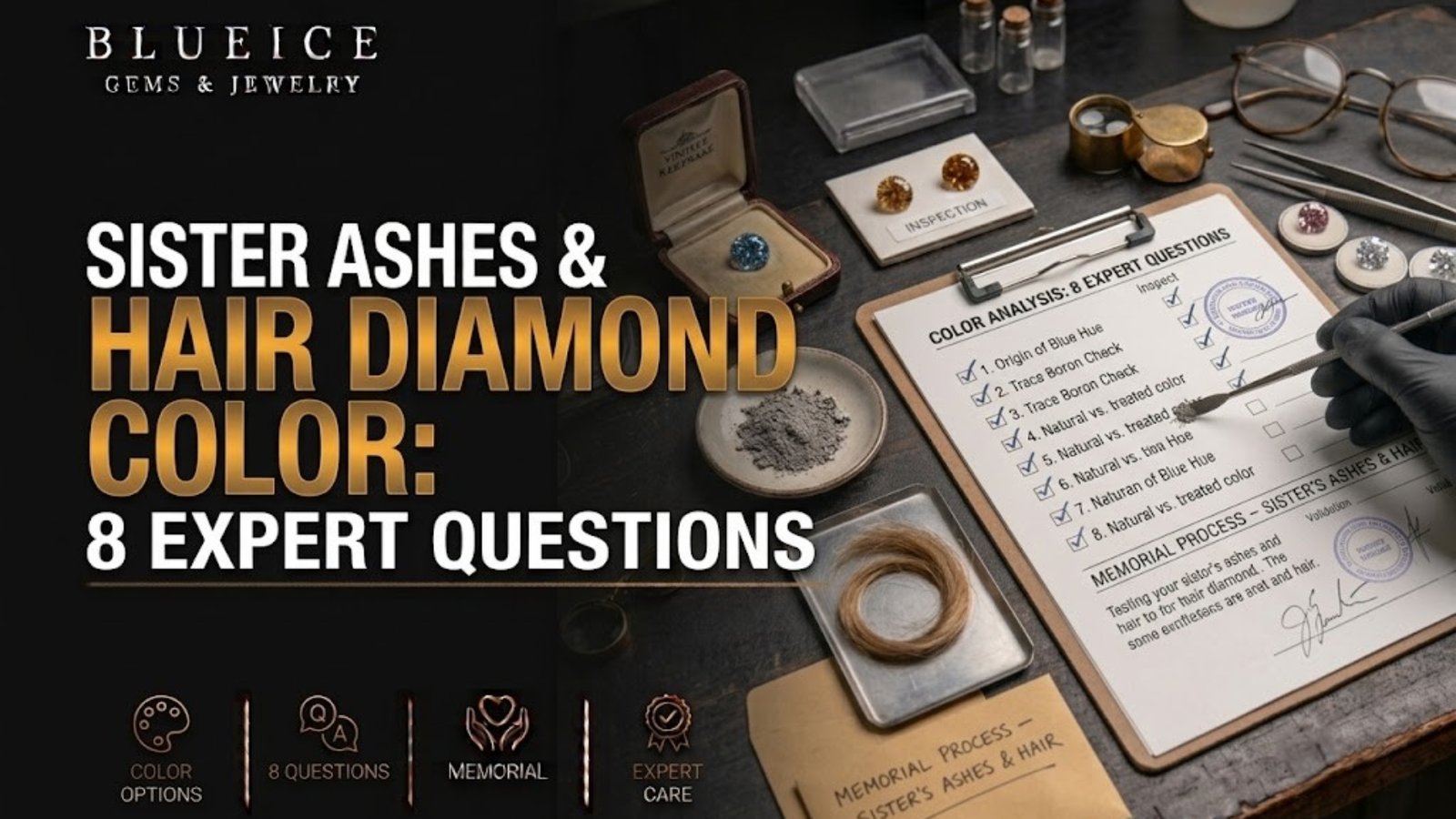
What Eight Questions Should You Ask a Provider About Color?
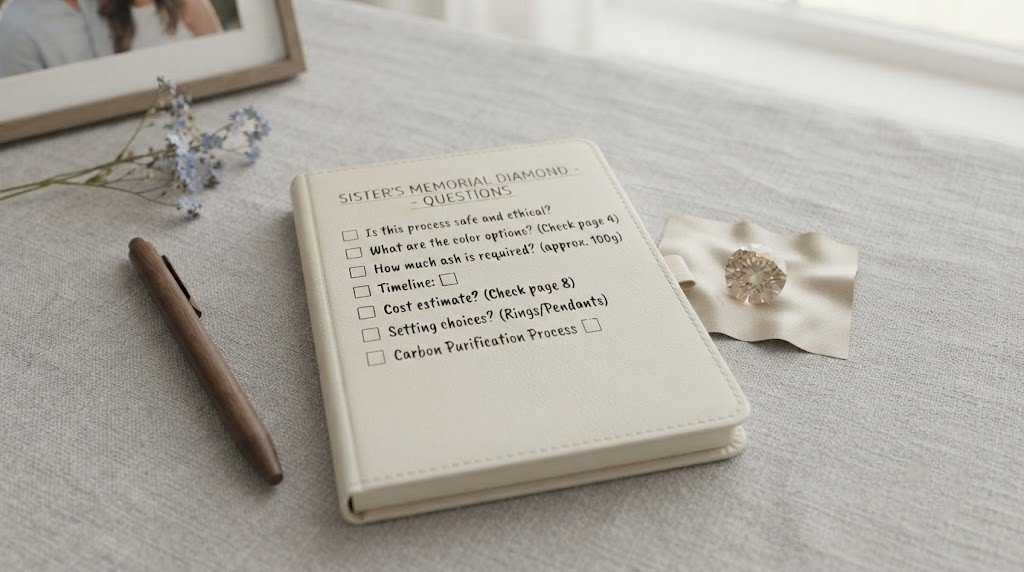
Before sending any material, ask the provider these eight questions and keep the answers in writing.
- Do you purify the ashes and hair separately, or are they combined at another stage?
- What evidence supports your explanation of how blending affects color?
- Which natural shades have you produced, and can you provide representative, unretouched photographs?
- What is the additional cost of a colorless option for my chosen carat weight?
- Do you offer irradiation or other post-growth treatments, and how are they disclosed?
- Will your origin documentation name both source materials and record their receipt?
- What happens if growth fails or the stone fractures during cutting?
- What happens to unused ashes and hair, and can they be returned?
A provider should be able to explain its actual process, costs, limitations, and documentation. Clear answers are more useful than a promise that the finished stone will have a particular appearance.
If you are still comparing materials, read our guides to the color of a diamond made from your sister’s ashes and the color of a diamond made from your sister’s hair.
Frequently Asked Questions
Will her ashes or hair have more influence on the diamond’s color?
There is no reliable general rule that identifies one material as the deciding factor. The color forms during growth and depends on the growth conditions and trace elements. A provider should explain what it knows about its own process without promising a color based solely on the source material.
Can a diamond made from both ashes and hair be colorless?
A colorless option may be available, depending on the provider’s process. Additional processing may be required, and it can increase the price or affect timing. Confirm the availability, expected result, and terms before ordering.
Does a blended diamond take longer than a diamond made from one material?
That depends on the provider’s workflow. Ask whether it waits for both materials before beginning and whether processing two sources affects the schedule. Request a written estimate rather than assuming that every blended order takes longer.
What if one relative agrees but the other does not?
Do not use material without the appropriate permission. You may be able to proceed with only the material you are authorized to use, if the provider supports that option and everyone involved understands the arrangement.
Will the certificate show the percentage from ashes and the percentage from hair?
There is no universal percentage standard for blended stones. Ask the provider what its origin documentation records and whether it can substantiate a source-specific estimate. Be cautious about unsupported claims of precise percentages.
Final Thoughts on the Color of a Blended Diamond for Your Sister
Combining your sister’s ashes and hair into one diamond may hold special meaning when those keepsakes are kept by different members of the family. However, the final color is not a predictable result of blending the two materials.
The sister ashes hair diamond color depends on the diamond growth process and the factors that influence its appearance. Your family can choose how the materials are used, compare color options, review the costs, and decide how the finished stone will be set and preserved.
Before making a commitment, obtain the necessary permissions, ask how both materials will be documented, and request clear written answers about color, treatment, cost, and timing. Take the time you need to choose an option that feels right for your family.
Learn More About Sister Memorial Diamonds
- Sister Ashes and Hair Diamond: The Complete Guide
- How to Turn Your Sister’s Ashes and Hair Into a Diamond
- Memorial Diamond Colors for a Sister: What to Expect
- What Color Will a Diamond Made From Your Sister’s Hair Be?
Talk With Memorial Diamond
If you are considering combining your sister’s ashes and hair, visit Memorial Diamond to explore your options. Ask about the available colors, the process, documentation, and costs before deciding how you would like to preserve her memory.