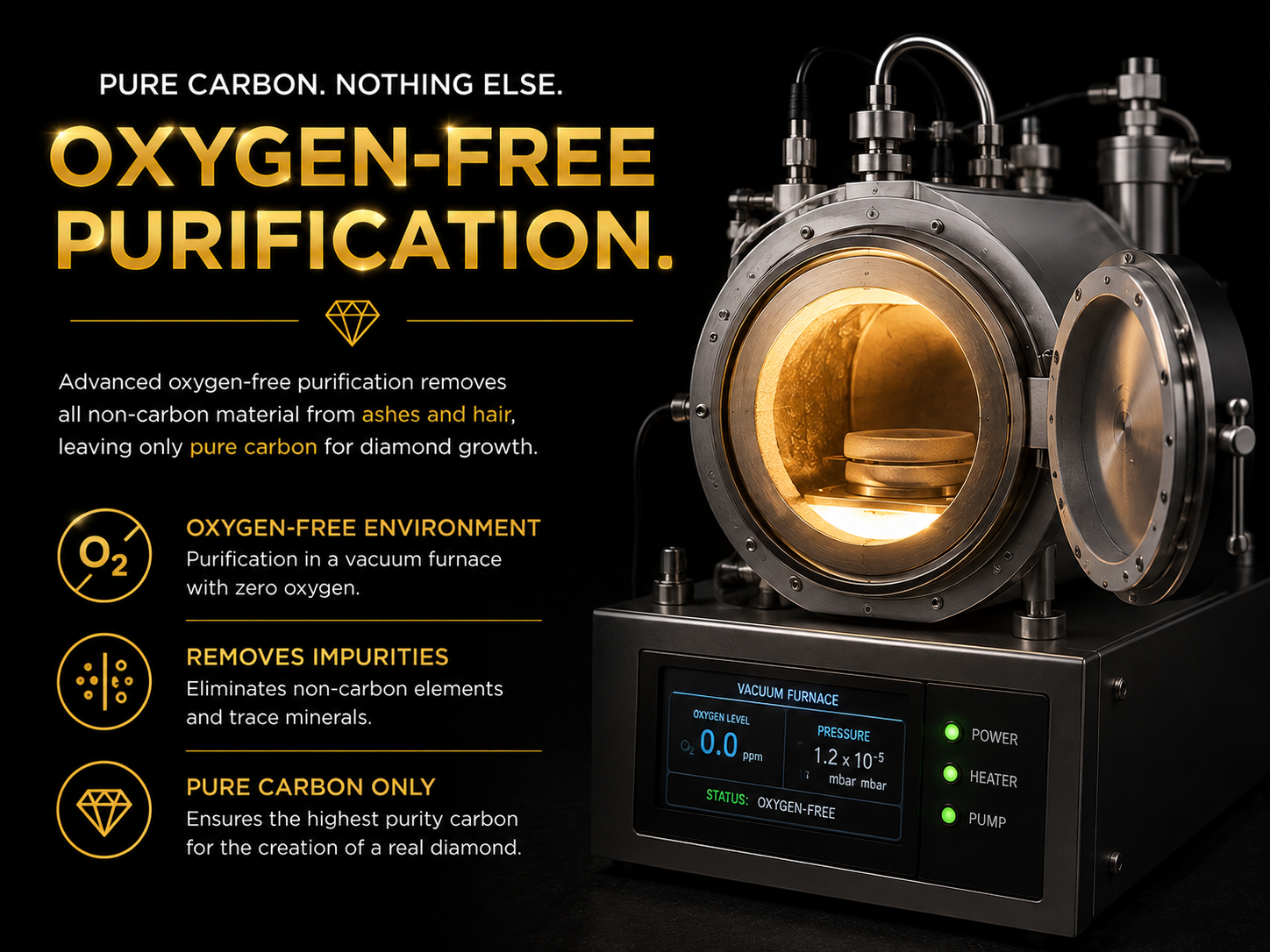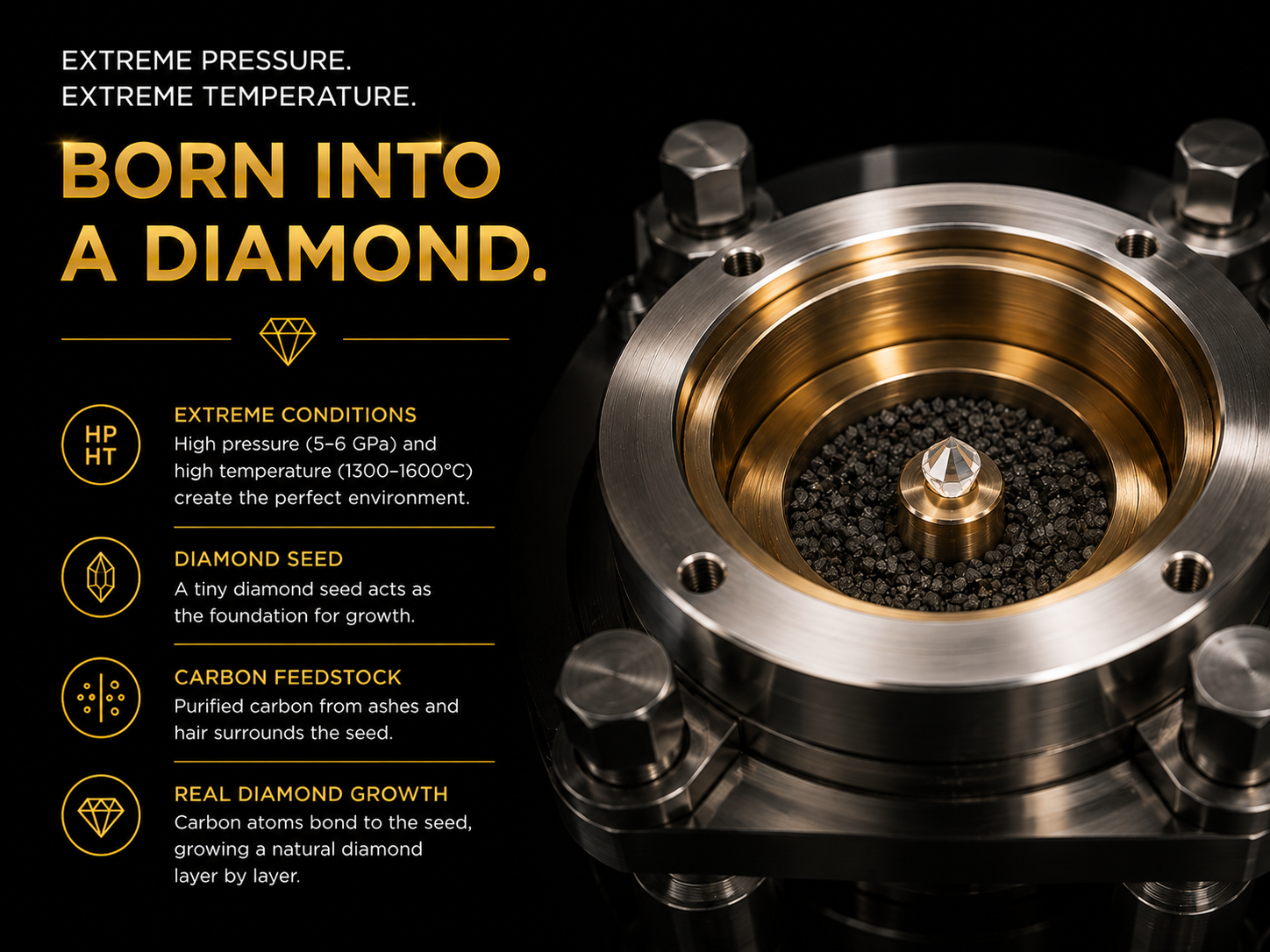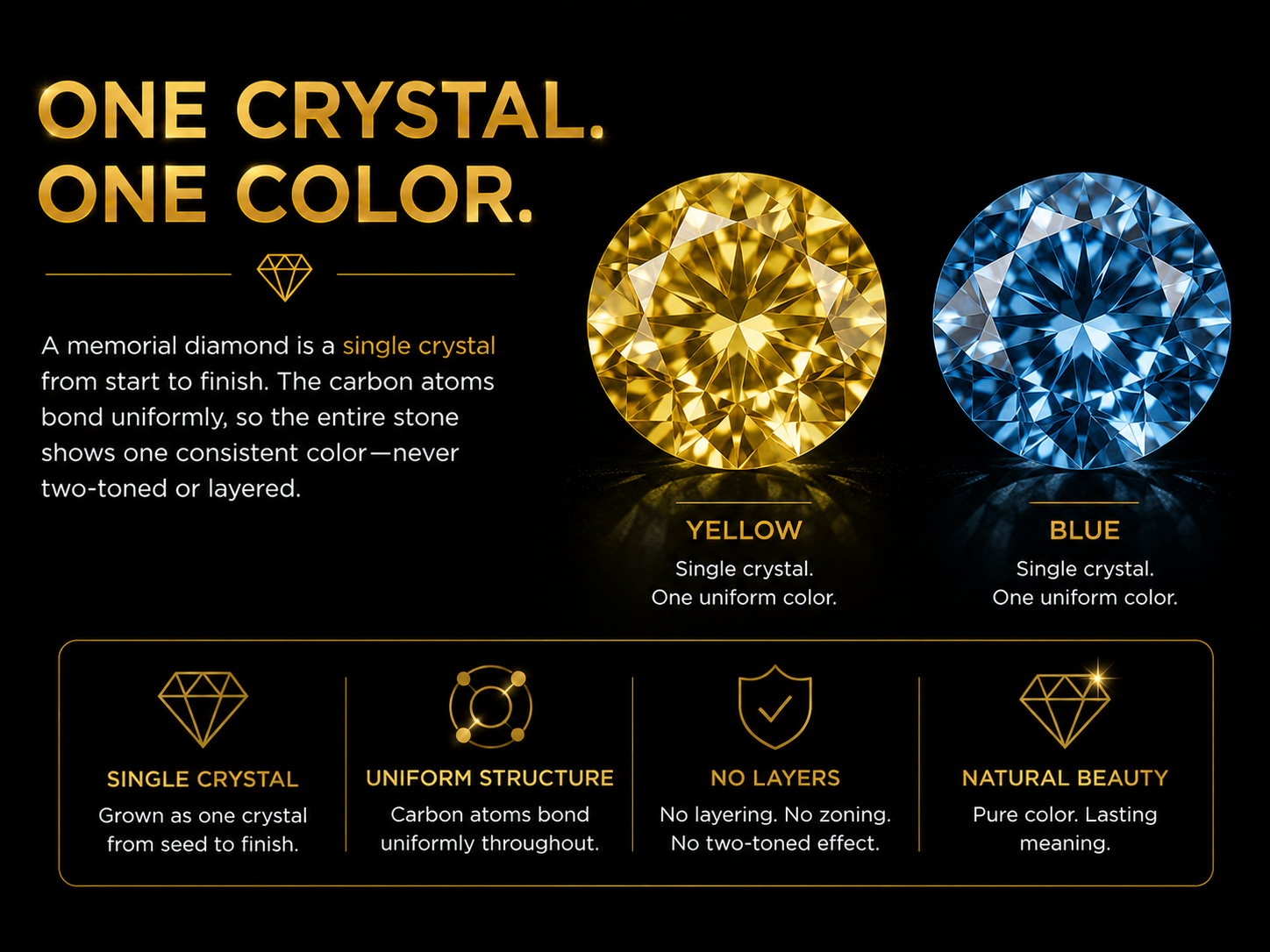
“Of course we return whatever we don’t use.”
That is a sentence, not a policy. It does not say how much, in what, when, or whether it comes back as ash. Before your mother’s ashes leave your house there are roughly a dozen questions worth asking, and four of them belong in writing: the minimum quantity, what is returned and when, what happens if the recovered carbon comes back low, and the point at which a specification can no longer be changed. The rest can be answered on a phone call.
Which Four Questions Belong in Writing?
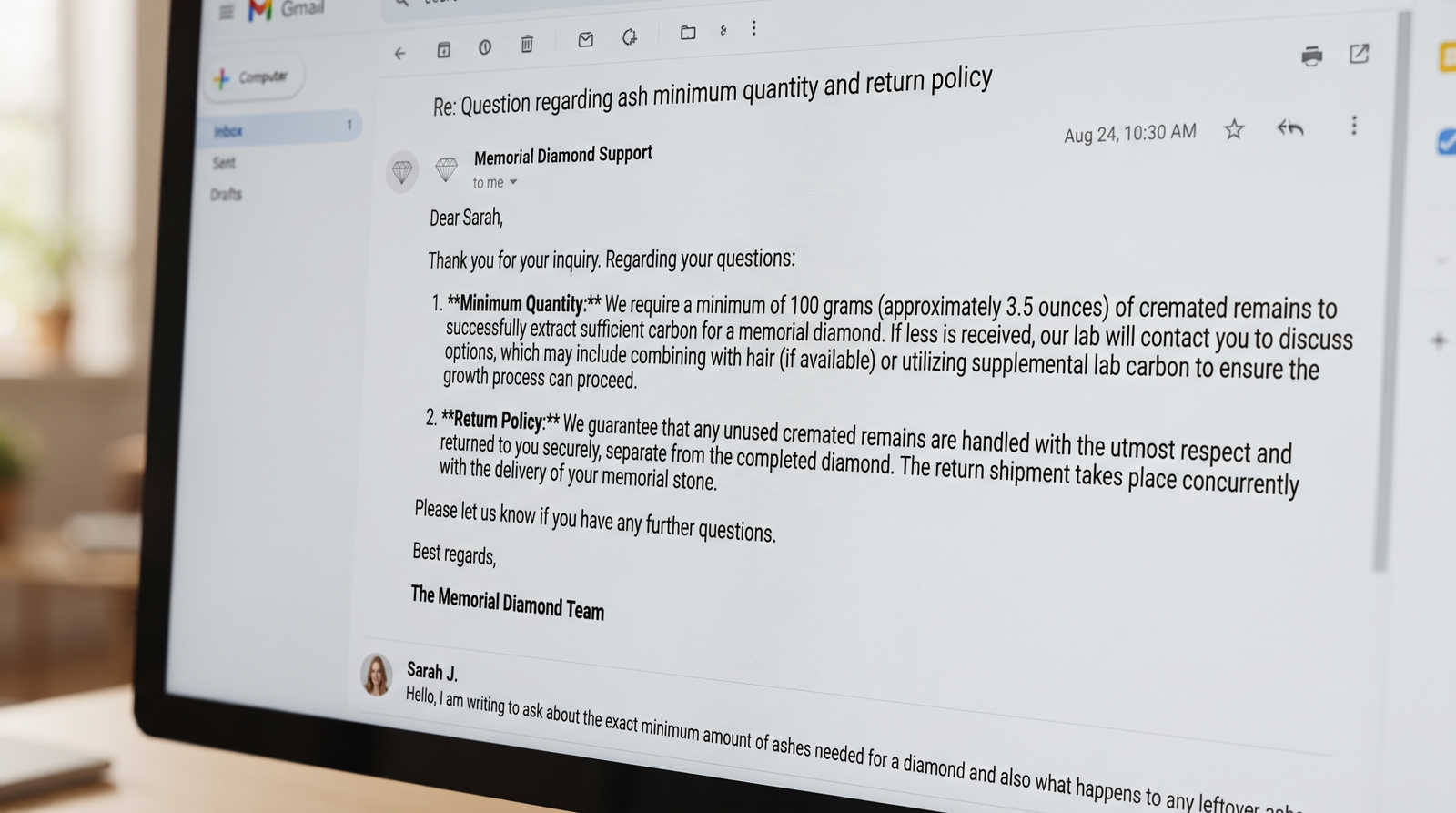
An email reply is a record. A phone call is a memory of a record. These four are the ones where the difference will matter later.
| Ask this | What a real answer contains | What a non-answer sounds like |
| What is your minimum quantity of cremated remains, and what happens if I send less? | A specific figure with a unit, plus the remedy, usually a second shipment | “Just send what you’re comfortable with” |
| What comes back to me, in what form, and at what point? | Unused ash named separately from the stone and the paperwork, with a stage attached | “Everything is returned at the end” |
| What happens if the carbon recovered from her ashes is lower than expected? | A named stage where it is discovered, and whether you are consulted before work continues | “That very rarely happens” |
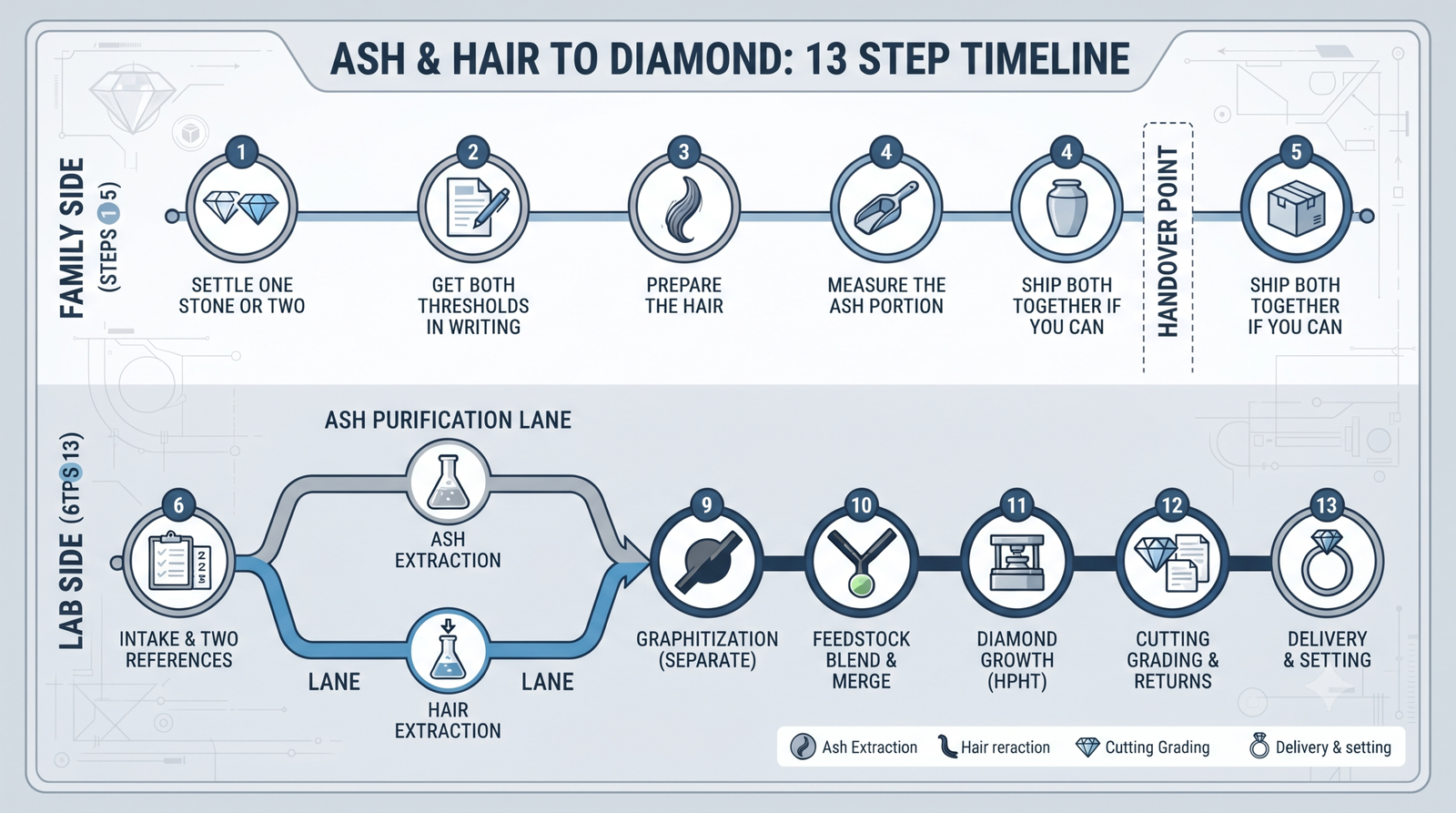
| Until what stage can I change carat, colour or cut? | Three different stages, because the three close at different times | “We’re flexible” |
The first answer is a number, the second is a list, the third is a decision procedure, and the fourth is a set of deadlines. If any of the four comes back as a feeling, ask again.
What Should You Ask About Her Ashes Themselves?
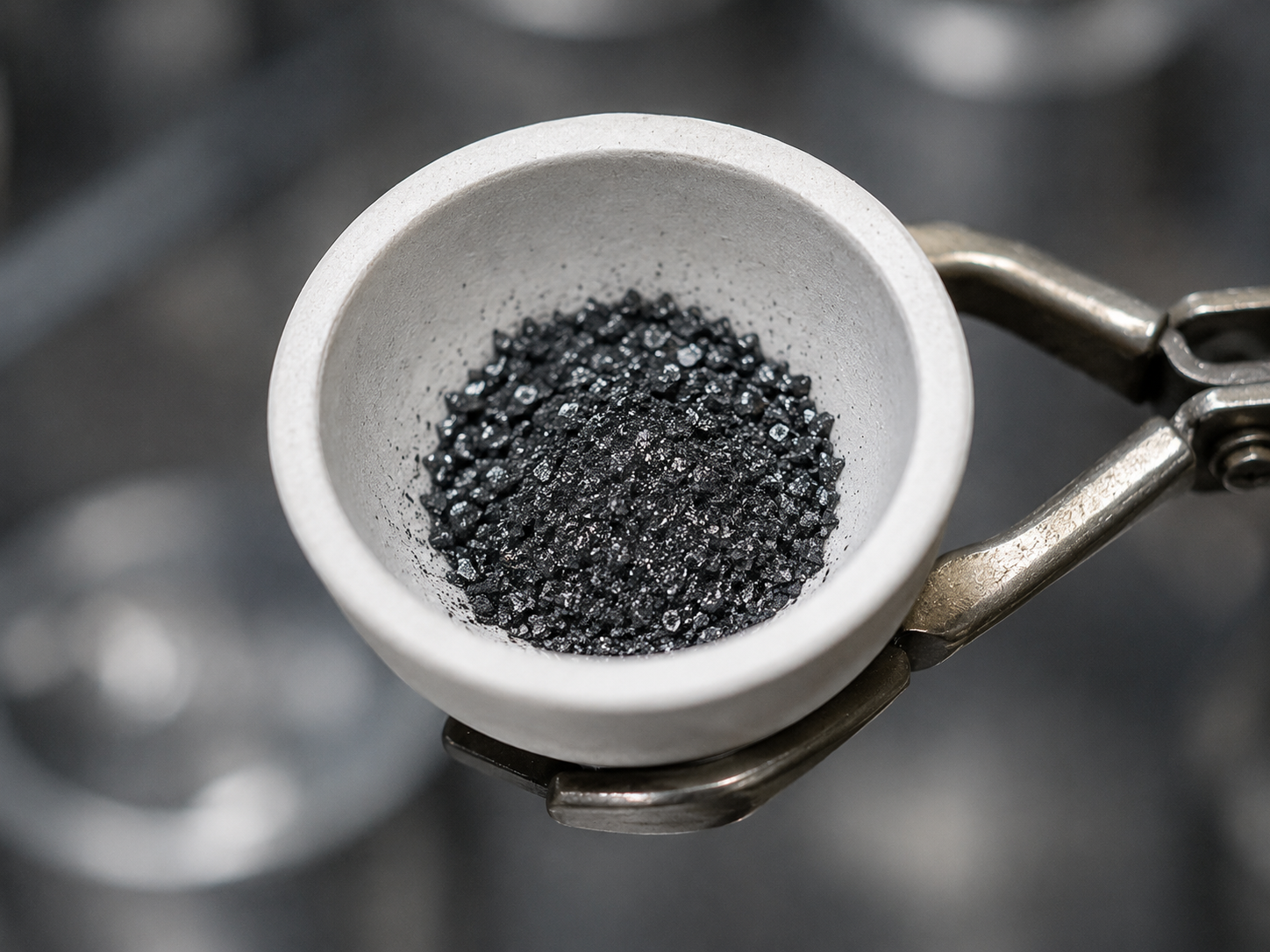
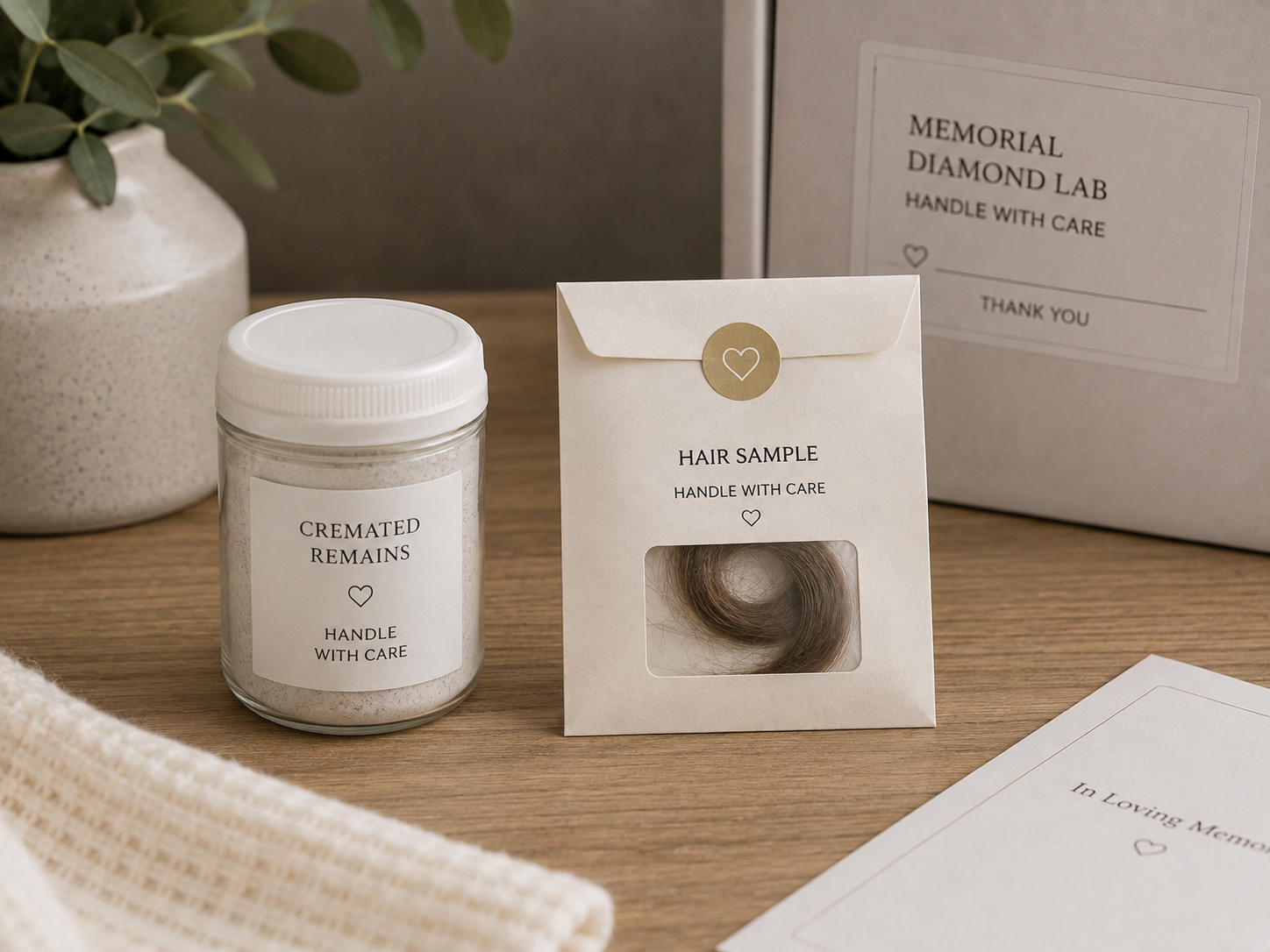
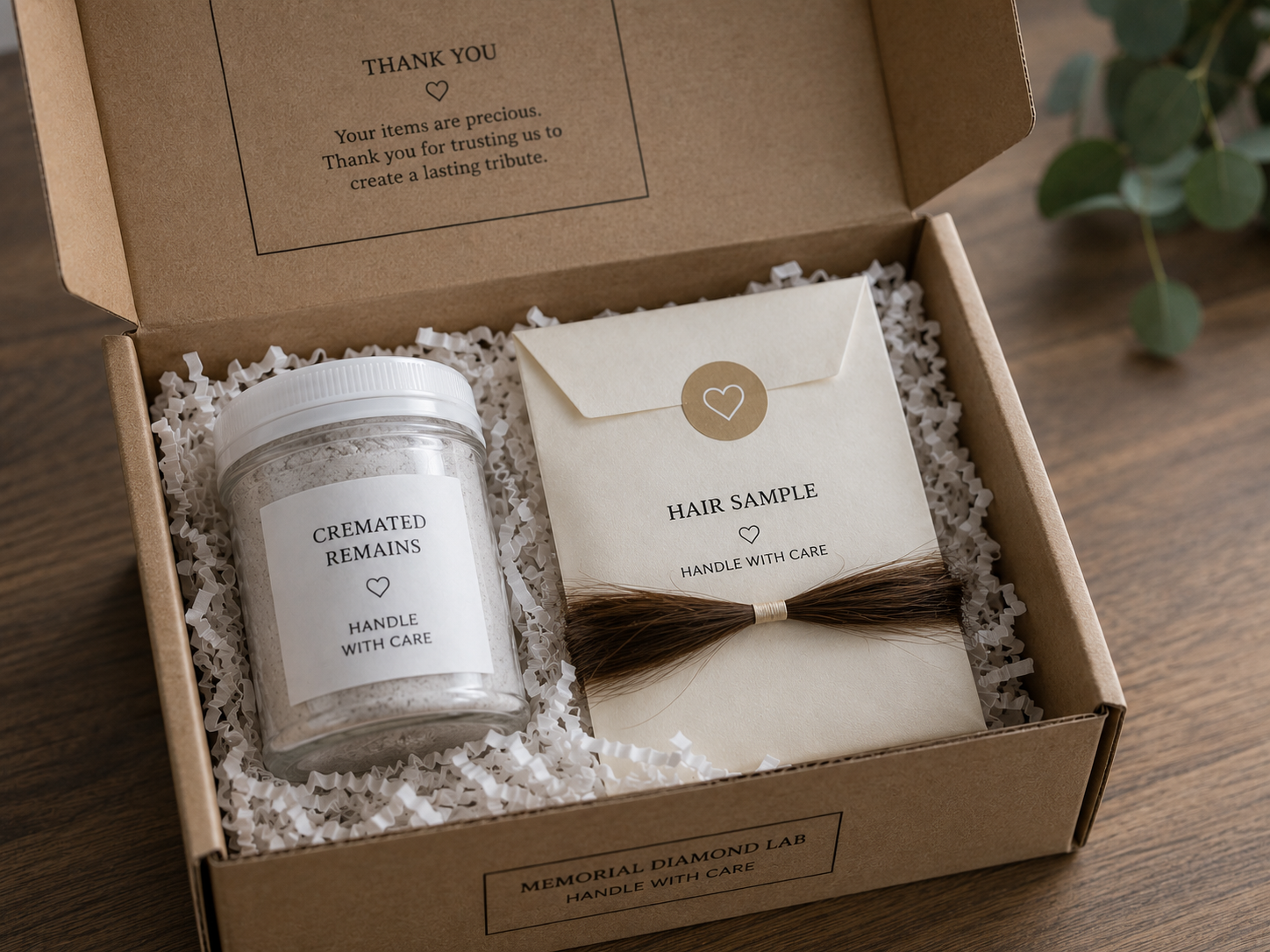
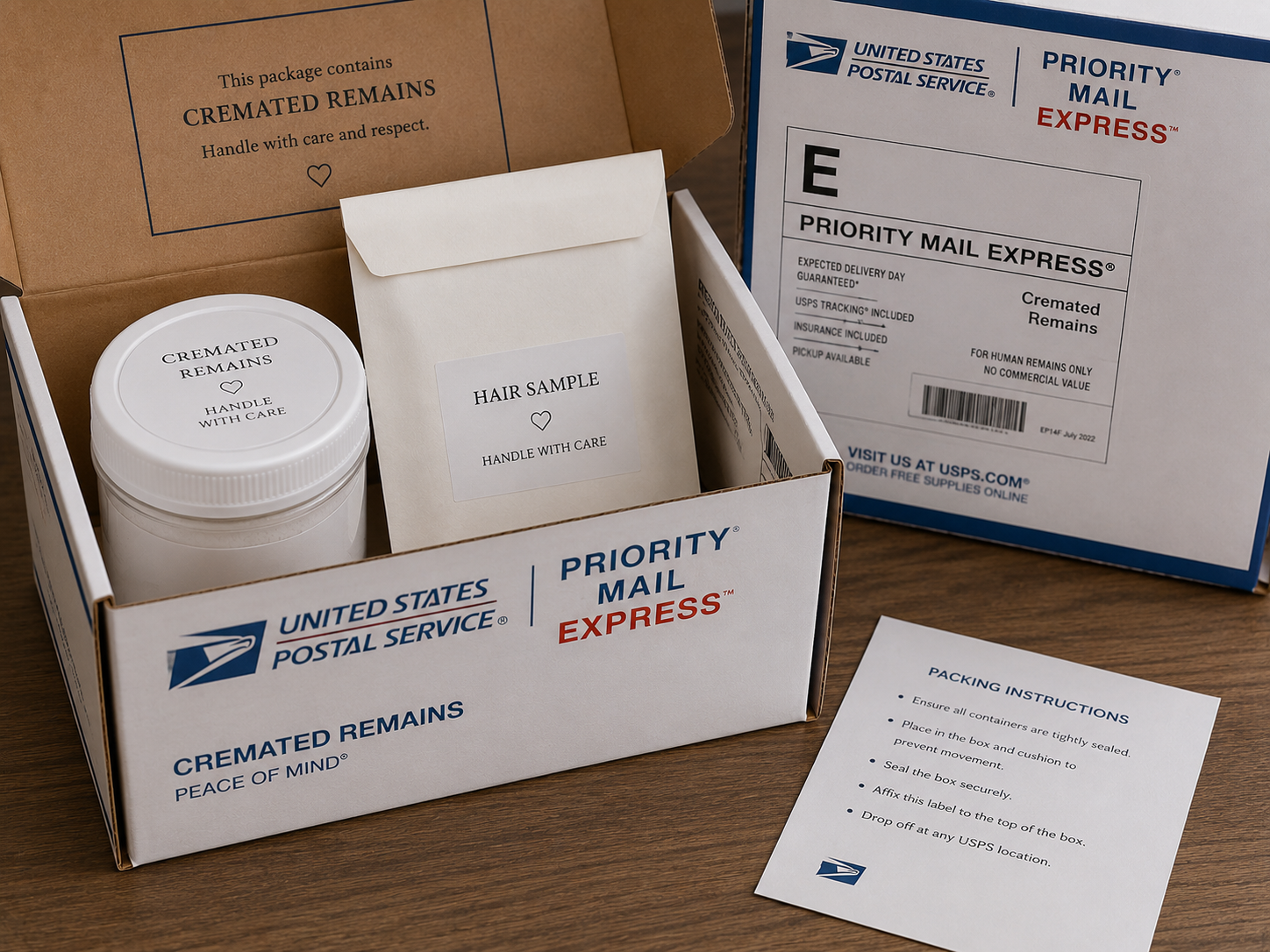
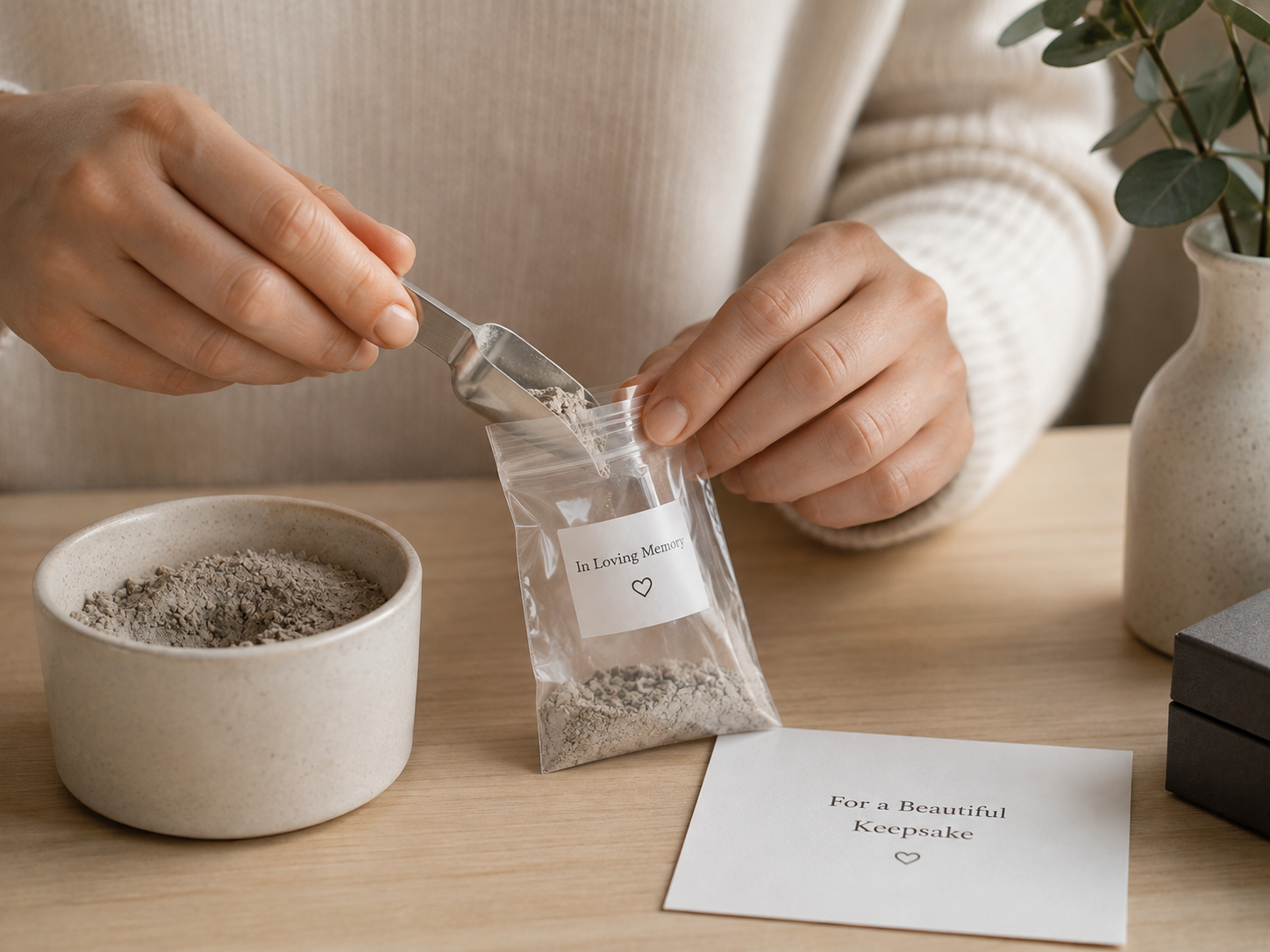
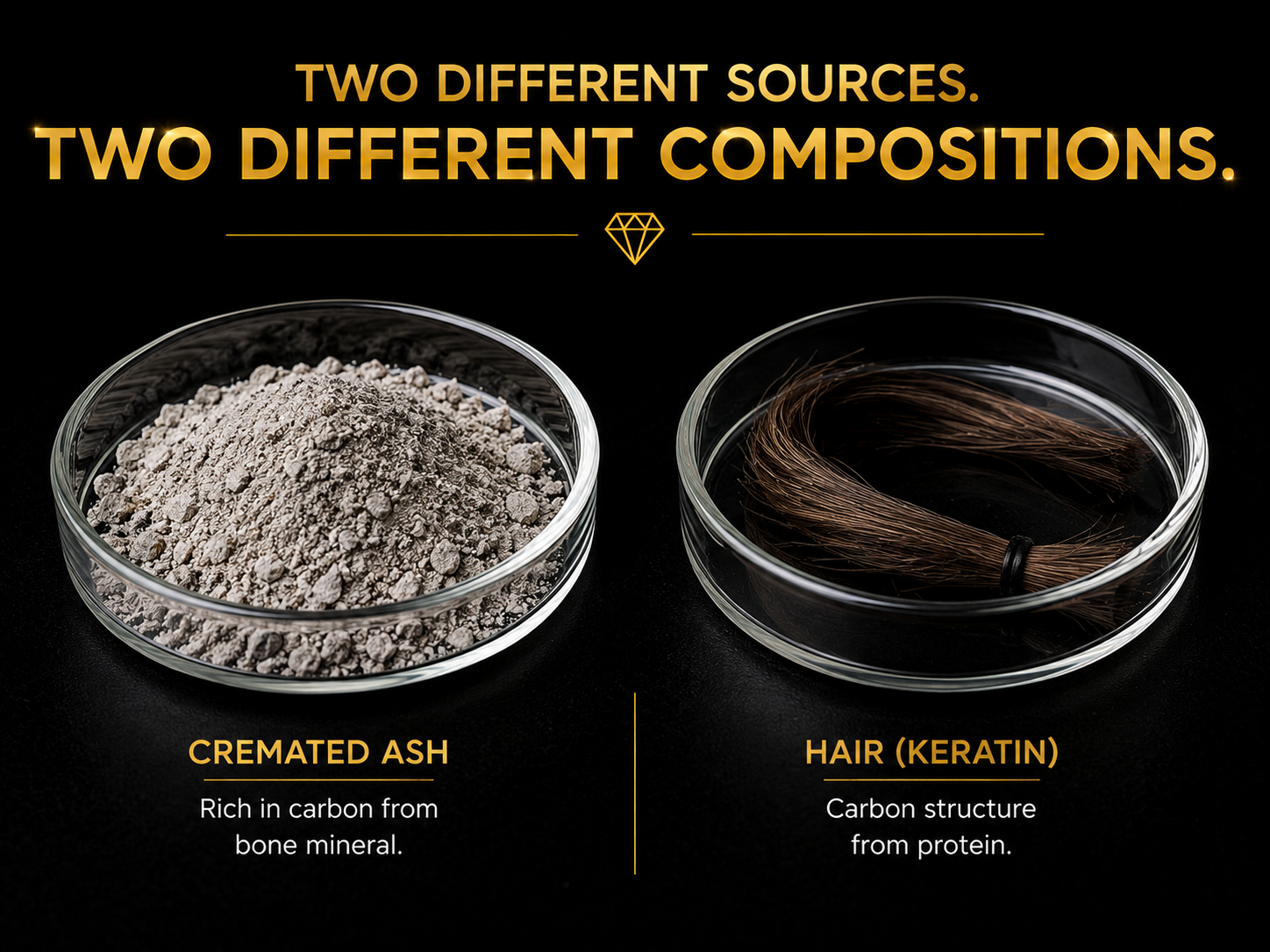
- How much do you need, and how should it measured? Industry practice ranges from a few tablespoons to around 4 oz, so the answer differs by provider, as detailed in how much ash you need.
- Do the ashes need to come from the funeral home, or can I portion them myself?
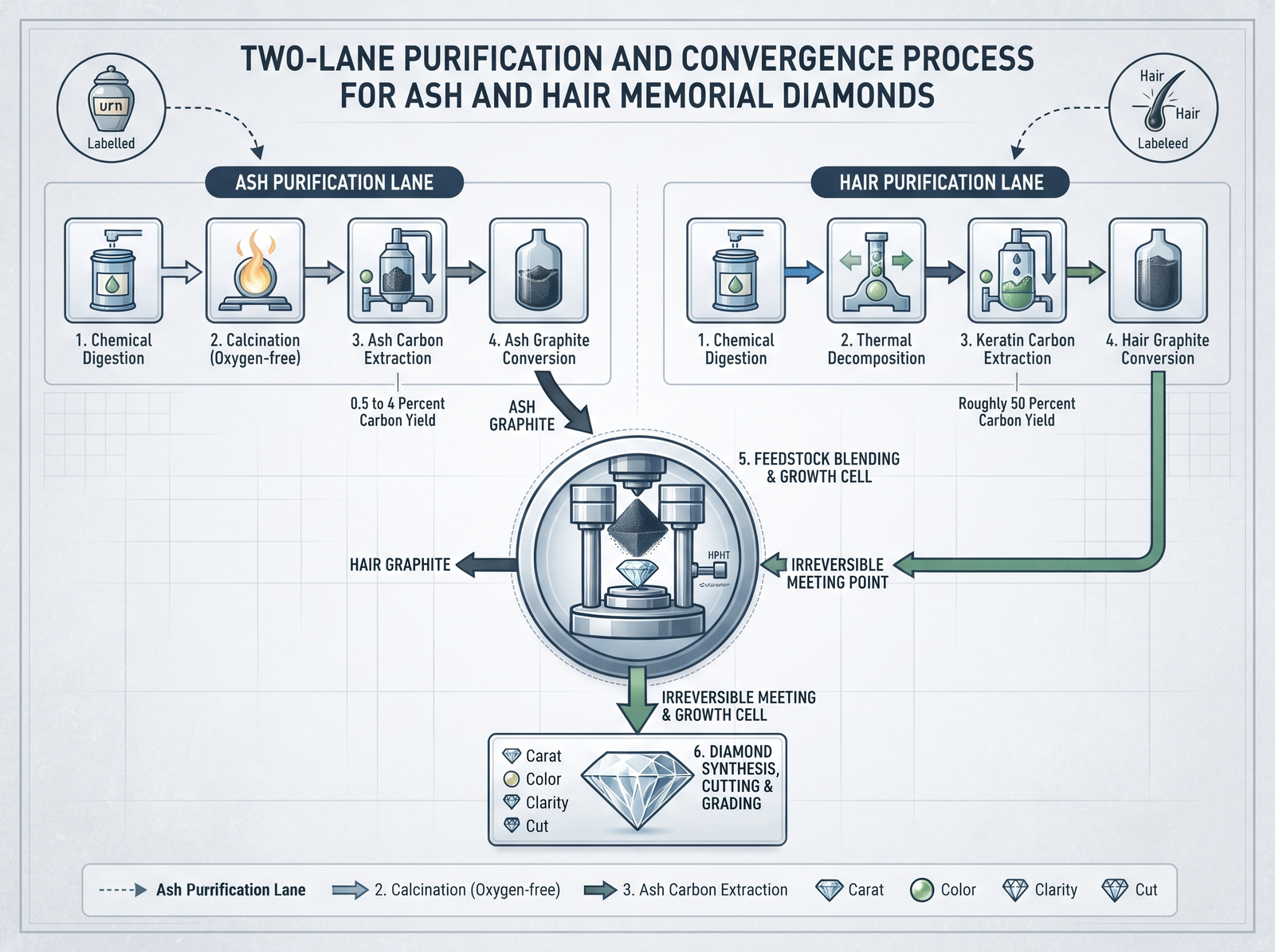
- Memorial diamond laboratories process cremated remains individually to guarantee complete physical separation; they never batch remains together.
- Furthermore, age, damp storage, a previously scattered portion, or an urn that has been opened multiple times do not render ashes unusable, as technicians can refine almost any recovered carbon sample.
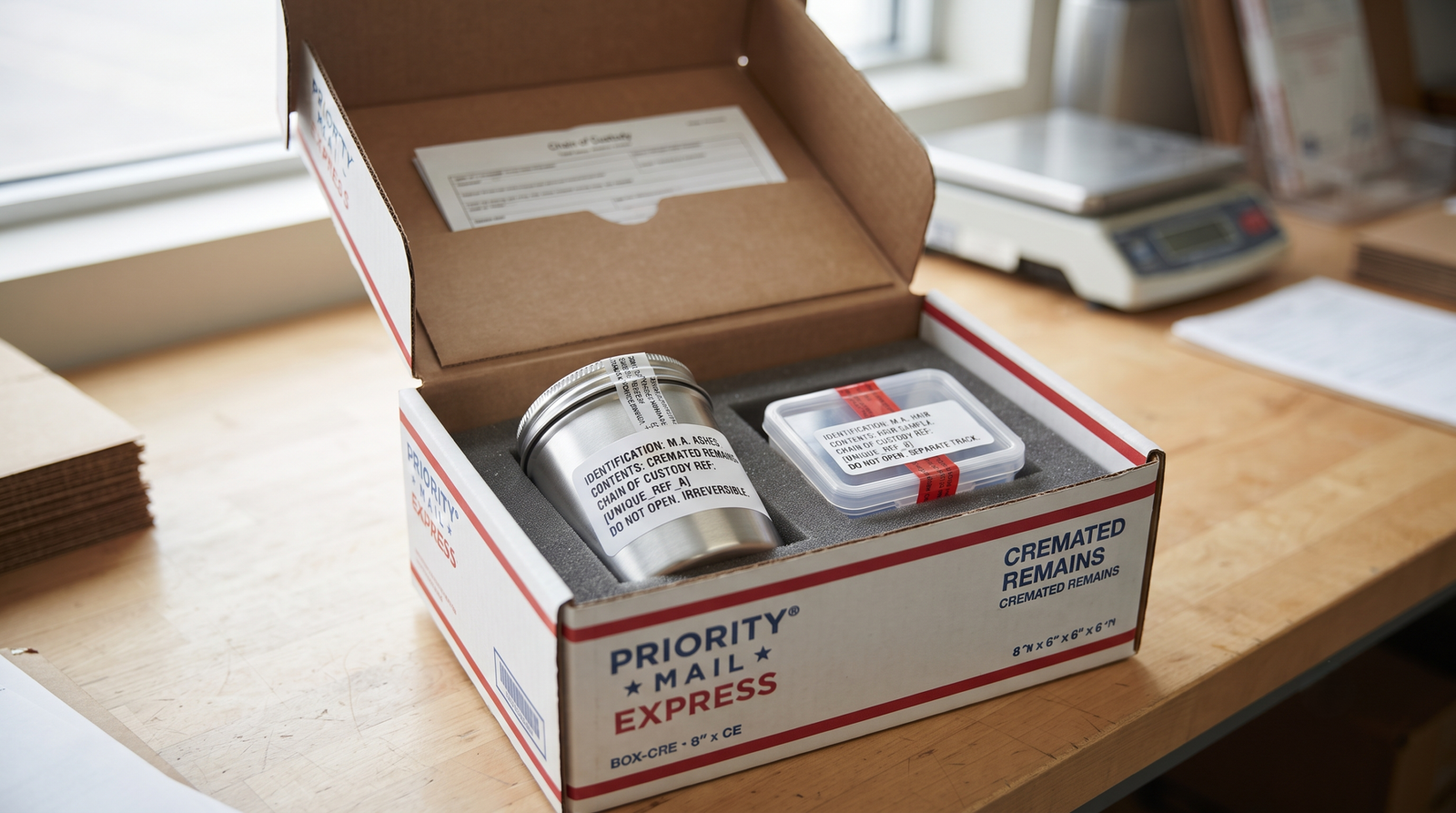
- What identifier travels with them? A chain of custody reference you can quote back is the difference between tracking an order and asking how it is going.
Stone Should Be Like?
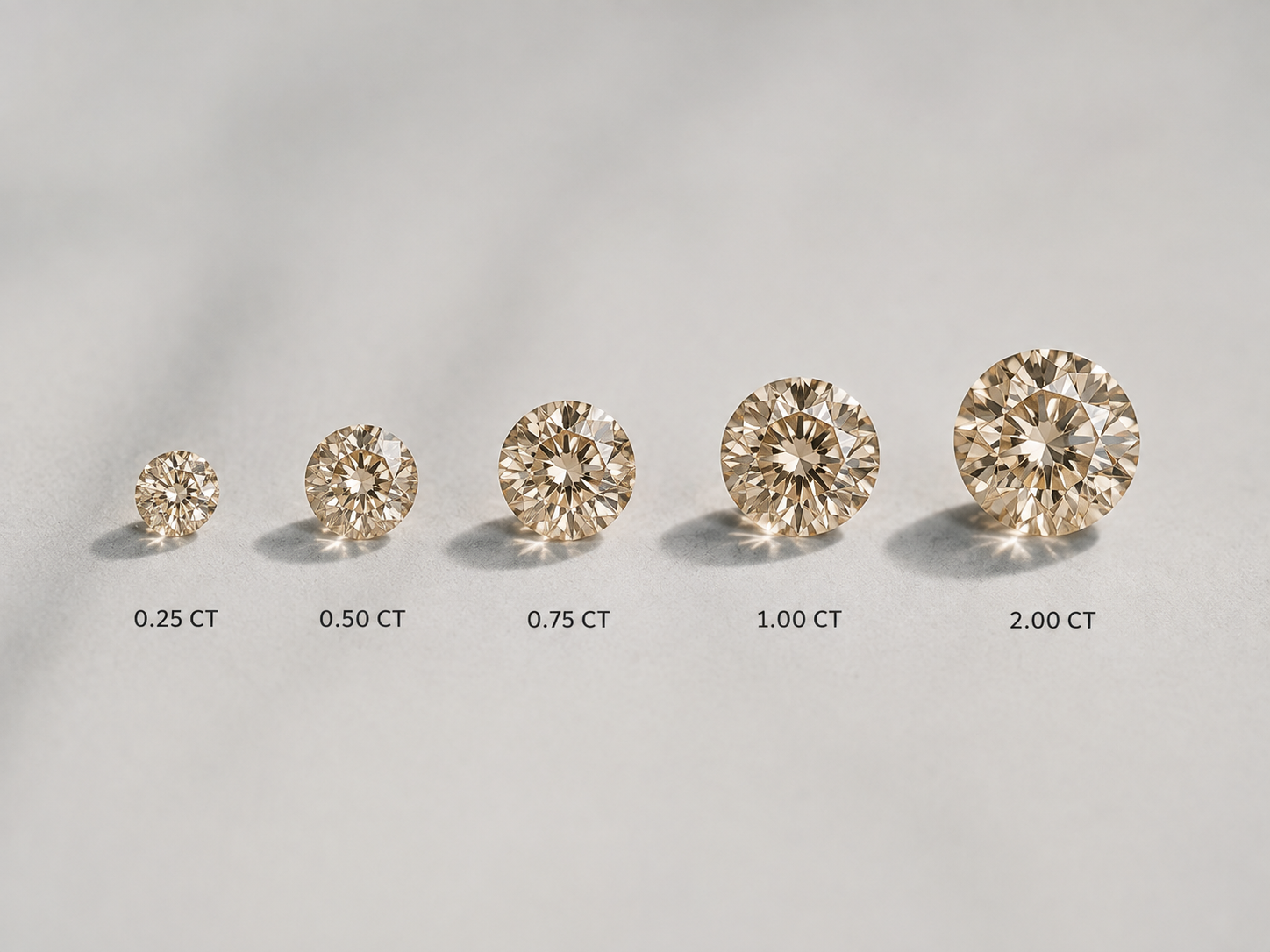
- What carat sizes do you offer, and what does each add to the timeline? Size and schedule are the same question here, so ask for both in one answer.
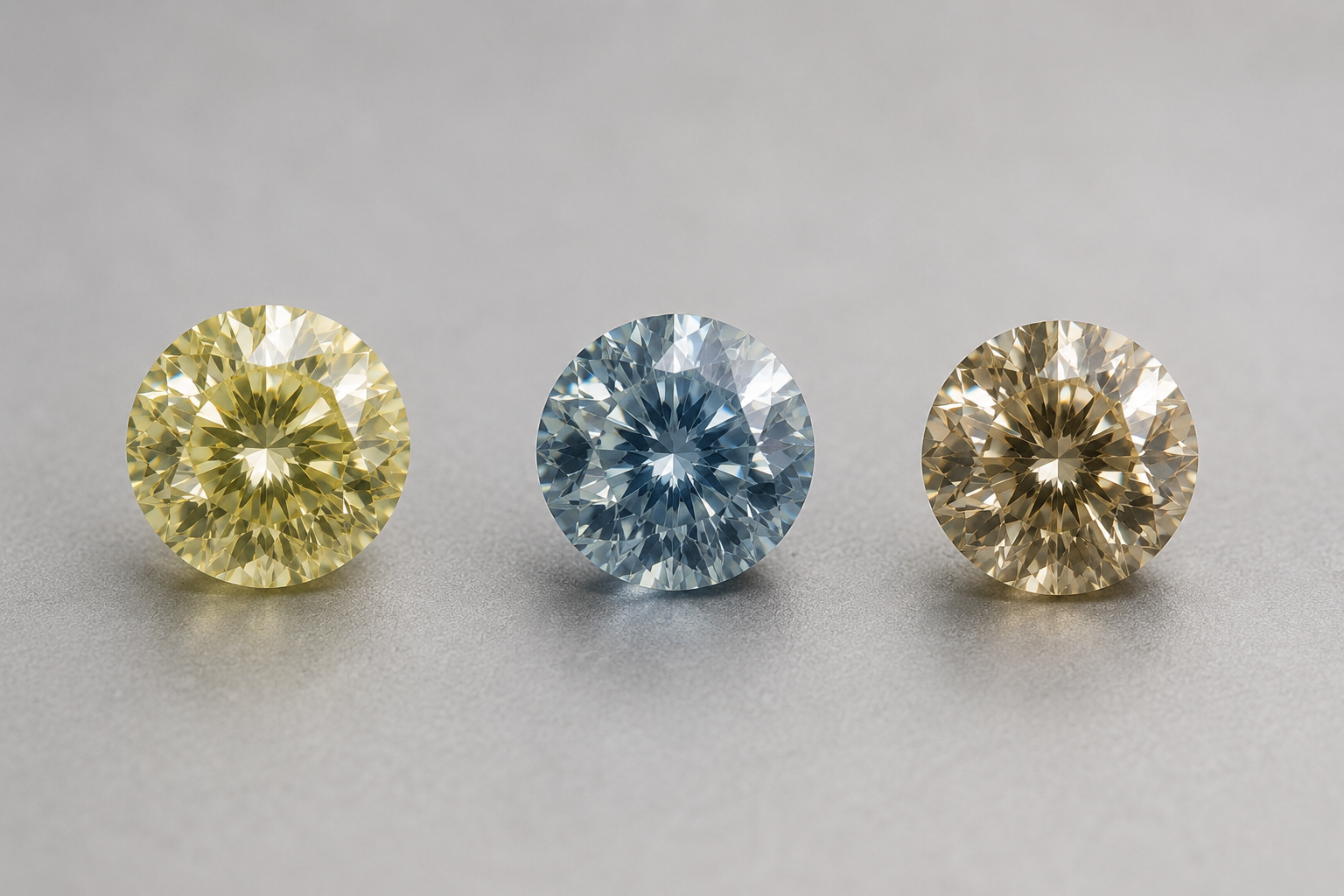
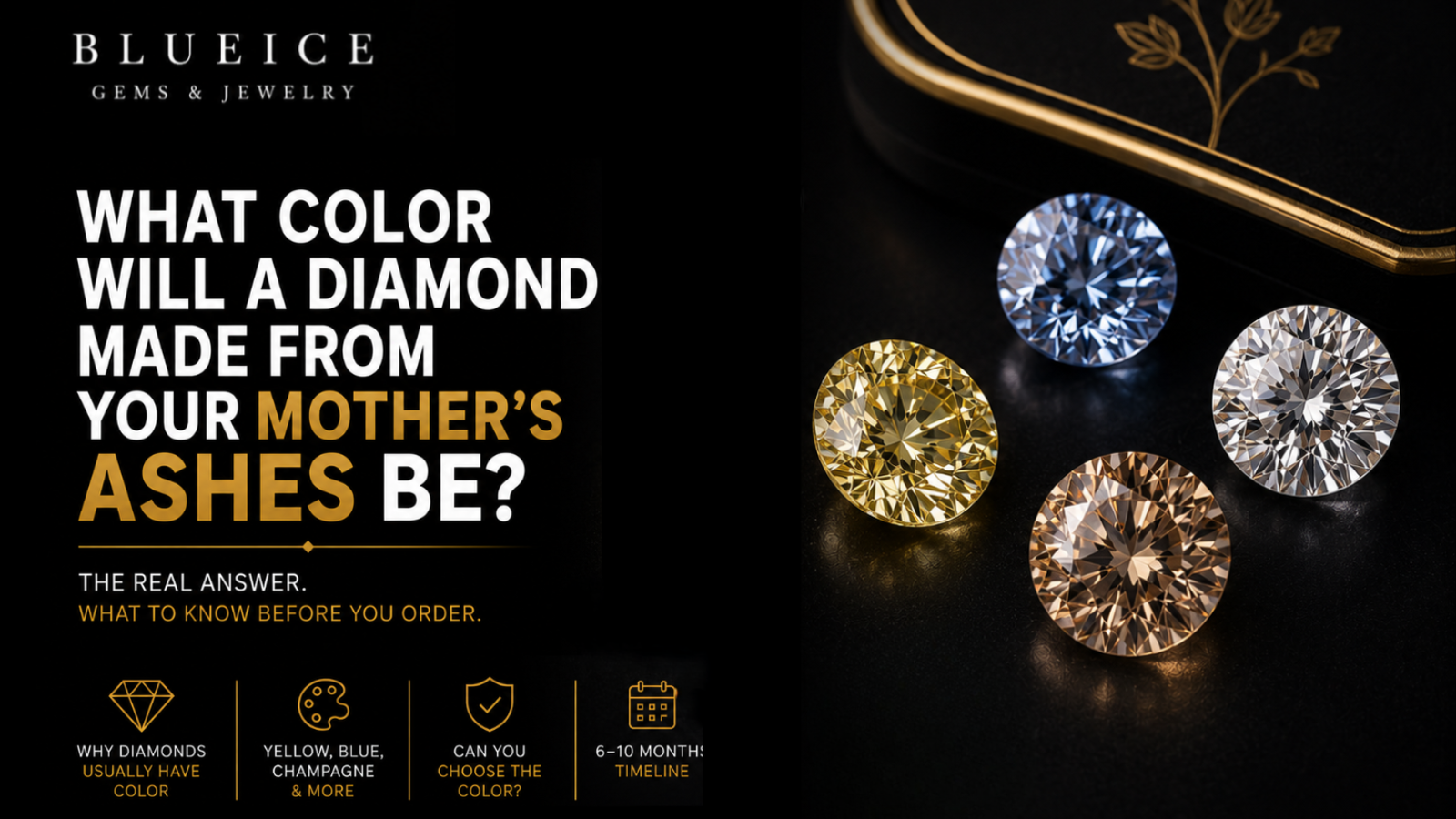
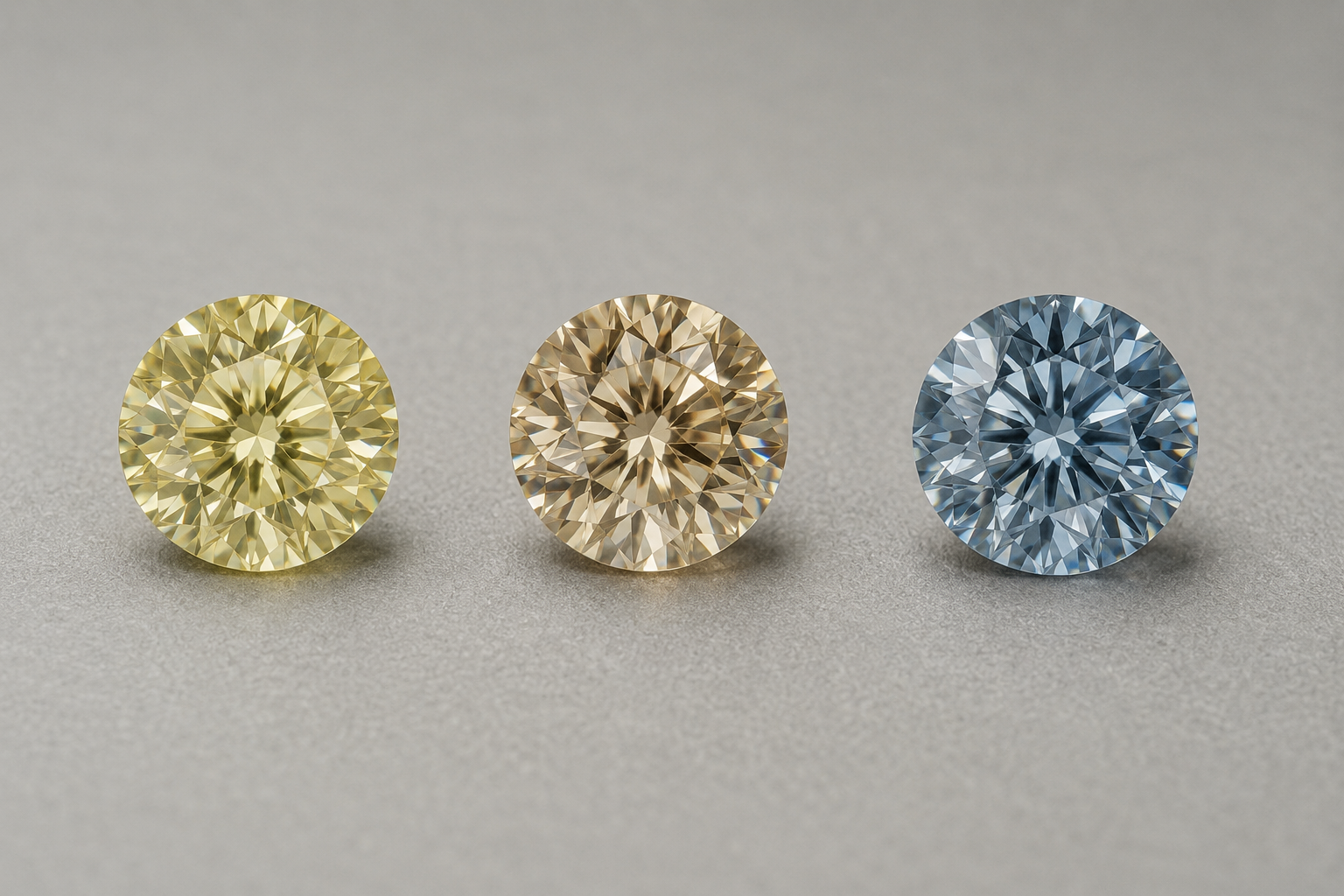
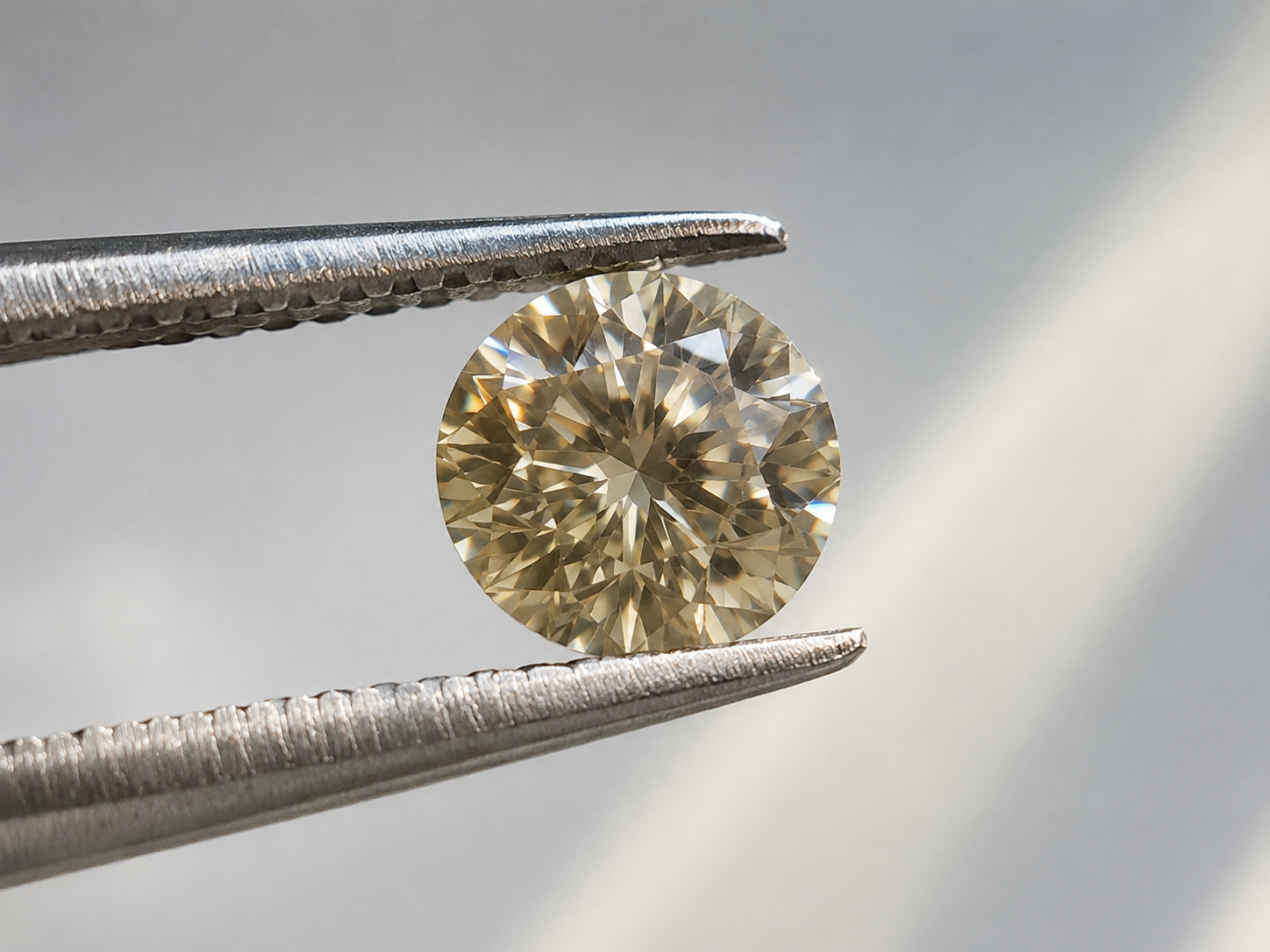
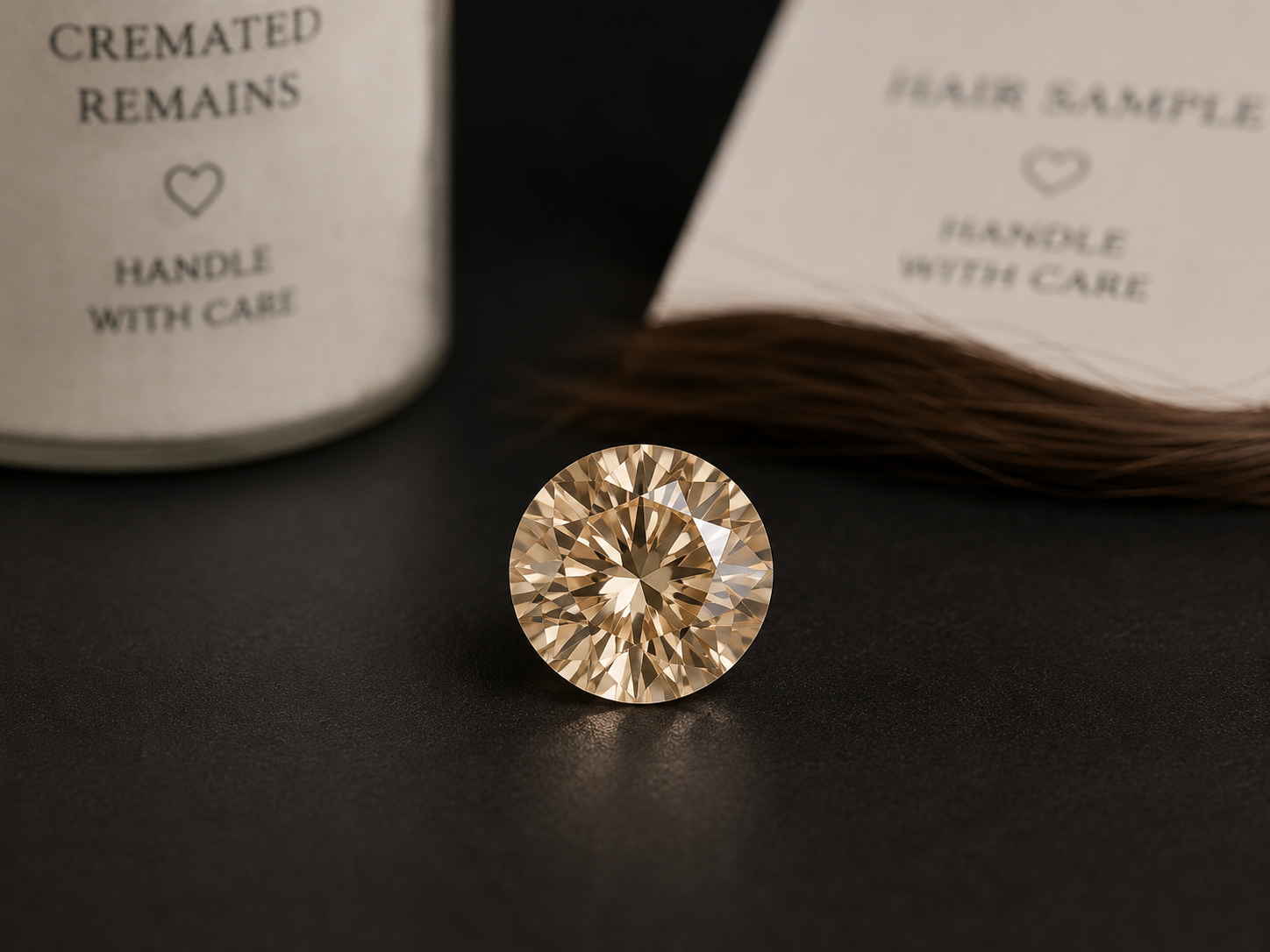
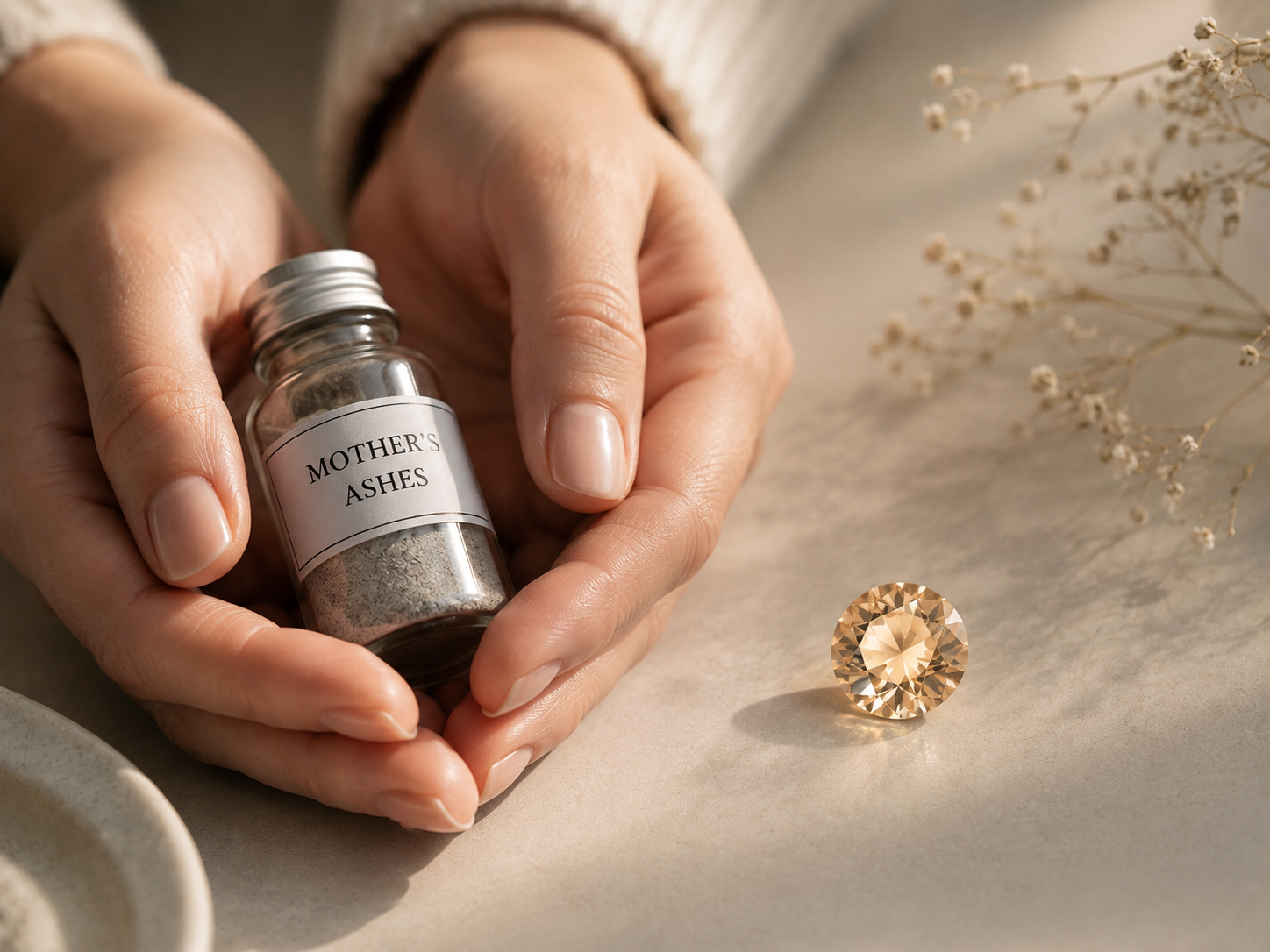
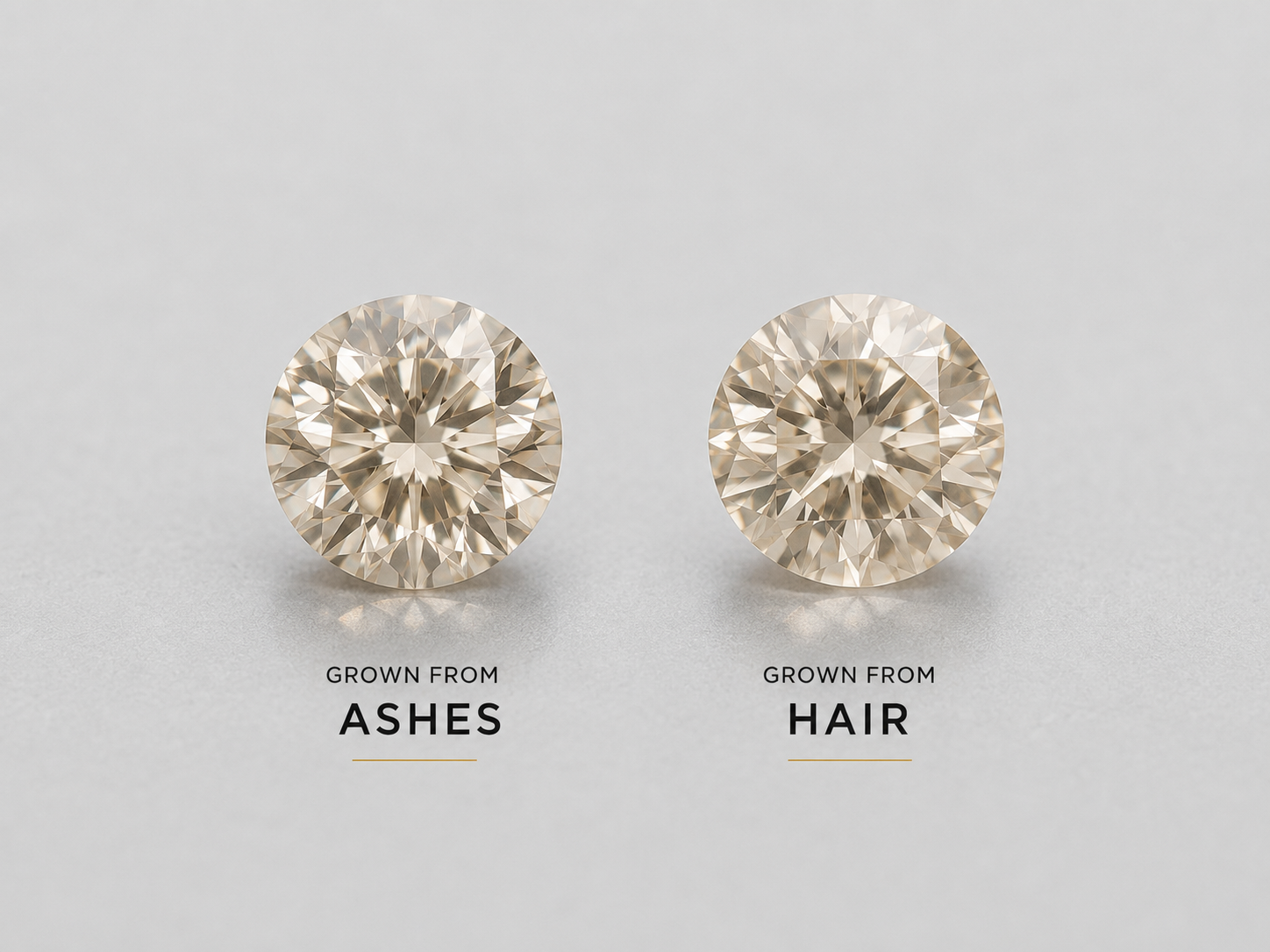
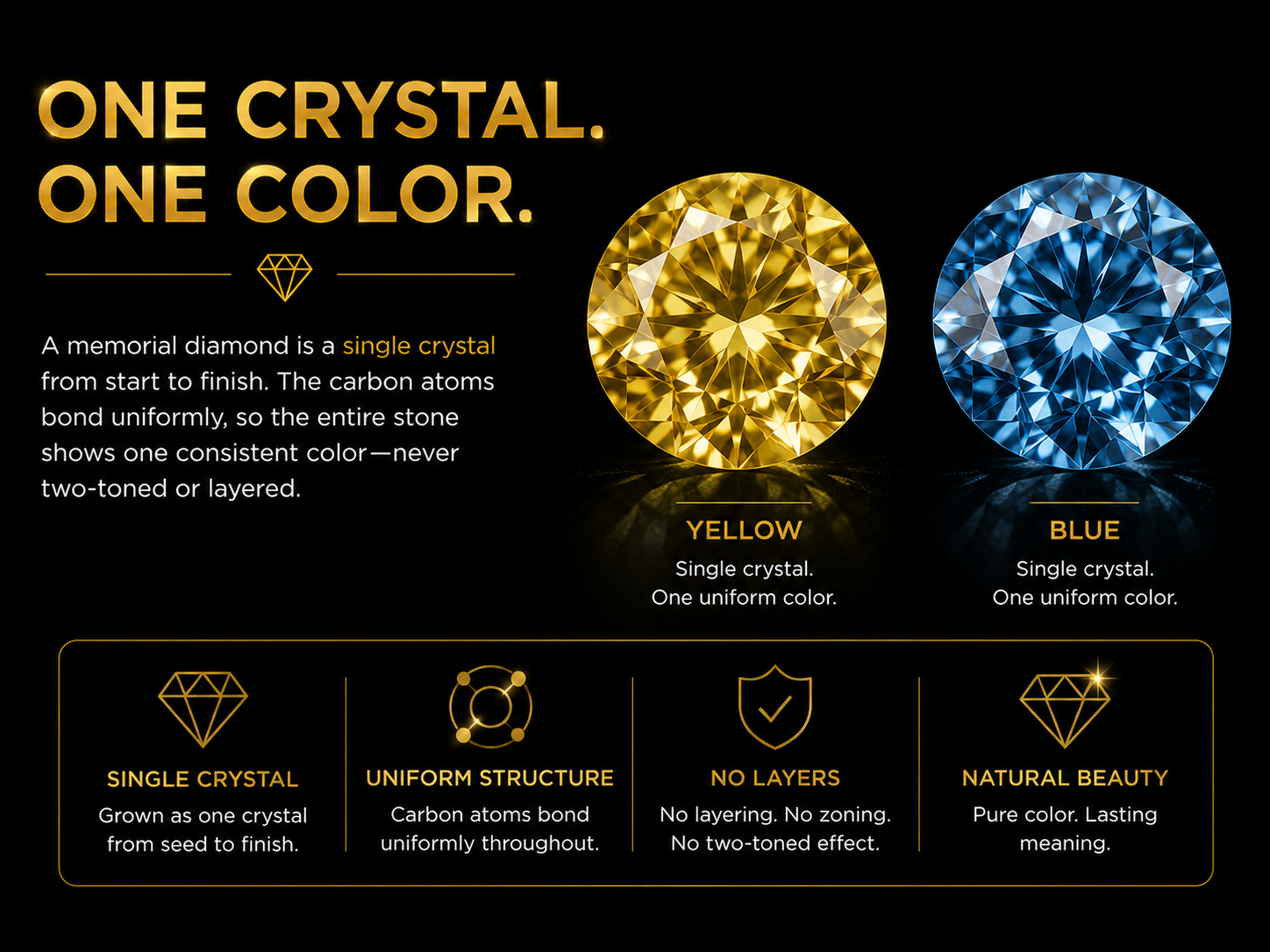
- What colour range is realistic from ashes, and is a colourless stone offered at all? Trace elements from an organic source push most memorial stones toward yellow, blue or champagne, explained fully under what color will a diamond from her ashes be.
- What clarity should I expect? Somewhere in the SI2 to VVS band is typical across the category.
- Is the growth done in-house or subcontracted, and where?
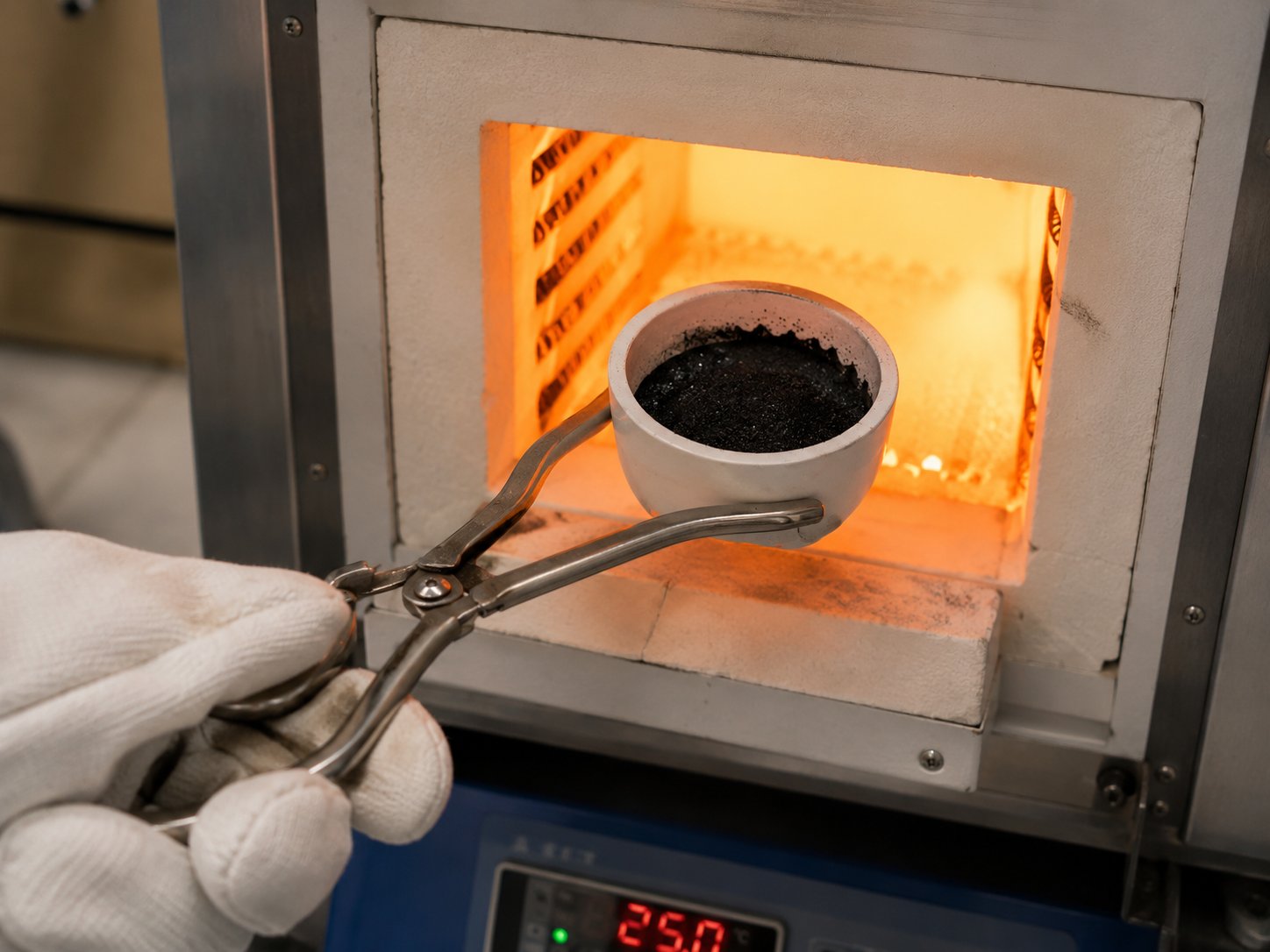
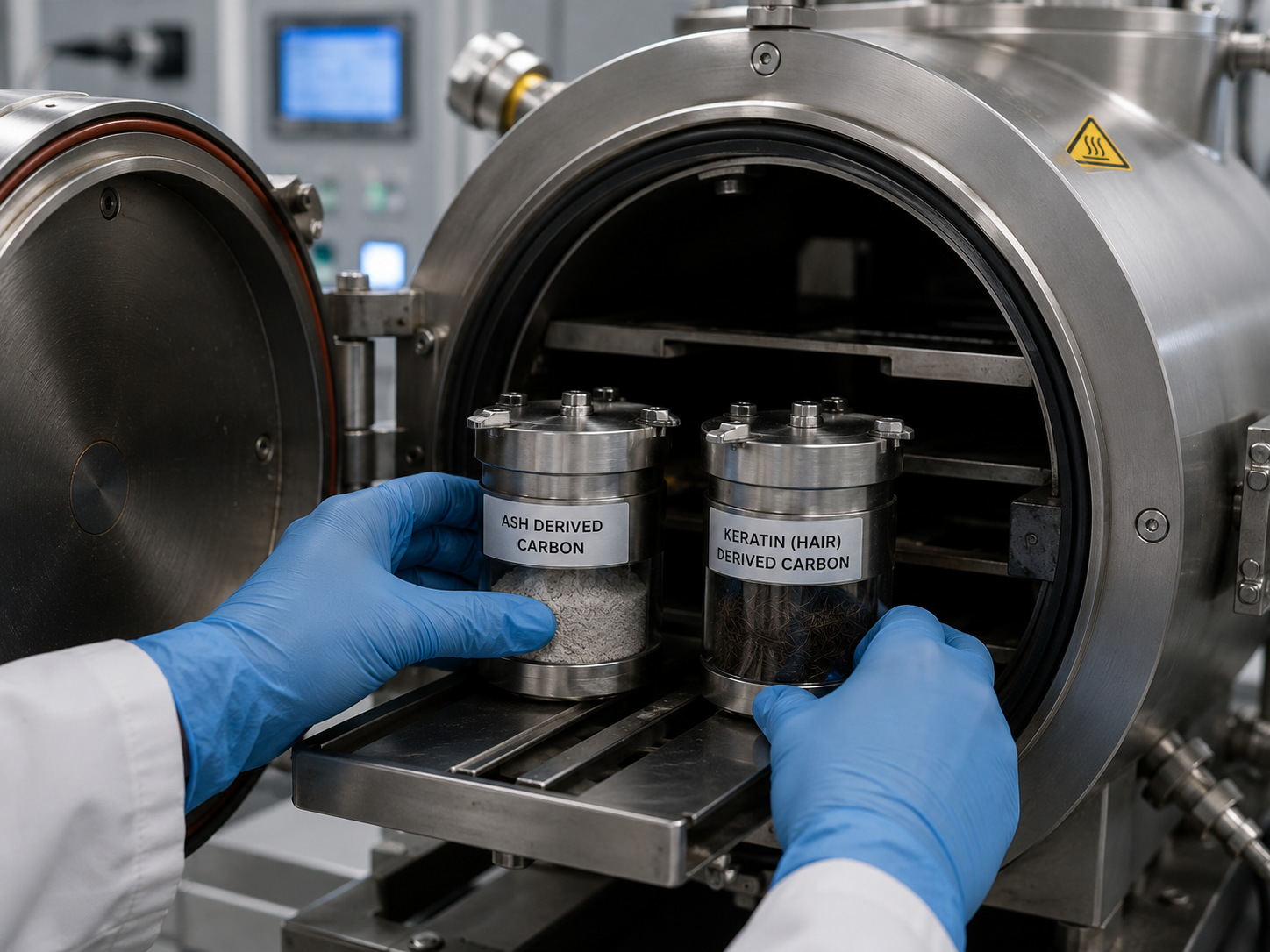
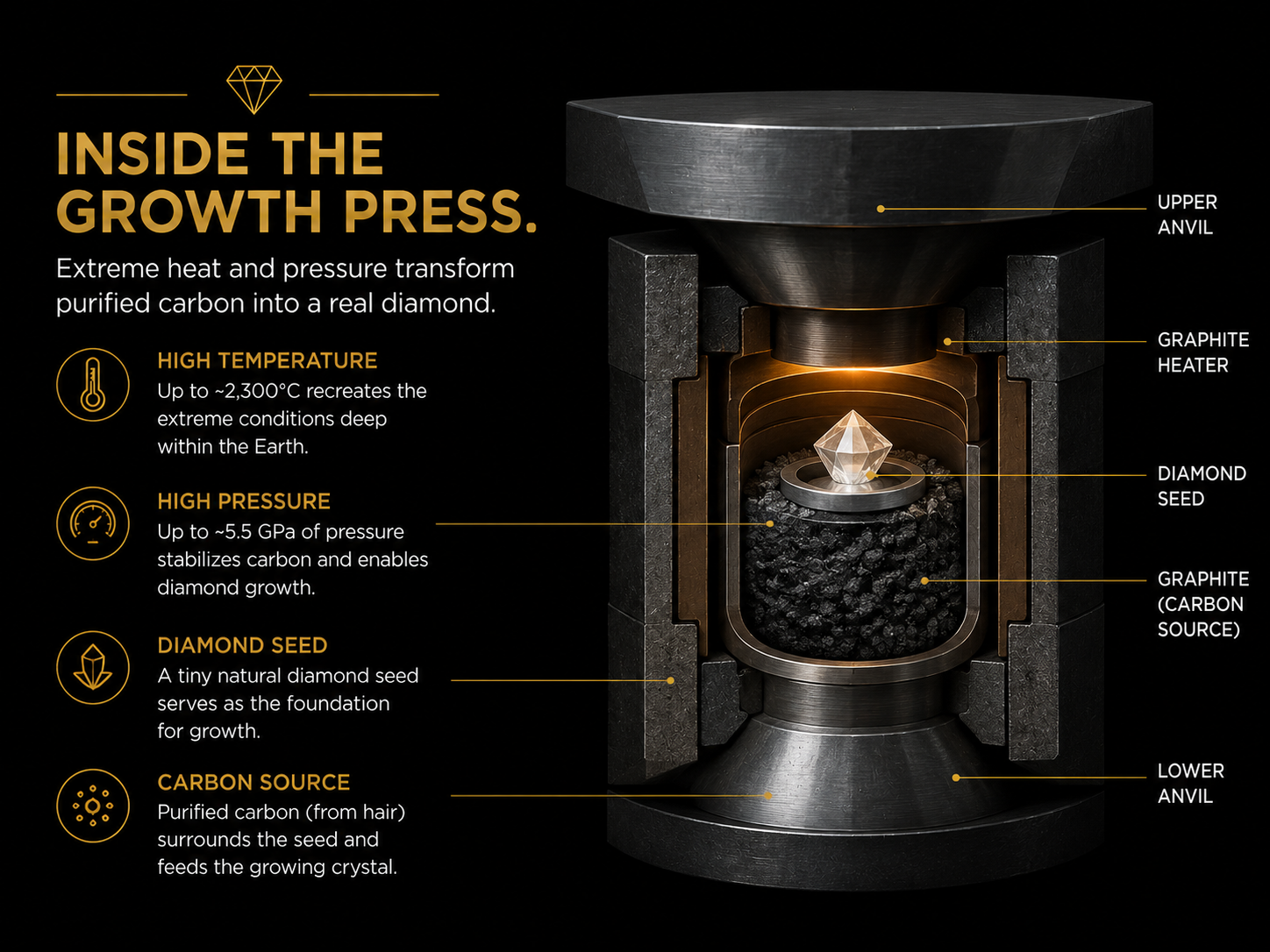
- What proportion of the finished stone is her carbon? Any provider claiming 100 percent is claiming something the process cannot do. Supplemental lab carbon is required to fill a growth cell, and her own carbon is typically around 10 to 15 percent of the finished mass.
What Will the Paperwork Actually Prove?
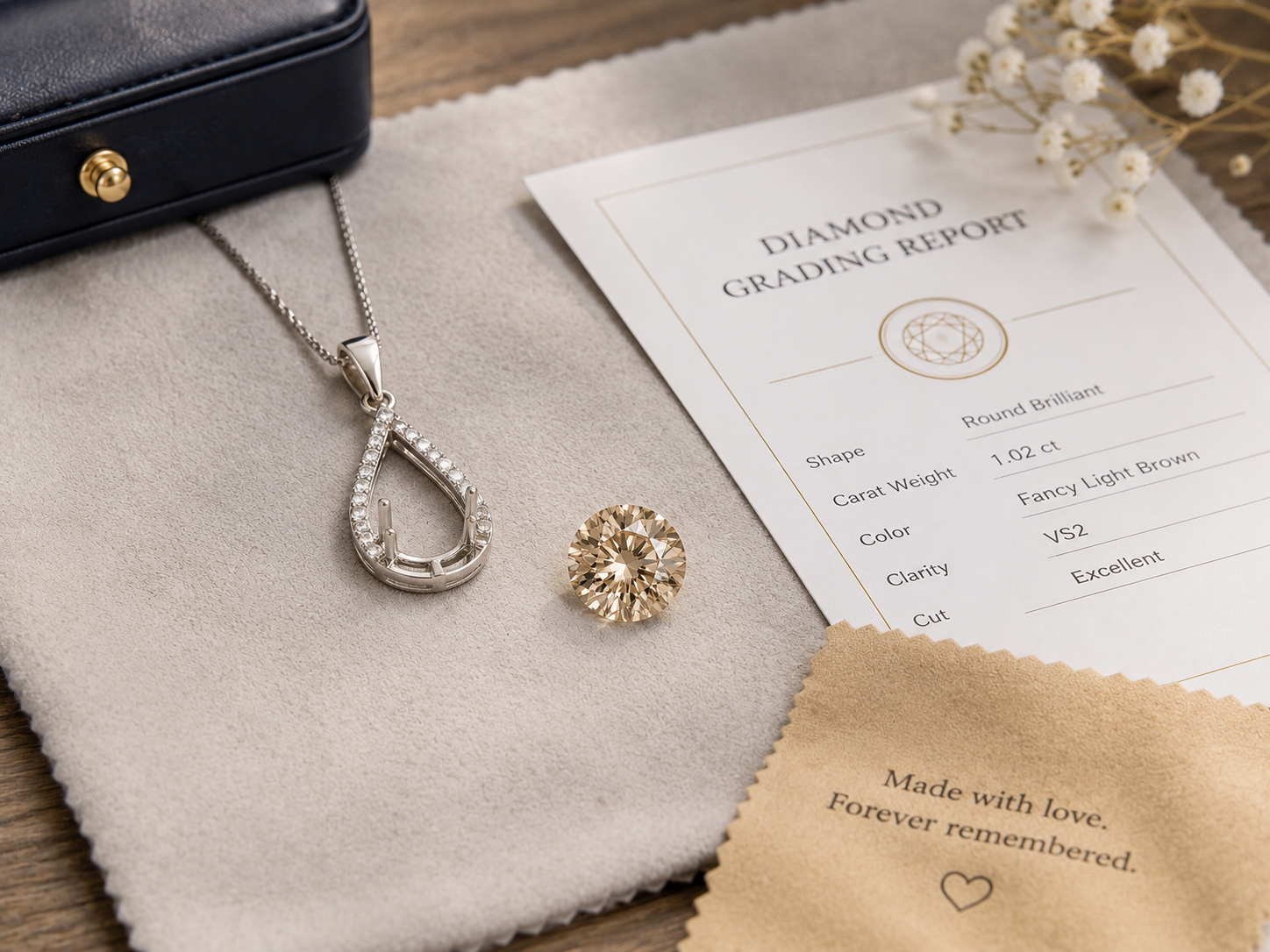
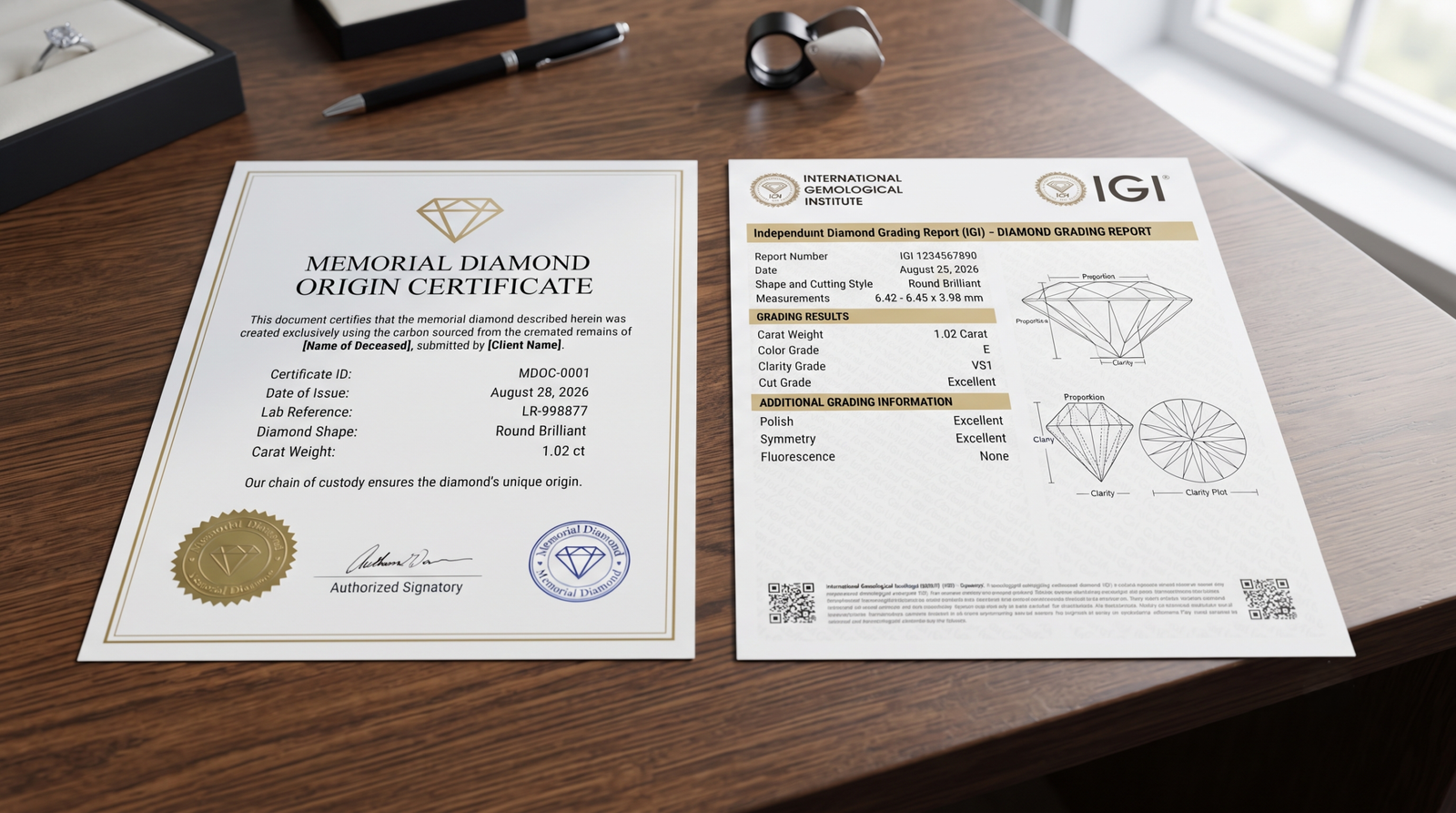
Two documents do two different jobs, and a provider should offer both without being pushed:
- An origin or authenticity certificate: an in-house record that this stone was grown from your family’s submitted material.
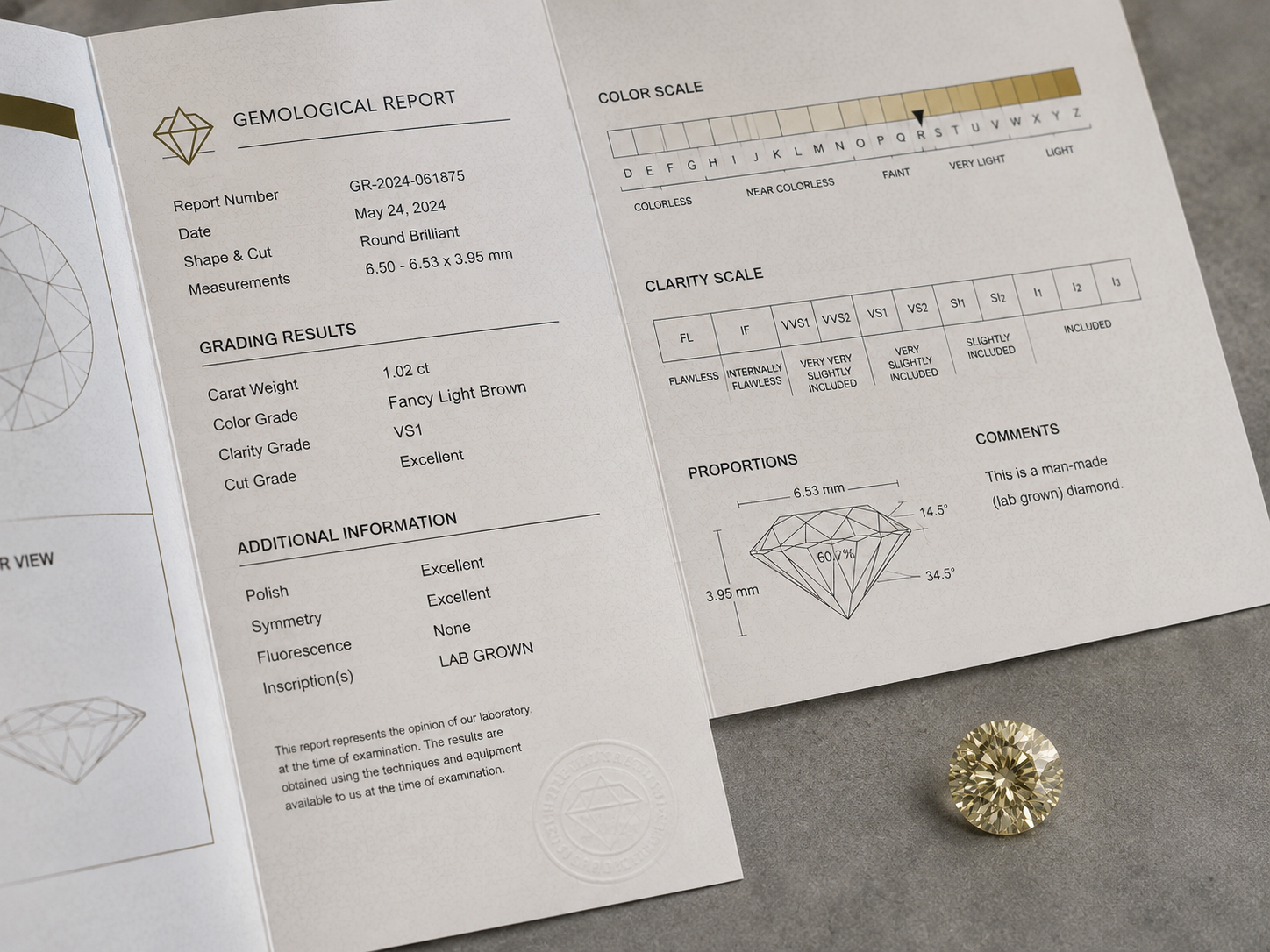
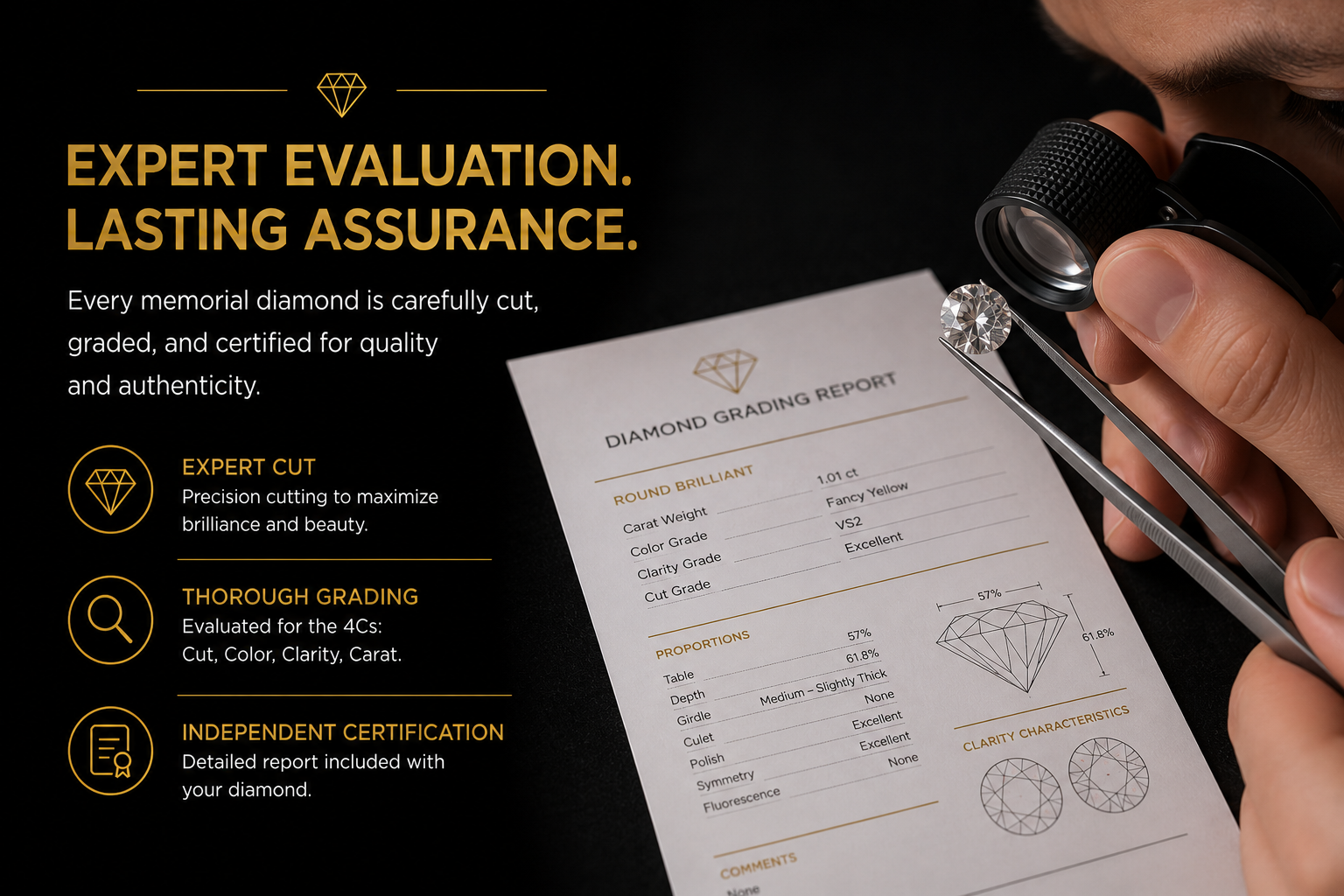
- A grading report: ideally from an independent third-party lab, describing the stone’s own cut, colour, clarity and carat.
Then ask the harder one: what does the origin certificate actually attest to, and who verified it? The honest answer is that it documents the provider’s own chain of custody, because no consumer accessible test can trace a finished diamond back to a named person, as discussed regarding whether a memorial diamond really made from your mother’s ashes. A provider who says that plainly is more trustworthy than one who implies the certificate proves more than it can.
What Happens If Something Goes Wrong?
- What is included in the quoted price? Is it the loose stone only, and are the grading report, setting, engraving and return shipping extra, which you can review via what a mother memorial diamond costs?
- What is the payment schedule, and how much is due before the material is processed?
- What happens if the growth run fails? Presses do occasionally produce unusable rough. Ask whether a second run uses remaining material, and at whose cost.
- What is the refund position at each stage? Before shipping, after intake, after extraction, after growth.
- Who is liable while her ashes are in transit, and does that change if you use the provider’s own shipping arrangement?
How Do You Tell an Answer From a Reassurance?
Three tests, applied to anything you are told:
- Does it contain a number or a stage? “Once cutting begins, which is the last stage” is an answer. “Toward the end” is not.
- Does it survive one follow-up? Ask “and what happens if that doesn’t work?” A real policy has a next line. A reassurance repeats itself in warmer words.
- Would they put it in an email? Anything a provider will not restate in writing is not yet a commitment, however kindly it was said on the phone.
None of this is about catching anyone out. A careful provider will be pleased to answer precisely. The point is that you only get one chance to ask before the material is irreversible.

What Do You Not Need to Decide Yet?
A short list, because families often stall on the wrong questions:
- The setting. The stone arrives loose and can be set years later, as seen in memorial diamond settings and jewelry ideas.
- Whether siblings each want one. That can be resolved after you know what a provider requires for multiple family members from the same ashes.
- The exact shade. Colour is chosen within a realistic range, not picked from a chart.
- Timing. Ashes do not deteriorate, and asking questions costs nothing and commits nothing.
Frequently Asked Questions
How many providers should I ask before choosing one?
Two or three is enough to see whether the answers agree. Where they differ sharply on minimum quantity, on what is returned, or on the proportion of personal carbon in the stone, the differences themselves are informative.
Is it rude to ask a provider what proportion of the stone is really my mother?
No, and a good provider expects it. The honest answer across the industry is that recovered personal carbon is typically around 10 to 15 percent of the finished stone’s mass, blended with supplemental lab carbon. A provider offended by the question is the wrong provider.
Should I ask these questions before or after I decide on a carat size?
Before. Carat drives the timeline and much of the price, so a provider’s answers on growth time and cost are more useful when you have not yet committed to a number you would then feel obliged to defend.
What if the provider will not put an answer in writing?
Treat it as the answer. There is no confidentiality reason a company cannot state its own minimum quantity or return policy in an email, and a refusal on those four points is a meaningful data point about how the rest will go.
Can I ask to visit or see the lab?
You can ask. Some providers in this category offer facility visits and some grow stones through partner facilities in other countries. Either can be legitimate; what matters is that the answer is straightforward rather than evasive.
Do I need to ask any of this if I am sending hair instead of ashes?
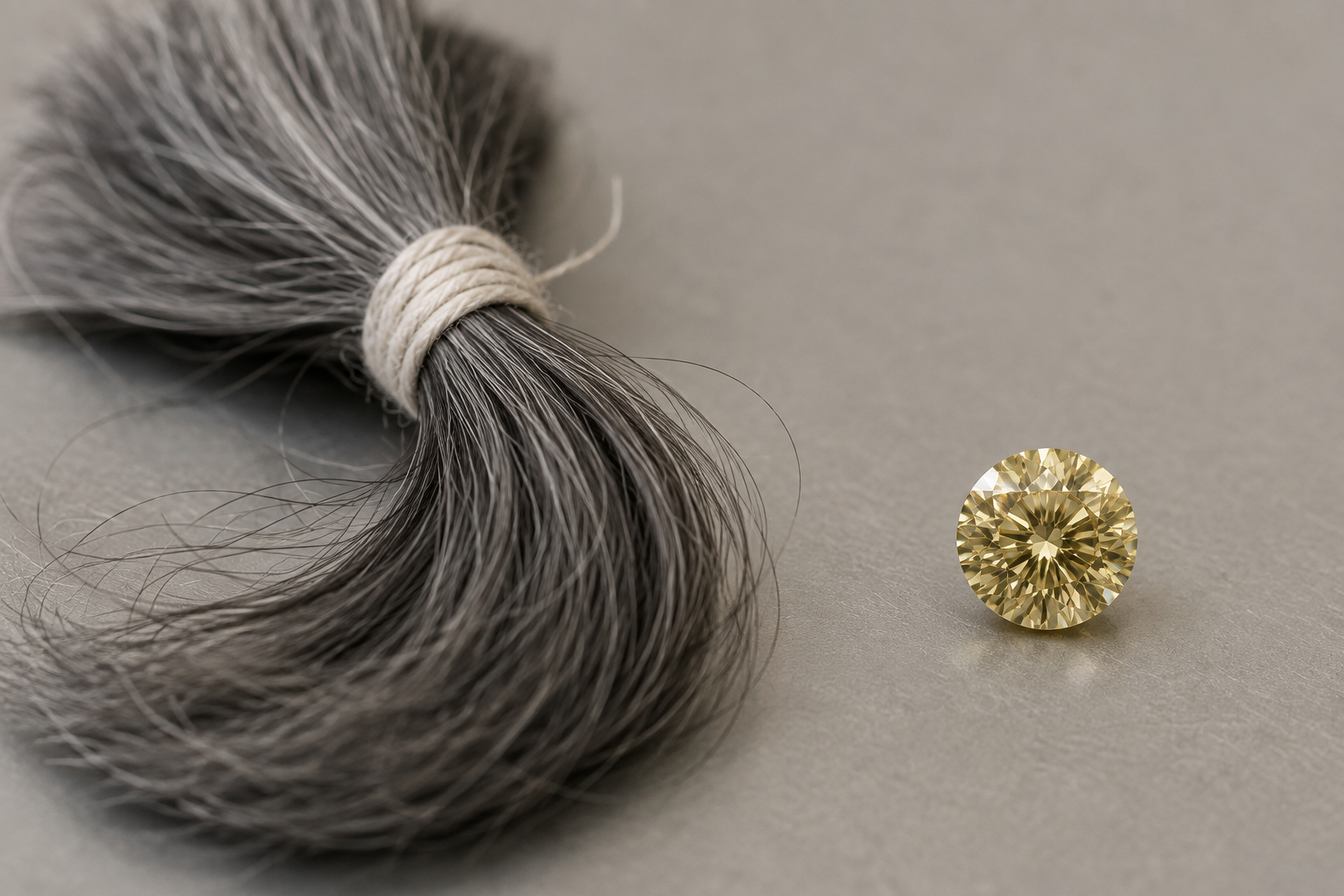
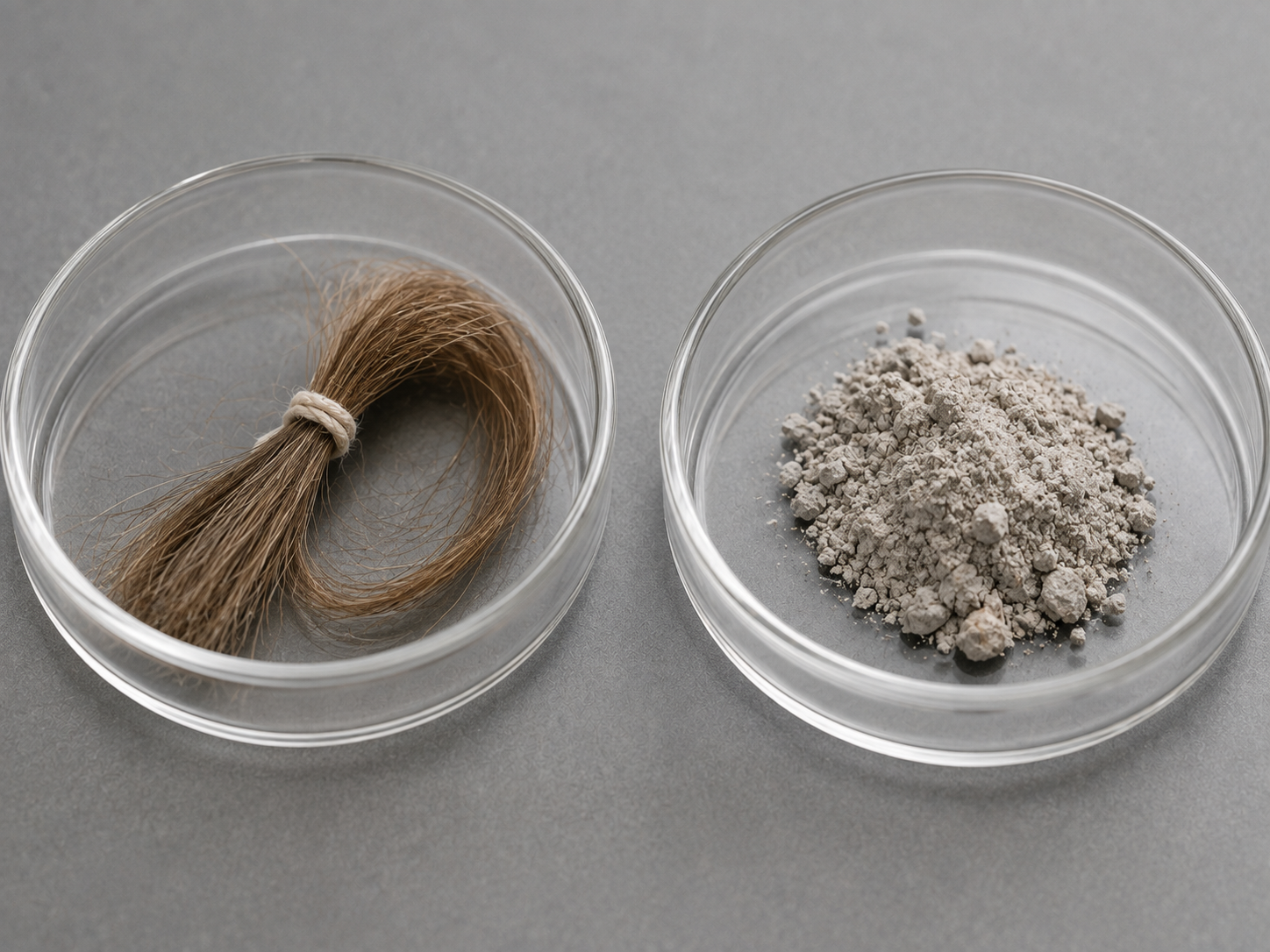
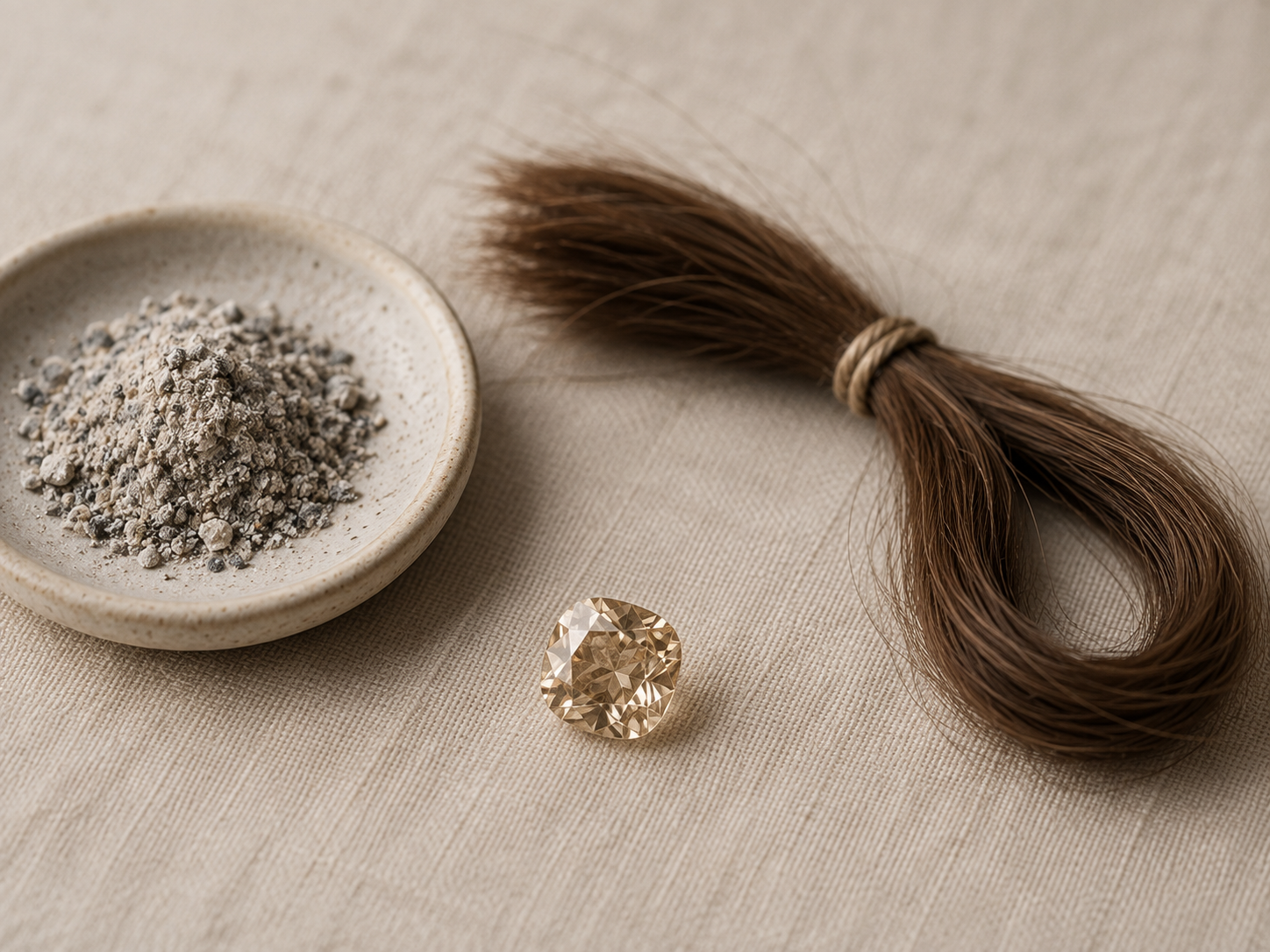
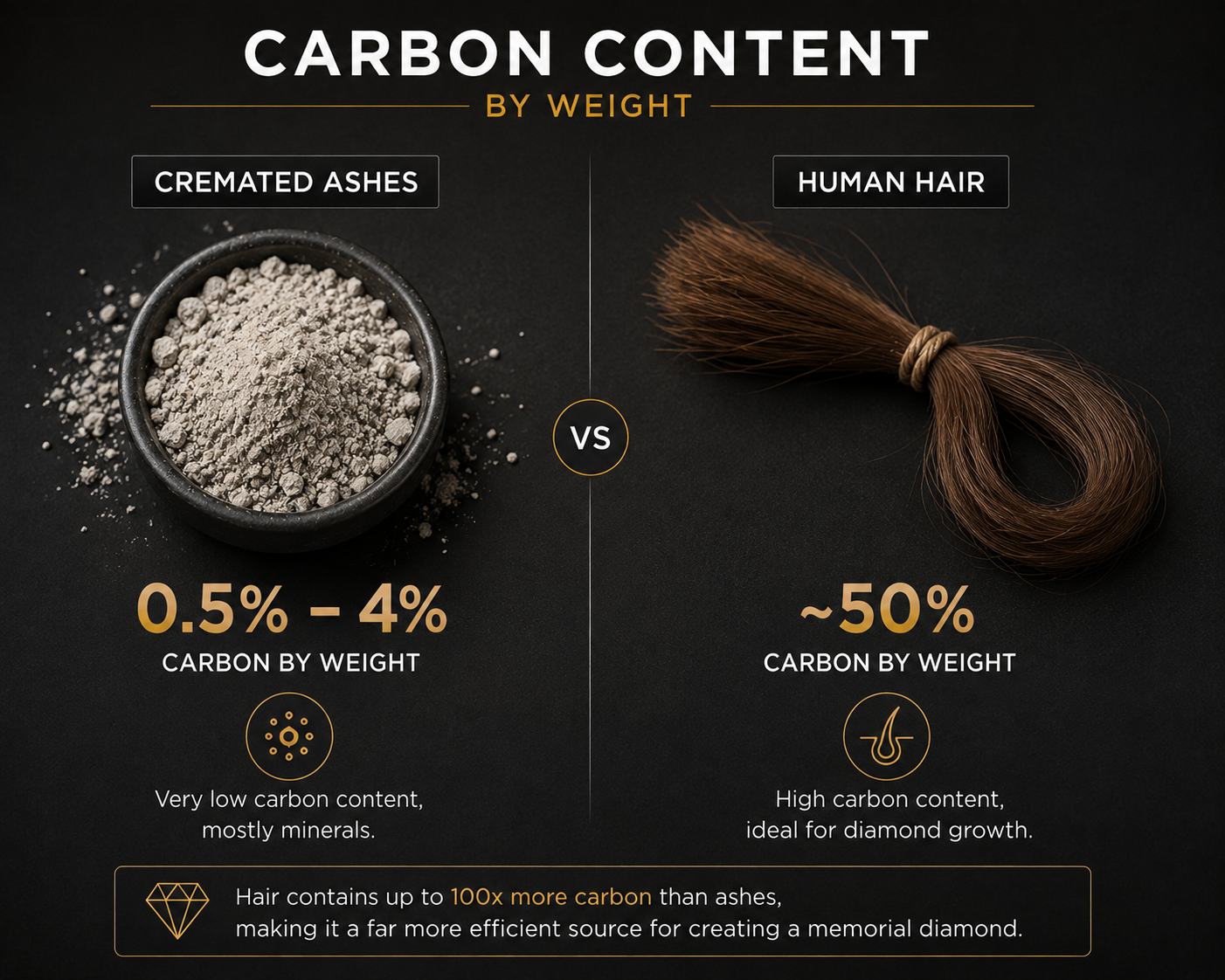
Some of it changes. A lock carries no cremation paperwork behind it and usually cannot be topped up, so the question set shifts toward provenance and handling rather than quantity and returns, covered under questions to ask before turning your mother’s hair into a diamond.
Send the List, Not the Ashes
The whole list above fits in one email, and sending it costs you nothing but the time to write it. Ask Memorial Diamond at memorialdiamond.us the four written questions first, minimum quantity, what returns and what happens on a low carbon yield and when each specification closes, and judge the reply by whether it contains numbers and stages.