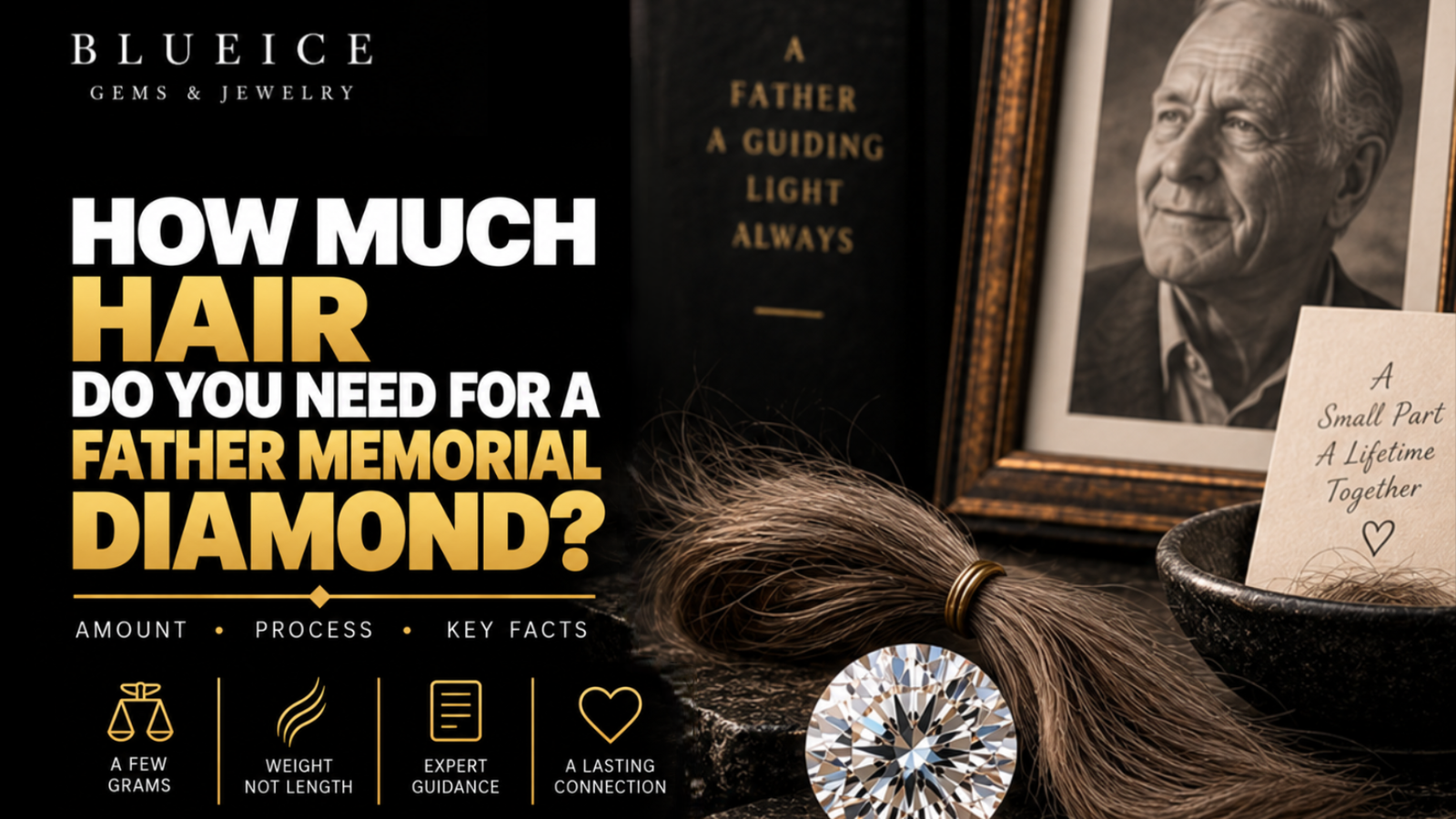
How much hair is needed for a father memorial diamond, showing a hair sample, diamond, and weighing scale

How Much Hair Do You Need for a Father Memorial Diamond?

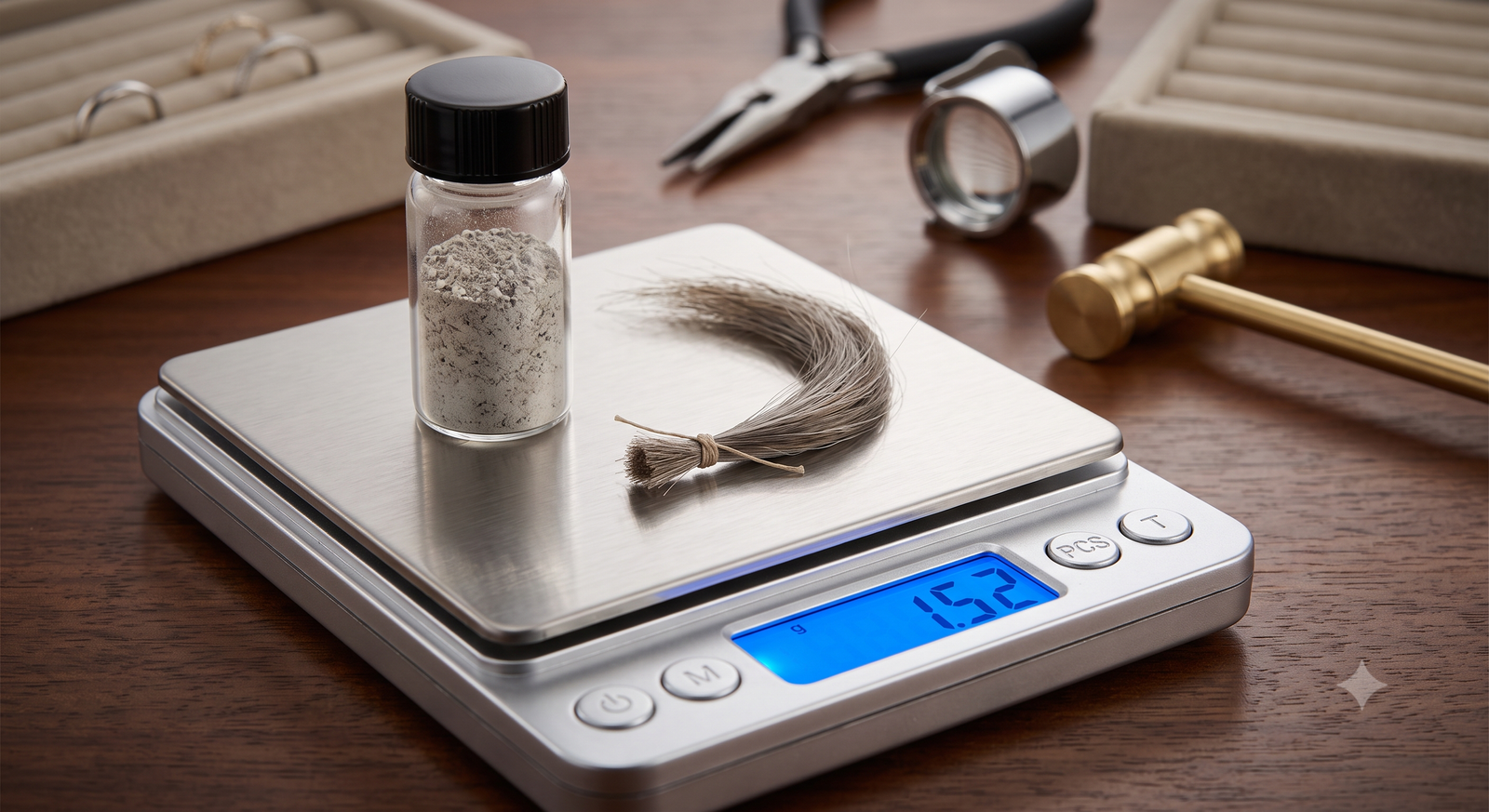
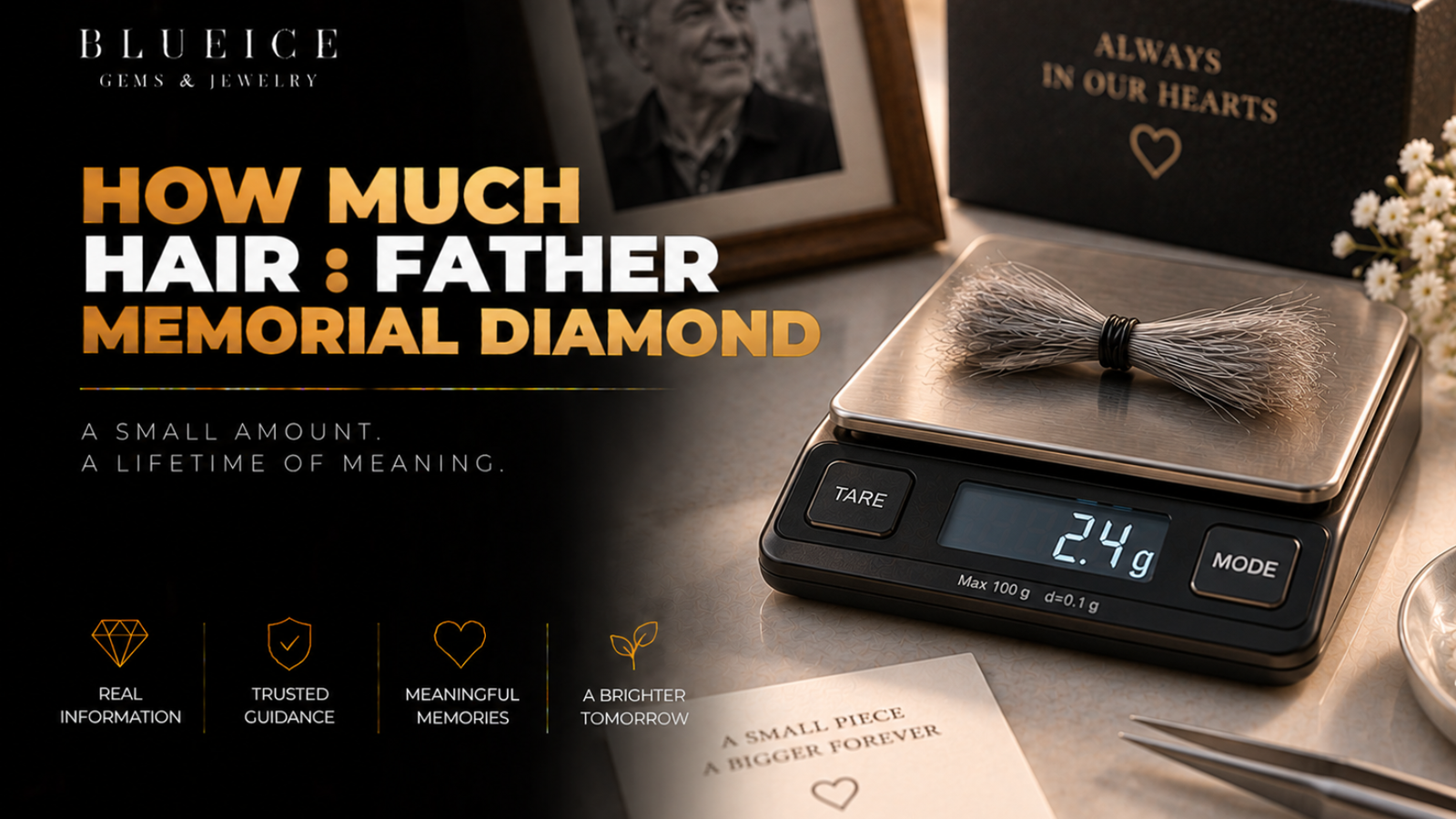
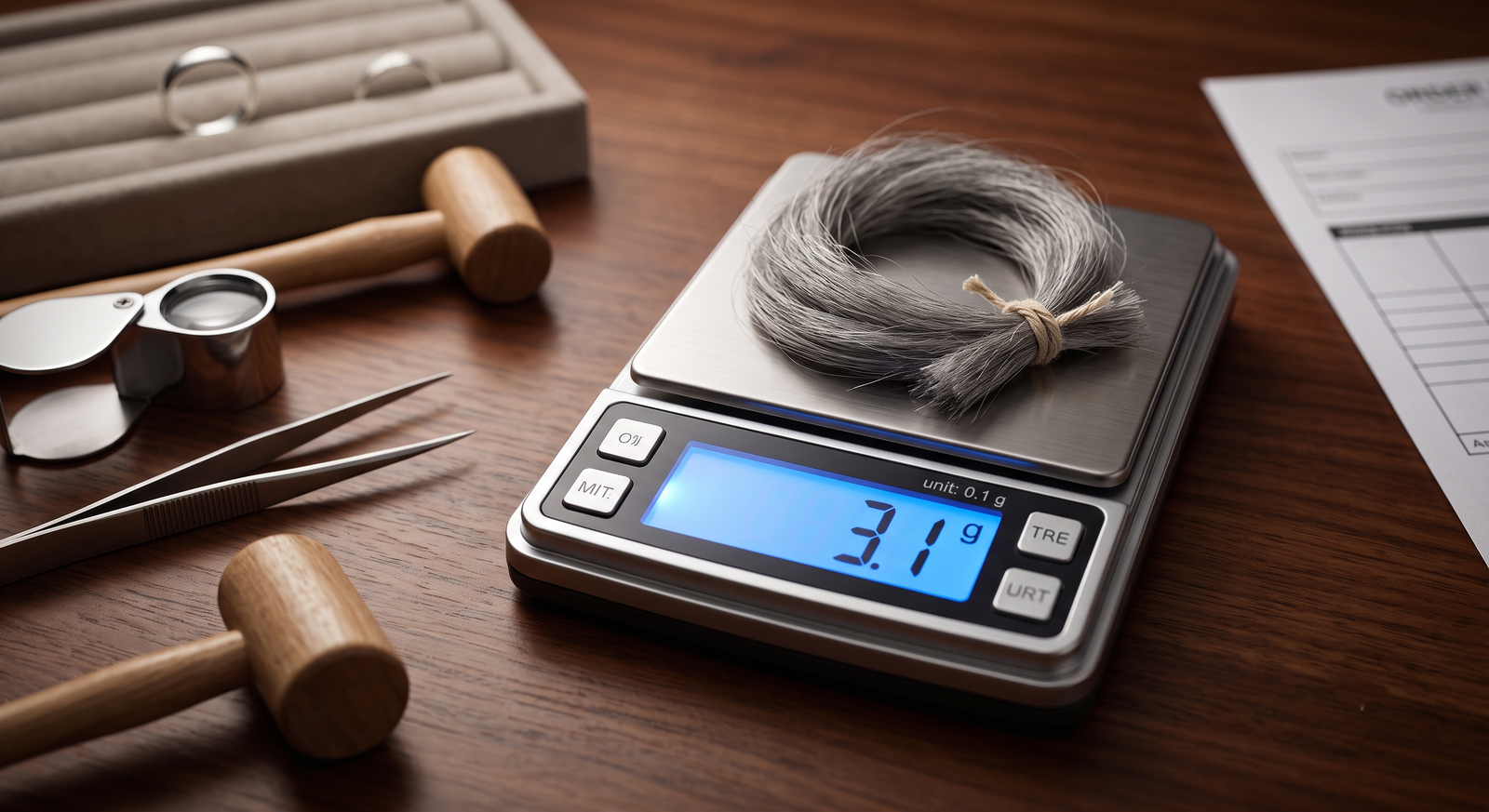
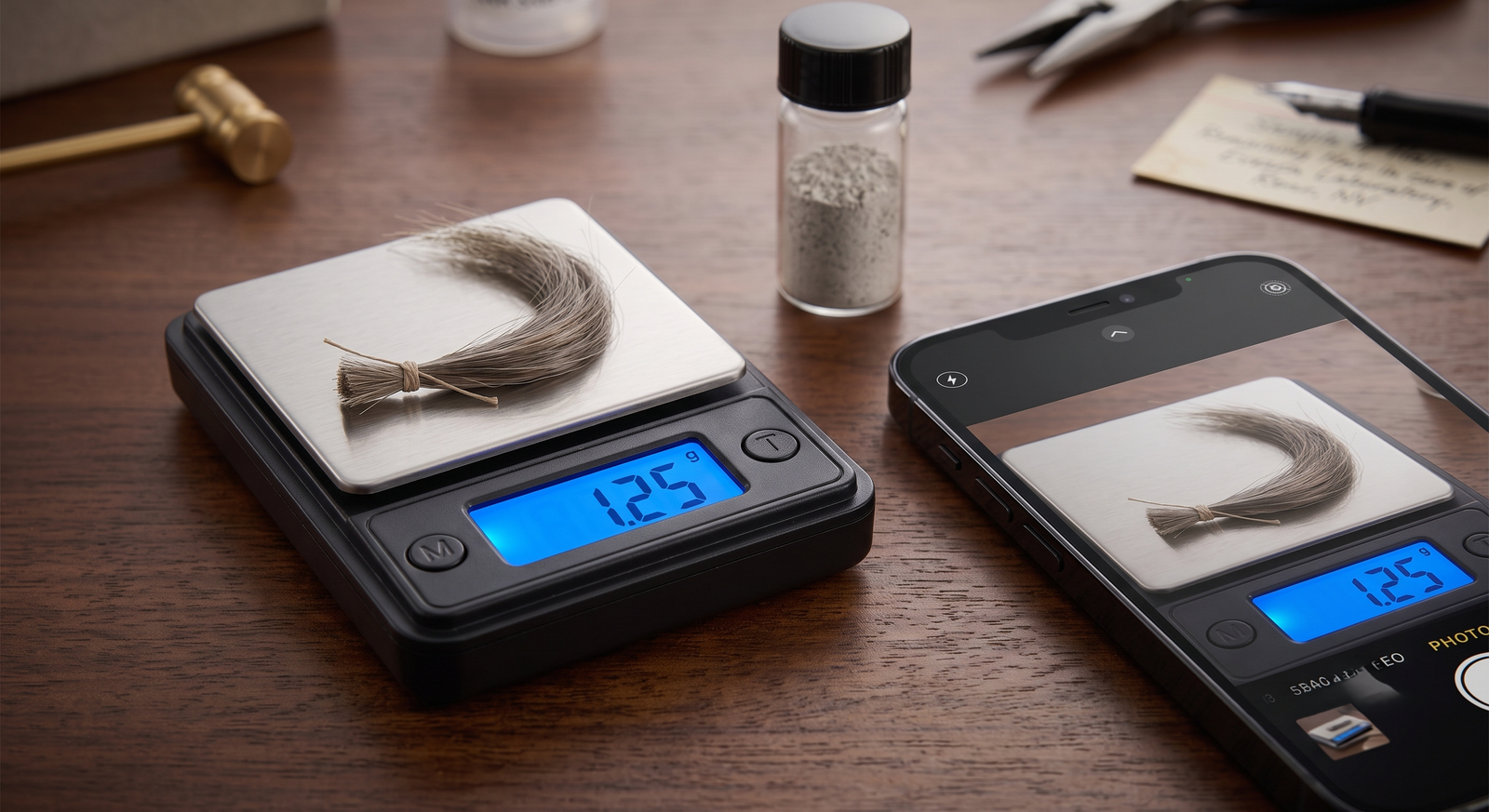
How much hair a father memorial diamond needs: a small tied lock of gray hair on a 0.1 g jeweler's scale reading a few gram

A kitchen scale is a blunt instrument for this, put an envelope holding your father’s hair on one and it can read zero. So how much hair do you need for a father memorial diamond? Industry wide, a small lock or a few grams, an amount usually described as palm sized. That figure is a weight rather than a length, and it is set per stone rather than per family.

Everything below is about what that number means once the sample is in front of you, and why the reading on a home scale and the figure a laboratory works from are not the same number.

A disclosure first: Memorial Diamond sells memorial diamonds, so read the checks below as ones to put to any provider, including this one.

How Much Hair Is Actually Needed?

Across the industry, providers ask for something in the region of a few grams, a small lock, a palm sized amount, a few wisps. Exact minimums vary from company to company, and no single published figure covers the category, so the number that governs your decision is the one your chosen provider states.

Two things about how much hair that figure describes are worth holding onto.

The first is that it is a weight. Length is the proxy people reach for because it is easy to see, and it is a poor one: fine hair and coarse hair of the same length weigh very different amounts. The complete guide to father hair diamonds covers where a father’s hair tends to be found in the first place; this page is about how much hair counts once it is in your hand.

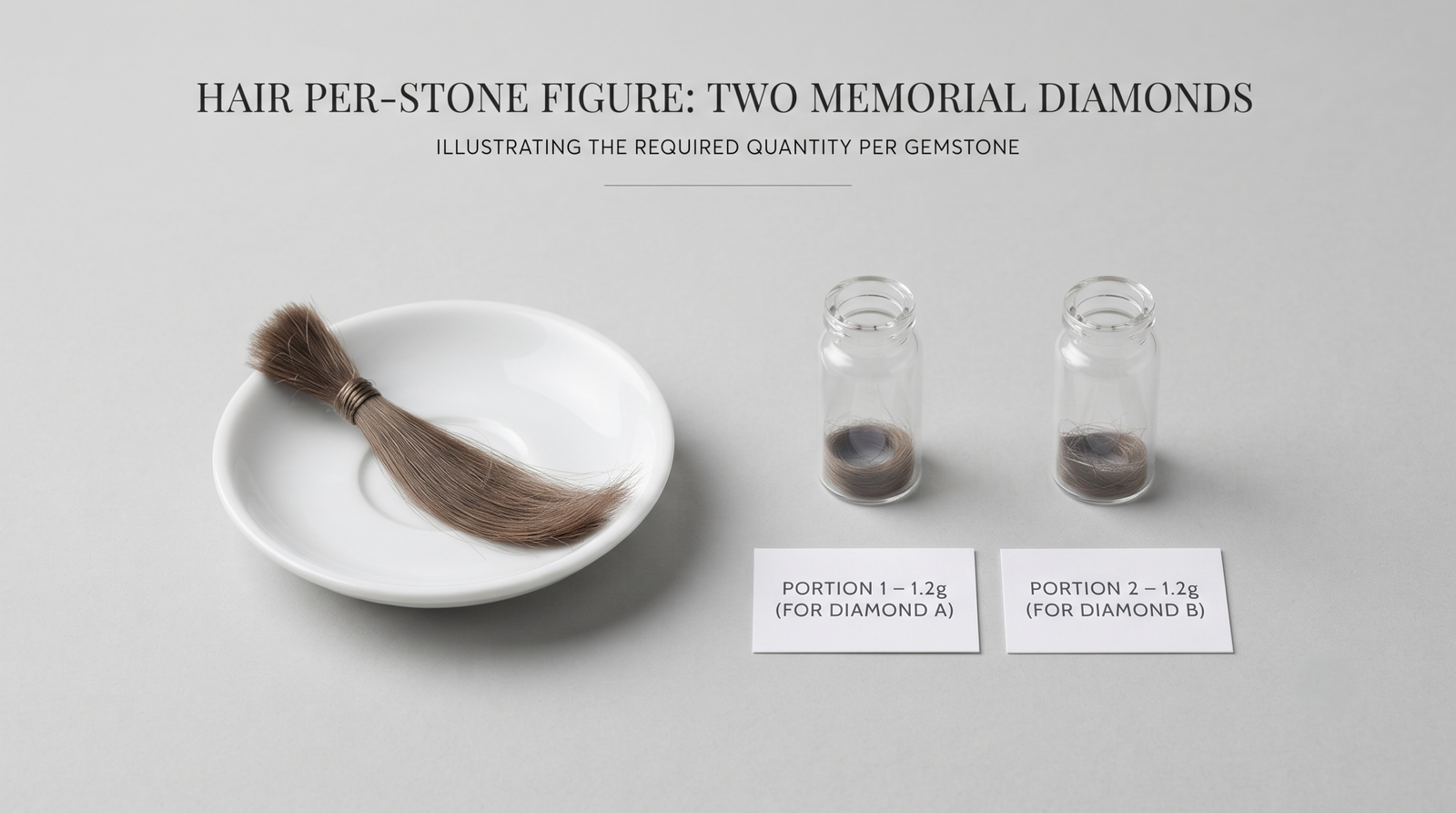
The second is that it is per stone. A submission that comfortably clears one provider’s minimum has not thereby cleared it twice.

Why Is the Weight You Send Not the Weight the Process Uses?

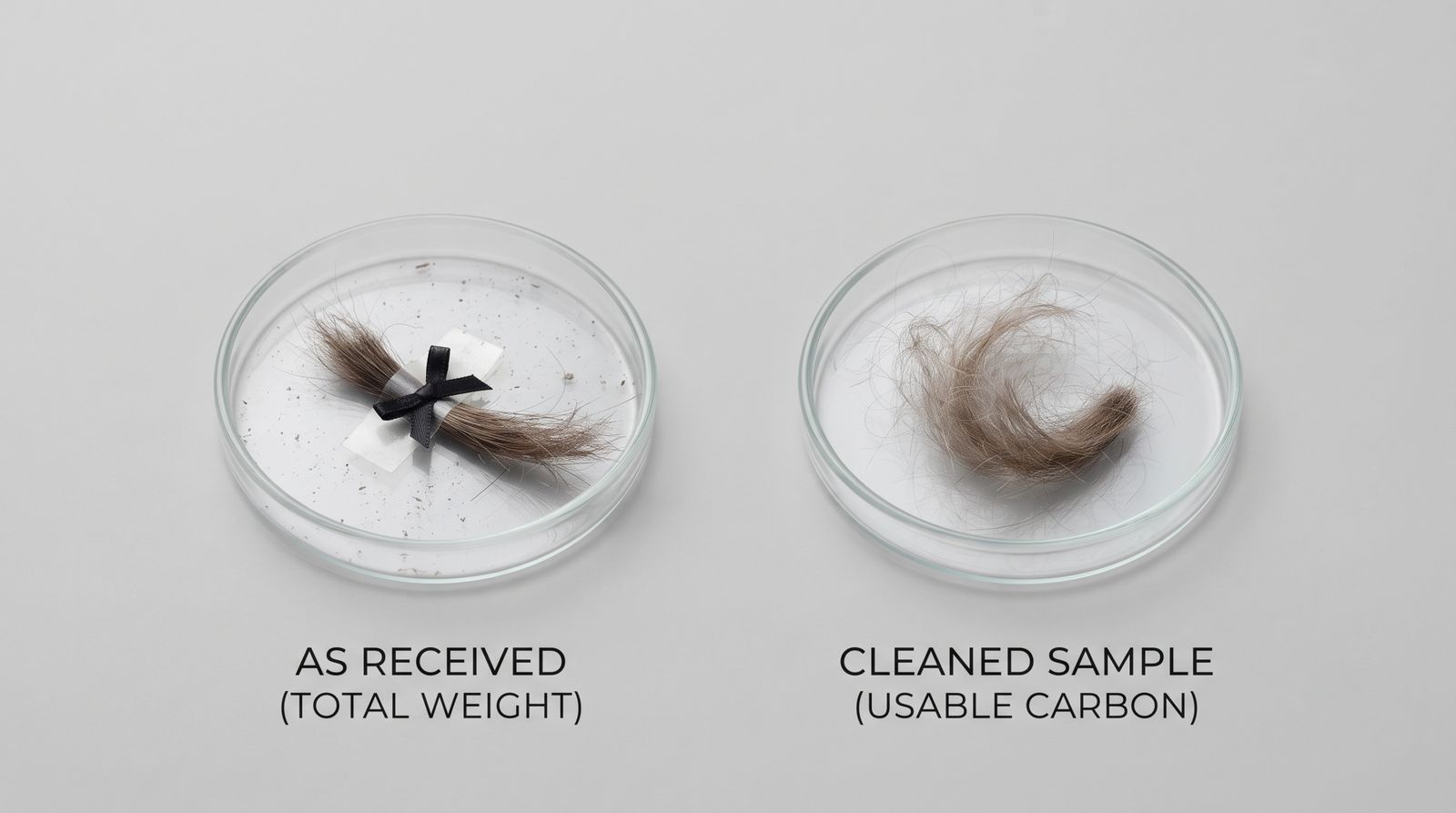
Between the envelope on your kitchen table and the graphite that goes into a growth cell, the mass of the sample only falls. Providers commonly describe a preparation stage before extraction begins, and where a stated minimum sits relative to that stage is worth asking rather than assuming. The table below is a set of questions about how much hair survives each stage, as much as a description.

StageWhat happens to the weightDoes a stated minimum usually account for it?
What you hold back at homeYou keep part of the lock; only the rest travelsNo, a minimum applies to what actually arrives
Preparation before extractionProviders commonly describe removing product, oils, dust and non hair debris first, ask what theirs removesAsk directly: is the stated figure a received weight or a usable one?
Carbon extractionHair is roughly 50% carbon by weight; the non carbon remainder is driven off in a controlled, oxygen free processAsk which weight the figure refers to, do not assume it is stated after this loss
Blending with supplemental lab grown carbonMass is added, not removed, to reach a workable volume for growth in an HPHT pressNot a deduction, but the reason no stone is made only of the submitted material
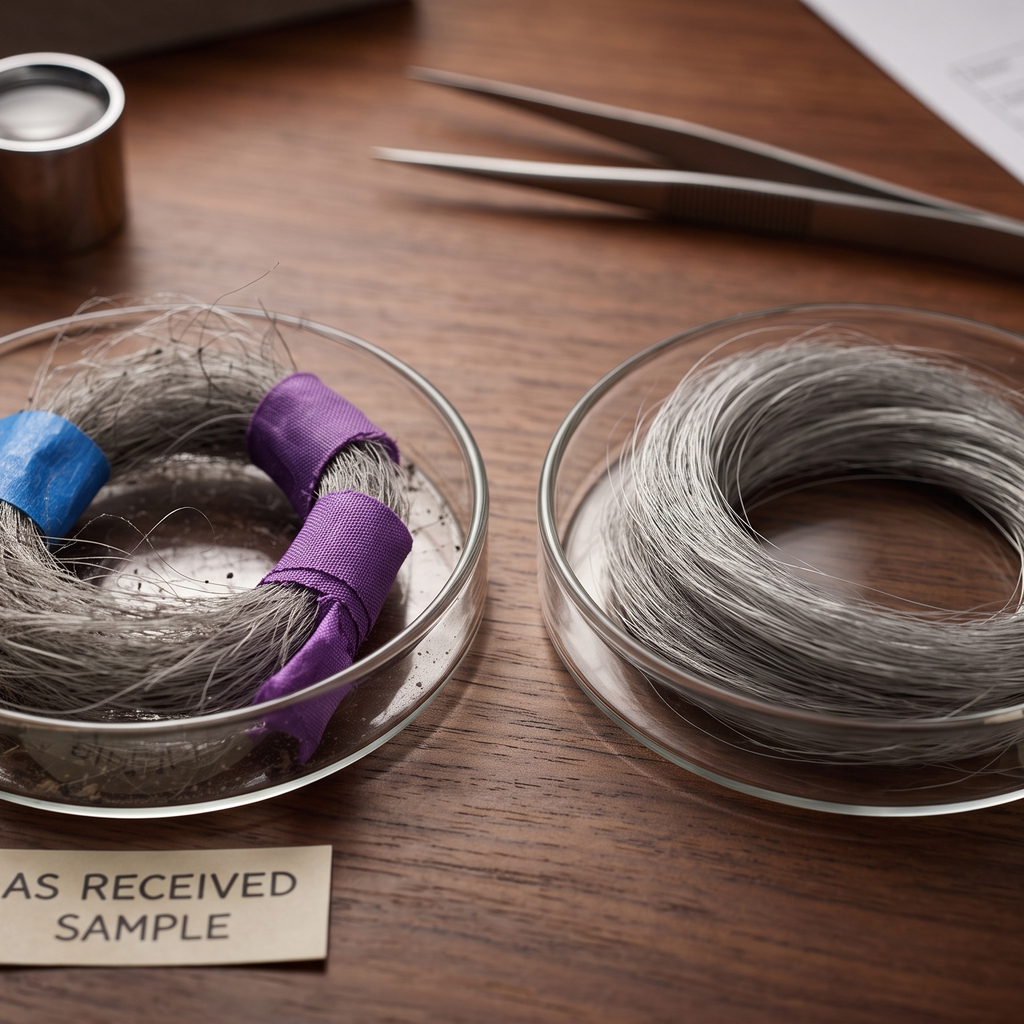
Two small glass dishes of hair side by side, one as received with tape and ribbon, one cleaned and loose, showing the weight the process actually uses

The preparation row is the one that decides whether a marginal sample passes. A lock that has been handled, sprayed, gelled or stored loose in a drawer has more to lose at that stage than one cut clean and sealed the same day. How a memorial diamond is made from your father’s hair sets out what that stage involves.

The practical consequence is simple. If what you have is anywhere near a stated minimum, send a little more than the minimum rather than exactly it, and ask which weight the figure refers to before you decide how much hair to keep back.

What Should You Weigh It On?

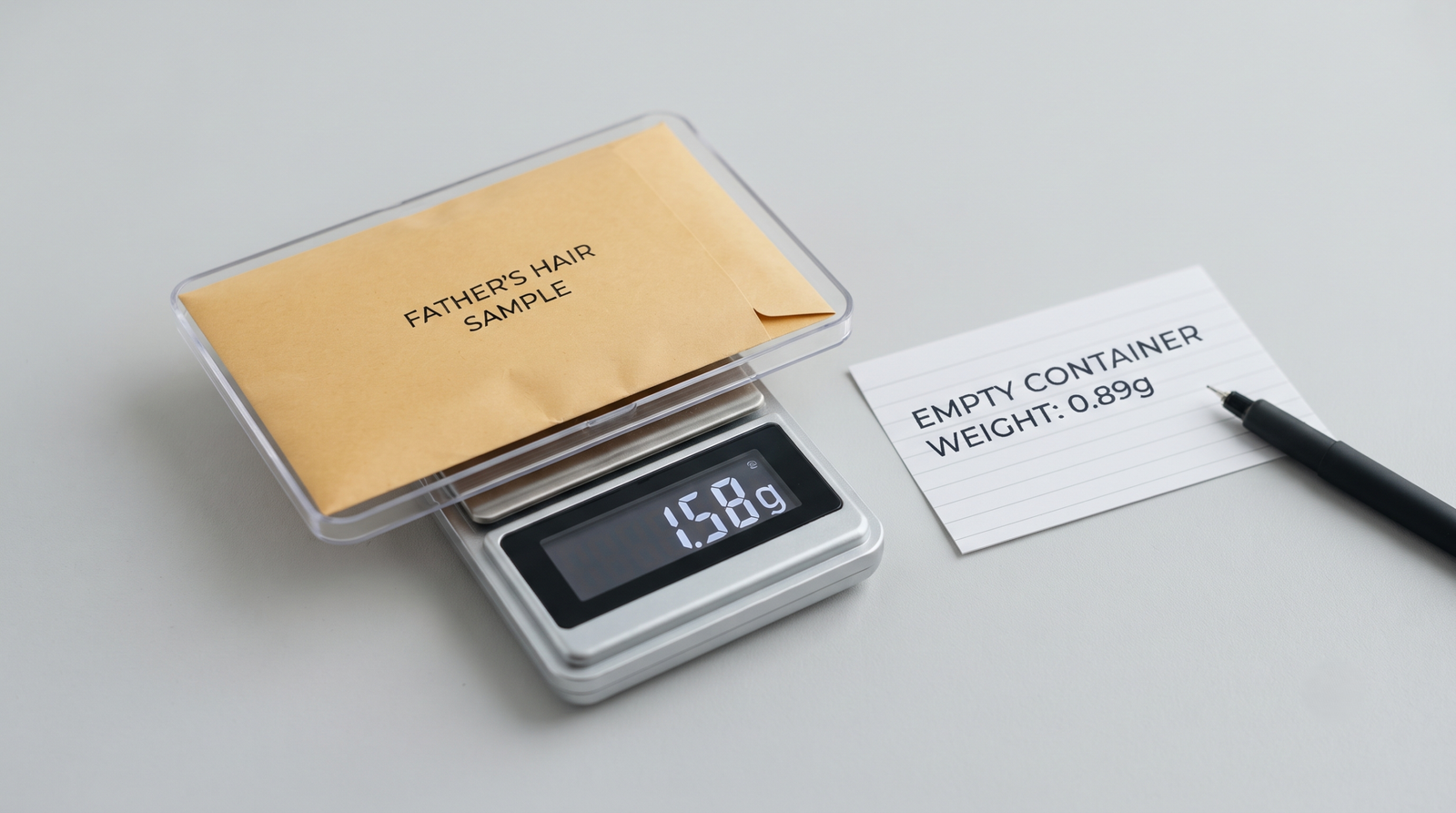
Not a kitchen scale, unless it reads to a tenth of a gram. A small jeweler’s or coffee scale with 0.1 g resolution costs very little and turns a guess about how much hair you have into a fact.

  • Weigh the container empty first, then weigh it with the hair inside and subtract. Tipping a lock onto a scale pan risks losing strands you cannot replace.
  • Take the ribbon, tape, tissue and elastic out of the calculation. They can weigh more than the hair does.
  • Photograph the sample beside the scale display in the same frame. That single image answers the first questions a provider is likely to ask.
  • Do not divide anything to find out. A whole sample can always be split later; a split one cannot be rejoined.
  • Write the figure down with the date and where the hair came from. Questions to ask before turning your father’s hair into a diamond covers what else belongs in that record.

If the scale reads a figure you were not expecting, that is information about how much hair you have rather than a verdict. It is the number to quote in an inquiry.
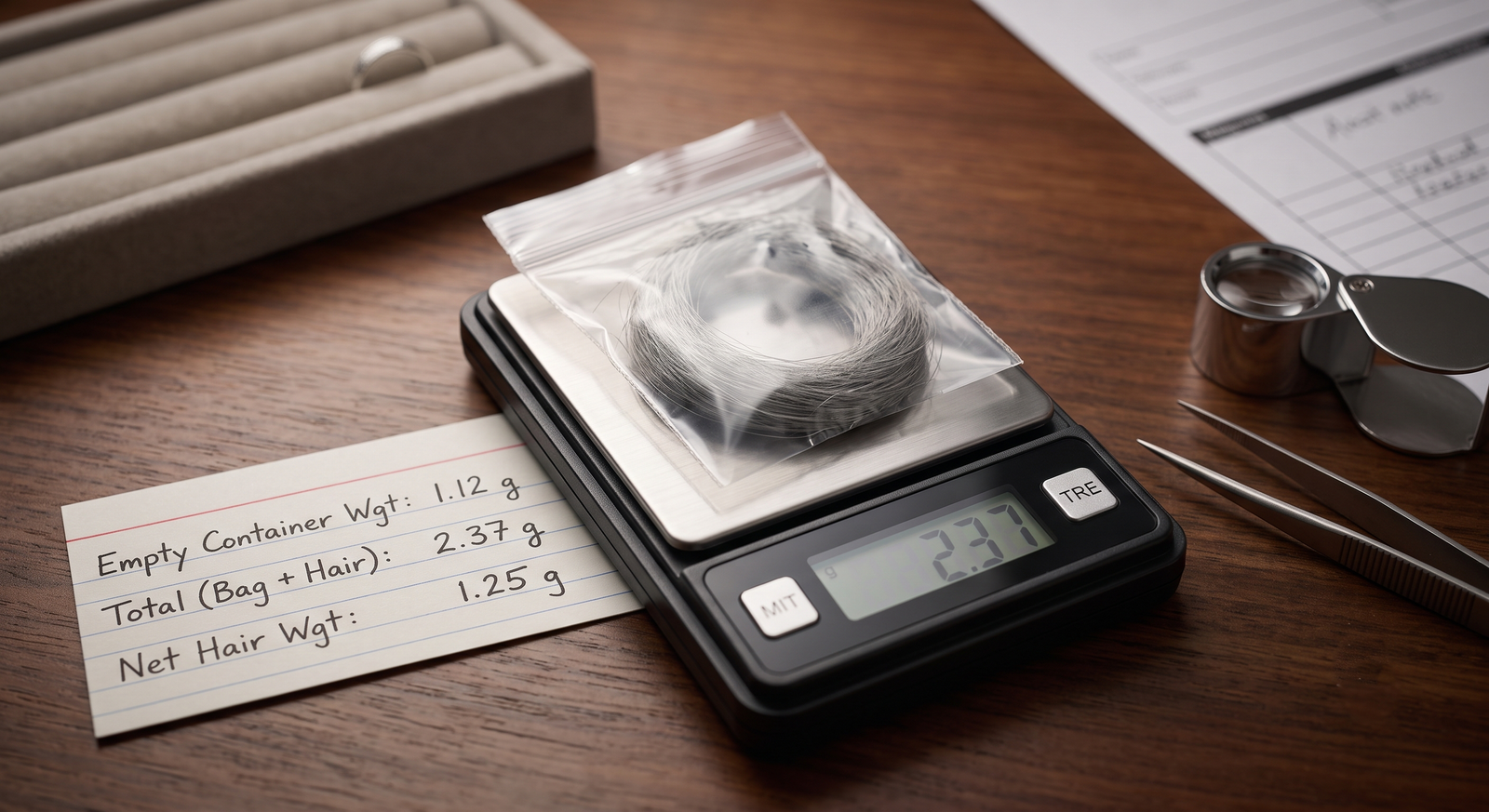
Envelope of hair being weighed in its container on a pocket scale, with the empty-container reading noted on a card beside it

Does Hair’s Higher Carbon Content Mean You Need Less?

Yes, dramatically less than ashes, though not in the ratio the chemistry alone would suggest.

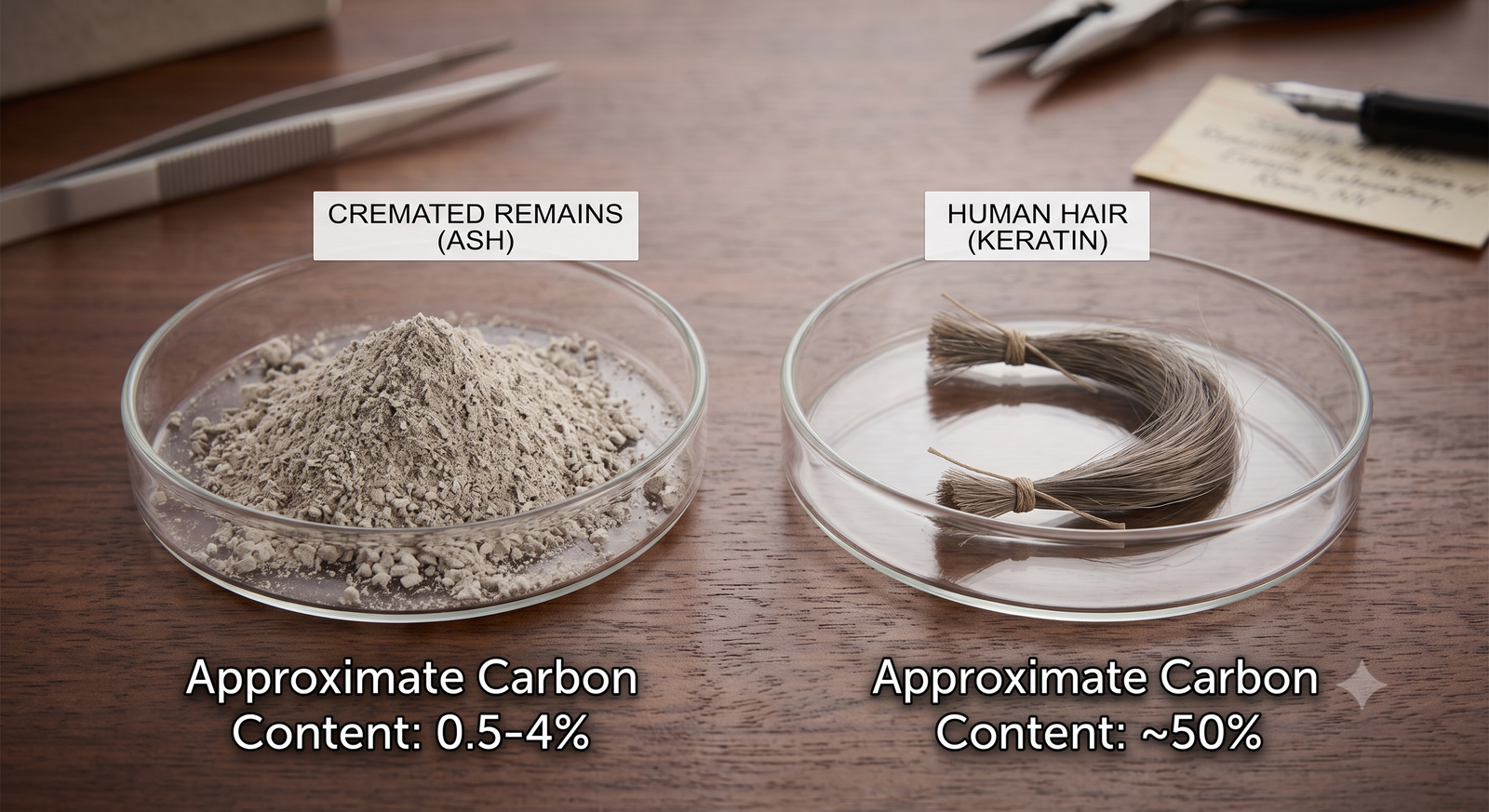
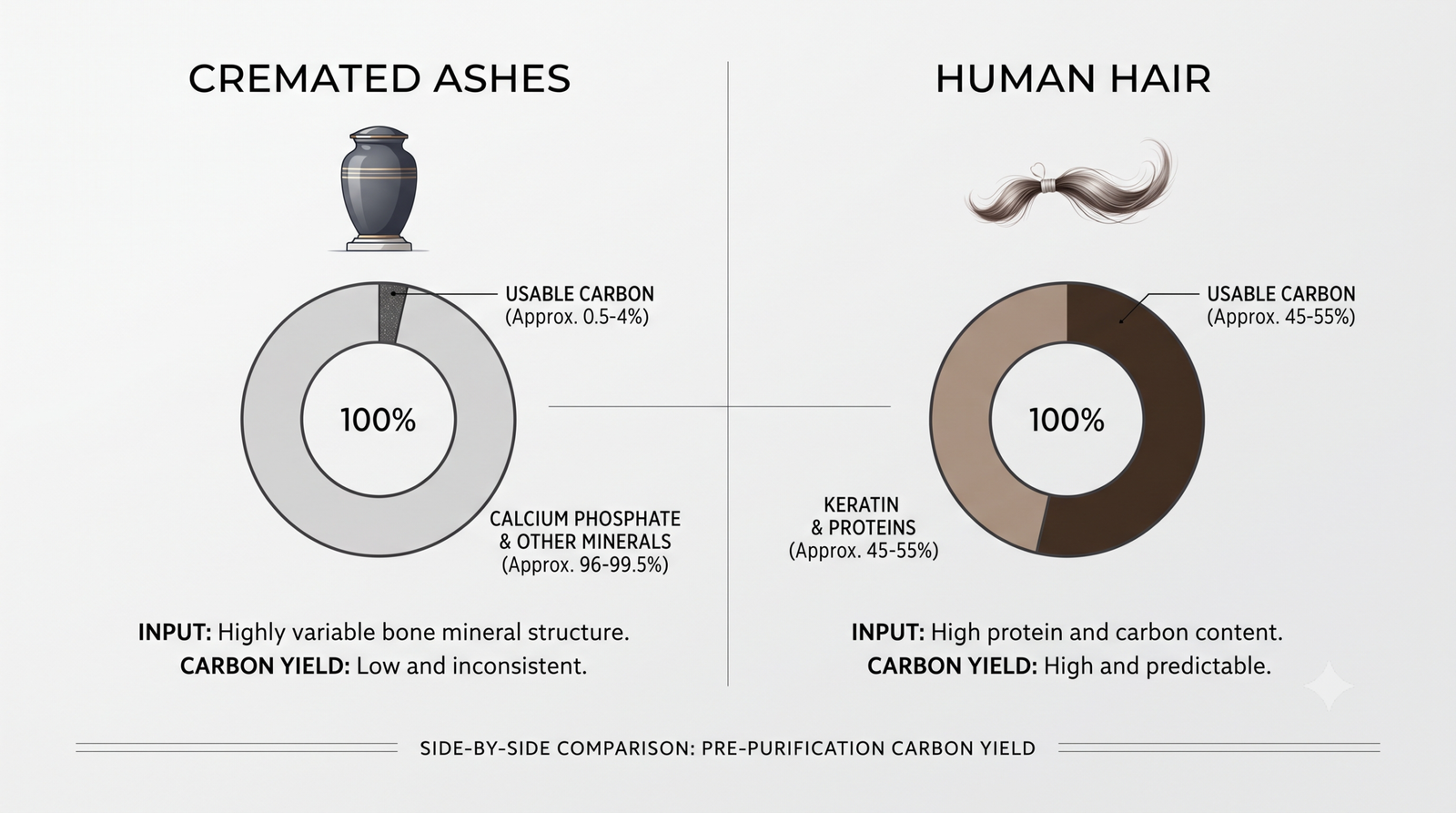
Hair is roughly 50% carbon by weight. Cremated remains are dominated by calcium phosphate, with usable carbon at roughly 0.5% to 4% of ash by weight. That is why the ash requirement is quoted in tablespoons and ounces while how much hair you need is quoted in grams.

But the published minimums for how much hair and how much ash are needed do not sit a hundred to one apart, and the gap is worth asking about. One likely reason is that a very small sample is harder to handle, clean and weigh reliably whatever its carbon content, which would make a hair minimum closer to a practical floor than a calculation from chemistry. Ask a provider how their figure was arrived at; it is a fair question and the answer is informative.

It is also worth saying plainly what the last row of that table implies. The carbon recovered from his hair is purified and then blended with supplemental lab grown carbon to reach the volume a growth run needs. What comes out is a real, documented portion of him inside a stone that is not made only of him, the honest framing, and the one memorial diamonds as a category have always rested on.

One more thing the arithmetic explains: sending several times as much hair as the minimum does not produce a larger stone. Carat size is a function of growth time in the press, which is chosen and paid for, rather than of how much material arrived. Choosing a carat size is a separate decision from this one.

Is a Sample Near the Floor a Verdict?

No, it is a question, and one worth asking with a number attached.

A short clipping is keratin just as a long lock is, and length on its own rules nothing out. Whether a given provider will accept them is a different matter, and it is a policy question rather than a scientific one. Acceptance rules for very short clippings and for mixed provenance samples are not standardized across the industry, which means the only reliable answer is the one you get in writing from the company you are considering.

Ask it as a question about how much hair you have, with a weight and a photograph attached, rather than as a description. “4.2 grams, collected over two trims from a beard” is answerable. “A bit of his beard” is not, nobody can tell from that how much hair is actually there.

If the answer comes back as not enough, that is one company’s policy rather than a fact about the sample. Ask another before concluding anything, and remember that the ashes route may still be open alongside it.

How Much Hair Is Enough for More Than One Stone?
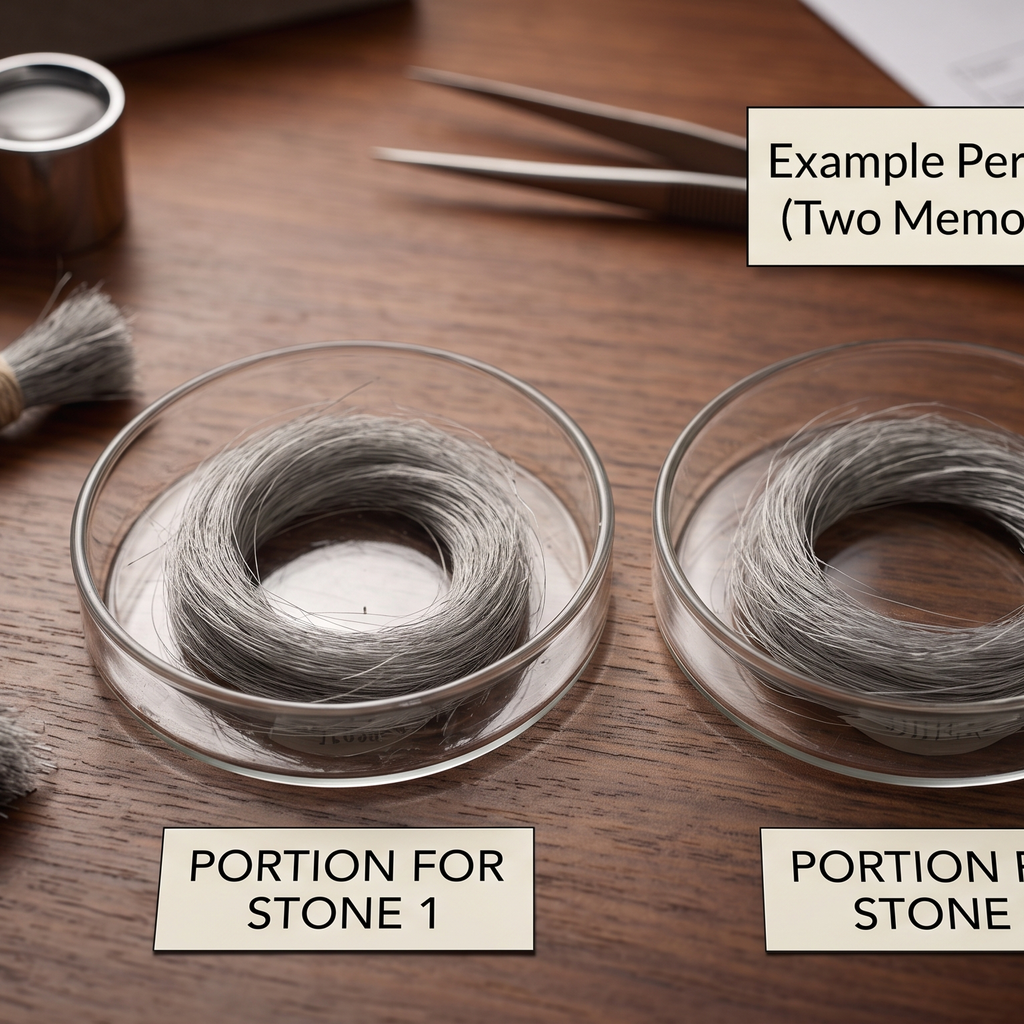
A single lock of hair laid beside two small labeled portions, illustrating the per-stone figure for two memorial diamonds

Where a submission holds twice as much hair as the per stone figure, several family members can each receive a stone from the same starting material, which is why the figure to ask for is grams per stone rather than grams outright.

Where a sample is generous, that arithmetic is straightforward. Where it sits close to the minimum, the realistic options narrow to one stone now, a smaller carat, or a combined submission with his ashes. Whether more than one family member can have a diamond from the same father covers how families divide that decision, and how much ash and hair a combined stone needs covers what two materials require between them.

Ask for it as a per stone figure in grams, how much hair per stone, not how much hair in total, and ask before you plan on two.

Frequently Asked Questions

Does the hair need to be in one piece, or will loose strands do?

Loose strands are usable, the process consumes weight, not structure. A bound lock is easier to handle, photograph and document, so if the hair is already tied, leave it tied and send it exactly as it is.

Do I weigh the hair with the ribbon and envelope it came with?

No. Weigh the packaging empty, then weigh it full, and use the difference. Ribbon, tape and tissue can easily outweigh a small lock, which is how a marginal sample gets mistaken for a comfortable one.

Is there a maximum, or can the whole lock be sent?

A stated maximum is unusual, however much hair you have, but sending everything is worth pausing over. Once a sample is in transit it is out of your hands, and keeping a portion at home costs nothing and preserves an option for later.

Will the laboratory weigh it again, and will they tell me how much hair arrived?

An intake weight is normally recorded as part of chain of custody documentation. Whether that figure is shared with the family varies, so ask for it to be reported to you at intake rather than assuming it will be.

Does damp or freshly washed hair weigh more than the process can use?

Moisture adds weight the process cannot use, so a damp sample weighs more than it is worth. Let it dry fully at room temperature before weighing, and ask the provider how they want it packaged rather than sealing a damp sample into anything.

Does how much hair you need change with the carat size chosen?

Not in the way people expect. Because size is driven by growth time rather than input volume, a larger stone usually costs more months and more money rather than more hair. Confirm it with the provider, since minimums vary between companies.

Final Thoughts on How Much Hair a Father Memorial Diamond Needs

The whole of this page reduces to one action that takes ten minutes and commits you to nothing: put the sample on an accurate scale, photograph it, write the figure down, and put the sample back exactly where it was. With that number in hand, an inquiry stops being a conversation about whether you have enough and becomes a conversation about what happens next. How much hair you have is a fact you can establish this afternoon; what it is enough for is the provider’s to answer.

Learn More About Father Memorial Diamonds

Talk With Memorial Diamond

Send Memorial Diamond the weight and a photograph, and ask the only question that matters at this stage: is this much hair enough, and for how many stones. Nothing needs to be cut, divided or posted to ask. Start at memorialdiamond.us.
Father memorial diamond cost price ranges and key factors that determine the price

How Much Does a Father Memorial Diamond Cost?

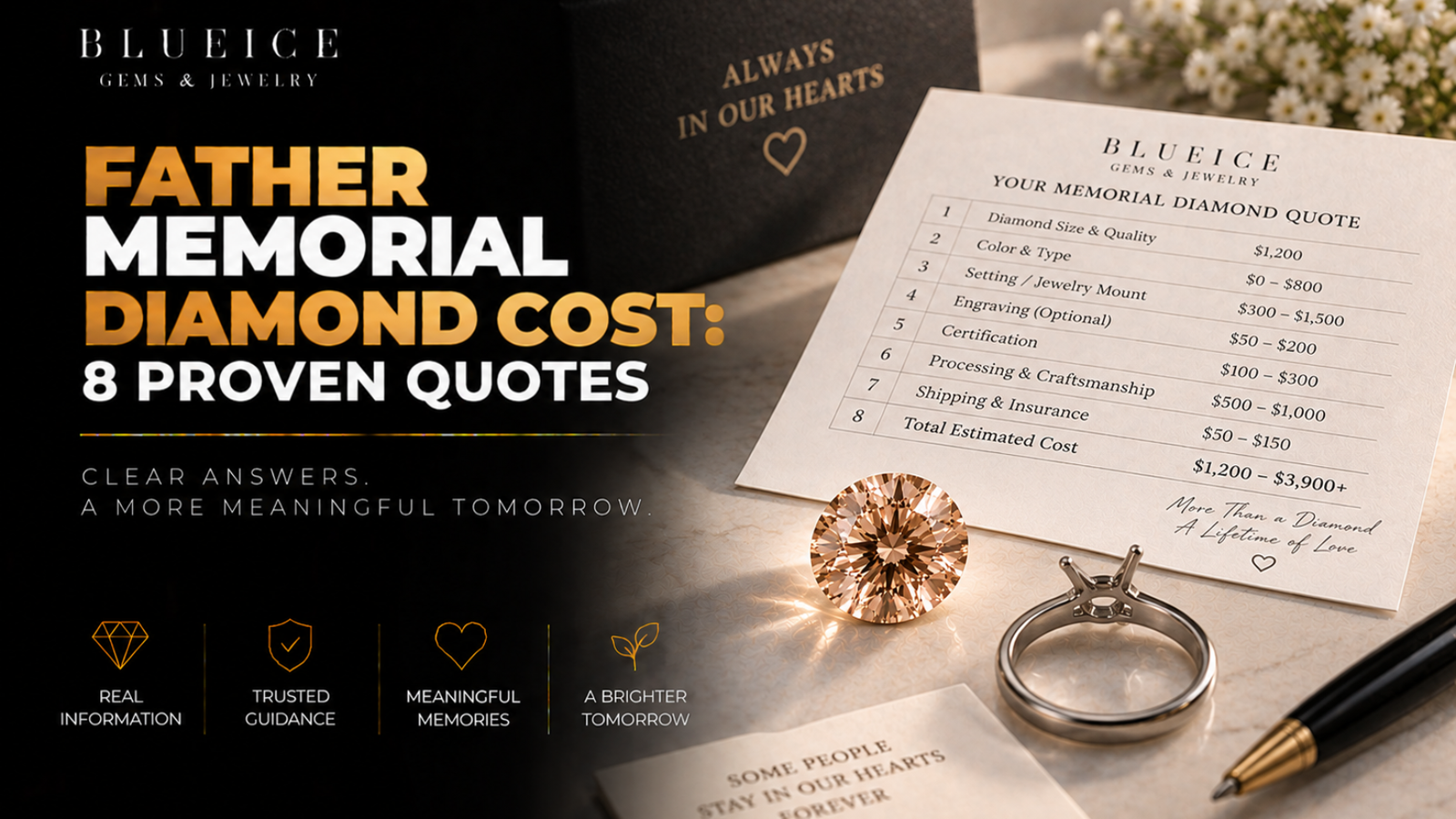
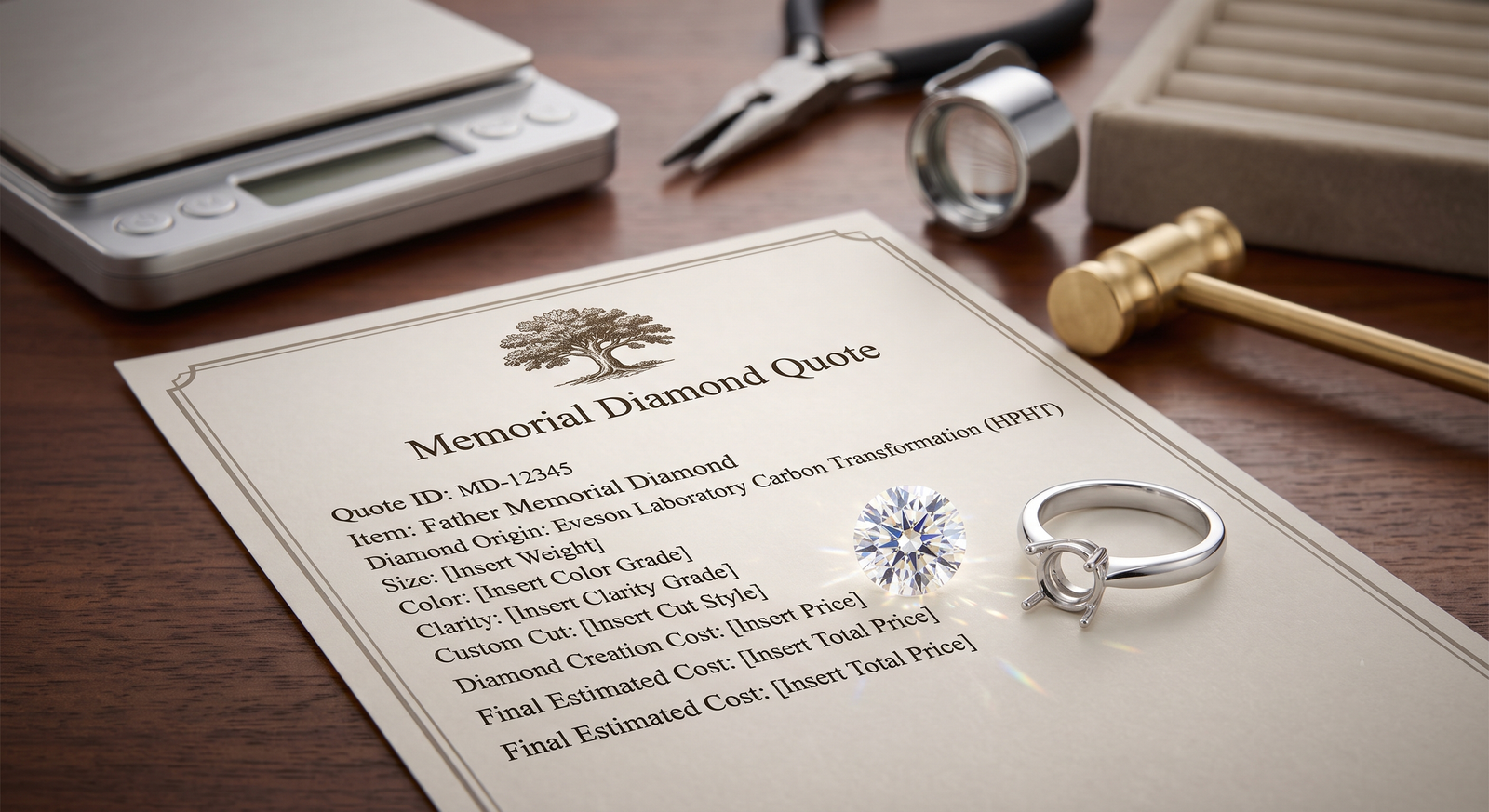
Father memorial diamond cost: a printed eight-line quote beside a loose lab-grown diamond and a plain ring mount

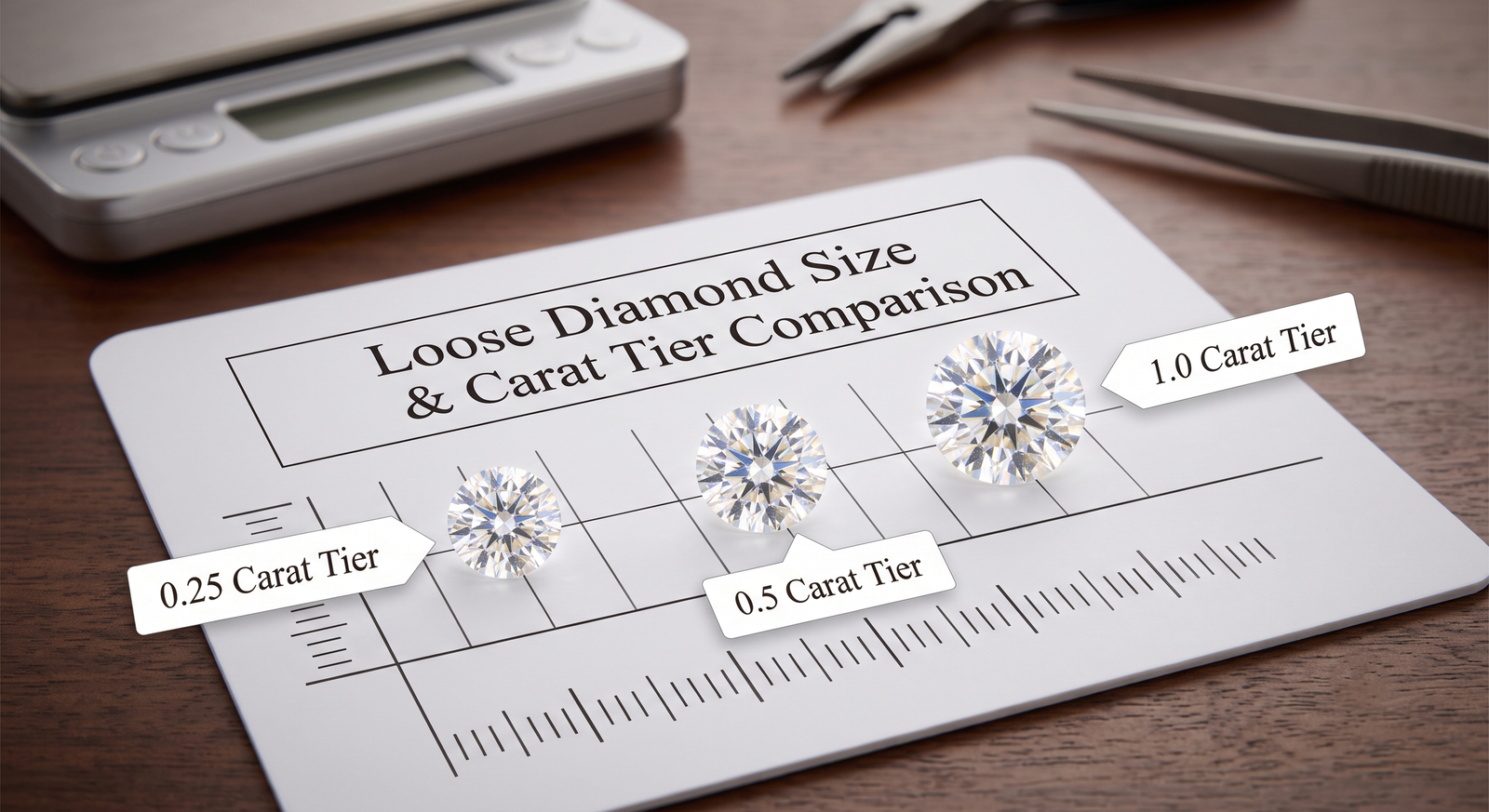
This is often the question a family asks second and worries about first, sometimes with a funeral already paid for and nobody wanting to be the one who raises money. So what does a father memorial diamond cost? Across the industry in 2026, roughly $1,500 to $3,500 at 0.10 to 0.25 carats, $5,000 to $15,000 at 0.5 to 1 carat, and $20,000 to $75,000 and upward at 2 to 5+ carats, figures for the loose stone alone, with the final number depending on carat, color, cut, and whether an independent grading report is included.

Those are industry wide ranges rather than Memorial Diamond’s own pricing, which is not yet published. The complete guide to father ashes diamonds sets the tiers out as a table, and the wider 2026 pricing guide covers what drives cost across the whole category. This page is about the father memorial diamond cost quote itself, what belongs in it, and when each part of it is actually paid.

Memorial Diamond is a company in this category; apply the checks below to our quote as strictly as to anyone’s.

What Does a Complete Father Memorial Diamond Cost Quote Contain?

A father memorial diamond cost quote is commonly for one object: a loose, unset stone in a box. Everything that turns that into something you can wear, insure and pass on sits somewhere else on the paperwork, or nowhere on it yet.

Line itemInside the quoted price?What decides it
The loose stoneYes, this is usually what a quote meansCarat, above all
ColorVaries; treated colors are often a premiumWhether the color is achievable from his carbon or requires post growth treatment
Cut and shapeOften included; fancy cuts frequently notThe shape chosen
Independent grading reportOften separateWhether an independent laboratory grades the stone, or it is documented in house
Setting, ring, pendant, earringsTypically separateMetal, design, and whether stones are being matched
EngravingSeparateLength and method
Shipping and insured transitSometimes separate, in both directionsDistance and declared value
Resizing, repair or resetting laterSeparate, and often years laterWear, changed circumstances, a piece being passed on
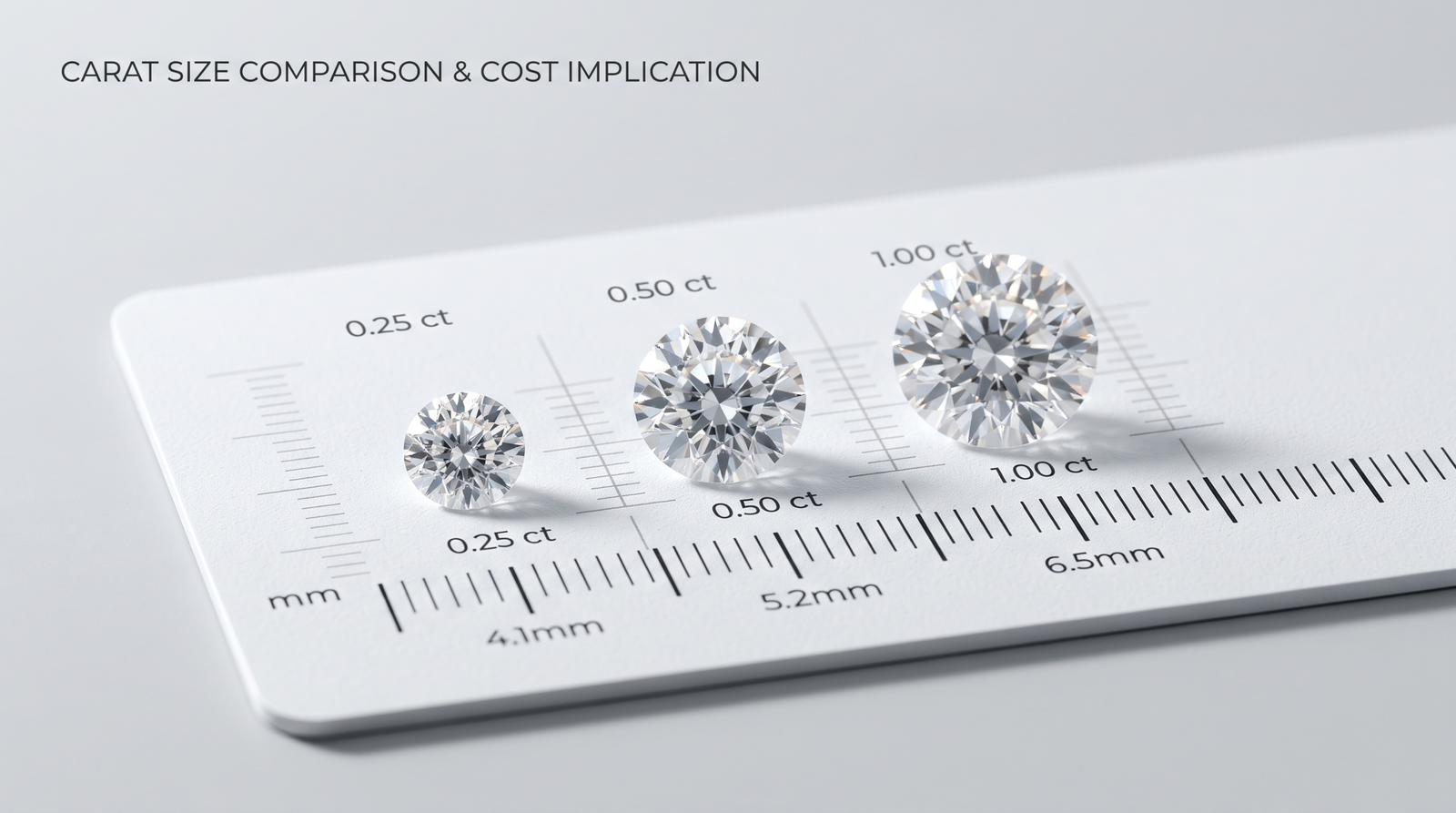
Three loose lab-grown diamonds of roughly 0.25, 0.5 and 1 carat side by side on a scale card, showing why carat drives cost

Ask for all eight named at the first conversation, even where several come back as “not applicable yet.” A father memorial diamond cost quote that names eight lines and prices four is more useful than one that names one and prices one, because the four unpriced lines are the ones that arrive later.

Why Does Carat Decide More Than Everything Else Combined?

Size is a function of growth time in the press, a larger stone occupies expensive, tightly controlled HPHT equipment for longer, with more that can go wrong. That is why father memorial diamond cost scales steeply with size, and why a larger stone takes longer as well as costing more, the same variable drives both.

Color is the second lever on father memorial diamond cost, and it runs in the direction people least expect, colorless is the expensive option rather than the default. What colors to expect for a father’s memorial diamond covers the range and the relative costs; choosing a carat size is worth reading before a number is settled rather than after.

Is Setting the Stone Into Something He Owned Its Own Line?

Yes, and it is a real one. Whether a wedding band he wore for forty years, a signet ring or a watch can take a stone at all is covered in the complete guide to father ashes diamonds. What belongs here is the cost consequence.

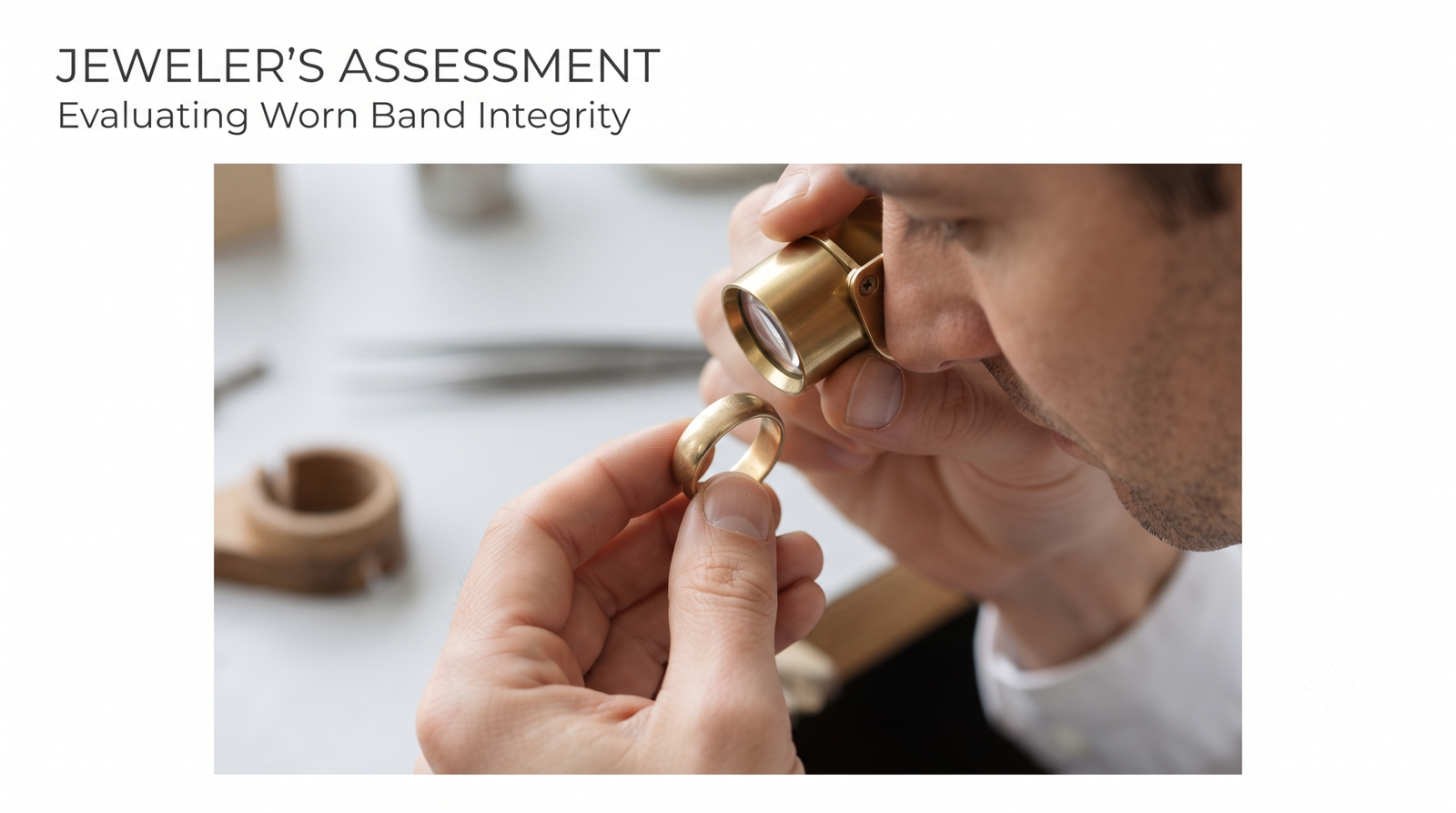
A modification is a jeweler’s assessment before it is a quote, and that assessment usually carries a fee of its own, ask before booking one. It is therefore a separate line from the setting line above it, and the two numbers are not comparable: one prices work on an irreplaceable object, the other does not.

Book the assessment early rather than at the end. It can be done while the stone is still growing, and it answers whether that line of the father memorial diamond cost exists at all long before the money conversation reaches it. Memorial diamond settings and jewelry ideas for a father covers the alternatives if the answer turns out to be no.

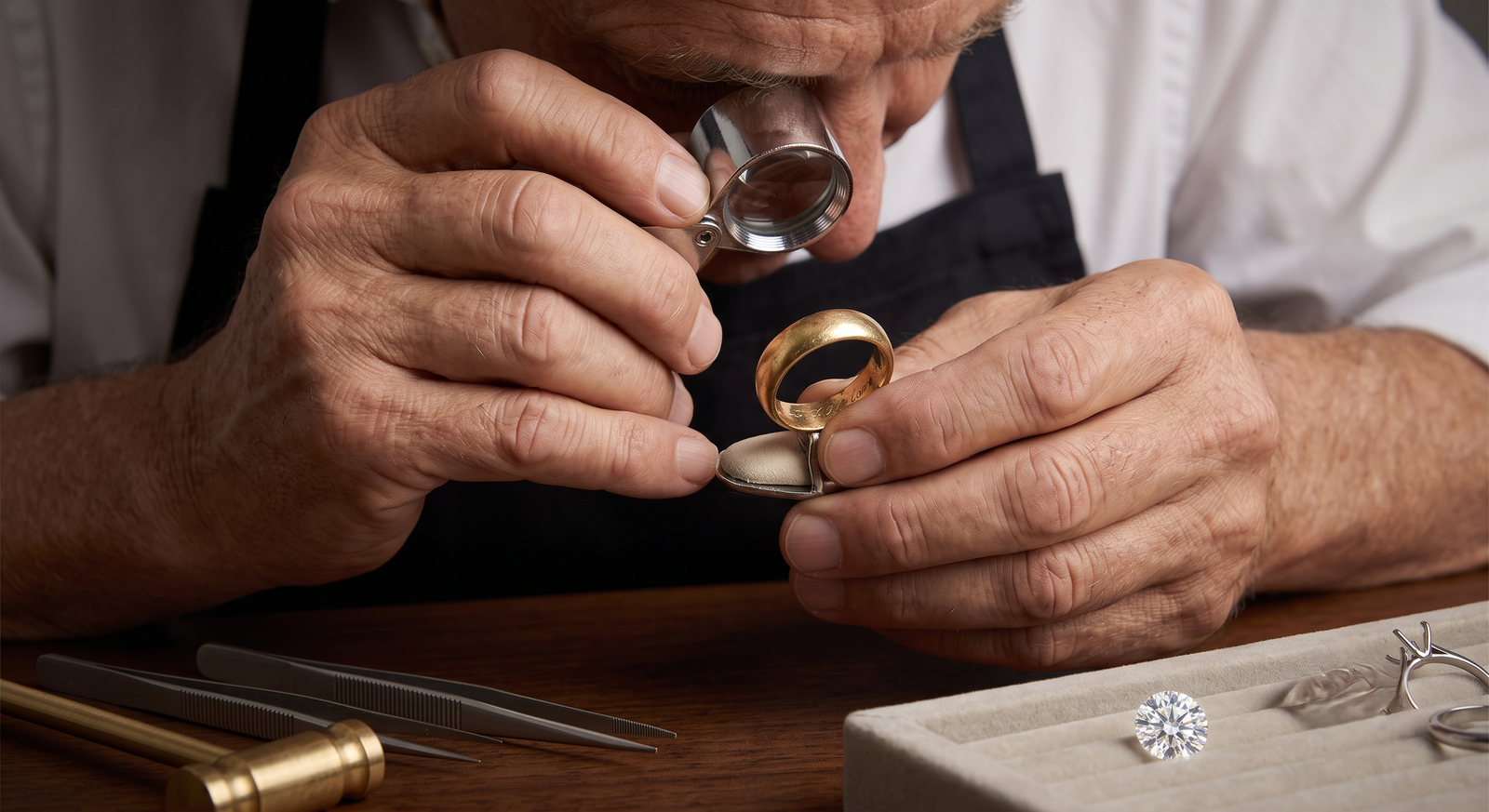
Jeweler examining a worn plain wedding band under a loupe to assess whether it can take a stone |

What Changes When He Is the Second Parent?

Where this arrives after a mother’s death rather than before it, sometimes years after, the father memorial diamond cost question comes with history attached.

Matching is a specification, not a discount on father memorial diamond cost. Where a stone already exists for a mother and a family wants a comparable one, matching color and cut is a request that can constrain the growth run. Ask what matching involves and whether it moves the father memorial diamond cost or the timeline, rather than assuming it does either.

A second stone means a second growth run. Because size is bought in press time, ask whether two stones are priced close to two singles or whether anything is genuinely shared. Whether more than one family member can get a diamond from the same father’s ashes covers how families divide that decision.

The money conversation is happening alongside an estate, and sometimes between siblings rather than inside one household. Agreeing who pays for what before a quote arrives turns that quote into a decision rather than an argument.

When Does Each Part of It Get Paid?

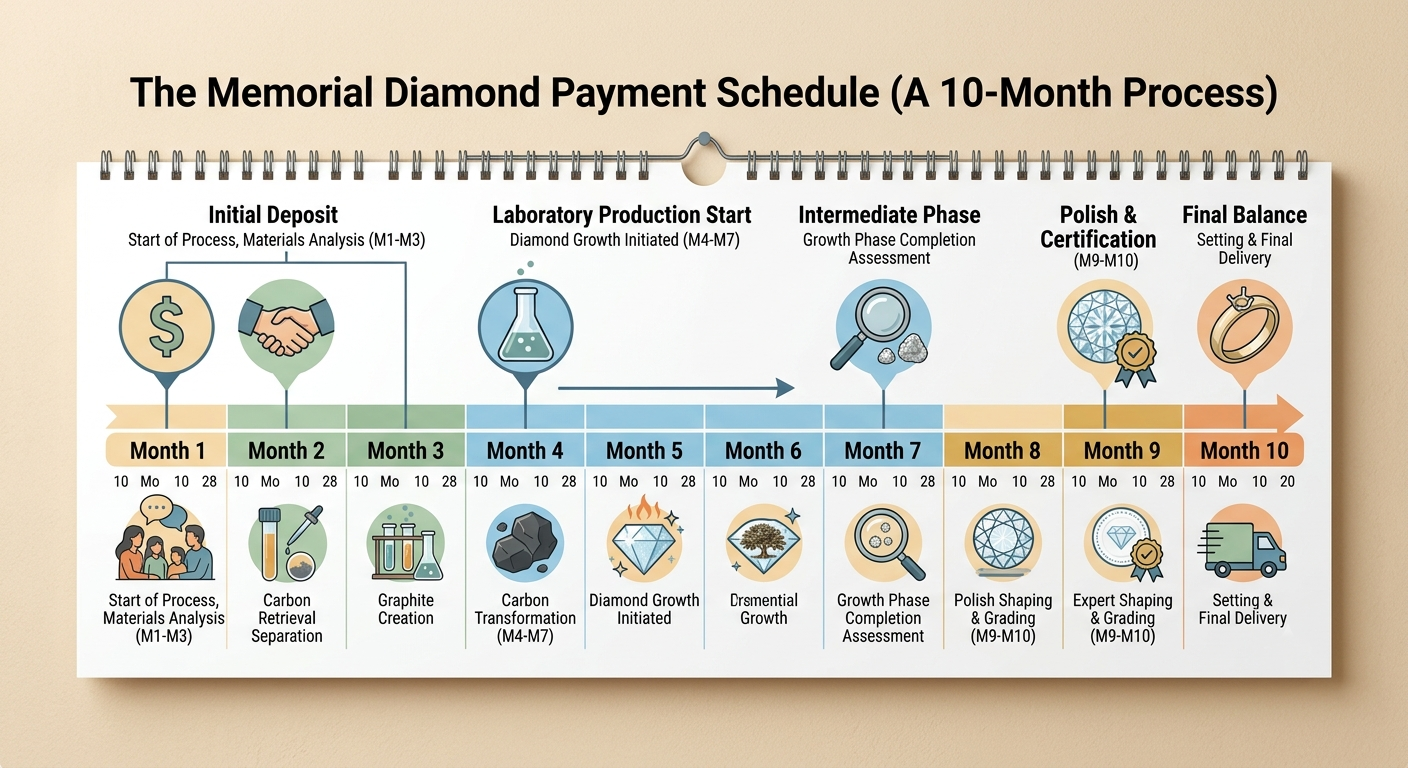
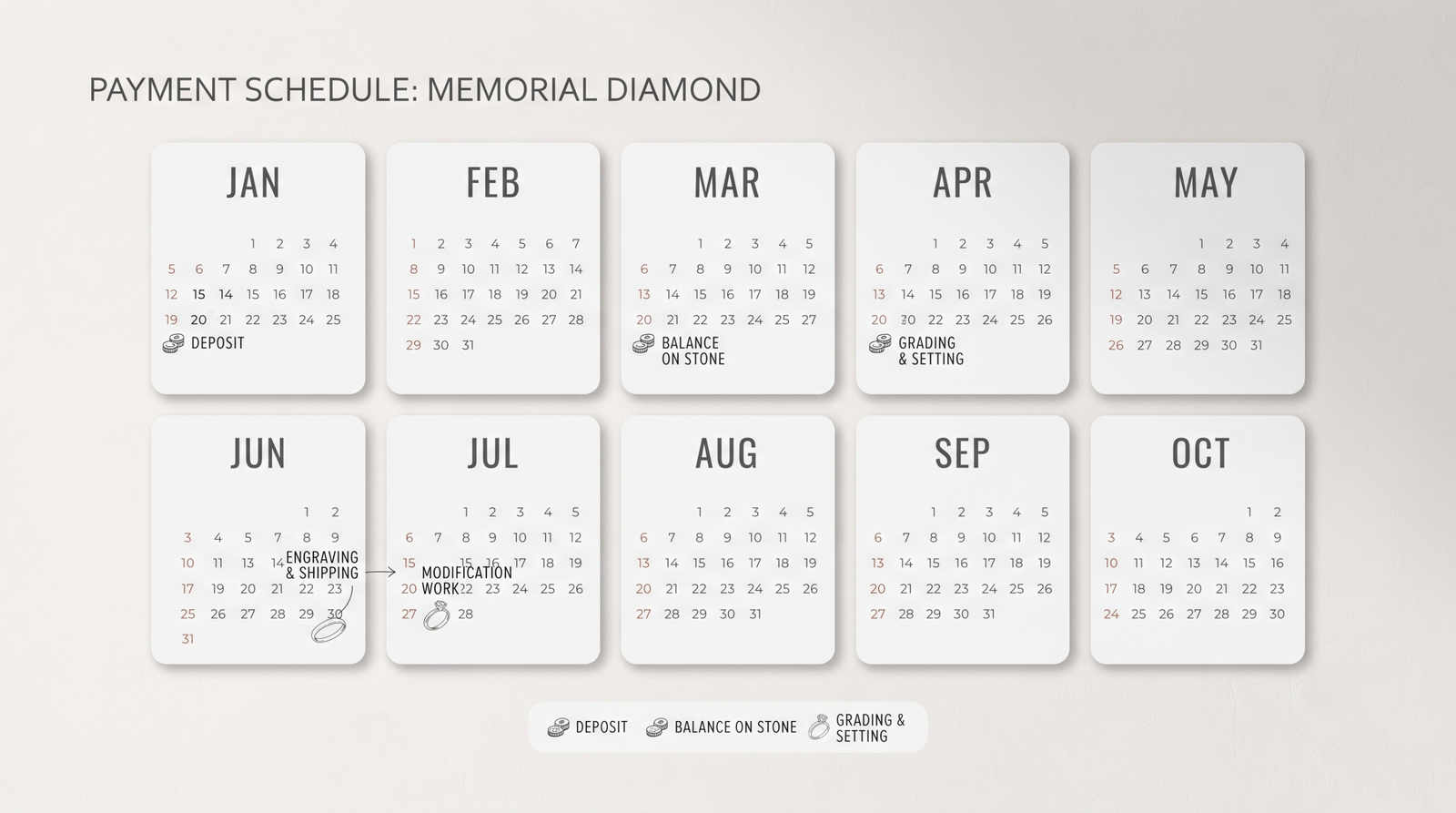
A wall calendar spanning ten months with five payment points marked from deposit to setting

The eight lines of a father memorial diamond cost do not arrive together, and the gap between the first payment and the last can run most of a year. Roughly, and worth confirming against whatever a provider actually offers:

  • At the order, commonly a deposit against the stone. Ask what proportion, and ask what it commits you to.
  • Before or during growth, the balance on the stone itself, on whatever schedule is agreed.
  • After the stone is finished, grading, if it is charged separately, and the setting.
  • At the end, engraving, insured transit, and any modification work on an existing piece.
  • Years later, resizing, repair, resetting when a piece changes hands.

Two things are worth having in writing at the start rather than in month nine: what is refundable, and up to which point, and whether a quote has a stated validity period. Neither is an awkward question. How long a father memorial diamond takes covers where each of these payments lands on the calendar.

Three Things That Probably Don’t Change the Price, Ask Anyway

Three things commonly expected to move father memorial diamond cost, each of which is worth putting to a provider directly rather than assuming.

  • How much material is sent. Sending a full urn rather than the required portion does not produce a larger, better or faster stone. Carat is bought in growth time. And because the recovered carbon is blended with lab grown carbon before any growth run, a bigger parcel does not buy a bigger share of him either, what a memorial diamond carries is a provable portion, never the whole.
  • Which material is used. Ask whether source material affects price; nothing about the growth run itself suggests it should, and what differs most between the ashes and hair routes is what the family does beforehand.
  • Whether one material or two. A combined order still produces one stone from one growth run. Ask whether preparing a second material carries a charge, but there is no second stone being paid for.

Frequently Asked Questions

Why is the range in father memorial diamond cost between the tiers so wide?

Because carat, color, cut and whether an independent grading report is included all move independently, and companies differ in what a quoted figure covers. A single price only becomes meaningful once those four are specified in writing.

Are two stones for two children cheaper than two separate orders?

Ask rather than assume, father memorial diamond cost is per growth run. Each stone occupies its own press time, so any saving comes from shared handling and documentation rather than from the stones themselves, and there may be none at all.

Does a memorial diamond cost more than an ordinary lab grown diamond of the same size?

There is no published comparison to cite for father memorial diamond cost against a standard stone, but memorial stones carry extraction, purification and chain of custody work that a standard lab grown stone does not, and the growth runs are individually handled. Any difference sits in the process.

Can a quote be held while we decide?

Ask at the point the quote arrives rather than later. There is no reason to rush this decision, and a stated validity period on a father memorial diamond cost quote is a fair thing to expect in writing.

Is the money conversation different when siblings are splitting it?

Practically, yes, the father memorial diamond cost is one number but the payers are several. Ask whether a provider can take payment from more than one person against a single order; that is a billing policy question, and agreeing the split between yourselves first makes the answer easier to act on.

What happens to the cost if the finished stone isn’t what was specified?

Ask before ordering what the procedure is if color, clarity or carat comes out differently from what was agreed, and what the remedy is. It is an uncomfortable question that is far easier asked in month one than in month ten.

Final Thoughts on What a Father Memorial Diamond Costs

A father memorial diamond cost quote is not a price until you know what it excludes. Ask for all eight lines named at the first conversation, ask what is refundable and until when, and ask how long the figure stands. On the wider money question, financing and payment plan options covers how these purchases are commonly structured. Anything to do with insurance or tax treatment is worth confirming with a qualified professional, an insurance agent or an accountant, rather than with a jewelry company, since both depend on your own circumstances and jurisdiction.

Learn More About Father Memorial Diamonds

Talk With Memorial Diamond

Memorial Diamond can talk through what a stone for your father would involve, what sits inside a father memorial diamond cost quote and what sits outside it, when each part is paid, and what documentation arrives with the stone. Start at memorialdiamond.us.

How much ash and hair a father memorial diamond needs, showing cremated ashes, a lock of hair, and a memorial diamond

How Much Ash and Hair Do You Need for a Father Memorial Diamond?

How much ash and hair a father memorial diamond needs: a small vial of cremated remains beside a tied lock of hair on a jeweler's scale

Of the two materials, there is usually one you have plenty of and one you are counting, and most people can say which before they finish reading the question. So how much ash and hair does a father memorial diamond need? Industry wide, plan on each material meeting its own figure in full: a few tablespoons up to roughly 4 oz (about 100 g) of cremated remains, and a few grams of hair, a palm sized lock. Ask before assuming that sending both lowers either number.

What matters far more than the figures is which side you are short of, because a shortfall in ashes and a shortfall in hair are not the same kind of problem. One is often recoverable. The other frequently is not.

Memorial Diamond is one of the companies that grows these stones; the questions below are meant for any of them, us included.

How Much Ash and Hair Does Each Material Have to Meet on Its Own?

Side-by-side comparison of a dish of cremated remains and a coil of hair with their approximate carbon content noted, 0.5–4% against about 50%

The two figures for how much ash and how much hair are quoted in different units because the two materials are chemically nothing alike.

Cremated remains are dominated by calcium phosphate, the mineral structure of bone, with usable carbon at roughly 0.5% to 4% of ash by weight. That low yield is why how much ash you need is stated in tablespoons and ounces, and why a family submitting a portion still keeps most of what they have.

Hair is roughly 50% carbon by weight, built from keratin. That is why the hair requirement is stated in grams, and why hair works at all for a father who was buried rather than cremated.

Whichever material it came from, the recovered carbon is topped up with lab grown carbon before an HPHT growth run can use it. What each of the two contributes is a provable share of him rather than the whole stone, the honest framing, and the reason a claim of total purity should be treated as a warning sign.

Neither figure is standardized across the industry, and the individual numbers belong to the posts that own them: how much ash is needed and how much hair is needed each go into the specifics. This page is about what happens when you are holding both.

Should You Expect Combining to Lower Either Threshold?

Plan on no, and ask, how much ash and hair you need is set per material.

The reason to expect independence is that the two materials do not meet until late. Providers commonly describe preparing each separately, cleaning, extraction, purification to roughly 99.9% carbon, graphitization, with the two coming together only at the growth cell. On that description each material carries its own minimum, so how much ash and hair you need is two questions rather than one. The complete guide to father ashes and hair diamonds sets out where those lanes converge and why.

The consequence for planning is worth stating flatly: plan for both figures in full, and treat any flexibility a provider offers as a concession rather than an assumption. A family that plans on halves and discovers otherwise has often already divided something irreversible.

Why Are the Two Shortfalls Different Problems?

This is the distinction that actually decides what you do next, more than how much ash or hair sits in either container.

If you are short ofCan more usually be found?What finding out costsEffect on the other material’s requirement
His ashes, still in the family’s keepingUsually yes, a submission is typically a small fraction of a full cremationA phone call to whoever holds the urnNone
His ashes, already interred or scatteredUsually no, and disinterment is a legal and family matter rather than a practical oneA conversation with the cemetery or the executorNone, but this is often the point at which hair becomes the primary route
His hair, one sample onlyOften no. A lock is finite and does not replenishA scale and ten minutesNone
His hair, several possible sourcesSometimes, a comb, a razor, a hat, a barber’s clippingsA search, plus a provider’s acceptance policyNone
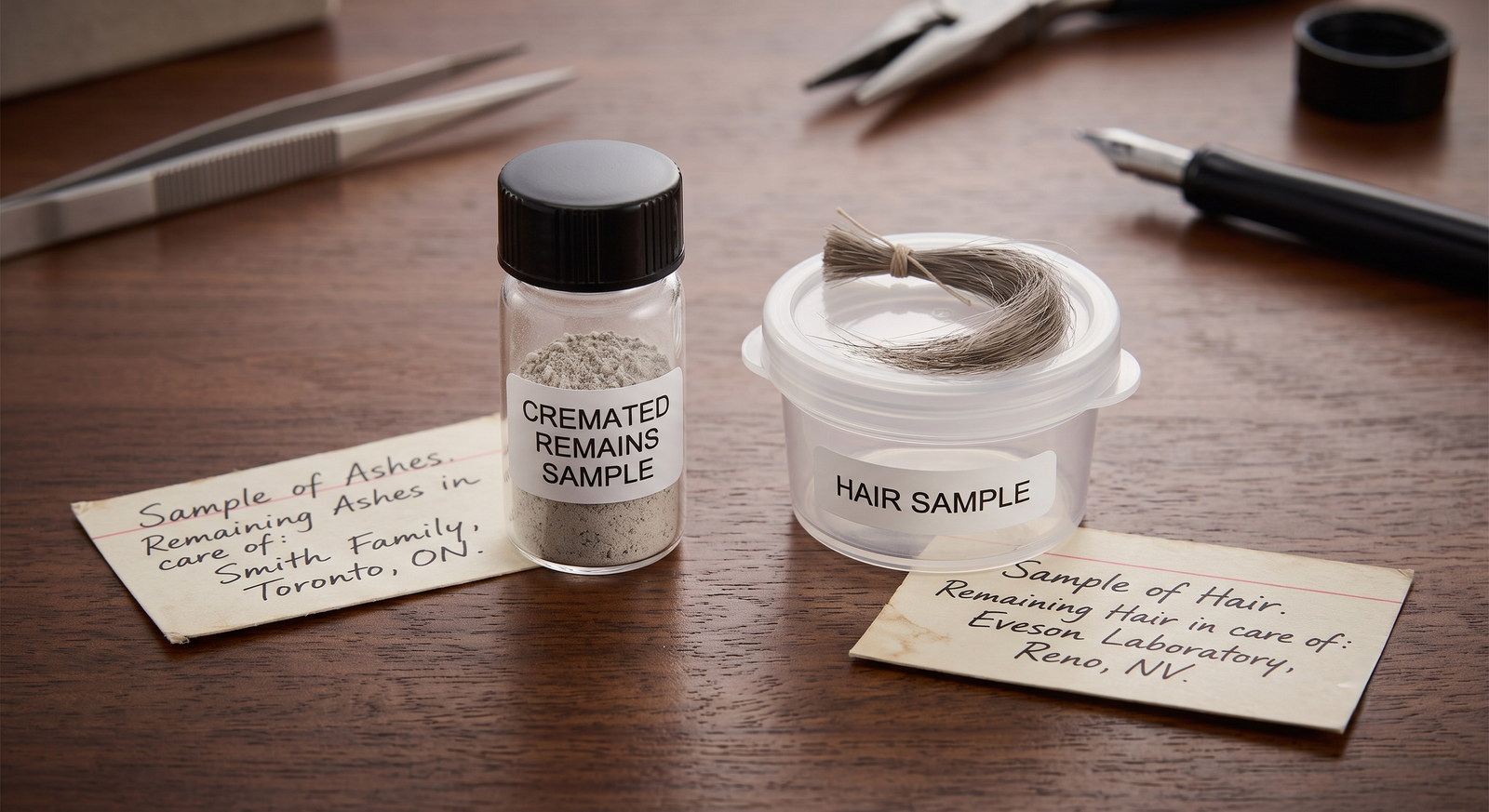
Two small labeled containers, one of cremated remains and one of hair, with a handwritten note beside each recording who holds the rest

Read the table twice for the same reason it is laid out this way, however much ash and hair you are holding: the ash rows describe a problem with a phone number attached, and the hair rows describe a problem with an ending. That asymmetry should decide the order you do things in.

Before anything is divided, opened or cut, establish these four things:

  1. Who currently holds his ashes, and how much ash is actually there. This is often not the person who assumes they know.
  2. What the hair sample weighs, on a scale that reads to a tenth of a gram, weighed in its container and subtracted.
  3. Whether any plan already exists for the remainder, a scattering, an interment, a shared plot, and whether it has a date.
  4. Whether the provider you are considering accepts combined submissions at all. It is not a given, and it is the question that makes the other three matter.

What Can Be Done if the Hair Falls Short?

Several things, in roughly this order of preference, and none of them depends on how much ash you have.

Look further before you conclude. Short clippings are not disqualified by being short, weight rather than length is what the process consumes, and the complete guide to father hair diamonds sets out where they tend to be found. Whether a given company accepts very short or mixed source clippings is a policy question that varies, so ask with a weight and a photograph rather than a description.

Ask whether a below minimum sample can be included as a supplementary contribution rather than as a lane of its own. Some providers may treat it that way; whether any given one does is not something the chemistry decides.

And if the answer is genuinely no, an ash only stone is not a lesser outcome. It is the longer established of the two routes, memorial diamonds were grown from cremated remains long before hair was offered, and the hair can stay exactly where it is. Keeping a lock is not a failed plan.

What Can Be Done if the Ashes Fall Short?

Often more than expected. How much ash a memorial diamond submission needs is a fraction of what a cremation produces, so a shortfall is more often a question of access than of how much ash exists, a sibling holding the urn, a portion already divided among family, a funeral home that still has a retained portion on file.

Where the remains have already been interred or scattered, the ash route may genuinely be closed, and that is the situation hair based options for loved ones who were not cremated exists to answer. A hair sample that seemed like an addition becomes the whole basis of the stone, and it works.

One thing that does not help either way: sending far more than the minimum. Carat size follows growth time in the press, not how much ash or hair arrived, so a fuller parcel buys nothing.

Which One Gets Assessed First?

A lock of hair on a pocket scale photographed with the reading in frame, ready to send to a provider for pre-assessment

Hair, in most cases, it is the material that can fail assessment, and assessing it is quick. How much ash you have rarely decides anything at this stage.

A hair sample can often be evaluated from a stated weight and a clear photograph before anything is posted, though whether a particular provider will pre assess on that basis is worth confirming rather than assuming. Ashes are more often assessed on arrival, by volume and weight at intake.

The practical order that follows: settle the hair question first, in writing, then decide how much ash to send, then choose the carat. Questions to ask before a combined order covers what else belongs in that first email, and the step by step sequence covers where each material goes afterwards.

Frequently Asked Questions

Which Material Should Be Assessed First?

Hair, generally, it is finite, it is the one that can be judged inadequate, and a weight and a photograph can often settle it before anything is posted. Ashes are more often assessed at intake, by weight and volume.

Do the Two Figures Change if We Want a Larger Stone?

Generally not. Carat is bought in growth time rather than in how much ash and hair you submit, so a larger stone usually means more months and more money rather than more material. Confirm it, since minimums vary between companies.

Should We Weigh His Ashes, or Is a Volume Measure Enough?

Ask which the provider works in. How much ash is required is quoted both ways across the industry, in tablespoons and in ounces, and a family measuring by volume against a figure stated by weight can send materially more or less than intended.

Who Weighs and Measures Each Material, Us or the Laboratory?

Both, at different points. Weighing the hair at home tells you whether to proceed; the laboratory records its own intake figures for chain of custody purposes. Ask for those intake figures to be reported back to you in writing.

Is There Any Point Sending Much Ash or Hair Beyond What the Figure Asks For?

Not for size or speed, those follow the growth run. A little margin above a stated minimum can be sensible where a sample is marginal, but sending everything you have puts material out of your hands for no gain.

Is There Any Advantage to Sending Both if Either One Alone Would Be Enough?

Not in size, speed or cost, those follow the carat and the growth run. The reason families combine is that both materials came from him and both were kept, which is a reason about meaning rather than about the process.

Final Thoughts on How Much Ash and Hair a Father Memorial Diamond Needs

Everything on this page turns on one piece of information that costs nothing to obtain: whether the constraint in your family is the ashes or the hair. Ten minutes with a scale and one phone call to whoever holds the urn will tell you how much ash and how much hair you are actually working with, and neither commits you to anything. The figures themselves are the easy part; knowing which side is short is what decides the order everything else happens in.

Learn More About Father Memorial Diamonds

Talk With Memorial Diamond

Memorial Diamond can give you both figures for your father, how much ash and how much hair a combined stone would need, and say what happens if one of the two falls short. Nothing has to be opened, cut or posted to ask. Start at memorialdiamond.us.

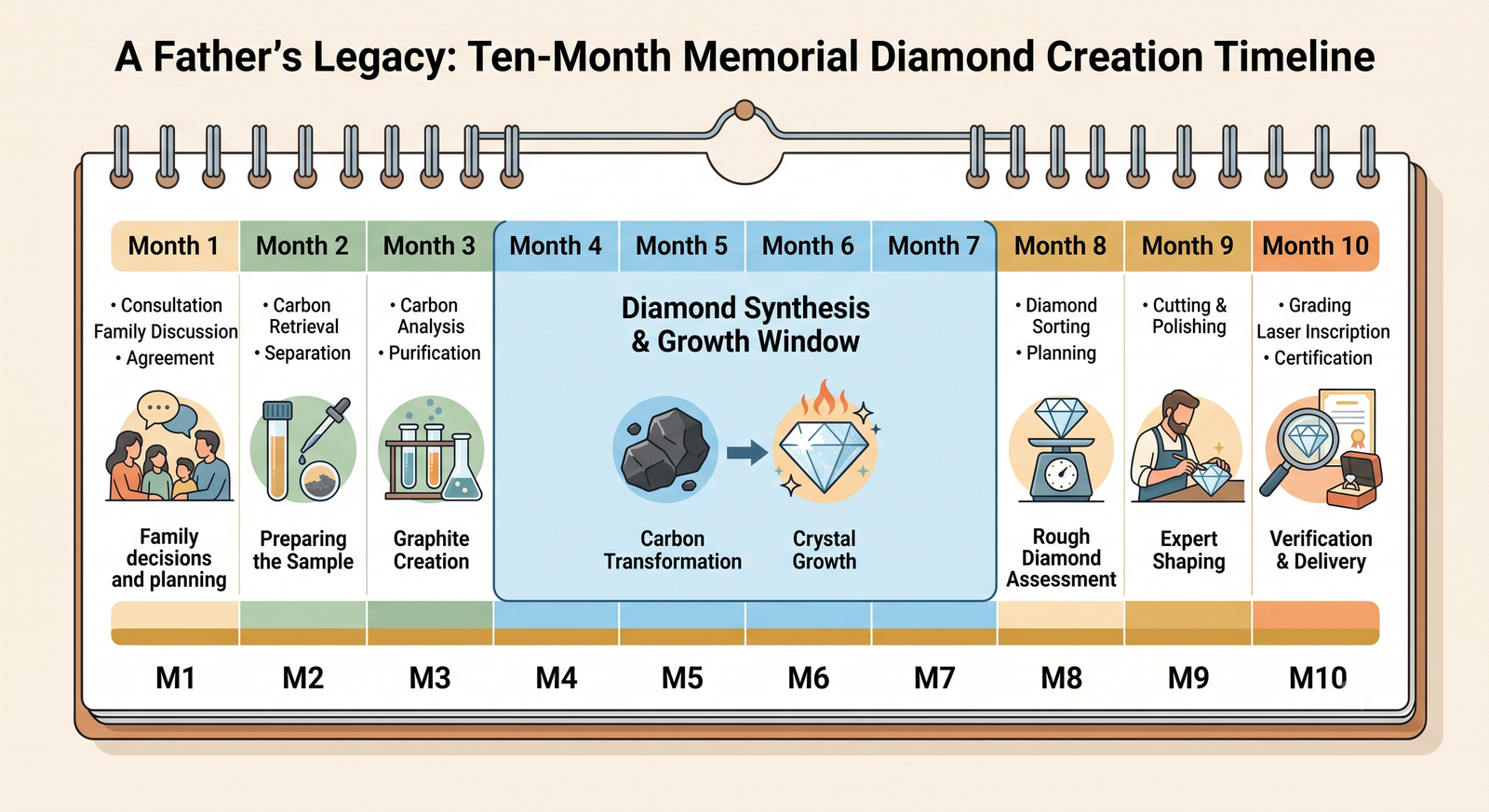
How long it takes to make father memorial diamonds with a 6 to 10 month production timeline

How Long Does It Take to Make a Father Memorial Diamond?

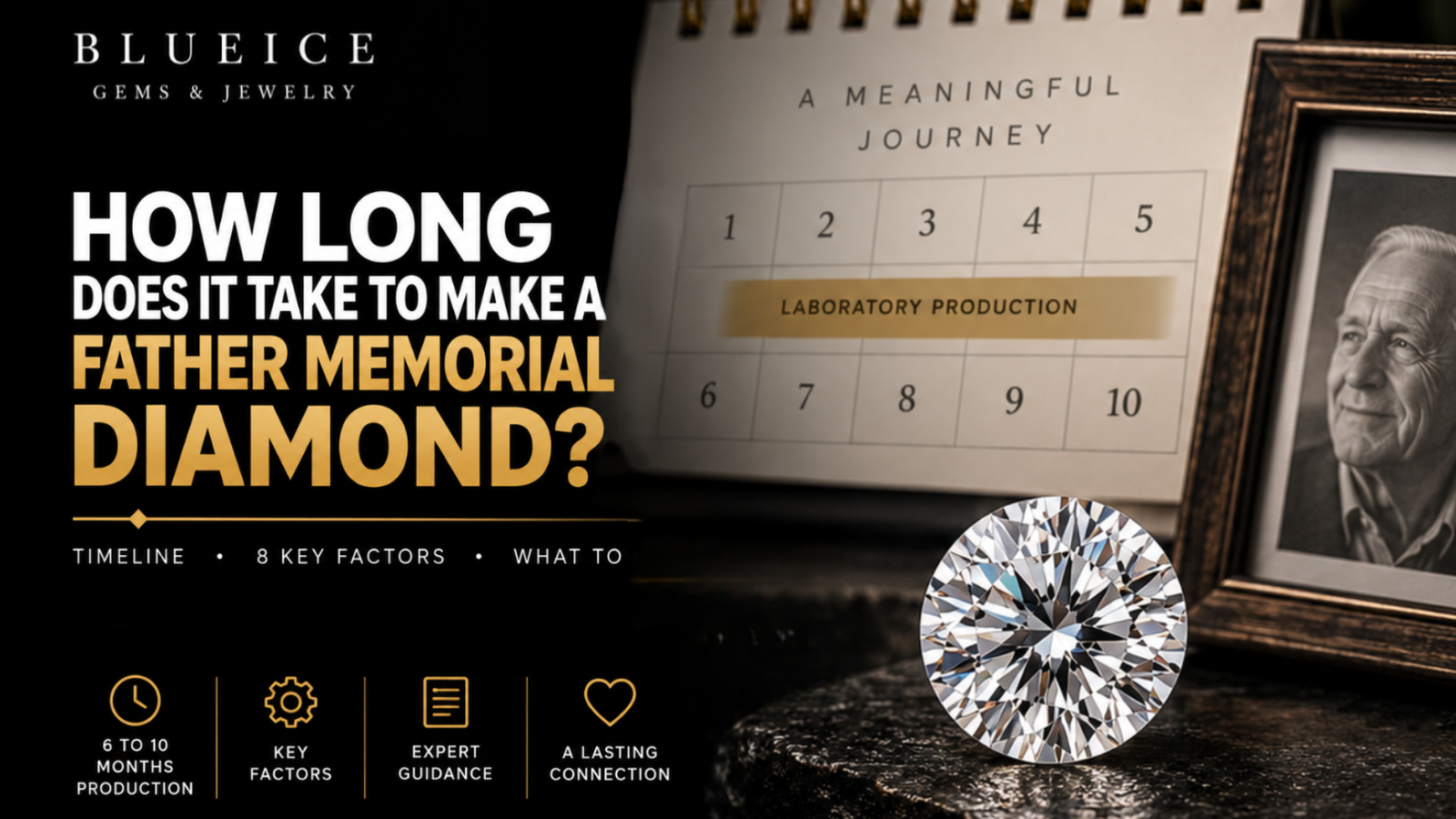
Ask two families who ordered in the same month and their answers can be months apart, and neither of them was told anything wrong. How long does it take to make father memorial diamonds? Industry wide, production typically runs 6 to 10 months from the laboratory’s intake, rising toward 12 months for stones over roughly 2 carats or in specialty colors. End to end, from the first conversation to a finished piece in your hand, a working estimate of around 8 to 14 months is reasonable, though that total is arithmetic rather than a published figure.

The interesting part of that range is where it comes from. The growth window is the most predictable stretch of the whole process to make father memorial diamonds. Most of the difference between one family finishing early and another finishing late happens either side of it.

Memorial Diamond is one of the companies that does this work. Read the checks below as ones to put to any provider, including us.

How long it takes to make father memorial diamonds: a ten-month wall calendar with the growth window marked in the middle and family decisions marked either side

How Long Does Each Part Actually Take?

The sourced industry figure is the production window: 6 to 10 months, measured from the point the laboratory logs the material in, and up to around 12 months for larger stones or treated colors. Size drives that window because carat is a function of growth time in the press rather than of how much material was submitted.

Around that sits everything else it takes to make father memorial diamonds, deciding, retrieving, shipping, grading, setting, which is where the 8 to 14 month working estimate comes from. It is arithmetic, not a service level. The complete guide to father ashes diamonds sets those phases out as a table and covers planning backwards from a date that matters.

This page is about the other question: not how long each phase takes to make father memorial diamonds, but what makes it longer or shorter than the average.

Where Does Most of the Variance Happen?

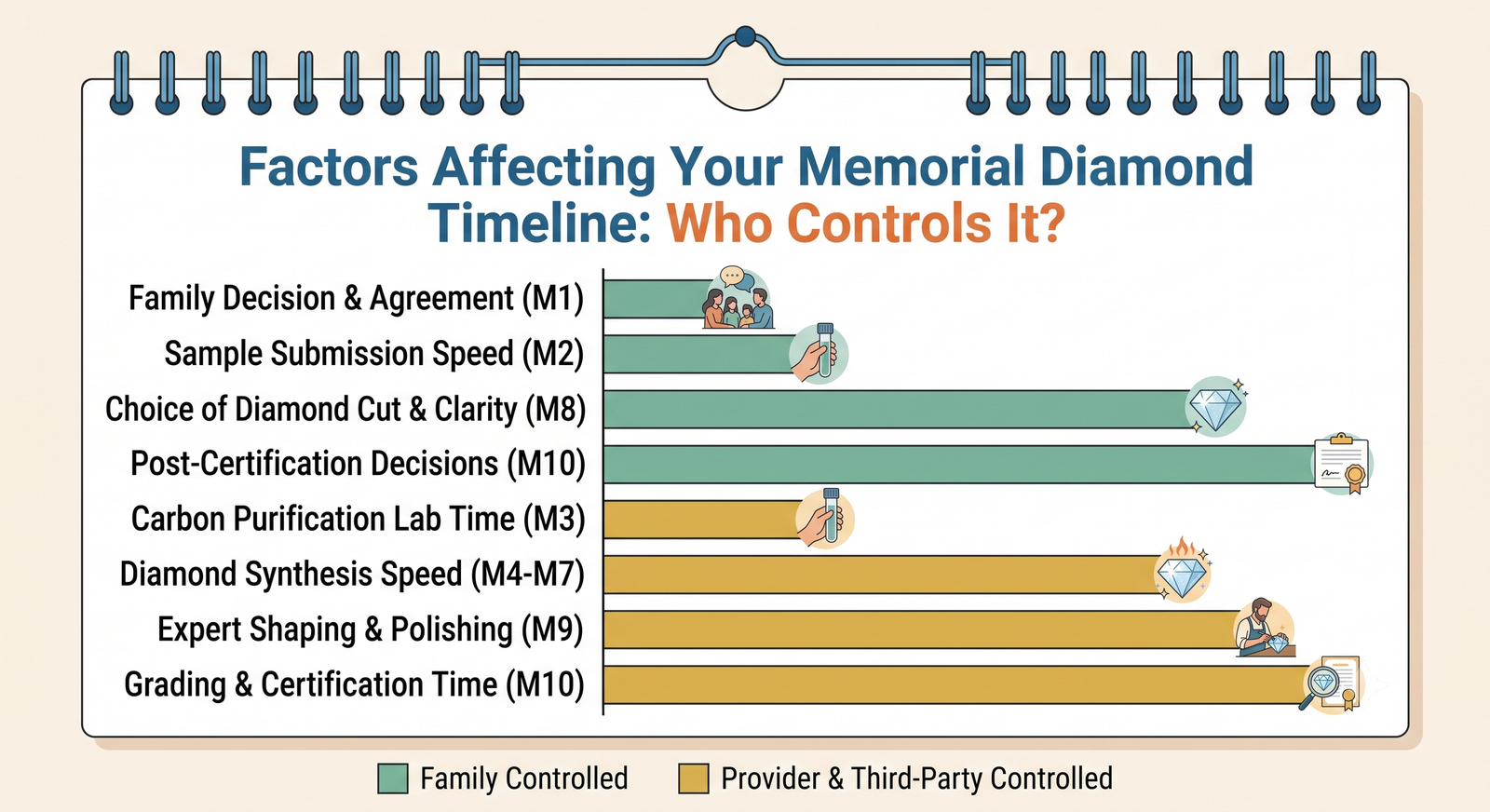
Before the laboratory sees anything, mostly, the time to make father memorial diamonds is decided largely outside the lab. The table below sorts what varies by who controls it.

What variesDirection and rough sizeWho controls it
Retrieving material, a retention request, a sibling holding the urn, a search for hairAdds days to several monthsYour family
Choosing a provider and getting answersAdds 1 to 6 weeksYour family, partly
The carat chosenMoves the growth window by months within the 6 to 12 rangeYour family
A treated or specialty colorAdds weeks to a couple of monthsProvider, once specified
A failed growth runAdds months, and is the largest single unplanned delayNobody
Grading, where an independent laboratory is usedAdds weeks after the stone is finishedA third party
Choosing a settingAdds nothing if decided early; weeks or months if decided lateYour family
A scheduled release or interment dateCompresses the front end, and cannot be movedA cemetery, a funeral home, or an estate
Simple bar chart of eight timeline factors, four colored for the family and four for providers and third parties

Read down the right hand column. Four of the eight sit with your family, which is why the most effective thing a family can do about how long it takes to make father memorial diamonds is make the early decisions early, including the one about the setting that rarely feels urgent.

What Is Genuinely Fixed When Labs Make Father Memorial Diamonds?

The laboratory stages used to make father memorial diamonds, and no amount of money changes them.

Extraction and purification take the weeks they take. Graphitization at roughly 2,500 to 2,700°C takes the days or weeks it takes. Growth in an HPHT cell at roughly 6 to 8 GPa and 1,400 to 2,500°C runs for weeks to months, and a growth run cannot be hurried without changing what comes out of it. Cutting and polishing is a gemologist’s bench work on an irreplaceable stone.

It is worth being clear about what those months are producing, because it shapes what the wait is for. The press is not growing a stone made of your father. It is growing a stone in which his carbon is a provable share, blended with lab grown carbon so there is enough feedstock for a growth run. That is the honest description of how labs make father memorial diamonds, it is the one to expect from any provider, and how a memorial diamond is made from your father’s ashes sets out the arithmetic behind it.

What that means practically: the carat decision is the timeline decision. A smaller stone finishes sooner because the press runs for less time, not because it moved up a list. Choosing a carat size is therefore worth thinking of as a two part choice, cost and calendar, rather than one. What a father memorial diamond costs covers the other half.

An HPHT press in a diamond laboratory with a growth-cycle timer visible, illustrating the fixed laboratory stages

Which Parts of the Schedule Aren’t Yours to Move?

Three situations put dates in the process to make father memorial diamonds that belong to somebody else. None of them lengthens the growth run; all of them can lengthen the total time to make father memorial diamonds.

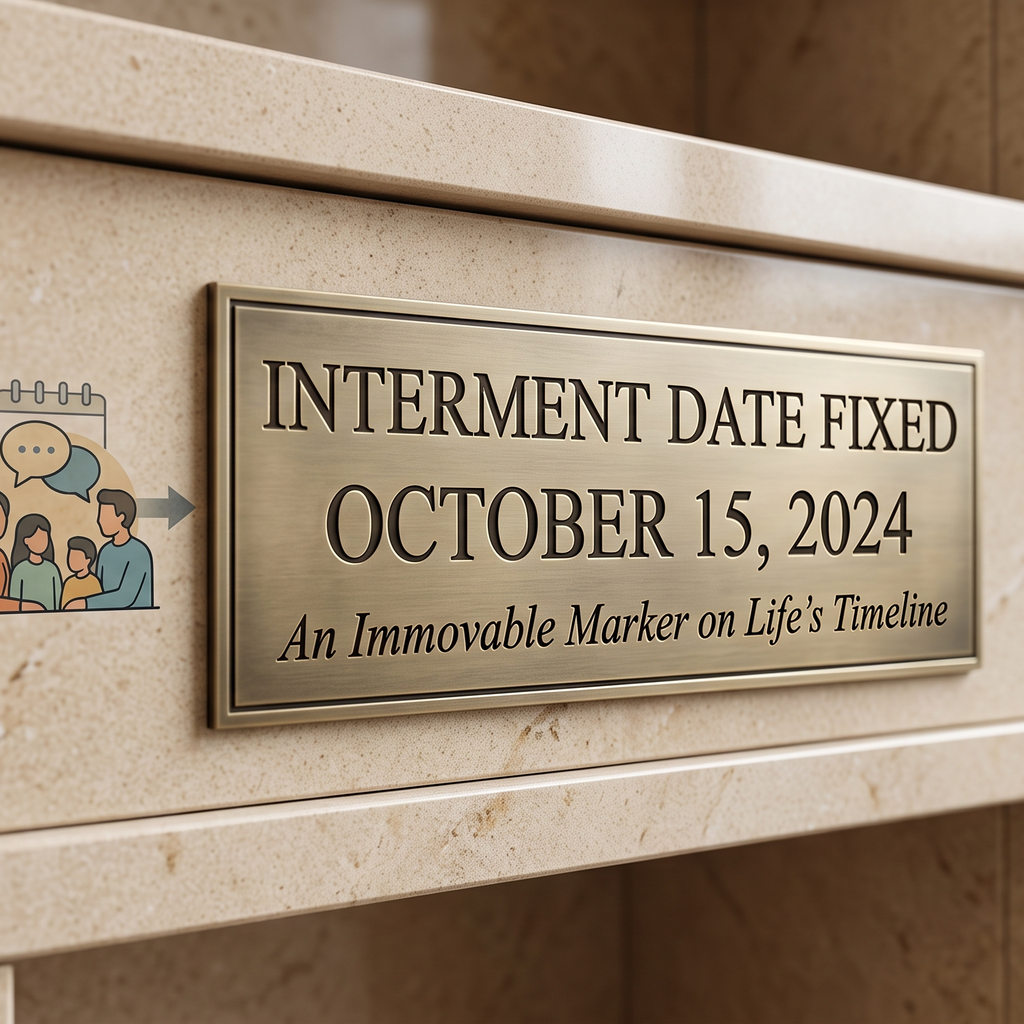
A national or service cemetery interment. The date is set against the cemetery’s calendar, and the funeral home may release his remains directly to it. A retained portion has to be separated before that release, so the front end of the process compresses into whatever window exists between the cremation and a date the family did not choose. Honoring military service with a memorial diamond covers how that timetable works.

A shared plot or a planned interment with a spouse. Where arrangements were made years earlier, a plot bought together, a niche reserved, there is often a date attached, and a date of that kind closes the ash route rather than delaying it.

An estate still being settled. Where a decision needs several people’s agreement, or an executor’s, the calendar belongs to that process rather than to the diamond.

None of these lengthens the production window. All three can lengthen the total, and the fix in each case is the same: find out the date early, because it is the only part of the schedule that is genuinely immovable.

A columbarium wall with an engraved date plate, illustrating an interment date the family cannot move

What Happens if a Growth Run Fails?

A failed run is the largest unplanned delay that can occur when labs make father memorial diamonds, and it is worth asking about rather than waiting to be told.

A growth run can fail, it is the one step in how labs make father memorial diamonds that carries real uncertainty, and where it does, the material and the months both have to be accounted for. What varies between providers is the procedure, whether a run is repeated, what happens to the material, whether the timeline restarts and who bears the cost. How a memorial diamond is made from your father’s ashes covers what a failure actually involves at the process level.

Ask the procedure question before ordering rather than after. It costs one line in an email and it is the difference between a setback and a shock.

What Should You Settle in the First Two Weeks?

Four of the eight rows in that table on how long it takes to make father memorial diamonds sit with your family, and all four can be worked through before a provider has even been chosen.

  • Find out whether a date exists, an interment, a scattering, a cemetery booking, and what it is. It is the only immovable thing on the list.
  • Establish who holds the material and how quickly it can be retrieved.
  • Settle the carat, since it is the timeline decision as much as the price one.
  • Choose the setting, or at least narrow it. It is easy to leave until the stone exists, and it is the easiest week to save.

None of that requires a provider, a deposit or a commitment. The step by step sequence sets out where each of these lands in the wider process to make father memorial diamonds, and grading, done to the standard 4Cs on a loose stone, is the reason the setting decision can wait until the end but should not.

Frequently Asked Questions

Is there a carat size above which the timeline changes significantly?

Around 2 carats is where the industry figures to make father memorial diamonds shift, with larger stones and specialty colors running toward 12 months rather than 6 to 10. Ask a provider where their own threshold sits before settling on a size.

How much of the total is our own decision making?

More than it looks, retrieving material, choosing a provider, specifying the stone and choosing a setting are all on your side of the line. None of it is urgent, but all of it is countable against the total.

Can the setting be made while the stone is still growing?

Worth asking. Where a setting can be prepared during the growth window, the finished stone can be set within weeks rather than months. Grading is normally done on a loose stone, so setting follows it, confirm that sequence with the provider.

Does grading add time after the stone is finished?

Where an independent third party laboratory is used, yes, grading is a queue at another organization, measured in weeks. Ask whether the quoted time to make father memorial diamonds includes it or ends before it.

What is the longest realistic total we should plan for?

Plan on the upper end of an 8 to 14 month estimate to make father memorial diamonds end to end, and treat anything faster as welcome rather than expected. For a large stone, a treated color, or a family that took months to retrieve material, longer is possible.

If we are slow at our end, does that cost us a place in a queue?

Ask, because it depends entirely on how a provider schedules the growth runs that make father memorial diamonds. Ask specifically whether a delay at your end changes anything about when yours is started, and get the answer in writing.

Final Thoughts on How Long It Takes to Make Father Memorial Diamonds

Half of what moves this timeline is already in your family’s hands, and none of it needs a provider chosen first. Find the date, find the material, pick a size, narrow the setting. The laboratory’s months are fixed and the third parties’ dates are immovable; everything between them is where a family’s attention actually shortens the wait to make father memorial diamonds.

Learn More About Father Memorial Diamonds

Talk With Memorial Diamond

Memorial Diamond can set out which stages carry firm figures and which carry estimates in the time it takes to make father memorial diamonds, and what updates arrive along the way. Start the part you control first; then reach out at memorialdiamond.us.

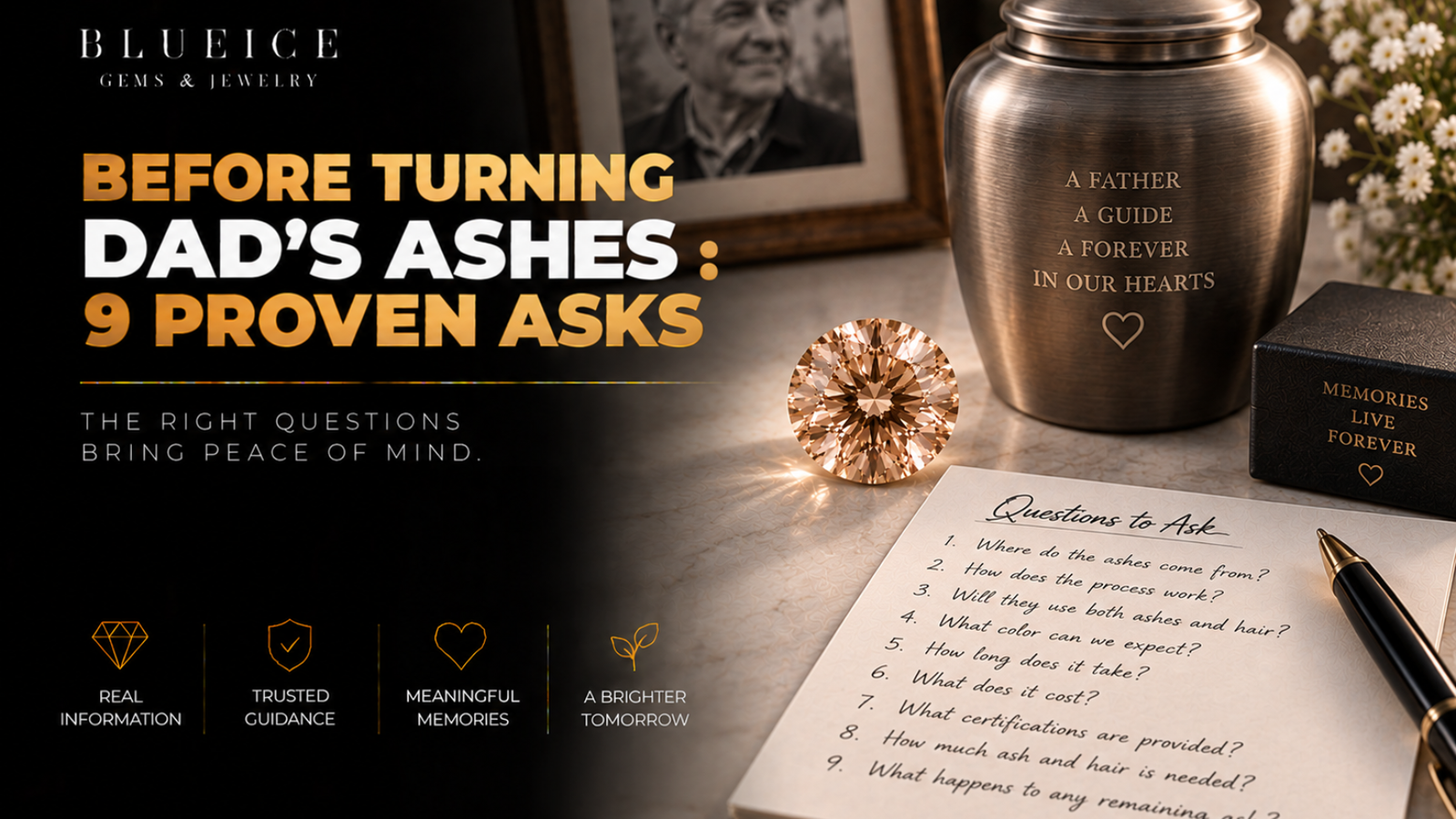
Before turning a father's ashes into a diamond: a handwritten list of questions beside a sealed urn and a loose memorial diamond

Questions to Ask Before Turning Your Father’s Ashes Into a Diamond

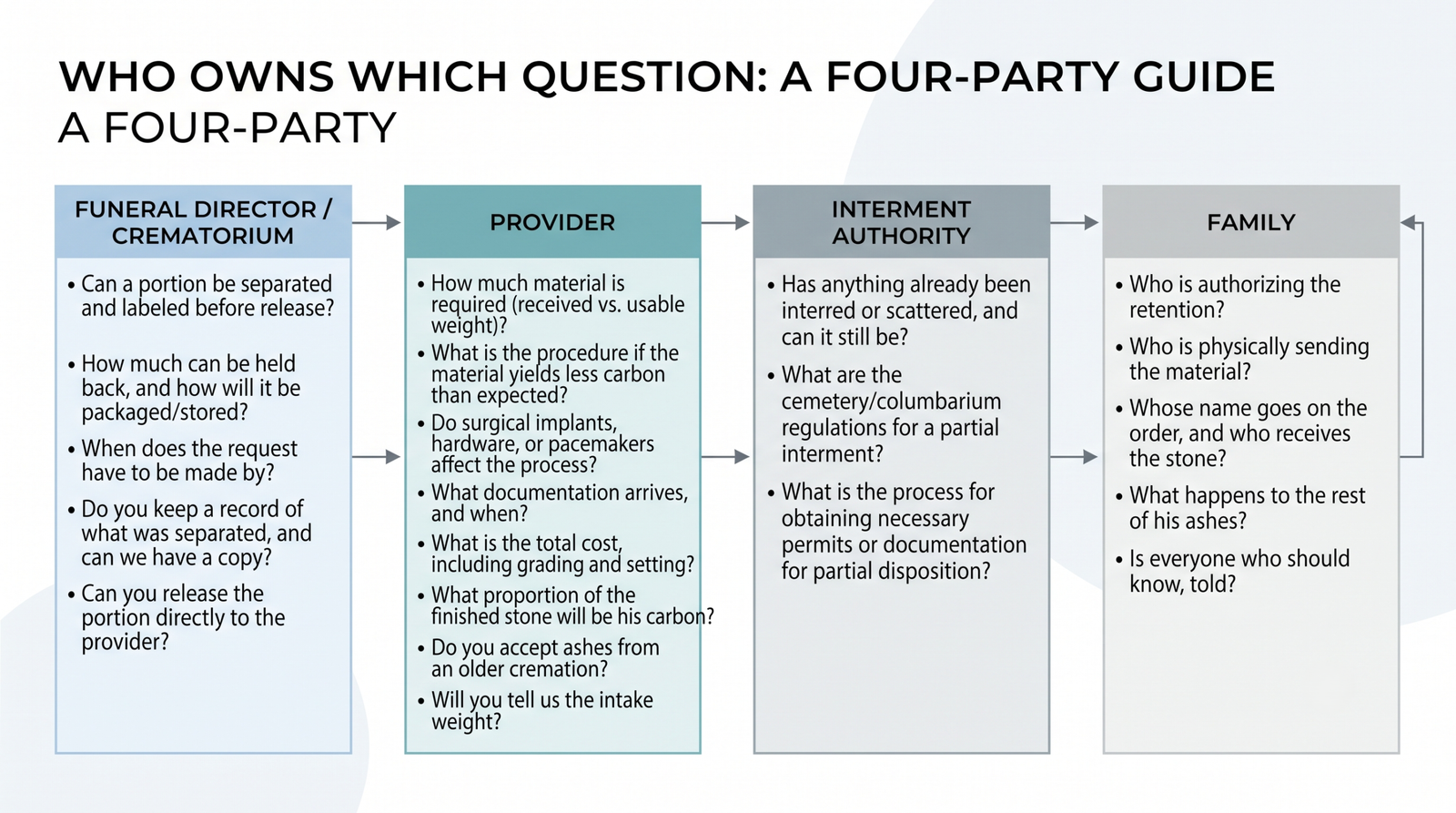
Families tend to arrive at this with a list and point all of it at one company. The questions worth asking before turning your father’s ashes into a diamond actually divide across four parties: the provider, the funeral director or crematorium, whoever controls his interment or scattering, and your own family. Sending each question to the party that owns the answer is what turns a month of waiting into a week.

Two weeks can otherwise go by waiting on an answer a diamond laboratory was never in a position to give. What follows is the full list of what to settle before turning anything over, sorted by who to ask rather than by topic.

Memorial Diamond is itself one of the providers these questions are aimed at. Ask them of us as readily as of anyone else.

Which Questions Belong to Which Party?

Ask thisWho owns the answerWhy it goes there
Can a portion be separated and labeled before release?Funeral director or crematoriumIt is their handling procedure, and it has to happen on their premises
Is there still a retained portion on file?Funeral directorOnly their records show it
Has anything already been interred or scattered, and can it still be?Whoever controls the interment, cemetery, executor, or the familyA provider has no visibility of this and no standing to advise on it
How much material is required, and how is it assessed?ProviderIt is their process minimum
What happens if the material yields less carbon than expected?ProviderTheir procedure, not an industry constant
What documentation arrives, and when?ProviderTheir chain of custody practice
What is the total cost, including grading and setting?ProviderTheir pricing
Who is the order in, and who receives the stone?Your familyNobody outside the family can settle it
What happens to the rest of his ashes?Your familyA decision, not a question
Simple four-box diagram labeled funeral director, provider, interment authority and family, each with the questions it owns

Read the right hand column before the left. A question that stalls before turning into an answer is rarely a hard question. More often it has arrived somewhere that could not answer it.

What Can Only a Funeral Director Answer Before Turning Anything Over?

These are also the ones with a deadline, which makes them the first calls to make, before turning to a provider at all.

  • What is your procedure for separating and labeling a portion? Ask what the procedure is rather than whether it can be done. Practice varies between firms, and the answer tells you whether you are dealing with something routine for them or something they will have to arrange.
  • How much can be held back, and how will it be packaged and stored? Bring a figure to this conversation. How much ash is needed covers the industry typical quantity to ask for.
  • When does the request have to be made by? This is the only genuinely closing door in the process. Once remains are interred or scattered, the ash route is usually over.
  • Do you keep a record of what was separated, and can we have a copy? For a portion retained months or years ago, this record may be the only documentation of that stage.
  • Can you release the portion directly, or does it come through us?

The complete guide to father ashes diamonds covers working backwards from an interment date if one is already booked.

What Should You Ask a Provider About His Ashes?

These are the questions to put in writing before turning his ashes over to anyone.

  • How much do you require, and is that a received weight or a usable one?
  • What is your procedure if the material yields less carbon than expected? Usable carbon in cremated remains runs at roughly 0.5% to 4% by weight, and no provider can know in advance where a particular person’s remains sit in that range.
  • Do surgical implants, hardware or a pacemaker affect what you can use?
  • What happens to material that extraction does not consume? Does it come back as a matter of course, or on request? Ask which, in writing. The two answers are very different in practice.
  • Do you accept ashes from a cremation that happened years ago, and does anything need checking before turning them over?
  • Will you tell us the intake weight when the parcel arrives?
  • What proportion of the finished stone will be his carbon, and what is supplemental lab grown carbon? No honest answer to this is 100%. The purified carbon is blended with lab grown carbon before growth in an HPHT press, and personal carbon in ash derived stones is commonly cited at around 10% to 15% of the finished stone’s mass. Ask for the figure in writing. Whether a memorial diamond is really made from your father’s ashes covers what can and cannot be proven on this point.

What to Ask When the Executor and the Urn Holder Are Different People

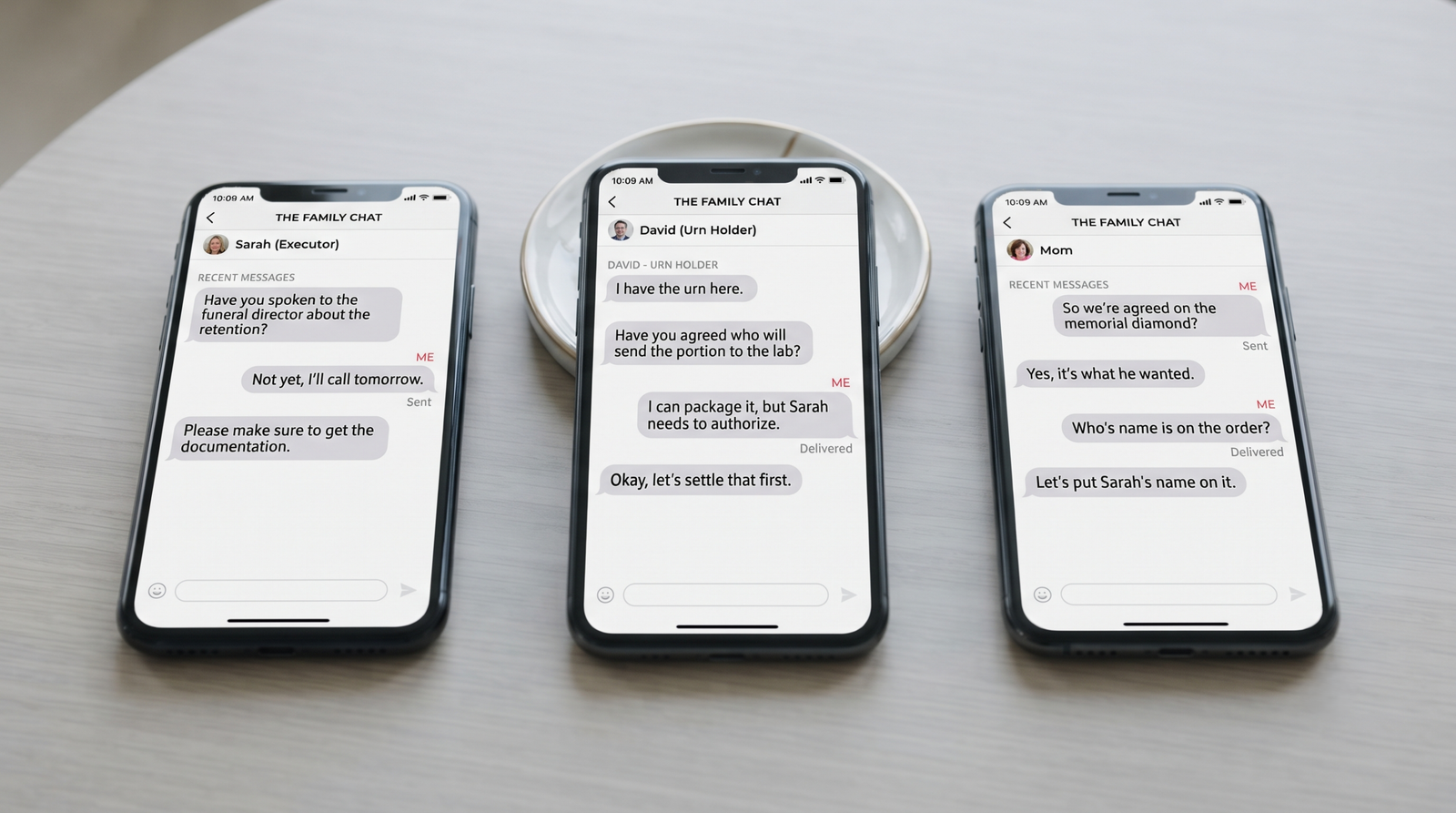
This is the situation the four party split exists for, and the one to resolve before turning to any company. It is common enough after a second parent’s death to plan for: one sibling was named executor, another was given the urn, and a third is the one making inquiries.

Three phones on a table, each showing a different thread of the same family conversation about a father's ashes

Three questions have to be settled between those people before turning to a provider, who is no use until they are.

  • Who is authorizing the retention? The funeral director will act on one person’s instruction, and it should be a person the rest of the family knows about.
  • Who is physically sending the material, and do they agree to? Whoever holds the urn has to open it. That is not a small thing to ask of someone by email.
  • Whose name goes on the order? It does not have to be the executor, and it does not have to be whoever holds the urn, but it should be settled before a company is contacted rather than after.

Legal authority over a parent’s remains varies by state and by circumstance and is not something a jewelry company can advise on. What can be said plainly is that this is a conversation to have before, not during. How to talk to family about a father memorial diamond covers how families open it.

What Should Arrive With the Stone, and What Comes Back?

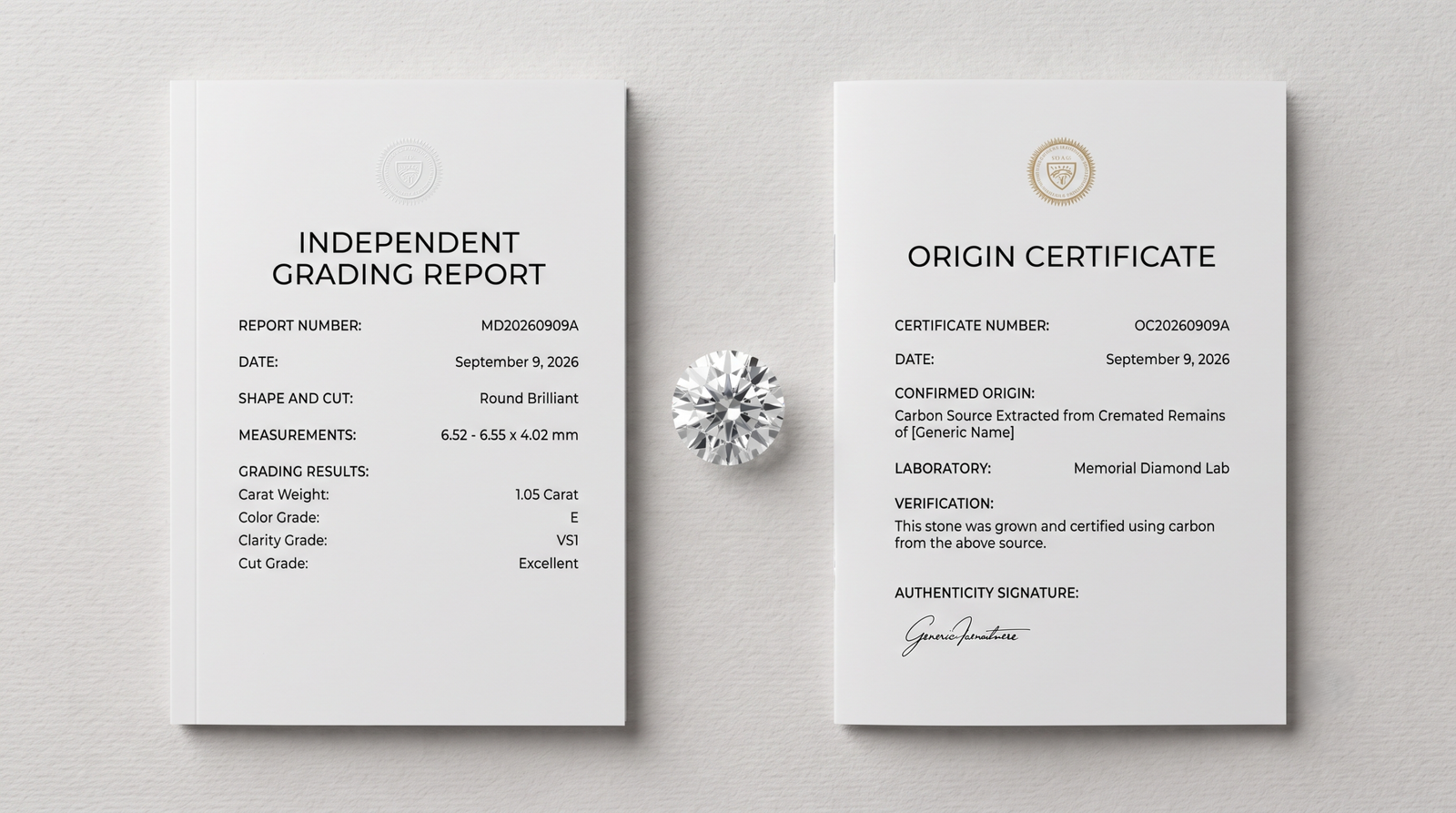
Two documents side by side, an independent grading report and an origin certificate, with a loose diamond between them
  • What chain of custody reference do we get, and at what point? Before turning the material over, or after?
  • Is the stone graded by an independent third party laboratory, or in house? These are different documents doing different jobs. A grading report grades the diamond’s cut, color, clarity and carat; an origin certificate ties it to your father. How providers track a loved one’s ashes covers what a chain of custody record should actually contain.
  • What does the certificate say, and does it name him?
  • What is returned to us at the end, and in what condition?
  • What is the full price, including grading, setting, engraving and shipping? What a father memorial diamond costs covers which of those line items sit outside a quoted price.

Ask all five before turning any material over. Every one of them is easier to get in writing before a parcel exists than after.

Which Questions Must Your Own Family Answer First?

No provider can answer these, and leaving them open before turning the ashes over is what makes a straightforward order difficult in month nine.

  • Whose name is the order in, and who is the single point of contact?
  • Who receives the finished stone, and what happens to it afterwards?
  • Is everyone who should know, told, before turning the ashes over, not after?
  • What happens to the rest of his ashes? A memorial diamond submission is typically a small fraction of a full cremation, so this is usually a decision rather than a constraint.

Where Does a Service or Veterans Interment Add a Fifth Party?

Where a national or service cemetery is involved, one question is added and it goes to the funeral director rather than to the cemetery: when do you release, and can a portion be separated before that happens? Honoring military service with a memorial diamond covers how that timetable works and why the date is not the family’s to move. Ask it early, before turning to anything else on this page, if a service interment is planned.

Frequently Asked Questions

Should the funeral director be told a memorial diamond is planned?

Yes. Say so plainly rather than asking in the abstract. A director who knows why a portion is being retained can package and document it appropriately, and can tell you what their firm’s procedure actually is before turning anything over.

Can the executor decide this without the rest of the family?

Legally that varies and is not something a jewelry company can advise on. Practically, a decision about a father’s remains taken without telling his other children can be hard to unpick afterwards, whatever the paperwork says.

How long should a provider take to answer these?

Days rather than weeks is a reasonable expectation before turning to a decision on the factual ones: quantity, documentation, pricing, timeline. How quickly those arrive is worth noting, given the process runs for most of a year.

Should these questions be asked before or after his ashes are released?

Before, wherever possible. The funeral director questions have a genuine deadline attached, while the provider questions have none, so the order to work in is funeral home first, provider second, before turning anything over to either.

Does the crematorium hold any record we can still ask for?

Frequently yes, particularly where a portion was separated at the time. Ask before turning to the provider, since the record is theirs. Ask what they hold and request a copy. For a retention made years ago, that record may be the only documentation of what was set aside and when.

If a provider’s answers and the funeral home’s answers conflict, which one governs?

Neither automatically. Write both down and put the conflict to each of them. A contradiction of this kind is often two parties describing different stages, but check rather than assume, and do it before anything is shipped.

Final Thoughts on What to Ask Before Turning His Ashes Into a Diamond

The whole list above fits into three messages and one family conversation: one to the funeral director, one to whoever controls the interment if a date already exists, and one to the provider. None of them commits you to anything, and the first is the only one with a clock on it. Asked in that order, before turning anything over, the answers arrive in a week instead of a month.

Learn More About Father Memorial Diamonds

Talk With Memorial Diamond

Put the provider half of that list to Memorial Diamond: what is needed, what comes back, what documentation arrives, and what the total is. Ask it before turning anything over, and get the answers in writing. Start at memorialdiamond.us.

How much hair a father memorial diamond needs: a small tied lock of gray hair on a 0.1 g jeweler's scale reading a few grams

How Much Hair Do You Need for a Father Memorial Diamond?

A kitchen scale is a blunt instrument for this. Put an envelope holding your father’s hair on one and it can read zero. So how much hair do you need for a father memorial diamond? Industry wide, a small lock or a few grams, an amount usually described as palm sized. That figure is a weight rather than a length, and it is set per stone rather than per family.

Everything below is about what that number means once the sample is in front of you, and why the reading on a home scale and the figure a laboratory works from are not the same number.

A disclosure first: Memorial Diamond sells memorial diamonds, so read the checks below as ones to put to any provider, including this one.

How Much Hair Is Actually Needed?

Across the industry, providers ask for something in the region of a few grams, a small lock, a palm sized amount, a few wisps. Exact minimums vary from company to company, and no single published figure covers the category, so the number that governs your decision is the one your chosen provider states.

Two things about how much hair that figure describes are worth holding onto.

The first is that it is a weight. Length is the proxy people reach for because it is easy to see, and it is a poor one: fine hair and coarse hair of the same length weigh very different amounts. The complete guide to father hair diamonds covers where a father’s hair tends to be found in the first place; this page is about how much hair counts once it is in your hand.

The second is that it is per stone. A submission that comfortably clears one provider’s minimum has not thereby cleared it twice.

Why Is the Weight You Send Not the Weight the Process Uses?

Between the envelope on your kitchen table and the graphite that goes into a growth cell, the mass of the sample only falls. Providers commonly describe a preparation stage before extraction begins, and where a stated minimum sits relative to that stage is worth asking rather than assuming. The table below is a set of questions about how much hair survives each stage, as much as a description.

StageWhat happens to the weightDoes a stated minimum usually account for it?
What you hold back at homeYou keep part of the lock; only the rest travelsNo, a minimum applies to what actually arrives
Preparation before extractionProviders commonly describe removing product, oils, dust and non hair debris first. Ask what theirs removesAsk directly: is the stated figure a received weight or a usable one?
Carbon extractionHair is roughly 50% carbon by weight; the non carbon remainder is driven off in a controlled, oxygen free processAsk which weight the figure refers to. Do not assume it is stated after this loss
Blending with supplemental lab grown carbonMass is added, not removed, to reach a workable volume for growth in an HPHT pressNot a deduction, but the reason no stone is made only of the submitted material
Two small glass dishes of hair side by side, one as received with tape and ribbon, one cleaned and loose, showing the weight the process actually uses

The preparation row is the one that decides whether a marginal sample passes. A lock that has been handled, sprayed, gelled or stored loose in a drawer has more to lose at that stage than one cut clean and sealed the same day. How a memorial diamond is made from your father’s hair sets out what that stage involves.

The practical consequence is simple. If what you have is anywhere near a stated minimum, send a little more than the minimum rather than exactly it, and ask which weight the figure refers to before you decide how much hair to keep back.

What Should You Weigh It On?

Not a kitchen scale, unless it reads to a tenth of a gram. A small jeweler’s or coffee scale with 0.1 g resolution costs very little and turns a guess about how much hair you have into a fact.

  • Weigh the container empty first, then weigh it with the hair inside and subtract. Tipping a lock onto a scale pan risks losing strands you cannot replace.
  • Take the ribbon, tape, tissue and elastic out of the calculation. They can weigh more than the hair does.
  • Photograph the sample beside the scale display in the same frame. That single image answers the first questions a provider is likely to ask.
  • Do not divide anything to find out. A whole sample can always be split later; a split one cannot be rejoined.
  • Write the figure down with the date and where the hair came from. Questions to ask before turning your father’s hair into a diamond covers what else belongs in that record.
Envelope of hair being weighed in its container on a pocket scale, with the empty-container reading noted on a card beside it

If the scale reads a figure you were not expecting, that is information about how much hair you have rather than a verdict. It is the number to quote in an inquiry.

Does Hair’s Higher Carbon Content Mean You Need Less?

Yes, dramatically less than ashes, though not in the ratio the chemistry alone would suggest.

Hair is roughly 50% carbon by weight. Cremated remains are dominated by calcium phosphate, with usable carbon at roughly 0.5% to 4% of ash by weight. That is why the ash requirement is quoted in tablespoons and ounces while how much hair you need is quoted in grams.

But the published minimums for how much hair and how much ash are needed do not sit a hundred to one apart, and the gap is worth asking about. One likely reason is that a very small sample is harder to handle, clean and weigh reliably whatever its carbon content, which would make a hair minimum closer to a practical floor than a calculation from chemistry. Ask a provider how their figure was arrived at; it is a fair question and the answer is informative.

It is also worth saying plainly what the last row of that table implies. The carbon recovered from his hair is purified and then blended with supplemental lab grown carbon to reach the volume a growth run needs. What comes out is a real, documented portion of him inside a stone that is not made only of him, the honest framing, and the one memorial diamonds as a category have always rested on.

One more thing the arithmetic explains: sending several times as much hair as the minimum does not produce a larger stone. Carat size is a function of growth time in the press, which is chosen and paid for, rather than of how much material arrived. Choosing a carat size is a separate decision from this one.

Is a Sample Near the Floor a Verdict?

No, it is a question, and one worth asking with a number attached.

A short clipping is keratin just as a long lock is, and length on its own rules nothing out. Whether a given provider will accept them is a different matter, and it is a policy question rather than a scientific one. Acceptance rules for very short clippings and for mixed provenance samples are not standardized across the industry, which means the only reliable answer is the one you get in writing from the company you are considering.

Ask it as a question about how much hair you have, with a weight and a photograph attached, rather than as a description. “4.2 grams, collected over two trims from a beard” is answerable. “A bit of his beard” is not. Nobody can tell from that how much hair is actually there.

If the answer comes back as not enough, that is one company’s policy rather than a fact about the sample. Ask another before concluding anything, and remember that the ashes route may still be open alongside it.

How Much Hair Is Enough for More Than One Stone?

Where a submission holds twice as much hair as the per stone figure, several family members can each receive a stone from the same starting material, which is why the figure to ask for is grams per stone rather than grams outright.

A single lock of hair laid beside two small labeled portions, illustrating the per-stone figure for two memorial diamonds

Where a sample is generous, that arithmetic is straightforward. Where it sits close to the minimum, the realistic options narrow to one stone now, a smaller carat, or a combined submission with his ashes. Whether more than one family member can have a diamond from the same father covers how families divide that decision, and how much ash and hair a combined stone needs covers what two materials require between them.

Ask for it as a per stone figure in grams, how much hair per stone, not how much hair in total, and ask before you plan on two.

Frequently Asked Questions

Does the hair need to be in one piece, or will loose strands do?

Loose strands are usable. The process consumes weight, not structure. A bound lock is easier to handle, photograph and document, so if the hair is already tied, leave it tied and send it exactly as it is.

Do I weigh the hair with the ribbon and envelope it came with?

No. Weigh the packaging empty, then weigh it full, and use the difference. Ribbon, tape and tissue can easily outweigh a small lock, which is how a marginal sample gets mistaken for a comfortable one.

Is there a maximum, or can the whole lock be sent?

A stated maximum is unusual, however much hair you have, but sending everything is worth pausing over. Once a sample is in transit it is out of your hands, and keeping a portion at home costs nothing and preserves an option for later.

Will the laboratory weigh it again, and will they tell me how much hair arrived?

An intake weight is normally recorded as part of chain of custody documentation. Whether that figure is shared with the family varies, so ask for it to be reported to you at intake rather than assuming it will be.

Does damp or freshly washed hair weigh more than the process can use?

Moisture adds weight the process cannot use, so a damp sample weighs more than it is worth. Let it dry fully at room temperature before weighing, and ask the provider how they want it packaged rather than sealing a damp sample into anything.

Does how much hair you need change with the carat size chosen?

Not in the way people expect. Because size is driven by growth time rather than input volume, a larger stone usually costs more months and more money rather than more hair. Confirm it with the provider, since minimums vary between companies.

Final Thoughts on How Much Hair a Father Memorial Diamond Needs

The whole of this page reduces to one action that takes ten minutes and commits you to nothing: put the sample on an accurate scale, photograph it, write the figure down, and put the sample back exactly where it was. With that number in hand, an inquiry stops being a conversation about whether you have enough and becomes a conversation about what happens next. How much hair you have is a fact you can establish this afternoon; what it is enough for is the provider’s to answer.

Learn More About Father Memorial Diamonds

Talk With Memorial Diamond

Send Memorial Diamond the weight and a photograph, and ask the only question that matters at this stage: is this much hair enough, and for how many stones. Nothing needs to be cut, divided or posted to ask. Start at memorialdiamond.us.
Father memorial diamond cost: a printed eight-line quote beside a loose lab-grown diamond and a plain ring mount

How Much Does a Father Memorial Diamond Cost?

How Much Does a Father Memorial Diamond Cost?

This is often the question a family asks second and worries about first, sometimes with a funeral already paid for and nobody wanting to be the one who raises money. So what does a father memorial diamond cost? Across the industry in 2026, roughly $1,500 to $3,500 at 0.10 to 0.25 carats, $5,000 to $15,000 at 0.5 to 1 carat, and $20,000 to $75,000 and upward at 2 to 5+ carats, figures for the loose stone alone, with the final number depending on carat, color, cut, and whether an independent grading report is included.

Those are industry wide ranges rather than Memorial Diamond’s own pricing, which is not yet published. The complete guide to father ashes diamonds sets the tiers out as a table, and the wider 2026 pricing guide covers what drives cost across the whole category. This page is about the father memorial diamond cost quote itself, what belongs in it, and when each part of it is actually paid.

Memorial Diamond is a company in this category; apply the checks below to our quote as strictly as to anyone’s.

What Does a Complete Father Memorial Diamond Cost Quote Contain?

A father memorial diamond cost quote is commonly for one object: a loose, unset stone in a box. Everything that turns that into something you can wear, insure and pass on sits somewhere else on the paperwork, or nowhere on it yet.

Line itemInside the quoted price?What decides it
The loose stoneYes, this is usually what a quote meansCarat, above all
ColorVaries; treated colors are often a premiumWhether the color is achievable from his carbon or requires post growth treatment
Cut and shapeOften included; fancy cuts frequently notThe shape chosen
Independent grading reportOften separateWhether an independent laboratory grades the stone, or it is documented in house
Setting, ring, pendant, earringsTypically separateMetal, design, and whether stones are being matched
EngravingSeparateLength and method
Shipping and insured transitSometimes separate, in both directionsDistance and declared value
Resizing, repair or resetting laterSeparate, and often years laterWear, changed circumstances, a piece being passed on
Three loose lab-grown diamonds of roughly 0.25, 0.5 and 1 carat side by side on a scale card, showing why carat drives cost

Ask for all eight named at the first conversation, even where several come back as “not applicable yet.” A father memorial diamond cost quote that names eight lines and prices four is more useful than one that names one and prices one, because the four unpriced lines are the ones that arrive later.

Why Does Carat Decide More Than Everything Else Combined?

Size is a function of growth time in the press, a larger stone occupies expensive, tightly controlled HPHT equipment for longer, with more that can go wrong. That is why father memorial diamond cost scales steeply with size, and why a larger stone takes longer as well as costing more, the same variable drives both.

Color is the second lever on father memorial diamond cost, and it runs in the direction people least expect, colorless is the expensive option rather than the default. What colors to expect for a father’s memorial diamond covers the range and the relative costs; choosing a carat size is worth reading before a number is settled rather than after.

Is Setting the Stone Into Something He Owned Its Own Line?

Yes, and it is a real one. Whether a wedding band he wore for forty years, a signet ring or a watch can take a stone at all is covered in the complete guide to father ashes diamonds. What belongs here is the cost consequence.

A modification is a jeweler’s assessment before it is a quote, and that assessment usually carries a fee of its own, ask before booking one. It is therefore a separate line from the setting line above it, and the two numbers are not comparable: one prices work on an irreplaceable object, the other does not.

Jeweler examining a worn plain wedding band under a loupe to assess whether it can take a stone

Book the assessment early rather than at the end. It can be done while the stone is still growing, and it answers whether that line of the father memorial diamond cost exists at all long before the money conversation reaches it. Memorial diamond settings and jewelry ideas for a father covers the alternatives if the answer turns out to be no.

What Changes When He Is the Second Parent?

Where this arrives after a mother’s death rather than before it, sometimes years after, the father memorial diamond cost question comes with history attached.

Matching is a specification, not a discount on father memorial diamond cost. Where a stone already exists for a mother and a family wants a comparable one, matching color and cut is a request that can constrain the growth run. Ask what matching involves and whether it moves the father memorial diamond cost or the timeline, rather than assuming it does either.

A second stone means a second growth run. Because size is bought in press time, ask whether two stones are priced close to two singles or whether anything is genuinely shared. Whether more than one family member can get a diamond from the same father’s ashes covers how families divide that decision.

The money conversation is happening alongside an estate, and sometimes between siblings rather than inside one household. Agreeing who pays for what before a quote arrives turns that quote into a decision rather than an argument.

When Does Each Part of It Get Paid?

The eight lines of a father memorial diamond cost do not arrive together, and the gap between the first payment and the last can run most of a year. Roughly, and worth confirming against whatever a provider actually offers:

  • At the order, commonly a deposit against the stone. Ask what proportion, and ask what it commits you to.
  • Before or during growth, the balance on the stone itself, on whatever schedule is agreed.
  • After the stone is finished, grading, if it is charged separately, and the setting.
  • At the end, engraving, insured transit, and any modification work on an existing piece.
  • Years later, resizing, repair, resetting when a piece changes hands.
A wall calendar spanning ten months with five payment points marked from deposit to setting

Two things are worth having in writing at the start rather than in month nine: what is refundable, and up to which point, and whether a quote has a stated validity period. Neither is an awkward question. How long a father memorial diamond takes covers where each of these payments lands on the calendar.

Three Things That Probably Don’t Change the Price: Ask Anyway

Three things commonly expected to move father memorial diamond cost, each of which is worth putting to a provider directly rather than assuming.

  • How much material is sent. Sending a full urn rather than the required portion does not produce a larger, better or faster stone. Carat is bought in growth time. And because the recovered carbon is blended with lab grown carbon before any growth run, a bigger parcel does not buy a bigger share of him either, what a memorial diamond carries is a provable portion, never the whole.
  • Which material is used. Ask whether source material affects price; nothing about the growth run itself suggests it should, and what differs most between the ashes and hair routes is what the family does beforehand.
  • Whether one material or two. A combined order still produces one stone from one growth run. Ask whether preparing a second material carries a charge, but there is no second stone being paid for.

Frequently Asked Questions

Why is the range in father memorial diamond cost between the tiers so wide?

Because carat, color, cut and whether an independent grading report is included all move independently, and companies differ in what a quoted figure covers. A single price only becomes meaningful once those four are specified in writing.

Are two stones for two children cheaper than two separate orders?

Ask rather than assume, father memorial diamond cost is per growth run. Each stone occupies its own press time, so any saving comes from shared handling and documentation rather than from the stones themselves, and there may be none at all.

Does a memorial diamond cost more than an ordinary lab grown diamond of the same size?

There is no published comparison to cite for father memorial diamond cost against a standard stone, but memorial stones carry extraction, purification and chain of custody work that a standard lab grown stone does not, and the growth runs are individually handled. Any difference sits in the process.

Can a quote be held while we decide?

Ask at the point the quote arrives rather than later. There is no reason to rush this decision, and a stated validity period on a father memorial diamond cost quote is a fair thing to expect in writing.

Is the money conversation different when siblings are splitting it?

Practically, yes, the father memorial diamond cost is one number but the payers are several. Ask whether a provider can take payment from more than one person against a single order; that is a billing policy question, and agreeing the split between yourselves first makes the answer easier to act on.

What happens to the cost if the finished stone isn’t what was specified?

Ask before ordering what the procedure is if color, clarity or carat comes out differently from what was agreed, and what the remedy is. It is an uncomfortable question that is far easier asked in month one than in month ten.

Final Thoughts on What a Father Memorial Diamond Costs

A father memorial diamond cost quote is not a price until you know what it excludes. Ask for all eight lines named at the first conversation, ask what is refundable and until when, and ask how long the figure stands. On the wider money question, financing and payment plan options covers how these purchases are commonly structured. Anything to do with insurance or tax treatment is worth confirming with a qualified professional, an insurance agent or an accountant, rather than with a jewelry company, since both depend on your own circumstances and jurisdiction.

Learn More About Father Memorial Diamonds

Talk With Memorial Diamond

Memorial Diamond can talk through what a stone for your father would involve, what sits inside a father memorial diamond cost quote and what sits outside it, when each part is paid, and what documentation arrives with the stone. Start at memorialdiamond.us.
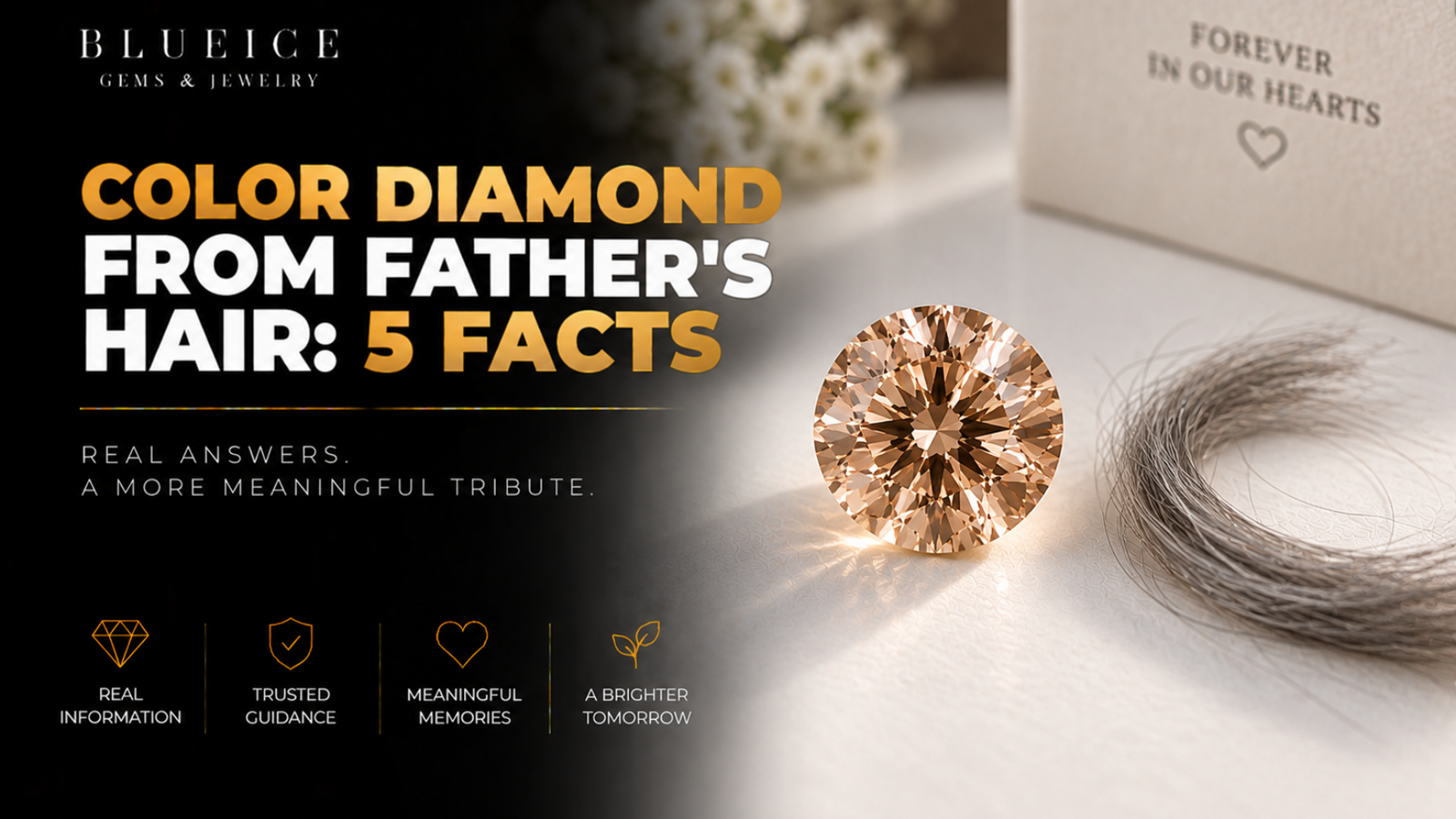
Color diamond in a warm champagne tone beside a small lock of gray hair on a white surface

What Color Will a Diamond Made From Your Father’s Hair Be?

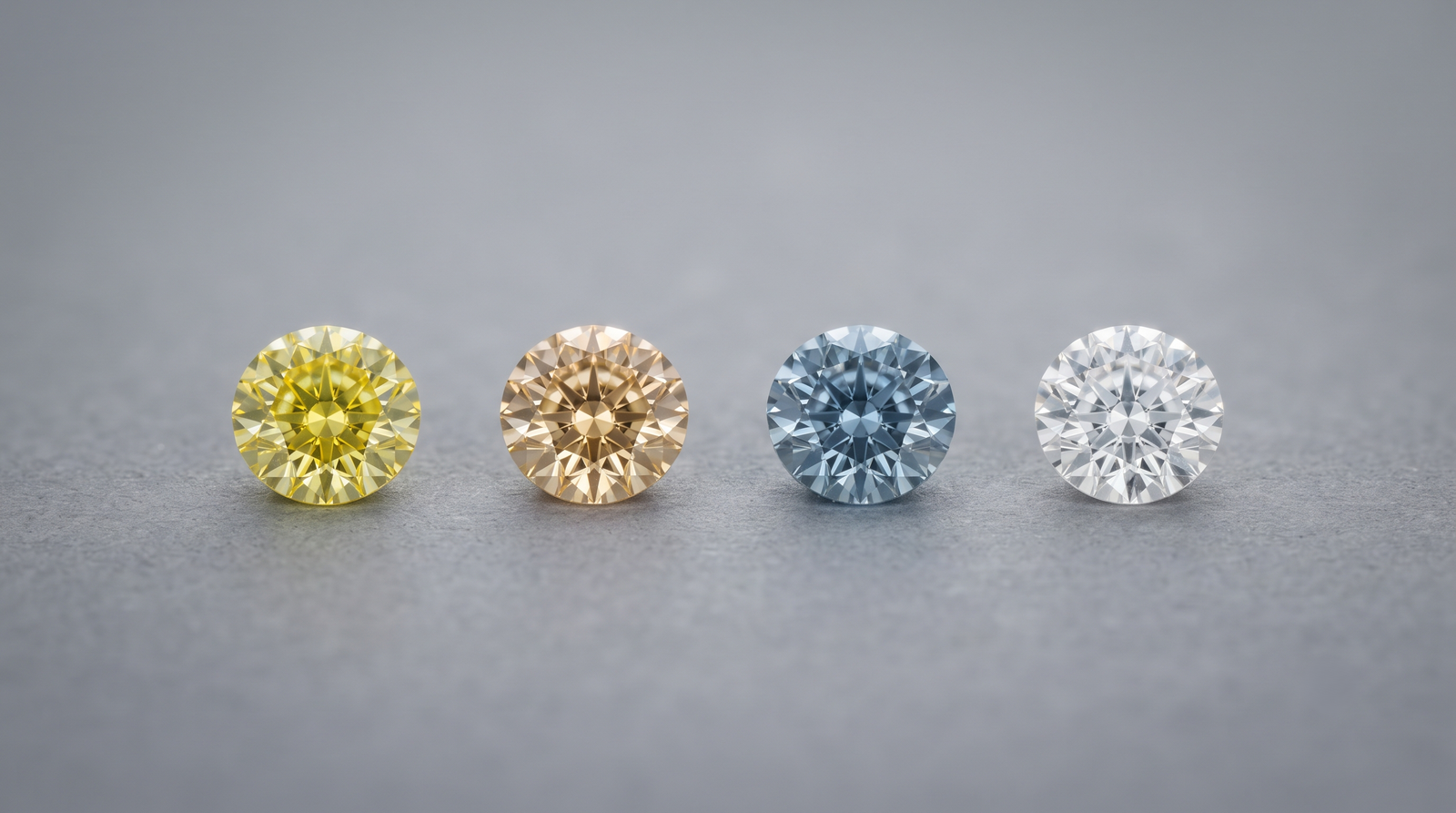
The lock you kept is probably not the color it was when you were small. That is usually where this question starts. The answer is that the color diamond his hair becomes is decided in the growth cell, not by the hair: a diamond made from your father’s hair will most often be yellow, champagne or blue, colorless is possible at a higher cost, and gray, white, black or thinning hair changes none of that.

Which means color is the one thing the lock cannot decide for you. You decide which color diamond to grow, on the order form, before anything is grown.

Does Your Father’s Hair Color Change the Color Diamond You Get?

No. White hair does not make a white diamond, black hair does not make a dark one, and a beard sample behaves exactly like a sample from his head.

Hair color is melanin, a pigment. Before any growth begins, the hair is heated in an oxygen free process that strips away everything that is not carbon, and the purified carbon is then converted to graphite at roughly 2,500 to 2,700°C. No pigment molecule survives that, which is why hair color never reaches the color diamond. What reaches the press is elemental carbon, and elemental carbon from white hair is indistinguishable from elemental carbon from anyone else’s.

Hair is roughly 50% carbon by weight, which is why a small lock is enough and why no cremation is involved. How a memorial diamond is made from your father’s hair walks through each stage.

What Actually Sets the Color of a Hair Diamond?

Trace elements present while the crystal grows. Boron in the growth cell produces blue. Nitrogen produces yellow. A colorless stone requires the near total absence of both, which is easy for a manufactured feedstock and harder for a personal, organic one.

Technician placing a graphite capsule into an HPHT diamond-growth press

His purified carbon is blended with supplemental lab sourced carbon to reach a workable volume, so the finished stone is not entirely one person, but the trace elements riding along with the personal carbon still steer the color of the whole crystal. That is why a color diamond in the yellow to blue range is the natural outcome of a hair source, and why colorless takes additional processing and additional cost.

The growth itself uses either an HPHT press or CVD deposition. Both lab growth methods are described here. The process takes weeks to months depending on the carat you order.

Which Color Diamond Can a Father’s Hair Become?

Industry typical outcomes, not a promise about any one stone. The five rows below are the honest color diamond menu for a hair source.

ColorWhere it comes fromWhat it means for youCost position (industry typical)
YellowNitrogen present during growthThe most common natural outcome of a hair sourceBottom of the band at a given carat
Champagne / brownSeveral trace elements acting togetherReads as a warm neutral; not caused by brown hairLevel with yellow at matching carat
BlueBoron present during growthA target the lab steers toward, not something the lock suppliesBanded with yellow and champagne, under colorless
Colorless / whiteNear total absence of boron and nitrogenAchievable; requires extra processingThe clear step up at the same carat
Red, pink, green, blackPost growth irradiation, after the crystal existsUnrelated to the hair; availability varies by providerQuoted as an add on; black or 2 ct+ can push toward 12 months

Once the stone is finished, a color diamond is graded on the same scale as any other diamond. How gemologists grade a diamond’s color, cut and clarity applies to a memorial stone too. The broader memorial diamond colors for a father post covers how each tone reads in different metals.

Four loose lab-grown diamonds in a row  yellow, champagne, blue and colorless on gray card

Does a Small or Old Hair Sample Limit the Color Diamond You Can Order?

No. A few grams, a palm sized lock, or what a barber swept up, is the industry typical amount, and the amount has no bearing on color. Neither does age: a lock his own mother kept from his first haircut and a sample cut last month yield the same carbon and the same color diamond options. How much hair you need for a father memorial diamond covers the quantity side.

Three things do matter, so write them down before you send anything:

  • The color you want. Name it explicitly on the order: yellow, champagne, blue or colorless, rather than leaving it to a default.
  • The carat. Growth time, not hair quantity, sets size, and size moves cost far more than color does.
  • Whether you want a grading report. Independent grading is the only way to confirm the finished color against what you ordered.

If you are choosing between sending hair, ashes, or both, a color diamond from your father’s ashes lands in the same range, and sending both does not widen it.

If Several of You Want a Stone, Will They Match?

Not automatically. Because so little hair is needed, one lock can often supply more than one diamond, but each is grown in its own run, and no two runs are identical.

If matching matters to you and your siblings, order the same color diamond explicitly on every stone, expect small shade differences within that color, and ask for independent grading so each stone’s color is documented. A slight difference is normal; it is not a sign that one stone got more of him. Whether more than one family member can have a diamond from the same father covers the sharing question in full.

Frequently Asked Questions

Will a Diamond From My Father’s Gray Hair Be Gray?

No. Gray and white hair have lost their pigment, and pigment is destroyed long before growth anyway. A color diamond made from gray hair comes out in the same yellow, champagne, blue or colorless range as one made from any other hair.

Can I Get a Colorless Diamond From His Hair?

Yes. Colorless requires excluding the boron and nitrogen that give hair diamonds their natural tint, which means extra processing and a higher price at the same carat. It is a choice you specify when ordering, not something the hair decides.

Does Dyed or Treated Hair Affect the Color?

Not the diamond’s color. Dye is pigment, and pigment does not survive purification. Whether a provider accepts chemically treated hair is a separate policy question, so ask before sending a sample.

Is Beard Hair Different From Head Hair for a Color Diamond?

No. Both are keratin at roughly 50% carbon, both are purified to elemental carbon, and both produce the same range of colors. If beard hair is what you have, it works.

Which Color Diamond Is the Most Common From Hair?

Yellow and champagne tones, because nitrogen and combined trace elements are the usual companions of organic carbon. Blue is steered toward deliberately, and colorless is the exception that costs more.

Can the Color Be Changed After the Diamond Is Grown?

Only by post growth irradiation, which some providers offer to turn a color diamond red, pink, green or black. It is quoted as an add on and cannot turn a tinted stone colorless. Colorless has to be grown that way.

Does the Color Say Anything About Who My Father Was?

No. Nothing molecular survives graphitization, so the color carries no information about him. Choose it as a color you want to look at, not as a message from the stone.

Final Thoughts on the Color of a Father’s Hair Diamond

The lock you kept will not tell you what color diamond it becomes, and that turns out to be a kindness. It hands the decision back to you. Whether his hair was dark or white, thick or almost gone, the carbon is the same, the color diamond menu is the same, and the choice is yours to make deliberately rather than something to wait for.

Learn More About Father Memorial Diamonds

Talk With Memorial Diamond

If you have a lock of his hair and a color in mind, or no idea yet which color diamond you want, reach out to Memorial Diamond to talk through what is possible from the sample you have. There is no obligation, and no wrong first question.

Memorial diamond made from a father's ashes and hair: a single champagne-toned lab-grown stone beside two small labeled sample containers

Is a Memorial Diamond Really Made From Your Father’s Ashes and Hair?

Two containers left the house, and one stone is coming back. If you are asking whether a memorial diamond made from your father’s ashes and hair really holds both, the answer is yes: carbon is extracted from each material separately, purified, blended together with lab sourced carbon, and grown into a single lab grown diamond. The personal carbon is a real, physical part of the crystal, though it is a minority of the finished stone’s mass, never all of it.

What the finished diamond cannot do is show you that both went in. Purified carbon from ash and purified carbon from hair are the same element in the same form. So the question worth asking about a memorial diamond made from both is not “did they really use both?” but “what can I see on paper that proves each one was handled?” That question has four answers, and they exist before the stone does.

Does a Memorial Diamond Made From Both Materials Really Contain Both?

Yes, assuming the provider did what it said. The two materials arrive with very different amounts of usable carbon in them, which is why they are processed on separate tracks before they ever meet.

Cremated ashesHair
What it is mostly made ofCalcium phosphate (the mineral of bone)Keratin, a carbon rich protein
Usable carbon by weightRoughly 0.5% to 4%Roughly 50%
Typical amount neededA few tablespoons to about 4 oz (100 g)A small lock, a few grams
Predictability of yieldLow; an eightfold published rangeHigh; a single published figure
Requires cremationYesNo
Side-by-side graphic comparing carbon yield from cremated ashes and from hair before purification

Each material is heated in a controlled, oxygen free process that strips away everything except carbon, reaching roughly 99.9% purity. The two purified carbons are then combined with each other and with supplemental lab sourced carbon, converted to graphite at roughly 2,500 to 2,700°C, and grown into one crystal in a single growth run using HPHT or CVD synthesis. In the finished stone, your father’s carbon is typically a minority share of the mass; no honest provider describes a memorial diamond made this way as 100% him. How the two materials are actually processed and merged walks the full sequence.

Why Can’t the Finished Stone Prove Both Were Used?

Because after purification there is no difference left to detect, and a memorial diamond made from two sources looks like any other.

Ash derived carbon and hair derived carbon are indistinguishable once they are graphite. There is no seam in the crystal, no two tone effect, no layer that came from one and a layer from the other, and no gemological test that recovers the ratio. A grading report from a laboratory such as the GIA documents cut, color, clarity, and carat; it cannot tell you where the carbon came from, or whether it came from two places.

That cuts both ways. A provider who claims the finished stone can be tested to confirm both inputs is claiming more than the science supports. A skeptical relative who says the stone “proves nothing” is, strictly, correct. Neither of them is talking about the evidence that does exist.

What Are the Four Things You Can Actually Verify?

The proof that both materials were used lives in the paperwork, not the stone. For a combined order, these four items are the ones to ask for, and any provider serious about chain of custody should be able to produce them:

  1. Two separate intake records, one for the ashes and one for the hair, each with its own reference number, rather than a single line reading “father, combined.”
  2. A recorded carbon yield for each material before blending, so you know what each one contributed rather than a single blended total.
  3. A written shortfall procedure, stating in advance what happens if one material yields less than planned, and confirmation afterward that it was followed.
  4. Unused material returned separately, the remaining ashes and the remaining hair each coming back in its own container.
Two separate intake record sheets and sample containers, one for ashes and one for hair, on a lab bench

Those are documentary questions with checkable answers, and the good ones are answered before the parcel is sent, not after the stone arrives. A memorial diamond made from two materials is only as verifiable as the records kept on the way in. Questions to ask before turning your father’s ashes and hair into a diamond covers the wider conversation, and the single material versions of this question are answered in Is a memorial diamond really made from your father’s ashes? and Is a memorial diamond really made from your father’s hair?.

What Happens in the Window Before the Two Are Blended?

There is a moment in every memorial diamond made from two materials when the lab knows exactly what each material produced and nothing irreversible has happened yet. It sits after extraction and before blending, and it is the point a family never sees unless they asked about it.

Ash is the less predictable of the two inputs. Its carbon content is published as a range from 0.5% to 4% by weight, against a single published figure of about 50% for hair, so the ash portion is the one more likely to land somewhere other than where the plan assumed. When that happens, someone decides what to do: proceed with a smaller ash contribution, ask you for more material, or proceed on the hair plus additional lab carbon.

Those are three different outcomes, and the third one produces a stone the family will describe for the rest of their lives as made from his ashes and his hair. Nothing about that is sinister. It is a decision made inside a window you were not in, and the only way to be in the room is to have asked, in writing, what the procedure is before anything ships. How much ash and hair you need for a father memorial diamond explains what “enough” means for each material.

Frequently Asked Questions

Can a memorial diamond made from ashes and hair be tested to confirm it contains both?

No. Once both materials are purified to carbon and graphitized, they are chemically identical, and no gemological test can tell them apart or recover the ratio. Verification comes from intake records, per material yield figures, and returned material, not from the finished stone.

Does adding hair to my father’s ashes put more of him in the diamond?

Only marginally, depending on quantities. Hair contributes carbon far more efficiently than ash, so a lock can add meaningful personal carbon, but a memorial diamond made with both still needs supplemental lab carbon to reach a growable size. The personal share stays a minority of the mass either way.

Is the diamond a real diamond?

Yes. A memorial diamond made by HPHT or CVD is a genuine lab grown diamond with the same crystal structure and hardness as a mined one. Independent labs grade it on the same cut, color, clarity, and carat scale as any other diamond.

Why does the ash matter more than the hair for a combined order?

Because ash yield is unpredictable. Usable carbon in cremated remains ranges roughly eightfold, from 0.5% to 4% by weight, while hair sits near 50%. If one material falls short of plan, it is far more likely to be the ash, which is why a written shortfall procedure matters.

What should I ask for in writing before sending both materials?

Ask for separate intake records with individual reference numbers, a recorded yield for each material, the provider’s procedure if one material yields less than expected, and confirmation that unused ashes and hair come back separately. Get all four before shipping anything.

Will my father’s remaining ashes and hair come back?

Typically yes. Only a small portion of the ashes is needed, and only a lock of hair, so most providers return unused material. For a combined order, confirm they come back in separate containers so you know each one was handled on its own.

Final Thoughts on a Diamond Made From Both Ashes and Hair

The fear underneath “did they really use both?” is a fear of being told a story instead of the truth. The stone cannot settle that, and it was never going to. What can settle it is a provider willing to show you two intake records, two yields, one shortfall rule, and two containers coming home. If those exist, a memorial diamond made from both is what you were told it is, and you can stop asking the stone to prove something only paper can.

Learn More About Father Memorial Diamonds

Talk With Memorial Diamond

If you are holding both his ashes and a lock of his hair and want to know what a memorial diamond made from both would actually involve, and what you would be able to see in writing along the way, reach out to Memorial Diamond. Bring the four questions above; the conversation is better when you do.

Father ashes and hair diamond in an even champagne tone, shown loose on a white card with no visible variation across the stone

What Color Will a Diamond Made From Your Father’s Ashes and Hair Be?

Two materials going into one stone invites a picture: a boundary, a swirl, two tones meeting somewhere in the middle. The stone that comes back has none of that.

A father ashes and hair diamond is a single crystal in a single color, most often yellow, champagne, or blue, or colorless with extra processing. It is not an average of an “ashes color” and a “hair color,” because neither material has one. Both materials are reduced to pigment free carbon before growth, and the stone’s color is set by trace nitrogen or boron in the growth cell, exactly as it would be for either material alone.

Memorial Diamond takes combined ashes and hair orders, so this is a seller explaining a seller’s product. That is the reason to read skeptically, and the reason it tries to earn the read.

What Does a Father Ashes and Hair Diamond Actually Look Like?

Like any other memorial diamond. One even tone throughout, no seam, no gradient, no visible sign that two sources were used. Under a loupe a gemologist will see inclusions and growth features the way they would in any lab grown stone, and nothing that says “ashes here, hair there.”

That is because the two materials stop being two materials before growth begins. Cremated remains go through extraction to remove calcium phosphate and everything else that is not carbon. Hair goes through extraction to remove the non carbon parts of keratin. Each ends as carbon at roughly 99.9% purity. Whatever the two materials contribute, supplemental lab carbon makes up the balance of the growth feedstock, and the finished crystal is genuinely, partially his rather than purely so.

Once blended and grown, every carbon atom in the lattice is the same element in the same structure, whichever container it came from. A father ashes and hair diamond therefore does not display separate visual sections for the two sources.

The three colors most families end up with, yellow, champagne, blue, and the one they can pay extra for, colorless, are the same four available for a father ashes and hair diamond as for any single source stone.

Why the Color Is Not an Average of the Two

An average needs two values to average. Neither ashes nor hair has a “color” in the sense that matters here.

Ashes are gray because of minerals that are removed in extraction. Hair is brown or gray because of melanin, which is also removed. By the time either material is carbon, it is black powder with no pigment, and black carbon powder from ash and black carbon powder from hair are indistinguishable. There is nothing for the stone to split the difference between.

Two small dishes of purified black carbon powder side by side, visually identical

What sets the color is what was in the growth cell besides carbon: nitrogen tints yellow, boron tints blue, and neither gives colorless. Carbon recovered from organic sources tends to carry a little nitrogen along, which is why the whole category leans warm. A combined feedstock is not more or less prone to that than a single one; the chemistry does not know the carbon had two origins.

This means a father ashes and hair diamond does not become a mixture of two visible colors. The final color comes from the growth environment and trace elements rather than the original appearance of the ashes or hair.

For additional information about how diamond quality and grading work, see the GIA Diamond Quality Factors.

Which of the Two Actually Contributes More?

By carbon, hair, by a wide margin per gram. Hair is roughly 50% carbon by weight. Cremated remains yield somewhere between 0.5% and 4%. A lock the size of a fingertip can outweigh, in usable carbon, a considerably larger quantity of ash.

MaterialApproximate carbon yieldWhat that means in a combined order
HairAbout 50% by weightSmall samples yield a lot; usually the larger carbon contributor
AshesAbout 0.5% to 4% by weightLarger samples yield little; usually the smaller contributor
Lab carbonAdded to reach growth volumeMakes up the balance; the finished stone is typically 10% to 15% personal carbon or less

None of this shows in the color, and this is the point families sometimes want and cannot have: a father ashes and hair diamond does not come out “more hair colored” because more of its personal carbon came from hair.

The contribution ratio lives in the provider’s records, if they itemize it, and nowhere else. Ask whether they do; it is a fair question and not every provider answers it the same way.

Printed origin record listing two sample IDs with weights, beside a finished stone

Does Combining Make the Shade Harder to Predict?

No harder than usual, and “usual” already includes some uncertainty. No provider can promise an exact tone before growth for any memorial diamond; trace element levels vary run to run, and two stones ordered as “yellow” can differ in depth.

Combining does not add to that variance in any meaningful way, because the feedstock is homogenized before it goes into the press.

What combining does add is a second record to check. If exact shade matters, such as a match to an existing family piece, or two sibling stones that need to sit together, say so before growth, and ask how the provider handles it.

Selection from a run is the usual method; guaranteed identical shade in advance is not something an honest provider offers.

The colors page for a father goes into what a provider’s color words do and do not promise.

What to Settle Before You Order

Three decisions, and none of them is about the ashes or the hair:

  1. Who keeps the stone and what it goes into. Metal shifts every tint: a yellow stone deepens in yellow gold and reads faintly off white against platinum, while blue and colorless hold steady in any setting. Decide the piece before the shade.
  2. Grown color or treated color. Yellow, champagne, blue, and colorless are grown; red, pink, green, and black are typically post growth irradiation. Ask which is which on the provider’s menu, and know that a treated color is a treatment, not a reflection of either material.
  3. What you want written down. For a combined order, ask whether the origin record itemizes each material’s contribution and whether the color is described using a standardized grading scale or the provider’s own words. A father ashes and hair diamond has two chains of custody; make sure the paperwork reflects both.

Frequently Asked Questions

Could the Stone Come Out Two Toned, or Show a Boundary?

No. The ash derived and hair derived carbons are blended into one feedstock before growth, and the crystal grows as a single, uniform lattice. There is no boundary because there is nothing left to mark one; a combined stone looks exactly like a single source stone of the same color.

Would Sending More of One and Less of the Other Change the Color?

No. The proportions change what the provider’s records say about contribution, not the tint. Color is set by trace nitrogen or boron in the growth cell, and the feedstock is homogenized before growth, so the ratio of ash carbon to hair carbon has no visible effect on a father ashes and hair diamond.

Does His Hair Color Affect It, If the Hair Went Gray?

No. Melanin, the pigment that makes hair brown, black, or red, is removed during carbon extraction along with everything else that is not carbon. Gray hair has less melanin, not less carbon, so a gray lock contributes the same pigment free carbon a dark one would.

Is a Combined Stone More Likely to Be Colorless?

No. A colorless crystal needs a growth cell free of nitrogen and boron, and keeping them out is a separate processing step whatever the carbon’s origin. Two organic sources neither help nor hurt that; if you want colorless, order it explicitly and expect it to cost more at the same carat.

Can Two Combined Stones for Two Siblings Be Matched?

Approximately, and only by asking before growth. Trace element levels vary between runs, so two stones ordered in the same color can differ slightly in depth. Providers who match siblings typically select from the same run; ask what the provider can and cannot promise in writing.

Does the Color Say Anything About Which Material Contributed More?

Nothing at all. Hair contributes far more carbon per gram than ashes, but that ratio is invisible in the finished stone. If knowing the contribution matters to you, it has to come from the provider’s origin record. Ask whether they itemize it, because a father ashes and hair diamond will not tell you by its shade.

Final Thoughts on the Color of a Father Ashes and Hair Diamond

The picture of two tones meeting is a natural one, and letting it go is part of understanding what the stone actually is.

A father ashes and hair diamond is one crystal, one color, grown from carbon that no longer remembers which container it arrived in.

The color will suit the ring or the pendant, or it will not, and that is decided by the metal and the person who wears it, not by the ashes, not by the lock.

Where the two sources still exist as two is in the paperwork, and that is worth asking for. The combined question about whether the diamond is really made from both sources is where that record is described.

Learn More About Father Memorial Diamonds

Talk With Memorial Diamond

If you are planning a combined order and want to know what color is realistic for the piece you have in mind, reach out to Memorial Diamond.

Ask which colors are grown and which are treated, and whether the origin record for a father ashes and hair diamond will itemize both materials.