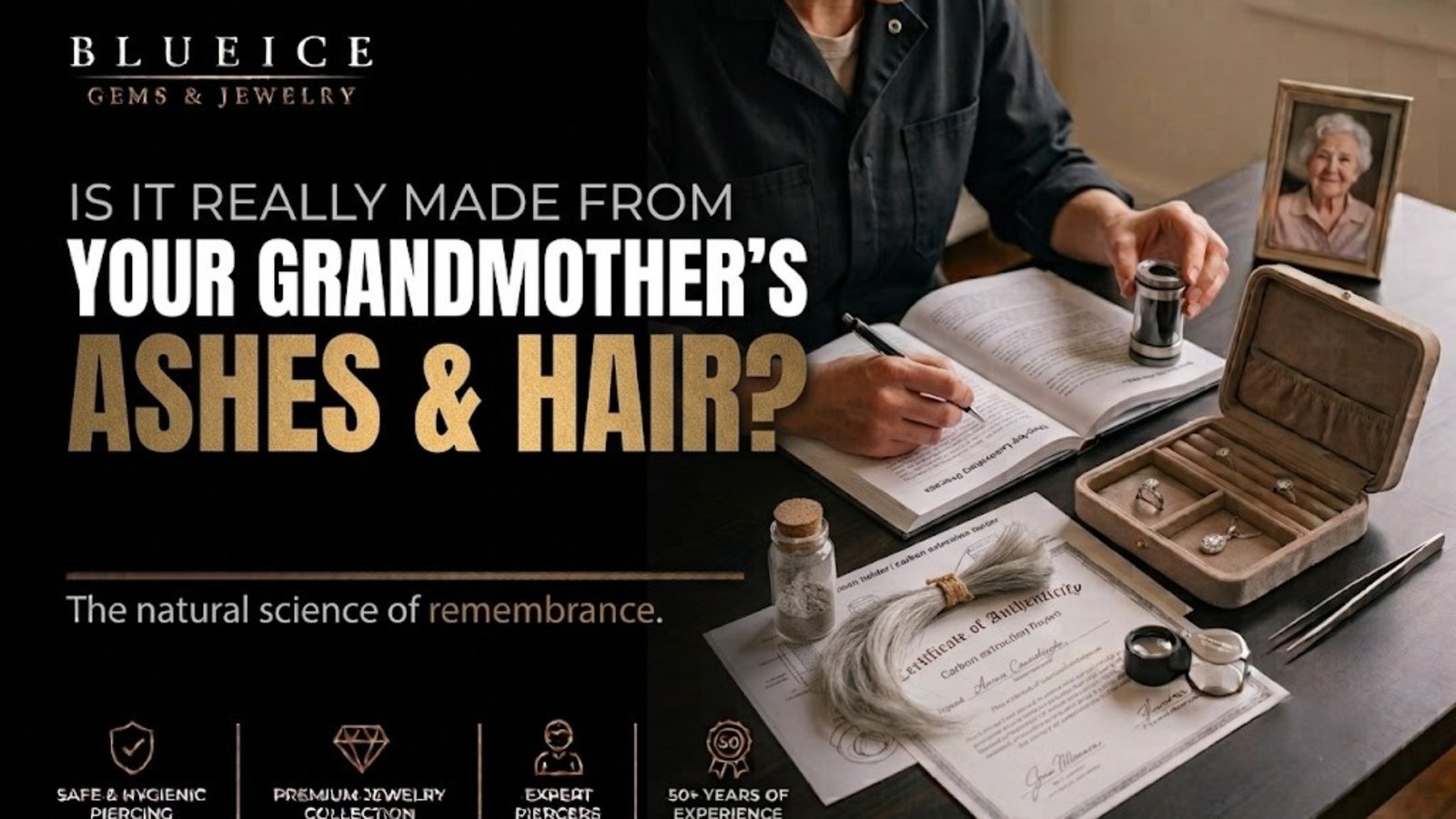
Is a Memorial Diamond Really Made From Your Grandmother Ashes and Hair

Is a Memorial Diamond Really Made From Your Grandmother’s Ashes and Hair?

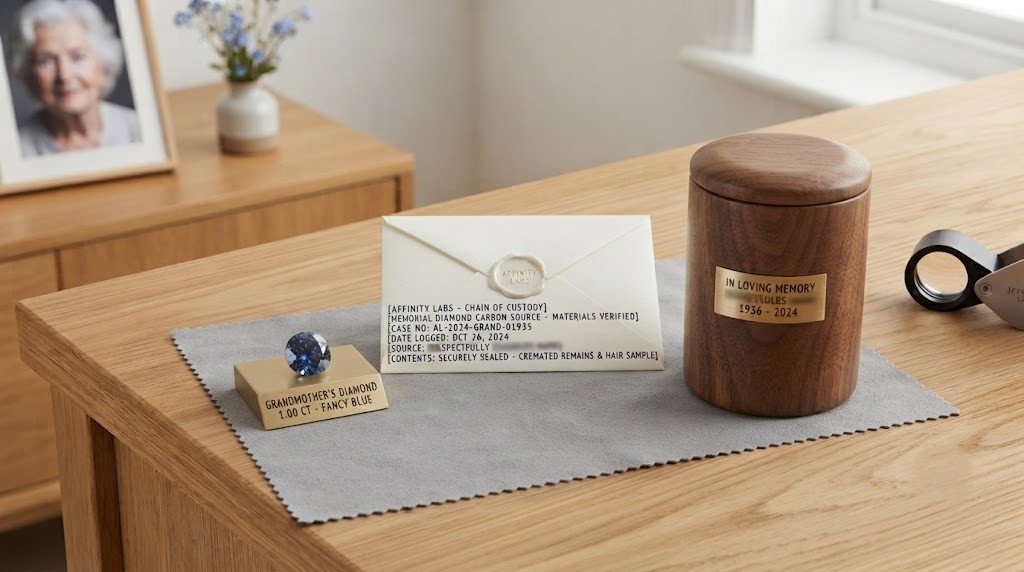
Some families hold two things of hers at once: a portion of her ashes, and a curl of hair someone saved. A stone can be really made from grandmother ashes and hair, in the sense that carbon from both can be purified and grown into one genuine lab-grown diamond, typically alongside supplemental lab carbon. What nobody can honestly give you is a published figure for how much of a combined stone came from each source, so the claim rests on documentation you request.

Whether a gem is really made from grandmother ashes and hair is a question of records as much as chemistry. Below: what a provider can stand behind, what needs proof in writing, and why two separate stones can be simpler.
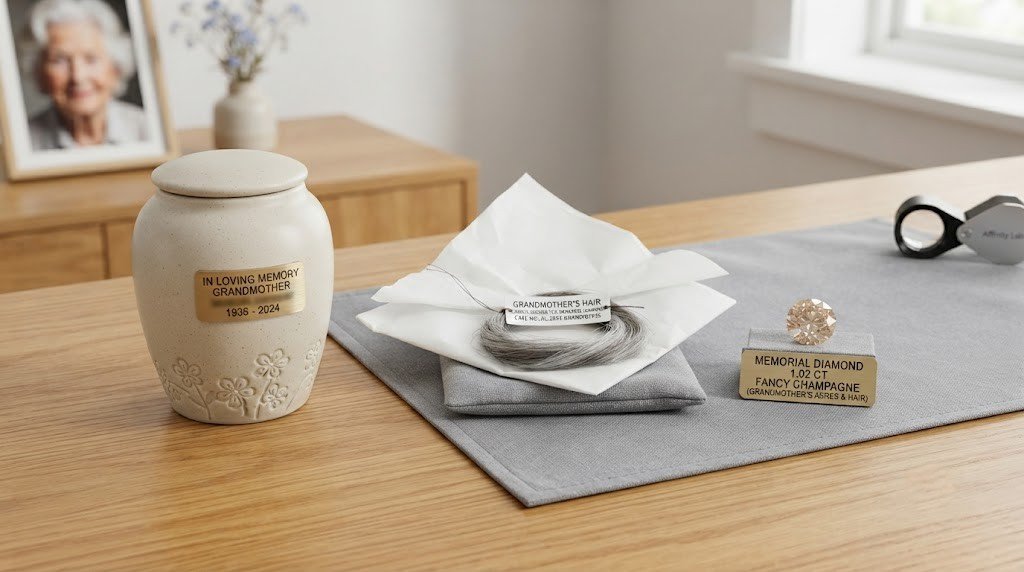
Table of Contents

What Can Truthfully Be Said About a Stone Really Made From Grandmother Ashes and Hair?

Start with what holds up under scrutiny. If a provider genuinely draws carbon from both her ashes and her hair, purifies it, and grows it into a crystal, then the finished gem contains carbon that came from her by two routes. Saying the piece is really made from grandmother ashes and hair is accurate as long as “made from” carries its honest meaning: made in part from her, with lab carbon typically added to reach a usable volume.

Nobody can tell you, by looking at or testing the diamond, which atoms came from ash and which came from hair. Once purified, carbon is carbon. Any provider that claims to show you a precise split inside a stone really made from grandmother ashes and hair is describing something beyond what standard gemology can do.

Three sentences you can use with family

When relatives ask whether the piece is really made from grandmother ashes and hair, these statements stay true:

  • “Carbon recovered from her ashes and from her hair was purified and grown into this diamond.”
  • “Like most memorial diamonds, it was grown with some added lab carbon as well.”
  • “The provider’s paperwork records that both of her materials went into it.”

The third depends on the provider supplying that paperwork; without it, a stone said to be really made from grandmother ashes and hair rests on trust alone.

How Does a Provider Combine Her Ashes and Hair?

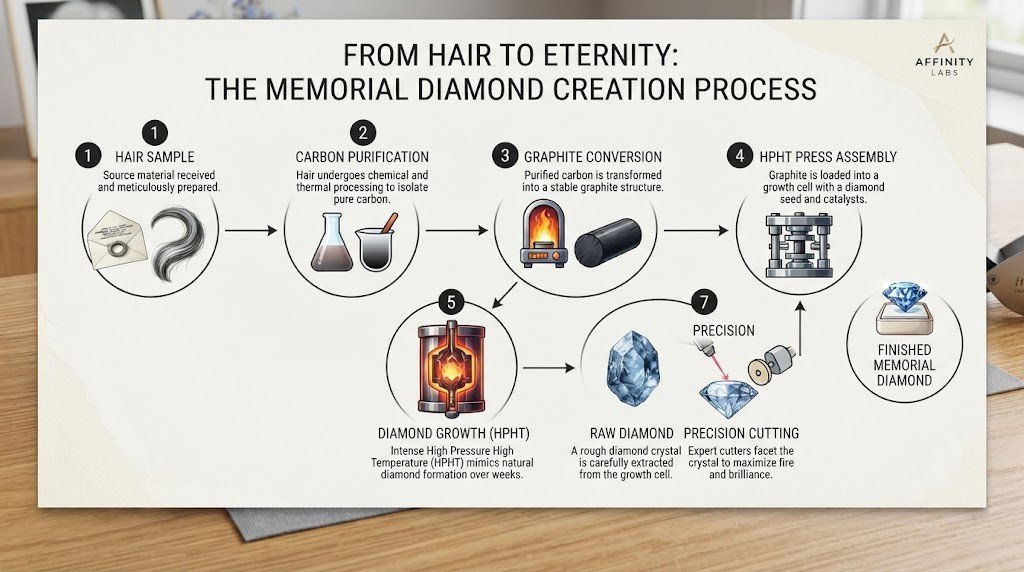
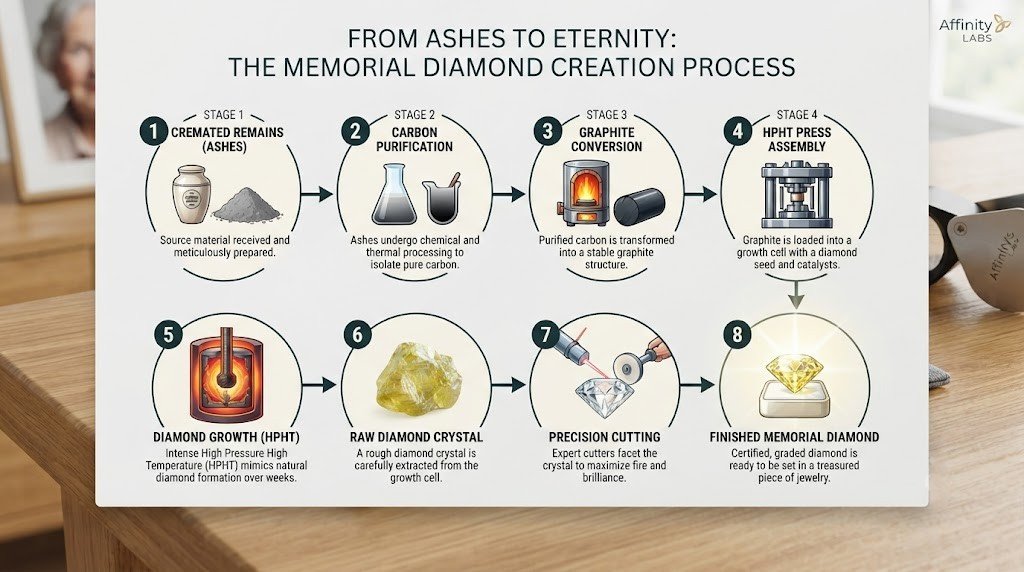
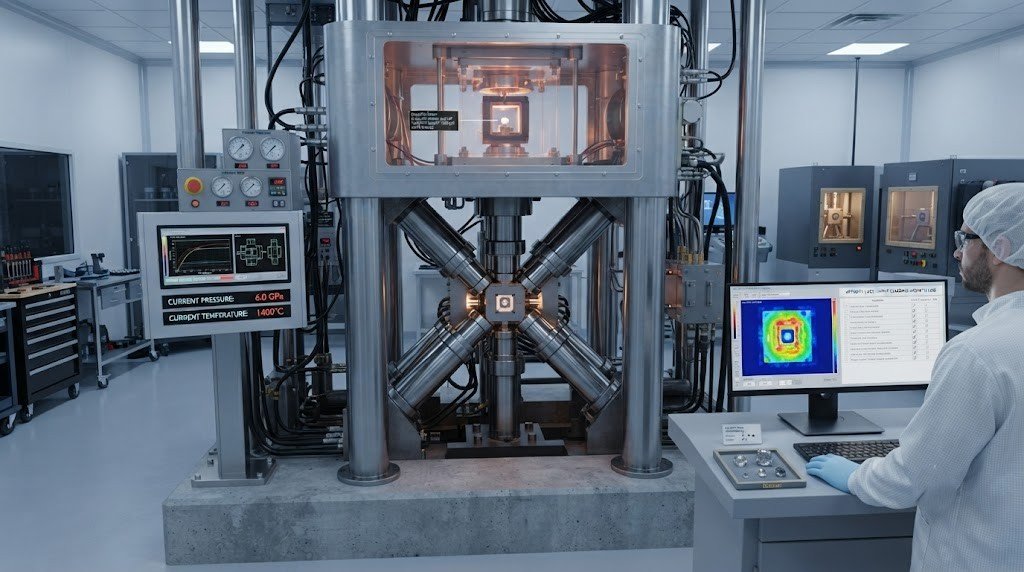
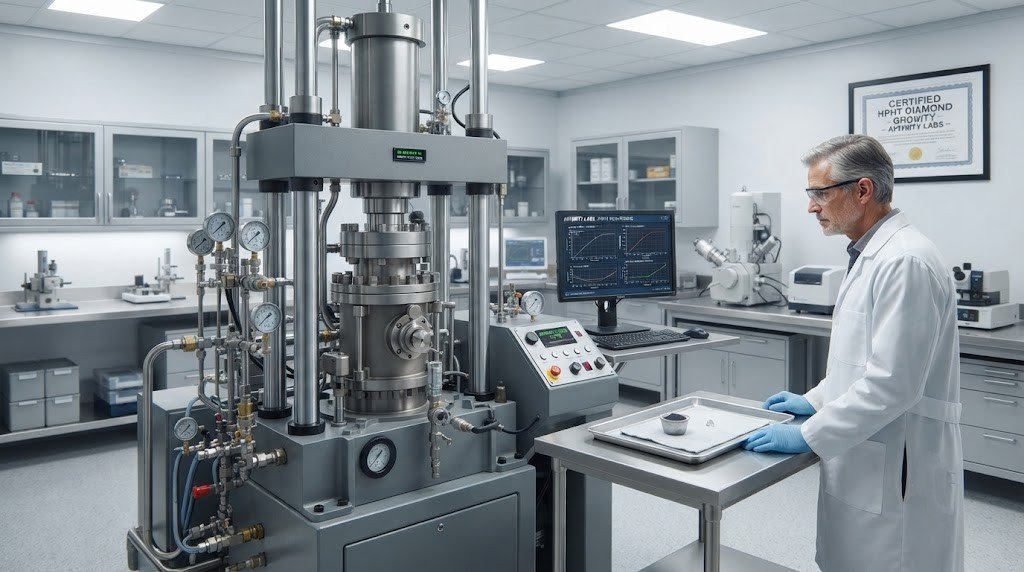
The broad industry process runs in stages: collection with chain-of-custody tracking, carbon extraction and purification to roughly 99.9% or higher, graphitization at around 2,500 to 2,700°C, and growth, most often in an HPHT press holding about 6–8 GPa of pressure at somewhere between 1,400 and 2,500°C for a span of weeks or months. Cutting, polishing and grading follow. A plain overview of how lab-grown diamonds are produced covers both HPHT and the less common CVD method.

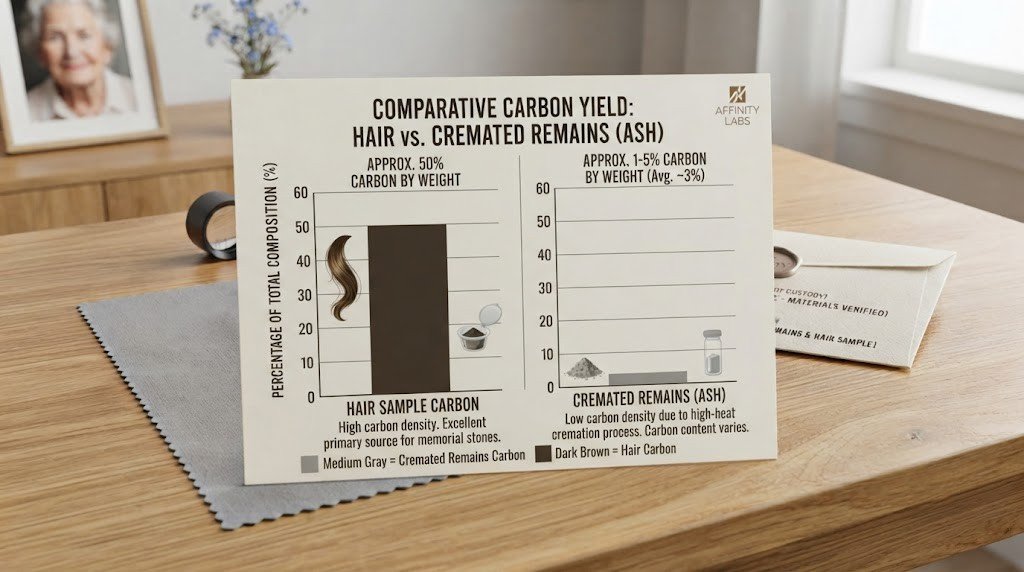
Where a stone really made from grandmother ashes and hair differs is at the start. Ash and hair behave very differently: ash is mostly calcium phosphate, with usable carbon at roughly 0.5% to 4% of its weight, while hair is about 50% carbon. How carbon is recovered from each, and when the two are brought together, is set by each company. The walkthrough of how a diamond is grown from her ashes and hair together covers that sequence.

Questions about the combining step

Whether a stone is really made from grandmother ashes and hair depends on how this step is handled, and every provider handles it its own way. Ask each one:

  • Do you extract carbon from the ashes and the hair separately, and then blend them?
  • At what stage are the two carbon sources combined?
  • Is any of either material set aside unused, and what happens to it?
  • Can you describe the process in writing for my file?

Plain answers to these four questions say a great deal about whether a provider can back up a stone really made from grandmother ashes and hair.

How Much of a Stone Really Made From Grandmother Ashes and Hair Came From Her?
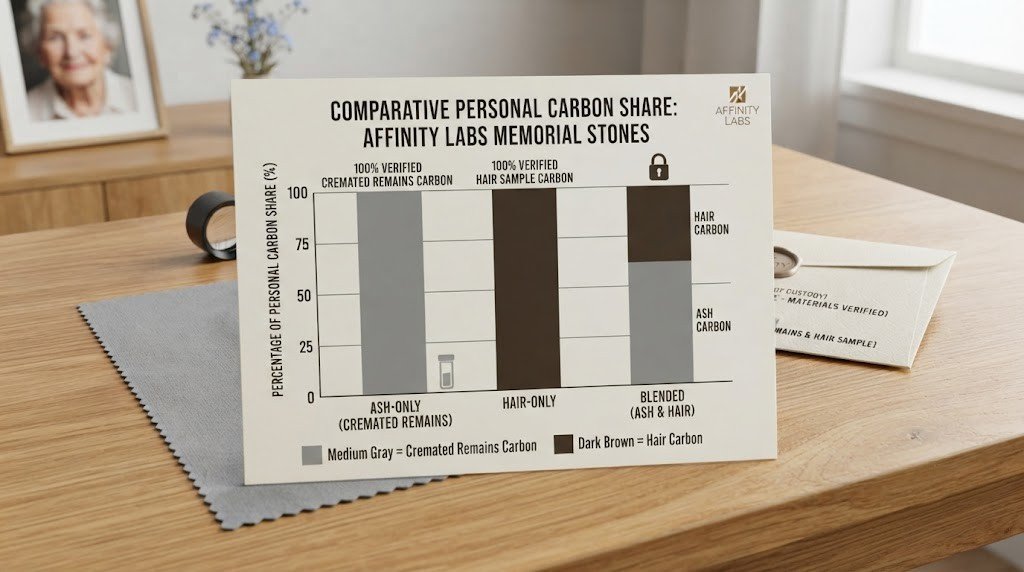
For stones grown from ashes alone, industry figures put personal carbon at around 10–15% of the finished mass, with some providers citing as little as 3% and others more. That range describes ash-only stones. It does not transfer to a stone really made from grandmother ashes and hair, and it should not be quoted as if it did.

For a gem that is really made from grandmother ashes and hair, no blended finished-stone figure is published anywhere in the industry. How much of each material a provider uses, and how much lab carbon joins them, varies. The only way to get a number is to ask for it.

A written request worth sending

Before you pay for anything described as really made from grandmother ashes and hair, ask the provider to state, in writing and in plain terms:

  1. Roughly what share of the finished stone they estimate came from her carbon in total.
  2. Whether they can estimate how that share divides between ash and hair.
  3. How much supplemental lab carbon is typically added at the carat size you are considering.

A range, or a plain statement that the ash-and-hair split cannot be estimated, is an honest reply. A refusal to answer at all is worth weighing before you send anything of hers.

How Would You Know a Stone Is Really Made From Grandmother Ashes and Hair?

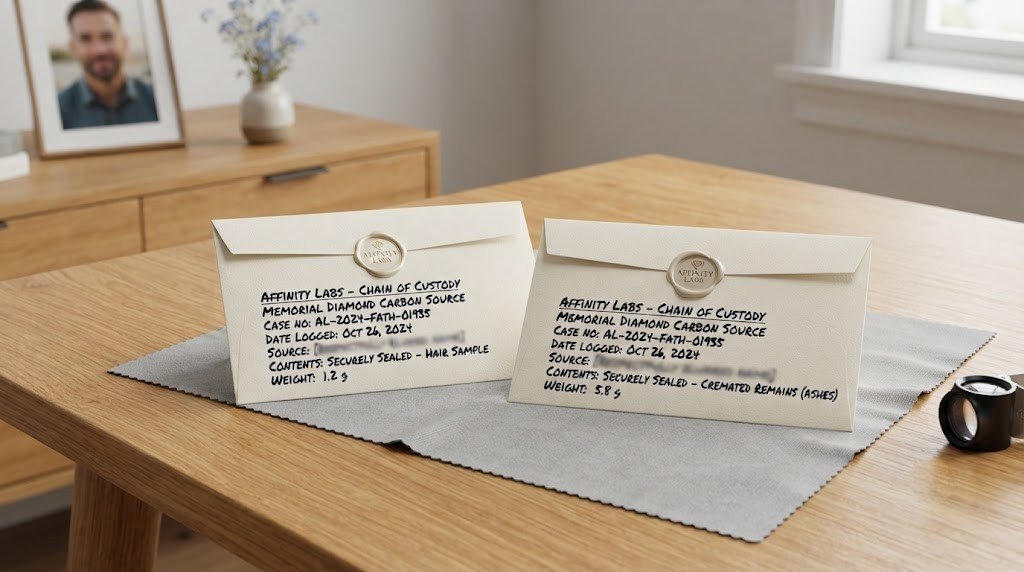
You would know mostly through paper. Because a finished diamond cannot be tested to show it came from her, confidence that it is really made from grandmother ashes and hair depends on how each material is received, logged and tracked through the process. Think of it as two chains of custody that must both be intact.

Seven checks before you order

These seven checks give you something concrete to compare across providers offering a stone really made from grandmother ashes and hair:

  1. Two intake records. Ask whether you will receive a separate written receipt for the ashes and for the hair.
  2. Labeling for each material. Ask how each container is labeled on arrival and at every handoff.
  3. Batch separation. Ask how her materials are kept apart from other families’ material throughout.
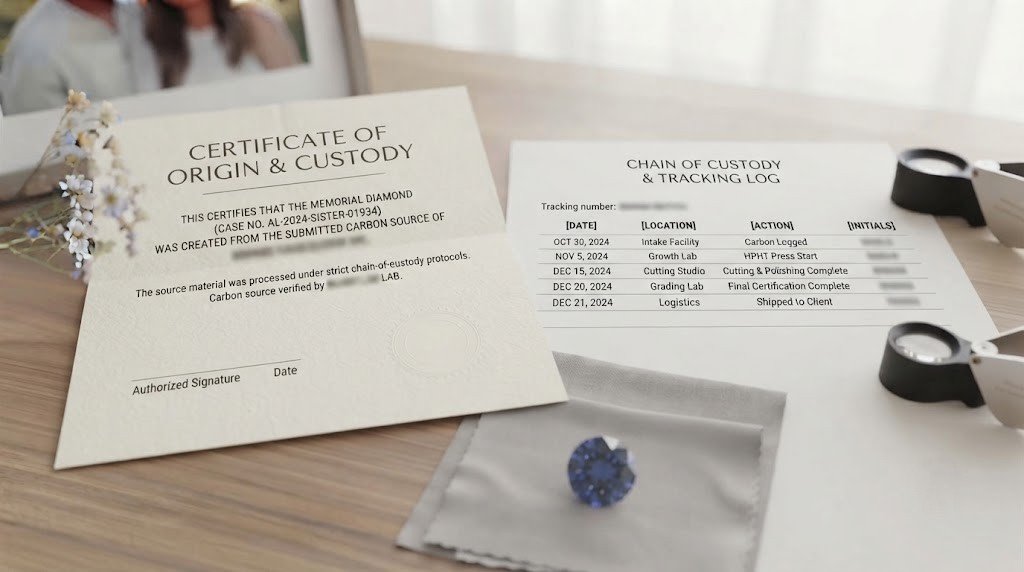
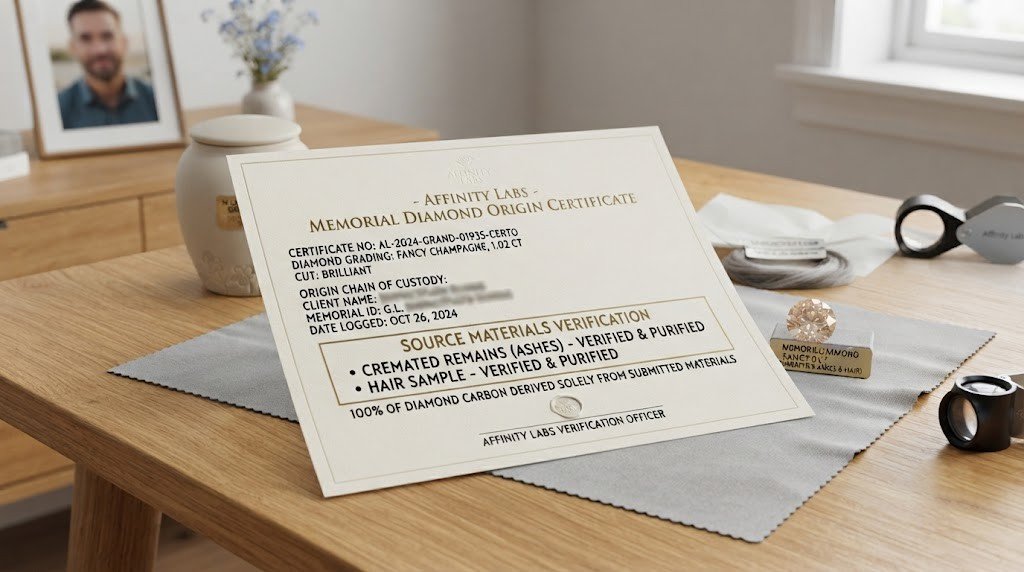
  4. An origin certificate naming both. Ask whether the in-house authenticity certificate will list ashes and hair specifically, not just “remains.”
  5. A written process description. Ask for the combining method in writing, so it sits in your file.
  6. What happens to leftovers. Ask what is done with unused ash or hair, and whether you can have it returned.
  7. Failed-run policy. Ask what happens, and what is communicated to you, if a growth run does not succeed.

Origin certificate versus grading report

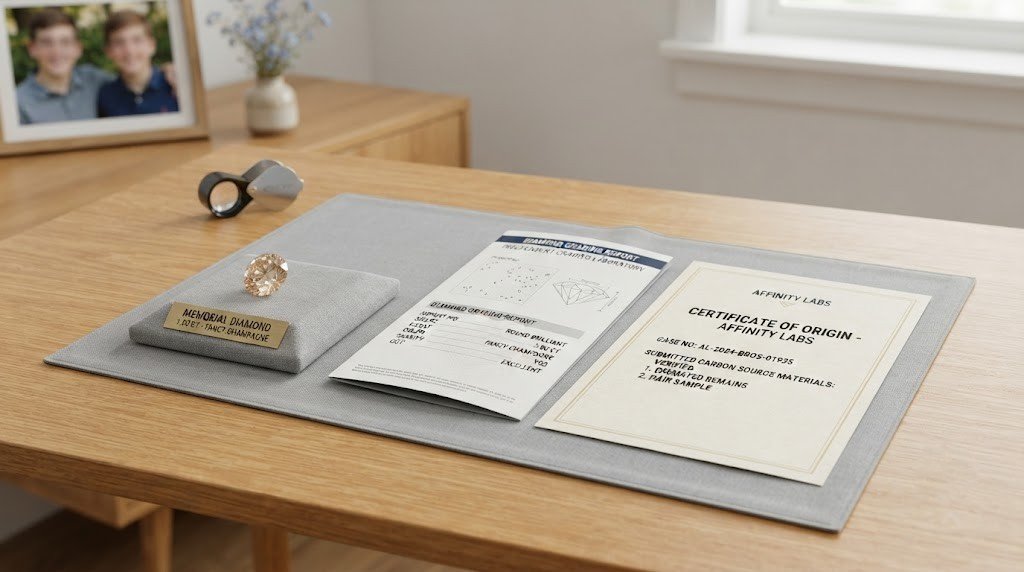
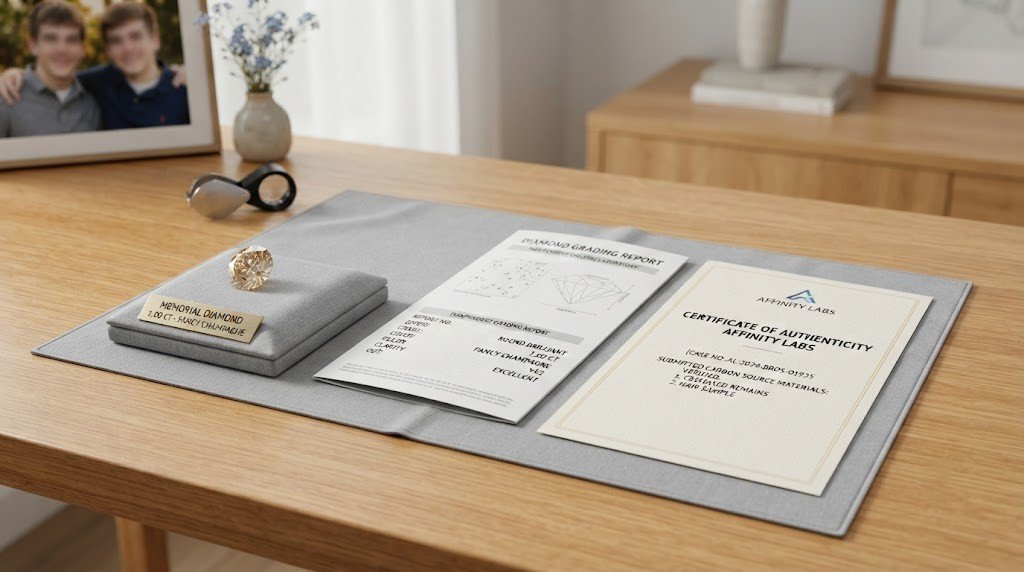
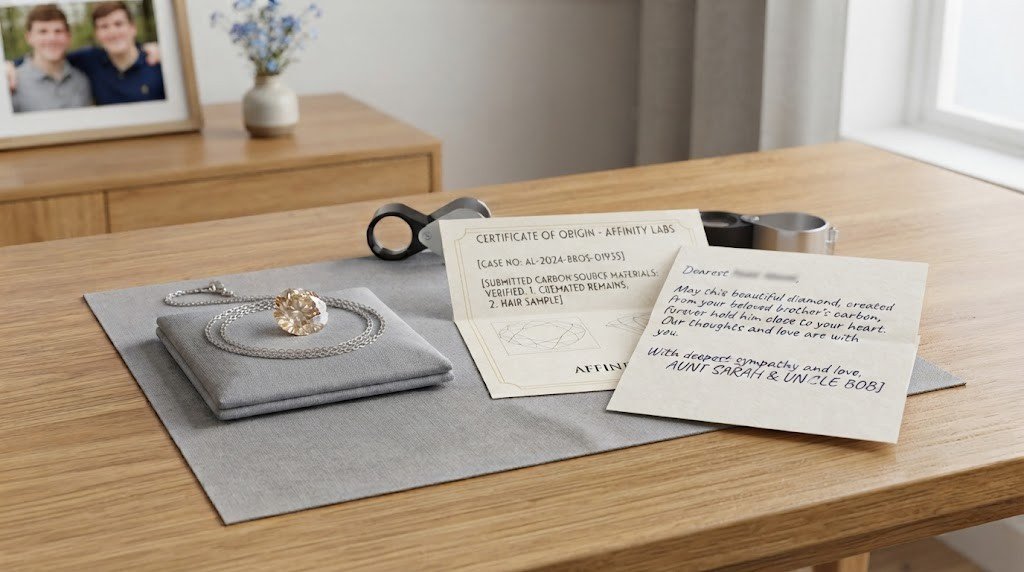
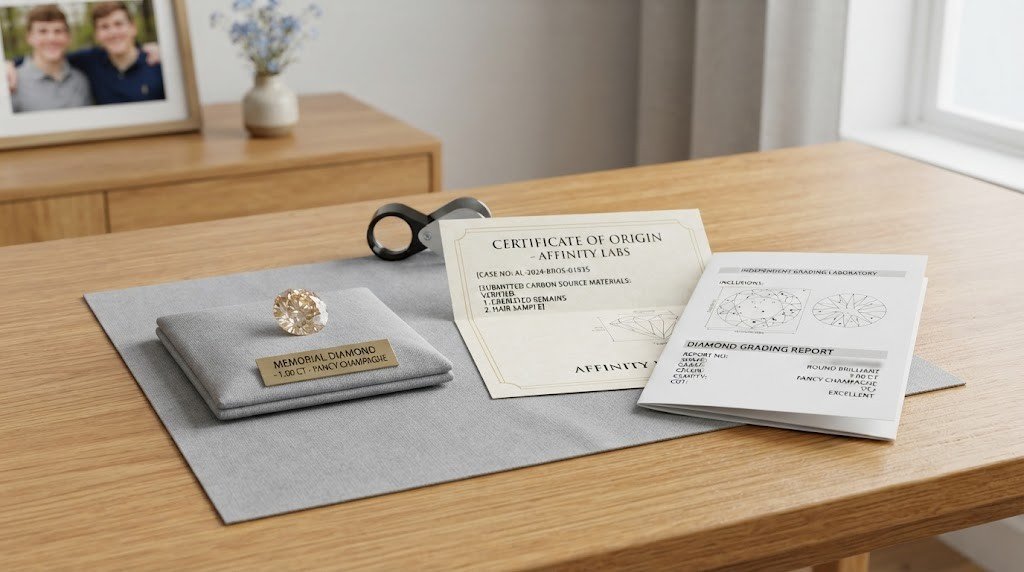
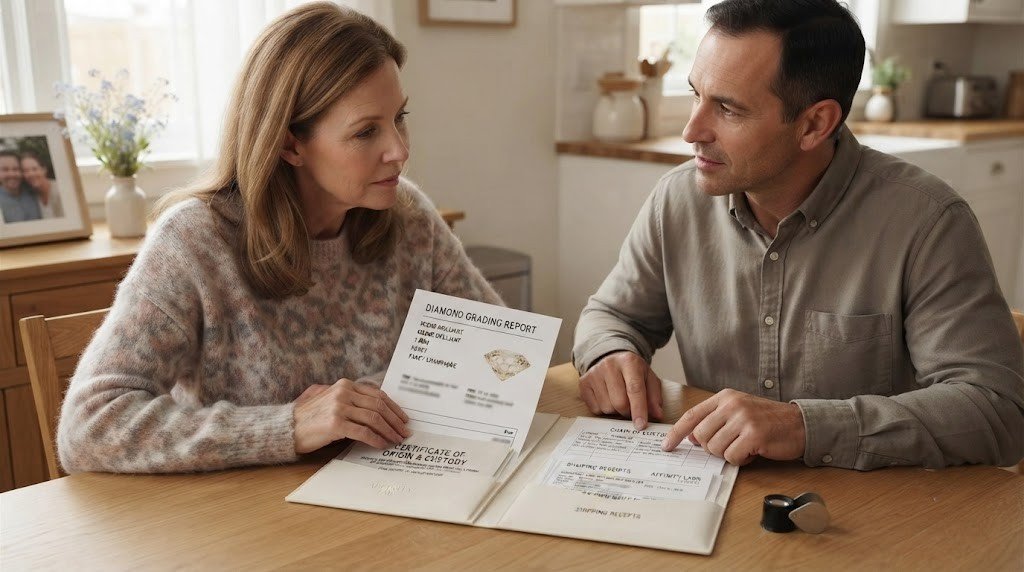
The origin or authenticity certificate, usually produced in-house, is the document that ties a stone to your family’s submitted material; for a stone really made from grandmother ashes and hair, it is where both materials should be named. A grading report describes the diamond’s own cut, color, clarity and carat, ideally from an independent lab working to GIA’s quality standards, sometimes IGI.

Independent grading is typically an optional, separately priced add-on. It confirms that you have a genuine diamond of the stated quality. It does not, and cannot, confirm that a diamond is really made from grandmother ashes and hair.

Which Claims Need Proof, and Which Cannot Be Made at All?

Use this table to judge any description of a stone really made from grandmother ashes and hair.

Claim about a combined stoneStatusWhat supports it
It is a genuine lab-grown diamondCan be statedIndependent grading report
Carbon from her ashes went into itNeeds provider documentationAsh intake record, origin certificate naming ashes
Carbon from her hair went into itNeeds provider documentationHair intake record, origin certificate naming hair
Some lab carbon was addedTypically true; confirmProvider’s written process description
Her total share of the stoneProvider estimate onlyWritten answer; no published blended figure exists
The exact split between ash and hairGenerally cannot be shownNot measurable in the finished crystal
The stone is made entirely of herCannot be statedContradicts how memorial diamonds are typically grown

The middle rows are where your written requests do their work, and where a provider shows whether its stone is really made from grandmother ashes and hair in any checkable sense.

Would Two Separate Stones Be Easier to Describe Honestly?
really made from grandmother ashes and hair

Often, yes. A stone grown only from her ashes can be described using the ash-only figures the industry already publishes, and a stone grown only from her hair has a simpler, single chain of custody. Each one has one material, one intake record and one origin certificate. Each is easier to verify than a stone really made from grandmother ashes and hair together.

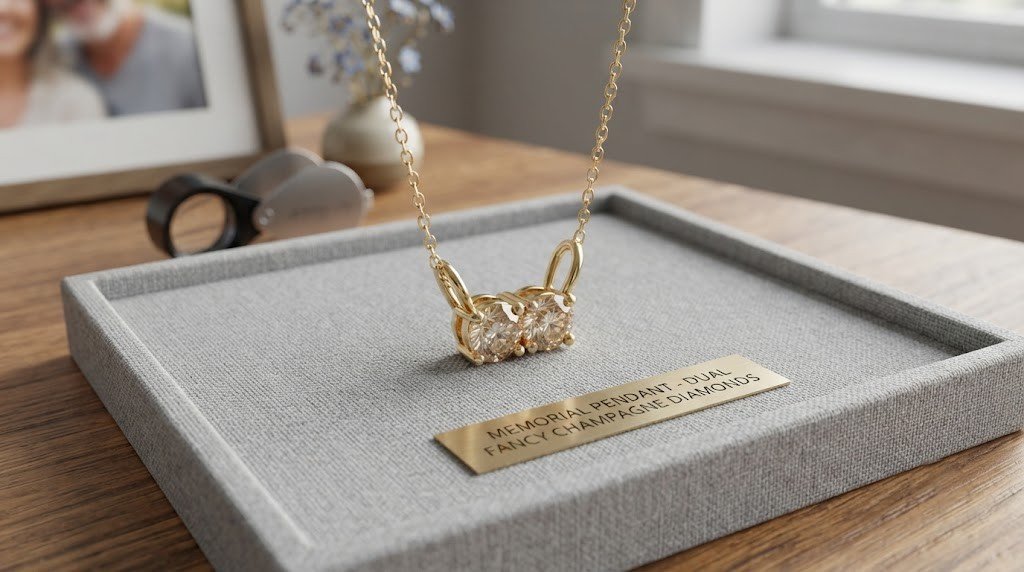
Two stones also open options: one for the relative who keeps her urn, one for whoever saved her hair, or both in one setting.

When one combined stone still makes sense

A combined stone can matter for reasons no table captures: the wish to bring both parts of her together into a single piece. If your family wants a gem really made from grandmother ashes and hair, the answer is not to avoid it but to ask for documentation that names both materials. For more on whether one source might be enough, the companion pieces on whether a stone is truly grown from her ashes and whether a stone is truly grown from her hair look at each route alone.

OptionSourcesRecords to checkEasiest to describe?
One combined stoneAshes and hairTwo intake records, certificate naming bothHardest
One ash stoneAshesOne intake recordEasier; published ash range applies
One hair stoneHairOne intake recordEasier; no cremation involved
Two separate stonesOne eachOne record per stoneClearest

Who Decides What Happens to Her Ashes and Hair?

Before any stone is really made from grandmother ashes and hair, someone has to agree to release each material, and the two can sit with different people under different rules. Authority over cremated remains is set by state law and by any wishes she left in writing, and the order of who decides varies by state. Grandchildren usually stand behind a surviving spouse or partner and then her adult children. If nobody is sure who holds that role, the crematory or funeral home that handled her cremation can usually name the person who signed for it.

If you are her grandchild, the respectful path runs through that person: a gentle request to whichever parent, aunt or uncle holds that role for a small share to be set aside for the stone. Her ashes may already have been divided, scattered or placed somewhere permanent, and her hair may be with a cousin.

Hair kept at home is usually a simpler practical matter, though her personal belongings may form part of her estate under rules that change from state to state. Before sending any, check with the executor or whoever is settling her affairs.

Faith and dividing remains

Religious teaching speaks to cremation and to what is done with ashes; none of the major traditions has ruled on memorial diamonds as such. For Catholic families, the Church accepts cremation yet wants the remains to rest whole in a consecrated place, with only limited room for setting a little apart, so splitting her ashes between an urn and a stone is worth raising with a priest. Orthodox and Conservative Judaism generally prohibit cremation, while Reform Judaism is more permissive. A hair-only stone involves no cremation. Whatever your family’s faith, its own clergy or community leaders are the ones to ask.

What Warning Signs Suggest a Combined Claim Is Overstated?

A few patterns deserve a second look before you commit to a stone described as really made from grandmother ashes and hair:

  • A claim of 100% her. Memorial diamonds are typically grown with supplemental lab carbon. A promise that nothing else is in the stone is an overstatement until proven otherwise.
  • A borrowed percentage. If a provider quotes the ash-only range as though it describes a combined stone, ask where the figure comes from.
  • A certificate that names neither material. A generic “made from remains” line does not show that both were used.
  • No answer about the combining step. If a provider cannot say when or how the two carbon sources meet, ask again in writing.
  • A promised color tied to her hair or ashes. Diamond color comes from trace elements during growth; no family can choose or match an exact natural shade.
  • Pressure to decide quickly. A careful provider gives you time.

None of these settles anything alone. Each is a reason to slow down and ask more questions.

Which Beliefs About Stones Really Made From Grandmother Ashes and Hair Do Not Hold Up?

Some assumptions about a diamond really made from grandmother ashes and hair sound reasonable but do not match how the process works.

“Adding hair makes the stone bigger.” A stone’s finished weight depends on how many weeks it spends growing, and the volume of ash or hair delivered does not change that.

“Two sources mean double the personal carbon.” No blended figure is published. Whatever share a stone really made from grandmother ashes and hair contains is something the provider has to estimate for you in writing.

“Hair gives the stone a cleaner color than ash.” Neither source has been shown to produce a lighter or more predictable color. Boron produces blue and nitrogen produces yellow, and memorial diamonds tend toward yellow, blue and champagne or brown. More on that is in the colors a stone from her ashes and hair can take.

“A stone really made from grandmother ashes and hair needs most of her ashes.” Industry-wide, ash requests typically range from a few tablespoons to roughly 4 oz, with hair typically a small lock. The guide to how much ash and hair a grandmother memorial diamond needs sets out what to expect, though each provider sets its own figures.

“Old ashes or old hair will not work.” Whether long-stored material is usable is each provider’s call, so ask.

What Does a Combined Stone Cost, and How Long Does It Take?

Industry pricing in 2026 runs roughly $1,500 to $3,500 for about 0.10 to 0.25 carat, roughly $5,000 to $15,000 for 0.5 to 1 carat with colorless costing noticeably more, and roughly $20,000 to $75,000 or more for 2 to 5 carats and up. These are ranges across providers. Whether a stone really made from grandmother ashes and hair costs more than a single-source one is a question to ask each provider.

Independent grading, engraving, fancy cuts and settings are usually priced on top of the loose stone, so budget for the grading report if you want third-party confirmation of quality.

Once her ashes and hair arrive, industry-typical lead times are 6 to 10 months, stretching to about 12 months for stones above roughly 2 carats or in specialty colors. Ask whether handling two materials affects the schedule for a stone really made from grandmother ashes and hair. The hub on a grandmother ashes and hair diamond covers planning in more depth.

Frequently Asked Questions

Can a provider prove which carbon in a stone really made from grandmother ashes and hair came from each?

Generally no. Once purified, carbon from ash and from hair is chemically identical, and the finished crystal cannot be tested to separate them. What a provider can document is that both materials were received, logged and used.

Is the 10–15% figure accurate for a stone made from both her ashes and hair?

No. That range applies to stones grown from ashes alone. No finished-stone figure is published for combined ash-and-hair stones, so ask each provider for its own written estimate of her total share at your chosen size.

Should the origin certificate name both her ashes and her hair?

It is reasonable to ask for that. An in-house authenticity certificate is the document linking the stone to your family’s material, so for a combined stone, request in advance that it list both ashes and hair by name.

Is a stone still really made from grandmother ashes and hair if lab carbon is added?

Yes, honestly described. Her carbon from both sources becomes part of the crystal, and supplemental lab carbon is typically added to reach a workable volume. Ask the provider to say in writing roughly how much is added.

Can we make one stone from her ashes and another from her hair instead?

Usually, yes, depending on the provider and how much material your family has. Each single-source stone carries just one chain of custody, which tends to make the paperwork simpler to check and the stone simpler to explain to relatives.

What if her ashes were already divided among relatives?

Ask whoever holds a portion whether a small amount could be shared for the stone. Authority depends on state law and her written wishes, so the person who signed the cremation authorization is often the right first conversation.

Final Thoughts on a Stone Really Made From Grandmother Ashes and Hair

Wanting a stone really made from grandmother ashes and hair is a natural instinct, and it can be honored truthfully. The truthful version simply has limits: her carbon from both sources is in the crystal, alongside lab carbon, in proportions that only the provider can estimate.

Ask for records that name each material, read them before you commit, and keep them with the stone. If one combined piece starts to feel harder to describe than you would like, two separate stones remain a perfectly good choice.

Learn More About Combined Ash and Hair Stones for a Grandmother

Talk With Memorial Diamond

Whether you are leaning toward one combined stone or two separate ones, a conversation can help you see what records to ask for and what each route involves. Memorial Diamond is glad to talk it through at your own pace.

When your family is ready, start at memorialdiamond.us.
How a Memorial Diamond Is Made From Your Grandmother

How a Memorial Diamond Is Made From Your Grandmother’s Hair

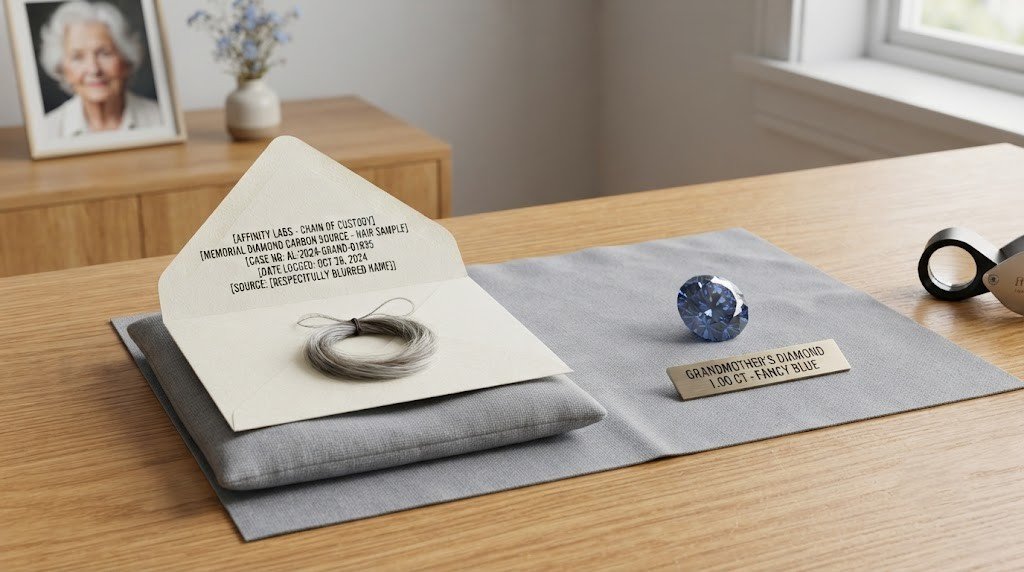
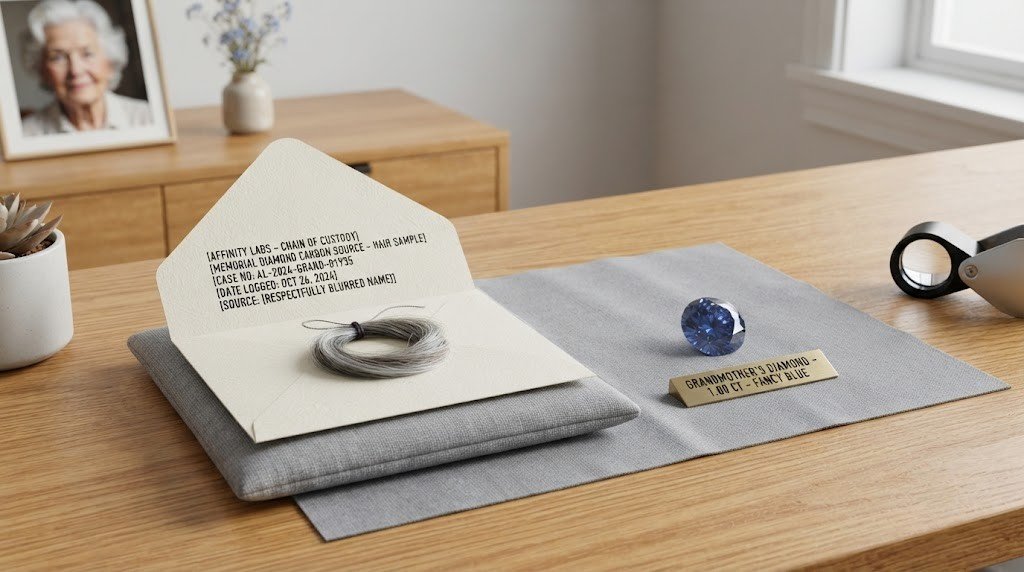
A folded envelope with a lock of her hair, a strand caught in a brush she used every morning: small things like these can carry a surprising amount of her. A diamond made from grandmother hair begins when a lab heats a small sample without oxygen to recover the carbon in its keratin, purifies that carbon, converts it to graphite and grows it into a real diamond under extreme pressure and heat, after which the crystal is cut, polished and graded.

What follows explains every stage of a gem made from grandmother hair for someone without a chemistry background, and points out where the answer depends on the provider rather than on science.

made from grandmother hair

Why Can Hair Become a Diamond at All?

Hair is built mostly from keratin, a tough protein, and keratin is rich in carbon. By weight, hair is roughly 50% carbon. Diamond is nothing but carbon atoms locked in a crystal, so any material with a usable share of carbon can, in principle, become the starting point for one, and that is the basic chemistry behind every stone made from grandmother hair.

That single figure explains much of what makes a diamond made from grandmother hair different from one grown from ashes. Cremated remains are mostly bone mineral, with only a small percentage of usable carbon. Her hair, by contrast, is about half carbon to begin with.

There is a second difference. Hair needs no cremation. If she was buried, or if cremation is not something your family’s faith permits, a lock of hair saved at the time of her death, from a salon visit or tucked in a keepsake box can still be the source of a stone made from grandmother hair.

Why Does a Lab Need So Little of Her Hair?

Because each strand holds so much carbon, providers typically ask for only a small lock or a few grams to grow jewelry made from grandmother hair. Some describe the amount as palm-sized or a few wisps. Exact requirements vary from lab to lab, and no single minimum applies across the industry.

Sending more hair will not make a ring or pendant made from grandmother hair any larger. Carat size is decided by how long the crystal grows, not by how much carbon arrives at the lab. A single envelope is often enough for a diamond made from grandmother hair, and sometimes enough for more than one stone, which matters when several grandchildren hope for a piece. The guide to how much hair a grandmother memorial diamond needs covers collection and packing in more practical detail.

Can you collect hair from a brush?

Loose strands gathered from a brush or a garment are a different matter from a cut lock, and providers set their own rules about what they accept. Describe exactly what you have, ask whether it is workable, and wait for a written reply before you mail anything irreplaceable.

Which Stages Turn a Lock of Hair Into a Diamond?

Seven stages separate an envelope of hair from a finished gem made from grandmother hair. No provider publishes a fixed duration for each one, and the overall timeline depends mainly on the carat size chosen, so this summary focuses on purpose rather than time.

StageLab activityMeaning for her hair
IntakeHer sample is logged under your order and labeledThe lock is tracked as hers from arrival onward
ExtractionOxygen-free, multi-stage heating removes everything that is not carbonThe other parts of keratin are driven off
PurificationThe recovered carbon is refined furtherHer carbon reaches roughly 99.9% purity or better
GraphitizationHeating to about 2,500–2,700°C converts carbon to graphiteHer carbon becomes press-ready feedstock
GrowthAn HPHT press, or for a minority of providers a CVD chamber, grows the crystalHer carbon, with any supplemental carbon, forms diamond
Cutting and polishingA gemologist shapes and facets the rough crystalThe stone gains its shape and brilliance
Grading and documentationQuality is graded, ideally by an independent lab, and origin is recordedYou receive evidence of quality and of her origin

Some providers add an optional color-treatment step after growth; it is described in the color section. Every lab orders and names these stages slightly differently, so ask yours to describe the sequence it follows for anything made from grandmother hair.

What Does the Lab Strip Away From Her Hair?

Keratin contains carbon alongside other elements, including hydrogen, oxygen, nitrogen and sulfur. Extraction is the stage of producing a stone made from grandmother hair that separates the carbon from all of those. The lab heats the hair in a controlled, oxygen-free environment, usually over several steps, so the non-carbon components are driven off while the carbon stays behind.

Removing oxygen from the chamber is essential. Heated in ordinary air, carbon would bond with oxygen and leave as a gas, taking her contribution with it. In a sealed, oxygen-free setting it remains as a solid residue that can be collected.

Purification follows until that residue is roughly 99.9% carbon or higher. Clean feedstock matters because stray elements in the growth cell can affect the finished gem. At this point, what is actually made from grandmother hair no longer resembles hair in any way; it is a small amount of nearly pure carbon.

What becomes of any hair the lab does not use?

The envelope you mail may hold more than a diamond made from grandmother hair actually consumes. Whether leftover hair is returned, stored or disposed of is a provider policy, and families feel strongly about it, so ask in advance and keep the reply.

Is Lab Carbon Added to a Stone Made From Grandmother Hair?

Often, yes. Across the industry, recovered personal carbon is typically blended with supplemental lab-sourced carbon so the growth cell has enough feedstock, and a provider may well do the same for gems made from grandmother hair. Because hair is so carbon-rich, the reasons and proportions may differ from an ash-based stone, but providers set this individually.

Here is the honest gap: no industry-wide figure is published for how much of a finished stone made from grandmother hair is her own carbon. The percentages people quote online describe ash-based stones and should not be carried over to hair. Before you order, request a written statement from every provider you are considering: roughly how much of the polished gem will be her own carbon, and does that change with carat size?

None of this makes a diamond made from grandmother hair less hers. Whatever the proportion, carbon recovered from her hair becomes part of the diamond’s crystal lattice. It is not a symbol placed beside her memory; it is a gem physically built, in part, from her. Sales claims of a stone that is entirely hair, with nothing added, describe something the chemistry does not support.

How Does Graphite Become a Diamond Crystal?

Graphite and diamond share the same element and differ only in structure. In graphite, carbon atoms form flat layers that slide over each other, which is why pencil lead is soft. In diamond, every atom is bonded tightly in three dimensions.

Most providers use HPHT growth to force that change in a stone made from grandmother hair. The graphite feedstock goes into a growth cell with a tiny diamond seed, and a press, a BARS or cubic design for example, applies roughly 6–8 GPa of pressure at around 1,400–2,500°C. Those are conditions similar to the Earth’s mantle, where natural diamonds form, and in them carbon builds outward from the seed as diamond crystal over weeks to months.

A smaller group of providers grows memorial stones by CVD instead, converting the carbon to methane and depositing it layer by layer onto a seed plate in a vacuum chamber. For a fuller account of both techniques, see the background on how lab-grown diamonds are produced. Asking which method grows a diamond made from grandmother hair at a given lab is a perfectly reasonable question.

Why growth time sets the carat

The longer a crystal made from grandmother hair stays in the press, the larger it grows. That is why carat size, which usually runs from about 0.10 to 5 carats or more, shapes both timeline and cost. The amount of hair you send does not.

What Happens After the Crystal Leaves the Press?

Fresh from the press, a crystal made from grandmother hair looks nothing like a finished gem. A gemologist studies it, decides on a shape such as round, cushion, oval or princess, and cuts and polishes the facets that will catch light. Ask whether a quoted carat weight describes the rough crystal or the polished result, because cutting removes material.

What comes out of the cutting room is a genuine diamond. It rates 10 on the Mohs hardness scale and has the same optical behavior as any other diamond, mined or lab-grown. Clarity for memorial diamonds typically falls between SI2 and VVS. Hardness is not the same as being unbreakable, though: a sharp blow at the wrong angle can chip any diamond, so a protective setting is worth discussing for a ring worn daily.

What Color Can a Diamond From Her Hair Be?

The color of a diamond made from grandmother hair forms during growth and depends on trace elements in the crystal. Boron gives blue tones. Nitrogen gives yellow. A colorless diamond requires both to be kept out, which needs extra processing and usually raises the price.

Organic, personal carbon sources tend to carry traces of these elements, so memorial diamonds generally lean toward yellow, blue, and champagne or brown shades. A stone made from grandmother hair is no exception, and its color is not a measure of her or of the hair’s quality. No provider can promise to reproduce a particular shade, and families cannot select an exact tone in advance; what you can choose is from the range of colors a provider offers.

Some providers also offer irradiation after growth to produce red, pink, green or black stones. For more on the options and their limits, read about the color range a diamond from her hair can take.

Does Gray, Dyed or Treated Hair Change Anything?

It is a natural thing to wonder, and the answer sits with the provider rather than with general science. There is no established basis for saying that gray, white, colored, permed or thinning hair produces a different gem made from grandmother hair, a different color or a less suitable sample.

What does vary is policy. Some labs may ask about dyes, treatments or products in the hair; others may not. Tell the provider plainly what you have, including any treatments you know about, and ask whether they accept it for a diamond made from grandmother hair. Get their answer in writing so there is no confusion later.

What Paperwork Proves Where the Stone Came From?

Two different documents can accompany a finished diamond made from grandmother hair, and it helps to know which is which.

A certificate of authenticity, usually issued in-house by the provider, states that the stone was grown from the carbon your family submitted. It functions as a chain-of-custody record. A grading report describes the diamond’s quality on the 4Cs: cut, color, clarity and carat. Ideally it comes from an independent gemological lab, commonly working to GIA standards and sometimes from IGI, and it is usually an optional add-on with its own fee rather than a standard inclusion.

GIA’s explanation of diamond quality factors is a helpful guide to reading a grading report.

Questions that reveal how chain of custody works

Practices differ, so a short list of direct questions tells you more than any brochure:

  • What label or code follows her hair through every stage, from intake to the finished stone made from grandmother hair?
  • Is anything handled at an outside facility, and how is her sample tracked there?
  • Can you see progress updates or photos at any point?
  • What is recorded on the authenticity certificate, and what is not?
  • If a growth run does not succeed, what happens next, and would more hair be needed?

Readers who want to test whether a stone is really made from grandmother hair can find that skepticism addressed in the piece on whether the diamond truly contains her hair.

Whose Agreement Matters Before You Send Her Hair?

Hair kept at home is usually a simpler matter than ashes when you are planning a stone made from grandmother hair, but it is not always straightforward. A person’s belongings can form part of their estate, and the rules differ by state. If her estate is still being settled, a conversation with the executor, or whoever is handling it, is a sensible first step.

Family feeling matters too. You may be a grandchild by birth, adoption, marriage or choice, and an aunt, uncle, parent or cousin may also hold strands of her hair or have hopes of their own. Because so little is needed, a single lock can sometimes supply more than one stone made from grandmother hair, which can make it easier for relatives to share.

Faith can shape the choice. No religious tradition has an official position on memorial diamonds as such; teaching addresses cremation and the handling of ashes. Across major schools of Islamic thought, cremation is considered impermissible, and a hair-based stone involves no cremation, which some families find relevant. Your own imam, rabbi, priest, pastor or community elder is the right person to consult.

If her ashes are also available, the companion explainer on the ash-based lab process describes how that route differs, and some families combine both, as covered in growing one stone from her ashes and hair together.

How Long Does a Diamond Made From Grandmother Hair Take, and How Much Does It Cost?

Industry-wide, a diamond made from grandmother hair takes about 6 to 10 months from the time a lab receives the material, with stones above roughly 2 carats or in specialty colors sometimes taking up to 12 months. Plan around the overall estimate a provider gives you, since individual stages are not published with set times.

As a general picture of 2026 pricing across the category, entry stones of about 0.10–0.25 ct run roughly $1,500 to $3,500. Stones of 0.5 to 1 ct fall roughly between $5,000 and $15,000, and colorless costs meaningfully more at the same size. Large stones from 2 to 5+ ct reach roughly $20,000 to $75,000 or beyond. An independent grading report, engraving, a fancy cut and a ring or pendant setting are typically charged on top.

For a walk-through of choosing a provider and preparing the sample, see the practical route to turning her hair into a diamond, and for every decision gathered in one place, the grandmother hair diamond guide is the fuller reference.

Frequently Asked Questions

How much of a diamond made from grandmother hair is actually her carbon?

No industry-wide percentage is published for hair-based stones, and figures quoted for ash do not apply. Supplemental lab carbon is often blended in. Put the question to each lab in writing and ask how much of a stone at your chosen carat would be her carbon.

Can hair from her hairbrush be used?

It depends on the provider. Loose strands from a brush differ from a cut lock, and labs set their own acceptance rules. Describe exactly what you have, ask whether it is workable, and wait for a written answer before posting anything irreplaceable.

Does her hair need to have been cut recently?

Providers decide what age and condition of hair they accept, so there is no universal rule. Hair saved years ago in an envelope or locket may be workable. Explain how the hair has been kept and ask the lab directly before sending it.

Will gray or dyed hair affect the color of the diamond?

There is no established basis for saying hair color or dye changes the stone. Diamond color comes from trace elements such as nitrogen and boron present during growth. Whether a provider accepts dyed or chemically treated hair is a question to ask them directly.

Can a diamond be made from grandmother hair if she was buried?

Yes, if a lock of her hair was kept. Hair-based stones need no cremation, so burial does not rule them out. The hair needs to be available and acceptable to the provider, and it is wise to check first with whoever is settling her estate.

Can one lock of her hair make stones for several grandchildren?

Sometimes. Because hair is about half carbon, a small amount goes a long way, and several stones may come from one sample. The provider can confirm what is feasible, and the family should agree on how the hair is shared first.

Final Thoughts on Her Hair Becoming a Diamond

Understanding what happens in the lab turns the idea of a diamond made from grandmother hair into a series of concrete steps you can question. You now know why her hair holds so much carbon, what the lab removes, why supplemental carbon is often part of the process, and which answers only a provider can give.

There is no deadline on this. A lock of hair kept safely in an envelope will wait while your family talks it through, and a diamond can sit alongside every other way you remember her.

Learn More About Hair-Based Grandmother Diamonds and the Lab Process

Talk With Memorial Diamond

Questions about her hair, how much you have or whether it is suitable are exactly the kind of thing worth asking early. Memorial Diamond is glad to hear from you at memorialdiamond.us, whether you are ready to begin or simply gathering information.

You set the pace, and a conversation commits you to nothing.

How a Memorial Diamond Is Made From Your Grandmothe

How a Memorial Diamond Is Made From Your Grandmother’s Ashes

Perhaps a small container of her ashes sits on a relative’s shelf, or perhaps you are the one who collected them from the crematory. If you want to know what really happens inside a lab to a diamond made from grandmother ashes, here is the plain version: a small portion of her remains is heated to recover its carbon, that carbon is purified and turned into graphite, and it is then grown into a real diamond under intense heat and pressure, typically alongside supplemental lab carbon, before being cut, polished and graded.

None of this requires a science degree. Below, each stage of a diamond made from grandmother ashes is explained in everyday terms, with the honest numbers kept in.

made from grandmother ashes

What Are Cremated Remains Made Of, Chemically?

Cremated remains are mostly bone mineral, a compound called calcium phosphate, processed after cremation into a coarse, pale powder. The heat of cremation burns off most of the body’s organic material, and that organic material is where most of a person’s carbon lived.

Industry figures put the usable carbon at roughly 0.5% to 4% of the ashes by weight, and the figure shifts with the individual and with how the cremation was carried out. So the first honest fact about anything made from grandmother ashes is that the lab begins with a material that is mostly not carbon at all.

That low share is the reason every later stage exists. Each step in producing a gem made from grandmother ashes is there either to isolate the small amount of carbon she left behind or to give that carbon a form a diamond press can use.

Does it matter how long ago she was cremated?

She may have died years ago, and her ashes may have waited in an urn or a closet ever since. Whether ashes kept for a long time can still yield a stone made from grandmother ashes, and whether storage conditions matter, is something each provider decides from its own experience. Ask the question directly, and ask for the answer in writing before you send anything.

Why Is a Stone Made From Grandmother Ashes Blended With Lab Carbon?

The answer is volume. A typical request runs from a few tablespoons of ashes up to about 4 oz, or 100 g, and only a few percent of that sample is carbon. Growing a stone of meaningful size from that alone is not practical, so the recovered carbon is typically blended with supplemental lab-sourced carbon before growth.

Industry-wide, her recovered carbon usually accounts for roughly 10–15% of the finished stone’s mass. A few providers quote a share as small as 3%, while others report more, and the figure moves with the carat size and how much ash was sent. A diamond made from grandmother ashes is therefore made partly from her, not entirely from her, and a claim of total purity does not match the chemistry.

What that share actually means

The proportion can sound small until you picture what it describes. In a diamond made from grandmother ashes, her own carbon atoms, recovered and purified, become part of the crystal lattice. The stone is not a symbol of her or a container holding her; it is physically built, in part, from material that was hers.

Before you commit, ask each provider in writing what personal-carbon share they expect in a stone made from grandmother ashes at the carat size you are considering. A clear, specific answer is a good sign about how the rest of the process will be handled.

What Happens at Each Stage of the Lab Process?

The work that turns a small sample into a diamond made from grandmother ashes moves through eight stages. Providers do not publish a set duration for each one, and the overall time depends mostly on the carat size you choose, so the table describes what happens rather than how long it takes.

StageWhat happens in the labWhat it means for her ashes
1. Receipt and trackingThe sample is logged, labeled and assigned to your orderHer remains are kept identifiable from the moment they arrive
2. Carbon extractionControlled, oxygen-free heating separates carbon from the mineralsThe calcium phosphate is stripped away, leaving her small carbon fraction
3. PurificationFurther processing removes remaining non-carbon materialHer recovered carbon reaches roughly 99.9% purity or higher
4. GraphitizationPurified carbon is heated to about 2,500–2,700°C and becomes graphiteHer carbon takes the form a growth press can use as feedstock
5. Crystal growthHPHT (or, for a few providers, CVD) grows diamond around a seedHer carbon, typically blended with lab carbon, becomes crystal
6. Cutting and polishingA gemologist shapes the rough crystal into a finished cutThe rough stone becomes a gem you can wear or set
7. Optional irradiationSome providers treat the stone after growth to shift its colorOffered for red, pink, green or black, if you want it
8. Grading and certificationThe stone is graded, ideally by an independent lab, and documentedYou receive proof of quality and a record of her origin

The table is a map, not any one provider’s workflow. Ask each provider to describe its own sequence for a stone made from grandmother ashes, including any steps handled at a partner facility.

How Is Carbon Pulled Out of Her Ashes and Purified?

Extraction is a controlled heating process carried out without oxygen, usually in several steps. Oxygen is kept out because carbon heated in open air combines with oxygen and escapes as a gas, which would destroy the very thing the lab is trying to keep. Within that sealed environment, the mineral content, chiefly the calcium phosphate, is separated and removed.

Purification then continues until the remaining material is roughly 99.9% carbon or better. That level matters because a diamond grows best from clean feedstock, and stray elements can affect both clarity and color. By the end of purification, the material bears no resemblance to ash; it is a small quantity of nearly pure carbon, and the raw ingredient of a gem made from grandmother ashes.

What happens to the remains that are not used?

Only part of what you send ends up in a diamond made from grandmother ashes, and sometimes much less than you send. Whether the unused portion comes back to you, how it is packaged, and when it ships are all provider decisions. Ask before you send, and keep the answer with your paperwork.

What Does Graphitization Do to the Purified Carbon?

Graphite and diamond are both pure carbon; the difference is how the atoms are arranged: in graphite they sit in flat, stacked sheets, and in diamond they lock into a rigid three-dimensional framework. Graphitization converts the purified carbon into graphite by heating it to roughly 2,500–2,700°C.

The reason is practical: diamond-growth presses use graphite as their feedstock, so carbon made from grandmother ashes has to pass through this form before it can become a gem.

How Does a Press Grow the Crystal?

Most diamonds made from grandmother ashes, like most memorial diamonds generally, are grown by HPHT, short for high pressure, high temperature. The graphite, typically blended with supplemental lab carbon, is loaded into a growth cell with a tiny diamond seed. A press, such as a BARS or cubic press, then recreates the conditions found deep in the Earth’s mantle: roughly 6–8 GPa of pressure and temperatures of about 1,400–2,500°C.

Under those conditions, carbon arranges itself into diamond’s crystal structure around the seed, over weeks to months depending on the target size.

Where does CVD fit in?

A minority of providers use CVD, or chemical vapor deposition, instead. In that method the carbon is converted to methane gas, and carbon from the gas deposits layer by layer onto a seed plate inside a vacuum chamber. The result is the same material, and the Wikipedia overview of synthetic diamond production methods covers both techniques. Ask your provider which method grows a stone made from grandmother ashes in their lab, and why.

Why does growth time, not quantity, set the carat?

Sending more of her ashes does not produce a larger or quicker gem made from grandmother ashes. Size depends on how long the crystal grows in the press. A full urn does not change the outcome.

Memorial diamonds are generally offered from about 0.10 carats to 5 carats or more. The size you choose sets the growth time, which in turn shapes the overall timeline and the price. That is why the carat decision belongs early in any conversation about a diamond made from grandmother ashes.

How Is the Rough Crystal Cut and Polished?

A freshly grown diamond made from grandmother ashes does not look like jewelry yet. It leaves the press as a rough crystal with a frosted, irregular surface. A gemologist then plans the cut, shapes the stone into a finished form such as a round, princess or cushion, and polishes the facets that give a diamond its sparkle.

The finished gem is a real diamond, with a hardness of 10 on the Mohs scale of mineral hardness and the same optical properties as any other diamond. That hardness makes it well suited to everyday wear, although a hard knock at the wrong angle can still chip any diamond, so a protective setting is worth discussing for a ring.

Clarity in a stone made from grandmother ashes typically falls in the SI2 to VVS range, as it does for memorial diamonds generally. When a provider quotes a carat size, ask whether it refers to the rough crystal or the polished stone.

Why Will Her Diamond Probably Have Color?

Diamond color comes from trace elements present while the crystal grows. Nitrogen produces yellow tones, and boron produces blue. A colorless stone made from grandmother ashes needs both elements excluded, which takes extra processing and typically costs more.

Carbon from a personal, organic source tends to carry traces of these elements, so stones made from grandmother ashes often grow in yellow, blue or champagne-to-brown shades rather than colorless. That variation reflects the source; it is not a defect. A provider can tell you which colors it offers, but no lab can promise to match an exact shade, and families cannot pick a precise tone in advance.

Some providers also offer optional irradiation after growth, which can shift a stone toward red, pink, green or black. If color is an important part of the decision, the guide to the colors her ashes can produce in a diamond goes further into what to expect.

Grading Report or Certificate of Authenticity: Which Is Which?

Two documents often travel with a diamond made from grandmother ashes, and they answer different questions.

  • Certificate of authenticity (origin): usually issued in-house by the provider, it records that the diamond was grown from your family’s submitted carbon. It is essentially a chain-of-custody document.
  • Grading report: ideally issued by an independent third-party gemological lab, often referencing GIA standards and sometimes IGI, it records the stone’s cut, color, clarity and carat, exactly as it would for any diamond.

The first speaks to origin; the second to quality. Independent grading is typically an optional add-on priced separately, so ask whether it is included. GIA’s own page on how the 4Cs of diamond quality work is a useful primer before you read any report.

How Do You Know a Diamond Made From Grandmother Ashes Came From Her?

Trust rests on chain of custody: the record showing her remains stayed identified and separate from receipt to finished stone. Practices differ, so ask specific questions and get the answers in writing.

  1. How is her sample labeled and logged on arrival?
  2. How is it kept separate from other families’ material at every stage, including any outside facility?
  3. Are updates or photos of the process available, and at which points?
  4. What exactly does the certificate of authenticity record?
  5. What happens if a growth run fails, and is more of her material needed?
  6. What happens to any portion that is not used?

If you are weighing whether a stone is genuinely made from grandmother ashes rather than lab carbon alone, the explainer on whether the diamond really contains her ashes works through that doubt in detail.

Who Decides Whether Her Ashes Go to a Lab?

Control of her remains follows the law of the state involved, together with anything she put in writing, and states rank relatives differently. In many places a surviving spouse or partner sits at the top, her grown children next, and grandchildren behind them. A quick call to the crematory or funeral home that handled her cremation will usually reveal whose signature appears on the authorization form, a sensible place to begin.

If you are a grandchild, including a step-, adopted or chosen grandchild, a respectful route is to ask whoever holds the ashes whether a small portion could be set aside for a stone made from grandmother ashes. Her remains may already have been divided, scattered or kept by an aunt, uncle or parent, and cousins may have their own hopes, so talk together before anyone contacts a lab.

Where her ashes are no longer available, a lock of her hair may be another path, and the hair-based version of this process explains how it differs. Personal belongings such as hair can count as part of her estate, and state rules on that vary, so a quick word with the executor is sensible. If faith matters to your family, be aware that Catholic teaching permits cremation yet asks that the ashes be kept whole in a consecrated resting place, allowing only a very limited exception for a small part; your own priest, pastor or community leader is the right person to ask.

How Long Does a Stone Made From Grandmother Ashes Take, and What Does It Cost?

Across the industry, a diamond made from grandmother ashes typically takes 6 to 10 months from the day a lab receives the material. Larger stones, roughly those over 2 carats, and specialty colors can take up to about 12 months.

General 2026 industry price ranges look like this:

  • Around 0.10–0.25 ct: roughly 1,500–3,500
  • Around 0.5–1 ct: roughly 5,000–15,000, with colorless meaningfully higher
  • Around 2–5+ ct: roughly 20,000–75,000 or more

Expect separate charges for extras such as an independent grading report, engraving, a fancy cut or a setting. For how much of her remains a lab tends to request, see how much ash a grandmother memorial diamond needs. For the full picture from first conversation to finished piece, the complete guide to grandmother ashes diamonds brings the decisions together.

Can more than one person receive a stone?

Because only a portion of the ashes is used, several family members can often each receive their own ring or pendant made from grandmother ashes, drawn from the same shared remains. Whether that is possible from the amount your family holds is a provider question. Families who also kept a lock of hair can read about combining her ashes and hair in one stone.

Frequently Asked Questions

Can a diamond be made from grandmother ashes that have been stored for many years?

Often the question is not whether ashes are old but whether the provider considers them workable. Acceptance rules are set by each lab and are not uniform. Tell the provider how and where the ashes have been kept, then ask for its decision in writing.

Does sending more of her ashes give a bigger diamond?

No. The finished size comes from the length of the growing period, not from the volume of ash a lab receives. A full urn will not create a larger or faster stone. You choose the size, and that choice shapes both the timeline and the price.

Is the supplemental carbon from another person?

Supplemental carbon is lab-sourced material, not remains from other families, and it is typically added to a diamond made from grandmother ashes because her remains hold only a small carbon fraction. Ask each provider how they keep her sample separate throughout processing, and request that description in writing.

Is a stone made from grandmother ashes a real diamond?

Yes. It is a genuine lab-grown diamond with the same crystal structure, hardness of 10 on the Mohs scale and optical properties as any other diamond. It can be graded on cut, color, clarity and carat like a mined stone.

Can my cousins and I each have a diamond from her ashes?

Often, yes. Because each stone made from grandmother ashes uses only a portion of the remains, several relatives can sometimes receive their own diamond from one shared amount. Whoever holds authority over her ashes should agree first, and the provider will confirm what is feasible.

Can we choose the exact color of her diamond?

Not precisely. Trace nitrogen tends toward yellow and boron toward blue, and providers offer a range of color options, sometimes including irradiation. No lab can match an exact shade, so ask to see real examples of each color they produce.

Final Thoughts on How Her Ashes Become a Diamond

Knowing the chemistry does not make the decision for you, but it can make the family conversation about a diamond made from grandmother ashes easier. You now know what her ashes are made of, why lab carbon is involved in anything made from grandmother ashes, and what each stage of the work is for, which means you can ask providers precise questions and judge their answers.

Take your time and include the people who share her memory. A diamond can sit alongside an urn, a scattering place or a grave; it does not have to replace any of them.

Learn More About the Science Behind Grandmother Memorial Diamonds

Talk With Memorial Diamond

If you would like to talk through any stage of this process, or put your questions about her ashes to someone familiar with how these stones are made, you can reach Memorial Diamond at memorialdiamond.us. Nothing needs to be decided before you get in touch.
We will answer what we can plainly, tell you where an answer depends on your family’s circumstances, and leave the timing entirely to you.

How a Memorial Diamond Is Made From Your Grandmother

How a Memorial Diamond Is Made From Your Grandmother’s Ashes and Hair

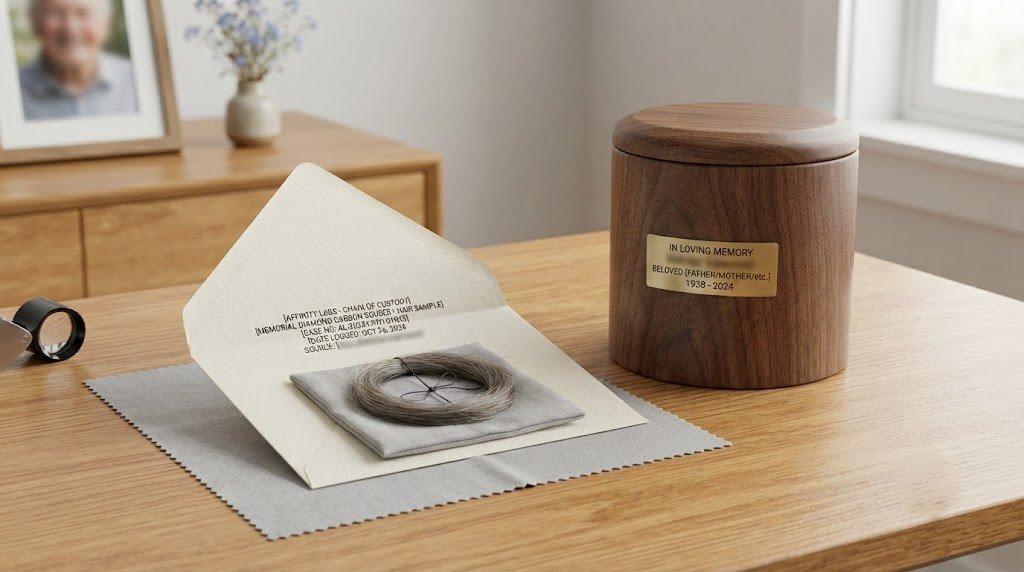
Perhaps a relative kept a portion of her cremated remains, and you still have a curl of her hair folded inside a card she once mailed you. A diamond made from grandmother ashes and hair is a real lab-grown diamond whose carbon comes partly from both keepsakes: each is purified, converted to graphite, typically blended with supplemental lab carbon, and grown under heat and pressure over weeks to months.

For anyone picturing a pendant or ring made from grandmother ashes and hair, the first surprise is how different the two materials are as starting points. That difference shapes almost every stage of the work, from intake to the certificate.

made from grandmother ashes and hair

Why Do Ash and Hair Behave So Differently in the Lab?

Cremated remains are mostly calcium phosphate, the mineral that gives bone its structure. Industry figures put the usable carbon in ash at roughly 0.5% to 4% by weight, depending on the person and on how the cremation was carried out. Most of an ash sample is mineral the lab has to remove.

Hair sits at the opposite end. It is built from keratin, a protein that is roughly 50% carbon by weight, and saving it never involved cremation. A lab preparing a stone made from grandmother ashes and hair is therefore handling one carbon-poor material and one carbon-rich one.

FactorCremated ashHair
Main substanceCalcium phosphate (bone mineral)Keratin (a protein)
Carbon by weightRoughly 0.5–4%Roughly 50%
Amount typically sentA few tablespoons up to about 4 oz (~100 g), varies by providerA small lock or a few grams, varies by provider
Cremation involvedYesNo
What purification removesCalcium phosphate and other mineralsThe non-carbon parts of keratin
Published personal-carbon share in a finished stoneAround 10–15% for ash-based stones, some cite as low as 3%Nothing published for hair or for a blend

Neither column makes one material “better” for the finished diamond. In a gem made from grandmother ashes and hair, the ash portion simply needs heavy refining, while the hair portion needs very little starting material.

What Are the Seven Stages From Keepsake to Diamond?

Every diamond made from grandmother ashes and hair passes through the same broad sequence as any memorial diamond. Only the front end changes, because two materials must be received, recorded and refined.

  1. Collection and logging. Both keepsakes are recorded under chain-of-custody tracking, ideally as two labeled items.
  2. Extraction and purification. Oxygen-free, multi-stage heating strips out everything but carbon, to roughly 99.9% purity or higher.
  3. Graphitization. Further heating, in the 2,500–2,700°C range, converts the purified carbon into graphite.
  4. Growth. The graphite, typically blended with lab carbon, grows around a diamond seed over weeks to months.
  5. Cutting and polishing. A gemologist shapes the rough crystal.
  6. Optional irradiation. Some providers offer post-growth color treatment.
  7. Grading and documentation. The stone is graded, ideally independently, and its origin recorded.

No dependable public source breaks down how long each stage takes for a stone made from grandmother ashes and hair, so treat any stage-by-stage calendar as a question for the provider. A family-facing version of this sequence appears in the guide on turning her ashes and hair into a diamond, which focuses on decisions rather than chemistry.

How Is Carbon Pulled Out of Ash and Out of Hair?

Before any stone made from grandmother ashes and hair can grow, each keepsake has to give up its carbon. The method is the same in principle for both, controlled heat without oxygen, but the work looks different because the materials are so different.

Refining cremated ash

With carbon at only 0.5% to 4% of the ash, the lab is mostly separating a small amount of carbon from a large amount of calcium phosphate and other minerals. The multi-stage heating drives off those non-carbon components until what remains is carbon at roughly 99.9% purity or better. The ash-only version of this process goes deeper into that side on its own.

What becomes of the mineral residue, and of any ash not used, is a provider decision. Ask whether unused ash is returned, stored or disposed of, and get the answer in writing.

Refining hair

Hair needs much less material because about half of keratin’s weight is carbon. The same oxygen-free heating removes the protein’s non-carbon parts, leaving purified carbon ready for the next stage. If you want the single-material picture, the hair-only route is covered separately.

Whether dyed, permed or otherwise chemically treated hair is accepted is something each provider decides, so ask before you cut or send anything. Her hair color, texture or thickness is not a reason to assume it will or will not work.

Where the two paths meet

Once purified, carbon from ash and carbon from hair are the same element. Nothing in the carbon itself labels which keepsake it came from, which is why record-keeping matters so much for a diamond made from grandmother ashes and hair.

Does a Provider Combine Both Materials in One Stone?

This is the point where honest information gets thin. Whether a provider purifies ash and hair separately, merges their carbon before growth, or handles them some other way depends entirely on that provider’s process, and there is no industry-wide method to describe. Any claim about how a diamond made from grandmother ashes and hair is blended should come from the provider directly, in writing.

Families who want a stone made from grandmother ashes and hair have different reasons. Sometimes the ashes were already divided among relatives and the hair is what a grandchild holds personally; sometimes two keepsakes in one stone simply feels right.

Questions worth asking before any keepsake is shipped for a diamond made from grandmother ashes and hair:

  • Do you purify ash and hair separately, or together?
  • Is carbon from both materials combined into one feedstock before growth, and in roughly what proportion?
  • Can our family request a particular balance between ash and hair, or does your process set it?
  • How much supplemental lab carbon is added relative to the personal carbon?
  • If only part of either material is used, what happens to the rest?

For the wider decision about whether a combined stone suits your family at all, the complete guide to ash-and-hair diamonds for a grandmother sets out the options side by side.

What Happens During Graphitization and Growth?

After purification, the carbon destined for a diamond made from grandmother ashes and hair is heated further, to roughly 2,500–2,700°C, and becomes graphite. Graphite is the crystalline form of carbon that diamond presses can work with.

Most memorial diamonds are then grown by HPHT (high pressure, high temperature). The graphite, typically blended with supplemental lab carbon to reach a workable volume, sits in a growth cell around a small diamond seed, under roughly 6–8 GPa of pressure and 1,400–2,500°C. A minority of providers use CVD instead, converting the carbon to a gas that deposits onto a seed plate. Both are the same lab diamond-growth methods used across the wider industry.

Why more material does not mean a bigger stone

Growth time, not the quantity of ash or hair sent, sets the carat size. A full urn would not produce a larger or faster diamond, and neither would an extra lock of hair. Carat is a choice the family makes, and that choice sets how long the stone stays in the press.

That matters for anyone weighing a diamond made from grandmother ashes and hair: you do not need everything she left. A modest portion of each keepsake is usually enough, and the rest can stay with the family.

How Much of Her Carbon Ends Up in the Finished Stone?

For ash-based memorial diamonds, the personal carbon usually makes up somewhere around 10–15% of the finished stone’s mass, with some providers citing figures as low as 3% and others higher, depending on stone size and how much ash was sent. That figure belongs to the ash route only.

For hair, and for any stone made from grandmother ashes and hair together, no equivalent finished-stone percentage has been published. It would be easy to borrow the ash figure or to assume hair’s higher carbon content pushes the share up, but neither assumption is backed by public data. The honest answer is that you need to ask each provider, in writing, what share of the finished stone they expect to come from her ash, her hair and lab carbon.

What can be said plainly is that a crystal made from grandmother ashes and hair holds a real, physical portion of her carbon, grown into the lattice alongside lab carbon. It is not a symbol of her, and it is not made entirely of her either. The sibling article on whether such a stone is truly made from her works through that doubt in more detail, and it is the right next read if a stone made from grandmother ashes and hair still feels hard to believe.

Where Does the Color of a Diamond Made From Grandmother Ashes and Hair Come From?

Diamond color comes from trace elements present while the crystal grows. Boron produces blue tones, nitrogen produces yellow, and a colorless stone requires keeping both out, which takes extra processing and typically costs more. Because the carbon comes from organic, personal sources rather than a controlled feedstock, memorial diamonds tend toward yellow, blue and champagne or brown tones.

There is no evidence that hair gives a lighter, cleaner or more predictable color than ash, or the reverse. Nor can a family pick an exact natural shade for a stone made from grandmother ashes and hair; a provider can describe the range it typically produces, and that is the honest limit. Some providers also offer post-growth irradiation for red, pink, green or black stones.

If color is a big part of how you picture a diamond made from grandmother ashes and hair, read about what color to expect from a combined stone before you talk with providers. Then ask each one which colors it offers for combined material and whether colorless carries a higher price.

What Should the Paperwork for a Stone Made From Grandmother Ashes and Hair Say?

Two different documents usually accompany a memorial diamond, and they answer two different questions.

An authenticity or origin certificate, typically issued in-house, records that the stone was grown from carbon your family submitted. It is essentially a chain-of-custody document. For a diamond made from grandmother ashes and hair, ask whether that certificate names both materials, rather than describing the source in general terms.

A grading report describes the stone itself: cut, color, clarity and carat, the same 4Cs as GIA describes them for any diamond. Ideally it comes from an independent third-party lab, often referencing GIA standards and sometimes IGI. Independent grading is typically an optional, separately priced add-on, so ask whether it is included. Typical clarity for memorial diamonds falls in the SI2 to VVS range.

A grading report cannot tell you that a stone was made from grandmother ashes and hair, and an origin certificate cannot tell you its quality. Keeping both together gives the next generation a complete record if the stone is ever passed down.

How Do You Keep Track of Two Materials at Once?

Chain of custody means a documented trail from the moment a keepsake leaves your hands to the moment the finished stone arrives. With one material, that trail is a single line. With two, it is two lines that may or may not merge partway through, which is why it deserves its own questions.

Tracking for a diamond made from grandmother ashes and hair starts at home. Follow the provider’s packing instructions for each material, keep the hair and the ashes clearly labeled and apart unless told otherwise, and write down what you sent and when.

Then ask the provider:

  • Does each material get its own intake record and identifier?
  • At what point, if any, do the two records merge into one?
  • How are batches from different families kept apart in the lab?
  • What records or updates will we receive as the work progresses?

Clear answers to those questions are what make a stone made from grandmother ashes and hair trustworthy. If her ashes were already divided, note which relative’s portion you are drawing from, so the family record stays straight too.

Who Can Say Yes to Using Her Ashes and Her Hair?

Before anyone orders a diamond made from grandmother ashes and hair, the right person has to agree. Who holds authority over her remains is decided by state law and by any written wishes she left, and the order is not the same in every state. A surviving spouse or partner commonly comes first, then her adult children, with grandchildren usually further down. The funeral home or crematory that handled her cremation can often tell you who signed the authorization.

If you are a grandchild, the respectful route is to ask whoever holds authority whether a small portion of her ashes could be set aside. Cousins may want to be part of that conversation, and it often helps to agree as a family before anyone contacts a provider. Several relatives can often each receive a stone from shared material, which can turn a request into a family plan.

Hair kept at home is usually the simpler practical question. Even so, her belongings can form part of her estate, and the rules differ by state, so a quiet word with the executor or whoever is settling her affairs is sensible.

How Long Does It Take, and What Does It Cost?

Across the industry, a memorial diamond typically takes 6 to 10 months from the day the lab receives the material to the finished stone. Larger stones, over roughly 2 carats, and specialty colors can take up to about 12 months. Those totals apply to a stone made from grandmother ashes and hair as well; no reliable figures exist for how a second material affects the schedule, so ask.

General 2026 industry price ranges, not Memorial Diamond’s own prices, look like this:

  • About 0.10–0.25 ct: roughly 1,500–3,500
  • 0.5–1 ct: roughly 5,000–15,000, with colorless meaningfully higher
  • 2–5+ ct: roughly 20,000–75,000 or more

Grading reports, engraving, fancy cuts and settings are usually priced separately. Ask whether a stone made from grandmother ashes and hair costs more than a single-material one, and check how much ash and hair a provider usually asks for before deciding how much of each to set aside.

Frequently Asked Questions

Why would a family send both her ashes and her hair instead of one?

Sometimes the ashes were divided among relatives and a grandchild holds only her hair; sometimes both keepsakes simply feel right together. Providers differ on whether they will grow one stone made from grandmother ashes and hair together, so confirm that before planning around it.

Is a stone made from grandmother ashes and hair larger because there is more carbon?

No. Carat size depends on how long the crystal grows in the press, not on how much material arrives. Sending both keepsakes does not make the diamond bigger or faster, and the family chooses the carat size, which then shapes the timeline.

Does hair make the diamond purer than ash does?

Both materials are refined to roughly 99.9% carbon or higher before growth, so the carbon in a diamond made from grandmother ashes and hair is the same element either way. Hair needs less starting material, but that does not make the stone purer.

Can I find out exactly how much of the diamond is her hair versus her ash?

No published figure exists for the hair share or for a blended stone. The commonly quoted 10–15% applies to ash-based stones only. Ask each provider in writing what proportion of ash carbon, hair carbon and lab carbon it expects for your stone.

Will the origin certificate list both of her keepsakes?

That depends on the provider, which is why it is worth asking before you send anything. A clear certificate for a stone made from grandmother ashes and hair should name both keepsakes, so the record matches what your family actually entrusted to the lab.

Can a diamond made from grandmother ashes and hair be passed down later?

Yes. With a hardness of 10 on the Mohs scale, a diamond holds up well to daily wear, though a hard knock can still chip one. Keep the origin certificate and any grading report with the stone so the next generation inherits its full story.

Final Thoughts on How Her Ashes and Hair Become a Diamond

In a diamond made from grandmother ashes and hair, two keepsakes that could not be more different end up as the same purified carbon, grown into one crystal. Knowing the real chemistry, including the parts no provider has put a public number on, lets you ask sharper questions.

Take your time with the family conversations and the paperwork. The stone can wait until everyone who matters has had a say.

Learn More About Grandmother Ash-and-Hair Diamond Science

Talk With Memorial Diamond

If you are holding both her ashes and her hair and wondering whether a diamond made from grandmother ashes and hair is possible, Memorial Diamond is glad to talk it through with you, at whatever pace suits your family. Bring your questions about blending, records and timing, and we will answer as plainly as we can.

You can start the conversation at memorialdiamond.us whenever you feel ready.

Word count: 3,110 words · Reading time: about 16 minutes

The Complete Guide

Grandmother Hair Diamond: The Complete Guide

Somewhere in a drawer there may be an envelope with a few strands of her hair, saved after a haircut and never thrown away. A grandmother hair diamond is a lab-grown diamond grown partly from carbon extracted from a small lock of her hair, and because hair is roughly half carbon, it needs very little material and no cremation at all. That makes it an option whether she was buried or cremated, provided the hair can be sourced and the right people agree.

Below you will find what a grandmother hair diamond can and cannot do, where her hair might come from, who to speak with first, and what to expect on color, price, timing and sharing among grandchildren.

grandmother hair diamond

Why can a grandmother hair diamond be made without cremation?

Roughly half of every strand, by weight, is carbon, because hair is made largely of the protein keratin. Cremated ash, by contrast, is mostly mineral and holds only a few percent carbon. That difference is why a grandmother hair diamond can start from a small lock rather than a measured portion of remains, and why nothing about it depends on how her body was laid to rest.

If she was buried

Burial remains common across the United States. The NFDA’s 2025 cremation and burial report put the projected 2025 US burial rate at 31.6%, with cremation at 63.4%, which means a large share of families have no ashes to draw on at all. For those families, a grandmother hair diamond is often the only memorial-diamond route available, and it does not touch her grave in any way.

If faith shaped how she was laid to rest

No religious tradition has issued a position on memorial diamonds as such; teachings address cremation and the handling of ashes. Because a grandmother hair diamond involves no cremation, it sits outside objections that are specifically about cremation. Cremation is considered impermissible across the major schools of Islamic thought, and Orthodox and Conservative Judaism generally prohibit it, so for families in those traditions hair may be the route worth exploring. Whether keeping or using a lock of hair raises any other concern in your community is a question for her clergy, or yours.

Point of comparisonHairAshes
Carbon content of the sourceAbout 50%Roughly 0.5–4%
Needs cremationNoYes
Typical amount sentA small lock or a few gramsA few tablespoons up to about 4 oz
Published personal-carbon share in the finished stoneNone publishedAround 10–15% for ash-based stones

If her ashes are also available, the complete guide to a grandmother ashes diamond covers that route in full.


Where might her hair come from?

Families planning a grandmother hair diamond sometimes find hair in more places than they expect. Some common possibilities are:

  • A lock saved at a haircut. Some people keep a curl from a final salon visit, or a clipping a relative trimmed at home.
  • A keepsake. Hair kept in a locket, a card, a baby book from her own childhood or an envelope tucked into a drawer.
  • Hair collected by the funeral home. Some funeral homes can take a small lock before burial or cremation if the family asks while arrangements are still underway.
  • Other belongings. Families sometimes ask about a hairbrush or comb.

Each of these sources carries its own question marks, and whether it can be used for a grandmother hair diamond is entirely up to the provider. Do not assume that hair from a brush, a very old keepsake or a mixed bundle will be accepted. Describe exactly what you have, how it has been stored and how sure you are that it is hers, then ask the provider in writing whether they can work with it.

If the funeral has not yet taken place and a grandmother hair diamond is on your mind, it is worth asking the funeral director early whether a lock can be set aside. Policies differ between funeral homes, so frame it as a request rather than an expectation.


How much hair does a grandmother hair diamond need?

A grandmother hair diamond typically starts from a small lock or a few grams, sometimes described by providers as palm-sized or a few wisps. Because hair carries so much more carbon than ash, a modest amount usually goes a long way. The exact minimum differs between companies, so ask each provider for their figure before you cut anything or send anything.

More hair does not mean a bigger stone. A grandmother hair diamond reaches its carat size through time in the growth press, so sending a larger bundle neither speeds the work nor enlarges the result. Our article on how much hair a grandmother memorial diamond needs goes through quantities in more depth.

Before you send her hair

Keep a small portion back if you can, and photograph what you are sending. Ask the provider:

  1. What is the minimum amount you need for the size we want?
  2. Will any hair you do not use be returned, and how?
  3. How is the hair labeled and tracked once it arrives?
  4. What happens if the material turns out to be insufficient, or a growth run fails?

Does gray, white, dyed or permed hair matter?

Grandchildren often wonder whether her hair, whatever its color or condition, suits a grandmother hair diamond, and the honest answer is that it is a question for the provider. There is no basis for saying that hair color, treatments or thinning will change how a grandmother hair diamond looks, and no basis for saying any particular hair will or will not be accepted.

Hair dyes, perms and other chemical treatments are where providers’ policies can differ.

What to tell the provider about her hair

Some may want to know about recent coloring; some may have their own rules about treated hair. Tell them plainly what you know: whether she colored her hair, whether she had it permed, roughly when, and whether the lock you have was cut before or after. Mention how it has been stored, too, whether in a sealed envelope, a locket or loose in a box. Then let them say what they can do, and ask for the answer in writing so the whole family can see it.

Whatever her hair looked like, it was hers, and that is the part that carries meaning for the family.


Who should you speak with if her hair is kept at home?

Hair already in your keeping is usually a simpler starting point for a grandmother hair diamond than ashes held by someone else, but it is not always entirely yours to decide. Her belongings may form part of her estate, and how estates are handled differs from state to state. If a lock is among her things, or a relative is clearing her home, the person settling her affairs is the right first conversation.

That might be an executor named in her will, a surviving spouse or partner, one of her adult children, or a family member acting informally. You could explain that you would like to use a small lock of her hair for a grandmother hair diamond, and ask whether anyone else in the family has feelings about it. Often the question turns out to be one of courtesy rather than ownership, and raising it early helps keep it that way.

If you hope the funeral home will save a lock, ask the funeral director who needs to approve the request, since that can depend on who is making the arrangements and on the home’s own policy. If anything about her estate is in dispute, an estate attorney in her state can explain where you stand.

When the family cannot agree

Sometimes one relative wants to keep every strand of her hair exactly as it is, while another hopes to see it become a stone. Neither wish is wrong. A practical middle path is to divide the lock, so that part stays as a keepsake and part goes to the provider, but only if the people involved are comfortable with that. If not, there is no harm in waiting before anyone decides; ask a provider how they would like the hair stored in the meantime.


How much of a grandmother hair diamond is her own carbon?

Her hair is purified to carbon of roughly 99.9% or higher, and that carbon is typically blended with supplemental lab carbon before growth. What no one has published is a standard figure for how much of a finished hair-based stone is personal carbon.

You may see a figure of around 10–15% quoted online, but that number describes ash-based stones and should not be applied to hair. Hair’s higher carbon content does not, by itself, tell you what share of a particular grandmother hair diamond comes from her, because that depends on each provider’s process and the stone size.

The practical step is simple: ask every provider you are considering to tell you, in writing, what share of the finished stone they expect to be her carbon for the size you want, and how they document it. For a closer look at verification, see whether a memorial diamond is really made from your grandmother’s hair.


What happens to her hair during the process?

The stages for a grandmother hair diamond mirror those for ashes, with the difference that far less source material is involved. In brief:

  • Her hair arrives and is logged with chain-of-custody records.
  • Heat in an oxygen-free, staged process removes everything that is not carbon.
  • The purified carbon is converted to graphite at roughly 2,500–2,700°C.
  • Most providers grow the crystal by HPHT, around 6–8 GPa and 1,400–2,500°C, over weeks to months; a minority use CVD.
  • The rough crystal is cut and polished, color-treated if the family chose that option, and graded.

Each of those stages is explained more fully in our walkthrough of how a memorial diamond is made from your grandmother’s hair. If you would rather see it from the family’s side, from finding the hair to receiving the stone, the guide on how to turn your grandmother’s hair into a diamond is the place to start.


Which colors are possible for a grandmother hair diamond?

Trace elements during growth set a diamond’s color. Nitrogen pushes it toward yellow, boron toward blue, and colorless requires shutting both out, which takes additional processing and usually raises the price. Memorial diamonds in general, a grandmother hair diamond included, lean toward yellow, blue and champagne or brown tones.

Some providers offer post-growth irradiation for red, pink, green or black stones. There is no evidence that a grandmother hair diamond comes out lighter, cleaner or more predictable in color than one made from ashes, and no provider can promise to reproduce the shade of her hair. Think of color as a choice from a menu rather than an echo of how she looked.

For the options in detail, read about what color a diamond made from your grandmother’s hair will be.


What does a grandmother hair diamond typically cost?

Size drives most of the price of a grandmother hair diamond, followed by color, cut and whether you add an independent grading report. These are broad 2026 industry ranges, not Memorial Diamond’s prices, which are not yet published.

Carat rangeGeneral price rangeWorth knowing
About 0.10–0.25 ctroughly 1,500–3,500A size often chosen for earrings, a slim band or a small pendant
0.5–1 ctroughly 5,000–15,000Colorless sits meaningfully above blue, yellow or champagne
2–5+ ctroughly 20,000–75,000+Expect the longest wait in the range

Settings, engraving, fancy cuts and third-party grading are usually separate charges. An in-house authenticity certificate records that the stone was grown from your family’s material; a grading report from an independent lab, ideally referencing GIA’s standards for diamond quality, describes the stone itself. Memorial stones commonly grade between SI2 and VVS clarity. Ask which of those papers are included.


How long will you wait for the finished stone?

Industry-wide, a grandmother hair diamond usually takes 6 to 10 months from the day the provider receives her hair. Stones above about 2 carats, and specialty colors, can stretch toward 12 months.

Because a grandmother hair diamond grows at the pace the press allows, the amount of hair you send will not shorten the wait. If a family occasion matters, such as a wedding where you would like to wear it, tell the provider at the outset and ask whether the timing is achievable.


Can several grandchildren share one lock of her hair?

Often they can. Since each stone needs only a small amount, a single saved lock may be enough for more than one grandmother hair diamond, and cousins in different cities can each have their own. Whether a provider grows several stones from one submission, and how they track each one, is something to confirm before you send anything.

The family side usually takes more care than the science. A few things help:

  • Decide together who will hold the hair and handle the paperwork.
  • Let each grandchild choose a size and setting they can afford, rather than matching everyone.
  • Include her children in the conversation, since a parent, aunt or uncle may want a stone too.
  • Respect a cousin who would rather the lock stay as it is.

If there is not enough hair for every grandmother hair diamond the family hopes for, her ashes may be another source for some relatives, with the agreement of whoever holds authority over them. The complete guide to an ashes and hair diamond for a grandmother explains how families combine the two.


How might you wear or keep her diamond?

Choosing a setting for a grandmother hair diamond starts with the person who will wear it and with who she really was, not with a generic idea of what a grandmother’s jewelry should look like. If she wore one bold ring for years, you might echo it. If she never wore jewelry at all, a loose stone in a small case, or a simple pendant worn under a collar, may feel truer to her.

A grandmother hair diamond rates 10 on the Mohs hardness scale, so it holds up well to daily wear, though a sharp knock can chip any diamond. Protective settings such as a bezel reduce that risk.

Keeping it for the next generation

Some grandchildren plan from the start to hand a grandmother hair diamond down to their own children. If that is your intention, keep the authenticity certificate, any grading report and a written note explaining whose hair it came from and when it was made. Without that note, the meaning can fade within a generation. Treat the stone as a family keepsake; its value lies in what it represents, and no assumption should be made about what it might fetch.


Frequently Asked Questions

Can a grandmother hair diamond be made if she was buried years ago?

Yes, if hair from her was saved before burial, such as a lock from a haircut or a keepsake. Hair cannot be retrieved from a grave without exhumation, so the question is whether family members kept any. Ask relatives what might be tucked away.

Will a provider accept hair from her hairbrush?

That is entirely the provider’s decision. Brush hair may be mixed with other people’s hair or lack enough material. Describe exactly what you have and ask in writing whether they can use it, rather than assuming any source will be accepted.

Does her hair color affect the color of the diamond?

There is no basis for claiming that her hair color shapes the stone’s color. Diamond color depends on trace elements during growth and on the options a provider offers. Ask the provider which color choices they can actually produce.

Do I need permission to use a lock of her hair I already have?

Possibly. Hair kept for a grandmother hair diamond can count among her belongings, which may form part of her estate, and rules differ by state. Speaking with the executor or whoever is settling her affairs is a courteous step, and it helps avoid misunderstandings with other relatives later.

How many grandchildren can share one lock of her hair?

It depends on how much hair there is and on the provider’s requirements. A small lock is often enough for more than one stone. Ask the provider how many stones your amount can support and how each one is tracked.

Is a hair diamond less meaningful than one from her ashes?

Not inherently. A grandmother hair diamond and an ashes diamond both contain a real share of her carbon, and hair involves no cremation. The right choice depends on what is available, her wishes and your family’s beliefs.

Final Thoughts on Her Hair as a Diamond

A lock of hair is small enough to lose in a drawer and still carries a surprising amount of her. Turning it into a grandmother hair diamond depends on three things: finding hair that is truly hers, agreeing as a family on how to use it, and choosing a provider who answers your questions clearly and in writing.

None of that needs to happen quickly. The conversations with cousins, parents and whoever is settling her estate are worth having without pressure.

Learn More About Hair-Based Diamonds for a Grandmother

Talk With Memorial Diamond

Whether you have a lock of her hair in hand for a grandmother hair diamond or are still asking relatives what was saved, you are welcome to bring your questions to us. We will explain what is possible and what to check, at whatever pace suits you.

You can reach us through memorialdiamond.us.
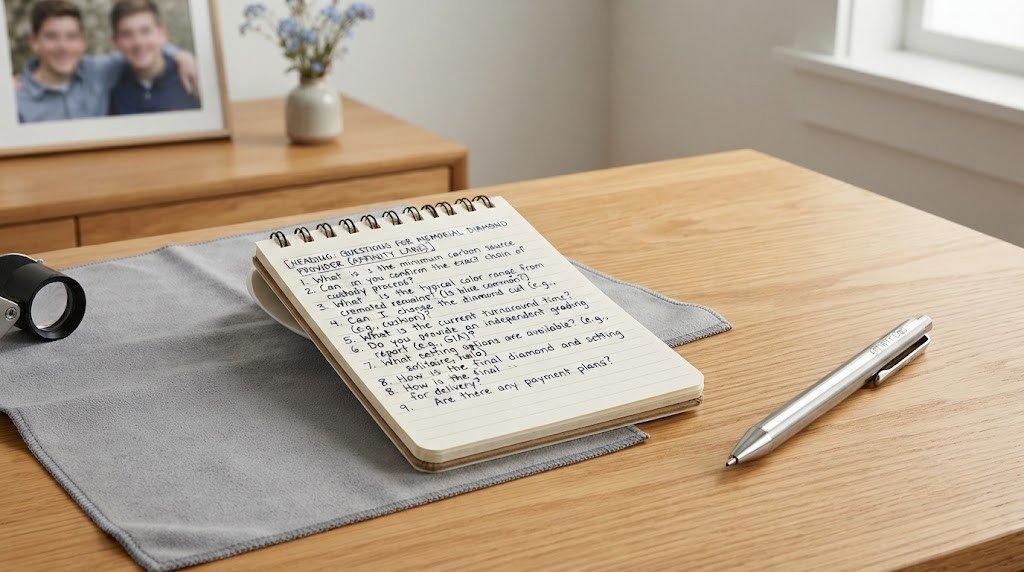
The Complete Guide genrate thamnail

Grandmother Ashes and Hair Diamond: The Complete Guide

Some families end up holding two things after a grandmother dies: a share of her cremated remains, and a lock of hair someone saved. A grandmother ashes hair diamond is a lab-grown diamond grown partly from carbon recovered from both, but only some providers will combine the two materials in one stone. Where they do, you get a real, gradable diamond; where they do not, two separate stones are the usual alternative.

This guide walks through what is actually known about a grandmother ashes hair diamond, what nobody has published yet, who gets a say, and what to put in writing before anything is shipped.

grandmother ashes hair diamond

What is a grandmother ashes hair diamond?

A grandmother ashes hair diamond is a lab-grown diamond whose starting carbon includes some recovered from her cremated remains and some recovered from her hair. It is not glass, resin or a simulant. It is grown with the same methods used across the lab-grown industry, most often HPHT and occasionally CVD, and it is graded on cut, color, clarity and carat like any other diamond.

The finished grandmother ashes hair diamond sits at 10 on the Mohs scale of hardness, which makes it practical for a ring worn every day. Hardness is not the same as toughness, though. A hard blow against a door frame or countertop can chip a diamond, which is why a bezel or other guarded mount makes sense for a stone worn daily.

How is the stone made from two materials?

The broad sequence is the same one used for single-material stones. Each material is received and logged with chain-of-custody tracking, then heated in an oxygen-free process that strips away everything that is not carbon. The recovered carbon is purified to roughly 99.9% or better, converted to graphite at around 2,500–2,700°C, and grown in a press at roughly 6–8 GPa and 1,400–2,500°C over weeks to months.

Cutting, polishing and grading follow. If you want the lab science in more depth, a separate walkthrough of how a stone is grown from both her ashes and her hair covers each stage. The step that differs between providers, and the one that decides whether a grandmother ashes hair diamond is possible at all, is whether the two recovered carbons ever share a growth cell.

Why would a family want her ashes and her hair in one stone?

The reasons are usually personal rather than technical. For some families, a grandmother ashes hair diamond feels like the most complete way to keep both kinds of keepsake together, especially when the hair was saved years before she died and the ashes came later. Others simply have both on hand and do not want to choose between them.

There can also be practical motives. Hair is roughly 50% carbon by weight, while ash holds only a small amount, so a family might hope that adding hair raises the share of her own carbon in a grandmother ashes hair diamond. Whether that hope holds up depends on the provider’s method, and there is no published number to confirm it, so treat it as a question rather than an expectation.

Some families decide against blending once they learn more. A grandmother ashes hair diamond is one option among several, and keeping the urn, scattering most of the ashes, or framing the lock of hair are all equally sound ways to remember her.

Will a provider combine both materials into a grandmother ashes hair diamond?

This is the first thing to find out, because the answer varies. Some providers in the industry describe accepting both materials for one stone; others work with one source per diamond and will suggest two separate stones instead. Nothing about the basic chemistry rules a blend out, since carbon purified from either source ends up as graphite, but each lab sets its own process rules.

If you are hoping for a grandmother ashes hair diamond, ask early and ask in writing. A useful framing is: “If we send both her ashes and her hair, will carbon from both go into the same growth run, and how will you document that?” A clear written answer tells you far more than a sales page.

What a clear answer usually covers

A provider that does make a grandmother ashes hair diamond should be able to explain how each material is logged separately on arrival, whether the two are processed together or apart before growth, and how the certificate of origin will name both sources. If an answer is vague, that is a reason to keep asking, not a reason to assume.

How much of the finished stone is really her carbon?

Honesty matters most here, because this is where marketing tends to overreach. By weight, ash is overwhelmingly calcium phosphate from bone, and the carbon a lab can actually use amounts to roughly 0.5% to 4% of it. Because that yield is so small, providers typically top it up with supplemental lab carbon before growth.

For ash-only stones, the personal carbon is commonly cited at around 10–15% of the finished mass, with some providers quoting figures as low as 3% and others higher. That range describes the ash route only. No equivalent finished-stone figure has been published for hair-only stones, and none has been published for a grandmother ashes hair diamond that blends the two.

So the honest position is that hair’s higher carbon content might change the picture, but nobody can tell you by how much without seeing a specific provider’s method. Ask each provider, in writing, what share of the finished grandmother ashes hair diamond they expect to come from her carbon, and how they arrive at the figure. A claim that the stone is “100% her” is not how the process works.

RouteCarbon in the raw materialPublished personal share of the finished stoneCremation involved
Ashes onlyAbout 0.5–4% of ash weightAround 10–15% (some cite 3%, some higher)Yes
Hair onlyAbout 50% of hair weightNo published figure; ask the providerNo
Ashes and hair blendedVaries with how much of each is usedNo published figure; ask the providerYes, for the ash portion

A grandmother ashes hair diamond is still physically, verifiably grown in part from her. That is a meaningful thing on its own terms, and it does not need exaggerating.

Would two separate stones suit your family better than a grandmother ashes hair diamond?

When a provider will not blend, or when the family is unsure, two stones are a common alternative: one grown from a portion of her ashes and one grown from her hair. Some families like the separation, because each stone keeps a single clear origin on its certificate, something a grandmother ashes hair diamond cannot offer.

Here are the trade-offs worth weighing:

  • Cost: each stone is quoted and grown on its own, so compare the two quotes together against one larger stone; because price climbs steeply with carat size, the answer is not always what you expect.
  • Documentation: each stone carries its own origin record, which some families find simpler to explain later.
  • Who wears what: a pair can be split between two relatives, or set together in one piece, such as a pendant with two settings.
  • Material: the hair-only stone needs no cremated remains, which matters for relatives who would rather the ashes stay intact.
  • Timeline: two runs may proceed in parallel or one after another; ask the provider which.

The ash-based route on its own is covered in detail in the complete guide to a grandmother ashes diamond, and the hair-only route has a companion guide built around her hair alone.

How much ash and hair does a provider usually ask for?

Requests differ by provider, so treat any number as general rather than a rule. On the ash side, the amounts providers mention run from a few tablespoons to around 4 oz (roughly 100 g). Against a full set of cremated remains that is modest, so the bulk of her ashes can still go to the urn, a plot or a scattering.

For hair, a small lock or a few grams is the usual request, because so much of hair’s weight is carbon. A combined grandmother ashes hair diamond may call for less of one material when more of the other is supplied, but only the provider can say how they balance it. Specific numbers for each side of the blend are worth reading about in the guide to how much ash and hair a combined stone needs.

One fact surprises many people: sending more material does not make a larger stone. Carat size comes from how long the diamond grows in the press, so a full urn does not buy a bigger or faster grandmother ashes hair diamond.

Is her hair still usable if it was colored or permed?

Hair that was dyed, permed, or chemically treated may or may not be accepted, and that is a provider decision rather than a general rule. Do not assume the hair’s natural or treated color will change the stone’s color. Ask whether treated hair is accepted, and whether hair from a brush or an old keepsake envelope is workable.

Who has the right to decide about her ashes and her hair?

Two things settle who decides about her ashes: the law of the state involved and anything she put in writing. States do not rank relatives identically, but a surviving spouse or partner, and after them her adult children, commonly stand ahead of grandchildren. A short call to the crematory or funeral home can usually confirm whose signature is on the cremation paperwork.

If you are a grandchild, the respectful route is to speak with whoever holds that authority and ask whether a small portion could be set aside. If the ashes are with an aunt, an uncle or your parent, or were divided years ago, the same conversation applies to whoever now keeps each share.

Before any grandmother ashes hair diamond is ordered, the hair needs its own thought. Hair kept at home is often the simpler practical question, but it is not automatically free of rules. Her belongings can form part of her estate, and how that works depends on the state, so a quiet word with the executor or the person settling her affairs avoids misunderstandings later. A grandmother ashes hair diamond touches both questions at once, which is one more reason to talk before ordering.

What if faith shapes the decision?

No religious tradition has an official position on memorial diamonds as such; the guidance that exists concerns cremation and the handling of ashes. Catholic guidance permits cremation but asks that ashes be kept whole in a sacred place, with only narrow room for a small portion. Major schools of Islamic thought regard cremation as impermissible, so an ash-based stone would not arise, though a hair-based stone involves no cremation. Orthodox and Conservative Judaism generally prohibit cremation, while Reform Judaism is more permissive.

Hindu families traditionally immerse ashes, and keeping a small portion is described as increasingly common but varies. Most Protestant clergy raise no objection, though some congregations do, while Buddhist views depend on the teacher and community; secular families decide by personal meaning. For a family weighing a grandmother ashes hair diamond, her own clergy or community is the right place to ask.

What color might a grandmother ashes hair diamond be?

Whatever trace elements sit in the growth cell decide the hue. A little boron tints the crystal blue and a little nitrogen tints it yellow; getting a colorless result means shutting both out, an extra processing effort that generally raises the price. Memorial stones in general lean toward yellow, blue and champagne or brown tones.

Neither material reliably gives a grandmother ashes hair diamond a lighter, cleaner or more predictable color than the other would, and a family cannot choose an exact shade or match a natural one. Some providers also offer post-growth irradiation to reach red, pink, green or black. The color question for a blended stone is explored further in what color a stone grown from both her ashes and hair might be.

Grading is separate from the certificate of origin. An in-house certificate records where the carbon came from, while a grading report from an independent lab, usually referencing the GIA’s diamond quality factors, records cut, color, clarity and carat. Independent grading is typically an optional add-on with its own fee.

What does a grandmother ashes hair diamond cost?

Prices below are general 2026 industry ranges, not Memorial Diamond’s own prices, which are not yet published. Size and color drive the cost far more than which materials are used.

SizeTypical industry range (2026)Notes
About 0.10–0.25 ctRoughly 1,500–3,500A common size for a pendant or a pair of small stones
About 0.5–1 ctRoughly 5,000–15,000A colorless stone of this size is priced well above a tinted one
About 2–5+ ctRoughly 20,000–75,000+Longer growth and closer process control

Grading reports, engraving, fancy cuts and settings are usually priced separately. Whether combining two materials adds any fee to a grandmother ashes hair diamond is a question for each provider. Clarity in memorial stones commonly falls between SI2 and VVS, and sizes run from about 0.10 to more than 5 carats.

How long does a grandmother ashes hair diamond take to make?

Industry-wide, expect roughly 6 to 10 months between the lab logging her ashes and hair and the stone being ready. Larger stones over about 2 carats, and specialty colors, can take up to around 12 months. Building that window into family plans, such as a gathering or an anniversary, avoids disappointment.

Can grandchildren and cousins each have a stone?

Often, yes. Because each stone uses only a portion of the material, several relatives can usually each receive their own diamond from the same shared source, subject to the provider’s rules. That can mean one grandmother ashes hair diamond for each branch of the family, or a mix of blended and single-material stones.

Coordination is the hard part, not the chemistry. Cousins may live far apart, have different budgets, and feel differently about the ashes. A single point of contact, one shared order, and an agreed note on who receives what tend to keep things calm. Families planning several stones can learn more about the practical steps for turning her ashes and hair into a diamond.

A grandmother ashes hair diamond can also become an heirloom, passed from one generation to the next. That is a family meaning, not a financial one, and no claim about resale or investment value should shape the decision.

What should you ask a provider in writing?

Written answers protect everyone, especially when several relatives are involved. Before sending anything, ask for clear replies to these questions:

  1. Will carbon from her ashes and her hair go into the same growth run, or do you only make separate stones?
  2. Roughly what proportion of the finished grandmother ashes hair diamond will be her own carbon, and what is that estimate based on?
  3. How much of each material do you need, and do you accept dyed, permed or long-stored hair?
  4. How is each material tracked from arrival to finished stone, and what does the certificate of origin name?
  5. What happens to any material you do not use, and can it be returned?
  6. What happens if a growth run fails, and what are your refund terms?
  7. Is independent grading included, or is it a separate fee?
  8. Which colors do you offer, and do any involve irradiation?

If you want to test whether a provider’s claims hold up, a guide to checking whether a blended stone really contains her carbon sets out what evidence to request.

Frequently Asked Questions

Can her ashes and her hair go into one diamond?

Sometimes. Some providers will place carbon recovered from both materials into a single growth run, while others only make one stone per material. Ask directly, and get the answer in writing, before you send any of her ashes or hair.

Does adding her hair raise the share of her carbon in the stone?

Possibly, since hair is about half carbon by weight, but no provider-independent figure has been published for a blended stone. The 10–15% share often quoted applies to ash-only stones, not to a grandmother ashes hair diamond. Ask each provider what share they expect.

Do the grandchildren need permission to use her ashes?

Usually someone else decides. State law and her written wishes set who holds authority, and a surviving spouse or partner or her adult children often come first. Ask whoever holds that authority for a small portion, and coordinate with any cousins who share the ashes.

Is hair from her hairbrush enough for the hair portion?

It may be, but acceptance depends on the provider. A small lock or a few grams is the usual request. Ask whether loose hair from a brush, an old envelope, or hair that was colored or permed can be used.

Will a blended stone take longer than an ash-only stone?

Across the industry, most stones take 6 to 10 months from receipt, and larger or specialty-color stones up to about 12. Whether processing two materials adds time depends on the provider, so ask them for their expected window.

Can each cousin have a stone from the same ashes and hair?

Often, because each stone uses only part of the material. Several relatives can usually receive their own diamonds from shared ashes and hair. The provider sets the limits, so agree as a family on who receives what before placing a combined order.

Final Thoughts on a Diamond From Both Her Ashes and Her Hair

Choosing a grandmother ashes hair diamond is a personal decision, and so is choosing two stones, or none. What helps most is plain information: what the carbon share is known to be, what is still unpublished, and who in the family has a say.

Take the questions to providers, get the answers on paper, and let the people who will wear the stone guide the choices about size, color and setting.

Learn More About Ashes-and-Hair Memorial Stones for a Grandmother

Talk With Memorial Diamond

If you are weighing a grandmother ashes hair diamond, or a stone from just one material, Memorial Diamond is glad to talk through what is possible and what questions to settle first. There is no rush, and nothing to decide on a first conversation.

You can reach us at memorialdiamond.us whenever the family is ready.

Word count: 3,271 words · Reading time: about 16 minutes

Grandmother Ashes Diamond The Complete Guide

Grandmother Ashes Diamond: The Complete Guide

Maybe her urn sits on a shelf at your aunt’s house, or maybe you are the one who was handed it. A grandmother ashes diamond is a real lab-grown diamond grown partly from carbon recovered from a small portion of her cremated remains, then cut, polished and graded like any other diamond. It is possible for a grandchild to arrange one, though who can release her ashes, how much of the stone is truly hers and what it costs are worth understanding first.

This guide covers every part of a grandmother ashes diamond in plain language, from the science to the family conversations, so you can decide calmly whether it suits your family.

grandmother ashes diamond

What is a grandmother ashes diamond, and what is it not?

A grandmother ashes diamond is a genuine diamond, grown in a laboratory, in which part of the carbon came from her cremated remains. It has the same crystal structure, the same hardness and the same grading scale as any diamond you would see in a jeweler’s case. Because chemically it is simply diamond, nothing in its appearance reveals whose carbon a grandmother ashes diamond holds, which is why the provider’s chain-of-custody paperwork carries so much weight.

It is not glass, resin or crystal with ashes sealed inside. Those keepsakes exist and some families treasure them, but they work differently: the ashes sit inside a clear material as a visible inclusion. In a grandmother ashes diamond, nothing of the ash is visible, because the carbon has become part of the crystal lattice itself.

A grandmother ashes diamond is also not a stone made only from her. That point matters enough to have its own section, because the honest answer shapes how you talk about the stone with the rest of the family.

Why families choose it

Some grandchildren want something of hers they can wear rather than visit; some families are dividing ashes anyway; others like that a diamond is durable enough to hand down. None of these requires giving up an urn, a burial plot or a scattering.

How much of a grandmother ashes diamond is actually her carbon?

Cremated remains are mostly calcium phosphate, the mineral that gives bone its structure. Only a small share is carbon, roughly 0.5% to 4% of the ash by weight, depending on the person and the cremation itself. That carbon is extracted and purified to around 99.9% or higher before any growing begins.

Because so little carbon survives cremation, providers typically blend her purified carbon with supplemental lab carbon to reach the volume a growth press needs. Across the industry, her personal carbon in a grandmother ashes diamond usually makes up around 10–15% of the finished diamond’s mass. Some providers cite figures as low as 3%, and others cite higher ones, depending on stone size and how much ash was sent.

So the truthful description is this: a real, measurable portion of her carbon is locked into a grandmother ashes diamond, alongside carbon from another source. Any company claiming a stone is “100% her ashes” is overstating what the chemistry allows.

What you might hearWhat is accurate
“The diamond is pure ashes”Ash is mostly mineral; only a small carbon share can be recovered
“Every bit of carbon is hers”Her carbon is typically blended with lab carbon
“Her share is a fixed number”Industry figures run around 10–15%, sometimes lower or higher
“You can see the ashes inside”Nothing is visible; her carbon is part of the crystal itself

Ask any provider to state, in writing, the approximate share of personal carbon they expect in a grandmother ashes diamond of the size you are considering.

How is a diamond made from her ashes?

Making a grandmother ashes diamond follows the same broad sequence at most providers. Here is the overview; the full detail on each stage is in our explanation of how a memorial diamond is made from your grandmother’s ashes.

  1. Collection. The ashes are received and logged with chain-of-custody tracking.
  2. Extraction and purification. Heat in an oxygen-free, multi-stage process strips away the minerals, leaving carbon of roughly 99.9% purity or higher.
  3. Graphitization. The carbon is heated to roughly 2,500–2,700°C and converted to graphite.
  4. Growth. The graphite is placed with a tiny diamond seed in an HPHT press at roughly 6–8 GPa and 1,400–2,500°C, and the crystal grows over weeks to months. A minority of providers use CVD instead.
  5. Cutting and polishing. A cutter shapes the rough crystal into the chosen cut.
  6. Optional color treatment. Some providers offer post-growth irradiation for certain colors.
  7. Grading. The stone is graded, ideally by an independent lab.

If you prefer to follow the journey from the family’s side, with paperwork and shipping in order, the practical steps for turning her ashes into a diamond cover that sequence. For background on the growth methods themselves, the overview of synthetic diamond production is a reliable general reference.

How much ash is needed, and what happens to the rest?

The usual request across the industry runs from a few tablespoons of her remains up to about 4 ounces, which is close to 100 grams. That is usually a small fraction of what a cremation returns, which means most of her ashes can stay in the urn, go to a cemetery niche or be scattered exactly as the family planned. The precise amount varies by company, so treat any figure you see as typical rather than fixed.

A full urn does not produce a bigger or faster grandmother ashes diamond. Carat size depends on how long the crystal grows in the press, so the size is something you choose rather than something the volume of ash decides.

Questions to put to any provider

Whatever is left over once the carbon for a grandmother ashes diamond has been extracted is handled according to each company’s own policy, so ask before you send anything:

  • Will unused ashes be returned, and how are they packaged and shipped?
  • How long is material stored, and where?
  • How is her material tracked from arrival to finished stone?
  • What happens if a growth run does not succeed?

You can read more about quantities in our article on how much ash a grandmother memorial diamond needs.

Can a grandchild request a diamond from her ashes?

Yes, a grandchild can start the process for a grandmother ashes diamond, but releasing a portion of her ashes is usually not a grandchild’s decision alone. Who has the right to direct what happens to cremated remains is set by the law of the relevant state and by any written wishes she left, and the order of priority differs between states. Commonly, a surviving spouse or partner is first in line, with her adult children next, which often places grandchildren behind her sons and daughters.

The funeral home or crematory that handled her cremation can usually tell you who signed the cremation authorization. That person, or whoever now holds the urn, is the natural first conversation. A funeral director or attorney in her state can explain how the rules apply there.

A respectful way to ask

Coming to the family with a small, specific request tends to go better than coming with a plan already in motion. You might:

  • Ask whoever holds authority whether a few tablespoons could be set aside, rather than asking for the urn.
  • Explain that most of her ashes would stay exactly where the family wants them.
  • Offer to involve cousins, so it does not feel like one branch of the family is acting alone.
  • Accept a “not now” gracefully; some families need time before dividing anything.

If her ashes are not available to you, hair she left behind may be another route. The complete guide to a grandmother hair diamond explains how that works, including why hair kept at home may still be part of her estate.

What if she died years ago or her ashes were already divided?

The years since her death do not, on their own, rule out a grandmother ashes diamond. Whether a provider can work with ashes that have sat in an urn or a closet for a long time is a judgment each company makes for itself, so describe how they were kept and ask before arranging anything.

Scattered ashes cannot be recovered, and that is simply part of how some families chose to say goodbye. If her ashes were divided among relatives, an aunt, uncle or parent may still keep a portion in a smaller urn or keepsake. A gentle question to them may be all it takes, and the same authority considerations apply to that portion.

Describe exactly what you have, including whether the ashes were ever mixed with anything else, and let the provider tell you what is workable. If the ashes were interred in a cemetery, removing them involves permits and cemetery rules, so talk with the cemetery and a funeral director first.

Can several grandchildren or cousins each receive a grandmother ashes diamond?

Often, yes. Because each grandmother ashes diamond needs only a small portion of ash, several stones can usually be grown from the same shared material, one for each grandchild, cousin or branch of the family. Whether a provider can split one submission into multiple stones, or prefers separate submissions, is something to confirm with them.

Agree early on who will make the request, who holds the paperwork and how costs will be shared. Grandchildren may also want different things: one might want a small stone in a pendant, another a larger one for a ring, and a third might prefer nothing at all. A grandmother ashes diamond for each person who wants one, at the size each person chooses, is a perfectly reasonable outcome.

When cousins disagree

Not everyone will feel the same way about a grandmother ashes diamond, and that is fine. A cousin who prefers the urn stay whole is expressing something real. Keeping the request small, letting those with authority decide and leaving room for different choices can keep a family conversation from becoming a family rift.

What color will a grandmother ashes diamond be?

Whatever tint a diamond carries is set during growth by tiny amounts of other elements in the crystal. Traces of boron lean a stone blue, traces of nitrogen lean it yellow, and only when both are kept out does it come out colorless. Because her carbon comes from an organic source, a grandmother ashes diamond tends toward yellow, blue and champagne or brown tones.

Colorless stones are achievable but need extra processing and typically cost more. Some providers also offer post-growth irradiation to create red, pink, green or black stones. No provider can promise to match a particular shade to a memory of her, such as the color of her eyes, so treat color as a range you choose from rather than an exact result.

Some families choose a color for a grandmother ashes diamond that suits the person who will wear it, or one that simply feels like her. Our article on what color a diamond from your grandmother’s ashes will be goes further into each option.

How much does a grandmother ashes diamond cost?

The price of a grandmother ashes diamond is driven mostly by carat size, then by color, cut and whether an independent grading report is included. The ranges below are general 2026 industry figures, not Memorial Diamond’s own prices, which have not been published.

Size tierTypical industry rangeNotes
Entry (about 0.10–0.25 ct)roughly 1,500–3,500A common choice when several cousins each want a stone
Mid (0.5–1 ct)roughly 5,000–15,000Colorless costs meaningfully more than blue, yellow or champagne
Large (2–5+ ct)roughly 20,000–75,000+Longer growth time, often a longer wait

Independent grading, engraving, fancy cuts and jewelry settings are usually priced separately from the loose stone. When several grandchildren share costs, it helps to get a written quote that separates the stone, the setting and any grading, so each person knows what they are paying for.

Grading and certificates are different things

An authenticity or origin certificate, usually issued in-house, documents that the diamond was grown from your family’s submitted material. A grading report, by contrast, assesses the stone itself on the 4Cs. The most useful ones come from an independent lab working to the scale behind GIA’s diamond quality factors, and that independent report is typically an optional add-on with its own fee. Typical clarity for memorial diamonds falls in the SI2 to VVS range. Ask which documents come with a grandmother ashes diamond and which cost extra.

How long does a grandmother ashes diamond take to make?

Across the industry, a grandmother ashes diamond typically takes 6 to 10 months from the time the provider receives the ashes. Stones over about 2 carats, or specialty colors, can take up to around 12 months, because growth time is what sets the size.

If you are hoping to give a stone for a particular date, such as a birthday she shared with a grandchild or the anniversary of her death, mention it at the start and ask the provider whether that date is achievable, without assuming they can promise it.

Does her faith or yours affect this choice?

No religious tradition has an official position on memorial diamonds as such. What traditions do address is cremation and how ashes are handled, and those views can bear on this decision.

  • Catholic: The Church allows cremation. Its present guidance, though, wants the remains kept together and laid to rest somewhere sacred, permitting only a minimal part to be set aside under limited conditions, which matters a great deal if a portion would leave the urn.
  • Muslim: Every major school of Islamic law treats cremation as not permitted, which means ashes usually never exist to be used. Hair, which requires no cremation, is the route some Muslim families ask about instead.

Catholic and Muslim teaching raise the most direct questions for an ash-based stone. The traditions listed next vary more by movement, community or household.

  • Jewish: Practice depends on the movement. Orthodox and Conservative communities generally do not permit cremation; Reform communities are more open and tend to leave the matter to the family and their rabbi.
  • Hindu: Tradition calls for ashes to be given to a sacred river. Holding back a small amount for a keepsake is reported to be more common now than it once was, yet customs differ widely between families and regions.
  • Buddhist: Whether keeping remains fits with practice is answered differently from one teacher or sangha to the next.
  • Protestant: Few pastors object, although individual congregations sometimes voice unease about splitting ashes.
  • Secular: The decision rests on what feels meaningful to her and to you.

Her beliefs and yours may not match, and other relatives may hold different views again.

Taking the question to clergy

Her own clergy or faith community, or yours, is the right place to take a specific question.

How can you wear or keep it, including as an heirloom?

Let the setting for a grandmother ashes diamond follow who she actually was and who will wear the stone. A grandchild who works with their hands might want a low-profile bezel ring; another might prefer a pendant kept close or a stud worn daily. Some families keep the loose stone in a small case and choose a setting later.

Diamond sits at 10 on the Mohs scale of hardness, which suits everyday wear, though a hard knock against an edge can still chip any diamond. A protective setting helps if the stone will be worn daily.

Passing it down a generation

A grandmother ashes diamond can be handed to a grandchild’s own children one day, so that something of her carries on to people she may never have met. If that is the plan, keep the authenticity certificate and any grading report with the stone, and write a short note about whose carbon it holds and why it was made. Treat it as a family keepsake rather than an investment; nothing about a memorial stone’s resale value should be assumed.

Some families also choose a stone made from both ashes and hair. The complete guide to an ashes and hair diamond for a grandmother explains when combining the two makes sense.

Frequently Asked Questions

Can I get a grandmother ashes diamond if my parent holds her urn?

Yes, if your parent, or whoever holds authority over her remains, agrees to release a small portion. A kind, specific request for a few tablespoons, with the rest staying where the family wants it, is usually the easiest place to begin that conversation.

Is it disrespectful to divide my grandmother’s ashes for a diamond?

That depends on her wishes, your family’s views and any faith tradition involved. Some families divide ashes for keepsakes, while others prefer to keep them whole. Talking with relatives and, where relevant, clergy is the best way to judge what feels respectful.

Will my grandmother’s diamond look different from other diamonds?

Not in kind. A grandmother ashes diamond is a real diamond graded on the same scale as any other. Memorial stones often have yellow, blue or champagne tones because of trace elements, and colorless versions take extra processing and typically cost more.

Can each grandchild choose a different size or color?

Usually, yes. Because each stone uses only a small portion of the shared ashes, cousins can often order different carat sizes, colors and settings. Confirm with the provider how they handle several stones grown from one family’s material and how each order is tracked.

What if her ashes were scattered years ago?

Scattered ashes cannot be gathered back, but a relative may have kept a small portion, and saved hair is another possible source. Ask family members gently what was kept, then describe it to a provider so they can explain what is workable.

Does a bigger portion of ashes make a bigger diamond?

No. Carat size is set mainly by how long the crystal grows in the press, not by how much ash is sent. Extra ash does not produce a larger or faster stone, so most of her ashes can stay with the family.

Final Thoughts on a Diamond Grown From Her Ashes

Deciding what to do with a grandmother’s ashes can involve more people than any other part of the process, whether that means her children, a surviving partner, cousins or sometimes clergy. The grandmother ashes diamond itself is the simpler part. It is a real stone with a real, if modest, share of her carbon, made over several months, at a size and color your family chooses.

If the conversations feel right and the people who hold authority agree, it can sit alongside whatever else the family has chosen for her, whether an urn, a niche or a scattering. There is no need to hurry any of it.

Learn More About Ashes Diamonds for a Grandmother

Talk With Memorial Diamond

If you are weighing whether a grandmother ashes diamond is right for your family, we are glad to talk it through, including the conversations with relatives that often come first. There is no rush and no obligation.

Visit memorialdiamond.us whenever you are ready to ask questions.

Word count: 3,393 words · Reading time: about 17 minutes

Brother Memorial Diamond FAQ Everything Families Ask

Brother Memorial Diamond FAQ: Everything Families Ask

After a brother dies, the questions rarely come one at a time; they come from a parent, a sister, a cousin, sometimes a partner, often in the same week. A brother memorial diamond is a real lab-grown diamond grown partly from carbon recovered from his cremated ashes or a lock of his hair, with industry prices running from roughly $1,500 for a small stone to $20,000 or more for a large one, and a typical wait of 6 to 10 months.

Everything below is arranged as the questions relatives put to each other about a brother memorial diamond, with a short answer first and the detail after. Read the sections that matter to you now and leave the rest for later.

brother memorial diamond

Is a brother memorial diamond a real diamond, and is it really made from him?

Yes to the first, and yes, in part, to the second. A brother memorial diamond is a genuine lab-grown diamond with the same crystal structure, optical properties and grading scale as a mined one, scoring 10 on the Mohs hardness scale. It is not glass, resin or a simulant.

The “made from him” part deserves a precise answer, because overstated claims circulate in this industry. Cremated ashes are mostly calcium phosphate, the mineral left from bone, and only about 0.5 to 4% of ash by weight is usable carbon. That carbon is extracted, purified to roughly 99.9% or better, and typically blended with supplemental lab carbon so there is enough feedstock to grow a stone of a useful size.

What share of an ash-based stone is his carbon?

For a stone grown from ashes, his own carbon commonly makes up around 10 to 15% of the finished mass. Some providers quote figures as low as 3%, and some quote higher ones, depending on the size of the stone and how much ash was sent. Any seller who describes an ash-based brother memorial diamond as being entirely his remains is describing something the chemistry does not allow.

And for hair, or a blend of the two?

Hair is around 50% carbon, so far less of it is needed. Even so, nobody publishes an equivalent finished-stone percentage for hair, or for a stone grown from ashes and hair together. If that number matters to your family, ask each provider to put its own figure in writing before you commit.

Should the stone come from his ashes, his hair, or both?

The source for a brother memorial diamond usually follows what you actually have. Ashes are only an option if he was cremated and someone can release a portion; hair works whether he was cremated or buried, and needs no cremation at all.

SourceWhen it fitsWhat to know
AshesHe was cremated and a small portion can be set asidePersonal carbon commonly around 10–15% of the finished stone; whoever holds the ashes is part of the decision
HairA lock was saved, or hair remains on a brush, cap or comb (acceptance varies by provider)About 50% carbon, so a small amount goes far; no published finished-stone share
Ashes and hair togetherBoth are available and the family wants both in one stoneNot every provider offers it; no published finished-stone share for the blend

Each route has its own practical path, and the complete guide to a diamond from a brother’s ashes walks through the ash route from start to finish. If what you have is a saved lock or hair from his belongings, the full walkthrough for a brother hair diamond covers collection and packing. Families who want both sources in one stone can find the combined route in the guide to growing one stone from his ashes and hair.

No source makes a brother memorial diamond more “him” than another. The right one is simply the one your family can arrange without strain.

How much of his ashes or hair does a provider need?

Usually far less than people fear. Industry-wide, ash requests for a brother memorial diamond typically range from a few tablespoons up to roughly 4 oz (about 100 g), which is usually a small fraction of the total remains. Hair requests are commonly a small lock or a few grams.

That leaves most of his ashes free for the urn, a burial plot, a scattering, or whatever was planned. Sending more than a provider asks for does not produce a bigger or faster stone, because growth time in the press sets the carat size, not the volume of material.

Exact minimums vary from one company to the next, so treat any figure here as a general guide. Before you portion anything out, ask the provider for its own requirement and what it does with any material that is not used.

How is a brother memorial diamond actually made?

In short: his carbon is recovered, purified, turned into graphite, grown into a crystal under extreme pressure and heat, then cut and graded. Most providers grow memorial stones by HPHT (high pressure, high temperature); a minority use CVD, a vapor-deposition method. Both are standard routes for lab-grown diamonds generally.

The sequence across the industry looks like this:

  1. Collection, with chain-of-custody tracking from the moment his material arrives.
  2. Extraction and purification of the carbon, to roughly 99.9% or better.
  3. Graphitization at around 2,500 to 2,700°C.
  4. Growth around a small diamond seed, under roughly 6 to 8 GPa and 1,400 to 2,500°C, over weeks to months.
  5. Cutting and polishing into the chosen shape.
  6. Optional irradiation, offered by some providers to shift color.
  7. Grading, ideally by an independent laboratory.

The tracking in step one is the part to press hardest on. Ask how his material is labeled, who handles it, and what record you will receive showing that the finished stone traces back to what you sent.

What color will the finished stone be?

A brother memorial diamond, like most memorial stones, tends to come out in yellow, blue or champagne-to-brown tones rather than colorless. Trace elements present during growth set the color: boron pushes a stone toward blue, and nitrogen toward yellow.

A colorless stone is possible, but it requires shutting both elements out, which takes extra processing and typically raises the price. Some providers also offer post-growth irradiation for red, pink, green or black. What no honest provider can promise is an exact natural shade, or that his ashes will give a different tone from his hair.

Color is often where personal meaning shows up. Some relatives lean toward a color family that recalls something he loved, knowing the exact tone will still vary; others go with whatever the person wearing it likes to look at every day. The page on what to expect from brother memorial diamond colors goes through each option and its effect on cost and timing.

How much does a brother memorial diamond cost?

Across the industry in 2026, a brother memorial diamond typically costs between about $1,500 and $75,000 or more, with carat size doing most of the work. Color matters next: at the same size, colorless usually costs meaningfully more than blue, yellow or champagne.

Size tierTypical caratGeneral 2026 industry range
Entry0.10–0.25 ctRoughly 1,500–3,500
Mid0.5–1 ctRoughly 5,000–15,000 (colorless meaningfully more)
Large2–5+ ctRoughly 20,000–75,000+

These are broad industry figures, not Memorial Diamond’s prices, which have not been published. Several costs usually sit on top of the loose stone: an independent grading report, engraving, a fancy cut, and the ring, pendant or other setting.

When several relatives are each paying for their own stone, it helps to compare like with like. A detailed breakdown of what a brother memorial diamond costs at each size can help a family line up quotes on equal terms.

How long does the whole process take?

Plan on about 6 to 10 months for a brother memorial diamond, counted from the day a provider receives his ashes or hair. Stones larger than roughly 2 carats, or specialty colors such as black, can take up to about 12 months.

The length comes mainly from growth time in the press, which is also what determines carat size. Choosing a smaller stone is the most reliable way to keep the wait shorter, while sending extra material changes nothing.

If there is a date the family has in mind, such as an anniversary or a wedding, raise it at the very first conversation and ask the provider whether it can be met. A closer look at how long a brother memorial diamond takes explains where the months go and how to plan around them.

Who has the right to decide about his ashes?

Before anyone orders a brother memorial diamond from his ashes, it helps to know who holds them, and that depends on the state where he died and on anything he put in writing. Each state sets its own order of priority, and the sequences are not identical. Depending on where he died, a spouse or partner, his adult children or his parents could each have a stronger claim than a sibling, and a written directive from him can rearrange that list entirely.

The funeral home or crematory can usually tell you who signed the cremation authorization, which is often a good guide to who holds the ashes and the say over them. For anything contested, a local estate or probate attorney is the right person to ask.

A respectful route for a sister or brother

If someone else holds that authority, the gentlest route is to ask them for a small portion, explaining what you have in mind and how little a provider typically needs. Hair is often the simpler practical question, since a saved lock or hairbrush may already be with a sibling. Even so, his belongings can form part of his estate and the rules vary by state, so a word with the executor, or whoever is settling his affairs, is wise before anything is sent.

Families do not always agree, and parents may be divided, estranged or no longer living. Some ideas for opening the subject kindly are in this guide to raising a memorial diamond with the rest of the family.

Can several relatives each have a stone made from him?

Often, yes. Because each brother memorial diamond needs only a portion of the ashes or hair, a provider can frequently grow several diamonds from the same shared material, perhaps one for a parent, one for each sibling, one for a partner if he had one, or whatever combination fits your family.

Where stones are ordered and priced separately, one person might choose a small blue stone for a pendant while another chooses a larger, colorless stone for a ring. How the release of the shared material is agreed still runs through whoever holds authority over it.

Whether a provider can split one submission across several orders, and how much material that takes, is a question to ask directly. The practical side of sharing a brother memorial diamond across the family covers how relatives can coordinate orders without anyone feeling rushed.

What are the ways to wear or keep a brother memorial diamond?

Almost any way you would wear or keep a mined diamond. A brother memorial diamond can go into a ring, pendant, earrings, bracelet, tie bar or cufflinks, or stay loose in a small case on a shelf.

The best setting for a brother memorial diamond follows the person who will wear it and who he was, not any idea of what suits a brother. Someone who works with their hands might want a low-profile setting that sits close to the finger, while someone who rarely wears jewelry might prefer a pendant kept for particular days. A diamond’s hardness makes it durable, but a hard knock can still chip one, so the setting does some protective work too.

Settings, metals and engraving are usually priced apart from the stone. If the stone is not yet grown, you can still choose the setting later, once you have seen the finished color.

Is a memorial diamond acceptable in your faith?

No religious tradition has issued an official position on a brother memorial diamond, or on memorial diamonds of any kind. What traditions do address is cremation and the handling of ashes, and that is where the answer for your family will come from. A brief outline:

  • Catholic: Cremation is permitted, but Church guidance asks that ashes be kept whole in a sacred place, with only a narrow allowance for a small portion. That bears directly on dividing his ashes for a stone.
  • Jewish: Orthodox and Conservative Judaism generally prohibit cremation, while Reform Judaism is more permissive and leaves more to rabbi and family.
  • Muslim: Cremation is considered impermissible across the major schools of Islamic thought, so an ash-based stone does not arise. A hair-based stone involves no cremation at all.
  • Hindu: Cremation followed by immersing the ashes is traditional; keeping a small portion is described as increasingly common, though practice differs by family, region and community.
  • Buddhist: Views on keeping physical remains depend on the teacher and community; some see it as mindful remembrance, others as sitting uneasily with non-attachment.
  • Protestant: Most clergy have no objection, though some congregations raise concerns about dividing or scattering ashes.
  • Secular: The decision rests on personal meaning and what the family wants.

Because practice varies within every tradition, the most reliable answer comes from your own priest, rabbi, imam, pandit, teacher or pastor. If a relative has a religious concern, it deserves a real hearing rather than an argument.

What if he was buried, or died many years ago?

A burial does not rule out a brother memorial diamond. Hair needs no cremation, so a lock that was saved, or hair kept from a brush or cap, may be usable, though each provider decides what kind of sample it can work with. Burial remains common in the United States; the NFDA’s 2025 report projected a national cremation rate of 63.4% against 31.6% for burial.

If he died years ago and was cremated, a brother memorial diamond may still be possible, since his ashes may have been kept in an urn, a niche or a cupboard ever since. Whether ashes stored for a long time are workable is a question for each provider, as is whether older hair, or hair that was dyed or chemically treated, can be accepted.

Time also changes who holds what. The ashes may now be with a parent, his partner or one of his children, and the hair may be in a box nobody has opened. Finding out quietly what exists, and who has it, is a sensible first step before anyone contacts a provider.

How do you choose a provider for a brother memorial diamond?

Choose on transparency first and price second. A provider worth trusting with a brother memorial diamond will answer specific questions in writing and will not rush you.

Questions worth putting to every company you consider:

  • What share of the finished stone will be his own carbon, for the material we are sending?
  • How is his material labeled and tracked, and what record do we receive?
  • What happens to any ashes or hair that are not used, and can they be returned?
  • What happens if a growth run fails?
  • Is independent grading included, or is it a separate charge?
  • What are the refund and cancellation terms?

Two documents are worth telling apart. An authenticity or origin certificate, usually issued in-house, records that the stone came from your submitted material. A grading report, ideally from an independent laboratory working to the GIA’s 4Cs standards, describes the stone’s cut, color, clarity and carat. Independent grading is typically an optional, separately priced add-on, and typical memorial-diamond clarity falls between SI2 and VVS.

Frequently Asked Questions

Can his name or a date be engraved on the diamond?

Some providers offer a tiny laser inscription on the girdle, the thin outer edge of a brother memorial diamond, and the setting can carry an inscription too. Engraving is usually priced separately, and character limits vary, so ask what is possible before you order.

Does a diamond grown from his ashes need special care?

A brother memorial diamond needs the same care as any diamond. It resists scratching, but a sharp knock against a hard surface can still chip an edge. Clean it with warm water and mild soap, and have the setting checked by a jeweler from time to time.

Should the stone be insured once it arrives?

One option is adding it to a homeowner’s or renter’s policy; another is a separate jewelry policy. Coverage, valuation and premiums depend on your insurer and your state, so speak to an insurance agent about how a stone with personal value is assessed.

Can his ashes be posted to a provider, or carried abroad?

Rules on shipping cremated remains, and on carrying them across borders or through airports, vary by carrier and country. Ask the provider exactly how it wants material sent, and check current carrier and airline requirements before packing anything.

Can I keep a small amount of his ashes as well as the stone?

Usually, yes. A diamond needs only a portion, so the rest can go to an urn, keepsake or burial as planned. Whether a provider returns unused ashes after extraction is its own policy, so ask about that in writing.

Is a brother memorial diamond a suitable gift for another relative?

It can be, whether the recipient is a parent, a sibling, or his partner or child if he had one, provided the gift is offered gently and wanted. Asking quietly first helps, because a stone carries strong feelings. A loose stone leaves them free to choose a setting later.

Final Thoughts on Brother Memorial Diamond Questions

There is no deadline on a brother memorial diamond. Ashes and hair can usually be kept while the family talks, and a year spent reaching agreement is time well used; just ask any provider you are considering how it views long-stored material.

When you are ready, the questions on this page are a good place to start a conversation, whether it is with a parent, his partner, a sibling, or a provider you are still weighing up.

Learn More About Planning a Brother Memorial Diamond

Talk With Memorial Diamond

If you are weighing a brother memorial diamond and would like to talk it through, whether your question is about his ashes, his hair, or how to include the rest of the family, Memorial Diamond is glad to listen. There is no obligation and no rush.

You can reach us at memorialdiamond.us whenever the time feels right.

How Much Ash Do You Need for a Grandmother Memorial Diamond

How Much Ash Do You Need for a Grandmother Memorial Diamond?

Opening an urn, even just to think about a spoonful of what is inside, can feel like a bigger step than anyone warns you about. If you are weighing how much ash for a grandmother memorial diamond a provider will want, the usual answer is somewhere between a few tablespoons and roughly 4 oz (about 100 g). Every company sets its own figure, and the amount is normally a small fraction of her ashes, so most of what the family holds stays where it is.

That leaves plenty of room to keep, scatter or inter the rest as planned. The sections below explain why so little is needed, why extra ash does not grow a larger stone, and what to sort out with relatives before anything is measured.

ash for a grandmother memorial diamond


How Much Ash for a Grandmother Memorial Diamond Do Providers Request?

Across the industry, the amount of ash for a grandmother memorial diamond typically falls between a few tablespoons and roughly 4 oz, which is about 100 g. Where a particular company sits in that range depends on its own extraction process and how much margin it likes to keep. No single number applies everywhere, so treat any figure you see online as a starting point and ask each provider for its requirement in writing.

QuantityWhat it usually meansWhat to ask the provider
A few tablespoonsThe lower end of what providers commonly requestIs this enough for the carat size we want, or do you need more as a reserve?
Up to roughly 4 oz (about 100 g)The upper end of typical requestsWhy this amount, and is any of it returned?
More than a provider requestsDoes not produce a bigger or faster stoneWill you accept only what you need and leave the rest with us?
A full urnFar more than any provider normally needsIs there any reason to send it all? (Usually there is none.)
Several measured portionsOne portion per stone when relatives each want oneCan you grow several stones, and does each need its own portion?

The table describes general patterns, not Memorial Diamond’s own requirements, which have not been published yet. Ask every provider you consider to state its own figure for ash for a grandmother memorial diamond, and whether that figure includes a reserve. What it shows is that the amount of ash for a grandmother memorial diamond is modest, and that sending extra rarely helps.

Why do provider figures differ?

Requirements vary because extraction methods vary. One company may recover carbon efficiently enough to work from a few tablespoons, while another may ask for more ash for a grandmother memorial diamond so it has a reserve in case a step needs repeating. Neither approach is wrong, but the reason behind a number is worth asking about, and a clear answer is a good sign of a transparent process.

Why Is So Little Ash for a Grandmother Memorial Diamond Needed?

Most of what sits in an urn is calcium phosphate, the mineral left behind from bone. Only about 0.5% to 4% of that ash, by weight, is carbon, and the exact share varies from one person and one cremation to another. A provider is after that carbon and nothing else, which is why the amount of ash for a grandmother memorial diamond can stay so modest.

To recover it, the ash is heated in a controlled, oxygen-free process run in several stages, which strips away the minerals and leaves carbon at roughly 99.9% purity or higher. That carbon is then turned into graphite at around 2,500–2,700°C, ready for the growth press. The general background on memorial diamonds describes the same broad route.

Her share of the finished stone

With so little carbon to work with, providers typically top up her purified carbon with supplemental lab carbon before growth begins, so the crystal can reach a useful size. Industry figures put her personal carbon at around 10–15% of the finished stone’s mass, with some providers citing as little as 3% and others higher. If that percentage matters to your family, ask for it in writing, and read more on whether the stone truly contains carbon from her ashes.

So the amount of ash for a grandmother memorial diamond is set by what the extraction process needs to recover enough of her carbon, not by the size of the stone you hope for.

Will Sending More Ash Make the Diamond Bigger?

No, though that can come as a surprise. Carat size comes from how long the crystal grows in the press, not from how much ash for a grandmother memorial diamond went in at the start. A family that sends a full urn does not receive a larger stone, nor a faster one, than a family that sends a few tablespoons.

Most memorial diamonds come from HPHT presses working at about 6–8 GPa and somewhere between 1,400 and 2,500°C, and a crystal needs weeks to months to grow. A minority of providers use CVD instead. Either way, carat is something you choose, and that choice then shapes the timeline and the price. Stones are commonly offered from about 0.10 carats up to 5 carats or more.

Knowing this can take some pressure off. Setting aside ash for a grandmother memorial diamond does not mean giving up a large share of her, and holding more back does not shrink the stone.

Who Should Agree Before a Portion of Her Ashes Is Taken?

Decisions about her remains belong to whoever holds that authority under the law of the state involved and under any written instructions she left. The order is not identical from state to state. Very often a surviving spouse or partner is first in line and her adult children follow, both ahead of grandchildren, though that pattern is something to confirm locally rather than assume.

If you are a grandchild, a respectful route usually works well: ask whoever holds authority whether a small portion of ash for a grandmother memorial diamond could be set aside. The crematory or funeral home can usually say who signed the cremation authorization, which is a good clue to who should be asked. If an aunt, uncle or your own parent is keeping the urn, they are often the natural first conversation.

When faith is part of the decision

Religious teaching speaks to cremation and to how ashes are kept, but no tradition has issued a ruling on memorial diamonds themselves. Catholic guidance, for example, permits cremation but asks that ashes be kept together in a sacred place, allowing only a narrow exception for a minimal portion, which bears directly on taking ash for a grandmother memorial diamond. In Hindu practice, ashes are traditionally immersed in a river; holding back a small amount is reportedly becoming more common, though families and regions differ. Views within other traditions differ by community, so the family’s own clergy or community leaders are the right people to ask.

What If Her Ashes Were Already Divided or Partly Scattered?

Ashes are sometimes divided long before anyone asks how much ash for a grandmother memorial diamond a provider would need. Her children may each hold a share, some may have been scattered at a place she loved, or a portion may have been interred. None of that rules out a stone, because the amount of ash for a grandmother memorial diamond is small enough that a single share may well be sufficient.

If ashes have been divided, talk with whoever holds each portion before anything is decided. One relative might be glad to contribute part of their share, or several might each give a little so the ash for a grandmother memorial diamond comes from the whole family. If she died years ago and the ashes have been kept since, ask a provider whether ashes stored for a long time are workable for them; the answer is theirs to give.

When nearly everything has already been scattered or interred, the remaining options depend on what is left. A provider can tell you whether a smaller amount of ash for a grandmother memorial diamond than usual can still be used, and hair kept at home may offer another path.

Can Several Grandchildren Each Have a Stone From Her Ashes?

Often, yes. Because each stone needs only a modest portion, several relatives can frequently each receive a diamond from the same shared ashes, with the ash for a grandmother memorial diamond measured out once per stone or drawn from one portion, depending on the provider. Cousins sometimes coordinate so that every branch of the family has a stone, or a parent arranges one for each grandchild.

Ask a provider whether each stone needs its own measured portion of ash for a grandmother memorial diamond, or whether one portion can supply several stones. Ask too whether stones grown in separate runs might differ in color, since memorial diamonds tend toward yellow, blue and champagne tones and each growth run is its own event. If color is a question for your family, read about what color a diamond from her ashes is likely to be.

A short list helps cousins plan together:

  • Agree who holds authority over the ashes and get their blessing first.
  • Decide how many stones are wanted, and whether sizes should match.
  • Ask the provider how much ash for a grandmother memorial diamond each stone requires.
  • Confirm how portions are labeled and tracked so each stone traces back correctly.
  • Settle how costs will be split before an order is placed.

What Happens to Leftover Ash for a Grandmother Memorial Diamond?

Whatever is left over after the provider has taken its ash for a grandmother memorial diamond is governed by that provider’s policy, so get the answer in writing before you send anything. Some families want every unused grain returned. Others are comfortable with a respectful disposal method the provider describes. What a company actually does with leftover material is its policy, not a general rule.

Useful questions include whether unused ash is returned and how, how long it is stored before return, and whether it is kept separate from other families’ material throughout. Chain-of-custody tracking matters here; ask how the provider labels and logs your grandmother’s ashes from arrival to return. Ask as well what happens if a growth run fails: whether more ash would be needed, and whether the company keeps a reserve from your original portion for that reason.

The ashes that stay with your family can be kept in her urn, scattered, interred, or divided among relatives, exactly as originally planned. A diamond sits alongside those choices rather than replacing them, and cremation is now the more common path in the US, with the NFDA’s 2025 report projecting a 63.4% cremation rate against 31.6% for burial.

How Do You Measure and Send Ash for a Grandmother Memorial Diamond?

Follow the provider’s instructions to the letter, since packaging and shipping requirements differ from one company to another. Many supply a collection kit. The steps below describe a general order of events, not any company’s official procedure.

  1. Get the requirement in writing. Confirm the exact amount of ash for a grandmother memorial diamond that the provider wants, and whether it includes a reserve.
  2. Agree within the family. Make sure whoever holds authority has approved the portion being taken.
  3. Use the provider’s container. If a kit is supplied, use it; if not, ask what kind of sealed container they accept.
  4. Measure gently. A clean spoon over a tray makes it easier to transfer a few tablespoons without spills. If you would rather not do this yourself, ask a funeral director whether help is available.
  5. Label clearly. Add her name and any reference number the provider gives, so the portion is traceable from the start.
  6. Ship by the stated method. Ask the provider which carriers and services it accepts for cremated remains, since carrier rules apply.
  7. Keep records. Save the tracking number, photographs of the sealed package, and every email.

If transferring ash yourself feels like too much, that is understandable, and nobody has to handle her ashes alone. Ask the funeral home or crematory whether it offers to measure out the ash for a grandmother memorial diamond on your behalf, since some do and practices vary.

Does the Amount of Ash for a Grandmother Memorial Diamond Affect Cost or Timing?

Price depends on carat, color, cut and whether an independent grading report is included. The amount of ash for a grandmother memorial diamond does not move the price on its own. As general 2026 industry ranges, not Memorial Diamond’s own pricing:

  • Entry sizes of about 0.10–0.25 ct: in the region of 1,500–3,500
  • Mid sizes of 0.5–1 ct: in the region of 5,000–15,000, and more again for colorless
  • Large stones of 2–5+ ct: in the region of 20,000–75,000+

Grading reports, engraving, fancy cuts and jewelry settings are usually extra. An in-house authenticity certificate documents chain of custody, while a grading report, ideally from an independent lab, describes the 4Cs. Memorial diamonds typically grade between SI2 and VVS clarity.

Timing works the same way: the quantity of ash for a grandmother memorial diamond does not speed anything up. The full process typically takes 6 to 10 months from the day a provider receives the ashes. A stone above about 2 carats, or one in a specialty color, may need as long as 12 months. For the sequence from first contact onward, see each step of turning her ashes into a diamond, and for the bigger picture, the complete guide to a diamond made from your grandmother’s ashes.

Is Her Hair an Option if Very Little Ash Remains?

Sometimes it is. When too little ash for a grandmother memorial diamond remains, hair can be another route. Hair is about 50% carbon, so far less material is needed, typically a small lock or a few grams, and no cremation is involved. If her ashes have mostly been scattered or interred, a lock of hair kept by the family may make a stone possible.

Whether hair that was colored or permed is accepted is a provider question. Hair kept at home is usually easier to arrange than ashes, but her belongings can form part of her estate and the rules vary by state, so check with the executor or whoever is handling her affairs. The guide to how much of her hair a stone usually needs covers this route, and some families combine both sources, explained in the quantities for a combined ash-and-hair stone.

Frequently Asked Questions

Is a few tablespoons of her ashes really enough for a diamond?

Often, yes. Some providers can work from a few tablespoons of ash for a grandmother memorial diamond, while others ask for up to roughly 4 oz, about 100 g. Because only the carbon is extracted and growth time sets carat size, a modest portion can be enough.

Will a bigger portion of her ashes give a bigger diamond?

No. The press decides size: a stone grows larger the longer it stays in growth, whatever quantity of ash was sent. Sending a full urn does not produce a larger or faster stone, and most of her ashes can stay with the family.

Can her ashes be used if they were divided among her children years ago?

Often they can. Because a stone needs only a small portion, one relative’s share may be enough. Talk first with whoever holds each share, and ask the provider directly whether ashes kept for many years are workable for its process.

Do I need my aunt’s or uncle’s agreement to take a portion?

That turns on who has authority over her remains, which is settled by state law and anything she put in writing. A surviving spouse or partner and then her adult children often come before grandchildren. The funeral home or crematory can usually say who signed the cremation authorization.

How many stones can come from one grandmother’s ashes?

Several relatives can often each receive a stone from shared ashes, because each needs only a modest portion. Ask the provider how much each stone requires, whether portions must be separate, and whether stones from different growth runs might vary in color.

What if most of her ashes have already been scattered?

A stone may still be possible from what remains, so ask a provider whether a smaller amount can work. A lock of her hair is another route, since hair is about 50 percent carbon and needs no cremation.

Does sending more ash for a grandmother memorial diamond change the price?

No. Price reflects carat, color, cut and extras such as a grading report or setting. As a general industry range, stones of about 0.10 to 0.25 carats run roughly $1,500 to $3,500, with larger and colorless stones costing more.

Final Thoughts on Setting Aside Her Ashes for a Diamond

The portion of ash for a grandmother memorial diamond is small, usually a few tablespoons to about 4 oz, and the size of the stone comes from time in the press rather than from what you send. That leaves her ashes largely where the family has chosen to keep them.

The most useful work happens before anything is measured: agreeing with the relatives who hold authority, asking each provider for its numbers and policies in writing, and deciding together what happens to anything left over.

Learn More About Using Your Grandmother’s Ashes for a Diamond

Talk With Memorial Diamond

Whether you are still deciding or simply want to understand what would be involved, Memorial Diamond is glad to talk it through. We can walk you through quantities, questions to raise with your family, and what to expect at each stage.

You can reach us through memorialdiamond.us at whatever pace suits you. Asking a question is just that, a question.

Word count: 3,164 words · Reading time: about 16 minutes

How to Talk to Family About a Sister Memorial Diamond1

How to Talk to Family About a Sister Memorial Diamond

Raising the idea with her family can feel harder than deciding you want it. The first conversation about a sister memorial diamond is usually with whoever has authority over her remains, and that is often not a sibling. Start there, explain why it matters to you, ask for something small and specific, such as a few tablespoons of ashes or a lock of hair, share the provider’s custody paperwork, and write down what everyone agrees.

about a sister memorial diamond

Why Does Talking About a Sister Memorial Diamond Involve So Many People?

When a sister dies, the people who loved her often fill several roles. She may have had a spouse or partner, children, living parents, and brothers and sisters of her own, including half siblings, step siblings or adopted siblings. Each of them may feel a claim on how she is remembered, and none of those claims cancels another.

A memorial diamond also involves her physical remains. A provider needs a portion of her ashes or some of her hair, and that material has to be released by someone with the right to release it. That is why a decision about a sister memorial diamond rarely belongs to one person alone.

None of this means your wish counts for less. It means the path to it runs through other people. If you are still at the beginning, our guide on where to begin with the whole decision explains the wider choices.

Who Has the Final Say Over Her Remains?

Authority over remains comes from state rules and from any wishes she put in writing, so there is no single national answer. Before any discussion about a sister memorial diamond, it helps to understand how your state approaches it. A typical default in many states starts with a spouse or registered partner, moves to adult children, then to parents, and reaches siblings after that.

States do not all use that default, and an agent she designated or a declaration she signed can change the situation. A sibling often is not the person who decides, but that does not leave you without a voice. Siblings can ask, offer and take part, and in some situations a sibling does hold authority.

A call to the funeral home or crematory is often enough to learn whose signature is on her cremation paperwork. If the picture is still unclear, a local attorney can explain how your state handles it.

If she left hair at home, in a brush or in a keepsake, those belongings can form part of her estate, and the rules differ from state to state. Speak with the executor or whoever holds authority before collecting it, so nobody feels something was taken without asking.

Who Might You Need to Talk With, and What Are They Weighing?

The people involved differ in every family. This table can help you think through each conversation about a sister memorial diamond before it happens. It is not a list of people you must approach.

PersonRole they may haveWhat they may be weighingA respectful way to begin
Her spouse or partnerCommonly first in many states, although rules varyTheir plans for her ashes and how public a memorial feelsAsk privately and early, and make clear that their decision matters
Her adult childrenCan hold authority in some states, especially if there is no spouseTheir own wish for a keepsake and protecting their parent’s memoryOffer to include them and ask what they would want
Her parentsMay hold authority or simply carry deep feelingsGrief, faith and possibly different views from each otherSpeak with each parent in the way that suits them
Other siblingsShare your relationship with herWhether they want a stone and what feels fairAsk what they want rather than assuming
Relatives with faith concernsMay or may not hold authority, but can be influentialTeachings on cremation and dividing remainsListen first and suggest speaking with their own faith leader
The executorManages her estate, including belongingsHair or jewelry that may belong to the estateCheck before collecting anything she owned

Thinking through these relationships can show you who to speak with first and who should hear the plan from you directly. Any conversation about a sister memorial diamond is easier when the people closest to the decision are not caught by surprise.

What Are Six Steps for Talking About a Sister Memorial Diamond?

No script fits every family, but a simple order helps. These six steps keep a talk about a sister memorial diamond focused and respectful.

  1. Find out who has authority. Ask the funeral home or crematory who signed the paperwork, or ask the family directly, before planning anything else.
  2. Choose a calm time. Avoid the funeral, the reading of a will, or a crowded holiday table.
  3. Lead with her, not the product. Explain what the idea means to you before describing how it works.
  4. Make a small, specific request. Ask whether a few tablespoons of ashes or a small lock of hair could be used rather than making a vague request for some of her remains.
  5. Share the provider’s paperwork. Show how the material would be tracked, used and, where possible, returned.
  6. Write down what everyone agrees. Record who gave permission, what material was shared, who owns each stone and who pays.

Each step gives your family space to understand the idea and ask questions before making a decision.

When Should You Start Talking About a Sister Memorial Diamond?

There is rarely a perfect moment, but some moments are harder than others. The days around the funeral are full of logistics, and a new idea can feel like one more demand. Raising it during a dispute over belongings or a will can make it sound like another claim.

A memorial diamond typically takes six to ten months to complete once the provider receives the material, although the actual timeline depends on the provider and the order. The stone itself does not set a deadline for starting. If her ashes are going to be scattered, buried or placed in a niche, however, the conversation needs to happen before that. You can explain the timing clearly without pressuring anyone.

A private conversation, in person or by phone, often works better than a group message because it gives the other person room to react and think. A question about a sister memorial diamond dropped into a family group chat can force everyone to answer publicly before they have had time to consider it.

What Should You Say First About a Sister Memorial Diamond?

Start with her. A relative who hears that you want to make a diamond from her ashes may picture something they are not ready for. A relative who first hears that you are looking for a way to keep her close in everyday life can understand your feelings before considering the product.

Then explain the request clearly. You might say that you would like to ask whether a small portion of her ashes or a little of her hair could be set aside for a memorial stone. Explain that you will share information about how the material would be handled and documented.

Plain words in your own voice work better than a polished speech. Give your relative time to respond and do not expect an immediate answer.

Expect questions you cannot answer on the spot. Saying you will find out is better than guessing. Relatives with practical questions about a sister memorial diamond deserve accurate answers, and a wrong answer given to smooth the moment can damage trust later.

How Do You Answer the Question, Is It Really Her?

A skeptical relative may ask this first, and an honest answer is the most reassuring one. A memorial diamond is a real diamond grown in a laboratory, usually using a method also used for other lab grown diamonds. Carbon is extracted from ashes or hair, purified and used during the crystal growth process. Supplemental laboratory carbon may also be used to provide enough material for growth.

For ashes, usable carbon is only roughly 0.5 to 4 percent of the ash by weight. The share of the finished stone’s mass attributed to the person’s carbon varies by provider and process. Some providers cite figures around 10 to 15 percent, while others cite lower figures. Ask the provider to explain its process and what it can document for your order.

Hair contains a substantial amount of carbon by weight, but the finished stone’s precise carbon contribution depends on the process. Ask the provider directly rather than relying on a general estimate. Our article on whether a memorial diamond is really made from her ashes explains this subject in more detail.

Relatives may also worry that a diamond would use most of her ashes. Providers often request an amount ranging from a few tablespoons to around four ounces, approximately 100 grams, although requirements vary. Hair based orders usually require a small lock or another specified amount.

That can leave most of her ashes available for whatever the family has already planned. Our guide to how much ash a sister’s stone usually needs explains the range to discuss before making a decision.

How Do You Talk With Parents Who Are Grieving Differently?

If both her parents are living, they may respond very differently. One may want a stone while the other finds the idea painful. They may be divorced or remarried, and she may have had a step parent who raised her. Treat each relationship on its own terms.

Speak to each parent separately if they are not on the same page, and avoid asking one to persuade the other. If a parent holds legal authority, their role generally depends on the rules that apply to the situation and any written wishes your sister left. If a parent does not hold that authority, they may still deserve to hear your thoughts before anything happens.

Resist comparing who is grieving more. A parent’s loss and a sibling’s loss are different experiences, and both deserve room. Conversations about a sister memorial diamond go better when everyone’s feelings are allowed to be real at the same time.

What If Other Siblings Want a Stone, or Do Not?

Siblings may each want a stone, want to share one, or want nothing to do with the idea. Every one of those choices is valid. One sibling who would rather keep a photograph and another who wants a ring are both remembering her.

Because only a portion of ashes or hair may be needed, more than one stone can sometimes be made from the same source. What is possible depends on the provider, the available material and the requirements for each order. Our guide to more than one relative receiving a diamond from her ashes explains how families can approach this question.

Be careful not to assume who counts as a sibling when discussing a sister memorial diamond. Half siblings, step siblings and adopted siblings may feel the same connection, and leaving someone out by accident can hurt more than an open disagreement.

Cost belongs in the family conversation, too. As an illustrative industry range for 2026, smaller stones of roughly 0.10 to 0.25 carats may cost around $1,500 to $3,500. Settings, engraving and grading may cost extra. Prices vary by provider, size, color and other options, so request a written quote before agreeing to an order.

Decide early whether each person will pay for their own stone or whether costs will be shared. Clear expectations can prevent misunderstandings later.

How Do You Handle Faith Questions About a Sister Memorial Diamond?

Some relatives will have religious concerns about cremation, dividing remains or keeping remains at home. Practices differ by faith, denomination and individual faith leader. Religious teachings often address cremation and the care of ashes, while a family’s questions about memorial diamonds may require a conversation about those broader teachings.

Listen before responding, and do not try to argue anyone out of a belief. Suggest that the relative speak with their own faith leader, or offer to go with them. If cremation itself is the concern, a diamond grown from hair does not require cremation. That distinction may matter to some families. Our complete guide to a diamond grown from her hair explains how that option works.

Respecting a faith concern about a sister memorial diamond does not always mean dropping the idea. It may mean waiting, considering hair instead of ashes, or keeping the stone private. The right decision is one the family can approach with care and understanding.

What Can the Provider’s Paperwork Show Your Family?

Handing over a portion of someone’s remains takes trust. Ask the provider how it tracks the material from arrival through the finished stone and what documentation it supplies. A certificate of origin or authenticity may record details about the diamond and its stated source. The exact documentation depends on the provider, so review it before committing.

Before the conversation, ask the provider to explain or send written answers to these questions.

  • How is the material labeled and tracked at each stage?
  • What happens to ashes or hair that are not used, and can unused material be returned?
  • What happens if the diamond does not grow as planned or is damaged during cutting?
  • What information appears on the origin certificate?
  • Is an independent grading report available, and what does it cover?

Our list of questions to ask a provider before sending her ashes covers more ground. Sharing written answers lets relatives read at their own pace. Clear documents can address concerns about a sister memorial diamond more effectively than reassurance offered in the moment.

What If the Answer About a Sister Memorial Diamond Is No or Not Yet?

A not yet is a real answer, and it may be temporary. Someone who cannot face the idea early on may feel differently later. Thank them for being honest and ask whether you may raise the subject again at a time they choose.

A firm no from the person with authority over her remains is harder to hear. It is fair to ask gently whether a particular part of the idea is the obstacle, such as using ashes, wearing jewelry, the cost or the timing. Sometimes a different approach, such as using hair or having another relative keep the stone, may address the concern. If it does not, respecting the answer can help protect your relationship.

If you believe a decision is unfair, a local attorney can explain the rules that apply in your state. Formal disputes over remains can place lasting strain on family relationships. Other ways of keeping her close remain possible whatever the answer. Our comparison of a memorial diamond and a traditional urn may help if the family prefers an urn.

How Do You Put Agreements About a Sister Memorial Diamond in Writing?

Writing things down is not a sign of mistrust. It protects everyone from remembering the same conversation differently years later. A short email that each person replies to can provide a useful record. Whether a more formal agreement is appropriate, especially when money or estate property is involved, is a question for a local attorney.

A written note should answer these questions.

  • Who gave permission for the material to be used?
  • What amount of ashes or hair was shared, and with whom?
  • How many stones will be made?
  • Who owns each stone?
  • Who will pay for the process, settings and any additional services?
  • What happens to unused material?
  • Who will keep the origin certificate and related paperwork?
  • If two people share a stone, where will it be kept and what happens to it later?

Keep copies with the provider’s paperwork, and consult a local attorney if estate questions are involved. An agreement about a sister memorial diamond written while everyone is calm is easier to understand and follow than one pieced together after a misunderstanding.

Frequently Asked Questions

Do I need permission to use my sister’s ashes for a diamond?

You will generally need agreement from whoever has authority over her remains. Who holds that authority depends on state rules and anything she put in writing. It may be a spouse, adult children or parents. The funeral home or crematory can help identify the person who signed the paperwork, and a local attorney can explain the applicable rules.

Can I ask for a lock of her hair instead of ashes?

Yes. Some families find this a gentler request. Hair does not require cremation, and providers typically request only a small amount. Hair she left at home may belong to her estate, so check with the executor or whoever has authority before collecting it.

What if her spouse and her parents disagree?

Where relatives disagree, the person with authority under the applicable rules and her written wishes generally has the deciding role. Speak with each side separately, avoid taking sides and explore an option everyone can accept, such as using a small portion of material or considering a hair based stone.

Should I contact a provider before telling the family?

Gathering information about a sister memorial diamond first is reasonable because it helps you answer questions accurately. Avoid committing to an order or sending material until the person with authority has agreed. This helps the family understand that the decision is not being made without them.

Can a relative who said no change their mind later?

Yes. Feelings about a sister memorial diamond can change over months or years. If ashes or hair are kept safely and the material remains suitable, it may be possible to use them later. Leave the conversation open, ask whether you may raise the idea again and let the relative choose when.

Who should keep the origin certificate if a stone is shared?

Agree on this in writing before the stone is made. The person who keeps the stone may hold the original certificate, while other family members keep copies. Keeping the documentation with the stone can be helpful if it is reset or passed down in the future.

Final Thoughts on Raising It With Her Family

The wish to carry something of your sister with you is ordinary and human, and so is the worry about how her family will feel about a sister memorial diamond. Neither makes you wrong for asking.

Go gently, ask clearly and accept that the answer may take time. Give your family accurate information, respect the person who has authority over her remains, and write down any agreement. A conversation handled with patience can help protect family relationships, whatever is decided in the end.

Learn More About Sister Memorial Diamonds

Talk With Memorial Diamond

If you are preparing to talk with family about a sister memorial diamond and want accurate answers to bring to that conversation, visit Memorial Diamond. Learn more about how memorial diamonds are made and what questions to ask before deciding, at a pace that suits you and your family.