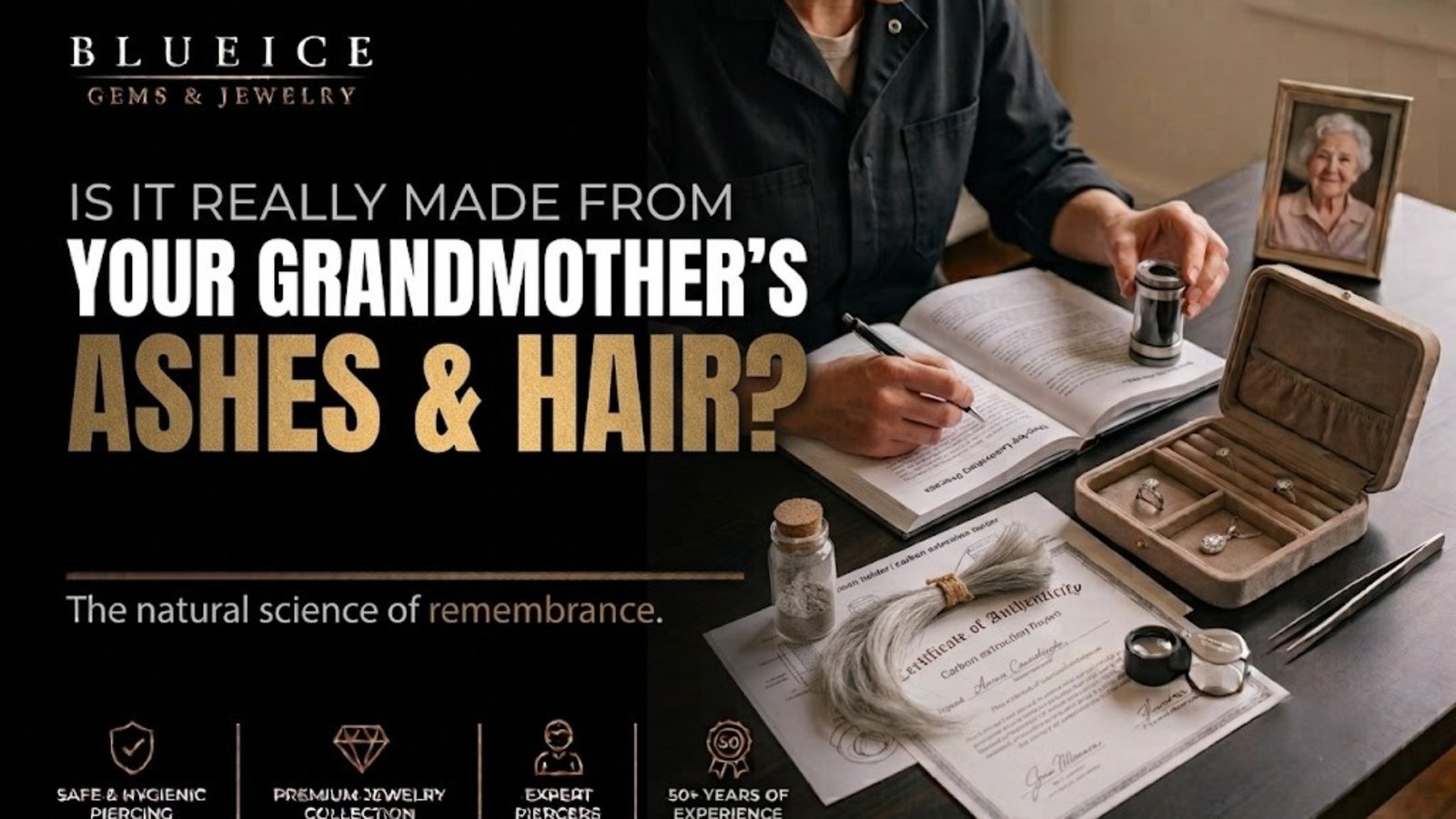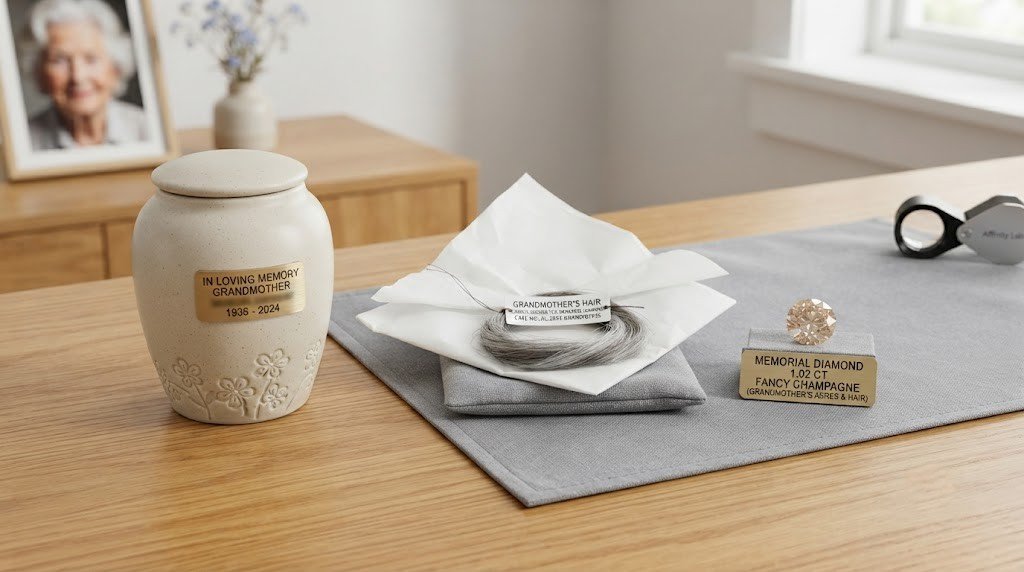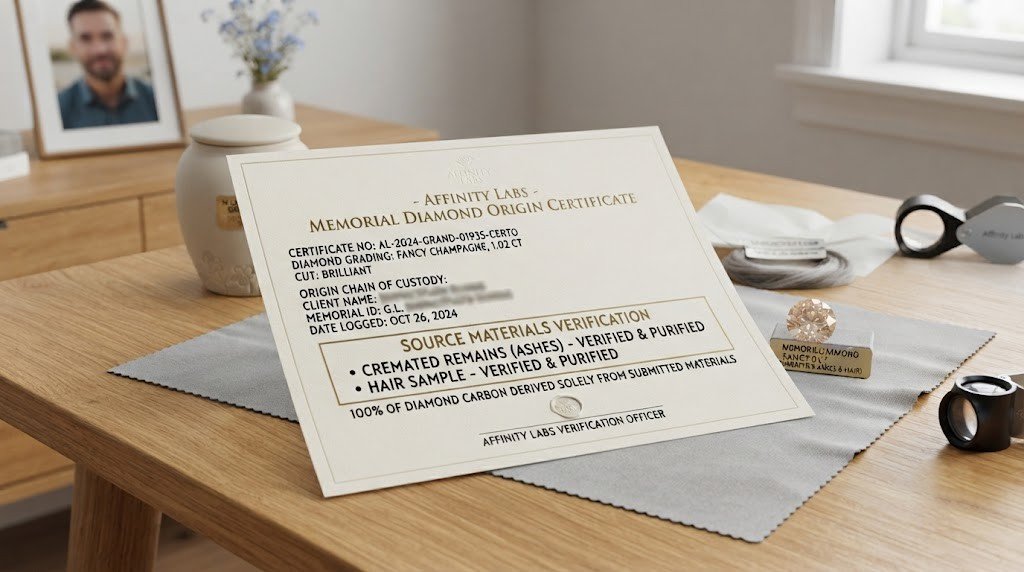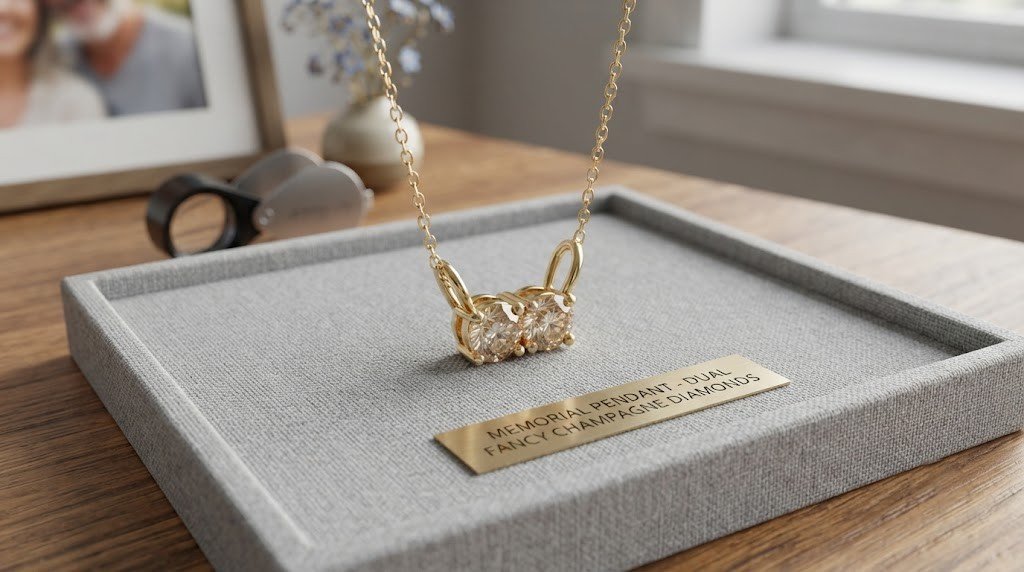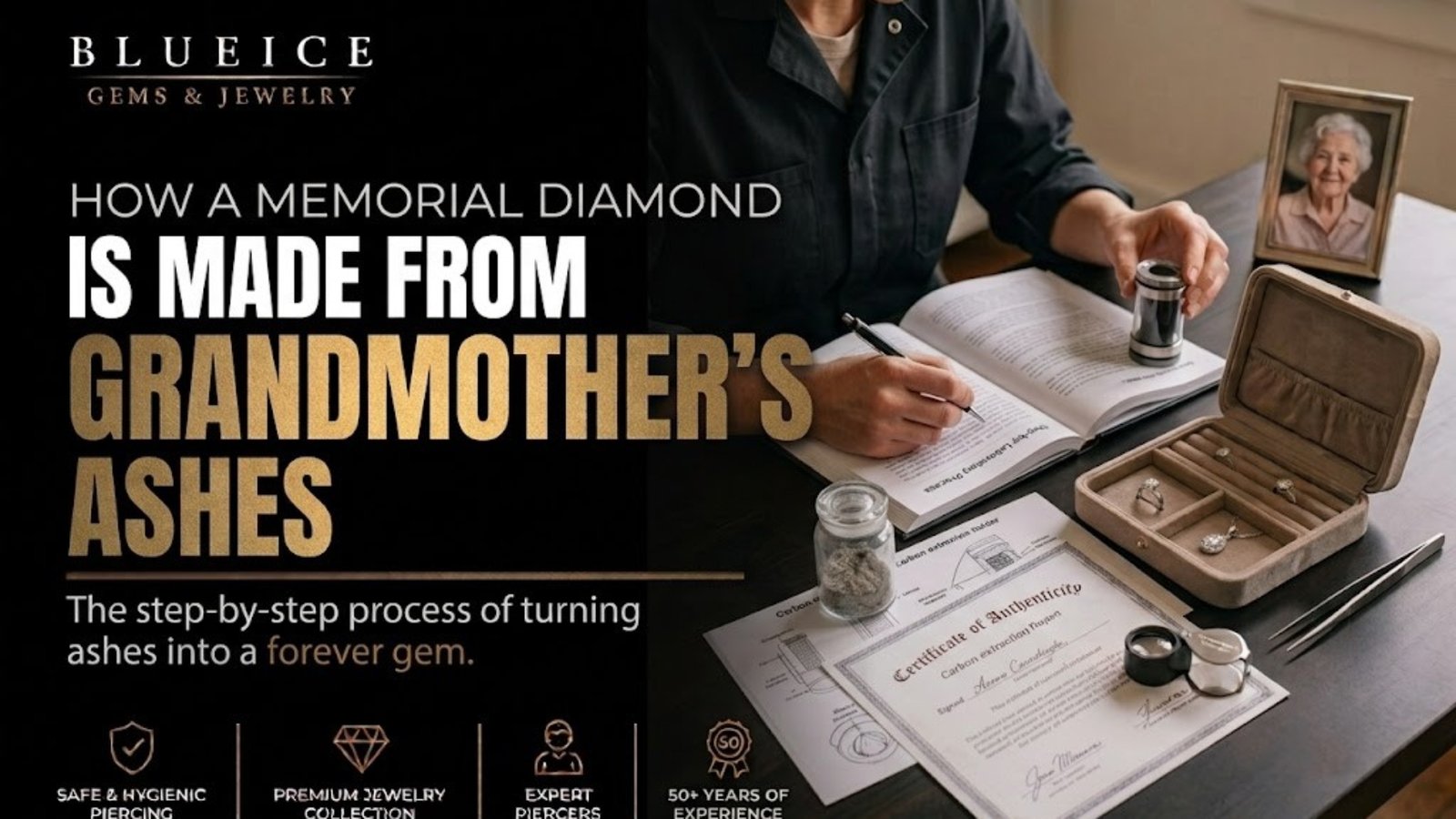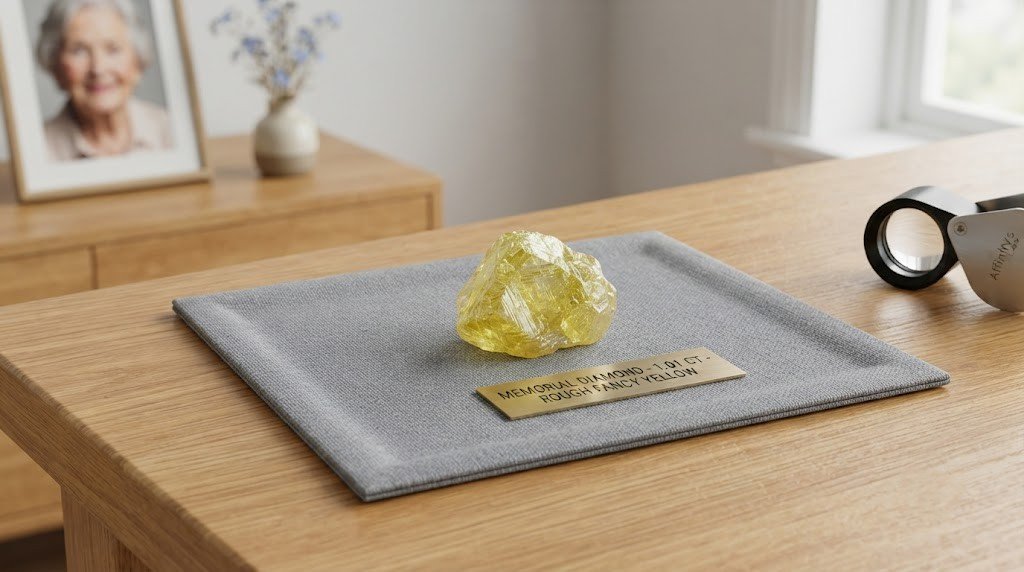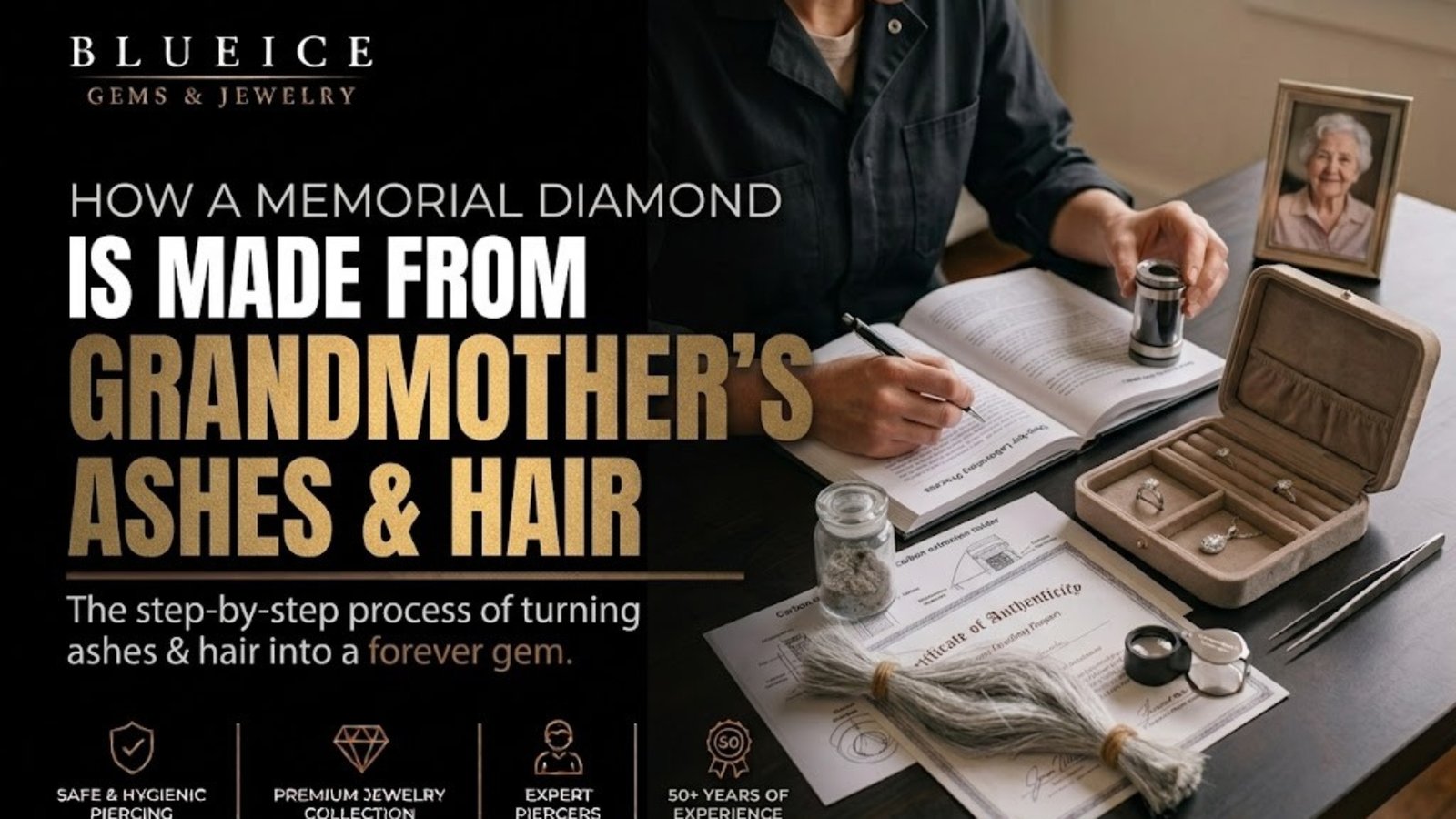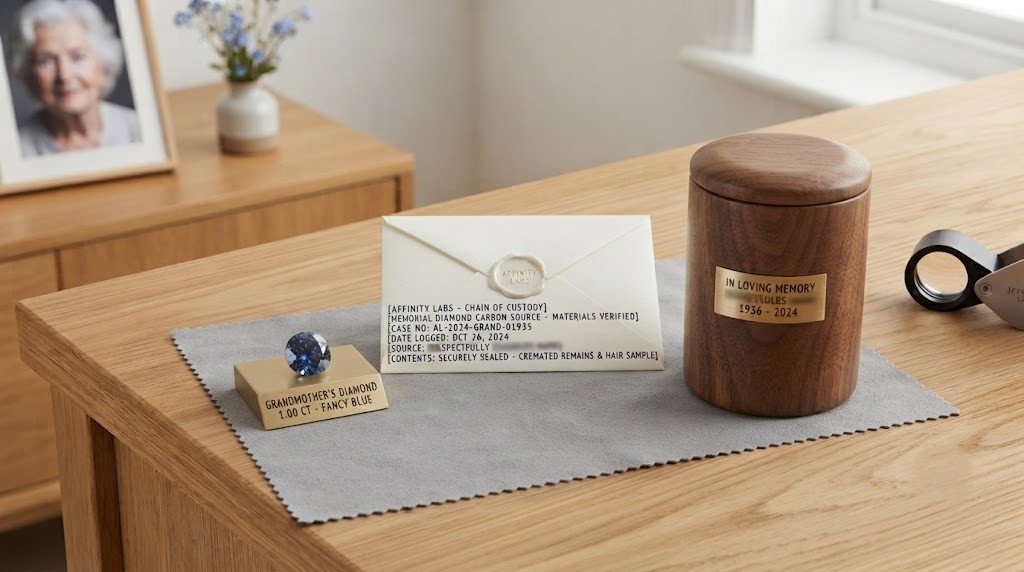
Perhaps your grandmother was cremated and the ashes are with a relative, or perhaps all anyone kept was a lock of her hair, and you are not sure which question to ask first. Choosing a memorial diamond for your grandmother starts with one decision, whether a diamond fits at all, and then moves through six more in a calm order: the material, who has a say, the family, the provider, the stone and, last of all, the setting.
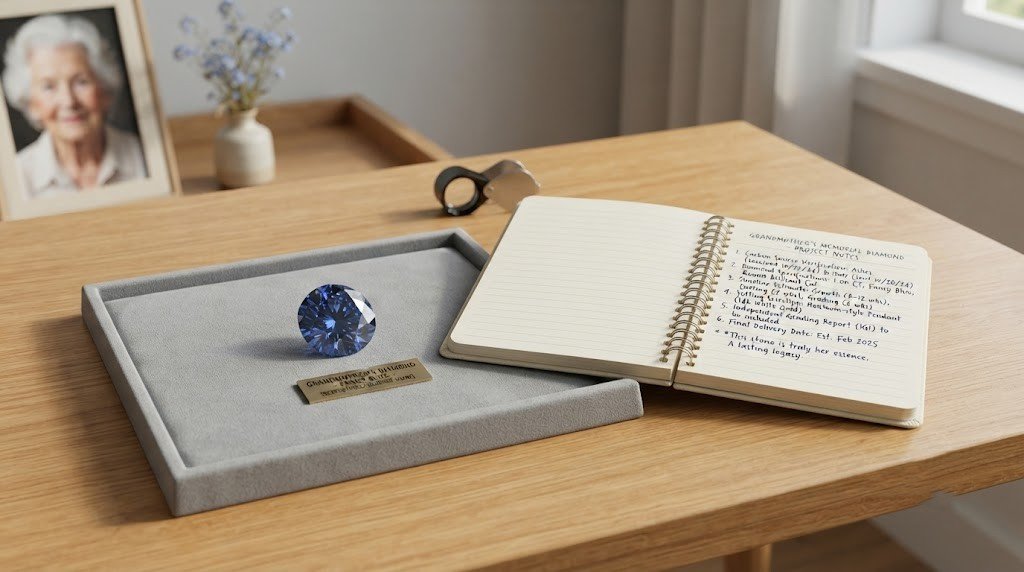
Table of Contents
Where do you start with a memorial diamond for your grandmother?
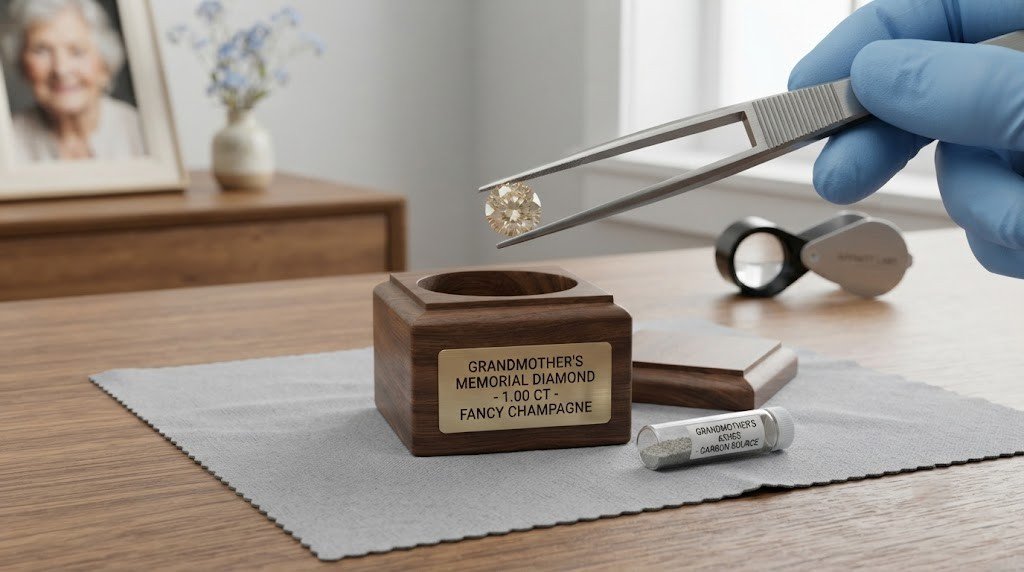
You start by putting the decisions in order instead of trying to hold all of them at once. A memorial diamond for your grandmother is a genuine lab-grown stone whose carbon comes in part from her ashes, her hair or both, and each choice along the way rests on the one before it.
These are the seven first decisions, in the order this guide walks through them:
- Decide whether a diamond fits alongside the other ways your family is honoring her.
- Work out what material exists (ashes, hair or both) and which you could use.
- Find out who holds authority over her ashes, if she was cremated.
- Bring the relatives who should know into the conversation.
- Choose a provider and put your questions to them in writing.
- Make the stone choices: size, color, cut and grading.
- Leave the setting until the stone itself is underway.
None of the steps toward a memorial diamond for your grandmother comes with a deadline, so you can pause at any point for as long as you need.
Each step below links to a deeper guide, and the grandmother memorial diamond FAQ gathers the questions people raise across every stage.
Step 1: Does a diamond fit alongside other ways to honor her?
A memorial diamond for your grandmother fits when someone in the family wants a small, wearable memorial alongside the urn, burial or scattering already chosen. It is one option among several. An urn on a shelf, a burial plot and a scattering place are each complete ways to remember someone, and a diamond does not replace any of them.
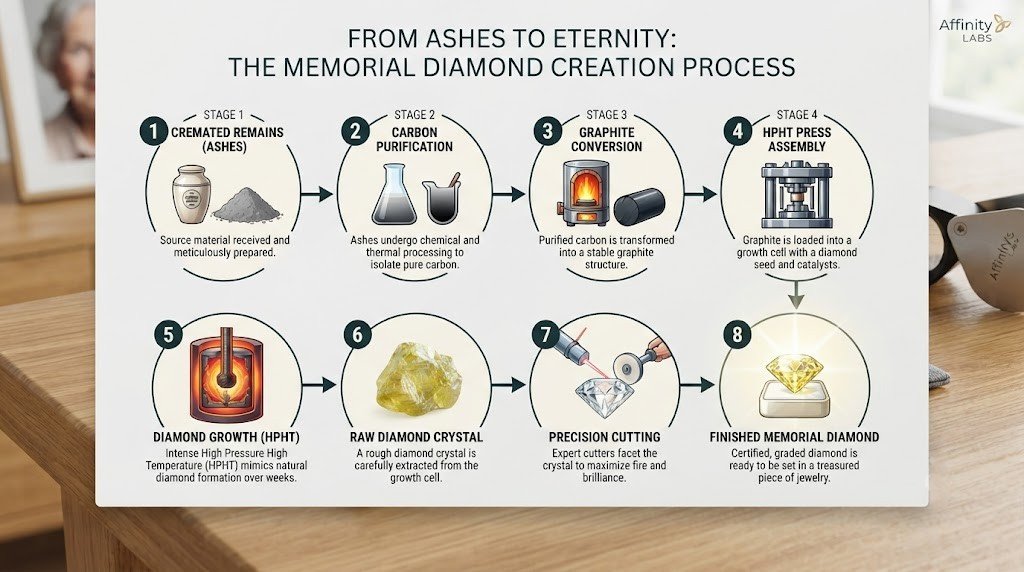
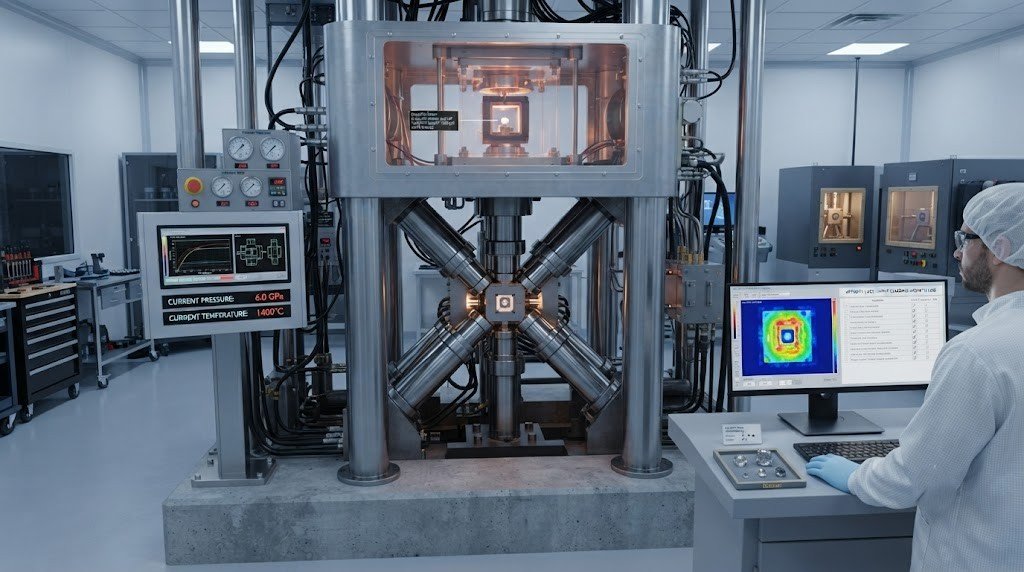
It helps to know that a memorial diamond for your grandmother is a genuine lab-grown diamond, not a simulant or a resin keepsake. Most providers grow memorial stones with the high-pressure, high-temperature method, at roughly 6–8 GPa and 1,400–2,500°C around a tiny seed; a minority use chemical vapor deposition. The history and science of the memorial diamond category offers useful background if the idea is new to your family.
Before going further, a few honest questions are worth sitting with:
- Did she ever say what she wanted done with her remains or belongings?
- Would a stone mean dividing ashes that someone planned to keep whole?
- Is the cost reasonable for you right now, or would it strain you?
- Does faith shape how anyone in your family feels about ashes?
No religious tradition has an official position on memorial diamonds specifically; the teachings that exist concern cremation and how ashes are handled. Current Catholic guidance asks that ashes stay intact in a sacred place, with a narrow allowance for a minimal part in specific conditions, while Islam and Orthodox and Conservative Judaism object to cremation itself, so a stone grown from hair sits outside that objection. Views differ by community and by clergy, so the people to ask about a memorial diamond for your grandmother are your own faith leaders.
If you are weighing a memorial diamond for your grandmother against keeping everything in one vessel, the comparison of a grandmother memorial diamond and a traditional urn sets the two side by side without ranking either.
Step 2: Should the diamond come from her ashes, her hair, or both?
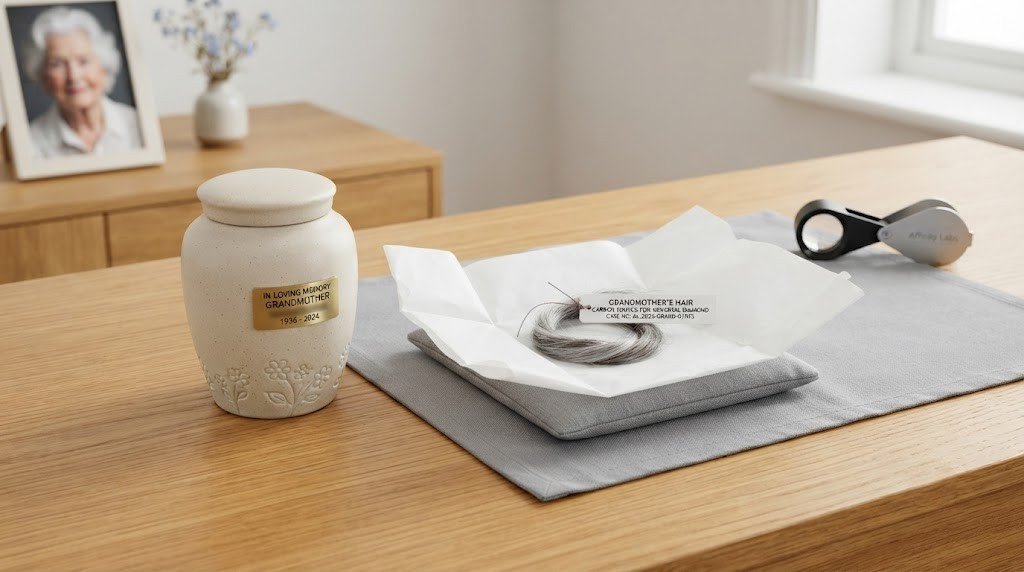
A memorial diamond for your grandmother should come from whatever material exists and can be used with the family’s blessing. For some readers that is a portion of cremated ashes; for others it is hair saved before a burial; for a few it is both, and whether a given provider will combine the two in one stone is something to ask them directly.
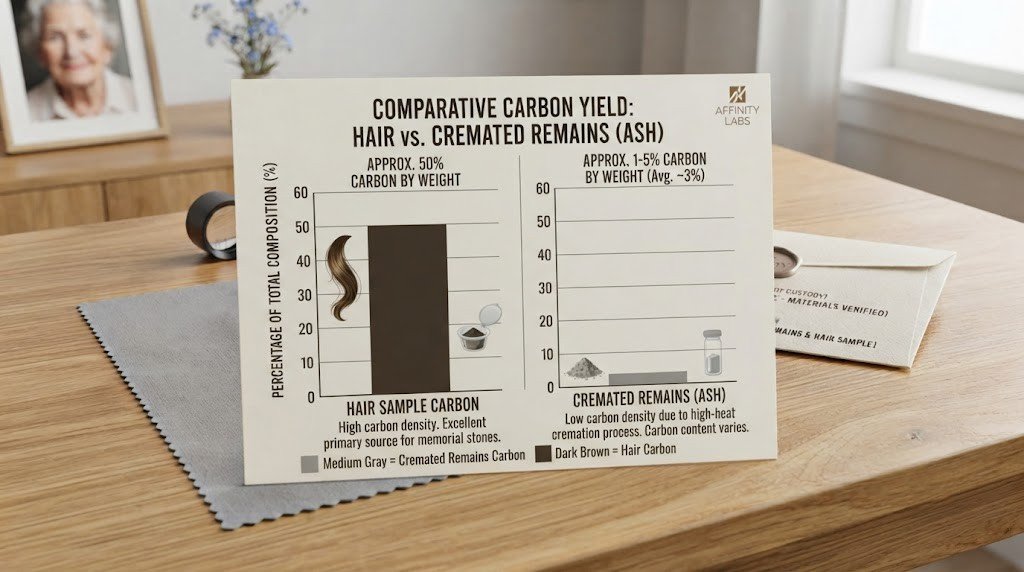
Ashes are mostly calcium phosphate, the mineral of bone, and usable carbon makes up only about 0.5–4% of ash by weight. That carbon is extracted, purified to roughly 99.9%, turned into graphite at around 2,500–2,700°C and typically blended with supplemental lab carbon so a stone of meaningful size can grow. Carbon recovered from ash usually ends up as roughly 10–15% of the finished stone’s mass, though some providers cite figures near 3% and others higher. The grandmother ashes diamond complete guide follows that route in detail.
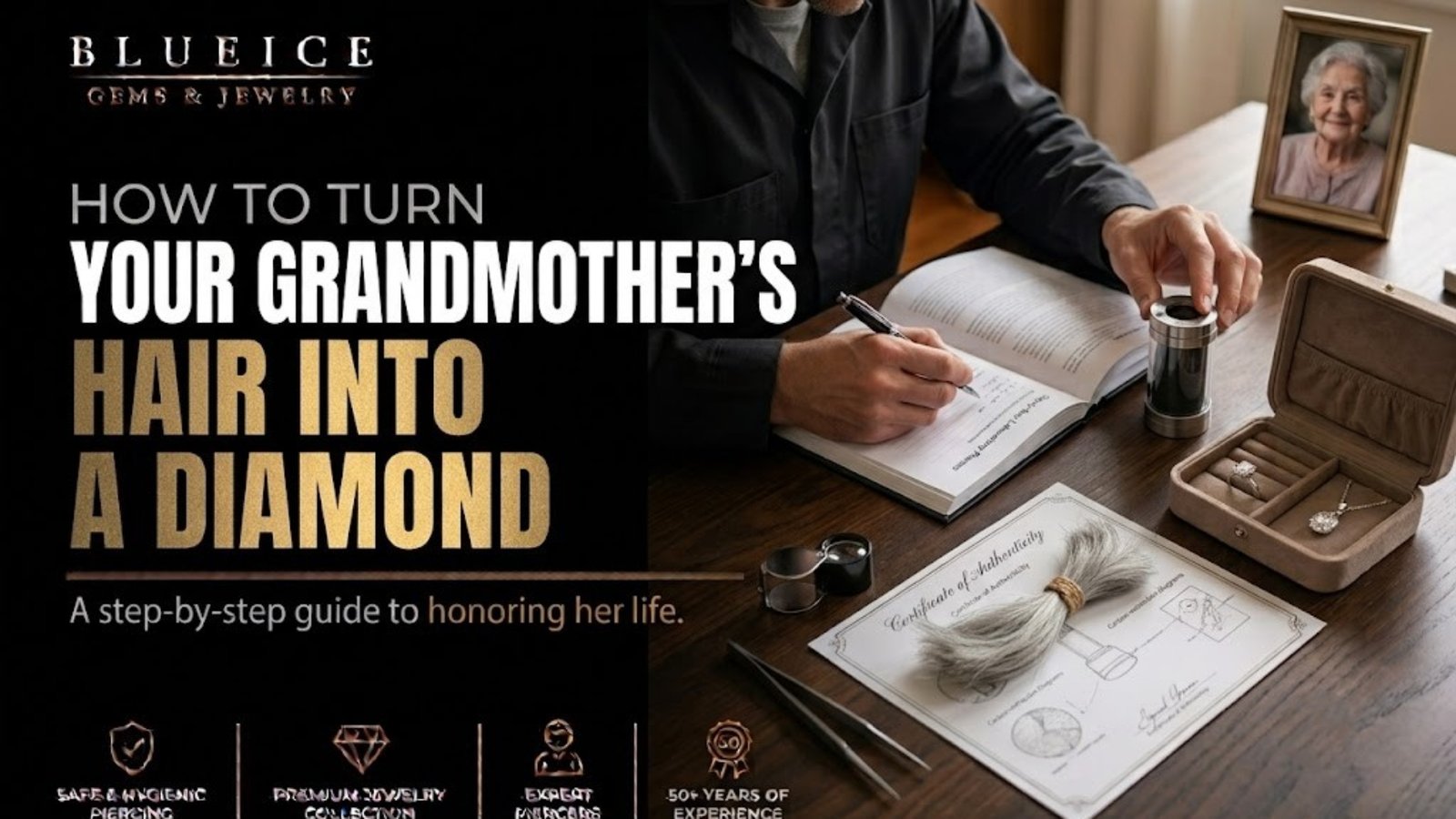
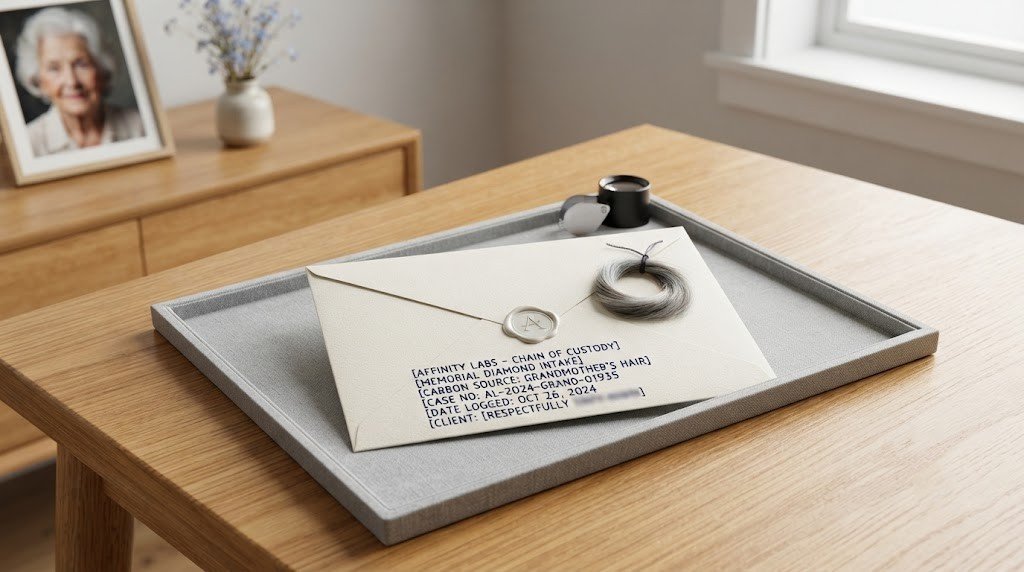
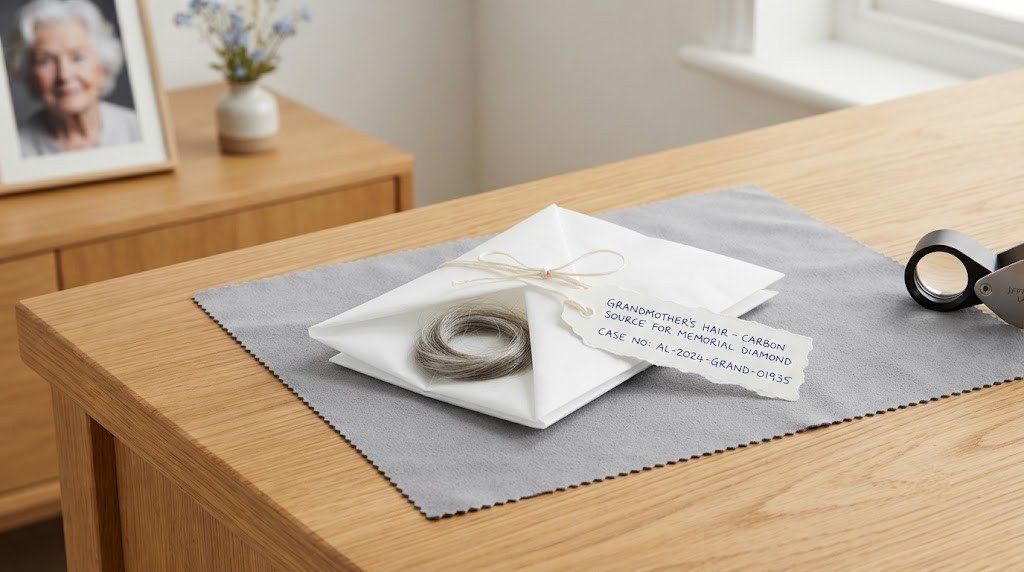
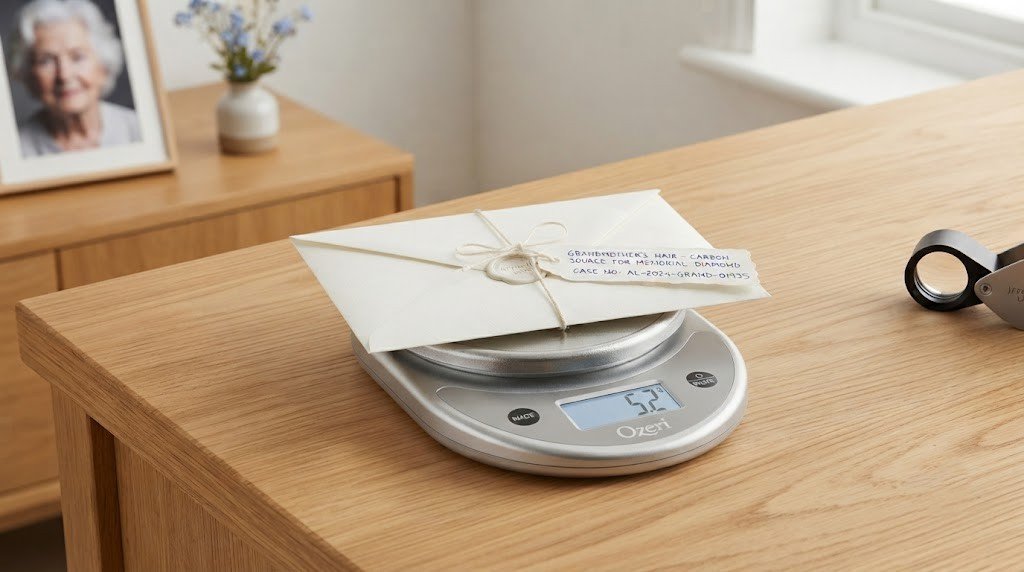
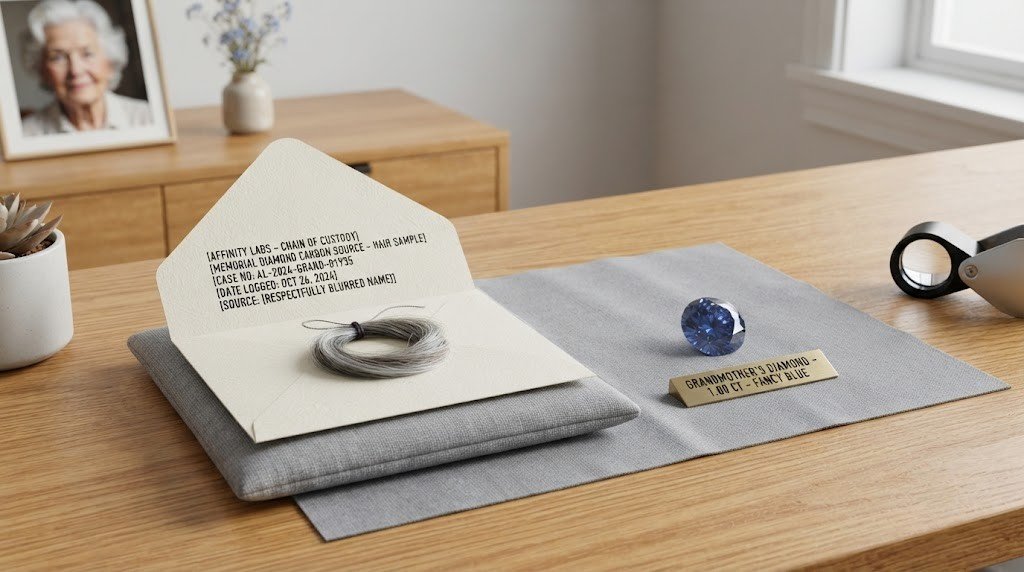
Hair is roughly half carbon by weight, because it is built from keratin, so far less is needed. No published figure exists for how much of a finished stone’s mass comes from her own carbon when hair or a hair-and-ash blend is used, so ask each provider to put their answer in writing. Hair also needs no cremation, which makes it the route to a memorial diamond for your grandmother if she was buried. The grandmother hair diamond complete guide covers that path.
| Material | Typical amount requested | Requires cremation? | Worth confirming in writing |
|---|---|---|---|
| Ashes | A few tablespoons up to about 4 oz (around 100 g) | Yes | The exact amount needed and what is done with any portion not used |
| Hair | A small lock or a few grams | No | Whether gray, white, thinning, permed or dyed hair suits their process |
| Ashes and hair | A portion of each | Only for the ash portion | Whether they blend both and how the origin of each is documented |
Only a portion of either material goes into a memorial diamond for your grandmother, leaving the remainder free for the urn, a burial or a scattering, whichever was planned. Hair in your own keeping is usually simpler in practice, since rules about remains are aimed at the remains themselves, but belongings can form part of an estate, rules vary by state, and hair held by someone else is a conversation to have rather than a decision to make alone.
Step 3: Who has a say over her ashes?
The person with authority over cremated remains depends on the state and on any written wishes, and there is no single national rule. Commonly, a surviving spouse or partner, if she had one, and her adult children come before grandchildren in that order, but a written instruction or a designated agent can change it.
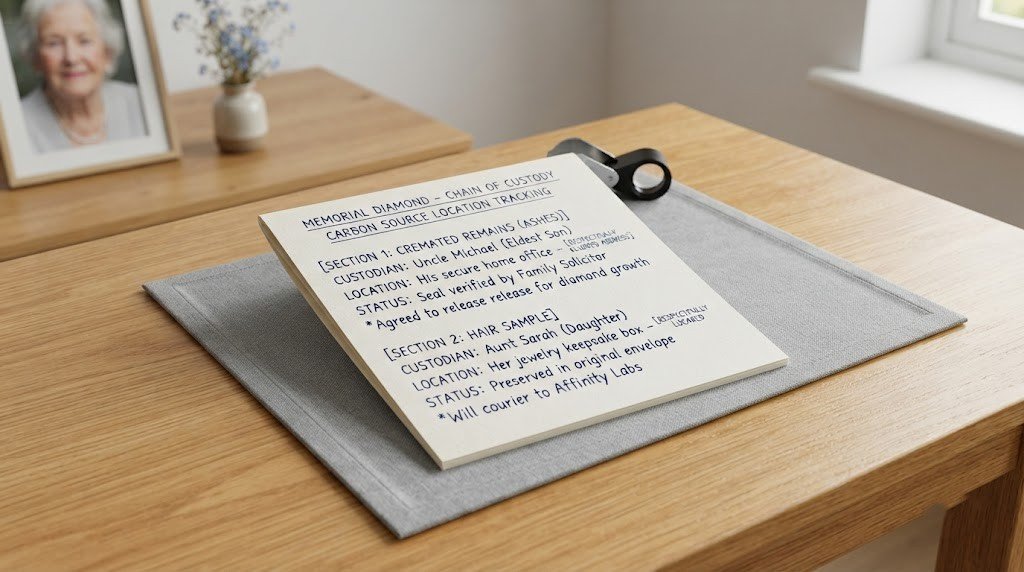
Ask any provider what authorization they require from whoever sends ashes. As a grandchild, the kind way forward is a request to the person with that authority, who may be a parent, an aunt or uncle, or someone else entirely, asking whether a small portion could be set aside for a memorial diamond for your grandmother. Providers typically ask for only a portion, which can make the request easier to hear.
If the ashes are not available, or the answer is no, hair can be another route to a memorial diamond for your grandmother, provided it was kept and the family is comfortable with its use. The funeral home that handled her arrangements, or an estate attorney, can explain how authority works where she died.
Step 4: How do you bring relatives into the decision?
Bring relatives in early, plainly and with an invitation instead of a finished plan. Her children, grandchildren and step-relatives may each feel differently about her ashes or hair, and telling people before anything is sent tends to go more smoothly than telling them afterward.
A short, honest message about a memorial diamond for your grandmother usually works better than a long case for the idea: what you are considering, why it matters to you, how little material is involved and that the rest of the ashes stay where they are. Some relatives will want a stone of their own, and because only a portion is used, several stones can often come from the same source. Others will prefer not to take part, and that is a complete answer too.
If you are the one who proposes a memorial diamond for your grandmother, expect a range of reactions and give people time. The guide on how to talk to family about a grandmother memorial diamond offers wording for the first conversation and for disagreement.
Step 5: How do you choose a provider, and what should you ask?
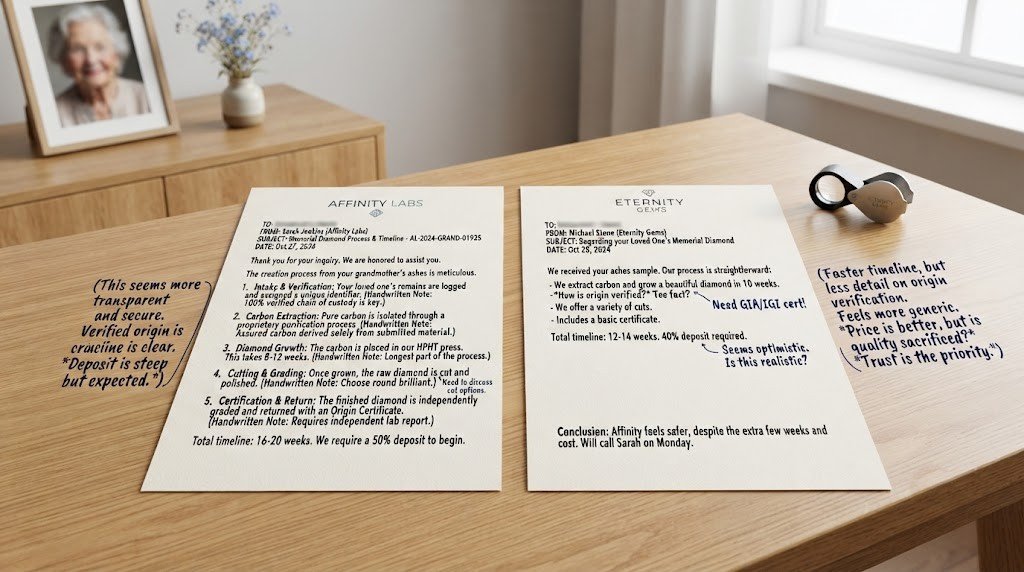
Choose a provider on transparency, and get every important answer in writing before you send anything. Terms, timelines and processes vary across the industry, so the only reliable answers about a memorial diamond for your grandmother come from the provider you are considering.
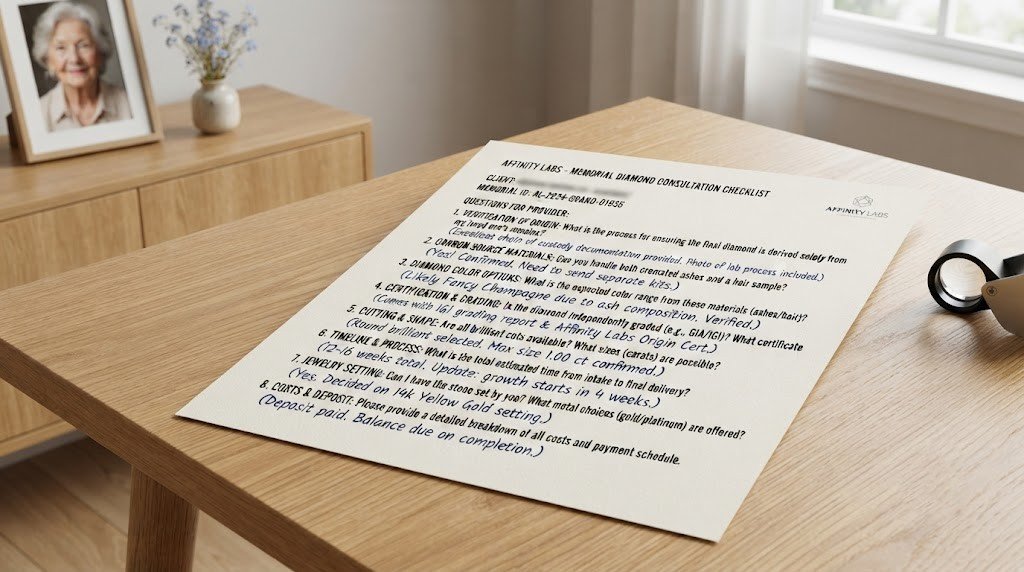
Questions worth sending in an email before you commit to a memorial diamond for your grandmother:
- How much of the finished stone’s mass comes from her own carbon, for ashes, hair or a blend?
- Is supplemental lab carbon added, and how is that explained in the paperwork?
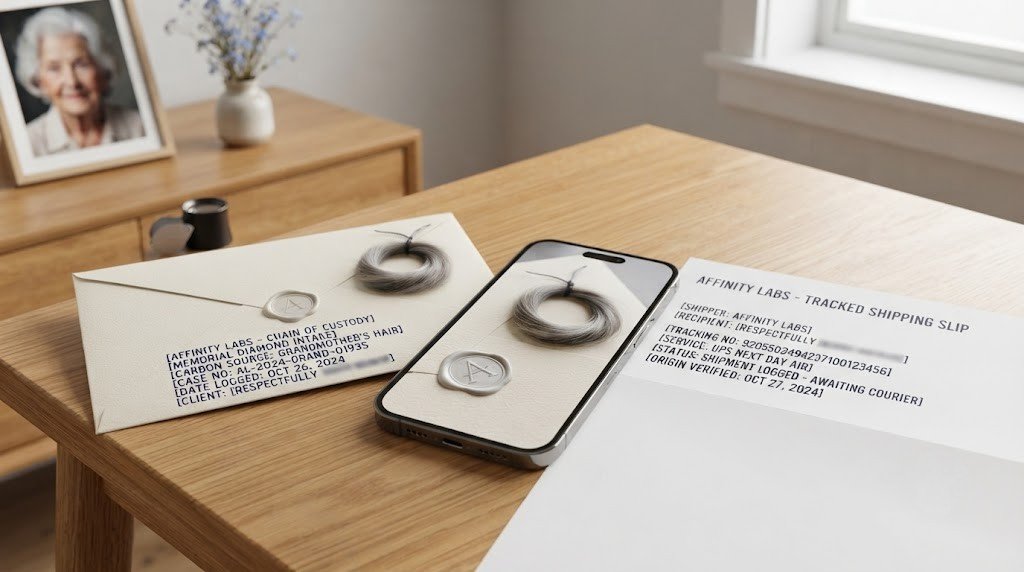
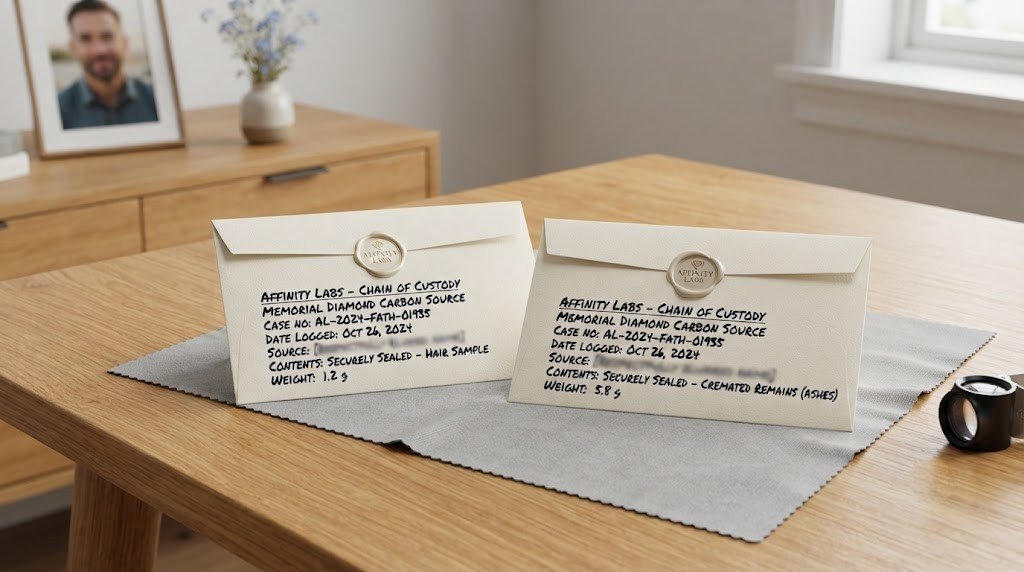
- How is her material tracked from arrival to finished stone, and what origin certificate is issued?
- What happens to any ashes or hair not used, and can it be returned?
- What overall timeline should you expect for the size and color you want?
- Is an independent grading report included, or is it extra?
- What happens if a growth attempt does not succeed?
- What are the cancellation and refund terms at each stage?
Keep every reply in one folder, and share the written answers with relatives who are involved. The list of questions to ask before turning your grandmother’s ashes into a diamond goes further, with notes on what a clear answer looks like.
Step 6: Which stone choices come first?
When you plan a memorial diamond for your grandmother, size and color come first, because together they shape both the cost and the timeline. Cut, clarity and grading are easier to decide once those two are settled.
Carat size is set by how long the stone grows, not by how much ash or hair is sent. Stones typically range from about 0.10 carats to 5 carats or more. The overall process typically runs 6–10 months, and larger stones of around 2 carats and up, or specialty colors, can take up to about 12 months.
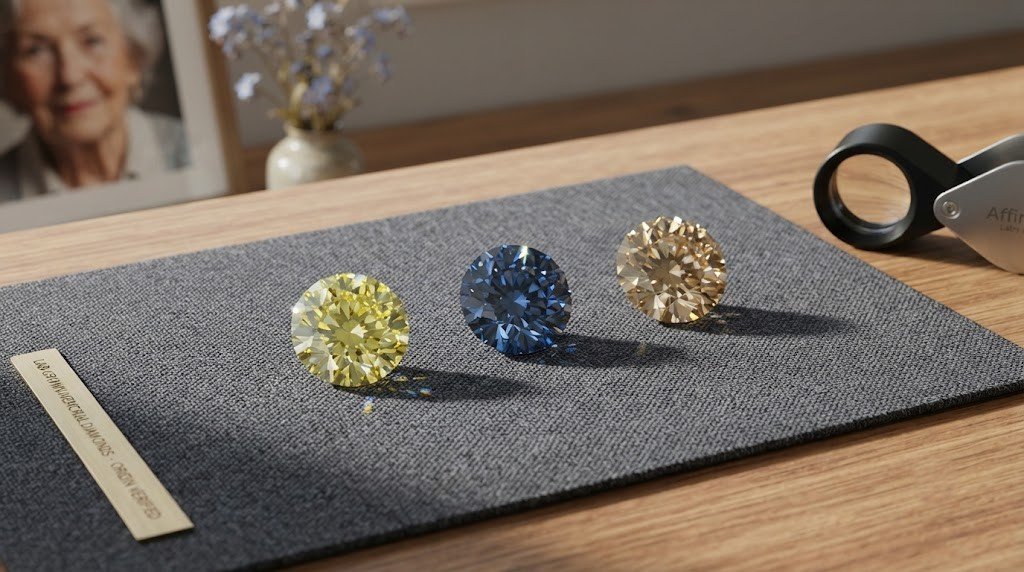
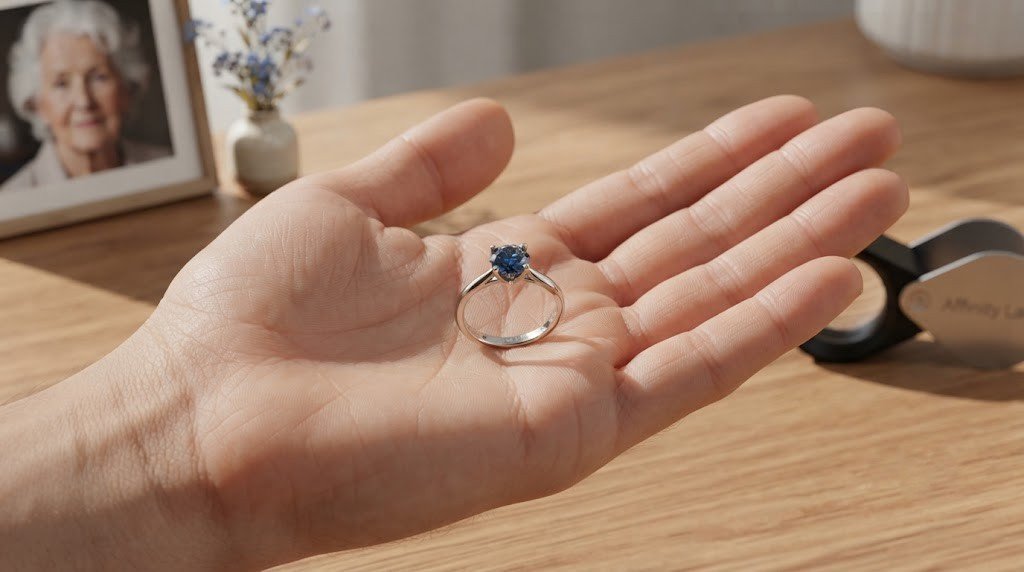
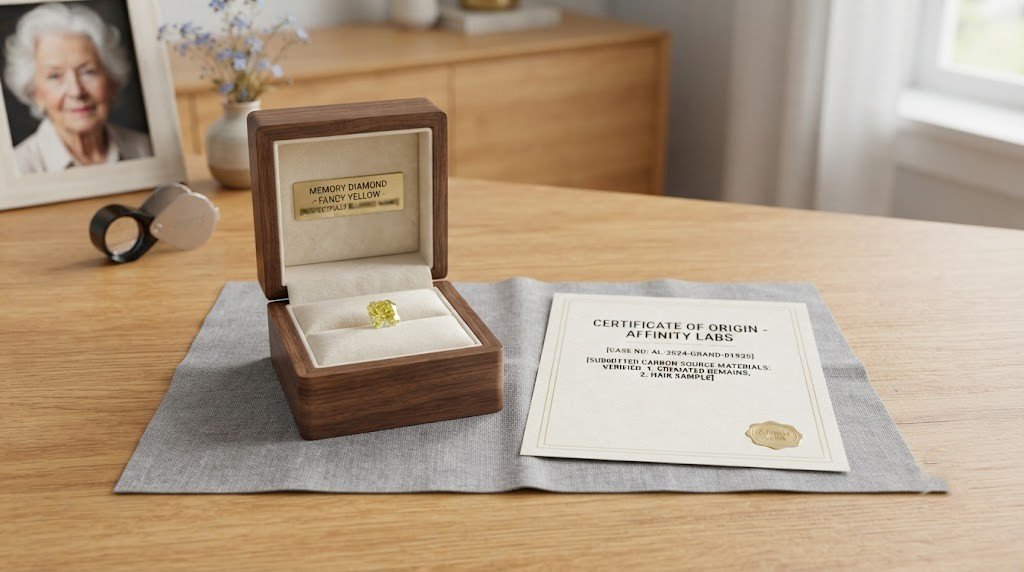
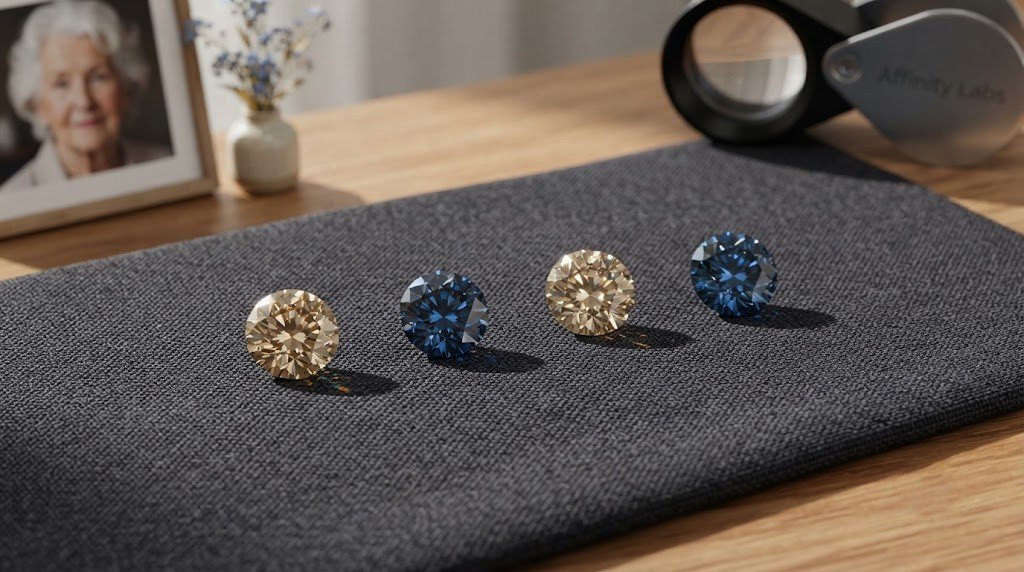
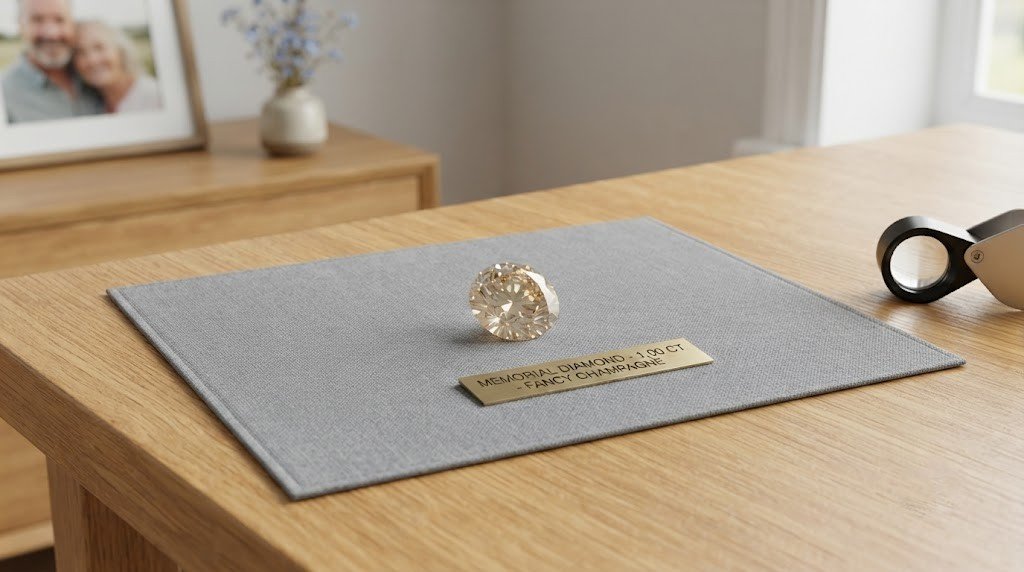
The color of a memorial diamond for your grandmother comes from trace elements during growth: nitrogen gives yellow tones, boron gives blue, and a colorless stone needs neither, and that is why colorless tends to carry a higher price. Yellow, blue and champagne are the shades these stones lean toward, while some providers offer optional post-growth treatment for red, pink, green or black. Nothing makes color predictable from the material, so ask a provider what is achievable rather than assuming her hair or ashes will produce a particular shade.
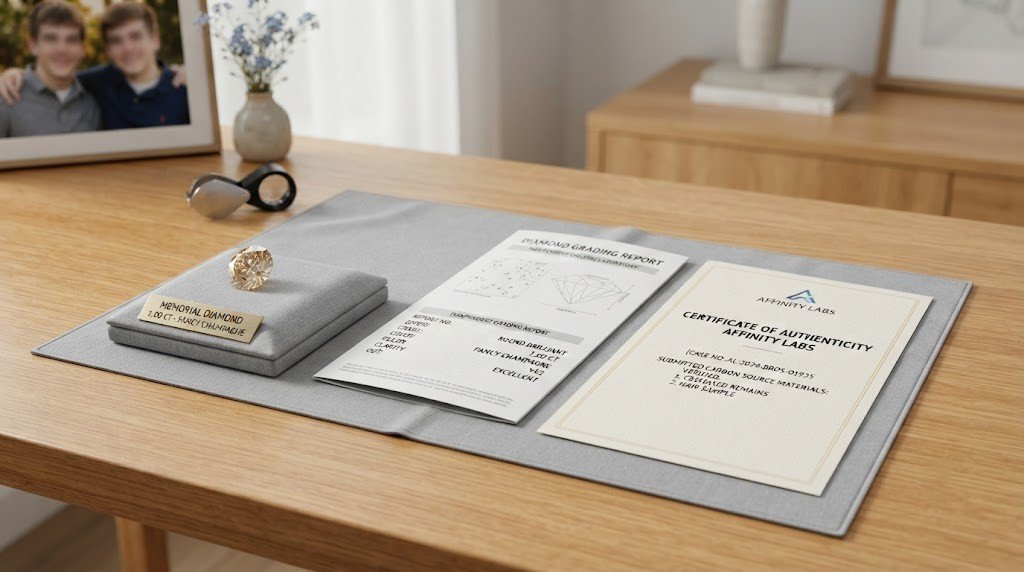
For clarity, memorial stones typically grade somewhere from SI2 to VVS. A grading report from an independent lab, usually based on GIA’s diamond quality factors and occasionally from IGI, describes the stone’s quality and is separate from the in-house origin certificate that documents its chain of custody.
| Size (industry range) | Typical 2026 price range |
|---|---|
| About 0.10–0.25 ct | About 1,500–3,500 |
| 0.5–1 ct | About 5,000–15,000, more for colorless |
| 2–5+ ct | About 20,000–75,000 or more |
If you are budgeting for a memorial diamond for your grandmother, remember that settings, engraving, fancy cuts and grading are usually priced separately. The guide to what a grandmother memorial diamond costs breaks these figures down further.
Step 7: Why can the setting wait?
The setting for a memorial diamond for your grandmother can wait because the stone’s exact size, shape and color are only certain once it has been grown and cut. Choosing jewelry before then means designing around a guess.
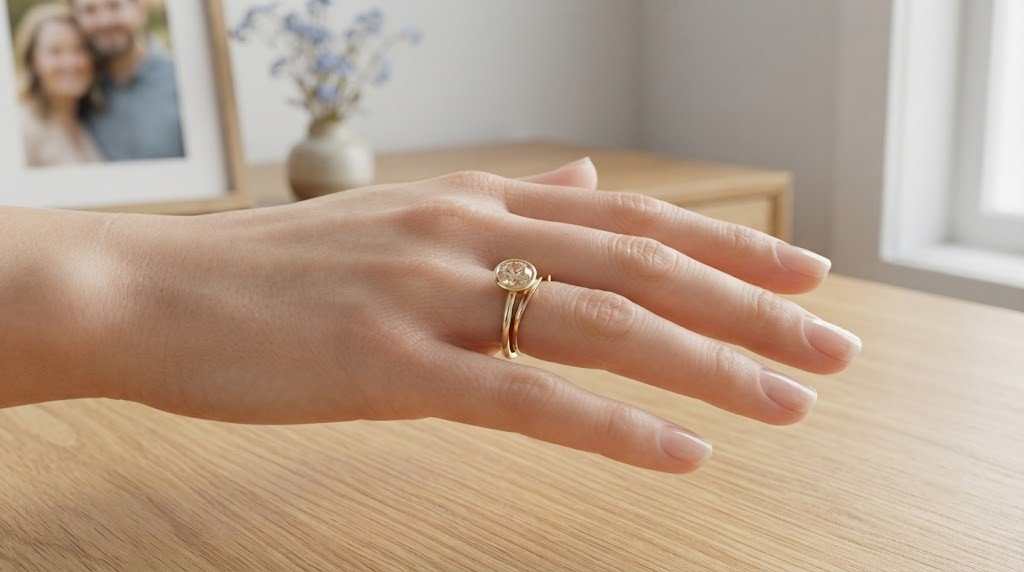
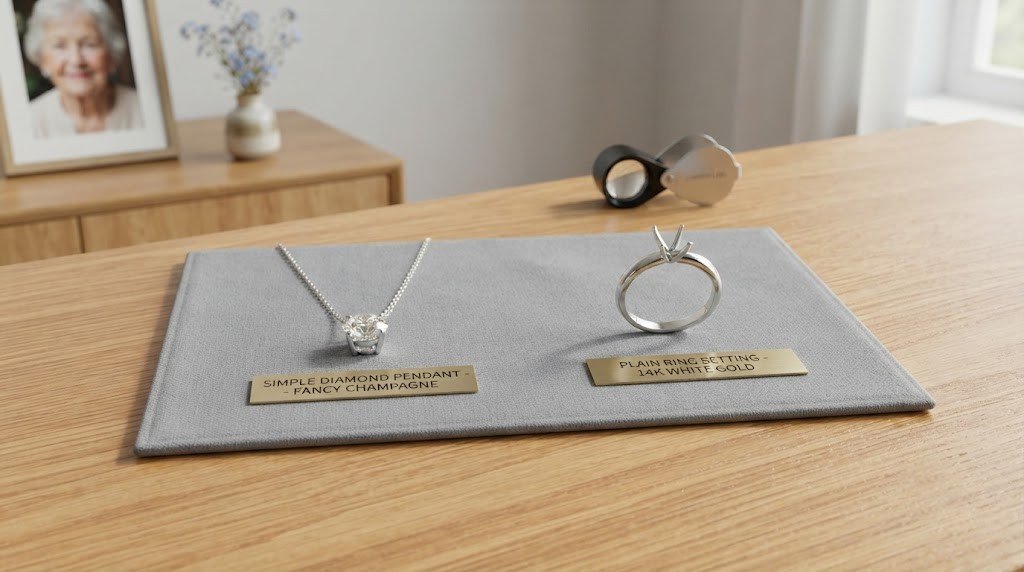
Waiting also leaves room to think about who will wear it. The stone might go into a pendant, ring, stud or brooch, or stay loose in a keepsake box, and no option belongs to one gender or one generation. A diamond rates 10 on the Mohs scale, the hardest natural mineral, yet a hard knock can still chip it, so a protective setting can be worth discussing for daily wear.
Later, the guide to settings and jewelry ideas for a grandmother’s stone walks through the options.
What if she was your mother rather than your grandmother?
The same seven steps apply, but you may stand in a different place within them. If you are her son or daughter, you may hold authority over her ashes yourself, alone or together with siblings, depending on your state and on any written wishes she left.
That can make you the person a grandchild comes to with a request. Pages like this one speak to grandchildren, so when you read about a memorial diamond for your grandmother, picture the request arriving from the next generation, and the ashes being your mother’s. Hearing that request with patience keeps the conversation open even if the answer takes time.
If you are planning stones for your own children, ask each of them whether they want one, and agree who will be the single contact with a provider.
Does anything change for a step-, adopted or chosen grandchild?
The steps stay the same, and a memorial diamond for your grandmother does not depend on biology in any way: the carbon comes from her, not from you. What can differ is where you sit in the order of authority and how you approach the people who hold it.
A step-grandchild or chosen grandchild, such as someone she welcomed as family without any formal tie, usually reaches the ashes through a request to whoever holds authority. How adoption fits into that order is a question a funeral director or attorney can answer for your state. In every case, a memorial diamond for your grandmother can come from a small, agreed portion, or from hair the family is willing to share, so asking openly is the respectful path.
If relatives hesitate, the hesitation may be about the ashes rather than about you, and a memorial diamond for your grandmother grown from hair can be a gentle alternative.
Which guide should you read next for a memorial diamond for your grandmother?
Read whichever guide matches where you are now in planning a memorial diamond for your grandmother, using the row closest to your situation.
| If your situation is… | Start with |
|---|---|
| You are unsure whether a diamond belongs beside an urn or burial | Grandmother memorial diamond vs. a traditional urn |
| She was cremated and you want to understand the ash route | Grandmother ashes diamond complete guide |
| She was buried, or only hair was kept | Grandmother hair diamond complete guide |
| A parent, aunt or uncle holds the ashes | How to talk to family about a grandmother memorial diamond |
| You are comparing providers | Questions to ask before turning her ashes into a diamond |
| Budget is your first concern | What a grandmother memorial diamond costs |
| The stone is ordered and you are thinking about jewelry | Grandmother memorial diamond settings |
| You want short answers to many questions at once | Grandmother memorial diamond FAQ |
Frequently Asked Questions
Do I need every answer before contacting a provider?
No. Asking a provider questions about a memorial diamond for your grandmother commits you to nothing, and early answers can shape later decisions. Settle the material and the family conversation before sending anything, but questions can begin whenever you feel ready.
Can a memorial diamond for your grandmother be made if she was buried?
Yes, if some of her hair was kept. Hair needs no cremation, and a small lock or a few grams is typically requested. Ask the provider whether the hair you have is suitable, and talk with whoever keeps it before anything is sent.
How much of her ashes would actually be used?
For a memorial diamond for your grandmother, providers typically ask for a few tablespoons up to about 4 oz, roughly 100 grams, only part of a full cremation. Whatever remains can rest in the urn, be buried or be scattered as the family intended.
Can several grandchildren each have a stone?
In many cases. A single stone draws on just part of the ashes or hair, so one source can frequently supply more than one diamond. Ask a provider how many stones your material can support, and agree among yourselves who coordinates the order.
What should I do if relatives disagree?
Slow down rather than push ahead. Listen to each person’s worry, offer information instead of persuasion, and remember that hair or a smaller portion may meet everyone’s concerns. A decision that waits a season is still a good decision.
Is a memorial diamond the right choice for everyone?
No, and that is fine. Some people find comfort in something they can wear or hold, while others feel most connected to a graveside, a scattering place or an urn at home. Each of these is a complete and loving way to remember her.
Final Thoughts on Choosing Where to Start
You do not need to picture the finished memorial diamond for your grandmother to take the first step. Asking whether a diamond fits, learning what material exists and talking with the people who loved her are worthwhile even if the family later chooses something else. Go one decision at a time, and let the rest wait until you are ready.
Learn More About Grandmother Memorial Diamonds
- Grandmother memorial diamond FAQ short answers across the whole subject
- Grandmother ashes diamond complete guide the ash route from start to finish
- Grandmother hair diamond complete guide the route that needs no cremation
- Can more than one family member get a diamond from her ashes? sharing stones among grandchildren
- How long a grandmother memorial diamond takes what shapes the overall timeline
Talk With Memorial Diamond
If you are thinking about a memorial diamond for your grandmother and would like to talk through the first steps, the team at Memorial Diamond is glad to answer questions in plain language. There is no need to have decided anything before you reach out, and no pressure to decide afterward.
Word count: 3,139 words · Reading time: about 16 minutes