Brother Ashes Hair Diamond Color5 Unique Steps With Care

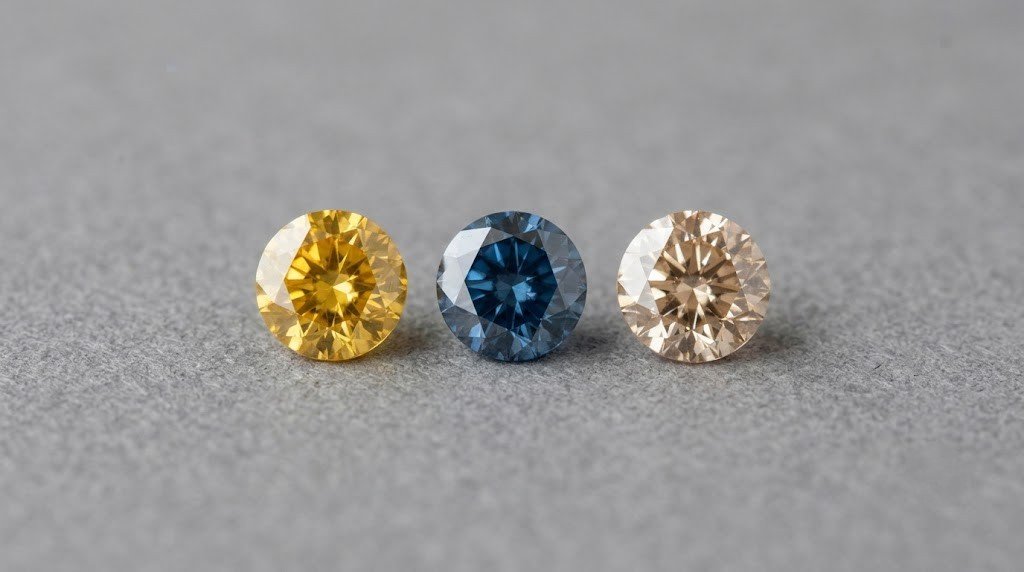
What Color Will a Diamond Made From Your Brother’s Ashes and Hair Be?

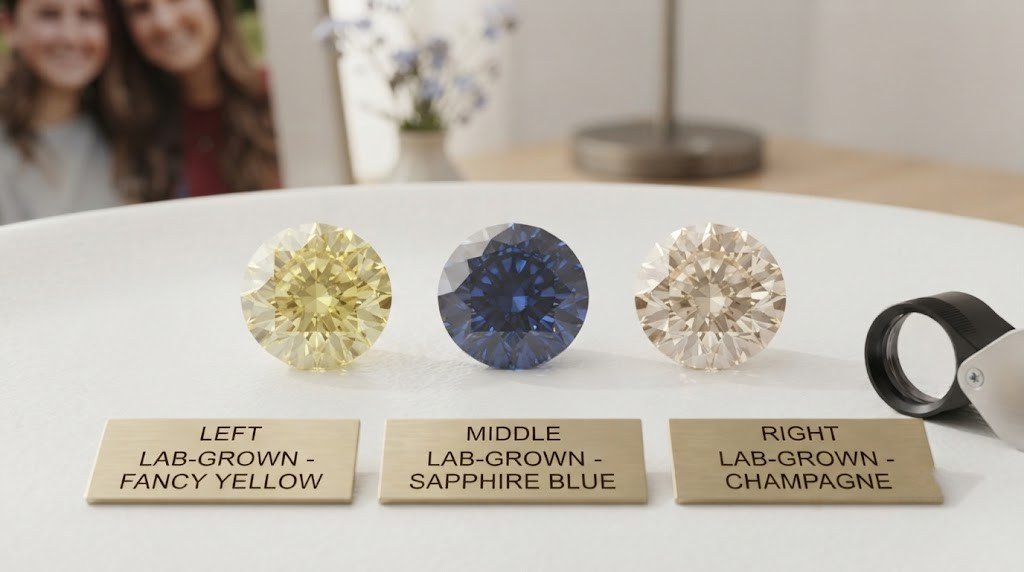
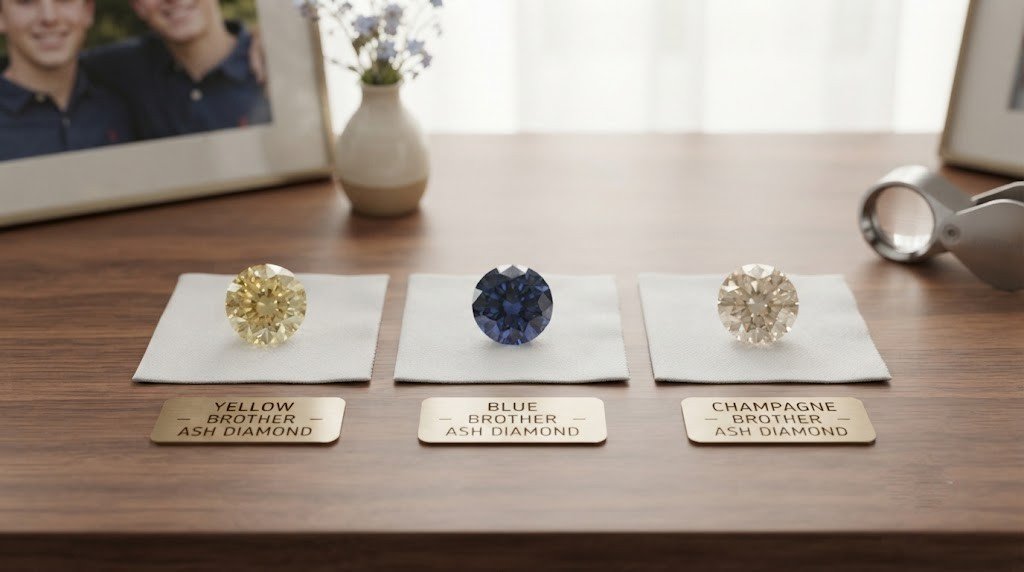
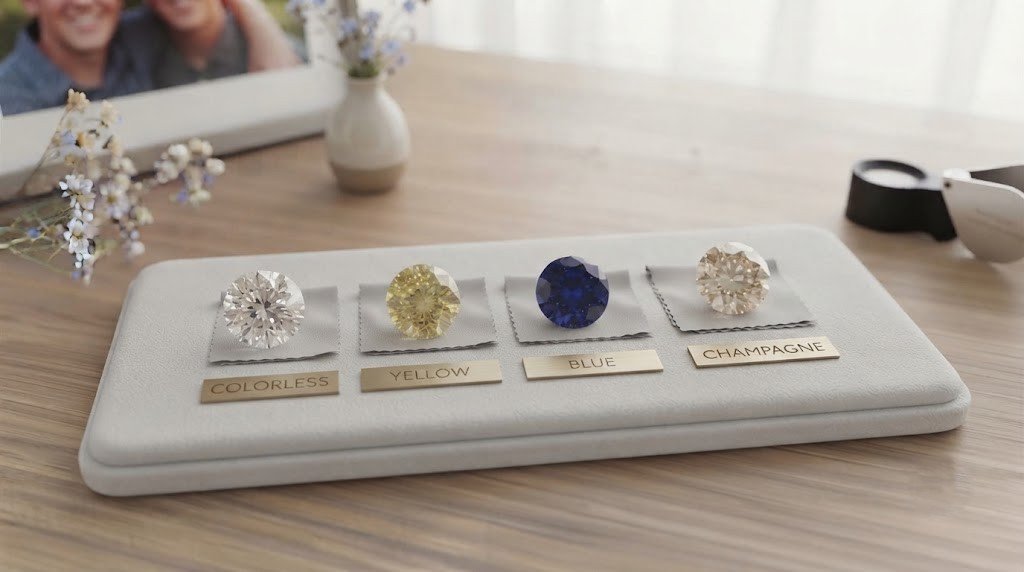
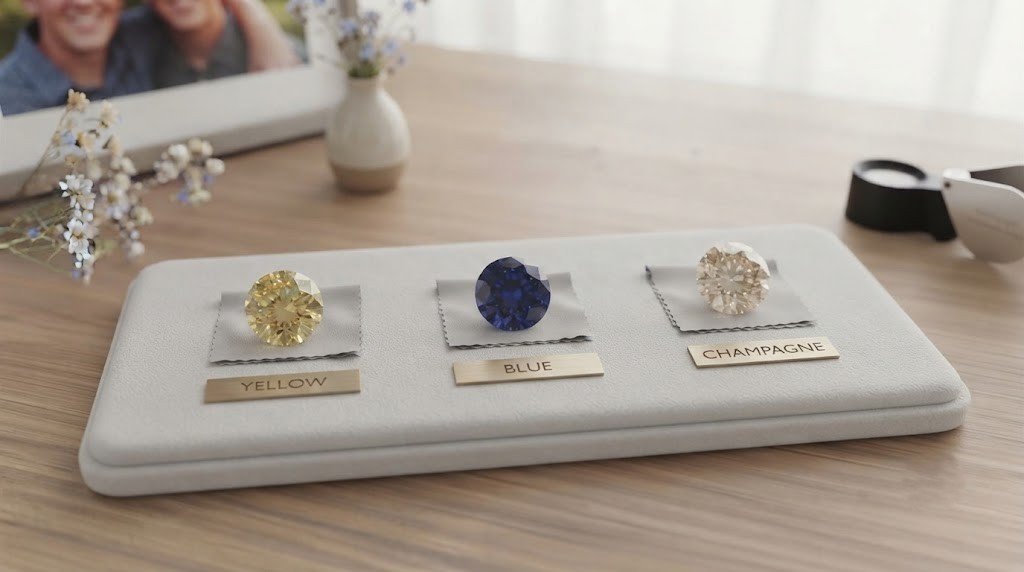
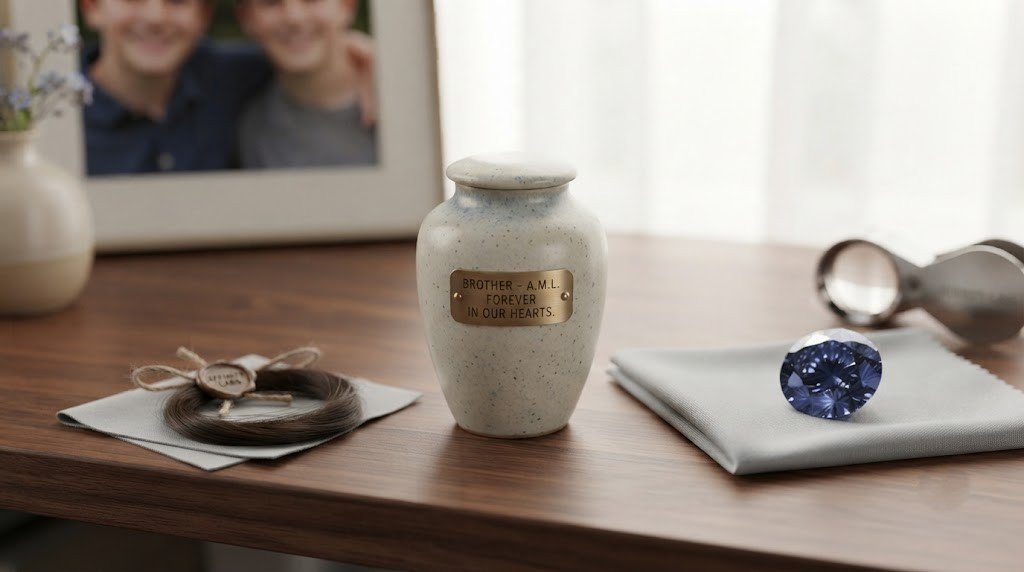
Bringing together a little of his ashes and a lock of his hair can feel like gathering two parts of one story into a single small object, and the question of color soon follows. The brother ashes hair diamond color cannot be predicted from either material or from the mix: memorial stones, blended or not, tend to settle into yellow, blue, or champagne because of trace nitrogen and boron during growth, colorless needs extra processing at a higher price, and irradiation can add other shades.
brother ashes hair diamond color

Does Blending Change the Brother Ashes Hair Diamond Color?

Not in any way anyone can forecast. Combining two sources of his carbon is a decision about meaning, about wanting both the ashes and the hair represented in one crystal. It is not a technique for steering the brother ashes hair diamond color toward a particular shade, and no provider can tell you in advance that a blend will come out lighter, darker, bluer, or warmer than a stone from either material alone.

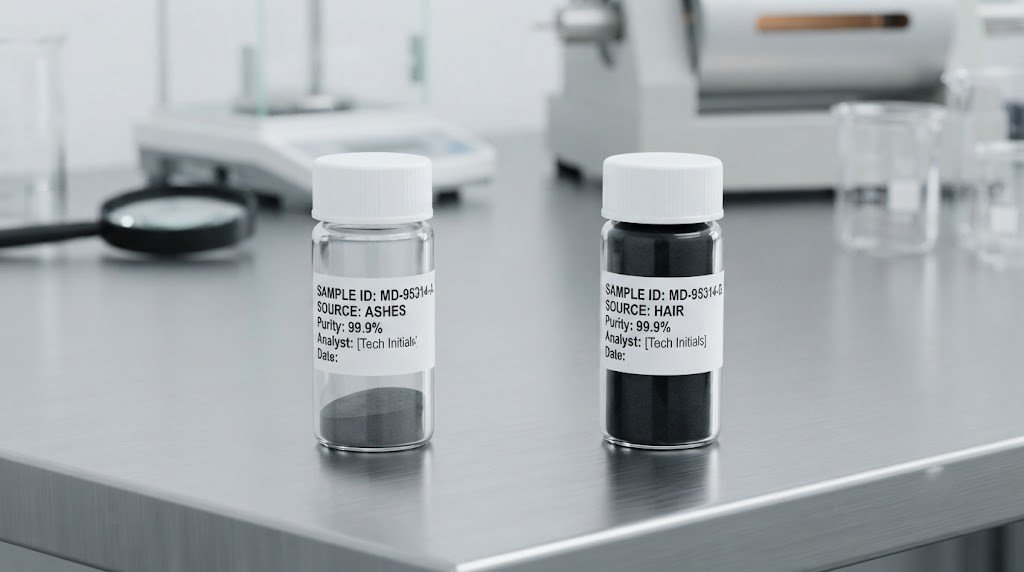
The reason lies in what happens before growth. Ashes and hair each go through controlled, oxygen free heating that removes everything except carbon, reaching roughly 99.9% purity or higher. By the time the material is converted to graphite at around 2,500 to 2,700°C, it is carbon ready for the press, and the color story has not yet been written.

That story is written during growth, by whatever trace elements find their way into the crystal. So when people ask whether the hair will “brighten” the ashes, or whether the ashes will “warm” the hair, the honest answer is that the brother ashes hair diamond color depends on growth conditions rather than on the recipe of the blend. Providers also differ in whether they offer blended stones at all, so it is worth confirming that before planning around one.

Where Do Yellow, Blue, and Champagne Tones Actually Come From?

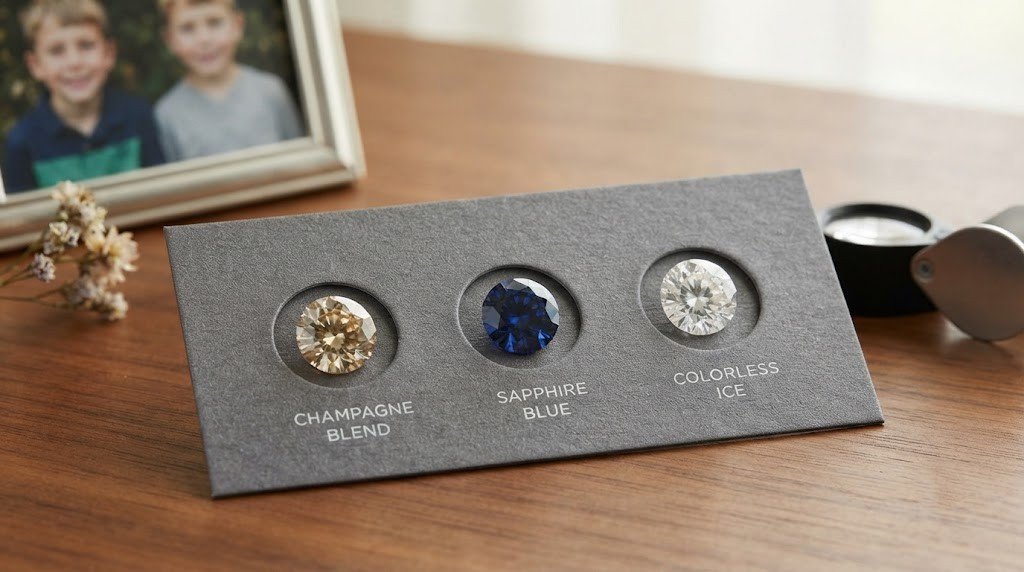
Diamond is carbon arranged in a tight, repeating lattice. When a stray nitrogen atom takes a place in that lattice, the stone takes on a yellow tint; when boron does the same, it leans blue. A colorless diamond requires that both be kept out almost entirely, which rarely happens by accident when the brother ashes hair diamond color starts from an organic source.

Memorial stones begin with personal carbon rather than a controlled industrial feedstock, and trace elements are common in organic material. That is why memorial diamonds across the industry tend toward yellow, blue, and champagne or brown tones, and why a brother ashes hair diamond color in one of those families should be seen as a natural result rather than a flaw.

The purified carbon, typically blended with supplemental lab sourced carbon, is grown in a press under about 6 to 8 GPa and 1,400 to 2,500°C using the HPHT method that most memorial providers rely on, with CVD used by a minority. Growth lasts weeks to months, and the brother ashes hair diamond color that emerges reflects the conditions of that particular run. Readers who want the underlying science can find a clear explanation in this article on how HPHT and CVD synthetic diamonds are grown.

How Much of a Blended Stone Comes From Each Material?

This is where honesty matters most. Cremated ashes are mostly calcium phosphate, and only about 0.5% to 4% of ash by weight is usable carbon. For stones grown from ashes, the personal carbon usually accounts for roughly 10 to 15% of what the finished diamond weighs, and a few providers put it nearer 3%. That percentage is an ash figure only.

Hair is a richer source, roughly 50% carbon by weight, which is why a small lock or a few grams is usually enough. But no finished stone percentage is published for hair, and none is published for blends of ashes and hair. Anyone who quotes you a precise split between the two in a combined stone is going beyond what the industry publicly documents.

The defensible statement is that genuine, purified carbon from both his ashes and his hair goes into the crystal, typically alongside supplemental lab carbon to reach a workable size. None of this proportion shifts the brother ashes hair diamond color in a predictable direction. For a closer look at amounts, the guide to how much ash and hair a brother memorial diamond needs covers typical ranges and what to confirm with a provider.

Can the Brother Ashes Hair Diamond Color Be Colorless?

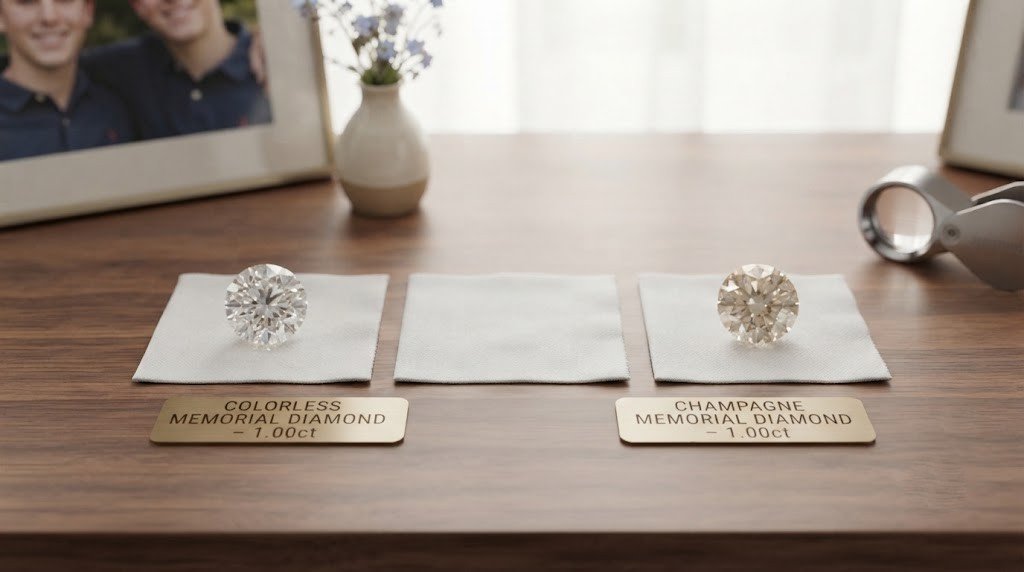
Yes. A colorless memorial diamond can be grown from a blend, but it is a choice that requires additional processing to keep nitrogen and boron out of the crystal. That extra work is why choosing colorless as the brother ashes hair diamond color typically costs more than a yellow, blue, or champagne stone at the same carat weight.

Across the industry, a 0.5 to 1 carat memorial diamond typically falls around $5,000 to $15,000, and colorless lands toward the upper end of that span. If you already know colorless is the brother ashes hair diamond color you want, tell the provider at the start, ask how colorless is priced at your target size, and ask whether it changes the timeline.

It can be worth pausing on the motivation, too. Some people want colorless because it feels classic or matches the jewelry they already wear. Others reach for it because they assume a tinted stone is somehow less genuine, which is not the case: a memorial diamond with a champagne or blue brother ashes hair diamond color is graded on the same 4Cs and shares the same hardness and optical behavior as any other diamond.

What Can Irradiation Add to a Brother Ashes Hair Diamond Color?
Irradiation is an optional post growth treatment that some providers offer to shift or intensify color. Where offered, it can produce red, pink, green, or black stones. The treatment changes the brother ashes hair diamond color you see, while the carbon from his ashes and hair that went into the press stays exactly where it is.

Not every provider offers irradiation, and those that do may limit the palette. Specialty colors can lengthen the process as well: across the industry, a finished stone typically takes 6 to 10 months, while specialty colors such as black, or stones larger than roughly 2 carats, can take up to about 12 months.

If one of these shades speaks to you, ask which colors are available, how the treatment is recorded on the paperwork, and what it adds to the cost. There is no reason, emotional or otherwise, to treat a red or black brother ashes hair diamond color as less meaningful than a natural yellow. The choice is about what feels right to you when you think of him.

How Do Brother Ashes Hair Diamond Color, Carat, and Price Fit Together?

Carat weight is driven mainly by growth time in the press, not by how much ash or hair you provide, so sending more material does not make a bigger stone. Larger diamonds take longer and need tighter control, which is why prices rise steeply with size. Brother ashes hair diamond color layers on top of that: colorless typically commands a premium over natural tones at the same weight, and treated colors may be priced separately.

General 2026 industry ranges are shown below as typical figures for the category, not any provider’s price list. Blended stones may carry their own pricing, so ask.

Size tierTypical industry priceBrother ashes hair diamond color notes
0.10 to 0.25 ct (approx.)About $1,500 to $3,500Natural yellow, blue, or champagne tones are common; colorless adds cost
0.5 to 1 ctAbout $5,000 to $15,000A colorless stone usually prices near the upper end
2 to 5+ ctAbout $20,000 to $75,000 or moreLonger growth; above roughly 2 ct, or for specialty colors, up to about 12 months
ExtrasPriced separatelyIndependent grading, engraving, fancy cuts, and settings

A simple way to work with these numbers is to decide which you would give ground on first. If colorless matters most, a smaller stone may keep the total in reach; if size matters more, a natural tone leaves room in the budget for a larger carat or a setting. The detailed guide to what a brother memorial diamond typically costs explains each tier and add on.

What Should You Settle Before Gathering Both Materials?

A blended stone involves two sources, and each can raise its own question of permission. A sibling often does not hold authority over a brother’s remains. Depending on the state, the decision may rest first with a spouse or registered partner, adult children, or parents before it reaches a sibling, and any instructions he left on paper about who should decide can reshuffle that order.

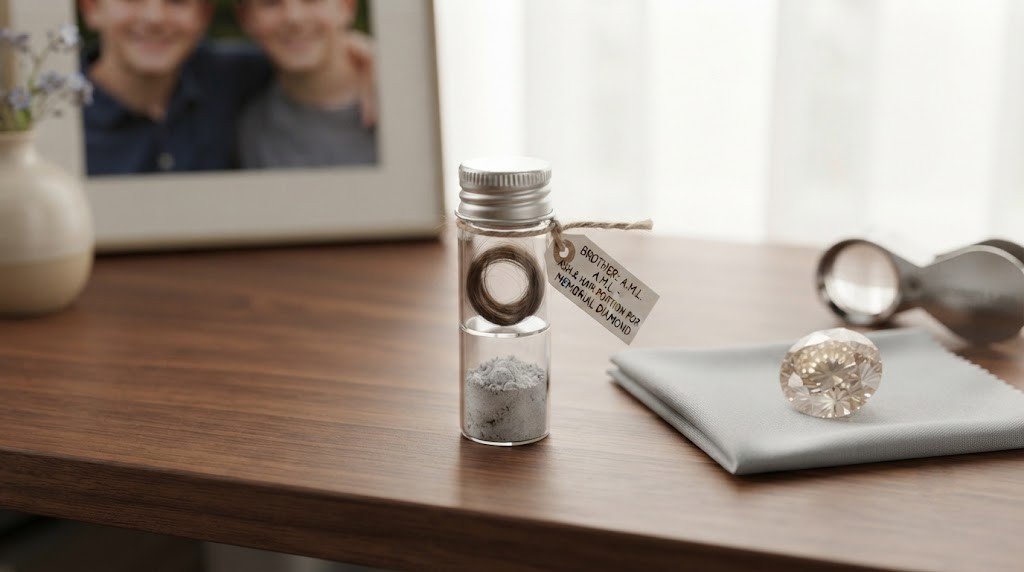
If someone else holds that authority, the gentle route is to ask whether you might have a small portion. Providers commonly work with anywhere from a few tablespoons to about 4 ounces (roughly 100 grams) of ashes, usually a small share of the whole, leaving the remainder to be kept, scattered, or interred as planned. Any hair saved in his home or among his possessions could be treated as part of his estate depending on state rules, and a lock cut by the funeral home is generally passed along through the person holding authority.

These conversations can feel heavier than choosing a brother ashes hair diamond color, and it helps to have them first. The complete brother ashes and hair diamond guide walks through the whole path, and if several relatives hope for stones of their own, the post on sharing a brother memorial diamond among family members covers how that can work.

How Do You Choose a Brother Ashes Hair Diamond Color in Five Steps?

Choosing a brother ashes hair diamond color is easier when it is broken into small decisions. None of these steps assumes anything about his age, his tastes, or who will wear the stone, and none ties a color to gender: a pink stone can honor a brother as fully as a blue one.

  1. Decide how open you are to surprise. If you are content for the stone to show whatever natural tone emerges, you can let the brother ashes hair diamond color unfold on its own.
  2. Settle whether colorless matters. If it does, raise it before anything is sent, since it requires additional processing and typically costs more.
  3. Consider treated shades. Ask whether irradiated red, pink, green, or black is offered, and how it affects price and timeline.
  4. Think about how and when you will wear it. A stone worn daily on a hand may call for a different tone than a pendant kept for special days or a keepsake held at home.
  5. Let memory have a say. A color tied to a place, a season, a shirt, or a car you associate with him can be as good a reason as any.

If more than one person in the family is planning a stone, each can work through these steps separately and arrive at a different brother ashes hair diamond color. The variety can reflect the different ways each person knew him.

Do Some Metals or Settings Suit Certain Colors Better?
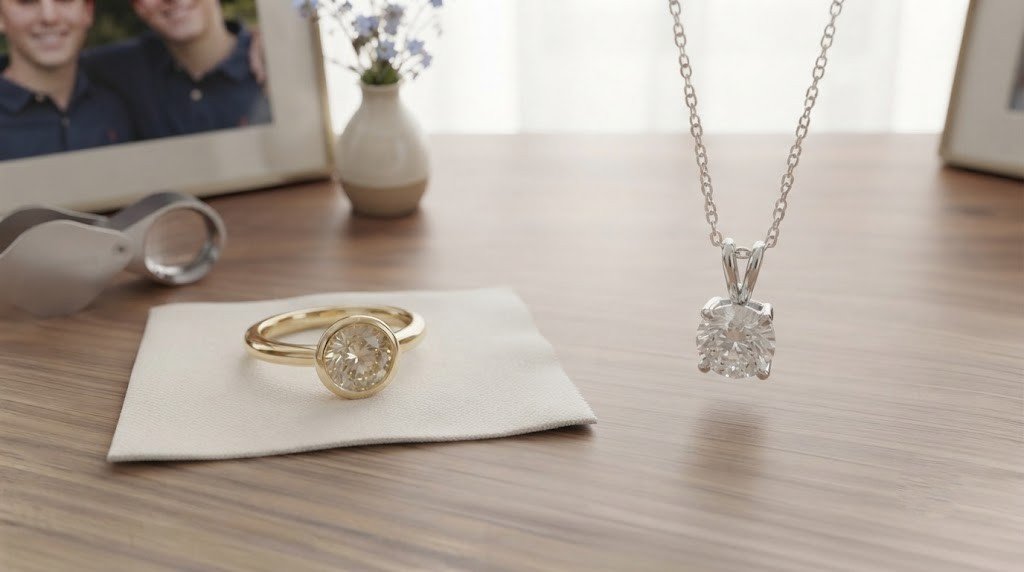
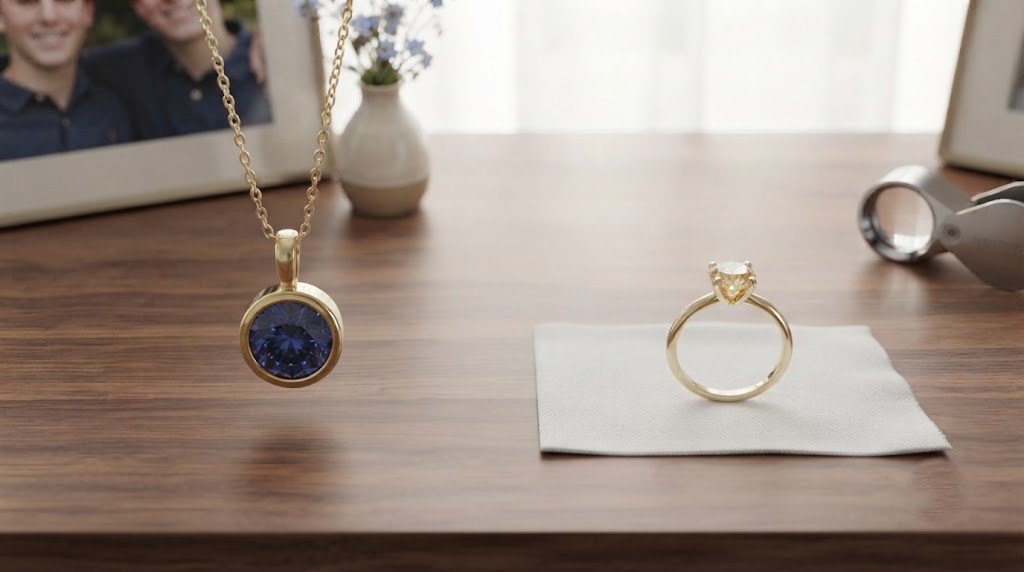
Metals and settings are, above all, a question of taste. Yellow gold, rose gold, white gold, platinum, and other metals all have devoted fans, and the right one is whatever you will be happy to see every day. Solitaires, bezels, halos, pendants, studs, bands with a set stone, and keepsake pieces are all reasonable homes for a blended memorial diamond, whatever its brother ashes hair diamond color.

You may come across the idea that a certain metal changes how a brother ashes hair diamond color appears. If that matters to you, ask a jeweler directly and request to see a stone of similar color against a few metals before deciding. Your own eyes are a better guide than any general rule.

Durability is worth a question at the same time. Diamond is 10 on the Mohs scale, yet a sharp knock at the wrong angle can still chip it, so ask which settings hold up best for the way you plan to wear the stone. If you are still comparing materials, the posts on the color of a diamond made from your brother’s ashes and the color of a diamond made from his hair look at each source on its own.

Which Color Questions Belong on Your Provider List?

A short list of questions about brother ashes hair diamond color can prevent misunderstandings later. These are worth asking before any material leaves your hands:

  • Do you offer blended stones from ashes and hair, and how is each material tracked?
  • Which color families do your memorial stones usually come out in?
  • Do you offer colorless processing, and what does it add to price and timeline?
  • Which irradiated shades are available, and how is treatment disclosed?
  • What happens if the finished color is not what I hoped for?
  • Will the stone come with an independent grading report as well as an origin certificate?

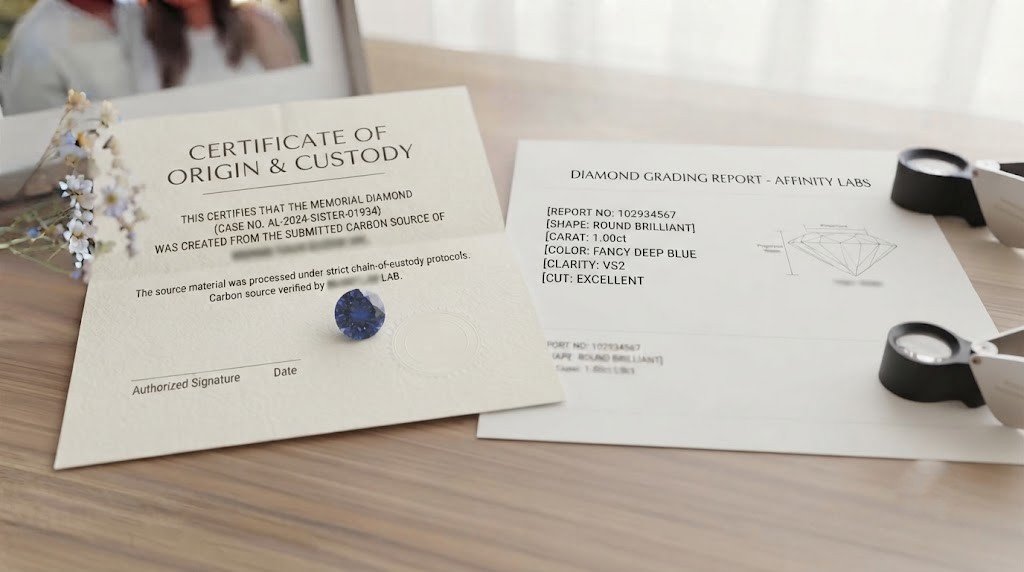
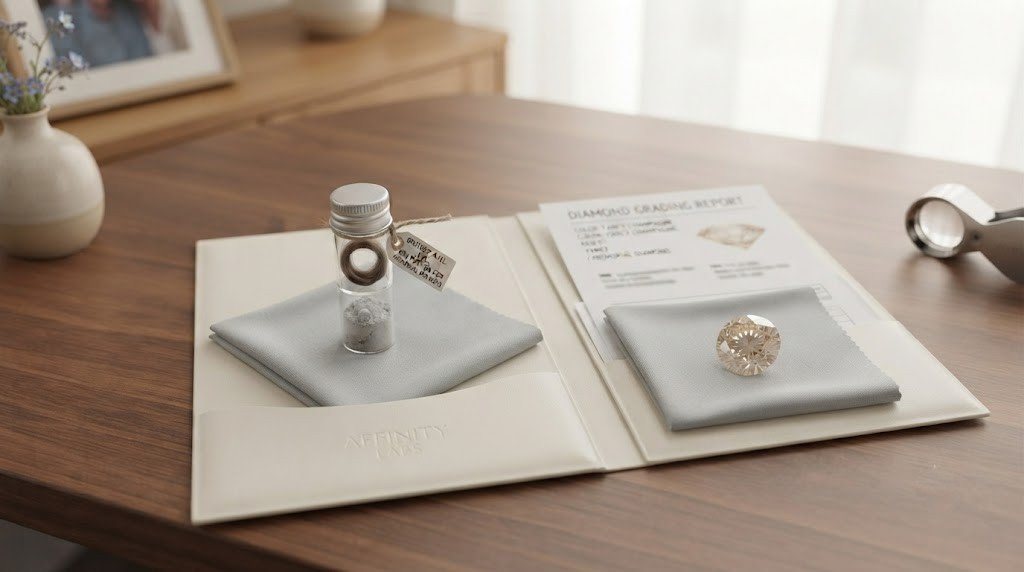
The difference between those last two documents is worth understanding, because the grading report is where the brother ashes hair diamond color is formally recorded. An origin certificate, usually issued in house, records chain of custody, confirming the stone was grown from the carbon you sent. A grading report, ideally from an independent lab referencing standards such as GIA’s framework for diamond quality, records cut, color, clarity, and carat; clarity for memorial diamonds typically falls between SI2 and VVS. The list of questions to ask before turning his ashes and hair into a diamond goes further.

Frequently Asked Questions

Will mixing hair with ashes make the brother ashes hair diamond color lighter?

There is no published evidence that it does. Blending is about meaning, not about steering color. Stones from ashes, hair, or a mix of both still tend toward yellow, blue, or champagne, and the precise shade of a blend cannot be forecast.

Can a provider predict the brother ashes hair diamond color before growth?

No provider can name an exact shade beforehand. Trace elements such as nitrogen and boron, present in tiny and variable amounts, shape the tint during growth. A provider can describe likely color families and offer colorless processing or irradiation to narrow the range.

What share of a blended stone comes from his ashes and hair?

No finished stone percentage is published for hair or for blends. For ash alone, personal carbon typically makes up around 10 to 15 percent of the stone’s mass, with some citing about 3 percent, alongside supplemental lab carbon.

Does a colorless blended diamond cost more?

Typically, yes. Keeping nitrogen and boron out requires additional processing, so colorless usually costs meaningfully more than yellow, blue, or champagne at the same carat weight. For a stone of half a carat to one carat, typical industry pricing sits around $5,000 to $15,000, with colorless near the top.

Can a blended memorial diamond be red, pink, green, or black?

It can, where a provider offers irradiation after the stone is grown. That treatment can yield red, pink, green, or black. Offerings differ between providers, a black stone may need up to about a year, and the treatment belongs on the stone’s documentation.

Does sending more ashes or hair give a bigger or deeper colored stone?

No. Carat size depends mainly on how long the crystal grows, and color depends on trace elements during growth. Providers typically ask for a few tablespoons to about 4 ounces of ashes and a small lock of hair, though requirements vary.

Final Thoughts on Brother Ashes Hair Diamond Color

Choosing to combine his ashes and hair says something about wanting both parts of his story in one place. The brother ashes hair diamond color that comes out of the press will be decided by chemistry rather than by intention, and that can feel strange at first. Yet whether it lands on a soft yellow, a quiet blue, a warm champagne, or a colorless stone you asked for, it will be a genuine diamond grown in real part from him.

Learn More About Color in Combined Stones

Talk With Memorial Diamond

If you are weighing a blended stone and wondering which color might feel right, Memorial Diamond is glad to talk it through with you. Visit memorialdiamond.us to ask about combining his ashes and hair and the color options worth considering, in your own time.

Word count: 2,919 words · Reading time: about 15 minutes
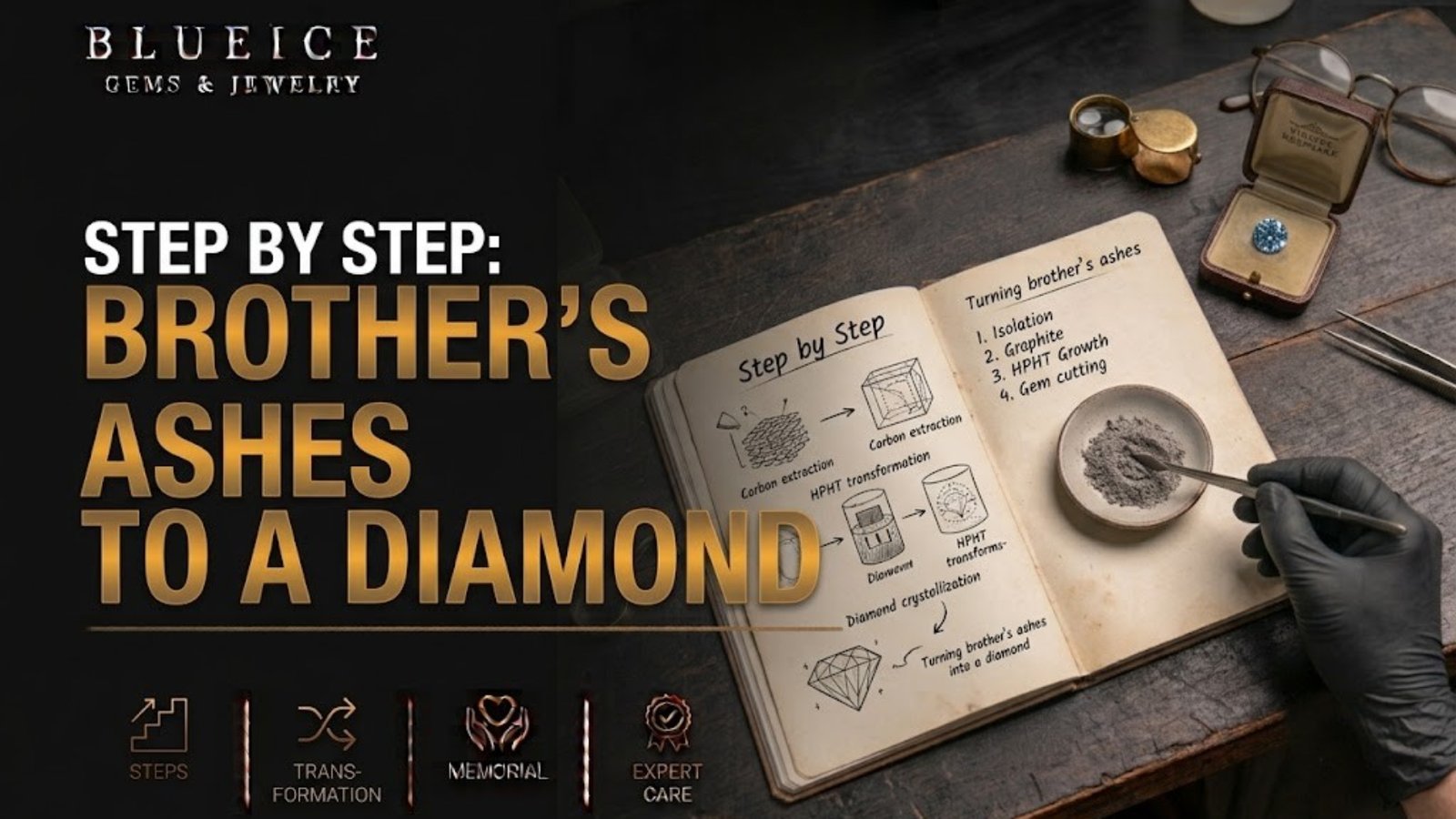
Step by Step Turning Your Brothers Ashes Into a Diamond

Step by Step: Turning Your Brother’s Ashes Into a Diamond

In the quiet weeks after a loss, you may find yourself wondering whether a small part of your brother could travel with you. The brother ashes diamond steps follow a fixed order: confirm who holds authority over his ashes, agree on a plan, choose a provider, sign an order, send a small portion, and let a lab grow, cut, and grade a real diamond, typically within 6 to 10 months.

brother ashes diamond steps

What Are the Brother Ashes Diamond Steps, From Start to Finish?

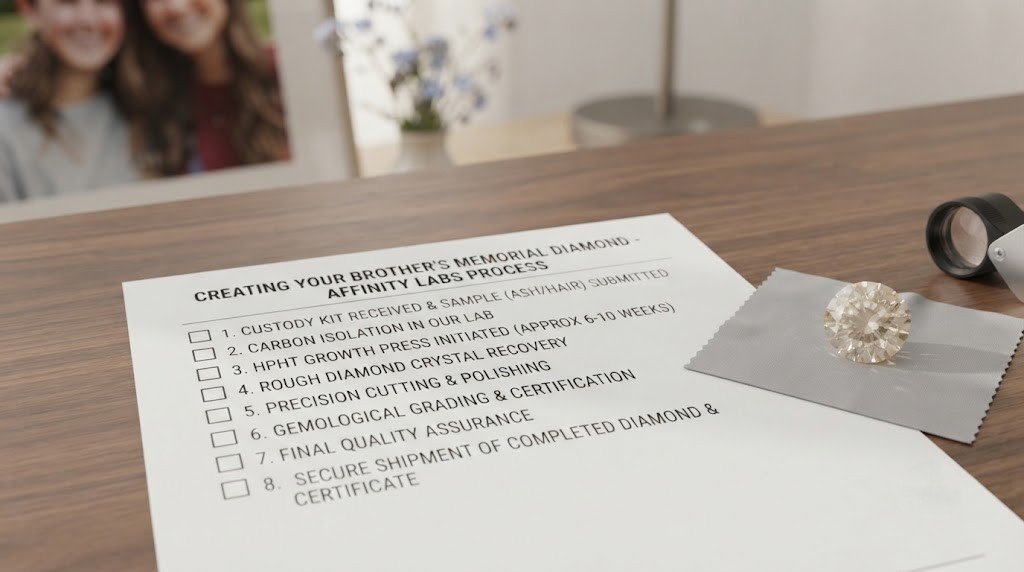
Think of the brother ashes diamond steps as ten checkpoints, each with a clear owner and a piece of paper waiting at the end. The table below puts the whole journey on one screen. Print it or save it to your phone, and tick off each row as it’s done.

StepWhat happensWho is involvedWhat you needDocument that results
1Confirm who holds authority over his ashesYou, his next of kin, sometimes the funeral homeAny written wishes he leftWritten consent or release from the authority holder
2Agree on a family planYou and the people closest to himA list of who would like a stoneA short shared note of what was agreed
3Compare providers and ask questionsYou and two or three providersYour printed question listEach provider’s information pack and quote
4Choose carat, color, and cut, then signYou and the chosen providerYour budget range and preferencesSigned order agreement with the stone specification
5Set aside a small portion of ashesThe authority holder, sometimes the crematoryA few tablespoons up to about 4 ozLabeled container; cremation paperwork copy if requested
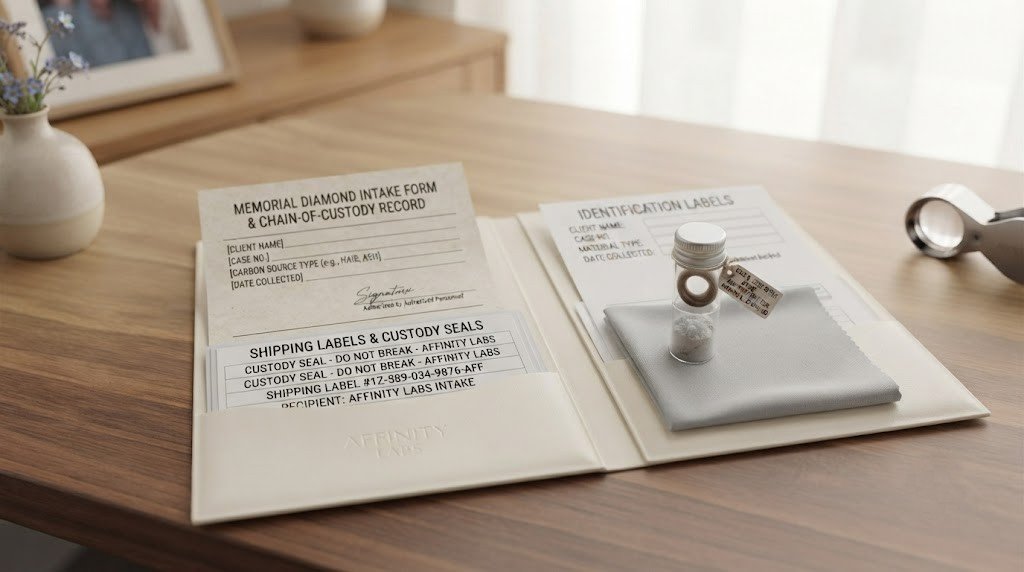
6Pack and ship to the labYou and the providerThe provider’s packing instructionsShipping receipt, tracking number, chain of custody form
7Lab confirms receipt and logs the ashesProvider intake staffYour order numberReceipt confirmation with an intake reference
8Carbon is extracted, purified, and graphitizedLab techniciansNothing further from youProgress update, if the provider offers one
9Diamond is grown, cut, and polishedLab technicians and a gemologistNothing further from youProgress photos or notes, if offered
10Stone is graded, certified, delivered, and setProvider, a grading lab if ordered, a jewelerDelivery address and setting choiceOrigin certificate, grading report, delivery confirmation

Two patterns jump out. Only the first six of the brother ashes diamond steps ask anything of you; after that, the work belongs to technicians and gemologists. And every row leaves a document behind, the trail that lets you trace the finished stone back to your brother.

For the wider picture of what a memorial stone is and why families choose one, the complete guide to a brother ashes diamond covers the background this checklist assumes.

What Should You Have Ready Before Step 1?

A little preparation keeps the brother ashes diamond steps from stalling halfway. Before you contact anyone, gather what you can from the printable list below; having it in one place means fewer calls later.

  • Names of the people closest to him, including whoever may hold a say over his remains and anyone who might want a stone.
  • Anything he wrote down about his arrangements, from estate papers to a prepaid funeral contract or a note naming who should decide.
  • Contact details for the funeral home or crematory that handled his cremation.
  • Copies of cremation paperwork, if the family holds them, in case a provider asks.
  • A rough budget range, so carat and color can be matched to what feels right.
  • Your question list for providers, covering shipping, unused ashes, and failed growth.
  • One folder, paper or digital, to hold every document the process creates.
  • An unhurried hour to talk with family before anything is signed.

That last item belongs on the list for a reason. Nothing in the brother ashes diamond steps depends on how quickly you begin.

Steps 1 to 3: Which Brother Ashes Diamond Steps Come Before the Order?

The opening three of the brother ashes diamond steps happen around a kitchen table rather than in a lab. They decide whose voice counts, what the family wants, and which provider earns your trust with something that can’t be replaced.

Step 1: Confirm Who Holds Authority Over His Ashes

As his sibling, you may or may not be the person with final say over his remains. Each state writes its own priority list, and brothers and sisters often sit below a husband, wife, or registered partner, any grown children he had, and his parents. Anything he put in writing about his own arrangements can reorder that list, so check how it works in the state where he died.

Everything else in the brother ashes diamond steps rests on this one. If someone else holds that authority, the respectful route is to ask them directly. Explain what you have in mind and request a small portion of the ashes. When a portion isn’t possible, a lock of his hair can be another path. Keep in mind that hair saved at home or among his belongings may count as part of his estate, which state rules treat differently. The brother hair diamond steps checklist walks through that version.

Paperwork from this step: a written consent or release signed by whoever holds authority. Some providers request one; either way, it protects everyone.

Step 2: Agree on a Family Plan

With authority settled, widen the conversation. Who would like a stone? What happens to the rest of his ashes: an urn, a burial, a scattering, or a mix? A diamond usually draws on only a small share, so it can sit alongside whatever else the family chooses.

Write down what you agree, even informally. A few lines emailed to everyone can prevent confusion later in the brother ashes diamond steps, when memories of the conversation have softened.

Paperwork from this step: a short shared note naming who receives a stone and what happens to the remaining ashes.

Step 3: Compare Providers and Ask Your Questions

Put identical questions to two or three providers. How much ash do they need? How should it be shipped? What happens to any portion they don’t use? What if a growth attempt doesn’t succeed? Answers vary from one provider to the next, so ask for them in writing and file them with the other records you gather along the brother ashes diamond steps. A longer set sits in the guide to brother ashes diamond questions worth asking before you commit.

Paperwork from this step: each provider’s written information pack and a quote you can lay side by side.

Steps 4 to 6: How Do the Brother Ashes Diamond Steps Get His Ashes to the Lab?

Steps four through six of the brother ashes diamond steps turn a plan into an order and see the ashes physically leave home.

Step 4: Choose the Stone’s Details and Sign the Order

Here you pick a carat size, a color direction, and a cut shape. Carat matters most for time and cost, because a stone’s size comes from how long it grows in the press rather than how much ash you send. Color comes from trace elements: nitrogen pushes toward yellow, boron toward blue, and colorless means keeping both out, at extra cost.

Read the order agreement slowly before you sign it, because it governs everything that follows in the brother ashes diamond steps. Check that the carat, color, and cut match your discussion, and look for the provider’s written policy on shipping, unused ashes, and unsuccessful growth.

Paperwork from this step: a signed order agreement listing the full stone specification.

Step 5: Set Aside a Small Portion of His Ashes

Industry typical requirements run from a few tablespoons up to about 4 oz (roughly 100 g) of cremated remains, usually a small fraction of the total. The exact figure is set by each provider, and the guide to how much ash for a brother memorial diamond explains the range in more depth.

Whoever holds authority should release this portion, or at the very least agree to it in writing. If the ashes are still with a funeral home or crematory, ask whether staff can measure and seal it. Of all the brother ashes diamond steps, this is the one where a labeled, sealed container matters most.

Paperwork from this step: a labeled container, plus a copy of the cremation paperwork if the provider asks for one.

Step 6: Pack and Ship to the Lab

Shipping is the most hands on moment in the brother ashes diamond steps. Ask whether the provider sends a kit or written packing instructions, and follow them exactly. Choose a tracked service, keep the receipt, and photograph the sealed package before it leaves your hands. Ask the provider which carriers and services accept cremated remains and which one they recommend.

Paperwork from this step: a shipping receipt, a tracking number, and a chain of custody form recording who handled the ashes and when.

Steps 7 to 9: What Does the Lab Do With the Ashes?

Once the package lands, the brother ashes diamond steps move out of your hands. This stretch takes the longest.

Step 7: The Lab Confirms Receipt and Logs the Ashes

On arrival, the provider should confirm receipt and assign an intake reference that follows the material through every later stage. That record is the spine of chain of custody: it ties your brother’s ashes to your order and to nobody else’s.

If tracking shows delivery and you’ve heard nothing back, contact the provider; a prompt confirmation is a reassuring sign of organized intake.

Paperwork from this step: a receipt confirmation carrying an intake or batch reference.

Step 8: Carbon Is Extracted, Purified, and Graphitized

Cremated remains are mostly calcium phosphate, the mineral that makes up bone, and usable carbon accounts for only about 0.5% to 4% of ash by weight. The lab heats the ashes in a controlled, oxygen free, multi stage process that strips away everything else, reaching roughly 99.9% carbon purity or better. That carbon is then heated to around 2,500 to 2,700°C and converted into graphite, the feedstock a diamond press needs.

Paperwork from this step: a progress update, if the provider offers them. Ask at Step 3 whether they do.

Step 9: The Diamond Is Grown, Cut, and Polished

The graphite, typically blended with supplemental lab carbon to reach a workable volume, goes into a growth cell around a tiny diamond seed. HPHT, the industry standard method, recreates roughly 6 to 8 GPa of pressure and 1,400 to 2,500°C of heat, while a minority of providers grow by CVD instead. The Wikipedia overview of synthetic diamond growth explains both methods. Growth runs for weeks to months, and the longer it runs, the larger the crystal becomes.

A gemologist then cuts and polishes the rough crystal. Some providers offer optional irradiation, which can shift color toward red, pink, green, or black.

On the honest question of how much of the stone is him: industry figures place the carbon recovered from ashes at roughly a tenth to fifteen percent of what the finished crystal weighs (about 10 to 15%), with some providers quoting as little as 3%. It’s a real, physical share of his carbon, just not the whole crystal. The explanation of how a memorial diamond is made from brother ashes goes further into that chemistry.

Paperwork from this step: progress photos or notes, where offered.

Step 10: What Paperwork Ends the Brother Ashes Diamond Steps?

The final row of the brother ashes diamond steps produces the documents you’ll keep for as long as you keep the stone. Before it ships, the finished diamond is graded and certified, and two different papers can travel with it:

  • An origin certificate, usually issued in house, records that the stone was grown from your family’s submitted ashes. It is, in effect, the last page of the chain of custody.
  • An independent grading report describes the diamond itself (cut, color, clarity, and carat) using standards such as GIA’s or IGI’s. GIA’s guide to diamond quality factors explains how those four measures work.

Clarity for memorial diamonds typically lands between SI2 and VVS. Independent grading is often priced separately, so confirm at Step 4 whether it’s included in your order.

If the stone is going into a ring, pendant, earrings, a bracelet, or a keepsake box, the provider or your own jeweler will set it. A diamond rates 10 on the Mohs hardness scale, yet a sharp knock can still chip one, so consider a protective setting for daily wear.

Paperwork from this step: the origin certificate, the grading report if ordered, and a delivery confirmation.

How Long Do the Brother Ashes Diamond Steps Take, and What Do They Cost?

Across the industry, the full run of brother ashes diamond steps typically takes 6 to 10 months from the lab receiving his ashes to the finished stone. Larger stones, above roughly 2 carats, and specialty colors can stretch toward 12 months. This checklist gives one overall window rather than a clock for each step, since growth time is set by the carat you choose.

Price follows the same logic, with size and color doing most of the work. These are general 2026 industry ranges, not this brand’s published pricing:

Stone sizeTypical industry rangeWhat drives it
About 0.10 to 0.25 ct1,500 to 3,500Entry tier, shortest growth
0.5 to 1 ct5,000 to 15,000Colorless sits toward the top
2 to 5+ ct20,000 to 75,000+Longest growth, closest control

Independent grading, engraving, fancy cuts, and settings are commonly charged on top of the loose stone. For a fuller breakdown by tier, see what a brother memorial diamond costs. If you’d rather read the journey as a story than as a checklist, the narrative guide on how you can turn brother ashes into a diamond covers the same ground in prose.

How Should You File the Paperwork From the Brother Ashes Diamond Steps?

By the time the stone comes home, the brother ashes diamond steps will have produced a small stack of paper. Keeping it together helps with insurance, with passing the stone on someday, and with knowing its story is written down. A single folder, filed in this order, mirrors the ten rows of the summary table:

  1. Written consent from whoever holds authority over his ashes
  2. The family note on who receives a stone
  3. Provider information packs and the quote you accepted
  4. The signed order agreement and stone specification
  5. Cremation paperwork copies, if the provider requested them
  6. Shipping receipt, tracking number, and chain of custody form
  7. The lab’s receipt confirmation and intake reference
  8. Any progress updates on extraction and graphitization
  9. Any growth or cutting photos and notes
  10. Origin certificate, grading report, and delivery confirmation

Scan the set and store a digital copy somewhere safe. If several relatives receive stones from the same ashes, each should hold copies relating to their own diamond.

Where Do the Brother Ashes Diamond Steps Most Often Stall?

Nearly every one of the brother ashes diamond steps is straightforward on paper, but a handful of points can slow things down. Knowing them in advance lets you ask the right question at the right moment.

  • Unclear authority. If the family hasn’t agreed who decides, everything waits. Settle Step 1 before contacting providers.
  • Unanswered policy questions. What happens to unused ashes, or to an order whose growth fails, differs by provider. Get it in writing at Step 3.
  • Shipping rules. Ask which carriers the provider accepts for cremated remains, then follow their instructions to the letter at Step 6.
  • Grading assumptions. An independent grading report is often an add on; confirm it at Step 4.
  • Color hopes. The exact shade can’t be predicted from the ashes; memorial stones tend toward yellow, blue, or champagne.
  • Size hopes. Sending more ash won’t make the stone larger or faster, since carat is set by growth time.

None of these is a reason to hesitate. They’re simply the points in the brother ashes diamond steps where one clear question early saves a worried phone call later.

Frequently Asked Questions

How many brother ashes diamond steps are there?

This checklist breaks the journey into ten steps: confirming authority, agreeing on a family plan, comparing providers, signing the order, setting aside ashes, shipping, lab intake, carbon extraction, growth and cutting, then grading and delivery. Individual providers may group them differently, but the order holds.

Do I need permission before sending my brother’s ashes?

You need the agreement of whoever holds authority over his remains. Depending on the state and any written wishes he left, a spouse or partner, adult children, or parents may come before siblings. Asking that person for a small portion is the respectful route.

How much of the finished diamond is actually my brother?

Ash derived carbon typically makes up around 10 to 15 percent of the finished stone’s mass, though some providers cite figures as low as 3 percent. The remainder is supplemental lab carbon, typically blended in so the crystal can reach a meaningful size.

Which documents should I receive at the end?

Expect an origin certificate, usually issued in house, confirming the stone grew from your family’s submitted ashes. If you ordered independent grading, a report on cut, color, clarity, and carat comes too. File both with paperwork from the earlier brother ashes diamond steps.

Can several relatives each get a diamond from his ashes?

Often, yes. Each stone draws on only a small portion of ashes, so several family members can frequently receive their own diamond from one source. Every order runs through the same brother ashes diamond steps and produces its own documents, so confirm arrangements first.

Will sending more ash make the diamond bigger?

No. Carat depends on how long the crystal grows in the press, not on how much ash you supply. A bigger stone simply means a longer growth period, which is why stones above about two carats can take closer to twelve months overall.

Final Thoughts on Turning Your Brother’s Ashes Into a Diamond

Nobody is timing how fast you move through this. The brother ashes diamond steps will wait until you’re ready, and the sequence stays the same whether you start next month or next year. What counts is that each step is done carefully and that the paper trail is kept, so the stone that comes home can always be traced back to him.

Learn More About Each Stage of the Ashes Route

Talk With Memorial Diamond

If you’d like help working out where you are in the brother ashes diamond steps, or want a few questions answered before deciding anything, reach out to Memorial Diamond at memorialdiamond.us. We’ll talk it through at whatever pace suits your family.

Word count: 3,298 words · Reading time: about 16 minutes
Brother Ashes Diamond Questions 20 Expert Checks to Trust

Questions to Ask Before Turning Your Brother’s Ashes Into a Diamond

You may have a provider’s page open in one tab and a hundred unspoken worries in the next, wondering whether a diamond is the right way to keep your brother close. The most useful brother ashes diamond questions fall into three groups: what you want for yourself, what the person holding authority over his ashes will agree to, and what each provider will put in writing about custody, carbon, cost, timing, and color. Below are 20 of them, each with what a good answer sounds like.

brother ashes diamond questions

Table of Contents

Why Do Brother Ashes Diamond Questions Matter Before You Commit?

A memorial diamond is a real, lab grown diamond grown in part from carbon recovered from a portion of his cremated remains. It typically takes months, costs thousands of dollars, and involves sending something irreplaceable to a laboratory you have probably never visited. Asking careful brother ashes diamond questions is not a sign of distrust. It is how you make sure the stone you eventually hold is the one you were promised.

Every provider sets its own policies on custody, refunds, failed growth, and returned material, and those policies differ. Nothing in this guide describes any particular company’s terms, including ours. Instead, each question below explains why it matters and what a clear, honest answer tends to include, so you can judge the replies you get.

If you want the broader picture of how the process works before you start asking, the complete guide to a brother ashes diamond walks through it from start to finish. Keep a notebook or a shared document open as you read; the brother ashes diamond questions here work best when the answers are written down rather than remembered.

Which Brother Ashes Diamond Questions Should You Ask Yourself First?

Before you contact anyone, a few quiet brother ashes diamond questions are worth answering on your own. They shape every conversation that follows, and there are no wrong answers.

1. What do you want this diamond to be for?

Why it matters: A stone you plan to wear every day leads to different choices than one kept in a small box at home or set aside for a future generation. Size, setting, and budget all follow from this.

A good answer looks like: One plain sentence you could say aloud, such as “I want something I can wear on my hand” or “I want a stone for each of us to keep.”

2. Is this stone for you alone, or should others have one too?

Why it matters: Because a provider uses only a portion of the ashes, several stones from one shared source are often possible. Other relatives or close friends of his might each want one, and planning that together is easier than adding requests later. Our guide to sharing a brother memorial diamond looks at how families divide one source fairly.

A good answer looks like: A short list of names you intend to raise with the family before anything is ordered.

3. What can you comfortably spend, including the extras?

Why it matters: Industry pricing in 2026 runs roughly $1,500 to $3,500 for a small stone of about 0.10 to 0.25 carat, roughly $5,000 to $15,000 for 0.5 to 1 carat, and $20,000 to $75,000 or more for stones of 2 carats and up. Grading, engraving, fancy cuts, and settings are usually priced on top.

A good answer looks like: A ceiling figure that already includes a setting and a grading report, so a quote never surprises you. Our breakdown of brother memorial diamond cost covers the tiers in more depth.

4. Are you ready to wait, and to part with a small portion of his ashes?

Why it matters: Across the industry, the process typically takes 6 to 10 months, and larger or specialty color stones can stretch toward 12. It also means sending part of him away for that time, which can feel heavier than expected.

A good answer looks like: Honest comfort with both the wait and the separation, or a decision to pause until you feel ready. Waiting is always allowed.

Which Brother Ashes Diamond Questions Belong With Whoever Holds Authority?

The brother ashes diamond questions in this group are about other people, and they deserve the most care. As a sibling, you may not be the person with authority over his remains, and approaching the conversation gently protects relationships that matter long after the diamond arrives.

5. Who holds authority over his remains?

Why it matters: States draw up their own ranking of who decides about a person’s remains, and a brother or sister frequently sits further down it than a husband, wife, or registered partner, any grown children he had, or his parents. Instructions he signed while alive can override that default ranking.

A good answer looks like: The name of the person who decides, and a sense of whether any document from him says something about his ashes. If you are unsure, ask the funeral home that handled the cremation whether they can explain how it works where he died.

6. Would they be willing to set aside a small portion for a diamond?

Why it matters: A provider typically asks for somewhere between a few tablespoons and about 4 oz (roughly 100 g) of ashes, which is usually a small fraction of the total. Minimums vary by provider. The guide to how much ash a brother memorial diamond needs explains the range.

A good answer looks like: A clear yes, a clear amount, and ideally a short written note from the authority holder confirming the release. If the answer is no or not yet, his hair, if any was kept, may be a gentler alternative to raise, bearing in mind that hair kept at home or with his belongings may be part of his estate under rules that vary by state.

7. How does a diamond fit with plans for the rest of his ashes?

Why it matters: An urn on a shelf, a burial plot, or a scattering at a place he loved are all meaningful choices. A diamond does not replace any of them; it can sit alongside them.

A good answer looks like: A shared plan where the larger portion goes where the family intended and a small amount goes toward one or more stones, with everyone aware of both.

8. Are there faith or family traditions to respect?

Why it matters: Faith communities have spoken about cremation and about keeping or dividing ashes, but none has issued formal guidance on memorial diamonds as such. Views also differ inside a single tradition, from one congregation or teacher to the next.

A good answer looks like: Confirmation from the authority holder, and if relevant, a conversation with your own faith leader before anything is set aside.

Which Brother Ashes Diamond Questions Test a Provider’s Chain of Custody?

Chain of custody is the heart of trust in this process. Good brother ashes diamond questions about custody confirm the carbon in your stone came from him and no one else.

9. How will his ashes be identified and tracked from arrival to finished stone?

Why it matters: Between receipt, carbon extraction, purification, graphitization, growth, cutting, and grading, his material passes through several stages and several hands. Each handoff is a point where records matter, which makes this the broadest of the custody related brother ashes diamond questions.

A good answer looks like: Specific steps rather than reassurance: how his ashes are labeled on arrival, whether they are processed separately from other families’ material, what logs are kept at each stage, and which records you receive at the end.

10. How should the ashes be packed and sent, and who covers transit?

Why it matters: Not every carrier or service will accept cremated remains, and a provider may have its own packaging and labeling requirements. Ask what applies before anything is boxed up.

A good answer looks like: Written packing instructions, a named shipping method, and a clear statement of who pays for and insures the package in both directions.

11. What happens to any ashes that are not used?

Why it matters: If you send more than the provider needs, you will want to know whether the remainder comes back, when, and how. Policies on returned material differ.

A good answer looks like: A written commitment describing what is returned, in what container, and on what schedule, so nothing of his is left uncertain.

How Much of the Finished Stone Will Come From His Ashes?

Cremated remains are mostly calcium phosphate, the mineral structure of bone. Carbon makes up only about 0.5 to 4 percent of ash by weight, which is why honest answers to brother ashes diamond questions about carbon matter so much.

12. What share of the finished stone will be carbon recovered from his ashes?

Why it matters: Across the industry, carbon from ashes typically makes up around 10 to 15 percent of a finished stone’s mass, and some providers cite figures as low as about 3 percent. The diamond is genuinely made in part from him, but it is not made only from him, and no honest provider should say otherwise. Of all the brother ashes diamond questions you ask, this is where precision counts most.

A good answer looks like: A stated figure or range, an explanation of how it was estimated, and no use of words like “pure” or “entirely.” The article asking whether a memorial diamond is really made from your brother’s ashes explains the science behind that share.

13. Is supplemental lab carbon added, and will they tell you how much?

Why it matters: Personal carbon is typically blended with lab sourced carbon to reach the volume needed for growth. The purified blend, refined to roughly 99.9 percent carbon, is turned into graphite at about 2,500 to 2,700°C and grown under high pressure and high temperature, around 6 to 8 GPa and 1,400 to 2,500°C. The synthetic diamond entry on Wikipedia describes the HPHT and CVD growth methods in general terms.

A good answer looks like: A straightforward yes or no on blending, a description of the growth method, and a willingness to explain both without jargon.

What Should Brother Ashes Diamond Questions About Certificates Uncover?

Two different documents often get confused. Brother ashes diamond questions about paperwork should separate proof of origin from proof of quality.

14. What does the origin certificate document?

Why it matters: An origin or authenticity certificate is usually issued in house. It records that the stone was grown from your family’s submitted material and acts as the final link in the chain of custody.

A good answer looks like: A sample certificate you can see in advance, showing what identifiers it carries and how it connects to the tracking records described in question 9. Brother ashes diamond questions about paperwork are easiest to settle at this stage, before anything is sent.

15. Will an independent lab grade the stone, and is that report included?

Why it matters: A grading report describes the diamond’s own cut, color, clarity, and carat, separate from where its carbon came from. Reputable providers commonly have stones graded by an independent lab that references GIA standards, and the GIA’s guide to diamond quality factors explains what each grade means. Memorial diamond clarity typically lands between SI2 and VVS.

A good answer looks like: The name of the grading lab, whether the report is included or extra, and what it costs if extra.

Which Brother Ashes Diamond Questions Cover Price, Failure, and Cancellation?

Money conversations can feel awkward when grief is fresh. These brother ashes diamond questions let you have them once, clearly, and then set them aside.

16. What is the full price, itemized?

Why it matters: Of the brother ashes diamond questions about money, this one comes first, because the figure on a website often covers the loose stone only. Color choice matters too; colorless stones typically cost more than blue, yellow, or champagne tones at the same size.

A good answer looks like: A written quote listing the stone, color, cut, grading report, any setting, engraving, shipping, and taxes, with a total at the bottom.

17. What happens if growth fails or the result is not acceptable?

Why it matters: Diamond growth is a demanding process, and a provider should have a plan for a run that does not produce a usable stone.

A good answer looks like: Among brother ashes diamond questions, this one most deserves a reply on paper: a written policy covering whether growth is attempted again, whether more of his ashes would be needed, and what you pay, if anything, for a second attempt.

18. Can you cancel, and what is refunded at each stage?

Why it matters: Circumstances and feelings change over months. Once carbon has been extracted from his ashes, some steps cannot be reversed.

A good answer looks like: A stage by stage explanation of what is refundable, and what happens to his ashes or extracted carbon if you stop partway.

What Should You Ask About Timeline and Color?

The last two brother ashes diamond questions on this list concern two things that are easy to picture: when the stone arrives, and what it looks like.

19. How long will it take, and how will they keep you updated?

Why it matters: The industry typical range is 6 to 10 months, with stones over about 2 carats or in specialty colors taking up to around 12. Carat is set by how long the crystal grows, not by how much ash you send, so a larger quantity does not speed anything up. Our article on the brother memorial diamond timeline explains why.

A good answer looks like: An estimated range for your chosen size and color, plus a description of when and how you will hear about progress.

20. What color can you reasonably expect?

Why it matters: Nitrogen produces yellow, boron produces blue, and a colorless stone needs both kept out, which takes extra processing. Memorial stones naturally trend toward yellow, blue, and champagne. Red, pink, green, and black are possible through post growth irradiation where a provider offers it. Nobody can tell from his ashes beforehand precisely which tone will emerge. The guide to brother ashes diamond color covers this in detail.

A good answer looks like: An honest description of likely tones for the option you choose, with no promise of an exact shade.

How Can You Record Brother Ashes Diamond Questions and Answers Side by Side?

Answers blur together after a few calls. The table below gives you a place to write each provider’s reply next to what a solid answer usually includes. Fill in one column per company.

Question areaA solid answer usually includesProvider AProvider BProvider C
Custody and trackingLabeling on arrival, separate processing, records you receive
Shipping his ashesWritten packing steps, method, who insures each direction
Unused ashesWhat comes back, in what container, and when
Carbon shareA stated range and how it was estimated
Supplemental carbonPlain yes or no, and the growth method
Origin certificateA sample shown in advance
Independent gradingLab name, included or extra, cost
Full priceItemized written quote with a total
Failed growthWritten policy, extra material needed, cost
CancellationRefunds stage by stage, fate of his material
Timeline and updatesRange for your size and color, update schedule
ColorLikely tones, no exact promise

A few habits make the table more useful:

  • Ask every provider the same brother ashes diamond questions in the same order, so the answers line up.
  • Note whether each answer came in writing or only on a call.
  • Mark any reply that felt vague, and ask it a second time.
  • Store your written brother ashes diamond questions and the filled table together in one place.
  • Share the completed table with whoever holds authority over his ashes before deciding.

Taking the time to work through these brother ashes diamond questions with each company may feel slow. That slowness is a kindness to yourself, and to him.

Frequently Asked Questions

How many brother ashes diamond questions should I ask before choosing a provider?

Ask as many as you need to feel certain. The 20 here cover custody, carbon share, certificates, price, failed growth, unused ashes, cancellation, timing, and color. If any answer stays vague after a second request, treat that as useful information in itself.

Do I need anyone’s agreement before using my brother’s ashes?

Usually, yes. A sibling is often not the person with authority over his remains; a spouse, partner, adult children, or parents commonly come first, though states set the order differently and his written wishes can change it. Ask the authority holder kindly for a portion.

Is it rude to ask a provider so many brother ashes diamond questions?

Not at all. A provider asking you to trust it with his ashes should welcome careful questions and answer them plainly. Clear, patient replies are a good sign; hurried or evasive replies are worth noticing before you send anything irreplaceable.

Can I ask these questions before the ashes are released to me?

Yes, and it often helps. Gathering answers first lets you show the authority holder exactly how his ashes would be handled, how much is needed, and what comes back, which can make a respectful request easier to discuss together.

What if a provider will not put its answers in writing?

Written answers protect everyone, especially on refunds, failed growth, and returned ashes. If a company prefers to keep commitments verbal, ask once more and explain why it matters to you. If writing is still declined, weigh that carefully against other options.

Should siblings ask brother ashes diamond questions together or separately?

Together usually works better. One shared list of questions and one shared record of answers keeps everyone informed, avoids mixed messages to the authority holder, and makes it simpler to order several stones from the same portion of his ashes.

Final Thoughts on Asking Before You Begin

There is something steadying about writing brother ashes diamond questions down and waiting for real answers. It turns a decision that can feel enormous into a series of smaller, knowable things. You do not have to ask every question in one sitting, and you do not have to decide quickly. When the answers are clear, kind, and in writing, you will know you have found a process you can trust with him.

Learn More Before You Send His Ashes

Talk With Memorial Diamond

If you would like to run through any of these brother ashes diamond questions with someone, we are glad to listen and explain what is possible for your brother’s ashes, at whatever pace suits you. Reach out through memorialdiamond.us whenever you are ready.

Word count: 3,289 words · Reading time: about 16 minutes
What Color Will a Diamond Made From Your Brothers Ashes Be

What Color Will a Diamond Made From Your Brother’s Ashes Be?

Maybe you have already pictured it: a small stone on a chain or a ring, grown in part from your brother’s ashes, catching the light when you reach for a cup of coffee. Then the practical question arrives. The brother ashes diamond color you end up with cannot be promised in advance. Stones grown from cremated remains typically come out yellow, blue, or champagne because of trace nitrogen and boron, colorless takes extra processing and costs more, and some providers offer irradiated red, pink, green, or black.

brother ashes diamond color

What Decides a Brother Ashes Diamond Color?

A diamond is a lattice of carbon atoms, and a perfectly clean crystal lets light pass through without adding any tint. Color appears when a few other atoms slip into that lattice while the stone is growing. Two elements do most of the work: nitrogen pulls a diamond toward yellow, and boron pulls it toward blue. A stone needs the near complete absence of both to read as colorless.

That means the brother ashes diamond color you receive is settled in the growth chamber, not in the urn. Before growth begins, the carbon recovered from his ashes is extracted and purified to roughly 99.9% or higher, then converted into graphite at around 2,500 to 2,700°C. That graphite, typically blended with supplemental lab sourced carbon, goes into a press that recreates deep earth conditions of about 6 to 8 GPa and 1,400 to 2,500°C under the HPHT method most providers rely on.

Whatever trace elements are present during those weeks to months of growth leave their mark on the finished tone. The stone is a genuine diamond, with the same hardness and optical behavior as any other, and it also comes from an organic, personal source rather than a sterile industrial feedstock. That second fact explains why a brother ashes diamond color so often carries a tint, and why that tint is better understood as part of the stone’s individuality than as a flaw.

Why Do Stones Grown From Ashes Lean Yellow, Blue, or Champagne?

Cremated remains are mostly calcium phosphate, the mineral framework of bone. Industry figures put the usable carbon at about 0.5% to 4% of the ash by weight, and everything else is stripped away during extraction. What remains is an organic carbon source, and organic sources are rarely as clean as a controlled synthetic feedstock, so trace elements are common, and they are the main reason a brother ashes diamond color rarely comes out icy white.

That is why memorial diamonds across the industry naturally trend toward a handful of color families, each with a simple chemical story:

  • Yellow usually points to nitrogen in the crystal, with tones ranging from pale straw to a richer canary.
  • Blue points to boron, and depending on the provider and process it can look soft and icy or noticeably deeper.
  • Champagne or brown is a warm, muted family that sits between the brighter yellows and the cooler blues.
  • Colorless requires keeping both nitrogen and boron out, which takes additional processing.

None of these outcomes means something went wrong. A yellow stone is not a lesser version of a colorless one; it simply records which elements were present while that particular crystal formed. Seen this way, a brother ashes diamond color in the yellow, blue, or champagne family starts to feel less like a gamble and more like a signature written by the chemistry of his own carbon.

Can You Choose Colorless as the Brother Ashes Diamond Color?

Yes, colorless memorial diamonds are achievable, but they are a deliberate choice rather than a default. To produce one, a provider has to exclude nitrogen and boron during growth, which means additional processing and tighter control over the conditions in the press. That extra work is why colorless stones typically cost more than yellow, blue, or champagne stones of the same size.

The price gap is easiest to see in the middle of the market. Industry wide, a 0.5 to 1 carat memorial diamond typically runs about $5,000 to $15,000, and colorless stones sit toward the top of that span. If a colorless brother ashes diamond color matters deeply to you, ask early how a provider prices it and whether the timeline shifts.

There is also an honest question worth sitting with. Do you want colorless because it feels right for him, or because it is the look you associate with a “real” diamond? A memorial stone with a tinted brother ashes diamond color is every bit as real. Some people find that a warm champagne or a clear blue feels closer to the person than a bright white ever could, while others know straight away that they want the classic look, and either answer is valid when it is chosen on purpose.

What Are Irradiated Colors, and Who Offers Them?

Irradiation is an optional step that happens after the diamond has already been grown. Some providers offer it to shift or intensify color, producing tones such as red, pink, green, or black that do not usually arise from growth alone. Because it is a post growth treatment, it changes the brother ashes diamond color after the fact rather than what the stone is made from.

Not every provider offers irradiation, and those that do may not offer every shade. Specialty colors can also stretch the schedule. Across the industry, the full process typically takes 6 to 10 months, while stones in specialty colors such as black, or stones above roughly 2 carats, can take up to about 12 months.

If you are drawn to a treated brother ashes diamond color, ask directly which shades are available, how the treatment is described on the stone’s paperwork, and whether it changes the price. People come to treated colors for very different reasons. A deep green might echo a landscape that reminds you of him, a black stone might feel understated, and a pink might simply be the color that brings him to mind. No rule links any shade to who he was, and choosing one does not make the stone any less his.

Can Anyone Predict a Brother Ashes Diamond Color in Advance?

No. A provider can tell you which color families are typical and which treatments it offers, but no one can look at a container of his ashes and name the exact shade the stone will be. The trace elements that create tint are present in tiny amounts, they vary from person to person and from one cremation to another, and their final effect depends on how growth unfolds in the press.

The uncertainty is easier to accept once you see where it comes from. The small share of ash that is carbon gets purified, converted, and grown alongside supplemental lab carbon, and by common industry estimates his ash derived carbon ends up as only about 10 to 15% of the gem’s final weight, a share a few providers put closer to 3%. With that many variables between the urn and the finished crystal, a precise forecast of the brother ashes diamond color would be a promise no honest provider could keep.

What you can decide is how much uncertainty around brother ashes diamond color you are comfortable with. If you are happy for the stone to show whatever natural tone emerges, you can lean into that. If you have a firm picture in mind, colorless processing or an irradiated shade narrows the range, though even then the exact depth of tone is something to discuss rather than assume. If you are weighing other sources, the same question is explored for a diamond made from your brother’s hair and for a stone that combines his ashes and hair.

How Does Brother Ashes Diamond Color Affect Price and Carat?

Color and size are separate decisions, but they meet on the invoice. A bigger stone simply has to stay in the press longer, under more careful process control; adding more of his ashes to the shipment does nothing to increase the carat. The brother ashes diamond color you pick then adds its own layer: colorless typically costs meaningfully more than yellow, blue, or champagne at the same size, and irradiated shades may carry separate pricing.

Here is how general 2026 industry ranges line up. Treat them as typical figures across the category rather than any single provider’s price list.

Carat rangeTypical industry priceWhere brother ashes diamond color comes in
About 0.10 to 0.25 ctRoughly 1,500 to 3,500Natural yellow, blue, or champagne tones are the usual starting point
0.5 to 1 ctRoughly 5,000 to 15,000Expect colorless to land near the upper end
2 to 5+ ctRoughly 20,000 to 75,000+Longer growth; specialty colors can push the timeline toward 12 months
Add onsPriced separatelyIndependent grading, engraving, fancy cuts, and settings

A practical way to use this table is to decide which matters more to you, the brother ashes diamond color or the carat size, and let the other flex. Someone set on colorless might choose a smaller stone to stay within budget, while someone who loves a natural champagne tone might put the difference toward a larger carat or a setting. The guide to what a brother memorial diamond typically costs walks through the rest of the price picture, and the overview of how long a brother memorial diamond takes to make explains why bigger and specialty color stones need more time.

Who Should Agree Before His Ashes Are Used?

Before any brother ashes diamond color is chosen, there is a quieter question about who gets to say yes. A sibling often does not hold the authority to decide what happens to a brother’s remains. A spouse or registered partner, if he had one, any adult children, and his parents tend to rank first, but there is no single national order; each state writes its own. If he left signed instructions, for example appointing someone to handle these arrangements or setting up his funeral plans ahead of time, those can shift the decision to someone else.

If someone else holds that authority, the respectful route is simply to ask for a small portion. A memorial diamond typically needs a few tablespoons up to roughly 4 ounces (about 100 grams) of ashes, usually a small fraction of the whole, so the rest can still be kept, scattered, or interred as the family planned. Requirements vary by provider, so confirm the amount before you have that conversation.

If ashes are not available to you, a lock of his hair is another path. A lock found at home or among his things may count as part of his estate, and how that works varies by state; any hair a funeral home trimmed is generally handed over via the person with authority over his remains. The complete brother ashes diamond guide covers these conversations in more detail, and the list of questions to ask before turning his ashes into a diamond can help you prepare for them.

Do Settings and Metals Matter for a Tinted Stone?

Settings and metals are mostly a matter of taste. White metals, yellow gold, and rose gold each have their admirers, and the right one is whichever looks like something you would actually wear. A solitaire, a bezel, a halo, a simple pendant, a pair of studs, a band with a small inset stone, or a keepsake piece kept in a box are all reasonable homes for a memorial diamond, whatever the brother ashes diamond color turns out to be.

You may hear that a particular metal changes how a brother ashes diamond color reads. If that question matters to you, put it to a jeweler, and ask to see your stone, or a similar one, against different metals before you decide. Looking with your own eyes is more useful than any general rule.

Durability deserves a thought as well. A diamond sits at 10 on the Mohs scale, but that rating is about scratching, not impact, and a stone can still chip if it strikes something hard. If you plan to wear a ring every day, ask a jeweler which settings shield the stone best. For more on formats, browse these brother memorial diamond ideas for rings, pendants, and keepsakes.

How Do You Choose a Brother Ashes Diamond Color That Suits How You’ll Wear It?

Start with your daily life rather than with any idea of which color “fits” a man. Blue is not more appropriate for him than pink, and yellow is not more appropriate for you than black. The brother ashes diamond color worth choosing is the one that feels like him to you, or the one you will be glad to see on your hand or at your collarbone on an ordinary Tuesday.

A few prompts can help you narrow it down:

  • Decide whether you want the stone to be noticed or to stay quiet, since deeper tones tend to draw the eye and softer ones are more discreet.
  • Picture the stone with the clothes, watch, or other jewelry you wear most often.
  • Consider whether a color tied to a place, a season, or something he cared about brings him to mind.
  • Ask yourself whether you would rather let the natural tone of his stone be a surprise.

If several relatives are planning stones from the same ashes, each person can choose a different brother ashes diamond color. One person might want a pendant in whatever natural tone emerges while another relative prefers a colorless ring, and that variety can reflect the different relationships each person had with him. A provider can tell you whether separate stones from one source are possible and how each would be priced.

What Should You Ask a Provider About Brother Ashes Diamond Color?

Clear questions now spare confusion later. These are worth raising before you send any of his ashes:

  1. Which color families do your memorial stones usually come out in, and can I see examples?
  2. Do you offer colorless processing, and how does it change price and timeline?
  3. Which irradiated shades do you offer, and how is the treatment disclosed?
  4. Will the finished stone come with an independent grading report, and which lab standards does it reference?
  5. What happens if the brother ashes diamond color differs from what I hoped for?
  6. Is the authenticity or origin certificate separate from the grading report?

That last point matters, because the grading report is where the brother ashes diamond color is formally recorded. An origin certificate, usually issued in house, documents chain of custody, showing the stone was grown from the carbon you submitted. A grading report, ideally from an independent lab working to standards such as GIA’s diamond quality factors, documents the stone’s cut, color, clarity, and carat, and clarity for memorial diamonds typically lands between SI2 and VVS. For background on the growth methods themselves, this overview of synthetic diamond production explains HPHT and CVD in more depth.

Frequently Asked Questions

Will a diamond from my brother’s ashes be white?

Not by default. Stones grown from ashes typically come out yellow, blue, or champagne because of trace nitrogen and boron. A colorless stone is possible, but it needs extra processing to keep those elements out and typically costs more at the same carat size.

Can a provider promise a specific brother ashes diamond color in advance?

No honest provider can promise an exact shade. Trace elements in his ashes vary, and their effect depends on how the crystal grows. A provider can describe typical color families and offer colorless processing or irradiation to narrow the range of outcomes.

Does a tinted memorial diamond cost less than a colorless one?

Typically, yes. Across the industry, colorless memorial diamonds cost meaningfully more than yellow, blue, or champagne stones of the same size, because excluding nitrogen and boron takes extra processing. Irradiated colors may carry separate pricing, so ask each provider for specifics.

Can a memorial diamond from ashes be pink, red, green, or black?

Some providers offer post growth irradiation that can produce red, pink, green, or black tones. Availability varies, specialty colors such as black can extend the timeline toward about 12 months, and the treatment should be disclosed on the stone’s paperwork.

Does the amount of ashes I send change the color or size?

Neither is set by quantity. Carat size depends mainly on growth time in the press, and color depends on trace elements present during growth. Providers typically ask for a few tablespoons up to about 4 ounces, though requirements vary.

Will the grading report list the brother ashes diamond color?

An independent grading report documents the finished stone’s cut, color, clarity, and carat, the same as for any diamond. That is separate from the origin certificate, which records chain of custody. Ask whether the report comes from an independent lab and is included.

Is blue a better choice for a brother than pink or yellow?

Color carries no rule about gender or relationship. Choose the shade that reminds you of him or suits how you will wear it, whether that is blue, pink, yellow, champagne, colorless, or black. Every one of them is a genuine diamond.

Final Thoughts on Brother Ashes Diamond Color

There is something steadying in learning that the tint of a memorial stone has a reason behind it. A trace of nitrogen or boron, carried through purification and growth, becomes the brother ashes diamond color you see when you look down at your hand. Whether you let his stone show its natural tone or choose colorless or a treated shade, you are deciding how you want to carry him with you, and there is no wrong answer in that.

Learn More About Color in Ashes Diamonds

Talk With Memorial Diamond

If you are still turning over which color feels right, you do not have to settle it alone. Reach out to Memorial Diamond at memorialdiamond.us to talk through what is possible for your brother’s ashes, from natural tones to colorless or treated shades, at whatever pace suits you.

Word count: 3,165 words · Reading time: about 16 minutes
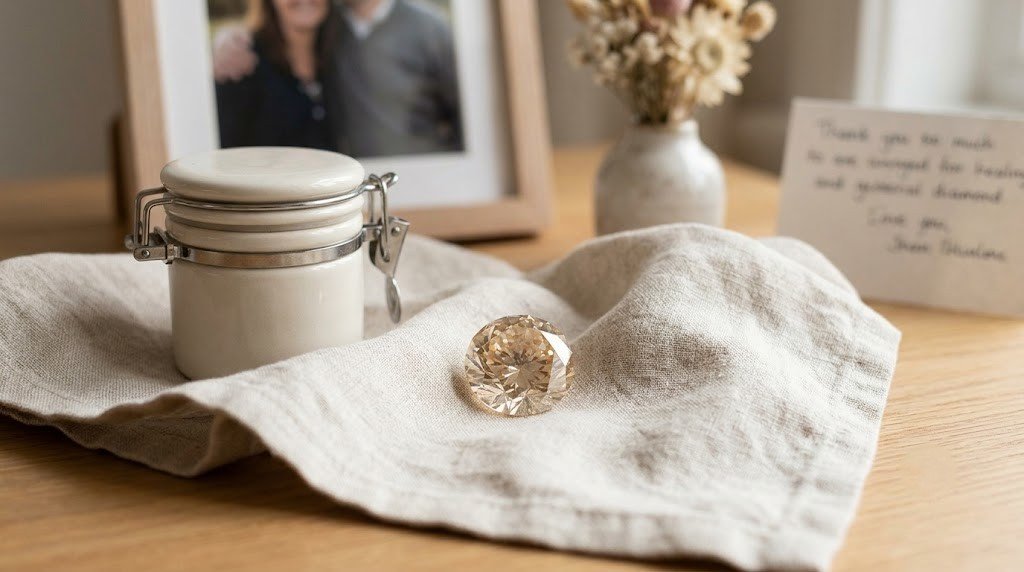
Ash for a Brother Memorial Diamond 7 Expert Gentle Answers

How Much Ash Do You Need for a Brother Memorial Diamond?

Sitting beside the container that holds your brother’s cremated remains, it is natural to worry that a diamond would mean giving most of him away. It would not. The industry typical amount of ash for a brother memorial diamond is small: somewhere between a few tablespoons and roughly 4 oz (about 100 g), usually a modest fraction of the full remains. And that amount does not decide how large the stone becomes; time in the growth press does.

ash for a brother memorial diamond
How Much Ash for a Brother Memorial Diamond Is Typical?

Across the industry, providers commonly request between a few tablespoons and about 4 oz (roughly 100 g) of cremated remains. The exact figure belongs to each provider, and it can move with the carat size you have in mind and the way a given lab handles carbon recovery. Memorial Diamond does not present any industry number as its own fixed minimum, and no single figure applies everywhere.

That range is usually only a small fraction of a full cremation’s remains. Setting aside ash for a brother memorial diamond therefore tends to leave the great majority of him exactly where your family intends: in an urn, in a columbarium niche, scattered somewhere he loved, or kept close at home.

It helps to think of the request in two parts. One part is what the lab needs to recover carbon reliably. The other is any backup quantity a provider might ask you to hold in case a step has to be repeated. Ask whether their stated figure includes a backup, because the answer tells you how much of the ash for a brother memorial diamond is truly consumed and how much may never leave your home.

If you are still at the very start and want the wider picture first, the complete guide to a brother ashes diamond covers the whole journey, from first questions to the finished stone.

Does More Ash for a Brother Memorial Diamond Mean a Bigger Stone?

It feels intuitive that a bigger scoop would produce a bigger stone, but diamond growth does not work like that. After his carbon is extracted and purified to roughly 99.9% or higher, it is converted into graphite at around 2,500 to 2,700°C. That graphite then goes into a growth cell with a tiny diamond seed, where a press holds roughly 6 to 8 GPa of pressure at 1,400 to 2,500°C.

Carat weight is decided by how long the crystal stays in that environment, measured in weeks to months. It is not decided by how much ash for a brother memorial diamond went into the starting container. Sending a whole urn would not make the process faster, and it would not make the stone automatically larger.

With the ash for a brother memorial diamond already set aside, you choose the carat size, typically anywhere from about 0.10 carats to 5 carats or more, and that choice shapes the growth time and the overall timeline. The ashes supply his carbon; the weeks under pressure supply the size.

There is quiet relief in this for siblings who worry about fairness or about using too much of him. A modest portion does not condemn the stone to being small, and asking for extra ash will not buy a bigger diamond. The size decision can rest on its own terms: budget, how the piece will be worn, and what simply feels right.

How Much of the Finished Stone Comes From His Ashes?

What comes back after cremation is largely bone mineral, a calcium phosphate compound, and very little of it is carbon. Industry figures place the recoverable carbon at roughly 0.5% to 4% of the ash by weight. The exact yield varies with the individual and with the cremation itself.

Because the recovered carbon is limited, labs typically blend his purified carbon with supplemental lab sourced carbon to reach a workable volume. Industry sources generally put the ash derived share at around 10 to 15% of the finished stone’s mass, though some providers cite figures nearer 3% and others higher, depending on stone size and how much ash was submitted. A company that calls the result pure ashes, with nothing added, is claiming more than the chemistry allows.

None of that makes the diamond less his. A real, traceable portion of your brother’s own carbon becomes part of the crystal lattice, so the stone is not a symbol standing in for him; it exists because of carbon that was once part of him. The explainer on whether a memorial diamond is really made from brother ashes takes each claim apart in more depth.

For general background on how lab grown stones form, the overview of high-pressure, high-temperature diamond synthesis explains the HPHT method and the less common CVD method.

What Happens After You Set Aside Ash for a Brother Memorial Diamond?

Once the ash for a brother memorial diamond has been set aside, everything else stays with whoever holds the remains, to be honored however your family already planned. Some people keep an urn at home, some inter it, some scatter the ashes in a place tied to his life, and some divide small amounts among relatives. A memorial diamond can sit alongside any of these choices; it does not replace them or rank above them.

The portion that travels to the lab follows a different path. During extraction, everything that is not carbon, including the calcium phosphate and other minerals, is stripped away. That means the specific ash for a brother memorial diamond that actually gets processed does not come back to you as ash.

What a provider does with any material it does not need is a policy question, not a fixed industry rule. Ask these before anything ships:

  • Is unused ash returned, and if so, how is it packaged and sent back?
  • If it is not returned, how is it handled, and can your family request a particular approach?
  • Can you send only the working amount and keep any backup portion at home until it is needed?
  • Will you receive written confirmation of what was received, what was used, and what remains?

Getting those answers in writing protects everyone, especially when more than one relative has a stake in what happens to him.

Who Should You Ask Before Taking Ash for a Brother Memorial Diamond?

As a sibling, you may or may not be the person with authority over your brother’s remains. Each state sets its own ranking of who decides, and a sibling frequently comes after a spouse or registered partner, grown children, and parents on that list. Paperwork he completed himself, such as a document naming the person he trusted with these choices, funeral arrangements made in advance, or terms in his estate plan, can rewrite the ranking entirely.

If someone else holds that authority, the respectful route is a direct, gentle conversation. Explain that the ash for a brother memorial diamond is typically only a small portion, share the general range, and offer to take on the paperwork and shipping yourself. Framing it as a memorial that could include the whole family, rather than something taken away from anyone, can make the request easier to hear.

When a funeral home or crematory still holds the remains, it will generally release any portion only through the person with authority. It is worth asking them how they handle dividing remains and whether they can prepare a small, clearly labeled container for this purpose.

If ashes are not available to you, hair can be another path. Be aware that any of his hair still in the house or with his possessions could be treated as part of his estate, with rules that change from one state to the next, so raise it with whoever is managing his affairs before you take anything. Hair trimmed by a funeral home is generally released through the authority holder too. The companion piece on hair for a brother memorial diamond explains how little is usually needed.

If faith matters to your family, no religious tradition has an official position on memorial diamonds specifically. Views on dividing ashes vary widely, so it is worth confirming with your own faith leader.

Can You Split Ash for a Brother Memorial Diamond Among Several Stones?

Often, yes. Because each stone draws on only a portion, one set of remains can frequently supply more than one diamond: perhaps one for a parent, one for you, one for another sibling, or one for anyone else close to him. Whether it works in your case depends on how much ash is available and on each provider’s own requirements.

A little planning goes a long way here. If two or three people each want a stone, ask whether the provider needs a separate measured portion of ash for a brother memorial diamond for each order, or whether one combined submission can supply carbon for all of them. Ask, too, whether stones from the same submission can differ in size, color, cut, and setting, and whether each one comes with its own origin certificate.

That certificate matters. An origin certificate, usually issued in house, documents the chain of custody showing the stone came from your family’s submitted material. It is different from an independent grading report, which records the diamond’s cut, color, clarity, and carat to recognized standards.

For a fuller look at how relatives coordinate, the guide to sharing a brother memorial diamond among relatives covers splitting portions, timing orders, and keeping everyone informed.

How Do You Measure, Seal, and Send Ash for a Brother Memorial Diamond?

Before you open the urn, ask the provider for its collection instructions or kit. Their instructions, rather than general advice found online, should decide the container, the labeling, and how the package travels. The table below lays out the usual sequence, with the question that settles each step.

StepWhat it involvesQuestion to ask the provider
Confirm the amountAgreeing how much ash for a brother memorial diamond your order needsDoes the figure change with carat size or the number of stones?
Request the kitReceiving any container, labels, and forms the provider suppliesDo you send a collection kit, and what does it include?
Measure the portionTransferring the agreed amount into the provided containerShould the portion be measured by volume or by weight?
Seal and labelClosing the container of ash for a brother memorial diamond securely and recording identifying detailsHow should it be sealed, and what must appear on the label?
ShipSending the sealed ash for a brother memorial diamond by an accepted methodWhich carriers and services do you accept for cremated remains, and is tracking included?
Confirm receiptGetting written acknowledgment that it arrived intactHow will you confirm arrival and begin chain of custody records?

Measuring cremated remains can feel heavier than any step on paper suggests. Some people do it with another relative present, working slowly over a tray with a clean spoon, and set aside time afterward to sit with it. There is no right pace.

If you would rather not handle his remains at all, ask whether the funeral home or crematory can measure and seal the portion for you. Keep a photo of the sealed, labeled container and a copy of every form, so you have your own record alongside the provider’s.

What If Too Little Ash for a Brother Memorial Diamond Remains?

Running short of ash for a brother memorial diamond can happen for ordinary reasons. Sometimes the remains were scattered, divided years ago, or kept by someone else, and what you have is a small keepsake amount. Do not assume it is too little. Send the provider an honest description of what you have, including a weight if a kitchen scale is handy, and ask plainly whether that quantity is workable.

Because carat size comes from growth time, a small amount does not automatically limit the stone’s size. What matters is whether the lab can recover enough carbon to work with. If the answer is no, there are still gentle options:

  1. Ask whoever holds a larger portion whether they could spare a little more.
  2. Consider using his hair instead, if any was kept and the authority holder agrees.
  3. Ask whether the provider can combine a small amount of ashes with hair in one stone.
  4. Keep the keepsake portion as it is and choose a different kind of memorial.

The third option has its own considerations, which the post on how much ash and hair a combined stone needs walks through. None of these paths is lesser than another; the right one is whichever fits your family and what remains of him.

Does the Amount of Ash for a Brother Memorial Diamond Change Cost, Timing, or Color?

Price follows the finished stone, not the volume of ash for a brother memorial diamond you send. Across the industry in 2026, entry stones of about 0.10 to 0.25 carats run roughly 1,500 to 3,500. Stones between 0.5 and 1 carat typically fall between $5,000 and $15,000, with colorless toward the top of that range. Large stones of 2 to 5 carats or more run roughly 20,000 to 75,000 or higher, and grading reports, engraving, fancy cuts, and settings are usually priced separately. The breakdown of what a brother memorial diamond costs goes tier by tier.

Timing works the same way. The whole process typically takes 6 to 10 months from receipt of material to finished stone, and stones over about 2 carats or in specialty colors can take up to around 12 months. A larger portion of ash for a brother memorial diamond will not shorten that wait. The overview of the brother memorial diamond timeline explains what happens across those months.

Color is not steered by quantity either. Trace nitrogen tends to produce yellow, trace boron tends to produce blue, and a colorless stone requires the absence of both, which takes extra processing and usually costs more. Memorial stones tend toward yellow, blue, and champagne tones, and some providers offer irradiation for red, pink, green, or black. The exact shade cannot be predicted from his ashes, as the guide to brother ashes diamond color explains.

Clarity typically lands between SI2 and VVS. The finished stone rates 10 on the Mohs hardness scale, though a hard knock can still chip any diamond.

What Should You Ask a Provider About Ash for a Brother Memorial Diamond?

A short list of written questions keeps the conversation clear and gives you answers you can share with the rest of the family. Before agreeing to anything, ask:

  1. What is your current requirement for ash for a brother memorial diamond at the carat size we want?
  2. Does that figure include a backup portion, and can we hold the backup at home?
  3. Can one submission supply several stones, and how much is needed for each?
  4. Do you send a collection kit, and how should the portion be measured, sealed, and labeled?
  5. Which shipping methods do you accept for cremated remains?
  6. What happens to any ash you do not use?
  7. If growth does not succeed, what is your policy, and is more material needed?
  8. Will the stone come with an origin certificate, an independent grading report, or both?

Write the answers down and keep them with his paperwork, so every decision about ash for a brother memorial diamond is documented. Having them in one place makes it easier to compare providers and to explain the plan to anyone else who cares about him.

Frequently Asked Questions
Is a tablespoon of ash enough for a memorial diamond?

It may be, depending on the provider. Industry requests for ash for a brother memorial diamond range from a few tablespoons up to about 4 oz, so a single tablespoon falls below that typical range. Describe what you have and ask whether the lab can recover enough carbon from it.

Will sending more ash make my brother’s diamond bigger?

No. A stone gains weight only through more weeks of growth, and the quantity of ash in the package plays no part in that. Sending extra remains does not enlarge the stone or speed the process, so you can keep the rest of his ashes for other plans.

Can I still get a diamond if most of his ashes were scattered?

Possibly. A small keepsake portion may still be workable, so ask the provider directly. If it falls short, a relative holding more could spare a little, or his hair could be used instead, with the agreement of whoever holds authority.

Do I need permission to use some of my brother’s ashes?

Yes, from the relative who has the final say over his remains. A spouse or partner, adult children, or parents often rank ahead of siblings, but each state orders this differently, and instructions he left in writing can change it.

Can two siblings each get a diamond from his ashes?

Often, yes. Because each stone uses only a portion of ash for a brother memorial diamond, one set of remains can frequently supply several diamonds. Ask the provider whether each order needs its own measured portion and whether every stone receives its own origin certificate.

Is any of the ash returned after the diamond is made?

That depends on the provider. The portion processed for carbon does not come back as ash, and policies on unused material differ. Ask before shipping whether leftover ash is returned, how it would be sent back, and whether you can keep a backup portion at home.

Should the ashes be sifted or changed before sending?

Ask the provider before doing anything beyond its own instructions. Use its kit or container, measure the agreed portion, and seal and label it as directed. If anything about the remains concerns you, describe it to the provider rather than altering them yourself.

Final Thoughts on Ash for a Brother Memorial Diamond

The question of how much is really a question about how much of him you would be letting go. The honest answer is that ash for a brother memorial diamond is very little, and none of it is used in a way that limits what the stone can become. Whatever you decide, the rest of your brother can stay exactly where your family wants him, and the diamond, if you choose one, simply joins the ways you already remember him.

Learn More About Preparing a Portion of His Ashes
Talk With Memorial Diamond

If you are weighing how much ash for a brother memorial diamond to set aside, or whether what you have is enough, you are welcome to reach out to Memorial Diamond and talk it through at your own pace. Visit memorialdiamond.us to start the conversation about what is possible with his ashes.

Word count: 3,330 words · Reading time: about 17 minutes
ash-and-hair-for-a-brother-memorial-diamond-he

How Much Ash and Hair Do You Need for a Brother Memorial Diamond?

Some families find that one source alone does not feel complete, and they want a little of his ashes and a lock of his hair grown together into a single stone. If that is where you are, the amounts behind ash and hair for a brother memorial diamond are small but provider specific. Ash requests typically run from a few tablespoons to about 4 oz, hair from a small lock to a few grams, and no industry standard ratio exists for combining them.

ash and hair for a brother memorial diamond

How Much Ash and Hair for a Brother Memorial Diamond Is Typical?

Industry figures exist for each material on its own, and they are the best starting point. For ashes, providers commonly ask for somewhere between a few tablespoons and roughly 4 oz (about 100 g). For hair, they usually ask for a small lock or a few grams, sometimes described as palm sized.

For combined ash and hair for a brother memorial diamond, though, there is no published industry amount. Some providers may want close to their full single source figure for each material, others may ask for less of one because the other contributes carbon too, and some may not offer combined stones at all. Memorial Diamond does not present any of these possibilities as its own policy.
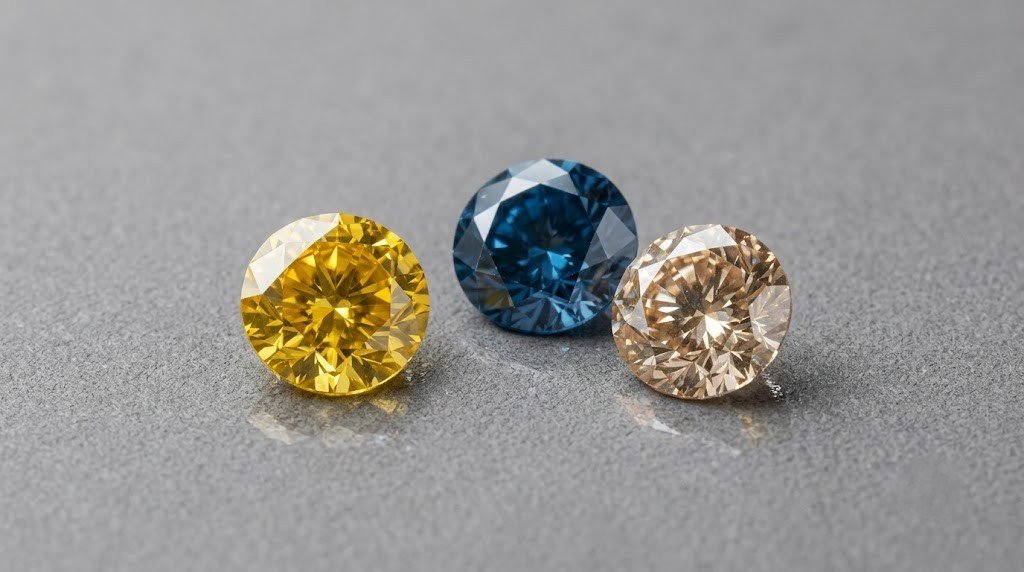
The table below sets out what is known and what is not, so you can see where the provider’s answer will fill the gap.

MaterialTypical amount when used aloneCarbon by weightPublished share of a finished stone
Cremated ashesA few tablespoons to about 4 oz (about 100 g)Roughly 0.5% to 4%Around 10 to 15% of the stone’s mass from ash carbon, with a few providers citing nearer 3%
HairA small lock or a few gramsRoughly 50%None published
Ash and hair combined in one stoneSet by each provider; no industry figureDepends on the mixNone published

For a wider look at how combined stones are planned from start to finish, the complete guide to a brother ashes and hair diamond covers each stage in turn.

Why Choose Ash and Hair for a Brother Memorial Diamond?

For some families, the reason is emotional. Ashes connect the stone to his cremated remains, while a lock of hair may carry a memory of its own: a haircut before a trip, a curl saved from childhood, or something gathered quietly by someone who loved him. Bringing both together can feel like holding more of who he was.

For others, the reason is practical. Perhaps only a keepsake amount of his ashes is left after scattering, or a relative holding the remains can spare just a little. Hair, at roughly 50% carbon by weight, can add a carbon rich contribution to that small portion.

There is no right reason, and no obligation to combine at all. A stone grown from ashes alone, or from hair alone, carries just as much meaning. If you are weighing single source options, the companion guides on how much ash a brother memorial diamond needs and how much hair a brother memorial diamond needs look at each material separately.

What matters most is that everyone involved understands what the combined approach involves. Combining ash and hair for a brother memorial diamond adds a few extra questions, and it helps to answer them before anything leaves your home.

Is There a Standard Ratio of Ash and Hair for a Brother Memorial Diamond?

No. There is no industry standard ratio, and any figure presented as universal should be treated with caution. Each lab decides how it handles two materials, which affects how much of each it asks for and how the carbon is processed.

Because the answer is provider dependent, the most useful thing you can do is ask precise questions. Before committing, ask the provider:

  • Do you offer combined stones, and how long have you been making them?
  • How much ash and hair for a brother memorial diamond do you need for our chosen carat size?
  • Do you process the two materials separately and then combine the carbon, or together from the start?
  • Is a minimum amount of each material required, or can one make up for a shortfall in the other?
  • Can you document how much of each material was received and used?
  • Will the origin certificate name both materials?

Ask for the answers in writing. A clear, written response is easier to share with relatives, and it protects your family if questions come up later. If a provider cannot explain how it handles both materials, that tells you something too.

How Much Carbon From Ash and Hair for a Brother Memorial Diamond Ends Up in the Stone?

This is where honesty matters most. For ashes alone, industry figures place usable carbon at roughly 0.5% to 4% of the ash by weight, and ash derived carbon typically makes up around 10 to 15% of the finished stone’s mass, with some providers citing about 3%. Those numbers describe ash only stones and should not be stretched to cover hair or a blend.

For hair, and for stones combining ash and hair for a brother memorial diamond, no finished stone percentage has been published. Hair holds far more carbon by weight than ashes, but that does not tell you what share of the final crystal it accounts for, and nobody should invent one for you.

What is consistent is the method. His carbon is extracted in a controlled, oxygen free process, purified to roughly 99.9% or higher, and typically blended with supplemental lab sourced carbon to reach a workable volume. The finished diamond is never pure ashes or pure hair; it is a genuine diamond that holds real carbon from him within its crystal lattice.

The explainer on whether a memorial diamond is really made from brother ashes and hair goes deeper into what can and cannot be documented. For background on the category itself, the overview of memorial diamonds as a category traces how these stones came to be offered.

Does Sending More Ash and Hair for a Brother Memorial Diamond Make the Stone Bigger?

It does not. The size of any memorial diamond is set by growth time, not by how much starting material went in. Once purified, the carbon is heated again, to somewhere near 2,500 to 2,700°C, which turns it into graphite, the feedstock a growth press uses. That graphite then sits beside a small diamond seed inside the growth cell.

Most memorial stones are grown by HPHT, where pressure of about 6 to 8 GPa and heat between 1,400°C and 2,500°C let the seed build a crystal across a span of weeks to months; a smaller number of labs rely on CVD. In both methods, a longer growth period yields a larger stone, so sending extra ash and hair for a brother memorial diamond does not raise the carat weight.

Carat sizes typically range from about 0.10 to 5 carats or more. You choose the size, and that choice shapes how long growth takes. The amounts you send only need to satisfy the provider’s requirement for carbon recovery, which means you can keep the rest of his ashes and most of any saved hair for other purposes.

After growth, the rough crystal is cut and polished, some providers offer irradiation to adjust color, and the stone is graded.

Who Needs to Agree Before You Send Ash and Hair for a Brother Memorial Diamond?

Two materials can mean two sets of considerations. For his ashes, the deciding voice belongs to whoever your state’s rules place first. Each state sets its own order, and siblings often sit behind a spouse or registered partner, adult children, and parents. If he left written instructions, such as choosing a person to speak for him or arranging his funeral in advance, those can reshape who decides.

For his hair, the source matters. A lock saved in a drawer, or hair on a brush he left behind, may count as part of his estate, and how that works differs from state to state, so speak with the person settling his affairs first. Hair trimmed by a funeral home is generally released through the person with authority over his remains.

If you are not that person, the respectful route is to ask gently. Explain that the portion of ash and hair for a brother memorial diamond is small, that most of his ashes can stay as planned, and that you are happy to handle the forms and shipping. Offering to keep them informed, or inviting them to share in the stone, can turn a request into something you plan together.

Where faith is part of the picture, no religious tradition has an official position on memorial diamonds specifically, and practices around ashes vary. A conversation with your own faith leader can help.

How Do You Prepare and Ship Ash and Hair for a Brother Memorial Diamond Together?

Begin with the provider’s collection kit or written instructions, because every detail of a two material submission depends on how that lab works. These six tips help keep the process clear and calm:

  1. Ask whether the materials travel separately. Some providers may want ash and hair in their own containers; ask before you pack anything.
  2. Confirm the amount of each. Get the provider’s figure for ash and hair for a brother memorial diamond at your chosen size, in writing.
  3. Label every container clearly. Ask what identifying details belong on each label, so neither material can be confused with anything else.
  4. Check accepted shipping methods. Cremated remains can have specific carrier requirements; ask which services the provider accepts and whether tracking is included.
  5. Keep your own records. Photograph the sealed containers and keep copies of every form you send.
  6. Ask for confirmation on arrival. Request written acknowledgment that both materials arrived intact and that chain of custody records have begun.

Preparing two kinds of keepsake can take more out of you than expected. It is fine to do it in stages, to ask another relative to help, or to ask the funeral home whether it can portion the ashes for you.

At the end, the provider’s origin certificate, usually issued in house, documents that the stone came from your family’s submission. An independent grading report is a separate document that records the diamond’s cut, color, clarity, and carat.

What If You Have Uneven Amounts of Ash and Hair for a Brother Memorial Diamond?

Uneven amounts happen for all sorts of reasons. You might have a full urn but only a few strands of hair, or a generous lock of hair but only a keepsake pinch of ashes. Describe both quantities honestly to the provider, ideally with weights or photos, and ask whether the combination is workable.

Because no fixed ratio exists, a provider may be able to work with an uneven mix, or it may need a minimum of each. If one material falls short, there are still gentle options:

  • Ask a relative who holds more ashes, or another saved lock, whether they could spare a little.
  • Ask whether the provider can grow the stone from the more plentiful material alone.
  • Ask whether the scarce material could be kept as a separate keepsake beside the finished stone.
  • Pause and revisit later, since there is rarely any rush to decide.

Whichever route you take, the combined ash and hair for a brother memorial diamond should reflect what feels right to your family, not what a provider finds easiest.

Can One Supply of Ash and Hair for a Brother Memorial Diamond Serve Several Relatives?

Sometimes, yes. Because each stone uses only a portion of each material, one set of remains and one keepsake lock may be able to supply more than one combined diamond. Whether that is possible depends on how much of each you have and on the provider’s own requirements.

If parents, siblings, or anyone else close to him would each like a stone, ask whether each order needs its own measured portion of ash and hair for a brother memorial diamond, or whether one submission can be divided. Ask, too, whether the stones can differ in size, color, cut, and setting, and whether each receives its own origin certificate.

The guide to sharing a brother memorial diamond with family covers dividing materials fairly and keeping everyone informed while orders move forward.

How Do Cost, Timing, and Color Work With Ash and Hair for a Brother Memorial Diamond?

Price follows the finished diamond rather than the materials. Using 2026 industry figures, a small stone in the 0.10 to 0.25 carat band costs roughly $1,500 to $3,500. The half carat to one carat band sits near $5,000 to $15,000, and colorless pushes toward the upper figure. Large stones, from 2 carats to beyond 5, start near $20,000 and can pass $75,000. Expect separate charges for an independent grading report, engraving, a fancy cut, or a setting. Ask whether combining ash and hair for a brother memorial diamond affects the quote at all.

Expect a wait of about 6 to 10 months once the lab has both materials in hand; stones above roughly 2 carats, or in specialty colors, may need as long as 12 months. The overview of the brother memorial diamond timeline explains what happens during that time.

Color cannot be predicted from either material. Trace nitrogen tends to give yellow, trace boron tends to give blue, and colorless requires both to be excluded through extra processing at extra cost. Memorial stones commonly lean yellow, blue, or champagne, and irradiation can produce red, pink, green, or black. The post on brother ashes and hair diamond color explores the choices.

Clarity typically lands between SI2 and VVS, and grading follows the diamond quality factors described by GIA. Its hardness matches every other diamond at the top of the Mohs scale, yet that is not the same as being unbreakable: a sharp blow at an unlucky angle can still chip an edge.

Frequently Asked Questions

Do I need equal amounts of ash and hair?

Not necessarily. No industry standard ratio exists for ash and hair for a brother memorial diamond, and each provider sets its own requirements. Some may want a minimum of each material, while others may work with uneven amounts. Ask for their figures in writing before you prepare anything.

Does combining ash and hair make a bigger diamond?

No. A stone’s carat weight comes from the length of its growth period, so supplying more material does not change it. Adding hair to ashes, or the reverse, does not enlarge the stone, though it may help when one material is scarce.

What percentage of a combined stone is my brother?

No published figure exists for combined stones. Ash derived carbon typically makes up around 10 to 15% of an ash only stone, but that figure does not apply to hair or blends. Supplemental lab carbon is typically added in either case.

Can I use hair from his brush with his ashes?

Possibly, if the provider accepts brush hair. Remember that hair kept among his belongings may form part of his estate, with rules varying by state, so check with whoever handles his affairs and with the person holding authority over his ashes.

Should the ashes and hair be packed together?

Ask the provider before packing ash and hair for a brother memorial diamond. Some may want each material in its own labeled container, while others may supply a kit designed for both. Following their instructions keeps each material clearly identified and supports the chain of custody behind the origin certificate.

Can a combined stone be made if his ashes were mostly scattered?

Often it can be explored. A small keepsake portion of ashes paired with a lock of hair may be workable, depending on the provider. Describe both amounts honestly and ask whether the combination meets their requirements before you send anything.

Final Thoughts on Ash and Hair for a Brother Memorial Diamond

Choosing both his ashes and his hair is a way of saying that no single part of him tells the whole story. The amounts of ash and hair for a brother memorial diamond are small, the ratio is a conversation rather than a formula, and much of what you hold can stay exactly as it is. Move at whatever pace feels right, and let the questions you ask protect what matters most to your family.

Learn More About Sending Both Materials

Talk With Memorial Diamond

If you are thinking about combining your brother’s ashes and hair and are unsure how much ash and hair for a brother memorial diamond to set aside, you are welcome to reach out to Memorial Diamond. Visit memorialdiamond.us to talk through what is possible, with no pressure and plenty of time for your questions.

brother-ashes-hair-diamond-complete-guide

Brother Ashes and Hair Diamond: The Complete Guide

What remains of a brother is sometimes scattered across a family: his ashes with one relative, a lock of his hair with another, and a cap still hanging in your hallway. A brother ashes hair diamond is a lab-grown diamond created using carbon recovered from both a small portion of his ashes and some of his hair.

Each material may require permission from a different person. The process typically takes 6–10 months, depending on the provider and the diamond being created. Keeping both sources documented separately from the beginning can help protect the family’s wishes and give everyone greater peace of mind.

brother ashes hair diamond

Table of Contents

What Is a Brother Ashes Hair Diamond, Exactly?

A brother ashes hair diamond is a lab-grown diamond created brother ashes hair diamond using carbon derived from two materials associated with your brother: a portion of his cremated remains and some of his hair.

It is not a stone with ashes and hair sealed inside it. Instead, the materials are processed to recover carbon, which may then be used during diamond growth.

The resulting stone has the characteristic physical properties of a diamond. It can be cut, polished, graded, and set into a ring, pendant, or another piece of memorial jewelry.

This type of keepsake belongs to the broader category of memorial diamonds, which are created using carbon from a person’s ashes, hair, or other accepted carbon sources.

Why combine the two materials?

For some families, each material represents a different part of a person’s life. His ashes may connect to his final arrangements, while his hair may bring back memories of ordinary days, family photographs, or a familiar keepsake.

Combining them can provide a way to represent both connections in one stone.

However, not every provider offers blended memorial diamonds, and the methods brother ashes hair diamond used can vary. Before ordering, ask whether the company accepts both materials for one diamond and how it documents their use.

When Does Combining His Ashes and Hair Make Sense?

A blended memorial diamond is a personal choice, not necessarily an upgrade over a diamond made brother ashes hair diamond from one material.

A brother ashes hair diamond may be suitable in several circumstances.

  • Both materials are available and meaningful. Your family has access to some ashes and a saved lock of hair, and you would like to include both.
  • Two relatives want to contribute. One person keeps his ashes, while another has preserved his hair. A combined stone may allow both relatives to contribute to one keepsake.
  • The available ash quantity is limited. Hair contains a relatively high proportion of carbon by weight. A provider may be able to use it alongside ashes, but you should ask whether the combination changes the amount required for your order.
  • Different relatives value different keepsakes. One sibling may feel connected to his ashes, while another treasures a lock of hair or an item he once wore.

Sometimes, however, using one material is simpler. A relative may not want to share a keepsake, only one material may be available, or the provider may not offer a combined process.

An ash-only or hair-only brother ashes hair diamond memorial diamond can be just as meaningful. The right decision is the one that respects your family’s circumstances and your brother’s memory.

Alternatives When One Material Is Unavailable

A brother ashes hair diamond may not be possible if his ashes were scattered, a relative does not wish to share them, or no hair remains.

You still have options.

  • An ash-only memorial diamond: Read the complete guide to a diamond made from your brother’s ashes to learn about ash requirements and the general process.
  • A hair-only memorial diamond: If his ashes are unavailable, the complete guide to a brother hair diamond explains this alternative.
  • Separate memorial diamonds: Different relatives may choose separate stones using the materials available to them, if the provider can accommodate their requests.
  • Waiting until the family is ready: There is no need to rush into a decision. You can take time to talk with relatives and consider what feels right.

An urn, burial, or scattering ceremony already has its own meaning. A memorial diamond is another possible tribute, not a replacement for those choices.

What If His Ashes and Hair Are With Different People?

This is one of the most important practical considerations when planning a brother ashes hair diamond.

The two materials may be held by different relatives, and each may have different responsibilities or rights concerning the material.

Who Can Authorize the Use of His Ashes?

The person legally authorized to make decisions about cremated remains depends on the applicable state law and the circumstances of the arrangements.

A spouse or partner, adult child, parent, sibling, or designated representative may have a role, depending on the situation. A written designation or other legal arrangement may also affect who can make decisions.

Do not assume that the person who physically brother ashes hair diamond holds the urn is automatically the only person authorized to approve its use.

If you are unsure, contact the funeral home orcrematory that handled the arrangements. For a disagreement or unclear legal situation, consult a local attorney familiar with estate and funeral matters.

Who Can Authorize the Use of His Hair?

The answer may depend on where the hair came from and who owns or controls the item containing it.

For example, hair saved from a brush or cap may be connected to personal belongings or the estate. A lock collected by a funeral home may be handled differently.

If the hair was among your brother’s belongings, speaking with the executor or estate representative may be a sensible first step. You should also talk to the person who currently keeps the hair.

How Can You Ask Two Relatives Respectfully?

Imagine that one relative keeps your brother’s ashes, while another has his saved hair. You would like to create one diamond using both materials.

The most respectful approach is to have two separate conversations. Explain what you hope to create, why both materials matter to you, and how little material the provider says it needs.

Avoid pressuring either person. They may have a strong emotional connection to the material or may not be comfortable sharing it.

A simple conversation can establish whether everyone is willing to participate before you begin the ordering process.

If there is disagreement, take time to understand each person’s concerns. A memorial keepsake should not come at the cost of damaging important family relationships.

How Do Labs Combine Two Materials in One Stone?

Providers do not all publish their exact methods for combining ash-derived and hair-derived carbon. The following is a general explanation of the process, not a guarantee that every company follows the same procedure.

1. Separate Sample Intake

The ashes and hair may begin as separate samples, each with its own identification and intake record.

This is particularly important when two relatives supply the materials.

2. Carbon Recovery

Each material is processed to recover carbon. Ashes contain minerals and other substances, while hair contains keratin and other components.

The objective is to obtain carbon suitable for the provider’s diamond-growth process.

3. Purification and Preparation

The recovered carbon may undergo additional purification. Some providers may prepare each source separately before combining them.

Ask the company to explain its own method rather than assuming every laboratory uses the same process.

4. Combining the Carbon Sources

If the provider offers a blended diamond, it must have a method for using carbon recovered from both materials.

Ask when the sources are combined, whether their separate identities are recorded, and whether the company can provide documentation describing the process.

5. Diamond Growth

Many laboratory-grown diamonds are produced using high-pressure, high-temperature (HPHT) technology. Other diamonds are grown using chemical vapor deposition (CVD).

The technology available for memorial diamonds depends on the provider. Ask which method will be used for your order.

6. Cutting and Polishing

After growth, the diamond may be cut and polished into the selected shape. The final appearance depends on the resulting crystal and the cutting choices available.

7. Documentation and Delivery

Before the diamond is delivered, ask what paperwork will accompany it. Depending on the provider, this may include an origin certificate, product details, or an independent grading report.

For a more detailed overview, read how a memorial diamond is made from your brother’s ashes and hair.

Questions to Ask About the Blending Process

Before placing an order, ask:

  • Are the ashes and hair processed separately before being combined?
  • Will the records identify both materials?
  • Can you estimate the amount of carbon contributed by each source?
  • What happens if one sample produces less usable carbon than expected?
  • What happens if diamond growth fails?
  • What happens if the stone fractures during cutting?
  • Will any unused material be returned, and to whom?

Clear answers can help you understand what the provider can and cannot promise.

How Should You Document Both Sources?

When two materials come from different people, good documentation becomes especially important.

A simple record can help preserve the history of the samples and clarify what each person agreed to contribute.

Record to keepAsh portionHair portion
Previous holderPerson authorized to release the ashesExecutor or person keeping the hair
Written agreementConsent to release the requested amountAgreement permitting the hair to be used
SourceUrn or container, and crematory details if knownBrush, cap, saved lock, or keepsake
Amount sentApproximate weight or quantityApproximate weight or description of the lock
Shipping recordShipping date, carrier, and tracking numberShipping date, carrier, and tracking number
Provider intakeIntake identification assigned by the companyIntake identification assigned by the company
Unused materialPerson designated to receive the remainderPerson designated to receive the remainder

Before sending anything, ask the provider whether the certificate can identify both source materials.

If the samples will arrive on different dates, confirm how the first sample will be stored, how long it will be kept, and how the company will identify it until the second sample arrives.

Photographing each sample and its label before packaging can also help you maintain your own records.

Keep copies of the consent documents, shipping receipts, tracking numbers, provider correspondence, and any certificate supplied with the finished diamond.

How Much of the Finished Stone Comes From Him?

This is an important question, and the answer should be communicated honestly.

In an ash-only memorial diamond, some providers report that personal carbon accounts for approximately 10–15% of the finished stone’s mass, while other reported brother ashes hair diamond figures can be lower. The amount brother ashes hair diamond depends on the material recovered and the provider’s process.

Ashes generally contain only a small proportion of usable carbon by weight. Hair contains substantially more carbon by weight, but that fact alone does not establish what percentage of a finished diamond comes from the hair.

There is no single published percentage that can reliably describe every diamond made from a blend of ashes and hair.

Additional carbon may be used during the growth process. The amount contributed by each source depends on the provider’s method and the specific order.

The most accurate way to describe a brother ashes hair diamond is that carbon recovered from both his ashes and hair is used in growing the crystal, potentially alongside other carbon used by the laboratory.

The stone should not automatically be described as being made entirely from your brother’s remains.

Before purchasing, ask the provider for a written estimate of the personal carbon contribution for your chosen size and how that estimate is calculated.

You can also read about whether a memorial diamond is really made from your brother’s ashes and hair.

How Much Ash and Hair Do You Need?

The required quantities depend on brother ashes hair diamond the provider, the diamond brother ashes hair diamond size, and the materials available.

As general guidance, some providers request a few tablespoons of ashes, while others may request a larger amount, potentially around 100 grams. Hair requirements may be a small lock or a few grams.

These are broad examples, not universal requirements. A blended order may have different requirements from an ash-only or hair-only order.

Contact the provider before collecting or shipping the materials. Ask for the exact quantity, acceptable packaging, labeling instructions, and shipping procedure.

The quantity supplied does not necessarily determine the finished diamond’s carat weight. Diamond size depends on the growth process and the size selected for the order.

You should not send extra material unless the provider requests it.

Before shipping, also ask what happens to unused ashes and hair. If two different relatives contributed the materials, specify in writing who should receive each unused portion.

What Color, Cost, and Timeline Should You Expect?

Memorial Diamond Colors

The color of a lab-grown diamond depends on factors that affect crystal growth, including trace elements and the provider’s process.

Memorial diamonds may be available in shades such as yellow, blue, champagne, or brown. Some providers offer additional colors or color treatments.

Adding brother ashes hair diamond hair to ashes does not guarantee a particular shade. A provider should explain which colors are available, whether any post-growth treatment is used, and how the chosen color affects price and delivery time.

Color does not measure the emotional brother ashes hair diamond significance of the diamond or the relationship you shared with your brother.

For more information, read the guide to brother ashes hair diamond color.

Estimated Price Ranges

The following are broad illustrative industry estimates, not a quote from Memorial Diamond or a guarantee of current market prices.

Diamond sizeIllustrative price range
0.10–0.25 carat$1,500–$3,500
0.5–1 carat$5,000–$15,000
2–5+ carats$20,000–$75,000+

Actual prices vary with the provider, carat weight, color, cut, grading, setting, and other options. Processing two materials may also affect the price.

Request an itemized quotation before ordering. Ask whether the price includes the diamond itself, cutting and polishing, a certificate, independent grading, shipping, and any jewelry setting.

An independent grading report may describe the brother ashes hair diamond diamond’s characteristics using criteria such as those explained in GIA’s diamond quality factors.

How Long Does It Take?

A memorial diamond may take approximately 6–10 months, depending on the provider and order, brother ashes hair diamond. Larger stones, specialty colors, or other complications may take longer.

Ask when the timeline begins. Some companies calculate it from receipt of the required materials, while others may use a different milestone.

If the ashes and hair will be sent separately, confirm whether processing begins only after both samples have arrived.

Get the estimated completion date and the provider’s policy for delays in writing.

Caring for the Finished Diamond

Diamonds are very hard, but they are not impossible to damage. A hard impact can chip or fracture a diamond, depending on where and how it strikes.

If you intend to wear the stone every day, consider a brother ashes hair diamond protective setting and ask a jeweler about appropriate care. If the diamond is valuable, you may also want to ask your insurer what documentation is required for coverage.

Can Each Sibling Receive a Blended Stone?

Possibly. Whether the same supply of ashes and hair can be divided between multiple orders depends on the available quantities and the provider’s requirements.

Ask whether the company can use one set of brother ashes hair diamond source materials for several diamonds and whether each order needs separate samples or intake records.

Before deciding, talk with the family members who may want to participate. One sibling may prefer a blended diamond, another may want an ash-only stone, and another may not want a memorial diamond at all.

These choices do not measure how much anyone loved your brother.

If one diamond will be shared by several relatives, discuss ownership and future arrangements before ordering. If multiple diamonds will be made, decide how the cost will be divided and who will receive each finished stone.

Written agreements can prevent misunderstandings later.

What Should Be Agreed in Writing Before Anything Ships?

Before sending either material, try to establish the following details in writing:

  1. Who has authorized the release of the ashes.
  2. Who has agreed to the use of the hair.
  3. Who will place and manage the order.
  4. How the costs will be divided.
  5. Who will own the finished diamond or diamonds.
  6. Who should receive any unused ashes and any unused hair.
  7. How the provider will document both sources.
  8. What happens if one sample cannot provide enough usable carbon.
  9. What happens if growth fails or the stone is damaged during cutting.
  10. Whether the price includes grading, a certificate, shipping, and any setting.
  11. How the provider handles storage when samples arrive at different times.
  12. Whether any color treatment will be used and disclosed.

If you need practical guidance on ordering and shipping, read how to turn your brother’s ashes and hair into a diamond.

Taking these steps before shipping can make the process clearer for everyone involved.

Frequently Asked Questions

Does a brother ashes hair diamond contain more of him than an ash-only stone?

There is no universal published figure for a diamond made from a blend of ashes and hair. The amount of personal carbon depends on the materials recovered and the provider’s process. Ask for a written estimate specific to your order.

Can his ashes and hair be sent to the laboratory at different times?

That depends on the provider. Before sending either material, confirm whether the laboratory accepts separate deliveries, how the first sample will be stored, and how both samples will be tracked.

Obtaining written agreement from both contributors is a sensible precaution. The person authorized to make decisions about the ashes may differ from the person who owns or keeps the hair. Legal requirements depend on the circumstances and applicable law.

Will adding his hair change the diamond’s color?

Not predictably. The final color depends on factors involved in diamond growth and any disclosed treatment. Ask the provider which colors are available and how they are produced.

Can unused ashes and hair be returned to two different people?

Possibly, depending on the provider’s policy.brother ashes hair diamond Before sending brother ashes hair diamond anything, specify who should receive each unused material and obtain written confirmation of the arrangements.

Is a combined diamond more expensive than a single-material diamond?

It may be. Some providers may charge additional fees for handling or processing a second material. Ask for an itemized quotation that identifies any blending fee.

What if his ashes and hair are in different states?

The two holders may be able to send their samples separately, but shipping rules and provider procedures can differ. Ask the company for instructions for each material, and retain the tracking and intake records.

Final Thoughts on a Brother Ashes Hair Diamond

A brother ashes hair diamond brother ashes hair diamond can require more planning than a diamond made from a single material. There may be two relatives to speak with, two permissions to obtain, and two packages to document.

Handled carefully, that process can give family members an opportunity to contribute to a shared memorial while respecting the wishes of everyone involved.

Keep your records clear, ask the provider direct questions, and be realistic about what can be verified about the finished stone. Most importantly, allow every relative to make their own decision without pressure.

For some people, a memorial diamond offers comfort by bringing brother ashes hair diamonddifferent reminders of a loved one into one small, lasting keepsake. For others, a different tribute feels more appropriate. Both choices deserve respect.

Learn More About Brother Memorial Diamonds

Talk With Memorial Diamond

If your brother’s ashes and hair are held by different relatives, or you brother ashes hair diamond are unsure which materials are available, you can start by learning about the options before asking anyone to contribute.

Visit Memorial Diamond to explore memorial diamond options and ask questions about creating brother ashes hair diamond a brother ashes hair diamond at a pace that feels right for your family.

A meaningful memorial begins with care, brother ashes hair diamond honest information, and respect for the people who share his memory.

How to Turn Your Sisters Ashes Into a Diamond1

How to Turn Your Sister’s Ashes Into a Diamond

Wanting a piece of her you can wear, hold, or press into your palm on a hard day is a natural thing for a sibling to want. To turn sister ashes into a diamond, you confirm who holds authority over her remains, ask for a small portion, choose a provider, mail the ashes with tracking, settle size and color, then wait roughly six to ten months while her recovered carbon is purified and grown into a real lab made diamond.

turn sister ashes

Can a Sibling Turn Sister Ashes Into a Diamond?

Yes, though a sibling is often not the person with the final word over her remains. Plenty of people who set out to turn sister ashes into a diamond learn this only when a provider’s form asks for an authorizing signature. In many states the right to direct what happens after a death passes first to a spouse or registered partner, then to adult children, then to parents, with siblings further down the list. The order is set state by state, and anything she put in writing such as a designated agent, a pre arranged plan, or a clause in a will can change it.

None of that measures how close the two of you were. It simply means the practical route for a sibling who wants to turn sister ashes into a lasting stone runs through someone else’s agreement: her spouse, her adult children, a parent, or whoever the funeral home released the ashes to.

If you are that person, you can proceed on your own authority, though telling the rest of the family is still a kindness. If you are not, the steps below open with a respectful request rather than a decision, and that request is usually smaller than people fear.

What Are the Nine Steps to Turn Sister Ashes Into a Diamond?

Here is the whole sequence a sibling follows to turn sister ashes into a finished stone. The time column is a rough industry typical guide, not any single company’s schedule.

StepWhat you doWho is usually involvedRough time
1Learn who holds authority over her ashesYou, the funeral home, her familyA few days
2Ask for, and receive, a small portionYou and the authority holderDays to weeks
3Check whether other siblings or relatives want a stoneFamilyOne or two conversations
4Compare providers and get answers in writingYouOne to three weeks
5Prepare the portion and sign the paperworkYou, possibly the authority holderAn afternoon
6Mail the ashes with tracking and insuranceYouA few days in transit
7Decide carat, color, cut and settingYou, with the providerOften settled at ordering
8Wait while carbon is extracted and the diamond growsThe providerAbout six to ten months
9Receive the diamond and check every documentYouOne delivery

Nothing obliges you to hurry. Cremated remains are stable mineral material. If you would rather turn sister ashes into a diamond next year than next month, that is a perfectly workable plan.

How Do You Ask for a Portion of Her Ashes?

Step 1: Find out who must agree before you turn sister ashes into a stone

The funeral home or crematory that cared for her will know who signed the cremation authorization and to whom the ashes were released. That person is generally your first point of contact. Before you try to turn sister ashes into anything, check too whether she left written instructions or named someone to carry out her wishes. When the picture is murky, such as no will or relatives spread across several states, a short consultation with a local probate attorney costs far less than a dispute later.

Step 2: Ask for a small portion

The amount needed to turn sister ashes into a diamond is smaller than you might expect. A typical request runs from a few tablespoons up to roughly 4 ounces, which is about 100 grams, and everything else stays wherever the family chooses, in an urn, scattered, or interred. Say that plainly when you ask.

A few things tend to make the conversation easier:

  • Offer to cover the cost and handle the forms yourself.
  • Bring the provider’s written material requirement, so the amount is concrete.
  • Ask whether the person would prefer to measure out and seal the portion themselves.
  • Give them time. A request made a week after a funeral may land very differently three months on.

If the answer is no, or not yet, that answer is theirs to give. Some siblings in that position look at the hair route instead, which does not touch her ashes at all. Others return to the question later. Whichever way it goes, the relationship is worth protecting too.

Should Other Siblings Be Asked Before You Turn Sister Ashes Into a Stone?

Step 3: Talk to the rest of the family

Each stone uses only a fraction of the ashes, so several relatives can often receive their own diamond from the same remains. Coordinating once can be easier than arranging several separate requests over several years.

Families differ enormously here. You might have one other sibling or six. You may have shared both parents with her, or one. You may have grown up under one roof or met as adults. A twin, a half sibling and a stepsibling can each want something tangible, and none of those bonds needs defending.

Questions worth putting on the table:

  1. Does anyone else want to turn sister ashes into a stone of their own, now or later?
  2. Should each person choose their own size, color and setting, or keep things matching?
  3. Who pays for what, and does anyone need more time?
  4. Is the authority holder comfortable releasing more than one portion?

If you go ahead alone and others join later, ask the provider whether a second order can be placed from a separate portion. Policies vary.

How Do You Choose a Provider to Turn Sister Ashes Into a Diamond?

Step 4: Compare providers in writing

This choice decides who handles her ashes for most of a year. Before you let anyone turn sister ashes into a diamond, send the same written questions to two or three providers and lay the replies side by side. Numbers and documents tell you more than warm phrasing.

Ask each one:

  • How is her portion labeled and tracked from arrival to finished stone, and may I see that log?
  • Is her carbon ever processed alongside another family’s material?
  • What share of the finished diamond’s mass will be carbon recovered from her ashes?
  • Which document confirms origin, and is an independent grading report included or extra?
  • What is the full price, including grading, engraving, setting and return shipping?
  • What happens if a growth run fails or the stone fractures in cutting?
  • Can unused ashes be returned to me, and at whose cost?
  • What are the cancellation terms once growth has begun?

Any company prepared to turn sister ashes into a diamond on your behalf should answer every one of these without strain. A vague reply is not proof of bad practice, but it is a reason to ask again. For broader background, the sister ashes diamond guide goes deeper into each topic.

How Do You Prepare and Mail Her Ashes?

Step 5: Prepare the portion and the paperwork

Expect the provider to send an intake kit, or ask for one: a small inner container, a seal or tag carrying an order reference, and a form recording her name, your details and often the authority holder’s signature. Laboratories that turn sister ashes into diamonds rely on that reference to keep her portion separate from every other order, so follow the kit exactly rather than improvising with household containers.

Before you close the outer box, photograph the filled, labeled container and keep a copy of every form. That record does not depend on anyone else’s system.

Step 6: Mail it with tracking and insurance

Of everything you do to turn sister ashes into a diamond, shipping is the one moment when nobody has hands on the parcel, so plan it carefully. Ask the provider which carrier and service it requires. In the United States the Postal Service has its own packaging and labeling rules for cremated remains, and providers generally build their kits around them. Keep the tracking number somewhere safe and ask for an email confirming receipt the day the parcel lands.

Which Choices About Size, Color, Cut and Setting Come Next?

Step 7: Make the design decisions

These are usually settled at ordering, though some providers let you confirm the cut or setting later.

Carat size. Memorial diamonds are generally offered from about 0.10 carats to more than 5 carats. Size depends on how long the crystal grows, not on how much ash you send, so choosing to turn sister ashes into a larger stone means a longer wait rather than a larger portion.

Color. Nitrogen and boron are the elements that tint a growing crystal, toward yellow and blue respectively. Carbon from a person tends to carry those traces, so memorial stones lean yellow, blue or champagne, while colorless needs extra processing and costs more. Some providers offer post growth irradiation for red, green or black. Nobody can predict the exact shade from her ashes, so treat any sample photo as a range rather than a promise.

Cut. Round, cushion, oval, emerald and other shapes are typically available. Fancy cuts can add cost.

Setting. A pendant, a ring, cufflinks, a lapel pin or a loose stone kept in a box are all reasonable. Choose for the way you will live with it, something that suited her, something you will wear daily, or simply what feels right.

Typical 2026 industry price ranges help frame the size decision:

Carat rangeTypical industry priceNotes
About 0.10 to 0.25 ct$1,500 to $3,500Entry tier
About 0.5 to 1 ct$5,000 to $15,000Colorless sits toward the top
About 2 to 5 plus ct$20,000 to $75,000 plusLongest growth times

Grading, engraving, fancy cuts and settings are usually billed on top. These are general industry figures, not any one company’s price list.

What Happens During the Months of Waiting?

Step 8: Let the laboratory work

Once her ashes arrive, carbon is extracted from the ash, which is mostly calcium phosphate, the mineral of bone, and purified to roughly 99.9% carbon or better. That carbon is converted to graphite at around 2,500 to 2,700°C, then placed in a growth press, usually by the HPHT method at roughly 6 to 8 GPa, typically together with supplemental lab carbon. The months it takes to turn sister ashes into a diamond are mostly spent in that press. Afterward the rough crystal is cut, polished and graded.

Across the industry the sequence typically runs six to ten months, sometimes nearer twelve for stones above about 2 carats or specialty colors. Each production stage in detail is worth reading if you like knowing where her ashes are at any point.

Ask in advance what updates you will receive and whom to call if weeks pass without news. Some providers send photographs of the rough crystal. Others stay quiet until the end.

What Should You Check When the Diamond Arrives?

Step 9: Receive it, and read everything

This is the last step for anyone who sets out to turn sister ashes into a diamond, and it deserves an unhurried hour somewhere calm. Check that:

  • The order reference on the paperwork matches the one on your intake form.
  • The origin certificate names her and describes the stone you ordered.
  • Any independent grading report you paid for is present, and its carat, color and clarity match the stone. Such reports use the same 4Cs applied to every diamond.
  • The setting is secure and any engraving reads exactly as you approved it.
  • What happened to unused ashes, returned, retained or disposed of, matches what you agreed.

Memorial diamonds typically land between SI2 and VVS in clarity and rate 10 on the Mohs hardness scale, so the stone is built for daily wear. If anything does not match, write to the provider straight away. Families who turn sister ashes into a diamond deserve paperwork that agrees with the stone.

How Much of the Finished Diamond Is Really Her?

Settle this honestly before you decide to turn sister ashes into a diamond, because the answer shapes what the stone will mean to you. Ash contains very little carbon, roughly 0.5% to 4% by weight. That recovered carbon is real and it is hers, but there is not enough of it to grow a diamond alone, so supplemental lab carbon is typically blended in.

Industry wide, carbon recovered from ashes usually accounts for roughly 10% to 15% of a finished stone’s mass. A few providers quote numbers nearer 3%. Ask your provider for its own figure in writing. Asking is not doubting anyone. It is how families who turn sister ashes into stones know exactly what they hold. A claim that the diamond contains nothing but her carbon is not supported by the chemistry.

For some families that changes nothing essential: a traceable portion of her own carbon sits inside the crystal lattice, and the stone exists because of her. Whether the stone is genuinely made from her ashes is explored at length if you want the fuller answer.

What If Her Ashes Have Already Been Scattered or Buried?

Sometimes it is no longer possible to turn sister ashes into a diamond because she was buried rather than cremated, or because her ashes were scattered or interred before anyone raised the idea. For siblings who cannot turn sister ashes into a stone, hair is often the practical alternative. It is roughly 50% carbon by weight, needs only a small lock or a few grams, and involves no cremation at all. The sister hair diamond guide covers which kinds of saved hair tend to work.

Saved locks, a braid kept from a haircut, or hair the funeral home trimmed before services can all be candidates. Hair trimmed by the funeral home is generally released by whoever holds authority over her remains, and hair kept among her belongings may form part of her estate, so check with whoever is handling it. Rules vary by state.

If some ashes remain alongside saved hair, combining ashes and hair in a single stone is something certain providers offer. And if only part of her ashes was scattered, a small remainder may still be enough, so ask before assuming the door has closed.

Frequently Asked Questions

Do I need permission to turn sister ashes into a diamond?

Usually you need a yes from the person with authority over her remains. In many states that is a spouse, adult children or parents, ahead of a sibling. State law and her written wishes decide the order, so check with the funeral home or a local attorney.

How much of her ashes does a diamond use?

To turn sister ashes into a single diamond, anywhere from a few tablespoons to roughly 4 ounces, around 100 grams, is the usual industry range. That is generally a small share of the total, so the rest can stay in an urn, be scattered or be interred.

Can more than one sibling get a diamond from her ashes?

Often, yes. Families can frequently turn sister ashes into several stones because each one uses only a portion. Agree on amounts with whoever holds authority, and ask the provider how it handles multiple orders from one family.

How long does it take to turn sister ashes into a diamond?

Across the industry, expect about six to ten months from the day her ashes reach the laboratory, and up to around twelve for stones above roughly 2 carats or specialty colors. Carat size, not ash quantity, mainly sets that timeline.

Will the diamond’s color say anything about her?

No. Tint depends on whether traces of nitrogen or boron were in the growth cell, and it cannot be chosen, matched or predicted from her ashes. Memorial stones tend toward yellow, blue or champagne. Colorless requires extra processing and cost.

What if whoever holds her ashes says no?

That decision belongs to them, even when it hurts. Some siblings who hoped to turn sister ashes into a diamond ask again once the first months have passed, and others explore a hair based stone from a saved lock, after checking who holds her belongings.

Can I turn sister ashes into a diamond years after she died?

Yes. Cremated remains are stable mineral material, so ashes kept sealed for years can generally still be used. Ask the provider whether it applies any age or storage requirement before you mail anything, and get that answer in writing.

Final Thoughts on Turning Her Ashes Into a Diamond

Most of this is paperwork, patience and a few careful conversations. The part that matters is quieter: wanting to carry something of her, in a way that respects everyone who shares the loss.

If you decide to turn sister ashes into a diamond, go at whatever pace feels right. Put your questions in writing, keep copies, and let the waiting be what it is. When the stone arrives it will be a real diamond grown in part from her carbon, and what it means will be yours to decide.

Learn More About Turning Her Ashes Into a Diamond

Talk With Memorial Diamond

If you would like to talk through how to turn sister ashes into a diamond with a person rather than a page, Memorial Diamond can be reached at memorialdiamond.us. Bring your questions about authority, portions and paperwork, and take whatever time you need afterward to decide.

Sister Haiir

Is a Memorial Diamond Really Made From Your Sister’s Hair?

Perhaps the lock sits in a small envelope in a drawer, or tucked inside a card someone thought to keep, and lately you have wondered whether it could become something you wear. Can a diamond be really made from sister hair? Partly, yes: hair is roughly half carbon by weight, so a small lock can yield genuine carbon that is purified and grown into a real lab diamond, usually blended with supplemental lab carbon, and because no standard finished stone percentage is published for hair, the provider should state theirs in writing.

really made from sister hair

Can a Diamond Be Really Made From Sister Hair?

It can, and the reason is ordinary biology. Hair is built mostly from keratin, a protein in which carbon makes up about half the weight. Where cremated remains hold only a sliver of carbon inside a great deal of mineral, a lock of hair is carbon rich from the start.

A laboratory heats the hair in a controlled, oxygen free process that drives off the other elements in keratin and leaves carbon behind. Further refining takes that carbon to around 99.9% purity or better. It is then converted to graphite and placed, usually with supplemental lab carbon, into an HPHT or CVD growth cell alongside a tiny diamond seed. Over weeks to months, carbon atoms settle into a crystal lattice, and some of those atoms came from her.

That is the plain physical sense in which a stone can be really made from sister hair. It is not a token or a symbol stored alongside the diamond. Her carbon is inside it.

A diamond really made from sister hair should not be pictured as a crystal of her carbon alone. Supplemental carbon is typically part of growth, and an honest conversation begins by saying so.

Why Does Hair Behave So Differently From Ashes?

If you are asking whether a stone is really made from sister hair, you may have read about ash based stones first, so the contrast helps. The two materials share a process, but almost nothing else about them is alike.

FactorHer hairHer ashes
Carbon content of the raw materialAbout 50% by weightRoughly 0.5 to 4% by weight
Typical amount a provider asks forA small lock or a few gramsA few tablespoons up to about 4 oz or 100 g
Requires cremation?NoYes
Published share of the finished stoneNone published; ask in writingTypically 10 to 15%, some cite as low as 3%
Who usually holds itOften already in a relative’s keepingOften with whoever received the remains

Two rows matter most for trust. The first is the published share: for ashes, the industry quotes a typical range; for hair, no finished stone figure has been published at all, and the ash range should not be borrowed to fill the gap. The second is custody before custody. A lock may have passed through several hands, and sometimes several households, before it ever reaches a provider. That history shapes how confident anyone can be that the stone is really made from sister hair.

Hair also opens a door ashes cannot. Because no cremation is involved, it works whether your sister was cremated or buried, provided hair was saved. How a stone is grown from her hair follows each stage in more detail.

What Share of a Stone Really Made From Sister Hair Is Hers?

This is the question behind asking whether a diamond is really made from sister hair, and the truthful answer is that nobody publishes a number for hair. Ash based stones are a different case: there, published industry figures put her carbon at roughly 10 to 15% of the finished mass. For hair, and for blends of hair with ashes, no comparable finished stone figure has been published across the industry.

The reason is not secrecy so much as variation. The share depends on how much hair is sent, how much carbon survives refining, the carat size chosen, and how much supplemental carbon a given laboratory adds to keep growth stable. Change any one of those and the percentage moves.

So the right approach is to ask, in writing, for the figure that applies to your order. A careful provider should be able to tell you roughly what proportion of a diamond really made from sister hair will be her carbon at the size you have chosen, and how they reached that estimate.

Watch for two shortcuts in the reply. One is borrowing the ash range and presenting it as a hair figure. The other is a confident number with no explanation behind it. Either should prompt a follow up email asking how the figure was calculated.

If the written answer surprises you, that is useful information too. You might decide a modest share is entirely enough, or ask about sending a larger lock. Both are reasonable responses to a real number, and the complete guide to a diamond from her hair sets out how quantity, carat and timeline interact.

Whose Hair Is in the Envelope, and Who Gets a Say?

Before any laboratory work begins, two quieter questions decide whether a stone can honestly be called really made from sister hair: is the hair definitely hers, and is it yours to send?

On the first, think about where the lock came from. A lock cut and set aside on purpose is the surest basis for a stone really made from sister hair. Hair gathered from a brush or a pillow is less certain, because a shared brush can hold more than one person’s hair. Ask the provider whether they accept brush hair, how much they need, and how they handle a sample that might be mixed. Ask too whether dyed or chemically treated hair affects their process.

On the second, hedge rather than assume. Hair you already keep can still form part of your sister’s estate, and the rules on personal belongings and on remains vary by state. Depending on where you live and anything she put in writing, her spouse or partner, her adult children or her parents may hold decision making authority ahead of a sibling. A brief conversation with her executor, or with whoever holds that authority, is a courteous step and may be a necessary one.

If several siblings each want a stone, raise that early too. A single lock may or may not stretch to more than one diamond, depending on its weight and the provider’s requirements, so ask before anyone assumes. The practical route for sending her hair covers packaging and paperwork once these points are settled.

Which Six Checks Show a Diamond Is Really Made From Sister Hair?

No laboratory can examine a finished diamond and tell you whose carbon it holds. Purified carbon carries no trace of the person it came from, and nothing resembling DNA survives refining. So proof that a stone is really made from sister hair rests on custody, and custody can be checked. Six questions do most of the work:

  1. Is the sample weighed and recorded on arrival? Ask whether the provider logs the weight of hair received and sends you that figure. A recorded weight lets you match what arrived with what you mailed.
  2. What identifier follows it? Ask whether the hair receives a physical tag or sealed container number, or only a database entry, and ask to be told that number.
  3. Who signs at each handover? Extraction, purification, graphitization and growth are separate stages. Ask how many signed records an order produces and whether copies can be emailed to you.
  4. Is it ever processed with another family’s material? Ask whether her carbon shares a furnace run or growth cell with anyone else’s. You are entitled to a plain yes or no.
  5. What happens to any hair left over? Ask whether unused hair is returned to you, kept, or disposed of, and get the answer before you mail anything.
  6. What will the origin certificate say, and who signs it? Ask to see a sample with another family’s details removed, and confirm what it does and does not claim.

None of these checks offers chemical certainty. Taken together, they reveal whether a provider treats one family’s sample as a tracked item with a paper trail, which is the most reliable evidence available that a diamond is really made from sister hair. Keep every answer in email; a reassuring phone call leaves nothing to point to later.

Documented intake can help establish a clear custody trail for the hair sample.

Can Paperwork Prove a Stone Is Really Made From Sister Hair?

Families are sometimes told a stone “comes certified,” and it is natural to hear that as independent confirmation that it is really made from sister hair. Usually it means something narrower. Two kinds of document exist in this industry, and they do different jobs.

The first is an origin or authenticity certificate. The memorial provider normally issues it in house, and it records the provider’s statement that this stone was grown from the carbon your family supplied. It is valuable as a written commitment, but it is only as strong as the custody process behind it, because nobody outside the company has verified it.

The second is a grading report from an independent gemological laboratory. It assesses the finished stone using the same cut, color, clarity and carat standards applied to every diamond, and it will typically identify the stone as laboratory grown. It does not mention hair, ashes or anyone’s name, because origin is outside what a grading lab examines. Across the industry it is usually optional and costs extra.

So, when judging whether a stone is really made from sister hair, read each document for exactly what it covers. The grading report tells you what the diamond is. The origin certificate tells you what the provider says it came from. Only the custody records connect the two. If a provider describes its own certificate as independent, ask who, outside the company, checked it.

Which Promises About a Stone Really Made From Sister Hair Should Worry You?

Careful providers describe hair based stones precisely. A few claims about a diamond really made from sister hair, however, assert more than anyone can deliver.

  • “Every atom is her.” No diamond grown from hair consists entirely of personal carbon. Supplemental lab carbon is typically part of the process.
  • “Pure hair, nothing added.” The same problem in different words; it contradicts how growth is normally carried out.
  • “Hair diamonds are 10 to 15% her, just like ash.” That range is an ash figure. No standard hair figure exists, so a borrowed one tells you nothing about your order.
  • “The diamond will match her hair color.” Diamond color comes from trace elements present during growth, nitrogen toward yellow and boron toward blue. Hair color does not set it, and no one can forecast the shade from her hair.
  • “We don’t need to know who authorized this.” A provider that never asks about authority is skipping a step that protects your family as much as the company.
  • “Book now before the slot goes.” Saved hair keeps. There is no chemical reason to rush, so urgency is a sales choice, not a scientific one.

Any of these might come from an enthusiastic salesperson rather than a careless company. The fix is the same: ask again in writing, and decide based on what comes back. A diamond really made from sister hair is meaningful without inflation; claims that inflate it are the ones to doubt.

What Do People Get Wrong About Diamonds Really Made From Sister Hair?

Several assumptions about whether a stone is really made from sister hair sound reasonable and turn out to be mistaken.

“Because hair is half carbon, the whole stone is her.” Hair’s high carbon content means far less material is needed than with ashes. It does not remove the need for supplemental carbon, and no standard percentage says otherwise.

“More hair means a bigger diamond.” Carat size is driven mainly by how long the crystal is allowed to grow. Extra hair may change the personal share a provider can offer, which is worth asking about, but it does not by itself make the stone larger.

“Lighter hair gives a lighter stone.” No. Color cannot be chosen, matched or predicted from the source material, and hair does not narrow the possible range.

“It isn’t really a diamond.” It is. A memorial diamond is chemically and physically diamond, as hard as any other, and graded on the same scale.

“A lab test could confirm it’s her.” Refining leaves only carbon, so there is nothing personal for a test to detect. Whether a stone is really made from sister hair is settled by documents, not tests.

“Only hair from a cremation counts.” Hair needs no cremation at all, which is why it suits families whose sister was buried, provided some hair was kept.

Clearing these away does not make the answer smaller. It makes it sturdier: a stone really made from sister hair contains a real, documented portion of her, and that is a claim that holds up to questions.

How Long, How Much, and What Color?

Once you are satisfied a stone would be really made from sister hair, the practical questions follow. All of the figures here are general industry ranges, not any single provider’s terms.

Timeline. Typically six to ten months from receipt of the hair, stretching toward twelve for stones above roughly two carats or for specialty colors. Size depends chiefly on growth time, so a larger stone means a longer wait.

Cost. Around $1,500 to $3,500 for stones of about 0.10 to 0.25 carats; roughly $5,000 to $15,000 for half a carat to one carat, with colorless toward the top of that band; and from about $20,000 to $75,000 or more for two to five carats and beyond. Independent grading, engraving, fancy cuts and settings are usually extra.

Color. Trace nitrogen and boron pull memorial stones toward yellow, blue or champagne; a colorless result takes extra processing and usually costs more. Some providers offer irradiation for red, green or black. Even for a diamond really made from sister hair, the exact shade cannot be predicted in advance.

If hair and ashes are both available, some families combine the two materials; whether a blended stone is really hers raises its own questions. For an ash only stone, the parallel question for her ashes is answered with a published range.

Memorial diamonds can appear in yellow, blue and champagne tones depending on the growth process.

Frequently Asked Questions

Is a stone really made from sister hair if lab carbon is added?

Yes. Carbon recovered from her hair is purified and grown into the crystal itself, so part of the stone is physically hers. Supplemental lab carbon is typically blended in to support growth, which means the stone is partly, not entirely, her carbon.

How much of a diamond really made from sister hair is her carbon?

No finished stone percentage has been published for hair. The share depends on how much hair is sent, how much carbon survives refining, and the carat size chosen. Ask the provider for their estimate in writing, and ask how they calculated it.

Can a hairbrush supply enough of her hair?

Possibly, but ask the provider first. A brush may hold hair from more than one person, and requirements for weight and condition differ. A lock that was cut and set aside deliberately gives everyone more confidence about whose hair it is.

Do I need anyone’s agreement to use hair I already have?

It may be wise, and sometimes required. Hair you keep can still form part of her estate, rules vary by state, and her spouse, partner, adult children or parents may hold authority before a sibling. Speak with whoever holds that authority first.

Will the grading report mention that the stone came from her hair?

No. An independent grading report describes cut, color, clarity and carat, and usually notes that the stone is laboratory grown. Origin is covered only by the provider’s in house certificate and the custody records that support it.

Can one lock of her hair make diamonds for several siblings?

Sometimes, depending on the lock’s weight and the provider’s minimum. Ask before mailing anything, and ask how the personal share of each stone would change if the hair were divided among two or more diamonds.

Final Thoughts on Trusting a Diamond From Her Hair

Wanting proof is not a failure of sentiment; it is a form of care. The honest answer to whether a stone is really made from sister hair is a qualified yes: real carbon from her, grown into a real diamond, typically alongside lab carbon, with the exact share something a provider should spell out for your specific order.

If the six checks come back with clear, written answers, you have as much assurance as this industry can offer that a diamond is really made from sister hair. If they come back vague, that tells you something as well.

And if you decide, after all of it, that the lock should stay just as it is, in its envelope, that is an equally sound outcome.

Learn More About Diamonds From a Sister’s Hair

Talk With Memorial Diamond

If you would like to ask a person how much of a stone really made from sister hair would be hers, or how custody would work for the lock you have, Memorial Diamond is happy to talk it through. Find us at memorialdiamond.us whenever the moment feels right, with no obligation attached.

How a Memorias

How a Memorial Diamond Is Made From Your Sister’s Ashes

You may already know you want something of hers you can wear, and still have no real picture of what happens between handing over her ashes and holding a finished stone. A diamond made from sister ashes is grown in a laboratory from a small, tracked portion of her cremated remains. The carbon is extracted, purified to about 99.9%, converted to graphite, typically blended with lab carbon, grown under intense heat and pressure, then cut, polished and graded, usually over six to ten months.

made from sister ashes

What Happens When a Diamond Is Made From Sister Ashes?

Seven stages, in a fixed order, and only one of them is optional.

Every stone made from sister ashes passes through collection, extraction and purification, graphitization, growth and cutting. A color treatment may follow if you ask for one. Grading and documentation close the sequence.

Durations below are rough industry wide ranges, not one laboratory’s schedule.

StageWhat happensRoughly how longWhat you see
1. Collection and intakeA measured portion of her ashes is sealed, mailed or hand delivered, logged and given a reference numberDays to a couple of weeks, mostly shippingA collection kit, then an arrival confirmation
2. Extraction and purificationStaged heating without oxygen strips away bone minerals until carbon of about 99.9% purity remainsCommonly a few weeksUsually nothing, or a brief status note
3. GraphitizationVery high heat, around 2,500 to 2,700°C, rearranges the cleaned carbon into graphiteShort compared with growthUsually nothing
4. GrowthGraphite, typically blended with lab carbon, crystallizes around a diamond seed under HPHT, or less often CVDWeeks to months, the longest stageA long quiet stretch; some providers share a photo of the rough crystal
5. Cutting and polishingA cutter shapes the rough crystal into the cut you selectedOften a few weeksPossibly photos or video of the finished stone
6. Color treatment, optionalSome providers offer post growth irradiation for shades such as red, green or blackAdds time only if requestedNothing, unless you asked for it
7. Grading and documentationPaperwork recording that the stone was made from sister ashes is prepared; an independent grading report may be addedA few weeks if an outside lab is involvedThe stone and its papers, delivered together

Across the whole sequence, six to ten months is typical, and stones above roughly two carats or in specialty colors can approach twelve months.

The stage that stretches is almost always growth, because growth time, not the amount of ash, sets the carat weight of a diamond made from sister ashes.

Why Does Ash Hold So Little Carbon?

Because cremation has already released most of it.

What a crematory returns is chiefly bone mineral, calcium phosphate, in a pale gray, coarse to fine texture. The soft tissue that held most of the body’s carbon burns away as gas during cremation, which is precisely what makes the next stages so painstaking.

Published industry estimates place the recoverable carbon in cremated remains somewhere between about 0.5% and 4% by weight.

The spread depends on the individual and the cremation itself, and no one can tell by looking where a container falls in that range.

That low yield shapes how much a laboratory requests. Requirements differ by provider, but they generally fall between a few tablespoons and about 4 ounces, around 100 grams.

For a stone made from sister ashes, that is typically a small fraction of what the crematory returned. The remainder can stay wherever your family has decided it belongs: an urn, a burial plot, a scattering place, or several at once.

A trace that small cannot fill a growth cell alone, so a diamond made from sister ashes typically combines her carbon with supplemental lab carbon.

How Is Her Carbon Pulled Out of the Ash?

Through heat, applied in stages, with oxygen kept out.

Oxygen matters because carbon bonds with it and escapes as gas. In a sealed, oxygen free environment the carbon stays behind while calcium, phosphorus and other minerals are driven off or separated.

The target is carbon at about 99.9% purity or better, because anything left over would interfere with crystal growth.

Most of what arrived will not survive this stage, by design. A few tablespoons of ash become a far smaller pinch of dark carbon.

A carefully run laboratory keeps that residue under the reference number assigned at intake, so carbon meant for a diamond made from sister ashes can be traced back to the container you sent.

Ask how that link is maintained, and whether a person signs at each handover or only a database entry changes.

Two further questions fit here:

  • Is unused ash returned, retained or disposed of?
  • Is the carbon destined for a stone made from sister ashes ever purified in a shared batch alongside another family’s?

A confident provider answers both without hesitation.

Hair enters this stage with far more carbon to work with, roughly half its weight. The hair only version of this process explains why.

Why Must the Carbon Become Graphite First?

Graphite is the form of carbon a growth press is designed to work with.

Purified carbon from ash is chemically clean but loosely structured. Heating it to roughly 2,500 to 2,700°C rearranges its atoms into graphite’s stacked, layered sheets.

Before this step her carbon is a powder. Afterward it is feedstock prepared for a single purpose.

Around this point, or as the growth cell is loaded, lab sourced carbon is typically added to hers.

Providers blend in supplemental carbon to reach the volume growth requires, and exactly when and how that happens varies.

Ask for a written description, including where the supplemental carbon is sourced.

For a sibling following along, graphitization is close to invisible and rarely produces an update. Still, a stone made from sister ashes depends on it as much as on the press.

What Happens Inside the Growth Press?

Most memorial diamonds are grown by HPHT, high pressure high temperature.

A press squeezes a small growth cell to roughly 6 to 8 gigapascals at about 1,400 to 2,500°C, conditions like those deep in the Earth’s mantle, and carbon recrystallizes onto a tiny diamond seed.

A smaller number of providers use CVD, chemical vapor deposition.

There the carbon is converted into a carbon bearing gas such as methane, and diamond builds up in thin layers on a seed plate inside a vacuum chamber.

Either route produces a genuine lab grown diamond with the same crystal structure as a mined one.

Growth is the longest stage, measured in weeks to months, and it is where carat size is decided.

Sending more ash does not make a crystal made from sister ashes bigger or quicker. The size your family chooses sets the schedule.

Growth does not always go to plan. A crystal can develop flaws, and a run occasionally has to be repeated.

Before anything is sent, ask what happens if a cycle fails and whether enough of her carbon is held in reserve for a second attempt.

For any diamond made from sister ashes, that answer is worth more than a website’s photography.

How Much of a Stone Made From Sister Ashes Is Actually Her?

A real share, though not the majority.

Industry wide, the personal carbon recovered from ashes typically makes up around 10% to 15% of a finished stone’s mass. Some providers cite figures as low as 3%, and some higher, depending on stone size and how much ash was supplied.

The rest is lab sourced carbon, added because the trace recovered from ash is too small to grow a stone of meaningful size alone.

Once both sit inside the crystal lattice, they are the same element in the same structure. Nobody can point to her atoms under a loupe, and an honest provider will not pretend to.

That is why any claim that the whole stone is her carbon deserves suspicion.

A diamond made from sister ashes is physically, measurably built in part from her own carbon. That is true as it stands and does not need exaggerating to matter.

Ask for the percentage of any stone made from sister ashes in writing, specific to the carat weight you want.

Then set it beside what the evidence for her carbon actually looks like.

Some siblings find the plain figure settles a doubt. Others consider adding a lock of hair, which raises its own unanswered percentage question, covered in the version of this process that combines ashes with hair.

What Do Cutting, Color Treatment and Grading Add?

Cutting turns a rough crystal into the shape you picked: round, oval, cushion, emerald, or another cut the provider offers.

A rough crystal made from sister ashes can look cloudy or oddly shaped beforehand, which is normal.

Some weight is lost as facets are ground, true of every diamond, and polishing then brings out the brilliance.

The result rates 10 on the Mohs hardness scale, so it suits everyday wear.

Color treatment of a stone made from sister ashes happens only if you request it.

Some providers offer post growth irradiation to move a stone toward shades such as red, green or black. It is never a required stage, and if used it should be disclosed on the paperwork.

Grading comes last.

Reputable providers can have a finished stone assessed by an independent gemological laboratory against the cut, color, clarity and carat standards applied to every other diamond.

Across this industry that report is usually optional and billed separately, and memorial stones typically land in the SI2 to VVS clarity range.

Keep one distinction firmly in view: a grading report describes quality and says nothing about whether a stone was made from sister ashes.

Origin is recorded on separate paperwork, usually issued in house by the provider.

What Will You Actually See While You Wait?

Very little in the middle, and that is expected.

For a sibling, the process tends to be visible at its edges and quiet at its center.

  • Before anything leaves your hands: a kit, packing instructions, an authorization form and a reference number you can write down.
  • On arrival at the lab: confirmation that the sealed container arrived intact, ideally quoting that same reference number.
  • During extraction and graphitization: usually nothing, or a short status note.
  • During growth: the longest silence. Some providers share a photo of the rough crystal when growth ends; others say nothing until cutting is complete.
  • After cutting: photographs or video of the finished stone, sometimes with a chance to approve it before grading or setting.
  • At delivery: the stone made from sister ashes, its origin paperwork, and an independent grading report if one was ordered.

Ask each provider which updates it actually sends for a diamond made from sister ashes, and how you reach a person if weeks pass without word.

Because growth is slow, a long gap is not by itself a warning sign.

Which Documents Prove a Stone Was Made From Sister Ashes?

Custody is proven by a paper trail, not by reassurance.

These are the documents worth requesting. Not every provider issues all of them, and names differ.

DocumentWho usually issues itWhat it showsWhat it cannot show
Signed authorization and order formYou, plus anyone whose consent is requiredWho released the ashes and what was orderedAnything about laboratory handling
Intake receipt with reference numberThe provider, on arrivalThe sealed container arrived and was loggedWhat happened afterward
Stage or custody logThe provider, at each handoverHer material was tracked from stage to stageThe stone’s quality
Origin or authenticity certificateThe provider, in houseThis stone was grown from the carbon your family submittedCut, color, clarity or carat
Independent grading report, optionalAn outside gemological labThe stone’s 4Cs, measured independentlyWhere the carbon came from
A clear custody trail can help show how the ashes were received, tracked and documented throughout the process.

The first three describe the journey. The last two describe the destination.

A sample custody log, with another family’s details removed, is something concrete to ask for.

Ask also whether anything physically links the finished stone to its papers, such as an identifying number.

The origin certificate may be the page a family keeps closest, but it only shows a gem was made from sister ashes when the custody records behind it exist.

Can a Sibling Start the Process for a Diamond Made From Sister Ashes?

Sometimes, though often not alone.

In many states the legal right to direct what happens to remains passes first to a spouse or partner, then adult children, then parents, with siblings further along.

The order differs from state to state, and anything your sister put in writing can change it.

None of that measures who loved her.

So the first practical question is who holds that authority now.

If it is not you, the respectful route is usually a direct, unhurried request to that person: a small portion, measured in tablespoons, for a stone made from sister ashes, with everything else staying where they have decided.

Providers typically require a signed authorization, and some want it from the person with legal authority rather than whoever places the order.

Several siblings may each want something.

Because each diamond made from sister ashes uses only a modest quantity, a family can often order more than one from the same remains. Confirm that with the provider and whoever holds authority.

Half siblings, step siblings and twins may all be part of that conversation, and it need not be settled in one call.

If asking for ashes is not workable, a lock of her hair is another route. Everything about using her hair instead starts with who kept it.

Some families use both, as the complete guide to combining ashes and hair explains.

The calls, forms and packing are set out in order in the practical walk through for turning her ashes into a diamond.

What Decides the Color, Size and Price?

Color comes from trace elements present during growth.

Nitrogen pushes a crystal toward yellow, boron toward blue, and colorless needs both kept out, which takes extra processing and usually costs more.

Because organic carbon carries traces, memorial stones tend toward yellow, blue and champagne.

Nobody can choose, match or predict the final shade of a gem made from sister ashes from the ash itself.

A provider offers a color option and a process, not an exact tone.

Size runs from about 0.10 carats to 5 carats or more, set by time in the press.

Price follows size and color.

These are general 2026 industry ranges, not any one company’s prices:

Size tierApproximate carat weightGeneral price range
Smaller stonesA tenth to a quarter of a caratRoughly $1,500 to $3,500
Mid size stonesHalf a carat up to a full caratRoughly $5,000 to $15,000; colorless sits at the upper end
Large stonesTwo carats to five or moreRoughly $20,000 to $75,000, sometimes beyond
Memorial diamonds may appear in different color ranges, but the final shade cannot be predicted simply from the ashes.

Independent grading, engraving, fancy cuts and settings are usually priced separately.

When comparing quotes for a diamond made from sister ashes, ask for the full total, including insured return shipping.

Frequently Asked Questions

How long does each stage take when a diamond is made from sister ashes?

Collection, purification, graphitization, cutting and grading each tend to take days or weeks. Growth is the long stage, running weeks to months. Altogether, six to ten months is typical industry wide, and larger or specialty color stones can take up to twelve.

Is her carbon mixed with anyone else’s during the process?

It is typically blended with lab sourced carbon, which is how a usable growth volume is reached.

Whether carbon for a stone made from sister ashes ever shares a batch or growth cell with another family’s varies by provider, so ask directly and get the answer in writing.

Does the laboratory need all of her ashes?

No.

Requirements vary, but providers generally ask for somewhere between a few tablespoons and about 4 ounces, roughly 100 grams.

That is usually a small fraction of the total, leaving the rest for an urn, burial or scattering.

Can I see the diamond before it is finished?

Some providers share a photo of the rough crystal after growth, or images of the cut stone before grading or setting.

Others send nothing until delivery.

Ask which updates a provider sends before you commit, so the quiet months feel less uncertain.

What proves this diamond was made from sister ashes and not another source?

A custody trail: your signed authorization, an intake receipt with a reference number, stage logs, and an in house origin certificate.

An optional independent grading report measures the stone’s quality but does not record where its carbon came from.

Can more than one sibling get a stone made from sister ashes?

Often, yes, because each stone needs only a modest portion.

Confirm it with the provider, and with whoever holds legal authority over her remains, which in many states is a spouse, partner, adult child or parent ahead of a sibling.

Final Thoughts on How Her Ashes Become a Diamond

Knowing the stages does not make any of this ordinary, but it can make the waiting less opaque.

The carbon behind each crystal made from sister ashes is drawn out of the ash, purified, rearranged into graphite, grown slowly, usually beside lab carbon, then cut and checked, mostly out of sight.

What you can hold onto is the paperwork, the questions you asked in writing, and a clear sense of what the finished stone is and is not.

A diamond made from sister ashes is a real diamond carrying a real, honest share of her.

For the wider picture, from cost to settings, the complete guide to a diamond from her ashes gathers it in one place.

Learn More About Sister Memorial Diamonds

Talk With Memorial Diamond

If you would like to walk through these stages with a person, including what paperwork you would receive and who needs to sign, Memorial Diamond is available at memorialdiamond.us.

A conversation is simply a way to get questions answered about a stone made from sister ashes. It commits you to nothing.