sister ashes diamond steps

Step by Step: Turning Your Sister’s Ashes Into a Diamond

After losing a sister, you may want to preserve her memory in a way you can carry with you. A memorial diamond is one option, but understanding the process before making a decision can help you feel more prepared. These sister ashes diamond steps explain what happens from the first family conversation to receiving the finished stone.

The process involves more than sending ashes to a laboratory. You need to establish who has authority over her remains, obtain permission, choose a provider, agree on the diamond specifications, and understand how the material will be handled. The laboratory then processes the carbon, grows a crystal, and finishes the stone.

This guide covers twelve sister ashes diamond steps, including what you need to do, which documents to keep, what questions to ask, and how long the process may take. Take each stage at your own pace. You do not have to make every decision at once.
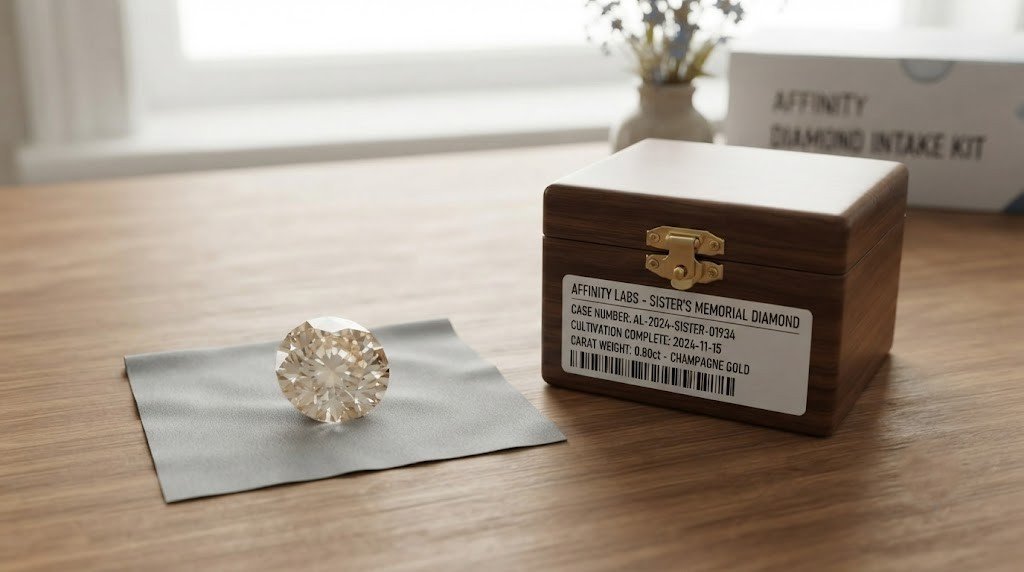
sister ashes diamond steps

What Do the Sister Ashes Diamond Steps Look Like at a Glance?

The process can be divided into two parts. The first part involves your family, your decisions, and preparing the material. The second part takes place inside the laboratory.

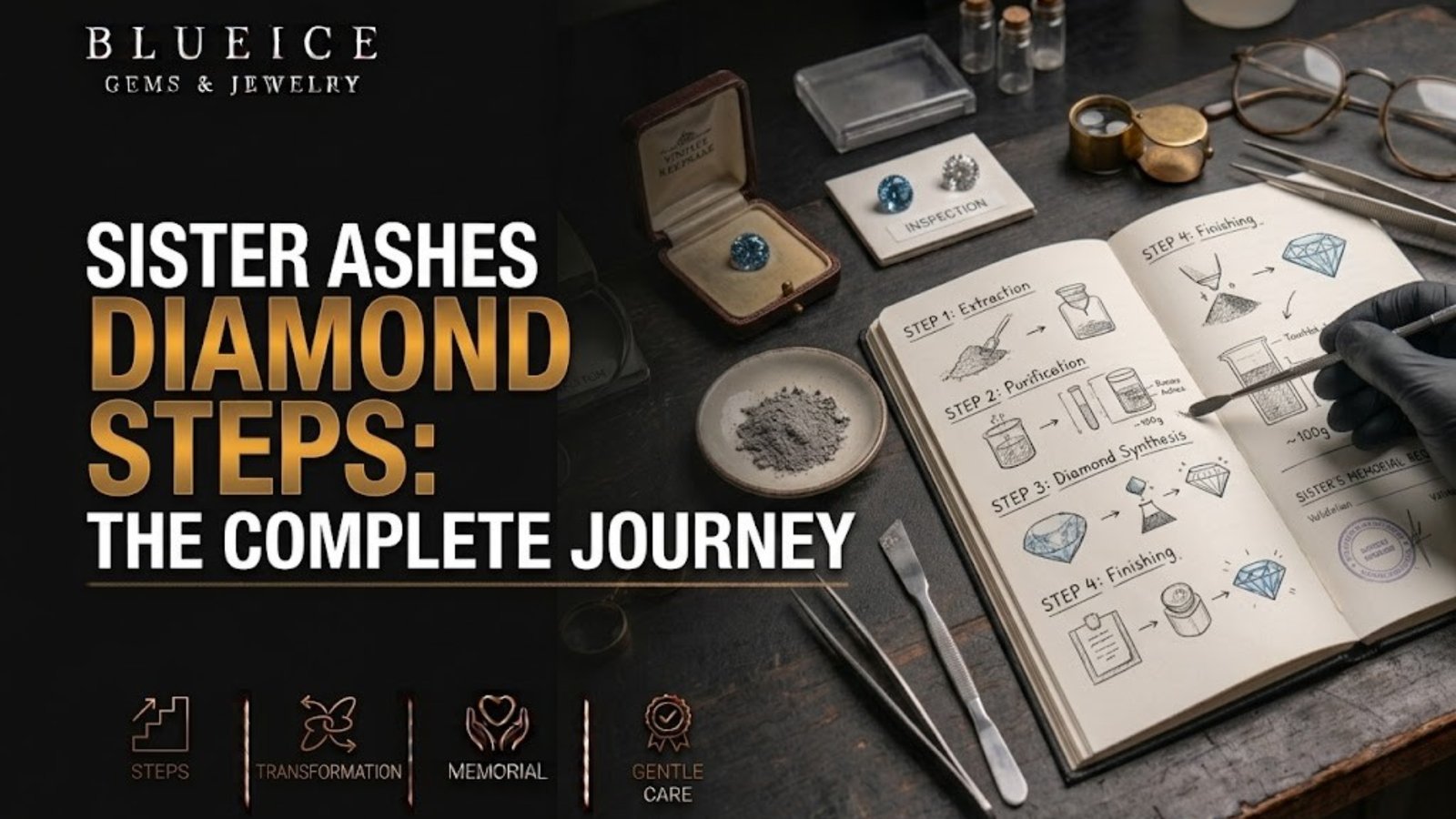
Here are the twelve sister ashes diamond steps in order:

  1. Have the first family conversation.
  2. Confirm who has authority over her remains.
  3. Obtain written permission for a portion of the ashes.
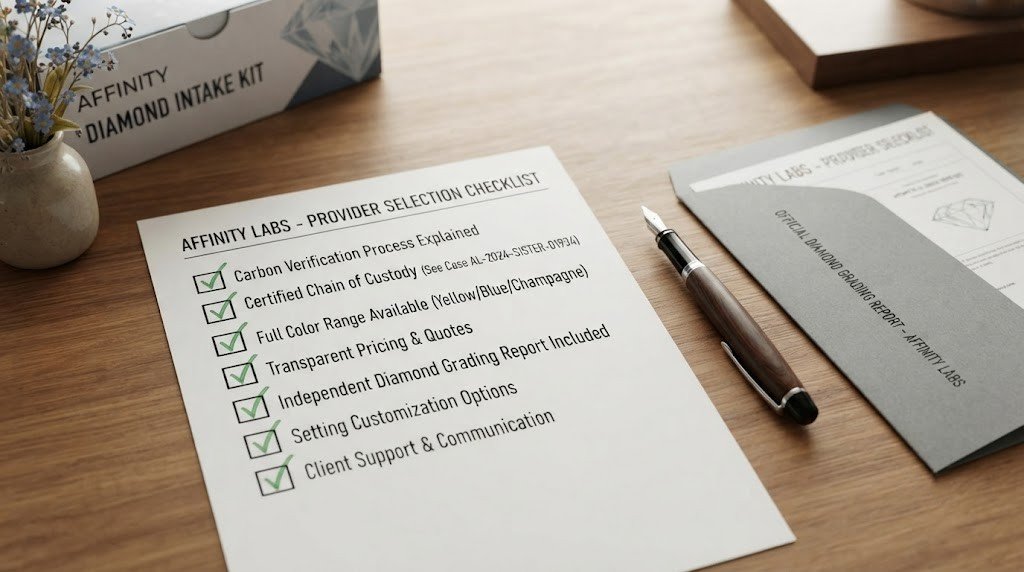
  4. Compare providers and collect answers in writing.
  5. Choose the diamond specifications and budget.
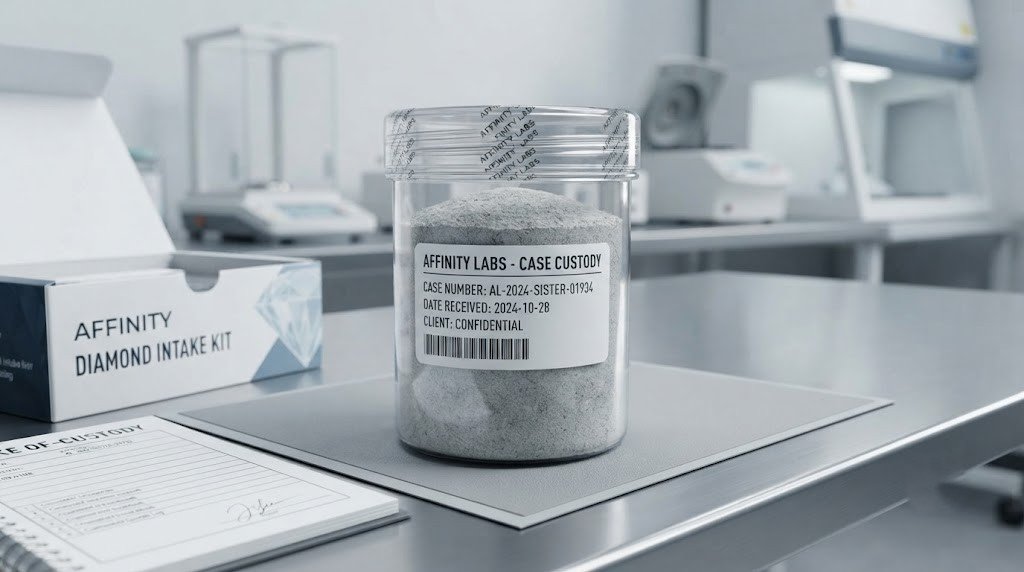
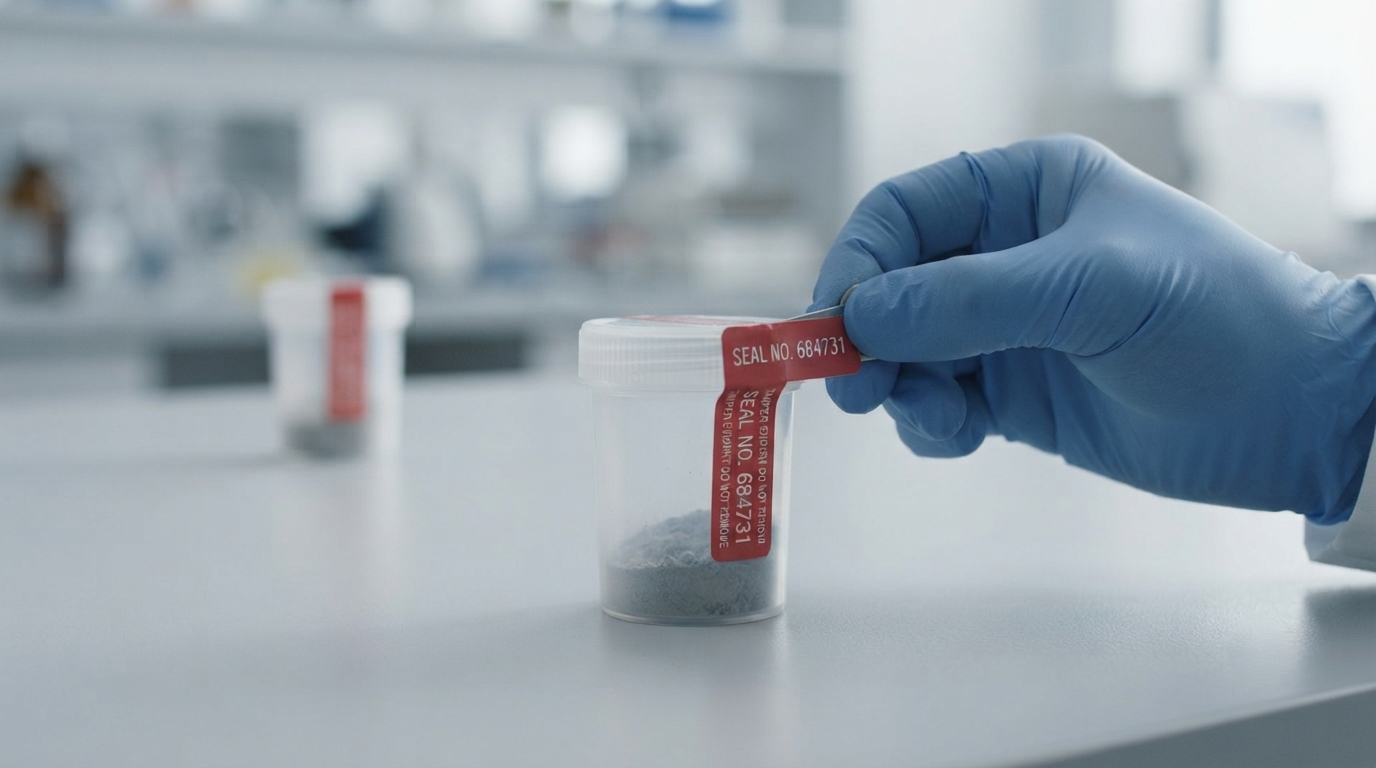
  6. Measure and seal the agreed portion.
  7. Ship the material and confirm receipt.
  8. Extract and purify the carbon.
  9. Prepare the carbon for diamond growth.
  10. Grow the crystal in the laboratory.
  11. Cut, polish, and arrange any grading.
  12. Receive, inspect, and decide how to keep or wear the diamond.

For a more conversational overview, read our guide to turning your sister’s ashes into a diamond.

Who Has to Agree Before Any Ash Leaves the Urn?

Before any material is moved, establish who can authorize its use. This is an important part of the sister ashes diamond steps because family relationships do not automatically determine legal authority.

Rules vary by location, and written instructions or a legally designated representative may affect who can make decisions about cremated remains.

Step 1: Have the First Family Conversation

Begin by explaining why you are considering a memorial diamond. Give relatives an opportunity to share their thoughts without feeling pressured to agree.

Some family members may appreciate the idea. Others may prefer to keep the ashes together or choose a different memorial. These reactions can be deeply personal, and everyone deserves a respectful conversation.

What you do: Explain your idea and listen to your family’s concerns.

Who may be involved: Your siblings, other close relatives, and the person responsible for the ashes.

What to keep: Notes about the conversation and any concerns that need further discussion.

Checkpoint: The relevant family members understand what you are considering, and you know which questions remain unresolved.

There is no need to finish this conversation in one sitting. Take the time your family needs.

Step 2: Confirm Who Has Authority Over Her Remains

A sibling is not automatically the person legally authorized to divide or release cremated remains. The rules depend on the applicable jurisdiction and the circumstances.

Contact the funeral home or crematory to ask what information it can provide about the person who authorized the cremation. If the authority is unclear, seek advice from a local attorney familiar with the relevant rules.

What you do: Identify the person whose consent is required.

Who may be involved: The funeral home, crematory, family representative, or local attorney.

What to keep: Relevant correspondence or documents confirming the authorization arrangements, where available.

Checkpoint: You know who must approve the use of the ashes before proceeding.

Do not treat a general description of family priority as a universal legal rule. Confirm the requirements that apply to your circumstances.

Step 3: Obtain Written Permission for a Portion of the Ashes

If another person has authority over your sister’s remains, explain the request clearly and respectfully. Ask the provider how much material is required before agreeing on a specific amount.

Written consent helps everyone understand what has been approved and avoids confusion later.

What you do: Request permission for the agreed portion.

Who may be involved: The authorized person, you, and potentially the funeral home.

What to keep: A dated email or signed document describing the permission given.

Checkpoint: The permission is recorded, and everyone understands what will happen to the remaining ashes.

If religious or cultural considerations matter to your family, discuss them with a trusted adviser from your own tradition. Practices can vary.

How Do You Choose a Provider and Settle the Details?

The next sister ashes diamond steps turn your intention into a clear order. Compare companies based on their documented procedures, costs, communication, and policies rather than choosing on price alone.

Step 4: Compare Providers and Collect Answers in Writing

Contact two or three providers if possible. Ask each company the same questions so that you can compare their answers fairly.

Important questions include:

  • How will the ashes be identified and tracked?
  • Is the material processed separately from other customers’ material?
  • Is supplemental laboratory carbon used, and can the provider explain the expected contribution from your sister’s material?
  • What happens if a growth attempt fails or the stone fractures during cutting?
  • What happens to unused ashes?
  • Is independent diamond grading available, and is it included in the price?
  • Can you pause or cancel the order, and what fees might apply?

Our guide to questions to ask before choosing a provider offers a more detailed checklist.

What you do: Compare written answers and request a dated quote.

What to keep: The answers, quote, terms, and any cancellation or failure policy.

Checkpoint: You understand the main terms before sending any ashes or making a payment.

Step 5: Choose the Diamond Specifications and Budget

Decide what type of diamond you want and how much you can comfortably spend. Consider the carat weight, preferred shape, available colors, jewelry setting, and whether you want an independent grading report.

Costs can vary substantially according to the provider and the services included. General industry estimates sometimes place smaller stones of around 0.10 to 0.25 carat in the $1,500 to $3,500 range, stones around 0.5 to 1 carat in the $5,000 to $15,000 range, and stones around 2 to 5 carats or more in a considerably higher range. These are broad estimates, not verified prices or offers from Memorial Diamond. Request a current quote before making a decision.

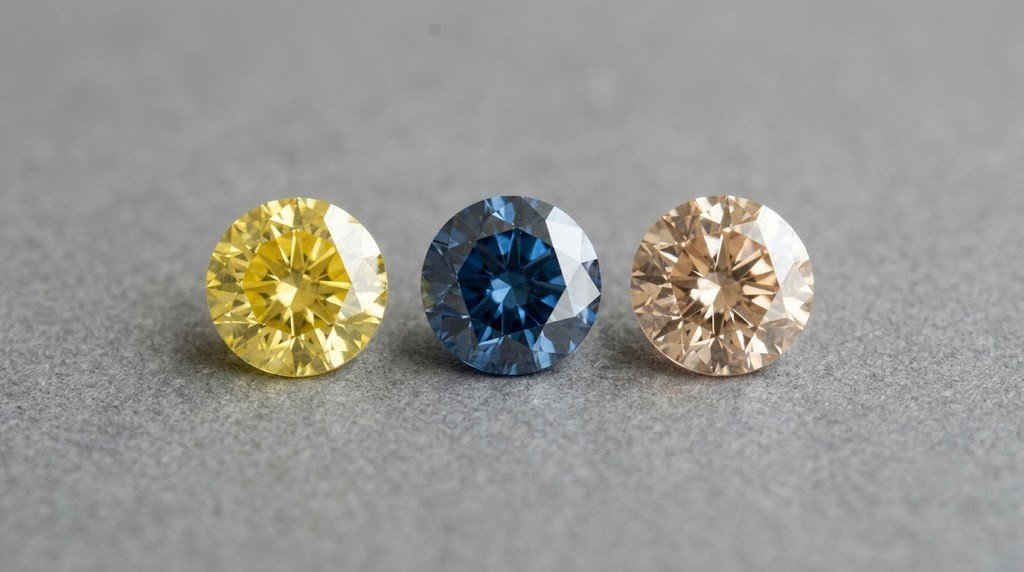
Color preferences also require discussion. The available shades and the methods used to achieve them differ by provider. Ask whether a requested color is an estimate or a guarantee and whether any post-growth treatment is involved.

What you do: Agree on a size, shape, color preference, and spending limit.

What to keep: A written order confirmation listing specifications, inclusions, exclusions, and the total cost.

Checkpoint: Everyone contributing financially understands the cost and, if relevant, who will own the finished stone.

How Is a Portion of Her Ashes Measured, Sealed, and Sent?
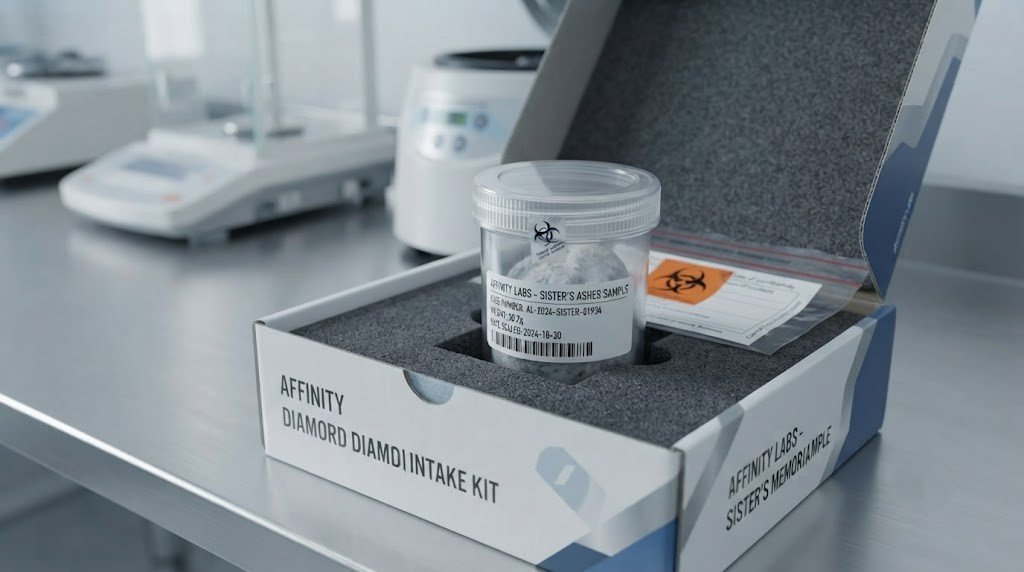
The next sister ashes diamond steps involve preparing and transporting something irreplaceable. Follow the provider’s instructions exactly, and ask for help from the funeral home if you do not feel comfortable handling the ashes yourself.

Step 6: Measure and Seal the Agreed Portion

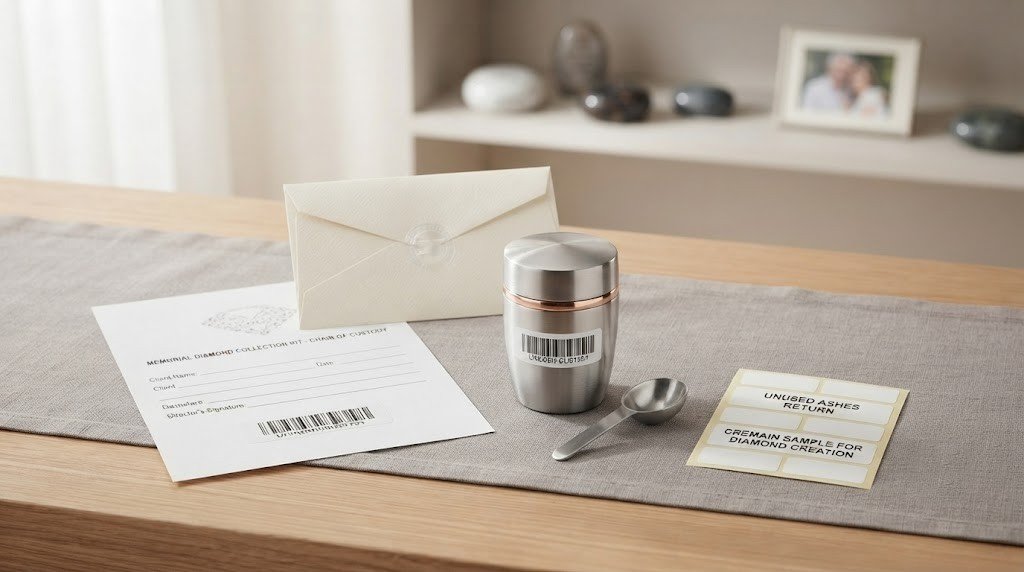
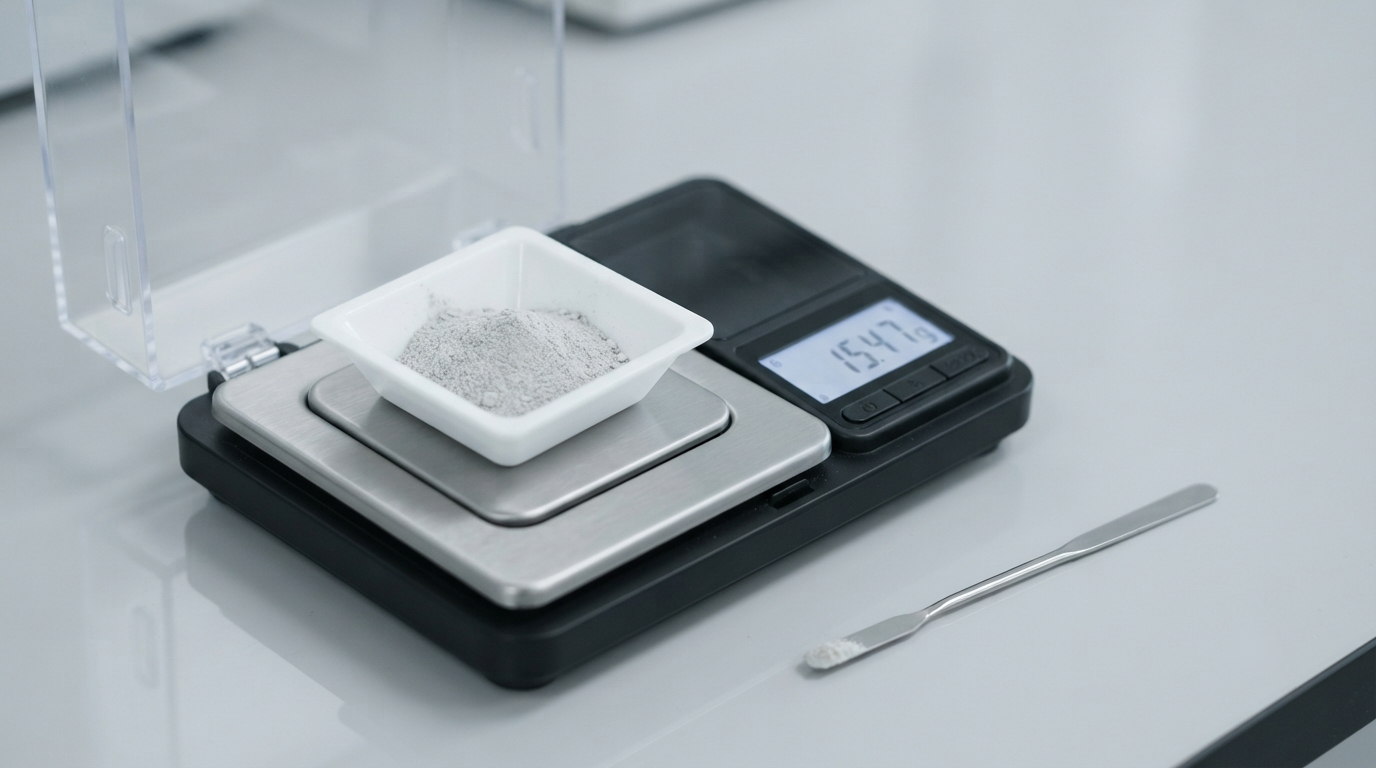
Some providers may send a collection kit containing a container, labels, and instructions. The required amount varies. Ask the company for its exact requirement rather than relying on a general estimate.

What you do: Measure the agreed portion according to the provider’s instructions and seal the container.

Who may be involved: You, the authorized family member, or a funeral director.

What to keep: A photograph of the sealed container and a record of the amount sent, if appropriate.

Checkpoint: The label and order details match, and the container is secured as instructed.

Do not send additional ashes simply because you think more material will produce a larger diamond. Ask the provider what is needed for your order.

Step 7: Ship the Material and Confirm Receipt

Use the shipping method specified by the provider. Ask whether signature confirmation, special packaging, or particular paperwork is required.

After shipping, monitor the tracking information and request confirmation when the company receives the container.

What you do: Send the material using the agreed method and retain the tracking number.

Who may be involved: You, the carrier, and the provider’s intake team.

What to keep: The shipping receipt, tracking details, and the provider’s confirmation of receipt.

Checkpoint: You have confirmation that the material arrived and know the identification number assigned to your order.

The provider’s receipt date may be the starting point for its production estimate, but confirm the exact starting event in your agreement.

Which Sister Ashes Diamond Steps Happen Inside the Laboratory?

Once the provider receives the material, the laboratory carries out the technical stages. The exact process depends on the company and its method. Ask which updates it provides and whether you will receive documentation for individual stages.

Step 8: Extract and Purify the Carbon

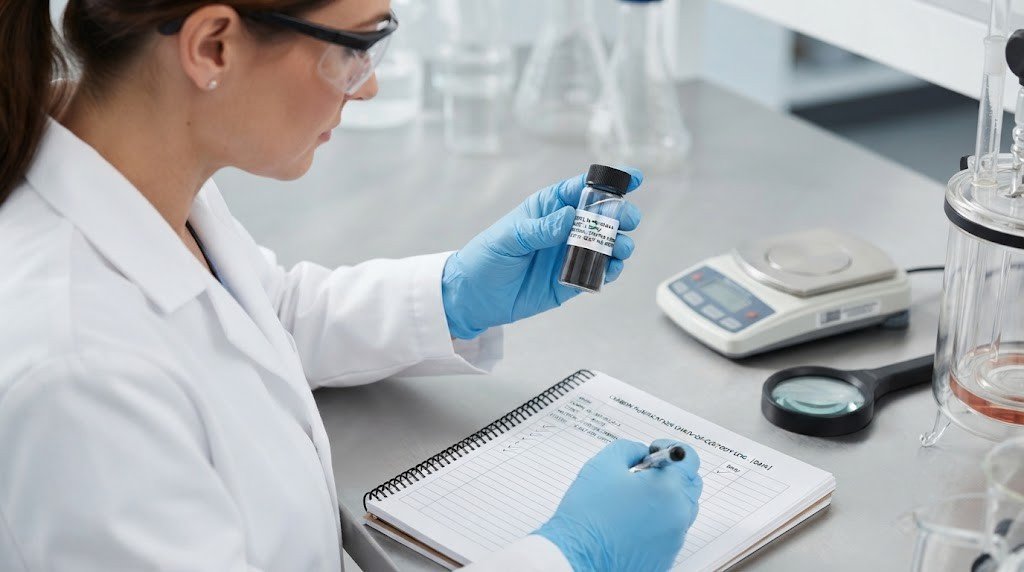
Cremated remains consist largely of mineral material, with a relatively small amount of potentially usable carbon. The laboratory works to separate and purify the carbon needed for its process.

The amount recovered varies with the material and the provider’s method. Ask the company how it describes the extraction process and what it can document.

Your role: Ask how the company confirms that the material is associated with your order.

What to keep: Any extraction update or documentation the provider supplies.

Checkpoint: The order identification remains consistent in the communications you receive.

Step 9: Prepare the Carbon for Diamond Growth

The recovered carbon must be prepared in a form suitable for the provider’s growth method. Some companies use a graphitization stage, and supplemental laboratory carbon may be added where necessary.

Because the amount of carbon recovered from ashes is limited, the finished diamond should not automatically be described as consisting entirely of the original ashes. Ask the provider to explain how it estimates the contribution from your sister’s material.

Your role: Request a clear explanation of the process and any stated carbon contribution.

What to keep: The provider’s written explanation or estimate, if it supplies one.

Checkpoint: You understand what the company can substantiate and what it cannot quantify precisely.

Step 10: Grow the Crystal in the Laboratory

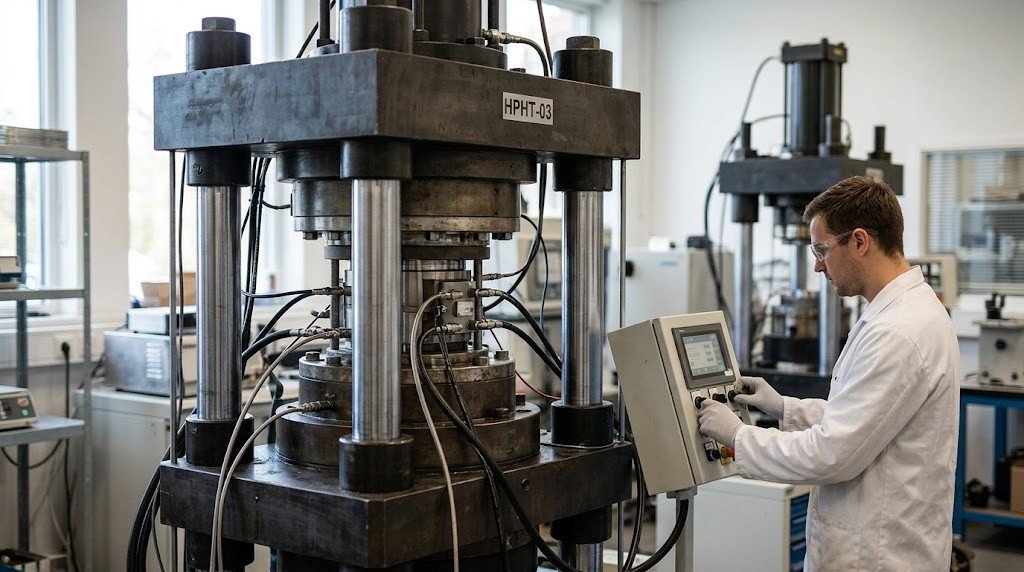
Laboratories can use established methods such as high-pressure, high-temperature growth (HPHT) or chemical vapor deposition (CVD), depending on the provider’s process. These methods are different, so ask which one the company uses rather than assuming every provider follows the same procedure.

Growth may take weeks or months, depending on the method and specifications. A usable crystal is not guaranteed in every attempt.

Your role: Ask when growth is expected to begin and what happens if a cycle fails.

What to keep: Any progress updates offered and the written policy for failed growth.

Checkpoint: You understand how the company handles delays, unsuccessful attempts, additional costs, and any possible use of retained material.

For background on laboratory-grown diamond methods, you can read more about the underlying technology.

What Happens Between the Rough Crystal and the Finished Stone?

Step 11: Cut, Polish, and Arrange Any Grading

Once a suitable crystal is available, it can be cut and polished into the chosen shape. The final appearance may differ from an early estimate, so confirm what the provider promises about color, dimensions, and finish.

Ask about two different kinds of documentation:

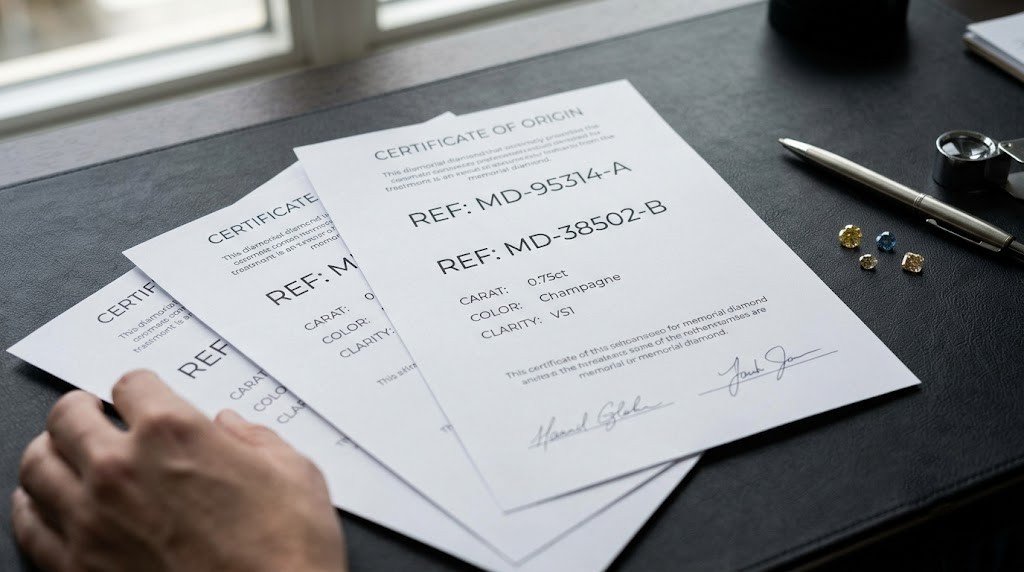
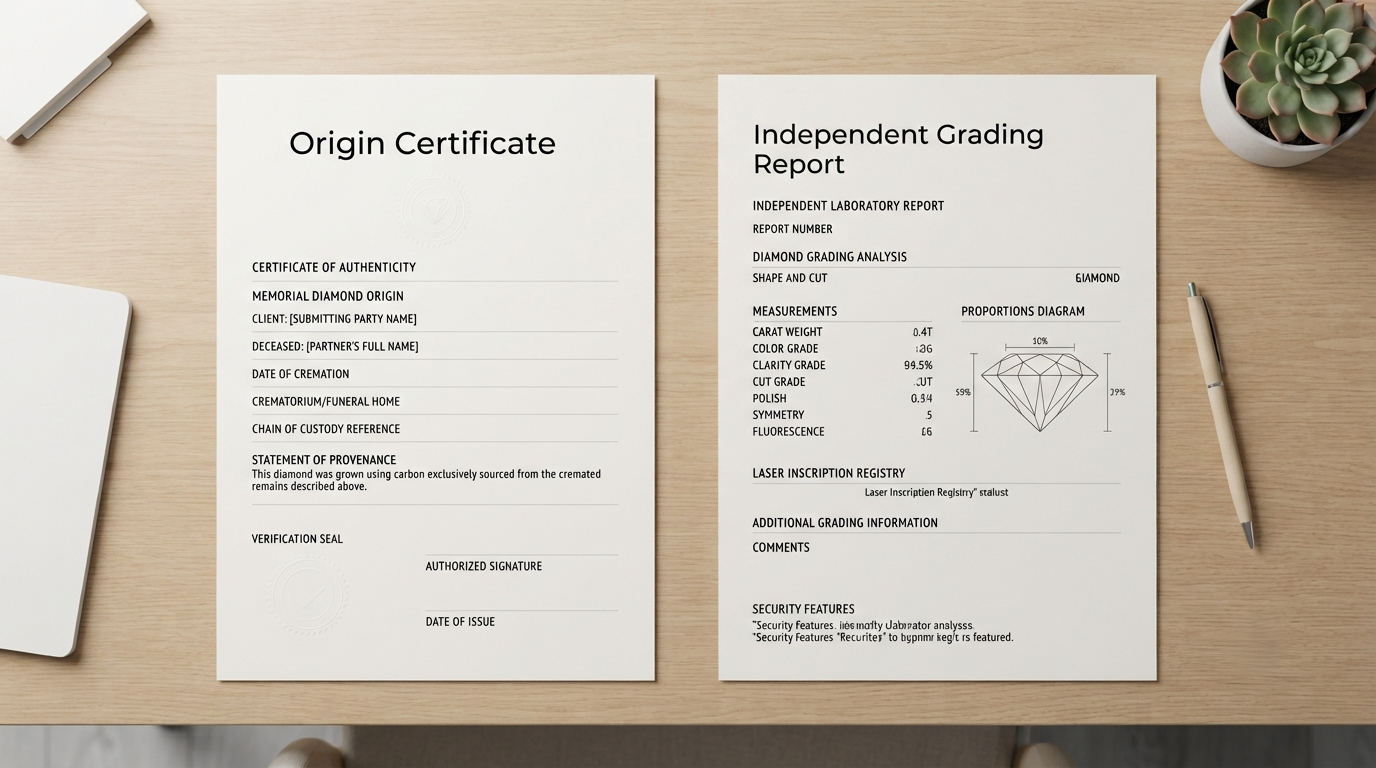
  • Origin or authenticity documentation: A provider-issued document may describe the company’s claim that the stone is connected to the submitted material. Ask exactly what the document verifies.
  • Independent grading report: An outside laboratory may assess characteristics such as cut, color, clarity, and carat weight. Availability and cost vary.

You can learn about the four Cs of diamond quality from GIA.

What you do: Decide whether you want independent grading and confirm any additional cost.

What to keep: The provider’s origin documentation and any grading report you purchase.

Checkpoint: The documents match your order, and you understand the difference between a provider’s origin claim and an independent assessment of the diamond.

Step 12: Receive, Inspect, and Decide How to Keep the Diamond
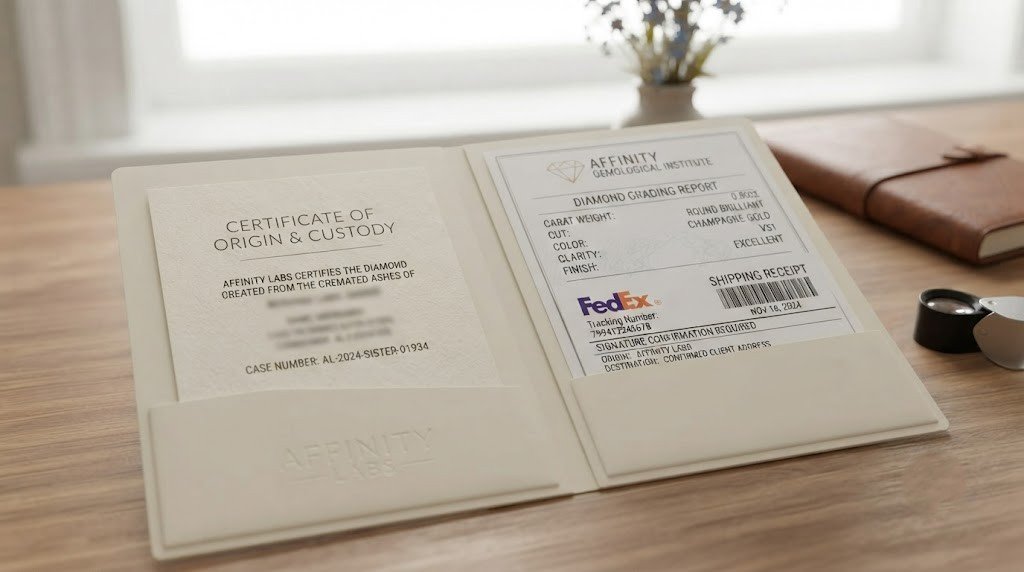
When the finished stone arrives, compare it with your order confirmation. Check the documented carat weight, shape, color description, and any engraving or other agreed features.

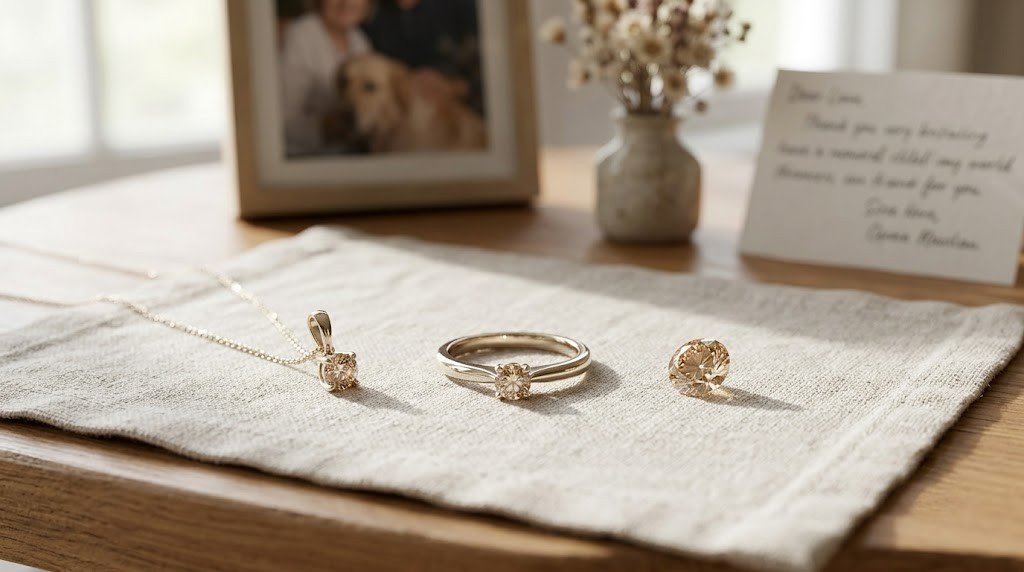
If you intend to wear the diamond, a jeweler can help you choose a suitable setting. Although diamond is extremely hard, it can still chip under certain impacts. Ask about practical care and discuss insurance with your insurer if coverage is important to you.

What you do: Inspect the stone, photograph it, and decide whether to wear it, set it in jewelry, or keep it safely stored.

What to keep: The diamond, order confirmation, certificates, grading report if applicable, and any unused ashes returned to you.

Checkpoint: You have checked the order, filed the documents, and confirmed any remaining arrangements.

How Long Do the Sister Ashes Diamond Steps Take?

The full timeline depends on the provider, the chosen stone, and whether additional work is required. Industry estimates commonly place laboratory production around six to ten months after the material is received. Some orders, including larger stones or specialty colors, may take longer. These are general estimates rather than guaranteed delivery dates.

PhaseSteps includedWhat to keep
Family preparationSteps 1 to 3Relevant correspondence and written consent
Provider and orderSteps 4 and 5Written answers, quote, and order confirmation
Preparation and shippingSteps 6 and 7Container details, shipping receipt, and intake confirmation
Laboratory workSteps 8 to 10Updates and any written carbon or failure-policy details
FinishingStep 11Origin documentation and grading report, if ordered
DeliveryStep 12Finished stone, final documents, and returned material if applicable

The first stages can take as long as your family needs. The laboratory stages are controlled by the provider’s process and schedule. Before ordering, ask when the production clock starts, how updates are provided, and how delays are handled.

Which Documents Should You Keep?

A clear paper trail can help you understand what was agreed and what happened throughout the process. Keep digital copies and, if possible, a separate backup.

Use this document checklist:

DocumentWhy it matters
Relevant funeral home or crematory correspondenceHelps clarify the authorization arrangements
Written consent for the portionRecords what was approved
Provider’s written answersRecords handling, carbon, failure, and return policies
Signed order confirmationConfirms the chosen specifications and price
Photograph of the sealed containerRecords the package before shipment
Shipping receipt and tracking numberHelps establish the shipment record
Provider’s receipt confirmationConfirms the material arrived
Origin or authenticity documentationRecords the provider’s stated origin claim
Independent grading report, if orderedDocuments the grading laboratory’s assessment
Insurance or appraisal paperwork, if applicableSupports your own record keeping

Keep one copy of important documents somewhere separate from the jewelry itself.

Where Can the Sister Ashes Diamond Steps Get Delayed?

A few common issues can make the process more complicated. Many can be addressed by asking questions early.

  • Unclear permission: Confirm who has authority and obtain written consent before sending anything.
  • Family members working from different assumptions: Choose one point of contact and record decisions.
  • Incomplete provider information: Ask for written answers before paying or shipping.
  • Unclear failure or cancellation policies: Read the terms before committing.
  • Uncertain costs: Request a complete quote that lists extra services and possible charges.
  • Unclear ownership: If several people are contributing or sharing the stone, agree on ownership in writing.
  • Unclear arrangements for unused ashes: Confirm whether the material can be returned and to whom.
  • Unrealistic timing expectations: Ask for the provider’s current estimate and what could affect it.

If your sister also left hair that you are considering using, read about turning your sister’s ashes and hair into a diamond. If you are considering hair alone, see the hair-based memorial diamond checklist.

If you are not ready to choose a provider yet, our guide to choosing a memorial diamond for your sister is a helpful place to begin.

Frequently Asked Questions

Can I begin if I only have a small keepsake urn?

Possibly. Providers have different material requirements. Tell the company how much you have before beginning the sister ashes diamond steps, and confirm that the person who gave you the ashes agrees with your intended use.

What paperwork should travel with the ashes?

Ask the provider what it requires. Some companies may request documents that help identify the remains or connect them with the order. Follow the provider’s instructions and keep copies of relevant records.

Can I pause the process?

Before shipping, you can take time to decide whether you want to proceed. Once laboratory work begins, pausing or cancelling may depend on the company’s terms. Ask about these possibilities before placing the order.

What if the person responsible for the ashes says no?

Respect the decision. You can continue gathering information without sending the material, and you may revisit the conversation if circumstances change. If there is a genuine dispute about legal authority, consult a local attorney rather than trying to bypass the person entitled to decide.

Will unused ashes be returned?

That depends on the provider’s policy. Ask before shipping and get the answer in writing. If another person authorized the portion, agree in advance about who should receive any unused material.

Can two siblings order separate diamonds?

This may be possible, but the amount required and the arrangements depend on the provider. Ask how much material is needed for each stone and how multiple orders would be handled before dividing the ashes.

Final Thoughts on Turning Your Sister’s Ashes Into a Diamond

Turning your sister’s ashes into a diamond is a personal choice, and the process deserves patience and care. Following the sister ashes diamond steps can help you understand the decisions involved, record your family’s permission, compare providers, and keep track of the documents that matter.

Start with a conversation, establish who can authorize the use of the ashes, and obtain written answers before moving forward. Ask about the laboratory process, the expected carbon contribution, the complete cost, and what happens if something does not go according to plan.

You do not have to rush. Take each stage at a pace that feels right for you and your family. Whether you proceed with a memorial diamond or choose another way to honor your sister, your decision should be informed, voluntary, and meaningful to you.

Learn More About Sister Memorial Diamonds

Talk With Memorial Diamond

If you would like to learn more about the process, visit Memorial Diamond. Ask your questions, review the details in writing, and take whatever time you need before deciding how you would like to remember your sister.
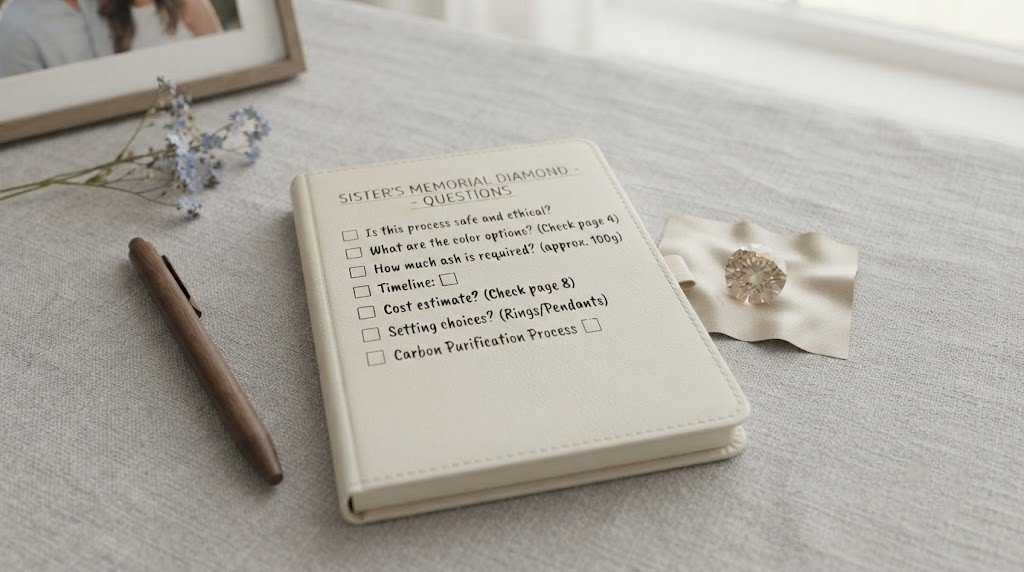
Sister Ashes Diamond Questions 15 Expert, Honest Checks

Questions to Ask Before Turning Your Sister’s Ashes Into a Diamond

Turning your sister’s ashes into a memorial diamond is a deeply personal decision. Before choosing a provider, asking the right sister ashes diamond questions can help you understand the process, family permissions, costs, and the company’s policies. These questions can also help you recognize unclear answers before you send something irreplaceable to a laboratory.

This guide organizes fifteen important questions into three groups: questions to ask yourself, questions to discuss with your family, and questions to ask the memorial diamond provider. You will also learn which answers to request in writing, which warning signs to notice, and how to compare providers without feeling rushed.

Table of Contents

Why Organize Sister Ashes Diamond Questions by Who You Ask?

Different people can answer different parts of the process. You decide what kind of memorial feels right for you. The person legally authorized to make decisions about your sister’s remains can help establish permission. The provider should explain the laboratory process, handling procedures, costs, and timeline.

Organizing your sister ashes diamond questions makes these conversations easier to manage. It also helps prevent confusion between family permission and the technical details of making a diamond.

If you are still deciding whether this is the right memorial, read our guide on choosing a memorial diamond for your sister.

If you are considering her hair rather than her ashes, our guide to questions about a sister hair memorial diamond covers that different process.

Which Sister Ashes Diamond Questions Should You Ask Yourself First?

Before contacting a provider, take time to understand what you want from the memorial. These first three questions can help you make choices that suit your needs and budget.

1. What do I want this diamond to represent?

Think about how you hope to remember your sister. You might want a small stone to wear every day, a pendant to keep close to your heart, or a diamond that will become a family keepsake.
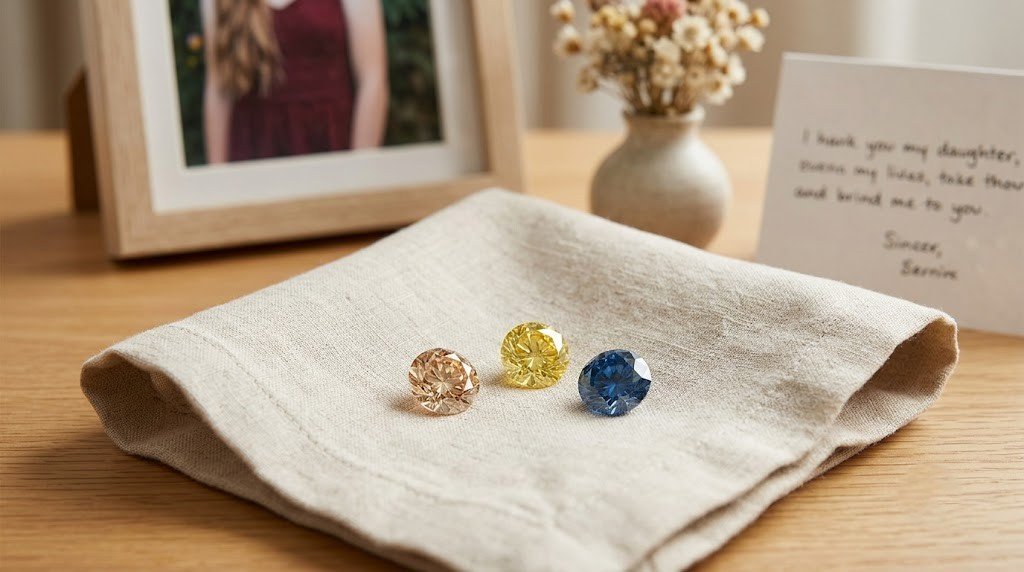
Your intended use can influence the size, setting, and budget. A stone worn daily may need a practical setting, while a diamond kept in a display box may have different requirements.

A clear answer sounds like: I want a small diamond that I can wear on a necklace to remember my sister.

An answer that needs more thought sounds like: I am not sure yet, but I want something meaningful.

There is no need to decide everything immediately. Understanding your purpose simply makes the next steps easier.

2. What is my complete budget?

Ask how much you can comfortably spend without putting pressure on other financial responsibilities. Remember that the finished diamond may not be the only expense.

Depending on the provider, additional costs may include an independent grading report, a jewelry setting, engraving, shipping, or a special cut. Ask for a complete written quote instead of relying on an advertised starting price.

A clear answer sounds like: I have a budget limit and want to understand every additional charge before placing an order.

A warning sign: A provider pressures you to spend more without explaining what the extra cost covers.

Your sister ashes diamond questions should include affordability from the beginning, so you can compare options calmly.

3. Am I ready to send a portion of her ashes and wait for the result?

The process involves sending a portion of the remains to a provider. The laboratory may need several months to create and finish the diamond. Waiting can feel comforting to some families and difficult for others.

Consider whether you feel ready to part with a portion of the ashes, even temporarily. Ask yourself whether the expected wait fits your emotional needs and any important family dates.

A clear answer sounds like: I feel comfortable sending the agreed portion and understand that the process may take several months.

If you feel uncertain, pausing is a reasonable decision. You do not have to move forward before you feel ready.

Who Has Authority Over Her Ashes, and What Should You Ask?

Family permission deserves careful attention. A sibling may not automatically have legal authority to release or divide cremated remains. The rules can vary by location, and written instructions or a designated representative may affect who can make the decision.

If you are uncertain, ask the funeral home or crematory what information it can provide, and seek local legal advice when necessary.

4. Who has authority over her remains, and will they agree to release a portion?

This is one of the most important sister ashes diamond questions to resolve before sending anything.

Identify the person who has authority to make the decision. Explain your intention respectfully and ask whether they agree to provide the amount required by the chosen provider.

A clear answer: The authorized person has agreed to the specific amount and the arrangement is documented.

An unclear answer: Family members assume someone else has already given permission.

Do not assume that possession of the urn automatically establishes legal authority.

5. How much ash is needed, and what happens to the remainder?

The required amount varies between providers and may depend on the requested diamond. Ask for the exact amount before packaging or shipping anything.

For more detail, see our guide to how much ash is needed for a sister memorial diamond.

A clear answer: The provider gives a specific quantity, explains its collection instructions, and confirms what happens to any unused material.

An unclear answer: The provider simply says to send as much as possible.

Sending more material does not automatically guarantee a larger diamond. Only send what the provider requests and what the authorized family member has agreed to release.

6. Who else in the family should be consulted?

Other relatives may want a say in how the remains are handled. Some may wish to share a memorial diamond, while others may prefer that the ashes remain together.

Discuss these preferences before making an irreversible decision. If relatives have concerns related to faith or family tradition, consider speaking with a trusted religious adviser.

A clear answer: Relevant family members have been consulted, and everyone understands who will own or receive the finished jewelry.

An unclear answer: Someone assumes that the rest of the family will agree later.

If you need help starting the conversation, read our advice on talking to family about a sister memorial diamond.

Which Sister Ashes Diamond Questions Belong With the Provider?

Once you understand your wishes and have addressed permission, ask the provider for clear answers. Whenever possible, get important details in writing before sending the ashes or paying a deposit.

7. How will you identify and track her ashes?

Ask how the company labels, records, receives, and tracks the material throughout the process. You should understand how it confirms receipt and records transfers between stages.

A clear answer: The provider explains its identification system, record keeping, and arrival confirmation.

A warning sign: The provider offers reassurance but cannot explain its procedures.

8. Will her material be processed separately from other families’ material?

Tracking and processing are different questions. A label may identify a container, but you should also ask how the provider handles extraction and purification.

A clear answer: The provider explains whether processing is performed separately and describes the safeguards it uses.

A warning sign: The company avoids answering whether material from different families may be processed together.

Do not rely on assumptions. Ask the provider to explain its actual process in writing.

9. What percentage of the finished diamond will come from her carbon?

Cremated remains contain mineral material as well as a small amount of usable carbon. The amount of carbon that can be recovered and its contribution to the finished diamond can vary.

Ask the provider how it estimates the contribution from your sister’s remains, whether supplemental laboratory carbon is used, and what it can document for your selected diamond.

A clear answer: The provider explains its method and supplies a written estimate or range when it can substantiate one.

A warning sign: The company claims that the finished diamond consists entirely of your sister’s ashes without explaining the material and growth process.

You can learn more about how a memorial diamond is made from a sister’s ashes.

10. Will the diamond’s color come from the growth process or later treatment?

Memorial diamonds may be available in different colors, depending on the provider and its process. Ask which colors are available, whether a particular color is guaranteed, and whether any post growth treatment is used.

A clear answer: The provider explains the available colors, the limitations of predicting a final shade, and any treatments in writing.

A warning sign: The company promises a precise color without explaining how it will be achieved.

Color alone does not establish the origin of a diamond or describe the person being remembered.

11. Will I receive an origin certificate, an independent grading report, or both?

These documents may serve different purposes. A provider’s origin document may describe the company’s claimed connection between the submitted material and the finished stone. An independent grading report evaluates diamond characteristics according to the issuing laboratory’s procedures.

Ask who issues each document, what it verifies, whether independent grading is available, and whether it costs extra. You can read about the four Cs of diamond quality for more information about cut, color, clarity, and carat weight.

A clear answer: The provider names the issuing organization and explains exactly what each document covers.

A warning sign: The company uses the word certified without identifying who performs the certification or what is being verified.

12. What happens if a growth attempt fails or the stone breaks during cutting?

Diamond growth and cutting involve technical processes, and a usable stone is not guaranteed at every stage. Before proceeding, ask what happens if a growth attempt fails or a rough stone fractures during cutting.

A clear answer: The provider explains its policy for additional attempts, possible costs, retained material, communication, and changes to the timeline.

A warning sign: The company says failure is impossible or refuses to provide a written policy.

Do not assume a replacement or another growth attempt will be free unless the agreement explicitly says so.

13. What happens to unused ashes?

Only a portion of the material you send may be needed for the process. You should know what happens to anything that remains.

A clear answer: The provider explains whether unused material can be returned, how it would be shipped, or whether storage is available under stated conditions.

A warning sign: The company gives no specific explanation of how unused remains are handled.

Discuss this before shipping and keep a copy of the written agreement.

14. Can I receive a complete, itemized quote?

Ask for a quote that lists the selected diamond, size, color, cut, jewelry setting, grading, engraving, shipping, deposit, and any other applicable charges.

Prices can vary substantially by provider, diamond size, color, and included services. General industry estimates are not a substitute for a current quote from the company you intend to use.

A clear answer: You receive a written quote showing the individual costs and the total payable amount.

A warning sign: You receive only a starting price or discover additional charges late in the process.

Compare providers using the same specifications so that you can understand what each quote includes.

15. When does the production timeline start?

Ask whether the estimated timeline begins when the provider receives the ashes, when payment clears, or when a particular laboratory stage begins. Also ask what could delay the expected completion date.

A clear answer: The provider identifies the starting event, supplies an estimated completion window, and explains how it communicates delays.

A warning sign: The company gives a vague timeline without defining when the clock starts.

If you hope to receive the diamond by an anniversary or birthday, explain that date before placing your order. Do not treat an estimate as a guaranteed delivery date unless the written agreement expressly provides one.

What Red Flags Can Sister Ashes Diamond Questions Uncover?

An unclear answer does not automatically prove that a provider is dishonest. However, it is a reason to slow down and request more information.

Watch for these warning signs:

  1. Claims that the finished diamond consists entirely of the original ashes without a clear explanation.
  2. No explanation of how the material is identified and tracked.
  3. Refusal to explain whether material is processed separately.
  4. Promises of an exact color without explaining the process or its limitations.
  5. Confusion between an origin document and an independent grading report.
  6. No written policy for failed growth or damage during cutting.
  7. Unclear arrangements for unused ashes.
  8. Pressure to pay quickly or emotional pressure to purchase a more expensive option.
  9. A quote that lists only the starting price.
  10. Refusal to put important answers in writing.

A responsible provider should be willing to answer reasonable questions and explain the limits of what it can guarantee.

What Should Good Answers Include?

sister ashes diamond questions

Use this checklist when comparing providers. It summarizes the main points covered by these sister ashes diamond questions.

QuestionWhat a useful answer includes
How are ashes tracked?Identification procedures and receipt confirmation
Is processing separate?A clear explanation of handling and processing
What is the carbon contribution?A documented estimate or explanation of the method
How is color achieved?Available colors and disclosure of treatment
What documents are supplied?Named issuing organizations and document purposes
What if growth fails?Written policy for further attempts and possible costs
What happens to unused ashes?Return or storage arrangements
What does the full service cost?Itemized quote and total
When does production start?Defined starting event and estimated completion window

Do not feel that you need to make the decision during the first call. Take time to review the answers and compare the written information.

How Do You Keep Track of the Answers?

Grief can make it difficult to remember details from several conversations. Keeping everything in one place can help.

Create a document or notebook with the questions, the provider’s answers, the date of each conversation, and any documents received. After a phone call, send a brief email summarizing your understanding and ask the provider to confirm it.

If possible, invite a trusted person to take notes while you speak with the company. Ask each provider the same questions in the same order so you can compare their answers fairly.

Your sister ashes diamond questions are there to help you make an informed decision, not to force you into one. If an answer leaves you uncomfortable, take time to investigate it or contact another provider.

Frequently Asked Questions

Is it disrespectful to ask a provider so many questions?

No. You are entrusting a company with something deeply meaningful and potentially irreplaceable. Asking about handling, costs, documents, and policies is a reasonable part of making an informed decision.

Can I contact providers before my family agrees?

Yes. You can gather information and request quotes without sending ashes or committing to a purchase. Before any material is released or shipped, make sure the person with the relevant authority has agreed.

What if two providers give different answers?

Ask each provider to explain its answer in writing. Differences in processes, services, pricing, and timelines can occur. Compare what each company actually offers rather than relying on a single claim.

Do I need to ask all fifteen questions at once?

No. You can divide the questions across several conversations. Start with your own intentions and family permission, then discuss technical procedures, documentation, costs, and timing with the provider.

Can I ask these questions if my sister was cremated years ago?

Yes. Ask the provider whether the age and storage conditions of the ashes affect its process. Do not assume that all providers have identical requirements.

What if a provider refuses to put an answer in writing?

Treat that refusal as a reason to pause. Important claims about handling, processing, costs, and unused material should be clear enough for you to review before making a decision. You can seek another provider if your concerns remain unresolved.

Final Thoughts

There is nothing cold about asking careful questions before turning your sister’s ashes into a diamond. Taking time to understand the process can help you protect her remains, respect family wishes, and make a decision that feels right for you.

Work through your sister ashes diamond questions one group at a time. Start with your own intentions, discuss permission and family preferences, and then ask the provider for clear written answers. If something feels uncertain, give yourself permission to pause.

A memorial diamond is a personal choice, not an obligation. Whether you decide to proceed now, wait, or choose another way to remember your sister, the decision should be made with care.

Learn More About Sister Memorial Diamonds

Explore these related guides for additional information:

Talk With Memorial Diamond

If you would like to discuss your options, visit Memorial Diamond. Prepare your questions, ask for written details, and take the time you need before deciding what feels right for your family.

how much ash you need

How Much Ash Do You Need for a Sister Memorial Diamond?

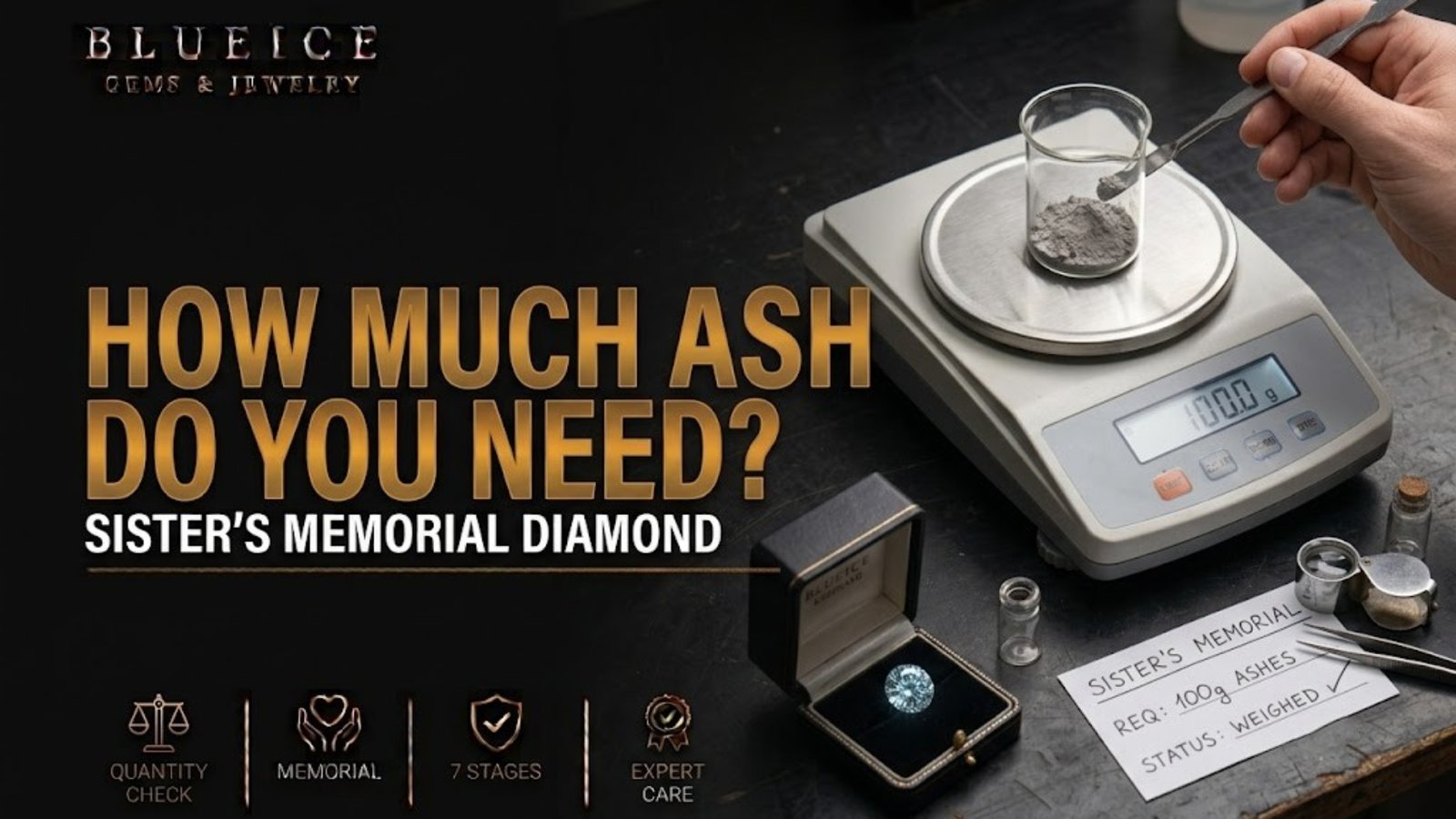
You might already have a small container from the crematory on a shelf, or her ashes may still be with someone else in the family while you work out how to ask. The amount of ash for a sister memorial diamond is smaller than you might expect: providers typically request somewhere between a few tablespoons and about 4 oz (roughly 100 g) of cremated remains. Each provider sets its own figure, and sending more does not make the stone bigger, faster, or a different color.

ash for a sister memorial diamond

Why Is So Little Ash Needed to Grow a Whole Diamond?

Cremated remains are mostly bone mineral, chiefly calcium phosphate, rather than carbon. Industry figures put the usable carbon at roughly 0.5% to 4% of the ash by weight, and that share varies from person to person and with the cremation itself. So when a lab receives ash for a sister memorial diamond, it is drawing a small amount of carbon out of a much larger amount of mineral, not using the ash wholesale.

That carbon passes through an oxygen-free, multi-stage purification until it reaches roughly 99.9% carbon or better. It is then heated to around 2,500–2,700°C and converted to graphite, the feedstock a diamond press grows from. Because the recovered amount is small, labs typically blend it with supplemental lab carbon to reach the volume a growth cell needs.

For a stone grown from ashes, her own carbon commonly ends up at around 10–15% of the finished diamond’s mass, and some providers cite ash-based figures as low as 3%. That is a real, physical part of her in the crystal, with no need to overstate it.

Here is the part that surprises people: the quantity of ash for a sister memorial diamond does not decide how large the stone becomes. Carat size is set by how long the crystal grows in the press, over weeks to months, not by how much starting material arrives. A provider sizes its request to recover a workable amount of her carbon, and past that point extra ash simply goes unused.

Most memorial diamonds are grown by HPHT, which recreates roughly 6–8 GPa of pressure and temperatures of about 1,400–2,500°C around a tiny diamond seed; a minority of providers use CVD instead. The general science behind both methods is summarized in Wikipedia’s overview of synthetic diamond production. For the full path from her ashes to a finished stone, the complete guide to a sister ashes diamond covers every stage, while this page stays on how much ash for a sister memorial diamond is enough.

What Does “a Few Tablespoons” of Her Ashes Look Like in Practice?

Numbers on a website can feel abstract when the ashes in question are your sister’s. In practical terms, a few tablespoons is a modest amount, and about 4 oz (around 100 g) is the upper end of what providers commonly describe. Either amount of ash for a sister memorial diamond is usually a small fraction of what the crematory returned, so the rest can still be kept, scattered, or interred as the family planned.

A few practical points help when setting aside ash for a sister memorial diamond:

  • The provider’s figure is the one that counts. Ask for their required amount of ash for a sister memorial diamond in writing, in grams or ounces, before anyone measures anything.
  • A kit may remove the guesswork. Some providers send a sealable inner container sized to what they need, so nobody has to weigh anything at home.
  • You don’t have to do it yourself. A funeral home or crematory can often portion the ash for you, which some people find easier than opening an urn at the kitchen table.
  • Prepare the space. Ash is fine and dusty. A still room, a sheet of paper underneath, and a small funnel make the transfer calmer.
  • Keep her urn sealed and labeled whenever it is not being used, so nothing gets mixed or misplaced.

Some urns are permanently sealed by design. If hers is, the funeral home can advise whether it can be opened and how, before anyone tries to measure out ash for a sister memorial diamond from it.

What Can the Amount of Ash Change, and What Can’t It?

It is natural to assume that sending more of her makes the stone more hers, or bigger, or ready sooner. The table below sorts out which outcomes the amount of ash for a sister memorial diamond can influence and which ones are decided somewhere else entirely.

What you might be wondering aboutDoes sending more ash change it?What actually decides it
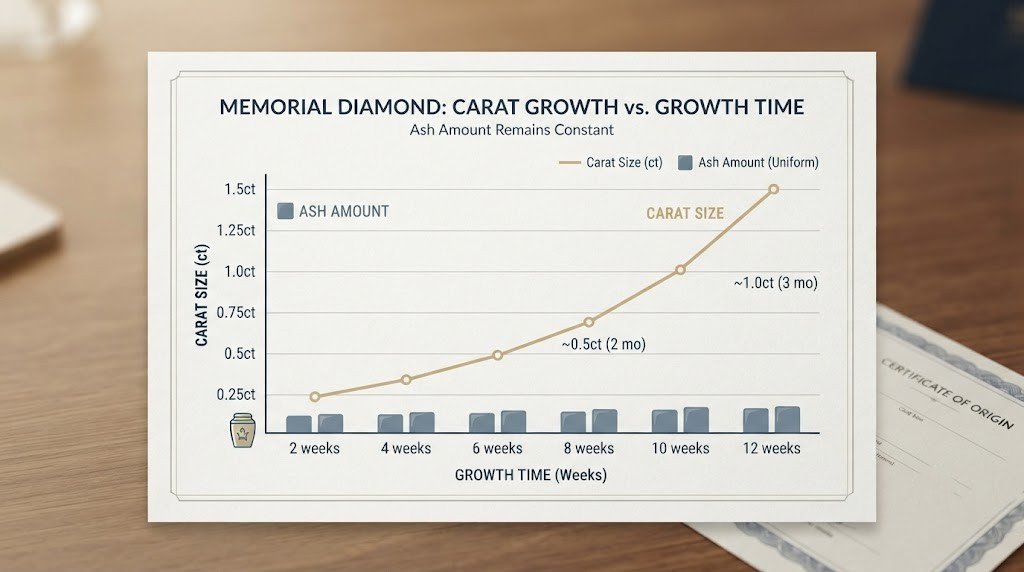
Carat size (about 0.10 to 5+ ct)NoGrowth time in the press, chosen with the provider
Timeline (typically 6–10 months)NoCarat, color, and the provider’s process; stones over ~2 ct or specialty colors can take up to ~12 months
Color (yellow, blue, champagne, colorless)NoTrace nitrogen or boron during growth, plus any extra processing or disclosed irradiation
Clarity (typically SI2–VVS)NoGrowth conditions and cutting
Her share of the stone’s carbon (around 10–15% for ash)Not reliablyStone size, the provider’s process, and how much carbon her ash yields
Whether a second stone is possibleSometimesWhether the provider can draw enough carbon from one portion of ash for a sister memorial diamond
PriceNoCarat, color, cut, and add-ons such as grading or a setting
Margin if a growth cycle has to restartPossiblyThe provider’s own policy, which is worth asking about directly

Color is often the outcome people hope to steer, and it cannot be predicted or chosen from the ash itself. Nitrogen tends toward yellow, boron toward blue, and the absence of both toward colorless, which takes extra processing and typically costs more. None of it reflects who your sister was. The post on what color a diamond from your sister’s ashes will be goes deeper into that.

Price follows the same logic: it tracks the stone you choose, not the jar you send. Across the industry in 2026, a small stone of about 0.10–0.25 ct sits roughly between $1,500 and $3,500. Anything from 0.5 to 1 ct lands around $5,000 to $15,000, with colorless adding a meaningful premium over a tinted stone of that size, and 2–5+ ct stones reach roughly $20,000 to $75,000 or more.

Grading, engraving, fancy cuts, and any setting usually appear as separate charges. These are general industry figures rather than any one company’s prices, and the full breakdown of what a sister memorial diamond costs explains each tier. Nothing in them depends on how much ash for a sister memorial diamond you send.

Who Decides Whether Some of Her Ashes Can Be Set Aside?

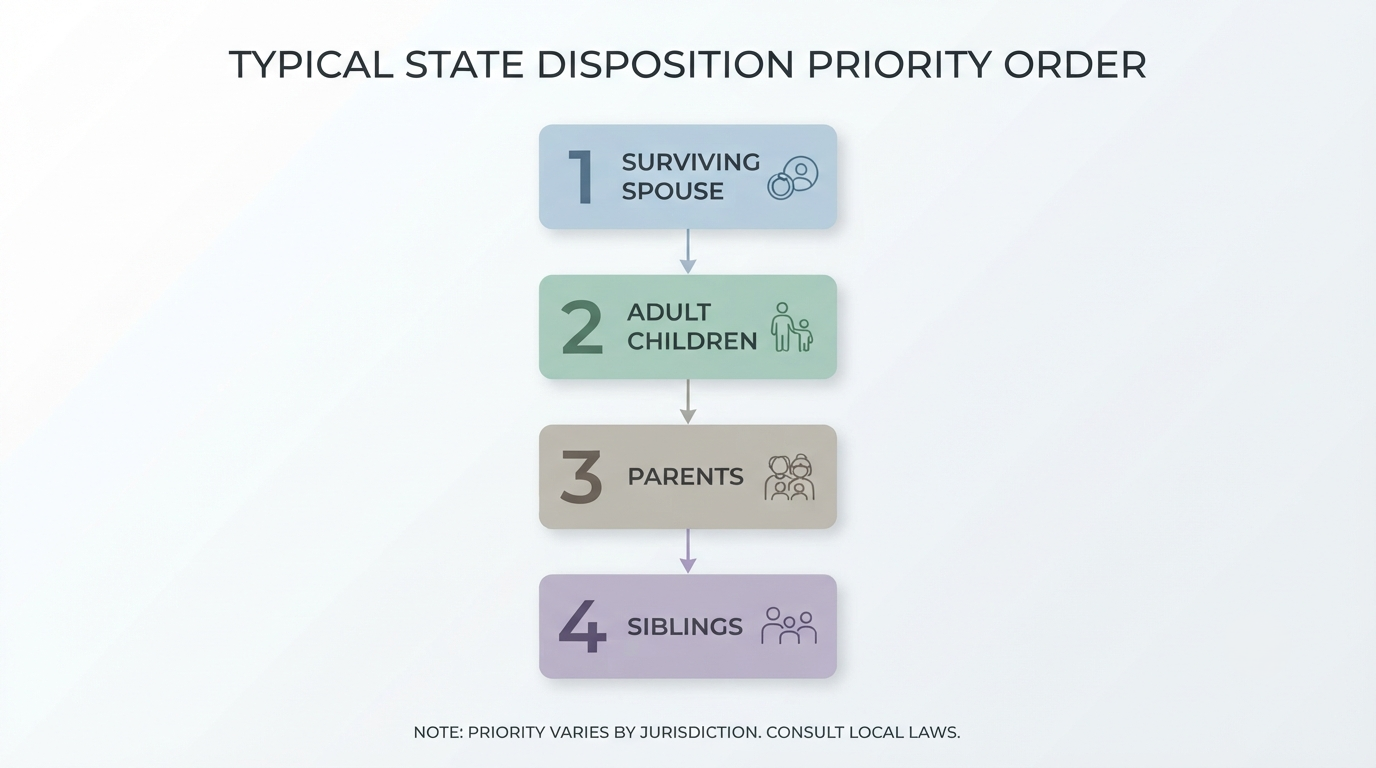
As her sibling, you may or may not be the person with authority over her remains. Each state writes its own rules. A common pattern puts a spouse or registered partner at the front of the line, adult children next, and parents ahead of brothers and sisters, yet states depart from that pattern, and anything your sister put in writing, such as appointing someone to direct her remains, can reorder it. Siblings sometimes hold that authority and sometimes don’t; neither situation says anything about what she meant to you.

Faith can shape the answer too. Views on dividing cremated remains differ between traditions, denominations, and individual clergy, and no tradition has set out a position on memorial diamonds in particular, so a family’s own faith leader is the person to consult.

If someone else holds it, asking that person to set aside ash for a sister memorial diamond is usually a short, concrete request rather than a large one. These steps tend to keep the conversation gentle:

  1. Find out who signed. The funeral home or crematory that handled her cremation can tell you who authorized it, and that person is usually the one to ask.
  2. Lead with the size of the request. A few tablespoons of ash for a sister memorial diamond, out of the whole, leaves almost everything where the family intends it to go.
  3. Offer to carry the logistics, from the provider’s forms to the shipping, so the request doesn’t add work for someone who is also grieving.
  4. Share the provider’s written figure rather than an estimate, so nobody is surprised by the amount.
  5. Get local advice if it stays unclear. A local attorney can confirm how your state handles authority over remains.

If the answer is no, or not yet, that answer deserves respect. A conversation about ash for a sister memorial diamond can be revisited later, and other ways of remembering her stay open in the meantime. The guide on talking with family about a sister memorial diamond has more on approaching these moments when feelings are raw on every side.

What If Only a Keepsake Amount Remains, or the Ashes Were Scattered or Buried?

Sometimes her ashes were divided long before a diamond came up, and what you hold is a keepsake vial or a small urn. Because providers typically work with as little as a few tablespoons, a keepsake portion may turn out to be enough ash for a sister memorial diamond. Whether it is depends on that provider’s figure, so tell them the weight or volume you have before deciding anything.

If her ashes were scattered, there is nothing left to recover, and that choice honored her in its own right. If they rest in a cemetery plot or a columbarium niche, getting any of them back would be a weighty undertaking, one that typically needs the cemetery’s cooperation, the agreement of whoever holds authority, and possibly local permits. Leaving them undisturbed is a completely valid decision, and no one should feel pressed to reopen a burial just to obtain ash for a sister memorial diamond.

There may still be another path. Hair is roughly 50% carbon by weight and needs no cremation, so a lock someone saved can sometimes stand in. Her belongings, hair included, can be treated as part of her estate under rules that differ between states, which makes the executor, or whoever holds authority, the right first conversation.

If no ash for a sister memorial diamond is available, the companion piece on how much hair a sister’s diamond needs explains that route. If you hold a little of each, the page on combining her ash and hair in one stone covers how the two are handled together.

Does a Second Stone Need a Second Portion?

More than one person may want a stone: another sibling, a parent, her partner, her children if she had any, or a close friend. Others may prefer not to have one, and either choice is valid. Whether one portion of ash for a sister memorial diamond can supply carbon for two or more stones depends on the provider. Some can draw several stones from one shipment, and others ask for a set amount per stone.

Ask before you send, and ask plainly: “If we want two stones, should we send one portion of ash for a sister memorial diamond or two?” The answer shapes what you request from whoever is keeping her ashes, so it helps to have it before that conversation rather than after.

When several people are involved, agree in writing who will own each stone, and who owns any shared stone, before any of them exist. The piece on more than one family member getting a diamond from the same ashes looks at how families arrange multiple stones.

How Do You Pack, Ship, and Track Ash for a Sister Memorial Diamond?

The practical steps are mostly the provider’s to define, and a careful one will give you written instructions. Before you seal anything, it is worth confirming these points:

  • Container: whether they supply one, or whether a sturdy sealable inner container inside a padded outer box is acceptable.
  • Labeling: her full name, your contact details, and any order or reference number they assign.
  • Carrier and service: which one they specify. Rules for shipping cremated remains differ between carriers and countries, so follow their instructions rather than picking a service yourself.
  • Tracking: whether signature confirmation is required. Keep the tracking number and a photo of the sealed package.
  • Receipt: whether they will confirm arrival, and the weight of ash for a sister memorial diamond they received, in writing.
  • Paperwork: whether they want a copy of the cremation certificate or a signed authorization in the box.

Chain of custody is the quiet center of this process. Reputable providers track the material from arrival through purification, growth, and cutting, and typically issue an origin or authenticity certificate, usually in-house, documenting that the stone was grown from the ash for a sister memorial diamond you sent. That differs from an independent grading report, which describes the finished stone’s cut, color, clarity, and carat, most often against GIA’s diamond quality standards. Independent grading is usually optional and priced as an extra.

Once the ash for a sister memorial diamond is on its way, the waiting begins. Holding the tracking number and the provider’s written confirmation can make that stretch feel a little steadier.

What Happens to Ash for a Sister Memorial Diamond That Isn’t Used?

Not every grain sent is necessarily consumed. A provider might extract carbon from part of the portion and hold the remainder, return it with the finished stone, or handle it another way. Policies differ, and this is a question to ask before you ship rather than after: what happens to any ash for a sister memorial diamond that the lab doesn’t use, and can it come back to you?

It is also fair to ask what happens if something goes wrong, such as a growth cycle that fails or a rough stone that fractures during cutting. Whether the provider would retry with retained material, ask for more, or handle it another way should appear in their written terms.

Keep their answers about any leftover ash for a sister memorial diamond with your order paperwork. If you are building a fuller list, the article on questions to ask before turning your sister’s ashes into a diamond gathers them in one place.

Frequently Asked Questions

Is one tablespoon of her ashes enough for a diamond?

Possibly, but only the provider can say. Typical requests range from a few tablespoons up to about 4 oz, and each provider sets its own minimum. Tell them how much you have, by weight if possible, before assuming it is too little ash for a sister memorial diamond.

Can the crematory send ash for a sister memorial diamond directly to the provider?

Some crematories and funeral homes will portion and ship remains on behalf of the person with authority, while others prefer to release them to the family. Ask both the crematory and the provider what they accept, and keep written confirmation of every handoff.

Does the provider need her whole urn to choose a portion?

No. Providers ask for a measured portion rather than the full urn, so you send only the amount they specify and the rest of her ashes stays with the family. If you are unsure how to take that portion, the funeral home or provider can advise.

Will sending extra ash make her diamond more personal?

Not in a reliable way. For ash, her carbon is typically around 10–15% of the finished stone, sometimes lower, and that share depends mainly on stone size and process rather than on how much extra ash arrives at the lab.

What if family members disagree about using ash for a sister memorial diamond?

Pause and let the person with authority over her remains lead. Sharing the provider’s small written figure can ease worries, and a local attorney can clarify who decides in your state. Waiting until everyone is ready is always an acceptable choice.

Can ash from a pet’s urn or another relative be mixed in by mistake?

It should not be, which is why chain of custody matters. Keep her ashes in a clearly labeled, sealed container, ship them separately from any other remains, and ask the provider how they keep each family’s material isolated through every stage.

Should I keep a little of the portion back before shipping?

Only a small share of her ashes is needed, so the rest usually stays with the family. If your only ash for a sister memorial diamond is a keepsake portion, ask whether you could send part now and hold the rest in case a second attempt is ever needed.

Final Thoughts on Ash for a Sister Memorial Diamond

The honest answer to how much ash for a sister memorial diamond is needed is reassuringly modest: a few tablespoons to about 4 oz, set by whichever provider you choose. That small amount leaves almost all of her ashes for whatever the family has planned, whether an urn at home, a scattering place she loved, or a burial.

What matters more than the quantity is the care around it: knowing who can release the ash, getting the provider’s figures in writing, and keeping a clean record of where every part of her went. If a diamond feels right for you, those steps let it happen without strain. If it doesn’t, or not yet, that is just as valid.

Learn More About Sister Memorial Diamonds

Talk With Memorial Diamond

If you’d like to talk through how much ash for a sister memorial diamond a provider might need, or how to raise it with whoever is keeping her ashes, you’re welcome to reach out to Memorial Diamond at memorialdiamond.us. Bring whatever questions you have, at whatever pace feels right.

Word count: 3,108 words · Reading time: about 16 minutes

Sister Ashes Diamond The Complete Guide

Sister Ashes Diamond: The Complete Guide

There is no settled script for what a sibling is allowed to want after a sister dies, and wanting something of hers you can actually hold is a reasonable thing to want. A sister ashes diamond is a lab grown diamond whose crystal holds carbon taken from a small, measured portion of her cremated remains, typically grown alongside supplemental lab carbon and usually ready six to ten months after the laboratory receives the ash. For a sibling, the first hurdle can be permission rather than chemistry.

sister ashes diamond

What Is a Sister Ashes Diamond, Exactly?

It is a diamond in the full physical sense, not resin, not glass, and not a crystal that merely looks the part. A sister ashes diamond is grown in a laboratory press, shares the carbon lattice of a mined stone, rates 10 for hardness, and is assessed against the four grading factors gemologists apply to every other diamond.

What sets it apart is the origin of some of its carbon. A measured amount of her ashes is processed until nothing but carbon is left, and that carbon enters the growth cell together with carbon sourced by the laboratory. A finished sister ashes diamond is physically connected to her without being made of her alone. Keeping that distinction clear protects you from any seller who blurs it.

Siblings arrive at the idea of a sister ashes diamond by different roads. Some want a stone because the urn lives in another household. Others want something that goes where they go, or that a niece, nephew or their own child might inherit one day. None of those reasons needs defending.

A sister ashes diamond also sits beside other choices rather than replacing them. An urn, a niche, a burial plot or a scattering can all go ahead as planned, because only a few tablespoons to a few ounces of ash are involved. The rest of her remains stay wherever the person responsible for them decides.

Who Decides What Happens to Her Ashes?

Any plan for a sister ashes diamond has to start here, and for a sibling it can be the hardest part to hear. In many states, the right to direct what happens to someone’s remains follows a statutory order: frequently a spouse or registered partner first, then adult children, then parents, with brothers and sisters further along. That order differs from state to state, and it is not always the final word.

Her own written wishes can change it. A signed declaration, a designated agent for disposition, or instructions in a document she prepared may move the decision to someone else entirely, including a sibling. Where a state recognizes those documents, they generally take priority over the default list.

So whether you hold authority depends on her circumstances and your state, not on how close the two of you were. If she had no spouse, partner, adult children or surviving parents, the decision may sit with her siblings jointly. If any of those people survive her, it may well sit with them.

Nothing in that order measures love. It is a procedural answer, written long before your family needed it. If you are unsure who signed for her cremation, the funeral home or crematory involved may be able to tell you, and a local attorney can confirm how your state’s order applies.

A careful provider will raise this too. Expect any reputable laboratory to ask who authorized the release of her ashes and to want that person’s written consent before it accepts anything for a sister ashes diamond.

How Can a Sibling Ask for a Portion Respectfully?

If someone else holds her ashes, whether her spouse, her partner, her adult children, your parents or another sibling, the route to a sister ashes diamond runs through a conversation with that person. Requests that are specific, modest and unhurried tend to land more gently than open ended ones.

A few approaches that can make the conversation easier:

  • Name a small, concrete amount. Laboratories typically ask for somewhere between a few tablespoons and about 4 oz of ash. “A few tablespoons” sounds very different from “dividing her.”
  • Say what stays untouched. The urn, the plot or the planned scattering continues as they intended. Ask a provider beforehand whether any unused ash is returned, and to whom.
  • Share the paperwork early. Let them read the release form and the provider’s custody process before anything is signed, so they are deciding with full information.
  • Respect faith and culture. Some traditions have views about dividing cremated remains. If that applies, a conversation with their faith leader may matter more than the stone.
  • Leave room for “not yet.” Grief moves at different speeds. A request that can be revisited later is easier to say yes to than one that needs an answer this week.

If the answer is no, or not now, that does not close every door. Hair she left behind can sometimes provide the carbon instead, though it raises its own questions about who it belongs to, and a stone grown from her hair works differently enough to deserve its own read.

How Is a Sister Ashes Diamond Made, Stage by Stage?

The sequence is broadly similar across the industry, although equipment, timing and documentation differ between laboratories. Here is how her ashes typically become a sister ashes diamond once they reach the laboratory.

StageWhat happens to the materialDetail worth knowing
1. Receipt and loggingHer ashes arrive sealed and receive an identifier that follows them through every stepAsk whether the identifier is physical, digital, or both
2. Carbon extractionBone mineral, chiefly calcium phosphate, is separated away in a controlled, oxygen free, multi stage processOnly a small share of ash is carbon to begin with
3. PurificationThe recovered carbon is refined to roughly 99.9% purity or higherImpurities would interfere with crystal growth
4. GraphitizationPurified carbon is heated to around 2,500 to 2,700°C and converted to graphiteGraphite is the feedstock growth presses use
5. GrowthHer graphite, typically blended with lab carbon, grows around a tiny diamond seedThe main method is HPHT, pressing at roughly 6 to 8 GPa and 1,400 to 2,500°C; fewer providers use CVD
6. Cutting and polishingThe rough crystal is shaped and facetedRound, oval, cushion, emerald and other cuts are possible
7. Optional color treatmentSome providers offer irradiation for certain colorsNot a mandatory stage, and it should be disclosed
8. Documentation and gradingAn origin certificate is issued; an independent grading report may be addedThird party grading is usually optional and priced separately

Stage five is where the size of the stone is really decided. Growth time in the press sets carat weight, so sending more ash does not, by itself, produce a larger or faster sister ashes diamond. If you want to understand HPHT and CVD growth in more technical depth, the general science is the same as for any lab grown diamond.

Each stage of making a stone from her ashes gets a slower, plain language walk through of its own.

How Much of the Finished Stone Is Her Carbon?

Less than marketing sometimes implies, and still a real, permanent amount. Cremated remains are made mostly of bone mineral, and usable carbon in ash runs at roughly 0.5% to 4% by weight, depending on the person and the cremation itself.

After purification, that recovered carbon is typically blended with lab sourced carbon so there is enough to grow a stone of meaningful size. Industry figures put the personal carbon in a finished sister ashes diamond at around 10% to 15% of the stone’s mass; a handful of providers put it as low as 3%. Those figures apply to ash specifically.

Some siblings find that percentage deflating at first. It can help to look at what it actually describes: carbon atoms that were part of her, locked into a crystal lattice that will not break down, wear away or separate out. The stone is not a symbol standing in for her. It contains her, alongside other carbon.

Be wary of any provider claiming the stone consists of her and nothing else, or describing it as made entirely of her ashes. That claim is not supported by the chemistry, and a company willing to overstate this point may overstate others. Before you commit, ask for the expected personal carbon percentage in writing. If you want the reasoning set out fully, whether a stone is really made from her ashes is answered on its own page.

How Much Ash Does a Laboratory Need?

Probably less than you would expect. Requirements vary by provider, but the typical range runs from a few tablespoons up to about 4 oz, or roughly 100 g, which is a small fraction of the ashes from a full cremation.

That modest figure matters when you raise the idea with whoever holds her remains. Asking for a few tablespoons leaves the urn visibly full and the family’s plans intact.

More ash does not mean a bigger sister ashes diamond. Carat size is a choice you make, and that choice sets the growth time; the quantity of ash only needs to be enough to yield the carbon the laboratory requires.

Three practical points to settle before anything is shipped:

  1. Ask exactly how much the provider needs for the carat size you are considering.
  2. Ask whether unused ash comes back, to whom, and by what insured, tracked method.
  3. Ask how the ashes should be packed and whether the provider supplies a container or kit.

What Color Might a Sister Ashes Diamond Turn Out?

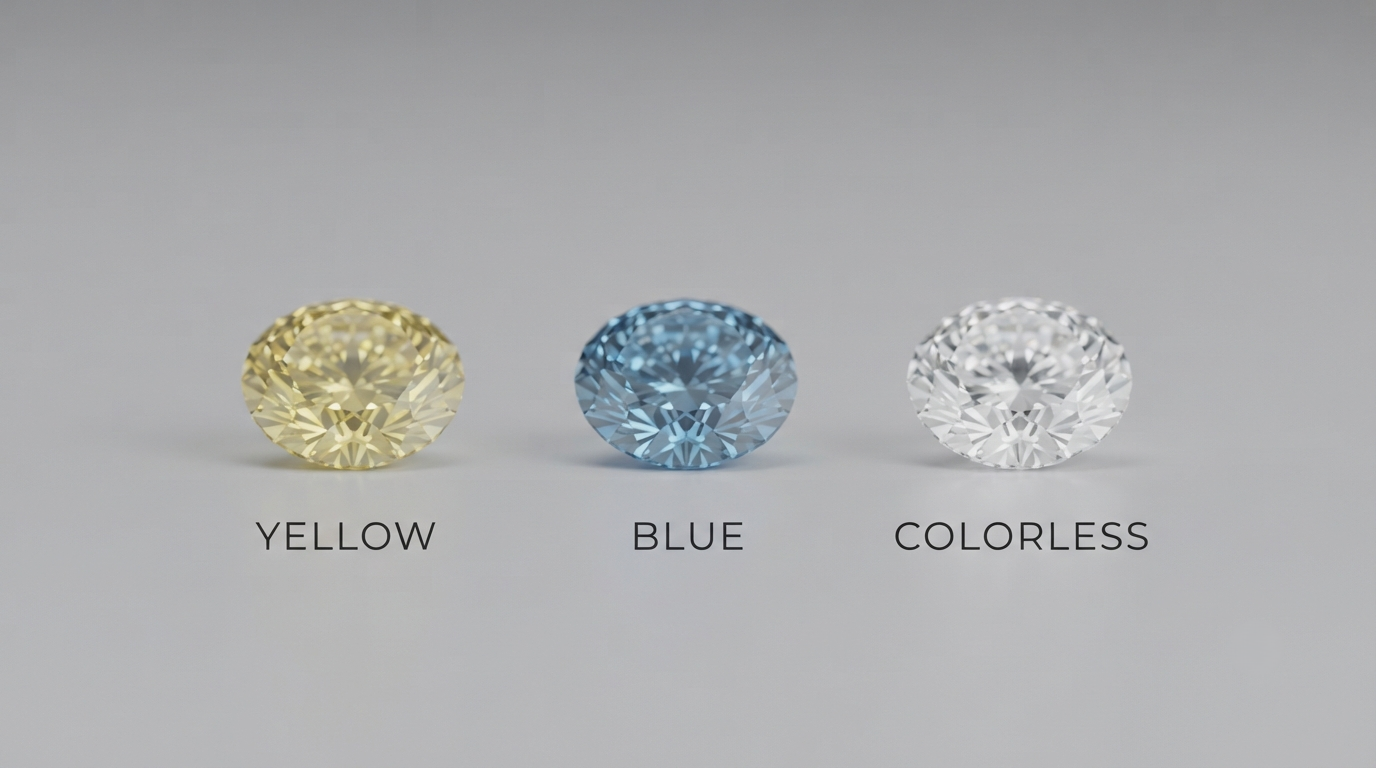
No one can tell you in advance, and a provider promising an exact shade is promising something it cannot control. A diamond’s tint is set by stray atoms caught in the lattice as it grows. Where nitrogen gets in, the stone leans yellow; where boron gets in, it leans blue; only when both are kept almost entirely out does it come out colorless.

Because the carbon in a sister ashes diamond comes partly from a person rather than a controlled feedstock, trace elements are normal. Memorial stones therefore tend toward yellow, blue and champagne tones. Colorless is achievable but needs extra processing and costs more. Some providers also offer post growth irradiation for red, green or black stones, which should always be disclosed on the paperwork.

The color of a sister ashes diamond cannot be chosen, matched or predicted from the ashes themselves. It will not reflect her eyes or her personality, and nobody should suggest otherwise.

If you select a treated color or a cut, choose it for reasons that are yours and hers: what she liked, what you will actually wear. There is no convention about what suits a sister, and you do not need one.

What Does a Sister Ashes Diamond Cost in 2026?

The price of a sister ashes diamond depends mainly on carat weight and color, then on cut, grading and setting. The ranges below are general 2026 industry figures, not any single company’s price list.

Carat rangeTypical industry priceWhat tends to move it
About 0.10 to 0.25 ctRoughly $1,500 to $3,500Color choice, cut style
About 0.5 to 1 ctRoughly $5,000 to $15,000Colorless commands a clear premium over yellow, blue or champagne
About 2 to 5+ ctRoughly $20,000 to $75,000+Longer growth time and closer process control

Independent grading, engraving, fancy cuts and jewelry settings such as a ring or pendant are usually priced separately from the loose stone. Ask for a full written quote rather than a starting figure.

Siblings sometimes share the cost of one sister ashes diamond, or each pay for their own. Either can work, but agree in writing who owns a shared stone and who keeps it, because that question is far easier to settle before the diamond exists than after.

How Long Does a Sister Ashes Diamond Take?

Across the industry, six to ten months is typical from the day a laboratory receives the ashes to the day a finished stone ships. Stones over about two carats, and specialty colors, can take up to roughly twelve months, because growth time rises with size.

Ask each provider whether their estimate runs from payment or from the arrival of the material.

For a sibling, the laboratory is often not the slowest part. Reaching agreement with whoever holds authority over her ashes, gathering signatures, and settling who pays can take weeks or months on their own. None of that is wasted time; a sister ashes diamond made with everyone’s agreement may carry less tension later.

If you want the sequence laid out as tasks, the practical steps to turn sister ashes into a diamond are set out in order, from the first call to delivery.

Can Several Siblings Each Have a Stone?

Frequently, yes. Because each stone needs only a modest portion, more than one sister ashes diamond can often be grown from the same cremation, provided whoever holds authority agrees to each portion being released.

Families come in many shapes. A sister may leave behind one sibling or five, a twin, half siblings, step siblings, or siblings who grew up in different households. Each person’s relationship with her was its own, and nobody needs to justify wanting a stone.

Each person may also want something different: one a loose stone kept in a box, another a ring, another nothing at all. Treat every choice as valid. Practical points to raise with a provider when several relatives each order a sister ashes diamond from one source:

  • Is each portion logged and grown separately, with its own documentation?
  • Can stones be ordered at different times, or must they be ordered together?
  • Is there any pricing difference for multiple stones, and is each quoted on its own?

Where the ash portion is very small, some families add a lock of hair, and how a single stone can be grown from both materials is explained step by step.

What If Her Ashes Are Not Yours to Send?

Sometimes the person with authority says no, or she was buried rather than cremated, or the ashes have already been scattered. A sister ashes diamond may then not be possible, but other routes can still lead to a stone.

Hair is one alternative worth knowing about. It is roughly half carbon by weight, needs no cremation, and only a small lock or a few grams are typically required. Hair you already hold, perhaps from a brush, a saved lock or a keepsake, may be usable. Do not assume it is automatically yours to use, though. Things she owned may be treated as part of her estate, and how that works differs from one state to the next; before you mail anything, speak with her executor or the person who holds authority over her remains. The route that uses her hair explains collection and packing.

Some families combine a small portion of ash with hair, which can let material held by different relatives come together in one stone. A guide to blended ashes and hair stones covers how that works and what to document.

Waiting is also a legitimate choice. Cremated remains are mineral and do not decay the way organic material does, so a request made gently a year from now may meet a different answer.

Which Questions About a Sister Ashes Diamond Belong in Writing?

Email these to any provider and keep the replies.

  1. Whose written authorization do you require before accepting her ashes?
  2. How is her ash identified on arrival, and at how many points is its handover recorded?
  3. Does her material ever share a processing batch or a growth cell with anyone else’s?
  4. What percentage of the finished stone will be carbon recovered from her ashes?
  5. What happens to unused ash, and who receives it?
  6. Does the price include independent grading, or is it an add on, and at what cost?
  7. Is any color treatment used, and will it appear on the paperwork?
  8. What happens if a growth cycle fails or the stone fractures during cutting?

Frequently Asked Questions

Can a sibling order a sister ashes diamond without her spouse’s agreement?

If her spouse or partner holds legal authority over her remains in your state, a reputable provider will generally require that person’s written consent first. The order of authority varies by state and by any written wishes she left, so confirm how it applies to her.

How much of her ashes would actually be used?

Typically between a few tablespoons and about 4 oz, or roughly 100 g, depending on the provider. That is a small fraction of a full cremation, so the urn, burial or scattering the family planned can still go ahead with the remainder.

Is a sister ashes diamond really made from her?

Partly, and genuinely. Carbon recovered from her ashes is purified and grown into the crystal alongside lab carbon. Published industry figures place her share at about 10% to 15% of the finished weight, though a few providers report figures closer to 3%.

Can a sister ashes diamond be made years after her cremation?

Generally, yes. Cremated remains are mineral and stay stable when kept sealed and dry, so time since cremation is rarely the obstacle. Confirm with the provider, and check that whoever holds authority over her ashes agrees to a portion being used.

Can each sibling have a stone from the same ashes?

Often, because each diamond needs only a modest portion. Every portion should be authorized by whoever holds legal control of her remains, and each stone should be logged and documented separately. Ask providers how they handle several orders from one source.

What color will a sister ashes diamond be?

Nobody can predict or choose it from the ashes. Trace nitrogen tends to give yellow and boron gives blue, so memorial stones lean toward yellow, blue and champagne. Colorless needs extra processing and costs more; some providers offer treated colors.

Does a sister ashes diamond conflict with religious practice?

Views on cremation and on dividing ashes vary between faiths, denominations and individual communities, and no tradition has an official position on memorial diamonds specifically. If faith matters to her family, speak with the relevant faith leader before asking for a portion.

Final Thoughts on a Sister Ashes Diamond

A sibling’s place in these decisions can feel oddly provisional: close enough to grieve fully, sometimes not positioned to decide. That gap is real, and naming it plainly is more useful than pretending it away.

What tends to help is patience with the people who hold the decision and precision with the people who will make the stone. Ask for a little, explain what stays, and get every answer about custody and carbon in writing. A sister ashes diamond made that way is something you can wear without any unfinished argument attached to it.

And if a sister ashes diamond is not open to you right now, it is not the only route. Hair, a later conversation, or a different keepsake may lead somewhere just as meaningful.

Learn More About Sister Memorial Diamonds

Talk With Memorial Diamond

If you would like to think aloud with someone before raising a sister ashes diamond with her family, Memorial Diamond is glad to listen. Reach us at memorialdiamond.us to talk through authorization, quantities and what a likely schedule looks like for your situation. You are welcome to ask, then simply take time to think it over.

Diamond From the Same Daughters Ashes

Can More Than One Family Member Get a Diamond From the Same Daughter’s Ashes?

When a daughter dies, more than one person may hope to hold on to something of her, and the question of sharing a daughter memorial diamond can surface within the first few family conversations. Yes, several relatives can usually each receive a diamond from the same ashes, because a provider typically needs only a small portion for each stone. What makes it work is agreement from whoever holds authority over her remains, separate tracking for every order, and honest expectations about color.

sharing a daughter memorial diamond

What Does Sharing a Daughter Memorial Diamond Actually Mean?

The phrase covers more ground than it first appears to. For some families, sharing a daughter memorial diamond means several separate stones, one per person, all grown from portions of the same ashes. For others it means a single stone that belongs to the family and moves between homes. For a third group it means one diamond alongside other keepsakes, so each relative holds something of her without everyone holding the same object.

None of these is more correct than the others. The right shape depends on how many people want a physical connection to her, how far apart they live, the budget, and what she might have wanted, if she ever said.

Two questions tend to get tangled. The practical one: can a laboratory grow more than one stone from her remains? Generally, yes. The personal one: who wants a stone, and who decides? That second question is where sharing a daughter memorial diamond becomes sensitive, whether you are her parent, sibling, partner or one of her own grown children.

How Much of Her Ashes Does Each Stone Use?

Sharing a daughter memorial diamond among relatives uses less of her ashes than people tend to imagine. Requirements differ between providers, but a typical request for one ash based stone falls somewhere between a few tablespoons and roughly 4 ounces, or about 100 grams. That is usually a small fraction of the remains returned after a cremation, so a single order leaves most of her ashes untouched.

Cremated remains are mostly calcium phosphate, the mineral of bone, and usable carbon is only about 0.5% to 4% of their weight. A laboratory purifies that carbon to around 99.9% and typically blends it with supplemental lab carbon so there is enough feedstock to grow a crystal. For anyone sharing a daughter memorial diamond from ashes, expect her recovered carbon to account for roughly 10% to 15% of each finished stone by mass, an ash route figure that a few providers put nearer 3%.

Two consequences follow for anyone planning several stones:

  • Providers handle portions differently. When relatives plan on sharing a daughter memorial diamond, ask whether one submission can supply every stone or whether each order needs its own measured portion.
  • A bigger submission does not produce a bigger stone. Carat size depends on how long the crystal is left to grow, not on how much ash goes in.

How much ash a laboratory typically asks for is covered in more detail elsewhere, including what stays with the family afterward.

There is an emotional side to sharing a daughter memorial diamond, too. Some relatives feel uneasy about dividing her ashes at all, and that unease deserves a hearing rather than a rebuttal with numbers.

Who Can Agree to Dividing Her Ashes?

Before sharing a daughter memorial diamond goes any further, someone has to have the standing to say yes. Who that person is depends on the state where she died and on anything she put in writing, and it is not always a parent.

If your daughter was married or had a long term partner, that person may hold authority ahead of you. If she had adult children of her own, they may come before her parents as well. Where she left written instructions about her remains, those can reshape the default order altogether. State statutes set the baseline and they do not all agree, so a sensible first step is to ask the funeral home or crematory who signed the cremation authorization and who holds the remains now.

Parents themselves may not be in the same place. Separated or divorced parents, or one parent arranging things alone while the other stays at a distance, can each want different outcomes. That is not a failure of anyone’s love. It simply means sharing a daughter memorial diamond starts with a conversation, not an order form.

Providers approach consent for sharing a daughter memorial diamond in different ways. Some ask for one authorizing signature; others want written agreement from everyone with a recognized claim. Ask before anything is mailed.

What Are Six Ways Families Approach Sharing a Daughter Memorial Diamond?

Families sharing a daughter memorial diamond arrive at very different arrangements. The six below are not a ranking, and some families combine two or three.

#ApproachHow it worksWorth knowing
1One stone per personEach relative orders a separate stone from a separate portion of her ashesEvery order is priced, tracked and timed on its own
2A matched setSeveral stones ordered together in the same carat and cutSize and cut can match; color cannot be promised to match
3One family stoneA single diamond held by the family and passed between homesNeeds a clear written agreement about who keeps it when
4One stone plus other keepsakesOne person wears a diamond; others keep a small keepsake vessel of ashesAshes left in the main urn stay available for later decisions
5Ashes for some, hair for othersIf a lock of her hair was kept, it can become a separate stoneHair based stones need far less material and no cremation
6Staggered ordersSome relatives order now, others later from ashes held in reserveStore the reserved portion sealed and clearly labeled

Approach five, which extends sharing a daughter memorial diamond to a lock of her hair, deserves a short note. Hair is roughly 50% carbon by weight, so a small lock or a few grams can be enough for a stone. No published figure exists for how much of a finished hair based stone is personal carbon, so anyone taking that route should ask the provider to state it in writing. Hair kept at home may also form part of her estate, and the rules vary by state, so check with whoever is handling her affairs before sending it anywhere. How a stone grown from her hair works is a good place to read further.

Sharing a daughter memorial diamond through a single family stone, approach three, suits households that live close together and already pass heirlooms around comfortably. Where distance or old tension exists, a one page written agreement kept with the stone’s paperwork helps: whose home it lives in, for how long, and where it goes eventually.

Will Stones Grown From the Same Ashes Look Alike?

Stones may match in size and cut when sharing a daughter memorial diamond across a family, but nobody can promise they will match in color. Tone is decided by whatever trace elements are present while each crystal forms. Nitrogen tints a stone yellow, boron tints it blue, and only a crystal grown with almost none of either comes out colorless. Because the source carbon is personal rather than an industrial feedstock, trace elements are normal, and memorial stones tend toward yellow, blue and champagne tones.

Two stones from the same ashes can come out visibly different, because the source material does not let anyone choose, match or predict the shade. Colorless stones need extra processing and cost more, and some providers offer post growth irradiation for red, green or black.

For families sharing a daughter memorial diamond as a matched set, that matters. If identical color is important, ask what the provider can control, and talk in advance about how everyone will feel if one stone comes back champagne and another leans blue. Some relatives may come to see the difference as fitting; others may ask whether a provider’s optional color treatment could bring the stones closer, knowing no exact match is promised. What shade a diamond from her ashes might take explains the range more fully.

Whatever the tone, each stone is a real diamond, with clarity typically between SI2 and VVS and a rating of 10 on the scale used to compare mineral hardness, so sharing a daughter memorial diamond as one family stone can stand up to years of being passed between homes, though a hard knock can still chip it.

How Is Each Stone Kept Separate and Traceable?

When sharing a daughter memorial diamond means several orders from one set of ashes, the paperwork multiplies. Each stone should carry its own reference number from the moment its portion arrives at the laboratory until the finished diamond is mailed back.

Every order passes through the same sequence: logging, carbon extraction and purification, graphitization at roughly 2,500 to 2,700°C, growth, usually in an HPHT press at about 6 to 8 GPa, with CVD used by a minority of providers, then cutting, optional irradiation and grading. Each stage of the process from her ashes is set out in order elsewhere.

Two documents are worth keeping distinct:

  1. An origin or authenticity certificate, usually issued by the provider itself, recording that this stone was grown from the material your family submitted.
  2. A grading report from an independent laboratory, describing the stone’s cut, color, clarity and carat. This is usually optional and billed separately.

When sharing a daughter memorial diamond among relatives, ask whether each origin certificate can name the person receiving that stone, and whether every certificate will reference the same original submission. That documented link between the stones is, for some families, a large part of the point.

How Do Costs Work When Several Relatives Order?

When sharing a daughter memorial diamond, each stone is generally priced as its own item, so the total rises with the number and size of the stones. General 2026 industry ranges, not any single company’s price list, look roughly like this:

  • A small stone, a tenth to a quarter of a carat, generally runs from $1,500 up to $3,500
  • A stone between half a carat and a full carat generally sits between $5,000 and $15,000, and colorless lands toward the top
  • From two carats upward, prices start near $20,000 and can pass $75,000

Grading reports, engraving, fancy cuts and jewelry settings usually sit outside those figures.

Families sharing a daughter memorial diamond across several households can divide costs in more than one way: each household pays its own, one person covers everyone, or the family pools money for a single stone. Name the arrangement aloud before any deposit is paid, and do not assume a multi stone discount exists unless it appears in writing. What moves the price of a daughter memorial diamond covers the variables in more depth.

Smaller stones can make sharing a daughter memorial diamond possible for more people. A 0.25 carat stone in a pendant is no less hers than a two carat stone in a ring, and the price gap can be what lets a grandparent or a sibling take part.

What If Not Everyone Wants the Same Thing?

Some relatives will want a stone straight away, some later, and some never, preferring that her ashes stay together in an urn or be scattered somewhere she loved. Often those wishes can sit side by side, because a memorial diamond uses only a portion of the remains, though a relative who wants her ashes kept entirely whole may object to any division, and that view deserves respect too.

Sharing a daughter memorial diamond does not require everyone to want a diamond. It does require agreement, from the person with authority, about how her ashes are divided, and keeping those two questions apart can calm a hard conversation.

A few principles that can help:

  • Nobody’s grief is measured by whether they want a stone, or by how large it is.
  • Someone who declines now can be offered the option again later, without pressure.
  • Her partner, children, parents, siblings and grandparents each had their own relationship with her, and none needs ranking.
  • If tension runs high, a neutral person such as the funeral director or a trusted friend can help hold the conversation.

If one parent is arranging this alone while the other is absent or opposed, say so early. A provider experienced in sharing a daughter memorial diamond among divided families should have a clear process. How to raise a daughter memorial diamond with relatives offers more on the conversation itself.

Can Someone Order a Stone Years From Now?

Usually, yes, provided some of her ashes are still kept. Nothing obliges a family to place every order at once, so a sibling who is not ready today, or a relative whose feelings shift, can have a stone made later from a reserved portion. Ask the provider whether the age or storage of the ashes affects anything.

Staggered orders are one of the gentler ways of sharing a daughter memorial diamond, because nobody has to decide in the same season. Keep reserved ashes sealed and labeled, and note in writing who holds them and why.

Each order then keeps its own clock. Six to ten months between a portion arriving and a finished stone shipping is the usual industry span, and a stone above roughly two carats, or one in a specialty color, may need closer to a year. Where those months are spent is explained stage by stage.

If her hair was kept, sharing a daughter memorial diamond later can also draw on that second, independent source, provided whoever handles her estate is comfortable with it.

What Should You Ask a Provider Before Dividing Her Ashes?

Before sharing a daughter memorial diamond across several orders, put these questions in writing and keep the replies:

  1. Can several stones be grown from one submission, or does each need its own portion?
  2. How much ash do you need per stone, and what happens to anything unused?
  3. Whose signature authorizes the division, and what do you require if family members disagree?
  4. Will each stone have its own tracking reference and origin certificate?
  5. Can the certificates name each recipient and reference the same original submission?
  6. What percentage of each finished stone will be her carbon, and where does the supplemental carbon come from?
  7. How are multiple stones priced, and what costs extra?
  8. Is an independent grading report included, optional or unavailable?

Plain answers give you what the whole arrangement depends on: clarity about portions, consent and records. The fuller set of questions to ask about her ashes goes further, especially on custody.

Frequently Asked Questions

How many diamonds can be made from one daughter’s ashes?

When sharing a daughter memorial diamond, the ashes alone rarely set a firm ceiling, because each stone usually uses a modest portion. In practice the limit tends to come from the family’s budget, each provider’s per stone requirement, and how much of her remains people want to keep intact.

Do all the stones have to be ordered at the same time?

No. When sharing a daughter memorial diamond, some relatives order together while others wait months or years. If anyone may want a stone later, set aside a sealed, labeled portion of her ashes now, and record in writing who holds it and what it is reserved for.

Will two diamonds from her ashes be exactly the same color?

Not necessarily. Color depends on trace elements present during growth and cannot be chosen or predicted from the ashes. Stones can match in carat and cut; if color matters, ask what colorless processing or optional treatment can actually achieve, since an exact match cannot be promised.

Who decides how her ashes are divided?

Whoever holds authority over her remains, which varies by state and by any written wishes she left. A spouse, partner or adult child may hold that authority ahead of her parents, so confirm it before dividing anything at all.

Is sharing a daughter memorial diamond more expensive than one large stone?

It depends on the sizes chosen. Several small stones can cost less in total than one large stone, because price climbs steeply with carat. Ask each provider how orders for multiple stones are priced, and what sits outside the quote, before committing.

Can a stone made from her hair sit alongside stones made from her ashes?

Yes, where hair was kept and the people handling her estate agree. Hair needs far less material, but no published figure states how much of a finished hair based stone is personal carbon, so ask the provider in writing.

Final Thoughts on Sharing a Daughter Memorial Diamond

No arrangement will make every relative feel exactly the same way, and none needs to. What families sharing a daughter memorial diamond can aim for is a fairness they can explain to one another: clear authority, clear records, and room for anyone who is not ready yet.

Some relatives will wear a stone every day. Some will keep theirs in a drawer and take it out on her birthday. Some will prefer that the rest of her ashes stay together. Sharing a daughter memorial diamond is, in the end, an agreement between people as much as a laboratory process, and each of those choices is a way of keeping her near.

Learn More About Daughter Memorial Diamonds

Talk With Memorial Diamond

If your family is working out the details of sharing a daughter memorial diamond, Memorial Diamond is glad to talk it through with you, from how portions are measured to how each stone is tracked. Reach out at memorialdiamond.us whenever you are ready; a conversation obliges no one to anything.

ash-for-a-daughter-memorial-diamond

How Much Ash Do You Need for a Daughter Memorial Diamond?

Less than most families expect. Across the industry, the ash for a daughter memorial diamond is typically somewhere between a few tablespoons and roughly 4 oz, or about 100 grams, which is a small fraction of what a cremation returns. The rest of her ashes stays with you, to keep, scatter, bury or divide exactly as you had intended.

That single figure answers the headline question, but setting aside ash for a daughter memorial diamond tends to raise several more: what that amount looks like in the hand, whether there will be enough, who has to agree, how to take it from the urn, and what happens to anything the laboratory does not use.

A small sealed container holding the ash for a daughter memorial diamond beside a closed urn

How Much Ash for a Daughter Memorial Diamond Do Laboratories Request?

Industry wide, requests usually fall between a few tablespoons and about 4 oz, roughly 100 g, with each provider setting its own exact figure.

Here is how that quantity fits into the wider picture:

What is being measuredTypical industry figureWhat it means for your family
Low end of a provider’s requestA few tablespoonsSome laboratories work at this level
Upper end of a provider’s requestAbout 4 oz, roughly 100 gMost requests fall at or below this
An adult’s full cremationMany times the requested portionThe portion is a small fraction of the whole
Usable carbon inside that portionAbout 0.5 to 4% by weightWhy a measured amount is still needed
Her carbon in the finished stoneAround 10 to 15%, with some providers publishing about 3%The rest is supplemental lab carbon
Ash sent beyond the requestNot neededDoes not enlarge the stone; ask whether it comes back

Treat that table as orientation rather than instruction. The ash for a daughter memorial diamond should always be measured against the figure your chosen provider confirms in writing, not against a general range read online. It also helps to know, when picturing it, that cremated remains are not fine powder but mostly bone mineral, closer to coarse sand.

What Does That Amount Look Like Beside the Whole Cremation?

A small portion of the whole. For an adult cremation, even the upper end of the usual request leaves the great majority of the remains untouched, which is why setting aside ash for a daughter memorial diamond rarely forces a choice between a diamond and an urn.

Many families find this the most reassuring part of the whole subject. The worry that ash for a daughter memorial diamond means “using up” her remains is common, and in most cases it simply does not match the numbers.

Cremation has become the majority choice in the United States, with the national cremation rate projected at 63.4% for 2025, so funeral homes are used to dividing off a small portion for a keepsake or a second resting place. Portioning ash for a daughter memorial diamond falls squarely within that familiar practice.

What If There Is Less Ash Than You Expected?

Ask before assuming anything. The total volume of a cremation varies from person to person, and if she died young, the amount returned may be smaller than for a grown adult. That alone does not rule a diamond out.

The practical step is simple when you are unsure whether there is enough ash for a daughter memorial diamond: tell the provider how much you have, or how much the funeral home believes there is, and ask plainly whether it is enough. The funeral home that carried out the cremation can usually estimate it, or weigh the remains if you ask.

Where the total is modest, some families decide that the ash for a daughter memorial diamond should come only from a very small portion, with everything else kept together. Others would rather keep every part of her in one place and look at a diamond grown from her hair instead, or at combining a little of each. None of these is a lesser choice, and none has to be decided quickly.

Why Doesn’t Sending More Ash Grow a Larger Stone?

Because a diamond’s size is governed by how long it grows in the press, not by how much material arrives. Carat is chosen in advance, and growth is planned around it.

Extra ash for a daughter memorial diamond beyond the requested amount does not change the outcome. A half carat and a two carat stone can begin from the same portion; the difference is weeks or months of additional growth time.

The practical consequence is freeing. When you measure ash for a daughter memorial diamond, you do not need to send more of her than the laboratory asks for in the hope of a bigger stone, and you should not feel any pressure to. Available sizes across the industry run from about a tenth of a carat to beyond five.

Why Does a Lab Need Any Particular Amount at All?

Because very little of cremated ash is carbon. Usable carbon typically makes up only about 0.5% to 4% of ash by weight; the rest is largely calcium phosphate and other minerals from bone.

So the ash for a daughter memorial diamond is really a source from which a small amount of carbon is extracted. That carbon is purified to roughly 99.9% or better, then converted to graphite at around 2,500 to 2,700°C so it can go into a growth press. How a memorial diamond is made from her ashes walks through each of those stages.

The growth itself usually uses HPHT, a method that recreates roughly 6 to 8 GPa of pressure at temperatures between about 1,400 and 2,500°C, with a small diamond seed as the starting point. Chemical vapor deposition is the route a minority of providers take instead. A general overview of HPHT and CVD growth explains the underlying science.

One honest point belongs here, because it shapes what the ash for a daughter memorial diamond actually contributes. On the ash route, the personal carbon typically accounts for around 10 to 15% of the finished stone’s mass, with some providers publishing figures as low as 3%. The remainder is supplemental lab carbon added to reach a workable growth volume. No reputable provider should describe the result as purely her carbon, and it is fair to ask any company what share it can document.

Who Needs to Agree Before the Ash Is Set Aside?

Whoever holds legal authority over her remains, and that is not always her parents. Releasing ash for a daughter memorial diamond needs that person’s signature. The rules are set state by state rather than nationally, and the order of priority differs from one to the next.

Where a daughter was married or in a registered partnership, her spouse or partner often ranks first. If she had adult children of her own, they may rank ahead of her parents too. Anything she put in writing, such as a directive, a will provision or a pre arranged funeral plan, can override the default order entirely.

Parents do not always agree, and one parent arranging everything alone is not unusual. Before setting aside ash for a daughter memorial diamond, it is worth confirming who has to sign the release. The funeral director who handled the cremation usually knows how the local rule works, and an attorney can confirm it where the position is unclear.

How Do You Take a Portion From the Urn?

A small labeled keepsake container placed next to a full cremation urn to show the difference in volume

The simplest route is to ask the funeral home to measure out the ash for a daughter memorial diamond. Dividing cremated remains is a routine service, and many will open the urn or temporary container, take the requested portion and reseal everything.

If you prefer to do it yourself, a provider will typically mail you a collection kit containing labels, a scoop and a container that seals. A few practical points make it easier:

  • Work over a tray or a large sheet of paper so nothing is lost if a little spills.
  • Do not force a sealed urn. Some are permanently closed; a funeral home can open and reseal them properly.
  • Measure by the provider’s instructions, whether that is by weight, by volume or simply to a fill line on the container.
  • Photograph the sealed container before it is packed, for your own records.
  • Keep the paperwork inside the parcel, so the chain of custody travels with the ash.
  • Ask someone else to help, or to do it entirely, if handling her remains feels like too much. That is a completely reasonable request.

The step by step guide to turning her ashes into a diamond shows where portioning sits among the other stages, from authorization through to delivery.

Can Several Family Members Share From the Same Cremation?

Often, yes. Because the ash for a daughter memorial diamond is usually a small share of the whole, the remaining ashes can frequently be divided between several people, for example a portion for her partner’s urn, a portion to scatter, and a portion for a stone.

More than one diamond can also be grown, each as its own growth run with its own price and timeline.

Sharing works best when it is discussed openly first, ideally before anyone measures out ash for a daughter memorial diamond. Deciding together how her ashes will be divided, and who will hold what, spares families a harder conversation later.

What Happens to the Rest of Her Ashes?

Exactly what you decide. The portion taken as ash for a daughter memorial diamond is separated off, and the rest remains yours to keep in an urn at home, inter in a cemetery or columbarium, scatter somewhere meaningful, or divide among family.

If a burial or scattering is already planned, it is worth taking the ash for a daughter memorial diamond first, since reaching remains after interment is far harder than setting them aside in advance.

Will Unused Ash Be Returned After the Stone Is Grown?

That depends on the provider, which is why the fate of unused ash for a daughter memorial diamond belongs on your list of questions before anything is sent. Policies differ across the industry: some return unused ash as a matter of course, some return it on request, and some do not.

Two kinds of leftover are worth separating: ash never processed at all, and residual mineral material after extraction. Ask about both, and ask for the answer in writing.

Knowing ahead of time lets you decide how much ash for a daughter memorial diamond to send in the first place. If unused material is not returned, you may prefer to send exactly the stated minimum.

Does the Ash for a Daughter Memorial Diamond Affect Cost or Timing?

Not in any meaningful way. Within the usual range, the ash for a daughter memorial diamond has little bearing on the bill: price and timeline are driven by the stone you choose, mainly carat, color and cut, rather than by the quantity of ash supplied.

As general 2026 industry ranges, not any single provider’s published price:

  • Roughly 0.10 to 0.25 carat: about $1,500 to $3,500
  • Roughly 0.5 to 1 carat: about $5,000 to $15,000
  • Roughly 2 to 5 or more carats: about $20,000 to $75,000 and upward
  • Color: colorless generally costs more than a warm or blue tone of the same weight
  • Extras: settings, engraving, specialty cuts and optional independent grading are usually priced separately

On timing, most providers quote about six to ten months from receipt of the material, with larger stones or specialty colors sometimes taking up to twelve. Almost all of that is growth time, which is why sending extra ash for a daughter memorial diamond neither shortens nor lengthens the wait.

Color comes from chemistry rather than quantity. Nitrogen present during growth tends to produce yellow tones and boron blue, while a colorless stone needs the near absence of both. Some providers offer optional irradiation afterward for reds, pinks, greens or black. What color a diamond grown from her ashes will be covers that in more depth.

 A collection kit with a sealed container, scoop, labels and chain-of-custody paperwork laid out on a table

What Should You Confirm in Writing Before Sending Anything?

Five points cover nearly everything. Before you set aside ash for a daughter memorial diamond, ask the provider to put each of these in writing:

  1. The exact quantity of ash it requires, and how it wants that measured.
  2. Whether the amount you have is enough, particularly if the total is limited.
  3. Whether unused ash, and any residual material, will be returned.
  4. What documentation links the finished stone to your specific submission, usually an origin or authenticity certificate.
  5. Whether independent grading is available, since it is optional and separate from that origin certificate.

It is also worth asking what happens if a growth run fails, and whether a second attempt would need more ash for a daughter memorial diamond. The complete guide to a daughter ashes diamond gathers the wider background in one place.

Frequently Asked Questions

Is a few tablespoons of ash really enough for a diamond?

For many providers, yes. The ash for a daughter memorial diamond that laboratories request typically runs from a few tablespoons to about 4 oz, or roughly 100 grams, and some laboratories work at the low end of that range. Always confirm the exact figure with your chosen provider in writing before measuring anything out.

Can a diamond be made if her cremation produced only a small amount of ash?

Often it can, but only the provider can say for certain. Tell them how much you have, or ask the funeral home to weigh it, and ask directly whether that is sufficient. If the answer is unclear, a diamond grown from her hair is another route worth exploring.

Will sending more ash give us a larger or better diamond?

No. Carat is determined by how long the stone grows, and color and clarity by growth conditions, not by the quantity supplied. Sending more than the provider requests does not change the result, so there is no reason to part with more of her remains than necessary.

Can the funeral home measure out the ash for a daughter memorial diamond?

Yes, and many families prefer it. Funeral homes routinely open urns or temporary containers, divide remains and reseal them. Ask the one that handled her cremation whether it offers this, and give them the exact quantity and container your diamond provider specifies.

Do we get back any ash that isn’t used?

It depends entirely on the provider. Some return unused ash automatically, some on request, and some not at all. Residual material after carbon extraction is a separate question. Ask about both before sending, and keep the written answer with your other paperwork.

Can two diamonds be grown from the same portion of her ashes?

Sometimes. Certain providers can grow more than one stone from a single submission, while others ask for a separate portion for each. Every stone is its own growth run with its own price and timeline, so confirm the arrangement and quantity before dividing anything.

How long after the cremation can we set aside ash for a diamond?

There is no fixed limit. Cremated remains are mineral and chemically stable, so ash kept for years can usually still be used. Mention how the ashes have been stored when you first contact a provider, and take the portion before any burial or scattering if possible.

Final Thoughts on How Much Ash a Daughter Memorial Diamond Needs

The short answer is that the ash for a daughter memorial diamond is a small amount, and in most cases a small share of the whole. A diamond rarely has to compete with an urn at home, a scattering or a family plot.

The longer answer, once you know the ash for a daughter memorial diamond is modest, comes down to a few questions: how much this particular provider needs, whether what you have is enough, who needs to sign, and what comes back afterward. Getting those answers in writing turns an uncertain decision into a manageable one.

There is no need to rush. Her ashes will keep, and how families turn a daughter’s ashes into a diamond can be read whenever you are ready.

Learn More About Daughter Memorial Diamonds

Talk With Memorial Diamond

If you would like to talk through the ash for a daughter memorial diamond, the paperwork or anything else on this page with a person, Memorial Diamond can be reached at memorialdiamond.us. Asking carries no obligation.

A small measured portion of cremated remains in a glass dish beside a closed urn, showing how little ash a son ashes diamond requires

Son Ashes Diamond: The Complete Guide

Somewhere in your house there is a container, and near it there is a decision nobody ever prepared you to make.

A son ashes diamond is a real, lab grown diamond grown from carbon recovered out of your son’s cremated remains. It takes a portion rather than the whole: carbon makes up only about 0.5% to 4% of ash by weight, so what a laboratory can actually work from is a fraction of a fraction, and nearly everything you are holding now stays exactly where it is.

Memorial Diamond grows these stones, so this page comes from a company with something to sell. Every number below is an industry wide band, not our published figure, and you should put the same questions to us that you would put to anyone else.

This guide takes the son ashes diamond route end to end, what is recoverable, what stays with the family, how the work is done, how long it runs, what color to expect, what it costs, and the one question that has to be settled before any of the rest of it matters.

What a Son Ashes Diamond Is, in Plain Terms

Take the simplest question first, because families ask it in a lowered voice as though it were rude. Yes, it is a diamond.

A son ashes diamond is carbon locked into the cubic lattice that makes a diamond a diamond. It is not resin with ash suspended in it, not a coated stone, not a simulant with a certificate attached. The method is high pressure and high temperature, the same HPHT growth used across the lab grown diamond trade, running at roughly 6 to 8 GPa and somewhere between 1,400°C and 2,500°C. What comes out is scratched by nothing softer than another diamond and can be cut, set, appraised and insured like any stone on any counter. The cut, color, clarity and carat framework gemologists use is applied to it without modification.

Now the part a page like this owes you early, because a page that hides it until the end is not being straight. A son ashes diamond is not made entirely of your son, and no honest description of this category claims otherwise.

A growth cell holds a fixed volume of carbon, set by the carat ordered and by the physics of the press. Whatever the submission yields after purification is topped up with laboratory carbon before growth begins. Industry figures for the ash route usually cite that personal share at 10% to 15% of the finished stone by mass, and some providers cite figures as low as 3%. Those atoms are genuinely in the lattice, genuinely came out of your son, and are genuinely a minority of what you will be wearing. Both halves of that sentence are true and neither cancels the other.

How Much Ash Does a Son Ashes Diamond Actually Use?

Less than almost anyone expects, and the reason is chemistry rather than mercy.

Cremated remains are mostly calcium phosphate, bone mineral, not carbon. Only about 0.5% to 4% of ash by weight is carbon a laboratory can recover and use. That is why the industry typical request sits where it does, and why it sounds larger than it needs to be.

FigureIndustry typical bandWhat it means for a son ashes diamond
Carbon content of cremated remainsAbout 0.5% to 4% by weightThe only fraction of the ash that can become a stone
Portion usually requestedA few tablespoons up to about 4 oz, approximately 100 gSized as insurance against a thin yield, not as a price of entry
Personal carbon in the finished stoneAbout 10% to 15% of its mass, the figure cited for the ash route; some providers cite as low as 3%Real and physically present, not the whole crystal
What a larger carat changesGrowth time in the pressNot the size of the portion you are asked to send
Cremated remains on a laboratory weighing dish beside a digital gram scale

Read the last row twice, because it undoes an assumption almost every parent arrives with. Ordering a bigger stone does not mean handing over more of him. Carat is bought in weeks under pressure, not in spoonfuls. A one carat son ashes diamond and a quarter carat one can start from portions of much the same size.

Which leaves the thing that actually matters here: whatever you decide, the great majority of what you hold does not move. An interment can still happen. A scattering he asked for can still happen. A shared urn can stay on the shelf it has been on. A son ashes diamond is a portion set aside, not a substitute for the arrangements you have already made.

If you want the quantity question on its own, the step by step walkthrough of turning your son’s ashes into a diamond handles measuring and packing in more detail than belongs on a page this wide.

Who Has the Authority to Say Yes?

This is the section to read before any other, and it is the one most guides bury.

If your son had a spouse, a registered domestic partner, or adult children of his own, the legal right to direct what happens to his remains may rest with them and not with you. Across most of the United States the order of priority runs through next of kin, and a surviving spouse, then adult children, commonly sits ahead of parents in that order. But the order is written state by state rather than nationally, and anything your son himself left in writing, from a will to a signed cremation authorization, can reorder it completely.

So the honest position is this: you may hold the ashes and still not be the person whose signature releases a portion of them, or you may be exactly that person and not know it yet. Both are common. Neither is a verdict on how much you loved him.

Two people reading funeral paperwork across a kitchen table, illustrating a conversation about who holds authority over remains

There is no national rule to look up, so find out locally. A funeral director who handled the cremation can usually tell you in one phone call who signed what, and that call costs nothing. Where authority sits with your son’s spouse or children, a son ashes diamond becomes a request rather than a decision, and requests of this particular kind are granted far more often than parents fear, because what is being asked for is small and changes nothing else that was planned.

A second version of this question is quieter and just as real. Parents are not always in agreement, and are not always in contact. One parent may be arranging this alone, paying for it alone, and unsure whether to raise it with the other at all. What helps is deciding in advance which conversation you are willing to have and which you are not, so the answer is ready when it comes. Whether more than one family member can each have a stone from the same ashes is often the practical shape that conversation takes.

If the ashes were interred or scattered years ago, that becomes a permissions question rather than a chemistry one. Cemeteries and columbaria set their own rules about removing interred remains, and state or local law may add more on top. Ask the cemetery directly, in writing, before assuming the answer either way.

From the Shelf to the Finished Stone

Six stages turn a portion of ash into a son ashes diamond, and only one of them is fast. Knowing the sequence makes the months feel less like silence.

StageWhat is happeningTypical share of the wait
Intake and loggingThe portion is weighed, given a reference, and recordedDays
Carbon extraction and purificationCarbon is separated from bone mineral and driven toward 99.9% or higher purityWeeks
GraphitizationPurified carbon is converted to graphite at roughly 2,500°C to 2,700°CDays to weeks
GrowthGraphite plus lab carbon grows around a seed at 6 to 8 GPa and 1,400°C to 2,500°CWeeks to months, this is where carat comes from
Cutting and polishingThe rough crystal is cut to the shape chosenWeeks
Optional grading and settingIndependent grading if you order it, then mounting if you have ordered jewelryWeeks

Two things in that table are worth pulling out.

The first is that every piece of evidence a son ashes diamond can ever carry is created in the top three rows. Once purified carbon goes into the cell, nothing about its origin is recoverable by any test. So the intake weight, the reference number and the date are not paperwork, they are the whole record, and they should reach you when they happen rather than in a summary afterwards.

The second is that the growth row is the only one you control, and you control it by choosing a carat. Everything above and below it runs at roughly the same pace regardless of what you ordered.

How Long Does a Son Ashes Diamond Take?

Industry wide, production runs about 6 to 10 months from the day material is received to a finished stone, stretching toward twelve months for a large carat or a specialty color.

That figure covers the laboratory work on a son ashes diamond only. It does not include the part that comes first, which for most families is longer: the months of not being ready, of raising it with people who may not want to hear it, of putting the brochure in a drawer and taking it out again. Nobody’s clock starts when the website says it does.

Three practical notes about the wait:

  • The clock starts at receipt, not at order. If you are sending from another state or another country, the transit and intake time sits before the quoted window rather than inside it.
  • Bigger stones wait longer. A son ashes diamond around 2 ct or above can push the schedule out by months, because the press time is the schedule.
  • Ask what happens if it fails. Growth runs do not always produce what was intended. Ask, before you send, what a provider does when a run comes out unusable, and whether a second attempt uses new material.

There is no urgency built into any of this from the material’s side. Cremated remains are chemically stable and do not spoil. Waiting a year to decide costs you nothing, and the timeline written out stage by stage covers what is happening during each month if the silence is the hard part.

What Color Will a Son Ashes Diamond Be?

Honestly: a son ashes diamond lands within a range, and not precisely.

Color in any diamond comes from trace elements sitting in the crystal while it forms. Nitrogen present in the growth cell pushes the stone toward yellow. Boron pushes it toward blue. Colorless is not a third ingredient, it is what is left when both are almost entirely absent, which has to be engineered rather than added, and is the reason colorless usually costs more than a tinted stone rather than less.

Three loose lab-grown diamonds shown side by side in yellow, blue and colorless to illustrate the trace-element range

Because cremated remains are organic and variable, the trace element profile arriving with any given submission is not identical to the next one. A provider can steer toward a target and can narrow the band, but a son ashes diamond is not a paint chip and nobody can hand you an exact shade in advance. Clarity behaves similarly, the range across the category typically runs from SI2 up to VVS.

What you can do is make the range explicit before growth begins:

  • Ask what color range the provider will commit to in writing, not in conversation.
  • Ask what happens if the finished stone lands outside it, remake, refund, or neither.
  • Ask whether the price you have been quoted assumes a tinted stone or a colorless one, because the gap between those two is not small.

What color to expect from a memorial diamond goes further into how wide the honest range really is.

What a Son Ashes Diamond Costs

Memorial Diamond does not publish a price list for a son ashes diamond, and the bands below are not one. They are where the category sits across the industry in 2026, and they are useful mainly as a way to read whether a quote you have been given is complete.

Industry bandCarat it usually buysWhat to make anyone confirm is included
About $1,500 to $3,5000.10 to 0.25 ctWhether an independent grading report is priced on top
About $5,000 to $15,0000.5 to 1 ctGrading, plus whether a fancy cut or engraving is extra
About $20,000 to $75,000+2 to 5+ ctAll of the above, plus the setting and an insurance appraisal

What moves a son ashes diamond up or down those bands is carat first, then color, then cut, then whether grading and a setting are inside the number or outside it. The source material does not move the price: what a carat buys is time in the press, not a larger portion of him. If a quote seems to vary with the material rather than the carat, ask what that difference is for.

One question is worth more than a price comparison: ask what the quote does not cover. A number that looks lower than everyone else’s is sometimes a stone without a grading report, without a setting, and without return shipping. How a memorial diamond quote is actually built breaks the line items apart.

Nine Things to Settle Before Anything Is Sent

Not a description of what any company does. Nine things to get answered about a son ashes diamond, in writing, before a portion leaves your house.

  1. Who holds legal authority over the remains, confirmed with the funeral home or from what your son left in writing, not assumed from who has the container.
  2. How much is being asked for, and whether that is a received weight or a usable weight after processing. Those are different numbers.
  3. What happens to material the process does not consume, returned, retained, or destroyed. Get this before you send, not after.
  4. Whether the intake record reaches you at intake, date, weight, reference number, sent the day the parcel arrives.
  5. Whether growth happens in house or is subcontracted, and how custody is documented at that handover if it is.
  6. What color range is committed to, and what the remedy is if the stone falls outside it.
  7. Whether an independent grading report is included in the price or added to it.
  8. What happens if a growth run fails, second attempt, new material required, or refund.
  9. Whether more than one stone can come from the same portion, if siblings or a surviving spouse may want one later. Deciding this in advance is far easier than revisiting it in a year.

A provider who answers all nine plainly has told you something. One who answers warmly and generally has also told you something, and it is worth hearing.

Frequently Asked Questions

Do we have to decide before the cremation happens?

No. Cremated remains are stable and do not deteriorate on a shelf, so a son ashes diamond can be arranged months or years later just as well. The only decision that is genuinely time sensitive is not scattering the whole of what you have.

Our son’s wife holds the ashes. Can we still do this?

Ask her rather than assume. Where a surviving spouse holds authority, which varies by state and by anything he put in writing, a son ashes diamond becomes a request for one small portion, which changes nothing else that was arranged and is granted more often than parents expect.

He was buried rather than cremated. Is there any route for us?

Yes, and it does not involve the grave. Hair is roughly 50% carbon and requires no cremation at all, so a diamond grown from his hair is the open door for families where cremation was never part of it.

Can his brother and sister each have one from the same ashes?

Often, if each portion still meets the stated minimum on its own. Ask before dividing anything, because splitting one barely sufficient portion into three is how a workable submission stops being one. Each son ashes diamond is grown separately and each takes its own months.

Does it matter how long the ashes have been in the house?

Age is not the issue, storage is. If the container has been opened many times, or has sat somewhere damp, say so plainly when you request an assessment of a son ashes diamond. Providers would far rather know in advance than find out at intake.

Can we send hair as well as ashes?

Yes, and the combined route has its own guide. Sending both does not enlarge the personal fraction of the stone or make the color more predictable, it means the carbon comes from two different points in his life rather than one.

Final Thoughts on a Son Ashes Diamond

The chemistry of a son ashes diamond turns out to be the easy part. A small portion, a long wait, a stone that is partly him and partly not, and a color nobody can promise you in advance.

What is harder, and what this guide has tried not to smooth over, is that a son ashes diamond often sits behind a question about permission, whose signature, whose agreement, whose turn to be asked. That question has an answer, usually a faster one than the dread around it suggests. One call to the funeral director. One conversation with his spouse or his children. One honest exchange with the other parent, or a decision not to have it yet.

Settle that, and everything else on this page becomes logistics. Nothing here needs to be decided this month, or this year. The container is not going anywhere while you think.

Learn More About Son Memorial Diamonds

Talk With Memorial Diamond

Nothing on this page asks you to commit to anything, and there is no version of this where hurrying helps.

If it would be useful to know what a son ashes diamond would mean in your particular situation, start with three questions rather than a quote: what portion is required and whether that figure is a received or a usable weight; what becomes of the part the process does not consume; and how many months the carat you are picturing would actually need. memorialdiamond.us answers all three with nothing to sign, and so does any provider worth using.

If the authority question is still open, ask that one first and everything else second. The urn stays where it is in the meantime.

A cremation authorization form on a kitchen table beside a closed urn, the paperwork behind the partner ashes diamond questions that decide custody

Questions to Ask Before Turning Your Partner’s Ashes Into a Diamond

The container has been on the same shelf for months and you have already decided what you want. What stops people at this point is rarely the price. It is the quieter realization that you may not be the person legally permitted to open it. The partner ashes diamond questions that actually decide whether this happens are about custody and quantity: who may authorize a portion leaving the house, how much leaves, what is written down as it goes, and what comes back if the growth run yields nothing.

Memorial Diamond grows stones from cremated remains, so this page is written by a company with an interest in your answer. Read it that way. Every figure below is an industry wide band, not a published requirement of ours, and the hardest of the partner ashes diamond questions is one no provider can answer for you.

Why Standing Comes Before Everything Else

Between the shelf and the laboratory there is a decision, and in the United States it belongs to whoever the law of your state says it belongs to, modified by anything your partner set down in writing. There is no national rule: there is a stack of state statutes that do not agree with each other.

For a married couple this is usually uncomplicated. For a partner it may not be. If the relationship was never registered, if the families never quite acknowledged it, or if a divorce was never finalized, the ashes may be legally controlled by a parent, an adult child, or a former spouse. That is not a comment on the relationship. It is a comment on what a crematorium’s file says.

A simple diagram of a typical state disposition priority order listing spouse, adult children, parents and siblings

So the order matters. Settle standing first, then material, then money. A deposit paid before you know who controls the remains is a deposit paid on a maybe. Every useful list of partner ashes diamond questions starts here rather than with carat or setting.

Four places usually hold the answer, and working through them settles the first of the partner ashes diamond questions before a cent is spent:

  • The cremation authorization form. Whoever signed it is the person the crematorium recognized as having the right to direct disposition. Ask the funeral home for a copy; they generally keep one.
  • Anything your partner wrote down. A will, a designated agent form, a pre need contract, or in some states a simple signed disposition directive naming you specifically.
  • Your state’s disposition statute. Most set an explicit priority order: spouse, then adult children, then parents, then siblings: and most were written before the range of relationships they now govern.
  • The funeral home’s own file. Staff there have had this conversation many times and can usually tell you in five minutes where you stand.

Which Partner Ashes Diamond Questions Are About Who Decides?

Three of the nine belong here. They are the partner ashes diamond questions to settle before you contact any provider, because no laboratory can resolve one of them for you.

1. Who signed the cremation authorization, and does that person agree?

This is the single fact that most often changes the shape of everything after it. The signature on that form is the crematorium’s record of who held authority at the time, and a provider that takes chain of custody seriously will eventually want to know that the person sending material had the right to send it.

If the name on the form is yours, the rest of this page is logistics. If it is someone else’s, your next conversation is with that person and not with a laboratory. Among the partner ashes diamond questions families put off longest, this is the one that costs the most to delay, because every other arrangement is built on top of it. Treat it as the root of the partner ashes diamond questions and the rest become ordinary planning.

2. If the ashes are not yours to divide, what exactly are you asking for?

There is a large practical difference between asking a family to hand over the remains and asking them to permit one small portion. The first sounds like a claim. The second sounds like what it is: a request that leaves their plans entirely intact.

Say the number out loud when you ask. Industry wide the requirement runs from a few tablespoons up to roughly 4 oz, around 100 g, which is a small fraction of a full cremation. The interment still happens. The scattering still happens. The urn a sibling wants on a mantel still sits on that mantel. Framed that way, a refusal becomes much less likely, and if it comes anyway you have learned something before spending anything. Stating the quantity turns one of the harder partner ashes diamond questions into a small, specific request.

3. Does anyone else expect a portion of the same ashes?

Ashes get divided more often than people assume, and rarely with a written record of who took what. If a sibling already has a keepsake urn and a parent is planning a scattering, what remains on the shelf may be less than the container suggests.

Ask before you weigh anything: quantity is one of the partner ashes diamond questions that cannot be answered in the abstract. If more than one person wants a stone, say so early: the same submitted material can often support several diamonds, and whether a second family member could have a stone from the same source is a question far better settled at the start than after a run has begun. Shared plans are among the partner ashes diamond questions that get expensive when they surface late.

How Much Leaves the House, and What Stays?

Quantity is where the abstract becomes physical. You will, at some point, be holding a scoop. The partner ashes diamond questions in this group are all versions of one worry: how little can go, and how much stays.

4. Is the published minimum a received weight or a usable weight?

This distinction is rarely spelled out and it matters more than any other number on a provider’s page. Cremated remains are mostly calcium phosphate, the mineral structure of bone. Of the weight sitting in that container, only something between 0.5% and 4% is carbon a laboratory can actually use. A figure quoted as “what we need” might mean the weight arriving at the door, or it might mean the carbon that survives purification.

Ask which. The answer tells you whether a marginal portion is likely to be assessed as sufficient, and it is one of the partner ashes diamond questions that a straightforward provider will answer in a sentence.

5. What happens to the ash the process does not consume?

Extraction leaves most of what arrives behind. That residue is not nothing to you, and what becomes of it is policy rather than chemistry, which means it varies from company to company and is worth having in writing.

Three sub questions cover it: does the unconsumed material return by default or only on request, in what container, and within what period after the stone is finished? Providers that have thought about this will have a stated practice. Providers that have not will tell you they will look into it, which is its own answer. Remainder policy is one of the partner ashes diamond questions worth holding as text rather than reassurance.

6. Can you send less than the published figure if less is all you hold?

Sometimes the portion you control is smaller than the band. A keepsake urn holds what it holds, and no amount of asking will make it larger if the rest was scattered two years ago.

A provider should be willing to assess a partial share on its actual weight rather than turning you away at a published minimum. Ask whether they will look at a photograph, a weight, and a description of how the ashes have been stored before you commit to anything. If the answer is yes, how much ash a partner memorial diamond actually uses becomes an arithmetic problem rather than a wall. A provider who refuses to look has answered one of the partner ashes diamond questions by declining to.

What Should Be Written Down Before the Portion Goes?

Chain of custody is not bureaucracy for its own sake. It is the only thing that later distinguishes a stone made from your partner’s carbon from a stone somebody assures you was. Documentation is quietly the most durable of the partner ashes diamond questions, because paperwork outlasts memory.

7. What record exists at the moment the portion leaves your hands?

The honest answer is that identity here rests on custody rather than on testing. Providers do not generally offer DNA verification of cremated remains, so ask outright what a company does and does not verify, and what it relies on instead. What a serious provider documents is an unbroken record of handling: that this container, sealed on this date, sent by this person, was the container that entered the process and the one whose carbon came out. Of the partner ashes diamond questions here, this is the one whose answer you build yourself rather than receive.

That record only works if it starts in your house. The table below is the ledger to keep. Fill in the right hand column with the answers you get, and ask for any blank one in writing before shipping. Six moments, six documents, and six of the partner ashes diamond questions answered on paper rather than by promise.

MomentWho is holding the ashesDocument that should existWhat to ask for
Before anything movesYou, or the authorizing family memberCopy of the cremation authorization formWritten agreement from the authorizing person, even a dated email
Portion separatedYouYour own note: date, weight, who was presentA provider issued intake kit with a pre numbered seal
In transitThe carrierTracking record and signature on deliveryConfirmation the shipment must be signed for, not left
Arrival and weighingThe laboratoryDated receipt naming weight receivedA stated weight, not a confirmation that “it arrived”
Purification onwardThe laboratoryInternal batch or reference numberThe number itself, given to you, usable in later emails
Finished stoneYouOrigin certificate tied to that batch numberThe certificate wording, shown before you commit
A pre-numbered tamper-evident seal being applied to a small intake container on a table

8. What comes back if the growth run produces nothing?

Growth runs can fail. Carbon yield from ash is low and variable, presses are unforgiving at 6 to 8 GPa and temperatures between 1,400 and 2,500°C, and a crystal can fracture during growth or cutting. No published figure puts a rate on it, and a provider who tells you it never happens is telling you something they cannot know. Failure is the least comfortable of the partner ashes diamond questions and the most revealing.

So ask the awkward version: if the run fails, does the process restart from material you have already sent, is more material requested, or is money returned? The answers differ across the industry and none of them is wrong: but you want to know which one you have bought. Of all the partner ashes diamond questions, this is the one most likely to be met with a pause, and the pause itself is informative. The mechanics of what actually happens to the ashes inside the laboratory will make the answer easier to follow.

The Partner Ashes Diamond Questions About Names and Certificates

Paperwork outlives grief admin, and certificate wording is where the partner ashes diamond questions finally land on one page. What a certificate says in 2026 is what it will still say in 2050, when whoever inherits the stone has to explain it to somebody.

9. Whose name goes on the certificate, and who may request a copy later?

Two documents can exist, doing different jobs. An origin certificate, usually issued in house, records that this diamond was grown from this family’s submitted carbon. An optional grading report, ideally independent, documents the stone’s own cut, color, clarity and carat against the same standards GIA applies to any diamond.

The origin certificate is where names appear, so see the wording before you commit. Does it name your partner? Does it name you as the submitting party, and would that be a problem if a family member disputes the arrangement later? Can a second copy be issued years afterwards, and who may ask? For a relationship documented nowhere else, that certificate may be the only formal record naming you both. Before you finalize anything, it is worth reading the full sequence of steps from collection to finished stone so the certificate arrives as the last item on a list you recognize.

Two documents side by side on a desk, an origin certificate and an independent grading report, showing the different jobs each one does

One thing no certificate should claim is total purity. For carbon drawn from ash, the share of the finished stone’s mass usually quoted is 10 to 15%, with published figures running down to 3% at some companies; laboratory sourced carbon makes up the balance so the crystal reaches a viable size.

Ask your own provider what share they expect your portion to contribute; it is one of the partner ashes diamond questions with a company specific answer. A real portion of your partner is in the lattice, permanently and verifiably. It is not the whole lattice, and any document saying otherwise is overstating the physics. Proportional honesty belongs on any list of partner ashes diamond questions, since a provider willing to overstate that will overstate other things.

Frequently Asked Questions

Can I ask these questions without committing to anything?

Yes, and a provider’s willingness to answer before payment is itself a useful signal. Standing, quantity, remainder policy and failure policy are all answerable in an email thread. Nothing on this page requires a deposit, a phone call, or a decision about carat.

What if the person with authority refuses?

Then the ashes route is closed for now, and that is worth knowing early. Hair is the alternative, since it needs no cremation and no release from a crematorium’s file. What is regulated here is cremated remains rather than mementos, so hair you already keep ordinarily meets fewer obstacles: though belongings can be drawn into an estate, so confirm rather than presume.

Does asking about failure make me sound distrustful?

It makes you sound like someone who has read a contract before. Every laboratory process has a failure rate, and companies accustomed to serious buyers expect the question. A provider who treats it as an insult has told you how the harder conversations will go.

How long do I have to decide?

Cremated remains are chemically stable and do not degrade on a shelf, so there is no deadline pressing on you. Storage matters more than time: a container kept somewhere damp or opened repeatedly is worth mentioning when you ask for an assessment.

Should the whole conversation happen in writing?

Where it concerns permission, yes. A dated email from the authorizing family member costs nothing and settles arguments that would otherwise surface much later. Provider policies on remainder and failure are also better held as text than as a remembered phone call.

Is any of this different if the ashes were already interred?

It becomes a permissions question rather than a custody one. Each cemetery and columbarium sets its own policy on taking remains back out, with state or local rules sitting on top. Put the request in writing and wait for their answer rather than predicting it.

Final Thoughts on Partner Ashes Diamond Questions

None of the nine questions on this page is about diamonds. They are about a container, a signature, a weight, a receipt, and a piece of paper that will outlive everyone currently arguing about it. The stone is the easy part: it takes six to ten months, occasionally up to twelve, and the laboratory handles all of it. Nobody expects the partner ashes diamond questions to be about filing.

What the partner ashes diamond questions really do is move the difficult conversations to the front, where they cost less. A family that says no in March is easier to absorb than a family that says no in September with a run already underway.

If the answers come back well, you will know it. If they come back vague, you will know that too, and you will have learned it for the price of an email. That is the whole purpose of putting the partner ashes diamond questions before the paperwork rather than after it.

Learn More About Partner Memorial Diamonds

Talk With Memorial Diamond

If you have worked through the partner ashes diamond questions above and want the answers for a real submission rather than a general one, reach out to Memorial Diamond at memorialdiamond.us and ask them in order. Bring the weight you hold, the storage conditions, and any uncertainty about who controls the remains: that last one especially, because it is better raised now than discovered later.

No decision is required in a first conversation. Ask what a portion would need to weigh, what returns to you, and what the certificate would say. Then take as long as you need. The partner ashes diamond questions are yours to ask in any order; this is simply the order that wastes the least.