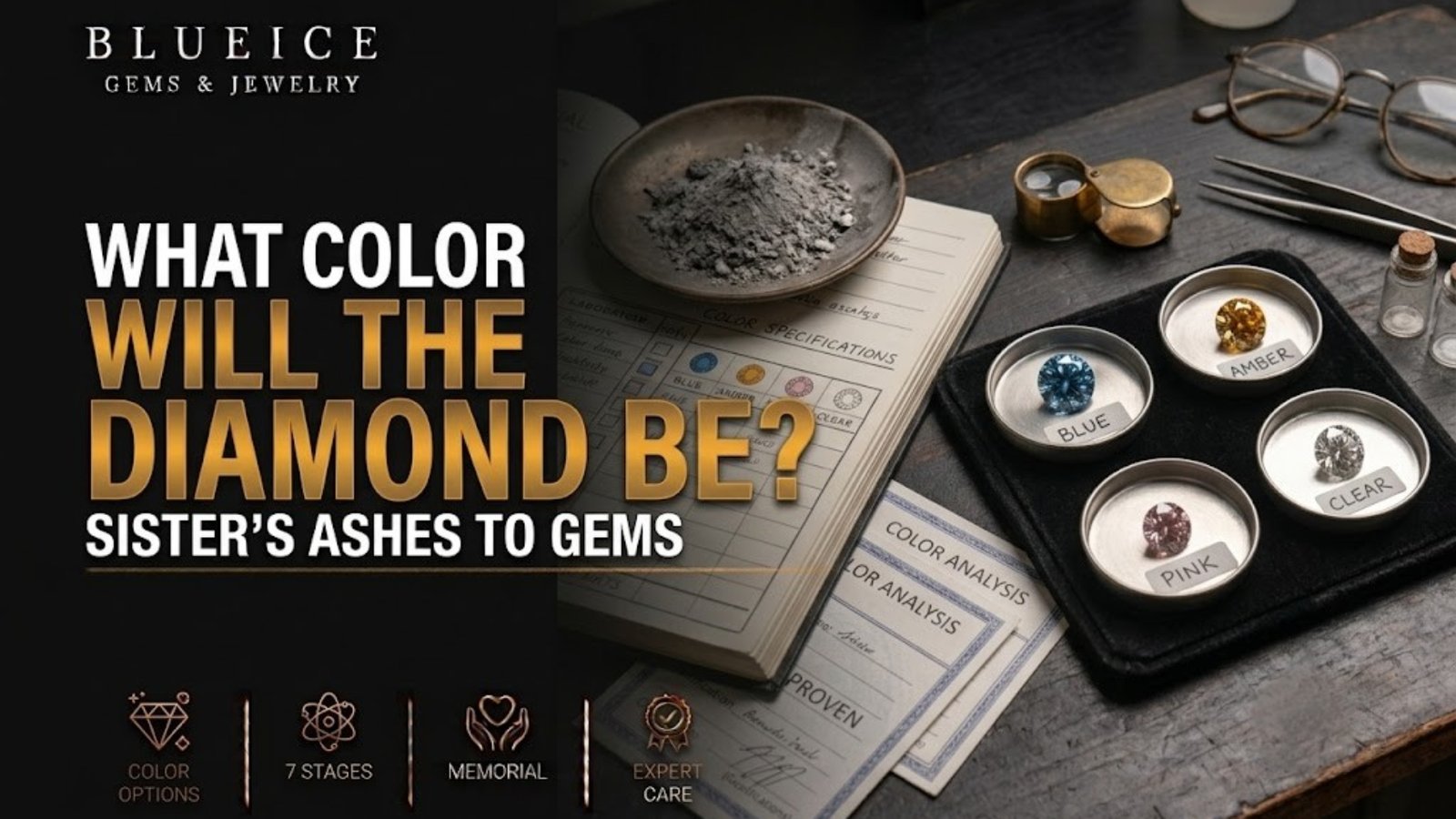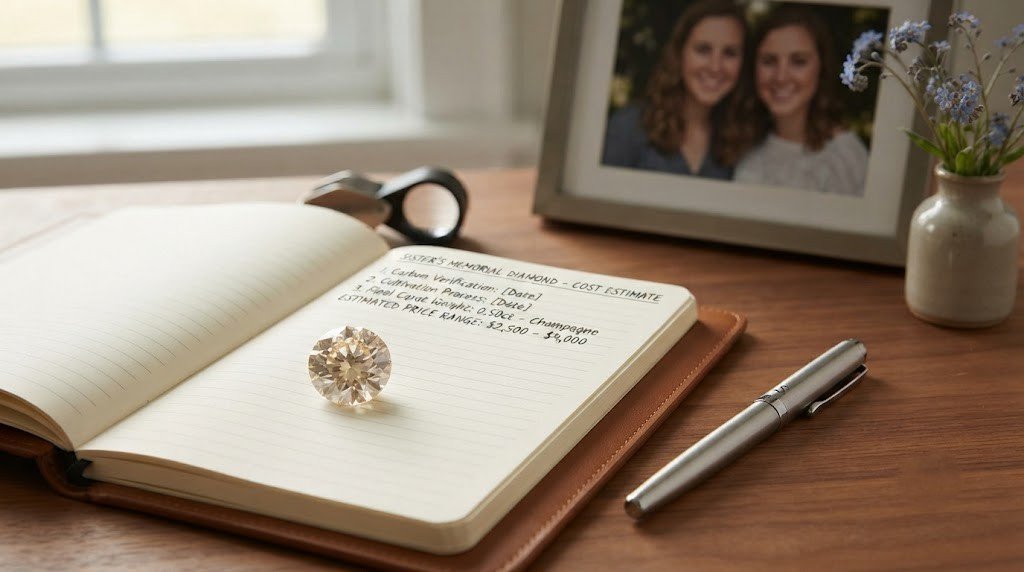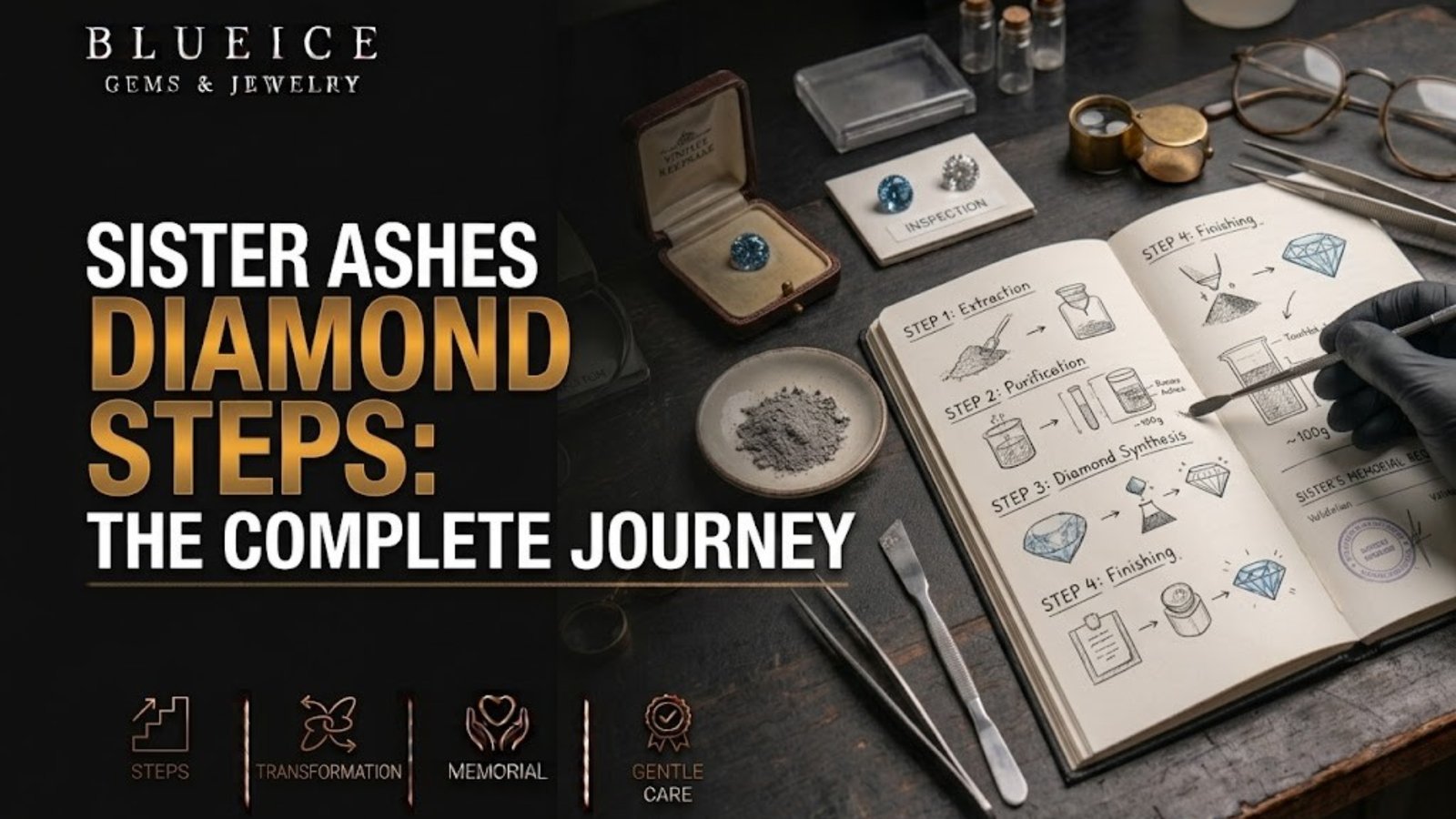
After losing a sister, you may want to preserve her memory in a way you can carry with you. A memorial diamond is one option, but understanding the process before making a decision can help you feel more prepared. These sister ashes diamond steps explain what happens from the first family conversation to receiving the finished stone.
The process involves more than sending ashes to a laboratory. You need to establish who has authority over her remains, obtain permission, choose a provider, agree on the diamond specifications, and understand how the material will be handled. The laboratory then processes the carbon, grows a crystal, and finishes the stone.
This guide covers twelve sister ashes diamond steps, including what you need to do, which documents to keep, what questions to ask, and how long the process may take. Take each stage at your own pace. You do not have to make every decision at once.
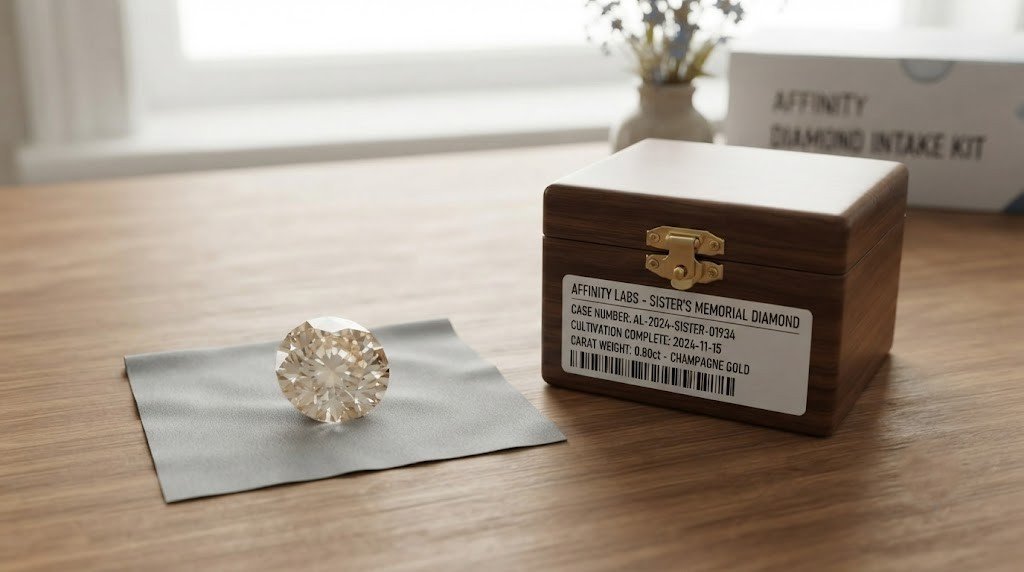
Table of Contents
What Do the Sister Ashes Diamond Steps Look Like at a Glance?
The process can be divided into two parts. The first part involves your family, your decisions, and preparing the material. The second part takes place inside the laboratory.
Here are the twelve sister ashes diamond steps in order:
- Have the first family conversation.
- Confirm who has authority over her remains.
- Obtain written permission for a portion of the ashes.
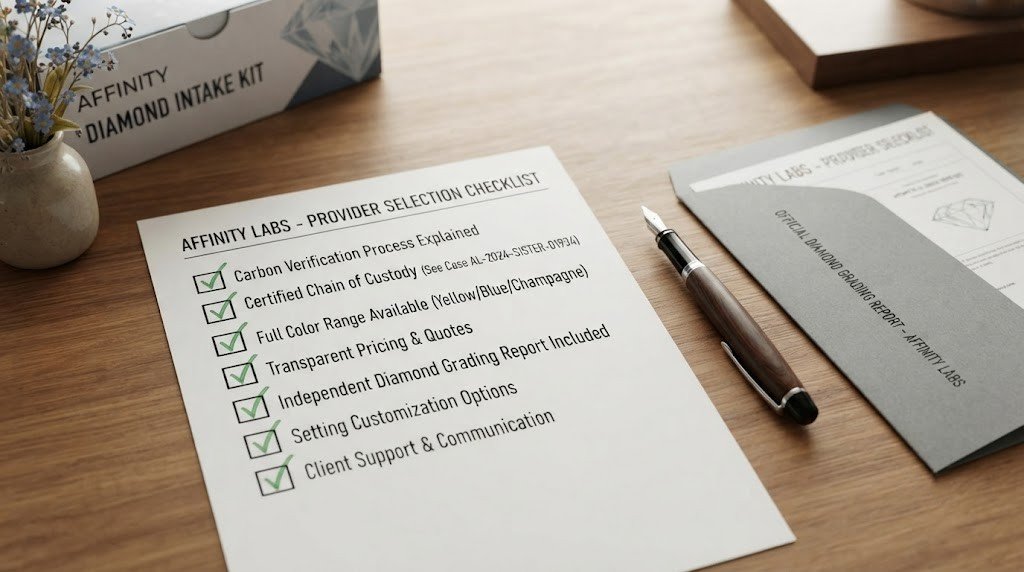
- Compare providers and collect answers in writing.
- Choose the diamond specifications and budget.
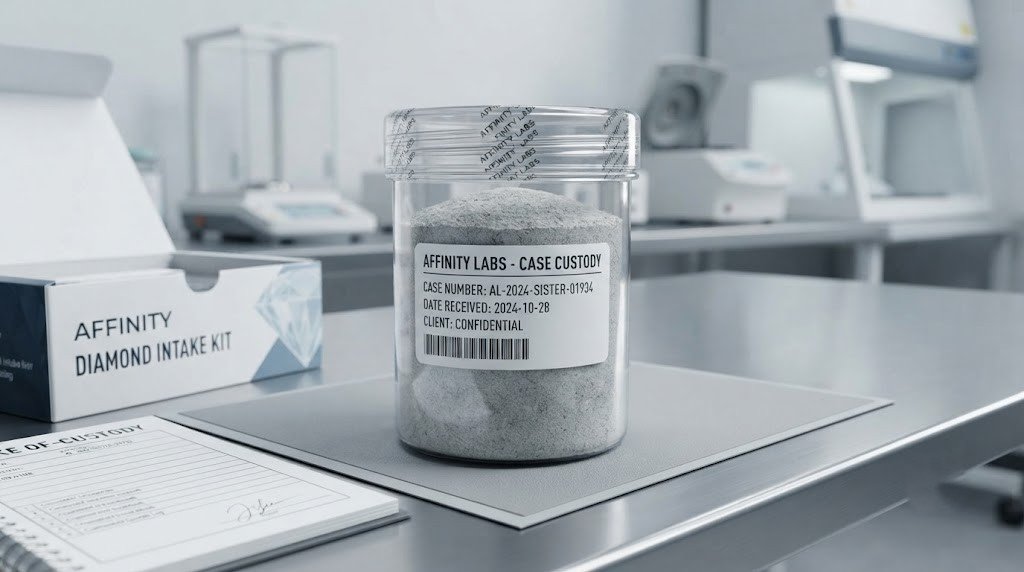
- Measure and seal the agreed portion.
- Ship the material and confirm receipt.
- Extract and purify the carbon.
- Prepare the carbon for diamond growth.
- Grow the crystal in the laboratory.
- Cut, polish, and arrange any grading.
- Receive, inspect, and decide how to keep or wear the diamond.
For a more conversational overview, read our guide to turning your sister’s ashes into a diamond.
Who Has to Agree Before Any Ash Leaves the Urn?
Before any material is moved, establish who can authorize its use. This is an important part of the sister ashes diamond steps because family relationships do not automatically determine legal authority.
Rules vary by location, and written instructions or a legally designated representative may affect who can make decisions about cremated remains.
Step 1: Have the First Family Conversation
Begin by explaining why you are considering a memorial diamond. Give relatives an opportunity to share their thoughts without feeling pressured to agree.
Some family members may appreciate the idea. Others may prefer to keep the ashes together or choose a different memorial. These reactions can be deeply personal, and everyone deserves a respectful conversation.
What you do: Explain your idea and listen to your family’s concerns.
Who may be involved: Your siblings, other close relatives, and the person responsible for the ashes.
What to keep: Notes about the conversation and any concerns that need further discussion.
Checkpoint: The relevant family members understand what you are considering, and you know which questions remain unresolved.
There is no need to finish this conversation in one sitting. Take the time your family needs.
Step 2: Confirm Who Has Authority Over Her Remains
A sibling is not automatically the person legally authorized to divide or release cremated remains. The rules depend on the applicable jurisdiction and the circumstances.
Contact the funeral home or crematory to ask what information it can provide about the person who authorized the cremation. If the authority is unclear, seek advice from a local attorney familiar with the relevant rules.
What you do: Identify the person whose consent is required.
Who may be involved: The funeral home, crematory, family representative, or local attorney.
What to keep: Relevant correspondence or documents confirming the authorization arrangements, where available.
Checkpoint: You know who must approve the use of the ashes before proceeding.
Do not treat a general description of family priority as a universal legal rule. Confirm the requirements that apply to your circumstances.
Step 3: Obtain Written Permission for a Portion of the Ashes
If another person has authority over your sister’s remains, explain the request clearly and respectfully. Ask the provider how much material is required before agreeing on a specific amount.
Written consent helps everyone understand what has been approved and avoids confusion later.
What you do: Request permission for the agreed portion.
Who may be involved: The authorized person, you, and potentially the funeral home.
What to keep: A dated email or signed document describing the permission given.
Checkpoint: The permission is recorded, and everyone understands what will happen to the remaining ashes.
If religious or cultural considerations matter to your family, discuss them with a trusted adviser from your own tradition. Practices can vary.
How Do You Choose a Provider and Settle the Details?
The next sister ashes diamond steps turn your intention into a clear order. Compare companies based on their documented procedures, costs, communication, and policies rather than choosing on price alone.
Step 4: Compare Providers and Collect Answers in Writing
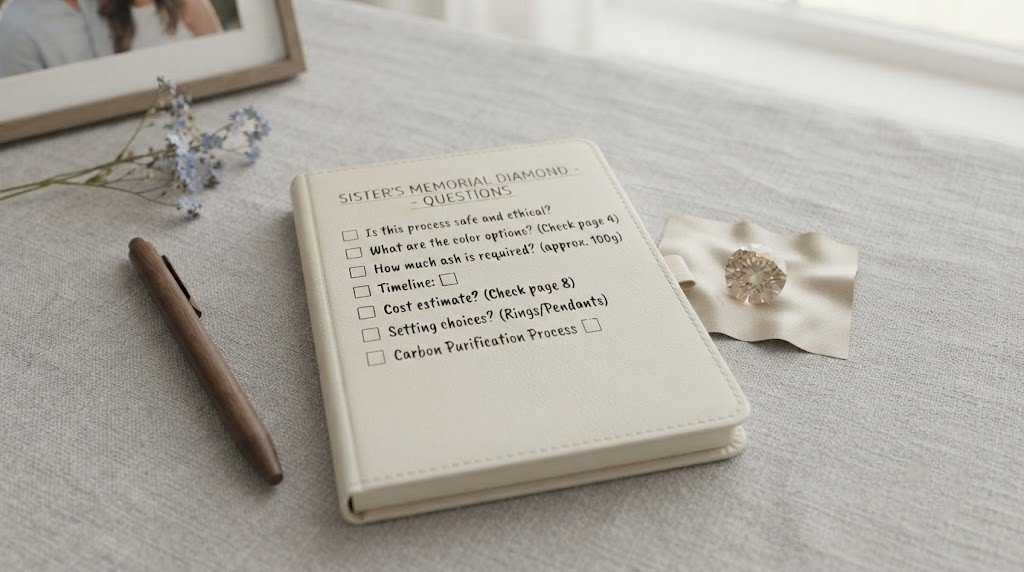
Contact two or three providers if possible. Ask each company the same questions so that you can compare their answers fairly.
Important questions include:
- How will the ashes be identified and tracked?
- Is the material processed separately from other customers’ material?
- Is supplemental laboratory carbon used, and can the provider explain the expected contribution from your sister’s material?
- What happens if a growth attempt fails or the stone fractures during cutting?
- What happens to unused ashes?
- Is independent diamond grading available, and is it included in the price?
- Can you pause or cancel the order, and what fees might apply?
Our guide to questions to ask before choosing a provider offers a more detailed checklist.
What you do: Compare written answers and request a dated quote.
What to keep: The answers, quote, terms, and any cancellation or failure policy.
Checkpoint: You understand the main terms before sending any ashes or making a payment.
Step 5: Choose the Diamond Specifications and Budget
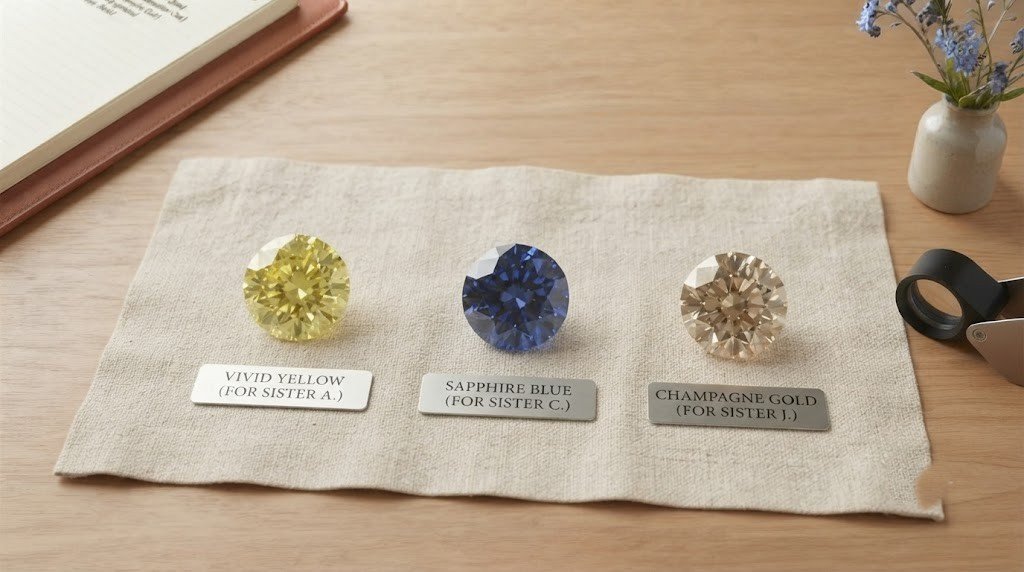
Decide what type of diamond you want and how much you can comfortably spend. Consider the carat weight, preferred shape, available colors, jewelry setting, and whether you want an independent grading report.
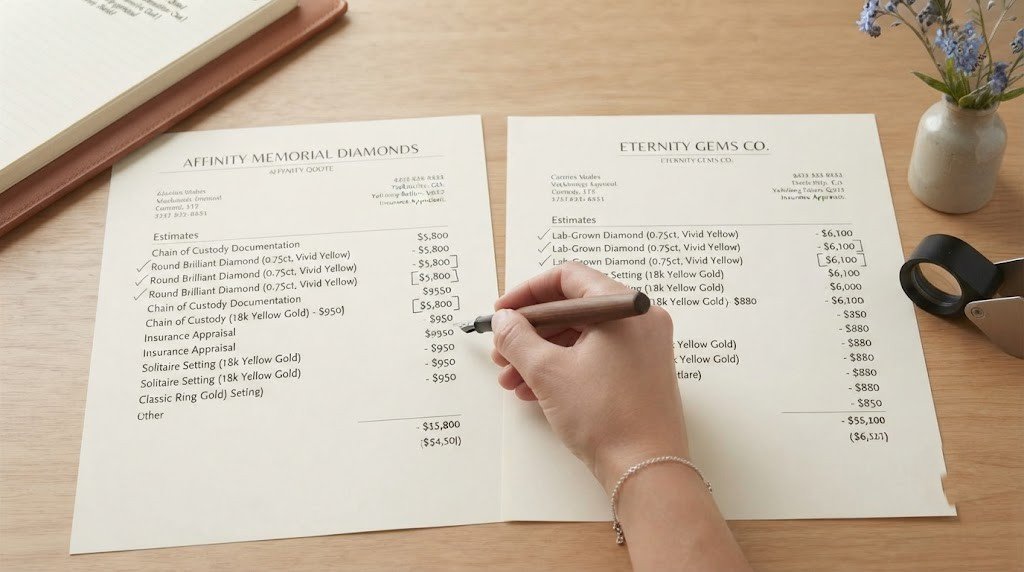
Costs can vary substantially according to the provider and the services included. General industry estimates sometimes place smaller stones of around 0.10 to 0.25 carat in the $1,500 to $3,500 range, stones around 0.5 to 1 carat in the $5,000 to $15,000 range, and stones around 2 to 5 carats or more in a considerably higher range. These are broad estimates, not verified prices or offers from Memorial Diamond. Request a current quote before making a decision.
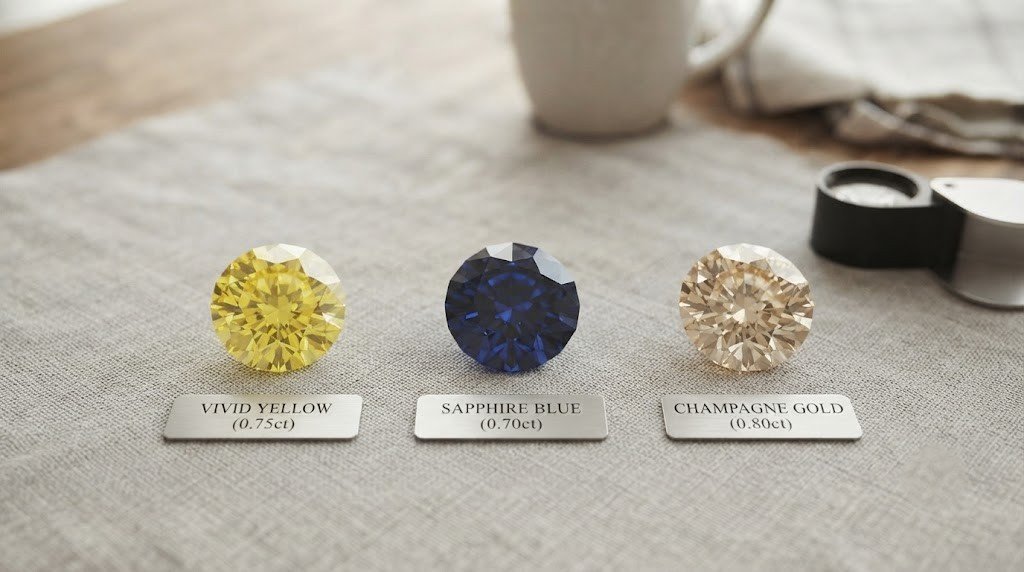
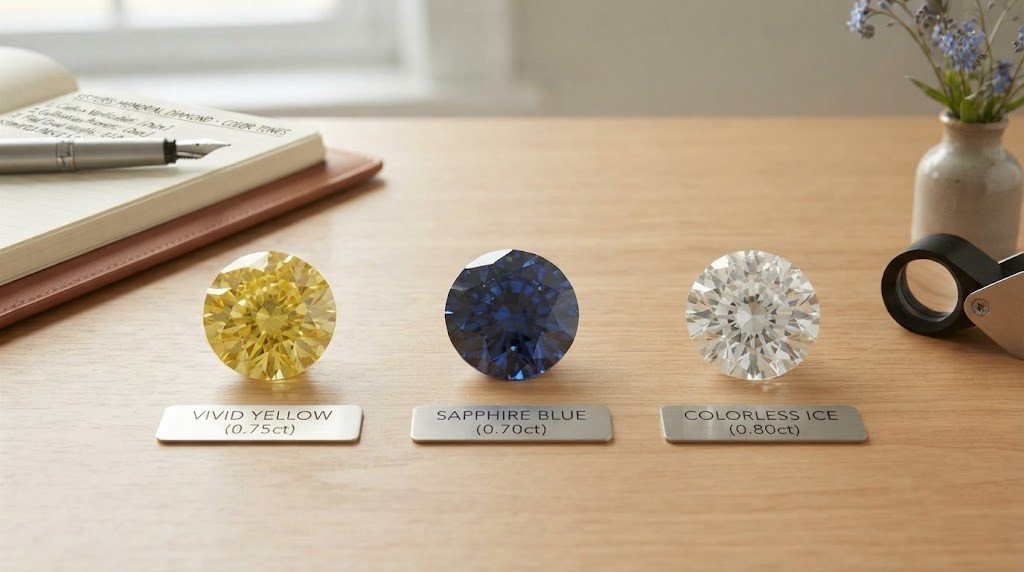
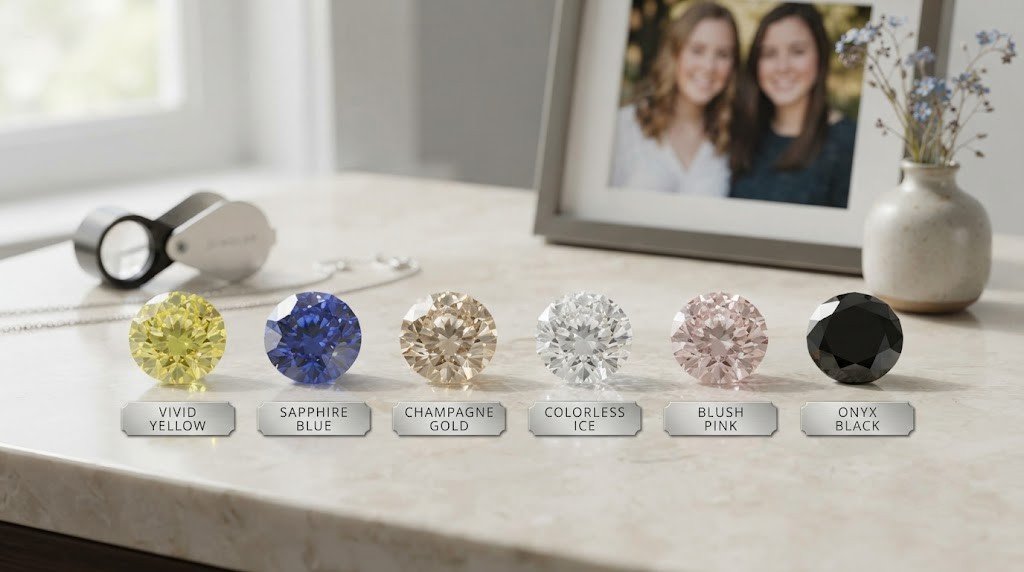
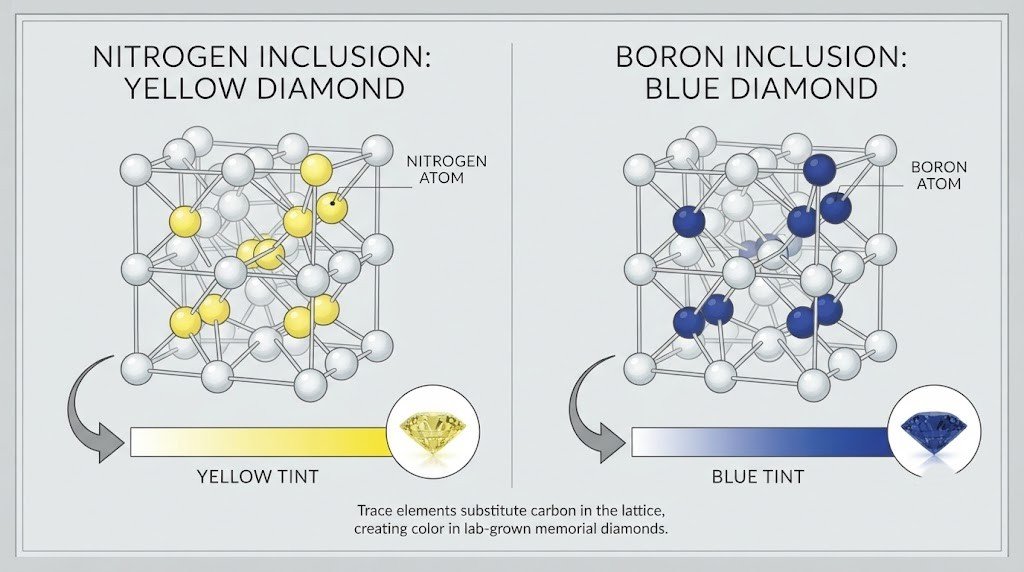
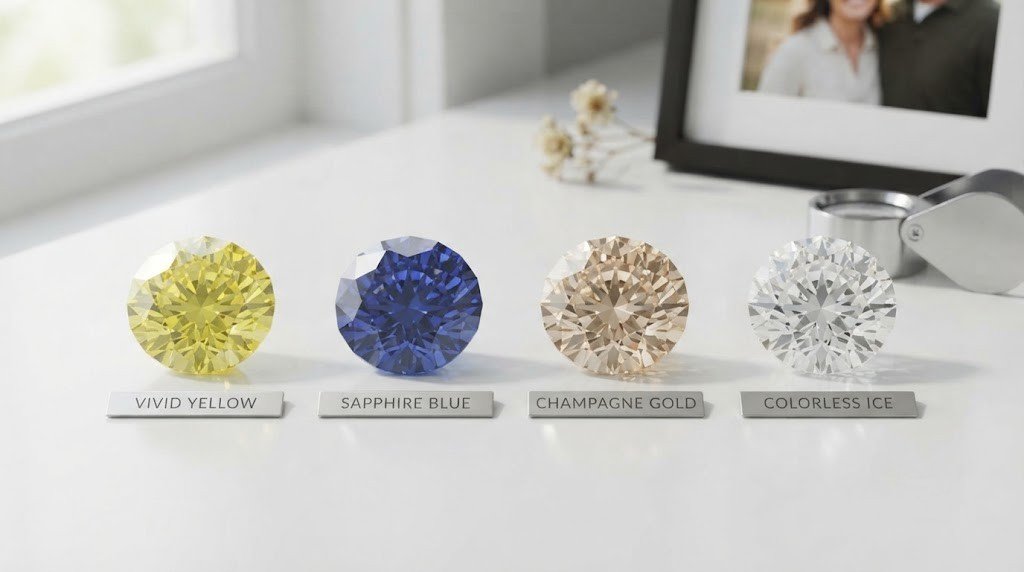
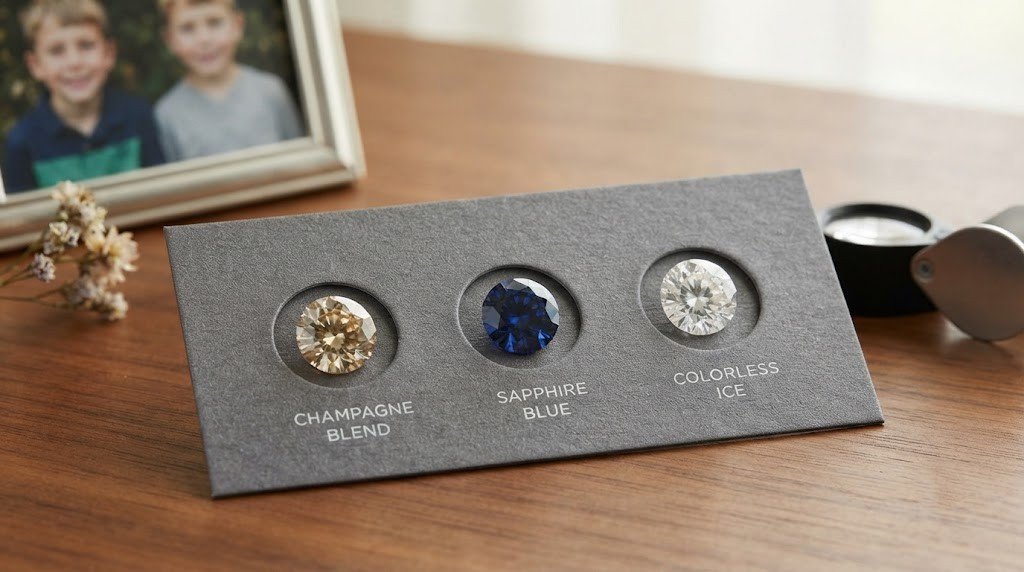
Color preferences also require discussion. The available shades and the methods used to achieve them differ by provider. Ask whether a requested color is an estimate or a guarantee and whether any post-growth treatment is involved.
What you do: Agree on a size, shape, color preference, and spending limit.
What to keep: A written order confirmation listing specifications, inclusions, exclusions, and the total cost.
Checkpoint: Everyone contributing financially understands the cost and, if relevant, who will own the finished stone.
How Is a Portion of Her Ashes Measured, Sealed, and Sent?
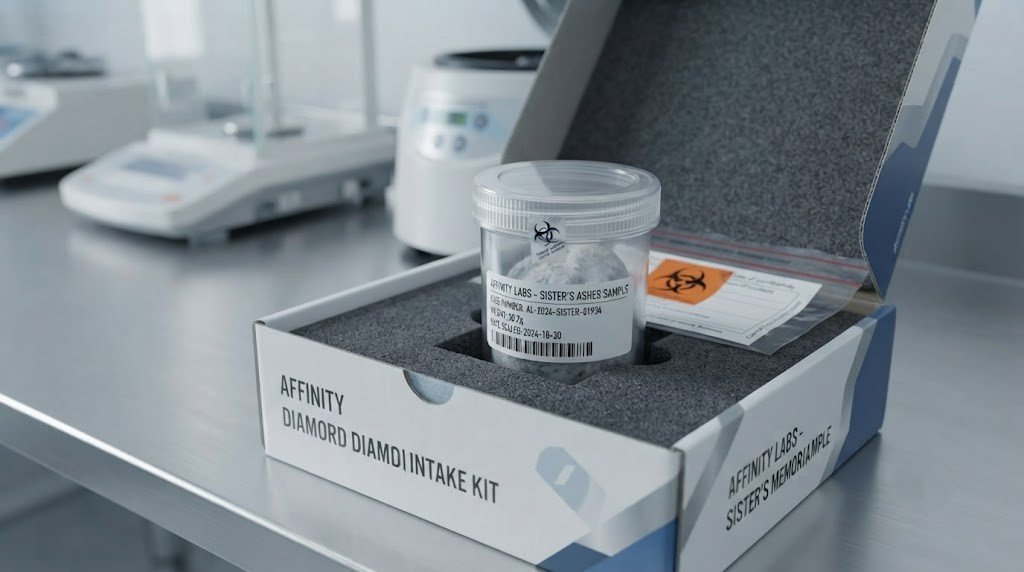
The next sister ashes diamond steps involve preparing and transporting something irreplaceable. Follow the provider’s instructions exactly, and ask for help from the funeral home if you do not feel comfortable handling the ashes yourself.
Step 6: Measure and Seal the Agreed Portion
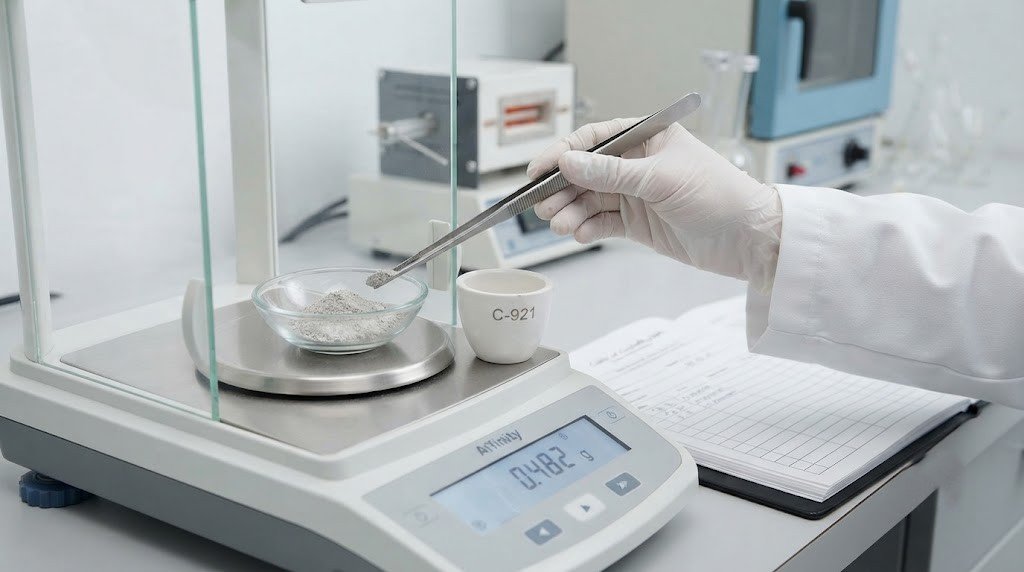
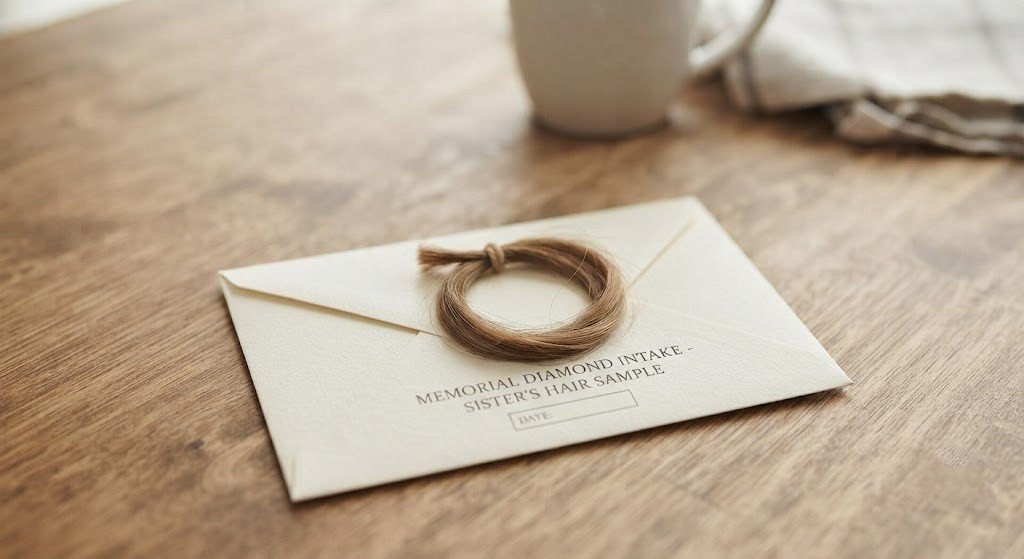
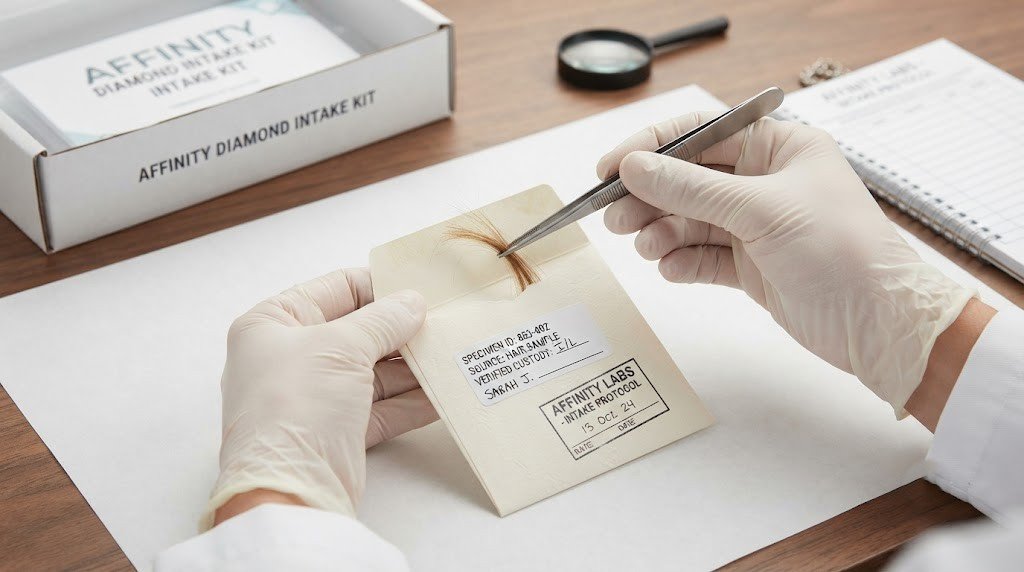
Some providers may send a collection kit containing a container, labels, and instructions. The required amount varies. Ask the company for its exact requirement rather than relying on a general estimate.
What you do: Measure the agreed portion according to the provider’s instructions and seal the container.
Who may be involved: You, the authorized family member, or a funeral director.
What to keep: A photograph of the sealed container and a record of the amount sent, if appropriate.
Checkpoint: The label and order details match, and the container is secured as instructed.
Do not send additional ashes simply because you think more material will produce a larger diamond. Ask the provider what is needed for your order.
Step 7: Ship the Material and Confirm Receipt
Use the shipping method specified by the provider. Ask whether signature confirmation, special packaging, or particular paperwork is required.
After shipping, monitor the tracking information and request confirmation when the company receives the container.
What you do: Send the material using the agreed method and retain the tracking number.
Who may be involved: You, the carrier, and the provider’s intake team.
What to keep: The shipping receipt, tracking details, and the provider’s confirmation of receipt.
Checkpoint: You have confirmation that the material arrived and know the identification number assigned to your order.
The provider’s receipt date may be the starting point for its production estimate, but confirm the exact starting event in your agreement.
Which Sister Ashes Diamond Steps Happen Inside the Laboratory?
Once the provider receives the material, the laboratory carries out the technical stages. The exact process depends on the company and its method. Ask which updates it provides and whether you will receive documentation for individual stages.
Step 8: Extract and Purify the Carbon
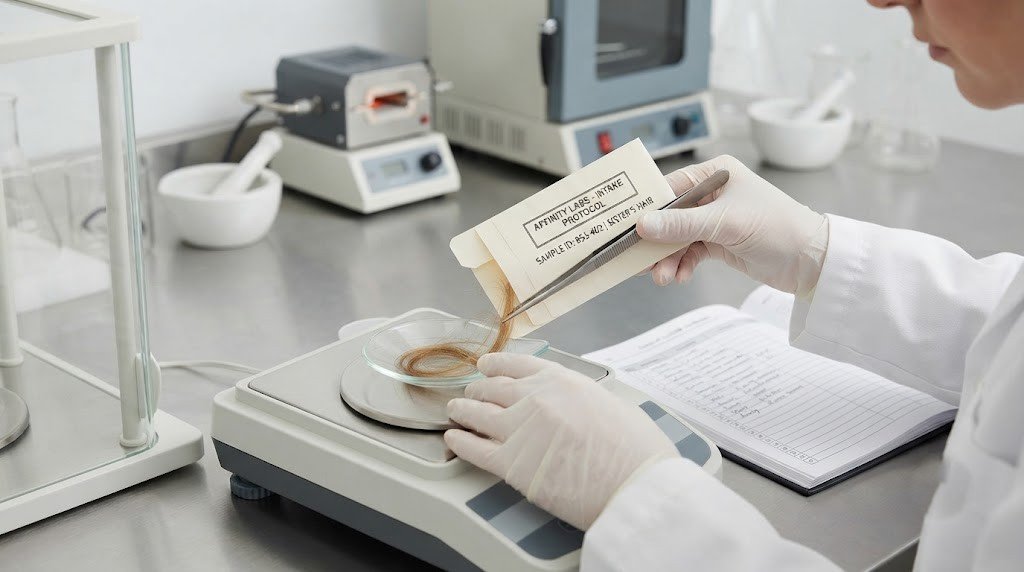
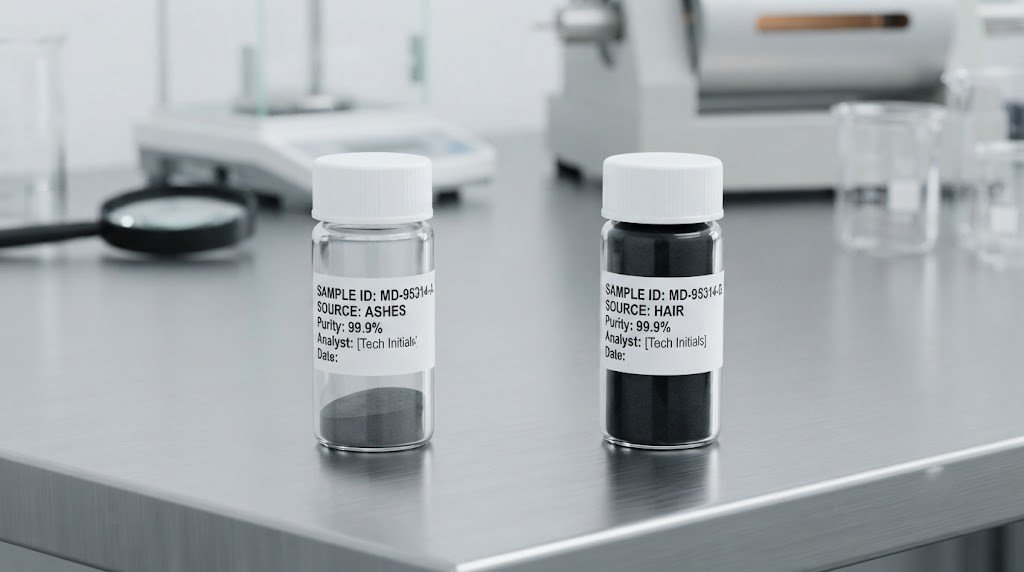
Cremated remains consist largely of mineral material, with a relatively small amount of potentially usable carbon. The laboratory works to separate and purify the carbon needed for its process.
The amount recovered varies with the material and the provider’s method. Ask the company how it describes the extraction process and what it can document.
Your role: Ask how the company confirms that the material is associated with your order.
What to keep: Any extraction update or documentation the provider supplies.
Checkpoint: The order identification remains consistent in the communications you receive.
Step 9: Prepare the Carbon for Diamond Growth
The recovered carbon must be prepared in a form suitable for the provider’s growth method. Some companies use a graphitization stage, and supplemental laboratory carbon may be added where necessary.
Because the amount of carbon recovered from ashes is limited, the finished diamond should not automatically be described as consisting entirely of the original ashes. Ask the provider to explain how it estimates the contribution from your sister’s material.
Your role: Request a clear explanation of the process and any stated carbon contribution.
What to keep: The provider’s written explanation or estimate, if it supplies one.
Checkpoint: You understand what the company can substantiate and what it cannot quantify precisely.
Step 10: Grow the Crystal in the Laboratory
Laboratories can use established methods such as high-pressure, high-temperature growth (HPHT) or chemical vapor deposition (CVD), depending on the provider’s process. These methods are different, so ask which one the company uses rather than assuming every provider follows the same procedure.
Growth may take weeks or months, depending on the method and specifications. A usable crystal is not guaranteed in every attempt.
Your role: Ask when growth is expected to begin and what happens if a cycle fails.
What to keep: Any progress updates offered and the written policy for failed growth.
Checkpoint: You understand how the company handles delays, unsuccessful attempts, additional costs, and any possible use of retained material.
For background on laboratory-grown diamond methods, you can read more about the underlying technology.
What Happens Between the Rough Crystal and the Finished Stone?
Step 11: Cut, Polish, and Arrange Any Grading
Once a suitable crystal is available, it can be cut and polished into the chosen shape. The final appearance may differ from an early estimate, so confirm what the provider promises about color, dimensions, and finish.
Ask about two different kinds of documentation:
- Origin or authenticity documentation: A provider-issued document may describe the company’s claim that the stone is connected to the submitted material. Ask exactly what the document verifies.
- Independent grading report: An outside laboratory may assess characteristics such as cut, color, clarity, and carat weight. Availability and cost vary.
You can learn about the four Cs of diamond quality from GIA.
What you do: Decide whether you want independent grading and confirm any additional cost.
What to keep: The provider’s origin documentation and any grading report you purchase.
Checkpoint: The documents match your order, and you understand the difference between a provider’s origin claim and an independent assessment of the diamond.
Step 12: Receive, Inspect, and Decide How to Keep the Diamond
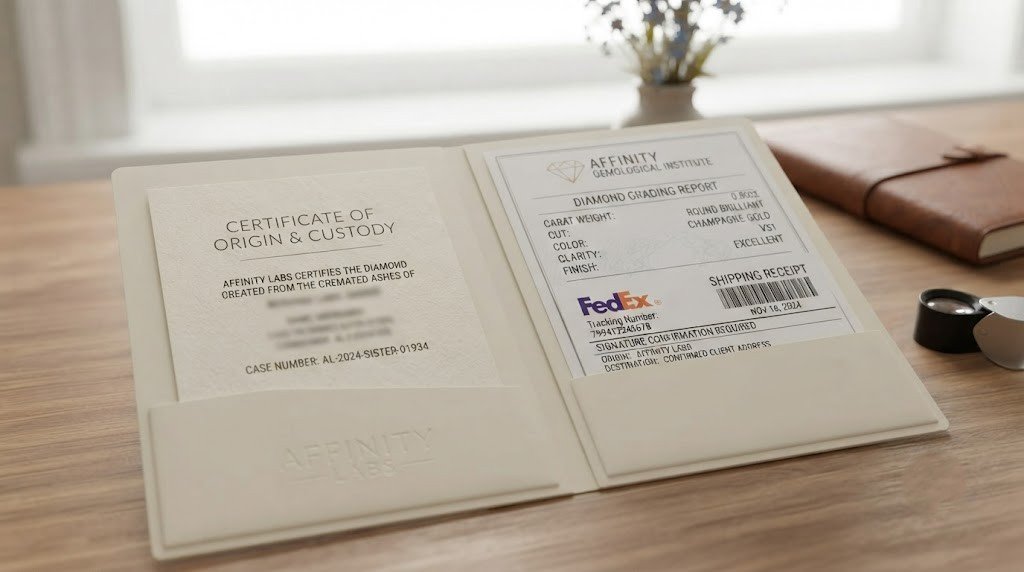
When the finished stone arrives, compare it with your order confirmation. Check the documented carat weight, shape, color description, and any engraving or other agreed features.
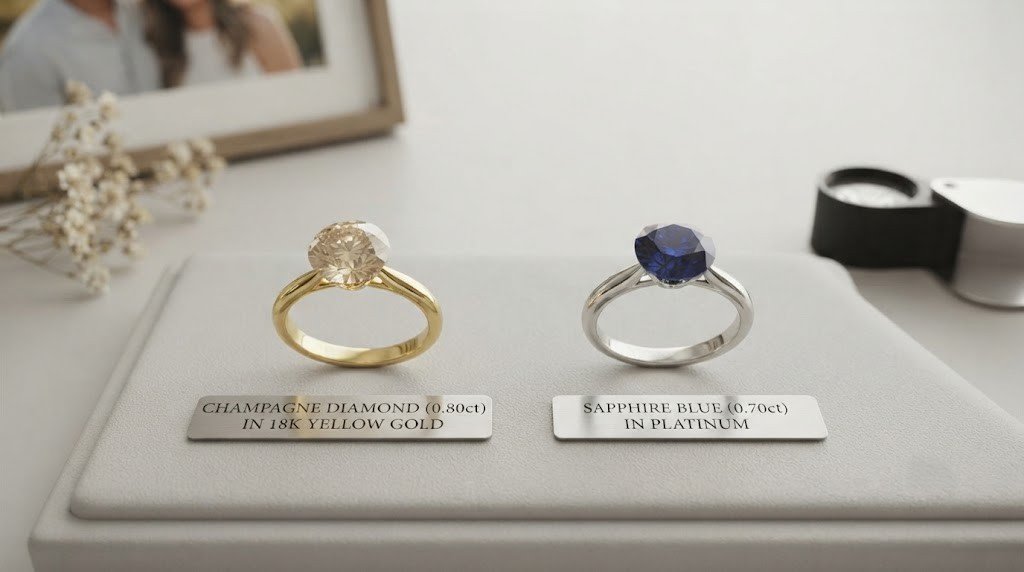
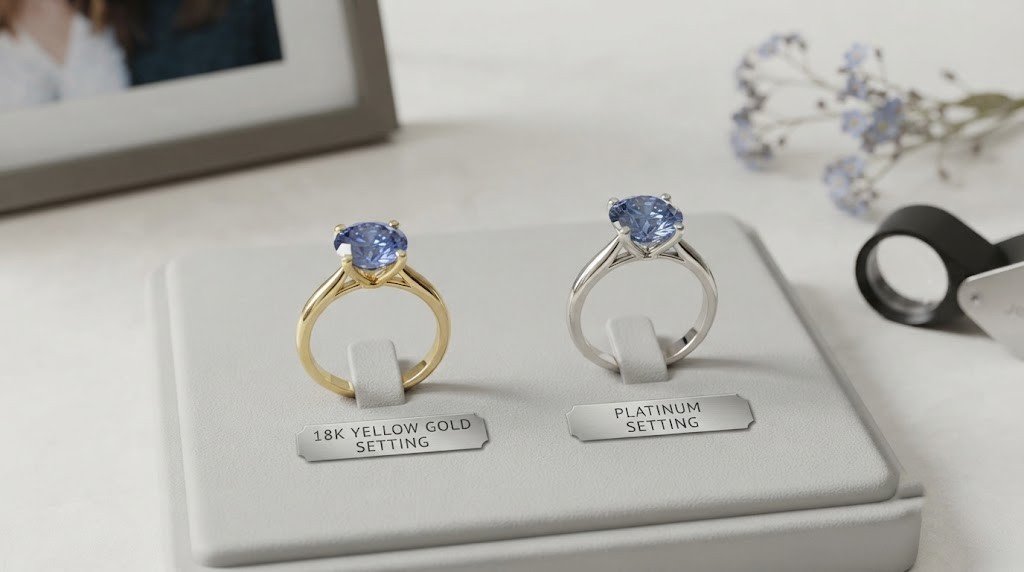
If you intend to wear the diamond, a jeweler can help you choose a suitable setting. Although diamond is extremely hard, it can still chip under certain impacts. Ask about practical care and discuss insurance with your insurer if coverage is important to you.
What you do: Inspect the stone, photograph it, and decide whether to wear it, set it in jewelry, or keep it safely stored.
What to keep: The diamond, order confirmation, certificates, grading report if applicable, and any unused ashes returned to you.
Checkpoint: You have checked the order, filed the documents, and confirmed any remaining arrangements.
How Long Do the Sister Ashes Diamond Steps Take?
The full timeline depends on the provider, the chosen stone, and whether additional work is required. Industry estimates commonly place laboratory production around six to ten months after the material is received. Some orders, including larger stones or specialty colors, may take longer. These are general estimates rather than guaranteed delivery dates.
| Phase | Steps included | What to keep |
|---|---|---|
| Family preparation | Steps 1 to 3 | Relevant correspondence and written consent |
| Provider and order | Steps 4 and 5 | Written answers, quote, and order confirmation |
| Preparation and shipping | Steps 6 and 7 | Container details, shipping receipt, and intake confirmation |
| Laboratory work | Steps 8 to 10 | Updates and any written carbon or failure-policy details |
| Finishing | Step 11 | Origin documentation and grading report, if ordered |
| Delivery | Step 12 | Finished stone, final documents, and returned material if applicable |
The first stages can take as long as your family needs. The laboratory stages are controlled by the provider’s process and schedule. Before ordering, ask when the production clock starts, how updates are provided, and how delays are handled.
Which Documents Should You Keep?
A clear paper trail can help you understand what was agreed and what happened throughout the process. Keep digital copies and, if possible, a separate backup.
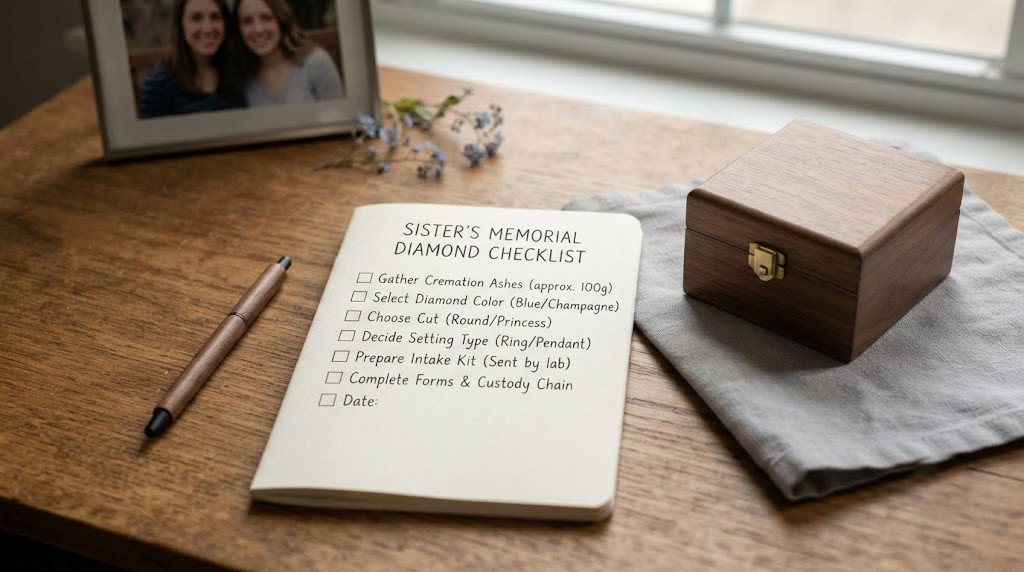
Use this document checklist:
| Document | Why it matters |
|---|---|
| Relevant funeral home or crematory correspondence | Helps clarify the authorization arrangements |
| Written consent for the portion | Records what was approved |
| Provider’s written answers | Records handling, carbon, failure, and return policies |
| Signed order confirmation | Confirms the chosen specifications and price |
| Photograph of the sealed container | Records the package before shipment |
| Shipping receipt and tracking number | Helps establish the shipment record |
| Provider’s receipt confirmation | Confirms the material arrived |
| Origin or authenticity documentation | Records the provider’s stated origin claim |
| Independent grading report, if ordered | Documents the grading laboratory’s assessment |
| Insurance or appraisal paperwork, if applicable | Supports your own record keeping |
Keep one copy of important documents somewhere separate from the jewelry itself.
Where Can the Sister Ashes Diamond Steps Get Delayed?
A few common issues can make the process more complicated. Many can be addressed by asking questions early.
- Unclear permission: Confirm who has authority and obtain written consent before sending anything.
- Family members working from different assumptions: Choose one point of contact and record decisions.
- Incomplete provider information: Ask for written answers before paying or shipping.
- Unclear failure or cancellation policies: Read the terms before committing.
- Uncertain costs: Request a complete quote that lists extra services and possible charges.
- Unclear ownership: If several people are contributing or sharing the stone, agree on ownership in writing.
- Unclear arrangements for unused ashes: Confirm whether the material can be returned and to whom.
- Unrealistic timing expectations: Ask for the provider’s current estimate and what could affect it.
If your sister also left hair that you are considering using, read about turning your sister’s ashes and hair into a diamond. If you are considering hair alone, see the hair-based memorial diamond checklist.
If you are not ready to choose a provider yet, our guide to choosing a memorial diamond for your sister is a helpful place to begin.
Frequently Asked Questions
Can I begin if I only have a small keepsake urn?
Possibly. Providers have different material requirements. Tell the company how much you have before beginning the sister ashes diamond steps, and confirm that the person who gave you the ashes agrees with your intended use.
What paperwork should travel with the ashes?
Ask the provider what it requires. Some companies may request documents that help identify the remains or connect them with the order. Follow the provider’s instructions and keep copies of relevant records.
Can I pause the process?
Before shipping, you can take time to decide whether you want to proceed. Once laboratory work begins, pausing or cancelling may depend on the company’s terms. Ask about these possibilities before placing the order.
What if the person responsible for the ashes says no?
Respect the decision. You can continue gathering information without sending the material, and you may revisit the conversation if circumstances change. If there is a genuine dispute about legal authority, consult a local attorney rather than trying to bypass the person entitled to decide.
Will unused ashes be returned?
That depends on the provider’s policy. Ask before shipping and get the answer in writing. If another person authorized the portion, agree in advance about who should receive any unused material.
Can two siblings order separate diamonds?
This may be possible, but the amount required and the arrangements depend on the provider. Ask how much material is needed for each stone and how multiple orders would be handled before dividing the ashes.
Final Thoughts on Turning Your Sister’s Ashes Into a Diamond
Turning your sister’s ashes into a diamond is a personal choice, and the process deserves patience and care. Following the sister ashes diamond steps can help you understand the decisions involved, record your family’s permission, compare providers, and keep track of the documents that matter.
Start with a conversation, establish who can authorize the use of the ashes, and obtain written answers before moving forward. Ask about the laboratory process, the expected carbon contribution, the complete cost, and what happens if something does not go according to plan.
You do not have to rush. Take each stage at a pace that feels right for you and your family. Whether you proceed with a memorial diamond or choose another way to honor your sister, your decision should be informed, voluntary, and meaningful to you.
Learn More About Sister Memorial Diamonds
- Sister Ashes Diamond: The Complete Guide
- How Long Does It Take to Make a Sister Memorial Diamond?
- How Much Does a Sister Memorial Diamond Cost?
- How to Talk to Family About a Sister Memorial Diamond
Talk With Memorial Diamond
If you would like to learn more about the process, visit Memorial Diamond. Ask your questions, review the details in writing, and take whatever time you need before deciding how you would like to remember your sister.