
It might be a braid tucked in a drawer, a curl saved from a haircut years ago, or simply a brush she used. The amount of hair for a sister memorial diamond is usually small: providers typically ask for a single lock or a few grams, often described as palm-sized or a few wisps. Each provider sets its own figure and its own rules on which kinds of hair it accepts, so ask before you cut, collect, or send anything.
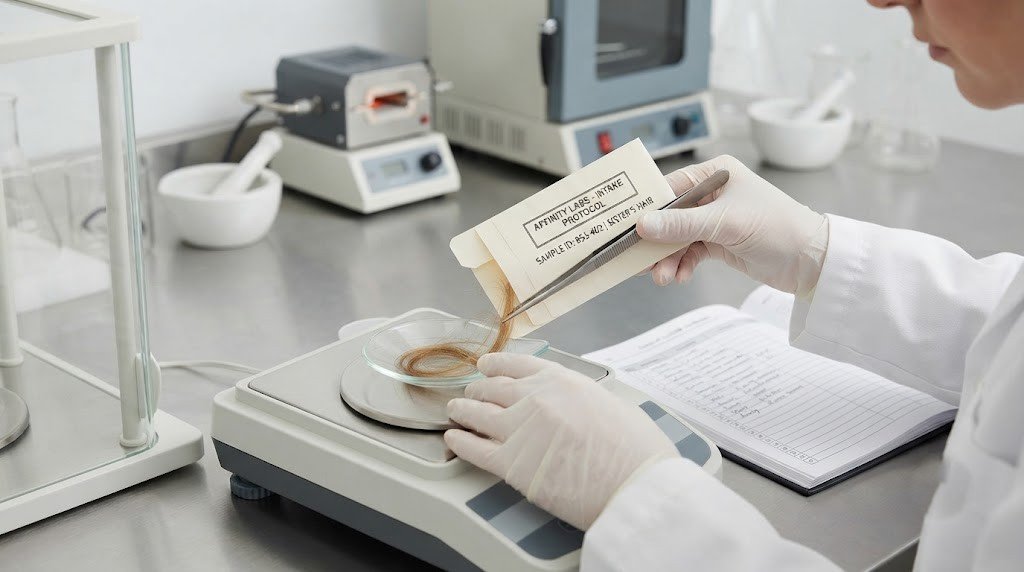
Table of Contents
What Does “a Small Lock” of Her Hair Actually Mean?
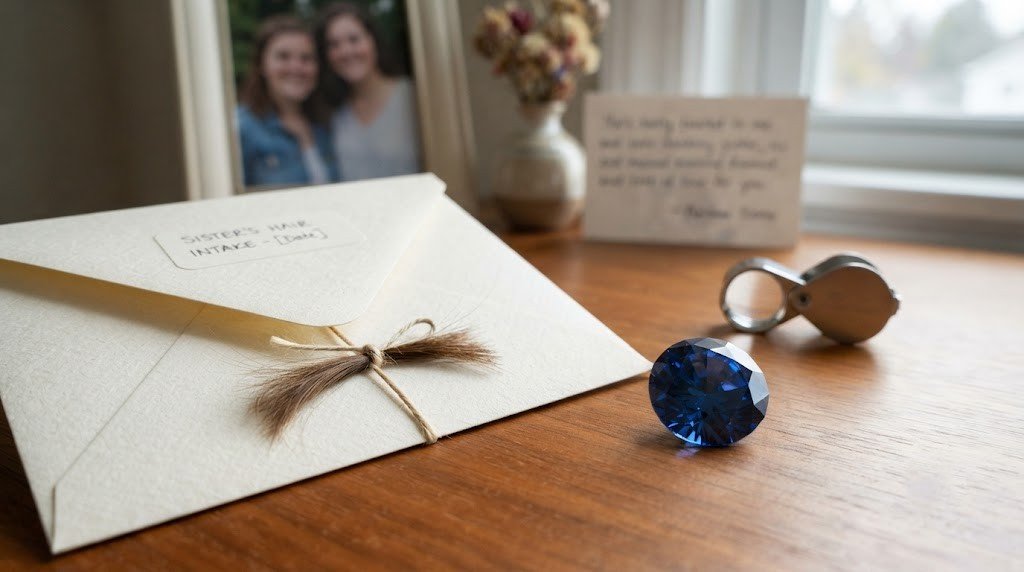
Providers describe the usual amount in loose, everyday terms: a small lock, a few grams, or something that would sit in the palm of your hand. In practice, that is far less than a ponytail. A modest curl tied with thread, or a short bundle gathered from a brush, is the general scale providers tend to have in mind when they talk about hair for a sister memorial diamond.
The exact amount of hair for a sister memorial diamond still depends on the provider. Some state their requirements by weight, some use a rough description, and some will look at what you have and tell you whether it is enough. Getting that answer in writing before you cut anything matters, because a lock that has been cut cannot be put back.
A few details are worth knowing before you gather anything:
- Length may matter less than you fear. A provider is looking for enough material, so ask whether a shorter lock or several short pieces together would work.
- Ask about roots rather than assume. Hair contains carbon throughout its strands, but a provider may still have preferences about how the hair was cut or collected.
- Keep it dry and free of debris. Hair kept in an envelope or a small box for years may still be usable. Ask the provider, especially if it was stored somewhere damp.
- Hold some back. If you have more hair for a sister memorial diamond than the provider asks for, keep the remainder at home rather than sending everything.
If you are not sure whether you have enough hair for a sister memorial diamond, a photo next to a coin or ruler, sent with your first question, may help the provider give you a clearer answer.
Will a Provider Accept Hair for a Sister Memorial Diamond From Her Hairbrush?
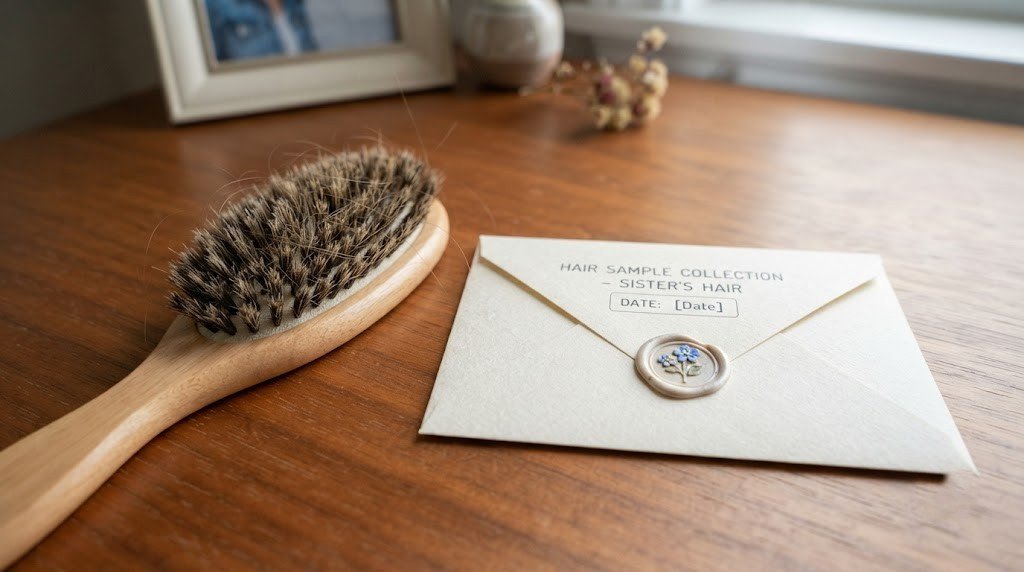
Some providers may accept brush-collected hair, while others may prefer a cut lock. This is one of the first questions to ask about hair for a sister memorial diamond. Hair gathered from a brush or comb may be all you have, and it can be a meaningful source. The main concern is that it is hers alone: a brush that someone else also used may contain their hair too.
| Where her hair comes from | What to keep in mind | What to ask the provider |
|---|---|---|
| A lock cut and saved during her life | It is easy to describe and may be clearly identifiable as hers. Note when and why it was kept. | Is this lock enough on its own, or should anything be added? |
| Her hairbrush or comb | Use a brush she alone used, if possible. Gather the hair gently and store it dry. | Do you accept brush-collected hair, and how much is required? |
| A braid, ponytail, or keepsake curl | It may be more than needed. You can send part and keep the rest. | How much of this should we send? |
| A lock taken by the funeral home before her service | This may be possible if requested in time and the funeral home agrees. | Can you work with a lock collected by the funeral home? |
| Hair that was dyed, bleached, or chemically treated | Treatments vary, and acceptance policies may differ. | Does the hair’s treatment affect what you accept? |
| Only a few strands | Every strand may matter, so do not discard anything yet. | Can you assess whether this small amount is workable? |
None of these sources is necessarily better for the meaning of the stone. The deciding factors are practical: whether the provider can work with the sample and whether the hair is clearly hers. A short note describing where each sample of hair for a sister memorial diamond came from can also help maintain a record of its origin.
Who Has Her Hair Now, and Whose Agreement Matters?
Hair is different from ashes in one important way: it often remains among a person’s belongings rather than with a funeral home. A lock that could become hair for a sister memorial diamond might be in her home, with a partner if she had one, with a parent who saved it from childhood, or with you.
Belongings can form part of a person’s estate, and the rules about who may make decisions concerning them vary by location. It is worth speaking with the executor or whoever is handling her affairs before using hair found among her belongings.
Some useful ways to approach the conversation include:
- Explain what you need and how little. A small lock or a few grams of hair for a sister memorial diamond is easier to discuss when the request is specific.
- Ask who already has keepsakes. A parent, partner, or close friend may have a lock that was saved long ago.
- Offer to share. If the hair could provide material for more than one stone, or someone else would also like a keepsake, discuss that early.
- Check before taking anything from her home. Even a hairbrush is worth asking about if her belongings are still being sorted.
- Seek local advice if ownership is unclear. A local attorney can explain how your state or jurisdiction treats personal belongings within an estate.
If the funeral home is asked to set aside hair for a sister memorial diamond before her service, it will likely want the request to come from the person with authority over her remains. The funeral home can explain who signed the arrangements and who may authorize such a request.
In many places, the order of authority commonly gives priority to a spouse or registered partner, then adult children, then parents, and then siblings, but this varies. Written wishes and local laws can also affect the decision. A sibling may or may not have authority, and that has nothing to do with how close you were.
Can You Still Get Her Hair If She Was Buried?
Yes, provided some of her hair was kept. Hair does not require cremation, so a memorial diamond may remain an option when a family chooses burial, whether for personal reasons or because of their faith.
If the burial has not happened yet, the funeral home may be able to collect a small lock beforehand if the person with authority requests it. Policies differ, so ask as early as possible.
Once a burial has taken place, retrieving hair would involve disinterment, a serious step subject to laws, cemetery requirements, and other considerations. Leaving her at rest is a completely valid choice. In that situation, a hairbrush, a saved keepsake, or a lock kept by a relative may be a source of hair for a sister memorial diamond instead.
If no hair was kept but her ashes are available, read the companion guide on how much ash a sister’s diamond needs. If both are available, the article on using both her ash and hair together explains how providers may approach the two sources.
Why Does Such a Small Amount of Hair Go So Far?
Hair is made primarily of keratin, a carbon-rich protein, and is roughly 50% carbon by weight. That is a much higher carbon share than cremated remains, which consist largely of bone mineral. This helps explain why providers may ask for only a small lock or a few grams of hair for a sister memorial diamond.
At the laboratory, the hair typically goes through an oxygen-free, multi-stage purification process to remove material that is not carbon. The remaining carbon may reach a purity of about 99.9% or higher, depending on the process. It is then heated to very high temperatures to form graphite, which can serve as feedstock for diamond growth.
The crystal is commonly grown using high-pressure, high-temperature (HPHT) methods. These processes involve extremely high pressure and heat. Some providers use chemical vapor deposition (CVD) instead. Laboratories may also blend recovered carbon with supplemental laboratory carbon to achieve the quantity required for a growth cell.
One important point is easy to miss: there is no universally published percentage describing how much of a finished memorial diamond comes specifically from hair. Figures sometimes quoted for ash-based diamonds should not automatically be applied to hair-based stones. If the precise origin of the carbon matters to you, ask the provider how it describes the process and what records it maintains.
The broader story of memorial diamonds as a category includes diamonds made using different types of memorial material. For a closer look at the process, the complete guide to a sister hair diamond walks through the journey from the initial sample to the finished stone.
What Won’t the Amount of Hair Change?
It is tempting to think that sending more of her hair means receiving a larger stone, getting it sooner, or obtaining a particular color. The quantity of hair for a sister memorial diamond does not, by itself, determine those outcomes.
- Size: Memorial diamonds may be offered in sizes ranging from around 0.10 carat to 5 carats or more. The final size depends on the provider’s options and the growth process, not simply on the weight of hair you send.
- Timeline: Production may take approximately six to ten months after the laboratory receives the material, although larger stones or specialty colors may take longer. The timeline for a sister memorial diamond explains the factors that can affect the wait.
- Color: Trace elements and the growth process can influence a diamond’s color. Nitrogen can contribute to yellow tones, while boron can contribute to blue tones. Producing a colorless stone may require additional processing. Color cannot reliably be predicted from the appearance of her hair, and it says nothing about who she was. Read more about what color a diamond from your sister’s hair may be.
- Clarity: Memorial diamonds can vary in clarity depending on growth and cutting. Ask which clarity characteristics are typical for the provider’s process and whether an independent grading report is available.
- Price: Cost depends on factors such as carat size, color, cutting, setting, and any optional services. Industry estimates can vary widely, so request a current written quote rather than treating a general range as a guaranteed price. The full cost breakdown explains the factors to consider.
Some providers may offer treatments that change a diamond’s color, including colors such as pink, red, green, or black. Ask whether a treatment is used and whether it will be disclosed in the documentation. This is a decision to discuss with the provider, not something the amount of hair for a sister memorial diamond determines.
What If You Only Have a Few Strands?
A handful of strands may still be worth asking about, so do not assume that you have too little hair for a sister memorial diamond. Because hair contains a substantial amount of carbon, some providers may be able to work with a smaller sample, while others may require more.
The only reliable way to know is to describe what you have and let the provider assess it before you send anything.
Until you know whether you have enough hair for a sister memorial diamond, keep every strand in a clean, dry envelope or container. Avoid trimming or discarding the sample while you are waiting for guidance.
If the provider says the amount is insufficient, there may still be other options. Another relative might have a saved lock, or her ashes may be available. You can also choose to keep the few strands in a locket, a frame, or another keepsake instead.
A small amount of hair for a sister memorial diamond is never a measure of how much she was loved. The right remembrance is the one that feels meaningful to you.
Does a Second Stone Mean Finding More of Her Hair?
Possibly. Some providers can grow more than one stone from a single sample, while others require a set amount of material for each stone. If a parent, another sibling, her partner, her children, or a close friend would also like a memorial diamond, ask how much hair for a sister memorial diamond each additional stone would require before anyone cuts or sends more.
It is helpful to discuss expectations before placing an order. Some family members may want a stone of their own, while others may prefer to keep a different kind of keepsake. Both choices deserve respect.
When several people share one sample of hair for a sister memorial diamond, agree in writing who will own each stone and who will own any shared stone before the process begins. The article on how families arrange more than one stone explores these considerations in greater detail.
How Should Hair for a Sister Memorial Diamond Be Packed and Sent?
The provider should give you written collection and shipping instructions. Always follow those instructions, because requirements can differ between laboratories.
In general, careful preparation may include:
- Keeping the hair dry in a paper envelope or another container approved by the provider.
- Labeling the package with the requested name and reference number.
- Adding a short note describing where the hair came from, if requested.
- Taking a photograph of the sample before sealing the package.
- Using a tracked shipping service recommended by the provider.
- Keeping the tracking number and any submission paperwork somewhere safe.
- Asking the provider to confirm in writing when the sample arrives.
For a hair for a sister memorial diamond order, the record of the sample matters alongside the physical material. Ask how the provider identifies the sample when it arrives and tracks it through the laboratory process.
A provider may issue its own certificate of origin or another document describing the sample and the resulting stone. This is different from an independent grading report, which describes the diamond’s characteristics, such as cut, color, clarity, and carat weight. The Gemological Institute of America’s overview of diamond quality factors explains the common characteristics used to assess diamonds.
Before sending anything, ask two additional questions:
- What happens to any unused hair for a sister memorial diamond? Will it be returned, stored, or disposed of?
- What happens if a growth cycle fails or the rough stone fractures during cutting? Will the provider retry using retained material, or could more material be required?
Make sure the answers are included in the provider’s terms or confirmed in writing. The guide to questions to ask before turning your sister’s hair into a diamond can help you prepare for that conversation.
Frequently Asked Questions
Does her hair need to be cut close to the scalp?
Not necessarily. Hair contains carbon along its length, so the quantity may matter more than where it was cut. However, each provider sets its own requirements. Ask before anyone trims hair for a sister memorial diamond.
Can I use hair for a sister memorial diamond that was saved from her childhood?
It may be possible. A childhood lock kept in a baby book or keepsake box can be a meaningful source if it belongs to her and meets the provider’s requirements. Check with whoever kept it, since a parent or relative may feel strongly about that particular keepsake.
Is it disrespectful to collect hair from her brush?
Some people find it a gentle way to preserve a personal connection. If her belongings are still being sorted, ask the executor or the person handling her affairs first. Use only a brush you are confident she used herself, and ask the provider whether brush-collected hair is acceptable.
How long can hair be stored before it is too old to use?
There is no single published limit that applies to every provider. Hair kept dry in an envelope or box may remain usable for years, but the provider must confirm whether it can accept your sample. Explain how and where the hair has been stored before sending it.
Can hair for a sister memorial diamond be sent from outside the United States?
Some providers accept international shipments, while others work only within certain countries. Customs requirements and shipping rules also differ. Ask the provider which documents are required, which carrier to use, and how receipt will be confirmed before shipping across a border.
Will the funeral home cut a lock if we ask?
A funeral home may be able to collect a small lock before burial or cremation if the person with authority over her remains requests it. Policies vary, so ask as early as possible. Once burial or cremation has taken place, that opportunity may no longer be available.
Final Thoughts on Hair for a Sister Memorial Diamond
The amount of hair for a sister memorial diamond is rarely the only consideration. A small lock or a few grams may be enough, but the provider must confirm its specific requirements. The harder parts can be quieter: finding where her hair is, asking family members with care, and deciding whether a diamond is the right remembrance for you.
Take your time. Ask questions, compare providers, and make sure you understand the process before sending a keepsake that cannot easily be replaced.
Whatever you decide, keep any hair for a sister memorial diamond safe and dry while you think it over. There is no need to rush a decision about a keepsake that is already in your hands. A lock in an envelope can wait until you feel ready.
Learn More About Sister Memorial Diamonds
If you are still exploring the options, these related guides may help:
- Choosing a Memorial Diamond for Your Sister: Where to Start a starting point if you are still deciding.
- How to Turn Your Sister’s Hair Into a Diamond the decisions from your first question to the finished stone.
- Is a Memorial Diamond Really Made From Your Sister’s Hair? what to understand about the material and process.
- Step-by-Step: Turning Your Sister’s Hair Into a Diamond an overview of each stage.
Talk With Memorial Diamond
If you would like help working out whether your sample is enough hair for a sister memorial diamond, or how to ask about a lock someone else is keeping, visit MemorialDiamond.us.
There is no rush. Start by asking your questions, understanding the requirements, and choosing the path that feels right for you and your family.
Leave A Comment