How to Talk to Family About a Sister Memorial Diamond1

How to Talk to Family About a Sister Memorial Diamond

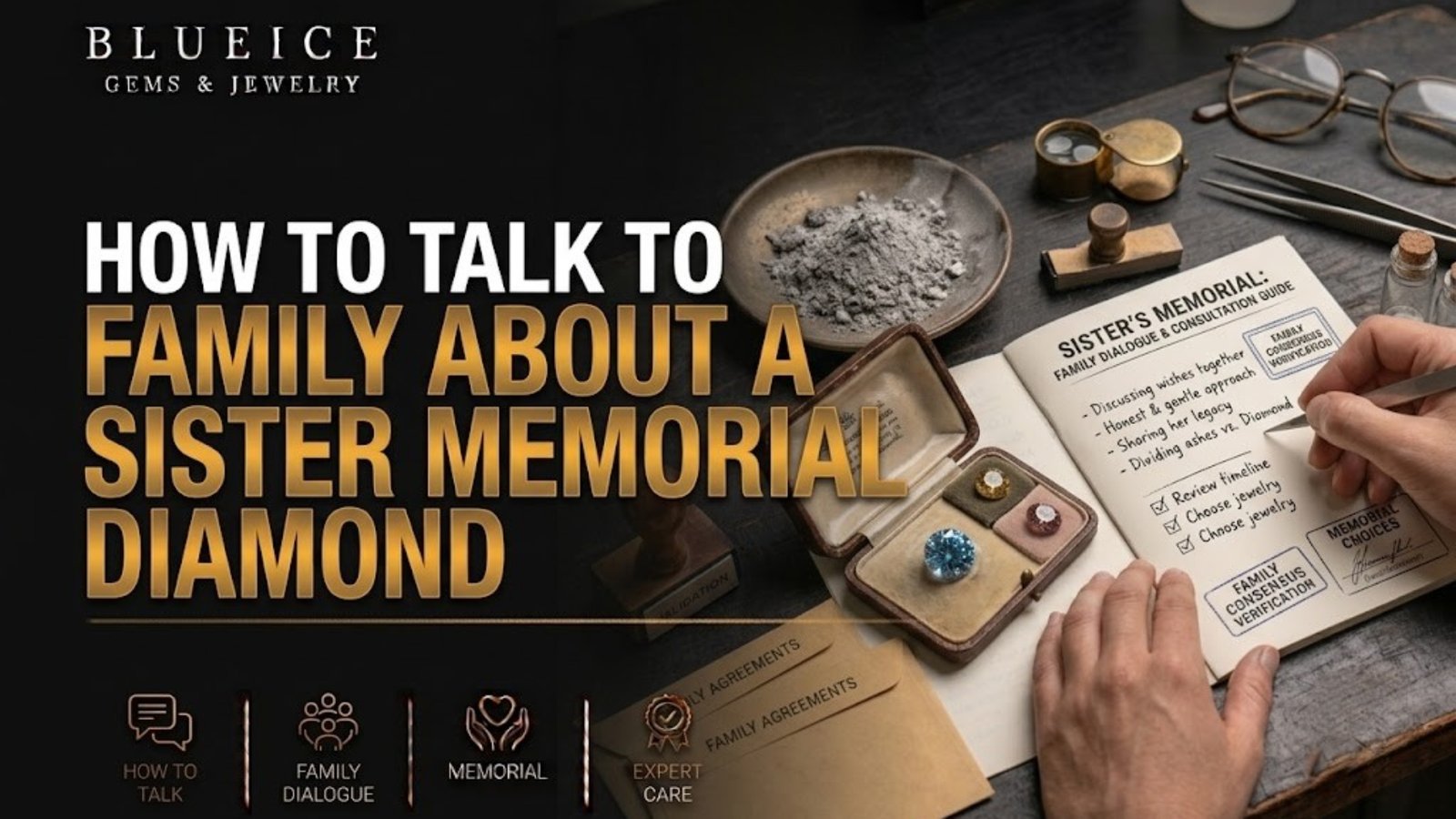
Raising the idea with her family can feel harder than deciding you want it. The first conversation about a sister memorial diamond is usually with whoever has authority over her remains, and that is often not a sibling. Start there, explain why it matters to you, ask for something small and specific, such as a few tablespoons of ashes or a lock of hair, share the provider’s custody paperwork, and write down what everyone agrees.
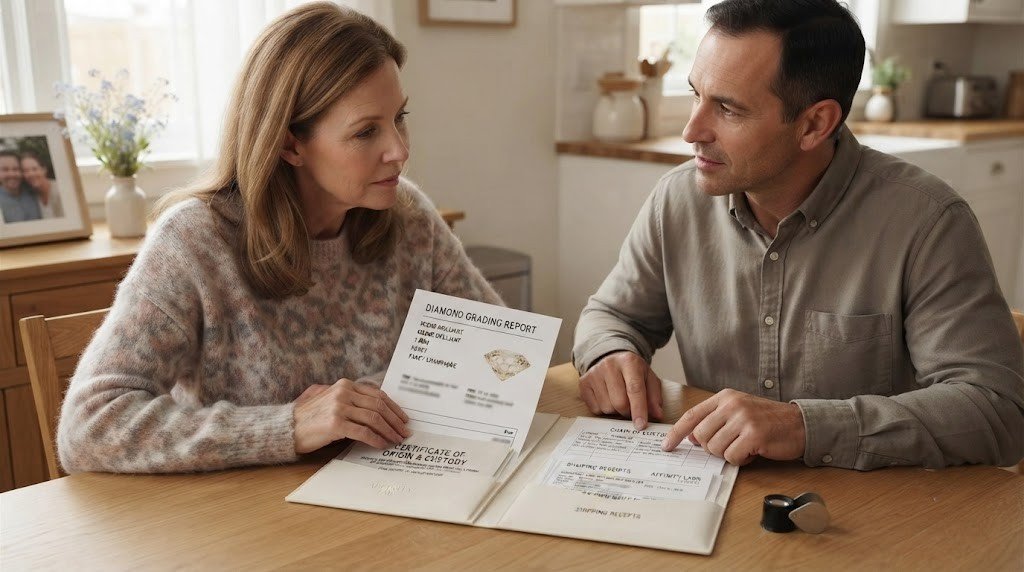
about a sister memorial diamond

Why Does Talking About a Sister Memorial Diamond Involve So Many People?

When a sister dies, the people who loved her often fill several roles. She may have had a spouse or partner, children, living parents, and brothers and sisters of her own, including half siblings, step siblings or adopted siblings. Each of them may feel a claim on how she is remembered, and none of those claims cancels another.

A memorial diamond also involves her physical remains. A provider needs a portion of her ashes or some of her hair, and that material has to be released by someone with the right to release it. That is why a decision about a sister memorial diamond rarely belongs to one person alone.

None of this means your wish counts for less. It means the path to it runs through other people. If you are still at the beginning, our guide on where to begin with the whole decision explains the wider choices.

Who Has the Final Say Over Her Remains?

Authority over remains comes from state rules and from any wishes she put in writing, so there is no single national answer. Before any discussion about a sister memorial diamond, it helps to understand how your state approaches it. A typical default in many states starts with a spouse or registered partner, moves to adult children, then to parents, and reaches siblings after that.

States do not all use that default, and an agent she designated or a declaration she signed can change the situation. A sibling often is not the person who decides, but that does not leave you without a voice. Siblings can ask, offer and take part, and in some situations a sibling does hold authority.

A call to the funeral home or crematory is often enough to learn whose signature is on her cremation paperwork. If the picture is still unclear, a local attorney can explain how your state handles it.

If she left hair at home, in a brush or in a keepsake, those belongings can form part of her estate, and the rules differ from state to state. Speak with the executor or whoever holds authority before collecting it, so nobody feels something was taken without asking.

Who Might You Need to Talk With, and What Are They Weighing?

The people involved differ in every family. This table can help you think through each conversation about a sister memorial diamond before it happens. It is not a list of people you must approach.

PersonRole they may haveWhat they may be weighingA respectful way to begin
Her spouse or partnerCommonly first in many states, although rules varyTheir plans for her ashes and how public a memorial feelsAsk privately and early, and make clear that their decision matters
Her adult childrenCan hold authority in some states, especially if there is no spouseTheir own wish for a keepsake and protecting their parent’s memoryOffer to include them and ask what they would want
Her parentsMay hold authority or simply carry deep feelingsGrief, faith and possibly different views from each otherSpeak with each parent in the way that suits them
Other siblingsShare your relationship with herWhether they want a stone and what feels fairAsk what they want rather than assuming
Relatives with faith concernsMay or may not hold authority, but can be influentialTeachings on cremation and dividing remainsListen first and suggest speaking with their own faith leader
The executorManages her estate, including belongingsHair or jewelry that may belong to the estateCheck before collecting anything she owned

Thinking through these relationships can show you who to speak with first and who should hear the plan from you directly. Any conversation about a sister memorial diamond is easier when the people closest to the decision are not caught by surprise.

What Are Six Steps for Talking About a Sister Memorial Diamond?

No script fits every family, but a simple order helps. These six steps keep a talk about a sister memorial diamond focused and respectful.

  1. Find out who has authority. Ask the funeral home or crematory who signed the paperwork, or ask the family directly, before planning anything else.
  2. Choose a calm time. Avoid the funeral, the reading of a will, or a crowded holiday table.
  3. Lead with her, not the product. Explain what the idea means to you before describing how it works.
  4. Make a small, specific request. Ask whether a few tablespoons of ashes or a small lock of hair could be used rather than making a vague request for some of her remains.
  5. Share the provider’s paperwork. Show how the material would be tracked, used and, where possible, returned.
  6. Write down what everyone agrees. Record who gave permission, what material was shared, who owns each stone and who pays.

Each step gives your family space to understand the idea and ask questions before making a decision.

When Should You Start Talking About a Sister Memorial Diamond?

There is rarely a perfect moment, but some moments are harder than others. The days around the funeral are full of logistics, and a new idea can feel like one more demand. Raising it during a dispute over belongings or a will can make it sound like another claim.

A memorial diamond typically takes six to ten months to complete once the provider receives the material, although the actual timeline depends on the provider and the order. The stone itself does not set a deadline for starting. If her ashes are going to be scattered, buried or placed in a niche, however, the conversation needs to happen before that. You can explain the timing clearly without pressuring anyone.

A private conversation, in person or by phone, often works better than a group message because it gives the other person room to react and think. A question about a sister memorial diamond dropped into a family group chat can force everyone to answer publicly before they have had time to consider it.

What Should You Say First About a Sister Memorial Diamond?

Start with her. A relative who hears that you want to make a diamond from her ashes may picture something they are not ready for. A relative who first hears that you are looking for a way to keep her close in everyday life can understand your feelings before considering the product.

Then explain the request clearly. You might say that you would like to ask whether a small portion of her ashes or a little of her hair could be set aside for a memorial stone. Explain that you will share information about how the material would be handled and documented.

Plain words in your own voice work better than a polished speech. Give your relative time to respond and do not expect an immediate answer.

Expect questions you cannot answer on the spot. Saying you will find out is better than guessing. Relatives with practical questions about a sister memorial diamond deserve accurate answers, and a wrong answer given to smooth the moment can damage trust later.

How Do You Answer the Question, Is It Really Her?

A skeptical relative may ask this first, and an honest answer is the most reassuring one. A memorial diamond is a real diamond grown in a laboratory, usually using a method also used for other lab grown diamonds. Carbon is extracted from ashes or hair, purified and used during the crystal growth process. Supplemental laboratory carbon may also be used to provide enough material for growth.

For ashes, usable carbon is only roughly 0.5 to 4 percent of the ash by weight. The share of the finished stone’s mass attributed to the person’s carbon varies by provider and process. Some providers cite figures around 10 to 15 percent, while others cite lower figures. Ask the provider to explain its process and what it can document for your order.

Hair contains a substantial amount of carbon by weight, but the finished stone’s precise carbon contribution depends on the process. Ask the provider directly rather than relying on a general estimate. Our article on whether a memorial diamond is really made from her ashes explains this subject in more detail.

Relatives may also worry that a diamond would use most of her ashes. Providers often request an amount ranging from a few tablespoons to around four ounces, approximately 100 grams, although requirements vary. Hair based orders usually require a small lock or another specified amount.

That can leave most of her ashes available for whatever the family has already planned. Our guide to how much ash a sister’s stone usually needs explains the range to discuss before making a decision.

How Do You Talk With Parents Who Are Grieving Differently?

If both her parents are living, they may respond very differently. One may want a stone while the other finds the idea painful. They may be divorced or remarried, and she may have had a step parent who raised her. Treat each relationship on its own terms.

Speak to each parent separately if they are not on the same page, and avoid asking one to persuade the other. If a parent holds legal authority, their role generally depends on the rules that apply to the situation and any written wishes your sister left. If a parent does not hold that authority, they may still deserve to hear your thoughts before anything happens.

Resist comparing who is grieving more. A parent’s loss and a sibling’s loss are different experiences, and both deserve room. Conversations about a sister memorial diamond go better when everyone’s feelings are allowed to be real at the same time.

What If Other Siblings Want a Stone, or Do Not?
Siblings may each want a stone, want to share one, or want nothing to do with the idea. Every one of those choices is valid. One sibling who would rather keep a photograph and another who wants a ring are both remembering her.

Because only a portion of ashes or hair may be needed, more than one stone can sometimes be made from the same source. What is possible depends on the provider, the available material and the requirements for each order. Our guide to more than one relative receiving a diamond from her ashes explains how families can approach this question.

Be careful not to assume who counts as a sibling when discussing a sister memorial diamond. Half siblings, step siblings and adopted siblings may feel the same connection, and leaving someone out by accident can hurt more than an open disagreement.

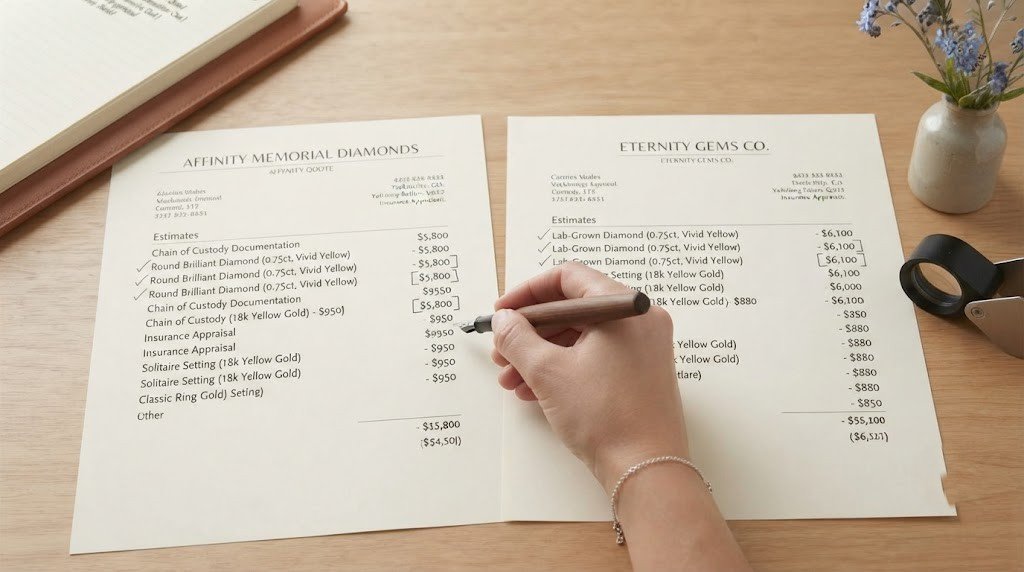
Cost belongs in the family conversation, too. As an illustrative industry range for 2026, smaller stones of roughly 0.10 to 0.25 carats may cost around $1,500 to $3,500. Settings, engraving and grading may cost extra. Prices vary by provider, size, color and other options, so request a written quote before agreeing to an order.

Decide early whether each person will pay for their own stone or whether costs will be shared. Clear expectations can prevent misunderstandings later.

How Do You Handle Faith Questions About a Sister Memorial Diamond?

Some relatives will have religious concerns about cremation, dividing remains or keeping remains at home. Practices differ by faith, denomination and individual faith leader. Religious teachings often address cremation and the care of ashes, while a family’s questions about memorial diamonds may require a conversation about those broader teachings.

Listen before responding, and do not try to argue anyone out of a belief. Suggest that the relative speak with their own faith leader, or offer to go with them. If cremation itself is the concern, a diamond grown from hair does not require cremation. That distinction may matter to some families. Our complete guide to a diamond grown from her hair explains how that option works.

Respecting a faith concern about a sister memorial diamond does not always mean dropping the idea. It may mean waiting, considering hair instead of ashes, or keeping the stone private. The right decision is one the family can approach with care and understanding.

What Can the Provider’s Paperwork Show Your Family?

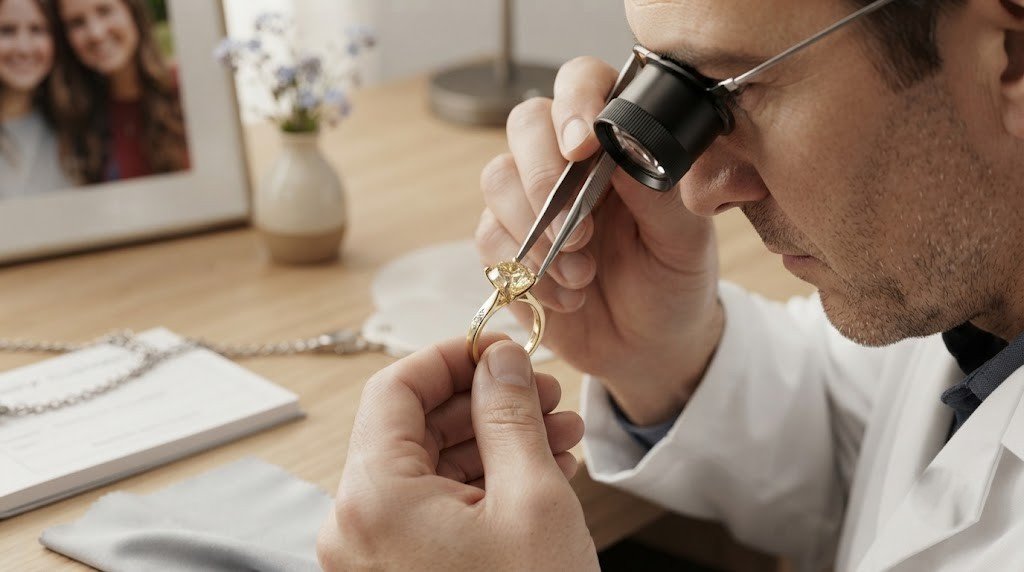
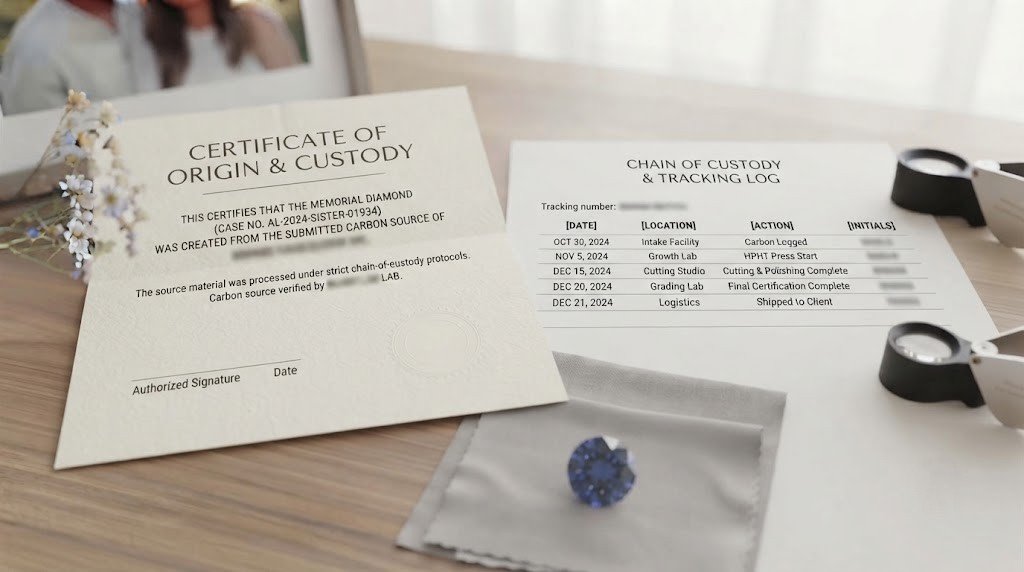
Handing over a portion of someone’s remains takes trust. Ask the provider how it tracks the material from arrival through the finished stone and what documentation it supplies. A certificate of origin or authenticity may record details about the diamond and its stated source. The exact documentation depends on the provider, so review it before committing.

Before the conversation, ask the provider to explain or send written answers to these questions.

  • How is the material labeled and tracked at each stage?
  • What happens to ashes or hair that are not used, and can unused material be returned?
  • What happens if the diamond does not grow as planned or is damaged during cutting?
  • What information appears on the origin certificate?
  • Is an independent grading report available, and what does it cover?

Our list of questions to ask a provider before sending her ashes covers more ground. Sharing written answers lets relatives read at their own pace. Clear documents can address concerns about a sister memorial diamond more effectively than reassurance offered in the moment.

What If the Answer About a Sister Memorial Diamond Is No or Not Yet?

A not yet is a real answer, and it may be temporary. Someone who cannot face the idea early on may feel differently later. Thank them for being honest and ask whether you may raise the subject again at a time they choose.

A firm no from the person with authority over her remains is harder to hear. It is fair to ask gently whether a particular part of the idea is the obstacle, such as using ashes, wearing jewelry, the cost or the timing. Sometimes a different approach, such as using hair or having another relative keep the stone, may address the concern. If it does not, respecting the answer can help protect your relationship.

If you believe a decision is unfair, a local attorney can explain the rules that apply in your state. Formal disputes over remains can place lasting strain on family relationships. Other ways of keeping her close remain possible whatever the answer. Our comparison of a memorial diamond and a traditional urn may help if the family prefers an urn.

How Do You Put Agreements About a Sister Memorial Diamond in Writing?

Writing things down is not a sign of mistrust. It protects everyone from remembering the same conversation differently years later. A short email that each person replies to can provide a useful record. Whether a more formal agreement is appropriate, especially when money or estate property is involved, is a question for a local attorney.

A written note should answer these questions.

  • Who gave permission for the material to be used?
  • What amount of ashes or hair was shared, and with whom?
  • How many stones will be made?
  • Who owns each stone?
  • Who will pay for the process, settings and any additional services?
  • What happens to unused material?
  • Who will keep the origin certificate and related paperwork?
  • If two people share a stone, where will it be kept and what happens to it later?

Keep copies with the provider’s paperwork, and consult a local attorney if estate questions are involved. An agreement about a sister memorial diamond written while everyone is calm is easier to understand and follow than one pieced together after a misunderstanding.
Frequently Asked Questions

Do I need permission to use my sister’s ashes for a diamond?

You will generally need agreement from whoever has authority over her remains. Who holds that authority depends on state rules and anything she put in writing. It may be a spouse, adult children or parents. The funeral home or crematory can help identify the person who signed the paperwork, and a local attorney can explain the applicable rules.

Can I ask for a lock of her hair instead of ashes?

Yes. Some families find this a gentler request. Hair does not require cremation, and providers typically request only a small amount. Hair she left at home may belong to her estate, so check with the executor or whoever has authority before collecting it.

What if her spouse and her parents disagree?

Where relatives disagree, the person with authority under the applicable rules and her written wishes generally has the deciding role. Speak with each side separately, avoid taking sides and explore an option everyone can accept, such as using a small portion of material or considering a hair based stone.

Should I contact a provider before telling the family?

Gathering information about a sister memorial diamond first is reasonable because it helps you answer questions accurately. Avoid committing to an order or sending material until the person with authority has agreed. This helps the family understand that the decision is not being made without them.

Can a relative who said no change their mind later?

Yes. Feelings about a sister memorial diamond can change over months or years. If ashes or hair are kept safely and the material remains suitable, it may be possible to use them later. Leave the conversation open, ask whether you may raise the idea again and let the relative choose when.

Who should keep the origin certificate if a stone is shared?

Agree on this in writing before the stone is made. The person who keeps the stone may hold the original certificate, while other family members keep copies. Keeping the documentation with the stone can be helpful if it is reset or passed down in the future.

Final Thoughts on Raising It With Her Family

The wish to carry something of your sister with you is ordinary and human, and so is the worry about how her family will feel about a sister memorial diamond. Neither makes you wrong for asking.

Go gently, ask clearly and accept that the answer may take time. Give your family accurate information, respect the person who has authority over her remains, and write down any agreement. A conversation handled with patience can help protect family relationships, whatever is decided in the end.

Learn More About Sister Memorial Diamonds

Talk With Memorial Diamond

If you are preparing to talk with family about a sister memorial diamond and want accurate answers to bring to that conversation, visit Memorial Diamond. Learn more about how memorial diamonds are made and what questions to ask before deciding, at a pace that suits you and your family.

Sister Memorial Diamond vs. Traditional Urn

Sister Memorial Diamond vs. Traditional Urn: What to Know

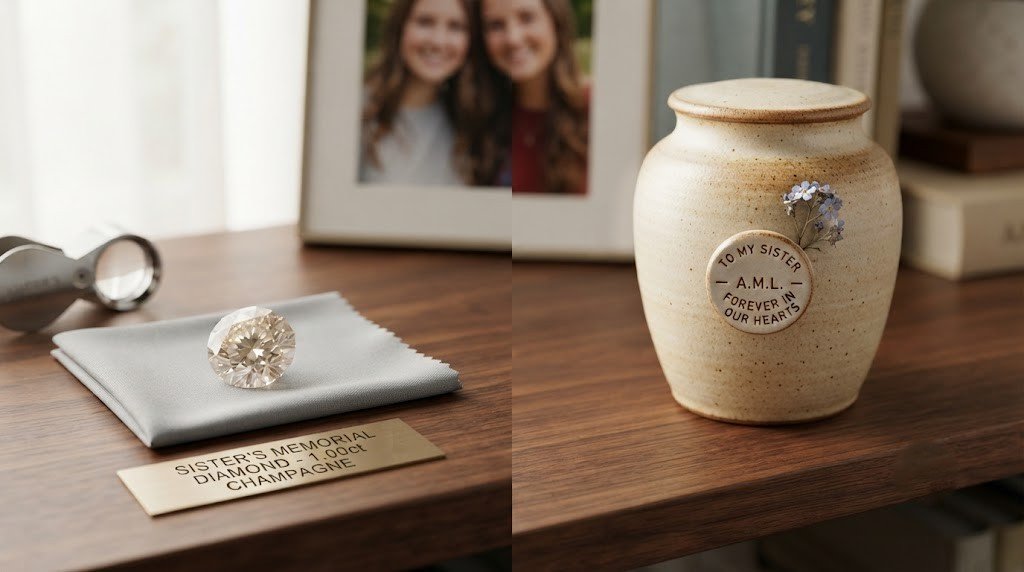
Whether your sister’s ashes already rest in an urn or the decision is still ahead, you might wonder whether a diamond would let you carry her memory differently. A sister memorial diamond vs urn decision is rarely an either-or choice. An urn keeps her cremated remains together in one place, while a memorial diamond is a real lab-grown diamond created using carbon recovered from a small portion of the ashes. The two can exist side by side.

Both options offer meaningful ways to remember someone you love. The right choice depends on your family’s wishes, your beliefs, your budget and how you would like to keep her memory close. Understanding the differences can help you make a thoughtful decision without feeling that one option is more meaningful than the other.

sister memorial diamond vs urn

What Does Each Option Actually Keep of Her?

An urn holds her cremated remains as they are. Nothing needs to be extracted or transformed. The ashes returned by the crematory are placed in a container chosen by the family. The urn may remain at home, rest in a columbarium niche or be buried, depending on family preferences, applicable rules and religious or cultural practices.

Urns are available in many materials, including metal, wood, stone, ceramic, glass and biodegradable materials. They also come in different sizes, from full-size urns to small keepsake containers that hold a portion of the ashes.

The diamond side of the sister memorial diamond vs urn comparison preserves something different: carbon recovered from a portion of the ashes. Cremated remains consist largely of mineral material from bone, and the amount of usable carbon varies. The provider extracts and purifies the available carbon before preparing it for diamond growth. Providers may also combine personal carbon with supplemental laboratory carbon, depending on their process.

A memorial diamond is a real diamond, typically grown using high-pressure, high-temperature (HPHT) technology. Some providers use chemical vapor deposition (CVD). The resulting diamond can be cut and polished into a chosen shape and kept as a loose stone or set into jewelry.

The important distinction in a sister memorial diamond vs urn decision is that the urn keeps her cremated remains together, while the diamond carries some of the recovered carbon in a new form. A diamond should not be described as containing all her ashes, and an urn is not a less meaningful memorial simply because its contents remain unchanged.

How Does a Sister Memorial Diamond vs Urn Comparison Look Side by Side?

Comparing the practical differences can help you decide which option suits your needs. The table below covers eight considerations, including what each option preserves, cost, portability, ownership, durability, timing and religious concerns.

Point of ComparisonTraditional UrnSister Memorial Diamond
What it preservesHer cremated remains, kept together and unchanged.Carbon recovered from a portion of the ashes, potentially combined with laboratory carbon.
Typical costVaries widely by material, size, design and maker.General industry estimates range from about $1,500 to $3,500 for 0.10 to 0.25 carats, with larger stones costing substantially more.
PortabilityUsually kept in one place, such as a home, niche or grave.Can be worn as jewelry or carried as a loose stone.
Who keeps itOften the person authorized to receive or manage the remains, subject to applicable rules.May be kept by the person who orders it, with appropriate authorization for the material used.
DurabilityDepends on the urn’s material and storage conditions. Some biodegradable urns are designed to break down.Diamond ranks 10 on the Mohs hardness scale, but a hard impact can still chip it.
TimingGenerally available once the remains are returned and the urn is selected.Typically takes months to produce, with general estimates of 6 to 10 months from receipt of the material.
Religious considerationsMay fit traditions that permit cremation, although some traditions specify how ashes should be kept or laid to rest.Involves setting aside a portion of ashes, and religious views on this practice vary.
Long-term optionsCan remain in one place or be moved between homes, depending on the family’s wishes.Can be kept as a loose stone, set in jewelry or passed on to another person.

Think of these differences as trade-offs rather than a scorecard. In a sister memorial diamond vs urn comparison, an urn offers an immediate way to keep her remains together. A diamond offers portability and the possibility of carrying a personal keepsake, but it generally involves a longer wait and a larger financial commitment.

Budget may influence your decision. Memorial diamond prices vary according to carat size, color, cut and provider. Settings, engraving and independent grading may also be quoted separately. The figures above are general industry estimates, not confirmed Memorial Diamond prices. For more detail, read our sister memorial diamond cost breakdown.

Why Does the Urn Often Stay With Whoever Holds Authority?

This is an important part of the sister memorial diamond vs urn decision for siblings. The person who wants to keep the urn may not be the same person who feels most connected to the memory of the person who passed away.

Practices and legal requirements vary by state and crematory. The remains are generally released to the person authorized to receive them or someone that person designates. That individual may then decide where the urn is kept, subject to applicable law and any relevant instructions.

In some states, a spouse or registered partner, adult children or parents may have priority over siblings when decisions about remains must be made. There is no single national rule that applies to every situation. Your sister’s written wishes, any appointed representative and the applicable state law may affect who has authority.

As a result, the urn may remain with her spouse, partner, adult child or parent, while you visit it rather than keep it yourself. That arrangement does not measure the strength of your relationship with her. It reflects the practical responsibilities and rules surrounding her remains.

For some siblings, part of the appeal of a sister memorial diamond vs urn decision is that a diamond may offer a personal keepsake they can keep close, even if they do not hold the urn. However, using a portion of the ashes still requires appropriate authorization.

If you are unsure who signed the cremation authorization, the funeral home or crematory may be able to clarify the records. A local attorney can explain how your state’s requirements apply. If you need to ask a family member for a small portion of the ashes, a specific and respectful conversation can help. Our guide to talking with family about a sister memorial diamond offers additional guidance.

Can a Stone and an Urn Coexist?

Yes. This may be the most helpful way to think about the sister memorial diamond vs urn question. Choosing a memorial diamond does not necessarily mean giving up the urn or using all the ashes.

Providers have different material requirements. Some request a few tablespoons of ashes, while others may request a larger amount, potentially up to about 4 ounces or 100 grams. The quantity depends on the provider’s process and should always be confirmed before sending anything.

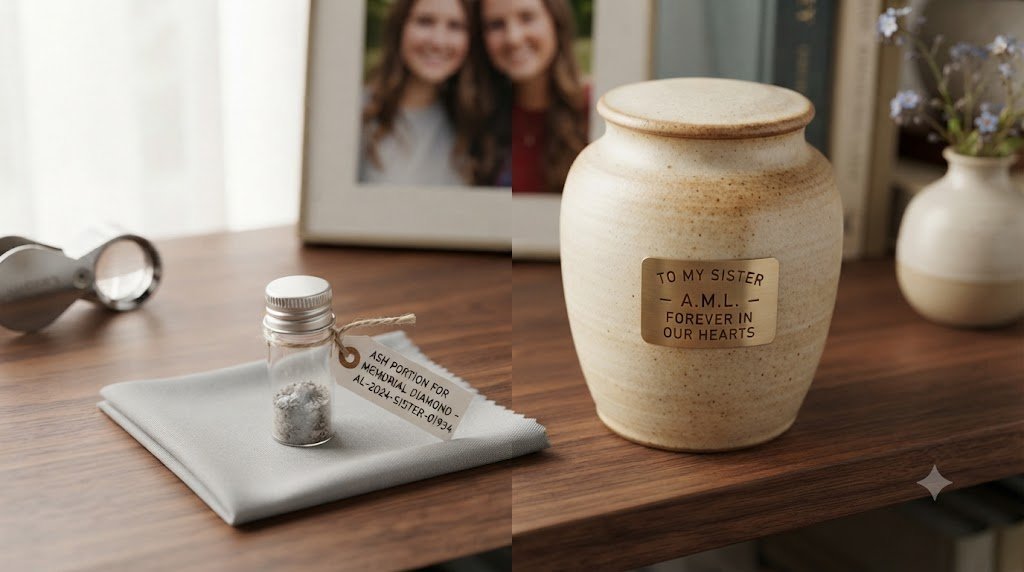
For many families, setting aside an authorized portion allows most of the ashes to remain in the urn. The urn can stay in its existing place while a diamond is created from the portion provided. You do not need to empty the urn to explore both options.

Sending more ashes does not automatically make a larger or faster-growing diamond. The final carat size depends on the growth process and other production factors, so provide only the amount the provider requests.

If your family chooses both a diamond and an urn, consider these steps:

  1. Agree on the portion. Discuss the amount with the person authorized to make decisions about the remains and obtain the necessary permission.
  2. Arrange careful handling. Ask the funeral home or an authorized family member to help transfer the portion into an appropriate sealed container.
  3. Document the arrangement. Record the date, the amount and who the portion is intended for.
  4. Keep the urn in its chosen place. The remaining ashes can stay in the urn, whether it is kept at home, in a niche or elsewhere.
  5. Follow the provider’s shipping instructions. Use the approved packaging and shipping method rather than improvising.

Several relatives may be able to receive individual stones from one source, depending on the amount of usable material and the provider’s process. Our guide to sharing her ashes among several relatives covers authorization, separate records and written agreements.

Where Do Keepsake Urns and Other Options Fit In?

Thinking only in terms of a sister memorial diamond vs urn choice can overlook useful alternatives. A keepsake urn, for example, is a smaller container designed to hold a portion of cremated remains. It lets more than one family member keep some of her ashes unchanged, provided the arrangement is authorized and acceptable to the family.

For someone who values keeping actual ashes rather than carbon in a new form, a keepsake urn may be a better fit than a diamond. Its cost depends on the material, size, design and maker.

Other possibilities include:

  • A memorial pendant with a sealed chamber: Some pendants can hold a small portion of ashes while keeping them in their original form.
  • Scattering ashes: Some families choose a place that mattered to their loved one, subject to local rules and permission.
  • Burial of the urn: A family plot or cemetery may provide a dedicated place to visit and remember her.
  • A hair-based memorial diamond: If suitable hair was kept, a provider may be able to use it without using cremated remains. Confirm the requirements and any necessary authorization first.

None of these options is inherently better than another. Each meets a different need: having a place to visit, carrying a keepsake, keeping ashes unchanged or creating something new. Families can combine options when their wishes and circumstances allow.

How Do Cost and Care Compare Over the Years?

A sister memorial diamond vs urn comparison should include the total cost, not just the initial purchase price. Both can involve a one-time purchase, but additional services and placement arrangements may affect the final amount.

For a memorial diamond, ask whether the quote includes the finished stone, cutting and polishing, independent grading, engraving, the jewelry setting and shipping. Each provider structures its pricing differently, so request an itemized quote before committing.

Urn prices also vary considerably according to material, craftsmanship and design. If the urn will be placed in a columbarium or cemetery, ask about placement, opening, maintenance or other applicable fees. These costs depend on the facility and arrangement.

Day-to-day care is different for each option. Diamond ranks 10 on the Mohs scale of mineral hardness, which means it resists scratching very well. However, hardness does not make it impossible to damage. A hard impact at the wrong angle can chip a diamond, and a jewelry setting can loosen over time. Ask a jeweler to recommend suitable inspections and care.

An urn kept at home needs a stable location away from accidental knocks, pets and other hazards. An urn placed in a niche may require little day-to-day attention, although any maintenance or access arrangements depend on the facility.

Insurance is another point worth checking. Ask an insurer whether a memorial diamond or a valuable urn can be covered, what documentation or appraisal is required, and how the item would be assessed under your policy. Coverage varies, so do not assume either item is automatically insured.

Over time, both items may be passed to another family member or trusted person. A ring or pendant can be inherited, while an urn may move between households as family circumstances change. Writing down your wishes about who should eventually receive each item can help prevent uncertainty later.

Does Faith Change the Sister Memorial Diamond vs Urn Decision?

Religious beliefs may be an important part of a sister memorial diamond vs urn decision. Views on cremation, dividing ashes and keeping remains vary across faiths, denominations, communities and individual families. General teachings about cremation do not necessarily answer every question about memorial diamonds specifically.

The following overview is general information, not a substitute for guidance from your own religious leader. If faith is central to your decision, ask someone familiar with your tradition and your family’s circumstances.

  • Catholic: Catholic guidance permits cremation under specified conditions and generally directs that cremated remains be kept together in a sacred, approved place rather than divided among relatives or kept privately at home. Specific questions about setting aside a small portion for a diamond should be discussed with a knowledgeable Catholic clergy member.
  • Jewish: Views and practices differ among Jewish movements and communities. Orthodox and Conservative traditions generally oppose cremation, while Reform communities may approach the issue differently. Ask your rabbi about your family’s circumstances and any concerns about dividing or transforming remains.
  • Muslim: Cremation is generally prohibited in mainstream Islamic practice. A diamond made from hair raises a different question from one made using cremated remains, but religious guidance should still be sought for your particular situation.
  • Hindu: Cremation is a traditional funeral practice, and immersion of ashes in sacred waters is customary in many communities. Whether a portion may be retained for a keepsake or memorial diamond depends on family, regional and community practices.
  • Buddhist: Cremation is practiced in many Buddhist traditions, although customs vary. Views on keeping remains or turning them into a keepsake may differ among teachers and communities.
  • Protestant: Practices vary by congregation and denomination. Some communities accept cremation without concern about dividing ashes, while others may have specific views about how remains should be treated.
  • Secular or non-religious: The choice is generally guided by personal meaning, family agreement and any wishes expressed by the person who passed away.

If dividing the ashes is not acceptable to your family, the sister memorial diamond vs urn decision does not necessarily have to end there. A hair-based memorial diamond may be an alternative if suitable hair is available and its use is authorized. Read our sister hair diamond guide for more information. Before using hair kept at home, check with the executor or person responsible for the belongings, as ownership and estate rules can vary.

Which Questions Help You Decide?

There is no universal right answer to the sister memorial diamond vs urn question. The goal is to choose an option that respects your sister, fits your family’s circumstances and feels right to you.

These questions may help you clarify your priorities:

  1. Who is authorized to make decisions about her remains, and what do they want?
  2. Did your sister express her wishes verbally or in writing?
  3. Would you prefer to keep her remains unchanged or carry a portion of the recovered carbon in a new form?
  4. Would you wear a memorial stone regularly, or would you prefer to keep it somewhere safe?
  5. What can you comfortably spend, and would it be better to make the decision later?
  6. Do your religious beliefs or family traditions call for the ashes to remain together?
  7. If using ashes is not suitable, would a hair-based memorial diamond be an option?
  8. Who will care for the urn and any memorial jewelry in the years ahead?

If your answers point toward a diamond, our guide to choosing a memorial diamond for your sister explains where to begin. If you prefer to keep the ashes together, an urn can be a complete and meaningful choice in its own right.

Where Does Memorial Diamond Stand in This Comparison?

Memorial Diamond offers memorial diamonds, so we have a direct interest in one side of the sister memorial diamond vs urn comparison. It is important to say that openly. A traditional urn is a complete and dignified memorial, and this guide is not intended to suggest otherwise.

The two options preserve different things and serve different preferences. An urn keeps cremated remains together, while a memorial diamond offers another way to keep a part of a loved one close. Some families may prefer one option, while others may choose both.

If you are exploring the process for the first time, our complete guide to sister ashes diamonds explains the broader journey from source material to finished stone.

Take time to compare the process, current pricing, material requirements and expected production timeline before making a decision. The best choice is the one that fits your circumstances, your family’s wishes and the way you want to remember your sister.

Frequently Asked Questions

Is a memorial diamond more respectful than keeping her in an urn?

No. A sister memorial diamond vs urn decision is not a test of devotion. An urn keeps her cremated remains together, while a memorial diamond carries a portion of recovered carbon in a new form. Respect comes from honoring her wishes, considering your family’s circumstances and making a thoughtful decision. Either option can be meaningful.

Can I still get a diamond if the urn is already in a niche or buried?

Possibly, but accessing an urn in a niche or cemetery may require permission from the responsible person and the facility. There may also be fees or additional procedures. A memorial diamond made from suitable hair may be an alternative, provided its use is appropriate and authorized.

Will taking ashes for a diamond leave the urn noticeably emptier?

Usually, the quantity requested is only a portion of the remains, but the exact amount varies by provider. Ask the provider how much material is required, and agree on the portion with the person authorized to make decisions about the ashes before anything is removed.

Can ashes kept in an urn for years still be used for a diamond?

They may be suitable, even after years of storage, but each provider has its own material requirements. Keep the urn appropriately sealed and stored, and ask the provider whether the age and storage conditions of the ashes affect its process.

What if her spouse keeps the urn and I would like a stone?

You can ask her spouse respectfully whether they would consider allowing a small portion of ashes to be used. If they hold the relevant authority, their approval may be required. A funeral director or local attorney can help clarify the applicable rules if the situation is complicated.

Which costs more over time, an urn or a memorial diamond?

The answer depends on the choices involved. Memorial diamonds can cost substantially more than many urns, particularly as carat size increases or when optional services are added. Urn costs also vary, and cemetery or columbarium fees may apply. Compare the full quoted costs, including any setting, grading, placement and maintenance charges.

Final Thoughts on Diamonds, Urns and Your Sister

Sometimes, the sister memorial diamond vs urn comparison becomes easier once you realize that the two options do not have to compete. The urn can remain where it is, keeping her remains together, while a small authorized portion is used to create a diamond you can carry. Other families decide that the urn is exactly what they want, and that decision is complete in itself.

There is no need to choose a diamond to prove how much you loved your sister. Nor do you need to keep every part of her remains in one place to honor her memory. Think about her wishes, your family, your beliefs and what will bring you comfort over time.

Whatever you choose, let the decision come from what feels right for your family rather than from the idea that one option demonstrates more love than another.

Learn More About Sister Memorial Diamonds

Talk With Memorial Diamond

If you are weighing a sister memorial diamond vs urn decision or wondering whether both could work for your family, visit Memorial Diamond. You can ask questions about material requirements, authorization, timing and available options before deciding. Take the time you need to choose an approach that feels right for you and your family.
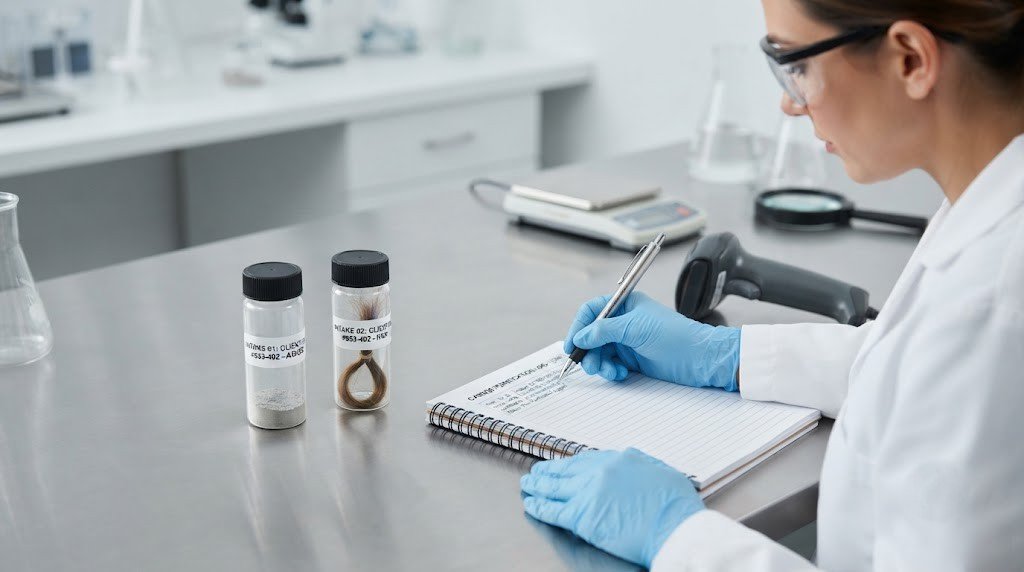
How Much Does a Sister Memorial Diamond Cost

How Much Does a Sister Memorial Diamond Cost?

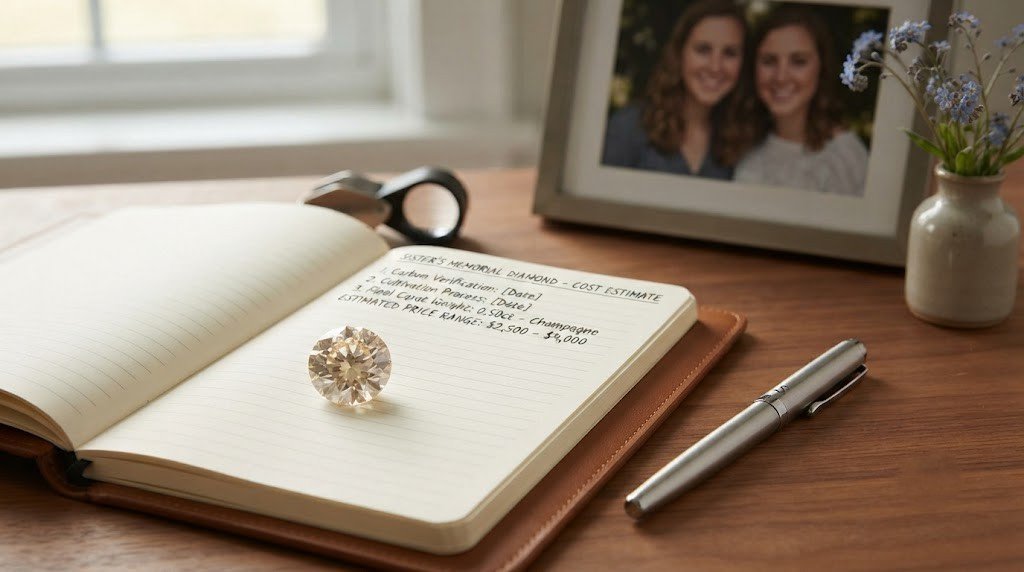
It can feel uncomfortable to put a number beside your sister’s name, and wanting a clear figure before you commit is completely reasonable. Across the industry in 2026, the sister memorial diamond cost you may be quoted usually sits at roughly $1,500–$3,500 for a 0.10–0.25 carat stone, roughly $5,000–$15,000 for 0.5–1 carat, and roughly $20,000–$75,000 or more for 2–5+ carats. Carat, color, cut, grading, and setting all influence the final price.

These figures are general industry estimates, not prices published by Memorial Diamond. Treat any sister memorial diamond cost you see online as a starting point rather than a promise. Below, you will find what moves a quote within each price range, which extras may be billed separately, and how siblings can share the expense fairly.

sister memorial diamond cost

How Does Sister Memorial Diamond Cost Change With Carat Size?

Carat weight is one of the biggest factors influencing a sister memorial diamond cost. A larger stone generally needs more growth time and tighter process control. The table below summarizes the 2026 industry price ranges supplied for this article. These figures describe broad market estimates, not the prices of any one provider.

Diamond sizeGeneral industry price range (2026)What to consider
Approximately 0.10–0.25 ct$1,500–$3,500A smaller stone that may suit a pendant, stud, or delicate ring
0.5–1 ct$5,000–$15,000A larger stone that may serve as the main feature of a ring
Approximately 2–5+ ct$20,000–$75,000+Larger stones generally involve longer growth times and can have significantly higher prices

Two important details sit behind these ranges.

First, the published bands skip some weights. If you are interested in a third of a carat or a carat and a half, request a written quote for that exact size instead of guessing from the nearest price band.

Second, the largest price range is open-ended. A very large or colorless stone may cost more than the upper estimate.

A quote of around $5,000, for example, may sit near the bottom of the 0.5–1 carat range, but it might cover only the loose diamond. A jewelry setting, independent grading report, or shipping may be charged separately. Asking what the headline price includes helps you understand the complete sister memorial diamond cost before committing.

Carat size can also affect the production schedule. The stages and typical waiting time for a sister’s stone explain why larger diamonds may take longer to produce.

Which Choices Move the Price Up or Down?

Within each size range, several choices can move the sister memorial diamond cost higher or lower.

  • Carat weight: More carat weight generally means more growth time, so prices usually rise significantly as stones become larger.
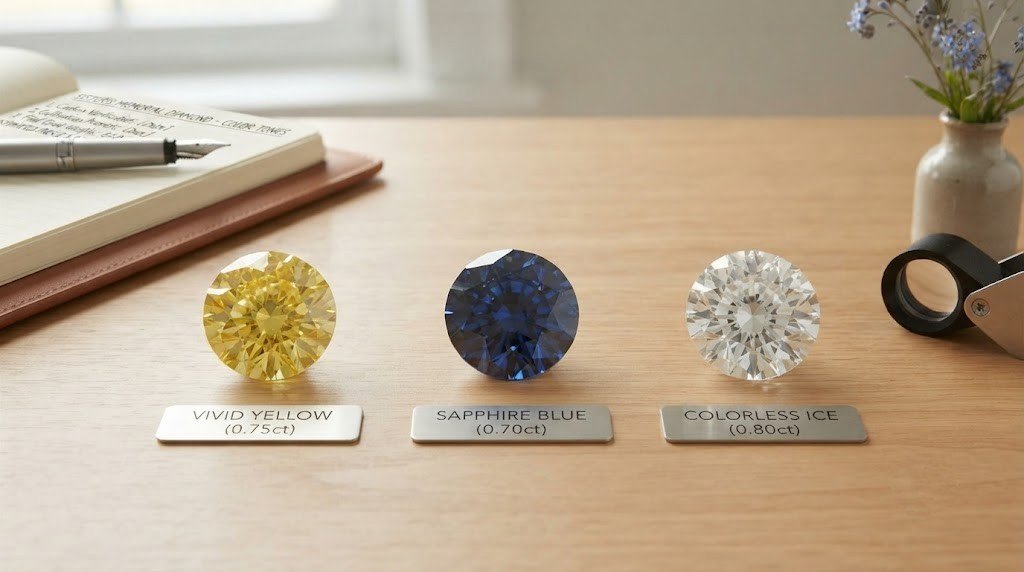
  • Color: Nitrogen can contribute to yellow tones, while boron can contribute to blue tones. Colorless stones may require additional processing and typically cost more than yellow, blue, or champagne stones of the same size. Some providers also offer treated colors such as red, pink, green, or black.
  • Cut and shape: A standard round cut may be used as a baseline. Shapes such as cushion, oval, princess, or emerald may be priced differently.
  • Grading: An origin or authenticity certificate may be included by the provider. An independent report assessing cut, color, clarity, and carat weight is often optional and may be billed separately.
  • Setting: Metal type, jewelry design, and the jeweler’s labor all influence the total price.

Clarity can affect price too, although carat size and color may have a more noticeable impact on many memorial diamond quotes. Ask each provider what clarity range is typical for its process and whether an independent grading report is available.

If color matters to you, review the range of tones memorial stones tend to show before requesting a quote. A colorless stone may cost considerably more than a yellow, blue, or champagne stone of the same weight.

You do not need to choose the most expensive option to create a meaningful keepsake. Decide which one or two features matter most, then remain flexible about the others. A sister memorial diamond cost built around a modest carat size, an available growth color, and a simple setting may be easier to manage than a larger colorless stone with several upgrades.

What Is Usually Priced Separately From the Stone?

Some quotes focus on the loose diamond first, with other services listed underneath. Knowing what may appear on those additional lines helps you compare the complete sister memorial diamond cost rather than just the headline amount.

Engraving: A provider or jeweler may offer a laser inscription on the diamond’s girdle or engraving inside a ring band. Families sometimes choose a name, date, or phrase that holds personal meaning.

Fancy cuts: Shapes beyond a standard round, including cushion, oval, princess, or emerald, may carry an additional charge.

Independent grading: A third-party grading report may be useful for future appraisal or insurance purposes. It is commonly optional, so ask whether it is included.

Color treatment: If a provider offers post-growth irradiation to create or change a color, ask whether it is charged separately and how it will be disclosed.

Jewelry: A ring, pendant, pair of earrings, or another jewelry piece may cost extra beyond the loose stone. The setting styles that suit small memorial stones provide examples of different ways to wear or keep a stone.

None of these extras is automatically necessary. Keeping the diamond loose in a small presentation box can be a complete choice. You may decide to have it set in jewelry months or years later.

When you request a quote, ask the provider to separate the diamond price from optional extras. That makes it easier to decide which additions matter to you and which can wait.

Which Parts of a Sister Memorial Diamond Cost Are Easy to Forget?

The price on the first quote may not represent the full sister memorial diamond cost. Some expenses relate to shipping, paperwork, or the jewelry you eventually choose. These can be easy to overlook when your attention is on the memorial itself.

Keep this checklist beside every quote:

  1. Shipping the material to the provider: Ask which carrier is recommended and whether tracking and signature confirmation are available.
  2. Transit insurance: Ask who insures the material on the way to the laboratory and who covers the finished stone on its return journey.
  3. Setting and labor: If the jeweler is separate from the diamond grower, setting the stone may be a separate charge.
  4. Ring resizing: If you choose a ring, resizing it later may involve an additional jewelry-service fee.
  5. Appraisal: An appraisal may be useful if you intend to insure the finished piece.
  6. Ongoing insurance premiums: Ask your insurer about the available policy and its cost rather than assuming coverage is included.
  7. Paperwork costs: Certified copies or other documents from a funeral home or crematory may have separate fees.

Writing these items beside the headline quote gives you a clearer picture of the total sister memorial diamond cost. It can also prevent unexpected expenses if siblings have agreed to share the bill.

Before you pay a deposit, request a written list of what is included, what is optional, and what could be charged later.

Does Using Ashes, Hair, or Both Change the Cost?

The sister memorial diamond cost is generally based on the finished stone and the services selected, but individual providers may price different source materials or processes differently. Confirm the details directly rather than assuming every provider follows the same pricing structure.

Cremated remains contain a relatively small amount of carbon compared with hair. The source material supplied for this article estimates that usable carbon in cremated remains may represent roughly 0.5–4% of the ash by weight. Providers may request quantities ranging from a few tablespoons to around 4 ounces (approximately 100 grams), depending on their process.

Hair is much richer in carbon by weight, at roughly 50%. That is why providers may ask for only a small lock or a few grams. Hair does not require cremation. Some providers may also accept a combination of ashes and hair.

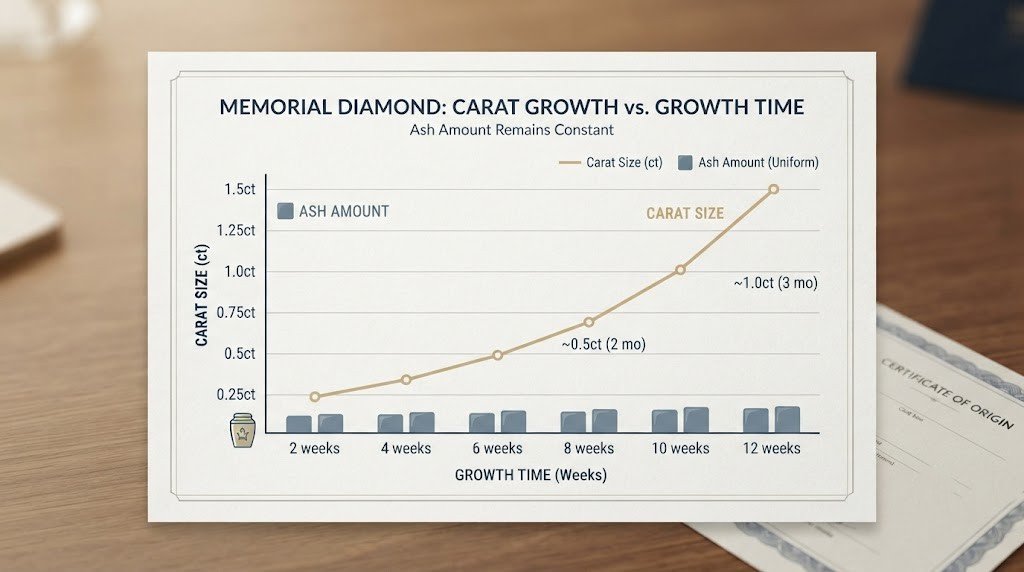
The quantity you send does not automatically determine the diamond’s carat weight or production speed. Carat size is influenced by the growth process and the time allocated to it. Laboratories may also blend recovered personal carbon with supplemental laboratory carbon to reach the volume required for growth.

For ash-based diamonds, some industry descriptions put the share of the finished stone originating from the personal material at around 10–15% by mass, while some providers may quote lower figures. There is no comparable published percentage established here for hair-based stones, so ask the provider to explain its process rather than assuming the same figure applies.

Whether a provider charges differently for ashes, hair, or a blend is something to confirm in writing. To compare sister memorial diamond cost quotes fairly, make sure they refer to the same size, color, services, and source-material requirements.

If you are unsure how much material to request from relatives, the guide to how much ash a sister’s stone typically needs covers the quantity question in more detail.

How Can Siblings Split the Sister Memorial Diamond Cost?

Before discussing money, establish who has authority to release the material. A sibling may not automatically be the person legally authorized to make decisions about a sister’s remains. Rules vary by jurisdiction, and written instructions may affect who can authorize arrangements.

In many places, a spouse or registered partner may have priority, followed by adult children, parents, and then siblings, but this is not a universal rule. The funeral home or crematory may be able to explain who authorized the arrangements, while a local attorney can clarify the applicable rules.

Hair kept among your sister’s belongings may raise different questions because sister memorial diamond cost personal belongings can form part of an estate. If ownership or permission is unclear, speak with the executor or the person handling her affairs before using it.

Once the material question is settled, families can approach the sister memorial diamond cost in several ways:

  • One stone, shared cost: Siblings can agree to divide the cost equally or according to what each person can comfortably contribute.
  • One stone each: If the provider can work with the available material, each sibling may choose an individual stone, size, color, and setting.
  • Mixed contributions: One person may pay for the stone while others contribute toward paperwork, shipping, or the jewelry setting.
  • Opting out: Some siblings may not want to participate, and that is a valid choice.

Families include full siblings, half-siblings, stepsiblings, adopted siblings, and twins. Family structure does not determine how a cost must be divided. A fair arrangement is one that everyone involved understands and accepts.

If several people contribute toward a single stone, agree in writing who will own and keep it. Discuss what should happen if that person can no longer care for it and whether it should pass to another family member. Having this conversation before the diamond exists can prevent confusion later.

Because a portion of the submitted material may remain unused, a provider may be able to grow multiple stones from one source. Ask how much material is required for each stone before making plans. The guide on how more than one relative can receive a stone explains the considerations in greater detail.

If you are unsure how to start the conversation, these gentle ways to raise the idea with relatives may help.

How Do You Compare Sister Memorial Diamond Cost Quotes Line by Line?

Two sister memorial diamond cost quotes can appear thousands of dollars apart. Once you compare their included services, however, the difference may become clearer. Use the same checklist for every provider.

Quote itemWhat a clear quote should stateWhat to ask if it is missing
Carat weightExact target weight or rangeIs the price for the rough stone or the finished, cut weight?
ColorExpected color and whether colorless is includedIs any treatment offered, disclosed, and priced separately?
Cut and shapeShape and whether it is an upgradeHow much does my preferred shape cost compared with a round?
CertificatesOrigin certificate and whether independent grading is includedIs grading extra, and which laboratory would provide it?
SettingMetal, design, and laborIs the setting included now or quoted separately later?
Shipping and insuranceShipping in both directions and relevant insurance arrangementsWho covers the material and finished diamond in transit?
TimelineEstimated production rangeWhat happens if the schedule changes?
If something goes wrongPolicy for a failed growth cycle or a stone that fractures during cuttingIs there a retry, refund, or another policy?
Unused materialReturn, storage, or disposal policyWill unused ashes or hair be returned, and is there a fee?

The final two rows are easy to overlook, yet they can matter a great deal if something does not go to plan. Ask how the provider handles a failed growth cycle or a stone that fractures during cutting. Also confirm what happens to any material that remains unused.

Those policies are part of understanding the overall sister memorial diamond cost, even if they do not appear as separate invoice lines.

For a fuller checklist, review these questions worth asking a provider before committing.

Do not compare providers on price alone. Compare the written terms, what the price includes, the documentation offered, the estimated timeline, and the process for resolving problems.

Can a Memorial Diamond Be Financed, Insured, or Deducted?

Financing

Some providers offer payment plans or work with third-party lenders, but terms vary widely. Compare the total amount you would pay, including interest and fees, with the cash price.

Financing may change when and how you pay the sister memorial diamond cost, but it does not necessarily make the purchase less expensive overall. Read the terms carefully and confirm what happens to your payments if production is delayed or the order cannot be completed.

Insurance

Fine jewelry may be eligible for coverage through a homeowner’s or renter’s policy or through a standalone jewelry policy. Whether a memorial diamond qualifies, how it is valued, and what documentation is required depend on the insurer and policy.

Ask whether an appraisal or independent grading report is needed. Also check what the policy covers, including loss, theft, or accidental damage, and whether any exclusions apply.

Tax considerations

A memorial diamond is generally a personal purchase, and personal expenses are generally not deductible. Tax rules depend on where you live and your circumstances, so consult a qualified tax professional if you have questions.

If estate funds are being considered for the purchase, the executor should seek appropriate legal advice before proceeding.

What Should a Price Quote Never Promise?

A trustworthy quote should explain the price clearly and be honest about what the provider can and cannot guarantee. Be cautious if a quote makes any of the following promises without a clear explanation:

  • That the finished stone consists only of your sister’s material: Recovered carbon may be blended with laboratory carbon to reach the amount required for growth. Ask the provider to explain its specific process.
  • That a particular color can be selected from her ashes or hair: The final color depends on the material and growth process and cannot reliably be predicted from appearance alone.
  • That sending more material guarantees a bigger or faster stone: Carat size depends on the selected growth process and time, not simply on the amount sent.
  • That delivery will happen on an exact date: Production timelines vary. General industry estimates may be around six to ten months from receipt, with larger stones or specialty colors taking longer.
  • That the diamond can never be damaged: Diamonds are very hard, but a hard impact can still chip or damage a stone.
  • That buying a diamond will resolve grief: Some people find comfort in a keepsake they can hold or wear, but emotional responses differ from person to person.

A provider who explains the sister memorial diamond cost clearly, discusses limitations, and gives you written terms is preferable to one that relies on pressure or unrealistic promises.

If price is only one of your questions, the guide on where to start when choosing a stone for your sister puts cost alongside the other decisions involved.

Frequently Asked Questions

Is a memorial diamond for a sister priced differently from one for another relative?

Not simply because of the relationship. Providers generally sister memorial diamond cost price the finished stone according to factors such as carat, color, cut, grading, and setting. A stone made to remember a sister may fall within the same general price ranges as one made to remember a parent, partner, or friend.

What is the least expensive way to make a memorial diamond for my sister?

A smaller stone, around 0.10–0.25 carat, may be a more affordable starting point. You can ask about available growth colors, a standard cut, and whether optional services such as independent grading can be left out. Keeping the stone loose or choosing a simple setting may also reduce the initial expense. sister memorial diamond cost General industry estimates for the smallest size tier are approximately $1,500–$3,500, but request a current quote from the provider.

Why does a colorless memorial diamond usually cost more?

Trace elements in the source carbon and the growth process can influence a diamond’s color. Producing a colorless result may require additional processing, so it typically costs more than a yellow, blue, or champagne stone of the same size. The price difference varies by provider.

Do I have to pay the whole amount before the diamond is grown?

Payment schedules vary. Some providers ask for a deposit followed by a sister memorial diamond cost later balance, while others may require more payment upfront. Ask for the payment schedule in writing and confirm what happens to money already paid if the process is delayed or cannot be completed.

Can each sibling pay for a separate stone from the same ashes or hair?

It may be possible if the available material and provider’s process allow it. Ask how much material is needed sister memorial diamond cost for each stone, whether the provider can grow multiple diamonds from one source, and how each stone will be documented. Each sibling can then discuss the size, color, setting, and cost of their own piece.

Does a sister memorial diamond cost quote usually include a ring or pendant?

Not necessarily. Quotes may cover only the loose diamond, with jewelry, engraving, fancy cuts, and independent grading priced separately. Ask each provider to list every included item so you understand exactly what the headline figure covers.

Final Thoughts on Sister Memorial Diamond Cost

There is nothing cold about asking what this costs. Wanting clear numbers can be a way of protecting the decision, so it stays focused on remembering your sister rather than dealing with an unexpected bill.

Start with a size range that feels right, add the features that matter to you, and write down which expenses are shared and who will keep the stone. A sister memorial diamond cost you understand line by line is one you can consider calmly or set aside without regret if another way of remembering her feels better.

You do not have to choose the largest stone or every available upgrade for the keepsake to matter. Take your time, compare written quotes, and choose what fits your budget and your family’s wishes.

Learn More About Sister Memorial Diamonds

Talk With Memorial Diamond

If you would like to discuss what a sister memorial diamond cost might look sister memorial diamond cost like for your preferred size, color, and setting, visit MemorialDiamond.us.

You do not need to have every answer before asking questions. Start with what you know, request a written quote, and take the time you need to decide what feels right for you and your family.
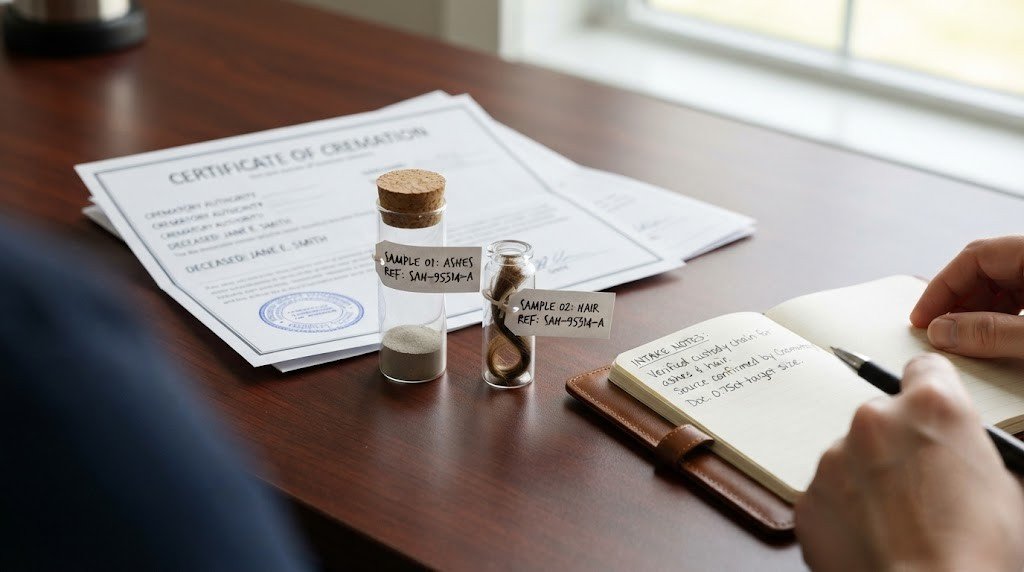
hair for a sister memorial diamond

How Much Hair Do You Need for a Sister Memorial Diamond?

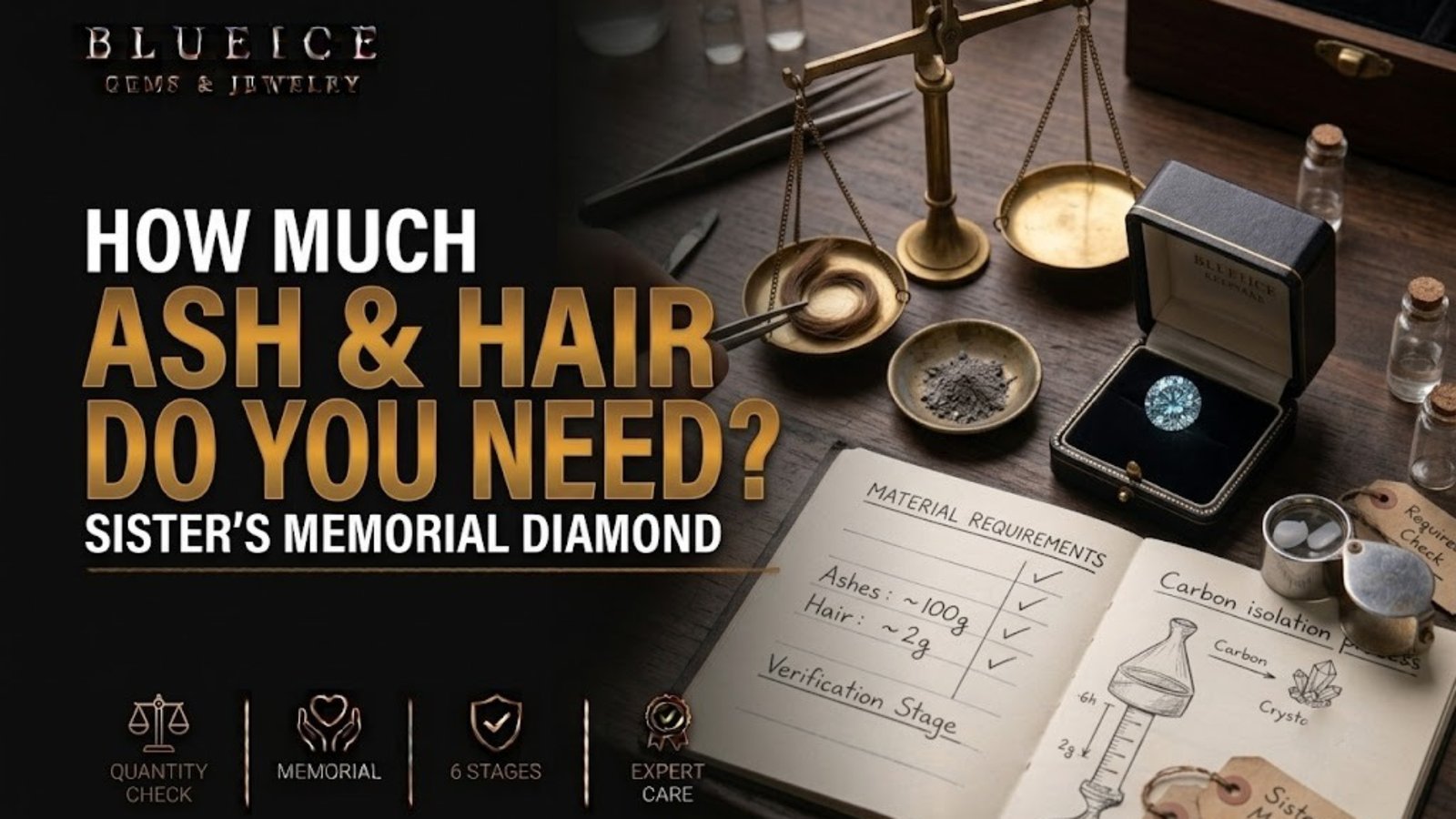
It might be a braid tucked in a drawer, a curl saved from a haircut years ago, or simply a brush she used. The amount of hair for a sister memorial diamond is usually small: providers typically ask for a single lock or a few grams, often described as palm-sized or a few wisps. Each provider sets its own figure and its own rules on which kinds of hair it accepts, so ask before you cut, collect, or send anything.

hair for a sister memorial diamond

What Does “a Small Lock” of Her Hair Actually Mean?

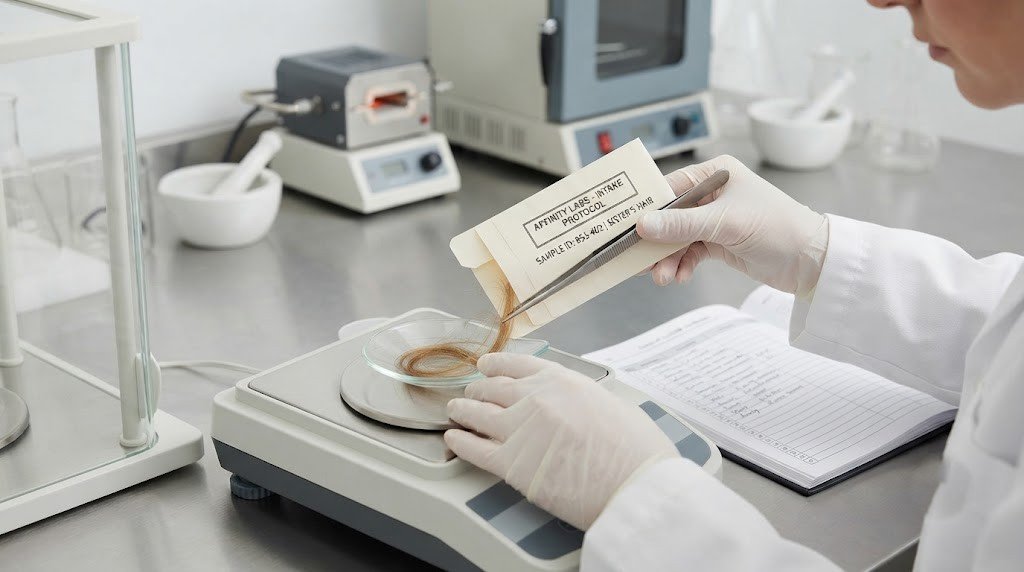
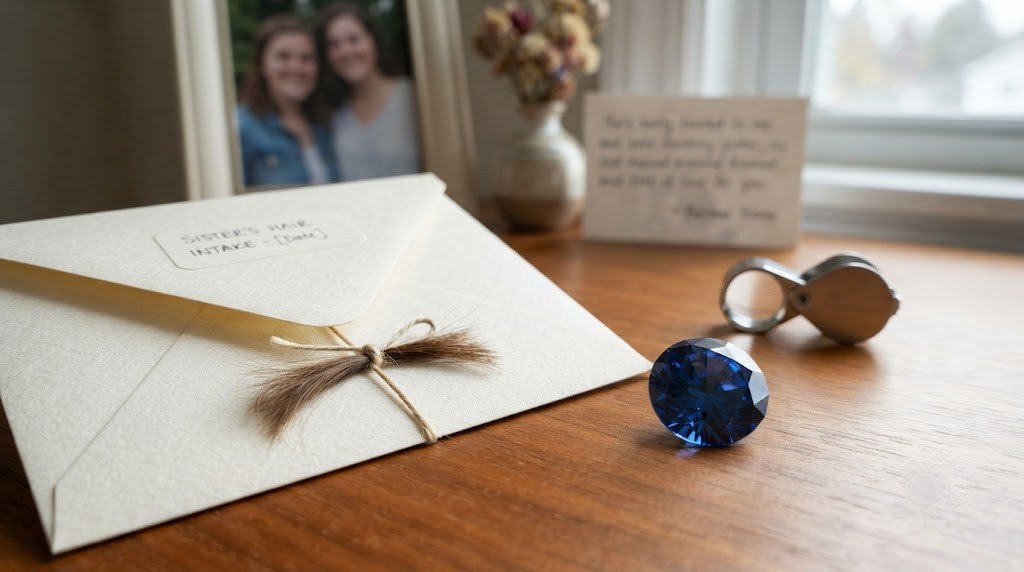
Providers describe the usual amount in loose, everyday terms: a small lock, a few grams, or something that would sit in the palm of your hand. In practice, that is far less than a ponytail. A modest curl tied with thread, or a short bundle gathered from a brush, is the general scale providers tend to have in mind when they talk about hair for a sister memorial diamond.

The exact amount of hair for a sister memorial diamond still depends on the provider. Some state their requirements by weight, some use a rough description, and some will look at what you have and tell you whether it is enough. Getting that answer in writing before you cut anything matters, because a lock that has been cut cannot be put back.

A few details are worth knowing before you gather anything:

  • Length may matter less than you fear. A provider is looking for enough material, so ask whether a shorter lock or several short pieces together would work.
  • Ask about roots rather than assume. Hair contains carbon throughout its strands, but a provider may still have preferences about how the hair was cut or collected.
  • Keep it dry and free of debris. Hair kept in an envelope or a small box for years may still be usable. Ask the provider, especially if it was stored somewhere damp.
  • Hold some back. If you have more hair for a sister memorial diamond than the provider asks for, keep the remainder at home rather than sending everything.

If you are not sure whether you have enough hair for a sister memorial diamond, a photo next to a coin or ruler, sent with your first question, may help the provider give you a clearer answer.

Will a Provider Accept Hair for a Sister Memorial Diamond From Her Hairbrush?

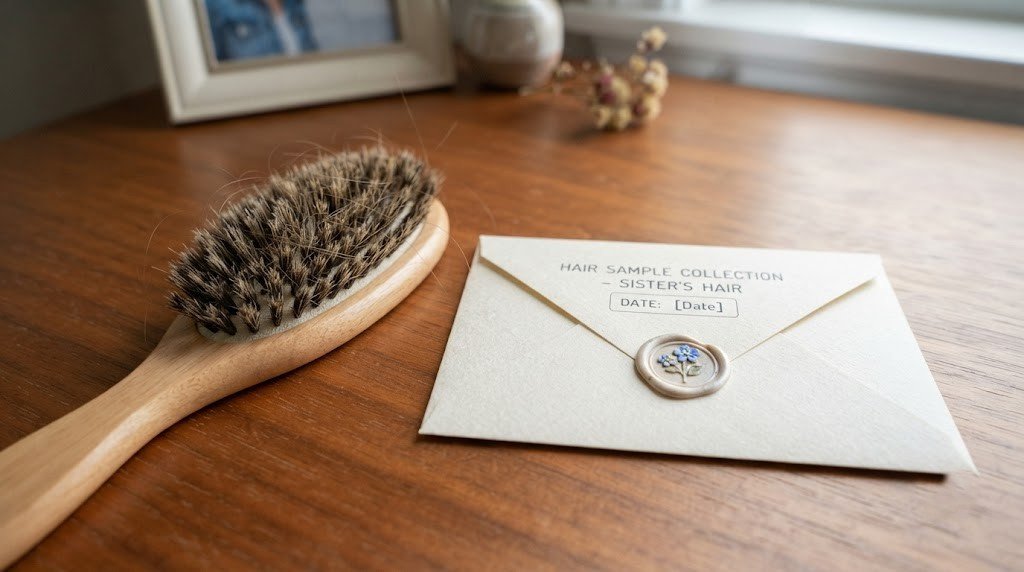
Some providers may accept brush-collected hair, while others may prefer a cut lock. This is one of the first questions to ask about hair for a sister memorial diamond. Hair gathered from a brush or comb may be all you have, and it can be a meaningful source. The main concern is that it is hers alone: a brush that someone else also used may contain their hair too.

Where her hair comes fromWhat to keep in mindWhat to ask the provider
A lock cut and saved during her lifeIt is easy to describe and may be clearly identifiable as hers. Note when and why it was kept.Is this lock enough on its own, or should anything be added?
Her hairbrush or combUse a brush she alone used, if possible. Gather the hair gently and store it dry.Do you accept brush-collected hair, and how much is required?
A braid, ponytail, or keepsake curlIt may be more than needed. You can send part and keep the rest.How much of this should we send?
A lock taken by the funeral home before her serviceThis may be possible if requested in time and the funeral home agrees.Can you work with a lock collected by the funeral home?
Hair that was dyed, bleached, or chemically treatedTreatments vary, and acceptance policies may differ.Does the hair’s treatment affect what you accept?
Only a few strandsEvery strand may matter, so do not discard anything yet.Can you assess whether this small amount is workable?

None of these sources is necessarily better for the meaning of the stone. The deciding factors are practical: whether the provider can work with the sample and whether the hair is clearly hers. A short note describing where each sample of hair for a sister memorial diamond came from can also help maintain a record of its origin.

Who Has Her Hair Now, and Whose Agreement Matters?

Hair is different from ashes in one important way: it often remains among a person’s belongings rather than with a funeral home. A lock that could become hair for a sister memorial diamond might be in her home, with a partner if she had one, with a parent who saved it from childhood, or with you.

Belongings can form part of a person’s estate, and the rules about who may make decisions concerning them vary by location. It is worth speaking with the executor or whoever is handling her affairs before using hair found among her belongings.

Some useful ways to approach the conversation include:

  1. Explain what you need and how little. A small lock or a few grams of hair for a sister memorial diamond is easier to discuss when the request is specific.
  2. Ask who already has keepsakes. A parent, partner, or close friend may have a lock that was saved long ago.
  3. Offer to share. If the hair could provide material for more than one stone, or someone else would also like a keepsake, discuss that early.
  4. Check before taking anything from her home. Even a hairbrush is worth asking about if her belongings are still being sorted.
  5. Seek local advice if ownership is unclear. A local attorney can explain how your state or jurisdiction treats personal belongings within an estate.

If the funeral home is asked to set aside hair for a sister memorial diamond before her service, it will likely want the request to come from the person with authority over her remains. The funeral home can explain who signed the arrangements and who may authorize such a request.

In many places, the order of authority commonly gives priority to a spouse or registered partner, then adult children, then parents, and then siblings, but this varies. Written wishes and local laws can also affect the decision. A sibling may or may not have authority, and that has nothing to do with how close you were.

Can You Still Get Her Hair If She Was Buried?

Yes, provided some of her hair was kept. Hair does not require cremation, so a memorial diamond may remain an option when a family chooses burial, whether for personal reasons or because of their faith.

If the burial has not happened yet, the funeral home may be able to collect a small lock beforehand if the person with authority requests it. Policies differ, so ask as early as possible.

Once a burial has taken place, retrieving hair would involve disinterment, a serious step subject to laws, cemetery requirements, and other considerations. Leaving her at rest is a completely valid choice. In that situation, a hairbrush, a saved keepsake, or a lock kept by a relative may be a source of hair for a sister memorial diamond instead.

If no hair was kept but her ashes are available, read the companion guide on how much ash a sister’s diamond needs. If both are available, the article on using both her ash and hair together explains how providers may approach the two sources.

Why Does Such a Small Amount of Hair Go So Far?

Hair is made primarily of keratin, a carbon-rich protein, and is roughly 50% carbon by weight. That is a much higher carbon share than cremated remains, which consist largely of bone mineral. This helps explain why providers may ask for only a small lock or a few grams of hair for a sister memorial diamond.

At the laboratory, the hair typically goes through an oxygen-free, multi-stage purification process to remove material that is not carbon. The remaining carbon may reach a purity of about 99.9% or higher, depending on the process. It is then heated to very high temperatures to form graphite, which can serve as feedstock for diamond growth.

The crystal is commonly grown using high-pressure, high-temperature (HPHT) methods. These processes involve extremely high pressure and heat. Some providers use chemical vapor deposition (CVD) instead. Laboratories may also blend recovered carbon with supplemental laboratory carbon to achieve the quantity required for a growth cell.

One important point is easy to miss: there is no universally published percentage describing how much of a finished memorial diamond comes specifically from hair. Figures sometimes quoted for ash-based diamonds should not automatically be applied to hair-based stones. If the precise origin of the carbon matters to you, ask the provider how it describes the process and what records it maintains.

The broader story of memorial diamonds as a category includes diamonds made using different types of memorial material. For a closer look at the process, the complete guide to a sister hair diamond walks through the journey from the initial sample to the finished stone.

What Won’t the Amount of Hair Change?

It is tempting to think that sending more of her hair means receiving a larger stone, getting it sooner, or obtaining a particular color. The quantity of hair for a sister memorial diamond does not, by itself, determine those outcomes.

  • Size: Memorial diamonds may be offered in sizes ranging from around 0.10 carat to 5 carats or more. The final size depends on the provider’s options and the growth process, not simply on the weight of hair you send.
  • Timeline: Production may take approximately six to ten months after the laboratory receives the material, although larger stones or specialty colors may take longer. The timeline for a sister memorial diamond explains the factors that can affect the wait.
  • Color: Trace elements and the growth process can influence a diamond’s color. Nitrogen can contribute to yellow tones, while boron can contribute to blue tones. Producing a colorless stone may require additional processing. Color cannot reliably be predicted from the appearance of her hair, and it says nothing about who she was. Read more about what color a diamond from your sister’s hair may be.
  • Clarity: Memorial diamonds can vary in clarity depending on growth and cutting. Ask which clarity characteristics are typical for the provider’s process and whether an independent grading report is available.
  • Price: Cost depends on factors such as carat size, color, cutting, setting, and any optional services. Industry estimates can vary widely, so request a current written quote rather than treating a general range as a guaranteed price. The full cost breakdown explains the factors to consider.

Some providers may offer treatments that change a diamond’s color, including colors such as pink, red, green, or black. Ask whether a treatment is used and whether it will be disclosed in the documentation. This is a decision to discuss with the provider, not something the amount of hair for a sister memorial diamond determines.

What If You Only Have a Few Strands?

A handful of strands may still be worth asking about, so do not assume that you have too little hair for a sister memorial diamond. Because hair contains a substantial amount of carbon, some providers may be able to work with a smaller sample, while others may require more.

The only reliable way to know is to describe what you have and let the provider assess it before you send anything.

Until you know whether you have enough hair for a sister memorial diamond, keep every strand in a clean, dry envelope or container. Avoid trimming or discarding the sample while you are waiting for guidance.

If the provider says the amount is insufficient, there may still be other options. Another relative might have a saved lock, or her ashes may be available. You can also choose to keep the few strands in a locket, a frame, or another keepsake instead.

A small amount of hair for a sister memorial diamond is never a measure of how much she was loved. The right remembrance is the one that feels meaningful to you.

Does a Second Stone Mean Finding More of Her Hair?

Possibly. Some providers can grow more than one stone from a single sample, while others require a set amount of material for each stone. If a parent, another sibling, her partner, her children, or a close friend would also like a memorial diamond, ask how much hair for a sister memorial diamond each additional stone would require before anyone cuts or sends more.

It is helpful to discuss expectations before placing an order. Some family members may want a stone of their own, while others may prefer to keep a different kind of keepsake. Both choices deserve respect.

When several people share one sample of hair for a sister memorial diamond, agree in writing who will own each stone and who will own any shared stone before the process begins. The article on how families arrange more than one stone explores these considerations in greater detail.

How Should Hair for a Sister Memorial Diamond Be Packed and Sent?

The provider should give you written collection and shipping instructions. Always follow those instructions, because requirements can differ between laboratories.

In general, careful preparation may include:

  1. Keeping the hair dry in a paper envelope or another container approved by the provider.
  2. Labeling the package with the requested name and reference number.
  3. Adding a short note describing where the hair came from, if requested.
  4. Taking a photograph of the sample before sealing the package.
  5. Using a tracked shipping service recommended by the provider.
  6. Keeping the tracking number and any submission paperwork somewhere safe.
  7. Asking the provider to confirm in writing when the sample arrives.

For a hair for a sister memorial diamond order, the record of the sample matters alongside the physical material. Ask how the provider identifies the sample when it arrives and tracks it through the laboratory process.

A provider may issue its own certificate of origin or another document describing the sample and the resulting stone. This is different from an independent grading report, which describes the diamond’s characteristics, such as cut, color, clarity, and carat weight. The Gemological Institute of America’s overview of diamond quality factors explains the common characteristics used to assess diamonds.

Before sending anything, ask two additional questions:

  • What happens to any unused hair for a sister memorial diamond? Will it be returned, stored, or disposed of?
  • What happens if a growth cycle fails or the rough stone fractures during cutting? Will the provider retry using retained material, or could more material be required?

Make sure the answers are included in the provider’s terms or confirmed in writing. The guide to questions to ask before turning your sister’s hair into a diamond can help you prepare for that conversation.

Frequently Asked Questions

Does her hair need to be cut close to the scalp?

Not necessarily. Hair contains carbon along its length, so the quantity may matter more than where it was cut. However, each provider sets its own requirements. Ask before anyone trims hair for a sister memorial diamond.

Can I use hair for a sister memorial diamond that was saved from her childhood?

It may be possible. A childhood lock kept in a baby book or keepsake box can be a meaningful source if it belongs to her and meets the provider’s requirements. Check with whoever kept it, since a parent or relative may feel strongly about that particular keepsake.

Is it disrespectful to collect hair from her brush?

Some people find it a gentle way to preserve a personal connection. If her belongings are still being sorted, ask the executor or the person handling her affairs first. Use only a brush you are confident she used herself, and ask the provider whether brush-collected hair is acceptable.

How long can hair be stored before it is too old to use?

There is no single published limit that applies to every provider. Hair kept dry in an envelope or box may remain usable for years, but the provider must confirm whether it can accept your sample. Explain how and where the hair has been stored before sending it.

Can hair for a sister memorial diamond be sent from outside the United States?

Some providers accept international shipments, while others work only within certain countries. Customs requirements and shipping rules also differ. Ask the provider which documents are required, which carrier to use, and how receipt will be confirmed before shipping across a border.

Will the funeral home cut a lock if we ask?

A funeral home may be able to collect a small lock before burial or cremation if the person with authority over her remains requests it. Policies vary, so ask as early as possible. Once burial or cremation has taken place, that opportunity may no longer be available.

Final Thoughts on Hair for a Sister Memorial Diamond

The amount of hair for a sister memorial diamond is rarely the only consideration. A small lock or a few grams may be enough, but the provider must confirm its specific requirements. The harder parts can be quieter: finding where her hair is, asking family members with care, and deciding whether a diamond is the right remembrance for you.

Take your time. Ask questions, compare providers, and make sure you understand the process before sending a keepsake that cannot easily be replaced.

Whatever you decide, keep any hair for a sister memorial diamond safe and dry while you think it over. There is no need to rush a decision about a keepsake that is already in your hands. A lock in an envelope can wait until you feel ready.

Learn More About Sister Memorial Diamonds

If you are still exploring the options, these related guides may help:

Talk With Memorial Diamond

If you would like help working out whether your sample is enough hair for a sister memorial diamond, or how to ask about a lock someone else is keeping, visit MemorialDiamond.us.

There is no rush. Start by asking your questions, understanding the requirements, and choosing the path that feels right for you and your family.

how much ash you need

How Much Ash Do You Need for a Sister Memorial Diamond?

You might already have a small container from the crematory on a shelf, or her ashes may still be with someone else in the family while you work out how to ask. The amount of ash for a sister memorial diamond is smaller than you might expect: providers typically request somewhere between a few tablespoons and about 4 oz (roughly 100 g) of cremated remains. Each provider sets its own figure, and sending more does not make the stone bigger, faster, or a different color.

ash for a sister memorial diamond

Why Is So Little Ash Needed to Grow a Whole Diamond?

Cremated remains are mostly bone mineral, chiefly calcium phosphate, rather than carbon. Industry figures put the usable carbon at roughly 0.5% to 4% of the ash by weight, and that share varies from person to person and with the cremation itself. So when a lab receives ash for a sister memorial diamond, it is drawing a small amount of carbon out of a much larger amount of mineral, not using the ash wholesale.

That carbon passes through an oxygen-free, multi-stage purification until it reaches roughly 99.9% carbon or better. It is then heated to around 2,500–2,700°C and converted to graphite, the feedstock a diamond press grows from. Because the recovered amount is small, labs typically blend it with supplemental lab carbon to reach the volume a growth cell needs.

For a stone grown from ashes, her own carbon commonly ends up at around 10–15% of the finished diamond’s mass, and some providers cite ash-based figures as low as 3%. That is a real, physical part of her in the crystal, with no need to overstate it.

Here is the part that surprises people: the quantity of ash for a sister memorial diamond does not decide how large the stone becomes. Carat size is set by how long the crystal grows in the press, over weeks to months, not by how much starting material arrives. A provider sizes its request to recover a workable amount of her carbon, and past that point extra ash simply goes unused.

Most memorial diamonds are grown by HPHT, which recreates roughly 6–8 GPa of pressure and temperatures of about 1,400–2,500°C around a tiny diamond seed; a minority of providers use CVD instead. The general science behind both methods is summarized in Wikipedia’s overview of synthetic diamond production. For the full path from her ashes to a finished stone, the complete guide to a sister ashes diamond covers every stage, while this page stays on how much ash for a sister memorial diamond is enough.

What Does “a Few Tablespoons” of Her Ashes Look Like in Practice?

Numbers on a website can feel abstract when the ashes in question are your sister’s. In practical terms, a few tablespoons is a modest amount, and about 4 oz (around 100 g) is the upper end of what providers commonly describe. Either amount of ash for a sister memorial diamond is usually a small fraction of what the crematory returned, so the rest can still be kept, scattered, or interred as the family planned.

A few practical points help when setting aside ash for a sister memorial diamond:

  • The provider’s figure is the one that counts. Ask for their required amount of ash for a sister memorial diamond in writing, in grams or ounces, before anyone measures anything.
  • A kit may remove the guesswork. Some providers send a sealable inner container sized to what they need, so nobody has to weigh anything at home.
  • You don’t have to do it yourself. A funeral home or crematory can often portion the ash for you, which some people find easier than opening an urn at the kitchen table.
  • Prepare the space. Ash is fine and dusty. A still room, a sheet of paper underneath, and a small funnel make the transfer calmer.
  • Keep her urn sealed and labeled whenever it is not being used, so nothing gets mixed or misplaced.

Some urns are permanently sealed by design. If hers is, the funeral home can advise whether it can be opened and how, before anyone tries to measure out ash for a sister memorial diamond from it.

What Can the Amount of Ash Change, and What Can’t It?

It is natural to assume that sending more of her makes the stone more hers, or bigger, or ready sooner. The table below sorts out which outcomes the amount of ash for a sister memorial diamond can influence and which ones are decided somewhere else entirely.

What you might be wondering aboutDoes sending more ash change it?What actually decides it
Carat size (about 0.10 to 5+ ct)NoGrowth time in the press, chosen with the provider
Timeline (typically 6–10 months)NoCarat, color, and the provider’s process; stones over ~2 ct or specialty colors can take up to ~12 months
Color (yellow, blue, champagne, colorless)NoTrace nitrogen or boron during growth, plus any extra processing or disclosed irradiation
Clarity (typically SI2–VVS)NoGrowth conditions and cutting
Her share of the stone’s carbon (around 10–15% for ash)Not reliablyStone size, the provider’s process, and how much carbon her ash yields
Whether a second stone is possibleSometimesWhether the provider can draw enough carbon from one portion of ash for a sister memorial diamond
PriceNoCarat, color, cut, and add-ons such as grading or a setting
Margin if a growth cycle has to restartPossiblyThe provider’s own policy, which is worth asking about directly

Color is often the outcome people hope to steer, and it cannot be predicted or chosen from the ash itself. Nitrogen tends toward yellow, boron toward blue, and the absence of both toward colorless, which takes extra processing and typically costs more. None of it reflects who your sister was. The post on what color a diamond from your sister’s ashes will be goes deeper into that.

Price follows the same logic: it tracks the stone you choose, not the jar you send. Across the industry in 2026, a small stone of about 0.10–0.25 ct sits roughly between $1,500 and $3,500. Anything from 0.5 to 1 ct lands around $5,000 to $15,000, with colorless adding a meaningful premium over a tinted stone of that size, and 2–5+ ct stones reach roughly $20,000 to $75,000 or more.

Grading, engraving, fancy cuts, and any setting usually appear as separate charges. These are general industry figures rather than any one company’s prices, and the full breakdown of what a sister memorial diamond costs explains each tier. Nothing in them depends on how much ash for a sister memorial diamond you send.

Who Decides Whether Some of Her Ashes Can Be Set Aside?

As her sibling, you may or may not be the person with authority over her remains. Each state writes its own rules. A common pattern puts a spouse or registered partner at the front of the line, adult children next, and parents ahead of brothers and sisters, yet states depart from that pattern, and anything your sister put in writing, such as appointing someone to direct her remains, can reorder it. Siblings sometimes hold that authority and sometimes don’t; neither situation says anything about what she meant to you.

Faith can shape the answer too. Views on dividing cremated remains differ between traditions, denominations, and individual clergy, and no tradition has set out a position on memorial diamonds in particular, so a family’s own faith leader is the person to consult.

If someone else holds it, asking that person to set aside ash for a sister memorial diamond is usually a short, concrete request rather than a large one. These steps tend to keep the conversation gentle:

  1. Find out who signed. The funeral home or crematory that handled her cremation can tell you who authorized it, and that person is usually the one to ask.
  2. Lead with the size of the request. A few tablespoons of ash for a sister memorial diamond, out of the whole, leaves almost everything where the family intends it to go.
  3. Offer to carry the logistics, from the provider’s forms to the shipping, so the request doesn’t add work for someone who is also grieving.
  4. Share the provider’s written figure rather than an estimate, so nobody is surprised by the amount.
  5. Get local advice if it stays unclear. A local attorney can confirm how your state handles authority over remains.

If the answer is no, or not yet, that answer deserves respect. A conversation about ash for a sister memorial diamond can be revisited later, and other ways of remembering her stay open in the meantime. The guide on talking with family about a sister memorial diamond has more on approaching these moments when feelings are raw on every side.

What If Only a Keepsake Amount Remains, or the Ashes Were Scattered or Buried?

Sometimes her ashes were divided long before a diamond came up, and what you hold is a keepsake vial or a small urn. Because providers typically work with as little as a few tablespoons, a keepsake portion may turn out to be enough ash for a sister memorial diamond. Whether it is depends on that provider’s figure, so tell them the weight or volume you have before deciding anything.

If her ashes were scattered, there is nothing left to recover, and that choice honored her in its own right. If they rest in a cemetery plot or a columbarium niche, getting any of them back would be a weighty undertaking, one that typically needs the cemetery’s cooperation, the agreement of whoever holds authority, and possibly local permits. Leaving them undisturbed is a completely valid decision, and no one should feel pressed to reopen a burial just to obtain ash for a sister memorial diamond.

There may still be another path. Hair is roughly 50% carbon by weight and needs no cremation, so a lock someone saved can sometimes stand in. Her belongings, hair included, can be treated as part of her estate under rules that differ between states, which makes the executor, or whoever holds authority, the right first conversation.

If no ash for a sister memorial diamond is available, the companion piece on how much hair a sister’s diamond needs explains that route. If you hold a little of each, the page on combining her ash and hair in one stone covers how the two are handled together.

Does a Second Stone Need a Second Portion?

More than one person may want a stone: another sibling, a parent, her partner, her children if she had any, or a close friend. Others may prefer not to have one, and either choice is valid. Whether one portion of ash for a sister memorial diamond can supply carbon for two or more stones depends on the provider. Some can draw several stones from one shipment, and others ask for a set amount per stone.

Ask before you send, and ask plainly: “If we want two stones, should we send one portion of ash for a sister memorial diamond or two?” The answer shapes what you request from whoever is keeping her ashes, so it helps to have it before that conversation rather than after.

When several people are involved, agree in writing who will own each stone, and who owns any shared stone, before any of them exist. The piece on more than one family member getting a diamond from the same ashes looks at how families arrange multiple stones.

How Do You Pack, Ship, and Track Ash for a Sister Memorial Diamond?

The practical steps are mostly the provider’s to define, and a careful one will give you written instructions. Before you seal anything, it is worth confirming these points:

  • Container: whether they supply one, or whether a sturdy sealable inner container inside a padded outer box is acceptable.
  • Labeling: her full name, your contact details, and any order or reference number they assign.
  • Carrier and service: which one they specify. Rules for shipping cremated remains differ between carriers and countries, so follow their instructions rather than picking a service yourself.
  • Tracking: whether signature confirmation is required. Keep the tracking number and a photo of the sealed package.
  • Receipt: whether they will confirm arrival, and the weight of ash for a sister memorial diamond they received, in writing.
  • Paperwork: whether they want a copy of the cremation certificate or a signed authorization in the box.

Chain of custody is the quiet center of this process. Reputable providers track the material from arrival through purification, growth, and cutting, and typically issue an origin or authenticity certificate, usually in-house, documenting that the stone was grown from the ash for a sister memorial diamond you sent. That differs from an independent grading report, which describes the finished stone’s cut, color, clarity, and carat, most often against GIA’s diamond quality standards. Independent grading is usually optional and priced as an extra.

Once the ash for a sister memorial diamond is on its way, the waiting begins. Holding the tracking number and the provider’s written confirmation can make that stretch feel a little steadier.

What Happens to Ash for a Sister Memorial Diamond That Isn’t Used?

Not every grain sent is necessarily consumed. A provider might extract carbon from part of the portion and hold the remainder, return it with the finished stone, or handle it another way. Policies differ, and this is a question to ask before you ship rather than after: what happens to any ash for a sister memorial diamond that the lab doesn’t use, and can it come back to you?

It is also fair to ask what happens if something goes wrong, such as a growth cycle that fails or a rough stone that fractures during cutting. Whether the provider would retry with retained material, ask for more, or handle it another way should appear in their written terms.

Keep their answers about any leftover ash for a sister memorial diamond with your order paperwork. If you are building a fuller list, the article on questions to ask before turning your sister’s ashes into a diamond gathers them in one place.

Frequently Asked Questions

Is one tablespoon of her ashes enough for a diamond?

Possibly, but only the provider can say. Typical requests range from a few tablespoons up to about 4 oz, and each provider sets its own minimum. Tell them how much you have, by weight if possible, before assuming it is too little ash for a sister memorial diamond.

Can the crematory send ash for a sister memorial diamond directly to the provider?

Some crematories and funeral homes will portion and ship remains on behalf of the person with authority, while others prefer to release them to the family. Ask both the crematory and the provider what they accept, and keep written confirmation of every handoff.

Does the provider need her whole urn to choose a portion?

No. Providers ask for a measured portion rather than the full urn, so you send only the amount they specify and the rest of her ashes stays with the family. If you are unsure how to take that portion, the funeral home or provider can advise.

Will sending extra ash make her diamond more personal?

Not in a reliable way. For ash, her carbon is typically around 10–15% of the finished stone, sometimes lower, and that share depends mainly on stone size and process rather than on how much extra ash arrives at the lab.

What if family members disagree about using ash for a sister memorial diamond?

Pause and let the person with authority over her remains lead. Sharing the provider’s small written figure can ease worries, and a local attorney can clarify who decides in your state. Waiting until everyone is ready is always an acceptable choice.

Can ash from a pet’s urn or another relative be mixed in by mistake?

It should not be, which is why chain of custody matters. Keep her ashes in a clearly labeled, sealed container, ship them separately from any other remains, and ask the provider how they keep each family’s material isolated through every stage.

Should I keep a little of the portion back before shipping?

Only a small share of her ashes is needed, so the rest usually stays with the family. If your only ash for a sister memorial diamond is a keepsake portion, ask whether you could send part now and hold the rest in case a second attempt is ever needed.

Final Thoughts on Ash for a Sister Memorial Diamond

The honest answer to how much ash for a sister memorial diamond is needed is reassuringly modest: a few tablespoons to about 4 oz, set by whichever provider you choose. That small amount leaves almost all of her ashes for whatever the family has planned, whether an urn at home, a scattering place she loved, or a burial.

What matters more than the quantity is the care around it: knowing who can release the ash, getting the provider’s figures in writing, and keeping a clean record of where every part of her went. If a diamond feels right for you, those steps let it happen without strain. If it doesn’t, or not yet, that is just as valid.

Learn More About Sister Memorial Diamonds

Talk With Memorial Diamond

If you’d like to talk through how much ash for a sister memorial diamond a provider might need, or how to raise it with whoever is keeping her ashes, you’re welcome to reach out to Memorial Diamond at memorialdiamond.us. Bring whatever questions you have, at whatever pace feels right.

Word count: 3,108 words · Reading time: about 16 minutes

How Much Ash and Hair Do You Need for a Sister Memorial Diamond

How Much Ash and Hair Do You Need for a Sister Memorial Diamond?

Sometimes her ashes are with one relative and a lock of her hair is with another, and a memorial diamond is the first plan that brings the two together. When you send ash and hair for a sister memorial diamond, providers typically ask for a portion of ashes between a few tablespoons and about 4 ounces, roughly 100 grams, plus a small lock or a few grams of hair. Each provider sets both figures, so ask whether sending both changes what they need of each.

ash and hair for a sister memorial diamond

Why Would You Send Both Her Ash and Her Hair?

For some siblings the reason is simply meaning. Her ashes are what remained after the funeral; a lock of her hair may have been kept from a particular day, by a particular person. Bringing ash and hair for a sister memorial diamond into one stone can feel like gathering more of her story into one place, and some people find comfort in that.

For others the reason is practical. Perhaps only a keepsake amount of her ashes is left, or only a few strands of hair, and neither feels like enough on its own. Using ash and hair for a sister memorial diamond can also let two relatives each contribute something they have been keeping.

Neither material is required, and a stone grown from one is no less meaningful than a stone grown from both. If only one is available, the companion pages on how much ash a sister’s diamond needs and how much hair a sister’s diamond needs cover each route. The complete guide to a sister ashes and hair diamond sets out the whole process for a combined stone.

This page is for the moment you are considering ash and hair for a sister memorial diamond together and want to know how much of each, who to ask, and how to keep both sources clearly recorded.

How Much Ash and Hair for a Sister Memorial Diamond Do Providers Typically Request?

Providers set their own figures for ash and hair for a sister memorial diamond. Some will tell you that sending both changes what they need of each, while others ask for their standard amounts regardless. The ranges below are industry typical, not any single company’s policy. They are a starting point for your first question rather than a final answer.

DetailHer ashesHer hairBoth sent together
Typical amount requestedA few tablespoons to about 4 ounces, roughly 100 gramsA small lock or a few gramsAsk the provider for a figure for each material
Carbon content by weightRoughly 0.5% to 4%Roughly 50%Each material retains its own carbon characteristics
Published share of finished stoneAround 10% to 15% for ash, with some providers citing as low as 3%No published industry figureNo published industry figure for a combined stone
Is cremation needed?YesNoOnly for the ash portion
Who often holds it?Whoever received the ashes, often the person with authority over her remainsWhoever has her belongings or a saved keepsakePossibly two different people
Most useful questionWhat is your minimum amount of ash?Do you accept brush hair or only a cut lock?Does sending both change what you need of each?

Two things stand out. Hair carries far more carbon by weight, which is why so little is needed. No percentage is published for how much of a finished stone comes from hair or from a blend. The ash figure belongs to ash only stones.

Whatever the provider says, ask for both numbers in writing, in grams or ounces where possible, before anyone measures out ash and hair for a sister memorial diamond. Having the figures on paper makes conversations with relatives simpler because everyone is talking about the same amounts.

Does Adding Hair Make the Diamond Bigger, Faster, or a Different Color?

No. A stone’s size comes from how long the crystal grows in the press, over weeks to months, not from how much material arrives. Carat sizes typically range from about 0.10 to more than 5 carats. Size is a choice made with the provider, not a result of sending ash and hair for a sister memorial diamond instead of one material.

The timeline follows carat and color too. Across the industry, the process typically runs six to ten months from receipt, and up to about twelve months for stones over roughly 2 carats or specialty colors. Sending ash and hair for a sister memorial diamond does not make the wait shorter.

Color is decided by trace elements during growth. Nitrogen tends toward yellow, boron toward blue, and the absence of both allows colorless, which takes extra processing and typically costs more. Memorial stones commonly land in yellow, blue, or champagne tones. Some providers offer disclosed post growth irradiation for red, pink, green, or black.

The color cannot be predicted from either material, and it reflects chemistry rather than anything about who she was. The post on what color a diamond from her ashes and hair will be explores that further.

Hardness does not change either. The finished stone is a real diamond, rated 10 on the Mohs scale of mineral hardness, though a hard knock can still chip any diamond.

Price follows carat, color, and cut. General 2026 industry ranges run roughly $1,500 to $3,500 for about 0.10 to 0.25 carats, roughly $5,000 to $15,000 for 0.5 to 1 carat, and roughly $20,000 to $75,000 or more for 2 to 5 carats or larger. Colorless stones can cost meaningfully more than yellow, blue, or champagne stones. Grading, engraving, fancy cuts, and settings are usually priced separately. Ask whether using ash and hair for a sister memorial diamond affects the provider’s pricing.

What If Her Ashes and Her Hair Are Held by Different People?

This is where a combined stone differs most from a single material one. Her ashes may be with whoever holds authority over her remains, while her hair may sit among her belongings, with a partner, a parent, a friend, or you. Gathering ash and hair for a sister memorial diamond can mean two conversations.

For the ashes, authority often follows an order that, in many states, commonly runs from a spouse or registered partner to adult children, then parents, then siblings. That order varies by state, and her own written wishes, such as a designated agent or signed declaration, can change it. The funeral home or crematory can tell you who signed for her cremation, and a local attorney can confirm how your state approaches it.

For the hair, belongings can form part of her estate, and the rules vary by state. Speaking with the executor or whoever is handling her affairs before using hair from her home keeps things clear. A lock that someone has kept as their own keepsake is best treated as theirs to offer or not.

When asking two people for ash and hair for a sister memorial diamond, it helps to have the provider’s written figures in hand, explain how small each request is, and be open about who else is involved. If either person says no, or not yet, that answer deserves respect.

When several people contribute, agree in writing who will own the finished stone before it exists. The guide on talking with family about a sister memorial diamond offers gentle ways into those conversations.

How Does a Lab Combine Two Materials, and What Is the Honest Carbon Story?

Before the ash and hair for a sister memorial diamond can be combined, each has to give up its carbon. Ash is mostly calcium phosphate, so the usable carbon is a small share of its weight. Hair is built from keratin and is roughly half carbon.

Both materials may go through oxygen free, multistage purification to roughly 99.9% carbon or better, followed by conversion to graphite at around 2,500 to 2,700°C. The carbon can then be used for growth by high pressure, high temperature technology at roughly 6 to 8 GPa and around 1,400 to 2,500°C, or, with a minority of providers, chemical vapor deposition. The overview of synthetic diamond methods explains the growth science in general terms.

How the two are brought together varies. Some providers may purify each material separately and combine the carbon afterward. Others may handle them differently. Ask how they process ash and hair for a sister memorial diamond and how they record each material through every stage.

Recovered carbon is typically blended with supplemental laboratory carbon to reach the volume a growth cell needs. Industry figures for ash only stones put her share at roughly 10% to 15% of the finished weight, and a few providers quote numbers nearer 3%. For hair, and for a stone grown from both, no comparable percentage is published. It would be wrong to borrow the ash figure for a blend.

If a provider quotes a precise share for a stone grown from ash and hair for a sister memorial diamond, ask how that figure was measured and request it in writing. The page asking whether a diamond is really made from her ashes and hair works through that honesty question in detail.

How Do You Document Ash and Hair for a Sister Memorial Diamond?

With one material, the paper trail is simple. When you are sending ash and hair for a sister memorial diamond, it helps to be deliberate because each source has its own history. A clear record means you can always say where every part of the stone came from.

  1. Record the ash source. Note who released the portion and when, and keep a copy of the cremation certificate or crematory paperwork if the provider asks for it.
  2. Record the hair source. Write down whether it is a cut lock, brush hair, or a keepsake, who kept it, and roughly when it was saved.
  3. Use separate, labeled containers. Each should carry her full name, the material, and any order number the provider assigns.
  4. Photograph both before sealing. A simple photo of each container, side by side, is useful later.
  5. Keep each holder’s agreement in writing. A short message or note from whoever released the ash and whoever offered the hair gives everyone a shared record.
  6. Ask for a receipt listing both items. The provider should confirm in writing that both arrived, ideally with weights.
  7. Ask what the certificate will say. Find out whether the origin certificate names both materials.

That origin or authenticity certificate is usually issued in house and documents chain of custody, which is what links the stone to the ash and hair for a sister memorial diamond you sent. It is different from an independent grading report, which describes the stone’s cut, color, clarity, and carat, commonly referencing GIA standards. Independent grading is usually optional and priced as an extra.

What If One Material Is Missing or Only a Trace Remains?

Plans for ash and hair for a sister memorial diamond can change when one source turns out to be unavailable. If her ashes were scattered, there is nothing to recover, and that choice honored her in its own way. If they were buried, retrieving any portion is a serious step involving the cemetery, the person with authority, and often permits. Leaving them undisturbed is completely valid. In either case, hair alone can still become a stone.

If no hair was kept, a stone from her ashes alone is just as much hers. If only a trace of each remains, describe both amounts to the provider and ask whether they can work with them together. Do not assume either way, and wait to send anything until you have the provider’s answer about ash and hair for a sister memorial diamond in writing.

Can Both Materials Travel in the Same Package?

Possibly, but only if the provider says so. Some prefer to receive ash and hair for a sister memorial diamond in separate sealed, labeled containers inside one outer box. Others may want them sent separately, especially if two relatives live in different places. Rules for shipping cremated remains also differ between carriers and countries, so follow the provider’s carrier instructions exactly.

Whatever the arrangement, keep each container sealed and labeled, use tracking, keep every tracking number, and ask the provider to confirm receipt of the ash and hair for a sister memorial diamond separately. If two parcels are traveling from two people, share the tracking details with each other so nobody is left wondering.

What About a Second Stone, or Material Left Over?

If more than one person wants a stone, ask how much ash and hair for a sister memorial diamond each additional stone needs. Some providers can draw more than one stone from a single shipment, and others ask for a set amount per stone. Some relatives may want their own stone and others may not, and either choice is fine. The piece on more than one family member sharing a sister’s memorial diamond materials explores how families arrange that.

Ask, too, what happens to any ash and hair for a sister memorial diamond that is not used: whether each is returned, stored, or disposed of, and whether the answer differs by material. Ask what happens if a growth cycle fails or a rough stone fractures during cutting. Those answers belong in the provider’s written terms. The list of questions to ask before turning her ashes and hair into a diamond gathers them alongside many others.

Frequently Asked Questions

Can the hair come from her brush while the ashes come from the funeral home?

Yes, if the provider accepts brush collected hair. The two materials do not need to come from the same place. Label each container clearly, note where each material came from, and check with the executor or whoever handles her affairs before taking anything from her home.

If we have only a few tablespoons of ash, does adding hair help?

It might, but only the provider can say whether the combination meets its requirements. Hair carries far more carbon by weight, yet providers set their own rules for each material. Describe both amounts and ask before sending ash and hair for a sister memorial diamond.

Will the certificate mention both her ashes and her hair?

That depends on the provider. An origin certificate is usually issued in house and records chain of custody, so ask before ordering whether it will name both materials. Request that the receipt confirming arrival lists both separately.

Is a combined stone more expensive than one made from ash alone?

Price is driven mainly by carat, color, and cut, with grading and settings usually extra. Whether a provider charges differently for ash and hair for a sister memorial diamond is its decision, so ask directly and get the answer in writing before you commit.

Can one relative send the hair while another sends the ashes?

Yes, if the provider agrees to receive two shipments for one stone. Agree beforehand who places the order, who owns the finished stone, and how each sender will confirm their part has arrived, so the ash and hair for a sister memorial diamond stay matched.

Does the hair have to be collected around the same time as the cremation?

Not as a rule. A lock saved years earlier can be paired with ashes from a recent cremation, provided the provider accepts both. What matters is that each material is clearly hers, meets the provider’s requirements, and is documented with a short note on its history.

Final Thoughts on Ash and Hair for a Sister Memorial Diamond

The amounts are rarely the obstacle. A few tablespoons to about 4 ounces of ash and a small lock of hair are typical, and the provider will confirm what it needs. What takes more care is the human side of ash and hair for a sister memorial diamond: two sources, sometimes two keepers, and a record that honors where each part of her came from.

If gathering ash and hair for a sister memorial diamond feels right, take it one conversation at a time. If only one material is available, or none yet, that is a complete answer too. The stone, if you choose one, will be no less hers.

Learn More About Sister Memorial Diamonds

Talk With Memorial Diamond

If you are weighing whether to send ash and hair for a sister memorial diamond, or how to approach the people holding each, you are welcome to reach out to Memorial Diamond at memorialdiamond.us. Share as much or as little as you like, and take whatever time you need.