
When a sister dies, deciding how to preserve her memory can be deeply personal. Parents, siblings, partners and children may all want something meaningful to keep close. But what happens when several family members want their own memorial diamond made from the same sister’s ashes?
Sharing a sister memorial diamond source among several relatives is often possible. Each stone generally requires only a portion of cremated remains, meaning more than one person may be able to commission a separate diamond. The important steps are obtaining the appropriate authorization, agreeing on how portions will be allocated, and documenting how the material will be handled.
Every family has different relationships, wishes and circumstances. Some relatives may want a diamond they can wear every day, while others may prefer an urn, a keepsake or no additional memorial at all. A thoughtful arrangement gives everyone room to grieve in their own way.
This guide explains how several relatives can potentially receive memorial diamonds from one sister’s ashes, how providers may handle separate portions, what families should agree on, and how to approach the process fairly.
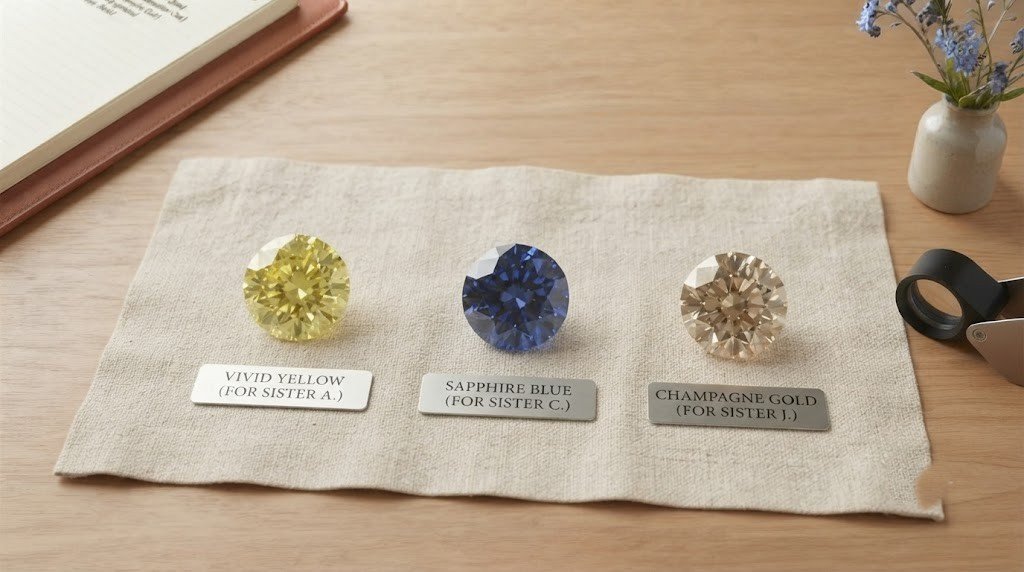
Table of Contents
Why Can One Sister’s Ashes Supply Several Diamonds?
The reason is the relatively small amount of material required for an individual memorial diamond. A full set of cremated remains is generally much larger than the portion a provider requests for one stone.
Depending on the provider and its process, the requested amount may range from a few tablespoons to approximately four ounces, or around 100 grams, per diamond. These are general industry estimates rather than universal requirements. Always confirm the exact amount with the company handling the order.
This means sharing a sister memorial diamond source may allow a parent, several siblings or other authorized relatives to commission individual stones while preserving the remaining ashes for an urn, burial, scattering where permitted, or other memorial arrangements.
How Are Ashes Turned Into a Diamond?
Cremated remains consist primarily of mineral material, including calcium phosphate, rather than pure carbon. Usable carbon represents only a small proportion of the total ash weight. Some industry explanations place this proportion at approximately 0.5% to 4%, although the amount can vary.
A memorial diamond provider processes the submitted material to recover and purify carbon. That carbon may then be combined with supplemental carbon before the diamond-growing process begins. Depending on the manufacturer, a stone may be grown using the high-pressure, high-temperature method or chemical vapor deposition.
The details matter because providers do not all use identical processes. Ask how the company handles the submitted ashes, what its finished-diamond claims mean, and what documentation it supplies.
An important point is that sending more ashes does not automatically create a larger diamond. Carat weight depends on the growth process and the specifications selected for the stone.
For a more detailed explanation of the quantity required, read our guide to how much ash a sister memorial diamond needs.
Who Has to Approve Dividing Her Ashes?
Before sharing a sister memorial diamond source among relatives, establish who has legal authority over your sister’s cremated remains.
The answer can depend on applicable state law, the arrangements made before her death, any written instructions she left, and the person legally responsible for handling her remains. In some jurisdictions, a spouse or registered partner may have priority, followed by other relatives. The exact order is not universal.
Being her sibling does not automatically mean you can authorize every decision involving her ashes. Equally, family members should not assume that the closest emotional relationship alone determines legal authority.
Why Written Permission Matters
Suppose your sister’s parents and two siblings each want a memorial diamond, but her spouse is the person legally authorized to make decisions about her remains. The family should establish what permission is needed before any portions are removed or sent to a provider.
A written record can help everyone understand:
- Who is authorizing the use of the ashes.
- Which relatives may receive a portion.
- How much material is allocated to each order.
- Who is responsible for sending the portions.
- What should happen to any unused material.
If the arrangements are unclear, contact the funeral home or crematory that handled the remains and ask which records may help establish who signed the relevant paperwork. A local attorney can clarify how applicable law affects your family.
A respectful conversation can begin with a specific request: whether a small portion may be set aside for a memorial diamond. This makes the discussion more concrete and allows the person with authority to consider the request carefully.
How Are Separate Portions Documented and Grown?
When several relatives want their own stones, it is important to understand how the provider handles each order. Sharing a sister memorial diamond source should not depend on informal promises or family members remembering which material belongs to whom.
Providers may have different intake, processing and recordkeeping procedures. Before choosing one, request a written explanation of how it manages multiple portions from the same person’s remains.
A useful checklist includes:
- Separate intake records: Each submitted portion should have an identifiable record linked to the appropriate order.
- Recorded quantities: Ask whether the amount received for each order is weighed and documented.
- Material handling: Ask whether each portion is processed separately or whether any material is pooled.
- Individual growth specifications: Confirm how the selected size, color and other specifications are assigned to each order.
- Origin documentation: Ask what certificate or other record accompanies the finished diamond and what it actually verifies.
Do not assume every company follows the same procedure. These are questions to ask rather than guarantees about any particular provider.
What Is an Origin Certificate?
An origin certificate supplied by a provider may document the company’s stated connection between the submitted memorial material and the finished stone. It is not necessarily the same as an independent diamond grading report.
A grading report can describe characteristics such as carat weight, cut, color and clarity. The Gemological Institute of America’s guide to diamond quality factors explains several of the characteristics used to evaluate diamonds.
If independent grading matters to your family, ask whether it is available, whether it is included in the quote, and which laboratory would perform it.
What Happens If a Diamond Does Not Grow Successfully?
This is one of the most important questions to ask before sending any material.
Ask what happens if a growth attempt fails or the crystal cracks during cutting. Will the provider retain any remaining material for another attempt? Is another growth attempt included in the quoted price? Can unused ashes or recovered carbon be returned or stored?
The answers may differ between providers. Get the relevant policy in writing before authorizing the work.
Does Everyone Have to Order at the Same Time?
No. Sharing a sister memorial diamond does not necessarily require every relative to place an order together.
One sibling might want a stone soon after the loss, while another may prefer to wait until a birthday, anniversary or another meaningful milestone. A parent may choose a small diamond now and a different keepsake later. These decisions do not have to follow the same timetable.
The practical question is how the family will preserve and document any portion reserved for someone who is not ready to decide.
How Long Does a Memorial Diamond Take?
Some industry estimates place the process at approximately six to ten months. Larger stones or specialty colors may take longer, potentially approaching a year. These are general estimates, not a guaranteed delivery schedule for every company.
Each order may have its own timeline, depending on when the provider receives the material, the specifications selected, the production process and any additional services.
For more information, read our guide to the sister memorial diamond timeline.
Can a Portion Be Saved for a Relative Who Decides Later?
Possibly, but the arrangement should be confirmed in advance.
The family might retain a clearly labeled portion with the person authorized to manage the remains. Alternatively, a provider may offer a storage service. Do not assume long-term storage is available or included in the price.
Document whose portion it is, where it will be kept, who is authorized to approve its use, and how long it may remain in storage. This can prevent misunderstandings if a relative decides to order a diamond years later.
What If Relatives Want Different Things—or Nothing at All?
Families do not have to agree on one type of memorial to treat each other respectfully.
One sibling may want a diamond pendant to wear every day. Another might prefer a loose stone in a keepsake box. A parent may feel more comfortable keeping the ashes in an urn. Someone else may not want any additional memorial item.
All of these choices can be valid expressions of grief.
The goal of sharing a sister memorial diamond is not to make everyone choose the same object. It is to establish a fair and clear process for those who wish to participate, while respecting relatives who do not.
Before dividing the ashes, discuss the practical matters that affect everyone:
- Who has authority to approve the arrangement?
- How much material can be allocated to each person?
- Will any portion be reserved for a relative who is undecided?
- Who pays for each individual order?
- What happens to unused material?
- How will later requests be handled?
Who May Need to Be Included in the Conversation?
| Family member | What to consider |
|---|---|
| Spouse or registered partner | Whether they have authority over the remains and can authorize each portion |
| Adult children | Whether a portion should be reserved for someone who may decide later |
| Parents | Whether they want a diamond, another keepsake or no additional memorial |
| Full, half-, step- or adopted siblings | Which relatives want to participate and how their portions will be documented |
| Friends or chosen family | Whether an authorized person can approve a memorial arrangement for them |
This table is a conversation guide, not a statement of legal priority. Applicable law and your sister’s written wishes determine who can authorize decisions about her remains.
Can Everyone Receive Matching Diamonds?
Families can ask for similar carat weights, cuts and settings. However, matching the specifications does not guarantee that the stones will have identical colors or appearances.
Diamond color can be influenced by trace elements and the manufacturing process. For example, nitrogen can contribute to yellow coloration, while boron can produce blue coloration. The resulting color cannot be guaranteed simply by using ashes from the same person.
If relatives want their stones to look similar, discuss the available options and limitations with the provider before placing the orders.
Our guide to memorial diamond colors for a sister explains the main considerations.
How Does Sharing Work in a Blended Family?
Blended families may include full siblings, half-siblings, step-siblings, adopted siblings, a spouse, children and people who played important roles in your sister’s life.
Their relationships with her may have been different, but those differences do not determine whose grief is more meaningful. At the same time, emotional closeness and legal authority are separate questions.
A clear process can reduce the risk of disagreements.
- Identify the person authorized to make decisions. Confirm the relevant arrangements before any ashes are divided.
- Be specific about who is included. Avoid assumptions about what phrases such as “all the siblings” mean to different relatives.
- Give undecided relatives time. Where possible, agree on whether a portion can be reserved for someone who may want a stone later.
- Agree on how new requests will be handled. Establish a process for relatives who were not part of the first discussion.
- Keep a written record. Document the agreed portions, responsibilities and decisions.
If communication has become difficult, a neutral person may help the family discuss the arrangements. Depending on the circumstances, this might be a funeral director, family mediator or attorney.
Our guide to talking with family about a sister memorial diamond offers further help with starting that conversation.
What If Relatives Live in Different States?
Relatives do not necessarily need to live near one another to participate in a memorial diamond arrangement.
The person authorized to manage the remains may be able to coordinate the portions and submit them to the provider. Depending on the provider’s procedures, relatives may be able to place and pay for their orders separately.
However, shipping, documentation and authorization requirements should be checked before anything is sent. Ask the provider for its current instructions for packaging and transporting cremated remains. A funeral home may also be able to explain appropriate arrangements.
Different states can have different rules concerning who may control cremated remains. If a disagreement arises or the applicable rules are unclear, obtain advice specific to the relevant jurisdiction.
Appointing One Family Coordinator
When relatives live far apart, it can help to appoint one person to maintain the records and communicate updates.
That person could keep copies of the written agreement, note when each order was submitted, record relevant tracking information and share provider updates with the family.
Coordination does not have to mean that one relative makes every decision. Each person can still choose their preferred diamond specifications and manage their own order, where the provider allows it.
Who Pays When Several Stones Come From One Source?
There is no single correct way to divide the cost. Families can pay for individual stones, contribute toward one shared stone or explore whether an estate can cover some expenses where legally appropriate.
The best arrangement is one everyone understands before an order is placed.
What Can Memorial Diamonds Cost?
The following figures are broad, illustrative industry estimates, not verified prices from Memorial Diamond or a guaranteed quote from any provider.
| Approximate diamond size | Illustrative price range |
|---|---|
| 0.10–0.25 carat | $1,500–$3,500 |
| 0.50–1.00 carat | $5,000–$15,000 |
| 2.00–5.00+ carats | $20,000–$75,000+ |
Actual prices may vary significantly according to the provider, selected size, color, cut, production process and included services. Larger stones may cost substantially more. Jewelry settings, engraving, independent grading, shipping and other services may also be charged separately.
For a more detailed breakdown, see our sister memorial diamond cost guide.
Three Ways Families Can Share the Expense
1. Each relative pays for their own diamond
This arrangement gives each person more control over the size, color, cut and jewelry setting they choose. It also makes the financial responsibility of each order easier to understand.
2. Several relatives contribute toward one shared diamond
A single stone may be meaningful when relatives prefer one collective memorial. Before ordering, agree in writing on who will keep it, whether it will be shared between households, who will pay for maintenance or insurance, and who will inherit it.
3. The estate pays some or all of the cost
Whether estate funds can be used depends on the circumstances and applicable rules. An executor, attorney or tax professional can help clarify the appropriate approach.
Ask for an Itemized Quote
Before committing, request a written breakdown that identifies the diamond itself and any additional charges.
Check whether the quote includes:
- Diamond growth and the selected carat size.
- The requested color and cut.
- Independent grading, if desired.
- A setting, chain or other jewelry.
- Engraving or personalization.
- Shipping and transit insurance.
- Storage or handling fees.
- Policies for unsuccessful growth attempts or damaged stones.
- Any additional charges for returning or storing unused material.
Comparing itemized quotes helps relatives understand what they are paying for instead of comparing headline prices alone.
Five Steps for Sharing a Sister Memorial Diamond Fairly
Sharing a sister memorial diamond source can be emotionally meaningful without becoming a source of unnecessary conflict. These five steps give families a practical starting point.
Step 1: Confirm Who Has Authority
Establish who is legally authorized to make decisions about your sister’s remains. Check any written instructions she left and seek local legal advice if the situation is unclear.
Step 2: Ask Each Relative What They Want
Give relatives an opportunity to express their wishes without pressure. Someone may want a diamond, prefer another memorial or simply not be ready to decide.
Step 3: Agree on the Portions
Discuss how much material may be used for each order and whether a portion should be reserved for anyone who wants to decide later. Record the arrangement so that everyone understands it.
Step 4: Put the Agreement in Writing
Include the participating relatives, allocated portions, payment responsibilities, storage arrangements, ownership of any shared diamond and the plan for unused material.
A written record can be straightforward. Its purpose is to prevent misunderstandings, not to make a personal memorial feel like a business transaction.
If the arrangement involves estate funds, legal authority or joint ownership, consider getting appropriate professional advice.
Step 5: Ask the Provider Important Questions Before Sending Anything
Confirm how the company identifies and handles separate portions. Ask what documentation it provides, how it deals with unsuccessful growth attempts, and whether any unused ashes or recovered carbon can be returned or stored.
Make sure the answers are clear enough for every participating relative to understand.
For the broader process of turning ashes into a memorial stone, read our complete guide to sister ashes diamonds.
Can Her Hair Help When Ash Is Limited?
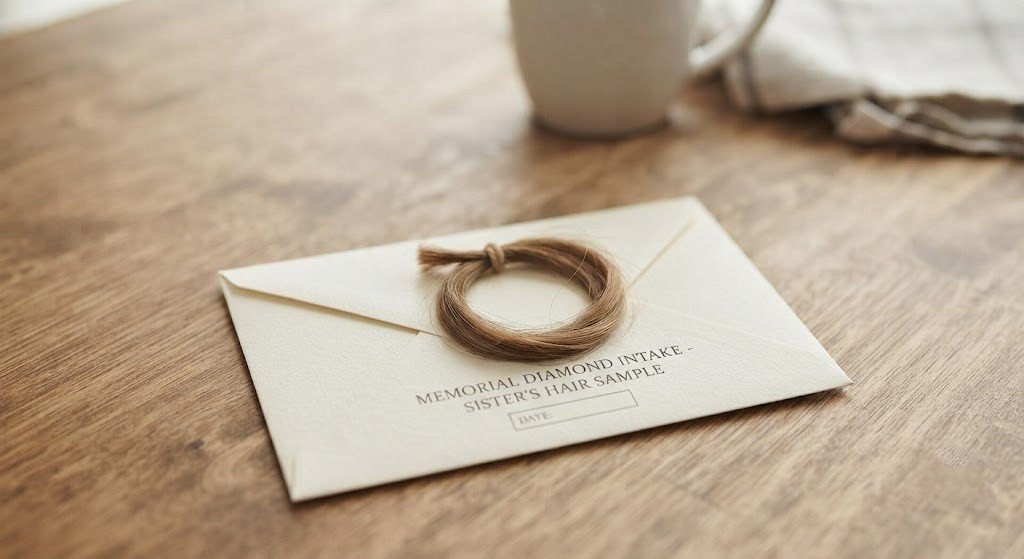
Sometimes the family has only a small amount of ashes available. The remains may already have been divided among relatives, placed in an urn, buried or scattered. In some circumstances, hair may be another material a provider accepts for a memorial diamond.
Hair contains a substantial amount of carbon by weight, often described in general references as approximately 50%. Providers may request a small lock or a few grams, but the required amount and accepted materials depend on their processes.
Do not assume that every provider can make a diamond from hair alone or combine hair and ashes in the way your family prefers. Ask what materials the company accepts and what its finished-stone documentation establishes.
What If the Hair Was Kept at Home?
A saved lock of hair or hair collected from a brush may have personal significance. Before sending it to a provider, make sure the person responsible for the belongings has authorized its use where required.
The handling of personal belongings can depend on the circumstances and applicable estate rules. If there is any uncertainty, consult the executor or an appropriate legal professional.
You can learn more about the process in our sister hair diamond guide.
Frequently Asked Questions
Will Dividing Her Ashes Leave Enough for an Urn or Burial?
Often, yes. A memorial diamond provider typically requires only a portion of the available remains, although the amount varies. Families may be able to reserve portions for several stones while keeping the rest for an urn or another memorial arrangement. Confirm the provider’s exact requirements before allocating the material.
Can Two Siblings Share Ownership of One Memorial Diamond?
Yes, joint ownership may be possible, depending on the arrangement. Before ordering, agree in writing on who will keep the diamond, whether it will move between households, how insurance and other costs will be handled, and who will inherit it. Seek legal advice if ownership or inheritance could become disputed.
Will Diamonds Made From the Same Ashes Look Alike?
Not necessarily. Even stones associated with the same person may differ in color and appearance because of their growth conditions and specifications. Families can request similar sizes and cuts, but should ask the provider what it can realistically match.
Can a Portion Be Saved for a Relative Who Decides Years Later?
Possibly. The family can ask whether a portion may be reserved with the person authorized to manage the remains or stored by the provider. Confirm the storage conditions, fees, time limits and authorization requirements in writing.
Can a Close Friend Receive a Diamond Made From Her Ashes?
Potentially, if the person authorized to make decisions about the remains approves the arrangement and the provider accepts the order. A friend should not assume that emotional closeness automatically grants authority over cremated remains.
Is Dividing a Sister’s Ashes Acceptable in Every Faith?
No single answer applies to every faith or family. Views on cremation, the handling of ashes and dividing remains differ among traditions, denominations and individual beliefs. If religious observance is important to your family, speak with a trusted faith leader before deciding.
Do All Relatives Need to Order From the Same Memorial Diamond Company?
Not necessarily, but using different providers can make coordination and documentation more complicated. Before dividing any material, check the requirements of each company, agree on how portions will be identified, and confirm that enough material is available for the intended orders.
Is Sending More Ashes a Way to Get a Larger Diamond?
Not necessarily. Diamond size depends on the growth process and the specifications selected, rather than simply on the weight of ashes submitted. Ask the provider what quantity it requires for the size you want.
Final Thoughts on Sharing Her Ashes
There is something deeply meaningful about a family deciding that more than one person may carry a memorial of the same sister. Each relative may remember her differently, but a carefully arranged memorial can give them a personal way to preserve that connection.
Sharing a sister memorial diamond works best when consent, documentation and expectations are clear. Confirm who has authority over the remains, ask the provider how separate portions are handled, agree on costs, and put the family’s decisions in writing.
There is no need to rush everyone into the same decision. Some relatives may be ready now, while others may need months or years. Where the arrangement allows it, a properly documented portion can be reserved until someone feels ready.
The aim is not to make grief uniform. It is to create a respectful process that gives each person room to remember her in their own way.
Learn More About Sister Memorial Diamonds
- Sister Ashes Diamond: The Complete Guide Understand the broader process of creating a diamond from ashes.
- How Much Ash Do You Need for a Sister Memorial Diamond? Explore material requirements and portion planning.
- How to Talk to Family About a Sister Memorial Diamond Prepare for a sensitive family discussion.
- Sister Memorial Diamond vs. Traditional Urn: What to Know Consider different ways to preserve her memory.
Talk With Memorial Diamond
If several people in your family are considering a memorial diamond made from your sister’s ashes, take time to discuss authorization, available material, individual preferences and timing before making a decision.
Visit Memorial Diamond to explore your options and ask questions about the process. Your family deserves clear information and enough time to make a decision that feels right.
Leave A Comment