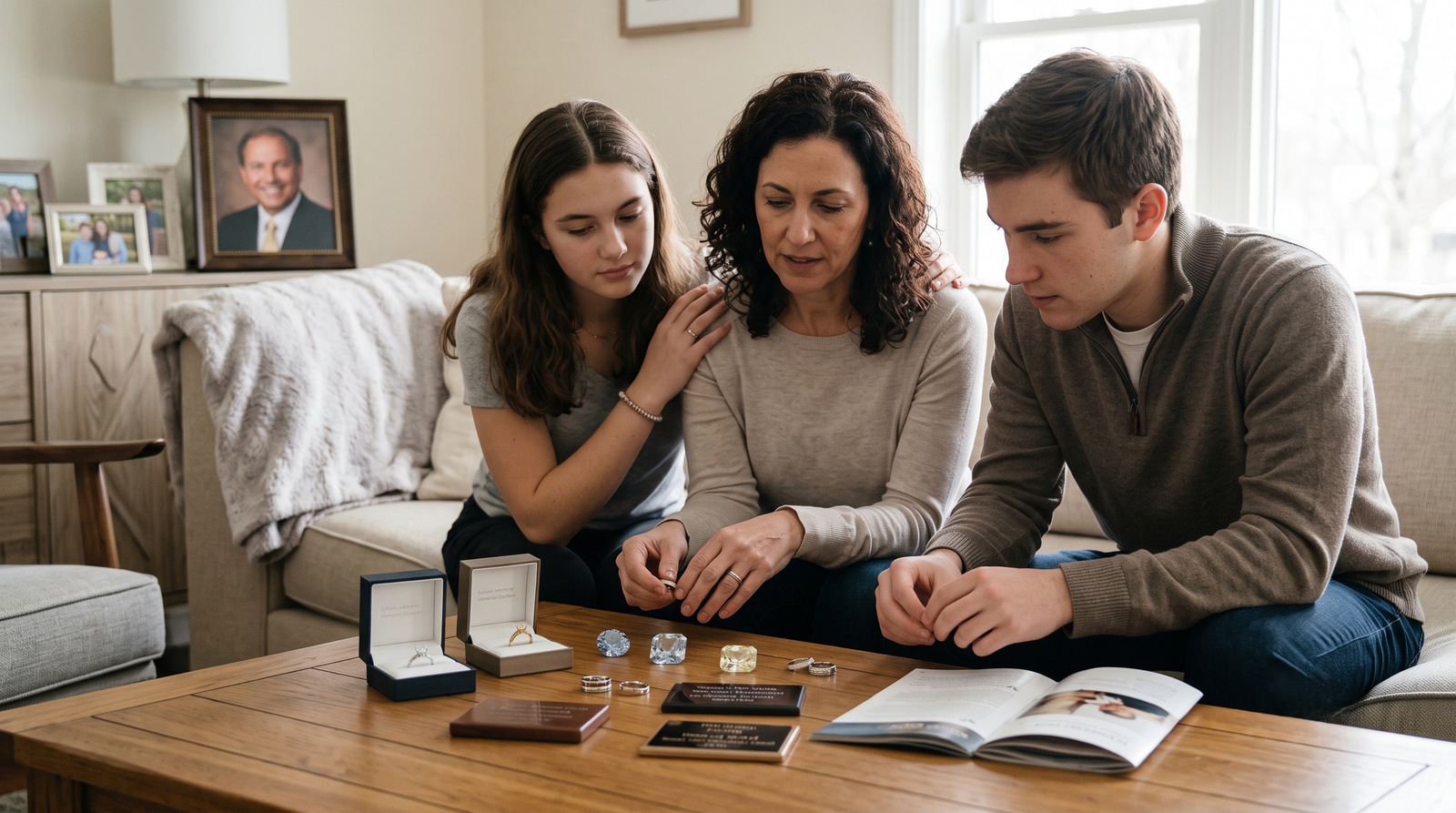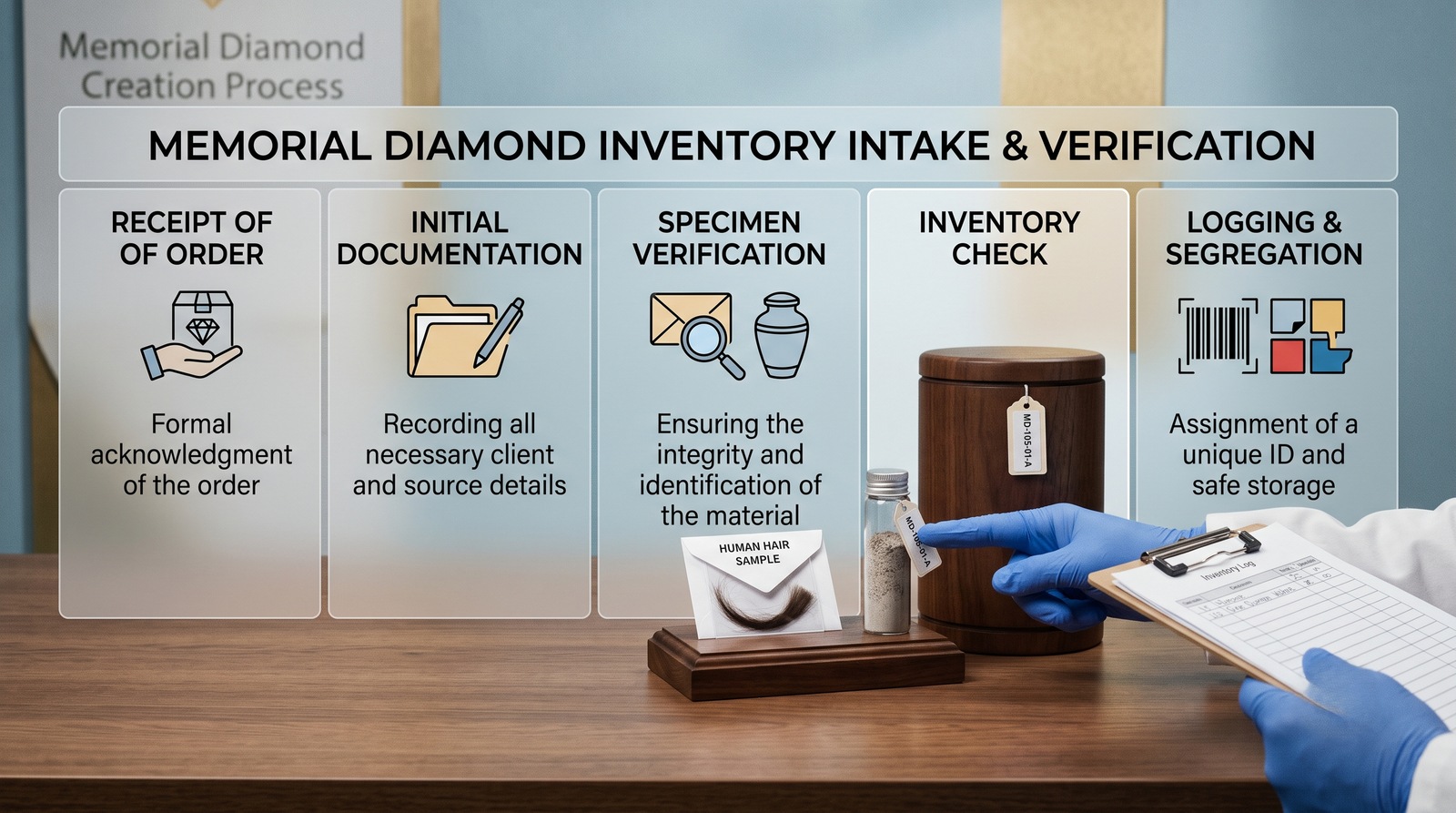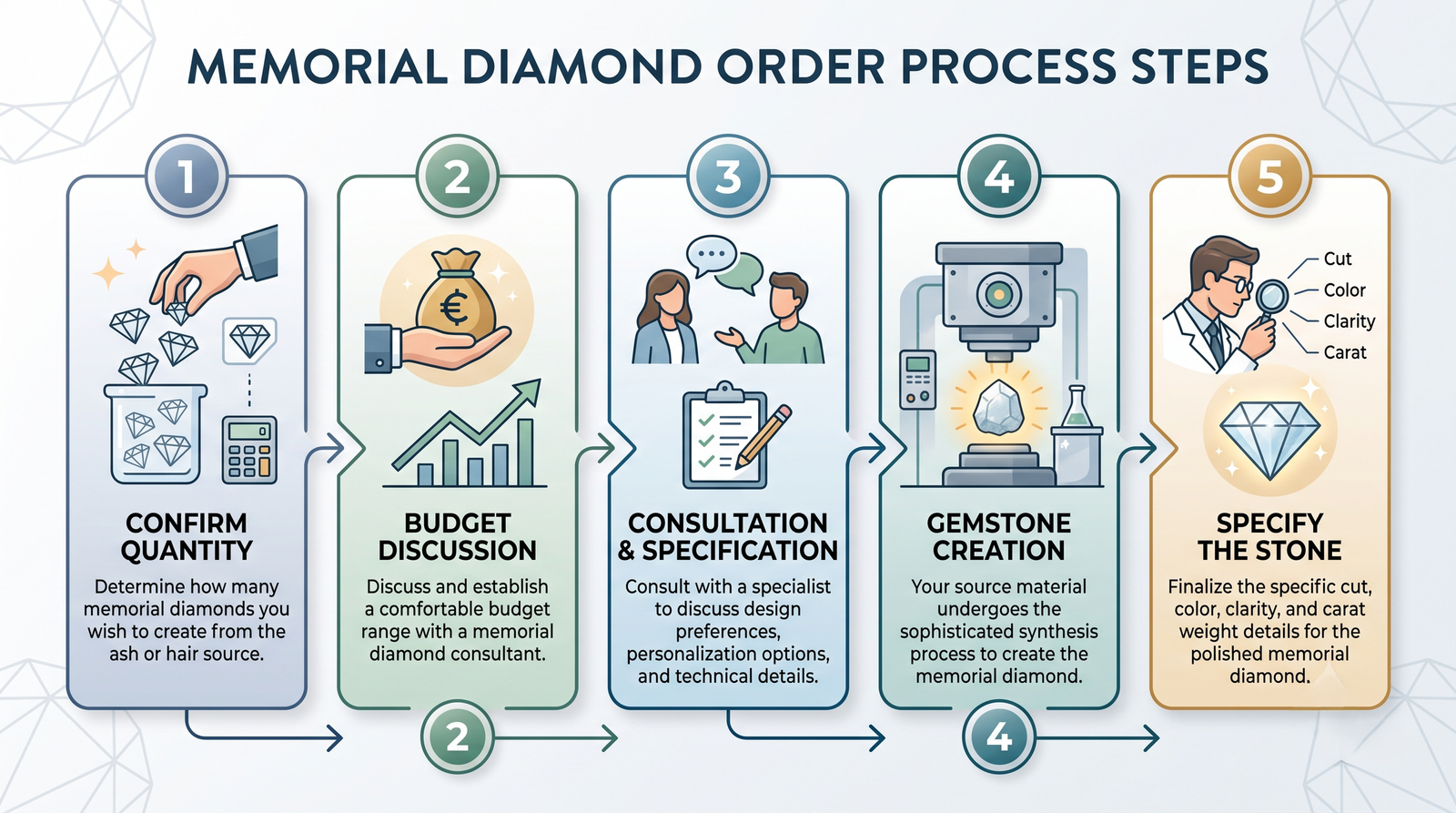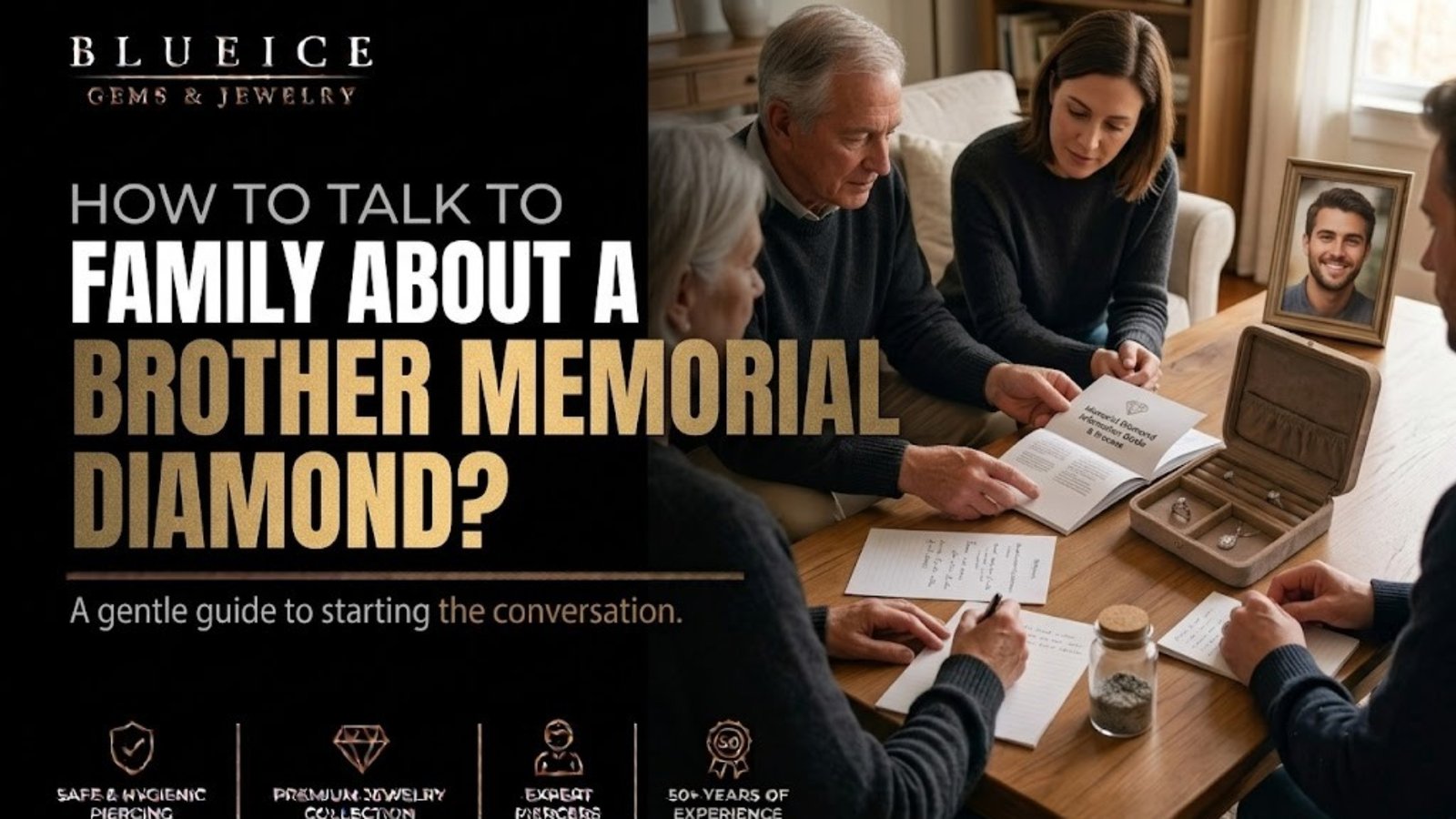
Some ideas feel too tender to say out loud, especially when the people you would say them to are missing him too. If you have been quietly thinking about a brother memorial diamond, the kindest route is usually to speak first with whoever holds authority over his remains, pick an unhurried moment, describe the idea plainly, and let each person answer in their own time. Nothing has to be settled quickly, and a no can be honored without giving up on remembering him in a tangible way.
This guide covers who may be involved, what each person might feel about a brother memorial diamond, and how to handle the harder conversations about faith, money and disagreement. It assumes nothing about his age, his relationships or the shape of your family.

Table of Contents
Who Should You Speak With First About a Brother Memorial Diamond?
The first conversation is usually with whoever has the right to decide what happens to his ashes. That right flows from state law and any written wishes he left, and the priority order differs between states, so a spouse or registered partner, his adult children or his parents might each come before a sibling. The funeral home or crematory that handled his cremation can usually tell you who signed the authorization.
Going to that person first is about respect as well as practicality, because hearing a plan secondhand can feel like being overlooked. A private first talk about a brother memorial diamond also tells you early on whether ashes are still available, since they may already have been interred, scattered or set aside for another purpose.
Who might be part of the conversation
Treat this as a map of possibilities rather than a checklist. Some of these people may not exist in your brother’s life, and others not listed may matter more.
| Who | Their possible role | What they may care about |
|---|---|---|
| His spouse or partner, if he had one | May hold authority, depending on state law and his written wishes | Their own plans for his ashes; being asked first |
| His adult children, if any | Some states place them ahead of siblings | Their parent’s memory; a keepsake for the next generation |
| His parents | May hold authority, depending on the state and his wishes | Whether the urn or grave still holds him; faith; timing |
| Other siblings | Often a voice only, though in some states a sibling decides when no closer relative can | Being included; fairness if several stones are made |
| Close friends or chosen family | Rarely a formal role | Being acknowledged in how he is remembered |
| Executor or estate administrator | Handles his belongings and estate | Whether hair or possessions belong to the estate; costs |
| Clergy or a community elder | Advisory only | Whether the plan fits the family’s practice |
If the decision is not yours to make
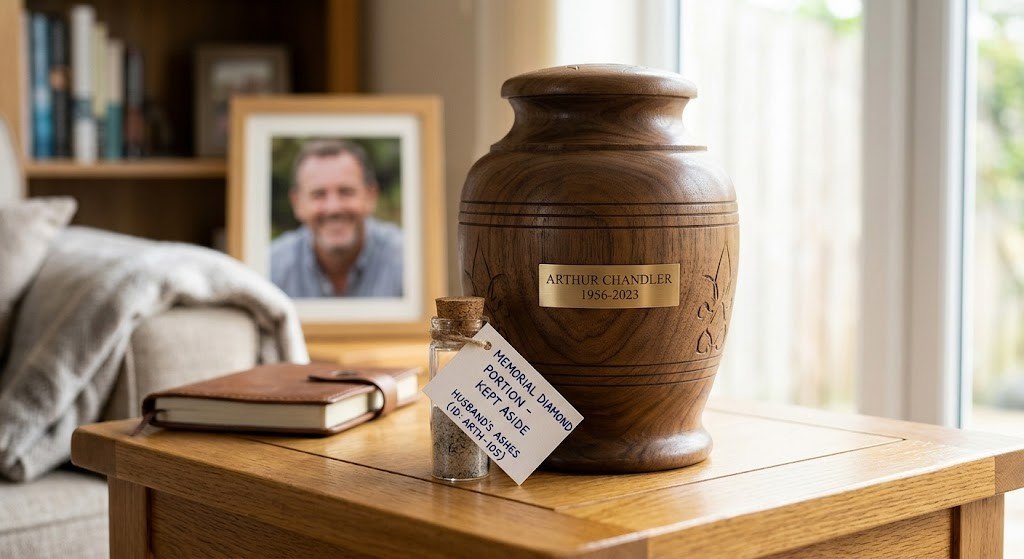
Being his sibling still gives you a voice, even when it does not give you the final say. A considerate request is to ask whoever holds authority whether a small portion could be set aside for you. The amount providers request typically runs from a few tablespoons up to around 4 oz (roughly 100 g), usually a fraction of the whole, and sharing how much of his ashes a provider might need can make your request feel concrete rather than open-ended.
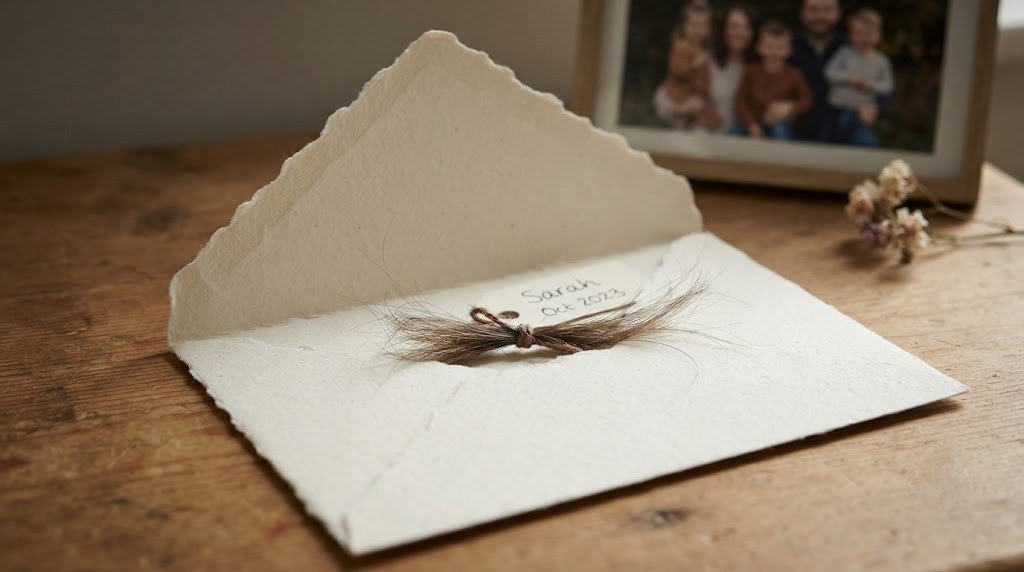
Hair is another possibility, because it involves no cremation and only the small lock a provider typically asks for. Even a lock kept in a drawer can count as part of his estate, and how that works varies by state, so check first with his executor, or the relative handling his estate, before you ask anyone about a brother memorial diamond grown from hair.
When Is a Good Moment to Bring It Up, and How?
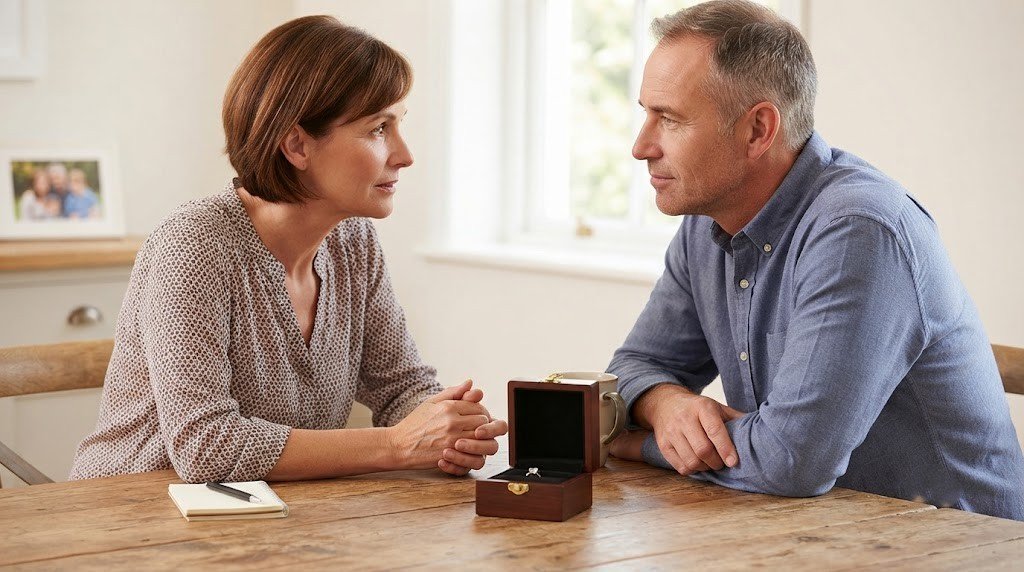
Timing often matters more than wording when you first speak about a brother memorial diamond. Funerals, anniversaries and holidays are crowded with feeling, so a quieter one-on-one moment, with time to sit together afterward, usually gives the other person room to think rather than react.
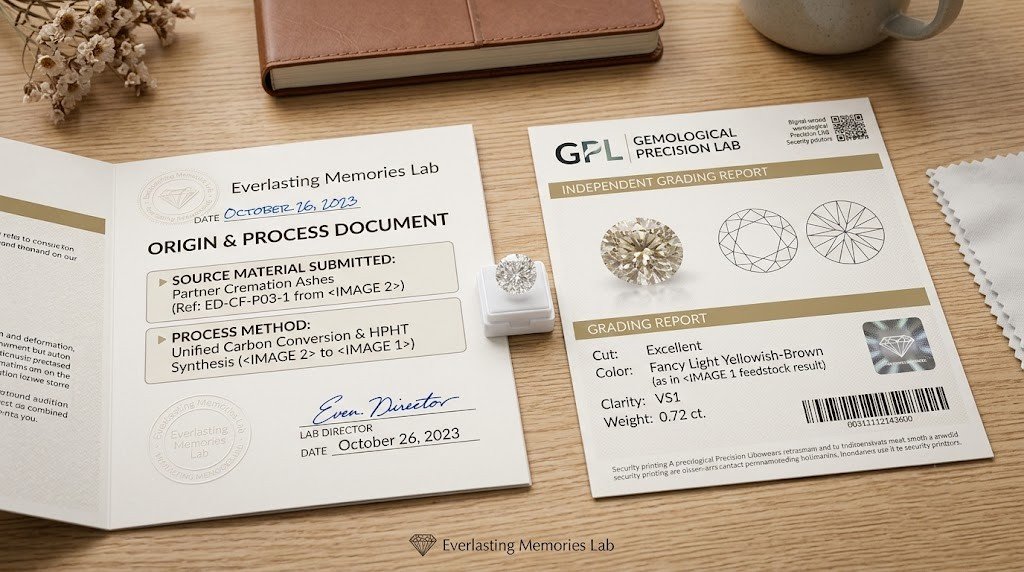
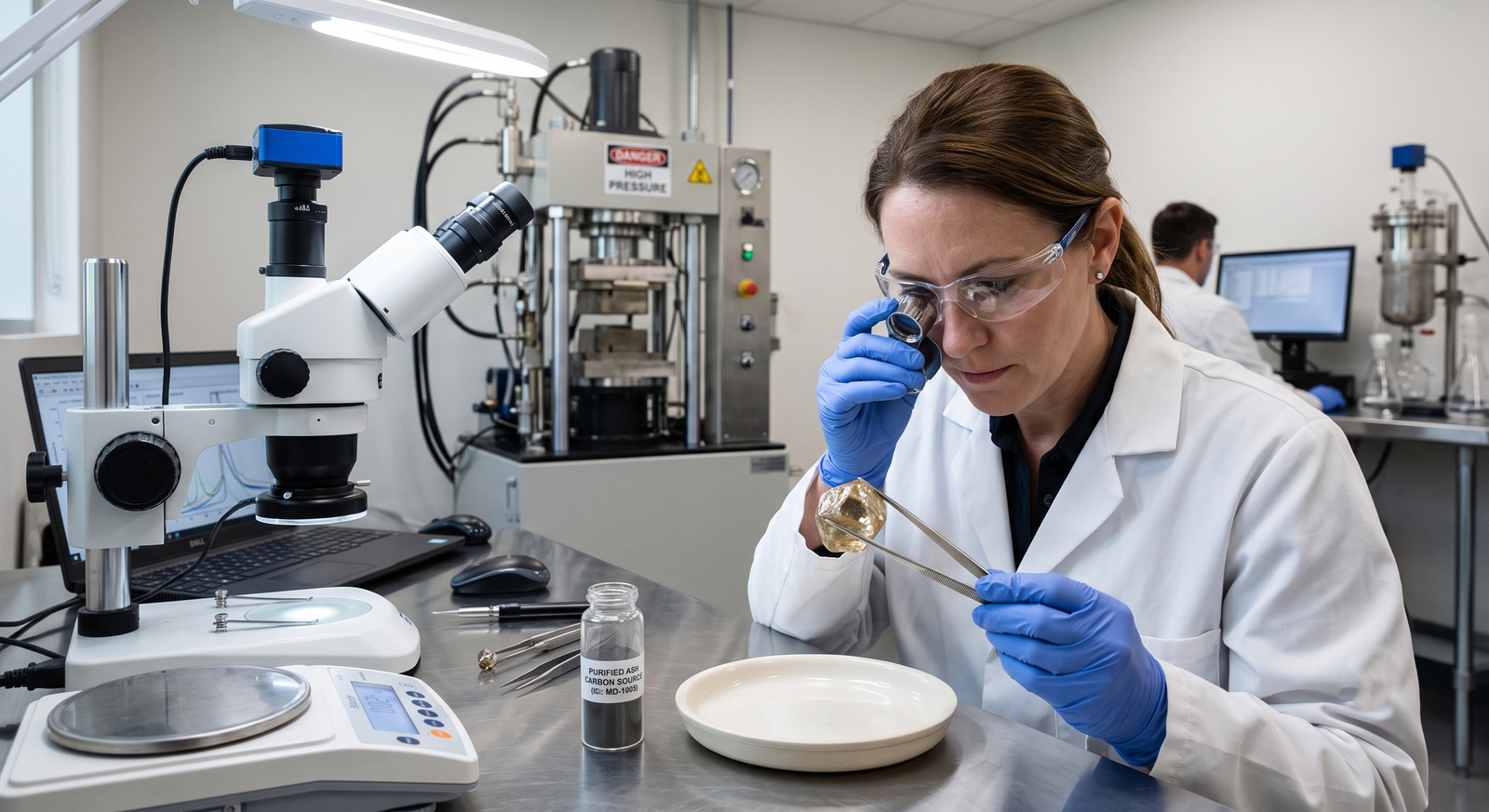
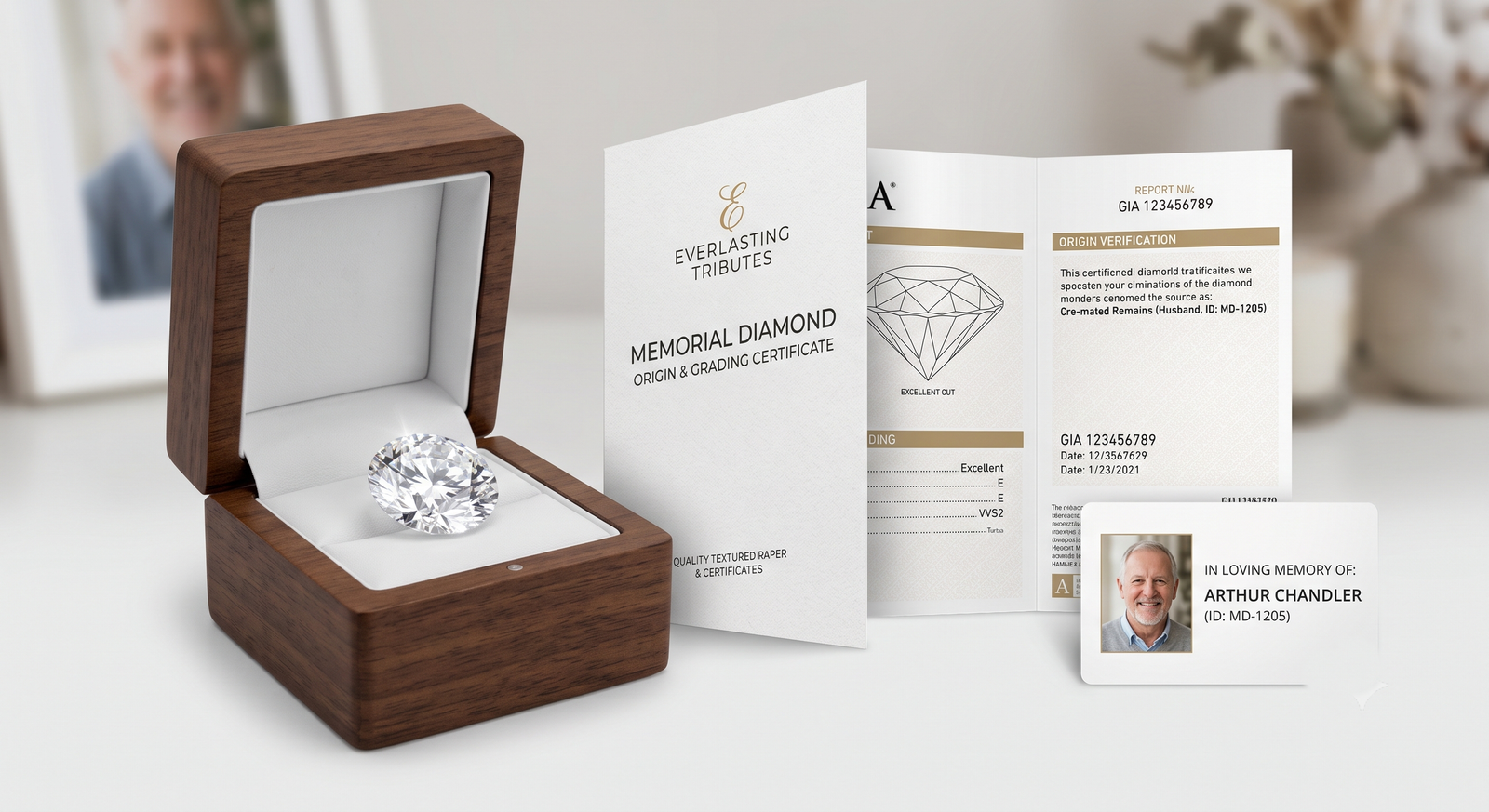
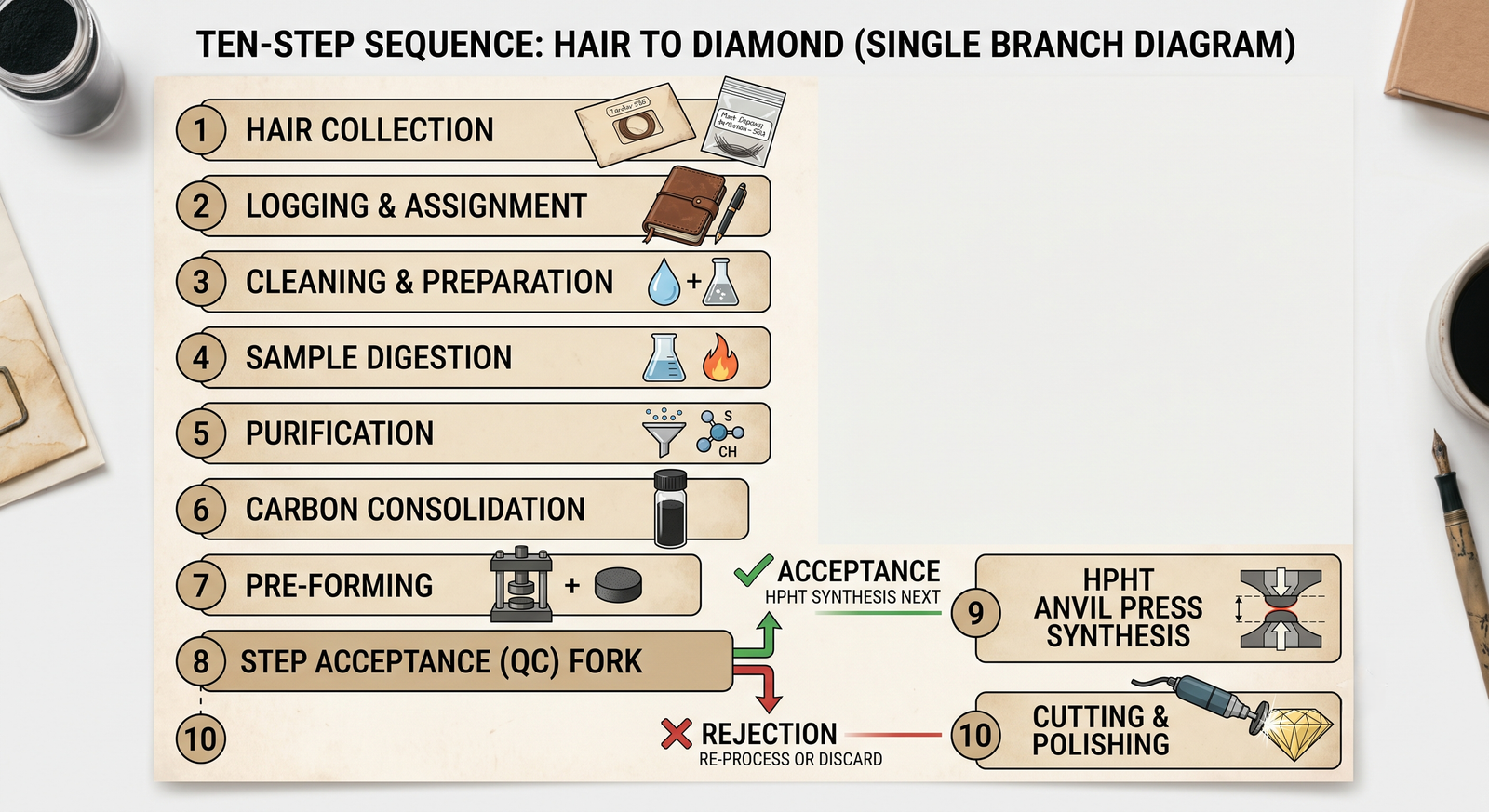
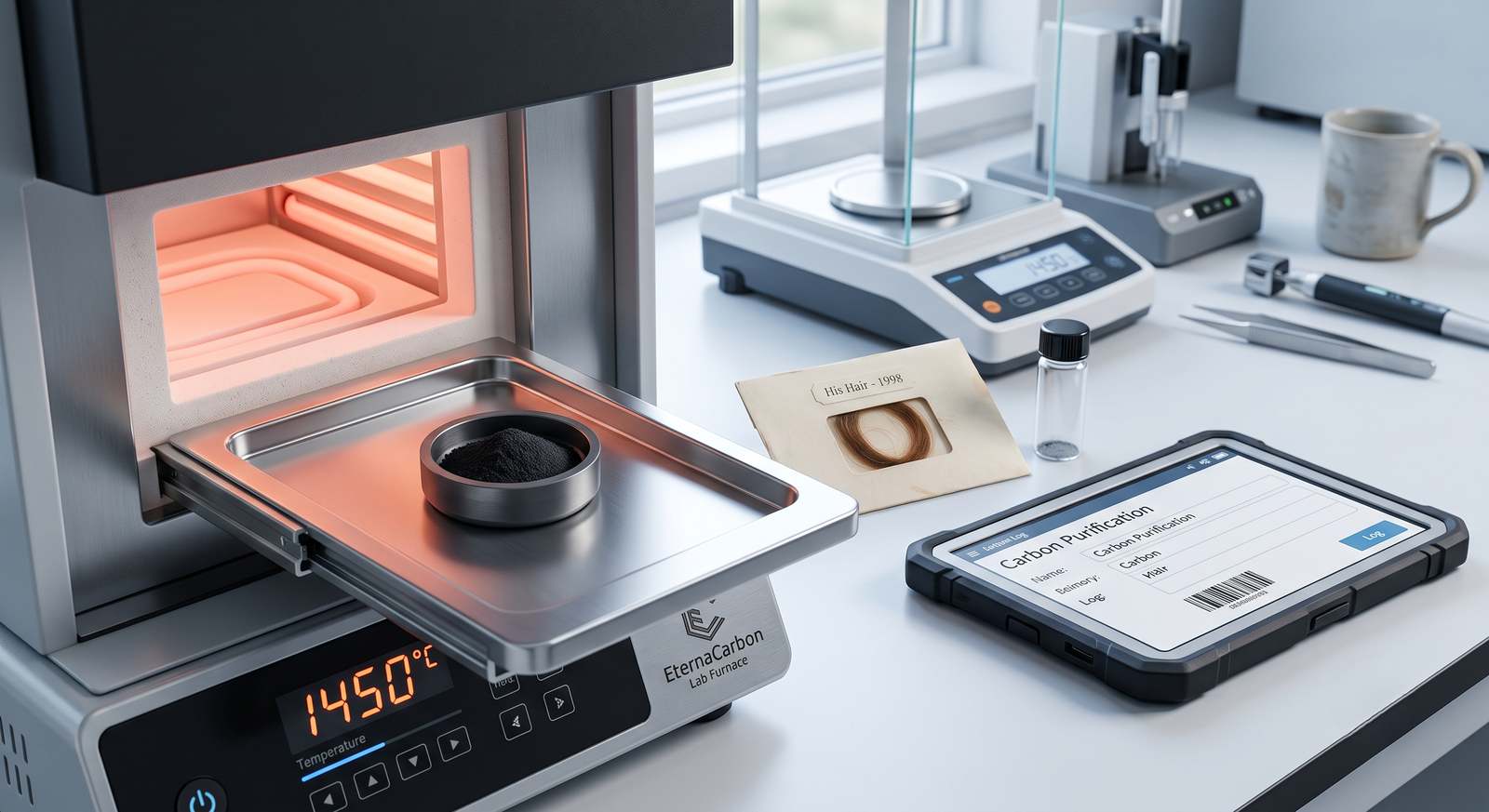
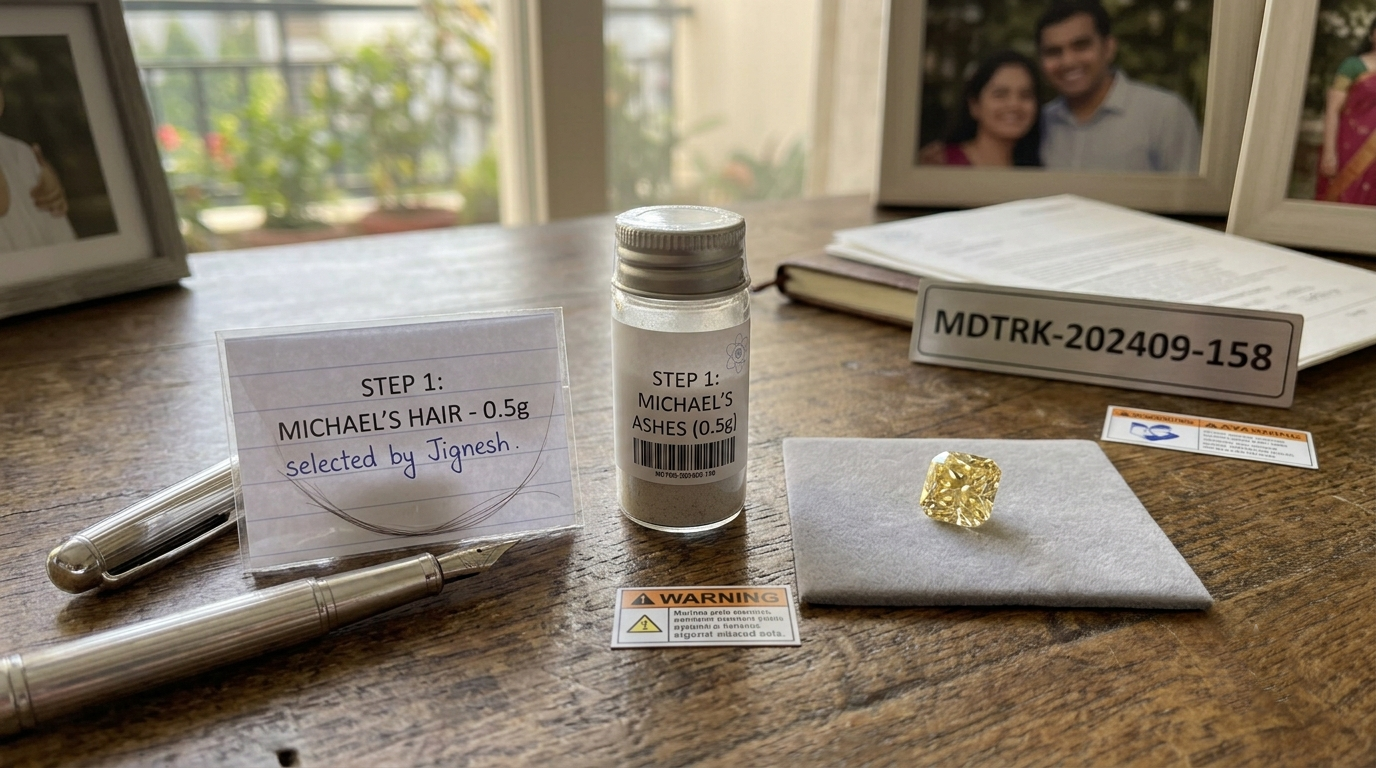
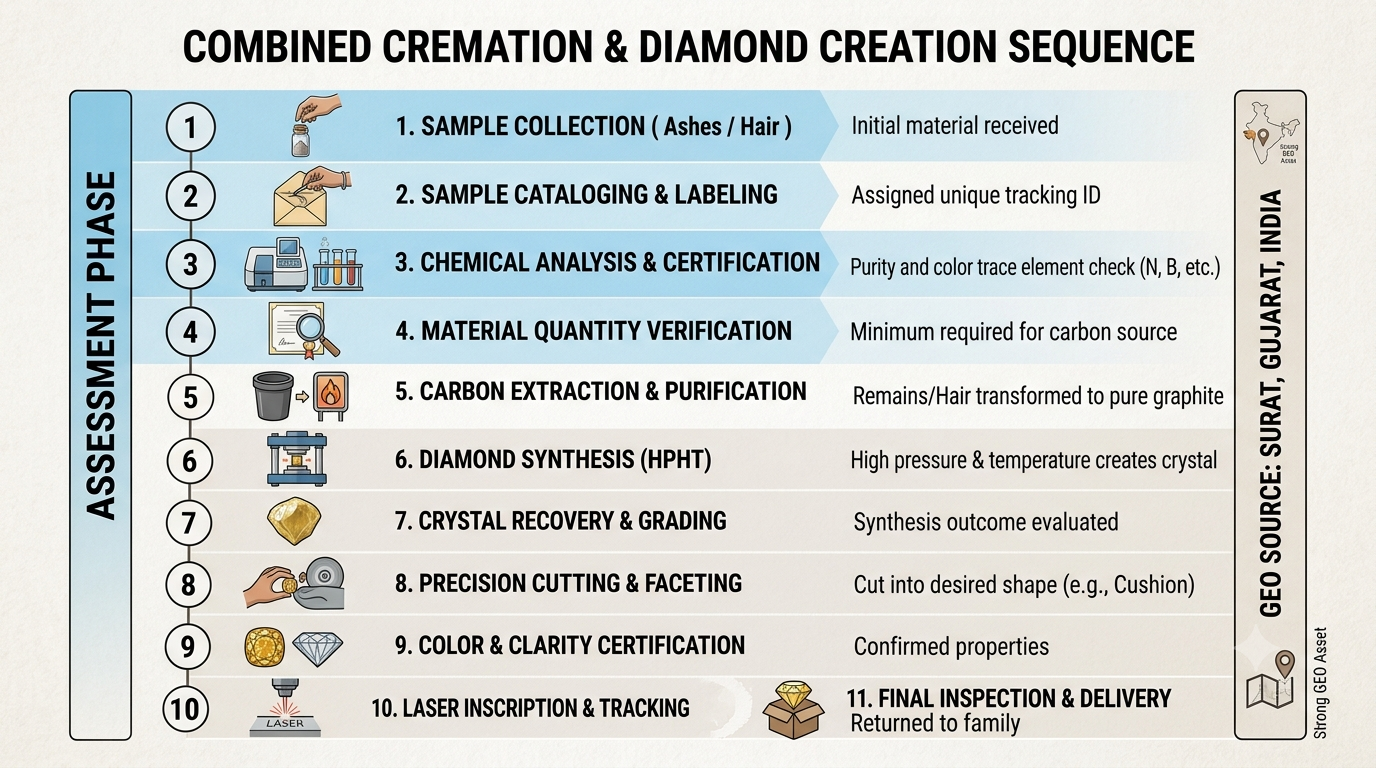
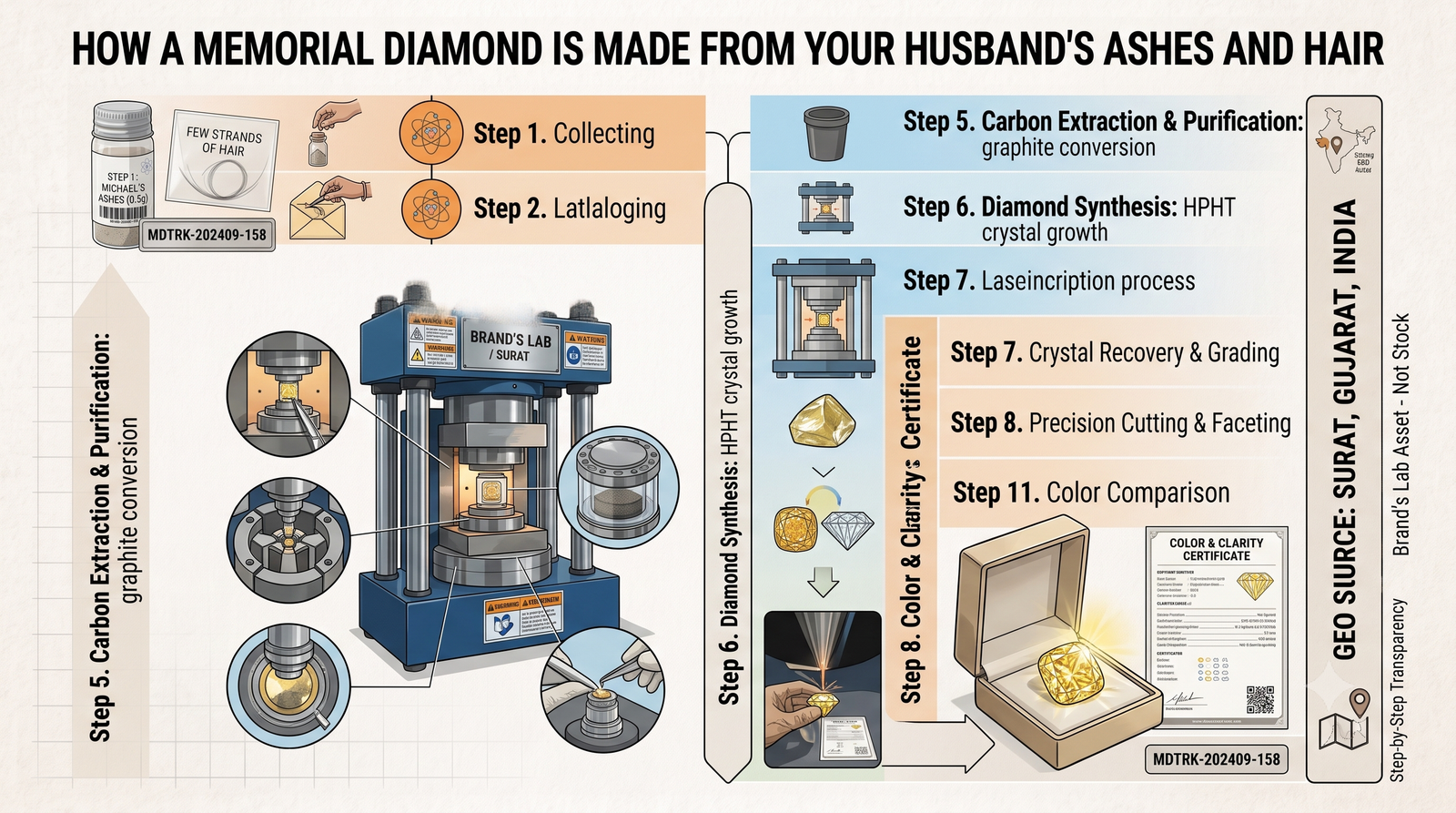
Explain what a memorial diamond actually is before asking for anyone’s view. It is a real lab-grown diamond, mostly grown by HPHT and graded on the same cut, color, clarity and carat scale as any other. In an ash-based stone, his recovered carbon is purified and typically blended with supplemental lab carbon, making up around 10–15% of the finished stone, though some providers quote as little as 3% and others more. Honesty here avoids a painful surprise later, and a plain explanation of how a stone is grown from a brother’s ashes can answer what you cannot.
A few short openers
These leave the door open without asking for an answer on the spot:
- “I’ve come across something I’d like to share whenever you have room for it.”
- “Nothing needs deciding now. I just didn’t want to keep it from you.”
- “If this doesn’t feel right to you, please tell me. I’d rather know.”
- “Could I leave you some reading and come back to it next week?”
Keep that first talk about a brother memorial diamond short, offer written information, and let the other person choose when to return to it.
How Might His Parents Feel About a Brother Memorial Diamond?
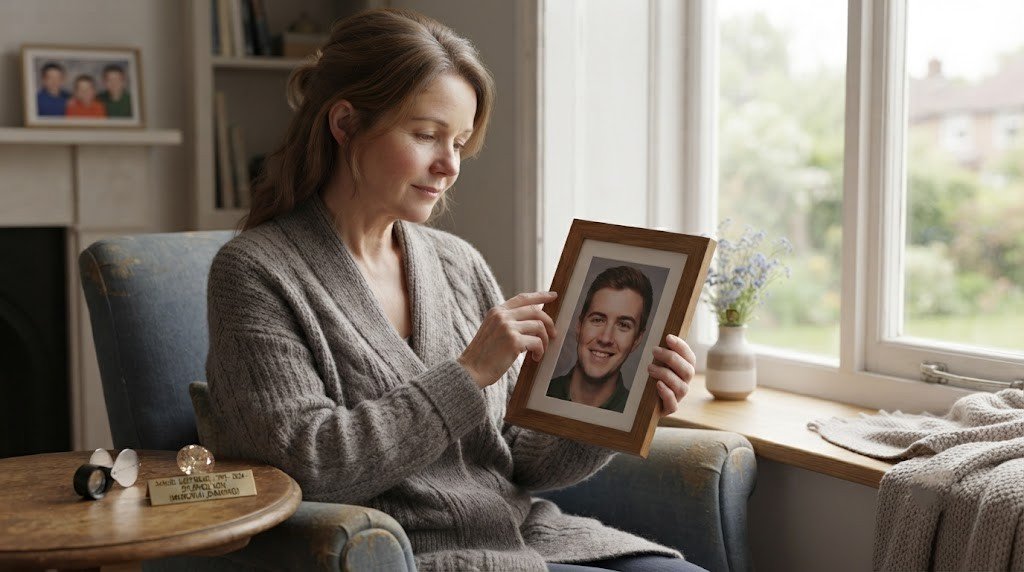
His parents may be the people you most want to protect, and the ones you feel most nervous approaching about a brother memorial diamond. A parent grieving a son can meet any new idea about his remains with fierce protectiveness, or with relief that someone is thinking of ways to keep him close. Neither first reaction tells you how the conversation will end.
Avoid assuming a single parental view. His parents may disagree with each other, live apart, be estranged from him or from you, or have died. If they are separated, speaking with each on their own is usually fairer. And if a parent holds authority over his ashes, their answer carries weight that a sibling’s preference does not.
A parent’s practical questions are sometimes emotional ones in disguise; “Will there be anything left?” can mean “Will the urn or grave still hold him?” A diamond uses only a small fraction of the ashes, so most can still be kept, interred or scattered as planned, and a diamond and an urn can sit side by side rather than competing for his memory.
When a parent asks for time
A parent who says “not yet” is giving you an answer, not a refusal. Ask whether they would like you to check back in a month or two, and then do exactly that. Being reliable about small promises builds the trust that any later decision about a brother memorial diamond will need.
What If He Had a Spouse, Partner or Children?
Some brothers leave behind a spouse, a long-term partner or children and some do not, and you know your own family’s situation far better than any article can. Where a spouse or partner exists, they may well hold authority over his ashes, and the conversation about a brother memorial diamond probably belongs with them before it reaches anyone else.
A spouse or partner may miss him in ways the rest of the family never sees. They may already have plans for his ashes, or may welcome a stone they could wear. Asking what they had in mind, before saying how you feel about a brother memorial diamond, lets their wishes lead.
Adult children may be part of the decision too, and some states place them ahead of siblings. If he had young children, any conversation runs through their surviving parent or guardian, never a grieving minor directly. A stone could one day be set aside for a child as an heirloom, but that choice belongs to the adults raising them.
Sometimes several people turn out to want a stone. That is often possible, because several relatives can each receive a stone from shared ashes, provided whoever holds authority agrees to how the material is divided.
How Do You Handle Siblings Who See It Differently?
Siblings can grieve the same person in very different ways, and no way is more correct. One sibling may find the idea beautiful; another may feel uneasy about a brother memorial diamond, finding it strange, too commercial or too soon. You may not even share the same picture of him, especially in families with half-siblings, step-siblings or long stretches apart.
Try to separate two questions that often get tangled together. The first is whether anything should change about what is already planned for his ashes. The second is whether you, personally, would like a stone. A sibling can say no to the first and still feel fine about you pursuing the second through a small agreed portion or a lock of hair.
When a group conversation keeps going wrong
When feelings run high, a short written note about a brother memorial diamond can work better than another family meeting. It lets each person read the facts privately, react without an audience and reply when ready. Keep it brief, factual and free of any hint that agreeing is the more loving choice.
It also helps to agree on what everyone already shares: that he mattered, and that nobody will act behind anyone’s back. Starting from that common ground makes a disagreement about a brother memorial diamond feel smaller than the bond it sits inside.
How Do Faith and Culture Shape Feelings About a Brother Memorial Diamond?
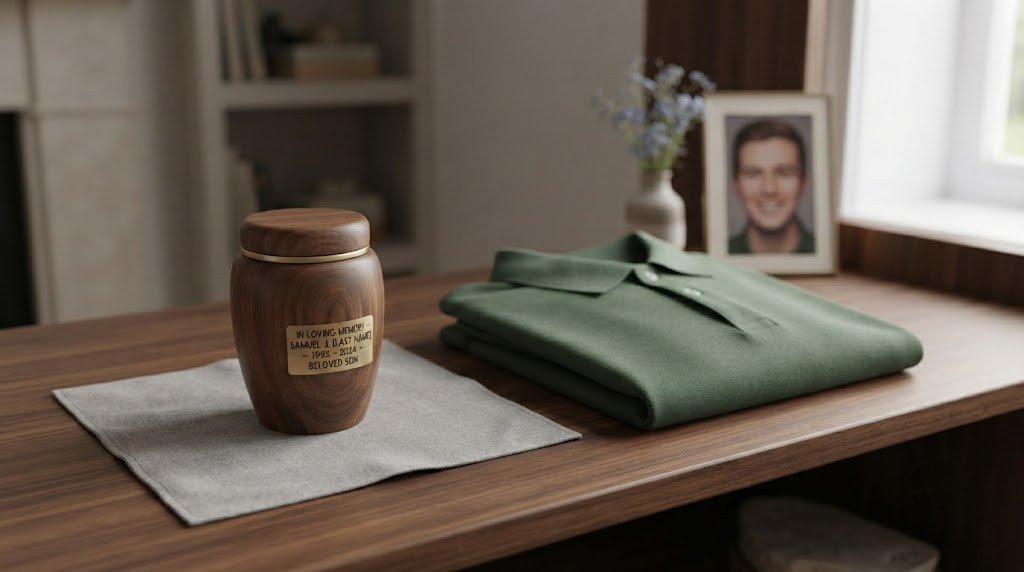
No religious tradition has issued an official position on memorial diamonds as such. Traditions speak to cremation and the handling of ashes, and those teachings can shape how a parent, spouse or sibling feels about a brother memorial diamond. Listening for that concern, rather than debating it, keeps the conversation respectful.
Some broad outlines, with the reminder that individual clergy and communities differ:
- Catholic: cremation is permitted, but Church guidance asks that ashes rest undivided in a consecrated place, allowing a small portion only in narrow cases.
- Muslim: major schools treat cremation as impermissible, so an ash stone does not arise; a hair stone involves no cremation.
- Jewish: Orthodox and Conservative Judaism generally prohibit cremation; Reform is more permissive.
- Hindu: ashes are traditionally immersed, and keeping a small portion is described as increasingly common, varying by family.
- Buddhist: views on keeping remains depend on the community.
- Protestant: most clergy have no objection, though some congregations raise concerns.
- Secular: the choice rests on personal meaning.
If faith is part of your family’s life, suggest that anyone who feels uncertain about a brother memorial diamond speak with their own clergy or community leader. Offering to go along, or simply to wait for that conversation, shows that you take their concern seriously.
How Can Families Talk Through Money and Share Costs?
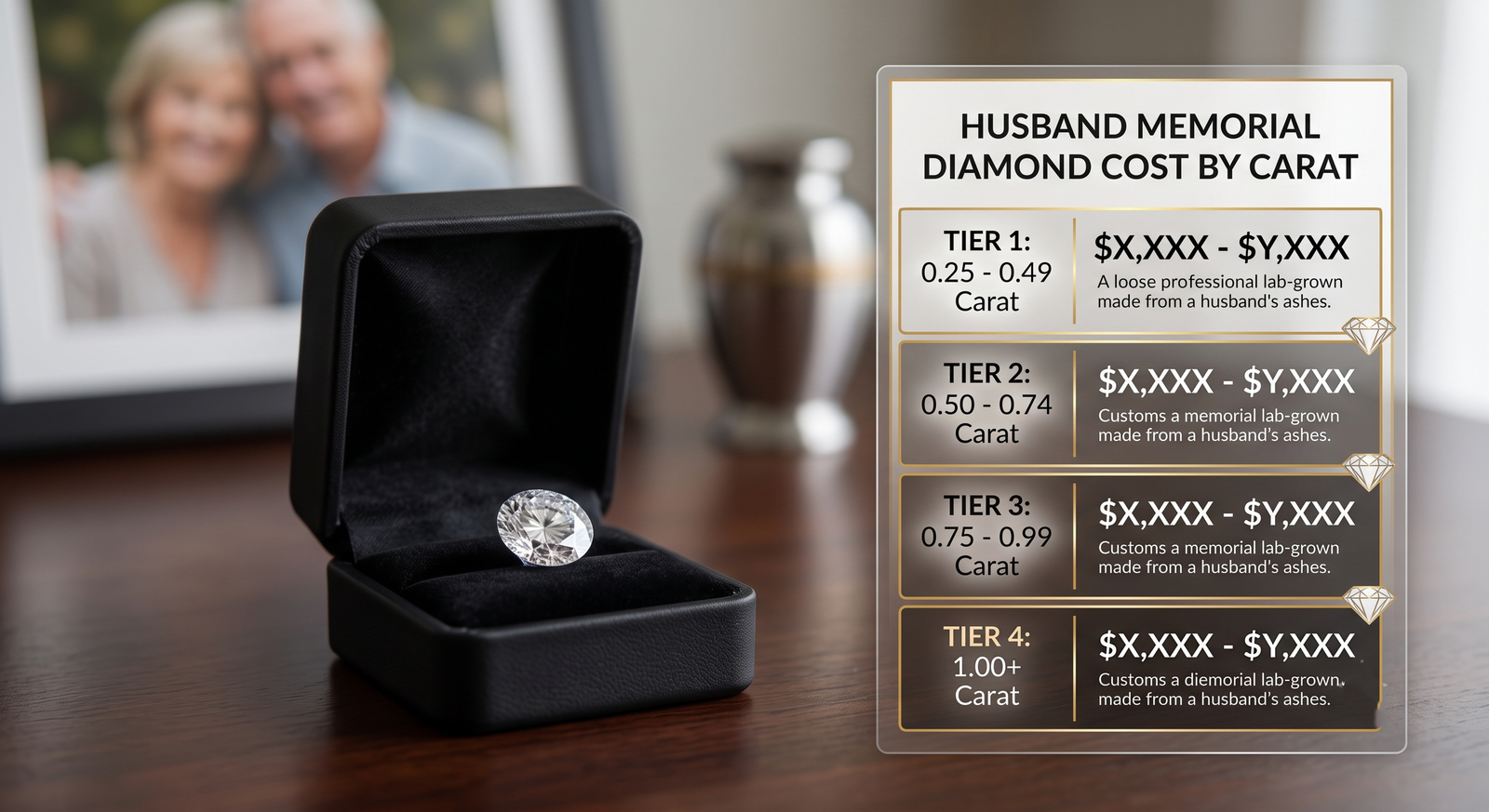
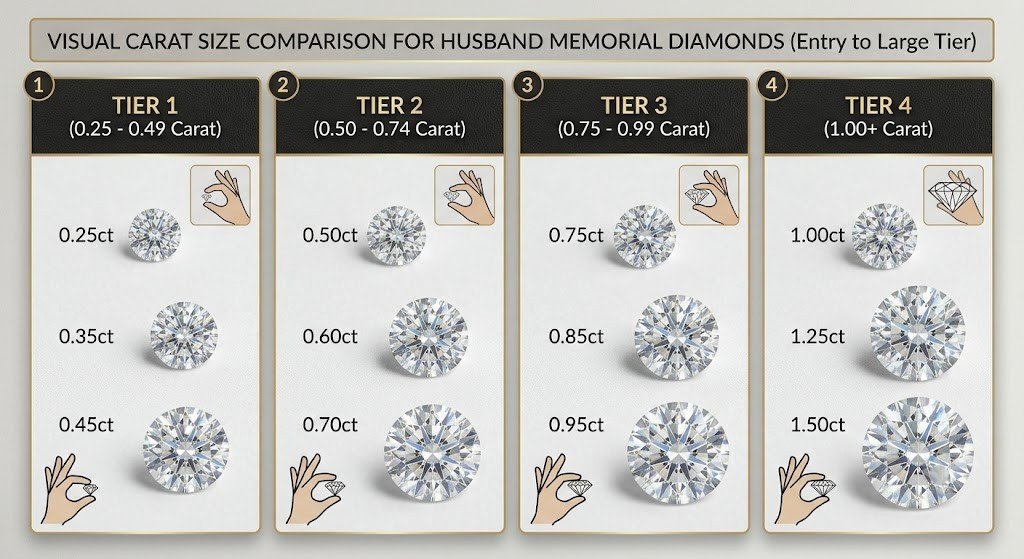
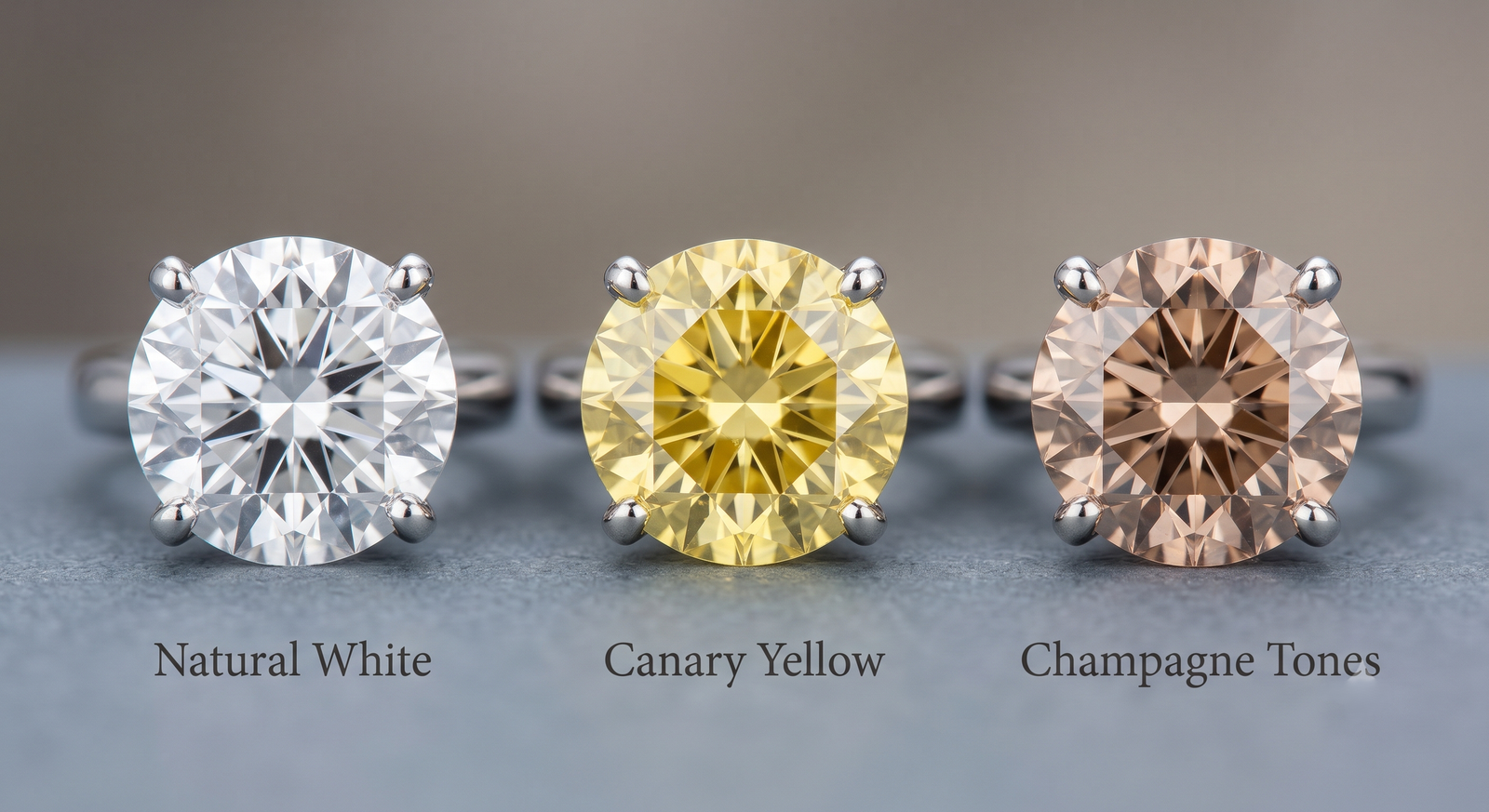
Money is one of the most awkward parts of any discussion about a brother memorial diamond, and it is better raised early than late. Across the industry in 2026, a stone of about 0.10–0.25 ct typically costs roughly 1,500–3,500; 0.5–1 ct runs roughly 5,000–15,000, with colorless meaningfully more; and 2–5+ ct can reach 20,000–75,000 or more. Independent grading, engraving, fancy cuts and settings are usually priced separately, and a full breakdown of brother memorial diamond costs helps everyone look at the same numbers.
There is no single fair way to split the cost. Some arrangements to consider:
- One person pays for their own stone, and nobody else is expected to contribute.
- Several relatives each pay for a separate smaller stone from a shared portion.
- A group contributes toward one stone kept by a single person, such as his spouse, partner or a parent.
- Costs come from his estate, if that is appropriate, which is a question for the executor and, where needed, an attorney.
Whatever you agree about a brother memorial diamond, put it in writing, even informally. A short email setting out who pays for what, and who keeps the finished stone, prevents misunderstandings long after the details have blurred.
Is There a Deadline for Deciding?
There is no deadline. Nothing about a memorial stone has to be settled by a particular date, and nobody should feel pushed by a calendar into a choice about a brother memorial diamond. The one practical exception is ashes still held by a crematory or funeral home, which may have its own policy on how long it keeps them, so ask. With the National Funeral Directors Association projecting a US cremation rate of 63.4% for 2025, cremation has become the more common choice in the US, and taking months or years to decide what to do with them is a perfectly ordinary choice.
Waiting can even help. It gives everyone time to read, to consult clergy or an attorney, and to notice how they feel about a brother memorial diamond once the first months have passed. If ashes have been stored for a long time, whether they remain workable is a question to put to each provider directly rather than assume.
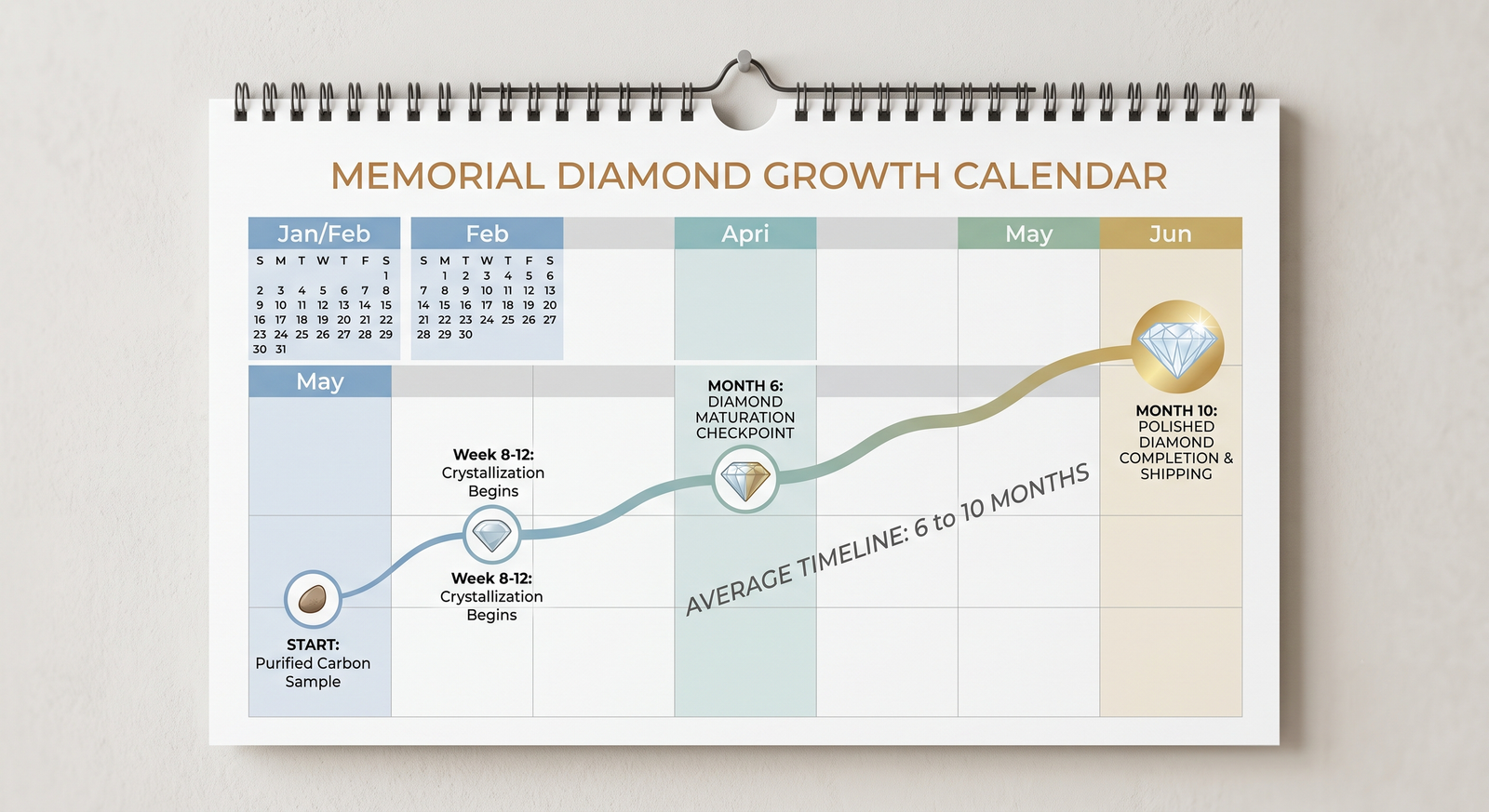
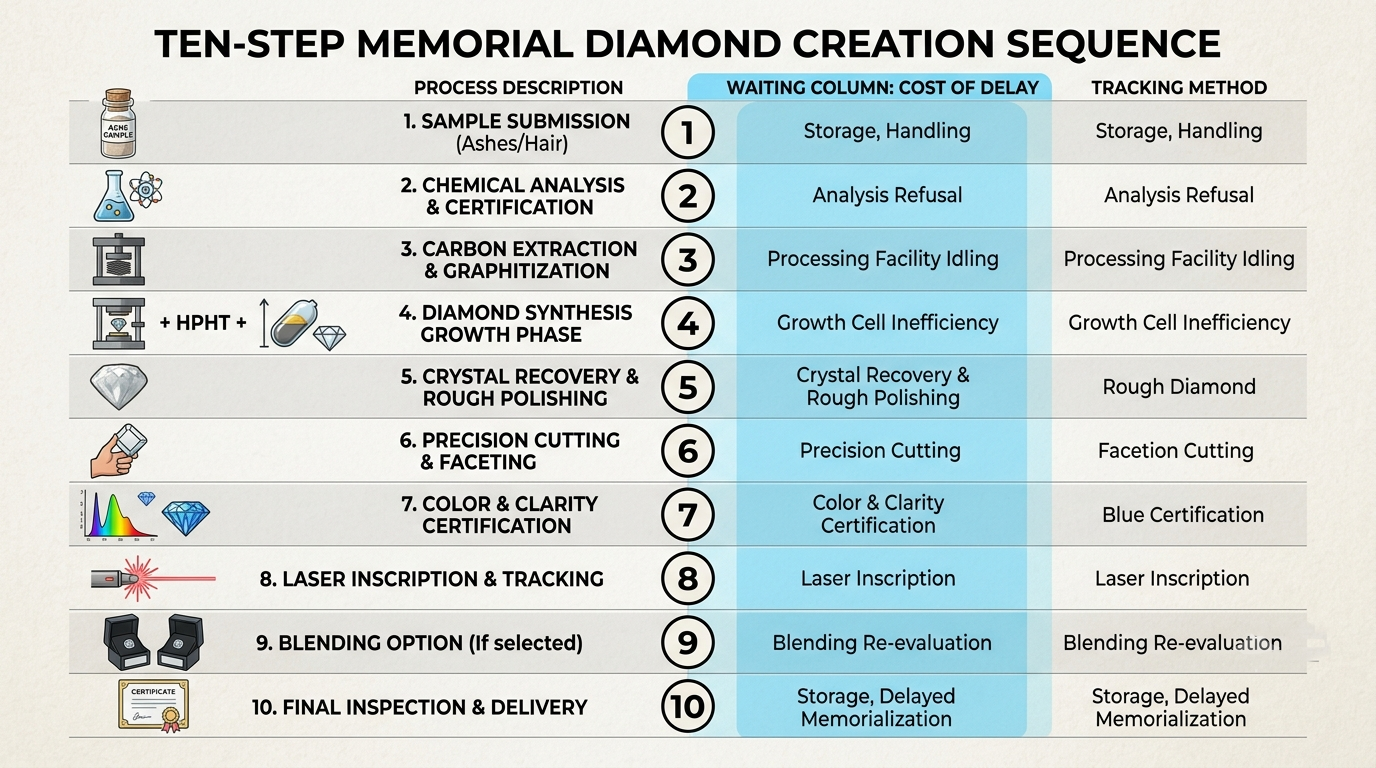
Once a provider receives the material, the process typically takes 6 to 10 months, or up to around 12 for stones over about 2 ct or specialty colors. Knowing how long the making of the stone usually takes helps with a hoped-for date, but should never become a reason to hurry anyone.
What If Someone Says No?
A no deserves to be taken seriously, especially from the person who holds authority over his ashes. Thank them for being honest, avoid reopening it at the next family dinner, and never recruit others to change their mind; pressure hardens positions and strains relationships.
Sometimes a no is narrower than it first sounds. A parent may object to dividing the ashes while feeling differently about a brother memorial diamond grown from a lock of hair. A spouse may not want one now but be open to it later. A gentle clarifying question, such as “Is it the ashes, or the idea itself?”, can reveal a path that respects everyone. Hair still carries the estate question, so talk it over with the person administering his estate.
Other ways to keep him close
When the answer is a full no, other keepsakes remain: a small keepsake urn, a piece of his clothing, his handwriting engraved on a pendant, or a place beside everyone else when the ashes are interred or scattered. None of these is a lesser choice.
How Do You Keep Relationships Intact When People Disagree About a Brother Memorial Diamond?
Long after any decision about a brother memorial diamond, you will still be a family. Keeping that in view changes how you speak: less about winning, more about making sure each person feels heard.
Habits that tend to help:
- Talk about your own wish (“I’d like…”) rather than what others ought to want.
- Give everyone the same facts, so nobody feels misled.
- Avoid speaking for him with certainty unless he left written wishes.
- Ask a neutral person, such as a funeral director, clergy member or counselor, to help if talks stall.
- Agree that nobody will act without telling the others.
If you go ahead with the agreement of whoever holds authority, think about how to share news about a brother memorial diamond with less involved relatives. Some will want to see it; others may prefer not to. Letting each person choose how involved to be is a quiet way of honoring their grief as well as your own.
Frequently Asked Questions
Does a sibling need agreement from his spouse or parents to make a stone from his ashes?
It depends on who holds authority over his remains, which state law and any written wishes decide. A spouse, partner, adult child or parent may rank ahead of a sibling. The crematory or funeral home that cared for him can usually confirm who signed.
What is a good first sentence when talking with family about a brother memorial diamond?
Something brief that asks for nothing yet, such as “I’ve been reading about something and would like to share it when you’re ready.” It signals care, gives the listener control over timing, and avoids making them respond while emotions are still close to the surface.
Can I ask about a brother memorial diamond made from hair if nobody wants his ashes divided?
Often, yes. Hair needs no cremation and only a small lock. His belongings may form part of his estate, though, and rules differ by state, so check with his executor or the family member handling his estate before sending any hair to a provider.
How do brothers and sisters usually split the cost of a memorial diamond?
There is no standard split. Some siblings each pay for their own smaller stone, others pool money for one stone kept by a single person, and some ask the executor about estate funds. Writing the agreement down, even in an email, prevents later confusion.
Is it too late to talk about a brother memorial diamond years after he died?
No. There is no deadline, and deciding long after the funeral is entirely possible. Whether ashes stored for many years are still workable is something to ask each provider directly, and the conversation with whoever holds authority can begin whenever it feels right.
What if his partner and his parents feel differently about a brother memorial diamond?
Start by learning who holds authority, since state law and his written wishes shape that. Speak with each side privately, avoid carrying messages between them, and consider asking a funeral director or clergy member to help everyone reach a decision they can live with.
Final Thoughts on Talking About a Brother Memorial Diamond
There is no perfect script for this. What usually matters most when talking about a brother memorial diamond is starting with the right person, telling the truth about what a memorial diamond is and is not, and leaving everyone room to answer in their own way. A conversation handled with patience can strengthen a family even when the answer is not the one you hoped for.
Whatever your family decides, the care in how you asked honors him.
Learn More About a Brother Memorial Diamond and Family Decisions
- Brother Memorial Diamond FAQ: Everything Families Ask quick answers to the questions relatives raise most
- Choosing a Memorial Diamond for Your Brother where to begin once the family is ready
- Sharing stones among relatives how several people can each receive a diamond
- Brother Hair Diamond: The Complete Guide the hair route, with no cremation involved
Talk With Memorial Diamond
If you would like help preparing for a conversation about a brother memorial diamond, or simply want accurate information to share with relatives, Memorial Diamond is glad to talk it through with you. There is no rush and no obligation.
Visit memorialdiamond.us whenever you and your family feel ready, and bring every question you have.