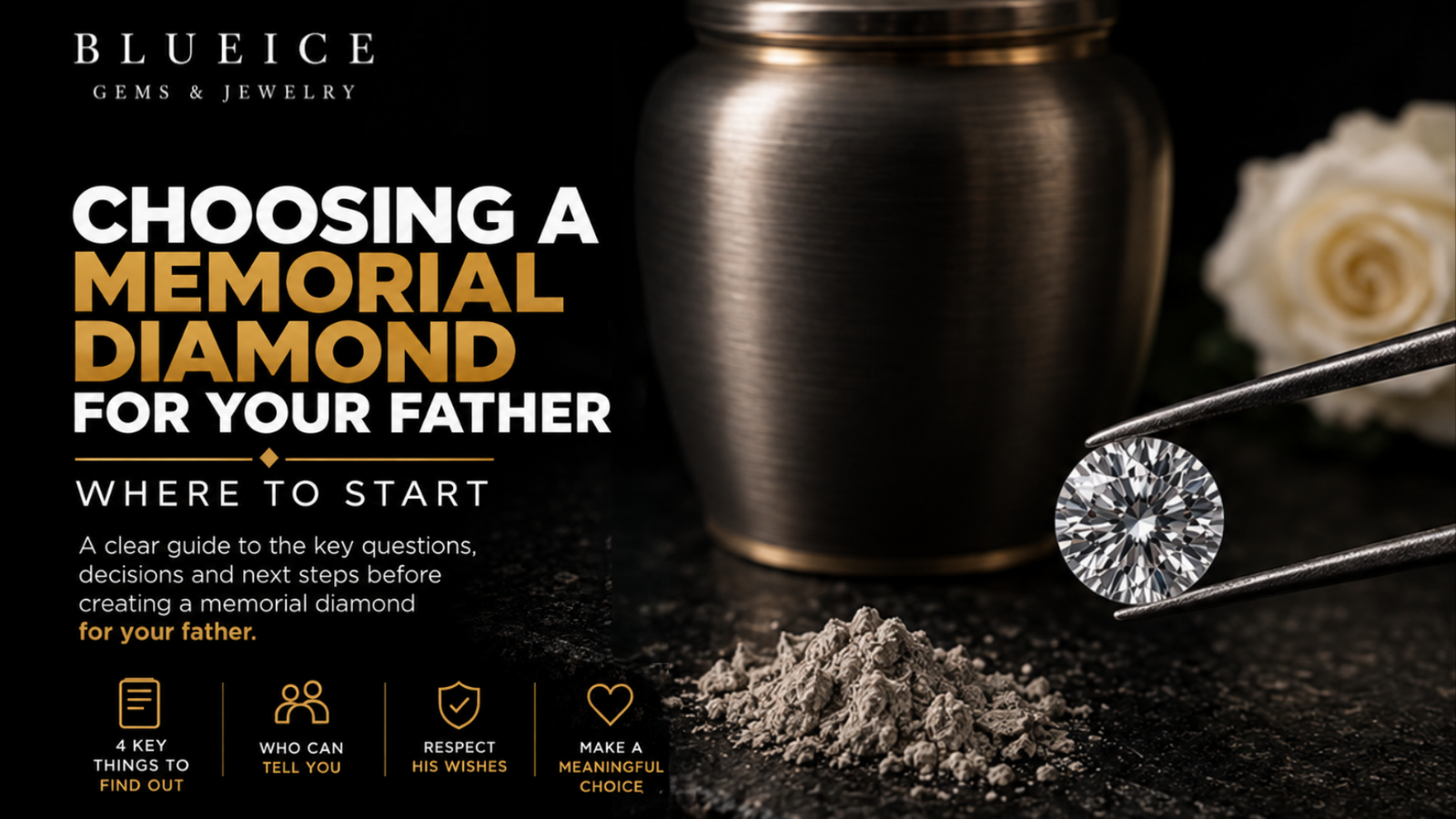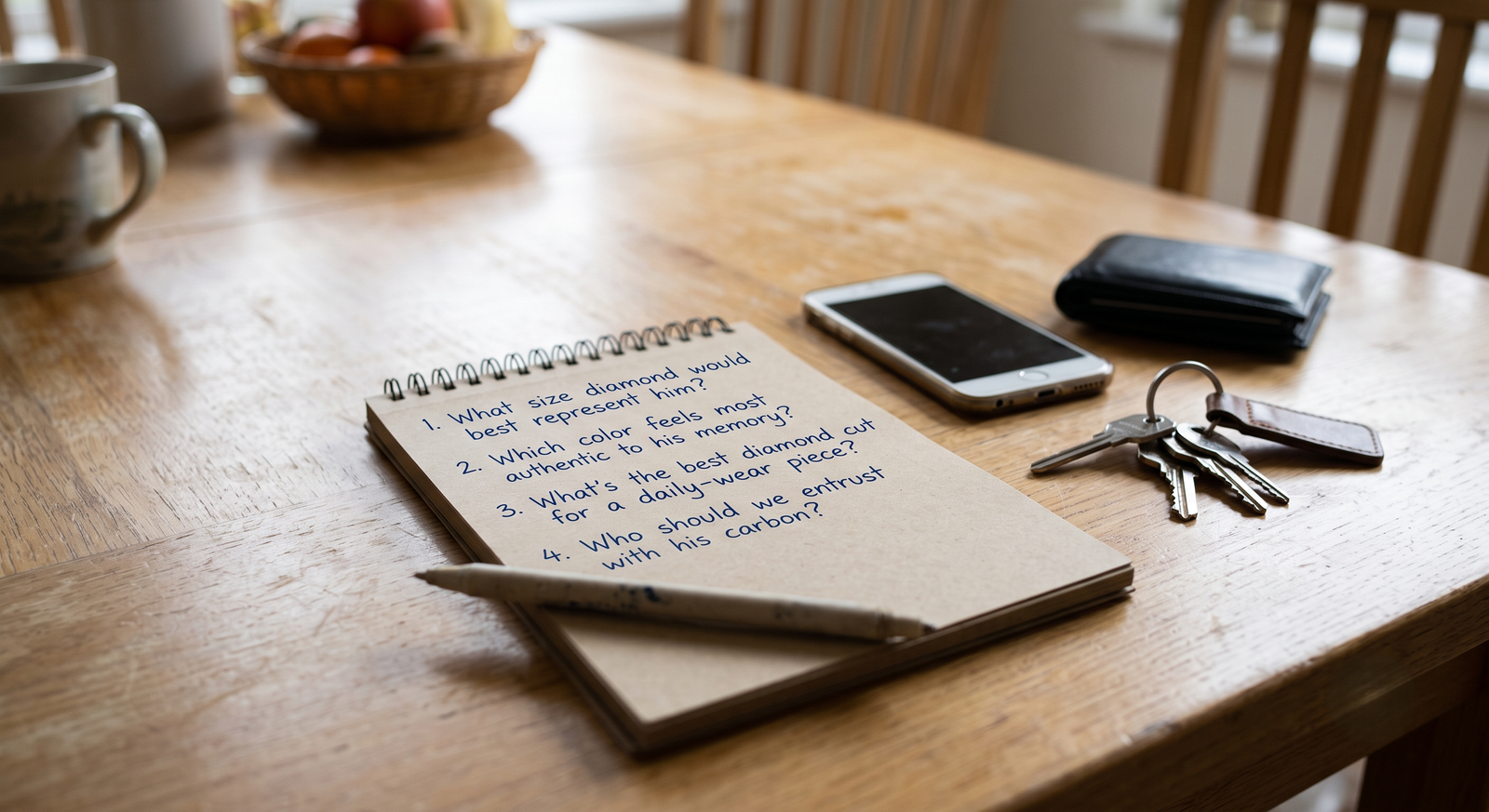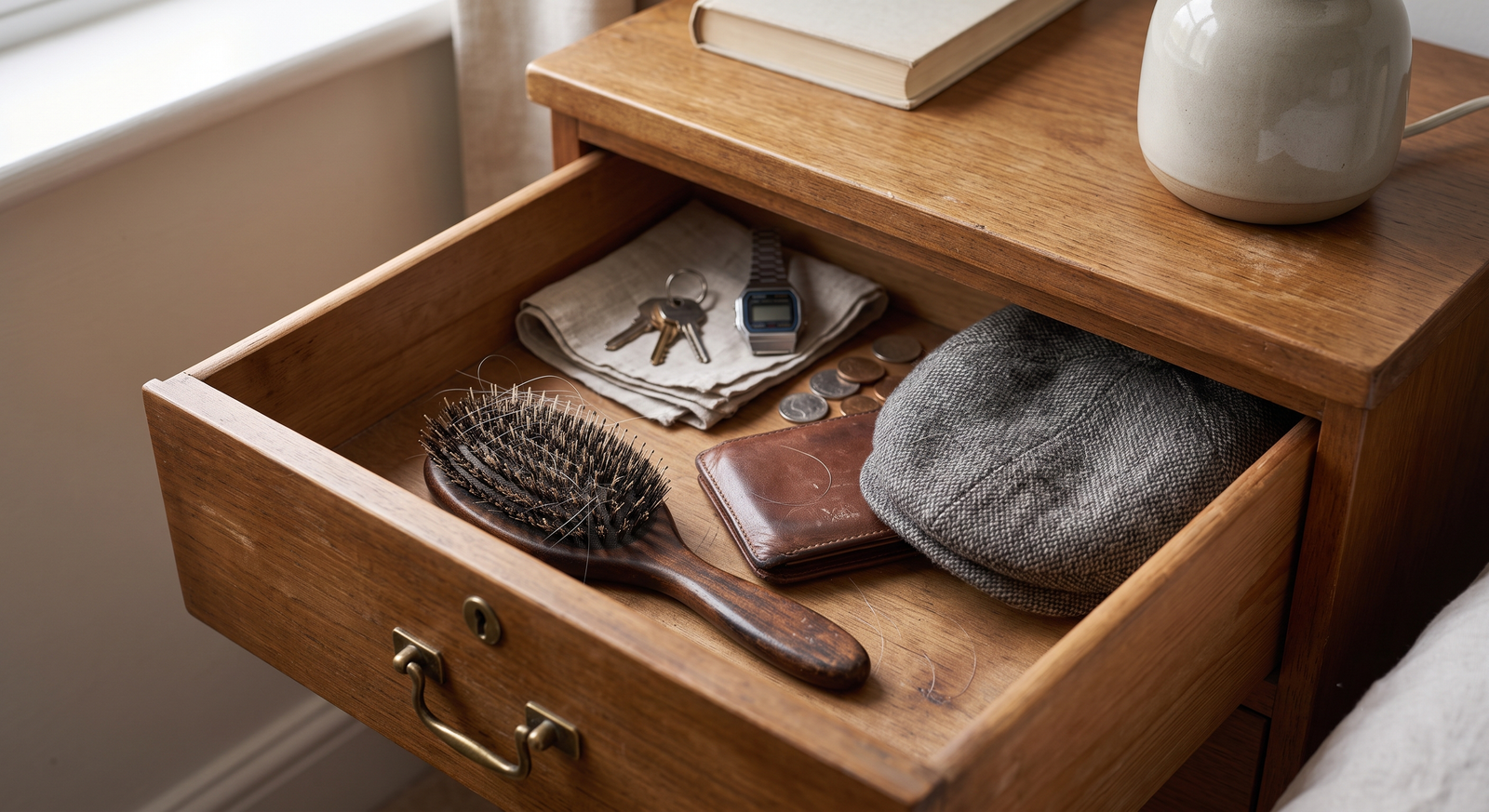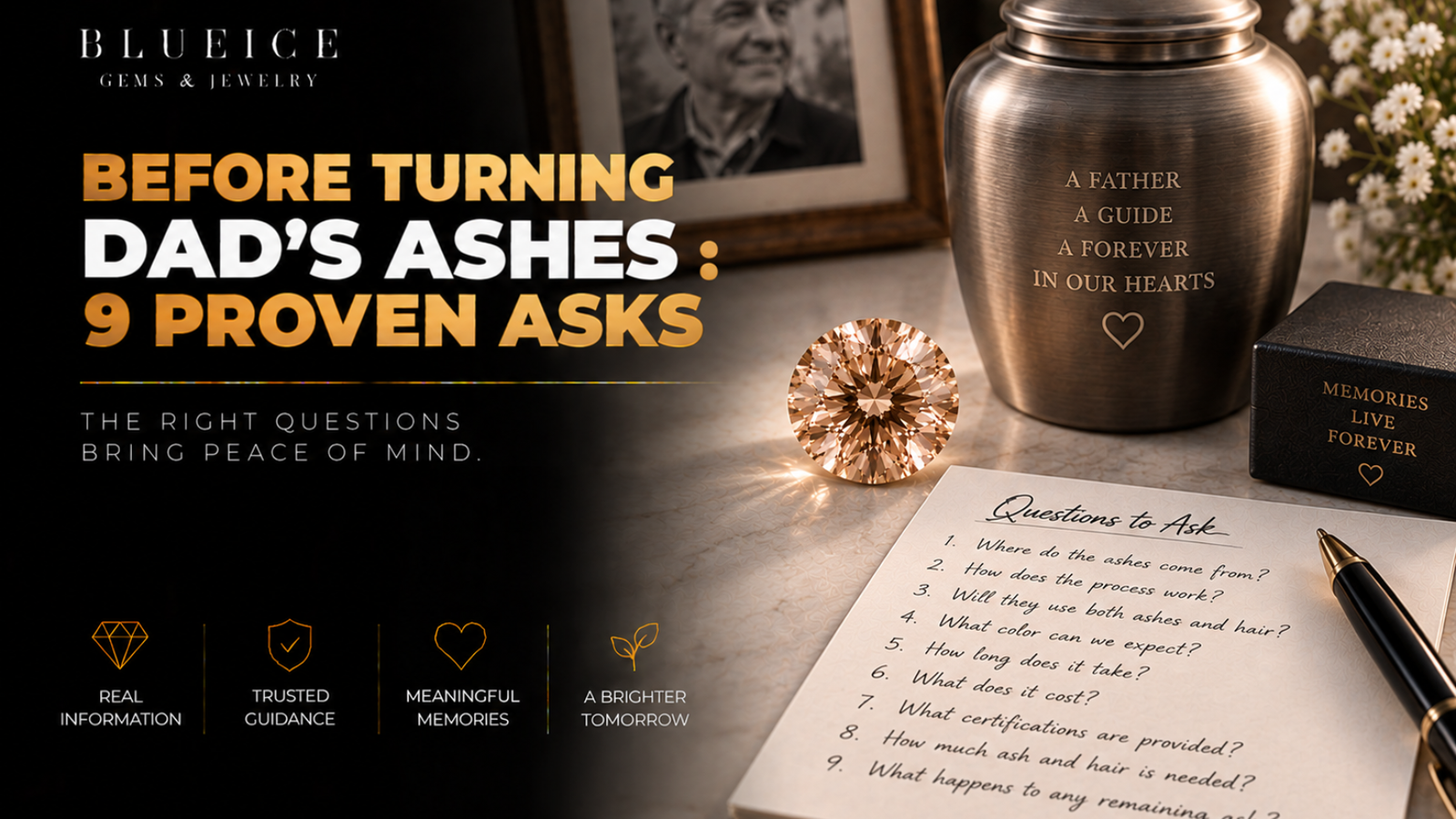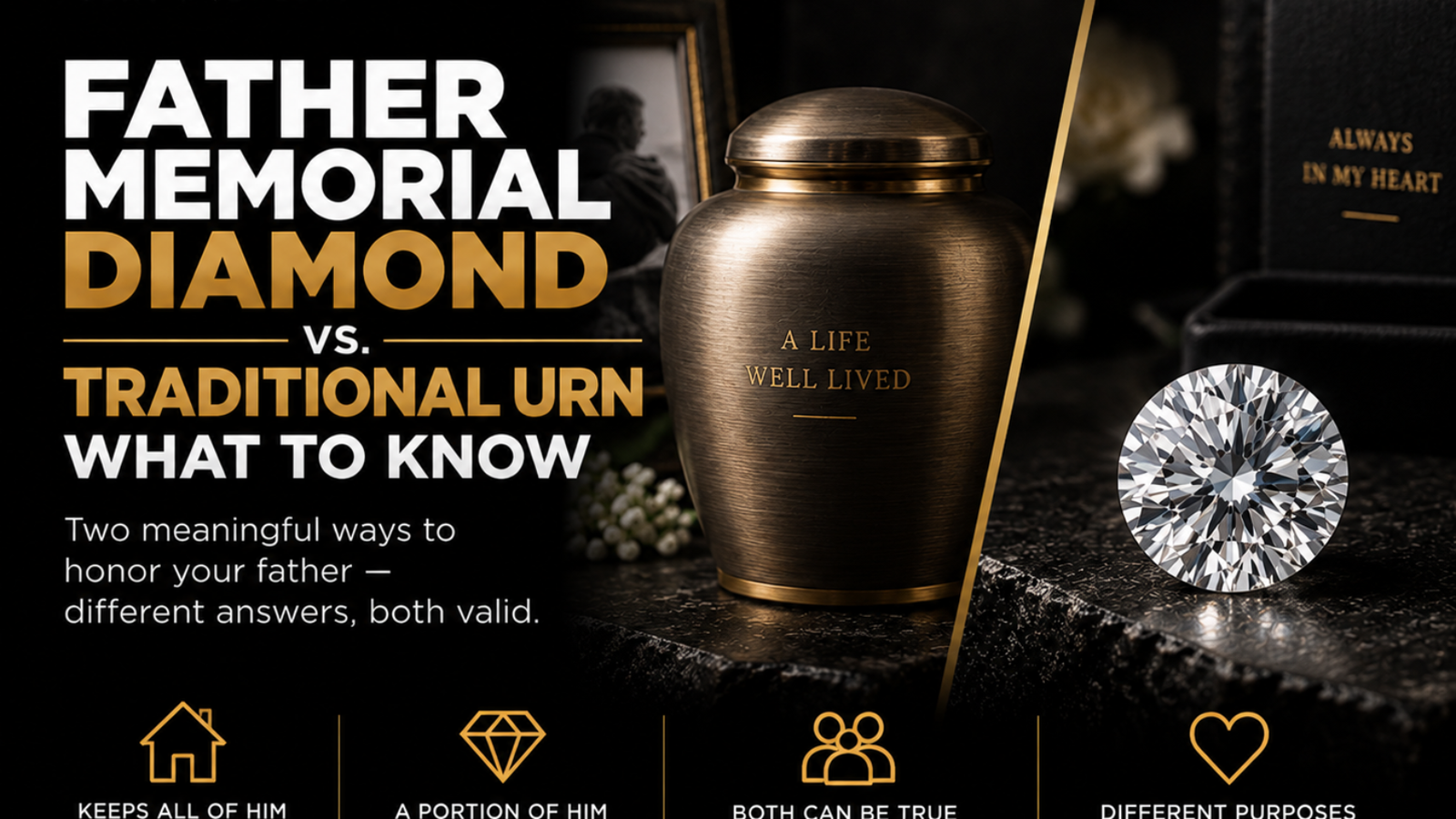
His urn has been in the same room since the week after the funeral, dusted around rather than moved, in a spot somebody chose quickly. So the live question is not which to buy. A memorial diamond and a traditional urn answer different questions. The urn keeps all of him in one place a household looks after; a diamond grown from a small portion of that same ash becomes a single person’s to carry. Both can be true in the same family, and this page is written for the family where the urn already exists.
Before you read further: Memorial Diamond grows memorial diamonds, so this comparison is published by a business with money riding on one side of it. The sections arguing for the urn are the ones we had the least commercial reason to write, and they are written straight.
If you are earlier than an urn, the complete guide to a father ashes diamond covers that sequence.
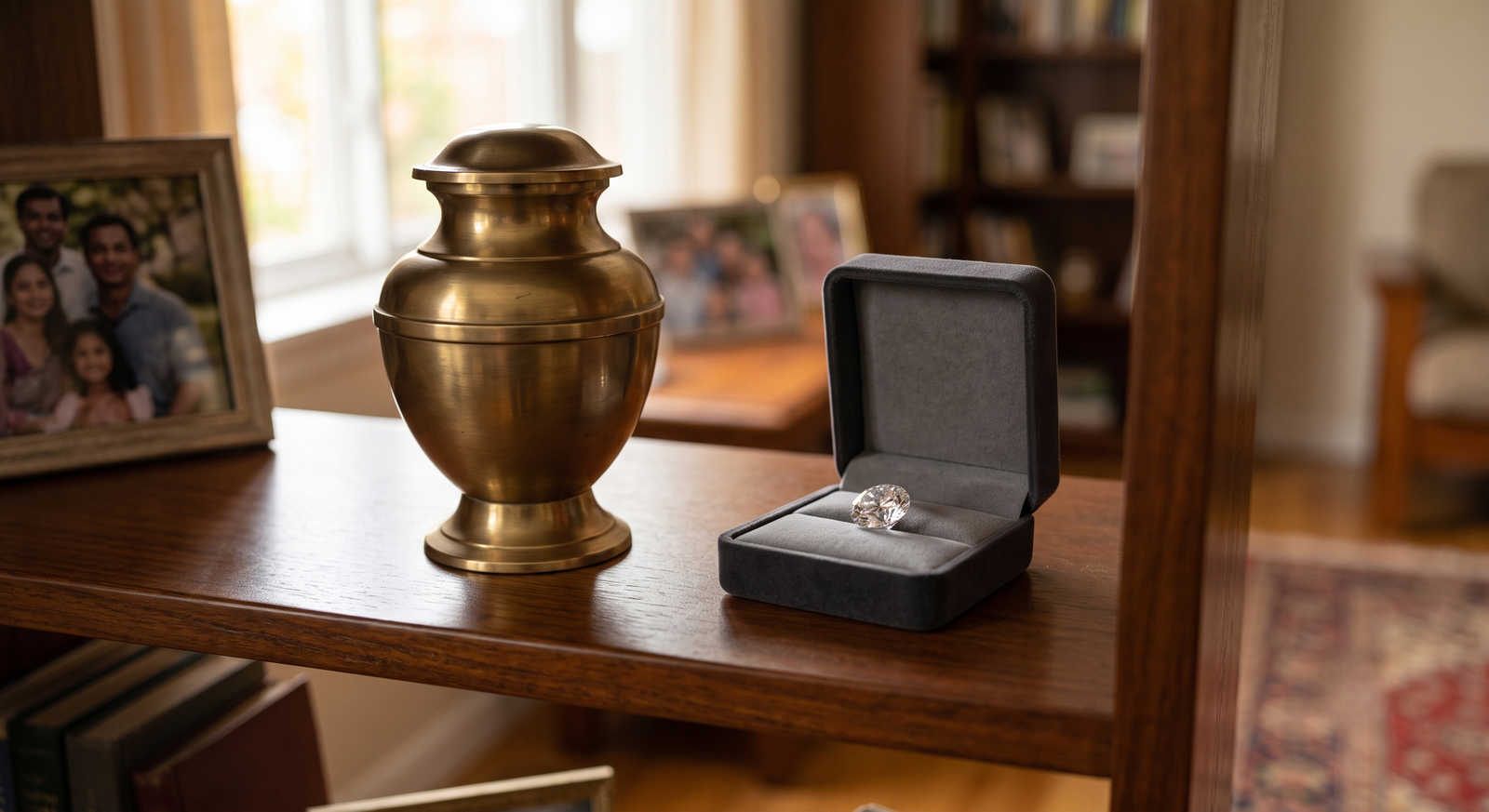
Table of Contents
What Changes If the Traditional Urn Stays and a Stone Joins It?
Less than the comparison implies. A portion of ash leaves the traditional urn, the rest stays put, and a second object exists doing a job the urn was never doing. The amount a growth run needs is small, industry guidance puts it between a few tablespoons and roughly 4 oz, worked through in how much ash you need for a father memorial diamond.
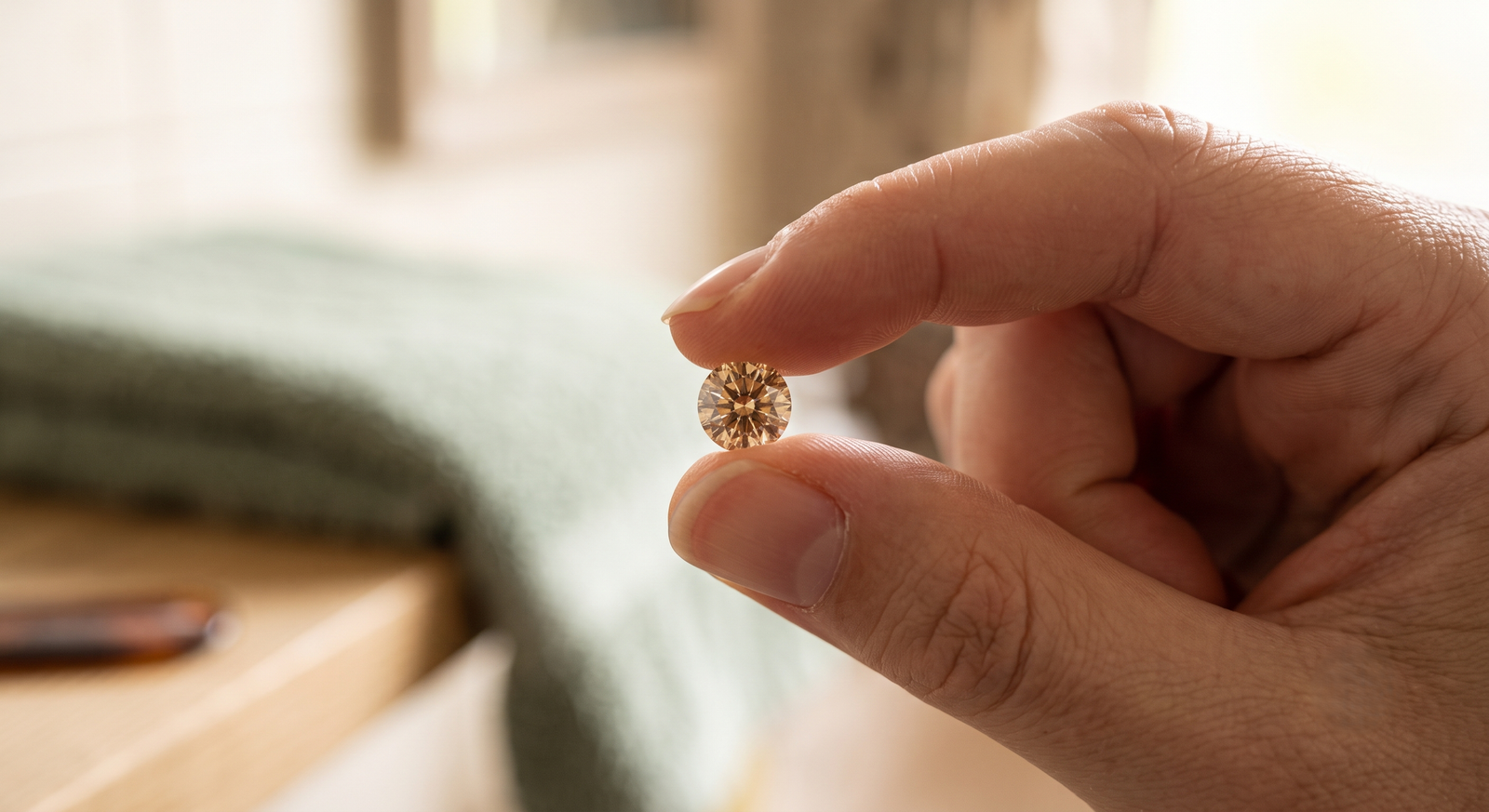
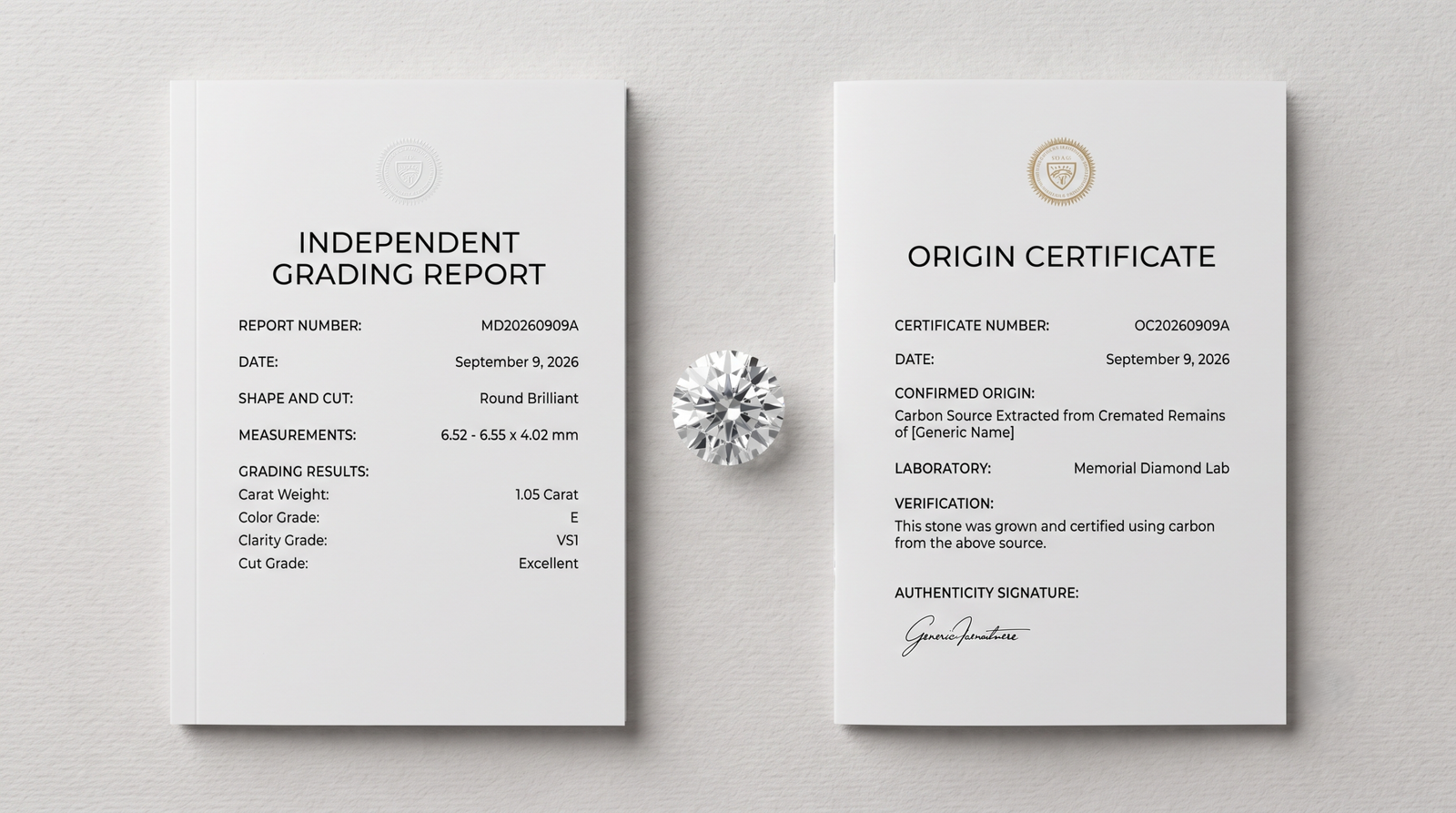
Be exact about what that second object is. The urn holds every gram the crematorium returned. A stone holds a measured fraction of it, roughly 10 15% of its finished mass across the industry, because a portion of ash carries too little carbon to charge a growth cell on its own, and supplemental lab sourced carbon makes up the balance. His carbon is cleaned to around 99.9% purity first, and what comes back is a small, real part of him, permanently, in a crystal that rates a 10 on the Mohs hardness scale.
An Urn Belongs to a Household. A Diamond Belongs to a Person.
That difference drives the rest of this comparison.
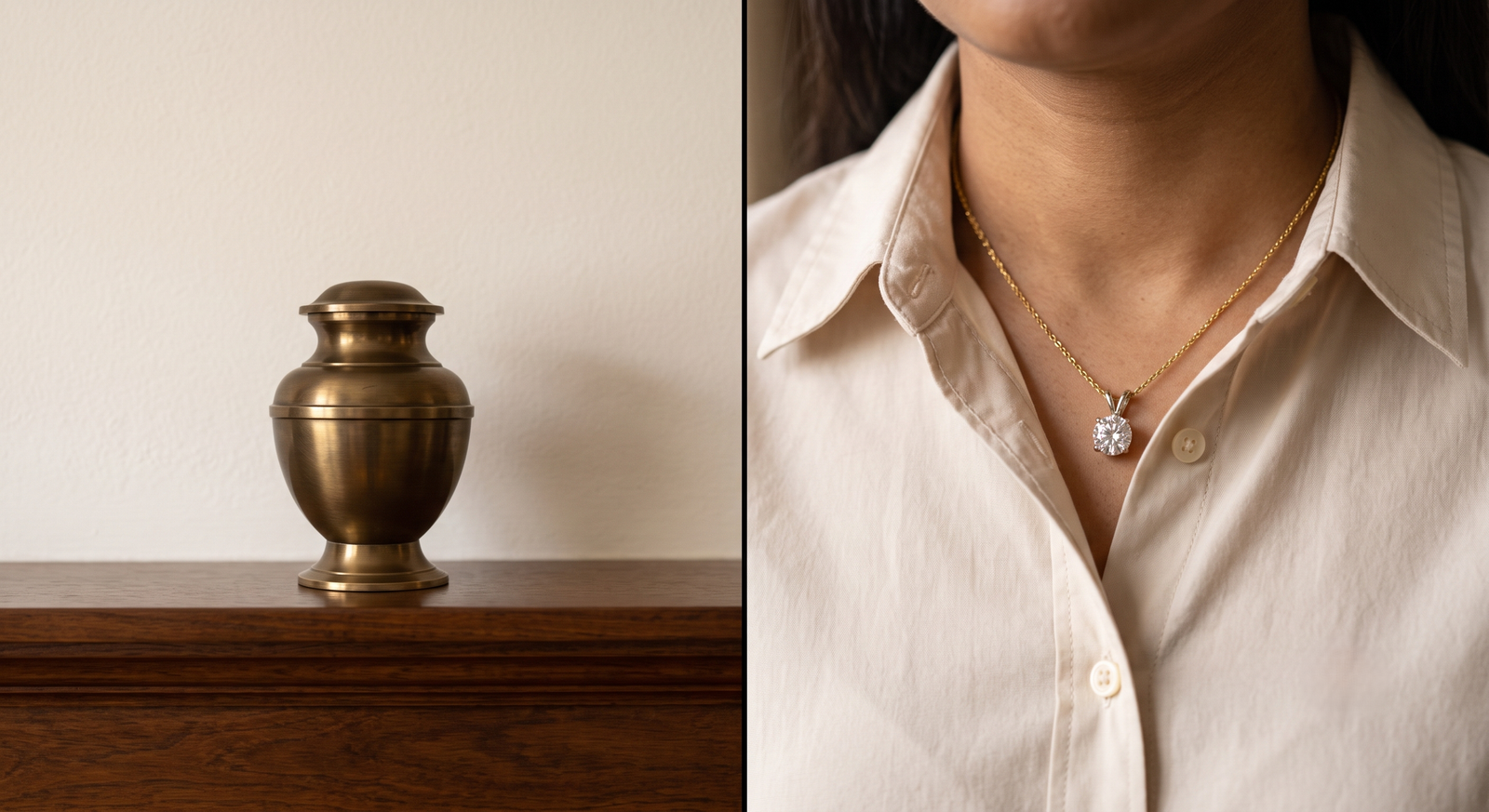
A traditional urn has an address. Whoever lives in the house it sits on becomes responsible for it, not because anybody decided, but because of where it happens to be. It cannot be in two places at once.
A memorial diamond has an owner instead. It is ordered by one person, kept by them, and named in a will if it is meant to go on. Nobody is left working out whose it is. That is not a superiority claim. It is a different object with a different failure mode: a traditional urn can be orphaned, and a small worn stone can be lost.
The Question You Are Actually Asking
Underneath the comparison sits a practical worry, and the two objects answer different ones.
| The question you are actually asking | What the traditional urn answers | What a memorial diamond answers |
|---|---|---|
| “Where is he now?” | A named place in a room, or a numbered niche. | Nowhere fixed, wherever the owner happens to be. |
| “Who is responsible for him?” | Whoever’s house it is in, by default rather than decision. | One named person, chosen when the order is placed. |
| “What happens when this house is sold?” | A decision somebody has to make under time pressure. | It moves in a coat pocket. Nothing is settled. |
| “Can several of us have something of him?” | One object, one place. People come to it. | A portion can grow into several stones, one per person. |
| “How do I mark the day he died?” | It gives you somewhere to stand. | It gives you something to put on. |
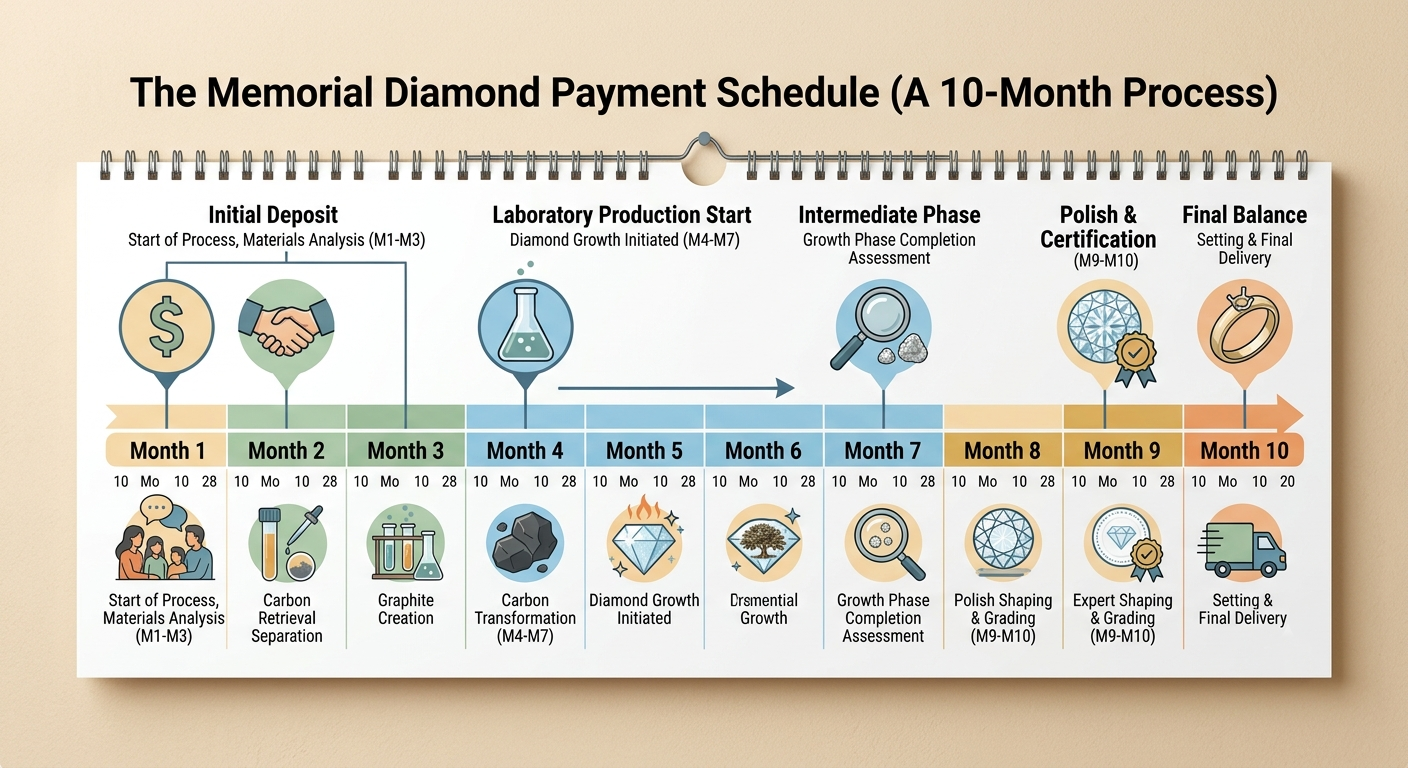
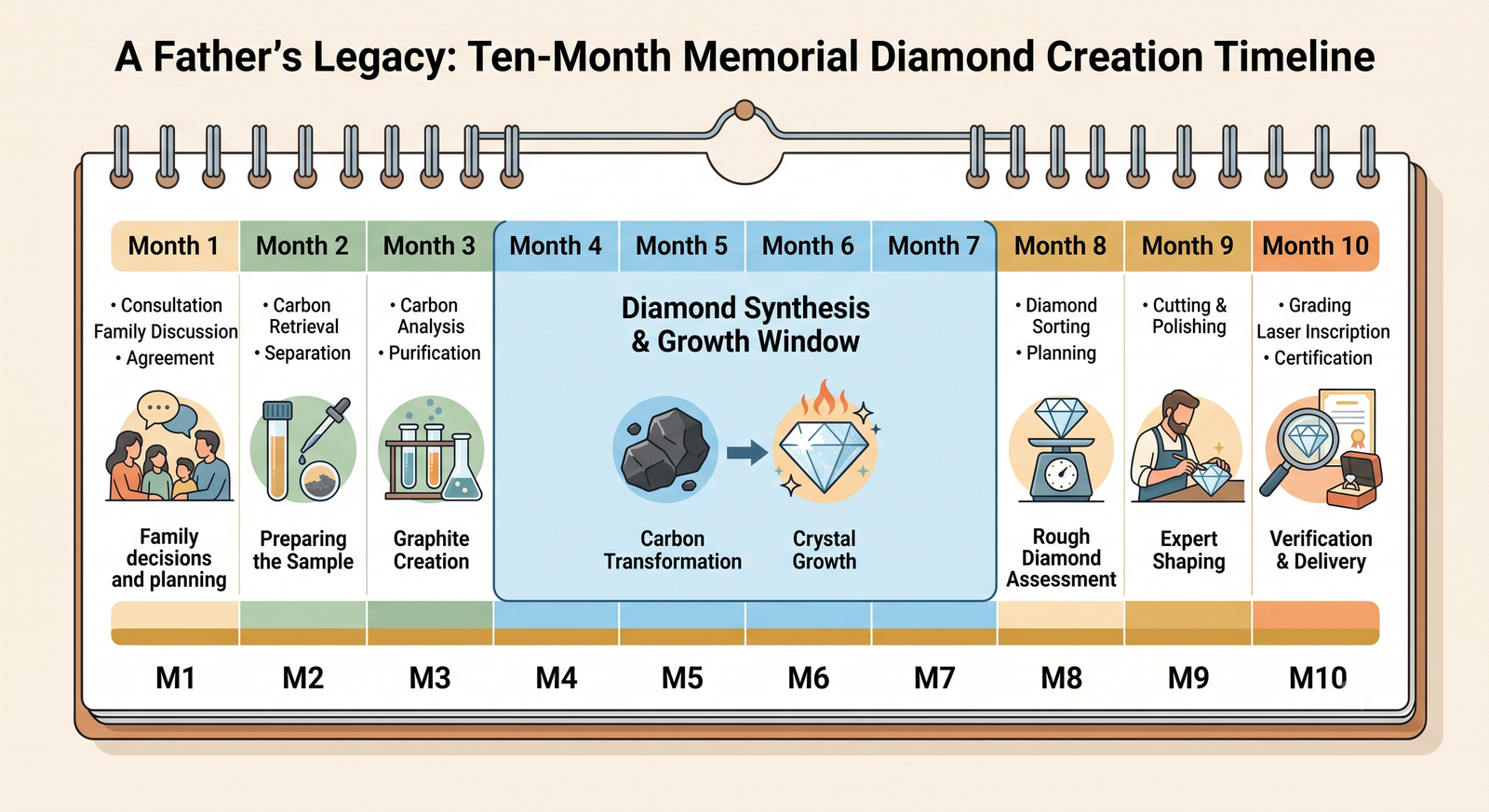
| “Is it finished?” | Yes, the afternoon you buy it. | No, 6 10 months of production after the laboratory receives material. |
What Happens When the Household Changes?
If the urn is in a house that may one day be sold or downsized out of, this is the part that matters.
A traditional urn is only as stable as the household it belongs to. His widow downsizes and the shelf it stood on no longer exists. The house is sold and the urn is packed by whoever is packing the kitchen. Adult children each quietly assume a sibling will take it.
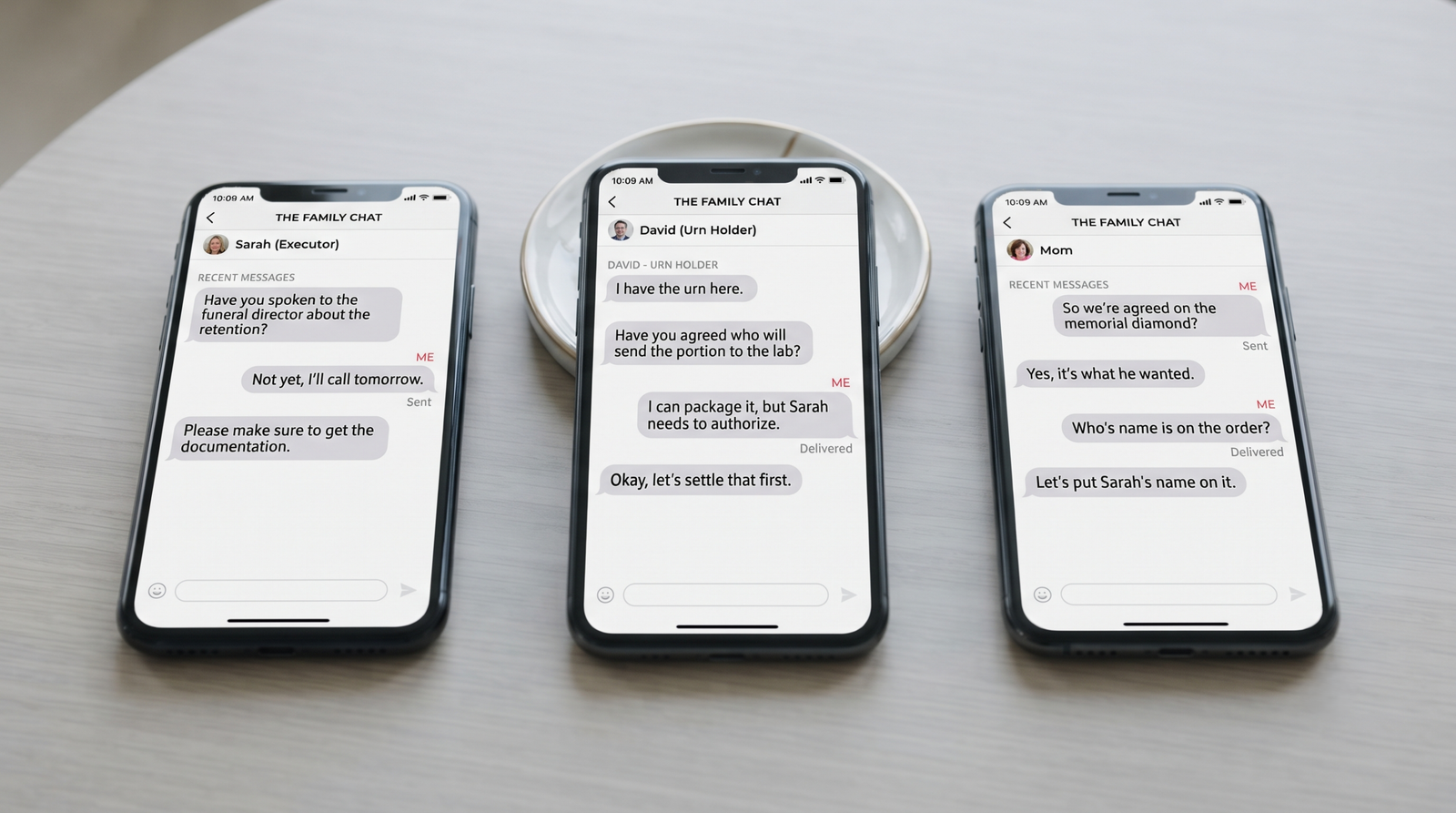
None of that is negligence. It is what happens to an object whose place in the world is a place rather than a person. If the urn is in your mother’s house, where it goes next is hers to lead, and how to raise a memorial diamond with the family is a better starting point than a proposal.
A diamond does not solve this. It sidesteps it by attaching to a person rather than a room, which turns the open question of where an object should live into the ordinary one of who it belongs to next.

What a Traditional Urn Does Better
Argued on its own terms, not as courtesy:
- It holds him whole. No portion of him is anywhere else, in anyone else’s keeping.
- It stays reversible. Ash in a traditional urn can still be scattered, interred or divided years from now. Diamond growth is one way: that portion of carbon is a crystal permanently.
- It exists now. An urn is a purchase you complete in an afternoon. A memorial diamond takes 6 10 months of production from the date a laboratory receives the material.
- It is shared. Several people can stand in front of one urn at once. A worn stone is with one person, by design.
- It asks nothing of anyone. Nobody has to agree to it, insure it, resize it or decide who inherits it.
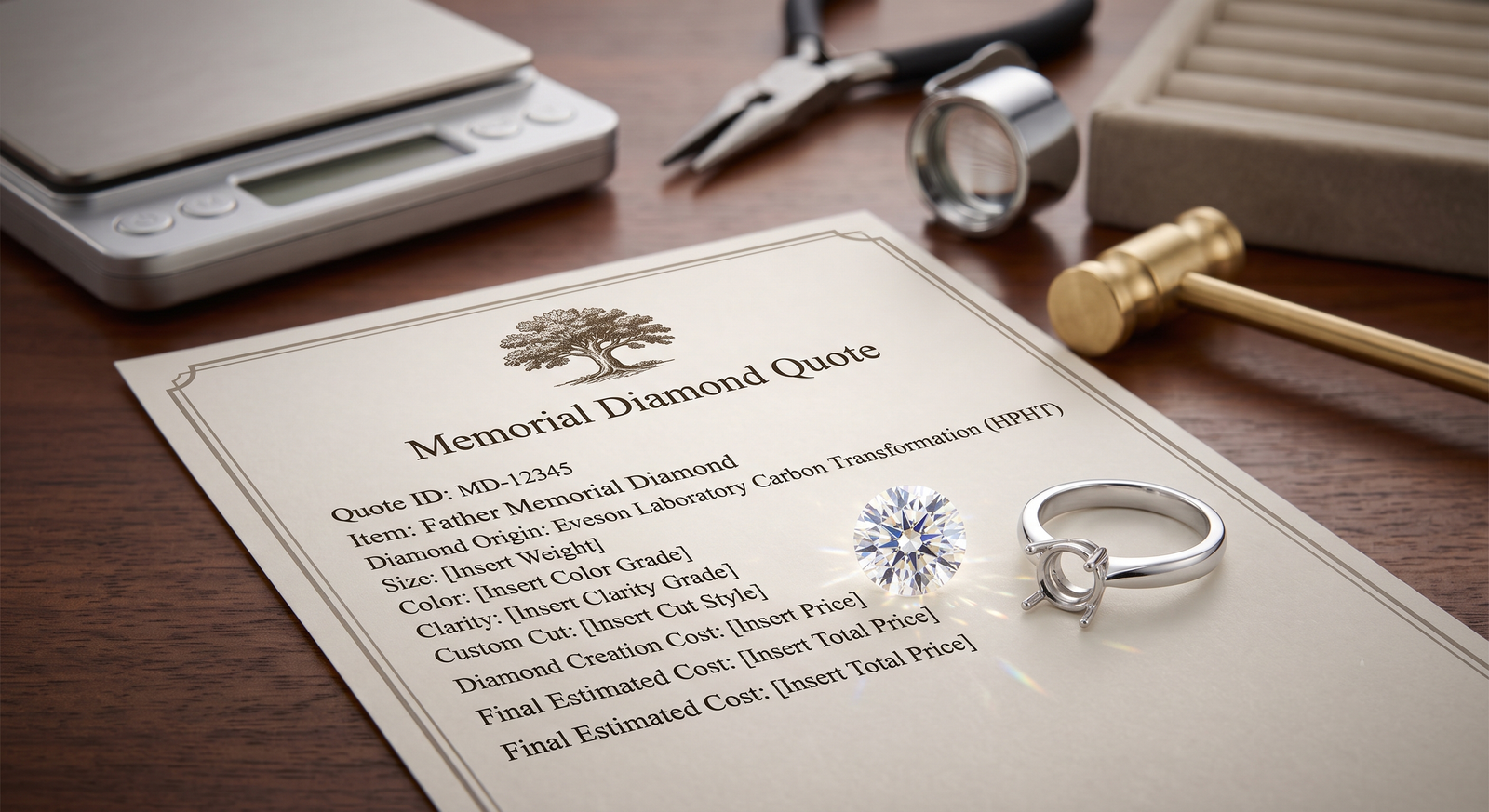
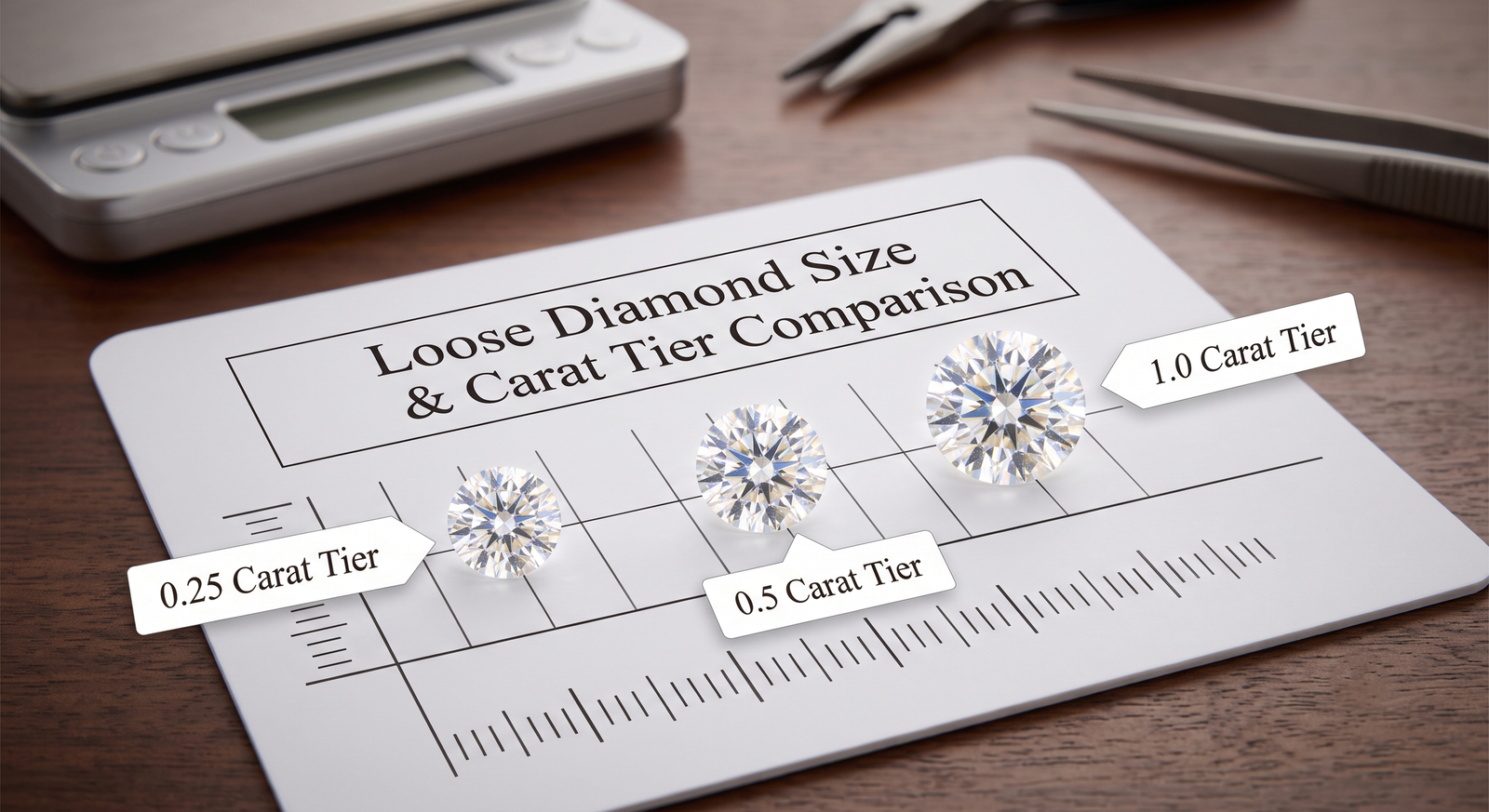
- It costs what a container costs. A memorial diamond is a decision in the low thousands at the entry tier and climbs steeply with carat, see the cost of a father memorial diamond.
If the traditional urn is doing all six of those things and nobody is unsettled, there is no problem here to solve. With cremation now the majority choice in the US, 63.4% projected for 2025 by the NFDA, a great many families are in exactly this position, and most of them keep the urn and add nothing.
When an Interment Turns the Urn Into a Place
Interment changes the comparison more than anything else.
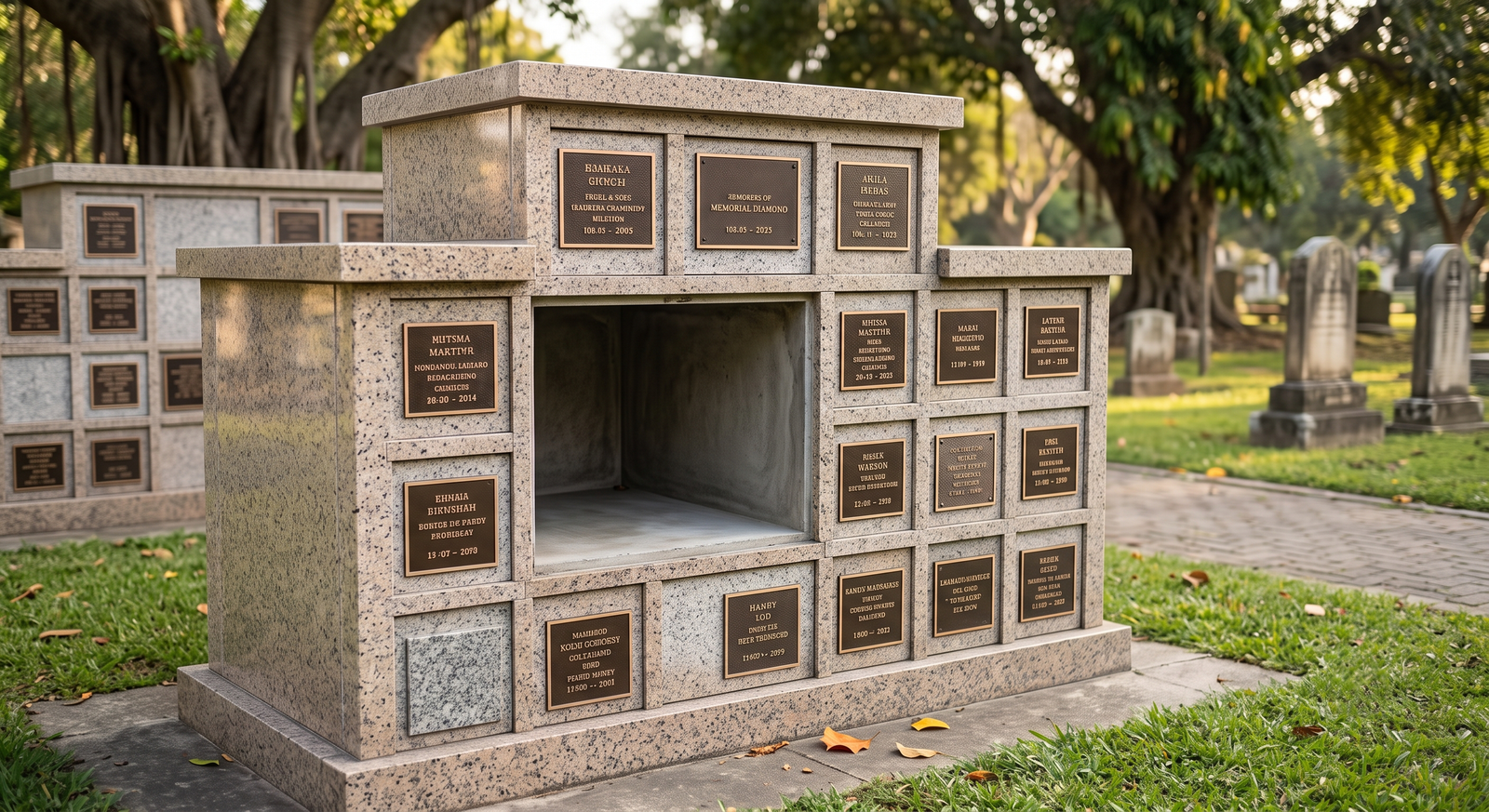
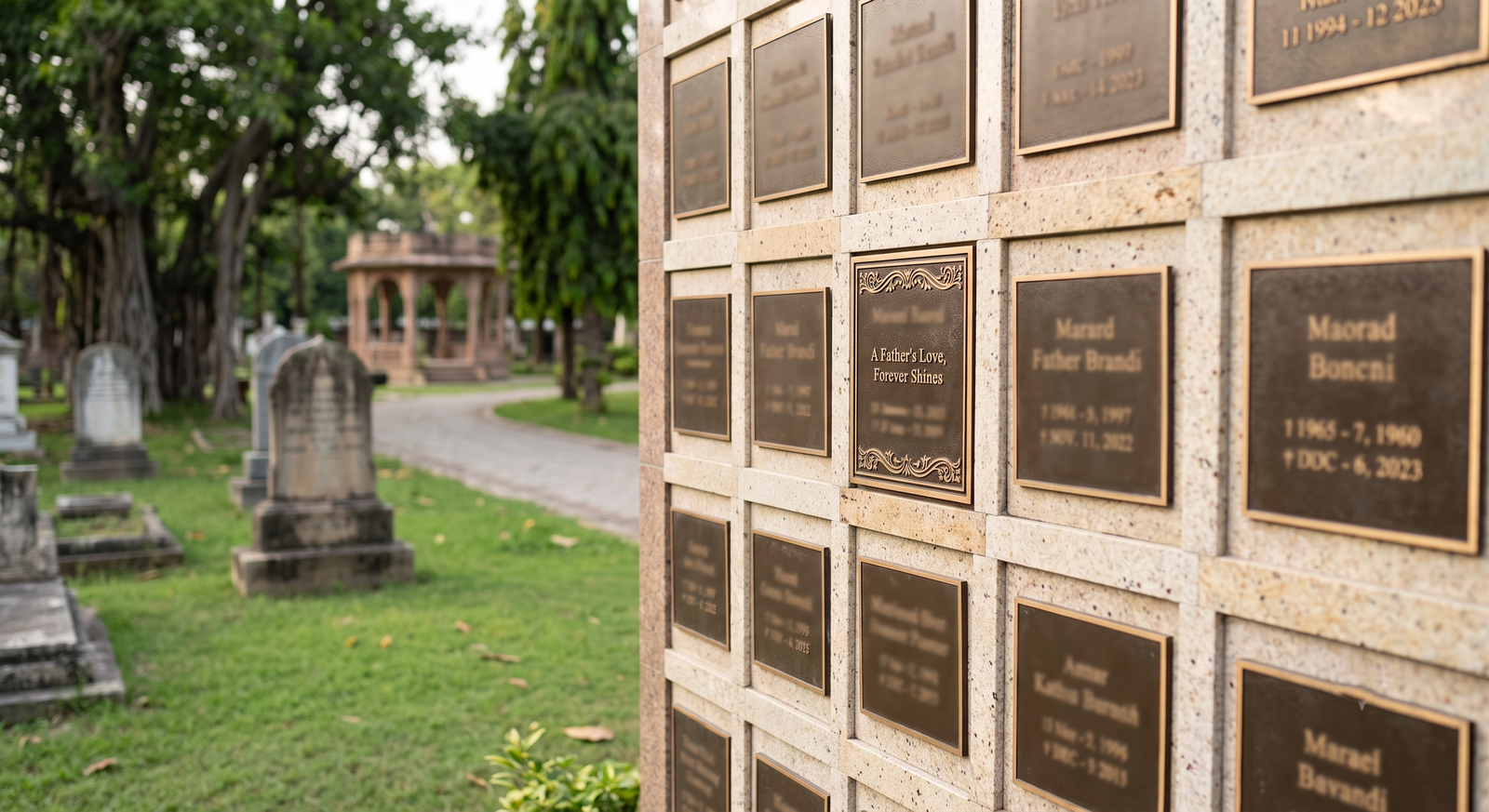
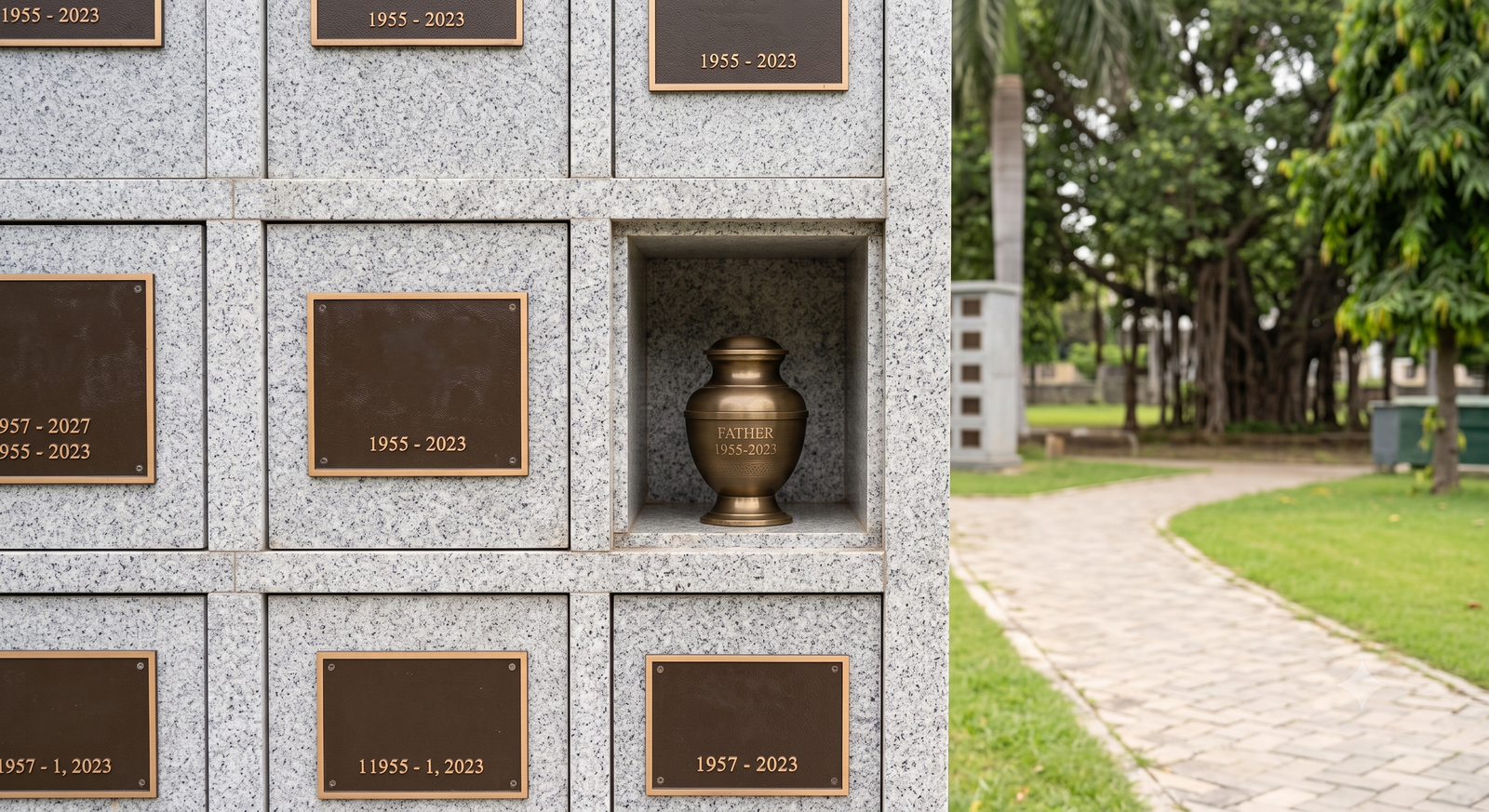
Once his traditional urn is placed in a columbarium niche, a family plot or a national or service cemetery, it stops being an object in a house and becomes a fixed location, with an address, opening hours and rules that are not yours. The comparison is no longer “urn or stone.” It is visit a place, or carry a thing, and those two are not rivals.
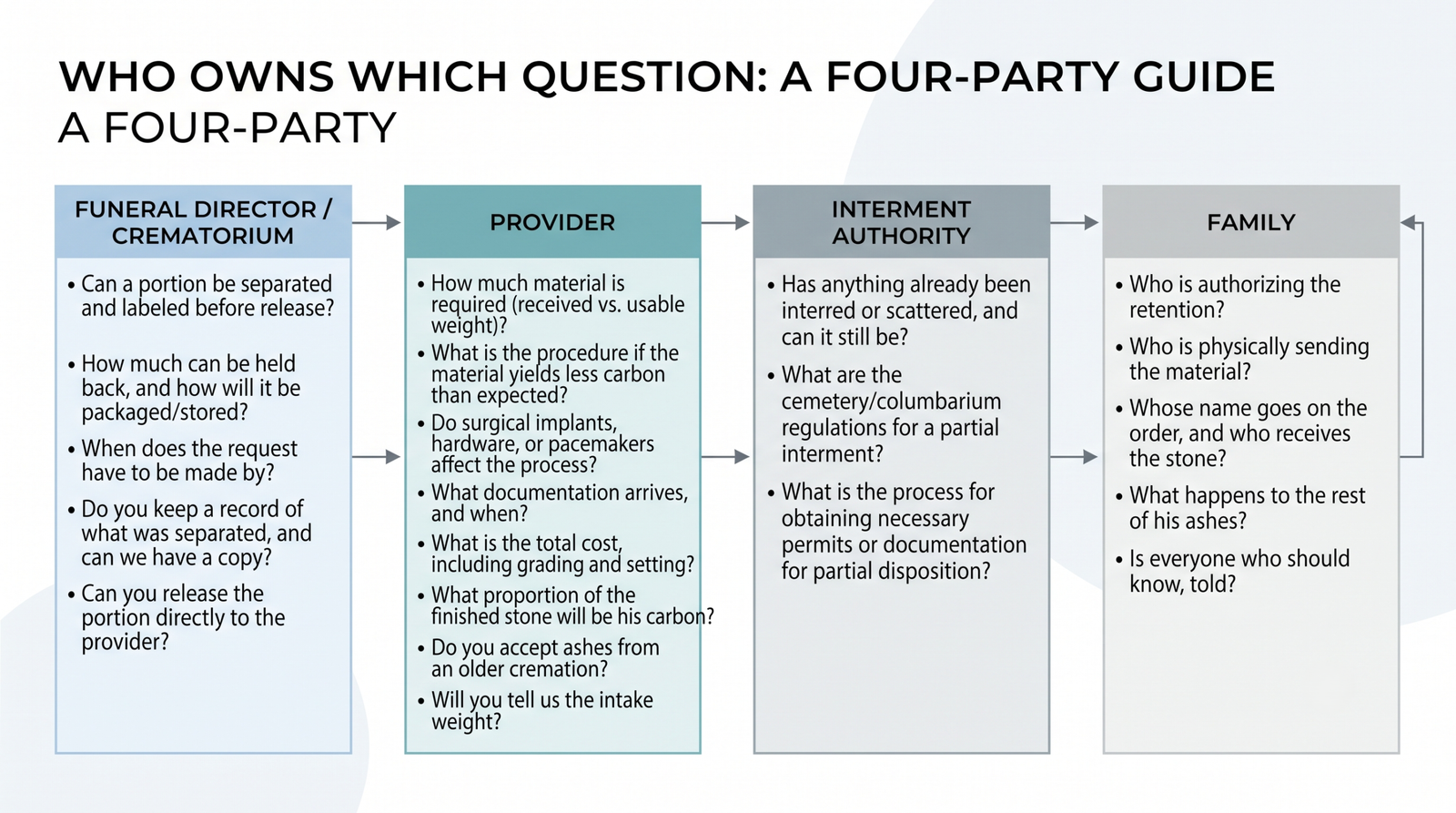
The practical consequence is timing: if an interment is booked and you want a portion set aside, the funeral director and the cemetery office are the people to ask before the urn is placed, and whether anything can be lifted afterwards is theirs to answer too. If that door is closed, turning your father’s hair into a diamond starts from material that was never in the urn.
Does Any Faith Settle This?
No tradition has an official position on memorial diamonds specifically; religious guidance addresses cremation and the handling of ashes, and stops there. Where it reaches this comparison at all it tends to reach the traditional urn first, current Catholic guidance permits cremation but directs that ashes be kept intact in a sacred, church approved place rather than divided or kept at home, while Islamic teaching objects to cremation itself rather than to what follows it, which is why the hair route sits outside that objection altogether. Views differ by denomination, community and clergy, so ask your own, what different faiths say about cremation and ashes covers each tradition in turn.
Frequently Asked Questions
Does removing a portion make his traditional urn look noticeably emptier?
A memorial diamond uses only part of a full cremation, industry guidance ranges from a few tablespoons to around 4 oz. The portion taken is a small fraction of what the urn holds, and the rest can still be scattered or interred.
His urn is at my mother’s house. Do I need it in my own hands to arrange a stone?
You need her agreement and access to a portion, not custody of the urn. It can stay exactly where it is. What a provider needs is the material itself, sent by whoever holds it, with whatever paperwork the laboratory asks for.
If we take a portion out now, can the rest still be interred at a veterans’ cemetery later?
That is a question for the cemetery rather than for us. Eligibility and paperwork are set by the cemetery and the relevant authority, and removing a portion beforehand does not automatically affect them. Confirm current requirements directly before doing either.
What happens to a traditional urn when the house it has been living in is sold?
Somebody has to decide, at a moment when a great deal else is already being decided. That is the weakness of an object tied to a place rather than a person, and it is worth raising before the move, not during it.
Do we need everybody’s agreement before opening his urn?
Legally it depends on who holds the right to control his remains, a question answered by state law and by any written instruction he left, so check both. Practically, anyone who would be upset to hear it afterwards should be told beforehand, veto or no veto.
Is a memorial diamond a replacement for a traditional urn?
No. It uses a small portion and leaves the rest where it was. Families who order a stone almost always keep the urn, scatter, or inter as originally planned; the diamond is an addition, not an alternative.
Final Thoughts on a Father Memorial Diamond vs a Traditional Urn
If the urn is settled and the household is stable, the comparison may be over before it starts, and that is a fine outcome. The moment it becomes worth thinking about is when the household is going to change, or when more than one person wants something of him that lives with them rather than in one room. A traditional urn answers “where is he”; a diamond answers “who carries him.” A family can want both answers at once.
Learn More About Father Memorial Diamonds
- How Much Ash Do You Need for a Father Memorial Diamond?
- How Much Does a Father Memorial Diamond Cost?
- How to Talk to Family About a Father Memorial Diamond
- How to Turn Your Father’s Hair Into a Diamond
- Memorial Diamonds as a Family Heirloom: Passing One Down
Talk With Memorial Diamond
If the urn is staying where it is and you are weighing whether a stone should join it, that is exactly the conversation to have early. Reach out to Memorial Diamond at memorialdiamond.us to talk through what a small portion of his ashes could become, with no pressure to decide either way.