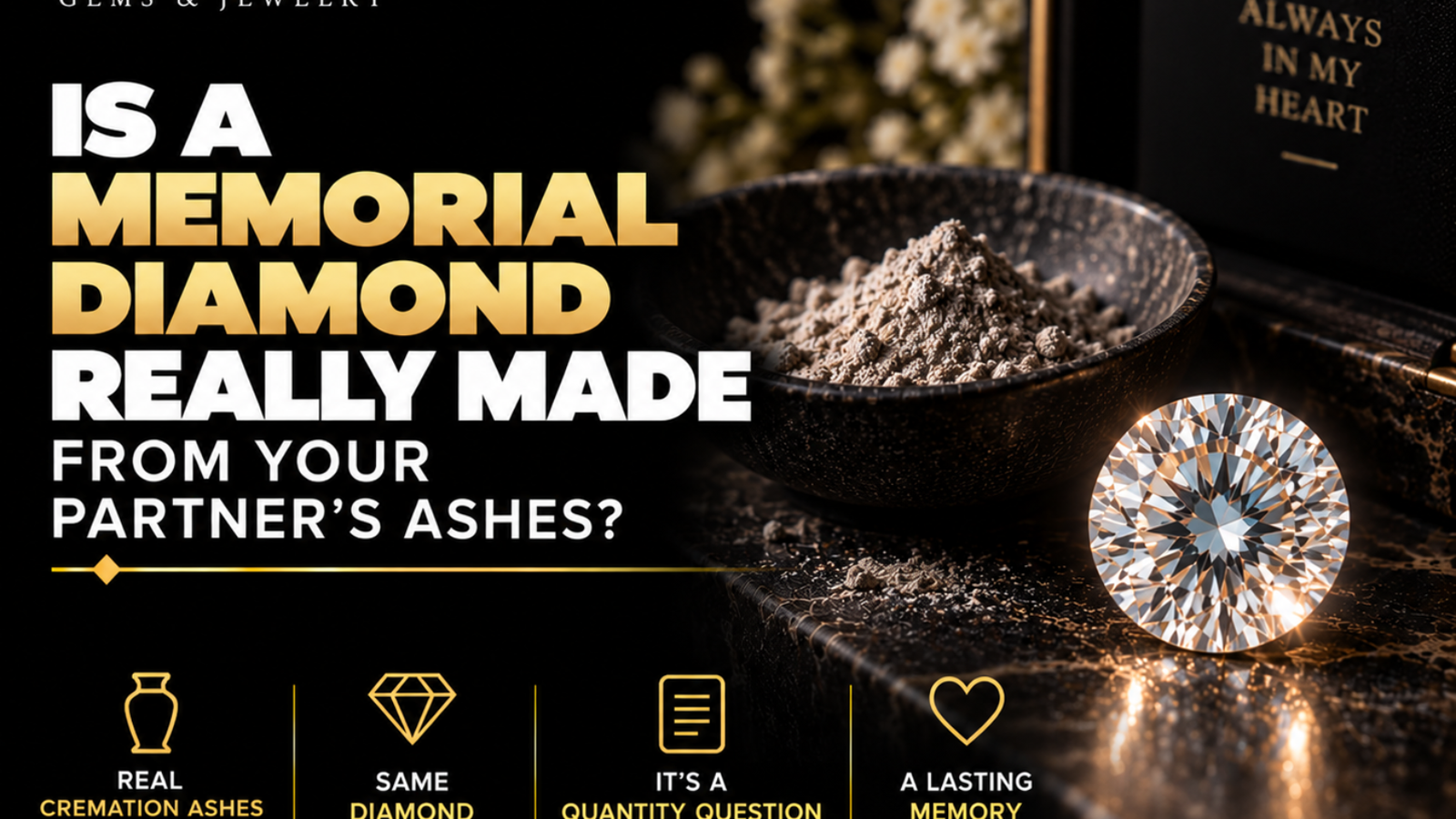
The doubt usually turns up late, after the decision, after the parcel has gone, in the quiet part of an evening.
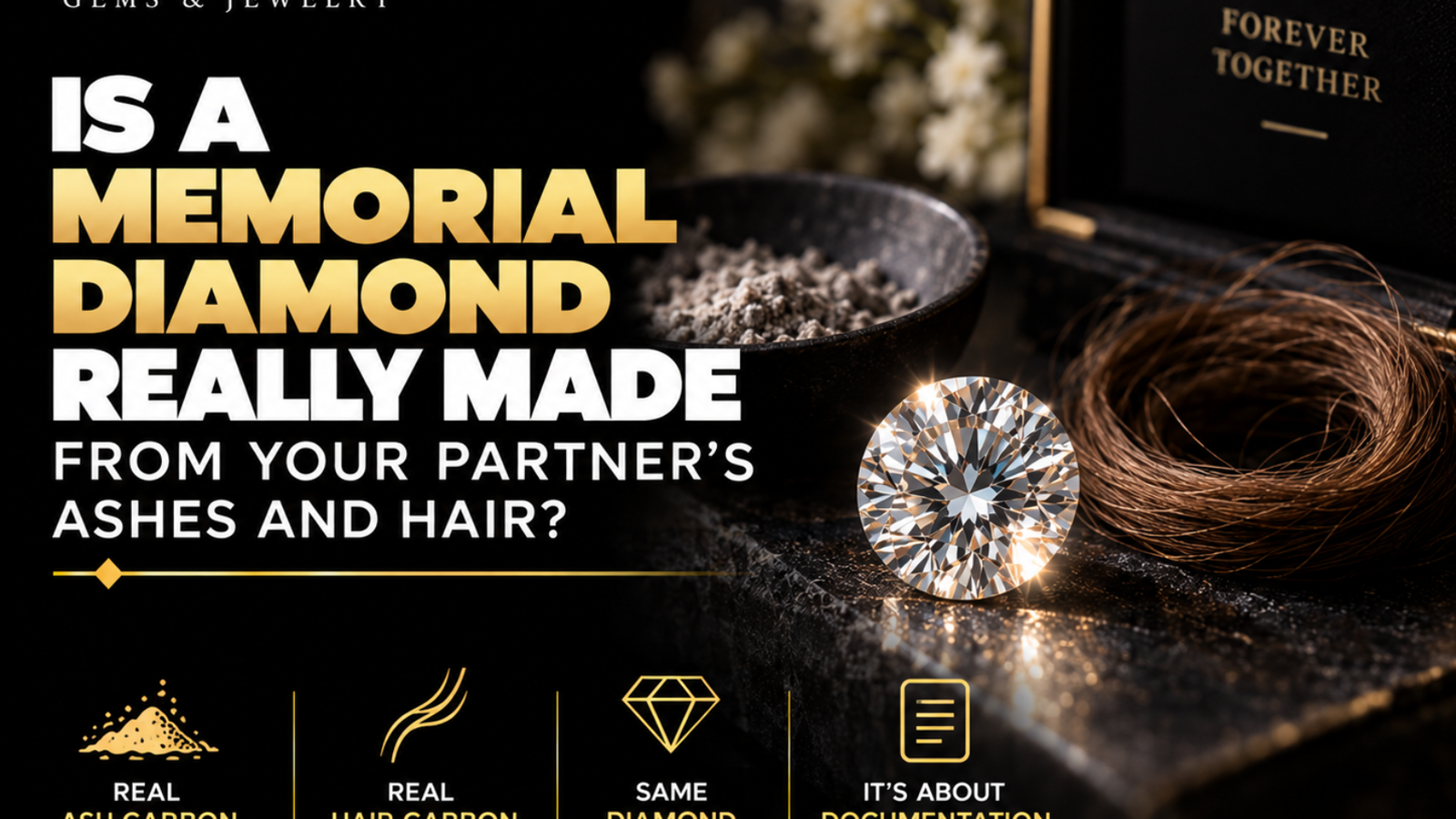
Yes. A memorial diamond really made from partner ashes contains carbon that was physically part of the person you loved, recovered from a portion of their cremated remains, purified, and grown into the crystal lattice itself. It is also true that this personal carbon is a minority of the stone, typically somewhere around 10% to 15% of its finished mass. Both things are true at once, and the second does not undo the first.
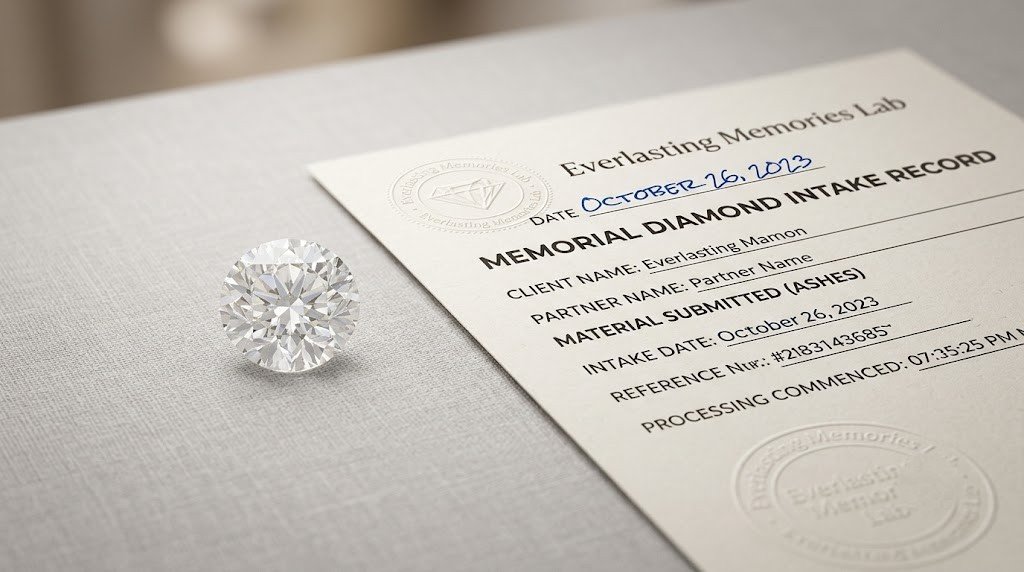
Table of Contents
What “Really Made From Partner Ashes” Has to Mean
The claim has to be pinned down first, because two very different claims ride on the same five words.
The strong claim is that a stone really made from your partner’s ashes is your partner, converted. That claim is false, and no honest company in this category makes it.
The true claim is narrower and stranger: carbon atoms that were part of a living body, that were in their hands and their bones and their breath, were separated out of what the cremation left, cleaned until almost nothing else remained, and were present in the cell while a diamond grew. That is what really made from partner ashes means. It is a claim about physical continuity, not about proportion.
Most arguments about whether a stone is really made from partner ashes are actually arguments about which of those two claims is on the table. If you answer the strong claim when someone is challenging it, you sound as though you have been misled. If you state the true claim plainly, the conversation usually stops being an argument.
Six Facts That Are All True at the Same Time
Six facts about a diamond really made from your partner’s ashes sit together. Reading any one of them alone produces a distorted picture, which is why sales copy and skeptical forum posts tend to quote exactly one each.
| # | The fact | What it means in practice | What it does not mean |
|---|---|---|---|
| 1 | Carbon recovered from cremated remains is physically present in a crystal really made from partner ashes | The stone would not exist in the form it does without the material you sent | That the whole stone is that material |
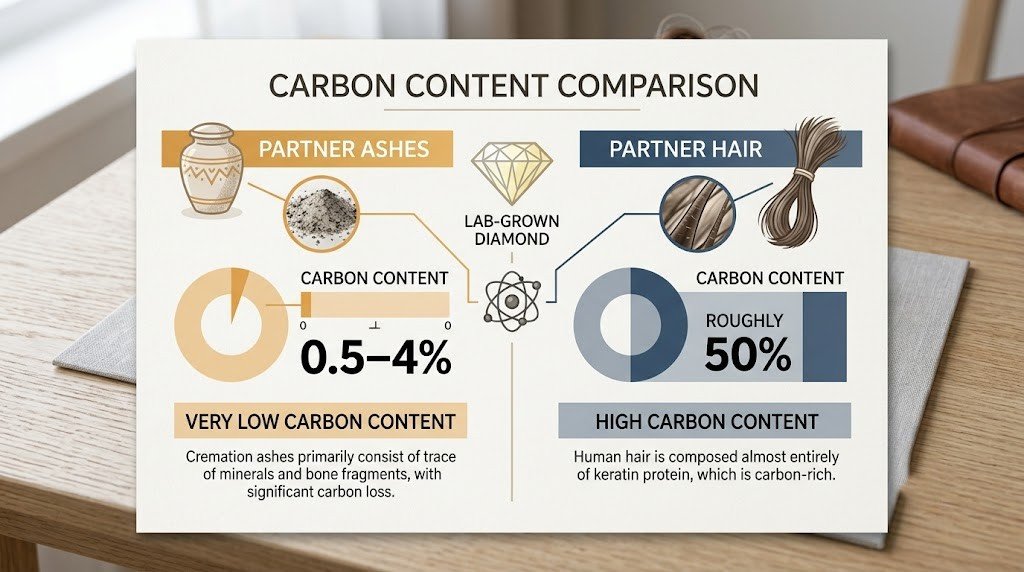
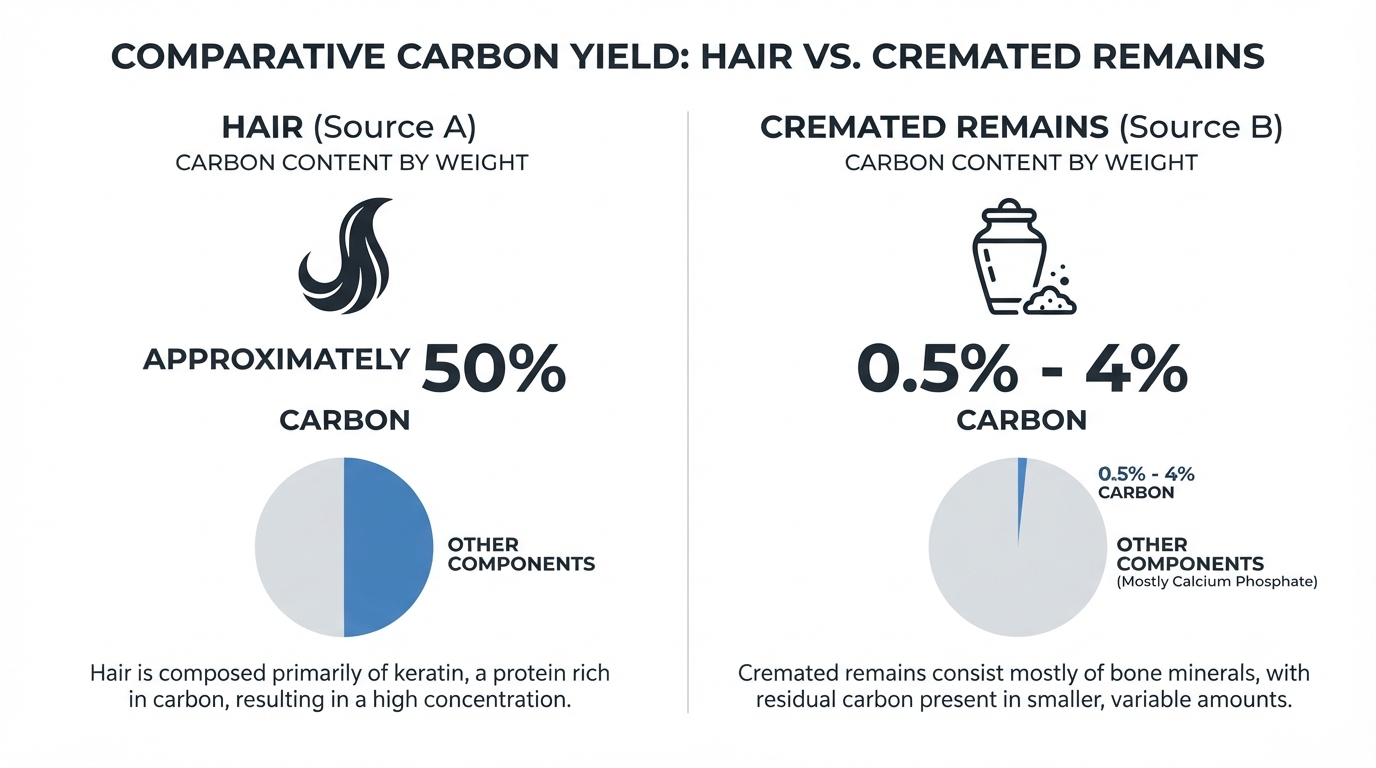
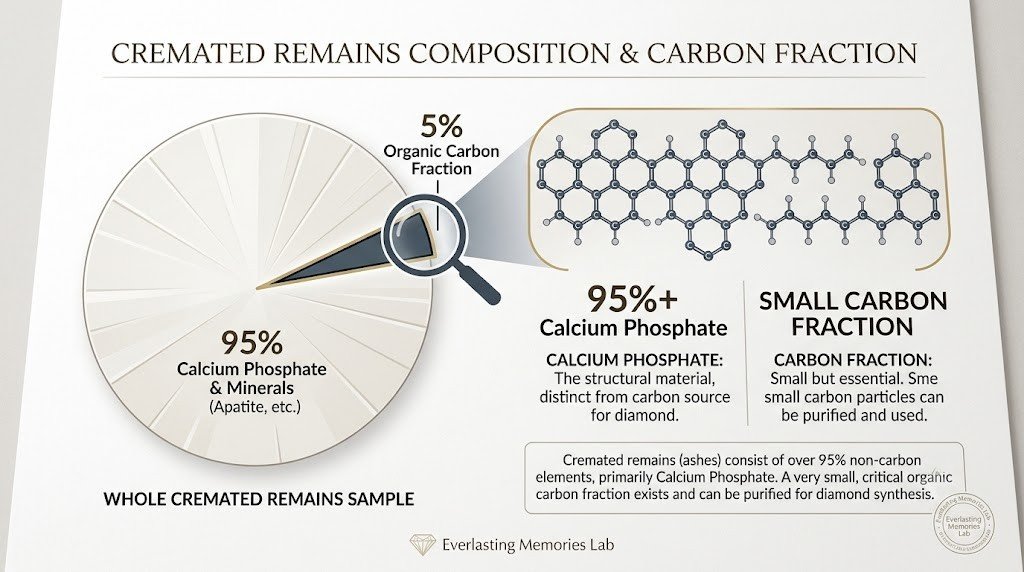
| 2 | Ash is mineral first and last, calcium phosphate, the stuff of bone, so the carbon anyone can actually use amounts to something like 0.5% to 4% of its weight | A large portion of ashes yields a modest amount of carbon | That the process is inefficient or dishonest; it is simply what bone is made of |
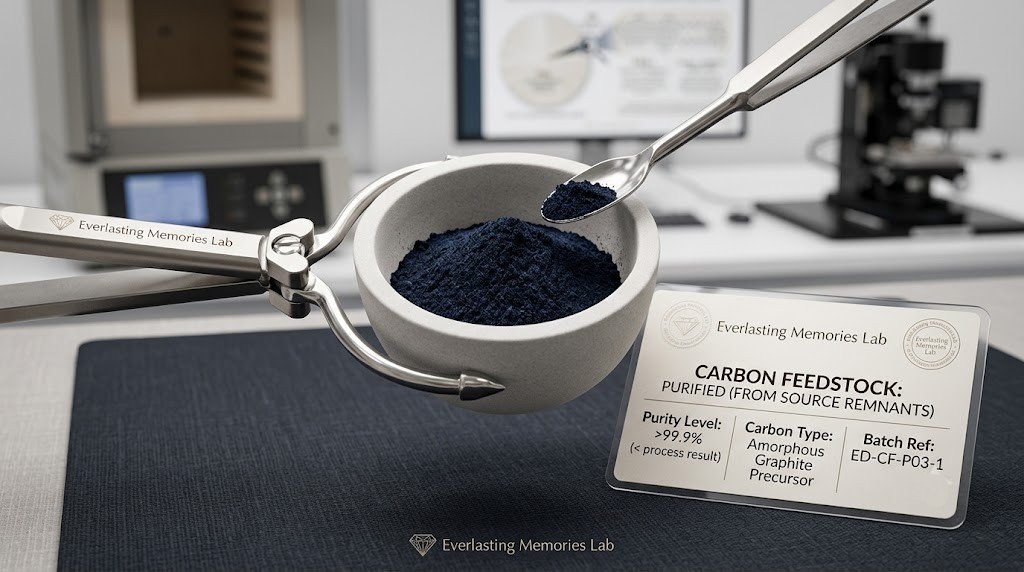
| 3 | The recovered carbon is purified to roughly 99.9%+ before anything grows | What goes into the growth cell is elemental carbon, not ash | That purification adds or substitutes anything |
| 4 | Lab grown carbon is added to reach the volume a growth run needs | Personal carbon and supplemental carbon share one cell | That the personal carbon was diluted away or set aside |
| 5 | Industry wide, personal carbon ends up at roughly 10% to 15% of the finished stone’s mass | The stone is mostly not them, by weight | That it is mostly not them in any other sense |
| 6 | No examination of the finished stone can identify whose carbon it holds | Verification is documentary, not gemological | That nothing is verifiable, records exist and can be demanded |
A stone really made from partner ashes satisfies all six of those lines at once. Any description that satisfies only the flattering ones is marketing, and any objection that quotes only the unflattering ones is an argument you can answer calmly.
How Much of a Diamond Really Made From Partner Ashes Is Actually Them?
Around a tenth to a seventh of the finished mass of a stone really made from partner ashes, taking the figures the industry publishes. That is the honest headline, and there is no version of this in which it is a majority.
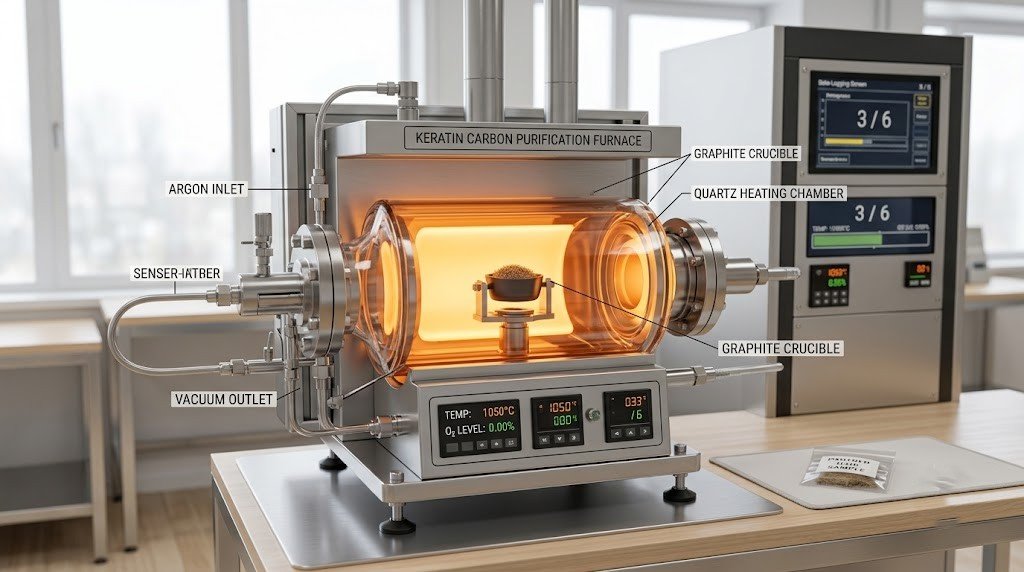
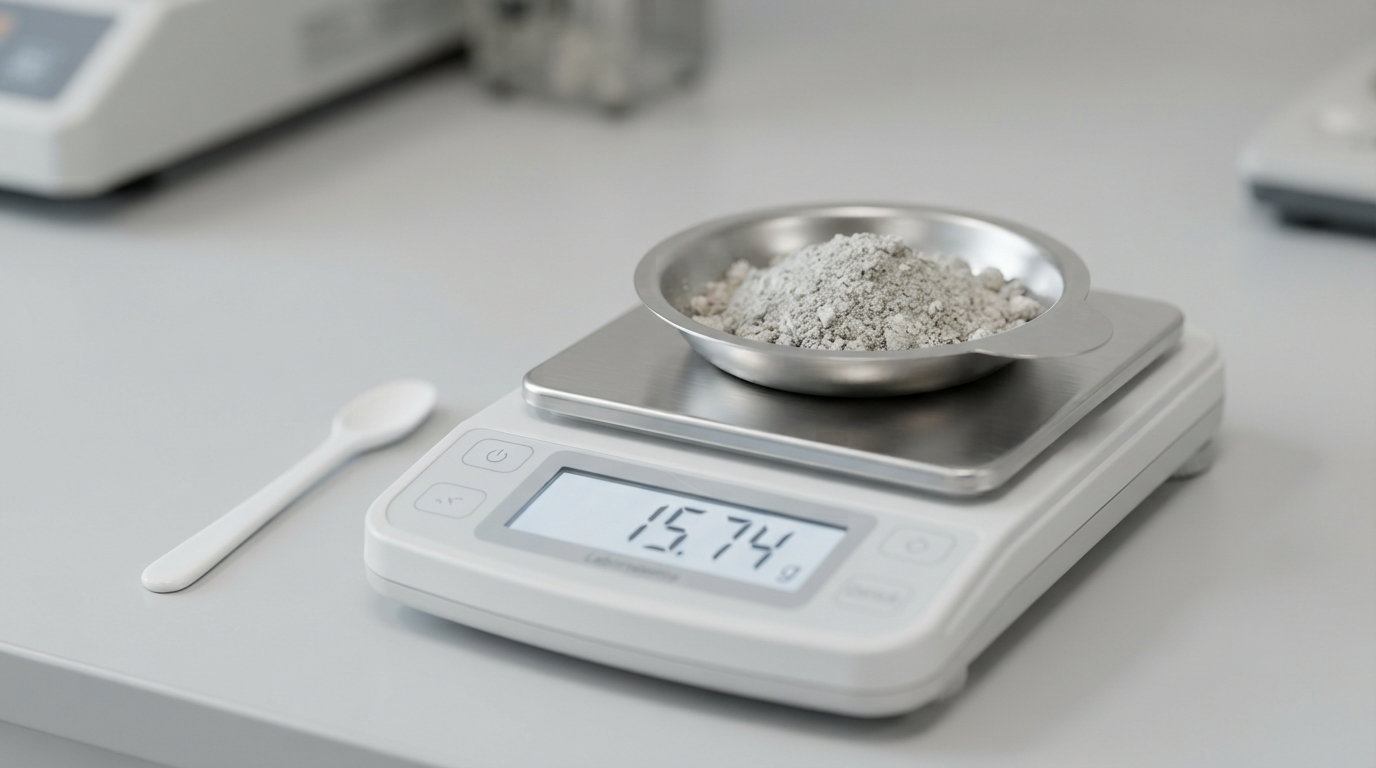
The reason is ordinary chemistry rather than a business decision. A body is mostly water, and cremation removes it; what remains is skeleton, and a skeleton is mostly calcium phosphate. Carbon is a small passenger in that mineral structure, which is why recovery lands between half a percent and four percent of the ash by weight, varying with the person and with how the cremation ran.
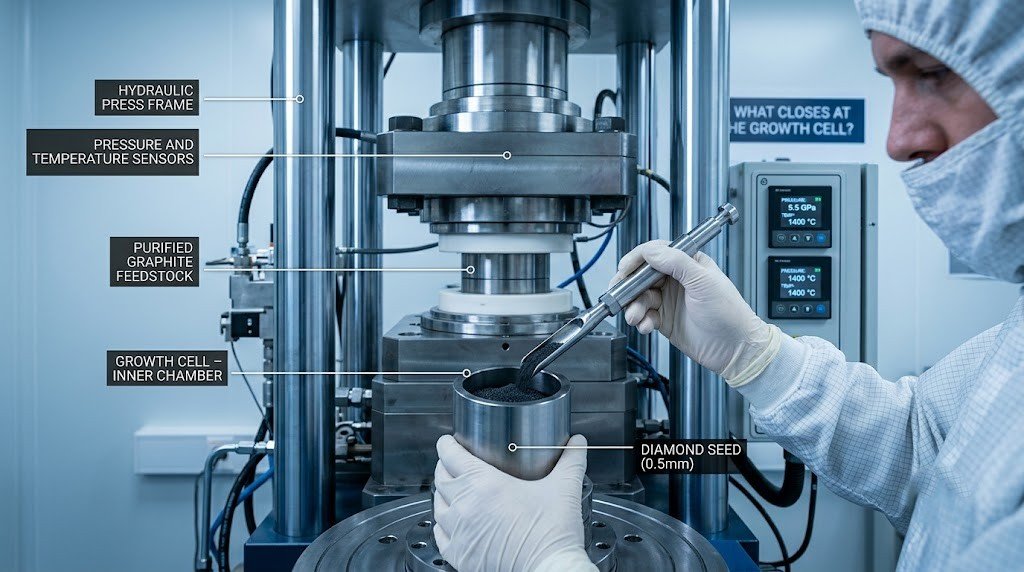
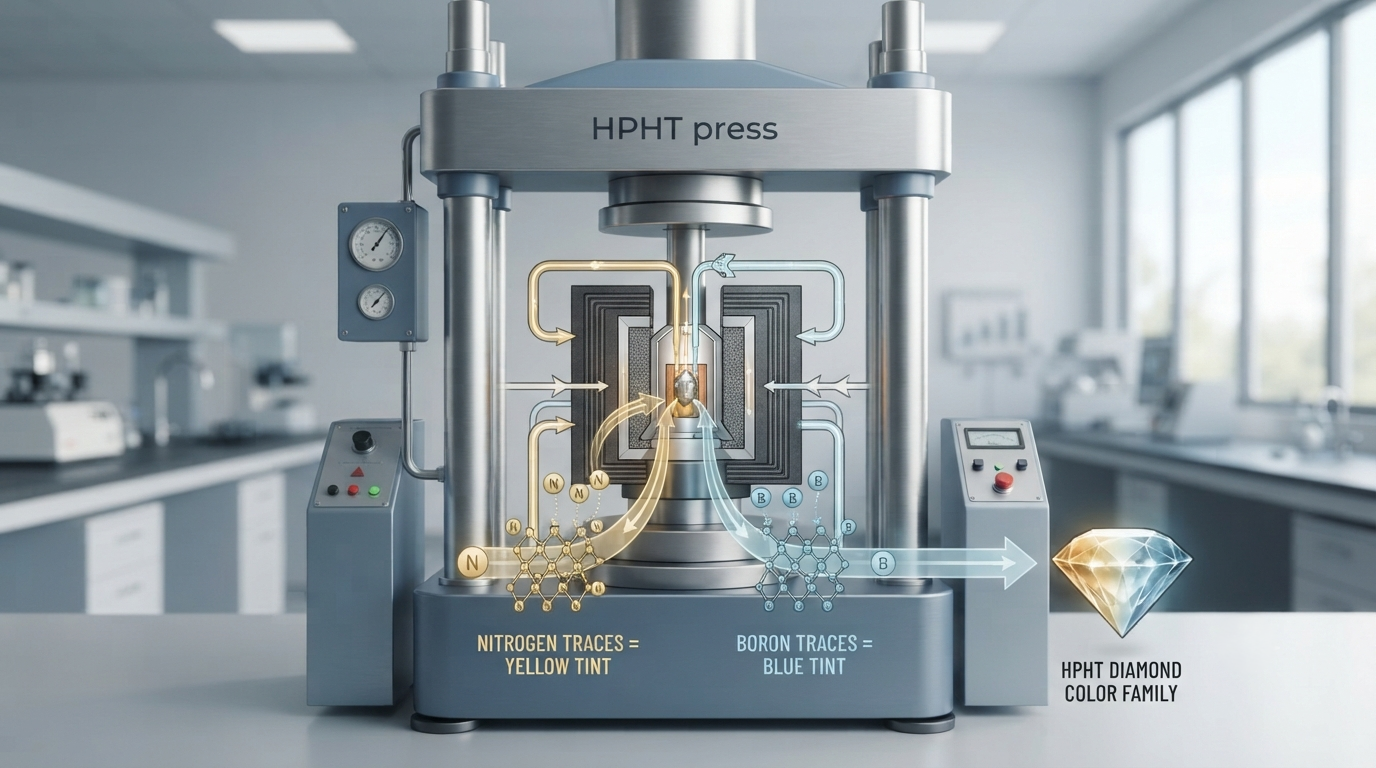
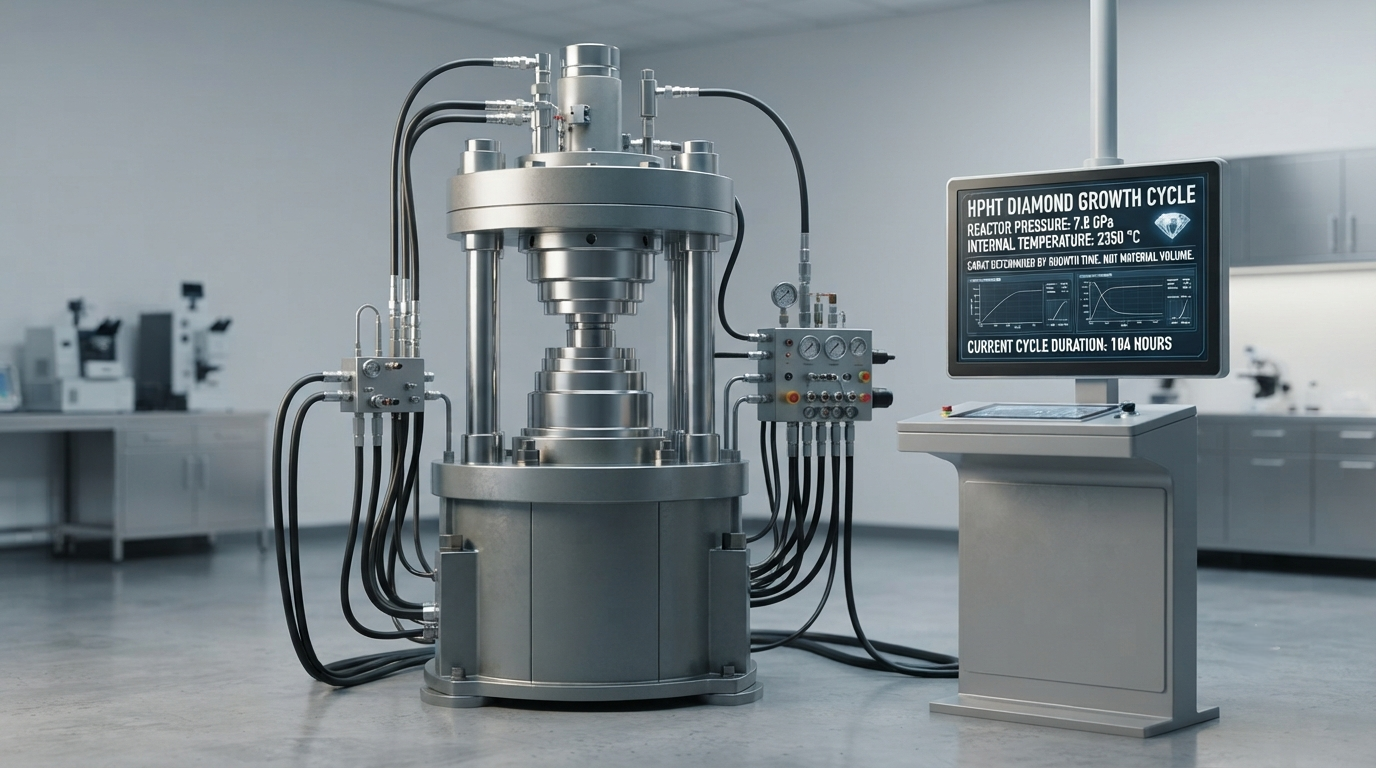
Then a second, separate constraint arrives. A high pressure growth cell needs a certain quantity of feedstock to produce a crystal of any usable size at all, and no portion of ashes a household could reasonably part with reaches it. So the purified personal carbon is topped up with lab grown carbon until there is enough to run. That is the blending step, and it is the reason nobody can honestly promise a stone made only of one person.
What that arithmetic does not do is make a diamond really made from partner ashes any less genuinely theirs in the only sense that was ever claimed. How the extraction actually runs on a portion of ashes walks the stages in order, and how much ash is needed for a partner memorial diamond covers the quantity going in rather than the quantity coming out.
Why Does the Number Shrink at Every Step?
Because each step in producing a diamond really made from partner ashes does a different job, and only one of them is about volume.
- Cremation reduces a body to skeletal remains. Nothing is being taken from you here; this is what cremation is.
- Extraction separates carbon from the minerals it is bound up with. The mass drops steeply, because the minerals were most of the mass.
- Purification removes what survived extraction and is not carbon. A small further loss, and the reason the feedstock can be described at 99.9%+ purity.
- Blending adds lab grown carbon. Nothing personal is removed at this step; the personal share falls only because the total rises.
- Cutting and polishing removes material from the grown crystal to produce a finished shape. This loss applies to every diamond ever cut, memorial or otherwise.
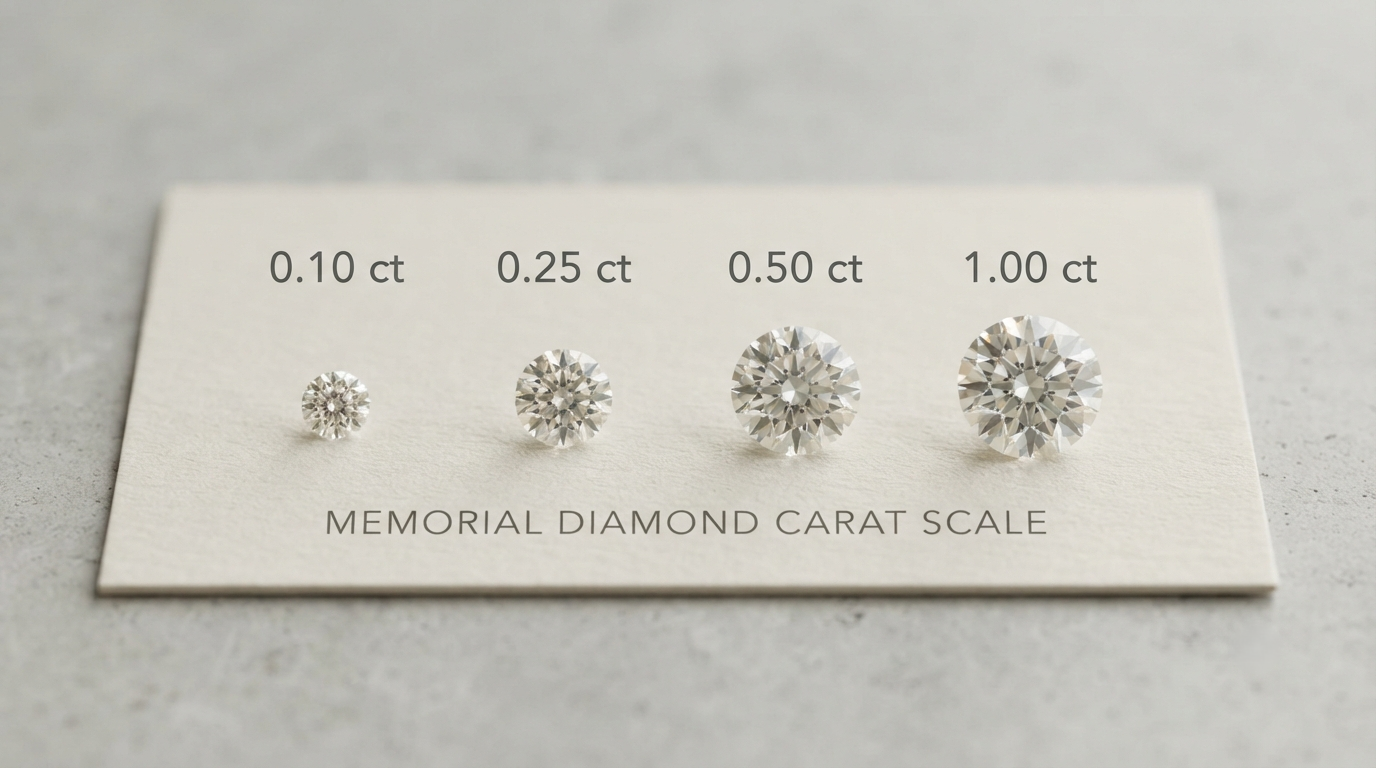
Read as a list that looks like a series of disappointments; read honestly, only one of the five is a choice anybody made, the choice to make a stone large enough to wear. Carat is bought as growth time and feedstock volume, which is why a bigger stone does not mean more of your partner in it. What actually drives the cost explains the same relationship from the money side.
Nothing in that sequence is hidden by a careful provider of diamonds really made from partner ashes, and every figure in it is an industry wide range rather than a promise. If a company gives you a precise personal percentage for your specific stone, the useful response is not suspicion but a question: how was it measured, and which document records it?
Why Is the Honest Version More Reassuring Than the Overclaim?
Because the overclaim about what is really made from partner ashes collapses the first time anyone looks at it, and you are the one left holding it.
Imagine the version where a company tells you the stone is entirely your partner. You repeat that, because you were told it, to somebody who then spends four minutes reading about the carbon content of cremated remains. Now two things are damaged: the claim, and your standing as the person who made this decision. The stone is no less really made from partner ashes than it was an hour earlier, but your confidence in it has changed.
The honest version has the opposite property. It has already conceded everything a skeptic could find. There is no follow up fact waiting to embarrass it, because the unflattering numbers are already inside the answer. When someone says that is mostly lab carbon, the reply is yes, about 85% to 90% of it by mass, and the remainder was physically part of them, which is what the stone was always for.
That is a strange kind of comfort, and it is the durable kind: a claim you can defend to a hostile relative on the day you feel least able to argue. Precision is also the only trust signal this category has that cannot be bought, and the myths that circulate about memorial diamonds mostly exist because someone chose the flattering sentence first.
It is worth stating plainly that Memorial Diamond grows memorial diamonds for a living and would like to grow yours, so this page is not a neutral referee. Judge it by whether the unflattering numbers above appear anywhere else in the material a company hands you.
What Would Have to Go Wrong for a Stone Not to Be Really Made From Partner Ashes?
This is the question underneath the question, and it deserves a direct answer rather than reassurance.
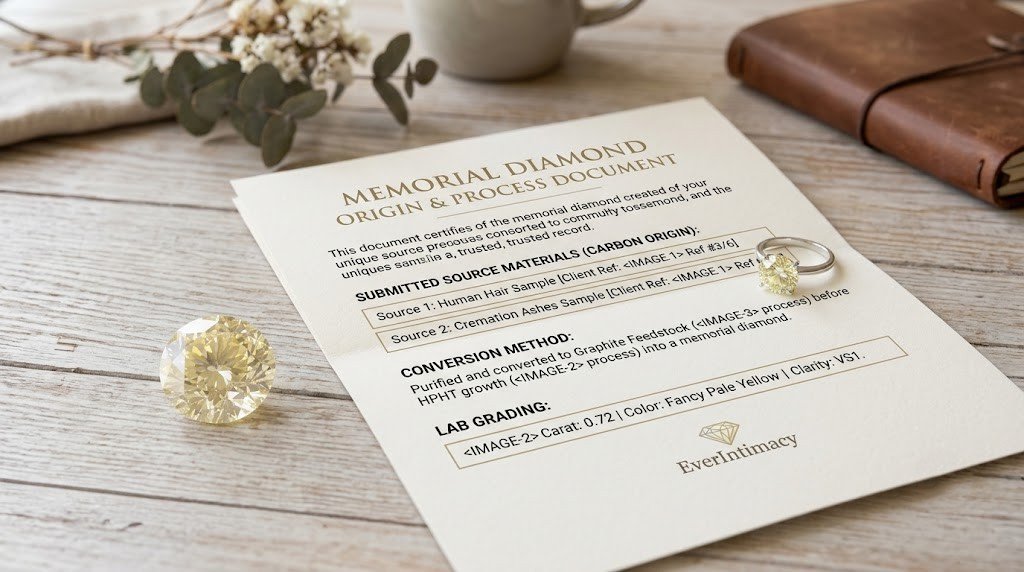
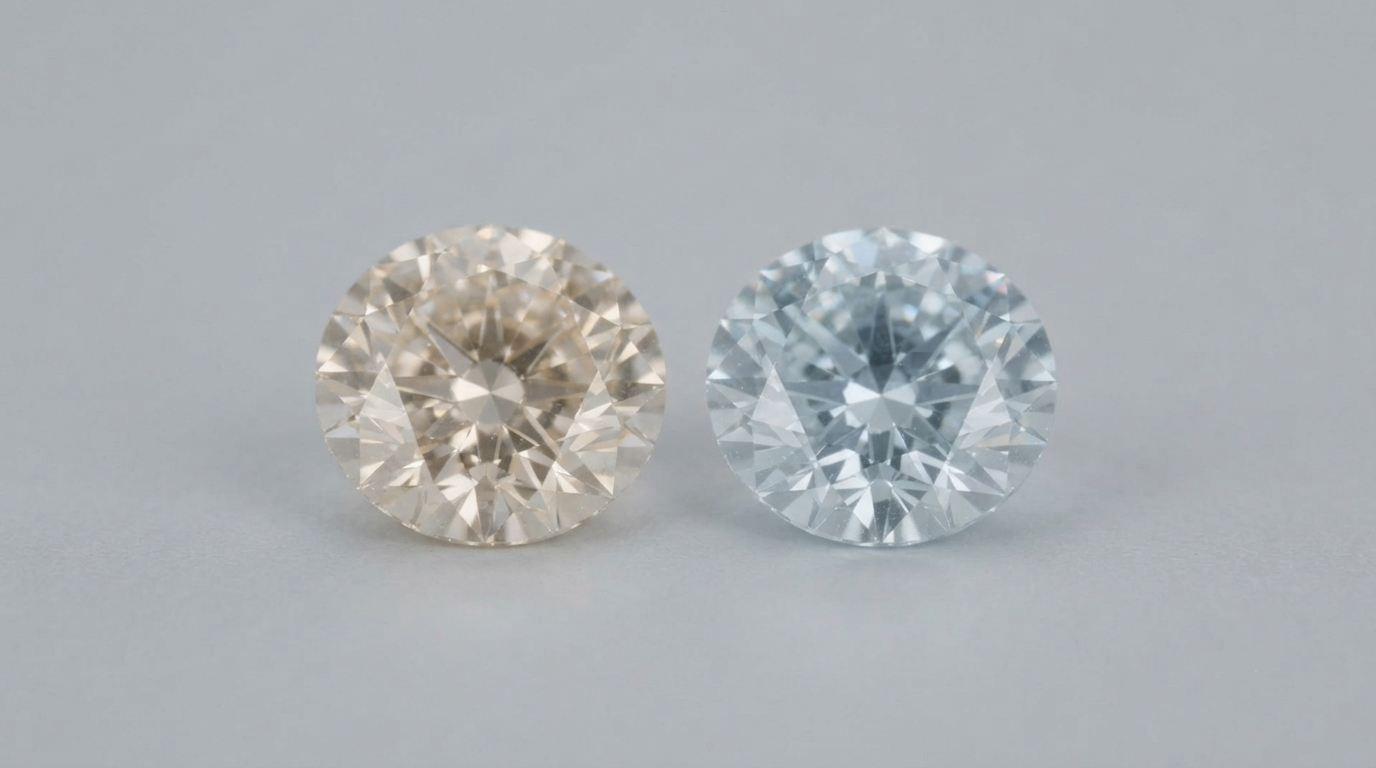
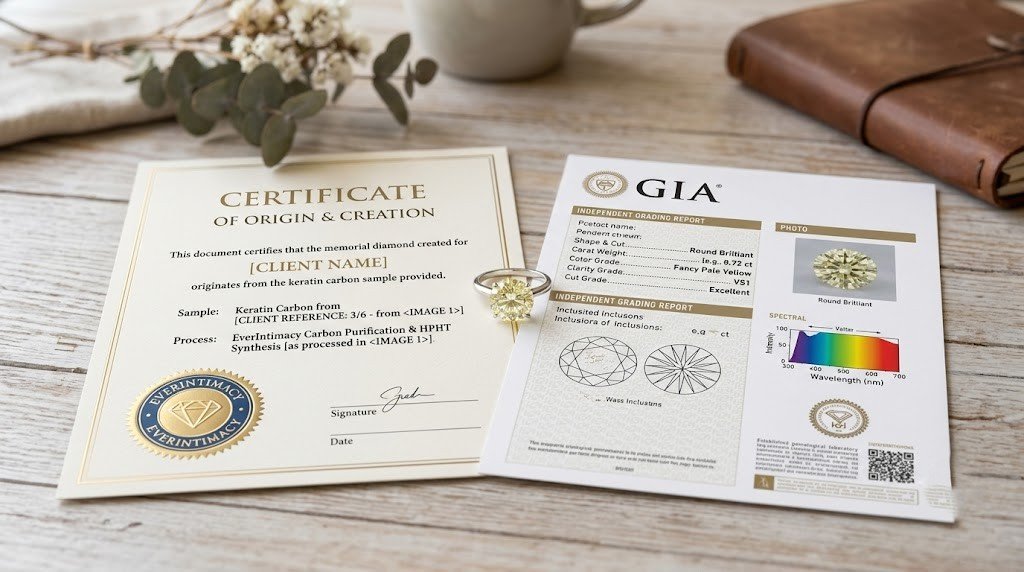
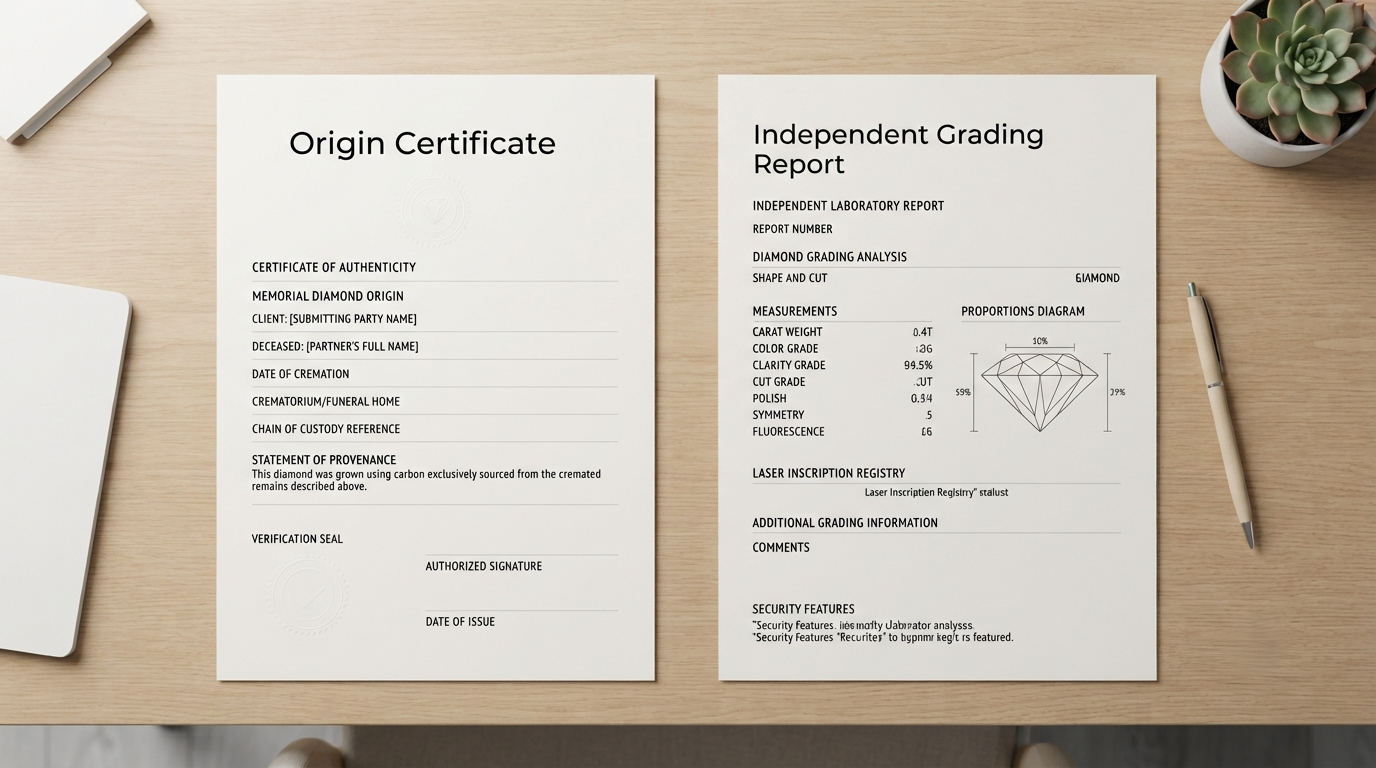
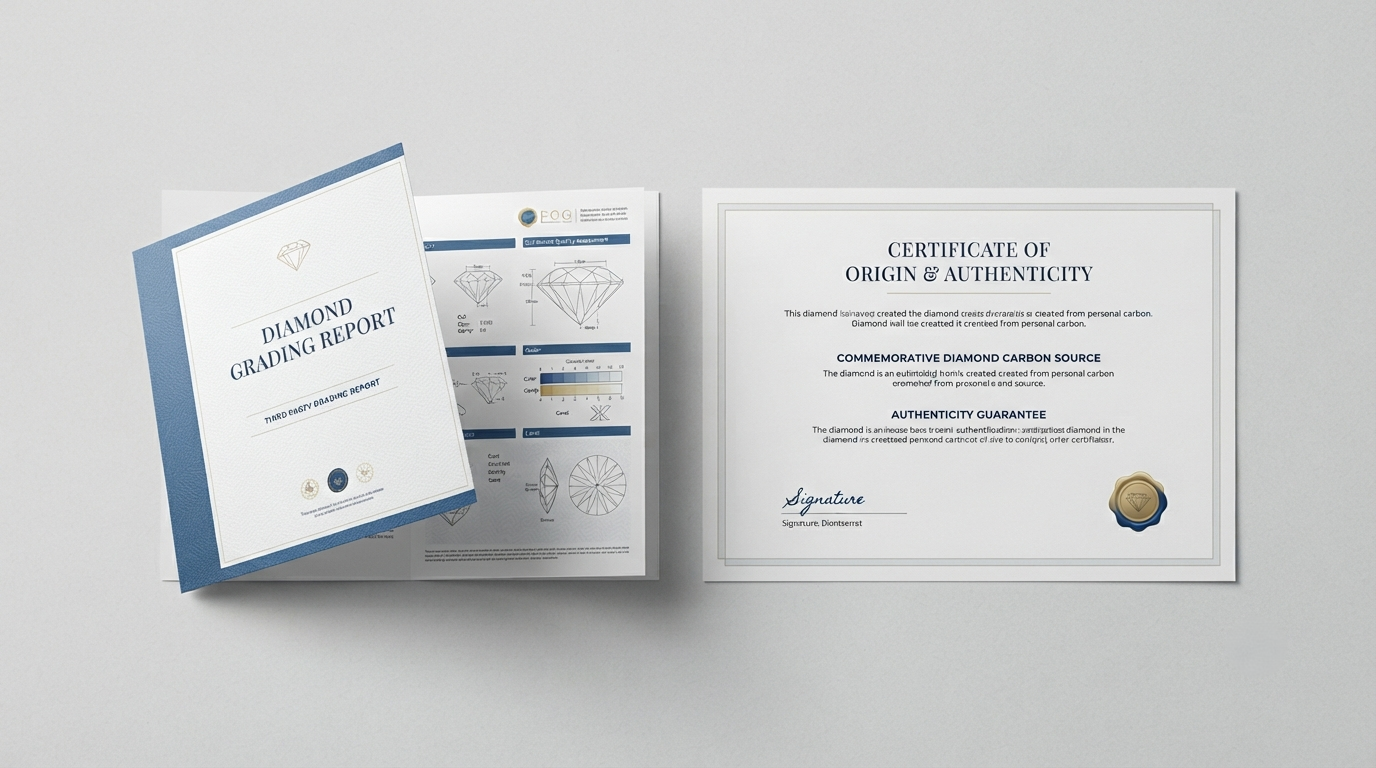
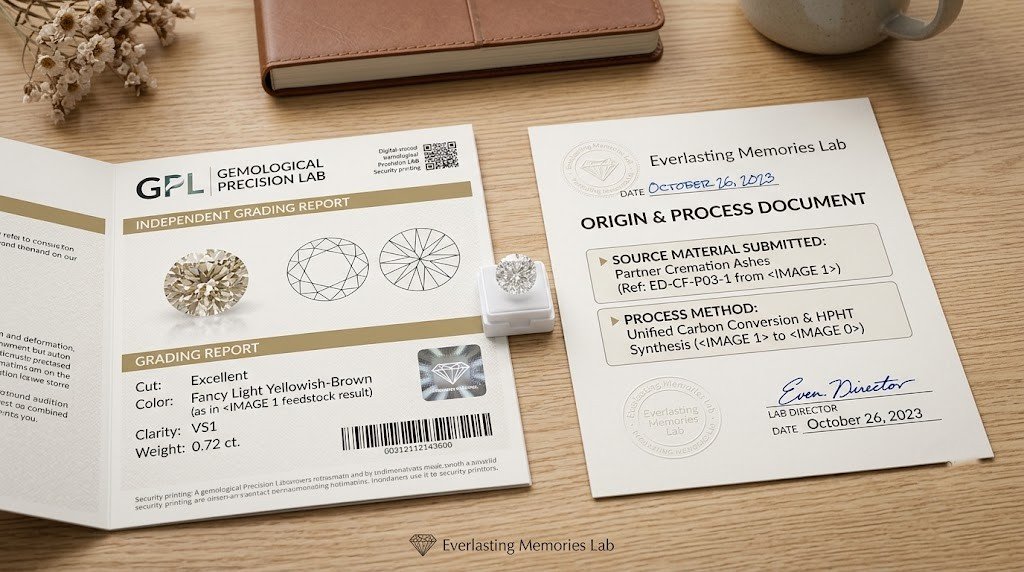
Nothing about the growth process would prevent a company from setting a submission aside and growing a stone from lab carbon alone. The finished object would be indistinguishable from one really made from partner ashes, because once purified, carbon is carbon. There is no marker, no trace, no isotopic signature anyone examines that says whose body it came from. A grading report describes cut, color, clarity and carat and is silent on origin by design. How memorial diamonds are graded and certified explains why those are two separate documents.
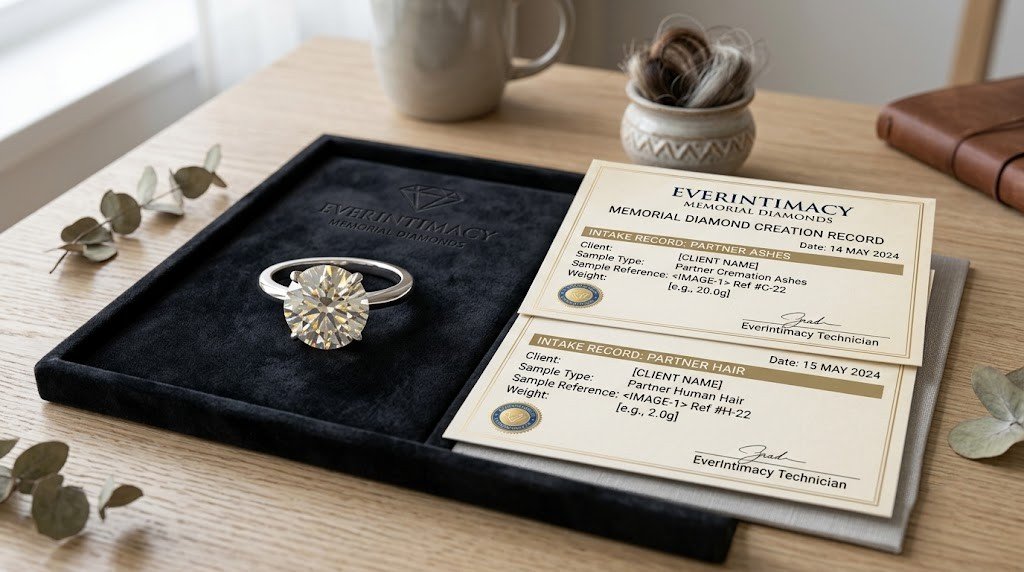
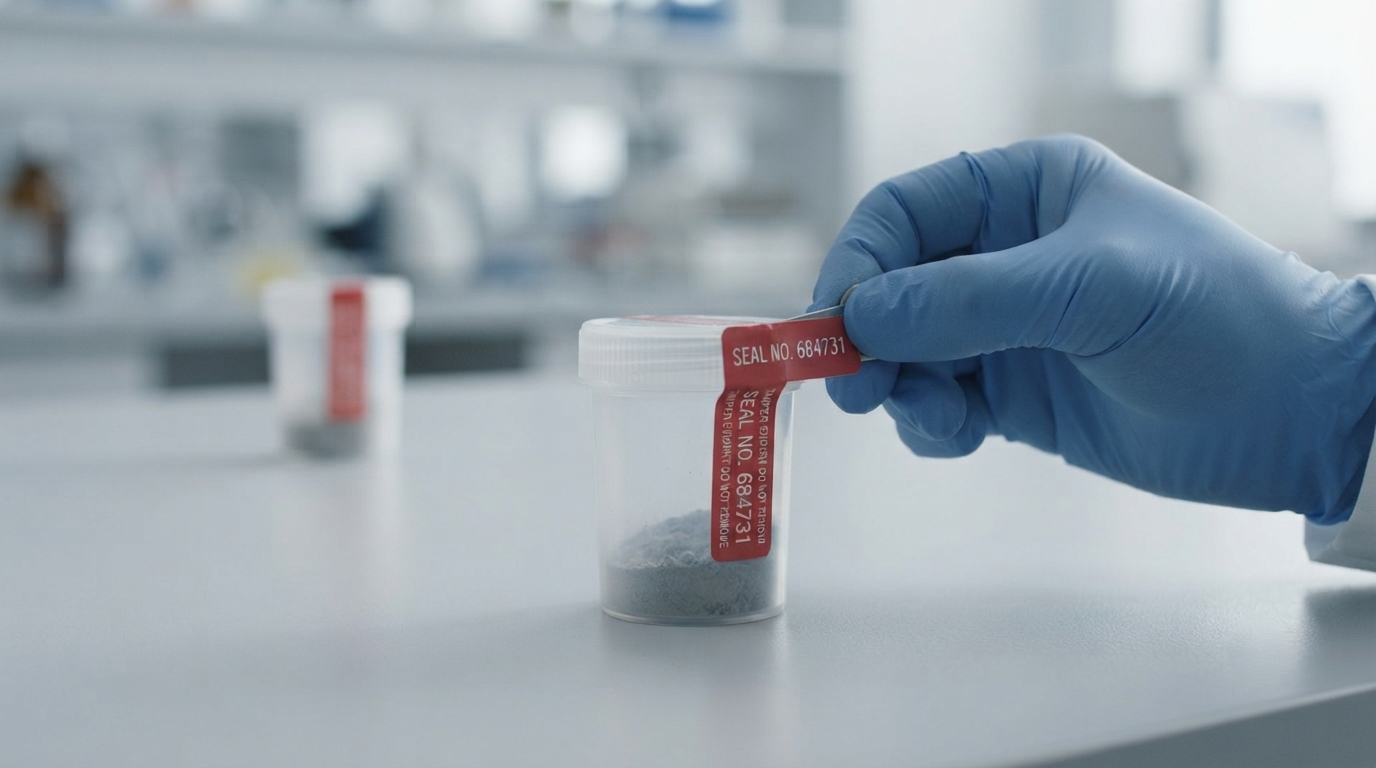
So the assurance that a stone is really made from partner ashes cannot come from the stone. It comes from a chain of records made while the material still existed as ashes: what was received, on what date, weighing what, logged against which order, and what was returned or retained afterward. That chain is either complete and specific, or it is vague, and vagueness is the actual warning sign in this category, far more than any number about carbon percentages.
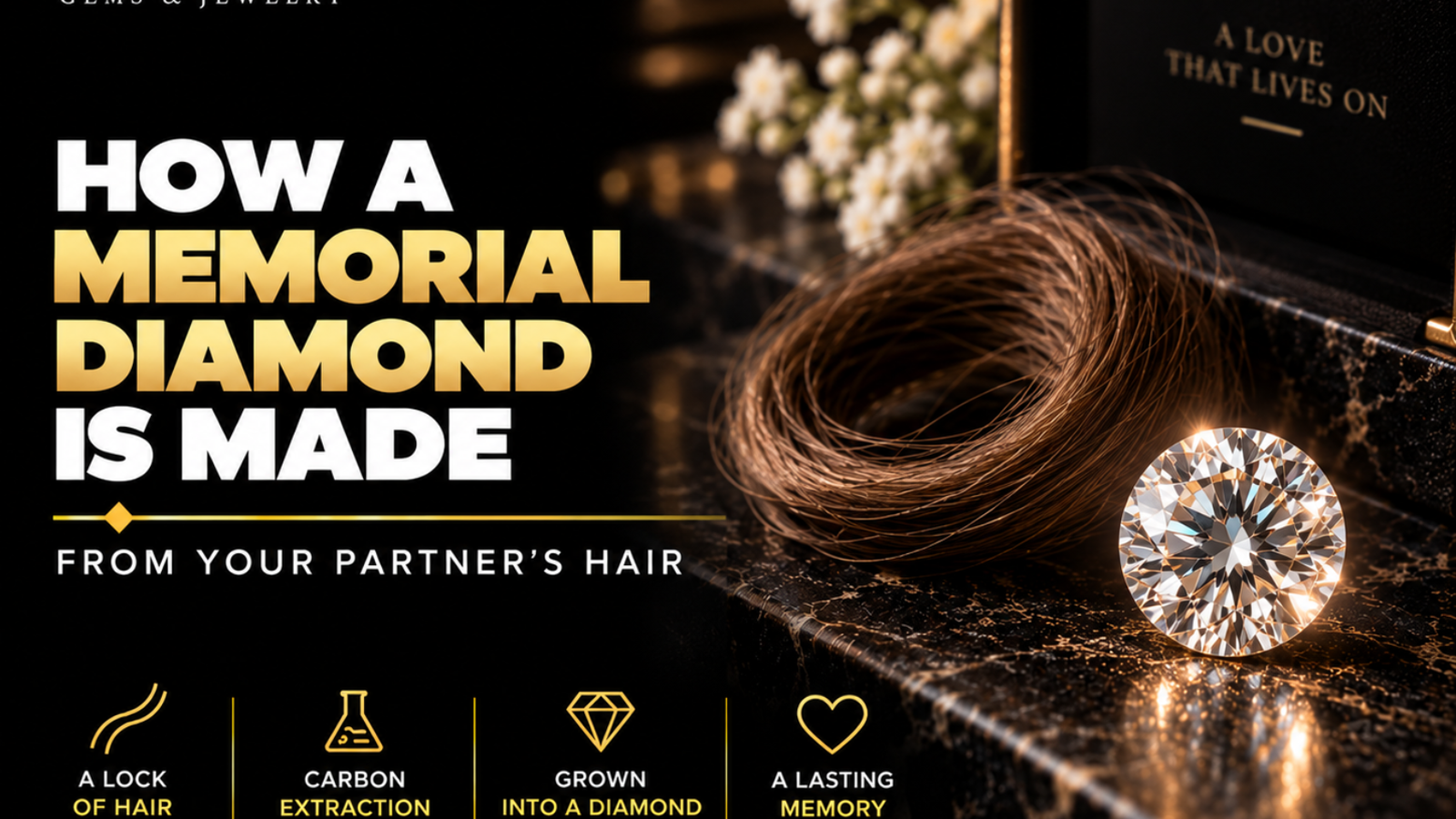
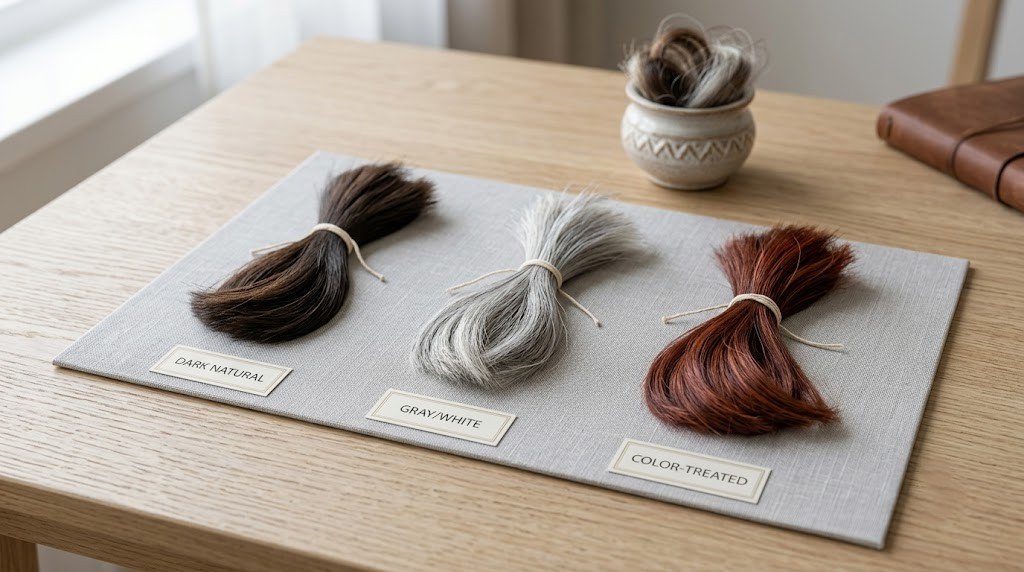
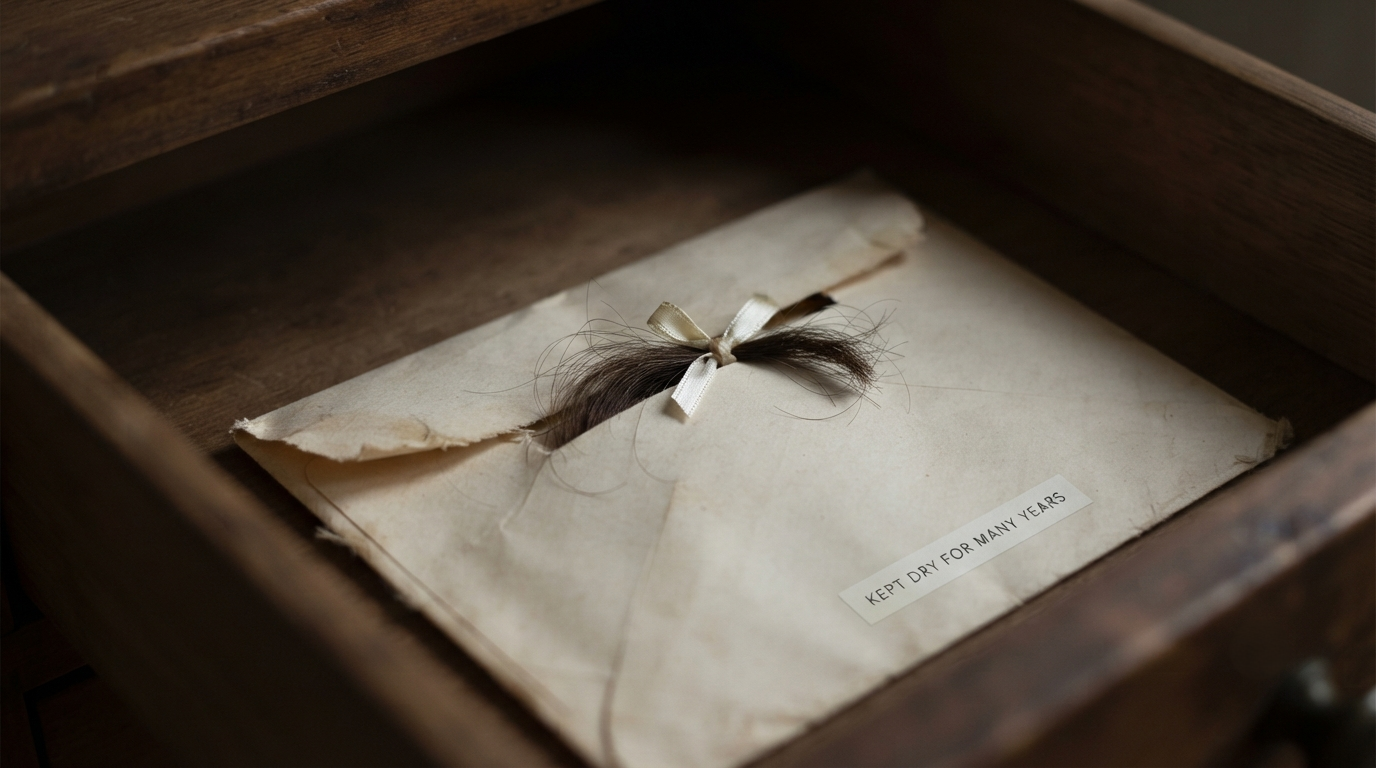
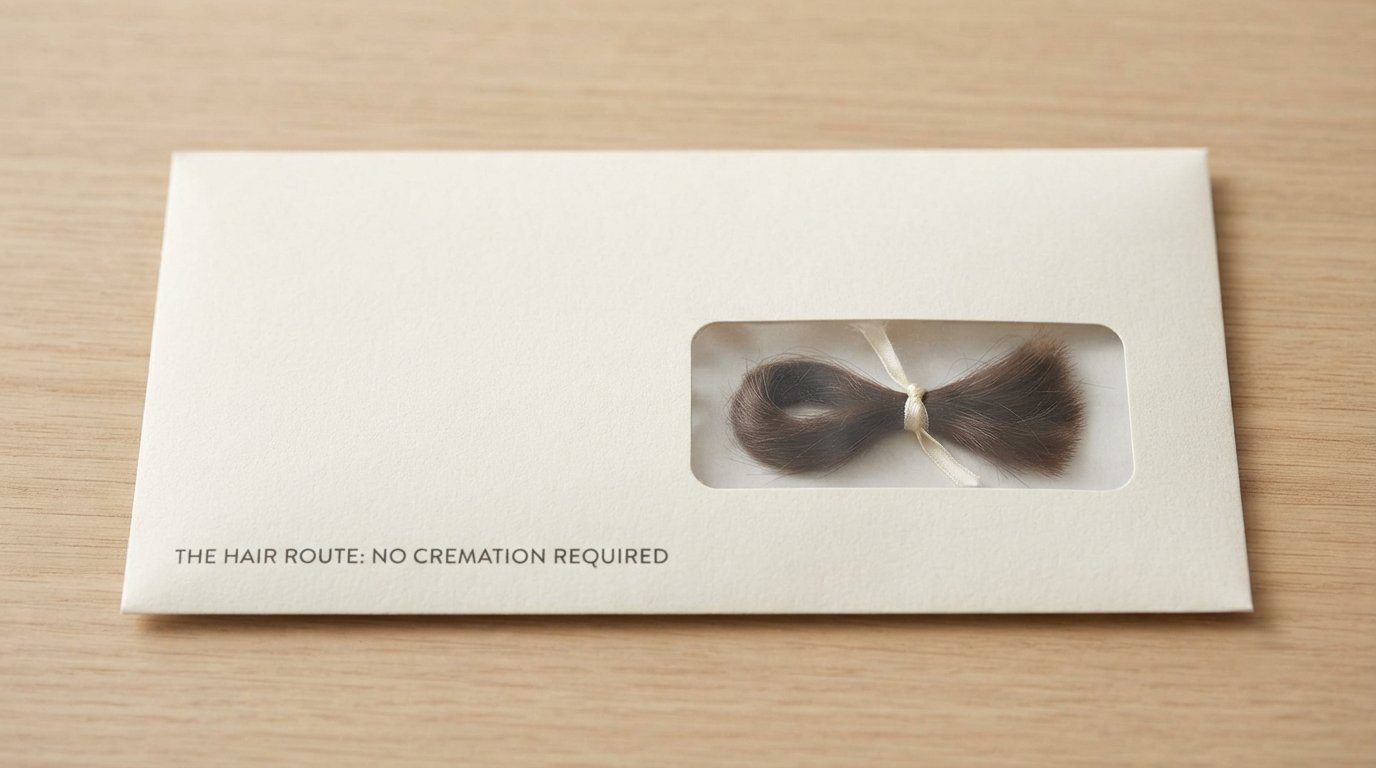
Which means the verification work happens before you order, not after delivery. How companies track a loved one’s ashes describes what a complete chain looks like, and the same question asked about a lock of hair turns on identity rather than quantity.
When the Question Is Not Really About Quantity
Sometimes is it really made from partner ashes is a factual question. Often it is not.
For readers in this cluster specifically, the question arrives loaded in a way it does not for a legally married spouse. If your relationship was not recognized by law, or was not recognized by their family, or was not fully known to everyone in it, then a challenge to whether the stone is really made from partner ashes is frequently a challenge to your standing, to whether the decision was yours to make, and whether the portion of ashes you hold should ever have reached you. That is a painful thing to have dressed up as a chemistry question.
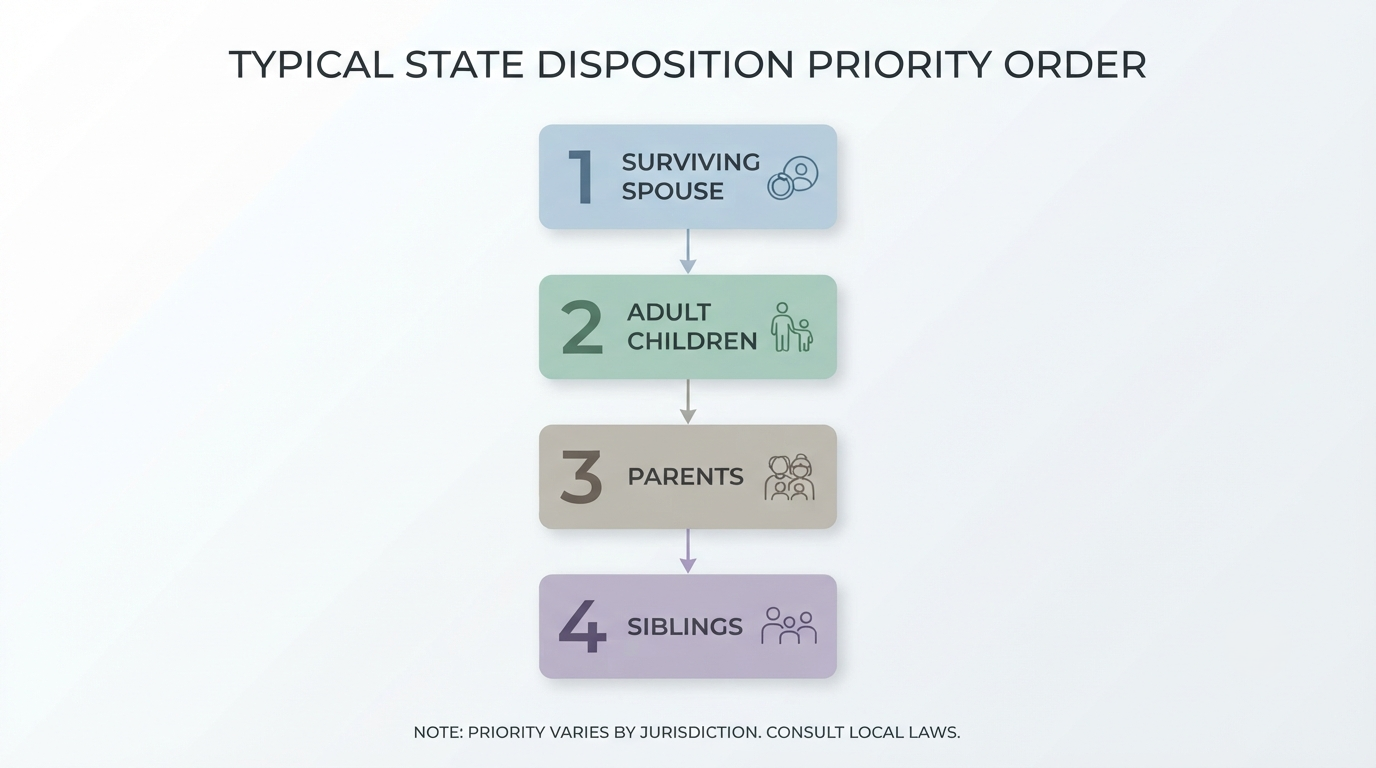
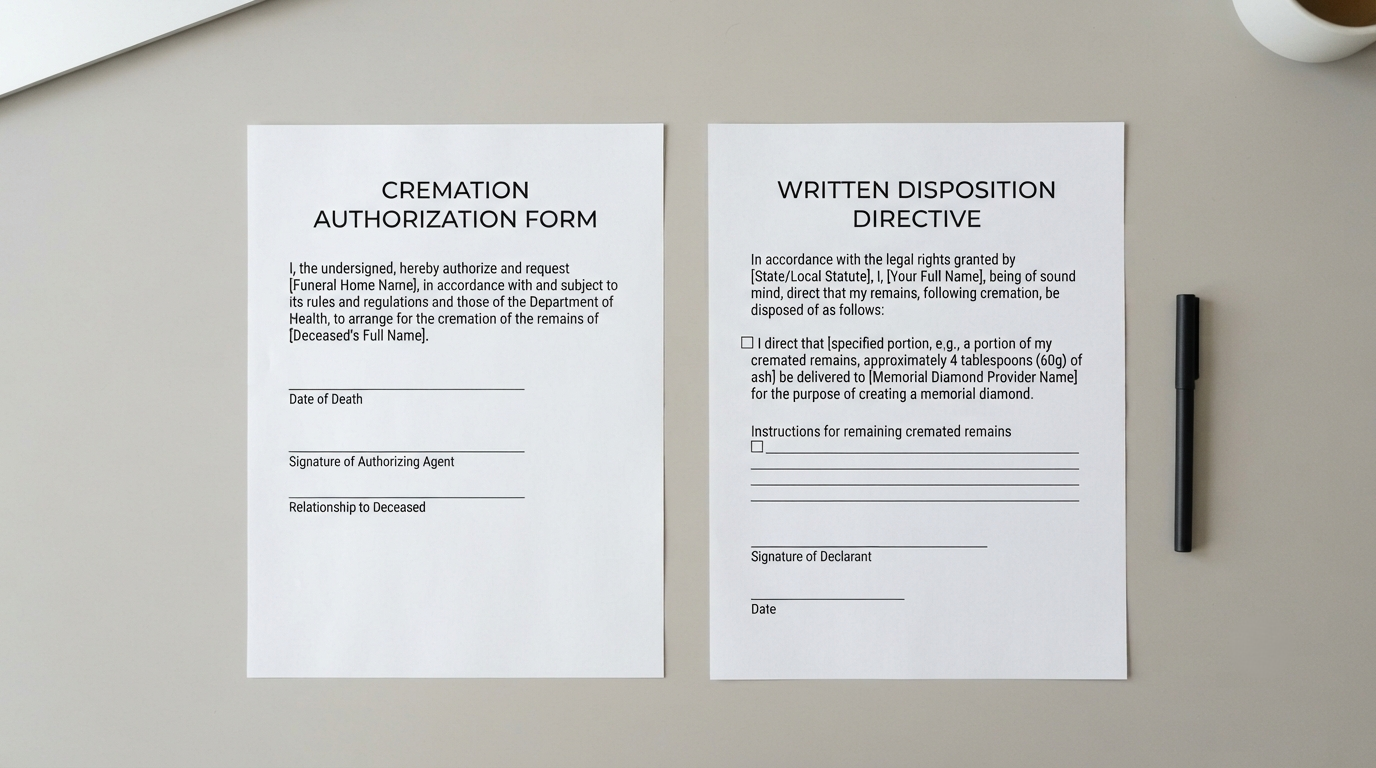
Two separate things are worth separating, then. Whether a stone is really made from partner ashes is a factual matter with published figures behind it. Who held legal authority over the remains is a question of a different kind altogether: it is answered by the law of one particular state, it can be answered differently again by something your partner signed while alive, and nothing national overrides either.
That has no bearing on whether a stone is really made from partner ashes; it bears on who was entitled to authorize one. If that second question is genuinely unsettled, it is worth addressing on its own terms rather than through the diamond. How to talk to family about a partner memorial diamond is written for exactly that conversation, and the general legal position is worth checking for your own state.
And where the challenge is really about money, or about grief with nowhere else to go, no evidence about carbon fractions will resolve it. Recognizing that early saves energy.
What to Put in Writing Before Anything Is Sent
Five things, asked before a parcel is posted, do more for your confidence that a stone is really made from partner ashes than anything available afterward.
- What is recorded at intake, the date, the weight received, the order reference, and whether you are sent a copy.
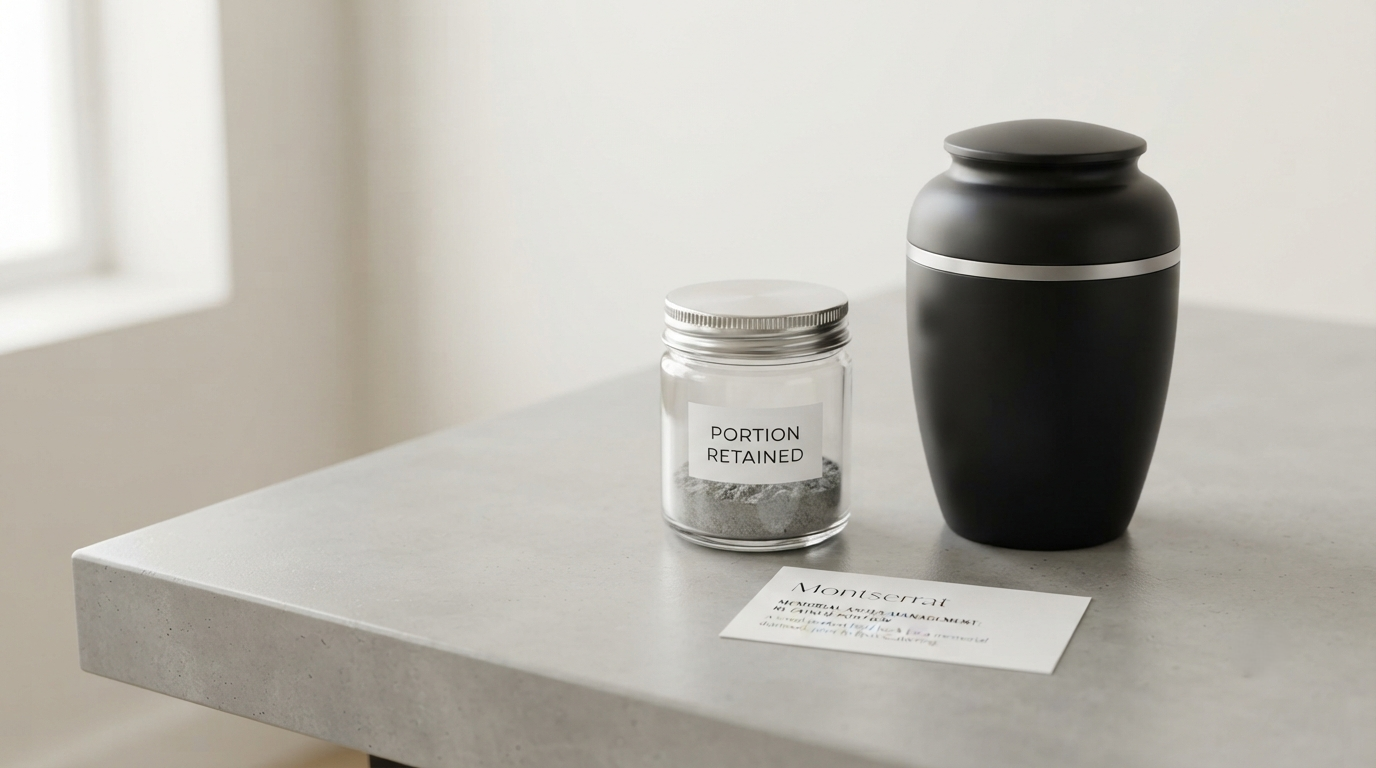
- What happens to material not consumed by extraction, and whether it is returned by default or on request.
- What documentation arrives with the stone, whether an origin document names the material you sent, and whether an independent grading report is included or priced separately.
- What happens if a growth run fails, which does occur across the industry, and whether a second run uses your remaining material or a fresh submission.
- How the blend is described in writing, not a promise of a percentage, but a plain statement that supplemental lab grown carbon is used and roughly what share the personal carbon represents.
A company that answers all five specifically, in writing, before taking an order is showing you the only thing that can be shown. The complete guide to a partner ashes diamond sets the rest of the decision around them, and the provider selection questions sit alongside them.
Frequently Asked Questions
Can a jeweler confirm a stone is really made from partner ashes?
No. A jeweler sees a lab grown diamond and nothing more, because purified carbon carries no marker of its origin. Some providers add a laser inscription on the girdle, but that is a mark applied afterward rather than evidence of source.
Is a diamond really made from partner ashes an actual diamond?
Yes. It is chemically and optically a genuine diamond, scoring 10 on the Mohs scale as the hardest known natural mineral does, and it is graded on the same four criteria as any other stone.
If the personal carbon is only 10% to 15%, is a stone really made from partner ashes worth doing?
That is a question about value rather than fact, and it has no universal answer. Some people find the physical continuity meaningful at any proportion; others do not, and choosing an urn, a burial or a scattering instead is an entirely reasonable decision.
Does sending more ashes increase the personal share in a diamond really made from partner ashes?
Not meaningfully. The stone’s size is set by growth time and total feedstock volume, and the personal share is limited by what a growth cell can hold, so submitting a larger portion does not scale the proportion up.
Could the ashes be substituted, so that the stone was not really made from partner ashes at all?
Physically, yes, which is precisely why intake records matter more than any test. Ask what is logged, what is returned to you, and what is retained, then compare how specifically different companies answer.
Does it matter if the cremation was years ago?
No. Cremated remains do not degrade, so carbon recovered from a portion set aside a decade ago behaves the same as carbon recovered from a recent cremation. Whether a stone is really made from partner ashes does not depend on how long ago the cremation happened.
Final Thoughts on Whether It Is Really Made From Partner Ashes
The most useful thing to carry away about whether a stone is really made from partner ashes is not certainty. It is a sentence you can say out loud without flinching: some of the carbon in this stone was physically part of them, most of it was not, and nothing about the finished diamond will ever prove either way, the records do that, and they were made before it existed.
That sentence survives contact with a skeptic. It also survives contact with your own three in the morning doubt, which is harder. A stone really made from partner ashes is a modest, specific, checkable claim, and modest specific claims are the only ones that hold.
If you have not ordered yet, spend your attention on the intake documentation and the five written questions above rather than on the percentage. The percentage is already known, and it is not going to improve.
Learn More About Partner Memorial Diamonds
- Partner Ashes Diamond: The Complete Guide
- How a Memorial Diamond Is Made From Your Partner’s Ashes
- Is a Memorial Diamond Really Made From Your Partner’s Hair?
- How Much Ash Do You Need for a Partner Memorial Diamond?
- How Memorial Diamonds Are Graded and Certified
Talk With Memorial Diamond
What gets recorded, what comes back to you, and how the blend is described on paper are answerable questions, and you are entitled to the answers before committing to anything. Reach out to Memorial Diamond and ask for them in writing, for a portion of ashes you already hold, or one you have not yet decided to divide. The conversation is allowed to end there.