There is no settled script for what a sibling is allowed to want after a sister dies, and wanting something of hers you can actually hold is a reasonable thing to want. A sister ashes diamond is a lab grown diamond whose crystal holds carbon taken from a small, measured portion of her cremated remains, typically grown alongside supplemental lab carbon and usually ready six to ten months after the laboratory receives the ash. For a sibling, the first hurdle can be permission rather than chemistry.
Table of Contents
What Is a Sister Ashes Diamond, Exactly?
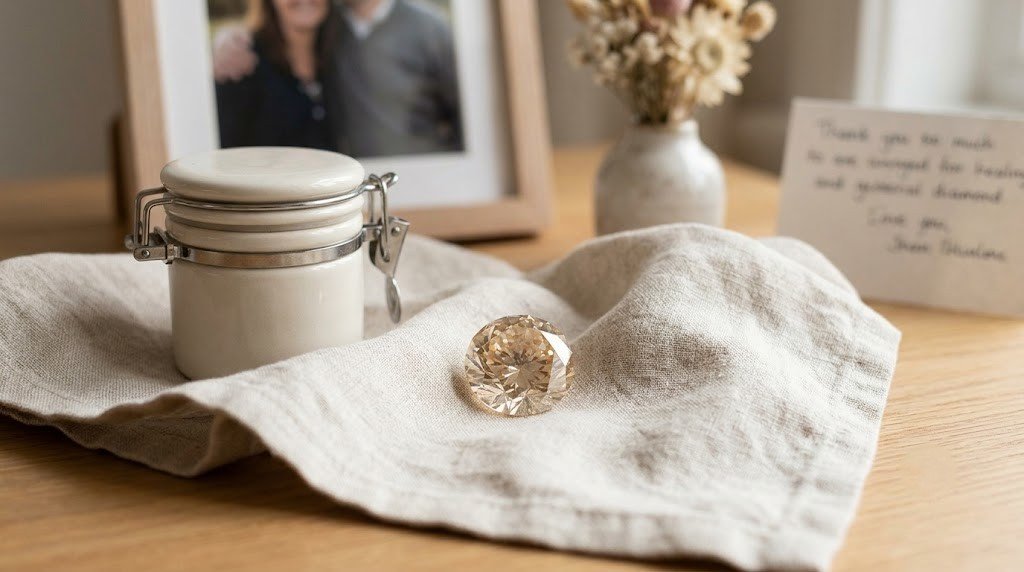
It is a diamond in the full physical sense, not resin, not glass, and not a crystal that merely looks the part. A sister ashes diamond is grown in a laboratory press, shares the carbon lattice of a mined stone, rates 10 for hardness, and is assessed against the four grading factors gemologists apply to every other diamond.
What sets it apart is the origin of some of its carbon. A measured amount of her ashes is processed until nothing but carbon is left, and that carbon enters the growth cell together with carbon sourced by the laboratory. A finished sister ashes diamond is physically connected to her without being made of her alone. Keeping that distinction clear protects you from any seller who blurs it.
Siblings arrive at the idea of a sister ashes diamond by different roads. Some want a stone because the urn lives in another household. Others want something that goes where they go, or that a niece, nephew or their own child might inherit one day. None of those reasons needs defending.
A sister ashes diamond also sits beside other choices rather than replacing them. An urn, a niche, a burial plot or a scattering can all go ahead as planned, because only a few tablespoons to a few ounces of ash are involved. The rest of her remains stay wherever the person responsible for them decides.
Who Decides What Happens to Her Ashes?
Any plan for a sister ashes diamond has to start here, and for a sibling it can be the hardest part to hear. In many states, the right to direct what happens to someone’s remains follows a statutory order: frequently a spouse or registered partner first, then adult children, then parents, with brothers and sisters further along. That order differs from state to state, and it is not always the final word.
Her own written wishes can change it. A signed declaration, a designated agent for disposition, or instructions in a document she prepared may move the decision to someone else entirely, including a sibling. Where a state recognizes those documents, they generally take priority over the default list.
So whether you hold authority depends on her circumstances and your state, not on how close the two of you were. If she had no spouse, partner, adult children or surviving parents, the decision may sit with her siblings jointly. If any of those people survive her, it may well sit with them.
Nothing in that order measures love. It is a procedural answer, written long before your family needed it. If you are unsure who signed for her cremation, the funeral home or crematory involved may be able to tell you, and a local attorney can confirm how your state’s order applies.
A careful provider will raise this too. Expect any reputable laboratory to ask who authorized the release of her ashes and to want that person’s written consent before it accepts anything for a sister ashes diamond.
How Can a Sibling Ask for a Portion Respectfully?
If someone else holds her ashes, whether her spouse, her partner, her adult children, your parents or another sibling, the route to a sister ashes diamond runs through a conversation with that person. Requests that are specific, modest and unhurried tend to land more gently than open ended ones.
A few approaches that can make the conversation easier:
- Name a small, concrete amount. Laboratories typically ask for somewhere between a few tablespoons and about 4 oz of ash. “A few tablespoons” sounds very different from “dividing her.”
- Say what stays untouched. The urn, the plot or the planned scattering continues as they intended. Ask a provider beforehand whether any unused ash is returned, and to whom.
- Share the paperwork early. Let them read the release form and the provider’s custody process before anything is signed, so they are deciding with full information.
- Respect faith and culture. Some traditions have views about dividing cremated remains. If that applies, a conversation with their faith leader may matter more than the stone.
- Leave room for “not yet.” Grief moves at different speeds. A request that can be revisited later is easier to say yes to than one that needs an answer this week.
If the answer is no, or not now, that does not close every door. Hair she left behind can sometimes provide the carbon instead, though it raises its own questions about who it belongs to, and a stone grown from her hair works differently enough to deserve its own read.
How Is a Sister Ashes Diamond Made, Stage by Stage?
The sequence is broadly similar across the industry, although equipment, timing and documentation differ between laboratories. Here is how her ashes typically become a sister ashes diamond once they reach the laboratory.
| Stage | What happens to the material | Detail worth knowing |
|---|---|---|
| 1. Receipt and logging | Her ashes arrive sealed and receive an identifier that follows them through every step | Ask whether the identifier is physical, digital, or both |
| 2. Carbon extraction | Bone mineral, chiefly calcium phosphate, is separated away in a controlled, oxygen free, multi stage process | Only a small share of ash is carbon to begin with |
| 3. Purification | The recovered carbon is refined to roughly 99.9% purity or higher | Impurities would interfere with crystal growth |
| 4. Graphitization | Purified carbon is heated to around 2,500 to 2,700°C and converted to graphite | Graphite is the feedstock growth presses use |
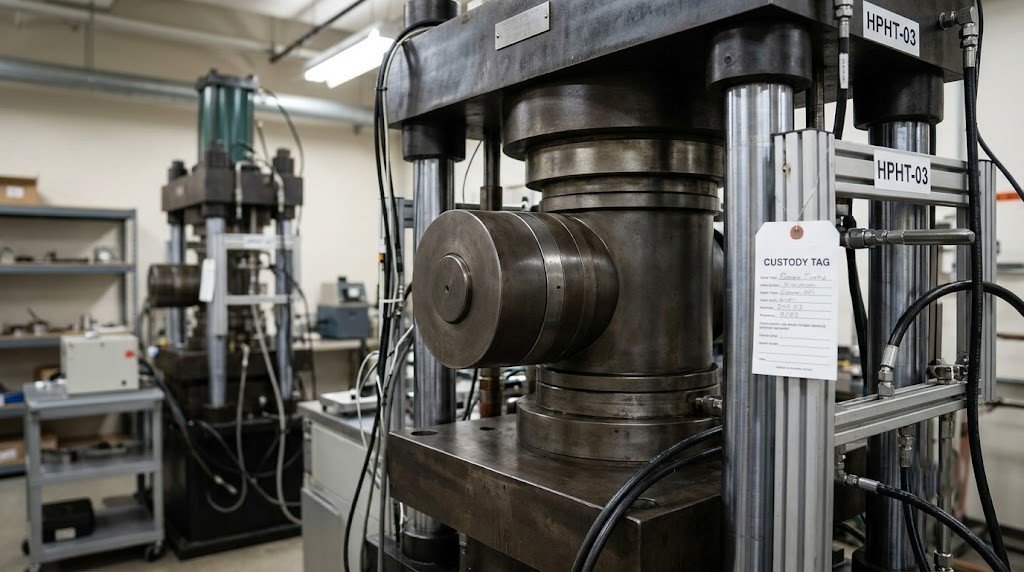
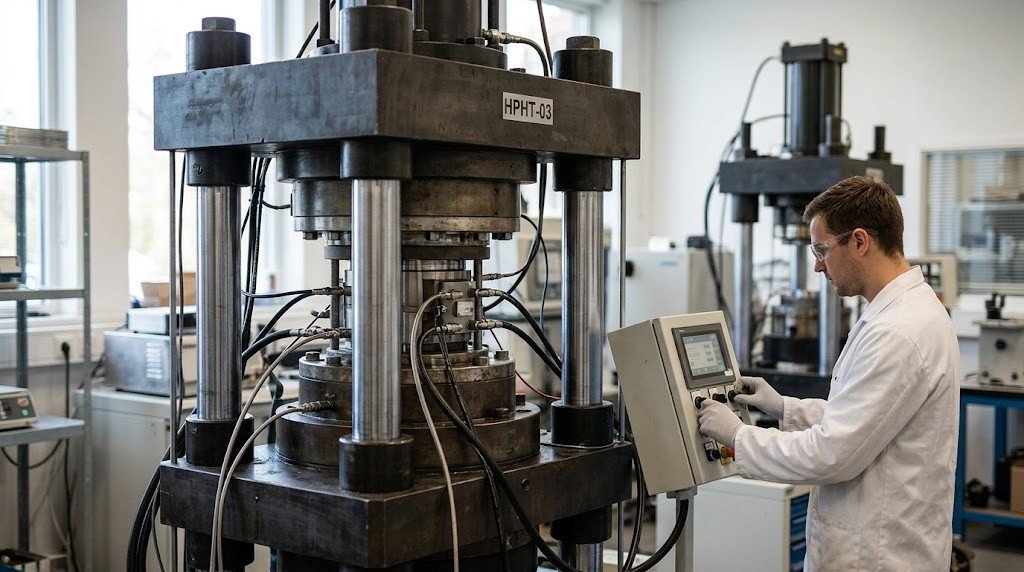
| 5. Growth | Her graphite, typically blended with lab carbon, grows around a tiny diamond seed | The main method is HPHT, pressing at roughly 6 to 8 GPa and 1,400 to 2,500°C; fewer providers use CVD |
| 6. Cutting and polishing | The rough crystal is shaped and faceted | Round, oval, cushion, emerald and other cuts are possible |
| 7. Optional color treatment | Some providers offer irradiation for certain colors | Not a mandatory stage, and it should be disclosed |
| 8. Documentation and grading | An origin certificate is issued; an independent grading report may be added | Third party grading is usually optional and priced separately |
Stage five is where the size of the stone is really decided. Growth time in the press sets carat weight, so sending more ash does not, by itself, produce a larger or faster sister ashes diamond. If you want to understand HPHT and CVD growth in more technical depth, the general science is the same as for any lab grown diamond.
Each stage of making a stone from her ashes gets a slower, plain language walk through of its own.
How Much of the Finished Stone Is Her Carbon?
Less than marketing sometimes implies, and still a real, permanent amount. Cremated remains are made mostly of bone mineral, and usable carbon in ash runs at roughly 0.5% to 4% by weight, depending on the person and the cremation itself.
After purification, that recovered carbon is typically blended with lab sourced carbon so there is enough to grow a stone of meaningful size. Industry figures put the personal carbon in a finished sister ashes diamond at around 10% to 15% of the stone’s mass; a handful of providers put it as low as 3%. Those figures apply to ash specifically.
Some siblings find that percentage deflating at first. It can help to look at what it actually describes: carbon atoms that were part of her, locked into a crystal lattice that will not break down, wear away or separate out. The stone is not a symbol standing in for her. It contains her, alongside other carbon.
Be wary of any provider claiming the stone consists of her and nothing else, or describing it as made entirely of her ashes. That claim is not supported by the chemistry, and a company willing to overstate this point may overstate others. Before you commit, ask for the expected personal carbon percentage in writing. If you want the reasoning set out fully, whether a stone is really made from her ashes is answered on its own page.
How Much Ash Does a Laboratory Need?
Probably less than you would expect. Requirements vary by provider, but the typical range runs from a few tablespoons up to about 4 oz, or roughly 100 g, which is a small fraction of the ashes from a full cremation.
That modest figure matters when you raise the idea with whoever holds her remains. Asking for a few tablespoons leaves the urn visibly full and the family’s plans intact.
More ash does not mean a bigger sister ashes diamond. Carat size is a choice you make, and that choice sets the growth time; the quantity of ash only needs to be enough to yield the carbon the laboratory requires.
Three practical points to settle before anything is shipped:
- Ask exactly how much the provider needs for the carat size you are considering.
- Ask whether unused ash comes back, to whom, and by what insured, tracked method.
- Ask how the ashes should be packed and whether the provider supplies a container or kit.
What Color Might a Sister Ashes Diamond Turn Out?
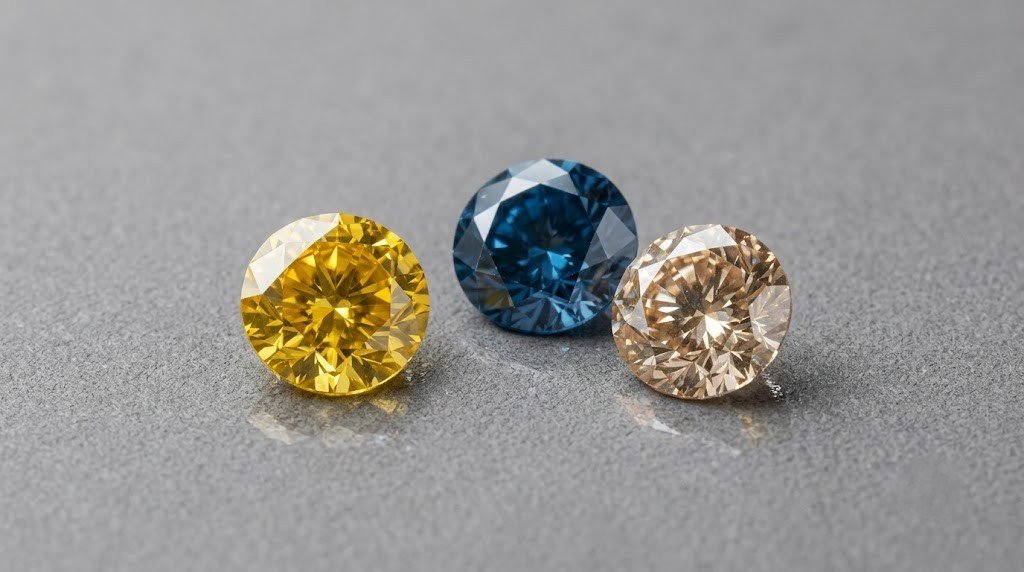
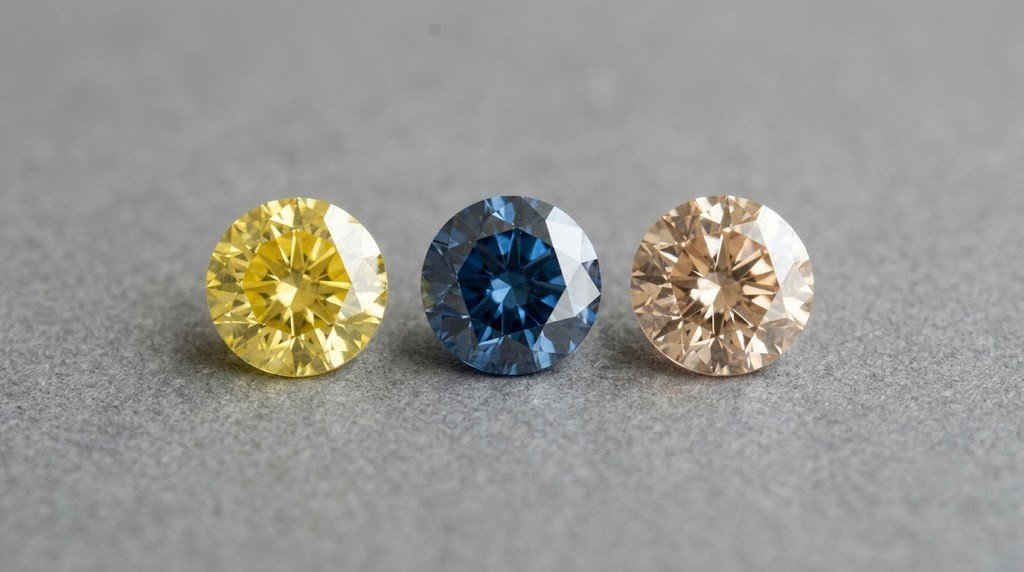
No one can tell you in advance, and a provider promising an exact shade is promising something it cannot control. A diamond’s tint is set by stray atoms caught in the lattice as it grows. Where nitrogen gets in, the stone leans yellow; where boron gets in, it leans blue; only when both are kept almost entirely out does it come out colorless.
Because the carbon in a sister ashes diamond comes partly from a person rather than a controlled feedstock, trace elements are normal. Memorial stones therefore tend toward yellow, blue and champagne tones. Colorless is achievable but needs extra processing and costs more. Some providers also offer post growth irradiation for red, green or black stones, which should always be disclosed on the paperwork.
The color of a sister ashes diamond cannot be chosen, matched or predicted from the ashes themselves. It will not reflect her eyes or her personality, and nobody should suggest otherwise.
If you select a treated color or a cut, choose it for reasons that are yours and hers: what she liked, what you will actually wear. There is no convention about what suits a sister, and you do not need one.
What Does a Sister Ashes Diamond Cost in 2026?
The price of a sister ashes diamond depends mainly on carat weight and color, then on cut, grading and setting. The ranges below are general 2026 industry figures, not any single company’s price list.
| Carat range | Typical industry price | What tends to move it |
|---|---|---|
| About 0.10 to 0.25 ct | Roughly $1,500 to $3,500 | Color choice, cut style |
| About 0.5 to 1 ct | Roughly $5,000 to $15,000 | Colorless commands a clear premium over yellow, blue or champagne |
| About 2 to 5+ ct | Roughly $20,000 to $75,000+ | Longer growth time and closer process control |
Independent grading, engraving, fancy cuts and jewelry settings such as a ring or pendant are usually priced separately from the loose stone. Ask for a full written quote rather than a starting figure.
Siblings sometimes share the cost of one sister ashes diamond, or each pay for their own. Either can work, but agree in writing who owns a shared stone and who keeps it, because that question is far easier to settle before the diamond exists than after.
How Long Does a Sister Ashes Diamond Take?
Across the industry, six to ten months is typical from the day a laboratory receives the ashes to the day a finished stone ships. Stones over about two carats, and specialty colors, can take up to roughly twelve months, because growth time rises with size.
Ask each provider whether their estimate runs from payment or from the arrival of the material.
For a sibling, the laboratory is often not the slowest part. Reaching agreement with whoever holds authority over her ashes, gathering signatures, and settling who pays can take weeks or months on their own. None of that is wasted time; a sister ashes diamond made with everyone’s agreement may carry less tension later.
If you want the sequence laid out as tasks, the practical steps to turn sister ashes into a diamond are set out in order, from the first call to delivery.
Can Several Siblings Each Have a Stone?
Frequently, yes. Because each stone needs only a modest portion, more than one sister ashes diamond can often be grown from the same cremation, provided whoever holds authority agrees to each portion being released.
Families come in many shapes. A sister may leave behind one sibling or five, a twin, half siblings, step siblings, or siblings who grew up in different households. Each person’s relationship with her was its own, and nobody needs to justify wanting a stone.
Each person may also want something different: one a loose stone kept in a box, another a ring, another nothing at all. Treat every choice as valid. Practical points to raise with a provider when several relatives each order a sister ashes diamond from one source:
- Is each portion logged and grown separately, with its own documentation?
- Can stones be ordered at different times, or must they be ordered together?
- Is there any pricing difference for multiple stones, and is each quoted on its own?
Where the ash portion is very small, some families add a lock of hair, and how a single stone can be grown from both materials is explained step by step.
What If Her Ashes Are Not Yours to Send?
Sometimes the person with authority says no, or she was buried rather than cremated, or the ashes have already been scattered. A sister ashes diamond may then not be possible, but other routes can still lead to a stone.
Hair is one alternative worth knowing about. It is roughly half carbon by weight, needs no cremation, and only a small lock or a few grams are typically required. Hair you already hold, perhaps from a brush, a saved lock or a keepsake, may be usable. Do not assume it is automatically yours to use, though. Things she owned may be treated as part of her estate, and how that works differs from one state to the next; before you mail anything, speak with her executor or the person who holds authority over her remains. The route that uses her hair explains collection and packing.
Some families combine a small portion of ash with hair, which can let material held by different relatives come together in one stone. A guide to blended ashes and hair stones covers how that works and what to document.
Waiting is also a legitimate choice. Cremated remains are mineral and do not decay the way organic material does, so a request made gently a year from now may meet a different answer.
Which Questions About a Sister Ashes Diamond Belong in Writing?
Email these to any provider and keep the replies.
- Whose written authorization do you require before accepting her ashes?
- How is her ash identified on arrival, and at how many points is its handover recorded?
- Does her material ever share a processing batch or a growth cell with anyone else’s?
- What percentage of the finished stone will be carbon recovered from her ashes?
- What happens to unused ash, and who receives it?
- Does the price include independent grading, or is it an add on, and at what cost?
- Is any color treatment used, and will it appear on the paperwork?
- What happens if a growth cycle fails or the stone fractures during cutting?
Frequently Asked Questions
Can a sibling order a sister ashes diamond without her spouse’s agreement?
If her spouse or partner holds legal authority over her remains in your state, a reputable provider will generally require that person’s written consent first. The order of authority varies by state and by any written wishes she left, so confirm how it applies to her.
How much of her ashes would actually be used?
Typically between a few tablespoons and about 4 oz, or roughly 100 g, depending on the provider. That is a small fraction of a full cremation, so the urn, burial or scattering the family planned can still go ahead with the remainder.
Is a sister ashes diamond really made from her?
Partly, and genuinely. Carbon recovered from her ashes is purified and grown into the crystal alongside lab carbon. Published industry figures place her share at about 10% to 15% of the finished weight, though a few providers report figures closer to 3%.
Can a sister ashes diamond be made years after her cremation?
Generally, yes. Cremated remains are mineral and stay stable when kept sealed and dry, so time since cremation is rarely the obstacle. Confirm with the provider, and check that whoever holds authority over her ashes agrees to a portion being used.
Can each sibling have a stone from the same ashes?
Often, because each diamond needs only a modest portion. Every portion should be authorized by whoever holds legal control of her remains, and each stone should be logged and documented separately. Ask providers how they handle several orders from one source.
What color will a sister ashes diamond be?
Nobody can predict or choose it from the ashes. Trace nitrogen tends to give yellow and boron gives blue, so memorial stones lean toward yellow, blue and champagne. Colorless needs extra processing and costs more; some providers offer treated colors.
Does a sister ashes diamond conflict with religious practice?
Views on cremation and on dividing ashes vary between faiths, denominations and individual communities, and no tradition has an official position on memorial diamonds specifically. If faith matters to her family, speak with the relevant faith leader before asking for a portion.
Final Thoughts on a Sister Ashes Diamond
A sibling’s place in these decisions can feel oddly provisional: close enough to grieve fully, sometimes not positioned to decide. That gap is real, and naming it plainly is more useful than pretending it away.
What tends to help is patience with the people who hold the decision and precision with the people who will make the stone. Ask for a little, explain what stays, and get every answer about custody and carbon in writing. A sister ashes diamond made that way is something you can wear without any unfinished argument attached to it.
And if a sister ashes diamond is not open to you right now, it is not the only route. Hair, a later conversation, or a different keepsake may lead somewhere just as meaningful.
Learn More About Sister Memorial Diamonds
- Sister Hair Diamond: The Complete Guide for when hair is the material you have
- Sister Ashes and Hair Diamond: The Complete Guide for combining two materials in one stone
- How to Turn Your Sister’s Ashes Into a Diamond for the practical sequence from start to finish
- How a Memorial Diamond Is Made From Your Sister’s Ashes for inside the laboratory
- Is a Memorial Diamond Really Made From Your Sister’s Ashes? for the carbon question
Talk With Memorial Diamond
If you would like to think aloud with someone before raising a sister ashes diamond with her family, Memorial Diamond is glad to listen. Reach us at memorialdiamond.us to talk through authorization, quantities and what a likely schedule looks like for your situation. You are welcome to ask, then simply take time to think it over.