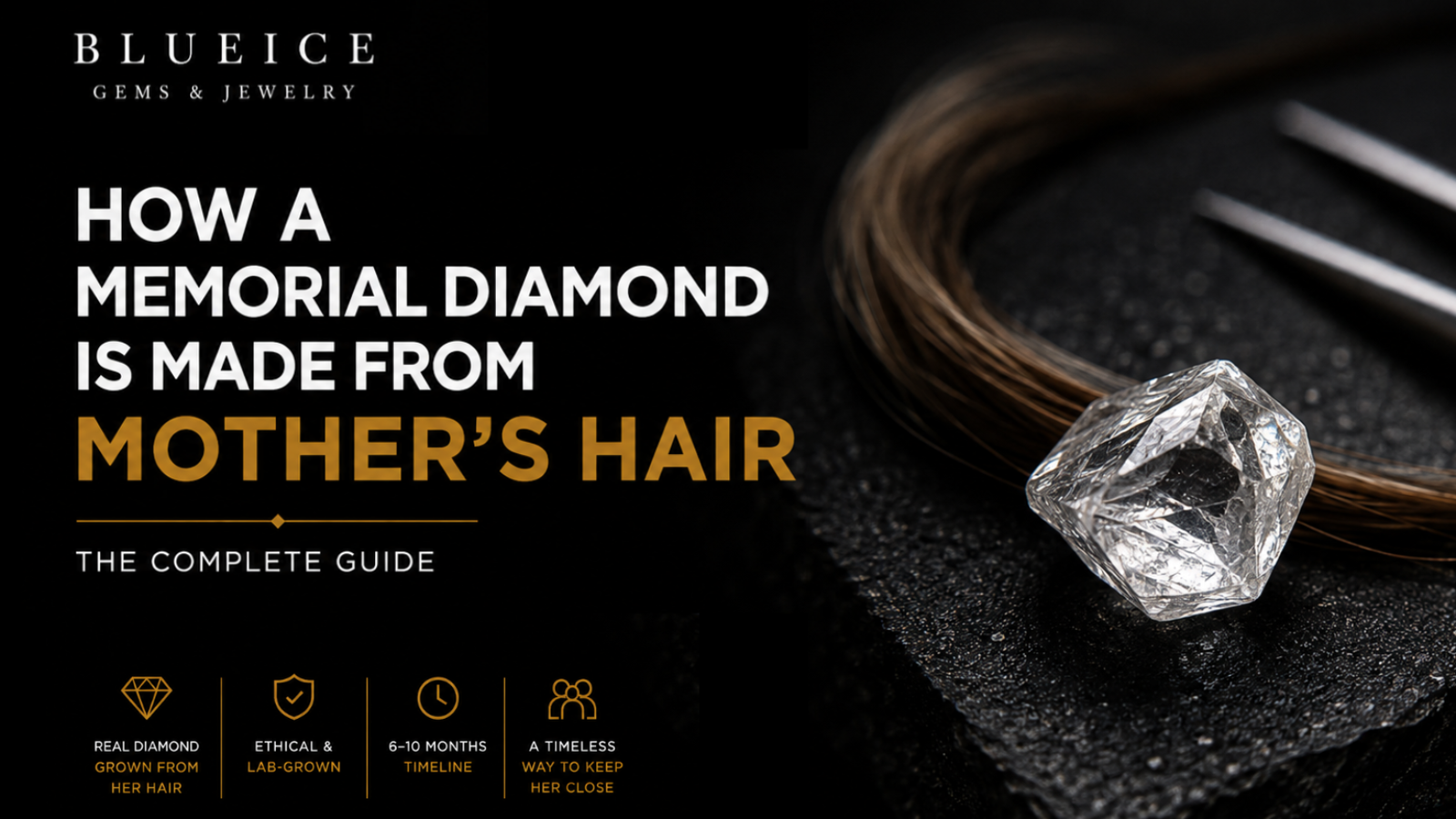
How Scientists Create a Memorial Diamond from Your Mother’s Hair
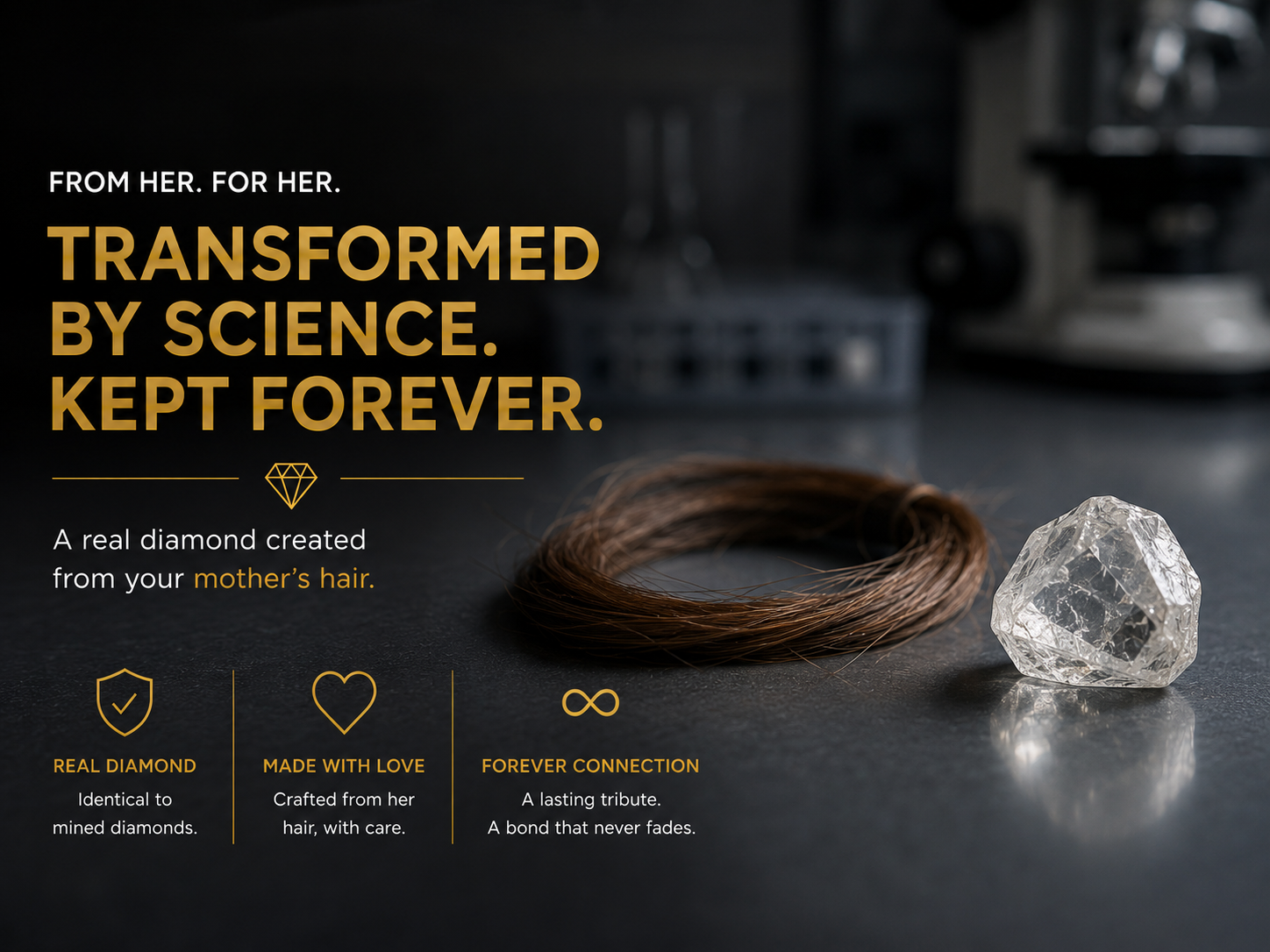
Families tend to ask the emotional questions first and the technical ones later. Eventually, however, an important practical question appears: what does a laboratory actually do with a lock of your mother’s hair to turn it into a diamond?
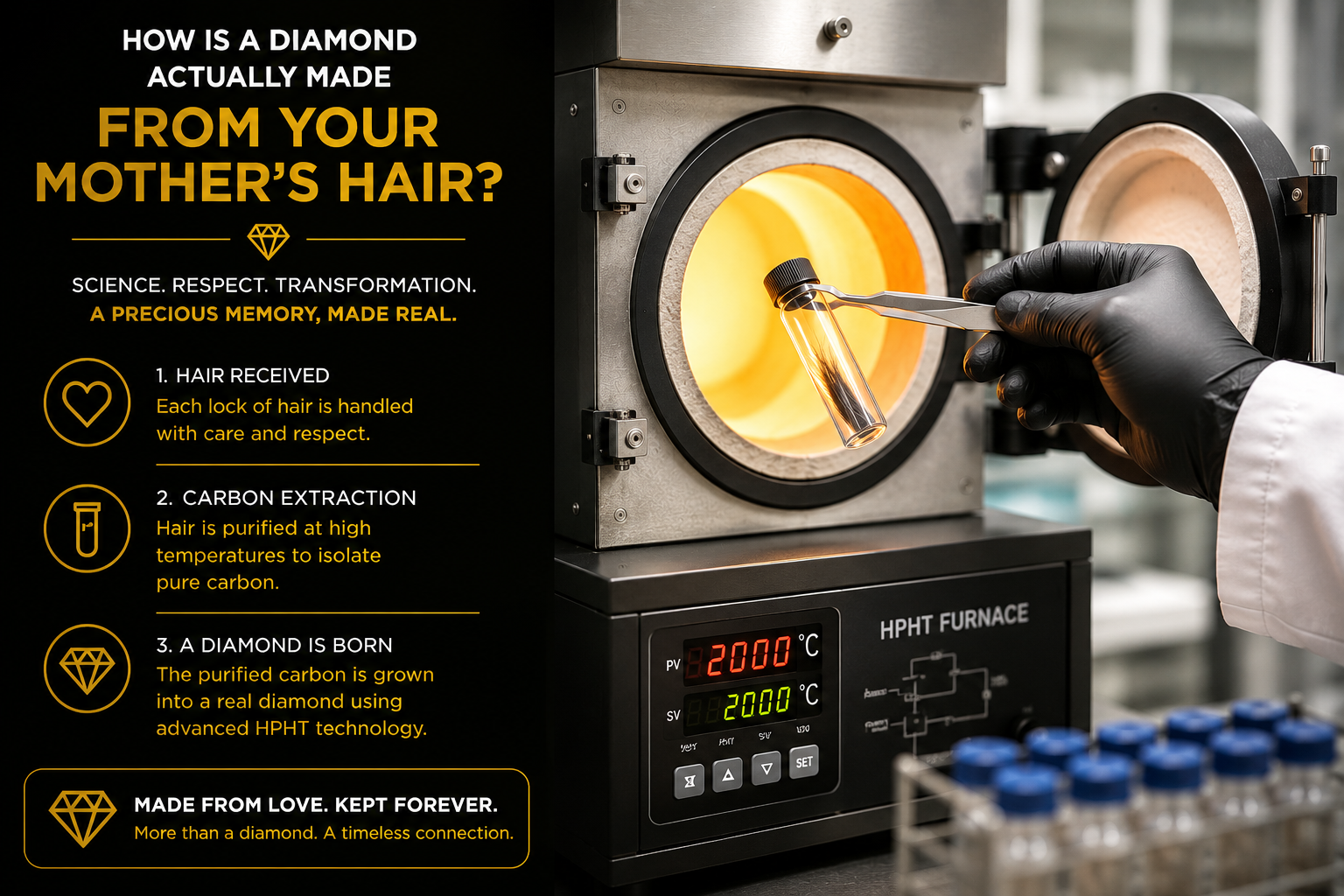
The process begins by extracting carbon from the hair.Technicians heat the material under controlled, oxygen-free conditions to remove all non-carbon components.. The remaining carbon is purified, converted into graphite at extremely high temperatures, and then placed inside a diamond-growth environment with a small diamond seed.
Under intense pressure and heat, carbon atoms gradually attach to that seed and form a new diamond crystal.
The interesting part is that the process unique to hair happens mainly at the beginning. Once the process converts the purified carbon into graphite, the remaining steps closely mirror how scientists create memorial diamonds from cremated remains.
In This Guide
- What is your mother’s hair made of?
- How is carbon purified from hair?
- How does hair differ from cremated ashes?
- Why is additional laboratory carbon used?
- What happens inside the diamond growth press?
- What determines the diamond’s carat size?
- What determines the finished diamond’s color?
- How is the diamond cut, polished, and graded?
- What does the process require from the family?
- Frequently asked questions
What Makes Up Your Mother’s Hair, and Why Does a Lab Need It?
Here are the Active Voice conversions for that sentence:
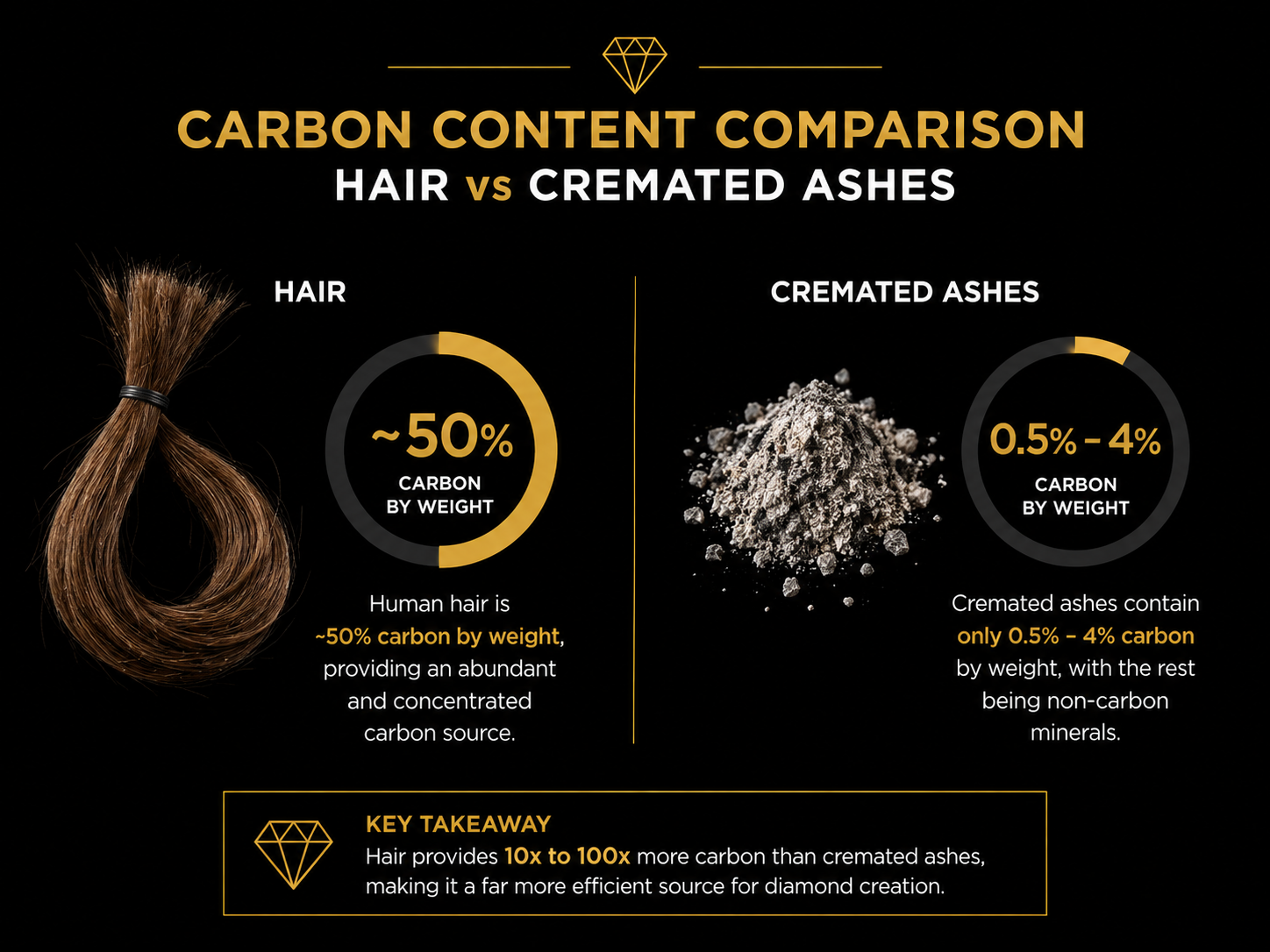
keratin, a strong structural protein, primarily forms human hair. Hair contains roughly 50% carbon by weight, which makes it a comparatively carbon-rich starting material for creating a memorial diamond.
Cremated remains are very different.Mineral material from bone particularly calcium phosphate largely constitutes ashes, while usable carbon represents only about 0.5% to 4% of the material.
This difference explains why only a relatively small amount of hair may be useful as a carbon source compared with the larger volume generally associated with cremated remains.
It also means cremation is not necessary. A memorial diamond can potentially be created using hair collected from a loved one.
What Does Purification Have to Remove From Your Mother’s Hair?
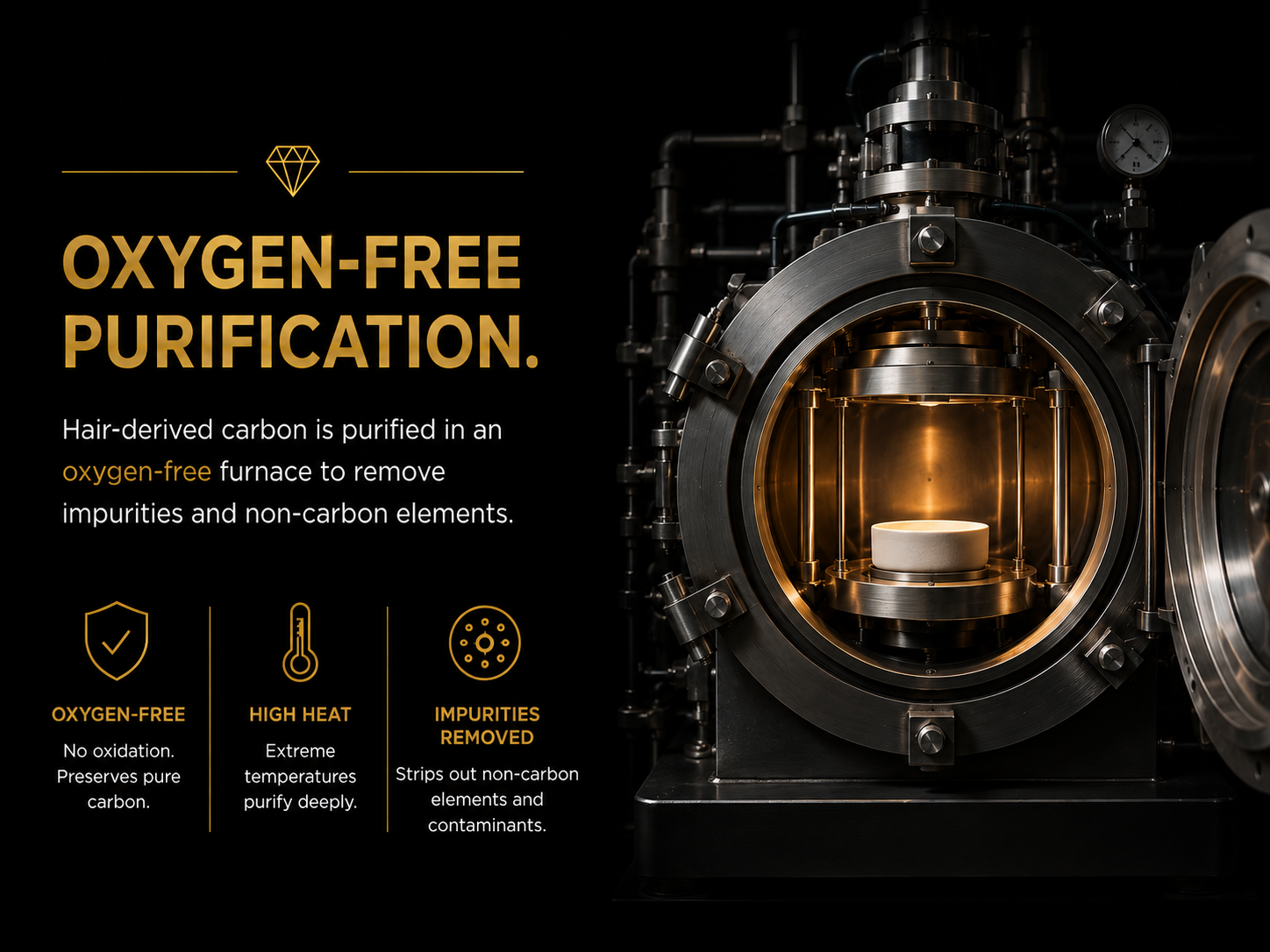
This is one of the main stages where creating a diamond from hair differs from creating one from ashes.
When cremated remains are processed, the laboratory must separate usable carbon from substantial quantities of mineral material.
With hair, the laboratory instead processes the keratin structure and removes non-carbon material while preserving the carbon that will eventually be used in the diamond-growth process.
The general process involves several important principles:
- Controlled heating: The material is processed through carefully controlled temperature stages.
- An oxygen-free environment: The goal is to preserve the carbon rather than allowing it to be lost through ordinary combustion.
- High carbon purity: The target before later processing is approximately 99.9%+ carbon purity.
After purification, the material no longer looks like hair. What remains is a small amount of highly purified carbon.
Which Stages Differ From the Ashes Route, and Which Are the Same?
The difference between creating a memorial diamond from hair and creating one from cremated remains is smaller than many people assume.
| Stage | From Hair | From Cremated Ashes | Different? |
|---|---|---|---|
| Starting material | Keratin, approximately 50% carbon by weight | Mineral-rich ash with approximately 0.5–4% usable carbon | Yes |
| Purification | Removes non-carbon components from hair | Separates carbon from bone minerals | Yes |
| Starting quantity | Relatively small amount of hair | Generally a larger quantity of cremated remains | Yes |
| Carbon purity target | Approximately 99.9%+ | Approximately 99.9%+ | No |
| Graphitization | Approximately 2,500–2,700°C | Approximately 2,500–2,700°C | No |
| Additional carbon | May be blended into the growth material | May be blended into the growth material | No |
| Diamond growth | HPHT or CVD process | HPHT or CVD process | No |
| Growth period | Weeks to months depending on the target diamond | Weeks to months depending on the target diamond | No |
| Cutting and polishing | Finished like another diamond | Finished like another diamond | No |
If Hair Contains So Much Carbon, Why Is Additional Laboratory Carbon Used?
A common misunderstanding is that the entire finished diamond must consist exclusively of carbon extracted from the submitted hair.
Diamond-growth equipment requires an appropriate volume of carbon feedstock to maintain the conditions necessary for crystal growth. Even though hair is carbon rich, the amount of purified personal carbon obtained from a lock of hair may not provide all the material required inside the growth cell.
For that reason, purified personal carbon may be blended with additional laboratory carbon during the diamond-growth process.
This is an important distinction when evaluating memorial diamond providers. Families should understand exactly how the submitted material is processed and how it contributes to the finished stone.
What Actually Happens Inside the Diamond Growth Press?
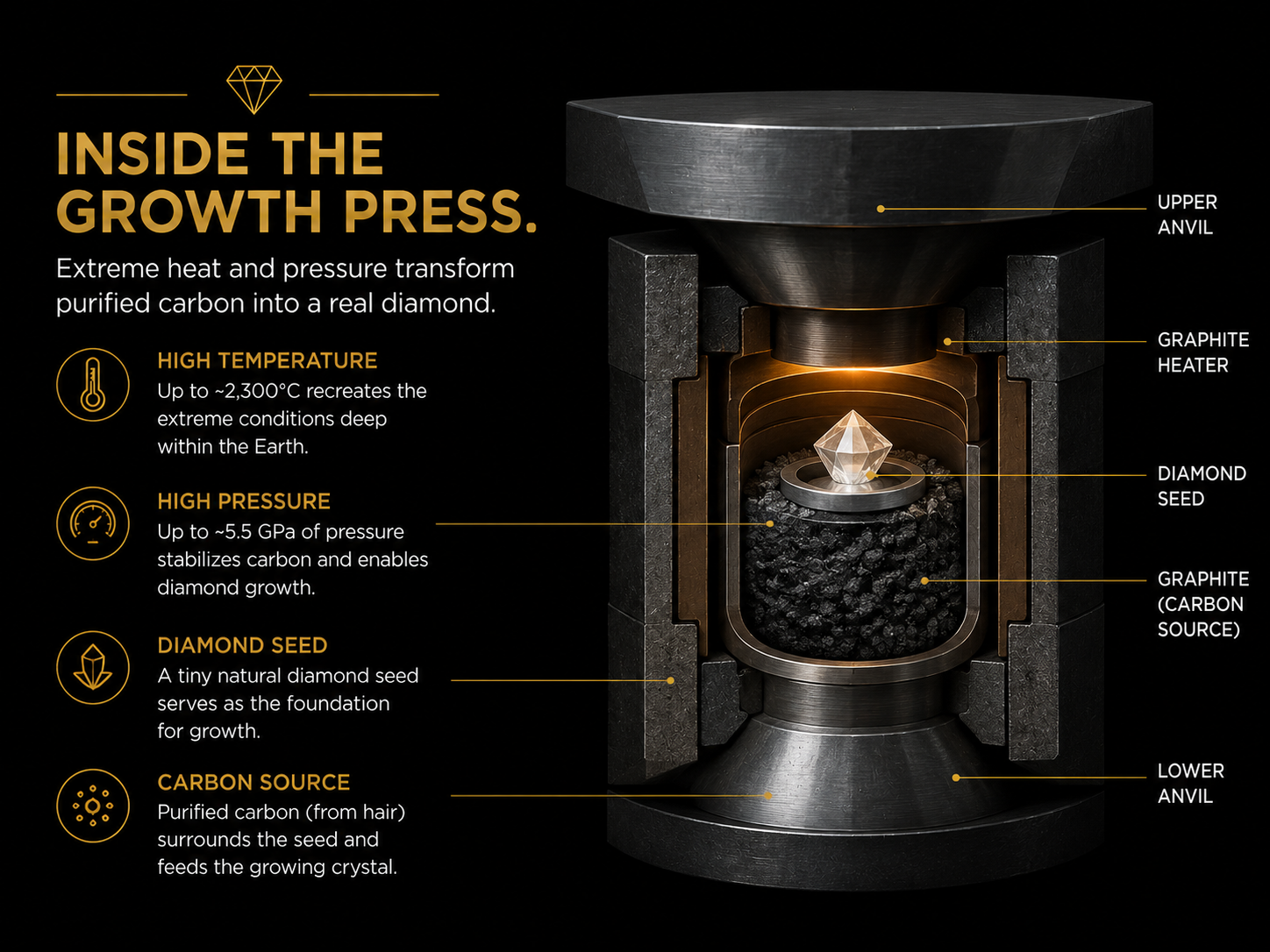
After purification, the carbon is transformed into graphite at temperatures of approximately 2,500–2,700°C.
The graphite is then prepared for diamond growth.
In an HPHT — High Pressure High Temperature process, the carbon material is placed inside a specialized growth cell together with a tiny diamond seed.
The growth environment can reach approximately:
- 6–8 GPa of pressure
- 1,400–2,500°C
These extreme conditions allow carbon atoms to migrate toward the diamond seed and arrange themselves into diamond’s crystal structure.
Layer by layer, the crystal grows over a period that can extend from weeks to months.
Some laboratory-grown diamonds can also be created using CVD, or Chemical Vapor Deposition. In that process, carbon-containing gas is deposited onto a diamond seed inside a controlled chamber.
Both methods can create genuine laboratory-grown diamond crystals.
Why Does Growth Time, Not the Size of the Lock of Hair, Determine the Carat?
Providing more hair does not automatically create a larger diamond.
Diamond crystals grow gradually as carbon atoms are added to the crystal structure. The eventual size of the stone therefore depends significantly on the target carat weight and the amount of time the crystal is allowed to grow under controlled conditions.
A longer lock of hair does not necessarily make the diamond grow faster.
Instead, the desired diamond size is selected first, and the growth process is managed accordingly.
Industry timelines for memorial diamonds can commonly extend to approximately 6 to 10 months, while larger stones or certain specialized color requirements may require longer.
What Determines the Color of a Memorial Diamond Made From Hair?
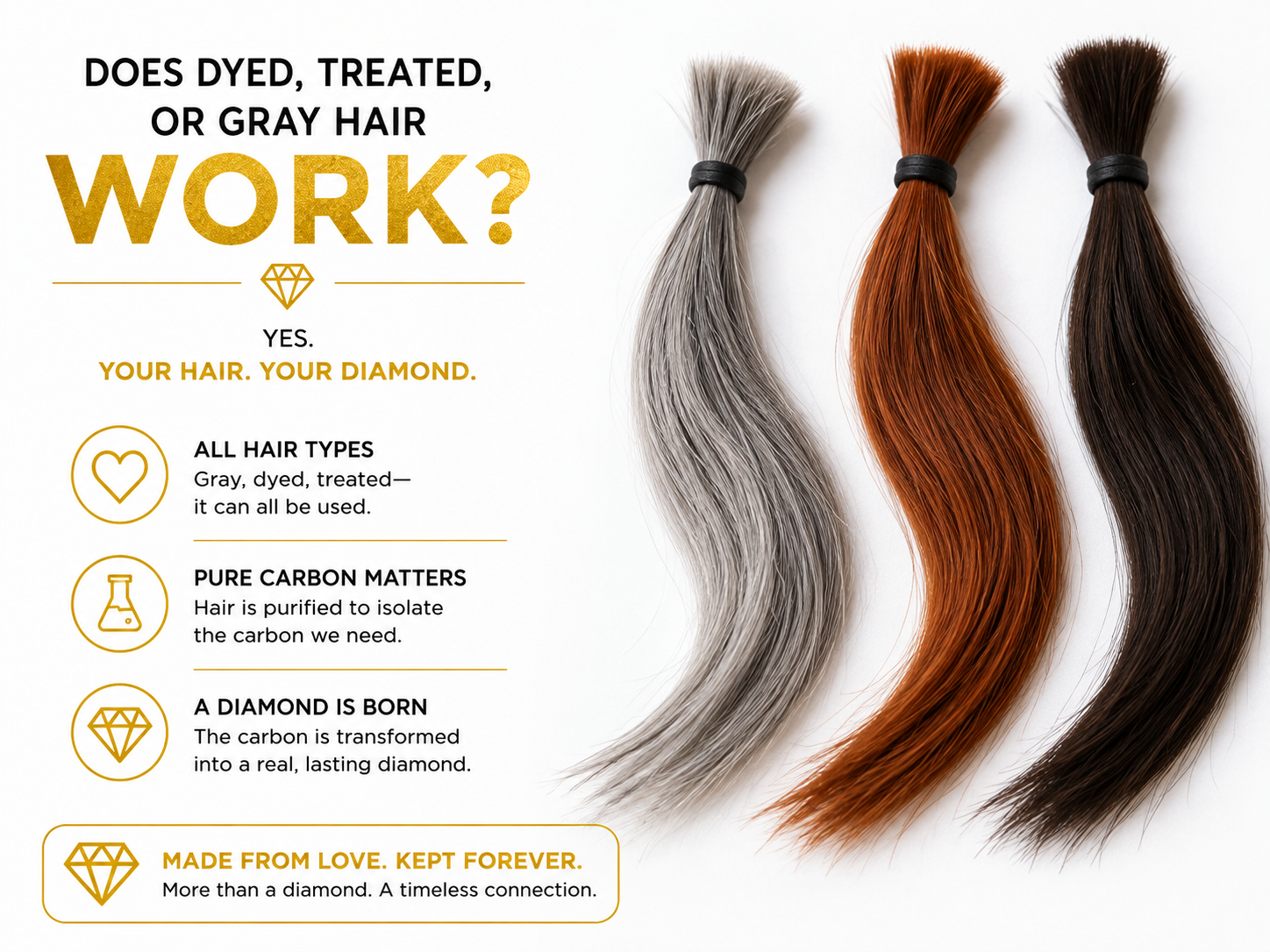
The natural color of your mother’s hair does not determine the color of the finished memorial diamond.
During purification and graphitization, the original biological structure of the hair is completely transformed.
Diamond color is instead influenced by trace elements present during crystal growth.
For example:
- Boron can contribute to blue tones.
- Nitrogen can contribute to yellow tones.
- Reducing these trace elements can help create a more colorless appearance.
Memorial diamonds may therefore appear in shades such as yellow, blue, champagne, brown, or near-colorless depending on the growth process and trace-element environment.
Some providers may also use post-growth treatments to create additional colors.
What Happens After the Diamond Crystal Comes Out of the Press?
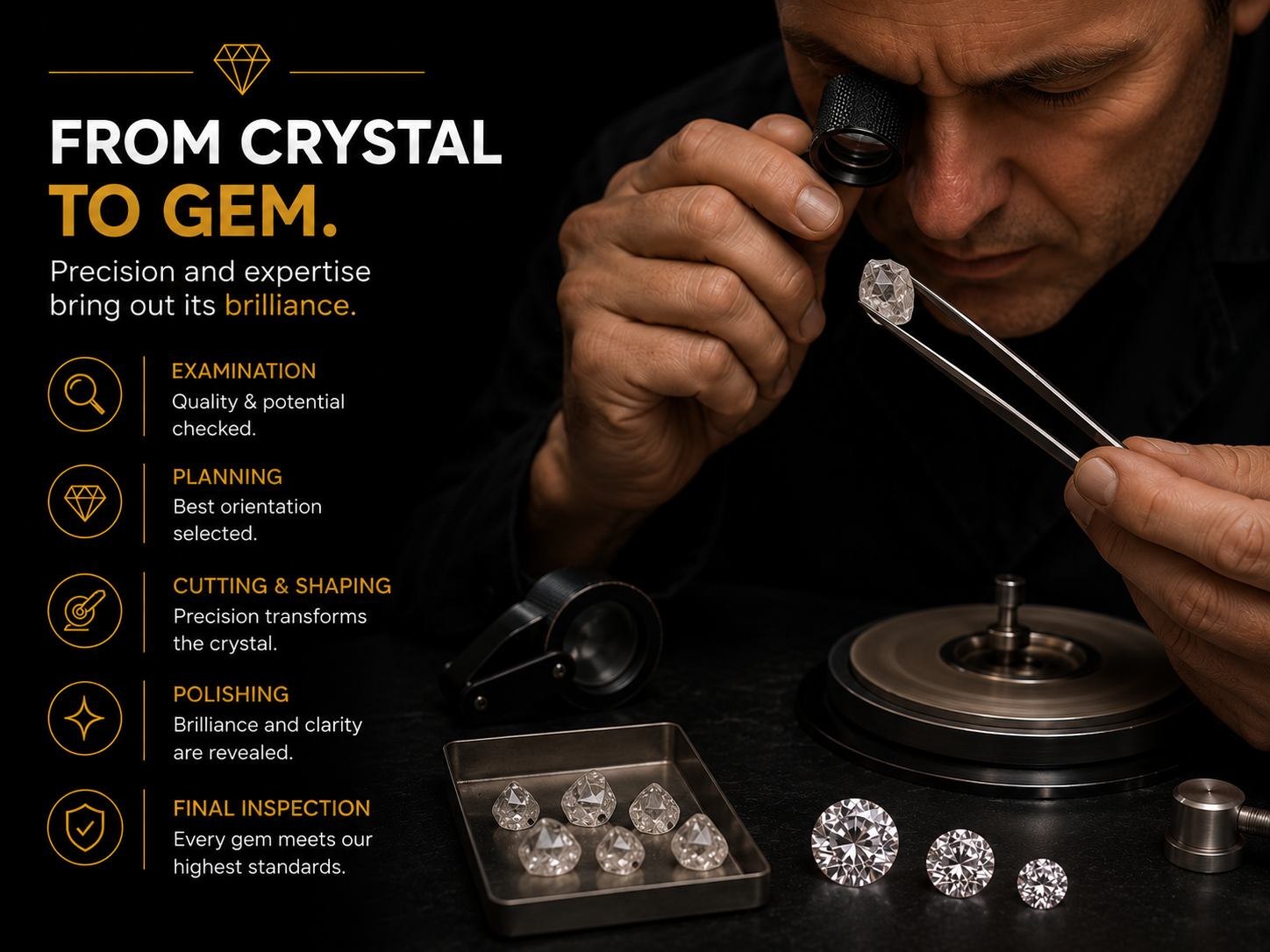
The material that comes out of the growth environment is a rough diamond crystal, not yet the polished gemstone seen in finished jewelry.
A diamond specialist examines the rough crystal and determines how it can best be cut while balancing its shape, internal characteristics, and final carat weight.
The diamond can then be fashioned into popular shapes such as:
- Round
- Princess
- Cushion
- Emerald
- Other available shapes depending on the rough crystal
After cutting, the facets are polished to create the brilliance associated with a finished diamond.
Memorial Diamond Certificate vs. Diamond Grading Report
Two different documents may accompany a memorial diamond, and they should not be confused.
An authenticity or origin certificate may document the submitted material and the provider’s chain-of-custody process.
A diamond grading report evaluates the physical characteristics of the finished stone.
Diamond grading commonly considers the traditional 4Cs:
- Cut
- Color
- Clarity
- Carat weight
Families considering a memorial diamond should ask the provider exactly what documentation accompanies the finished gemstone and whether independent gemological grading is available.
What Does the Memorial Diamond Process Require From You?
For the family, most of the work happens at the beginning.
You generally need to:
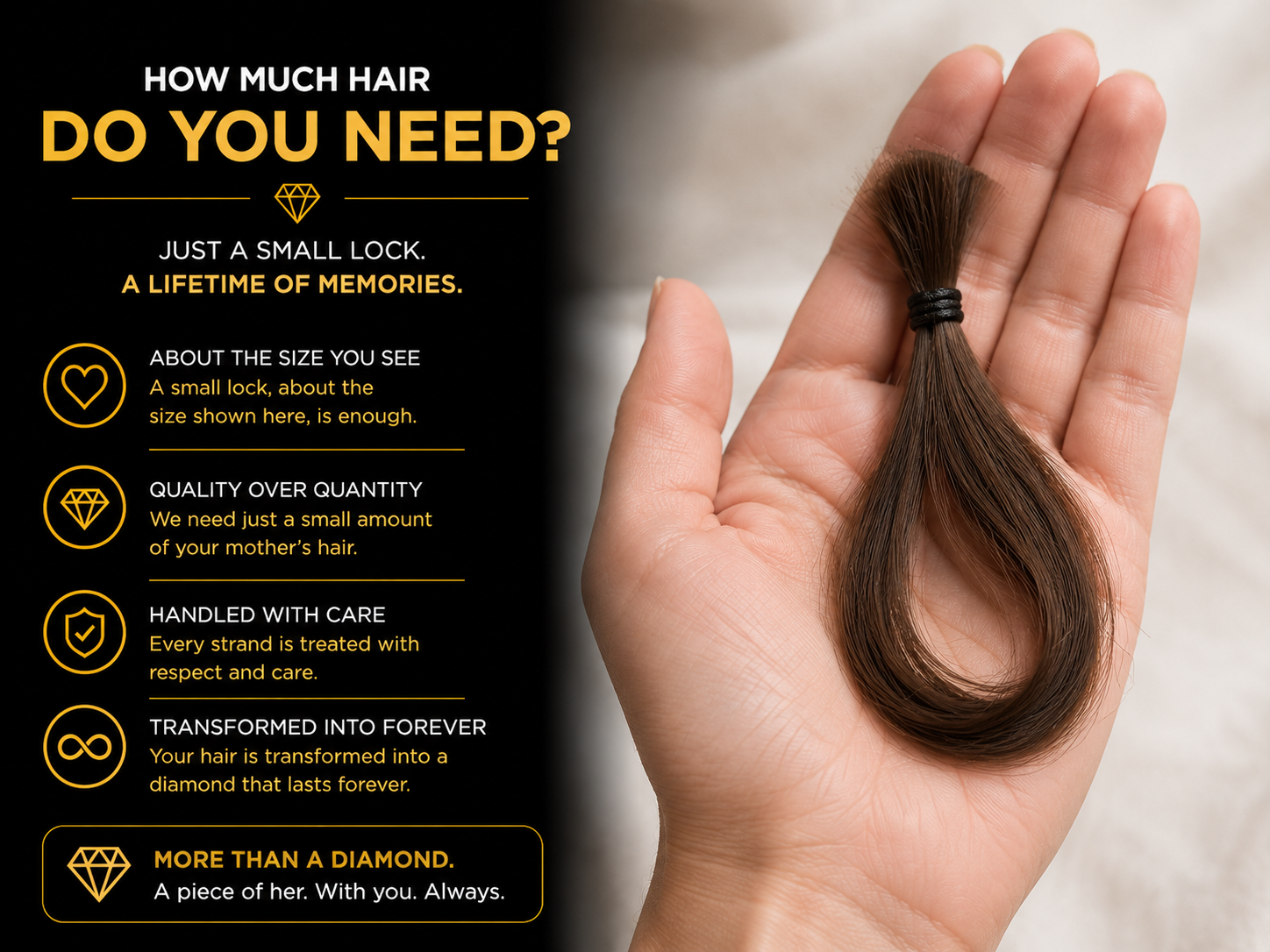
- Collect the required amount of hair.
- Follow the provider’s packaging instructions.
- Submit the material using the recommended shipping process.
- Confirm the chosen diamond size, shape, and other available options.
Once the material has been received and documented, the laboratory handles purification, carbon preparation, crystal growth, cutting, polishing, and any grading or certification steps included with the service.
Before sending something as irreplaceable as a loved one’s hair, ask the provider how submissions are identified, tracked, stored, and handled throughout the process.
From a Lock of Hair to a Lasting Diamond
The transformation from hair to diamond sounds extraordinary because the materials look completely unrelated.
But at the chemical level, the connection is carbon.
Your mother’s hair contains carbon. The laboratory isolates and purifies that carbon, converts it into a form suitable for diamond growth, and places it into an environment where carbon atoms can become part of a diamond crystal.
Understanding that process can make a memorial diamond easier to evaluate because you know exactly what happens between submitting the hair and receiving the finished stone.
If you are considering creating a memorial diamond from your mother’s hair, talk with Memorial Diamond about the amount of hair you have, the diamond size you are considering, available colors and shapes, the expected timeline, and the documentation provided with the finished stone.
Frequently Asked Questions About Mother Hair Diamonds
Can a diamond really be made from my mother’s hair?
Hair contains a significant amount of carbon. A memorial diamond process can extract and purify carbon from submitted hair before preparing it for laboratory diamond growth.
Does the laboratory burn the hair?
Not in the ordinary meaning of burning. The hair is processed using controlled heating under conditions designed to preserve carbon rather than allowing it to disappear through normal combustion.
Can you see the hair inside the finished diamond?
No. Once the material has gone through purification, it no longer retains the visible structure of hair. The carbon becomes part of the diamond crystal at an atomic level.
Is a diamond made from hair different from one made using cremated ashes?
The initial carbon-extraction process differs because hair and cremated remains have very different compositions. After the material has been purified and prepared for diamond growth, the later stages are broadly similar.
How hot does the memorial diamond process get?
Graphitization can involve temperatures around 2,500–2,700°C. HPHT diamond growth can occur at approximately 1,400–2,500°C combined with roughly 6–8 GPa of pressure.
Does more hair produce a bigger diamond?
Not necessarily. Finished carat weight depends primarily on the selected diamond size and the controlled crystal-growth process, rather than simply on the length or quantity of the submitted hair.
Will my mother’s hair color determine the diamond color?
No. The original hair color does not survive the purification and high-temperature processing stages. Diamond color is instead affected primarily by trace elements and growth conditions.
How long does it take to make a memorial diamond from hair?
The complete process can take several months. Industry timelines are commonly around 6 to 10 months, although the actual turnaround depends on the provider, diamond size, color, growth conditions, cutting, and certification requirements.
How does a laboratory keep one family’s hair separate from another’s?
Providers should use a documented identification and chain-of-custody system from receipt through processing and diamond production. Ask the company to explain its exact tracking procedure before submitting irreplaceable material.
Is a memorial diamond a real diamond?
A properly grown memorial diamond is a laboratory-grown diamond crystal. Like other lab-grown diamonds, its quality can be evaluated using characteristics such as cut, color, clarity, and carat weight.