How a Memorial Diamond Is Made From Your Brothers Hair

How a Memorial Diamond Is Made From Your Brother’s Hair

A lock of his hair, tucked in an envelope or saved in a keepsake box, can feel like the smallest thing he left behind. A memorial diamond made from brother hair moves through seven lab stages: intake, carbon extraction, graphitization, HPHT or CVD growth, cutting, optional irradiation, and grading. No cremation is involved at any point, only a small lock is needed, and the industrytypical span is 6 to 10 months.
made from brother hair

Why Does a Diamond Made From Brother Hair Never Involve Cremation?

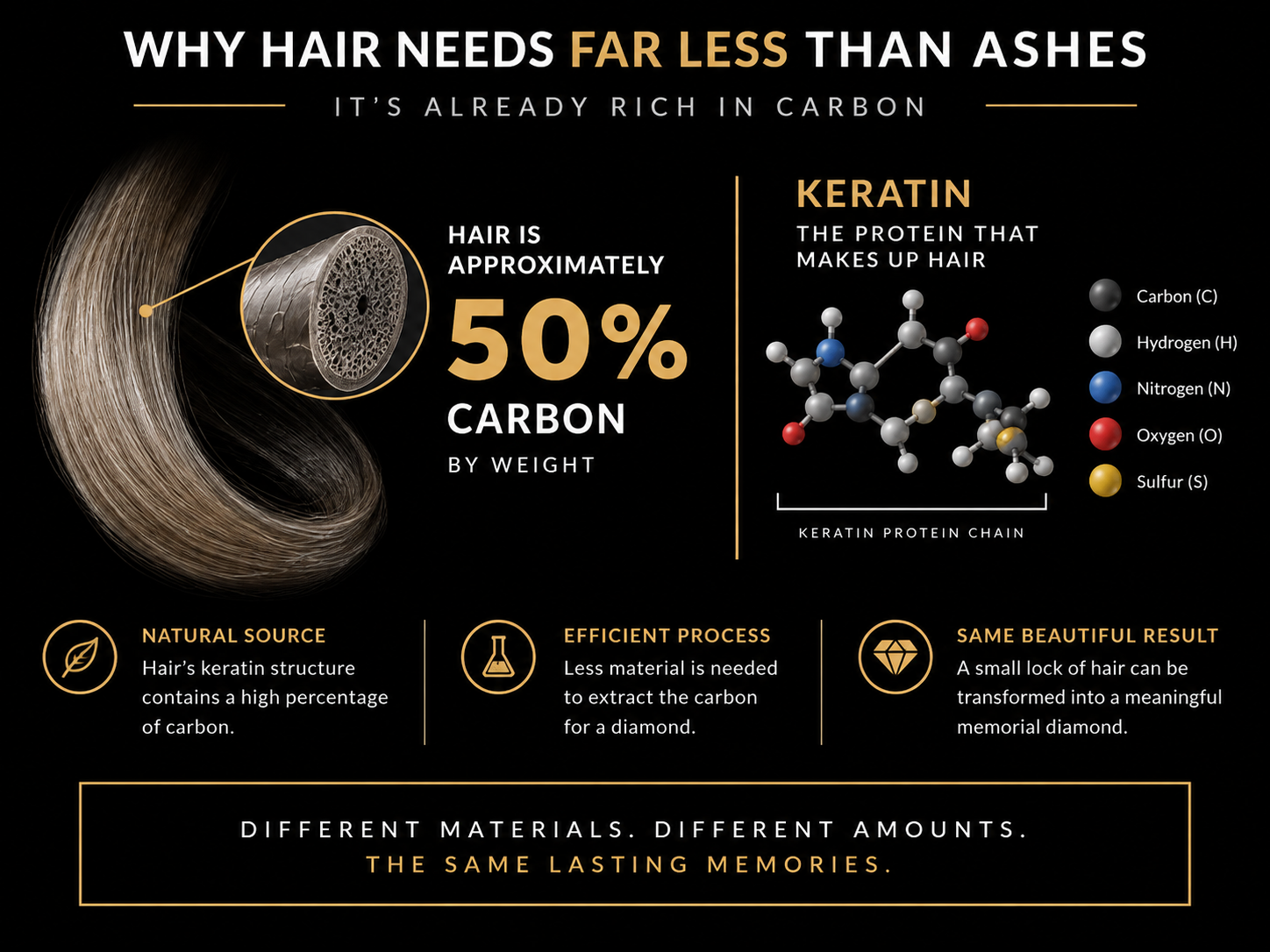
Hair is a carbon source in its own right. Each strand is mostly keratin, a protein dense with carbon, so around half of a lock’s weight is carbon. That means a lab can recover carbon for a diamond made from brother hair directly from the hair itself, with no need for the body to be cremated first and no need for any cremated remains at all.

This matters in practical ways. A diamond made from brother hair is possible whether he was buried, cremated, or laid to rest some other way, and whether or not his ashes are within your reach. If he was buried before anyone thought of a diamond, a lock kept from an earlier haircut, or one the funeral home trimmed before the burial, can still be enough, provided the people responsible for his remains or estate agree.

It can matter for faith reasons too. No tradition has an official position on memorial diamonds specifically, and practices vary widely. Where a family’s concern is with cremation itself, a stone made from brother hair does not involve it, but your own faith leader remains the right person to ask. For a wider view of hair as a starting point, see our complete guide to a brother hair diamond.

What Are the Seven Lab Stages for a Diamond Made From Brother Hair?

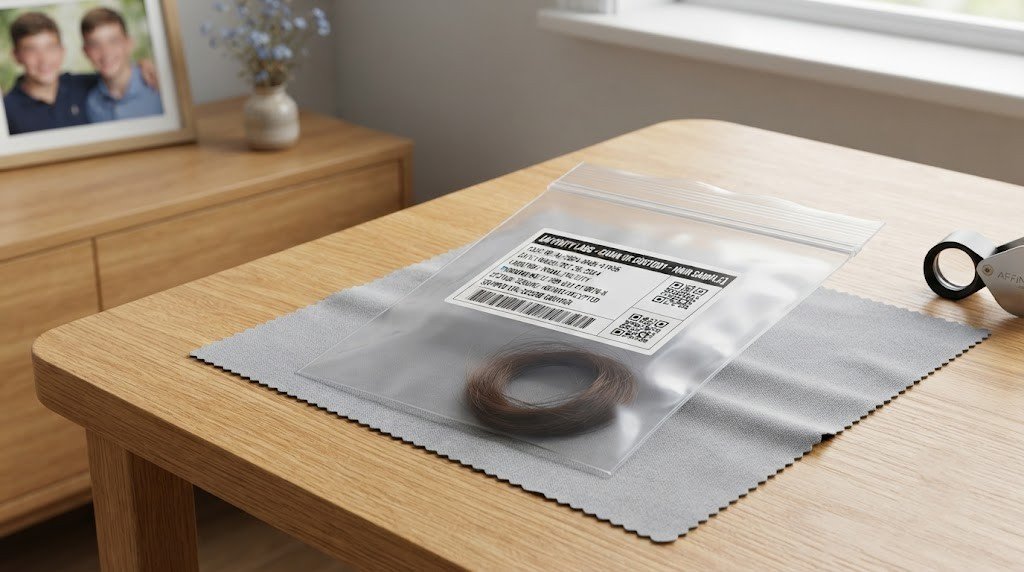
The sequence is the same one labs follow for any memorial stone, but several stages look different when the starting material is hair. This table tracks a memorial diamond made from brother hair through each stage, with what changes because it is hair and one question you might raise at that point.

StageWhat is different because it is hairA question worth asking
1. Intake and chain of custodyA small lock or a few grams arrives, often in an envelope or small bag, and is logged under his orderHow will his hair be labeled and stored?
2. Extraction and purificationOxygenfree heating drives off the noncarbon parts of keratin; there is no bone mineral to removeHow much of what I send will you actually use?
3. GraphitizationHis refined carbon, at roughly 99.9%+ purity, is heated to about 2,5002,700°C and becomes graphiteIs his carbon kept separate at every handling step?
4. Diamond growthThe graphite, typically blended with supplemental lab carbon, grows on a diamond seed in an HPHT press (CVD at a minority of labs) over weeks to monthsWhich growth method do you use?
5. Cutting and polishingThe rough crystal is faceted into the shape you chose; nothing here differs from an ashbased stoneWhich cuts do you offer, and which cost extra?
6. Optional irradiationAvailable on request to shift or deepen colorWhich colors can irradiation produce?
7. Grading and certificatesAn origin certificate and, ideally, an independent grading reportIs independent grading included in the price?

The order never changes, though the time spent in each stage does, and providers generally publish only the overall timeline. If you would like to compare this path with the ash route, our post on how a memorial diamond is made from your brother’s ashes follows the same seven stages from cremated remains.

Where Can the Hair Come From, and Who Should Agree?

Hair for a diamond made from brother hair usually comes from one of a few places:

  • A lock saved by a funeral home before burial or cremation, usually released through whoever holds authority over his remains
  • Hair kept from an earlier haircut, sometimes years old
  • Strands gathered from his brush, comb, or a hat he wore often
  • A keepsake lock already held by a family member

Where the hair comes from shapes whose agreement you need. A sibling often does not hold authority over his remains: commonly a spouse or registered partner, adult children, and parents come first, though each state sets its own order. Paperwork he signed while alive, whether it appointed someone to decide or laid out his funeral arrangements, may shift that responsibility to a specific person. A funeral home will generally release a trimmed lock through that person.

A lock found in his home, or among his things, may be treated as part of his estate, and state rules differ, so speak with whoever is handling his estate before sending it. If you are not the person with authority, a gentle conversation asking for a few strands for a stone made from brother hair can open the door. Our guide to how much hair a brother memorial diamond needs can help you explain how little you are asking for.

What Happens to His Hair on the Day It Arrives?

Intake is where the lab’s care begins, and for hair it is a quieter, smaller moment than you might picture. A careful provider will typically open the package, check the paperwork, weigh the hair, and record it under a unique reference tied to his order. Ask how his hair is stored after that, and whether it is kept sealed and apart from other families’ material.

For a stone made from brother hair, that logged reference is the first link in the chain of custody, the documented record that follows his material through every later step. It is what allows a lab to say, at the end, that a specific diamond made from brother hair was grown from what you sent. Ask how that record works before shipping, and whether you will be told when his hair moves from one stage to the next.

Because only a small amount is needed, you may have hair left over. Policies on leftover material are set by each provider, so ask whether unused hair can be sent back, held for a later stone, or handled another way, and make your wishes known before you ship.

How Does Hair’s Carbon Content Change Extraction?

Extraction is where hair and ashes part ways most clearly. Cremated ashes are mostly calcium phosphate, the mineral of bone, with carbon making up only around 0.5% to 4% of their weight. Hair, at roughly 50% carbon, is close to the opposite: half of what you send is already carbon, bound up in protein rather than locked inside mineral.

That shift changes the job. With ash, the lab is separating a little carbon from a lot of bone mineral, which is why a few tablespoons or more are typically requested. With hair, the task is driving off the other half of the keratin, so a far smaller quantity yields usable carbon. That is why a diamond made from brother hair typically starts from just a few grams, roughly what fits in the palm of a hand, though each provider sets its own minimum.

The method itself is similar in spirit. The hair is heated in a controlled, oxygenfree, multistage process, so the carbon does not simply burn away, and the noncarbon parts of the protein are stripped out. Successive stages refine the result until it reaches roughly 99.9% carbon purity or higher. At the end, the material for a diamond made from brother hair is a small, dark portion of refined carbon, still logged under his reference.

What Turns His Carbon Into Graphite?

Refined carbon on its own is not the ideal feedstock for a growth press. The press works best with graphite, the stable, layered crystal form of carbon. So the lab heats his carbon a second time, to around 2,5002,700°C, and the atoms settle into flat, stacked sheets.

It can help to know that graphite and diamond are the same element in two arrangements. In graphite, the carbon atoms sit in sheets; in diamond, they lock into a rigid threedimensional lattice. Graphitization prepares the carbon for that second rearrangement.

At this point, the carbon meant for a diamond made from brother hair is graphite, sealed and tracked, and ready to be loaded into a growth cell. This stage works the same way for hair as it does for ashes.

How Does a Stone Made From Brother Hair Grow in the Press?
Most memorial providers use HPHT, high pressure and high temperature. His graphite, typically blended with supplemental labsourced carbon to reach the volume growth requires, is packed into a cell with a tiny diamond seed. The press holds the cell at roughly 68 GPa and 1,4002,500°C, and carbon gradually crystallizes onto the seed, building a rough diamond.

A minority of labs use CVD, chemical vapor deposition, where his carbon is turned into a gas that settles, layer by layer, on a seed plate held in a vacuum chamber. Either method creates a genuine diamond; Wikipedia’s article on how synthetic diamonds are grown describes both in detail.

Growth lasts weeks to months, and this is where carat size is chosen. Size depends on how long the crystal grows, not on how much hair you supplied, so a thicker lock does not make a stone made from brother hair larger or faster. Memorial stones are generally offered from around 0.10 carats to 5 carats or more.

Color takes shape here as well. Nitrogen during growth tends to give yellow, boron gives blue, and colorless needs both excluded, which adds processing and usually cost. Memorial stones commonly trend yellow, blue, or champagne, and the exact shade of a diamond made from brother hair cannot be predicted from the hair beforehand. Our post on the color of a brother hair diamond explains the chemistry more fully.

How Much of the Finished Diamond Is His Carbon?

This deserves a straight answer. A diamond made from brother hair is not made entirely of his carbon. Even with hair’s high carbon content, the recovered carbon is typically blended with supplemental lab carbon so the crystal can grow to the size you select.

No finishedstone percentage is published for hair. The figure you may see quoted, ashderived carbon making up roughly 1015% of a finished stone’s mass, applies to cremated ashes only, and it should not be borrowed for hair. The honest position is that a real portion of his carbon becomes part of the crystal lattice, and the share depends on the provider and the stone.

So ask directly what share of a stone made from brother hair the lab expects for your chosen carat, and how they document it. A provider that answers clearly, without claiming the stone is entirely him, is showing the kind of candor you want throughout. If that question is on your mind, our post asking whether a memorial diamond is really made from your brother’s hair looks at it closely.

What Happens Between the Rough Crystal and the Finished Stone?

A rough crystal made from brother hair, fresh from the press, has an uneven, slightly frosted surface and a shape set by growth rather than design. A cutter maps it, plans the facets, and then cuts and polishes it into your chosen shape, perhaps round, oval, cushion, or princess. Fancy cuts are commonly an added cost.

Next comes an optional step: postgrowth irradiation, which some labs offer to shift or intensify color. It is the route to red, pink, green, or black memorial stones. If you prefer the tone that formed naturally, you simply skip it.

What emerges is a finished diamond made from brother hair, rated 10 on the Mohs hardness scale. That makes it very durable for daily wear, although a sharp blow at the wrong angle can still chip any diamond.

Which Documents Come Back With a Diamond Made From Brother Hair?
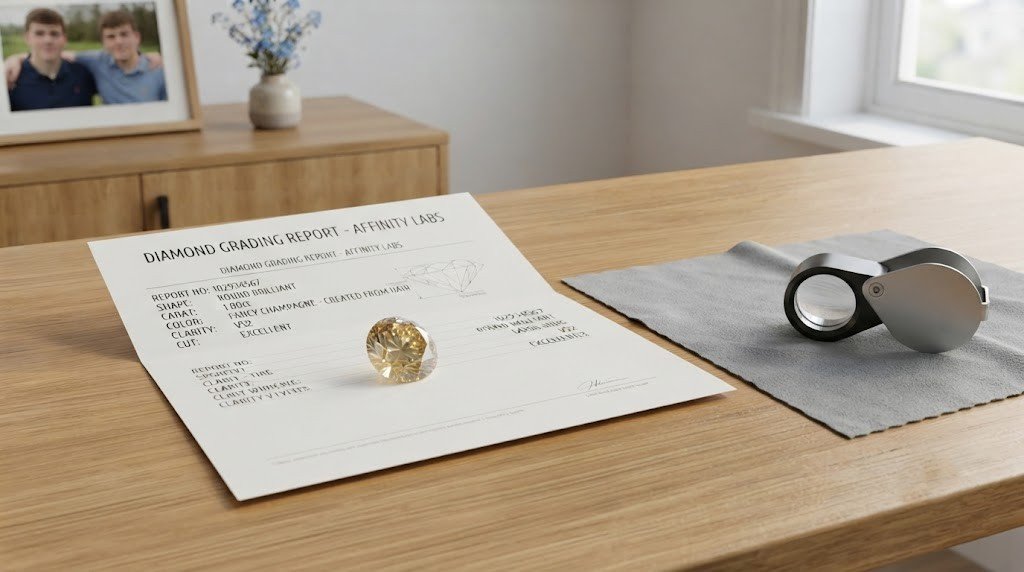
Two kinds of paperwork typically accompany the stone. The first is an origin or authenticity certificate, usually issued by the lab itself, confirming the diamond was grown from the material your family submitted. It closes the chain of custody that began when his hair was logged.

The second is a grading report covering the diamond’s cut, color, clarity, and carat, the same quality factors GIA uses for every diamond. The strongest version is prepared by an independent gemological lab that follows GIA or IGI standards. Clarity for a memorial stone made from brother hair typically falls between SI2 and VVS.

One document speaks to whose carbon is in the stone; the other speaks to the stone’s quality. For a diamond made from brother hair, it is worth asking whether both are included or whether independent grading is billed separately.

How Long Does It Take, and What Shapes the Price?

Industrywide, a memorial diamond made from brother hair typically takes 6 to 10 months from receipt of his hair to the finished stone, and larger stones of around 2 carats or more, or specialty colors, can take up to about 12 months. Labs seldom publish how long any one stage lasts, so plan around the overall range.

Price is driven mainly by carat, color, and cut. As general 2026 industry ranges, not this brand’s published prices, stones of roughly 0.100.25 ct run about 1,5003,500, and stones of 0.51 ct about 5,00015,000, with colorless near the upper end. Large stones of 25+ ct can reach 20,00075,000 or more. Grading, engraving, fancy cuts, and settings are usually extra. Our post on what a brother memorial diamond costs breaks this down further.

Because size comes from growth time, the carat you pick for a stone made from brother hair shapes both the wait and the cost far more than the amount of hair you send.

What Should You Ask Before His Hair Leaves Your Hands?

A clear picture of how a stone is made from brother hair makes your questions sharper. Before sending anything for a diamond made from brother hair, consider asking:

  • How should the hair be packaged, and do you have shipping instructions or a preferred carrier?
  • How much hair do you need, and what happens to any you do not use?
  • Is his hair processed on its own, separate from all other orders?
  • Will I receive an update as his material enters each stage?
  • What happens if a growth run does not produce a usable crystal?
  • Is an independent grading report included, or is it an added cost?

Our fuller list of questions to ask before turning your brother’s hair into a diamond covers settings, engraving, and insurance as well. A good provider will answer each one patiently and in plain language.

Frequently Asked Questions

Can a diamond be made from brother hair if he was buried?

Yes. Hair is roughly 50% carbon and needs no cremation, so a lock saved before burial, from a past haircut, or from his brush can be used. Hair from his home may belong to his estate, depending on state rules.

How much hair does the lab typically need?

Industry guidance typically points to a modest lock, a few grams in all. Because hair is so much richer in carbon than ashes, far less material is required. Exact amounts vary by provider, so confirm the figure before sending anything.

Does old hair still work for a memorial diamond?

Hair saved years ago may still be usable, since the lab is recovering its carbon, but condition, quantity, and how it was stored can matter. Describe the hair to the provider and ask whether it suits their process before sending it.

Is a diamond made from brother hair entirely his carbon?

No. His recovered carbon is typically blended with supplemental lab carbon so the crystal can reach the size you choose. No finishedstone percentage is published for hair, so ask the provider what share they expect and how they document it.

Will hair give a lighter or more predictable color than ashes?

No. Color comes from trace elements such as nitrogen and boron present during growth, and the exact shade cannot be predicted from the source. Memorial stones commonly trend yellow, blue, or champagne, while colorless needs extra processing and costs more.

Who can authorize sending his hair to a lab?

It depends on where the hair comes from. A funeral home generally releases hair through whoever holds authority over his remains, and hair among his belongings may belong to his estate. State rules vary, so check with the authority holder or executor.

Final Thoughts on a Diamond Grown From His Hair

Sending something as personal as his hair to a lab is easier when the work inside it is no longer a mystery. A memorial diamond made from brother hair asks for very little of what he left, leaves his resting place untouched, and returns a stone whose origins you can trace and question at every turn. Whether you go ahead now, later, or not at all, knowing the process means the choice stays yours.

Learn More About the HairtoDiamond Process

Talk With Memorial Diamond

If you are holding onto a lock of his hair and wondering what it could become, Memorial Diamond is glad to talk through a diamond made from brother hair with you, from what to send to what each lab stage would involve. Reach out at memorialdiamond.us whenever the time feels right.

Word count: 3,115 words · Reading time: about 16 minutes
Untitled (1568 x 1003 px)

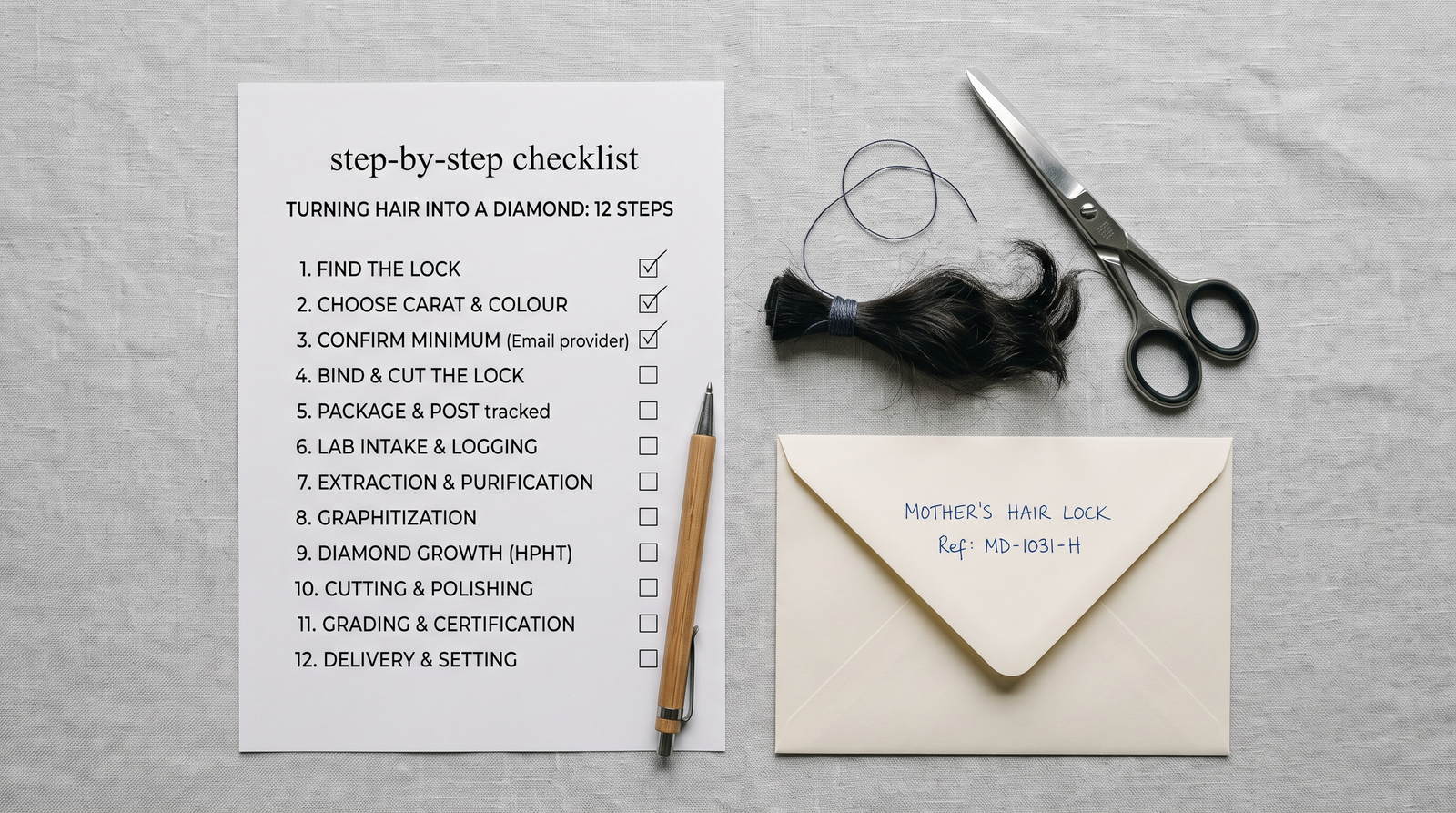
Step-by-Step: Turning Your Mother’s Hair Into a Diamond

Here is the whole process as one numbered sequence: twelve steps from finding the lock to setting the finished stone, five of them yours and seven the lab’s, with the handover at step five. Industry-wide the lab half runs 6 to 10 months from the day your mother’s hair is received. No cremation is involved at any point, which is why this route stays open to families who buried their mother and to daughters whose mother is still alive.

Print it, work down it. For the reasoning rather than the order of operations, how to turn your mother’s hair into a diamond covers the same ground as prose.

Numbered checklist beside a thread-bound lock of hair, scissors, and a paper envelope on a linen surface

On this page:

What Do You Need Before You Start?

Short list, and most of it is already in the house.

  • The lock, or a plan for collecting one
  • Sharp scissors and a length of sewing thread to bind one end
  • A small paper envelope, not a plastic bag, inside a rigid mailer stiff enough not to fold in a sorting machine
  • Your provider’s written minimum for the carat you chose
  • A pen for her name and reference, and tracked postage ordinary mail class is fine

What you don’t need matters too: no special carrier, no official postal box, no cremation certificate, no service-class restriction. No carrier publishes a rule for human hair the way USPS publishes one for cremated remains an absence rather than a stated permission, so confirm with your provider and your carrier rather than assuming.

Steps 1–5: What Does Your Family Do?

Step 1 Find out whether a lock already exists

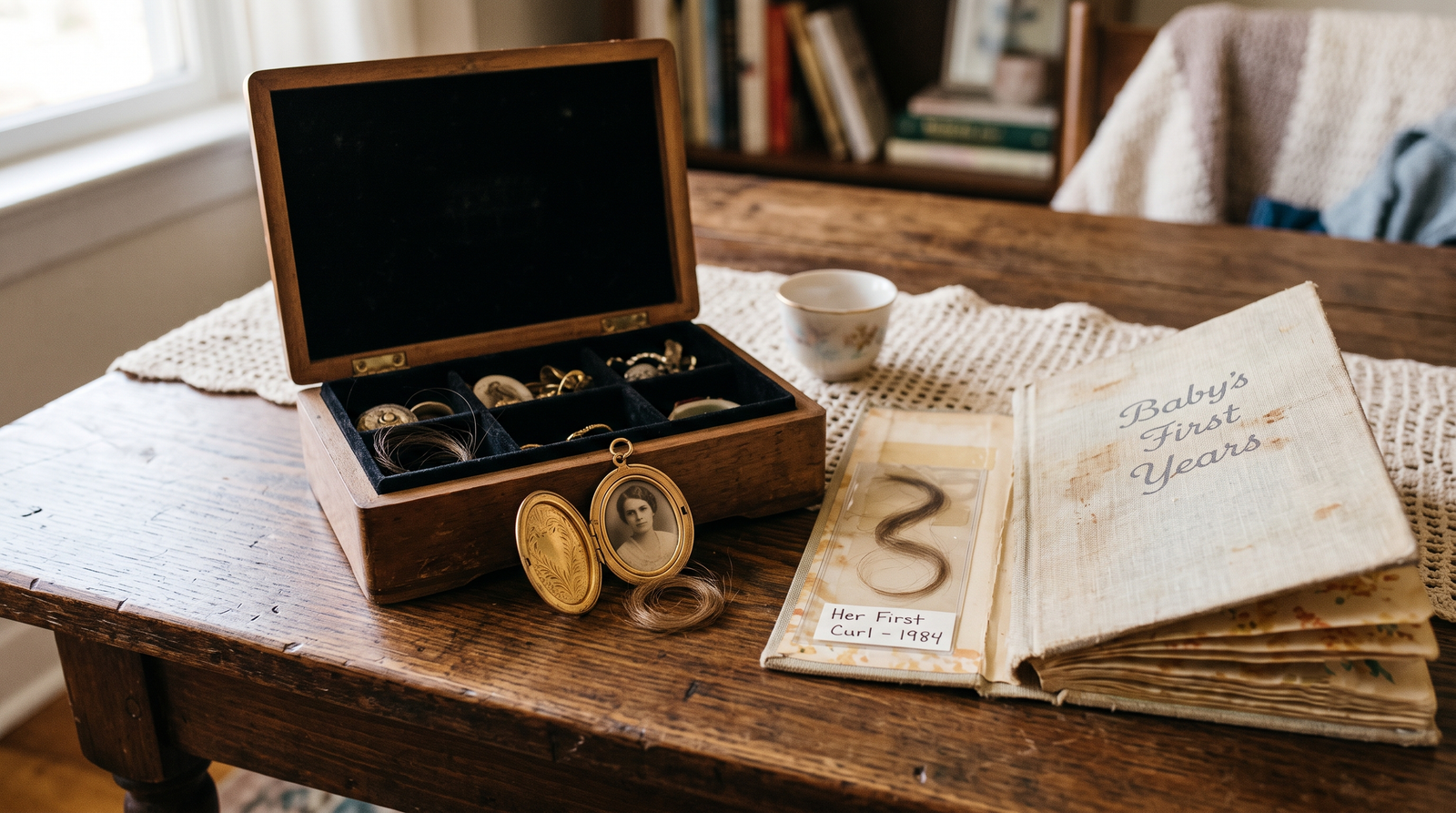
Start here: a lock you already have costs nothing, and one you have to take is irreversible. Saved hair turns up in a folded envelope in a jewelry box, taped into a baby book, inside a locket, or as a childhood braid. Hospice nurses and funeral directors often cut one unasked if either was involved, phone before assuming there is nothing.

Open jewelry box, a locket and a baby book on a table, showing the places a saved lock of hair is usually kept

Step 2 Choose carat and colour

Carat comes from growth time in the press, not from how much hair you send, so a bigger lock buys neither a bigger stone nor a faster one. Sizes run from about 0.10 carats to 5 and beyond, cost climbing steeply. Her own hair colour has no bearing on the stone’s see what colour to expect.

Step 3 Get the minimum in writing, for that carat

Ask your intended provider for the exact amount needed at the size you chose, by email. Industry-typical requirements are modest a small lock, a few grams, often called palm-sized because hair is roughly 50% carbon by weight. That is a range, not one company’s policy, and minimums shift with carat.

Step 4 Cut or gather the lock

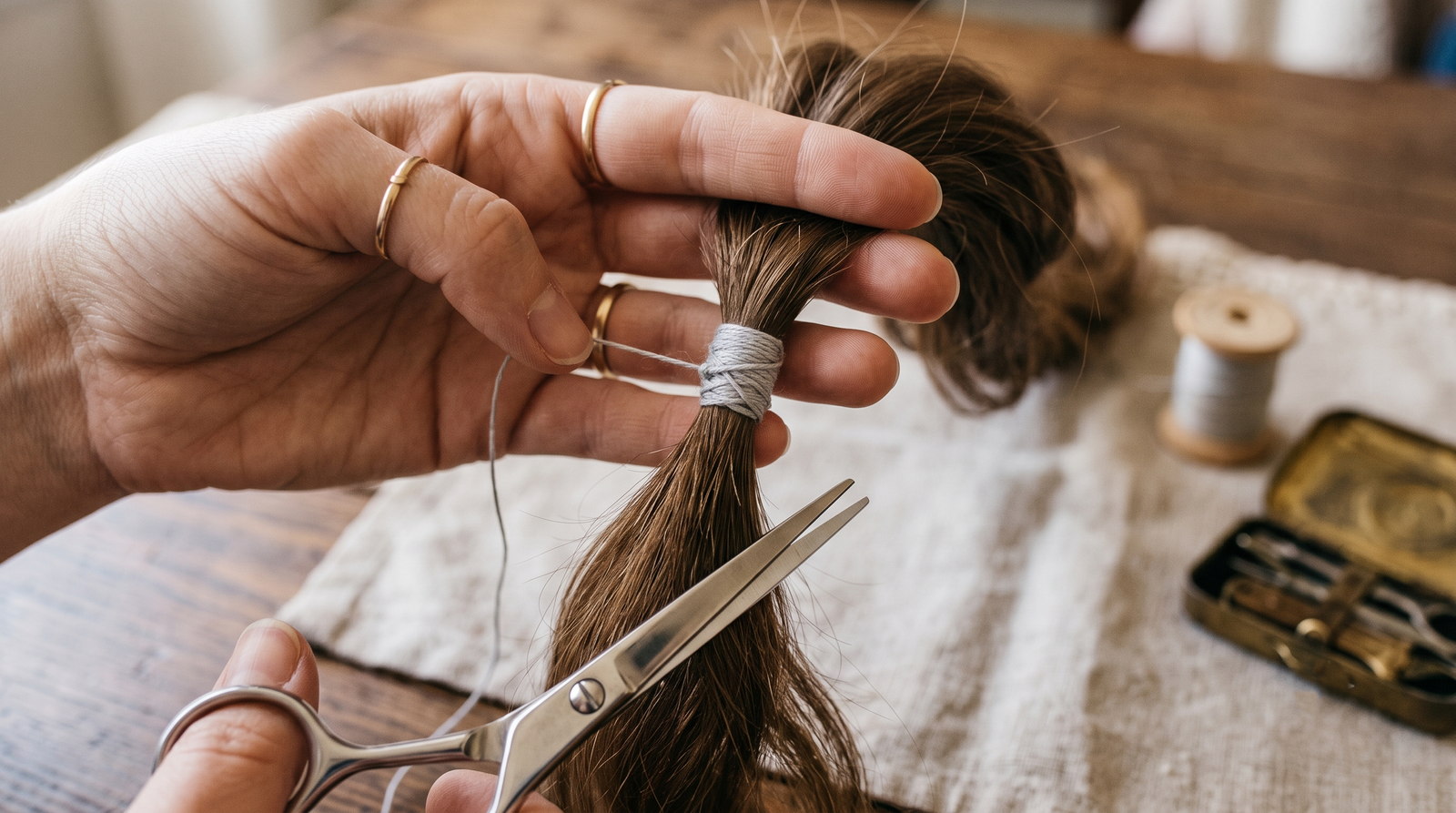
Bind one end with thread first, so it stays a lock rather than loose strands. Cut, don’t pull; take it from underneath at the nape, where the gap won’t show. Keep it whole. The root isn’t needed; the carbon is in the shaft.

Section of hair bound at one end with sewing thread just above the point where it will be cut

Step 5 Package it and post it

Hair into the sealed paper envelope, name and reference on that inner envelope rather than only the outer one, then into the rigid mailer with any provider forms. Post it tracked, and tell the provider it’s coming so receipt is logged the same day.

Horizontal timeline graphic showing five family steps, a handover marker at step five, and seven laboratory steps across six to ten months

Which Step Is the Point of No Return?

Step 4 the structural difference that matters most between the hair route and the ashes route.

With ashes, the irreversible moment comes late at the seal and the handover and if you send too little there is nearly always more ash. With hair it arrives a step earlier, at your own kitchen table: a saved lock is frequently the only one that will ever exist, and a cut that falls short cannot be topped up. So the ordering of steps 3 and 4 isn’t stylistic confirm the amount, then cut, and if the answer is borderline take a smaller carat rather than a bigger cut. Questions worth asking first and how much hair you need cover the rest.

Steps 6–12: What Does the Lab Do?

Step 6 Intake and chain-of-custody logging

Your lock is checked in, weighed against the requirement, and assigned a tracking reference that follows it through every later stage. Ask for it that trail is what supports the certificate of origin.

Step 7 Carbon extraction and purification

The hair is heated in a controlled, oxygen-free, multi-stage process that strips away the non-carbon components of keratin, reaching roughly 99.9%+ carbon purity. Dyed, permed, and grey hair are generally workable, since purification removes everything that isn’t carbon.

Step 8 Graphitization

The purified carbon is heated to roughly 2,500–2,700°C and converted into graphite the crystalline form a growth press uses as feedstock. How a memorial diamond is made from your mother’s hair covers steps 7 to 11 in far more depth.

Step 9 Diamond growth

The graphite, blended with supplemental lab carbon to reach the volume a growth cell needs, goes into an HPHT press with a tiny diamond seed at roughly 6–8 GPa and 1,400–2,500°C. Longest step by a wide margin: weeks to months, set by the carat chosen at step 2. Her carbon becomes a real, verifiable part of the crystal not all of it, and no honest provider claims 100%.

Step 10 Cutting and polishing

A gemologist cuts and polishes the rough crystal into the shape selected. Memorial diamonds trend toward yellow, blue, and champagne because organic carbon carries trace elements into the growth cell; a colour the run doesn’t produce naturally needs post-growth irradiation here, adding time.

Step 11 Grading, certification, and the return of unused hair

The stone is graded on cut, colour, clarity, and carat, ideally by an independent third-party lab, while an in-house origin certificate ties it to your family’s material. Hair the process didn’t consume should come back as standard practice, not on request. The two documents answer different questions: one grades the diamond, the other ties it to your mother.

Step 12 Delivery, then the setting

It arrives loose, in a box, usually smaller than you pictured. A loose stone isn’t wearable, so one decision remains: keep it loose, or set it a pendant, a ring, her own ring reset around it. Settings and jewelry ideas covers the trade-offs.

How Long Does Each Step Take?

Durations are industry-typical, not confirmed turnaround guarantees. Both halves of this column are estimates: providers publish the 6–10 month total, not the breakdown, and the family-side figures reflect ordinary domestic logistics.

StepWhoTypical duration
1. Find the lockFamilyAn afternoon to a few phone calls
2. Choose carat and colourFamilyHours to a week
3. Get the minimum in writingFamilyA few days
4. Cut or gather the lockFamilyAbout 10 minutes — and irreversible
5. Package and post — handoverFamily → lab1–3 days transit
6. Intake and custody loggingLabDays
7. Extraction and purificationLabWeeks
8. GraphitizationLabDays to weeks
9. Diamond growthLabWeeks to months the long one
10. Cutting and polishingLabWeeks
11. Grading, certification, returnsLabWeeks
12. Delivery and settingLab → familyWeeks, if you set it
Steps 6–12 total–6–10 months; up to 12 for stones over ~2 ct or specialty colours

The 6–10 months runs from receipt, not from step 1. For a particular anniversary, count backward from receipt at step 6, then add your own steps 1 to 5 on top of it.

Where Does This Differ From the Ashes Sequence?

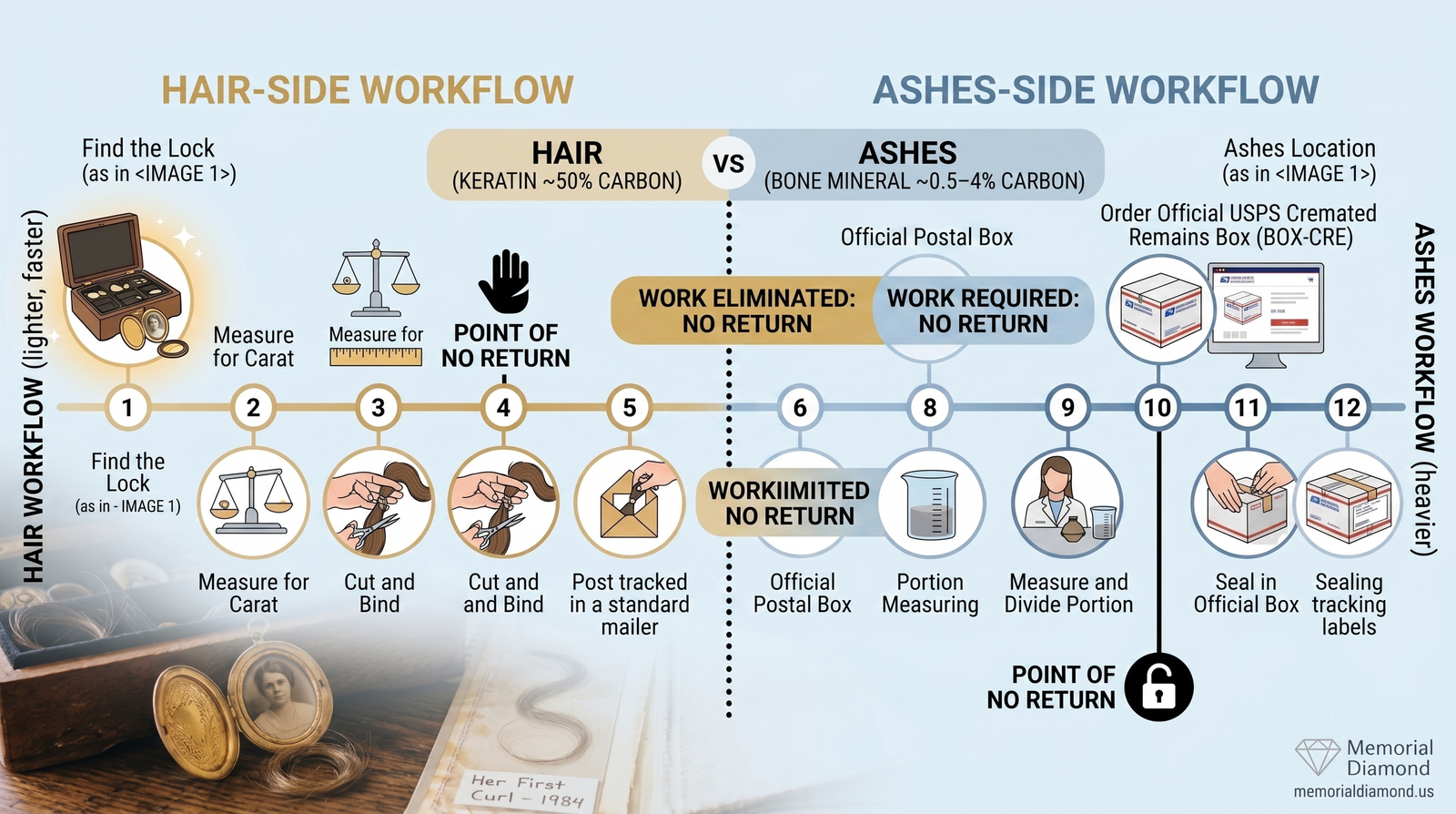
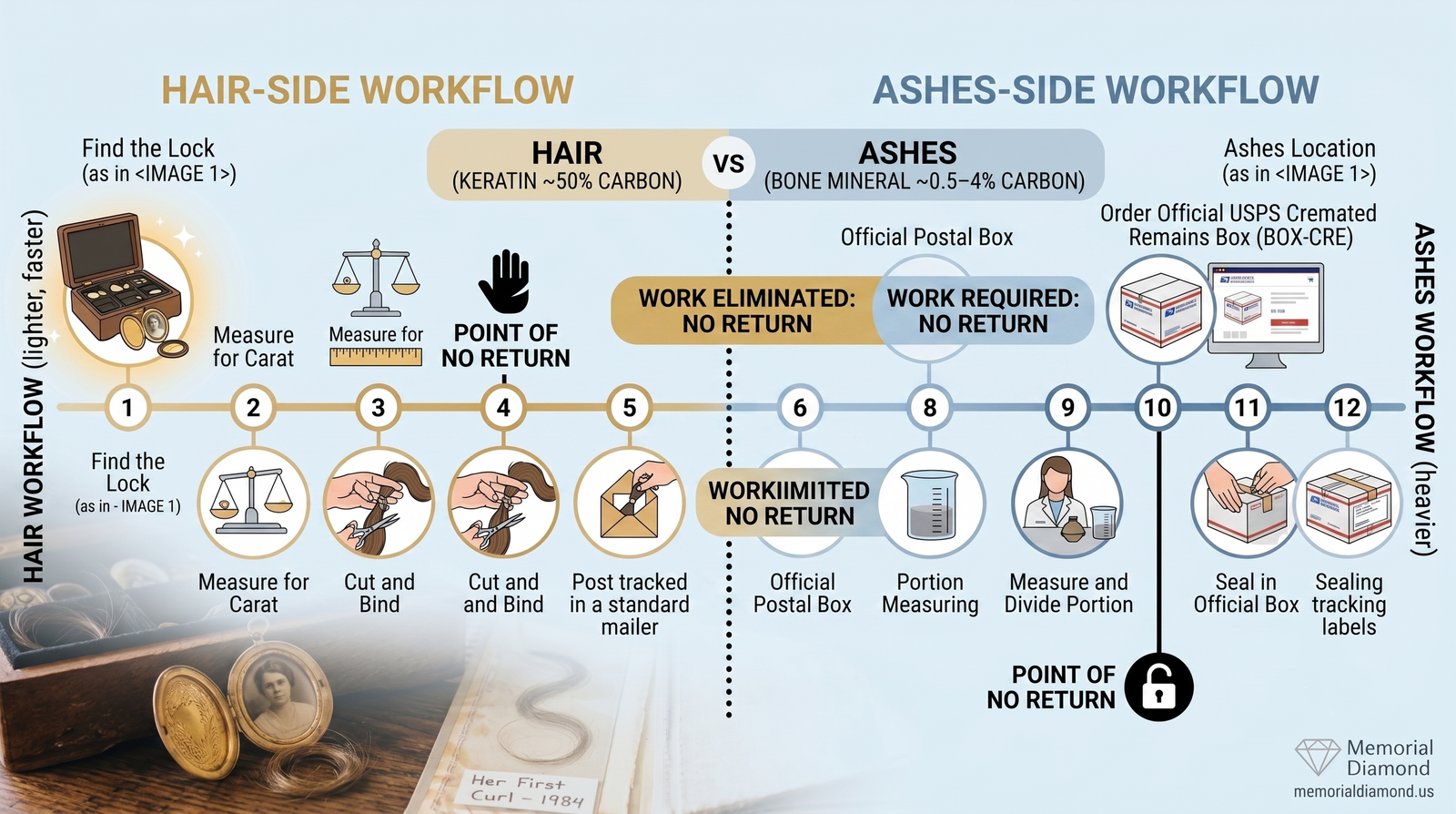
The lab half is identical from step 6 onward. The family half is genuinely lighter not in how many numbers it runs to, since the two posts group their steps differently, but in the work itself: hair removes three pieces of it and adds one.

  • Removed: ordering an official postal box. Cremated remains require the USPS Cremated Remains box, orderable online only, forcing days of delay before shipping is possible at all. Hair posts as ordinary mail.
  • Removed: measuring out a portion, and the family agreement gate. Nothing is divided a lock goes whole and where dividing a parent’s cremated remains usually needs everyone’s consent, a saved lock rarely carries the same weight.
  • Added: finding the lock at all. Ashes sit in a known place; hair has to be located, and sometimes doesn’t exist.
  • Moved: the point of no return. From the handover to the cut.

The same sequence for ashes runs the nine-step version, and the complete guide to a mother hair diamond covers treated hair and colour.

Side-by-side comparison of the hair and ashes family-side workflows, marking the postal box and portion-measuring work hair does not have and the point of no return in each

Frequently Asked Questions

Which step am I on if the lock has been in a drawer for twenty years?

Step 1 is done, so start at step 2. Age doesn’t degrade hair for this purpose keratin is stable, and a lock cut decades ago extracts the same as one cut last week.

Can I do step 4 before step 3?

Strongly advise against it. Confirming the minimum takes only a couple of days, while an insufficient cut may be unrecoverable if no second lock exists anywhere. If you have already cut, ask before posting rather than after.

Does the sequence change if my mother was buried rather than cremated?

No every step is identical, because no step involves cremation. That is the practical advantage of the hair route: it stays open to families who chose burial, and to those whose faith rules cremation out.

What if the lock turns out to be too small at step 6?

The lab should flag it at intake rather than growing a failed stone. Options are usually a smaller carat, or a second lock if one exists. Exactly why step 3 comes before step 4.

What if my mother is still living?

Then step 1 is a conversation instead of a search, and she can choose the carat at step 2 herself. Every step after that is unchanged, and she gets to see the finished stone.

Nothing You Do This Week Involves Scissors

Step 1 is a search of a jewelry box and step 3 is an email; between them they cost a few days and nothing else. The only step on this list that cannot be walked back is step 4, and it sits deliberately behind both of them which is the whole reason the sequence is ordered the way it is. If the search turns up nothing, or if the answer ends up being the lock left exactly where she put it, that is a whole answer too.

When you’re ready for step 3, reach out to Memorial Diamond at memorialdiamond.us and ask what amount is needed for the size you have in mind. Get it in writing first. Everything after that is reversible; the cut isn’t.

how much hair you need

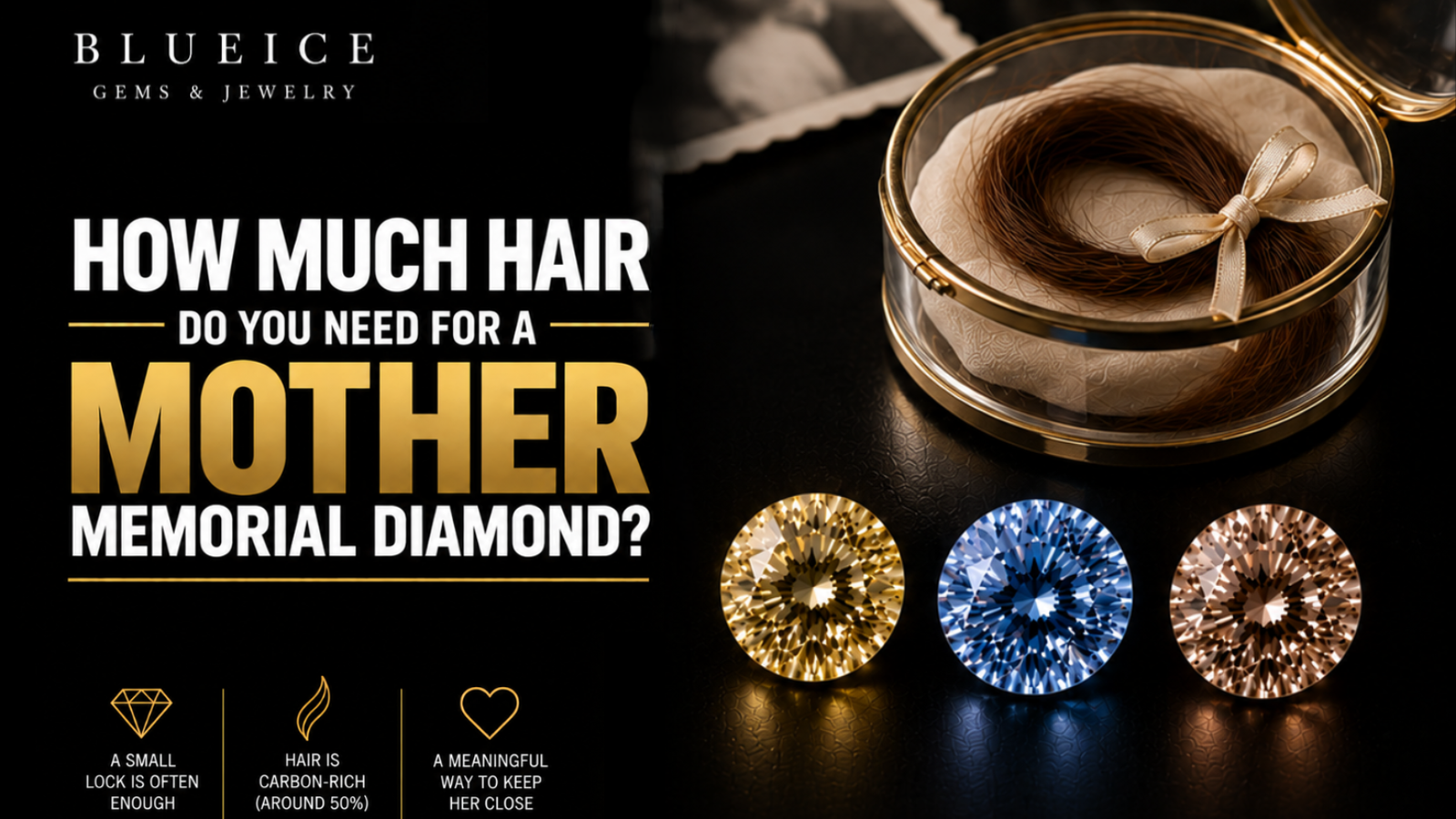
How Much Hair Do You Need for a Mother Memorial Diamond?

Most people reading this are holding something finite. An envelope from a bedside drawer. A braid tied with ribbon since 1974. A few strands a hospice nurse thought to save. There is no more of it, so the number matters in a way it doesn’t for a family with an urn.

Industry-wide, a memorial diamond grown from hair takes a small lock or a few grams often described as palm-sized, or a few wisps.

That is genuinely all. Hair is roughly 50% carbon by weight, and no cremation is involved at any point, which is why the requirement is measured in grams.

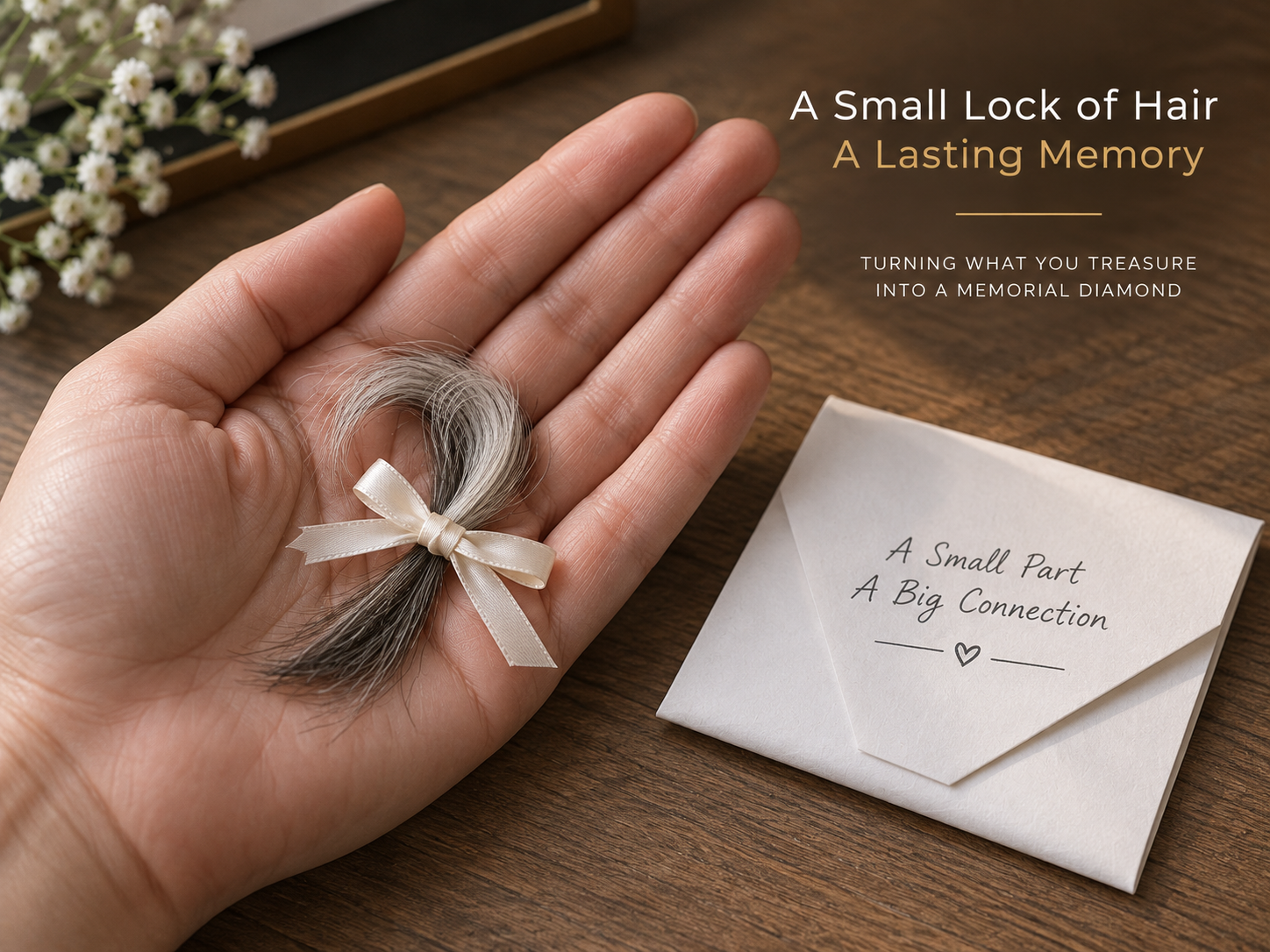
Small lock of grey hair tied with a ribbon resting in an open palm beside a folded paper envelope

On This Page

How Little Hair Is Genuinely Enough?

A small lock. A few grams. Something you could close your hand around without effort.

Requirements vary between providers inside that band, so the figure that governs your decision is the one your provider gives you for your specific lock. But the band is small enough that most people who arrive here worried are, in fact, holding enough.

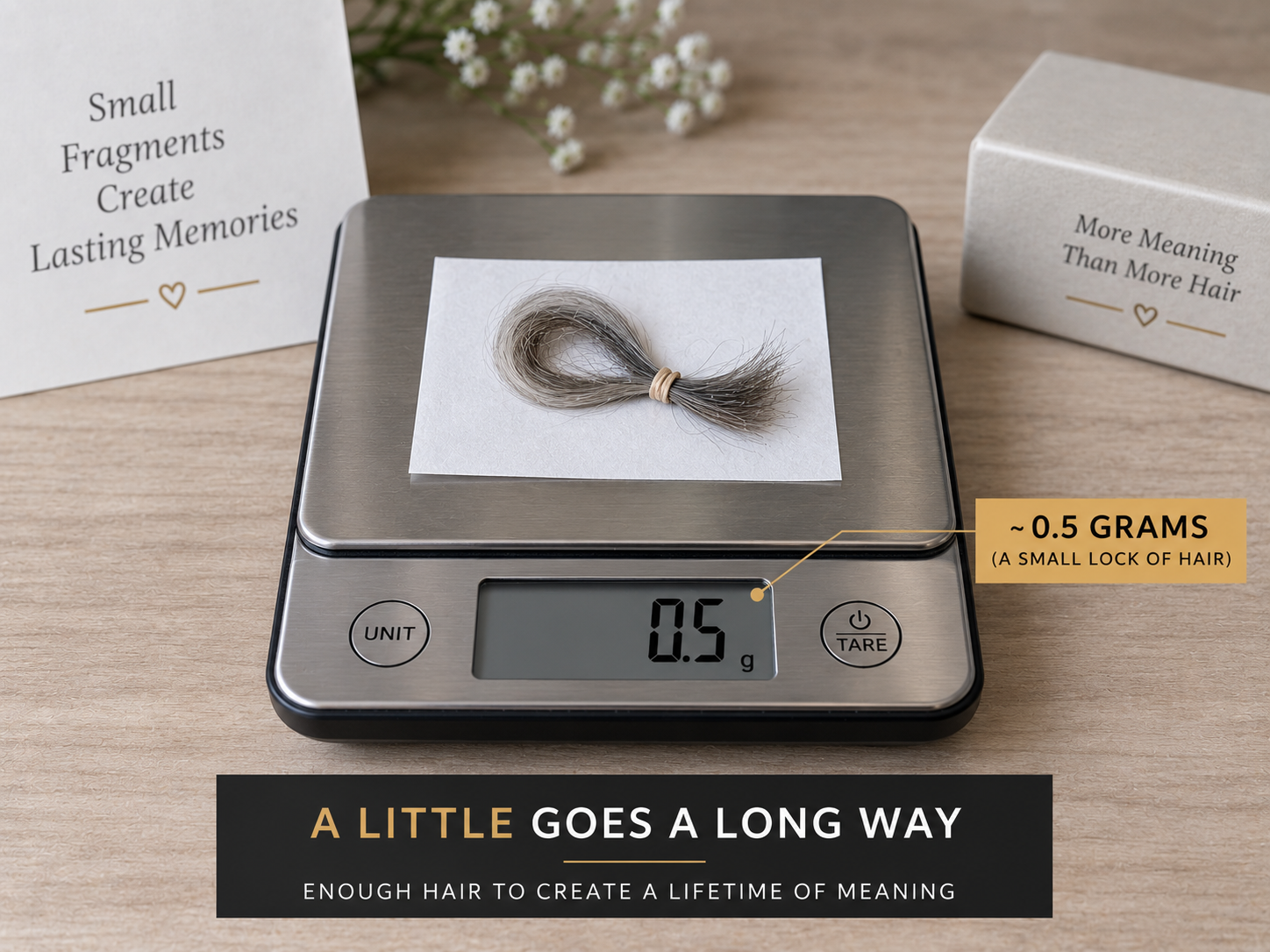
A small lock of hair on a square of paper being weighed on a digital kitchen scale reading in grams
What’s Being MeasuredIndustry-Typical FigureWhat It Means for the Lock in Your Hand
Hair a provider asks forA small lock or a few grams, often described as palm-sizedGrams, not ounces — no urn required, and none exists in most of these cases
Carbon content of hair~50% by weightKeratin is a carbon-rich protein, which is why so little goes so far
Cremation requiredNoneWorks for a mother who was buried, and for someone still living
Purity after extraction~99.9%+ carbonThe non-carbon components of keratin are stripped away
Carat sizes generally offered~0.10 ct to 5+ ctChosen when you order, not limited by the size of your lock
Growth time to reach that size~6–10 months, up to ~12 for large or specialty stonesThe only real lever on carat

One row deserves saying plainly rather than leaving in a table: more hair does not produce a larger diamond. Carat size is a function of weeks spent growing under pressure, and once the cell has enough feedstock to run, additional material changes nothing. A braid does not outrank a lock.

Her carbon is also blended with lab-sourced carbon to reach the volume a growth cell requires. No memorial diamond is 100% the person. If you are considering this process, it is worth understanding whether a memorial diamond is really made from your mother’s hair before you commit to any provider.

Why Does Hair Need Far Less Than Ashes?

Simple diagram showing hair at roughly fifty percent carbon by weight beside its keratin protein structure

Because of what hair is made of. Hair is built from keratin, a carbon-rich protein, and comes out at roughly 50% carbon by weight. Cremated remains are a small fraction of that, which is why hair is measured in grams and ash in ounces.

It also means hair is the route that stays open when cremation never happened. A mother who was buried, a mother whose ashes were scattered years ago in a place nobody wrote down, or a mother whose remains a family is unwilling to divide for religious reasons — all may still have a hair-based option if a lock exists.

Hair-based options for a loved one who wasn’t cremated covers that ground, while ashes to diamond versus hair to diamond compares the two for anyone who has both.

How Do You Know if the Lock You Have Is Enough?

You ask, and you ask before you do anything to it. Judging a few grams by eye is unreliable in both directions.

Weigh it if you can. A digital kitchen scale reading to the gram costs very little and turns an anxious guess into a number a provider can answer against. Put the hair on a square of paper, tare the scale, and you have something concrete to put in an email.

Then photograph it beside something ordinary for scale a coin, a pen, or your own hand. A provider looking at a photograph can tell you far more than one reading the phrase “a small amount.”

And then the part that matters most:

  • Send it intact. Don’t divide it yourself. Cut the lock into what you think is the right portion and you may end up with two amounts that are each individually short. Let the provider take what they need from the whole.
  • Don’t trim, wash or tidy it. Hair needs no preparation, and handling it only risks losing strands.
  • Ask before you cut anything new. If more is genuinely needed and a source exists — a hairbrush, a second keepsake, or a hat you want to know before you go looking, not after.
  • Ask what happens to hair they don’t use. Confirm the provider’s policy on returning unused material before sending the lock.
  • Ask about treated hair specifically. Dyed, bleached, permed, or chemically straightened hair should be discussed with the provider rather than assumed to be accepted or rejected.

If the answer is that you don’t have enough, that is something you can act on and it arrives while the lock is still whole.

Does the Length of the Lock Matter, or the Weight?

Weight is what the process consumes. Length is what you can see, which is why a short lock causes far more worry than it should.

A dense lock of thick hair can weigh more than a long, fine wisp. Someone holding a short piece cut during chemotherapy, or a soft curl from a mother whose hair had thinned in her last year, can easily focus on the wrong dimension. Weighing the material, or simply asking the provider, beats estimating every time.

Carat size has nothing to do with either measurement. Choosing a carat size is a decision about budget, setting, and how you plan to wear it — a 0.25 ct stone and a 2 ct stone can start from the same small lock and differ primarily in how long they grow.

What About Hair That’s Been in a Drawer for Decades?

It is usually fine, and that surprises people.

Hair is stable, structural material. Kept dry and out of direct light, a lock from a childhood haircut in the 1960s, a strand saved from a wedding day, or hair collected during a final illness can remain as a keepsake for many years.

For an old keepsake, preserve its provenance carefully. Keep any ribbon, tag, or note that came with it, because that history may be more meaningful to your family than anything else surrounding the material. If the lock has been glued into a memory book or set into mourning jewelry, tell the provider rather than freeing it yourself.

For a mother who is still living, the same general quantity concept applies, and hair can simply be collected with her knowledge. Read what to ask before turning your mother’s hair into a diamond before making arrangements.

Frequently Asked Questions

Is one small lock really enough for a full-carat diamond?

Usually. A provider’s requirement is a threshold rather than a ration once the growth process has what it needs, additional growth time is what allows a larger stone to develop. A 0.25 ct and a 2 ct order can start from the same envelope.

Is there enough usable hair on a hairbrush?

Sometimes, but weigh it before you rely on it. A brush can be a possible source when no cut lock exists, although the amount recoverable varies significantly and providers differ on whether they accept it. Send a photograph and a weight when asking.

Will dyed, bleached or permed hair be accepted?

Ask the provider specifically rather than assuming. Hair treatments can affect how a provider handles submitted material, so getting the provider’s position in writing beforehand is better than discovering the answer at intake.

My mother was buried, not cremated. Can hair still work?

Yes. One of the advantages of a hair-based memorial diamond is that the process does not depend on cremated remains. A lock kept before or after a burial can provide starting material without requiring a family to disturb or exhume remains.

Should I split the lock and keep half?

Send it whole and ask the provider what material they require and what happens to anything unused. Dividing it yourself can create unnecessary uncertainty about whether either portion meets the provider’s requirement.

Does more hair make a bigger or faster diamond?

Neither. Sending a whole braid where a lock would do does not automatically create a larger or faster-grown diamond. Once sufficient material is available for the process, stone size is primarily associated with the selected growth schedule rather than simply sending more hair.

Before You Cut or Divide Anything

The lock in the envelope may be enough, and finding out costs nothing while it is still whole.

Before sending it, weigh the hair if possible, photograph it beside an ordinary object for scale, and ask the provider what quantity is required, what happens to unused material, whether treated hair is accepted, and what documentation or handling process applies.

For a broader overview, read The complete guide to a mother hair diamond or learn how a memorial diamond is made from her hair.