You may already have the authority to decide this without asking anyone. That is what makes it awkward rather than easy.
Talking to family about a wife memorial diamond turns on two separate things: standing, meaning who is legally able to authorize what happens to her remains, and sequence, meaning who hears it and in what order. Standing usually rests with a surviving spouse or an executor, but it varies by state and by anything she left in writing, and there is no national rule. Sequence is yours to get right either way.
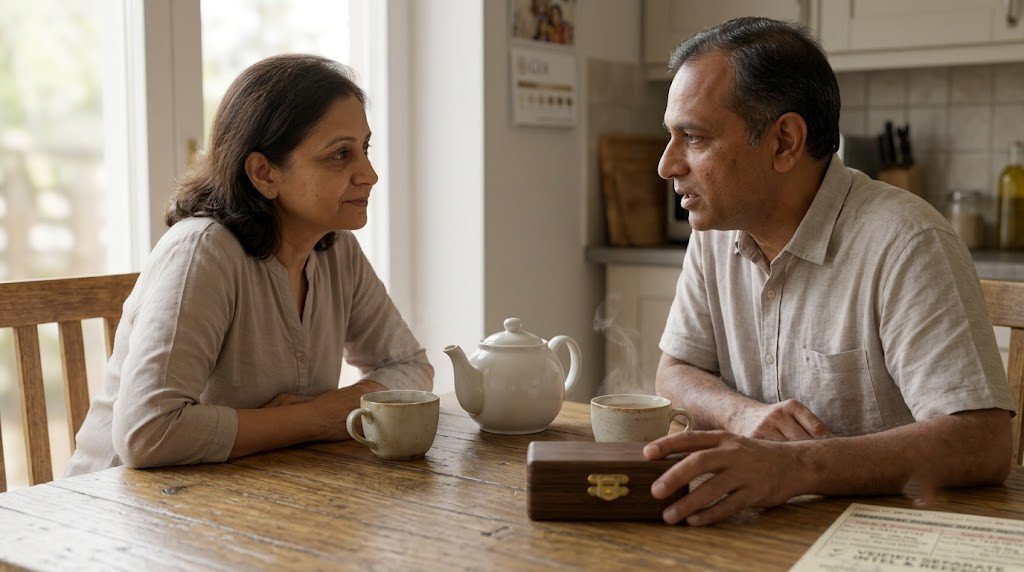
Table of Contents
Who Actually Decides What Happens to Her Remains?
Start here, because almost every argument about a wife memorial diamond is really an argument about this question with the wrong name attached to it.
There is no national rule. Authority over the disposition of cremated remains in the United States is set at state level, and the statutes differ in real ways, in who ranks where, in what a written instruction overrides, and in what happens when people at the same rank disagree. Anything you read that states a single American answer is describing one state or none.
Three things generally decide it, and they are worth checking in this order.
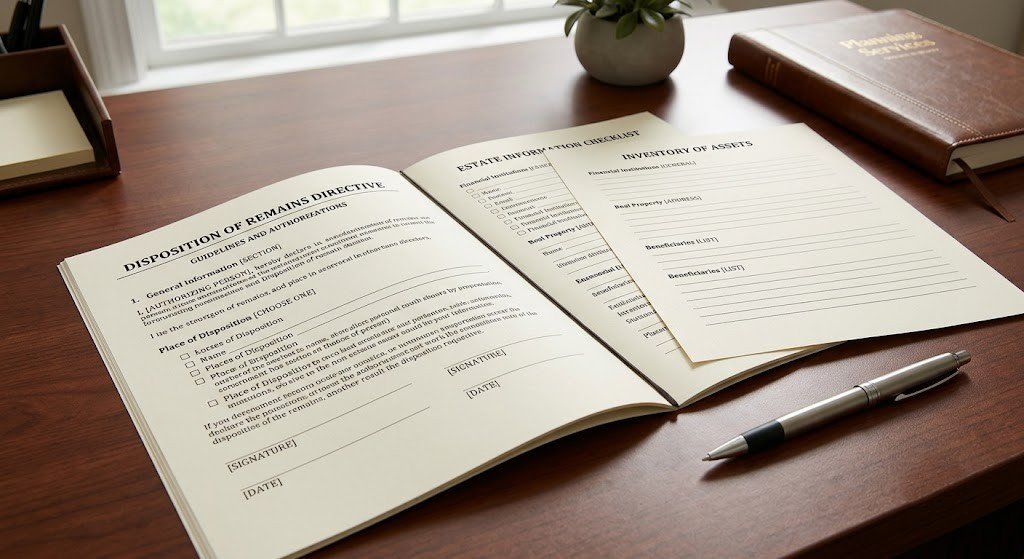
- Anything she left in writing. A will, a funeral or disposition directive, a pre need arrangement, or an appointment of an agent for remains. Written instructions carry substantial weight in most states, and in several they are controlling. If she wrote something down, that is the first document to find, and it may settle the question about a wife memorial diamond before you ask anyone.
- Your position under your own state’s statute. A surviving spouse is at or near the top of the priority list in most states, with adult children, parents and siblings following. An executor may hold or share that authority instead, depending on the state and on how the estate is administered.
- Whether the remains have already been released, and to whom. Practice usually matches the statute, the funeral home released the ashes to the person the law pointed at, but not always, and it is worth knowing which of the two you are relying on before you say anything about a wife memorial diamond out loud.
If you are the surviving spouse, the honest answer is that you very likely hold this and no conversation about a wife memorial diamond is legally required. That is not a reason to skip the conversation. It is a reason to be clear with yourself about what you are doing when you have it, which is the subject of the next section. The general legal shape of the question is covered in whether it is legal to turn ashes into a diamond.
Have a lawyer or your funeral director confirm your own state’s position if anyone is likely to contest a decision about a wife memorial diamond. This page is not legal advice and cannot be, the whole point of this section is that the answer is local.
Standing and Sequence Are Two Different Problems
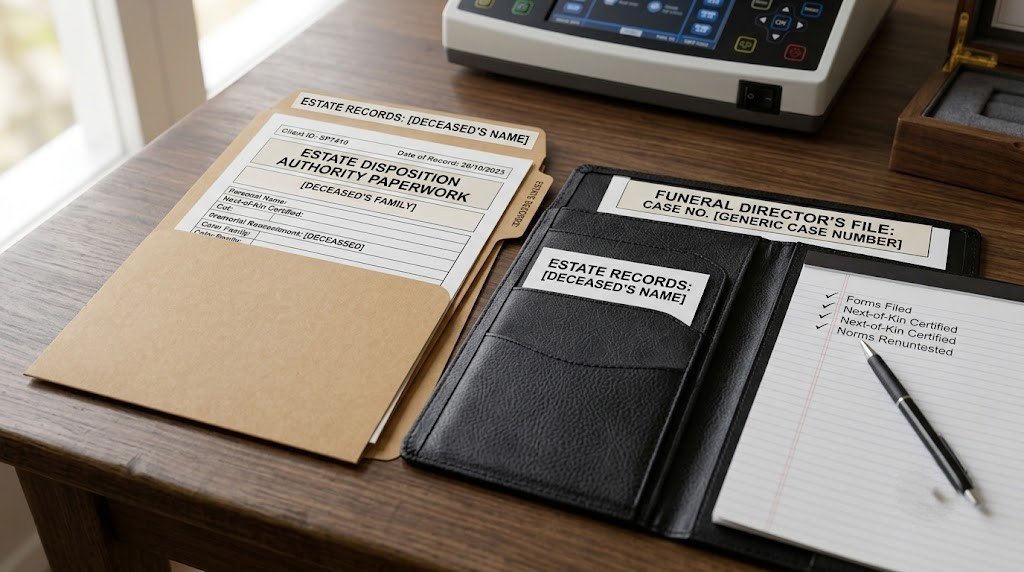
Holding the authority settles who can decide. It settles nothing at all about who should hear about a wife memorial diamond, when, or from whom.
This is where families come apart, and it is almost never really about a wife memorial diamond at all. It is about someone learning something significant about her from a third party, weeks after it was decided. The information is the injury, not the decision.
So separate the two questions deliberately.
Standing answers: whose consent is legally required? Often, yours alone. Sometimes shared. Occasionally someone else’s entirely, if she left a directive naming someone else, or if your state ranks an executor above a spouse.
Sequence answers: who is owed the information before it happens rather than after? That list is longer than the standing list. Her parents, her adult children, her siblings, a closest friend who is family in every sense that matters.
Getting sequence right costs nothing and prevents most of the damage; getting it wrong is what people remember. And a conversation about a wife memorial diamond held early, before anything is submitted, is a different conversation from the same one held after the ashes are in the post.
The Five Stages, in Order
Most of the difficulty with talking about a wife memorial diamond comes from doing these in the wrong order, telling people before checking what is already arranged, or committing material before anyone has been told.
| Stage | What this stage settles | Who is involved | What skipping it costs |
|---|---|---|---|
| 1. Find what she wrote | Whether she left a directive, a will clause, or a pre need arrangement that already answers this | You, an executor, the funeral director who holds the file | You make a decision that a document contradicts, and find out later in front of everyone |
| 2. Confirm standing | Who is legally able to authorize it in your state, and whether it is shared | You, and a lawyer or funeral director if anyone may contest it | An argument about a wife memorial diamond that is really an unresolved question about authority |
| 3. Check what is already booked | Whether an interment, scattering or service has a date that a portion must be separated before | Whoever holds the ashes, and whoever arranged the service | The ash route closes on a date nobody told you about |
| 4. Tell the people owed the information | That nobody learns about a wife memorial diamond second hand or after the fact | Her parents, children, siblings, closest friends | The lasting injury, which is nearly always about being told late |
| 5. Decide what a no changes | What you will actually do if someone close to her objects, before anyone has said it | You, alone, in advance | You improvise a response in the worst possible moment |

Stage five is the one people skip and the one that matters most. Decide now, calmly, whether an objection from her mother or her daughter would change what you do about a wife memorial diamond, and be honest with yourself about the answer, because you will be held to it.
Who Should Hear About a Wife Memorial Diamond Before It Is Decided?
A short list, and it is shorter than most people fear.
Anyone whose own claim on her remains is affected. If a portion was promised to her sister for a garden, or her parents were told the whole of her would be interred with them, they should hear about a wife memorial diamond before it is settled rather than after.
Anyone who would reasonably expect to be consulted. Adult children above all. A child who hears about a wife memorial diamond only once it is done is not upset about the process; they are upset about where they stood.
Anyone whose agreement you actually want. Not need, want. Consent required and blessing wanted are different lists, and it is worth being honest about which one a person is on before you say anything about a wife memorial diamond.
Everyone else can be told afterward. Most people would rather hear about a wife memorial diamond plainly than be consulted on something that was never theirs to decide. What a memorial stone physically is, if you need to be able to explain it, is covered in how a memorial diamond is made from her ashes, and the category has a plain general description in the encyclopedia entry for memorial diamonds.
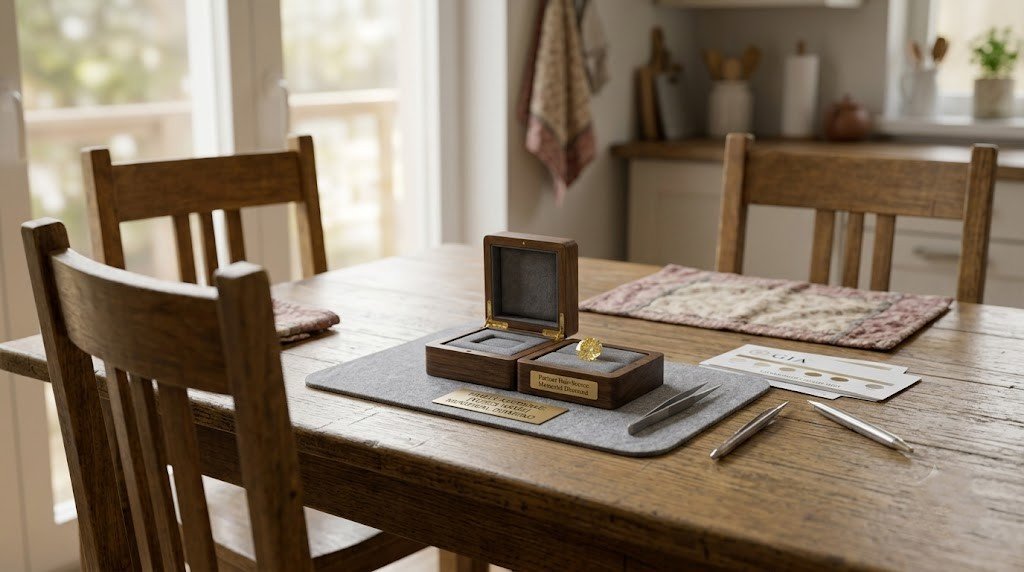
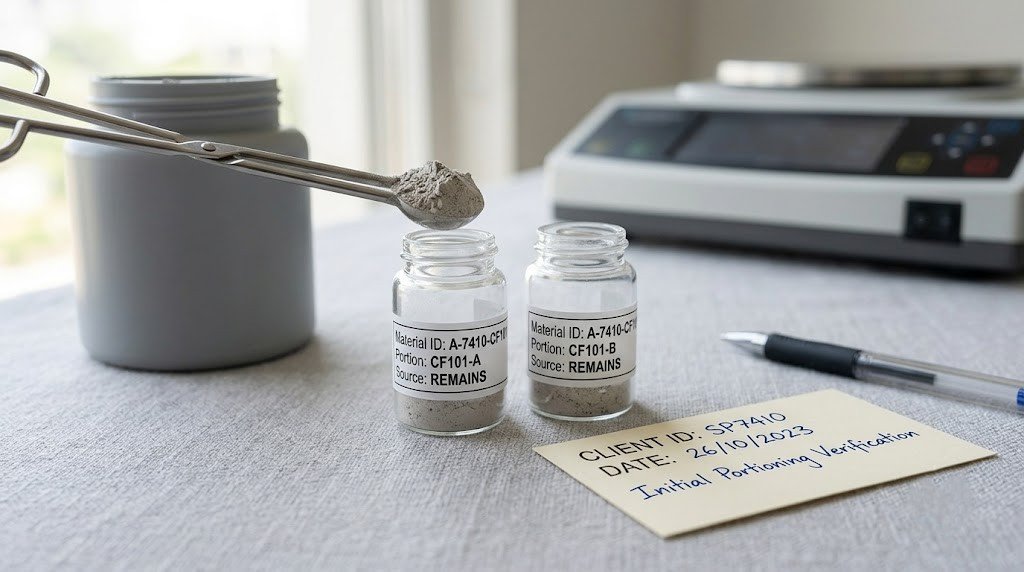
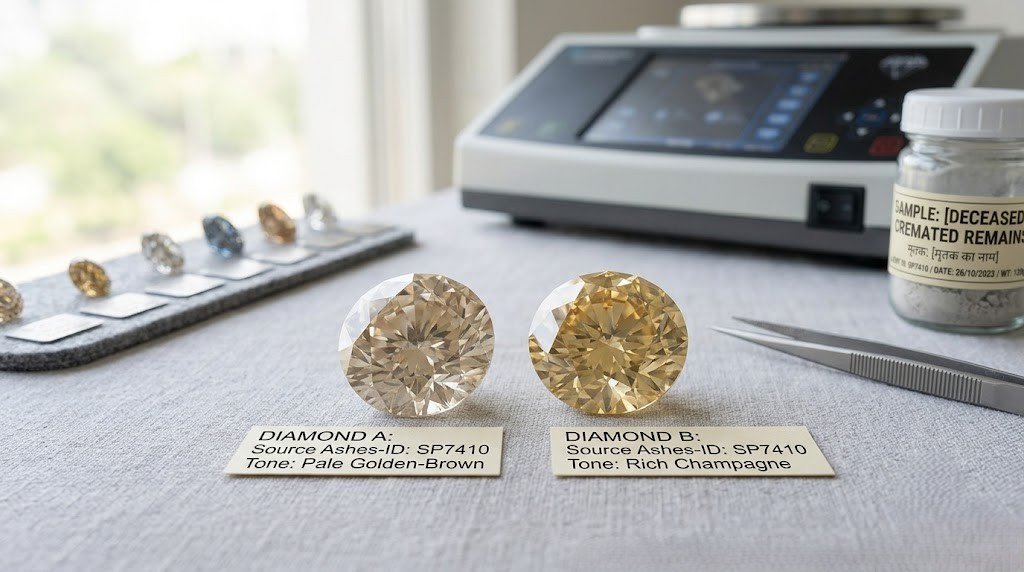
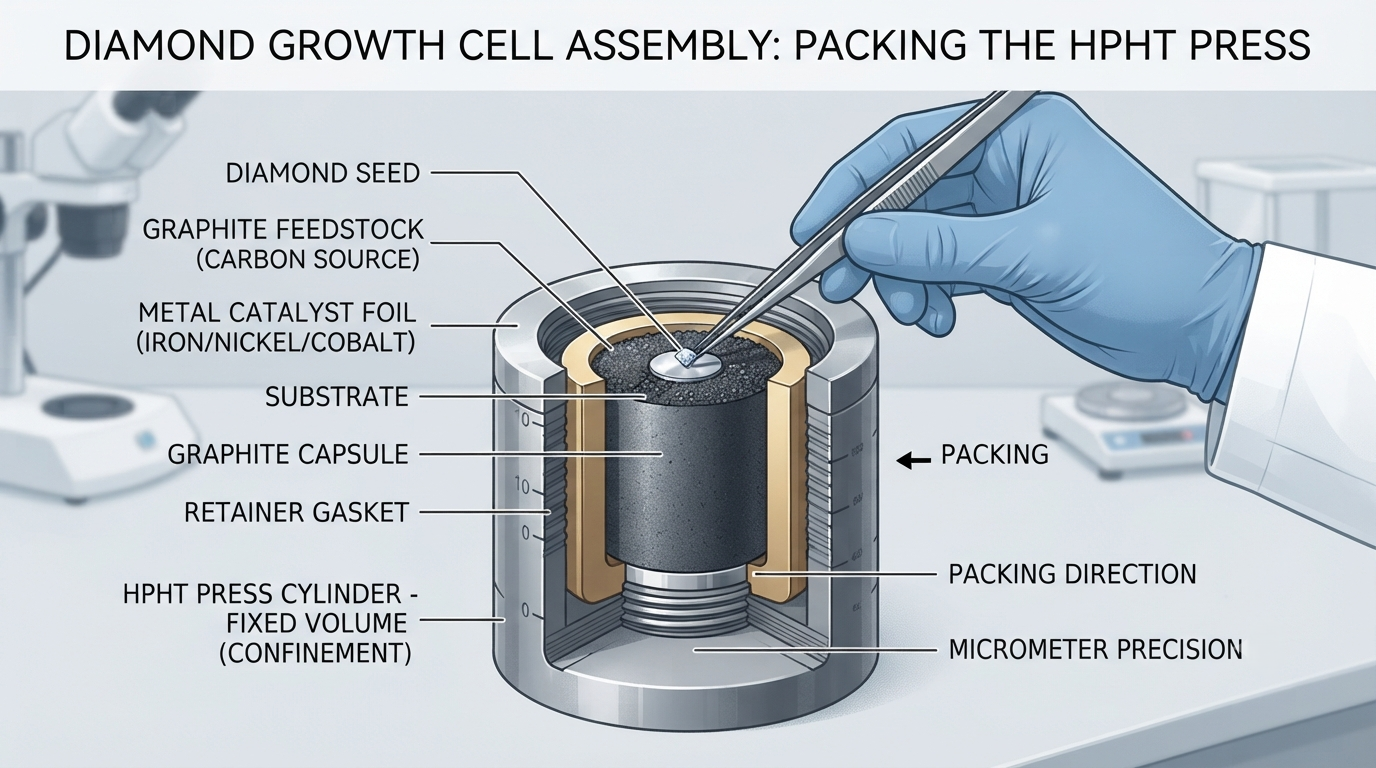
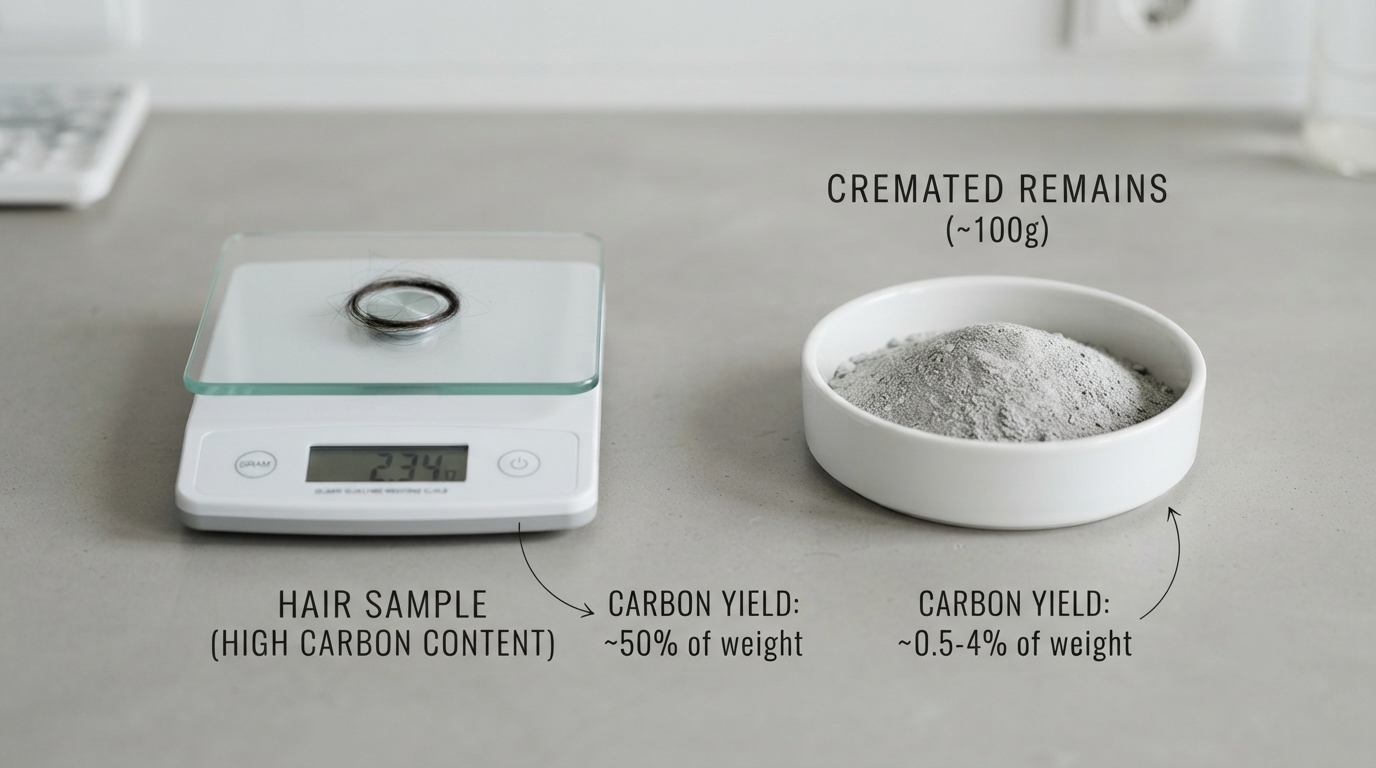
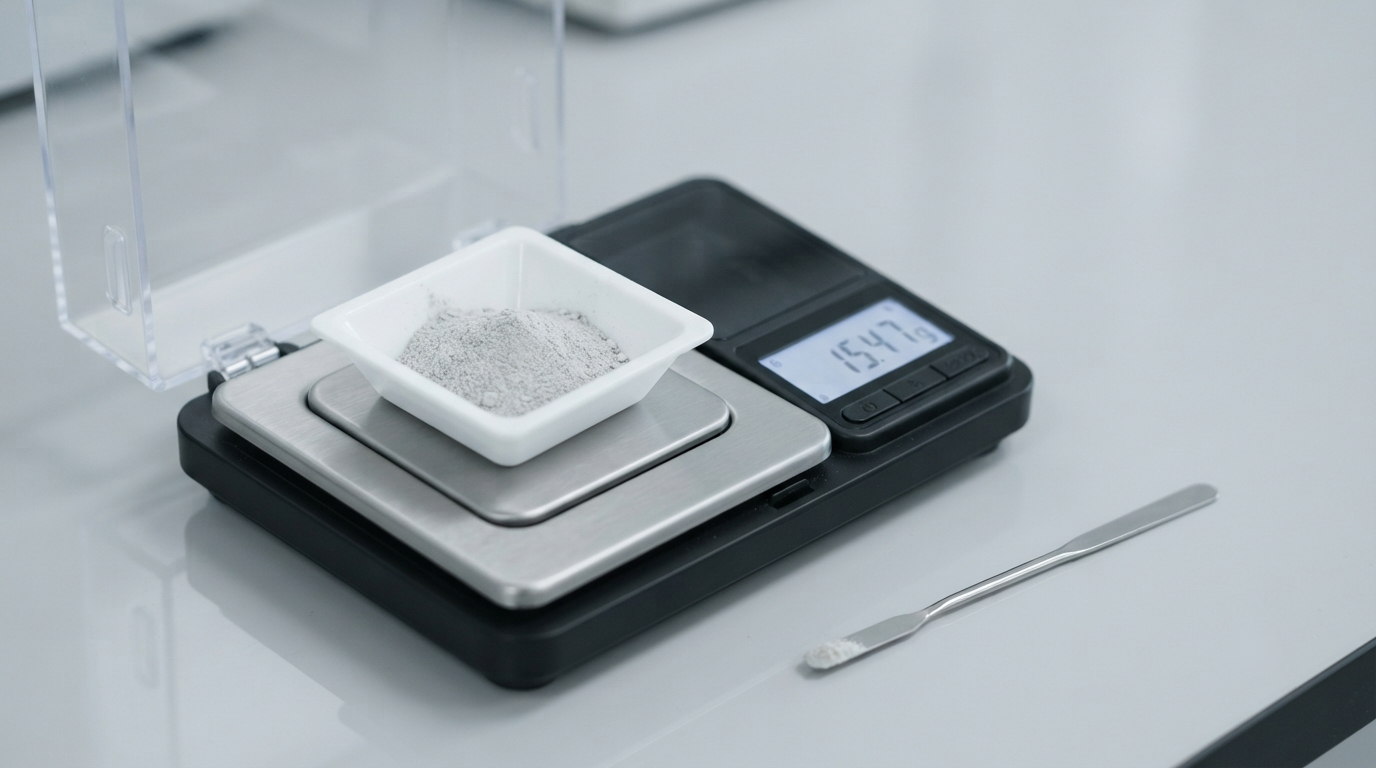
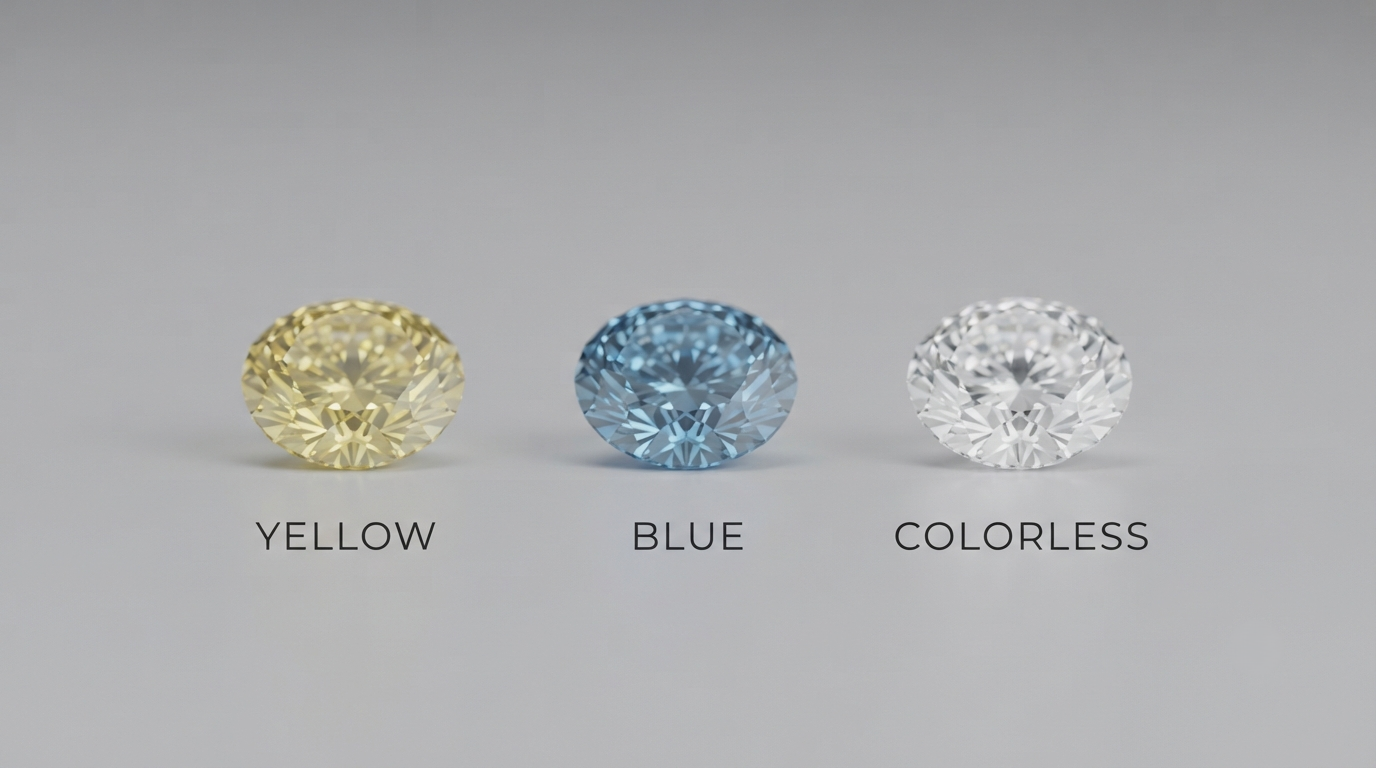
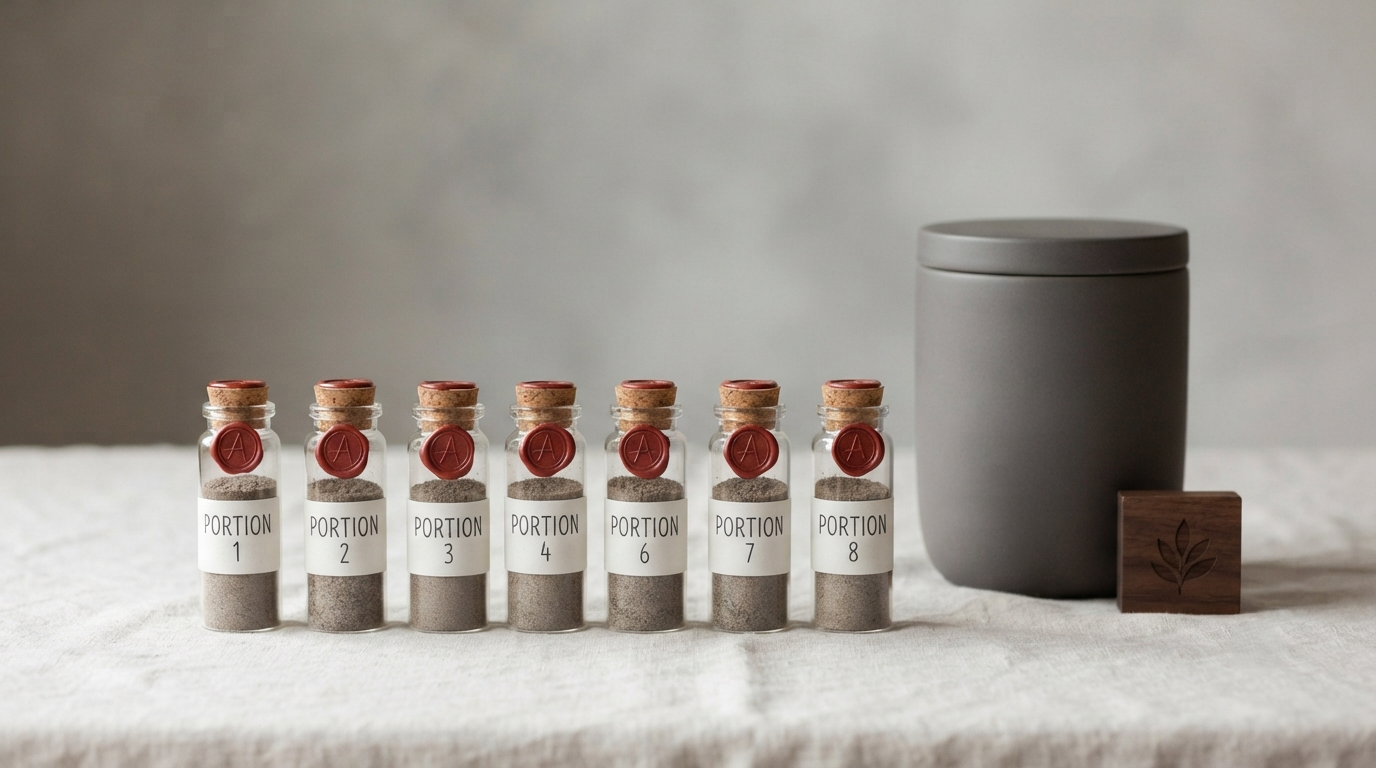
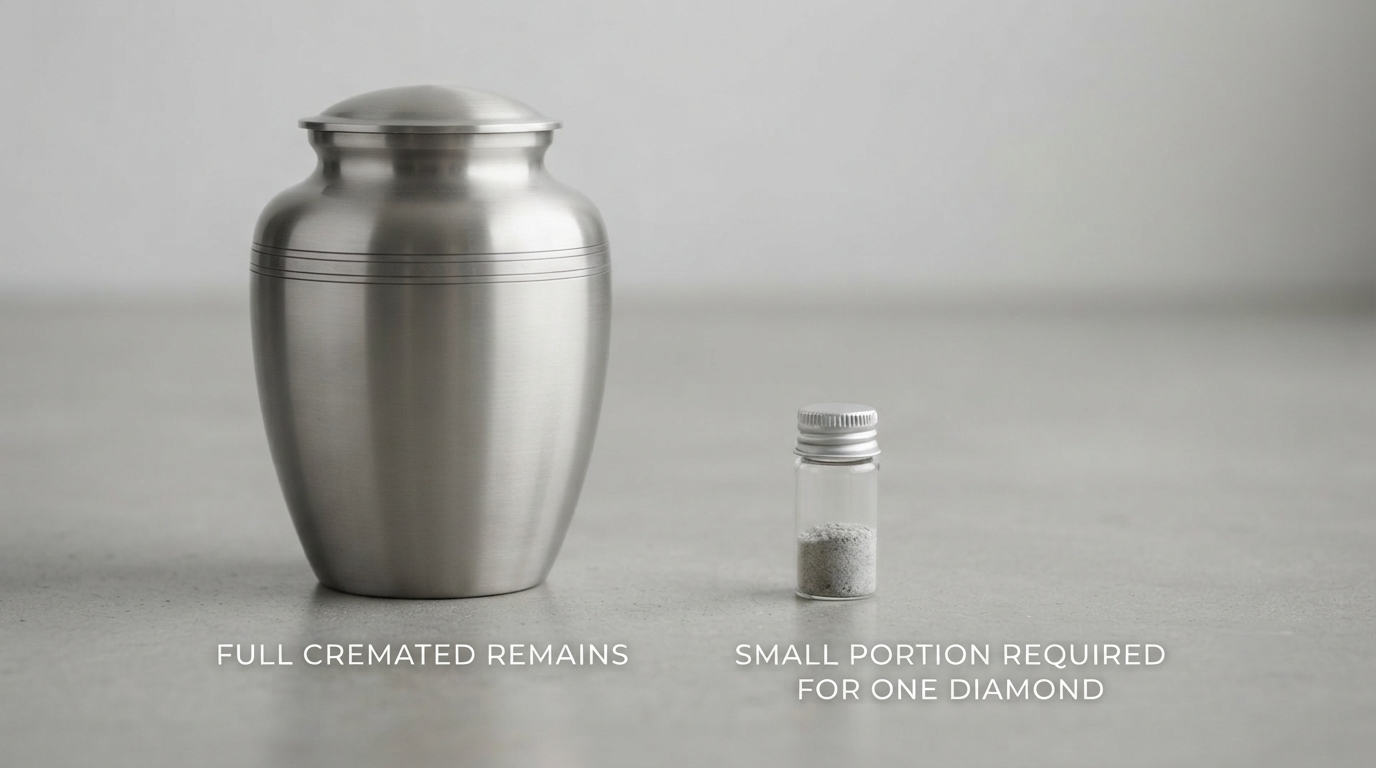
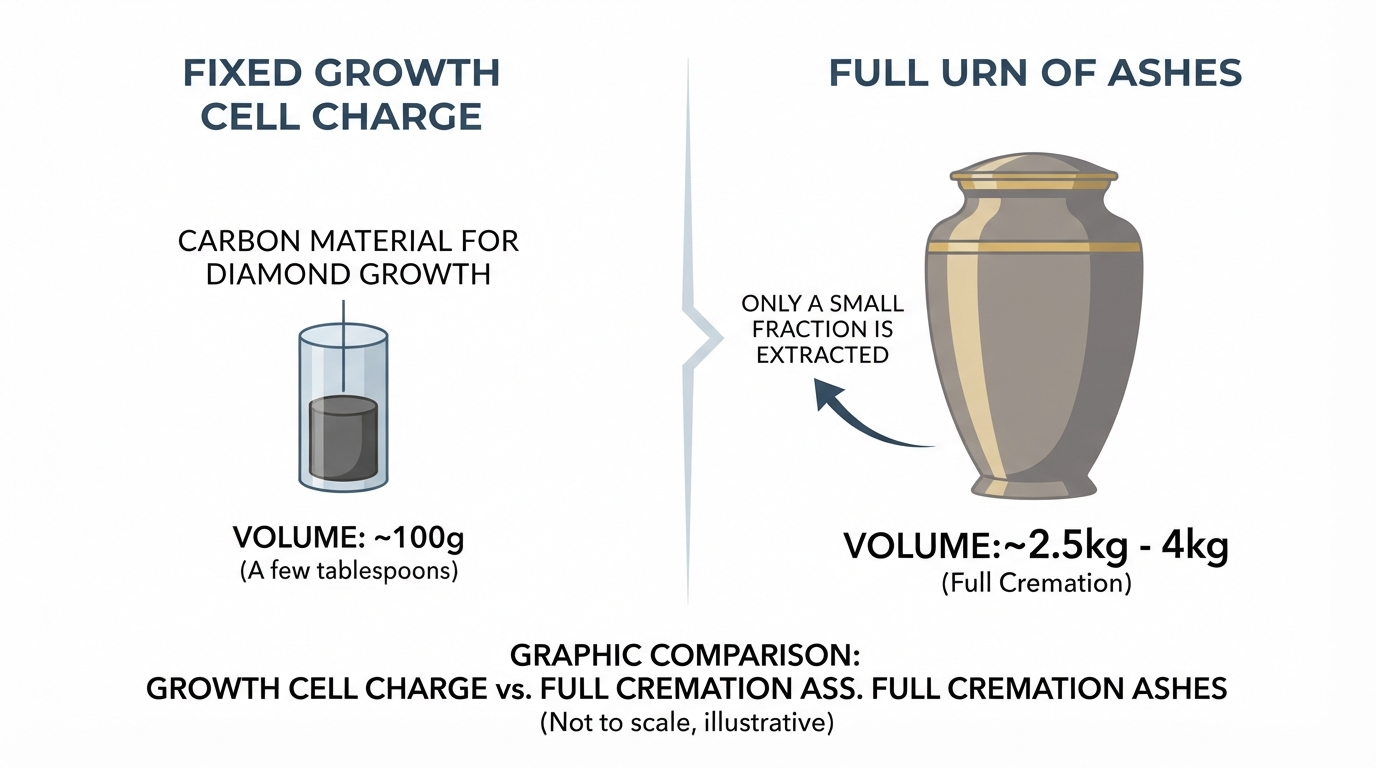
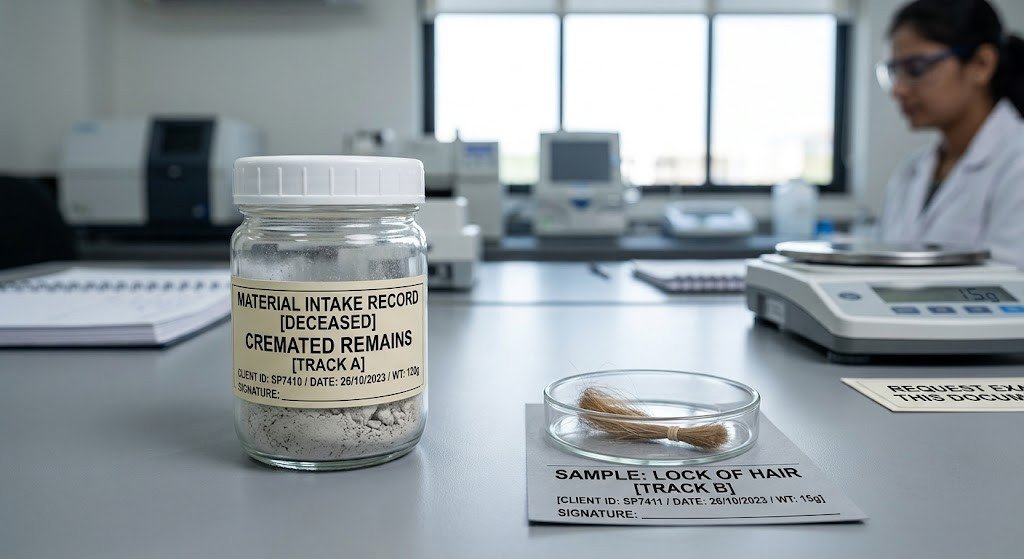
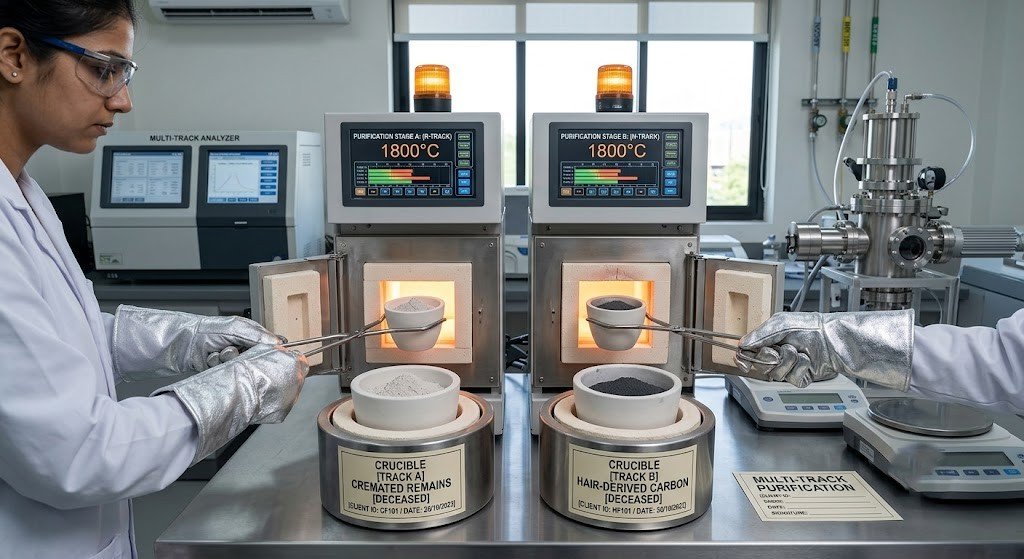
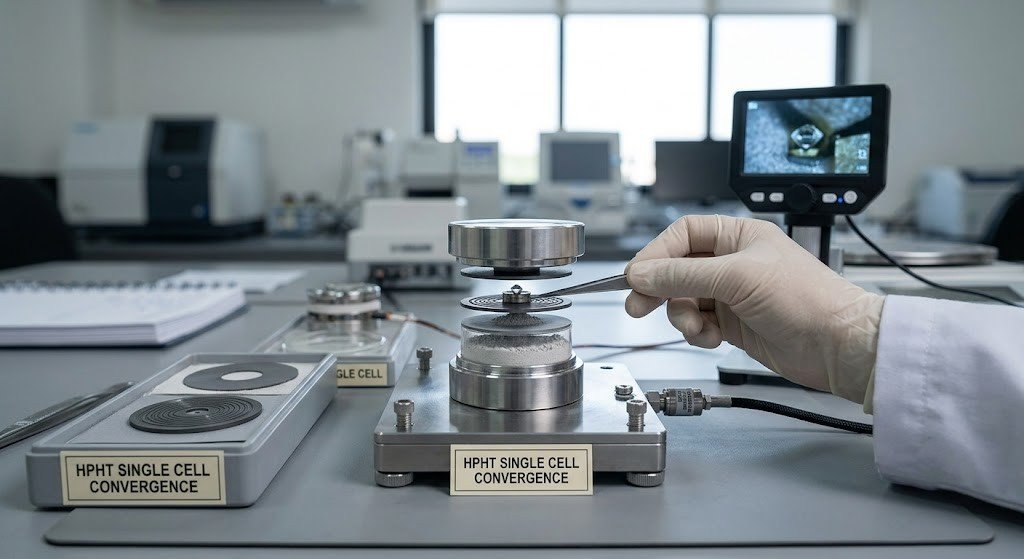
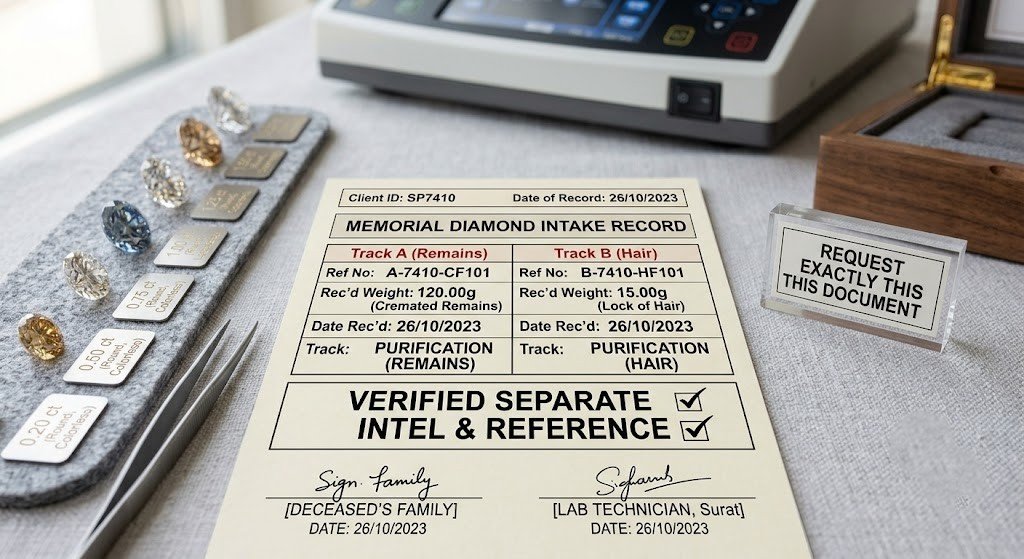
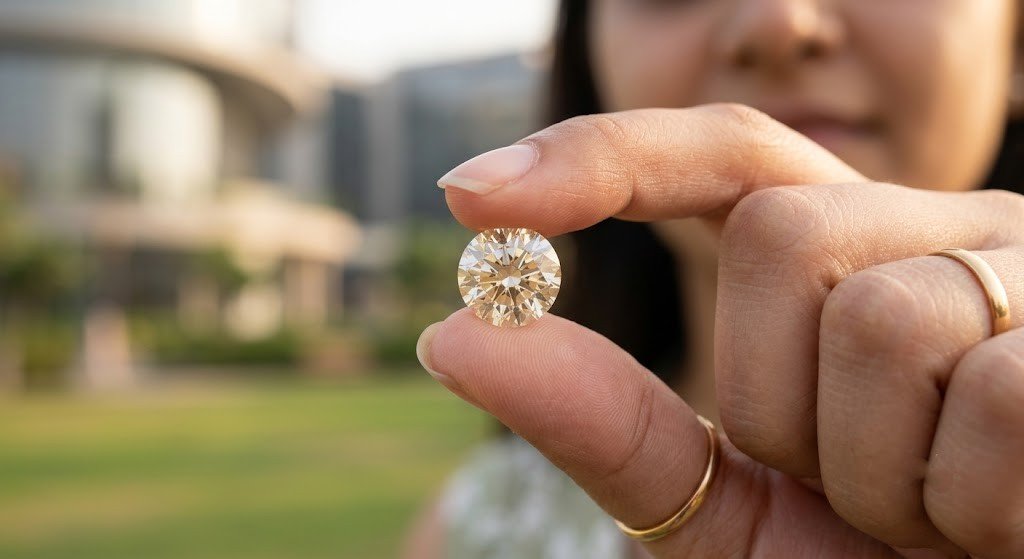
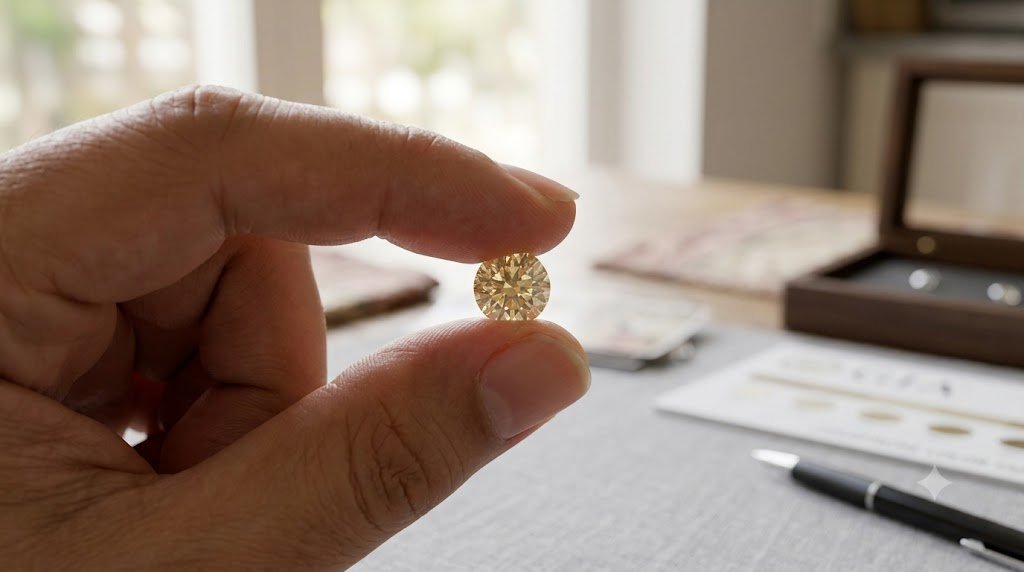
Two things are worth being able to state accurately if someone asks what is actually in the stone. A portion of her carbon is recovered from the ashes and cleaned, and it is then topped up with lab grown carbon, because no one person supplies enough to fill a growth run alone. The quantity point matters too. A diamond typically uses a small portion of a cremation rather than all of it, so the rest can still be interred, scattered, or kept exactly as planned, the figures are in how much ash you need for a wife memorial diamond. Do not lead with it. A quantity answers a question nobody has asked yet.
How Do You Raise It With Someone Who Will Find It Upsetting?
Usually you know before you start who will find a conversation about a wife memorial diamond hardest.
The first thing to accept is that you cannot make it not upsetting. The subject is her body, and some people will find any version of that conversation hard. The goal is not to avoid the distress; it is to avoid adding avoidable distress on top of it, surprise, secrecy, or the feeling of being managed.
Four things genuinely help.
- Say what it is in plain language, early in the sentence. Euphemism reads as evasion. “A diamond grown from a portion of her ashes” is clearer and kinder than “a way of keeping her with us.”
- Say what is not changing. The great majority of the ashes stay where they were always going to be, and that single fact answers much of what people are actually afraid of.
- Give the conversation an exit. “You do not have to say anything now” is a real offer if you mean it. Someone who needs a week should be able to take one without it reading as opposition.
- Do not bring a persuasive case. A prepared argument about a wife memorial diamond turns a conversation into a proposal being defended, and the other person into an obstacle. State it, then stop talking.
What you are trying not to do is manipulate. Nobody should be argued into agreeing about a wife memorial diamond. No script that works by guilt, by invoking what she would have wanted as a trump card, or by making refusal feel like disloyalty. If someone would only agree under that kind of pressure, what you have is not agreement.
Children are a separate case with its own register, handled in how to explain a memorial diamond to children.
Sentences You Can Actually Use
These are starting points for a conversation about a wife memorial diamond, not a script. Say them in your own words rather than reading them aloud.
To open, with someone whose view matters to you:
“There’s something I’ve been thinking about doing with a small portion of her ashes, and I wanted you to hear it from me before I did anything. Can I tell you about it?”
To describe it without sales language:
“It’s a diamond grown from carbon taken out of a portion of her ashes. It’s a real diamond, it takes the better part of a year, and it uses a fraction of what we have.”
To say what is not changing:
“Everything else stays as planned. This doesn’t change the burial, or the scattering, or where the rest of her is.”
To leave room for a reaction rather than a ruling:
“I’m not asking you to approve it. I’m telling you because you’d want to know, and because if it sits badly with you I’d rather hear that now than later.”
To close a conversation about a wife memorial diamond that has not resolved:
“Let’s leave it there for now. Nothing is happening this week, and I’ll tell you before anything does.”
Notice what is absent. No sentence above says she would have loved it, and none asks anyone to agree. Both moves make disagreement feel like a betrayal of her, and that is the line between explaining something and working on somebody.
What to Do When the Family Does Not Agree
Disagreement about a wife memorial diamond usually takes one of four shapes, and they call for different things.
Objection on principle. Someone believes remains should not be divided, often for religious reasons. More facts will not resolve it. Say that you have heard it, say plainly what you intend to do, and do not argue theology at a kitchen table. Nothing about a wife memorial diamond is settled by winning that argument. Traditions differ, clergy within a tradition differ, and no tradition has an official position on memorial diamonds specifically.
Objection from exclusion. The real complaint is not about a wife memorial diamond at all, but about not having been asked. This one is genuinely fixable, and often the fix is small: ask what they would want, and mean it. Whether several stones can be grown from one shared source is addressed in whether more than one family member can get a diamond from her ashes and, more broadly, in memorial diamonds for multiple family members.
Objection from grief. Someone cannot bear any decision about her being made yet, and a conversation about a wife memorial diamond is simply the one that arrived first. The honest response is time, where time is available. If nothing has a deadline, say so and wait. Cremation is the majority choice in the United States, the NFDA’s 2025 cremation and burial report puts the projected 2025 rate at 63.4% against 31.6% burial, so a great many families are having versions of this conversation, and few have to have it quickly.
Silence. Someone hears about a wife memorial diamond and neither agrees nor objects. Silence is ambiguous and reading it as consent is how people end up genuinely excluded. Name it once, without accusation, and accept whatever comes back.
And if you hold the standing and someone close to her still objects, you are left with a choice rather than a rule. You can proceed, and carry knowing they objected. You can wait. You can offer a share. What you should not do is proceed while telling them it is not happening. Where the ash route is closed or contested, hair is a separate material with its own conversation rather than a workaround, turning her hair into a diamond covers it.
Frequently Asked Questions
Do I legally need my family’s permission?
Usually not. Where you are the surviving spouse, authority over her remains typically rests with you, so a decision about a wife memorial diamond needs no permission. It varies by state and by anything she left in writing, though, and there is no national rule.
Who should I tell about a wife memorial diamond first?
Anyone whose own claim on her remains is affected, and her adult children. Everyone else can be told once it is decided. The lasting damage in families is almost always about hearing something significant late, not about the decision itself.
What do I say if someone thinks it is disrespectful?
Hear it without arguing, say plainly what you intend to do, and do not debate belief at a kitchen table. Traditions differ, individual clergy differ within a tradition, and no faith has an official position on memorial diamonds specifically.
Her daughter wants one too. Can that be arranged?
Often, because a diamond typically uses only a portion of the ashes, so several stones can sometimes be grown from one shared source. That is a decision far easier to make before anything is submitted than to reopen afterward, so raise it early.
Should I mention the cost when I raise it?
Answer plainly if asked and then move on, because evasion makes a figure seem larger than it is. Entry tier stones across the industry generally begin somewhere around $1,500 to $3,500. Who pays is separate from whose agreement matters.
What if I have already decided before the conversation?
Say so. Presenting a settled decision about a wife memorial diamond as an open question is the one thing people reliably resent afterward. “I’ve decided, and I wanted you to hear it from me” is honest, and it leaves the other person somewhere to stand.
Final Thoughts on Talking to Family About a Wife Memorial Diamond
Almost everything hard about this comes down to two things being confused for each other. Standing is a legal question with a local answer and no national rule. Sequence is a human question with the same answer everywhere: tell the people who are owed it, before rather than after, in plain words.
If you hold the authority, say so without apologizing for it and without using it as an argument. If you do not, find out early rather than late. And decide in advance what a no would change, because that is the only part of this you can settle before anyone else is in the room.
Learn More About Wife Memorial Diamonds
- Is it legal to turn ashes into a diamond?
- How a memorial diamond is made from your wife’s ashes
- Can more than one family member get a diamond from the same wife’s ashes?
- How much ash do you need for a wife memorial diamond?
- Wife ashes diamond: the complete guide
Talk With Memorial Diamond
If it would help to know exactly what a provider would need and when, so you can answer questions about a wife memorial diamond with real information instead of guesses, Memorial Diamond is one place to ask, memorialdiamond.us.