You have probably read three websites tonight and come away with more questions than you arrived with. Here is the short version: a memorial diamond for your son is a real lab grown diamond containing carbon recovered from a portion of his ashes or a lock of his hair, it takes most of a year, and the first decision is not carat or color. It is confirming who is actually entitled to authorize it. Everything else follows from that, and none of it has to happen this month.
A disclosure before the steps: Memorial Diamond grows stones like these, so read this as a company explaining its own trade. Every number below is an industry wide band rather than our own published policy.
Table of Contents
There Is No Deadline
Before any of the steps, one thing worth hearing from somebody who sells these: nothing about this expires.
Cremated remains are chemically stable and keep indefinitely; hair keeps in an envelope for decades. A memorial diamond for your son is as possible in three years as in three weeks, and the version of this decision made once the first shock has passed is usually the one people are glad of.
Some parents want a project immediately, and there is nothing wrong with that. But if you are reading this at two in the morning because something feels like it must be decided tonight, it does not. The ashes are not going anywhere.
Whether he was six or sixty, the decision about a memorial diamond for your son is not a test of anything, and a parent who never commissions one has not failed any standard.
Step 1: Who Is Entitled to Authorize It?
Start here, because every other step toward a memorial diamond for your son depends on it, and because families lose months planning around a decision that was never theirs.
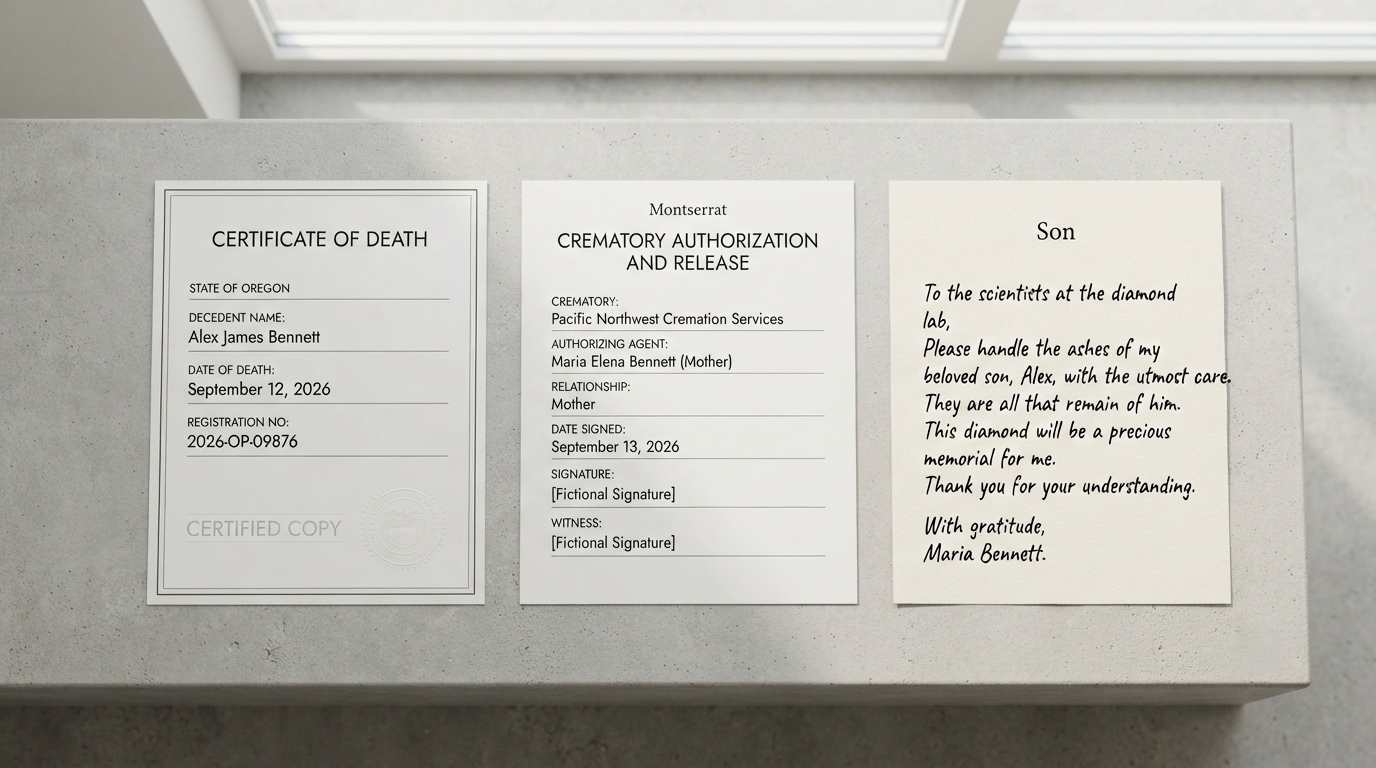
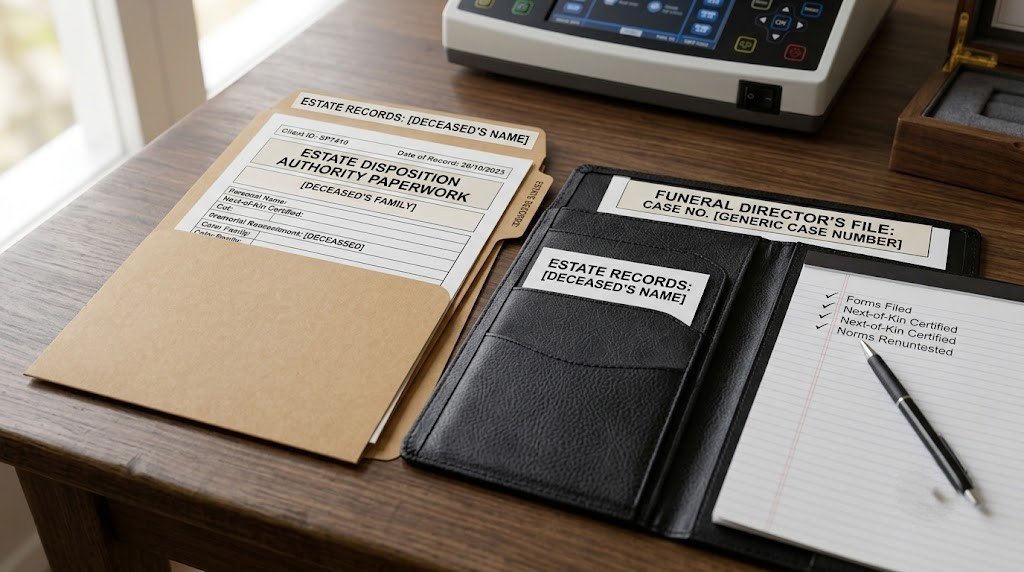
Each state writes its own order of priority for who may direct what happens to a person’s remains, and a parent is not automatically at the head of that list where an adult son is concerned. A surviving husband or wife commonly comes first; adult children of his own may sit ahead of you. Anything he set down himself, a will, a disposition directive, a form signed at the funeral home, can rearrange that order entirely, which is why the paperwork is worth reading rather than recalling.
The practical move is a phone call, not a lawsuit. A funeral director in the state where he died will usually explain the order at no charge, and an attorney licensed there can confirm what a laboratory would need. Neither conversation commits you to a memorial diamond for your son.
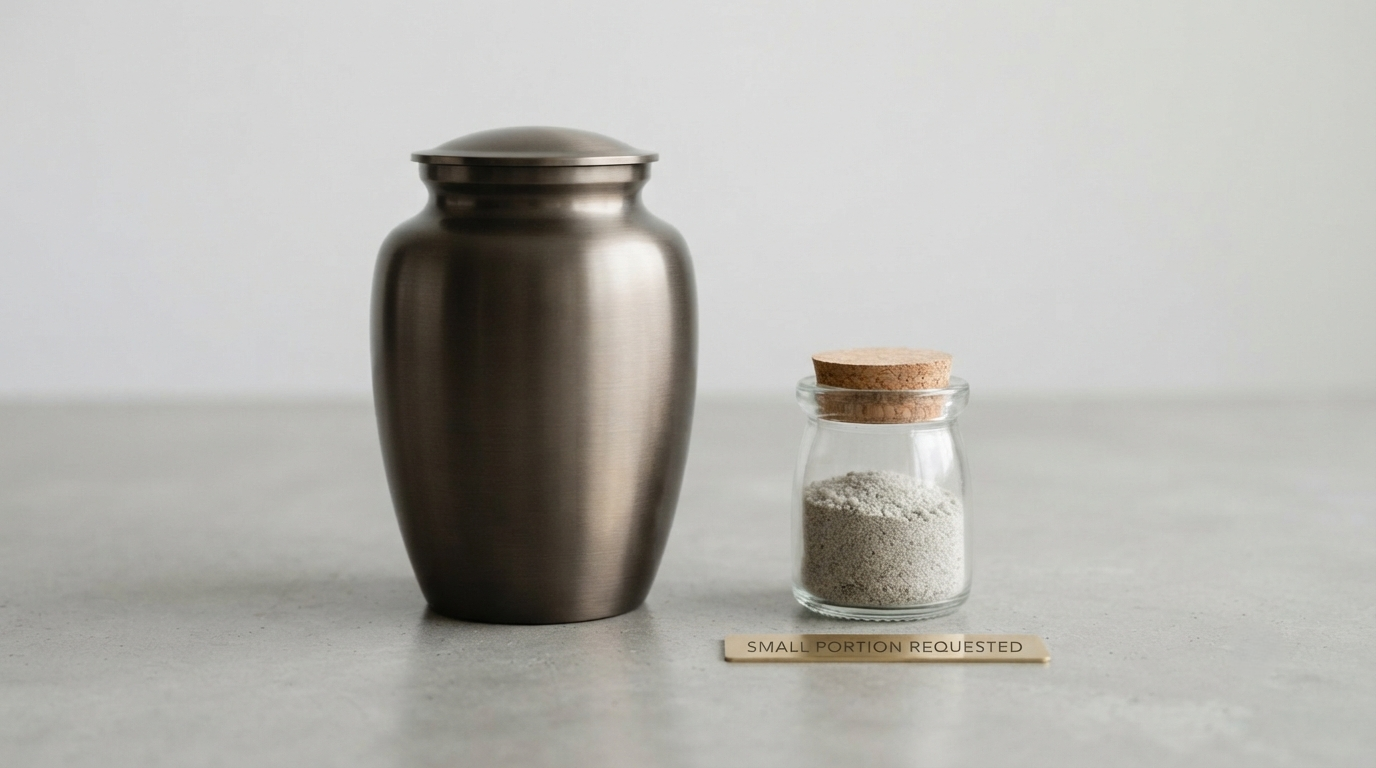
If someone else holds that authority, it is not the end of it. The request simply goes to them, and one small portion, with nothing else about his arrangements changing, is usually easier to grant than parents expect.
Step 2: His Ashes, His Hair, or Both?
This is the decision most parents do not know they have, and it changes everything downstream in a memorial diamond for your son.
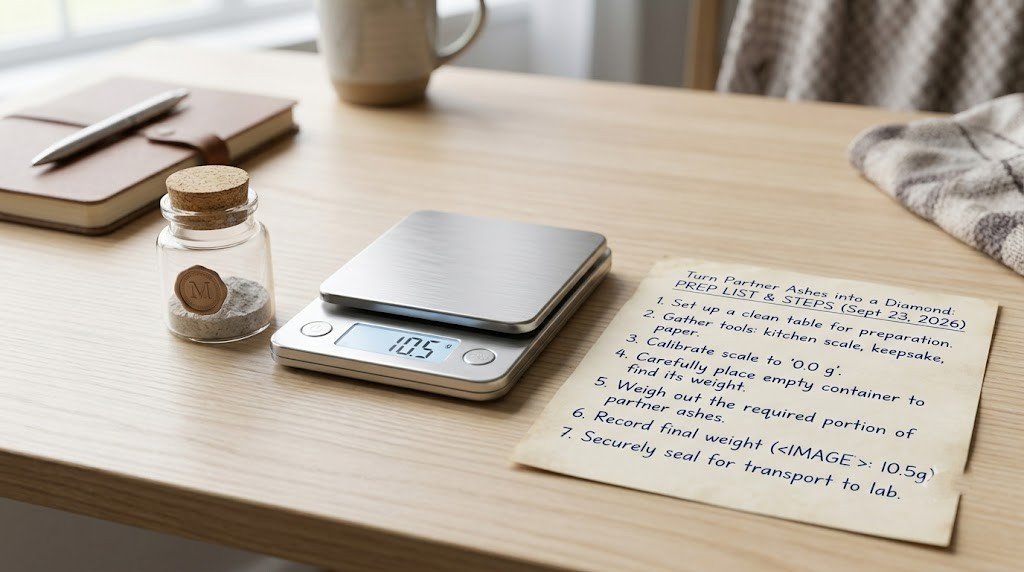
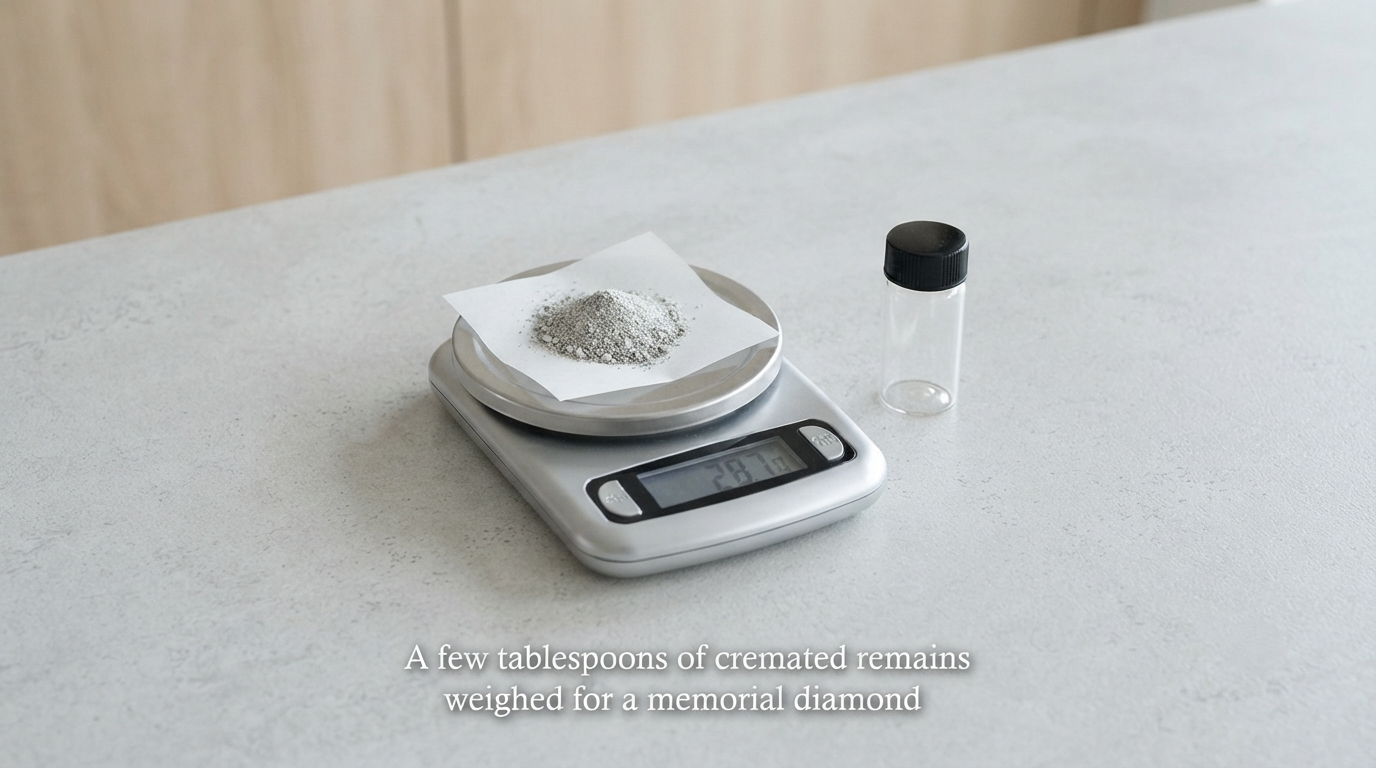
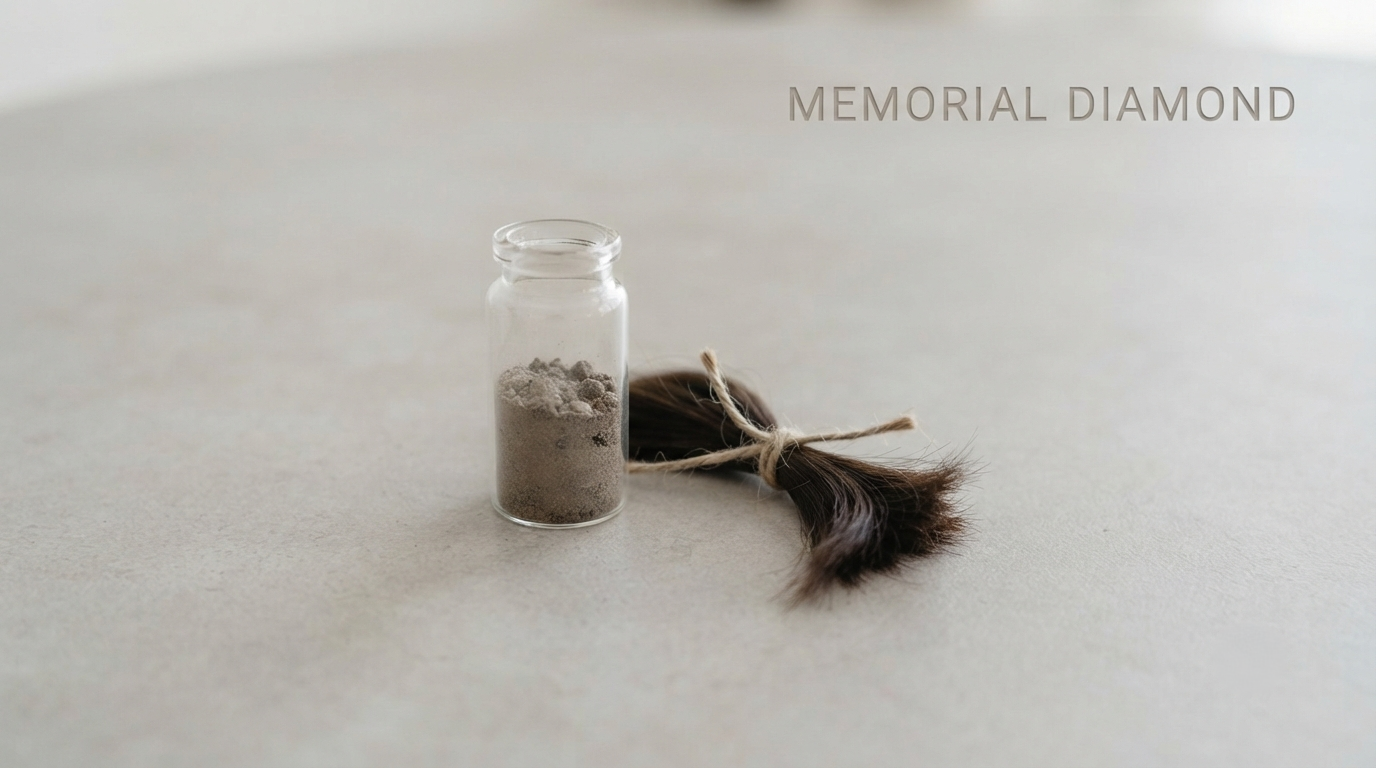
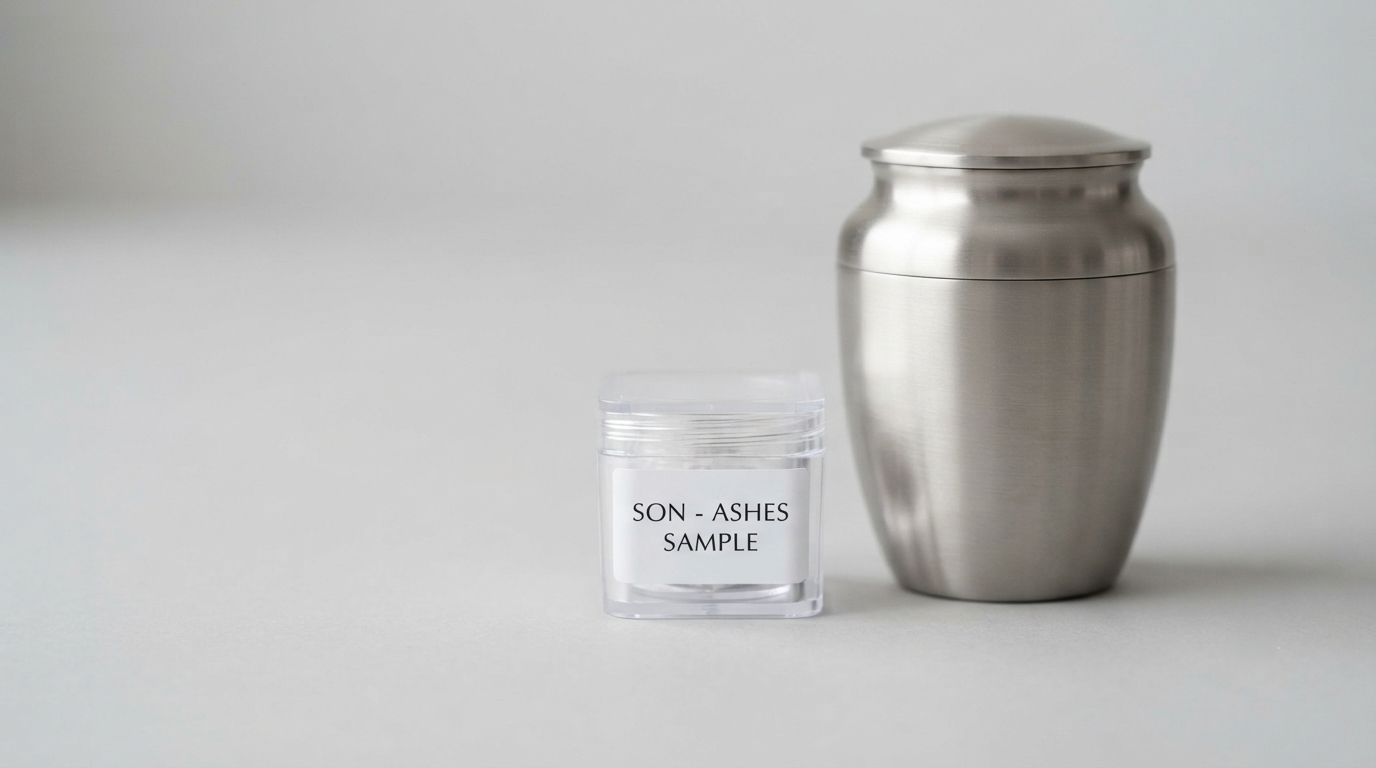
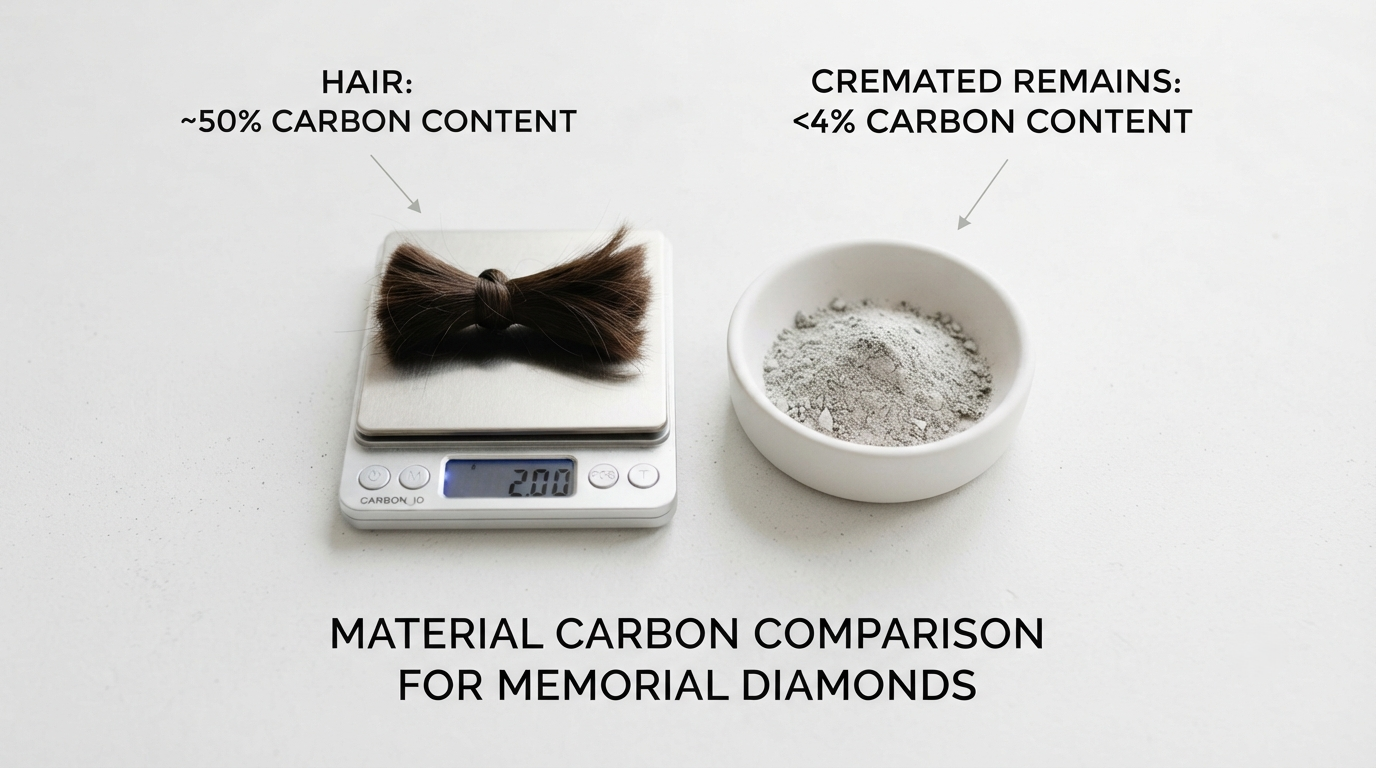
Ashes. Cremated remains are mostly the mineral scaffolding of bone, so carbon is a sliver of the total, between 0.5% and 4% by weight. Industry wide a laboratory asks for a few tablespoons up to roughly 4 oz, about 100 g: against several pounds, a portion most families cannot see missing. How much ash one stone takes gives the weights.
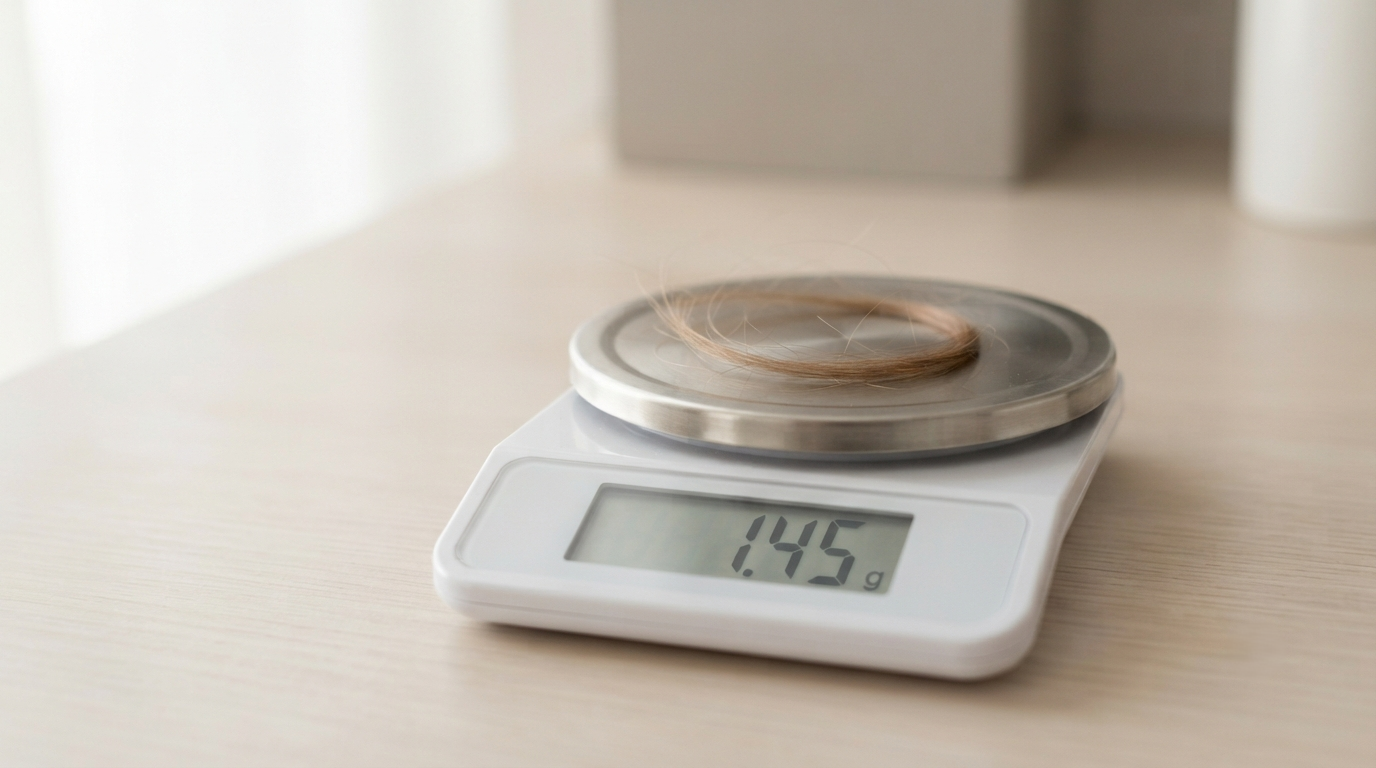
Hair. Built from keratin, hair runs to roughly 50% carbon by weight, far richer than ash, so very little is needed, often a small lock. It requires no cremation, which makes a memorial diamond for your son possible when he was buried, when the ashes were scattered years ago, or when someone else holds the urn. How much hair is enough covers the quantity.
Both. Some families submit both toward a memorial diamond for your son. Ask any provider how they handle a combined submission before assuming it works as you imagine.
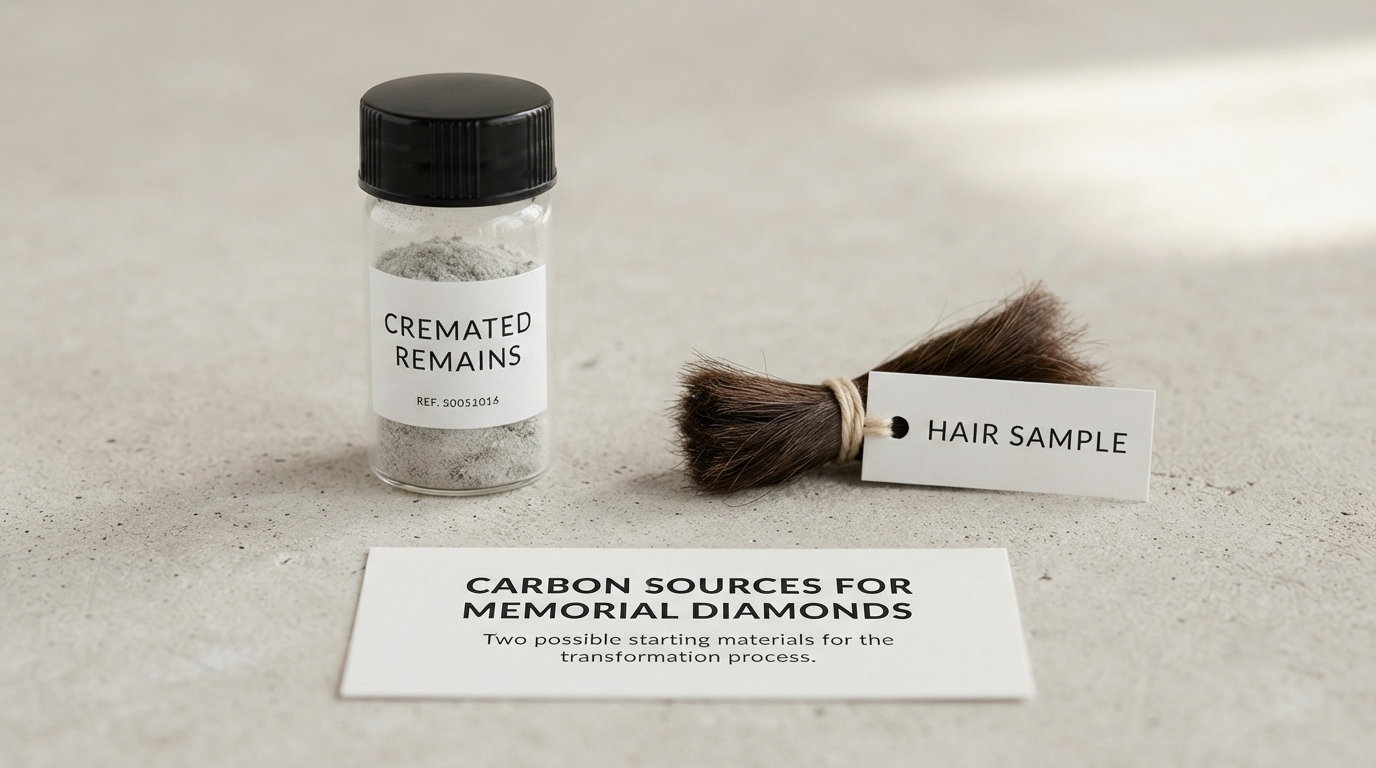
One honesty point belongs in this step. On the ash route, the carbon recovered from him typically ends up as roughly 10% to 15% of the finished stone’s mass, with published figures running as low as 3%. No comparable figure is published for hair, or for a blended submission, so ask a provider for theirs in writing rather than carrying the ash number across. A stone holds a real, traceable share of his own carbon, never the whole of him, which the chemistry does not allow.
Step 3: How Much to Commit, and What to Keep Back
Of the six steps toward a memorial diamond for your son, parents regret this one most, almost always in the same direction: they wish they had kept more back.
Decide the reserve first. A memorial diamond for your son consumes its portion permanently, and none of it returns as ashes afterward. Whatever stays in the urn keeps every other option open, burial later, scattering later, a second stone later, a keepsake for a sibling who is not ready to say what they want.
Questions worth answering on paper before anything is packed:
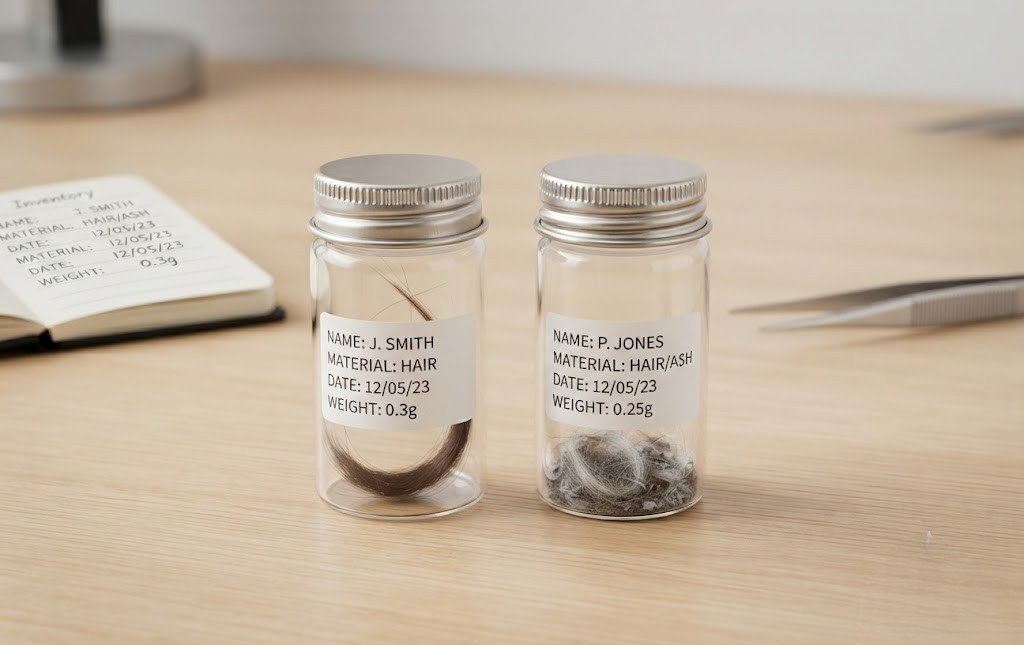
- How much is there in total? Weigh or measure before you send, so you know what proportion you are committing.
- What has already been promised to someone? A portion for his grandmother, a scattering he asked for, a burial plot already bought.
- Is a second stone plausible one day? If a sibling might want one, hold back enough for it now rather than hoping.
- What happens to material the process does not use? That is provider policy, not chemistry. Ask, and get it in writing before you ship.
None of this makes a memorial diamond for your son a risky decision. It makes it a decision you only have to take once.
Step 4: Carat and Color, What Can and Cannot Be Promised
Two things get chosen here for a memorial diamond for your son, and only one behaves predictably.
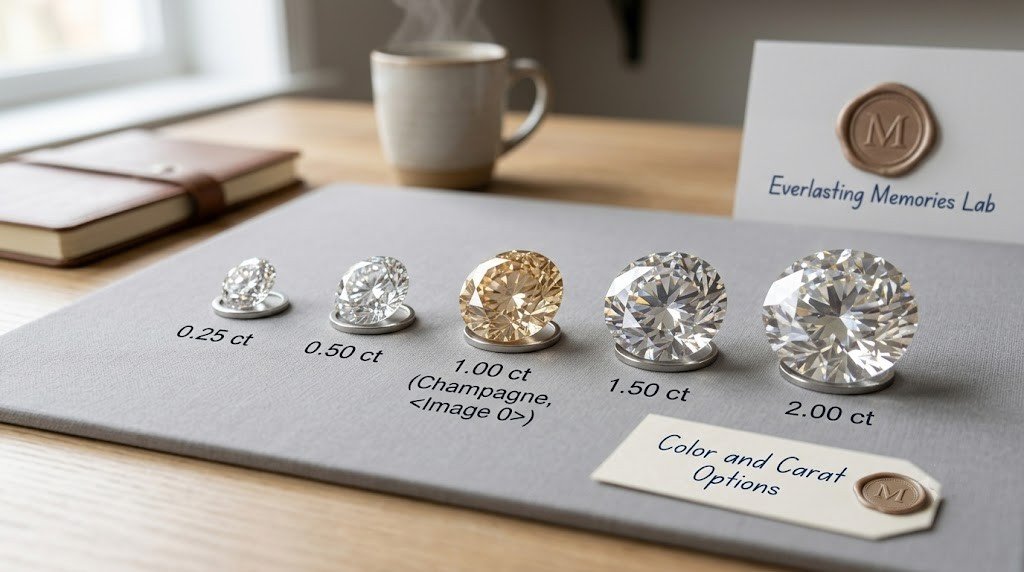
Carat is a choice you make. The industry offers stones from roughly 0.10 ct up to 5 ct and beyond, and size comes from time in the growth press, not from how much material you sent. More ashes does not mean a bigger stone. A larger carat simply means a longer wait and a higher price.
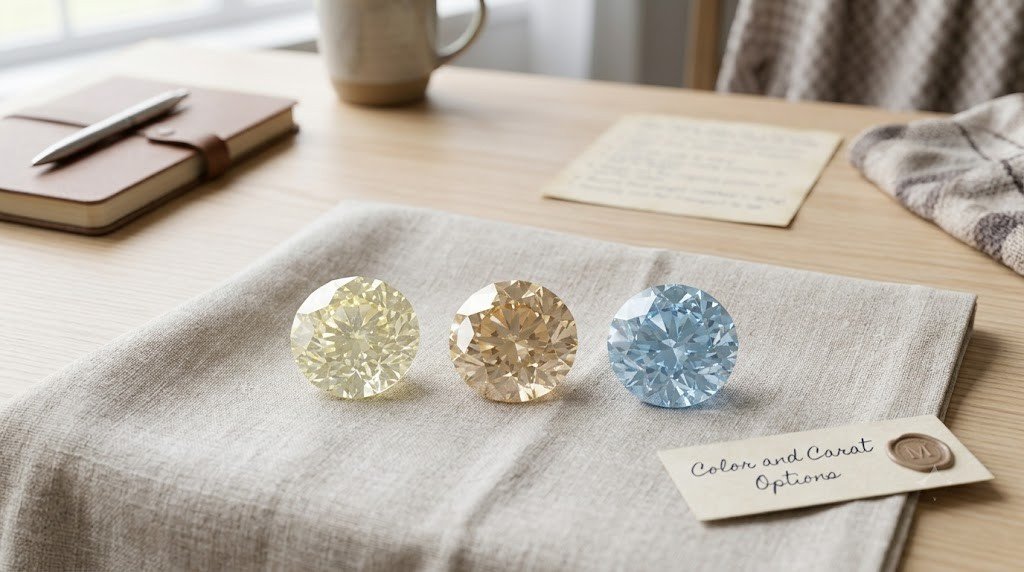
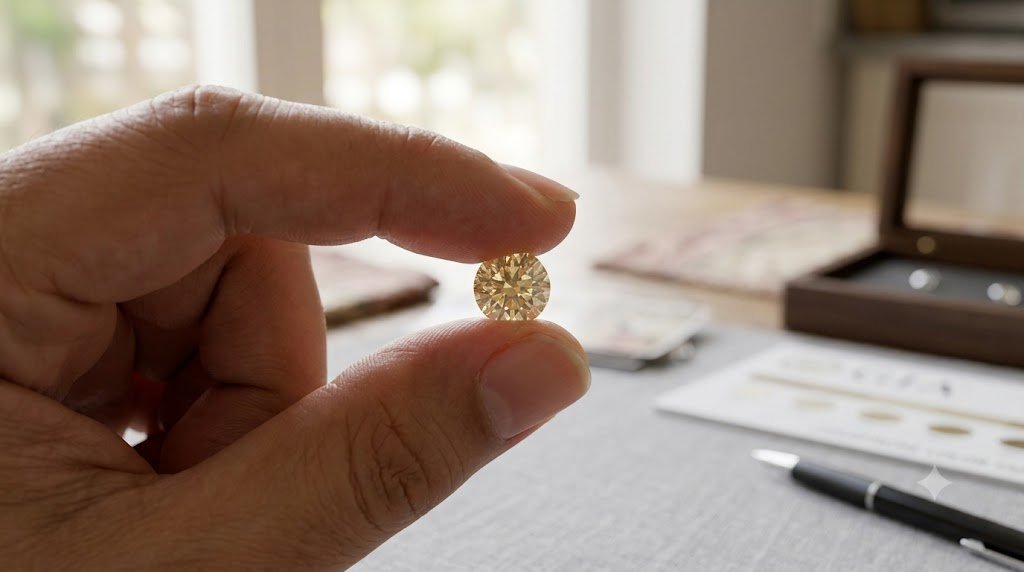
Color is largely not a choice. Trace elements present while the crystal forms set the hue: nitrogen pulls a stone toward yellow, boron toward blue, and only the absence of both leaves it colorless. Because a memorial diamond for your son grows from an organic, uncontrolled source, those traces come along, which is why stones here lean toward yellow, champagne and blue rather than white. Colorless is achievable with extra processing and costs more. What color to expect from his ashes goes further into it.
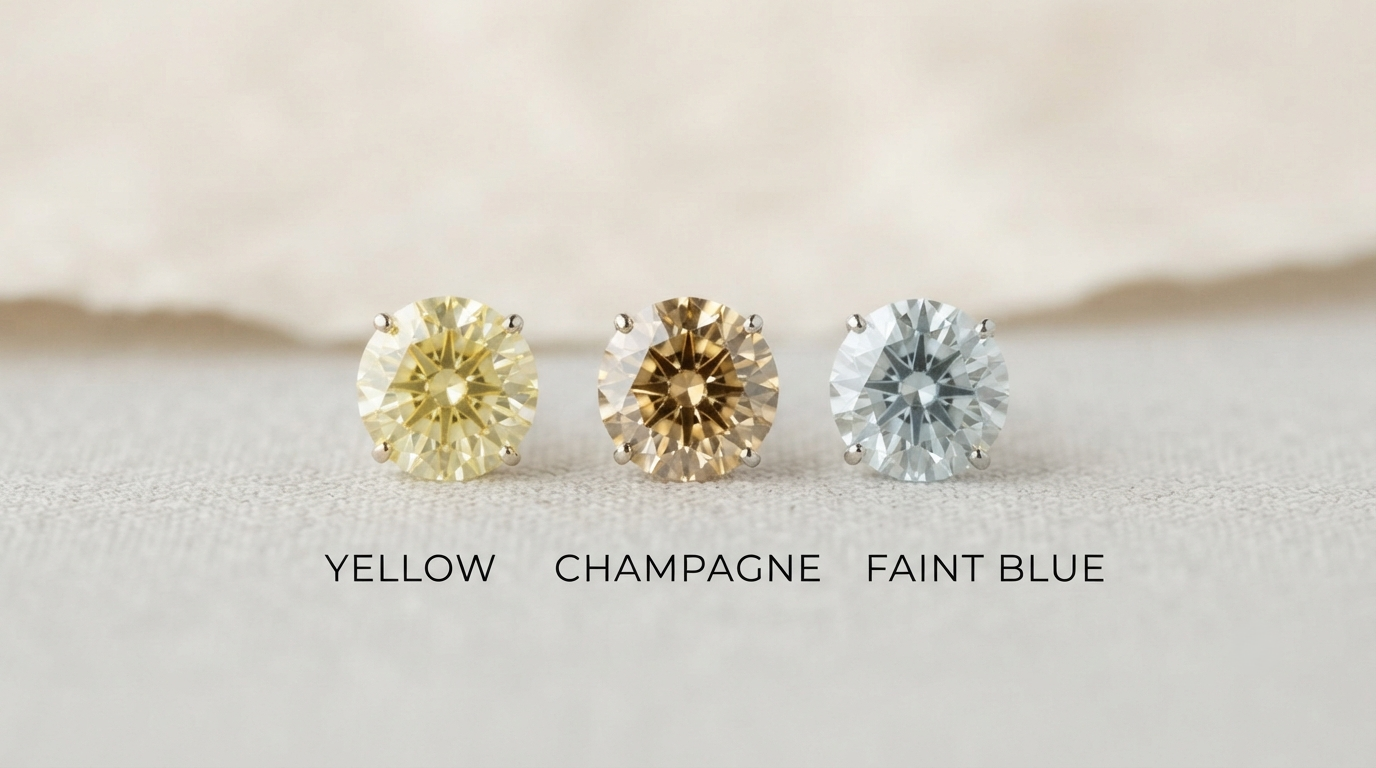
Clarity typically lands between SI2 and VVS, and the stone is assessed on the same cut, color, clarity and carat scale as any diamond. An independent grading report is optional across the industry rather than automatic, and usually priced separately.
What nobody can honestly promise you is a specific shade before the crystal exists. If a provider guarantees an exact color for a memorial diamond for your son, ask them in writing how.
Step 5: Choosing a Provider and What to Ask
By this point a memorial diamond for your son stops being a question about diamonds and becomes one about who you are trusting with something irreplaceable.
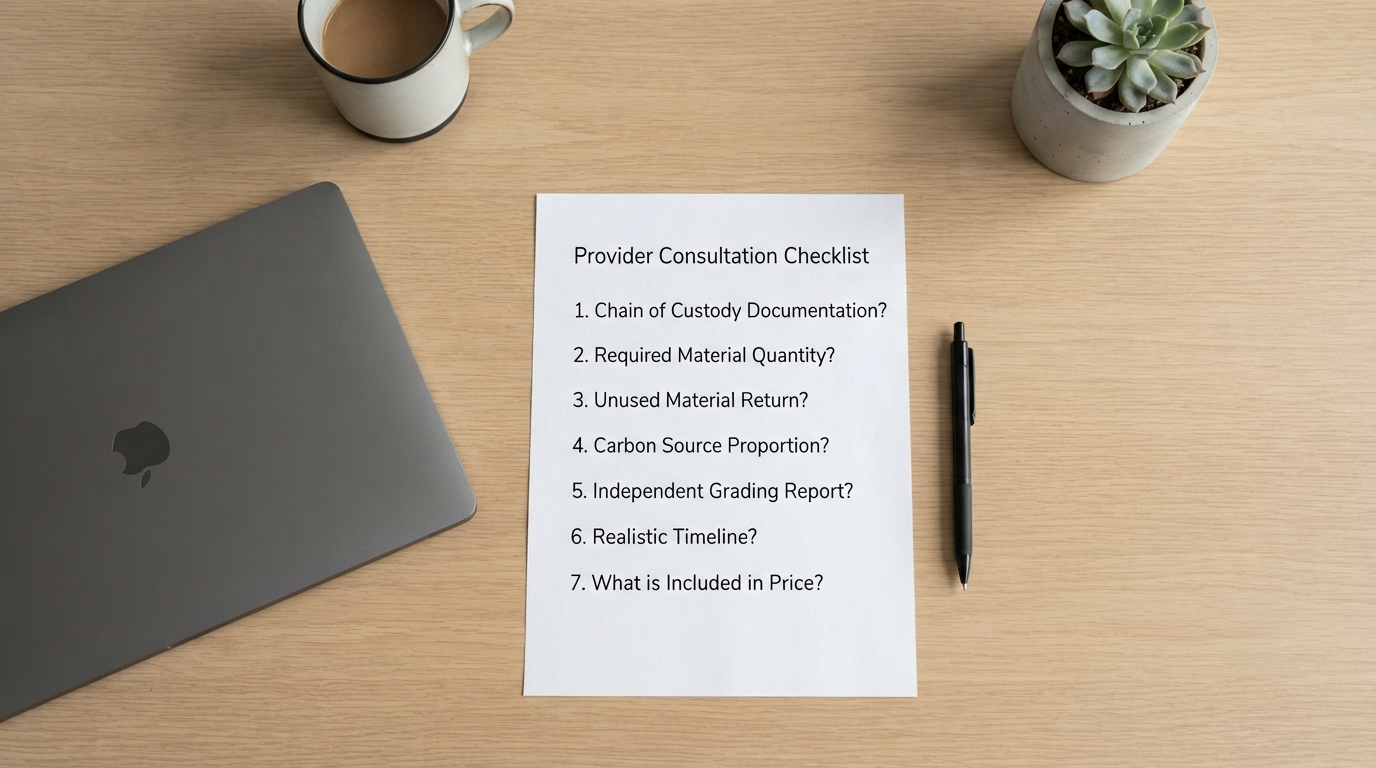
Ask every provider the same list, in writing rather than on a call:
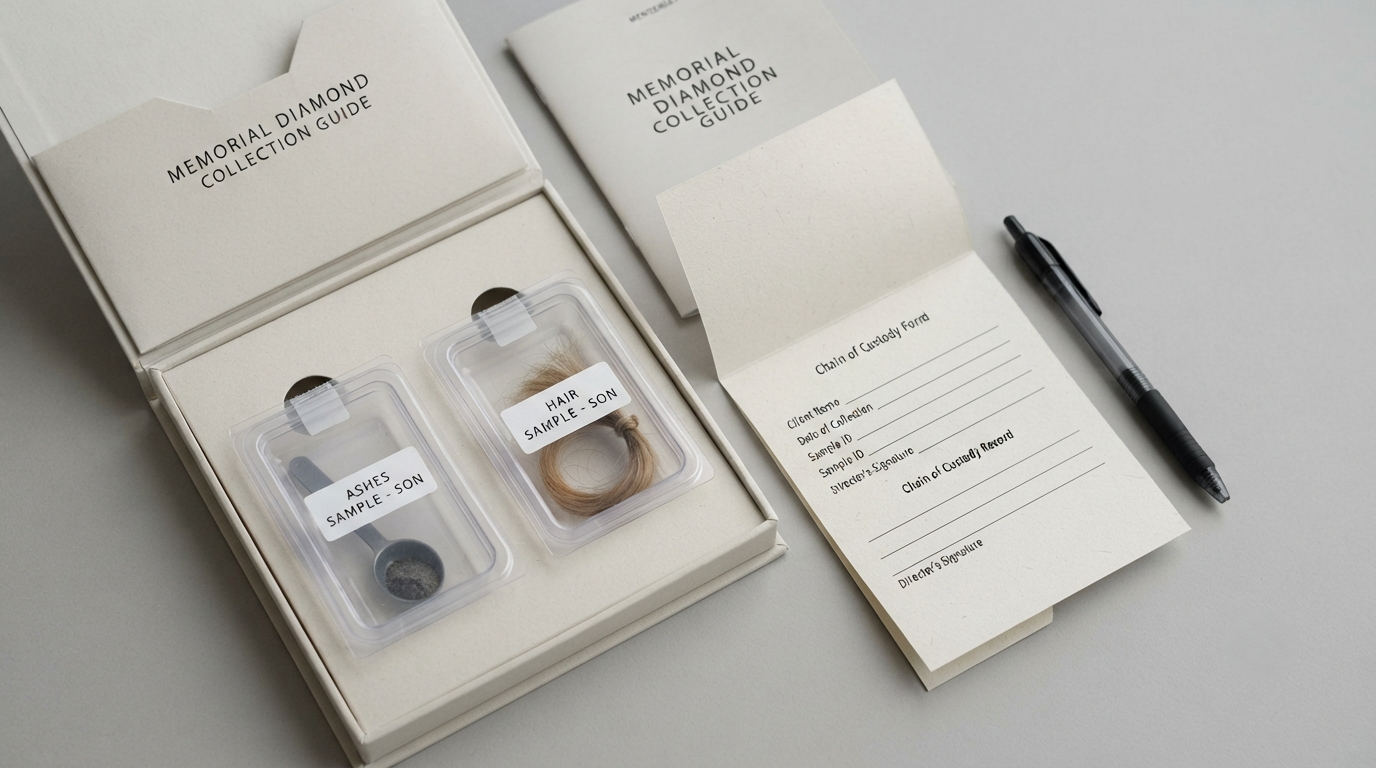
- How is chain of custody documented, from the moment material arrives to the moment the stone ships?
- What exactly do you need, in grams or ounces, and what happens if I send less?
- Is unused material returned automatically, or only if I ask?
- What proportion of the finished stone is his carbon, and what is that figure based on?
- Is an independent grading report included or extra, and which laboratory?
- What is the realistic timeline, not the best case, and what happens if a growth run fails?
- What is included in the quoted price, setting, engraving, shipping, insurance while it is with you?
A provider who answers all seven plainly about a memorial diamond for your son is telling you something useful about themselves. So is one who deflects. Questions worth asking before you commit sets out the full route so you can tell an ordinary answer from an evasive one.
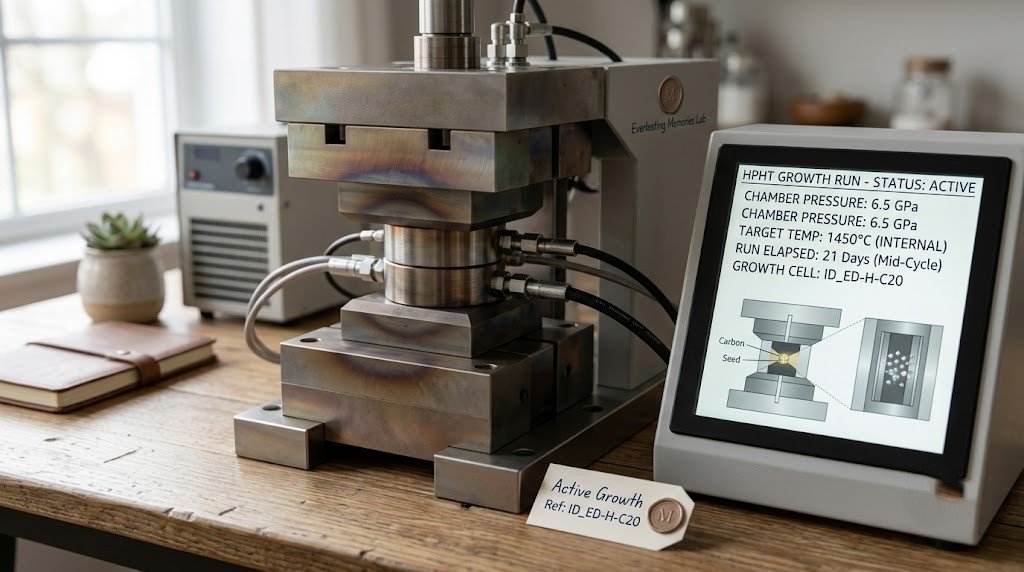
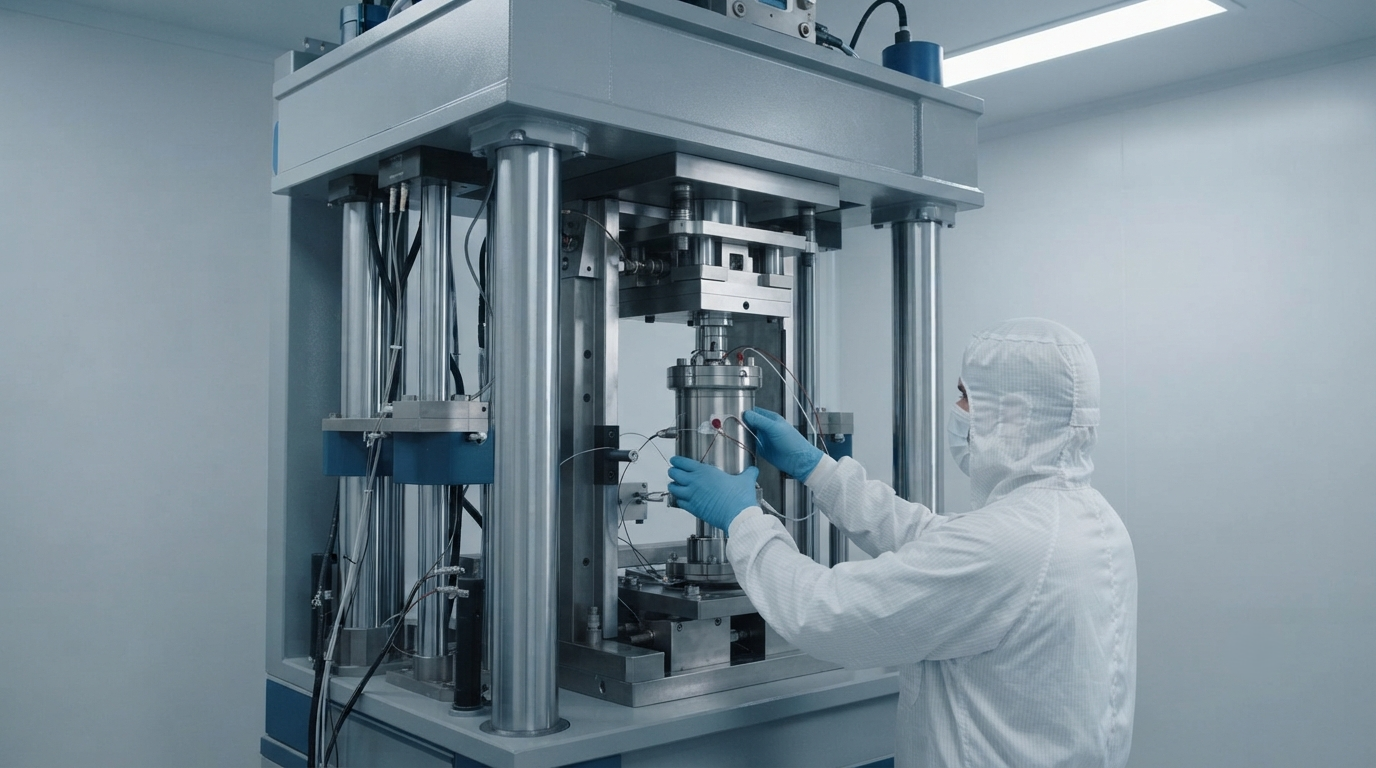
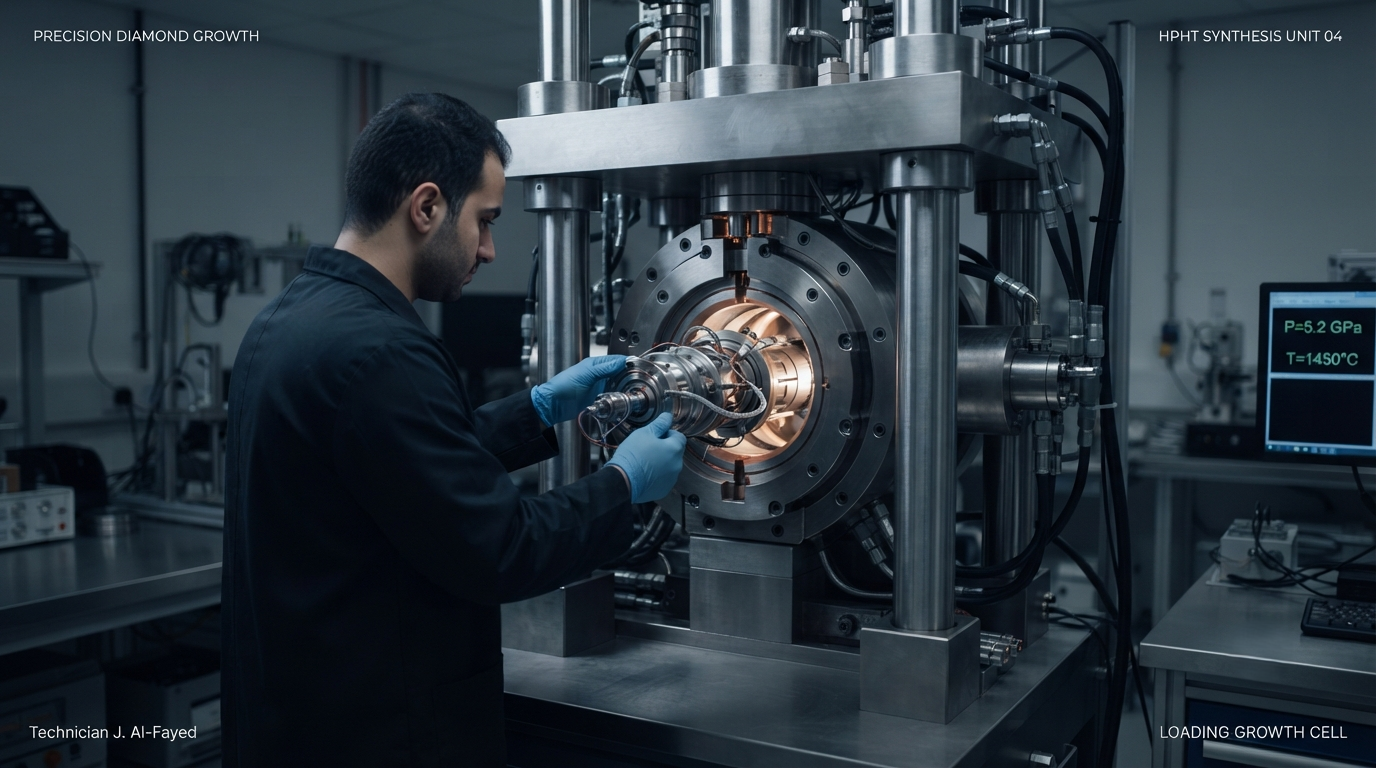
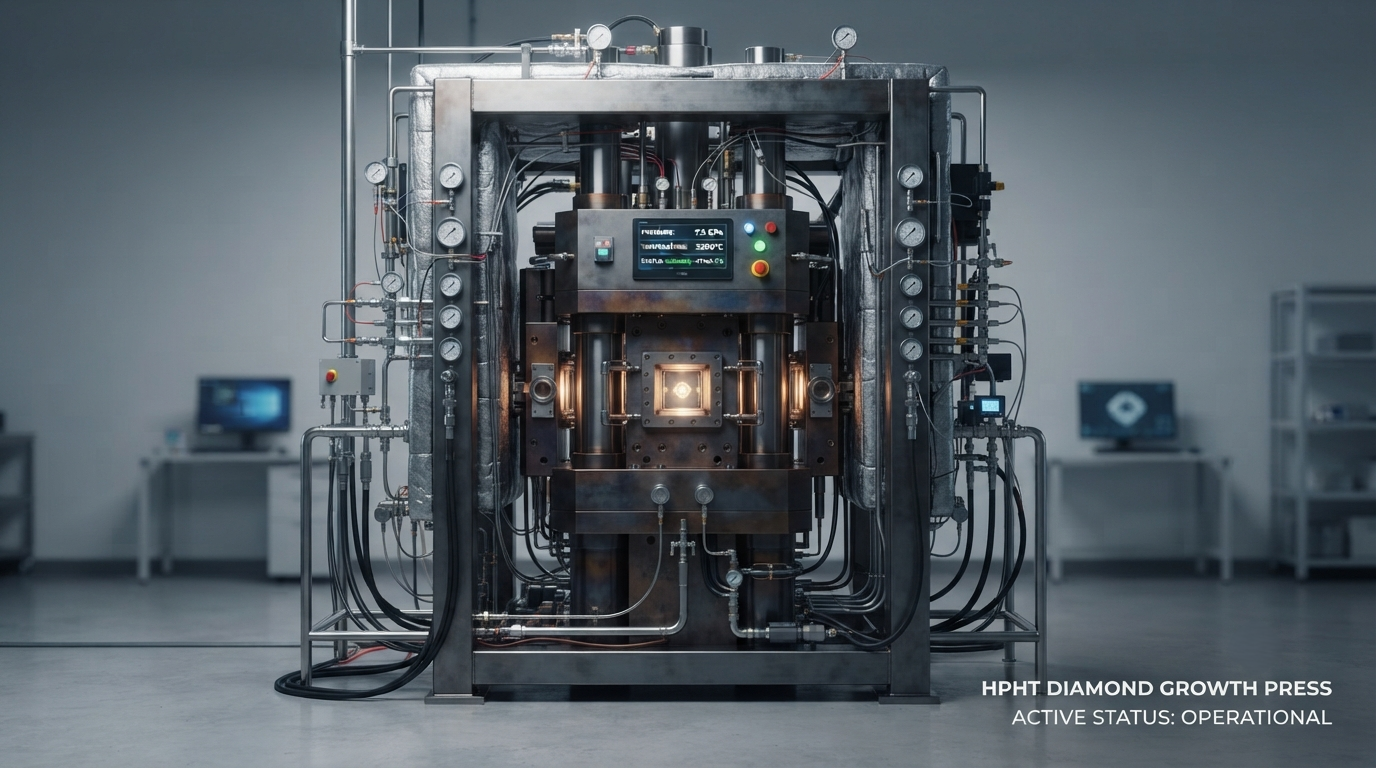
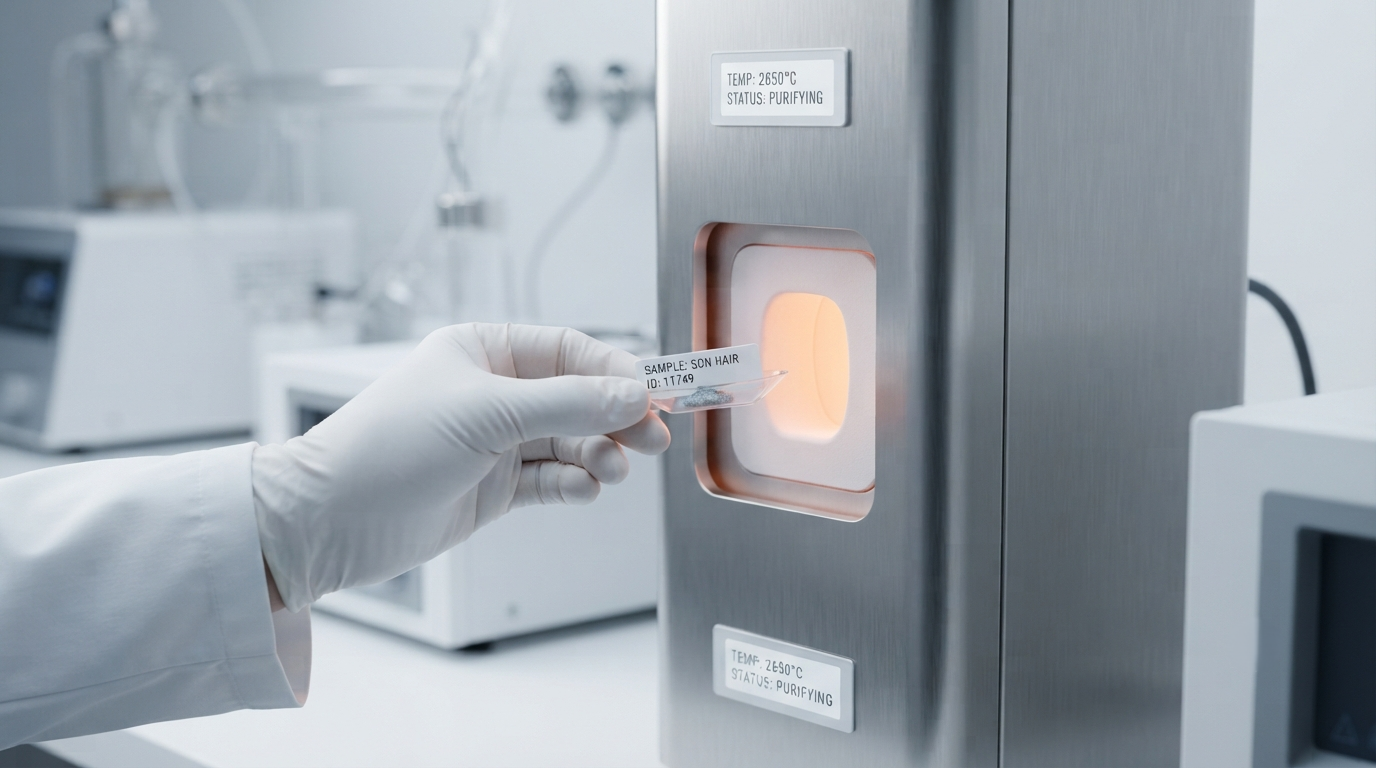
The growth itself is standard industrial practice, an HPHT press recreating mantle like pressure and heat, roughly 6 to 8 GPa at 1,400 to 2,500°C, around a tiny seed. What varies between companies is not the physics but the care, the documentation and the honesty.
Step 6: Understanding the Timeline First
Know the shape of the wait before you start it, because the wait for a memorial diamond for your son is what families are least prepared for.
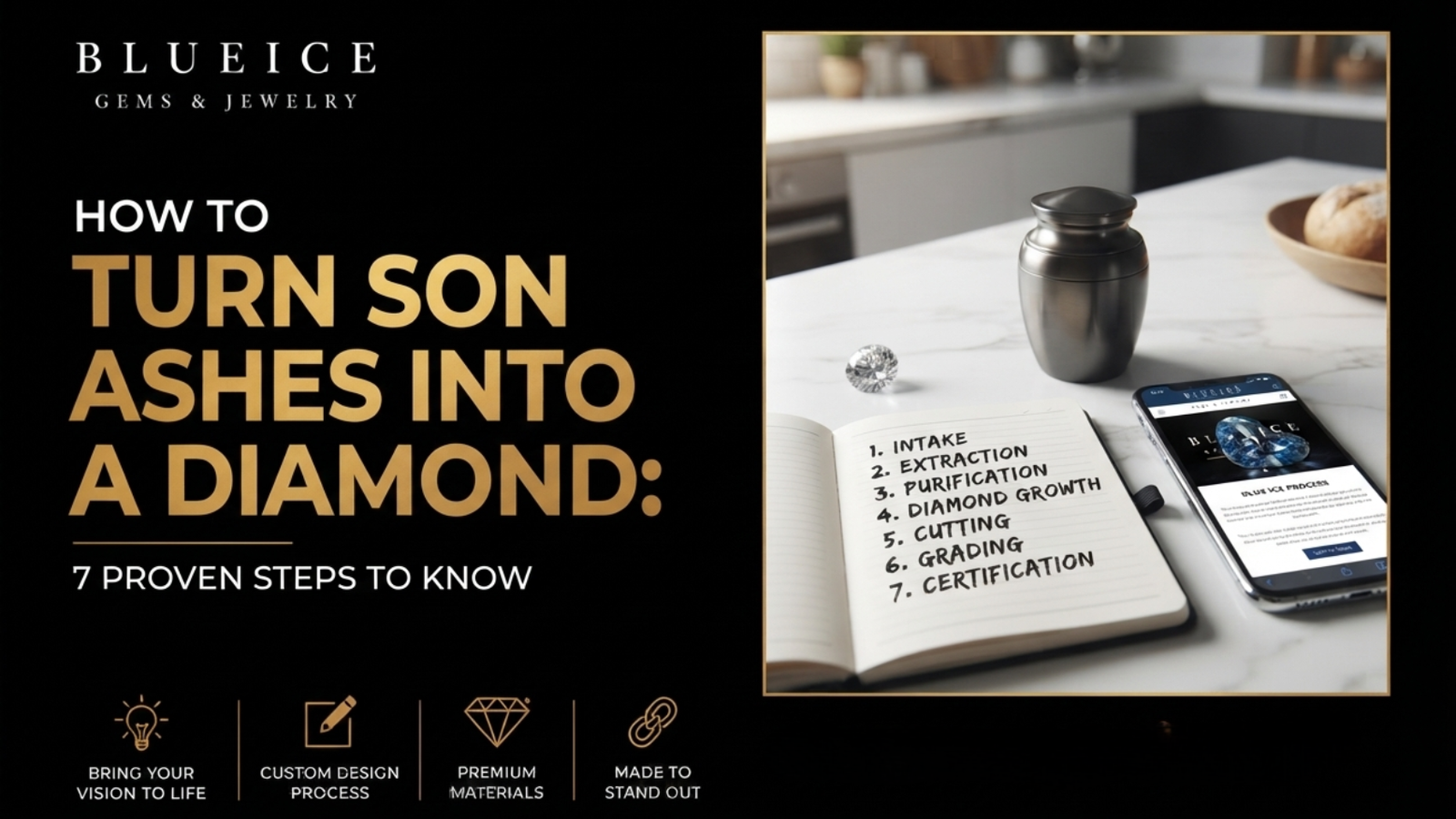
Expect six to ten months from the laboratory receiving material to a finished stone, and as much as a year for a large carat or an unusual color. That span covers extraction and purification, conversion to graphite, the growth run, cutting, polishing and any grading. None of it compresses usefully. How the months break down sets out what happens when.
Two practical points about timing a memorial diamond for your son. If a date matters, his birthday, an anniversary, a wedding he should have been at, say so at the start and ask whether it is realistic. And the package tends to arrive months after the phone stopped ringing, which most parents find easier rather than harder.
The Six Steps at a Glance
| # | Step | What it settles | What you need in hand |
|---|---|---|---|
| 1 | Authorization | Whether you may proceed at all | The priority order in his state; anything he left in writing |
| 2 | Ashes, hair or both | Which route is open to you | What you actually hold, and where it is |
| 3 | How much to commit | What stays yours afterward | A total weight or volume, and any prior promises |
| 4 | Carat and color | Size, wait and price | A budget range and a realistic view of color |
| 5 | Provider | Who you are trusting | Seven written answers from each company |
| 6 | Timeline | When it arrives | Any date that genuinely matters to you |
Worked in that order, choosing a memorial diamond for your son stops being one enormous decision and becomes six small ones, most of which are reversible right up until material is posted.
What Does a Memorial Diamond for Your Son Cost?
Enough that a memorial diamond for your son deserves a straight answer rather than a quote form.
Across the industry, entry tier stones of about 0.10 to 0.25 ct sit somewhere near $1,500 to $3,500. The 0.5 to 1 ct range commonly runs $5,000 to $15,000. Stones of 2 ct and above climb into $20,000 to $75,000 and beyond. Colorless runs appreciably higher than yellow, blue or champagne of the same weight; settings, engraving, grading and shipping sit outside the quoted stone price. What drives the price breaks each factor down.
Three things about the money that are easy to miss when comparing a memorial diamond for your son against other options:
- A smaller stone is not a lesser one. The proportion of his carbon does not rise with carat; you are buying growth time, not more of him.
- The urn does not go away. Most of the ashes remain, so this is an addition rather than a replacement. How a stone and an urn genuinely compare lays both out side by side.
- Nothing obliges you to buy the biggest you can afford. A quarter carat stone set simply is a complete answer, and a common one.
What If He Was Already Buried or Scattered?
Many parents arrive convinced a memorial diamond for your son is a year out of reach. Usually it is not.
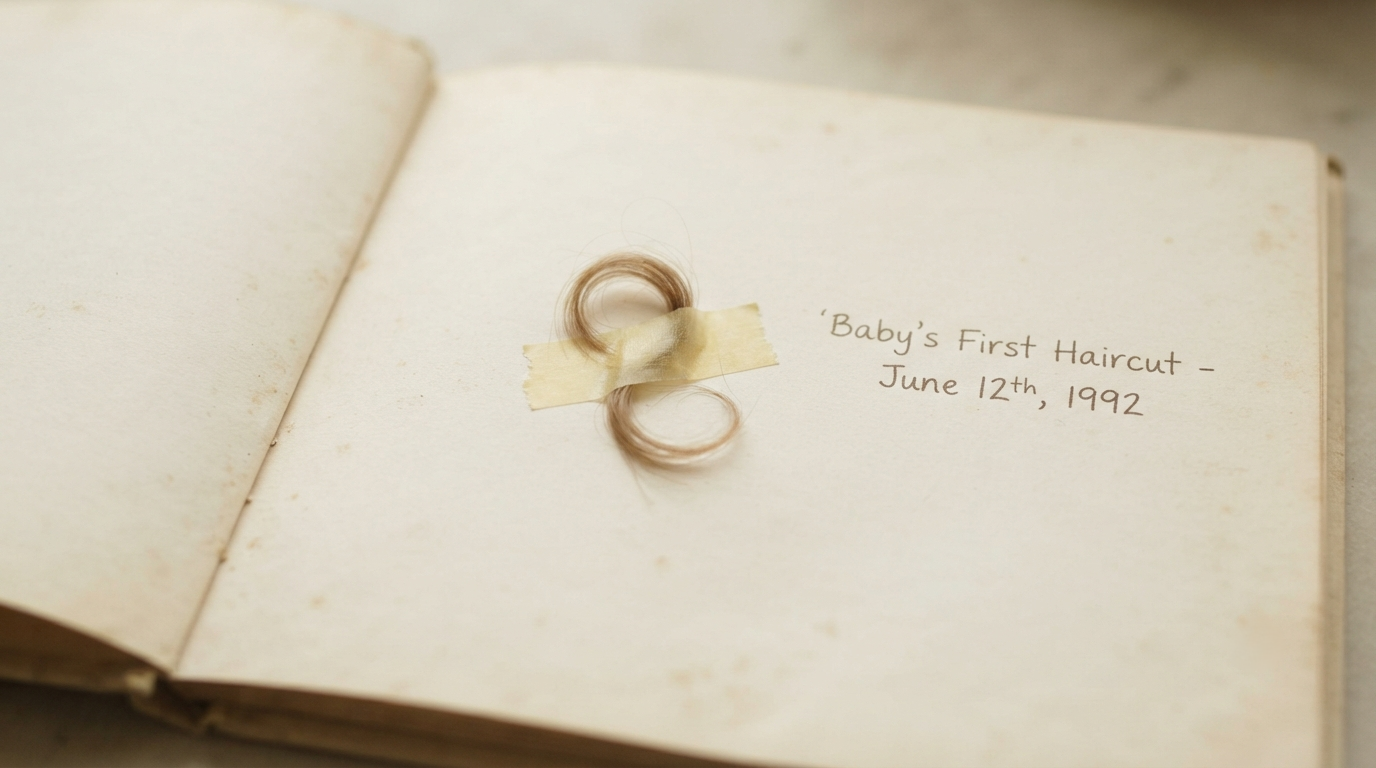
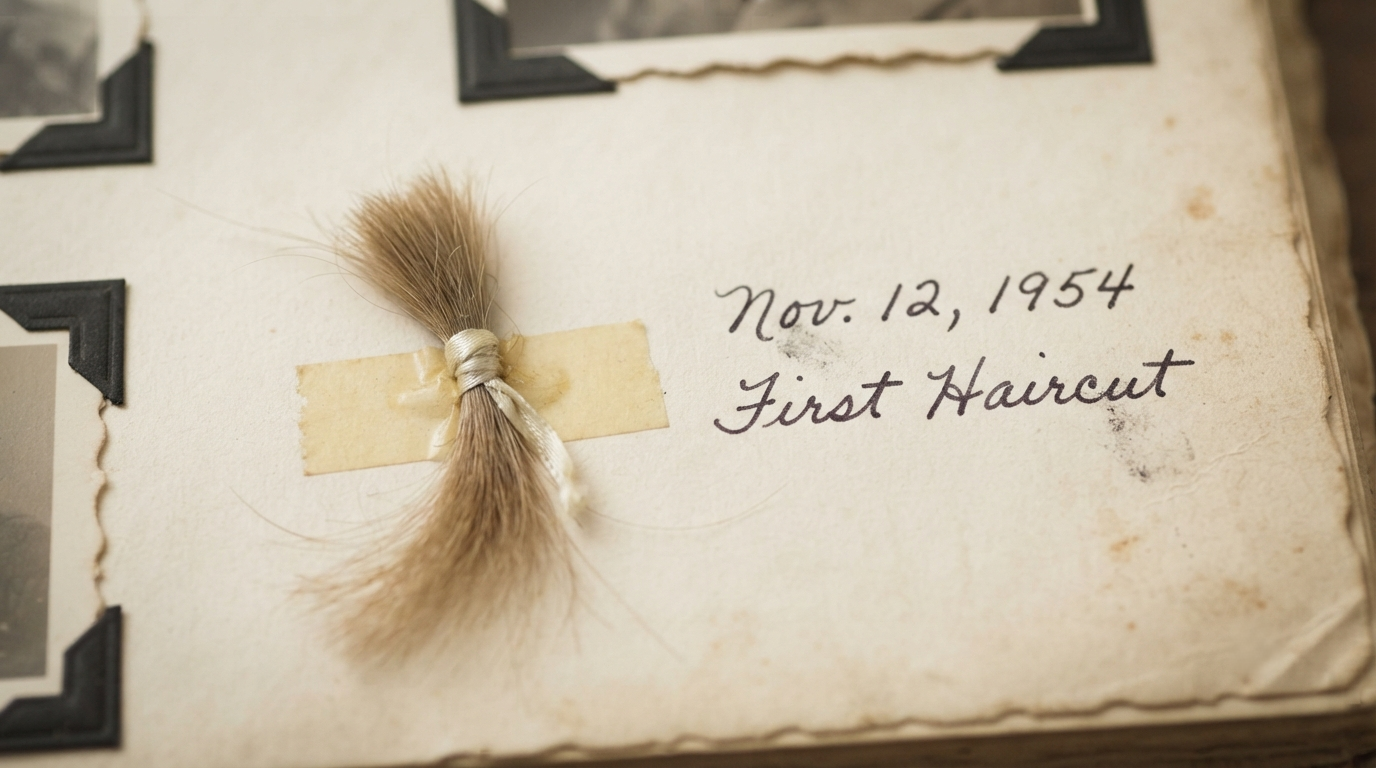
If he was buried rather than cremated, ashes were never the route. Hair always was. A lock kept from a childhood haircut, a sample from a hairbrush, or hair the funeral home retained can each serve as a carbon source, which makes a memorial diamond for your son possible without disturbing anything.
If his ashes were scattered, ask whether anyone kept a keepsake portion, a small vial given to a grandparent, a pinch in a locket. One of those is often enough.
If his remains are interred in a columbarium or a grave, removing a portion is a question for the cemetery rather than a laboratory. Ask them in writing before building a plan around the answer.
And if genuinely nothing was kept, that is worth saying plainly rather than dressing up: a memorial diamond for your son needs physical material, and without it the answer is no. That is a real limit, not a sales obstacle.
What If Your Family Is Divided?
Assume nothing about agreement when a memorial diamond for your son is on the table. Parents divorce, siblings differ, and grief rarely arrives on the same schedule for two people in one house.
A few things that help when a memorial diamond for your son is contested rather than settled:
- Separate authorization from wanting. Who may decide is law and paperwork; who wants what is a conversation. Conflating them makes both harder.
- Ask for a portion, not a change of plan. A request leaving burial, scattering or the urn exactly as agreed is far easier to say yes to.
- Let people want different things. One stone each, separately chosen and separately paid for, removes the need for consensus, whether several relatives can each have one covers how.
- Do not press a no. Material keeps. A relative not ready this year may be ready in three.
Where two parents genuinely cannot speak to each other at the moment, it is entirely workable for each to deal with a provider separately. Nobody has to negotiate a memorial diamond for your son through the other.
Frequently Asked Questions
Is it too late if his ashes were already scattered?
Often not. Ask whether any relative kept a keepsake portion, which is more common than families remember, and ask whether a lock of hair exists anywhere, in a baby book, a hairbrush, or with the funeral home. Either can work.
Do I have to decide within the first year?
No. Cremated remains and hair both keep indefinitely, so there is no window closing on you. Many parents wait one, three or ten years, and nothing about the process penalizes that. Decide on a memorial diamond for your son when you actually want to.
Can I start with hair and use ashes later?
Usually, since the two routes are independent of each other. Ask a specific provider whether they accept each separately, what quantity each requires, and whether a second commission later is possible from material you are still holding.
How small a stone is worth doing?
Any size in the offered range. The share of his carbon does not increase with carat, so a 0.25 ct stone carries the same meaning as a 2 ct one, it simply spent less time growing and costs considerably less.
What should I ask before sending anything?
Chain of custody, exact quantity required, whether unused material is returned, what proportion of the stone is his carbon, whether grading is included, the realistic timeline, and precisely what the quoted price covers. Ask for every answer in writing.
His father and I want different things. What now?
Two stones settle more arguments about a memorial diamond for your son than one compromise does. Each of you commissions separately, chooses your own size, color and setting, and pays your own invoice, with no obligation for either choice to resemble the other.
Final Thoughts on Choosing a Memorial Diamond for Your Son
Take the order rather than the details. Authorization, then material, then how much, then size and color, then who you trust, then when. Worked that way, a memorial diamond for your son is a sequence of ordinary decisions rather than one impossible one.
And take the second thing: none of it is urgent. The common regret here is not the wrong color or the wrong carat, it is having decided quickly, in the worst weeks, about something that could not be undone.
His ashes keep. A lock of his hair keeps. The providers will still be there. If a memorial diamond for your son is right for you, it will still be right in a year, and if it is not, keeping an urn on the shelf or a grave to visit is a complete and honorable answer that most families choose.
There is no version of this that measures how much he was loved. There is only the version you can live with, made slowly, by the people entitled to make it.
Learn More About Son Memorial Diamonds
- Everything the ash route involves, start to finish
- What a stone is likely to cost at each size
- How long the whole process actually takes
- How a stone compares with keeping an urn
- Whether more than one relative can have one
Talk With Memorial Diamond
If you would like to talk through what a memorial diamond for your son could involve, without committing to anything, reach out to Memorial Diamond at memorialdiamond.us. Bring whatever you know, what was kept, who has it, and whether you have any idea what you want. Not knowing yet is a good place to start.