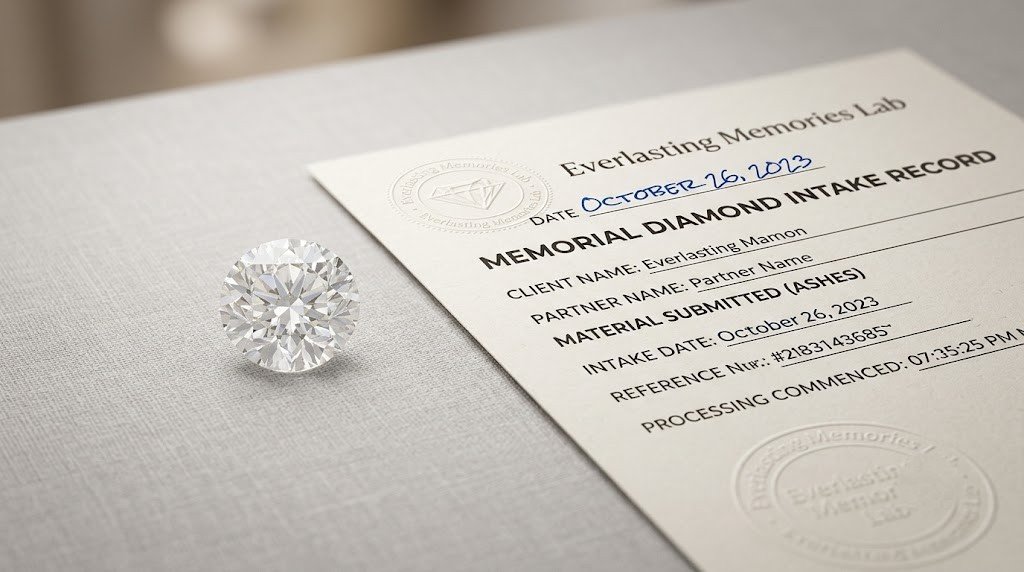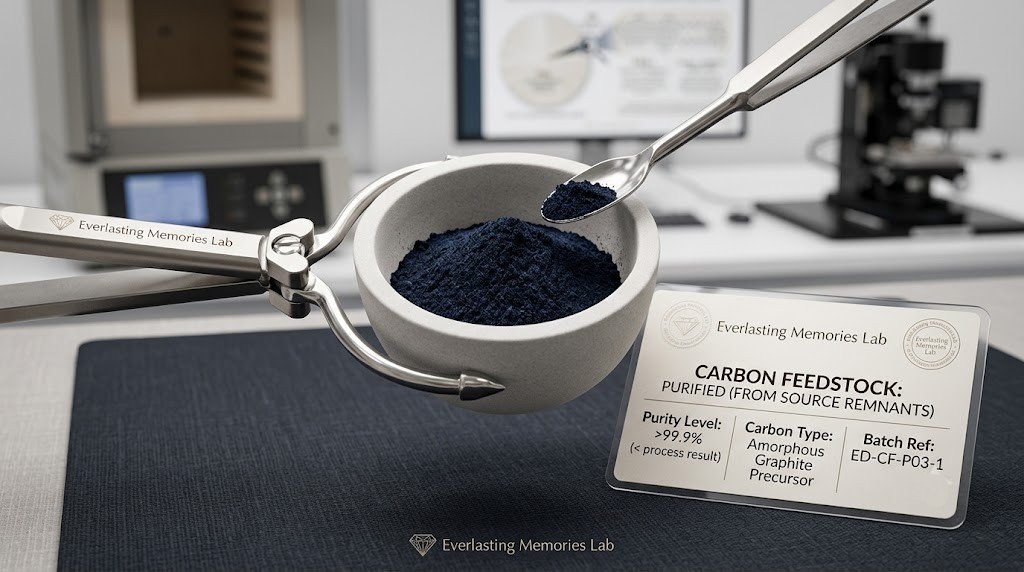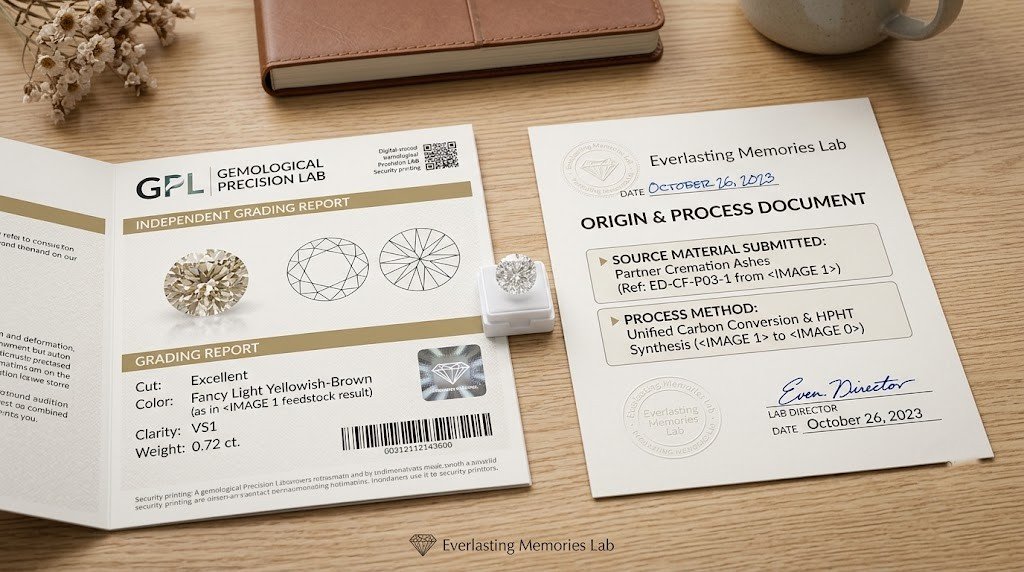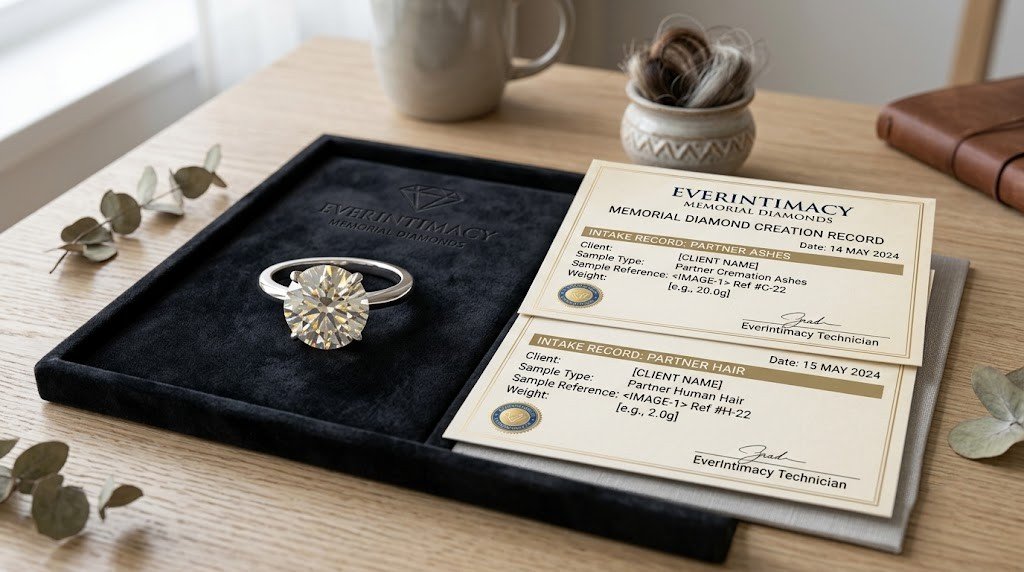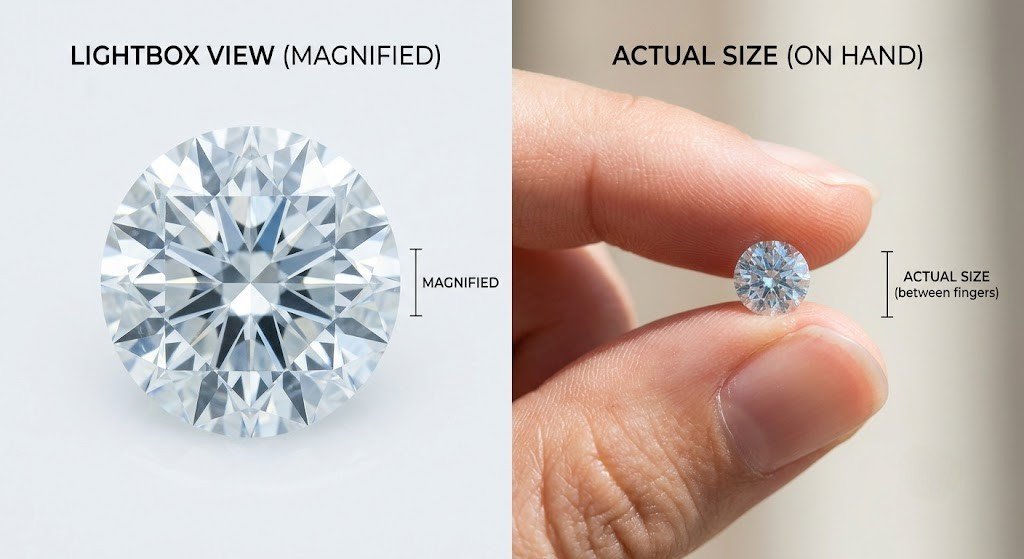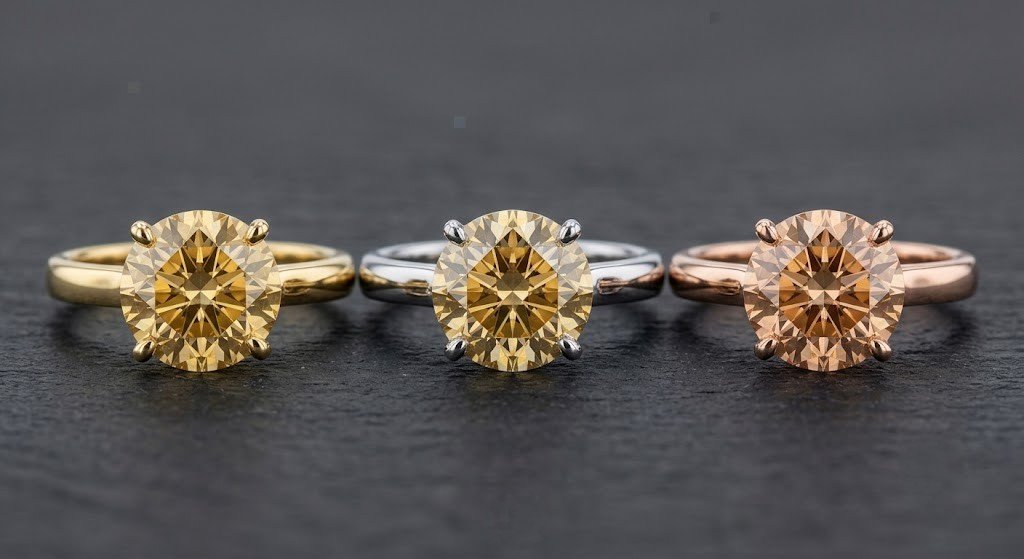
Partner ashes diamond complete guide featuring a memorial diamond, keepsake box and memorial urn

Partner Ashes Diamond: The Complete Guide

The word “partner” covers relationships that were never registered, never recognized by one family or both, or never fully known outside the two of you.

A partner ashes diamond is a real lab grown diamond, grown from carbon extracted out of a portion of your partner’s cremated remains, over six to ten months. The part that catches people out is not the science: it is standing, who is legally able to authorize what happens to the remains, which varies by state and by anything your partner left in writing, with no national rule.
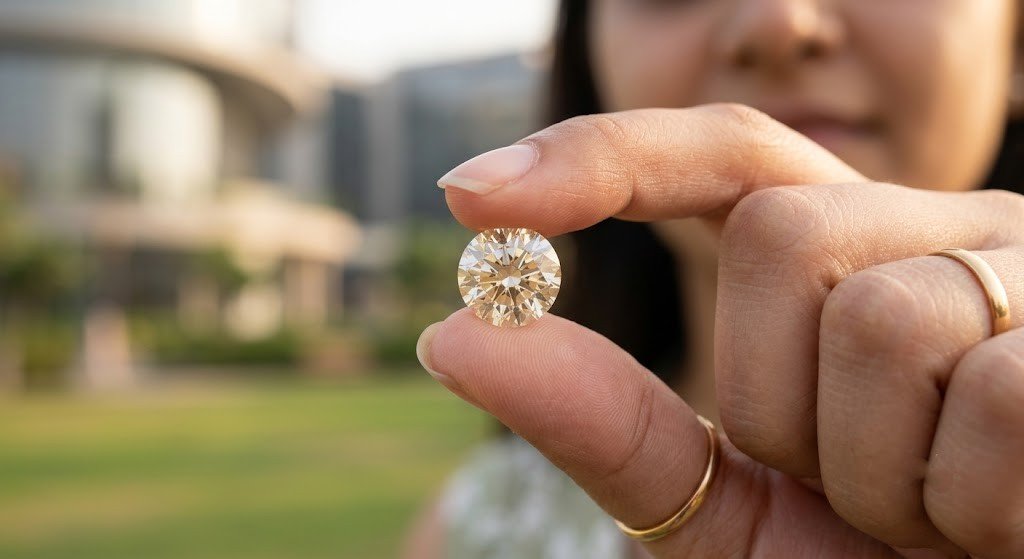
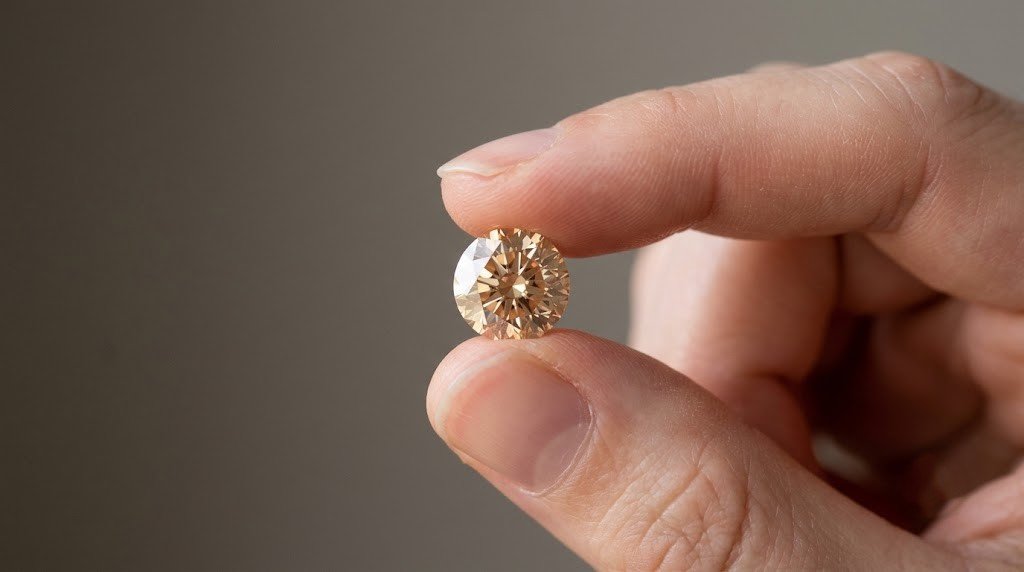
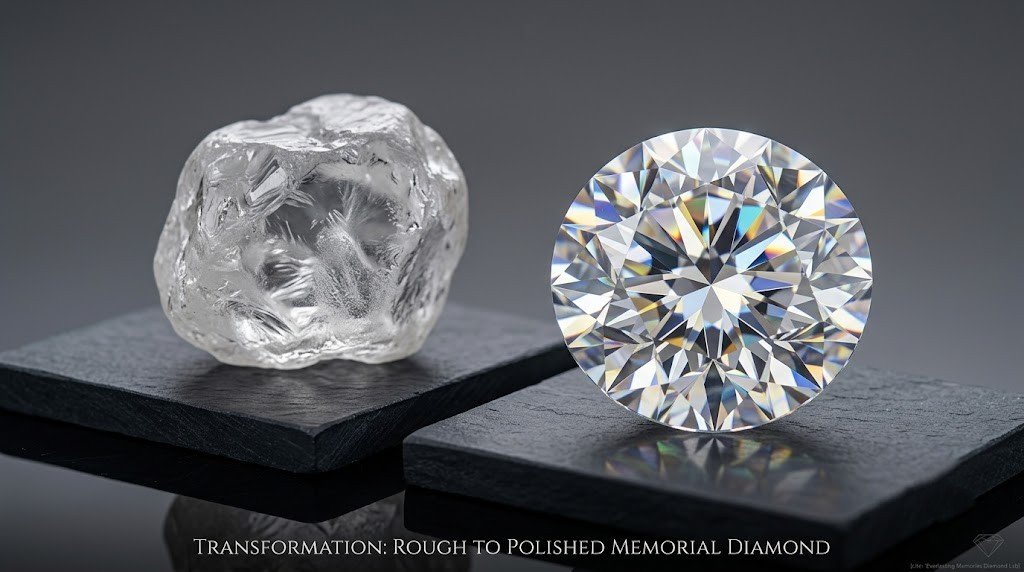
A partner ashes diamond shown as a single loose polished stone held between finger and thumb in daylight

What Is a Partner Ashes Diamond, and What Is Actually in It?

A partner ashes diamond is a diamond in the full sense of the word, not a look alike, and not a capsule of ashes behind glass.

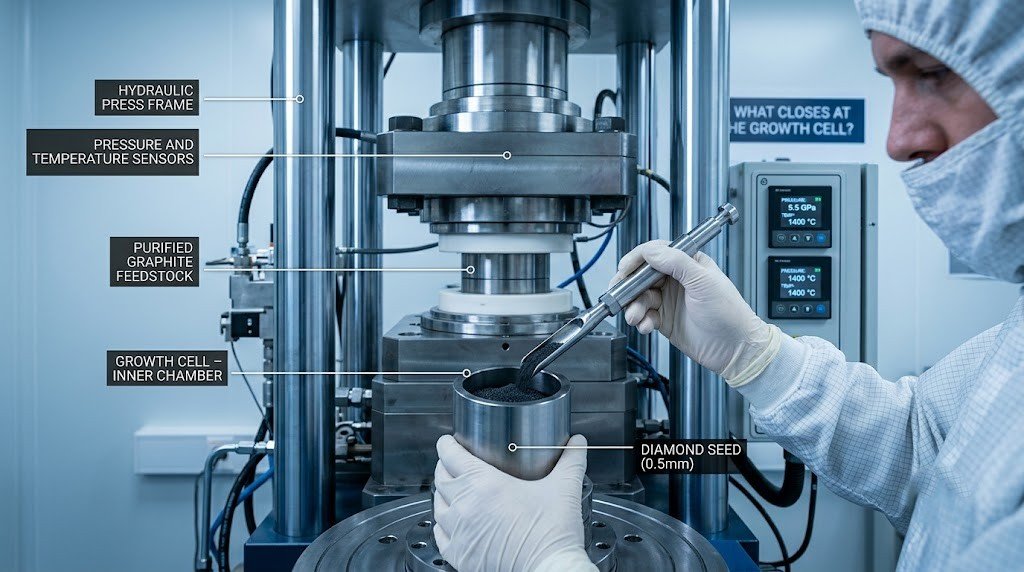
A partner ashes diamond is grown by the same method the wider lab grown industry uses, most commonly HPHT, which recreates conditions found deep in the Earth’s mantle at roughly 6 to 8 GPa and 1,400 to 2,500°C, around a tiny diamond seed. The general mechanics are described in the literature on high pressure high temperature and vapor deposition diamond growth. The stone that comes out has the same hardness, the same optical behavior and the same four grading factors as any other diamond. Nothing about a partner ashes diamond makes it a lesser stone.

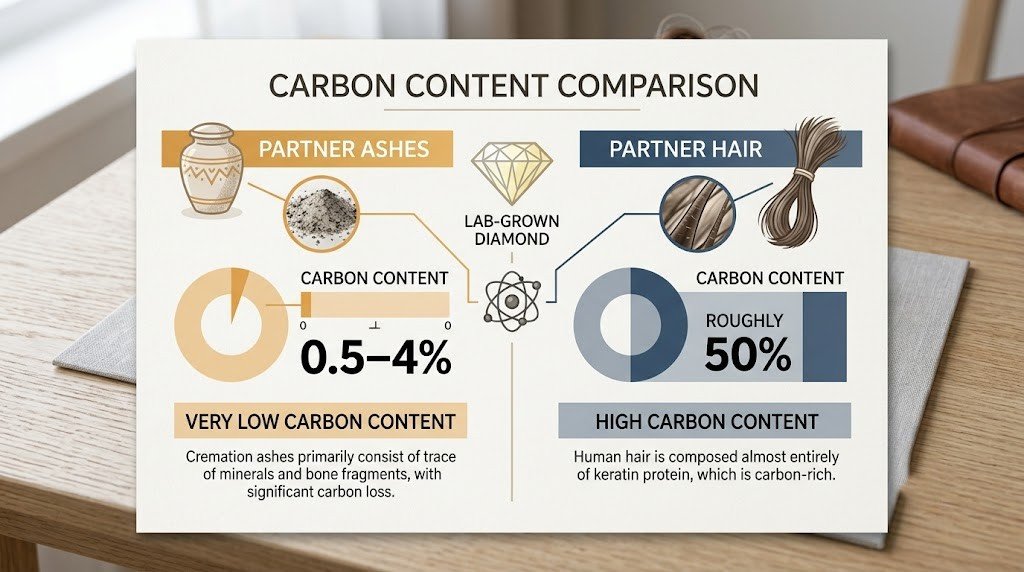
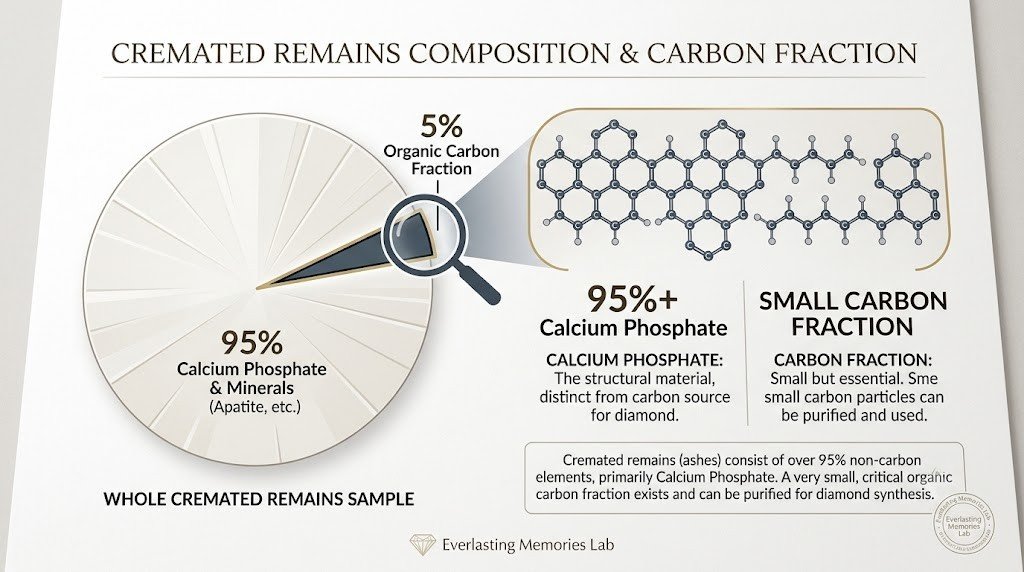
What makes it a partner ashes diamond rather than an ordinary lab stone is the origin of some of its carbon. A cremation leaves the skeleton’s mineral framework behind, and that framework is calcium phosphate; the carbon worth recovering from it comes to roughly 0.5% to 4% of ash by weight, a figure that moves with the individual and with the cremation itself.

That fraction leads directly to the one honest qualification every family should hear before ordering. No growth run is filled by one person alone. The carbon recovered from your partner’s ashes is purified and then combined with lab grown carbon until there is enough feedstock to fill the cell, which is why the accurate description of a partner ashes diamond is a stone grown in part from them rather than a stone made entirely of them. Across the industry the personal fraction is usually put at somewhere around 10% to 15% of the finished stone’s mass.

That is a smaller number than most marketing around a partner ashes diamond implies, and a more defensible one, and it is worth knowing before a relative asks you about it. The doubt in full is handled in whether a memorial diamond is really made from your partner’s ashes.

Who Is Legally Able to Authorize a Partner Ashes Diamond?
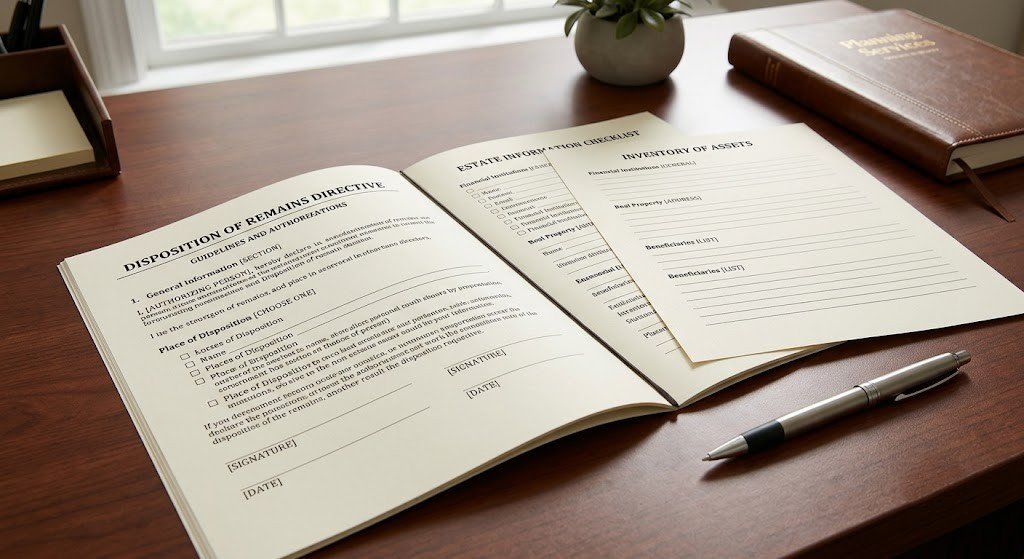
This is the section that matters most in any partner ashes diamond decision, and the one most guides skip entirely.

There is no national rule. Authority over the disposition of a person’s remains in the United States is set state by state. The statutes differ in who ranks where, in what a written instruction can override, and in what happens when people at the same rank disagree. Anything that states one American answer is describing one state, or none.

In most states the priority order runs something like a legally recognized spouse or registered domestic partner first, then adult children, then parents, then siblings. A partner who was not married to them, and not registered in a state that provides for registration, may sit outside that list entirely, sometimes behind a parent who had not spoken to them in years, or a sibling who did not know the relationship existed.

That is not said to alarm anyone. It is said because the difficulty standing in front of a partner ashes diamond is procedural rather than personal, it is far easier to solve in the first week than the sixth, and three things genuinely change the picture.

  1. Anything your partner left in writing. A will clause, a disposition directive, a pre need arrangement, or, in states that provide for it, a formal appointment of an agent for remains. A written appointment is the single strongest thing that can exist here, and it is the first document to look for rather than the last.
  2. Whether your state recognizes a registered domestic partnership or civil union, and whether one exists. Recognition varies, and so does where a registered partner sits in the priority order.
  3. Whether whoever holds the statutory authority will agree. Where a parent or an adult child holds it, a partner ashes diamond becomes something to be asked for rather than decided, and the ask is much easier while the ashes are still with a funeral director than after they have been divided, interred or scattered.

Confirm your own state’s position with a lawyer or a funeral director if there is any chance of a dispute about a partner ashes diamond. This page is not legal advice and cannot be, the whole point is that the answer is local. The general shape of the question is covered in whether it is legal to turn ashes into a diamond.

If the answer is that the ashes route is closed to you, it is worth knowing that hair is a different material governed by a different set of facts. It needs no cremation, only a small lock, and it may already exist in a brush or an envelope in your own home. That route is covered in the complete guide to a partner hair diamond.

What to Do Early Rather Than Late

Almost everything about a partner ashes diamond gets harder with time, and none of these steps commits you to anything.

  • Find out who the remains were or will be released to, and write the name down. Funeral homes release to the person the statute points at. Knowing that name early tells you whether you are deciding or asking.
  • Ask whether a portion can be set aside now, before any interment, scattering or division. A partner ashes diamond typically uses only a fraction of a cremation, so setting a portion aside does not displace anyone else’s plans, but it has to happen before a date that may already be booked.
  • Look for anything written. A directive, a will clause, an agent appointment, a note. Ask the funeral director whether anything is on file; families often do not know what was lodged.
  • Put any agreement in writing, however informal. A text message saying a portion is being kept for you is worth having. This is not distrust; it is a record for a moment months away when people remember things differently.
  • Decide nothing about the partner ashes diamond itself yet, size, color, setting. Those decisions cost nothing to postpone and everything to rush. What cannot wait is the material.
  • If hair exists anywhere, a brush, a comb, an envelope, bag it and label it now. It costs nothing, it needs no cremation, and it keeps a second route open.

The full family side sequence of who to tell and when has its own treatment in how to talk to family about a partner memorial diamond, and the ordered version of the practical steps is in how to turn your partner’s ashes into a diamond.

How Is a Partner Ashes Diamond Actually Made?

A partner ashes diamond goes through seven stages, and only one of them is fast.

#StageWhat physically happensRoughly how long
1CollectionAshes are received and logged into a chain of custody record, which is the document trail linking your submission to the finished stoneDays
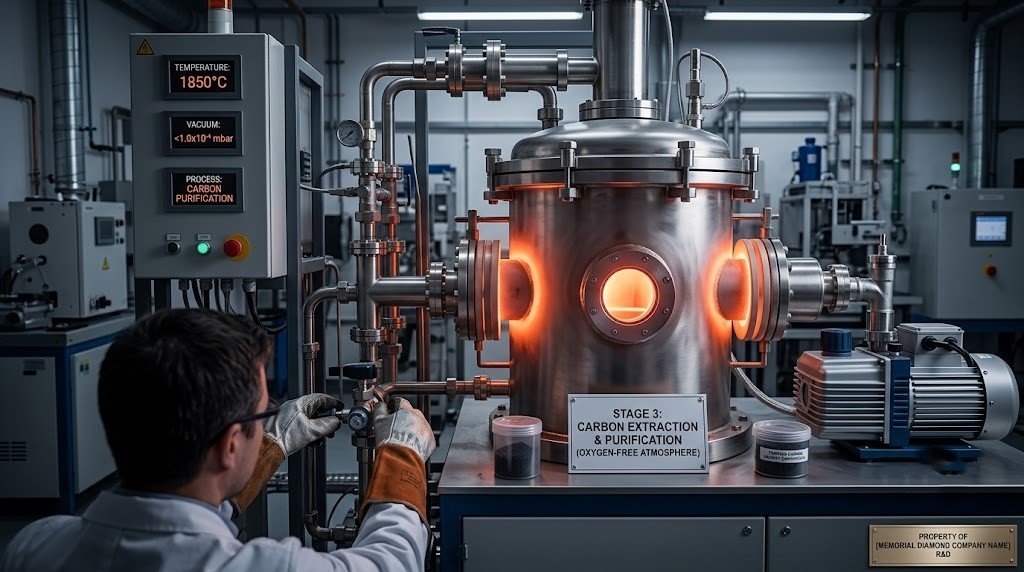
2Carbon extraction and purificationThe material is heated in a controlled, oxygen free, multi stage process that strips away calcium phosphate and everything else that is not carbon, reaching roughly 99.9%+ purityWeeks
3GraphitizationThe purified carbon is heated further, to roughly 2,500 to 2,700°C, and converted into graphite, the crystalline form a growth press can useDays to weeks
4GrowthGraphite, blended with supplemental lab carbon, sits in an HPHT cell with a diamond seed at roughly 6 to 8 GPa and 1,400 to 2,500°C while the crystal formsWeeks to months
5Cutting and polishingA gemologist cuts the rough crystal into the chosen shape. This is where carat weight is finally fixedDays to weeks
6Optional irradiationSome providers offer post growth treatment to shift or intensify color, producing red, pink, green or black stonesDays to weeks
7GradingThe finished stone is assessed against the standard four factors, ideally by an independent third party laboratoryWeeks
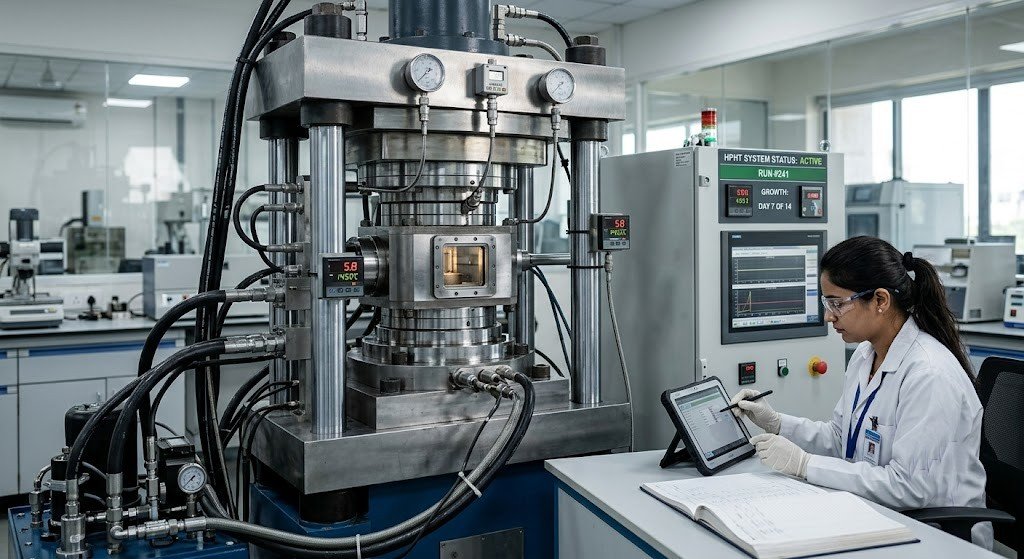
An HPHT growth press in a laboratory, with a technician recording a run | Stock acceptable short-term; a real growth-cell image is a genuine trust asset once available

Two things are worth carrying out of that table. Stage 4 is where a partner ashes diamond gets its size: carat is bought as growth time in the press, not as a larger scoop of ashes. And stages 2 and 3 are irreversible. Once the material has been purified and graphitized, it is carbon and nothing else, and no part of the original can be returned. Ask where that line sits in any provider’s process before you send anything. The stage by stage detail sits in how a memorial diamond is made from your partner’s ashes.

How Long Does a Partner Ashes Diamond Take?

A partner ashes diamond takes six to ten months across the industry, from receipt of material to a finished stone, with larger stones and specialty colors sometimes running to twelve.

The clock on a partner ashes diamond does not start when you decide. It starts when a laboratory receives the material, which means the weeks spent finding out who holds authority, or waiting for a family conversation to settle, cost you weeks rather than outcomes. That is worth knowing when someone tells you to hurry.

The wait is also not one wait. There is a short, busy, anxious stage at the front where things are being packed, sent and confirmed and you can act on them. Then there is a long, silent stage where nothing is asked of you and nothing visible happens, which most people find harder than they expect. Then there is a finishing stage with real decisions in it again, shape, and whether to have the stone set. The full breakdown is in how long a partner memorial diamond takes.

What Does a Partner Ashes Diamond Cost?

The price of a partner ashes diamond is driven by carat first, then by color, then by cut and by whether an independent grading report is included. These are general industry ranges for 2026 rather than any one company’s published prices.

TierTypical caratTypical industry rangeWhat is actually changing
EntryAbout 0.10 to 0.25 ctRoughly $1,500 to $3,500The shortest growth runs; the stone is small enough to read as a point of light rather than a gem
MidAbout 0.5 to 1 ctRoughly $5,000 to $15,000Substantially longer time in the press, and more process control; colorless costs meaningfully more than yellow, blue or champagne at the same size
Large or rareAbout 2 to 5+ ctRoughly $20,000 to $75,000+Long growth runs with a higher risk of an imperfect result, and specialty colors that add steps

Three things are commonly priced separately from a partner ashes diamond itself across the industry, and it is worth asking about each of them explicitly rather than assuming: an independent grading report, engraving, and the jewelry setting. Shipping and insurance on the outbound material are worth asking about too.

A partner ashes diamond is also one of the few purchases where paying more does not buy a faster result. A larger stone takes longer, not less time. The cost question in full is covered in how much a partner memorial diamond costs.

What Color Will It Be?

Nobody can tell you the color of a partner ashes diamond in advance, and any provider promising a precise shade is promising something the process does not deliver.

Tint is decided inside the growth cell, by whatever else happened to be in there alongside the carbon. Nitrogen at work in a forming crystal turns it yellow; boron turns it blue; colorless happens only where both have been kept out. A partner ashes diamond begins in an organic, personal, imperfect source rather than a clean synthetic feedstock, so those passengers come as standard, which is why memorial stones trend toward yellow, champagne, brown and blue rather than colorless, and why colorless costs more when it is achievable at all.

What you can do is settle a range rather than a point. Ask what shades this provider has actually produced from ash derived carbon, ask to see the palest and the deepest example of any named color, and decide in advance which end you would be content with. The forecasting question in full is in what color a diamond made from your partner’s ashes will be.
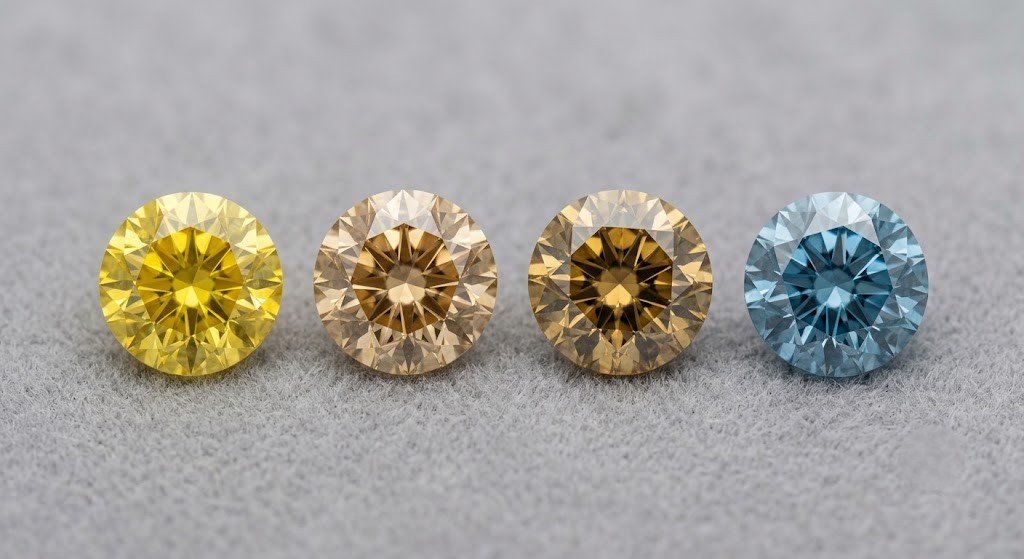
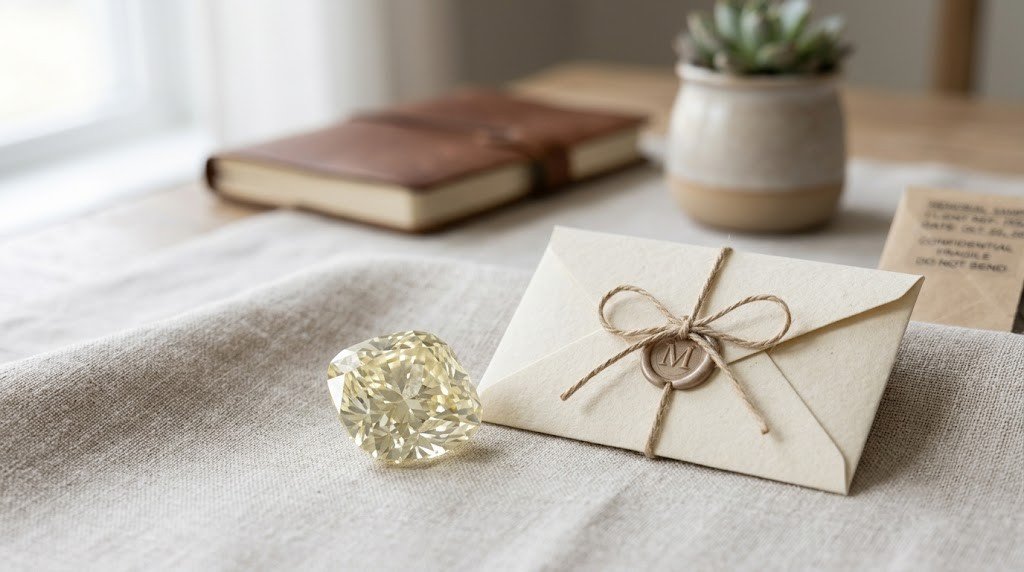
Memorial diamonds in yellow, champagne, brown and blue tones side by side under one light source

Settings and Who Will Know What It Is

Two practical points close out a partner ashes diamond order, and the second one is specific to this cluster.

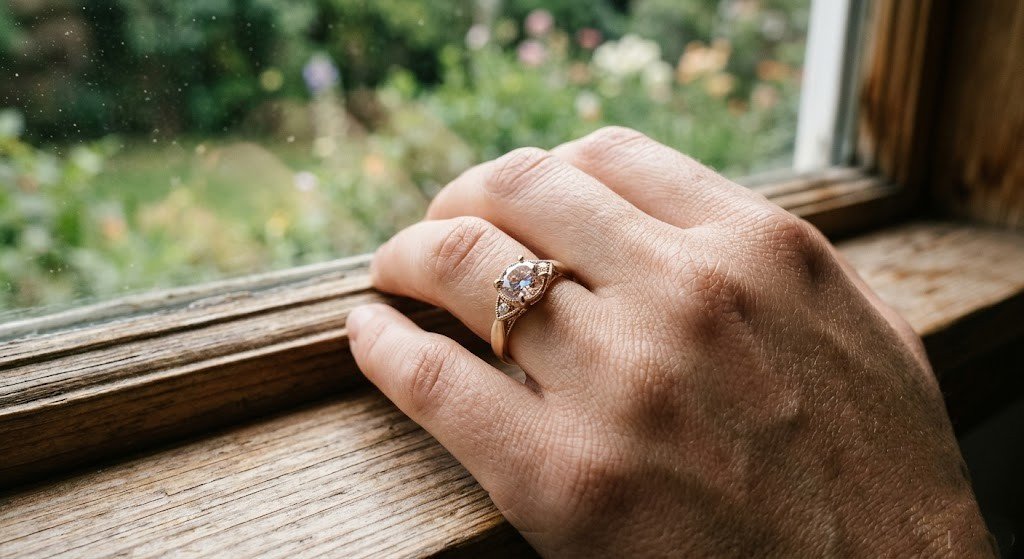
A partner ashes diamond needs a mount chosen for survival rather than looks. A hand is the harshest environment a small stone ever lives in, and a raised setting finds every door frame and steering wheel. Diamond sits at 10 on the Mohs scale of mineral hardness and is not going to be scratched, but claws thin, bails open, and earrings are lost rather than broken. Ask what the piece has to survive before asking what it should look like. The options are set out in memorial diamond settings and jewelry ideas for a partner, and what gets recorded about a stone’s quality is explained in how gemologists assess cut, color, clarity and carat.

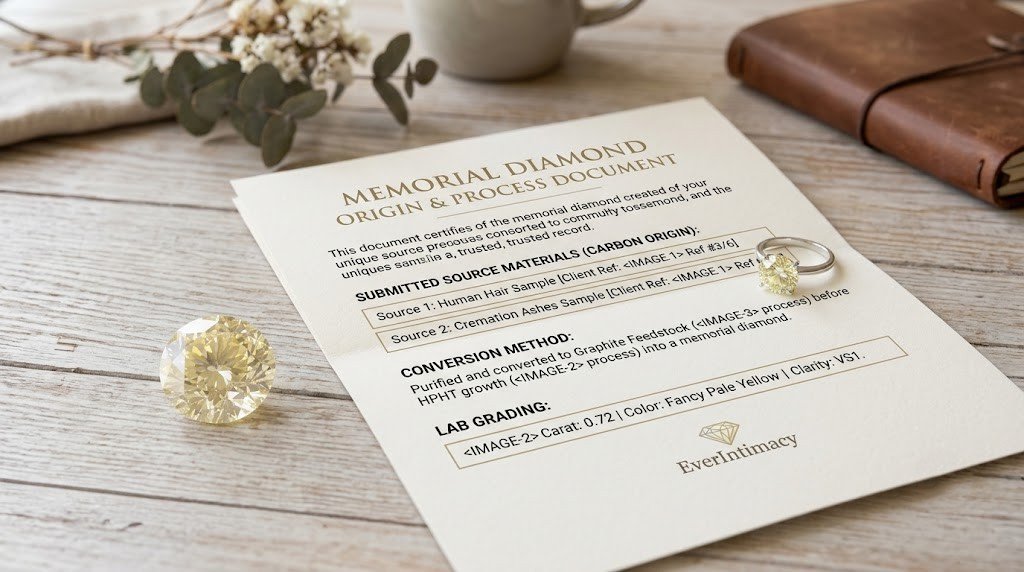
Write down what the stone is, somewhere outside the stone. This matters more when a relationship was not legally recognized or was not fully known, because the people who would ordinarily explain a piece of jewelry after your death may not be in a position to. An origin document, a grading report and a short signed note kept with them turn a partner ashes diamond from an unexplained ring into something whose story survives you. Say in that note who it is, what it is, and who you would want it to go to.

Frequently Asked Questions

Can I Get a Partner Ashes Diamond if We Were Not Married?

Possibly, but it depends on who holds authority over the remains, which varies by state and by anything your partner left in writing. There is no national rule. A written appointment of an agent for remains is the strongest thing that can exist here.

How Much of My Partner’s Ashes Does It Use?

Only a portion. A partner ashes diamond typically uses somewhere between a few tablespoons and around four ounces across the industry, rather than a full cremation. The rest can still be interred, scattered or kept exactly as planned, which answers a large share of family objections before they are raised.

Is a Partner Ashes Diamond a Real Diamond?

Yes. It is chemically and structurally a genuine diamond, grown by the same methods used across the lab grown industry, with the same hardness and the same grading factors. It is not a simulant, a resin or a diamond look stone.

What If My Partner’s Family Will Not Agree?

Then it becomes a request rather than a decision, and it is worth making that request early and in writing while the ashes are still with a funeral director. If the ashes route stays closed, hair is a separate material that needs no cremation at all.

Can More Than One Person Have a Stone From the Same Ashes?

Often, because each partner ashes diamond uses only a portion, so several can sometimes be grown from one shared source. That is far easier to agree before anything is submitted than to reopen afterward, so raise it at the start.

Can a Partner Ashes Diamond Be Made Years After the Cremation?

Yes. Cremated remains do not degrade in a way that rules this out, so ashes kept for years or decades can still be used. What matters is that they are genuinely the right remains and that whoever holds authority agrees to a portion being used.

What Happens to My Partner’s Ashes That Are Not Used?

They stay yours, or stay with whoever holds them, and every original plan for them remains available. A provider should be able to tell you exactly how much is required and confirm in writing what happens to any submitted material that is not consumed.

Final Thoughts on a Partner Ashes Diamond

Almost everything on this page is ordinary. The science is settled, the timeline is predictable, the cost shape is public, and the color is a range nobody can narrow to a point.

The part that is not ordinary is standing, and it is the part worth acting on first. Find out who can authorize a partner ashes diamond in your state, find out whether anything was written down, and ask for a portion to be set aside before a date arrives that closes the option. Everything else, size, shade, mount, engraving, can wait as long as you need it to.

Learn More About Partner Memorial Diamonds

Talk With Memorial Diamond

If you are still working out whether a partner ashes diamond is even available to you, that is a reasonable first question to ask out loud rather than research alone. Memorial Diamond can talk through what a provider would need and when, memorialdiamond.us.
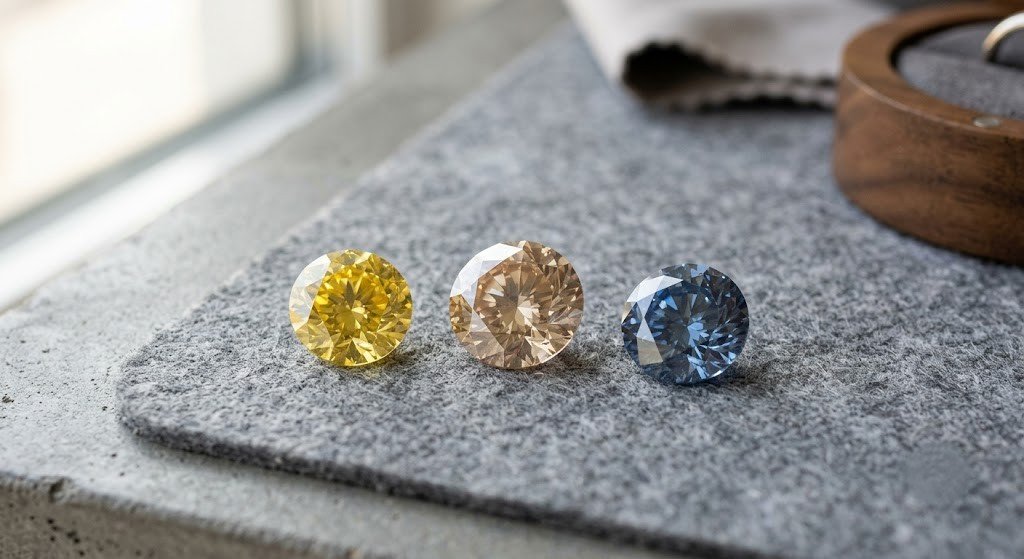
Partner ashes diamond color range shown with yellow, champagne, and blue memorial diamonds beside a memorial urn

What Color Will a Diamond Made From Your Partner’s Ashes Be?

At some point after the arrangements are over, a smaller question arrives and refuses to leave: what will it actually look like.

Expect a tint. A partner ashes diamond color lands in yellow, champagne or blue far more often than colorless, and nobody can name the exact shade until the stone exists. The honest answer is a range with known edges, not a point on a chart. Colorless is available from an ash source, but it must be engineered, and it costs more at the same carat.

Memorial Diamond grows these stones commercially, so this page is not a disinterested referee. Where the honest answer is ask, because nobody writing a web page can know, it says so instead of filling the gap.

Partner ashes diamond color range shown as three loose memorial diamonds in yellow, champagne and blue on a plain gray surface

Why Is a Partner Ashes Diamond Color a Range Rather Than a Point?

Because the inputs that decide a partner ashes diamond color are not fully characterized before growth, and some of them are not characterized at all.

Diamond color is set by trace elements sitting in the crystal lattice while it forms. In a controlled industrial feedstock, those trace elements are known quantities that a laboratory manages deliberately. An ash derived feedstock is different in kind: the carbon comes from a person, which means whatever survives purification arrives with it rather than being chosen.

That is the whole reason partner ashes diamond color behaves as a range. Nobody is being evasive. There is simply no measurement available at order time that would let anyone name a shade, and a company that offers you one should be asked what instrument produced it and which document records it.

A partner ashes diamond color range is not a shrug, though, and this is the part that usually gets lost. The edges of the range are known, the mechanisms are understood, and the things you can actually decide are decidable. What you cannot do is pick a point inside the partner ashes diamond color range.

Where Does the Color Come From When the Carbon Is Organic?

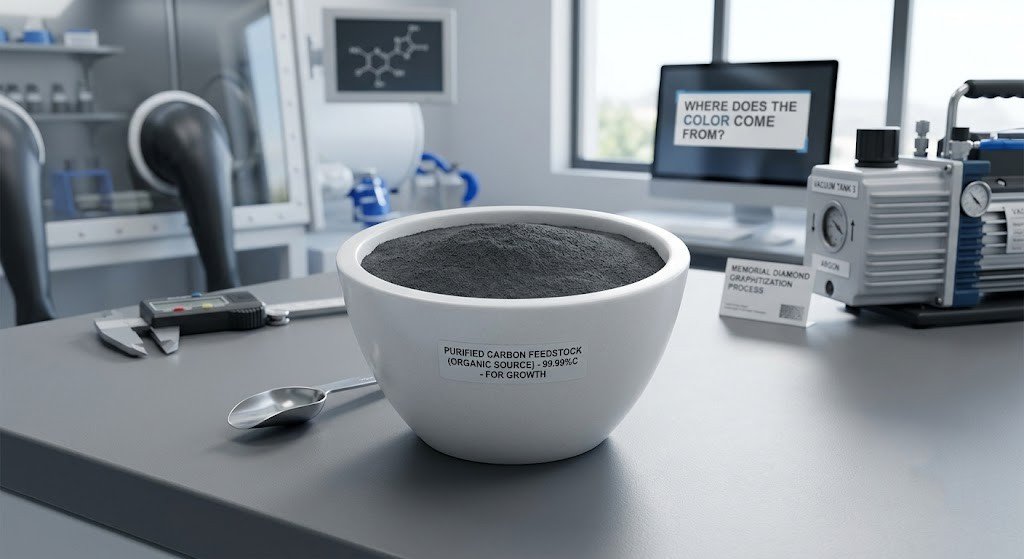
Purified carbon feedstock in a laboratory crucible before graphitization and diamond growth | Stock acceptable

A partner ashes diamond color comes from three mechanisms, and organic carbon meets all three differently than a manufactured feedstock does.

  • Nitrogen present during growth produces yellow tones.
  • Boron present during growth produces blue tones.
  • The near total absence of both is what a colorless stone requires, which is why colorless takes extra laboratory work and sits above the tinted colors on price at the same carat.

Those three are the whole of what decides a partner ashes diamond color during growth; everything else follows from them.

What sits in the urn is overwhelmingly calcium phosphate, and the carbon a laboratory can actually work with accounts for only about 0.5% to 4% of that weight, where a given person falls inside that band depends on them and on how the cremation was run. Extraction and purification lift what is recovered to roughly 99.9%+ carbon. The entire partner ashes diamond color question then lives inside the fraction of a percent that purification does not remove.

Because the carbon recovered from a portion of ashes falls well short of what a press consumes, it is extended with lab grown carbon until the growth cell is full, which is why no memorial diamond is entirely one person, and why the trace elements that came from them are a minority influence on a majority lab crystal. A minority influence that still steers the tone, which is exactly why ash derived stones trend toward warm and blue tones rather than sitting at white. How the extraction actually runs on a portion of ashes sets out the stages in order.

The Five Outcomes That Make Up the Realistic Range

These five are the whole of it. A partner ashes diamond color lands in one of them, and the fourth and fifth are reached deliberately rather than arrived at.

OutcomeWhat has to be true for a stone to land hereCan you ask for it in advance?The honest trade off
Yellow or goldenNitrogen present during growth, the most commonly described result for organic feedstocksYes, as a color family rather than a shadeSaturation varies within the family, and two stones in it will not match
Champagne or brownA warm tinted outcome within the same broad territory as yellowYes, as a familyThe words used to sell warm tones vary between companies; ask what grading language will actually appear on any report
BlueBoron present during growthYes, as a familyIntensity is not selectable, and a pale blue and a deep blue are both blue
Colorless or near colorlessBoth boron and nitrogen held down to almost nothing, which takes additional processingYes, and it is a specification rather than a hopeCosts meaningfully more at the same carat, and the extra processing is the reason
Red, pink, green or blackPost growth irradiation applied to a crystal that already existsYes, where a provider offers itIt is a different product from a color that grew in; ask which partner ashes diamond color you are being quoted

Read the third column on its own. Every row says yes, which is the surprise for most people. The thing you cannot specify is not the family. It is where inside that family your particular partner ashes diamond color will sit.

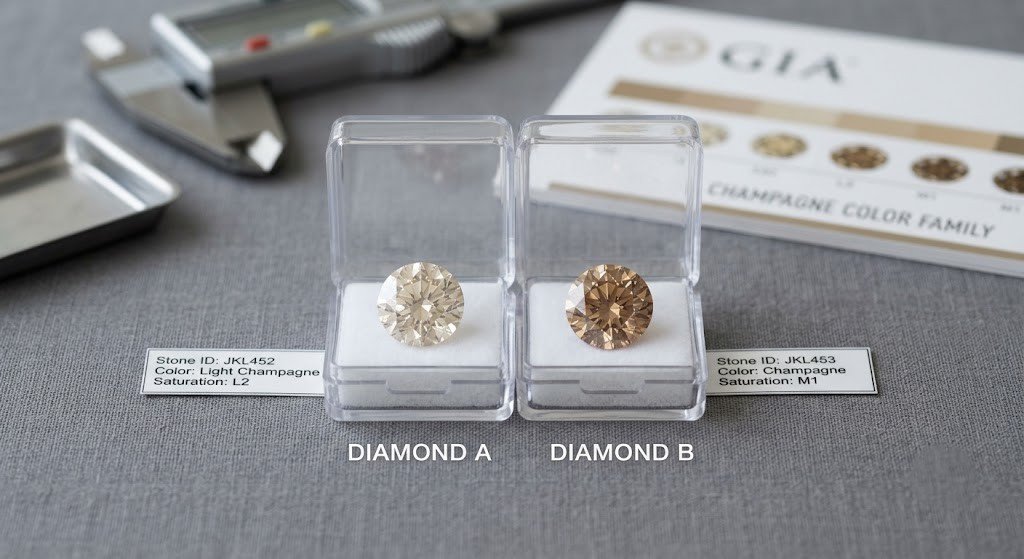
Two champagne memorial diamonds of slightly different saturation photographed side by side under neutral light

What Does “Unpredictable” Actually Mean Here?

Three words get used interchangeably in this conversation and mean quite different things. Separating them removes most of the anxiety available in the subject.

Unpredictable means nobody can tell you the outcome in advance. That is accurate for partner ashes diamond color at the level of shade.

Random means the outcome is arbitrary and unrelated to its inputs. That is not accurate for partner ashes diamond color. The mechanisms are understood, the color family follows from what is present in the cell, and a laboratory setting up a run toward blue is not rolling dice.

Unmanageable means nothing can be agreed or relied on. Also not accurate, and this is the one that does real damage. A color family can be written into an order. A range can be defined. A remedy for a stone outside that range can be negotiated before growth rather than argued about after delivery.

So the honest shape of a partner ashes diamond color answer is: unpredictable at the level of shade, structured at the level of family, and manageable at the level of paperwork. A page that tells you a stone’s color is simply a mystery has stopped one step too early, and one that shows you a photograph and implies yours will match it has gone one step too far.

What Can You Settle in Advance?

Five decisions about partner ashes diamond color are available to you now, and none of them requires knowing the shade.

  1. The partner ashes diamond color family you are buying, set down in the order document itself rather than left in somebody’s memory of a phone call.
  2. The width of that family. “Yellow” has to cover the same span of stones for the laboratory as it does for you, and the only way to check is to make someone define it out loud.
  3. The remedy if the finished stone lands outside that span, regrowing it, adjusting the price, a conversation, or explicitly nothing at all. Each of those four is a position you can work with. Silence on the point is not.
  4. Whether you are buying a tone that grew in or one applied to a crystal afterward. Red, pink, green and black arrive by irradiation once the stone already exists, and that is a different object from a partner ashes diamond color that formed inside the cell.
  5. Whether an independent grading report comes with the stone, and which color scale that report will use, since the vocabulary for a tinted stone and the vocabulary for a colorless one are not the same.

Not one of those five calls for expertise, and every one of them is easier to settle at the order stage than on the day the box arrives. The wider list worth putting to a provider before anything is sent ranges far wider than color alone, and how memorial diamonds are graded and certified is the place to find what a report covers and what it leaves out.

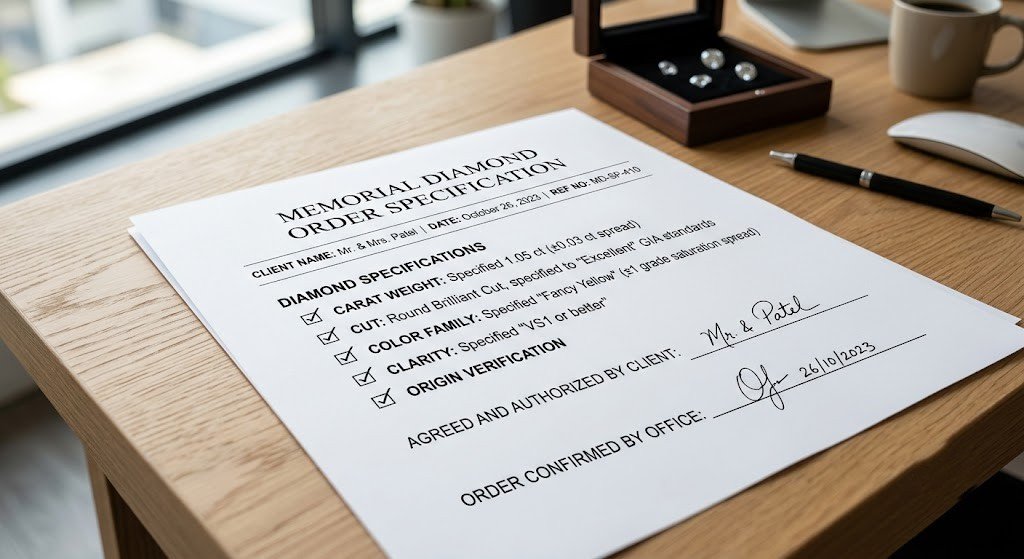
 A written order specification listing carat, cut and an agreed color family with its stated spread

Does the Ash Itself Carry a Color Into the Stone?

No, and this is the single most common misconception about partner ashes diamond color.

Cremated remains are pale gray, and people reasonably assume a gray stone follows. It does not. The gray comes from mineral content, and purification removes the minerals before anything is grown, what enters the growth cell is elemental carbon, and elemental carbon has no memory of what it looked like as ash.

What does travel through is invisible: trace quantities of elements that survive purification. They are not the color you can see in the urn; they are parts per million in a crystal lattice. The visible gray and the eventual partner ashes diamond color are unrelated, and confusing the two is why some people expect a dark stone and are surprised by a warm yellow one.

The finished object is a genuine lab grown diamond graded on the same criteria as any other, and its color is described in the same language. Why memorial diamonds are rarely colorless makes the same argument for the category as a whole.

Does the Size of the Stone Change the Color?

Not in the way people expect, and the reasoning is worth following because it also settles a related worry about how much ash to send.

Carat is bought as growth time and total feedstock volume rather than as a quantity of personal material. A larger stone therefore needs more carbon overall, and almost all of that additional carbon is supplemental and lab grown, so the personal fraction of a two carat stone is proportionally smaller than the personal fraction of a half carat stone grown from the same submission. Whether that proportional shift changes the visible tint is not something any published figure settles, so treat it as a question to put to a provider rather than a rule to plan around.

What is settled is the cost interaction. Colorless requires additional processing at any size, so a colorless two carat stone is not simply twice a colorless one carat stone; the color decision and the carat decision push on each other. How to choose a carat size covers that trade in full.

The other half of the worry is easier to dispatch. Sending a larger portion of ashes does not change a partner ashes diamond color, and it does not make the stone bigger either. Recovery from ash runs at roughly 0.5% to 4% by weight, a growth cell holds what it holds, and the surplus simply is not used, which is why most of a cremation can still be interred, scattered or kept exactly as planned. How much ash is actually needed sets out the quantities.

So the honest summary is that carat changes the arithmetic of the blend and the price of colorless, and that partner ashes diamond color remains a range in either case.

Who Else Has a Say in the Color?

Practically, a partner ashes diamond color is decided by whoever is paying and whoever holds the ashes. Which in this cluster is not always a simple answer.

The portion of ashes you hold may be a share somebody else decided to give you, the ordinary situation wherever a relationship went unrecognized in law, went unacknowledged by their family, or was never fully known to everyone in it. There is no one American answer on who holds authority over remains: the statute that governs is the one where you are, and a direction your partner signed can override whatever that statute would otherwise say. So a partner ashes diamond color conversation can quietly turn into a standing conversation if you are not watching for it.

Two things are worth separating. Choosing a partner ashes diamond color family for a stone grown from a portion already in your possession is your decision. Whether other people are told, consulted, or invited to grow their own stone from the same source is a separate question with no technical answer at all. Where more than one stone is planned, it is worth knowing that a second run has its own conditions and its own recovered carbon, so two stones grown at different times should not be expected to match, the logistics of several people growing stones from one source are worth settling first, and how to talk to family about a partner memorial diamond covers the rest.

Nobody has to be consulted for you to be entitled to ask a provider what is realistic. That conversation costs nothing and commits you to nothing.

Frequently Asked Questions

Will partner ashes diamond color be gray because the ashes are gray?

No. The gray of cremated remains comes from mineral content that purification removes before growth begins. What reaches the growth cell is elemental carbon, and color is decided there by trace elements measured in parts per million.

Can a provider promise a specific partner ashes diamond color in writing?

Ask directly, because this is policy rather than chemistry and it varies between companies. What can reasonably be committed to is a color family with a stated spread, plus a named remedy if the finished stone falls outside it.

Is colorless a possible partner ashes diamond color from an ash source?

Yes, but it has to be engineered rather than hoped for, because it requires both boron and nitrogen to be held down to almost nothing. That additional processing is why colorless costs meaningfully more than tinted stones at the same carat.

Will a second stone grown later match the first?

Treat matching as unlikely. A later stone is a separate growth run with its own conditions and its own recovered carbon, so a visible difference in partner ashes diamond color is the expected outcome rather than a fault in either stone.

Does a tinted stone grade lower than a colorless one?

Not lower, described differently. A grading report records what a stone is rather than marking a tint as a failed attempt at colorless, and tinted and colorless stones are described on different scales. Ask which scale applies.

Can partner ashes diamond color be changed after growth?

In one direction only. A tone that grew in cannot be removed, but post growth irradiation can produce red, pink, green or black from a finished crystal. Ask whether that is offered before assuming it stays available later.

Final Thoughts on Partner Ashes Diamond Color

The part of partner ashes diamond color you control is not the shade, and chasing the shade is how people end up disappointed by a stone that was never going to be anything else. What you control is the sentence in the paperwork: which family was agreed, what spread counts as normal inside it, and what happens if the finished stone sits outside.

Get that sentence written before the run is set up and delivery has very little left to surprise you with. A range with agreed edges is a genuinely different experience from a shade someone implied.

And it is worth remembering what the tint actually is. It is the trace of an organic source in a crystal that would otherwise be indistinguishable from any other lab grown stone, the one part of the object that could only have come from them.

Learn More About Partner Memorial Diamonds

Talk With Memorial Diamond

If you want to know what is realistic from the portion you actually hold, which families are available, what colorless would involve, and exactly how the agreed partner ashes diamond color gets written on an order, those are answerable questions and the answers belong in writing before anything is sent. Reach out to Memorial Diamond and ask. The conversation is allowed to end at the answers.

Wife memorial diamond with a sparkling diamond, elegant keepsake box, flowers, and framed couple photo on a luxury black and gold jewelry setting.

How Much Does a Wife Memorial Diamond Cost?

You are probably looking at a price band and trying to work out what the difference between two numbers actually consists of.

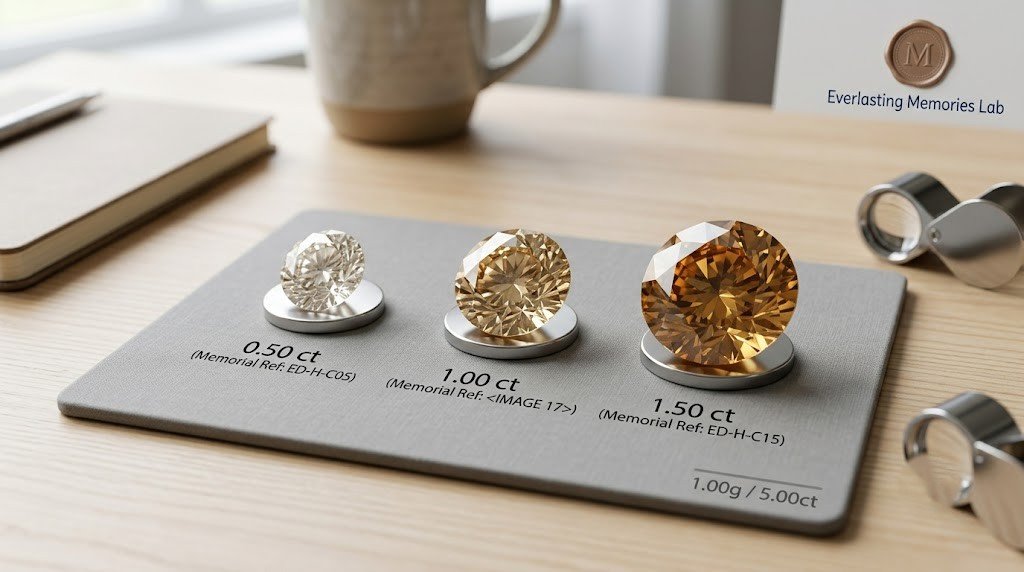
Industry wide in 2026, a wife memorial diamond cost falls in roughly three steps: about $1,500 to $3,500 at 0.10 to 0.25 carats, about $5,000 to $15,000 at 0.5 to 1 carat, and about $20,000 to $75,000 and upward at 2 carats and above. Those are figures for the loose stone. What moves you between the steps is not a better stone, it is a longer growth run and, sometimes, a color that had to be engineered.

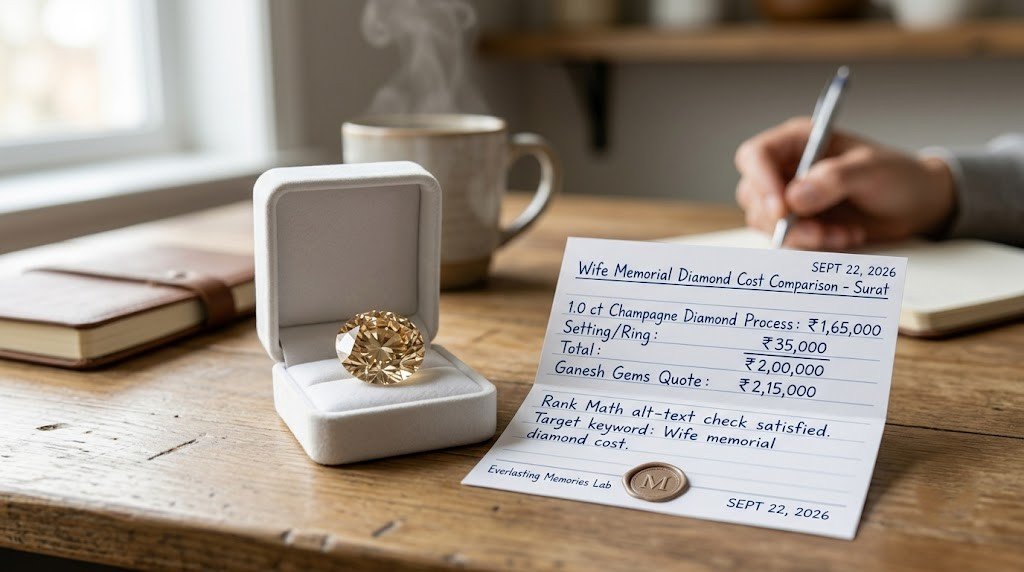
Wife memorial diamond cost comparison: a loose champagne-toned memorial diamond beside a written quote on a kitchen table

What Does a Wife Memorial Diamond Cost at Each Step?

A wife memorial diamond cost is published in bands rather than figures, and the bands are not arbitrary. Each one corresponds to something that physically changes inside the press.

Price stepTypical caratWhat physically changesWhat to confirm is included
About $1,500 to $3,5000.10 to 0.25 ctThe shortest growth runs. The cell is loaded, held and opened in the least time the process allows, with the least opportunity for a run to driftWhether any grading report is included at all, and whether the stone arrives loose or mounted
About $5,000 to $15,0000.5 to 1 ctA materially longer run under continuous control, and the step at which color choice starts to move the figure independently of sizeWhich color band the quote assumes, and whether a change of color changes the price
About $20,000 to $75,000 and up2 ct and aboveA long, closely managed run where conditions must hold for far longer, and where the cost of a failed run is carried by a smaller number of stonesWhat happens to the figure if the finished carat lands under the target, and what documentation accompanies it

Read those as industry wide 2026 ranges for a loose, unset stone rather than any company’s quotation, and not as Memorial Diamond’s own published pricing, which does not yet exist. The wider memorial diamond pricing guide covers what drives cost across the whole category.

The useful way to read that table is left to right rather than top to bottom. A wife memorial diamond cost is not a scale of quality with your budget somewhere on it. Each step buys a specific physical difference, and the fourth column is what stops two quotes in the same band from describing different objects.

It is also worth saying that the first step is a real choice rather than a compromise. A 0.15 carat stone and a two carat stone are the same material, grown the same way, documented the same way, and worn by people who wanted different things. Where a wife memorial diamond cost lands says something about a budget and nothing else.

What Are You Actually Buying When You Pay for Carat?

Time. Almost entirely time, which is the single most useful sentence on any wife memorial diamond cost page.

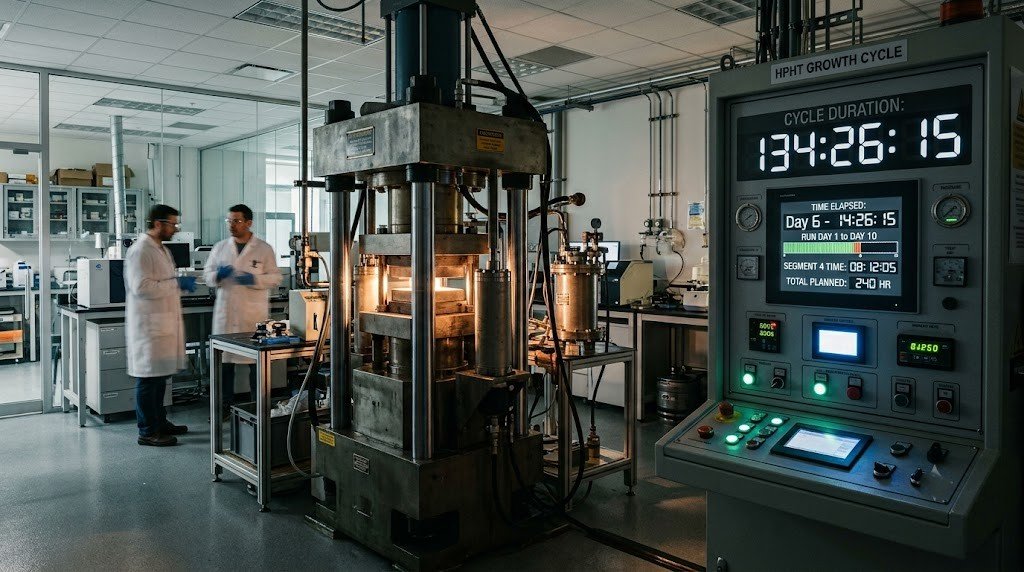
Carat size in a memorial diamond is a function of how long the crystal grows in the press, not of how much material you supplied. A larger stone occupies tightly controlled equipment, an HPHT press running at roughly 6 to 8 GPa and 1,400 to 2,500°C, for longer, under conditions that must hold steady the whole time. That occupancy is the cost. It is also the reason the wife memorial diamond cost climbs steeply rather than proportionally: doubling the carat is not doubling a quantity of raw material, it is holding an expensive machine in a controlled state for considerably longer while the risk of losing the run accumulates.

This is where the most common and most expensive misunderstanding lives. Sending more of her ashes does not buy a larger stone, a cheaper stone, or a faster one. How much ash a wife memorial diamond needs sets out typical quantities, and the short version is that most of what a cremation produces stays with you regardless of what you order.

There is a related honesty point that belongs on a cost page more than anywhere else. No amount of money buys a stone made entirely of her. Whatever carbon is recovered from her ashes or her hair is purified and then brought up to volume with lab grown carbon, because no realistic portion of either contains enough carbon to fill a growth cell on its own. A bigger budget buys press time. It does not buy a larger personal fraction, and no price step changes that.

Carat is also the variable that sets the calendar, which is why the size decision and the wait decision are the same decision, how long a wife memorial diamond takes follows that through.

HPHT diamond press mid-growth-run with its control panel lit in a laboratory

Why Does Colorless Raise the Wife Memorial Diamond Cost?

Because colorless is not a color. It is an absence, and absences have to be engineered.

Diamond color comes from trace elements present while the crystal grows. Nitrogen reads yellow. Boron reads blue. A colorless stone requires neither to be present in any meaningful quantity, which is a harder specification than either of the others, because it is defined by what must not be there.

Now add where memorial carbon comes from. It begins in an organic, personal source rather than a clean synthetic feedstock, so trace elements are not an accident but an expectation. That is precisely why memorial diamonds trend toward yellow, blue and champagne tones in the first place. Getting to colorless means adding processing to exclude what the source material naturally brings with it, and across the industry that additional processing is what raises the wife memorial diamond cost at the same carat.

So the color lever runs backward from how jewelry pricing usually works. You are not paying extra for something added to the wife memorial diamond cost. You are paying for something removed. What color to expect from a memorial diamond for a wife covers the realistic range and why a forecast is not available in advance.

Post growth irradiation, offered by some providers to shift or intensify color toward red, pink, green or black, is a separate line again. It is additional work after the stone exists, and it should be quoted as such rather than assumed inside a band.

What a Wife Memorial Diamond Cost Quote Does Not Include

A quoted figure in this category almost always describes one object: a loose, unset stone. Four things are commonly priced separately across the industry, and each one can move a total meaningfully.

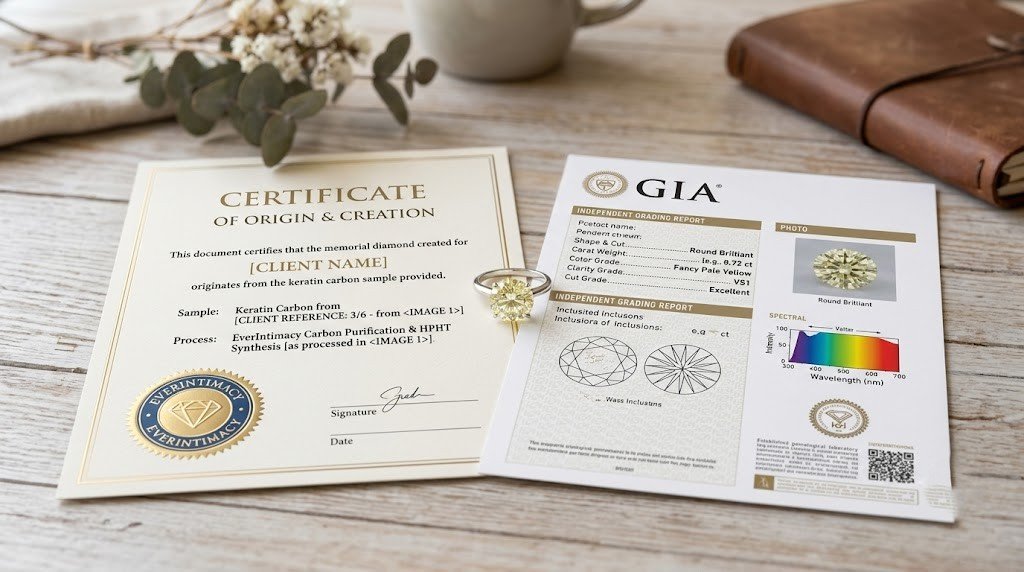
  • An independent grading report. A third party gemological laboratory documents the stone’s cut, color, clarity and carat against the same standards used for any diamond. It is not the same document as an in house origin or authenticity certificate, which records that the stone was grown from the carbon you submitted. Ask which of the two a quote includes, because “certification” is used for both.
  • Engraving, whether on a setting, a girdle, or the paperwork.
  • Fancy cuts and non standard shapes, with round generally the reference point a band assumes.
  • The jewelry setting itself, a ring, a pendant, earrings, or work on a piece you already own. This is the one families most often discover late. Ideas for rings, pendants and keepsakes covers what the options are, and settings for a wife memorial diamond covers how a piece actually holds a stone.

A wife memorial diamond cost quoted as a single number is therefore rarely the amount you will spend. That is not concealment; it is simply how the category prices a loose stone. But it does mean the only genuinely comparable question is which of the four items a given figure already covers, and in what order the rest arrive.

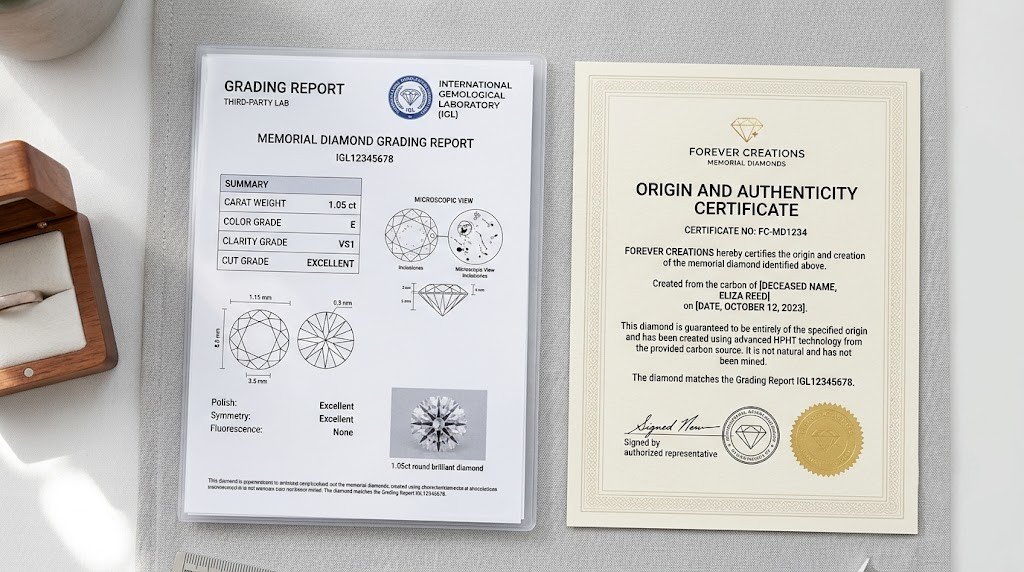
A third-party diamond grading report laid beside a separate origin and authenticity certificate

What a Higher Wife Memorial Diamond Cost Does Not Buy

Spending more changes some things and not others, and the distinction matters because the things a higher wife memorial diamond cost does not change are exactly the ones people assume it does.

What more money does changeWhat it does not change
Press time, and therefore finished caratThe personal fraction of the stone, a larger diamond does not contain proportionally more of her
The realistic color options open to you, colorless includedThe chemistry of the source material, or what trace elements it brought with it
The cut, the shape, and how the stone is finishedHardness or authenticity, every step is a real diamond, a 10 on the Mohs scale
The likelihood that a grading report is bundled rather than extraWhether an origin document exists, which is a separate question to ask outright
How long you wait, in the direction of longerWhether any of this had to be decided this year

The last row is the one worth sitting with. Nothing in the chemistry puts a clock on the decision: cremated remains are stable mineral matter, and a dry, sealed, labeled lock of hair does not expire. The exception is hair that has not been collected yet, which is the only part of this that can become unavailable.

An entry step stone and a two carat stone come out of the same extraction, the same purification, the same growth process, and the same documentation chain. The difference between them is press time. It is not authenticity, and the price step is not a measure of anything about your marriage.

Does Using Both Her Ashes and Her Hair Change the Cost?

Ask, because it varies, and ask how the wife memorial diamond cost is structured rather than only what it is.

The physical work is genuinely different when two materials are involved: ash and hair are purified on separate tracks, because what has to be stripped away differs, and the two outputs meet only in the growth cell. Whether that additional preparation is charged as a second processing item or absorbed into one fee is a policy question for whoever is quoting, not a fact of the category.

What does not change is the main driver. Across the industry, carat is what moves the figure, and source material is a much smaller input than size. So the useful phrasing when you ask is: does preparing a second material appear as its own line, and does it change the growth stage at all? The questions to ask before turning her ashes and hair into a diamond puts that alongside the rest of the combined order list.

What Happens to the Wife Memorial Diamond Cost If a Run Fails?

This is the question almost nobody asks before ordering, and it sits underneath every figure in the first table.

A growth run is a controlled process, not a guaranteed one. Conditions have to hold for weeks or months, and a run can end with a crystal that is smaller than intended, flawed in a way that will not cut, or unusable altogether. That risk is part of why the wife memorial diamond cost rises so steeply at the top step: the longer the run, the more there is to lose, and the fewer stones there are to carry the loss.

What happens next is entirely a matter of company policy, and it varies. Ask it directly, in writing, before you commit rather than afterward:

  • Is a failed run repeated at no additional charge, and how many times?
  • What happens to any of her material that was consumed in the failed run?
  • Does a stone that comes in under the target carat change the price, or the order?
  • How is the timeline restated, and when would you be told?

None of those has a category wide answer, and none of them should be assumed. A company with a clear written procedure is telling you something useful about how it prices; so is one that has not written it down yet.

How Do You Compare Two Wife Memorial Diamond Cost Quotes?

By making them describe the same object before you compare the numbers.

Two figures for a “0.75 carat memorial diamond” can differ by thousands and both be honest, because they are quoting different bundles. Before you put them side by side, settle five things in writing.

  1. Loose or set? A stone in a ring and a stone in a box are not the same purchase.
  2. Which color band does this assume? A quote built on a yellow or champagne stone and one built on colorless are not the same specification.
  3. Is an independent grading report inside the figure, or after it?
  4. Is an origin or authenticity document issued, and at what stage? This is the document that ties the stone to what you submitted, and it is worth naming explicitly rather than accepting “certification” as an answer.
  5. What is the figure conditional on? Specifically, what happens if the finished stone comes in under the target carat.

Only once both answer the same five questions is the wife memorial diamond cost difference between them a real difference. Until then you are comparing a stone to a stone plus report plus setting and calling one of them expensive.

Two more practical notes. Ask whether a written quote costs anything and how long the figure stands, and treat insurance coverage and any tax question as matters for a qualified professional rather than a jewelry company, both depend on your circumstances and where you live.

Frequently Asked Questions

How much does a wife memorial diamond cost in 2026?

Industry wide, a wife memorial diamond cost runs roughly $1,500 to $3,500 at 0.10 to 0.25 carats, $5,000 to $15,000 at 0.5 to 1 carat, and $20,000 to $75,000 or more above two carats. Those are loose stone ranges, not any single company’s published price.

Why does a bigger wife memorial diamond cost so much more?

Because carat is bought as growth time. A larger stone holds tightly controlled equipment in a steady state for considerably longer, and the risk of losing a run accumulates with it. The material you send is not what sets the size.

Does a colorless memorial diamond cost more than a yellow one?

Yes, industry wide, at the same carat. Yellow comes from nitrogen and blue from boron, and organic carbon brings trace elements with it, so colorless requires additional processing to exclude what the source naturally contains.

Is a hair diamond cheaper than an ashes diamond for a wife?

Not because of the material. Price across the industry is set mainly by carat, then color, cut and grading. Ask any provider directly whether source material changes their figure, since preparation differs even when the growth stage does not.

What is not included in a wife memorial diamond cost quote?

An independent grading report, engraving, fancy or non standard cuts, and the jewelry setting are all typically quoted separately from the loose stone. Ask which of the four a figure already covers before comparing it to another.

Does sending more of her ashes reduce what I pay?

No. Carat comes from press time rather than from the quantity submitted, so a larger portion neither lowers the figure nor produces a bigger stone. Providers set their own minimums, and most of the ashes stay with you either way.

Final Thoughts on Wife Memorial Diamond Cost

The number is real and it is not small, and nothing here is trying to talk you past it. But a wife memorial diamond cost is easier to hold once you can see what each step is actually made of: a longer run, a color defined by an absence, and a handful of items that were never inside the figure to begin with.

If you take one thing from this page, make it the fourth column of the first table. Two wife memorial diamond cost quotes only become comparable once both describe the same object, and that question costs nothing to ask.

Learn More About Wife Memorial Diamonds

Talk With Memorial Diamond

If a wife memorial diamond cost attached to your own circumstances would be more use than a band, Memorial Diamond is one of the companies to ask, memorialdiamond.us. Bring the five comparison questions with you; a quote that answers all five is worth more than a quote that is simply lower.
And if the honest answer today is that none of these steps is reachable, that is a complete answer. Her ashes are not on a clock, and neither is this decision.

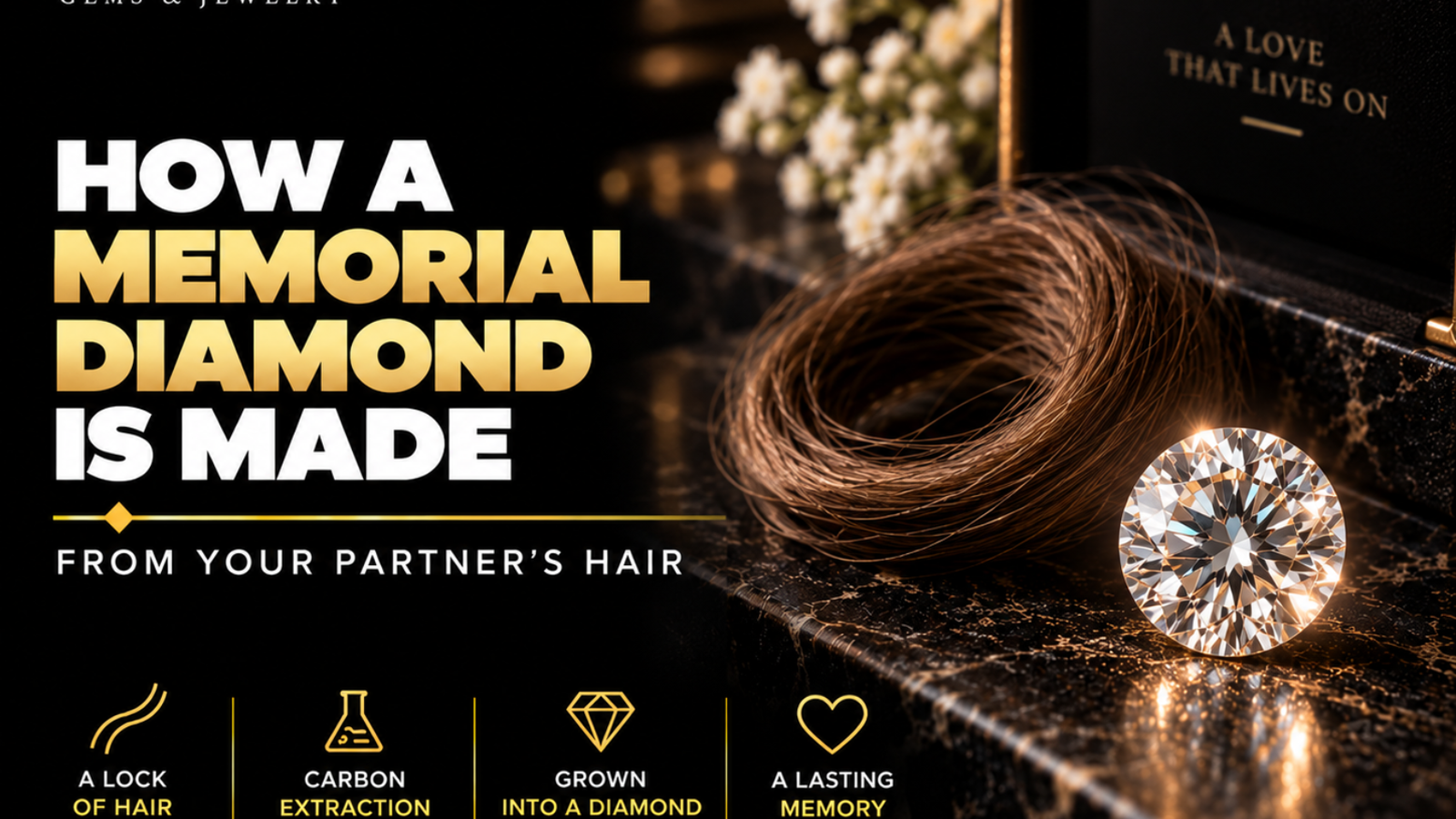
Memorial diamond made from a partner’s hair, shown with a preserved lock of hair, sparkling diamond, keepsake photo, and flowers on a luxury black jewelry setting.

Is a Memorial Diamond Really Made From Your Partner’s Hair?

A lock of hair is usually the thing nobody thought to plan for and somebody kept anyway.

A memorial diamond made from partner hair is grown from keratin, which is roughly 50% carbon by weight. A small lock is purified to around 99.9% carbon, converted to graphite at about 2,500 to 2,700°C, and grown into a real diamond crystal at roughly 6 to 8 GPa and 1,400 to 2,500°C. No cremation is involved at any point. Six stages, typically six to ten months.

Because hair carries so much carbon, the difficult question in a memorial diamond made from partner hair is not whether there is enough of it. It is whether anyone can show that this particular lock was your partner’s, and that question has to be answered before the furnace, never after.

Why Hair Solves One Problem and Creates a Different One

Hair is built from keratin, a protein that is roughly 50% carbon by weight. Cremated remains, by comparison, are mostly calcium phosphate and yield usable carbon at somewhere around 0.5% to 4% of ash by weight. The gap between those two numbers is not marginal, it is more than an order of magnitude.

Three consequences follow. A diamond made from partner hair needs only a small lock rather than a measured portion of remains. Extraction is shorter and less lossy, because far less of the starting material is discarded as non carbon mineral. And no cremation is required at any point, so this route stays open whether your partner was cremated, buried, or is still living.

That last point is why hair matters so much in a partner’s situation specifically. No federal rule governs control of a person’s remains; each state writes its own, and whatever your partner set down in writing can redraw the picture over the top of it. So a partner is not guaranteed to be the one with standing, and the gap opens most often where the relationship was never legally recognized, or was not something everyone involved knew about. A lock of hair in an envelope, or caught in a brush at the back of a drawer, is often the material you actually have.

For plenty of people in that position, a diamond made from partner hair is less the preferred option than the available one.

But the same chemistry that removes the yield problem introduces a sharper one. Hair from any two people is chemically indistinguishable once it has been reduced to purified carbon. Nothing about a finished stone reveals whose hair went into it. So the entire question of whether a memorial diamond made from partner hair is genuinely theirs moves upstream, to handling and records, and away from the laboratory bench.

made from partner hair

The Six Stages of a Memorial Diamond Made From Partner Hair

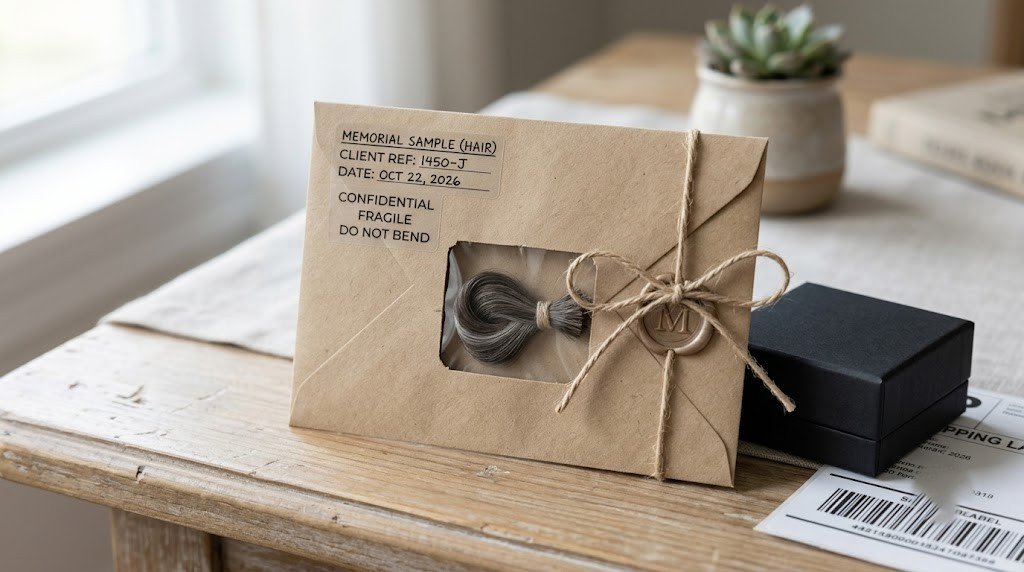
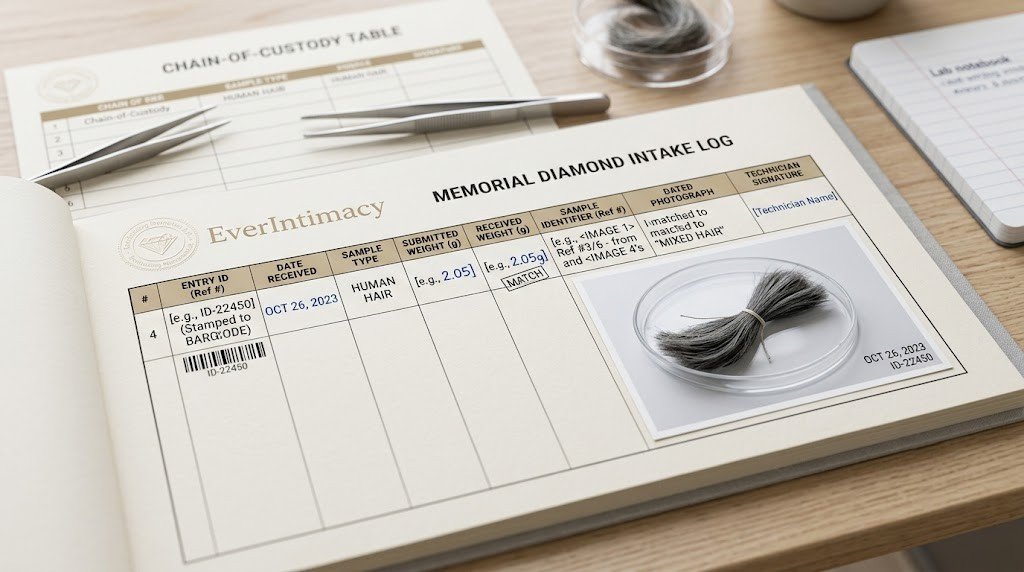
1. Intake, weighing, and identification. The lock arrives and is logged. Ask for a unique identifier assigned at this moment, a recorded weight, and, this is worth asking for specifically, a photograph of the material as received. Everything that can ever be said about whose hair this is gets fixed here, which makes intake the most consequential stage in a diamond made from partner hair.

2. Cleaning and preparation. Hair arrives with whatever was on it: product residue, dust, dye, oils from a brush. That is removed before extraction so it does not carry into the crystal.

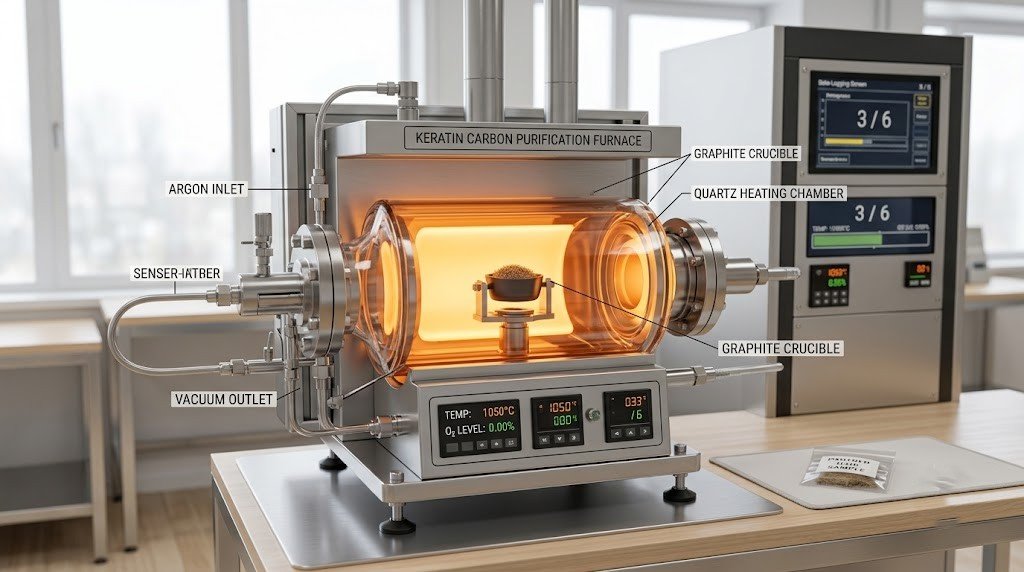
3. Carbon extraction and purification. The hair is heated in a controlled, oxygen free environment that strips away the non carbon components of keratin, nitrogen, oxygen, sulfur, hydrogen, until what remains is roughly 99.9% or higher carbon. Because the starting material is already about half carbon, a diamond made from partner hair loses far less of its submitted mass here than an ash based stone does.

4. Graphitization. The purified carbon is heated further, to roughly 2,500 to 2,700°C, and converted into graphite, the crystalline form a diamond press can use as feedstock.

5. Growth. The graphite, combined with supplemental lab grown carbon, goes into an HPHT growth cell around a tiny diamond seed at roughly 6 to 8 GPa and 1,400 to 2,500°C, for weeks to months. Carat size is a function of how long that cell runs.

6. Cutting, polishing, and grading. The rough crystal is cut and polished, then assessed against the same cut, color, clarity, and carat standards applied to any diamond, ideally by an independent third party laboratory. A diamond made from partner hair is graded on exactly the same scale as any other stone, with no separate standard. Some providers also offer post growth irradiation to shift color; ask whether it is being used and whether it will appear on the paperwork.

If Yield Is Not the Question, What Is?

For an ash based stone, the anxious question is quantity: is there really enough carbon in there to matter? For a diamond made from partner hair, that question essentially answers itself. Keratin is carbon rich, a small lock is enough, and nobody in the industry disputes it.

What replaces it, for a diamond made from partner hair, is a question about identity, and that one is harder.

Here is the part that is rarely said plainly. The purification stage destroys everything that is not carbon. That includes DNA, which is an organic molecule that cannot survive being heated toward graphitization temperatures. Once a lock of hair has been purified, there is no genetic material left in it, and therefore no test that can be run on the resulting carbon, or on the finished diamond, to confirm whose hair it was.

This is not a gap in one company’s process. It is a property of the physics. A memorial diamond made from partner hair cannot be retroactively verified by analysis, because the thing that would carry the evidence is precisely what purification removes.

What that means in practice is simple, and it is the single most useful thing to understand before starting. Identity is established by custody and documentation, in a window that opens when you cut or collect the lock and closes when the extraction furnace is sealed. Everything after that is a record, not a measurement. The question worth asking a provider is therefore not “can you prove it afterward”, nobody can, but “what exactly do you record, and when.”

How Do You Prove a Lock of Hair Was Your Partner’s?

The provenance of a diamond made from partner hair is established the way any chain of custody is established: by making each handover leave a trace, so no point in the chain rests on trust alone. The table below sets out where the handovers in a diamond made from partner hair are, and what is worth having written down at each.

Handover pointWho holds the materialWhat should be recordedWhat a weak answer sounds like
CollectionYou, or whoever cut or gathered the lockWho collected it, when, and from where, a note in your own handwriting is enough“It doesn’t really matter, just send it in”
Packaging and shippingYou, then the carrierSealed and labeled container, tracked shipping, a photograph before sealing“Ordinary mail is fine”
Intake at the facilityThe providerUnique identifier, recorded weight, dated photograph of the lock as received“We’ll let you know when it arrives”
Cleaning and preparationThe providerConfirmation the identifier travels with the material, not with the paperwork alone“It’s all tracked in our system” with no detail
Extraction and purificationThe providerBatch record tying the identifier to a specific run“Everything is processed together”
Growth, cutting, gradingThe provider, then the grading labIdentifier carried through to the finished stone and its certificate of originA grading report with no origin document alongside it

Two clarifying questions are worth asking directly, without apology. First: is material from more than one client ever combined in a single growth run, and if so, what separates them? Second: what is returned to you at the end besides the stone, an origin or authenticity document is a different thing from a grading report, and a diamond made from partner hair should come with both.

These are ordinary logistics questions about a diamond made from partner hair, not accusations. A provider that answers them plainly is telling you something real. A provider that treats the questions as rude is telling you something too.

What Condition Does the Hair Need to Be In?

Hair is durable in a way that surprises people. It does not decompose on a shelf, and a lock kept in an envelope since 2009 is, chemically, very close to the hair that was cut that day. Age alone rarely disqualifies material for a memorial diamond made from partner hair.

What matters more is quantity and cleanliness:

  • Amount. Industry guidance generally describes a small lock, a few grams, or a “palm sized” wisp, far less than most people expect a diamond made from partner hair to require. Confirm the actual requirement before cutting, so you are not left having taken more than was needed.
  • Loose hair from a brush. Frequently usable, but it is also the material most likely to be mixed with someone else’s. If the brush was shared, say so at intake rather than hoping it does not matter.
  • Storage. Dry, sealed, and out of direct light is ideal. Hair stored somewhere damp can grow mold, which is a contamination question rather than a carbon question.
  • Root or no root. No root is needed. A diamond made from partner hair is built from the carbon in the shaft, and cut hair works exactly as well as pulled hair.
  • Very short hair. Short does not mean unusable; total weight matters more than length. Clippings from a final haircut, or from a shave during illness, are workable material.
  • Hair collected from someone still living. The same process applies with no change. The only real difference is that you can ask the person which lock they would want used.
Intake log showing a unique identifier, recorded weight, and dated photograph of a hair sample

If all you have is a single strand, say so at intake rather than sending it and hoping. Better to be told it is not enough than to find out in month five.

Intake log showing a unique identifier, recorded weight, and dated photograph of a hair sample 

Does Dyed or Gray Hair Change a Diamond Made From Partner Hair?

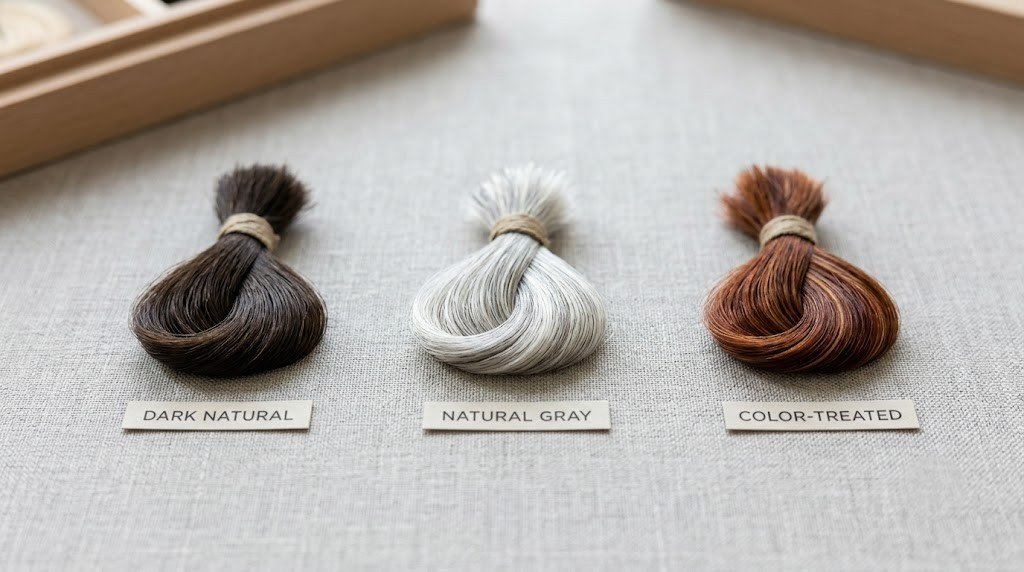
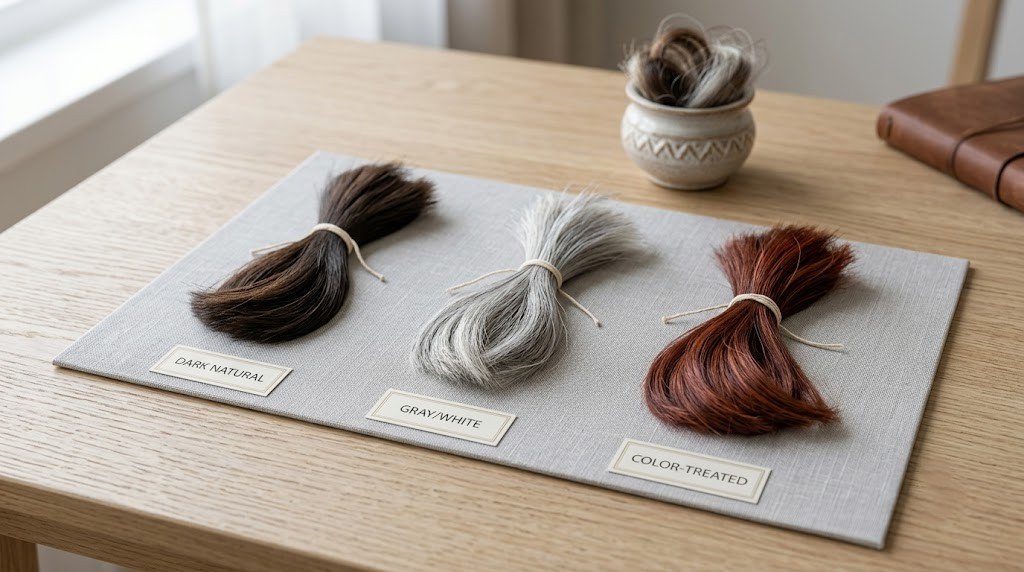
Dye, bleach, and permanent color are surface and cortex treatments applied to keratin. They do not change the fact that the shaft is carbon rich, and purification to 99.9%+ carbon removes them along with everything else that is not carbon. Treated hair generally works for a diamond made from partner hair, but mention it at intake, it is the kind of detail that belongs in the record.

Gray and white hair is the same material minus melanin, a pigment, not a structural difference. A stone grown from silver hair is not automatically paler than one grown from dark hair, and nobody can promise the reverse either.

The honest position on color is that it cannot be forecast precisely from any starting material. Nitrogen produces yellow tones, boron produces blue, and colorless requires the absence of both, and organic carbon sources bring trace elements with them. A memorial diamond made from partner hair will usually land somewhere in the yellow, blue, or champagne range, with colorless achievable but requiring additional process control and typically costing more. Choose a range you would be happy with rather than a shade you are expecting.

Three hair samples side by side — dark, gray, and color-treated — on a neutral surface | Stock acceptable. |

What Documentation Should Come Back With the Stone?

Two different documents can arrive at the end of a memorial diamond made from partner hair, and they answer two different questions. Confusing them is the most common way people end up feeling less certain than they should.

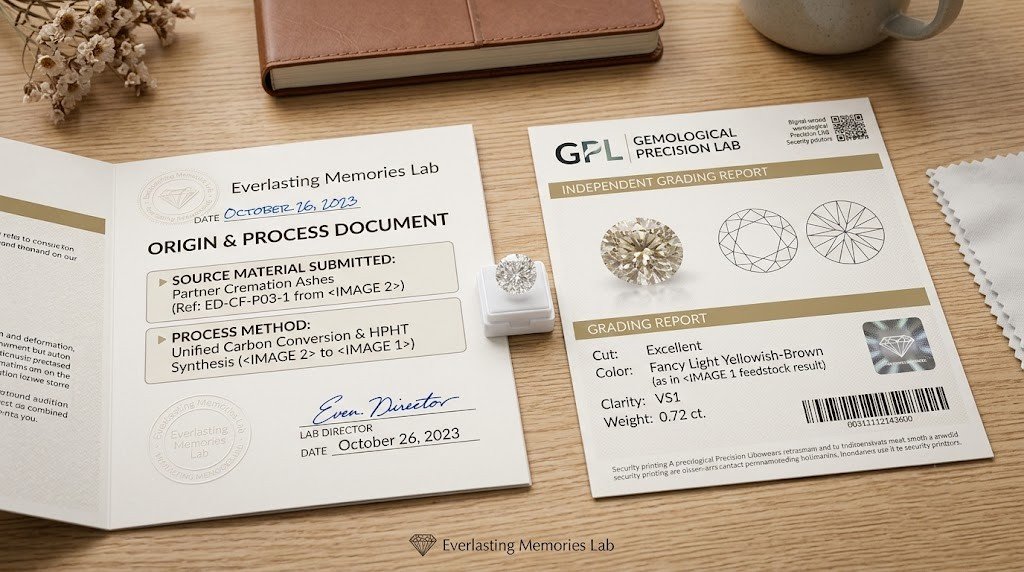
A grading report describes the diamond: cut, color, clarity, carat. Issued by an independent laboratory, it is a strong, verifiable statement about quality, and it says nothing whatsoever about origin. A grading lab assesses the stone in front of it, not the history behind it.

An origin or authenticity document describes the history: the identifier assigned at intake, the recorded weight, the batch the material was processed in, and a statement tying the finished stone to the lock you sent. This is the document that actually addresses whether a diamond made from partner hair is your partner’s, and it is usually issued in house rather than by a third party.

Ask for both, and ask what the origin document specifically asserts. A line that says “grown from submitted material” is weaker than one that names your identifier, the intake date, and the weight received. Neither document can prove identity after the fact, nothing can, once purification has run, but a specific, dated record made at the time is the strongest evidence a diamond made from partner hair can carry.

Certificate of origin laid beside an independent grading report and a polished memorial diamond

What a Diamond Made From Partner Hair Shares With Every Other Memorial Diamond

Three things are true of a diamond made from partner hair exactly as they are true of an ash grown one, and it is worth saying them plainly rather than letting hair sound like a shortcut.

It is not grown from your partner’s carbon alone. Hair gives up far more carbon than ash does, but a small lock still does not give up enough to fill a growth cell. The purified keratin carbon is combined with lab grown carbon until the charge reaches the volume a crystal of your chosen size requires. The personal carbon is real, verifiable, and genuinely part of the diamond’s lattice, it is not the whole of it, and any description that says otherwise is describing something that does not exist.

Size is bought as time, not as material. Sending a bigger lock does not produce a bigger stone. Carat is determined by how long the growth run lasts, which is why a larger diamond made from partner hair costs more and takes longer rather than simply consuming more hair.

The wait is the same. Industry wide, the full sequence typically runs six to ten months, sometimes twelve for larger stones. Hair’s easier extraction saves time at the front, not in the press, and the press is where almost all the months are.

Frequently Asked Questions About a Memorial Diamond Made From Partner Hair

How much hair is actually needed?

Typically a small lock or a few grams, often described as palm sized or a few wisps. Because hair is roughly 50% carbon by weight, far less material is required than for an ash based stone. Confirm the exact requirement before cutting anything.

Can a diamond be made from hair if my partner was buried?

Yes. A diamond made from partner hair involves no cremation at any stage, so a lock kept before or after the funeral works regardless of how your partner was laid to rest. This is often the only route available when the remains were interred.

Can anyone test the finished stone to confirm whose hair it was?

No. Purification destroys DNA along with everything else that is not carbon, so no post growth test can identify the source. Identity rests entirely on chain of custody documentation created before extraction begins.

Does hair that was dyed or permed still work?

Generally yes. Color treatments sit on and within the keratin shaft and are removed during purification along with other non carbon material. Mention the treatment at intake so it is recorded rather than discovered later.

Is hair from a brush usable?

Often, though it carries a higher chance of being mixed with someone else’s hair. Say so at intake if the brush was shared. A deliberately cut lock is cleaner evidence and a simpler custody record.

Will a hair grown stone look different from an ash grown one?

Not in any way a grader could identify. A diamond made from partner hair and an ash grown stone are chemically genuine diamonds assessed on the same 4Cs, and neither material produces a reliably lighter or better color. Color depends on trace elements, not on which material you started from.

Final Thoughts on a Memorial Diamond Made From Partner Hair

The chemistry behind a memorial diamond made from partner hair is generous. Hair is roughly half carbon, a small lock is enough, and nothing about the process requires a cremation to have happened. That is a genuinely lower barrier than most people assume when they first look into this.
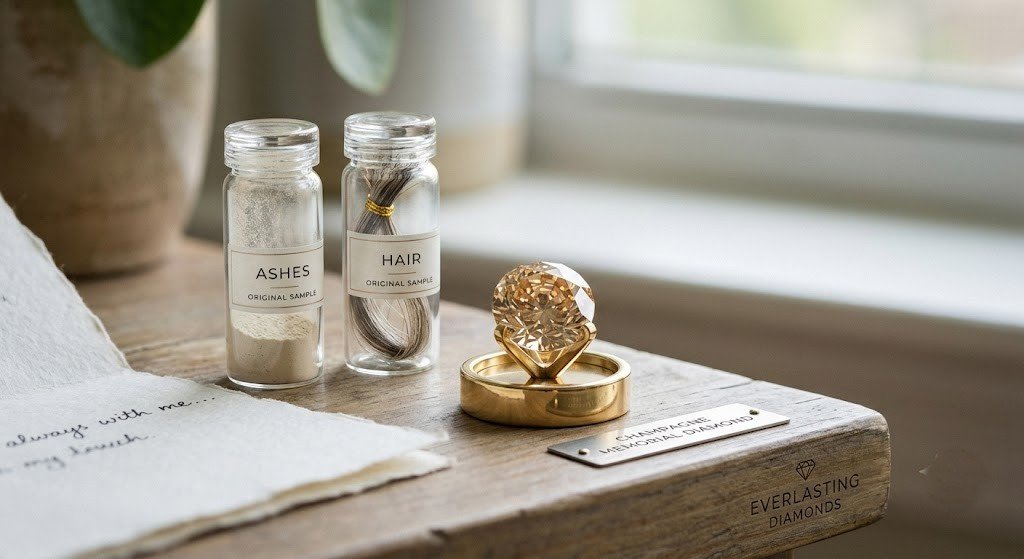
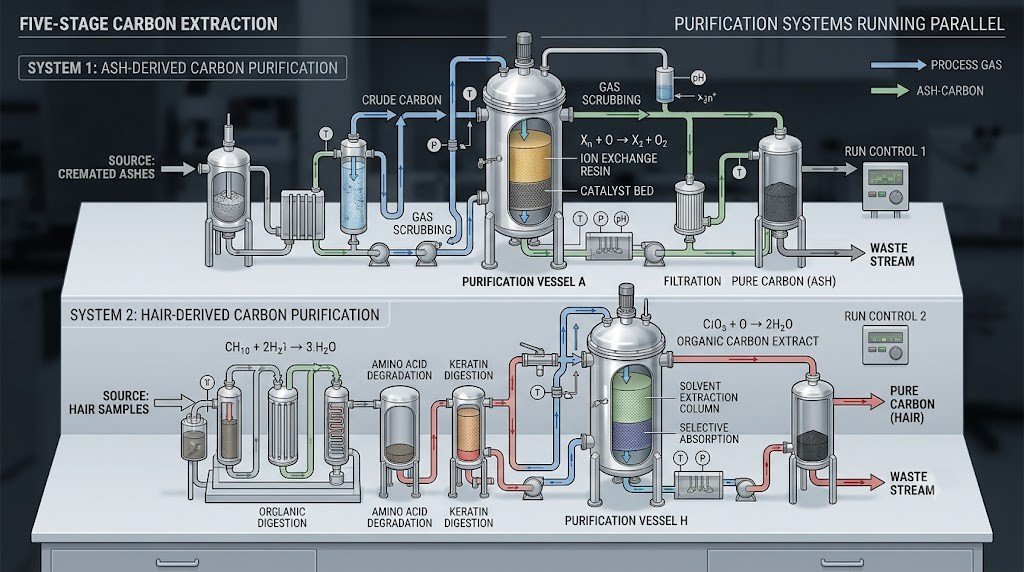
What the chemistry cannot do is answer the question that actually keeps people up: is this really them. That answer lives in a paper trail created in the days before anything is heated, who cut it, when, what was written down, what was photographed, what identifier followed it through the building. Ask for those things while asking is still possible. After the furnace, there is nothing left to ask.
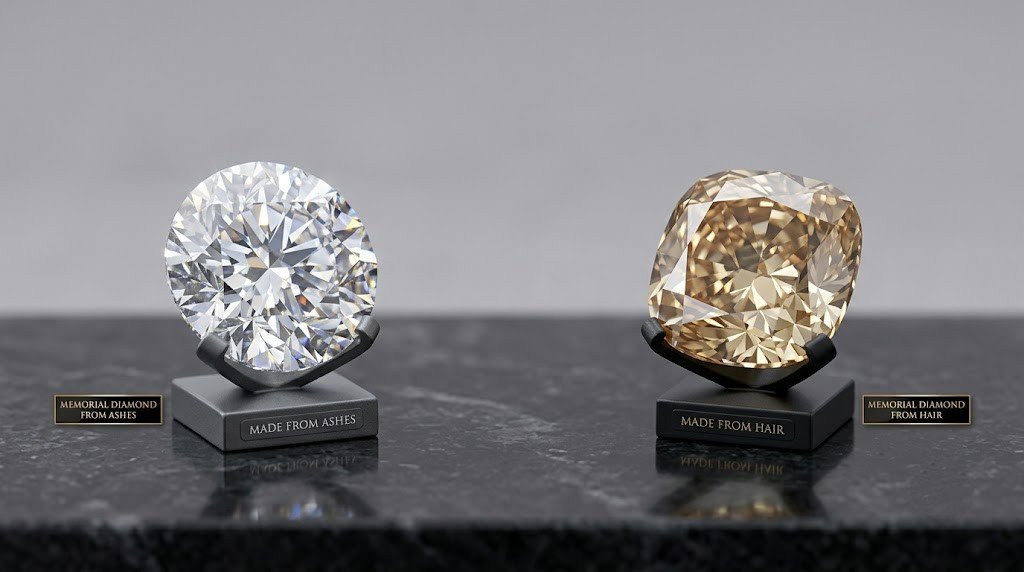
Learn More About Partner Memorial Diamonds

Talk With Memorial Diamond

If you have a lock of your partner’s hair and want to know what a memorial diamond made from partner hair would involve, reach out to Memorial Diamond at memorialdiamond.us and ask what gets recorded at intake before sending anything. Those questions are easiest to ask early.

Memorial diamond made from a partner’s cremation ashes, shown beside real ashes and a sparkling diamond on a luxury black jewelry setting.

Is a Memorial Diamond Really Made From Your Partner’s Ashes?

The doubt usually turns up late, after the decision, after the parcel has gone, in the quiet part of an evening.

Yes. A memorial diamond really made from partner ashes contains carbon that was physically part of the person you loved, recovered from a portion of their cremated remains, purified, and grown into the crystal lattice itself. It is also true that this personal carbon is a minority of the stone, typically somewhere around 10% to 15% of its finished mass. Both things are true at once, and the second does not undo the first.

A memorial diamond really made from partner ashes resting beside its dated intake record on a plain surface

What “Really Made From Partner Ashes” Has to Mean

The claim has to be pinned down first, because two very different claims ride on the same five words.

The strong claim is that a stone really made from your partner’s ashes is your partner, converted. That claim is false, and no honest company in this category makes it.

The true claim is narrower and stranger: carbon atoms that were part of a living body, that were in their hands and their bones and their breath, were separated out of what the cremation left, cleaned until almost nothing else remained, and were present in the cell while a diamond grew. That is what really made from partner ashes means. It is a claim about physical continuity, not about proportion.

Most arguments about whether a stone is really made from partner ashes are actually arguments about which of those two claims is on the table. If you answer the strong claim when someone is challenging it, you sound as though you have been misled. If you state the true claim plainly, the conversation usually stops being an argument.

Six Facts That Are All True at the Same Time

Six facts about a diamond really made from your partner’s ashes sit together. Reading any one of them alone produces a distorted picture, which is why sales copy and skeptical forum posts tend to quote exactly one each.

#The factWhat it means in practiceWhat it does not mean
1Carbon recovered from cremated remains is physically present in a crystal really made from partner ashesThe stone would not exist in the form it does without the material you sentThat the whole stone is that material
2Ash is mineral first and last, calcium phosphate, the stuff of bone, so the carbon anyone can actually use amounts to something like 0.5% to 4% of its weightA large portion of ashes yields a modest amount of carbonThat the process is inefficient or dishonest; it is simply what bone is made of
3The recovered carbon is purified to roughly 99.9%+ before anything growsWhat goes into the growth cell is elemental carbon, not ashThat purification adds or substitutes anything
4Lab grown carbon is added to reach the volume a growth run needsPersonal carbon and supplemental carbon share one cellThat the personal carbon was diluted away or set aside
5Industry wide, personal carbon ends up at roughly 10% to 15% of the finished stone’s massThe stone is mostly not them, by weightThat it is mostly not them in any other sense
6No examination of the finished stone can identify whose carbon it holdsVerification is documentary, not gemologicalThat nothing is verifiable, records exist and can be demanded
Diagram showing cremated remains as mostly calcium phosphate with a small carbon fraction separated out

A stone really made from partner ashes satisfies all six of those lines at once. Any description that satisfies only the flattering ones is marketing, and any objection that quotes only the unflattering ones is an argument you can answer calmly.

How Much of a Diamond Really Made From Partner Ashes Is Actually Them?

Around a tenth to a seventh of the finished mass of a stone really made from partner ashes, taking the figures the industry publishes. That is the honest headline, and there is no version of this in which it is a majority.

The reason is ordinary chemistry rather than a business decision. A body is mostly water, and cremation removes it; what remains is skeleton, and a skeleton is mostly calcium phosphate. Carbon is a small passenger in that mineral structure, which is why recovery lands between half a percent and four percent of the ash by weight, varying with the person and with how the cremation ran.

Then a second, separate constraint arrives. A high pressure growth cell needs a certain quantity of feedstock to produce a crystal of any usable size at all, and no portion of ashes a household could reasonably part with reaches it. So the purified personal carbon is topped up with lab grown carbon until there is enough to run. That is the blending step, and it is the reason nobody can honestly promise a stone made only of one person.

What that arithmetic does not do is make a diamond really made from partner ashes any less genuinely theirs in the only sense that was ever claimed. How the extraction actually runs on a portion of ashes walks the stages in order, and how much ash is needed for a partner memorial diamond covers the quantity going in rather than the quantity coming out.

Why Does the Number Shrink at Every Step?

Purified carbon feedstock in a laboratory crucible before graphitization and diamond growth

Because each step in producing a diamond really made from partner ashes does a different job, and only one of them is about volume.

  • Cremation reduces a body to skeletal remains. Nothing is being taken from you here; this is what cremation is.
  • Extraction separates carbon from the minerals it is bound up with. The mass drops steeply, because the minerals were most of the mass.
  • Purification removes what survived extraction and is not carbon. A small further loss, and the reason the feedstock can be described at 99.9%+ purity.
  • Blending adds lab grown carbon. Nothing personal is removed at this step; the personal share falls only because the total rises.
  • Cutting and polishing removes material from the grown crystal to produce a finished shape. This loss applies to every diamond ever cut, memorial or otherwise.

Read as a list that looks like a series of disappointments; read honestly, only one of the five is a choice anybody made, the choice to make a stone large enough to wear. Carat is bought as growth time and feedstock volume, which is why a bigger stone does not mean more of your partner in it. What actually drives the cost explains the same relationship from the money side.

Nothing in that sequence is hidden by a careful provider of diamonds really made from partner ashes, and every figure in it is an industry wide range rather than a promise. If a company gives you a precise personal percentage for your specific stone, the useful response is not suspicion but a question: how was it measured, and which document records it?

Why Is the Honest Version More Reassuring Than the Overclaim?

Because the overclaim about what is really made from partner ashes collapses the first time anyone looks at it, and you are the one left holding it.

Imagine the version where a company tells you the stone is entirely your partner. You repeat that, because you were told it, to somebody who then spends four minutes reading about the carbon content of cremated remains. Now two things are damaged: the claim, and your standing as the person who made this decision. The stone is no less really made from partner ashes than it was an hour earlier, but your confidence in it has changed.

The honest version has the opposite property. It has already conceded everything a skeptic could find. There is no follow up fact waiting to embarrass it, because the unflattering numbers are already inside the answer. When someone says that is mostly lab carbon, the reply is yes, about 85% to 90% of it by mass, and the remainder was physically part of them, which is what the stone was always for.

That is a strange kind of comfort, and it is the durable kind: a claim you can defend to a hostile relative on the day you feel least able to argue. Precision is also the only trust signal this category has that cannot be bought, and the myths that circulate about memorial diamonds mostly exist because someone chose the flattering sentence first.

It is worth stating plainly that Memorial Diamond grows memorial diamonds for a living and would like to grow yours, so this page is not a neutral referee. Judge it by whether the unflattering numbers above appear anywhere else in the material a company hands you.

What Would Have to Go Wrong for a Stone Not to Be Really Made From Partner Ashes?

This is the question underneath the question, and it deserves a direct answer rather than reassurance.

Nothing about the growth process would prevent a company from setting a submission aside and growing a stone from lab carbon alone. The finished object would be indistinguishable from one really made from partner ashes, because once purified, carbon is carbon. There is no marker, no trace, no isotopic signature anyone examines that says whose body it came from. A grading report describes cut, color, clarity and carat and is silent on origin by design. How memorial diamonds are graded and certified explains why those are two separate documents.

So the assurance that a stone is really made from partner ashes cannot come from the stone. It comes from a chain of records made while the material still existed as ashes: what was received, on what date, weighing what, logged against which order, and what was returned or retained afterward. That chain is either complete and specific, or it is vague, and vagueness is the actual warning sign in this category, far more than any number about carbon percentages.

Which means the verification work happens before you order, not after delivery. How companies track a loved one’s ashes describes what a complete chain looks like, and the same question asked about a lock of hair turns on identity rather than quantity.

When the Question Is Not Really About Quantity

Sometimes is it really made from partner ashes is a factual question. Often it is not.

For readers in this cluster specifically, the question arrives loaded in a way it does not for a legally married spouse. If your relationship was not recognized by law, or was not recognized by their family, or was not fully known to everyone in it, then a challenge to whether the stone is really made from partner ashes is frequently a challenge to your standing, to whether the decision was yours to make, and whether the portion of ashes you hold should ever have reached you. That is a painful thing to have dressed up as a chemistry question.

Two separate things are worth separating, then. Whether a stone is really made from partner ashes is a factual matter with published figures behind it. Who held legal authority over the remains is a question of a different kind altogether: it is answered by the law of one particular state, it can be answered differently again by something your partner signed while alive, and nothing national overrides either.

That has no bearing on whether a stone is really made from partner ashes; it bears on who was entitled to authorize one. If that second question is genuinely unsettled, it is worth addressing on its own terms rather than through the diamond. How to talk to family about a partner memorial diamond is written for exactly that conversation, and the general legal position is worth checking for your own state.

And where the challenge is really about money, or about grief with nowhere else to go, no evidence about carbon fractions will resolve it. Recognizing that early saves energy.

What to Put in Writing Before Anything Is Sent

Five things, asked before a parcel is posted, do more for your confidence that a stone is really made from partner ashes than anything available afterward.

  1. What is recorded at intake, the date, the weight received, the order reference, and whether you are sent a copy.
  2. What happens to material not consumed by extraction, and whether it is returned by default or on request.
  3. What documentation arrives with the stone, whether an origin document names the material you sent, and whether an independent grading report is included or priced separately.
  4. What happens if a growth run fails, which does occur across the industry, and whether a second run uses your remaining material or a fresh submission.
  5. How the blend is described in writing, not a promise of a percentage, but a plain statement that supplemental lab grown carbon is used and roughly what share the personal carbon represents.

A company that answers all five specifically, in writing, before taking an order is showing you the only thing that can be shown. The complete guide to a partner ashes diamond sets the rest of the decision around them, and the provider selection questions sit alongside them.

An independent grading report and a separate origin document laid side by side |

Frequently Asked Questions

Can a jeweler confirm a stone is really made from partner ashes?

No. A jeweler sees a lab grown diamond and nothing more, because purified carbon carries no marker of its origin. Some providers add a laser inscription on the girdle, but that is a mark applied afterward rather than evidence of source.

Is a diamond really made from partner ashes an actual diamond?

Yes. It is chemically and optically a genuine diamond, scoring 10 on the Mohs scale as the hardest known natural mineral does, and it is graded on the same four criteria as any other stone.

If the personal carbon is only 10% to 15%, is a stone really made from partner ashes worth doing?

That is a question about value rather than fact, and it has no universal answer. Some people find the physical continuity meaningful at any proportion; others do not, and choosing an urn, a burial or a scattering instead is an entirely reasonable decision.

Does sending more ashes increase the personal share in a diamond really made from partner ashes?

Not meaningfully. The stone’s size is set by growth time and total feedstock volume, and the personal share is limited by what a growth cell can hold, so submitting a larger portion does not scale the proportion up.

Could the ashes be substituted, so that the stone was not really made from partner ashes at all?

Physically, yes, which is precisely why intake records matter more than any test. Ask what is logged, what is returned to you, and what is retained, then compare how specifically different companies answer.

Does it matter if the cremation was years ago?

No. Cremated remains do not degrade, so carbon recovered from a portion set aside a decade ago behaves the same as carbon recovered from a recent cremation. Whether a stone is really made from partner ashes does not depend on how long ago the cremation happened.

Final Thoughts on Whether It Is Really Made From Partner Ashes

The most useful thing to carry away about whether a stone is really made from partner ashes is not certainty. It is a sentence you can say out loud without flinching: some of the carbon in this stone was physically part of them, most of it was not, and nothing about the finished diamond will ever prove either way, the records do that, and they were made before it existed.

That sentence survives contact with a skeptic. It also survives contact with your own three in the morning doubt, which is harder. A stone really made from partner ashes is a modest, specific, checkable claim, and modest specific claims are the only ones that hold.

If you have not ordered yet, spend your attention on the intake documentation and the five written questions above rather than on the percentage. The percentage is already known, and it is not going to improve.

Learn More About Partner Memorial Diamonds

Talk With Memorial Diamond

What gets recorded, what comes back to you, and how the blend is described on paper are answerable questions, and you are entitled to the answers before committing to anything. Reach out to Memorial Diamond and ask for them in writing, for a portion of ashes you already hold, or one you have not yet decided to divide. The conversation is allowed to end there.

memorial-diamond-really-made-from-partner-ashes-and-hair

Is a Memorial Diamond Really Made From Your Partner’s Ashes and Hair?

Yes. A memorial diamond really made from partner ashes and hair contains carbon recovered from both materials, purified on separate tracks and blended with lab-grown carbon before growth. The complication is that a combined stone carries two unrelated doubts: the ash is questioned on how little carbon it holds, while the hair is questioned on whose it was. Answering one does nothing for the other.

A memorial diamond really made from partner ashes and hair shown beside two separate dated intake records

What “Really Made From Partner Ashes and Hair” Actually Claims

A claim that a stone is really made from partner ashes and hair contains three assertions, and only the first two are usually said out loud.

It claims that carbon recovered from a portion of cremated remains is physically in the crystal. It claims that carbon recovered from a lock of hair is physically in the same crystal. And it claims, silently, that both of those happened in one order which is the part no examination of the finished stone can support.

That third claim is the whole difficulty. A stone really made from partner ashes and hair looks exactly like a stone grown from either material alone, and exactly like a stone grown from neither. Once both materials have been reduced to elemental carbon, there is no seam, no layer, no ratio and no marker.

Whether something is really made from partner ashes and hair is therefore a documentary question with a deadline attached to it, and that deadline is earlier than most people realize.

Memorial Diamond grows these stones commercially, so this page has an interest in the subject. The useful test is whether the deadline described below appears anywhere in what a provider tells you about something really made from partner ashes and hair before you order.

Two Truths That Sit Underneath the Question

Comparison graphic showing cremated remains at 0.5–4% carbon beside hair at roughly 50% carbon

Two things are true about a diamond really made from partner ashes and hair, and they are true for opposite reasons. Holding both is what makes the answer defensible.

Truth one the ash carbon is genuine and small. Cremated remains are mineral-dominated, mostly calcium phosphate, with usable carbon running at roughly 0.5% to 4% of ash by weight. What is recovered is real and is purified to roughly 99.9%+ carbon, but it is also a modest quantity.

Neither parcel, and not both together, holds enough carbon to fill a growth cell. Both purified streams are therefore made up to working volume with lab-grown carbon before the run starts. Once the run is over, the share traceable to the partner sits at roughly 10% to 15% of the stone’s mass by the figures the industry publishes.

That is the first half of any honest account of a stone really made from partner ashes and hair.

Truth two the hair carbon is abundant and unproven. Hair is roughly 50% carbon by weight, so yield is not usually the central concern. What cannot be demonstrated from the finished stone is whose hair it was, because a lock arrives with no institutional history behind it and purification destroys every characteristic that could have identified it.

That is the second half of the same account, and it is the half people often underestimate when they picture something really made from partner ashes and hair.

So a stone really made from partner ashes and hair is strong exactly where it is weak, twice over, in mirror image. The ash is well-documented and thin; the hair is plentiful and undocumented. Neither shortcoming is fixed by the other.

Why Does Closing One Doubt Do Nothing for the Other?

Because the two doubts about something really made from partner ashes and hair ask for different categories of proof, and evidence does not transfer between them.

Suppose a relative challenges the ash side: most of that is lab carbon. You can answer with the published figures 0.5% to 4% carbon in ash and roughly 10% to 15% personal carbon in the finished stone and the objection is addressed on its own terms.

But nothing in that exchange says anything about the lock of hair. A person who then asks how you know the hair was theirs is asking a completely different question.

Now run it the other way. You produce a dated note describing exactly who cut the lock and when. That helps document the hair. It says nothing about how much of the finished stone is personal carbon.

This is why people defending a diamond really made from partner ashes and hair can end up sounding evasive even when they are being entirely truthful. They answer the doubt they prepared for rather than the one they were asked.

The fix is not necessarily more evidence. It is noticing which of the two questions is actually on the table before answering it.

The ash half, argued on its own terms, and the hair half, argued on its own terms, go further into their respective questions.

The Window: While the Two Materials Are Still Separate

Here is the part worth acting on.

Whether a stone is really made from partner ashes and hair can only be separately evidenced during a limited period — from the moment you decide until the moment the two purified streams meet. After that, the two materials are one substance and there is nothing left to evidence separately.

StageWhat Can Still Be Separately Evidenced About the AshWhat Can Still Be Separately Evidenced About the HairWhat Stops Being Possible Once This Stage Ends
Before anything is sentWhich portion was taken, from what container, and on what dateWho cut it, when, from where, and whether anything else could be mixed inYour own first-hand record. Nobody else can create it afterward.
At intake, on arrivalA dated log with a received weight and its own order referenceA separate dated log with its own weight and referenceTwo independent intake records. A single merged line cannot be un-merged later.
Through separate purification and graphitizationWhatever yield is measured for this material, if measured at allWhatever yield is measured for this material, if measured at allPer-material yield figures, which nothing downstream reconstructs.
In the growth cell and afterwardNothingNothingEverything. The two carbons are identical from here on.

Read the bottom row first. Every column says the same thing, and that is the honest shape of this question: a stone really made from partner ashes and hair is evidenced entirely before it exists.

What Closes at the Growth Cell?

 Purified graphite feedstock being loaded into an HPHT growth cell around a diamond seed

The distinction between the two materials closes permanently through ordinary chemistry rather than by anyone’s choice.

Carbon recovered from bone and carbon recovered from keratin are the same element. Once each has been purified to roughly 99.9%+ and converted to graphite, they are the same feedstock, and the growth run neither knows nor records which grain came from where.

The resulting stone is a genuine lab-grown diamond by its physical characteristics, but it is silent about its own history.

So a relative who says the diamond itself proves nothing about whether it is really made from partner ashes and hair is, strictly speaking, right. What that observation misses is that nobody in this category necessarily claims the finished object is the evidence.

A grading report describes cut, color, clarity and carat and says nothing about origin by design. Quality and origin are separate questions and require separate documentation.

That means the useful response to is it really made from partner ashes and hair? is to point at the window, not at the stone.

What to Have Recorded Inside the Window

Six things requested in writing before either parcel is posted can help turn a claim that a stone is really made from partner ashes and hair into a documented process. Each exists because there are two materials rather than one.

  1. A separate intake record for each material its own date, received weight and reference. Two materials should be logged as two, never as a single combined line.
  2. Confirmation that both were received against the same order, including what happens to the schedule if they arrive weeks apart.
  3. Whatever per-material yield is measured, if a provider measures and reports it, and which document contains that information.
  4. A stated position on under-yield if one material recovers almost nothing, ask whether you are told before the two streams are combined and whether the order can be paused at that point.
  5. What happens to material not consumed by extraction, answered separately for each material.
  6. What the origin document actually says whether it names both source materials individually or merges them into one line.

Item four is one families can discover too late. A diamond really made from partner ashes and hair can, in practice, end up carrying far more of one material than the other, and the moment to learn that is before blending rather than after delivery.

The wider list worth asking before anything is sent covers the rest of the conversation, while how much of each material is needed covers what actually goes into the process.

What Happens If Only One Material Can Be Used?

It can happen, and it is better to think about it before the materials are processed rather than during a phone call after the process has already begun.

An ash portion can under-recover 0.5% to 4% is a wide span, and a small portion sitting at the bottom of that range may yield very little usable carbon.

A hair sample can also be smaller than it appeared, arrive with substantial product, or provide less usable material than expected after cleaning. In either case, a provider has to decide what happens next, and that is a matter of policy rather than chemistry.

Three outcomes are possible in principle:

  1. The run proceeds with whatever was recovered, producing a stone heavily weighted toward one material.
  2. The run proceeds with one material only, which changes the description of the order.
  3. The order pauses while you decide what should happen next.

Nothing about a finished stone really made from partner ashes and hair will tell you afterward which of these occurred.

That is why the under-yield question belongs in writing before either parcel leaves the house.

Ask what the threshold is, who is notified, and how quickly. Ask whether a shortfall on one side is made up with additional lab-grown carbon and whether the origin documentation is amended to reflect what was actually used.

Why Do Partners So Often End Up With Both Materials?

Because the two materials behind a stone really made from partner ashes and hair frequently arrive from two different directions.

A lock of hair is often something you already had in a drawer, box or envelope that nobody could throw away. A portion of ashes, for a partner, may be something that had to be given to you.

If your relationship was not legally recognized, or was not recognized by their family, or was not fully known to everyone involved, you may not have been the person with authority over the remains. Questions involving authority over remains can vary by jurisdiction and by what the person left in writing.

So a combined submission can be the result of two unequal situations: a small share of ashes handed over by someone else, alongside a lock of hair that was always yours.

That shapes what really made from partner ashes and hair means in practice. A stone really made from partner ashes and hair may carry a very small portion of ashes, which makes the under-yield question more important rather than less important.

None of that changes the chemistry. It does mean the documentation conversation is worth having with both sources in mind.

How to talk to family about a partner memorial diamond addresses the family conversation directly, while the complete guide to a combined partner diamond sets the broader decision out in order.

Purified graphite feedstock being loaded into an HPHT growth cell around a diamond seed |

Frequently Asked Questions

Is there any test proving a stone is really made from partner ashes and hair?

No. Once both materials have been purified and converted to graphite, they are chemically identical, and nothing performed on the finished diamond recovers the ratio or source. Verification is therefore documentary and happens before the stone exists.

Does a stone really made from partner ashes and hair hold more of them?

No. The personal share is determined by how much feedstock a growth cell needs, not simply by how many materials you send. Combining the materials changes whose carbon fills that share rather than automatically increasing the total personal share.

Which half of a stone really made from partner ashes and hair is harder to verify?

The hair can be harder to document because no institutional record necessarily establishes when it was cut or whose it was, while cremation may have associated documentation. Neither source can be confirmed from the finished stone itself.

What if one material yields almost nothing?

That is the scenario worth settling in advance. Ask whether you are notified before the two streams are combined, what options are available at that point, and whether the order can be paused while you decide.

Should a stone really made from partner ashes and hair have separate paperwork for each?

Two materials handled on separate tracks should ideally be traceable as two, with their own dates, weights and references. A single merged intake line is worth questioning before anything is posted.

Can the two materials for a stone really made from partner ashes and hair be sent separately?

Confirm this with the provider before assuming it is possible. Ask how an order is held while a second parcel is awaited, what happens to the first material in the meantime, and whether waiting affects the schedule or growth process.

Final Thoughts on Whether It Is Really Made From Partner Ashes and Hair

The mistake is treating this as one question with one answer.

It is two questions wearing one coat. They attach to two different materials for opposite reasons, and they close in two different ways — the ash question with an honest statement about proportion, and the hair question with documentation about the lock.

Neither closes with the finished diamond, and no amount of looking at it will reveal the complete history.

That is actually useful because it tells you precisely where your attention is worth spending: on two intake records, on the under-yield question, and on your own dated note about the lock.

If you have not ordered yet, the window described above is still the important part. Whether a stone is really made from partner ashes and hair is documented during that window, not by examining the finished stone afterward.

Learn More About Partner Memorial Diamonds

Talk With Memorial Diamond

If you want to understand how an order for something really made from partner ashes and hair is logged, what documentation is provided for each material, and what happens if one material under-yields, ask those questions before either parcel is posted.

Nothing has to be sent for that conversation to happen.

: Memorial diamond made from a partner’s hair, shown with a lock of hair and a sparkling diamond on a luxury black jewelry setting.

How a Memorial Diamond Is Made From Your Partner’s Hair

A lock of hair is usually the thing nobody thought to plan for and somebody kept anyway.

A memorial diamond made from partner hair is grown from keratin, which is roughly 50% carbon by weight. A small lock is purified to around 99.9% carbon, converted to graphite at about 2,500 to 2,700°C, and grown into a real diamond crystal at roughly 6 to 8 GPa and 1,400 to 2,500°C. No cremation is involved at any point. Six stages, typically six to ten months.

Because hair carries so much carbon, the difficult question in a memorial diamond made from partner hair is not whether there is enough of it. It is whether anyone can show that this particular lock was your partner’s, and that question has to be answered before the furnace, never after.

Pale yellow lab-grown memorial diamond made from partner hair resting beside a small sealed envelope

Why Hair Solves One Problem and Creates a Different One

Hair is built from keratin, a protein that is roughly 50% carbon by weight. Cremated remains, by comparison, are mostly calcium phosphate and yield usable carbon at somewhere around 0.5% to 4% of ash by weight. The gap between those two numbers is more than an order of magnitude.

Three consequences follow. A diamond made from partner hair needs only a small lock rather than a measured portion of remains. Extraction is shorter and less lossy, because far less of the starting material is discarded as non carbon mineral. And no cremation is required at any point, so this route stays open whether your partner was cremated, buried, or is still living.

That last point is why hair matters so much in a partner’s situation specifically. No federal rule governs control of a person’s remains; each state writes its own, and whatever your partner set down in writing can redraw the picture over the top of it.

So a partner is not guaranteed to be the one with standing, and the gap opens most often where the relationship was never legally recognized, or was not something everyone involved knew about. A lock of hair in an envelope, or caught in a brush at the back of a drawer, is often the material you actually have. For plenty of people in that position, a diamond made from partner hair is less the preferred option than the available one.

But the same chemistry that removes the yield problem introduces a sharper one. Hair from any two people is chemically indistinguishable once it has been reduced to purified carbon. Nothing about a finished stone reveals whose hair went into it. So the entire question of whether a memorial diamond made from partner hair is genuinely theirs moves upstream, to handling and records, and away from the laboratory bench.

The Six Stages of a Memorial Diamond Made From Partner Hair

1. Intake, weighing, and identification. The lock arrives and is logged. Ask for a unique identifier assigned at this moment, a recorded weight, and a photograph of the material as received. Everything that can ever be said about whose hair this is gets fixed here, which makes intake the most consequential stage in a diamond made from partner hair.

2. Cleaning and preparation. Hair arrives with whatever was on it: product residue, dust, dye, oils from a brush. That is removed before extraction so it does not carry into the crystal.

3. Carbon extraction and purification. The hair is heated in a controlled, oxygen free environment that strips away the non carbon components of keratin, nitrogen, oxygen, sulfur, and hydrogen, until what remains is roughly 99.9% or higher carbon. Because the starting material is already about half carbon, a diamond made from partner hair loses far less of its submitted mass here than an ash based stone does.

4. Graphitization. The purified carbon is heated further, to roughly 2,500 to 2,700°C, and converted into graphite, the crystalline form a diamond press can use as feedstock.

5. Growth. The graphite, combined with supplemental lab grown carbon, goes into an HPHT growth cell around a tiny diamond seed at roughly 6 to 8 GPa and 1,400 to 2,500°C, for weeks to months. Carat size is a function of how long that cell runs.

6. Cutting, polishing, and grading. The rough crystal is cut and polished, then assessed against the same cut, color, clarity, and carat standards applied to any diamond, ideally by an independent third party laboratory. A diamond made from partner hair is graded on exactly the same scale as any other stone, with no separate standard. Some providers also offer post growth irradiation to shift color; ask whether it is being used and whether it will appear on the paperwork.

Oxygen-free furnace used to strip the non-carbon components of keratin from a hair sample made from partner hair

If Yield Is Not the Question, What Is?

For an ash based stone, the anxious question is quantity: is there really enough carbon in there to matter? For a diamond made from partner hair, that question essentially answers itself. Keratin is carbon rich, a small lock is enough, and nobody in the industry disputes it.

What replaces it, for a diamond made from partner hair, is a question about identity, and that one is harder.

Here is the part that is rarely said plainly. The purification stage destroys everything that is not carbon. That includes DNA, which is an organic molecule that cannot survive being heated toward graphitization temperatures. Once a lock of hair has been purified, there is no genetic material left in it, and therefore no test that can be run on the resulting carbon, or on the finished diamond, to confirm whose hair it was.

This is not a gap in one company’s process. It is a property of the physics. A memorial diamond made from partner hair cannot be retroactively verified by analysis, because the thing that would carry the evidence is precisely what purification removes.

What that means in practice is simple, and it is the single most useful thing to understand before starting. Identity is established by custody and documentation, in a window that opens when you cut or collect the lock and closes when the extraction furnace is sealed. Everything after that is a record, not a measurement. The question worth asking a provider is therefore not “can you prove it afterward”, nobody can, but “what exactly do you record, and when.”

How Do You Prove a Lock of Hair Was Your Partner’s?

The provenance of a diamond made from partner hair is established the way any chain of custody is established: by making each handover leave a trace, so no point in the chain rests on trust alone. The table below sets out where the handovers in a diamond made from partner hair are, and what is worth having written down at each.

Handover pointWho holds the materialWhat should be recordedWhat a weak answer sounds like
CollectionYou, or whoever cut or gathered the lockWho collected it, when, and from where, a note in your own handwriting is enough“It doesn’t really matter, just send it in”
Packaging and shippingYou, then the carrierSealed and labeled container, tracked shipping, a photograph before sealing“Ordinary mail is fine”
Intake at the facilityThe providerUnique identifier, recorded weight, dated photograph of the lock as received“We’ll let you know when it arrives”
Cleaning and preparationThe providerConfirmation the identifier travels with the material, not with the paperwork alone“It’s all tracked in our system” with no detail
Extraction and purificationThe providerBatch record tying the identifier to a specific run“Everything is processed together”
Growth, cutting, gradingThe provider, then the grading labIdentifier carried through to the finished stone and its certificate of originA grading report with no origin document alongside it

Two clarifying questions are worth asking directly, without apology. First: is material from more than one client ever combined in a single growth run, and if so, what separates them? Second: what is returned to you at the end besides the stone? An origin or authenticity document is a different thing from a grading report, and a diamond made from partner hair should come with both.

These are ordinary logistics questions about a diamond made from partner hair, not accusations. A provider that answers them plainly is telling you something real. A provider that treats the questions as rude is telling you something too.

What Condition Does the Hair Need to Be In?

Hair is durable in a way that surprises people. It does not decompose on a shelf, and a lock kept in an envelope since 2009 is, chemically, very close to the hair that was cut that day. Age alone rarely disqualifies material for a memorial diamond made from partner hair.

What matters more is quantity and cleanliness:

  • Amount. Industry guidance generally describes a small lock, a few grams, or a “palm sized” wisp, far less than most people expect a diamond made from partner hair to require. Confirm the actual requirement before cutting, so you are not left having taken more than was needed.
  • Loose hair from a brush. Frequently usable, but it is also the material most likely to be mixed with someone else’s. If the brush was shared, say so at intake rather than hoping it does not matter.
  • Storage. Dry, sealed, and out of direct light is ideal. Hair stored somewhere damp can grow mold, which is a contamination question rather than a carbon question.
  • Root or no root. No root is needed. A diamond made from partner hair is built from the carbon in the shaft, and cut hair works exactly as well as pulled hair.
  • Very short hair. Short does not mean unusable; total weight matters more than length. Clippings from a final haircut, or from a shave during illness, are workable material.
  • Hair collected from someone still living. The same process applies with no change. The only real difference is that you can ask the person which lock they would want used.

If all you have is a single strand, say so at intake rather than sending it and hoping. Better to be told it is not enough than to find out in month five.

Does Dyed or Gray Hair Change a Diamond Made From Partner Hair?

Three hair samples side by side — dark, gray, and color-treated — on a neutral surface

Dye, bleach, and permanent color are surface and cortex treatments applied to keratin. They do not change the fact that the shaft is carbon rich, and purification to 99.9% plus carbon removes them along with everything else that is not carbon. Treated hair generally works for a diamond made from partner hair, but mention it at intake, it is the kind of detail that belongs in the record.

Gray and white hair is the same material minus melanin, a pigment, not a structural difference. A stone grown from silver hair is not automatically paler than one grown from dark hair, and nobody can promise the reverse either.

The honest position on color is that it cannot be forecast precisely from any starting material. Nitrogen produces yellow tones, boron produces blue, and colorless requires the absence of both, and organic carbon sources bring trace elements with them. A memorial diamond made from partner hair will usually land somewhere in the yellow, blue, or champagne range, with colorless achievable but requiring additional process control and typically costing more. Choose a range you would be happy with rather than a shade you are expecting.

What Documentation Should Come Back With the Stone?

Two different documents can arrive at the end of a memorial diamond made from partner hair, and they answer two different questions. Confusing them is the most common way people end up feeling less certain than they should.

A grading report describes the diamond: cut, color, clarity, carat. Issued by an independent laboratory, it is a strong, verifiable statement about quality, and it says nothing whatsoever about origin. A grading lab assesses the stone in front of it, not the history behind it.

An origin or authenticity document describes the history: the identifier assigned at intake, the recorded weight, the batch the material was processed in, and a statement tying the finished stone to the lock you sent. This is the document that actually addresses whether a diamond made from partner hair is your partner’s, and it is usually issued in house rather than by a third party.

Ask for both, and ask what the origin document specifically asserts. A line that says “grown from submitted material” is weaker than one that names your identifier, the intake date, and the weight received. Neither document can prove identity after the fact, nothing can, once purification has run, but a specific, dated record made at the time is the strongest evidence a diamond made from partner hair can carry.

 Certificate of origin laid beside an independent grading report and a polished memorial diamond

What a Diamond Made From Partner Hair Shares With Every Other Memorial Diamond

Three things are true of a diamond made from partner hair exactly as they are true of an ash grown one, and it is worth saying them plainly rather than letting hair sound like a shortcut.

It is not grown from your partner’s carbon alone. Hair gives up far more carbon than ash does, but a small lock still does not give up enough to fill a growth cell. The purified keratin carbon is combined with lab grown carbon until the charge reaches the volume a crystal of your chosen size requires. The personal carbon is real, verifiable, and genuinely part of the diamond’s lattice, it is not the whole of it, and any description that says otherwise is describing something that does not exist.

Size is bought as time, not as material. Sending a bigger lock does not produce a bigger stone. Carat is determined by how long the growth run lasts, which is why a larger diamond made from partner hair costs more and takes longer rather than simply consuming more hair.

The wait is the same. Industry wide, the full sequence typically runs six to ten months, sometimes twelve for larger stones. Hair’s easier extraction saves time at the front, not in the press, and the press is where almost all the months are.

Frequently Asked Questions About a Memorial Diamond Made From Partner Hair

How much hair is actually needed?

Typically a small lock or a few grams, often described as palm sized or a few wisps. Because hair is roughly 50% carbon by weight, far less material is required than for an ash based stone. Confirm the exact requirement before cutting anything.

Can a diamond be made from hair if my partner was buried?

Yes. A diamond made from partner hair involves no cremation at any stage, so a lock kept before or after the funeral works regardless of how your partner was laid to rest. This is often the only route available when the remains were interred.

Can anyone test the finished stone to confirm whose hair it was?

No. Purification destroys DNA along with everything else that is not carbon, so no post growth test can identify the source. Identity rests entirely on chain of custody documentation created before extraction begins.

Does hair that was dyed or permed still work?

Generally yes. Color treatments sit on and within the keratin shaft and are removed during purification along with other non carbon material. Mention the treatment at intake so it is recorded rather than discovered later.

Is hair from a brush usable?

Often, though it carries a higher chance of being mixed with someone else’s hair. Say so at intake if the brush was shared. A deliberately cut lock is cleaner evidence and a simpler custody record.

Will a hair grown stone look different from an ash grown one?

Not in any way a grader could identify. A diamond made from partner hair and an ash grown stone are chemically genuine diamonds assessed on the same 4Cs, and neither material produces a reliably lighter or better color. Color depends on trace elements, not on which material you started from.

Final Thoughts on a Memorial Diamond Made From Partner Hair

The chemistry behind a memorial diamond made from partner hair is generous. Hair is roughly half carbon, a small lock is enough, and nothing about the process requires a cremation to have happened. That is a genuinely lower barrier than most people assume when they first look into this.

What the chemistry cannot do is answer the question that actually keeps people up: is this really them. That answer lives in a paper trail created in the days before anything is heated, who cut it, when, what was written down, what was photographed, what identifier followed it through the building. Ask for those things while asking is still possible. After the furnace, there is nothing left to ask.

Learn More About Partner Memorial Diamonds

Talk With Memorial Diamond

If you have a lock of your partner’s hair and want to know what a memorial diamond made from partner hair would involve, reach out to Memorial Diamond at memorialdiamond.us and ask what gets recorded at intake before sending anything. Those questions are easiest to ask early.

memorial-diamond-made-from-partner-ashes

How a Memorial Diamond Is Made From Your Partner’s Ashes

The paperwork runs out eventually, and then the decisions that are genuinely yours begin.

A memorial diamond made from partner ashes is real. The small fraction of carbon inside cremated remains, roughly 0.5% to 4% of ash by weight, is extracted, purified to around 99.9% carbon, converted to graphite at about 2,500 to 2,700°C, and grown into a diamond crystal under something like 6 to 8 GPa of pressure. Seven stages, typically six to ten months industry wide.

What follows is what physically happens to a memorial diamond made from partner ashes at each of those stages, and the part most descriptions skip, exactly where the step sits that cannot be taken back.

Champagne-toned lab-grown memorial diamond made from partner ashes, held between fingertips against a plain background

What Is Actually in the Ashes You Would Be Sending?

Cremated remains are not ash in the campfire sense. What survives a cremation is mostly bone mineral, calcium phosphate, ground to a uniform grit. The soft tissue, and with it most of the body’s carbon, leaves as gas during the cremation itself.

That is why every honest description of a diamond made from partner ashes starts with a percentage rather than a promise. Industry figures put the usable carbon in cremated remains at roughly 0.5% to 4% of the ash by weight, varying with the individual and with how the cremation was run. A few tablespoons of remains contain a genuinely small quantity of recoverable carbon, and that quantity is the raw material a diamond made from partner ashes has to be built from.

This single number explains almost everything else about the process. It explains why a lab asks for a measured portion rather than a pinch. It explains why the extraction stage is long and fussy. And it explains why a stone made from partner ashes is never grown from that carbon alone.

None of that makes the carbon less real. It was in your partner, and it was recovered from what remained of them. But knowing the scale now is better than finding it on a forum in month four.

The Seven Stages of a Memorial Diamond Made From Partner Ashes

The chain is the same across the industry, whatever the marketing language around it. A memorial diamond made from partner ashes passes through these seven stages, in this order.

1. Intake and identification. The portion of ashes arrives, is weighed, and is assigned an identifier that travels with the material through every later stage. Ask what that identifier is and how it is recorded. This is the document that ties the finished stone back to what you sent, and the backbone of any later claim that the stone was made from partner ashes rather than from something substituted along the way.

2. Carbon extraction. The remains are heated in a controlled, oxygen free environment so the carbon can be separated without simply burning away. Because a diamond made from partner ashes starts from a material that is only a few percent carbon by weight, this is the stage where most of the submitted mass is removed as mineral residue rather than kept.

3. Purification. The extracted carbon is refined through further stages until it reaches roughly 99.9% or higher carbon purity. Anything left behind at this stage, such as stray minerals or metals from an implant or a casket fitting, will otherwise show up as an inclusion or a color cast in the crystal.

4. Graphitization. The purified carbon is heated to roughly 2,500 to 2,700°C and rearranged into graphite, the crystalline form of carbon that a diamond press can actually use as feedstock. The material that goes into the press for a diamond made from partner ashes is graphite, not ash.

5. Growth. The graphite, combined with supplemental lab grown carbon, is loaded into an HPHT growth cell around a tiny diamond seed and held at roughly 6 to 8 GPa and 1,400 to 2,500°C for weeks to months. Carat size is a function of how long the cell runs, not how much ash you sent.

6. Cutting, polishing, and optional treatment. The rough crystal is cut and polished to a chosen shape. Some providers offer post growth irradiation to shift or intensify color. Ask whether that is being done and whether it will be disclosed on the paperwork.

7. Grading. The finished stone is measured against the same cut, color, clarity, and carat standards used for any diamond, ideally by an independent third party laboratory rather than in house. A stone made from partner ashes is assessed on exactly the same scale as any other diamond, with no separate or softer standard.

High-temperature oxygen-free furnace used to extract and purify carbon before graphitization

Where Is the Point of No Return?

This is the question worth sitting with. For a diamond made from partner ashes the honest answer is that there are two of them, one physical and one domestic, and the domestic one comes first.

The physical point of no return is the extraction furnace, stage two. Up to the moment that furnace is sealed, what a lab holds is still cremated remains. They can be weighed, sealed, and sent back. Once extraction begins, the calcium phosphate is separated off and the carbon is chemically committed. There is no process that reverses a diamond made from partner ashes back into ash. Everything after stage two, including purification, graphitization, growth, and cutting, is refinement of a decision already made.

The domestic point of no return is earlier and quieter. It is the afternoon you open the container and measure a portion out. That act is not reversible either, and it happens at a kitchen table rather than in a lab, usually without anyone present to say “are you sure.” A lab can return an unopened portion. Nobody can return the specific handful you scooped.

So the practical sequence is this. Decide who is involved and whether anyone else in your partner’s life would want to be asked before anything is divided. Decide the carat and the color, because those are cheap to change on paper and impossible to change once a growth run has started. Decide what happens to the ashes that are not used, since a diamond made from partner ashes typically consumes only a fraction of a full cremation. Then portion.

A third, softer boundary sits at stage five. Once the growth cell is sealed, the size you chose is the size that is growing, and changing your mind means starting over. Ask when the specification locks. That timing varies.

What You Can Still Change at Each Stage

StageWhat Is Physically HappeningReversible?What You Can Still Change
1. IntakePortion weighed, logged, identifiedYes. Unprocessed material can be returnedEverything, including carat, color, shape, and whether to proceed
2. ExtractionCarbon separated from bone mineralNo. This is the physical point of no returnCarat, color, shape, setting
3. PurificationCarbon refined to approximately 99.9% or higherNoCarat, color, shape, setting
4. GraphitizationCarbon converted to graphite at 2,500 to 2,700°CNoCarat and color, if not yet locked. Ask when the lock happens
5. GrowthCrystal built around a seed at 6 to 8 GPaNo. The run is committed once sealedShape, polish, setting, engraving
6. CuttingRough crystal shaped and polishedShape choices are one way once cutSetting, engraving, whether to set it at all
7. GradingIndependent assessment of the 4CsNot applicableNothing about the stone. Only what you do with it

Read that table as a calendar for a diamond made from partner ashes rather than as a warning. Nearly every decision that costs money or changes the stone’s appearance is open for the first two stages and closed after the fourth. It is a narrow window, earlier than most people expect.

Why Lab Carbon Is Added to a Diamond Made From Partner Ashes

No stone is grown from ash carbon alone, and any description that implies otherwise is describing something that does not exist. What comes out of purification is a small quantity of carbon, real and really your partner’s, which is then topped up with lab grown carbon until the growth cell holds the volume a crystal of the chosen size actually needs.

That is arithmetic, not a policy any one company invented. A gram or two of recovered carbon cannot become a one carat crystal, so the feedstock charge is made up to volume.

The framing that survives scrutiny is the accurate one. A diamond made from partner ashes is not a symbol of your partner and it is not a stone that is entirely them. It is a crystal that contains, verifiably, carbon that was part of a person, grown into a lattice that exists because they did. That claim holds up to a skeptical relative, a jeweler, and a gemologist, and it is the reason these stones are genuine diamonds rather than lookalikes. “One hundred percent pure” does not.

Every honest account of a diamond made from partner ashes carries that qualification somewhere in it. If a provider will not put the blend in writing, that is worth noticing. The honesty of the answer to this question is a reasonable proxy for how the rest of the work is done.

How Long Does Each Stage Take?

Rough memorial diamond crystal beside the same stone after cutting and polishing

Industry wide, the full sequence for a diamond made from partner ashes typically runs six to ten months, with larger stones or specialty colors sometimes reaching twelve. The stages are wildly uneven in length, which is why the wait feels longer than the number suggests.

Intake, extraction, purification, and graphitization are usually measured in weeks. Growth is the long part, with weeks to months in the press, because carat size is bought as time under pressure, not as a quantity of ash. Cutting, polishing, and grading add several more weeks, and an independent laboratory has its own queue.

Two things make a stone made from partner ashes take longer than a quoted range. One is size. Larger crystals need proportionally longer runs and are more likely to fail during a run and need restarting. The other is a color specification that requires the trace elements to be engineered out rather than accepted.

Ask for the stage you are currently in rather than a completion date. A provider that can tell you “purification finished, cell loading next week” is telling you something real. A provider that only repeats the original estimate is telling you nothing.

Can a Diamond Be Made From Partner Ashes Years Later?

Yes, and this is more common than the timing of most bereavement content suggests. Cremated remains do not decay, spoil, or lose their carbon on a shelf. A portion kept in a closet since 2014 is chemically the same material it was the week it came home, and a diamond made from partner ashes that have sat for a decade goes through the same seven stages as one started the month after the funeral.

That matters for a very ordinary reason. The first year after a death is a terrible time to make a permanent decision, and plenty of people only arrive at this question once the urgent part is over. Nothing has been lost by waiting.

There are two practical differences worth knowing. The first is contamination. Remains that have been transferred between containers, stored somewhere damp, or opened repeatedly can pick up material that was never part of your partner, and purification removes non carbon contaminants rather than sorting one person’s carbon from another’s. Ask what the intake check looks for, and mention the storage history honestly.

The second is interment. If the remains were buried, entombed, or scattered, a diamond made from partner ashes may no longer be open to you. Disinterment rules vary by state and by cemetery. Hair is worth asking about instead, since it needs no cremation and a lock kept in an envelope is frequently still usable.

One thing time does not change is standing. Whoever had authority over the remains still has it. Keeping the urn for eight years does not confer it.

What to Settle Before the Ashes Leave Your Hands

These are the items that become expensive or impossible to revisit once stage two begins.

  • Who has standing to authorize this. There is no single national rule here. The state you are in sets who may direct what happens to a person’s remains, and written instructions your partner left behind can move that authority somewhere else again. Being someone’s partner does not by itself put you in that position. Sort this before you divide anything. An order for a diamond made from partner ashes is far easier to place than to unpick.
  • Whether anyone else should be asked first. Not consulted, necessarily. Asked. This is a social decision with a physical deadline attached.
  • How much of the remains you are prepared to commit. Requirements vary by provider, but a memorial diamond typically uses only a fraction of a full cremation, which means the rest can still be buried, scattered, or kept exactly as planned.
  • Carat and color, chosen deliberately. Both are locked early and both drive cost and timeline more than anything else.
  • Whether a second stone might be wanted later. Growing two from one shared portion is usually far simpler than reopening the question in three years.
  • What documentation you want to exist. An identifier at intake, a record at each handover, and a clear statement of what is being returned to you at the end.

If you are still deciding between materials, it is worth knowing that hair does not require cremation at all and carries far more carbon by weight. It is a different route to the same kind of stone, and one that stays open even if the remains are already interred.

Frequently Asked Questions About a Memorial Diamond Made From Partner Ashes

How much of the finished stone is actually my partner?

A real but minority portion. A diamond made from partner ashes contains carbon recovered from the remains, purified and then combined with lab grown carbon to reach a workable volume, so the personal fraction is meaningful and verifiable rather than total. Ask for that split in writing.

Can the process be stopped once the ashes have been sent?

Until extraction begins, yes. Unprocessed remains can be returned. After the extraction furnace is sealed, the carbon is chemically committed and nothing reverses it. That stage is the true point of no return, and it comes early.

Does sending more ashes make a bigger diamond?

No. The size of a diamond made from partner ashes is set by how long the crystal grows in the press, not by how much material you submitted. Sending a full urn does not produce a larger stone or a faster result. It only commits more of the remains.

What color will it be?

Most stones made from partner ashes trend yellow, blue, or champagne, because nitrogen and boron traces come with an organic carbon source. Colorless requires engineering both out and typically costs more. Nobody can forecast a precise shade in advance.

Will it be certified as a real diamond?

A memorial diamond is chemically and optically a genuine diamond and can be graded on the same 4Cs as any other. Ask whether grading is done by an independent third party laboratory and whether that report is included or priced separately.

Can two people each have a stone from the same ashes?

Often yes, because only a portion of the remains is used for any one stone. Deciding that before submitting is far easier than revisiting it later, when a second portion may mean opening the container again.

Final Thoughts on a Memorial Diamond Made From Partner Ashes

The chain that produces a memorial diamond made from partner ashes is genuinely impressive, but it is not the part that matters most on the day you have to choose. What matters is knowing that the reversible part of this is short, that it sits at the beginning, and that the decisions inside it are yours to take slowly.

Ask the percentage question. Ask when the specification locks. Ask what comes back to you at the end. A provider comfortable answering all three plainly is showing you something more useful than any photograph of a finished stone.

Learn More About Partner Memorial Diamonds

Talk With Memorial Diamond

If you want to understand what is possible with the ashes you have, reach out to Memorial Diamond and ask about the process, the documentation, and the timeline before committing to anything. Nothing here has to be rushed.

: Memorial diamond made from partner ashes and hair, featuring a diamond, cremated ashes, and a lock of hair.

How a Memorial Diamond Is Made From Your Partner’s Ashes and Hair

Some people end up with both because of how the year went, a lock kept early, a portion of remains later.

A memorial diamond made from partner ashes and hair is not one process. Each material is purified on its own track, ash to recover the 0.5% to 4% carbon it holds, hair to recover roughly half its weight in carbon, and each is graphitized separately at about 2,500 to 2,700°C. The two tracks meet only when both charges enter a single HPHT growth cell at roughly 6 to 8 GPa. Five stages in total.

That meeting point is the whole story of a memorial diamond made from partner ashes and hair. Everything that can be separately evidenced about the two materials happens before it, and nothing can be after.

Single champagne-toned memorial diamond made from partner ashes and hair, photographed beside two small sealed sample containers

Why Two Materials Means Two Separate Tracks

Ash and hair are not the same chemical problem, and nothing in the making of a diamond made from partner ashes and hair pretends they are.

Cremated remains are mostly calcium phosphate, which is bone mineral. The usable carbon inside that comes to roughly 0.5% to 4% of ash by weight, which means extraction is a long subtraction. Most of what you send is removed as mineral residue. Hair is keratin, roughly 50% carbon by weight, so extraction there is comparatively quick and far less lossy.

Two materials with yields that differ by more than an order of magnitude cannot be purified in the same vessel on the same settings. So a memorial diamond made from partner ashes and hair begins as two parallel operations that happen to be running for the same person, and for the same stone, at the same time.

That is not a complication to be apologized for. It is the reason a diamond made from partner ashes and hair can have its two materials separately weighed, separately logged, and separately accounted for right up to the moment they are combined. This provides more evidence, not less, than a single material stone can offer.

The Five Stages of a Memorial Diamond Made From Partner Ashes and Hair

1. Two intakes. The portion of ashes and the lock of hair arrive and are logged independently. This means separate weights, separate identifiers, and ideally separate dated photographs. Ask for two records rather than one combined receipt. This is where a diamond made from partner ashes and hair gains the documentation that makes it different from a single source stone.

2. Two purifications. Each material is heated in a controlled, oxygen free process that strips away everything that is not carbon, reaching roughly 99.9% or higher purity. The ash track loses the overwhelming majority of its submitted mass. The hair track loses roughly half. Two batches of purified carbon come out, still separate. At this stage a diamond made from partner ashes and hair still has two independently verifiable histories.

3. Two graphitizations. Each purified batch is heated to about 2,500 to 2,700°C and converted into graphite, the feedstock form a diamond press can use. There are now two graphite charges, still distinguishable because they are still in different containers, not because anything about them is chemically different.

4. One growth cell. Both charges, combined with supplemental lab grown carbon, are loaded into a single HPHT growth cell around a tiny diamond seed and held at roughly 6 to 8 GPa and 1,400 to 2,500°C for weeks to months. This is the convergence point, and it is the only one.

5. One stone, cut and graded. The rough crystal is cut and polished, then assessed against the same cut, color, clarity, and carat standards used for any diamond, ideally by an independent third party laboratory. One stone comes out. A diamond made from partner ashes and hair has no ash half and no hair half.

Where Do the Two Tracks Actually Converge?

For a diamond made from partner ashes and hair, convergence happens at stage four. Both graphite charges are weighed into the growth cell alongside the supplemental lab carbon, and the cell is sealed.

Up to that moment, everything is separable. Two weights at intake. Two purification runs with two batch records. Two graphite charges sitting in two containers with two identifiers. A memorial diamond made from partner ashes and hair has, at that point, a paper trail with two distinct branches, each traceable back to a different material and a different day.

The instant the cell is sealed and pressurized, those branches end. Carbon purified from ash and carbon purified from hair are the same element in the same form. Graphite is graphite, whatever it used to be part of. They do not layer, settle, or occupy separate regions of the crystal. They dissolve into the same molten metal flux and deposit onto the same seed, atom by atom, in no particular order.

StageAsh TrackHair TrackWhat Can Be Separately Evidenced
1. IntakePortion weighed, logged, identifiedLock weighed, logged, identifiedTwo weights, two dates, two identifiers
2. PurificationLong subtraction. Most mass removed as mineralShorter run. Roughly half the mass retainedTwo batch records, two yields
3. GraphitizationAsh derived carbon to graphite at 2,500 to 2,700°CHair derived carbon to graphite at 2,500 to 2,700°CTwo charges, two container records
4. Growth CellCharge loaded with lab carbonCharge loaded with lab carbonNothing after this point. The cell is sealed.
5. Cutting and GradingOne stoneOne stoneThe stone’s own 4Cs, and nothing about origin
two separate purification vessels processing ash-derived and hair-derived carbon on parallel runs


After Convergence, Can Anyone Tell the Two Apart?

No. This is the part of a diamond made from partner ashes and hair worth stating plainly, because a reader who suspects it and is never told clearly may assume the worst.

Once both charges are in the growth cell, no test performed on the finished diamond can identify which carbon came from the ashes, which came from the hair, and which came from the supplemental lab feedstock. A grading report will not show it. A gemologist with a loupe will not see it. There is no analysis of a diamond made from partner ashes and hair that separates the sources, because after purification there is nothing left to separate. There are only carbon atoms, chemically identical regardless of what they used to be part of.

That also means nobody can verify a stated proportion after the fact. If a stone is described as using both, the honest meaning of that statement is that both entered the process and both are recorded as having done so. It does not mean both are measurable in the finished crystal.

Two consequences follow for anyone considering a diamond made from partner ashes and hair, and they are the practical reason to read this before starting rather than after.

The first is that the value of the two track structure in a diamond made from partner ashes and hair is entirely upstream. Insist on the separate records while the tracks are still separate, because the window closes at stage four and does not reopen.

The second is that any provider claiming to demonstrate the split in a finished stone is claiming something that is not physically available. That is a useful test of how the rest of their answers should be read.

So What Can Be Documented About a Diamond Made From Partner Ashes and Hair?

Quite a lot, as long as you ask for it in the right window. What can be documented is every fact created before the cell was sealed.

  • Two intake records, each with its own date, weight, identifier, and ideally a photograph of the material as received.
  • Two purification batch records, tying each identifier to a specific run rather than to a general statement that material was processed.
  • Two graphitization records, confirming both charges existed as separate feedstock before loading.
  • A cell loading record naming both identifiers and the supplemental lab carbon added. This is the single most important document for a memorial diamond made from partner ashes and hair, because it is the last one that mentions two sources.
  • An origin or authenticity document that names both submissions explicitly, rather than referring vaguely to submitted material.
  • A grading report, which describes the stone’s quality and says nothing at all about origin. The two documents answer different questions and neither substitutes for the other.

Neither track yields the volume a growth run consumes, not separately and not added together. Both purified batches are made up with lab grown carbon before the cell is sealed, which means the personal carbon in a diamond made from partner ashes and hair is real, traceable to two named submissions, and still a minority of the crystal’s mass. Any description that implies otherwise is describing a stone that does not exist.

Does Using Both Materials Change the Stone Itself?

Not in a way anyone can see, and it is better to know that now.

Color. Trace elements drive color. Nitrogen can contribute toward yellow, boron can contribute toward blue, and colorless material requires the absence of both. Both ash and hair are organic sources that bring trace elements with them, so a memorial diamond made from partner ashes and hair sits in the same realistic range as a single material stone. Yellow, blue, or champagne are possible, while colorless material can require more process control and typically costs more. Nobody can forecast a precise shade from either material or from the combination.

Size. For a diamond made from partner ashes and hair, carat is bought as growth time, not as quantity of material. Submitting two materials instead of one does not produce a larger stone, and does not shorten the run.

Timeline. Industry wide, the whole sequence typically runs six to ten months, sometimes twelve for larger or specialty color stones. Two purification tracks can add a little at the front end if they are run sequentially rather than in parallel. The press is where almost all of the months live, and the press does not care how many sources fed it.

Quality. A diamond made from partner ashes and hair is graded on exactly the same 4Cs as any other stone. There is no separate scale, no allowance, and no penalty.

Can the Two Tracks Become Two Separate Stones Instead?

Two finished memorial diamonds of similar size displayed separately rather than set together

Yes, and this is the option most people do not realize they have until someone says it out loud.

If the two materials never enter the same growth cell, they never converge. This means they stay separately evidenced permanently. An ash grown stone and a hair grown stone, each with its own intake record, its own batch history, and its own origin document, preserve a distinction that a diamond made from partner ashes and hair gives up at stage four by design.

There are real trade offs, and they run in both directions.

  • Two stones cost more than one. Each needs its own growth run, and growth time is the dominant cost in every memorial diamond. Two half carat stones will not cost what one half carat stone costs.
  • Two stones take the same time, not twice as long, if the runs happen in parallel. Sequential runs would change that answer considerably.
  • Two stones can go to two people. This is often the deciding factor. One stone has to live somewhere. Two can be shared without anyone having to give anything up.
  • One stone concentrates everything. For many people that is precisely the point, and the loss of separability is a price they are glad to pay.
  • You can also do one of each and keep the rest. A memorial diamond typically uses only a portion of the available material, so choosing one route now rarely forecloses the other later.

The question to sit with is not which option is more meaningful. Both follow the same physics. The question is whether the distinction between the two materials is something you want to be able to point at in ten years. If it is, a diamond made from partner ashes and hair is the wrong shape for it, and two stones are the right one. If it is not, one stone is simpler and cheaper.

Why Families Choose Both Anyway

Knowing that the combination is invisible in the finished stone does not make a diamond made from partner ashes and hair pointless, and it is worth being clear about why.

The reason for a diamond made from partner ashes and hair is usually circumstantial rather than symbolic. A lock of hair was kept at some point, from a haircut before an illness, from a hospital stay, or from a drawer nobody had cleared. A portion of ashes became available later. Using both is less a decision than an acknowledgment that both exist and neither felt right to leave out.

Sometimes it is about standing. Who controls a person’s remains is settled state by state rather than by any nationwide statute, and a written direction left by your partner can shift it again on top of that. The standing does not attach to a partner as a matter of course, and it attaches least reliably where the relationship had no recognition in law or was not known to everyone. Hair may be the material you can act on without permission. Ashes may become available only later, or only partly. A diamond made from partner ashes and hair sometimes reflects that sequence rather than a plan.

And sometimes it is simply that the two materials represent different periods, one from when your partner was alive, one from after. That is a real reason. It does not need to be measurable in the crystal to be true.

What matters is that the reason is yours, and that the record describes what actually happened.

Frequently Asked Questions About a Memorial Diamond Made From Partner Ashes and Hair

Are the ashes and hair processed together?

No. In a diamond made from partner ashes and hair, each material is purified and graphitized on its own track, because their carbon yields differ by more than an order of magnitude. The two only meet when both graphite charges are loaded into a single growth cell.

Can a lab prove both materials were used?

Not from the finished stone. Proof exists only as records created before the growth cell was sealed. These include two intake logs, two batch records, and a cell loading document naming both identifiers. Ask for those specifically.

Can I choose the proportion of each material?

You can specify how much of each is submitted and have those weights recorded. What you cannot do is verify a proportion in the finished crystal, because purified carbon carries no marker of its origin.

Does using both materials make the diamond more genuinely my partner’s?

Not measurably. A diamond made from partner ashes and hair draws real personal carbon from both sources, and both are blended with lab grown carbon to reach a viable volume. What changes is the documentation, which traces two submissions instead of one.

Will it cost more than a single material stone?

A diamond made from partner ashes and hair can add process steps, and some providers price that separately. Size, color, and whether an independent grading report is included drive cost far more than the number of source materials.

What if one material turns out to be unusable?

Ask what happens before you send anything, whether the run proceeds on the remaining material, whether you are told first, and what is recorded. This is a question to settle in advance, not one to discover partway through.

Final Thoughts on a Memorial Diamond Made From Partner Ashes and Hair

The honest shape of a memorial diamond made from partner ashes and hair is two lines that run parallel for four fifths of their length and then become one line permanently. Almost everything you might want proven about the two materials is provable while those lines are apart, and none of it is provable afterward.

So the useful work happens early. Two records at intake, two batch records, and one loading record that names them both. Ask for those while asking still changes something. After the cell is sealed, the only honest answer anyone can give you about which carbon came from where is that the paperwork says so, which is a good answer, provided the paperwork exists.

Learn More About Partner Memorial Diamonds

Talk With Memorial Diamond

If you have both materials and want to understand how each would be handled, reach out to Memorial Diamond and ask what gets recorded at each intake and what the cell loading document will say. Those are the questions worth asking while the two tracks are still separate.

Memorial diamond colors for a wife, showing a champagne-toned memorial diamond ring with yellow, champagne, blue, and colorless diamond color options.

Memorial Diamond Colors for a Wife: What to Expect

Memorial diamond colors for a wife shown on a champagne-toned ring worn on a hand in ordinary window daylight

Why Do Memorial Diamond Colors for a Wife Lean Warm Rather Than Colorless?

Three trace elements decide almost everything about memorial diamond colors for a wife. Nitrogen in the growing crystal reads as yellow. Boron reads as blue. A diamond reads as colorless only when neither is present at all colorless is an absence, not an ingredient, which is why colorless sits at the far end of the memorial diamond colors for a wife that families are actually offered.

That single fact explains the whole category. The memorial diamond colors for a wife that families are most often handed sit in the yellow, champagne, and brown band, with blue appearing less often, because the feedstock did not begin life as a clean synthetic powder. It began as a person, and organic material brings trace elements along with it.

Her carbon also does not make the whole crystal by itself. What is recovered from the ashes is purified and then loaded into the growth cell alongside lab-grown carbon, because a growth run needs more feedstock than any personal source supplies. Ash is roughly 0.5% to 4% carbon by weight to begin with, which is why the volume has to be made up. That blending does not wash out the trace elements, so the memorial diamond colors for a wife that result still come from an organic starting point.

None of that predicts a specific shade, and this page does not try to. Forecasting is a different question, answered in what color a diamond made from her ashes will be and in the hair version of the same question. The broader category picture sits in why memorial diamonds are rarely colorless.

What is left over, once forecasting is handed off, is the part nobody prepares you for: memorial diamond colors for a wife do not behave like paint chips. They move. Not the stone the stone is fixed the moment it comes out of the press but what you see when you look at it.

What Changes Between the Photograph and Your Hand?

A product photograph does not record a stone. It records what one lighting rig did to a stone on one afternoon. That gap matters more for memorial diamond colors for a wife than for anything in a shop window, because you are being asked to picture an object that does not exist yet.

A stone shot for a website is usually sitting in a lightbox: diffuse, even, color-corrected light, a white or black background chosen to flatter, and a lens close enough to make a five-millimeter object fill a laptop screen. None of those conditions exist in your kitchen. So the memorial diamond colors for a wife that you saw on a screen were accurate and also not transferable.

Scale changes. A half-carat round stone is about five millimeters across. On a product page it is nine hundred pixels wide. Color reads more intensely at nine hundred pixels than at five millimeters, and memorial diamond colors for a wife are usually first judged at the larger of those two sizes.

Background changes. A lightbox background is neutral by design; your hand is not. Skin is warm, and a warm background pushes a warm stone warmer and makes a near-colorless stone look less white than it did against white card. Memorial diamond colors for a wife are almost always seen against skin in the end.

Light changes, constantly. This is the big one, and it does more to memorial diamond colors for a wife than the other two put together.

Worth asking for, then, rather than a better photograph: the same stone photographed twice under two named light sources, and one frame with a hand in it for scale. How a memorial diamond is made from her ashes covers what happens before that frame is ever shot

The same loose memorial diamond shown twice, once magnified in a lightbox and once at actual size between finger and thumb

Why Does the Stone Look Different in the Kitchen Than at the Bedside?

No. This is the most useful physical fact on the page about memorial diamond colors for a wife, because it is the one that surprises people after delivery rather than before.

Grading happens under controlled laboratory lighting, chosen because it does not vary. That is what makes a grade comparable, and also what makes it unlike your house. Real rooms are full of light with a color temperature, and that temperature pushes a stone around. Six lights cover almost every room a piece will be worn in, and memorial diamond colors for a wife behave differently in each of them. Memorial diamond colors for a wife are not a single reading; they are a range across the lights you actually live in.

Light you actually live inWhat it does to a warm stoneWhat it does to a near-colorless stoneWhere you meet it
Warm incandescent or 2700K bulbDeepens the yellow or champagne; honey and amber notes come forwardLends a faint warmth it does not have on paperBedside lamps, living rooms, most older fittings
Cool LED around 5000KThins the warmth; champagne can read almost grayReads cleanest and whitest hereKitchens, bathrooms, task lighting, car interiors
North-facing indirect daylightThe most neutral reading you will get at homeReads close to its graded positionA window seat on an overcast day
Direct sunlightBrightness swamps tone; the stone looks paler and more sparkling than it isLooks whiter still; contrast hides everythingOutdoors, mid-morning, on the back of your hand
Candlelight or very low lightStrongly warm; even a blue stone loses its coolnessPicks up the warmest cast it will ever showDinner, evenings, anywhere with one soft source
Fluorescent tube or screen glowSlightly green-cool; warm stones look muddierCan look faintly gray rather than whiteOffices, supermarkets, a face lit by a monitor

The same stone can be honey-warm at a bedside lamp and almost pale under the kitchen downlights four hours later, and neither reading is the wrong one. Memorial diamond colors for a wife are a band, not a point.

The practical consequence is small and it works: do not settle your impression of the memorial diamond colors for a wife on the first evening. Give it a week of ordinary use instead worn to work, sat under a lamp, taken outside once. You are mapping a band, not reaching a verdict.

How Much Does the Metal Around It Change the Color?

More than most people expect, and in two different ways at once. Metal is the second half of what governs memorial diamond colors for a wife once the stone exists.

The first way is contrast. Set a warm stone in white metal and the eye compares the two: the stone looks warmer than it did loose, because there is something colder next to it. Set the same stone in yellow gold and the contrast collapses — the warmth stops looking like a property of the stone and starts looking like a property of the whole piece.

The second way is reflection. A diamond is transparent, and light that reaches it off the mount comes back out carrying some of the mount with it. A yellow gold basket under a near-colorless stone can lend it a faint warmth that no grading report would ever record. That is not a fault in the stone or the setting; it is what happens when you put a clear object on a colored one, and it is why memorial diamond colors for a wife are partly a jewelry decision rather than purely a laboratory one.

How much metal touches the stone matters too. A bezel wraps the girdle in a continuous rim and puts a great deal of metal against the stone; four slim prongs put very little. So two identical stones, one bezel-set in yellow gold and one prong-set in platinum, will not read as the same memorial diamond colors for a wife, even with identical grading lines.

  • Yellow gold flatters a warm stone and warms a near-colorless one. It is the forgiving choice if the shade is unknown.
  • Rose gold does the same thing more strongly, and pushes champagne toward a pinkish brown.
  • White gold is almost always rhodium plated. Rhodium is bright white and wears off over years, so the piece can read cooler when new and warmer once the plating thins and then cooler again after replating.
  • Platinum is naturally white, does not need plating, and holds its reading for decades.
  • A band she already wore has already decided this question for you, which is a reason to talk about the stone’s shade before the stone exists rather than afterward.

Which mount holds the stone, and how much of it touches, belongs to the wife memorial diamond settings question rather than this one.

What Colorless Actually Costs, and Why

Colorless is expensive because of what it is defined as, and it is the one point on the scale of memorial diamond colors for a wife that cannot be reached by adding anything.

Every other shade is something present. Colorless is two things absent no nitrogen, no boron which means it cannot be added at the end. It has to be engineered out at the front, with tighter control over the feedstock and the growth environment, and that shows up industry-wide as a meaningfully higher price at the same carat weight rather than as a surcharge on a line item. How gemologists assess and record that position is set out in the four factors used to grade any diamond, and the way those factors are recorded is covered in how memorial diamonds are graded and certified.

Some providers also offer post-growth irradiation to produce red, pink, green, or black stones. That is color added after growth rather than grown in, and it is worth knowing which of the two you are being offered when a color is named, because they are different processes with different implications for the report. Both routes appear in conversations about memorial diamond colors for a wife, often without the difference being spelled out. The mechanics of growth itself are described in the general literature on high-pressure high-temperature and vapor-deposition diamond growth.

Where that lands on an invoice belongs to what a wife memorial diamond costs. The color point to carry forward is narrower: when someone quotes a price difference between shades of memorial diamond colors for a wife, the difference is describing how hard the absence was to achieve, not how rare the color is.

Deciding the Metal Before You Know the Stone

Here is the sequencing problem nobody warns families about. The stone takes months. The setting is usually chosen alongside or before it. So most people pick a metal for memorial diamond colors for a wife that do not yet exist.

There are five sensible ways to handle that, and none of them requires knowing the shade in advance. All five are ways of keeping a decision about memorial diamond colors for a wife open for as long as possible.

  1. Ask whether the stone can be returned loose and set later. If it can, the whole problem disappears: you see the shade, then you choose the metal. Ask what that adds in time, and who does the setting.
  2. If the metal has to be chosen first, choose the forgiving one. Yellow gold sits well with almost anything the growth cell is likely to produce. It is the low-regret answer when the shade is genuinely unknown.
  3. Ask whether any white gold in the design is rhodium plated. Plating is not a flaw, but it means the piece drifts in appearance and is then restored, on a cycle, for as long as it is worn.
  4. Ask to see the stone against a physical metal sample before anything is set. A sample card of yellow, white, and rose beside the actual stone settles the question of memorial diamond colors for a wife in ten seconds, where a rendering cannot settle it at all.
  5. If it is going into a band she already wore, treat the metal as fixed and talk about the stone instead. That constraint is worth naming early rather than late.

None of the five requires you to guess a shade. All five simply buy time.

Living With a Color Nobody Could Forecast

The stone does not change after it leaves the press. What changes is how practiced you are at looking at it, which is the last thing worth saying about memorial diamond colors for a wife.

For the first weeks you will check the color constantly, and every light will feel like new information. After that it settles into being simply what the stone looks like. That is not a loss of interest; it is the ordinary way a worn object stops being an event, and memorial diamond colors for a wife stop being news faster than people expect.

Strangers will ask about it, too a jeweler cleaning it, a colleague who notices it, someone at a till who likes the look of it. You are never obliged to reach for the grading language in those moments, and in practice a plain description lands better than a technical one.

And a color arriving that you did not pick is not a defect. It is the direct consequence of the thing that makes the stone worth having: the carbon came from a person rather than a controlled feedstock, and people are not uniform. The whole decision, from material to finished piece, is laid out in the complete guide to a wife ashes diamond.

A white gold band photographed showing rhodium plating worn thin on the underside | Stock acceptable; the worn area must be visible or the image makes no point

Frequently Asked Questions

What are the most common memorial diamond colors for a wife?

Yellow, champagne, and brown tones are the usual range for memorial diamond colors for a wife, with blue appearing less often and colorless least of all. Nitrogen present during growth reads yellow, boron reads blue, and a colorless stone requires the absence of both.

Can I choose the color before the stone is grown?

Some providers offer named color options, so you may be able to state a target. Ask what that name has meant for memorial diamond colors for a wife in finished stones, and whether the color is grown in or added afterward by irradiation.

Why do memorial diamond colors for a wife look different in photographs?

Product photographs are taken in diffuse, color-corrected lightbox conditions against neutral backgrounds, at magnifications that make a five-millimeter stone fill a screen. Your hand is warm, your rooms are not color-corrected, and scale alone changes how strongly a tone reads.

Does the metal the stone is set in really change its color?

Yes, in two ways. White metal makes a warm stone look warmer by contrast, and a colored mount reflects light back through a transparent stone. A bezel touches far more of the stone than four slim prongs, so it transfers more.

Will the color of the stone fade or change over time?

No. Memorial diamond colors for a wife come from trace elements locked in the crystal lattice during growth, and they are permanent. What can change is the setting around it rhodium plating on white gold wears and is replaced, which alters how the stone reads.

What if the color that arrives is not the one I pictured?

Give it a full week before concluding anything, since one evening under one lamp is not enough to judge by. Then fall back on what you settled about metal, and on the fact that memorial diamond colors for a wife come from a person rather than a catalog.

Final Thoughts on Memorial Diamond Colors for a Wife

The honest summary is that memorial diamond colors for a wife cannot be promised and can be prepared for. The shade is decided in the growth cell by trace elements nobody controls precisely. What you see afterward is decided by light and by metal, and both of those are yours to choose, ask about, and settle before anything is cut or set.

So do the small things early: two lights, a hand for scale, and a straight answer about what the mount will actually touch.

Learn More About Wife Memorial Diamonds

Talk With Memorial Diamond

If a shade has been named to you and you want it turned into something you can actually picture, Memorial Diamond is one place to have that conversation memorialdiamond.us.