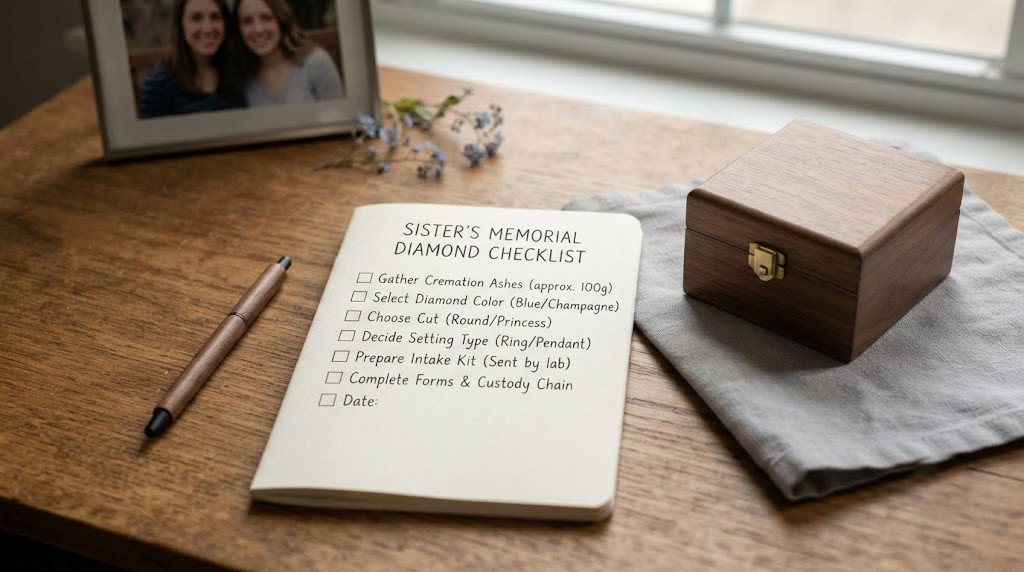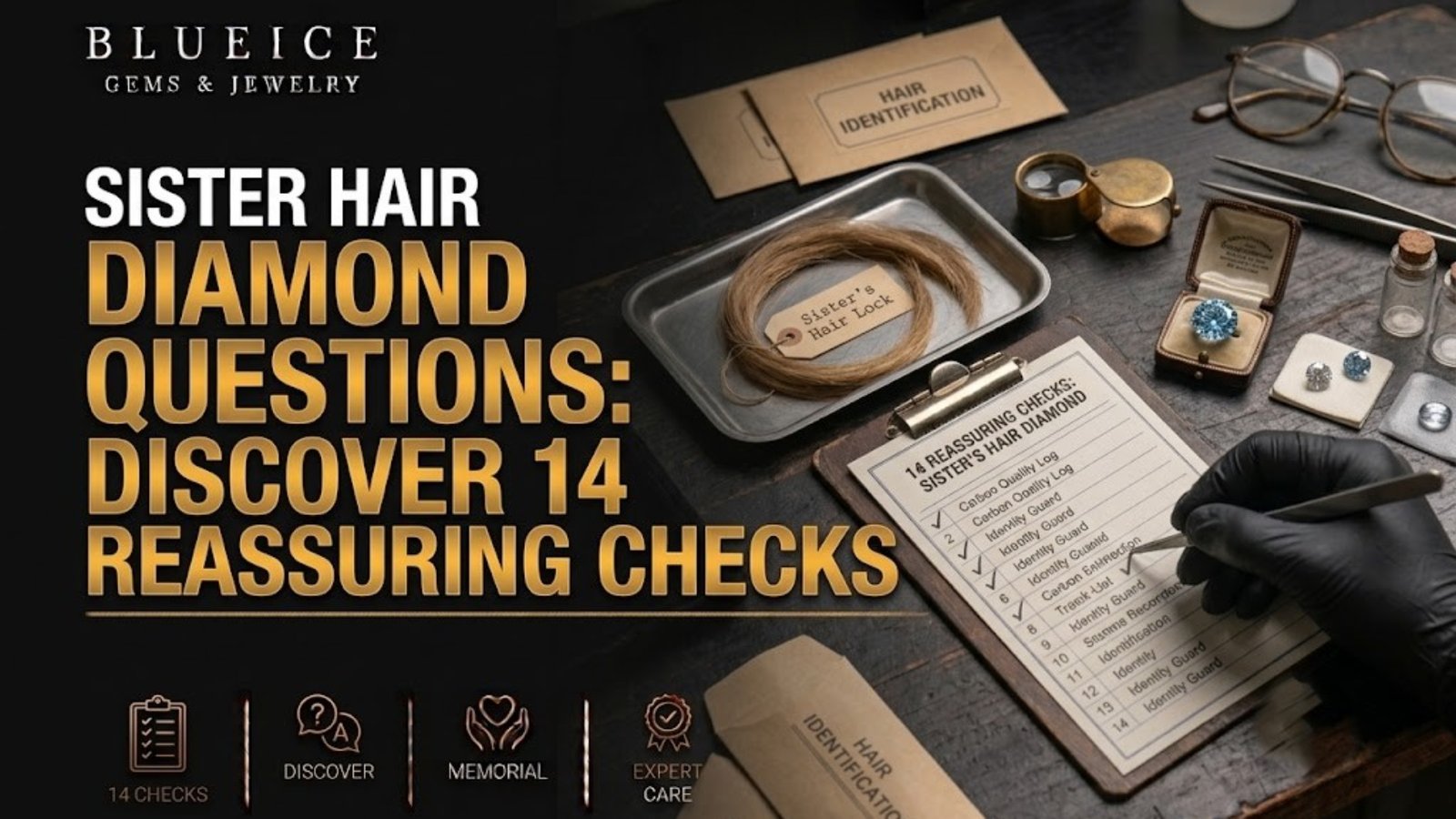
Sister Hair Diamond  Discover 14 Reassuring Checks

Questions to Ask Before Turning Your Sister’s Hair Into a Diamond

It might be a lock tied with thread or strands still caught in the brush she used every morning. The sister hair diamond questions to ask before that hair becomes a stone cover three important areas: the hair itself, the people who have a say over her belongings, and the provider. You need to understand what hair the provider accepts, how it tracks and processes the sample, what it can document about the carbon used, and which records you will receive.
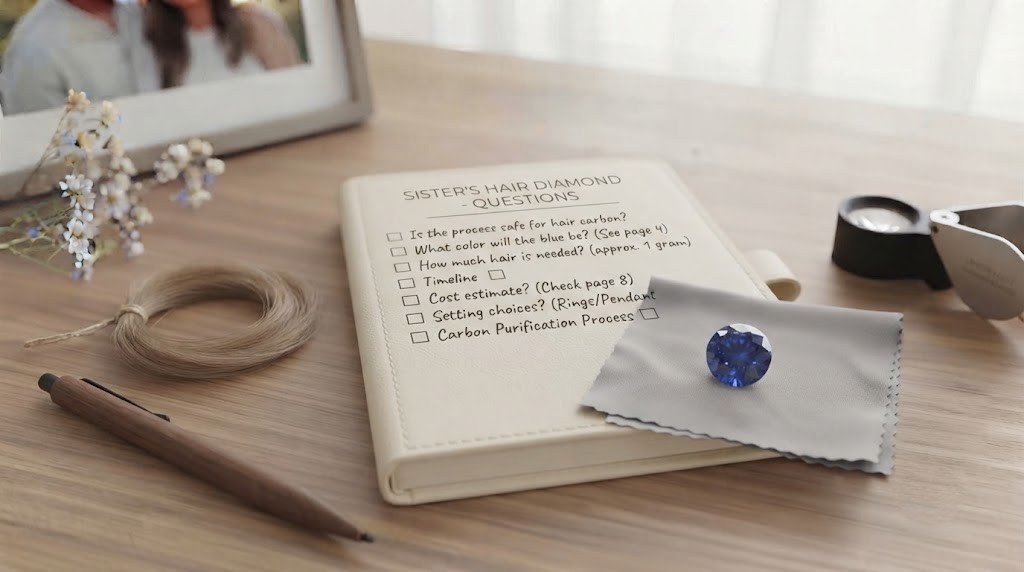
sister hair diamond questions

Table of Contents

Why Do Sister Hair Diamond Questions Begin With the Hair Itself?

Hair is a different starting point from ashes in several practical ways. It is made primarily of keratin and is often described as roughly 50% carbon by weight. Providers may need only a small lock or a few grams, although the amount varies by company and process.

Hair also does not require cremation. A hair based memorial diamond may therefore be an option whether your sister was cremated or buried.

That flexibility makes the first sister hair diamond questions especially important. Where did the hair come from? Are you certain it belonged to her? Who else may feel connected to it? Those answers should come before the sample reaches a laboratory.

For a broader introduction to memorial diamonds, or the complete picture of a sister hair diamond from start to finish, explore those guides first. This article focuses on the questions that help you evaluate the decision and the provider.

Which Sister Hair Diamond Questions Should You Settle Before Calling Anyone?

These first three questions are about the hair and your own expectations. A laboratory cannot make these decisions for you.

1. Am I Certain This Hair Is Hers?

A saved lock or braid may have a clear history. Hair collected from a brush, hat, or pillowcase can be less certain, particularly if other people used the same items.

If the hair came from another person, its carbon would not be exclusively from your sister. Establishing its source is therefore an important first step.

A reassuring answer: “This lock was collected at the funeral home and has been stored in a labeled envelope.”

An unclear answer: “It was in the bathroom drawer, so it is probably hers.”

If the source is uncertain, ask the provider whether the sample is suitable before sending anything.

2. How Much Hair Do I Have, and How Much Do I Want to Keep?

Providers set their own sample requirements. Some request a small lock, while others specify a quantity by weight. Check the requirements before packaging the hair.

If the lock is irreplaceable, consider how much you want to preserve untouched. You do not necessarily need to send the entire keepsake.

Read how much hair a sister memorial diamond may need for more information.

A reassuring answer: “I will send the amount the provider requests and keep the rest of the braid.”

An unclear answer: “I will send everything and decide later.”

Sending more hair does not automatically make a diamond larger or shorten its growth time.

3. What Do I Want the Stone to Be, and What Can I Spend?

Think about how you would like to keep the diamond. You might want a small stone for a ring, a pendant, a shared family keepsake, or a loose stone to preserve safely.

Your preferred use will help guide the size, setting, and budget. Setting a spending limit before contacting providers can also make comparisons easier.

A reassuring answer: “I want a small stone for a ring, and I have a firm budget.”

An unclear answer: “I will decide after seeing whatever options are offered.”

It is fine to remain undecided, but ask for a clear explanation of the choices and costs before committing.

Who Should Hear Your Sister Hair Diamond Questions About Her Belongings?
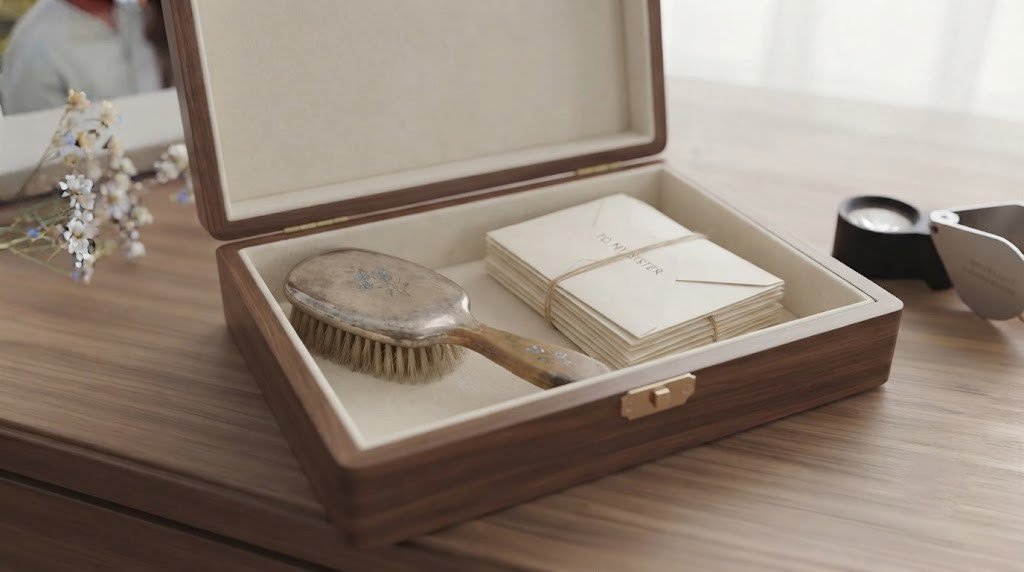
Hair often comes without formal paperwork, which can make this part easy to overlook. However, hair, a brush, or a keepsake box may be considered part of a person’s belongings or estate. The applicable rules vary by location and circumstance.

Speaking with the executor or the person responsible for your sister’s affairs before sending the hair is a considerate approach. If the situation is unclear, a qualified local legal professional can help clarify the relevant requirements.

4. Who Is Handling Her Estate, and Are They Comfortable With This?

The appropriate person may be a spouse or partner, an adult child, a parent, a sibling, or someone your sister named in writing. Do not assume that you automatically have authority, or that you do not.

Begin with a respectful conversation and explain why you want to use the hair.

A reassuring answer: “I spoke with the estate representative, and they agreed that I could use the saved lock.”

An unclear answer: “Nobody will mind.”

Getting agreement early helps protect family relationships and prevents misunderstandings later.

5. Does Anyone Else Want to Keep the Hair or Have a Stone of Their Own?

A small lock may sometimes be enough for more than one order, depending on the provider’s requirements. However, some relatives may prefer that the hair remain untouched.

Discuss these possibilities before sending the sample. If several relatives want to share a diamond, agree on ownership and future arrangements in writing.

A reassuring answer: “We agreed that I can send part of the lock and that the remaining hair will stay in the keepsake box.”

An unclear answer: “I will tell everyone after the diamond is finished.”

It is generally easier to discuss the plan before ordering than to explain a completed stone to someone who was never consulted.

Does Using Hair Change the Conversation About Cremation?

It can. Hair can be collected without cremation, so a hair based memorial diamond may be considered by families whose sister was buried or whose beliefs or preferences ruled out cremation.

Religious views about cremation, remains, and keepsakes differ across traditions and individual circumstances. Using hair avoids the cremation step, but it does not automatically resolve every religious or family concern about transforming a person’s hair into a diamond.

If faith is important to your family, consider speaking with your own faith leader before making the decision.

If your family also has your sister’s ashes and would like both materials included in one stone, read the questions for a sister ashes and hair diamond. For a process focused on ashes alone, see the sister ashes diamond questions guide.

Which Sister Hair Diamond Questions Should a Provider Answer in Writing?

The following nine questions are for the company that may grow your diamond. Request written answers before sending hair or paying for an order.

For a step by step overview, read how to turn your sister’s hair into a diamond.

6. What Hair Do You Accept, and How Much Do You Need?

Providers may have different requirements for cut locks, loose strands, or hair collected from a brush. They may also ask about dye, perms, styling products, or other treatments.

Ask the provider to specify the accepted sample type, quantity, condition, and what happens if the sample does not meet its requirements.

A reassuring answer: A written explanation of the accepted hair, required amount, and procedure for insufficient samples.

An unclear answer: “Just send whatever you have.”

Asking first can help protect a keepsake that cannot easily be replaced.

7. How Will Her Hair Be Labeled and Tracked From Arrival Onward?

A small sample can be difficult to identify if the provider does not have a clear intake procedure. Ask how the sample is labeled when it arrives and how its identity is maintained through each stage.

A reassuring answer: The provider explains its intake reference, record keeping, and how it confirms receipt.

An unclear answer: “We are a small team, so nothing gets lost.”

Questions about sample tracking deserve the same care as questions about the finished diamond.

8. Will Her Hair Be Processed Separately From Other Customers’ Samples?

Tracking and processing separation are two different safeguards. A sample might be labeled correctly while still being processed alongside material from other customers.

Ask the provider to explain whether hair is purified in a dedicated run or handled through another process. Also ask what procedures it uses to prevent sample mix ups.

A reassuring answer: A specific explanation of its processing arrangements and contamination controls.

An unclear answer: “We handle everything carefully.”

The important thing is to understand the actual procedure rather than relying only on general reassurance.

9. What Share of the Stone Do You Expect to Be Her Carbon, and How Will You Verify It?

Hair contains carbon, but the amount of usable carbon recovered depends on the preparation process. Providers may supplement the recovered carbon with laboratory carbon to obtain enough material for growth.

There is no universally published percentage establishing how much of a finished hair based diamond comes from the original hair by mass. Figures sometimes quoted for ash based diamonds should not automatically be applied to hair.

Ask what the provider expects for your chosen stone and what records it can supply. Useful details may include the weight of hair received, the carbon recovered, and whether supplemental carbon is used.

A reassuring answer: A clear explanation of what can be measured and documented, with an expected range if the provider can substantiate one.

An unclear answer: “The diamond is basically all her.”

For more detail about the process, read how a memorial diamond is made from your sister’s hair.

10. Will the Color Come From Growth or Treatment, and Will You Tell Me Which?
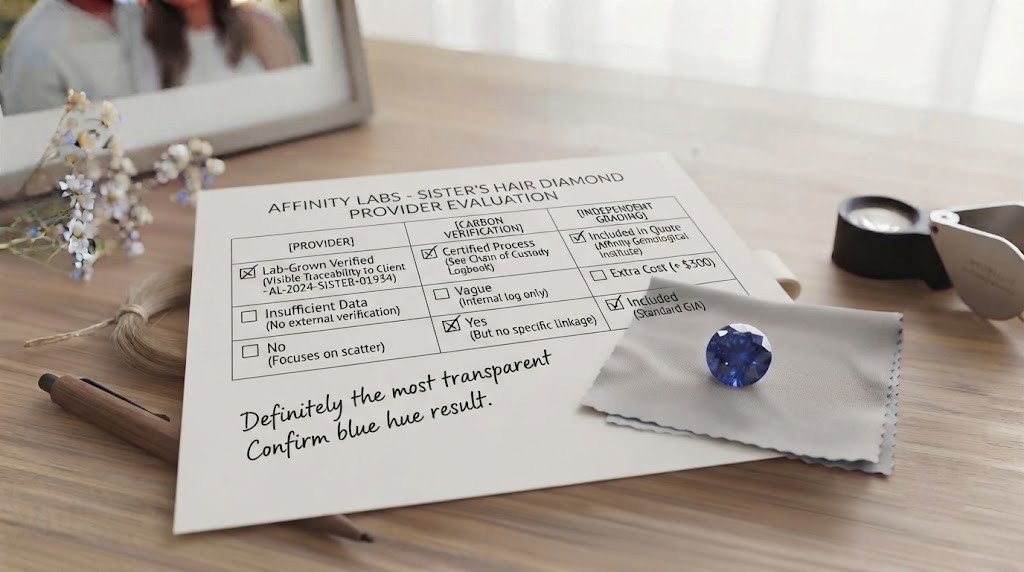
Trace elements and growth conditions can influence a diamond’s color. Nitrogen can contribute to yellow coloration, while boron can produce blue coloration. Some providers offer post growth treatments that can change a stone’s appearance.

Ask the provider to explain which colors may occur naturally through its process, whether it offers treatments, and how any treatment will be disclosed.

A reassuring answer: The provider distinguishes natural growth color from treated color and explains how the distinction will appear in the paperwork.

An unclear answer: “Hair produces a softer, lighter color.”

The finished color cannot be reliably predicted from the shade of your sister’s hair. It also does not tell you anything about her personality.

Read what color a diamond from your sister’s hair might be for more information.

11. Do I Receive an Origin Certificate, an Independent Grading Report, or Both?

An origin certificate is generally intended to connect the diamond with the submitted material and order. Its scope depends on the provider.

An independent grading report evaluates characteristics of the diamond itself, which may include cut, color, clarity, and carat.

These documents serve different purposes. Ask which documents are included, which organization prepares any independent report, and whether additional fees apply.

A reassuring answer: The provider names the report or laboratory and lists any extra charge in the quote.

An unclear answer: “All our stones come certified.”

Ask to see a sample document before ordering so you understand exactly what it establishes.

12. If a Growth Run Fails or the Stone Fractures During Cutting, What Happens Next?

Diamond growth and cutting involve technical processes, and a provider should explain its policy for problems that may arise.

Because the hair sample may be irreplaceable, ask whether any source carbon is reserved, whether another growth attempt is possible, what it costs, and how the timeline might change.

A reassuring answer: A written policy explaining the possible next steps, costs, and treatment of any remaining material.

An unclear answer: “We have never had a problem.”

Asking about a failure policy is a practical way to understand the terms before you commit.

13. What Happens to Any Hair You Do Not Use?

Unused hair may be personally important, especially if it is the last keepsake available. Decide whether you want it returned, stored for a specified period, or handled another way.

Ask how the provider will carry out your preference and whether any return or storage fees apply.

A reassuring answer: A written policy specifying how unused hair is returned or stored.

An unclear answer: “Leftovers are handled responsibly.”

Make sure you understand the arrangement before sending the sample.

14. Can I Have a Full Written Quote, and When Exactly Does the Timeline Start?

The price of a memorial diamond depends on the size, color, cut, provider, and additional services. These broad 2026 industry estimates are for planning purposes only and are not confirmed prices from Memorial Diamond:

  • 0.10 to 0.25 carat: approximately $1,500 to $3,500.
  • 0.50 to 1.00 carat: approximately $5,000 to $15,000.
  • 2 to 5 carats or larger: approximately $20,000 to $75,000 or more.

Colorless processing may cost more than a naturally tinted option. Independent grading, engraving, special cuts, and jewelry settings may also be charged separately.

A broad industry timeline is approximately six to ten months after the provider receives the required material. Larger stones and specialty colors may take longer. These estimates are not delivery promises.

A reassuring answer: An itemized quote that lists the total cost, additional fees, the event that starts the timeline, and an estimated completion date.

An unclear answer: “Prices start at $1,500, and it usually takes about six months.”

Read the quote carefully before signing or paying.

Which Answers to Sister Hair Diamond Questions Should Make You Wary?

One unclear answer does not automatically prove that a provider is dishonest. However, these warning signs deserve follow up questions and written clarification.

  1. The provider claims the stone contains only your sister’s hair carbon without explaining its process.
  2. It applies a percentage quoted for ash based diamonds to hair based diamonds without evidence.
  3. It has no clear procedure for checking whether hair from a brush belongs exclusively to your sister.
  4. It promises a specific or lighter color based on her hair shade.
  5. It cannot explain whether samples are processed separately or how mix ups are prevented.
  6. It presents an origin certificate as though it were an independent grading report.
  7. It has no written policy for failed growth, damaged stones, or unused hair.
  8. It pressures you to decide quickly or uses guilt to encourage a purchase.
  9. It avoids providing an itemized quote or a clear timeline.

A trustworthy provider should be willing to explain its process, acknowledge what cannot be guaranteed, and document important terms.

What Does a Good Answer to Sister Hair Diamond Questions Look Like?

Use this comparison table while speaking with providers. Record the answers and compare them before making a decision.

QuestionWhy it mattersA useful answer includesA vague answer sounds like
What hair do you accept?Requirements varyAccepted type, quantity, and condition“Send whatever you have”
How is the sample tracked?Small samples can be difficult to identifyIntake reference and record keeping“Nothing gets lost here”
Is the hair processed separately?Labels alone do not explain processingA clear process and safeguards“We are careful”
What share is her carbon?No universal finished stone percentage exists for hairWhat can be measured and documented“It is basically all her”
How is color handled?Natural and treated colors differProcess explanation and written disclosure“Hair gives lighter colors”
What documents are supplied?Origin and grading reports differDocument names and applicable fees“Fully certified”
What if growth or cutting fails?The sample may be irreplaceableWritten policy and possible costs“It has never happened”
What happens to unused hair?It may be a valuable keepsakeReturn or storage arrangements“Handled responsibly”
What is the total cost and timeline?Extras and start dates varyItemized quote and estimated completion“From $1,500, about six months”

Frequently Asked Questions

Can Hair That Was Cut Years Ago Still Be Used?

It may be possible, but the provider should confirm whether the sample is suitable. Keep it dry, labeled, and away from direct sunlight while you decide. Tell the provider how long it has been stored and whether you know of any products or treatments on it.

Can a Lock Be Saved at the Funeral Home Before Burial or Cremation?

You can ask the funeral director before the service. Whether a lock can be collected depends on the circumstances, the funeral home’s procedures, and the appropriate person’s permission. Ask how it would be labeled and returned to you.

Do I Need Her Hair if I Already Have Her Ashes?

No. Depending on the provider, a memorial diamond may be made using ashes, hair, or a combination of materials. Hair may be an option for families who prefer not to use ashes or whose sister was buried rather than cremated.

Should I Send All the Hair I Have?

Not necessarily. Send only the amount the provider requests and consider keeping the rest as a keepsake. More hair does not automatically create a larger or faster growing diamond.

How Should I Store Her Hair While I Decide?

Keep it dry in a clean, labeled envelope or container, away from direct sunlight and moisture. Avoid washing or treating it unless the provider specifically instructs you to do so. Ask the provider whether it has any additional storage recommendations.

Final Thoughts on Asking About Her Hair

Her hair may weigh only a few grams, but the decision to turn it into a diamond can carry considerable meaning. Taking your sister hair diamond questions slowly is a way to respect that meaning.

Start by confirming the source of the hair and considering what you want to preserve. Speak with the appropriate family or estate representative, then ask the provider to explain its process, documentation, costs, and policies in writing.

If the answers reassure you, you can move forward with a clearer understanding of what you are choosing. If they do not, keeping the lock exactly as it is remains a meaningful way to remember your sister.

Learn More About Sister Memorial Diamonds

Talk With Memorial Diamond

If you have your sister’s hair and want to understand the possibilities, visit Memorial Diamond. Before placing an order, ask about accepted samples, documentation, color, costs, and the handling of unused material. Take the time you need to make a decision that feels right for you and your family.
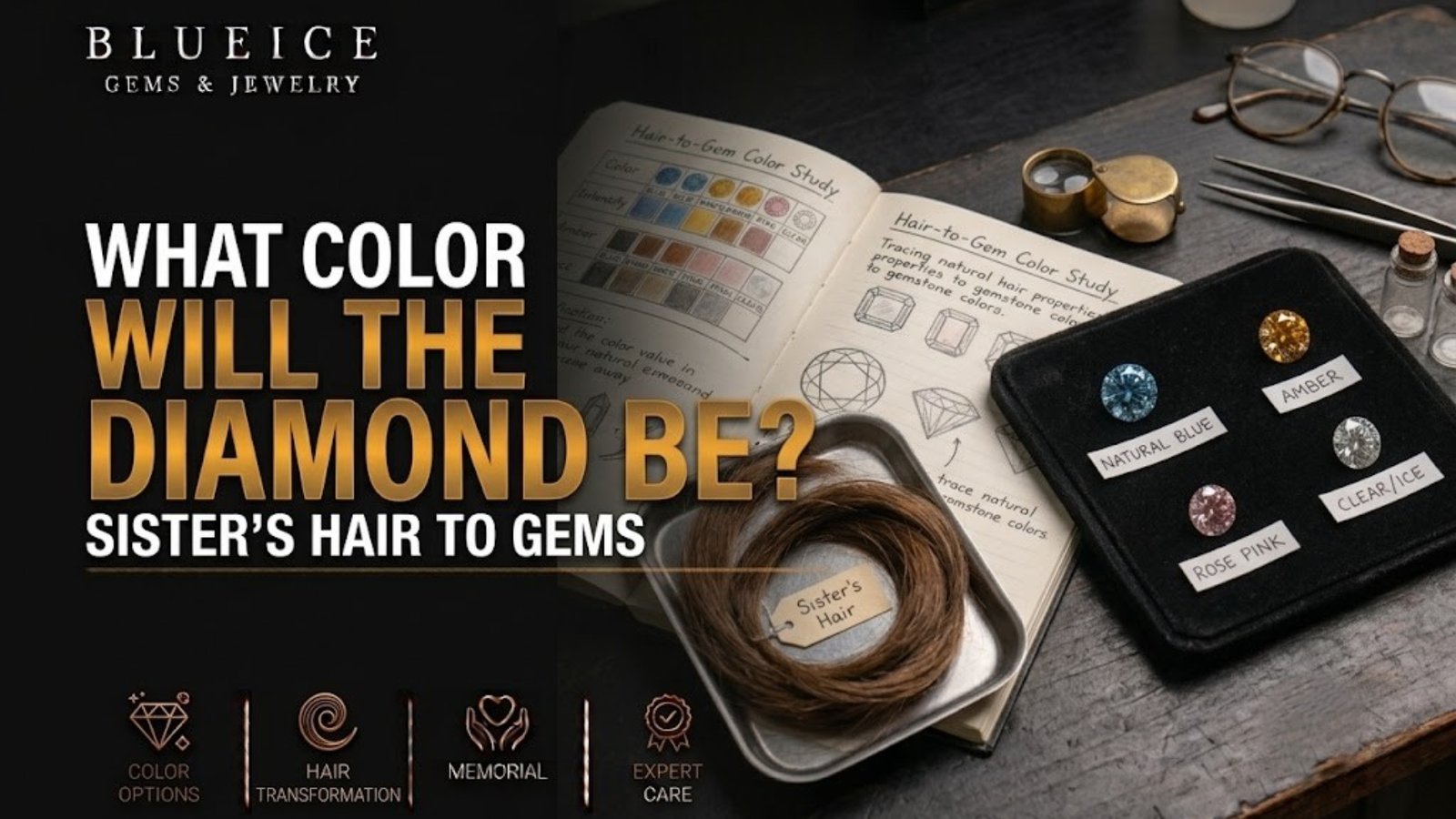
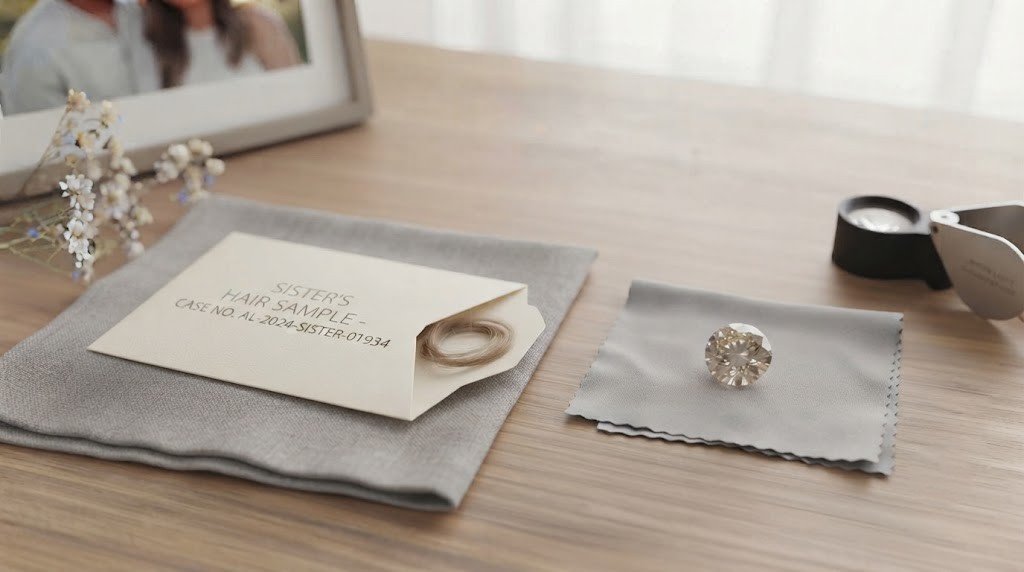
What Color Will a Diamond Made From Your

What Color Will a Diamond Made From Your Sister’s Hair Be?

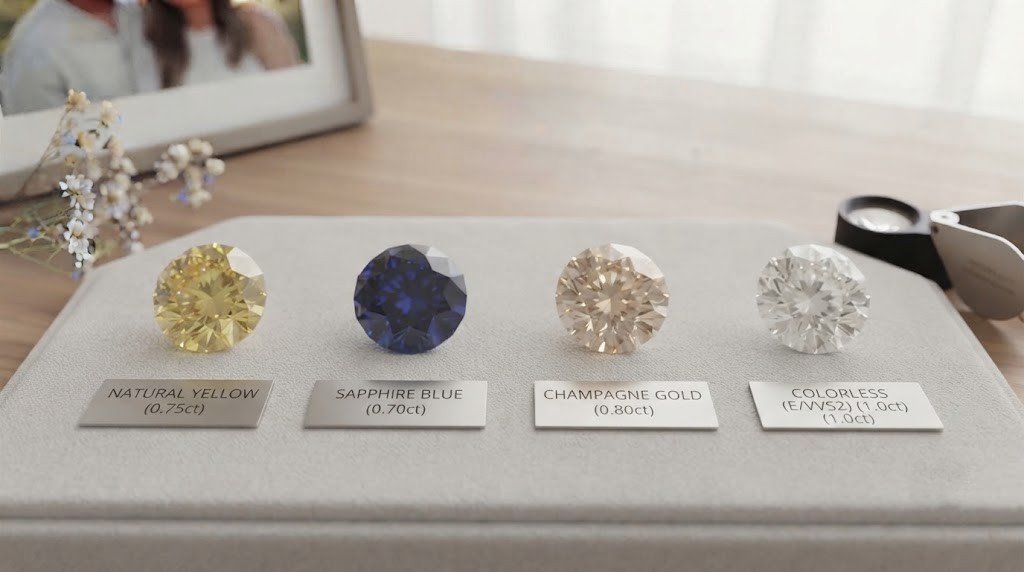
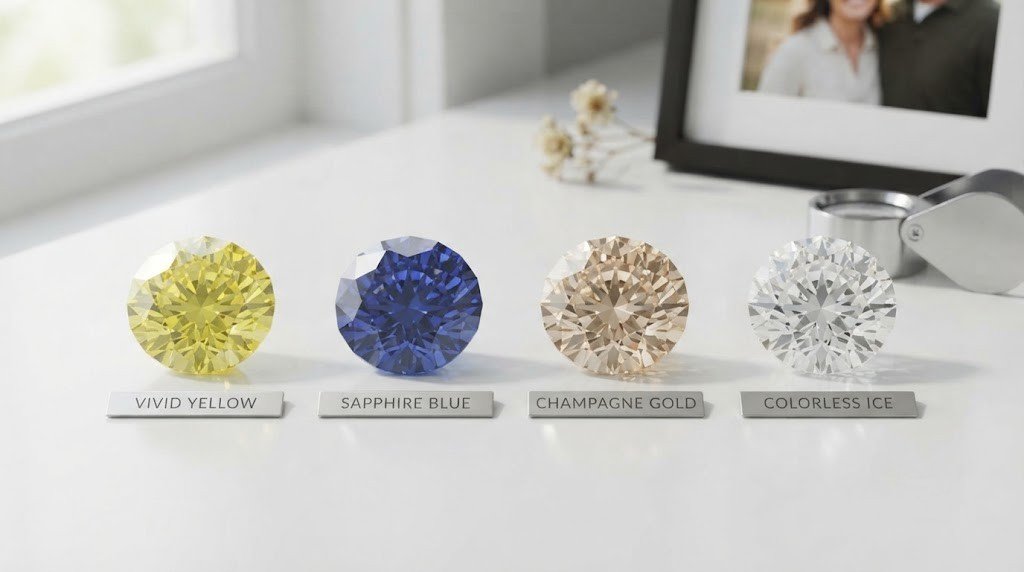
Perhaps it is a lock tucked into an envelope, or a cutting someone thought to save after she died. The sister hair diamond color you end up with cannot be predicted with certainty. The tint forms during crystal growth, so a stone grown using carbon from her hair may turn yellow, blue, or champagne. A colorless result may be possible with additional processing. The shade of her hair does not determine the diamond’s final color.

sister hair diamond color

Is There Any Way to Know the Sister Hair Diamond Color Before Growth?

No. A lock of hair cannot reliably tell you the exact color of the finished diamond. The sister hair diamond color develops as the crystal grows, and trace elements can influence the result.

Nitrogen can contribute to a yellow tint, while boron can produce blue coloration. When coloring impurities are sufficiently limited, a diamond may appear colorless. The outcome depends on the growth process, the carbon preparation, and the conditions inside the growth system.

A responsible provider should explain the possibilities without promising a specific shade before the stone has been grown. If a company guarantees an exact color based only on the appearance of your sister’s hair, ask for the scientific basis and written terms behind that claim.

Remember that the finished color is not a portrait of your sister’s personality. A blue diamond does not mean she was calm, and a yellow diamond does not represent a particular character trait. Its meaning comes from your memories of her, not from a color chart.

Does Her Hair Shade Set the Sister Hair Diamond Color?

The short answer is no. Red, black, blonde, gray, or salon colored hair does not determine the diamond’s final tint.

During preparation, hair is processed to obtain carbon suitable for diamond growth. The original hair pigment does not simply carry over into the finished stone. The sister hair diamond color develops later, during the growth process.

There is also no reliable basis for claiming that hair automatically produces a lighter, whiter, or more predictable diamond than ashes. The final appearance depends on the growth process and the provider’s methods, not simply on whether the starting material was hair or cremated remains.

If your sister’s hair was dyed, permed, or chemically straightened, tell the provider before sending it. Companies may have different rules for treated hair and may request additional preparation or a different sample. Ask for the provider’s requirements in writing.

Where Can the Hair Come From, and Who Should Agree to Its Use?

Hair does not require cremation. Depending on the provider’s requirements, a saved lock or a cutting collected before burial may be suitable. This can be an option for families who did not cremate their sister or who have already made separate arrangements for her ashes.

Possible sources include:

  • A lock saved after a haircut.
  • Hair preserved by a family member.
  • A small cutting collected before burial or cremation, if arrangements allow.
  • Loose hair from a brush or comb, if the provider accepts it.

Providers may request a small lock or a few grams, but the exact quantity varies. Read how much hair a sister’s diamond may need for more information.

It is also important to establish who can authorize the use of the hair. If it is among your sister’s belongings, it may be subject to estate arrangements and applicable local rules. Speak with the executor or the person responsible for her affairs when appropriate. If a relative has kept the hair, discuss its intended use directly with them.

Taking care of permission first allows the later conversation about sister hair diamond color to focus on the stone itself.

If faith is important to your family, consider asking a trusted faith leader about any concerns involving keepsakes or memorial practices. Views can differ across traditions, denominations, and individuals.

How Does Keratin Become the Carbon That Takes On Color?

Hair is made primarily of keratin, a protein containing carbon. Hair is often described as roughly 50% carbon by weight, although its exact composition can vary. This carbon content helps explain why a relatively small amount of hair may be sufficient for a provider’s process.

The provider processes the material to obtain carbon suitable for diamond growth. The preparation may involve high temperatures and controlled conditions to remove other substances. The resulting carbon can then be prepared for the growth process.

Providers may combine the prepared carbon with supplemental laboratory carbon to obtain enough material for the selected diamond. There is no universal published percentage that establishes how much of every hair grown diamond comes from the original hair by mass. Ask the provider what it can document about the source material and its process.

Laboratory grown diamonds can be produced using methods such as high pressure high temperature, known as HPHT, or chemical vapor deposition, known as CVD. The method used depends on the provider.

For a fuller explanation, read the complete guide to a sister hair diamond.

The key point is that the original hair shade does not determine the sister hair diamond color. The tint develops during the diamond growth process.

Which Tints Turn Up, and What Causes Each One?

Memorial diamonds may appear in a range of colors. The exact outcome cannot be predicted reliably from the source material alone.

Possible colorGeneral explanationWhat to know
YellowNitrogen can contribute to yellow colorationThe intensity can vary
BlueBoron can contribute to blue colorationThe shade is not something to assume in advance
Champagne or brownTrace elements and growth conditions may influence warm tonesNatural shades can vary in depth
ColorlessAchieving a colorless result may require more controlled processingIt can cost more
Red, pink, green, or blackSome providers offer post growth color treatmentTreatment should be disclosed in writing

A natural tint is not automatically a flaw. What matters is whether you understand the available options and choose a result that feels meaningful to you.

See memorial diamond colors for a sister for more information about natural and treated shades.

If your family is also considering ashes, read what color a diamond made from your sister’s ashes might be.

Should You Pay Extra for Colorless Over a Natural Sister Hair Diamond Color?

That depends on your preferences and budget. Some families prefer a classic colorless appearance, while others appreciate the possibility of a natural yellow, blue, or champagne tint.

A colorless diamond may require additional processing and can cost more than a tinted stone of comparable size. The difference depends on the provider, the diamond specifications, and the services included in the quote.

The following figures are broad industry estimates for planning purposes, not confirmed prices from Memorial Diamond:

  • About 0.10 to 0.25 carat: approximately $1,500 to $3,500.
  • About 0.50 to 1.00 carat: approximately $5,000 to $15,000.
  • About 2 to 5 carats or larger: approximately $20,000 to $75,000 or more.

Colorless processing may increase the price, and independent grading, engraving, special cuts, and jewelry settings may cost extra. Ask the provider for a current, itemized quote for your chosen size and color preference.

The production timeline also varies. A broad industry estimate is six to ten months after the required material is received, with some larger stones or specialty color requests taking longer. Confirm the expected timeline directly with the provider.

You can also read how much a sister memorial diamond costs to compare size, color, and setting considerations.

There is no universally correct choice. You may prefer the classic look of a colorless stone, or you may feel connected to a natural tint. Either can become a meaningful keepsake.

Can Irradiation Change a Sister Hair Diamond Color?

Some providers offer post growth irradiation, a treatment that can alter a diamond’s color. Depending on the process, treated stones may appear red, pink, green, or black.

The treatment changes the way the crystal interacts with light. It does not change where the original carbon came from.

If a provider offers treated colors, ask for written disclosure explaining the treatment. Confirm how it will appear on the invoice and any grading documentation.

You should also ask whether the treatment has any implications for future jewelry repairs or resizing, particularly when heat may be involved. A qualified jeweler can explain any precautions relevant to the specific stone.

Do not assume every provider offers every treated color or that a particular shade can be guaranteed.

Which Papers Record the Color, and Which Prove the Hair Was Hers?

Two types of documents may serve different purposes.

Origin or authenticity documentation

This document may be issued by the provider and is intended to connect the finished diamond with the submitted material and order. Ask whether it will identify your sister’s hair, the order reference, and the relevant intake records.

An origin document does not necessarily provide an independent assessment of the diamond’s quality or color.

Independent grading report

A grading report evaluates characteristics of the diamond, which may include carat weight, color, clarity, and cut. The exact format and terminology depend on the grading laboratory and the service selected.

Learn more about how the four diamond quality factors are judged.

Independent grading may be optional and may involve an additional fee. If you want the sister hair diamond color described by an independent laboratory rather than only by the company that grew it, ask whether an independent report is available and request an example before ordering.

Confirm how any color treatment will be disclosed. Keep the origin documentation, grading report if supplied, and order confirmation together.

If Several Siblings Order Stones From Her Hair, Will They Match?

They might look similar, but matching colors cannot be guaranteed. Each diamond’s appearance depends on its individual growth conditions, even when the source carbon comes from the same lock of hair.

Before placing separate orders, discuss the possibility that the stones may have different shades. This can help avoid disappointment if one diamond looks warmer or cooler than another.

Siblings and families have different preferences. Some may want a stone, while others may not. Both choices deserve respect.

Ask the provider whether it can grow stones under comparable conditions, but treat any answer as an explanation of its process rather than a promise that the finished stones will match.

If the family is considering one shared stone instead, agree on ownership and future arrangements before ordering. The guide on how to talk to family about a sister memorial diamond may help you begin that conversation.

What Can Your Family Still Shape?

Although you cannot reliably select the natural color in advance, you can make several important choices.

You can discuss:

  • Whether to request a natural tint or ask about colorless processing.
  • Whether a provider offers treated colors.
  • The shape and cut of the finished stone.
  • The metal and style of the jewelry setting.
  • Whether independent grading is worth the additional cost.
  • How the stone will be cared for and stored.
  • What documentation the provider will supply.

A jeweler may recommend waiting until the loose diamond arrives before finalizing the setting. Metal color and lighting can affect how a diamond’s tint appears, so ask to see the stone against different metals before making a final decision.

Diamond ranks 10 on the Mohs scale of mineral hardness, but hardness does not make it impossible to chip. A qualified jeweler can advise on a protective setting for everyday wear. Ask your insurer about coverage if the stone will be valuable or worn regularly.

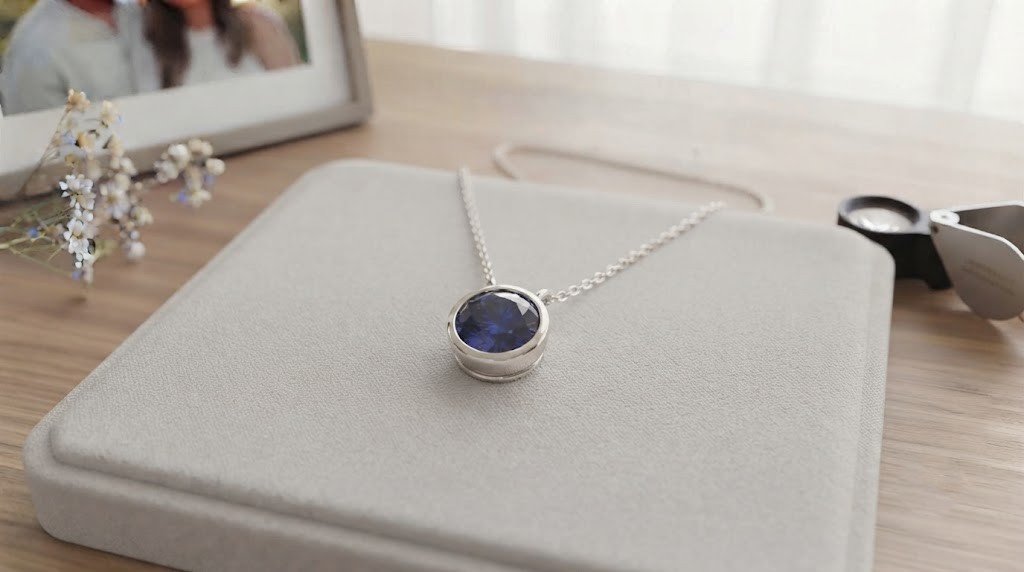
A ring, pendant, pair of studs, or loose stone kept safely in a box can all be meaningful choices. Explore memorial diamond settings and jewelry ideas for a sister for inspiration.

How Can You Ask About Color So the Answers Are Useful?

Specific questions can help you compare providers fairly. Consider asking:

  1. Which natural colors have you produced from hair based material?
  2. Can you show unretouched photographs of real stones under different lighting?
  3. How do you handle dyed or chemically treated hair?
  4. What is the price difference between a tinted and colorless stone of my chosen size?
  5. Do you offer irradiation, and how is it disclosed?
  6. Is independent grading included or charged separately?
  7. What happens if a growth cycle fails or the stone is damaged during cutting?
  8. What happens to any unused hair?
  9. What origin documentation will you provide?
  10. Can you explain what is known and unknown about the source carbon used in the finished stone?

Keep the responses in writing. A provider that clearly explains what it cannot predict, what it charges, and how it documents treatments gives you a better basis for making a decision.

If your family is considering ashes and hair together, read what color a diamond made from your sister’s ashes and hair might be.

Frequently Asked Questions

Will a diamond grown from her gray or white hair be colorless?

Not necessarily. The original hair shade does not determine the final diamond color. The tint develops during growth, and a colorless result may require additional processing regardless of whether her hair was gray, white, blonde, or dark.

Can dyed or chemically treated hair still be used?

Possibly, but each provider has its own requirements. Disclose any dye, perm, or straightening treatment before sending the sample. Ask whether the provider accepts it and whether any additional preparation is required.

Does hair produce a lighter colored diamond than ashes?

There is no reliable basis for treating hair as a guarantee of a lighter or more predictable color. The outcome depends on the growth process and the provider’s methods, not simply on the source material.

How much of a hair grown diamond is actually her carbon?

There is no universal published finished stone percentage for diamonds grown using hair. Ask the provider what it can document about the source carbon and whether supplemental laboratory carbon is used.

Can hair be used if she was buried rather than cremated?

A saved lock or a cutting collected before burial may be an option if the provider accepts it. Confirm the provider’s requirements and establish that you have the appropriate permission to use the hair.

Will the diamond look like the photos on a provider’s website?

Not necessarily. Lighting, photography, and image editing can change how a diamond’s color appears. Request unretouched examples of actual stones under different lighting and remember that your own stone’s final color cannot be known with certainty beforehand.

Can the color be changed if your family does not like it?

Some providers offer post growth treatments that alter color. Availability, cost, disclosure, and the possible effect on future jewelry work vary. Ask about these options before placing the order rather than assuming a finished stone can be changed.

Final Thoughts on the Color of a Diamond From Her Hair

There is something meaningful about allowing the stone to become what it becomes. You cannot select its natural shade in advance, just as you cannot reduce your sister’s life to one color or one memory.

The sister hair diamond color that arrives will reflect the conditions of its particular growth process. What you can choose are the details within your control: the size, cut, setting, documentation, and whether to explore colorless processing or a disclosed treatment.

Take your time, ask clear questions, and keep the answers in writing. Whatever color the stone becomes, its personal meaning comes from the sister you remember and the memories you continue to carry.

Choosing a Memorial Diamond for Your Sister

Choosing a Memorial Diamond for Your Sister: Where to Start

If you have only just begun exploring this idea, you are in the right place. Nothing needs to be decided today. Choosing a memorial diamond for your sister can feel overwhelming at first, especially when you are trying to make a meaningful decision while remembering someone you love.

The process becomes easier when you break it into six practical decisions: what material your family has, who can authorize its use, your budget, your preferred timeline, your expectations about color, and whether you want to wear the diamond or keep it as a loose stone.

This guide will help you understand those decisions at your own pace, with links to more detailed resources whenever you are ready to explore further.

memorial diamond for your sister

What Is a Memorial Diamond for Your Sister?

A memorial diamond for your sister is a lab-grown diamond created using carbon recovered from a person’s cremation ashes, hair, or both, depending on the provider’s process. It is a real diamond rather than glass, resin, or a diamond look-alike.

The finished stone has the characteristic hardness and optical properties of diamond. Like other diamonds, it can be evaluated using factors such as carat weight, cut, color, and clarity. You can read more about the category in this history and background of memorial diamonds.

The process generally involves recovering carbon from the supplied material, purifying it, preparing it for diamond growth, and growing a crystal under controlled laboratory conditions. High-pressure, high-temperature technology is commonly used, although some providers use chemical vapor deposition. The resulting crystal is cut and polished into the desired shape.

One important detail deserves attention: the finished diamond is not necessarily made entirely from your sister’s carbon. Providers may use supplemental laboratory carbon during production. Ask how the company documents the origin of the carbon and what evidence it provides about the finished stone.

A memorial diamond for your sister is a personal keepsake, and families can have different reasons for choosing one. Some want a stone they can wear every day. Others prefer a loose diamond that can be passed down or set into jewelry later.

The six steps below are intended to help you understand your options. You do not need to complete them all at once.

Step 1: What Material Does Your Family Have?

The first decision is whether ashes, hair, or both are available. The type memorial diamond for your sister and amount of material influence which providers and processes may be suitable.

MaterialGeneral carbon informationCremation required?Typical amount
AshesCarbon content varies; some estimates are around 0.5–4% by weightYesA few tablespoons to approximately 4 oz (100 g), depending on the provider
HairApproximately 50% carbon by weightNoA small lock or a few grams
BothDepends on the materials and the provider’s processOnly for the ash portionConfirm requirements with the provider

These are general estimates, not universal requirements. Always follow the specific collection and shipping instructions provided by the company you choose.

If You Have Her Ashes

A small portion of cremation ashes may be sufficient for a memorial diamond for your sister. You may not need to use all the ashes, and the remaining material can stay with your family according to your wishes and applicable requirements.

Before sending anything, confirm who has authority to approve its use and how much the provider needs.

Read the complete guide to sister ashes diamonds for more information about using cremation ashes.

If You Have Her Hair

Hair may be an option for families who do not have ashes or who prefer not to use them. A small lock of hair, a keepsake envelope, or a saved salon trimming might be a starting point, depending on its condition and the provider’s requirements.

Keep the material safely stored until you receive instructions. Before using hair for a memorial diamond for your sister, check whether you have the authority to use it, especially if it forms part of her estate.

Explore the sister hair diamond guide for more details.

If You Have Both Ashes and Hair

Some providers may be able to combine memorial diamond for your sister ashes and hair in a single diamond. However, not every company offers this option, and the process for documenting and processing each source can vary.

Ask the provider whether blending is available, how the materials will be handled, and what documentation you will receive.

You can learn more in the guide to sister ashes and hair diamonds.

Step 2: Who Can Authorize the Material’s Use?

Before ordering a memorial diamond for your sister, establish who can authorize the use of her ashes or hair. This is particularly important when several relatives are involved or family members have different wishes.

Rules governing cremated remains vary by state and jurisdiction. A spouse or partner, adult memorial diamond for your sister children, parents, siblings, or a person named in written arrangements may have different rights depending on the circumstances. There is no single priority order that applies everywhere.

If your sister was cremated, the funeral home or crematory may be able to tell you who signed the cremation authorization. For a question about legal authority, consult a local attorney or the relevant funeral professional.

If you are not the person authorized to make decisions about the ashes, you may still be able to arrange a memorial diamond for your sister with the appropriate person’s permission.

Hair also deserves care. Hair left at home may form part of an estate, depending on memorial diamond for your sister the circumstances and local law. If there is an executor or another person responsible for managing the estate, ask them before sending it to a provider.

A calm conversation can help avoid misunderstandings. Explain why the keepsake matters to you, what amount of material is requested, and what will happen to anything that remains.

If you need help approaching relatives, read how to talk to family about a sister memorial diamond.

Step 3: What Budget Feels Right?

The cost of a memorial diamond for your sister depends on several factors, including carat weight, color, production requirements, grading, and the final jewelry setting.

The following are illustrative 2026 industry price ranges, not quoted prices from Memorial Diamond or any specific provider:

  • Approximately 0.10–0.25 carats: $1,500–$3,500.
  • Approximately 0.5–1 carat: $5,000–$15,000, with colorless stones often costing more.
  • Approximately 2–5+ carats: $20,000–$75,000 or more.

Prices can differ significantly between providers. Treat these figures as starting points for research, not a memorial diamond for your sister guarantee of what you will pay.

Additional costs may include independent grading reports, engraving, specialist cuts, jewelry design, and memorial diamond for your sister the setting. Ask for an itemized quote so you can compare providers on the same basis.

A smaller memorial diamond for your sister can still carry deep personal meaning. You might choose a modest stone in a setting you will wear regularly, or purchase a loose stone and decide on the jewelry later.

If several relatives are sharing the expense, discuss the contribution from each person before placing an order. It is also wise to agree in writing who will own the finished stone and who will keep any documentation.

For more information about estimated expenses, read the sister memorial diamond cost guide.

Step 4: How Long Will It Take?

Memorial diamond production is a specialist process, so it is important to plan for a substantial wait.

General industry estimates suggest that a memorial diamond for your sister may take around 6–10 months from the provider’s receipt of the material. Larger stones or specialty colors may take up to approximately 12 months, depending on the company and the order.

These are estimates rather than guaranteed delivery dates. Ask the provider for its current timeline and whether the estimate includes material processing, crystal growth, cutting, polishing, grading, and jewelry setting.

Sending more ashes or hair does not automatically make the finished diamond larger or shorten production time. Carat weight is related to crystal growth and the production process, not simply to the quantity of material sent.

If you hope to have the diamond ready for a birthday, anniversary, or family event, ask the provider whether that date is realistic. Leave extra time for unexpected delays.

There is also no deadline for beginning. Some families explore their options soon after a memorial diamond for your sister loss, while others wait months or years before making a decision.

Before committing to a memorial diamond for your sister, ask two questions in writing:

  • What happens if a growth cycle fails or the stone is damaged during cutting?
  • What happens to any supplied material that is not used?

The answers can differ by provider, so review the terms carefully before sending anything.

Read the sister memorial diamond timeline for more details.

Step 5: What Should You Know About Diamond Color?

Color is one of the most important expectations to discuss before ordering a memorial diamond for your sister memorial diamond for your sister.

Diamond color is influenced by factors such as trace elements and the conditions under which the crystal grows. Nitrogen can contribute to yellow tones, while boron can contribute to blue. Colorless diamonds require different conditions and may involve additional processing.

Memorial diamonds can come in shades such as yellow, blue, champagne, or brown. Some providers also offer colors such as pink, green, red, or black through specialized processes, which may include post-growth treatment.

Ask the company which colors it offers, whether a particular color can be requested, and whether any treatment is used to achieve it. A provider should explain the limitations clearly rather than promise an exact result without qualification.

The color of a memorial diamond for your sister cannot reliably be predicted just by looking at her ashes or hair. The resulting color is a matter of chemistry and production conditions; it does not represent her personality or the significance of your relationship.

Colorless stones may cost more, while other shades may be available at different price points. Compare the available options and ask whether color affects the estimated timeline.

Clarity and overall quality also matter. If you want an independent assessment, ask whether the finished diamond can be submitted for an independent grading report. The Gemological Institute of America explains the main diamond quality factors, including cut, color, clarity, and carat weight.

For a closer look at available shades, visit memorial diamond colors for a sister.

Step 6: Should You Wear the Diamond or Keep It Loose?

There is no single correct way to keep a memorial diamond memorial diamond for your sister for your sister. The best choice is the one that feels right for you and the way you want to remember her.

Here are some possibilities:

  • Pendant: A necklace can keep the stone close to you, and a discreet design can be worn beneath clothing.
  • Ring: A solitaire or a design with smaller accent stones can make the diamond part of everyday jewelry.
  • Stud or drop earrings: If two stones are created, a matching pair may be an option.
  • Cufflink, tie pin, or brooch: These can suit someone who prefers a less conventional piece of jewelry.
  • Loose diamond: Keeping the stone in a small box gives you time to decide on a setting later.

Consider who will wear the jewelry, how often it will be worn, and what style is comfortable. You do not have to memorial diamond for your sister memorial diamond for your sister choose a setting immediately if the provider allows the stone to be supplied loose.

Diamond is highly scratch-resistant, but it can still chip if struck at the wrong angle. If you intend to wear a memorial diamond for your sister daily, ask a jeweler about protective settings, including bezel settings, and suitable care.

If the diamond is valuable, speak with your insurer about whether it can be covered and what documentation may be required.

For ideas about jewelry styles and protection, see settings and jewelry ideas for a sister.

Common First-Step Mistakes to Avoid

A few practical precautions can make the process clearer and help prevent avoidable problems.

1. Moving ashes before confirming authorization.
Check who has authority over the remains and obtain the necessary approval before removing or sending any portion.

2. Sending more material than requested.
Follow the provider’s written instructions. Additional material does not automatically create a larger diamond or make production faster.

3. Assuming you can choose an exact color.
Ask what colors the provider can offer and what limitations apply. Do not rely on an unsupported promise about the final result.

4. Comparing quotes without checking what is included.
One quote may include a grading report or jewelry setting, while another may charge for these separately. Compare itemized prices.

5. Forgetting to ask about problems during production.
Ask what happens if a growth cycle fails, if a stone fractures during cutting, or if the finished result differs from expectations.

6. Assuming unused material will automatically be returned.
Confirm the company’s policy for unused ashes or hair, including whether return shipping or additional fees apply.

7. Overlooking ownership arrangements.
If relatives contribute money or expect to share the keepsake, agree on ownership and future arrangements before ordering.

Taking these steps before choosing a memorial diamond for your sister can make conversations with providers more focused and help you compare their answers fairly.

Different families have different first questions. Use the guides below memorial diamond for your sister to explore the subject that matters most to you.

Your questionRecommended guide
Is a diamond from her ashes really possible?Sister Ashes Diamond: The Complete Guide
Can hair be used instead of ashes?Sister Hair Diamond: The Complete Guide
Can both materials be used?Sister Ashes and Hair Diamond: The Complete Guide
How can I discuss this with relatives?How to Talk to Family About a Sister Memorial Diamond
What might it cost?How Much Does a Sister Memorial Diamond Cost?
How long does production take?Sister Memorial Diamond Timeline
What colors are available?Memorial Diamond Colors for a Sister
What jewelry settings can I choose?Memorial Diamond Settings and Jewelry Ideas for a Sister

Reading two or three relevant guides before contacting a provider can help you prepare questions and understand what to expect.

What Should You Prepare Before Contacting a Provider?

You do not need every detail settled before asking for information. A few notes can simply memorial diamond for your sister make the first conversation easier.

Before discussing a memorial diamond for your sister, consider gathering:

  1. Available material: Whether you have ashes, hair, or both, and an approximate quantity.
  2. Authorization: Who is responsible for approving the material’s use and whether they agree in principle.
  3. Budget: A comfortable spending range, including the setting if you want jewelry.
  4. Timeline: Whether you have a particular date in mind or are happy to wait.
  5. Color preferences: Whether you prefer a particular shade and whether you are open to treated colors.
  6. Grading: Whether you want to ask about an independent grading report.
  7. Production policies: What happens if growth fails, the stone is damaged, or material remains unused.
  8. Ownership: Who will own and keep the finished diamond if other relatives are involved.

You can use this list as a starting point rather than a set of requirements. Preparing it does not commit you to an order.

Frequently Asked Questions

Can I choose a memorial diamond if my sister and I were estranged?

Yes, you can explore the option regardless of whether your relationship was straightforward or complicated. Grief and remembrance are personal. The practical issue is whether you have the necessary authority or approval to use the material. If approaching relatives feels difficult, a funeral professional or local attorney may help clarify the next step.

Should the whole family agree before I order a stone?

The necessary approval depends on who has legal authority over the remains and the rules that apply where you live. Even when unanimous agreement is not legally required, speaking with relatives can prevent misunderstandings. If several people want keepsakes, discuss portions, costs, and ownership before ordering.

Is it too soon to start planning a memorial diamond?

There is no universally right time. You can research a memorial diamond for your sister without committing to a purchase. If you decide to wait, keep ashes or hair stored safely and follow appropriate storage guidance from a funeral professional or prospective provider.

Do I need to tell the provider about her life or personality?

No. The technical process depends on the material and the conditions used to grow the diamond, not on personal details about your sister. However, you may choose to use a meaningful date, engraving, or jewelry design to make the finished keepsake more personal.

Can a memorial diamond be a gift to her children or partner?

It may be possible, provided the material’s use is properly authorized and the provider can accommodate the request. Discuss who will own the finished stone and who will be responsible for it in the future, particularly if several relatives are involved.

What if I cannot afford a memorial diamond right now?

That is completely understandable. You do not have to make the purchase immediately. If the appropriate person agrees, you may be able to set aside a suitable portion of material while you consider your options. Smaller stones may cost less than larger ones, but prices vary, so request a current quote and ask what is included.

A meaningful remembrance does not have to follow a particular timeline or budget.

Final Thoughts: Where to Begin

Choosing a memorial diamond for your sister can feel like a major decision because it is connected to someone who matters to you. Breaking the process into smaller questions can make it easier to approach without feeling rushed.

Start with two practical points: what material is available and who can authorize its use. Once those are clear, you can explore budget, timing, color, and the kind of keepsake you would like.

You can take one step today and leave the others for later. There is no need to make every decision at once, and researching your options does not mean you have committed to an order.

Learn More About Sister Memorial Diamonds

Talk With Memorial Diamond

When you feel ready to ask questions about a memorial diamond for your sister, you can begin by discussing available materials, authorization, production timelines, colors, and pricing with a provider.

Visit Memorial Diamond to explore the subject further and find a starting point that feels comfortable for you. You do not have to make a decision before you are ready.