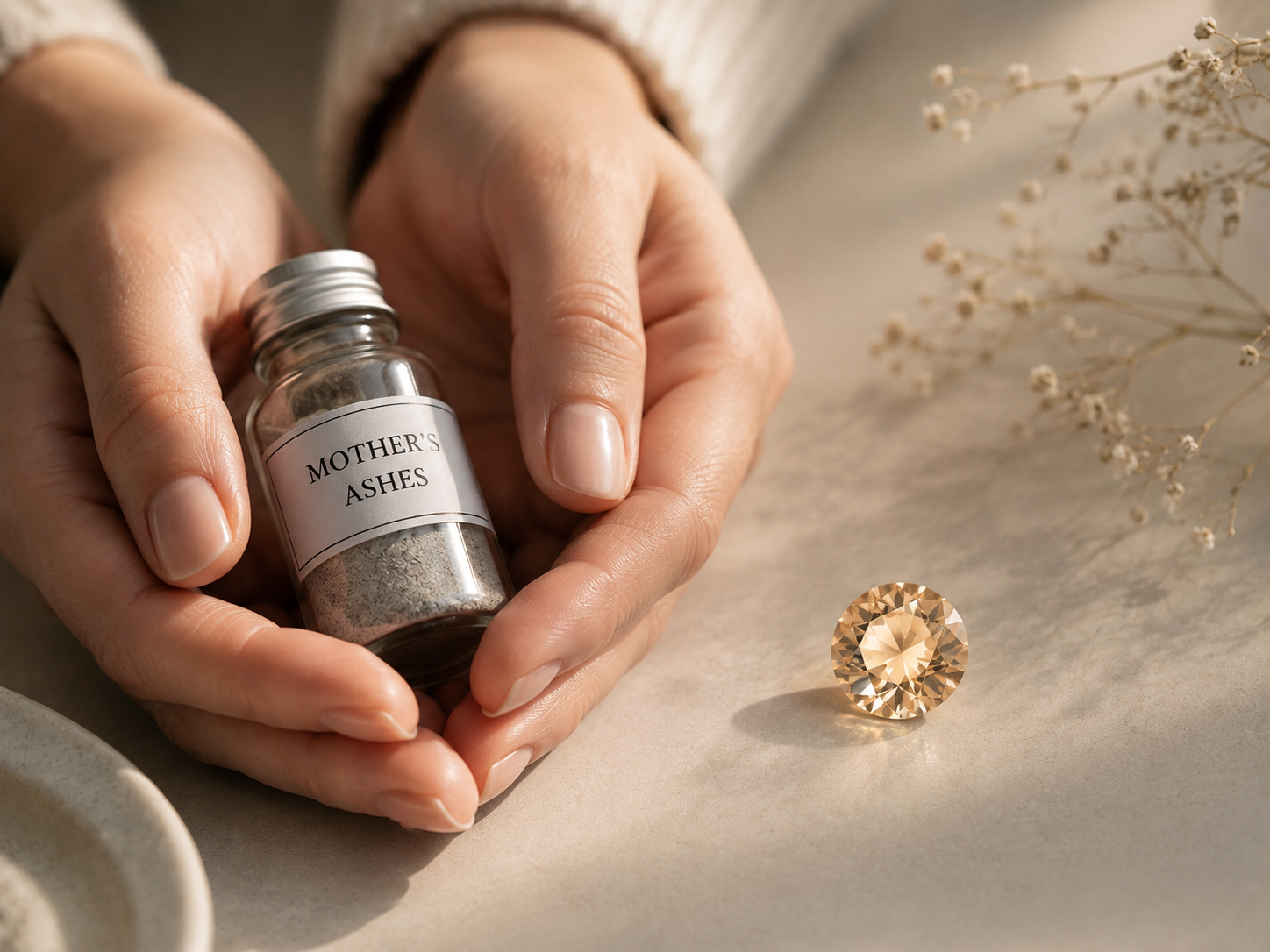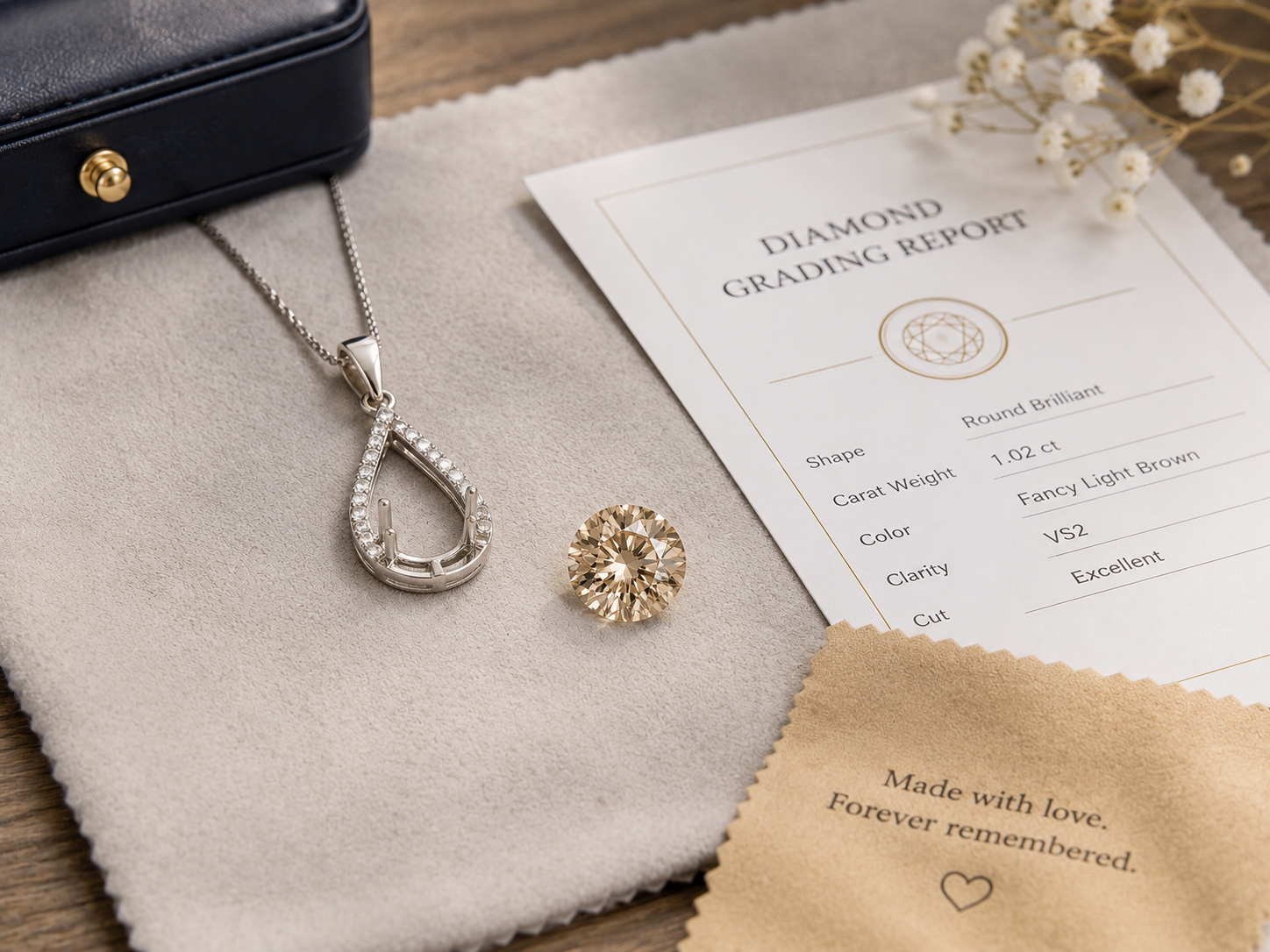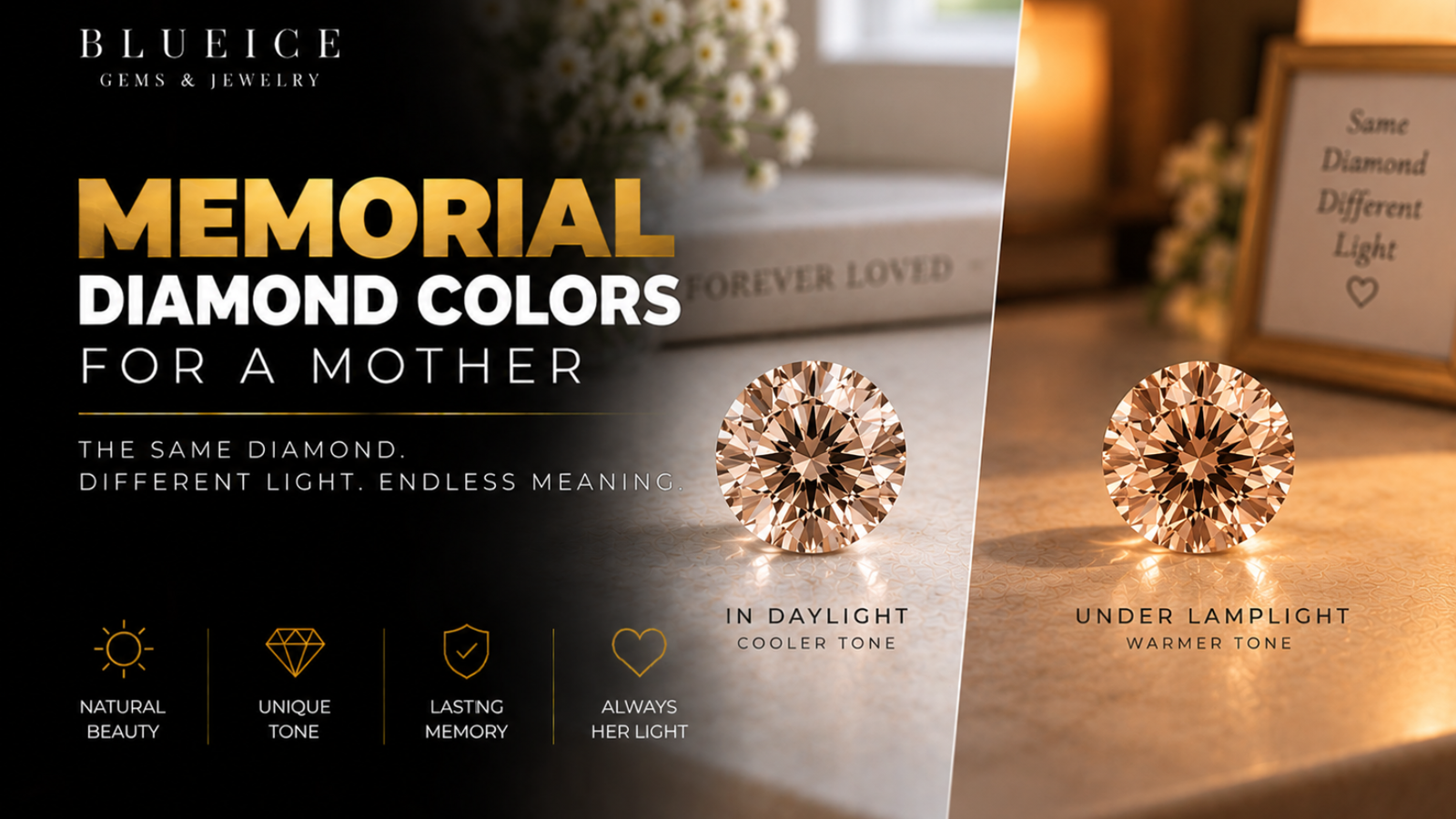
Hold a champagne memorial diamond near a kitchen window and you may see a warm, faintly golden brown tone. Move the same diamond beneath a warm dining room lamp and the stone may appear more amber. The diamond stays exactly the same. The surrounding light changes how your eyes see its color.
When families explore memorial diamond colors for a mother, they usually want to know which colors exist, what creates each color, how much each option costs, and which color will continue to feel right years from now.
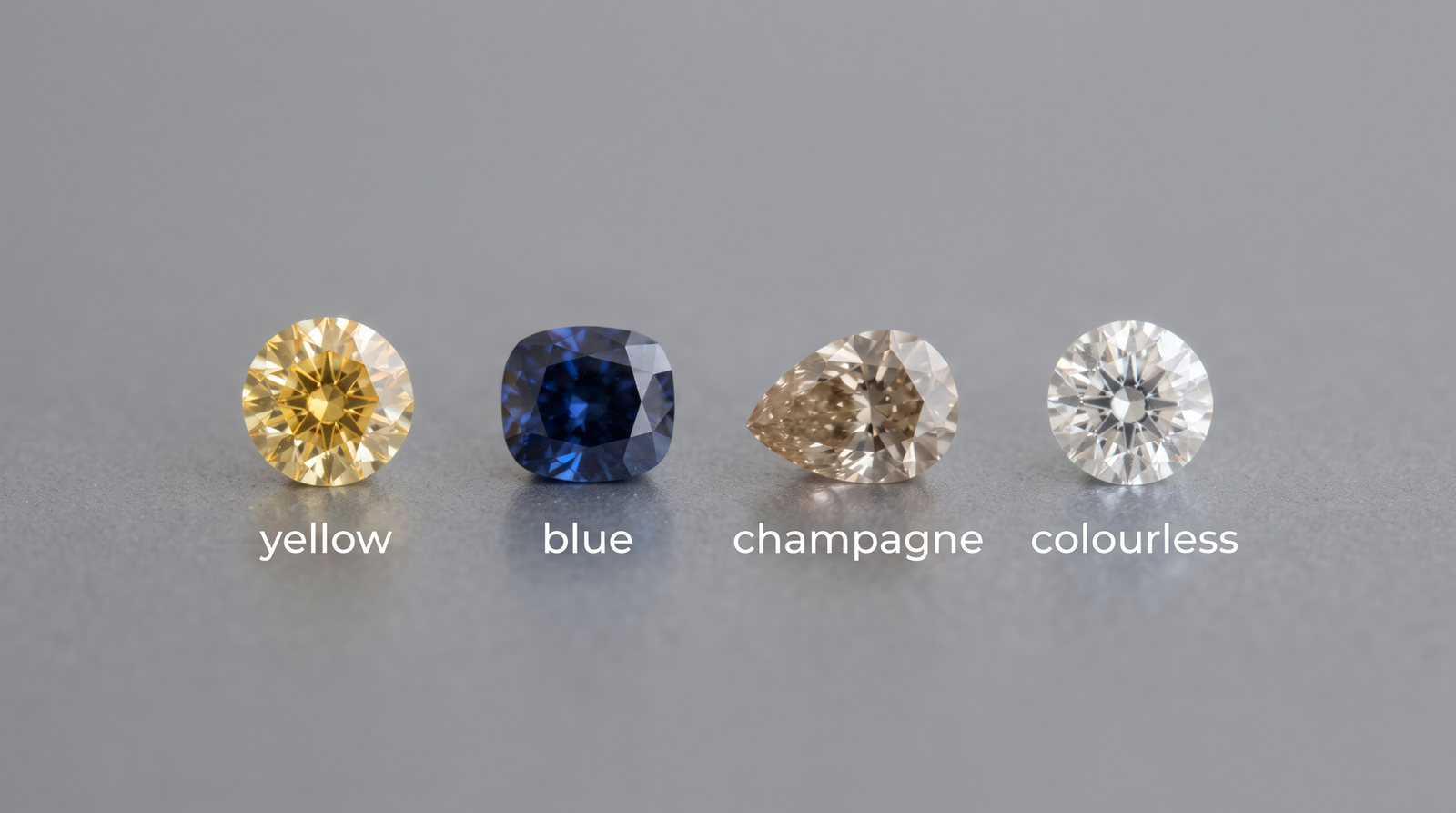
Memorial diamond colors generally fall into several groups. Yellow, blue, and champagne or brown represent common natural color outcomes. Colorless diamonds require the near total absence of the trace elements that create other colors and can cost more at the same carat size. Some providers also offer red, pink, green, or black through post growth irradiation.
This guide focuses on the colors you can consider when choosing a mother’s memorial diamond. If you want to understand what color a specific portion of her ashes or hair may produce, explore our guides about the ashes version, the hair version, and the version for both together.
Which Colors Can You Actually Choose From?
Five main color families give families the starting point for a memorial diamond. The crystal growth process determines the natural color through trace elements present during growth.
Nitrogen produces yellow. Boron produces blue. Champagne and brown tones can develop when an organic carbon source carries a mixture of trace elements. Colorless growth requires the near total absence of nitrogen and boron.
The carbon preparation also matters. Providers purify personal carbon and blend it with supplemental laboratory carbon to create the material needed for diamond growth. Industry information places the personal carbon contribution for ash derived stones at roughly 10 percent to 15 percent of the finished stone mass.
| Color | What creates it | Relative cost at the same carat | Availability |
|---|---|---|---|
| Yellow | Nitrogen during growth | Lower price range | Standard option |
| Blue | Boron during growth | Lower price range | Standard option |
| Champagne or brown | A mixture of trace elements in an organic carbon source | Lower price range | Standard option |
| Colorless or white | Near total absence of nitrogen and boron | Meaningfully higher than the three colors above | Confirm availability at your chosen carat |
| Red, pink, green or black | Post growth irradiation | Additional treatment can increase the price | Some providers offer these colors |
For a deeper explanation of why colorless memorial diamonds remain less common, read why memorial diamonds are rarely colorless.
What Does Post Growth Irradiation Do to Her Stone?
Post growth irradiation changes how a finished diamond absorbs light. It does not change what the crystal consists of.
Irradiation takes place after diamond growth. Controlled exposure alters color centers inside the crystal structure and can shift the appearance toward red, pink, green, or black.
The diamond remains a diamond. Its hardness remains 10 on the Mohs scale, the same hardness associated with other diamonds.
The treatment also creates an important documentation difference. A grading report can identify a treated color rather than presenting that color as the diamond’s original growth color.
Irradiation also does not change the personal carbon contribution. Providers establish that contribution during the material preparation and blending process before diamond growth begins.
If you consider an irradiated color, ask your provider how the treatment appears on the grading documentation and whether the provider offers any policy for future color changes.
Color Reads Differently as the Stone Gets Bigger
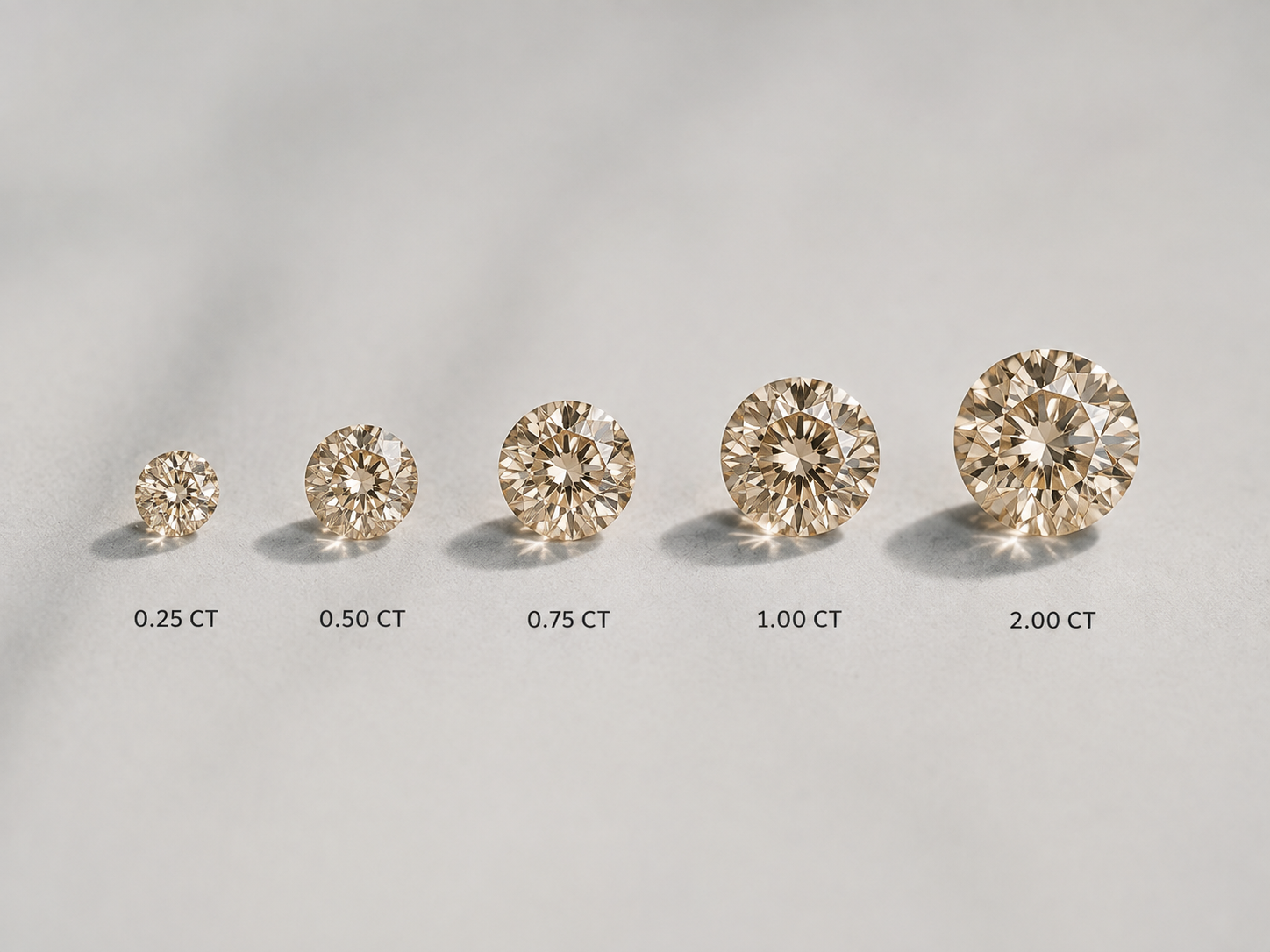
Body color appears through the depth of a diamond. As the stone grows, the same tint can become easier to see.
A subtle champagne tone may appear understated in a 0.25 carat stone and much more noticeable in a larger stone. Consider your preferred level of color before you choose the size.
- If you want the color to stand out, a larger stone can make the tone easier to notice.
- If you want the color to remain subtle, a smaller stone can create a quieter appearance.
- If you want a colorless stone, the higher price can become more significant as the carat size increases.
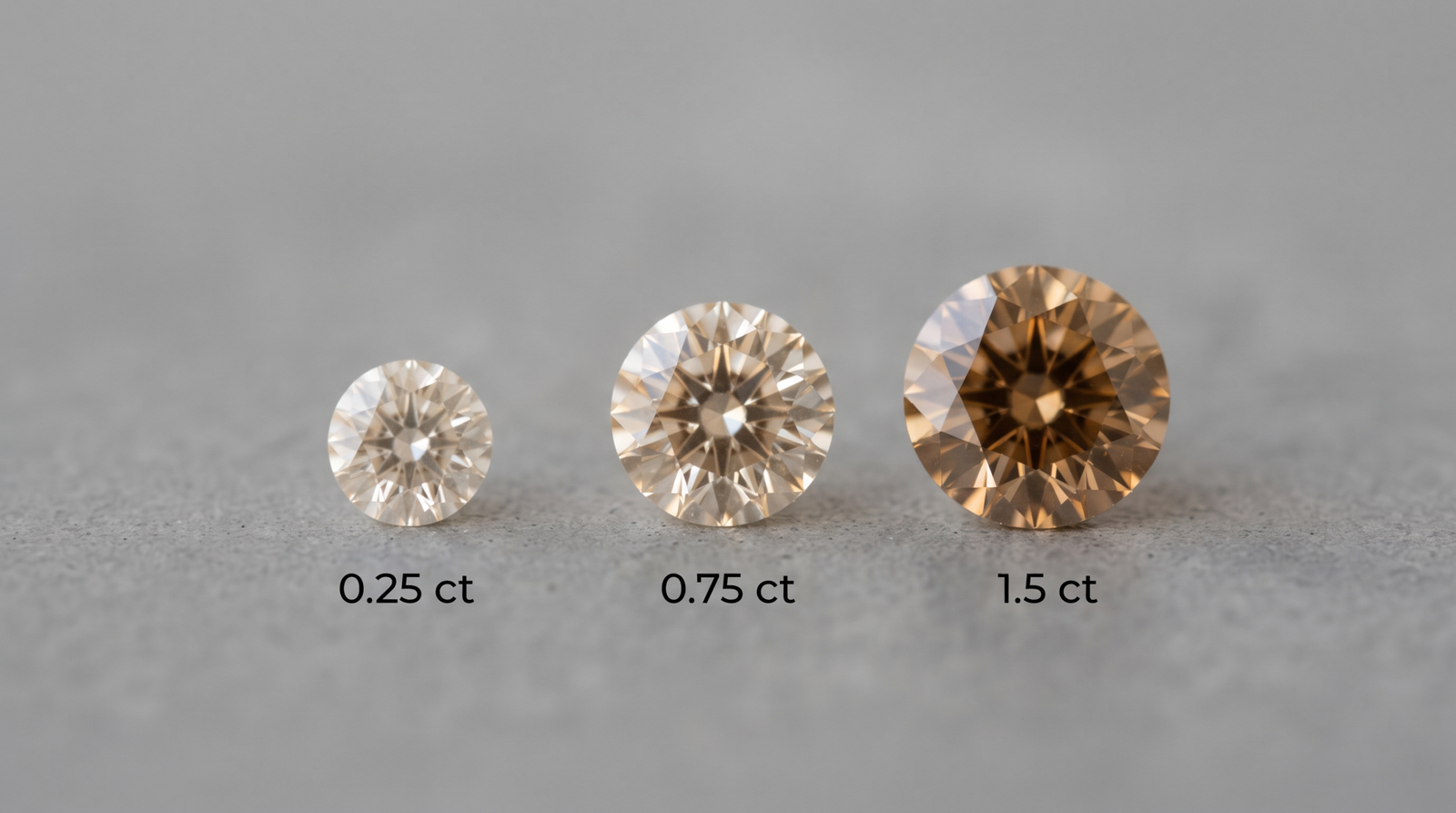
Carat size depends on diamond growth time rather than the amount of material you send. Read how to choose a carat size before you finalize the stone size.
Production commonly takes around 6 to 10 months from the laboratory receiving the material. Large stones and specialty colors can require up to 12 months. Your complete planning period can reach around 8 to 14 months when you include preparation, shipping, decisions, and jewelry work.
Read what actually drives the timeline for a closer look at each stage.
The Setting Metal Decides What You Actually See
The diamond keeps its own color, but the jewelry metal around it can change how your eyes perceive that color.
Yellow gold creates a warm combination with yellow and champagne stones. The similar tones can make the diamond color feel softer and more coordinated.
Platinum and white gold create a cooler contrast. That contrast can make a warm diamond appear more noticeable while making a near colorless stone appear whiter.
Rose gold can add another layer of warmth to a champagne diamond and can make the overall combination appear more pink.
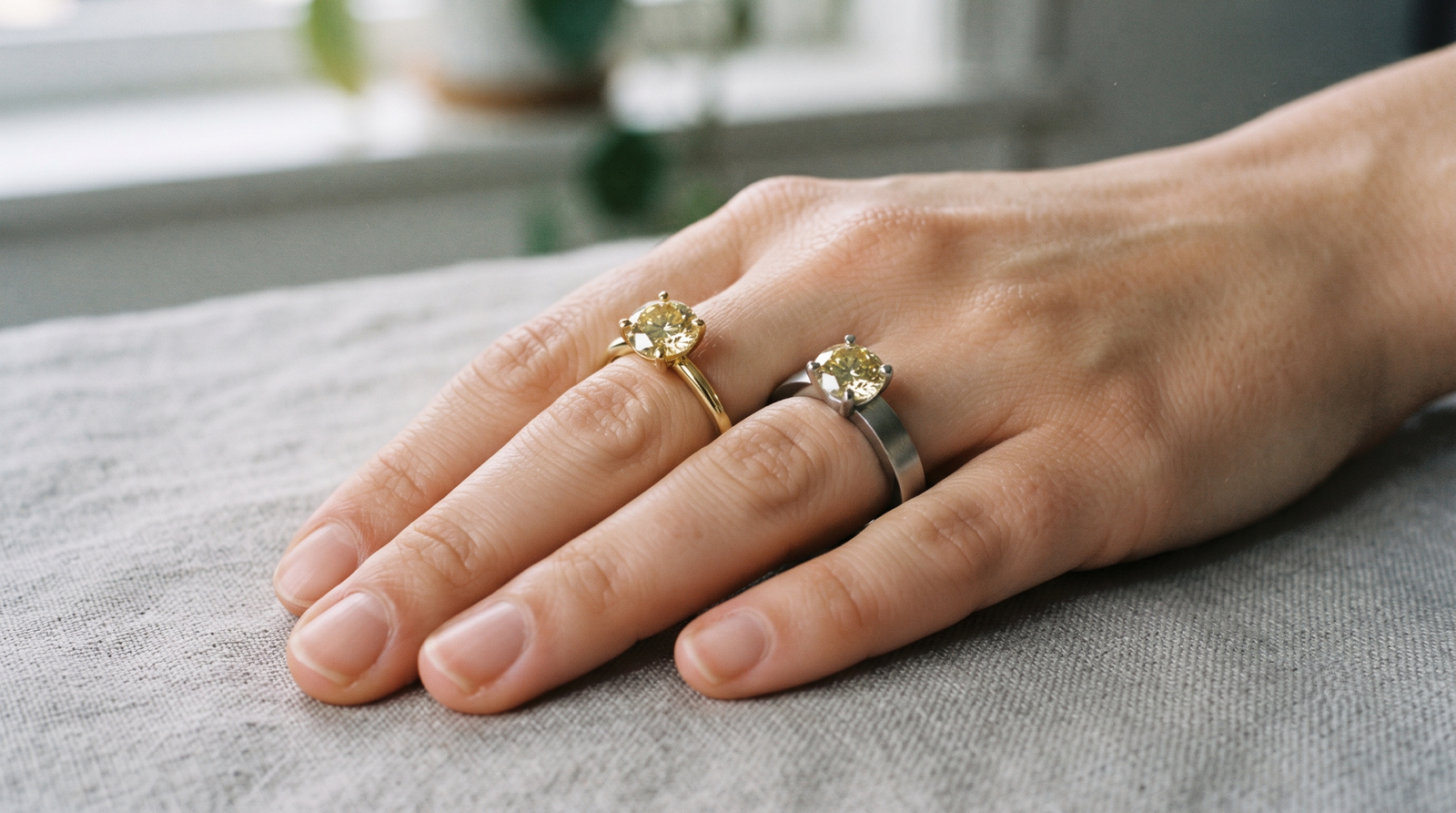
White gold commonly uses rhodium plating to create its bright white surface. Normal wear can reduce that plating and reveal the warmer metal underneath. A jeweler can restore the bright surface through replating.
For that reason, consider your jewelry metal at the same time as your diamond color. Explore settings and jewelry ideas for a mother’s stone before you make your final selection.
Ask to see your preferred diamond color against both warm and cool metals. That simple comparison can help you understand how the finished jewelry may look on your hand.
What Does Color Add to the Price?
Carat size usually creates the largest difference in price. Color then moves the price within the relevant carat range.
Industry pricing information for 2026 places a 0.10 to 0.25 carat memorial diamond around $1,500 to $3,500. A 0.5 to 1 carat stone can range around $5,000 to $15,000. A 2 to 5 carat stone can reach approximately $20,000 to $75,000 or more.
Colorless diamonds can cost meaningfully more than yellow, blue, or champagne diamonds at the same carat size. Irradiated colors can create another treatment cost.
Grading, engraving, fancy cuts, and jewelry settings can also add separate costs.
These figures represent general industry ranges rather than Memorial Diamond pricing. Always ask for the current price of your chosen carat and color combination.
Read what a mother memorial diamond actually costs for a deeper look at pricing.
How Do You Choose a Color You Will Still Like in Twenty Years?
Choose for the jewelry itself as well as the story behind it. A color can carry a beautiful connection to your mother, but you also want a stone that you genuinely enjoy wearing.
Blue may remind you of her love for the ocean. Yellow may remind you of her warmth. Champagne may match the jewelry she wore every day. Those personal connections can guide your decision, but your own style matters too.
Look at What You Already Wear
Look at your everyday jewelry rather than a piece you wear only on special occasions. If you normally wear yellow gold, a yellow or champagne diamond may fit naturally into your collection.
If you prefer platinum or white gold, a blue or colorless diamond may complement your usual style.
Ask for a Color Family
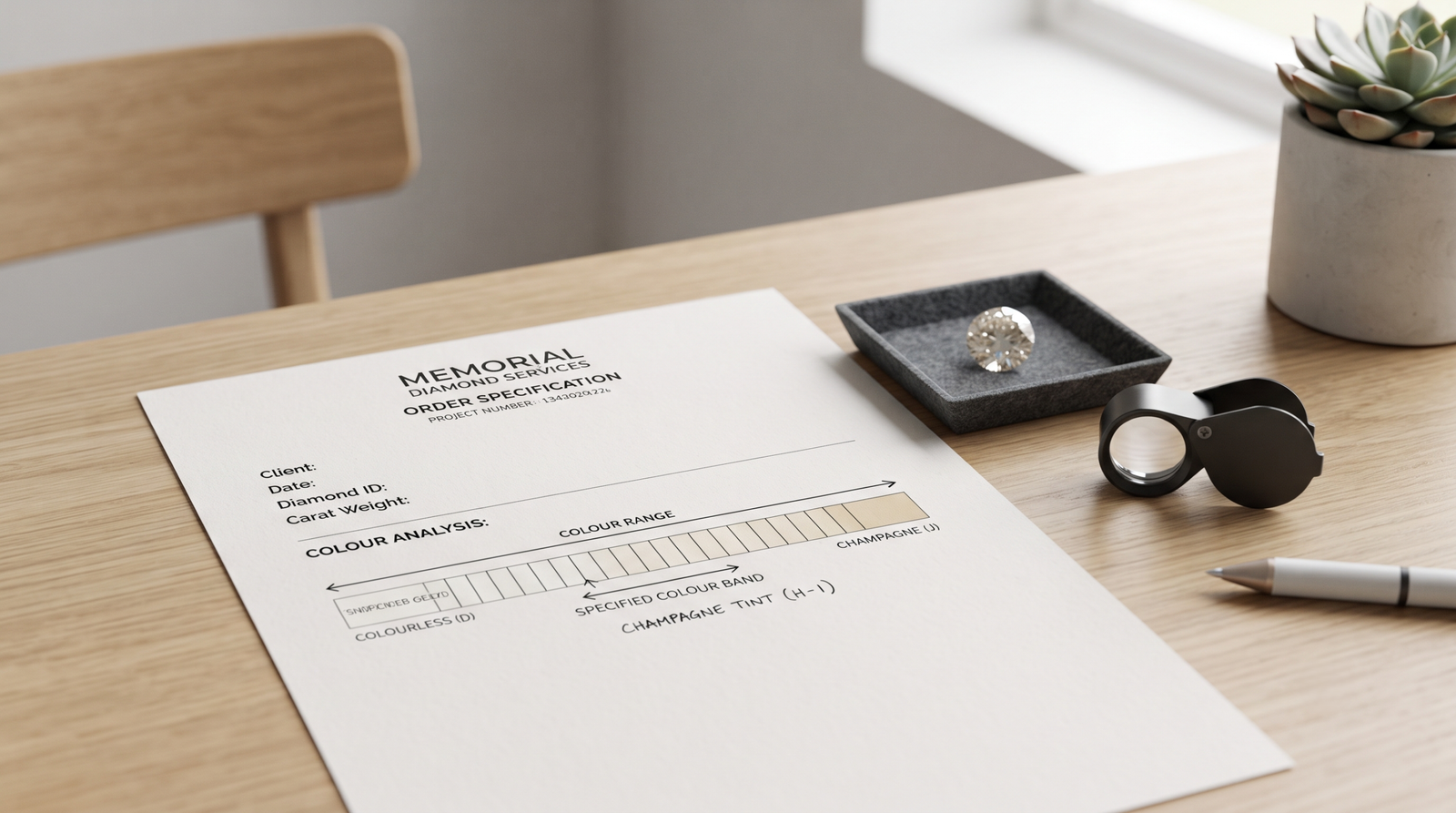
Ask your provider to describe the expected color family rather than promising one exact shade.
Organic source material can create natural variation, so a provider cannot honestly promise one precise natural tone in advance. A clear color family with an agreed range gives you a more useful expectation.
Think About a Future Setting
You may eventually move your diamond from one piece of jewelry to another. A pendant today could become a ring years from now.
Consider how your chosen color will work with different jewelry styles. An unusual treated color may require more thought when you choose another setting in the future.
Think About the Person Who May Inherit It
Your memorial diamond may eventually become a family heirloom. Someone who receives it may never have met your mother.
Choose a stone that looks beautiful on its own while still carrying the personal meaning behind it. That approach can help the diamond remain meaningful across generations.
Frequently Asked Questions
Can I choose the color, or is one assigned to me?
You can choose from the colors your provider offers and specify your preference during the ordering process. You cannot expect a provider to guarantee one exact natural shade from organic source material. Ask for a realistic color family and an agreed tolerance instead.
Does a colorless memorial diamond mean less of her is in it?
No. The personal carbon contribution depends on the material preparation and blending process rather than the final color. Industry information places the personal carbon contribution for ash derived stones around 10 percent to 15 percent of the finished stone mass.
Colorless growth focuses on limiting nitrogen and boron. It does not remove the personal carbon contribution.
Is an irradiated pink or black stone still a real diamond?
Yes. Irradiation changes the color centers inside a diamond that already exists. The treatment does not turn the stone into another material, and the diamond retains its hardness.
Ask your provider how the treatment appears on the grading documentation.
Will the color fade over the years?
Diamond color comes from the crystal itself rather than a surface coating that ordinary wear can remove. Normal wear therefore does not fade the structural color.
If you choose an irradiated color, ask your jeweler about heat exposure during future repairs, resizing, or other jewelry work.
Can the color be changed after the stone is finished?
Irradiation can create color after diamond growth, so additional treatment can exist as a technical option. Whether your provider accepts a finished memorial diamond for another treatment depends on that provider’s policy.
Ask about this possibility before ordering if you think your color preference could change later.
Which color gives me the most stone for the money?
Yellow, blue, and champagne generally sit toward the lower part of the price range at the same carat size. Colorless diamonds can cost more at the same size. Irradiated colors can add another treatment charge.
Compare the complete price for your preferred carat and color combination rather than comparing color alone.
Does choosing a specialty color make the wait longer?
It can. Production commonly takes around 6 to 10 months from the laboratory receiving the material. Large stones and specialty colors can require additional time.
Ask your provider for the expected production period for your specific carat and color before ordering.
Pick the Color You Would Wear on an Ordinary Tuesday
Choosing a memorial diamond color becomes easier when you make the decisions in the right order.
Start with carat size because it affects your budget and how strongly the color may appear. Consider the jewelry metal alongside the color because the surrounding metal can change the way your eyes perceive the stone.
Then choose the color you would genuinely enjoy wearing on an ordinary day.
Ask your provider which colors they currently offer at your preferred carat size. Ask what color range they can realistically provide and whether they can record that range in your order documentation.
Your mother’s memorial diamond should feel meaningful when you first receive it and continue to feel right years later. Take the time to choose a color that connects with her memory while also fitting naturally into your own life.