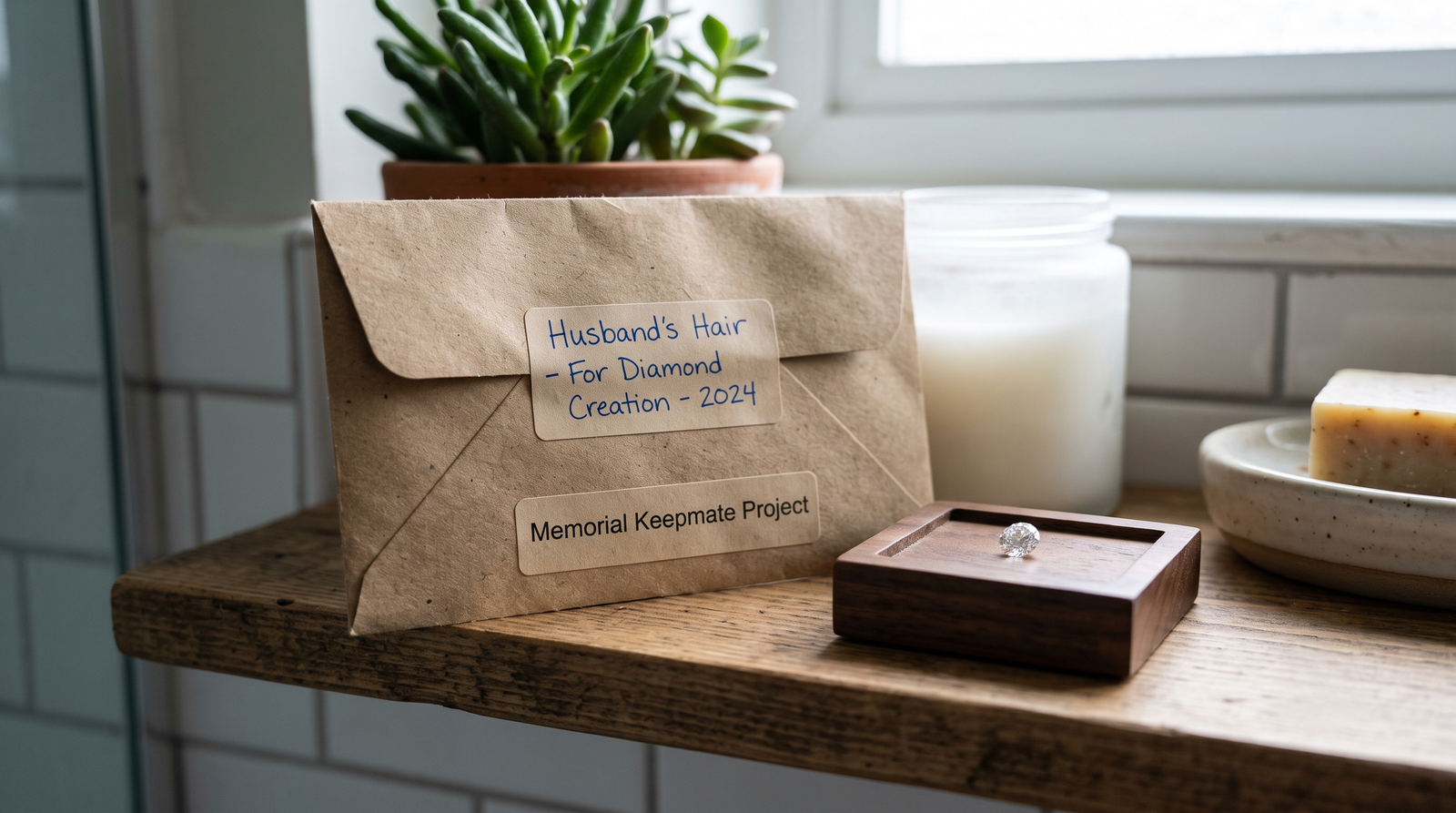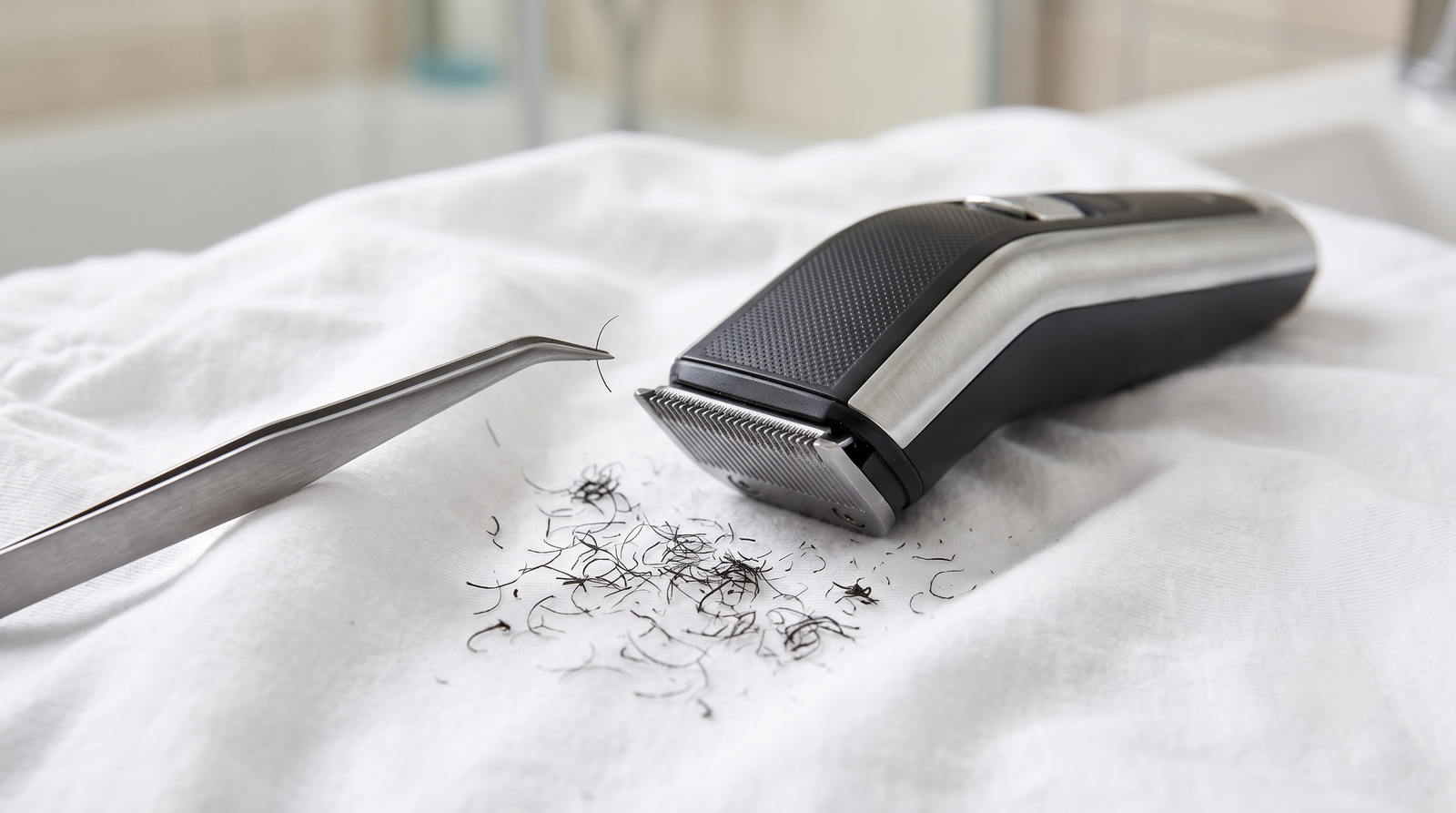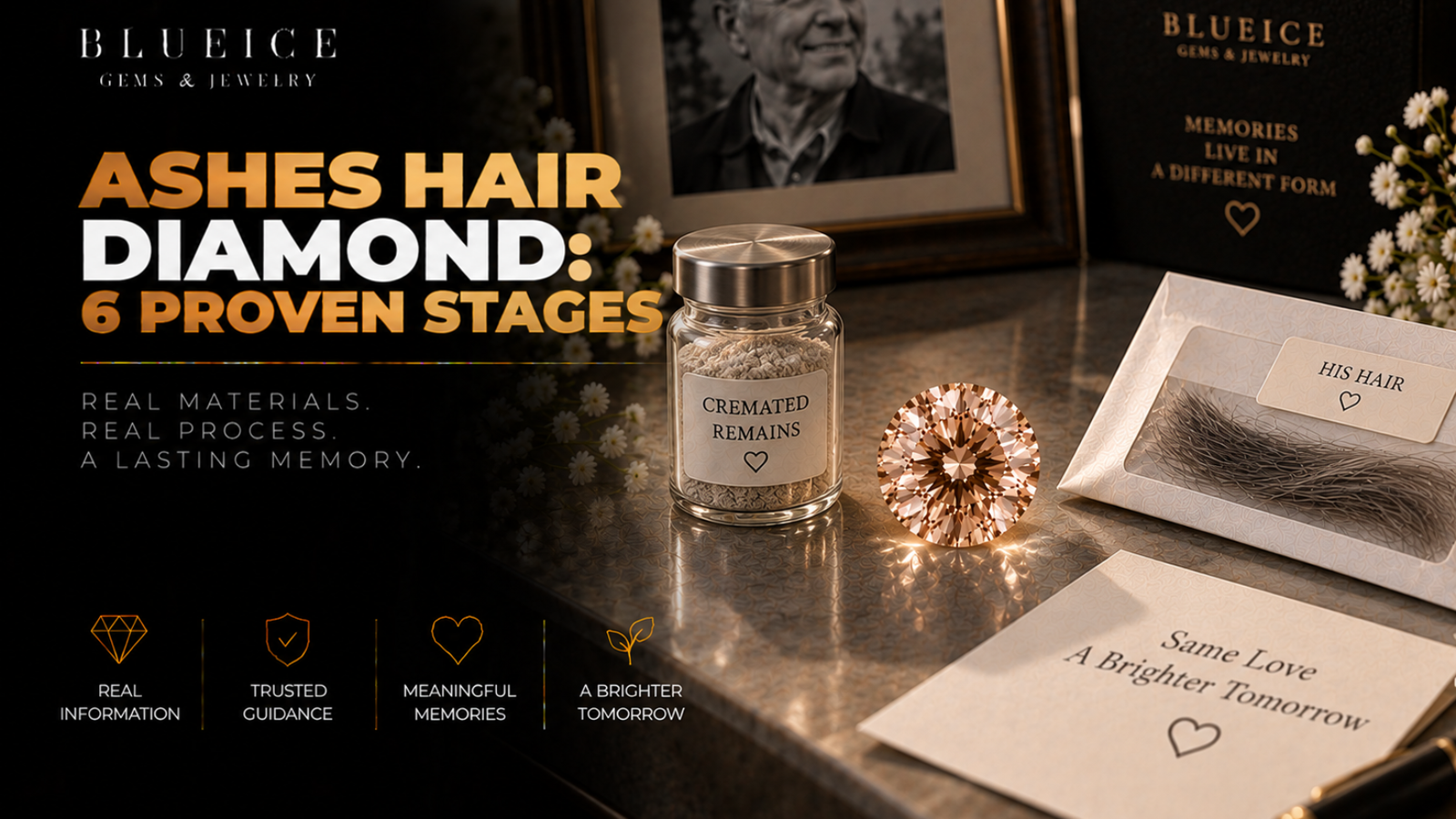
One of these materials has already been through fire. The other has never been warmer than his own body. An ashes hair diamond made from your husband’s cremated remains and a lock of his hair is a single lab grown diamond, grown over roughly six to ten months from carbon purified separately out of each material, then combined at the graphite stage and grown around a seed crystal. Nearly every practical difference between the two halves of the process follows from that thermal history, and the point of no return sits exactly where you might not expect.
Table of Contents
Two Thermal Histories, One Ashes Hair Crystal
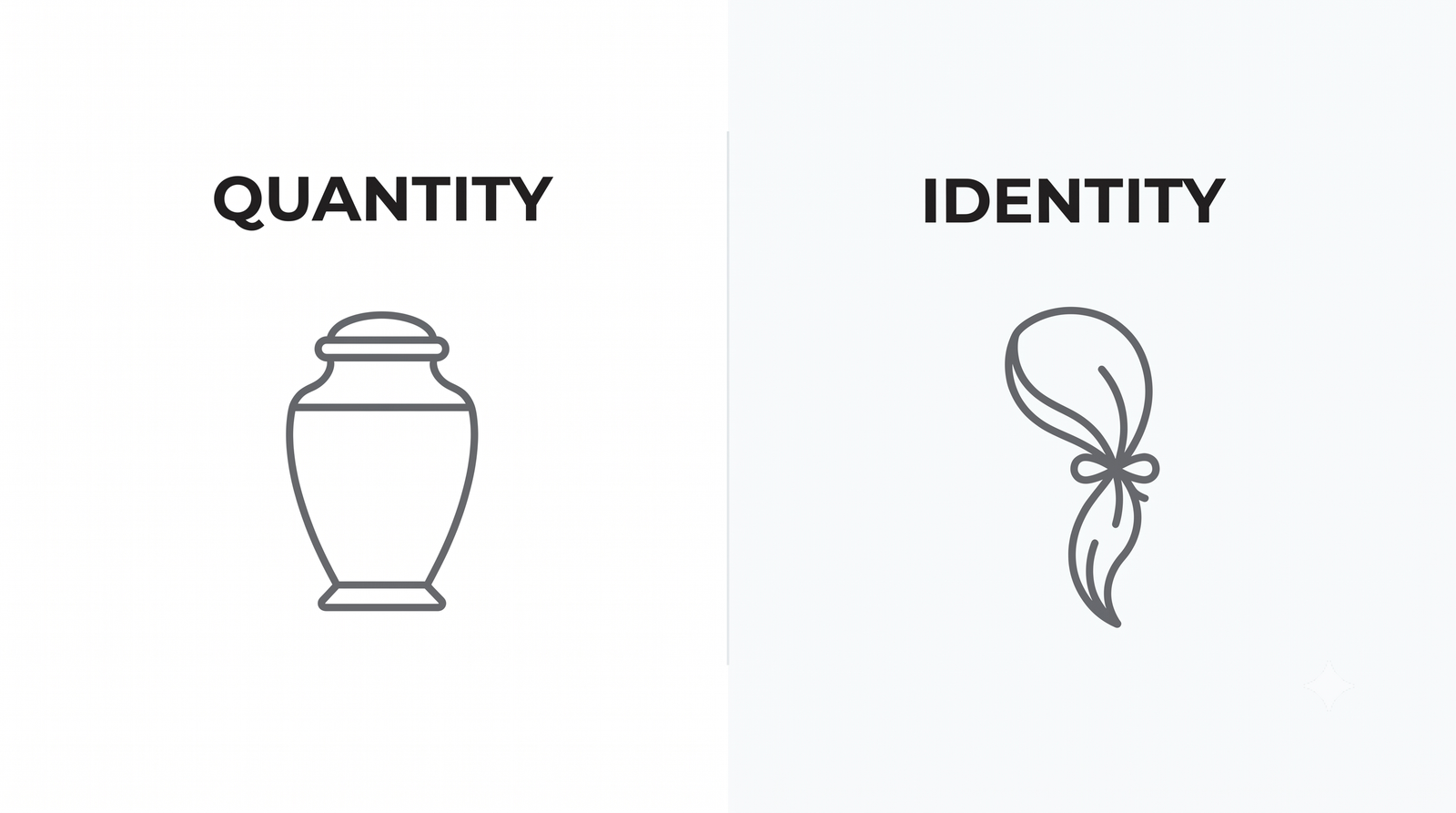
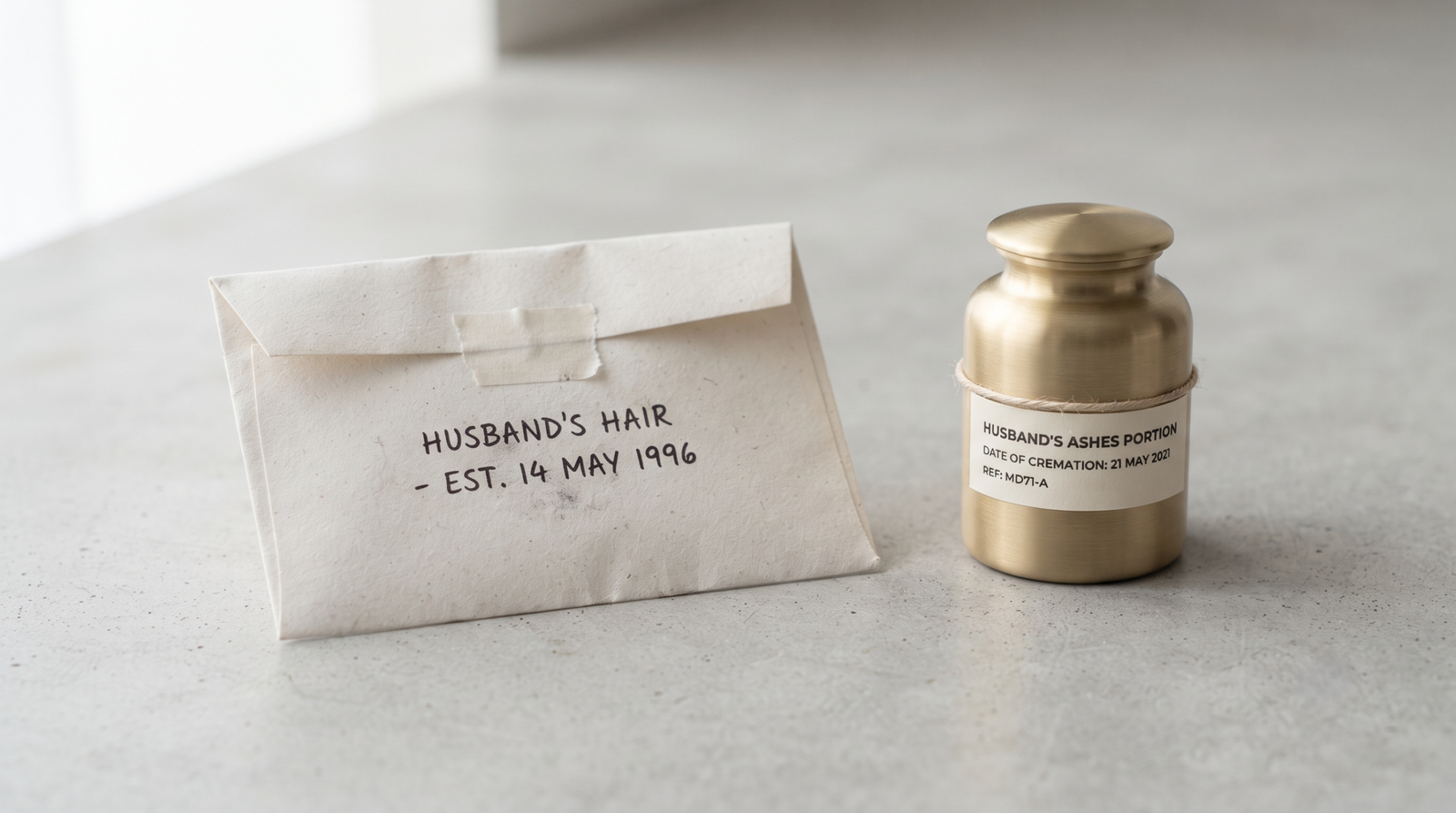
Cremation has already burned away nearly all the carbon in his remains. What is left is mostly calcium phosphate, the mineral of bone, with usable carbon at roughly 0.5% to 4% by weight. His hair, by contrast, has never been heated: it is intact keratin, roughly 50% carbon, with the sulfur, nitrogen, and oxygen his body bonded around that carbon still in place.
So the ashes arrive carbon poor and mineral rich; the hair arrives carbon rich and organic. That is the ashes hair difference in one line. An ashes hair diamond has to treat them differently right up to the moment the two purified carbons are identical, and that moment comes later than most families assume.
The Two Track Process, Stage by Stage
| Number | Stage | Ashes track | Hair track | Same or separate? |
|---|---|---|---|---|
| 1 | Division and collection | A few tablespoons to approximately 4 oz set aside | A small lock, a few grams, kept dry | Separate; two records |
| 2 | Shipment and intake | Handled as cremated remains | Handled as an ordinary sample | Separate; two intake weights |
| 3 | Carbon purification | Minerals removed in an oxygen free furnace | Keratin’s non carbon elements driven off | Separate tracks, separate yields |
| 4 | Graphitization | Purified carbon converted to graphite | Purified carbon converted to graphite | Still separate; now indistinguishable |
| 5 | Blending and growth | Combined with hair carbon and laboratory carbon | Combined with ash carbon and laboratory carbon | One growth cell, one crystal |
| 6 | Cutting and grading | One stone | One stone | One grading report, one origin document naming both |
Stages 1 and 2: Intake, and Why Two Records Matter
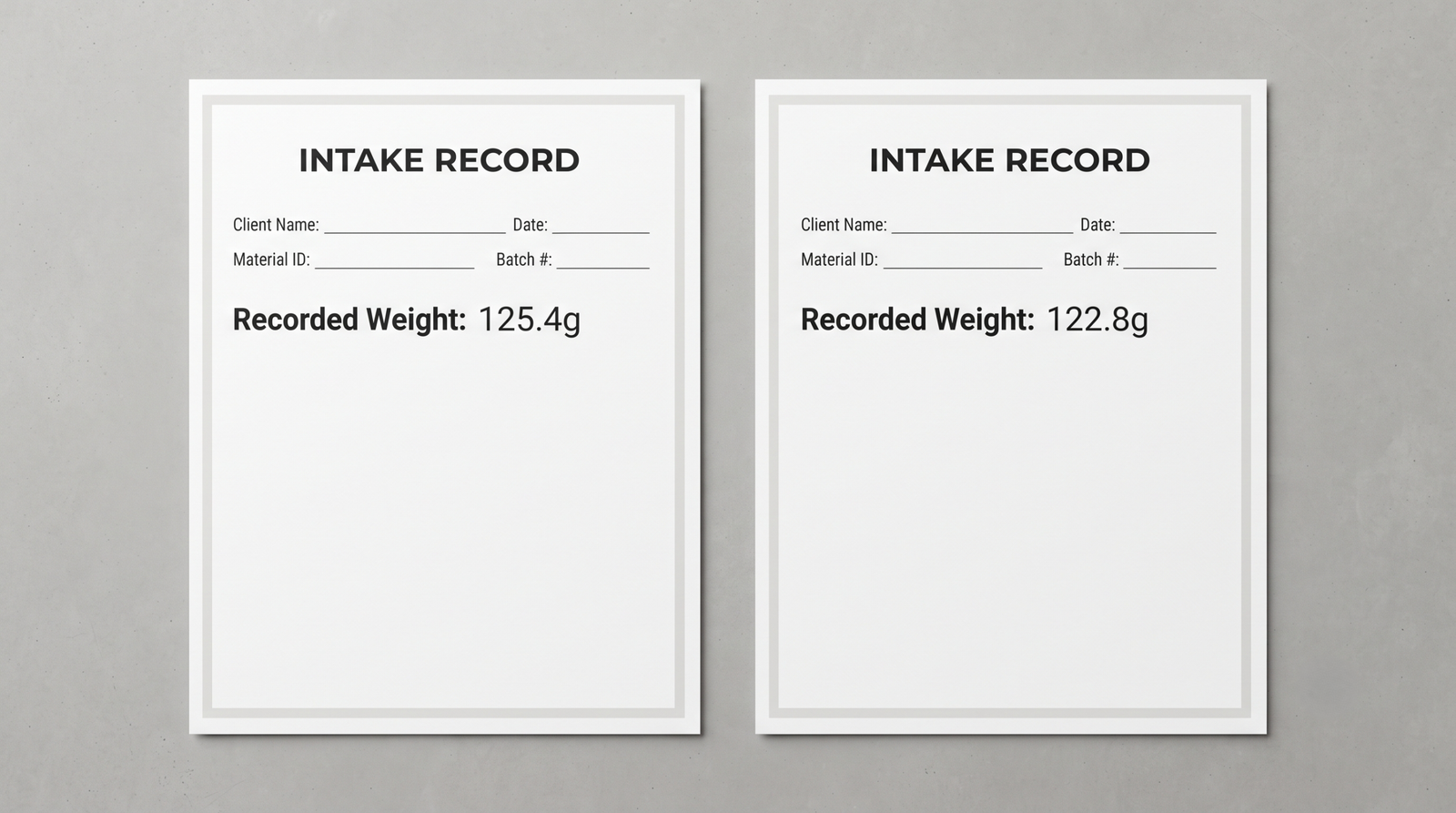
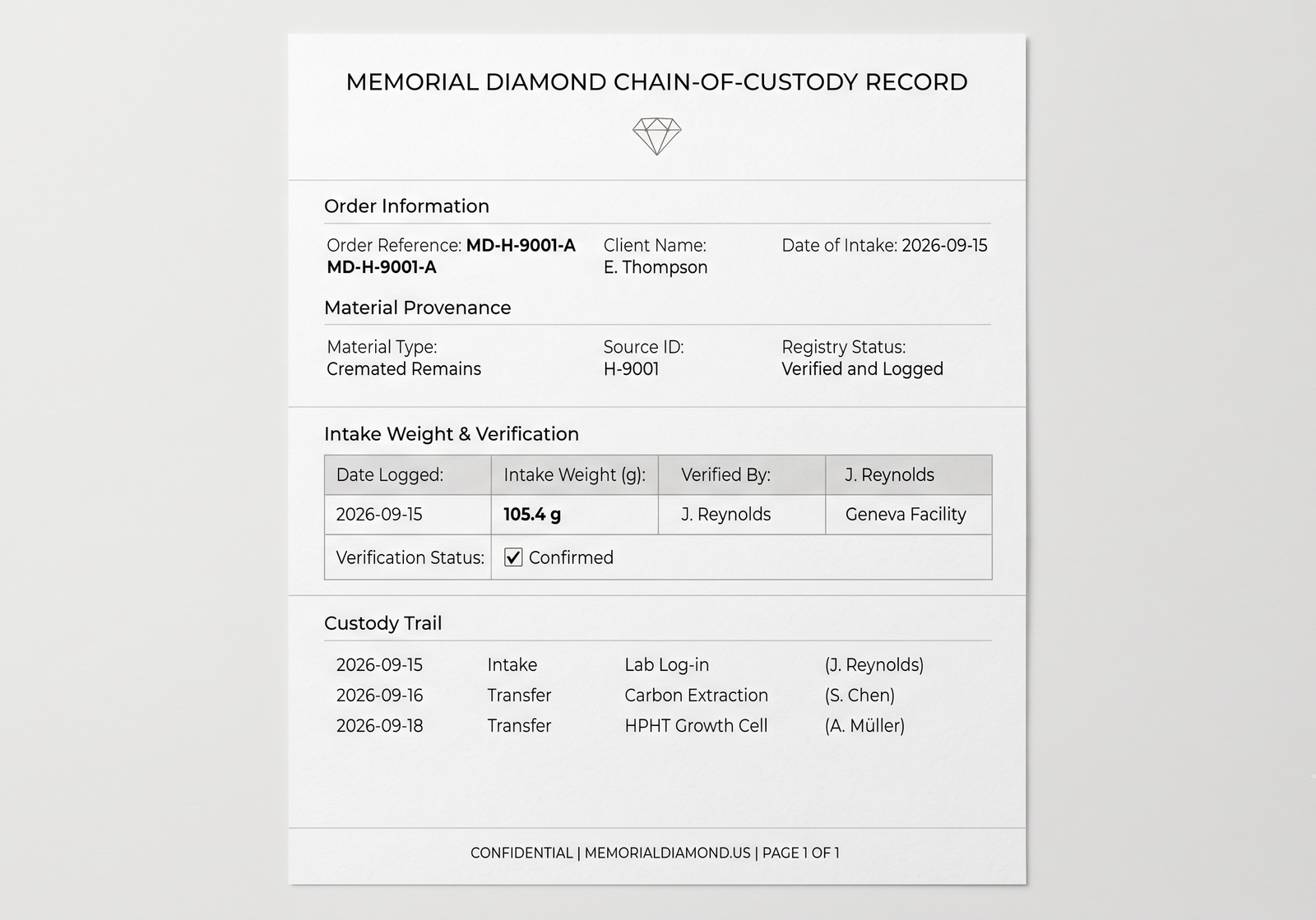
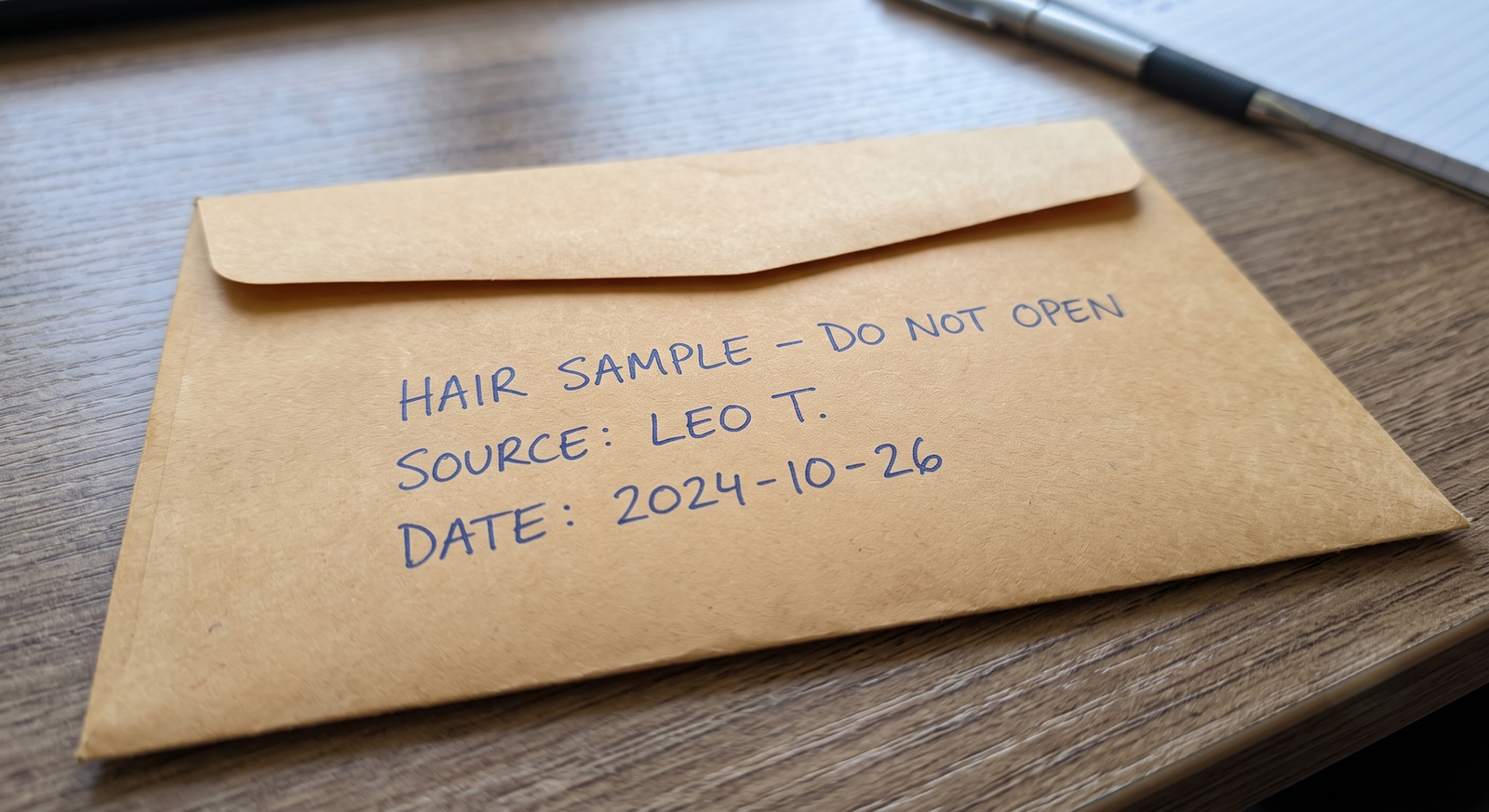
Because the ashes hair pairing arrives with two different histories, they should arrive with different paperwork. Ask whether the provider keeps two intake records for a combined order, each with its own recorded weight, and whether the origin document at the end names both sources. If the answer to either is no, the hair you chose with such care is present in the stone but absent from its record.
The two halves of an ashes hair order travel differently: cremated remains are typically shipped under carrier rules that hair is not, so confirm the provider’s current instructions for each on the day rather than assuming one package covers both. Whichever travels first, send the hair with the greater care; it cannot be re cut.
Stage 3: Two Purification Tracks
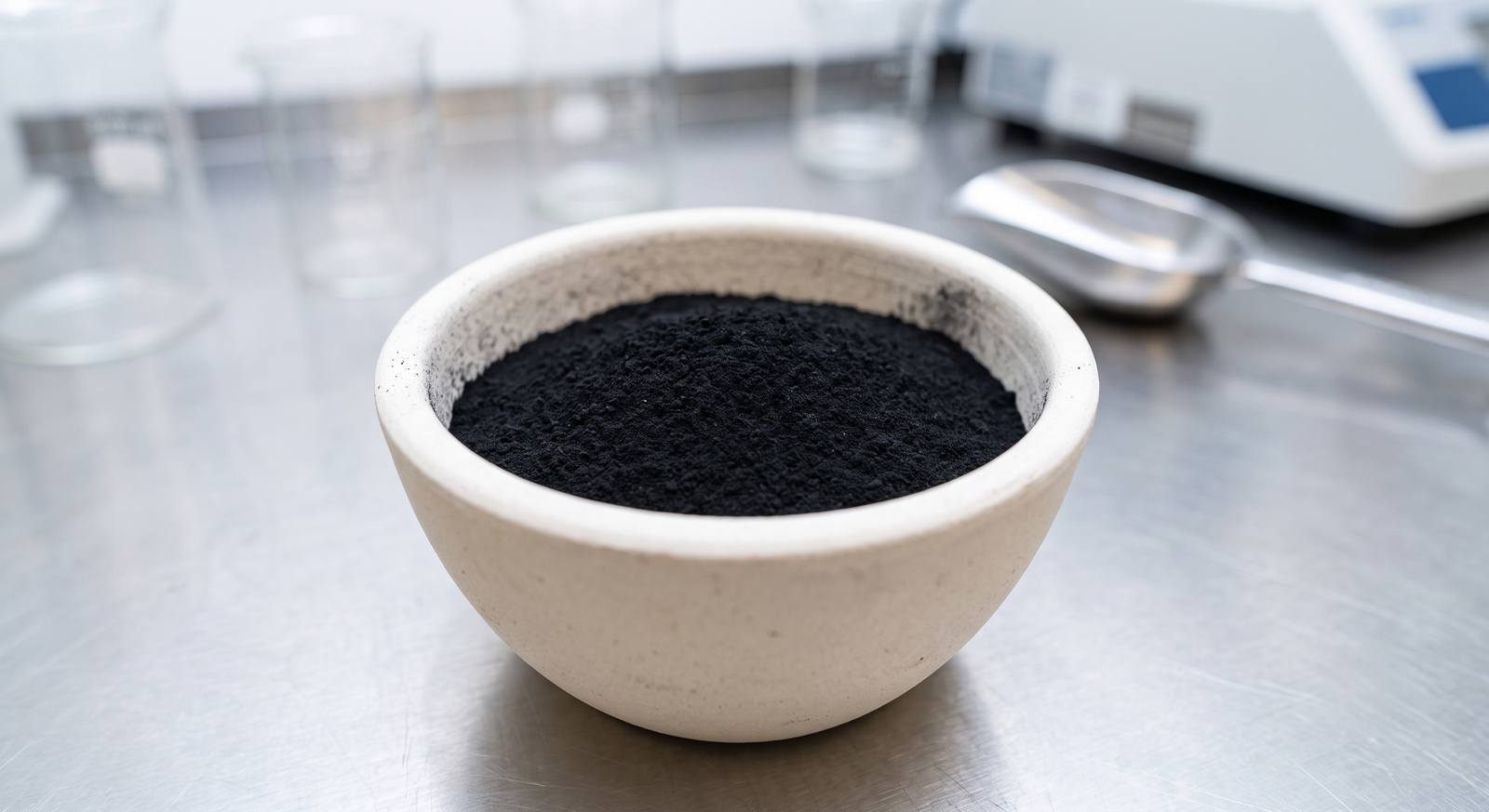
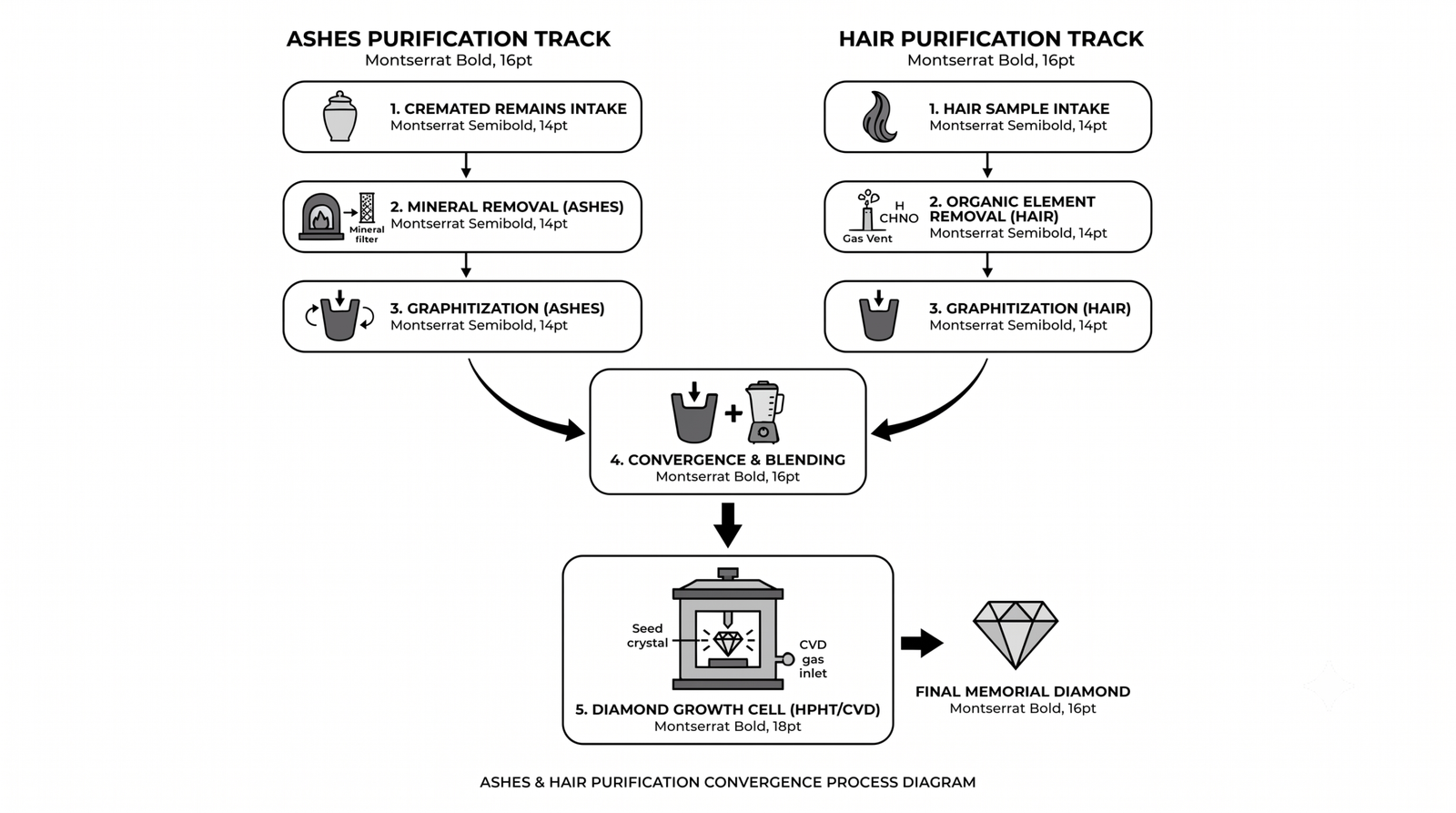
Both halves of an ashes hair diamond go through a controlled, oxygen free, multi stage heating process, but the process is removing different things from each. From the ashes it strips calcium phosphate and other minerals. From the hair it drives off the nitrogen, oxygen, sulfur, and hydrogen of keratin. Both tracks end at carbon of roughly 99.9% purity.
Each track on its own is described in how a memorial diamond is made from your husband’s ashes and how a memorial diamond is made from your husband’s hair. The yields are very different. Four ounces of ashes produce a few grams of carbon; a few grams of hair produce a meaningful fraction of their own weight. In an ashes hair diamond, this is the stage where a provider learns whether one material has under yielded.
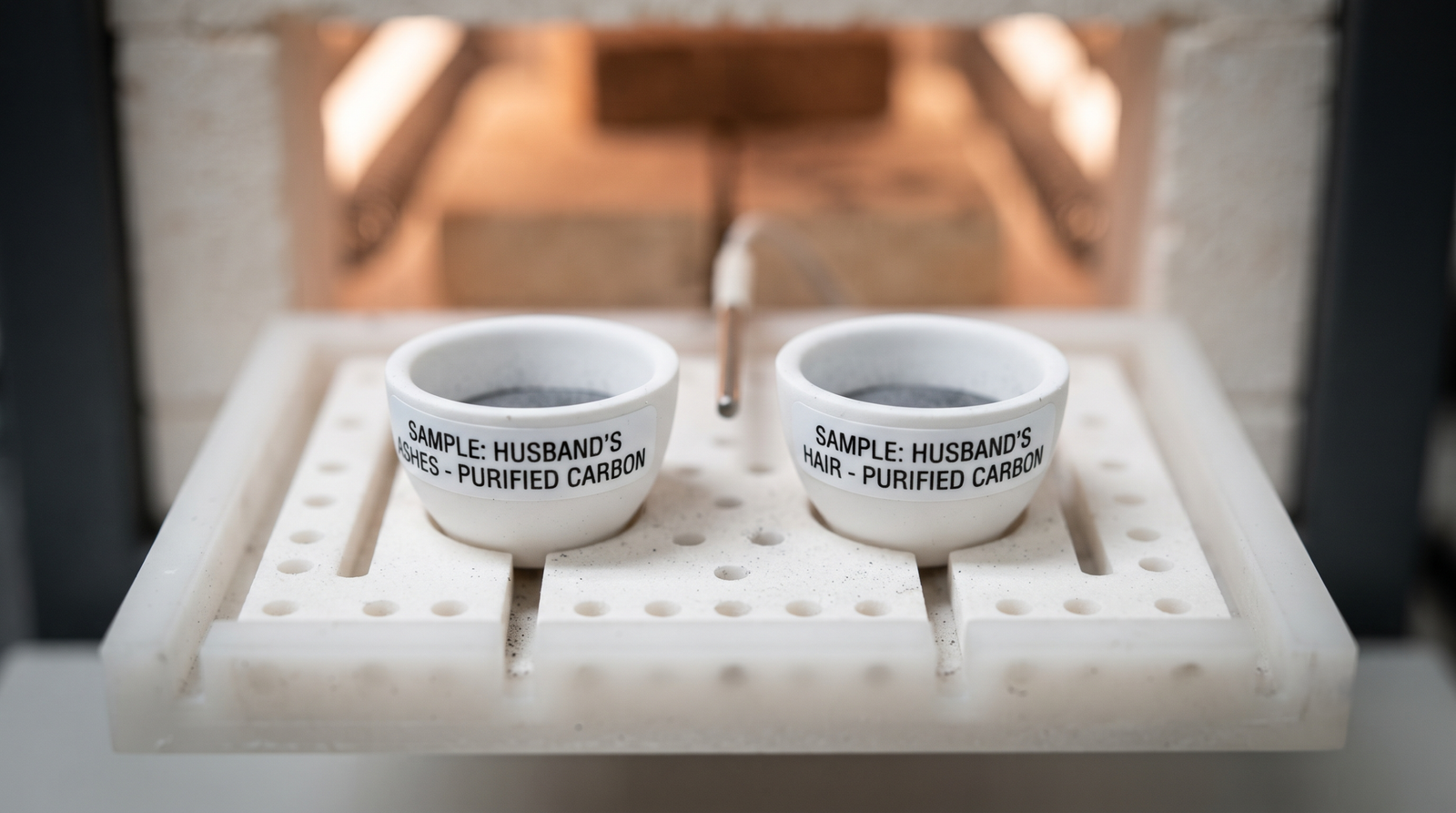
Ask, before ordering, whether you will be told at this point or whether the shortfall is quietly covered by laboratory carbon in the next stage. What happens to the mineral residue from the ashes, and to any hair not consumed, are separate questions and worth asking separately.
Stage 4: Graphitization, the Real Point of No Return
Most guides to an ashes hair diamond place the point of no return at blending. It sits one stage earlier. Each purified carbon is heated to roughly 2,500 to 2,700°C, hotter than the growth run itself, and converted to graphite, the layered crystalline form a diamond press uses as feedstock. After this stage, the carbon from his ashes and the carbon from his hair are physically identical: two portions of graphite, distinguishable only by the label on each crucible.
Blending in Stage 5 merely combines two things that are already the same. Graphitization is where they became the same. If a family wants the option of two separate stones instead of one ashes hair diamond, the decision has to be made before Stage 4, not before Stage 5. The alternatives are set out in the husband ashes and hair diamond guide.
Stage 5: Blending and Growth
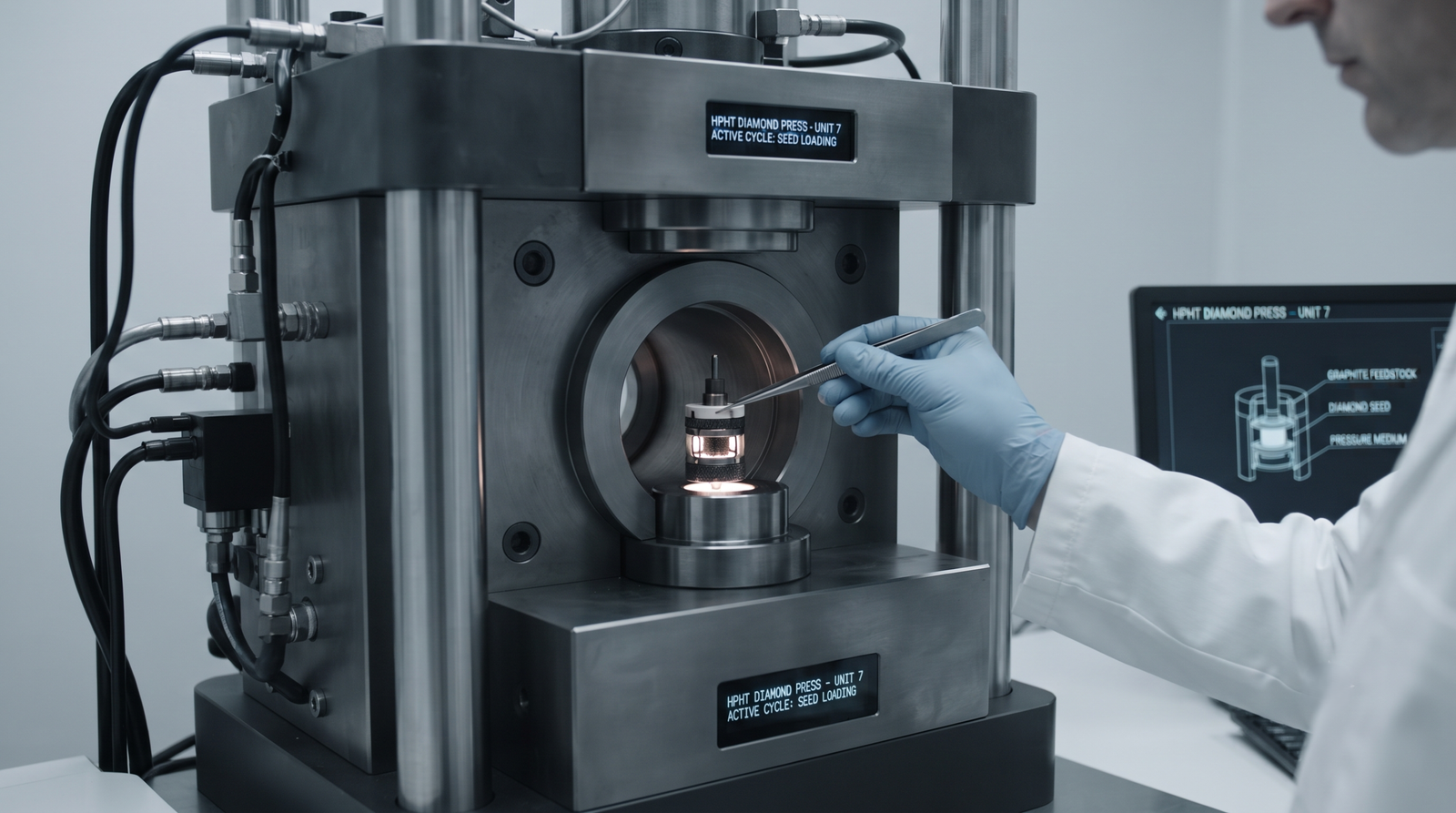
The two graphites of an ashes hair diamond are combined, supplemented with laboratory carbon to reach the volume a viable crystal needs, and placed with a tiny diamond seed in a growth cell. Most memorial providers grow by HPHT, a press recreating roughly 6 to 8 GPa and 1,400 to 2,500°C; a minority convert the carbon to gas for CVD. Both are the standard HPHT and CVD diamond growth methods. Growth takes weeks to months, and growth time, not the quantity of either ashes hair material, sets the carat.
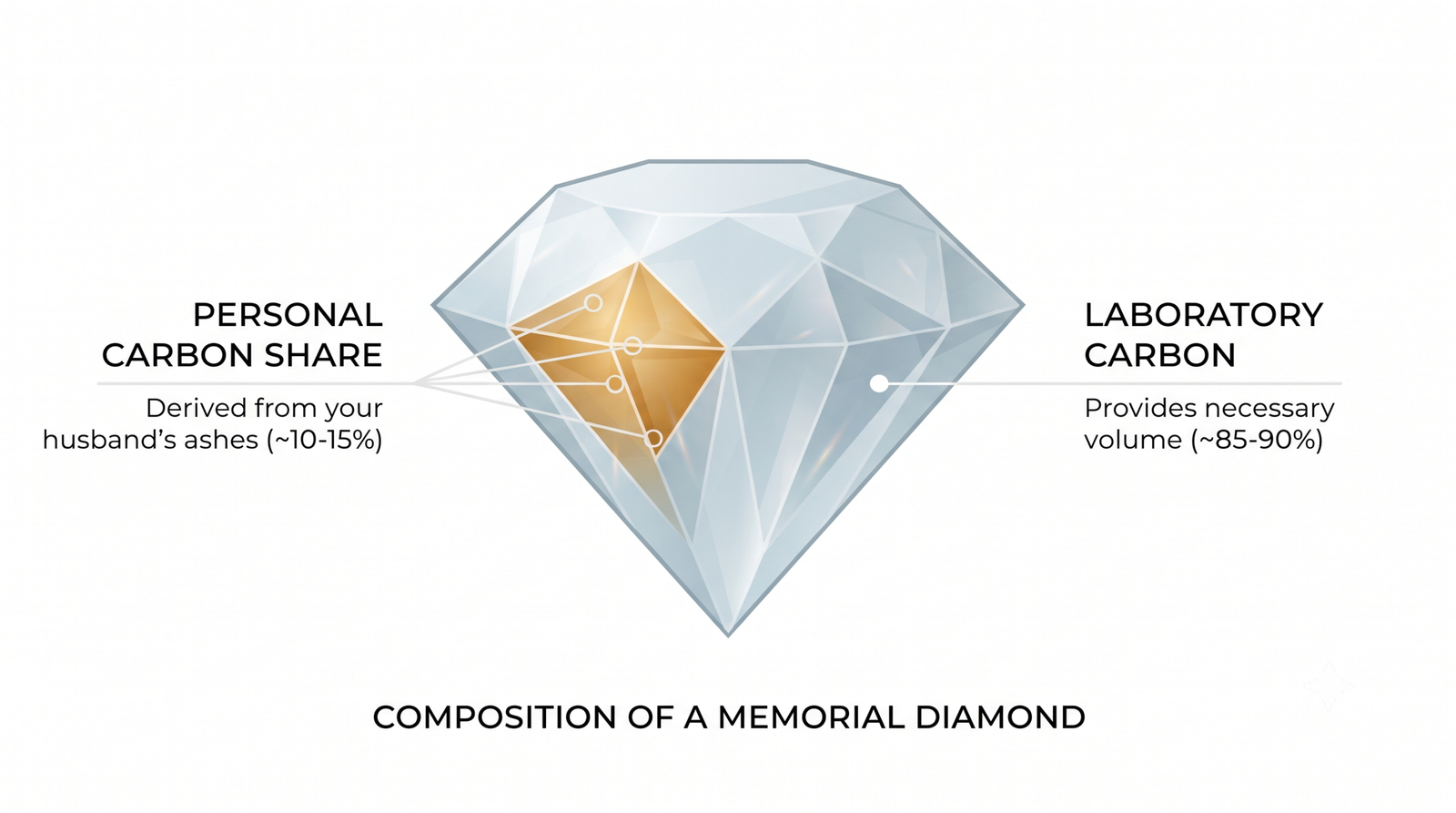
The proportion is the same for an ashes hair diamond as for any memorial stone: personal carbon typically makes up around 10 to 15% of the finished crystal, with the balance laboratory carbon. What the combined route changes is not the share that is him, but the record of which parts of him it came from.
Stage 6: Cutting, Grading, and One Document Naming Both
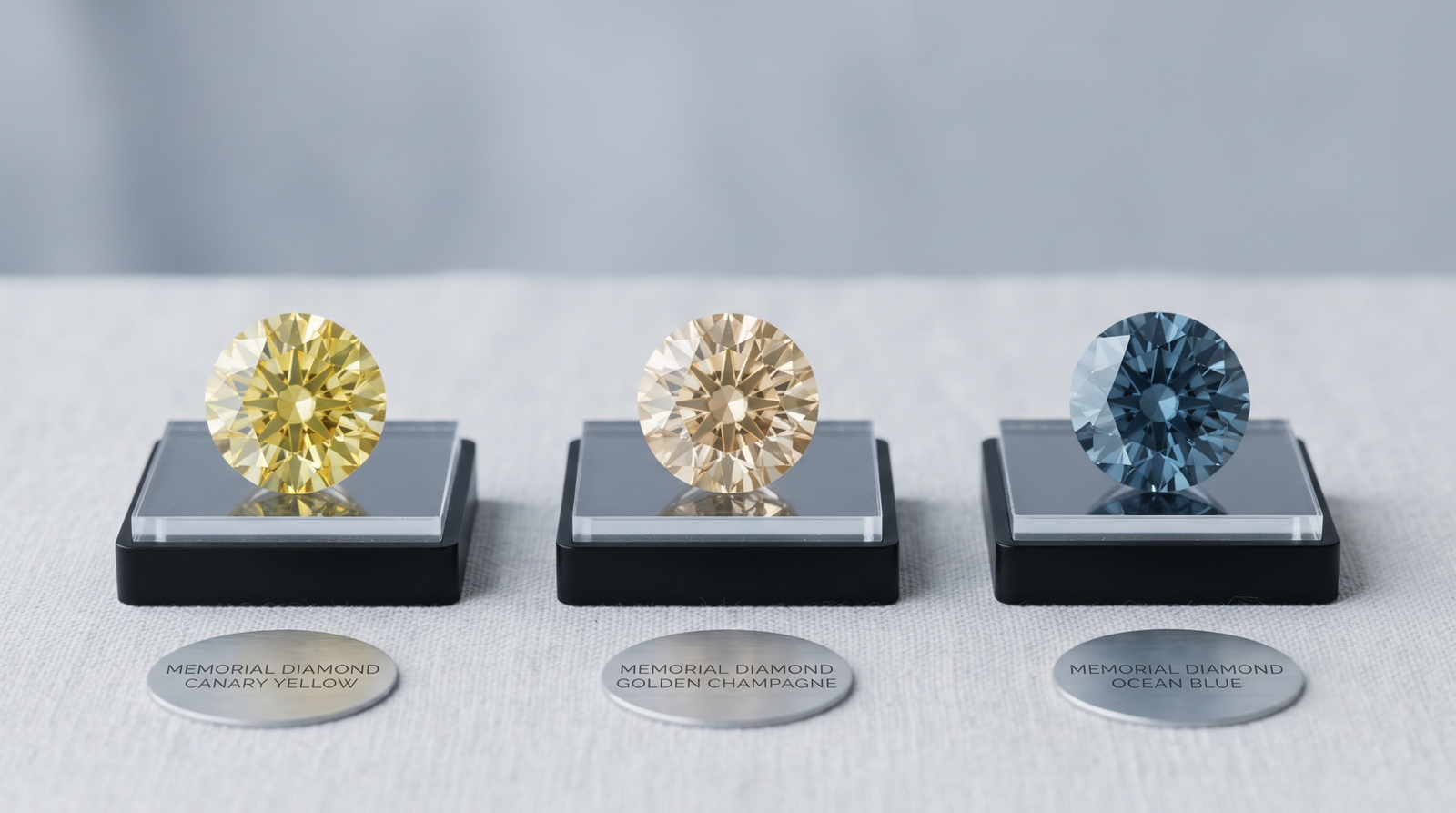
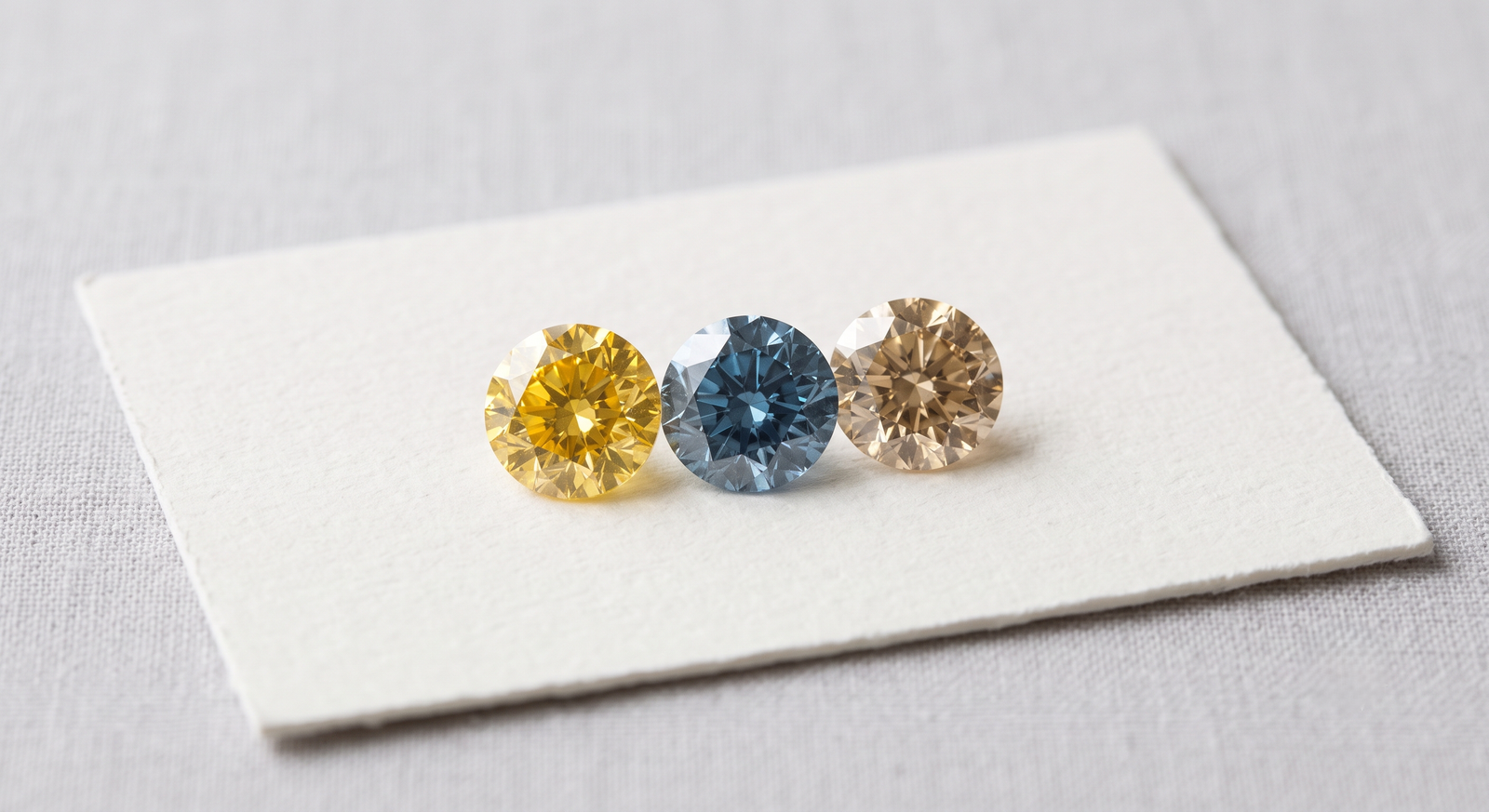
A gemologist cuts and polishes the rough crystal. Reputable providers then have it graded by an independent laboratory on the same cut, color, clarity, and carat scale as any diamond; memorial stones typically fall between SI2 and VVS for clarity. Color is set by trace elements during growth, not by which material the carbon came from, so an ashes hair diamond trends toward yellow, champagne, or blue like any other, and combining materials does not blend two colors. The options are covered in what color diamond can be made from your husband’s ashes and hair.
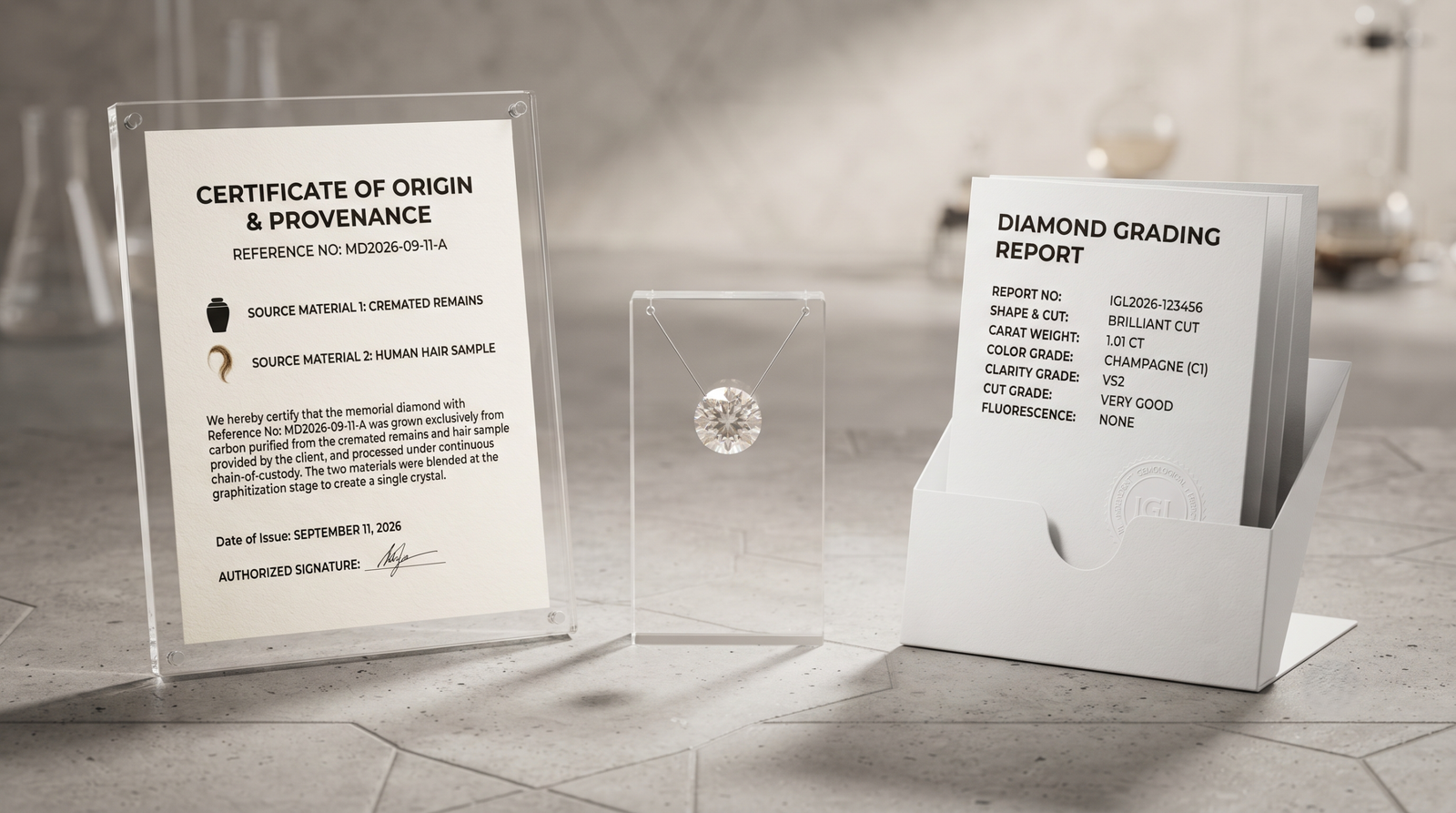
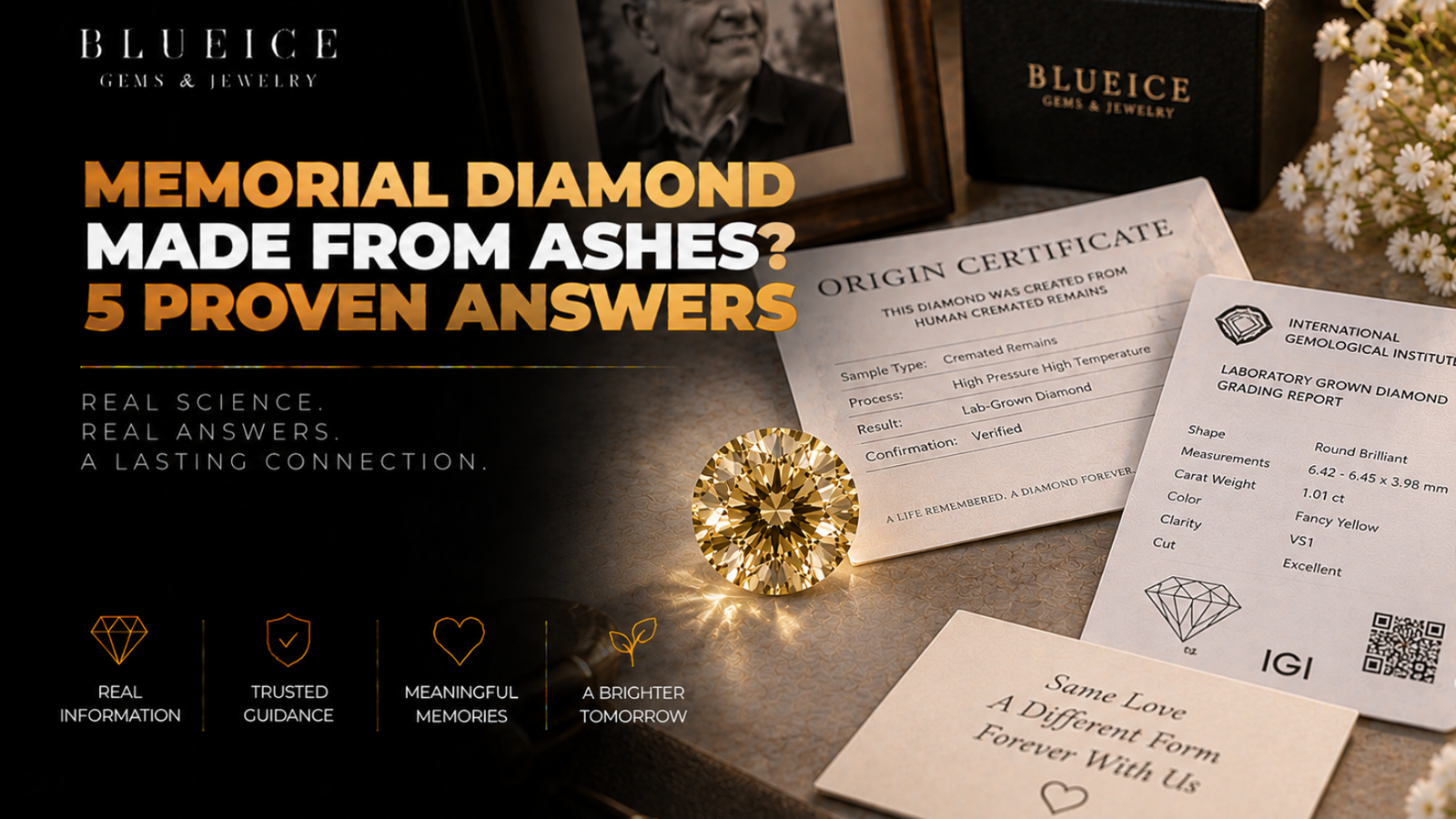
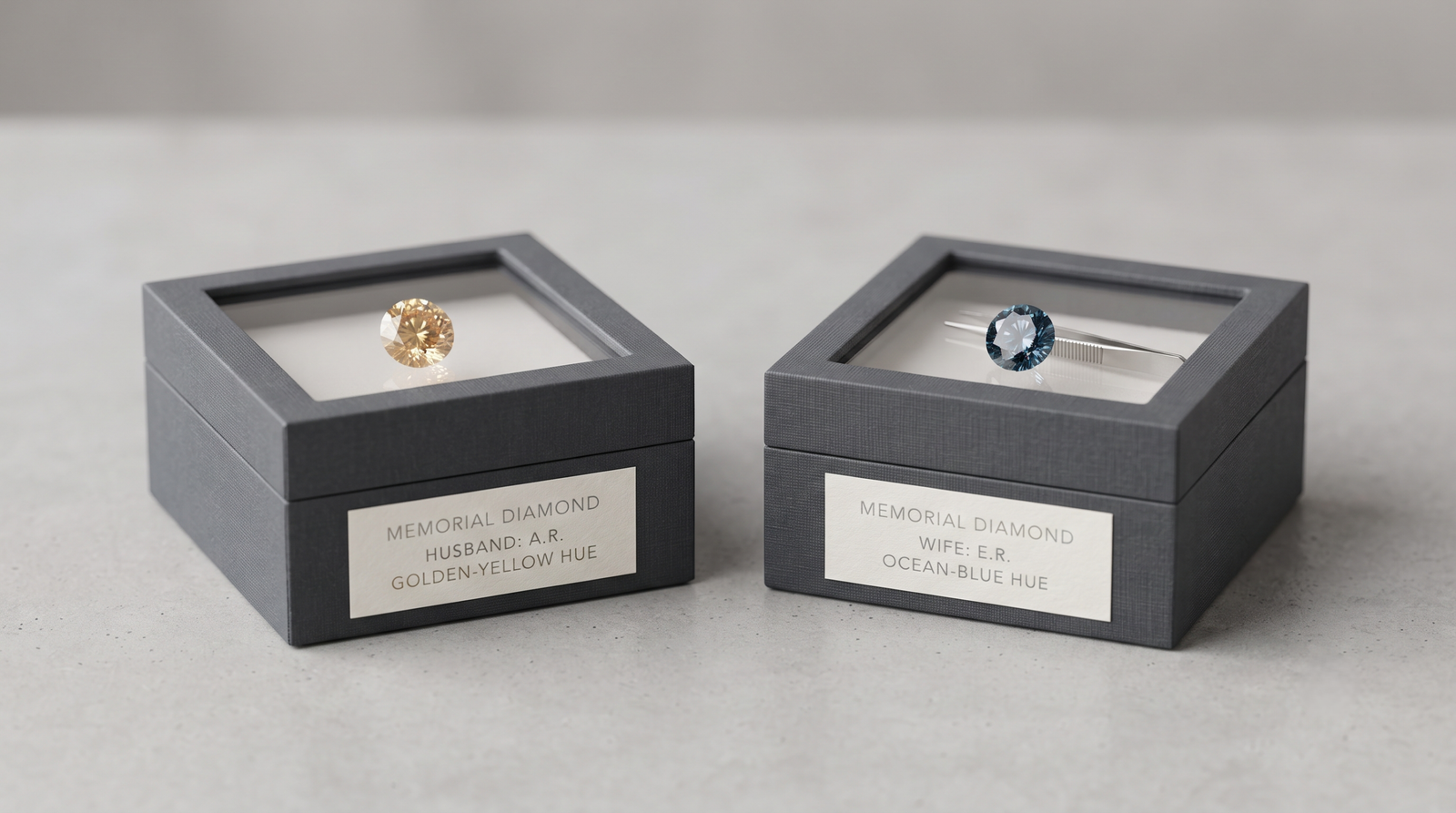
Two documents should return with an ashes hair diamond: the grading report, and an origin document that names both the ashes and the hair as sources and traces back to the two intake records. That single document is the reason to have asked the two record question at the start, and the reason the doubt a combined stone attracts is answered in is a memorial diamond really made from your husband’s ashes and hair.
Frequently Asked Questions
Are the ashes and hair processed together or separately?
Separately, until the graphite stage of an ashes hair diamond. Each material is purified on its own track because the ashes need minerals removed and the hair needs keratin’s other elements driven off. The two purified carbons are converted to graphite, then combined and grown as one crystal.
Where is the point of no return for an ashes hair diamond?
At graphitization, not at blending. Once each carbon is converted to graphite, the two are physically identical and cannot be separated by any test. If you want two separate stones instead of one, that decision has to be made before this stage.
Will the diamond show which carbon came from ashes and which from hair?
No. In an ashes hair diamond, both are reduced to pure carbon and become one crystal lattice. The only thing that distinguishes them afterward is the paperwork: two intake records and an origin document naming both materials. Ask that those exist before you order.
Does adding hair change how much of the diamond is him?
Not the proportion. Personal carbon typically makes up around 10 to 15% of any memorial diamond, with laboratory carbon supplying the rest. What hair changes is the source mix within that share, and, with some providers, how much ash is required.
What if one material yields less carbon than expected?
The provider learns this at the purification stage. Whether they tell you before blending, or cover the shortfall with laboratory carbon without saying so, varies. Ask this question in writing before sending anything; it is the most important one for a combined order.
Does an ashes hair diamond take longer to make?
Not meaningfully. The two ashes hair purification tracks run in parallel, and most of the six to ten months is spent in the growth press, where the crystal grows exactly as a single material stone would. Larger or specialty color stones can extend that to twelve months.
Final Thoughts on How a Memorial Diamond Is Made From Your Husband’s Ashes and Hair
The ashes have already been through their fire; the hair goes through its first here. By the end of Stage 4 the two are the same graphite, and by the end of Stage 5 they are one crystal. What an ashes hair diamond preserves that a single material stone cannot is not a chemical trace of each, but a written record that both were there. Choose a provider who will write that record.
Learn More About Husband Memorial Diamonds
- Husband Ashes and Hair Diamond: The Complete Guide
- How a Memorial Diamond Is Made From Your Husband’s Ashes
- How a Memorial Diamond Is Made From Your Husband’s Hair
- Is a Memorial Diamond Really Made From Your Husband’s Ashes and Hair?
- How to Turn Your Husband’s Ashes and Hair Into a Diamond
Talk With Memorial Diamond
If you are holding both materials and want to know what would be recorded at each stage before you send either, reach out to Memorial Diamond to talk through what’s possible with your husband’s ashes and hair.