
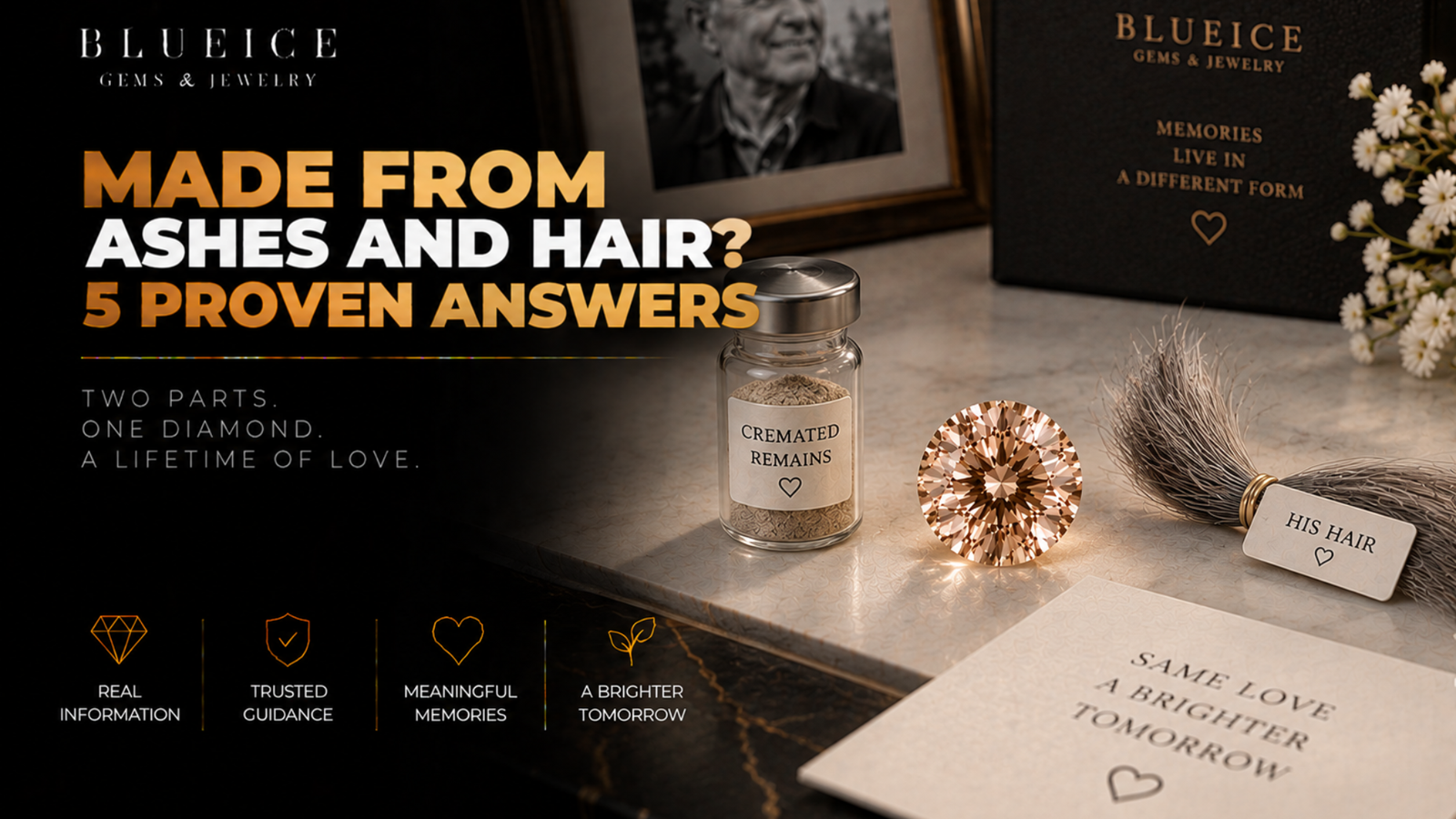
A stone grown from both materials inherits two doubts, and they point in opposite directions. Is a memorial diamond really made from your husband’s ashes and hair? Yes: carbon is extracted from each, purified separately, combined at the graphite stage, and grown into one genuine lab grown diamond. But the ashes half is doubted on quantity, because cremated remains are only about 0.5% to 4% carbon, and the hair half is doubted on identity, because a lock has to be provably his. Answering one doubt does nothing for the other, so this page answers both.
Table of Contents
The Two Doubts a Combined Stone Inherits
| The ashes half | The hair half | |
|---|---|---|
| The doubt | “Is there enough of him in it?” | “Is that lock really his?” |
| Why it arises | Ashes yield only grams of carbon from ounces | Hair from shared brushes or bedding carries uncertainty |
| What settles it | The honest 10% to 15% personal carbon figure, stated plainly | Source labelled envelopes and the provider’s intake record |
| What does not settle it | Sending more ashes; size is set by growth time | Any chemical test; DNA does not survive purification |
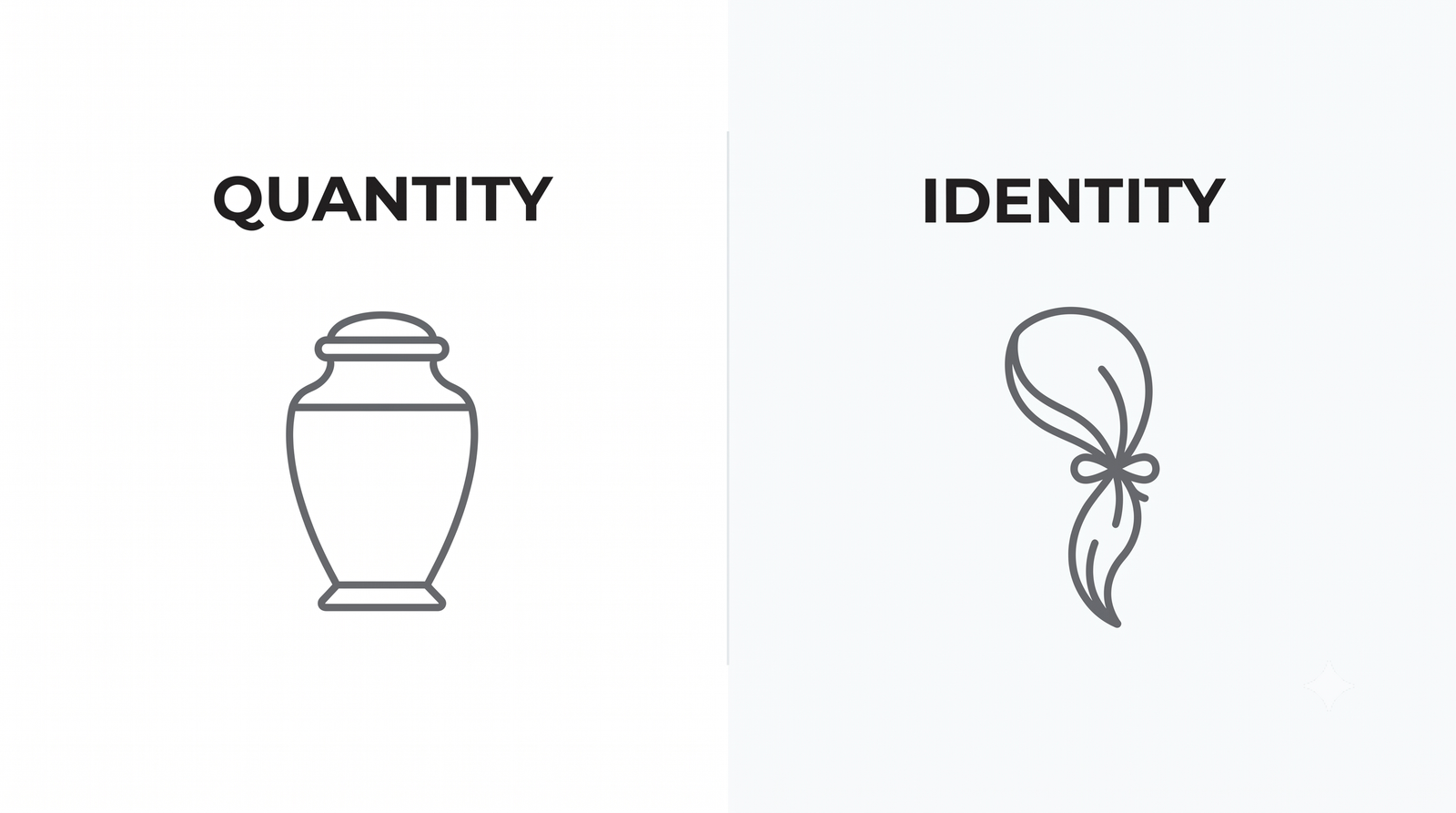
A stone really made from both is only as trustworthy as the weaker of the two answers. Close the quantity question with the honest number, and close the identity question with the envelope. The full list of what to ask is in questions to ask before turning your husband’s ashes and hair into a diamond, and the wider picture in the husband ashes and hair diamond guide.
Is It Really Made From Both, or Mostly One?
Physically, both carbons are in the crystal. The laboratory purifies the ashes and the hair on separate tracks, converts each to graphite, then combines them with laboratory carbon and grows a single diamond by HPHT or CVD diamond growth. Personal carbon typically makes up around 10% to 15% of the finished stone, the same as any memorial diamond; what differs is that the share comes from two sources instead of one.
Whether the hair or the ashes contributed more of that share depends on how much of each you sent and how each yielded. That ratio cannot be read from the stone afterward. The two track process, and where the point of no return really sits, is in how a memorial diamond is made from your husband’s ashes and hair.
The Window Before Blending, and What to Ask
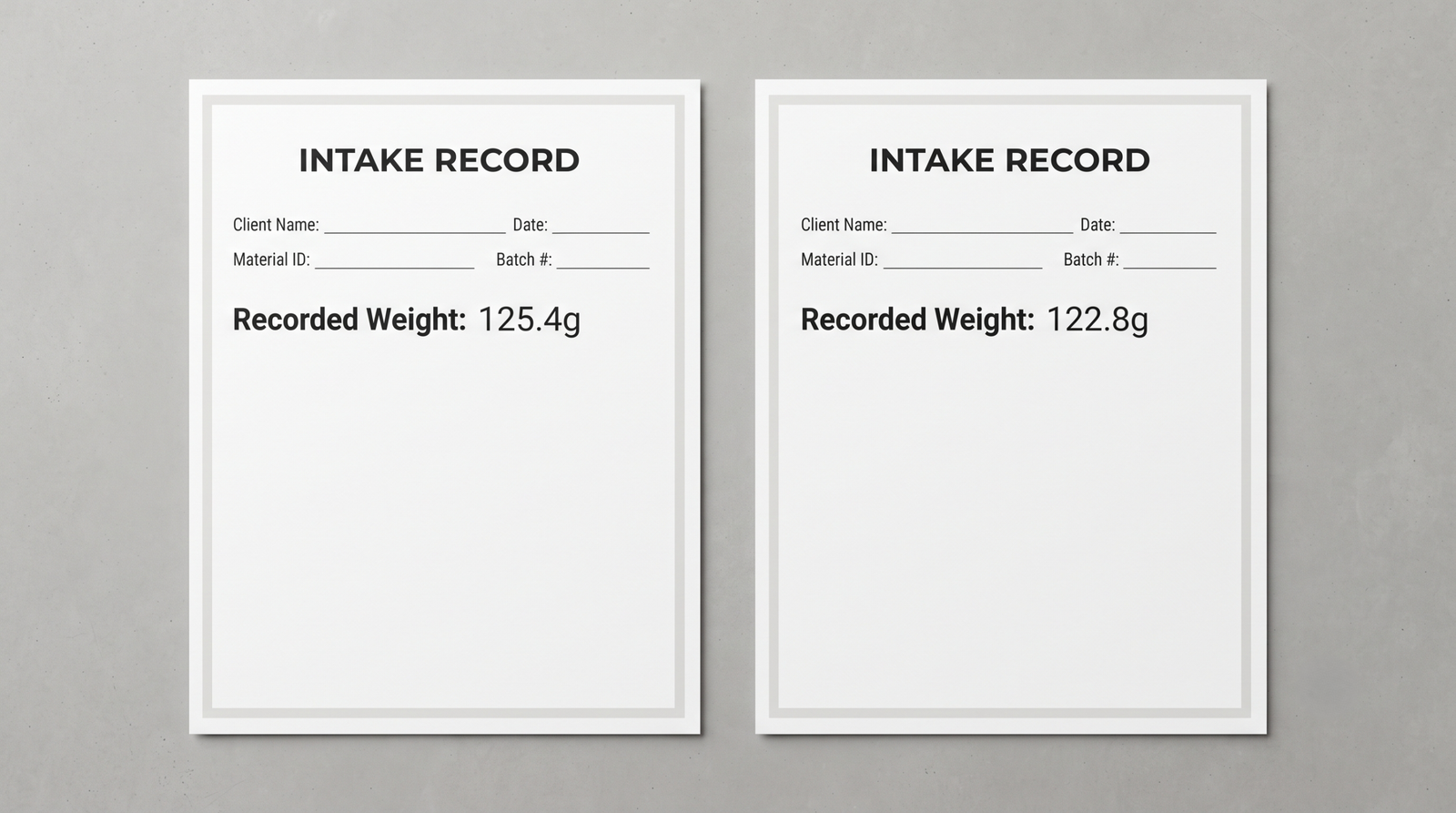
“Did they use both?” is unanswerable once the two carbons are graphite; they are physically identical from that point on. So the question has to be moved earlier, to the window between purification and blending. Before you order, ask:
- Are two separate intake records kept, one per material, each with a recorded weight?
- Will I be told if either material under yields before the two are blended?
- Does the origin document name both the ashes and the hair as sources?
- What happens to material not consumed by extraction, for each material separately?
If the answers are yes, yes, yes, and something specific, a stone really made from both has a record you can stand behind. If any answer is vague, the stone may still be really made from both, but you will never be able to show it. The single material versions of this question are in is a memorial diamond really made from your husband’s ashes and is a memorial diamond really made from your husband’s hair.
Frequently Asked Questions
Is a combined diamond really made from both his ashes and his hair?
Yes. Carbon is extracted from each material separately, converted to graphite, and combined before growth, so both are physically in the crystal. Personal carbon typically makes up around 10% to 15% of the stone; with a combined order that share comes from two sources.
Can the finished stone show how much came from ashes versus hair?
No. Once both carbons are graphite they are physically identical, and the crystal cannot distinguish sources. The only record of the ratio is the provider’s two intake weights and yield figures, which is why asking for two intake records matters.
Is the hair half more reliable than the ashes half?
It is more reliable on quantity, because hair is roughly 50% carbon, and less reliable on identity, because a lock from a shared brush or pillow may not be entirely his. The ashes half is the reverse. A combined stone carries both doubts, so both need answering.
What if one material yields less than expected?
The provider learns this at purification. Whether they tell you before blending or cover the shortfall with laboratory carbon without saying so varies. Ask in writing before ordering; it is the most important question for a stone really made from two sources.
Does combining ashes and hair make the diamond more him?
Not in proportion. Personal carbon is typically around 10% to 15% of any memorial diamond, whether from one source or two. What a combined order adds is a record that both were there, provided the origin document names both materials.
Final Thoughts on Whether a Memorial Diamond Is Really Made From Your Husband’s Ashes and Hair
Two materials, two doubts, and one stone that cannot testify on its own behalf. The chemistry is settled; the record is what you are choosing. Ask the four questions above before the envelope and the portion leave you, and the answer to “is it really made from both of him” becomes a document instead of a hope.
Learn More About Husband Memorial Diamonds
- How a Memorial Diamond Is Made From Your Husband’s Ashes and Hair
- Is a Memorial Diamond Really Made From Your Husband’s Ashes?
- Is a Memorial Diamond Really Made From Your Husband’s Hair?
- Husband Ashes and Hair Diamond: The Complete Guide
- Questions to Ask Before Turning Your Husband’s Ashes and Hair Into a Diamond
Talk With Memorial Diamond
If you hold both materials and want to know exactly what would be recorded for each before you send them, reach out to Memorial Diamond to talk through what’s possible.
Leave A Comment