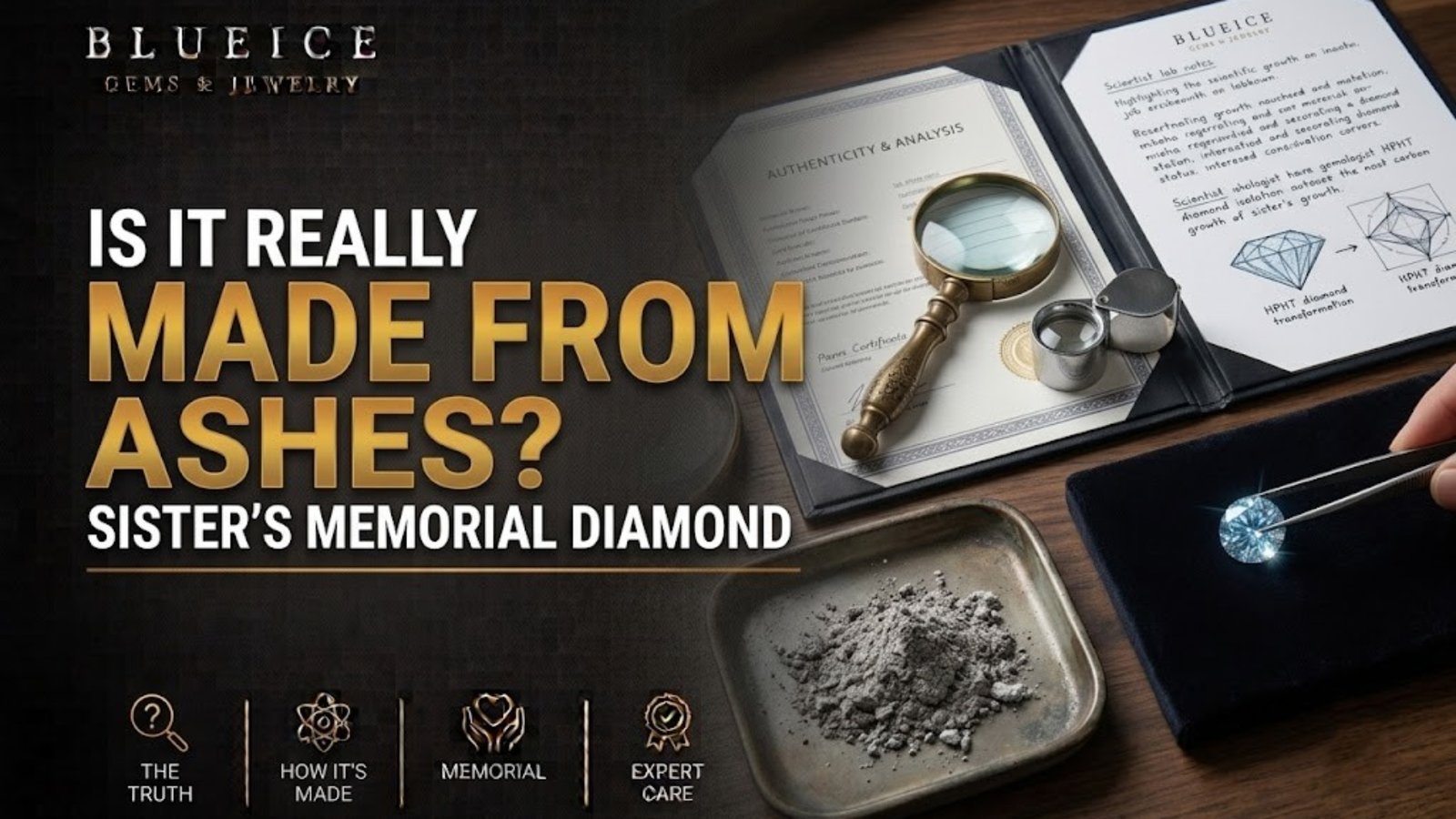
When a company offers to turn part of your sister into a gemstone, a protective instinct tends to arrive before anything else, and it wants proof. Is a memorial stone really made from sister ashes? Yes, in part: carbon is drawn from a small portion of her cremated remains, purified, and grown into a genuine lab diamond, usually alongside supplemental lab carbon, with her carbon typically forming about 10 to 15% of the finished stone’s mass, and as little as 3% with some providers.
Table of Contents
Is a Stone Really Made From Sister Ashes in Any Physical Sense?
It is a fair suspicion. Grief purchases attract soft language that anyone could print on a gift box. The useful test is whether a provider claiming a stone is really made from sister ashes can describe, in physical terms, what happens to the material you send.
Cremated remains are mostly calcium phosphate, the mineral that formed her bones. Mixed through that mineral is a small amount of carbon, usually between 0.5% and 4% of the ash by weight. A laboratory isolates that carbon, strips away everything else, and uses it as part of the feedstock for growing a crystal. Some of the carbon atoms locked into the finished lattice were, quite literally, part of her.
So, in a meaningful and physical sense, a stone is really made from sister ashes, though only in part. What it cannot be is made entirely from them. Both halves of that answer matter, and a trustworthy company offers both without being asked twice.
The rest of this page sits between those two halves: how wide the gap is, how to check it, and which claims hide it.
How Much of a Diamond Really Made From Sister Ashes Is Actually Her?
Industry wide, carbon recovered from ashes typically accounts for around 10 to 15% of a finished memorial diamond’s mass. Some providers cite figures as low as 3%; others go higher, depending on the size of the stone and how much ash was supplied. The rest is supplemental lab carbon, added so the growth cell holds enough material to build a crystal.
That figure may be lower than you expected. A stone that is roughly a tenth her carbon is still a stone that would not exist in that form without her. It is also not all her, and anyone selling a diamond really made from sister ashes and nothing else is describing something nobody can manufacture.
| Stage | What you are dealing with | Rough industry figure |
|---|---|---|
| Ash submitted | A portion of her cremated remains | A few tablespoons up to about 4 oz or 100 g; varies by provider |
| Carbon inside that ash | The only part usable for a diamond | Roughly 0.5 to 4% of ash weight |
| After purification | Her carbon, refined | About 99.9% carbon purity or better |
| In the finished stone | Her carbon blended with lab carbon | Typically 10 to 15% of mass; some cite as low as 3% |
Two points follow. Ask each provider for their own percentage, in writing, for the carat size you have in mind. And notice that ash quantity and stone size are separate decisions: carat size depends mainly on how long the crystal grows.
When you hear that a stone is really made from sister ashes, then, the honest translation is: a real, documented fraction of it is her, and the rest is carbon that made her portion growable.
Why Can’t a Diamond Be Really Made From Sister Ashes Alone?
Because there is so little carbon to start with. Picture a hundred grams of ash. At the generous end of the usual range, perhaps four grams of that is carbon; at the lean end, half a gram. After the losses that come with refining, what is left is a small pinch of graphite.
A diamond grows by adding carbon atoms, layer upon layer, onto a tiny seed crystal under immense pressure, roughly 6 to 8 gigapascals at somewhere between 1,400 and 2,500°C in the HPHT presses most memorial providers rely on. The growth methods themselves are the same ones used across the wider lab grown industry. A pinch rarely sustains that alone, so supplemental lab carbon fills the gap.
Could a laboratory simply use more ash? Each extra gram yields only a sliver of extra carbon, and you may prefer to keep most of your sister’s ashes for an urn, a burial, a scattering or other relatives.
The short version: published industry figures describe ash based stones as a share of personal carbon, not as all ash crystals. In typical practice, a stone really made from sister ashes is a partnership between her carbon and carbon from a lab, and the useful question is how that partnership is documented.
What Happens to Her Ashes Between Arrival and the Finished Stone?
If you want to know whether a stone is really made from sister ashes, the stages matter, because each is a point where the material changes hands or form. Across the industry, the sequence usually runs like this:
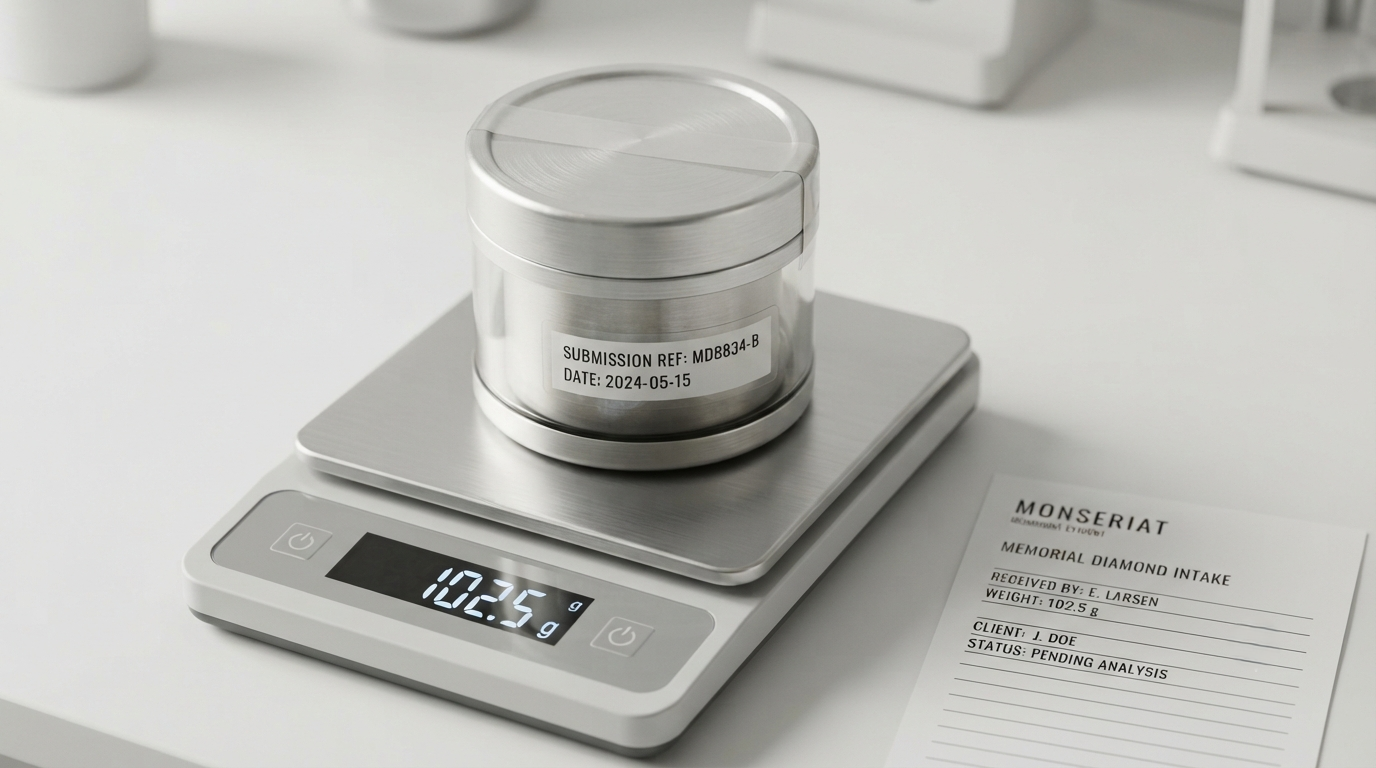
- Receipt and logging. The ashes arrive, ideally sealed, and receive an identifier that should follow them throughout.
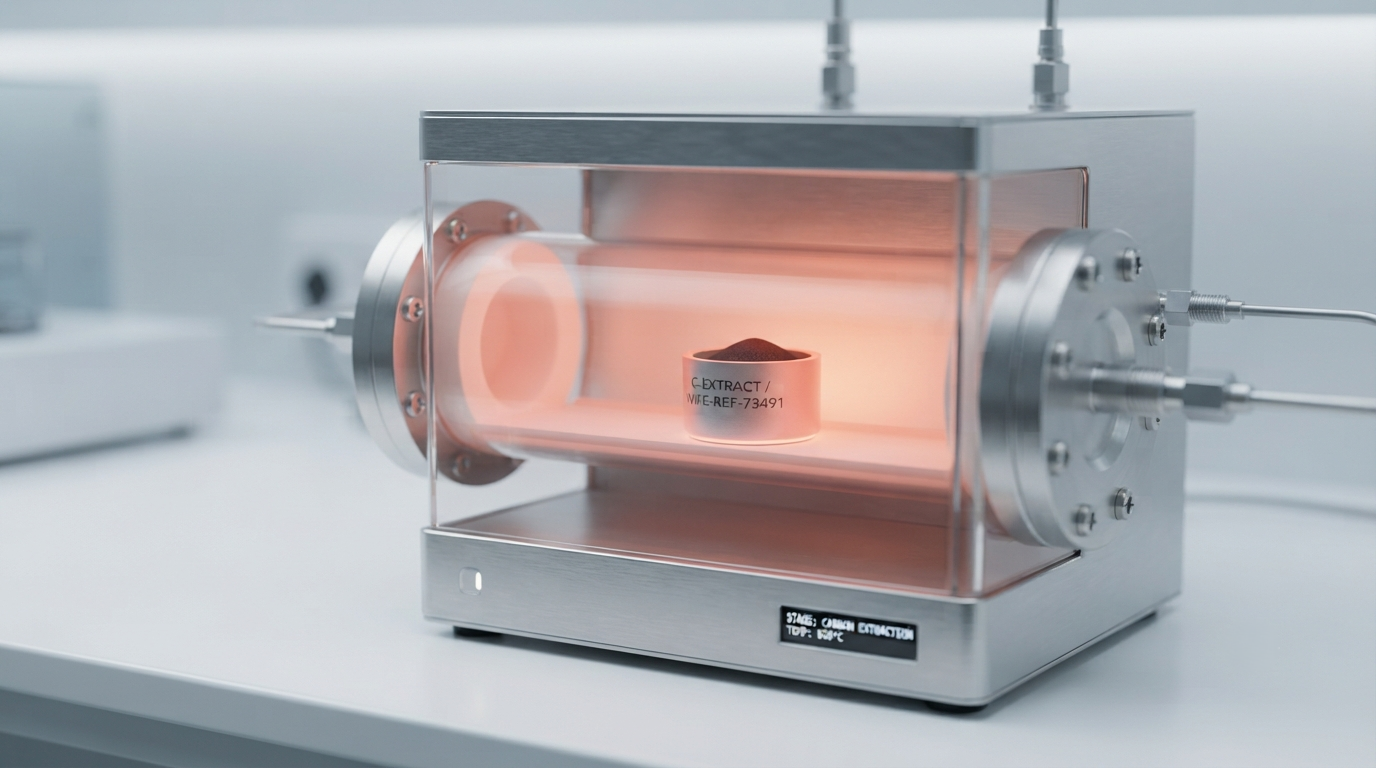
- Carbon extraction. Controlled heat in an oxygen free environment separates carbon from calcium phosphate and other minerals.
- Purification. Further refining brings the carbon to roughly 99.9% purity or higher.
- Graphitization. At roughly 2,500 to 2,700°C, her refined carbon becomes graphite, the feedstock a growth press accepts.
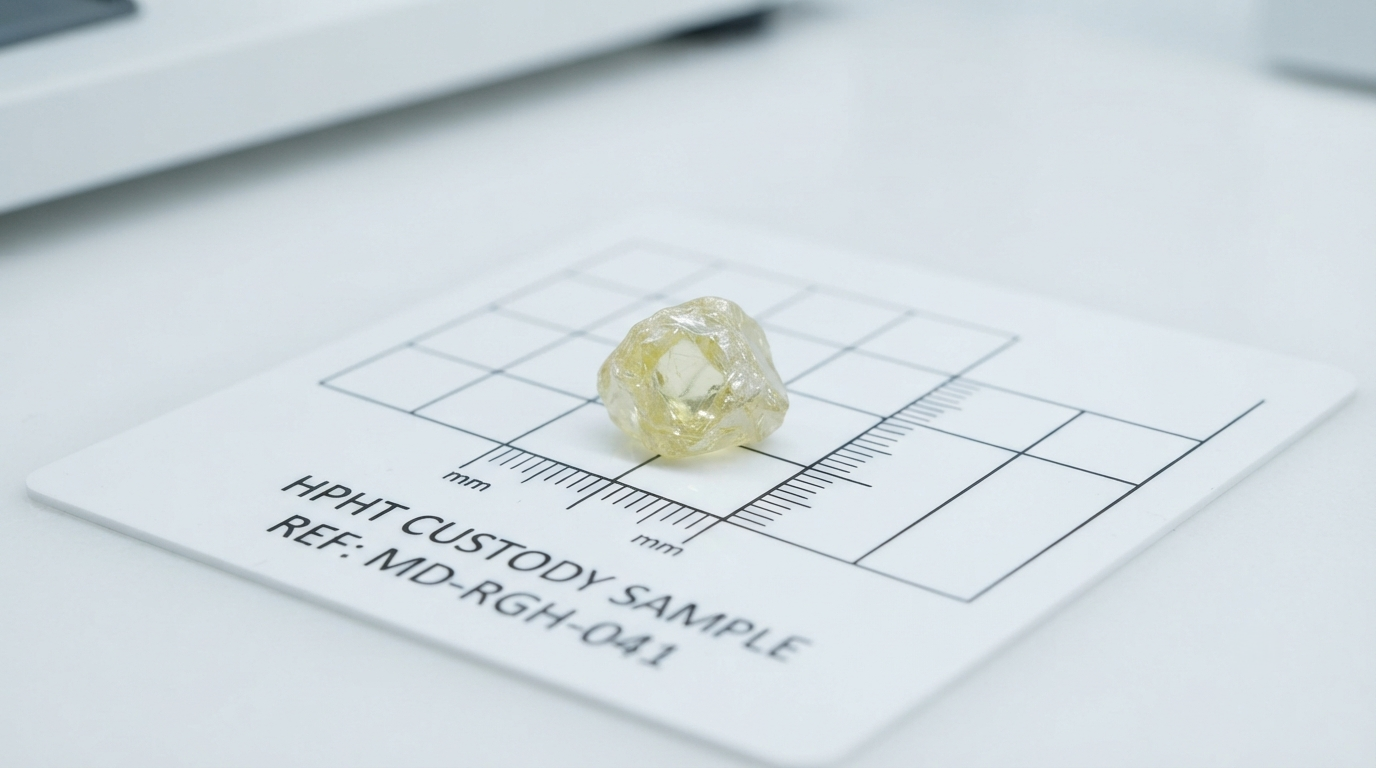
- Growth. Her graphite, typically blended with supplemental lab carbon, goes into a growth cell with a diamond seed. Most providers use HPHT; a minority use CVD.
- Cutting and polishing. The rough crystal is shaped into the cut your family selects.
- Optional treatment. Some providers offer irradiation to alter color. It is never a mandatory stage.
- Grading and documentation. The finished stone may be graded, and origin paperwork is issued.
Every numbered step is a handover, and each should leave a written trace you can ask to see. How the stone is grown from her ashes explains the chemistry in more depth.
How Can You Verify a Diamond Is Really Made From Sister Ashes?
This is the uncomfortable center of the whole question: nobody can test a finished diamond to discover whose carbon is inside it. Purification reduces the material to essentially pure carbon, leaving no DNA and no personal signature behind. A gemologist can confirm a stone is a real, laboratory grown diamond. No one can examine it and confirm it was really made from sister ashes.
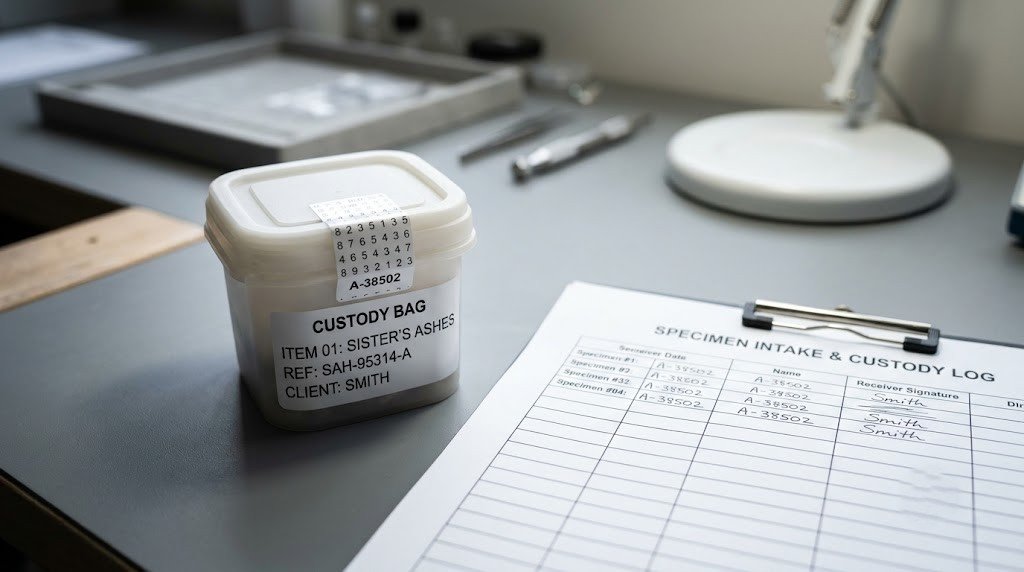
So checking whether a stone is really made from sister ashes is a matter of custody and documentation, not lab analysis. You are verifying a process, not a product. Practical ways to do that:
- Ask what identifier is attached on arrival, and whether it is physical, such as a numbered seal or engraved container, or only a database entry. Ask to be told the number.
- Ask how many stages record a handover, who signs each record, and whether copies can be sent to you.
- Ask whether her material is ever processed alongside another family’s, in a shared furnace run or growth cell. A direct yes or no is a reasonable expectation.
- Ask what happens to ash that goes unused: returned, retained, or disposed of. Practice differs between providers.
- Ask whether updates or photographs are offered at defined points, such as the rough crystal before cutting.
- Keep the whole exchange in email, so you can hold a company to its answers months later.
None of these checks delivers laboratory certainty. Together, they show whether a company treats one family’s material as a tracked, accountable item, which is the strongest evidence this industry can offer that a diamond is really made from sister ashes. When you are satisfied, the practical steps for sending her ashes cover packing, paperwork and shipping.
Does a Certificate Prove a Stone Is Really Made From Sister Ashes?
The word “certified” can lead a family to assume someone independent has confirmed a stone was really made from sister ashes. It rarely means that. Two different documents circulate, answering different questions.
| Origin or authenticity certificate | Independent grading report | |
|---|---|---|
| Who usually issues it | The memorial provider itself | A third party gemological laboratory |
| What it records | That this stone was grown from carbon your family submitted | Cut, color, clarity and carat |
| Does it confirm her carbon is inside? | It is the provider’s own statement that it is | No; origin is outside its scope |
| Does it confirm a real diamond? | Not independently | Yes, and typically that it is laboratory grown |
| Included by default? | Usually | Usually optional, at extra cost |
The origin certificate matters as a written commitment about your sister’s carbon. But it is not independent evidence, and its weight depends entirely on the custody process behind it. The grading report, by contrast, is independent and measures the stone against the cut, color, clarity and carat standards used for any diamond, yet it says nothing about where the carbon came from.
Ask which documents come with the stone, who issues each one, and whether the diamond will carry a laser inscription tying it to its paperwork. Ask to see a sample certificate with another family’s details removed. If a provider calls an in house document “independent certification,” treat that as a point to press rather than a reassurance.
Which Claims About a Stone Really Made From Sister Ashes Should Make You Pause?
Plenty of providers describe their work carefully. A handful of phrases, though, promise more about a stone really made from sister ashes than chemistry can deliver.
- “It’s 100% her.” No diamond grown from ashes consists entirely of personal carbon. A company saying so is either misinformed or misleading you.
- “Pure ashes, nothing added.” Supplemental lab carbon is typically part of growth; “nothing added” contradicts how the process normally runs.
- “The color will reflect who she was.” Color comes from trace elements, nitrogen toward yellow and boron toward blue, and cannot be chosen or forecast from her ashes.
- “Fully certified,” with no detail. Certified by whom, and for what? An in house certificate and an independent grading report are not interchangeable.
- No percentage at all. A provider unwilling to say roughly how much of the stone is her carbon is withholding the single most relevant fact.
- Urgency. Ashes keep. No chemical reason forces a decision this month rather than next year, so pressure to hurry is a sales tactic, not a technical need.
Any of these might come from an overeager salesperson rather than a dishonest company; either way, ask again in writing. A stone really made from sister ashes does not need exaggeration to be meaningful.
Which Beliefs About Diamonds Really Made From Sister Ashes Fall Apart?
A few misunderstandings about whether a stone is really made from sister ashes come up again and again.
“More ash means more of her in the stone.” Only to a degree. Extra ash yields a little extra carbon, while the stone’s size is set by growth time. Ask whether a larger submission would change a provider’s percentage; answers differ.
“A bigger diamond holds more of her.” Not necessarily. A larger stone needs more total carbon, so unless more ash is used, her share of it may actually be smaller.
“They’ll need all of her ashes.” They won’t. Laboratories typically ask for a portion, from a few tablespoons up to about 4 oz, leaving the rest for whatever else your family has planned.
“It isn’t a real diamond.” It is. A memorial diamond is chemically and physically diamond, rated 10 on the Mohs hardness scale, and graded on the same 4Cs as any other.
“A DNA test could settle it.” Purification strips the material down to carbon, so there is no DNA left for a test to find. Proof that a diamond was really made from sister ashes lives in the paperwork.
“Every provider does the same thing.” The broad stages are similar; custody practices, percentages, documentation and contract terms are not. That variation is why the question of whether a stone is really made from sister ashes deserves a written answer from every company you consider.
Do You Hold the Authority to Send Her Ashes?
Before asking whether a stone is really made from sister ashes, siblings often face an earlier question: who decides? Depending on your state and anything your sister set down in writing, the person entitled to decide what happens to her remains may be her spouse or partner, her adult children, or her parents before it is you. The order varies between states, and her own written wishes can change it.
None of that measures who loved her. It is an order set by state rules and her paperwork, and a reputable provider will ask whose authorization it holds before processing anything.
If that authority sits with someone else, a respectful route remains. You can ask whoever holds it whether a small portion might be set aside for a stone, since laboratories typically need only a fraction of the total. If several siblings each hope for a diamond, one portion can sometimes be divided among more than one stone, which is worth raising together rather than one by one.
If ashes are not available to you, a lock of her hair you already keep may be another path, though whether you can use it may also depend on her estate and the rules where you live. That route raises its own questions about how much of the stone is really hers, and some families combine both, which the blended ashes and hair version examines in detail.
What Should You Expect on Time, Cost and Color?
Whether a stone is really made from sister ashes is the first concern; the practical ones follow close behind. Every figure here is a general industry range, not any single company’s terms.
Time. Typically six to ten months from the day the ashes arrive, stretching toward twelve for stones over about two carats or for specialty colors.
Cost. Roughly $1,500 to $3,500 for about 0.10 to 0.25 carats; around $5,000 to $15,000 for half a carat to one carat, with colorless at the upper end; and roughly $20,000 to $75,000 or more from two carats to five and beyond. Independent grading, engraving, fancy cuts and settings are usually priced separately.
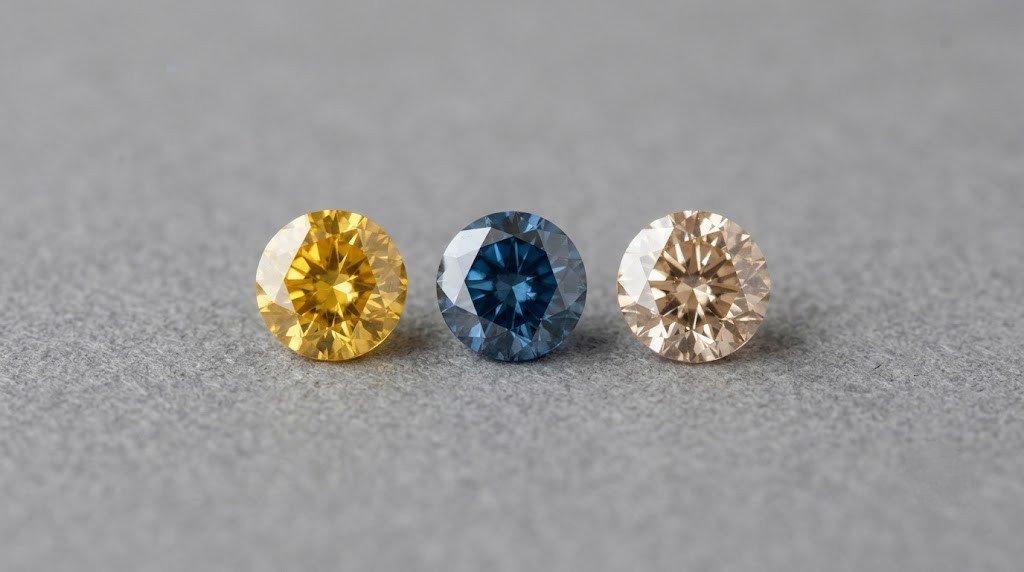
Color. Memorial stones tend toward yellow, blue and champagne because of trace nitrogen and boron. Colorless is achievable with extra processing and cost. Some providers offer irradiation for red, green or black. Even when a stone is really made from sister ashes, nobody can predict its exact shade.
The complete guide to a diamond from her ashes covers these trade offs in more depth.
Frequently Asked Questions
Is a stone really made from sister ashes if only 3% is her carbon?
Yes. At 3%, the stone still holds carbon recovered from her remains that nothing else could supply. It is a lower share than many providers cite, so ask why that figure applies to your stone and whether a larger ash submission would change it.
Can a provider prove a diamond is really made from sister ashes?
You can ask for documentary proof: tracking numbers, signed handover records, progress photographs and an origin certificate. No laboratory test can identify whose carbon sits inside a finished diamond, so a thorough custody record is the most meaningful evidence available.
Does an independent grading report confirm the carbon is hers?
No. An independent grading report describes cut, color, clarity and carat, and usually identifies the stone as laboratory grown. It does not address origin. That question is covered only by the provider’s own certificate and the custody records standing behind it.
Why do different providers quote different percentages?
Stone size, the quantity of ash supplied, and each laboratory’s own process all move the figure, which is why quotes run from about 3% to around 15% and occasionally higher. Ask for the percentage that applies to your chosen carat size, in writing.
Could her ashes be processed together with another family’s?
Ask directly, because practices differ and some laboratories work in batches. You are entitled to a plain yes or no about whether her material ever shares a furnace run or growth cell with anyone else’s, and to have that answer by email.
Do I need consent from her spouse or children before sending her ashes?
Possibly. Depending on your state and her written wishes, a spouse or partner, adult children or parents may hold authority ahead of a sibling. A provider will usually ask whose authorization it has, so settle this before anything is shipped.
Will the finished diamond look like it came from her?
Not in any predictable way. Color depends on trace elements present during growth, and her ashes cannot be used to choose or forecast a shade. What makes the stone hers is its documented origin, not its appearance.
Final Thoughts on Whether It’s Really Her
Skepticism here is not disloyalty to her memory. It is a way of protecting it. The honest answer to whether a stone is really made from sister ashes is a qualified yes, which is worth more than an unqualified one that collapses at the first follow up question.
If you keep only a few things about whether a diamond is really made from sister ashes, keep these: her carbon is real but partial, the stone cannot be tested for origin, and the evidence lives in custody records and in the written answers a provider is willing to give you. Ask for those, and decide from there.
The true share may make the stone feel more like her, precisely because nothing has been inflated, or it may tell you this isn’t the right choice for you. Either conclusion is sound when reached with clear facts.
Learn More About Diamonds From a Sister’s Ashes
- Sister Ashes Diamond: The Complete Guide for the full picture for an ash based stone
- How a memorial diamond is made from her ashes for each stage of the chemistry
- How to turn your sister’s ashes into a diamond for the process from first inquiry to shipping
- Is a diamond from her hair really hers? for the same question involving a lock of hair
- Sister Ashes and Hair Diamond: The Complete Guide for situations where both materials are used together
Talk With Memorial Diamond
If you would rather ask a person whether a stone is really made from sister ashes, and how much of it would be hers, Memorial Diamond is glad to talk through custody, documentation and an honest percentage for the stone you have in mind. Start whenever you are ready at memorialdiamond.us; asking is not agreeing to anything.