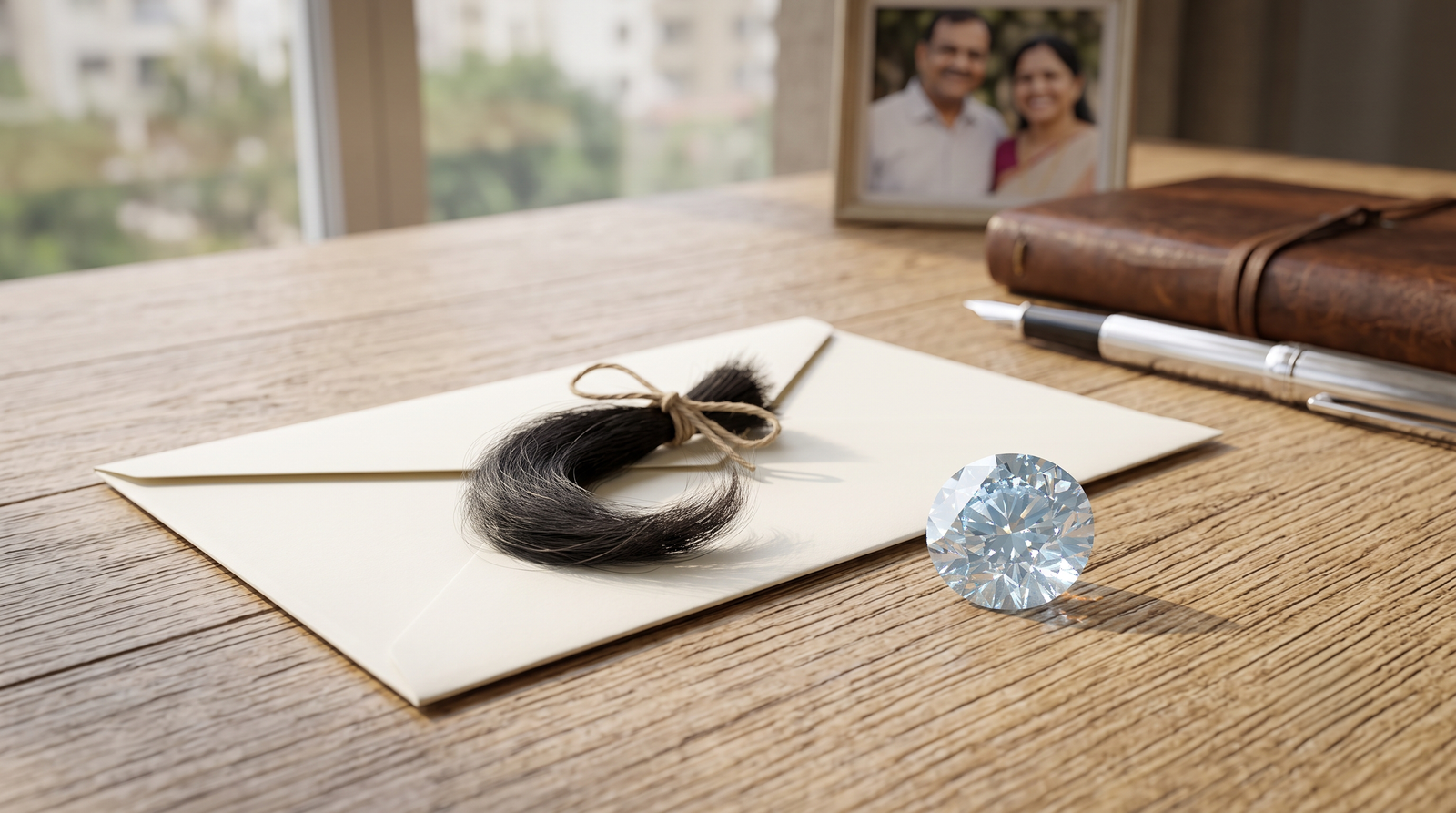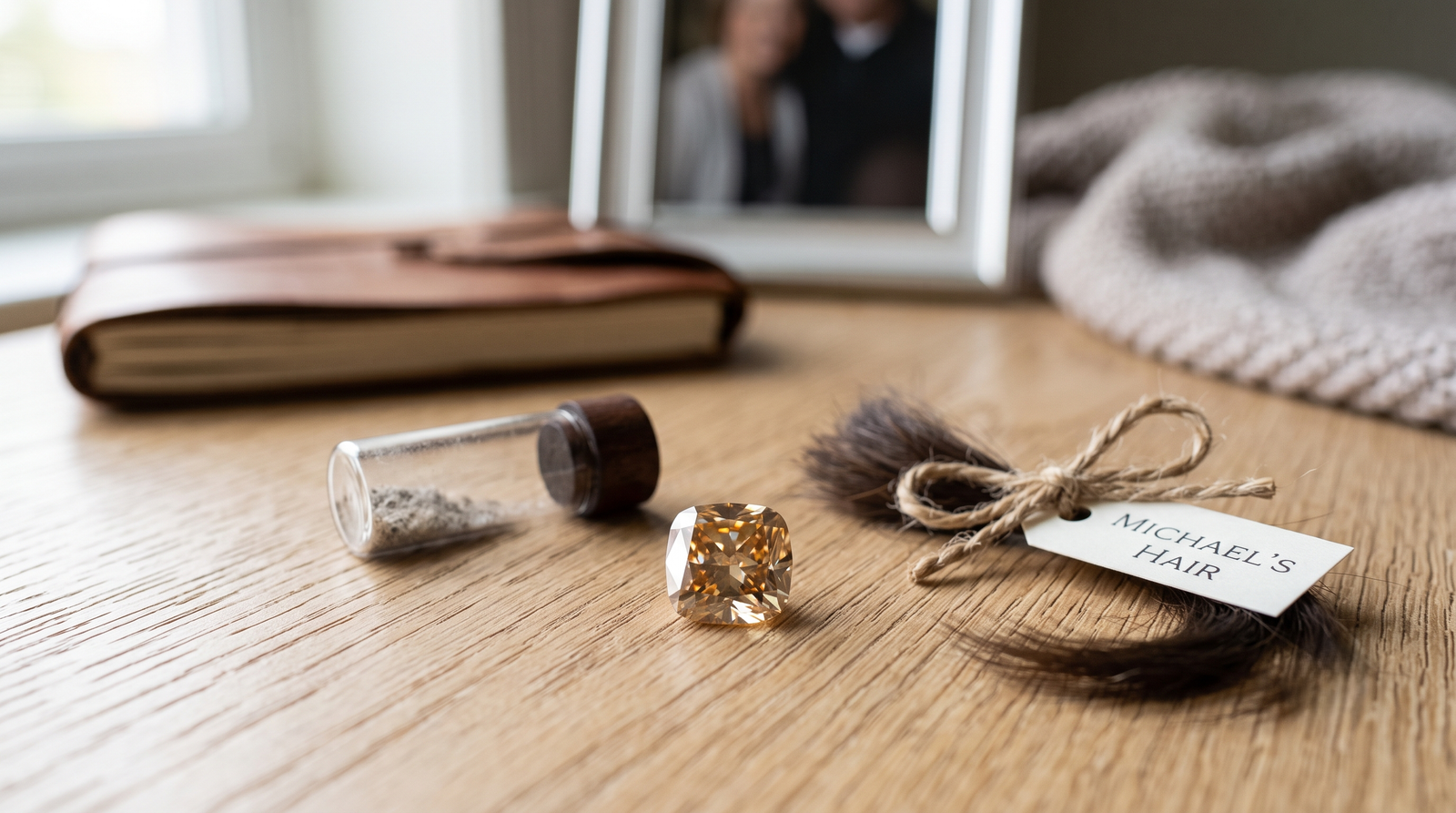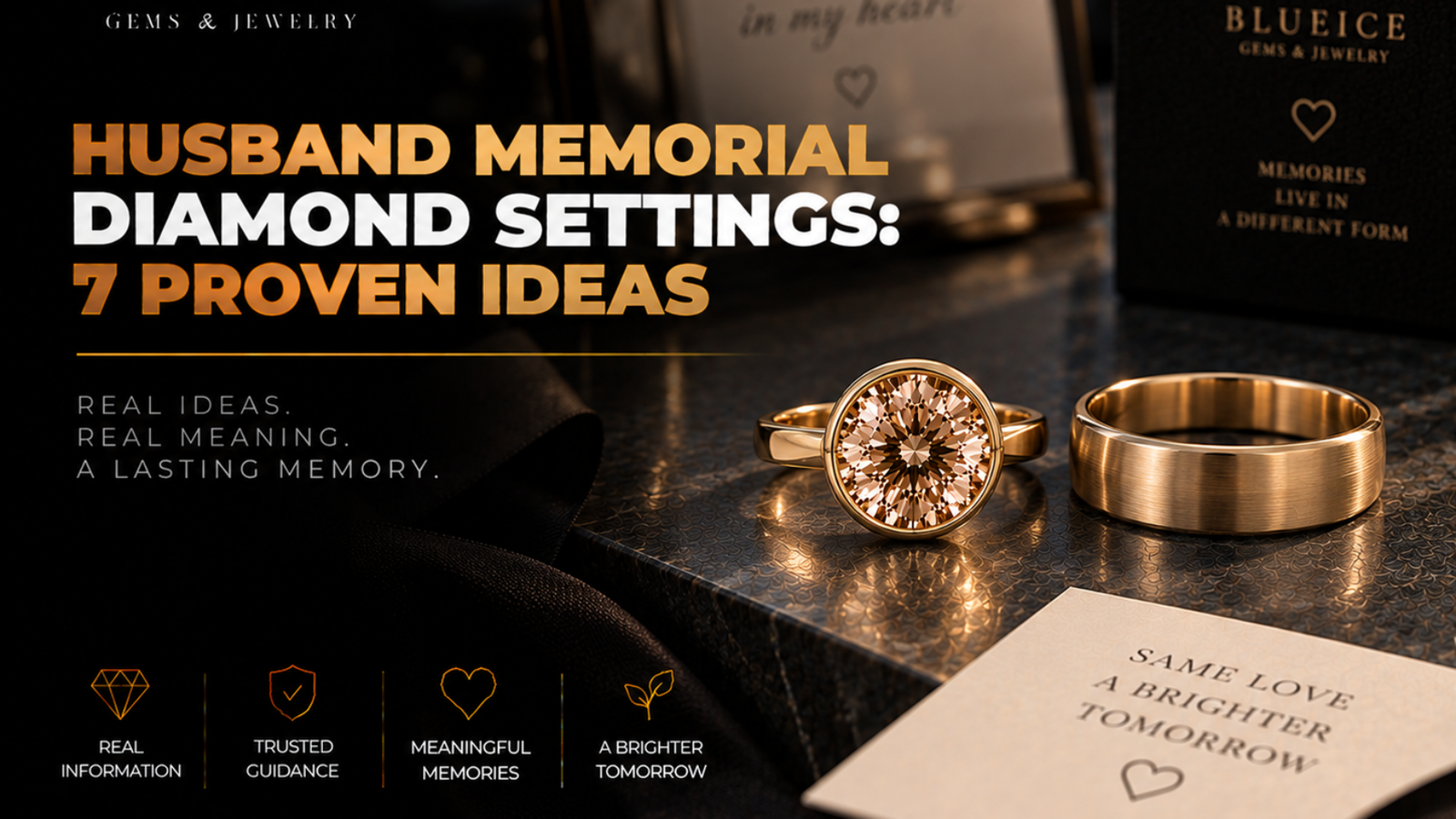
Husband memorial diamond settings: a champagne-toned lab-grown diamond in a yellow-gold bezel ring beside a plain men's wedding band

Memorial Diamond Settings and Jewelry Ideas for a Husband

The stone is usually decided before the jewelry is. Families choose the carat, the color, whether ashes or hair, and then months later a small box arrives and the second question finally has to be answered: what does this actually become?

Husband memorial diamond settings fall into seven practical families: a ring you wear, a pendant, a piece made from his own wedding band, cufflinks or a tie pin, an earring pair, a piece for a child or grandchild, and a loose stone kept unset, and the right one depends on how often it will be worn, who it is for, and whether his own ring is part of the plan. This guide walks through all seven, what each typically adds to the cost of the stone, and the questions to settle before a jeweler starts work.

Why the Setting Deserves Its Own Decision

A memorial diamond is a real, lab grown diamond containing a purified portion of your husband’s own carbon, grown alongside supplemental lab carbon to reach a workable size. The stone is the permanent part. The husband memorial diamond setting is the part you will actually touch, the thing that catches on a sweater, that you turn on your finger in a waiting room, that a grandchild eventually asks about.

That is why husband memorial diamond settings are worth deciding slowly rather than in the same breath as the stone. A ring worn daily needs a different mounting than a pendant worn on anniversaries. A piece that will one day pass to his son needs to survive that handover. And if his own wedding band is still in a drawer, it may be the setting you were looking for all along.

Diamond itself is the hardest known natural mineral, 10 on the Mohs scale, so the stone will outlast any metal you put it in. Every practical decision below about a husband memorial diamond setting is really about protecting the mounting, not the diamond.

Which Husband Memorial Diamond Settings Suit Everyday Wear?

Wearability is the first filter. The table below sorts the seven main husband memorial diamond settings by how they hold up to daily life, because a piece that has to be taken off to wash dishes ends up in a box more often than on a body.

SettingTypical wearStone protectionBest carat rangeWho it usually suits
Bezel set ringDailyHighest, metal rim surrounds the stone0.10 to 0.75 ctThe reader who wants to wear him every day
Solitaire prong ringDaily to frequentModerate, prongs can snag and wear0.25 to 1.5 ctSomeone who wants the stone to show as much as possible
Pendant on chainFrequentHigh, hangs clear of most impacts0.10 to 1.0 ctWearers who don’t wear rings, or already wear his band
Wedding band conversionDailyDepends on the original band0.10 to 0.50 ctFamilies where his ring is still in the house
Cufflinks or tie pinOccasionalHigh when stored well0.10 to 0.30 ct (pair)A son or brother who dresses formally
Earring pairFrequentModerate, small stones, small settings0.10 to 0.25 ct eachTwo stones from one order, or a matched gift
Loose, unset stoneDisplayedHighest, nothing to wear outAnyFamilies still deciding, or dividing later

Three patterns come out of that grid.

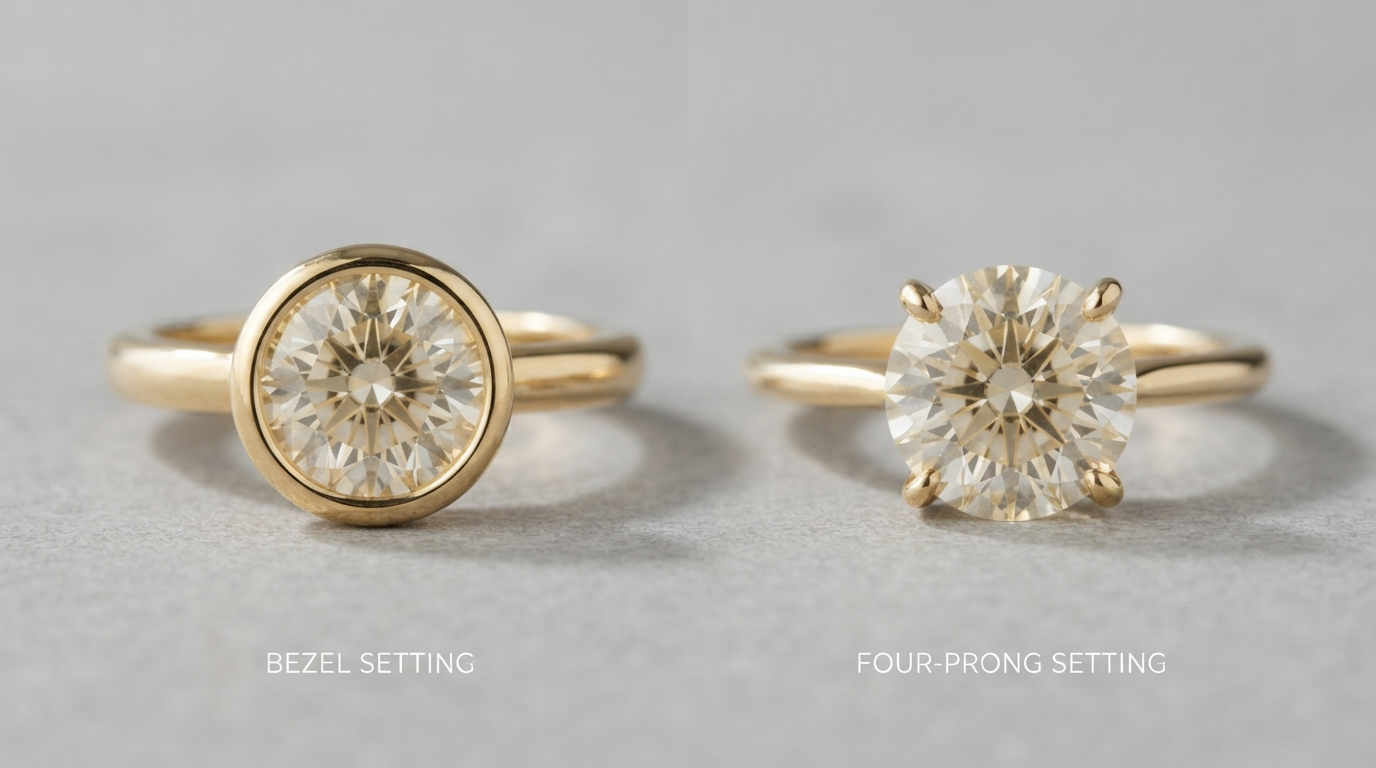
Side-by-side of a bezel-set and a four-prong solitaire ring showing how much of the stone each mounting covers

Bezel settings win for daily rings. Of all the husband memorial diamond settings above, the bezel is the one jewelers reach for first. A bezel wraps a continuous rim of metal around the diamond’s edge. It hides a little of the stone’s outline, but it is the mounting jewelers recommend for someone who will not take the ring off, no prongs to catch, no claws to wear thin over a decade.

Pendants are the quiet default. Among husband memorial diamond settings, the pendant is the one chosen most often by people who never planned to wear a ring. If you already wear his wedding band on a chain, or your own rings are enough, a pendant keeps the stone close without adding a ring to a hand that is already full. It also tolerates a larger stone than a ring does, because a pendant hangs rather than knocks.

Loose is a real option, not a failure to decide. Not every husband memorial diamond setting has to be chosen this year. Many families keep the stone unset for a year or more. A diamond in its grading box loses nothing, and settling the setting after the first anniversary rather than before it is a perfectly good order of operations.

Can His Wedding Ring Become the Setting?

Often, yes, and for many families this is the most meaningful of all the husband memorial diamond settings available, because both halves of the piece were his.

Whether it works depends on three things a jeweler will check before promising anything:
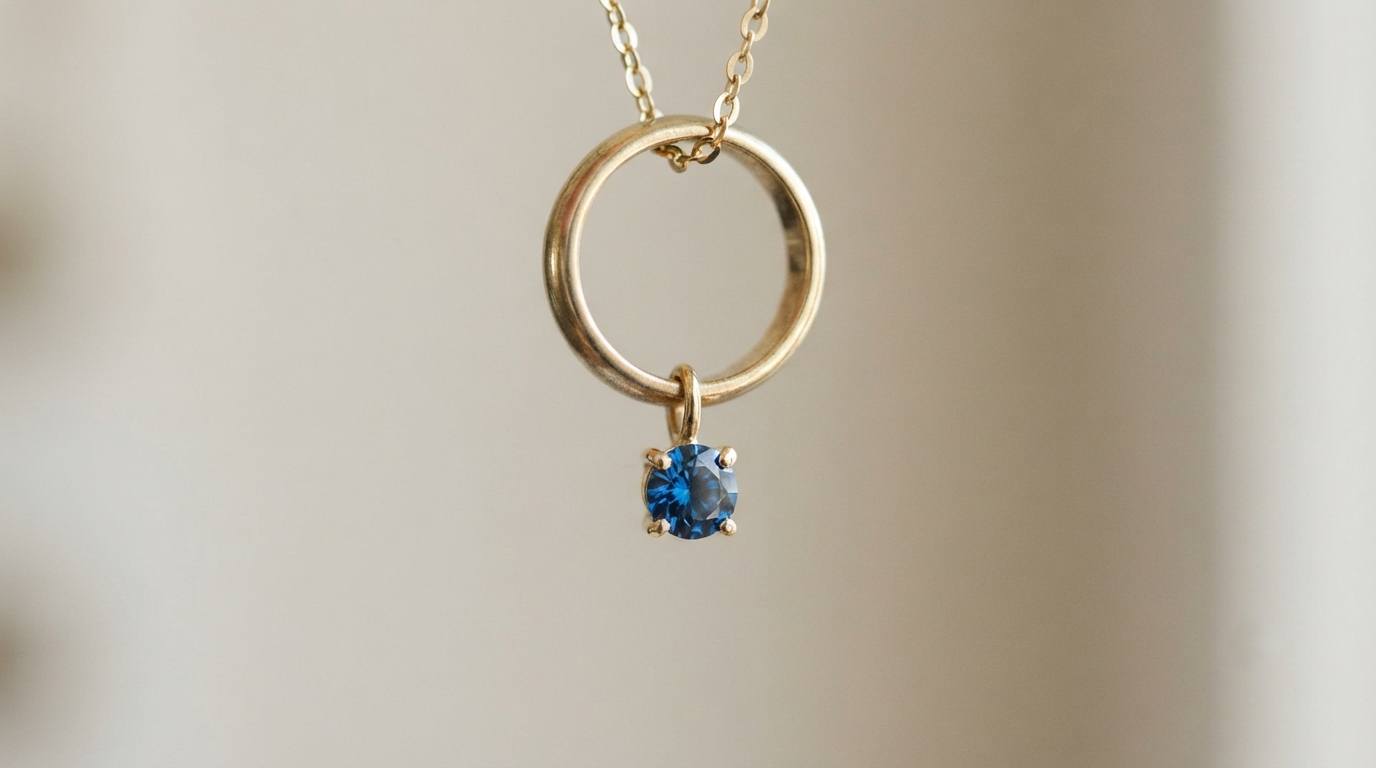
An intact men's gold wedding band used as the bail of a pendant, with a small blue diamond framed beneath it
  1. The band’s width and depth. A plain 6 mm band usually has enough metal to take a small bezel or flush set stone, typically 0.10 to 0.25 ct. A thin 3 mm band often does not, and forcing a stone into it weakens the ring.
  2. The metal. Gold and platinum bands can be cut, re shanked, and set. Tungsten and titanium bands, common in men’s wedding jewelry over the last twenty years, generally cannot be cut or set by conventional bench work. If his ring is tungsten, the honest alternative is to keep the band whole and mount the stone in a new piece worn alongside it.
  3. Who will wear it. His band was sized for his hand. Resizing a band down several sizes for your finger is routine for gold. For a band with an engraved inner surface, the engraving may be partly lost in the cut, so ask the jeweler to photograph it first.

A fourth husband memorial diamond setting sits between conversion and a new piece: the band stays intact and becomes the bail of a pendant, with the memorial diamond set in a small frame that hangs from it. Nothing of his ring is cut away, and the stone still sits inside it.

One thing this page will not tell you is whether you should still be wearing your own ring. That is not a jewelry question.

Pieces for a Son, a Daughter, or a Grandchild

A single order can often produce more than one stone, because only a small portion of ashes, typically a few tablespoons to around 4 oz, or a small lock of hair is needed for each diamond. That opens up a set of husband memorial diamond settings designed for the people who called him Dad or Grandpa rather than by his name.

  • Cufflinks or a tie pin for a son. The most requested husband memorial diamond setting for a man who does not wear rings. Two small stones, or one, in a piece worn at the occasions he would have attended, a wedding, a graduation, a first day in a new job.
  • A signet style ring. A husband memorial diamond setting that reads as his rather than as jewelry. A flush set stone in a wide, flat topped band reads as masculine and survives a workshop or a rugby pitch better than a prong ring.
  • A bracelet charm or a small pendant for a daughter. Sized to be worn young and kept into adulthood.
  • A matching pair from one order. Two stones cut from the same growth run, set the same way, so two siblings hold something that came from the same grams of the same material.
  • A piece held in trust for a grandchild. A loose stone with its grading report and origin certificate, in a labeled box, given at eighteen or at a wedding.
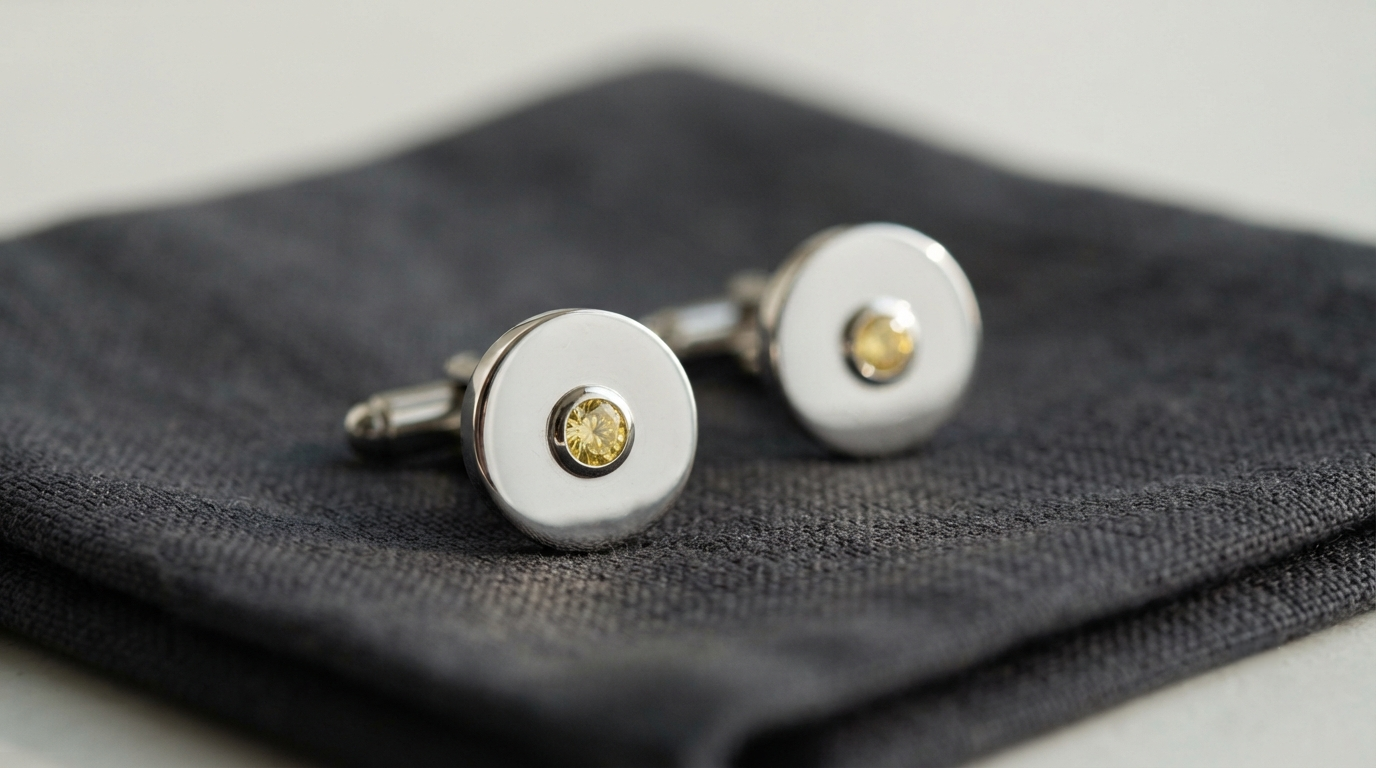
Pair of white-gold cufflinks each set with a small yellow lab-grown diamond on a dark cloth

If several people expect a stone, the practical and financial mechanics are in how more than one family member can receive a diamond from the same husband’s ashes, cost multiplies per stone, and the stones will not be identical in color.

How Carat Size and Color Change What Works

Husband memorial diamond settings are downstream of two facts about the stone.

Carat. Memorial diamonds are typically offered from around 0.10 ct up to several carats, with growth time, not the amount of material sent, determining size. At the small end, a 0.10 to 0.25 ct stone all but disappears in a wide prong setting and looks intentional in a bezel, a flush mount, or a pendant with a modest frame. Above 0.75 ct, the stone can carry a solitaire ring on its own. If you have not chosen a size yet, choose the husband memorial diamond setting and the size together rather than in sequence. A jeweler can tell you the smallest stone that will read well in a given mounting.

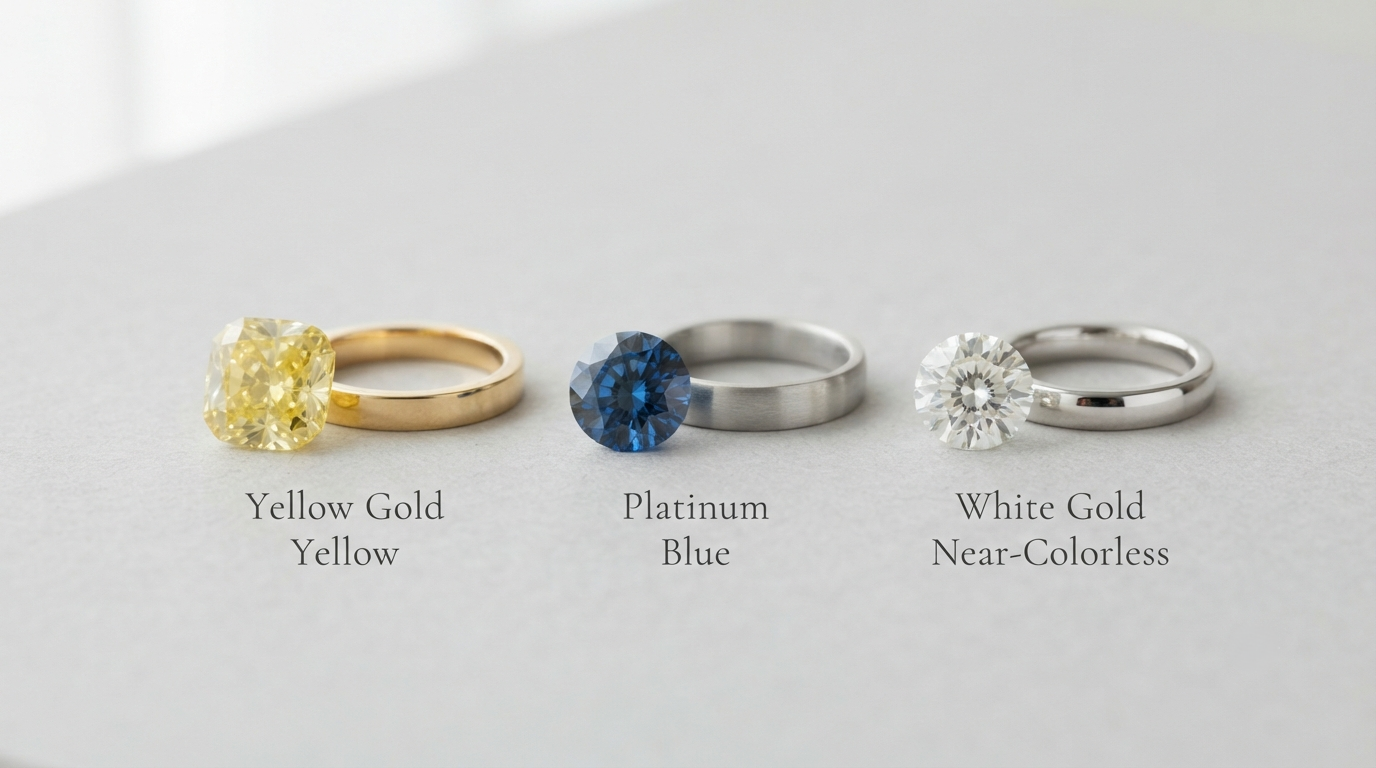
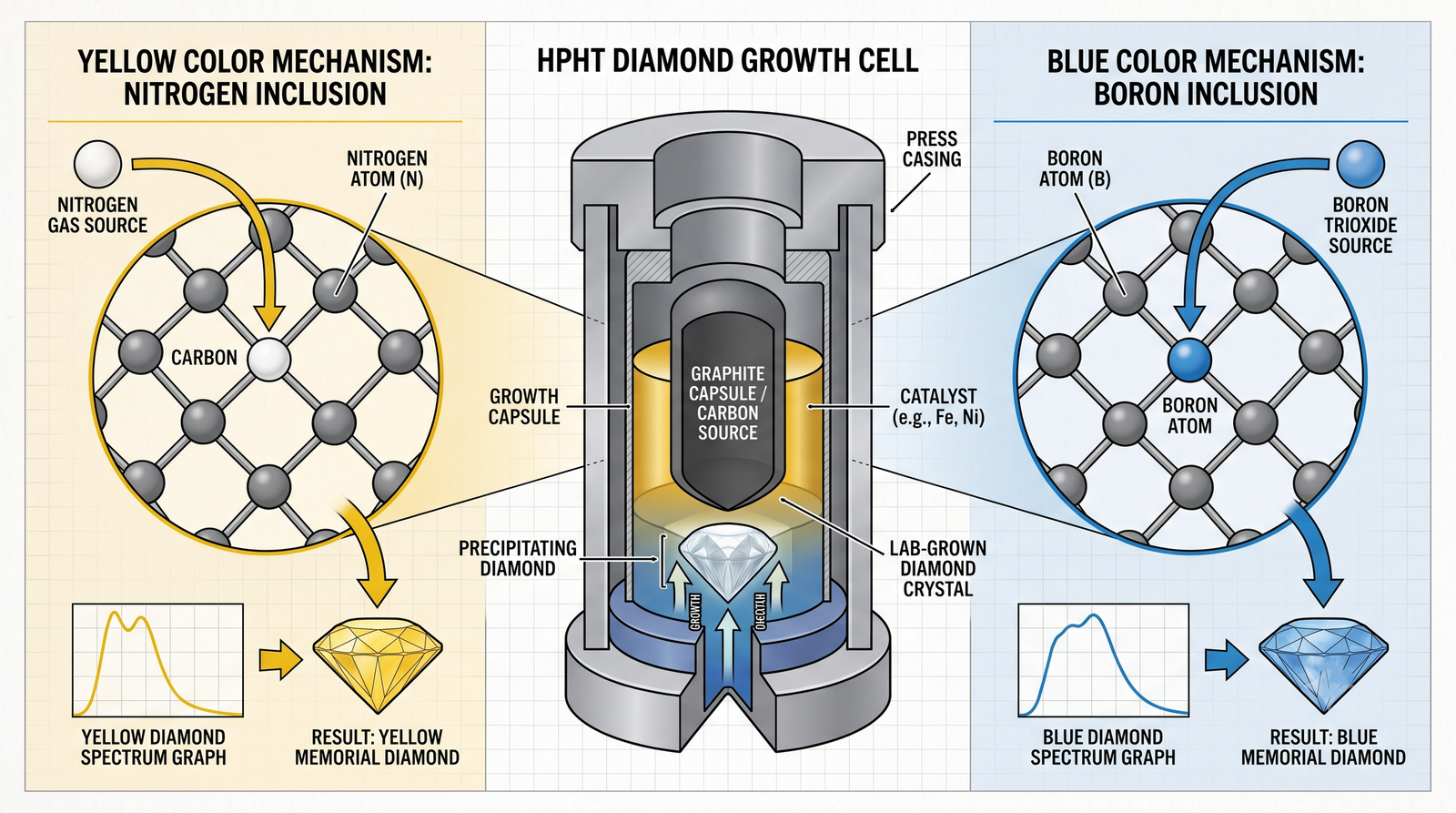
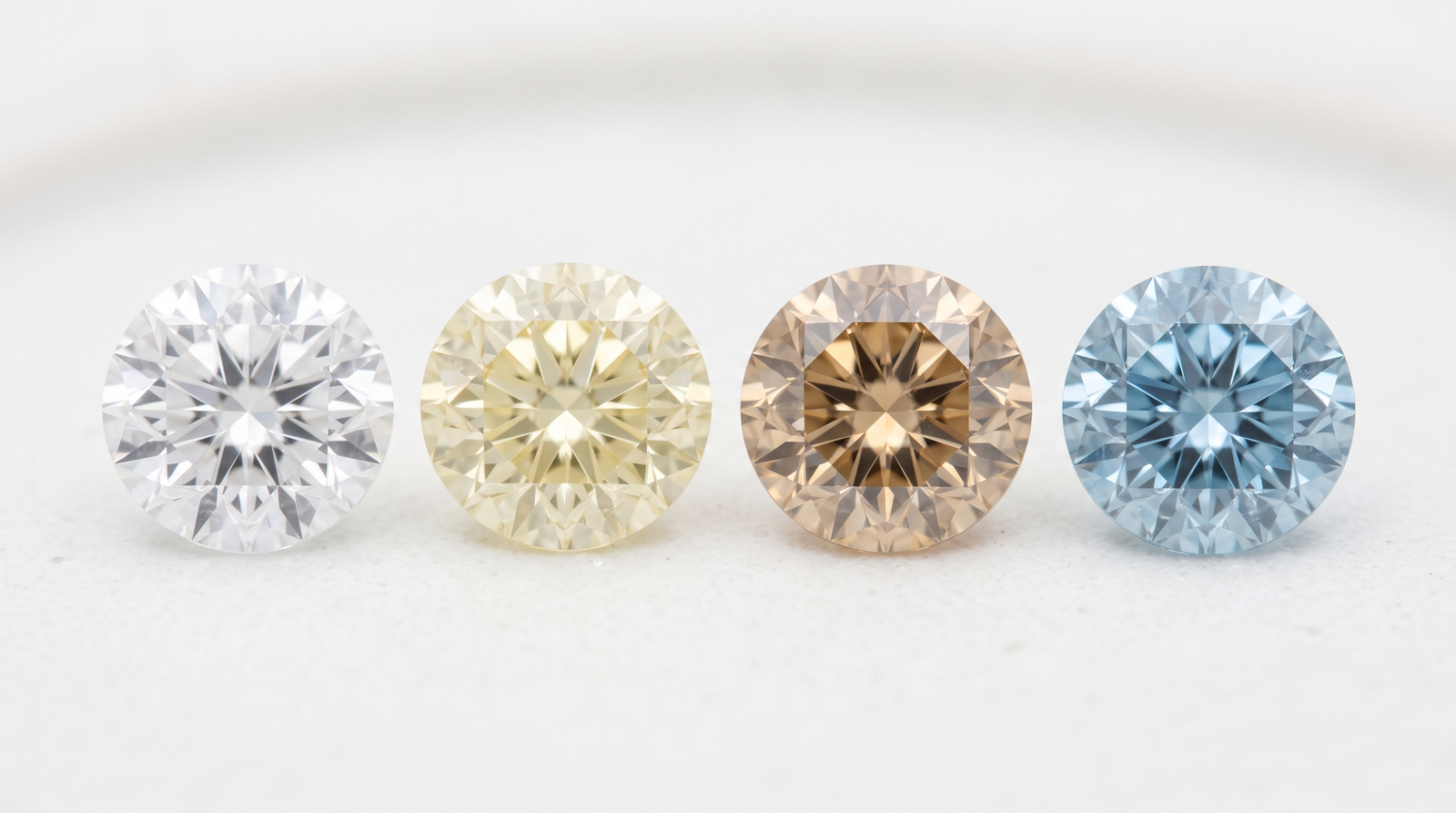
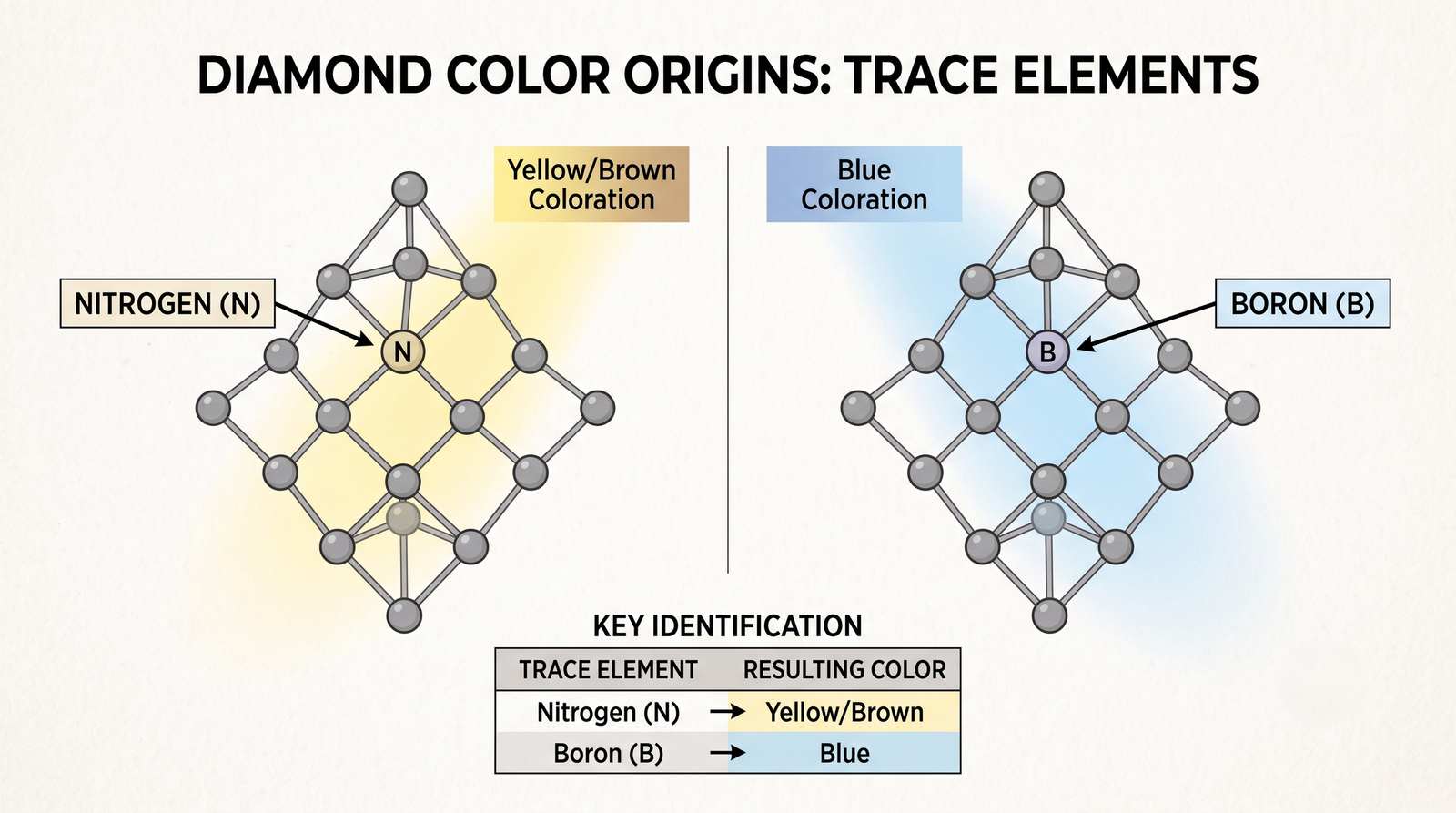
Color. Because the carbon comes from an organic, personal source, memorial diamonds naturally trend toward yellow, blue, and champagne tones rather than colorless. Trace nitrogen produces yellow, trace boron produces blue, and colorless requires additional processing that costs more. Metal choice follows from color:

Likely stone colorMetals that flatter itMetals that fight it
Yellow or champagneYellow gold, rose goldWhite gold, platinum, makes warmth look like a flaw
BlueWhite gold, platinum, silver tonedYellow gold, competes
Colorless or near colorlessAnything, white metals maximize brightnessNone
Black, irradiatedAny, high contrast with white metalsNone
Yellow, blue, and near-colorless memorial diamonds laid against yellow gold, white gold, and platinum band samples

Because the final color is only known once the stone is grown, many families wait for the diamond to arrive before commissioning the husband memorial diamond setting. What to expect from a husband’s memorial diamond color explains the vocabulary jewelers and grading reports use, and how it differs from what the stone looks like on your hand.

What a Setting Typically Adds to the Price

Husband memorial diamond settings are almost always priced separately from the loose stone, and the range is wide. The figures below are general jewelry trade ranges in 2026, not Memorial Diamond’s published prices, and they move with metal prices, complexity, and whether the piece is stock or custom.

Setting typeTypical added cost, general rangeWhat drives it
Simple bezel or solitaire ring, 14k goldLow hundreds to around $1,000Metal weight, band width
Platinum ringRoughly double a comparable gold ringPlatinum’s density and price per gram
Pendant with chainLow hundreds upwardChain length and gauge, bail style
Wedding band conversionBench labor, often a few hundredCutting, re shanking, resizing, polishing
Cufflinks, pairMid hundreds upwardTwo mountings, mechanism quality
Custom design with engravingHighest, quoted individuallyDesign time, CAD, hand finishing

Two cost rules that hold across all husband memorial diamond settings: metal is the main variable, not the stone, and custom always costs more than stock. A stock bezel ring in 14k gold with a 0.20 ct stone is close to the floor. The same stone in a hand built platinum piece with his handwriting engraved inside is near the ceiling. Neither is the wrong answer. The full stone plus setting budget is worked through in how much a husband memorial diamond costs.

Seven Things to Decide Before a Jeweler Starts

A jeweler will make any husband memorial diamond setting you describe. These are the decisions that make the description worth making.

  1. Who is going to wear it, and how often? Daily wear points to a bezel or flush husband memorial diamond setting. Occasional wear opens up prongs and pendants.
  2. Is his wedding band part of the plan? If yes, have its metal identified before anything else. Tungsten and titanium change the answer.
  3. Will the stone be set now, or after the first year? Loose is fine. Setting later costs nothing extra.
  4. What size is the stone, and is that final? Choose setting and carat together.
  5. What color did the stone come back? Match metal to color, not to habit.
  6. Does anyone else expect a piece? If so, decide whether that means more stones from the same order or a division of this one. They are different questions with different costs.
  7. What paperwork should stay with the piece? The grading report and the origin certificate belong in the same envelope as the receipt for the setting, so whoever holds the piece after you can prove what it is. How gemologists grade a diamond’s cut, color, clarity, and carat is the same for a memorial stone as for any other.

Engraving on a husband memorial diamond setting is a separate decision and can wait. A short line inside a band or on the back of a pendant frame. His initials and the years are the most common choice. His handwriting, scanned from a card, is the one families most often say they are glad they did.

Frequently Asked Questions

Which husband memorial diamond settings are safest for a ring worn every day?

A bezel setting, where a continuous rim of metal surrounds the stone, is the most protective for daily wear. It has no prongs to catch or wear thin, and it keeps the diamond’s edge fully covered. A flush set band is the next safest. Prong solitaires show more stone but need periodic checking.

Can my husband’s tungsten wedding ring be turned into a setting?

Usually not by conventional bench work. Tungsten carbide and titanium bands generally cannot be cut, resized, or set. The honest alternatives are a new piece worn alongside his band, or a pendant design where his intact band serves as the bail with the diamond framed beneath it.

Should I choose the setting before the diamond is finished?

You can, but many families wait on the husband memorial diamond setting. Memorial diamonds typically take 6 to 10 months to grow and often come back yellow, blue, or champagne rather than colorless. Seeing the actual color before choosing the metal avoids a mismatch. A loose stone in its box loses nothing by waiting.

How much does a setting add to the cost of a husband memorial diamond?

Settings are priced separately from the stone. In general trade terms, a simple gold bezel or solitaire ring runs from the low hundreds to around $1,000, platinum roughly doubles that, and custom or engraved pieces are quoted individually. Metal weight and complexity, not the stone, drive the number.

Can one order produce pieces for me and for our children?

Often, yes. Only a small portion of ashes or a small lock of hair is needed per diamond, so several stones can typically be grown from one submission. Each stone is priced and grown separately, and stones from the same material can differ slightly in color. Cufflinks, small pendants, and signet style rings are common choices for children.

What paperwork should stay with a finished piece?

Keep the independent grading report, the origin or authenticity certificate documenting that the stone was grown from his submitted carbon, and the jeweler’s receipt for the setting together. Whoever holds the piece after you should be able to prove what it is without relying on memory.

Final Thoughts on Husband Memorial Diamond Settings

The stone will outlast every decision on this page. That is a reason to make the setting decision without urgency: the diamond does not mind being loose for a year, his ring does not mind waiting in its drawer, and a jeweler can build almost anything once you know who will wear it and how often. Husband memorial diamond settings are not a test of how much you loved him. They are a practical question about hands, chains, metals, and the people who will hold the piece after you, and practical questions can be answered slowly.

Learn More About Husband Memorial Diamonds

Talk With Memorial Diamond

If you are weighing husband memorial diamond settings, whether his band can be converted, what size will read well in a bezel, or how to plan pieces for more than one person, reach out to Memorial Diamond to talk through what is possible for your stone. There is no timetable on this part.
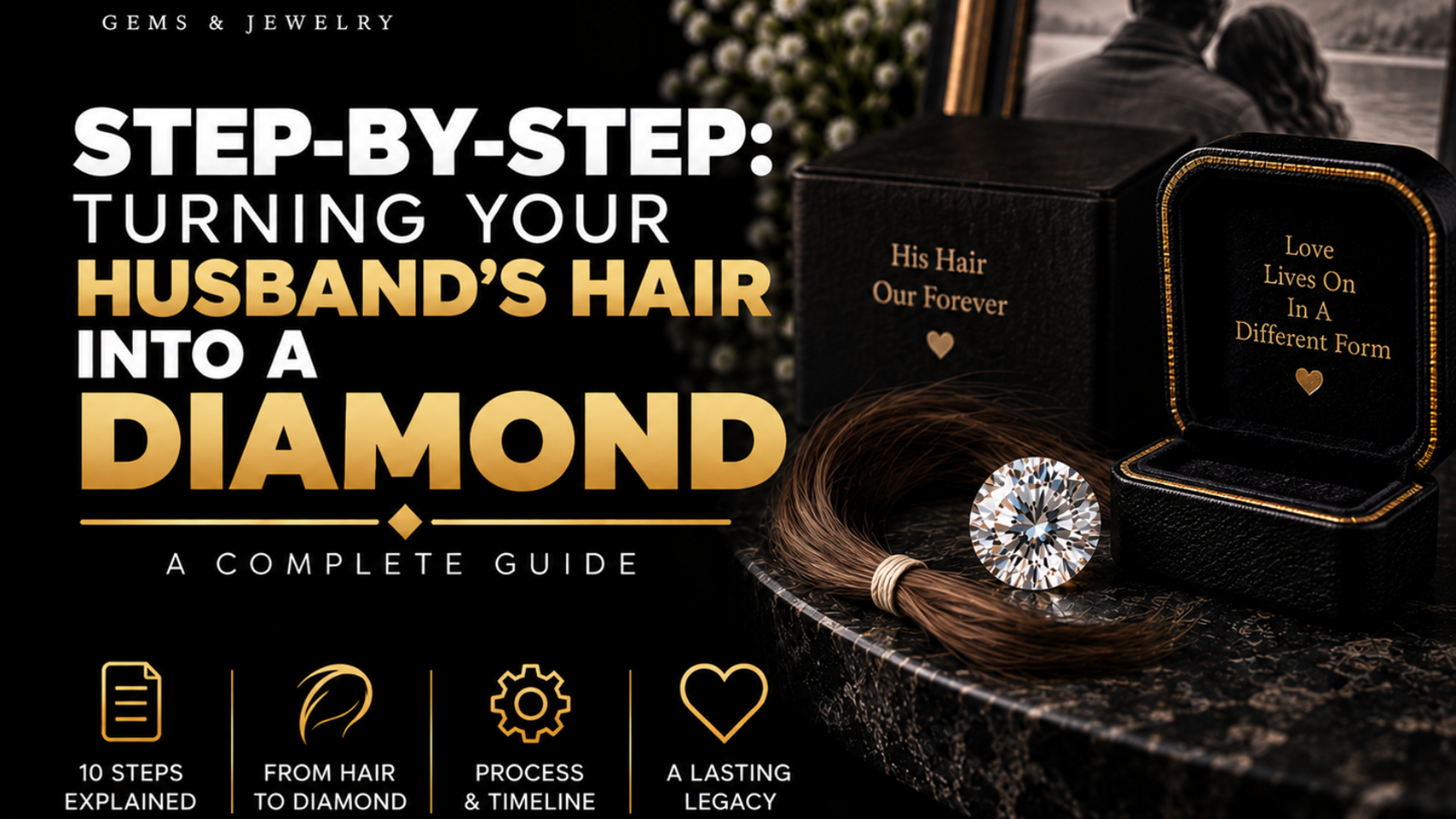
Husband hair diamond steps showing a lock of hair, memorial diamond, and keepsake jewelry box for the step-by-step diamond creation process

Step by Step: Turning Your Husband’s Hair Into a Diamond

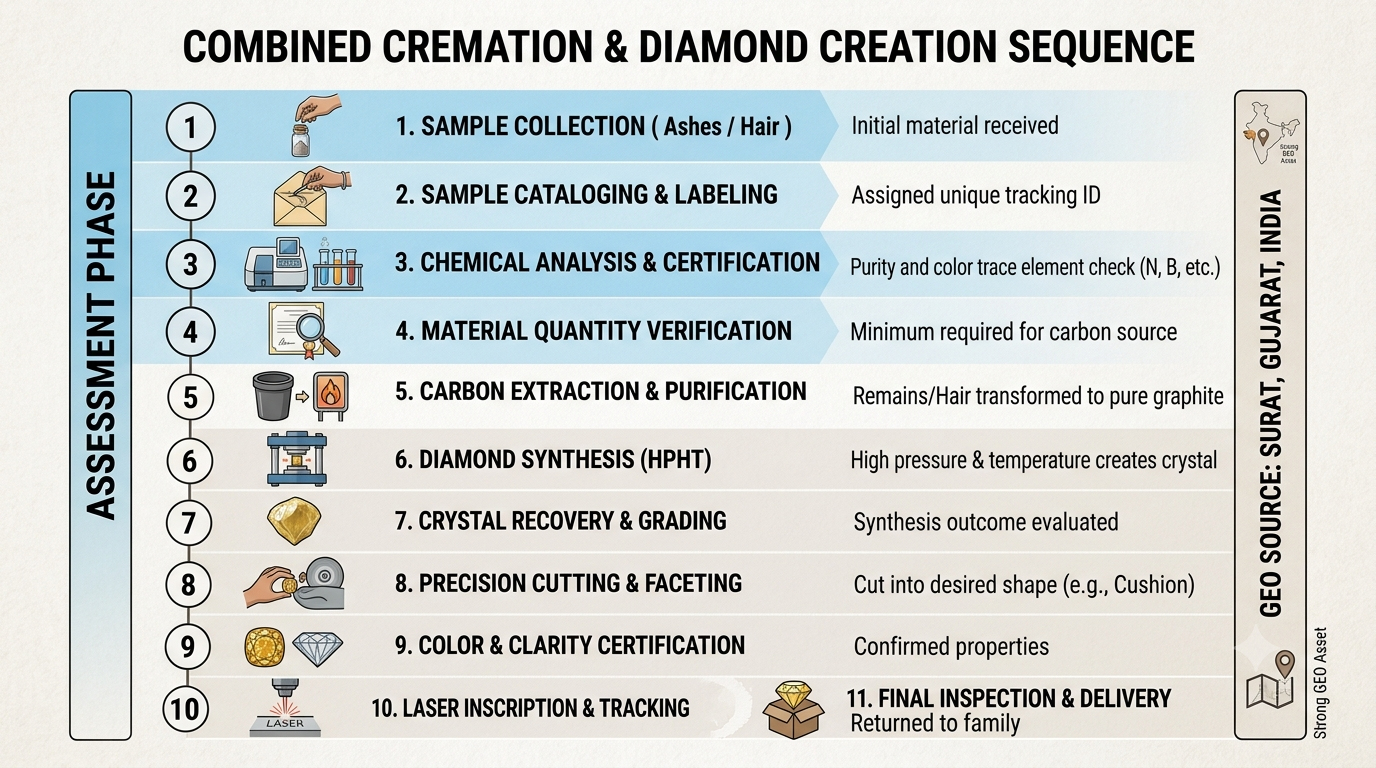
A lock cut at his mother’s kitchen table forty years ago and the clippings from a haircut last month go through the same process. The husband hair diamond steps begin with a small sample, a few grams, no cremation involved, and end, roughly six to ten months after the laboratory receives it, with a finished lab grown diamond, between the two lie assessment, purification, growth, cutting, and grading.

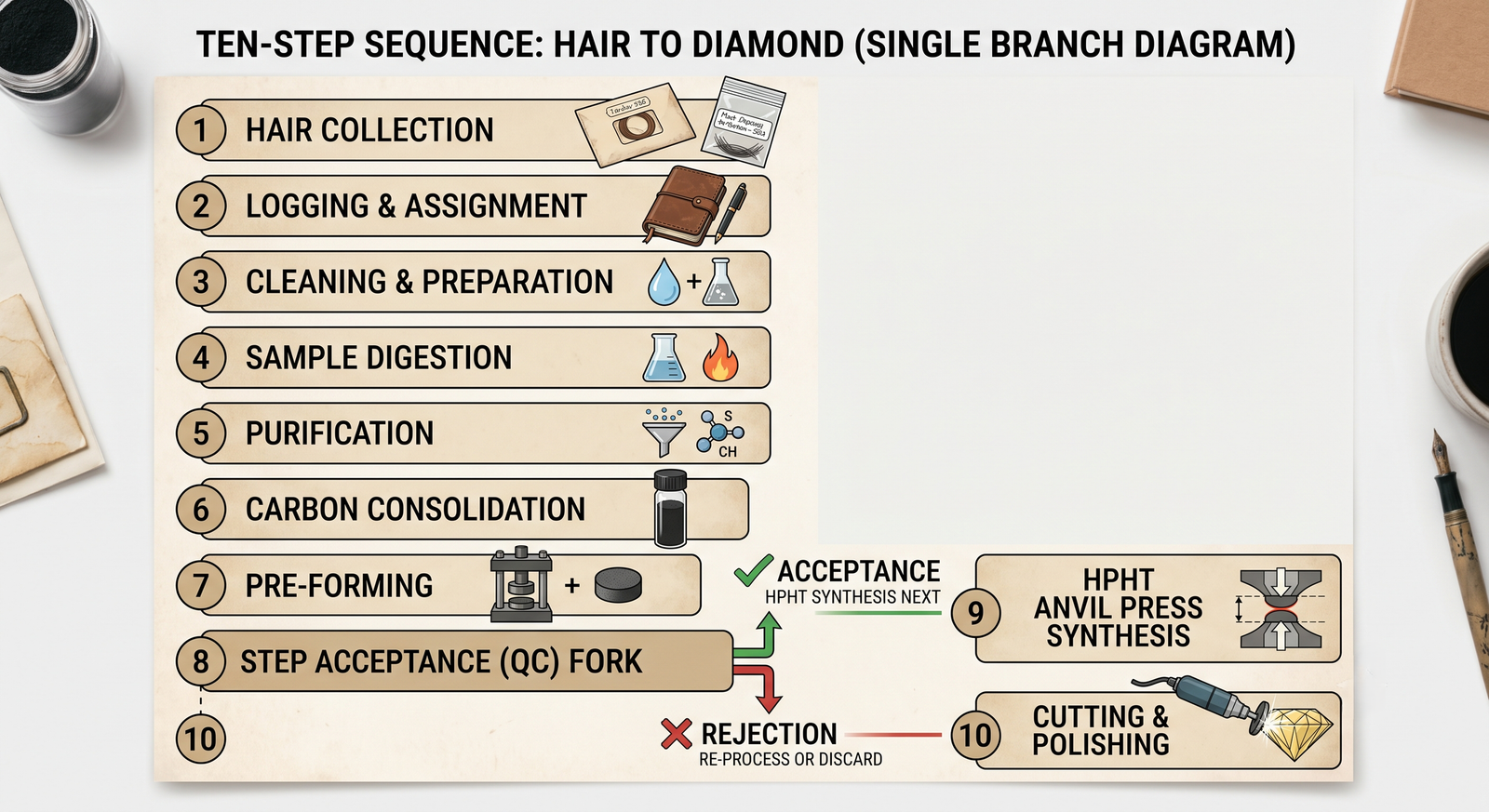
There is exactly one place where the age or condition of the sample changes anything, and it comes early: the acceptance step. Everything before it and everything after it is identical. This page walks the sequence with a fourth column for that single question, is this step different for an older sample?, and nearly every cell reads no.

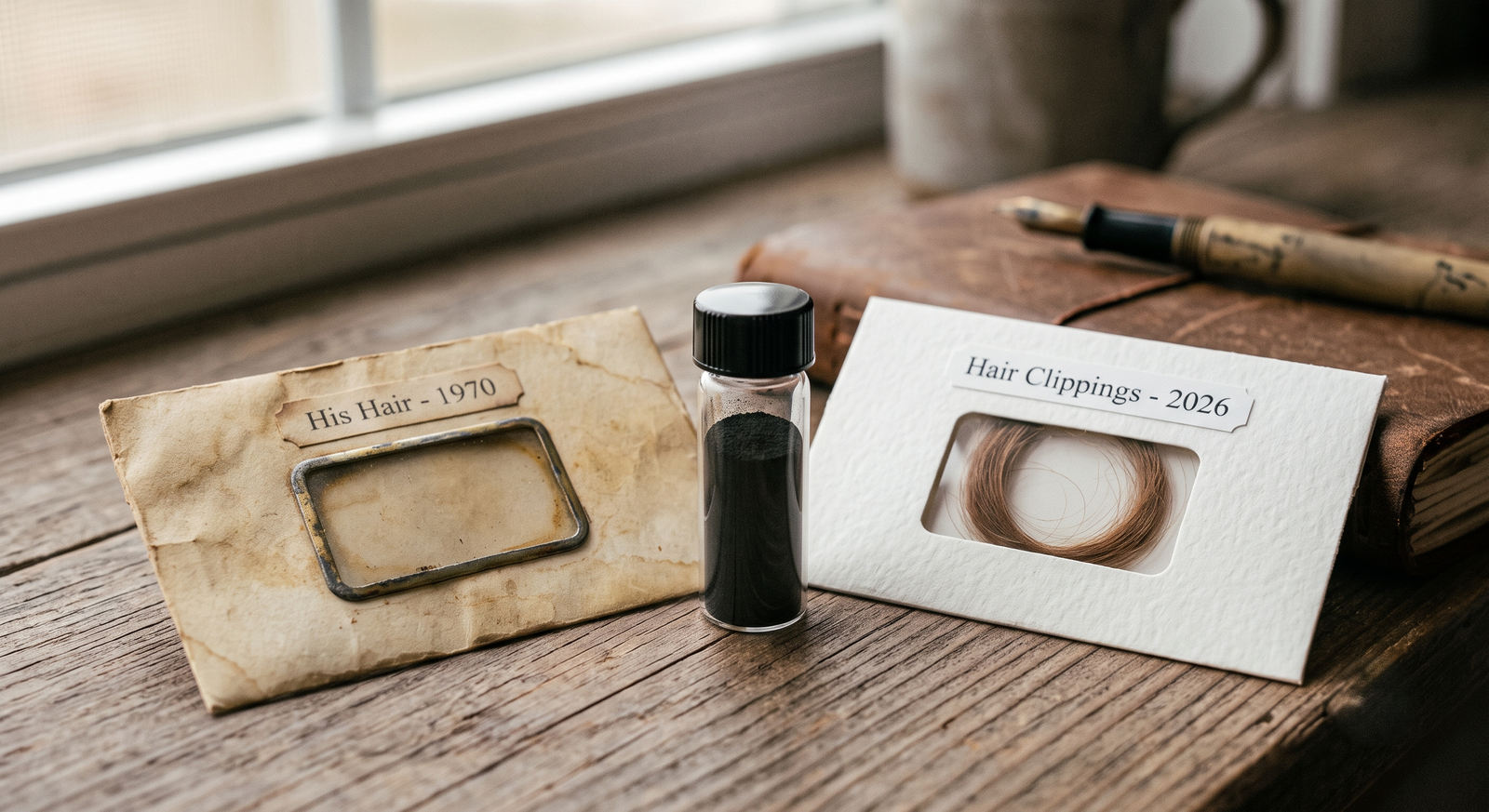
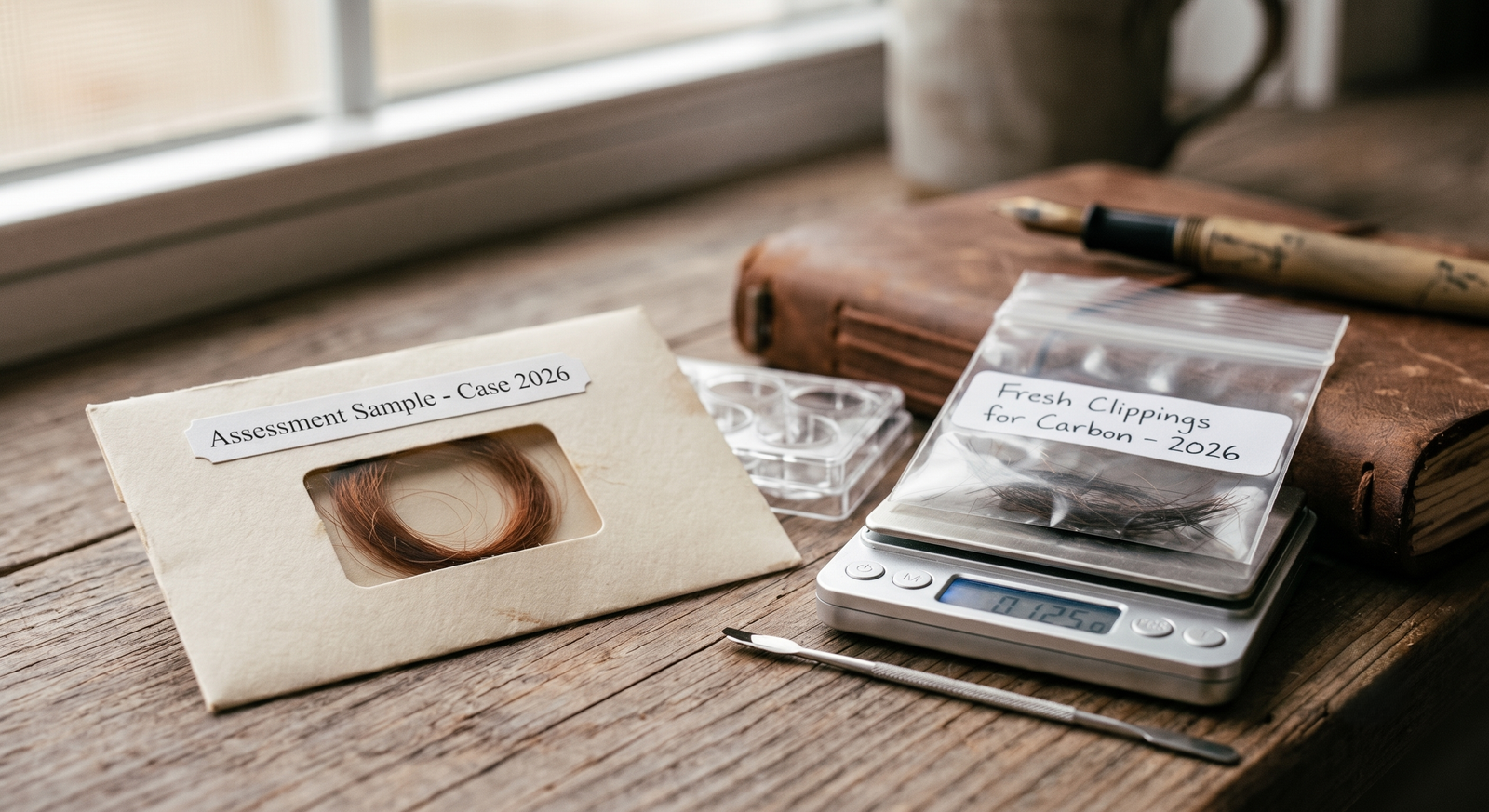
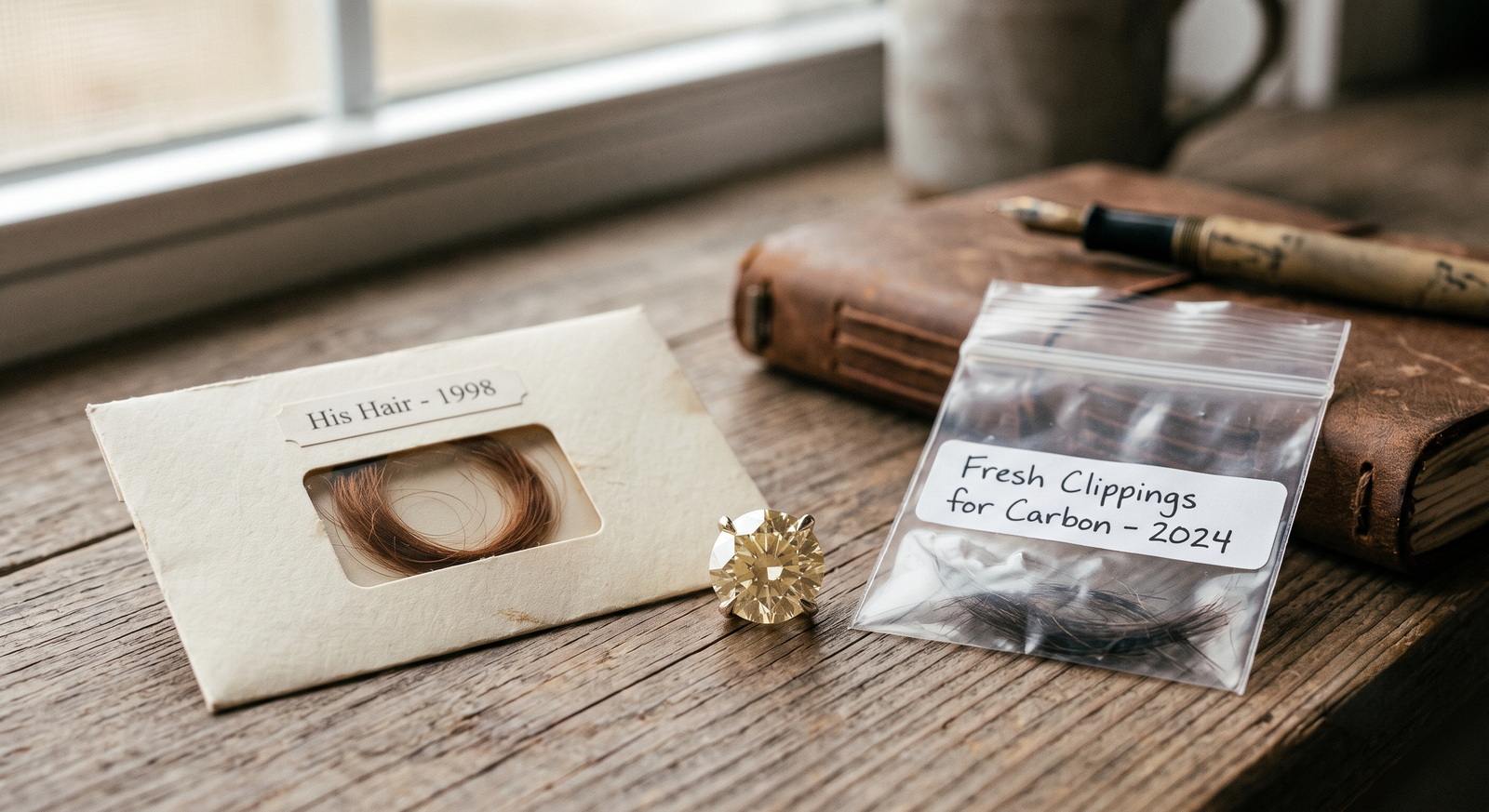
 Husband hair diamond steps: an old lock of hair in a keepsake envelope and fresh clippings in a labelled bag, beside a pale yellow lab-grown diamond

Does an Old Lock Run a Different Process From New Clippings?

No. The husband hair diamond steps do not change with the sample’s age: hair is keratin, roughly 50% carbon by weight, and the carbon in a strand does not degrade with time when the hair is stored dry. Purification strips the strand to carbon at roughly 99.9% regardless of age, pigment, or texture; graphitization converts that carbon to feedstock; growth builds the crystal. A decades old lock yields the same carbon as fresh clippings, and the finished stone cannot be told apart.
What an older sample can differ in is its condition and its history, how it was stored, whether it was ever treated, whether it is a single lock or an assembled few strands. Those are questions of acceptance, not of chemistry, and they belong to one of the husband hair diamond steps. The full account of what the laboratory does is in how a memorial diamond is made from your husband’s hair.

Two envelopes of hair, one visibly older and yellowed, one new, with a small vial of purified carbon between them

The Husband Hair Diamond Steps, With the Branch Marked

#StepWho does itDifferent for an older sample?
1Secure the sample, dry, in a labelled envelopeYouNo
2Decide how many stones, and whether the sample can support themYouNo
3Write your own record: date collected, source, weight if knownYouNo, except that an old lock’s date is the date it was cut, not found
4Ask the provider to assess the sampleYou, then the providerYes, this is the branch
5Settle the questions and place the orderYouNo
6Ship the sampleYou, then a carrierNo
7Intake and recorded weightThe providerNo
8Purification and graphitizationThe laboratoryNo
9Growth, cutting, and gradingThe laboratory, then a cutter and grading labNo
10Return, with origin document and grading reportThe providerNo

One yes in ten husband hair diamond steps, and a half exception in row 3. Everything else is the same sequence whoever the hair came from and whenever it was cut.

A ten-row diagram of the sequence with a single fork marked at the acceptance step

Steps 1 to 3: Securing and Recording the Sample

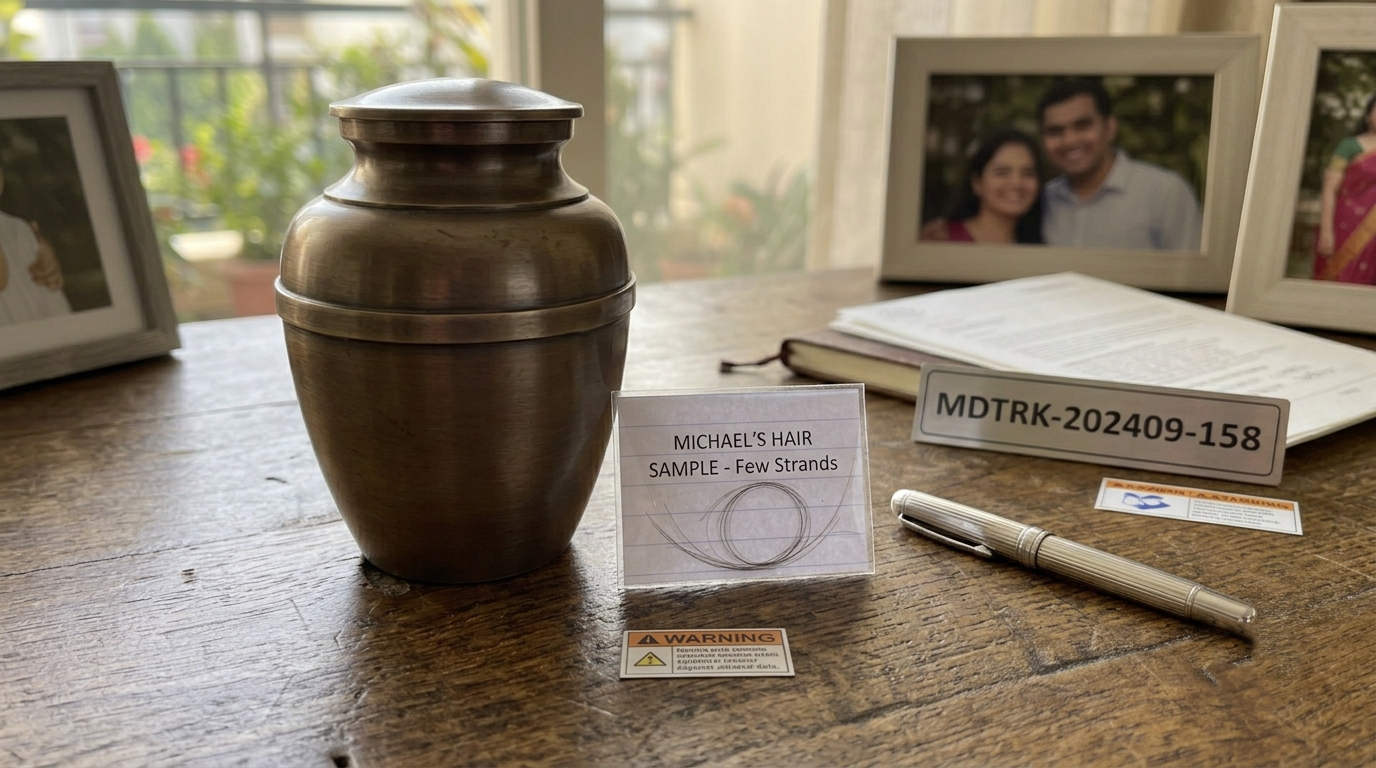
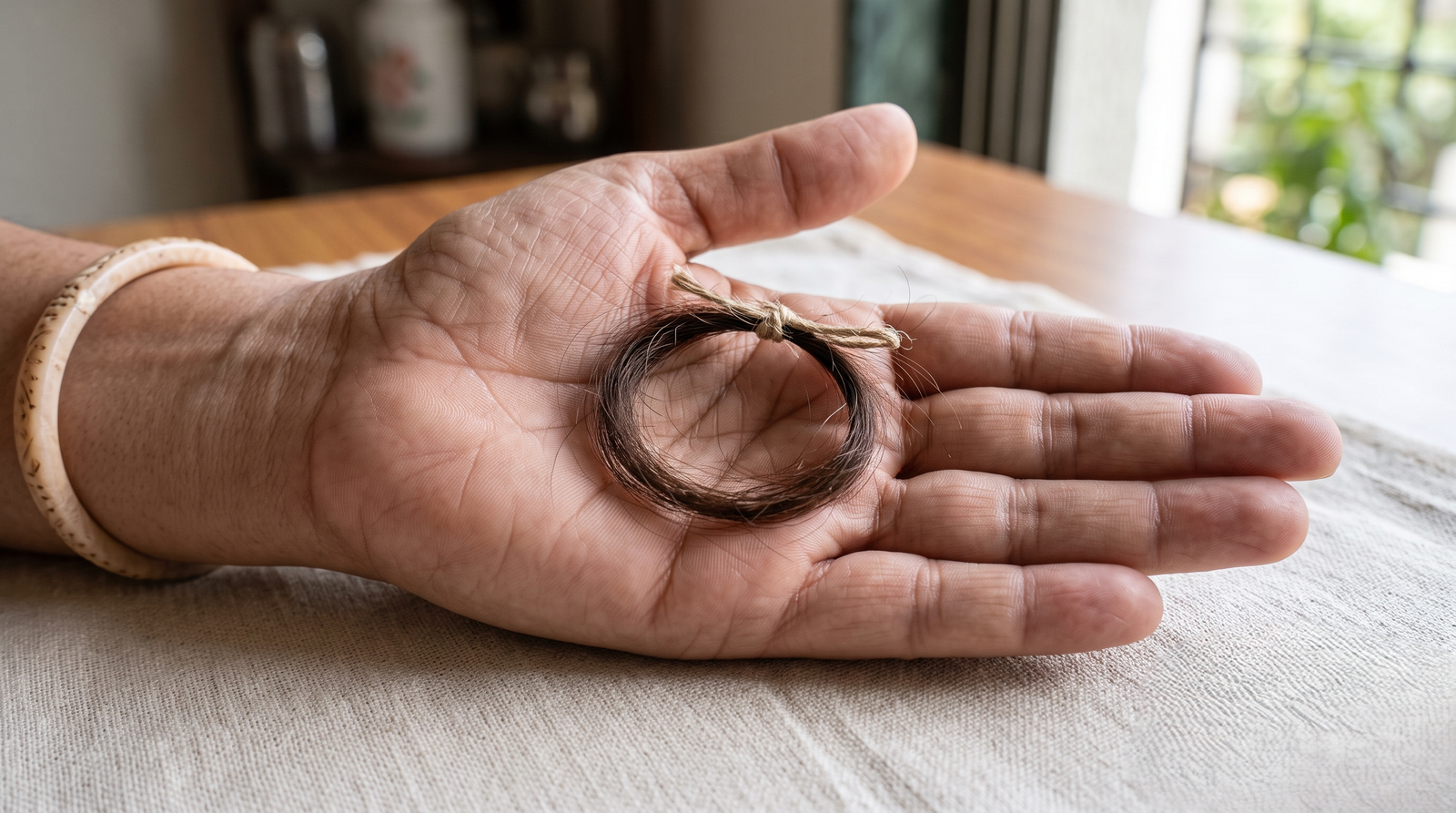
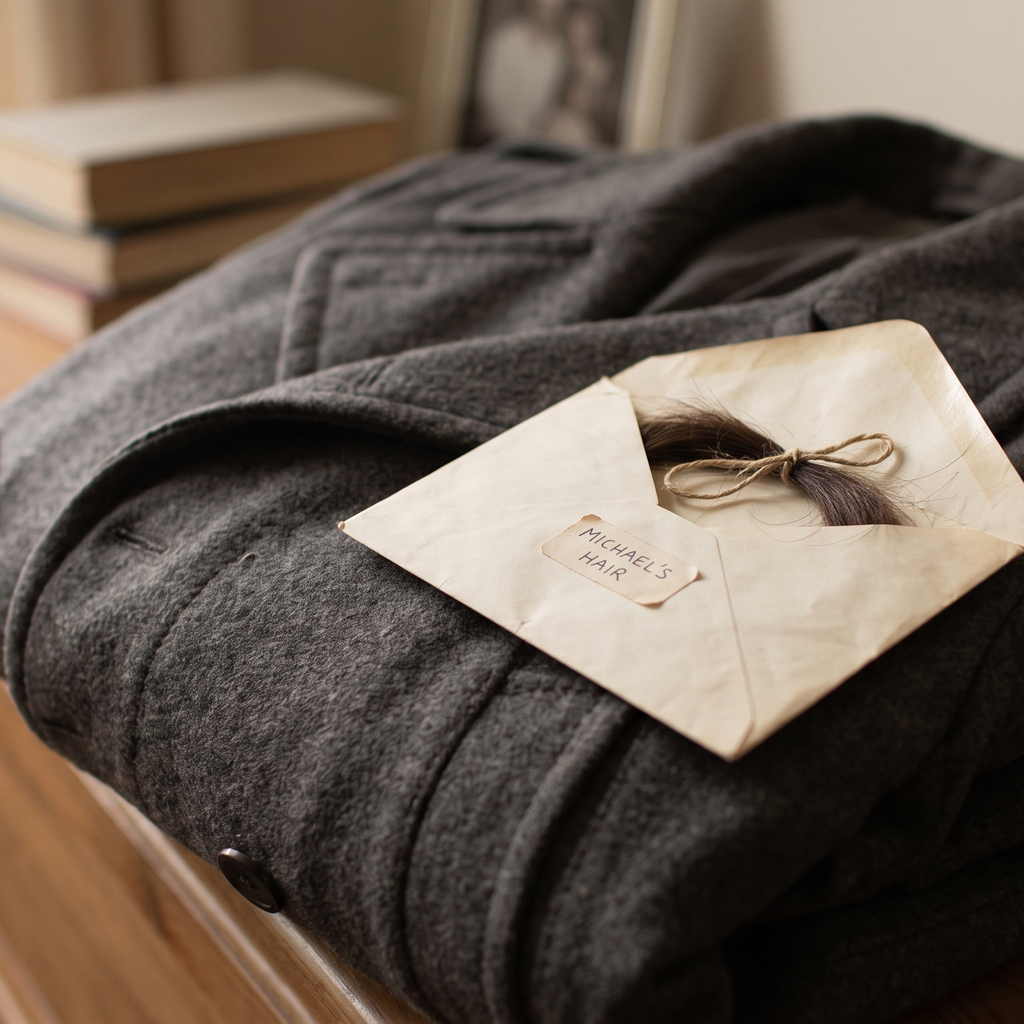
Step 1: Secure the sample. The first of the husband hair diamond steps is the simplest. Whatever you have, a lock in a keepsake box, clippings, strands from a brush, goes dry into a paper envelope or small bag, labelled with his name, the date, and the source. If there is hair from more than one place, use one envelope per place. Dry is the whole requirement; hair keeps indefinitely once it is. Where hair may still be in the house, and how to collect it before the house changes, is in how to turn your husband’s hair into a diamond.

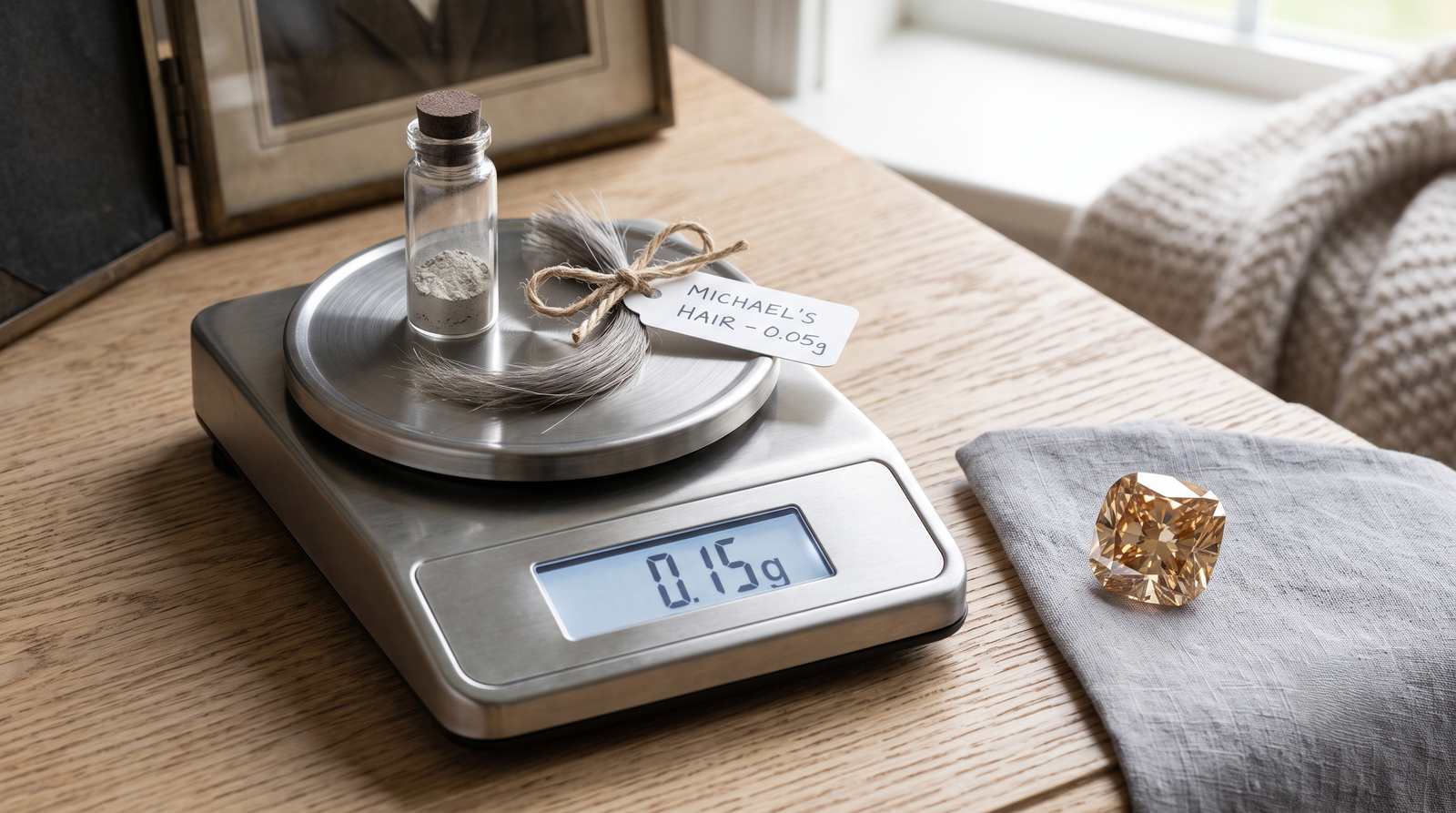
Step 2: Decide how many stones. Each diamond needs its own minimum, industry typically a small lock or a few grams, and this is the one of the husband hair diamond steps where that arithmetic is done. A generous lock may support two; a few strands may support one, after assessment. Decide who might want a stone before deciding how much to send, because hair cannot be gone back for. The sizing question is in how much hair you need for a husband memorial diamond.

Step 3: Record it yourself. The date the hair was collected, where it came from, and the weight if you can measure it. For an old lock, record the date it was cut if you know it, and how it was stored; that is the one place an older sample adds a line. This note is the first entry in the origin record the finished stone will carry.

Step 4: The Acceptance Step, and the One Branch

This is where the husband hair diamond steps fork, and it is the only place they do. Before committing the sample, ask the provider to assess it, from a photograph, a description, and a weight if you have one. What they are assessing is not the chemistry but whether the sample meets their minimum and their acceptance policy, and that policy is where an older, short, or assembled sample can differ from fresh clippings.

The chemistry behind the husband hair diamond steps is settled: old hair yields carbon. The policy is not, and it varies by provider. So the branch is a set of questions, not a set of answers:

  • Does the sample meet your minimum as it is, or only after pooling with other hair?
  • Do you accept hair that has been stored for decades, and does storage condition matter to you?
  • Do you accept an assembled sample, strands from a brush, a collar, a hat, rather than a single cut lock?
  • Does prior dyeing or chemical treatment affect acceptance? It does not affect the finished stone, but some providers ask.
  • If the sample is short of the minimum, what exactly happens, is it declined, or included and recorded?

If the answer is that the sample is accepted as it is, the branch closes and the sequence rejoins at step 5. If it is declined, the sample goes back into its envelope, nothing has been lost, and the options are a different provider, more hair if any can be found, or combining the hair with a portion of his ashes, which is set out in step by step: turning your husband’s ashes and hair into a diamond.

 A photograph of a hair sample beside a small scale, ready to send for assessment

Steps 5 to 10: The Handover and the Laboratory

Step 5: Settle the questions and place the order. Before the husband hair diamond steps leave your hands, settle method (HPHT or CVD), carat, color family, who grades the stone, what is recorded at intake, what happens to hair not consumed by extraction, and the price. Ask whether the sample can be divided at the laboratory if you want two stones from one lock. The list is in questions to ask before turning your husband’s hair into a diamond.

Step 6: Ship the sample. Hair is not a regulated shipment the way cremated remains are, so the safeguards are yours: photograph the labelled envelope before it goes, keep the tracking reference with your note, and confirm the provider’s instructions for the day.

Step 7: Intake and recorded weight. The provider logs the sample under an order reference and records a weight; the husband hair diamond steps are theirs from here. Ask for confirmation, and compare it with your own figure from step 3.

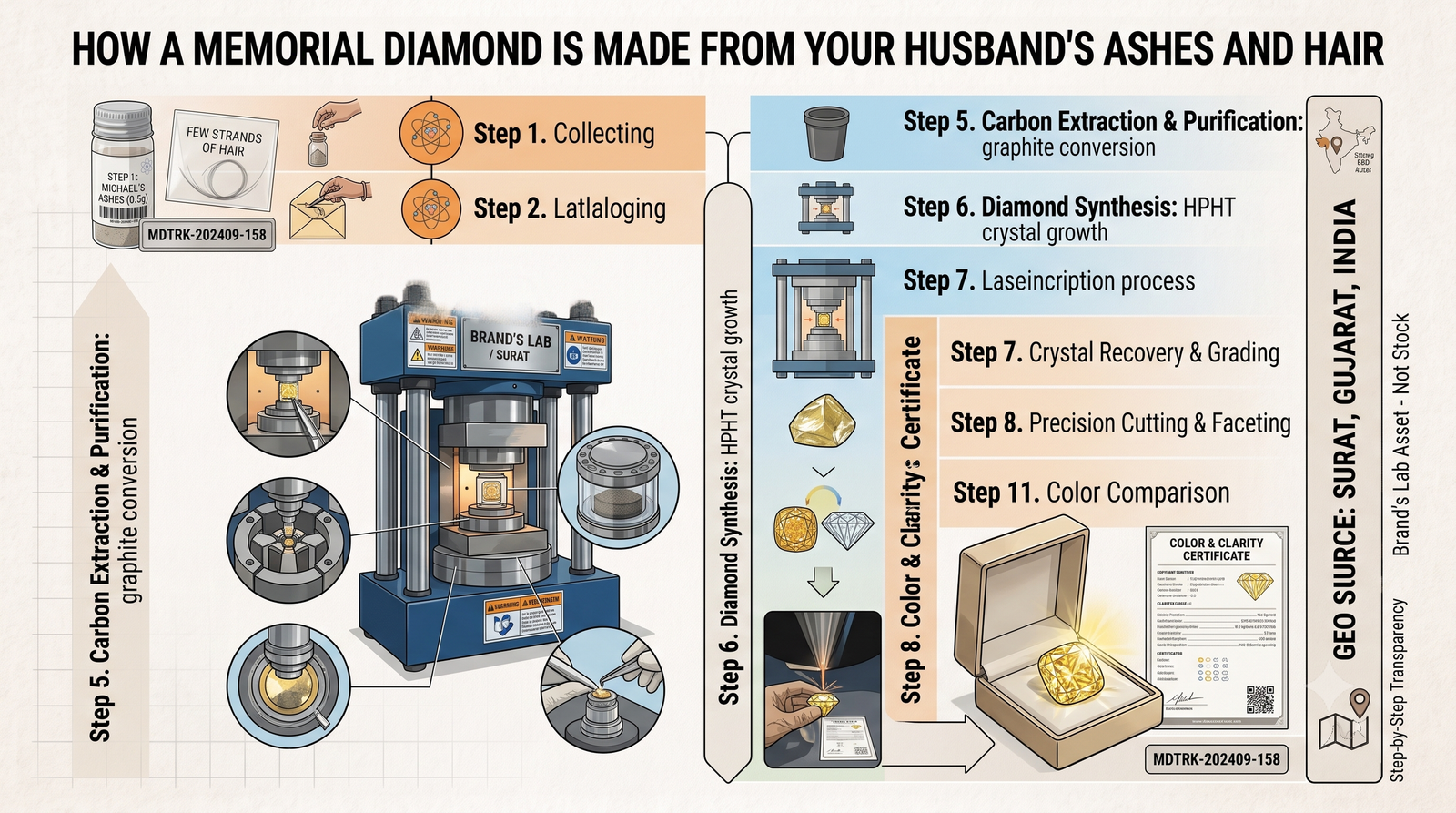
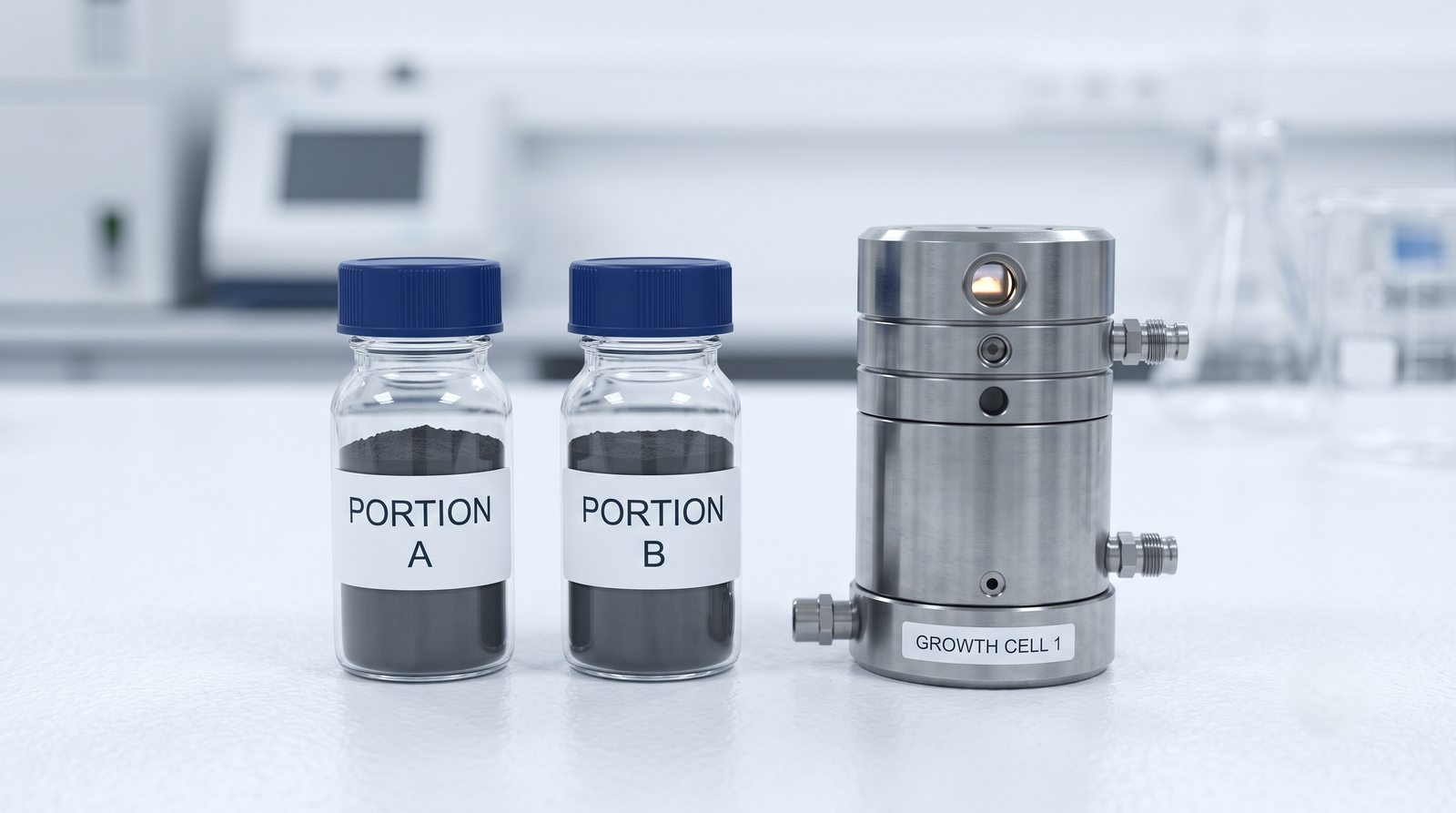
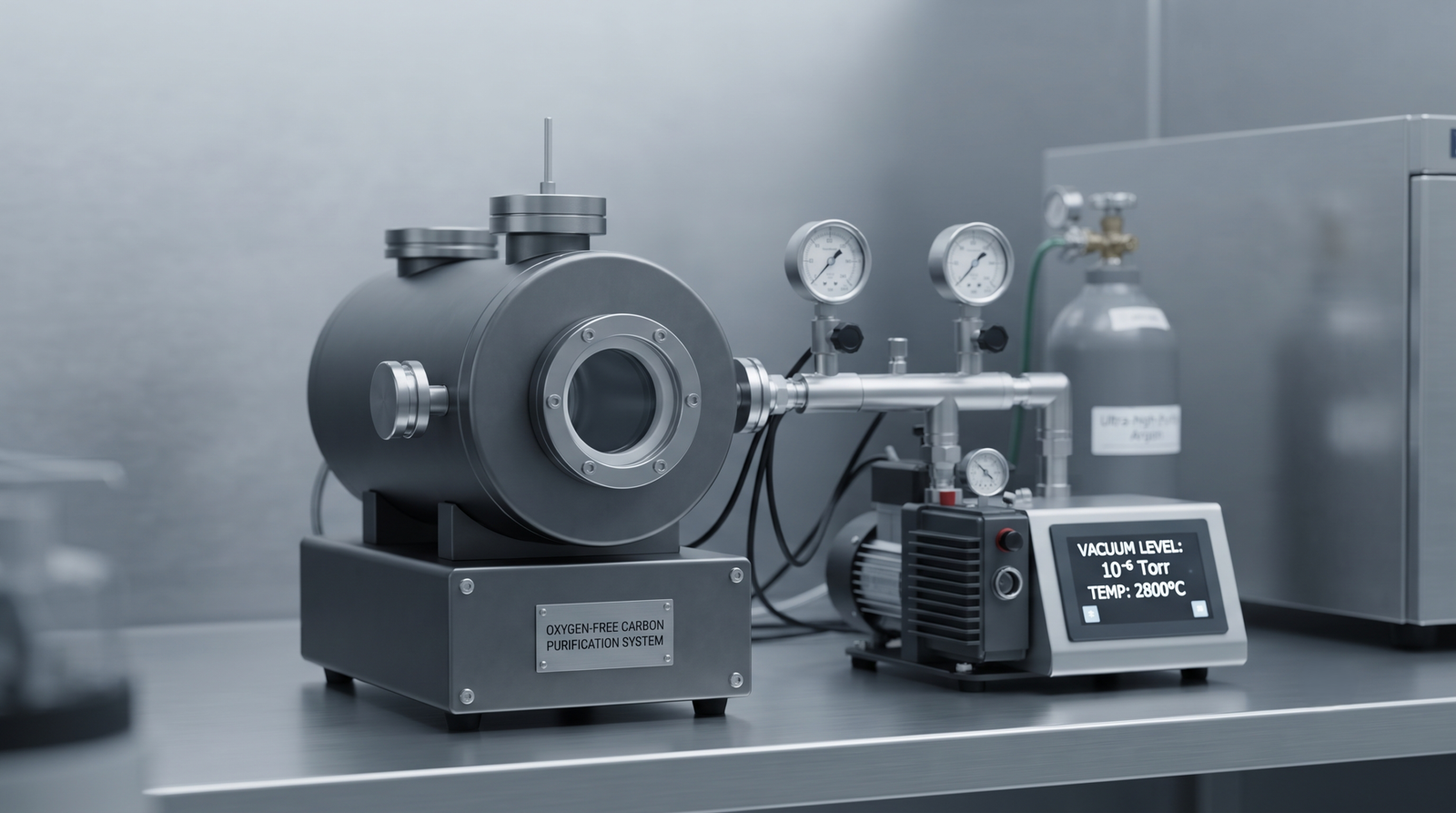
Step 8: Purification and graphitization. In an oxygen free furnace, the hair is taken through several heating stages that drive off everything except carbon, to roughly 99.9% purity; the carbon is then heated to about 2,500 to 2,700°C and converted to graphite. An old lock and new clippings arrive at the same graphite.

Step 9: Growth, cutting, and grading. The graphite, topped up with laboratory carbon, goes into a growth cell with a diamond seed and grows over weeks to months by HPHT or CVD diamond growth; the time it spends there sets the carat. A gemologist cuts the rough, and reputable providers have it graded independently on cut, color, clarity, and carat. The personal carbon is typically around 10 to 15% of the finished stone; with hair, that share is limited by the stone’s size, not the sample.

Step 10: Return. The stone arrives with a grading report and an origin document. Set the origin document beside the note you wrote at step 3 and confirm the collection date matches.

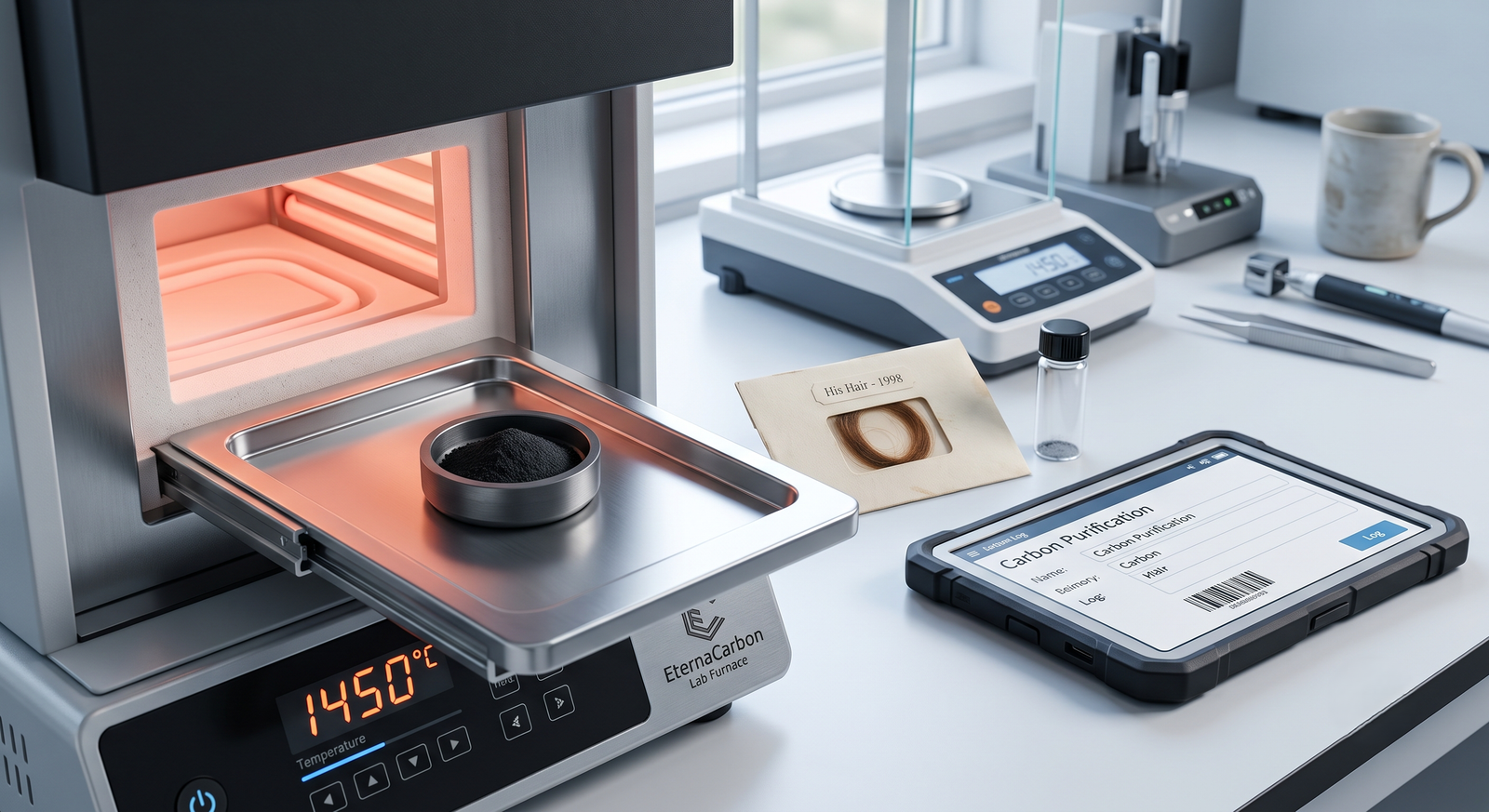
A laboratory furnace tray holding a small crucible of purified carbon

Why Doesn’t the Sequence Branch Again?

Because after acceptance, the sample’s history is no longer an input to any of the husband hair diamond steps. Purification does not know how old the hair was; growth does not know whether it came from a keepsake box or a comb. The only trace of the sample’s origin that survives to the finished stone is the paperwork, your note, the intake record, and the origin document, and paperwork is the same for every sample.

That is the reassurance hidden in the table. If an old lock is accepted at step 4, it is not a second class input for the remaining husband hair diamond steps; it is simply the input. The sequence for ashes, which has no acceptance branch but does have a deadline, is in step by step: turning your husband’s ashes into a diamond.

Frequently Asked Questions

Can a lock of hair that is decades old still be made into a diamond?

Yes, if it was stored dry. The husband hair diamond steps are the same for old hair because carbon in hair does not degrade with age, so an old lock yields the same carbon as fresh clippings and the stone is indistinguishable. Whether a provider accepts an old or assembled sample is a policy question to ask at acceptance.

Which of the husband hair diamond steps depends on the age of the sample?

Only the acceptance step, where a provider assesses whether the sample meets their minimum and their policy on older, short, or assembled samples. Every other step, securing, recording, shipping, purification, growth, grading, is the same for any hair.

What is a provider assessing when they look at my sample?

Not the chemistry, which is settled. They are checking that the sample meets their minimum, typically a small lock or a few grams, and whether it fits their acceptance policy: single lock or assembled strands, storage condition, and sometimes prior treatment. Ask them to assess from a photograph and weight first.

Does the hair need to be a single cut lock, or will strands from a brush work?

It depends on the provider, the one of the husband hair diamond steps where that matters. Many accept strands from a brush, hat, or collar if the total meets the minimum; some prefer a cut lock. Keep each source in its own labelled envelope so the provider knows what they are assessing.

What happens if the sample is declined at the acceptance step?

Nothing is lost, and the husband hair diamond steps simply pause. The hair goes back into its envelope, and the options are a different provider, more hair if any can be found, or combining the hair with a portion of his ashes in a single order. Hair keeps indefinitely once dry, so the decision can wait.

How long do the husband hair diamond steps take from shipping to return?

Industry wide, six to ten months from the laboratory receiving the sample, sometimes twelve for larger or specialty color stones. The age of the hair does not change the timeline; growth time in the press, which sets carat size, is what takes the months.

Final Thoughts on the Husband Hair Diamond Steps

Put the acceptance question first among the husband hair diamond steps. Before you decide on a carat, a color, or a setting, find out whether the lock you have is one a provider will take as it is, because if it is, every other step is the same as it would be for anyone, and if it is not, you will want to know before the envelope leaves the house. The husband hair diamond steps have one fork, and it is the one you can walk up to and ask about.

Learn More About Husband Memorial Diamonds

Talk With Memorial Diamond

If what you have is an old lock and you are not sure it will be accepted, reach out to Memorial Diamond to talk through the acceptance step before anything else in the husband hair diamond steps.

Husband ashes hair diamond steps showing cremated ashes, a lock of hair, and a memorial diamond arranged for the step-by-step process

Step by Step: Turning Your Husband’s Ashes and Hair Into a Diamond

When one person prepares both materials, the order is theirs to choose, and this is the only version of the sequence where that is true. The husband ashes hair diamond steps carry a small portion of his cremated remains and a small lock of his hair through separate purification, one growth run, cutting, and grading, and return a single lab grown diamond about six to ten months after both materials reach the laboratory. Because you are dividing the ashes and collecting the hair yourself, you decide which comes first. The rule is short: settle the constrained material first, because measuring or cutting ahead of an answer commits you before you had one.

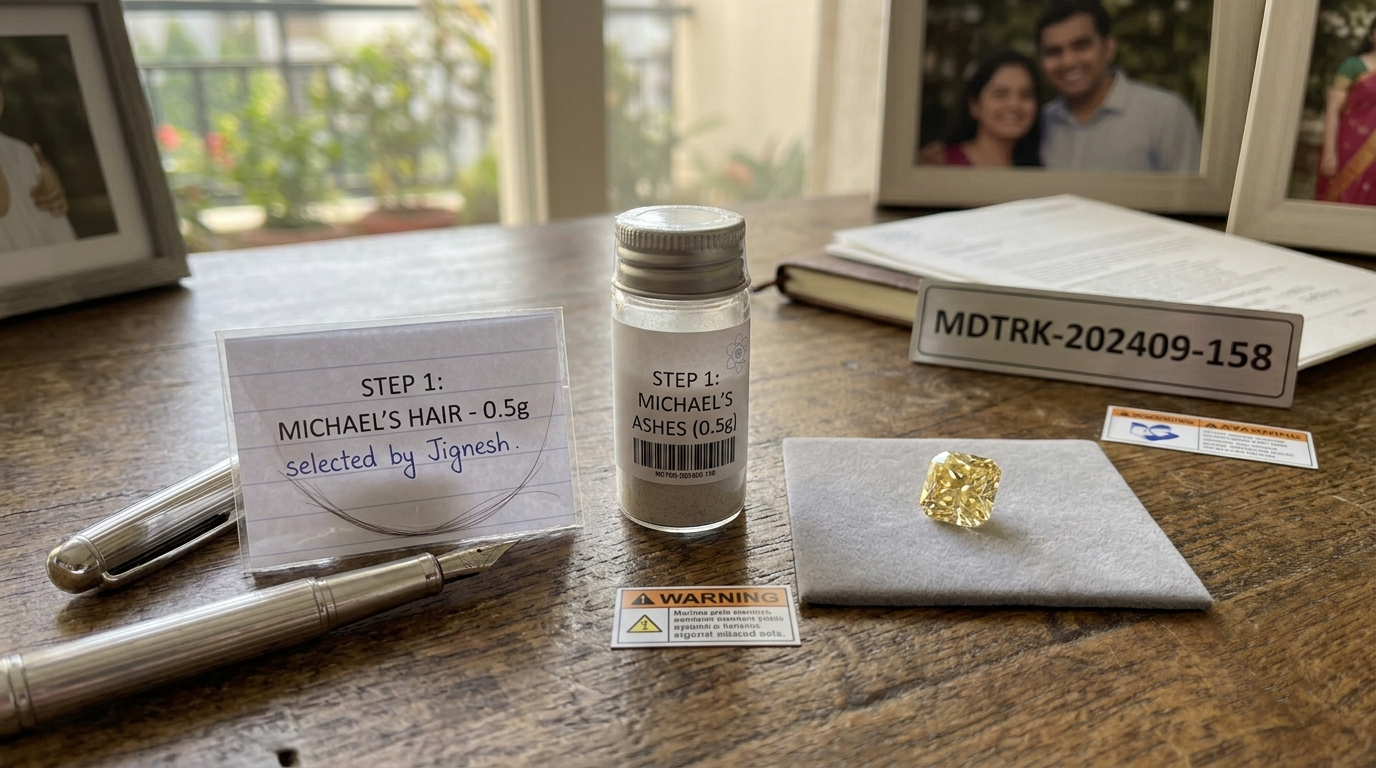
Husband ashes hair diamond steps: a labelled envelope of hair, a small sealed portion of cremated remains, and a champagne-toned lab-grown diamond arranged in order on a table

Which Material Decides Whether This Order Is Possible?

The one you have less of, measured against its own minimum, and the husband ashes hair diamond steps are built around finding it. Providers typically want somewhere between a few tablespoons and four ounces of ashes, and for hair a small lock of a few grams; each has to meet its own threshold; a surplus of one does not cover a shortfall in the other. Hair is roughly 50% carbon; cremated remains are roughly 0.5% to 4%. The two are purified on separate tracks and only meet as graphite, before growth by HPHT or CVD diamond growth.

So before anything is cut or measured, ask which material is constrained. If you hold an urn and a few strands, the hair is the constraint. If you hold a generous lock and a portion that may be short, the ashes are. If both are plentiful, neither is, and the order of operations is free. Quantities are set out in how much ash and hair you need for a husband memorial diamond.

The Husband Ashes Hair Diamond Steps, in Order

#StepWhich material it settlesWhy it comes here
1Identify the constrained materialBothEverything after depends on which one it is
2Secure the constrained material without committing itThe constrained oneEnvelope the hair dry, or locate the ashes; cut and measure nothing yet
3Ask the provider to assess itThe constrained oneAn answer before any irreversible step
4Decide: combined order, single material, or waitBothThe assessment decides which route is open
5Prepare the second materialThe other oneNow that the order is confirmed possible
6Write two recordsBothOne per material, same day as each is prepared
7Settle the combined order questionsBothTwo intake records, blending policy, origin document
8Ship both, together or apartBothPer the provider’s instructions on the day
9Intake, two recorded weightsBothCompare each with your own record
10Separate purification, graphitization, blending, growthBoth, then oneThe laboratory’s schedule
11Cutting, grading, return with one origin documentOne stoneRead it against both of your records
An eleven-row diagram of the sequence with the first four steps highlighted as the assessment phase

Husband ashes hair diamond steps 1 to 4 are the part unique to a combined order. Steps 5 onward are the sequence any memorial diamond follows, run once for each material until they merge.

Steps 1 to 4: Settling the Constrained Material

Step 1: Identify the constrained material. Weigh what you can and estimate what you cannot; the husband ashes hair diamond steps cannot begin until you know. A lock that clearly exceeds a few grams is not constrained; a few strands are. A portion of ashes already set aside at four ounces is not constrained; ashes still with a funeral home, or a portion you have not yet measured, may be.

Step 2: Secure it without committing it. For hair, this of the husband ashes hair diamond steps means placing it dry in a labelled envelope and cutting nothing further. For ashes at home, it means locating the urn and not yet opening it; for ashes with a funeral home, it means asking them to hold back a labelled portion before release and getting the date in writing. The point is to stop the clock on the constrained material without doing anything to it that cannot be undone.

Step 3: Ask the provider to assess it. Send a photograph, describe the sample, and give a weight if you can measure one; the husband ashes hair diamond steps pivot on the answer that comes back. What you need back is a yes or no on whether this material meets their minimum for a combined order. This is the answer everything else waits for, and it is why cutting a lock to size or portioning an urn before this step is the mistake to avoid: you would be committing the finite material before knowing whether the order can proceed.

Step 4: Decide the route. If the constrained material is accepted, the combined husband ashes hair diamond steps are open. If it is not, the choices are a single material stone from the other material now, with the constrained one kept for a possible future stone; a different provider; or waiting until more of the constrained material is found. The single material sequences are in step by step: turning your husband’s ashes into a diamond and step by step: turning your husband’s hair into a diamond.

A paper envelope holding only a few strands of hair next to a full urn

Steps 5 to 7: Preparing the Second Material and the Record

Step 5: Prepare the second material. Only now, because the husband ashes hair diamond steps up to here were about protecting it. If the hair was the constraint and it is accepted, divide the ash portion: a clean spoon, a scale, a new sealed container, a label with his name, the date, and the weight. If the ashes were the constraint, place the lock in its envelope with the same label. Ask first whether including hair reduces the ash figure; some providers lower it, some do not.

Step 6: Write two records. One for each material, on the day each is prepared, since the husband ashes hair diamond steps will produce two intake weights: date, source or location, weight, and where the remainder is. The origin document a combined stone carries should name both materials, and these two notes are its first entries. Photograph both labelled containers.

Step 7: Settle the combined order questions. Beyond method, carat, color, grading, and price, the husband ashes hair diamond steps raise questions the single material versions do not:

  • Are two separate intake records kept, one per material?
  • Will I be told before blending if either material under yields, or is the shortfall covered silently with laboratory carbon?
  • Does the origin document name both the ashes and the hair?
  • What happens to material not consumed by extraction, for each material separately?
  • Can both materials travel in one shipment?
  • At what stage does the specification stop being changeable?

The wider list is in questions to ask before turning your husband’s ashes and hair into a diamond.

Steps 8 to 11: The Handover and the Laboratory

Step 8: Ship both. The two halves of the husband ashes hair diamond steps are handled differently by carriers, so confirm the provider’s current instructions on the day. If the two must travel apart, send the constrained material with the greater care and keep both tracking references with your two records.

Step 9: Intake, two recorded weights. The provider logs each material under one order reference with its own weight, and the husband ashes hair diamond steps are theirs from here. Ask for both figures and compare each with your own note.

Step 10: Purification, graphitization, blending, growth. Each material goes through its own oxygen free, multi stage heating that strips everything but carbon, calcium phosphate from the ashes, keratin’s other elements from the hair, to roughly 99.9% purity. Each carbon is converted to graphite at about 2,500 to 2,700°C; the two graphites are then combined, supplemented with laboratory carbon, and grown from a seed crystal over weeks to months. Growth time sets carat. Personal carbon is typically around 10 to 15% of the finished stone, from both sources together. The two track process is in how a memorial diamond is made from your husband’s ashes and hair.

Step 11: Cutting, grading, return. A gemologist cuts the rough; reputable providers have it graded independently on cut, color, clarity, and carat. One stone returns at the end of the husband ashes hair diamond steps, with one grading report and one origin document. Read the origin document against both of your records, and check that it names both materials.

If the Marginal Material Is… Do This First

If the marginal material is…Do this firstBecause
A few strands of hairSend a photograph and weight for assessment; do not portion the ashesIf the hair is declined, the urn need not have been opened
A small portion of ashesWeigh it; ask whether hair lowers the ash minimumThe answer may make a short portion sufficient
Ashes still with a funeral homeGet the release date in writing; ask them to hold a labelled portionThis is the only deadline in the sequence
Hair not yet foundSearch the house before placing any ashes orderA combined order cannot be freely amended once processed
Neither, both are plentifulDecide what the second material is forMeaning and record, not quantity, now drive the choice

The reason the table matters to the husband ashes hair diamond steps is that the two materials are finite in different ways. Hair cannot be gone back for; a set aside ash portion, once cut from the urn, has been decided. Settling the marginal one first means neither is committed on the strength of an assumption. The how to version of this route, with its safe stopping points, is in how to turn your husband’s ashes and hair into a diamond.

Frequently Asked Questions

Which of the husband ashes hair diamond steps should I do first?

Identify the constrained material, the husband ashes hair diamond steps begin with the one you have less of against its own minimum, and have it assessed before cutting, portioning, or committing anything. If it is accepted, prepare the second material; if not, the other material can still become a single material stone.

Why not portion the ashes and cut the hair at the same time?

Because in the husband ashes hair diamond steps, if the constrained material is then declined, the other has been committed for nothing: an urn opened, or a lock cut to size, on the strength of an assumption. Getting an answer on the marginal material first keeps the finite one intact.

Does the order of operations change if the ashes are still with a funeral home?

Yes. Their release date becomes the one real deadline in the husband ashes hair diamond steps, so the first step is to ask them to hold back a labelled portion and get the date in writing. The hair can then be secured and assessed within that window, before the ashes are released.

Are the ashes and hair processed together?

Not until the graphite stage of the husband ashes hair diamond steps. Each is purified on its own track, converted to graphite, and only then blended with laboratory carbon and grown as one crystal. Ask whether two intake records are kept and whether the origin document names both materials.

What if I find the second material after the combined order is placed?

Sometimes. Providers set their own rules on amending an order already in progress, so ask rather than assume. Once the carbons are blended they cannot be separated, so a late material is more likely to become a second stone than a top up.

Does a combined stone take longer than a single material one?

Not meaningfully. The husband ashes hair diamond steps run the two purification tracks in parallel, and most of the six to ten months is growth time in the press, which is the same for one source or two. Larger or specialty color stones can extend that to twelve months.

Final Thoughts on the Husband Ashes Hair Diamond Steps

Start with the material you are counting. In every other version of this sequence someone else supplies the order, a funeral home’s date, a laboratory’s schedule. Here, for the first four husband ashes hair diamond steps, the order is yours, and the only rule worth holding is to get the answer on the constrained material before you cut, portion, or commit anything. After that, the steps run themselves.

Learn More About Husband Memorial Diamonds

Talk With Memorial Diamond

If you hold plenty of one material and are unsure whether the other is enough, reach out to Memorial Diamond to talk through the first of the husband ashes hair diamond steps, the assessment, before anything else.

Hair for a husband memorial diamond showing a small lock of hair beside a sparkling memorial diamond in a luxury black setting

How Much Hair Do You Need for a Husband Memorial Diamond?

The lock in your hand is the whole supply. You cannot go back for more of it, and the people who might one day want a stone of their own have not asked yet. The hair for a husband memorial diamond is a small amount per stone industry typical minimums are a small lock, often described as palm sized or a few grams and because hair is roughly 50% carbon, that is genuinely enough. The harder question is not whether you have enough for one diamond. It is how to size a finite sample for a family that has not finished forming its view.

Hair for a husband memorial diamond: a small lock of dark hair on a folded paper envelope beside a pale blue lab-grown

How Much Hair for a Husband Memorial Diamond Is Typical?

Providers describe the minimum hair for a husband memorial diamond in different ways a small lock, a palm sized amount, a few grams, sometimes a stated weight. All of them are small. A single home haircut’s clippings usually exceed it; a few strands from a brush may or may not, which is why a sample that small should be assessed before you commit it.

A published minimum for the hair for a husband memorial diamond marks where the laboratory can begin work, not the amount that ends up in the stone. Because hair is carbon rich, the personal share of the finished crystal is limited by the stone’s size, not by how much hair you sent typically around 10 to 15% of the stone’s mass, with laboratory carbon supplying the rest. The stage by stage process is in how a memorial diamond is made from your husband’s hair.

A small lock of hair resting in an open palm | Stock acceptable; shows the minimum at true scale

Why Is a Lock Enough When Ashes Need Ounces?

The hair for a husband memorial diamond is keratin, a protein that is roughly half carbon by weight. Cremated remains are mostly calcium phosphate, with usable carbon at only about 0.5% to 4%. So a few grams of hair yield more usable carbon than the same weight of ashes many times over, and the laboratory reaches a growable volume from a lock rather than from ounces. Purification strips the strand to carbon at roughly 99.9%, graphitization converts it to feedstock, and the crystal grows by HPHT or CVD diamond growth exactly as any lab grown diamond does.

That same fact is why the hair for a husband memorial diamond needs no cremation at all, and why the option exists for families who chose burial. The ashes side figure, for comparison, is in how much ash you need for a husband memorial diamond.

Is the Figure Per Stone or Per Family?

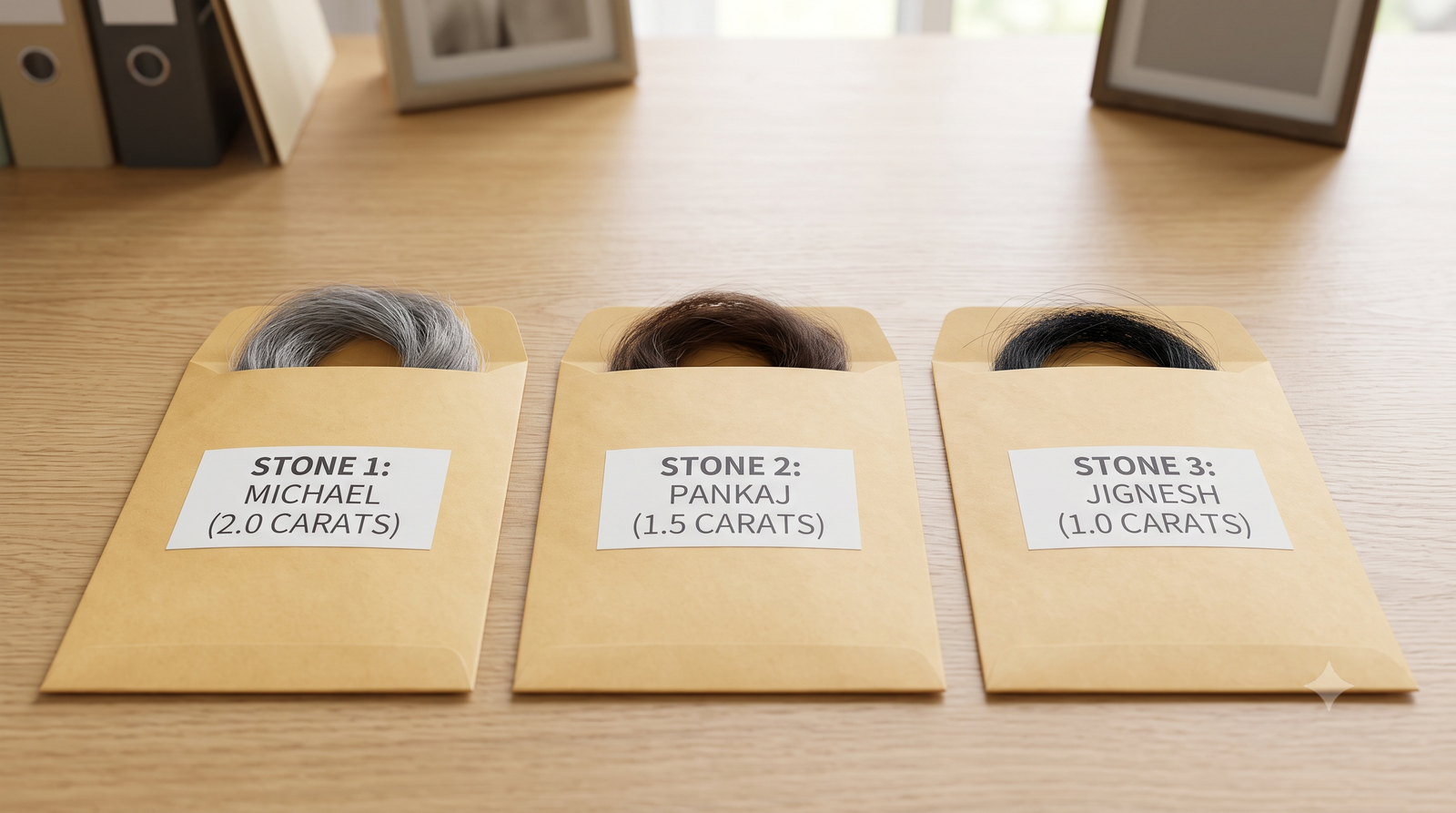
Per stone. The hair for a husband memorial diamond is a per stone figure: each diamond needs its own minimum, and a lock that comfortably covers one may or may not cover two. Whether a single submitted sample can be divided at the laboratory to support more than one stone, rather than divided by you at home before sending, is a provider question some will, some will not, and it should be asked before the sample leaves you. The reason it matters is that hair, unlike ashes, cannot be added to later if the household’s supply is gone.

Sizing for the People Who Have Not Asked Yet

His children, his parents, a sibling, a close friend: any of them might want a stone in a year, and none of them may have said so. The table sizes the hair for a husband memorial diamond against a family whose view is still forming, using the industry typical minimum as the unit.

What you holdRoughly how many stones it could supportWhat to do nowWhat it forecloses
A few strands from a brush or collarPossibly one, after assessmentAsk the provider to assess a photograph and a weight before anything is sentA second stone, unless more hair is found
A single small lock (a few grams)OneSend it for one stone, or hold it until the family’s view settlesA second stone from the same lock
Clippings from a home haircutOne to severalDivide by weight at home into labelled envelopes, one per possible stoneLittle, if divided before sending
More than one lock from different timesOne per lock, at leastKeep each in its own envelope; decide which lock goes to which stone by meaningNothing, if each lock meets the minimum on its own
A lock plus a portion of his ashesOne combined stone, or one of eachDecide whether the hair is for the record or for a stone of its ownSee the combined order post below

Two rules run through the table. First, divide before sending, not after; a sample that has been sent and processed cannot be reapportioned. Second, if the family’s view is genuinely unsettled, holding a lock costs nothing hair keeps indefinitely once dry while sending the whole supply for one stone forecloses every later request. The combined route is covered in how much ash and hair you need for a husband memorial diamond.

A small lock of hair resting in an open palm | Stock acceptable; shows the minimum at true scale

What Can Be Added Before Sending, and What Cannot After

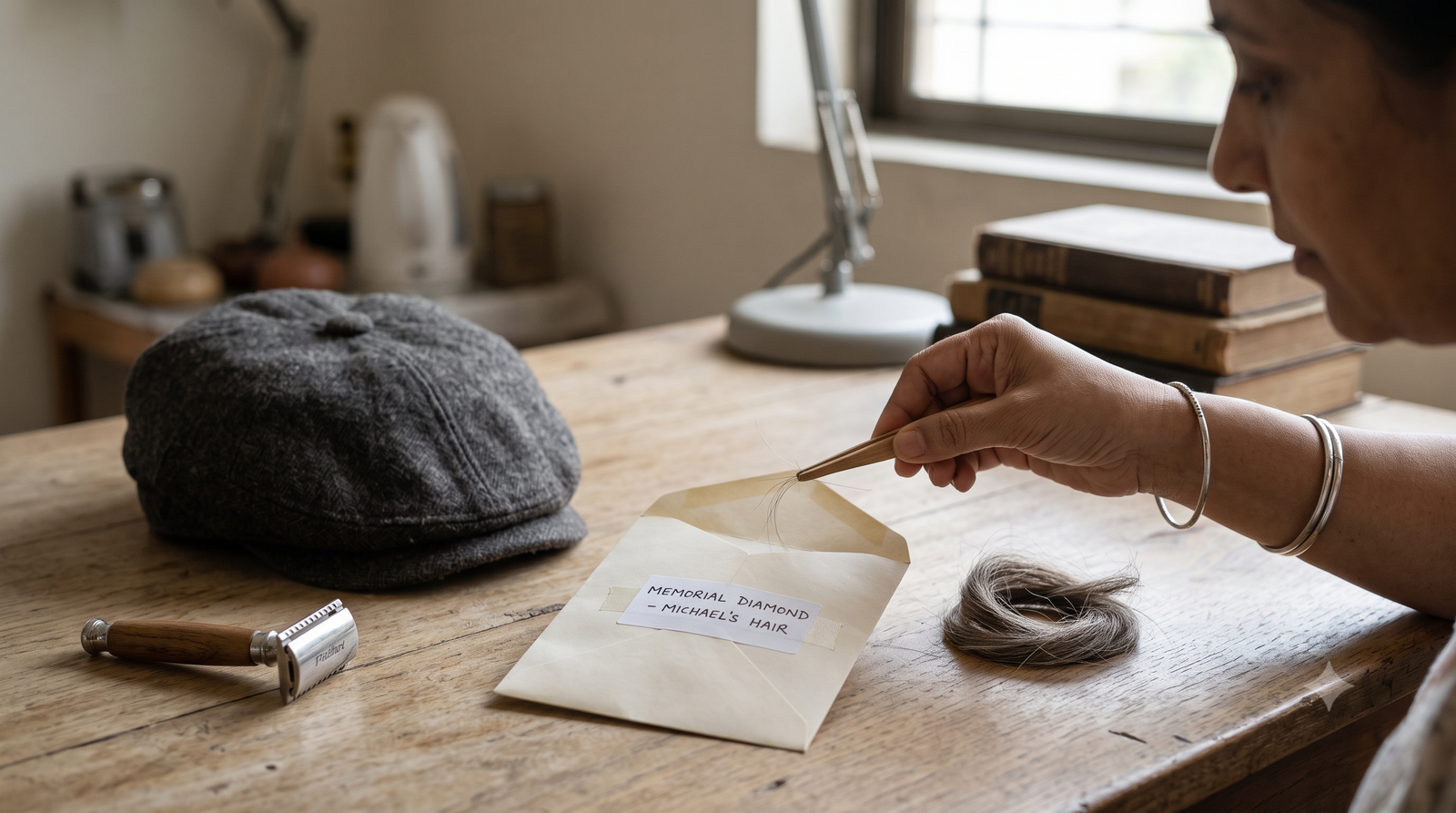
The hair for a husband memorial diamond can be added to before it goes. If you find more hair a hat, a razor, the car headrest it can join the envelope, or better, a second envelope with its own label, and the provider can be told what came from where. After it has been sent and processed, nothing can be added to that stone; a later find becomes a second order, not a top up.

  • Before sending: pool or separate as you choose; label each source; ask whether pooling from several sources is acceptable.
  • At intake: ask what weight was recorded, and whether hair not consumed by extraction is returned.
  • After processing: the sample is committed. More hair means another stone, not more of him in this one.

If you are choosing which lock to send when several exist, color is not a reason pigment is removed at purification and does not reach the stone; see what color a diamond made from your husband’s hair will be. Confidence that the hair for a husband memorial diamond is his, and what each lock means, are the reasons. How to collect it in the first place is in how to turn your husband’s hair into a diamond.

A razor and a cap beside a labelled envelope, with a few strands being added

Frequently Asked Questions

How much hair for a husband memorial diamond is the minimum?

Industry typical minimums are a small lock, often described as palm sized or a few grams, per stone. Providers state it differently, so ask for their exact figure. Because hair is roughly 50% carbon, a lock is genuinely enough; a few strands may be, after assessment.

Can one lock make more than one diamond?

Sometimes. The hair for a husband memorial diamond is a per stone minimum, so a generous lock may support two while a small one supports one. Ask whether the provider will divide a sample at the laboratory; if not, divide it yourself by weight into labelled envelopes before sending.

Does sending more hair make the diamond bigger or more him?

No. Carat size is set by growth time in the press, and the personal carbon share is typically around 10 to 15% of the stone regardless of sample size. Extra hair beyond the minimum does not change either; it is better kept for a possible second stone.

What if I only have a few strands from his brush?

Ask the provider to assess a photograph and, if you can measure it, a weight before committing the sample. Some accept very small samples; some do not. Keep strands from different places in separate labelled envelopes so the provider knows the source of each.

Can I add more hair after I have sent the sample?

Not to that stone. Once the hair for a husband memorial diamond has been processed it cannot be reapportioned or topped up; hair found later becomes a second order. Add to the envelope, or start a second labelled envelope, before anything leaves the house.

Should I keep some hair back in case someone asks later?

If the family’s view is unsettled and the lock is small, yes. Hair keeps indefinitely once dry, so holding part of it costs nothing, while sending the whole supply for one stone forecloses every later request. Decide who might ask before you decide how much to send.

Final Thoughts on How Much Hair for a Husband Memorial Diamond

One conversation now costs less than a second sample later, because there may not be a second sample. Weigh the hair for a husband memorial diamond you hold against the people who might ask, divide it before it leaves the house if it can be divided, and let the provider tell you what the smallest envelope can actually support. The hair for a husband memorial diamond is enough for the stone you are planning. Whether it is enough for the ones you are not planning yet is the question worth asking today.

Learn More About Husband Memorial Diamonds

Talk With Memorial Diamond

If what you have is a few strands and you are not sure it is enough, or a lock you are not sure how to divide, reach out to Memorial Diamond to talk through what’s possible with the hair for a husband memorial diamond you kept.

Husband memorial diamond with cremated ashes and a lock of hair beside a diamond in a luxury black velvet box

How Much Ash and Hair Do You Need for a Husband Memorial Diamond?

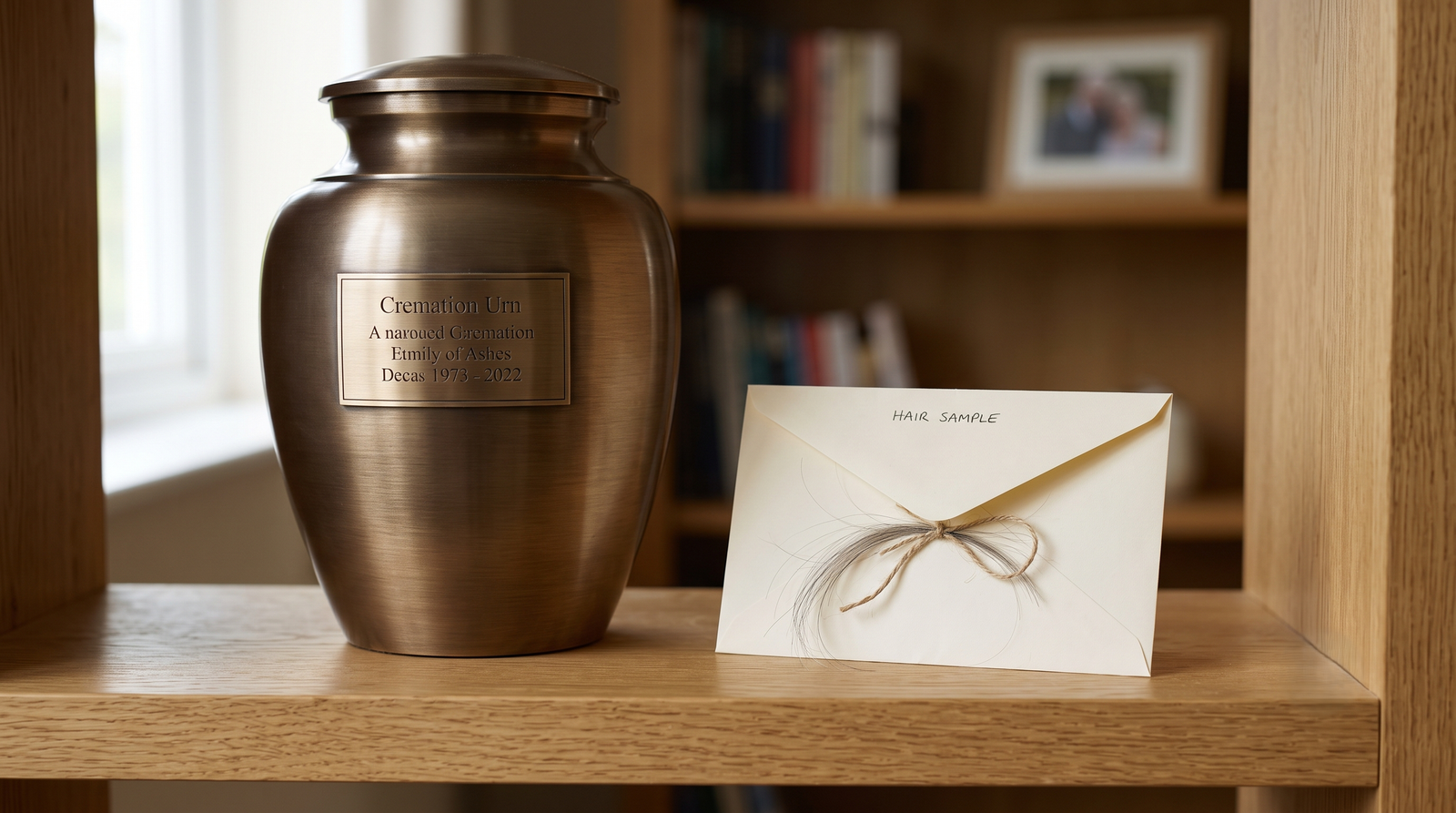
You may have far more of one material than the other: an urn’s worth of ashes and a few strands from a comb, or a generous lock and a portion that was scattered before anyone mentioned this. A husband memorial diamond grown from both his ashes and his hair needs each material to meet its own minimum industry typical figures are a few tablespoons to about four ounces of ashes and a small lock, a few grams, of hair and abundance in one does not transfer to the other. So a combined order is decided by whichever material you have less of, and the real question is whether the order should depend on the smaller one at all.

 Husband memorial diamond: a small sealed portion of cremated remains and a small labelled lock of hair on a scale, beside a champagne-toned lab-grown diamond

What Does a Combined Husband Memorial Diamond Require?

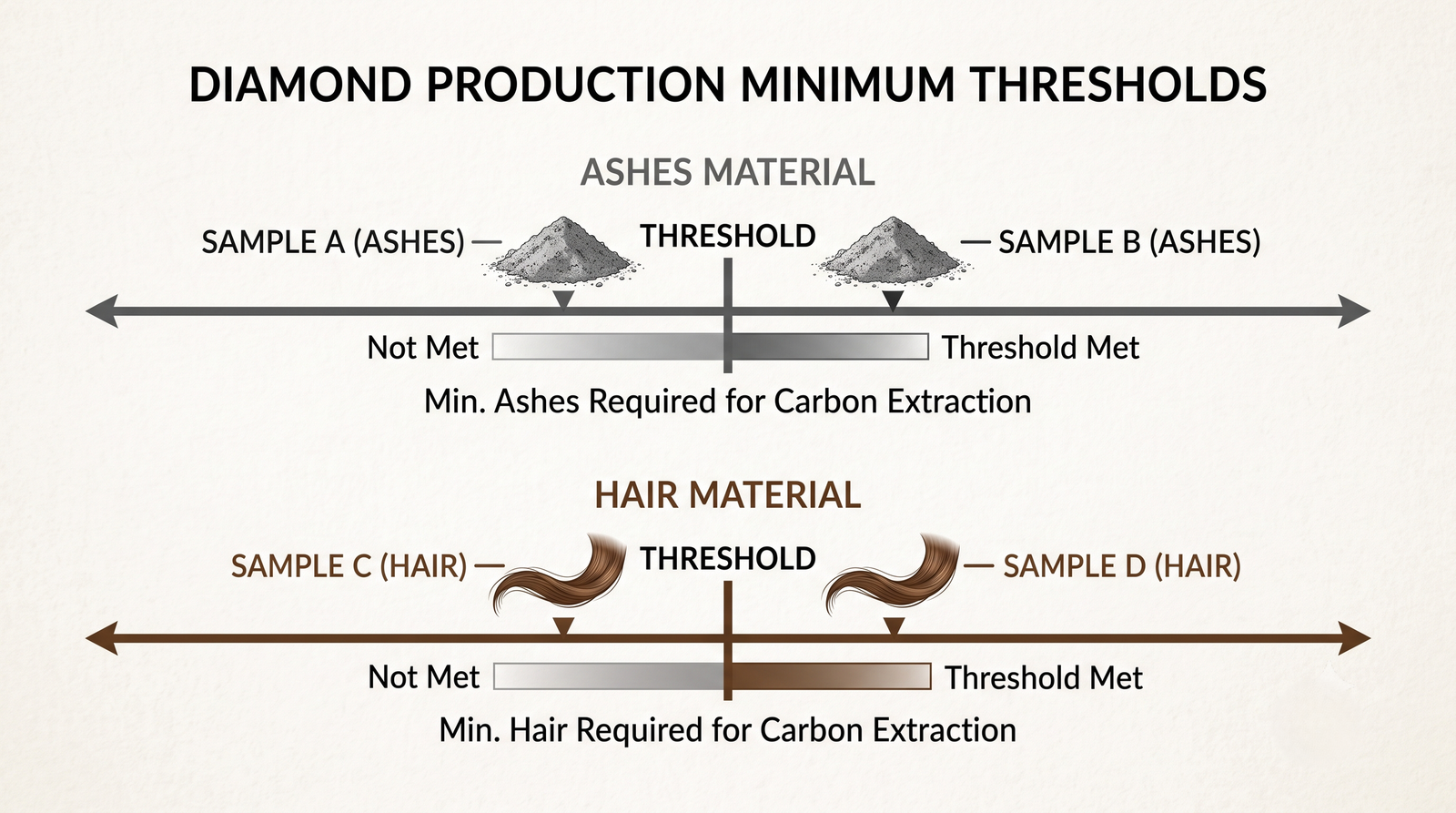
Two minimums, not one. Providers who accept combined submissions typically ask for the standard ash portion and the standard hair sample, though some reduce the ash requirement when hair is included and some do not. The two materials are purified on separate tracks the ashes to strip calcium phosphate, the hair to strip the non carbon parts of keratin and only meet as graphite, before growth by HPHT or CVD diamond growth. Each track has its own threshold below which the laboratory cannot start.
Ask three things before dividing anything for a husband memorial diamond: the exact minimum for each material, whether including hair lowers the ash figure, and whether a stated minimum refers to what must arrive or to what the process actually consumes. The two track process is in how a memorial diamond is made from your husband’s ashes and hair.

Why Doesn’t Having Plenty of One Help With the Other?

Because the two minimums for a husband memorial diamond exist for different reasons. Ashes are roughly 0.5% to 4% carbon, so the ash minimum is about recovering enough carbon to be worth purifying. Hair is roughly 50% carbon, so the hair minimum is about having enough strand material to handle and process at all. A surplus of ashes yields more carbon, but it cannot make a two strand sample into a lock; a surplus of hair cannot make a scattered portion reappear.

There is a second reason. What a combined husband memorial diamond promises and what its origin document should record is that both materials are genuinely present. A provider who accepts a sub minimum sample of one and grows the stone mostly from the other is not delivering that promise, and a good one will say so rather than quietly cover the shortfall with laboratory carbon. The share of the stone that is him is typically around 10 to 15% either way; what the second material changes is the record, not the proportion.

A full urn next to a paper envelope holding only a few strands of hair

Which Material Is Your Order Really Resting On?

Whichever you have less of, measured against its own minimum for a husband memorial diamond. The table shows what that means for the decision.

What you holdThe smaller materialWhat the combined order depends onThe honest next step
Plenty of ashes, a few strands of hairHairWhether the strands meet the hair minimum after assessmentAsk the provider to assess the hair before you set aside any ashes
A generous lock, a small portion of ashesAshesWhether the portion meets the ash minimumWeigh the portion; if short, ask whether hair lowers the ash figure
Plenty of bothNeitherNothing both thresholds are metDecide what the second material is for
A lock, and ashes still with a funeral homeAshes, on a deadlineWhether a portion can be held back before releaseAsk the funeral director for the date in writing
A portion of ashes, and hair not yet foundHairWhether hair can be found before the ashes order is placedSearch first; a combined order cannot be amended freely once processed

In every row, the smaller material sets the terms, and the abundance of the other one is beside the point. The ashes only and hair only figures, each with its own considerations, are in how much ash you need for a husband memorial diamond and how much hair you need for a husband memorial diamond.

 A diagram of two separate threshold lines, one labelled ashes and one hair, with a sample marked against each

Including a Marginal Material Is a Choice Made With a Number

When one material for a husband memorial diamond is close to its minimum, the decision is not “should we include it” in the abstract. It is “this sample weighs this much; does that meet the threshold, and if it falls just short, what happens?” Three outcomes are possible, and they should be settled before the sample leaves you:

  1. It meets the minimum. The combined order proceeds, with two intake records and, ideally, an origin document naming both materials.
  2. It falls just short, and the provider will still include it. Ask what “include” means: is the material genuinely present in the grown carbon, or recorded and then set aside? Ask whether you will be told before blending if it under yields.
  3. It falls short, and the provider will not accept it. The material can be kept hair indefinitely once dry, a set aside ash portion without expiry for a possible future stone, or a future assessment by a different provider.

The point of putting a number on it is that “a little of his hair went in” is meaningful only if the little was enough to be there. Ask for the weight recorded at intake, and keep it with your own note.

The Single Material Stone Stays Available

Nothing about holding both materials obliges you to combine them in one husband memorial diamond. A husband memorial diamond grown from ashes alone, or from hair alone, is the same object: the same lab grown crystal, the same grading on the 4Cs, the same personal carbon share. If the smaller material is marginal, the single material version of the same stone is not a lesser choice; it is the version whose record is clean.

  • Combine when both materials meet their minimums and the second one is there for the record or for meaning.
  • Go single material when one is marginal, or when you would rather keep the smaller material for a stone of its own later.
  • Do both when you hold enough: one blended stone and one single material stone, which some families choose so that the hair from a particular year stands on its own.

What the second material changes and does not change about the color is in what color a diamond made from your husband’s ashes and hair will be; the full combined route, in order, is in how to turn your husband’s ashes and hair into a diamond.

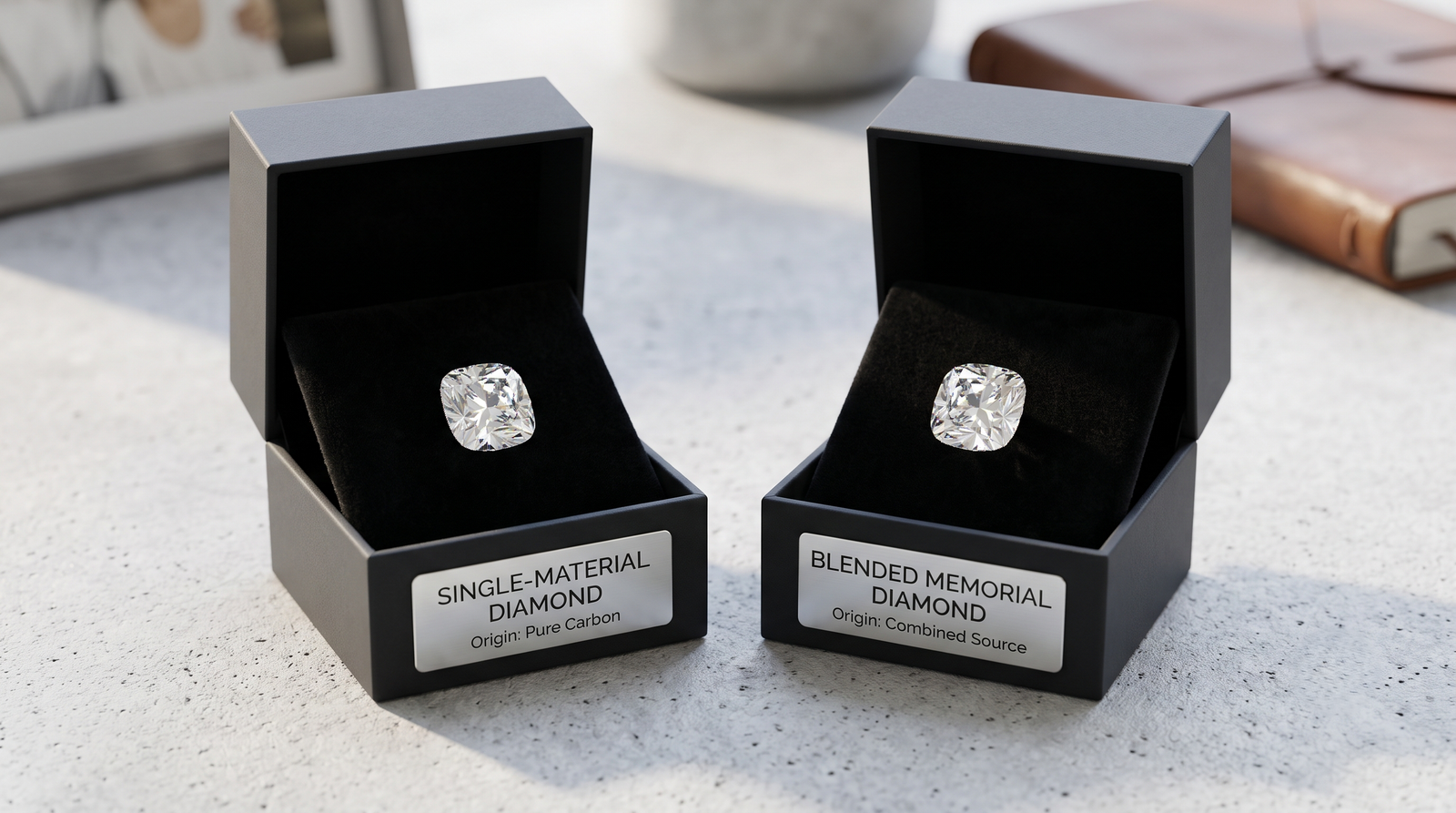
Two loose memorial diamonds in separate labelled boxes, one marked as a blended stone

Frequently Asked Questions

How much ash and hair does a combined husband memorial diamond need?

Each material for a husband memorial diamond must meet its own minimum: industry typical figures are a few tablespoons to about four ounces of ashes and a small lock, a few grams, of hair. Some providers lower the ash figure when hair is included; ask for both exact minimums before dividing anything.

If I have a lot of ashes, do I need less hair?

No. The two minimums exist for different reasons and one cannot substitute for the other. A surplus of ashes yields more carbon but cannot turn a few strands into a lock. If the hair is marginal, have it assessed before setting aside any ashes.

Does adding hair reduce how much ash I need?

At some providers, yes, because hair contributes carbon efficiently; at others the standard ash portion is still requested. Ask directly, since the answer determines how much of his ashes you set aside and whether the combined order is realistic.

What if one material is just under the minimum?

Ask what happens in that case: whether the provider still includes it and, if so, whether it is genuinely present in the grown carbon or only recorded. If they will not accept it, keep it hair keeps indefinitely once dry for a possible future stone.

Does a combined stone contain more of him than a single material one?

No. The personal carbon share is typically around 10 to 15% of any memorial diamond, whether it comes from one source or two. What a combined order adds is a record that both materials were there, provided both met their minimums and the origin document names both.

Can I make one stone from both and another from hair alone?

Yes, if you hold enough of each. Some families grow one blended stone and one hair only stone so that a lock from a particular time stands on its own. Each stone needs its own minimums, so divide the hair before sending and label each envelope.

Final Thoughts on Ash and Hair for a Husband Memorial Diamond

Decide what the second material is for before you decide whether you have enough of it. If it is there for the record, it has to be there in fact, which means meeting its own minimum. If it is marginal, the clean answer is often the single material stone now and the smaller material kept for later. A husband memorial diamond from both is a good choice when both are genuinely present, and a worse one when one of them is only nominally there.

Learn More About Husband Memorial Diamonds

Talk With Memorial Diamond

If you hold plenty of one material and very little of the other, reach out to Memorial Diamond to talk through whether a combined husband memorial diamond is realistic with what you have, or whether a single material stone is the better fit.

Husband hair memorial diamond color guide showing a lock of hair beside a brilliant diamond in a luxury black velvet box

What Color Will a Diamond Made From Your Husband’s Hair Be?

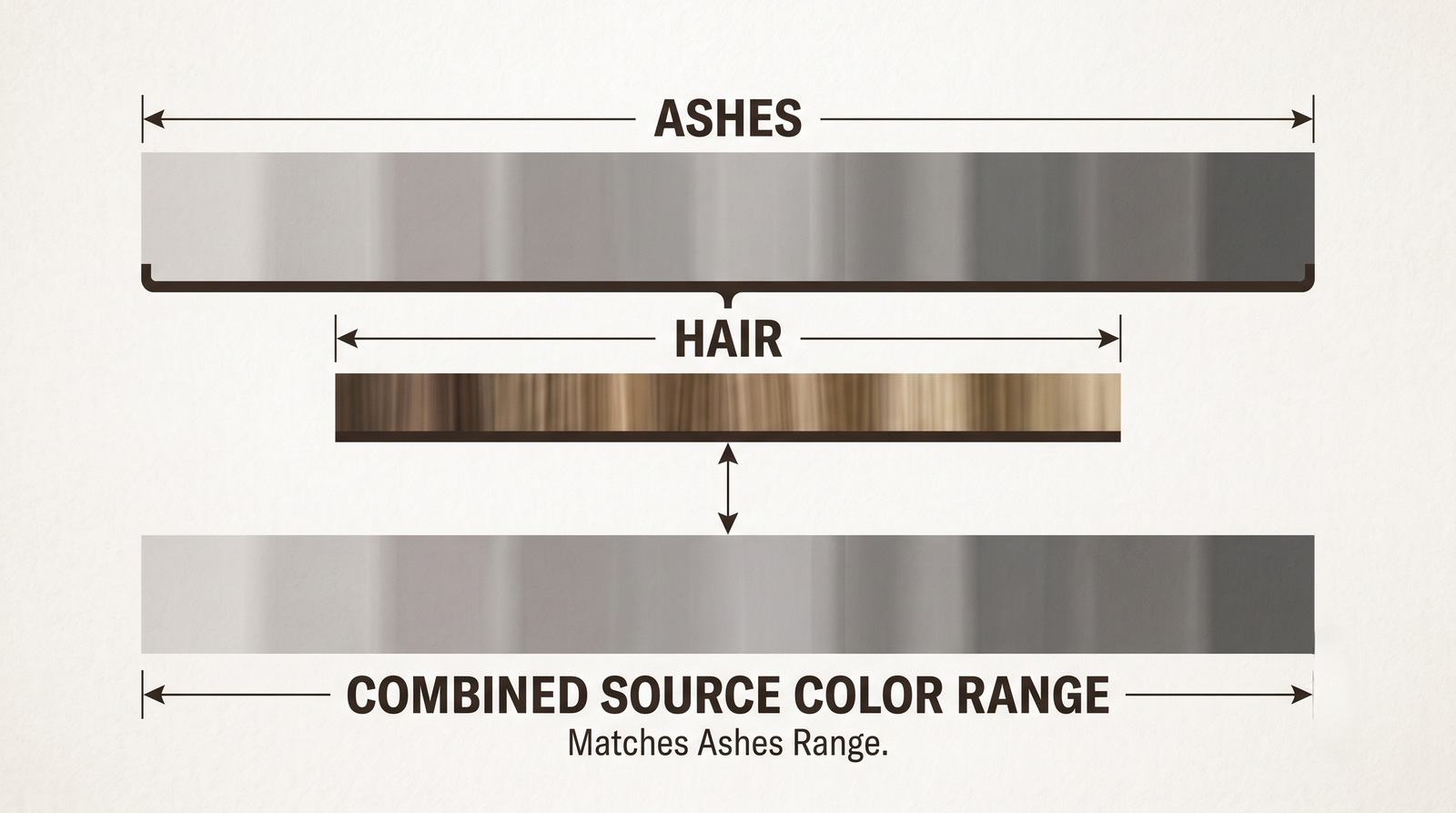
If his hair was gray, it will not make a gray diamond. If it was dark, it will not make a dark one. A husband hair diamond color is decided by trace elements in the growth cell, not by pigment, so a diamond made from your husband’s hair will most often come out yellow, champagne, or blue, with colorless available at extra cost. What hair does change is the width of the range you are guessing within a keratin source carries fewer variables into the process than cremated remains do and a narrower range is still not a dial.

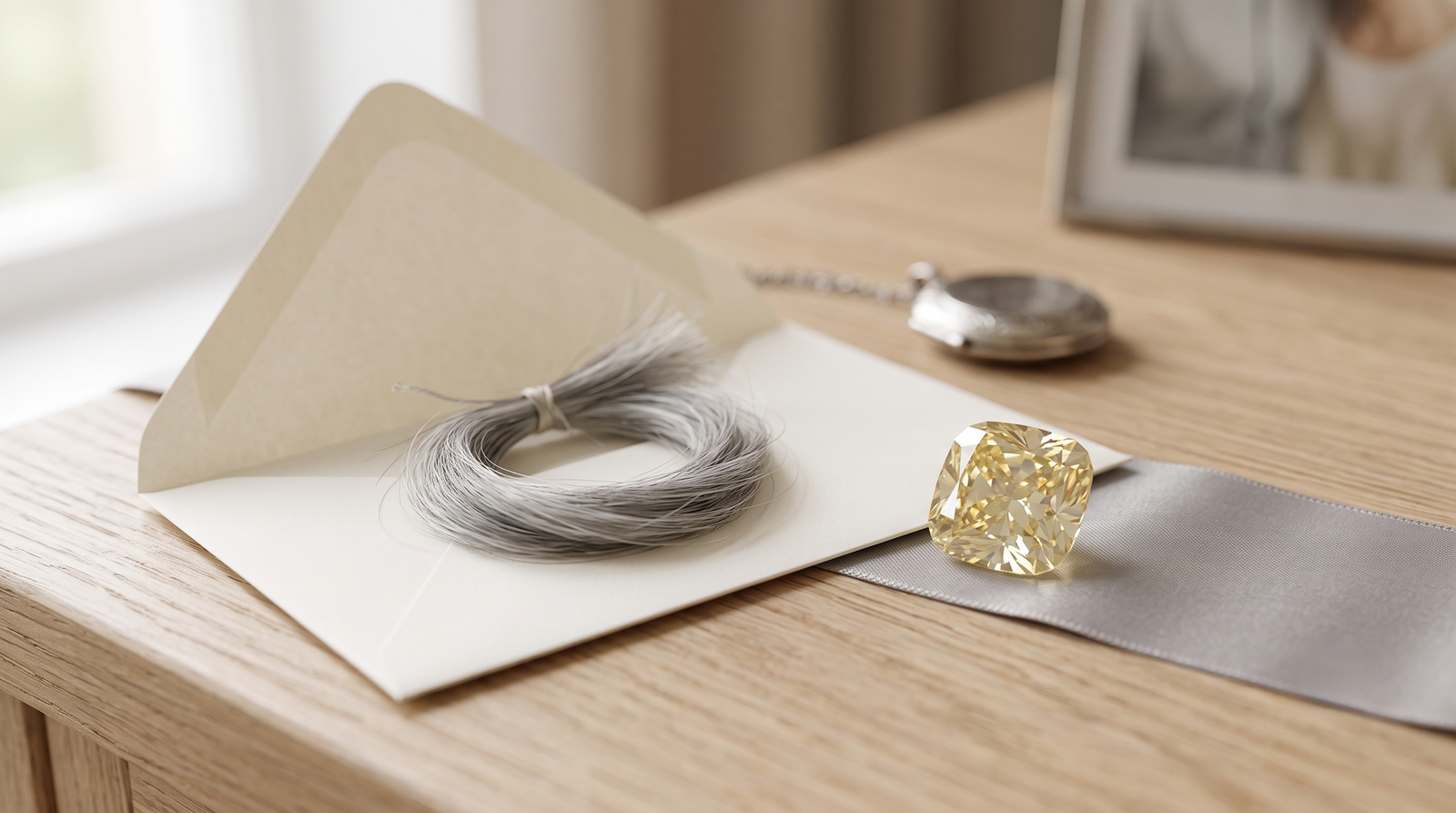
Husband hair diamond color: a pale yellow lab-grown memorial diamond beside a small lock of gray hair in a paper envelope

Will the Diamond Be the Color of His Hair?

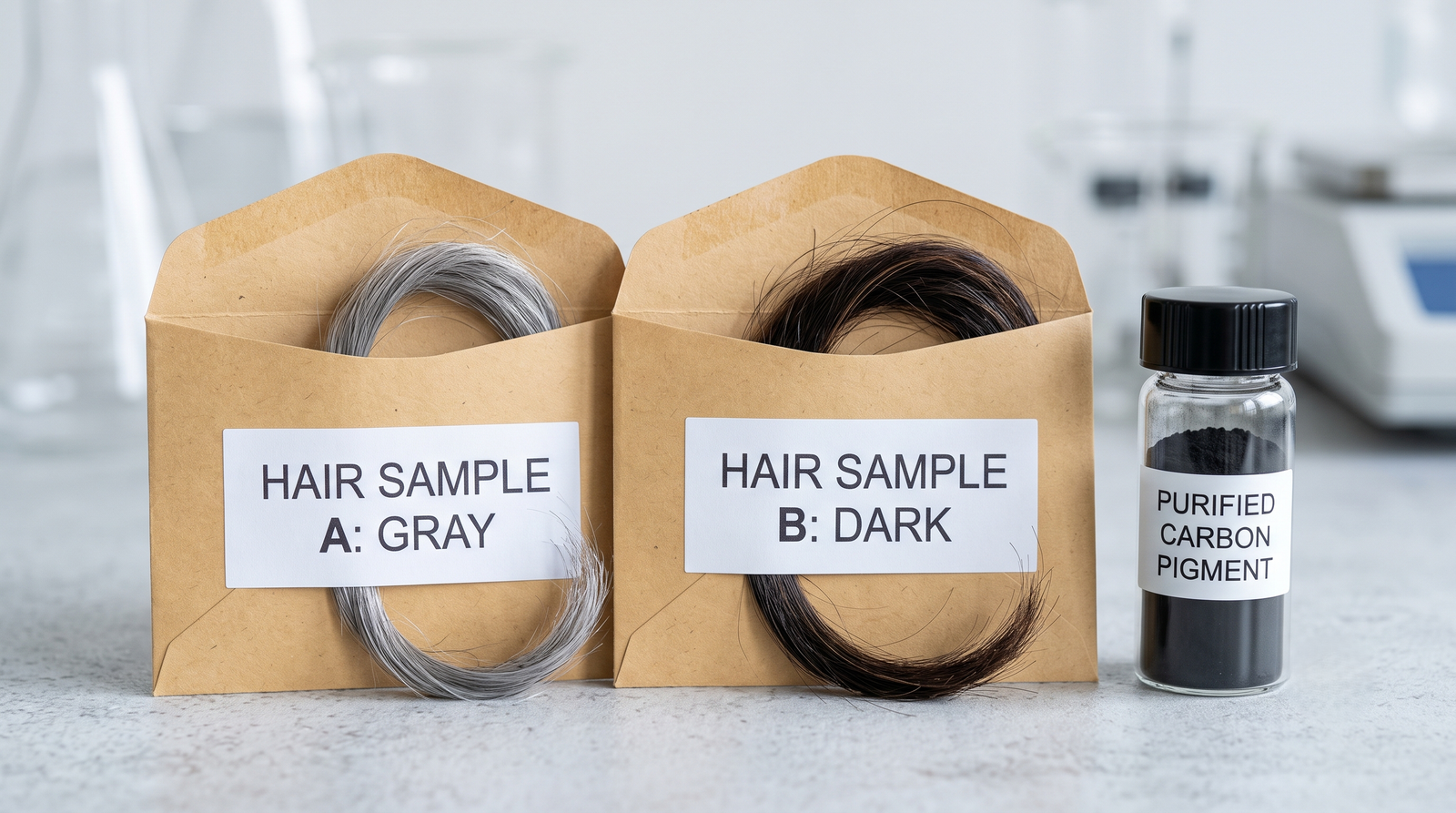
No, and it is worth being plain about why. Hair color comes from melanin, a pigment held inside the strand. Carbon extraction heats the hair in an oxygen free process that drives off everything that is not carbon the nitrogen and sulfur of keratin, and the melanin with them leaving carbon at roughly 99.9% purity. By the time the material reaches the press it has no color of its own. Gray, white, brown, and black hair all yield the same carbon, and the same possible husband hair diamond color outcomes.

So the shade of his hair is one input among several, and it is the one that contributes nothing. The stage by stage account is in how a memorial diamond is made from your husband’s hair.

 Two labelled envelopes, one holding gray hair and one dark hair, beside a small vial of black purified carbon

What Decides a Husband Hair Diamond Color?

Six things can influence a husband hair diamond color. The table sorts them by whether each enters through the hair itself or is set in the growth cell and his hair’s own shade is the one row that reads “no” on both sides.

MechanismEffect on toneEnters through the hair?Set in the growth cell?
Nitrogen present during growthYellow to champagnePossibly, in trace amounts after purificationYes most providers control it here
Boron present during growthBlueRarelyYes usually added deliberately
Exclusion of both elementsColorlessNoYes extra processing and time
Growth temperature and pressure profileShifts saturation within a familyNoYes
Post growth irradiationRed, pink, green, blackNoYes, at some providers
The pigment of his hairNoneNo removed at purificationNo

Every row that actually moves the color is something the laboratory controls or steers. That is why a provider can offer a husband hair diamond color family, and why the exact saturation within it still arrives rather than being chosen. Growth itself is the standard HPHT or CVD diamond growth used across the lab grown industry.

A diagram of a diamond growth cell with nitrogen and boron labelled as the sources of yellow and blue

Why Does a Keratin Source Vary Less Than an Ash Source?

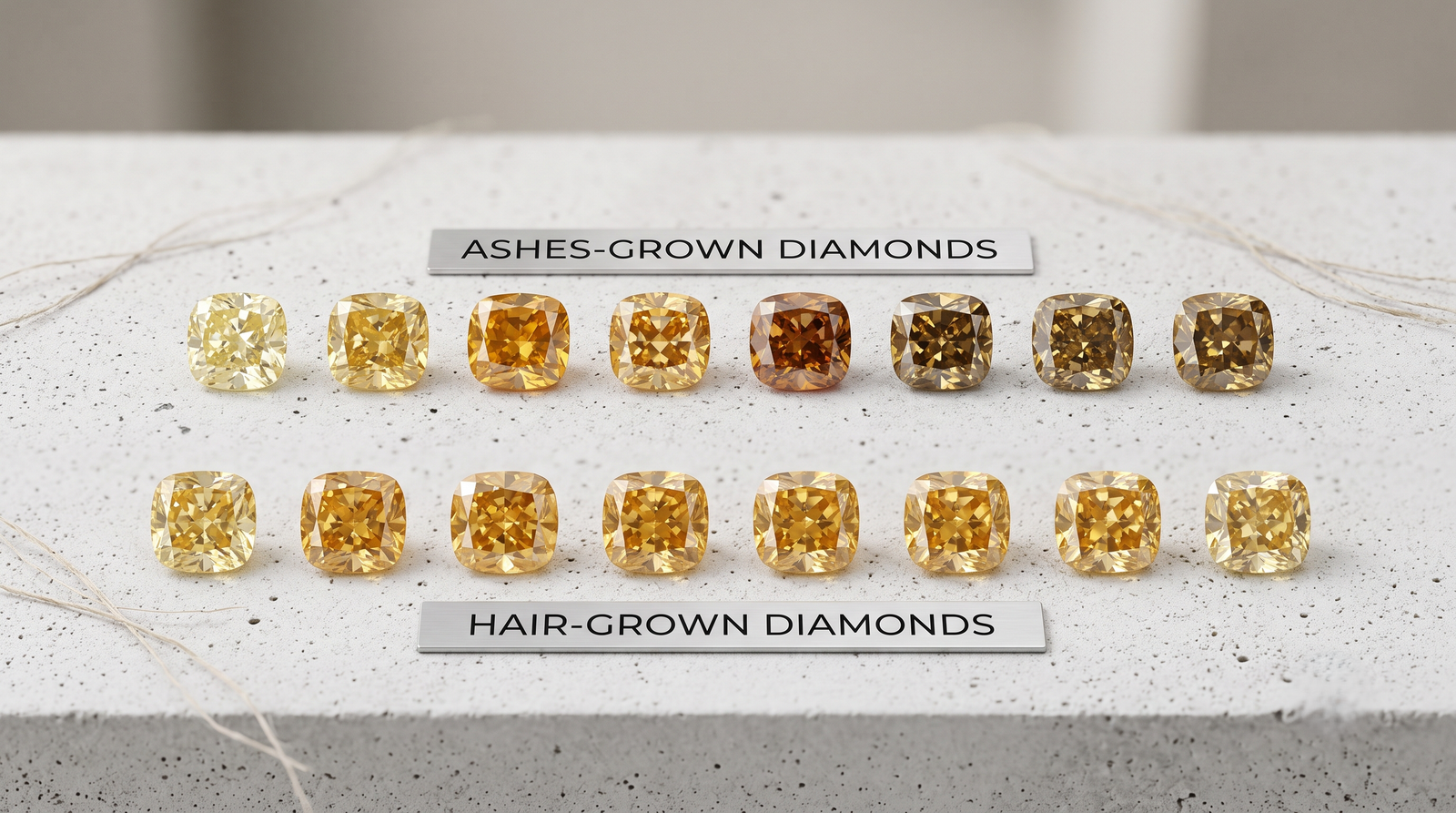
This is reasoning from the chemistry rather than a published finding, and it is stated as reasoning. Cremated remains are largely calcium phosphate, with carbon somewhere between 0.5% and 4% by weight, and whatever else is present differs with the person and the cremation the trace load that reaches purification differs from one portion to the next. Hair, the source of a husband hair diamond color, is roughly 50% carbon and is a single, consistent protein, keratin, whoever it came from. There is simply less in it that could ride along.

The consequence for a husband hair diamond color is a narrower band of expected outcomes, not a predictable one. Yellow to champagne still dominates; blue and colorless are still deliberate choices. But the surprises at the edges of the range an unexpectedly deep cognac, an unplanned tint on a stone ordered as colorless are less likely from hair. If you also hold a portion of his ashes and are weighing whether to add it, that is exactly the trade off set out in what color a diamond made from your husband’s ashes and hair will be.

What Does a Narrower Range Buy You?

Three practical things, and one thing it does not.

  • A more confident colorless order. Asking for a colorless husband hair diamond color from a hair sample is a more reliable request than the same order from ashes, because there is less to exclude. Ask whether the provider offers it at the carat you want, and what it adds to the price.
  • Less variance between stones grown at different times. If his children may want a stone later, two husband hair diamond color outcomes from the same lock are more likely to sit close together than two ash grown stones would. Closer, not identical different runs still differ.
  • A tighter written specification. A provider can commit to a husband hair diamond color of “yellow, light to medium” with more confidence from hair than from ashes.
  • What it does not buy: a shade. No provider can promise lemon rather than honey, or pale rather than steel blue, before the run.

How an ash grown stone’s range is wider, and why nobody characterizes the input, is the subject of what color a diamond made from your husband’s ashes will be.

Two rows of memorial diamonds, the hair-grown row showing a tighter spread of yellow tones than the ash-grown row

Which Lock Should You Send, If You Have More Than One?

Some families hold hair from more than one point in his life a lock from the hospital, clippings from a home haircut, strands from a brush. Since pigment does not survive purification, the husband hair diamond color will not differ between a gray lock and a dark one. Choose by meaning and by confidence that the sample is his, not by the husband hair diamond color you hope for.

Two things do matter for color, and a third matters for the record the questions to ask before turning your husband’s hair into a diamond cover what a provider should write down about the sample. First, a lock large enough to meet the provider’s minimum on its own typically a few grams avoids any need to blend in another source. Second, keep separate locks in separate labelled envelopes rather than pooling them, so the provider knows what they are working from. Quantity is covered in how much hair you need for a husband memorial diamond.

Frequently Asked Questions

Will a diamond made from my husband’s hair be the color of his hair?

No. Hair color comes from melanin, which is removed with everything else that is not carbon during purification. Gray, white, dark, or dyed hair all yield the same carbon, and the diamond’s tone is set by trace elements and growth conditions in the laboratory.

What is the most common husband hair diamond color?

Yellow to champagne, driven by nitrogen present during growth; the husband hair diamond color range is the same as any memorial diamond’s. Blue is available at most providers by introducing boron. Colorless is possible with extra processing and typically costs more at the same carat.

Is colorless easier to get from hair than from ashes?

Generally, yes, as a matter of chemistry. Hair is a consistent protein with fewer trace elements to exclude, so a colorless order from a hair sample is a more reliable request. It still requires deliberate processing and still costs more than a tinted stone.

Does dyed or chemically treated hair change the color?

Not in the finished stone. Dyes and treatments sit in or on the strand and are removed at purification along with the pigment. Tell the provider about treatments anyway, since some ask about it for acceptance rather than for color reasons.

Can I get a specific shade, like pale blue rather than deep blue?

You can choose the family blue and a provider may commit to a range within it. Exact saturation is decided during the growth run and cannot be promised in advance. Ask what happens if the finished stone falls outside the range you agreed.

Will two diamonds from the same lock of hair be the same color?

They will usually sit close, but not identical. Each growth run has its own conditions, so depth of color varies between stones even from one source. A keratin source narrows that variation compared with ashes; it does not remove it.

Final Thoughts on a Husband Hair Diamond Color

Send the lock that means the most, not the one you think will color best; the process cannot tell them apart. Then choose a husband hair diamond color family in writing, expect the range to be narrower than an ash grown stone’s but still a range, and let the one thing you were never able to choose the exact shade be the part that arrives.
Learn More About Husband Memorial Diamonds

Talk With Memorial Diamond

If you are choosing between locks, or wondering whether colorless is realistic from what you have, reach out to Memorial Diamond to talk through what a husband hair diamond color could be from your sample.

Word count: 1,530 · Reading time: about 8 minutes

Memorial diamonds in yellow, champagne, and blue displayed beside cremation ashes and hair on a black luxury surface

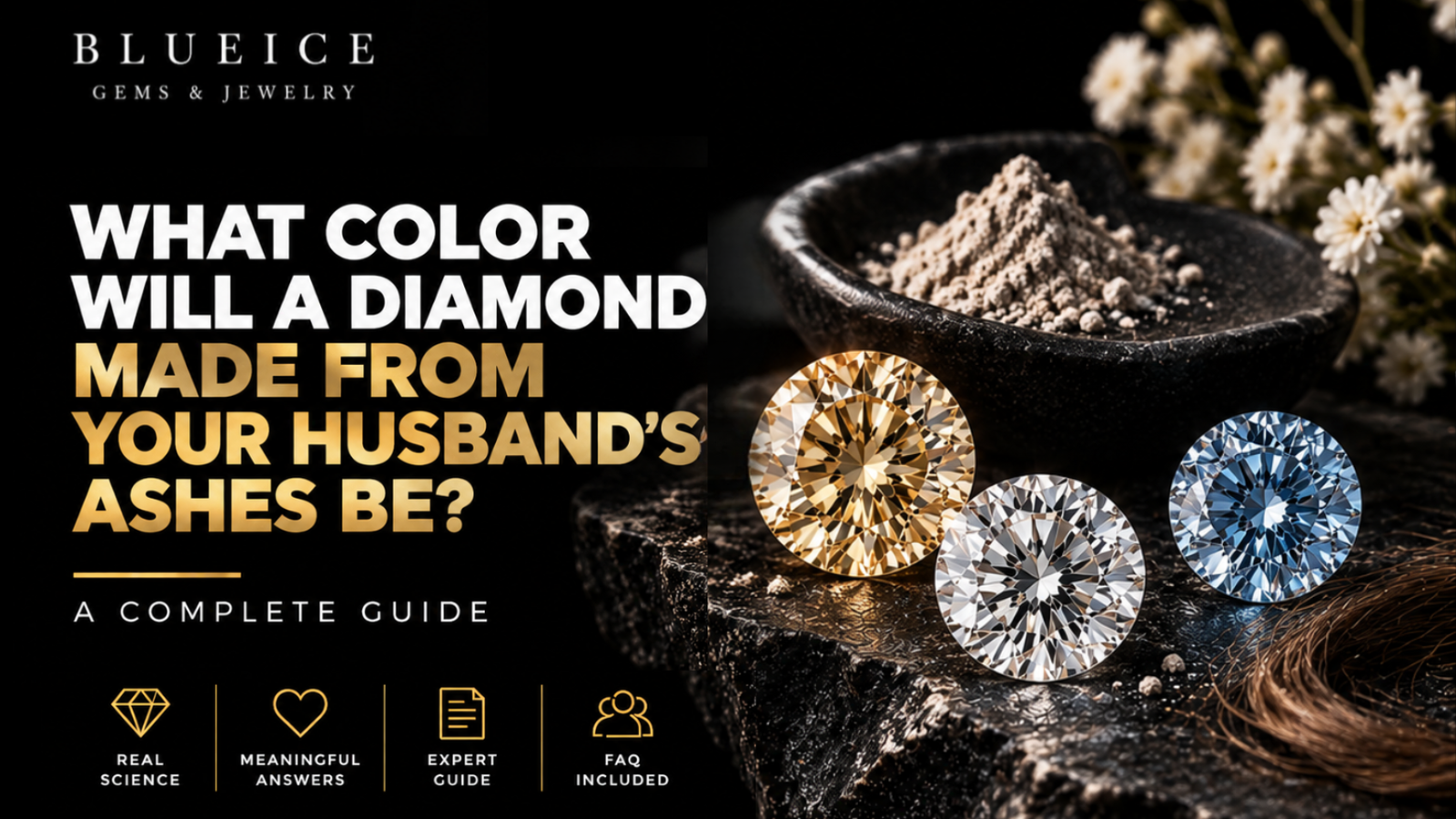
What Color Will a Diamond Made From Your Husband’s Ashes and Hair Be?

You can choose the carat, the cut, and the setting. The one thing you cannot choose outright is the shade. What color diamond made from your husband’s ashes you receive is set during growth, not before it: most memorial diamonds come out yellow, champagne, or blue, colorless is possible with extra processing at a higher price, and no provider can honestly promise the exact tone in advance. The reason is not secrecy. It is that nobody characterizes what is actually in a portion of ashes before it goes into the press.

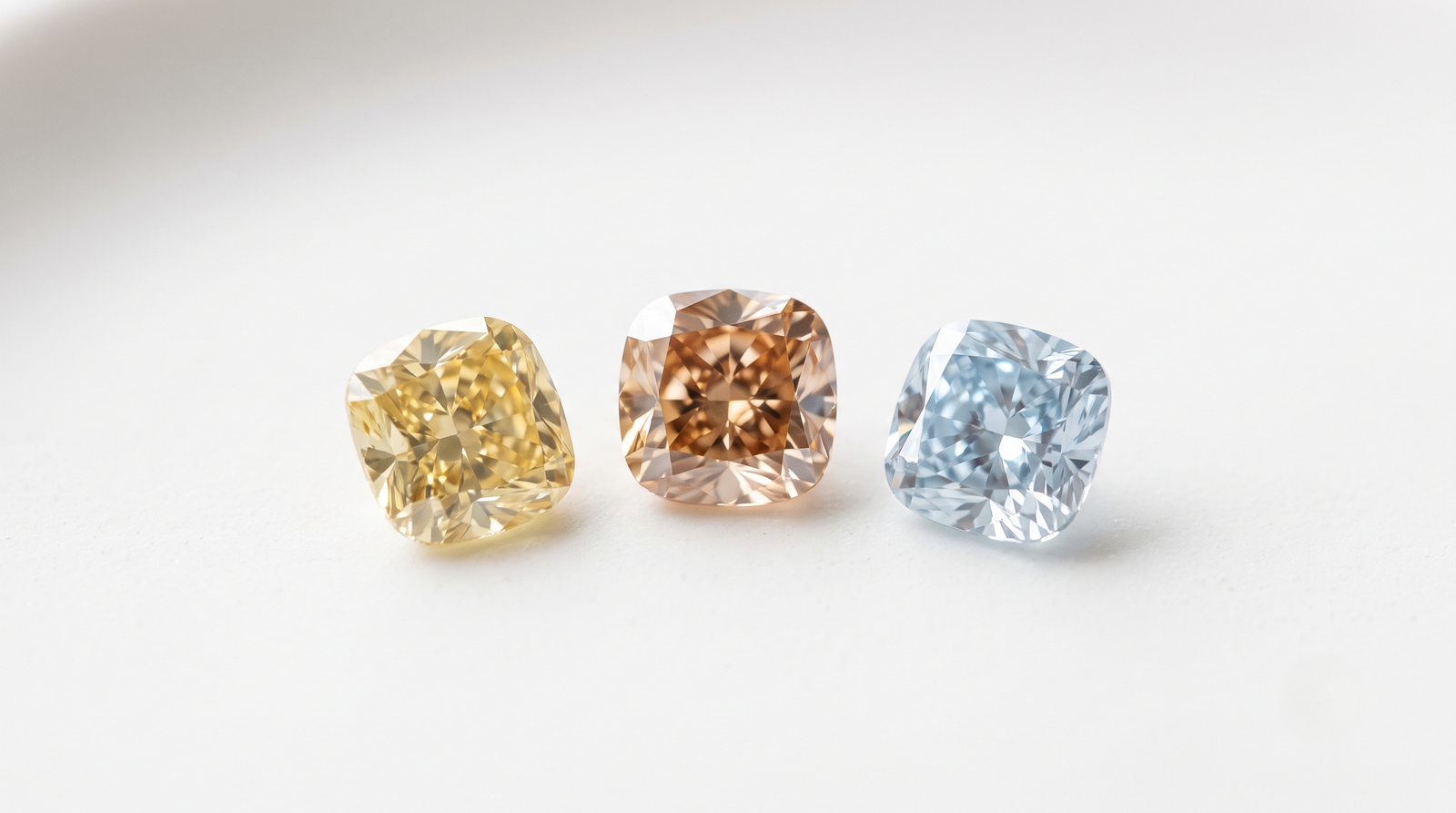
Color diamond made from a husband's ashes: three loose lab-grown memorial diamonds in yellow, champagne, and pale blue on a white background |

Where Does the Color of a Memorial Diamond Come From?

Diamond color is decided by trace elements present in the growth cell. Nitrogen produces yellow tones. Boron produces blue. Which color diamond made from ashes you receive is decided by how much of each rode along with the carbon. A colorless stone needs both to be excluded, which takes extra processing and time. Cremated remains are an organic, personal source rather than a controlled feedstock, so trace elements are common and that is why a diamond grown from them tends toward a tint rather than toward white.

The carbon itself is neutral, and it is the same carbon whatever color diamond made from it eventually arrives. Purified to roughly 99.9%, converted to graphite, and grown by HPHT or CVD diamond growth, it would make a colorless crystal on its own. The tint comes from what travels with it, in quantities nobody measures. The full sequence is in how a memorial diamond is made from your husband’s ashes.

What Color Diamond Made From Ashes Is Typical?

Industry wide, the answer clusters into a short list. Which color diamond made from his ashes you receive depends on the growth run, but the range is narrow enough to plan around.
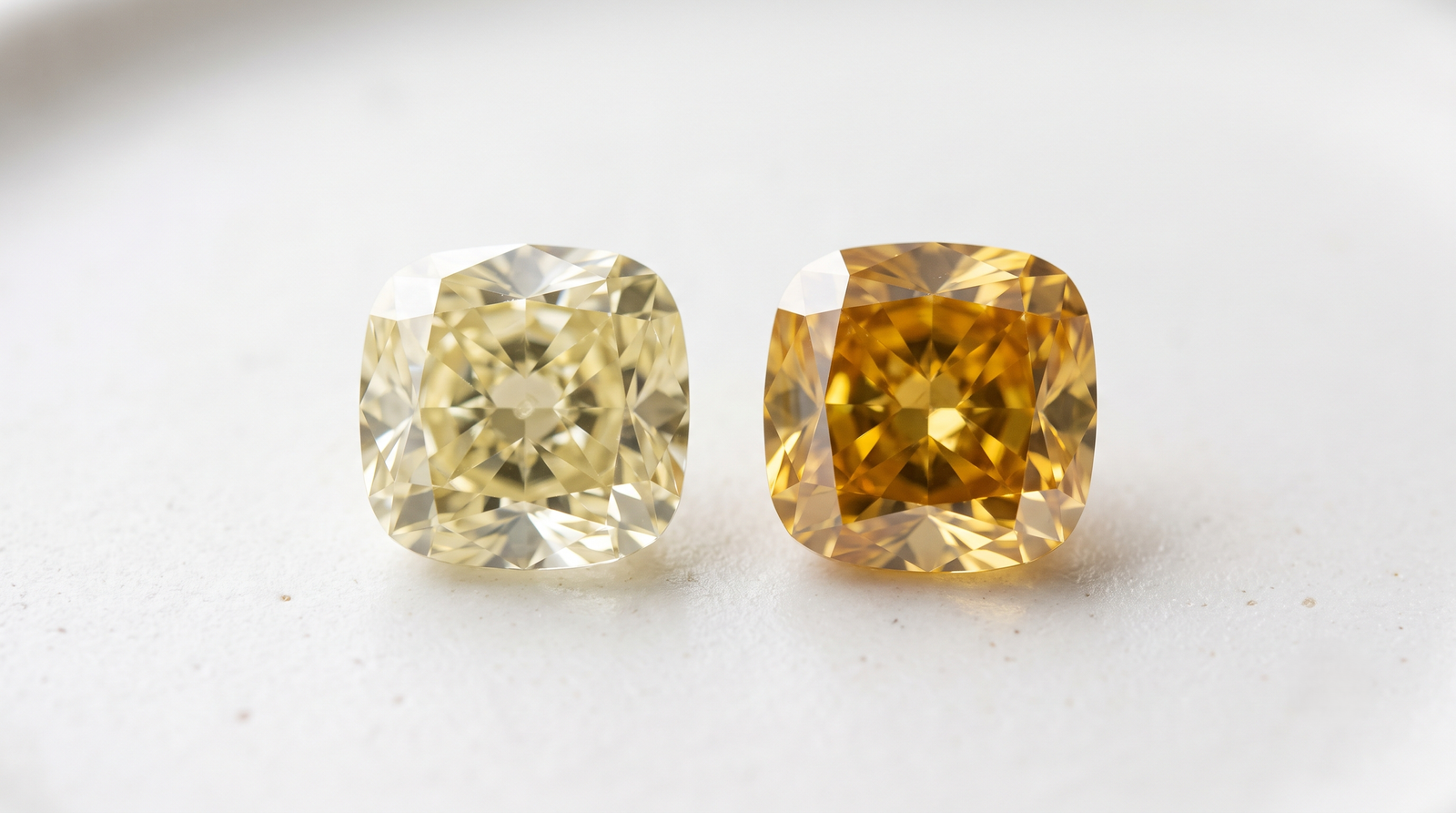
  • Yellow to champagne the most common color diamond made from ashes, driven by nitrogen; often described by providers as amber, honey, or cognac at the darker end.
  • Blue from boron; pale to steel blue, and usually offered as a named option rather than left to chance.
  • Colorless / white achievable, but it requires excluding both nitrogen and boron, so it costs meaningfully more at the same carat.
  • Red, pink, green, black produced by post growth irradiation at some providers, not by anything in the ashes.

A colorless diamond made at the mid tier, roughly 0.5 to 1 carat, typically prices above a yellow, blue, or champagne stone of the same size. The tier ranges are in how much a husband memorial diamond costs.

Four memorial diamonds arranged left to right from colorless through pale yellow, champagne, and blue

Why Can Nobody Forecast the Shade?

Because the question “what color diamond made from this ash?” has an input nobody characterizes. To predict a tone before growth, several things would have to be known, and the table shows who could know each one and when.

What would have to be knownWho could know itWhenIs it known in practice?
Nitrogen content of the purified carbonThe laboratory, by assayAfter purification, before growthRarely measured; ask
Boron content of the purified carbonThe laboratoryAfter purificationRarely measured
Ratio of personal carbon to laboratory carbonThe laboratoryAt blendingKnown, but not always disclosed
Growth conditions chosen for this runThe laboratoryAt the start of growthKnown; some providers steer color here
How the cut will present the tintThe gemologistAfter growthKnown only once the rough exists

Four of the five rows sit after the point where you place the order. The one that could be measured earliest, the trace element content of the purified carbon, is not something most providers assay for a single family’s portion. So the honest answer is a range, not a shade and a provider who names an exact tone before growth is describing their steering process, not your husband’s ashes.

 A simple diagram showing nitrogen producing yellow and boron producing blue in a diamond lattice

What Can You Specify, and What Just Arrives?

There is more control over what color diamond made from ashes you receive than the previous section might suggest, as long as it is aimed at the right things.

You can specify: the color family (yellow, blue, colorless), the carat, the cut, and whether a color is intensified after growth by irradiation. Providers who offer named colors do so by controlling the growth environment, not by reading the ashes.

You cannot specify: the exact saturation within a family, whether a yellow leans lemon or cognac, or whether a blue arrives pale or deep. That is what arrives.

Worth asking before ordering: what the provider means by each color name, whether they will show stones photographed under stated lighting, what recourse exists if the stone lands outside the agreed range, and whether the color diamond made from a small portion can be steered toward colorless at all. Those questions are set out in questions to ask before turning your husband’s ashes into a diamond; how the answer changes when hair is added is in what color a diamond made from your husband’s ashes and hair will be.

One Stone, or the First of a Set?

This is the decision the color question quietly forces, and it is easy to miss. If his children may want stones of their own later, a second diamond grown from the same ashes in a different run will not match the first. Different run, different trace load, different tint and a different color diamond made from the same ashes. The color diamond made this year and the one made in three years’ time are siblings, not twins.

So decide now whether matching matters. If it does, the options are to grow the set in one order, or to agree a written color specification the provider will hold against a future order and to ask plainly whether they can. If matching does not matter, a family of stones each a slightly different color diamond made from one source in the same color family but different depths has its own logic, and many families prefer it. Whether the ashes can stretch to several stones is covered in how much ash you need for a husband memorial diamond and whether more than one family member can get a diamond from the same husband’s ashes.

Two yellow memorial diamonds side by side, one noticeably deeper in tone than the other |

Frequently Asked Questions

What color diamond made from ashes is most common?

Yellow to champagne is the most common color diamond made from ashes industry wide, because nitrogen carried through from an organic carbon source produces yellow tones. Blue, from boron, is the next most common. Colorless is achievable but requires extra processing to exclude both elements and costs more.

Can I choose colorless for a diamond made from my husband’s ashes?

Usually, yes, as a named option. Colorless requires the laboratory to exclude nitrogen and boron during growth, which adds time and cost compared with a yellow, blue, or champagne stone of the same carat. Ask whether it is available at the size you want.

Does the amount of ash I send affect the color?

No. Color is set by trace elements and growth conditions, not by how much ash is submitted. Sending more ash does not shift the tint, and it does not make the stone larger either; carat size is set by growth time in the press.

Why can’t the provider tell me the exact shade in advance?

Because the trace element content of the purified carbon is rarely measured for a single family’s portion, and most of what decides the tint happens after the order is placed. Providers can commit to a color family and a range, not to an exact saturation.

Will a second diamond from the same ashes match the first?

Not automatically. A second growth run carries its own trace load and conditions, so two stones from the same ashes grown at different times usually differ in depth of color. If matching matters, grow the set in one order or agree a written color specification.

Does his cremation or health affect the diamond’s color?

There is no reliable link a provider can point to. Trace elements in cremated remains vary from person to person and from cremation to cremation, but nobody characterizes them before growth, so no honest prediction can be made from anything about him.

Final Thoughts on What Color Diamond Made From His Ashes Will Be

The shade is the one part of this you hand over. Everything else about what color diamond made from his ashes you end up holding the family of color, the size, the cut, whether there is one stone or several is yours to decide, and deciding it in writing before growth begins is what turns “what color will it be” from a worry into a range you agreed to. Choose the range, then let the run decide the rest.

Learn More About Husband Memorial Diamonds

Talk With Memorial Diamond

If you would like to understand which color diamond made from the portion you hold is realistic, and what a written color range would look like, reach out to Memorial Diamond to talk through what’s possible with your husband’s ashes.

Word count: 1,585 · Reading time: about 8 minutes

Memorial diamond made from a husband's ashes and hair displayed with a diamond, cremation ashes, hair and memorial urn on a black luxury background

What Color Will a Diamond Made From Your Husband’s Ashes and Hair Be?

Two materials do not make two colors. A husband ashes hair diamond color is a single tone, decided by trace elements and growth conditions in the laboratory, and it will most often be yellow, champagne, or blue, with colorless possible at extra cost exactly as it would be from either material alone. What changes when both go in is not the palette but the width of the range you are guessing within, and the useful rule is this: the wider ranging input governs. So whether adding the second material changes anything depends entirely on which material you started with.

Husband ashes hair diamond color: a single champagne-toned lab-grown memorial diamond between a small sealed portion of ashes and a labelled lock of hair

Does Combining Ashes and Hair Blend Two Colors?

No. By the time either material reaches the growth cell it is purified carbon at roughly 99.9%, converted to graphite, and the two are physically identical. There is no “ash color” and “hair color” to mix. What the crystal picks up is whatever trace nitrogen or boron is present during growth nitrogen giving yellow, boron giving blue plus whatever the laboratory adds or excludes deliberately, under standard HPHT or CVD diamond growth.

So the same short list applies to a husband ashes hair diamond color as to any memorial diamond: yellow to champagne most often, blue as a named option, colorless with extra processing, and red, pink, green, or black by post growth irradiation at some providers. The two track process that ends in one crystal is laid out in how a memorial diamond is made from your husband’s ashes and hair.

Two small labelled portions of graphite beside a single diamond growth cell

Which Material Sets the Range of a Husband Ashes Hair Diamond Color?

The one with more variables in it and for a husband ashes hair diamond color, that is the ashes. Cremated remains are largely mineral calcium phosphate carrying somewhere between 0.5% and 4% carbon, and whatever rides along with that carbon differs from one portion to the next; nobody characterizes it before growth. Hair is about half carbon by weight, and it is one consistent protein whoever it came from. Reasoning from that chemistry and it is reasoning, not a published finding an ash derived carbon carries a wider band of possible outcomes than a hair derived one.

When both are in one order, the ash portion’s wider band is what the laboratory has to plan around. The hair does not narrow a husband ashes hair diamond color range. That single point is the whole answer to “will the color be different if we add hair,” and it cuts in only one direction.

Why Does the Direction of the Addition Matter?

Because a husband ashes hair diamond color is governed by the wider input, adding the narrower material changes little, and adding the wider material changes more.

You started with…You are thinking of adding…Effect on the color rangeEffect on the color family you can choose
His ashesA lock of his hairLittle the range was already set by the ashesNone; the same families are available
A lock of his hairA portion of his ashesWidens it the ashes now governNone, but colorless becomes a less certain request
Both, decided togetherThe ashes govern from the startSame as an ashes only stone
Neither yetDecide by meaning first; range is a secondary questionSame families either way

Read the table by row, not by column; a husband ashes hair diamond color follows the row you are actually in. If the ashes are already the plan and you have found a lock of his hair, the color question is essentially unchanged and the decision is about meaning and record keeping, not tone.

If the hair was the plan perhaps because he was buried, or because the lock is the thing that carries a date and a portion of ashes is now available, adding it is the change that costs you the narrower range. The single material ranges are set out in what color a diamond made from your husband’s ashes will be and what color a diamond made from your husband’s hair will be.

A diagram showing a wide band labelled ashes and a narrow band labelled hair, with the combined band matching the wide one

Does Sending Both Give You More Say Over the Color?

No. This is the misreading about a husband ashes hair diamond color worth heading off, because it sounds plausible: two materials, twice the influence. What you can specify is the same either way the color family, the carat, the cut, and whether irradiation is used afterward. What arrives is the same either way the exact saturation. Sending both does not add a lever.

What sending both does add to a husband ashes hair diamond color order is a record: two intake weights and an origin document that names both sources, if the provider keeps one. That is a good reason to combine. Color is not.

  • Ask what the provider means by each color name, and whether they will show stones under stated lighting.
  • Ask whether a colorless request is honored from a combined order, and at what carat.
  • Ask what the provider will do if the stone arrives outside the range you agreed to.
  • Ask whether the origin document names both materials, so the hair you added is acknowledged somewhere even though it did not touch the color.

The full list of combined order questions is in questions to ask before turning your husband’s ashes and hair into a diamond.

What If the Second Material Turns Up Late?

This happens more than the guides admit. A lock of hair surfaces in a coat pocket after an ashes order is placed; a portion of ashes is released by a funeral home after a hair order has started. Whether a provider will amend an open husband ashes hair diamond color order to add a second material is a policy question, and it should be asked before assuming either answer.

If they will, the direction rule still applies. Adding hair to an ash order in progress changes nothing about the husband ashes hair diamond color you were already expecting. Adding ashes to a hair order that was placed with a colorless request may change what the laboratory can commit to, and that is a conversation to have before anything is blended, since the carbons cannot be separated afterward. If they will not amend, the late material can still become a second stone; hair keeps indefinitely once dry, and a set aside portion of ashes does not expire. The quantity each route needs is in how much ash and hair you need for a husband memorial diamond.

A lock of hair in a paper envelope resting on a folded coat

Frequently Asked Questions

Will a diamond made from both ashes and hair be two colors?

No. Both materials are purified to identical carbon before growth, so the crystal has one tone, set by trace elements and growth conditions. There is no ash color and hair color to blend; the same yellow, champagne, blue, or colorless families apply as for any memorial diamond.

Does adding hair to his ashes change the color?

Very little. In a husband ashes hair diamond color, the ash portion carries the wider band of possible outcomes, so it governs the range whether or not hair is included. Adding a lock of hair to an ashes order is a decision about meaning and record keeping rather than about tone.

Does adding ashes to a hair order change the color?

It can widen the expected husband ashes hair diamond color range. A hair only stone has a narrower band of outcomes because hair is a consistent, carbon rich protein; adding a portion of ashes introduces the more variable material. A colorless request from a combined order is a less certain one.

Can I ask for colorless from a husband ashes hair diamond?

Usually, as a named option, but expect the provider to treat it as they would an ashes only colorless request, since the ashes govern the range. It requires excluding nitrogen and boron during growth, adds time, and costs more than a tinted stone at the same carat.

Which material should I decide on first?

The one you already have, or the one that carries the most meaning. A husband ashes hair diamond color is a secondary question in a combined order; the range is set by the ashes if they are included at all. Settle what each material is for, then ask the color question of the combination.

Can I add the second material after the order has started?

Sometimes. Whether a provider will amend an open order is a policy question to ask directly. If they will, adding hair changes nothing about the expected color; adding ashes may. If they will not, the late material can still become a second stone later.

Final Thoughts on a Husband Ashes Hair Diamond Color

Start from the material you already have, and let that decide how much the second one matters. If the ashes are the plan, add the hair for the record and expect no change in color. If the hair is the plan, know that adding ashes trades a narrower range for a fuller record, and decide which of those you want. Either way, a husband ashes hair diamond color is one color, and the stone is his.

Learn More About Husband Memorial Diamonds

Talk With Memorial Diamond

If you hold both materials and are unsure whether combining them changes what you can ask for, reach out to Memorial Diamond to talk through what a husband ashes hair diamond color could be from what you have.

Husband's hair diamond: a small blue-toned lab-grown memorial diamond beside a few strands of dark hair in a paper envelope

How to Turn Your Husband’s Hair Into a Diamond

The hair is still in the house, for now. To turn your husband’s hair into a diamond you need only a small lock, a few grams, and no cremation at all; hair is roughly 50% carbon, so a husband’s hair diamond can be grown from far less material than an ashes stone, in the same six to ten months. What makes this version urgent is not the laboratory. It is that the places his hair still exists, the razor, the pillowcase, the collar of the coat by the door, each disappear at an ordinary moment, and those moments usually arrive as someone being kind.

Why Is Hair Enough on Its Own?

Hair is keratin, a carbon rich protein, and roughly half of its weight is carbon. Cremated remains, by contrast, are mostly calcium phosphate with only about 0.5% to 4% carbon. That is why a husband’s hair diamond needs a lock rather than ounces, and why it is available to families who chose burial, or who scattered his ashes before anyone mentioned this option.

The finished stone is the same object either way: a lab grown diamond, scoring 10 on the Mohs scale as the hardest known natural mineral, graded on the standard 4Cs. Hair only is not the consolation version. For many families it is the only version, and the same diamond.

Step 1: Find Where His Hair Still Is

Nobody plans a husband’s hair diamond in advance, and nobody keeps a lock of hair on purpose. It exists by accident, and it is worth listing the places before any of them are tidied.

Where his hair may still beWhat usually ends itHow confident you can be it is his
His razor, trimmer, or combBeing thrown away in a clean outHigh, if he was the only one who used it
His pillowcase, if unwashedThe next load of laundryHigh if he had his own side; lower on shared bedding
The collar or hood of a coat he woreThe coat being donated or dry cleanedModerate; check for other wearers
The car headrestThe car being sold or valetedModerate to high
A hat, a helmet, a capStorage or donationHigh
A hairbrush he usedBeing cleaned or discardedHigh if it was his alone
A lock cut at the hospital or by the funeral homeNothing; it is already safeCertain, if labelled
A coat collar, a hairbrush, and a razor on a bathroom shelf, photographed quietly

If more than one person in the house had similar hair, confidence matters more than quantity. The husband hair diamond guide covers the mixed source problem in depth.

Step 2: Collect and Label It Before the House Changes

Every husband’s hair diamond begins here. Do this before anyone helps you clean, and before the coat goes to a charity shop. The sequence is short:

  1. Wash and dry your hands; do not wash the hair.
  2. Lift the strands with clean tweezers or fingers, avoiding lint and pet hair where you can.
  3. Place them in a clean paper envelope or a small zip bag. Dry is what matters; hair keeps indefinitely once dry.
  4. Label it with his name, the date collected, and where it came from.
  5. If you find hair in more than one place, keep each in its own labelled envelope rather than pooling them.
Clean tweezers placing hair strands into a labelled paper envelope

Separate envelopes matter because a husband’s hair diamond provider may ask where the sample came from, and because a strand from a shared brush is a different confidence level from a strand off his own razor. Keeping them apart preserves that.

Step 3: Ask a Provider Whether the Sample Is Enough

Industry typical minimums for a husband’s hair diamond are described as a small lock, palm sized, or a few grams. What you have may be a few strands. Before committing, ask the provider whether they will assess a photograph and a weight, whether hair from several locations can be pooled, and whether your sample is enough to be meaningfully present in the stone or only recorded.

If the sample is genuinely too small, a provider should say so. The honest fallback is combining hair with a portion of his ashes, if any exist, which is covered in how to turn your husband’s ashes and hair into a diamond. The quantity question on its own is answered in how much hair you need for a husband memorial diamond.

Step 4: Send It, and Keep Your Own Record

Hair for a husband’s hair diamond is not a regulated shipment the way cremated remains are, so the safeguards are yours to build. Photograph the labelled envelope before it goes. Note the weight if you have a scale that reads to a tenth of a gram. Ask the provider to confirm receipt and the weight they recorded. Keep those three things together with the order confirmation; they are the start of the origin record a husband’s hair diamond will carry for the rest of its life.

Ask, too, what happens to hair not consumed by extraction. Some providers return it; others do not. If you sent the only lock you had, the answer matters.

Step 5: What the Lab Does Over the Next Six to Ten Months

For a husband’s hair diamond, the hair is heated in a controlled, oxygen free, multi stage process that strips away the non carbon components of keratin, leaving carbon at roughly 99.9% purity. That carbon is converted to graphite at around 2,500 to 2,700°C, blended with laboratory carbon to reach a growable volume, and grown around a diamond seed by HPHT or CVD diamond growth over weeks to months. A gemologist cuts and polishes the rough crystal, and reputable providers have it graded independently.

A laboratory furnace used for oxygen-free carbon purification

Because hair yields so much carbon, the personal share of a husband’s hair diamond is limited by stone size rather than by your sample. Industry wide, personal carbon typically makes up around 10% to 15% of the finished stone. The stage by stage version is in how a memorial diamond is made from your husband’s hair.

What Will a Husband’s Hair Diamond Look Like?

Not like his hair, and not a lesser stone than one from ashes; the ashes route is in how to turn your husband’s ashes into a diamond. Color is set by trace elements during growth, not by whether he was gray or dark: nitrogen tends toward yellow, boron toward blue, and excluding both for a colorless stone costs more.

Most memorial diamonds land in yellow, champagne, or blue. The size of a husband’s hair diamond is your choice, from about 0.10 carats upward, and it sets both the price and how long the stone spends in the press. Industry pricing for a husband’s hair diamond runs from roughly $1,500 to $3,500 at entry size to $5,000 to $15,000 for half a carat to a carat, before settings and grading.

Frequently Asked Questions

How much hair do I need for a husband’s hair diamond?

Industry typical minimums are a small lock, often described as palm sized or a few grams. Because hair is roughly 50% carbon, far less is needed than for ashes. If you have only strands, ask the provider to assess a photograph and weight before you order.

Can I use hair from his brush or razor?

Often, yes, if you are confident it is his. Providers usually accept strands from combs, razors, hats, or pillowcases. Keep each source in its own labelled envelope, and ask whether the provider will pool hair from several locations into one sample.

Does the hair have to be fresh, or with the root?

No. Hair stored dry keeps its carbon indefinitely, so a lock from years ago works. Roots are not required; the process extracts carbon from the whole strand, not from DNA. Dry, clean, and labelled is what matters.

Do I need to have cremated him for a hair diamond?

No. A husband’s hair diamond needs no cremation at all, which makes it available to families who chose burial or who scattered his ashes. Hair only is the same lab grown diamond as an ashes stone, not a lesser version.

Will a husband’s hair diamond be the color of his hair?

No. Diamond color comes from trace elements such as nitrogen or boron during growth, not from the hair’s pigment. Most memorial diamonds trend yellow, champagne, or blue; colorless is possible with extra processing at higher cost.

Can more than one diamond be made from one lock of hair?

Sometimes. Because only a portion of the carbon is needed per husband’s hair diamond, a generous lock can support more than one diamond. If you hold very little, one stone is the realistic outcome; ask the provider before assuming a second is possible.

Final Thoughts on Turning Your Husband’s Hair Into a Diamond

Every other step in a husband’s hair diamond can be taken slowly. The first one cannot. Before the laundry, before the car is sold, before someone who loves you tidies the bathroom, put what you find in a labelled envelope. Then take all the time you need.

Learn More About Husband Memorial Diamonds

Talk With Memorial Diamond

If what you have is a few strands from a brush and you are not sure it is enough, reach out to Memorial Diamond to talk through what a husband’s hair diamond is possible with what you found.

Husband's ashes hair diamond: a champagne-toned lab-grown memorial diamond between a labelled envelope of hair and a small sealed container of cremated remains

How to Turn Your Husband’s Ashes and Hair Into a Diamond

Two materials, two clocks, and one person watching both. To turn your husband’s ashes and hair into a diamond, you set aside a small portion of his cremated remains, collect a lock of his hair, send both to a laboratory, and receive a single lab grown husband’s ashes hair diamond back in roughly six to ten months. The ashes clock is set by whoever holds them; the hair clock is set by the next time the house is cleaned. Because you will be interrupted, this guide is built around where it is safe to stop.

Why Do the Two Materials Run on Different Clocks?

Every husband’s ashes hair diamond starts with two searches. His hair exists by accident, on a razor, a pillowcase, a coat collar, and it disappears the first time someone tidies. That clock can run out in a weekend. His ashes are either in your home, where nothing is urgent, or with a funeral home or cemetery, where a portion has to be requested before a release or interment date. That clock is longer but fixed.

Hair is roughly 50% carbon; cremated remains are roughly 0.5% to 4% carbon. So the hair contributes a lot from a little, and the ashes contribute a little from a lot. A husband’s ashes hair diamond blends the purified carbon from both into one crystal, grown by HPHT or CVD diamond growth exactly as any lab grown diamond is.

A paper envelope and a small urn side by side on a table, a wall clock behind them

Step 1: Secure the Hair First

Do this today, before anything else in a husband’s ashes hair diamond. Lift the strands from wherever they are with clean fingers or tweezers, put them dry into a paper envelope, and label it with his name, the date, and the source. If there is hair in more than one place, use one envelope per place. Hair keeps indefinitely once dry, so the hair clock stops the moment it is in the envelope. The full collection method is in how to turn your husband’s hair into a diamond.

Step 2: Find Out Who Holds His Ashes

Where his ashes areWhat sets the clockWhat to do now
In your homeNothing; you choose the timeMove to Step 3 when ready
With the funeral homeTheir release dateAsk them to hold back a labelled portion before release
Interred or in a nicheCemetery rules, which vary by stateAsk what removal involves before assuming it is possible
ScatteredWhatever was kept backIf nothing remains, the hair alone can still make a stone

If the answer is the funeral home, ask for the date in writing. Everything else about the combined route, including whether to make one stone or two, is in the husband ashes and hair diamond guide. That date is the only hard deadline in a husband’s ashes hair diamond, and it is the one most often missed.

Step 3: Set Aside the Ash Portion

Industry typical requests for a husband’s ashes hair diamond are a few tablespoons to about four ounces, roughly 100 grams. Ask your provider for their figure, and ask specifically whether including hair reduces it; some providers lower the ash requirement for combined orders, others do not. If the urn is with you, divide the portion at your own table with a clean spoon, a scale, and a new sealed container, then label it with his name, the date, and the weight. The ashes only method, including the part nobody warns you about, is in how to turn your husband’s ashes into a diamond.

Two handwritten labels, one for hair and one for ashes, beside an open notebook

Step 4: Record Both, Separately

A husband’s ashes hair diamond needs two records, not one. For the hair: the date collected, the source, and the weight if you can measure it. For the ashes: the date divided, the weight, and where the remainder is. A husband’s ashes hair diamond will carry an origin document naming both materials, and your two notes are its first entries. Photograph both labelled containers before they leave you.

Step 5: Ask a Provider the Combined Order Questions

Beyond the standard questions about method, grading, and price, a husband’s ashes hair diamond raises questions of its own:

  • Are two separate intake records kept, one per material?
  • Will I be told before blending if one material under yields, or is the shortfall covered silently with laboratory carbon?
  • Does the origin document name both the ashes and the hair?
  • What happens to material not consumed by extraction, for each material?
  • Is a combined order priced differently from a single material stone?
  • Can both materials travel in one shipment, or must they be sent apart?

The provider’s answers to the second and third questions decide whether the hair you chose with such care is actually acknowledged in the stone’s paperwork. A wider list is in questions to ask before turning your husband’s ashes and hair into a diamond.

Step 6: Send Both, Together or Apart

The two halves of a husband’s ashes hair diamond are treated differently by carriers, so confirm the provider’s current shipping instructions on the day rather than relying on a general rule. If the two must travel separately, send the hair first; it is the irreplaceable one. Keep both tracking numbers with the records from Step 4, and ask the provider to confirm receipt and recorded weight for each material.

Step 7: What the Lab Does With a Husband’s Ashes Hair Diamond

The two materials in a husband’s ashes hair diamond are purified separately. Each is heated in a controlled, oxygen free, multi stage process that strips away everything that is not carbon, the calcium phosphate from the ashes and the non carbon parts of keratin from the hair, to roughly 99.9% purity. Both carbon yields are converted to graphite at around 2,500 to 2,700°C, then blended, supplemented with laboratory carbon to reach a growable volume, and grown around a diamond seed for weeks to months. A gemologist cuts and polishes the rough stone, and reputable providers have it graded on cut, color, clarity, and carat by an independent laboratory.

Two labelled crucibles in a laboratory furnace tray

Personal carbon typically makes up around 10% to 15% of the finished stone; the rest is laboratory carbon. A husband’s ashes hair diamond is physically made in part from him, from both sources, and the origin document should say so. The stage by stage account is in how a memorial diamond is made from your husband’s ashes and hair.

Where It Is Safe to Stop

You will be interrupted, by grief, by paperwork, by a child who needs you. These are the points where a husband’s ashes hair diamond can be paused without losing anything:

After this stepSafe to stop?Write this down before stopping
Step 1, hair in an envelopeYes, indefinitelyDate, source, his name
Step 2, you know who holds the ashesYes, until the release dateThe date, and who told you
Step 3, ash portion set asideYes, indefinitelyWeight, date, where the rest is
Step 4, both recordedYesNothing further; you are ready when you are
Step 5, provider chosenYes, subject to their quote validityThe quote date and the answers you were given
Step 6, both sentNo; the process is now theirsBoth tracking numbers
husband's ashes hair diamond

Frequently Asked Questions

Do I need both his ashes and his hair, or is one enough?

One is enough. Hair alone makes a full diamond because it is roughly 50% carbon, and ashes alone make one too. A husband’s ashes hair diamond is chosen when a family holds both and wants both represented, not because either material falls short.

Does adding hair mean I need less of his ashes?

It depends on the provider. Some reduce the ash requirement when hair is included, because the hair contributes carbon efficiently; others still ask for the standard few tablespoons to four ounces. Ask before dividing the urn, since the answer sets how much you set aside.

Are the ashes and hair mixed together when they arrive?

No. Reputable providers purify each material separately and combine the carbon only at the graphite stage, before growth. Ask whether two intake records are kept and whether you will be told if either material under yields before blending.

Can the ashes and hair be sent in the same package?

Sometimes, but cremated remains and hair are handled differently by carriers, so confirm the provider’s current shipping instructions rather than assuming. If they must travel apart, send the hair first, because it cannot be replaced.

How long does a husband’s ashes hair diamond take?

A husband’s ashes hair diamond takes six to ten months from receipt of both materials industry wide, sometimes twelve for larger or specialty color stones. Growth time in the press sets carat size; sending more of either material does not make the stone bigger or faster.

Will the finished stone show which parts came from ashes and which from hair?

No. In a husband’s ashes hair diamond, purification reduces both to carbon, and the crystal cannot distinguish sources. What distinguishes them is the paperwork: two intake records and an origin document naming both materials. Ask that those documents exist before you order.

Final Thoughts on Turning Your Husband’s Ashes and Hair Into a Diamond

Only two moments in this sequence are urgent: the envelope, and the funeral home’s date. Everything else in a husband’s ashes hair diamond waits as long as you need it to. Stop where the table says it is safe, write down the one line it asks for, and pick the process up when you are ready.

Learn More About Husband Memorial Diamonds

Talk With Memorial Diamond

If you have the envelope and are unsure how to handle the ashes, or the other way round, reach out to Memorial Diamond to talk through a husband’s ashes hair diamond and what to do next.