
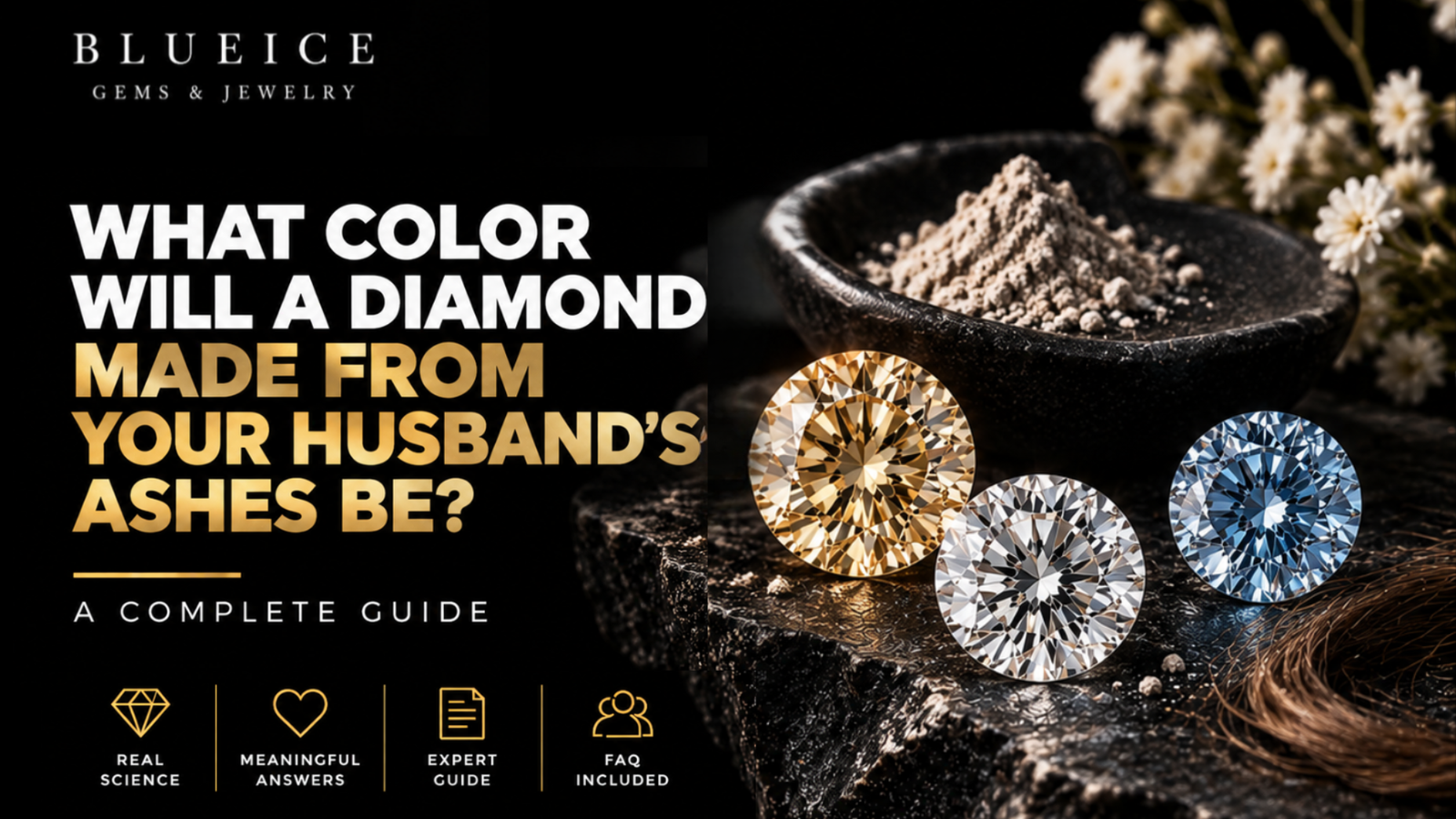
You can choose the carat, the cut, and the setting. The one thing you cannot choose outright is the shade. What color diamond made from your husband’s ashes you receive is set during growth, not before it: most memorial diamonds come out yellow, champagne, or blue, colorless is possible with extra processing at a higher price, and no provider can honestly promise the exact tone in advance. The reason is not secrecy. It is that nobody characterizes what is actually in a portion of ashes before it goes into the press.
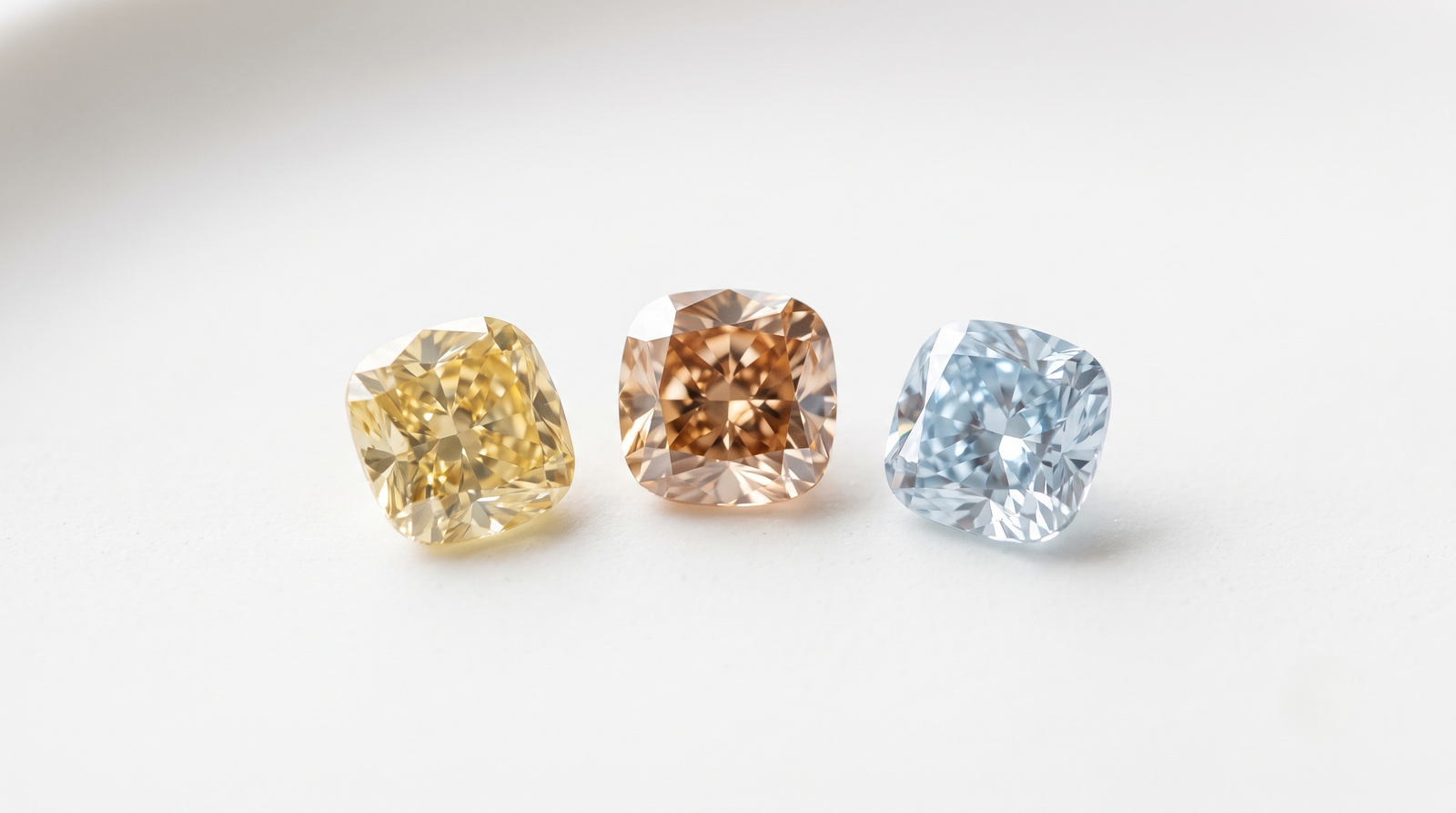
Table of Contents
Where Does the Color of a Memorial Diamond Come From?
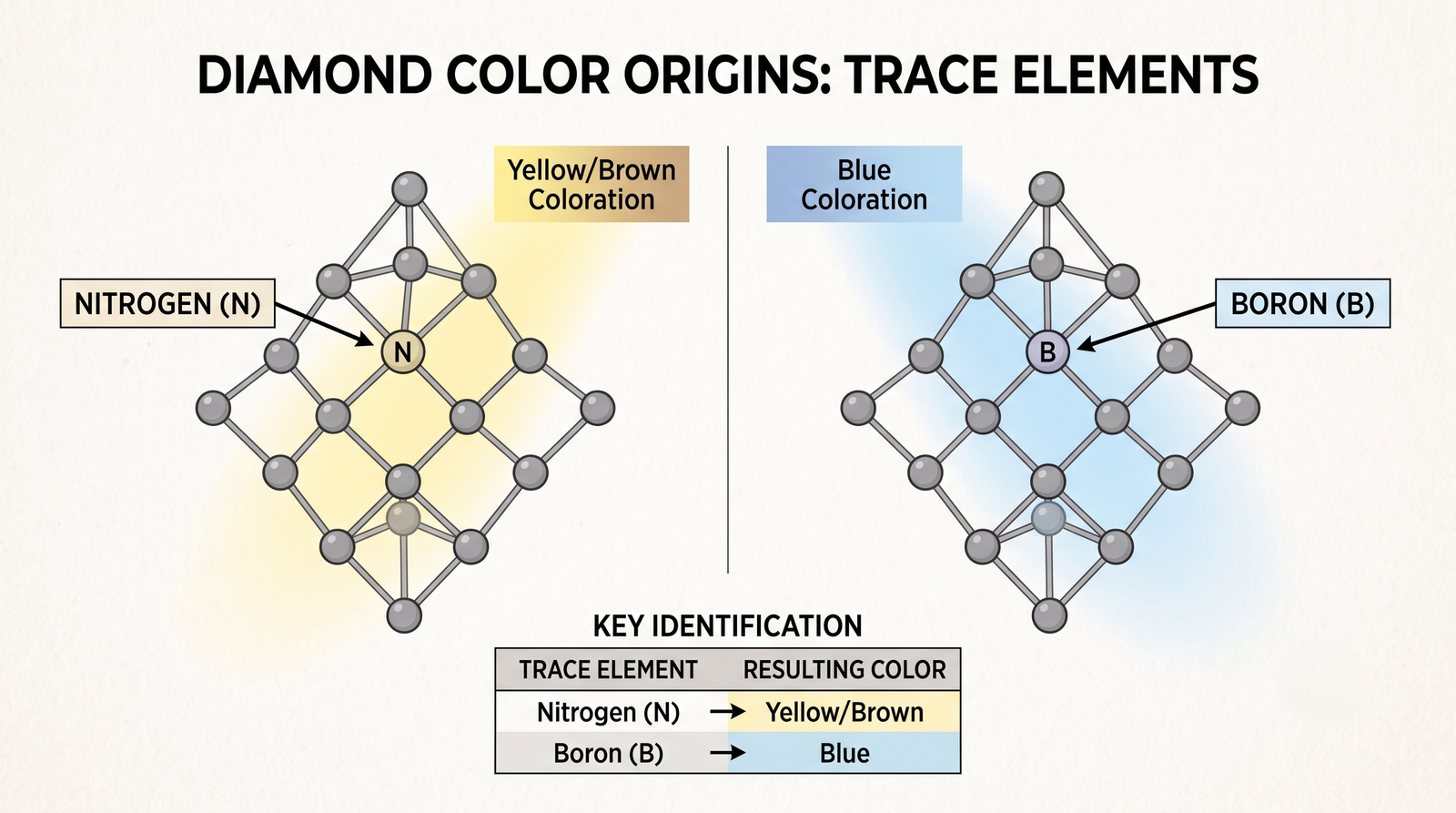
Diamond color is decided by trace elements present in the growth cell. Nitrogen produces yellow tones. Boron produces blue. Which color diamond made from ashes you receive is decided by how much of each rode along with the carbon. A colorless stone needs both to be excluded, which takes extra processing and time. Cremated remains are an organic, personal source rather than a controlled feedstock, so trace elements are common and that is why a diamond grown from them tends toward a tint rather than toward white.
The carbon itself is neutral, and it is the same carbon whatever color diamond made from it eventually arrives. Purified to roughly 99.9%, converted to graphite, and grown by HPHT or CVD diamond growth, it would make a colorless crystal on its own. The tint comes from what travels with it, in quantities nobody measures. The full sequence is in how a memorial diamond is made from your husband’s ashes.
What Color Diamond Made From Ashes Is Typical?
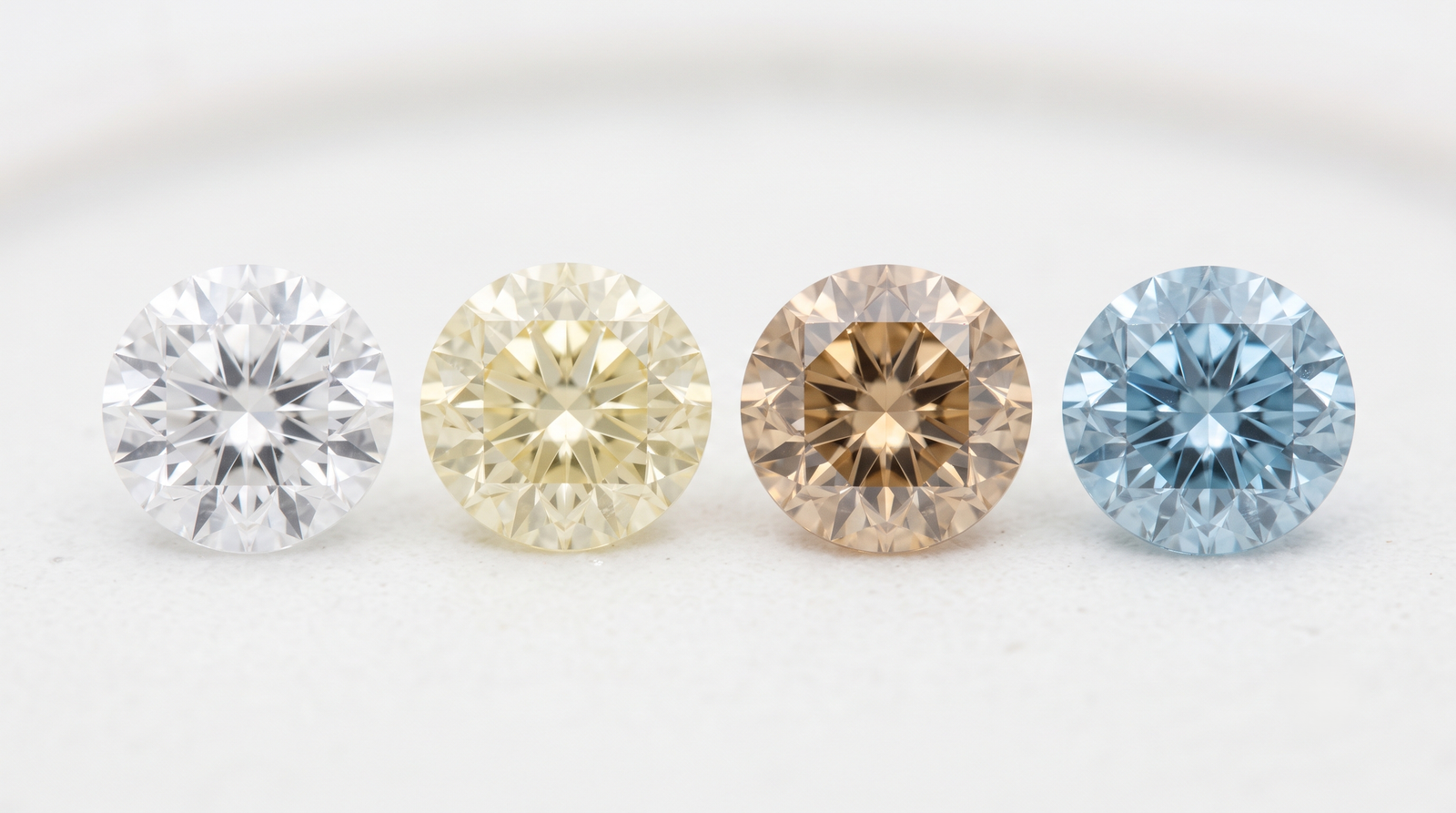
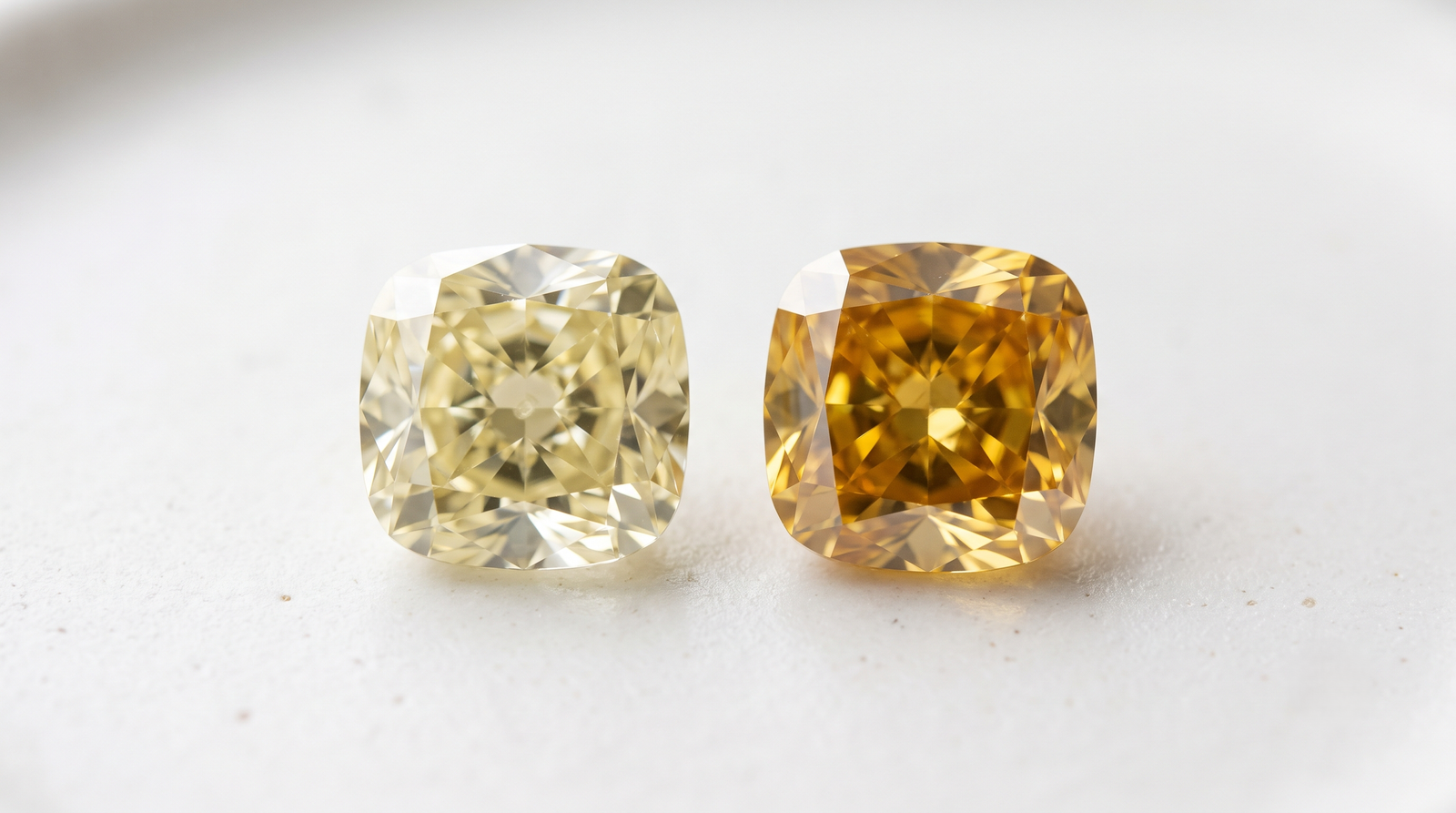
Industry wide, the answer clusters into a short list. Which color diamond made from his ashes you receive depends on the growth run, but the range is narrow enough to plan around.
- Yellow to champagne the most common color diamond made from ashes, driven by nitrogen; often described by providers as amber, honey, or cognac at the darker end.
- Blue from boron; pale to steel blue, and usually offered as a named option rather than left to chance.
- Colorless / white achievable, but it requires excluding both nitrogen and boron, so it costs meaningfully more at the same carat.
- Red, pink, green, black produced by post growth irradiation at some providers, not by anything in the ashes.
A colorless diamond made at the mid tier, roughly 0.5 to 1 carat, typically prices above a yellow, blue, or champagne stone of the same size. The tier ranges are in how much a husband memorial diamond costs.
Why Can Nobody Forecast the Shade?
Because the question “what color diamond made from this ash?” has an input nobody characterizes. To predict a tone before growth, several things would have to be known, and the table shows who could know each one and when.
| What would have to be known | Who could know it | When | Is it known in practice? |
|---|---|---|---|
| Nitrogen content of the purified carbon | The laboratory, by assay | After purification, before growth | Rarely measured; ask |
| Boron content of the purified carbon | The laboratory | After purification | Rarely measured |
| Ratio of personal carbon to laboratory carbon | The laboratory | At blending | Known, but not always disclosed |
| Growth conditions chosen for this run | The laboratory | At the start of growth | Known; some providers steer color here |
| How the cut will present the tint | The gemologist | After growth | Known only once the rough exists |
Four of the five rows sit after the point where you place the order. The one that could be measured earliest, the trace element content of the purified carbon, is not something most providers assay for a single family’s portion. So the honest answer is a range, not a shade and a provider who names an exact tone before growth is describing their steering process, not your husband’s ashes.
What Can You Specify, and What Just Arrives?
There is more control over what color diamond made from ashes you receive than the previous section might suggest, as long as it is aimed at the right things.
You can specify: the color family (yellow, blue, colorless), the carat, the cut, and whether a color is intensified after growth by irradiation. Providers who offer named colors do so by controlling the growth environment, not by reading the ashes.
You cannot specify: the exact saturation within a family, whether a yellow leans lemon or cognac, or whether a blue arrives pale or deep. That is what arrives.
Worth asking before ordering: what the provider means by each color name, whether they will show stones photographed under stated lighting, what recourse exists if the stone lands outside the agreed range, and whether the color diamond made from a small portion can be steered toward colorless at all. Those questions are set out in questions to ask before turning your husband’s ashes into a diamond; how the answer changes when hair is added is in what color a diamond made from your husband’s ashes and hair will be.
One Stone, or the First of a Set?
This is the decision the color question quietly forces, and it is easy to miss. If his children may want stones of their own later, a second diamond grown from the same ashes in a different run will not match the first. Different run, different trace load, different tint and a different color diamond made from the same ashes. The color diamond made this year and the one made in three years’ time are siblings, not twins.
So decide now whether matching matters. If it does, the options are to grow the set in one order, or to agree a written color specification the provider will hold against a future order and to ask plainly whether they can. If matching does not matter, a family of stones each a slightly different color diamond made from one source in the same color family but different depths has its own logic, and many families prefer it. Whether the ashes can stretch to several stones is covered in how much ash you need for a husband memorial diamond and whether more than one family member can get a diamond from the same husband’s ashes.
Frequently Asked Questions
What color diamond made from ashes is most common?
Yellow to champagne is the most common color diamond made from ashes industry wide, because nitrogen carried through from an organic carbon source produces yellow tones. Blue, from boron, is the next most common. Colorless is achievable but requires extra processing to exclude both elements and costs more.
Can I choose colorless for a diamond made from my husband’s ashes?
Usually, yes, as a named option. Colorless requires the laboratory to exclude nitrogen and boron during growth, which adds time and cost compared with a yellow, blue, or champagne stone of the same carat. Ask whether it is available at the size you want.
Does the amount of ash I send affect the color?
No. Color is set by trace elements and growth conditions, not by how much ash is submitted. Sending more ash does not shift the tint, and it does not make the stone larger either; carat size is set by growth time in the press.
Why can’t the provider tell me the exact shade in advance?
Because the trace element content of the purified carbon is rarely measured for a single family’s portion, and most of what decides the tint happens after the order is placed. Providers can commit to a color family and a range, not to an exact saturation.
Will a second diamond from the same ashes match the first?
Not automatically. A second growth run carries its own trace load and conditions, so two stones from the same ashes grown at different times usually differ in depth of color. If matching matters, grow the set in one order or agree a written color specification.
Does his cremation or health affect the diamond’s color?
There is no reliable link a provider can point to. Trace elements in cremated remains vary from person to person and from cremation to cremation, but nobody characterizes them before growth, so no honest prediction can be made from anything about him.
Final Thoughts on What Color Diamond Made From His Ashes Will Be
The shade is the one part of this you hand over. Everything else about what color diamond made from his ashes you end up holding the family of color, the size, the cut, whether there is one stone or several is yours to decide, and deciding it in writing before growth begins is what turns “what color will it be” from a worry into a range you agreed to. Choose the range, then let the run decide the rest.
Learn More About Husband Memorial Diamonds
- What Color Will a Diamond Made From Your Husband’s Hair Be?
- What Color Will a Diamond Made From Your Husband’s Ashes and Hair Be?
- Memorial Diamond Colors for a Husband: What to Expect
- How a Memorial Diamond Is Made From Your Husband’s Ashes
- Husband Ashes Diamond: The Complete Guide
Talk With Memorial Diamond
If you would like to understand which color diamond made from the portion you hold is realistic, and what a written color range would look like, reach out to Memorial Diamond to talk through what’s possible with your husband’s ashes.
Word count: 1,585 · Reading time: about 8 minutes
Leave A Comment