Whatever you have of his hair is probably small, and there is probably no more of it. The son hair diamond questions that genuinely protect a family are about that fragility: how a sample that size is tracked, what a laboratory does if it is too little or too degraded to work with, what the provider will actually put a number on, and what the paperwork proves at the end. Ask them in writing, before anything is posted.
Table of Contents
Why Are the Son Hair Diamond Questions Different?
No cremation stands behind this one. That removes a whole category of worry and introduces a different one, which is why the son hair diamond questions do not simply copy the ashes version with a word swapped.
The son hair diamond questions start from one physical fact: the sample is usually tiny, frequently old, and almost always the only one in existence. It may have come from a first haircut, a lock taken in a hospital room, or a brush nobody could bring themselves to clean out. None of those arrive with documentation.
That changes what the son hair diamond questions need to establish. Quantity becomes a live issue rather than a formality. Condition matters, hair that has been dyed, bleached, or stored loose in a drawer for twenty years is not the same starting material as a lock cut yesterday.
Provenance becomes a question you may quietly be asking yourself. The son hair diamond questions here are built around those three pressure points, and each is easier to raise before a padded envelope leaves your hands.
Which Son Hair Diamond Questions Belong on Your List?
Eleven, covering the sample, its handling, what comes back, and the commercial terms. Send the son hair diamond questions below as a numbered email and ask for numbered replies.
| # | Area | The question to put in writing |
|---|---|---|
| 1 | Sample | How much hair do you need, by weight or by visible length, and what is your minimum? |
| 2 | Sample | Does age, dye, bleach or heat damage affect whether you can use it? |
| 3 | Sample | Do you need roots attached, or are cut ends sufficient? |
| 4 | Sample | If what I send is too little, do you stop and ask me before proceeding? |
| 5 | Handling | What identifier is assigned on arrival, and is any of it returned unused? |
| 6 | Handling | Is his hair ever processed alongside another family’s material? |
| 7 | Content | What percentage of the finished stone will be carbon from his hair? |
| 8 | Documents | Which certificate records where this carbon came from, and who issues it? |
| 9 | Documents | Is independent grading included, offered at extra cost, or unavailable? |
| 10 | Terms | What is billed separately from the stone itself? |
| 11 | Terms | If the growth cycle fails and no hair remains, what happens then? |
Of the son hair diamond questions above, number eleven is the one families skip, and it matters most when a sample cannot be replaced.
What Should You Ask About the Sample Itself?
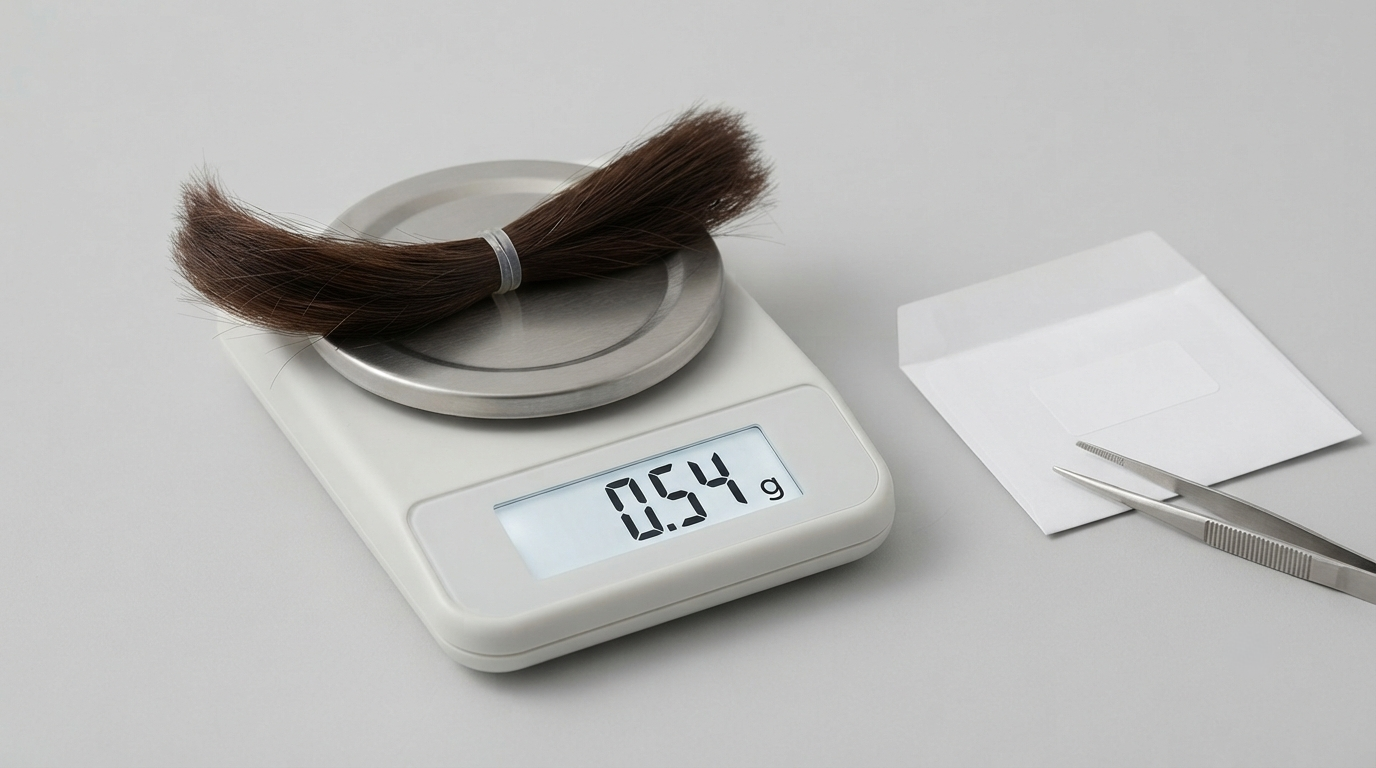
Start the son hair diamond questions with quantity, because it is the only one with a hard floor. Industry wide a hair based stone typically needs a small lock or a few grams, palm sized, or a few wisps, far less than ash based work requires. What a laboratory actually asks for varies by provider, so get their figure rather than a general one.
Condition is the next of the son hair diamond questions. Hair is roughly 50% carbon by weight as a starting material, which is why so little of it is needed. But permanent dye, bleach, relaxers and years of heat styling all alter what is there, and providers differ on what they will accept.
Ask about age directly. A lock cut in 1994 and one cut last month are chemically closer than most people expect, but storage matters, damp, mold or adhesives all cause problems.
And ask what happens if you send less than they need. The son hair diamond questions that prevent the worst outcomes are the ones about stopping: does the laboratory pause and telephone you, or proceed with what arrived?
What If You Are Not Certain the Hair Is His?
Of the son hair diamond questions, this is the one almost nobody says out loud, and it deserves a plain answer rather than an embarrassed one.
Hair kept for years sometimes loses its label. An envelope in a memory box may carry a date and no name. A brush may have held more than one person’s hair. Something collected in a hospital or funeral home means trusting a chain you were not present for.
So put two of the son hair diamond questions to the provider. What do you ask me to declare about the origin of this sample, and in what form? And is there any verification step on your side, or does the certificate rest entirely on what I tell you?
Take the written answer at face value and do not assume either way, nothing standard across this industry settles whether verification of that kind happens at all. Of all the son hair diamond questions here, this is the one most worth asking in your own words rather than borrowing theirs.
How Is Something This Small Kept Track Of?
A few grams of hair is easy to misplace in a way that a sealed ash container is not, so the son hair diamond questions about custody are worth pressing harder than politeness suggests.
Begin the son hair diamond questions about handling with arrival. Is the sample transferred to a labeled, sealed vessel, weighed, photographed? Is there a reference number you can be told, and is it attached to the container or only to a database record?
Ask how many handovers occur between arrival and the growth cell. Purification, graphitization and growth are distinct stages with distinct staff, and what happens at each one is worth understanding first.
Ask whether his hair ever shares a batch or a growth cell with another family’s carbon. Some laboratories are built for batch work and some are not. Neither arrangement is automatically wrong, but you should know which you are buying before the envelope is sealed.
How Much of the Finished Stone Will Be Him?
Ask for a figure. Of all the son hair diamond questions, this is the one where an honest answer is provider specific rather than an industry constant.
Here is what can be said cleanly. Hair is roughly 50% carbon by weight, a fact about the starting material, about what enters the purification stage, not a statement about the finished diamond. Purified carbon from any personal source is blended with supplemental lab carbon to reach the volume a growth cell needs.
What cannot be said cleanly is the finished stone percentage. No equivalent published figure exists for hair the way one does for the ash route, and any number you are quoted is that company’s own. So put it among your son hair diamond questions in writing: what proportion of the finished stone’s mass will be carbon recovered from his hair, and where does the rest come from?
If you are told the stone is 100% your son, that is not how the chemistry works, and it is a reason to look elsewhere. A real, traceable portion of his own carbon inside the crystal is the accurate claim, and it is not a lesser one.
Who Should Be Asked Before the Lock Is Sent?
Begin the son hair diamond questions about consent by asking what declaration the provider requires, then think about your own household before you answer.
The rules families run into around authority are aimed at remains themselves, burial, cremation, what happens to ashes. A lock of hair already sitting in your keeping is usually the simpler question in practice. That is not the same as saying nobody else has an interest in it.
A decedent’s belongings can fall to an estate, and this varies by state. If your son was married or had adult children of his own, they may hold authority over decisions about him that a parent does not, and anything he set down in writing while living can shape that further. If the hair is held by someone else, his widow, a sibling, an aunt who kept a curl, that is a conversation to have rather than a decision to make alone.
Say plainly where the sample came from and who holds it when you first make contact. The son hair diamond questions about consent are much easier asked at the beginning than unpicked at month seven. Whether more than one stone can come from one family’s material often belongs in the same conversation.
What Documents Come Back With the Diamond?
Two separate documents exist and they answer two different questions, so the son hair diamond questions here begin with which one you are actually being offered.
An origin or authenticity certificate is usually issued in house and records provenance: that this stone was grown from the material your family submitted. It is a custody document. It does not assess quality, and it does not come from an outside body.
A grading report from an independent gemological laboratory describes the stone itself against the standard measures of cut, color, clarity and carat. It is optional across this industry, usually costs extra, and says nothing about where the carbon came from. Finished memorial stones are chemically genuine diamonds, the hardest known natural mineral, graded on the same scales as any other.
Ask which is included, who issues it, and whether you can see a specimen with another family’s details removed. Ask too whether the certificate names him and whether you approve the wording before it is printed. The son hair diamond questions about paperwork should never need chasing.
Which Son Hair Diamond Questions Cover Time and Money?
The son hair diamond questions here are two: what the schedule is measured from, and what the quote excludes. Those two questions catch most unpleasant surprises.
On timing, six to ten months from receipt of material to finished stone is the industry norm, with larger stones and specialty colors running toward twelve. Ask for the provider’s own range, whether it begins at payment or arrival, and what contact you will have during the long middle stretch when nothing photographable is happening. Where those months actually go is worth having explained before you commit.
On price, industry figures run roughly $1,500 to $3,500 for entry tier stones around 0.10 to 0.25 carats, roughly $5,000 to $15,000 between half a carat and one carat, and from about $20,000 upward past $75,000 for two carats and above. Colorless costs more than yellow or champagne at equal weight. What actually moves that number is worth understanding too.
Then work through the son hair diamond questions about extras, what is quoted separately: grading, engraving, fancy cuts, settings, insured return shipping. And ask for the payment schedule and what happens to money already paid if you stop.
What Can and Cannot Be Said About Color?
Ask what range is realistic for hair derived carbon, and treat a confident single shade promise as a warning rather than a reassurance.
The mechanism is not mysterious. Trace elements present while the crystal grows set its tone: nitrogen lends yellow, boron lends blue, and a colorless result requires the near absence of both. Carbon drawn from a person carries trace elements a synthetic feedstock would not, so memorial stones lean toward yellow, blue and champagne. What shade to realistically expect is its own subject.
So ask three things. Is colorless available, what extra processing does it require, and what does that add? Is irradiation offered for red, pink, green or black stones, and is it recorded on the paperwork? And what is the provider’s position if the finished tone differs from the sample you were shown?
Among the son hair diamond questions, this is where guarantees should make you cautious. Nobody controls trace chemistry closely enough to promise an exact shade from organic material.

What Happens If the Growth Fails and the Hair Is Gone?
Ask this one of the son hair diamond questions before anything is posted, because it is the scenario a hair based project cannot recover from and the one families almost never raise.
Growth cycles occasionally fail. Crystals fracture in the cutting room. A parcel can be delayed or, rarely, lost. With ashes there is often more in an urn. With a single childhood lock there may be nothing left at all.
So ask directly: if the cycle fails, do you rerun from remaining material, and at whose cost? If none remains, what is your obligation, refund, partial refund, nothing? What insurance covers the parcel each way, and for what value? Is any portion of the sample held back against this possibility, and can I request it?
That last one is worth asking even if the answer is no. The son hair diamond questions about failure are the least comfortable to write and the most useful to have answered. The sequence from first call to finished stone will tell you where each risk sits.
How Do You Read the Answers You Get Back?
Compare replies to the son hair diamond questions, not impressions. Two companies can both sound kind; only one of them may be telling you anything you could hold them to.
| What you asked | A useful reply | A reply that dodges |
|---|---|---|
| How much hair do you need? | “A lock of about this weight, here is our stated minimum.” | “Just send what you have.” |
| Does dye or bleach matter? | “Yes, here is what we can and cannot work with.” | “We handle all kinds of hair.” |
| What percentage of the stone is his? | “Ours is X%, no industry figure is published for hair.” | “It’s entirely made from him.” |
| Is there any verification of origin? | “Here is exactly what we check and what we rely on you for.” | “We treat every sample with respect.” |
| If the growth fails and nothing remains? | “Clause four, I’ll paste it below.” | “We’ve never had that happen.” |
Notice the shape of a dodge rather than its tone. An adjective standing in for a number. A reassurance standing in for a clause. A question about process answered with a sentence about feeling. None of those is proof of anything, and all of them mean the son hair diamond questions need asking again.
Frequently Asked Questions
Can a diamond be made from hair kept for twenty years?
Usually yes. Hair is stable and does not decay the way soft tissue does, so age alone is rarely the obstacle. Tell the provider how it has been stored, since damp, mold or adhesive residue matter considerably more than the number of years.
Does hair from a hairbrush work?
Ask the provider, because practice varies. Brush hair raises two separate issues worth naming: whether there is enough of it by weight, and whether it is certainly all his. Both are better raised in your first email than later.
How much of the diamond will actually be his hair?
Ask for that company’s own figure in writing. Hair is around 50% carbon as a starting material, but no published industry figure exists for what proportion of a finished hair grown stone is personal carbon, so any percentage you are given is theirs.
Is anyone’s permission needed to use his hair?
Ask the provider what declaration they require. Rules about authority are aimed at remains themselves, so a lock you already hold is usually simpler in practice, but belongings can fall to an estate, this varies by state, and a sample someone else keeps is a conversation first.
Can I get some of the hair back?
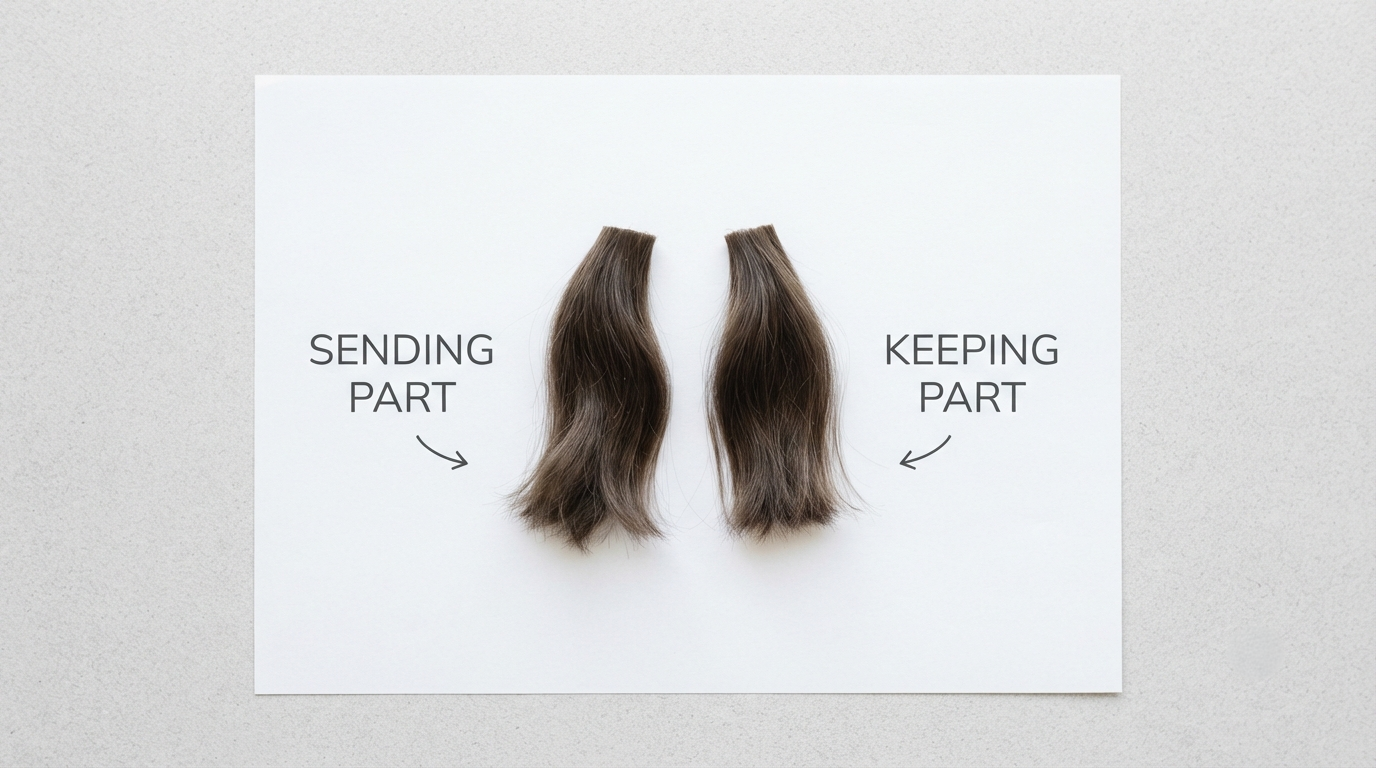
Ask before sending. Some providers return unused material, some do not, and with samples this small there may be nothing left to return. Ask whether any portion can be deliberately reserved and sent back to you.
Should I ask two companies the same questions?
Yes, and send both the identical son hair diamond questions. Comparing replies side by side reveals differences in specificity that no amount of reading marketing pages will. The company that answers in numbers and clauses is telling you how it operates.
Final Thoughts on Asking Before You Send His Hair
A lock of hair is a strange kind of valuable. It cost nothing, it cannot be bought again, and for months it will be somewhere you are not. That is the whole reason to ask carefully rather than politely.
If you get through only four of the son hair diamond questions on this page, make them these: how much do you need and what happens if I send less, what percentage of the stone will be his carbon, who is authorized to make this decision in my family, and what happens if the growth fails with nothing left. Between them they cover nearly all of the real exposure.
Then stop researching and decide. Careful is good; endlessly careful becomes its own weight. The wider picture is here whenever you want it.
Learn More About Son Memorial Diamonds
- Son Hair Diamond: The Complete Guide which covers everything in one place
- How a memorial diamond is made from his hair which explains the chemistry without the jargon
- How much hair is actually needed which covers quantities and minimums
- Step by step, from first call to finished stone which explains the order things happen in
- What color to expect which explains why most are not colorless
Talk With Memorial Diamond
If putting the son hair diamond questions to a person suits you better than another page of reading, that is a fair way to start. Memorial Diamond can be reached at memorialdiamond.us to talk through samples, handling, documentation and what a realistic schedule looks like. No obligation attaches to a first conversation.