Raising the idea of a diamond while everyone is still grieving her can feel like speaking into a room that has gone very quiet. Talking to family about a daughter memorial diamond goes best when you begin with whoever may hold legal authority over her remains, speak privately before any group conversation, explain plainly what the process does and does not involve, and let each relative decide whether they want any part in it.
Table of Contents
Why Does Talking About a Daughter Memorial Diamond Feel So Hard?
Partly because it arrives amid everything else. Arrangements, paperwork and the weight of losing her leave little room for a new idea, and on first hearing a diamond can sound more like a jewelry advertisement than a way of remembering someone.
Partly because each person grieves her differently. One relative may long for something to hold; another may find the thought of dividing her ashes unbearable. Neither reaction is wrong, and a conversation about a daughter memorial diamond tends to bring those differences to the surface quickly.
And partly because of who she was to each of them. To you she may be a daughter; to someone else she was a wife, a partner, a mother, a sister or a granddaughter. None of those relationships outranks the others emotionally, even when the law gives one person the final say.
Knowing this in advance helps. Much of the difficulty in talking about a daughter memorial diamond has little to do with the stone. It is about people needing to feel consulted, respected and free to say what they actually feel.
Who Might Hold Authority Over Her Remains?
Before the first family conversation about a daughter memorial diamond, find out who actually holds this decision. It may not be you.
In many states, the right to direct what happens to a person’s remains follows an order set by statute: often a surviving spouse or registered partner first, then adult children, then parents, then siblings. That order is not national. It varies by state, and anything she put in writing, such as a designated agent form, a will provision or signed funeral instructions, can change it. If she was married or had adult children, they may hold authority ahead of her parents.
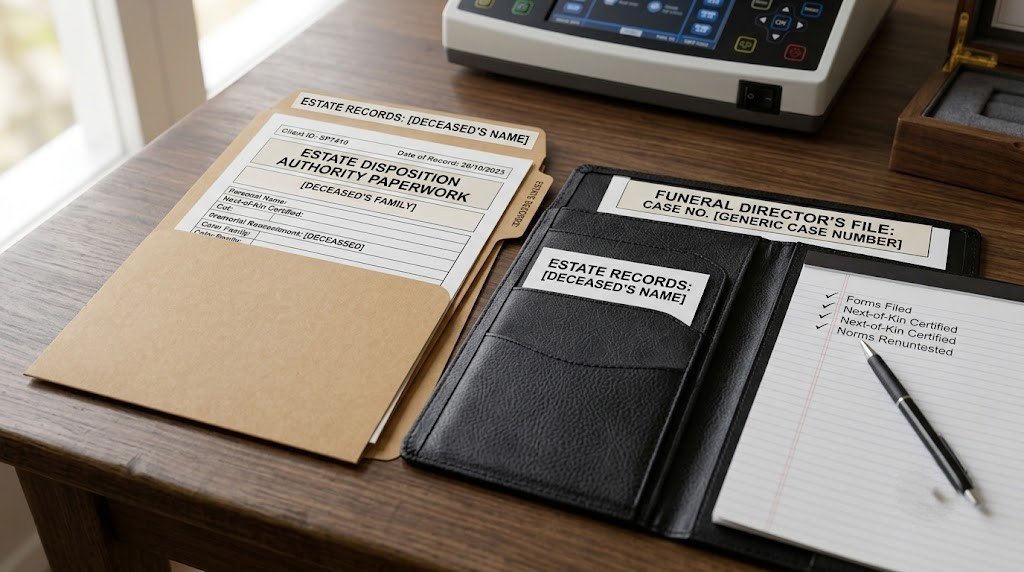
The funeral home or crematory that handled her arrangements will know who signed the cremation authorization and can usually explain how your state treats the question. An attorney can confirm it if things are complicated.
Hair raises its own question. A lock kept at home can feel like yours alone to decide about, but personal belongings can form part of an estate, and the rules differ by state. Before using hair for a stone, check with whoever is administering her estate, and tell the person with authority over her remains in any case.
None of this measures love. A rule about who signs a form says nothing about who grieves her most. If the person with authority is not you, the respectful route is to ask them about a daughter memorial diamond directly rather than working around them.
Who Should Hear About a Daughter Memorial Diamond First?
There is no single correct order, but this sequence keeps the people with the most at stake from hearing secondhand:
- Confirm who holds authority. Check state rules, her written wishes and the cremation paperwork before raising anything with anyone else.
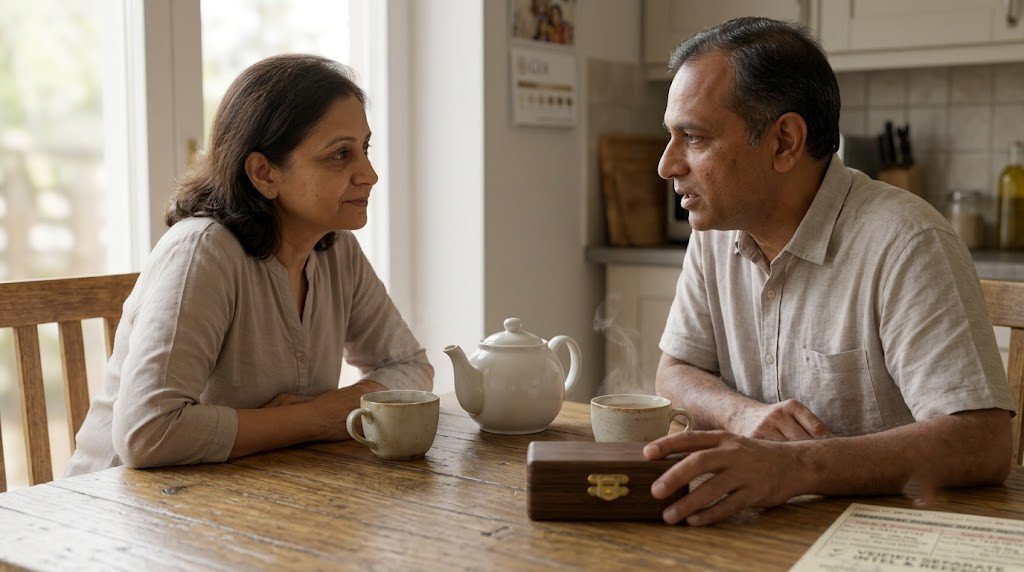
- Speak privately with that person first. If it is her spouse or partner, or her adult children, go to them before anyone else, alone and without a provider’s brochure in hand.
- Talk with her other parent. Whether you are together, separated or rarely in touch, a parent who learns about a daughter memorial diamond from someone else may feel shut out for years.
- Include any brothers or sisters, and her adult children if she had them. Offer each one the choice of a stone, a different keepsake or nothing at all.
- Bring in grandparents and close relatives. Some will want a voice in decisions about a daughter memorial diamond; some only want to know.
- Write down what was agreed. A short email to everyone involved, and later to the provider, prevents confusion about portions, stones and who decided what.
Real families bend this order. If you hold authority yourself, start with whoever shared her daily life most closely. What matters is that nobody central learns about a daughter memorial diamond from a social media post or a passing remark at a gathering.
What If Her Parents Disagree or Live Apart?
Parents do not always grieve in step or share a household. One may be ready within weeks while the other needs a year; one may be arranging everything alone while the other stays at a distance.
If you are the parent raising the subject, begin a talk about a daughter memorial diamond with what you share rather than what you want. “I’ve been thinking about ways to keep something of her close, and I’d like to know what you think” leaves far more room than “I’ve found a company.”
Disagreement about a daughter memorial diamond does not have to end in a single verdict. Providers typically use only a small portion of ashes, from a few tablespoons up to roughly 4 ounces, depending on the provider. So one parent can choose a stone while the other keeps their share in an urn, or scatters or buries it. Knowing how much ash a provider usually asks for can turn an either or argument into an arrangement that holds both wishes.
Where neither parent holds legal authority, perhaps because she was married, both may need to approach her spouse or partner. A difference of opinion about a daughter memorial diamond is easier for a spouse to hear when it is presented honestly rather than as competing requests.
If the disagreement is sharp, a funeral director, a friend both parents trust or a professional mediator can help find a path neither parent could see alone.
How Do You Bring Siblings and Grandparents In?
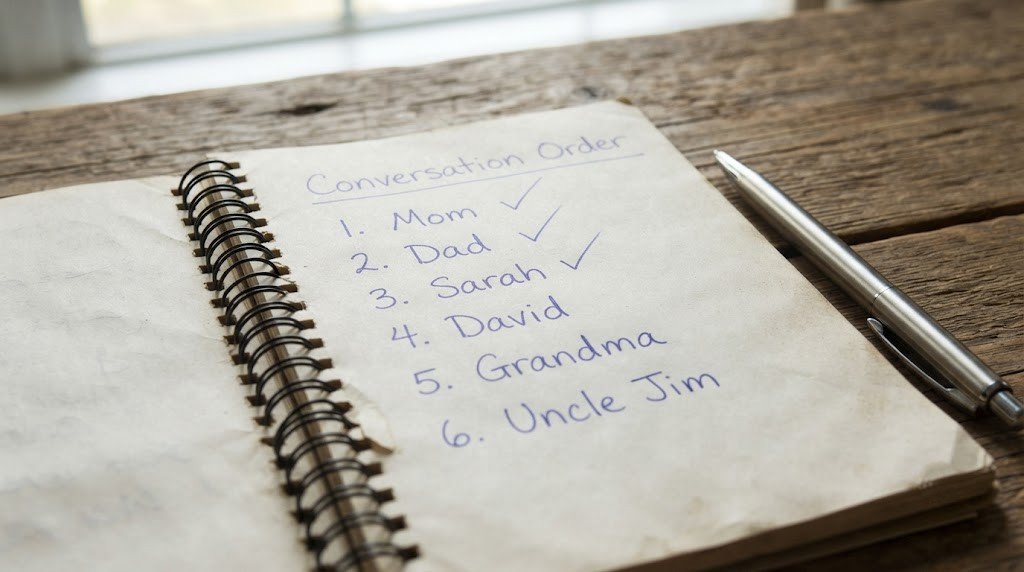
If she had brothers or sisters, they knew her in ways nobody else did, and they deserve to be asked about a daughter memorial diamond rather than simply informed. Some will want a stone of their own, some a different keepsake, and some only want to know what is happening.
Several stones can often be grown from one portion of ashes or hair, so offering siblings their own piece is usually a practical possibility rather than only a gesture. Whether several relatives can each receive a stone depends on the provider and the material available, so check before making an offer you cannot keep.
Grandparents may come from a generation, or a faith, in which cremation itself was uncommon, and a diamond may sound stranger still. Give them time and plain information. Some are reassured once they understand what the stone is; others stay uneasy about a daughter memorial diamond, and that unease can be respected without changing anyone else’s plans.
If she had adult children, their wishes carry particular weight, both because they may hold legal authority and because a stone may one day pass to them. Ask them directly, separately and early. Aunts, uncles, cousins and close friends can usually hear about a daughter memorial diamond once the immediate family has agreed, which spares them a decision that is not theirs to make.
What Should You Say About a Daughter Memorial Diamond, and What Should You Leave Out?
A conversation about a daughter memorial diamond is rarely finished in one sitting. Say what you came to say, then stop and listen. These phrases tend to open the door:
- “I’d like to hear what you think before anything is decided.”
- “Only a small portion of her ashes would be used; the rest stays where we planned.”
- “You don’t have to want one. It’s completely fine to say no.”
- “Can I send you some information to read in your own time?”
- “This isn’t instead of anything else we’re doing for her.”
These, even when meant kindly, tend to close it:
- Anything suggesting that someone who truly loved her would want a stone.
- Any promise that the diamond will make anyone feel better.
- Claims that the stone is made wholly of her carbon. It is not, and someone will check.
- Pressure about deadlines, discounts or acting before it is too late.
- Comparisons of who was closest to her or who is grieving most.
Timing matters as much as wording. A quiet phone call or a walk usually goes better than a crowded room after the service. You can also be honest about your own feelings without making them anyone else’s obligation: “This matters to me” is a complete sentence when you speak about a daughter memorial diamond.
How Do You Explain What the Stone Actually Is?
Some relatives will never have heard of memorial diamonds, and their first questions may be skeptical. When people ask hard questions about a daughter memorial diamond, plain numbers reassure more than enthusiasm, and anyone who prefers to read independently can start with general background on memorial diamonds.
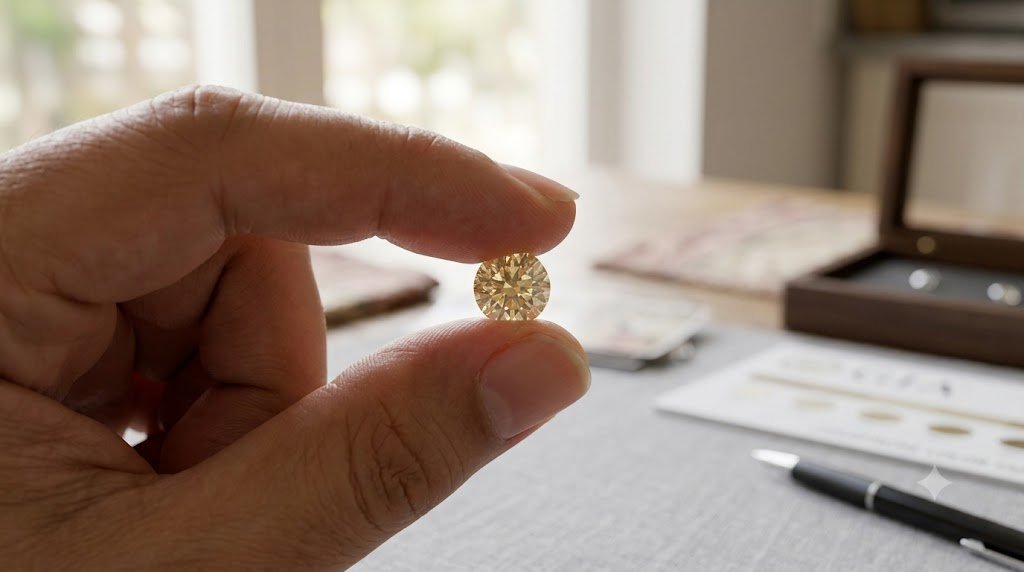
The essentials are brief. It is a real, lab grown diamond, rated 10 on the Mohs hardness scale like any other diamond. Carbon is extracted from a portion of her ashes or a lock of her hair, purified, converted to graphite and grown in a high pressure press, with supplemental lab carbon typically blended in.
On how much of it is her, honesty is the strongest answer. For a stone grown from ashes, carbon recovered from her typically makes up around 10 to 15% of the finished stone’s mass, and some providers cite as low as 3%. For hair, or a blend of hair and ashes, no published percentage exists, so ask the provider to state theirs in writing. Whether the stone is really made from her ashes is a useful page to share with a doubtful relative.
A few other facts settle common worries about a daughter memorial diamond. Nobody can choose or predict the color from the source material; memorial stones tend toward yellow, blue and champagne. The process typically takes six to ten months, up to about a year for larger or specialty color stones. General industry prices start around $1,500 to $3,500 for 0.10 to 0.25 carats and rise steeply with size. What moves the price matters if anyone fears being asked to contribute.
What Reactions Might You Hear About a Daughter Memorial Diamond?
Reactions to news about a daughter memorial diamond usually carry something underneath the words. Responding to that, rather than debating the surface, keeps the conversation open.
| What you might hear | What may sit underneath | A respectful response |
|---|---|---|
| “It feels like turning her into jewelry.” | Fear of trivializing her | “I understand. For me it’s about keeping part of her close; you don’t have to feel the same.” |
| “Her ashes should stay together.” | A sense of what is fitting, sometimes a faith teaching | “Only a small portion would be used. Let’s talk about how to honor what matters to you.” |
| “Is it really her, or just marketing?” | Distrust of the industry | “Some of the carbon is hers, and lab carbon is typically added to it. Here’s the provider’s written answer.” |
| “It’s far too soon.” | Not ready for any decisions | “There’s no deadline. We can come back to this whenever you like.” |
| “Isn’t that a lot of money?” | Worry about cost, or about being expected to pay | “Nobody is expected to pay for a stone they don’t want.” |
| “Our faith doesn’t allow this.” | Religious conviction | “Thank you for telling me. Would it help to ask your own faith leader?” |
| “Why wasn’t I asked?” | Feeling excluded | “You’re right to raise it. I want your view now, before anything is final.” |
| “I don’t want one, but go ahead.” | Real acceptance, or quiet hurt | “Thank you. If you ever change your mind, that’s fine too.” |
None of these reactions needs to be argued down. Someone who feels heard about a daughter memorial diamond may find a family decision easier to live with than someone who feels outvoted, even when the outcome is identical.
How Do You Handle Religious Concerns Respectfully?
Faith can sit underneath some of the strongest objections about a daughter memorial diamond, and it deserves to be taken at its word. No religious tradition has an official position on memorial diamonds specifically. The guidance that exists concerns cremation and the handling of ashes, and it varies by faith, denomination and individual clergy.
A few examples show the range. Current Catholic guidance permits cremation but asks families to keep the ashes whole and in a sacred place, not shared out among relatives or held at home, allowing a small portion only under narrow conditions, so a Catholic relative’s hesitation reflects real teaching and a parish priest is the right person to ask.
Across the major schools of Islamic thought, cremation itself is considered impermissible in ordinary circumstances. A stone grown from hair involves no cremation at all, which is why the hair route is worth knowing about. Orthodox and Conservative Judaism generally prohibit cremation, while Reform Judaism leaves more to rabbis and families. Hindu, Buddhist and Protestant families vary by community, teacher and congregation.
Never try to argue anyone out of a religious concern. Suggest they speak with their own faith leader. A relative who is uneasy about a daughter memorial diamond on religious grounds may decline a stone while remaining comfortable with others choosing one, or may not. The conviction is theirs to hold.
What If the Answer Is No, or Not Yet?
If the person with legal authority says no, that answer stands, at least for now. Pressing harder rarely changes a grieving person’s mind. Thank them, and ask whether they would be open to talking about a daughter memorial diamond again later.
“Not yet” is a reasonable answer too. Nothing about the process requires a decision in the first weeks or months. Families who keep everything in an urn, bury or scatter her ashes, or choose no keepsake at all are making equally valid choices, and how a diamond and an urn compare can help a hesitant relative see the options side by side.
If the family does agree, gather the provider’s answers before anything is sent. The questions worth putting to a provider in writing cover custody, documentation and terms, and sharing those written answers is a simple way to keep everyone informed about a daughter memorial diamond from start to finish.
Frequently Asked Questions
Do I need my family’s agreement to make a diamond from my daughter’s ashes?
It depends on who holds legal authority over her remains, which varies by state and by anything she put in writing. Her spouse, partner or adult children may hold it ahead of her parents. Agreement from everyone else is not always required, but it is worth seeking.
What if her spouse or partner does not want a diamond made?
If they hold authority over her remains, their decision generally stands. Ask whether they would revisit it later, and whether a different keepsake might be acceptable. Pressing harder rarely helps and can strain a relationship that matters to everyone who loved her.
Should I talk to family before or after contacting a provider?
Gathering general information quietly is reasonable, but talk with the person who holds authority, and with close family, before committing to anything about a daughter memorial diamond or sending material. Arriving with a signed contract can make relatives feel left out.
How do I raise it with a relative whose faith discourages cremation?
Gently, and without trying to change their view. No tradition has an official position on memorial diamonds specifically. Suggest they consult their own faith leader, and mention that a stone grown from hair involves no cremation, which may matter to them.
Can each of her siblings have a stone of their own?
Often, yes. Because only a portion of ashes or a small amount of hair is needed, several stones can frequently be grown from one source. Availability depends on the provider and the material, so confirm before offering stones to anyone.
What if relatives say it is too soon to talk about this?
Respect that and set the conversation aside. Nothing about the process requires a quick decision, so tell them you will not raise the subject of a stone again until they are ready, and then keep that promise for as long as it takes.
Is it all right to go ahead if not everyone agrees?
If you hold authority and have listened carefully, you may still proceed; full agreement about a daughter memorial diamond is not always possible. Tell those who disagreed plainly and kindly, make clear nobody must take part, and keep the decision private if they prefer.
Final Thoughts on Talking With Family About Her Diamond
There is no script that makes this conversation easy, and no order of operations that ensures everyone will agree. What you can control is how people feel treated as they hear about a daughter memorial diamond: asked rather than told, given time rather than deadlines, offered facts rather than promises.
Families that talk well about a daughter memorial diamond do not always reach the same answer for everyone. Some relatives will wear a stone, some will keep a portion of her ashes, and some will choose nothing physical at all. That variety is not a sign the conversation failed. If you are still at the beginning, a guide on where to start choosing can help you prepare.
Learn More About Daughter Memorial Diamonds
- Choosing a Memorial Diamond for Your Daughter: Where to Start the first decisions in order
- Can More Than One Family Member Get a Diamond? stones for parents, siblings and her children
- Daughter Memorial Diamond vs. Traditional Urn both options, side by side
- Daughter Ashes Diamond: The Complete Guide the full process in one place
- Daughter Memorial Diamond FAQ short answers to the wider questions
Talk With Memorial Diamond
If it would help to have plain answers in hand before you talk with family about a daughter memorial diamond, Memorial Diamond is glad to talk things through at memorialdiamond.us. You can ask anything, share the answers with whoever needs them, and decide nothing until your family is ready.